
3D Printing Plastics Market Size, Competitive Landscape Analysis Report 2035
The global 3D printing plastics market size was valued at USD 2.85 billion in 2025, is estimated to reach USD 3.38 billion in 2026, and is projected to reach USD 15.50 billion by 2035, exhibiting a compound annual growth rate (CAGR) of 18.45% over the forecast period from 2026 to 2035. In volume terms, the market is projected to grow from 798.24 thousand tons in 2026 to 3,266.91 thousand tons by 2035, expanding at a CAGR of 16.95% from 2026 to 2035. The market development is fueled by the expanding adoption of additive manufacturing across industrial and consumer goods, demand for rapid prototyping, sustainable circular formulation, and additive-driven smart factories.
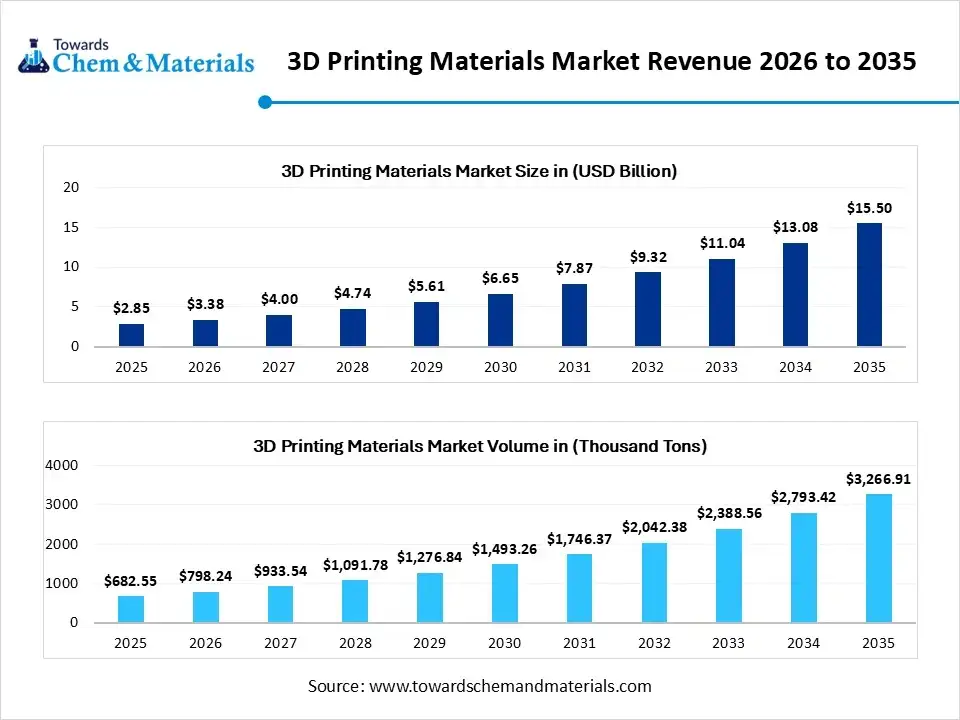
Market Highlights
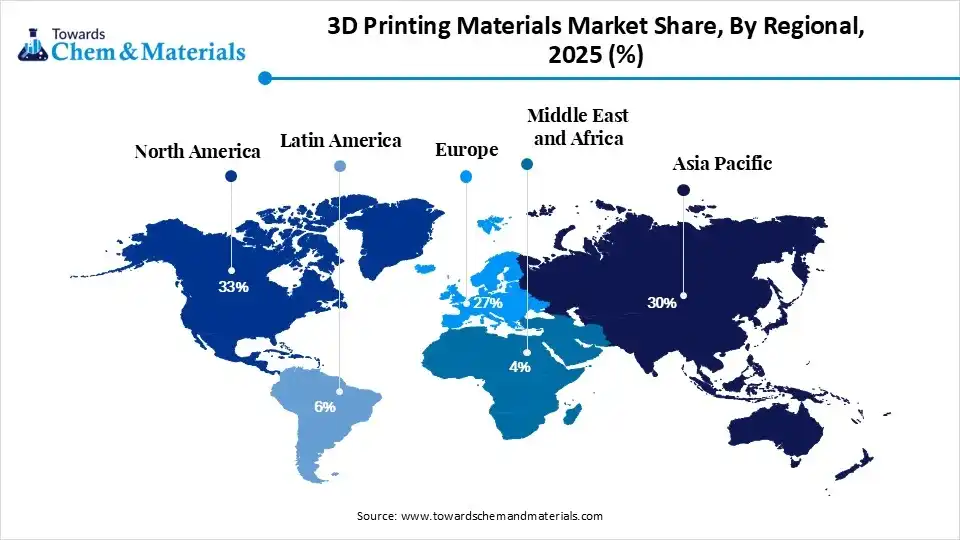
- By region, North America dominated the 3D printing plastics market by holding a 33% share in 2025, driven by advanced manufacturing infrastructure and R&D investment in polymer technology.
- By region, Asia Pacific held a 30% market share in 2025 and is expected to grow the fastest, with a CAGR of 20.70% during the forecast period due to additive manufacturing capacity expansion and strong government support.
- By type, the photopolymers segment dominated the market with the largest share of 29% in 2025 due to demand for high-resolution industrial printing and SLA and DLP installation.
- By type, the PETG segment held 16% market share in 2025 and is expected to grow at the fastest CAGR of 19.6% over the forecast period, driven by its durability and chemical resistance in functional prototyping applications.
- By form, the filament segment dominated the market with the largest share of 43% in 2025, driven by demand in industrial FDM printers and cost-effectiveness.
- By form, the liquid segment held a 26% market share in 2025 and is expected to grow at the fastest CAGR of 19.2% over the forecast period due to high-precision printing requirements in resin-based printers and the medical sector.
- By application, the manufacturing segment dominated the market with the largest share of 42% in 2025 and is expected to grow at the fastest CAGR of 20.10% over the forecast period, driven by industrial scalability in 3D printed components for lightweighting and customization.
- By end-use industry, the automotive segment dominated the market with the largest share of 27% in 2025, driven by rapid prototyping and cost-efficient tooling for lightweight automotive components.
- By end-use industry, the healthcare segment held a 21% market share in 2025 and is expected to grow at the fastest CAGR of 21.40% over the forecast period due to surgical planning models and demand for 3D printing plastics in personalized medical devices.
Market Overview
The global 3D printing plastics market is revolutionizing towards high-volume additive manufacturing. The advanced 3D printed engineered plastic offers higher mechanical strength, superior chemical resistance, and thermal stability. The demand for specialized polymers in the aerospace, healthcare, and automotive sector transforming rapid prototyping into high-performance engineered grades. The shift towards sustainability and the circular economy targets is driving the innovation of bio-based plastics and biodegradable filaments.
The industrial manufacturer implements several material forms like photopolymer resin, thermoplastic filaments, and laser-sintered powders to ensure optimized operational efficiency in high-volume production lines. The emerging trend towards recycled polymers allows manufacturers to lower their carbon footprint while providing structural integrity to the final product. The medical sector demands biocompatible plastics for customized prosthetics, dental implants, and surgical guides to meet patients' health and safety needs. The implementation of on-demand manufacturing enables industrial layers for supply chain resilience.
Industrial users are fueling the shift towards fused deposition modeling, selective laser sintering, and stereolithography by integrating high-performance materials like ULTEM, PEEK, and carbon-fiber reinforced polymers, offering high efficiency, improved fuel efficacy, and higher precision. Additionally, the integration of smart 4D printing plastics and artificial intelligence is driving 3D printing plastics as a key for next-generation digital manufacturing and smart industrial production.
Recent Market Trends
- Demand for Mass Customization: 3D printing plastics allow manufacturers to achieve economic viability in medical orthotics, custom dental alignments, and high-end personalized products.
- Focus on Sustainable Plastics in End-Use Industry: 3D printing plastic components boost the advancement of engineering-grade polymers by integrating with additive manufacturing. Industry shift toward bio-based polymers and recyclable filaments to minimize environmental impact.
Key Technological Shifts and AI in the 3D Printing Plastics Market
Technological integration is driving advancement in material science and closed-loop manufacturing of 3D printing plastics. Artificial Intelligence is redefining digital design by transforming the value chain through AI-integrated digital threads. Generative design creates complex 3D structures to improve battery range and structural uniformity. The expansion of smart (4D) plastics drives the demand for high-performance polymers & shape memory polymers (SMPs) in modern manufacturing.
Technological advancement supports quality control, labor operations, and topology optimization. Automation in metal powder handling offers chemical purity, with direct energy deposition (DED). The integration of CNC enables precision finishing. Additionally, digital warehousing and distributed manufacturing foster supply chain resilience and a lower carbon footprint by optimizing operational costs.
Supply Chain Analysis of the 3D Printing Plastics Market
- Chemical Synthesis and Resin Processing: The stage of extraction, advanced chemical synthesis, and processing techniques are used to produce high-performance 3D printing plastics, including base polymer synthesis, chemical blending, and metal powders. These processes ensure thermal stability, durability, and functionality of raw resin for additive manufacturing systems.
- Key Players: BASF, Solvay S.A., Arkema, Covestro AG, Evonik Industries AG, and SABIC
- Form Conversion and Quality Testing: The raw materials convert into highly calibrated filaments, light-reactive liquid photopolymers, and SLS/HSS powder through extrusion and atomization. Strict quality-control packaging and certification standards ensure materials meet industrial requirements for reliability in additive manufacturing applications.
- Key Players: Stratasys Ltd., 3D Systems, Inc., Materialise NV, Formlabs Inc., and Polymaker
- Distribution and Industrial Fabrication: The final stage of Efficient distribution channels delivers 3D printing plastics to industrial manufacturers, prototyping labs, and research institutions. The end-user utilizes 3D printers and processes like software optimization and thermal post-curing to create functional prototypes for the commercial and industrial sector.
- Key Players: 3D Systems, Boeing Company, Stryker Corporation, Align Technology, Inc., BMW Group, and Proto Labs.
Regulatory Framework: 3D Printing Plastics Market
| Region | Key Regulations | Regulatory Focus |
| Global | ISO (International Organization for Standardization)/ASTM Joint Technical Committee | Standards for additive manufacturing practices for quality and plastic transformation in material extrusion. Anisotropy testing to measure structural variation. |
| European Union | EU REACH & CLP regulation, EU Medical Device regulation | Focus on the biocompatibility of resins and filaments to prevent microplastic leakage. Restrict toxic photopolymers to meet safety and health institution grants for in-house plastic printing. |
| Asia Pacific | TGA (for patient-matched plastic implants), China NMPA, India CDSCO Medical Device Rules | Focus on Material Master Files for 3D polymers, product-specific registrations, and reducing plastic waste & emissions. The localized materials standardization and approvals for domestic biocompatible and high-performance polymer advancement |
| North America | OSHA Hazard Communication standard, FDA CDRH Guidance, and QMSR standards | Focus on sterilization validation and finished device safety. Process verification to design of experiment for printing process. With updated safety data sheets (SDS) and GHS labels with global medical compliance. |
3D Printing Plastics Market Dynamics
Driver
Advancement in Photopolymers and Pellet Extrusion
The key driver that is shaping the market is that liquid photopolymers are utilized as 3D-printed resin, like stereolithography and digital light processing, through a revolution towards dual-cure chemistry and elastomeric polyurethane integration. The next-generation polymers offer excellent ultra-high surface finish & dimensional precision. The rapid commercialization of the pellet-based extrusion system allows manufacturers to print large-scale plastic components in automotive, maritime, and architectural applications by driving long-term reliability of additive manufacturing by maintaining higher deposition rates.
Restraints
High Processing Costs and Safety Regulations
The market expansion is restrained by the high specialized 3D printing plastics and operational costs for metal powder, filament, and liquid photopolymer. The stringent environmental regulations, with complex certifications and workplace safety requirements for high-performance engineering plastics,s and operational complexity limit market adoption.
Opportunity
Factory Tooling Optimization and Emerging Ecosystem
The key opportunity for 3D printing plastics enables the fabrication of customized manufacturing fixtures, molding inserts, and jigs. The industrial facilities focus on lightweight tooling to optimize assembly precision and lower tool lead times through return on investment for manufacturing practices. The developing economy enhances the geographical opportunity for the 3D printing plastics industry through a well-established local distribution network & additive-driven smart factories. Additionally, the major region demands low-cost and bulk polymer alternatives in decentralized consumer and industrial product manufacturing.
Segmental Insights
Type Insights
The photopolymers segment dominated the market with the largest share of 29% in 2025. It is a liquid-based type that depends on UV-curable resins and monomers, where photopolymers offer higher micron-level accuracy and superior smooth surface finishes. The segment allows a shift towards vat photopolymerization technology, like stereolithography and digital light processing. The innovation focuses on high-performance engineering-grade plastics by ensuring elastomeric resilience, biocompatibility, and superior thermal resistance essential for intricate prototyping, dental, medical, and customized infrastructure.
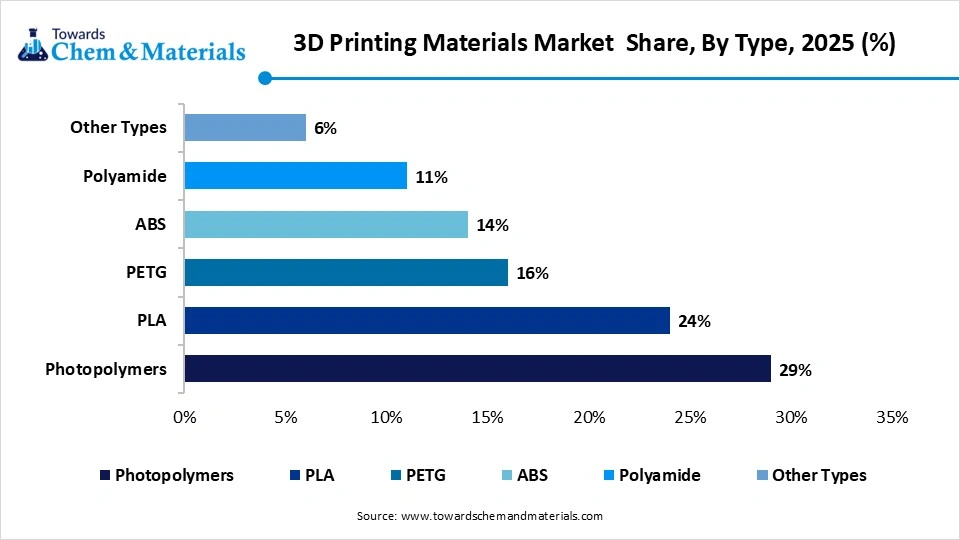
The PETG segment held a 16% market share in 2025 and is expected to grow at the fastest CAGR of 19.6% over the forecast period, driven by its ease of use and structural durability as a key copolymer filament. PETG is categorized as transparent and reinforced PETG, which makes it key for functional mechanical components, protective equipment, and chemical-resistance enclosure The glycol is combined into the molecular chain, offering higher interlayer adhesion, low thermal shrinkage, superior shatter resistance, and impact strength.
The PLA segment held a 24% market share in 2025, serving as a renewable biopolymer derived from cornstarch, where PLA offers a low thermal expansion coefficient. The precise layer deposition enables the fabrication of a high-resolution structure by maintaining superior melt viscosity. The segment characterized by high flexural modulus and susceptibility to thermal deformation makes PLA key for rapid conceptualization, anatomical visualization, and architectural models.
3D Printing Materials Market Share, By Type, 2025 (%)
| By Type | Revenue Share, 2025 (%) |
| Photopolymers | 29% |
| PLA | 24% |
| PETG | 16% |
| ABS | 14% |
| Polyamide | 11% |
| Other Types | 6% |
The ABS segment held a 14% market share in 2025. It is a high-performance thermoplastic that offers superior structural integrity, impact resistance, and higher mechanical resilience, combining the rigidity of acrylonitrile and styrene. ABS is preferred in post-processing treatment, functional prototypes, and consumer electronics. ABS ensures a superior heat deflection temperature that allows printed components to withstand structural deformation.
Form Insights
The filament segment dominated the market with the largest share of 43% in 2025, serving as a key form for extrusion technologies. The fused filament fabrication ecosystem maintains stable volumetric flow into domestic thermal liquefiers for accurate micro-extrusion. Filament offers superior atmospheric stability and eliminates VOC and dust exposure. The rising materials innovation focuses on anisotropic structural matrices and polymer compounding by combining carbon fibers and glass microspheres.
The powder segment held a 31% market share in 2025, driven by the utilization of selective laser sintering systems and multi-jet fusion crucial for heavy industrial manufacturing. This form optimized powder bed fusion by offering self-supporting, superior isotropic mechanical strength. The rising shift towards precise thermal consolidation and powder recyclability lowers material waste for end-use components and three-dimensional part nesting.
The liquid segment held the 26% market share in 2025 and is expected to grow at the fastest CAGR of 19.2% over the forecast period due to free-radical polymerization. The low-viscosity reactive monomer cross-links liquid into thermoset matrices. The liquids offer high sub-micron feature resolution and a smooth isotropic surface. The advancement in biocompatible liquid resins and high-temperature formulation makes liquid key for investment casting, surgical guides, and dental prostheses.
3D Printing Materials Market Share, By Form, 2025 (%)
| By Form | Revenue Share, 2025 (%) |
| Powder | 31% |
| Liquid | 26% |
| Filament | 43% |
Application Insights
The manufacturing segment dominated the market with the largest share of 42% in 2025 and is expected to grow at the fastest CAGR of 20.10% over the forecast period. The 3D printing plastics demand is driven by high-volume consumption in the industrial sector that utilizes high-performance polymers for end-use components, and the manufacturing sector focuses on on-demand digital inventory to avoid higher operational costs and supply chain volatility. The factor engineering adopts advanced carbon-reinforced matrices for robotic end-effectors, specialized ergonomic assembly fixture ad work holding blocks, as the manufacturer of focus on optimized assembly, shortens operational cost make 3D printing key to factory-floor structural durability.
The prototyping segment held a 38% market share in 2025 due to the utilization of versatile thermoplastics and photopolymers for design verification and fit-form-function testing. Prototyping accelerates the product development lifecycle and lowers processing time for the precise evolution of mechanical tolerance and production assembly. Additionally, the segment is key for geometric engineering flaws by minimizing capital expenditure risks.
The tooling segment held a 20% market share in 2025, representing a key for designing and mass production by deploying heat-resistant thermosets and carbon-reinforced composites. The tooling eliminates complex CNF machining setups and ensures the fabrication of injection molding inserts. The printed tooling optimizes thermal dissipation for cost-effective, low-volume production runs.
3D Printing Materials Market Share, By Application, 2025 (%)
| By Application | Revenue Share, 2025 (%) |
| Manufacturing | 42% |
| Prototyping | 38% |
| Tooling | 20% |
End-Use Industry Insights
The automotive segment dominated the market with the largest share of 27% in 2025, driven by high-performance engineering demand for advancing carbon-fiber composites and polyamides for lightweighting and fuel efficiency. In a vehicle assembly line, automakers customized ergonomic assembly fixtures for prototyping components and end-of-line vehicle components. The rising focus on on-demand spare parts logistics is driving OEM deployment of additive manufacturing.
The healthcare segment held a 21% market share in 2025 and is expected to grow at the fastest CAGR of 21.40% over the forecast period, representing a key patient-specific healthcare solution where biocompatible thermoplastics and specialized photopolymers are utilized in dental, prosthetics & implants, and surgical models. The healthcare segment focuses on precise anatomical visualization models and mass manufacturing of customized dental orthodontics by integrating sterilizable engineering plastics to meet patient health standards.
The aerospace & defense segment held a 23% market share in 2025 due to the adoption of high-temperature super-polymers and PEEK in aircraft components and defense equipment parts. The cabin lightweighting action plans enable the advancement of specialized interior thermoplastics for flight-certified end-use parts to meet stringent flame, smoke, and toxicity standards. The aviation sector enables demand for environmental control ducting and protection, driving the adoption of 3D printing plastics.
The consumer goods segment held 17% market share in 2025. The rising commercialization of thermoplastics and photopolymers is driving the transition towards mass customization of functional electronics and lifestyle products. The integration of flexible elastomeric resins and copolymer filaments ensures real-time testing and cost-effectiveness. The consumer preferred on-demand manufacturing, which eliminates costly injection molding tooling.
3D Printing Materials Market Share, By End-Use Industry, 2025 (%)
| By End-Use Industry | Revenue Share, 2025 (%) |
| Aerospace & Defense | 23% |
| Automotive | 27% |
| Healthcare | 21% |
| Consumer Goods | 17% |
| Other End-use Industries | 12% |
Regional Analysis
How Did North America Dominate the 3D Printing Plastics Market in 2025?
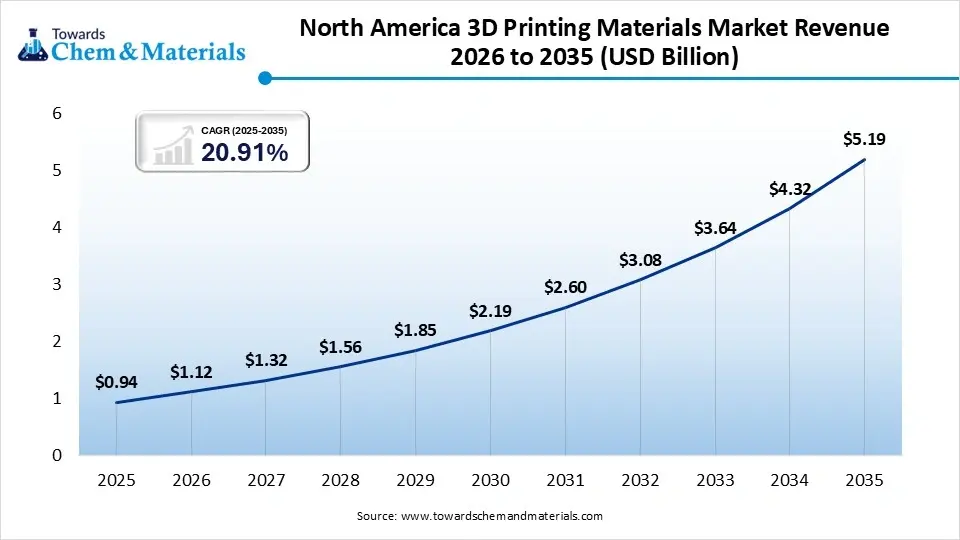
The North America 3d printing plastics market size was estimated at USD 0.94 billion in 2025 and is projected to reach USD 5.19 billion by 2035, growing at a CAGR of 20.91% from 2026 to 2035. North America dominated the market by holding a 33% share in 2025; growth is accelerated by industrial scaling and technological advancement. The regional FDA regulatory framework and sustainability mandates drive the shift towards a circular economy through the utilization of bio-based plastics and recycled filaments in industrial applications. North American players demand PEEK, carbon-fiber composites, and ULTEM through automated selective laser sintering and fused deposition modeling by maintaining nearshoring in the supply chain.
United States
- Driven by national funding for industrial automation and venture-capital environmental for novel plastics to meet stringent FAA certifications.
- U.S. adopts carbon-fiber reinforced PEEK, biocompatible photopolymers, and ULTEM in high-value aerospace, military drone, customized orthopedic, and injection mold tooling.
Canada
- Growth is fueled by government-driven advanced manufacturing practices and emphasis on 3D printing plastics through R&D investments.
- The flame-retardant polycarbonates, bio-based PHA formulation, and PA11 &PA12 are utilized for EV lightweight components, research equipment housings, and custom dental prosthetics.
Asia Pacific 3D Printing Plastics Market Size
The Asia-Pacific 3d printing plastics market size was estimated at USD 0.86 billion in 2025 and is projected to reach USD 4.73 billion by 2035, growing at a CAGR of 18.59% from 2026 to 2035. Asia Pacific held a 30% market share in 2025 and is expected to grow the fastest, with a CAGR of 20.70% during the forecast period. The region is shifting towards digital manufacturing aligned with state-supported Industry 4.0 initiatives. The region utilized engineered-grade filaments and laser-sintered powders in the automotive supply chain, consumer electronics ad hyper-automation robotics applications. Additionally emerging trend towards biocompatible photopolymers for mass production of medical devices by maintaining a cost-competitive supply of raw materials.
China
- Driven by digital factory mandates and low-cost consumer hardware export in chemical infrastructure. China is a mass producer of PLA filaments, polyamide powders, and high-volume liquid photopolymers
- The region's large-scale demand in architectural prototyping, consumer electronics, and automotive interior components is driving the growth.
India
- The growth is driven by expanding domestic defense programs and the adoption of digitalization in engineering infrastructure.
- India's demand for PETG, standard ABS, and engineering-grade nylon blends is driven by localized commercial satellite components, automotive engine-bay prototypes, and customized products
Europe 3D Printing Plastics Market Trends
The Europe 3d printing plastics market size was estimated at USD 0.77 billion in 2025 and is projected to reach USD 4.26 billion by 2035, growing at a CAGR of 20.93% from 2026 to 2035. Europe holds a 27% market share in 2025, serving as a key region in advanced automotive engineering and stringent EU green mandates. Europe focuses on sustainability innovation, including advanced bio-based plastics, biodegradable resins, and circular economy recycled filaments. The region is increasingly adopting selective laser sintering, ultra-high-performance PEEK, and PA12. Additionally, domestic players have advanced in aerodynamics testing by integrating 3D-printed plastics to meet environmental compliance.
Germany
- Key hub for high-performance industrial engineering and stringent EU circular economy directives, integrating Industry 4.0
- Germany's demand for bio-based industrial plastics, fine-grain polyamide 12 for selective laser sintering, and flame-retardant PBT in customized manufacturing automation, automotive components, and safety-driven railway interior components.
United Kingdom
- UK demand for PEEK, ultra-lightweight carbon-fiber reinforced nylon, and engineered filaments used in wind-tunnel testing components, commercial aviation, and custom surgery guides.
- The region is leading in motorsport engineering hubs and medical printing laboratories for national health services.
Latin America 3D Printing Plastics Market Growth Factor
The Latin America 3d printing plastics market size was estimated at USD 0.20 billion in 2025 and is projected to reach USD 1.16 billion by 2035, growing at a CAGR of 19.22% from 2026 to 2035. Latin America held a 6% market share in 2025 due to its high consumption of liquid biocompatible photopolymer resins and domestic manufacturing capacity. The regional manufacturing nearshoring and aerospace infrastructure demand for engineered-grade ABS, TPU, and PETG to print factory assembly jigs and robotic tooling. Latin America focuses on digital transformation and locally sources corn-derived PLA utilized for the domestic industry and agricultural sector.
Brazil
- The domestic growth is driven by domestic commercial aviation infrastructure and digital transformation in the private dental clinic and medical sectors.
- The aerospace-grade flame-retardant polymers, industrial ABS, and biocompatible resins are essential for aircraft cabin, healthcare, and consumer appliance prototypes.
Argentina
- Argentina leads in academically driven hardware infrastructure an customize agricultural engineering for domestic farming technology.
- The agricultural-grade UV-resistant PETG, standard PLA, and flexible TPU are key for advanced laboratory equipment, research models, and custom seed-drilling machinery nozzles
Middle East & Africa 3D Printing Plastics Market Size
The Middle East & Africa 3d printing plastics market size was estimated at USD 0.11 billion in 2025 and is projected to reach USD 0.70 billion by 2035, growing at a CAGR of 20.33% from 2026 to 2035. The Middle East & Africa held a 4% market share in 2025, driven by advanced manufacturing practices and regulatory-driven industrial diversification. Domestic growth is accelerated by the oil, gas, and petrochemical sector, which enables the demand for PEEK, fluoropolymers, and PEI (ULTEM) to print chemical-inert and high-temperature components. Government funding and GC private healthcare expansion fuel the use of selective laser sintering and nylon powder.
Saudi Arabia
- Driven by Vision 2030, economic diversification, and a rising shift towards domestic industrial supply chains.
- Saudi Arabia has utilized PEI, PEEK, specialty composites, and flame-retardant structural plastics in oil & gas drilling sensors, drone replacement components, and heavy industrial pumps.
UAE
- The domestic expansion is driven by strong government mandates for 3D-printed construction elements and acts as a key hub for the advanced aerospace supply chain.
- The high-performance ULTEM, UV-resistant polycarbonates, and specialty polymers are utilized in luxurious interior architecture, specialized construction alignment tools, and drone infrastructure.
3D Printing Materials Market Share, By Region, 2025 (%)
| Regional | Revenue Share, 2025 (%) |
| North America | 33% |
| Europe | 27% |
| Asia-Pacific | 30% |
| Latin America | 6% |
| Middle East & Africa | 4% |
Recent Development
- In April 2026, ROBOZE announced that Poly Precision Technology (PPT), a Houston-based manufacturing specialist, had joined its ROBOZE Advanced Manufacturing (RAM) network.
Top Companies in the 3D Printing Plastics Market
- 3D Systems Corporation
- Arkema Inc.
- Envisiontec Inc.
- Stratasys Ltd.
- SABIC
- Evonik Industries AG
- Formlabs
- Solvay S.A.
- Huntsman Corporation
- Henkel AG & Co. KGaA
- Materials NV
- HP INC.
- Eos GmbH Electro Optical Systems
- PolyOne Corporation
- Royal DSM N.V.
3D Printing Plastics Market Segment
By Type
- Photopolymers
- Standard Photopolymers
- Engineering Photopolymers
- Dental & Medical Photopolymers
- PLA
- Industrial Grade PLA
- Consumer Grade PLA
- PETG
- Transparent PETG
- Reinforced PETG
- ABS
- Standard ABS
- High-Impact ABS
- Polyamide
- PA11
- PA12
- Glass-Filled Polyamide
- Other Types
- PEEK
- TPU
- Composite Blends
By Form
- Powder
- Nylon Powder
- Metal-Plastic Composite Powder
- Liquid
- UV-Curable Resin
- Flexible Resin
- Filament
- Standard Filament
- Reinforced Filament
- Flexible Filament
By Application
- Manufacturing
- Production Parts
- Functional Components
- Prototyping
- Concept Modeling
- Functional Prototypes
- Tooling
- Jigs & Fixtures
- Mold Tooling
By End-Use Industry
- Aerospace & Defense
- Aircraft Components
- Defense Equipment Parts
- Automotive
- Prototyping Components
- End-Use Vehicle Parts
- Healthcare
- Dental Applications
- Prosthetics & Implants
- Surgical Models
- Consumer Goods
- Electronics Accessories
- Lifestyle Products
- Other End-Use Industries
- Education
- Construction
- Industrial Machinery
By Regions
- North America
- U.S.
- Canada
- Mexico
- Europe
- Germany
- UK
- France
- Italy
- Spain
- Asia Pacific
- China
- India
- Japan
- South Korea
- Latin America
- Brazil
- Argentina
- Middle East & Africa
- Saudi Arabia
- South Africa
A Seven-Phase Framework
Our methodology is designed to be universally applicable across commodity chemicals, specialty chemicals, petrochemicals, construction chemicals, coatings, electronic chemicals, industrial gases, agrochemicals, water treatment chemicals, and performance materials. Each phase builds upon the last, creating a layered validation structure that minimizes estimation error and maximizes analytical confidence.
The framework ensures comprehensive market coverage, robust cross-validation, and reliable long-term forecasting — producing market estimates that withstand scrutiny from investors, regulators, and corporate strategy teams.

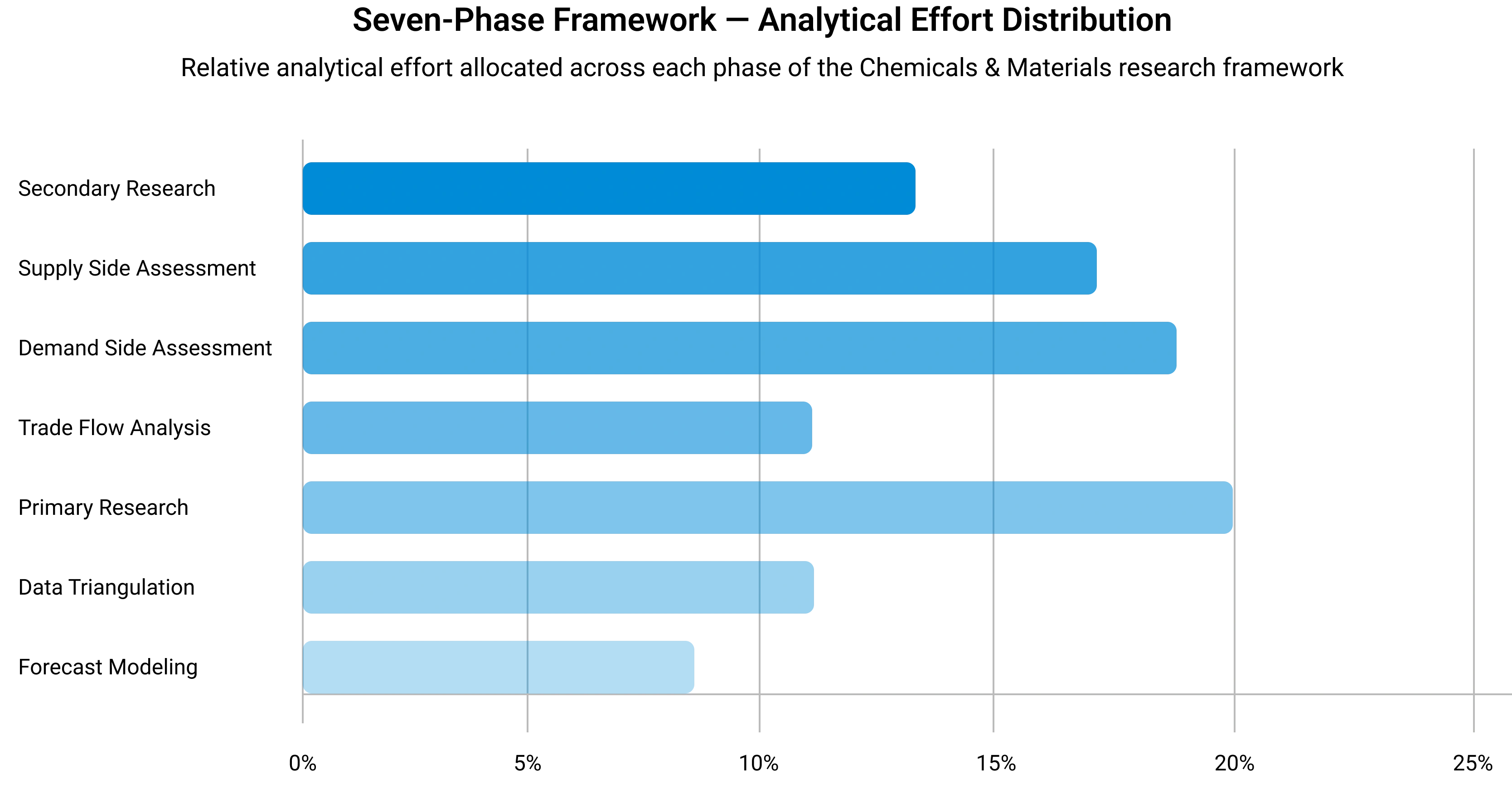
Seven-Phase Framework — Analytical Effort Distribution
Relative analytical effort allocated across each phase of the Chemicals & Materials research framework
Phase 1 - Secondary Research: Establishing the Foundation
Secondary research collects and evaluates publicly available information from authoritative sources, establishing the foundational understanding of market structure, value chain dynamics, competitive landscape, and end-use demand patterns. Every source is evaluated for credibility, recency, geographic relevance, and methodological soundness before inclusion.
Industry Associations
Sources include ACC, CEFIC, ICCA, JCIA, CPCIF, and SOCMA providing production volumes, consumption trends, capacity developments, and sustainability initiatives.
Company Disclosures
Annual reports, investor presentations, earnings transcripts, and regulatory filings reveal product portfolios, manufacturing footprints, capacity expansions, and revenue segmentation.
Government Databases
National statistical offices, customs authorities, environmental agencies, and industrial production databases provide verified statistics on output, trade flows, and regulatory compliance.
Trade Databases
UN Comtrade, ITC, Eurostat, and national customs authorities enable assessment of global product movement, import dependency, and export competitiveness across regions.
Our Secondary Research Sources
- Ministry of Chemicals and Fertilizers
- European Chemicals Agency
- United States Department of Energy
- Ministry of Industry and Information Technology
- Ministry of Economy Trade and Industry
- Ministry of Trade Industry and Energy
- National Institute of Standards and Technology
- Council of Scientific and Industrial Research
- Fraunhofer Society
- National Institute for Materials Science
Phase 2 — Supply-Side Assessment: Mapping Production Capabilities
Production Capacity Analysis
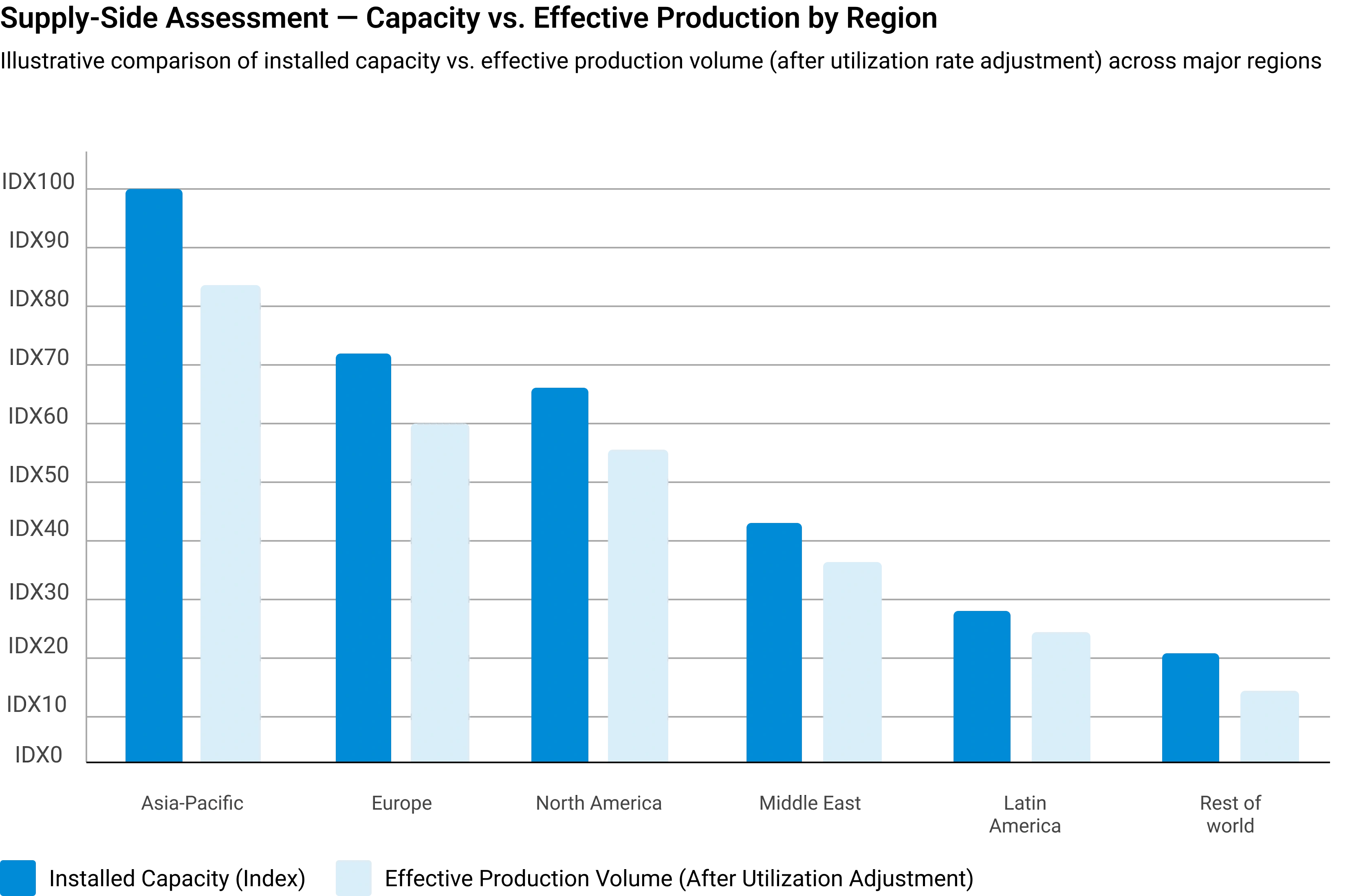
All major manufacturers are assessed for existing installed capacity, planned additions, expansions, new plant announcements, and technology adoption — mapped at global, regional, and country levels.
Capacity Utilization Adjustment
Installed capacity is adjusted using utilization rates based on demand conditions, feedstock availability, plant operating rates, maintenance schedules, and regulatory restrictions.
Manufacturer Revenue Analysis
Product-specific revenues, segment-level performance, regional distribution, average selling prices, and margin trends are evaluated to establish market value estimates.
Supply-Side Assessment — Capacity vs. Effective Production by Region
Illustrative comparison of installed capacity vs. effective production volume (after utilization rate adjustment) across major regions
Phase 3 — Demand-Side Assessment: Quantifying Chemical Consumption
Demand-side analysis quantifies chemical consumption across industries, applications, and geographies — identifying where and how chemicals are consumed throughout the value chain with precision.
End-Use Industry Analysis
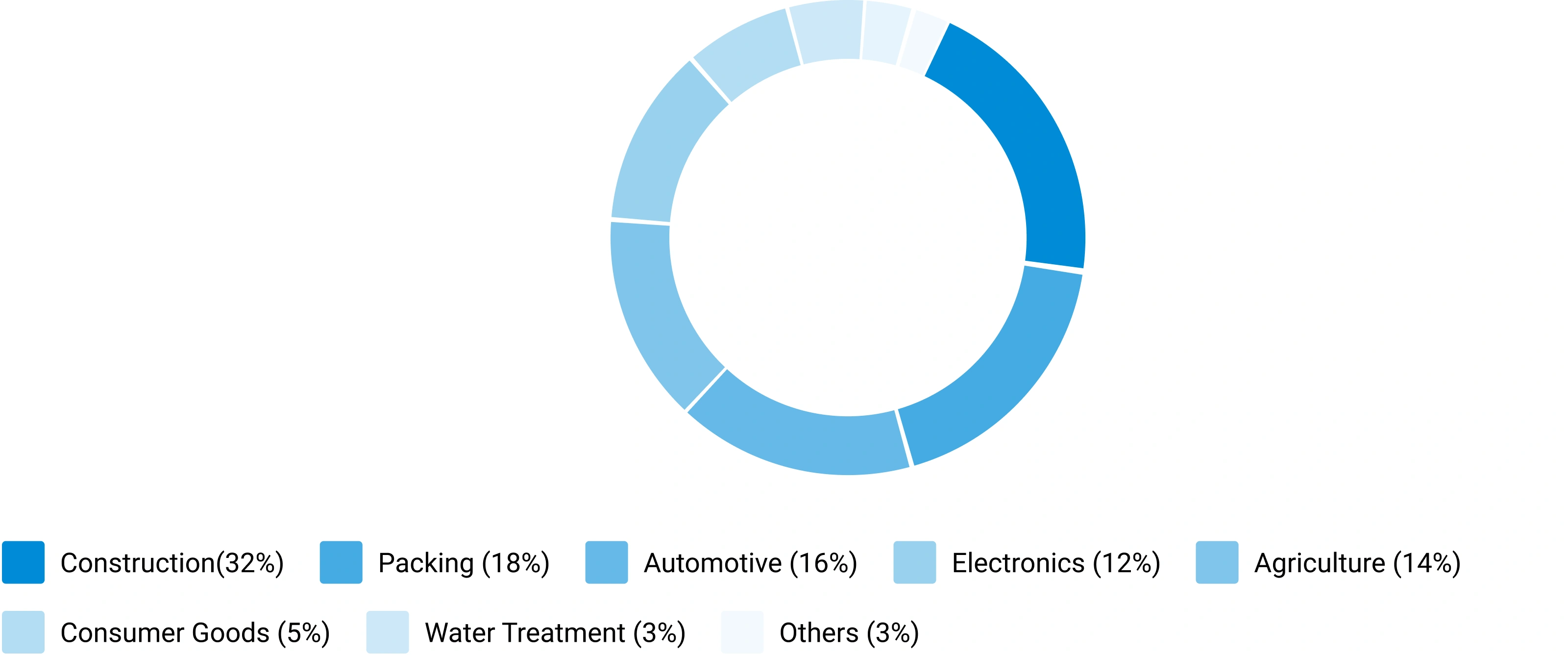
Chemical demand is evaluated across automotive, construction, packaging, electronics, agriculture, healthcare, consumer goods, industrial manufacturing, energy and utilities, and water treatment. Industry output, production trends, and consumption intensity are analyzed to determine demand patterns.
Consumption Modeling
Demand is estimated using measurable indicators: kilograms per vehicle, kilograms per square meter of construction, dosage per cubic meter of water treated, kilograms per hectare of agricultural land, and kilograms per ton of manufactured products. Consumption factors are validated through industry publications and primary interviews.
Application Analysis
The market is segmented by application area to understand product performance requirements, formulation trends, technology adoption, customer preferences, and regulatory requirements improving demand accuracy and segmentation granularity.
Demand-Side Assessment — End-Use Industry Demand Distribution
Illustrative distribution of chemical & materials demand across key end-use industries
Phase 4 - Trade Flow Analysis: Balancing Regional Supply and Demand
Trade flow analysis reconciles regional supply and demand estimates through import and export data, identifying net supply positions, regional dependencies, and market imbalances. It serves as an independent validation layer that tests the consistency of supply-side and demand-side estimates.
Import Analysis
Import data is evaluated to determine volumes, source countries, product dependency, regional supply gaps, and pricing trends — identifying markets that rely heavily on external supply and where domestic production is insufficient to meet demand.
Export Analysis
Export assessments reveal production surplus, export competitiveness, regional manufacturing strength, and global market participation. Export patterns also help validate domestic production estimates and identify net exporting regions.
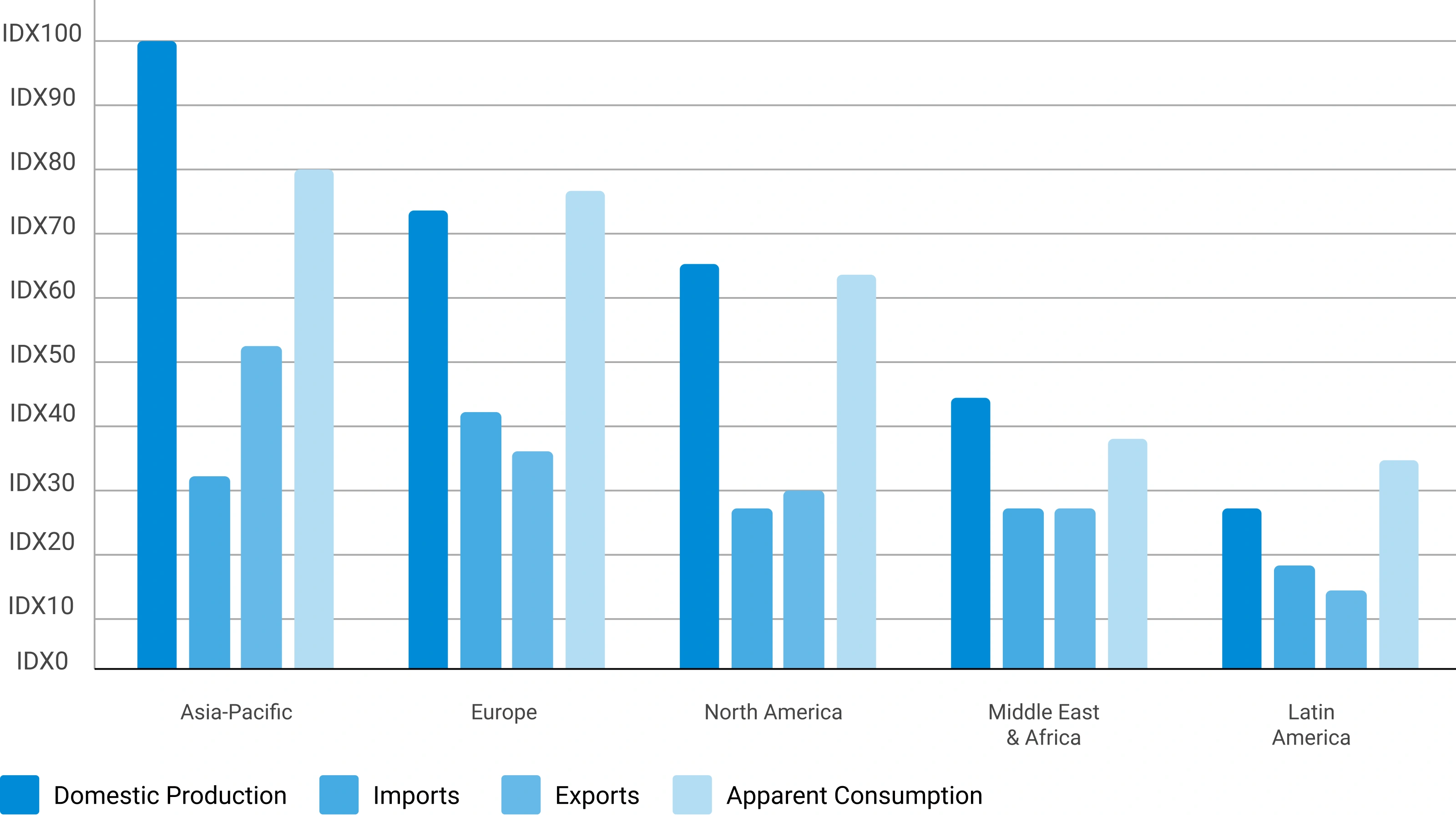
Apparent Consumption Model
Regional consumption is assessed using the standard apparent consumption formula:
Results identify net importing regions, net exporting regions, regional deficits, and surpluses — serving as an independent validation of supply and demand estimates.
Trade Flow Analysis — Net Supply Position by Region
Illustrative apparent consumption vs. domestic production across major regions — positive gap indicates net import dependency
Phase 5 — Primary Research: The Critical Validation Layer
Primary research tests and refines findings from secondary research through direct engagement with industry participants across the supply chain, demand side, and expert community. It captures intelligence that no database or published report can provide — the real-world experience of manufacturers, buyers, and specialists operating in the market.

Supply-Side Interviews
Conversations with chemical manufacturers, raw material suppliers, contract manufacturers, technology providers, and plant operators cover production trends, capacity utilization, pricing developments, technology shifts, and competitive dynamics.

Demand-Side Interviews
Engagement with OEMs, industrial consumers, procurement managers, distributors, formulators, and end-use manufacturers focuses on consumption trends, purchasing behavior, product substitution, demand outlook, and emerging applications.

Industry Expert Consultations
Additional interviews with industry consultants, independent experts, regulatory specialists, technical professionals, and research institutions provide deeper market context and validate key analytical assumptions.
Focus Areas of Primary Research:
Market Size & Forecast Validation
Revenue estimates, volume consumption, growth rates, forecast assumptions, regional demand.Supply Chain & Value Chain Assessment
Raw material sourcing, supply chain challenges, distribution networks, procurement practices.Production & Capacity Analysis
Manufacturing capacity, utilization rates, expansion projects, plant investments.Pricing & Cost Structure Analysis
Product pricing trends, feedstock costs, energy costs, margin pressures, pricing outlook.Competitive Landscape Assessment
Volume and value estimates confirmed to be fully consistent with one another before publicationInterview Volume by Market Scope
| Study Scope | Number of Interviews |
|---|---|
| Niche Market | 20 – 30 |
| Mid-Sized Market | 30 – 50 |
| Global Market | 50 – 80 |
| Highly Fragmented Market | 80 – 120 |
Interview Details:
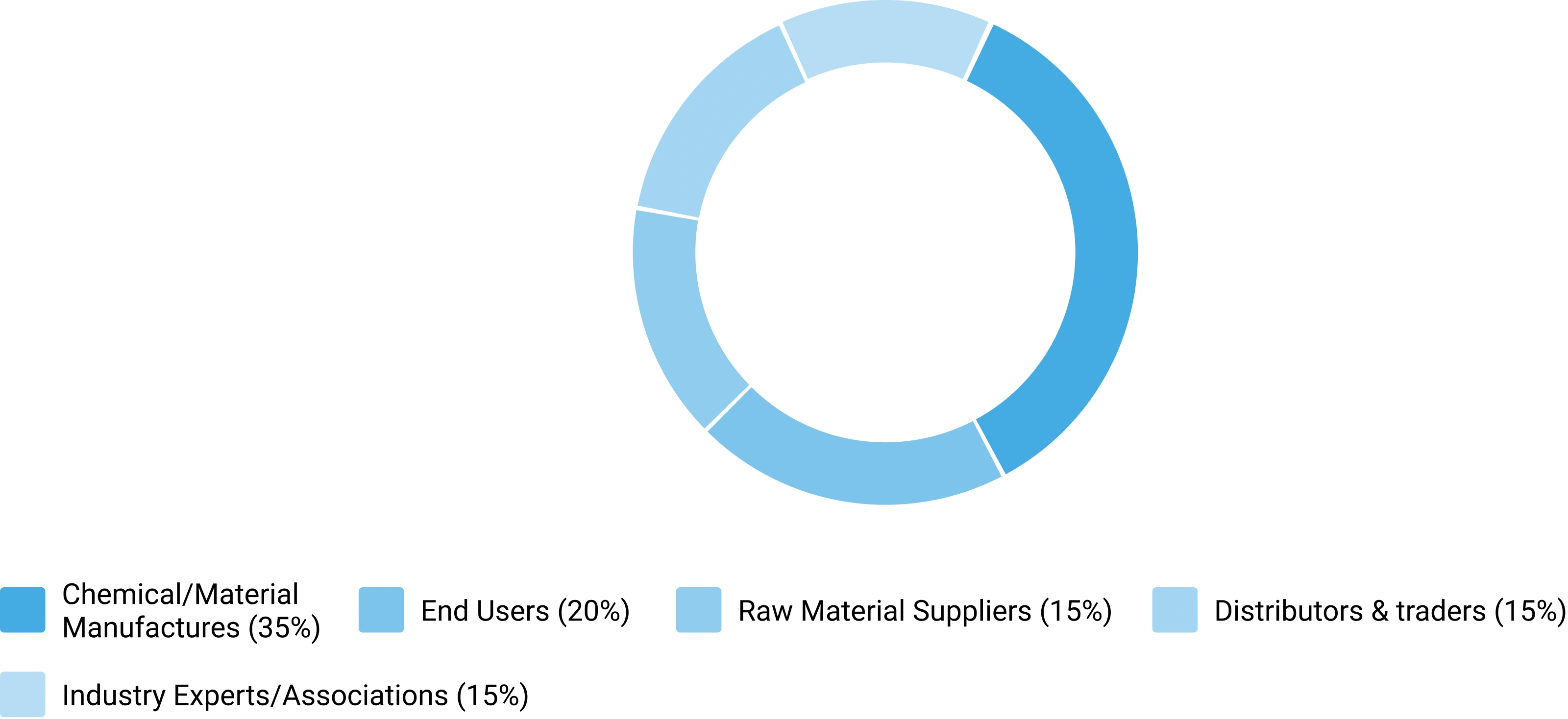
Category : Manufacturers, Suppliers, Distributors, End Users, Experts/Associations
Average Duration : 30–60 Minutes
Interview Mode : Video calls, telephonic interviews, expert consultations
Interview Format : Structured / Semi-Structured questionnaire
Focus Areas of Primary Research:
Market Size & Forecast Validation :
Revenue estimates, volume consumption, growth rates, forecast assumptions, regional demand.
Supply Chain & Value Chain Assessment :
Raw material sourcing, supply chain challenges, distribution networks, procurement practices.
Production & Capacity Analysis :
Manufacturing capacity, utilization rates, expansion projects, plant investments.
Pricing & Cost Structure Analysis :
Product pricing trends, feedstock costs, energy costs, margin pressures, pricing outlook.
Competitive Landscape Assessment :
Market share, competitor positioning, strategic initiatives, partnerships, acquisitions.
Primary Research — Stakeholder Coverage by Category
Distribution of interview respondents across stakeholder categories (% share from PPT data)
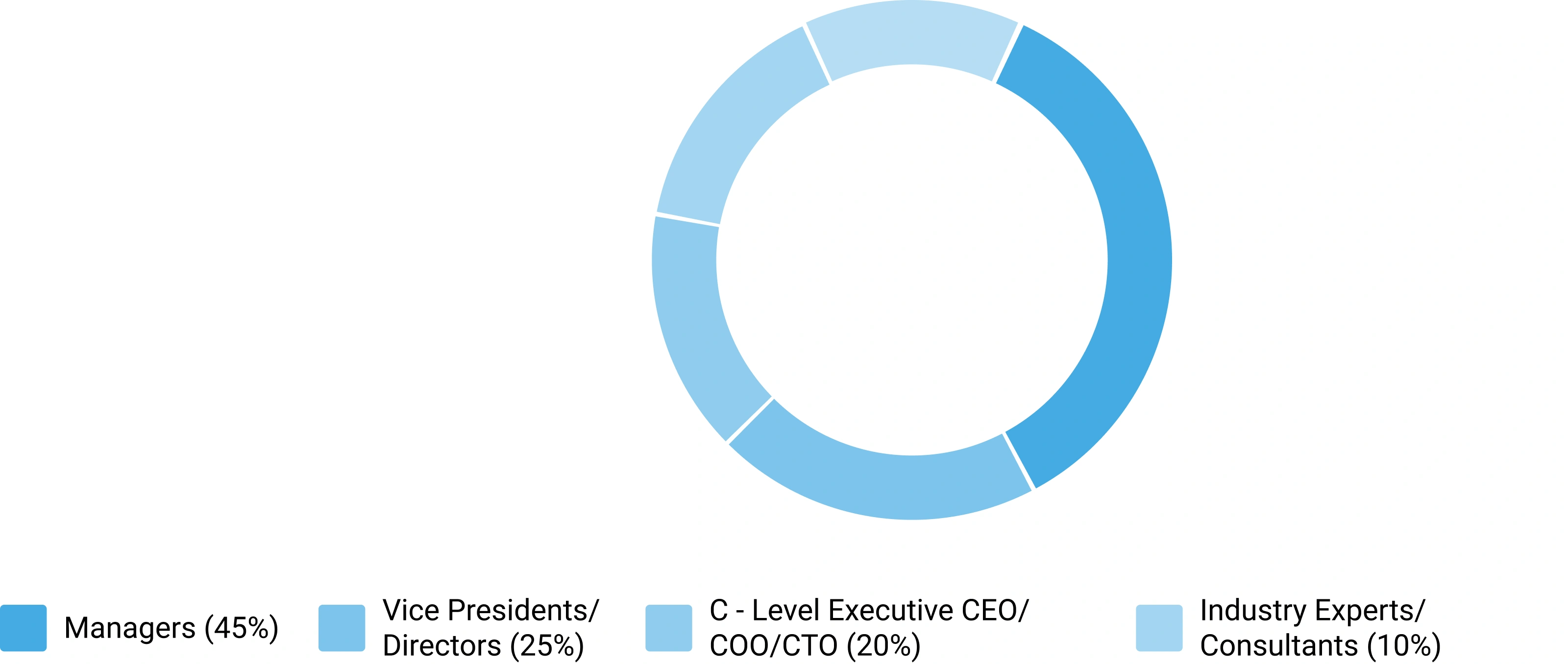
Primary Research — Respondent Designation Profile
Seniority breakdown of interview respondents (% share from PPT data)
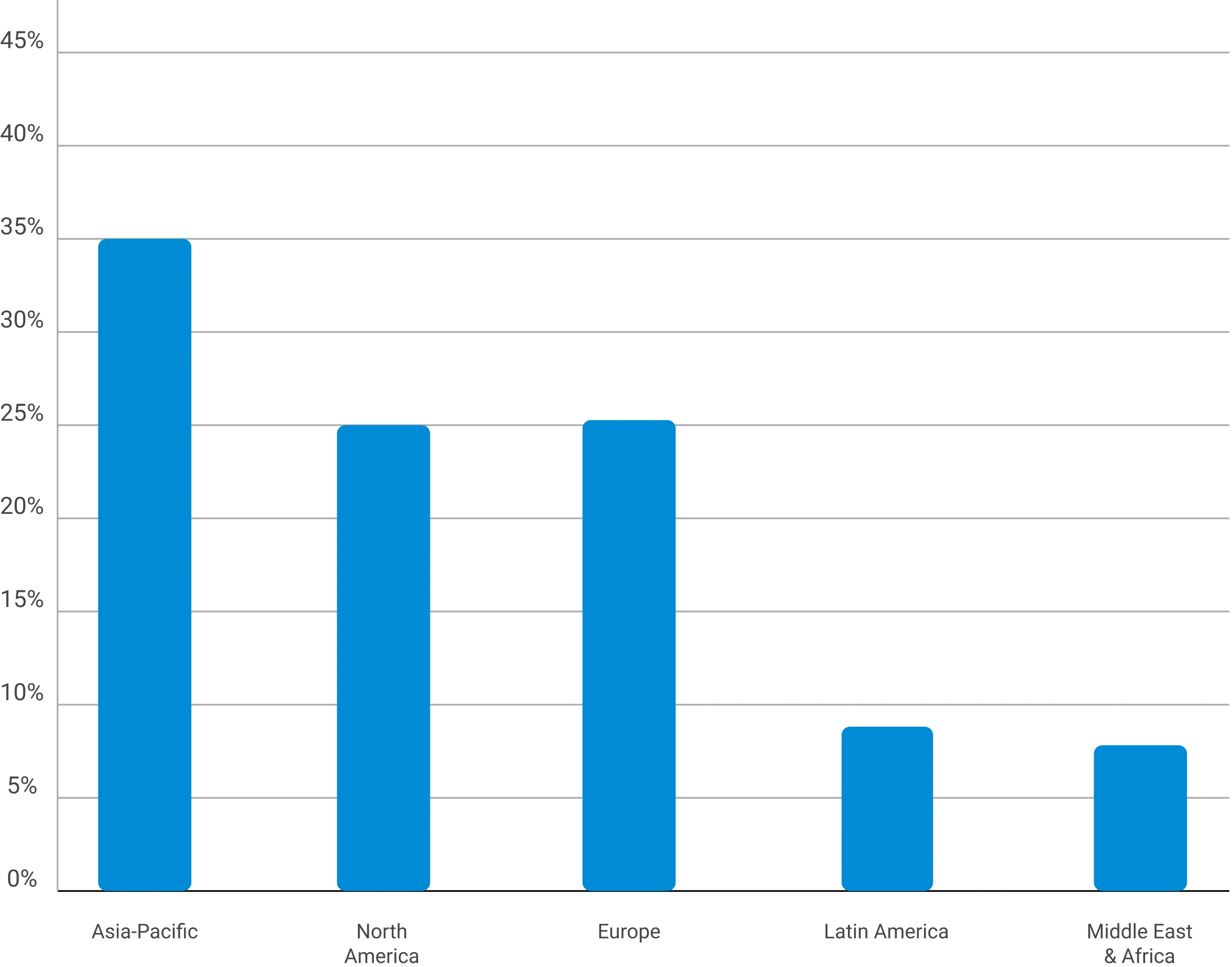
Primary Research — Geographic Coverage of Interviews
Regional distribution of primary research engagement (% share from PPT data)
Phase 6 — Data Triangulation and Market Validation
No single methodology is relied upon in isolation. Multiple independent estimation approaches are combined and reconciled to ensure consistency, accuracy, and analytical defensibility. Any material deviations between approaches are investigated and adjusted through additional validation cycles.
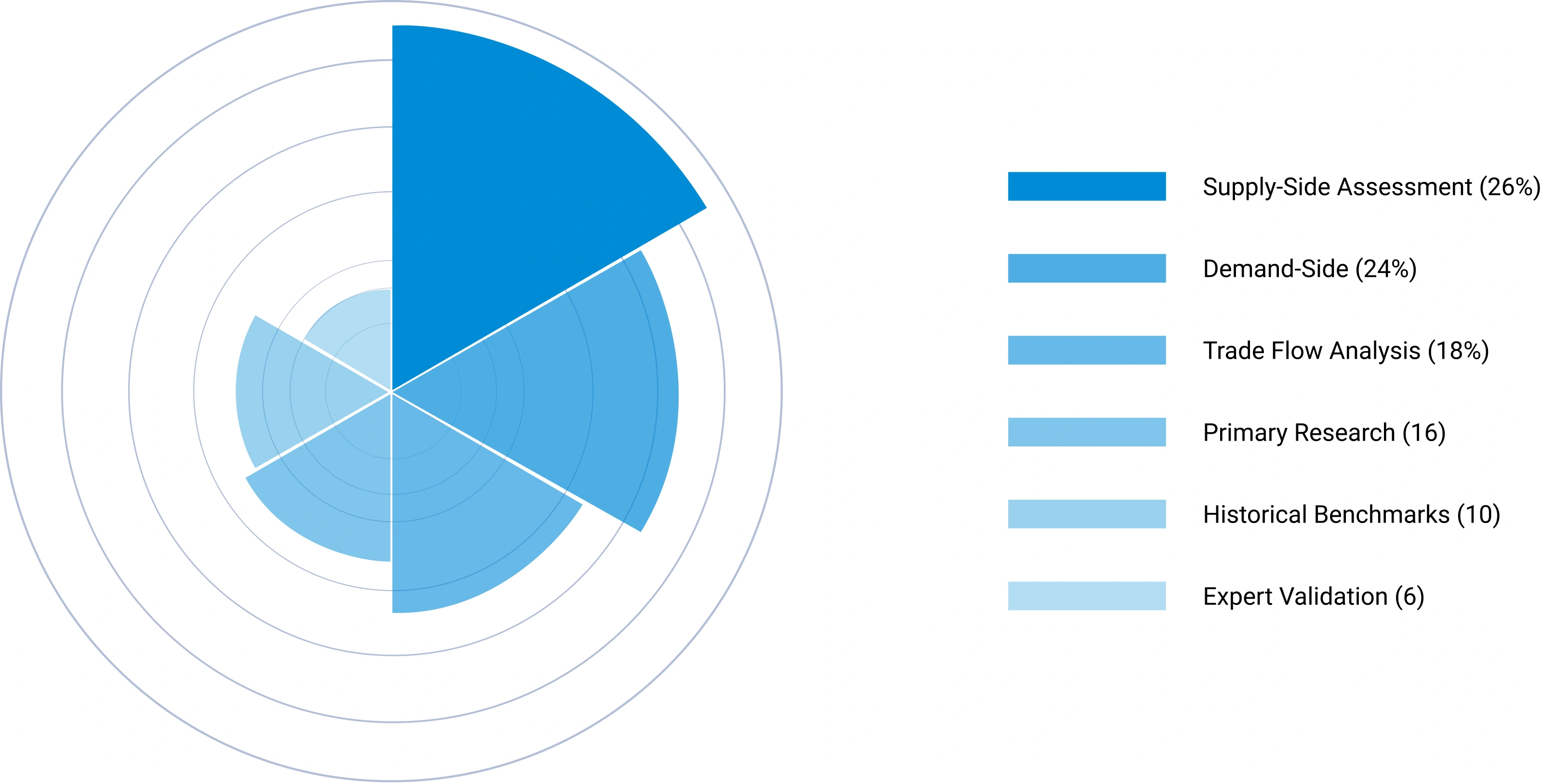
The final market size is derived through weighted triangulation of all validated methodologies. Any material deviations between approaches are investigated and adjusted through additional validation cycles. The outcome represents the most realistic assessment of the market based on available evidence and expert confirmation ensuring that volume and value estimates are fully consistent with one another.
Triangulation Framework — Input Contribution Weight
Relative weight each sizing input contributes to the final reconciled market estimate
Phase 7 — Forecast Modeling: Projecting Future Market Evolution
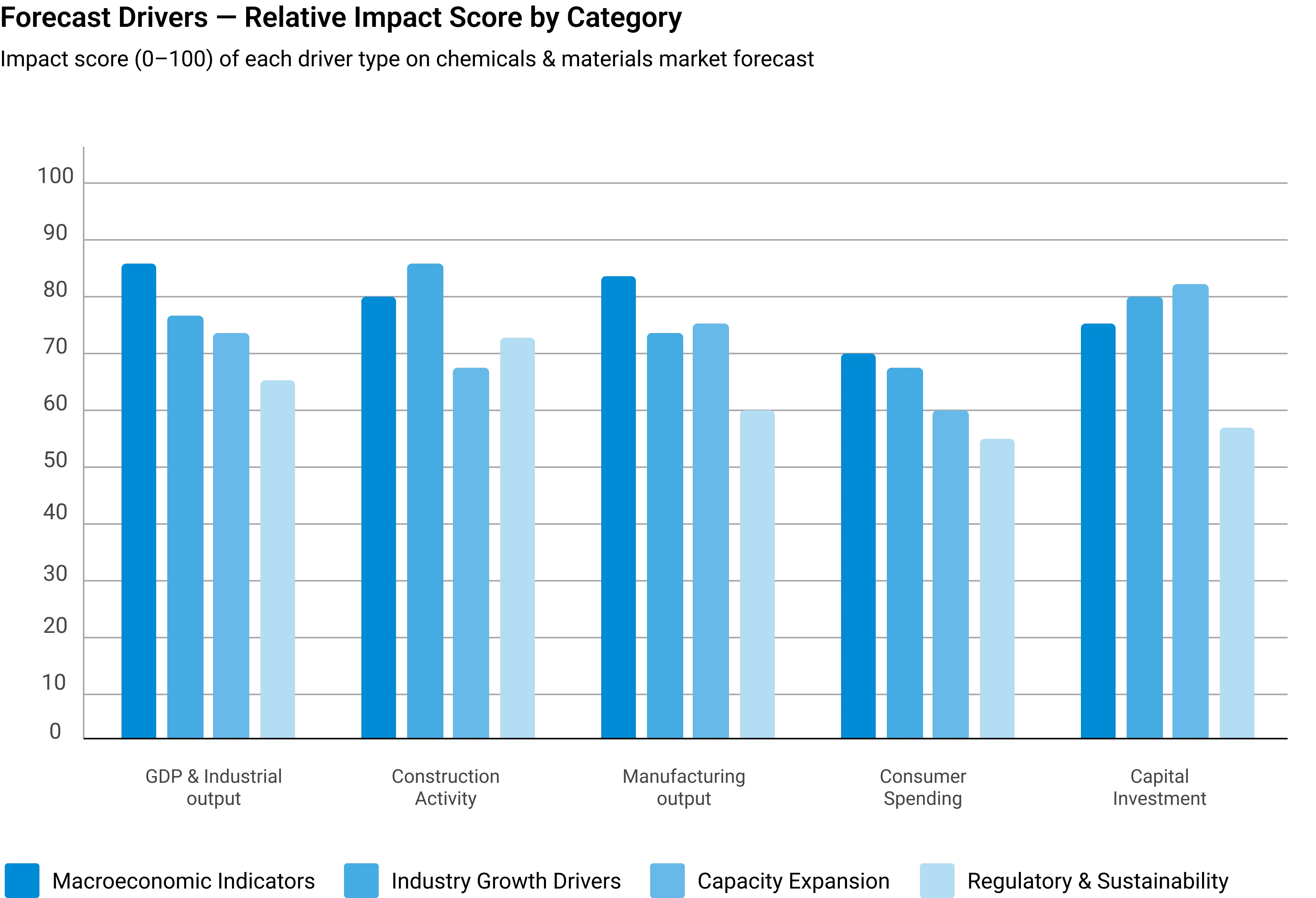
Forecasting evaluates the future trajectory of the market using a combination of quantitative indicators and qualitative assessments across economic, industry, and regulatory dimensions. Rather than simple extrapolation, each driver is independently modeled and integrated into a composite forecast.
Macroeconomic Indicators
GDP growth, industrial production, manufacturing output, construction activity, consumer spending, and capital investment form the quantitative foundation of long-term demand projections. These are applied at country, regional, and global levels.
Industry Growth Drivers
Urbanization, infrastructure development, industrialization, technological innovation, sustainability initiatives, and evolving product performance requirements are assessed at regional and industry levels — capturing both structural and cyclical demand drivers.
Capacity Expansion Analysis
Announced plant expansions, new manufacturing facilities, technology upgrades, and strategic investments are evaluated to determine future supply-demand dynamics and potential market tightness or oversupply situations.
Regulatory & Sustainability
Environmental regulations, chemical safety standards, emission reduction targets, circular economy initiatives, and sustainability requirements are incorporated as they often influence product adoption rates and market growth trajectories.
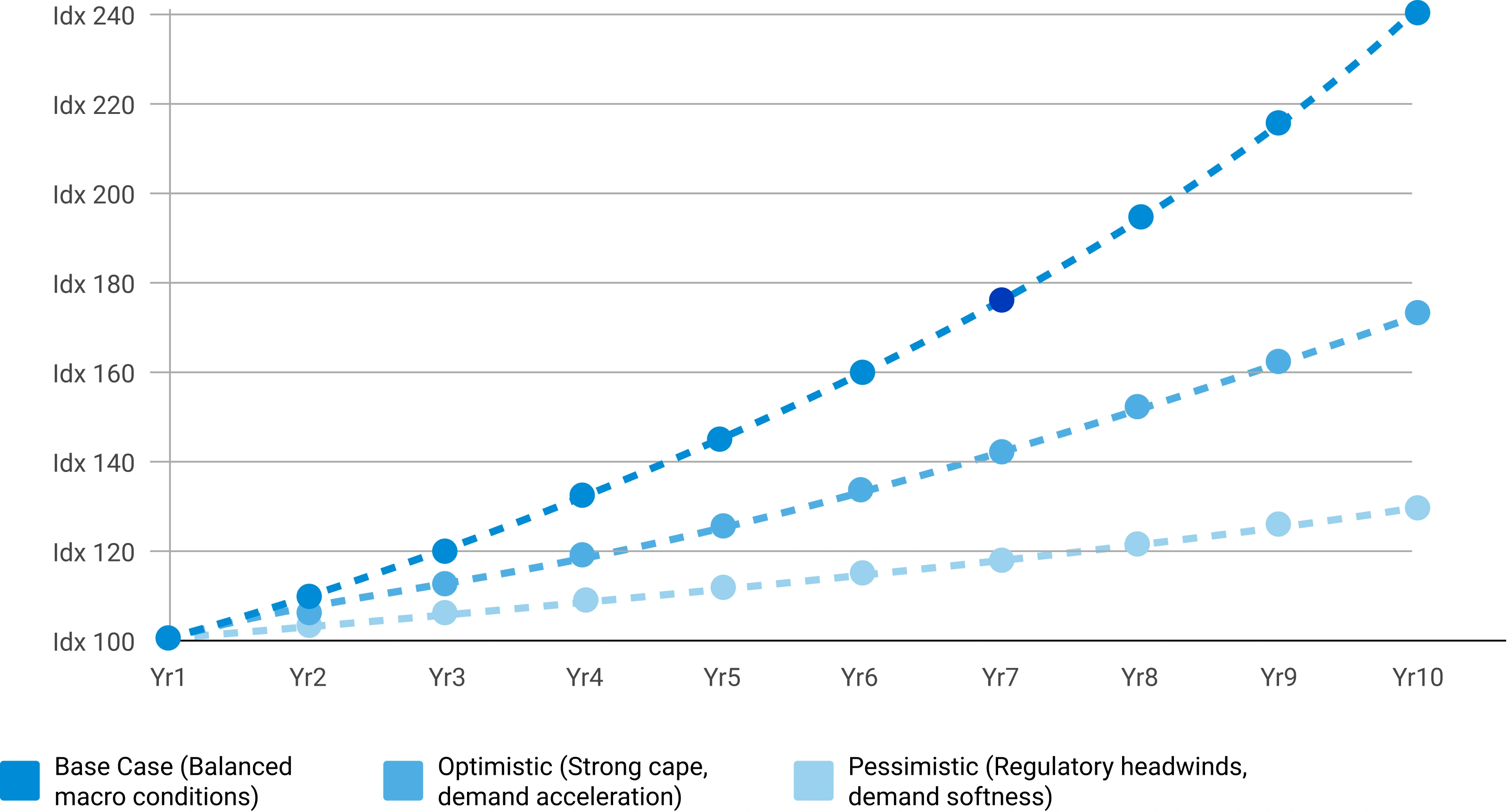
Scenario Forecast Range — Indexed Market Growth (Year 1–10)
Illustrative indexed growth trajectories across Base, Optimistic, and Pessimistic scenarios over a 10-year forecast horizon
Forecast Drivers — Relative Impact Score by Category
Impact score (0–100) of each driver type on chemicals & materials market forecast



Comments
Share your thoughts, ask a question, or provide feedback about this report.