
Microplastics Market Size, Competitive Landscape Analysis Report 2035
Microplastics are plastic particles generally smaller than 5 millimeters in at least one dimension. Primary microplastics are manufactured at small sizes, while secondary microplastics form when larger plastic materials fragment or degrade. The global microplastics market was valued at USD 5.19 billion in 2025, is estimated to reach USD 5.63 billion in 2026, and is projected to reach USD 11.79 billion by 2035, growing at a CAGR of 8.55% from 2026 to 2035. In terms of volume, the microplastics market is projected to grow from 4.10 million tons in 2025 to 8.18 million tons by 2035, growing at a CAGR of 7.15% from 2026 to 2035. Also, surged industrial demand for sustainable materials and recycling, coupled with the rising adoption of biodegradable alternatives, can fuel market growth further. Microplastics are defined as synthetic solid polymer particles, either in irregular or regular shapes, measuring less than 5 millimeters in length, which are insoluble in water. The market focuses on identifying these materials across soil, aquatic, and atmospheric samples using techniques such as Raman spectroscopy and Fourier-transform infrared (FTIR).
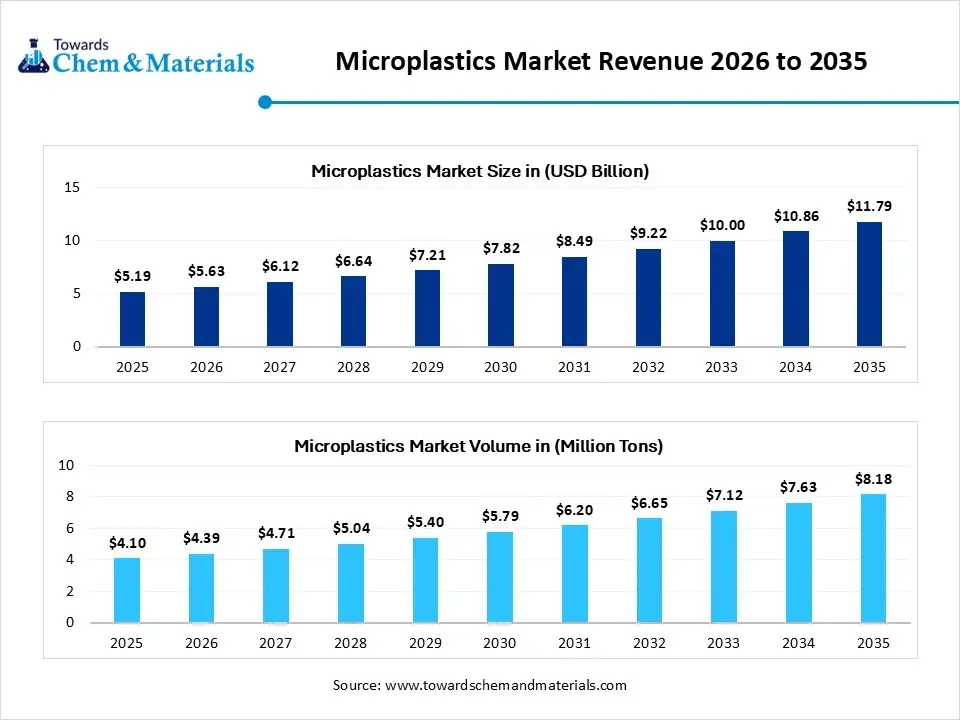
Microplastics originate from diverse sources, primarily through the degradation of larger plastic debris into progressively smaller fragments. Furthermore, manufactured polyethylene fragments known as microbeads are intentionally introduced into various personal care products, including cleansers and toothpastes, to serve as exfoliating agents. This sector encompasses downstream waste management and water processing solutions, featuring advanced filtration systems, automated screening technologies, and specialized coagulants. These methods are employed by municipal treatment plants and industrial facilities to remove microscopic plastic particles from wastewater prior to environmental discharge.
Key Takeaways
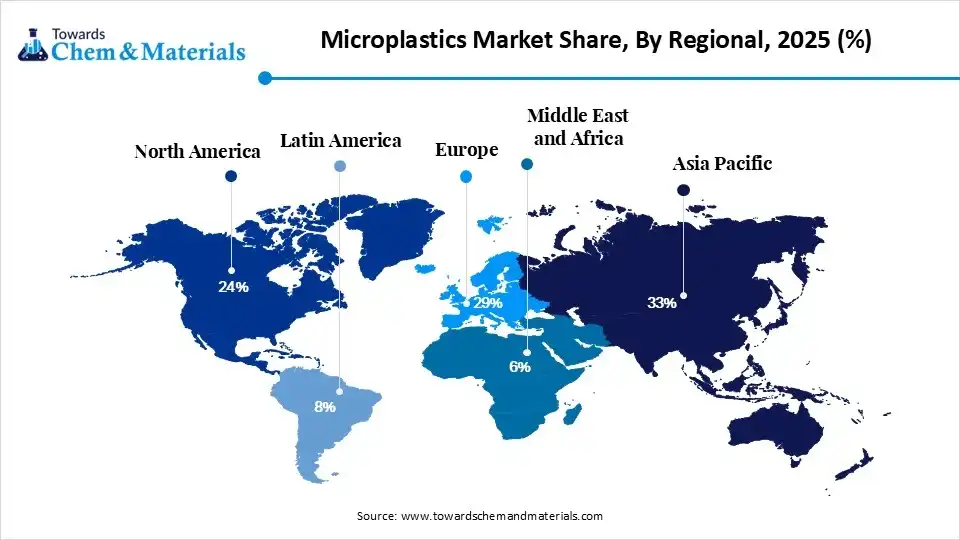
- By region, Asia Pacific dominated the market with the largest share of 33% in 2025 and is expected to grow at the fastest CAGR of 8.73% over the forecast period. The dominance and growth of the region can be attributed to rapid urbanization and industrialization in emerging economies.
- By region, Europe held a market share of 29% in 2025. The growth of the region can be credited to stringent plastic regulations emphasizing microplastic mitigation initiatives.
- By source, the secondary microplastics segment dominated the market with the largest share of 62% in 2025 and is expected to grow at the fastest CAGR of 9.60% over the forecast period. The dominance and growth of the segment can be attributed to the increasing generation of secondary particles.
- By polymer type, the polyethylene (PE) segment dominated the market with the largest share of 29% in 2025. The dominance of the segment can be linked to extensive packaging consumption across various industries.
- By polymer type, the polyethylene terephthalate (PET) segment is expected to grow at the fastest CAGR of 8.8% over the forecast period. The growth of the segment can be driven by increasing PET microplastic formation.
- By shape, the fragments segment dominated the market with the largest share of 34% in 2025. The dominance of the segment is owing to the surge in consumer and packaging waste.
- By shape, the fibers segment is expected to grow at the fastest CAGR of 9.4% during the projected period. The growth of the segment is due to the increase in the manufacturing of apparel.
- By size, the 100 µm–500 µm segment dominated the market with the largest share of 33% in 2025. The dominance of the segment can be attributed to the rise in environmental monitoring programs.
- By size, the less than 100 µm segment is expected to grow at the fastest CAGR of 9.5% over the forecast period. The growth of the segment can be credited to growing health concerns.
- By end-use industry, the packaging segment dominated the market with the largest share of 28% in 2025. The dominance of the segment can be linked to increasing e-commerce activity.
- By end-use industry, the textile segment is expected to grow at the fastest CAGR of 9.3% during the study period. The growth of the segment can be driven by the increase in synthetic clothing production.
- By environmental medium, the marine water segment dominated the market with the largest share of 37% in 2025. The dominance of the segment is owing to increasing packaging and fishing activities.
- By environmental medium, the airborne microplastics segment is expected to grow at the fastest CAGR of 10.1% during the projected period. The growth of the segment is due to the growing detection of indoor and outdoor particles.
- By detection & analysis technology, the spectroscopy segment dominated the market with the largest share of 34% in 2025. the dominance of the segment can be attributed to the growing adoption of spectroscopy by research institutions across the globe.
- By detection & analysis technology, the AI-based detection systems segment is expected to grow at the fastest CAGR of 11.2% during the projected period. the growth of the segment can be credited to increasing investments in advanced filtration infrastructure.
- By remediation method, the filtration systems segment dominated the market with the largest share of 36% in 2025. the dominance of the segment can be linked to the increasing deployment of advanced filtration technologies.
- By remediation method, the biological remediation segment is expected to grow at the fastest CAGR of 10.3% during the forecast period. the growth of the segment can be driven by research institutions increasingly developing enzyme-assisted degradation systems.
Microplastics Market Trends
- Increasing collaboration between different stakeholders, such as non-profit organizations, governments, and corporations, is the latest trend in the market, shaping positive market growth. These partnerships are helpful in the development of more convenient recycling technologies by formulating policies that promote sustainability.
- Many organizations are minimizing their environmental footprint, enhancing their brand image, and fulfilling the eco-conscious expectations of consumers by emphasizing the reuse, repair, and recycling of materials. Business models that prioritize the circular use of resources, such as microplastic recycling, are increasingly gaining momentum.
- Laboratories are transitioning toward automated high-resolution platforms, which is another major trend in the market, shaping positive market growth. Moreover, increasing emphasis on microplastic recycling aims to divert secondary microplastics from landfills.
How Cutting-Edge Technologies Are Revolutionizing the Microplastics Market?
Advanced technologies such as magnetic extraction, AI-driven robotics, and innovative filtration are transforming the market by allowing large-scale, efficient removal and detection. Furthermore, to prevent microplastic formation, researchers are increasingly developing new biodegradable materials and coatings for packaging that improve breakdown properties in natural environments.
Supply Chain Analysis of the Microplastics Market
Feedstock Procurement
It refers to the sourcing, collection, and processing of essential raw materials required to manufacture either conventional microplastics or to create biodegradable/alternative microplastic materials.
- Major Players: Cospheric LLC, Thermo Fisher Scientific
Chemical Synthesis and Processing
It refers to the industrial creation, deliberate design, structural manipulation, and chemical tracking of plastic particles measuring less than 5 millimeters in size.
- Major Players: Bruker Corporation, Shimadzu Corporation
Packaging and Labeling
It includes two distinct, highly technical intersecting industrial domains focused on tracking, identifying, and mitigating microplastic (MP) contamination.
- Major Players: Nestlé, Procter & Gamble, TotalEnergies, Corbion
Regulatory Compliance and Safety Monitoring
It involves the technologies, services, and analytical tools created to detect, quantify, and report microplastic contamination (particles <5mm) to meet government regulations.
- Major Players: PerkinElmer Inc., Horiba Ltd.
Microplastics Markets Regulatory Landscape: Global Regulations
| Country/Region | Key Regulations |
| European Union | Starting 31 May 2026, manufacturers using microplastics under temporary exemptions (e.g., industrial formulations or encapsulated actives) must submit granular, annual emission estimates directly to the European Chemicals Agency (ECHA). |
| United States | State-level policies addressing microplastics vary by jurisdiction and product category. Name each relevant state law, covered product, and effective date before describing a ban or phase-out. |
| India | While India lacks a specific, comprehensive regulatory policy targeted explicitly at atmospheric or loose microplastics, it acts indirectly by updating its Plastic Waste Management Rules, mandating strict Extended Producer Responsibility (EPR) compliance and prohibiting specified single-use plastic items and requiring plastic carry bags to meet the applicable minimum thickness requirements under India's Plastic Waste Management Rules. |
Market Dynamics
Drivers
Lower Manufacturing Cost
Recycled microplastic products offer a great revenue stream for industries and help minimize overall manufacturing costs. It also reduces environmental damage as the amount of plastic entering oceans and landfills is significantly decreased through recycling microplastics. In addition, continuous research into recycling technologies is transforming plastic waste into valuable resources, creating significant growth opportunities in construction (building materials) and electronics. Innovations further enable wider adoption of recycled materials.
Restraints
Lack of Standardization
Industry research lacks universally recognized grades and standardized methodology, causing highly inconsistent data collection across laboratories, which is the major factor hindering the growth of the market. Moreover, insufficient feedstock availability and inadequate infrastructure pose significant obstacles to demand. Additionally, the increased costs of these processes relative to conventional recycling methods hamper the economic competitiveness of industry stakeholders.
Opportunities
Growth in Emerging Markets
Growing plastic consumption can increase the need for microplastic monitoring, wastewater treatment, and pollution-control systems in developing economies. Also, to address environmental sustainability, manufacturers in the clean beauty sector are actively seeking organic, abrasive, and exfoliating alternatives to replace synthetic plastic microbeads in facial scrubs and oral care products.
Segmental Insights
Source Insights
The Secondary Microplastics Segment Dominated the Microplastics Market with 62% of Market Share in 2025
The secondary microplastics segment dominated the market with the largest share of 62% in 2025 and is expected to grow at the fastest CAGR of 9.60% over the forecast period. The dominance and growth of the segment can be attributed to the increasing generation of secondary particles across the globe and rapid urbanization in emerging economies. Also, packaging fragmentation boosts environmental accumulation.
Microplastics Market Share, By Source, 2025 (%)
| By Source | Revenue Share, 2025 (%) |
| Primary Microplastics | 38% |
| Secondary Microplastics | 62% |
The primary microplastics segment held the market share of 38% in 2025. The growth of the segment can be credited to the increasing tracking of intentionally produced microplastics and the manufacturing and textile industry generating persistent synthetic particles.
Polymer Type Insights
The Polyethylene (PE) Segment Dominated the Market with 29% of Market Share in 2025
The polyethylene (PE) segment dominated the market with the largest share of 29% in 2025. The dominance of the segment can be linked to the extensive packaging consumption across various industries and the ongoing fragmentation of flexible plastic waste. Recycling inefficiencies sustain environmental accumulation rates.
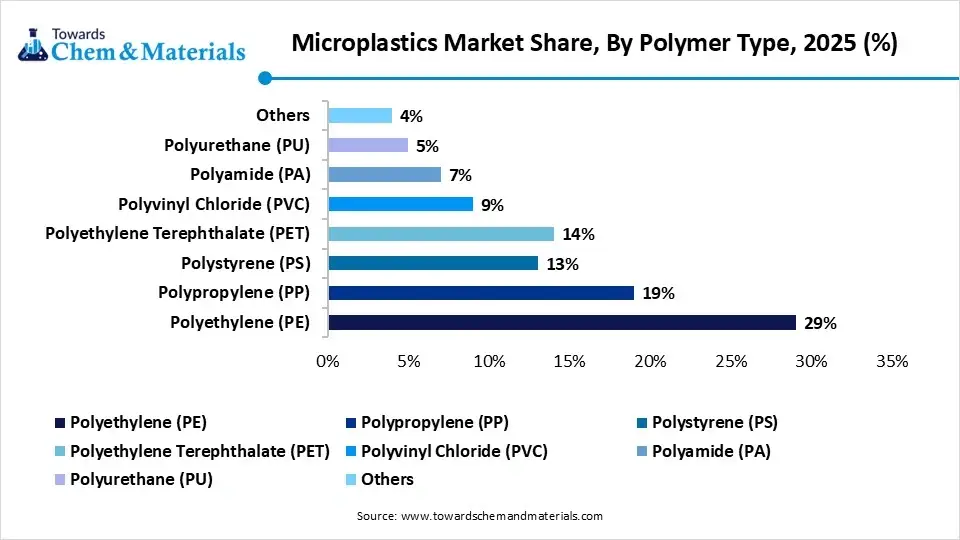
The polyethylene terephthalate (PET) segment held the market share of 14% in 2025 and is expected to grow at the fastest CAGR of 8.8% over the forecast period. The growth of the segment can be driven by increasing PET microplastic formation due to textile microfiber shedding and the expanding fashion industry across the globe. Beverage packaging waste fuels large-scale environmental dispersion.
Shape Insights
The Fragments Segment Dominated the Market with 34% of Market Share in 2025
The fragments segment dominated the market with the largest share of 34% in 2025. The dominance of the segment is owing to the surge in consumer and packaging waste, coupled with the rapid degradation of large plastic products. In addition, environmental weathering boosts formation in oceans and soils.
Microplastics Market Share, By Shape, 2025 (%)
| By Shape | Revenue Share, 2025 (%) |
| Fragments | 34% |
| Fibers | 27% |
| Beads | 11% |
| Films | 12% |
| Foams | 9% |
| Granules | 7% |
The fibers segment held the market share of 27% in 2025 and is expected to grow at the fastest CAGR of 9.4% during the projected period. The growth of the segment is due to an increase in the manufacturing of apparel and an increase in synthetic textile washing, which releases significant microfiber volume in the air.
Size Insights
The 100 µm–500 µm Segment Dominated the Market with 33% of Market Share in 2025
The 100 µm–500 µm segment dominated the market with the largest share of 33% in 2025. The dominance of the segment can be attributed to the rise in environmental monitoring programs focusing on mid-sized particles and the growing failure rate of water systems to capture these particles completely.
Microplastics Market Share, By Size, 2025 (%)
| By Size | Revenue Share, 2025 (%) |
| Less than 100 µm | 21% |
| 100 µm–500 µm | 33% |
| 500 µm–1 mm | 26% |
| 1 mm–5 mm | 20% |
The less than 100 µm segment held the market share of 21% in 2025 and is expected to grow at the fastest CAGR of 9.5% over the forecast period. The growth of the segment can be credited to the growing health concerns surrounding inhalation and ingestion, along with the growing use of advanced analytical tools.
End-Use Industry Insights
The Packaging Segment Dominated the Market with 28% of Market Share in 2025
The packaging segment dominated the market with the largest share of 28% in 2025. The dominance of the segment can be linked to the increasing e-commerce activity in flexible packaging and increasing environmental leakage rates. Single-use plastic packaging remains the largest source of microplastic generation.
Microplastics Market Share, By End-Use Industry, 2025 (%)
| By End-Use Industry | Revenue Share, 2025 (%) |
| Packaging | 28% |
| Textile | 22% |
| Automotive | 14% |
| Construction | 11% |
| Personal Care & Cosmetics | 8% |
| Marine & Fisheries | 7% |
| Electronics | 6% |
| Healthcare | 4% |
The textile segment held the market share of 22% in 2025 and is expected to grow at the fastest CAGR of 9.3% during the study period. The growth of the segment can be driven by an increase in synthetic clothing production and rapid fast fashion consumption across the globe. Textile wastewater management remains insufficient in many regions.
Environmental Medium Insights
The Marine Water Segment Dominated the Microplastics Market with 37% of Market Share in 2025
The marine water segment dominated the market with the largest share of 37% in 2025. The dominance of the segment is owing to the increasing packaging and fishing activities, facilitating ocean pollution, and ongoing global marine programs expanding contamination assessments. River discharge transports large microplastic volumes into marine ecosystems.
Microplastics Market Share, By Environmental Medium, 2025 (%)
| By Environmental Medium | Revenue Share, 2025 (%) |
| Marine Water | 37% |
| Freshwater | 22% |
| Soil & Sediment | 18% |
| Airborne Microplastics | 11% |
| Wastewater Systems | 12% |
The airborne microplastics segment held the market share of 11% in 2025 and is expected to grow at the fastest CAGR of 10.1% during the projected period. The growth of the segment is due to the growing detection of indoor and outdoor particle detection, coupled with the surge in health concerns. Textile fibers further increase atmospheric contamination levels.
Detection & Analysis Technology Insights
The Spectroscopy Segment Dominated the Market with 34% of Market Share in 2025
The spectroscopy segment dominated the market with the largest share of 34% in 2025. The dominance of the segment can be attributed to the growing adoption of spectroscopy by research institutions across the globe, and FTIR and Raman technologies improving precise polymer identification capabilities.
Microplastics Market Share, By Detection & Analysis Technology, 2025 (%)
| By Detection & Analysis Technology | Revenue Share, 2025 (%) |
| Marine Water | 37% |
| Freshwater | 22% |
| Soil & Sediment | 18% |
| Airborne Microplastics | 11% |
| Wastewater Systems | 12% |
The AI-based detection systems segment held the market share of 14% in 2025 and is expected to grow at the fastest CAGR of 11.2% during the projected period. The growth of the segment can be credited to the increasing investments in advanced filtration infrastructure and the surge in wastewater plants. Treatment inefficiencies allow persistent particles to enter pathways.
Remediation Method Insights
The Filtration Systems Segment Dominated the Market with 36% of Market Share in 2025
The filtration systems segment dominated the market with the largest share of 36% in 2025. The dominance of the segment can be linked to the increasing deployment of advanced filtration technologies and regulatory standards, boosting filtration infrastructure growth.
Microplastics Market Share, By Remediation Method, 2025 (%)
| By Remediation Method | Revenue Share, 2025 (%) |
| Filtration Systems | 36% |
| Chemical Treatment | 18% |
| Biological Remediation | 16% |
| Electrocoagulation | 14% |
| Adsorption Technology | 16% |
The biological remediation segment held the market share of 16% in 2025 and is expected to grow at the fastest CAGR of 10.3% during the forecast period. The growth of the segment can be driven by research institutions increasingly developing enzyme-assisted degradation systems, along with a surge in investment for suitable remediation solutions.
Regional Insights
How did Asia Pacific Dominate the Microplastics Market in 2025?
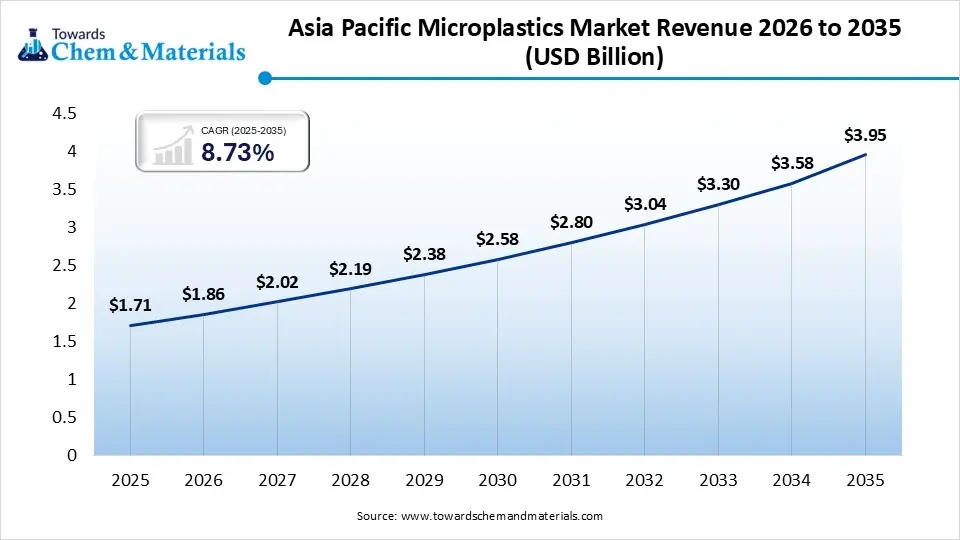
The Asia Pacific microplastics market size was estimated at USD 1.71 billion in 2025 and is projected to reach USD 3.95 billion by 2035, growing at a CAGR of 8.73% from 2026 to 2035. The dominance and growth of the region can be attributed to the rapid urbanization and industrialization in emerging economies, along with the expanding textile and packaging sectors. In addition, increasing public awareness regarding the health and environmental impacts of microplastics is fuelling research and funding for detection technology.
China Microplastics Market Trends
In the Asia Pacific, China dominated the market owing to the ongoing urbanisation and industrial growth, especially in eastern coastal regions, along with the surge in awareness regarding environmental and health impacts. Also, high consumption of packaged goods and e-commerce growth are contributing to the increase in plastic in urban areas.
Europe Microplastics Market Growth Trends
Europe held the market share of 29% in 2025. The growth of the region can be credited to the stringent plastic regulations emphasizing microplastic mitigation initiatives and ongoing innovation in remediation technologies. Furthermore, increasing consumer awareness regarding plastic pollution in food and health is prompting market players to adopt sustainable practices.
Germany Microplastics Market Trends
The growth of the market in the country is due to the countrys robust g R&D infrastructure, encouraging the development of innovative microscopic and spectroscopic techniques for detecting microplastics. Moreover, industrial facilities and water treatment plants are rapidly adopting cutting-edge filtration systems to remove microplastics.
Microplastics Market Companies
- Lamberti S.p.A.: Lamberti S.p.A. is a significant player in the global microplastics market, specifically focusing on the development and production of specialized polymer microbeads (also known as microspheres) used as functional additives across various industries.
- Cospheric LLC: Cospheric LLC is a California-based manufacturer and global supplier specializing in high-precision, spherical microparticles, including microspheres, nanospheres, and beads.
- Applied Microspheres GmbH
- EPRUI Biotech Co., Ltd.
- Nanjing Chemical Material Corp.
- Bangs Laboratories, Inc.
- Polysciences, Inc.
Microplastics Market Segments List
By Source
- Primary Microplastics
- Microbeads
- Industrial Pellets
- Synthetic Fibers
- Paint & Coating Particles
- Secondary Microplastics
- Packaging Waste Degradation
- Tire Wear Particles
- Textile Fragmentation
- Fishing Gear Degradation
- Construction Material Degradation
By Polymer Type
- Polyethylene (PE)
- LDPE
- HDPE
- Polypropylene (PP)
- Polystyrene (PS)
- Expanded PS
- General Purpose PS
- Polyethylene Terephthalate (PET)
- Polyvinyl Chloride (PVC)
- Polyamide (PA)
- Polyurethane (PU)
- Others
By Shape
- Fragments
- Fibers
- Beads
- Films
- Foams
- Granules
By Size
- Less than 100 µm
- 100 µm–500 µm
- 500 µm–1 mm
- 1 mm–5 mm
By End-Use Industry
- Packaging
- Textile
- Automotive
- Construction
- Personal Care & Cosmetics
- Marine & Fisheries
- Electronics
- Healthcare
By Environmental Medium
- Marine Water
- Freshwater
- Soil & Sediment
- Airborne Microplastics
- Wastewater Systems
By Detection & Analysis Technology
- Spectroscopy
- FTIR
- Raman Spectroscopy
- Microscopy
- Optical Microscopy
- Electron Microscopy
- Thermal Analysis
- Chromatography
- AI-Based Detection Systems
By Remediation Method
- Filtration Systems
- Chemical Treatment
- Biological Remediation
- Electrocoagulation
- Adsorption Technology
By Regions
- North America
- U.S.
- Canada
- Mexico
- Europe
- Germany
- UK
- France
- Italy
- Spain
- Asia Pacific
- China
- India
- Japan
- South Korea
- Latin America
- Brazil
- Argentina
- Middle East & Africa
- Saudi Arabia
- South Africa
A Seven-Phase Framework
Our methodology is designed to be universally applicable across commodity chemicals, specialty chemicals, petrochemicals, construction chemicals, coatings, electronic chemicals, industrial gases, agrochemicals, water treatment chemicals, and performance materials. Each phase builds upon the last, creating a layered validation structure that minimizes estimation error and maximizes analytical confidence.
The framework ensures comprehensive market coverage, robust cross-validation, and reliable long-term forecasting — producing market estimates that withstand scrutiny from investors, regulators, and corporate strategy teams.

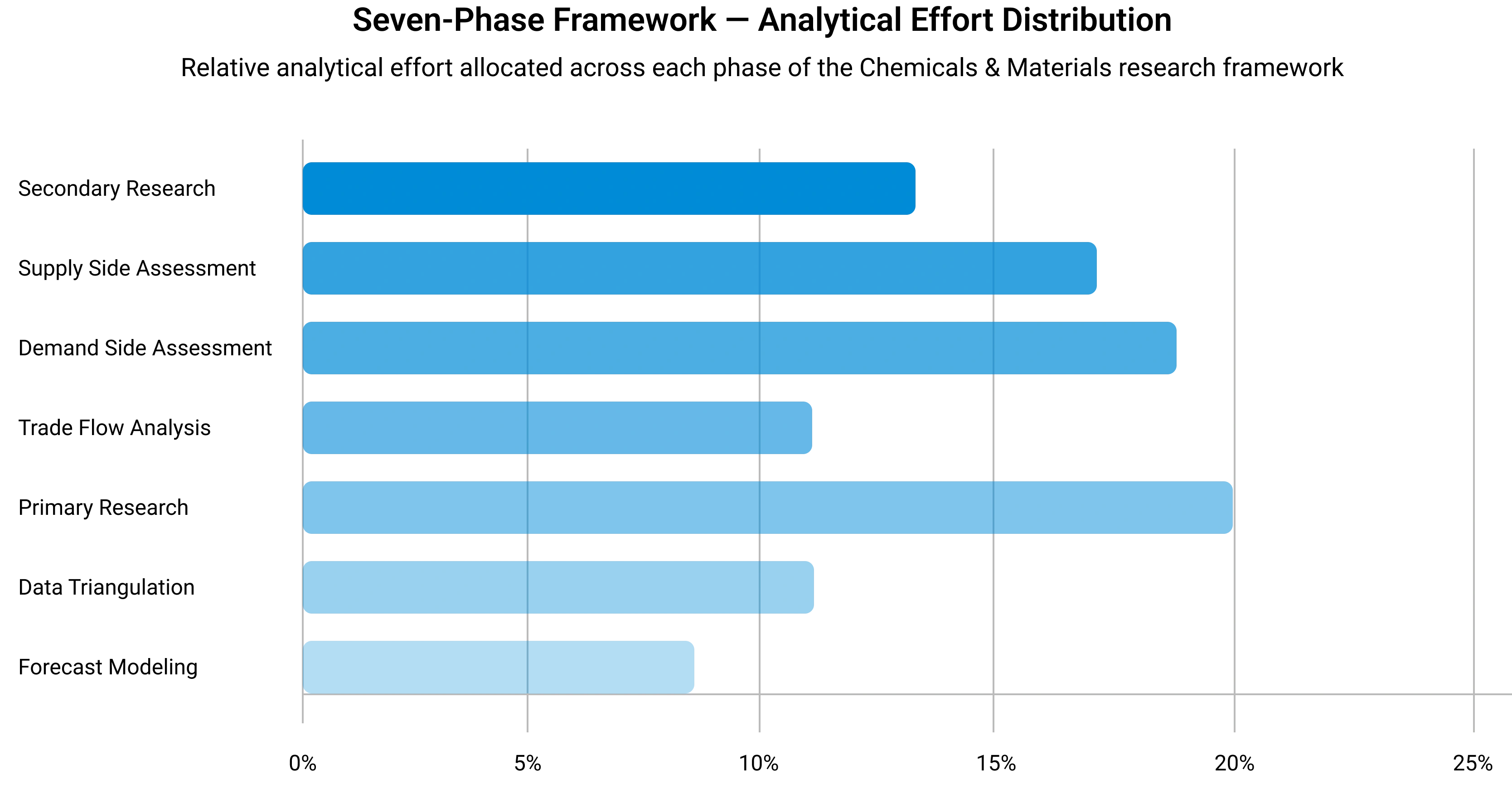
Seven-Phase Framework — Analytical Effort Distribution
Relative analytical effort allocated across each phase of the Chemicals & Materials research framework
Phase 1 - Secondary Research: Establishing the Foundation
Secondary research collects and evaluates publicly available information from authoritative sources, establishing the foundational understanding of market structure, value chain dynamics, competitive landscape, and end-use demand patterns. Every source is evaluated for credibility, recency, geographic relevance, and methodological soundness before inclusion.
Industry Associations
Sources include ACC, CEFIC, ICCA, JCIA, CPCIF, and SOCMA providing production volumes, consumption trends, capacity developments, and sustainability initiatives.
Company Disclosures
Annual reports, investor presentations, earnings transcripts, and regulatory filings reveal product portfolios, manufacturing footprints, capacity expansions, and revenue segmentation.
Government Databases
National statistical offices, customs authorities, environmental agencies, and industrial production databases provide verified statistics on output, trade flows, and regulatory compliance.
Trade Databases
UN Comtrade, ITC, Eurostat, and national customs authorities enable assessment of global product movement, import dependency, and export competitiveness across regions.
Our Secondary Research Sources
- Ministry of Chemicals and Fertilizers
- European Chemicals Agency
- United States Department of Energy
- Ministry of Industry and Information Technology
- Ministry of Economy Trade and Industry
- Ministry of Trade Industry and Energy
- National Institute of Standards and Technology
- Council of Scientific and Industrial Research
- Fraunhofer Society
- National Institute for Materials Science
Phase 2 — Supply-Side Assessment: Mapping Production Capabilities
Production Capacity Analysis
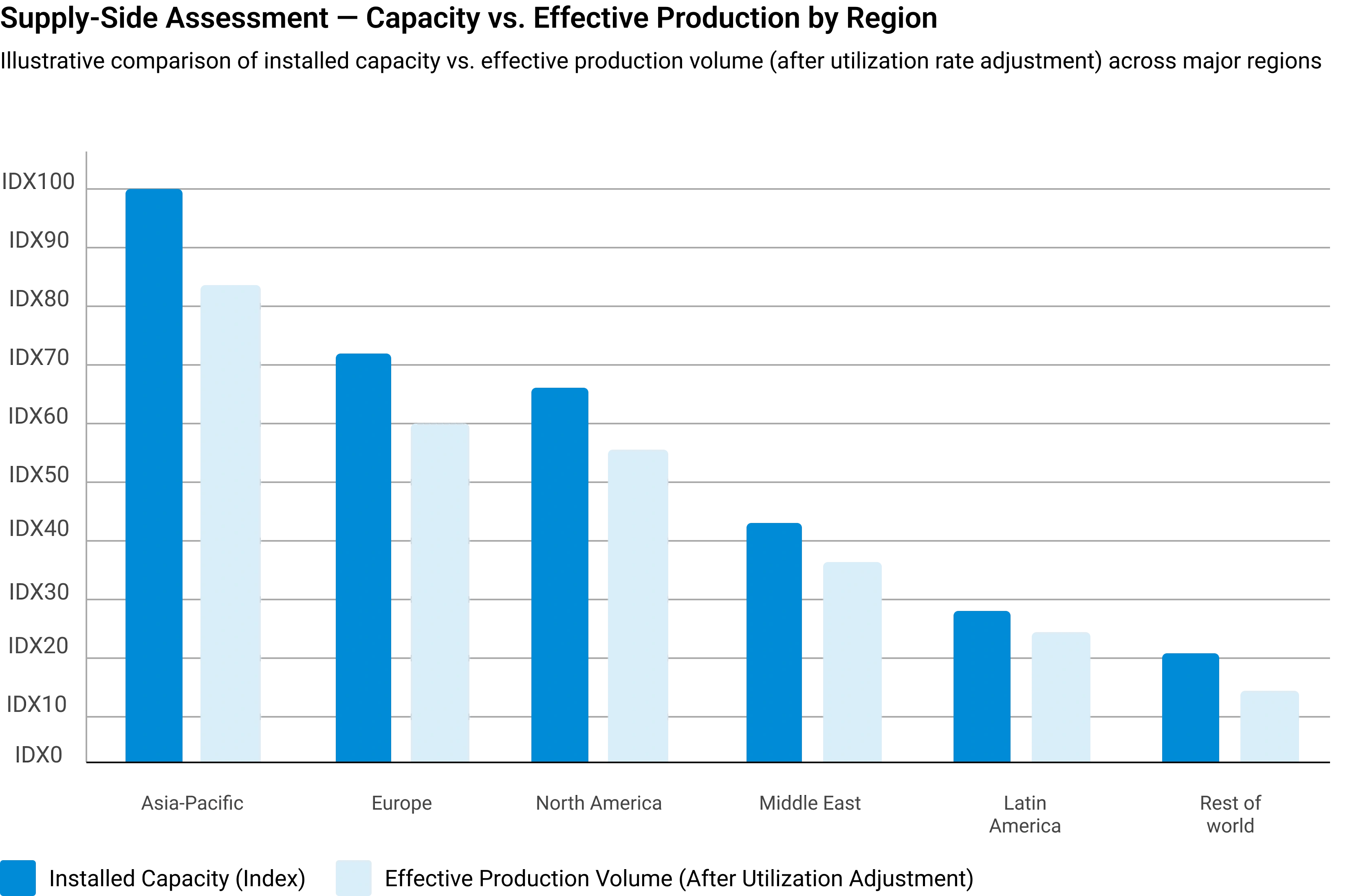
All major manufacturers are assessed for existing installed capacity, planned additions, expansions, new plant announcements, and technology adoption — mapped at global, regional, and country levels.
Capacity Utilization Adjustment
Installed capacity is adjusted using utilization rates based on demand conditions, feedstock availability, plant operating rates, maintenance schedules, and regulatory restrictions.
Manufacturer Revenue Analysis
Product-specific revenues, segment-level performance, regional distribution, average selling prices, and margin trends are evaluated to establish market value estimates.
Supply-Side Assessment — Capacity vs. Effective Production by Region
Illustrative comparison of installed capacity vs. effective production volume (after utilization rate adjustment) across major regions
Phase 3 — Demand-Side Assessment: Quantifying Chemical Consumption
Demand-side analysis quantifies chemical consumption across industries, applications, and geographies — identifying where and how chemicals are consumed throughout the value chain with precision.
End-Use Industry Analysis
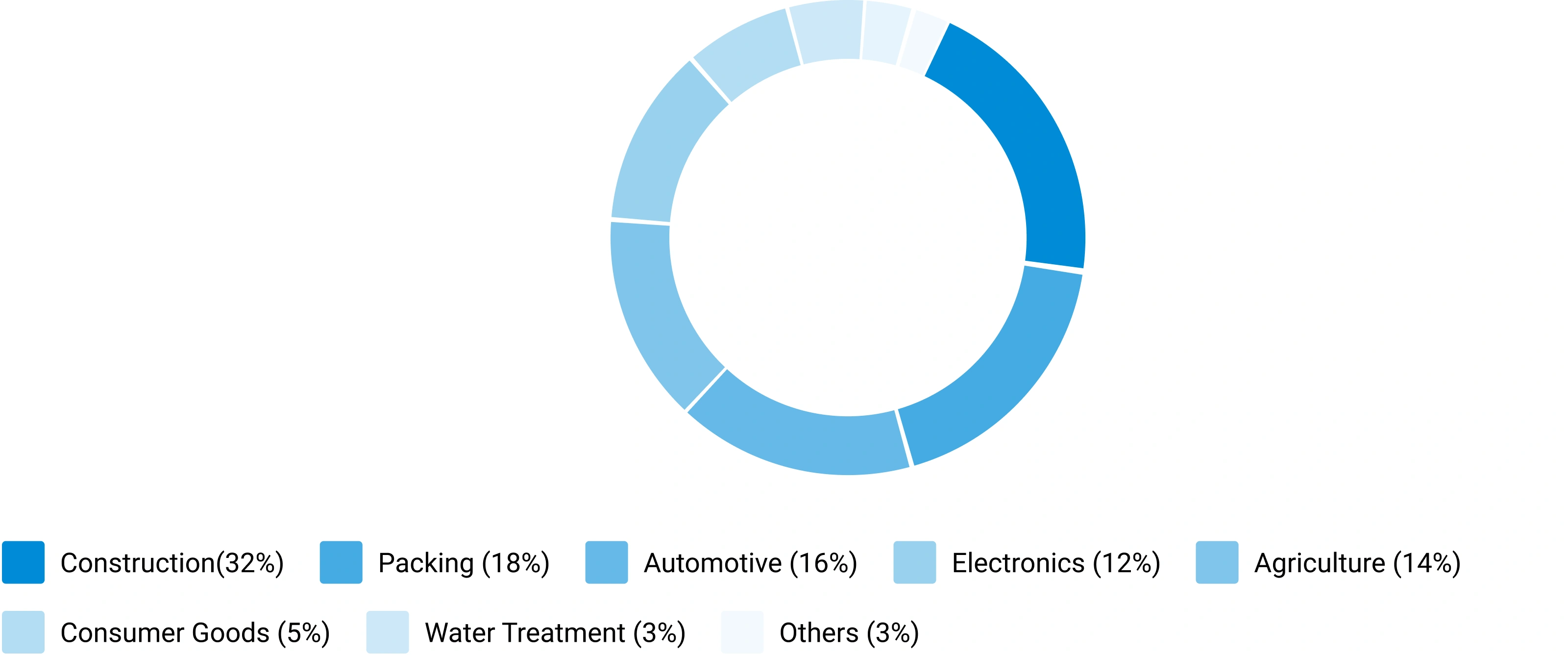
Chemical demand is evaluated across automotive, construction, packaging, electronics, agriculture, healthcare, consumer goods, industrial manufacturing, energy and utilities, and water treatment. Industry output, production trends, and consumption intensity are analyzed to determine demand patterns.
Consumption Modeling
Demand is estimated using measurable indicators: kilograms per vehicle, kilograms per square meter of construction, dosage per cubic meter of water treated, kilograms per hectare of agricultural land, and kilograms per ton of manufactured products. Consumption factors are validated through industry publications and primary interviews.
Application Analysis
The market is segmented by application area to understand product performance requirements, formulation trends, technology adoption, customer preferences, and regulatory requirements improving demand accuracy and segmentation granularity.
Demand-Side Assessment — End-Use Industry Demand Distribution
Illustrative distribution of chemical & materials demand across key end-use industries
Phase 4 - Trade Flow Analysis: Balancing Regional Supply and Demand
Trade flow analysis reconciles regional supply and demand estimates through import and export data, identifying net supply positions, regional dependencies, and market imbalances. It serves as an independent validation layer that tests the consistency of supply-side and demand-side estimates.
Import Analysis
Import data is evaluated to determine volumes, source countries, product dependency, regional supply gaps, and pricing trends — identifying markets that rely heavily on external supply and where domestic production is insufficient to meet demand.
Export Analysis
Export assessments reveal production surplus, export competitiveness, regional manufacturing strength, and global market participation. Export patterns also help validate domestic production estimates and identify net exporting regions.
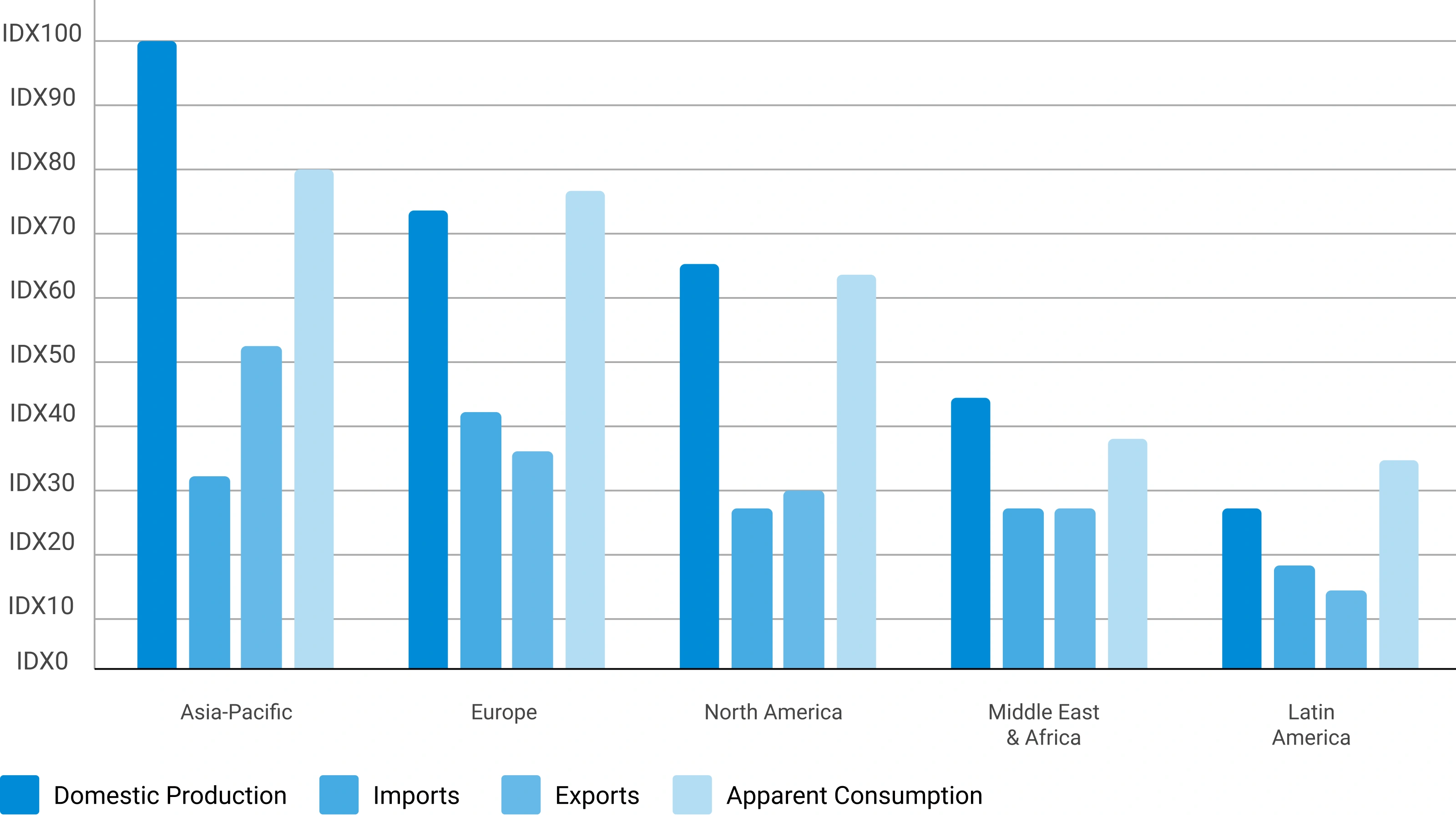
Apparent Consumption Model
Regional consumption is assessed using the standard apparent consumption formula:
Results identify net importing regions, net exporting regions, regional deficits, and surpluses — serving as an independent validation of supply and demand estimates.
Trade Flow Analysis — Net Supply Position by Region
Illustrative apparent consumption vs. domestic production across major regions — positive gap indicates net import dependency
Phase 5 — Primary Research: The Critical Validation Layer
Primary research tests and refines findings from secondary research through direct engagement with industry participants across the supply chain, demand side, and expert community. It captures intelligence that no database or published report can provide — the real-world experience of manufacturers, buyers, and specialists operating in the market.

Supply-Side Interviews
Conversations with chemical manufacturers, raw material suppliers, contract manufacturers, technology providers, and plant operators cover production trends, capacity utilization, pricing developments, technology shifts, and competitive dynamics.

Demand-Side Interviews
Engagement with OEMs, industrial consumers, procurement managers, distributors, formulators, and end-use manufacturers focuses on consumption trends, purchasing behavior, product substitution, demand outlook, and emerging applications.

Industry Expert Consultations
Additional interviews with industry consultants, independent experts, regulatory specialists, technical professionals, and research institutions provide deeper market context and validate key analytical assumptions.
Focus Areas of Primary Research:
Market Size & Forecast Validation
Revenue estimates, volume consumption, growth rates, forecast assumptions, regional demand.Supply Chain & Value Chain Assessment
Raw material sourcing, supply chain challenges, distribution networks, procurement practices.Production & Capacity Analysis
Manufacturing capacity, utilization rates, expansion projects, plant investments.Pricing & Cost Structure Analysis
Product pricing trends, feedstock costs, energy costs, margin pressures, pricing outlook.Competitive Landscape Assessment
Volume and value estimates confirmed to be fully consistent with one another before publicationInterview Volume by Market Scope
| Study Scope | Number of Interviews |
|---|---|
| Niche Market | 20 – 30 |
| Mid-Sized Market | 30 – 50 |
| Global Market | 50 – 80 |
| Highly Fragmented Market | 80 – 120 |
Interview Details:
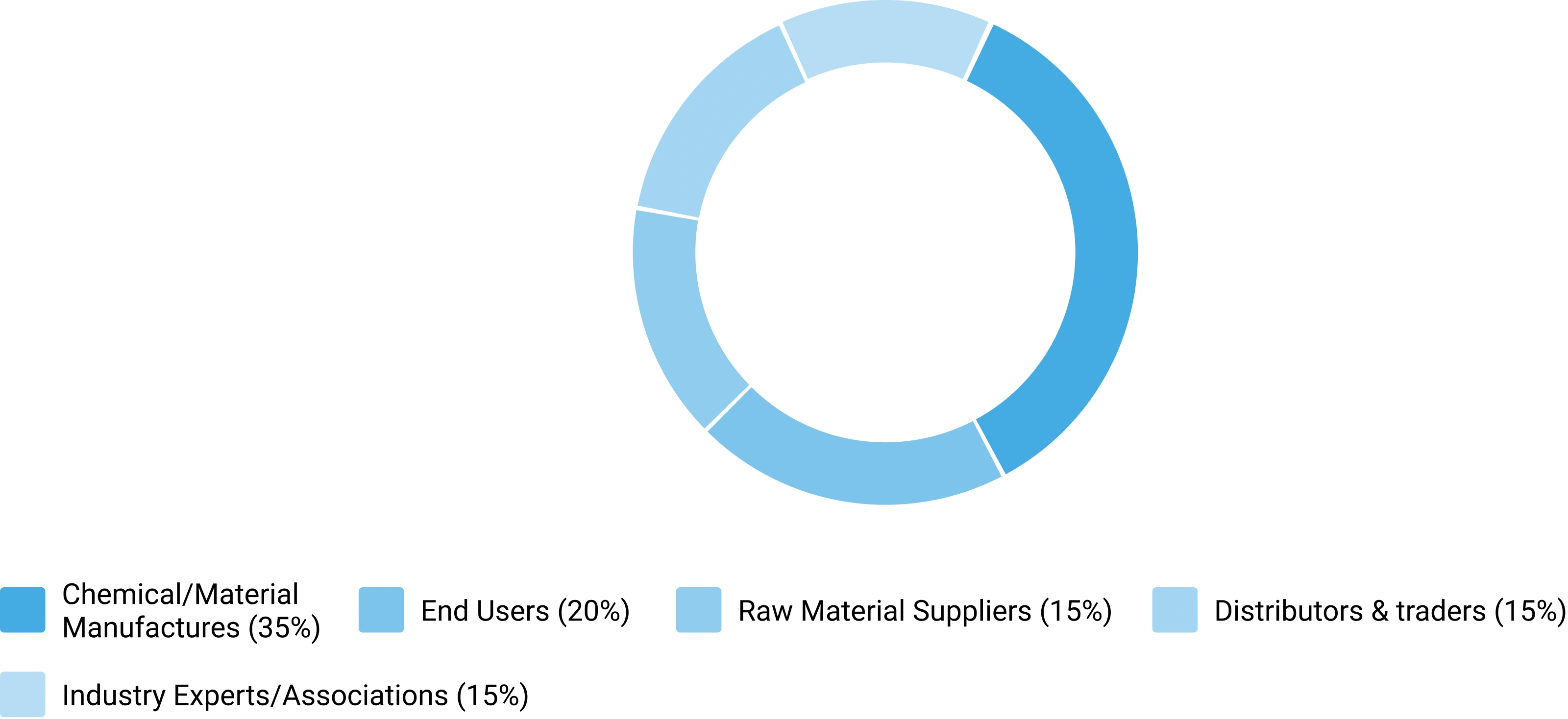
Category : Manufacturers, Suppliers, Distributors, End Users, Experts/Associations
Average Duration : 30–60 Minutes
Interview Mode : Video calls, telephonic interviews, expert consultations
Interview Format : Structured / Semi-Structured questionnaire
Focus Areas of Primary Research:
Market Size & Forecast Validation :
Revenue estimates, volume consumption, growth rates, forecast assumptions, regional demand.
Supply Chain & Value Chain Assessment :
Raw material sourcing, supply chain challenges, distribution networks, procurement practices.
Production & Capacity Analysis :
Manufacturing capacity, utilization rates, expansion projects, plant investments.
Pricing & Cost Structure Analysis :
Product pricing trends, feedstock costs, energy costs, margin pressures, pricing outlook.
Competitive Landscape Assessment :
Market share, competitor positioning, strategic initiatives, partnerships, acquisitions.
Primary Research — Stakeholder Coverage by Category
Distribution of interview respondents across stakeholder categories (% share from PPT data)
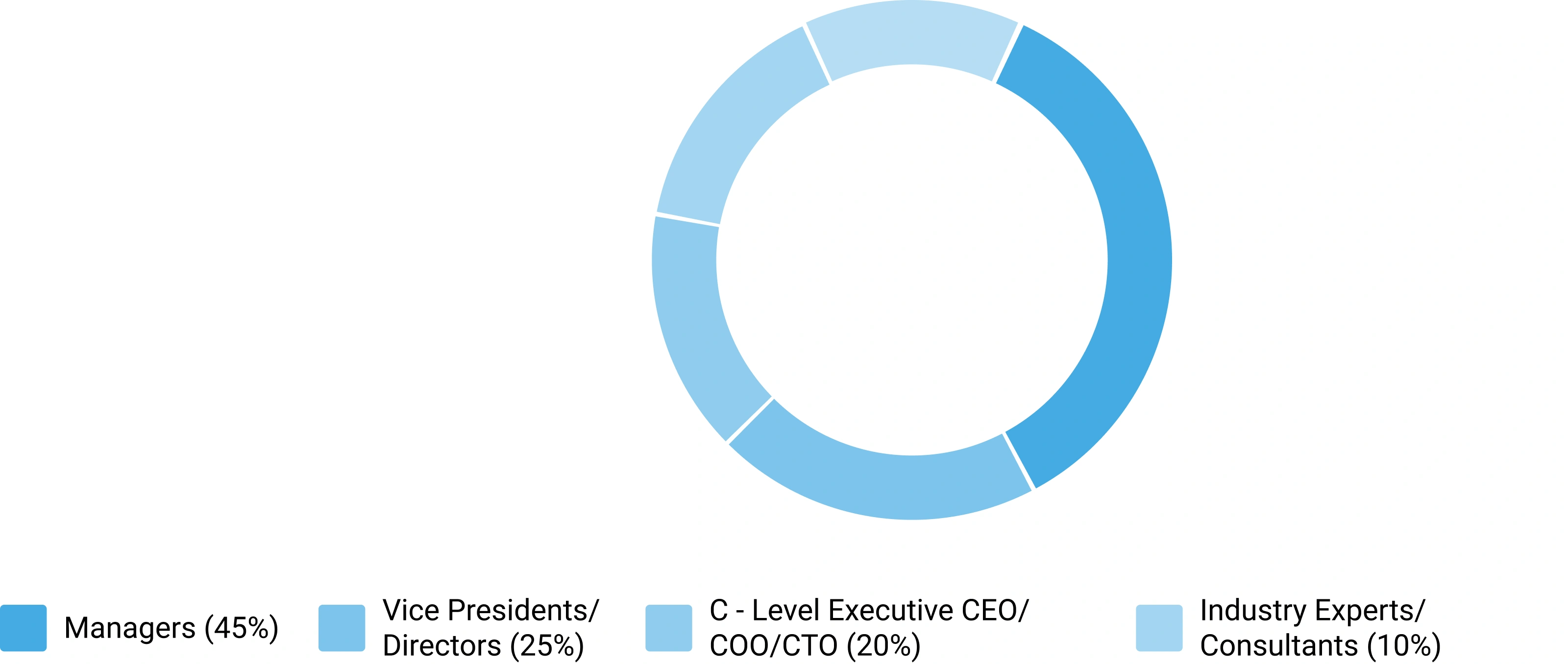
Primary Research — Respondent Designation Profile
Seniority breakdown of interview respondents (% share from PPT data)
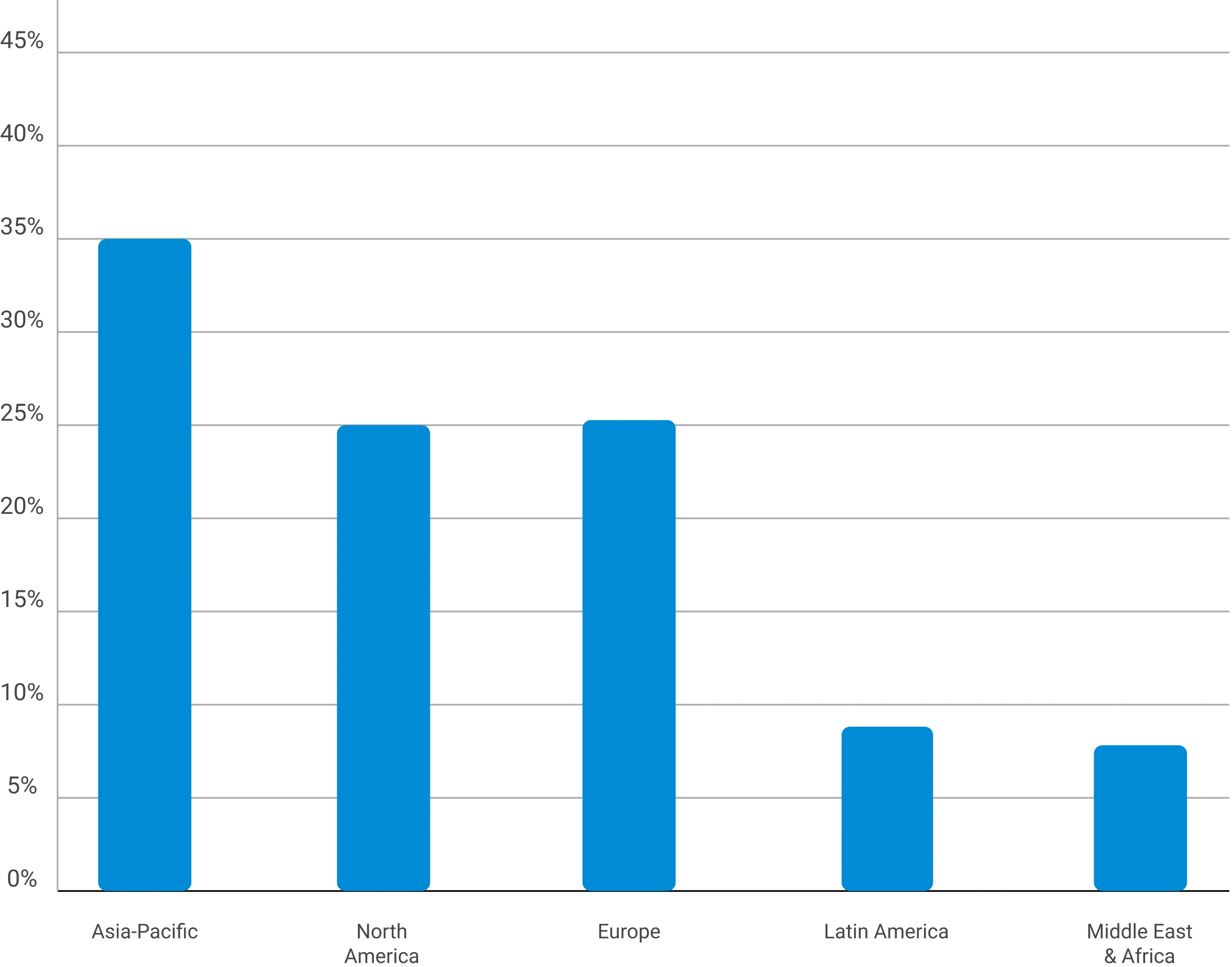
Primary Research — Geographic Coverage of Interviews
Regional distribution of primary research engagement (% share from PPT data)
Phase 6 — Data Triangulation and Market Validation
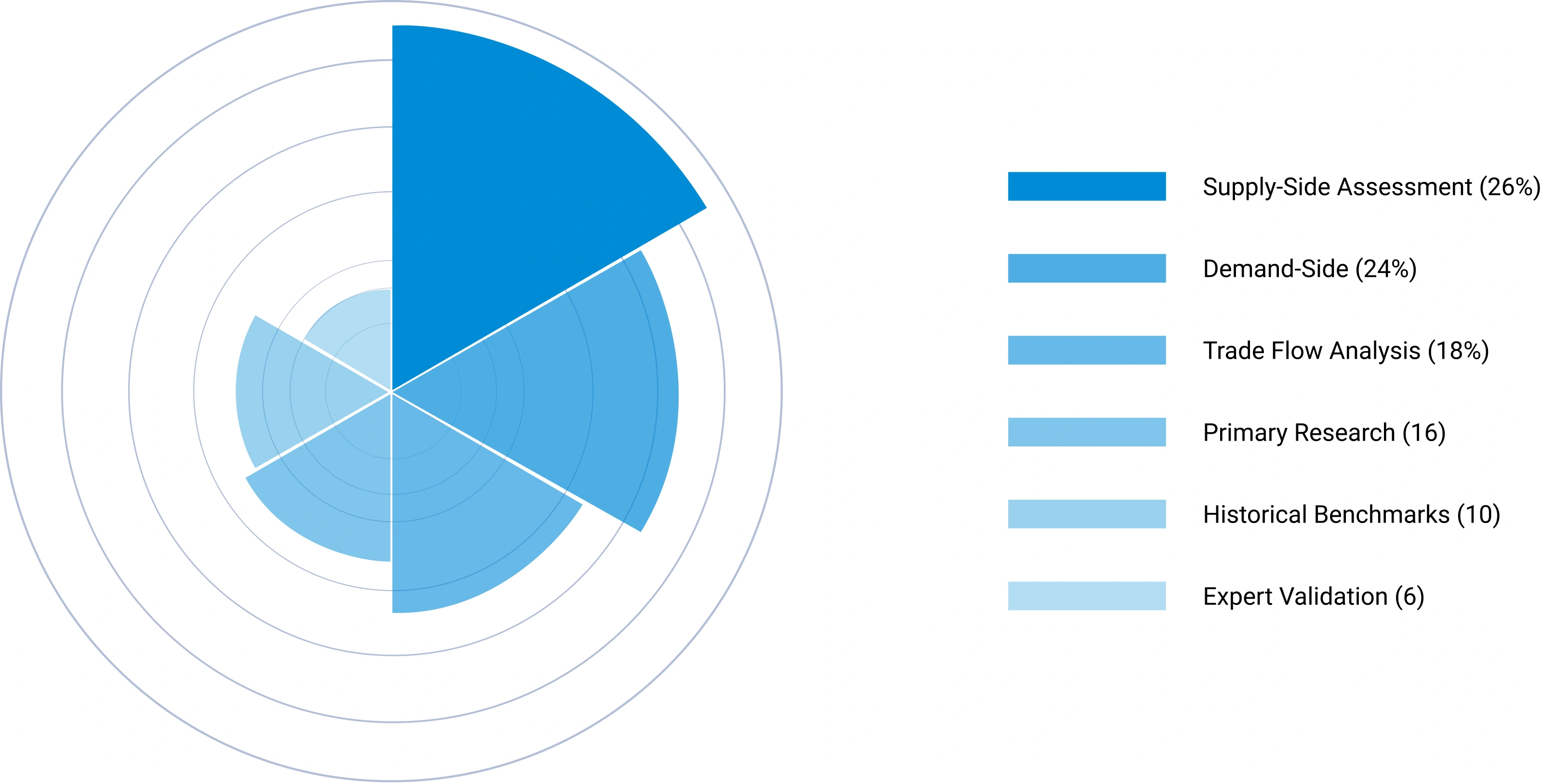
No single methodology is relied upon in isolation. Multiple independent estimation approaches are combined and reconciled to ensure consistency, accuracy, and analytical defensibility. Any material deviations between approaches are investigated and adjusted through additional validation cycles.
The final market size is derived through weighted triangulation of all validated methodologies. Any material deviations between approaches are investigated and adjusted through additional validation cycles. The outcome represents the most realistic assessment of the market based on available evidence and expert confirmation ensuring that volume and value estimates are fully consistent with one another.
Triangulation Framework — Input Contribution Weight
Relative weight each sizing input contributes to the final reconciled market estimate
Phase 7 — Forecast Modeling: Projecting Future Market Evolution
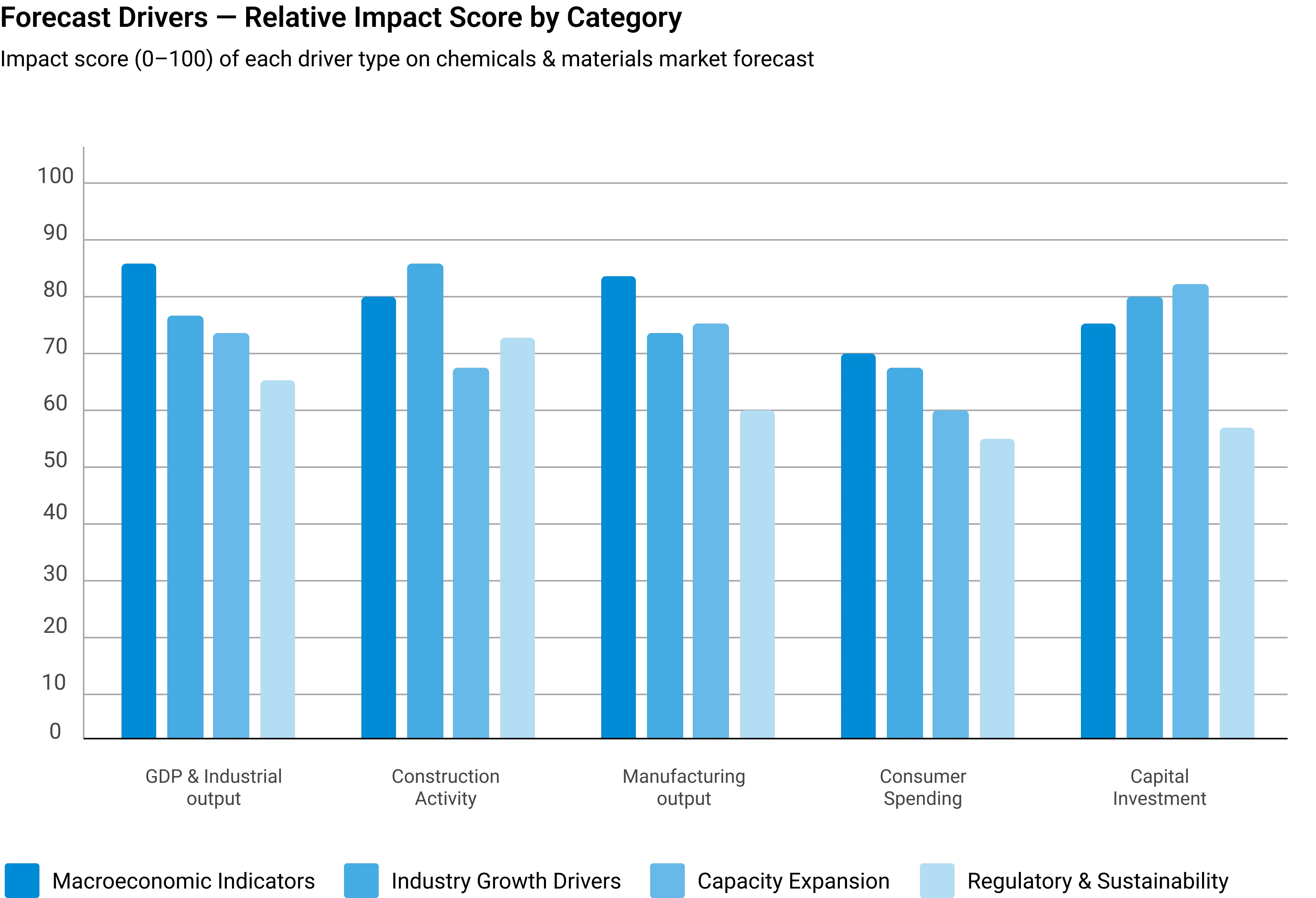
Forecasting evaluates the future trajectory of the market using a combination of quantitative indicators and qualitative assessments across economic, industry, and regulatory dimensions. Rather than simple extrapolation, each driver is independently modeled and integrated into a composite forecast.
Macroeconomic Indicators
GDP growth, industrial production, manufacturing output, construction activity, consumer spending, and capital investment form the quantitative foundation of long-term demand projections. These are applied at country, regional, and global levels.
Industry Growth Drivers
Urbanization, infrastructure development, industrialization, technological innovation, sustainability initiatives, and evolving product performance requirements are assessed at regional and industry levels — capturing both structural and cyclical demand drivers.
Capacity Expansion Analysis
Announced plant expansions, new manufacturing facilities, technology upgrades, and strategic investments are evaluated to determine future supply-demand dynamics and potential market tightness or oversupply situations.
Regulatory & Sustainability
Environmental regulations, chemical safety standards, emission reduction targets, circular economy initiatives, and sustainability requirements are incorporated as they often influence product adoption rates and market growth trajectories.
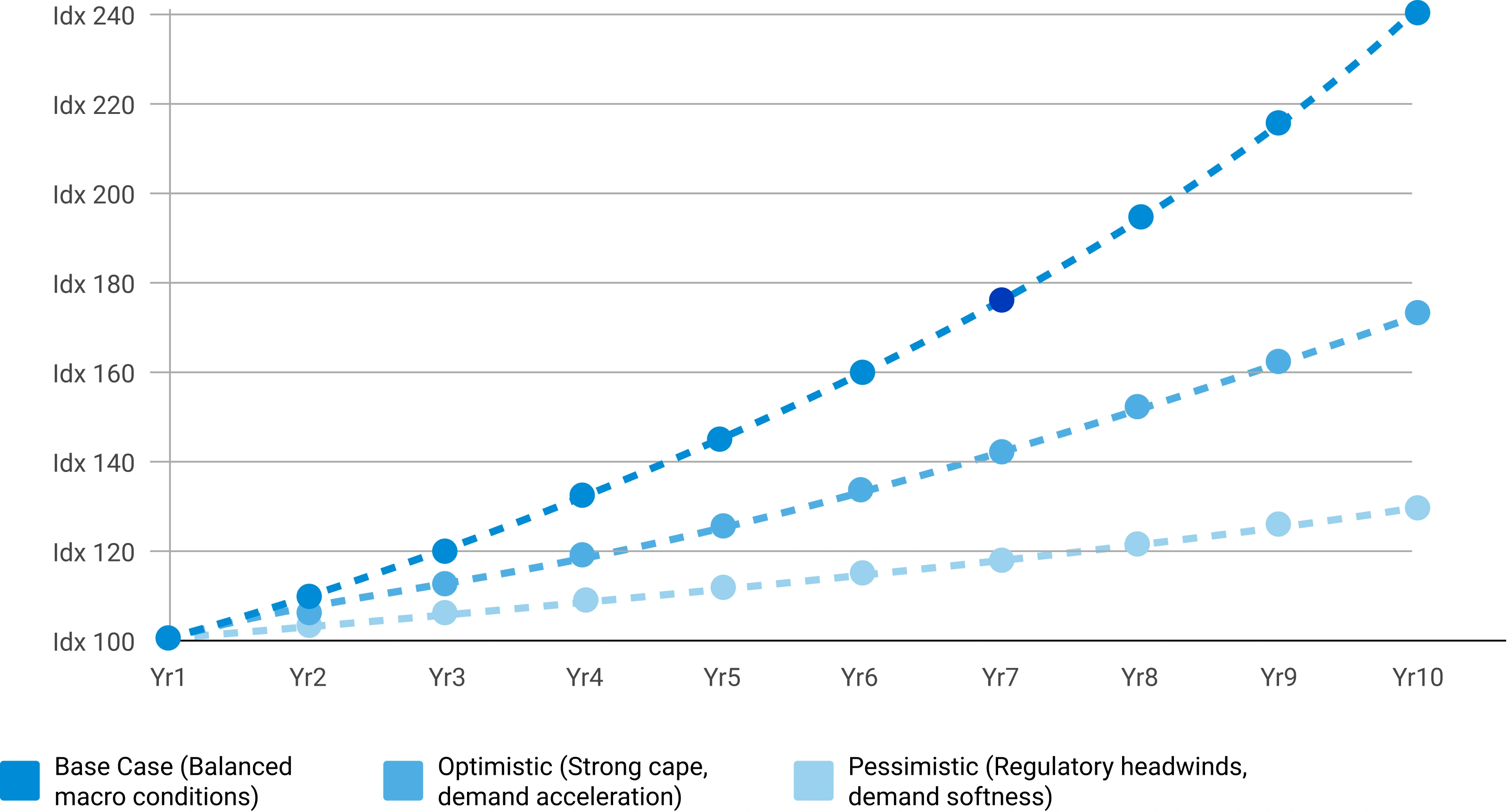
Scenario Forecast Range — Indexed Market Growth (Year 1–10)
Illustrative indexed growth trajectories across Base, Optimistic, and Pessimistic scenarios over a 10-year forecast horizon
Forecast Drivers — Relative Impact Score by Category
Impact score (0–100) of each driver type on chemicals & materials market forecast



Comments
Share your thoughts, ask a question, or provide feedback about this report.