
Sustainable Chemicals Market Size Analysis Report 2035
The global sustainable chemicals market size was valued at USD 145.19 billion in 2025, is estimated to reach USD 161.96 billion in 2026, and is projected to reach USD 433.14 billion by 2035, exhibiting a compound annual growth rate (CAGR) of 11.55% over the forecast period from 2026 to 2035. In terms of volume, the sustainable chemicals market is projected to grow from 301.55 million tons in 2025 to 780.72 million tons by 2035. growing at a CAGR of 9.98% from 2026 to 2035. The growth of the market is driven by strict ESG mandates, the transition to circular economies, and the push away from fossil fuels.
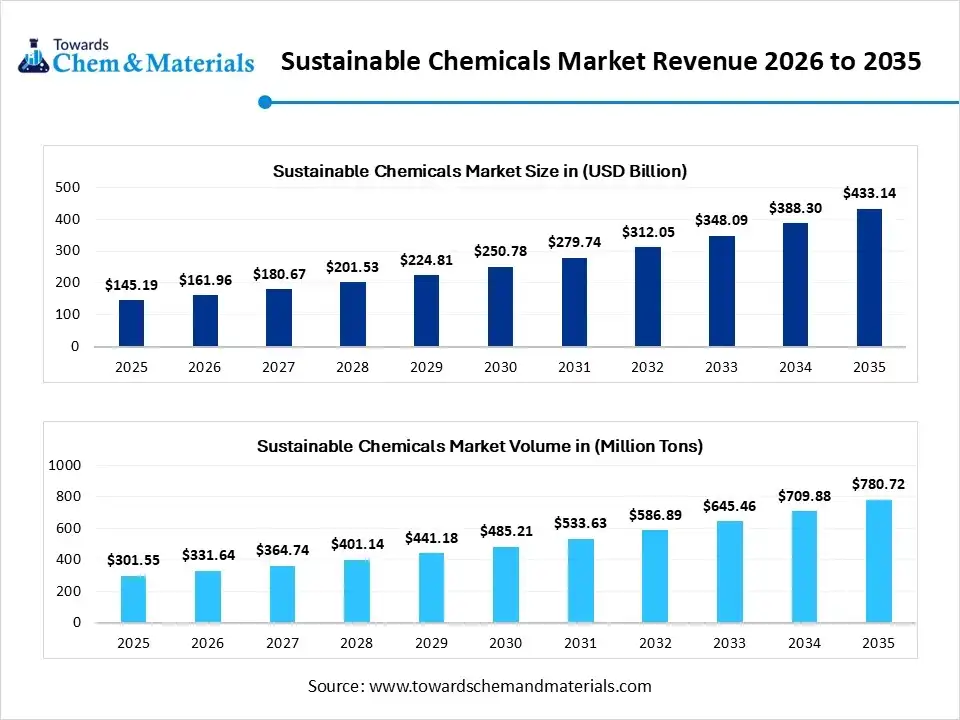
The market for sustainable chemicals offers eco-friendly alternatives to conventional petroleum-based chemicals, delivering similar performance with much less pollution and waste. It plays a vital role in advancing industrial decarbonization, supporting circular economies, and fulfilling global demands for safer, non-toxic, and bio-based products. Transitioning from fossil-based petrochemicals to biomass-derived raw materials and implementing green manufacturing techniques, Replacing fossil-based feedstocks with renewable or recycled feedstocks can reduce lifecycle greenhouse-gas emissions in applications where the alternative has a lower verified footprint.
These chemicals emphasize resource efficiency, recyclability, and waste minimization. Innovations such as bioplastics, enzymes, and biodegradable polymers enable closed-loop systems, helping to eliminate plastic pollution. Improvements in process optimization and energy efficiency significantly lower operational costs. Turning waste streams into revenue boosts long-term profitability. Embracing green chemistry helps businesses avoid regulatory fines, product recalls, and reputational harm linked to hazardous traditional chemicals.
Replacing fossil fuels with renewable agricultural residues and industrial wastes supports local bio-manufacturing and increases supply chain resilience. From automotive and textiles to packaging and electronics, end-use industries are increasingly seeking sustainable solutions to meet consumer demand for environmentally friendly products.
Market Highlights
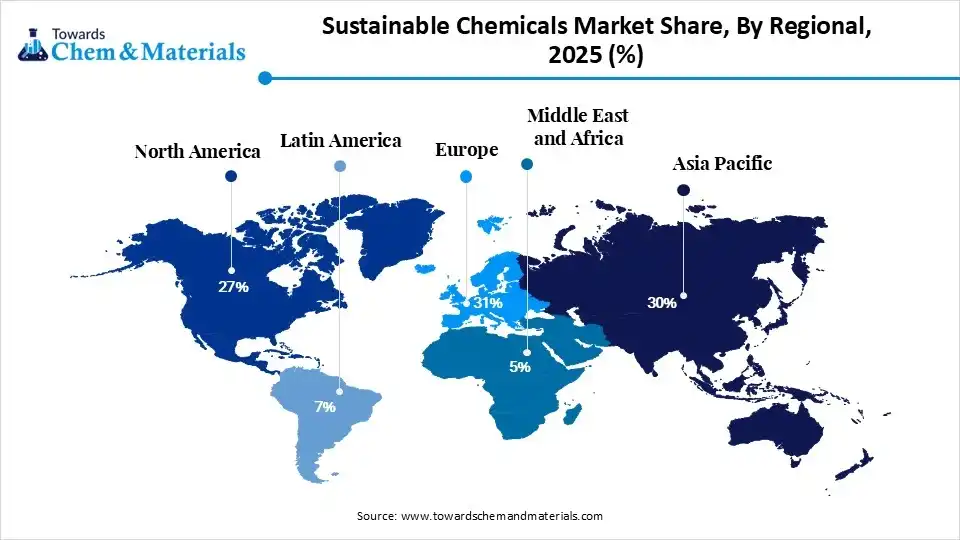
- By region, Europe dominated the market with a share of 31% in 2025. EU Green Deal policies accelerate sustainable chemical deployment.
- By region, Asia Pacific held 30% market share in 2025 and is expected to experience the fastest growth with a CAGR of 13.88% in the forecast period. Industrial expansion increases demand for sustainable chemical alternatives.
- By product type, the bio-based chemicals segment dominated the market with 38% share in 2025. Consumer brands increase the adoption of renewable chemical inputs.
- By product type, the recycled chemicals segment held 21% market share in 2025 and is expected to have the fastest growth with a CAGR of 13.42% in the forecast period. Circular economy initiatives boost recycled chemical demand globally.
- By source, the agricultural biomass segment dominated the market with 34% share in 2025. Agricultural residues provide scalable renewable feedstock availability.
- By source, the algae-based feedstock segment held 8% market share in 2025 and is expected to have the fastest growth with a CAGR of 14.56% in the forecast period. Algae cultivation enables high-yield renewable chemical extraction.
- By technology, the fermentation technology segment dominated the market with 31% share in 2025. Biotechnology companies improve microbial conversion efficiencies.
- By technology, the chemical recycling segment held 24% market share in 2025 and is expected to have the fastest growth with a CAGR of 14.21% in the forecast period. Advanced recycling technologies recover high-value chemical feedstocks.
- By application, the packaging segment dominated the market with 26% share in 2025. Sustainable packaging regulations increase bio-based material demand.
- By application, the electronics segment held 9% market share in 2025 and is expected to have the fastest growth with a CAGR of 13.11% in the forecast period. Semiconductor manufacturing requires environmentally compliant chemicals.
- By distribution channel, the direct sales segment dominated the market with 42% share in 2025. Large manufacturers secure long-term contracts with industrial buyers.
- By distribution channel, the online B2B platforms segment held 12% market share in 2025 and is expected to have the fastest growth with a CAGR of 14.62% in the forecast period. Digital procurement platforms improve transparency in chemical sourcing.
Sustainable Chemicals Market Growth Trends:
- Surge in Bio-Based Alternatives: Bio-based chemicals and green chemicals together accounted for 65% of 2025 revenue share.
- Green Drug Manufacturing: Major pharmaceutical companies are adopting eco-friendly "green chemistry" practices. This includes using biocatalytic enzymes, electrochemistry, and continuous flow chemistry to eliminate hazardous by-products and drastically reduce waste.
- Safe and Sustainable by Design (SSbD): Engineers and producers are heavily prioritizing intelligent R&D to engineer chemicals that are inherently safer, non-toxic, and circular from their inception.
Key Technological Shifts in the Sustainable Chemicals Market Through Integration of AI:
The sustainable chemicals market is undergoing a fundamental transformation driven by the shift to renewable feedstocks, advanced circular economy practices, and the integration of AI-powered digital manufacturing. Together, these shifts minimize environmental impact, optimize resource usage, and drastically lower global carbon footprints.
Companies are moving away from fossil-fuel reliance by utilizing biomass, agricultural waste, and algae to create bio-based polymers, biodegradable materials, and green solvents. Blockchain and real-time data tracking systems are being deployed to monitor supply chain provenance, helping companies accurately report on ESG metrics and ensure compliance with global environmental regulations.
Sustainable Chemicals Market Regulatory Landscape
| Country / Region | Regulatory Body | Key Regulations | Focus Areas | Notable Notes |
| United States | Environmental Protection Agency (EPA); United States Department of Agriculture (USDA) | Toxic Substances Control Act (TSCA); Green Chemistry Program; USDA BioPreferred Program | Green chemistry, bio-based chemicals, emissions reduction | The U.S. promotes sustainable chemicals through renewable material initiatives and stricter environmental regulations on hazardous substances. |
| European Union | European Commission; European Chemicals Agency (ECHA) | REACH Regulation; EU Green Deal; Circular Economy Action Plan | Sustainable manufacturing, carbon neutrality, circular economy | Europe is a global leader in sustainable chemicals adoption due to strict environmental policies and carbon reduction targets. |
| China | Ministry of Ecology and Environment (MEE); National Development and Reform Commission (NDRC) | Circular Economy Promotion Law; Green Manufacturing Policies | Low-carbon chemicals, industrial sustainability | China is expanding investments in green chemicals and renewable feedstocks to reduce industrial emissions. |
| India | Ministry of Environment, Forest and Climate Change (MoEFCC); Department of Chemicals and Petrochemicals | Plastic Waste Management Rules; National Green Hydrogen Mission | Bio-based chemicals, sustainable industrial development | India is promoting sustainable chemicals through renewable feedstocks, green manufacturing, and waste reduction initiatives. |
| Japan | Ministry of Economy, Trade and Industry (METI); Ministry of the Environment | Green Growth Strategy; Chemical Substances Control Law (CSCL) | Green innovation, recyclable materials | Japan focuses on sustainable chemistry, low-carbon manufacturing, and advanced recyclable materials. |
| Brazil | Ministry of Environment and Climate Change; Brazilian Development Bank (BNDES) | National Bioeconomy Policies; RenovaBio Program | Bio-based chemicals, renewable feedstocks | Brazil benefits from abundant biomass resources and a strong bio-based chemical production infrastructure. |
Supply Chain Analysis of Sustainable Chemicals Market:
- Sustainable Chemical Production & Processing:Sustainable chemicals are produced using renewable feedstocks, green chemistry processes, bio-based raw materials, and energy-efficient manufacturing technologies to reduce environmental impact and carbon emissions.
- Key players: BASF, Dow, Braskem, Corbion
- Quality Testing and Certification:Sustainable chemicals must comply with standards for environmental safety, biodegradability, carbon footprint reduction, and chemical performance before commercialization.
- Key players: International Organization for Standardization, U.S. Environmental Protection Agency, European Chemicals Agency, U.S. Department of Agriculture.
- Distribution to Industrial Users:Sustainable chemicals are supplied to packaging manufacturers, agriculture industries, personal care companies, automotive manufacturers, textile producers, and specialty chemical sectors.
- Key players: BASF, Braskem, Corbion
Sustainable Chemicals Market Dynamics
| Drivers | Restrains | Opportunities |
| Decarbonization & ESG Goals: Corporations are implementing strict Environmental, Social, and Governance criteria. Renewable electricity, green hydrogen, and carbon capture are transforming production to cut emissions. | High Production and R&D Costs:Complex manufacturing processes like fermentation and biomass extraction make renewable chemicals significantly more expensive than traditional petrochemicals. | Green Solvents & Coatings: Replacing volatile organic compounds with eco-friendly alternatives is a high priority for the booming construction and automotive sectors. |
| Technological Innovation: Advancements in biotechnology and green chemistry have made producing bio-based feedstocks more viable. Additionally, AI is accelerating the discovery and optimization of eco-friendly molecules. | Supply Chain and Feedstock Issues: The reliable, large-scale supply of renewable feedstocks like agricultural waste and plant-based sugars remains fragmented and susceptible to climate and seasonal fluctuations. | Next-Gen Feedstocks: Opportunities exist in commercializing bio-alcohols, bio-organic acids, and microbial polymers to bypass fossil fuel dependencies. |
| Volatility of Fossil Fuel Prices: Instability and long-term supply risks associated with petroleum push chemical manufacturers to seek stable, renewable, and locally sourced alternatives | Regulatory and Compliance Burdens: Strict environmental regulations, especially across regions like Europe, enforce high compliance costs, occasionally diverting up to $20 billion and substantial capital expenditures away from green innovations. | Bio-Polymers & Packaging: The shift away from single-use plastics has opened a massive market for biodegradable and bio-based plastics. |
Segmental Insights
Product Type Insights
The bio-based chemicals segment dominated the market with 38% share in 2025, driven by strict environmental regulations and consumer demand for eco-friendly products. Industries are transitioning away from petroleum-based alternatives to reduce carbon footprints. Major adoption is spurred by the need for biodegradable materials, reduced toxicity, and lower greenhouse gas emissions compared to conventional chemicals.
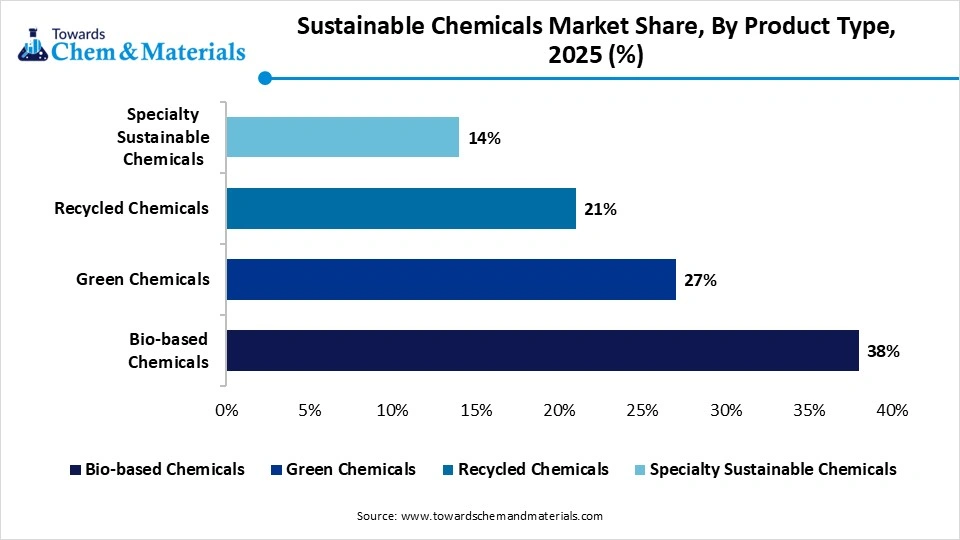
The recycled chemicals segment held 21% market share in 2025 and is expected to have the fastest growth with a CAGR of 13.42% in the forecast period. This momentum is heavily driven by legislative mandates, corporate net-zero targets, and rising consumer demand for circular packaging. Innovation in advanced chemical recycling technologies is scaling rapidly, converting difficult-to-recycle polymer waste into valuable green chemical feedstocks.
Sustainable Chemicals Market Share, By Product Type, 2025 (%)
| By Product Type | Revenue Share, 2025 (%) |
| Bio-based Chemicals | 38% |
| Green Chemicals | 27% |
| Recycled Chemicals | 21% |
| Specialty Sustainable Chemicals | 14% |
Source Insights
The agricultural biomass segment dominated the market with 34% share in 2025, driven by the global shift toward circular economies and stricter emissions regulations. Agricultural waste is increasingly converted into high-value biochemicals like bioplastics, bio-solvents, and bio-based agrochemicals, offering a direct, eco-friendly substitute for petroleum-based products.
The algae-based feedstock segment held 8% market share in 2025 and is expected to have the fastest growth with a CAGR of 14.56% in the forecast period. This growth is driven by increasing demand for Sustainable chemicals can provide alternatives to conventional chemical inputs, with environmental performance depending on feedstock, production process, use phase and end-of-life pathway. Microalgae-based agricultural products help enhance crop yields while significantly reducing the dependency on synthetic chemical fertilizers.
Chemical Recycling of Plastics Market Share, By Source, 2025 (%)
| By Source | Revenue Share, 2025 (%) |
| Agricultural Biomass | 34% |
| Forestry Biomass | 16% |
| Algae-based Feedstock | 8% |
| Waste-derived Feedstock | 29% |
| Carbon Capture Feedstock | 13% |
Technology Insights
The fermentation technology segment dominated the market with 31% share in 2025, by enabling the biochemical production of platform molecules like succinic acid, lactic acid, and bioplastics from renewable, organic resources. This biological approach minimizes reliance on fossil fuels, reduces greenhouse gas emissions, and provides high-performance alternatives to traditional petro-based manufacturing.
The chemical recycling segment held 24% market share in 2025 and is expected to have the fastest growth with a CAGR of 14.21% in the forecast period. This expansion is primarily driven by strict environmental mandates and the urgent need to convert complex, hard-to-recycle plastic waste into virgin-quality feedstocks. Government policies, such as the European Unions Circular Economy Action Plan, mandate higher levels of recycled content in packaging, directly boosting adoption.
Sustainable Chemicals Market Share, By Technology, 2025 (%)
| By Technology | Revenue Share, 2025 (%) |
| Fermentation Technology | 31% |
| Biocatalysis | 17% |
| Chemical Recycling | 24% |
| Green Synthesis | 18% |
| Carbon Utilization Technology | 10% |
Application Insights
The packaging segment dominated the market with 26% share in 2025, driven by strict regulations, consumer demand for eco-friendly goods, and brands shifting to circular economies. Chemical manufacturers are scaling the production of bio-based resins, biodegradable polymers, and solvent-less coatings to meet this demand.
The electronics segment held 9% market share in 2025 and is expected to have the fastest growth with a CAGR of 13.11% in the forecast period, as manufacturers shift to bio-based, recycled, and low-carbon footprint materials. Escalating demand for microelectronics and semiconductors is driving this surge, with companies increasingly relying on green chemistries to manufacture energy-efficient, eco-friendly devices.
Sustainable Chemicals Market Share, By Application, 2025 (%)
| By Application | Revenue Share, 2025 (%) |
| Packaging | 26% |
| Automotive | 14% |
| Agriculture | 13% |
| Textiles | 11% |
| Construction | 12% |
| Consumer Goods | 15% |
| Electronics | 9% |
Distribution Channel Insights
The direct sales segment dominated the market with 42% share in 2025. This expansion is driven by large industrial consumers who require long-term contracts, customized chemical formulations, and verifiable transparency for their own corporate sustainability goals. By using direct sales, manufacturers effectively ensure product integrity and closely control the narrative around sustainability, which is crucial for building consumer and B2B trust.
The online B2B platforms segment held 12% market share in 2025 and is expected to have the fastest growth with a CAGR of 14.62% in the forecast period. This expansion is driven by corporate carbon-neutrality mandates, digital procurement optimization, and a global industry shift away from petroleum-based raw materials toward circular bio-based and low-carbon alternatives.
Sustainable Chemicals Market Share, By Distribution Channel, 2025 (%)
| By Distribution Channel | Revenue Share, 2025 (%) |
| Direct Sales | 42% |
| Distributors & Traders | 28% |
| Online B2B Platforms | 12% |
| Specialty Chemical Suppliers | 18% |
Regional Analysis
How did Europe dominate the Sustainable Chemicals Market in 2025?
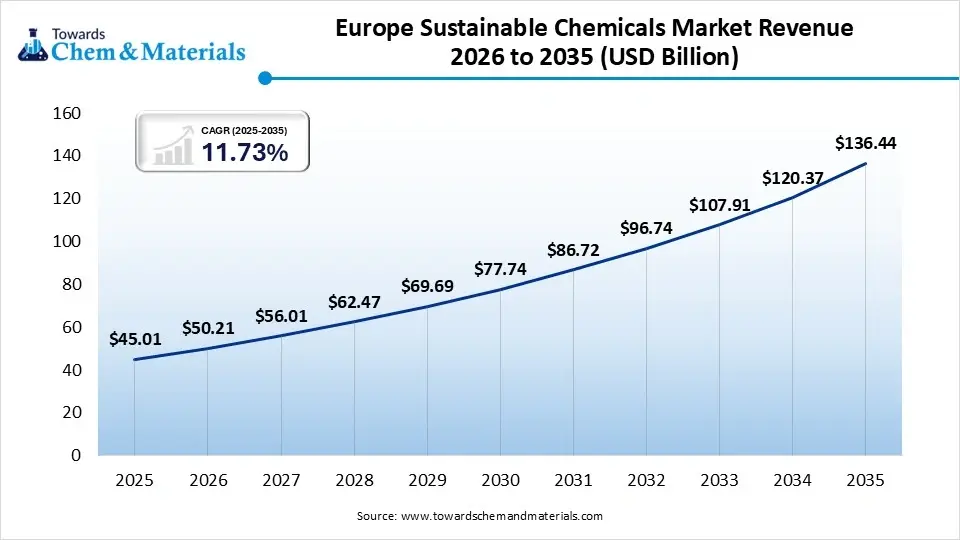
The Europe sustainable chemicals market size was estimated at USD 45.01 billion in 2025 and is projected to reach USD 136.44 billion by 2035, growing at a CAGR of 11.73% from 2026 to 2035.Europe dominated the market with a share of 31% in 2025, due to stringent environmental regulations, circular economy initiatives, and aggressive carbon neutrality goals. Also experiencing growth by leveraging strict environmental mandates, advanced manufacturing infrastructure, and massive corporate commitments. Driven by policies like the EU Green Deal and 2025 Clean Industrial Deal, the region effectively forced a structural shift from fossil-fuel-based production to renewable feedstocks and circular economy models.
 Germany
- Germany leads the region with advanced green chemistry innovation, sustainable manufacturing infrastructure, and strong industrial sustainability programs.
- Industry heavyweights are pioneering massive material cycle projects. Companies like BASF are focusing heavily on circular manufacturing and biodegradable polymers.
Italy
- The majority of Italian chemical companies have invested in environmentally friendly technologies, making it one of the countrys most actively transitioning manufacturing sectors.
- Both domestic firms and major international players like BASF and Cargill are actively expanding their Italian footprints.
- Demand and production are heavily concentrated in Italys northern industrial core, with key hubs located in Lombardy, Veneto, Piedmont, and Emilia-Romagna.
France
- The French government has actively supported capital expenditure in the sector, leading to record chemical industry investments with a strong pivot toward environmental protection and capacity expansion.
- Frances leadership in the luxury and cosmetics sector is catalyzing localized demand for biodegradable specialty packaging and bio-based cosmetic chemicals.
Asia Pacific Sustainable Chemicals Market Growth Factor
The Asia Pacific market size was estimated at USD 43.56 billion in 2025 and is projected to reach USD 132.11 billion by 2035, growing at a CAGR of 11.73% from 2026 to 2035.Asia Pacific held the market share of 30% in 2025 and is expected to experience the fastest growth while growing with a CAGR of 13.88% in the forecast period, driven by industrial expansion, environmental awareness, and increasing adoption of sustainable manufacturing practices. Aggressive national policies, such as Indias push for a circular economy and Chinas "Dual Carbon" targets, incentivize bio-based manufacturing and penalize high-emission petrochemical processes.
Countries
India
- Domestic manufacturers are accelerating the adoption of eco-friendly alternatives such as bio-based chemicals, bio-polymers, and biodegradable polymers to align with Indias NDC target of reducing emission intensity by 45% by 2030.
- Global supply chain shifts have positioned India as a preferred global manufacturing hub, with firms actively sourcing cleaner and sustainable chemical inputs from Indian markets.
China
- As the leading country in the sustainable chemical industry, rising affluence and government support for clean manufacturing heavily drive demand for premium biopolymers and bio-alcohols.
- China is investing heavily in green chemicals and low-carbon industrial production to support environmental sustainability goals.
Japan
- Focuses heavily on high-quality local substance development, integrating sustainable chemicals into high-tech consumer and industrial applications.
- Major Japanese companies like Nissan Chemical are establishing sustainable production models that limit fossil fuel use and emphasize agricultural chemicals and performance materials.
North America Sustainable Chemicals Market Growth Factor
The North America sustainable chemicals market size was estimated at USD 39.20 billion in 2025 and is projected to reach USD 119.11 billion by 2035, growing at a CAGR of 11.75% from 2026 to 2035.North America held the market share of 27% in 2025, due to increasing corporate sustainability initiatives and government support for renewable chemicals. The market is experiencing rapid expansion, driven by stringent ESG mandates, bio-based innovations, and regulatory support like the U.S. Inflation Reduction Act. The U.S. is the regional leader, capitalizing on a massive agricultural base to produce bio-based polymers, solvents, and intermediates for end-use markets like automotive and pharmaceuticals.
Countries
U.S.
- The U.S. market benefits from strong investments in green chemistry, renewable feedstocks, and bio-based product commercialization.
- The U.S. Environmental Protection Agency (EPA) heavily regulates chemical usage under the Toxic Substances Control Act (TSCA), mandating safer chemical alternatives and thorough lifecycle assessments.
Canada
Latin America Sustainable Chemicals Market Growth Factor
The Latin America sustainable chemicals market size was estimated at USD 10.16 billion in 2025 and is projected to reach USD 30.32 billion by 2035, growing at a CAGR of 12.92% from 2026 to 2035.Latin America held the market share of 7% in 2025, due to abundant biomass resources and increasing investments in bioeconomy initiatives. Latin Americas large-scale commercial farming drives a fast-growing market for crop protection chemicals and fertilizers. The increasing adoption of precision agriculture and integrated pest management is boosting the demand for eco-friendly biological alternatives over harsh synthetic pesticides.
Sustainable Chemicals Market Share, By Regional, 2025 (%)
| Regional | Revenue Share, 2025 (%) |
| North America | 27% |
| Europe | 31% |
| Asia-Pacific | 30% |
| Latin America | 7% |
| Middle East & Africa | 5% |
Brazil
- Brazil possesses a massive agricultural base. The use of sugarcane derivatives, soybeans, and castor oil allows local companies to produce bio-based polymers and oleochemicals without competing with food supplies.
- Brazil is a leading manufacturer of bio-based chemicals backed up by robust sugarcane & agricultural feedstock availability.
Middle East and Africa Sustainable Chemicals Market Growth Factor
The The Middle East and Africa sustainable chemicals market size was estimated at USD 7.26 billion in 2025 and is projected to reach USD 23.82 billion by 2035, growing at a CAGR of 12.62% from 2026 to 2035.The Middle East and Africa held the market share of 5% in 2025. The region is gradually adopting sustainable chemical technologies as part of industrial diversification and environmental sustainability initiatives. This shift is transforming the region from a purely hydrocarbon-reliant hub into an emerging leader in circular economies. Regional governments are enacting stricter environmental regulations and promoting the use of renewable resources.
 Saudi Arabia
- Saudi Arabia is investing in sustainable petrochemicals, green hydrogen, and low-carbon manufacturing under economic diversification programs.
- The market in Saudi Arabia is experiencing rapid growth, driven primarily by the Kingdoms Vision 2030 sustainability mandates, economic diversification away from petroleum, and a massive surge in demand for eco-friendly materials across domestic mega-projects like NEOM
UAE
- Because the UAE faces an arid climate with limited natural freshwater, the country is highly dependent on desalination and wastewater recycling. This makes water sustainability a top priority and a major driver for specialty chemicals.
Recent Developments
- In May 2026, the Korea Chemical Industry Association officially launched the ‘Chemical PLANET’ integrated brand for environmental and social-responsibility activities across the chemical industry.
- In March 2026, Re Sustainability and Indian Oil Corporation Limited signed an MoU to launch a structured national initiative for the collection and recycling of used lubricating oil in India.
- In March 2026, DuPont highlighted its Tyvek 500 Xpert BioCircle sustainable disposable coverall, which uses 100% bio-circular feedstock-attributed fabric and was developed following an independent lifecycle assessment.
Companies Active in the Sustainable Chemicals Market & Their Offerings
- Arkema: Focuses on specialty materials, notably expanding the production of high-performance bio-sourced polyamides and elastomers.
- Archer Daniels Midland Company (ADM): ADM produces renewable ingredients and bio-based materials and participates in renewable chemicals and biofuel value chains.
- Cargill, Inc.: Transforms agricultural products and plant sugars into bioindustrial chemicals and renewable ingredients.
- Braskem S.A.: Braskem produces bio-based polyethylene using sugarcane-derived ethanol feedstock.
- BASF SE
- The Dow Chemical Company
- Saudi Basic Industries Corporation
- Johnson Matthey PLC
- Evonik Industries AG
- Global Bioenergies
- Terraverdae Bioworks Inc.
- Avantium N.V.
- Toray Industries, Inc.
- CJ Biomaterials, Inc.
- Novozymes A/S
- LanzaTech Global, Inc.
- Mitsubishi Chemical Corporation
- TotalEnergies Corbion B.V.
- Vertec BioSolvents, Inc.
Sustainable Chemicals Market Segments
By Product Type
- Bio-based Chemicals
- Bio-alcohols
- Bio-organic Acids
- Bio-solvents
- Bio-polymers
- Green Chemicals
- Green Solvents
- Green Surfactants
- Green Catalysts
- Green Reagents
- Recycled Chemicals
- Chemically Recycled Feedstocks
- Recovered Industrial Solvents
- Recycled Polymers
- Specialty Sustainable Chemicals
- Water Treatment Chemicals
- Electronic Chemicals
- Construction Chemicals
- Coating & Adhesive Chemicals
By Source
- Agricultural Biomass
- Sugarcane
- Corn
- Soy
- Starch Crops
- Forestry Biomass
- Wood Residues
- Pulp Waste
- Algae-based Feedstock
- Waste-derived Feedstock
- Municipal Waste
- Industrial Waste
- Plastic Waste
- Carbon Capture Feedstock
- CO2 Utilization
- Industrial Emissions Recovery
By Technology
- Fermentation Technology
- Microbial Fermentation
- Enzymatic Fermentation
- Biocatalysis
- Chemical Recycling
- Pyrolysis
- Depolymerization
- Gasification
- Green Synthesis
- Solvent-free Synthesis
- Low-emission Catalytic Synthesis
- Carbon Utilization Technology
- Electrochemical Conversion
- Catalytic CO2 Conversion
By Application
- Packaging
- Flexible Packaging
- Rigid Packaging
- Automotive
- Interior Components
- Lightweight Structural Materials
- Agriculture
- Crop Protection
- Biofertilizers
- Textiles
- Sustainable Fibers
- Textile Processing Chemicals
- Construction
- Green Coatings
- Sustainable Adhesives
- Consumer Goods
- Personal Care
- Household Products
- Electronics
- Semiconductor Chemicals
- Electronic Cleaning Chemicals
By Distribution Channel
- Direct Sales
- Distributors & Traders
- Online B2B Platforms
- Specialty Chemical Suppliers
By Region
- North America
- U.S.
- Canada
- Mexico
- Europe
- Germany
- UK
- France
- Italy
- Spain
- Asia Pacific
- China
- India
- Japan
- South Korea
- Latin America
- Brazil
- Argentina
- Middle East & Africa
- Saudi Arabia
- South Africa
A Seven-Phase Framework
Our methodology is designed to be universally applicable across commodity chemicals, specialty chemicals, petrochemicals, construction chemicals, coatings, electronic chemicals, industrial gases, agrochemicals, water treatment chemicals, and performance materials. Each phase builds upon the last, creating a layered validation structure that minimizes estimation error and maximizes analytical confidence.
The framework ensures comprehensive market coverage, robust cross-validation, and reliable long-term forecasting — producing market estimates that withstand scrutiny from investors, regulators, and corporate strategy teams.

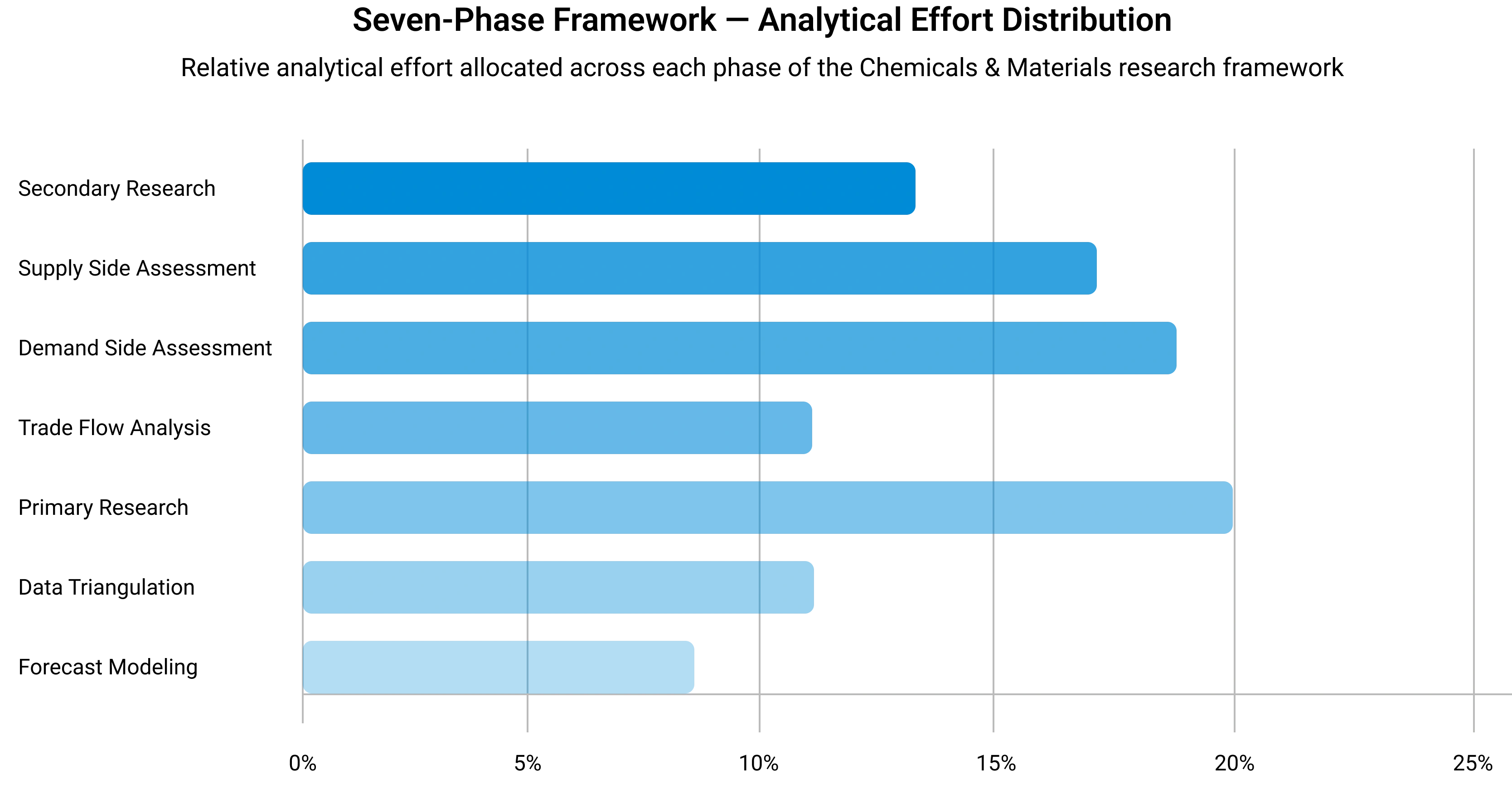
Seven-Phase Framework — Analytical Effort Distribution
Relative analytical effort allocated across each phase of the Chemicals & Materials research framework
Phase 1 - Secondary Research: Establishing the Foundation
Secondary research collects and evaluates publicly available information from authoritative sources, establishing the foundational understanding of market structure, value chain dynamics, competitive landscape, and end-use demand patterns. Every source is evaluated for credibility, recency, geographic relevance, and methodological soundness before inclusion.
Industry Associations
Sources include ACC, CEFIC, ICCA, JCIA, CPCIF, and SOCMA providing production volumes, consumption trends, capacity developments, and sustainability initiatives.
Company Disclosures
Annual reports, investor presentations, earnings transcripts, and regulatory filings reveal product portfolios, manufacturing footprints, capacity expansions, and revenue segmentation.
Government Databases
National statistical offices, customs authorities, environmental agencies, and industrial production databases provide verified statistics on output, trade flows, and regulatory compliance.
Trade Databases
UN Comtrade, ITC, Eurostat, and national customs authorities enable assessment of global product movement, import dependency, and export competitiveness across regions.
Our Secondary Research Sources
- Ministry of Chemicals and Fertilizers
- European Chemicals Agency
- United States Department of Energy
- Ministry of Industry and Information Technology
- Ministry of Economy Trade and Industry
- Ministry of Trade Industry and Energy
- National Institute of Standards and Technology
- Council of Scientific and Industrial Research
- Fraunhofer Society
- National Institute for Materials Science
Phase 2 — Supply-Side Assessment: Mapping Production Capabilities
Production Capacity Analysis
All major manufacturers are assessed for existing installed capacity, planned additions, expansions, new plant announcements, and technology adoption — mapped at global, regional, and country levels.
Capacity Utilization Adjustment
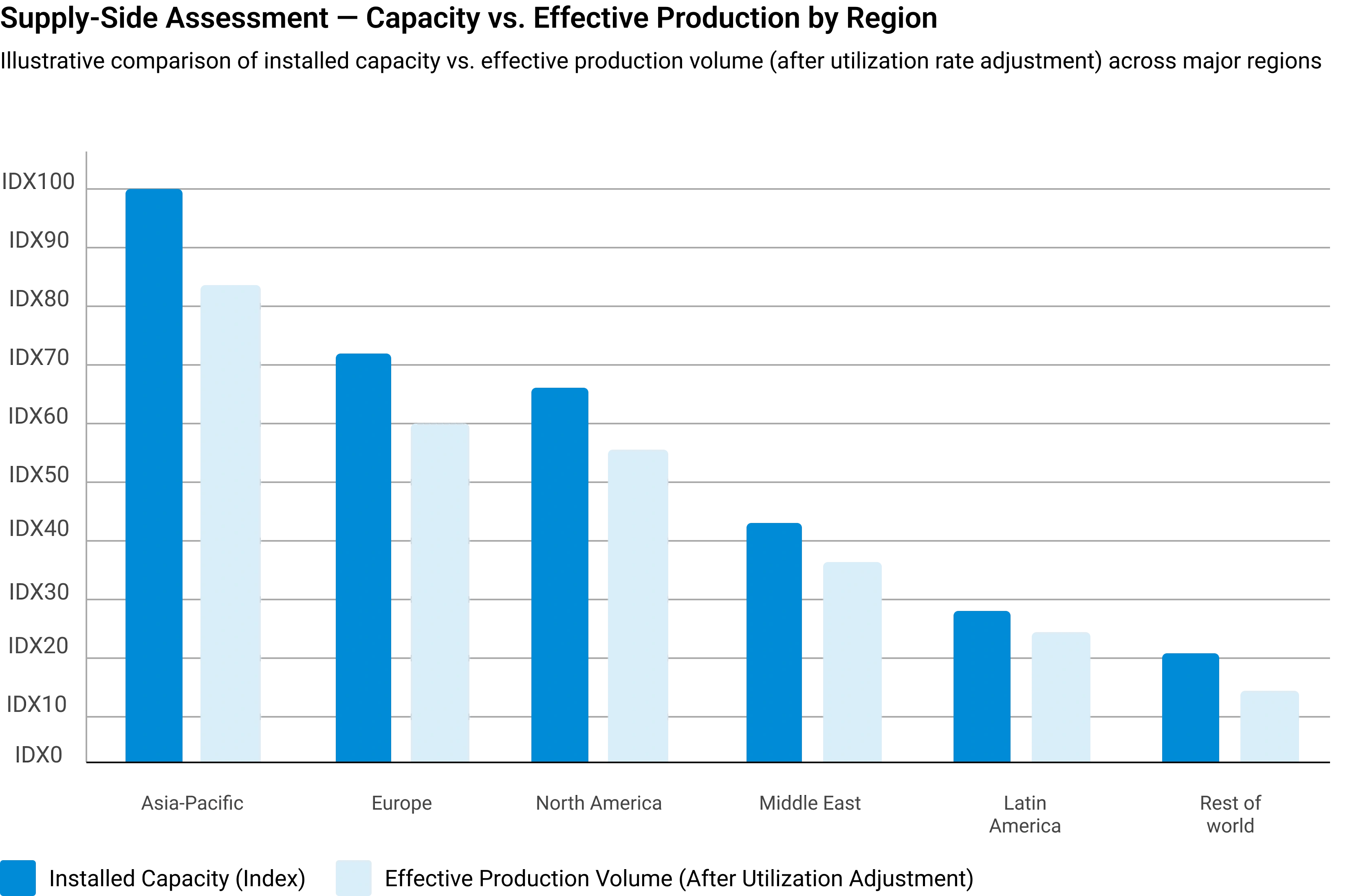
Installed capacity is adjusted using utilization rates based on demand conditions, feedstock availability, plant operating rates, maintenance schedules, and regulatory restrictions.
Manufacturer Revenue Analysis
Product-specific revenues, segment-level performance, regional distribution, average selling prices, and margin trends are evaluated to establish market value estimates.
Supply-Side Assessment — Capacity vs. Effective Production by Region
Illustrative comparison of installed capacity vs. effective production volume (after utilization rate adjustment) across major regions
Phase 3 — Demand-Side Assessment: Quantifying Chemical Consumption
Demand-side analysis quantifies chemical consumption across industries, applications, and geographies — identifying where and how chemicals are consumed throughout the value chain with precision.
End-Use Industry Analysis
Chemical demand is evaluated across automotive, construction, packaging, electronics, agriculture, healthcare, consumer goods, industrial manufacturing, energy and utilities, and water treatment. Industry output, production trends, and consumption intensity are analyzed to determine demand patterns.
Consumption Modeling
Demand is estimated using measurable indicators: kilograms per vehicle, kilograms per square meter of construction, dosage per cubic meter of water treated, kilograms per hectare of agricultural land, and kilograms per ton of manufactured products. Consumption factors are validated through industry publications and primary interviews.
Application Analysis
The market is segmented by application area to understand product performance requirements, formulation trends, technology adoption, customer preferences, and regulatory requirements improving demand accuracy and segmentation granularity.
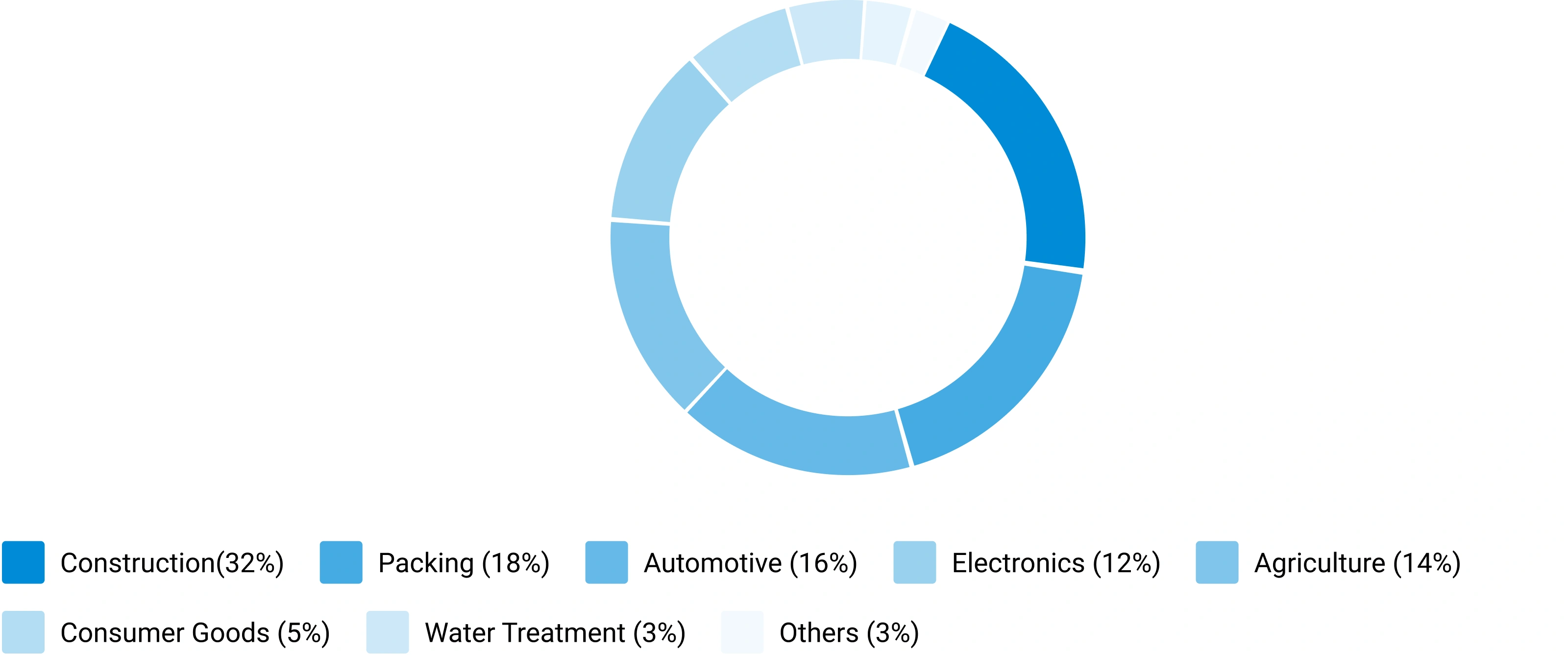
Demand-Side Assessment — End-Use Industry Demand Distribution
Illustrative distribution of chemical & materials demand across key end-use industries
Phase 4 - Trade Flow Analysis: Balancing Regional Supply and Demand
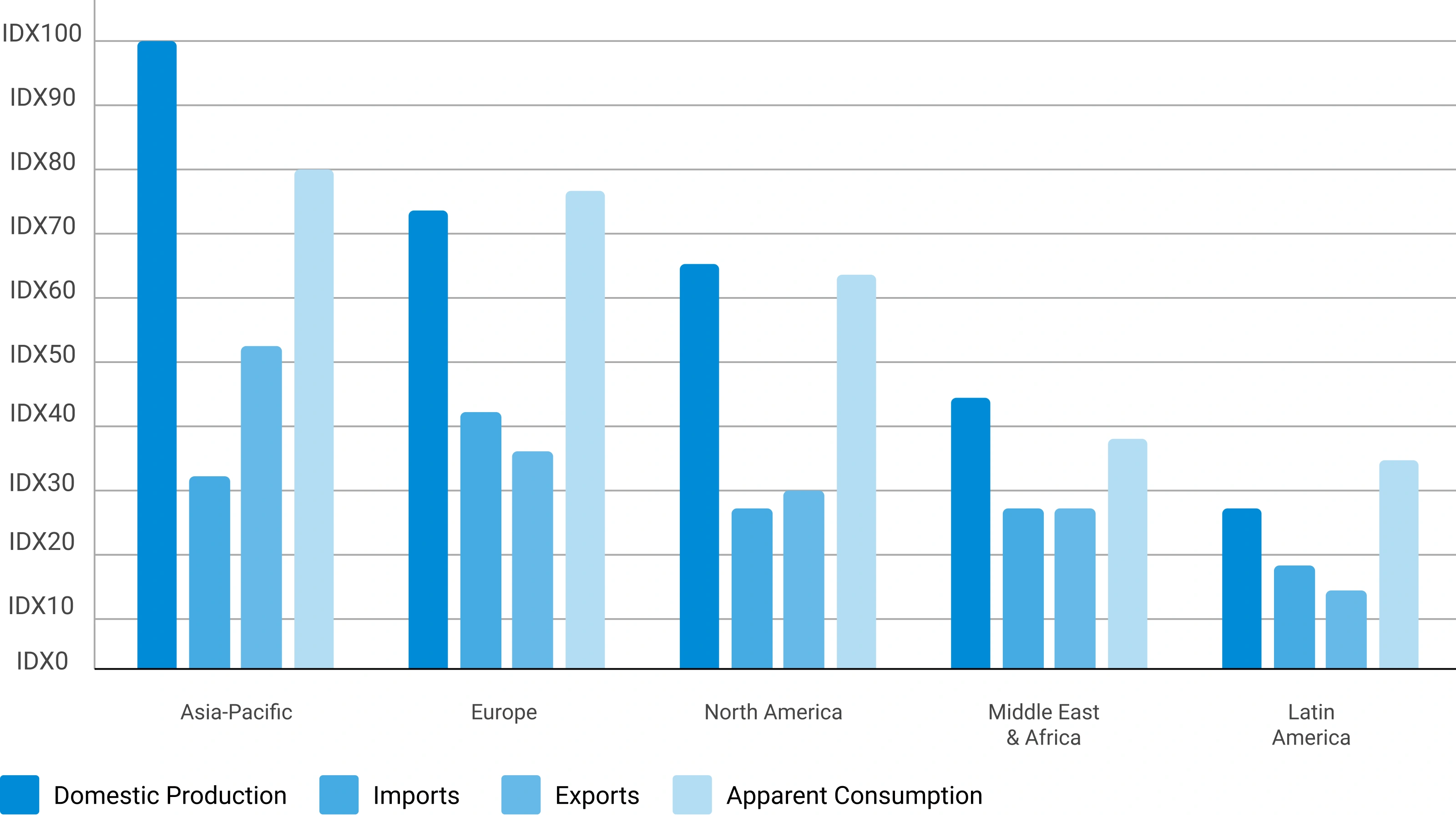
Trade flow analysis reconciles regional supply and demand estimates through import and export data, identifying net supply positions, regional dependencies, and market imbalances. It serves as an independent validation layer that tests the consistency of supply-side and demand-side estimates.
Import Analysis
Import data is evaluated to determine volumes, source countries, product dependency, regional supply gaps, and pricing trends — identifying markets that rely heavily on external supply and where domestic production is insufficient to meet demand.
Export Analysis
Export assessments reveal production surplus, export competitiveness, regional manufacturing strength, and global market participation. Export patterns also help validate domestic production estimates and identify net exporting regions.
Apparent Consumption Model
Regional consumption is assessed using the standard apparent consumption formula:
Results identify net importing regions, net exporting regions, regional deficits, and surpluses — serving as an independent validation of supply and demand estimates.
Trade Flow Analysis — Net Supply Position by Region
Illustrative apparent consumption vs. domestic production across major regions — positive gap indicates net import dependency
Phase 5 — Primary Research: The Critical Validation Layer
Primary research tests and refines findings from secondary research through direct engagement with industry participants across the supply chain, demand side, and expert community. It captures intelligence that no database or published report can provide — the real-world experience of manufacturers, buyers, and specialists operating in the market.

Supply-Side Interviews
Conversations with chemical manufacturers, raw material suppliers, contract manufacturers, technology providers, and plant operators cover production trends, capacity utilization, pricing developments, technology shifts, and competitive dynamics.

Demand-Side Interviews
Engagement with OEMs, industrial consumers, procurement managers, distributors, formulators, and end-use manufacturers focuses on consumption trends, purchasing behavior, product substitution, demand outlook, and emerging applications.

Industry Expert Consultations
Additional interviews with industry consultants, independent experts, regulatory specialists, technical professionals, and research institutions provide deeper market context and validate key analytical assumptions.
Focus Areas of Primary Research:
Market Size & Forecast Validation
Revenue estimates, volume consumption, growth rates, forecast assumptions, regional demand.Supply Chain & Value Chain Assessment
Raw material sourcing, supply chain challenges, distribution networks, procurement practices.Production & Capacity Analysis
Manufacturing capacity, utilization rates, expansion projects, plant investments.Pricing & Cost Structure Analysis
Product pricing trends, feedstock costs, energy costs, margin pressures, pricing outlook.Competitive Landscape Assessment
Volume and value estimates confirmed to be fully consistent with one another before publicationInterview Volume by Market Scope
| Study Scope | Number of Interviews |
|---|---|
| Niche Market | 20 – 30 |
| Mid-Sized Market | 30 – 50 |
| Global Market | 50 – 80 |
| Highly Fragmented Market | 80 – 120 |
Interview Details:
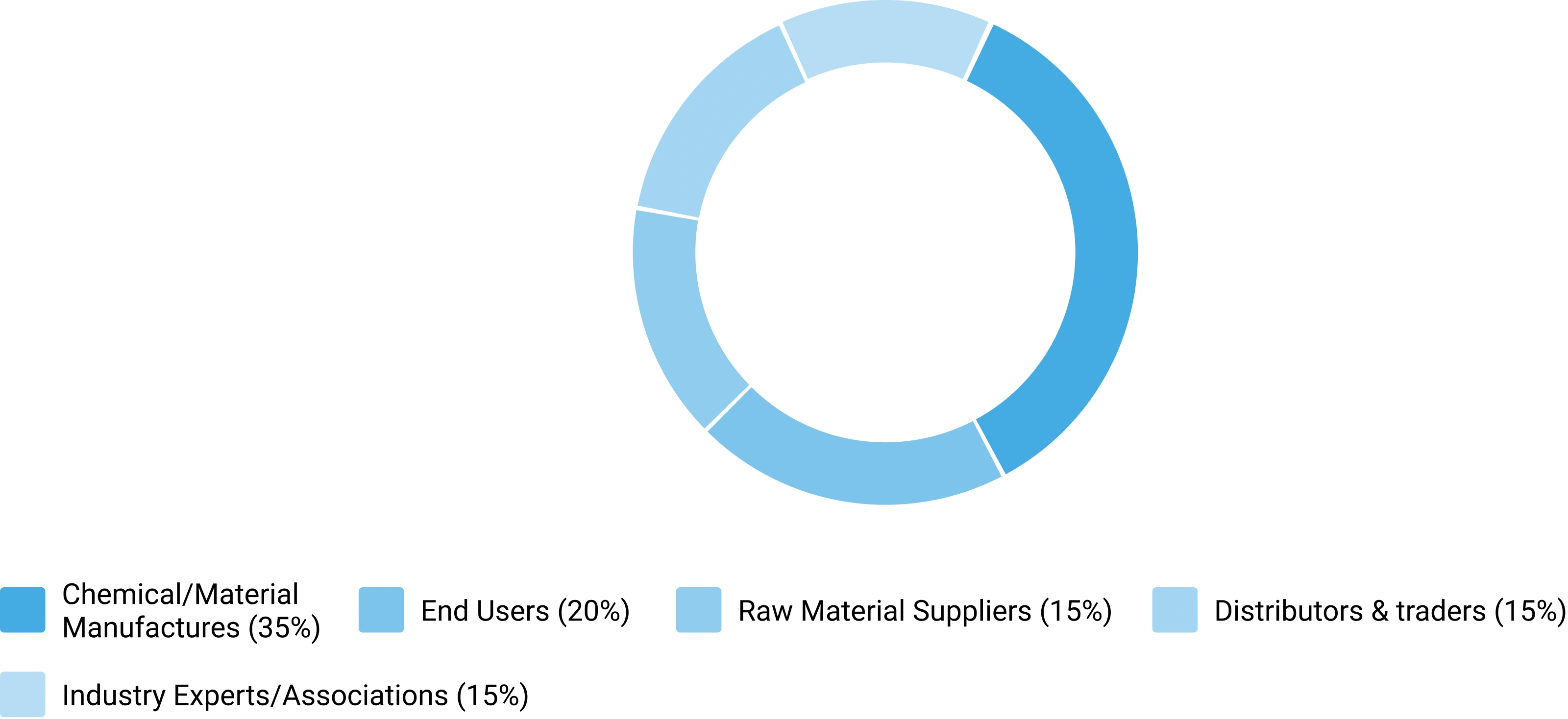
Category : Manufacturers, Suppliers, Distributors, End Users, Experts/Associations
Average Duration : 30–60 Minutes
Interview Mode : Video calls, telephonic interviews, expert consultations
Interview Format : Structured / Semi-Structured questionnaire
Focus Areas of Primary Research:
Market Size & Forecast Validation :
Revenue estimates, volume consumption, growth rates, forecast assumptions, regional demand.
Supply Chain & Value Chain Assessment :
Raw material sourcing, supply chain challenges, distribution networks, procurement practices.
Production & Capacity Analysis :
Manufacturing capacity, utilization rates, expansion projects, plant investments.
Pricing & Cost Structure Analysis :
Product pricing trends, feedstock costs, energy costs, margin pressures, pricing outlook.
Competitive Landscape Assessment :
Market share, competitor positioning, strategic initiatives, partnerships, acquisitions.
Primary Research — Stakeholder Coverage by Category
Distribution of interview respondents across stakeholder categories (% share from PPT data)
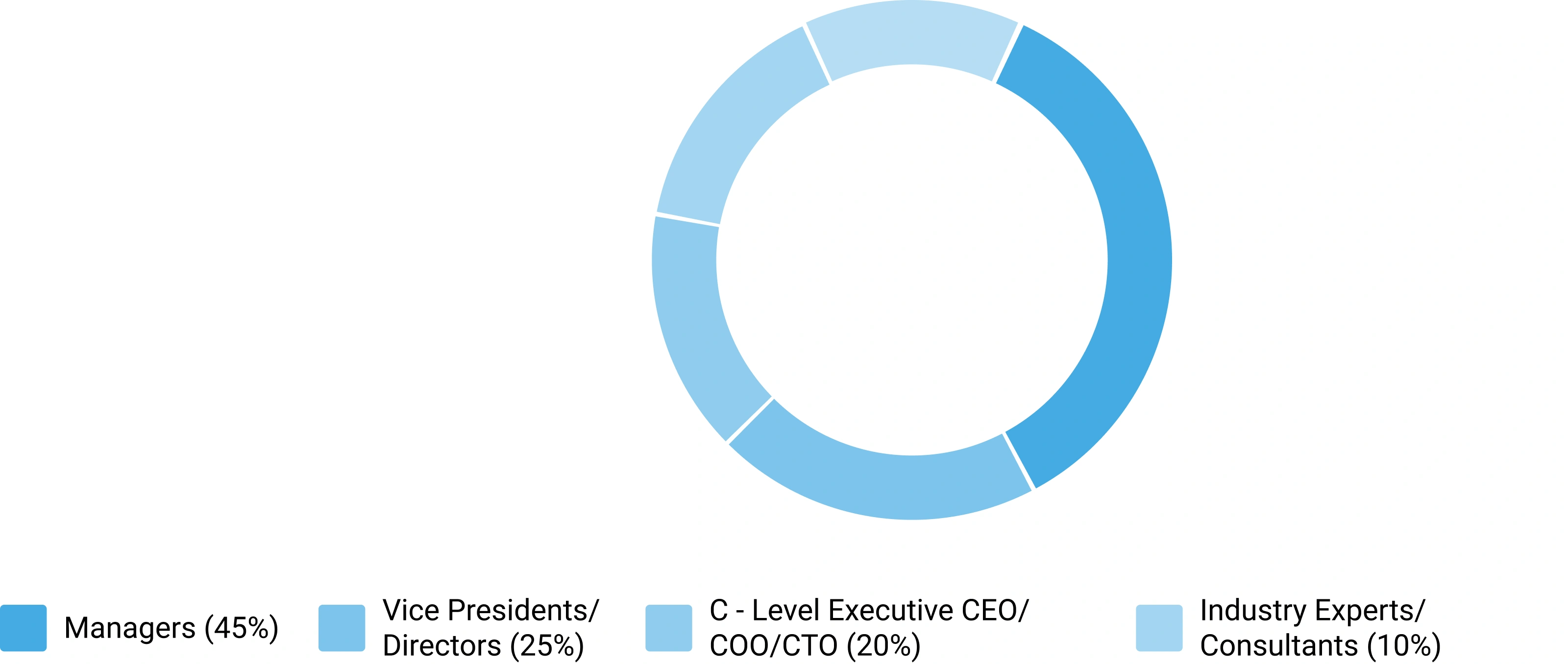
Primary Research — Respondent Designation Profile
Seniority breakdown of interview respondents (% share from PPT data)
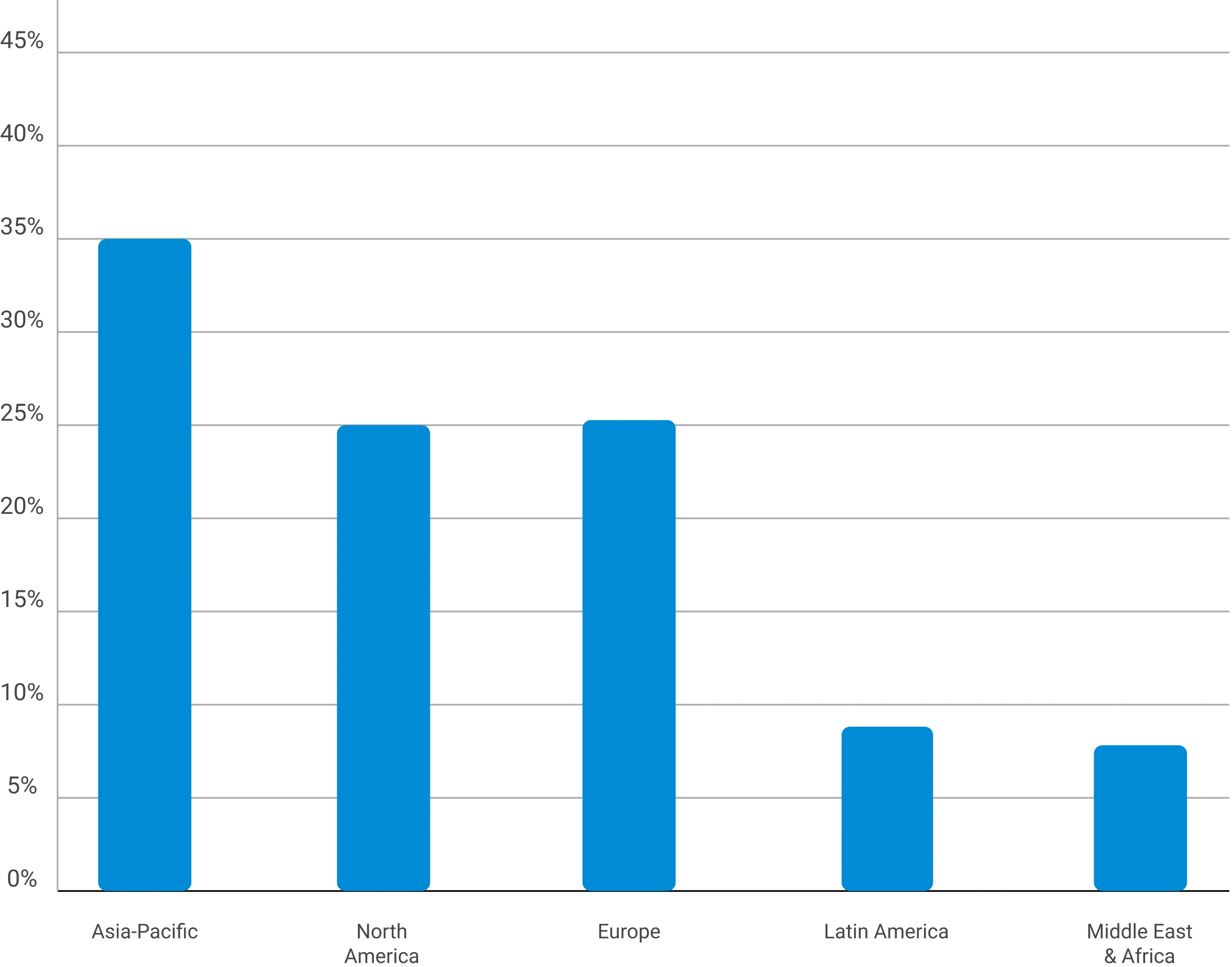
Primary Research — Geographic Coverage of Interviews
Regional distribution of primary research engagement (% share from PPT data)
Phase 6 — Data Triangulation and Market Validation
No single methodology is relied upon in isolation. Multiple independent estimation approaches are combined and reconciled to ensure consistency, accuracy, and analytical defensibility. Any material deviations between approaches are investigated and adjusted through additional validation cycles.
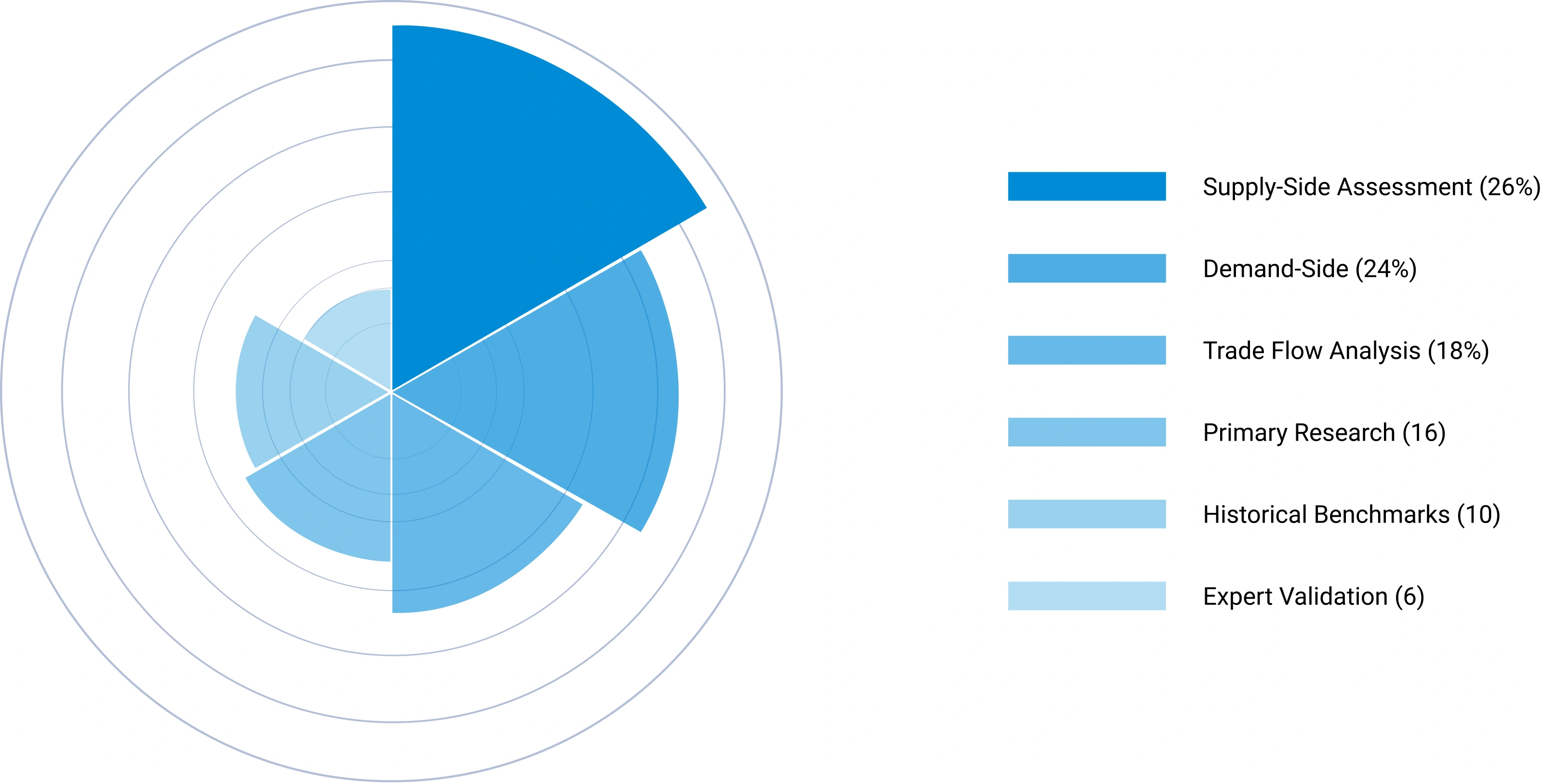
The final market size is derived through weighted triangulation of all validated methodologies. Any material deviations between approaches are investigated and adjusted through additional validation cycles. The outcome represents the most realistic assessment of the market based on available evidence and expert confirmation ensuring that volume and value estimates are fully consistent with one another.
Triangulation Framework — Input Contribution Weight
Relative weight each sizing input contributes to the final reconciled market estimate
Phase 7 — Forecast Modeling: Projecting Future Market Evolution
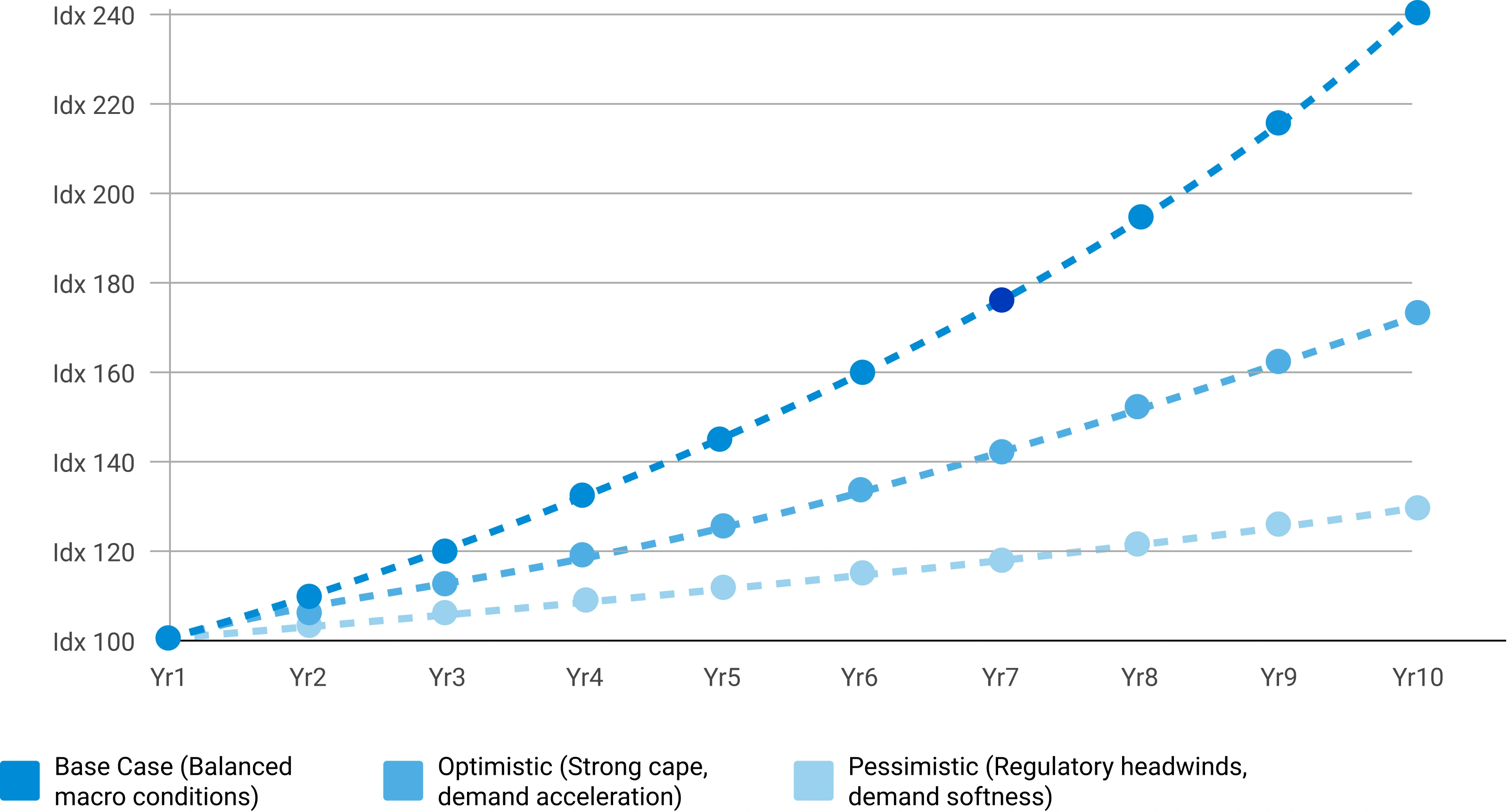
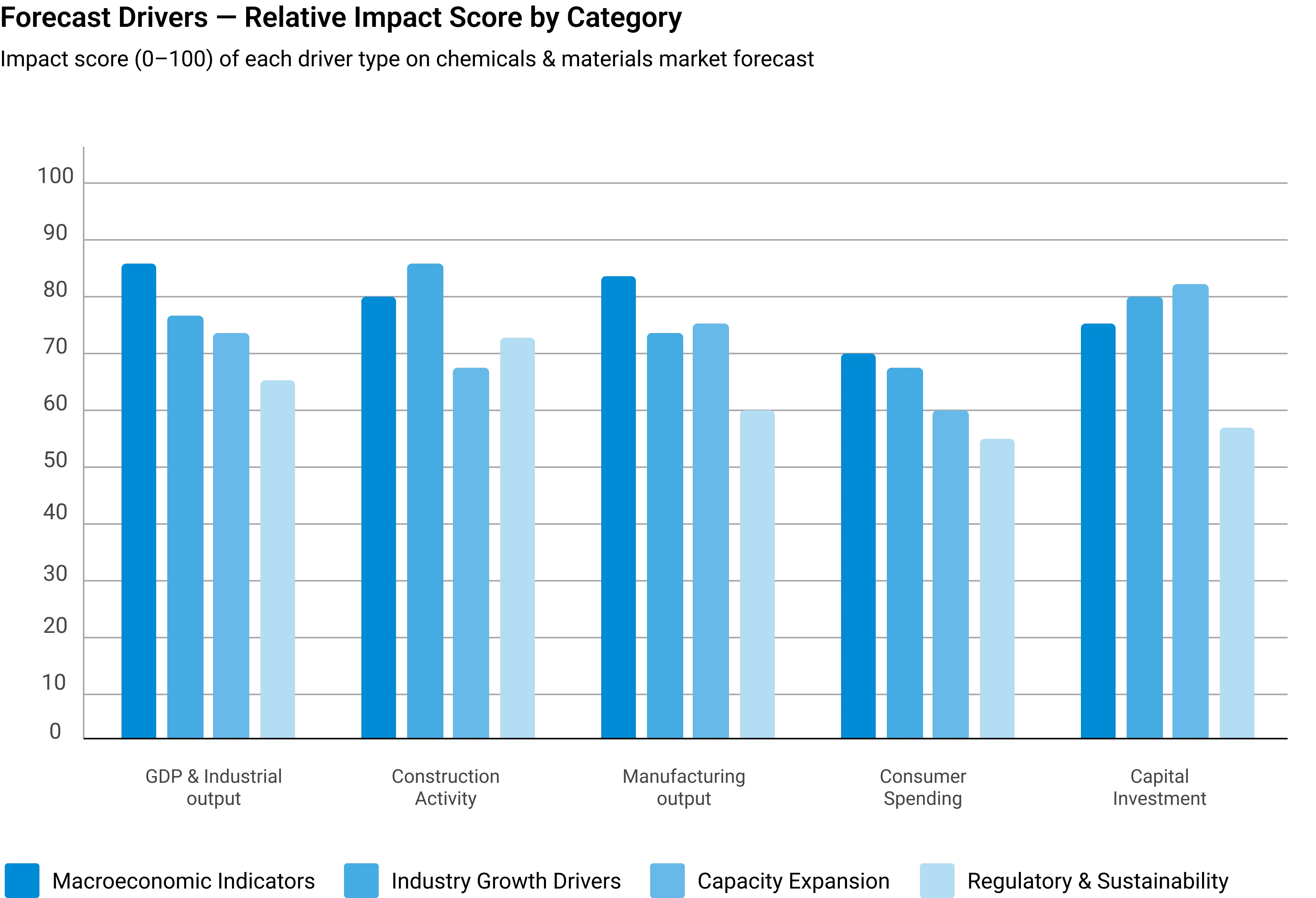
Forecasting evaluates the future trajectory of the market using a combination of quantitative indicators and qualitative assessments across economic, industry, and regulatory dimensions. Rather than simple extrapolation, each driver is independently modeled and integrated into a composite forecast.
Macroeconomic Indicators
GDP growth, industrial production, manufacturing output, construction activity, consumer spending, and capital investment form the quantitative foundation of long-term demand projections. These are applied at country, regional, and global levels.
Industry Growth Drivers
Urbanization, infrastructure development, industrialization, technological innovation, sustainability initiatives, and evolving product performance requirements are assessed at regional and industry levels — capturing both structural and cyclical demand drivers.
Capacity Expansion Analysis
Announced plant expansions, new manufacturing facilities, technology upgrades, and strategic investments are evaluated to determine future supply-demand dynamics and potential market tightness or oversupply situations.
Regulatory & Sustainability
Environmental regulations, chemical safety standards, emission reduction targets, circular economy initiatives, and sustainability requirements are incorporated as they often influence product adoption rates and market growth trajectories.
Scenario Forecast Range — Indexed Market Growth (Year 1–10)
Illustrative indexed growth trajectories across Base, Optimistic, and Pessimistic scenarios over a 10-year forecast horizon
Forecast Drivers — Relative Impact Score by Category
Impact score (0–100) of each driver type on chemicals & materials market forecast



Comments
Share your thoughts, ask a question, or provide feedback about this report.