Content
What is Chemical Storage and Handling Market Size and Share?
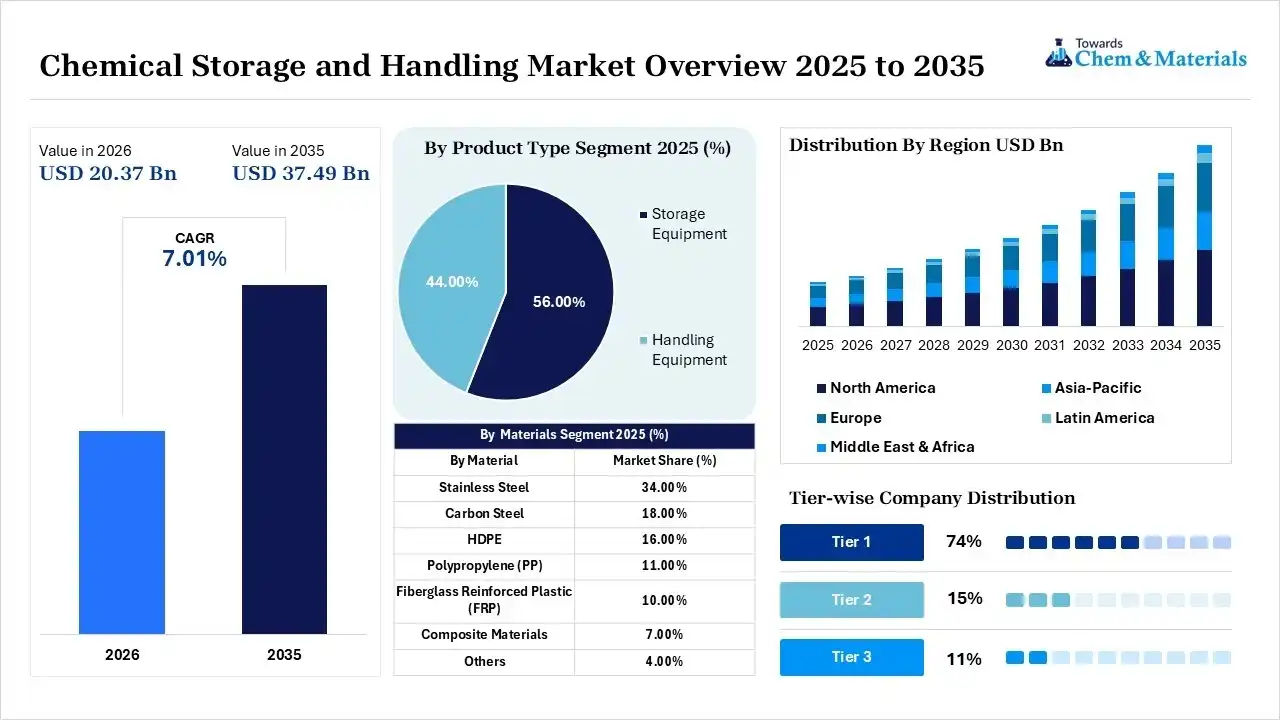
The global chemical storage and handling market size was valued at USD 19.04 billion in 2025, is estimated to reach USD 20.37 billion in 2026, and is projected to reach USD 37.49 billion by 2035, exhibiting a compound annual growth rate (CAGR) of 7.01% over the forecast period from 2026 to 2035.Asia Pacific dominated the chemical storage and handling market with the largest revenue share of 41.00% in 2025 and is expected to grow at the fastest CAGR of 7.14% during the forecast period.
There is digital transformation, like IoT-enabled monitoring and warehouse automation, pushing things along in a more connected way. The chemical storage and handling market is driven by pretty stringent safety rules, plus the steady bump in specialty chemical and pharmaceutical output and rapid industrialization. At the same time, more demand keeps showing up for temperature-controlled storage, hazardous material management, and those specialized logistics backbones, too, so overall the market has room to keep expanding for the long run.
The chemical storage and handling market is growing due to the increased focus on the safety of storing and handling chemicals, regulatory requirements, and the need for operational effectiveness within manufacturing and logistics facilities. The demand for advanced storage infrastructure capable of managing a wide range of chemical properties is on the rise as specialty chemicals, pharma, agrochemicals, and industrial compounds are produced.
- For instance, in June 2026, the OPCW and Malaysia co-hosted a practical training session in June 2026 to enhance preparedness for chemical inspections and to facilitate the use of safe chemical management principles in accordance with the Chemical Weapons Convention.(Source: www.opcw.org)
Automated warehouses, interconnected monitoring systems, predictive maintenance, and intelligent inventory platforms are being implemented to boost safety and minimize operational dangers. There are also efforts underway to promote the use of energy-efficient storage facilities, re-use of containment systems, and environmentally responsible handling practices. The market will see further investments in digital infrastructure and in specialized logistics solutions.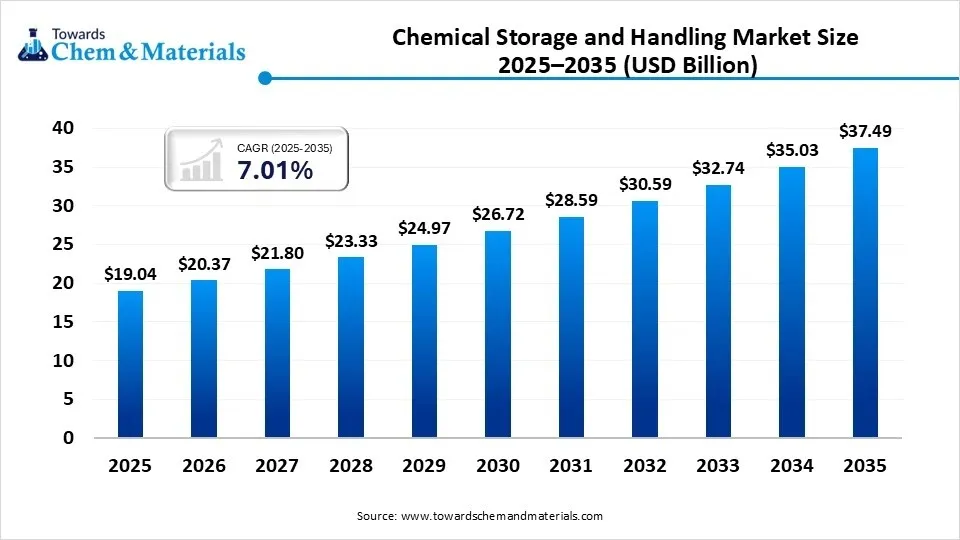
Market Highlights
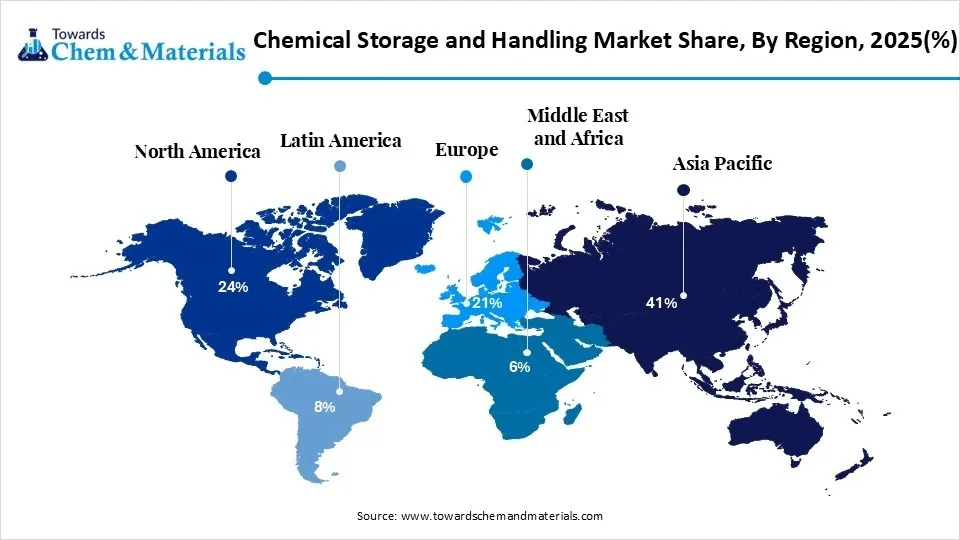
- By region, Asia Pacific dominated the chemical storage and handling market by holding 41% share in 2025 and is expected to grow at the fastest CAGR of 7.14% during the forecast period.
- By region, the North America chemical storage and handling market share held 24% of the market in 2025 and is expected to grow at a CAGR of 5.82% during the forecast period.
- By product type, the storage equipment segment dominated the market with the largest share of 56% in 2025 and is expected to grow at a CAGR of 6.12% during the forecast period.
- By product type, the handling equipment segment held 44% market share in 2025 and is expected to grow at the fastest CAGR of 6.88% over the forecast period.
- By material, the stainless steel segment dominated the market with the largest share of 34% in 2025 and is expected to grow at a CAGR of 6.18% during the forecast period.
- By material, the polypropylene (PP) segment held 11% market share in 2025 and is expected to grow at the fastest CAGR of 7.3% over the forecast period.
- By chemical type, the corrosive chemicals segment dominated the market with the largest share of 28% in 2025 and is expected to grow at a CAGR of 6.42% during the forecast period.
- By chemical type, the flammable chemicals segment held 21% market share in 2025 and is expected to grow at the fastest CAGR of 7.05% over the forecast period.
- By storage capacity, the 5,001–50,000 liters segment dominated the market with the largest share of 36% in 2025 and is expected to grow at a CAGR of 6.56% during the forecast period.
- By storage capacity, the above 50,000 liters segment held 21% market share in 2025 and is expected to grow at the fastest CAGR of 6.92% over the forecast period.
- By end use, the chemicals & petrochemicals segment dominated the market with the largest share of 31% in 2025 and is expected to grow at a CAGR of 6.42% during the forecast period.
- By end use, the pharmaceuticals segment held 11% market share in 2025 and is expected to grow at the fastest CAGR of 7.42% over the forecast period.
- By distribution channel, the direct sales segment dominated the market with the largest share of 48% in 2025 and is expected to grow at a CAGR of 6.18% during the forecast period.
- By distribution channel, the EPC contractors segment held 18% market share in 2025 and is expected to grow at the fastest CAGR of 7.08% over the forecast period.
Global Investment Movement for Chemical Storage and Handling Market
Increasing production of pharmaceuticals and specialty chemicals is driving investment in climate-controlled warehouses and cold chain logistics. Advanced thermal management systems assist in maintaining product integrity and ensure that delicate product storage specifications are adhered to for chemicals that require thermal care.
Widespread investment is still being made in standardized containment technologies, such as modular hazardous material cabinets, spill containment systems, intermediate bulk containers, and ventilated storage units, by manufacturers and logistics providers. Such solutions help to protect the safety of the workplace while offering flexibility in the treatment of multiple categories of chemicals.Investments are increasing in large-scale storage terminals, intermodal transport systems, and ISO tank infrastructure to enhance the transport of bulk hazardous chemicals.
- For instance, in June 2026, the European Chemicals Agency launched the Chesar Platform on its cloud services for better chemical risk assessment and regulatory reporting under the European chemical regulations.(Source: www.cirs-group.com)
Market Trends
- To meet the growing environmental and workplace safety standards, organizations are transitioning from reactive maintenance of storage infrastructure to preventive storage planning. New facilities are also being built with the features of secondary containment, advanced ventilation, corrosion-resistant materials, and dedicated chemical segregation areas, which not only lower operational risk but also enhance long-term compliance performance.
- With the advent of connected sensors, RFID-enabled inventory management systems, and integrated warehouse management platforms, digital transformation is changing how chemical storage is conducted. Real-time storage monitoring increases inventory control, traceability, minimises manual tasks, and allows for quicker decision-making in increasingly complex supply chains.
- Stainless steel alloys, engineered polymer compositions, composite materials, and advanced protective coating materials are gaining in popularity among chemical storage equipment manufacturers for their greater resistance to corrosion and chemical degradation. The innovations in materials provide longer life for equipment, less maintenance, and better safety while in operation in harsh industrial conditions.
Report Scope
| Report Attributes | Details |
| Market Size in 2026 | USD 20.37 Billion |
| Expected Size in 2035 | USD 37.49 Billion |
| Growth Rate | CAGR of 7.01% |
| Base Year of Estimation | 2025 |
| Forecast Period | 2025-2035 |
| Dominant Region | Asia Pacific |
| Segment Covered | By Product Type, By Material, By Chemical Type, By Storage Capacity, By End-use Industry, By Distribution Channel, By Region |
| Key Companies Profiled | Agility, Allcargo Logistics, DHL Supply Chain, BDP International, DB Schenker, Brenntag SE, C.H. Robinson, CEVA Logistics, Katoen Natie N.V., DACHSER, Den Hartogh Logistics, DSV, HOYER Group, Kenan Advantage Group, Sinochem Group, Rhenus Logistics, Milkyway, Kinder Morgan, SINOPEC, Kuehne + Nagel, Maersk Logistics & Services, MOL Chemical Tankers, Stolt-Nielsen Ltd, Suttons Group, TCI Supply Chain Solutions |
Intelligent Digital Transformation in Chemical Storage Operations
The way to store chemicals is changing with the advent of integrated monitoring platforms, digital twins, connected sensors, robotics, and automated compliance systems. Operators can simulate storage environments and pinpoint vulnerabilities in the structure and prepare for emergency situations before they arise with the help of digital twin technology. The IoT-enabled equipment is able to continually monitor pressure, temperature, liquid levels, and potential leak conditions, and take immediate corrective action. AI is increasingly playing a vital role in enhancing the safety and optimization of operations. The AI algorithms can use other properties of the chemicals, such as the information on chemical compatibility and the Safety Data Sheet, to make suitable recommendations on chemical storage and prevent incompatible chemicals from being stored together.
Supply Chain Analysis of the Chemical Storage and Handling Market
Feedstock Procurement
- This phase consists of procurement of materials (industrial chemicals, specialty chemicals, hazardous raw materials, and packaging materials) for downstream manufacturing and storage processes.
- Stable procurement systems and quality control, as well as regulatory monitoring, guarantee the continuous supply of chemicals and facilitate safe storage, transport, and inventory management throughout the industrial supply chains spanning the globe.
- Sinopec: Sinopec's integrated refining business and petrochemical assets not only enable the company to procure huge amounts of petrochemical feedstocks but also ensure a stable supply of industrial chemicals in the downstream business for manufacturing and storage.
- Other Key Players: BASF, Dow, ExxonMobil, and Reliance Industries.
Chemical Synthesis and Processing
- Industrial, specialty, and hazardous chemicals are manufactured from raw materials through controlled chemical synthesis, refining, purification, and processing prior to storing and distributing the chemicals.
Advanced manufacturing technologies help maintain high-quality production standards, improve product consistency, boost operational efficiency, enhance process safety, and keep the environment more compliant. - BASF: BASF produces a wide range of industrial and specialty chemicals using the latest chemical processing technologies and ensures stable quality and large-scale production.
- Other Key Players: SABIC, LyondellBasell, Reliance Industries, Dow.
Compounding and Blending
- Processed chemicals, also known as manufactured chemicals, are chemically formulated and blended to have specific chemical compositions, high purity, and performance characteristics that meet requirements for various industries.
Special formulation to comply with application requirements and is safe for storage, regulatory, and handling during product life. - Spectrum Chemical: Spectrum Chemical is developing formulated high-purity chemicals for pharmaceutical, laboratory, and industrial applications that are consistent and meet high standards for purity.
- Other Key Players: DuPont, Eastman Chemical, Evonik, Merck KGaA.
Regulatory Framework: Chemical Storage and Handling Market
| Country Region | Regulatory Body | Key Regulations | Focus Areas |
| Asia Pacific | National authorities such as PESO (India) | Globally Harmonized System (GHS), national hazardous chemical storage regulations | Hazard classification, chemical labeling, storage safety, transportation, and worker protection |
| North America | OSHA, Environmental Protection Agency (EPA), | OSHA Hazard Communication Standard, Process Safety Management, Hazardous Materials Regulations | Workplace safety, hazardous chemical handling, emergency response, transportation compliance |
Chemical Storage and Handling Market Dynamics
Driver
The Demand for High-Performance Chemicals Continues to Grow
Specialty chemicals, pharmaceuticals, electronics manufacturing, and agrochemicals production are growing at a fast pace and are driving constant demand for advanced chemical storage and handling systems. The industries demand contamination-resistant, temperature-controlled, and regulation-compliant storage conditions that help ensure the quality of the products and the safety of the operation. Workplace safety and environmental protection have become more important, driving organizations to upgrade their storage systems to innovative monitoring tools and optimized containment solutions.
Restraint
Workforce Challenges - Impediments to Safe Chemical Operations
The proper storage and handling of chemicals demand trained employees who can work with hazardous substances within a strict regulatory framework. But manufacturers and logistics providers are still facing challenges due to a lack of qualified operators, hazardous-material drivers, and technical maintenance workers. As labor costs increase, hiring can be a longer process, and more stringent certification can result in a longer project period and higher overall operational expenses, especially in fast industrializing areas.
Opportunity
Digital Warehousing Is Poised to Unlock Future Growth Opportunities
As connected technologies are increasingly becoming part of the landscape, the chemical storage and handling market will open up new avenues. By leveraging intelligent sensors, automation in warehouse storage systems, predictive analytics, and cloud-based warehouse management platforms, organizations can enhance inventory visibility, ensure compliance, and reduce risks of operational exposure. Digital transformation is also a large growth field for the future in chemical storage facilities, as these technologies enable preventive maintenance, optimise storage space, minimise manual error, and enhance decision-making.
Segmental Insights
Product Type Insights
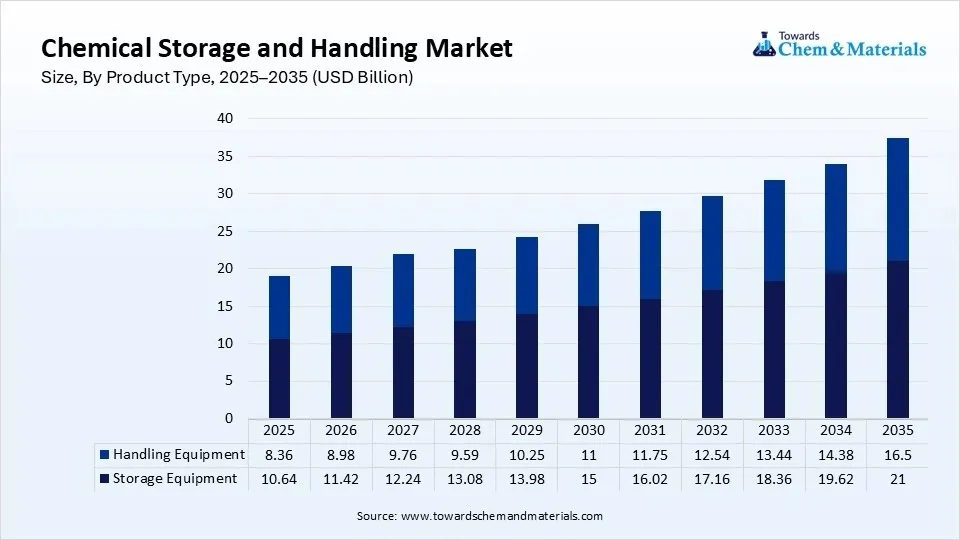
The storage equipment segment dominated the market with the largest share of 56% in 2025 and is expected to grow at a CAGR of 6.12% over the forecast period, because it was essential for the storage of hazardous and non-hazardous chemicals at manufacturing plants, warehouses, laboratories, and distribution centers. Secure storage tanks, drums, intermediate bulk containers, silos, and chemical cabinets ensure strict environmental and workplace safety standards and secure containment. Furthermore, the growing demand for corrosion-resistant materials, tightness, secondary containment, and special storage facilities further promotes the wide use. Industries are also upgrading existing storage systems to support the growing production of specialty chemicals and compliance regulations.
- In July 2026, Hitachi revealed an AI-based operational guidance system that can be used for chemical manufacturing facilities to optimise their operational processes intelligently to ensure safer production and storage operations.(Source: jp.ibtimes.com)
The handling equipment segment held the 44% market share in 2025 and is expected to grow at the fastest CAGR of 6.8% over the forecast period, as the industries are increasingly focusing on safety, operational efficiency, and automated material handling. Manual handling of hazardous materials in storage and distribution is reduced by pumps, valves, conveyors, dispensing systems, loading equipment, and specialized transfer systems for increased productivity. Automation, robotics, and systems that are digitally connected to handling systems are areas of increased investment and a driving factor in modernizing facilities.
Chemical Storage and Handling Market Share, By Product Type, 2025(%)
| By Product Type | Market Share (%) |
| Storage Equipment | 56.00% |
| Handling Equipment | 44.00% |
Material Insights
The stainless steel segment dominated the market with the largest share of 34% in 2025 and is expected to grow at a CAGR of 6.18% over the forecast period, as a result of its high resistance to corrosion, structural strength, and resistance to a wide variety of industrial chemicals. In such applications, such as pharmaceuticals, petrochemicals, food-grade goods, and chemical processing, stainless steel storage tanks, vessels, and pipelines are widely used for product purity and for their long service life. The material will also operate reliably in extreme operating conditions such as exposure to aggressive chemicals and temperature extremes.
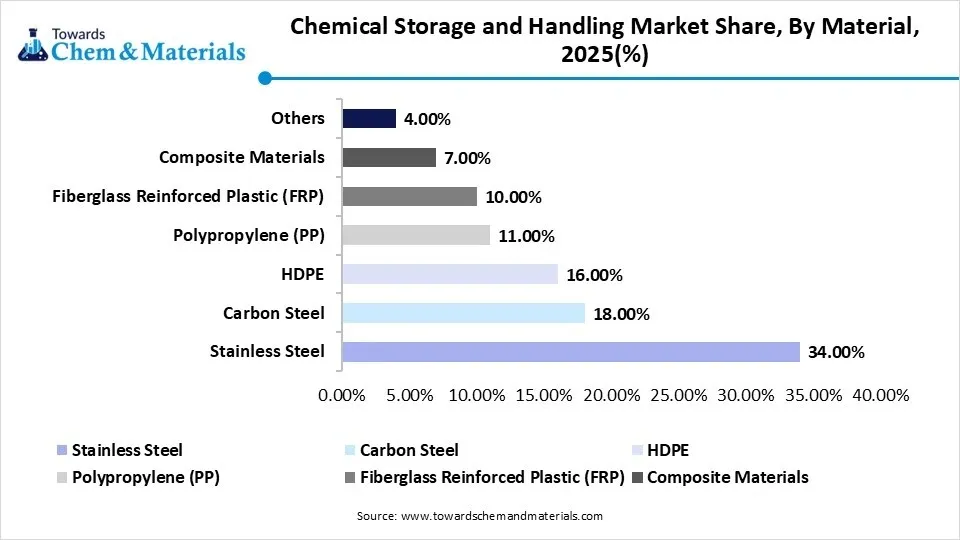
The polypropylene (PP) segment held the 11% market share in 2025 and is expected to grow at the fastest CAGR of 7.3% over the forecast period, as it can be manufactured with cost-effective processes and has excellent chemical resistance and lightweight properties. For the storage of various corrosive chemicals, the use of polypropylene storage containers, tanks, and handling equipment is expanding, and it reduces equipment weight and maintenance. The market is expanding as the use of sustainable materials and plastic recycling has been a topic growing in importance.
- For instance, in May 2026, Nouryon launched Perkadox PM-60ST-GR, an Organic Peroxide Technology for the rejuvenation of recycled PP for the wider application of recycled materials in industrial and consumer products, in addition to the sustainable Circular Economy initiatives.(Source: www.nouryon.com)
Chemical Storage and Handling Market Share, By Material, 2025(%)
| By Material | Market Share (%) |
| Stainless Steel | 34.00% |
| Carbon Steel | 18.00% |
| HDPE | 16.00% |
| Polypropylene (PP) | 11.00% |
| Fiberglass Reinforced Plastic (FRP) | 10.00% |
| Composite Materials | 7.00% |
| Others | 4.00% |
Chemical Type Insights
The corrosive chemicals segment dominated the market with the largest share of 28% in 2025 and is expected to grow at a CAGR of 6.42% over the forecast period, as these chemicals need to be stored in special and often expensive facilities that are engineered to resist leaks, corrosion, contamination, and workplace hazards. Acids, alkalis, and industrial chemicals can be dangerous and corrosive for industries, which require corrosion-resistant tanks, unique containment solutions, protective coatings, and well-designed storage areas to ensure safety and compliance with regulations.
The flammable chemicals segment held the 21% market share in 2025 and is expected to grow at the fastest CAGR of 7.05% over the forecast period, due to its demand in various sectors such as petrochemicals, specialty chemicals, paints and coatings, and industrial manufacturing. They need state-of-the-art fire-resistant storage areas, explosion-proof machines, ventilation and vapor management systems, and segregation measures to significantly reduce their safety risks. Industries are making continuous investments in hazardous material facilities and automated monitoring systems, as well as in emergency response readiness, to help improve the management of flammable chemicals and meet changing industry safety and environmental standards in their global manufacturing operations.
Chemical Storage and Handling Market Share, By Chemical Type, 2025(%)
| By Chemical Type | Market Share (%) |
| Corrosive Chemicals | 28.00% |
| Flammable Chemicals | 21.00% |
| Toxic Chemicals | 15.00% |
| Reactive Chemicals | 12.00% |
| Oxidizing Chemicals | 9.00% |
| Hazardous Waste Chemicals | 8.00% |
| General Industrial Chemicals | 7.00% |
Storage Capacity Insights
The 5,001–50,000 liters segment dominated the market with the largest share of 36% in 2025 and is expected to grow at a CAGR of 6.56% over the forecast period, attributed to the fact that it provides a good tradeoff between flexibility and ease of operation and cost reduction for medium and large-scale industrial applications. This capability is common in chemical production plants, pharmaceutical factories, agrochemical production facilities, and distribution centers where there is a need for a consistent inventory supply. The segment allows for efficient inventory rotation, as well as easier inspection, maintenance, and regulatory compliance. Its ability to work with a wide range of industrial applications makes it an organization's first choice for its chemical portfolio.
The above 50,000 liters segment held the 21% market share in 2025 and is expected to grow at the fastest CAGR of 6.92% over the forecast period, driven by the continued expansion of production facilities and bulk storage by the large-scale chemical producers. The rising demand for more global trading has led to investments into higher capacity storage terminals and integrated logistics hubs. Large storage systems provide better efficiency for the supply chain, fewer trips to transport, and better manufacturing operations. As investments in port terminals, bulk liquid storage facilities, and intermodal transportation networks are expected to increase, so will investments in high-capacity storage solutions globally.
Chemical Storage and Handling Market Share, By Storage Capacity, 2025(%)
| By Storage Capacity | Market Share (%) |
| Below 500 Liters | 16.00% |
| 500–5,000 Liters | 27.00% |
| 5,001–50,000 Liters | 36.00% |
| Above 50,000 Liters | 21.00% |
End Use Insights
The chemicals & petrochemicals segment dominated the market with the largest share of 31% in 2025 and is expected to grow at a CAGR of 6.42% over the forecast period, due to the regular practice of these industries to process high volumes of hazardous raw materials, intermediate, and final products of chemical processes, which demand special storage and handling systems. Reliable storage systems are essential for continuous production processes, ensuring the integrity of the product and worker safety while also complying with rules and regulations for environmental protection.
- For instance, in February 2026, AltM been investing in state-of-the-art chemical manufacturing equipment by opening an integrated biorefinery pilot plant in February 2026, for the production of bio-derived industrial materials.(Source: www.prnewswire.com)
The pharmaceuticals segment held the 11% market share in 2025 and is expected to grow at the fastest CAGR of 7.42% over the forecast period, due to increased production of active pharmaceutical ingredients, biologics, vaccines, and specialty healthcare products. Pharmaceutical manufacturers need accurate temperature control, contamination control, regulatory documentation, and environmental monitoring to be maintained during the storage and distribution process. The increasing use of smart cold chain infrastructure, inventory automation, and real-time monitoring solutions is enhancing storage infrastructure and ensuring pharmaceutical products are of high quality, traceable, and meet rigorous safety standards.
Chemical Storage and Handling Market Share,By End-use Industry, 2025(%)
| By End-use Industry | Market Share (%) |
| Chemicals & Petrochemicals | 31.00% |
| Oil & Gas | 18.00% |
| Pharmaceuticals | 11.00% |
| Food & Beverage | 8.00% |
| Water & Wastewater Treatment | 10.00% |
| Agriculture | 7.00% |
| Mining & Metals | 5.00% |
| Pulp & Paper | 4.00% |
| Power Generation | 3.00% |
| Others | 3.00% |
Distribution Channel Insights
The direct sales segment dominated the market with the largest share of 48% in 2025 and is expected to grow at a CAGR of 6.18% over the forecast period, as the chemical manufacturers and industrial customers may demand customized storage solutions that are suitable for their operation, safety, and regulatory needs. Having a direct engagement enables manufacturers to offer technical advice and guidance, product customisation, installation assistance, and long-term maintenance services, while simultaneously fostering closer customer relationships. Direct procurement is also a very appealing mode of distribution for large-scale industrial projects, due to the better quality assurance, communication, and integration of storage systems into existing production facilities.
The EPC contractors segment held the 18% market share in 2025 and is expected to grow at the fastest CAGR of 7.08% over the forecast period, as industries tend to rely on outsourcing for the design and implementation of integrated chemical storage facilities. An EPC contractor is responsible for delivering a project from start to finish, from planning the facilities to selecting the project equipment, installing it, ensuring it adheres to regulatory requirements, and commissioning it. Their experience allows them to deliver infrastructure development projects as quickly as possible without compromising on safety or environmental concerns.
Chemical Storage and Handling Market Share, By Distribution Channel, 2025(%)
| By Distribution Channel | Market Share (%) |
| Direct Sales | 48.00% |
| Distributors & Dealers | 26.00% |
| EPC Contractors | 18.00% |
| Online Sales | 8.00% |
Regional Insights
How Did the Asia Pacific Dominate the Chemical Storage and Handling Market In 2025?
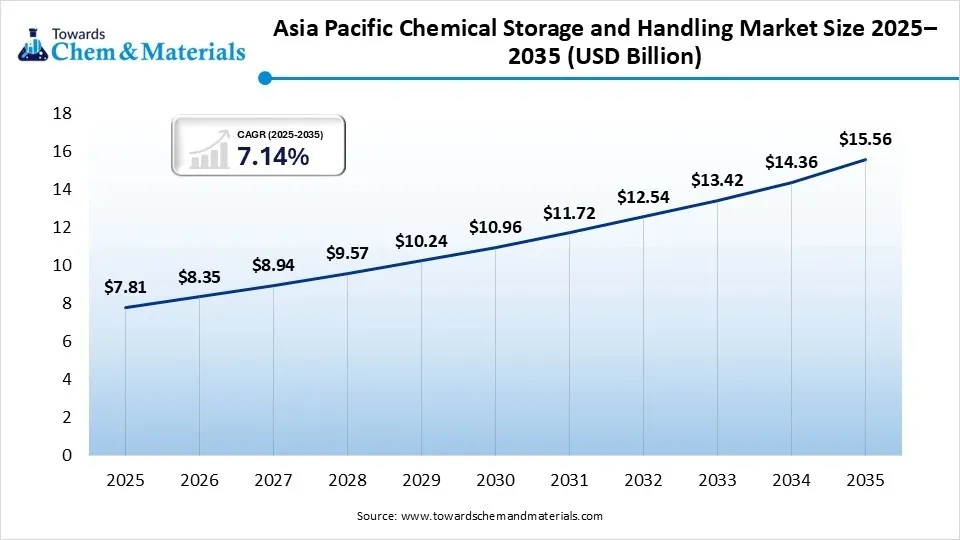
The Asia Pacific chemical storage and handling market size was estimated at USD 7.81 billion in 2025 and is projected to reach USD 15.56 billion by 2035, growing at a CAGR of 7.14% from 2026 to 2035. Asia Pacific dominated the market with the largest share of 41% in 2025 and is expected to grow at a CAGR of 5.82% during the forecast period, with the region experiencing fast industrialization, expansion of hazardous material management, pharmaceutical production, and the chemical industry. As the region's governments escalate their chemical safety measures, industries are investing in automated warehouses, intelligent storage solutions, and eco-friendly infrastructure. Increase in specialty chemicals and growing export operations further drive the demand for advanced solutions for storage and handling.
China Chemical Storage and Handling Market Analysis
China is still building its power by making massive amounts of chemicals, highly developed chemical industrial facilities, and ongoing investments in high-value chemical production. The country's focus on technological innovation, its home-making capacity, and industrial modernization contribute to the rising demand for chemical storage facilities and intelligent handling systems, which are of particular concern.
- For instance, in June 2026, the arrival of the world's largest high-capacity boron-10 high-purity production plant in China's Shandong Province in June 2026 further marks China's progress towards specialized chemical production and the need for more advanced storage and security facilities.(Source:www.globaltimes.cn)
India Chemical Storage and Handling Market Analysis
The chemical industry, the pharmaceutical industry, and the government's policies supporting industrial growth are also contributing to the robust growth in India. Specialty chemicals, petrochemicals, and sustainable manufacturing are driving investment, and a demand for modern storage infrastructure with state of the art safety and monitoring technologies.
- In July 2026, Adani Enterprises and Dioxycle announced a long-term partnership to develop and scale the manufacturing of low-carbon chemicals in India, further strengthening the country's efforts to boost low-carbon chemical manufacturing with secure storage and handling systems.(Source:www.adani.com)
North America Chemical Storage and Handling Market Trends Analysis
The North America chemical storage and handling market size was estimated at USD 4.6 billion in 2025 and is projected to reach USD 9.2 billion by 2035, growing at a CAGR of 7.18% from 2026 to 2035.North America held 24% market share in 2025 and is expected to grow at the fastest CAGR of 7.18% during the forecast period, with strict regulations, high automation levels, and robust investments in hazardous material management. Higher levels of digital monitoring systems and predictive maintenance systems, as well as advanced containment solutions, are increasingly being adopted by industrial operators through the modernisation of storage facilities to enhance operational safety, compliance, and supply chain efficiency in the various chemical sectors.
United States Chemical Storage and Handling Market Analysis
The United States has a strong position in the market due to its developed chemical manufacturing industry, strict working environment safety regulations, and the use of digital warehouse technology. Chemical manufacturers also keep investing in automated warehouses, smart monitoring systems, and dedicated containment and infrastructure for handling hazardous substances safely. As industries advance in automation, predictive maintenance, and logistics integration, they are increasingly seeking advanced chemical storage and handling solutions to meet these evolving needs.
Canada Chemical Storage and Handling Market Analysis
Canada's market is bolstered by increased investments in industrial safety, environmental protection, and sustainable chemical logistics. To ensure adherence to changing regulatory standards, industries are turning to corrosion-resistant storage solutions, automated inventory management systems, and sophisticated monitoring tools to enhance operational reliability and safety. The nation's emphasis on responsible resource usage, the growing use of specialty chemicals, and the upgrade of industrial infrastructure remain drivers for the use of efficient storage systems and for handling hazardous materials in various end-use applications.
Europe Chemical Storage and Handling Market Trends Analysis
The Europe chemical storage and handling market size was estimated at USD 4.0 billion in 2025 and is projected to reach USD 8.1 billion by 2035, growing at a CAGR of 7.31% from 2026 to 2035. Europe held 21% market share in 2025 and is expected to grow at a CAGR of 5.6% over the forecast period, with strict environmental requirements, robust safety standards in the workplace, and ongoing investment in sustainable industrial infrastructure. Chemical manufacturers and logistics companies implement increasingly intelligent storage solutions, digital compliance systems, and facilities with energy efficiency, which enhance operational performance and contribute to the promotion of the circular economy and responsible use of chemicals throughout the supply chain.
Germany Chemical Storage and Handling Market Analysis
Germany is still one of the major markets in Europe, due to its advanced chemical manufacturing industry, engineering skills, and dedication to innovation in industry. Firms are in the process of investing in smart storage technologies, automating processes, and implementing digital monitoring systems, all of which contribute to better safety and operational efficiency. The country's significant focus on sustainability, including in the industrial sector, and regulatory adherence, enable ongoing upgrades for chemical storage facilities for both national industry and export businesses.
France Chemical Storage and Handling Market Analysis
The market is developing steadily in France with sustainable chemical production, environmental protection, and digitalization of industrial plants. As chemical safety becomes a greater focus for manufacturers, they are increasingly investing in better containment systems, intelligent warehouse technologies, and better risk management practices.
Latin America Chemical Storage and Handling Market Analysis
The Latin America chemical storage and handling market size was estimated at USD 1.5 billion in 2025 and is projected to reach USD 3.2 billion by 2035, growing at a CAGR of 7.87% from 2026 to 2035. Latin America held 8% market share in 2025 and is expected to grow at a CAGR of 6.08% over the forecast period. Latin America is gradually developing its ability to store and handle chemicals, with regional industries investing in industrial safety upgrades, logistics facilities, and industrial modernization. The increasing production of chemicals for the petrochemical and mining industry, as well as for the agricultural sector, is fostering the use of specialized storage units for the most efficient distribution in line with new regulations concerning environmental and workplace safety.
Brazil Chemical Storage and Handling Market Analysis
Brazil is improving its chemical logistics capabilities by investing in sustainable transportation and bulk chemical distribution. The development of petrochemical industries and transport trade is fueling the need for efficient port facilities and advanced handling equipment.
- For instance, Brazil's Braskem Trading & Shipping announced the launch of the Blooming Future, a new generation of low-emission chemical and product oil tanker, in 2026, which will be instrumental in facilitating chemical supply chains in a safer and more environmentally friendly way.(Source: www.alchempro.com)
Chile Chemical Storage and Handling Market Analysis
Demand for safe storage solutions for hazardous materials remains high in the growing mining, industrial processing, and chemical industry in Chile. The use of corrosion-resistant storage systems, better containment technologies, and digital monitoring platforms for enhanced operational safety is increasing among industrial operators. Ongoing investments in export markets and environments are helping to promote upgrades of storage facilities that can handle safe domestic and international transport and handling of industrial chemicals.
Middle East & Africa Chemical Storage and Handling Market Trends Analysis
The Middle East & Africa chemical storage and handling market size was estimated at USD 1.1 billion in 2025 and is projected to reach USD 2.4 billion by 2035, growing at a CAGR of 8.11% from 2026 to 2035. The Middle East & Africa held 6% market share in 2025 and is expected to grow at a CAGR of 6.35% over the forecast period. As the Middle East and Africa region diversifies beyond energy sectors, there is a rise in demand for advanced chemical storage infrastructure. The development of petrochemical plants, mining, and industrial processing plants is stimulating investments in modern storage, intelligent monitoring, and eco-friendly systems for the management of hazardous materials.
Saudi Arabia Chemical Storage and Handling Market Analysis
Saudi Arabia is further developing its chemical storage industry by expanding the country's petrochemical production capacity and developing industrial diversification programs, as well as investing in large-scale production. Automated storage solutions, sophisticated containment features, and digital monitoring systems are increasingly used in modern industrial projects, optimizing operational efficiency and ensuring compliance with international chemical safety standards.
South Africa Chemical Storage and Handling Market Analysis
The South African market is still a significant one, backed by the mining industry, industrial manufacturing, and chemical processing industry in the region. To meet increasingly important regulatory requirements and ensure a reliable supply chain, companies are increasingly modernizing their storage facilities with better safety systems, corrosion-resistant equipment, and intelligent inventory management technologies.
Recent Developments
- In May 2026, AKROS Energy launched the pilot plant for salt-based hydrogen storage at the H2APEX site in Germany, preparing for commercialization. The project showcases scalable storage technology for chemicals that has been developed together with partners such as Evonik and Siemens, with the aim of safely transporting and storing hydrogen in the long term.(Source: www.businesswire.com)
Competitive Analysis
The market for chemical storage and handling is competitive, focused on innovation, digitalization, compliance, and logistics. Top firms are extending their hazardous material storage infrastructure and are connecting it with Internet-of-Things (IoT) monitoring systems, warehousing automation, and predictive maintenance solutions to enhance operational efficiency. Companies are also increasing their geographical presence with strategic partnerships and modern logistics infrastructure to enhance the service capabilities in the chemical, pharmaceutical, and petrochemical industries.
- For instance, in September 2025, Allcargo Supply Chain has opened a Grade A chemical warehousing facility at the Multi-User Logistics Complex in Navi Mumbai, which will provide a greater capacity for hazardous chemicals storage, with internationally compliant safe set-up and customized warehousing solutions.(Source: www.allcargologistics.com )
- In December 2025, The HOYER Group further strengthened its collaboration with Covestro by commissioning a cutting-edge logistics hub in Shanghai for filling, storage, and integrated logistics for MDI, thereby enhancing its competencies in specialized liquid chemical logistics.(Source: www.hoyer-group.com)
Top Players in the Market & Their Offerings
| Company Type/Position | Major Headquarters | Geographic Presence | Chemical Storage and Handling Offerings | Key Strength |
| Alfred Talke Logistic Services (TALKE Group) | Hürth, Germany | Europe, the Middle East, and Asia | Chemical warehousing, tank logistics, industrial supply chain services | Specialized chemical logistics and safety-focused operations |
| BDP International | Philadelphia, Pennsylvania, U.S. | Global | Chemical transportation, customs management, warehousing, supply chain solutions | Integrated global chemical logistics capabilities |
| Agility Logistics | Kuwait City, Kuwait | Middle East, Asia Pacific, Europe, Americas | Hazardous cargo logistics, industrial warehousing, freight forwarding | Strong international logistics infrastructure |
Other Key Players
- Agility
- Allcargo Logistics
- DHL Supply Chain
- BDP International
- DB Schenker
- Brenntag SE
- C.H. Robinson
- CEVA Logistics
- Katoen Natie N.V.
- DACHSER
- Den Hartogh Logistics
- DSV
- HOYER Group
- Kenan Advantage Group
- Sinochem Group
- Rhenus Logistics
- Milkyway
- Kinder Morgan
- SINOPEC
- Kuehne + Nagel
- Maersk Logistics & Services
- MOL Chemical Tankers
- Stolt-Nielsen Ltd
- Suttons Group
- TCI Supply Chain Solutions
Segment Covered in the Report
By Product Type
- Storage Equipment
- Storage Tanks
- Vertical Tanks
- Horizontal Tanks
- Double-wall Tanks
- Drums & Barrels
- Steel Drums
- Plastic Drums
- Fiber Drums
- Intermediate Bulk Containers (IBCs)
- Rigid IBCs
- Flexible IBCs
- Chemical Cabinets
- Silos
- Others
- Handling Equipment
- Pumps
- Centrifugal Pumps
- Diaphragm Pumps
- Peristaltic Pumps
- Gear Pumps
- Valves
- Hoses & Couplings
- Conveyors
- Dispensing Systems
- Loading & Unloading Systems
- Others
By Material
- Stainless Steel
- SS304
- SS316
- Duplex Stainless Steel
- Carbon Steel
- High-Density Polyethylene (HDPE)
- Polypropylene (PP)
- Fiberglass Reinforced Plastic (FRP)
- Composite Materials
- Others
By Chemical Type
- Corrosive Chemicals
- Flammable Chemicals
- Toxic Chemicals
- Reactive Chemicals
- Oxidizing Chemicals
- Hazardous Waste Chemicals
- General Industrial Chemicals
By Storage Capacity
- Below 500 Liters
- 500–5,000 Liters
- 5,001–50,000 Liters
- Above 50,000 Liters
By End-Use Industry
- Chemicals & Petrochemicals
- Oil & Gas
- Pharmaceuticals
- Food & Beverage
- Water & Wastewater Treatment
- Agriculture
- Mining & Metals
- Pulp & Paper
- Power Generation
- Others
By Distribution Channel
- Direct Sales
- Distributors & Dealers
- EPC Contractors
- Online Sales
By Regions
- North America
- Europe
- Asia Pacific
- Middle East & Africa
- Latin America
FAQ's




Select User License to Buy
Figures (6)










 sales@towardschemandmaterials.com
 Download Sample
 Schedule a Meeting