
According to Videsh Swar, after in-depth analysis, there are strong prospects for growth in the global bio-based construction materials market. The market value was estimated at USD 39.1 million during 2025 and is expected to reach USD 89.2 million by 2035, with 128% growth over the studied period. His analysis shows that the rising adoption of renewable construction materials and the development of technology and more environmentally sensitive construction practices and requirements are all helping to fuel market expansion.
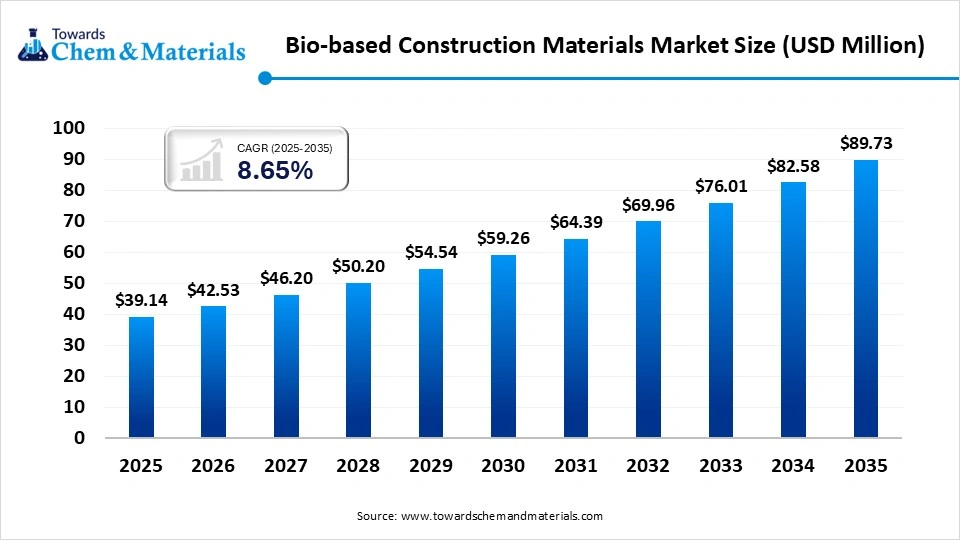
The regional markets are showing signs of growth, with Asia Pacific being the dominant region and Europe showing the fastest growth rate. Major players include Stora Enso Oyj, IsoHemp SA, Binderholz GmbH, Mercer Mass Timber, Timberlab Inc., Hempitecture, Inc., Ecovative Design LLC, Mykor Ltd., and Biohm Ltd. The growth of commercial activity is also reflected in company developments in recycled composites, circular polymers, biofabrication, engineered timber, and mycelium materials. Thus, the market is expected to register significant growth during the forecast period till 2035.
Market Highlights
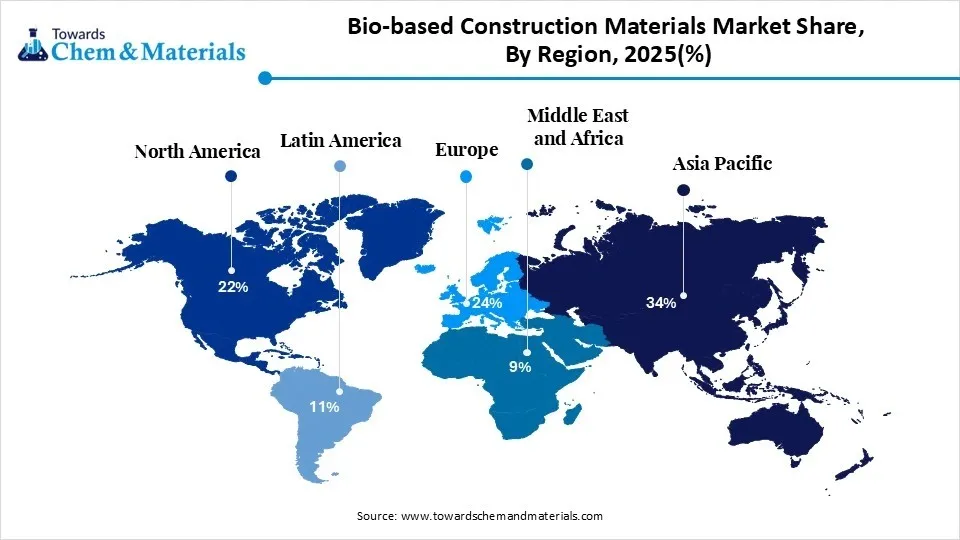
- By region, Asia Pacific dominated the Nickel market by holding 34% share in 2025 and is expected to grow at a CAGR of 9.2% during the forecast period.
- By region, Europe held 24% market share in 2025 and is expected to grow at the fastest with a CAGR of 9.4% during the forecast period.
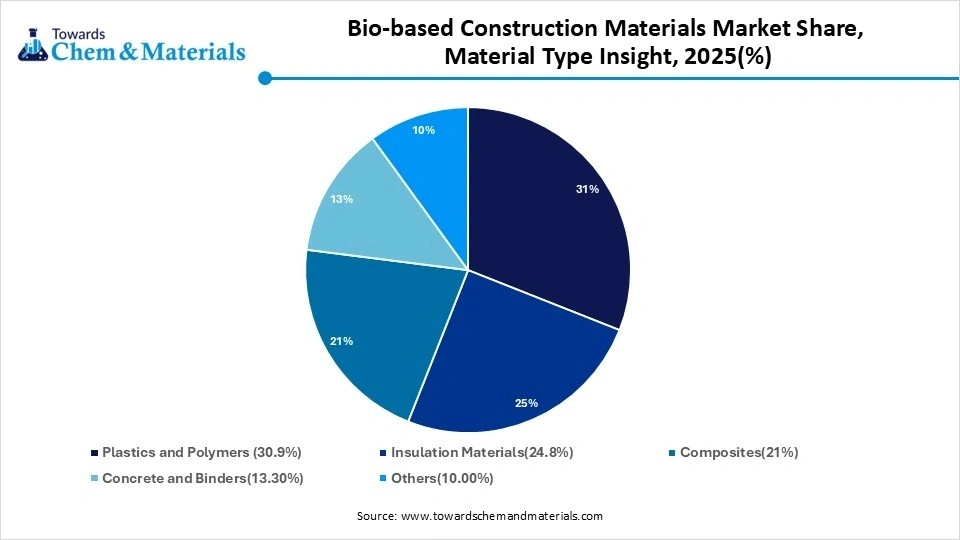
- By material type, the plastics and polymers segment dominated the market with the largest share of 30.9% in 2025 and is expected to grow at a CAGR of 8.5% during the forecast period.
- By material type, the composites segment held 21% market share in 2025 and is expected to grow at the fastest CAGR of 9.3% over the forecast period.
- By end-use, the residential segment dominated the market with the largest share of 61.4% in 2025 and is expected to grow at a CAGR of 8.4% during the forecast period.
- By end-use, the non-residential segment held 38.6% market share in 2025 and is expected to grow at the fastest CAGR of 8.9% over the forecast period.
Market Overview
The global bio-based construction material market is estimated to generate USD 89.2 million of revenue in 2035, rising 8.65% annually throughout 2025-2035. Advances in technology are enhancing the properties of bio-resins, high-performance insulation foams, and long-lasting engineered composites for use in building. These supportive governmental policies, regional mandates, bio-economy incentives, and carbon-reduction penalties are driving commercial uptake. Reduction of carbon footprint is a prominent motivation because bio-based materials are an alternative to carbon-intensive construction materials. The use of certified sustainable materials is encouraged by green building mandates such as LEED and BREEAM. Reducing VOC emissions is another way natural materials can contribute to better indoor air quality. In the meantime, agricultural waste utilisation helps in the circular economy integration by using agricultural wastes as valuable construction materials, thus overcoming the dependence on virgin resources.
- Key Insights- The bio-based construction material market is at USD 39.1 million in 2025 and is growing at a decent pace, with increased usage of renewable and bio-based materials.
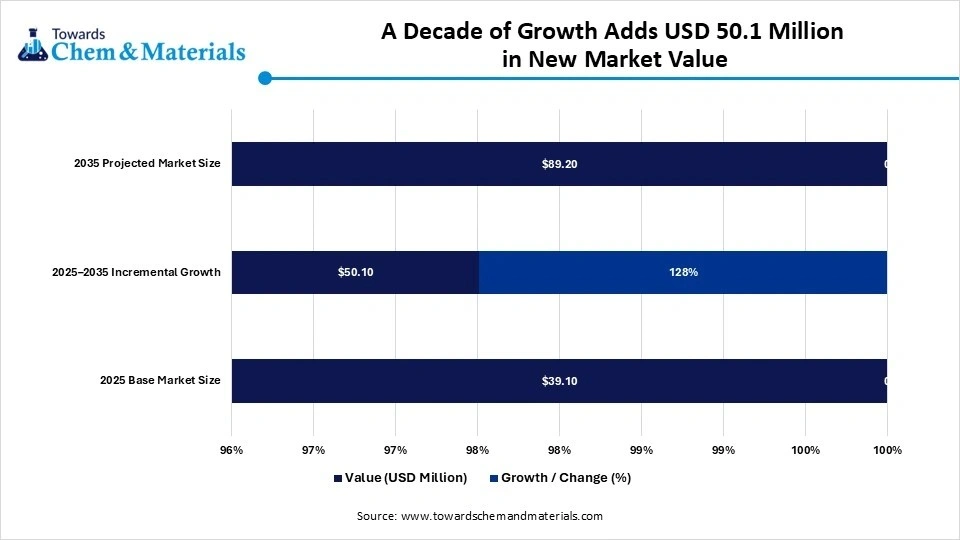
A Decade of Growth Adds USD 50.1 Million in New Market Value
Source: Towards Chem and Materials Database
The USD 50.1M Opportunity brings great long-term expansion potential. The incremental-growth chart shows the markets value of USD 39.1M in 2025 compared to its estimated value of USD 89.2M in 2035. The USD 50.1M rise in the market value represents an additional market opportunity equivalent to 128% growth over the period. This expansion opens the door to opportunities in a number of material types to meet various construction needs and application situations. Stronger building codes, green certifications, corporate ESG programs, and an increase in demand for sustainable construction drive the market. Improvements in the durability, weight, and recyclability of natural-fiber composites and bio-resins are achieved thanks to technological advances. Advances with cellulose, wood fibers, and bio-based polyurethanes help to improve thermal insulation and energy efficiency. Agri-business waste is being used to an increasing extent in the practices of the circular economy, minimising the need for virgin materials and logistics waste.
- Key Insights- The market is expected to more than double (+128%) over the decade, adding incremental value of USD 50 million.
AI in the Market
Source: MDPI
AI enables transformative advancements in the field of bio-based construction materials, enhancing material properties, optimizing formulations, and streamlining production processes. Use of machine learning models to predict physical and thermal characteristics of the bio-based feedstocks can minimize physical trial-and-error testing. Bio-inspired load-bearing structural shapes are generated by algorithms based on the best practices of nature, in lightweight organic panels and bio-resins. Predictive analytics can help align the regional agricultural waste streams, which will enable a more reliable raw-material supply to manufacturers. Computer vision and sensor networks are used for real-time monitoring of processing conditions, which improves the reduction of defects during biodegradable composite manufacturing. AI can be used, for instance, to help make biological feedstocks more standardized as construction materials. These capabilities help to enhance material development, while also contributing to increased production efficiency and waste reduction for novel and evolving bio-based construction applications.
Segmental Analysis
Material Type Insight
The material type segment is divided into 5 segments that are plastics and polymers, insulation materials, composites, concrete and binders, and others. Plastics and polymers accounted for the largest share of 30.90% and are expected to grow by 8.50% CAGR in the segment. This segment was leading because of its wide variety of bio-based materials used for various construction applications. The materials used in these include polyurethane, epoxy, polyethylene, polypropylene, polylactic acid-based materials, coatings, sealants, and foams.
- For instance, in May 2026, Hanwha Azdels SuperLite S25 is a blend of polypropylene and long chopped fibre, plus high recycled material, which Hanwha Azdel developed in May 2026. About 50% of the resin content of the reinforced core is post-consumer recycled polypropylene. Going forward, 100% recycled glass fibre will be sourced, and the product will be reinforced even further.(Source:www.plasticstoday.com)
- Composites captured the highest market share of 21.00% and the highest CAGR of 9.30%. The composites segment had the highest growth due to its use of a variety of materials in various bio-based construction product categories. These are natural fiber, hemp fiber, flax fiber, jute fiber, kenaf fiber, wood plastic, bio-resin, mycelium-based, and hybrid bio-composites. For instance, in June 2026, IMG Group, in Portugal, with financing of €15 million, launched Everbio Innovation Hub, which is dedicated to circular polymer studies in Portugal via Evertis, Selenis, Renascis, and Renewis.(Source:worldbiomarketinsights.com)
Insulation materials were the next largest category, accounting for 24.80% share and a CAGR of 8.90% for the forecast period. This segment consists of hemp, cellulose, wood-fiber, sheep-wool, straw-based, cork, and mycelium-based insulation materials. The concrete and binders segment accounted for 13.30% market share with a CAGR of 7.80% during the forecast period. These involve bio-based concrete, hempcrete, bio-based binders, biochar-based concrete, and microbial binders. Others accounted for 10.00% share with a CAGR of 9.10% over the forecast period. These include engineered wood, mass timber, bamboo materials, agricultural-residue boards, roofing, flooring, and mycelium-based structural products.
- Key Insights- The global plastics and polymers market continues to be the top market with polymers showing the highest growth rate, whereas composites are the best growth materials category.
Source: Towards Chem and Materials Database
End Use Insight
The end-use segment consists of both residential and non-residential construction (supplied market segmentation). The residential construction dominated the market and accounted for 61.40% of the total market share and achieved an increase of 8.40% in CAGR throughout the forecast period. The residential segment was the largest due to its multiple housing applications related to new construction and home renovations. They include single-family housing, multi-family housing, energy-efficiency retrofits, insulation replacement, and interior refurbishment. Non-residential constructions percentage share was 38.60% and is expected to grow at the fastest CAGR of 8.90%.
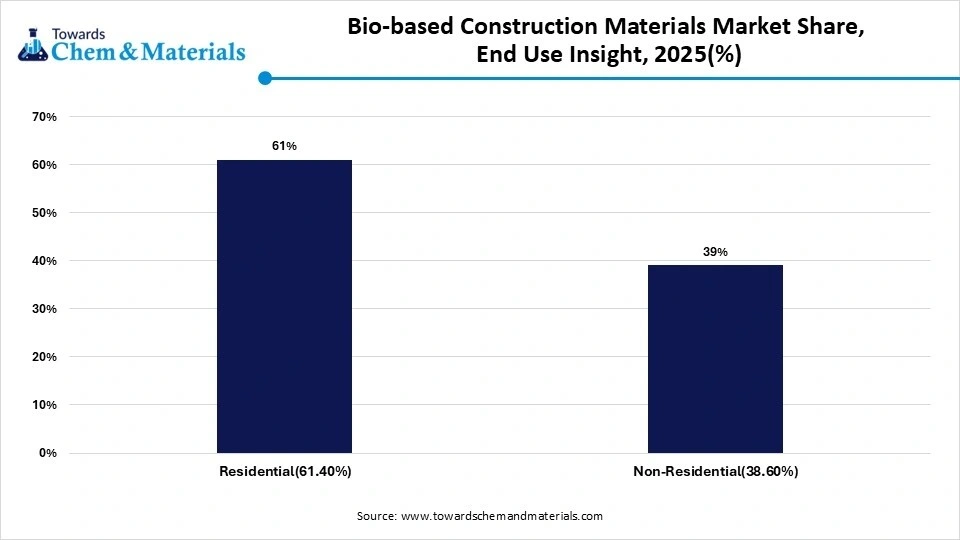
This segment experienced a higher growth as it includes various commercial, institutional, industrial, and infrastructure construction applications. These include offices, retail buildings, hotels, schools, hospitals, factories, warehouses, public facilities, transportation, and utility buildings. For instance, in February 2026, Avantium joined forces with Will & Co to speed up FDCA applications in coatings, adhesives and sealants, elastomers, paints, flooring, roofing, tubes, and building materials. (Source:www.indianchemicalnews.com)
- Key Insights- Residential construction is the predominant end use, and non-residential construction offers better growth potential.
Source: Towards Chem and Materials Database
Regional Analysis
Asia Pacific
The Asia Pacific bio-based construction materials market size was estimated at USD 13.31 billion in 2025 and is projected to reach USD 30.96 billion by 2035, growing at a CAGR of 8.81% from 2026 to 2035.Asia Pacific dominated the market with the largest share of 34% in 2025 and is expected to grow at a CAGR of 9.20% during the forecast period. The bio-based construction materials market is also expanding in the Asia Pacific, driven by the growing urbanization, rising environmental awareness, and infrastructure development. China and India are also promoting sustainable construction by encouraging green-building initiatives and low-carbon development targets. The region is also blessed with a rich supply of biomass materials, such as bamboo, agricultural wastes, timber, and natural fiber, which are suitable for bio-based materials. The increased investment in energy-efficient buildings is driving the use of bio-based insulation materials, composites, polymers, and building materials.
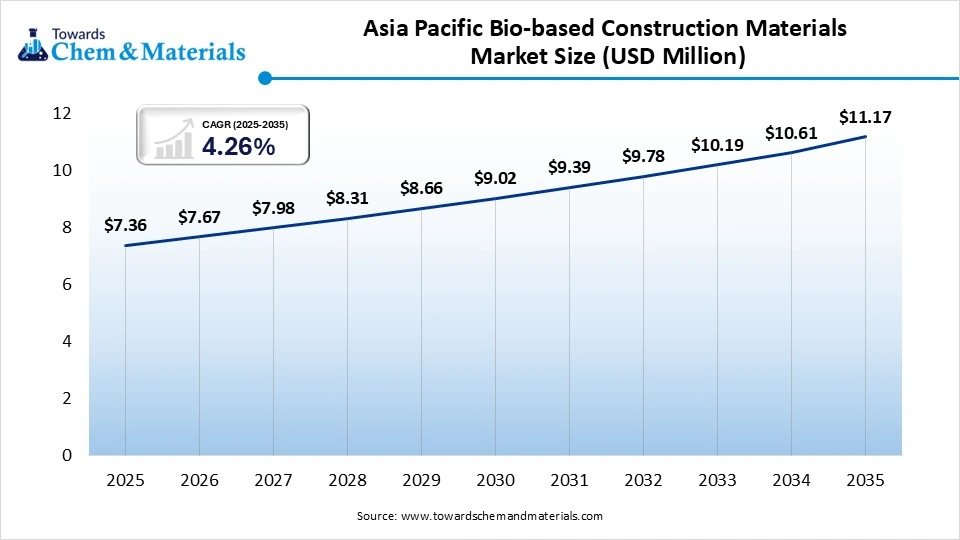
China is one of the key markets due to its high construction growth, urbanization, and the governments target to cut down the amount of carbon emissions. Renewable materials are being used as a result of green-building policies and sustainable construction programs. Domestic production and adoption of bio-based construction solutions are further supported by the availability of agricultural residues and other biomass resources.
As urbanization and infrastructure development continue to grow in India, along with a growing awareness of sustainability, the adoption of bio-based materials for construction has also been rising. Environmentally responsible construction is encouraged by green-building programs like GRIHA. There is no dearth of agricultural residues, bamboo, timber,hi and natural fibers that can be used in the development of renewable construction products and enhancement of the environmental performance of buildings.
- Key Insights- The region is being developed at a high pace and is supported by the wide construction-material and application landscape in the region.
Source: Towards Chem and Materials Database
Europe
The Europe bio-based construction materials market size was estimated at USD 9.39 billion in 2025 and is projected to reach USD 21.98 billion by 2035, growing at a CAGR of 8.88% from 2026 to 2035.Europe held 24% market share in 2025 and is expected to grow at the fastest CAGR of 9.40% during the forecast period. Bio-based construction materials have strong sustainability priorities and environmental regulations, and are becoming more popular in Europe due to the reduction in emissions from buildings. The increasing demand for low-carbon construction is boosting the utilization of timber, natural-fiber composites, natural-based insulation, and the use of renewable polymers. The concept of circularity and the use of renewable resources are a part of the building process in all countries of the region. Due to a reduced carbon footprint, mass-timber construction is being considered. Research and innovation are also contributing to the use of bio-based materials for structural and non-structural building applications. These developments are opening up promising prospects for commercialization and broader adoption in both residential and non-residential sectors.
- For instance, in November 2025, European company Teijin Aramid released Twaron Next®, a product with high strength, durability, thermal resistance, and design features that take into account environmental considerations and aim to minimize environmental impact. (Source:gcaptain.com)
The foundation of bio-based building materials in Germany is well-established, based on a focus on energy-efficient buildings, sustainable building, and resource efficiency. In the countrys existing timber-construction industry, the use of renewable materials is supported. The rise of the low-carbon buildings and circular construction is also fostering innovation in bio-based insulation, bio-composites, and other bio-based building materials.
France is encouraging a reduction of carbon footprint in construction via sustainable construction and growing interest in renewable materials. The use of timber is becoming more visible in the construction of buildings and structures, and there is an increased awareness of natural materials for minimising environmental footprint. This is also creating opportunities for bio-insulation, composites, and other renewable building materials.
- Key Insights- Europe is showing good growth in environmental regulations, sustainability initiatives and environmental documentation.
Source: Towards Chem and Materials Database
North America
The North America bio-based construction materials market size was estimated at USD 8.61 billion in 2025 and is projected to reach USD 20.19 billion by 2035, growing at a CAGR of 8.90% from 2026 to 2035.North America held 22% market share in 2025 and is expected to grow at a CAGR of 8.30% during the forecast period. North America has a mature construction industry with a rising demand for solutions to build responsibly. The United States and Canada are promoting the use of energy-efficient and carbon-reducing building materials because of green buildings and sustainability programs. Bio-based insulation, timber products, natural-fiber composites, and bio-derived polymers are becoming increasingly popular in the fields of residential and commercial applications. The region is also well equipped with research and innovation activities and the ability to develop advanced construction materials from renewables. Embodied carbon is gaining importance, making builders and architects take an interest in materials that have lower carbon footprints. The rising renovation work and demand for efficient buildings are also presenting additional opportunities for suppliers of bio-based materials throughout the region.
The United States is an important market for sustainable building materials, and there is a rising awareness of the importance of embodied carbon and energy-efficient construction. Research and commercialization of novel bio-based materials is on the rise, such as natural-fiber materials and materials derived from algae. The existing construction industry in the country offers a way to scale renewable materials from residential to commercial, while the materials themselves can be scaled up as well.
As a result of its robust forestry resources, its developed forestry and sawmill industry, and its current emphasis on sustainable buildings, opportunities exist in Canada for bio-based construction materials. The use of mass timber and other renewable building materials is becoming more popular and is being considered to lessen the use of conventional materials that use a lot of carbon. Green-building practices are helping to bolster the wider trend toward renewable and low-carbon solutions.
- Key Insights- Engineered timber development and applications continue to grow in North America for a variety of construction applications.
Source: Towards Chem and Materials Database
Latin America
The Latin America bio-based construction materials market size was estimated at USD 4.31 billion in 2025 and is projected to reach USD 10.32 billion by 2035, growing at a CAGR of 9.12% from 2026 to 2035.Latin America held 11% market share in 2025 and is expected to grow at a CAGR of 8.80% over the forecast period. Latin Americas high agricultural and forestry resources could provide potential for bio-based construction materials. There is a growing interest in sustainable construction and renewable material applications in Brazil, Chile, Mexico, and other countries. Agri-residues can be used as raw material in composites (synthetic or natural), bio-polymers, insulation, and other building materials. There is an increasing recognition of the environment and a push to cut down on construction waste, which is a good thing for the shift towards renewable materials. Urban development and infrastructure investment are also contributing to the opportunities for sustainable building solutions. Growing demand in the region for green construction can help increase the commercialization of locally available bio-based materials and boost the incorporation of renewable resources in construction value chains.
Brazil has great potential for the use of bio-based construction materials due to its large agricultural and forestry resources. Natural composites, bio-based polymers, and other natural products are possible options for use with biomass availability. Bio-based solutions are increasingly gaining traction due to the focus on sustainable construction and the use of resources in building.
In the era where environmental concerns play a major role in building practices, Chile is seeing a heightened interest in sustainable construction. There are opportunities for construction using renewable materials such as forestry resources in the country. The rising demand for low-carbon construction can help drive demand for bio-based insulation, bio-composites, and renewable construction products.
- Key Insights- Latin America has an expanding construction market with growing uptake of materials from the bio-based sector.
Source: Towards Chem and Materials Database
Middle East and Africa
The Middle East and Africa bio-based construction materials market size was estimated at USD 3.52 billion in 2025 and is projected to reach USD 8.52 billion by 2035, growing at a CAGR of 9.24% from 2026 to 2035.The Middle East and Africa held 9% market share in 2025 and is expected to grow at a CAGR of 9.00% over the forecast period. Sustainability efforts, infrastructure initiatives, and a growing emphasis on minimizing reliance on traditional, resource-heavy materials are driving growth in the Middle East & Africa region for bio-based construction materials, offering a chance for opportunity. Opportunities for bio-based insulation, composites, coatings, and polymers are arising in the context of large-scale urban developments and smart-city projects. Sustainability and economic diversification initiatives in the Middle East are driving the use of renewable materials. Local bio-based materials for low-cost, sustainable building are also being developed in Africa. Residuals from agriculture and natural fiber sources can be used as regional feedstocks. The need for climate adaptation and awareness of the environment is likely to continue to drive sustainable building.
Saudi Arabia is working towards opportunities for bio-based construction materials with sustainability-driven development and diversification. Environmental goals and sustainable urban development are met by Vision 2030. The rise in large-scale infrastructure and smart city projects can lead to a greater demand for energy-efficient and renewable building materials and components, such as bio-based insulation, composites, and others with low impact.
The building sector is increasingly seeking alternative and carbon-neutral materials, with South Africa becoming increasingly interested in bio-based materials. Mass timber, hempcrete, and bio-based concrete are being looked at for embodied carbon. In addition, local companies are designing ecological building systems based on renewable and recycled materials in an effort to improve the sustainability of the construction industry.
- Key Insights- The region continues to grow with growing construction application and market opportunities.
Source: Towards Chem and Materials Database
Recent Developments
In May 2026, Mykor, a Bristol-based female-founded BioTech startup developing scalable low-carbon construction systems from industrial and agricultural waste, secured €4.6 million (£4 million) in funding to accelerate the scale-up of its industrial biofabrication technologies. (https://www.mykor.co.uk/blog/recent_fundraise)
- In February 2026, Global LEED Over 7,500 new commercial projects were certified, accounting for more than 147 million gross square meters. The top three markets outside of the United States included Mainland China, India, and Canada.(Source:www.usgbc.org)
- In January 2025, RE2020 embodied-carbon caps have been tightened by approximately one-sixth (25%), to 530 kg CO₂/m² for single-family homes and 650 kg CO₂/m² for multifamily housing. The change makes the environmental requirements on construction materials stronger.(Source:epd.guide)
- In February 2025, the building of a 190,000-square-foot CLT manufacturing plant in Millersburg, Ore., was underway. The project is one of the largest proposed CLT production sites found in the provided market information for the United States.(Source:www.millersburgoregon.gov)
- In November 2025, the INIES database reached a total of 7 000 environmental declarations in France. The growth was sustained by environmental reporting requirements linked to the RE2020 framework introduced in France and the requirements of the construction industry.(Source:epd.guide)
Expert Insights
From my research, the bio-based construction materials market is gaining traction in the coming years due to the rising demand for sustainability and the growing advancement of material innovation in the commercial market.
Plastics and polymers are currently the dominant materials in demand, and identified materials growth is the fastest for composites. Regional growth continues to be strong, especially in Asia Pacific and Europe, with a wide application reach and sustainability initiatives. New concepts and new materials will continue to drive competitive opportunities, including recycled composites, circular polymers, engineered timber, and bio-based materials.
Our Experts
Vidyesh Swar offers strategic market insights into the performance of the bio-based construction materials market and related markets, including industry trends, segment performance, regional developments, competitive activities, and emerging opportunities.
Aman handled the collection of regulations, feedstock data, company information, partnerships, and other quantitative inputs that enable accurate and comprehensive market estimations.
Aditi read the entire research paper, checked the results, fixed inconsistencies, did quality control, and completed the paper to make it publishable and understandable.
Key Companies:
- Stora Enso Oyj: Stora Enso Oyj is a global forest-products and renewable-materials group, headquartered in Helsinki, Finland. Its Building Solutions division produces cross-laminated timber and other engineered wood building products.
- Binderholz GmbH: Binderholz GmbH is a family-owned wood processing group with headquarters in Fügen, Tyrol, Austria. It produces Cross-laminated timber and glue-laminated timber for structural use.
- Mercer Mass Timber: Mercer Mass Timber is located in Spokane Valley, Washington, and produces cross-laminated timber and glue-laminated timber. The company provides commercial, institutional, and multifamily construction applications throughout North America.
- Timberlab Inc.: Timberlab Inc., which is part of the Swinerton group, is based in Portland, Oregon, and manufactures CLT and engineered wood products. It is now starting work in February 2025 on its 190,000-square-foot Millersburg facility.
- IsoHemp SA: IsoHemp SA is based in Fernelmont, Belgium, and produces prefabricated hemp-lime blocks and panels. Its products are used for insulation and wall construction tasks throughout the construction markets in Europe.
- Hempitecture, Inc.: Hempitecture, Inc. is located in Jerome, ID, and produces hemp insulation and hemp-lime building products. It makes products used in residential and commercial construction in the United States.
- Ecovative Design LLC: Ecovative Design LLC is located in Green Island, New York, and works in the area of engineered mycelium biomaterials. The company has a licensing-based business model with various applications and has raised $184 million in 27 funding rounds.
- Mykor Ltd. : Mykor Ltd is a UK-based company based in Bristol, developing engineered-mycelium construction products from industry and agricultural waste streams. In May 2026, the company generated €4.6M of funds to accelerate the scaling of manufacturing and partnership efforts.
- Biohm Ltd.: Based in London, United Kingdom, Biohm Ltd. creates mycelium insulation and construction panels. According to the company information provided, the company has raised a total of $8.32 million.
Segments Covered
By Material Type
- Insulation Materials
- Hemp insulation
- Cellulose insulation
- Wood-fiber insulation
- Sheep-wool insulation
- Straw-based insulation
- Cork insulation
- Mycelium-based insulation
- Other bio-based insulation
- Composites
- Natural-fiber composites
- Hemp-fiber composites
- Flax-fiber composites
- Jute-fiber composites
- Kenaf-fiber composites
- Wood-plastic composites
- Bio-resin composites
- Mycelium-based composites
- Hybrid bio-composites
- Concrete and Binders
- Bio-based concrete
- Hempcrete
- Bio-based binders
- Biochar-enhanced concrete
- Algae- and microbial-based binders
- Natural-fiber reinforced cementitious materials
- Plastics and Polymers
- Bio-based polyurethane
- Bio-based epoxy
- Bio-based polyethylene
- Bio-based polypropylene
- Polylactic acid-based materials
- Bio-based coatings and sealants
- Bio-based foams
- Others
- Engineered wood and mass timber
- Cross-laminated timber
- Glulam
- Laminated veneer lumber
- Bamboo-based materials
- Straw-based panels and boards
- Cork-based construction products
- Agricultural-residue boards
- Bio-based roofing and flooring materials
- Mycelium-based structural products
By End Use
- Residential
- Single-family housing (Detached houses, Villas, Rural housing)
- Multi-family housing (Apartments, Condominiums, Housing complexes)
- Renovation and retrofit (Energy-efficiency retrofits, Insulation replacement, Interior refurbishment)
- Non-Residential
- Commercial (Offices, Retail buildings, Hotels and hospitality)
- Institutional (Schools and universities, Hospitals and healthcare facilities, Government buildings)
- Industrial (Factories, Warehouses, Processing facilities)
- Infrastructure (Public facilities, Transportation-related structures, Utility structures)
By Regions
- North America
- Europe
- Asia Pacific
- Middle East & Africa
- Latin America
References
Supplied Client Data
- Bio-based Construction Materials Market dataset as provided: 2025 market size, 2025–2035 CAGR, 2035 market size, and segmentation shares/CAGRs by Material Type, End Use, and Region. No volume, manufacturing price, or selling price data was supplied.
Independently Researched Public Sources
- Agora Energiewende, "Reducing embodied carbon in construction materials: RE2020 in France" (agora-energiewende.org)
- NetZero Pathfinders, "Emissions Thresholds on Building Materials: France" (netzeropathfinders.com)
ATIBT, "A look back at the new guidelines of the French Environmental Regulation (RE 2020)" (atibt.org)
EPD Guide, "INIES and RE2020 in France, explained," citing ADEME Batizoom 2025 and INIES Baromètre 2025 (epd.guide) - Piveteau Bois, "RE2020: Wood – A Key to Low-Carbon Construction" (piveteaubois.com)
- Interreg Europe, "Environmental Regulation 2020 - RE2020" (interregeurope.eu)
- Stora Enso, "French laws are decarbonizing the building sector" (storaenso.com)
- Environment+Energy Leader, "Global Trends in LEED Certification for 2025" (environmentenergyleader.com)
- Facilities Management Advisor, "Which Countries Are LEED-ing the Way on Green Buildings?" (facilitiesmanagementadvisor.com)
- Green Design Consulting, "LEED by the Numbers: State of the Projects," citing USGBC database (greendesignconsulting.com)
- Green Building Law Update, "Transforming the Built Environment: LEED Green Building Hits 29 Billion Square Feet" (greenbuildinglawupdate.com)
- Gitnux, "Green Building Industry Statistics" (gitnux.org)
- International Fiber Journal, "Mycelium-Based Biomaterials" (fiberjournal.com)
- EU-Startups, "Bristols female-founded Mykor raises €4.6 million" (eu-startups.com)
- TechFundingNews, "A female-founded Bristol startup is transforming the future of construction from fungi" (techfundingnews.com)
- World Construction Today, "Mykor Secures Funding to Scale Advanced Biotechnology Platform" (worldconstructiontoday.com)
A Seven-Phase Framework
Our methodology is designed to be universally applicable across commodity chemicals, specialty chemicals, petrochemicals, construction chemicals, coatings, electronic chemicals, industrial gases, agrochemicals, water treatment chemicals, and performance materials. Each phase builds upon the last, creating a layered validation structure that minimizes estimation error and maximizes analytical confidence.
The framework ensures comprehensive market coverage, robust cross-validation, and reliable long-term forecasting — producing market estimates that withstand scrutiny from investors, regulators, and corporate strategy teams.

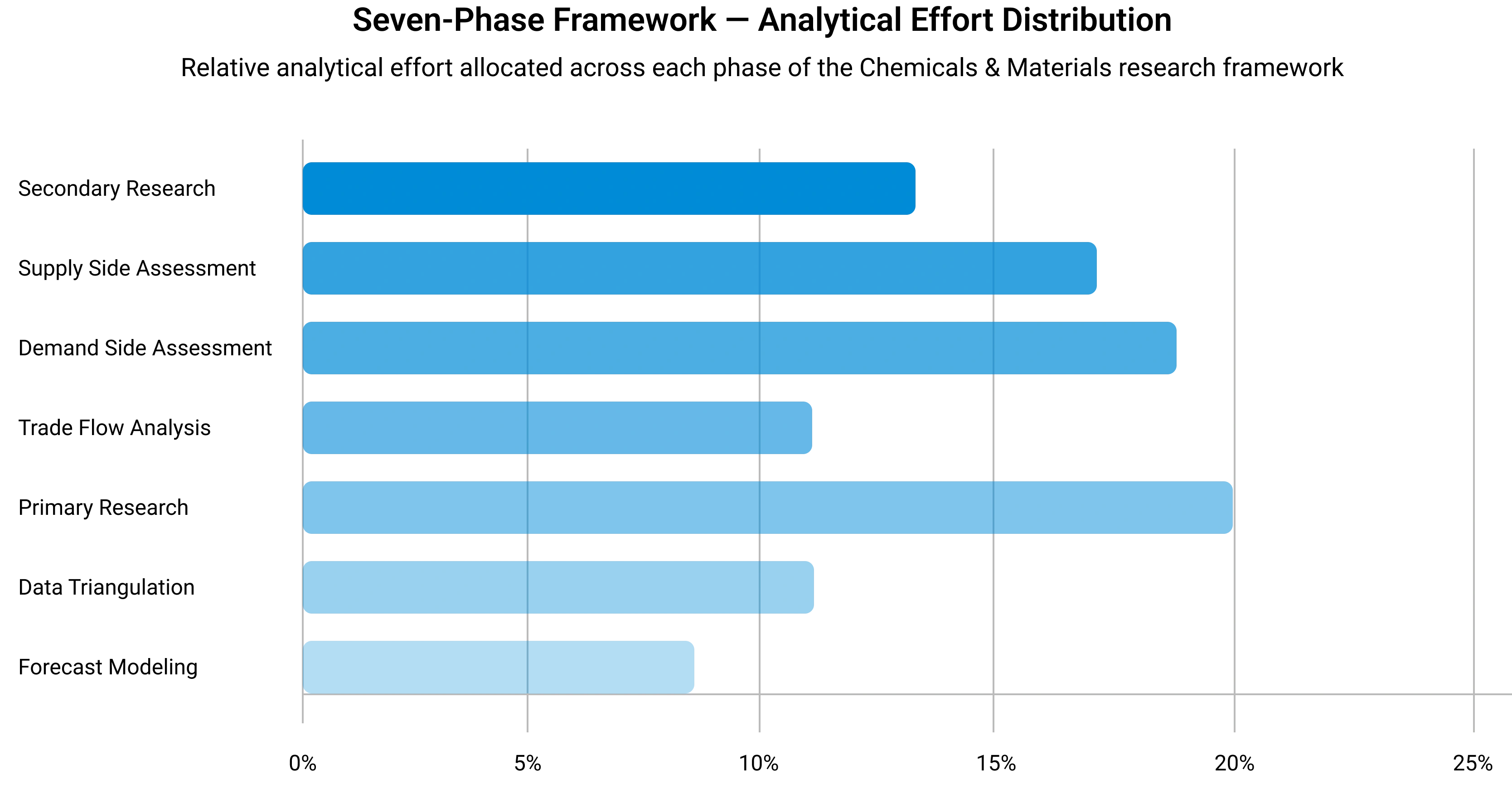
Seven-Phase Framework — Analytical Effort Distribution
Relative analytical effort allocated across each phase of the Chemicals & Materials research framework
Phase 1 - Secondary Research: Establishing the Foundation
Secondary research collects and evaluates publicly available information from authoritative sources, establishing the foundational understanding of market structure, value chain dynamics, competitive landscape, and end-use demand patterns. Every source is evaluated for credibility, recency, geographic relevance, and methodological soundness before inclusion.
Industry Associations
Sources include ACC, CEFIC, ICCA, JCIA, CPCIF, and SOCMA providing production volumes, consumption trends, capacity developments, and sustainability initiatives.
Company Disclosures
Annual reports, investor presentations, earnings transcripts, and regulatory filings reveal product portfolios, manufacturing footprints, capacity expansions, and revenue segmentation.
Government Databases
National statistical offices, customs authorities, environmental agencies, and industrial production databases provide verified statistics on output, trade flows, and regulatory compliance.
Trade Databases
UN Comtrade, ITC, Eurostat, and national customs authorities enable assessment of global product movement, import dependency, and export competitiveness across regions.
Our Secondary Research Sources
- Ministry of Chemicals and Fertilizers
- European Chemicals Agency
- United States Department of Energy
- Ministry of Industry and Information Technology
- Ministry of Economy Trade and Industry
- Ministry of Trade Industry and Energy
- National Institute of Standards and Technology
- Council of Scientific and Industrial Research
- Fraunhofer Society
- National Institute for Materials Science
Phase 2 — Supply-Side Assessment: Mapping Production Capabilities
Production Capacity Analysis
All major manufacturers are assessed for existing installed capacity, planned additions, expansions, new plant announcements, and technology adoption — mapped at global, regional, and country levels.
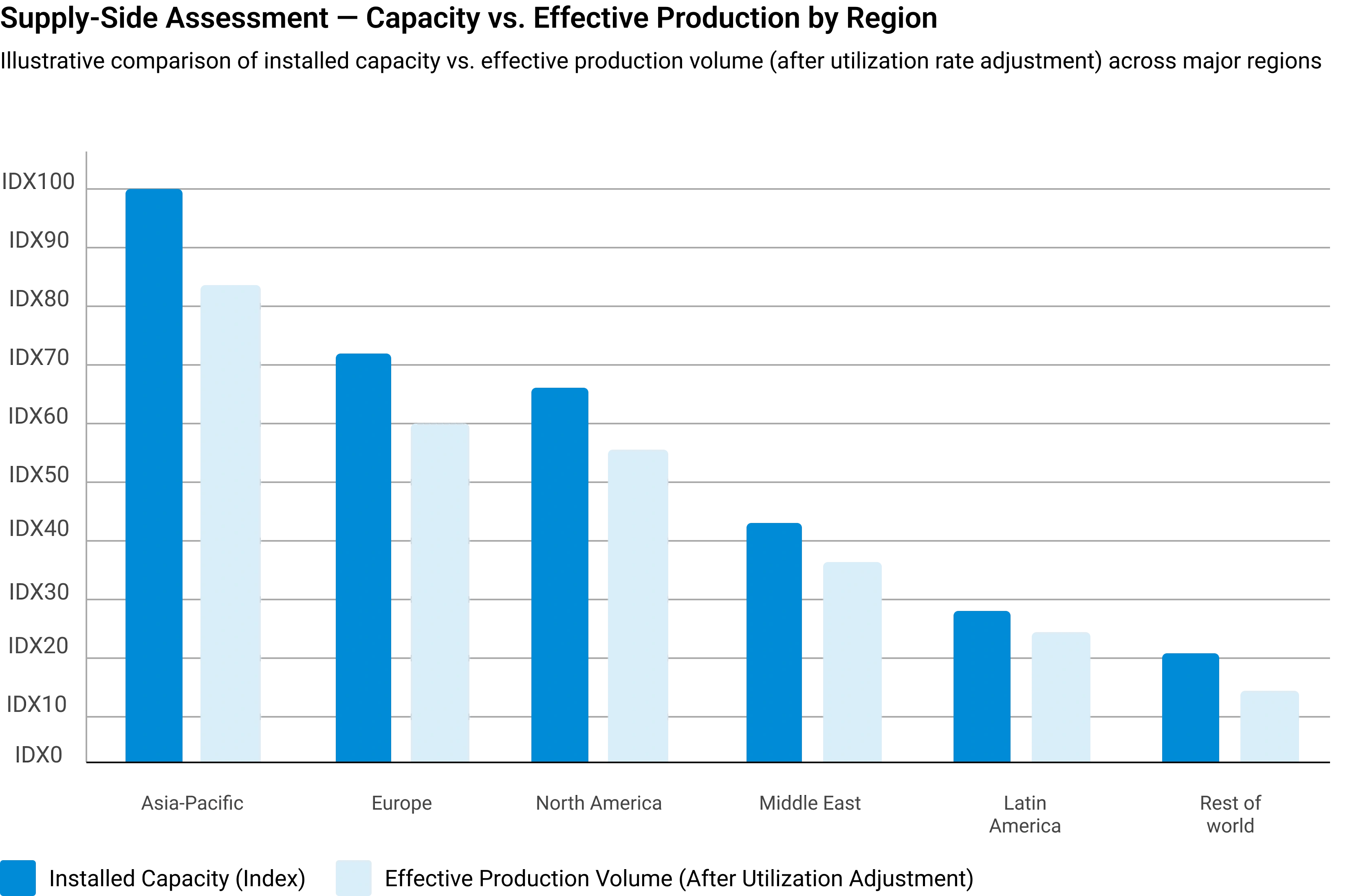
Capacity Utilization Adjustment
Installed capacity is adjusted using utilization rates based on demand conditions, feedstock availability, plant operating rates, maintenance schedules, and regulatory restrictions.
Manufacturer Revenue Analysis
Product-specific revenues, segment-level performance, regional distribution, average selling prices, and margin trends are evaluated to establish market value estimates.
Supply-Side Assessment — Capacity vs. Effective Production by Region
Illustrative comparison of installed capacity vs. effective production volume (after utilization rate adjustment) across major regions
Phase 3 — Demand-Side Assessment: Quantifying Chemical Consumption
Demand-side analysis quantifies chemical consumption across industries, applications, and geographies — identifying where and how chemicals are consumed throughout the value chain with precision.
End-Use Industry Analysis
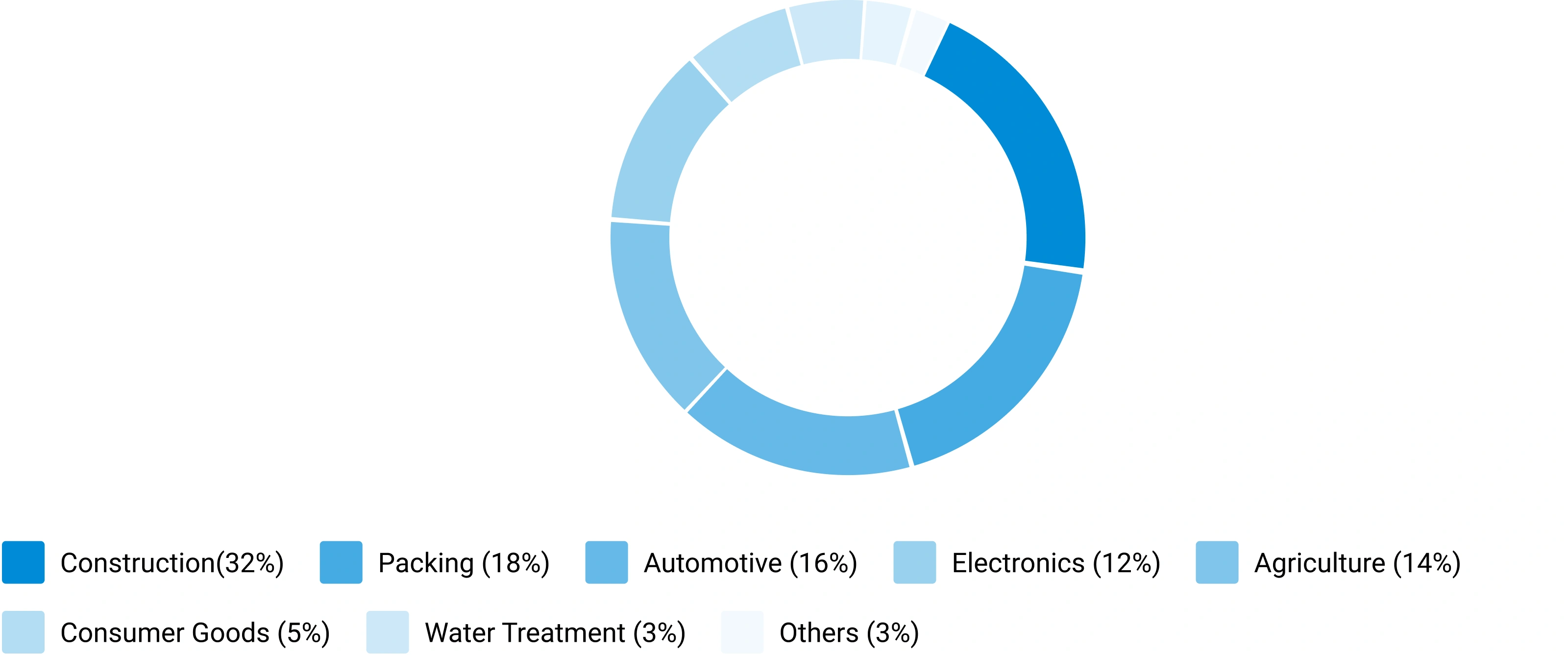
Chemical demand is evaluated across automotive, construction, packaging, electronics, agriculture, healthcare, consumer goods, industrial manufacturing, energy and utilities, and water treatment. Industry output, production trends, and consumption intensity are analyzed to determine demand patterns.
Consumption Modeling
Demand is estimated using measurable indicators: kilograms per vehicle, kilograms per square meter of construction, dosage per cubic meter of water treated, kilograms per hectare of agricultural land, and kilograms per ton of manufactured products. Consumption factors are validated through industry publications and primary interviews.
Application Analysis
The market is segmented by application area to understand product performance requirements, formulation trends, technology adoption, customer preferences, and regulatory requirements improving demand accuracy and segmentation granularity.
Demand-Side Assessment — End-Use Industry Demand Distribution
Illustrative distribution of chemical & materials demand across key end-use industries
Phase 4 - Trade Flow Analysis: Balancing Regional Supply and Demand
Trade flow analysis reconciles regional supply and demand estimates through import and export data, identifying net supply positions, regional dependencies, and market imbalances. It serves as an independent validation layer that tests the consistency of supply-side and demand-side estimates.
Import Analysis
Import data is evaluated to determine volumes, source countries, product dependency, regional supply gaps, and pricing trends — identifying markets that rely heavily on external supply and where domestic production is insufficient to meet demand.
Export Analysis
Export assessments reveal production surplus, export competitiveness, regional manufacturing strength, and global market participation. Export patterns also help validate domestic production estimates and identify net exporting regions.
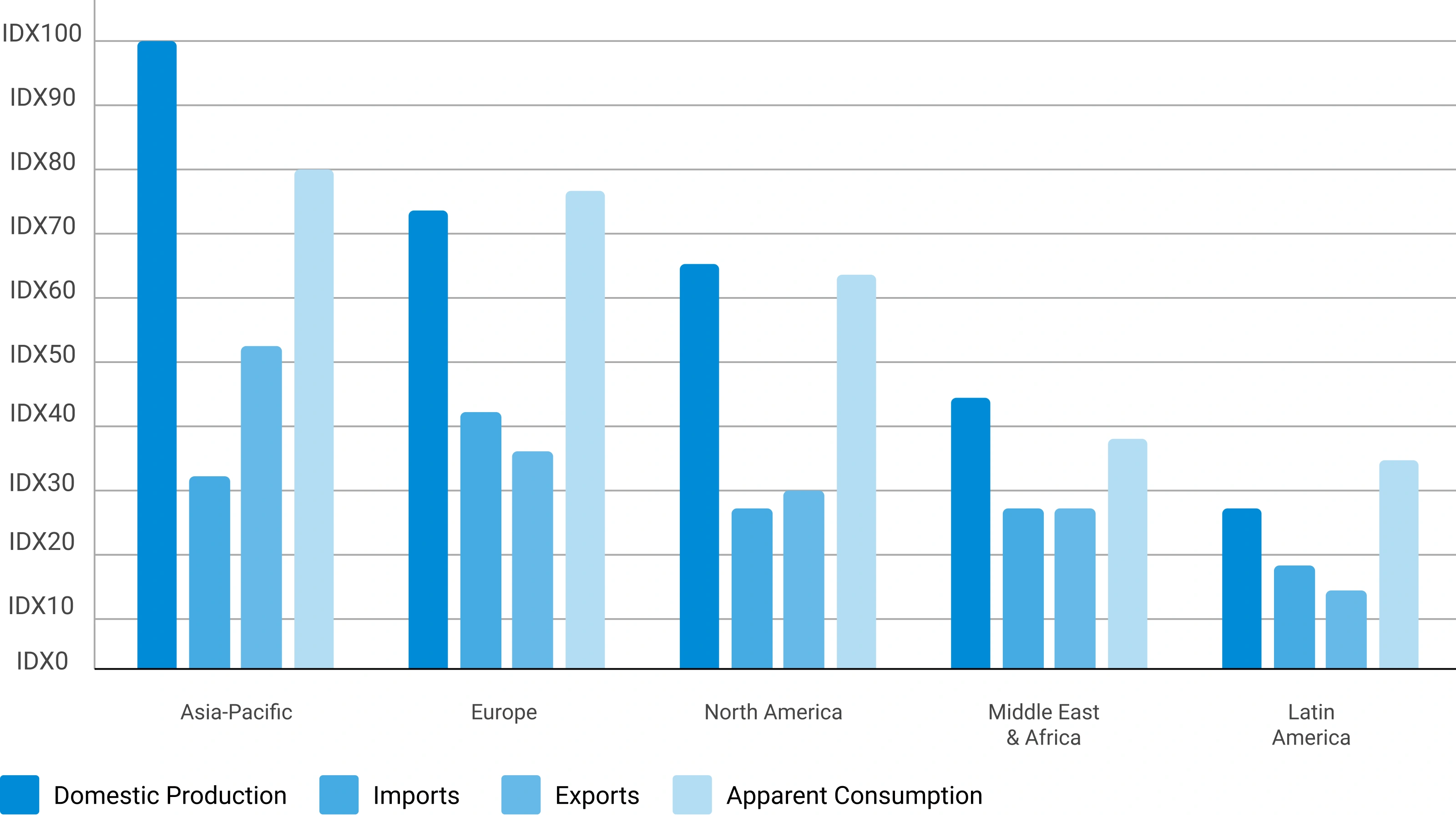
Apparent Consumption Model
Regional consumption is assessed using the standard apparent consumption formula:
Results identify net importing regions, net exporting regions, regional deficits, and surpluses — serving as an independent validation of supply and demand estimates.
Trade Flow Analysis — Net Supply Position by Region
Illustrative apparent consumption vs. domestic production across major regions — positive gap indicates net import dependency
Phase 5 — Primary Research: The Critical Validation Layer
Primary research tests and refines findings from secondary research through direct engagement with industry participants across the supply chain, demand side, and expert community. It captures intelligence that no database or published report can provide — the real-world experience of manufacturers, buyers, and specialists operating in the market.

Supply-Side Interviews
Conversations with chemical manufacturers, raw material suppliers, contract manufacturers, technology providers, and plant operators cover production trends, capacity utilization, pricing developments, technology shifts, and competitive dynamics.

Demand-Side Interviews
Engagement with OEMs, industrial consumers, procurement managers, distributors, formulators, and end-use manufacturers focuses on consumption trends, purchasing behavior, product substitution, demand outlook, and emerging applications.

Industry Expert Consultations
Additional interviews with industry consultants, independent experts, regulatory specialists, technical professionals, and research institutions provide deeper market context and validate key analytical assumptions.
Focus Areas of Primary Research:
Market Size & Forecast Validation
Revenue estimates, volume consumption, growth rates, forecast assumptions, regional demand.Supply Chain & Value Chain Assessment
Raw material sourcing, supply chain challenges, distribution networks, procurement practices.Production & Capacity Analysis
Manufacturing capacity, utilization rates, expansion projects, plant investments.Pricing & Cost Structure Analysis
Product pricing trends, feedstock costs, energy costs, margin pressures, pricing outlook.Competitive Landscape Assessment
Volume and value estimates confirmed to be fully consistent with one another before publicationInterview Volume by Market Scope
| Study Scope | Number of Interviews |
|---|---|
| Niche Market | 20 – 30 |
| Mid-Sized Market | 30 – 50 |
| Global Market | 50 – 80 |
| Highly Fragmented Market | 80 – 120 |
Interview Details:
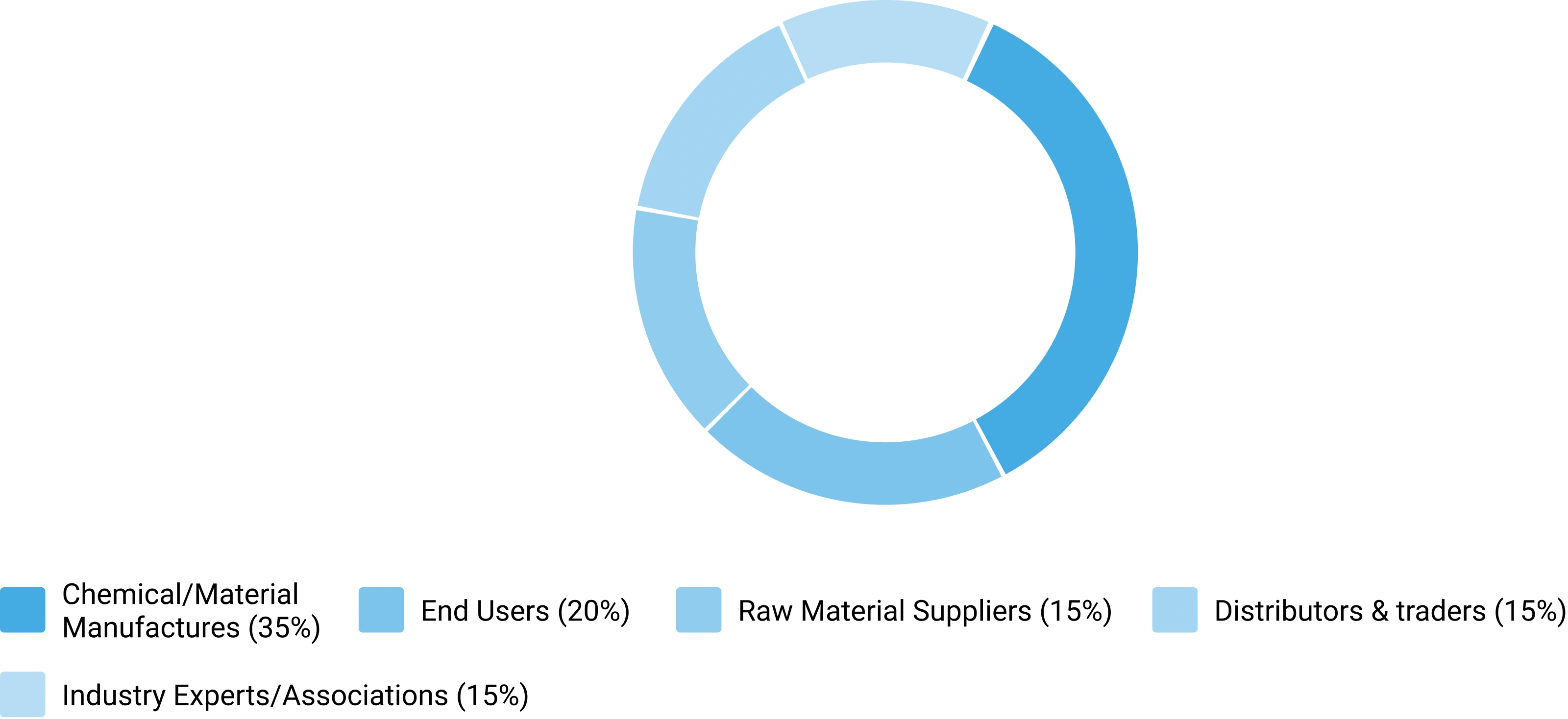
Category : Manufacturers, Suppliers, Distributors, End Users, Experts/Associations
Average Duration : 30–60 Minutes
Interview Mode : Video calls, telephonic interviews, expert consultations
Interview Format : Structured / Semi-Structured questionnaire
Focus Areas of Primary Research:
Market Size & Forecast Validation :
Revenue estimates, volume consumption, growth rates, forecast assumptions, regional demand.
Supply Chain & Value Chain Assessment :
Raw material sourcing, supply chain challenges, distribution networks, procurement practices.
Production & Capacity Analysis :
Manufacturing capacity, utilization rates, expansion projects, plant investments.
Pricing & Cost Structure Analysis :
Product pricing trends, feedstock costs, energy costs, margin pressures, pricing outlook.
Competitive Landscape Assessment :
Market share, competitor positioning, strategic initiatives, partnerships, acquisitions.
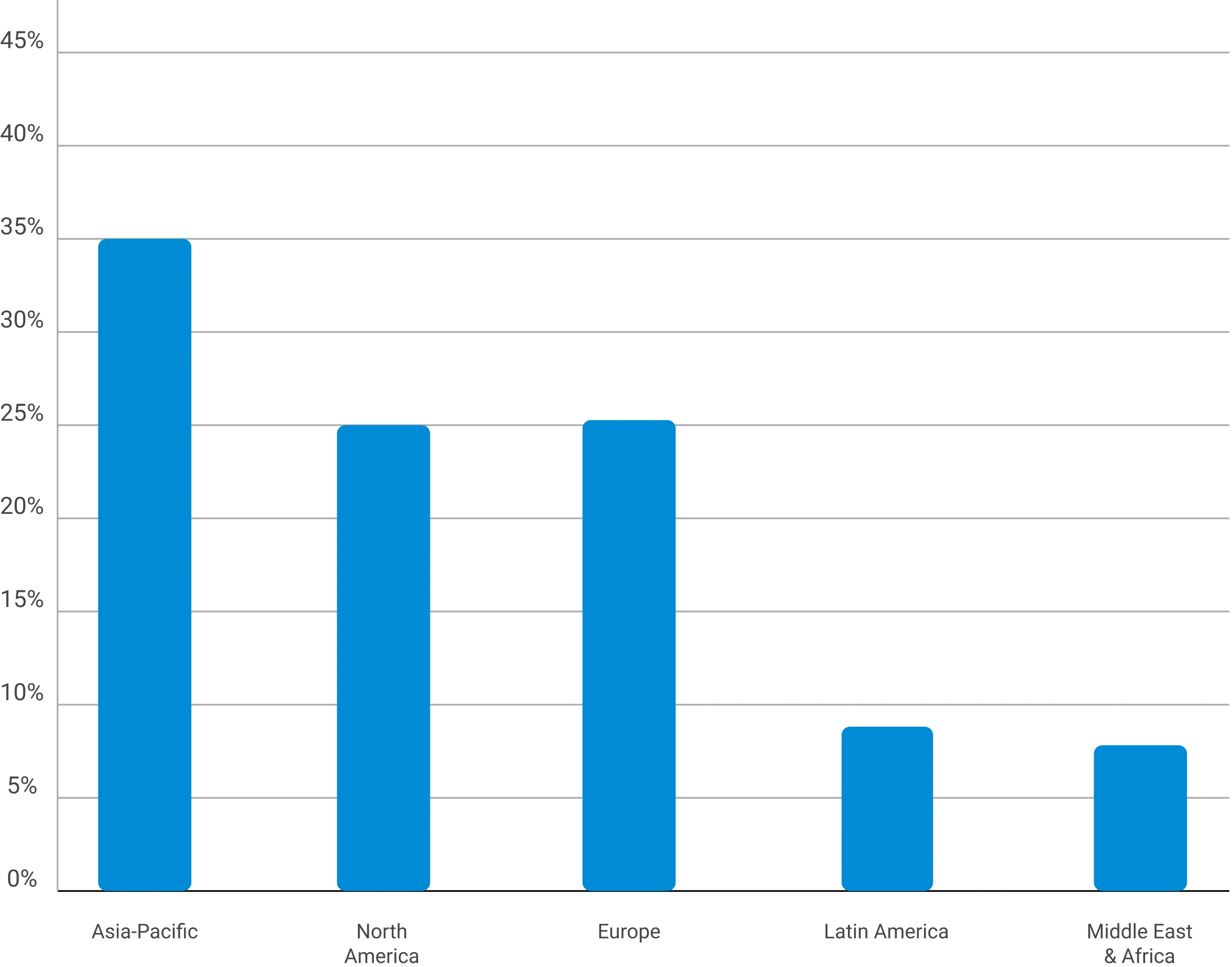
Primary Research — Stakeholder Coverage by Category
Distribution of interview respondents across stakeholder categories (% share from PPT data)
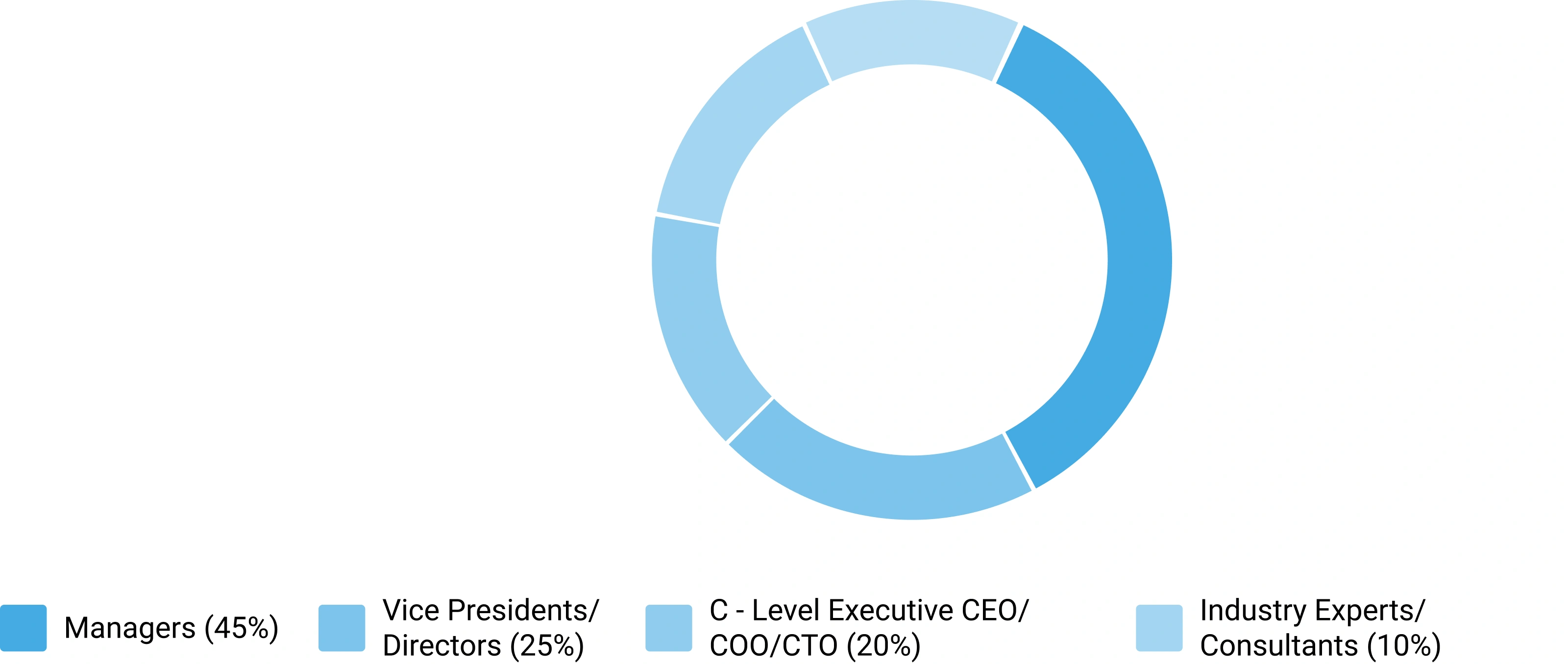
Primary Research — Respondent Designation Profile
Seniority breakdown of interview respondents (% share from PPT data)
Primary Research — Geographic Coverage of Interviews
Regional distribution of primary research engagement (% share from PPT data)
Phase 6 — Data Triangulation and Market Validation
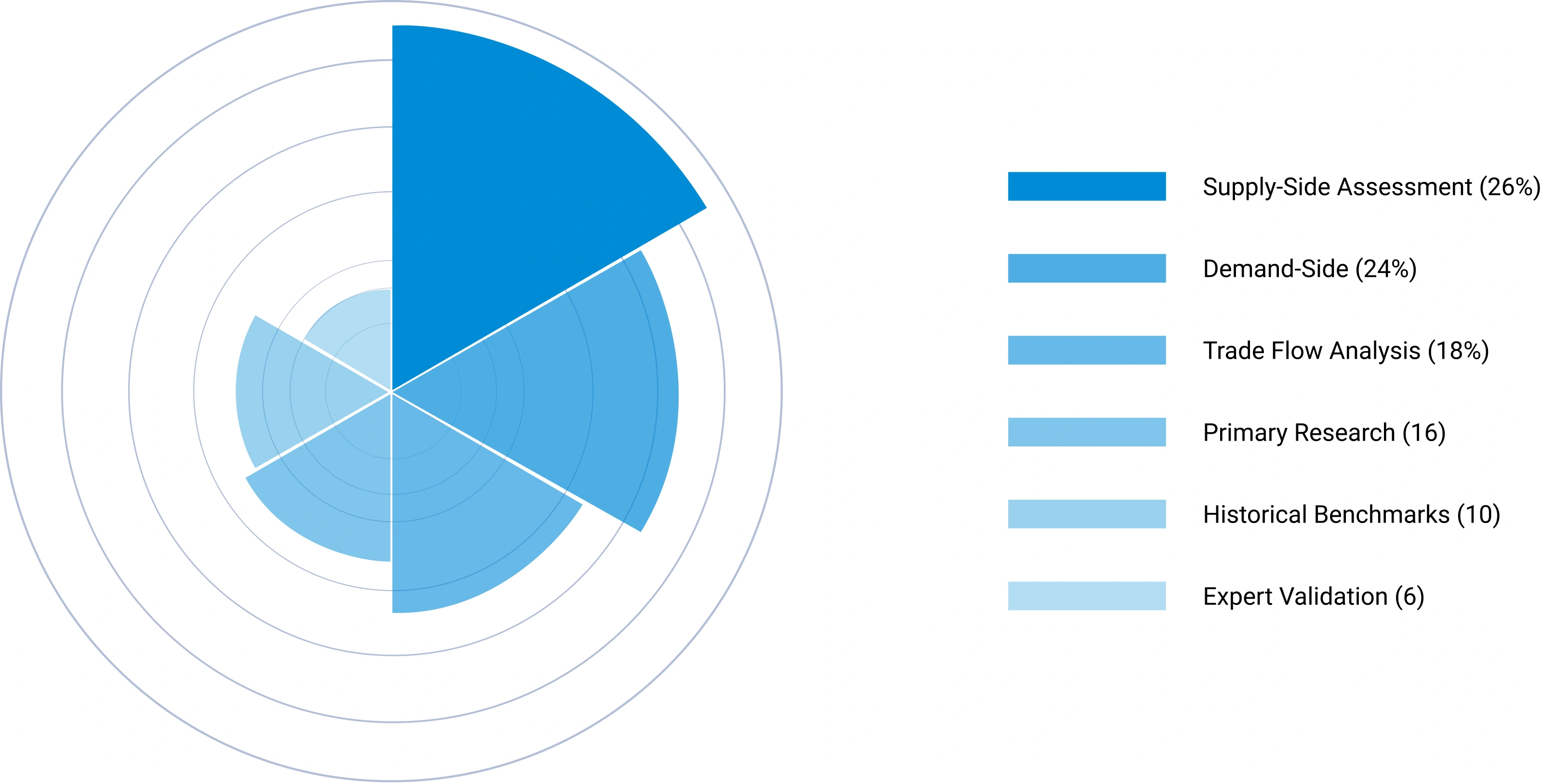
No single methodology is relied upon in isolation. Multiple independent estimation approaches are combined and reconciled to ensure consistency, accuracy, and analytical defensibility. Any material deviations between approaches are investigated and adjusted through additional validation cycles.
The final market size is derived through weighted triangulation of all validated methodologies. Any material deviations between approaches are investigated and adjusted through additional validation cycles. The outcome represents the most realistic assessment of the market based on available evidence and expert confirmation ensuring that volume and value estimates are fully consistent with one another.
Triangulation Framework — Input Contribution Weight
Relative weight each sizing input contributes to the final reconciled market estimate
Phase 7 — Forecast Modeling: Projecting Future Market Evolution
Forecasting evaluates the future trajectory of the market using a combination of quantitative indicators and qualitative assessments across economic, industry, and regulatory dimensions. Rather than simple extrapolation, each driver is independently modeled and integrated into a composite forecast.
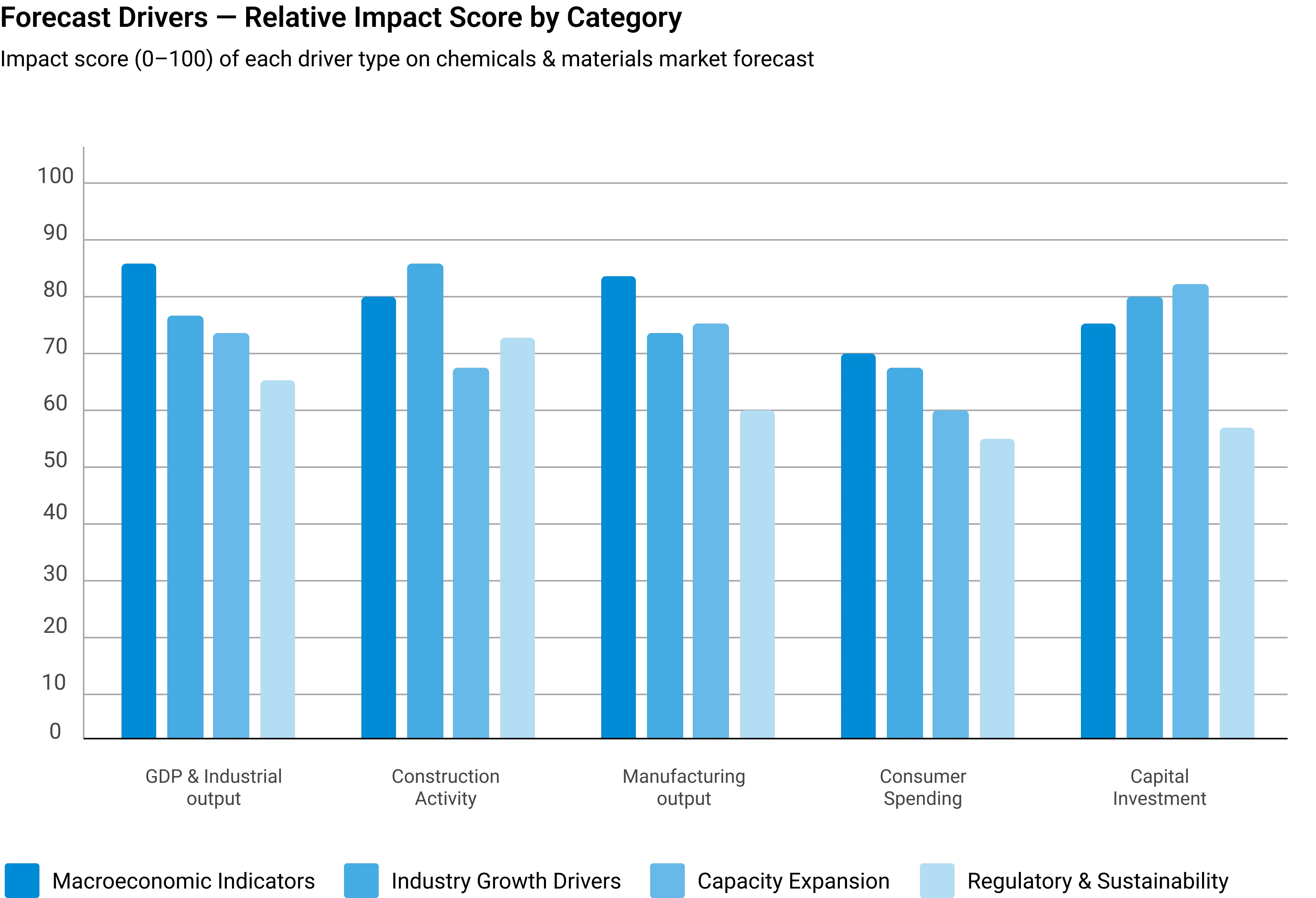
Macroeconomic Indicators
GDP growth, industrial production, manufacturing output, construction activity, consumer spending, and capital investment form the quantitative foundation of long-term demand projections. These are applied at country, regional, and global levels.
Industry Growth Drivers
Urbanization, infrastructure development, industrialization, technological innovation, sustainability initiatives, and evolving product performance requirements are assessed at regional and industry levels — capturing both structural and cyclical demand drivers.
Capacity Expansion Analysis
Announced plant expansions, new manufacturing facilities, technology upgrades, and strategic investments are evaluated to determine future supply-demand dynamics and potential market tightness or oversupply situations.
Regulatory & Sustainability
Environmental regulations, chemical safety standards, emission reduction targets, circular economy initiatives, and sustainability requirements are incorporated as they often influence product adoption rates and market growth trajectories.
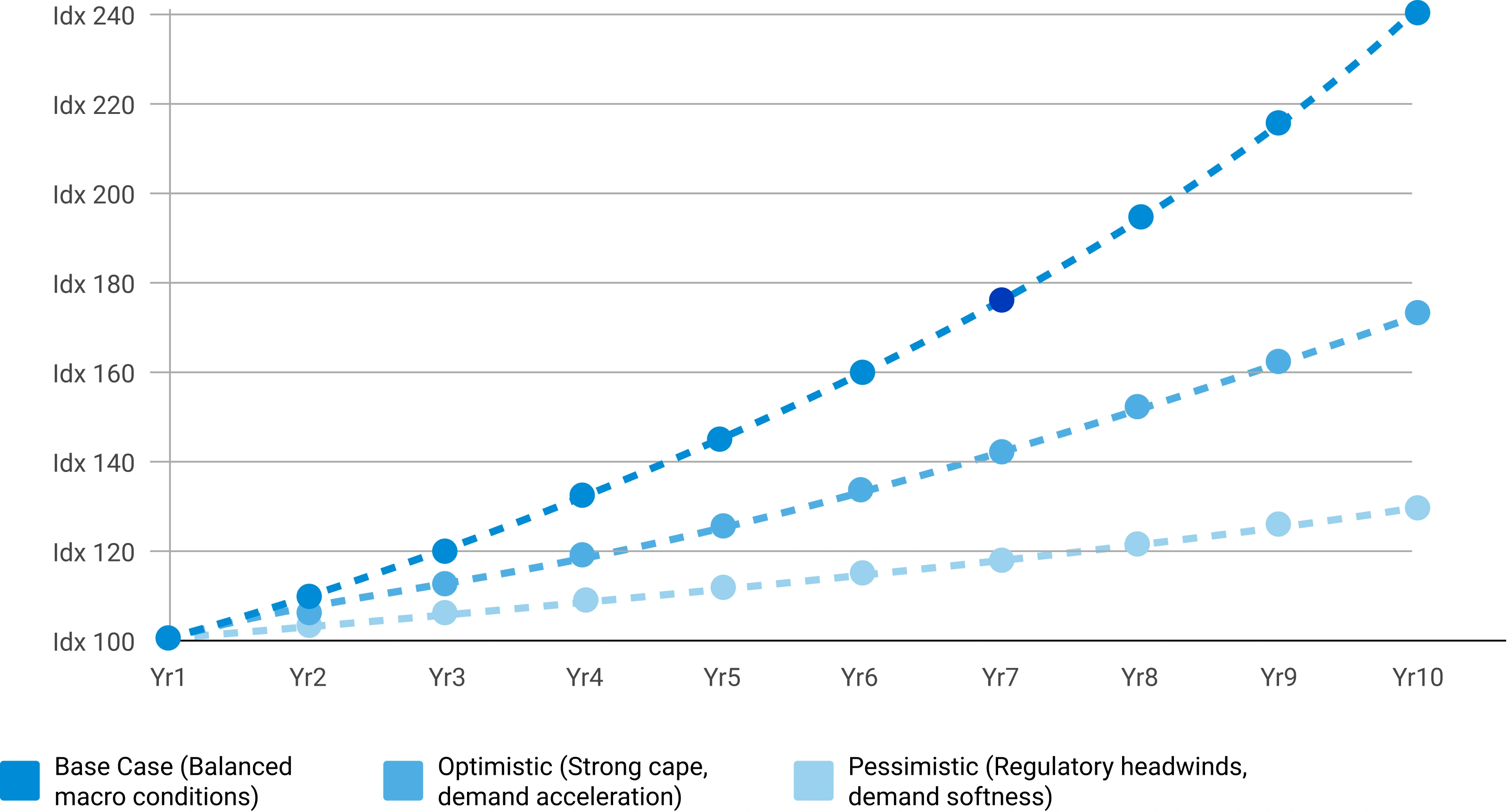
Scenario Forecast Range — Indexed Market Growth (Year 1–10)
Illustrative indexed growth trajectories across Base, Optimistic, and Pessimistic scenarios over a 10-year forecast horizon
Forecast Drivers — Relative Impact Score by Category
Impact score (0–100) of each driver type on chemicals & materials market forecast



Comments
Share your thoughts, ask a question, or provide feedback about this report.