
Road Marking Paint Market Size and Forecast 2026 to 2035
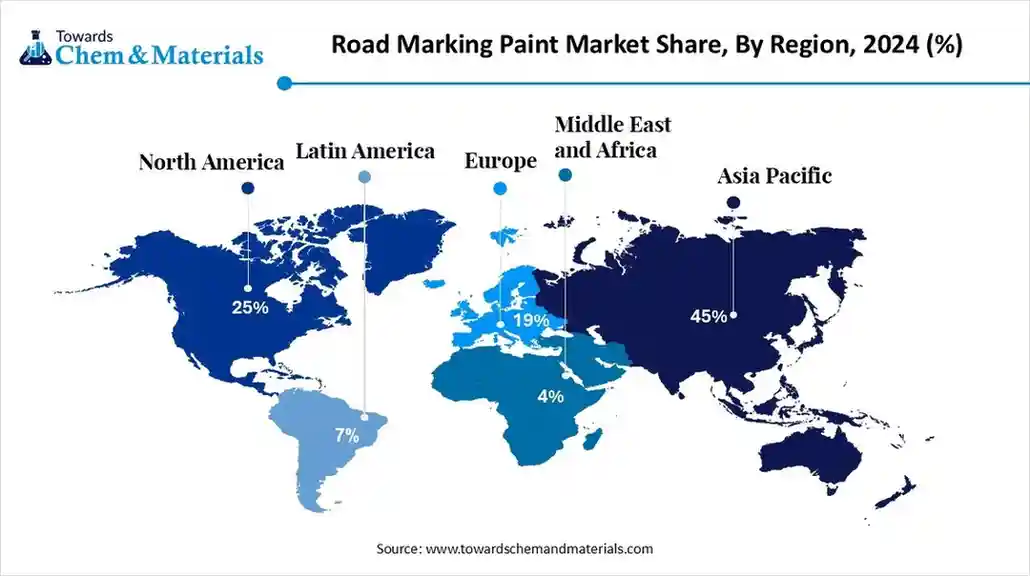
The global road marking paint market size was estimated at USD 3.23 billion in 2025 and is predicted to increase from USD 3 .37 billion in 2026 and is projected to reach around USD 4.94 billion by 2035, The market is expanding at a CAGR of 4.35% between 2026 and 2035. Asia Pacific dominated the road marking paint market with a market share of 45% the global market in 2025.The growth of the market is driven by infrastructure spending, rising road safety concerns, increasing vehicle ownership, rapid urbanisation, and stricter environmental regulations pushing for sustainable options.
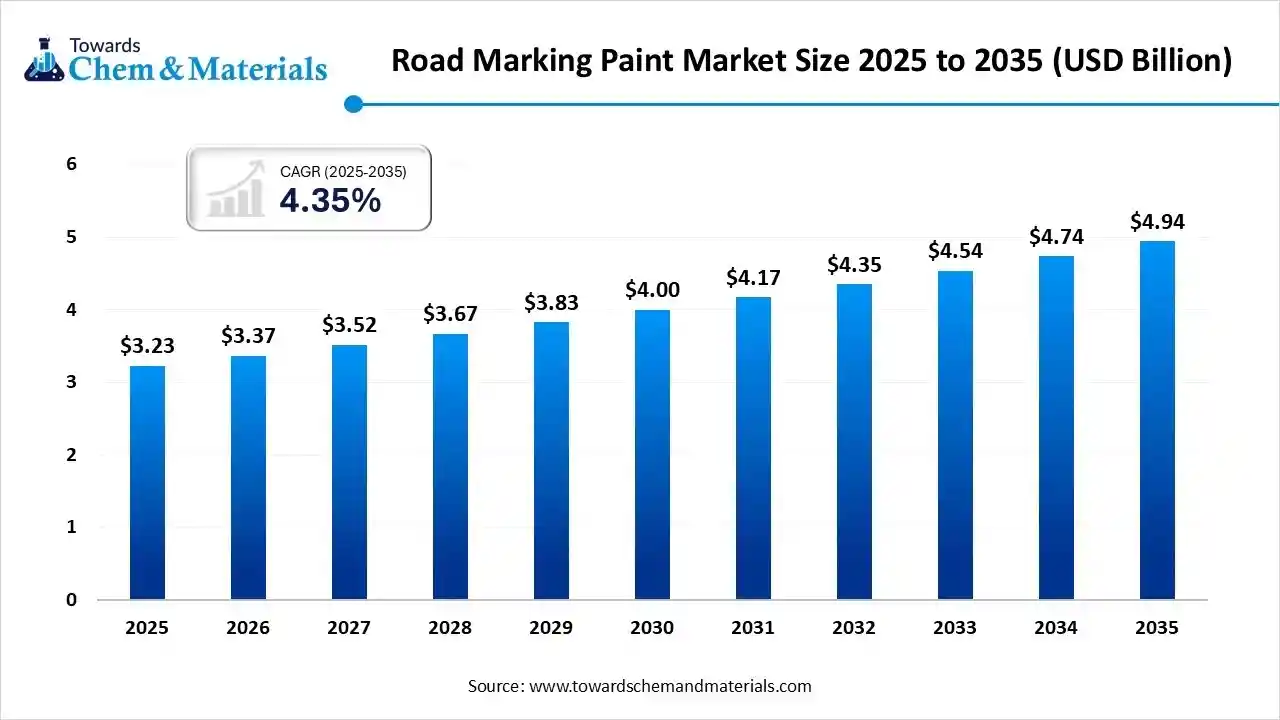
Key Takeaways
- By region, Asia Pacific led the market with the largest revenue share of over 45% in 2025.
- By materials type/product, the performance-based polymer markings segment led the market with the largest revenue share of 45% in 2025.
- By visibility/reflectivity, the reflective markings segment led the market with the largest revenue share of 85% in 2025.
- By durability/type, the permanent markings segment accounted for the largest revenue share of 75% in 2025.
- By application area/end-use, the road and highway marking segment dominated with the largest revenue share of 65% in 2025.
- By application method, the spray segment dominated the market and accounted for the largest revenue share of 55% in 2025.
Market Overview
What Is The Significance Of The Road Marking Paint Market?
The road marking paint market is significant because these markings are crucial for traffic management, safety, and guiding drivers, especially with growing urbanisation, smart cities, and autonomous vehicles relying on them for navigation. The market thrives on infrastructure development, government mandates for better visibility like enhanced retroreflectivity, and demand for durable, long-lasting coatings like thermoplastic that reduce maintenance and improve safety in diverse weather conditions.
Road Marking Paint Market Growth Trends:
- Sustainability: Shift towards eco-friendly, low-VOC (Volatile Organic Compounds) paints with faster drying times and better durability.
- Advanced Materials: Use of thermoplastics, epoxy, and high-performance coatings for longevity against harsh conditions.
- Smart Markings: Development of sensor-equipped tapes and photoluminescent lines for night visibility, integrating with IoT traffic platforms.
- Specialised Coatings: Thermochromic paints that reflect infrared light to mitigate urban heat island effects are emerging.
Report Scope
| Report Attribute | Details |
| Market Size Value in 2026 | USD 3.37 Billion |
| Revenue Forecast in 2035 | USD 4.94 Billion |
| Growth Rate | CAGR 4.35% |
| Forecast Period | 2026 - 2035 |
| Base Year | 2025 |
| Dominant Region | Asia Pacific |
| Fastest Growing Region | North America |
| Segment Covered | By Protection Method, By Application , By Component Type , By Deployment Type, By Region |
| Key companies profiled | DuPont (DuPont Water Solutions), SUEZ Water Technologies & Solutions (Veolia), 3M Purification Inc., Toray Industries, Inc., Koch Separation Solutions (KSS), Swarco AG , Ennis-Flint, Inc. (PPG Traffic Solutions) , The Sherwin-Williams Company , Nippon Paint Holdings Co., Ltd. , Aximum (Colas Group) , Geveko Markings , Asian Paints PPG Pvt. Ltd. , Dow Inc. , Crown Technology, LLC , TATU Traffic Group , Hempel A/S , SealMaster (SealMaster Industries) , Kestrel Thermoplastics Ltd. , Ozark Materials, LLC, Automark Technologies (India) Pvt. Ltd. , Kelly-Creswell Co., Inc. , PEXCO LLC , BOLE (Guangzhou Bole Road Marking Equipment Co., Ltd.) , LANINO |
Key Technological Shifts In The Road Marking Paint Market:
The road marking paint market is shifting towards sustainability (water-based, low-VOC), enhanced durability (thermoplastics, cold plastics, self-repairing coatings), and smart, high-visibility solutions (reflective additives, digital markings), driven by environmental regulations, safety demands, and smart city initiatives, requiring advanced, energy-efficient application technologies.
Trade Analysis Of Road Marking Paint Market: Import & Export Statistics
- According to Global Export data, from May 2024 to April 2025 (TTM), the world shipped a total of 6 consignments of Road Marking Paint Resin, exported by 4 exporters to 5 buyers. Most of these exports go to Russia, Vietnam, and India.
- The top three global exporters of Road Marking Paint Resin are China, Malaysia, and Russia, with China leading at 25 shipments, followed by Malaysia with 2 shipments and Russia with 2 shipments.
- According to India Export data from June 2024 to May 2025 (TTM), India exported 42 shipments of Road Marking, with 10 Indian exporters serving 18 buyers, representing a 163% increase compared to the previous year. Most exports from India are sent to the United States, Nepal, and Tanzania.
- Globally, Russia, China, and Austria are the top exporters of Road Marking, with Russia leading at 1,662 shipments, followed by China with 1,328, and Austria with 241 shipments.
Road Marking Paint Market Value Chain Analysis
- Chemical Synthesis and Processing: Road marking paints are produced using resins such as acrylics, alkyds, chlorinated rubber, and thermoplastics, combined with pigments, glass beads, binders, and additives. Manufacturing involves dispersion, mixing, milling, and formulation to create durable, UV-resistant, fast-drying paints suitable for asphalt and concrete surfaces.
- Key players: 3M Company, Sherwin-Williams, Ennis-Flint (PPG Industries), Asian Paints PPG, Hempel.
- Quality Testing and Certification: Road marking paints undergo testing for retroreflectivity, abrasion resistance, drying time, skid resistance, weatherability, and VOC compliance under standards like ASTM D913, ASTM D476, ISO 3900, and local transportation authority guidelines.
- Key players: ASTM International, SGS, Intertek, TÜV SÜD.
- Distribution to Industrial Users: Road marking paints are supplied to highway authorities, municipal bodies, airport operators, construction firms, and road maintenance contractors through specialised distributors and direct OEM supply channels.
- Key players: Ennis-Flint (PPG), Sherwin-Williams, 3M Company, Asian Paints PPG.
Road Marking Paint Regulatory Landscape: Global Regulations
| Country / Region | Regulatory Body | Key Regulations | Focus Areas | Notable Notes |
| North America | U.S. EPA (United States Environmental Protection Agency) | - Clean Air Act (CAA) VOC Regulations - OSHA Hazard Communication Standard - FHWA Guidelines for Road Markings |
- VOC limits in coatings - Worker safety - Pavement marking performance |
Strict VOC restrictions for solvent-based road paints; thermoplastic materials are widely preferred for durability. |
| European Union | ECHA + European Commission | - REACH Regulation - CLP Regulation - EU Directive on Road Infrastructure Safety |
- Chemical registration - Hazard classification - Road safety compliance |
Europe enforces some of the world’s tightest VOC caps; reflective bead materials are regulated under REACH. |
| Asia Pacific | China MEE, India BIS/MoRTH, Japan MLIT | - China GB Standards for Road Markings - India IS 164/IS 158 - Japan Road Structure Ordinance |
- Road marking quality and durability - Reflectivity standards - Environmental safety |
Rapid infrastructure growth drives stricter performance specifications, especially for thermoplastic and cold plastic markings. |
| South America | ANTT (Brazil), SCT (Mexico) | - Brazil Road Marking Technical Standards - Mexico NOM Standards for Traffic Paints |
- Retroreflectivity - Environmental compliance - Traffic safety regulations |
Adoption of global VOC and durability standards is increasing; many countries are referencing U.S./EU norms. |
| Middle East & Africa | Ministry of Transport (UAE, Saudi Arabia), SABS (South Africa) | - GCC Road Marking Standards - UAE Traffic Control Device Manual - SABS 731 |
- Heat-resistant coatings - Night visibility - Compliance for high-temperature climates |
High-performance thermoplastic and MMA coatings are preferred due to extreme climate conditions. |
Segmental Insights
Material Type/Product Insights
Which Material Type/Product Segment Dominated The Road Marking Paint Market In 2025?
The performance-based polymer markings segment dominated the market with a share of 45% in 2025. Performance-based polymer markings are gaining traction due to their superior durability, UV resistance, and ability to withstand heavy traffic loads. These materials offer extended service life and enhanced retroreflectivity, making them suitable for highways, urban roads, and high-stress zones. Their long-term cost efficiency and compliance with stricter safety standards continue to drive adoption in developed and emerging markets.
The paint-based markings segment is projected to grow at a CAGR between 2026 and 2035 in the road marking paint market. Paint-based markings remain widely used due to their cost-effectiveness, ease of application, and suitability for low-traffic areas. Waterborne, solvent-based, and epoxy paints are common within this category, serving municipal roads, parking lots, and maintenance projects. The segment benefits from increasing adoption of VOC-compliant waterborne formulations as governments push for environmentally safer solutions.
Visibility/Reflectivity Insights
How Did Reflective Markings Segment Dominated The Road Marking Paint Market In 2025?
The reflective markings segment dominated the market with a share of 85% in 2025. Reflective markings dominate usage in high-traffic zones because they significantly enhance nighttime and low-light visibility. These markings often incorporate glass beads or retroreflective elements to improve driver guidance and safety. Demand continues to rise due to stricter road safety regulations and the expansion of smart transportation systems requiring high-clarity lane delineation.
The non-reflective markings segment is projected to grow at a CAGR between 2026 and 2035 in the road marking paint market. Non-reflective markings are primarily used for temporary guidance, parking areas, construction zones, and internal facility markings where high visibility is not critical. Their low cost and ease of application make them favourable for short-term or low-priority segments. Growth in urban development projects continues to support steady consumption.
Durability/Type Insights
Which Durability/Type Segment Dominated The Road Marking Paint Market In 2025?
The permanent markings segment dominated the market with a share of 75% in 2025. Permanent markings account for a major share of the market due to their ability to maintain visibility and integrity over long periods. These markings use highly durable materials like thermoplastics, cold plastics, and high-performance polymers. They reduce maintenance requirements, offering long-term economic benefits to road authorities.
The removable markings segment is projected to grow at a CAGR between 2026 and 2035 in the road marking paint market. Removable markings are essential for temporary traffic management in construction areas, event traffic routing, and short-term diversions. They use peelable, tape-based, or easily erasable materials that allow quick changes without damaging surfaces. Growth in infrastructure renovation and road expansion projects is driving the increasing use of removable marking systems.
Application Area/End-Use Insights
How Did Road And Highway Marking Segment Dominated The Road Marking Paint Market In 2025?
The road and highway marking segment dominated the market with a share of 65% in 2025. Road and highway marking forms the largest application area, fueled by ongoing infrastructure development, urban mobility expansion, and regulatory pressure for improved road safety. High-performance thermoplastics and durable reflective paints are widely used to ensure long-term visibility and lane clarity across national and municipal road networks.
The airport marking segment is projected to grow at a CAGR between 2026 and 2035 in the road marking paint market. Airport marking is a rapidly growing segment due to continuous expansions in airport infrastructure and the modernisation of runways and taxiways. The segment demands high-durability, weather-resistant, and highly reflective markings to ensure safety in both day and night operations. Strict aviation compliance standards further drive the adoption of premium marking materials.
Application Method Insights
Which Application Method Segment Dominated The Road Marking Paint Market In 2025?
The spray application segment dominated the market with a share of 55% in 2025. Spray application dominates due to its speed, efficiency, and suitability for large road networks. It supports a wide range of materials, including waterborne paints, solvent-based coatings, and thermoplastic sprays. Governments and contractors increasingly prefer automated spray systems for consistent thickness, faster project completion, and reduced labour costs.
The extrusion application segment is projected to grow at a CAGR between 2026 and 2035 in the road marking paint market. Extrusion application is primarily used for thermoplastic and cold-plastic materials requiring thick, long-lasting layers. This method ensures strong adhesion, high durability, and excellent nighttime visibility, making it ideal for highways and high-stress traffic zones. Growth in expressway development continues to boost demand for extrusion-applied markings.
Regional Insights
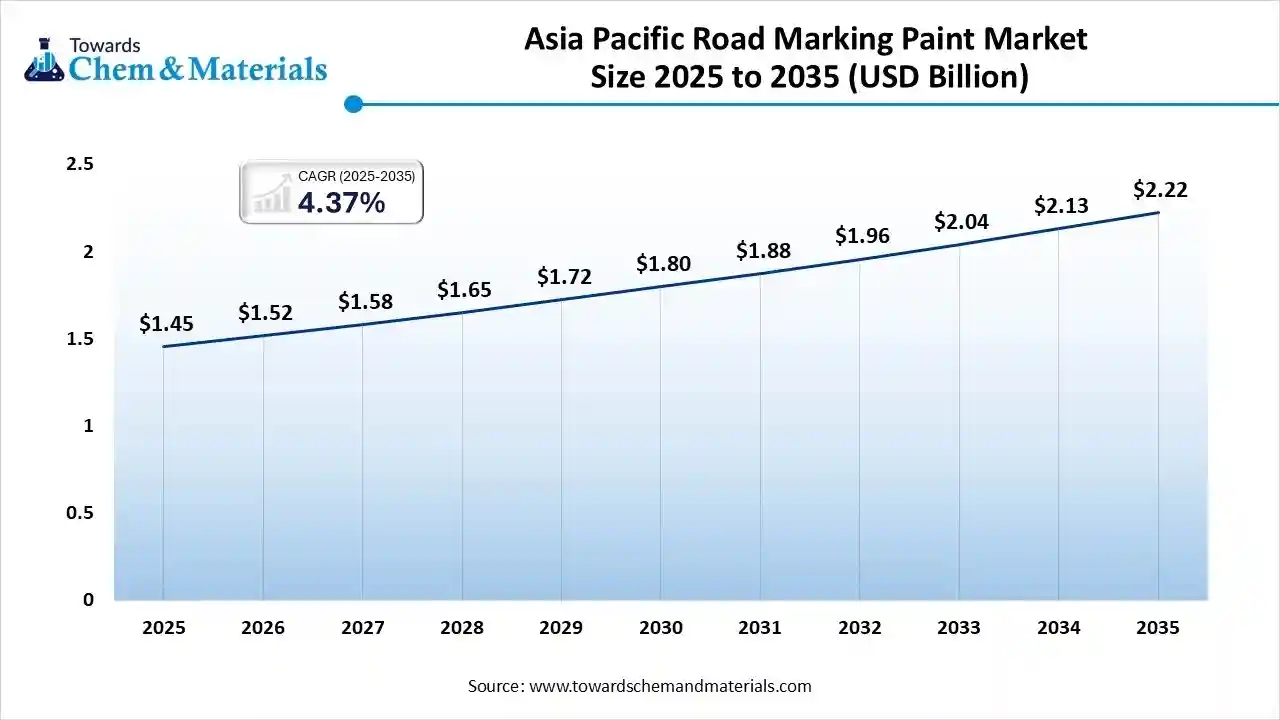
The Asia Pacific road marking paint market size was valued at USD 1.45 billion in 2025 and is expected to reach USD 2.22 billion by 2035, growing at a CAGR of 4.37% from 2026 to 2035. Asia Pacific dominates the market with a share of 45% in 2025. Asia-Pacific is the growing region, propelled by rapid urbanisation, booming construction activities, and large-scale government investments in road development. Expanding highway networks in developing economies, alongside growth in airport and industrial corridor construction, are major contributors. Rising adoption of cost-effective yet durable paints, particularly in China and India, further accelerates market growth.
China: Road Marking Paint Market Growth Trends
China leads the APAC market due to the continuous expansion of expressways, rural road upgrades, and high urban traffic volumes. Large government budgets for city infrastructure modernisation and smart transportation projects increase the demand for durable marking materials. Thermoplastic paints with enhanced reflectivity remain highly popular across national and provincial road networks.
North America's Market Growth Is Driven By Steady Investments
North America is expected to have significant growth in the market in the forecast period between 2026 and 2035. North America is growing in the market due to steady investments in roadway maintenance, expansion of expressways, and strict government standards for road safety and visibility. The rise in smart mobility projects, increased traffic density, and the adoption of durable and eco-friendly marking paints, such as thermoplastic and waterborne variants, are stimulating demand. Additionally, ongoing airport upgrades and urban infrastructure renovation continue to strengthen market growth.
United States: Road Marking Paint Market Growth Trends
The U.S. dominates the North American market owing to large-scale federal and state investments in highway modernisation under programs such as the Infrastructure Investment and Jobs Act. The country’s strong emphasis on reflective road lines, skid-resistant coatings, and high-durability striping materials drives continuous consumption. Growth is also supported by the rising usage of VOC-compliant and environmentally safer waterborne paints.
Europe's Growth Is Driven By The Presence Of A Mature Market And Players
Europe represents a mature market driven by strict sustainability regulations, heavy road network density, and the shift toward advanced cold-plastic and eco-friendly marking solutions. Continuous infrastructure maintenance in Western Europe and smart mobility initiatives across the region support strong adoption. The market also benefits from technological innovations in anti-skid and high-retroreflective road paints.
Germany: Road Marking Paint Market Growth Trends
Germany contributes significantly due to its advanced transportation network and stringent road safety standards. Extensive autobahn maintenance activities and municipal road renovation projects drive high demand for long-lasting thermoplastic and cold-plastic marking materials. Sustainable, low-VOC road marking products are increasingly preferred due to EU environmental regulations.
The South America Market Is Driven By The Growing Support By The Key Players
South America shows stable growth supported by road rehabilitation programs, increasing public-private infrastructure investments, and the expansion of logistics corridors. Countries in the region are adopting more durable marking systems to withstand harsh weather and heavy traffic. The shift toward cost-efficient waterborne paints is also gaining momentum.
Brazil: Road Marking Paint Market Growth Trends
Brazil drives regional demand due to significant investments in highway connectivity, urban mobility projects, and preparations for large-scale national events. Road safety campaigns and modernisation of municipal road networks have increased the use of reflective and long-lasting marking paints. Industrial corridor development further contributes to rising consumption.
Middle East & Africa expects the substantial growth in the market. MEA is witnessing rising demand driven by large-scale infrastructure development, road expansion in GCC nations, and new city development initiatives. Harsh climatic conditions in many countries make high-durability, UV-resistant, and heat-stable marking paints essential, supporting the adoption of premium solutions.
United Arab Emirates (UAE): Road Marking Paint Market Growth Trends
The UAE remains a major contributor due to continuous investments in smart city projects, airport expansions, and world-class highway infrastructure. High-performance reflective road marking paints are widely used to support advanced traffic management systems. The government's emphasis on safety and quality standards boosts the use of durable thermoplastics and cold-applied materials.
Recent Developments
- In April 2025, the "Reflect and Protect" road safety project in Jamaica, a collaboration between the Jamaica Chamber of Commerce, Berger Paints Jamaica, and the National Works Agency, will utilise existing reflective road marking paint to enhance visibility and safety on roads.(Source: jamaica-gleaner.com)
- In November 2025, North Lanarkshire Council in Scotland announced a UK-first trial involving road markings made from recycled plastic technology. This initiative aims to test the durability and sustainability of these innovative materials on public roads.(Source : www.northlanarkshire.gov.uk)
Top Players in the Road Marking Paint Market
- DuPont (DuPont Water Solutions): DuPont is a global leader in membrane filtration, offering a wide range of RO, NF, UF, and MF membrane technologies.
- SUEZ Water Technologies & Solutions (Veolia): SUEZ, now part of Veolia, provides high-performance membrane filtration systems including RO, UF, and MBR solutions. The company serves municipal, industrial, and commercial sectors with a strong focus on water reuse, desalination, and sustainable treatment technologies.
- 3M Purification Inc.: 3M offers membrane-based filtration products for industrial, residential, and commercial applications.
- Toray Industries, Inc.: Toray is a major manufacturer of RO and UF membranes known for high permeability and energy-efficient water treatment performance. The company supplies solutions for desalination, industrial wastewater treatment, and ultrapure water production across global markets.
- Koch Separation Solutions (KSS): KSS specialises in UF, RO, and MBR membrane systems used in dairy processing, bioprocessing, industrial water treatment, and wastewater recovery. Its advanced membrane technologies emphasise improved productivity, contaminant removal, and operational efficiency.
Top Companies in the Road Marking Paint Market
- DuPont (DuPont Water Solutions)
- SUEZ Water Technologies & Solutions (Veolia)
- 3M Purification Inc.
- Toray Industries, Inc.
- Koch Separation Solutions (KSS)
- Swarco AG
- Ennis-Flint, Inc. (PPG Traffic Solutions)
- The Sherwin-Williams Company
- Nippon Paint Holdings Co., Ltd.
- Aximum (Colas Group)
- Geveko Markings
- Asian Paints PPG Pvt. Ltd.
- Dow Inc.
- Crown Technology, LLC
- TATU Traffic Group
- Hempel A/S
- SealMaster (SealMaster Industries)
- Kestrel Thermoplastics Ltd.
- Ozark Materials, LLC
- Automark Technologies (India) Pvt. Ltd.
- Kelly-Creswell Co., Inc.
- PEXCO LLC
- BOLE (Guangzhou Bole Road Marking Equipment Co., Ltd.)
- LANINO
Segments Covered
By Material Type/Product
- Paint-Based Markings
- Water-Based Paints (Acrylic Latex, Emulsion)
- Solvent-Based Paints (Alkyd, Epoxy Ester)
- Performance-Based Polymer Markings
- Thermoplastics (Hot-Melt)
- Hydrocarbon Thermoplastic
- Alkyd Thermoplastic
- Cold Plastics (Multi-Component)
- Two-Component (2K) Cold Plastic (e.g., MMA, Epoxy)
- Three-Component (3K) Cold Plastic
- Thermoplastics (Hot-Melt)
- Preformed Polymer Tapes
- Preformed Thermoplastic Sheets
- Preformed Adhesive Tapes (PU, PVC, etc.)
- Specialty Coatings
- Epoxy Coatings
- Polyurethane (PU) Coatings
By Visibility/Reflectivity
- Reflective Markings
- With Drop-on Glass Beads
- With Structured/Agglomerate Reflective Elements
- Non-Reflective Markings
By Durability/Type
- Permanent Markings (Designed for long service life)
- Removable Markings (Used for temporary traffic control, construction zones)
By Application Area/End-Use
- Road and Highway Marking
- Line Markings (Lane Lines, Edge Lines, Center Lines)
- Safety Symbols and Messages
- Urban Roads and Streets Marking
- Parking Lot Marking (Car Parks, Garages)
- Airport Marking (Runways, Taxiways, Aprons)
- Industrial Marking (Factories, Warehouses, Ports)
- Specialized Marking
- Sports Facilities
- Crosswalks and Bike Lanes (Often colored markings)
By Application Method
- Spray Application
- Extrusion Application (for Thermoplastics)
- Screed/Trowel Application
- Tape Application (Peel-and-Stick)
By Regions
- North America
- U.S.
- Canada
- Mexico
- Europe
- Germany
- UK
- France
- Italy
- Spain
- Asia Pacific
- China
- India
- Japan
- South Korea
- Latin America
- Brazil
- Argentina
- Middle East & Africa
- Saudi Arabia
- South Africa
A Seven-Phase Framework
Our methodology is designed to be universally applicable across commodity chemicals, specialty chemicals, petrochemicals, construction chemicals, coatings, electronic chemicals, industrial gases, agrochemicals, water treatment chemicals, and performance materials. Each phase builds upon the last, creating a layered validation structure that minimizes estimation error and maximizes analytical confidence.
The framework ensures comprehensive market coverage, robust cross-validation, and reliable long-term forecasting — producing market estimates that withstand scrutiny from investors, regulators, and corporate strategy teams.

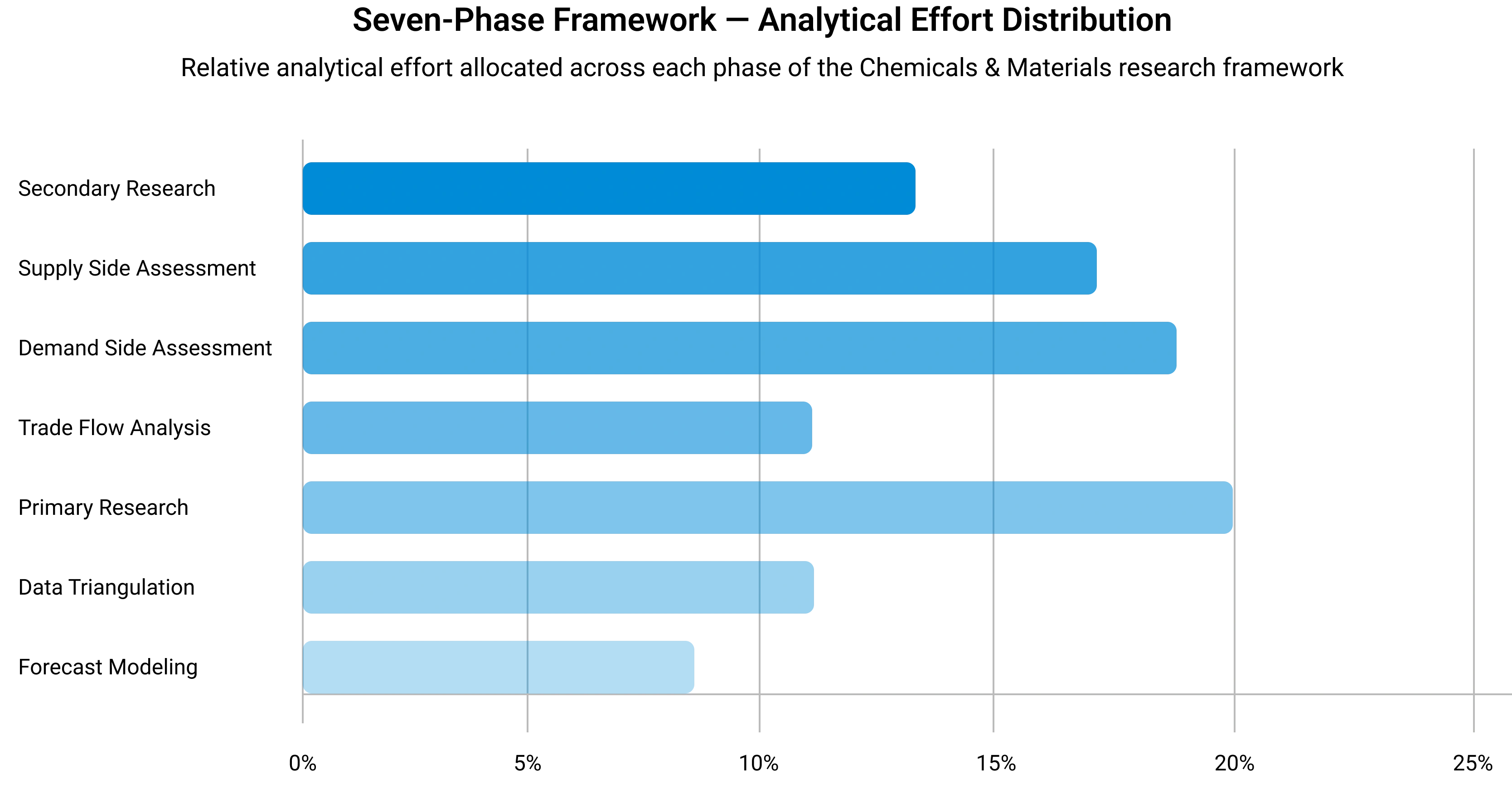
Seven-Phase Framework — Analytical Effort Distribution
Relative analytical effort allocated across each phase of the Chemicals & Materials research framework
Phase 1 - Secondary Research: Establishing the Foundation
Secondary research collects and evaluates publicly available information from authoritative sources, establishing the foundational understanding of market structure, value chain dynamics, competitive landscape, and end-use demand patterns. Every source is evaluated for credibility, recency, geographic relevance, and methodological soundness before inclusion.
Industry Associations
Sources include ACC, CEFIC, ICCA, JCIA, CPCIF, and SOCMA providing production volumes, consumption trends, capacity developments, and sustainability initiatives.
Company Disclosures
Annual reports, investor presentations, earnings transcripts, and regulatory filings reveal product portfolios, manufacturing footprints, capacity expansions, and revenue segmentation.
Government Databases
National statistical offices, customs authorities, environmental agencies, and industrial production databases provide verified statistics on output, trade flows, and regulatory compliance.
Trade Databases
UN Comtrade, ITC, Eurostat, and national customs authorities enable assessment of global product movement, import dependency, and export competitiveness across regions.
Our Secondary Research Sources
- Ministry of Chemicals and Fertilizers
- European Chemicals Agency
- United States Department of Energy
- Ministry of Industry and Information Technology
- Ministry of Economy Trade and Industry
- Ministry of Trade Industry and Energy
- National Institute of Standards and Technology
- Council of Scientific and Industrial Research
- Fraunhofer Society
- National Institute for Materials Science
Phase 2 — Supply-Side Assessment: Mapping Production Capabilities
Production Capacity Analysis
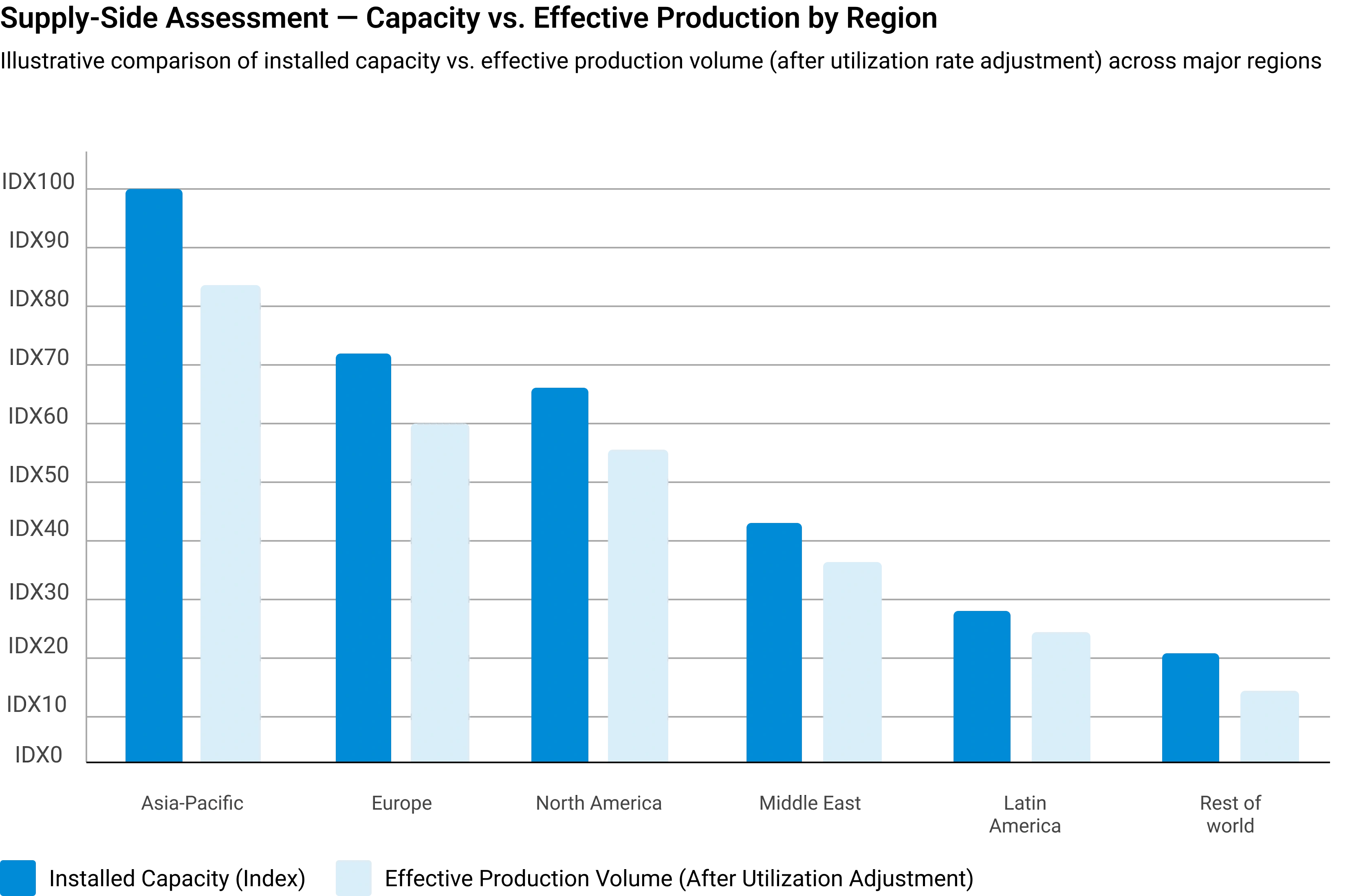
All major manufacturers are assessed for existing installed capacity, planned additions, expansions, new plant announcements, and technology adoption — mapped at global, regional, and country levels.
Capacity Utilization Adjustment
Installed capacity is adjusted using utilization rates based on demand conditions, feedstock availability, plant operating rates, maintenance schedules, and regulatory restrictions.
Manufacturer Revenue Analysis
Product-specific revenues, segment-level performance, regional distribution, average selling prices, and margin trends are evaluated to establish market value estimates.
Supply-Side Assessment — Capacity vs. Effective Production by Region
Illustrative comparison of installed capacity vs. effective production volume (after utilization rate adjustment) across major regions
Phase 3 — Demand-Side Assessment: Quantifying Chemical Consumption
Demand-side analysis quantifies chemical consumption across industries, applications, and geographies — identifying where and how chemicals are consumed throughout the value chain with precision.
End-Use Industry Analysis
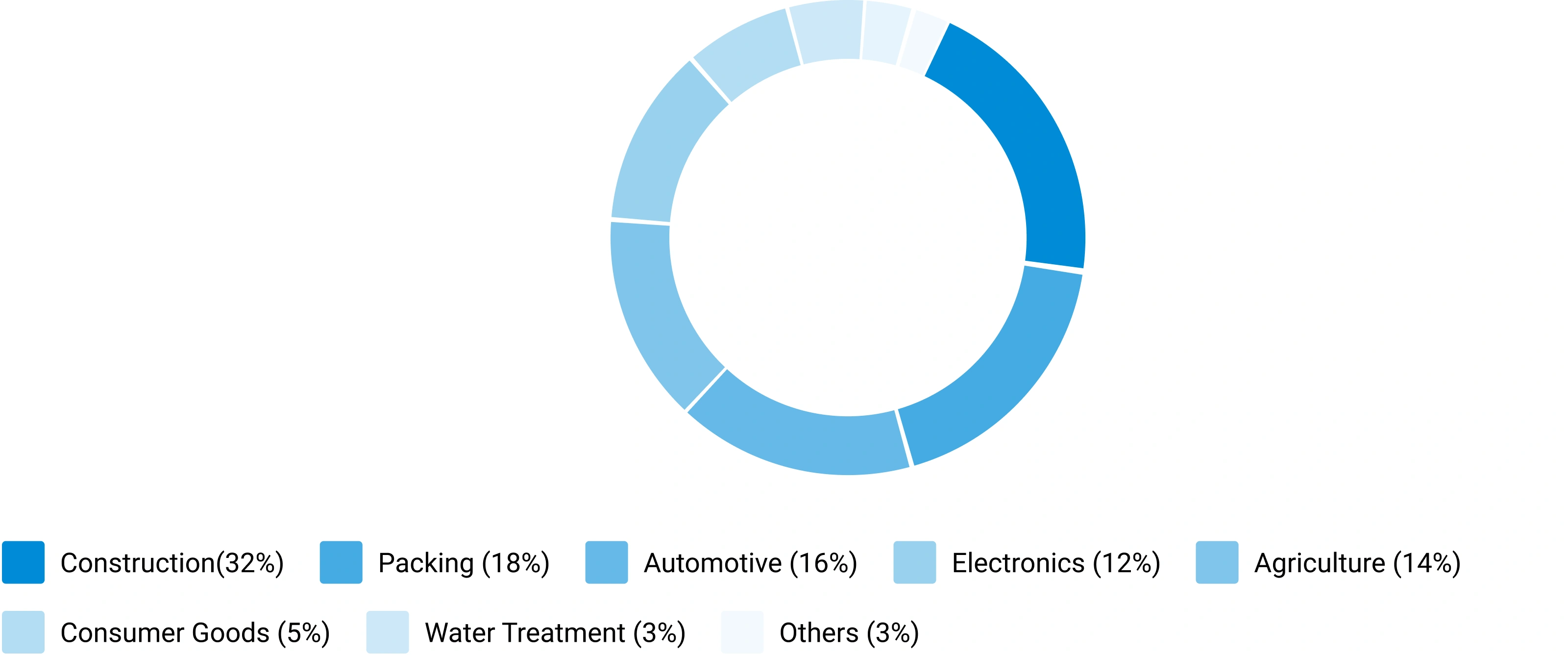
Chemical demand is evaluated across automotive, construction, packaging, electronics, agriculture, healthcare, consumer goods, industrial manufacturing, energy and utilities, and water treatment. Industry output, production trends, and consumption intensity are analyzed to determine demand patterns.
Consumption Modeling
Demand is estimated using measurable indicators: kilograms per vehicle, kilograms per square meter of construction, dosage per cubic meter of water treated, kilograms per hectare of agricultural land, and kilograms per ton of manufactured products. Consumption factors are validated through industry publications and primary interviews.
Application Analysis
The market is segmented by application area to understand product performance requirements, formulation trends, technology adoption, customer preferences, and regulatory requirements improving demand accuracy and segmentation granularity.
Demand-Side Assessment — End-Use Industry Demand Distribution
Illustrative distribution of chemical & materials demand across key end-use industries
Phase 4 - Trade Flow Analysis: Balancing Regional Supply and Demand
Trade flow analysis reconciles regional supply and demand estimates through import and export data, identifying net supply positions, regional dependencies, and market imbalances. It serves as an independent validation layer that tests the consistency of supply-side and demand-side estimates.
Import Analysis
Import data is evaluated to determine volumes, source countries, product dependency, regional supply gaps, and pricing trends — identifying markets that rely heavily on external supply and where domestic production is insufficient to meet demand.
Export Analysis
Export assessments reveal production surplus, export competitiveness, regional manufacturing strength, and global market participation. Export patterns also help validate domestic production estimates and identify net exporting regions.
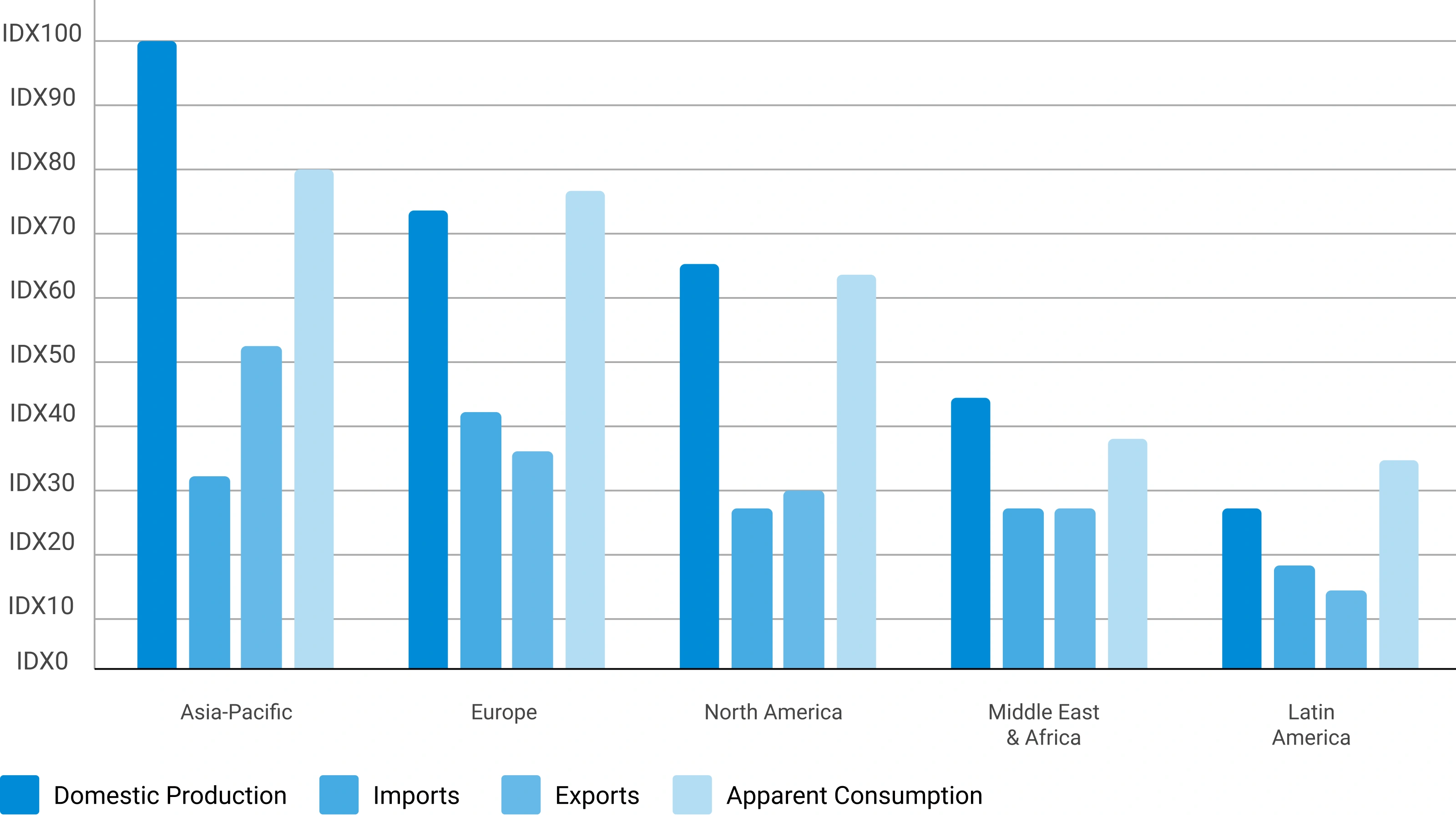
Apparent Consumption Model
Regional consumption is assessed using the standard apparent consumption formula:
Results identify net importing regions, net exporting regions, regional deficits, and surpluses — serving as an independent validation of supply and demand estimates.
Trade Flow Analysis — Net Supply Position by Region
Illustrative apparent consumption vs. domestic production across major regions — positive gap indicates net import dependency
Phase 5 — Primary Research: The Critical Validation Layer
Primary research tests and refines findings from secondary research through direct engagement with industry participants across the supply chain, demand side, and expert community. It captures intelligence that no database or published report can provide — the real-world experience of manufacturers, buyers, and specialists operating in the market.

Supply-Side Interviews
Conversations with chemical manufacturers, raw material suppliers, contract manufacturers, technology providers, and plant operators cover production trends, capacity utilization, pricing developments, technology shifts, and competitive dynamics.

Demand-Side Interviews
Engagement with OEMs, industrial consumers, procurement managers, distributors, formulators, and end-use manufacturers focuses on consumption trends, purchasing behavior, product substitution, demand outlook, and emerging applications.

Industry Expert Consultations
Additional interviews with industry consultants, independent experts, regulatory specialists, technical professionals, and research institutions provide deeper market context and validate key analytical assumptions.
Focus Areas of Primary Research:
Market Size & Forecast Validation
Revenue estimates, volume consumption, growth rates, forecast assumptions, regional demand.Supply Chain & Value Chain Assessment
Raw material sourcing, supply chain challenges, distribution networks, procurement practices.Production & Capacity Analysis
Manufacturing capacity, utilization rates, expansion projects, plant investments.Pricing & Cost Structure Analysis
Product pricing trends, feedstock costs, energy costs, margin pressures, pricing outlook.Competitive Landscape Assessment
Volume and value estimates confirmed to be fully consistent with one another before publicationInterview Volume by Market Scope
| Study Scope | Number of Interviews |
|---|---|
| Niche Market | 20 – 30 |
| Mid-Sized Market | 30 – 50 |
| Global Market | 50 – 80 |
| Highly Fragmented Market | 80 – 120 |
Interview Details:
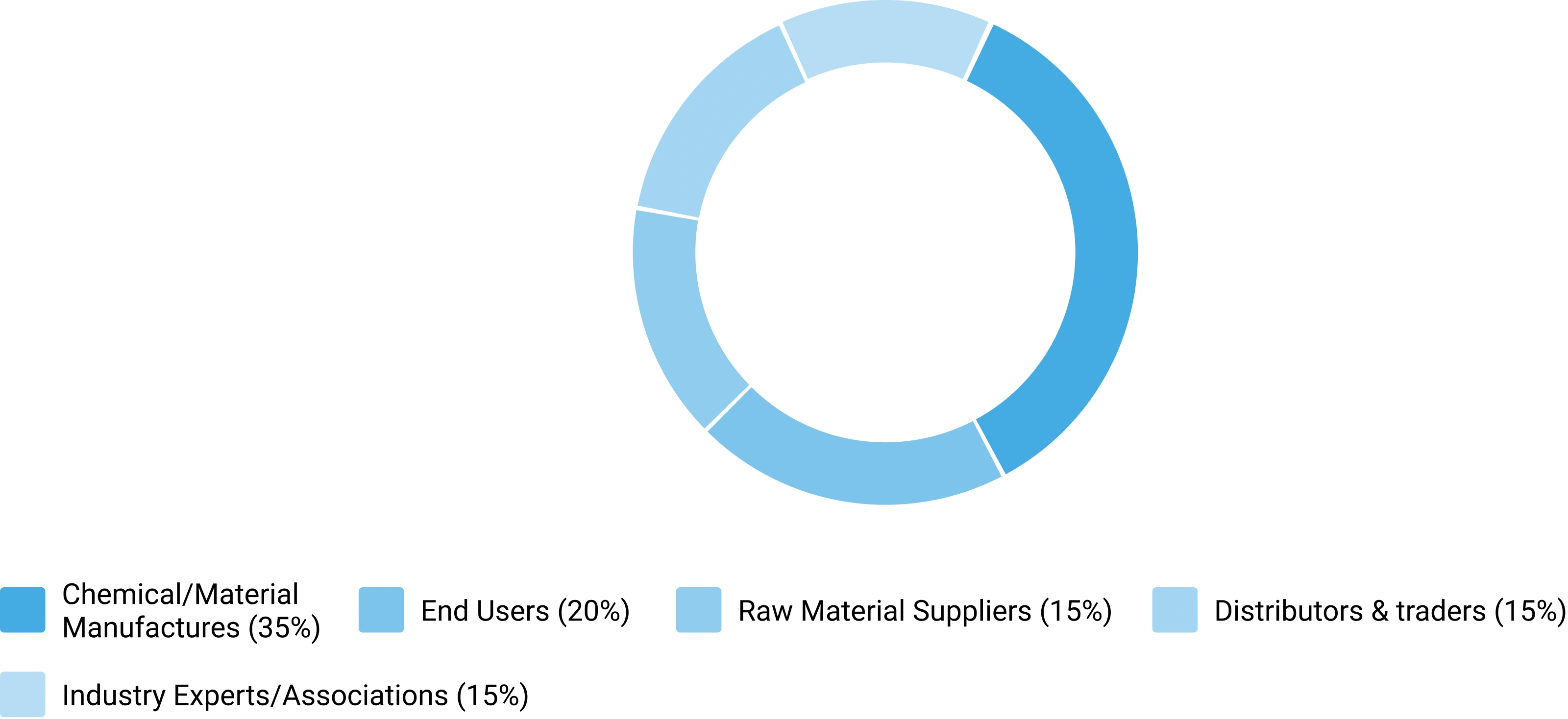
Category : Manufacturers, Suppliers, Distributors, End Users, Experts/Associations
Average Duration : 30–60 Minutes
Interview Mode : Video calls, telephonic interviews, expert consultations
Interview Format : Structured / Semi-Structured questionnaire
Focus Areas of Primary Research:
Market Size & Forecast Validation :
Revenue estimates, volume consumption, growth rates, forecast assumptions, regional demand.
Supply Chain & Value Chain Assessment :
Raw material sourcing, supply chain challenges, distribution networks, procurement practices.
Production & Capacity Analysis :
Manufacturing capacity, utilization rates, expansion projects, plant investments.
Pricing & Cost Structure Analysis :
Product pricing trends, feedstock costs, energy costs, margin pressures, pricing outlook.
Competitive Landscape Assessment :
Market share, competitor positioning, strategic initiatives, partnerships, acquisitions.
Primary Research — Stakeholder Coverage by Category
Distribution of interview respondents across stakeholder categories (% share from PPT data)
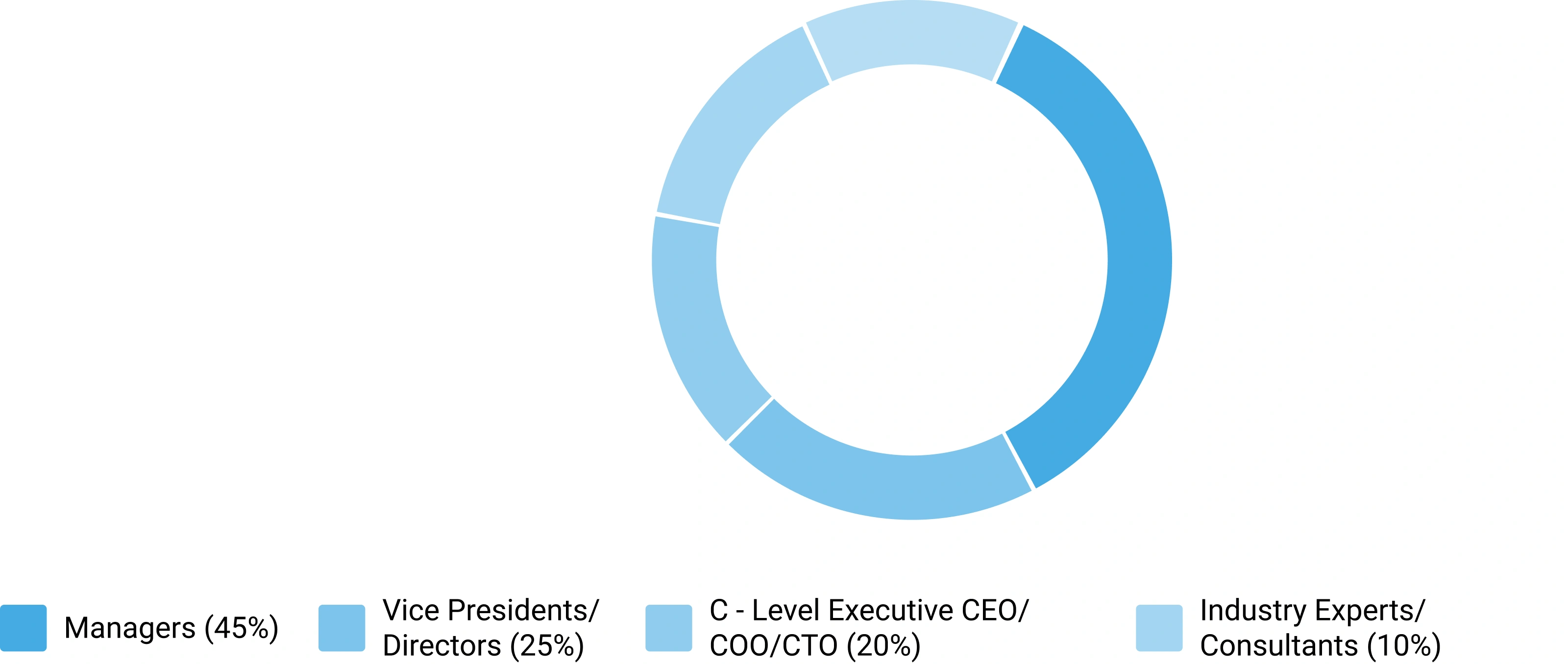
Primary Research — Respondent Designation Profile
Seniority breakdown of interview respondents (% share from PPT data)
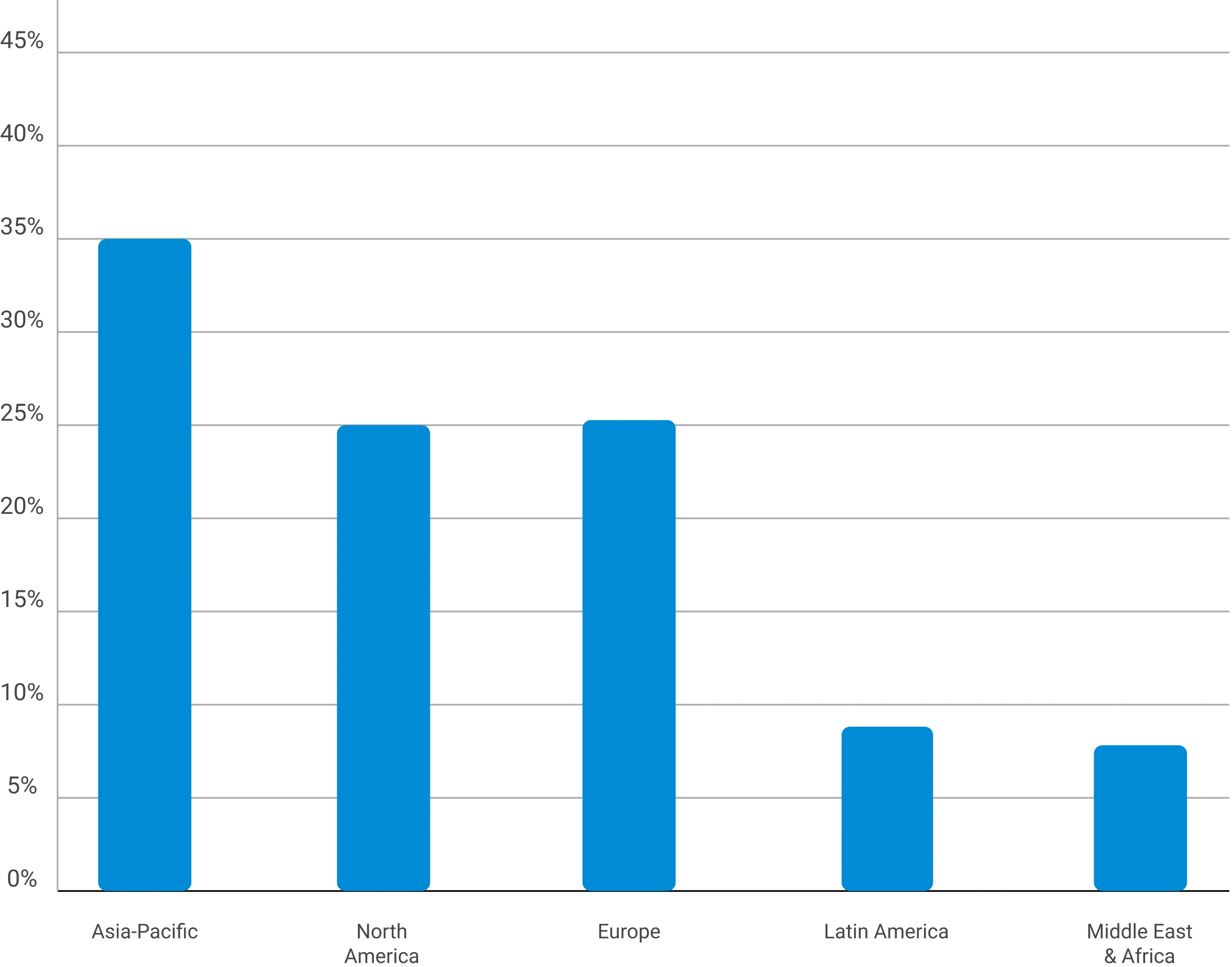
Primary Research — Geographic Coverage of Interviews
Regional distribution of primary research engagement (% share from PPT data)
Phase 6 — Data Triangulation and Market Validation
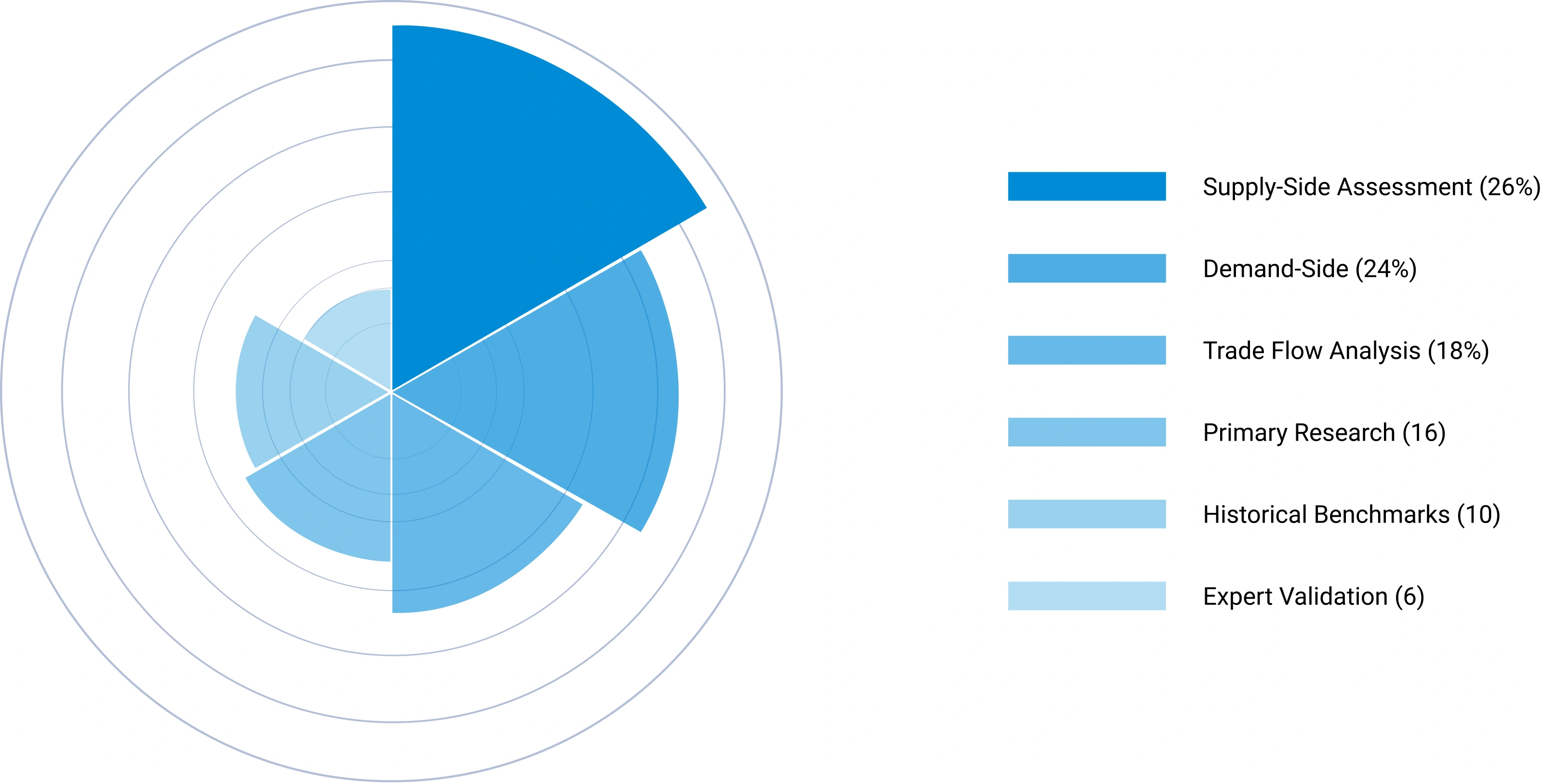
No single methodology is relied upon in isolation. Multiple independent estimation approaches are combined and reconciled to ensure consistency, accuracy, and analytical defensibility. Any material deviations between approaches are investigated and adjusted through additional validation cycles.
The final market size is derived through weighted triangulation of all validated methodologies. Any material deviations between approaches are investigated and adjusted through additional validation cycles. The outcome represents the most realistic assessment of the market based on available evidence and expert confirmation ensuring that volume and value estimates are fully consistent with one another.
Triangulation Framework — Input Contribution Weight
Relative weight each sizing input contributes to the final reconciled market estimate
Phase 7 — Forecast Modeling: Projecting Future Market Evolution
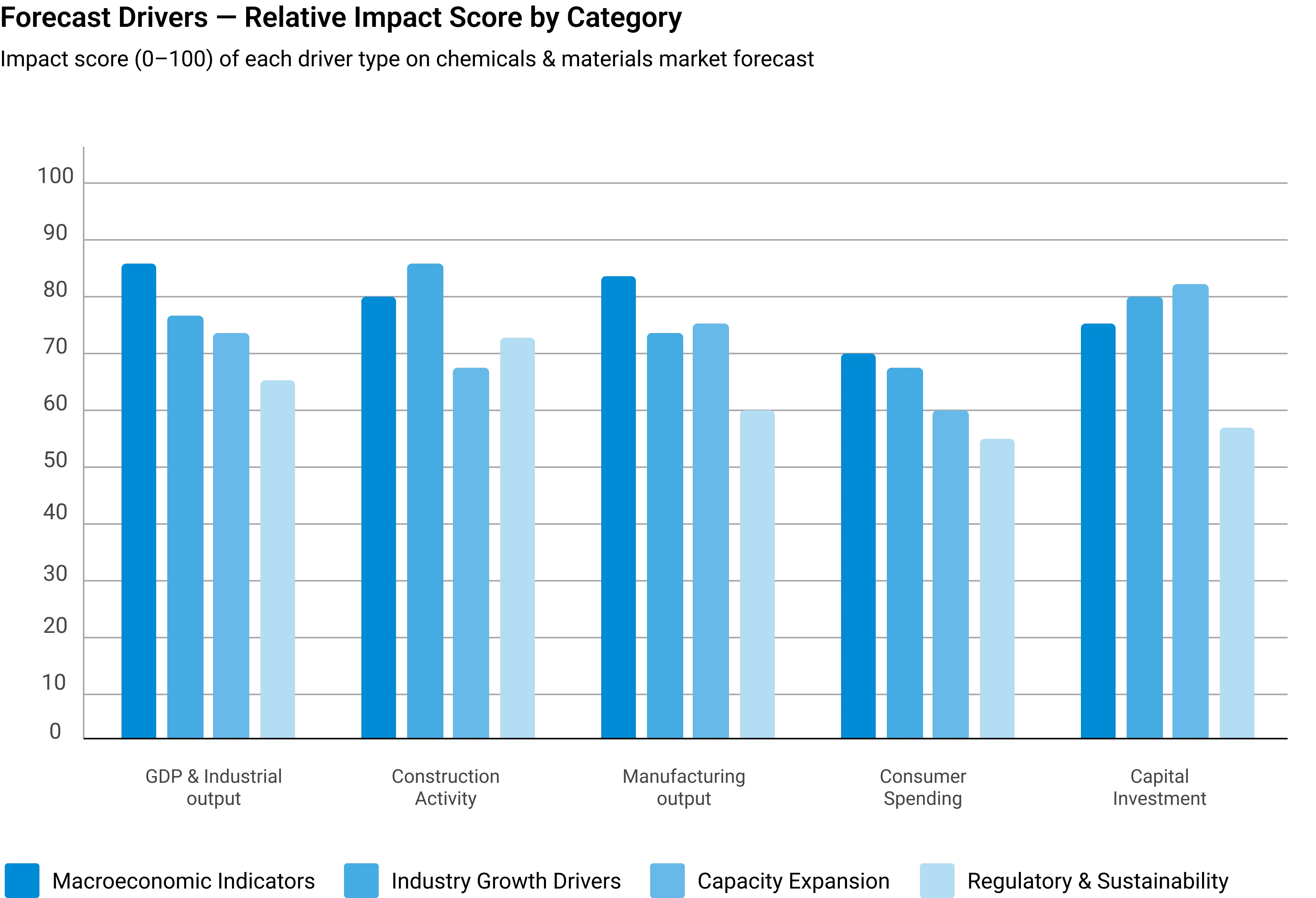
Forecasting evaluates the future trajectory of the market using a combination of quantitative indicators and qualitative assessments across economic, industry, and regulatory dimensions. Rather than simple extrapolation, each driver is independently modeled and integrated into a composite forecast.
Macroeconomic Indicators
GDP growth, industrial production, manufacturing output, construction activity, consumer spending, and capital investment form the quantitative foundation of long-term demand projections. These are applied at country, regional, and global levels.
Industry Growth Drivers
Urbanization, infrastructure development, industrialization, technological innovation, sustainability initiatives, and evolving product performance requirements are assessed at regional and industry levels — capturing both structural and cyclical demand drivers.
Capacity Expansion Analysis
Announced plant expansions, new manufacturing facilities, technology upgrades, and strategic investments are evaluated to determine future supply-demand dynamics and potential market tightness or oversupply situations.
Regulatory & Sustainability
Environmental regulations, chemical safety standards, emission reduction targets, circular economy initiatives, and sustainability requirements are incorporated as they often influence product adoption rates and market growth trajectories.
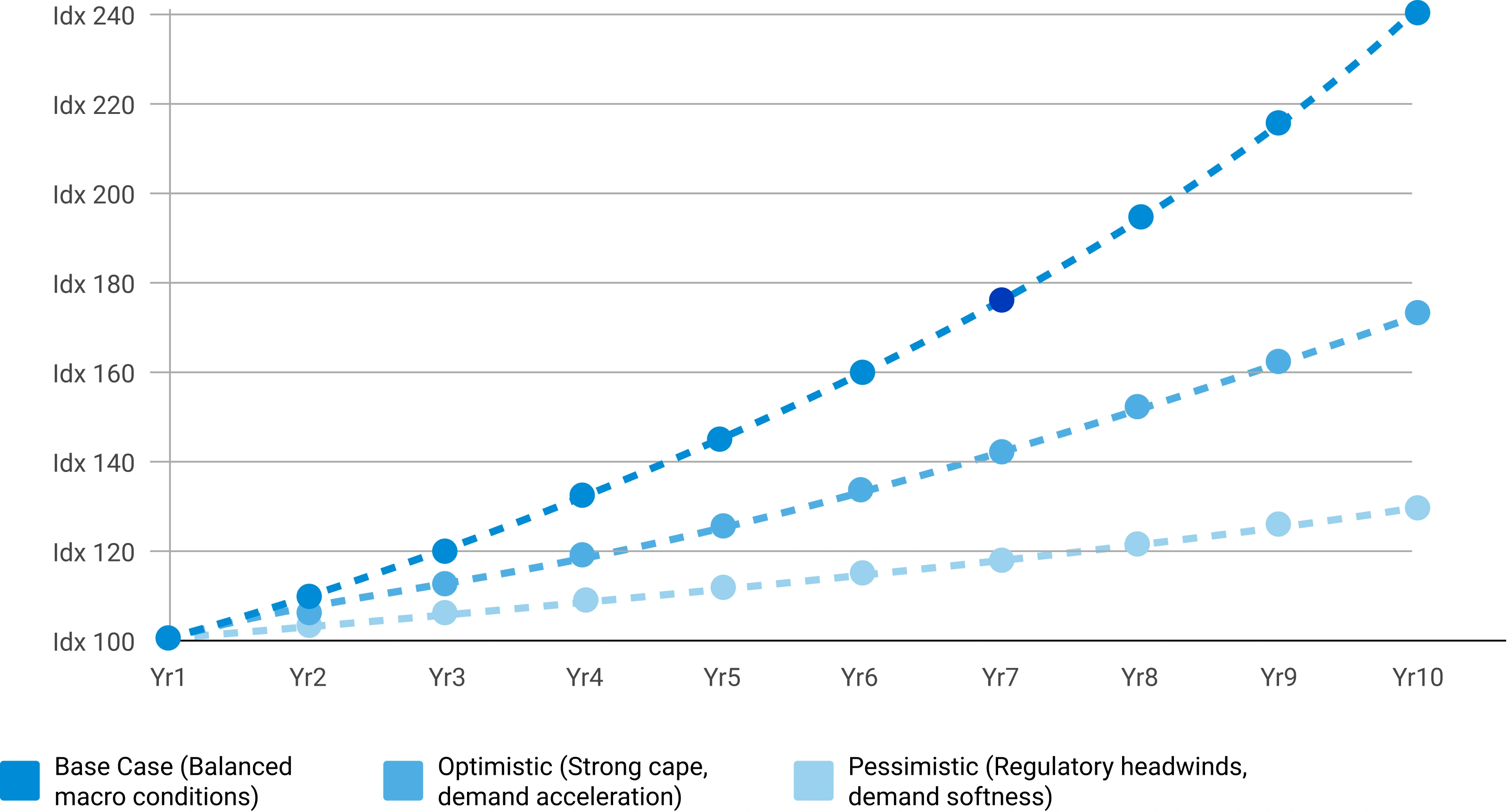
Scenario Forecast Range — Indexed Market Growth (Year 1–10)
Illustrative indexed growth trajectories across Base, Optimistic, and Pessimistic scenarios over a 10-year forecast horizon
Forecast Drivers — Relative Impact Score by Category
Impact score (0–100) of each driver type on chemicals & materials market forecast



Comments
Share your thoughts, ask a question, or provide feedback about this report.