
Polyester Fiber Market Size and Forecast 2026 to 2035
The global polyester fiber market size was valued at USD 128.65 billion in 2025, is estimated to reach USD 136.51 billion in 2026, and is projected to reach USD 232.79 billion by 2035, exhibiting a compound annual growth rate (CAGR) of 6.11% over the forecast period from 2026 to 2035.Asia Pacific dominated the polyester fiber market with the largest revenue share of 58% in 2025 and is expected to grow at the fastest CAGR of 6.20% during the forecast period. Global and regional manufacturers are playing in the market, providing products based on their quality, technology, application variety, and sustainability. The rising demand in the apparel, textiles, automotive, and industrial applications is contributing to the growth of the market. Growing sustainability efforts, use of recycled polyester, and fiber technology improvements continue to help propel market growth.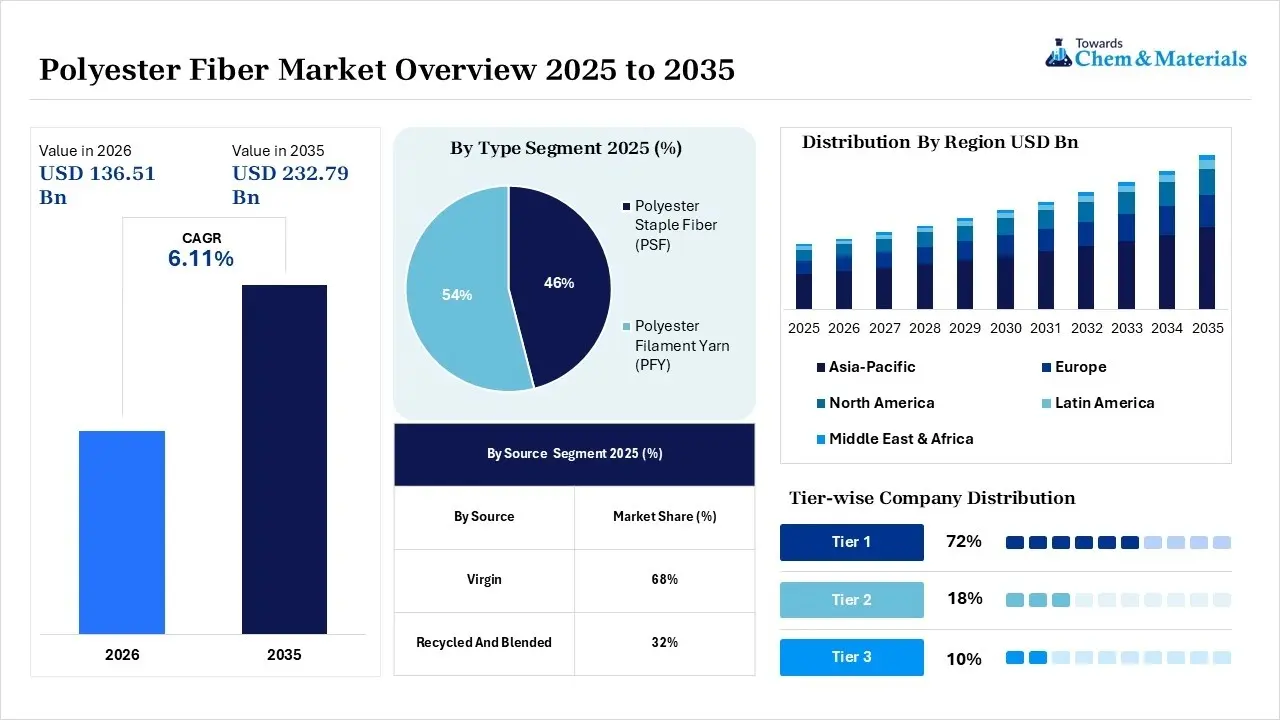
Market Highlights
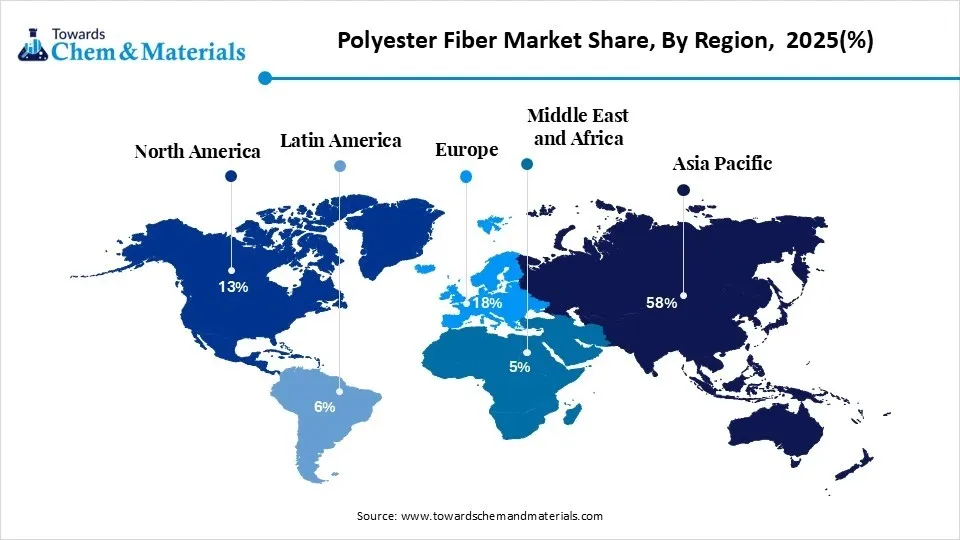
- By region, Asia Pacific dominated the polyester fiber market by holding a 58% share in 2025 and is expected to grow at a CAGR of 4.6% during the forecast period.
- By region, North America held 13% market share in 2025 and is expected to grow at the fastest CAGR of 6.7% during the forecast period.
- By type, the polyester filament yarn (PFY) segment dominated the market with the largest share of 54% in 2025 and is expected to grow at a CAGR of 5.4% during the forecast period.
- By type, the polyester staple fiber (PSF) segment held 46% market share in 2025 and is expected to grow at the fastest CAGR of 6.2% over the forecast period.
- By source, the virgin segment dominated the market with the largest share of 68% in 2025 and is expected to grow at a CAGR of 4.9% during the forecast period.
- By source, the recycled and blended segment held 32% market share in 2025 and is expected to grow at the fastest CAGR of 7.9% over the forecast period.
- By grade, the polyethylene terephthalate (PET) polyester segment dominated the market with the largest share of 92% in 2025 and is expected to grow at a CAGR of 5.8% during the forecast period.
- By grade, the PCDT polyester segment held 8% market share in 2025 and is expected to grow at the fastest CAGR of 6.7% over the forecast period.
- By form, the solid segment dominated the market with the largest share of 78% in 2025 and is expected to grow at a CAGR of 5.4% during the forecast period.
- By form, the hollow segment held 22% market share in 2025 and is expected to grow at the fastest CAGR of 6.9% over the forecast period.
- By denier, the medium segment dominated the market with the largest share of 48% in 2025 and is expected to grow at a CAGR of 5.5% during the forecast period.
- By denier, the fine segment held 34% market share in 2025 and is expected to grow at the fastest CAGR of 6.7% over the forecast period.
- By application, the apparel segment dominated the market with the largest share of 39% in 2025 and is expected to grow at a CAGR of 5.9% during the forecast period.
- By application, the non-woven fabrics segment held 15% market share in 2025 and is expected to grow at the fastest CAGR of 7.2% over the forecast period.
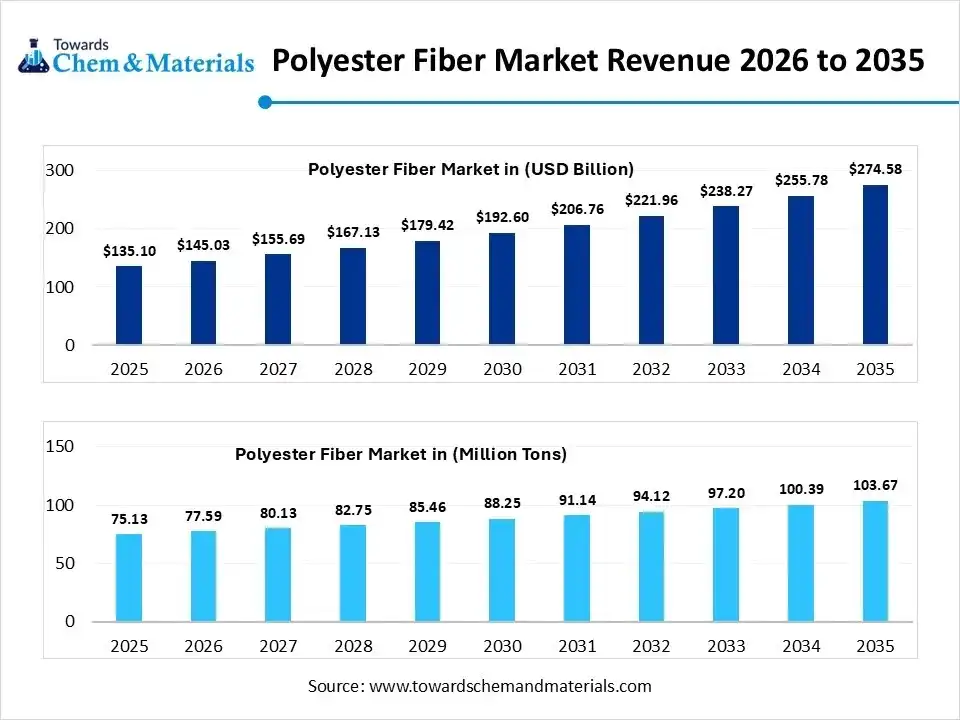
According to Towards Chemicals and Materials Analytics and Consulting, the global polyester fiber market volume was valued at 72.40 million metric tons in 2025 and is expected to surpass around 126.03 million metric tons by 2035, accelerating a compound annual growth rate (CAGR) of 5.70% over the forecast period from 2026 to 2035.
What is Polyester Fiber?
Polyester fiber is a synthetic fiber composed of long-chain polymers of the ester functional group, most commonly Polyethylene Terephthalate (PET). It is produced through the polymerization of ethylene glycol and terephthalic acid or its derivatives.
Advancing the Polyester Fiber Market Through Sustainable Materials and Industrial Expansion
Polyester is very wrinkle-resistant, quickly dries, is resistant to wear and tear, has a high tensile strength, and can be used in many applications. Polyester fibers are growing in the market because of their durability, economy, and excellent physical properties. Demand for apparel, textiles, automotive, and industrial goods is bolstering global consumption. Market growth is further sustained by the increasing demand for fast fashion, sportswear, and easy-to-care-for products. The automotive industry has been adopting polyester fibres for several applications, such as lightweight tyre reinforcement, seat belts, seat covers, and interior parts. Opportunities are being generated through sustainable actions, such as recycled polyester production and technology for textile-to-textile recycling. The development of engineered fibers, smart textiles, and advanced manufacturing techniques is also improving product performance.
- For instance, in December 2025, Archroma and Innovo Fiber announced their sustainable textile collaboration, using Archromas AVITERA SE reactive dyes with Fibre52. The system helps brands achieve their sustainability goals by reducing water consumption and CO₂ emissions in the cotton and cotton/polyester processing.(Source: www.indianchemicalnews.com)
Global Investment Movement for Polyester Fiber Market
The key polyester fibre companies are putting more funds into developing textile-to-textile recycling schemes to recycle EoL polyester into virgin polyester. These include efforts to develop circular economy models, which aim at lower reliance on fossil-based raw materials and enhance sustainable fibre production capacity.
- For instance, in August 2025, Loop Industries and Shinkong Synthetic Fibers Corporation recently signed a strategic partnership in August 2025 to speed up the development of circular textiles. The alliance merges Loops textile-to-textile manufacturing technology and Shinkongs polyester fiber spinning technology and customer network.(Source: www.newswire.com)
Capital is being invested in upgrading old polyester spinning plants with automated systems, digital monitoring solutions, and energy-efficient systems. These enhancements lead to lower operational expenses, higher quality production, and a smaller environmental footprint during the production process.
The performance requirements and expectations in the industries are changing, and companies are targeting an engineered fiber technology for automotive insulators, medical hygiene products, industrial fabrics, and low-shedding applications.
Polyester Fiber Industry Trends
- The global polyester fibre industry is moving toward recycled polyester and the development of textile applications that are circular. Manufacturers and brands are turning their attention to chemical recycling, bio-based blends, and sustainable production to decrease reliance on virgin fossil-based materials. Such shifts are being spurred by environmental laws and market demand.
- Polyester fibre usage is increasing in other market segments, such as automotive and industrial use. Hollow and low-melting-point polyester staple fiber demand for acoustic damping is growing due to the growing demand for electric vehicles. Other industrial uses of polyester include its strength and resistance to abrasion.
- Recent developments in the engineering of fibers allow the production of specialty polyester fibers that have enhanced functions. Moisture-management fibers, antimicrobial fibers, flame-retardant fibers, and lightweight hollow fibers are being increasingly used in activewear, medical textiles, safety products, and home furnishing.
Report Scope
| Report Attribute | Details |
| Market Size Value in 2026 | USD 136.51 Billion / 76.53 Million Metric Tons |
| Revenue Forecast in 2035 | USD 232.79 Billion / 126.03 Million Metric Tons |
| Growth Rate | CAGR 6.11% |
| Forecast Period | 2026 - 2035 |
| Base Year | 2025 |
| Dominant Region | Asia Pacific |
| Segment Covered | By Type, By Source, By Grade, By Form, By Denier, By Application, By Region |
| Key companies profiled | Indorama Ventures, Reliance Industries, Sinopec (Yizheng Chemical Fiber), Toray Industries, Zhejiang Hengyi Group, Tongkun Holding Group, Alpek, Xin Feng Ming Group, Shenghong, Huvis Corp, Nan Ya Plastics, Barnet, Bombay Dyeing, Indo Rama Synthetics, Unifi |
AI & Innovation Transforming Polyester Fiber Manufacturing
AI and cutting-edge technologies are revolutionizing polyester fiber manufacturing by enabling automated sorting, intelligent manufacturing, real-time quality monitoring, and innovative material engineering. AI-powered hyperspectral and near-infrared cameras determine fiber constituents and impurities in textile waste, helping to facilitate efficient recycling processes. Advanced AI models can be used to improve the quality of recycled polymer by minimizing losses in strength during the polymer processing stage. AI applications for production lines include: These technologies maximize polymerization, spinning, and winding processes and minimize downtime and resource usage.
Supply Chain Analysis of the Polyester Fiber Market
Feedstock Procurement:
- The polyester fiber value chain starts with the raw materials used for the production of the polymer, in this case, petrochemicals, in particular petroleum and natural gas (NG), that are processed to yield paraxylene (PX) and ethylene. These feedstocks are used as the raw materials for polyester.
- Having a reliable supply of feedstocks allows polyester manufacturing to go on 24 hours a day and contributes to cost efficiency and a consistent production capacity throughout the industry.
- Reliance Industries: The integrated refinery-to-petrochemicals complex of Reliance Industries helps it to procure the feedstocks at minimum cost within the plant and enhance the efficiency of the supply chain.
- Other Key Players: Sinopec, Indorama Ventures, and Alpek.
Chemical Synthesis and Processing:
- Raw feedstocks are then converted into monomers, which are then polymerized to form molten polyester or solid PET chips. These materials are the starting materials for the polyester fibre production process.
- The quality of the material, the ability to scale up, and the flexibility in production for various polyester fiber applications in the textile and industrial industries are assured by efficient chemical processing.
- Indorama Ventures: Indorama Ventures has large-scale polymerization plants around the world to produce high-volume and specialty PET resins used in polyester products.
- Other Key Players: Sinopec, Hengli Petrochemical, and Far Eastern New Century.
Compound Formulation and Blending:
- Polyester fibers are formed by the melting and extruding of PET chips through spinnerets. Polyester is frequently combined with other additives or natural fibers in order to create better functionality and performance.
- Advanced formulation and blending processes enhance the fiber properties, durability, moisture management, insulation, and application-specific performance.
- Toray Industries: Toray Industries uses cutting-edge compounding technologies to create polyester fibers with functional and high-performing characteristics for specialized applications.
- Other Key Players: Huvis Corp, Nan Ya Plastics, and Reliance Industries.
Sustainability Analysis of the Polyester Fiber Market
Sustainability concerns in the polyester fiber market exist because virgin polyester dominates the market and accounts for more than 68% of the volume. Production of virgin polyester is based upon the use of petrochemicals and involves substantial energy usage, which leads to significant carbon emissions. However, because of the challenges of recycling and the availability of feedstock, recycled polyester is a less commonly used material. The primary material for recycled polyester is the plastic bottles collected post-consumer, which is a material used by packaging industries as well. The textile-to-textile recycling segment is smaller as it is challenging to sort blended fabrics.
Polyester Fiber Has the Following Characteristics:
- Chemical resistance: Polyester fiber is highly resistant to chemicals and can be used for durable clothing, industrial materials, and technical textiles.
- Moisture Management: Polyester is believed to have hydrophobic characteristics that enable it to dry rapidly and effectively manage moisture, which is a major reason for its use in sportswear, activewear, and other products where moisture control is important.Polyester can be made with other natural materials (cotton) to enhance strength, resistance to wrinkling, and durability without sacrificing comfort and flexibility.
Uses of the Polyester Fiber
- Apparel and Clothing Applications:The polyester fibre is widely used in the textile industry because of its lightness, extensibility, durability, and moisture-absorbing properties. It offers improved comfort, minimal maintenance, and wrinkle-free features in activewear, outdoor clothing, and everyday wear.
- Home Furnishing Applications:Polyester fibres are used extensively in home textiles due to their resistance to shrinking, dimensional stability, and ability to retain colour. Items such as bed sheets, pillow cases, blankets, curtains, tablecloth and upholstery materials for furniture.
- Fire door insulation and cushioning applications:Polyester fiber is an effective fiber for insulation and cushioning due to its ability to efficiently trap air. It is used in a variety of applications, such as winter jackets, sleeping bags, life jackets, pillows, and cushions that require lightweight thermal protection.
- Industrial and Technical Applications.:Polyester fiber is used in industrial processes because of its properties of being of high tensile strength, elastic, and resistant to chemicals. It is used in the manufacture of automotive parts, tire reinforcement, seat belts, safety nets, and sewing threads used in industry.
Regulatory Framework: Polyester Fiber Market
| Country Region | Regulatory Body | Key Regulations | Focus Areas |
| Asia Pacific | Ministry of Textiles | Bureau of Indian Standards Act | Voluntary/safety standards for tensile strength, linear density, and uniformity |
| North America | Environmental Protection Agency (EPA) | Textile Fiber Products Identification Act | Accurate fiber content disclosures to consumers |
| European Union | European Chemicals Agency (ECHA) | Textile Labelling Regulations | Extended Producer Responsibility (EPR) schemes |
Market Dynamics
Drivers: An Expanding Demand for Apparel and Textiles
The expansion of the growing apparel and textile industry is one of the strongest factors that propel the polyester fiber market. Polyester consumption is growing due to the rise in urbanization, a growing middle-class population, and demand for durable and affordable clothes. It is very popular for mass market apparel and sportswear due to its wrinkle resistance, fast drying, and low cost. Asia Pacific is expected to be the leading contributor as textile production is high, and the growing demand for synthetic-based fabrics in the region is anticipated.
Restraints :The Environment and Microfibers Challenges
The market growth is hampered due to the environmental issues linked with the production and consumption of polyester. Polyester fibers are sourced from petroleum and shed fibers during the washing process, which impacts aquatic life. Low biodegradability, static properties, and odor retention issues prompt some consumers to make the switch to natural fibre options. The rising regulatory scrutiny on the issue of microplastics and sustainability demands is also putting pressure on manufacturers to find ways to make their production processes cleaner and improve recycling.
Opportunities :Growth of Recycled Polyester Solutions
The shift towards circular economies opens a wide scope for the use of recycled polyester. Brands and manufacturers are increasingly turning plastic bottles and industrial waste into polyester yarn in an attempt to reach sustainability goals. Material recovery increases, and circular textile systems are supported by advanced recycling technologies.
- For instance, in December 2025, KIPAS Textiles launched fibR-e, a new recycling initiative to address the challenges that hinder the realisation of polyester reaching full circularity. The platform is designed to tackle issues with sustainable polyester processing in the textile sector.(Source: textileworld.com)
Segmental Insights
Type Insights
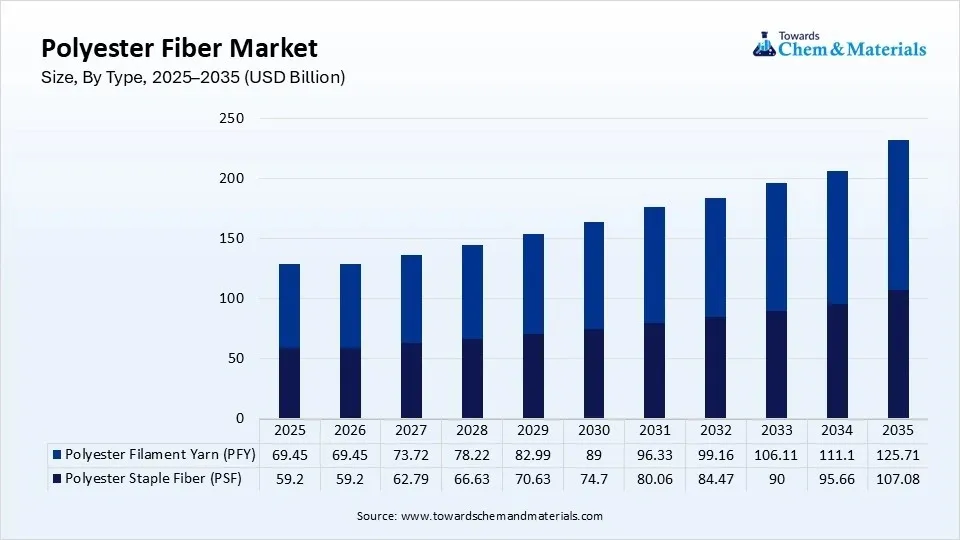
The polyester filament yarn (PFY) segment dominated the market with the largest share of 54% in 2025 and is expected to grow at a CAGR of 5.4% over the forecast period because of its strength, smoothness, durability, and versatility. Because of its excellent performance, it is widely used across a variety of apparel, footwear, and home furnishing applications. The growing demand for high-quality fabrics, sustainable yarn solutions, and advanced textile materials is driving the growth of the segment. Innovation in filament yarns is driven by the manufacturers efforts to create enhanced yarns that offer greater functionality, comfort, and environmental friendliness for use in various consumer and industrial products.
- For instance, in February 2025, Unifi recently introduced Integr8™, a sustainable yarn using REPREVE® recycled polyester. The product offers stretch, softness, and moisture management properties to applications in clothing, shoes, and home furnishing.(Source: www.businesswire.com)
The polyester staple fiber (PSF) segment held a 46% market share in 2025 and is expected to grow at the fastest CAGR of 6.2% over the forecast period, as fiber solutions are required increasingly in different industries for their versatility and affordability. Its softness, durability, and versatility make it a popular choice for textiles, home furnishings, insulation, and industrial uses. The growing demand for recycled and blended fibers is prompting manufacturers to think about providing sustainable staple fiber solutions. The segment is also gaining traction with the increasing application requirement for lightweight, flexible, and functional materials, which are characterized by better performance features in various end-user industry segments.
Polyester Fiber Market Volume and Share, By Type, 2025 (%)
| By Type | Market Share (%) |
| Polyester Staple Fiber (PSF) | 46% |
| Polyester Filament Yarn (PFY) | 54% |
Source Insights
The virgin segment dominated the market with the largest share of 68% in 2025 and is expected to grow at a CAGR of 4.9% over the forecast period because of its consistent quality, durability, cost, and production efficiency. It continues to be a favored material for both large-scale textile manufacturing in apparel, industrial, and consumer applications. There is an abundance of raw materials and existing production facilities, which make it easy to use. While there is growing awareness of sustainability issues, virgin polyester is still significant due to its proven performance, cost-effectiveness, and its ability to serve demand from various industries with the need for tough and strong synthetic fibers, especially in high volumes.
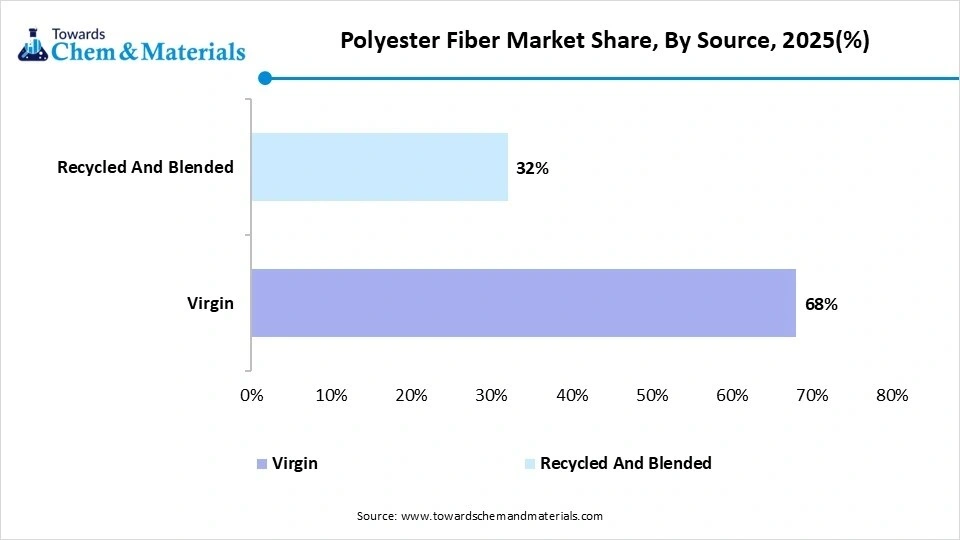
The recycled and blended segment held the 32% market share in 2025 and is expected to grow at the fastest CAGR of 7.9% over the forecast period, due to rising awareness of sustainability efforts and the rising demand for circular textile solutions. Recycled polyester is being used by manufacturers as an alternative to virgin materials, helping them meet environmental targets and lessen reliance on virgin polyester. Blended polyester fibers are used to enhance performance characteristics, which are a mixture of polyester with other fibers.
- For instance, in July 2026, Tom Dixon launched the Cord Rug, which is 100% recycled polyester. Sustainable design through reusing recycled materials and handcrafted production for both indoor and outdoor use.(Source: www.interiordaily.com)
Polyester Fiber Market Share. By Source, 2025(%)
| By Source | Market Share (%) |
| Virgin | 68% |
| Recycled And Blended | 32% |
Grade Insights
The polyethylene terephthalate (PET) polyester segment dominated the market with the largest share of 92% in 2025 and is expected to grow at a CAGR of 5.8% over the forecast period because of its durability, versatility, and application range. Due to its strength, stability, and affordability, PET polyester is widely used in the clothing industry, household textiles, and industrial uses. It has a proven manufacturing process and can be used in various applications; thus, it is expected to continue. The increasing demand for reliable synthetic fibers and the development of recycling technologies are also supporting the use of PET polyester in different end-use industries.
The PCDT polyester segment held an 8% market share in 2025 and is expected to grow at the fastest CAGR of 6.7% over the forecast period, because of its specialized performance properties and use for particular applications. It provides better durability, flexibility, and resilience, and is appropriate for products where material strength and performance need to be enhanced. The need for advanced polyester solutions and for specific applications in textiles is driving growth in the segment. Manufacturers are working on new versions of polyesters with high performance to meet evolving needs and provide functional and application-specific benefits for the industries that are looking for these materials.
Polyester Fiber Market Share. By Grade, 2025(%)
| By Grade | Market Share (%) |
| Polyethylene Terephthalate (PET) Polyester | 92% |
| PCDT Polyester | 8% |
Form Insights
The solid segment dominated the market with the largest share of 78% in 2025 and is expected to grow at a CAGR of 5.4% over the forecast period because of its strength, durability, and versatility for different applications. Used extensively in apparel, industrial textiles, and consumer goods, which demand consistent performance and structural strength. The segment enjoys proven production processes and a wide acceptance of applications. Increasing demand for durable synthetic fibers and cost-effective textile materials continues to support their usage across different industries. As well, manufacturers are working to improve solid fibre technologies, particularly with regard to quality and application performance.
The hollow segment held the 22% market share in 2025 and is expected to grow at the fastest CAGR of 6.9% over the forecast period. The lightweight structure, insulation properties, and improved functional performance attributes of the hollow polyester fiber segment are making it a popular choice. The fibers are becoming more and more used in applications where thermal insulation, cushioning, and increased comfort are required. Home furnishings, automotive interiors, and specialized products are all seeing increased demand for lightweight materials, which are driving growth in the market. Advanced designs of hollow fibers are attracting manufacturers attention for enhanced loft, insulation, and performance for consumer and industrial applications.
Polyester Fiber Market Share. By Form, 2025(%)
| By Form | Market Share (%) |
| Solid | 78% |
| Hollow | 22% |
Denier Insights
The medium segment dominated the market with the largest share of 48% in 2025 and is expected to grow at a CAGR of 5.5% over the forecast period because of its strength, flexibility, and versatility in use across various textile applications. Its reliable and works well for apparel, home furnishings, and industrial products that demand durability and versatility. Vendors of fibers have a strong demand for the segment as they are looking for inexpensive and efficient fiber options. The further development of fiber production processes and the growing demand for synthetic materials of uniform quality are helping to grow the medium-denier polyester market.
The fine segment held the 34% market share in 2025 and is expected to grow at the fastest CAGR of 6.7% over the forecast period, as an increasing demand for lightweight, soft, and high-performance fiber materials for textiles. These fine fibers offer superior softness, luster, and fabric quality, and are used in high-end clothing as well as specialized textile industries. Growth in the segment is being aided by an increasing preference for lightweight fabrics and for advanced textile products among consumers. For applications that demand finer material properties, manufacturers are focusing on the development of fiber engineering technologies which enhance softness, functionality, and performance.
Polyester Fiber Market Share. By Denier, 2025(%)
| By Denier | Market Share (%) |
| Fine | 34% |
| Medium | 48% |
| Coarse | 18% |
Application Insights
The apparel segment dominated the market with the largest share of 39% in 2025 and is expected to grow at a CAGR of 5.9% over the forecast period. Polyester fiber continues to be a significant application in apparel applications owing to its durability, wrinkle resistance, light weight, and moisture management. Polyester is also used in a vast array of everyday garments, sportswear, and activewear thanks to its comfort, ease-of-care, and durability. Adoption continues to be fueled by consumers demand for inexpensive and practical clothes. The rise of consumer demand for sustainability and eco-friendly choices is driving manufacturers to find sustainable polyester options.
The non-woven fabrics segment held a 15% market share in 2025 and is expected to grow at the fastest CAGR of 7.2% over the forecast period. Polyester is used in various medical, hygiene, filtration, and industrial applications, paving the way for growth in this segment of the non-woven fabric category. Polyester fibers offer strength, durability, and versatility, ideal for creating effective non-woven structures. The need for high-performance materials in healthcare and industrial applications is driving growth in the segment. To meet an escalating demand for specialised non-woven products with more advanced functional and sustainability attributes, manufacturers are turning their attention to more advanced fibre technologies.
- For instance, in October 2025, Lenzing Group announced its collaboration with OceanSafe in October 2025 to bring to the market a new generation of yarns that are based on biodegradable co-polyester naNea fibers and TENCEL™ Lyocell A100 fibers for more sustainable textile applications.(Source: www.textileworld.com)
Polyester Fiber Market Share. By Application, 2025(%)
| By Application | Market Share (%) |
| Apparel | 39% |
| Home Textiles | 18% |
| Carpets And Rugs | 11% |
| Non-woven Fabrics | 15% |
| Fiberfil | 10% |
| Others | 7% |
Regional Insights
How Did the Asia Pacific Dominate the Polyester Fiber Market In 2025?
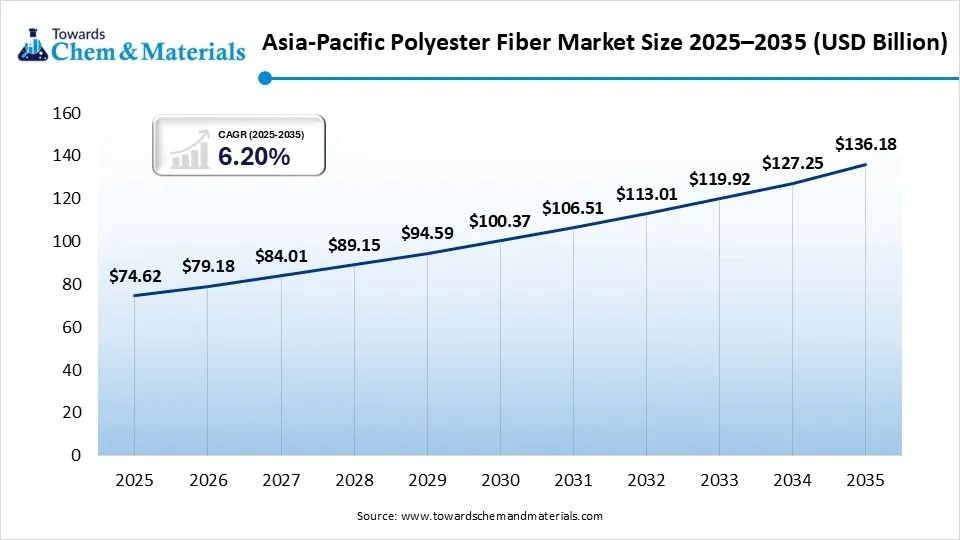
The Asia Pacific polyester fiber market size was estimated at USD 74.62 billion in 2025 and is projected to reach USD 136.18 billion by 2035, growing at a CAGR of 6.20% from 2026 to 2035. Asia Pacific dominated the market with the largest share of 58% in 2025 and is expected to grow at a CAGR of 4.6% during the forecast period, attributed to its strong textile manufacturing capabilities and growing apparel production, as well as its rising industrial applications. The area has an excellent polyester production base, a rising demand among consumers, and the presence of major manufacturers. Also helping to drive regional growth is the greater use of recycled polyester solutions and improvements in fiber technologies. The textile sector is being boosted in the region by investments in sustainable materials, new production systems, and diversified applications of polyester.
Promote Industrial Development of the Polyester Fiber Industry in China
Chinas large textile manufacturing base and solid synthetic fiber production capacity make the polyester fiber market hold a significant position. The country has large-scale manufacturing plants, long supply chains, and huge demand for clothes and industrial textiles. The increasing emphasis on sustainable production of polyester is driving manufacturers to invest in product quality and new technologies for use in a wide range of applications.
Promoting Sustainable Textile Growth in India for the Polyester Fiber Industry
India is on a mission to bolster its polyester fiber sector by fostering textile manufacturing, boosting consumer demand for apparel, and promoting sustainable fiber alternatives. The countrys manufacturing capabilities and the emphasis on circular textile initiatives are assisting in market development. The new opportunities for polyester fiber manufacturers in the domestic and international markets are due to the progress made in recycling technologies and the growing demand for performance-based textiles.
North America
The North America polyester fiber market size was estimated at USD 16.72 billion in 2025 and is projected to reach USD 31.43 billion by 2035, growing at a CAGR of 6.52% from 2026 to 2035. North America held 13% market share in 2025 and is expected to grow at the fastest CAGR of 6.7% during the forecast period, as consumer demand for sustainable fibers, innovative textile solutions, and industrial applications fuels its growth. Theres an increasing investment in recycled polyester technologies and fiber innovations in the area. Expansion in the region is being driven by the increasing use of performance textiles, the automotive industry, and environmentally friendly production methods. The region is a significant player in the market and is anticipated to see robust growth in the forecast period.
Advanced Manufacturing as a Way to Drive United States Polyester Fiber Growth
The polyester fiber market is supported by the rising demand across the apparel, automotive, and other industry segments in the United States. As the industry evolves, manufacturers are turning to sustainable polyester options, recycling solutions, and innovative fiber usage to meet industry needs. Innovation is encouraged in the nations polyester fiber industry with the growing awareness of technical textiles and performance-based materials.
Investing in Sustainable Material Adoption to Bolster Canadas Polyester Fiber Market
The growing trend toward sustainability and the demand for long-lasting textile solutions are driving sustainability efforts within polyester fiber in Canada. There is an increasing interest in recycled polyester materials and environmentally responsible manufacturing in the country. Applications in various categories, such as textiles, industrial goods, and consumer goods, continue to drive polyester fiber growth and to inspire manufacturers to find better and more sustainable fiber products.
Europe
The Europe polyester fiber market size was estimated at USD 23.16 billion in 2025 and is projected to reach USD 43.07 billion by 2035, growing at a CAGR of 6.40% from 2026 to 2035. Europe held 18% market share in 2025 and is expected to grow at a CAGR of 4.9% over the forecast period. Europe is making strides in the polyester fibre market with robust sustainability efforts, increasing adoption of circular economy practices, and a demand for eco-friendly textile solutions. Focusing on the regions recycled polyester production, advanced recycling technologies, and regulatory initiatives to address environmental concerns. The market is developing in European countries due to the increasing demand for sustainable apparel, technical textiles, and innovative fiber materials.
Supporting Sustainable Manufacturing in the Polyester Fiber Industry in Germany
The polyester fiber market in Germany is supported by its advanced manufacturing capabilities, efforts towards sustainability, and the markets demand for high-quality textile materials. The countrys focus is on sustainable solutions through innovation of fibers and recycling technologies to address sustainability challenges. The use of technical textiles and sustainable production processes is helping to boost polyester fiber applications in several industries.
Advancing the Polyester Fiber Market in France by Circular Textiles
Incorporating polyester fibre in the fashion industry is part of a French strategic direction that focuses on sustainable fashion, recycled materials, and circular textile systems. The textile sector is focused on sustainable solutions to cater to evolving consumer demands and regulations. The market is witnessing the growth of sustainable polyester applications, which is fueling innovation and development.
Latin America
The Latin America polyester fiber market size was estimated at USD 7.72 billion in 2025 and is projected to reach USD 15.13 billion by 2035, growing at a CAGR of 6.96% from 2026 to 2035. Latin America held 6% market share in 2025 and is expected to grow at a CAGR of 4.8% over the forecast period, as a result of the growing textile production, growing demand for apparel, and increasing preference for synthetic fibers. Growth of industrial use and better manufacturing capacity are benefits to the region. Opportunities for manufacturers are emerging as a result of sustainability efforts and growing interest in recycled polyester solutions. The development of the polyester fiber industry in the region still has a long way to go, with continuous progress in the processing of polyester fibers and diversification of use.
Enhancing Brazils Polyester Fiber Market by Textile Industry Growth
The polyester fiber market in Brazil is driven by the growing apparel production, textile consumption, and demand for durable synthetic materials. Polyester fibers are being used in the countrys textile industry for multiple applications thanks to their performance benefits. Theres also a growing interest in sustainability, which is driving the exploration of recycled polyester materials by manufacturers.
Advancing the Use of Polyester Fiber in Chile Through Sustainable Development
The rise in polyester fiber market demand in Chile is driven by the rise in demand for textile materials and sustainability in the production process. The market for durable man-made fibers for consumer and industrial use is growing in the country. The use of eco-friendly materials is opening the door for polyester fiber makers to offer better and more eco-friendly options.
Middle East & Africa
The Middle East & Africa polyester fiber market size was estimated at USD 6.43 billion in 2025 and is projected to reach USD 12.80 billion by 2035, growing at a CAGR of 7.13% from 2026 to 2035. The Middle East & Africa held 5% market share in 2025 and is expected to grow at a CAGR of 5.2% over the forecast period. The growth of industrial activities, the growth of textile applications, and the rise in demand for synthetic fibers are driving the Middle East & Africa polyester fiber market. The region and the area stand to benefit from the development of manufacturing capacities and the growth of end-use industries. New opportunities are opening up for market participants through the initiatives taken for sustainability and the use of advanced solutions for polyester. There is a growing emphasis on the multiple uses, which is helping to grow the region.
Supporting Saudi Arabia’s Polyester Fiber Industry with Industrial Growth
The growth of industrial activities and the rising demand for synthetic materials are among the factors driving the polyester fiber market in Saudi Arabia. The countrys focus on manufacturing development and diversification is providing opportunities for polyester applications. The market is expanding as interest in new materials and sustainable manufacturing techniques grows.
Future Growth of Polyester Fiber Market in Textile Applications in South Africa
Demand for polyester fibers in South Africa comes from textile, consumer, and industrial applications. Polyester materials are being used in the country because of their durability, versatility, and economical nature. As awareness of sustainability and interest in recycled polyester solutions grows, manufacturers are driven to make better fiber products.
Recent Developments
- In October 2025, H&M launched its first clothes with Circs recycled fibers, which are made from recycled fibers from textile waste. The development promotes sustainable fashion practices by facilitating polyester and cellulose fiber separation and reusability as part of the circular solutions in the textile industry.(Source: www.modaes.com)
- In November 2025, Syre is launching a multi-year partnership with NIKE, Inc. to create circular polyester solutions with a gigascale textile recycling plant in Vietnam. The partnership helps to make apparel production more sustainable by incorporating recycled polyester, a textile-to-textile product from Nikes performance lines. (Source: vir.com)
Competitive Analysis
The competitive market of polyester fiber is geared towards production expansion, sustainability efforts, advanced fiber technology, and recycling. Businesses are working on circular polyester solutions, specialty fibers, and better manufacturing processes to build their market. Leading players are improving their product offerings by innovating their products for apparel, automotive, industrial textiles, and consumer applications. Strategic partnerships and collaborations are aiding the progress of sustainable materials and innovative textile solutions.
- For instance, in April 2026, Indo Intertex 2026 was held in Jakarta in April 2026, where Indorama Ventures highlighted its multi-fibre and multi-yarn portfolio, focusing on its capacity to provide solutions to customers in apparel, home textiles, and hygiene, while delivering solutions that were circular, traceable, and scalable in Southeast Asia.(Source: www.textileexcellence.com)
- In October 2025, Toray Industries rolled out the Toray Premium GOUSEN select series fibers, which comprise four high-value-added brands created with exclusive polymer and composite spinning technologies. The company is still providing its domestic and international customers while expanding its market presence by using advanced synthetic fiber capabilities.(Source: www.toray.com)
Top Players in the Market & Their Offerings
| Company | Company Type/Position | Major Headquarters | Geographic Presence | Polyester Fiber Offerings | Key Strength |
| Indorama Ventures | Global Chemical Company, Industry Leader | Bangkok, Thailand | Global | Polyester Staple Fiber (PSF) | Unmatched global scale and supply security |
| Reliance Industries | Multinational Conglomerate, Major Producer | Mumbai, India | Global Export Reach | Recron®, Recron® GreenGold, RElan® | Upstream crude-to-textile integration |
| Toray Industries | Multinational Materials Company | Tokyo, Japan | Globally | High-performance polyester fibers | Advanced melt-spinning technology |
Other Key Players
- Indorama Ventures
- Reliance Industries
- Sinopec (Yizheng Chemical Fiber)
- Toray Industries
- Zhejiang Hengyi Group
- Tongkun Holding Group
- Alpek
- Xin Feng Ming Group
- Shenghong
- Huvis Corp
- Nan Ya Plastics
- Barnet
- Bombay Dyeing
- Indo Rama Synthetics
- Unifi
Segment Covered in the Report
By Type
- Polyester Staple Fiber (PSF)
- Solid PSF
- Hollow PSF
- Conjugated PSF
- Polyester Filament Yarn (PFY)
- Partially Oriented Yarn (POY)
- Draw Textured Yarn (DTY)
- Fully Drawn Yarn (FDY)
- Industrial Filament Yarn (IFY)
By Source
- Virgin
- Petrochemical-based Virgin Polyester
- Recycled And Blended
- Recycled Polyester (rPET)
- Virgin-Recycled Blended Polyester
By Grade
- Polyethylene Terephthalate (PET) Polyester
- Standard PET
- High Tenacity PET
- PCDT Polyester
- Textile Grade
- Industrial Grade
By Form
- Solid
- Round
- Trilobal
- Flat
- Hollow
- Hollow Conjugated
- Hollow Non-Conjugated
By Denier
- Fine
- Micro Denier
- Ultra-Fine Denier
- Medium
- Standard Apparel Grade
- Industrial Grade
- Coarse
- Heavy Industrial Fiber
- Carpet Grade Fiber
By Application
- Apparel
- Sportswear
- Casual Wear
- Formal Wear
- Home Textiles
- Curtains
- Upholstery
- Bedding
- Carpets And Rugs
- Residential
- Commercial
- Non-woven Fabrics
- Hygiene Products
- Geotextiles
- Filtration
- Fiberfill
- Pillows
- Quilts
- Cushions
- Others
- Automotive Textiles
- Industrial Fabrics
- Protective Clothing
By Region
- North America
- U.S.
- Canada
- Mexico
- Europe
- Germany
- UK
- France
- Italy
- Spain
- Asia Pacific
- China
- India
- Japan
- South Korea
- Latin America
- Brazil
- Argentina
- Middle East & Africa
- Saudi Arabia
- South Africa
A Seven-Phase Framework
Our methodology is designed to be universally applicable across commodity chemicals, specialty chemicals, petrochemicals, construction chemicals, coatings, electronic chemicals, industrial gases, agrochemicals, water treatment chemicals, and performance materials. Each phase builds upon the last, creating a layered validation structure that minimizes estimation error and maximizes analytical confidence.
The framework ensures comprehensive market coverage, robust cross-validation, and reliable long-term forecasting — producing market estimates that withstand scrutiny from investors, regulators, and corporate strategy teams.

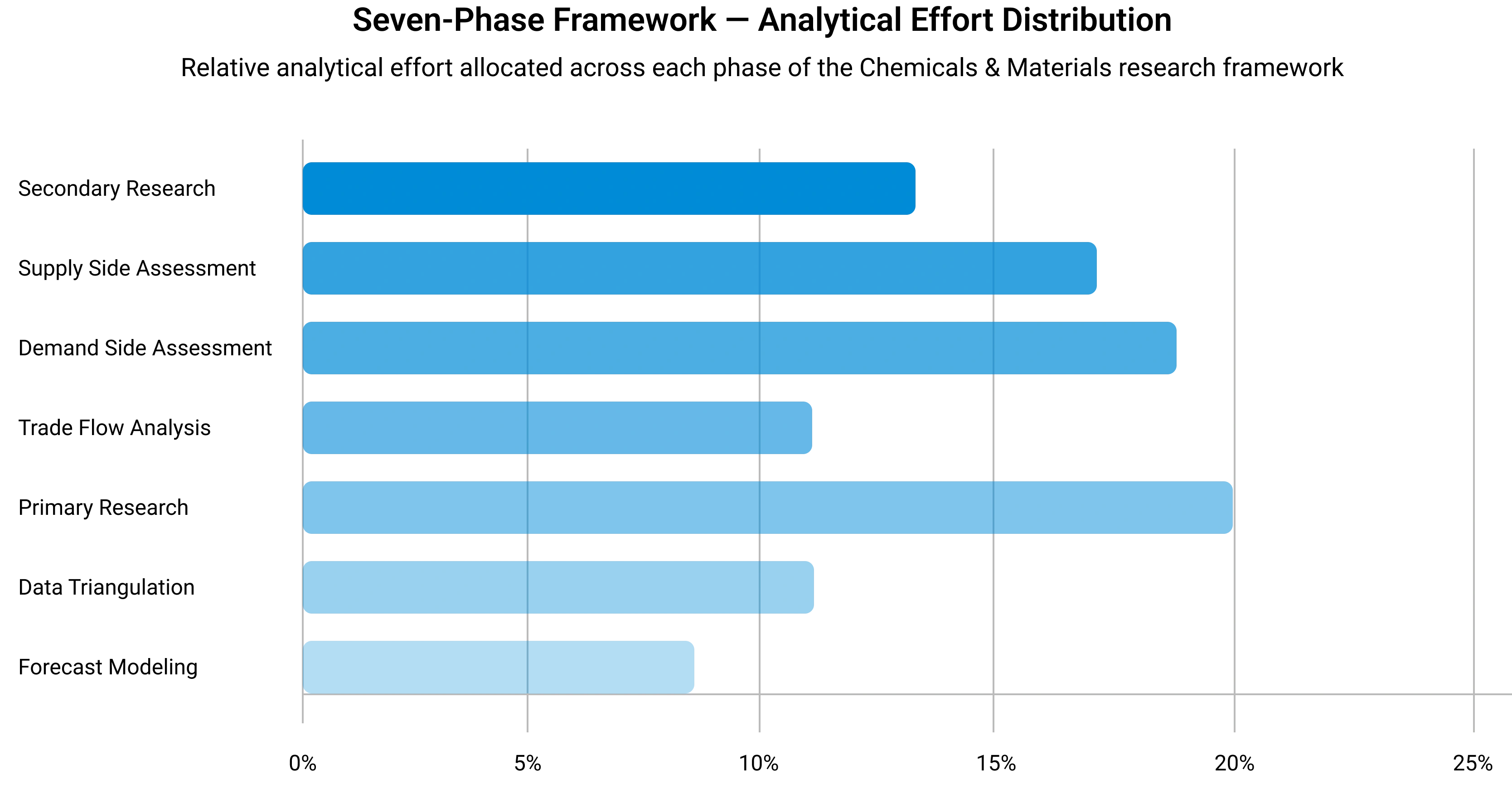
Seven-Phase Framework — Analytical Effort Distribution
Relative analytical effort allocated across each phase of the Chemicals & Materials research framework
Phase 1 - Secondary Research: Establishing the Foundation
Secondary research collects and evaluates publicly available information from authoritative sources, establishing the foundational understanding of market structure, value chain dynamics, competitive landscape, and end-use demand patterns. Every source is evaluated for credibility, recency, geographic relevance, and methodological soundness before inclusion.
Industry Associations
Sources include ACC, CEFIC, ICCA, JCIA, CPCIF, and SOCMA providing production volumes, consumption trends, capacity developments, and sustainability initiatives.
Company Disclosures
Annual reports, investor presentations, earnings transcripts, and regulatory filings reveal product portfolios, manufacturing footprints, capacity expansions, and revenue segmentation.
Government Databases
National statistical offices, customs authorities, environmental agencies, and industrial production databases provide verified statistics on output, trade flows, and regulatory compliance.
Trade Databases
UN Comtrade, ITC, Eurostat, and national customs authorities enable assessment of global product movement, import dependency, and export competitiveness across regions.
Our Secondary Research Sources
- Ministry of Chemicals and Fertilizers
- European Chemicals Agency
- United States Department of Energy
- Ministry of Industry and Information Technology
- Ministry of Economy Trade and Industry
- Ministry of Trade Industry and Energy
- National Institute of Standards and Technology
- Council of Scientific and Industrial Research
- Fraunhofer Society
- National Institute for Materials Science
Phase 2 — Supply-Side Assessment: Mapping Production Capabilities
Production Capacity Analysis
All major manufacturers are assessed for existing installed capacity, planned additions, expansions, new plant announcements, and technology adoption — mapped at global, regional, and country levels.
Capacity Utilization Adjustment
Installed capacity is adjusted using utilization rates based on demand conditions, feedstock availability, plant operating rates, maintenance schedules, and regulatory restrictions.
Manufacturer Revenue Analysis
Product-specific revenues, segment-level performance, regional distribution, average selling prices, and margin trends are evaluated to establish market value estimates.
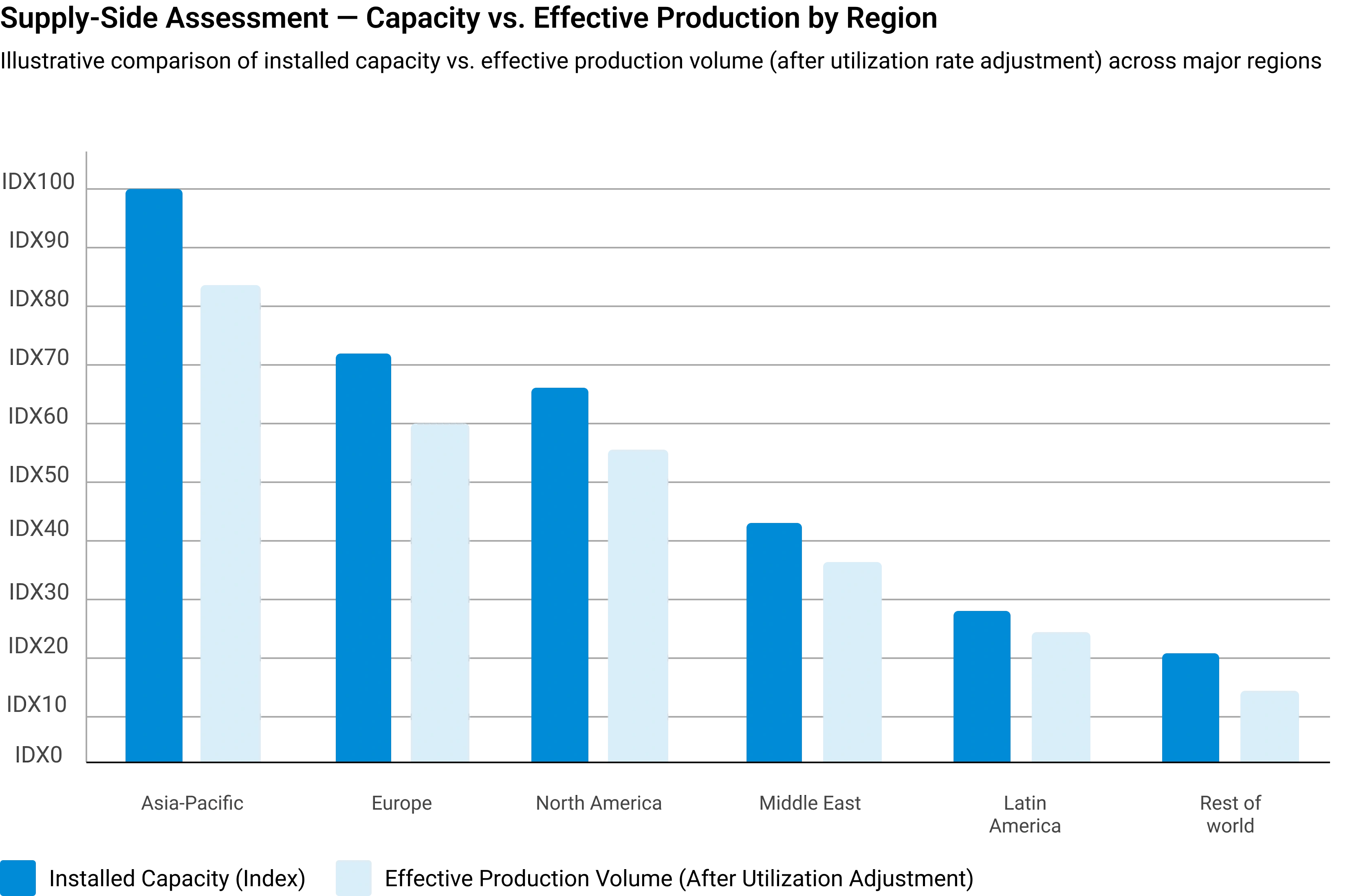
Supply-Side Assessment — Capacity vs. Effective Production by Region
Illustrative comparison of installed capacity vs. effective production volume (after utilization rate adjustment) across major regions
Phase 3 — Demand-Side Assessment: Quantifying Chemical Consumption
Demand-side analysis quantifies chemical consumption across industries, applications, and geographies — identifying where and how chemicals are consumed throughout the value chain with precision.
End-Use Industry Analysis
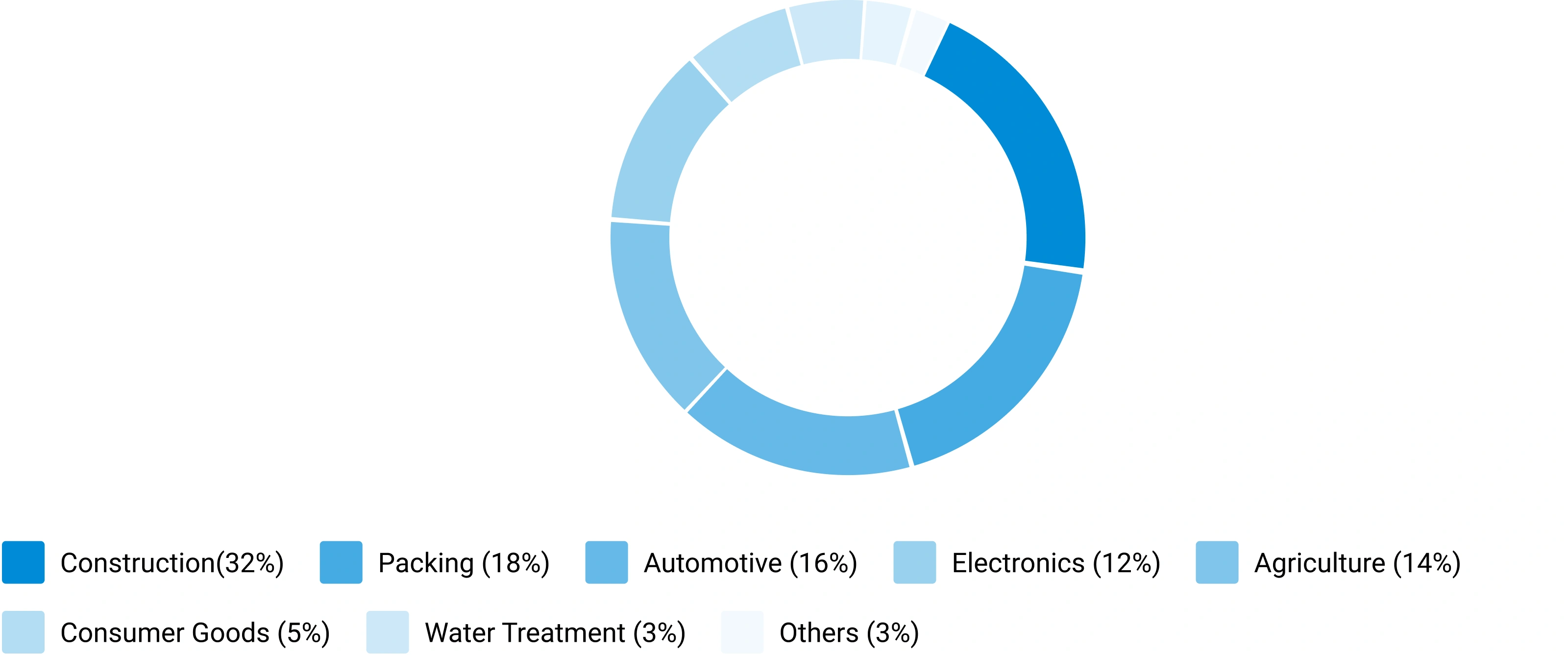
Chemical demand is evaluated across automotive, construction, packaging, electronics, agriculture, healthcare, consumer goods, industrial manufacturing, energy and utilities, and water treatment. Industry output, production trends, and consumption intensity are analyzed to determine demand patterns.
Consumption Modeling
Demand is estimated using measurable indicators: kilograms per vehicle, kilograms per square meter of construction, dosage per cubic meter of water treated, kilograms per hectare of agricultural land, and kilograms per ton of manufactured products. Consumption factors are validated through industry publications and primary interviews.
Application Analysis
The market is segmented by application area to understand product performance requirements, formulation trends, technology adoption, customer preferences, and regulatory requirements improving demand accuracy and segmentation granularity.
Demand-Side Assessment — End-Use Industry Demand Distribution
Illustrative distribution of chemical & materials demand across key end-use industries
Phase 4 - Trade Flow Analysis: Balancing Regional Supply and Demand
Trade flow analysis reconciles regional supply and demand estimates through import and export data, identifying net supply positions, regional dependencies, and market imbalances. It serves as an independent validation layer that tests the consistency of supply-side and demand-side estimates.
Import Analysis
Import data is evaluated to determine volumes, source countries, product dependency, regional supply gaps, and pricing trends — identifying markets that rely heavily on external supply and where domestic production is insufficient to meet demand.
Export Analysis
Export assessments reveal production surplus, export competitiveness, regional manufacturing strength, and global market participation. Export patterns also help validate domestic production estimates and identify net exporting regions.
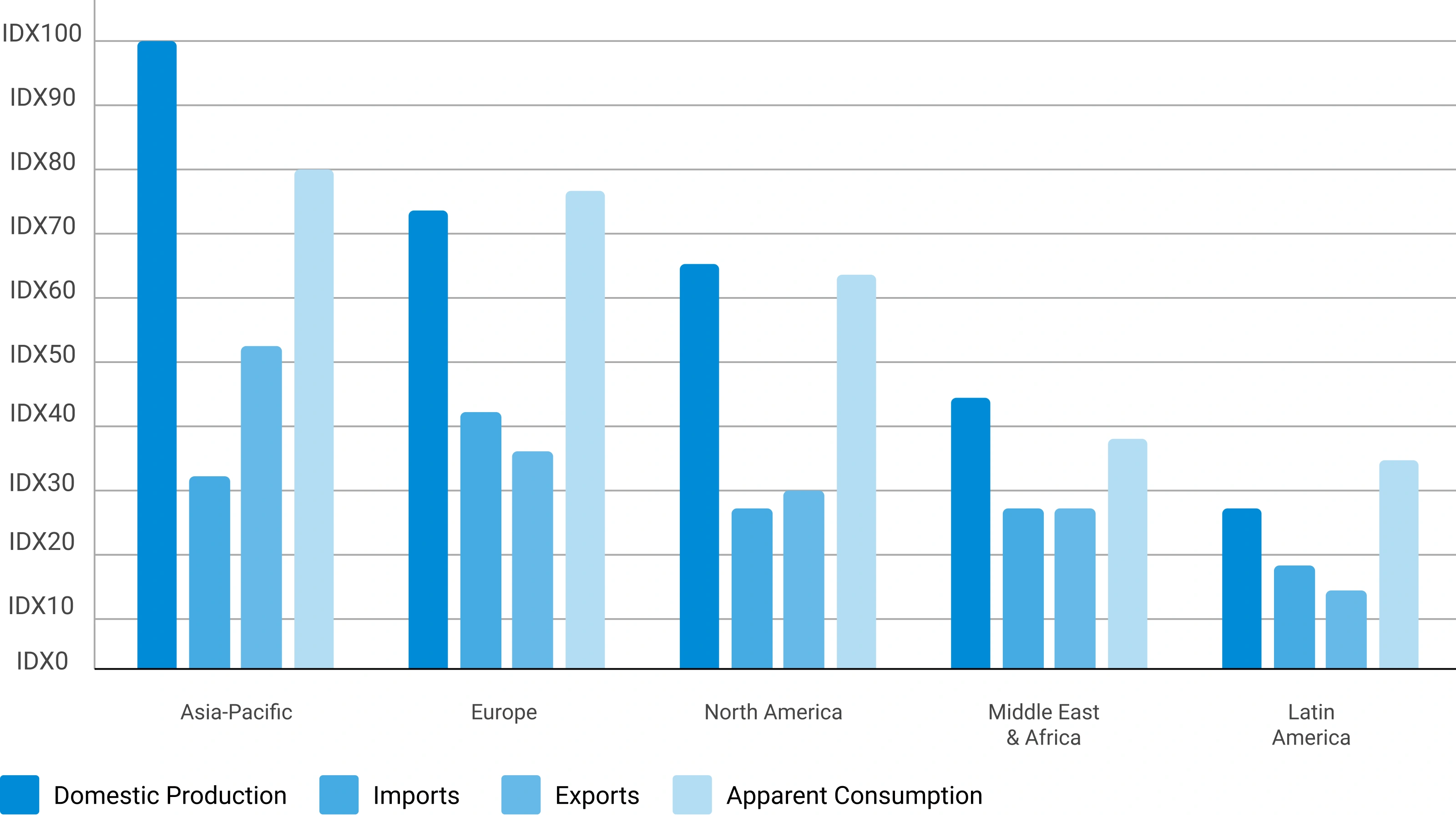
Apparent Consumption Model
Regional consumption is assessed using the standard apparent consumption formula:
Results identify net importing regions, net exporting regions, regional deficits, and surpluses — serving as an independent validation of supply and demand estimates.
Trade Flow Analysis — Net Supply Position by Region
Illustrative apparent consumption vs. domestic production across major regions — positive gap indicates net import dependency
Phase 5 — Primary Research: The Critical Validation Layer
Primary research tests and refines findings from secondary research through direct engagement with industry participants across the supply chain, demand side, and expert community. It captures intelligence that no database or published report can provide — the real-world experience of manufacturers, buyers, and specialists operating in the market.

Supply-Side Interviews
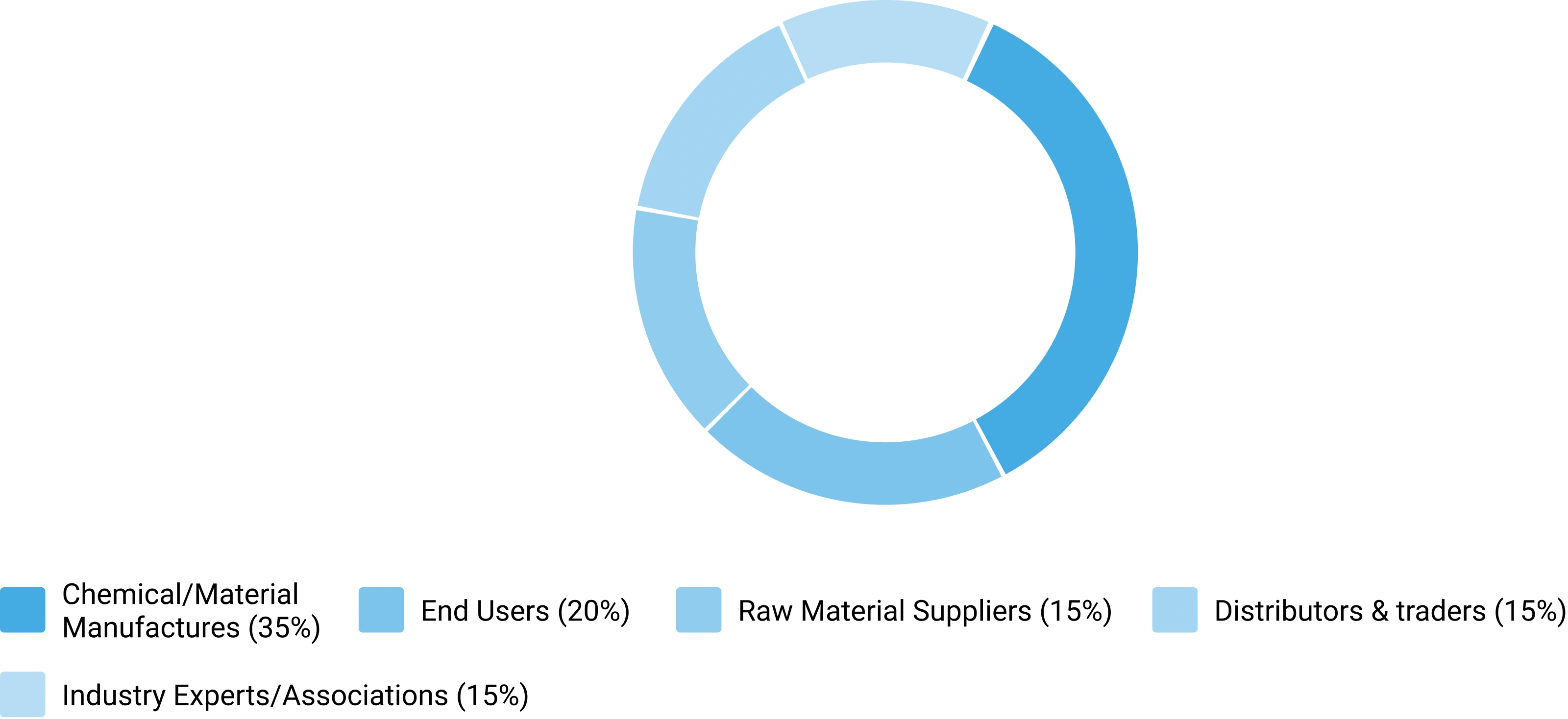
Conversations with chemical manufacturers, raw material suppliers, contract manufacturers, technology providers, and plant operators cover production trends, capacity utilization, pricing developments, technology shifts, and competitive dynamics.

Demand-Side Interviews
Engagement with OEMs, industrial consumers, procurement managers, distributors, formulators, and end-use manufacturers focuses on consumption trends, purchasing behavior, product substitution, demand outlook, and emerging applications.

Industry Expert Consultations
Additional interviews with industry consultants, independent experts, regulatory specialists, technical professionals, and research institutions provide deeper market context and validate key analytical assumptions.
Focus Areas of Primary Research:
Market Size & Forecast Validation
Revenue estimates, volume consumption, growth rates, forecast assumptions, regional demand.Supply Chain & Value Chain Assessment
Raw material sourcing, supply chain challenges, distribution networks, procurement practices.Production & Capacity Analysis
Manufacturing capacity, utilization rates, expansion projects, plant investments.Pricing & Cost Structure Analysis
Product pricing trends, feedstock costs, energy costs, margin pressures, pricing outlook.Competitive Landscape Assessment
Volume and value estimates confirmed to be fully consistent with one another before publicationInterview Volume by Market Scope
| Study Scope | Number of Interviews |
|---|---|
| Niche Market | 20 – 30 |
| Mid-Sized Market | 30 – 50 |
| Global Market | 50 – 80 |
| Highly Fragmented Market | 80 – 120 |
Interview Details:
Category : Manufacturers, Suppliers, Distributors, End Users, Experts/Associations
Average Duration : 30–60 Minutes
Interview Mode : Video calls, telephonic interviews, expert consultations
Interview Format : Structured / Semi-Structured questionnaire
Focus Areas of Primary Research:
Market Size & Forecast Validation :
Revenue estimates, volume consumption, growth rates, forecast assumptions, regional demand.
Supply Chain & Value Chain Assessment :
Raw material sourcing, supply chain challenges, distribution networks, procurement practices.
Production & Capacity Analysis :
Manufacturing capacity, utilization rates, expansion projects, plant investments.
Pricing & Cost Structure Analysis :
Product pricing trends, feedstock costs, energy costs, margin pressures, pricing outlook.
Competitive Landscape Assessment :
Market share, competitor positioning, strategic initiatives, partnerships, acquisitions.
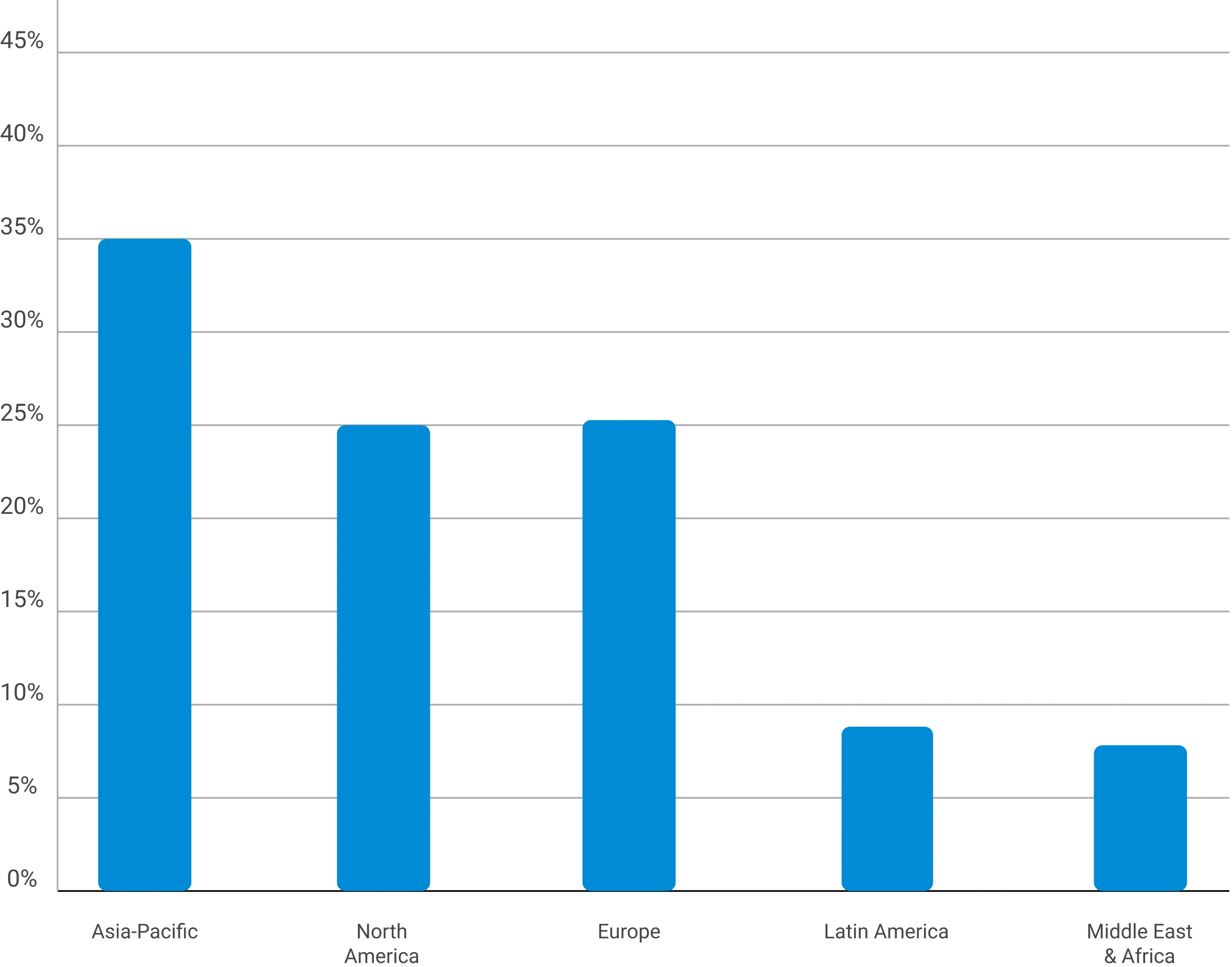
Primary Research — Stakeholder Coverage by Category
Distribution of interview respondents across stakeholder categories (% share from PPT data)
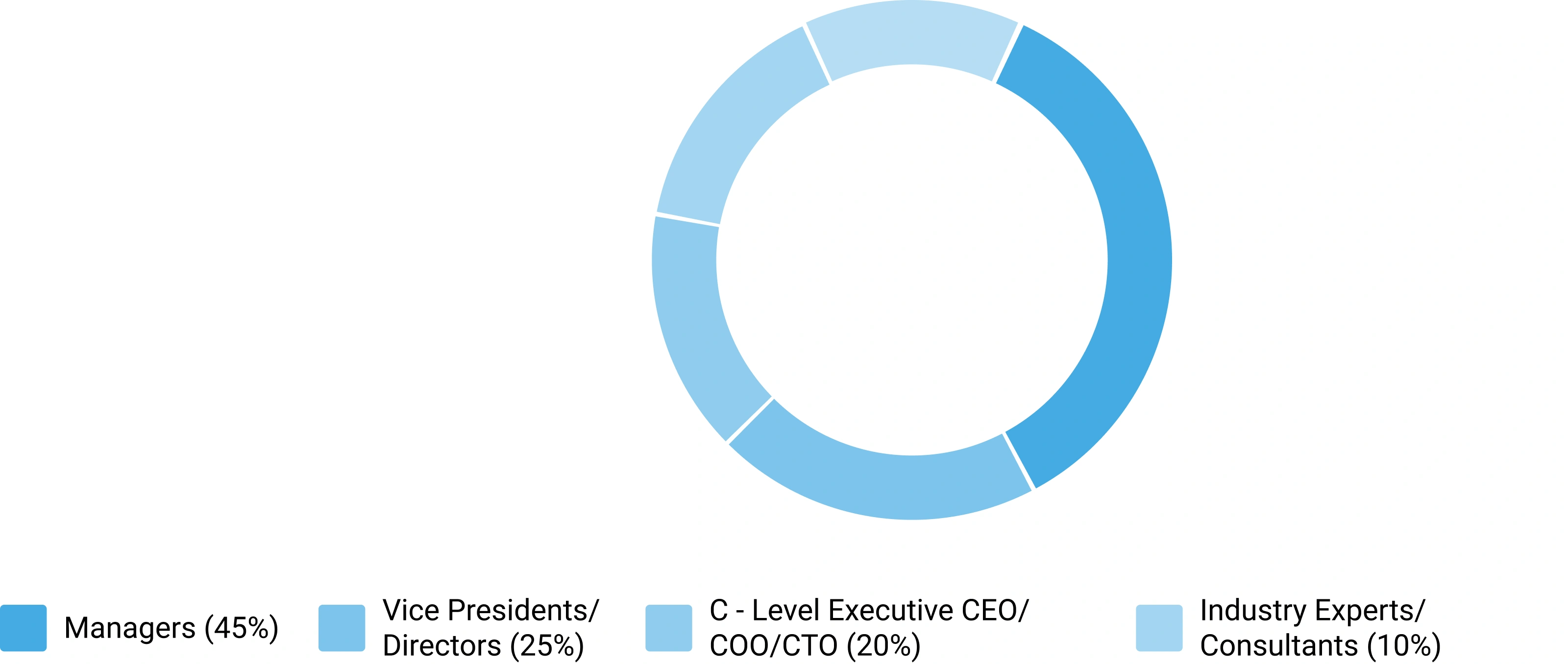
Primary Research — Respondent Designation Profile
Seniority breakdown of interview respondents (% share from PPT data)
Primary Research — Geographic Coverage of Interviews
Regional distribution of primary research engagement (% share from PPT data)
Phase 6 — Data Triangulation and Market Validation
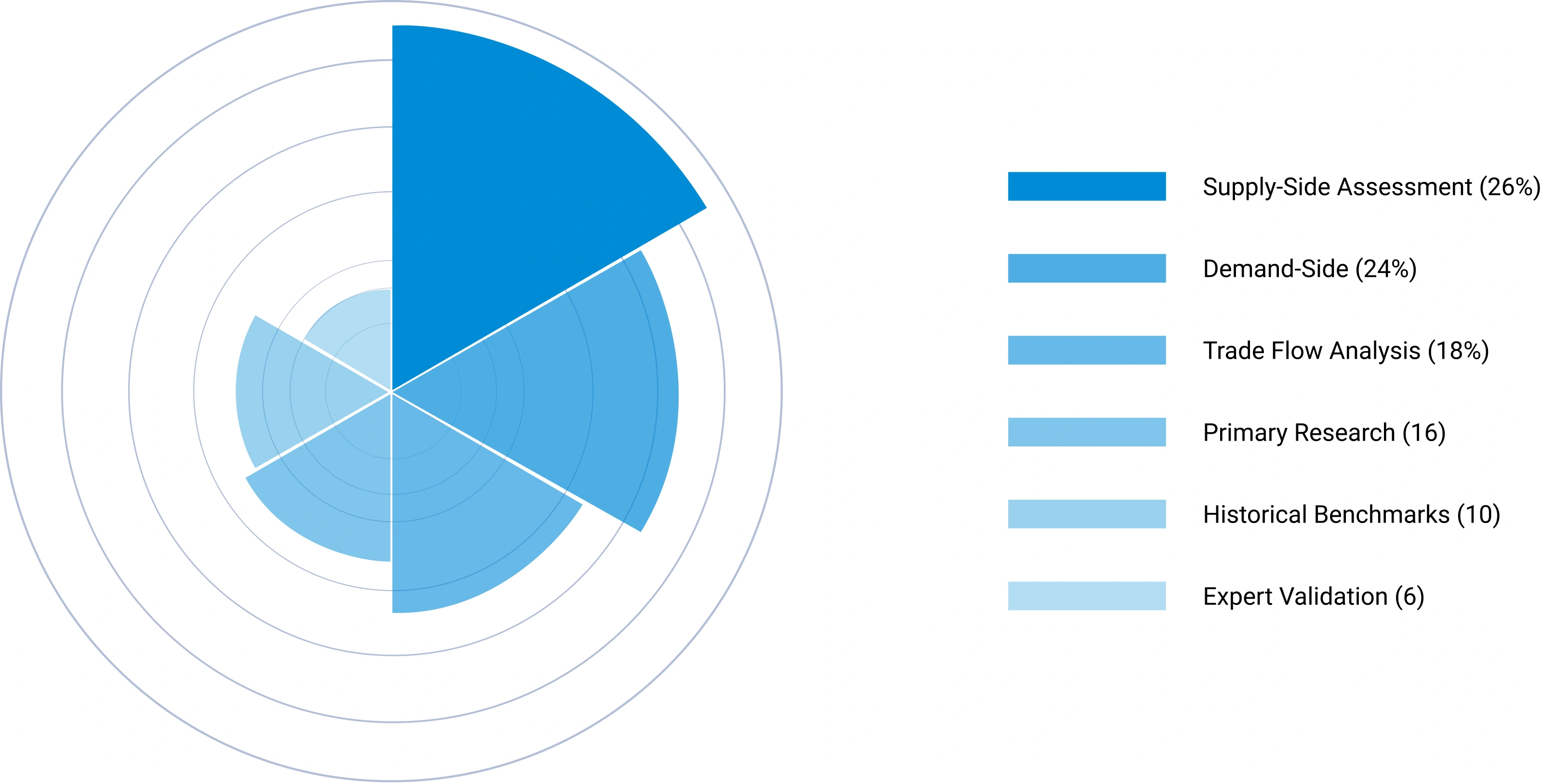
No single methodology is relied upon in isolation. Multiple independent estimation approaches are combined and reconciled to ensure consistency, accuracy, and analytical defensibility. Any material deviations between approaches are investigated and adjusted through additional validation cycles.
The final market size is derived through weighted triangulation of all validated methodologies. Any material deviations between approaches are investigated and adjusted through additional validation cycles. The outcome represents the most realistic assessment of the market based on available evidence and expert confirmation ensuring that volume and value estimates are fully consistent with one another.
Triangulation Framework — Input Contribution Weight
Relative weight each sizing input contributes to the final reconciled market estimate
Phase 7 — Forecast Modeling: Projecting Future Market Evolution
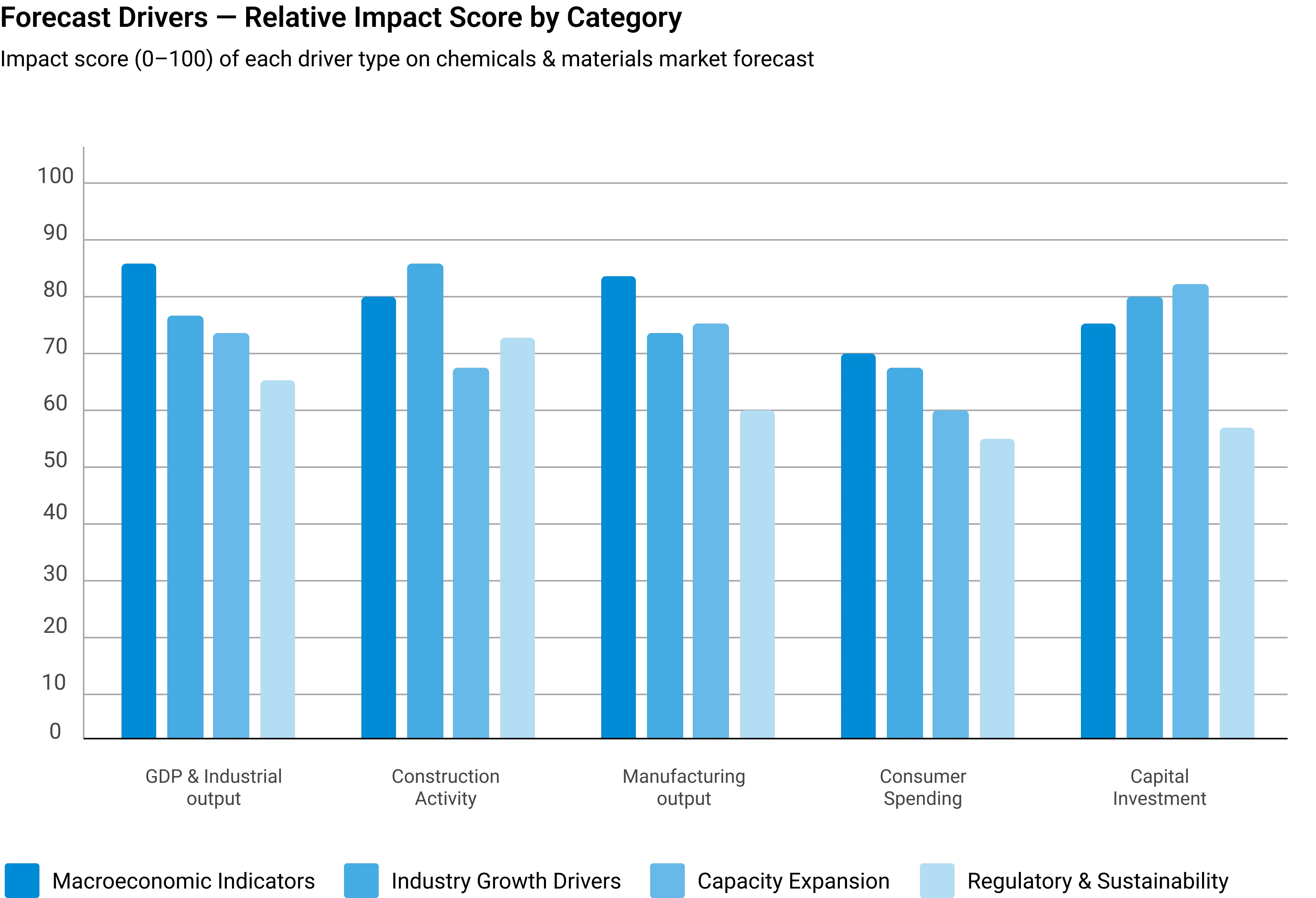
Forecasting evaluates the future trajectory of the market using a combination of quantitative indicators and qualitative assessments across economic, industry, and regulatory dimensions. Rather than simple extrapolation, each driver is independently modeled and integrated into a composite forecast.
Macroeconomic Indicators
GDP growth, industrial production, manufacturing output, construction activity, consumer spending, and capital investment form the quantitative foundation of long-term demand projections. These are applied at country, regional, and global levels.
Industry Growth Drivers
Urbanization, infrastructure development, industrialization, technological innovation, sustainability initiatives, and evolving product performance requirements are assessed at regional and industry levels — capturing both structural and cyclical demand drivers.
Capacity Expansion Analysis
Announced plant expansions, new manufacturing facilities, technology upgrades, and strategic investments are evaluated to determine future supply-demand dynamics and potential market tightness or oversupply situations.
Regulatory & Sustainability
Environmental regulations, chemical safety standards, emission reduction targets, circular economy initiatives, and sustainability requirements are incorporated as they often influence product adoption rates and market growth trajectories.
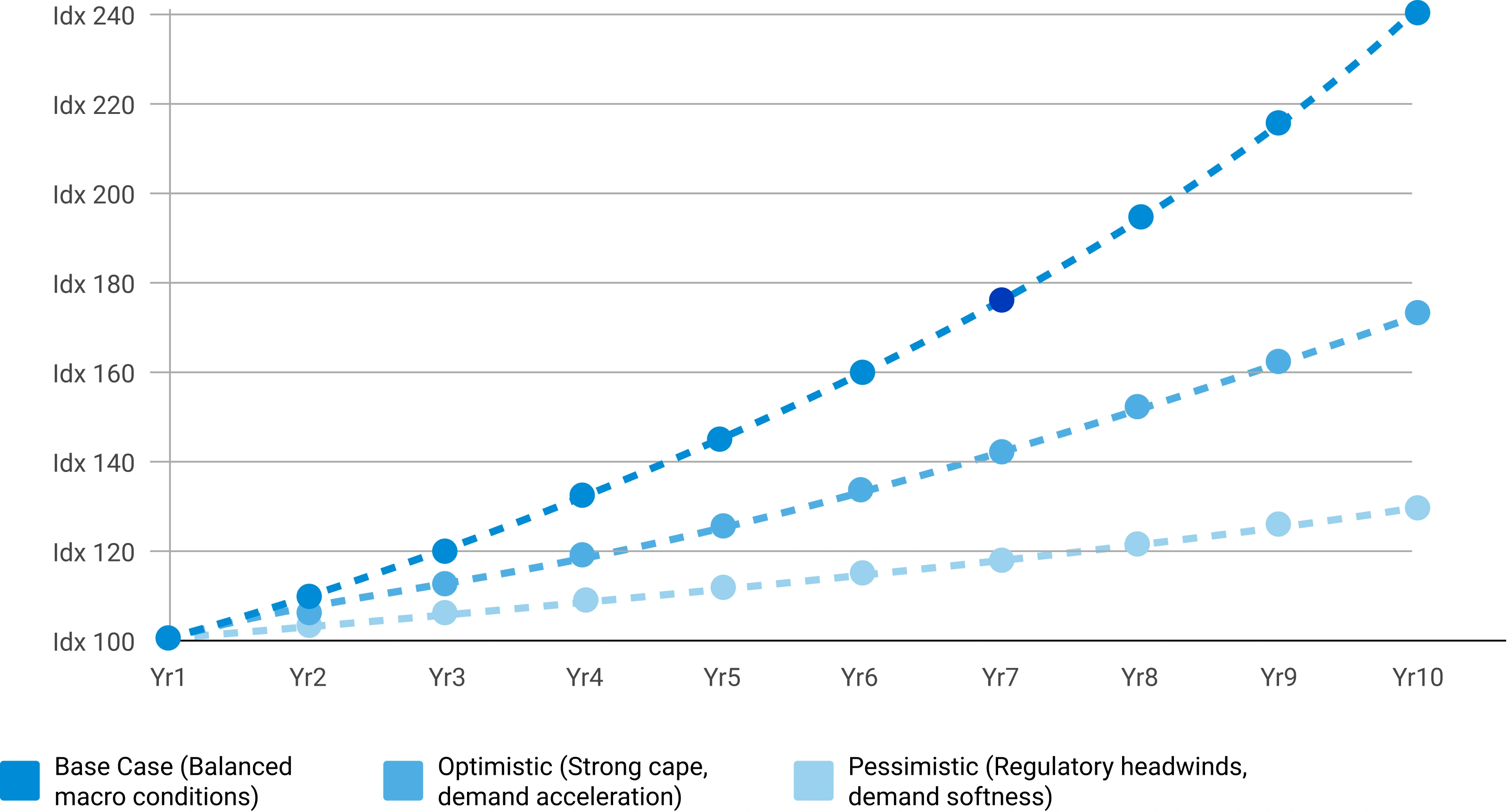
Scenario Forecast Range — Indexed Market Growth (Year 1–10)
Illustrative indexed growth trajectories across Base, Optimistic, and Pessimistic scenarios over a 10-year forecast horizon
Forecast Drivers — Relative Impact Score by Category
Impact score (0–100) of each driver type on chemicals & materials market forecast



Comments
Share your thoughts, ask a question, or provide feedback about this report.