
What is the Polymer Denture Material Market Size and Share?
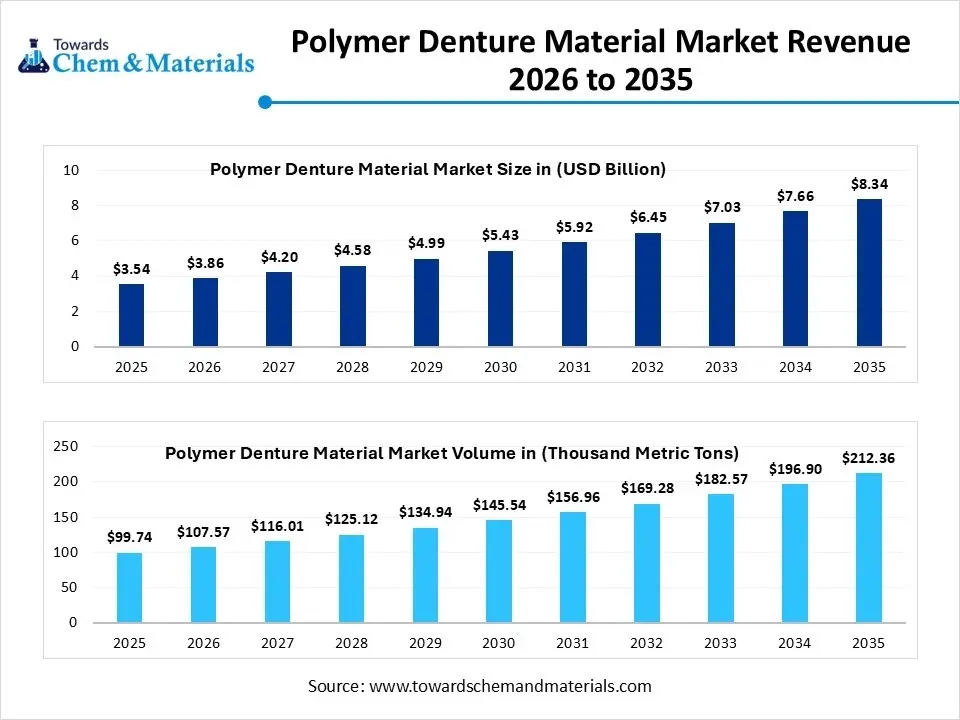
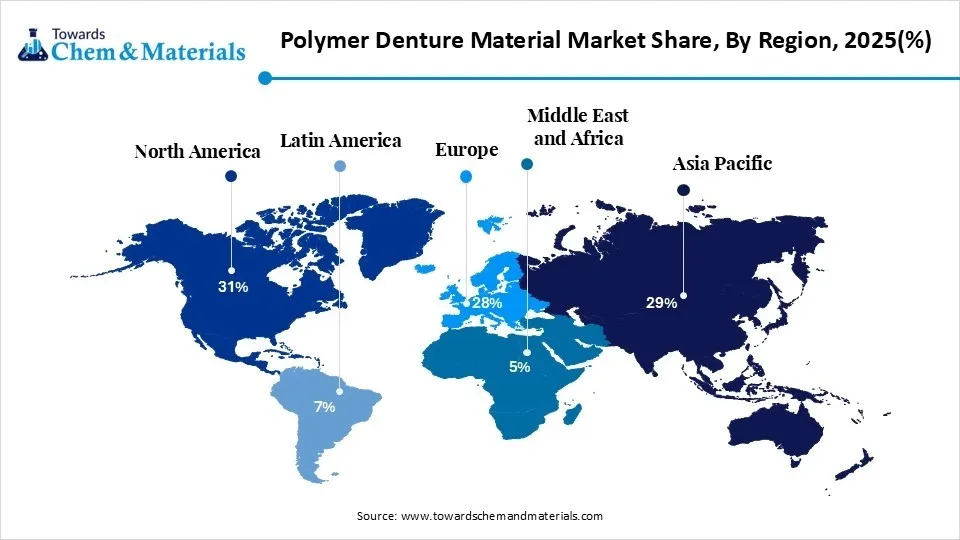
The global polymer denture material market size was valued at USD 3.54 billion in 2025, is estimated to reach USD 3.86 billion in 2026, and is projected to reach USD 8.34 billion by 2035, exhibiting a compound annual growth rate (CAGR) of 8.95% over the forecast period from 2026 to 2035.North America dominated the polymer denture material market with the largest revenue share of 31% in 2025 and is expected to grow at the fastest CAGR of 9.11% during the forecast period. The growth of the market is driven by the rapidly ageing global population, advancements in digital dentistry like 3D printing and CAD/CAM, and the rising demand for aesthetic, lightweight, and cost-effective tooth replacements. Material brands like Ivoclar Vivadent frequently validate their special resins on 3D printers from tech leaders like Carbon or Stratasys, according to the latest report.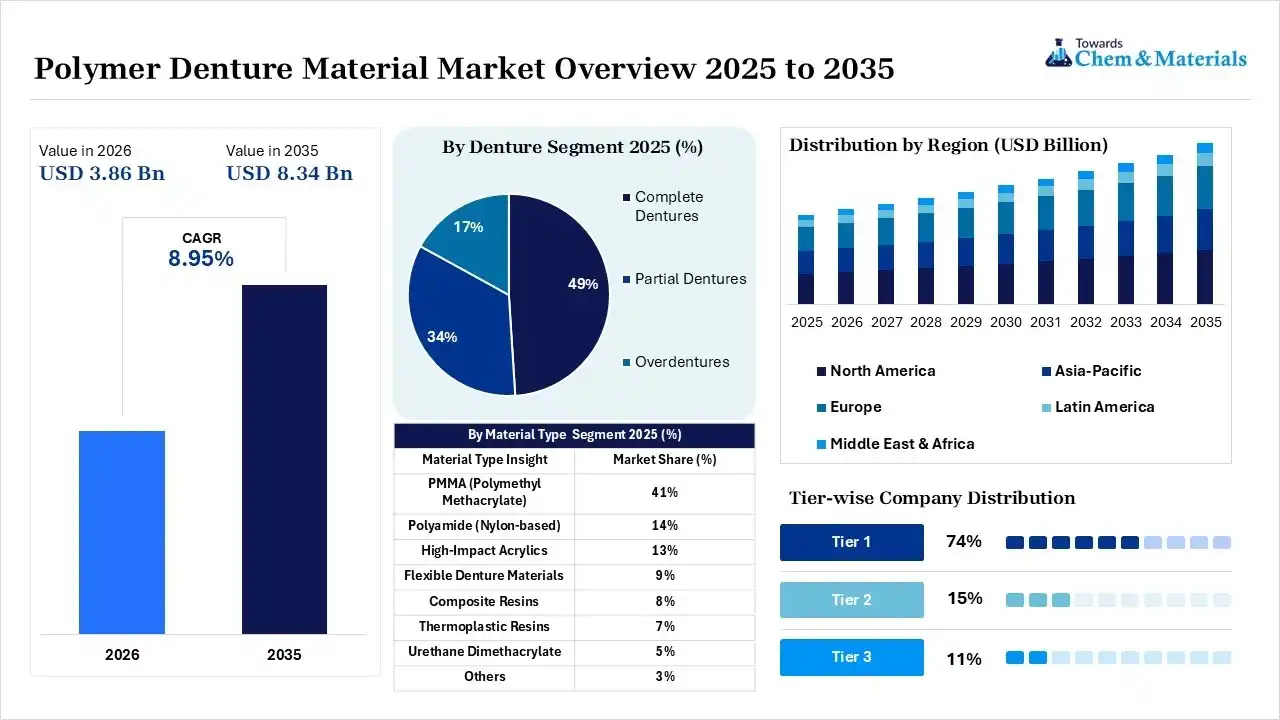
Key Takeaways
- By region, North America dominated the market with a share of 31% in 2025. Advanced dental infrastructure supports premium materials.
- By region, Asia Pacific held 29% market share in 2025 and is expected to experience the fastest growth with a CAGR of 11.2% in the forecast period. Rising dental awareness expands treatments.
- By material type, the PMMA (Polymethyl Methacrylate) segment dominated the market with a 41% share in 2025. Widely accepted by laboratories worldwide.
- By material type, the Thermoplastic Resins segment held 7% market share in 2025 and is expected to have the fastest growth with a CAGR of 11.8% in the forecast period. High-performance polymers gain popularity.
- By denture type, the complete dentures segment dominated the market with a 49% share in 2025. An aging population increases edentulous cases,
- By denture type, the overdentures segment held 17% market share in 2025 and is expected to have the fastest growth with a CAGR of 11.6% in the forecast period. Implant dentistry expands globally.
- By processing technology, the Heat-Cure segment dominated the market with a 46% share in 2025. Established laboratory workflows dominate production.
- By processing technology, the 3D Printing segment held 15% market share in 2025 and is expected to have the fastest growth with a CAGR of 14.2% in the forecast period. Rapid digital adoption transforms production.
- By end user, the dental laboratories segment dominated the market with a 54% share in 2025. Centralized fabrication supports economies of scale.
- By end user, the Academic & Research Institutes segment held 7% market share in 2025 and is expected to have the fastest growth with a CAGR of 10.8% in the forecast period. Research in printable polymers accelerates innovation.
- By application, the Removable Prosthetics segment dominated the market with a 52% share in 2025. Conventional dentures remain highly utilized.
- By application, the Implant-Supported Dentures segment held 15% market share in 2025 and is expected to have the fastest growth with a CAGR of 11.8% in the forecast period. Implant success rates improve consistently.
- By distribution channel, the direct sales segment dominated the market with a 45% share in 2025. Manufacturers strengthen direct laboratory relationships.
- By distribution channel, the online channels segment held 16% market share in 2025 and is expected to have the fastest growth with a CAGR of 12.9% in the forecast period. Digital procurement expands globally.
According to Towards Chemicals and Materials Analytics and Consulting, the global polymer denture material volume was valued at 99.74 thousand metric tons in 2025 and is expected to surpass around 212.36 thousand metric tons by 2035, accelerating a compound annual growth rate (CAGR) of 7.85% over the forecast period from 2026 to 2035.
The Polymer Denture Material Market: Evolution of Dental Industry
The polymer denture material market is the dental industry segment that creates synthetic plastics used to make full or partial dentures. It is highly significant because it restores chewing ability, improves speech, and provides natural-looking smiles for millions of patients, while supporting a rapidly growing healthcare sector. The market revolves around polymers (large molecules made of repeating structural units), like Polymethyl Methacrylate (PMMA) and flexible nylons. These materials are used to make the "gum-colored" base of a denture. They are lightweight, safe for the body (biocompatible), and easy to mold.
A growing global population of older adults requires restorative dental care. As people live longer, the need for comfortable, reliable full and partial dentures continually grows. Modern polymers are constantly improving. New flexible materials and highly customizable resins allow for a natural look that matches a patients natural gums and facial structure. The market is shifting from manual molding to digital manufacturing. Dentists and laboratories now use CAD/CAM (Computer-Aided Design and Computer-Aided Manufacturing) and 3D printing to create exact, comfortable dentures much faster.
- For instance, Carbon, a leader in 3D printing technology, introduced FP3D Resin, an advanced dual-cure chemistry for 3D-printed flexible partial dentures. Carbon aims to enhance the performance and reliability of dental appliances, offering dental professionals and patients the benefits of advanced material science.(Source: www.voxelmatters.com)
Advancements in Dental Technologies are Expanding Market Growth
The polymer denture material market refers to the industry involved in the production and sale of synthetic polymer-based materials used to fabricate full and partial dentures. These polymers offer high biocompatibility, aesthetic properties, and mechanical strength. Key types include polymethyl methacrylate (PMMA), polyamide (nylon), and high-impact acrylics, which are widely used by dental labs, clinics, and hospitals for both removable and fixed denture prosthetics. Patients are rapidly seeking dentures that provide superior comfort and natural-looking aesthetics, which is propelling the development and use of innovative polymer blends with enhanced stain resistance and thermal stability.
What Are the Key Trends Influencing the Polymer Denture Material Market?
The rising awareness and adoption of dental care services are the latest trends in the market, impacting positive market growth. With a surge in disposable incomes and enhanced healthcare infrastructure, particularly in developing economies, more individuals to adopting dental treatments with preventive care.
Dental acrylics are playing a key role in the market, providing a reliable and versatile option for both partial and complete dentures. These materials are preferred for their ease of manipulation and their capability to mimic the natural look of teeth and gums, leading to market expansion shortly.
Ongoing shift towards high-performance thermoplastic materials is another major trend boosting market growth. This factor is shifting the use of higher-performance thermoplastic materials like nylon, replacing traditional acrylic resin and polyamide to offer better strength, flexibility, and abrasion resistance.
Market Report Scope
| Report Attributes | Details |
| Market Size in 2026 | USD 3.86 Billion/ 107.57 Thousand Metric Tons |
| Market Size by 2035 | USD 8.34 Billion/ 212.36 Thousand Metric Tons |
| Growth rate | CAGR 8.95% |
| Base Year of Estimation | 2025 |
| Forecast Period | 2025 - 2035 |
| Dominant Region | North America |
| Segment Covered | By Material Type, By Denture Type, By Processing Technology, By End User, By Application, By Distribution Channel, By Region |
| Key Companies Profiled | Dentsply Sirona, Ivoclar Vivadent, Kulzer GmbH (Mitsui Chemicals Group), GC Corporation, VOCO GmbH, Lang Dental Manufacturing, 3M ESPE, Acryl Dental, DenMat Holdings, LLC, YAMAHACHI Dental Mfg., Co., Candulor AG, Vertex-Dental B.V., Kuraray Noritake Dental, Prime Dental Products, Modern Dental Group, Trevalon Hi, ProTech Dental Studio, Fiber Force (Synca Marketing Inc.), Keystone Industries, Zhermack S.p.A. |
Supply Chain Analysis of Polymer Denture Material Market:
Polymer Denture Material Production & Processing
- Polymer denture materials are produced through polymerization and compounding of acrylic resins, high-performance thermoplastics, and other dental-grade polymers to manufacture durable, biocompatible, and aesthetically pleasing denture bases and dental prostheses.
- Ivoclar develops high-quality polymer denture materials, including denture base resins and CAD/CAM materials, designed to provide excellent fit, durability, aesthetics, and long-term clinical performance.
- Key Players: Kulzer, Ivoclar, Dentsply Sirona, GC Corporation.
Quality Testing & Certification
- Polymer denture materials must comply with standards for biocompatibility, mechanical strength, dimensional stability, color stability, and patient safety before clinical use.
- Dentsply Sirona manufactures dental polymers and prosthetic materials that comply with international dental quality standards, supporting safe and reliable restorative and removable prosthetic treatments.
- Key Authorities & Standards: International Organization for Standardization, U.S. Food and Drug Administration, European Chemicals Agency, International Organization for Standardization.
Distribution to End-Use Industries
- Polymer denture materials are supplied to dental laboratories, hospitals, dental clinics, prosthodontic centers, and digital dentistry providers for the fabrication of removable dental prostheses.
- GC Corporation supplies a comprehensive portfolio of denture base resins and dental restorative materials to dental professionals worldwide, enabling the production of durable, functional, and aesthetically pleasing dentures.
- Key Suppliers: Kulzer, Ivoclar, GC Corporation.
Market Opportunity
Development of Cutting-Edge Biocompatible Material
The creation of innovative bio-compatible material is the major factor creating lucrative opportunities in the market. This material has various benefits over the conventional denture base materials, like increased aesthetics and strength. Furthermore, utilisation of 3D Printing technology to make dentures is a clear market-expanding factor as dentures created through this technology are compatible with the patient and can also be fabricated according to the individuals needs.
- In February 2025, US-based 3D printer producer,3D Systems has launched its latest improvements in dental 3D printing at the Hyatt Regency Chicago. This launch involves the new NextDent 300 MultiJet 3D printer, created to simplify denture procedures.(Source: www.3dsystems.com)
Market Challenges
Fabrication Complexities
Digital denture fabrication techniques, such as 3D printing and milling, can create challenges in achieving the desired surface finish and precision. While additive manufacturing provides precision, individualization, hurdles remain in using certain materials, including PLA, in AM for dental applications. Moreover, innovative digital dentistry and polymerizes can be quite costly, potentially hindering the adoption by smaller dental practices.
Segmental Insight
Fiber Type
The PMMA segment dominated the market with a 41% share in 205. The dominance of the segment can be attributed to its aesthetic qualities and affordability. PMMA is extensively utilised in dentures due to its resistance to wear and tear, biocompatibility, and ease of processing. It is used in different stages of denture fabrication, from custom trays to the final appliance. PMMAs popularity stems from its ability to offer both aesthetically pleasing and affordable denture solutions.
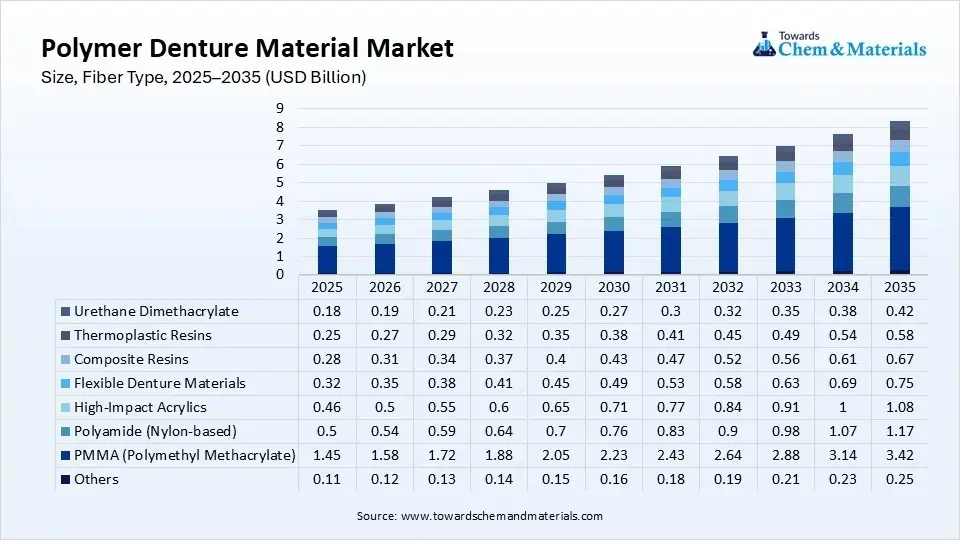
The 3D printable polymers (Photopolymer Resins) segment is expected to grow at the fastest CAGR over the forecast period. The growth of the segment can be credited to the innovations in material science, along with the rising adoption of digital dentistry. Also, developments in filler technologies, monomers, and self-healing capabilities are fuelling innovations in the segment.
Polymer Denture Material Market Share, Material Type Insight, 2025(%)
| Fiber Type Insight | Market Share (%) |
| PMMA (Polymethyl Methacrylate) | 41% |
| Polyamide (Nylon-based) | 14% |
| High-Impact Acrylics | 13% |
| Flexible Denture Materials | 9% |
| Composite Resins | 8% |
| Thermoplastic Resins | 7% |
| Urethane Dimethacrylate | 5% |
| Others | 3% |
Denture Type Insight
The complete dentures segment held a market share in 2025. The dominance of the segment can be linked to the growing demand for restorative dental solutions and the increasing incidence of tooth loss across the globe. In addition, acrylic resins, especially PMMA, remain one of the most popular materials for denture bases because of their favourable properties such as durability, strength, and colour-matching capabilities.
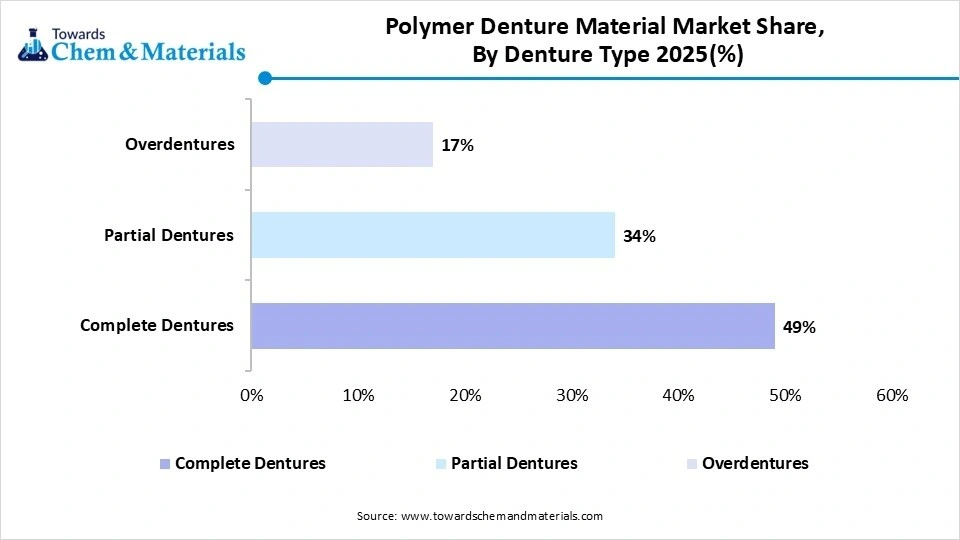
The overdentures segment is expected to grow at the fastest CAGR over the forecast period. The growth of the segment can be driven by a surge in demand for individualized dental solutions, coupled with the developments in dental technologies. These dentures are supported by natural teeth or implants, which gives retention and stability as compared to conventional dentures.
Polymer Denture Material Market Share, By Denture Type 2025(%)
| By Denture Type | Market Share (%) |
| Complete Dentures | 49% |
| Partial Dentures | 34% |
| Overdentures | 17% |
Processing Technology Insight
The heat cure segment dominated the market with market share in 2025. The dominance of the segment is owed to the growing demand for cosmetic dentistry, a surge in the incidence of dental issues, and innovations in denture processing techniques. Moreover, this material is preferred for its durability and strength, which makes it a convenient choice for partial and full dentures.
The 3D printing segment is expected to grow at the fastest CAGR over the projected period. The growth of the segment is due to the escalating demand for customized and affordable dental solutions, coupled with the innovations in additive manufacturing technologies 3D printing enable the production of dentures at a very low cost compared to conventional methods.
Polymer Denture Material Market Share, By Processing Technology, 2025(%)
| By Processing Technology | Market Share (%) |
| Heat-Cure | 46% |
| Cold-Cure (Auto-Polymerizing) | 17% |
| CAD/CAM Milling | 22% |
| 3D Printing | 15% |
End User Insight
The dental laboratories segment held a market share in 2025. The dominance of the segment can be credited to the ongoing adoption of technologies such as 3D printing, CAD/CAM, and intraoral scanners, which are transforming workflows of dental labs, enhancing precision, efficiency, and the quality of restorations. Additionally, ongoing advancements in dental materials like biocompatible polymers and high-strength ceramics are expanding the possibilities for dental restorations.
The dental clinics segment is expected to grow at the fastest CAGR during the study period. The growth of the segment can be attributed to the rising awareness of oral health, with the importance of regular check-ups, which fuels the demand for dentistry services such as fillings, cleanings, and preventative care. Also, the desire for aesthetic enhancements, propelled by celebrity and social media influence, is driving segment growth soon.
Polymer Denture Material Market Share, By End User, 2025(%)
| By End User | Market Share (%) |
| Dental Laboratories | 54.0% |
| Dental Clinics | 28% |
| Hospitals | 11% |
| Academic & Research Institutes | 7% |
Application Insight
The removable prosthetics segment dominated the market with market share in 2025. The dominance of the segment can be driven by ongoing innovations in materials and design, along with the surge in public awareness campaigns and other initiatives, which are increasing awareness regarding the importance of oral health. Furthermore, removable prosthetics are more affordable than fixed restorations, which makes them a more convenient option for an extensive range of patients.
The implant-supported dentures segment is expected to grow at the fastest CAGR over the forecast period. The growth of the segment can be linked to the rising popularity of these dentures due to the benefits offered by them, such as enhanced chewing efficiency, improved stability, and a more natural feel as compared to conventional dentures.
Polymer Denture Material Market Share, By Application, 2025(%)
| By Application | Market Share (%) |
| Removable Prosthetics | 52% |
| Fixed Prosthetics (Hybrid Dentures) | 16% |
| Implant-Supported Dentures | 15% |
| Trial/Temporary Dentures | 8% |
| Repair and Relining | 9% |
Distribution Channel Insight
The dental distributors segment held a market share in 2025. The dominance of the segment can be due to the rising number of dental procedures, such as extractions, root canal treatments, and restorations, which is driving the demand for dental consumables. In addition, the expansion of DSOs and group practices in developing markets is also impacting the demand for cutting-edge dental equipment and consumables.
The online channel segment is expected to grow at the fastest CAGR during the projected period. The growth of the segment is owed to the raised e-commerce adoption, growing demand for affordable and convenient dental solutions, along with the innovations in online dental services. Consumers are increasingly turning towards online platforms for purchasing various goods like denture materials.
Polymer Denture Material Market Share, By Distribution Channel, 2025(%)
| By Distribution Channel | Market Share (%) |
| Direct Sales | 45% |
| Dental Distributors & Wholesalers | 39% |
| Online Channels | 16% |
Regional Insights
How Did North America Dominate the Polymer Denture Material Market In 2025?
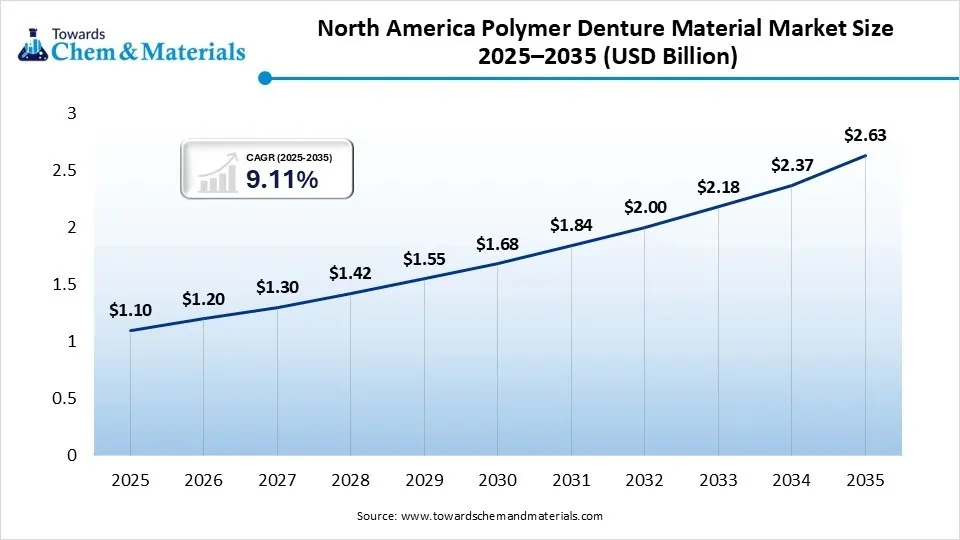
The North America polymer denture material market size was estimated at USD 1.10 billion in 2025 and is projected to reach USD 2.63 billion by 2035, growing at a CAGR of 9.11% from 2026 to 2035.North America dominated the market with the largest share of 31% in 2025. This success was driven by an aging population, high awareness of oral health, and the rapid adoption of digital manufacturing technologies in dental clinics and laboratories. The market shifted toward highly durable, aesthetic polymer blends. Modern materials offer better stain resistance, thermal stability, and natural-looking translucency compared to older acrylics. Expanded dental benefits and high healthcare expenditures in the region made it easier for patients to access restorative procedures.
U.S.
- The U.S. polymer denture material market is expanding due to a rapidly aging population, rising healthcare spending, and the shift toward digital dentistry.
- Innovations in materials like Polymethyl Methacrylate (PMMA) have drastically improved patient comfort, denture fit, and natural aesthetics.
- Greater public awareness of oral hygiene and cosmetics causes more people to seek high-quality, natural-looking tooth restorations.
Canada
- Canadas senior population is growing fast. Older people are more likely to lose teeth. This causes a higher demand for full and partial dentures.
- Dentures are much cheaper than other options like metal implants. A full set of dentures in Canada usually costs between $1,000 and $3,000 per arch. This makes them an easy choice for budgeters.
- New computers and 3D printers make it easier to design custom dentures. This cuts down on wait times and makes teeth fit much better.
Asia Pacific Polymer Denture Material Market Growth Factor
Asia Pacific held a market share of 29% in 2025. and is expected to grow at the fastest CAGR of 11.2% over the forecast period, driven by an aging population, rising disposable incomes, and the growing availability of affordable dental care. Advanced technologies like 3D printing and digital dentistry are also increasing the use of these polymer-based materials by allowing for faster, more precise denture creation. The number of older adults in the region is growing. Older people often need dentures to replace lost teeth, which directly boosts the need for strong and safe denture materials.
India
- Life expectancy in India is rising. This results in a larger aging population that is prone to tooth loss and requires dentures or restorative care.
- India is becoming a global hub for cost-effective, high-quality dental care. This directly increases the production of complete and partial dentures.
China
- China has a huge and growing elderly population. Older adults often lose teeth. This raises the need for removable and partial dentures.
- Government Volume-Based Procurement (VBP) policies have drastically cut dental material costs. This makes denture treatments much cheaper and increases patient demand.
- Advanced 3D printers and specialized photopolymer resins speed up how fast dentures are made. They also make the final product fit better and feel more comfortable.
Europe Polymer Denture Material Market Growth Factor
Europe held a market share of 28% in 2025. Major growth factors include a rapidly aging demographic, a surge in 3D-printing technologies, and a shift toward lightweight, metal-free cosmetic options. Europe has a large and growing elderly demographic. This age group is highly prone to tooth loss and requires reliable dental prosthetics. The rise of digital dentistry allows for precise 3D printing of dentures using advanced polymers. This makes manufacturing faster and the dentures better fitting. European healthcare systems provide robust coverage for dental prosthetics. This makes accessing these new polymer solutions easier.
Germany
- Germany has a large and growing elderly demographic. Older individuals have higher rates of tooth loss and need restorative dental solutions.
- Technologies like CAD/CAM (Computer-Aided Design and Computer-Aided Manufacturing) and 3D printing allow laboratories to produce precise, custom dentures faster and with better fit.
- Patients demand safe, non-toxic materials. Modern polymers are designed to be hypoallergenic, causing less irritation to sensitive gums.
France
- France has a rapidly growing elderly demographic. Older individuals are more likely to lose teeth and require dentures.
- The adoption of digital dental 3D printing has grown. This allows dentists to scan a mouth and quickly print perfectly fitting, customized dentures.
- People want dentures that function well and look beautiful. Polymers allow for better color matching and shape customization.
Latin America Polymer Denture Material Market Growth Factor
Latin America held a market share of 7% in 2025, growing rapidly due to an aging population, rising demand for cosmetic dentistry, and better healthcare access. Affordable materials like Polymethyl Methacrylate (PMMA) and the rise of digital 3D printing are major drivers pushing market expansion across the region. Governments and health groups are spending more money on dental care. This gives more people access to basic dental services.
Brazil
- Brazil has a growing elderly population. Older people often need dentures, which raises the demand for dental plastics.
- The Brazilian Ministry of Health increased funding for public oral health. The government gives extra money to state and local programs to upgrade dental labs. This allows public clinics to make better, more affordable dentures for low-income patients.
Argentina
- Argentina has a large network of dental clinics and labs. More labs are adopting digital tools (like CAD/CAM systems) to create polymer prosthetics quickly.
- Argentina has a large population of older adults. As people live longer, the rate of edentulism (total tooth loss) rises. This increases the daily need for both complete and partial dentures.
Middle East & Africa Polymer Denture Material Market Growth Factor
The Middle East & Africa held a market share of 5% in 2025; the growth is driven by a rising aging population, increased disposable incomes, and strong growth in dental tourism. New 3D printing and digital manufacturing technologies are also lowering costs and improving product quality. Countries like Saudi Arabia and the United Arab Emirates (UAE) draw patients from across the globe. High-end clinics use premium Polymer Denture Materials to attract these visitors.
Saudi Arabia
- Over 80% of the Saudi population suffers from dental issues like tooth decay (caries). This high prevalence creates a large need for restorative and prosthetic solutions.
- The number of older adults in Saudi Arabia is growing. This group experiences higher rates of tooth loss, directly increasing the demand for removable and implant-supported dentures.
UAE
- The UAE has one of the highest expat populations in the world. This creates sustained, year-over-year demand for dental care.
- The UAE (specifically Dubai and Abu Dhabi) is a global hub for medical and dental tourism. Top-tier clinics draw patients by offering affordable, world-class prosthodontic care.
- The UAE has a very high migrant population. Consistent migration and expanding healthcare infrastructure increase the overall demand for accessible and high-throughput dental care.
Recent Developments
- In June 2026, the joint launch of the Lucitone Digital Print Denture System by Dentsply Sirona and Carbon, Inc. redefined digital denture manufacturing. The material system transitions laboratories away from highly complex, analog workflows to automated, high-throughput 3D printing.(Source: www.dentsplysirona.com)
- In April 2026, the University of Colorado Anschutz School of Dental Medicine launched a 3D Print Hub to commercialise advanced multi-material polymer denture technology. This initiative shifts dental manufacturing away from single-material printing and manual assembly.(Source: news.cuanschutz.edu)
- In March 2026, Liqcreate launched the Liqcreate Separation Model, a specialized dental photopolymer resin designed to eliminate the need for separating agents in orthodontic and prosthetic laboratory workflows. By embedding non-adhesion capabilities directly into the materials chemical formulation, this resin drastically simplifies cold-cure acrylic procedures.(Source: 3dprintingindustry.com)
- In February 2026, Materialise launched 3D-printed PEEK cranio-maxillofacial (CMF) implants, expanding its established digital workflow for personalized surgery. By integrating medical-grade Polyetheretherketone (PEEK), this launch provides surgeons with a lighter, bone-like alternative to traditional titanium reconstructions.(Source: all3dp.com)
- In September 2025, Kuraray Noritake Dental launched KATANA Zirconia ONE for IMPLANT, a pre-sintered multi-layered zirconia block engineered for chairside CEREC systems. This launch allows clinicians to fabricate either hybrid abutment crowns or hybrid abutments from a single block, speeding up digital implant workflows.(Source: www.dentistrytoday.com)
Top Companies List
- Dentsply Sirona
- Ivoclar Vivadent
- Kulzer GmbH (Mitsui Chemicals Group)
- GC Corporation
- VOCO GmbH
- Lang Dental Manufacturing
- 3M ESPE
- Acryl Dental
- DenMat Holdings, LLC
- YAMAHACHI Dental Mfg., Co.
- Candulor AG
- Vertex-Dental B.V.
- Kuraray Noritake Dental
- Prime Dental Products
- Modern Dental Group
- Trevalon Hi
- ProTech Dental Studio
- Fiber Force (Synca Marketing Inc.)
- Keystone Industries
- Zhermack S.p.A.
Segments Covered
By Material Type
- PMMA (Polymethyl Methacrylate)
- Conventional Heat-Cure PMMA
- High-Impact PMMA
- CAD/CAM PMMA Discs
- Polyamide (Nylon-based)
- Flexible Nylon
- Reinforced Nylon
- High-Impact Acrylics
- Rubber-Modified Acrylics
- Fiber-Reinforced Acrylics
- Flexible Denture Materials
- Thermoplastic Flexible Polymers
- Polyolefin-Based Materials
- Composite Resins
- Fiber-Reinforced Composite
- Nanocomposite Resin
- Thermoplastic Resins
- PEEK-Based
- Polypropylene
- Acetal Resin
- Urethane Dimethacrylate (UDMA)
- 3D Printing Grade
- Hybrid Resin Formulations
- Others
- Epoxy-Based Materials
- Experimental Biopolymers
By Denture Type
- Complete Dentures
- Conventional
- Immediate
- Partial Dentures
- Cast Partial
- Flexible Partial
- Overdentures
- Tooth-Supported
- Implant-Supported
By Processing Technology
- Heat-Cure
- Cold-Cure (Auto-Polymerizing)
- CAD/CAM Milling (Prefabricated Discs/Blocks)
- 3D Printing (Photopolymerizable Resins)
By End User
- Dental Laboratories
- Independent Laboratories
- Commercial Laboratory Chains
- Dental Clinics
- General Dentistry
- Prosthodontic Clinics
- Hospitals
- Public Hospitals
- Private Hospitals
- Academic & Research Institutes
- Universities
- Dental Research Centers
By Application
- Removable Prosthetics
- Complete Dentures
- Partial Dentures
- Fixed Prosthetics (Hybrid Dentures)
- Implant-Supported Dentures
- Trial/Temporary Dentures
- Repair and Relining
By Distribution Channel
- Direct Sales
- Dental Distributors & Wholesalers
- Online Channels
By Region
- North America
- U.S.
- Canada
- Europe
- Germany
- UK
- France
- Italy
- Spain
- Sweden
- Denmark
- Norway
- Asia Pacific
- China
- Japan
- India
- South Korea
- Thailand
- Latin America
- Brazil
- Mexico
- Argentina
- Middle East and Africa (MEA)
- South Africa
- UAE
- Saudi Arabia
- Kuwait
A Seven-Phase Framework
Our methodology is designed to be universally applicable across commodity chemicals, specialty chemicals, petrochemicals, construction chemicals, coatings, electronic chemicals, industrial gases, agrochemicals, water treatment chemicals, and performance materials. Each phase builds upon the last, creating a layered validation structure that minimizes estimation error and maximizes analytical confidence.
The framework ensures comprehensive market coverage, robust cross-validation, and reliable long-term forecasting — producing market estimates that withstand scrutiny from investors, regulators, and corporate strategy teams.

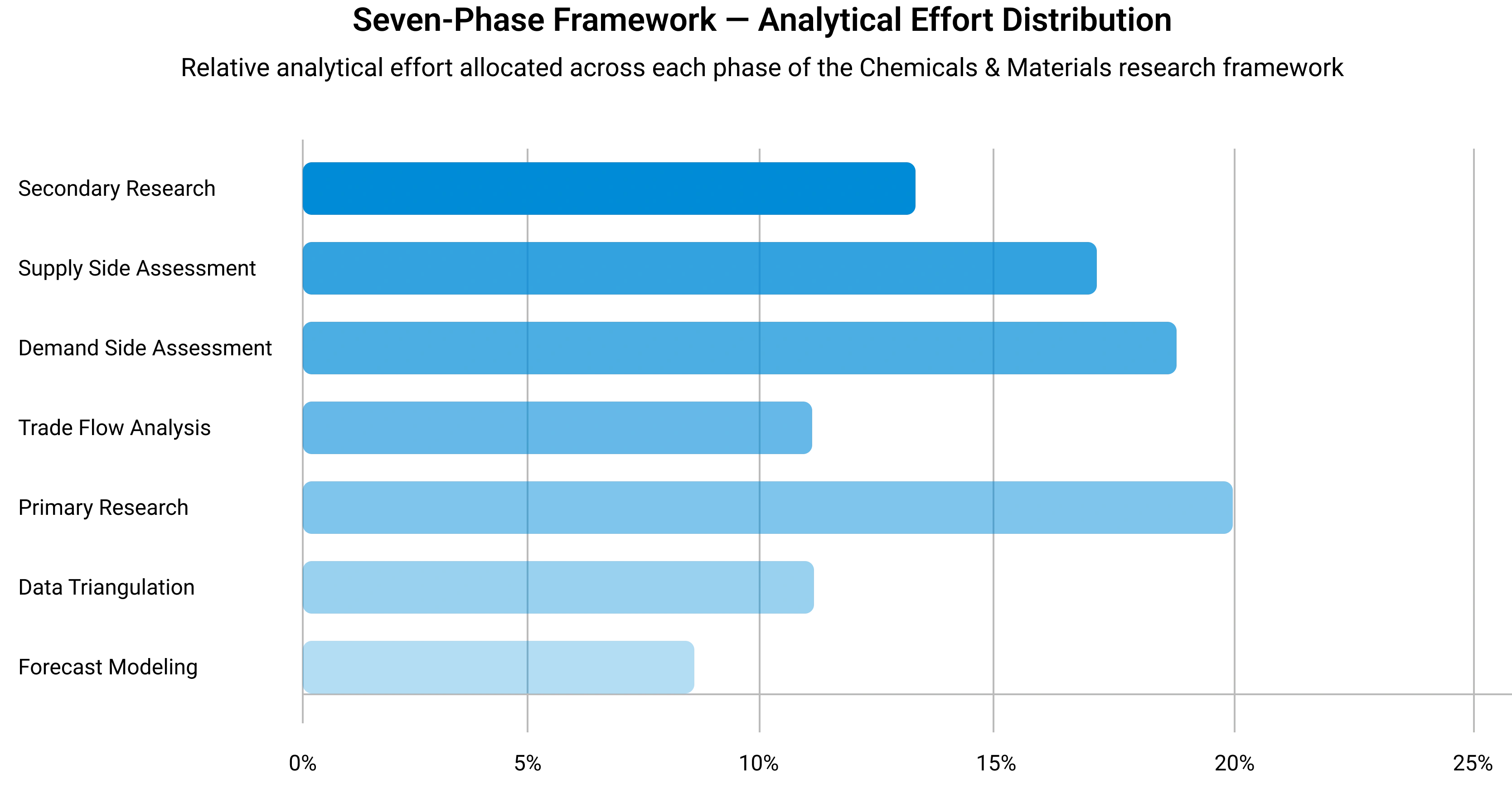
Seven-Phase Framework — Analytical Effort Distribution
Relative analytical effort allocated across each phase of the Chemicals & Materials research framework
Phase 1 - Secondary Research: Establishing the Foundation
Secondary research collects and evaluates publicly available information from authoritative sources, establishing the foundational understanding of market structure, value chain dynamics, competitive landscape, and end-use demand patterns. Every source is evaluated for credibility, recency, geographic relevance, and methodological soundness before inclusion.
Industry Associations
Sources include ACC, CEFIC, ICCA, JCIA, CPCIF, and SOCMA providing production volumes, consumption trends, capacity developments, and sustainability initiatives.
Company Disclosures
Annual reports, investor presentations, earnings transcripts, and regulatory filings reveal product portfolios, manufacturing footprints, capacity expansions, and revenue segmentation.
Government Databases
National statistical offices, customs authorities, environmental agencies, and industrial production databases provide verified statistics on output, trade flows, and regulatory compliance.
Trade Databases
UN Comtrade, ITC, Eurostat, and national customs authorities enable assessment of global product movement, import dependency, and export competitiveness across regions.
Our Secondary Research Sources
- Ministry of Chemicals and Fertilizers
- European Chemicals Agency
- United States Department of Energy
- Ministry of Industry and Information Technology
- Ministry of Economy Trade and Industry
- Ministry of Trade Industry and Energy
- National Institute of Standards and Technology
- Council of Scientific and Industrial Research
- Fraunhofer Society
- National Institute for Materials Science
Phase 2 — Supply-Side Assessment: Mapping Production Capabilities
Production Capacity Analysis
All major manufacturers are assessed for existing installed capacity, planned additions, expansions, new plant announcements, and technology adoption — mapped at global, regional, and country levels.
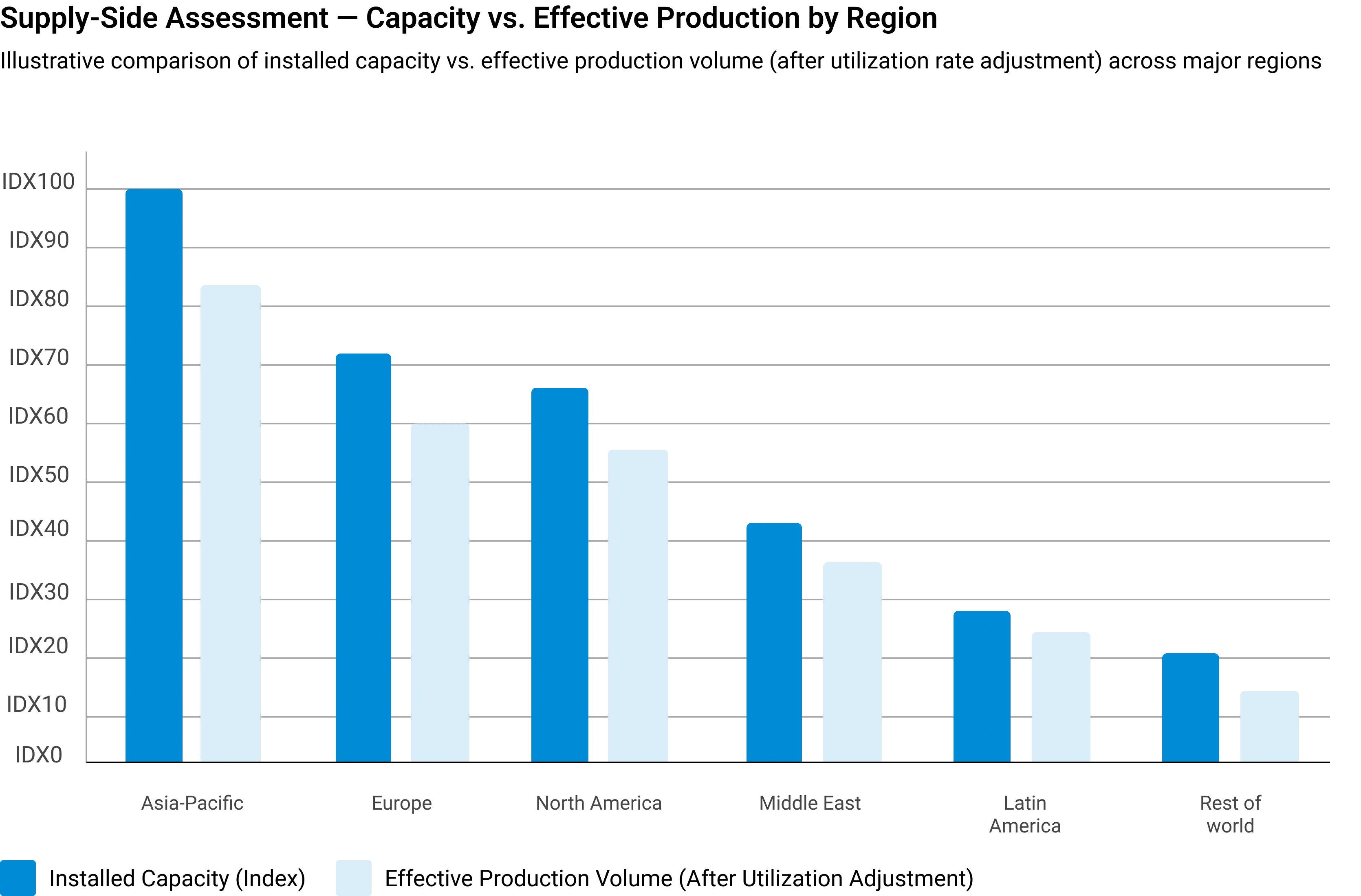
Capacity Utilization Adjustment
Installed capacity is adjusted using utilization rates based on demand conditions, feedstock availability, plant operating rates, maintenance schedules, and regulatory restrictions.
Manufacturer Revenue Analysis
Product-specific revenues, segment-level performance, regional distribution, average selling prices, and margin trends are evaluated to establish market value estimates.
Supply-Side Assessment — Capacity vs. Effective Production by Region
Illustrative comparison of installed capacity vs. effective production volume (after utilization rate adjustment) across major regions
Phase 3 — Demand-Side Assessment: Quantifying Chemical Consumption
Demand-side analysis quantifies chemical consumption across industries, applications, and geographies — identifying where and how chemicals are consumed throughout the value chain with precision.
End-Use Industry Analysis
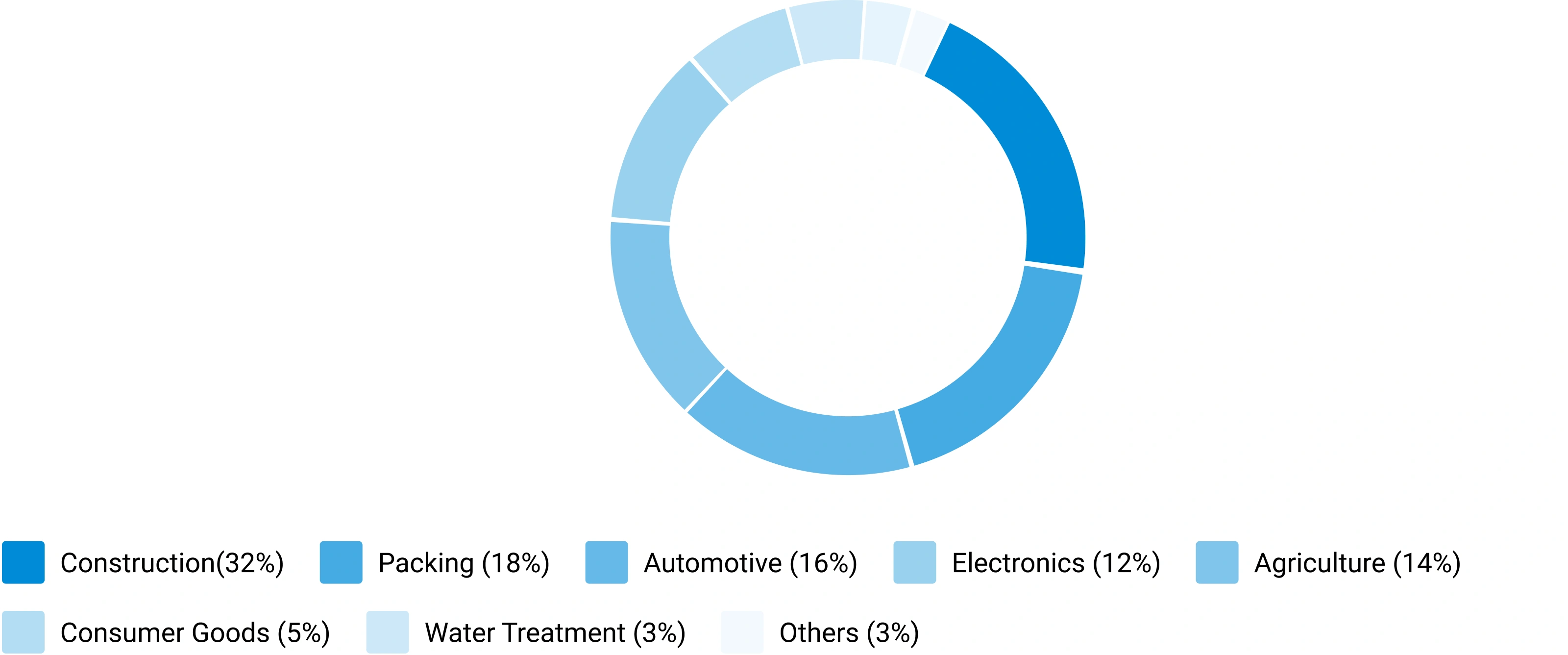
Chemical demand is evaluated across automotive, construction, packaging, electronics, agriculture, healthcare, consumer goods, industrial manufacturing, energy and utilities, and water treatment. Industry output, production trends, and consumption intensity are analyzed to determine demand patterns.
Consumption Modeling
Demand is estimated using measurable indicators: kilograms per vehicle, kilograms per square meter of construction, dosage per cubic meter of water treated, kilograms per hectare of agricultural land, and kilograms per ton of manufactured products. Consumption factors are validated through industry publications and primary interviews.
Application Analysis
The market is segmented by application area to understand product performance requirements, formulation trends, technology adoption, customer preferences, and regulatory requirements improving demand accuracy and segmentation granularity.
Demand-Side Assessment — End-Use Industry Demand Distribution
Illustrative distribution of chemical & materials demand across key end-use industries
Phase 4 - Trade Flow Analysis: Balancing Regional Supply and Demand
Trade flow analysis reconciles regional supply and demand estimates through import and export data, identifying net supply positions, regional dependencies, and market imbalances. It serves as an independent validation layer that tests the consistency of supply-side and demand-side estimates.
Import Analysis
Import data is evaluated to determine volumes, source countries, product dependency, regional supply gaps, and pricing trends — identifying markets that rely heavily on external supply and where domestic production is insufficient to meet demand.
Export Analysis
Export assessments reveal production surplus, export competitiveness, regional manufacturing strength, and global market participation. Export patterns also help validate domestic production estimates and identify net exporting regions.
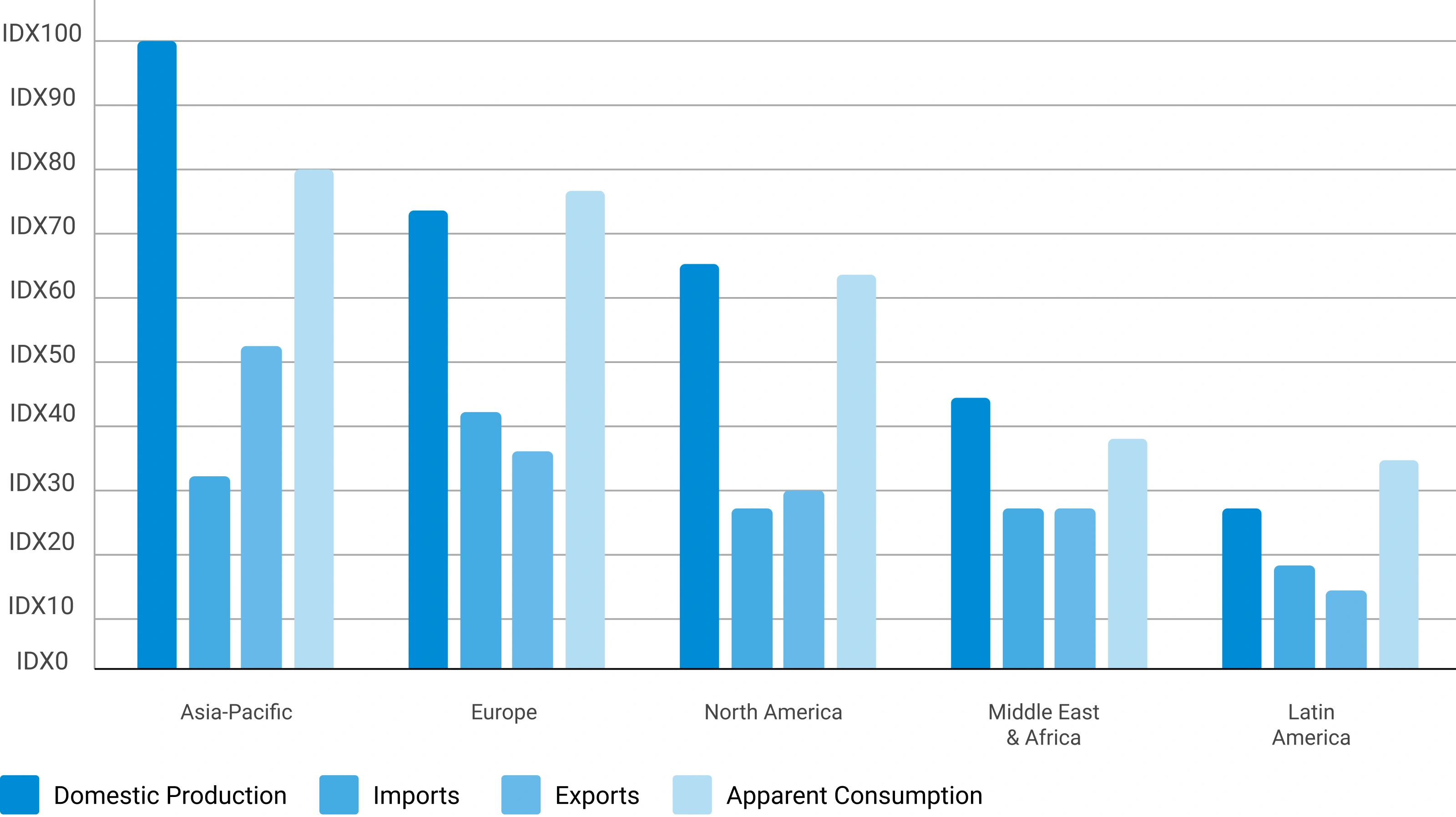
Apparent Consumption Model
Regional consumption is assessed using the standard apparent consumption formula:
Results identify net importing regions, net exporting regions, regional deficits, and surpluses — serving as an independent validation of supply and demand estimates.
Trade Flow Analysis — Net Supply Position by Region
Illustrative apparent consumption vs. domestic production across major regions — positive gap indicates net import dependency
Phase 5 — Primary Research: The Critical Validation Layer
Primary research tests and refines findings from secondary research through direct engagement with industry participants across the supply chain, demand side, and expert community. It captures intelligence that no database or published report can provide — the real-world experience of manufacturers, buyers, and specialists operating in the market.

Supply-Side Interviews
Conversations with chemical manufacturers, raw material suppliers, contract manufacturers, technology providers, and plant operators cover production trends, capacity utilization, pricing developments, technology shifts, and competitive dynamics.

Demand-Side Interviews
Engagement with OEMs, industrial consumers, procurement managers, distributors, formulators, and end-use manufacturers focuses on consumption trends, purchasing behavior, product substitution, demand outlook, and emerging applications.

Industry Expert Consultations
Additional interviews with industry consultants, independent experts, regulatory specialists, technical professionals, and research institutions provide deeper market context and validate key analytical assumptions.
Focus Areas of Primary Research:
Market Size & Forecast Validation
Revenue estimates, volume consumption, growth rates, forecast assumptions, regional demand.Supply Chain & Value Chain Assessment
Raw material sourcing, supply chain challenges, distribution networks, procurement practices.Production & Capacity Analysis
Manufacturing capacity, utilization rates, expansion projects, plant investments.Pricing & Cost Structure Analysis
Product pricing trends, feedstock costs, energy costs, margin pressures, pricing outlook.Competitive Landscape Assessment
Volume and value estimates confirmed to be fully consistent with one another before publicationInterview Volume by Market Scope
| Study Scope | Number of Interviews |
|---|---|
| Niche Market | 20 – 30 |
| Mid-Sized Market | 30 – 50 |
| Global Market | 50 – 80 |
| Highly Fragmented Market | 80 – 120 |
Interview Details:
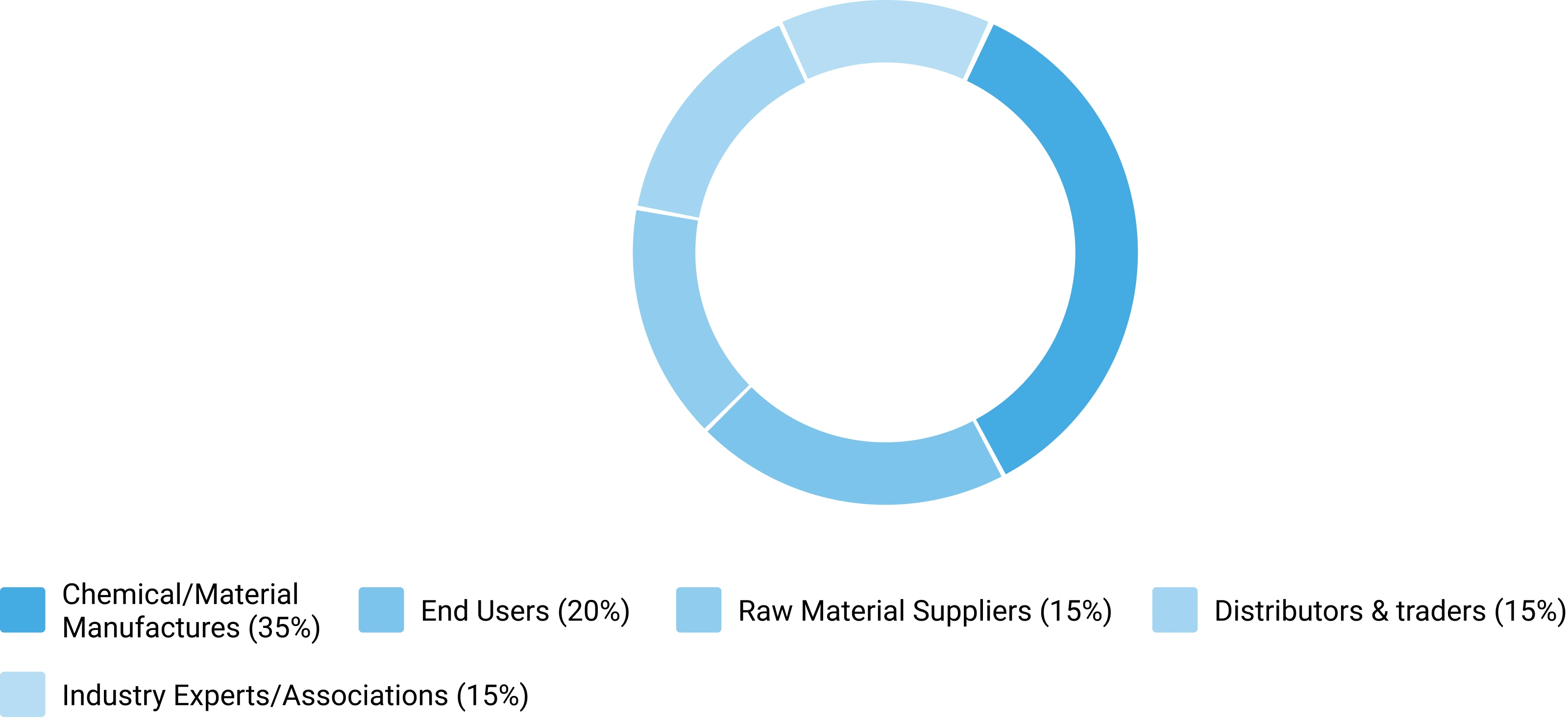
Category : Manufacturers, Suppliers, Distributors, End Users, Experts/Associations
Average Duration : 30–60 Minutes
Interview Mode : Video calls, telephonic interviews, expert consultations
Interview Format : Structured / Semi-Structured questionnaire
Focus Areas of Primary Research:
Market Size & Forecast Validation :
Revenue estimates, volume consumption, growth rates, forecast assumptions, regional demand.
Supply Chain & Value Chain Assessment :
Raw material sourcing, supply chain challenges, distribution networks, procurement practices.
Production & Capacity Analysis :
Manufacturing capacity, utilization rates, expansion projects, plant investments.
Pricing & Cost Structure Analysis :
Product pricing trends, feedstock costs, energy costs, margin pressures, pricing outlook.
Competitive Landscape Assessment :
Market share, competitor positioning, strategic initiatives, partnerships, acquisitions.
Primary Research — Stakeholder Coverage by Category
Distribution of interview respondents across stakeholder categories (% share from PPT data)
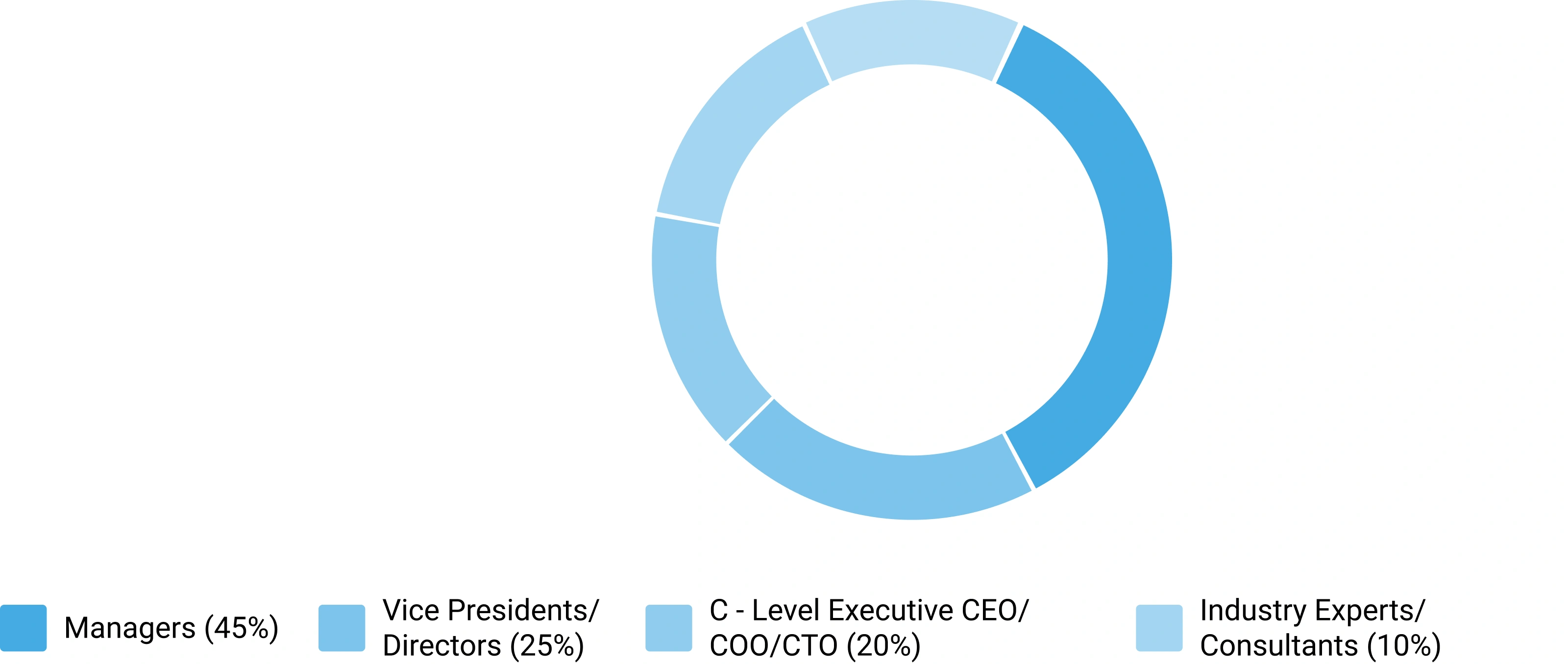
Primary Research — Respondent Designation Profile
Seniority breakdown of interview respondents (% share from PPT data)
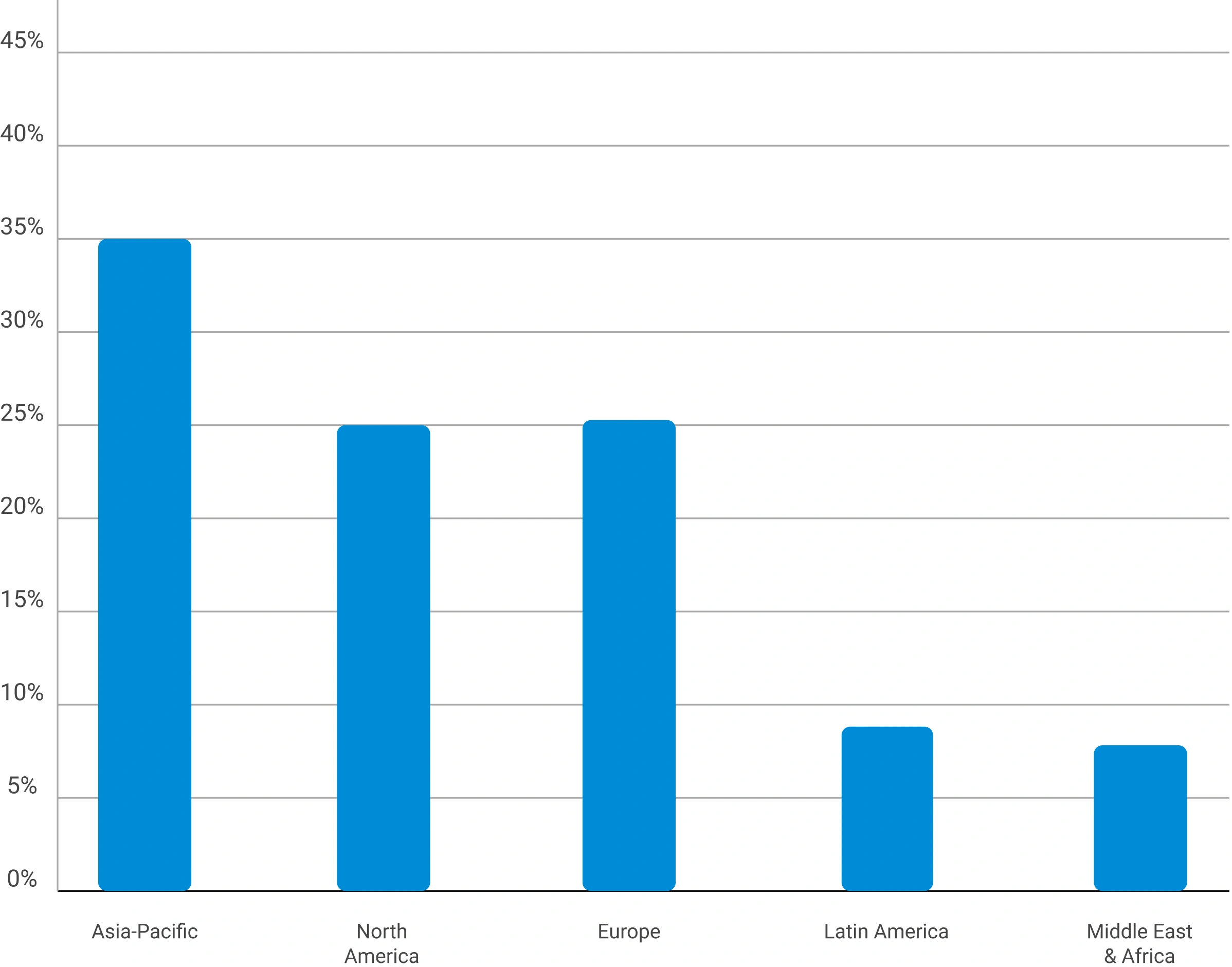
Primary Research — Geographic Coverage of Interviews
Regional distribution of primary research engagement (% share from PPT data)
Phase 6 — Data Triangulation and Market Validation
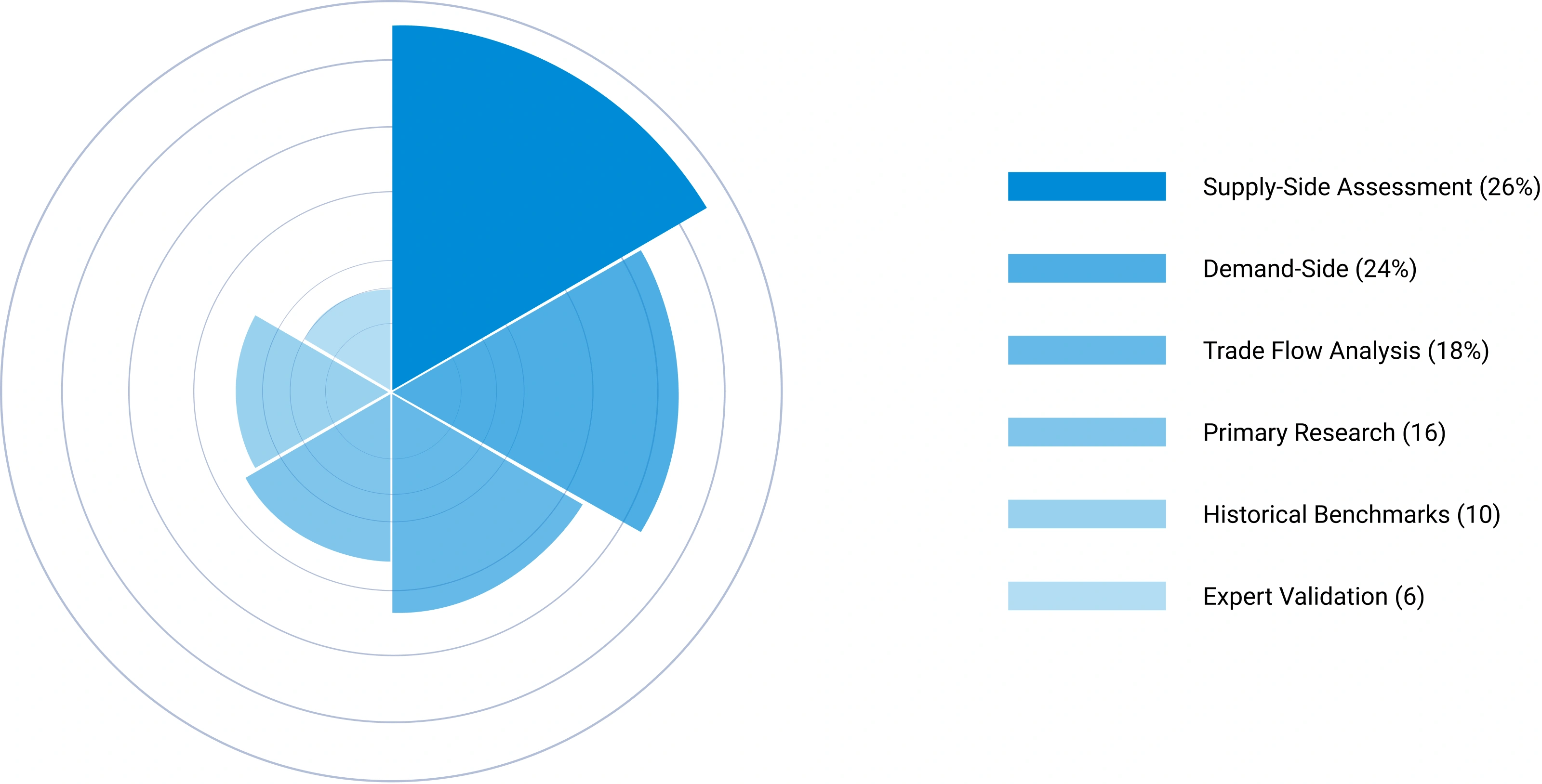
No single methodology is relied upon in isolation. Multiple independent estimation approaches are combined and reconciled to ensure consistency, accuracy, and analytical defensibility. Any material deviations between approaches are investigated and adjusted through additional validation cycles.
The final market size is derived through weighted triangulation of all validated methodologies. Any material deviations between approaches are investigated and adjusted through additional validation cycles. The outcome represents the most realistic assessment of the market based on available evidence and expert confirmation ensuring that volume and value estimates are fully consistent with one another.
Triangulation Framework — Input Contribution Weight
Relative weight each sizing input contributes to the final reconciled market estimate
Phase 7 — Forecast Modeling: Projecting Future Market Evolution
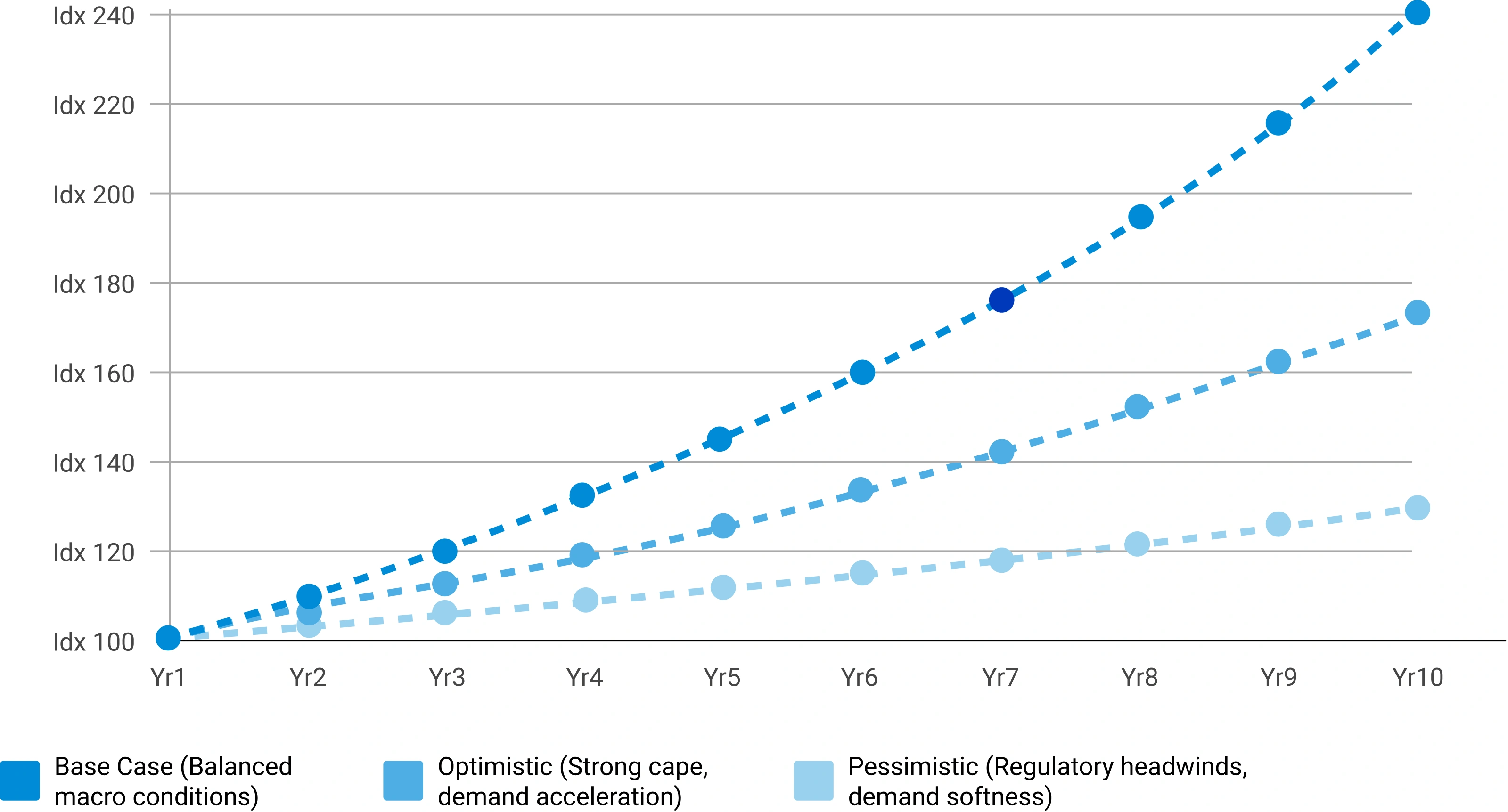
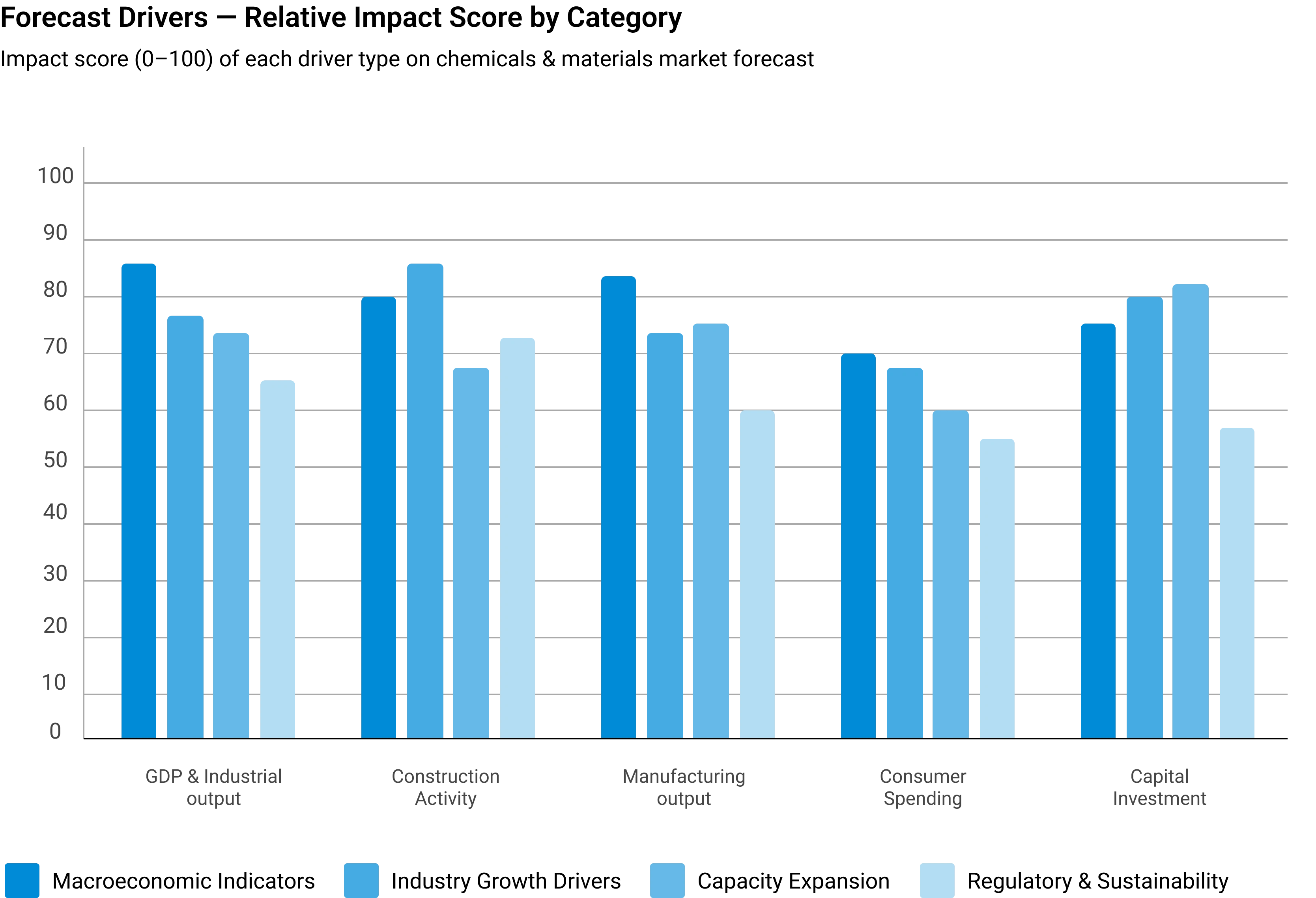
Forecasting evaluates the future trajectory of the market using a combination of quantitative indicators and qualitative assessments across economic, industry, and regulatory dimensions. Rather than simple extrapolation, each driver is independently modeled and integrated into a composite forecast.
Macroeconomic Indicators
GDP growth, industrial production, manufacturing output, construction activity, consumer spending, and capital investment form the quantitative foundation of long-term demand projections. These are applied at country, regional, and global levels.
Industry Growth Drivers
Urbanization, infrastructure development, industrialization, technological innovation, sustainability initiatives, and evolving product performance requirements are assessed at regional and industry levels — capturing both structural and cyclical demand drivers.
Capacity Expansion Analysis
Announced plant expansions, new manufacturing facilities, technology upgrades, and strategic investments are evaluated to determine future supply-demand dynamics and potential market tightness or oversupply situations.
Regulatory & Sustainability
Environmental regulations, chemical safety standards, emission reduction targets, circular economy initiatives, and sustainability requirements are incorporated as they often influence product adoption rates and market growth trajectories.
Scenario Forecast Range — Indexed Market Growth (Year 1–10)
Illustrative indexed growth trajectories across Base, Optimistic, and Pessimistic scenarios over a 10-year forecast horizon
Forecast Drivers — Relative Impact Score by Category
Impact score (0–100) of each driver type on chemicals & materials market forecast



Comments
Share your thoughts, ask a question, or provide feedback about this report.