
Super Absorbent Polymer Market Size Analysis Report 2035
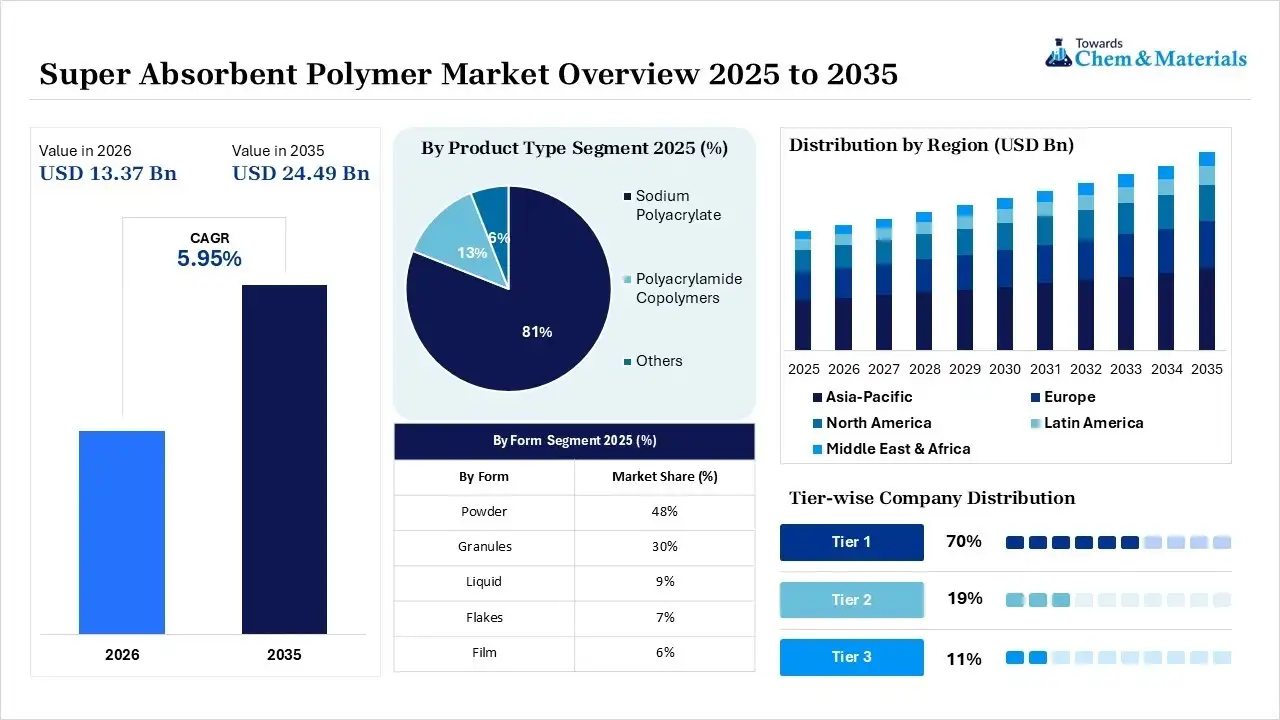
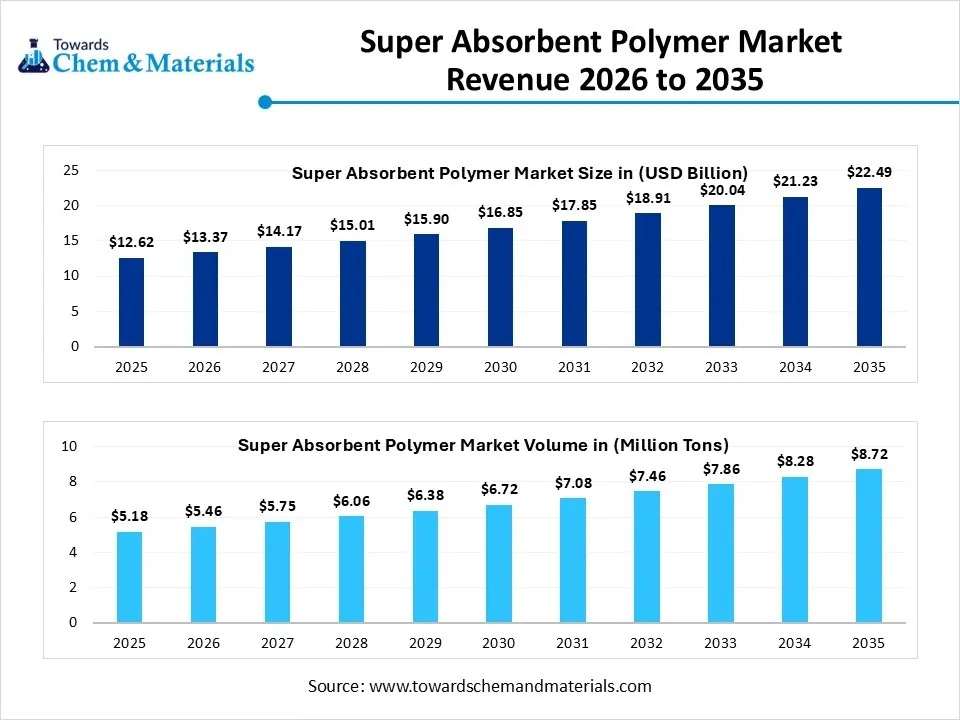
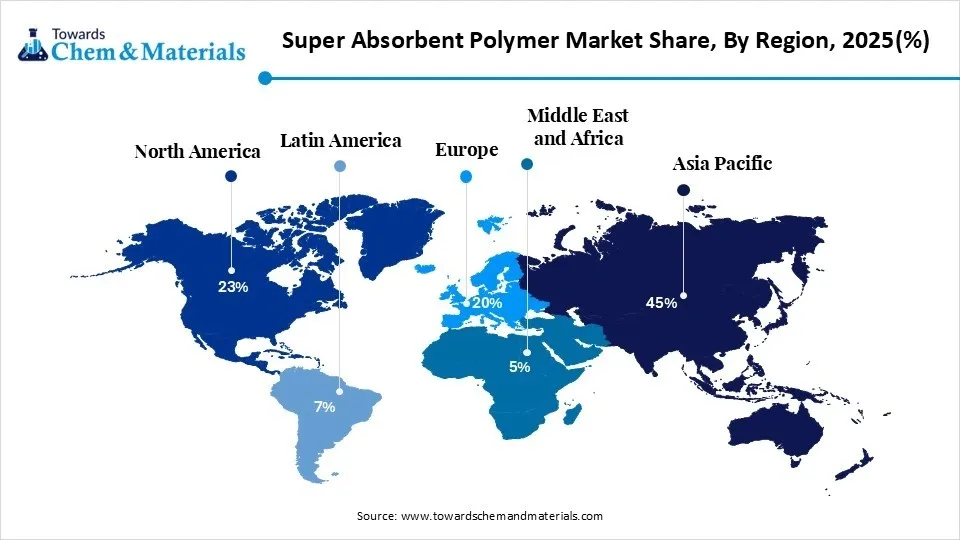
The global super absorbent polymer market size was valued at USD 12.62 billion in 2025, is estimated to reach USD 13.37 billion in 2026, and is projected to reach USD 22.49 billion by 2035, exhibiting a compound annual growth rate (CAGR) of 5.95% over the forecast period from 2026 to 2035.Asia Pacific dominated the super absorbent polymer market with the largest revenue share of 45% in 2025 and is expected to grow at the fastest CAGR of 6.06% during the forecast period. Increasing disposable income and a surge in health and sanitization awareness among women are the key factors driving market growth. Also, a surge in adoption of sustainable agriculture coupled with the ongoing transition towards bio-based materials can fuel market growth further.
Key Takeaways
- By region, Asia Pacific dominated the market with the largest share of 45.0% in 2025. The dominance of the region can be attributed to the growing disposable incomes in emerging economies, rapid urbanization, and government hygiene initiatives.
- By region, North America held a market share of 23.00% in 2025 and was expected to grow at the fastest CAGR of 6.80% over the forecast period. The growth of the region can be credited to the surge in consumer awareness.
- By product type, the sodium polyacrylate segment dominated the market with the largest market share of 81.0% in 2025. The dominance of the segment is due to extensive use in diapers and hygiene products.
- By product type, the polyacrylamide copolymers segment held the market share of 13.00% in 2025 and is projected to grow at the fastest CAGR of 6.5% over the forecast period. The growth is owing to a surge in agricultural applications.
- By form, the powder segment dominated the market with the largest share of 48.0% in 2025. The dominance is due to its high absorption capacity.
- By form, the film segment held the market share of 6.00% in 2025 and is expected to grow at the fastest CAGR of 6.8% over the forecast period. The growth is owing to the growing demand from various industries.
- By source, the synthetic segment dominated the market with the largest share of 89.0% in 2025. The dominance is due to its high-performance applications.
- By source, the natural/bio-based SAPs segment held the market share of 11.00% in 2025 and is expected to grow at the fastest CAGR of 8.2% during the forecast period. The growth is owing to the increasing demand for environment-friendly products.
- By application, the personal hygiene segment dominated the market with the largest share of 67.0% in 2025. The dominance is due to increasing demand for diapers.
- By application, the agriculture & horticulture segment held the market share of 12.00% in 2025 and is expected to grow at the fastest CAGR of 7.5% over the forecast period. The growth is owing to increasing product demand in the sector.
- By end use, the personal care segment dominated the market with the largest share of 53.0% in 2025. The dominance is due to a surge in population growth globally.
- By end use, the agriculture segment held the market share of 13.00% in 2025 and is expected to grow at the fastest CAGR of 7.4% during the forecast period. The growth is owing to the growing sector in various regions.
- By distribution channel, the retail/e-commerce segment dominated the market with the largest share of 46.0% in 2025. The dominance is due to growing accessibility rapidly.
- By distribution channel, the direct sales segment held the market share of 8.00% in 2025 and is expected to grow at the fastest CAGR of 8.0% during the forecast period. The growth is owing to increasing demand from major players.
According to Towards Chemicals and Materials Analytics and Consulting, the global super absorbent polymer volume was valued at 5.18 million tons in 2025 and is expected to surpass around 8.72 million tons by 2035, accelerating a compound annual growth rate (CAGR) of 5.35% over the forecast period from 2026 to 2035.
Increasing Demand for Personal Hygiene Products
The growing demand for personal hygiene products, like adult incontinence products, disposable diapers, and feminine hygiene items, is presenting lucrative opportunities in the market in the foreseeable future.
- In May 2026, Elea & Lili, a deep-tech spin-off from the VTT Technical Research Centre of Finland, successfully secured €2.5 million in seed funding to commercialize and industrialize its patented Cellulose Super Absorbent (CSA™) technology. This innovative material serves as a microplastic-free, fully biodegradable alternative to traditional petroleum-based superabsorbent polymers (SAPs).(Source: www.azom.com)
The aging population in emerging regions further fuels the demand for incontinence products, as reported by the U.S. Census Bureau.
Rising Demand for Durable Materials: Super Absorbent Polymer Market to Expand
Super Absorbent Polymers (SAPs) are either synthetic or natural substances capable of absorbing and holding vast quantities of liquids, such as water or aqueous solutions, relative to their weight, sometimes hundreds or thousands of times more. These materials are usually cross-linked, hydrophilic polymers that form gel-like structures upon hydration. The primary application of SAPs is in hygiene products like diapers, adult incontinence items, and sanitary pads. They are also used in agriculture to improve soil water retention and decrease irrigation needs. Additional applications include water-blocking cables, artificial snow, spill containment, and some medical uses. SAPs can be classified into synthetic types most common, made from acrylic acid or acrylamide and natural types, which are derived from materials such as cellulose, chitosan, or starch.
What Are the Key Drivers Responsible for The Growth of The Super Absorbent Polymer Market?
The key growth drivers responsible for the growth of the market are the demand for personal hygiene products due to increasing awareness, especially for adult incontinence and baby diapers, in agriculture to improve water retention in soil, and optimize water usage and reduce irrigation frequency especially for the arid and semi-arid regions which increases the demand for the market. The growing demand for efficient water treatment, like sludge dewatering and wastewater treatment. Other key drivers are the growing trend towards adoption and use of biobased and biodegradable SAP to minimize environmental impacts and medical applications like medical dressings and wound care products due to its highly absorbent property, driving the growth and expansion of the market.
Market Trends
- The technological advancements to improve the performance and sustainability for the development of new products and increasing the application drive the growth.
- The growing environmental concerns and growing adoption of biobased and biodegradable products are a growing trend in the market, responsible for the growth.
- The rising demand for hygiene products due to increasing awareness of heavily and advanced SAP applications drives the growth.
- The specialty applications, like SAP, are increasing in use in industrial applications like water treatment, soil stabilization, and spill containment drives the growth.
Market Report Scope
| Report Attributes | Details |
| Market Volume in 2026 | USD 13.37 Billion/ 5.46 Million Tons |
| Market Volume by 2035 | USD 22.49 / 8.72 Million Tons |
| Growth Rate | CAGR 5.95% |
| Base Year of Estimation | 2025 |
| Forecast Period | 2025 - 2035 |
| Dominant Region | Asia Pacific |
| Segment Covered | By Product Type, By Form, By Source, By Application, By End-use Industry, By Distribution Channel, By Region |
| Key Companies Profiled | BASF SE (Germany), Evonik Industries AG (Germany), Nippon Shokubai Co., Ltd. (Japan), Sumitomo Seika Chemicals Co., Ltd. (Japan), LG Chem Ltd. (South Korea), SDP Global Co., Ltd. (Japan) , Yixing Danson Technology (China), Zhejiang Satellite Petrochemical Co., Ltd. (China), Chase Corp (USA) , Formosa Plastics Corporation (Taiwan), Songwon Industrial Co., Ltd. (South Korea), Sanyo Chemical Industries, Ltd. (Japan), Shandong Nuoer Biological Technology Co., Ltd. (China) , Toshima Manufacturing Co., Ltd. (Japan) , Henan Xinlianxin Fertilizer Co., Ltd. (China) , Acuro Organics Ltd. (India), Axchem International (France) , Chemtex Speciality Limited (India), SNF Group (France) , M2 Polymer Technologies, Inc. (USA) |
Supply Chain Analysis of the Super Absorbent Polymer Market
Production & Processing
- It includes the mechanical and chemical engineering routes used to cross-link, synthesize, and formulate water-retaining polymers like sodium polyacrylate. The core manufacturing ecosystem involves the core polymerization techniques.
- Nippon Shokubai Co., Ltd. (Japan): One of the global market leaders with deep backward integration into acrylic acid production. They specialize in advanced hygiene-grade SAPs and recently attained ISCC PLUS certification to manufacture net-zero carbon footprint polymers.
- Other Key Players: BASF SE, Sumitomo Seika Chemicals Co., Ltd.
Quality Testing and Certification
- It refers to the standardized analytical protocols, performance benchmarks, and regulatory compliance frameworks utilized to verify the fluid retention efficiency, chemical safety, and environmental impact of water-absorbing granules.
- LG Chem (South Korea): The first Korean entity to receive ISCC PLUS certification for its entire bio-balanced SAP value chain. They use rigorous chromatography testing to ensure their plant based.
- Other Key Players: Evonik Industries AG, Sumitomo Seika Chemicals Co., Ltd.
Distribution to Industrial Users
- It includes the business-to-business (B2B) supply chain infrastructure, specialized packaging methodologies, and logistics networks required to transport bulk polyacrylate materials from primary production facilities to commercial manufacturing sites.
- LG Chem (South Korea): Dictates bulk chemical distribution across the Asia-Pacific region, utilizing its domestic Yeosu and Gimcheon production facilities as primary export nodes.
- Other Key Players: Evonik Industries AG and Sumitomo Seika Chemicals.
Market Opportunity
What Is the Key to Opportunity Responsible for The Growth of The Super Absorbent Polymer Market?
The key growth opportunity responsible for the growth of the market is the growing demand for personal hygiene products and technological advancements, which help the growth of the market. The demand for diapers and incontinence products, which have superior liquid absorption for is in growing demand along with feminine hygiene products due to rising awareness of personal hygiene and changing lifestyles, which boosts the consumption of SAP, which helps in the growth of the market. The technological advancements with ongoing research and development in SAP technology for the production of more efficient and eco-friendly products help in the growth and expansion of the market.
Market Challenge
What Are the Key Challenges That Hinder the Growth of The Market?
The key challenge that hinders the growth of the market is the rising environmental concerns due to the non-biodegradable nature of the Superabsorbent polymer which increases the concern due to its long-term impact on the environment which lowers the adoption and demand for biobased and biodegradable alternative which also increases the cost of production and final cost of the product which limits the growth and hinders the expansion of the market.
Segmental Insights
Product Type Insights
The sodium polyacrylate segment dominated the super absorbent polymer market in 2024. The sodium polyacrylate segment dominates the superabsorbent polymer market owing to its excellent water absorption and retention capabilities. Widely used in personal hygiene products like diapers, sanitary napkins, and adult incontinence products, it can absorb hundreds of times its weight in water. Additionally, sodium polyacrylate is employed in agriculture for soil conditioning and water conservation, as well as in medical and industrial applications. Its cost-effectiveness and high efficiency continue to drive market demand.
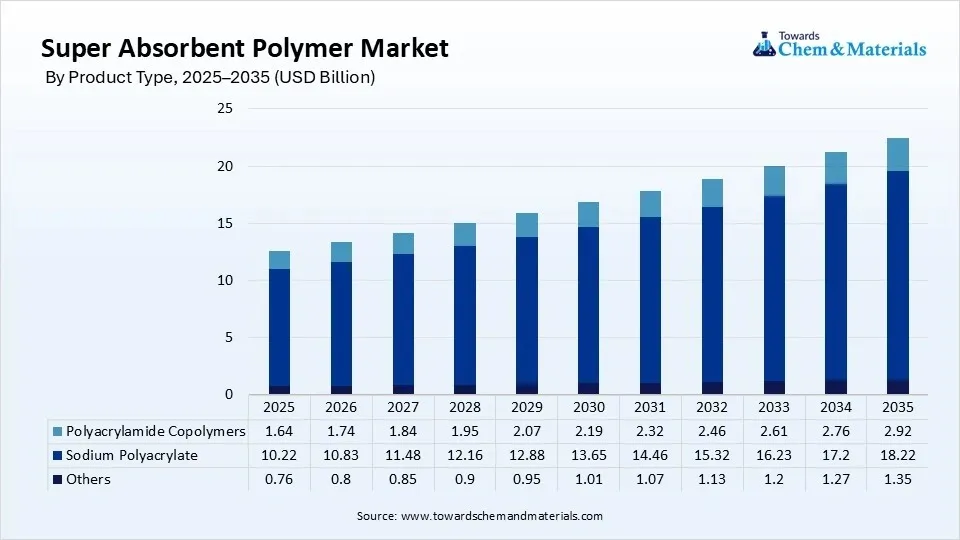
The polyacrylamide copolymer segment has seen a notable growth in the super absorbent polymer market during the forecast period. The polyacrylamide copolymer segment in the superabsorbent polymer market is gaining traction due to its versatile properties and specialized applications. Unlike sodium polyacrylate, polyacrylamide copolymers are widely used in industrial and agricultural sectors, particularly for water treatment, sludge dewatering, and soil stabilization. These copolymers improve water retention in soil, enhance plant growth, and support erosion control. Their excellent gel strength and customizable absorption capabilities make them an ideal choice for diverse environmental and engineering applications.
Super Absorbent Polymer Market Share, By Product Type, 2025(%)
| By Product Type | Market Share (%) |
| Sodium Polyacrylate | 81% |
| Polyacrylamide Copolymers | 13% |
| Others | 6% |
Form Insights
The powder segment dominated the super absorbent polymer market in 2025. The powder form segment holds a significant share in the market due to its easy handling, fast absorption rate, and versatility. Powdered superabsorbent polymers are widely used in personal hygiene products, agriculture, medical dressings, and industrial absorbents. Their fine particle size allows for quick and uniform distribution in various formulations, enhancing efficiency. Additionally, powder form is preferred in soil conditioning and water retention applications, as it can be easily mixed and integrated into different systems.
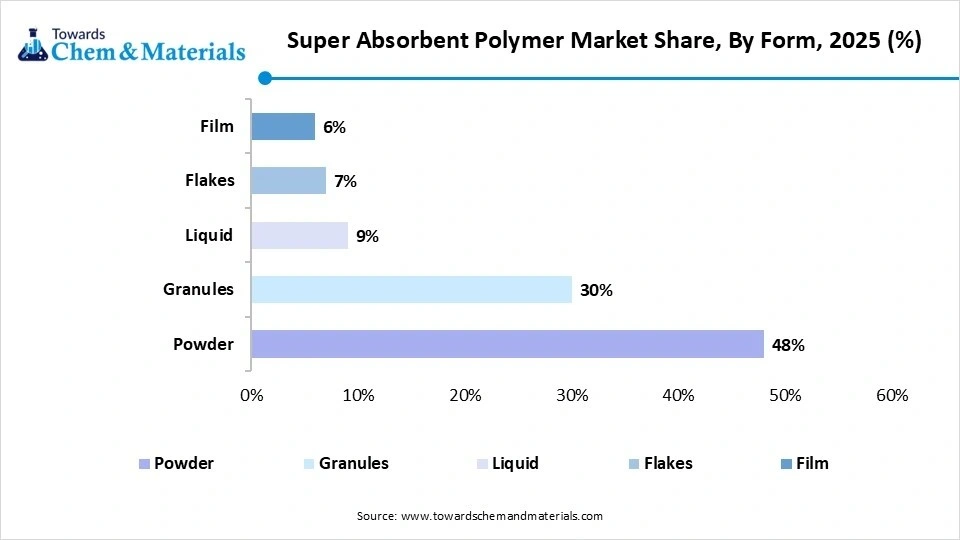
The film segment expects significant growth in the super absorbent polymer market during the forecast period. The film-form segment of the market is valued for its specialized use in advanced hygiene and medical applications. Super absorbent polymer films are thin, flexible layers that offer controlled absorption and superior moisture barrier properties. They are commonly used in wound care dressings, surgical pads, and high-performance sanitary products to ensure dryness and prevent leakage. Their lightweight nature, ease of integration, and ability to conform to body shapes make them ideal for enhancing comfort and protection.
Super Absorbent Polymer Market Share, By Form, 2025 (%)
| By Form | Market Share (%) |
| Powder | 48% |
| Granules | 30% |
| Liquid | 9% |
| Flakes | 7% |
| Film | 6% |
Source Insights
The synthetic (petro-based) segment dominated the super absorbent polymer market in 2025. The synthetic petro-based segment dominates the market due to its high performance, cost-effectiveness, and consistent quality. Derived from acrylic acid and other petroleum-based chemicals, these polymers—such as sodium polyacrylate—offer excellent absorption and retention capabilities, making them indispensable in diapers, feminine hygiene products, and adult incontinence pads. Their established manufacturing processes and reliable supply chains further support widespread adoption. However, growing environmental concerns are prompting interest in more sustainable, bio-based alternatives in some regions.
The bio-based SAPs segment expects significant growth in the super absorbent polymer market during the forecast period. The bio-based super absorbent polymers (SAPs) segment is emerging as a promising alternative in response to rising environmental and sustainability concerns. Derived from renewable sources like starch, cellulose, and other natural polymers, these SAPs offer biodegradable and eco-friendly solutions without compromising on absorbency. They are increasingly used in agriculture for soil moisture management, as well as in sustainable hygiene products. Though currently more expensive and less widely produced than synthetic options, bio-based SAPs are expected to gain market traction as green initiatives expand.
Super Absorbent Polymer Market Share, By Source (Feedstock), 2025 (%)
| By Source (Feedstock) | Market Share (%) |
| Synthetic | 89% |
| Natural/Bio-based SAPs | 11% |
Application Insights
The personal hygiene segment dominated the super absorbent polymer market in 2025. The personal hygiene application dominates the market, accounting for the largest share due to its widespread use in baby diapers, feminine hygiene products, and adult incontinence pads. Super absorbent polymers in these products ensure rapid liquid absorption, excellent retention, and superior dryness, enhancing user comfort and preventing skin irritation. Growing global populations, increasing birth rates in emerging economies, rising aging populations, and greater awareness of personal hygiene drive this segments growth. Continuous product innovations in thinness and absorbency further strengthen market demand.
The agriculture and horticulture segment expects significant growth in the super absorbent polymer market during the forecast period. The agriculture and horticulture application segment in the market is expanding steadily due to rising focus on water conservation and sustainable farming practices. Super absorbent polymers are used to improve soil water retention, reduce irrigation frequency, and enhance seed germination and plant growth, especially in drought-prone areas. These polymers help maintain soil moisture near roots, prevent nutrient leaching, and support healthier crops. As global agricultural challenges intensify, SAPs offer an effective solution for boosting productivity while addressing environmental and resource concerns.
Super Absorbent Polymer Market Share, By Application, 2025 (%)
| By Application | Market Share (%) |
| Personal Hygiene | 67% |
| Agriculture & Horticulture | 12% |
| Medical | 8% |
| Industrial | 7% |
| Packaging | 4% |
| Others | 2% |
End Use Insights
The personal care segment dominated the super absorbent polymer market in 2025. The personal care segment is the largest and most significant end-use category in the market, driven by the widespread demand for hygiene products. Super absorbent polymers are essential in baby diapers, adult incontinence products, and feminine hygiene items, where they provide exceptional fluid absorption and retention, ensuring dryness and comfort. Rising global awareness of hygiene, growing aging populations, and increasing disposable incomes continue to boost demand in this segment. Innovation in thinner, more absorbent products further supports market expansion.
The agriculture segment expects significant growth in the super absorbent polymer market during the forecast period. The agriculture segment represents a rapidly growing end-use category in the market, fueled by increasing concerns over water scarcity and the need for efficient irrigation. Super absorbent polymers are used to improve soil moisture retention, enhance seed germination, and support plant growth, especially in arid and drought-prone regions. By reducing the frequency of watering and preventing nutrient leaching, SAPs help farmers achieve higher crop yields and promote sustainable farming practices. Their adoption supports food security and water conservation initiatives globally.
Super Absorbent Polymer Market Share, By End-use Industry, 2025 (%)
| By End-use Industry | Market Share (%) |
| Personal Care | 53% |
| Healthcare | 14% |
| Agriculture | 13% |
| Packaging | 6% |
| Construction | 6% |
| Waste Management | 5% |
| Food Processing | 3% |
Distribution Channel Insights
The retail/ E-commerce segment dominated the super absorbent polymer market in 2025. The retail and e-commerce segment plays a crucial role in the market, especially for consumer hygiene products like diapers, sanitary pads, and adult incontinence products. With the growing popularity of online shopping, consumers increasingly prefer the convenience and wide selection offered by e-commerce platforms. Retail outlets also remain essential for immediate purchases and brand visibility. Together, these channels enhance product accessibility, support brand growth, and cater to evolving consumer preferences for fast, convenient, and discreet purchasing options.
The direct sales to the agri-players segment are expected to experience significant growth in the super absorbent polymer market during the forecast period. The direct sales to the agri-players segment are a vital distribution channel in the market, particularly for agricultural applications. Through this channel, manufacturers supply SAPs directly to large farming companies, horticulturists, and agribusinesses for use in soil conditioning, water retention, and drought mitigation. This approach enables customized solutions, better technical support, and stronger relationships with end users. By improving soil moisture levels and enhancing crop yield, direct sales to agri-players support sustainable farming practices and help address water scarcity challenges.
Super Absorbent Polymer Market Share, By Distribution Channel, 2025 (%)
| By Distribution Channel | Market Share (%) |
| Retail / E-commerce | 46% |
| Distributors / Wholesalers | 31% |
| Specialty Chemical Suppliers | 15% |
| Direct Sales | 8% |
Regional Insights
How Did Asia Pacific Dominate the Super Absorbent Polymer Market in 2025?
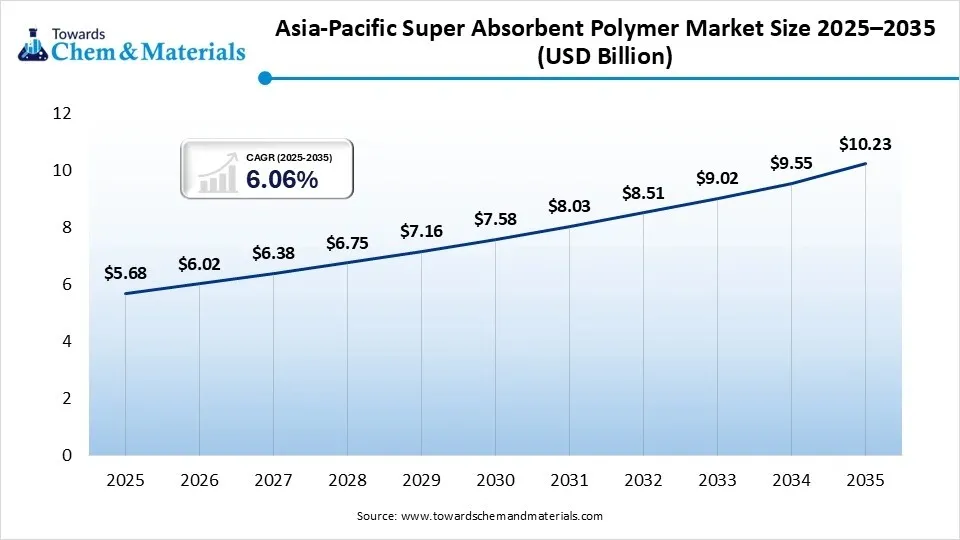
The Asia Pacific super absorbent polymer market size was estimated at USD 5.68 billion in 2025 and is projected to reach USD 10.23 billion by 2035, growing at a CAGR of 6.06% from 2026 to 2035.Asia Pacific dominated the market with the largest share of 45.0% in 2025. The dominance of the region can be attributed to the growing disposable incomes in emerging economies, rapid urbanization, and government hygiene initiatives. In addition, major chemical market players are actively expanding their production capacities within Asia to satisfy escalating domestic demand, hence positioning the region as a primary export hub for global hygiene supply chains.
China
- Chinese chemical manufacturers benefit from intense backward integration into acrylic acid and olefin processing lines.
- The Chinese market is witnessing an influx of advanced SAP deployment in medical wound care, subsea cable waterproofing insulation, and structural concrete curing solutions.
India
- The aggressive maturation of quick-commerce platforms, standard e-commerce networks, and deep-tier localized distribution nodes across Tier-2 and Tier-3 cities has streamlined consumer access to diaper and personal care products.
- Surged infrastructure spending and the rise of advanced medical wound dressings and industrial concrete-curing technologies across major cities are fueling market growth further.
North America held a market share of 23.00% in 2025 and is expected to grow at the fastest CAGR of 6.80% over the forecast period. The growth of the region can be credited to the surge in consumer awareness combined with increasingly stringent environmental regulations in major countries. Also, leading personal care brands are heavily demanding superabsorbent polymers (SAPs) derived from renewable or recycled feedstocks, such as bio-acrylic acid, to achieve corporate net-zero carbon objectives.
United States
- Adult personal care items need significantly greater concentrations of SAP per unit than traditional infant diapers to maintain high Absorbency Under Load (AUL) under adult body weight.
- Major US consumer goods giants such as Procter & Gamble and Kimberly-Clark are under intense pressure to lower their scope 3 emissions.
Canada
- Canada is witnessing an unprecedented expansion of its senior population, particularly in provinces like Ontario and Quebec. This shift has triggered a surge in the consumption of adult incontinence products.
- Canadian parents heavily favor ultra-thin, highly breathable training pants and diapers. This necessitates advanced sodium polyacrylate configurations that optimize particle size distribution (PSD) to eliminate bulk without risking gel-blocking.
Europe held the market share of 20.00% in 2025. The growth of the region can be linked to the rapid commercialization of ISCC PLUS certified bio-attributed SAPs manufactured using a mass-balance approach using renewable, bio-based naphtha or bio-acrylic acid. Major European consumer brands need suppliers to provide precise Product Carbon Footprint (PCF) data to render certified net-zero carbon polymers highly competitive.
Germany
Manufacturers are increasingly implementing mass-balance tracing using renewable raw materials and renewable energy matrices to drastically lower Scope 3 product carbon footprints (PCF).
German consumers heavily favor premium, ultra-thin baby diapers and personal hygiene designs. To eliminate bulk, product formulations need sophisticated surface cross-linking.
France
- Frances pioneering Anti-Waste for a Circular Economy law (Loi AGEC) heavily penalizes non-recyclable or single-use fossil-fuel components. This mandate has boosted an aggressive transition toward bio-attributed polymers.
- The French consumer market strongly favors ultra-thin, highly discreet, and breathable diaper configurations. To eliminate bulk, product formulations require sophisticated surface cross-linking.
Latin America held the market share of 7.00% in 2025. The growth of the region can be driven by global logistics realignments and chemical compounding operations adjacent to the United States border. Moreover, rapidly increasing disposable incomes and expanding female labor force participation in developing economies, most notably Brazil, Mexico, Colombia, and Peru, are driving a profound shift away from conventional alternatives.
Brazil
- Rapid urbanization and an expanding Brazilian middle class are propelling a steady surge in the procurement of commercial, disposable baby diapers and hygiene pants.
- Brazil is a global powerhouse in agriculture, particularly grain, coffee, and guava production, but it also faces severe regional challenges with irregular rainfall, high evaporation, and water scarcity.
Argentina
- Argentina’s large beef and fresh fruit export sectors rely mostly on moisture-control packaging. Superabsorbent polymer sheets and pads are integrated into commercial meat trays to trap excess fluids.
- Adult hygiene products need significantly higher concentrations of cross-linked polymer networks than baby diapers to manage larger fluid volumes under pressure, leading to market growth soon.
The Middle East & Africa held the market share of 5.00% in 2025. The growth of the region can be attributed to the expanding healthcare infrastructure and comprehensive public awareness initiatives regarding menstrual hygiene. Furthermore, agricultural sectors across North and East Africa are increasingly adopting organic hydrogels synthesized from local biomass waste or starch-graft polymers, leading to regional growth shortly.
Saudi Arabia
Saudi Arabia resides at the global epicentre of downstream chemical refining. The Kingdoms massive local refining networks provide immediate, localized access to basic building blocks like propylene and acrylic acid.
High birth rates, a rising native population, and a large influx of expatriate workers in the country have caused a continuous wave of infant diaper consumption.
UAE
- The UAE is positioned as a world-class medical tourism and specialized clinical hub. This growth has directly catalyzed the intake of high-purity medical-grade SAPs, which are crucial components in advanced wound care dressings.
- The UAE exploits its premier geopolitical position and free zone infrastructure to act as a major import and redistribution node for the Middle East and East Africa.
Recent Developments
- In April 2025, Plant Smart, a company that focuses on reducing the plastic crisis which are related to disposable hygiene products, launched a product, PlantSorb, which is a biodegradable super absorbent polymer bioSAP. (Source:worldbiomarketinsights.com )
- In July 2024, ZymoChem, a leading biotech company that focuses on developing sustainable materials for everyday producers, launched BAYSE, a scalable, 100% biobased, biodegradable Super Absorbent Polymer (SAP).
(Source:www.chemanalyst.com )
Top Companies List
- BASF SE (Germany)
- Evonik Industries AG (Germany)
- Nippon Shokubai Co., Ltd. (Japan)
- Sumitomo Seika Chemicals Co., Ltd. (Japan)
- LG Chem Ltd. (South Korea)
- SDP Global Co., Ltd. (Japan)
- Yixing Danson Technology (China)
- Zhejiang Satellite Petrochemical Co., Ltd. (China)
- Chase Corp (USA)
- Formosa Plastics Corporation (Taiwan)
- Songwon Industrial Co., Ltd. (South Korea)
- Sanyo Chemical Industries, Ltd. (Japan)
- Shandong Nuoer Biological Technology Co., Ltd. (China)
- Toshima Manufacturing Co., Ltd. (Japan)
- Henan Xinlianxin Fertilizer Co., Ltd. (China)
- Acuro Organics Ltd. (India)
- Axchem International (France)
- Chemtex Speciality Limited (India)
- SNF Group (France)
- M2 Polymer Technologies, Inc. (USA)
Segments Covered
By Product Type
- Sodium Polyacrylate
- Polyacrylamide Copolymers
- Others
- Potassium Polyacrylate
- Cellulose-based SAPs
- Starch-graft SAPs
By Form
- Powder
- Liquid
- Granules
- Flakes
- Film
By Source (Feedstock)
- Synthetic
- Petroleum-based Acrylic Acid
- Petrochemical Copolymers
- Natural/Bio-based SAPs
- Cellulose-based
- Starch-based
- Chitosan-based
By Application
- Personal Hygiene
- Baby Diapers
- Adult Incontinence Products
- Feminine Hygiene Products
- Agriculture & Horticulture
- Soil Conditioners
- Seed Coatings
- Water Retention
- Medical
- Wound Dressings
- Surgical Pads
- Drug Delivery Systems
- Industrial
- Cable Water Blocking
- Spill Control
- Dewatering
- Packaging
- Fresh Food Packaging
- Moisture Absorbers
- Others
By End-use Industry
- Healthcare
- Personal Care
- Agriculture
- Waste Management
- Packaging
- Construction
- Food Processing
By Distribution Channel
- Direct Sales
- Distributors / Wholesalers
- Retail / E-commerce
- Specialty Chemical Suppliers
By Region
- North America
- U.S.
- Canada
- Europe
- Germany
- UK
- France
- Italy
- Spain
- Sweden
- Denmark
- Norway
- Asia Pacific
- China
- Japan
- India
- South Korea
- Thailand
- Latin America
- Brazil
- Mexico
- Argentina
- Middle East and Africa (MEA)
- South Africa
- UAE
- Saudi Arabia
- Kuwait
A Seven-Phase Framework
Our methodology is designed to be universally applicable across commodity chemicals, specialty chemicals, petrochemicals, construction chemicals, coatings, electronic chemicals, industrial gases, agrochemicals, water treatment chemicals, and performance materials. Each phase builds upon the last, creating a layered validation structure that minimizes estimation error and maximizes analytical confidence.
The framework ensures comprehensive market coverage, robust cross-validation, and reliable long-term forecasting — producing market estimates that withstand scrutiny from investors, regulators, and corporate strategy teams.

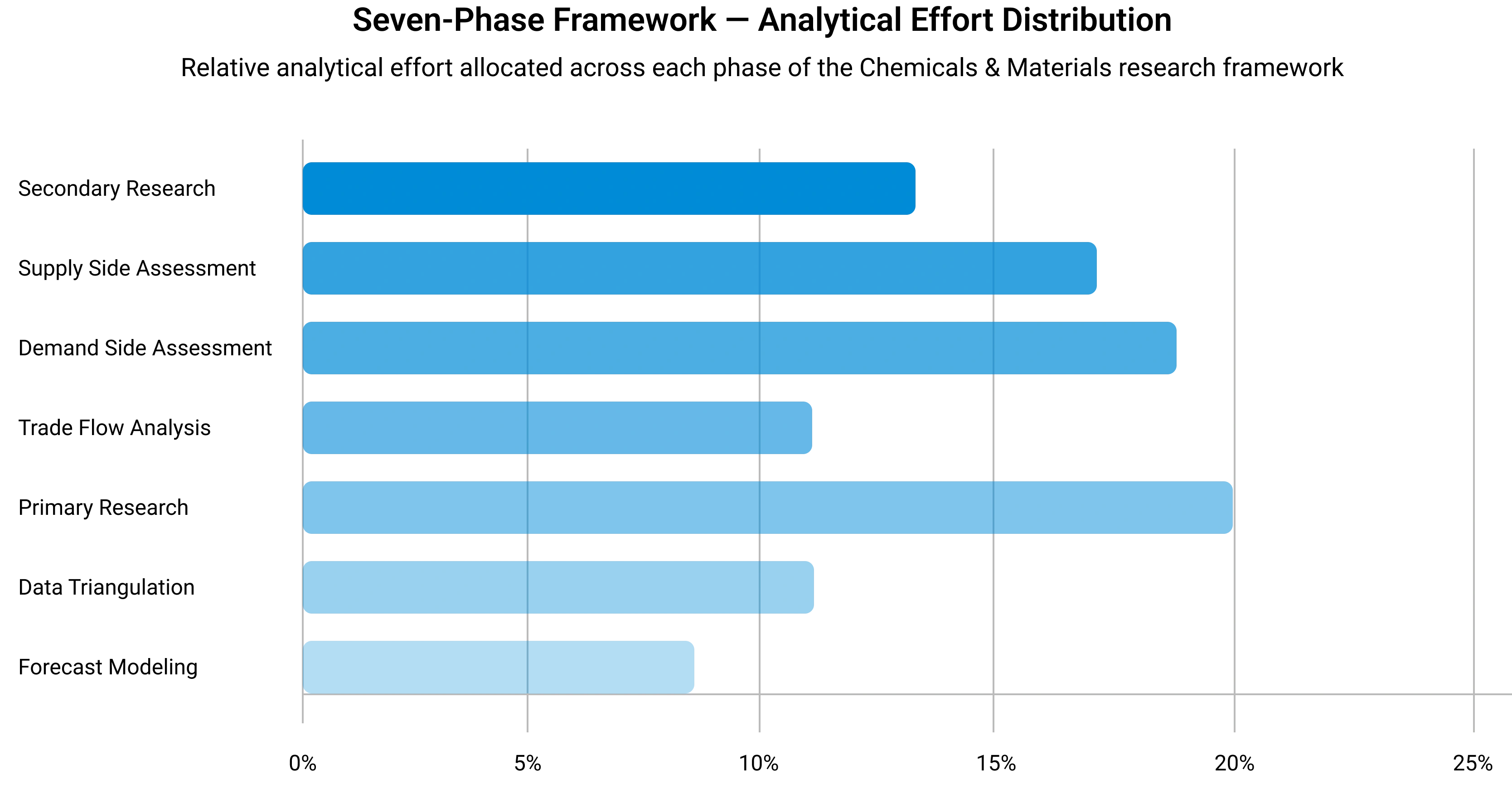
Seven-Phase Framework — Analytical Effort Distribution
Relative analytical effort allocated across each phase of the Chemicals & Materials research framework
Phase 1 - Secondary Research: Establishing the Foundation
Secondary research collects and evaluates publicly available information from authoritative sources, establishing the foundational understanding of market structure, value chain dynamics, competitive landscape, and end-use demand patterns. Every source is evaluated for credibility, recency, geographic relevance, and methodological soundness before inclusion.
Industry Associations
Sources include ACC, CEFIC, ICCA, JCIA, CPCIF, and SOCMA providing production volumes, consumption trends, capacity developments, and sustainability initiatives.
Company Disclosures
Annual reports, investor presentations, earnings transcripts, and regulatory filings reveal product portfolios, manufacturing footprints, capacity expansions, and revenue segmentation.
Government Databases
National statistical offices, customs authorities, environmental agencies, and industrial production databases provide verified statistics on output, trade flows, and regulatory compliance.
Trade Databases
UN Comtrade, ITC, Eurostat, and national customs authorities enable assessment of global product movement, import dependency, and export competitiveness across regions.
Our Secondary Research Sources
- Ministry of Chemicals and Fertilizers
- European Chemicals Agency
- United States Department of Energy
- Ministry of Industry and Information Technology
- Ministry of Economy Trade and Industry
- Ministry of Trade Industry and Energy
- National Institute of Standards and Technology
- Council of Scientific and Industrial Research
- Fraunhofer Society
- National Institute for Materials Science
Phase 2 — Supply-Side Assessment: Mapping Production Capabilities
Production Capacity Analysis
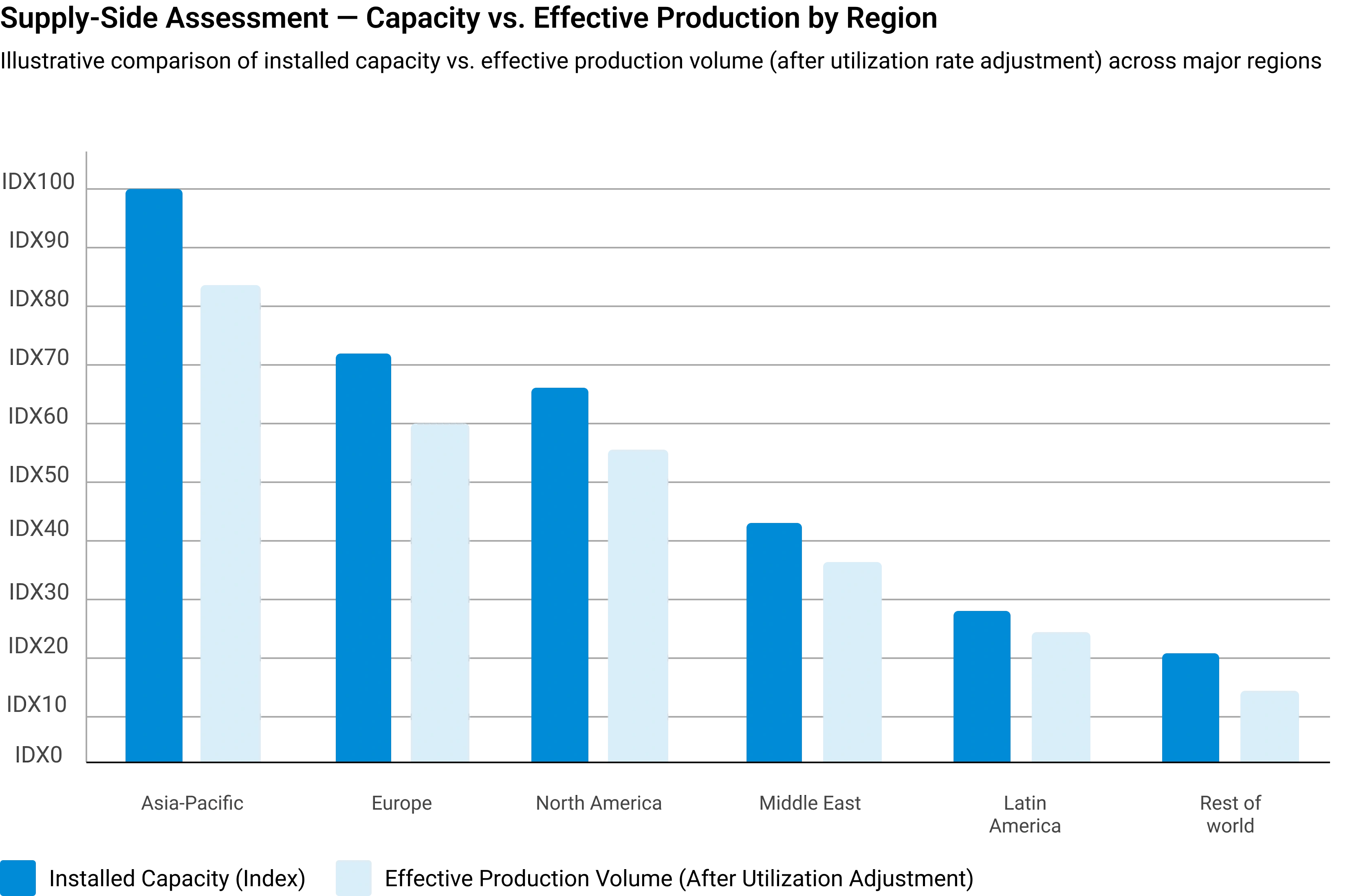
All major manufacturers are assessed for existing installed capacity, planned additions, expansions, new plant announcements, and technology adoption — mapped at global, regional, and country levels.
Capacity Utilization Adjustment
Installed capacity is adjusted using utilization rates based on demand conditions, feedstock availability, plant operating rates, maintenance schedules, and regulatory restrictions.
Manufacturer Revenue Analysis
Product-specific revenues, segment-level performance, regional distribution, average selling prices, and margin trends are evaluated to establish market value estimates.
Supply-Side Assessment — Capacity vs. Effective Production by Region
Illustrative comparison of installed capacity vs. effective production volume (after utilization rate adjustment) across major regions
Phase 3 — Demand-Side Assessment: Quantifying Chemical Consumption
Demand-side analysis quantifies chemical consumption across industries, applications, and geographies — identifying where and how chemicals are consumed throughout the value chain with precision.
End-Use Industry Analysis
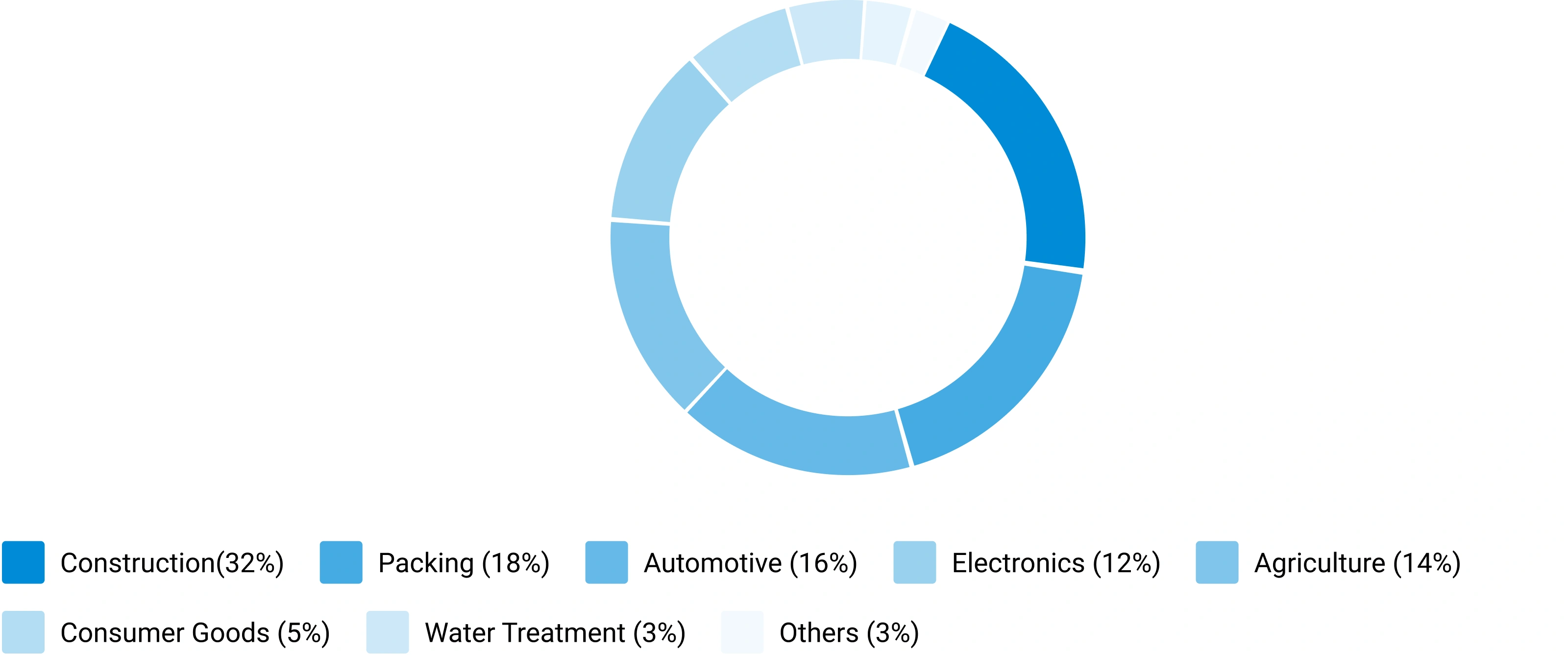
Chemical demand is evaluated across automotive, construction, packaging, electronics, agriculture, healthcare, consumer goods, industrial manufacturing, energy and utilities, and water treatment. Industry output, production trends, and consumption intensity are analyzed to determine demand patterns.
Consumption Modeling
Demand is estimated using measurable indicators: kilograms per vehicle, kilograms per square meter of construction, dosage per cubic meter of water treated, kilograms per hectare of agricultural land, and kilograms per ton of manufactured products. Consumption factors are validated through industry publications and primary interviews.
Application Analysis
The market is segmented by application area to understand product performance requirements, formulation trends, technology adoption, customer preferences, and regulatory requirements improving demand accuracy and segmentation granularity.
Demand-Side Assessment — End-Use Industry Demand Distribution
Illustrative distribution of chemical & materials demand across key end-use industries
Phase 4 - Trade Flow Analysis: Balancing Regional Supply and Demand
Trade flow analysis reconciles regional supply and demand estimates through import and export data, identifying net supply positions, regional dependencies, and market imbalances. It serves as an independent validation layer that tests the consistency of supply-side and demand-side estimates.
Import Analysis
Import data is evaluated to determine volumes, source countries, product dependency, regional supply gaps, and pricing trends — identifying markets that rely heavily on external supply and where domestic production is insufficient to meet demand.
Export Analysis
Export assessments reveal production surplus, export competitiveness, regional manufacturing strength, and global market participation. Export patterns also help validate domestic production estimates and identify net exporting regions.
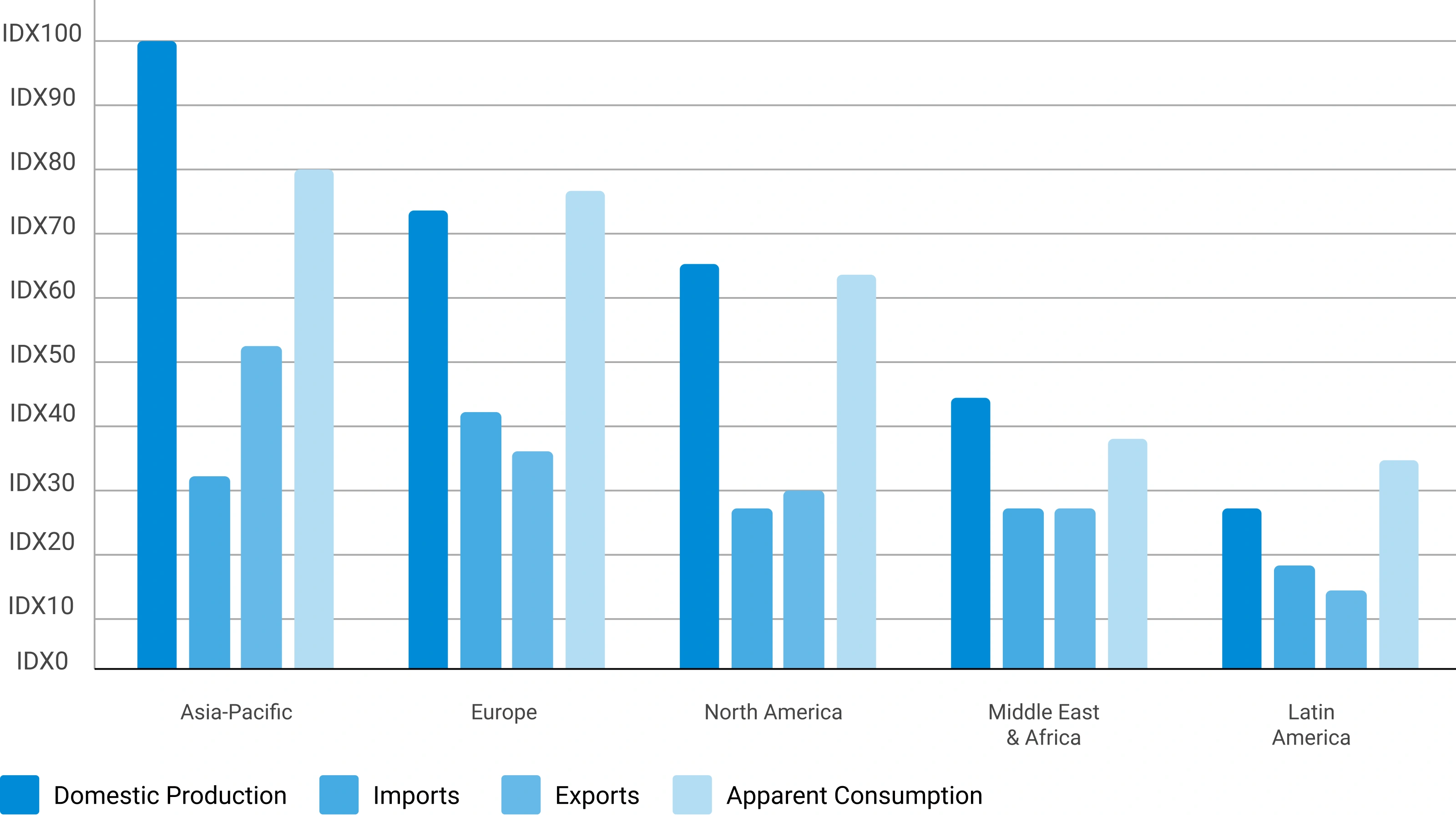
Apparent Consumption Model
Regional consumption is assessed using the standard apparent consumption formula:
Results identify net importing regions, net exporting regions, regional deficits, and surpluses — serving as an independent validation of supply and demand estimates.
Trade Flow Analysis — Net Supply Position by Region
Illustrative apparent consumption vs. domestic production across major regions — positive gap indicates net import dependency
Phase 5 — Primary Research: The Critical Validation Layer
Primary research tests and refines findings from secondary research through direct engagement with industry participants across the supply chain, demand side, and expert community. It captures intelligence that no database or published report can provide — the real-world experience of manufacturers, buyers, and specialists operating in the market.

Supply-Side Interviews
Conversations with chemical manufacturers, raw material suppliers, contract manufacturers, technology providers, and plant operators cover production trends, capacity utilization, pricing developments, technology shifts, and competitive dynamics.

Demand-Side Interviews
Engagement with OEMs, industrial consumers, procurement managers, distributors, formulators, and end-use manufacturers focuses on consumption trends, purchasing behavior, product substitution, demand outlook, and emerging applications.

Industry Expert Consultations
Additional interviews with industry consultants, independent experts, regulatory specialists, technical professionals, and research institutions provide deeper market context and validate key analytical assumptions.
Focus Areas of Primary Research:
Market Size & Forecast Validation
Revenue estimates, volume consumption, growth rates, forecast assumptions, regional demand.Supply Chain & Value Chain Assessment
Raw material sourcing, supply chain challenges, distribution networks, procurement practices.Production & Capacity Analysis
Manufacturing capacity, utilization rates, expansion projects, plant investments.Pricing & Cost Structure Analysis
Product pricing trends, feedstock costs, energy costs, margin pressures, pricing outlook.Competitive Landscape Assessment
Volume and value estimates confirmed to be fully consistent with one another before publicationInterview Volume by Market Scope
| Study Scope | Number of Interviews |
|---|---|
| Niche Market | 20 – 30 |
| Mid-Sized Market | 30 – 50 |
| Global Market | 50 – 80 |
| Highly Fragmented Market | 80 – 120 |
Interview Details:
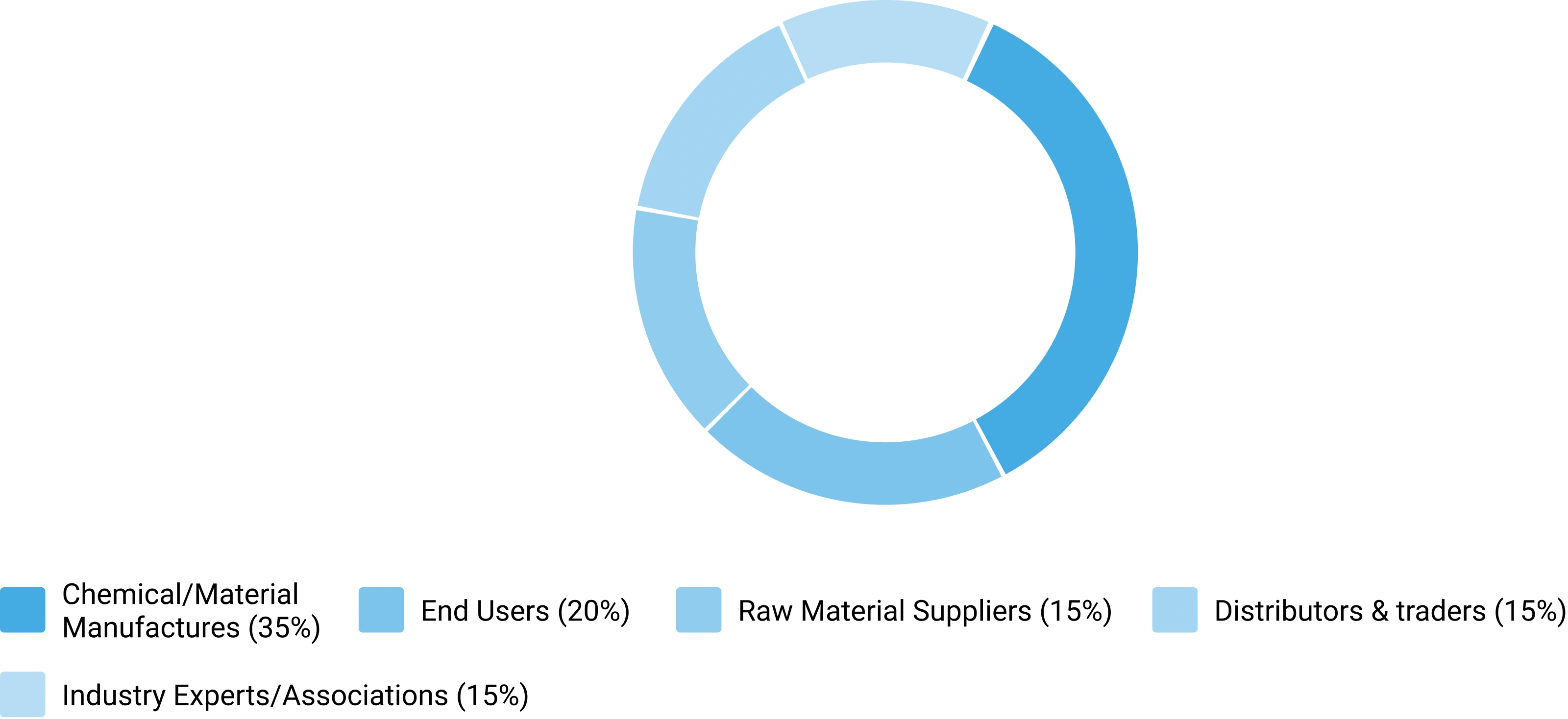
Category : Manufacturers, Suppliers, Distributors, End Users, Experts/Associations
Average Duration : 30–60 Minutes
Interview Mode : Video calls, telephonic interviews, expert consultations
Interview Format : Structured / Semi-Structured questionnaire
Focus Areas of Primary Research:
Market Size & Forecast Validation :
Revenue estimates, volume consumption, growth rates, forecast assumptions, regional demand.
Supply Chain & Value Chain Assessment :
Raw material sourcing, supply chain challenges, distribution networks, procurement practices.
Production & Capacity Analysis :
Manufacturing capacity, utilization rates, expansion projects, plant investments.
Pricing & Cost Structure Analysis :
Product pricing trends, feedstock costs, energy costs, margin pressures, pricing outlook.
Competitive Landscape Assessment :
Market share, competitor positioning, strategic initiatives, partnerships, acquisitions.
Primary Research — Stakeholder Coverage by Category
Distribution of interview respondents across stakeholder categories (% share from PPT data)
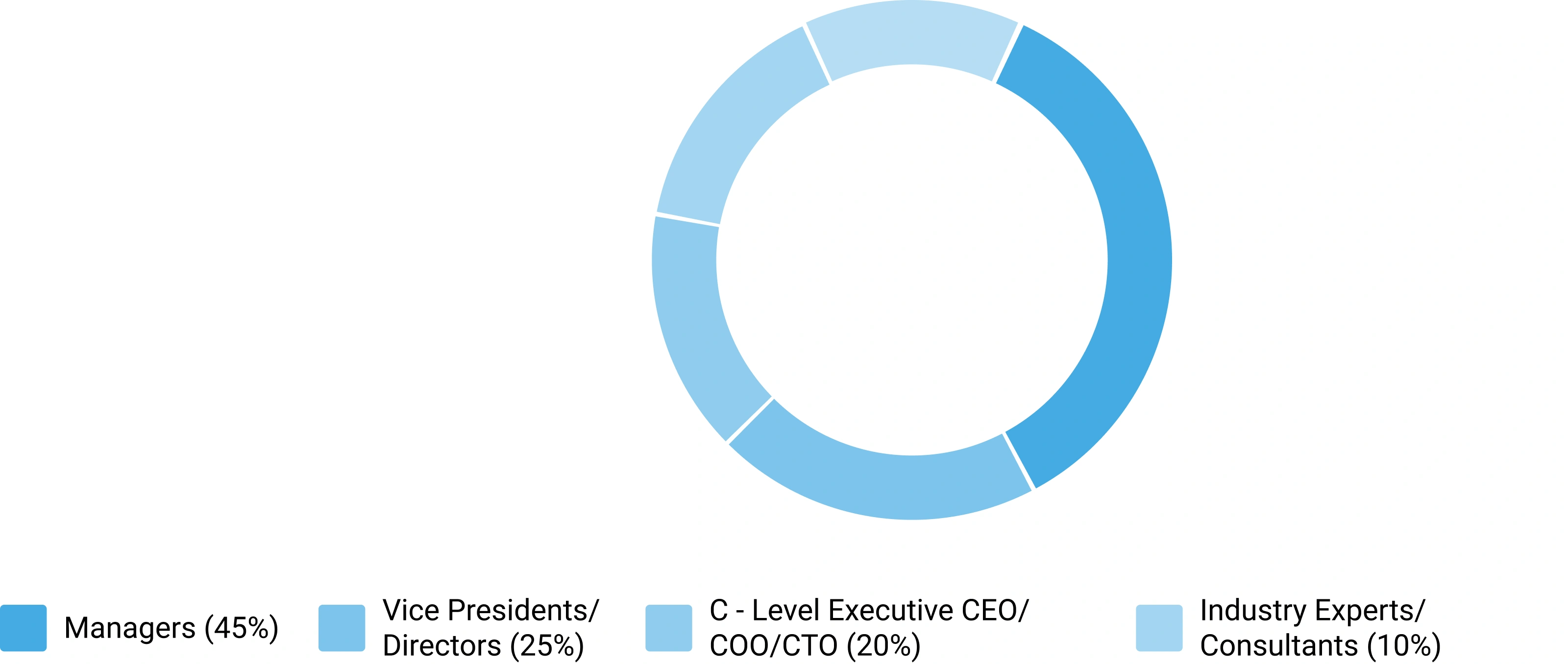
Primary Research — Respondent Designation Profile
Seniority breakdown of interview respondents (% share from PPT data)
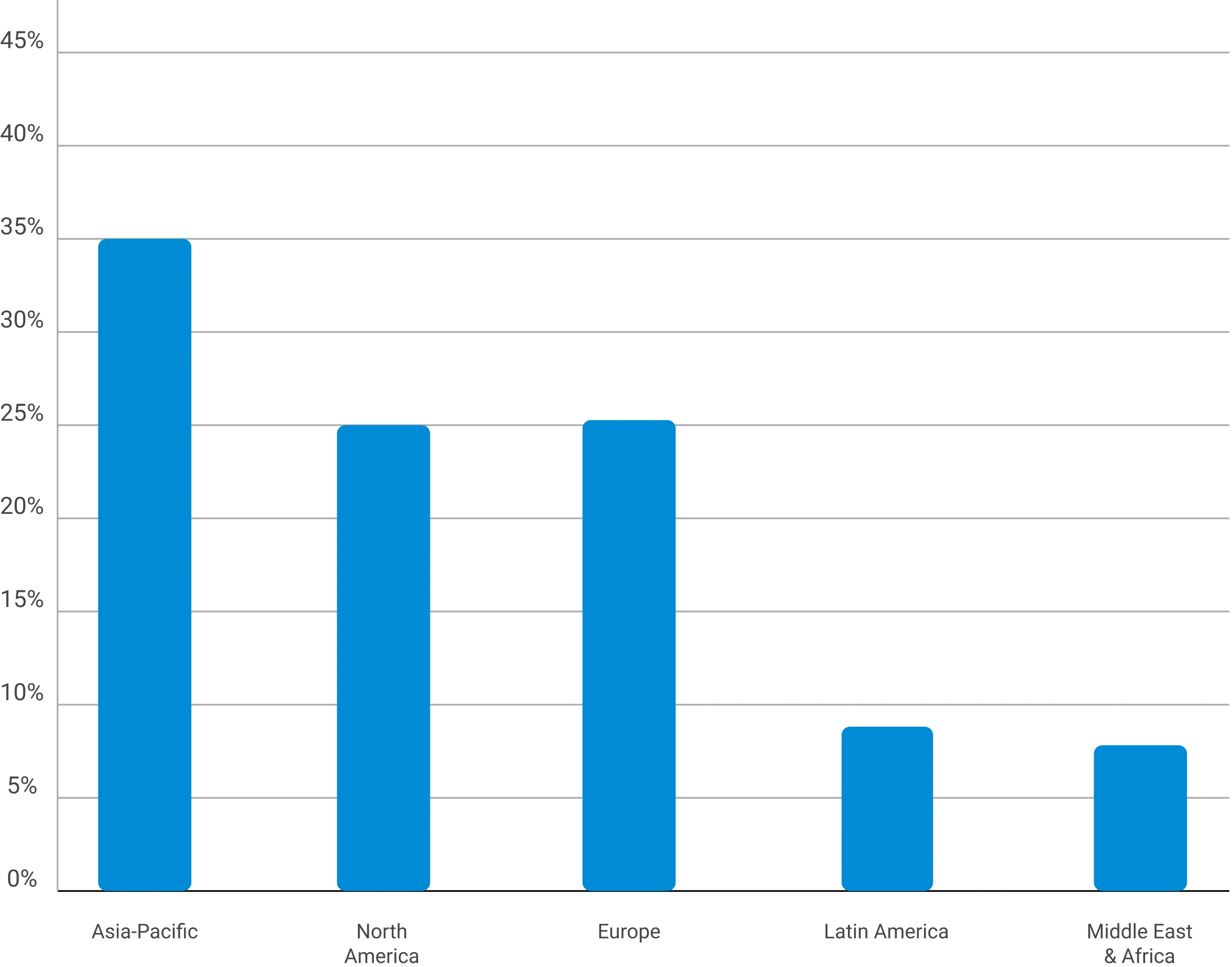
Primary Research — Geographic Coverage of Interviews
Regional distribution of primary research engagement (% share from PPT data)
Phase 6 — Data Triangulation and Market Validation
No single methodology is relied upon in isolation. Multiple independent estimation approaches are combined and reconciled to ensure consistency, accuracy, and analytical defensibility. Any material deviations between approaches are investigated and adjusted through additional validation cycles.
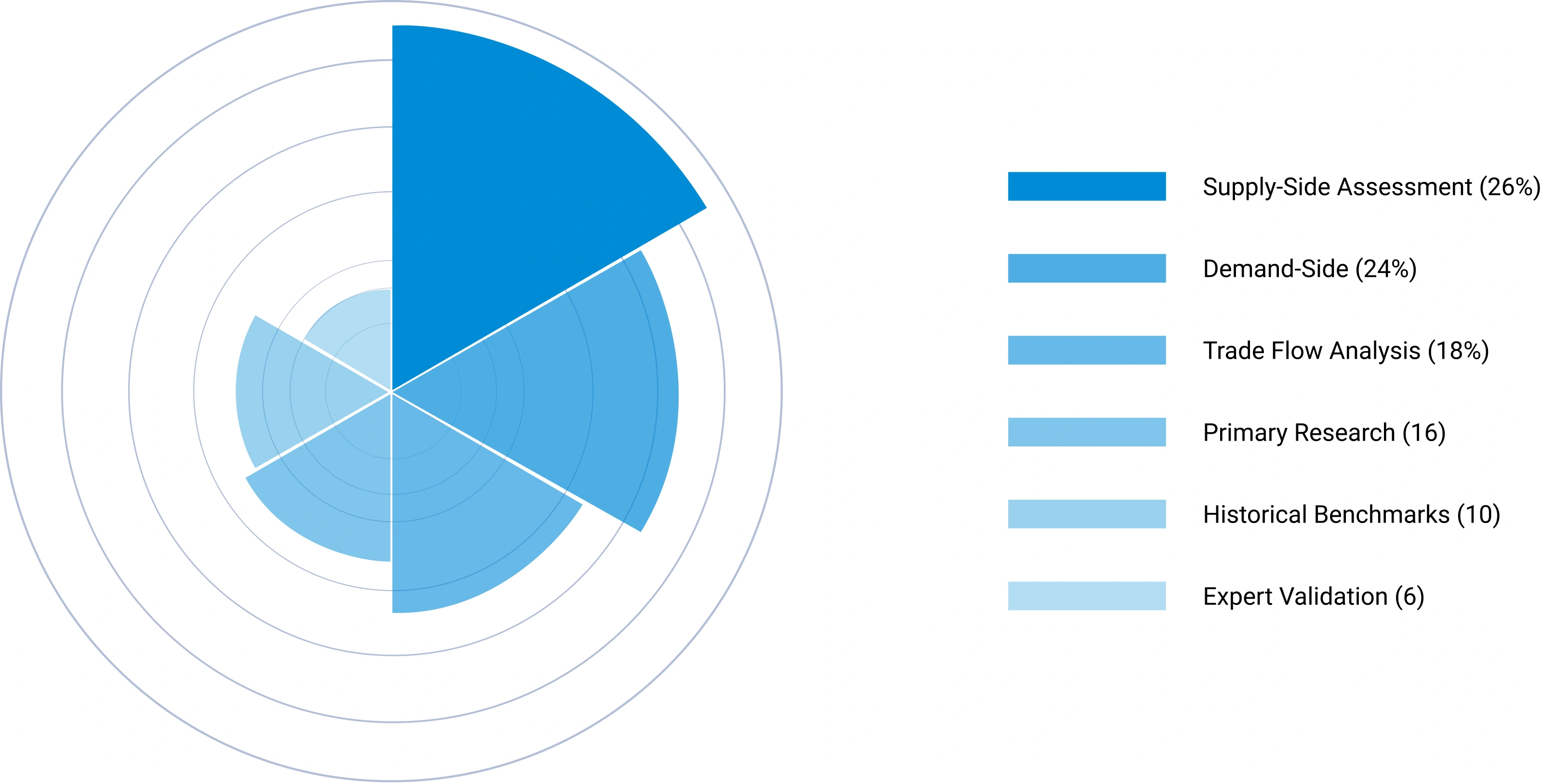
The final market size is derived through weighted triangulation of all validated methodologies. Any material deviations between approaches are investigated and adjusted through additional validation cycles. The outcome represents the most realistic assessment of the market based on available evidence and expert confirmation ensuring that volume and value estimates are fully consistent with one another.
Triangulation Framework — Input Contribution Weight
Relative weight each sizing input contributes to the final reconciled market estimate
Phase 7 — Forecast Modeling: Projecting Future Market Evolution
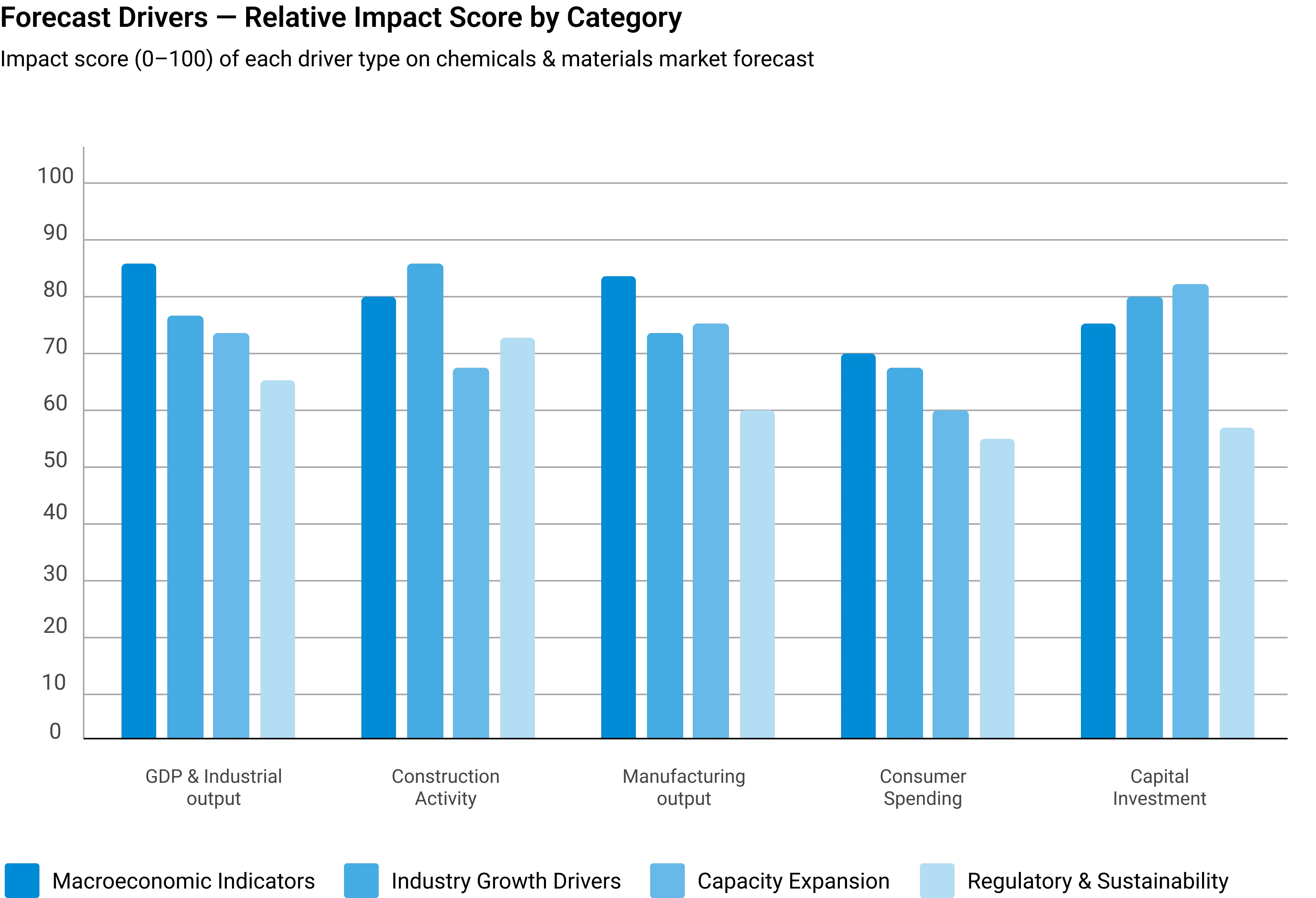
Forecasting evaluates the future trajectory of the market using a combination of quantitative indicators and qualitative assessments across economic, industry, and regulatory dimensions. Rather than simple extrapolation, each driver is independently modeled and integrated into a composite forecast.
Macroeconomic Indicators
GDP growth, industrial production, manufacturing output, construction activity, consumer spending, and capital investment form the quantitative foundation of long-term demand projections. These are applied at country, regional, and global levels.
Industry Growth Drivers
Urbanization, infrastructure development, industrialization, technological innovation, sustainability initiatives, and evolving product performance requirements are assessed at regional and industry levels — capturing both structural and cyclical demand drivers.
Capacity Expansion Analysis
Announced plant expansions, new manufacturing facilities, technology upgrades, and strategic investments are evaluated to determine future supply-demand dynamics and potential market tightness or oversupply situations.
Regulatory & Sustainability
Environmental regulations, chemical safety standards, emission reduction targets, circular economy initiatives, and sustainability requirements are incorporated as they often influence product adoption rates and market growth trajectories.
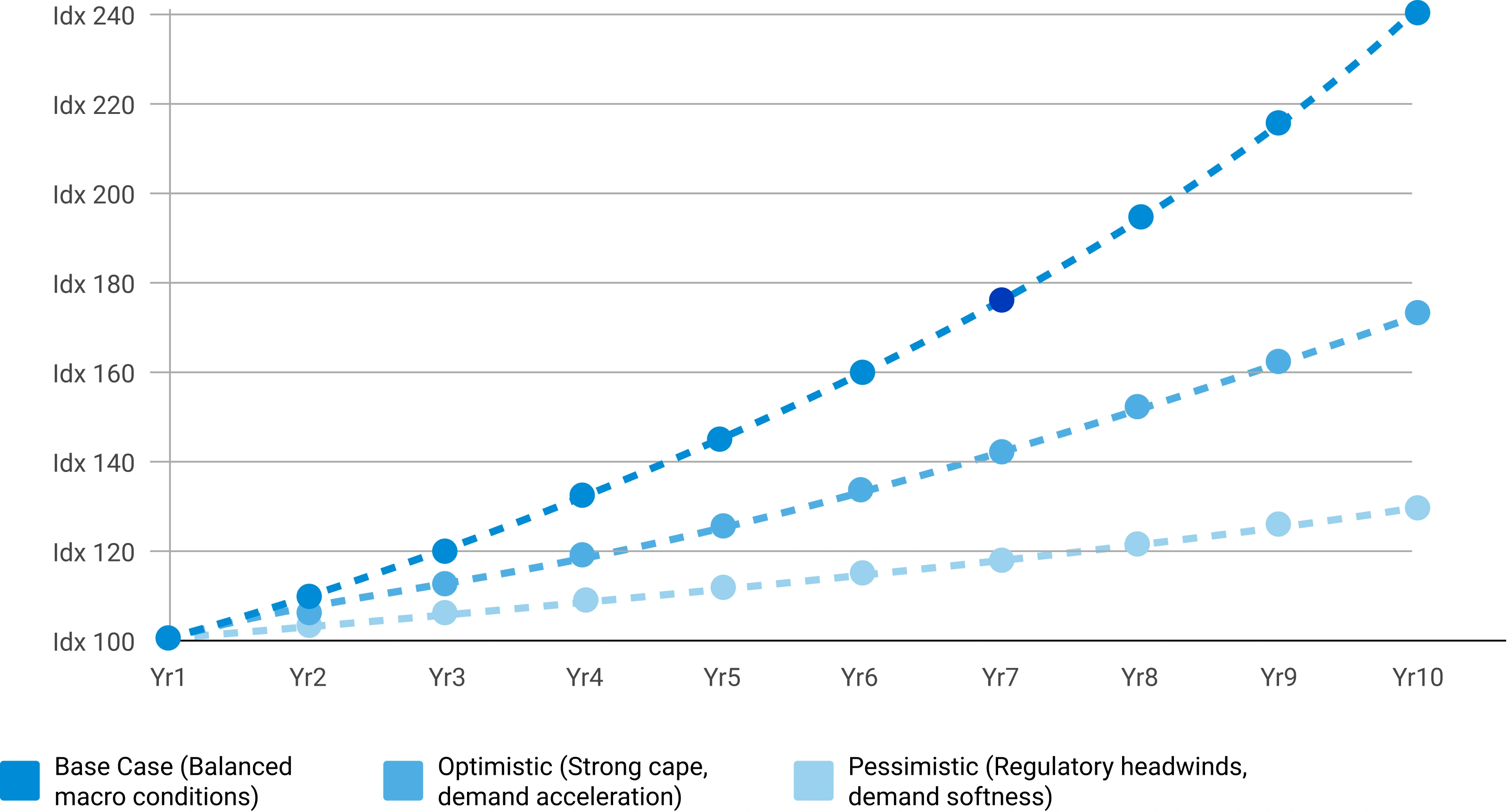
Scenario Forecast Range — Indexed Market Growth (Year 1–10)
Illustrative indexed growth trajectories across Base, Optimistic, and Pessimistic scenarios over a 10-year forecast horizon
Forecast Drivers — Relative Impact Score by Category
Impact score (0–100) of each driver type on chemicals & materials market forecast



Comments
Share your thoughts, ask a question, or provide feedback about this report.