
Oil Spill Management Market Size, Competitive Landscape Analysis Report 2035
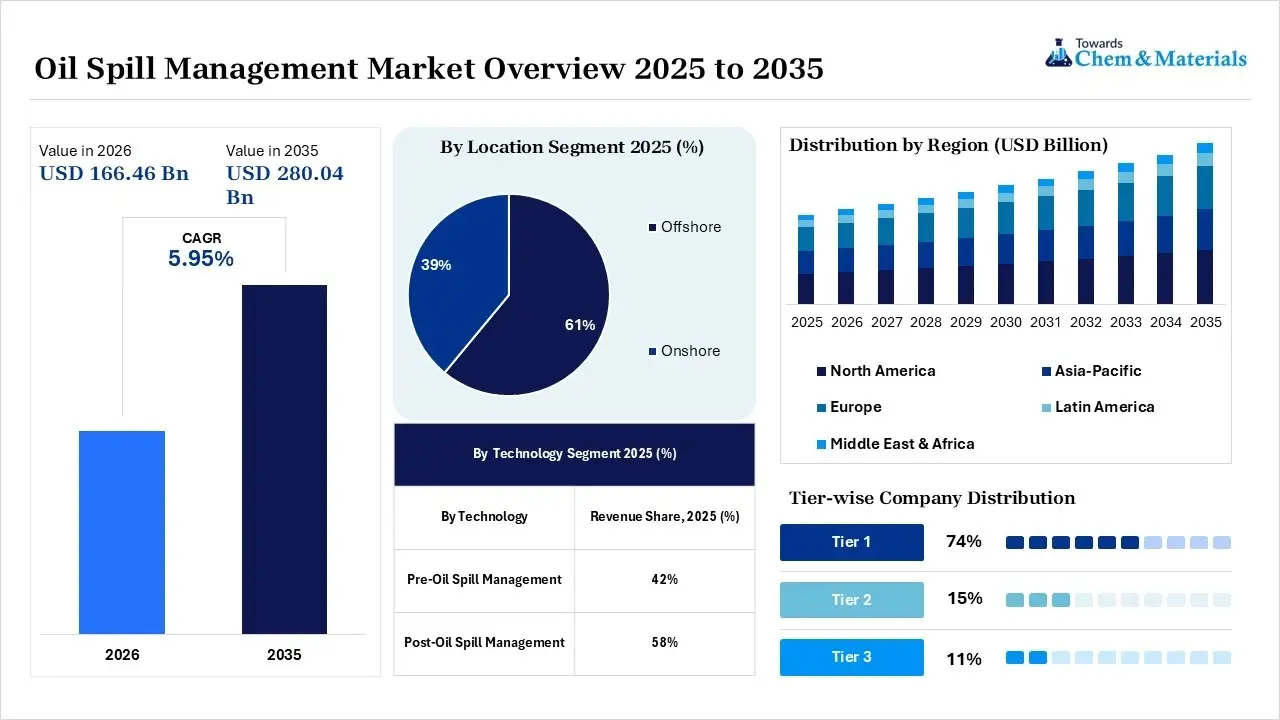
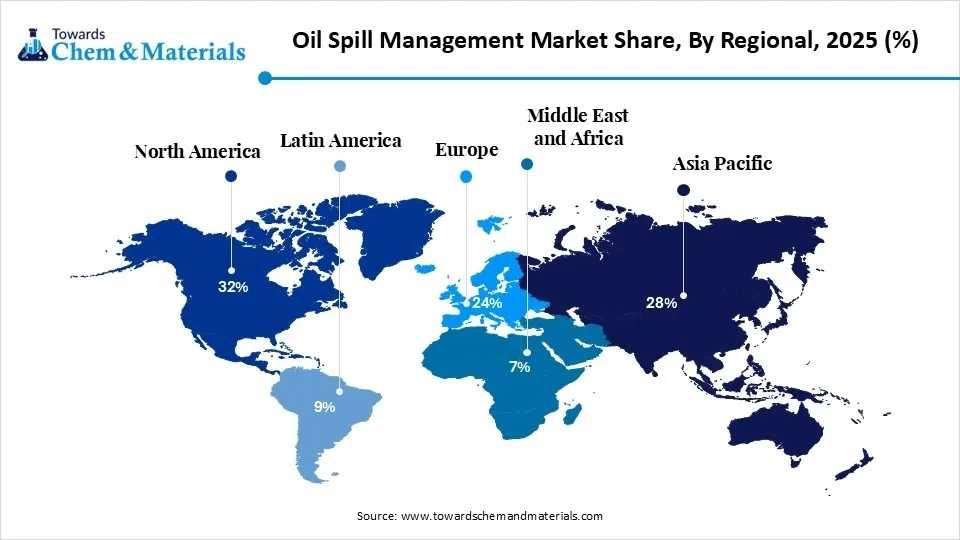
The global oil spill management market size was valued at USD 157.11 billion in 2025, is estimated to reach USD 166.46 billion in 2026, and is projected to reach USD 280.04 billion by 2035, exhibiting a compound annual growth rate (CAGR) of 5.95% over the forecast period from 2026 to 2035.North America dominated the oil spill management market with the largest revenue share of 32% in 2025 and is expected to grow at the fastest CAGR of 6.11% during the forecast period. Stringent government marine safety regulations are the key factor driving market growth. Also, increasing urbanisation coupled with the technological innovations in digital surveillance systems and advanced bioremediation techniques can fuel market growth further.
Key Takeaways
- By region, North America dominated the market with the largest share of 32% in 2025. The dominance of the region can be attributed to the growing offshore drilling activities and an extensive yet ageing pipeline grid.
- By region, Asia Pacific held the market share of 28.0% in 2025 and is expected to grow at the fastest CAGR of 6.90% over the forecast period. The growth of the region can be credited to the growing maritime crude transportation and stringent government marine safety regulations in emerging economies.
- By technology, the pre-oil spill segment dominated the global industry and accounted for a revenue share of 71.11% in 2025
- By technology, the Post oil spill segment is expected to experience a significant growth rate from 2025 to 2034.
- By location, the offshore application segment accounted for the largest revenue share of 71.11 the global industry in 2025
- By location, the Onshore oil spill management is anticipated to grow during the forecast period.
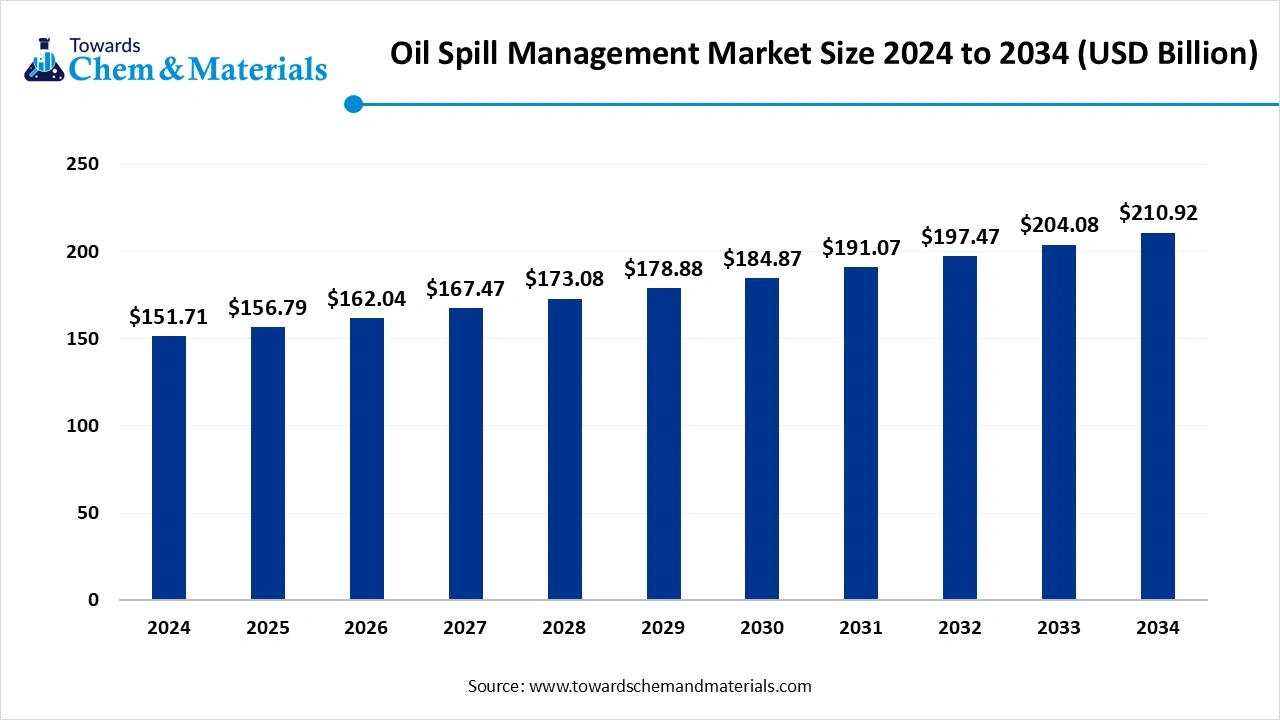
The surge in financial and legal liabilities associated with oil spills is creating lucrative opportunities in the market. As regulatory bodies are continuously focusing on tightening environmental regulations and imposing stringent accountability measures.
- In March 2026, the Government of Mexico established the Permanent Observatory for the Gulf of Mexico, an initiative integrating advanced oceanographic infrastructure, satellite technology, and predictive modelling to generate real-time scientific data with a mandate extending well beyond the immediate oil spill crisis.(Source: mexicobusiness.news)
Governments, environmental organisations and corporations are increasingly forming collaborations to share resources, expertise and best practices to effectively respond to transboundary oil spills.
Market Trends
- Growing demand for double-hull technology: The growing demand for double-hull technology in other vessels and tankers helps in the market growth. The growing demand for double-hull technology in pre-oil spill management to lower the risk of spills supports the market growth.
- The growing energy demand: The rise in industrial processes, transportation, and electricity generation increases oil transportation, exploration, and production, fueling risks of spills, which increases demand for oil spill management solutions.
- Rise of eco-friendly and byproducts solutions: The growing focus on developing environment-friendly and innovative solutions like oil-eating microbes and bioremediation techniques is a key trend in the market.
- Increasing environmental concerns: The growing governmental & public awareness regarding oil spills leads to stringent environmental regulations and increases demand for efficient oil spill management solutions.
Report Scope
| Report Attributes | Details |
| Market Size in 2026 | USD 166.46 Billion |
| Expected Size by 2035 | USD 280.04 Billion |
| Growth Rate from 2025 to 2035 | CAGR 5.95% |
| Base Year of Estimation | 2025 |
| Forecast Period | 2025-2035 |
| High Dominant Region | North America |
| Segment Covered | By Technology, By Location, By Region |
| Key Companies Profiled | Oil Spill Response Limited,National Oilwell Varco, Inc.,SkimOIL, LLC,Ecolab, SWS Environmental Services Ltd., American Pipeline Solutions, Sorbcontrol, OMNI Environmental Solutions, American Green Ventures (US), Inc., Cameron International Corporation, Fender & Spill Response Services L.L.C, Osprey Spill Control |
Supply Chain Analysis of the Oil Spill Management Market
Production & Processing
- It includes the technologies and services deployed at upstream and midstream energy facilities to mitigate emissions, manage wastewater, and remediate hydrocarbon spills. This discipline effectively aligns regulatory safety standards during extraction with rapid, decisive contamination containment protocols.
- Ecolab (NALCO): Offers chemical programmes for spill dispersants and treating produced water.
- Other Key Players: Elastec, DESMI A/S
Quality Testing and Certification
- It refers to the systematic auditing of spill response assets, chemical agents, and personnel to ensure compliance with international environmental regulations. It verifies all equipment. ranging from containment booms to dispersants, satisfies stringent safety and efficacy protocols prior to operational deployment.
- Oil Spill Response Limited (OSRL): The largest international industry-funded cooperative, offering extensive training, preparedness programmes, and equipment certification.
- Other Key Players: National Oilwell Varco, Inc. (NOV), SWS Environmental Services.
Distribution to Industrial Users
- It encompasses the supply chain and procurement of spill containment equipment, sorbents, dispersants, and recovery systems for non-oil-and-gas industries. It ensures that manufacturing facilities, chemical plants, and refineries maintain direct access to preventative and emergency spill management resources to comply with workplace safety regulations and Environmental Protection Agency (EPA) standards.
- Lamor Corporation: A global leader in manufacturing and distributing oil spill response equipment (skimmers, booms, and separators) for industrial and marine use.
- Other Key Players: National Oilwell Varco (NOV) and Oil Spill Response Limited (OSRL).
Market Opportunity
Growing Technological Advancements Boost The Oil Spill Management Market
The growing technological advancements in oil spill management methodologies and technologies create opportunities for market growth. The advancements, like real-time spill monitoring, containment, and remote sensing, help in effective oil spill management. The growing advancements to enhance monitoring & detection include autonomous robots, remote sensing, and artificial intellegence (AI) powered analysis help in the market growth.
The innovation in cleanup methods includes magnetic soaps, graphene-based materials, MIT magnets, lotus leaf-inspired mesh, and a dual-layer mesh roller that lowers the environmental impact of spills. The growing advancements in bioremediation and emergent dispersant technologies support the market growth.
The growing advancements help to facilitate more targeted cleanup efforts, enhance the speed & efficiency of oil spill response, and lower environmental impact. The growing technological advancements and innovation in spill management technology create a strong opportunity for the oil spill management market.
Market Challenge
High Operational Costs Limit The Expansion Of The Market
Despite several benefits of oil spill management, the high operational cost restricts the market growth. Oil spill management requires expensive services, systems, and equipment, and the maintenance of equipment is also high. Large volumes of oil spills require costly & expensive cleanup operations, like logistical support, specialized equipment, and personnel support increases the overall cost. The complexity of the environment, like inland waterways, open ocean, and shoreline, leads to higher costs. The containment & recovery efforts, like deploying skimmers & booms, led to higher costs.
The growing need for remediation techniques like bioremediation, dispersants, and other techniques increases the overall cost. The high operational costs due to various factors, like long-term environmental impact, sheer scale of cleanup efforts, economic damage, and complexity of the environment, hamper the oil spill management market growth.
Segmental Insights
Technology Insights
The pre-oil spill segment dominated the oil spill management market share 42% in 2025. The growing demand for preventing spills in the first place helps in the market growth. Pre-oil spill management includes developing robust contingency plans, implementing safety protocols, and regularly maintaining equipment. The growing adoption of proactive spill management practices due to stricter environmental regulations developed by the International Maritime Organization helps in the market growth.
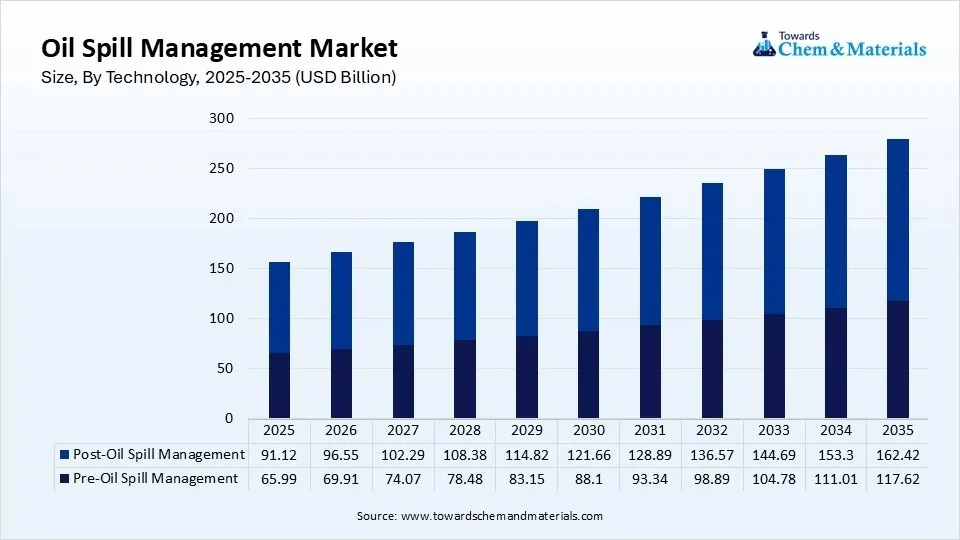
The growing environmental impact of oil spills on wildlife & ecosystem increases demand for pre-oil spill management techniques. Pre-oil spill management includes double-hull tankers, pipeline leak detection, and blowout preventers. The cost-effectiveness and growing demand from North America & Asia Pacific due to the presence of the oil & gas industry drive the market growth.
The post-oil spill segment expects the fastest growth in the market during the forecast period. The growing oil spill incidents in transportation and offshore oil exploration help in the market growth. The growing industry & public understanding of the consequences of oil spills on human health & marine ecosystems increases demand for post-oil spill management.
The stringent regulation implementation by international organizations & government agencies helps in the market growth. The growing oil spill incidents, like pipelines & tanker spills, increase demand for post-oil spill management. The post-oil spill management includes mechanical containment & recovery, chemical recovery, biological recovery, and physical remediation. Furthermore, growing advancements like bioremediation techniques, remote sensing, and AI-based monitoring support the overall market growth.
Oil Spill Management Market Share, By Technology, 2025 (%)
| By Technology | Revenue Share, 2025 (%) |
| Pre-Oil Spill Management | 42% |
| Post-Oil Spill Management | 58% |
Location Insights
The offshore application segment held the largest share of the oil spill management market share 61% in 2025. The growing oil & gas production & exploration in locations having the risk of spills & deepwater helps in the market growth. The growing demand for specialized strategies & equipment to manage spills in harsh marine environments increases demand for offshore applications. The stringent government & international bodies' environmental compliance and regulations help in the market growth. The growing requirement for sorbents, containment booms, and skimmers drives the market growth.
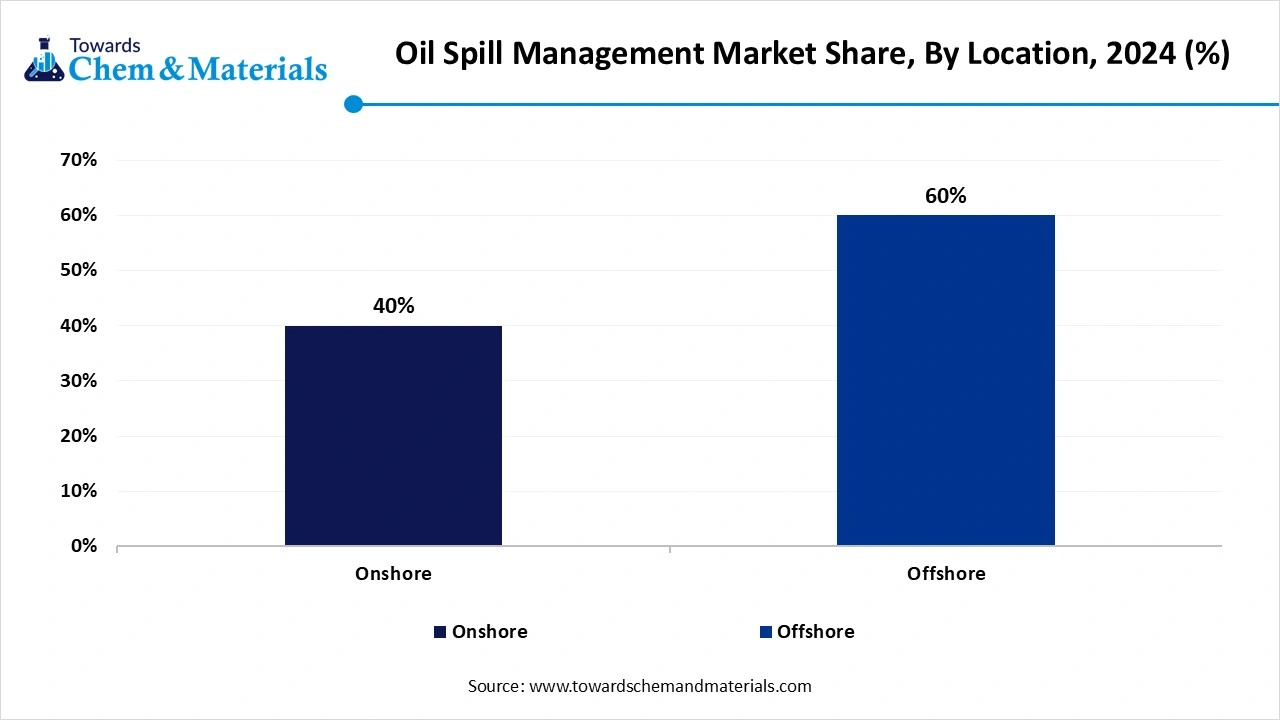
The onshore application segment is the fastest growing in the market during the forecast period. The increasing awareness about the environmental impact of oil spills and stricter regulations increases demand for onshore oil spill management. The growing technological advancements for oil spill cleanup, prevention, and containment help in the market growth. The growing transportation of oil & gas products, rising oil & gas production & exploration activities, increases the risk of spills, fueling demand for onshore oil spill management. The growing pipeline failures and the rising number of onshore pipelines support the overall growth of the market.
Oil Spill Management Market Share, By Location, 2025 (%)
| By Location | Revenue Share, 2025 (%) |
| Offshore | 61% |
| Onshore | 39% |
Regional Insights
How did the North America dominate Oil Spill Management Market in 2025?
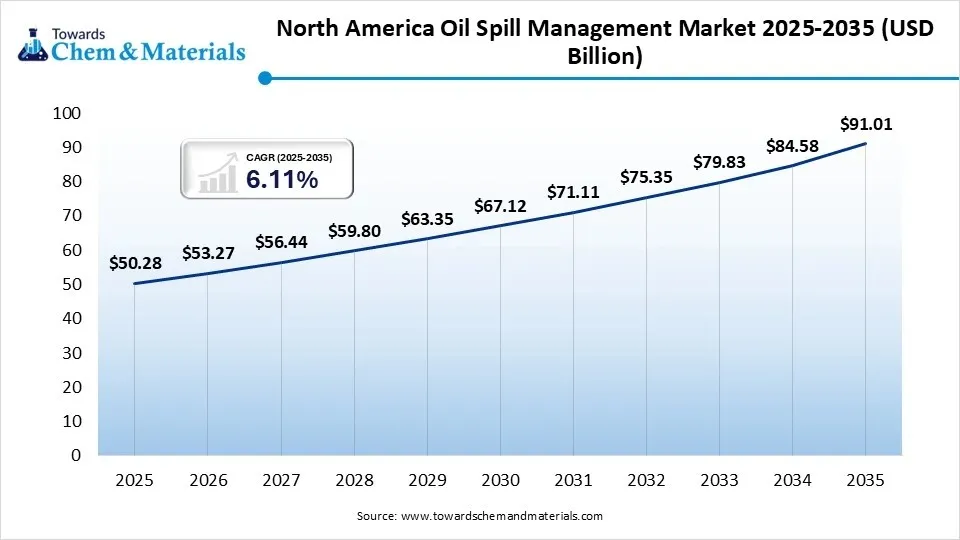
The North America oil spill management market size was estimated at USD 50.28 billion in 2025 and is projected to reach USD 91.01 billion by 2035, growing at a CAGR of 6.11% from 2026 to 2035.North America dominated the market with the largest share of 32% in 2025. The dominance of the region can be attributed to the growing offshore drilling activities, an extensive yet ageing pipeline grid, strict environmental policies, and a robust focus on proactive spill prevention. In addition, extensive offshore exploration and deep-sea drilling operations mandate continuous surveillance, leading to market growth soon.
 United States
- Deepwater and ultra-deepwater drilling activities, particularly concentrated in the Gulf of Mexico, require comprehensive spill readiness and containment fleets.
- Major market players are heavily investing in research & development (R&D) for remote sensing, aerial surveillance, and AI-driven oil spill modelling.
Canada
- The integration of remote sensing, autonomous vessels, and AI-driven spill detection is transforming response times, particularly in remote regions and harsh marine environments.
- Canada is actively adopting alternative measures like decanting, in-situ burning, and chemical treating agents to minimize ecological impact.
The Asia Pacific oil spill management market size was estimated at USD 43.99 billion in 2025 and is projected to reach USD 79.81 billion by 2035, growing at a CAGR of 6.14% from 2026 to 2035.Asia Pacific held the market share of 28.0% in 2025 and was expected to grow at the fastest CAGR of 6.90% over the forecast period. The growth of the region can be credited to the growing maritime crude transportation and stringent government marine safety regulations in emerging economies. Furthermore, the incorporation of state-of-the-art technologies, such as AI-assisted monitoring, remote sensing, and advanced chemical dispersants, has improved the efficacy and scope of spill containment and remediation operations.
China
- China hosts several of the world's busiest ports and sees massive crude oil imports. This dense supertanker traffic drives the need for sophisticated post-spill management.
- Increased domestic drilling and exploration activities, specifically in the South China Sea and Bohai Sea, heighten the risk of marine accidents, fuelling the demand for containment booms.
India
- India’s wide coastline is situated near major global crude oil transit routes. Expanded tanker traffic increases the likelihood of accidental spills.
- The market is witnessing increased adoption of remote sensing, chemical dispersants, and mechanical skimmers to protect vulnerable coastal ecosystems.
The Europe oil spill management market size was estimated at USD 37.71 billion in 2025 and is projected to reach USD 68.61 billion by 2035, growing at a CAGR of 6.35% from 2026 to 2035.Europe held the market share of 24.00% in 2025. The growth of the region can be linked to a regional emphasis on sustainability and growing demand for innovative mechanical recovery and bioremediation techniques. Also, the integration of advanced mechanical recovery equipment, such as high-capacity skimmers and offshore-ready containment booms, with AI-driven remote sensing can fuel market growth soon.
Germany
- Germany’s bustling ports and heavily navigated inland waterways require constant monitoring and robust rapid-response capabilities.
- There is a robust regional shift toward real-time monitoring, which integrates aerial drones, satellite surveillance, and sensor-based leak detection to identify spills before they escalate.
The Latin America oil spill management market size was estimated at USD 14.14 billion in 2025 and is projected to reach USD 26.60 billion by 2035, growing at a CAGR of 6.52% from 2026 to 2035.Latin America held a market share of 8.00% in 2025. The growth of the region can be driven by growing investments in emergency response infrastructure and growing deepwater offshore exploration. Regional entities are investing in equipment modernisation, remote sensing, and aerial surveillance to boost crisis readiness and minimise environmental impact, driving market growth soon.
Brazil
- The presence of highly biodiverse, sensitive marine ecosystems, such as the Great Amazon Reef System and extensive mangrove networks, are major country drivers.
- The market is mainly driven by the integration of digital technologies, such as satellite imaging, AI-based monitoring, and remote sensing, to detect and track spill trajectories in dynamic ocean currents.
Argentina
- Argentina's expanding offshore exploration and the development of major crude oil export ports, particularly in coastal zones like Patagonia, heavily increase the risk of marine and terrestrial spills.
- The adoption of real-time cloud-based detection systems, IoT sensors, and eco-friendly bioremediation methods is transforming the market in the country in the near future.
The Middle East & Africa oil spill management market size was estimated at USD 11.00 billion in 2025 and is projected to reach USD 21.00 billion by 2035, growing at a CAGR of 6.68% from 2026 to 2035.The Middle East & Africa held the market share of 8.00% in 2025. The growth of the region can be attributed to the growth of offshore exploration and strict national environmental mandates along with the extensive adoption of innovative pre-spill detection and vacuum recovery technologies. Furthermore, the industry is currently transitioning toward real-time digital solutions. By integrating remote sensing, aerial surveillance, and oil spill modelling, organisations can execute faster, proactive responses that significantly mitigate ecological damage.
Saudi Arabia
- There is a strong regional transition toward adopting advanced pre- and post-spill technologies like bioremediation, remote sensing, and innovative oil sludge treatments.
- Heavy regulatory fines and increased pressure to maintain uninterrupted operations push midstream and upstream companies to heavily invest in pipeline leak detection systems, leading to market growth soon.
UAE
- The UAE serves as a major global shipping hub. High oil tanker traffic through critical choke points like the Strait of Hormuz elevates regional spill risk exposure.
- Energy producers and port operators are maintaining certified rapid-deployment response systems to avoid operational shutdowns and legal liabilities.
Recent Developments
- In April 2026, the Kerala State Pollution Control Board (KSPCB) submitted a draft Oil Spill Contingency Plan (OSCP) to the National Green Tribunal (NGT). Developed by a Bengaluru-based firm, the comprehensive framework encompasses advanced oil spill modelling, marine sensitivity index mapping, and net environmental benefit analyses.(Source: www.thehindu.com )
Top Companies List
- Oil Spill Response Limited
- National Oilwell Varco, Inc.
- SkimOIL, LLC
- Ecolab
- SWS Environmental Services Ltd.
- American Pipeline Solutions
- Sorbcontrol
- OMNI Environmental Solutions
- American Green Ventures (US), Inc.
- Cameron International Corporation
- Fender & Spill Response Services L.L.C
- Osprey Spill Control
Segments Covered in the Report
By Technology
- Pre-Oil Spill Management
- Blow-Out Preventers
- Double-Hull
- Pipeline Leak Detection
- Others
- Post-Oil Spill Management
- Mechanical
- Containment Booms
- Fire Booms
- Hard Booms
- Sorbent Booms
- Others
- Skimmers
- Non-Oleophilic Skimmers
- Oleophilic Skimmers
- Weir Skimmers
- Sorbent
- Others
- Skimmers
- Gelling Agents
- Dispersing Agents
- Others
- Biological
- Physical
By Location
- Offshore
- Onshore
By Region
- North America
- U.S.
- Canada
- Europe
- Germany
- UK
- France
- Italy
- Spain
- Sweden
- Denmark
- Norway
- Asia Pacific
- China
- Japan
- India
- South Korea
- Thailand
- Latin America
- Brazil
- Mexico
- Argentina
- Middle East & Africa
- South Africa
- UAE
- Saudi Arabia
- Kuwait
A Seven-Phase Framework
Our methodology is designed to be universally applicable across commodity chemicals, specialty chemicals, petrochemicals, construction chemicals, coatings, electronic chemicals, industrial gases, agrochemicals, water treatment chemicals, and performance materials. Each phase builds upon the last, creating a layered validation structure that minimizes estimation error and maximizes analytical confidence.
The framework ensures comprehensive market coverage, robust cross-validation, and reliable long-term forecasting — producing market estimates that withstand scrutiny from investors, regulators, and corporate strategy teams.

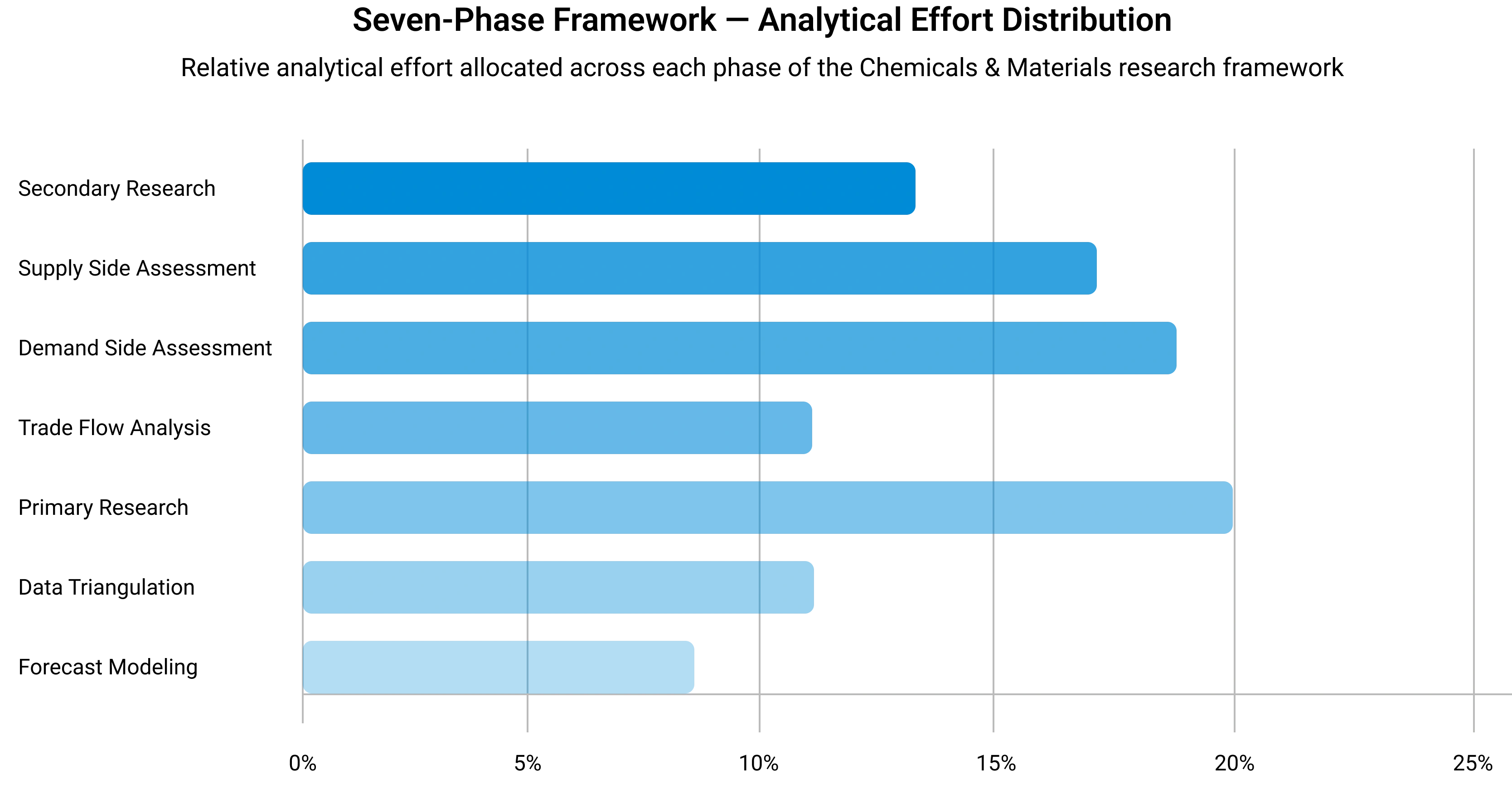
Seven-Phase Framework — Analytical Effort Distribution
Relative analytical effort allocated across each phase of the Chemicals & Materials research framework
Phase 1 - Secondary Research: Establishing the Foundation
Secondary research collects and evaluates publicly available information from authoritative sources, establishing the foundational understanding of market structure, value chain dynamics, competitive landscape, and end-use demand patterns. Every source is evaluated for credibility, recency, geographic relevance, and methodological soundness before inclusion.
Industry Associations
Sources include ACC, CEFIC, ICCA, JCIA, CPCIF, and SOCMA providing production volumes, consumption trends, capacity developments, and sustainability initiatives.
Company Disclosures
Annual reports, investor presentations, earnings transcripts, and regulatory filings reveal product portfolios, manufacturing footprints, capacity expansions, and revenue segmentation.
Government Databases
National statistical offices, customs authorities, environmental agencies, and industrial production databases provide verified statistics on output, trade flows, and regulatory compliance.
Trade Databases
UN Comtrade, ITC, Eurostat, and national customs authorities enable assessment of global product movement, import dependency, and export competitiveness across regions.
Our Secondary Research Sources
- Ministry of Chemicals and Fertilizers
- European Chemicals Agency
- United States Department of Energy
- Ministry of Industry and Information Technology
- Ministry of Economy Trade and Industry
- Ministry of Trade Industry and Energy
- National Institute of Standards and Technology
- Council of Scientific and Industrial Research
- Fraunhofer Society
- National Institute for Materials Science
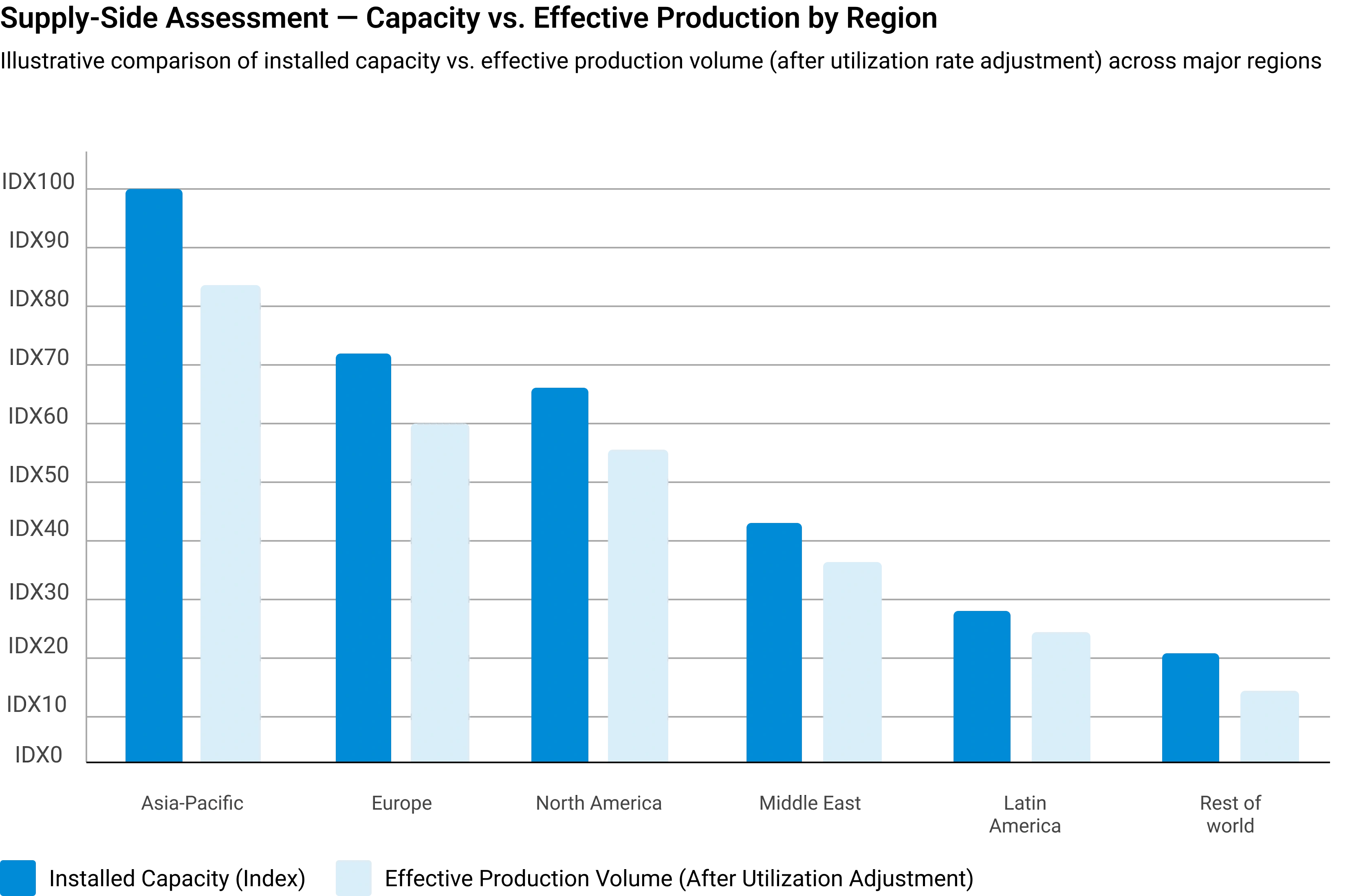
Phase 2 — Supply-Side Assessment: Mapping Production Capabilities
Production Capacity Analysis
All major manufacturers are assessed for existing installed capacity, planned additions, expansions, new plant announcements, and technology adoption — mapped at global, regional, and country levels.
Capacity Utilization Adjustment
Installed capacity is adjusted using utilization rates based on demand conditions, feedstock availability, plant operating rates, maintenance schedules, and regulatory restrictions.
Manufacturer Revenue Analysis
Product-specific revenues, segment-level performance, regional distribution, average selling prices, and margin trends are evaluated to establish market value estimates.
Supply-Side Assessment — Capacity vs. Effective Production by Region
Illustrative comparison of installed capacity vs. effective production volume (after utilization rate adjustment) across major regions
Phase 3 — Demand-Side Assessment: Quantifying Chemical Consumption
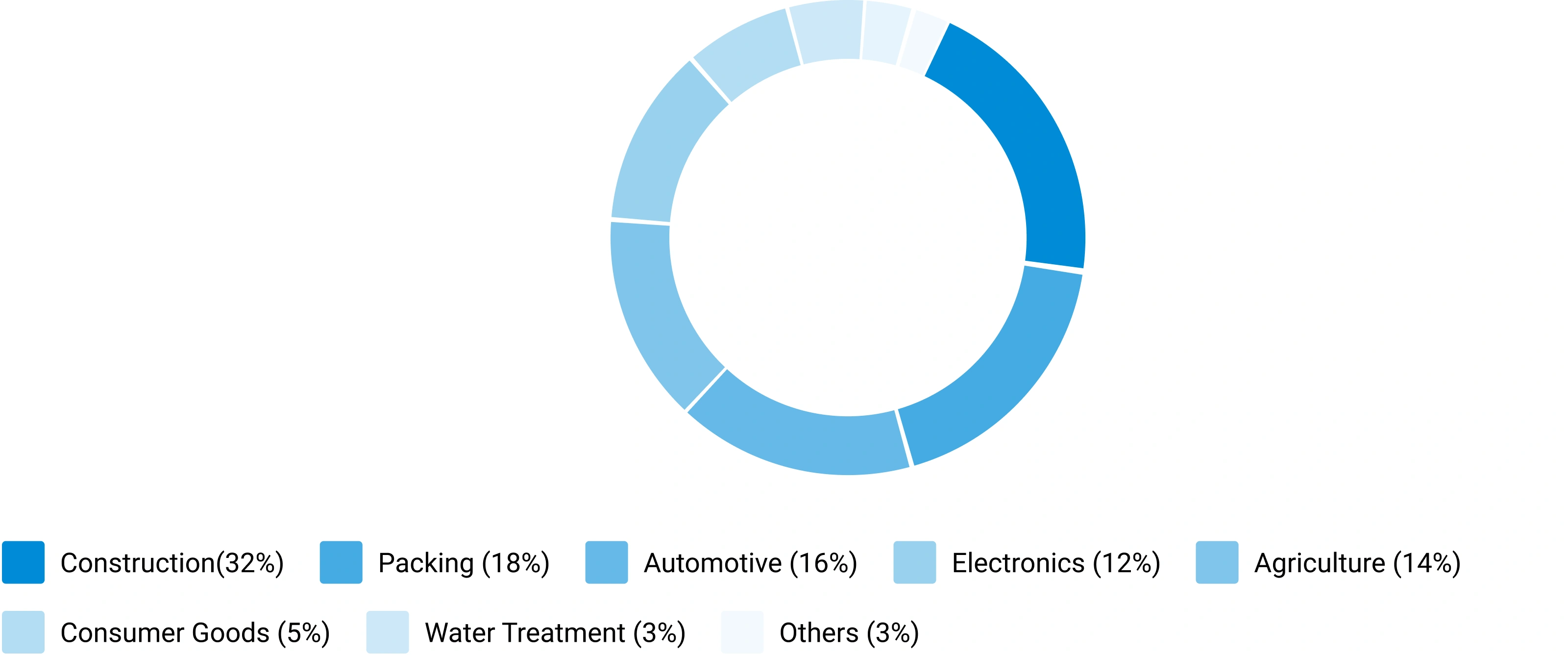
Demand-side analysis quantifies chemical consumption across industries, applications, and geographies — identifying where and how chemicals are consumed throughout the value chain with precision.
End-Use Industry Analysis
Chemical demand is evaluated across automotive, construction, packaging, electronics, agriculture, healthcare, consumer goods, industrial manufacturing, energy and utilities, and water treatment. Industry output, production trends, and consumption intensity are analyzed to determine demand patterns.
Consumption Modeling
Demand is estimated using measurable indicators: kilograms per vehicle, kilograms per square meter of construction, dosage per cubic meter of water treated, kilograms per hectare of agricultural land, and kilograms per ton of manufactured products. Consumption factors are validated through industry publications and primary interviews.
Application Analysis
The market is segmented by application area to understand product performance requirements, formulation trends, technology adoption, customer preferences, and regulatory requirements improving demand accuracy and segmentation granularity.
Demand-Side Assessment — End-Use Industry Demand Distribution
Illustrative distribution of chemical & materials demand across key end-use industries
Phase 4 - Trade Flow Analysis: Balancing Regional Supply and Demand
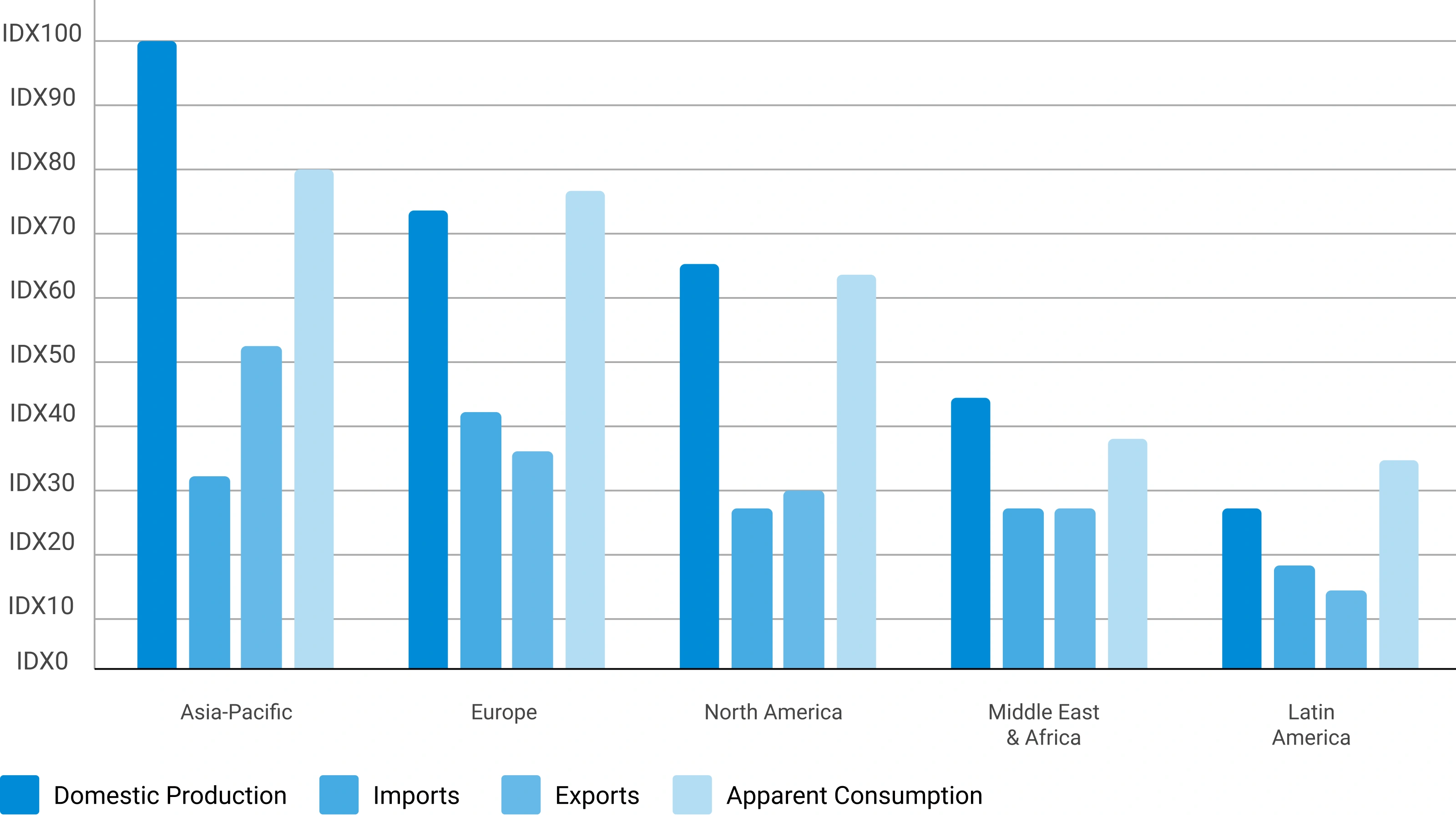
Trade flow analysis reconciles regional supply and demand estimates through import and export data, identifying net supply positions, regional dependencies, and market imbalances. It serves as an independent validation layer that tests the consistency of supply-side and demand-side estimates.
Import Analysis
Import data is evaluated to determine volumes, source countries, product dependency, regional supply gaps, and pricing trends — identifying markets that rely heavily on external supply and where domestic production is insufficient to meet demand.
Export Analysis
Export assessments reveal production surplus, export competitiveness, regional manufacturing strength, and global market participation. Export patterns also help validate domestic production estimates and identify net exporting regions.
Apparent Consumption Model
Regional consumption is assessed using the standard apparent consumption formula:
Results identify net importing regions, net exporting regions, regional deficits, and surpluses — serving as an independent validation of supply and demand estimates.
Trade Flow Analysis — Net Supply Position by Region
Illustrative apparent consumption vs. domestic production across major regions — positive gap indicates net import dependency
Phase 5 — Primary Research: The Critical Validation Layer
Primary research tests and refines findings from secondary research through direct engagement with industry participants across the supply chain, demand side, and expert community. It captures intelligence that no database or published report can provide — the real-world experience of manufacturers, buyers, and specialists operating in the market.

Supply-Side Interviews
Conversations with chemical manufacturers, raw material suppliers, contract manufacturers, technology providers, and plant operators cover production trends, capacity utilization, pricing developments, technology shifts, and competitive dynamics.

Demand-Side Interviews
Engagement with OEMs, industrial consumers, procurement managers, distributors, formulators, and end-use manufacturers focuses on consumption trends, purchasing behavior, product substitution, demand outlook, and emerging applications.

Industry Expert Consultations
Additional interviews with industry consultants, independent experts, regulatory specialists, technical professionals, and research institutions provide deeper market context and validate key analytical assumptions.
Focus Areas of Primary Research:
Market Size & Forecast Validation
Revenue estimates, volume consumption, growth rates, forecast assumptions, regional demand.Supply Chain & Value Chain Assessment
Raw material sourcing, supply chain challenges, distribution networks, procurement practices.Production & Capacity Analysis
Manufacturing capacity, utilization rates, expansion projects, plant investments.Pricing & Cost Structure Analysis
Product pricing trends, feedstock costs, energy costs, margin pressures, pricing outlook.Competitive Landscape Assessment
Volume and value estimates confirmed to be fully consistent with one another before publicationInterview Volume by Market Scope
| Study Scope | Number of Interviews |
|---|---|
| Niche Market | 20 – 30 |
| Mid-Sized Market | 30 – 50 |
| Global Market | 50 – 80 |
| Highly Fragmented Market | 80 – 120 |
Interview Details:
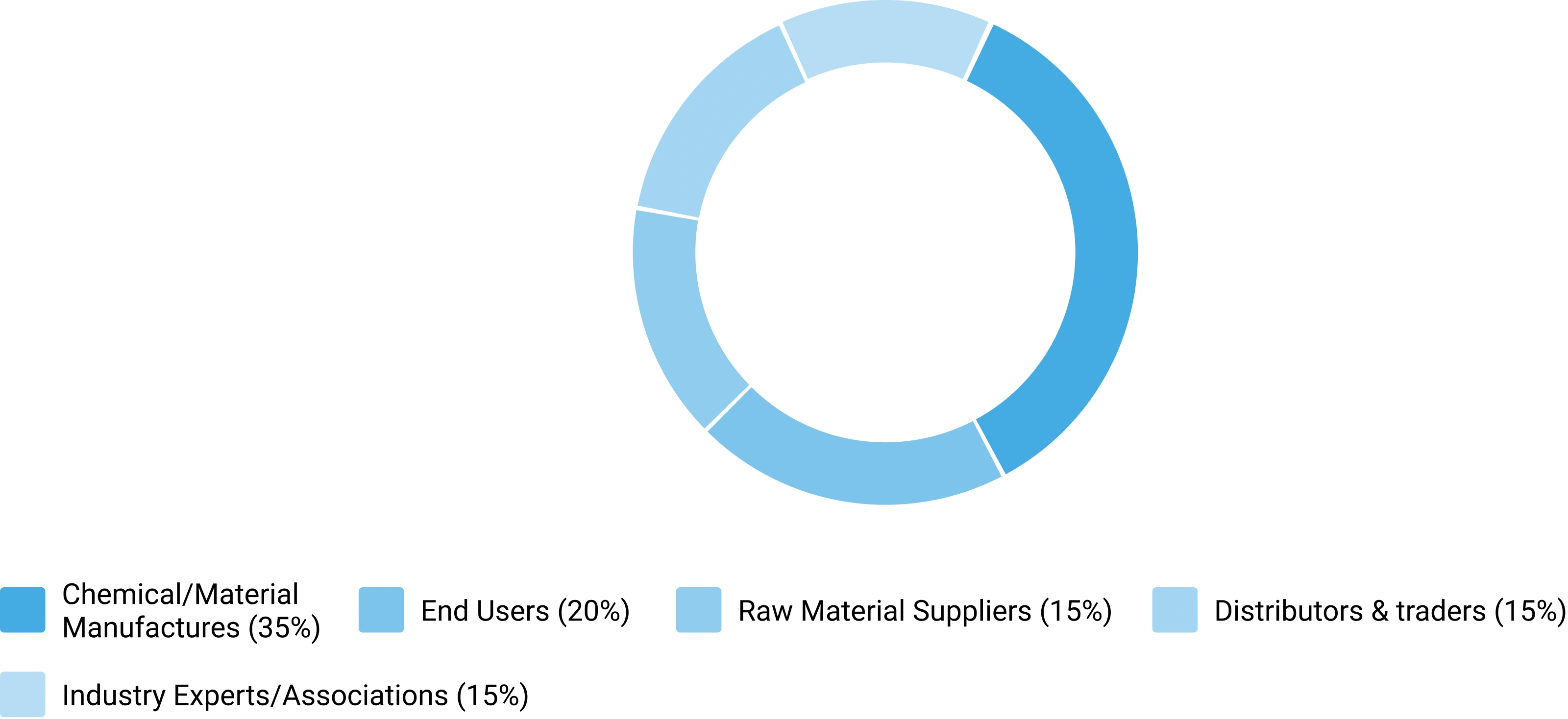
Category : Manufacturers, Suppliers, Distributors, End Users, Experts/Associations
Average Duration : 30–60 Minutes
Interview Mode : Video calls, telephonic interviews, expert consultations
Interview Format : Structured / Semi-Structured questionnaire
Focus Areas of Primary Research:
Market Size & Forecast Validation :
Revenue estimates, volume consumption, growth rates, forecast assumptions, regional demand.
Supply Chain & Value Chain Assessment :
Raw material sourcing, supply chain challenges, distribution networks, procurement practices.
Production & Capacity Analysis :
Manufacturing capacity, utilization rates, expansion projects, plant investments.
Pricing & Cost Structure Analysis :
Product pricing trends, feedstock costs, energy costs, margin pressures, pricing outlook.
Competitive Landscape Assessment :
Market share, competitor positioning, strategic initiatives, partnerships, acquisitions.
Primary Research — Stakeholder Coverage by Category
Distribution of interview respondents across stakeholder categories (% share from PPT data)
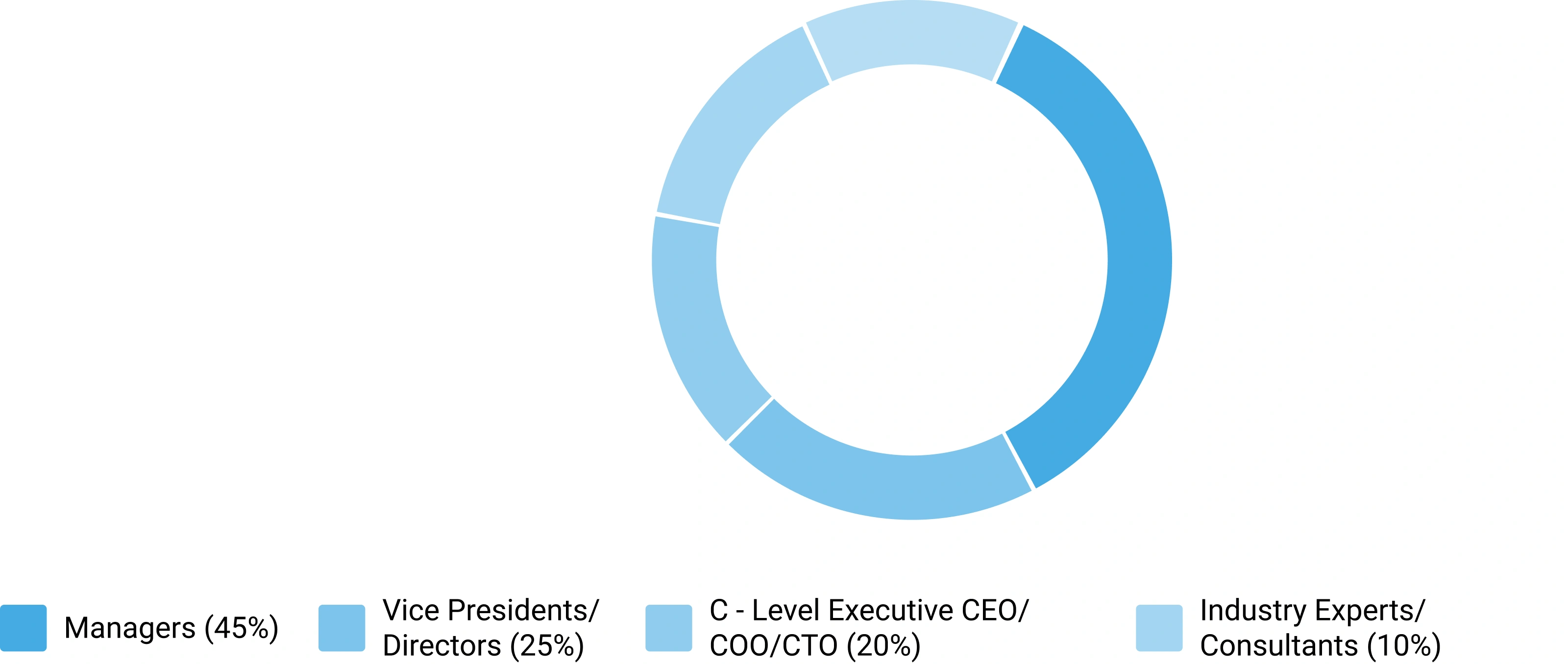
Primary Research — Respondent Designation Profile
Seniority breakdown of interview respondents (% share from PPT data)
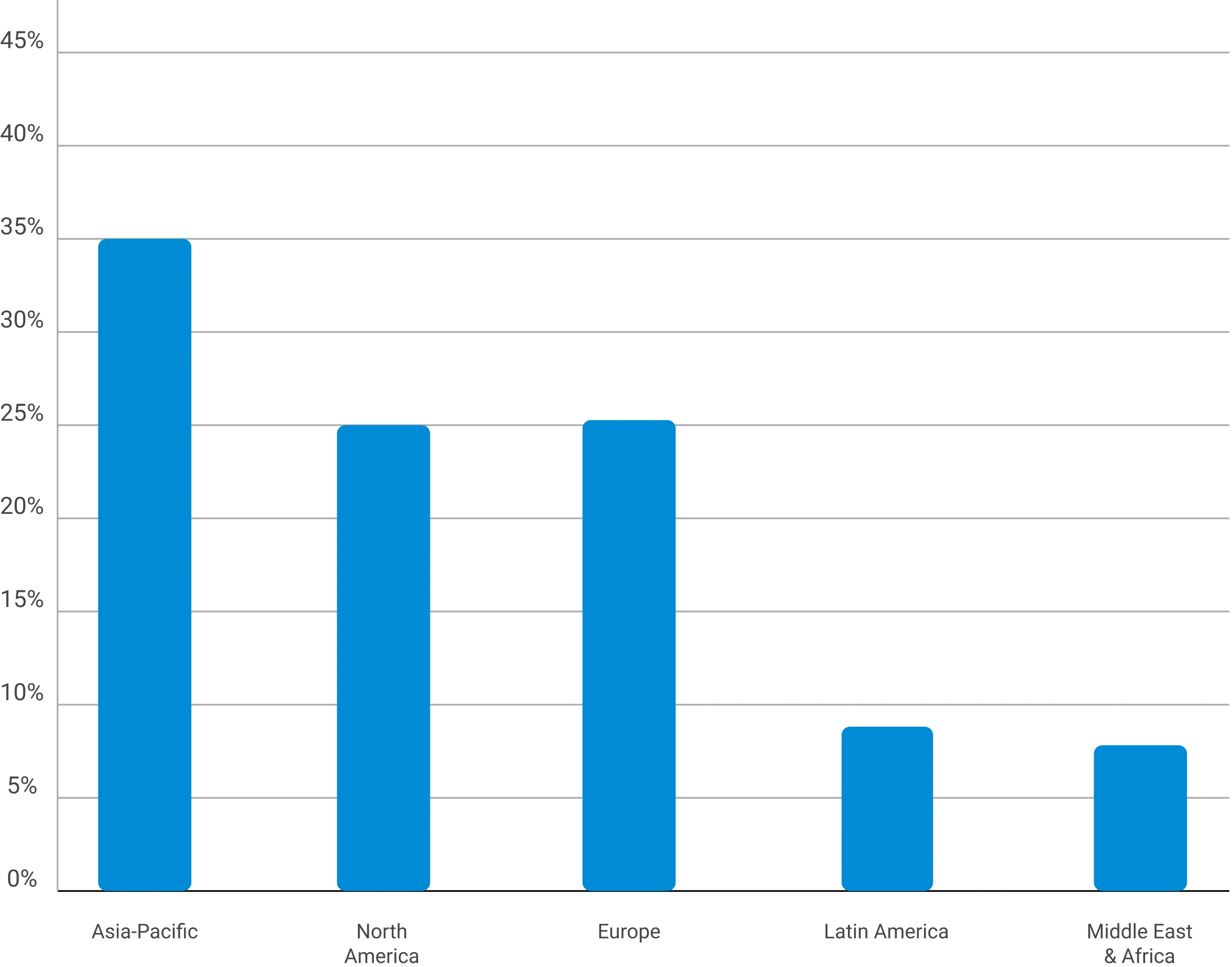
Primary Research — Geographic Coverage of Interviews
Regional distribution of primary research engagement (% share from PPT data)
Phase 6 — Data Triangulation and Market Validation
No single methodology is relied upon in isolation. Multiple independent estimation approaches are combined and reconciled to ensure consistency, accuracy, and analytical defensibility. Any material deviations between approaches are investigated and adjusted through additional validation cycles.
The final market size is derived through weighted triangulation of all validated methodologies. Any material deviations between approaches are investigated and adjusted through additional validation cycles. The outcome represents the most realistic assessment of the market based on available evidence and expert confirmation ensuring that volume and value estimates are fully consistent with one another.
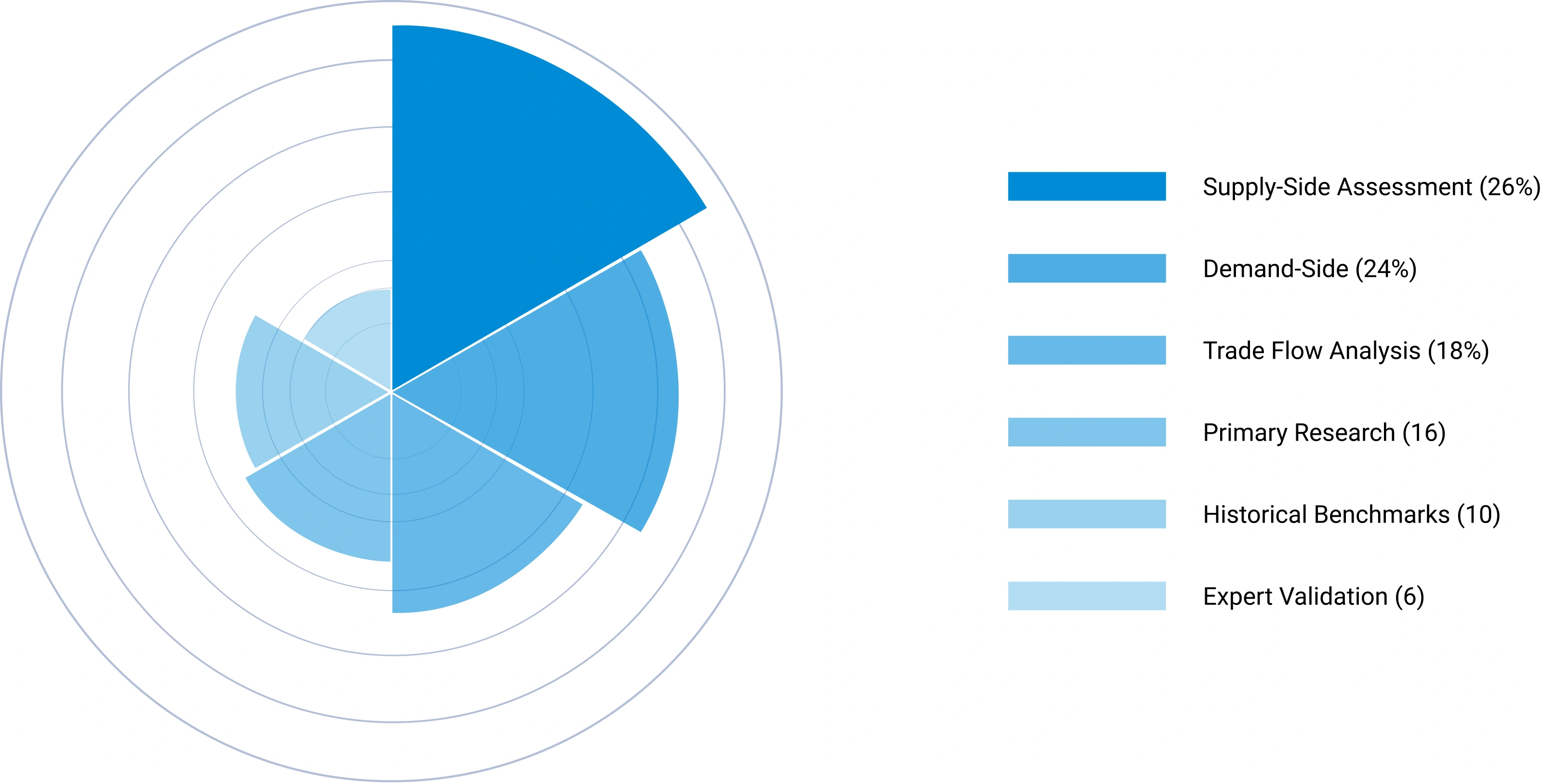
Triangulation Framework — Input Contribution Weight
Relative weight each sizing input contributes to the final reconciled market estimate
Phase 7 — Forecast Modeling: Projecting Future Market Evolution
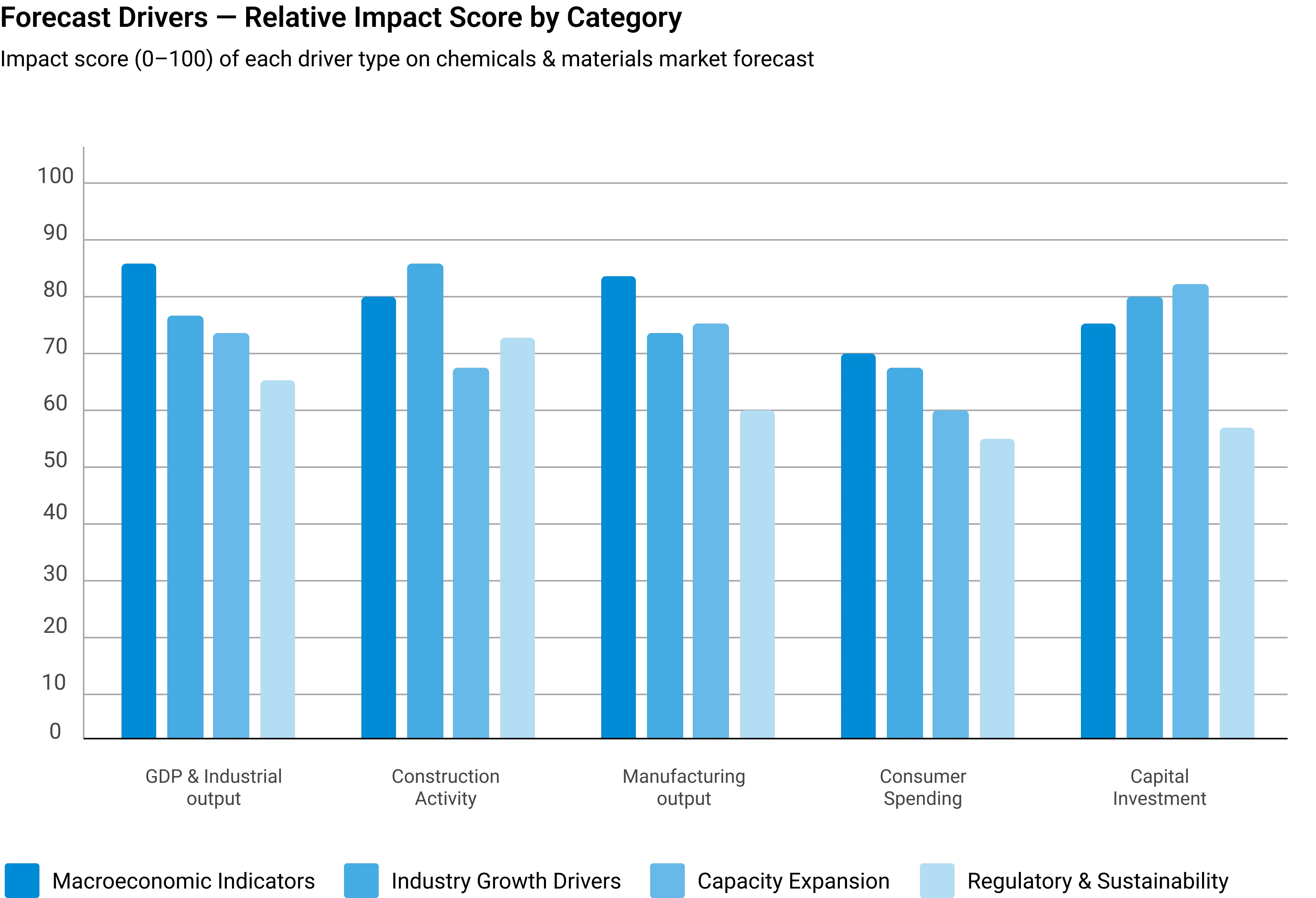
Forecasting evaluates the future trajectory of the market using a combination of quantitative indicators and qualitative assessments across economic, industry, and regulatory dimensions. Rather than simple extrapolation, each driver is independently modeled and integrated into a composite forecast.
Macroeconomic Indicators
GDP growth, industrial production, manufacturing output, construction activity, consumer spending, and capital investment form the quantitative foundation of long-term demand projections. These are applied at country, regional, and global levels.
Industry Growth Drivers
Urbanization, infrastructure development, industrialization, technological innovation, sustainability initiatives, and evolving product performance requirements are assessed at regional and industry levels — capturing both structural and cyclical demand drivers.
Capacity Expansion Analysis
Announced plant expansions, new manufacturing facilities, technology upgrades, and strategic investments are evaluated to determine future supply-demand dynamics and potential market tightness or oversupply situations.
Regulatory & Sustainability
Environmental regulations, chemical safety standards, emission reduction targets, circular economy initiatives, and sustainability requirements are incorporated as they often influence product adoption rates and market growth trajectories.
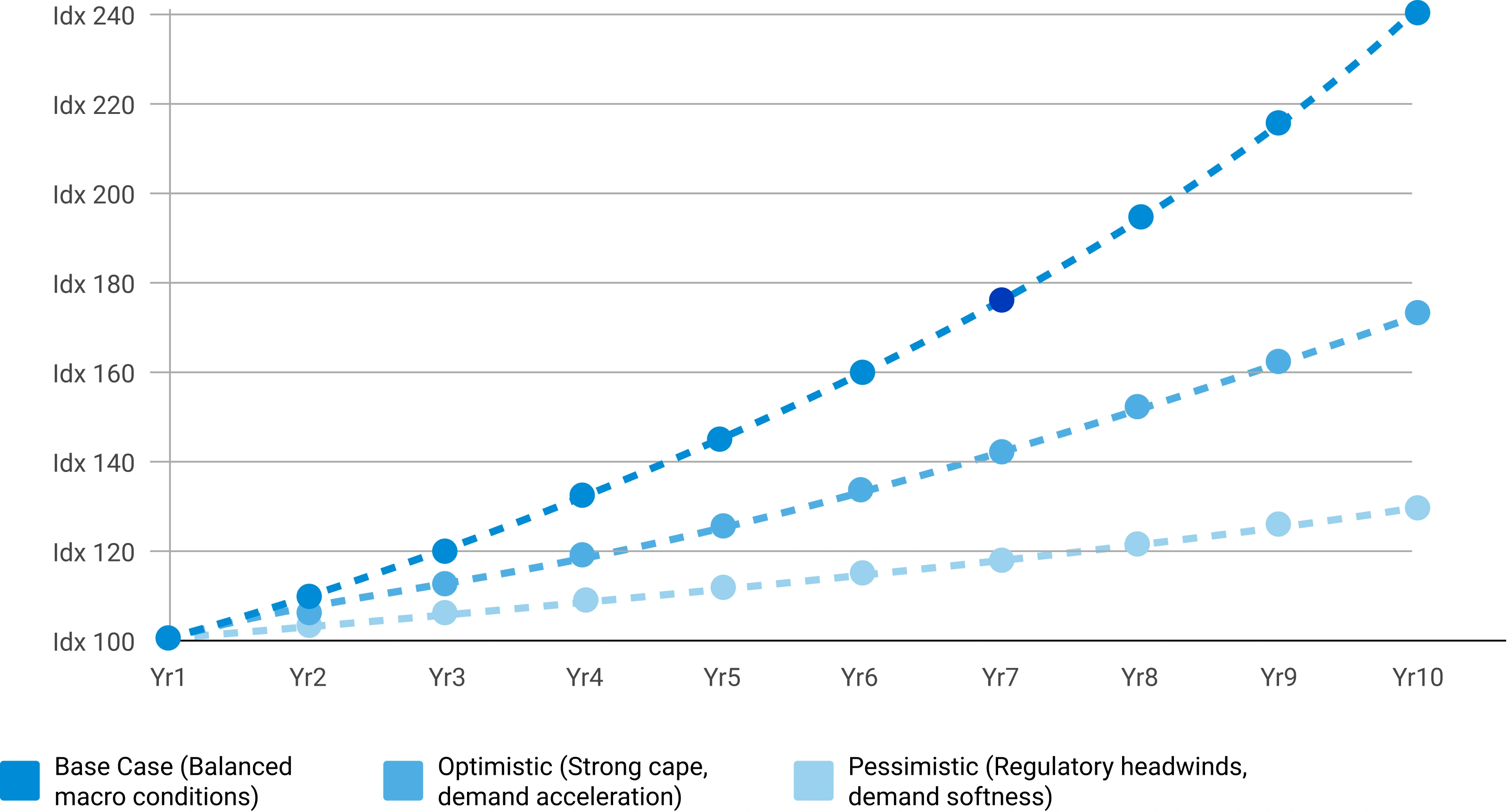
Scenario Forecast Range — Indexed Market Growth (Year 1–10)
Illustrative indexed growth trajectories across Base, Optimistic, and Pessimistic scenarios over a 10-year forecast horizon
Forecast Drivers — Relative Impact Score by Category
Impact score (0–100) of each driver type on chemicals & materials market forecast



Comments
Share your thoughts, ask a question, or provide feedback about this report.