
Linear Low-Density Polyethylene (LLDPE) Market Size Analysis Report 2035
The global linear low-density polyethylene (LLDPE) market size was valued at USD 64.14 billion in 2025, is estimated to reach USD 67.57 billion in 2026, and is projected to reach USD 108.01 billion by 2035, exhibiting a compound annual growth rate (CAGR) of 5.35% over the forecast period from 2026 to 2035.Asia Pacific dominated the linear low-density polyethylene (LLDPE) market with the largest revenue share of 45.0% in 2025 and is expected to grow at the fastest CAGR of 5.47% during the forecast period. In terms of volume, the linear low-density polyethylene (LLDPE) market is projected to grow from 40.25 million tons in 2025 to 64.63 million tons by 2035. growing at a CAGR of 4.85% from 2026 to 2035.Ongoing innovations in agricultural films are the key factor driving market growth. Also, a surge in demand for flexible packaging coupled with the rapid growth of the e-commerce sector can fuel market growth further.
Market Highlights
- By region, Asia Pacific dominated the market with the largest share of 45.0% in 2025. The dominance of the region can be attributed to the increasing agricultural and construction activities in developing economies.
- By region, North America held the market share of 22% in 2025 and is expected to grow at the fastest CAGR of 6.30% over the forecast period. The growth of the region can be credited to the robust demand for flexible packaging.
- By type, the C4-LLDPE segment dominated the market with a 34% share in 2025. The dominance is due to the growing demand for reliable and secure packaging in various industries.
- By type, the metallocene LLDPE (mLLDPE) segment held the market share of 18.0% in 2025 and is expected to grow at the fastest CAGR of 6.90% during the forecast period. The growth is due to the excellent sealing properties.
- By application, the films segment dominated the market with a 61.0% share in 2025. The dominance is due to the growing demand for agriculture films.
- By application, the pipes & tubes segment dominated the market with the largest share of 9.00% in 2025 and is expected to grow at the fastest CAGR of 6.2% over the forecast period. The growth is due to the growth in the development of sewage systems.
- By end-use industry, the packaging segment dominated the market with the largest share at 49.0% in 2025. The domain increase is due to the rapid growth in the e-commerce sector.
- By end-use industry, the automotive segment held the market share of 8.00% in 2025 and is expected to grow at the fastest CAGR of 6.3% (during the forecast period). The growth is due to the growing demand for lightweight vehicle components.
- By manufacturing process, the gas phase process segment dominated the market with the largest share of 56% in 2025. The dominance is due to its cost-effectiveness.
- By manufacturing process, the solution-phase process segment dominated the market with the largest share of 27.00% in 2025 and is expected to grow at the fastest CAGR of 5.9% during the forecast period. The growth is due to the increasing demand for high molecular weight LLDPE.
LLDPE: The Silent Power Behind Modern Plastic and the Future of Polymer
Linear low-density polyethylene (LLDPE) is a linear polymer manufactured through low-pressure polymerisation techniques. It is a copolymer of alpha-olefins like octene, butene, & hexene and ethylene. LLDPE exhibits properties like high puncture resistance, good tensile strength, and flexibility. It consists of a linear structure with evenly distributed, short branches. It has a density range of 0.915 to 0.940 g/cm3 and good resistance to organic solvents like acids, bases, and many more. The production of various consumer goods like household products, toys, and containers increases demand for LLDPE. The applications like gas distribution, plumbing, and irrigation require LLDPE pipes and tubes. The increasing demand for medical applications like disposable medical devices, medical packaging, and tubing fuels demand for LLDPE. Factors like growing demand for packaging, increasing production of agricultural films, rising demand for wire & cable insulation, and increasing automotive sector contribute to the market growth.
- India exported 3137 shipments of the LLDPE polymer.(Source: www.volza.com)
- Saudi Arabia exported 2501 shipments of the LLDPE polymer.(Source: www.volza.com )
- Saudi Arabia exported 14487 shipments of polyethylene LLDPE.(Source: www.volza.com )
- Reliance Industries Limited is the leading supplier of polyethylene LLDPE in India.(Source: www.volza.com)
Shifting Consumer Preferences Supports Market Growth
The changing consumer preferences are positively impacting market growth by presenting lucrative opportunities in the market. There is an increasing demand for high-performance materials that fulfill specific needs like durability and lightweight.
- In February 2026, NOVA Chemicals Corporation expanded its sustainable product offerings through the North American commercialization of two new recycled polyethylene (rPE) grades: SYNDIGO rPE-IN3 and SYNDIGO rPE-IN4. These new additions strengthen the company's SYNDIGO portfolio and are designed specifically for general-purpose, non-food-grade applications.(Source:www.indianchemicalnews.com)
Growing Agriculture Sector Powers LLDPE Market
The growing agriculture sector in various regions increases demand for LLDPE for various applications. The growing production of various agricultural films requires LLDPE for diverse farming practices. The need for a controlled environment for crop development increases demand for LLDPE greenhouse films. The requirement of regulating soil temperature, suppressing weeds, and retaining soil temperature increases demand for LLDPE mulch films. The increasing production of films and pipes for agricultural irrigation systems increases the adoption of LLDPE. The focus on increasing agricultural productivity and crop yields fuels demand for LLDPE films. The strong focus on sustainable agricultural practices leads to higher demand for LLDPE. The growing agriculture sector and increasing demand for agriculture films fuel the adoption of LLDPE. The growing agriculture sector is a key driver for the market.
Market Trends
- Growing Construction Activities: The rapid urbanization and growing construction activities in various regions increase demand for LLDPE due to its durability. The increasing demand for insulation, films, vapor barriers, and geomembranes fuels demand for LLDPE.
- The Rise in E-Commerce: The rapid expansion of the e-commerce sector increases demand for various packaging applications. The rise in e-commerce fuels demand for various packaging applications like containers, bags, films, and many more.
- Technological Advancements: The ongoing technological advancements, like the development of ultra-low density LLDPE, creating new infrastructure, the incorporation of nanomaterials, and improvement in recycling technologies, help the market growth.
Report Scope
| Report Attribute | Details |
| Market Size in 2026 | USD 67.57 Billion/ 42.20 Million Tons |
| Expected Size by 2035 | USD 108.01 Billion/ 64.63 Million Tons |
| Growth Rate from 2025 to 2035 | CAGR 5.35% |
| Base Year of Estimation | 2025 |
| Forecast Period | 2025 - 2035 |
| Dominant Region | Asia Pacific |
| Segment Covered | By Type, By Application, By End-Use Industry, By Manufacturing Process, By Region |
| Key Companies Profiled | ExxonMobil Corporation, Dow Inc., SABIC (Saudi Basic Industries Corporation), LyondellBasell Industries N.V., NOVA Chemicals Corporation, Chevron Phillips Chemical Company LLC, Formosa Plastics Corporation, INEOS Group AG, Borealis AG, Mitsubishi Chemical Corporation, Indian Oil Corporation Ltd., Sinopec Group, LG Chem, Sasol Ltd., Reliance Industries Limited, Equate Petrochemical Company, PTT Global Chemical Public Company Limited, Repsol S.A., TotalEnergies SE, Braskem S.A. |
Market Opportunity
Expansion of the Automotive Industry Surges Demand for LLDPE
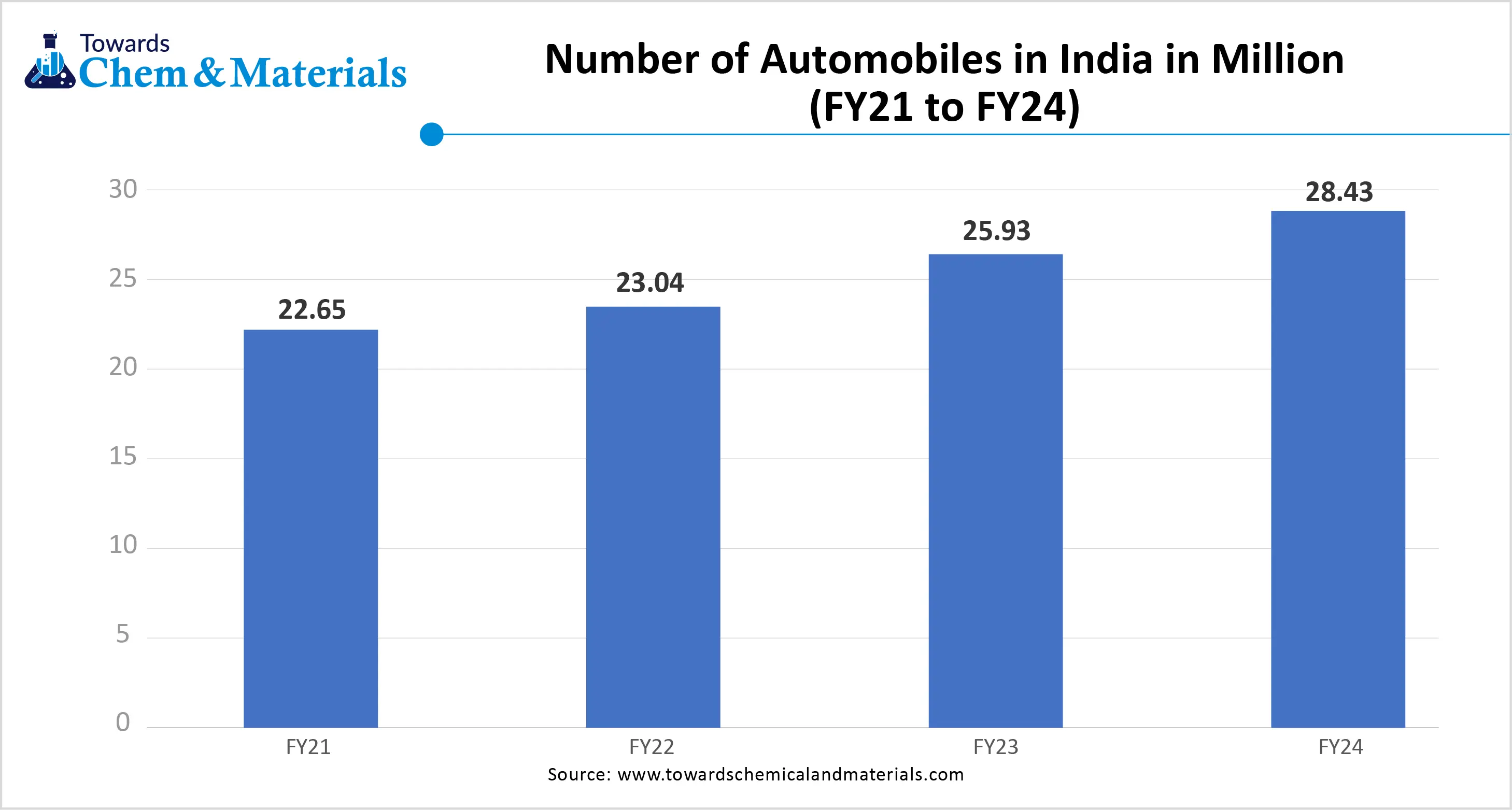
The growing production of vehicles and the expansion of the automotive industry increase demand for LLDPE for various automotive applications. The focus on lowering vehicle weight and improving fuel efficiency increases demand for LLDPE for the production of lightweight automotive parts. The production of various automotive parts like protective films, bumpers, and interior components increases demand for LLDPE. The manufacturing of fuel tanks requires LLDPE due to its durability.
The strong focus on intricate design and shapes of vehicles increases the adoption of LLDPE. The increasing production of automotive parts like dashboards, bumpers, liners, interior panels, body panels, fuel tanks, wiring, and cable insulation increases demand for LLDPE. The growing advancements in the production of vehicles lead to a higher demand for LLDPE. The rise in electric vehicles requires LLDPE for the production of lightweight vehicle parts. The growing expansion of the automotive industry creates an opportunity for the growth of the market.
Market Challenge
High Production Cost Limits Expansion of LLDPE Market
Despite several benefits of the LLDPE in various industries, the high production cost restricts the market growth. Factors like supply chain disruptions, raw material costs, and energy-intensive processes are responsible for the high production cost. The fluctuations in raw materials prices like ethylene, comonomers directly affect the market. The energy-intensive processes and the need for a high amount of electricity increase the production cost. The lower production capacity of LLDPE fuels the production cost. The supply chain disruptions, like geopolitical instability, plant maintenance shutdowns, and force majeure declarations, lead to higher production costs. Factors like trade policies, tariffs, and import/export restrictions increase the production cost. The high production cost hampers the growth of the market.
Supply Chain Analysis of the Linear Low-Density Polyethylene (LLDPE) Market
- Production & Processing :It involves the copolymerization of ethylene with short-chain α-olefins, such as 1-butene, 1-hexene, or 1-octene, utilizing low-pressure catalytic processes, including gas-phase, slurry, or solution techniques. Following synthesis, the raw material is converted into finished goods through advanced processing methods.
- SABIC: A premier manufacturer based in the Middle East, capitalizing on low-cost natural gas feedstock to serve global export markets.
- Other Key Players: Reliance Industries, Braskem S.A.
- Quality Testing and Certification:It ensures that resins comply with rigorous physical, mechanical, and safety standards. By verifying critical properties, such as melt flow, density, and tensile strength, they guarantee optimal material performance in demanding applications, including flexible packaging and agricultural films.
- Reliance Industries Limited (RIL): The dominant domestic market leader in India. RIL's massive petrochemical complexes at Jamnagar and Dahej supply growing domestic flexible packaging and agriculture sectors.
- Other Key Players: ExxonMobil Chemical, LyondellBasell Industries
- Distribution to Industrial Users:In this stage, bulk chemical manufacturers distribute specialized polymer resins to industrial manufacturers, using both direct channels and authorized distribution networks. The purchasing industrial enterprises subsequently process these raw materials into high-performance flexible packaging, agricultural films, and heavy-duty industrial components.
- LyondellBasell Industries N.V.: One of the world's largest plastics, chemical, and refining companies.
- Other Key Players: Sinopec Corporation, Exxon Mobil Corporation
Regional Insights
How Did Asia Pacific Dominate the Linear Low-Density Polyethylene (LLDPE) Market in 2025?
The Asia Pacific linear low-density polyethylene (lldpe) market size was estimated at USD 28.86 billion in 2025 and is projected to reach USD 49.14 billion by 2035, growing at a CAGR of 5.47% from 2026 to 2035.Asia Pacific dominated the market with the largest share of 45.0% in 2025. The dominance of the region can be attributed to the increasing agricultural and construction activities in developing economies along with rapid urbanization in those countries. In addition, Linear Low-Density Polyethylene (LLDPE) is widely applied in agricultural sectors for applications like greenhouse covers and mulch films. These materials are essential for shielding crops from ultraviolet radiation and reducing soil degradation.
 China
- Significant usage remains in industrial liners and agricultural mulch films, which help retain soil moisture and improve crop yields, impacting positive market growth soon.
- Advancements toward high-performance, lightweight, and recyclable LLDPE grades are a core focus as manufacturers align with environmental regulations.
India
- LLDPE is heavily depended upon in the construction industry as durable moisture barriers and protective liners under concrete structures.
- The growth of the FMCG, retail, and e-commerce sectors continuously elevates the demand for lightweight, puncture-resistant stretch and shrink films to protect goods during transit.
The North America market size was estimated at USD 14.11 billion in 2025 and is projected to reach USD 24.30 billion by 2035, growing at a CAGR of 5.59% from 2026 to 2035.North America held the market share of 22% in 2025 and was expected to grow at the fastest CAGR of 6.30% over the forecast period. The growth of the region can be credited to the robust demand for flexible packaging within the food and beverage industry, coupled with the ongoing growth of the e-commerce sector. The strong presence of major market players ensures continuous advancements and localized supply chain efficiencies.
United States
- The U.S. boasts a well-established petrochemical industry. Unmatched access to low-cost, domestic shale gas and ethane enables U.S.-based manufacturers to produce LLDPE.
- LLDPE extrusion films are heavily used in U.S. agriculture (mulch and greenhouse films) and construction (hazardous waste liners and vapor barriers).
Canada
- The increasing construction sector uses LLDPE films extensively as moisture barriers and vapor retarders in concrete foundations.
- The Canadian government’s push toward a circular economy has shifted industry focus toward eco-friendly and mono-material packaging structures.
The Europe market size was estimated at USD 11.55 billion in 2025 and is projected to reach USD 19.98 billion by 2035, growing at a CAGR of 5.63% from 2026 to 2035.Europe held the market share of 18.00% in 2025. The growth of the region can be linked to the growing need for lightweight flexible packaging and strong production in the agricultural and automotive sectors. Also, the exponential growth of global e-commerce has accelerated the imperative for advanced transit packaging, stretch wraps, and industrial liners.
Germany
- The surge in online retail and food delivery has heavily boosted the need for lightweight, puncture-resistant flexible packaging.
- Germany's massive automotive sector increasingly adopts LLDPE for lightweight components and protective interior/exterior films to aim to reduce vehicle weight and lower emissions.
The Latin America market size was estimated at USD 5.13 billion in 2025 and is projected to reach USD 9.18 billion by 2035, growing at a CAGR of 5.99% from 2026 to 2035.Latin America held the market share of 8.00% in 2025. The growth of the region can be driven by a surge in urban populations, expanding flexible packaging, and investments in local petrochemical capacity and logistics networks. Moreover, the extensive agricultural sector within the region, most notably in Brazil and Argentina, sustains a continuous demand for these protective films.
Brazil
- LLDPE films are extensively adopted in protective agriculture across Brazil to guard crops against UV rays, reduce soil erosion, and serve as greenhouse covers.
- Brazil benefits from a unique competitive edge through the manufacturing of bio-ethylene derived from sugarcane ethanol, enabling the creation of sustainable, bio-based PE grades.
Argentina
- Argentina's dominant agricultural export sector relies heavily on LLDPE for silage wraps, greenhouse coverings, and mulching films.
- The growth of e-commerce and modern retail formats in the country increases the need for protective, lightweight, and durable stretch films.
The Middle East & Africa market size was estimated at USD 4.49 billion in 2025 and is projected to reach USD 8.10 billion by 2035, growing at a CAGR of 6.08% from 2026 to 2035.The Middle East & Africa held the market share of 7.00% in 2025. The growth of the region can be attributed to the increasing middle-class population, surge in manufacturing investments, and abundant low-cost raw materials. Furthermore, the rapid industrialization and expanding automotive and construction sectors across Middle Eastern and selected African economies are fuelling regional growth soon.
Saudi Arabia
- Major regional producers like SABIC and ExxonMobil are actively enhancing local production capabilities and forming joint ventures to cater to the growing international and regional market.
- LLDPE's high tensile strength, flexibility, and puncture resistance make it ideal for food, pharmaceutical, and consumer goods packaging.

Segmental Insights
Type Insights
Why did C4-LLDPE Segment Dominate the Linear Low-Density Polyethylene (LLDPE) Market?
The C4-LLDPE segment dominated the linear low-density polyethylene (LLDPE) market in 2025. The growing demand for secure packaging in industries like medical, food & beverage, and consumer goods increases the adoption of C4-LLDPE. The growth in infrastructure development fuels demand for C4-LLDPE in applications like cable insulation and pipes. C4 LLDPE consists of superior puncture resistance, tensile strength, and flexibility. The shift towards sustainability increases demand for C4 LLDPE. The increasing demand for various bags, stretch films, and shrink films drives the overall growth of the market.
The metallocene LLDPE segment is the fastest growing in the market during the forecast period. The increasing demand for stretch films, flexible packaging, and food packaging increases demand for metallocene LLDPE. The growing preference for high-performance packaging helps market growth. Metallocene LLDPE has better gloss & clarity and consists of excellent sealing properties. The increasing production of agricultural films and stretch wrap fuels the adoption of metallocene LLDPE. The growing demand across sectors like electrical & electronics, building & construction, and automotive supports the overall market growth.
Linear Low-Density Polyethylene (LLDPE) Market Share,By Type, 2025 (%)
| By Type | Market Share (%) |
| C4-LLDPE | 34% |
| C6-LLDPE | 23% |
| C8-LLDPE | 17% |
| Metallocene LLDPE (mLLDPE) | 18% |
| Other LLDPE Types | 8% |
Application Insights
How Films Segment Held the Largest Share of the Linear Low-Density Polyethylene (LLDPE) Market?
The films segment held the largest revenue share in the linear low-density polyethylene (LLDPE) market in 2025. The growth in applications like industrial films, stretch wraps, food packaging, and agricultural films increases demand for LLDPE films. The increasing expansion of e-commerce and rising demand for lightweight & flexible packaging fuels demand for LLDPE films, helping the market growth. The rising demand for food packaging increases the adoption of LLDPE films for their excellent resistance & elongation properties. The growing demand for agricultural films like irrigation systems, greenhouse films, and mulch films drives the market growth.
 The pipes & tubes segment is experiencing the fastest growth in the market during the forecast period. The growing development of sewage systems and water supply increases demand for pipes & tubes. The increasing adoption of renewable energy fuels demand for pipes & tubes for applications like fluid transport & cooling systems. The growing demand for transportation of natural gas increases the demand for LLDPE pipes. The rising demand across various applications like sanitation systems, irrigation systems, and water management supports the overall growth of the market.
Linear Low-Density Polyethylene (LLDPE) Market Share,By Application, 2025 (%)
| By Application | Market Share (%) |
| Films | 61% |
| Injection Moulding | 11% |
| Rotomolding | 7% |
| Extrusion Coating | 8% |
| Pipes & Tubes | 9% |
| Other Applications | 4% |
End-Use Industry Insights
Which End-User Industry Segment Dominated the Linear Low-Density Polyethylene (LLDPE) Market?
The packaging segment dominated the linear low-density polyethylene (LLDPE) market. The growing demand for various packaging, like bags, containers, films, and wraps, increases the demand for LLDPE. The increasing demand for protective and reliable packaging solutions helps market growth. The shift towards sustainable packaging increases the adoption of LLDPE. The increasing demand for frozen foods & beverages and packaged foods fuels demand for LLDPE. The expansion of e-commerce and the growing online shopping increase the adoption of LLDPE for packaging, driving the overall growth of the market.
The automotive segment is the fastest growing in the market during the forecast period. The increasing demand for lightweight automotive components like fuel tanks, bumpers, and interior panels increases demand for LLDPE. The automotive applications, like under-the-hood, fuel lines, and battery components, help the market growth. The growing manufacturing of automobiles and the growth in production of vehicles fuel demand for LLDPE. The growing expansion of the automotive sector and innovations in vehicle production support the overall growth of the market.
Linear Low-Density Polyethylene (LLDPE) Market Share,By End-Use Industry, 2025 (%)
| By End-Use Industry | Market Share (%) |
| Packaging | 49% |
| Agriculture | 14% |
| Construction | 11% |
| Automotive | 8% |
| Electrical & Electronics | 7% |
| Household & Consumer Goods | 7% |
| Other End-Use Industries | 4% |
Manufacturing Process Insights
How Gas Phase Process Segment Held the Largest Share of the Linear Low-Density Polyethylene (LLDPE) Market?
The gas phase process segment held the largest revenue share in the linear low-density polyethylene (LLDPE) market in 2025. The growing production of versatile LLDPE grades increases the adoption of gas phase reactors. The growing production of LLDPE with certain properties like clarity, flexibility, and strength increases demand for gas phase reactors. The increasing production of pouches, films, and bags fuels demand for the gas phase process. The growing demand across applications like coatings, rotomolding, and injection molding drives the overall growth of the market.
The solution phase process segment is experiencing the fastest growth in the market during the forecast period. The growing demand for higher molecular weight LLDPE in applications like coatings & films increases the adoption of the solution phase process. The rising demand for flexible packaging in industries like consumer goods, food & beverage increases demand for the solution phase process. The increasing demand for sustainable products fuels the adoption of LLDPE manufactured through the solution phase process. The growing demand for lightweight automotive components, irrigation films, greenhouse films, and construction pipes & films supports the overall growth of the market.
Linear Low-Density Polyethylene (LLDPE) Market Share,By Manufacturing Process, 2025 (%)
| By Manufacturing Process | Market Share (%) |
| Gas Phase Process | 56% |
| Solution Phase Process | 27% |
| Slurry Loop Process | 17% |
Recent Developments
- In March 2025, Borealis introduced Borcycle M CWT120CL, a premium recycled linear low-density polyethylene (rLLDPE) engineered to promote circularity in non-food flexible packaging. Comprising 85% post-consumer recyclate (PCR) and 15% LLDPE booster, this material is tailored for high-end applications that require strict adherence to sustainability standards.(Source:www.plasticstoday.com)
Top Companies List
- ExxonMobil Corporation
- Dow Inc.
- SABIC (Saudi Basic Industries Corporation)
- LyondellBasell Industries N.V.
- NOVA Chemicals Corporation
- Chevron Phillips Chemical Company LLC
- Formosa Plastics Corporation
- INEOS Group AG
- Borealis AG
- Mitsubishi Chemical Corporation
- Indian Oil Corporation Ltd.
- Sinopec Group
- LG Chem
- Sasol Ltd.
- Reliance Industries Limited
- Equate Petrochemical Company
- PTT Global Chemical Public Company Limited
- Repsol S.A.
- TotalEnergies SE
- Braskem S.A.
Segments Covered
By Type
- C4-LLDPE
- C6-LLDPE
- C8-LLDPE
- Metallocene LLDPE (mLLDPE)
- Other LLDPE Types
- Hexene-Modified Grades
- Octene Specialty Grades
- Bio-based LLDPE
By Application
- Films
- Stretch Films
- Shrink Films
- Agricultural Films
- Food Packaging Films
- Heavy Duty Sacks
- Injection Moulding
- Containers
- Industrial Components
- Household Products
- Rotomolding
- Storage Tanks
- Industrial Containers
- Extrusion Coating
- Paper Coating
- Carton Packaging
- Pipes & Tubes
- Water Pipes
- Gas Distribution Pipes
- Other Applications
- Wire & Cable Compounds
- Foams
- Sheets
By End-Use Industry
- Packaging
- Food Packaging
- Industrial Packaging
- Consumer Packaging
- Agriculture
- Mulch Films
- Greenhouse Films
- Construction
- Geomembranes
- Pipes
- Automotive
- Interior Components
- Fuel System Components
- Electrical & Electronics
- Cable Insulation
- Protective Coverings
- Household & Consumer Goods
- Storage Products
- Consumer Containers
- Other End-Use Industries
- Medical
- Industrial
By Manufacturing Process
- Gas Phase Process
- Solution Phase Process
- Slurry Loop Process
By Region
- North America
- U.S.
- Canada
- Europe
- Germany
- UK
- France
- Italy
- Spain
- Sweden
- Denmark
- Norway
- Asia Pacific
- China
- Japan
- India
- South Korea
- Thailand
- Latin America
- Brazil
- Mexico
- Argentina
- Middle East & Africa
- South Africa
- UAE
- Saudi Arabia
- Kuwait
A Seven-Phase Framework
Our methodology is designed to be universally applicable across commodity chemicals, specialty chemicals, petrochemicals, construction chemicals, coatings, electronic chemicals, industrial gases, agrochemicals, water treatment chemicals, and performance materials. Each phase builds upon the last, creating a layered validation structure that minimizes estimation error and maximizes analytical confidence.
The framework ensures comprehensive market coverage, robust cross-validation, and reliable long-term forecasting — producing market estimates that withstand scrutiny from investors, regulators, and corporate strategy teams.

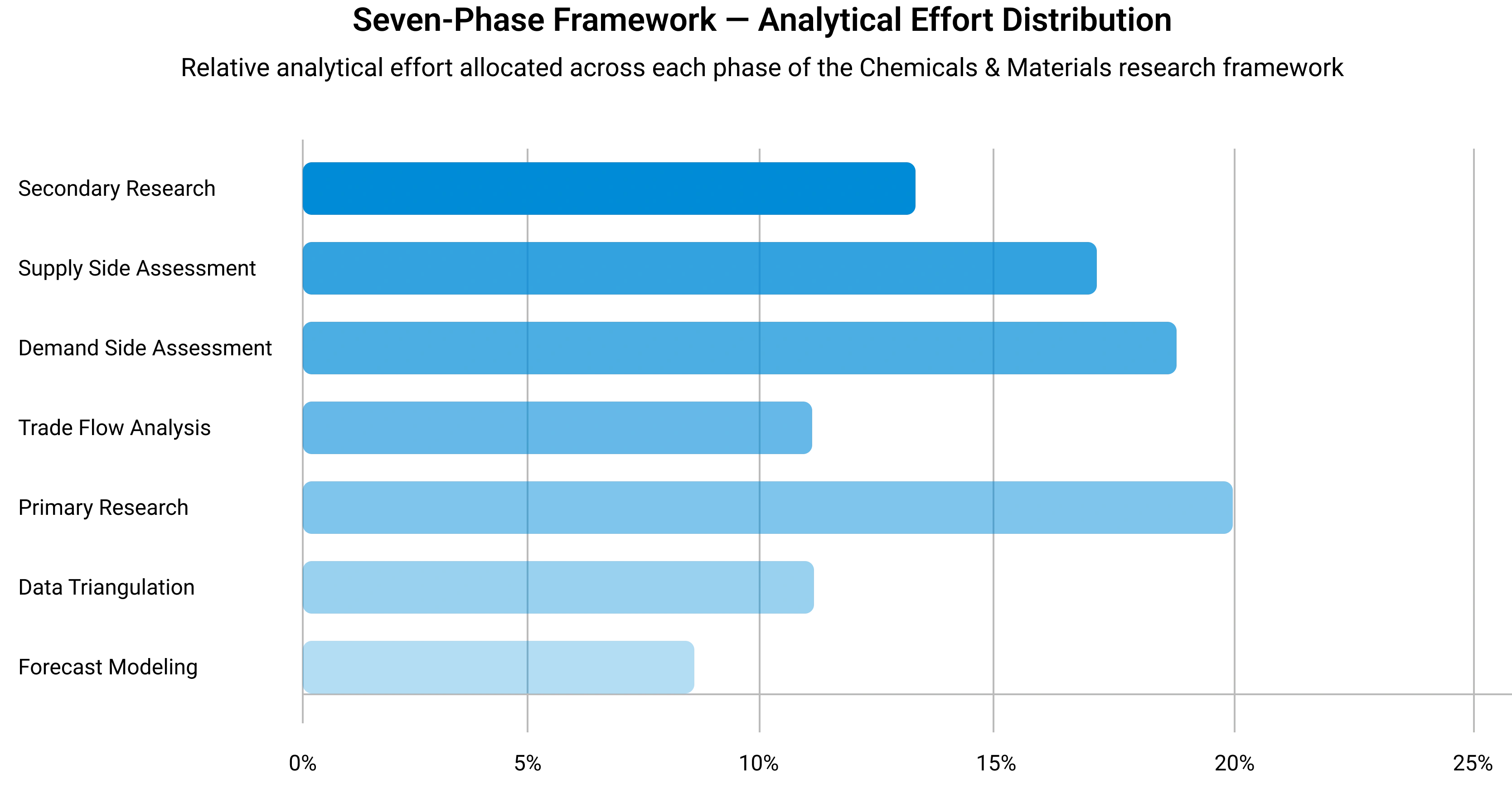
Seven-Phase Framework — Analytical Effort Distribution
Relative analytical effort allocated across each phase of the Chemicals & Materials research framework
Phase 1 - Secondary Research: Establishing the Foundation
Secondary research collects and evaluates publicly available information from authoritative sources, establishing the foundational understanding of market structure, value chain dynamics, competitive landscape, and end-use demand patterns. Every source is evaluated for credibility, recency, geographic relevance, and methodological soundness before inclusion.
Industry Associations
Sources include ACC, CEFIC, ICCA, JCIA, CPCIF, and SOCMA providing production volumes, consumption trends, capacity developments, and sustainability initiatives.
Company Disclosures
Annual reports, investor presentations, earnings transcripts, and regulatory filings reveal product portfolios, manufacturing footprints, capacity expansions, and revenue segmentation.
Government Databases
National statistical offices, customs authorities, environmental agencies, and industrial production databases provide verified statistics on output, trade flows, and regulatory compliance.
Trade Databases
UN Comtrade, ITC, Eurostat, and national customs authorities enable assessment of global product movement, import dependency, and export competitiveness across regions.
Our Secondary Research Sources
- Ministry of Chemicals and Fertilizers
- European Chemicals Agency
- United States Department of Energy
- Ministry of Industry and Information Technology
- Ministry of Economy Trade and Industry
- Ministry of Trade Industry and Energy
- National Institute of Standards and Technology
- Council of Scientific and Industrial Research
- Fraunhofer Society
- National Institute for Materials Science
Phase 2 — Supply-Side Assessment: Mapping Production Capabilities
Production Capacity Analysis
All major manufacturers are assessed for existing installed capacity, planned additions, expansions, new plant announcements, and technology adoption — mapped at global, regional, and country levels.
Capacity Utilization Adjustment
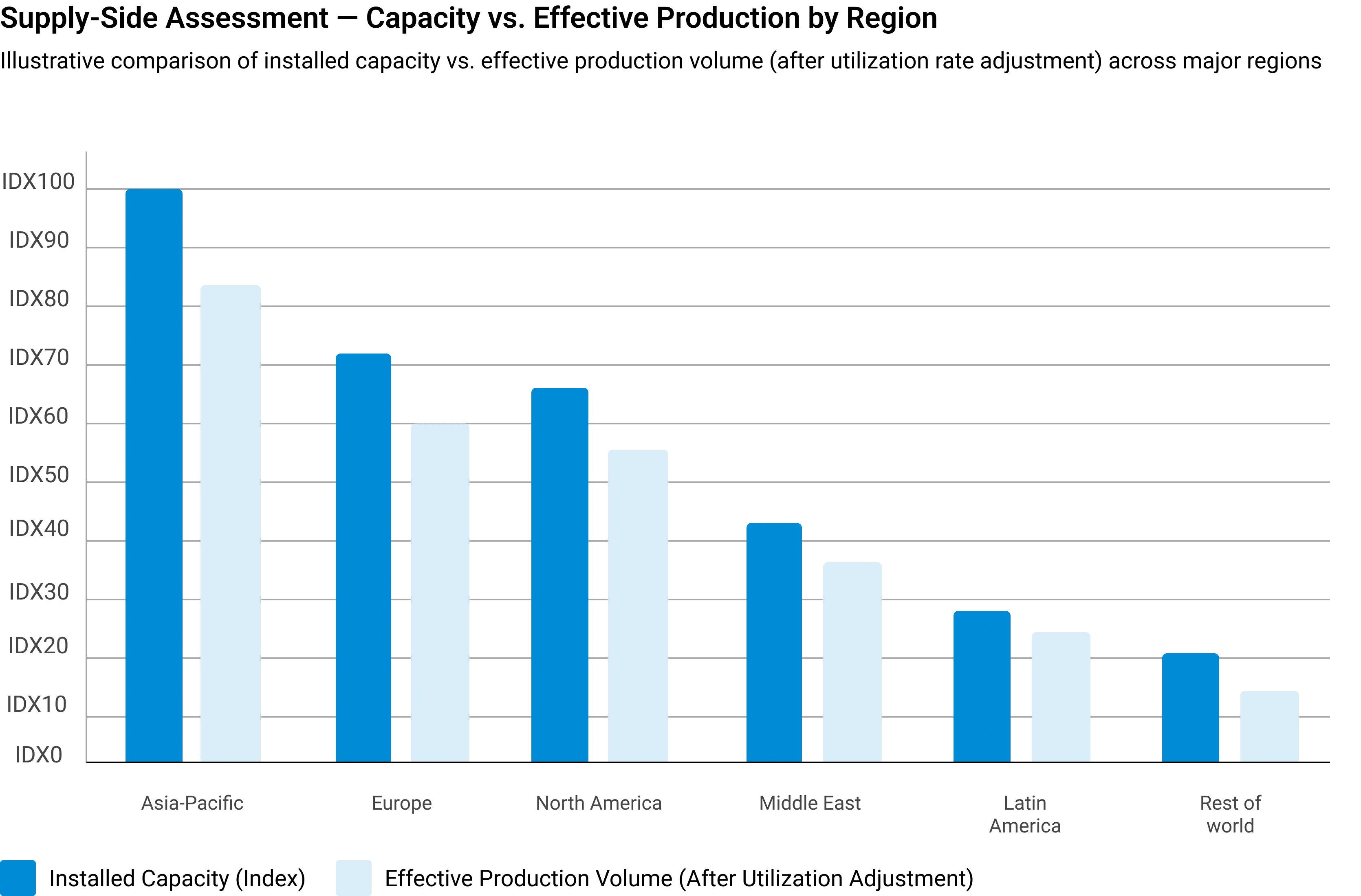
Installed capacity is adjusted using utilization rates based on demand conditions, feedstock availability, plant operating rates, maintenance schedules, and regulatory restrictions.
Manufacturer Revenue Analysis
Product-specific revenues, segment-level performance, regional distribution, average selling prices, and margin trends are evaluated to establish market value estimates.
Supply-Side Assessment — Capacity vs. Effective Production by Region
Illustrative comparison of installed capacity vs. effective production volume (after utilization rate adjustment) across major regions
Phase 3 — Demand-Side Assessment: Quantifying Chemical Consumption
Demand-side analysis quantifies chemical consumption across industries, applications, and geographies — identifying where and how chemicals are consumed throughout the value chain with precision.
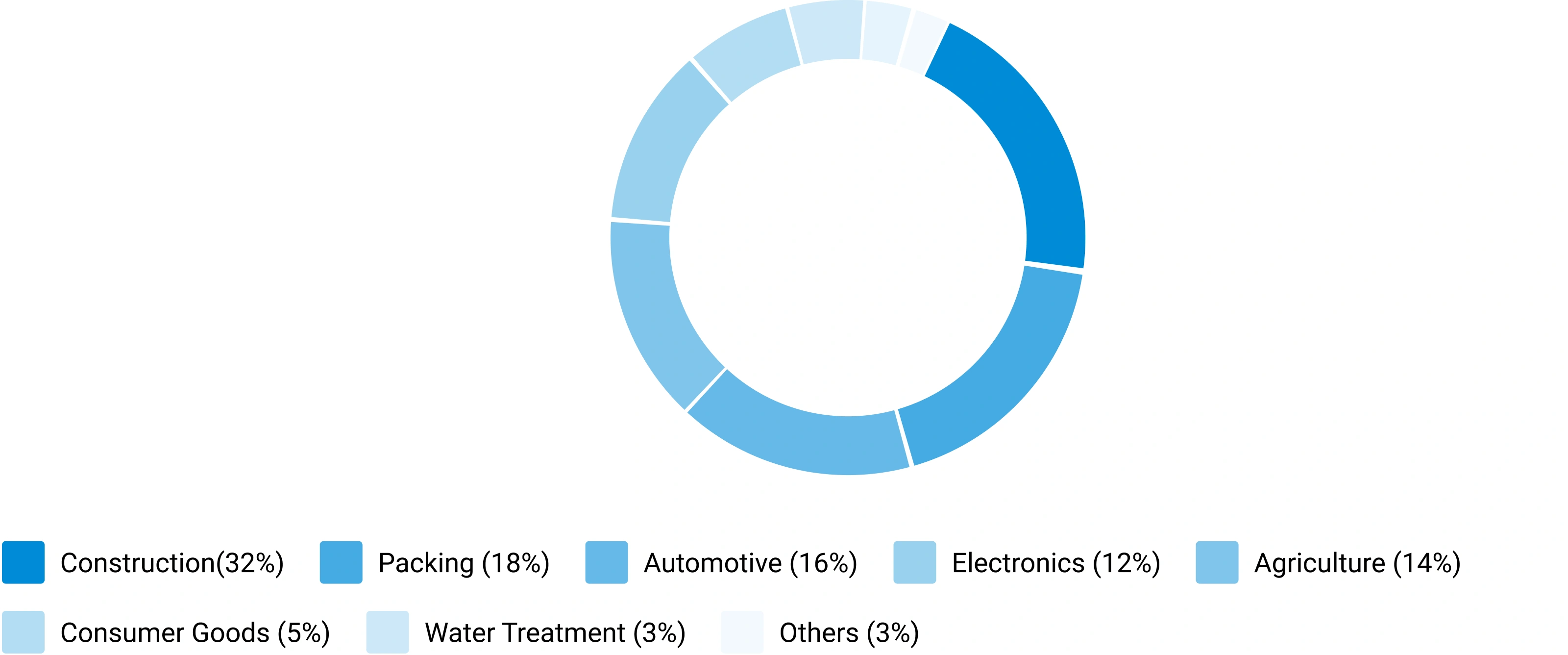
End-Use Industry Analysis
Chemical demand is evaluated across automotive, construction, packaging, electronics, agriculture, healthcare, consumer goods, industrial manufacturing, energy and utilities, and water treatment. Industry output, production trends, and consumption intensity are analyzed to determine demand patterns.
Consumption Modeling
Demand is estimated using measurable indicators: kilograms per vehicle, kilograms per square meter of construction, dosage per cubic meter of water treated, kilograms per hectare of agricultural land, and kilograms per ton of manufactured products. Consumption factors are validated through industry publications and primary interviews.
Application Analysis
The market is segmented by application area to understand product performance requirements, formulation trends, technology adoption, customer preferences, and regulatory requirements improving demand accuracy and segmentation granularity.
Demand-Side Assessment — End-Use Industry Demand Distribution
Illustrative distribution of chemical & materials demand across key end-use industries
Phase 4 - Trade Flow Analysis: Balancing Regional Supply and Demand
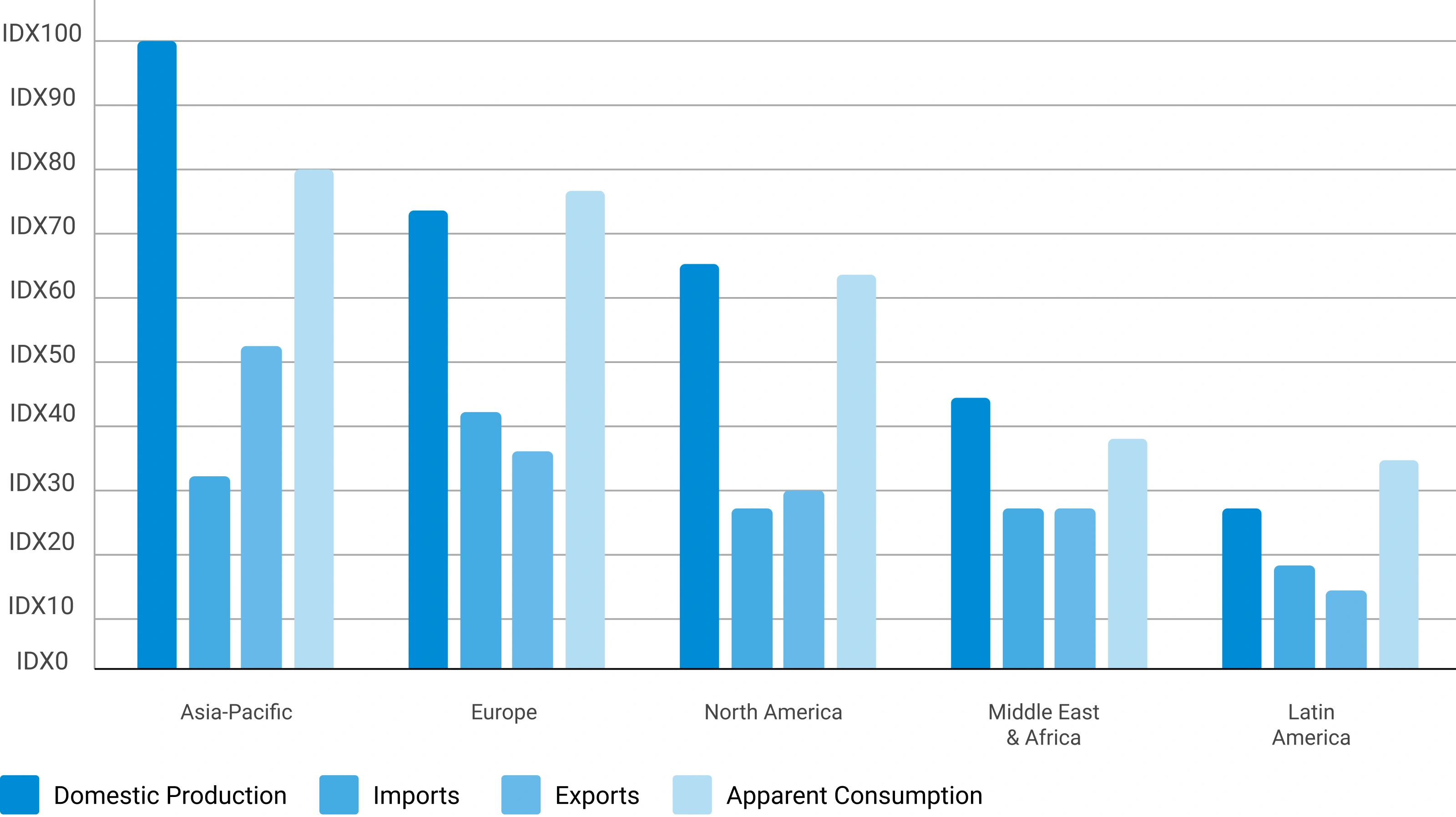
Trade flow analysis reconciles regional supply and demand estimates through import and export data, identifying net supply positions, regional dependencies, and market imbalances. It serves as an independent validation layer that tests the consistency of supply-side and demand-side estimates.
Import Analysis
Import data is evaluated to determine volumes, source countries, product dependency, regional supply gaps, and pricing trends — identifying markets that rely heavily on external supply and where domestic production is insufficient to meet demand.
Export Analysis
Export assessments reveal production surplus, export competitiveness, regional manufacturing strength, and global market participation. Export patterns also help validate domestic production estimates and identify net exporting regions.
Apparent Consumption Model
Regional consumption is assessed using the standard apparent consumption formula:
Results identify net importing regions, net exporting regions, regional deficits, and surpluses — serving as an independent validation of supply and demand estimates.
Trade Flow Analysis — Net Supply Position by Region
Illustrative apparent consumption vs. domestic production across major regions — positive gap indicates net import dependency
Phase 5 — Primary Research: The Critical Validation Layer
Primary research tests and refines findings from secondary research through direct engagement with industry participants across the supply chain, demand side, and expert community. It captures intelligence that no database or published report can provide — the real-world experience of manufacturers, buyers, and specialists operating in the market.

Supply-Side Interviews
Conversations with chemical manufacturers, raw material suppliers, contract manufacturers, technology providers, and plant operators cover production trends, capacity utilization, pricing developments, technology shifts, and competitive dynamics.

Demand-Side Interviews
Engagement with OEMs, industrial consumers, procurement managers, distributors, formulators, and end-use manufacturers focuses on consumption trends, purchasing behavior, product substitution, demand outlook, and emerging applications.

Industry Expert Consultations
Additional interviews with industry consultants, independent experts, regulatory specialists, technical professionals, and research institutions provide deeper market context and validate key analytical assumptions.
Focus Areas of Primary Research:
Market Size & Forecast Validation
Revenue estimates, volume consumption, growth rates, forecast assumptions, regional demand.Supply Chain & Value Chain Assessment
Raw material sourcing, supply chain challenges, distribution networks, procurement practices.Production & Capacity Analysis
Manufacturing capacity, utilization rates, expansion projects, plant investments.Pricing & Cost Structure Analysis
Product pricing trends, feedstock costs, energy costs, margin pressures, pricing outlook.Competitive Landscape Assessment
Volume and value estimates confirmed to be fully consistent with one another before publicationInterview Volume by Market Scope
| Study Scope | Number of Interviews |
|---|---|
| Niche Market | 20 – 30 |
| Mid-Sized Market | 30 – 50 |
| Global Market | 50 – 80 |
| Highly Fragmented Market | 80 – 120 |
Interview Details:
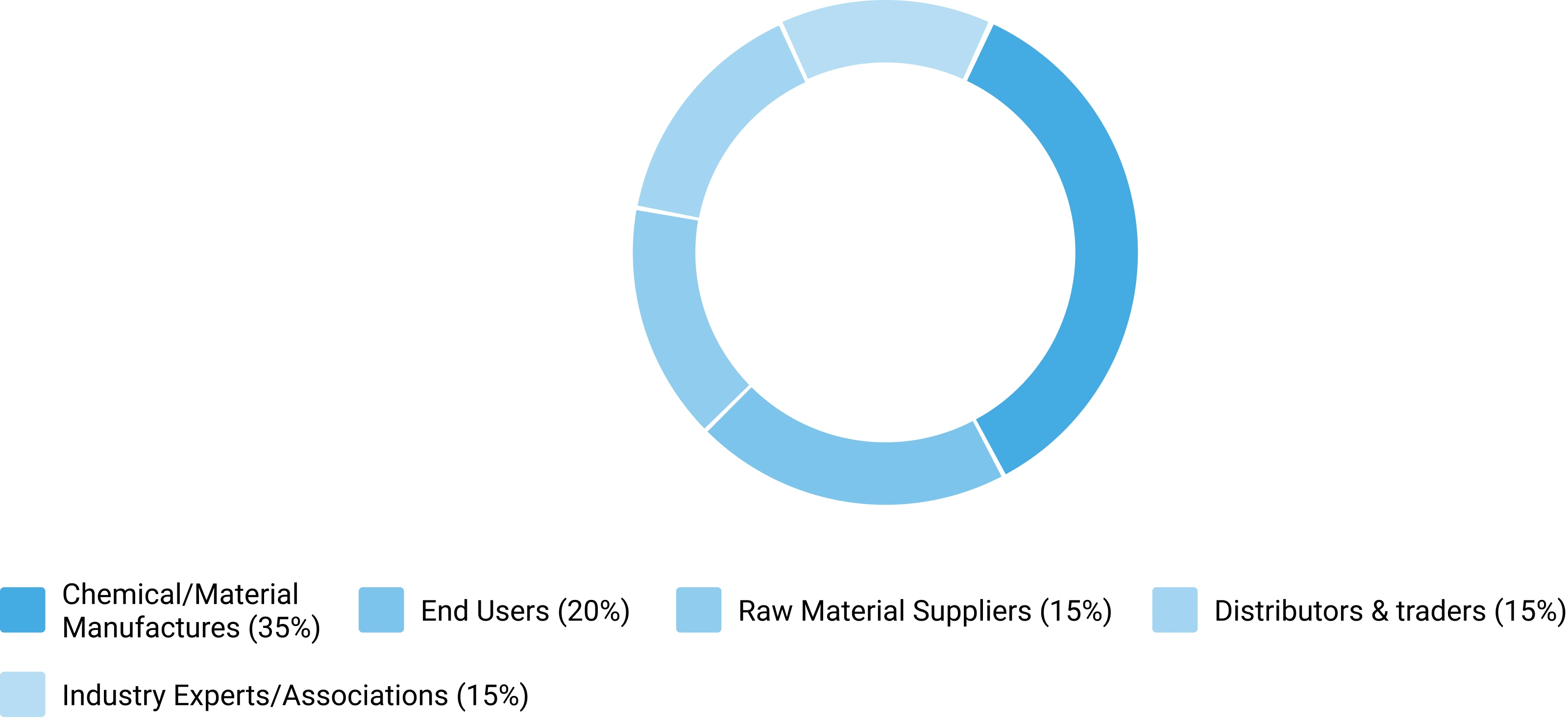
Category : Manufacturers, Suppliers, Distributors, End Users, Experts/Associations
Average Duration : 30–60 Minutes
Interview Mode : Video calls, telephonic interviews, expert consultations
Interview Format : Structured / Semi-Structured questionnaire
Focus Areas of Primary Research:
Market Size & Forecast Validation :
Revenue estimates, volume consumption, growth rates, forecast assumptions, regional demand.
Supply Chain & Value Chain Assessment :
Raw material sourcing, supply chain challenges, distribution networks, procurement practices.
Production & Capacity Analysis :
Manufacturing capacity, utilization rates, expansion projects, plant investments.
Pricing & Cost Structure Analysis :
Product pricing trends, feedstock costs, energy costs, margin pressures, pricing outlook.
Competitive Landscape Assessment :
Market share, competitor positioning, strategic initiatives, partnerships, acquisitions.
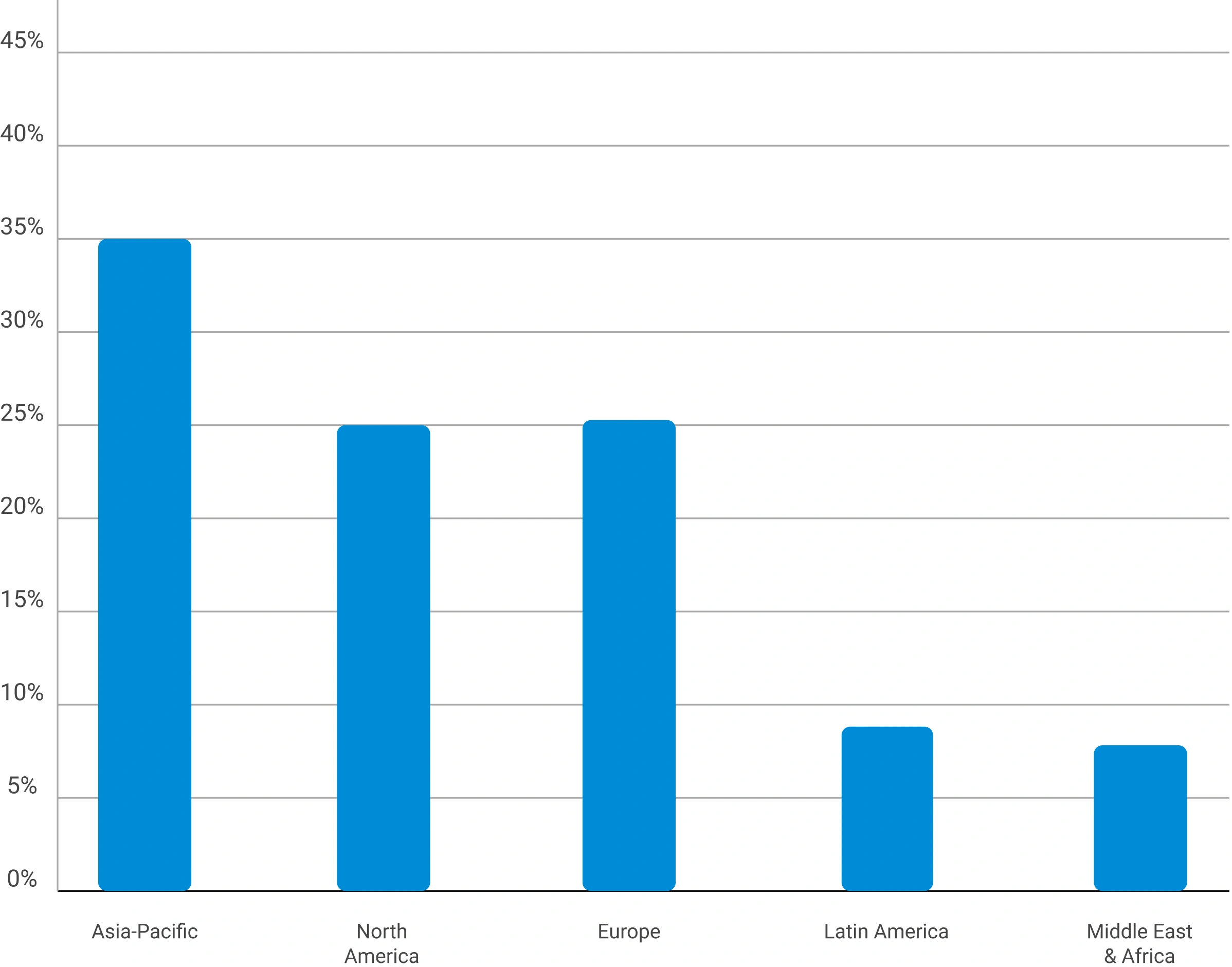
Primary Research — Stakeholder Coverage by Category
Distribution of interview respondents across stakeholder categories (% share from PPT data)
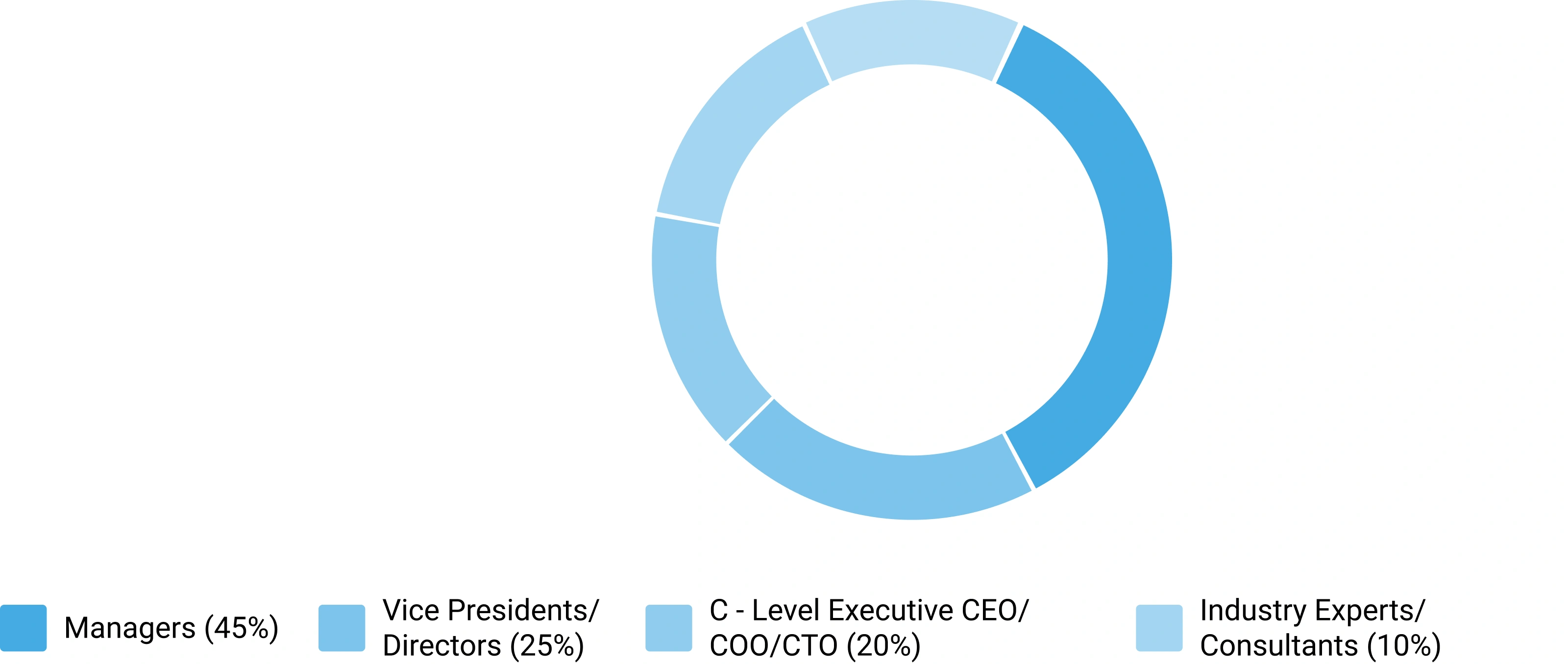
Primary Research — Respondent Designation Profile
Seniority breakdown of interview respondents (% share from PPT data)
Primary Research — Geographic Coverage of Interviews
Regional distribution of primary research engagement (% share from PPT data)
Phase 6 — Data Triangulation and Market Validation
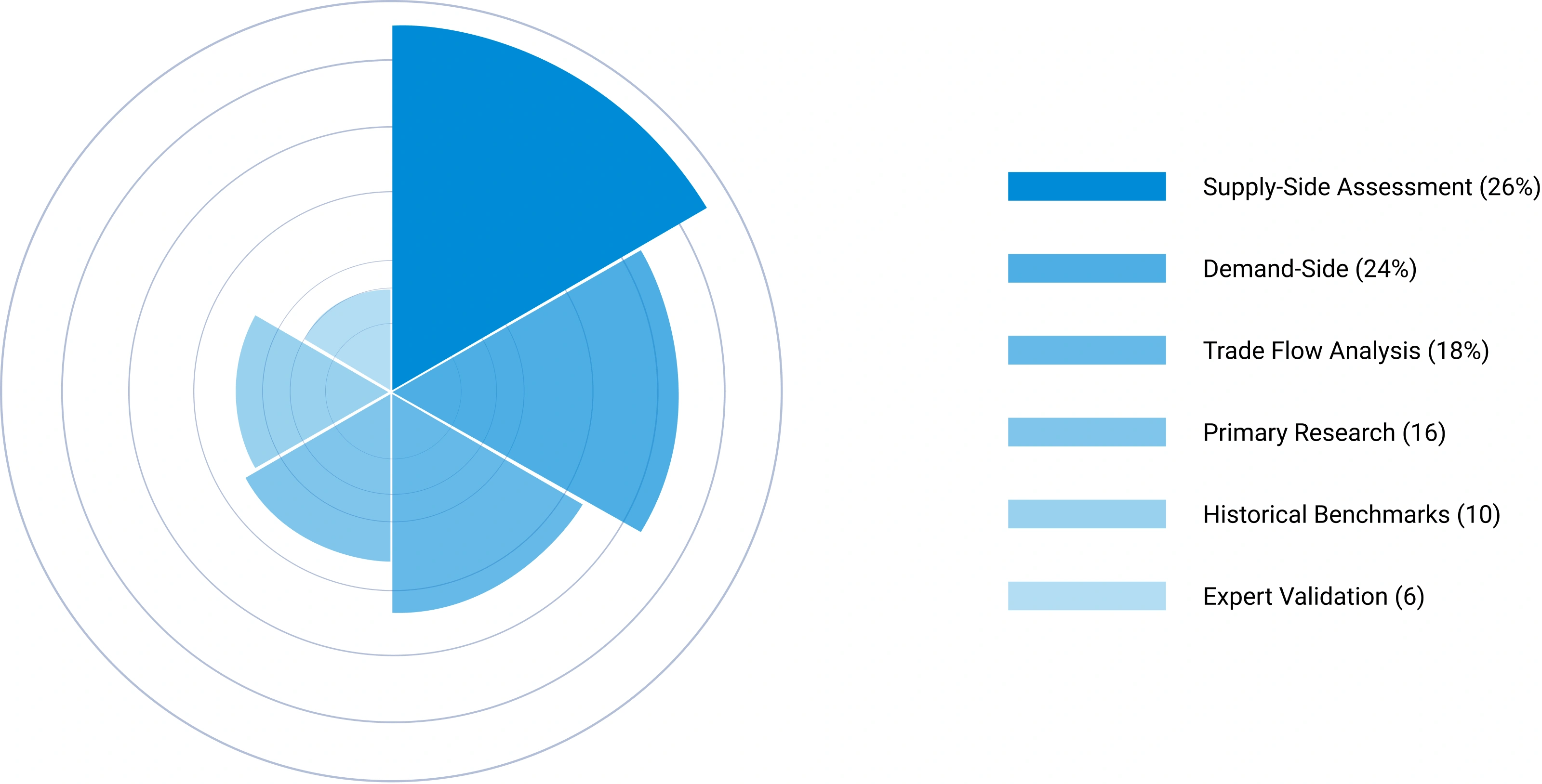
No single methodology is relied upon in isolation. Multiple independent estimation approaches are combined and reconciled to ensure consistency, accuracy, and analytical defensibility. Any material deviations between approaches are investigated and adjusted through additional validation cycles.
The final market size is derived through weighted triangulation of all validated methodologies. Any material deviations between approaches are investigated and adjusted through additional validation cycles. The outcome represents the most realistic assessment of the market based on available evidence and expert confirmation ensuring that volume and value estimates are fully consistent with one another.
Triangulation Framework — Input Contribution Weight
Relative weight each sizing input contributes to the final reconciled market estimate
Phase 7 — Forecast Modeling: Projecting Future Market Evolution
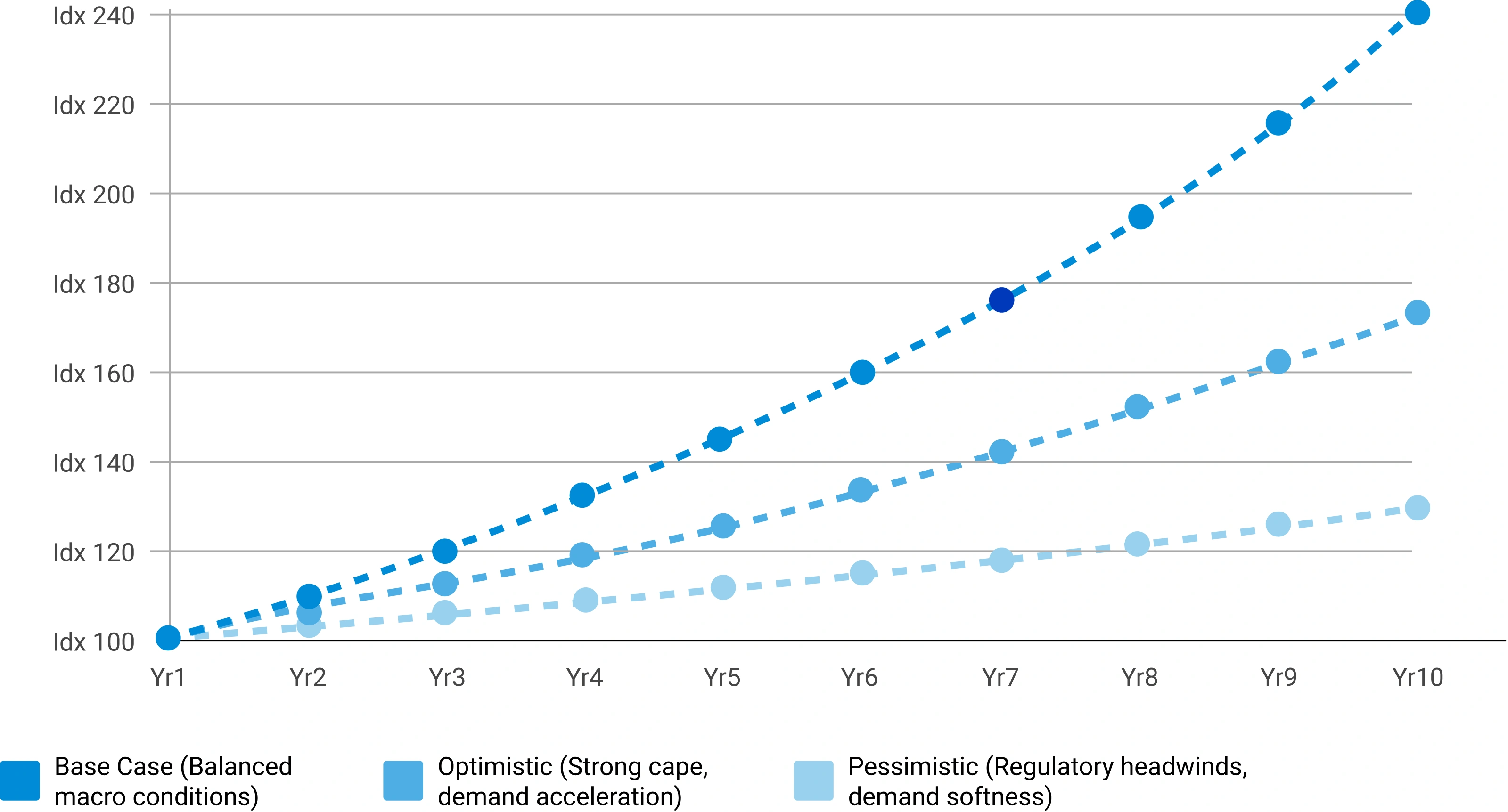
Forecasting evaluates the future trajectory of the market using a combination of quantitative indicators and qualitative assessments across economic, industry, and regulatory dimensions. Rather than simple extrapolation, each driver is independently modeled and integrated into a composite forecast.
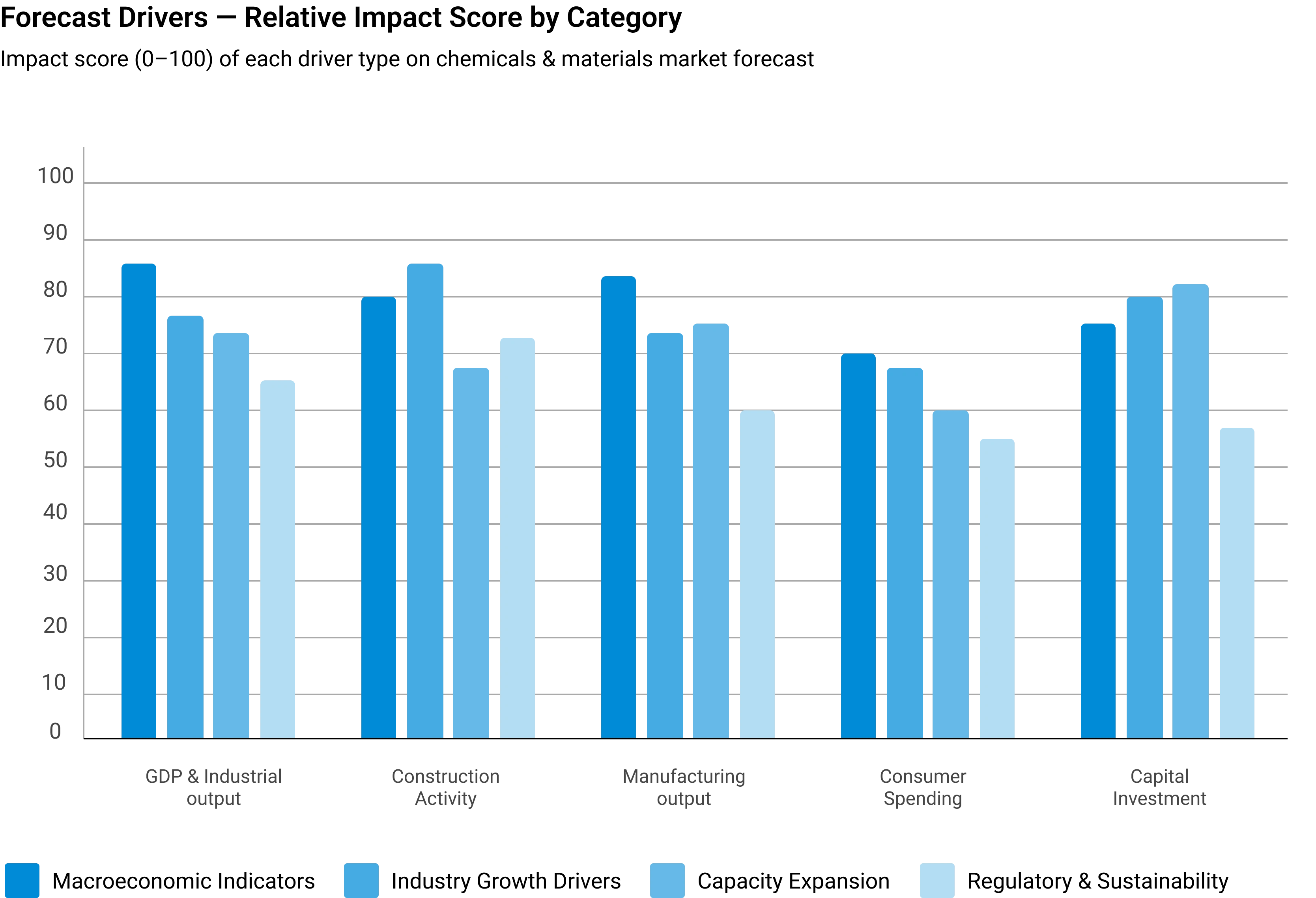
Macroeconomic Indicators
GDP growth, industrial production, manufacturing output, construction activity, consumer spending, and capital investment form the quantitative foundation of long-term demand projections. These are applied at country, regional, and global levels.
Industry Growth Drivers
Urbanization, infrastructure development, industrialization, technological innovation, sustainability initiatives, and evolving product performance requirements are assessed at regional and industry levels — capturing both structural and cyclical demand drivers.
Capacity Expansion Analysis
Announced plant expansions, new manufacturing facilities, technology upgrades, and strategic investments are evaluated to determine future supply-demand dynamics and potential market tightness or oversupply situations.
Regulatory & Sustainability
Environmental regulations, chemical safety standards, emission reduction targets, circular economy initiatives, and sustainability requirements are incorporated as they often influence product adoption rates and market growth trajectories.
Scenario Forecast Range — Indexed Market Growth (Year 1–10)
Illustrative indexed growth trajectories across Base, Optimistic, and Pessimistic scenarios over a 10-year forecast horizon
Forecast Drivers — Relative Impact Score by Category
Impact score (0–100) of each driver type on chemicals & materials market forecast



Comments
Share your thoughts, ask a question, or provide feedback about this report.