
Asia Pacific Renewable Chemicals Market Size Analysis Report 2035
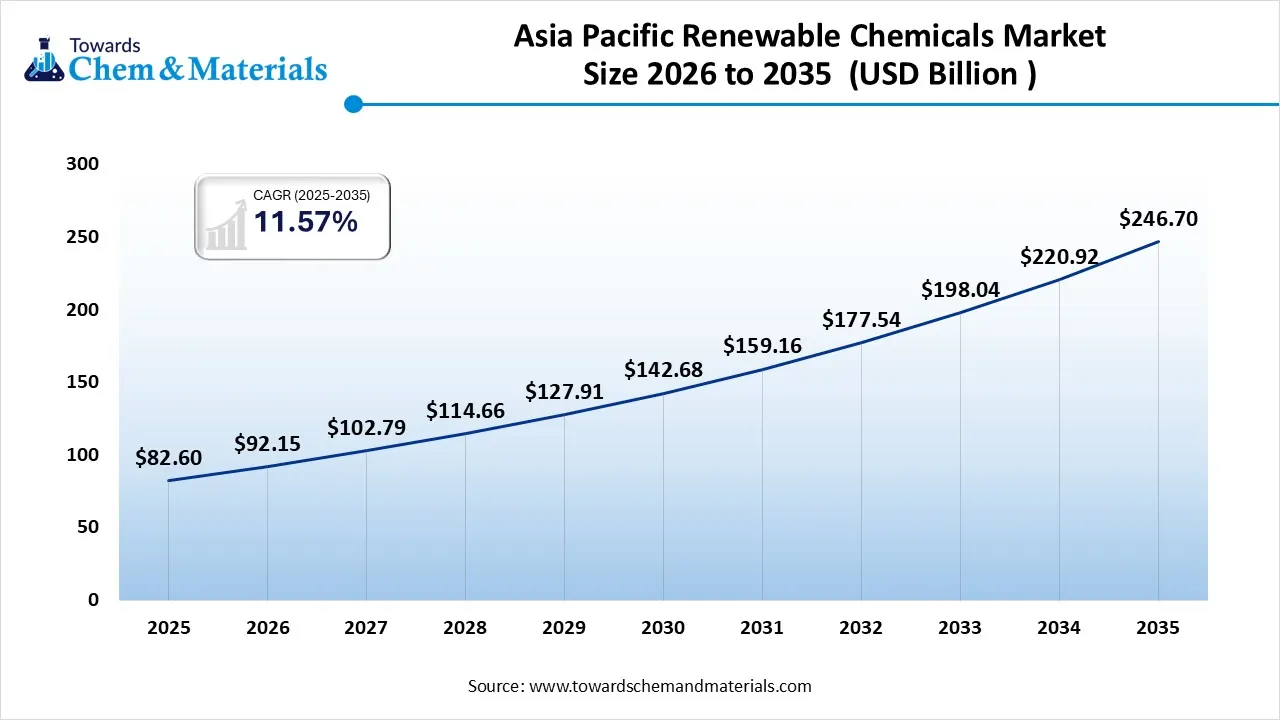
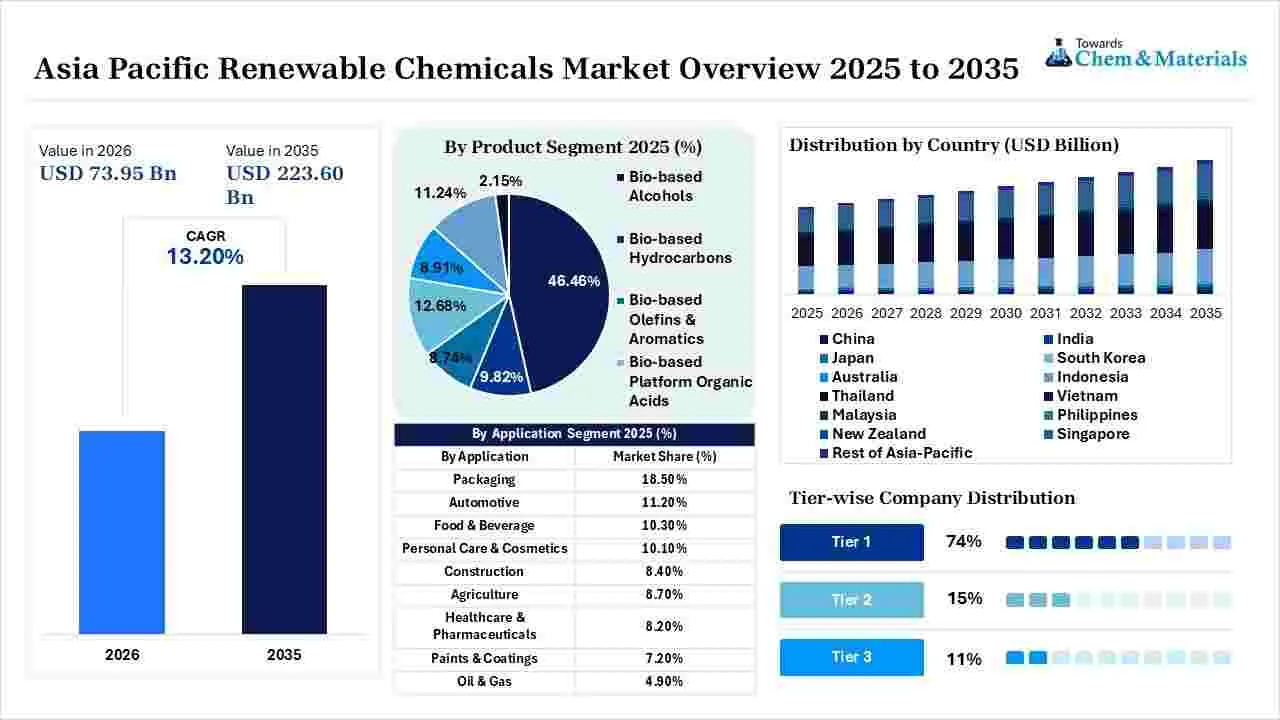
The Asia Pacific renewable chemicals market size was valued at USD 65.40 billion in 2025, is estimated to reach USD 73.95 billion in 2026, and is projected to reach USD 223.60 billion by 2035, exhibiting a compound annual growth rate (CAGR) of 13.20% over the forecast period from 2026 to 2035. Government rules, consumer demand, fossil fuel costs, packaging expansion, and industrial adoption are some of the factors that support growth. Technological development is bolstered by advanced fermentation, use of lignocellulosic biomass, carbon capture, AI, and circular manufacturing. Renewable feedstocks, green integration of energy, and sustainable chemical processing are increasingly explored by regional manufacturers to increase applications.
Market Highlights
- China dominated the Asia Pacific renewable chemicals market by holding a 38.5% share in 2025 and is expected to grow at a CAGR of 9.18% during the forecast period.
- India held a 15.4% market share in 2025 and is expected to grow at the fastest CAGR of 10.38% during the forecast period.
- By product, the bio-based alcohols segment dominated the market with the largest share of 46.46% in 2025 and is expected to grow at a CAGR of 11.8% during the forecast period.
- By product, the bio-based olefins & aromatics segment held an 8.74% market share in 2025 and is expected to grow at the fastest CAGR of 17.6% over the forecast period.
- By application, the packaging segment dominated the market with the largest share of 18.5% in 2025 and is expected to grow at a CAGR of 15.2% during the forecast period.
- By application, the personal care & cosmetics segment held 10.1% market share in 2025 and is expected to grow at the fastest CAGR of 16.1% over the forecast period.
The Asia Pacific renewable chemicals market is projected to be the fastest-growing market in the world, and the countries are also experiencing the fastest growth of the market. Market development is aided by government regulations, consumer demand, fossil fuel costs, packaging growth, and new industrial applications. Technology capabilities are enhanced by advanced fermentation processes, lignocellulosic biomass, carbon capture, and circular manufacturing throughout the regional production networks. Downstream chemical applications need to become greener in line with the strict environmental laws and carbon reduction policies affecting the manufacturing sector. Consumers demand for everyday products made from renewable chemicals is driving industrial uptake of renewable chemicals.
Investment Movement for the Asia Pacific Renewable Chemicals Market
Bio-based alternatives and scaling up fermentation technologies through regional production networks are increasingly the work of chemical producers cooperating with biotechnology innovators. Established multinationals actively acquire regionally based start-ups and technology companies to rapidly grow their sustainable product portfolio. Incorporate local processing plants to harness local biomass, including agricultural waste, forestry waste, and sugar crops, as feedstocks in the area. Manufacturers move their sourcing and production base to Southeast Asian countries such as Vietnam, Thailand, and Indonesia to increase supply resilience in the region.
Market Trends
- Bio-based alcohols continue to be the highest revenue-generating product group, with a wide range of industrial applications and fuel blending uses.
- With growing use in industrial chemical applications, bio-based olefins and aromatics are a high-value product area.
- With the introduction of a ban on single-use plastics in various countries and corporate sustainability requirements, there is constant growth in packaging demand, as more companies are adopting renewable chemicals for packaging.
- Demand for green methanol is rising as the maritime, fuel, and chemical industries embrace sustainable alternatives to meet decarbonization targets.
Key Technological Shifts and AI in the Asia Pacific Renewable Chemicals Market
Renewable chemical manufacturers are more and more turning to agricultural residue, biomass, and captured carbon sources in Asia Pacific. Chemical synthesis with solar, wind, and green hydrogen inputs is enabled by the integration of green energy in regional manufacturing activities. Circular manufacturing is the reengineering of industrial processes to produce higher-value chemical building blocks from waste streams. Advanced fermentation benefits renewable chemical production from alternative regional feedstocks and enhances biological conversion processes. AI speeds research by predicting enzyme behavior, optimizing reaction pathways, and virtually testing alternatives to using harmful solvents.
Supply Chain Analysis of the Asia Pacific Renewable Chemicals Market
Feedstock Procurement
- Feedstock procurement is the process of securing sustainable raw materials, such as biomass, agricultural waste, and bio-based starches, for the production of renewable chemicals.
- Those reliable renewable feedstocks allow for production continuity and help manufacturers to lessen their reliance on traditional petroleum-based chemical inputs.
- Cargill acquires agricultural raw materials and bio-based feedstocks on a large scale, providing sustainable and low-carbon production inputs.
- Other Key Players: BASF SE, Archer Daniels Midland (ADM), and PTT Global Chemical.
Chemical Synthesis and Processing
- Renewable biofeedstocks are converted into functional intermediate chemicals by catalytic or bioproduction reactions in chemical synthesis.
- Efficient processing allows renewable materials to be endowed with functional properties demanded in polymers, specialty chemicals, and industrial applications.
- Mitsubishi Chemical Group converts natural resources and bio-intermediates from plants to sustainable polymers and specialty chemical products.
- Other Key Players: LG Chem, Dow, and Evonik Industries.
Formulating And Blending
- In compound formulation, synthesized biochemicals are combined with functional ingredients to develop market-ready chemical compounds as per requirement.
- Formulation allows formulation makers to tailor the performance characteristics to regional manufacturing and application needs.
- Dow develops high-performance bio-based polymers and customized industrial chemical solutions to meet regional manufacturing needs.
- Other Key Players: Covestro, Sumitomo Chemical, and Asahi Kasei.
Sustainability Analysis of the Asia Pacific Renewable Chemicals
The Asia Pacific renewable chemicals market helps promote sustainability by providing renewable chemicals derived from biomass and agricultural waste instead of fossil-based chemicals. Utilizing renewable waste in bio-based compounds can result in the reduction of open burning and landfill pressures, and production-related greenhouse gas emissions can be lowered. Closed-loop processing enhances resource efficiency through the use of byproduct materials in the industry as a resource for organic and bio-alcohol production. Yet, sustainability issues such as investment gaps, biomass sourcing pressure, and regional technical readiness exist.
What are renewable chemicals?
Renewable chemicals are chemicals manufactured from renewable biological materials, biomass, crops, and captured carbon. These are alternatives that are substitutes or reduce petroleum-based chemical usage in industrial and consumer applications. Bio-based alcohols, hydrocarbons, olefins, aromatics, organic acids, sugars, polyols, and oleochemicals are part of the market.
Uses of Asia Pacific Renewable Chemicals
- Renewable chemicals are contributing to the creation of biodegradable plastics, coatings, and films for packaging applications, especially as the push for sustainability drives material selection.
- Autos can use renewable chemical feedstocks for materials and components and help advance industry sustainability.
- Renewable chemical inputs for textile applications provide alternative chemical materials that are in line with sustainable goals in textile manufacturing and product development.
- Renewable chemicals are used in green manufacturing methods in healthcare and pharmaceutical applications that demand sustainable chemical alternatives, including bio-derived acids and related chemicals.
Pricing Analysis for the Asia Pacific Renewable Chemicals Market
The price is affected by availability of renewable feedstocks, production scale, processing complexity, technology investments, and competition from petroleum-based chemicals. Lower sourcing costs can be achieved in key producing nations with local biomass, agricultural waste, and sugarcane. Initial investments for advanced biorefineries are high, and costs can be lowered step by step as a result of technological development. Overcapacity in petroleum chemicals pressures prices, while regulatory incentives and requirements for sustainability drive higher prices for renewable alternatives.
Asia Pacific Renewable Chemicals Market: Trade Analysis
The Asia Pacific renewable chemicals market grows owing to industrial demand, the availability of renewable chemicals, environmental legislation, and the integration of manufacturing. China is the driver of regional volumes through industrial capacity, while India shows fast growth with the help of manufacturing policies and consumer demand. Japans focus is on high-purity specialty materials, whereas Southeast Asian countries focus on building manufacturing and sourcing networks. Regionalization and integration of biotechnology are further transforming value chains, providing facilitation for the use of renewable feedstock and the development of advanced fermentation.
Regulatory Framework: Asia Pacific Renewable Chemicals Market
| Country Region | Regulatory Body | Key Regulations | Focus Areas |
| China | Ministry of Ecology and Environment (MEE) | Environmental Management Registration of New Chemical Substances (China REACH) | New substance notification, hazardous chemical risk screening |
| Japan | Ministry of Economy, Trade and Industry (METI) | Chemical Substances Control Law (CSCL / Kashin-ho) | Assessment of new and existing chemical risks |
| Australia | Australian Industrial Chemicals Introduction Scheme (AICIS) | Industrial Chemicals Act 2019 | Categorization of chemical introductions (in AICIS guidelines) |
Segmental Insights
Product Insights
The bio-based alcohols segment dominated the market with the largest share of 46.46% in 2025 and is expected to grow at a CAGR of 11.8% over the forecast period due to the wide regional demand and extensive industrial applications and fuel blending. Established applications bolster its adoption within renewable chemical value chains, while its market dominance is expected to continue through the forecast period. The growing interest in sustainable chemical alternatives and in the use of renewable feedstocks in the regional production systems is an added advantage for the use of bio-based alcohols.
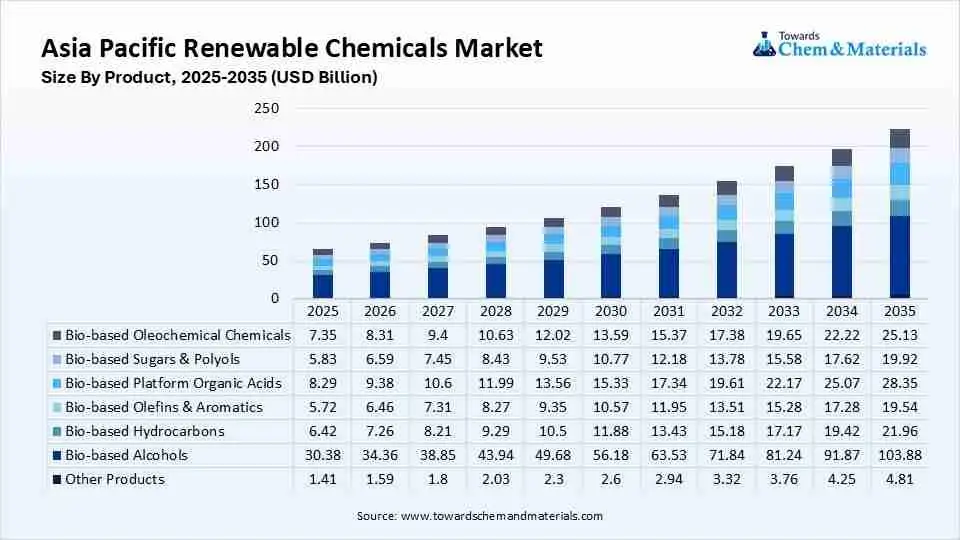
The bio-based olefins & aromatics segment held an 8.74% market share in 2025 and is expected to grow at the fastest CAGR of 17.6% over the forecast period, as producers are keen on exploiting renewable pathways towards chemical building blocks. Interest in alternative feedstocks and sustainable chemical synthesis paves the way for broader implementation for industrial applications. Advances in technology such as fermentation and alternative carbon sources bolster opportunities for olefins and aromatic production via renewables.
- For instance, in November 2025, Ducor and Blue Circle Olefins teamed up to provide 100% circular polypropylene. The partnership leverages methanol-to-olefins technology, along with Ducors production capacity, to drive faster availability of high-quality circular polypropylene for customers. (Source: www.indianchemicalnews.com)
Asia Pacific Renewable Chemicals Market Share, By Product, 2025 (%)
| By Product | Market Share (%) |
| Bio-based Alcohols | 46.46% |
| Bio-based Hydrocarbons | 9.82% |
| Bio-based Olefins & Aromatics | 8.74% |
| Bio-based Platform Organic Acids | 12.68% |
| Bio-based Sugars & Polyols | 8.91% |
| Bio-based Oleochemical Chemicals | 11.24% |
| Other Products | 2.15% |
Application Insights
The packaging segment dominated the market with the largest share of 18.5% in 2025 and is expected to grow at a CAGR of 15.2% over the forecast period due to increasing sustainability demand, especially for biodegradable plastics, coatings, and films. Renewable packaging is further driving demand in regional consumer and industrial markets through the e-commerce sector. Restrictions on single-use plastics and corporate sustainability requirements also spur companies to seek renewable chemical raw materials for packaging.
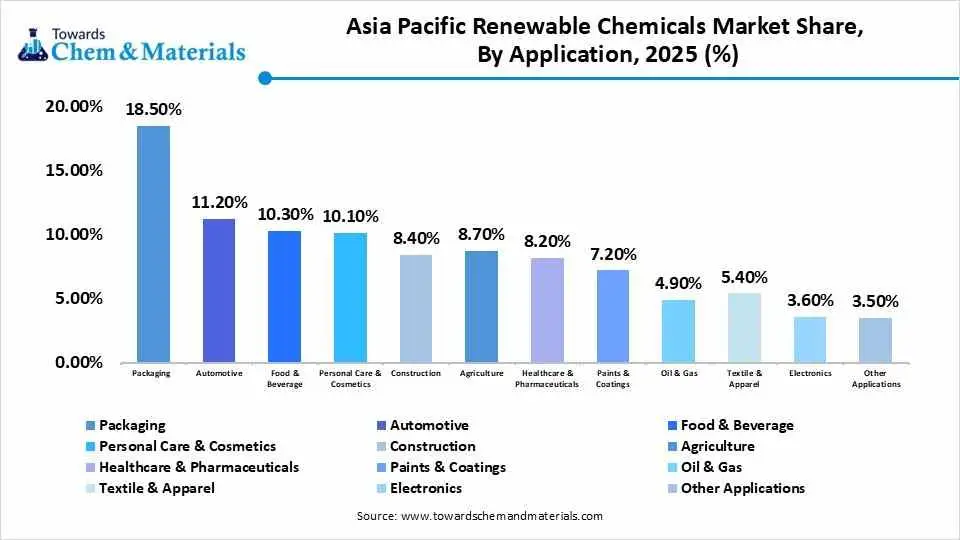
The personal care & cosmetics segment held a 10.1% market share in 2025 and is expected to grow at the fastest CAGR of 16.1% over the forecast period. As consumers are shifting towards sustainable products, the personal care and cosmetics application category is the fastest-growing. Renewable ingredients help with sustainable formulation approaches and open up new opportunities for bio-derived chemical ingredients in personal care products. It is enhanced by the greater use of eco-friendly materials in consumer-driven product categories.
Asia Pacific Renewable Chemicals Market Share, By Application, 2025 (%)
| By Application | Market Share (%) |
| Packaging | 18.50% |
| Automotive | 11.20% |
| Food & Beverage | 10.30% |
| Personal Care & Cosmetics | 10.10% |
| Construction | 8.40% |
| Agriculture | 8.70% |
| Healthcare & Pharmaceuticals | 8.20% |
| Paints & Coatings | 7.20% |
| Oil & Gas | 4.90% |
| Textile & Apparel | 5.40% |
| Electronics | 3.60% |
| Other Applications | 3.50% |
Regional Insights
How Did China Dominate the Asia-Pacific Renewable Chemicals Market in 2025?
The China renewable chemicals market size was estimated at USD 25.18 billion in 2025 and is projected to reach USD 86.20 billion by 2035, growing at a CAGR of 13.10% from 2026 to 2035. China dominated the market with the largest share of 38.5% in 2025 and is expected to grow at a CAGR of 9.18% during the forecast period. due to its huge industrial capacity, swift manufacturing growth, and robust electronics and consumer goods integration.
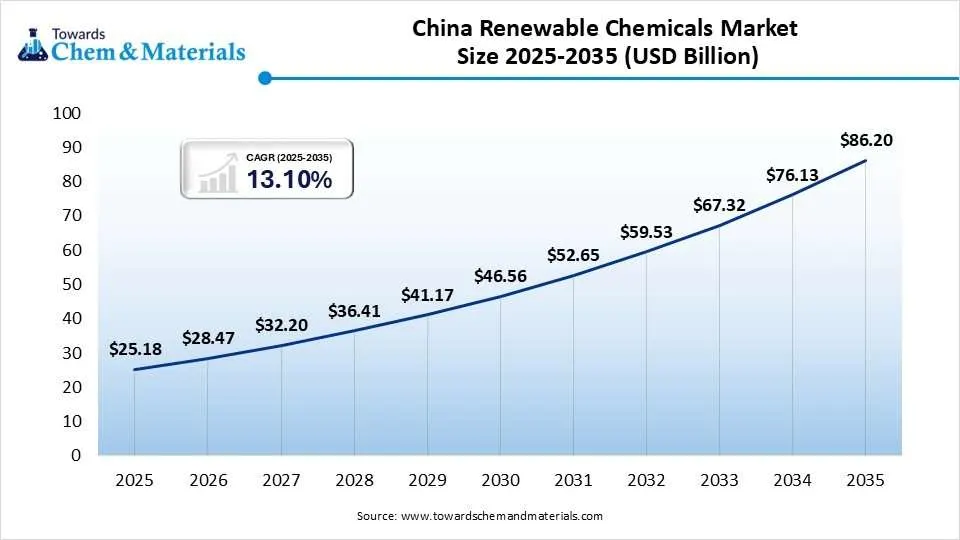
It has advanced manufacturing technology and is an emerging area of sustainable materials development. The country also encourages regional production by expanding the infrastructure for biomaterials and the technology deployment of renewable chemical production.
- For instance, in April 2026, CovationBio reached a milestone at the China biomaterials facility and started its Xatryx business. This plant will not only yield bioTHF and bio-based PTMEG but also enhance the renewable chemical manufacturing capacity and biomaterials manufacturing capability in China.
(Source: www.indianchemicalnews.com)
Indias renewable chemicals market size was estimated at USD 10.07 billion in 2025 and is projected to reach USD 34.55 billion by 2035, growing at a CAGR of 13.12% from 2026 to 2035. India held a 15.4% market share in 2025 and is expected to grow at the fastest CAGR of 10.38% during the forecast period. India is the fastest-growing market in terms of consumer demand and manufacturing policies. The country is creating new possibilities for renewable chemical resources by using green materials, renewable energy integration, and biotechnology-based production methods. New opportunities are available in packaging, personal care, and specialty chemicals, as well as other renewable chemical applications, due to increasing industrial interest.
Japans renewable chemicals market size was estimated at USD 7.00 billion in 2025 and is projected to reach USD 24.04 billion by 2035, growing at a CAGR of 13.13% from 2026 to 2035. Japan held a 10.7% market share in 2025 and is expected to grow at a CAGR of 9.33% over the forecast period. Japan has an important regional role in the areas of high-purity specialty materials, advanced biopolymers, and precision chemical formulation. High-level processing and advanced product formulation are key strengths of its chemical industry for developing renewable materials. In addition, through its chemical manufacturing know-how and sustainable material innovation, Japan also plays a role in regional market development.
- For instance, in April 2026, TotalEnergies and Masdar entered into a binding agreement for a 50%/50% joint venture valued at $2.2 billion. The initiative involves bringing together onshore renewable projects in nine countries in Asia to facilitate the development of renewable infrastructure for sustainable chemical production. (Source: www.indianchemicalnews.com )
South Koreas renewable chemicals market size was estimated at USD 5.62 billion in 2025 and is projected to reach USD 19.34 billion by 2035, growing at a CAGR of 13.15% from 2026 to 2035. South Korea held an 8.6% market share in 2025 and is expected to grow at a CAGR of 9.71% over the forecast period. South Korea has a developed market position for renewable chemicals based on integration and increasing use of sustainable materials in industry. The country enjoys high-level manufacturing capacity and is actively involved in electronics and chemical sectors. Industrial applications are also using alternative materials and looking for sustainable inputs for renewable chemical opportunities, which are continuing to grow.
Australias renewable chemicals market size was estimated at USD 2.94 billion in 2025 and is projected to reach USD 10.17 billion by 2035, growing at a CAGR of 13.21% from 2026 to 2035. Australia held 4.5% market share in 2025 and is expected to grow at a CAGR of 8.2% over the forecast period. Australia is a contributor to regional renewable chemical development, both in terms of resource availability and the increasing interest in sustainable chemical production. Selected chemical applications have opportunities for renewable feedstock utilization and sustainable manufacture in the country. Expanding Asia Pacific market linkages can provide additional support for the development of renewable chemicals in the region via supply-chain integration.
Recent Developments
- In July 2026, Adani Enterprises and Dioxycle joined forces to establish a low-carbon chemical manufacturing hub in India, starting with a pilot project to synthesize formic acid using captured CO₂ and renewable energy. The project aids in carbon use at a commercial scale and sustainable chemical production. (Source: chemicals.economictimes.indiatimes.com)
- In May 2026, Trillium Renewable Chemicals announced a $13 MM Series B financing round led by HS Hyosung Advanced Materials to support its 100% bio-based acrylonitrile demonstration plant and advance the commercialization of renewable chemicals. (Source: hydrocarbonprocessing.com)
Competitive Analysis
The key players in the Asia Pacific renewable chemicals market are established chemical companies as well as suppliers of renewable feedstock, biotechnology firms, and developers of emerging sustainable technologies. The competition focuses on the development of renewable product portfolios, technology development in production processes, sustainable supply of feedstocks, and strengthening regional manufacturing processes. Companies market their leading participants for product development, strategic partnerships, technological innovation, and capacity building to beef up their market positions. Bio-based polymers, sustainable ingredients, renewable alcohols, specialty chemicals, and alternative chemical building blocks are the new focal points of companies.
- For instance, in June 2026, Reliance Industries is shifting its oil-to-chemicals focus towards high-value chemicals, green materials, and decarbonization, with its aim to create 200,000 green jobs by integrating renewable energy and green hydrogen.
(Source: chemicals.economictimes.indiatimes.com) - For instance, in March 2026, BASF opened its world-scale Verbund facility in Zhanjiang, China, marking its adoption of an efficient, digital, and sustainable approach to chemical production based on an integrated industrial structure tailored to the Chinese chemical growth market. (Source: www.basf.com )
- For instance, in July 2026, Godrej Chemicals introduced a biotechnology platform-based biosurfactant solution using renewable feedstock and fermentation technology, named SLNOVA™, which is Indias first commercial-scale Sophorolipid production for sustainable specialty chemical applications. (Source: www.manufacturingtodayindia.com)
Top Players in the Market & Their Offerings
| Company | Company Type/Position | Major Headquarters | Geographic Presence |
| Mitsubishi Chemical Group | Multinational Chemical & Materials Corporation | Tokyo, Japan | Global |
| PTT Global Chemical (PTTGC) | Regional Energy & Chemical Flagship | Bangkok, Thailand | Asia Pacific |
Other Key Players
- BASF SE
- Mitsubishi Chemical Group
- ExxonMobil
- LyondellBasell Industries
- Sinopec
- The Dow Chemical Company
- Toray Industries
- Sumitomo Chemical
- Arkema
- Asahi Kasei
Segment Covered in the Report
By Product
- Bio-based Alcohols
- Bio-ethanol
- Bio-methanol
- Bio-butanol
- Bio-propanol
- Bio-isopropanol
- Bio-based Hydrocarbons
- Bio-naphtha
- Bio-crude-derived
- Bioethanol
- Bio-propane
- Bio-based Olefins & Aromatics
- Bio-ethylene
- Bio-propylene
- Bio-butadiene
- Bio-benzene
- Bio-xylene
- Bio-styrene
- Bio-based Platform Organic Acids
- Succinic acid
- Lactic acid
- Itaconic acid
- Adipic acid
- Acetic acid
- Fumaric acid
- Gluconic acid
- Bio-based Sugars & Polyols
- Glycerol
- Sorbitol
- Xylitol
- Mannitol
- Bio-based polyols
- Bio-based Oleochemical Chemicals
- Fatty acids
- Fatty alcohols
- Fatty amines
- Methyl esters
- Tall-oil derivatives
- Castor-oil derivatives
- Other Products
By Application
- Packaging
- Automotive
- Food & Beverage
- Personal Care & Cosmetics
- Construction
- Agriculture
- Healthcare & Pharmaceuticals
- Paints & Coatings
- Oil & Gas
- Textile & Apparel
- Electronics
- Other Applications
By Country
- China
- Japan
- India
- South Korea
- Taiwan
- Rest Of Asia Pacific
A Seven-Phase Framework
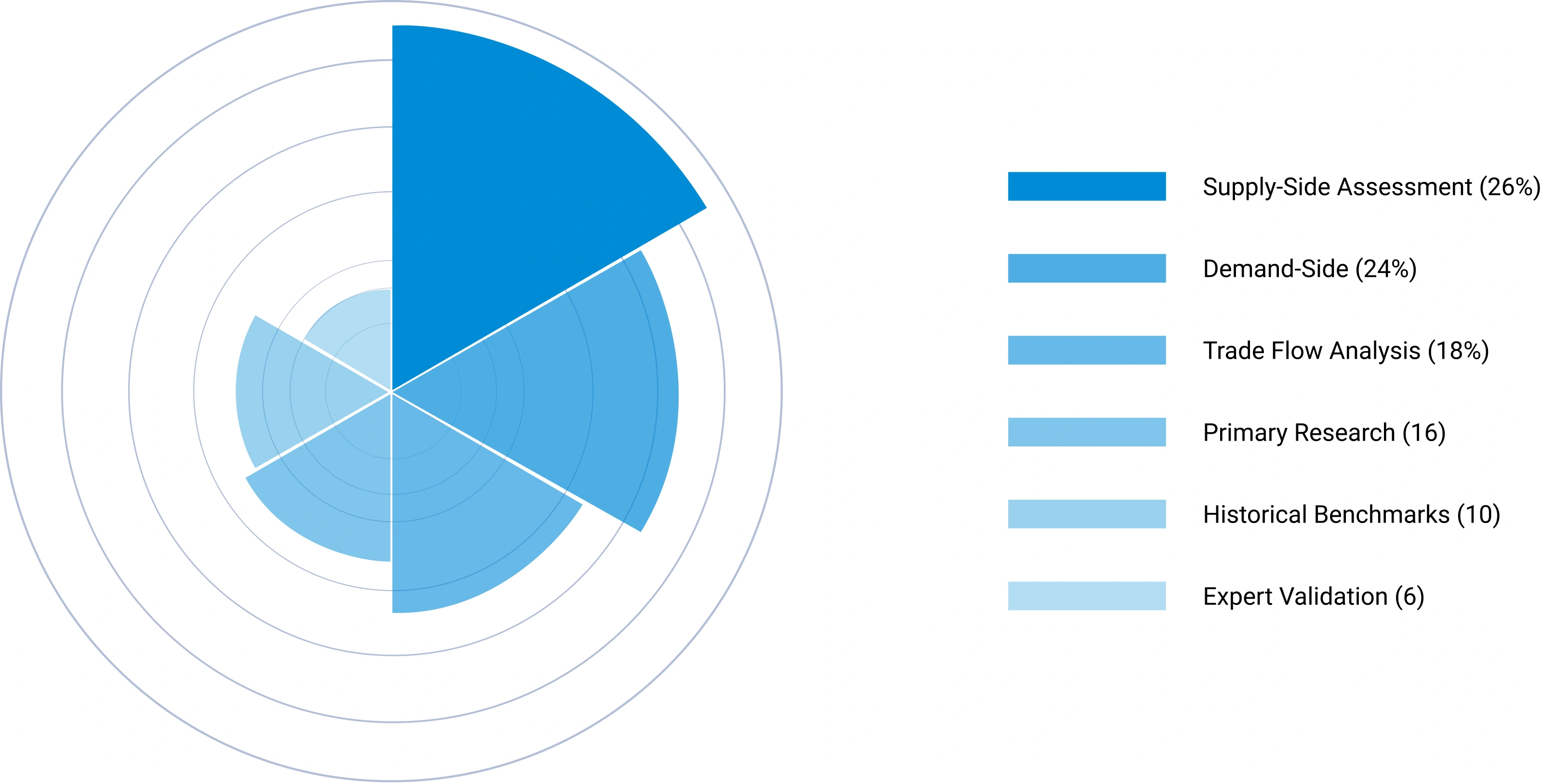
Our methodology is designed to be universally applicable across commodity chemicals, specialty chemicals, petrochemicals, construction chemicals, coatings, electronic chemicals, industrial gases, agrochemicals, water treatment chemicals, and performance materials. Each phase builds upon the last, creating a layered validation structure that minimizes estimation error and maximizes analytical confidence.
The framework ensures comprehensive market coverage, robust cross-validation, and reliable long-term forecasting — producing market estimates that withstand scrutiny from investors, regulators, and corporate strategy teams.

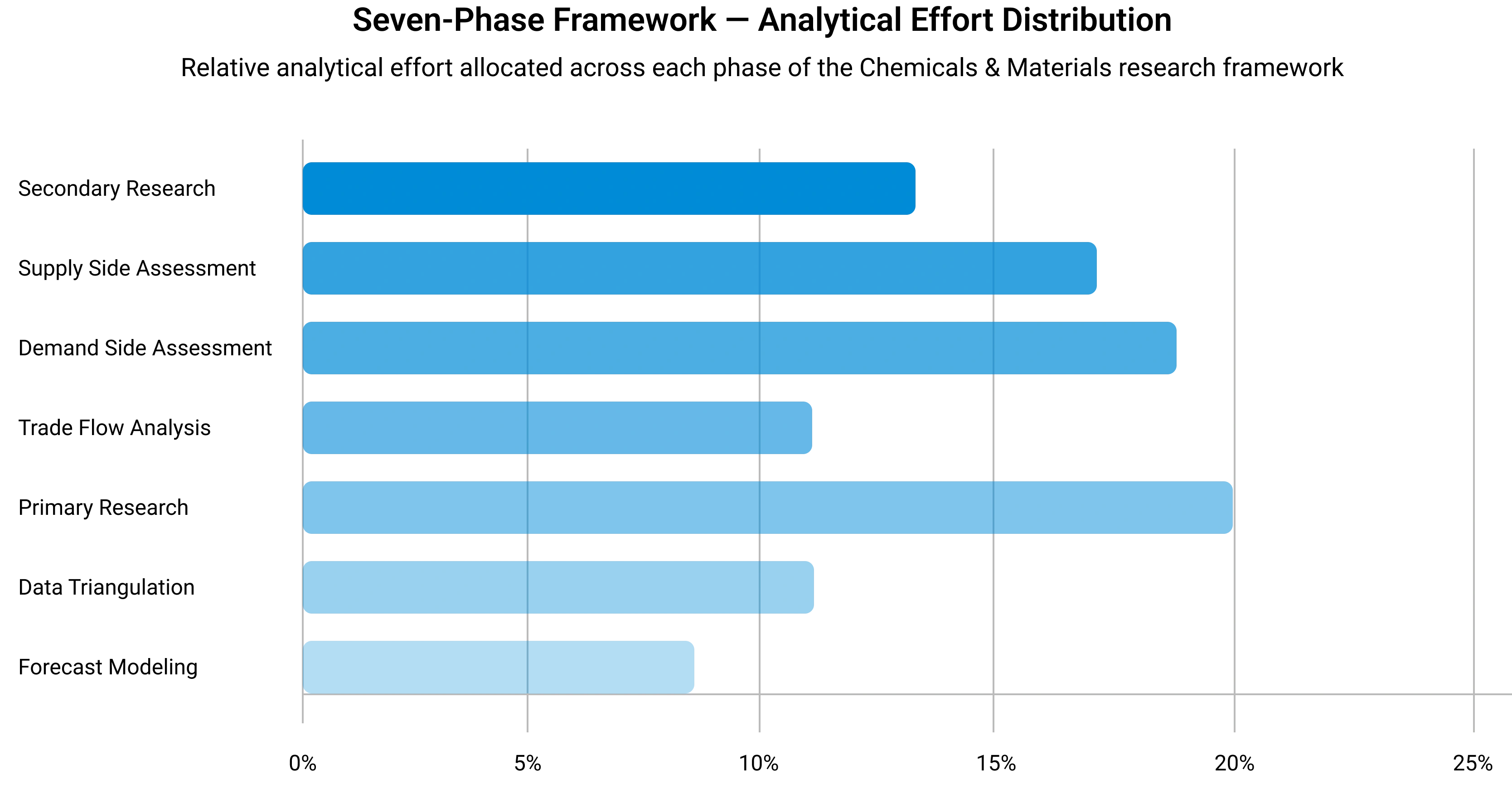
Seven-Phase Framework — Analytical Effort Distribution
Relative analytical effort allocated across each phase of the Chemicals & Materials research framework
Phase 1 - Secondary Research: Establishing the Foundation
Secondary research collects and evaluates publicly available information from authoritative sources, establishing the foundational understanding of market structure, value chain dynamics, competitive landscape, and end-use demand patterns. Every source is evaluated for credibility, recency, geographic relevance, and methodological soundness before inclusion.
Industry Associations
Sources include ACC, CEFIC, ICCA, JCIA, CPCIF, and SOCMA providing production volumes, consumption trends, capacity developments, and sustainability initiatives.
Company Disclosures
Annual reports, investor presentations, earnings transcripts, and regulatory filings reveal product portfolios, manufacturing footprints, capacity expansions, and revenue segmentation.
Government Databases
National statistical offices, customs authorities, environmental agencies, and industrial production databases provide verified statistics on output, trade flows, and regulatory compliance.
Trade Databases
UN Comtrade, ITC, Eurostat, and national customs authorities enable assessment of global product movement, import dependency, and export competitiveness across regions.
Our Secondary Research Sources
- Ministry of Chemicals and Fertilizers
- European Chemicals Agency
- United States Department of Energy
- Ministry of Industry and Information Technology
- Ministry of Economy Trade and Industry
- Ministry of Trade Industry and Energy
- National Institute of Standards and Technology
- Council of Scientific and Industrial Research
- Fraunhofer Society
- National Institute for Materials Science
Phase 2 — Supply-Side Assessment: Mapping Production Capabilities
Production Capacity Analysis
All major manufacturers are assessed for existing installed capacity, planned additions, expansions, new plant announcements, and technology adoption — mapped at global, regional, and country levels.
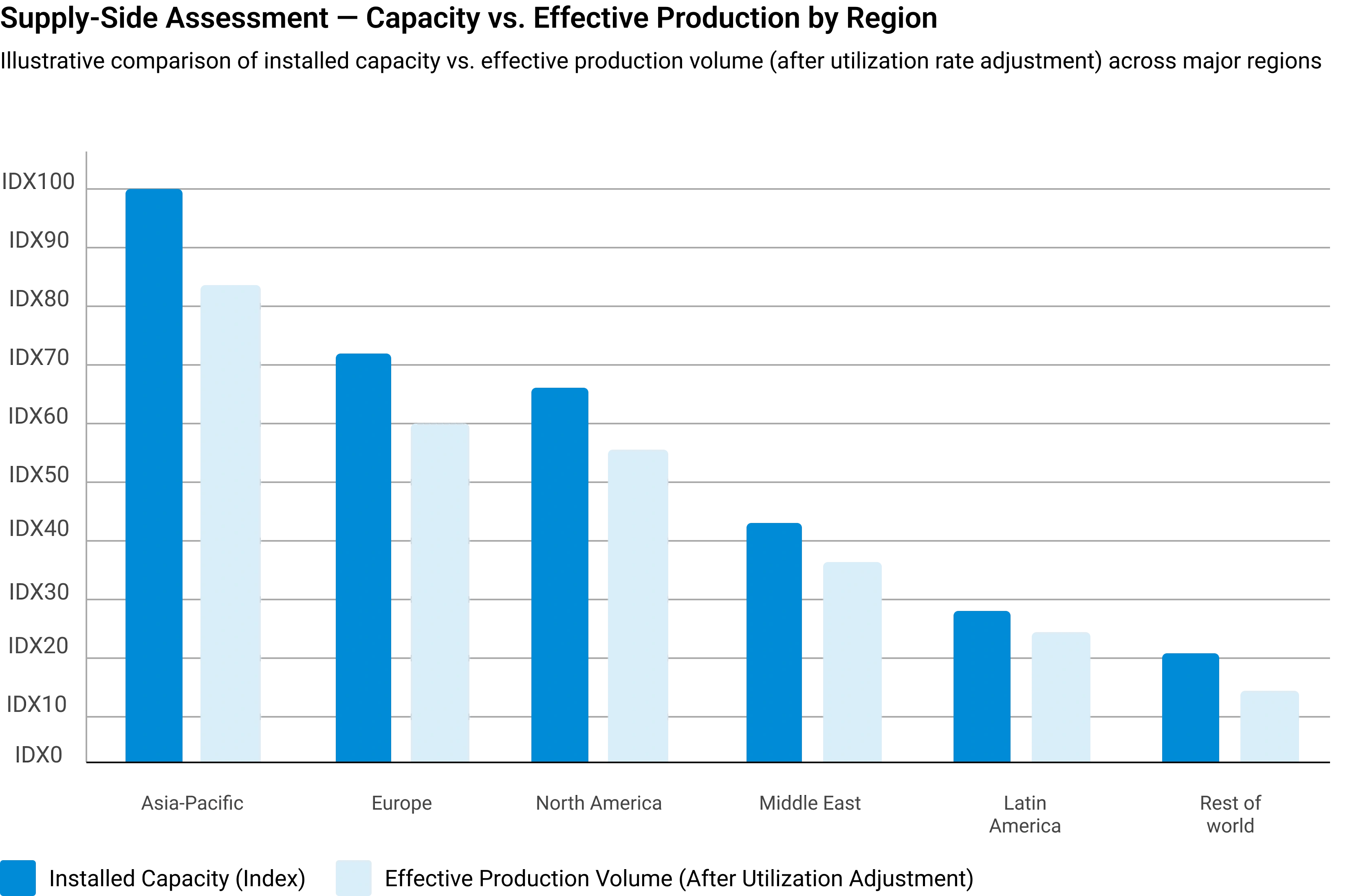
Capacity Utilization Adjustment
Installed capacity is adjusted using utilization rates based on demand conditions, feedstock availability, plant operating rates, maintenance schedules, and regulatory restrictions.
Manufacturer Revenue Analysis
Product-specific revenues, segment-level performance, regional distribution, average selling prices, and margin trends are evaluated to establish market value estimates.
Supply-Side Assessment — Capacity vs. Effective Production by Region
Illustrative comparison of installed capacity vs. effective production volume (after utilization rate adjustment) across major regions
Phase 3 — Demand-Side Assessment: Quantifying Chemical Consumption
Demand-side analysis quantifies chemical consumption across industries, applications, and geographies — identifying where and how chemicals are consumed throughout the value chain with precision.
End-Use Industry Analysis
Chemical demand is evaluated across automotive, construction, packaging, electronics, agriculture, healthcare, consumer goods, industrial manufacturing, energy and utilities, and water treatment. Industry output, production trends, and consumption intensity are analyzed to determine demand patterns.
Consumption Modeling
Demand is estimated using measurable indicators: kilograms per vehicle, kilograms per square meter of construction, dosage per cubic meter of water treated, kilograms per hectare of agricultural land, and kilograms per ton of manufactured products. Consumption factors are validated through industry publications and primary interviews.
Application Analysis
The market is segmented by application area to understand product performance requirements, formulation trends, technology adoption, customer preferences, and regulatory requirements improving demand accuracy and segmentation granularity.
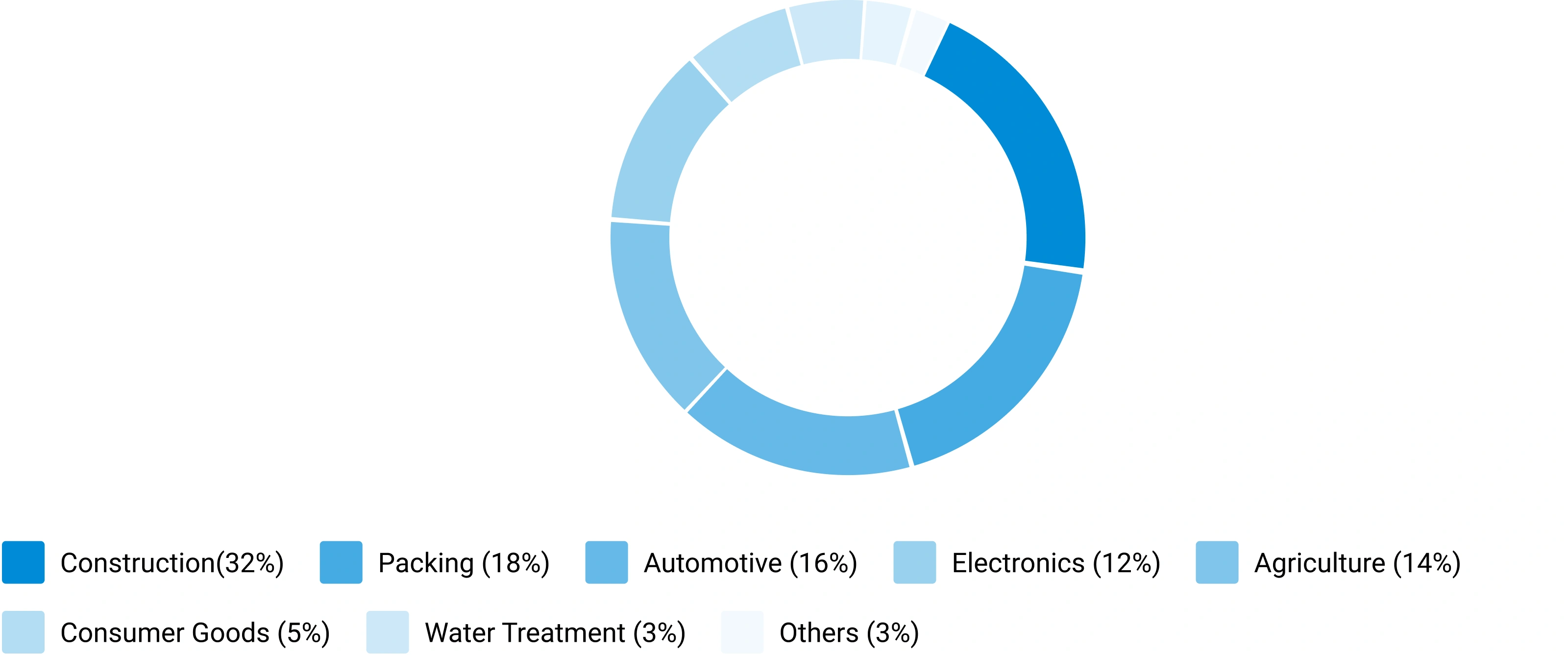
Demand-Side Assessment — End-Use Industry Demand Distribution
Illustrative distribution of chemical & materials demand across key end-use industries
Phase 4 - Trade Flow Analysis: Balancing Regional Supply and Demand
Trade flow analysis reconciles regional supply and demand estimates through import and export data, identifying net supply positions, regional dependencies, and market imbalances. It serves as an independent validation layer that tests the consistency of supply-side and demand-side estimates.
Import Analysis
Import data is evaluated to determine volumes, source countries, product dependency, regional supply gaps, and pricing trends — identifying markets that rely heavily on external supply and where domestic production is insufficient to meet demand.
Export Analysis
Export assessments reveal production surplus, export competitiveness, regional manufacturing strength, and global market participation. Export patterns also help validate domestic production estimates and identify net exporting regions.
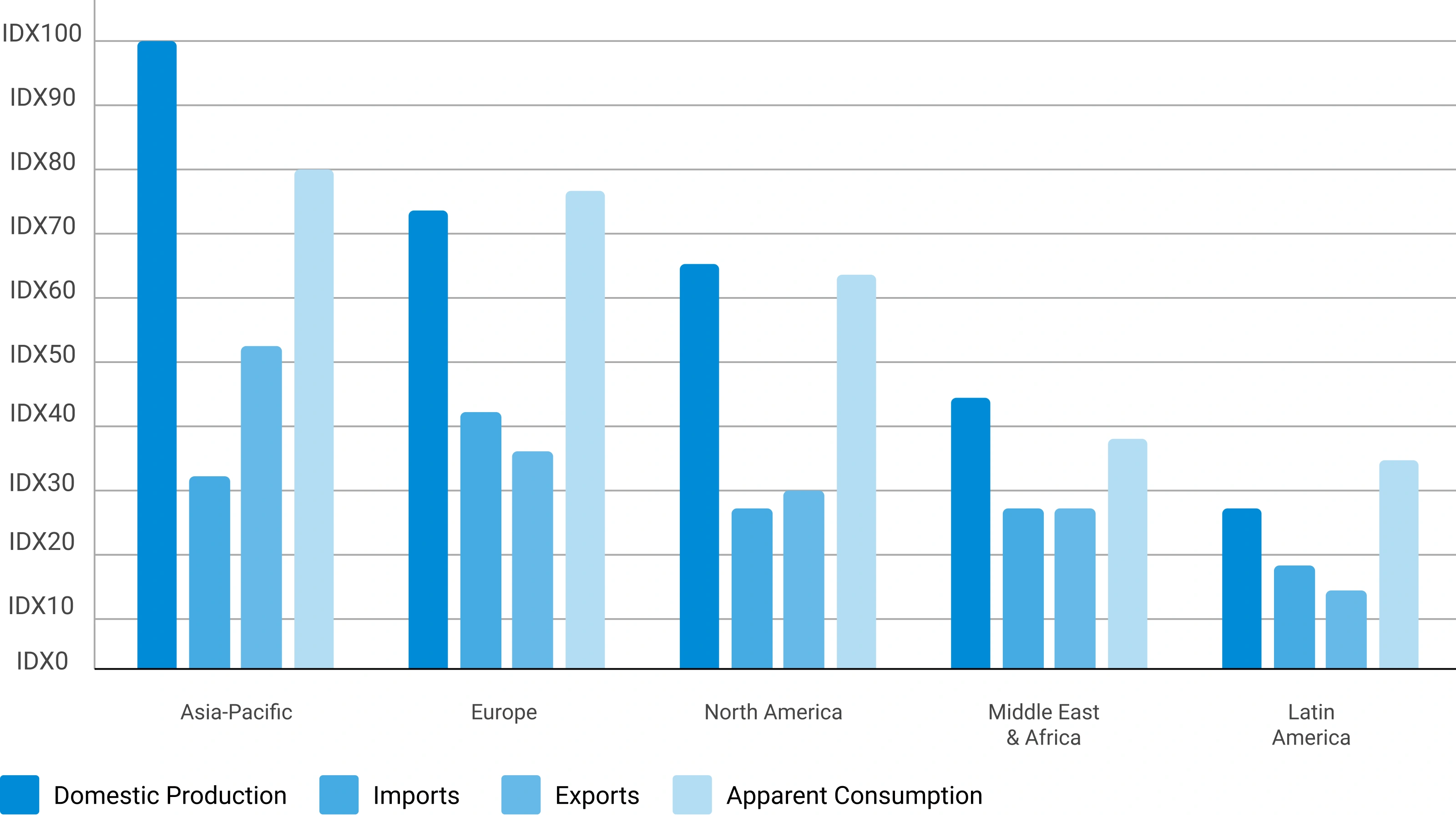
Apparent Consumption Model
Regional consumption is assessed using the standard apparent consumption formula:
Results identify net importing regions, net exporting regions, regional deficits, and surpluses — serving as an independent validation of supply and demand estimates.
Trade Flow Analysis — Net Supply Position by Region
Illustrative apparent consumption vs. domestic production across major regions — positive gap indicates net import dependency
Phase 5 — Primary Research: The Critical Validation Layer
Primary research tests and refines findings from secondary research through direct engagement with industry participants across the supply chain, demand side, and expert community. It captures intelligence that no database or published report can provide — the real-world experience of manufacturers, buyers, and specialists operating in the market.

Supply-Side Interviews
Conversations with chemical manufacturers, raw material suppliers, contract manufacturers, technology providers, and plant operators cover production trends, capacity utilization, pricing developments, technology shifts, and competitive dynamics.

Demand-Side Interviews
Engagement with OEMs, industrial consumers, procurement managers, distributors, formulators, and end-use manufacturers focuses on consumption trends, purchasing behavior, product substitution, demand outlook, and emerging applications.

Industry Expert Consultations
Additional interviews with industry consultants, independent experts, regulatory specialists, technical professionals, and research institutions provide deeper market context and validate key analytical assumptions.
Focus Areas of Primary Research:
Market Size & Forecast Validation
Revenue estimates, volume consumption, growth rates, forecast assumptions, regional demand.Supply Chain & Value Chain Assessment
Raw material sourcing, supply chain challenges, distribution networks, procurement practices.Production & Capacity Analysis
Manufacturing capacity, utilization rates, expansion projects, plant investments.Pricing & Cost Structure Analysis
Product pricing trends, feedstock costs, energy costs, margin pressures, pricing outlook.Competitive Landscape Assessment
Volume and value estimates confirmed to be fully consistent with one another before publicationInterview Volume by Market Scope
| Study Scope | Number of Interviews |
|---|---|
| Niche Market | 20 – 30 |
| Mid-Sized Market | 30 – 50 |
| Global Market | 50 – 80 |
| Highly Fragmented Market | 80 – 120 |
Interview Details:
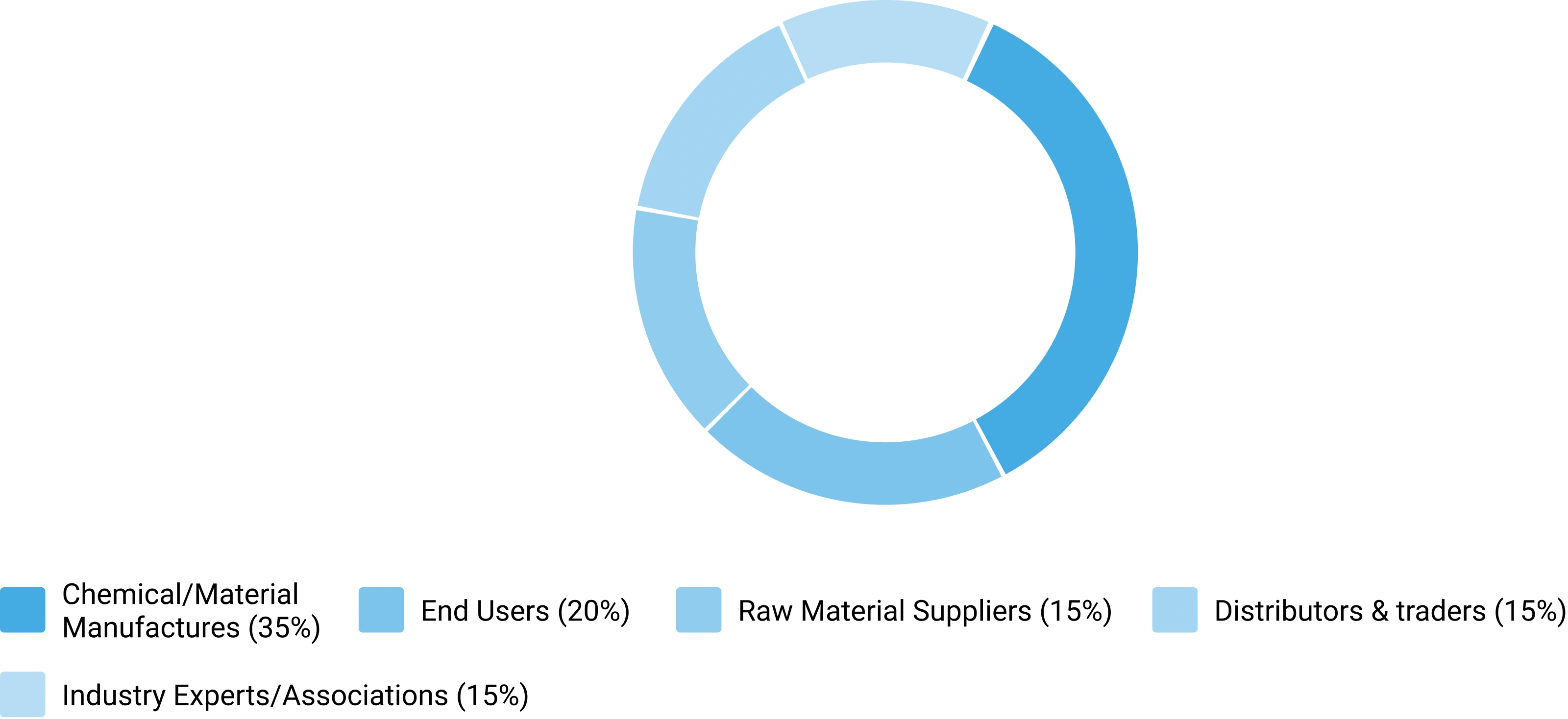
Category : Manufacturers, Suppliers, Distributors, End Users, Experts/Associations
Average Duration : 30–60 Minutes
Interview Mode : Video calls, telephonic interviews, expert consultations
Interview Format : Structured / Semi-Structured questionnaire
Focus Areas of Primary Research:
Market Size & Forecast Validation :
Revenue estimates, volume consumption, growth rates, forecast assumptions, regional demand.
Supply Chain & Value Chain Assessment :
Raw material sourcing, supply chain challenges, distribution networks, procurement practices.
Production & Capacity Analysis :
Manufacturing capacity, utilization rates, expansion projects, plant investments.
Pricing & Cost Structure Analysis :
Product pricing trends, feedstock costs, energy costs, margin pressures, pricing outlook.
Competitive Landscape Assessment :
Market share, competitor positioning, strategic initiatives, partnerships, acquisitions.
Primary Research — Stakeholder Coverage by Category
Distribution of interview respondents across stakeholder categories (% share from PPT data)
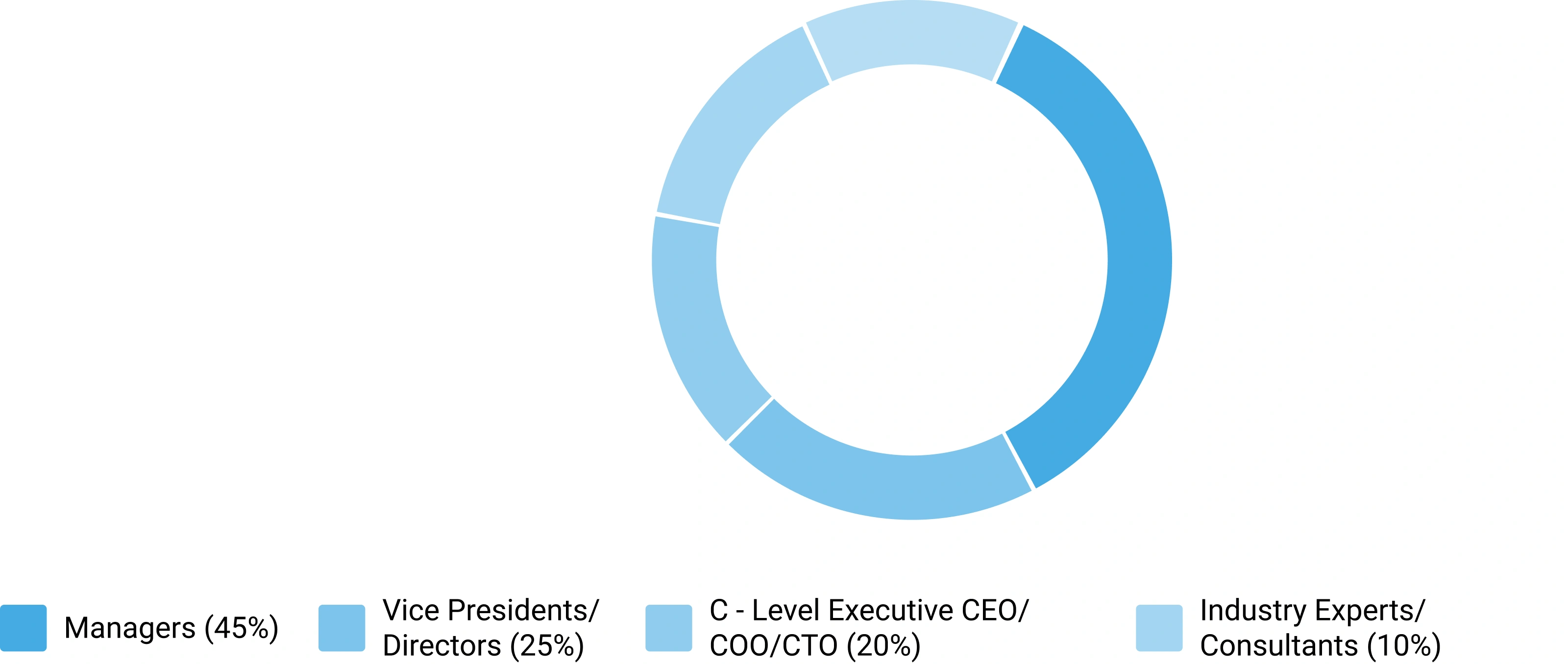
Primary Research — Respondent Designation Profile
Seniority breakdown of interview respondents (% share from PPT data)
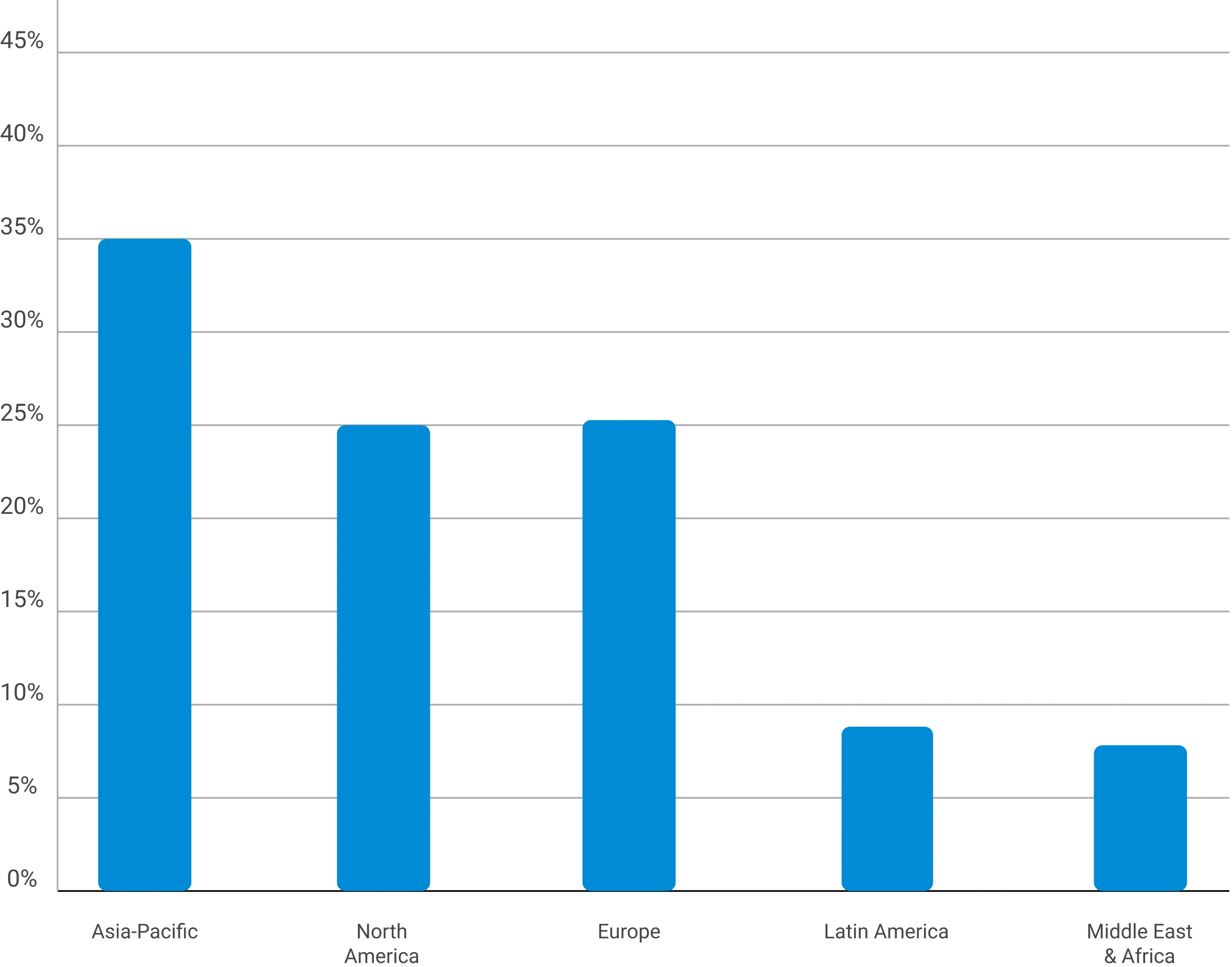
Primary Research — Geographic Coverage of Interviews
Regional distribution of primary research engagement (% share from PPT data)
Phase 6 — Data Triangulation and Market Validation
No single methodology is relied upon in isolation. Multiple independent estimation approaches are combined and reconciled to ensure consistency, accuracy, and analytical defensibility. Any material deviations between approaches are investigated and adjusted through additional validation cycles.
The final market size is derived through weighted triangulation of all validated methodologies. Any material deviations between approaches are investigated and adjusted through additional validation cycles. The outcome represents the most realistic assessment of the market based on available evidence and expert confirmation ensuring that volume and value estimates are fully consistent with one another.
Triangulation Framework — Input Contribution Weight
Relative weight each sizing input contributes to the final reconciled market estimate
Phase 7 — Forecast Modeling: Projecting Future Market Evolution
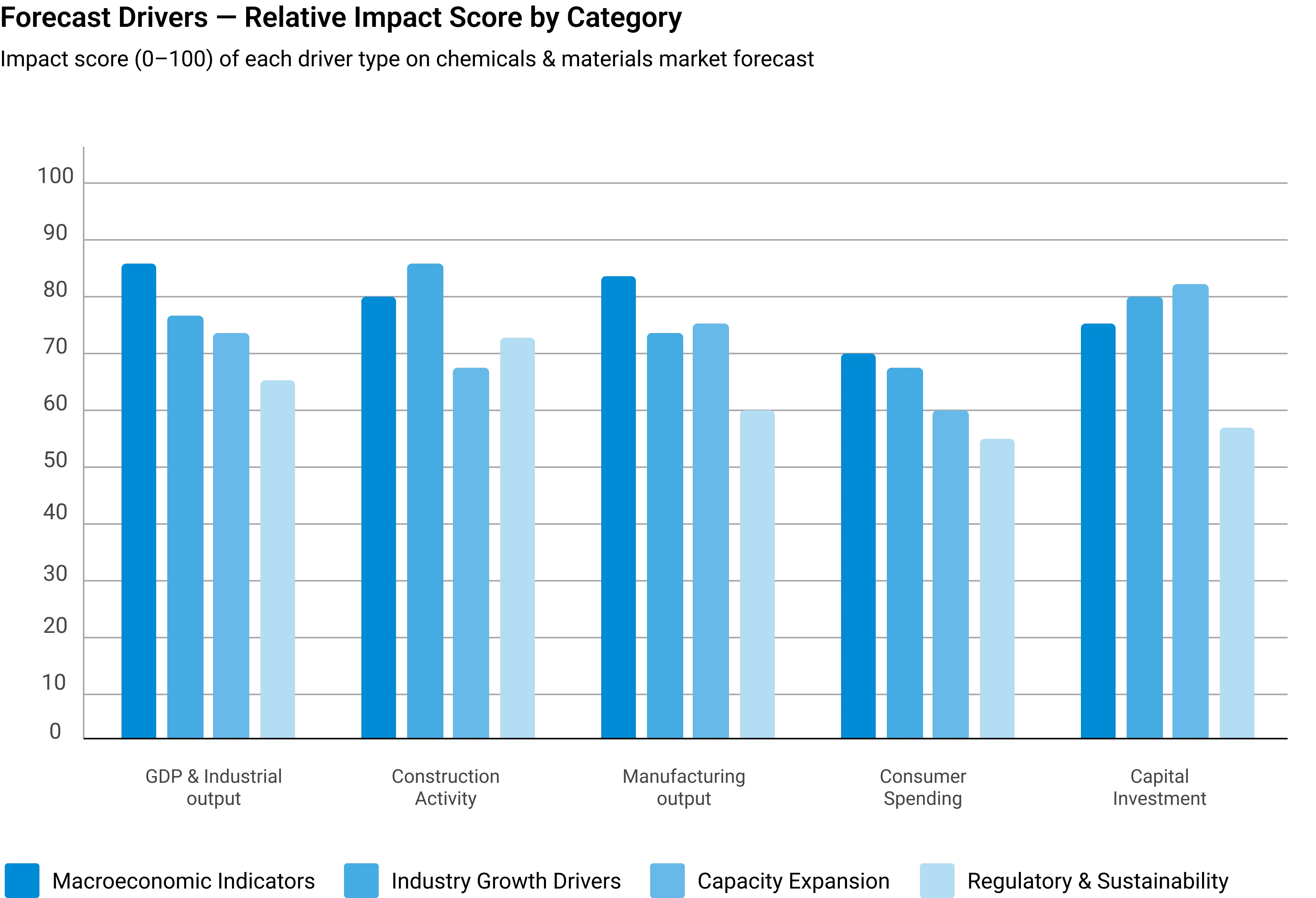
Forecasting evaluates the future trajectory of the market using a combination of quantitative indicators and qualitative assessments across economic, industry, and regulatory dimensions. Rather than simple extrapolation, each driver is independently modeled and integrated into a composite forecast.
Macroeconomic Indicators
GDP growth, industrial production, manufacturing output, construction activity, consumer spending, and capital investment form the quantitative foundation of long-term demand projections. These are applied at country, regional, and global levels.
Industry Growth Drivers
Urbanization, infrastructure development, industrialization, technological innovation, sustainability initiatives, and evolving product performance requirements are assessed at regional and industry levels — capturing both structural and cyclical demand drivers.
Capacity Expansion Analysis
Announced plant expansions, new manufacturing facilities, technology upgrades, and strategic investments are evaluated to determine future supply-demand dynamics and potential market tightness or oversupply situations.
Regulatory & Sustainability
Environmental regulations, chemical safety standards, emission reduction targets, circular economy initiatives, and sustainability requirements are incorporated as they often influence product adoption rates and market growth trajectories.
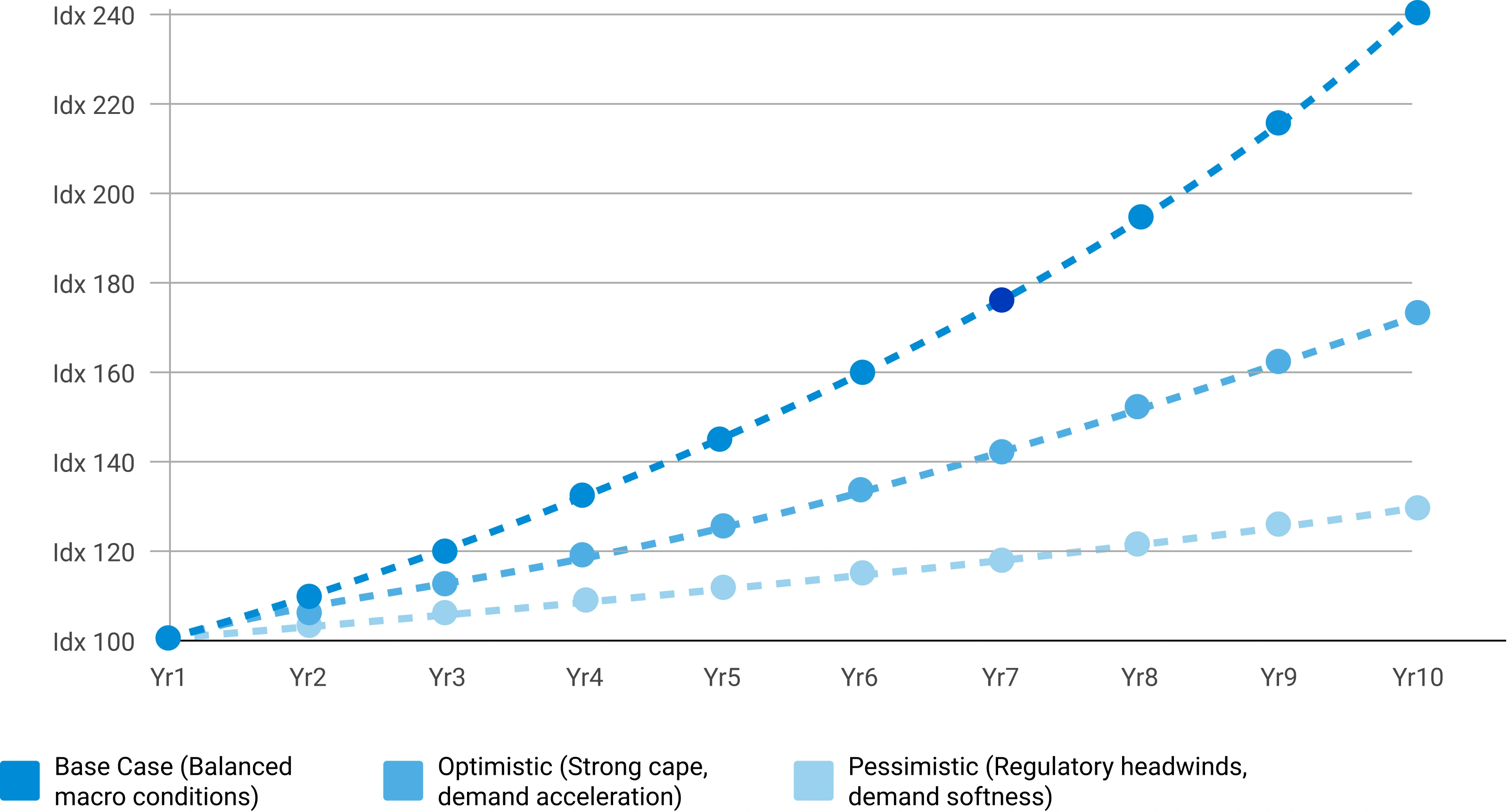
Scenario Forecast Range — Indexed Market Growth (Year 1–10)
Illustrative indexed growth trajectories across Base, Optimistic, and Pessimistic scenarios over a 10-year forecast horizon
Forecast Drivers — Relative Impact Score by Category
Impact score (0–100) of each driver type on chemicals & materials market forecast



Comments
Share your thoughts, ask a question, or provide feedback about this report.