
Asia Pacific Synthetic Fibers Market Size Analysis Report 2035
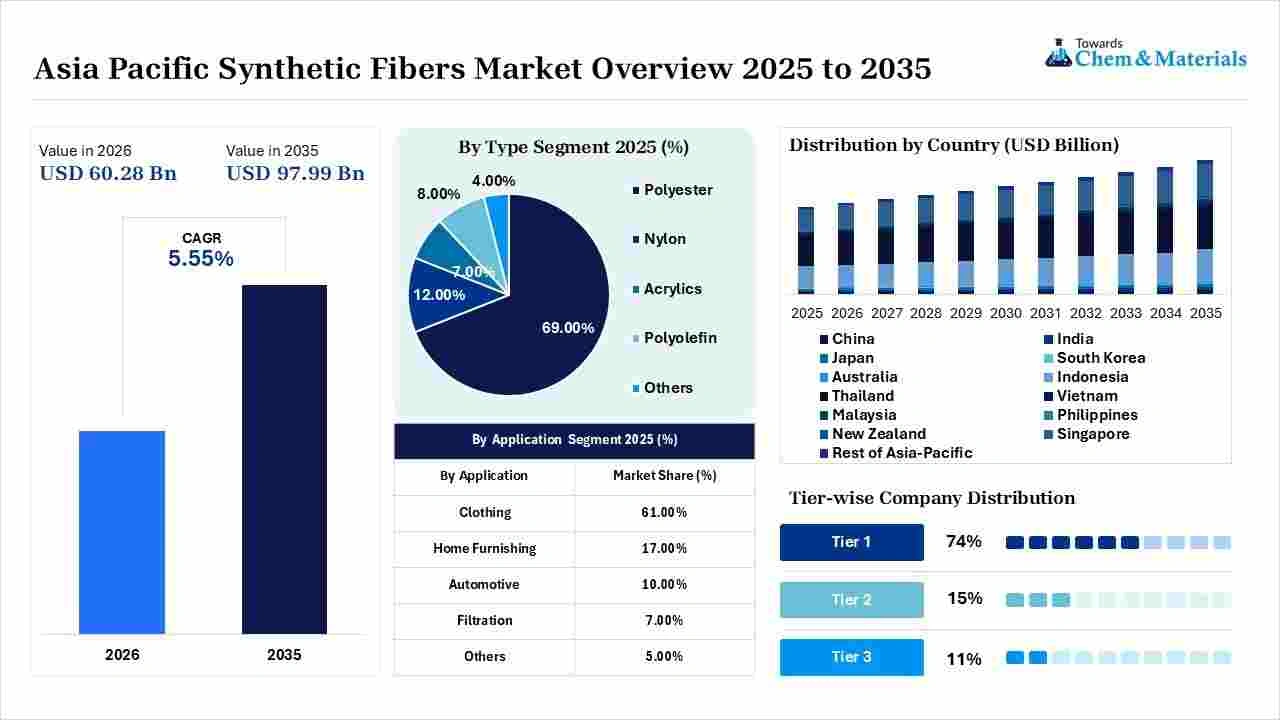
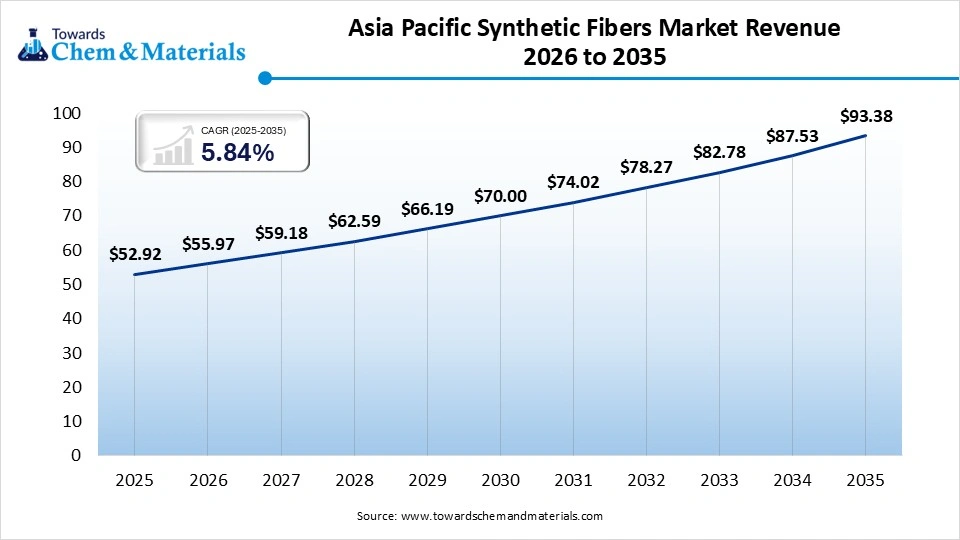
The Asia Pacific synthetic fibers market size was valued at USD 57.11 billion in 2025, is estimated to reach USD 60.28 billion in 2026, and is projected to reach USD 97.99 billion by 2035, exhibiting a compound annual growth rate (CAGR) of 5.55% over the forecast period from 2026 to 2035.
Demand from industries, especially textiles for clothing, sportswear, automotive components, and technical industrial textiles, boosts the growth of the market. The increased adoption of recycled PET and eco-friendly circular manufacturing processes to meet global environmental standards boosts growth. The growing partnership between industries and sustainably led government policies, like Indonesias APF, partnered with Australian clean tech firm BlockTexx to launch Re-petitive; this initiative and launch support the growth of the market.
Market Highlights
- By region, China dominated the Asia Pacific synthetic fibers market with a share of 52% in 2025 and is expected to grow at a CAGR of 5.40% over the forecast period.
- By region, India held a 16% market share in the Asia Pacific synthetic fibers market in 2025 and is expected to experience the fastest growth with a CAGR of 7.20% in the forecast period.
- By type, the polyester segment dominated the market with a 69% share in 2025 and is expected to grow at a CAGR of 5.40% over the forecast period.
- By type, the nylon segment held a 12% market share in 2025 and is expected to have the fastest growth with a CAGR of 6.70% in the forecast period.
- By application, the clothing segment dominated the market with a 61% share in 2025 and is expected to grow at a CAGR of 5.30% over the forecast period.
- By application, the home furnishing segment held 17% market share in 2025 and is expected to have the fastest growth with a CAGR of 6.40% in the forecast period.
Market Overview
Asia Pacific Synthetic Fibers Market: Expansion of Technical Textile Industry
According to Towards Chemicals and Materials Analytics and Consulting, the Asia Pacific synthetic fibers market volume was valued at 57.11 million metric tons in 2025 and is expected to surpass around 97.99 million metric tons by 2035, accelerating a compound annual growth rate (CAGR) of 5.55% over the forecast period from 2026 to 2035.
The synthetic fibers market is driven by the demand for lightweight, high-performance materials and high-strength materials, which are used for various applications like automotive, aerospace, defense, and advanced industrial applications. This is due to growing use and demand for lightweight materials to enhance efficiency and reduce vehicle weight, which helps improve fuel efficiency and meet strict safety standards, fueling the growth of the market. The integration of AI infrastructure and high-performance computing accelerates the need for advanced specialty synthetic fibers.
Growing investment in durable navigation systems for military applications, also in healthcare and medical innovations. The high demand for affordable, durable, and low-maintenance fabric from various sectors for its applications and properties further increases production due to high demand, which helps in revenue generation and also in providing jobs to the workers. The expansion of the textile industry in the region, especially technical textiles, is a result of a growing economy and population, which is aligned with increased spending on apparel and fashion, supporting growth and expansion of the market.
- For instance, in June 2026, Chryso, which is a part of Saint-Gobain Construction Chemicals, announced the launch of Adfil Strux 3000 Series, which are synthetic fibers that are formed to increase and enhance the sustainability, durability, and efficiency in concrete applications to deliver 3D reinforcement. The series consists of two products, which are Adfil Strux 3040 and Adfil Strux 3032. (Source: www.forconstructionpros.com)
Report Scope
| Report Attributes | Details |
| Market Size in 2026 | USD 60.28 Billion / 53.70 Million Metric Tons |
| Expected Size in 2035 | USD 97.99 Billion / 85.50 Million Metric Tons |
| Growth Rate | CAGR of 5.55% |
| Base Year of Estimation | 2025 |
| Forecast Period | 2025-2035 |
| Segment Covered | By Type, By Application |
| Key Companies Profiled | Asahi Kasei Corporation, Hyosung TNC Corporation, Kolon Industries, Inc., Toyobo Co., Ltd., Grasim Industries Limited (Birla Cellulose), China Petroleum & Chemical Corporation (Sinopec Corp.), Mitsubishi Chemical Corporation, Huvis Corporation, Nan Ya Plastics Corporation, Zhejiang Hengyi Group Co., Ltd., Tongkun Group Co., Ltd., Shenghong Holding Group Co., Ltd., Mitsui Chemicals, Inc., Formosa Plastics Group, Bombay Dyeing & Manufacturing Co. Ltd. |
Investment Flow for Asia Pacific Synthetic Fibers Market 2026
The growing capital investment by government organizations and multinational industrial corporations for the development of new facilities to reduce reliance on imports of products through schemes like national green development frameworks and PLI.
The regional expansions and heavy investment by chemical corporations and petroleum players like Sinopec and Reliance Industries Limited to seek the upstream and downstream synthetic chains across the region are major goals.
In India, through initiatives like the Ministry of Textiles programs and production-linked incentives, the government actively stimulates technical textiles and synthetic yarn capacities to cut import reliance and boost global export competitiveness.
- Shinkong Synthetic Fibers Corporation, a Taipei, Taiwan-based manufacturer of polyester, has collaborated with companies under a 3-year agreement and has invested USD 10 million in building an Ambercycle facility with a Los Angeles-based materials science company; this will help increase global production capacity to meet demand. (Source: www.recyclingtoday.com)
Market Growth Trends:
- The growing demand for a recycled and sustainable shift towards the use of chemically recycled PET and bio-synthetic alternatives, which helps in managing and reducing microplastic concerns, is a growing trend in the growth of the market.
- The region focuses on supply chain localization through joint ventures and increasing local production facilities, which reduces the dependency on imports of materials through joint ventures, which supports the growth of the market.
- The national projects and programs, especially in India and China through schemes like production-linked incentives and textile modernization policies, which provide financial incentives to increase local production capacity, are major growth drivers.
Asia Pacific Synthetic Fibers Market: Advanced Technology Integration
The Asia Pacific synthetic fibers market is experiencing growth in the region due to the integration of AI in manufacturing technologies like digital twins and extrusion optimization, which helps in analyzing pressure, temperature, and polymer flow variations, which also helps in improving strength and reducing defect rates, which helps in the growth of the market. The other major shifts are the integration of AI, which helps with predictive maintenance and reduced downtime, AI-driven sustainability and energy management, automated quality inspection, and supply chain and demand analysis.
Supply Chain Analysis of Asia Pacific Synthetic Fibers Market
Chemical Synthesis and Processing
- Synthetic fibers are processed by advanced manufacturing techniques like extrusion through precision spinnerets, melt, wet, and dry spinning, chemical vapor deposition, doping, and modification.
- Reliance Industries Limited is a global producer of synthetic fibers under the brand name Recron; they are also the worlds largest producer of polyester staple fiber and high-strength virgin PET-based synthetic fibers.
- Key players: Reliance Industries Limited, Toray Industries, Inc., Indorama Ventures Public Company Limited, and Teijin Limited
Quality Testing and Certification
- Synthetic and technical fibers require mandatory national compliance certifications, such as Bureau of Indian Standards Recrown such as IS 17263 for polyester staple fibers or IS 16481 for synthetic microfibres under
- Quality Control Orders to enter the market, as well as ISO 9001 / ISO 13485 and OEKO-TEX Standard 100 certification.
- Toray Industries is a synthetic fiber producer that produces Toray Nylon, Toray Tetron, Toraylon, and Torcon for clothing, industrial materials, and interior goods.
- Key players: Bureau of Indian Standards
Distribution to Industrial Users
- Synthetic fibers are distributed across key high-performance sectors, including aerospace and defense, healthcare and medical devices, telecommunications, semiconductor manufacturing, industrial processing, and automotive engineering.
- Key players: Asahi Kasei Corporation, Hyosung TNC Corporation, Far Eastern New Century Corporation, Kolon Industries, Inc., and Toyobo Co., Ltd.
- Asahi Kasei Corporation is a manufacturer of synthetic and regenerated fibers; the major fiber products are ROICA, BEME+BERG, SARAN, and LAMOUS, which are used for specific applications like linings, apparel, and fade-resistant coloring.
Sustainability Analysis of Asia Pacific Synthetic Fibers
The Asia Pacific synthetic fibers market is shifting towards the use of recycled and bio-based materials, which helps control microplastic pollution through advanced recycling innovation. Countries across the Asia Pacific are heavily using advanced technologies for recycling and converting the post-consumer plastic waste into high-grade polyester fibers. The strict product standards and regulatory mandates force manufacturers and production facilities to adopt safe and low-emission chemical processes, which aligns with sustainable regulation amid rising environmental concerns.
What are Asia-Pacific synthetic fibers?
Synthetic fibers are threads that are made in factories through chemical processes, where small chemical units like monomers are converted into long chains of polymers through linking. They usually come from petroleum and coal; common types include polyester, nylon, acrylic, and spandex. Their applications, like fast drying, long-term use, low cost, and resistance to bugs and stains, increase adoption in various sectors.
What are the key uses of Asia-Pacific Synthetic Fibers?
Synthetic fibers are extensively used for industrial applications and for various components due to their application and properties, such as high strength, low cost, and durability, which increase demand.
Key industry uses are the following:
- Apparel and Fashion: The synthetic fibers are extensively used for everyday clothing, sportswear, activewear, and undergarments. They are widely used for their material and properties, because of which there is increasing demand from the fashion industry. Polyester and nylon are affordable, stretchable, and have quick-drying properties.
- Home Furnishing: The synthetic fibers are used for the production of home furnishing components like carpets, bedsheets, curtains, and fiberfill for pillows and duvets and bedsheets, as they have extensive applications.
- Automotive and Transportation: Synthetic fibers are used in enhancing the interior of automobiles, in interior fabrics, seat belts, and structural components for their high resistance to abrasion due to frequent stretching and use.
- Industrial and Technical Textiles: The fibers are used in industries largely for the production of ropes, tents, conveyor belts, fishing nets, and geotextiles; this is due to their properties and applications, like chemical and wear resistance, which help in aggressive and harsh use.
- Medical and Safety Gear: Synthetic fibers are expanding in use in surgical sutures, protective wear, and high-performance materials due to their high-end medical applications, like the production of surgical gowns and drapes, face masks and respirators, and wound care and hygiene absorbents.
Asia Pacific Synthetic Fibers Premium Pricing Analysis
The Asia Pacific synthetic fibers premium pricing is dependent on high-performance technical textile demand and sustainable innovation practices, which contribute to the premium pricing of the synthetic fibers. Standard manufacturing prices are lower than the selling price of the product, which contributes to the products cost. The raw material cost, such as volatility in crude oil and petrochemical feedstock prices, impacts the production costs of the product, which promotes the shift towards recycling of polyester and biosynthetic alternatives, helping in price protection. The increased production facilities in future markets will help lower the cost, supporting price-sensitive markets.
Asia Pacific Synthetic Fibers Market Carbon Tax Analysis
The manufacturers face increased cost pressure and structural shifts as there is a mature carbon price mechanism in the region. The cost pressure and energy intensity, as high energy consumption for conversion makes facilities vulnerable to direct carbon taxes, are significant. The increasing black carbon tax helps balance emission reduction without affecting the small market players too much. Feedstock innovation enables manufacturers to shift towards lower-emission inputs, which bypass looming carbon penalties.
Asia Pacific Synthetic Fibers Regulatory Landscape
| Country / Region | Regulatory Body | Key Regulations | Focus Areas | Notable Notes |
| China | Ministry of Industry and Information Technology, Ministry of Ecology and Environment | Environmental Protection Law, Textile Industry Standards | Fiber manufacturing, pollution control, industrial sustainability | China is a leading synthetic fiber producer, supported by its large textile, apparel, automotive, and industrial manufacturing sectors. |
| India | Ministry of Textiles, Bureau of Indian Standards | BIS Textile Standards, Environment Protection Act | Fiber quality, textile manufacturing, recycling | India is expanding synthetic fiber production to support growing textile, apparel, technical textile, and industrial applications. |
| Japan | Ministry of Economy, Trade and Industry, Ministry of the Environment | Chemical Substances Control Law, Japanese Industrial Standards | High-performance fibers, recycling, advanced textiles | Japan focuses on high-performance synthetic fibers for automotive, electronics, sportswear, and technical textile applications. |
Market Dynamics
Drivers
Technological Innovation
The Asia Pacific synthetic fibers market is experiencing growth driven by expanding textile and apparel manufacturing due to a growing population, which increases the consumption of synthetic fibers across the emerging economies that rely on domestic production. The rise of technical textiles and increased applications accelerate further consumption, as demand from automotive and infrastructure projects drives growth. Technological innovation and ongoing upgrades in processing and development of advanced variants and expanding functional uses further support growth.
Challenges
Preference for Natural Fibers
The Asia Pacific synthetic fibers market faces a few challenges, such as crude oil price volatility, as the petrochemical feedstock is the core factor on which the industry relies, but fluctuating prices of crude oil cause unstable manufacturing and processing costs, which hinders the growth of the market. The other major factor is the rising consumer preference for eco-friendly and biodegradable materials, which diverts consumers away from traditional synthetics to bio-based ones, which hinders growth.
Opportunities
Smart Textiles Integration
The Asia Pacific synthetic fibers market is experiencing rapid growth driven by key growth opportunities like sustainable recycling, which also lowers production costs, and strong demand fulfillment from automotive sectors supporting growth. Smart fabrics and high-performance industrial uses are driven by the use of smart textiles to enhance properties and also help open new revenue streams. The industrial and technical textiles are shifting in manufacturing hubs as there is increased investment in production in emerging economies, which shifts diverse supply chains and expands local manufacturing capacities, supporting growth.
Segmental Insights
Type Insights
The polyester segment dominated the market with a 69% share in 2025 and is expected to grow at a CAGR of 5.40% over the forecast period, driven by the growing demand for apparel, home furnishings, and textiles, as they are favored for their durability, affordability, and wrinkle resistance, which are needed by consumers, supporting growth. Rising disposable income and expanding industrial application, as there is increased investment in scaling polyester capacity in manufacturing infrastructure, support growth.
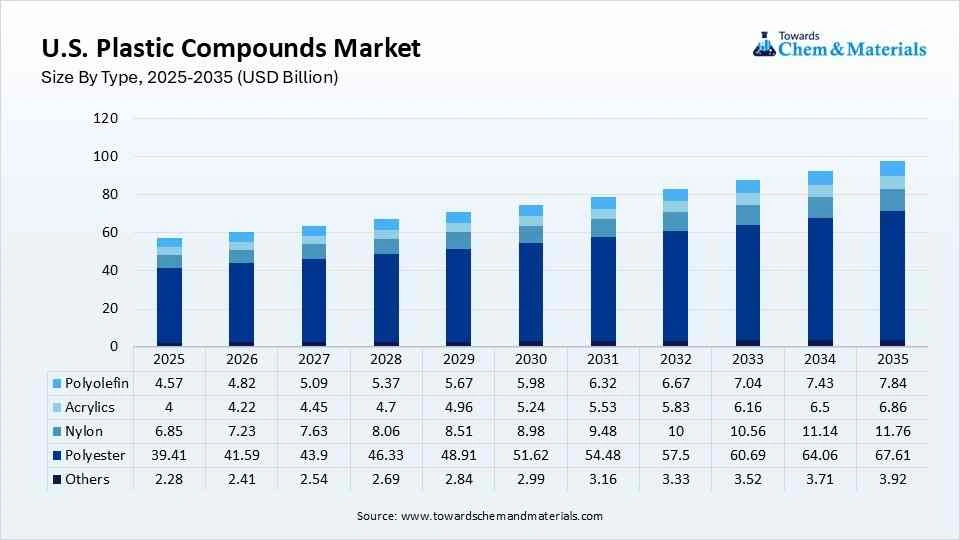
The nylon segment held a 12% market share in 2025 and is expected to have the fastest growth with a CAGR of 6.70% in the forecast period, driven by growing demand for production and consumption, as it is supported by increased demand from industrial hubs in China, India, and Japan, as there is rising automotive lightweight material demand to support the growing production of electric vehicles, improving fuel efficiency. The key properties of nylon, like durability and use to enhance apparel, drive growth. The growing shift towards sustainable production, supported by government initiatives and investment in bio-based nylon and closed-loop recycling, further boosts growth.
Asia Pacific Synthetic Fibers Market Share, By Type, 2025 (%)
| By Type | Market Share (%) |
| Polyester | 69.00% |
| Nylon | 12.00% |
| Acrylics | 7.00% |
| Polyolefin | 8.00% |
| Others | 4.00% |
Application Insights
The clothing segment dominated the market with a 61% share in 2025 and is expected to grow at a CAGR of 5.30% over the forecast period, driven by expanding production in the textile industry and demand for affordable apparel and athleisure wear driving growth. Growing manufacturing hubs across regions make the product cost-effective and durable, as it is a need for consumers. The high population density and expanding middle-class disposable income fuel continuous apparel consumption, as there is fast fashion demand supporting growth. The supply chain advantages and growing e-commerce availability make it easily accessible, which increases the growth of the segment.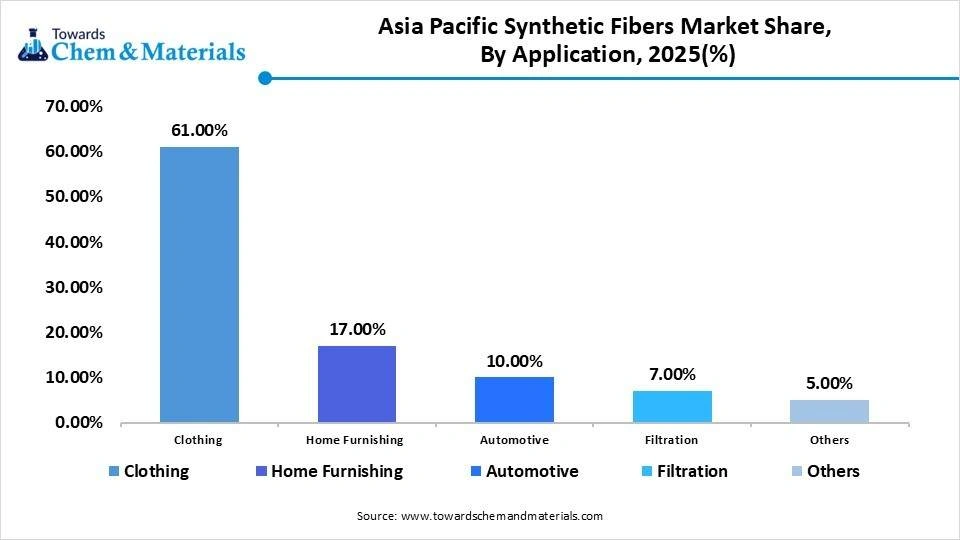
The home furnishing segment held 17% market share in 2025 and is expected to have the fastest growth with a CAGR of 6.40% in the forecast period. Rising development across the region and an increase in the development of residential construction demand for interior décor are due to an increasing population across the region, driving growth of the market. Lifestyle changes and urbanization drive demand for synthetic fiber-based items for home furnishing. The e-commerce boom, as an online platform to improve accessibility for consumers to home improvement and furnishing products across developing Asian economies, further fuels the growth of the market.
Asia Pacific Synthetic Fibers Market Share, By Application, 2025 (%)
| By Application | Market Share (%) |
| Clothing | 61.00% |
| Home Furnishing | 17.00% |
| Automotive | 10.00% |
| Filtration | 7.00% |
| Others | 5.00% |
Regional Analysis
Chinas synthetic fibers market size was estimated at USD 29.70 billion in 2025 and is projected to reach USD 51.44 billion by 2035, growing at a CAGR of 5.65% from 2026 to 2035. China dominated the Asia Pacific synthetic fibers market with a share of 52% in 2025 and is expected to grow at a CAGR of 5.40% over the forecast period.
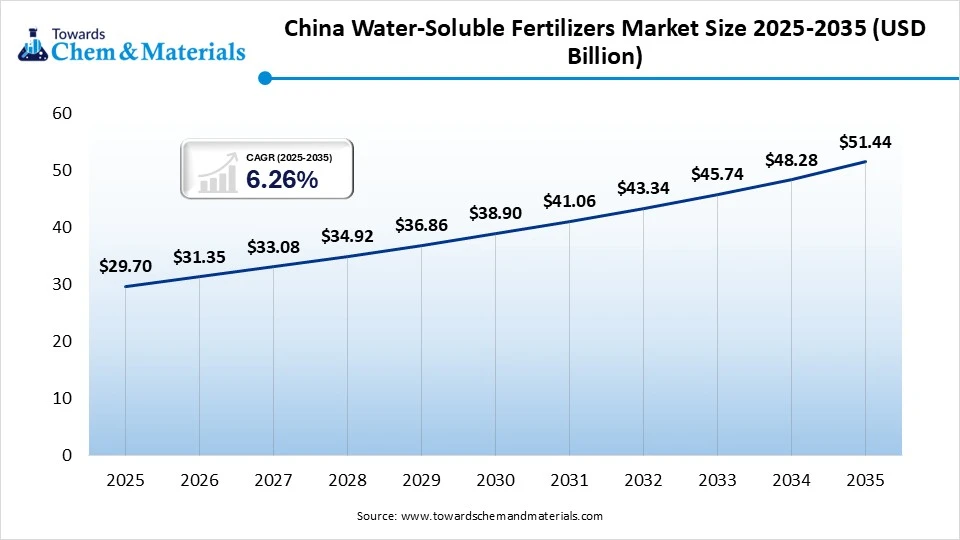
The synthetic fibers market is experiencing rapid growth in China, driven by growing domestic production and increased export demand driven by high consumption, which supports expansion. The growing industrial hubs like automotive, home furnishing, construction, and infrastructure sectors increase the need for durable technical textiles and geotextiles, further driving growth in the market. Being the worlds leading producer, due to the presence of major textile manufacturing companies, is a major factor in its dominance in the market not only in the region but also globally, which supports the market expansion.
- In April 2026, BASF launched a new polyurethane shoe that was designed in collaboration with the Directive Collective and Clarks, which is a global footwear brand. This project aims to highlight innovation in the material system and show how advanced materials help in the development of advanced and innovative footwear. (Source: www.basf.com)
Government Supportive Initiative in India
India held a 16% market share in the Asia Pacific synthetic fibers market in 2025 and is expected to experience the fastest growth with a CAGR of 7.20% in the forecast period. The Indian synthetic fibers market is experiencing growth driven by increasing manufacturing hubs in the region. This is to fulfill the needs of the growing population, which demands synthetic fibers for various applications. The growing manufacturing base and technical textile demand are backed by government support through initiatives like Production Linked Incentives, which help financially boost the man-made fiber and technical textile production capacity in India. The presence of domestic players like Reliance Industries Limited continues to expand its scale-up of local production due to growing demand; this supports the growth and expansion of the market.
- For instance, in April 2026, Asia Pacific Rayon is strengthening its presence in India and Indonesia by building partnerships across the textile value chain and promoting sustainable fiber solutions. In Indonesia, it is collaborating with textile manufacturers and showcasing Lyocell applications, and in India, it is expanding customer engagement and strengthening relationships across the textile value chain. (Source: www.aprayon.com)
The Sustainable Innovation in South Korea
South Korea held a 5% market share in the Asia-Pacific synthetic fibers market in 2025. South Koreas synthetic fiber market is experiencing growth in rising demand for high-performance fabrics and high-performance industrial applications due to a growing technical textile industry. The growing investments in the country for sustainability innovation for eco-friendly production and circular economy methods due to growing demand for production. The advanced manufacturing infrastructure and strong export capabilities across the region support growth. The regions key players, like Hyosung, have introduced a specialized performance line, Creora ActiFit spandex. Countries are focusing on recycled and eco-friendly fibers, leading to increased adoption as they are transformed into valuable resources.
- In September 2025, Loop Industries, which is a clean technology company that manufactures 100% recycled textile-to-textile polyester and polyethylene terephthalate plastics in collaboration with Hyosung TNC, announced a strategic alliance to increase textile-to-textile supply chains, expanding access to circular polyester. (Source: loopindustries.com)
Singapore Emerged as Major Trading and Logistics Hub
The synthetic fibers market is experiencing growth in Singapore as it is a base for logistics, strategic trading, and corporate headquarters for the Asia Pacific market. Singapores robust port infrastructure facilities that help trade raw materials across the region and manage regional operations for major fiber and textile groups like Asia Pacific Rayon play a significant role in the growth of the market. The demand for high-performance and enhanced materials aligning with countries sustainability regulations, through increased investment, supports the growth of the market.
Australia Synthetic Fibers Market: Domestic Production
Australia held a 0.50% market share in the Asia Pacific synthetic fibers market in 2025. The synthetic fibers market is experiencing growth in Australia, driven by the rising demand for local manufacturers adoption of sustainability measures, such as recycled, compostable polyester alternatives to curb microplastic waste, which fuels the growth. Australian manufacturers are increasingly investing in new and advanced technologies and eco-friendly alternatives to reduce microplastic waste, supporting growth.
Recent Developments
- In February 2026, Prima Loft launched a synthetic insulation material, UltraPeak, which is formed from used architectural fiber structures. This launch aims to provide incredible warmth and loft with the use of recycled materials, which also helps reduce emissions. (Source: sustonmagazine.com)
- In September 2025, Samsara Eco, an Australian recycling startup, launched a facility to recycle nylon 66 and polyester, aligning with sustainability initiatives in textile production. (Source: www.chemanalyst.com)
- In April 2025, UNIFI, the producer of REPREVE and a leading innovator in recycling and synthetic yarn, launched REPREVE with CiCLO technology, a recycled polyester and nylon integrated with biodegradable technology that helps break down synthetics naturally. (Source: www.businesswire.com)
Competitive Analysis
The presence of key players in the region and massive manufacturing hubs in China, India, and Southeast Asia, along with rising demand for fiber consumption, means that key players like Reliance Industries Limited, Toray Industries, Inc., Teijin Limited, and Hyosung Corporation play a major role in the growth of the market.
- The UNIFI, Inc., producer of REPREVE® and a leader in recycled and synthetic yarn innovation, today announces the launch of REPREVE with CiCLO® technology. This recycled polyester and nylon incorporate biodegradable features that allow synthetics to decompose naturally. The technology was developed in partnership with Intrinsic Advanced Materials, LLC, a joint venture between Parkdale Advanced Materials, Inc. and Intrinsic Textiles Group, LLC. (Source: www.businesswire.com)
National initiatives like Indias National Technical Textiles Mission increase research partnerships between key industry players and academic institutions to help increase domestic production, further reducing reliance on imports of products.
The presence of key players like Reliance Industries Limited, Toray Industries, and Sinopec is highly focused on domestic production due to growing consumer demand for materials for fashion and apparel. To focus on high-volume production, the players are strategically collaborating to maintain competitiveness.
- In May 2026, the USDA announced the launch of the Great American Cotton Plan, which aims to increase the domestic production of textile materials, which helps increase the cotton farm economy and also creates trade opportunities, as there is increased demand for products made out of American-grown cotton. (Source: www.usda.gov)
Top Players in the Asia Pacific Synthetic Fibers Market & Their Offerings:
| Company | Company Type/Position | Major Headquarters | Geographic Presence | Synthetic Fibre Offerings | Key Offering/Strength |
| Reliance Industries Limited | Integrated petrochemical and synthetic fibre manufacturer | Mumbai, India | Asia Pacific, Europe, Middle East, North America | Polyester filament yarn, polyester staple fibre, PET, and specialty polyester products | Vertically integrated polyester value chain with large-scale production capabilities |
| Indorama Ventures Public Company Limited | Global integrated PET and polyester producer | Bangkok, Thailand | Asia Pacific, Europe, North America, Africa, Middle East | Polyester staple fibre, polyester filament yarn, recycled polyester, and specialty fibres | Extensive global manufacturing footprint and strong recycled polyester capabilities |
| Toray Industries, Inc. | Advanced materials and synthetic fibre manufacturer | Tokyo, Japan | Asia Pacific, North America, Europe | Nylon and polyester filament yarns, staple fibres, acrylic fibres, and advanced textile materials | Broad synthetic fibre portfolio with strong R&D and high-performance fibre technologies |
| Far Eastern New Century Corporation | Integrated petrochemical and chemical fibre manufacturer | Taipei, Taiwan | Asia Pacific, North America, Europe | Polyester PET, polyester fibres, specialty fibres, and textile products | Integrated petrochemical-to-fibre operations with strong polyester manufacturing capabilities |
| Teijin Limited | Advanced synthetic fibre and materials manufacturer | Tokyo, Japan | Asia Pacific, Europe, North America | Polyester fibres, aramid fibres, recycled fibres, and high-performance synthetic materials | Strong expertise in high-performance and sustainable fibre technologies for automotive, industrial, and textile applications |
Other Top Players Are
- Asahi Kasei Corporation
- Hyosung TNC Corporation
- Kolon Industries, Inc.
- Toyobo Co., Ltd.
- Grasim Industries Limited (Birla Cellulose)
- China Petroleum & Chemical Corporation (Sinopec Corp.)
- Mitsubishi Chemical Corporation
- Huvis Corporation
- Nan Ya Plastics Corporation
- Zhejiang Hengyi Group Co., Ltd.
- Tongkun Group Co., Ltd.
- Shenghong Holding Group Co., Ltd.
- Mitsui Chemicals, Inc.
- Formosa Plastics Group
- Bombay Dyeing & Manufacturing Co. Ltd.
Segments Covered:
By Type
- Polyester
- Polyester Staple Fiber
- Virgin Polyester
- Recycled Polyester
- Polyester Filament
- POY
- FDY
- DTY
- Polyester Staple Fiber
- Nylon
- Nylon 6
- Nylon 66
- Nylon Staple Fiber
- Nylon Filament
- Acrylics
- Acrylic Staple Fiber
- Acrylic Towel
- Modacrylic
- Polyolefin
- Polypropylene Fiber
- Polyethylene Fiber
- High-Performance Polyolefin Fiber
- Others
- Spandex/Elastane
- Polyurethane Fibers
- Specialty Synthetic Fibers
- High-Performance Fibers
By Application
- Clothing
- Apparel
- Sportswear
- Activewear
- Innerwear
- Outerwear
- Home Furnishings
- Upholstery
- Bedding
- Carpets & Rugs
- Curtains
- Household Textiles
- Automotive
- Interior Textiles
- Tire Reinforcement
- Seat Fabrics
- Carpets & Floor Coverings
- Technical Components
- Filtration
- Air Filtration
- Water Filtration
- Industrial Filtration
- Chemical Filtration
- Others
- Construction
- Healthcare
- Industrial Textiles
- Agriculture
- Geotextiles
- Sports & Leisure
By Country
- China
- Japan
- India
- South Korea
- Taiwan
- Rest Of Asia Pacific
A Seven-Phase Framework
Our methodology is designed to be universally applicable across commodity chemicals, specialty chemicals, petrochemicals, construction chemicals, coatings, electronic chemicals, industrial gases, agrochemicals, water treatment chemicals, and performance materials. Each phase builds upon the last, creating a layered validation structure that minimizes estimation error and maximizes analytical confidence.
The framework ensures comprehensive market coverage, robust cross-validation, and reliable long-term forecasting — producing market estimates that withstand scrutiny from investors, regulators, and corporate strategy teams.

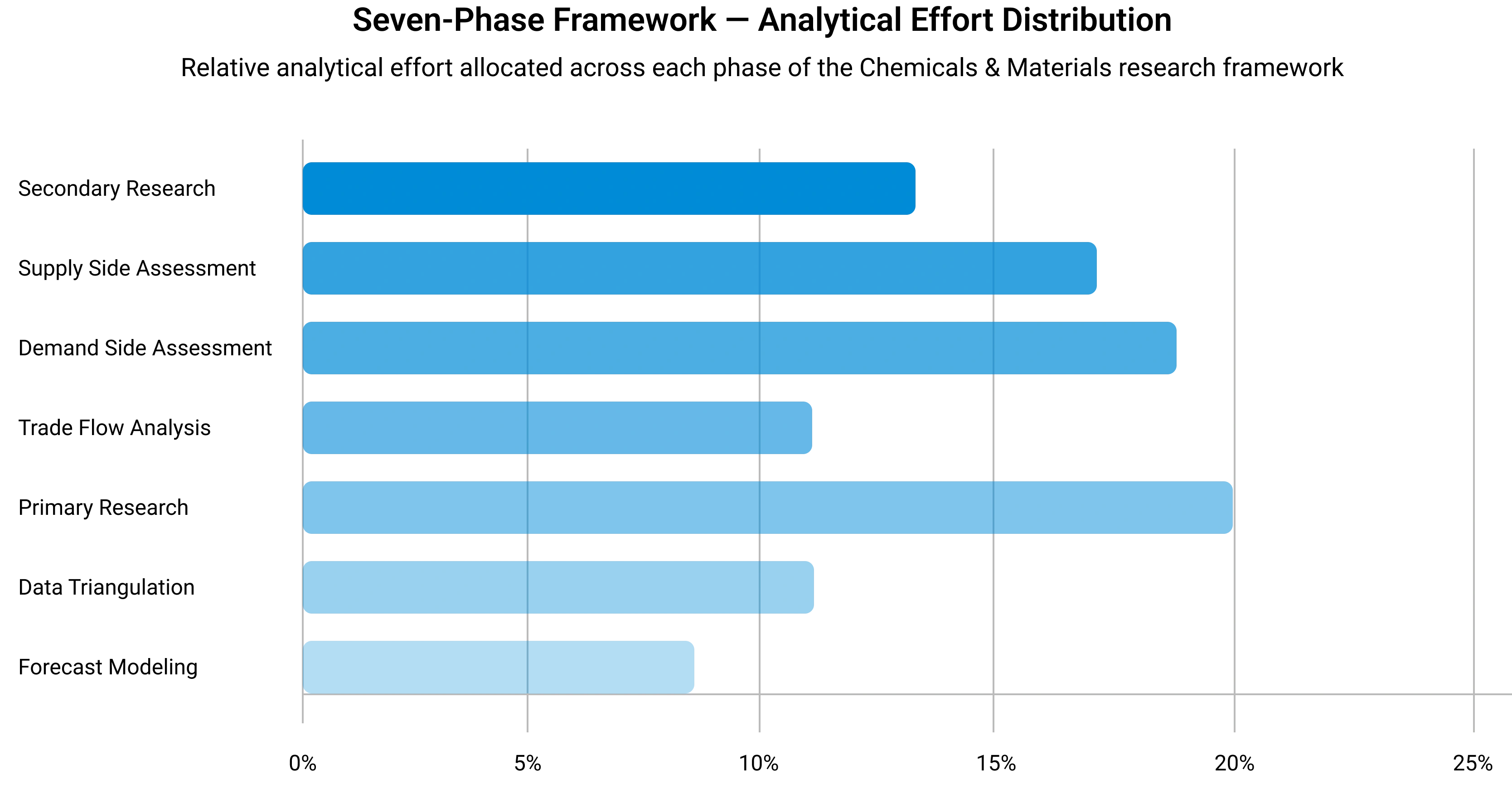
Seven-Phase Framework — Analytical Effort Distribution
Relative analytical effort allocated across each phase of the Chemicals & Materials research framework
Phase 1 - Secondary Research: Establishing the Foundation
Secondary research collects and evaluates publicly available information from authoritative sources, establishing the foundational understanding of market structure, value chain dynamics, competitive landscape, and end-use demand patterns. Every source is evaluated for credibility, recency, geographic relevance, and methodological soundness before inclusion.
Industry Associations
Sources include ACC, CEFIC, ICCA, JCIA, CPCIF, and SOCMA providing production volumes, consumption trends, capacity developments, and sustainability initiatives.
Company Disclosures
Annual reports, investor presentations, earnings transcripts, and regulatory filings reveal product portfolios, manufacturing footprints, capacity expansions, and revenue segmentation.
Government Databases
National statistical offices, customs authorities, environmental agencies, and industrial production databases provide verified statistics on output, trade flows, and regulatory compliance.
Trade Databases
UN Comtrade, ITC, Eurostat, and national customs authorities enable assessment of global product movement, import dependency, and export competitiveness across regions.
Our Secondary Research Sources
- Ministry of Chemicals and Fertilizers
- European Chemicals Agency
- United States Department of Energy
- Ministry of Industry and Information Technology
- Ministry of Economy Trade and Industry
- Ministry of Trade Industry and Energy
- National Institute of Standards and Technology
- Council of Scientific and Industrial Research
- Fraunhofer Society
- National Institute for Materials Science
Phase 2 — Supply-Side Assessment: Mapping Production Capabilities
Production Capacity Analysis
All major manufacturers are assessed for existing installed capacity, planned additions, expansions, new plant announcements, and technology adoption — mapped at global, regional, and country levels.
Capacity Utilization Adjustment
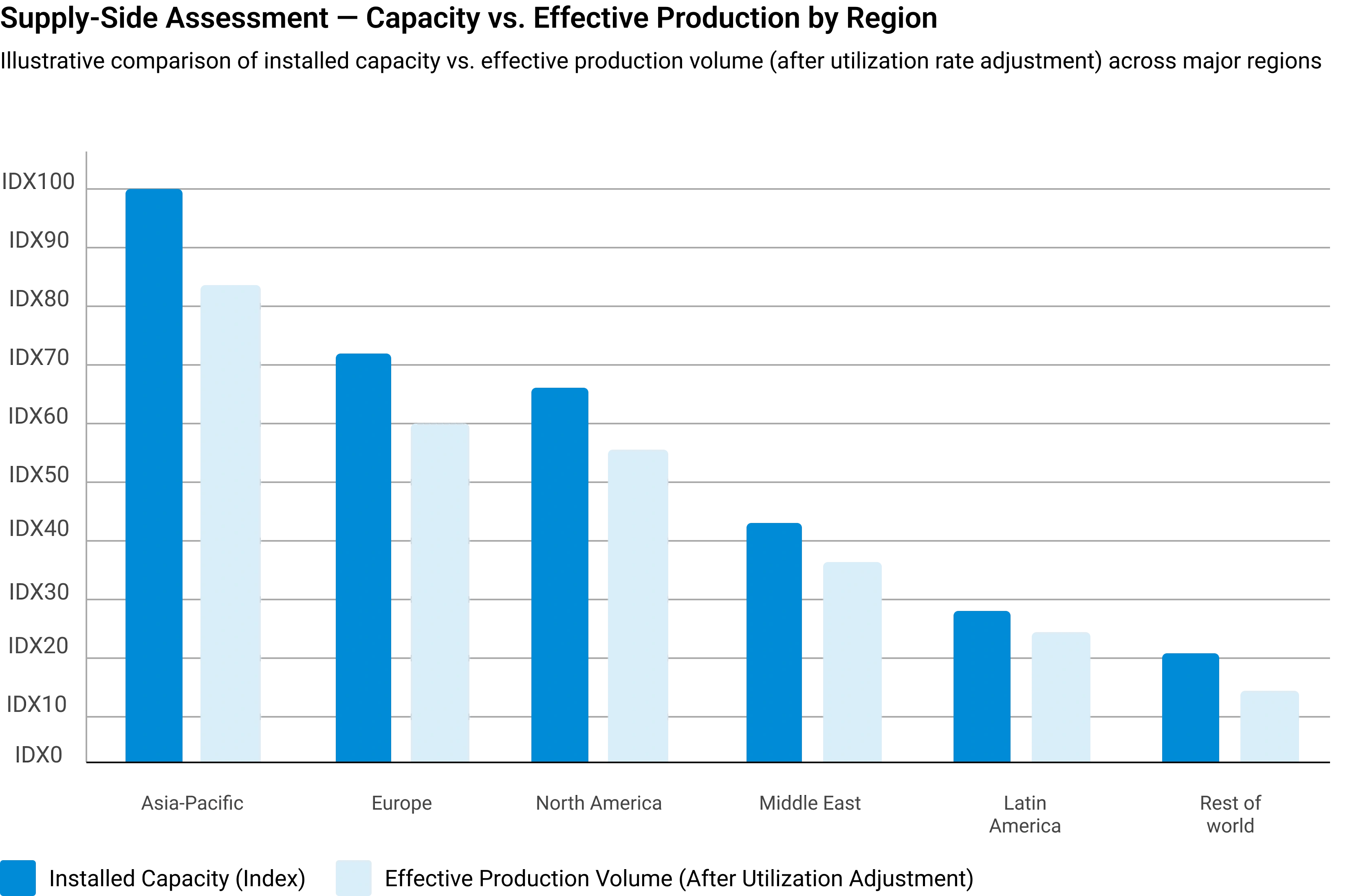
Installed capacity is adjusted using utilization rates based on demand conditions, feedstock availability, plant operating rates, maintenance schedules, and regulatory restrictions.
Manufacturer Revenue Analysis
Product-specific revenues, segment-level performance, regional distribution, average selling prices, and margin trends are evaluated to establish market value estimates.
Supply-Side Assessment — Capacity vs. Effective Production by Region
Illustrative comparison of installed capacity vs. effective production volume (after utilization rate adjustment) across major regions
Phase 3 — Demand-Side Assessment: Quantifying Chemical Consumption
Demand-side analysis quantifies chemical consumption across industries, applications, and geographies — identifying where and how chemicals are consumed throughout the value chain with precision.
End-Use Industry Analysis
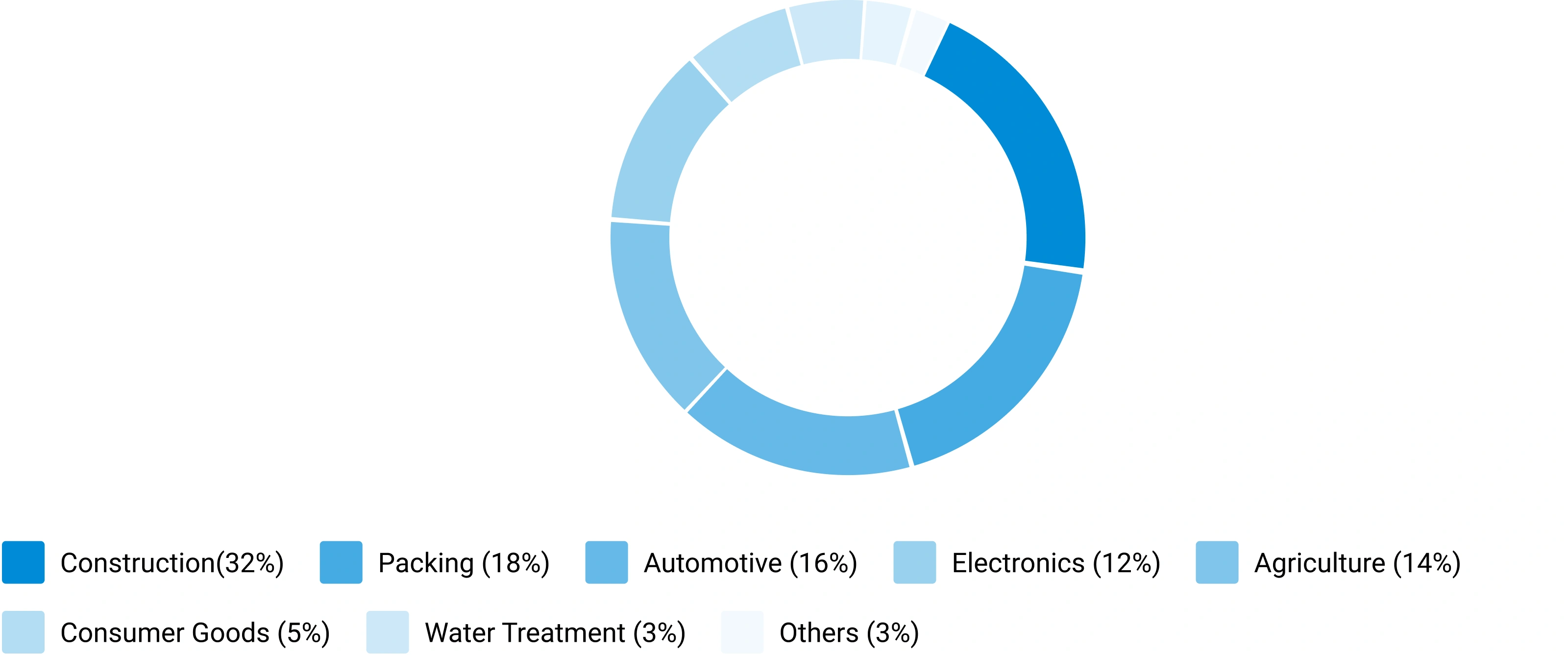
Chemical demand is evaluated across automotive, construction, packaging, electronics, agriculture, healthcare, consumer goods, industrial manufacturing, energy and utilities, and water treatment. Industry output, production trends, and consumption intensity are analyzed to determine demand patterns.
Consumption Modeling
Demand is estimated using measurable indicators: kilograms per vehicle, kilograms per square meter of construction, dosage per cubic meter of water treated, kilograms per hectare of agricultural land, and kilograms per ton of manufactured products. Consumption factors are validated through industry publications and primary interviews.
Application Analysis
The market is segmented by application area to understand product performance requirements, formulation trends, technology adoption, customer preferences, and regulatory requirements improving demand accuracy and segmentation granularity.
Demand-Side Assessment — End-Use Industry Demand Distribution
Illustrative distribution of chemical & materials demand across key end-use industries
Phase 4 - Trade Flow Analysis: Balancing Regional Supply and Demand
Trade flow analysis reconciles regional supply and demand estimates through import and export data, identifying net supply positions, regional dependencies, and market imbalances. It serves as an independent validation layer that tests the consistency of supply-side and demand-side estimates.
Import Analysis
Import data is evaluated to determine volumes, source countries, product dependency, regional supply gaps, and pricing trends — identifying markets that rely heavily on external supply and where domestic production is insufficient to meet demand.
Export Analysis
Export assessments reveal production surplus, export competitiveness, regional manufacturing strength, and global market participation. Export patterns also help validate domestic production estimates and identify net exporting regions.
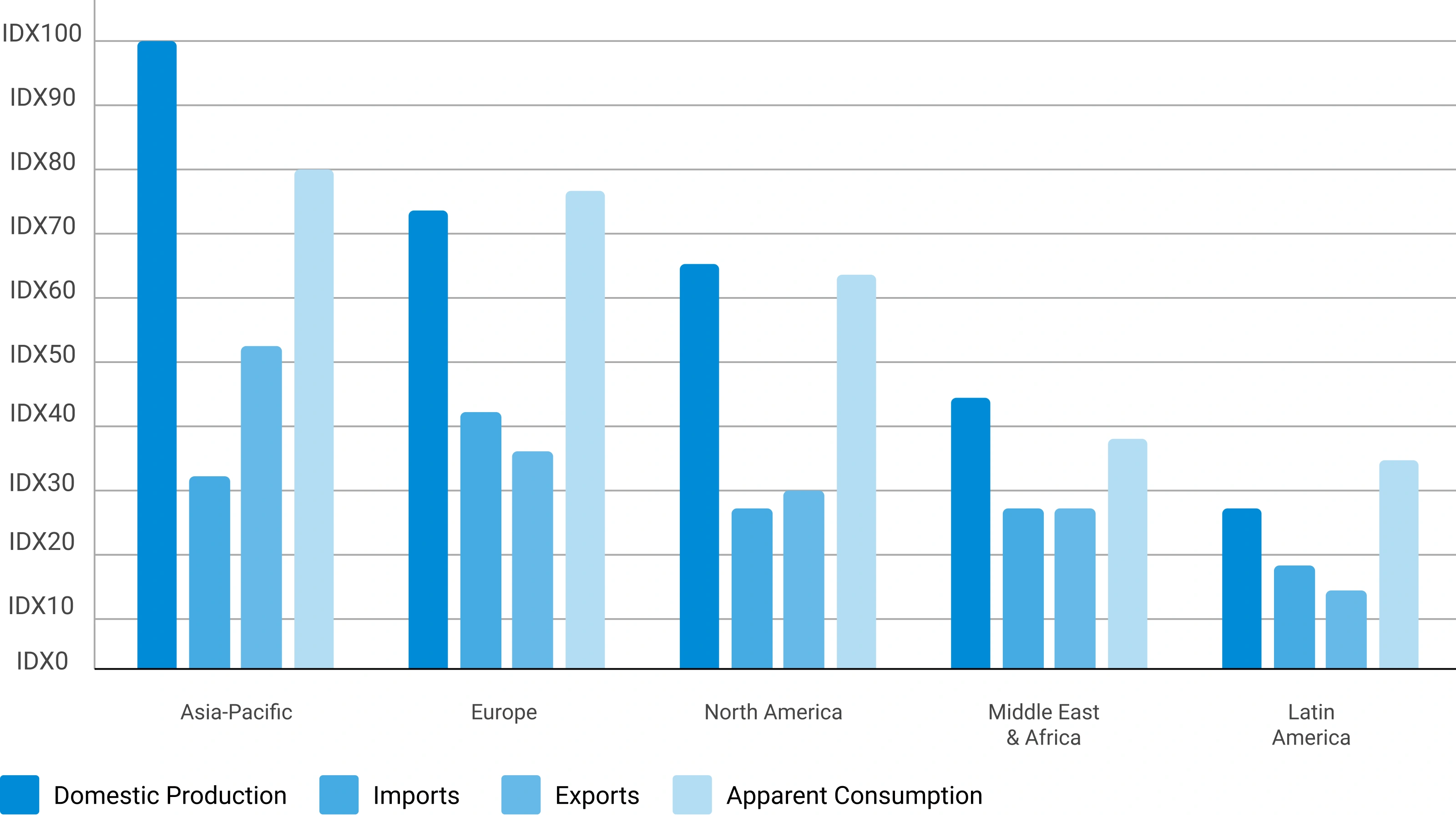
Apparent Consumption Model
Regional consumption is assessed using the standard apparent consumption formula:
Results identify net importing regions, net exporting regions, regional deficits, and surpluses — serving as an independent validation of supply and demand estimates.
Trade Flow Analysis — Net Supply Position by Region
Illustrative apparent consumption vs. domestic production across major regions — positive gap indicates net import dependency
Phase 5 — Primary Research: The Critical Validation Layer
Primary research tests and refines findings from secondary research through direct engagement with industry participants across the supply chain, demand side, and expert community. It captures intelligence that no database or published report can provide — the real-world experience of manufacturers, buyers, and specialists operating in the market.

Supply-Side Interviews
Conversations with chemical manufacturers, raw material suppliers, contract manufacturers, technology providers, and plant operators cover production trends, capacity utilization, pricing developments, technology shifts, and competitive dynamics.

Demand-Side Interviews
Engagement with OEMs, industrial consumers, procurement managers, distributors, formulators, and end-use manufacturers focuses on consumption trends, purchasing behavior, product substitution, demand outlook, and emerging applications.

Industry Expert Consultations
Additional interviews with industry consultants, independent experts, regulatory specialists, technical professionals, and research institutions provide deeper market context and validate key analytical assumptions.
Focus Areas of Primary Research:
Market Size & Forecast Validation
Revenue estimates, volume consumption, growth rates, forecast assumptions, regional demand.Supply Chain & Value Chain Assessment
Raw material sourcing, supply chain challenges, distribution networks, procurement practices.Production & Capacity Analysis
Manufacturing capacity, utilization rates, expansion projects, plant investments.Pricing & Cost Structure Analysis
Product pricing trends, feedstock costs, energy costs, margin pressures, pricing outlook.Competitive Landscape Assessment
Volume and value estimates confirmed to be fully consistent with one another before publicationInterview Volume by Market Scope
| Study Scope | Number of Interviews |
|---|---|
| Niche Market | 20 – 30 |
| Mid-Sized Market | 30 – 50 |
| Global Market | 50 – 80 |
| Highly Fragmented Market | 80 – 120 |
Interview Details:
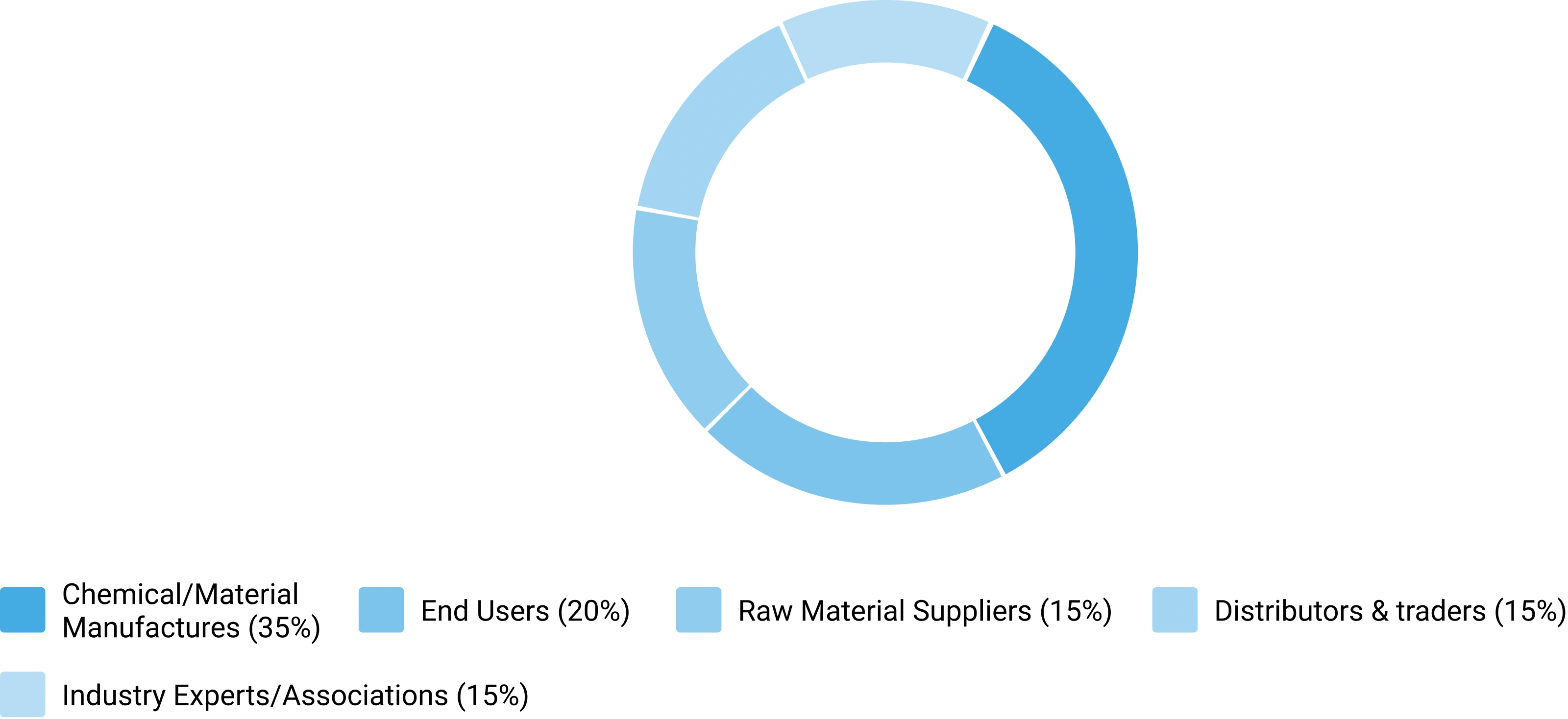
Category : Manufacturers, Suppliers, Distributors, End Users, Experts/Associations
Average Duration : 30–60 Minutes
Interview Mode : Video calls, telephonic interviews, expert consultations
Interview Format : Structured / Semi-Structured questionnaire
Focus Areas of Primary Research:
Market Size & Forecast Validation :
Revenue estimates, volume consumption, growth rates, forecast assumptions, regional demand.
Supply Chain & Value Chain Assessment :
Raw material sourcing, supply chain challenges, distribution networks, procurement practices.
Production & Capacity Analysis :
Manufacturing capacity, utilization rates, expansion projects, plant investments.
Pricing & Cost Structure Analysis :
Product pricing trends, feedstock costs, energy costs, margin pressures, pricing outlook.
Competitive Landscape Assessment :
Market share, competitor positioning, strategic initiatives, partnerships, acquisitions.
Primary Research — Stakeholder Coverage by Category
Distribution of interview respondents across stakeholder categories (% share from PPT data)
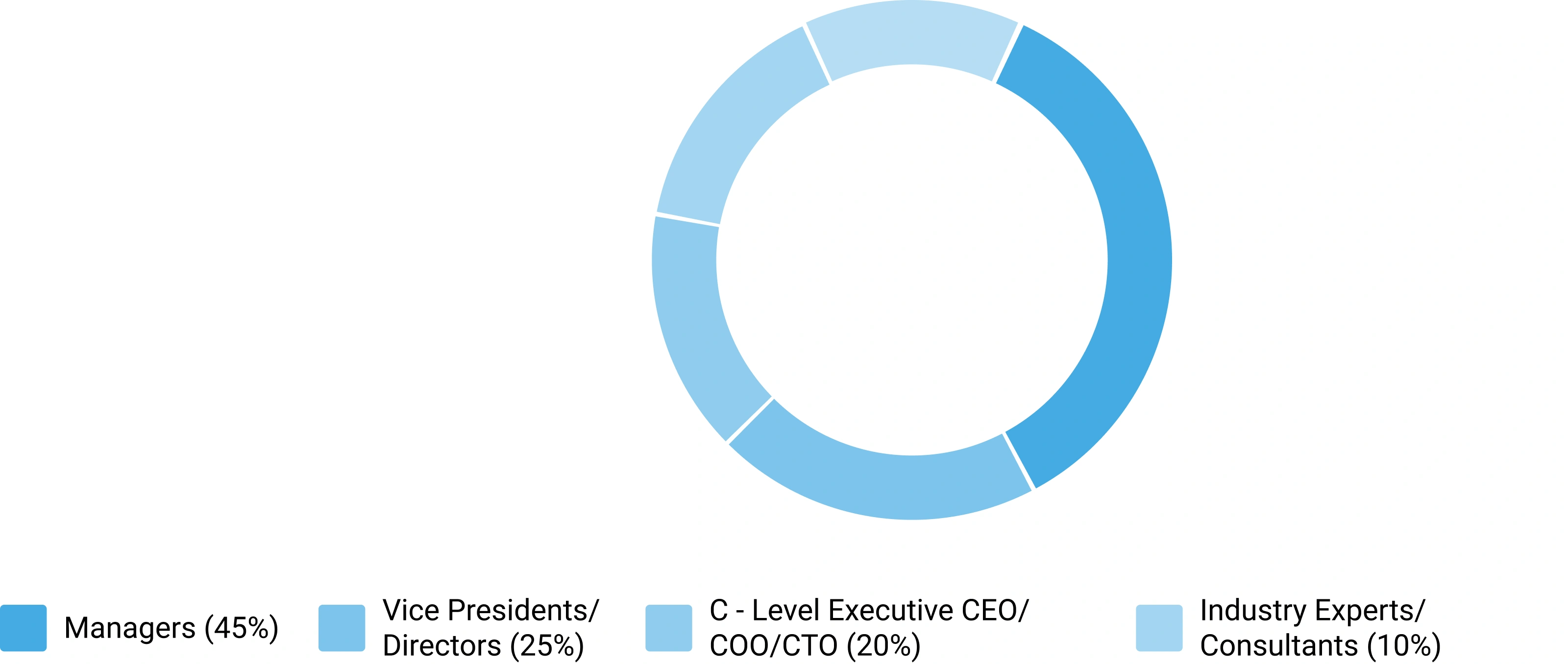
Primary Research — Respondent Designation Profile
Seniority breakdown of interview respondents (% share from PPT data)
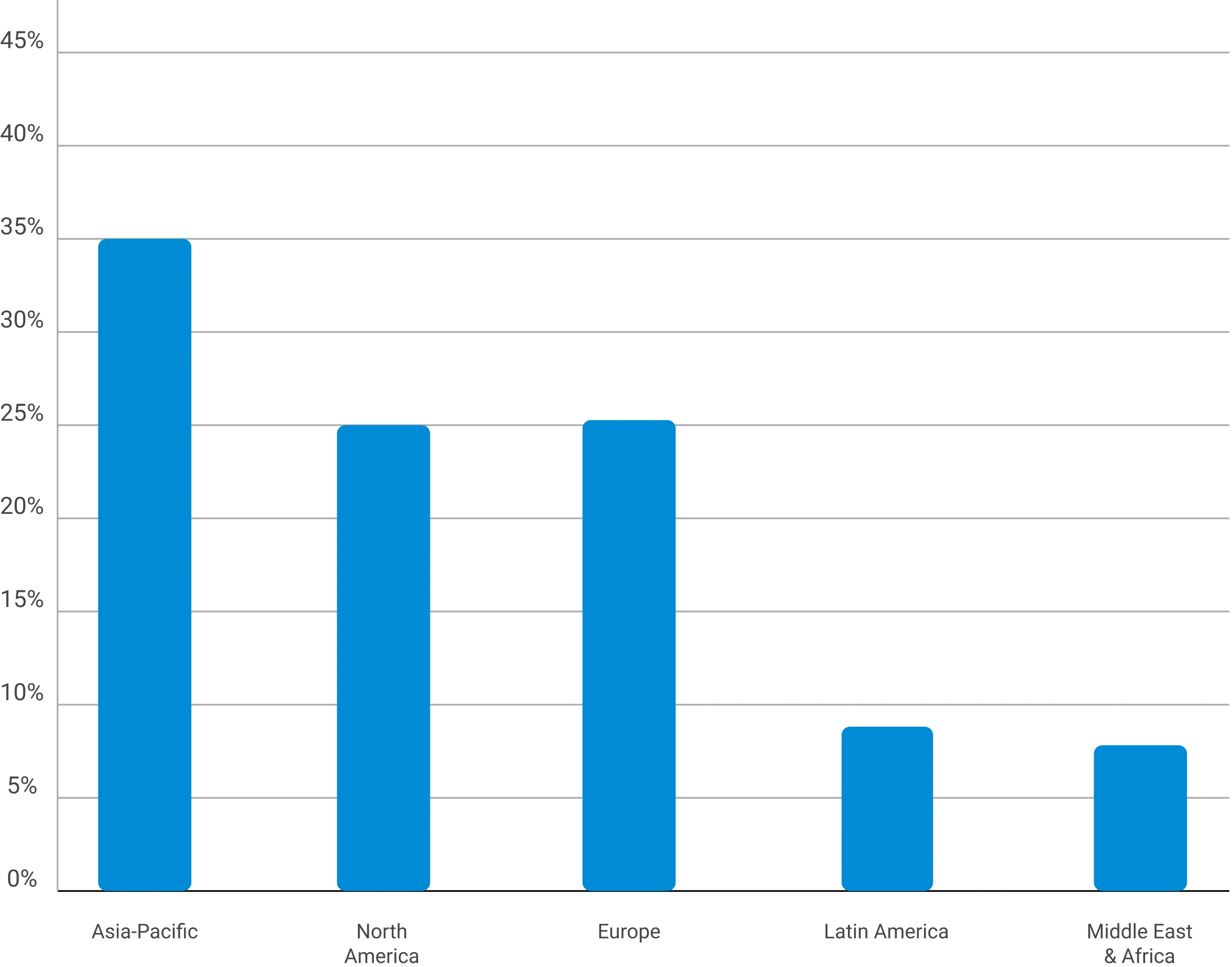
Primary Research — Geographic Coverage of Interviews
Regional distribution of primary research engagement (% share from PPT data)
Phase 6 — Data Triangulation and Market Validation
No single methodology is relied upon in isolation. Multiple independent estimation approaches are combined and reconciled to ensure consistency, accuracy, and analytical defensibility. Any material deviations between approaches are investigated and adjusted through additional validation cycles.
The final market size is derived through weighted triangulation of all validated methodologies. Any material deviations between approaches are investigated and adjusted through additional validation cycles. The outcome represents the most realistic assessment of the market based on available evidence and expert confirmation ensuring that volume and value estimates are fully consistent with one another.
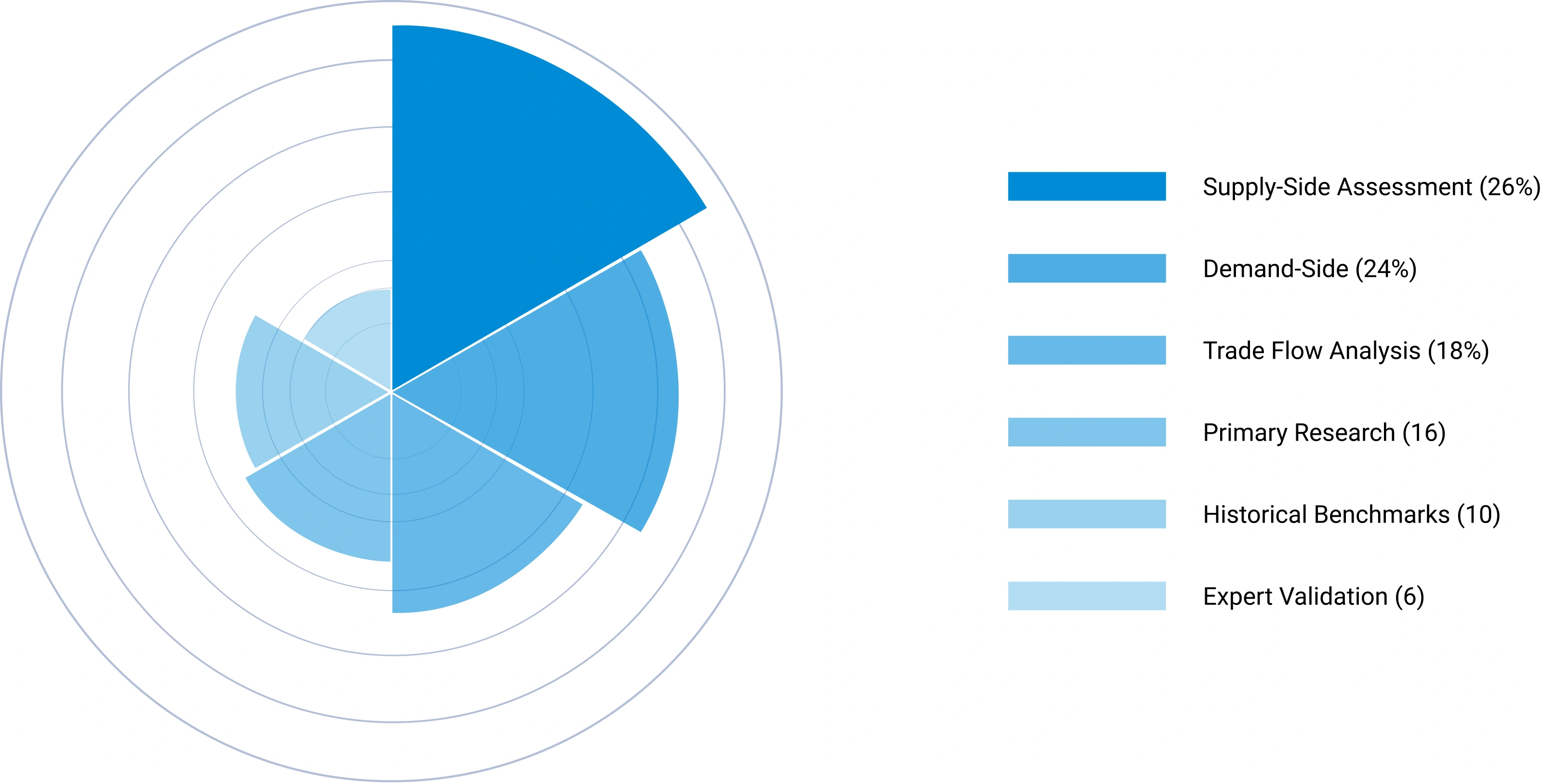
Triangulation Framework — Input Contribution Weight
Relative weight each sizing input contributes to the final reconciled market estimate
Phase 7 — Forecast Modeling: Projecting Future Market Evolution
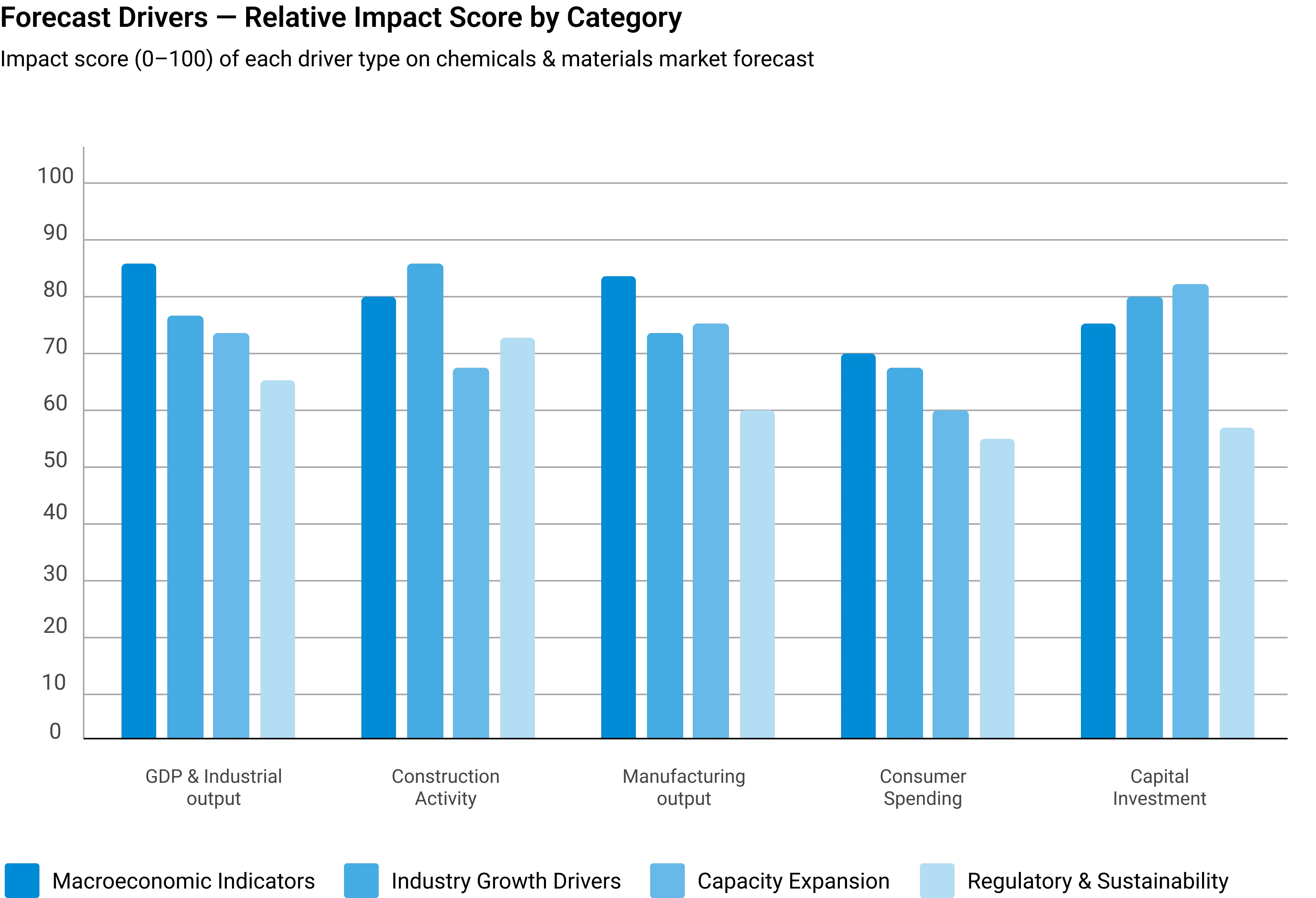
Forecasting evaluates the future trajectory of the market using a combination of quantitative indicators and qualitative assessments across economic, industry, and regulatory dimensions. Rather than simple extrapolation, each driver is independently modeled and integrated into a composite forecast.
Macroeconomic Indicators
GDP growth, industrial production, manufacturing output, construction activity, consumer spending, and capital investment form the quantitative foundation of long-term demand projections. These are applied at country, regional, and global levels.
Industry Growth Drivers
Urbanization, infrastructure development, industrialization, technological innovation, sustainability initiatives, and evolving product performance requirements are assessed at regional and industry levels — capturing both structural and cyclical demand drivers.
Capacity Expansion Analysis
Announced plant expansions, new manufacturing facilities, technology upgrades, and strategic investments are evaluated to determine future supply-demand dynamics and potential market tightness or oversupply situations.
Regulatory & Sustainability
Environmental regulations, chemical safety standards, emission reduction targets, circular economy initiatives, and sustainability requirements are incorporated as they often influence product adoption rates and market growth trajectories.
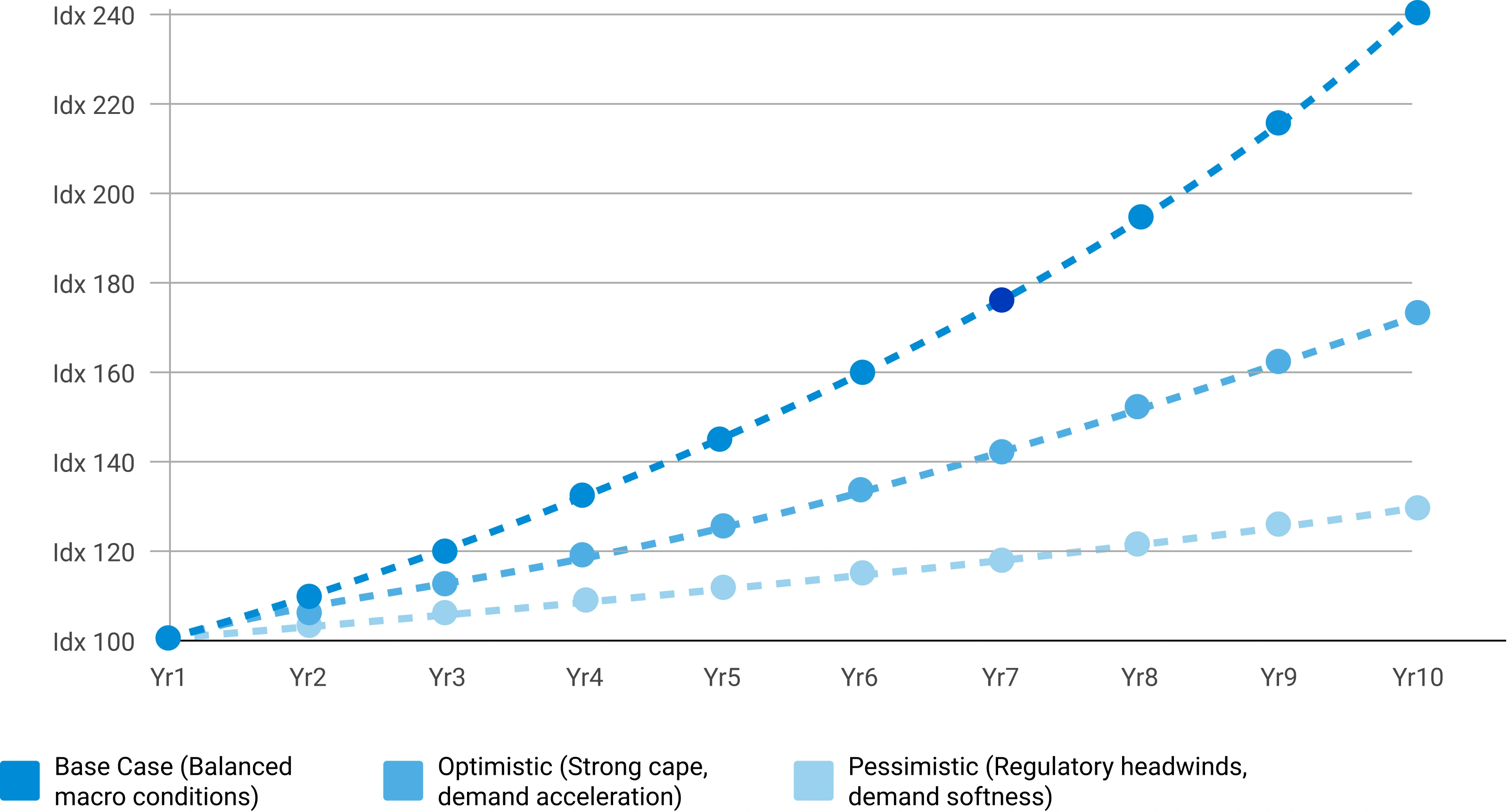
Scenario Forecast Range — Indexed Market Growth (Year 1–10)
Illustrative indexed growth trajectories across Base, Optimistic, and Pessimistic scenarios over a 10-year forecast horizon
Forecast Drivers — Relative Impact Score by Category
Impact score (0–100) of each driver type on chemicals & materials market forecast



Comments
Share your thoughts, ask a question, or provide feedback about this report.