
U.S. Organic Peroxide Market Size and Forecast 2026 to 2035
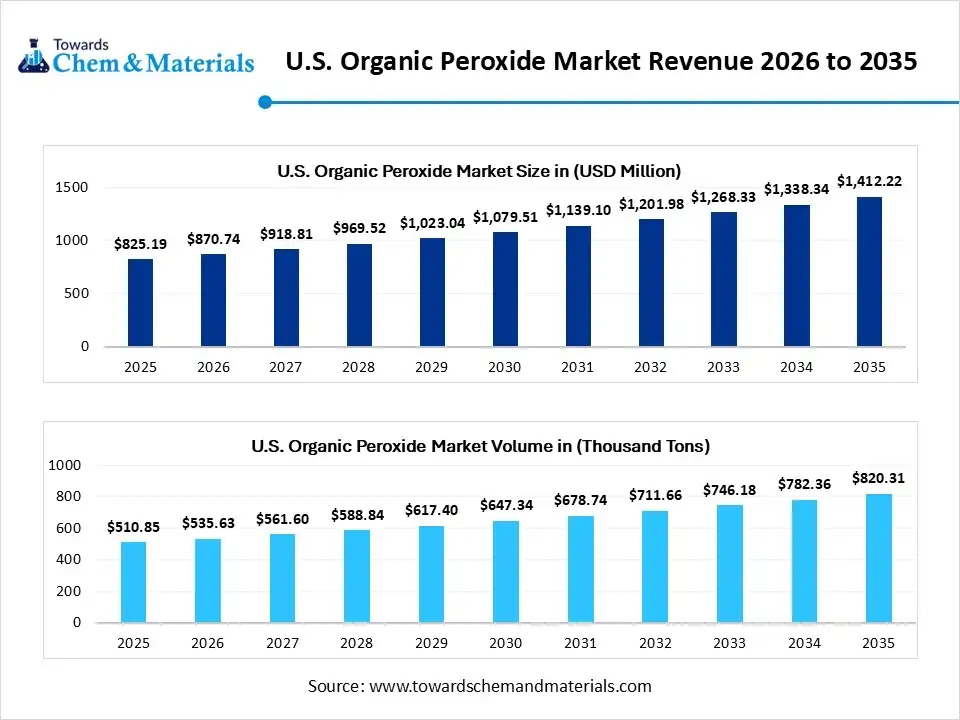
The U.S. organic peroxide market size was estimated at USD 825.19 million in 2025 and is expected to be worth around USD 1,412.22 million by 2035, growing at a CAGR of 5.52% from 2026 to 2035. In terms of volume, the U.S. organic peroxide industry is projected to grow from 510.85 thousand tons in 2025 to 820.31 thousand tons by 2035, exhibiting a compound annual growth rate (CAGR) of 4.85% over the forecast period from 2026 to 2035.Increasing demand for high-performance polymers is the key factor driving market growth. Also, a rise in automotive and infrastructure production, coupled with a shift towards sustainable curing agents, can fuel market growth further.
The market encompasses commercial manufacturing, distribution, and application of chemical compounds having an oxygen-oxygen bond. These highly reactive materials are used mainly as crucial initiators, catalysts, and cross-linking agents to produce synthetic rubbers, polymers, and specialized plastics. They are extensively used in industrial polymer manufacturing as well as in personal care and pharmaceutical classes.
Furthermore, the market benefits from a highly diverse application base, which propels its resilience during economic downturns. Additionally, continuous technological innovations are anticipated to improve the safety and efficacy of these compounds, hence increasing their attractiveness to end-users. As industries are emphasizing efficiency and sustainability, the market appears well-established for rapid growth in the upcoming year, reflecting a wider trend in material science.
Market Highlights
- By type, the diacyl peroxides segment dominated the market with the largest share of 24% in 2025. The dominance of the segment can be attributed to the increasing PVC polymerization demand.
- By type, the peroxyesters segment is expected to grow at the fastest CAGR of 6.72% over the forecast period. The growth of the segment can be credited to the growing use of controlled polymerization initiators.
- By function/application, the polymerization initiators segment dominated the market with the largest share of 39% in 2025. The dominance of the segment can be driven by a surge in the production of PVC.
- By function/application, the crosslinking agent segment is expected to grow at the fastest CAGR of 6.72% over the forecast period. The growth of the segment is owing to the increasing demand for crosslinked polythene.
- By form, the liquid peroxide segment dominated the market with the largest share of 46% in 2025 and is expected to grow at the fastest CAGR of 6.41% over the forecast period. The dominance and growth of the segment can be attributed to the increasing liquid peroxide utilisation.
- By distribution channel, the direct sales segment dominated the market with the largest share of 54% in 2025. The dominance of the segment can be driven by ongoing technical support integration.
- By distribution channel, the online retail/procurement portals segment is expected to grow at the fastest CAGR of 7.42% during the projected period. The growth of the segment is owed to the rapid adoption.
- By end-use industry, the polymer & plastic segment dominated the market with the largest share of 30% in 2025. The dominance of the segment can be attributed to the packaging and construction sector.
- By end-use industry, the composite & reinforced plastics segment is expected to grow at the fastest CAGR of 6.92% over the projected period. The growth of the segment can be credited to the increasing composite production.
Quick Stats at a Glance
- Market Estimated Size (2025): USD 825.19 Million | CAGR (2026–2035): 5.52%
- Market Projected Size (2035): USD 1,412.22 Million
- Market Estimated Volume (2025): 510.85 Thousand Tons | Volume CAGR (2026–2035): 4.85%
- Market Projected Volume (2035): 820.31 Thousand Tons
- Market Pricing (2025):
- Average Manufacturing Price: USD 2,865 per Ton
- Average Selling Price: USD 3,598 per Ton
- Pricing CAGR (2026–2035): 2.15%
Market Trends
- Increasing product demand in the chemical sector is the latest trend in the market, shaping positive market growth. Industries are focusing on organic peroxides for cross-linking and polymerization processes. Also, the market growth is further fuelled by the rising demand for high-performance materials in different applications.
- The market is benefiting from a surge in emphasis on sustainable practices and renewable resources. As industries transition towards greener alternatives, Sustainability efforts are encouraging development of safer formulations, improved process efficiency, and organic peroxide technologies that support polymer recycling and lower-impact material processing. This transition is likely to propel market growth, as companies are seeking to align with consumer preferences.
- Organic peroxides are extensively used as initiators in the polymerization process to produce several polymers. The growing demand for polymers and thermoplastics across various industrial applications is another major factor driving market growth over the foreseeable future.
How Cutting-Edge Technologies Are Revolutionizing the U.S. Organic Peroxide Market?
Advanced technologies are transforming the market by improving safety, facilitating polymerization efficiency, and optimizing the manufacturing of lightweight and sustainable materials. Furthermore, companies are heavily deploying innovative stabilization techniques and specialized packaging to avoid temperature-causing self-reaction during transit and storage.
U.S. Organic Peroxide Market Supply Chain Analysis
- Feedstock Procurement:It involves the sourcing of essential raw materials, mainly organic acids, hydrogen peroxide, and various alcohols or ketones. It offers customized organic peroxide solutions and custom manufacturing.
- Major Players: Arkema Group, Nouryon
- Chemical Synthesis and Processing :It refers to the use of organic peroxides as crucial catalysts, intermediates, and reaction initiators. These radicals are used to transform monomer molecules into extensively used rubbers, plastics, and specialized chemical compounds.
- Major Players: United Initiators, Vanderbilt Chemicals, LLC
- Packaging and Labeling:It includes stringent safety regulations and specialized containers needed to handle these highly reactive, thermally unstable chemicals.
- Major Players: NOF Corporation, Pergan GmbH
- Regulatory Compliance and Safety Monitoring:It includes the rigorous protocols established to handle these highly reactive, thermally unstable, and potentially explosive chemicals.
- Major Players: United Initiators, NOF Corporation
U.S. Organic Peroxide Markets Regulatory Landscape: Regulations
| State | Key Regulation |
| California | (Cal/OSHA & Prop 65): Cal/OSHA enforces more aggressive Process Safety Management standards than federal OSHA, requiring lower thresholds for tracking hazardous processes. Furthermore, specific organic peroxide formulations must comply with clear chemical warning labels under California Proposition 65. |
| Texas | (TCEQ): As a major hub for plastics and polymer manufacturing, Texas enforces that facilities handling organic peroxides may be subject to applicable TCEQ air, waste, and chemical-handling requirements depending on facility operations and emissions through the Texas Commission on Environmental Quality (TCEQ) for manufacturing plants and distributors handling raw organic peroxides. |
| New Jersey | (TCPA): The New Jersey Toxic Catastrophe Prevention Act (TCPA) mandates extra risk management and hazard assessments for facilities handling highly reactive chemicals, including specific organic peroxides, even at volumes below federal EPA limits. |
Market Dynamics
Drivers
Growing Emphasis on Renewable Resources
The market is benefiting from a surge in emphasis on renewable resources and sustainable practices, which is the major factor driving market growth. As industries are rapidly shifting towards organic and greener alternatives derived from renewable sources, companies are preferring sustainable products. In addition, this trend illustrates a wider shift toward sustainability, establishing the organic peroxide sector as an essential component in the transition to eco-friendly alternatives.
Restraint
Safety issues
The handling, transportation, and safety of organic peroxide are the major concerns hindering the market growth. Hence, to avoid any type of hazards and risks, the companies are focusing on several options for handling organic peroxide in the market. Moreover, the uneven geographical distribution and localized scarcity of raw materials act as another market restraint, constraining the consistent expansion and development of the organic peroxide industry.
Opportunity
Ongoing Development of Specialty Formulations
There is a significant opportunity for market players to invest in R&D to create safer, stable, and industry-specific organic peroxides. Advancements like encapsulated peroxides or blends, which provide better handling properties and minimize hazards, can open up new avenues in the market and applications. Furthermore, the expanding use of fiber-reinforced composites across the aerospace, wind energy, and automotive sectors offers significant growth potential. In this context, organic peroxides serve as vital curing agents for thermoset resins.
Segmental Insights
Type Insights
The diacyl peroxides segment dominated the market with the largest share of 24% in 2025. The dominance of the segment can be attributed to the growing demand for PVC polymerization in the construction and packaging sectors is driving market players to increasingly expand the applications of benzoyl peroxide in specialist plastics.The peroxyesters segment held the market share of 16% in 2025 and is expected to grow at the fastest CAGR of 6.72% over the forecast period. The growth of the segment can be credited to the growing use of controlled polymerization initiators in high-performance polymer manufacturing. The advanced resin system continues to expand industrial applications further.
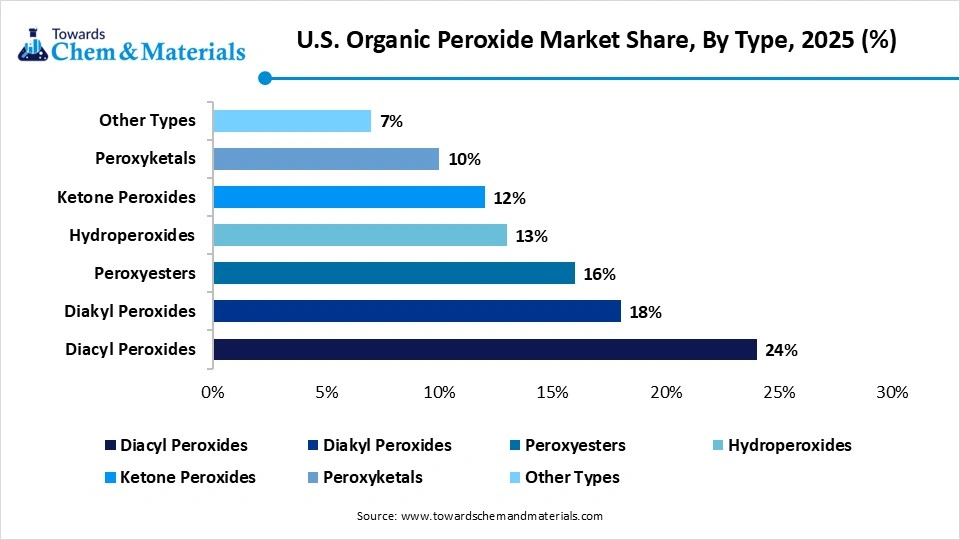
The diacyl peroxides segment held the market share of 18% in 2025. The growth of the segment can be linked to the increasing polyolefin demand across the wire and cable industries. Thermal stability enhancements further support advanced polymer manufacturing. Demand from the automotive sector for lightweight components is driving consumption soon.
U.S. Organic Peroxide Market Share, By Type, 2025 (%)
| By Type | Revenue Share, 2025 (%) |
| Diacyl Peroxides | 24% |
| Diakyl Peroxides | 18% |
| Peroxyesters | 16% |
| Hydroperoxides | 13% |
| Ketone Peroxides | 12% |
| Peroxyketals | 10% |
| Other Types | 7% |
Function/Application Insights
The polymerization initiators segment dominated the market with the largest share of 39% in 2025. The dominance of the segment can be driven by a surge in production of PVC and acrylic polymers and speciality resin manufacturing, supporting advanced peroxide utilization. Industrial polymer capacity growth will sustain market expansion soon.
The crosslinking agent segment held the market share of 22% in 2025 and is expected to grow at the fastest CAGR of 6.72% over the forecast period. The growth of the segment is owing to the increasing demand for crosslinked polythene across the cable and pipe industries, along with the growth in industrial polymer capacity.
The curing/hardening agents segment held the market share of 27% in 2025. The growth of the segment is due to expansion in wind energy and the automotive sector, coupled with the advanced resin system, which is improving industrial adoption. Composite and thermoset resin manufacturing continues driving curing agent demand.
U.S. Organic Peroxide Market Share, By Function/Application, 2025 (%)
| By Function/Application | Revenue Share, 2025 (%) |
| Polymerization Initiators | 39% |
| Curing/Hardening Agents | 27% |
| Crosslinking Agent | 22% |
| Bleaching/Oxidizing Agents | 12% |
Form Insights
The liquid peroxide segment dominated the market with the largest share of 46% in 2025 and is expected to grow at the fastest CAGR of 6.41% over the forecast period. The dominance and growth of the segment can be attributed to the increasing liquid peroxide utilisation for industrial process efficiency and automated dosing systems, enhancing operational performance.
The solid/powder peroxide segment held the market share of 37% in 2025. The growth of the segment can be credited to the powder formulations, which improve overall transportation safety and handling efficiency. Polymer production applications sustain steady market expansion further.
The paste/gel organic peroxide segment held the market share of 17% in 2025. The growth of the segment can be linked to the rising catalytic gel usage in composite manufacturing and stable formulation performance, improving industrial preference. Controlled curing application further drives market growth.
U.S. Organic Peroxide Market Share, By Form, 2025 (%)
| By Form | Revenue Share, 2025 (%) |
| Solid/Powder Peroxide | 37% |
| Liquid Peroxide | 46% |
| Paste/Gel Organic Peroxide | 17% |
Distribution Channel Insights
The direct sales segment dominated the market with the largest share of 54% in 2025. The dominance of the segment can be driven by ongoing technical support integration, improving supplier relationships, and large industrial buyers preferring long-term procurement agreements. High-volume polymer manufacturers sustain direct purchasing.
The online retail/procurement portals segment held the market share of 13% in 2025 and is expected to grow at the fastest CAGR of 7.42% during the projected period. The growth of the segment is owing to the rapid adoption of digital procurement, boosting speciality chemical purchasing and E-commerce platforms, and enhancing overall product accessibility for smaller buyers.
The distributors segment held the market share of 33% in 2025. The growth of the segment is due to regional supply chain expansion supporting distributor relevance and inventory optimization, enhancing procurement flexibility. Small and mid-sized manufacturers supporting channel demand.
U.S. Organic Peroxide Market Share, By Distribution Channel, 2025 (%)
| By Distribution Channel | Revenue Share, 2025 (%) |
| Direct Sales | 54% |
| Distributors | 33% |
| Online Retail/Procurement Portals | 13% |
End-Use Industry Insights
The polymer & plastic segment dominated the market with the largest share of 30% in 2025. The dominance of the segment can be attributed to the packaging and construction sector supporting polymer demand and advanced processing technologies improving utilisation. PVC and polyolefin production are driving peroxide consumption soon.
The composite & reinforced plastics segment held the market share of 15% in 2025 and is expected to grow at the fastest CAGR of 6.92% over the projected period. The growth of the segment can be credited to the increasing composite production in the wind energy and transportation sectors, along with the growing adoption of lightweight materials.
The rubber industry segment held the market share of 13% in 2025. The growth of the segment can be linked to the growing crosslinking peroxide demand for specialty manufacturing and automotive sealing applications. Industrial rubber processing sustains consumption further.
U.S. Organic Peroxide Market Share, By End-use Industry, 2025 (%)
| By End-use Industry | Revenue Share, 2025 (%) |
| Polymer & Plastic | 30% |
| Rubber Industry | 13% |
| Composite & Reinforced Plastics | 15% |
| Adhesives & Sealants | 9% |
| Paints & Coatings | 8% |
| Textile | 5% |
| Pharmaceuticals | 7% |
| Cosmetics & Personal Care | 4% |
| Pulp & Paper | 6% |
| Other End-use Industries | 3% |
Recent Development
- In May 2026, Nouryon, a global leader in specialty chemicals, launched Perkadox® PM-60ST-GR. This innovative organic peroxide technology is specifically formulated to upcycle degraded, recycled polypropylene. By restoring the polymers mechanical properties and melt strength, the technology enables the reuse of recycled material in demanding automotive, packaging, and consumer goods applications.(Source: www.manilatimes.net)
U.S. Organic Peroxide Market Companies
- Akzo Nobel: Akzo Nobels former specialty chemicals division now an independent company named Nouryon following its acquisition by the Carlyle Group is the Nouryon is a major supplier of organic peroxide technologies used in polymer production, modification, and related applications. In the U.S., Nouryon acts as a primary initiator, crosslinking, and modifying agent supplier for the massive domestic polymers and plastics sector.
- Arkema: Arkema is a global leader in Specialty Materials, producing organic peroxides since 1953. In the U.S. market, they operate as a top-tier supplier of organic peroxide initiators and cross-linking agents, which are essential for polymer production, wire and cable manufacturing, and composite materials.
Other Companies in the Market
- United Initiators
- Pergan GmbH
- Chinasun Specialty Products
- Jiangsu Yuanyang
- Zibo Zhenghua
- Laiwu Meixing
- Hualun Chemical
- Dongying Haijing Chemical
Segments Covered in the Report
By Type
- Diacyl Peroxides
- Benzoyl Peroxide
- Lauroyl Peroxide
- Other Diacyl Peroxides
- Dialkyl Peroxides
- Dicumyl Peroxide
- Di-tert-butyl Peroxide
- Other Dialkyl Peroxides
- Peroxyesters
- tert-Butyl Peroxybenzoate
- tert-Butyl Peroxyacetate
- Other Peroxyesters
- Hydroperoxides
- Cumene Hydroperoxide
- tert-Butyl Hydroperoxide
- Other Hydroperoxides
- Ketone Peroxides
- MEKP (Methyl Ethyl Ketone Peroxide)
- Cyclohexanone Peroxide
- Peroxyketals
- 1,1-Di(tert-butylperoxy) Cyclohexane
- Other Peroxyketals
- Other Types
- Percarbonates
- Peroxydicarbonates
- Specialty Organic Peroxides
By Function/Application
- Polymerization Initiators
- PVC Polymerization
- Styrene Polymerization
- Acrylic Polymerization
- Curing/Hardening Agents
- Thermoset Resin Curing
- Composite Resin Hardening
- Crosslinking Agents
- Polyethylene Crosslinking
- Elastomer Crosslinking
- Bleaching/Oxidizing Agents
- Textile Oxidation
- Paper Bleaching
- Specialty Oxidation
By Form
- Solid/Powder Peroxide
- Granular
- Crystalline
- Liquid Peroxide
- Solvent-based Liquid
- Water-based Liquid
- Paste/Gel Organic Peroxide
- Catalyst Paste
- Gel Stabilized Peroxide
By Distribution Channel
- Direct Sales
- Long-term Industrial Contracts
- OEM Supply Agreements
- Distributors
- Chemical Distributors
- Regional Suppliers
- Online Retail/Procurement Portals
- B2B Procurement Platforms
- Specialty Chemical E-commerce
By End-Use Industry
- Polymer & Plastic
- PVC
- Polyethylene
- Polystyrene
- Rubber Industry
- Synthetic Rubber
- Specialty Elastomers
- Composite & Reinforced Plastics
- FRP Manufacturing
- Wind Energy Composites
- Adhesives & Sealants
- Industrial Adhesives
- Construction Sealants
- Paints & Coatings
- Industrial Coatings
- Automotive Coatings
- Textile
- Fabric Bleaching
- Technical Textiles
- Pharmaceuticals
- API Synthesis
- Disinfection Applications
- Cosmetics & Personal Care
- Acne Treatment Formulations
- Hair Bleaching Products
- Pulp & Paper
- Paper Bleaching
- Deinking Operations
- Other End-use Industries
- Electronics
- Water Treatment
- Agrochemicals
By Region
- North America
- U.S.
- Canada
- Mexico
- Europe
- Germany
- UK
- France
- Italy
- Spain
- Asia Pacific
- China
- India
- Japan
- South Korea
- Latin America
- Brazil
- Argentina
- Middle East & Africa
- Saudi Arabia
- South Africa
A Seven-Phase Framework
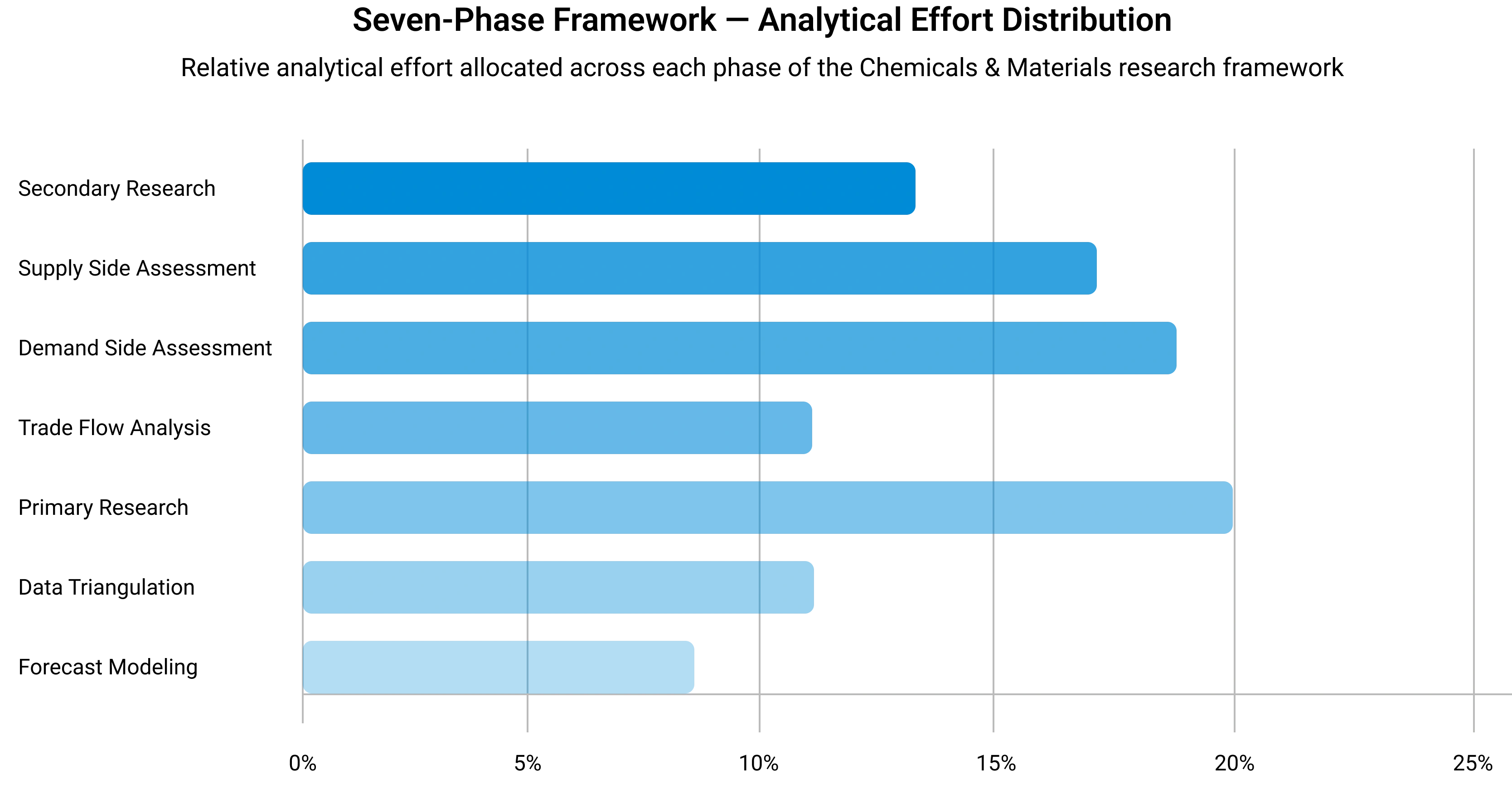
Our methodology is designed to be universally applicable across commodity chemicals, specialty chemicals, petrochemicals, construction chemicals, coatings, electronic chemicals, industrial gases, agrochemicals, water treatment chemicals, and performance materials. Each phase builds upon the last, creating a layered validation structure that minimizes estimation error and maximizes analytical confidence.
The framework ensures comprehensive market coverage, robust cross-validation, and reliable long-term forecasting — producing market estimates that withstand scrutiny from investors, regulators, and corporate strategy teams.

Seven-Phase Framework — Analytical Effort Distribution
Relative analytical effort allocated across each phase of the Chemicals & Materials research framework
Phase 1 - Secondary Research: Establishing the Foundation
Secondary research collects and evaluates publicly available information from authoritative sources, establishing the foundational understanding of market structure, value chain dynamics, competitive landscape, and end-use demand patterns. Every source is evaluated for credibility, recency, geographic relevance, and methodological soundness before inclusion.
Industry Associations
Sources include ACC, CEFIC, ICCA, JCIA, CPCIF, and SOCMA providing production volumes, consumption trends, capacity developments, and sustainability initiatives.
Company Disclosures
Annual reports, investor presentations, earnings transcripts, and regulatory filings reveal product portfolios, manufacturing footprints, capacity expansions, and revenue segmentation.
Government Databases
National statistical offices, customs authorities, environmental agencies, and industrial production databases provide verified statistics on output, trade flows, and regulatory compliance.
Trade Databases
UN Comtrade, ITC, Eurostat, and national customs authorities enable assessment of global product movement, import dependency, and export competitiveness across regions.
Our Secondary Research Sources
- Ministry of Chemicals and Fertilizers
- European Chemicals Agency
- United States Department of Energy
- Ministry of Industry and Information Technology
- Ministry of Economy Trade and Industry
- Ministry of Trade Industry and Energy
- National Institute of Standards and Technology
- Council of Scientific and Industrial Research
- Fraunhofer Society
- National Institute for Materials Science
Phase 2 — Supply-Side Assessment: Mapping Production Capabilities
Production Capacity Analysis
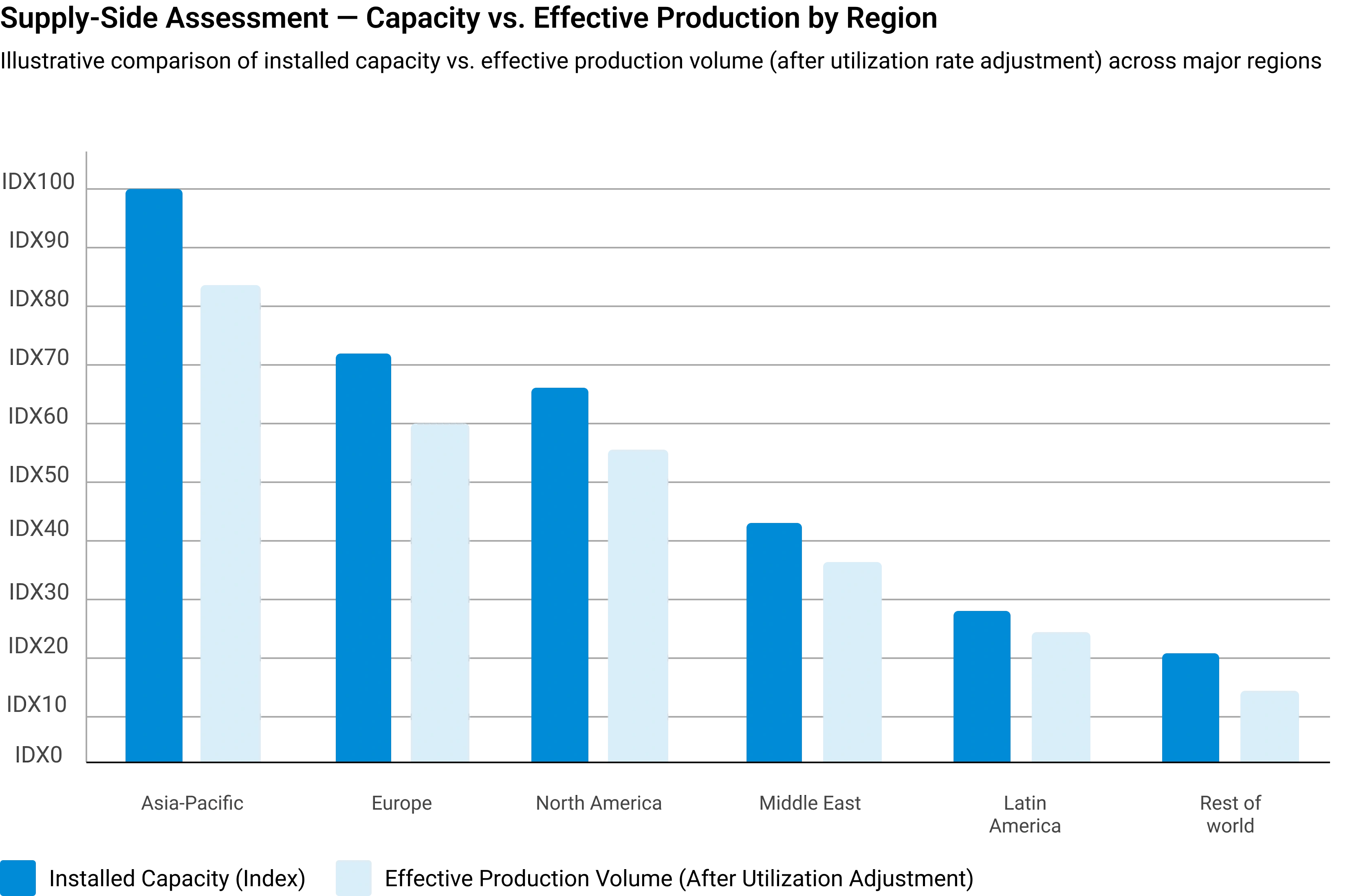
All major manufacturers are assessed for existing installed capacity, planned additions, expansions, new plant announcements, and technology adoption — mapped at global, regional, and country levels.
Capacity Utilization Adjustment
Installed capacity is adjusted using utilization rates based on demand conditions, feedstock availability, plant operating rates, maintenance schedules, and regulatory restrictions.
Manufacturer Revenue Analysis
Product-specific revenues, segment-level performance, regional distribution, average selling prices, and margin trends are evaluated to establish market value estimates.
Supply-Side Assessment — Capacity vs. Effective Production by Region
Illustrative comparison of installed capacity vs. effective production volume (after utilization rate adjustment) across major regions
Phase 3 — Demand-Side Assessment: Quantifying Chemical Consumption
Demand-side analysis quantifies chemical consumption across industries, applications, and geographies — identifying where and how chemicals are consumed throughout the value chain with precision.
End-Use Industry Analysis
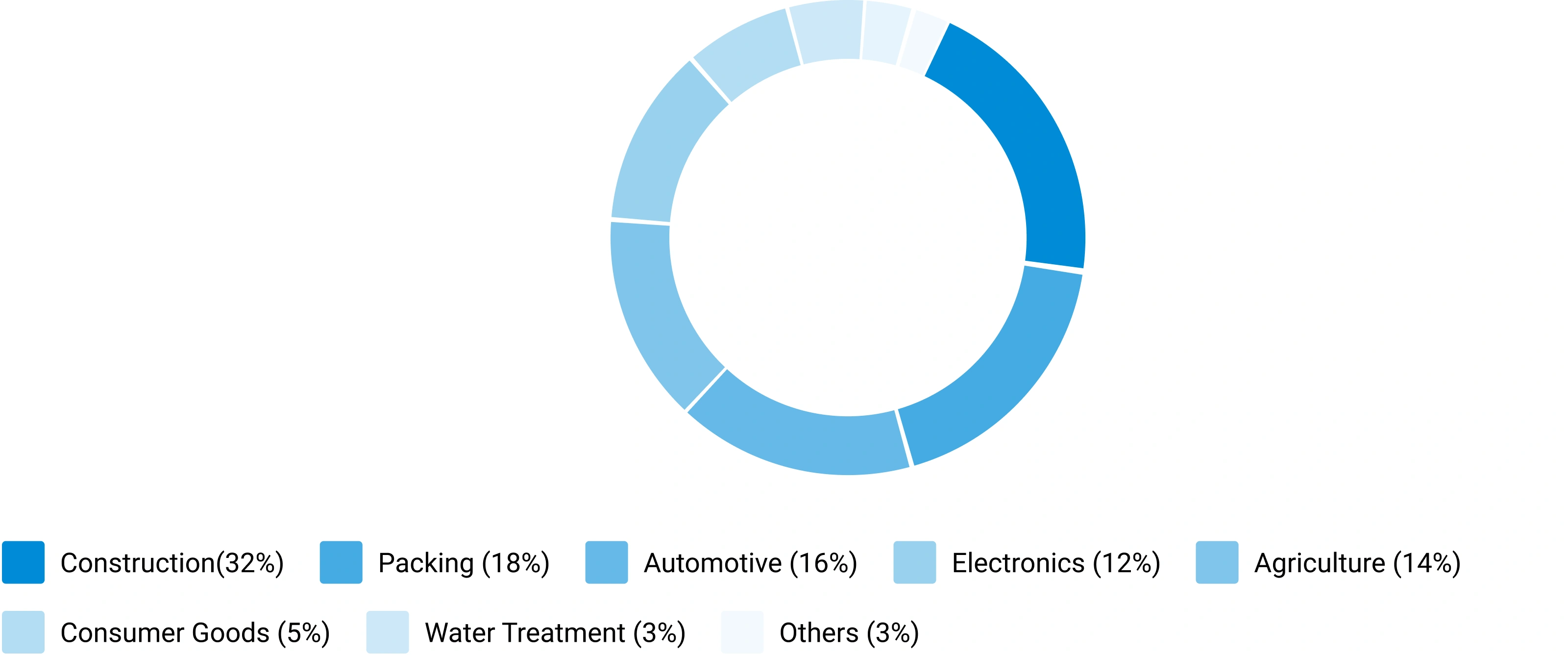
Chemical demand is evaluated across automotive, construction, packaging, electronics, agriculture, healthcare, consumer goods, industrial manufacturing, energy and utilities, and water treatment. Industry output, production trends, and consumption intensity are analyzed to determine demand patterns.
Consumption Modeling
Demand is estimated using measurable indicators: kilograms per vehicle, kilograms per square meter of construction, dosage per cubic meter of water treated, kilograms per hectare of agricultural land, and kilograms per ton of manufactured products. Consumption factors are validated through industry publications and primary interviews.
Application Analysis
The market is segmented by application area to understand product performance requirements, formulation trends, technology adoption, customer preferences, and regulatory requirements improving demand accuracy and segmentation granularity.
Demand-Side Assessment — End-Use Industry Demand Distribution
Illustrative distribution of chemical & materials demand across key end-use industries
Phase 4 - Trade Flow Analysis: Balancing Regional Supply and Demand
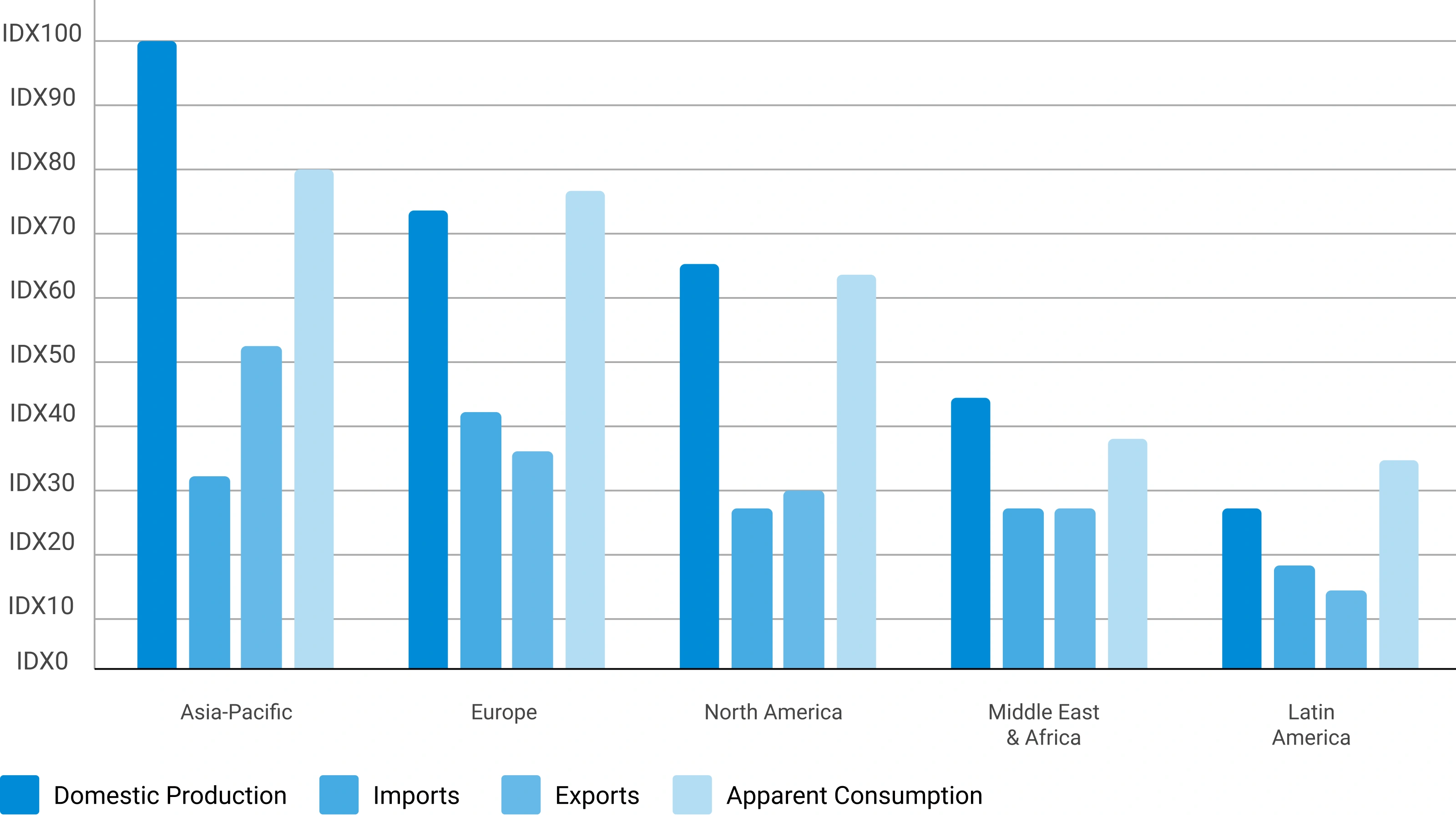
Trade flow analysis reconciles regional supply and demand estimates through import and export data, identifying net supply positions, regional dependencies, and market imbalances. It serves as an independent validation layer that tests the consistency of supply-side and demand-side estimates.
Import Analysis
Import data is evaluated to determine volumes, source countries, product dependency, regional supply gaps, and pricing trends — identifying markets that rely heavily on external supply and where domestic production is insufficient to meet demand.
Export Analysis
Export assessments reveal production surplus, export competitiveness, regional manufacturing strength, and global market participation. Export patterns also help validate domestic production estimates and identify net exporting regions.
Apparent Consumption Model
Regional consumption is assessed using the standard apparent consumption formula:
Results identify net importing regions, net exporting regions, regional deficits, and surpluses — serving as an independent validation of supply and demand estimates.
Trade Flow Analysis — Net Supply Position by Region
Illustrative apparent consumption vs. domestic production across major regions — positive gap indicates net import dependency
Phase 5 — Primary Research: The Critical Validation Layer
Primary research tests and refines findings from secondary research through direct engagement with industry participants across the supply chain, demand side, and expert community. It captures intelligence that no database or published report can provide — the real-world experience of manufacturers, buyers, and specialists operating in the market.

Supply-Side Interviews
Conversations with chemical manufacturers, raw material suppliers, contract manufacturers, technology providers, and plant operators cover production trends, capacity utilization, pricing developments, technology shifts, and competitive dynamics.

Demand-Side Interviews
Engagement with OEMs, industrial consumers, procurement managers, distributors, formulators, and end-use manufacturers focuses on consumption trends, purchasing behavior, product substitution, demand outlook, and emerging applications.

Industry Expert Consultations
Additional interviews with industry consultants, independent experts, regulatory specialists, technical professionals, and research institutions provide deeper market context and validate key analytical assumptions.
Focus Areas of Primary Research:
Market Size & Forecast Validation
Revenue estimates, volume consumption, growth rates, forecast assumptions, regional demand.Supply Chain & Value Chain Assessment
Raw material sourcing, supply chain challenges, distribution networks, procurement practices.Production & Capacity Analysis
Manufacturing capacity, utilization rates, expansion projects, plant investments.Pricing & Cost Structure Analysis
Product pricing trends, feedstock costs, energy costs, margin pressures, pricing outlook.Competitive Landscape Assessment
Volume and value estimates confirmed to be fully consistent with one another before publicationInterview Volume by Market Scope
| Study Scope | Number of Interviews |
|---|---|
| Niche Market | 20 – 30 |
| Mid-Sized Market | 30 – 50 |
| Global Market | 50 – 80 |
| Highly Fragmented Market | 80 – 120 |
Interview Details:
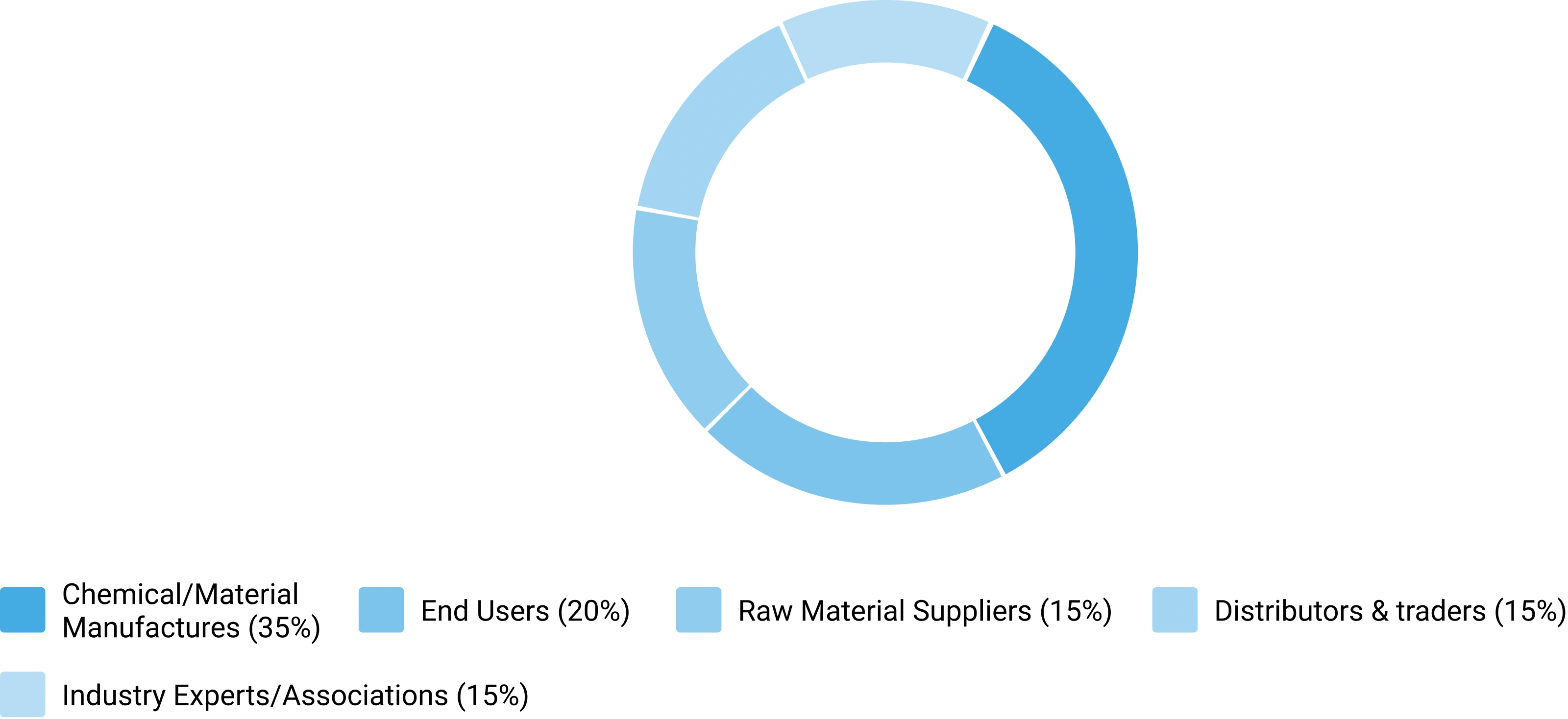
Category : Manufacturers, Suppliers, Distributors, End Users, Experts/Associations
Average Duration : 30–60 Minutes
Interview Mode : Video calls, telephonic interviews, expert consultations
Interview Format : Structured / Semi-Structured questionnaire
Focus Areas of Primary Research:
Market Size & Forecast Validation :
Revenue estimates, volume consumption, growth rates, forecast assumptions, regional demand.
Supply Chain & Value Chain Assessment :
Raw material sourcing, supply chain challenges, distribution networks, procurement practices.
Production & Capacity Analysis :
Manufacturing capacity, utilization rates, expansion projects, plant investments.
Pricing & Cost Structure Analysis :
Product pricing trends, feedstock costs, energy costs, margin pressures, pricing outlook.
Competitive Landscape Assessment :
Market share, competitor positioning, strategic initiatives, partnerships, acquisitions.
Primary Research — Stakeholder Coverage by Category
Distribution of interview respondents across stakeholder categories (% share from PPT data)
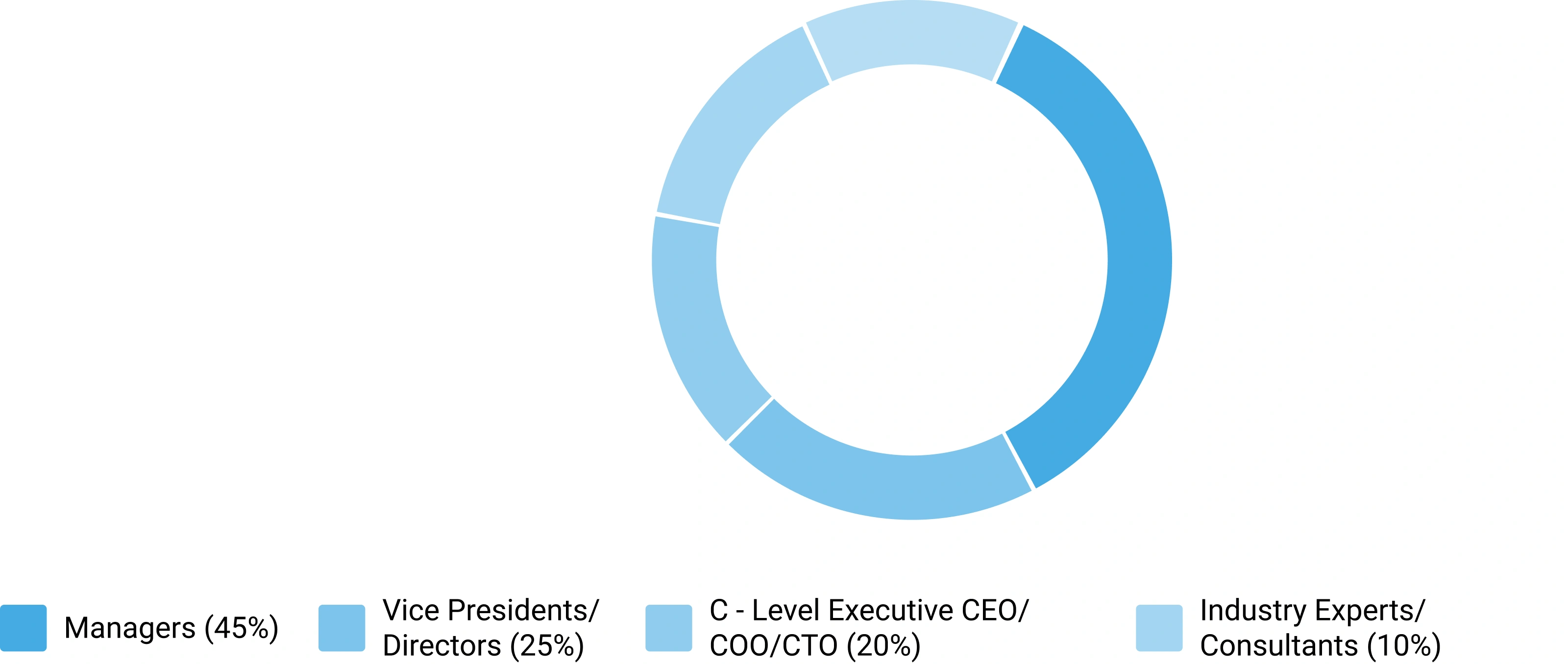
Primary Research — Respondent Designation Profile
Seniority breakdown of interview respondents (% share from PPT data)
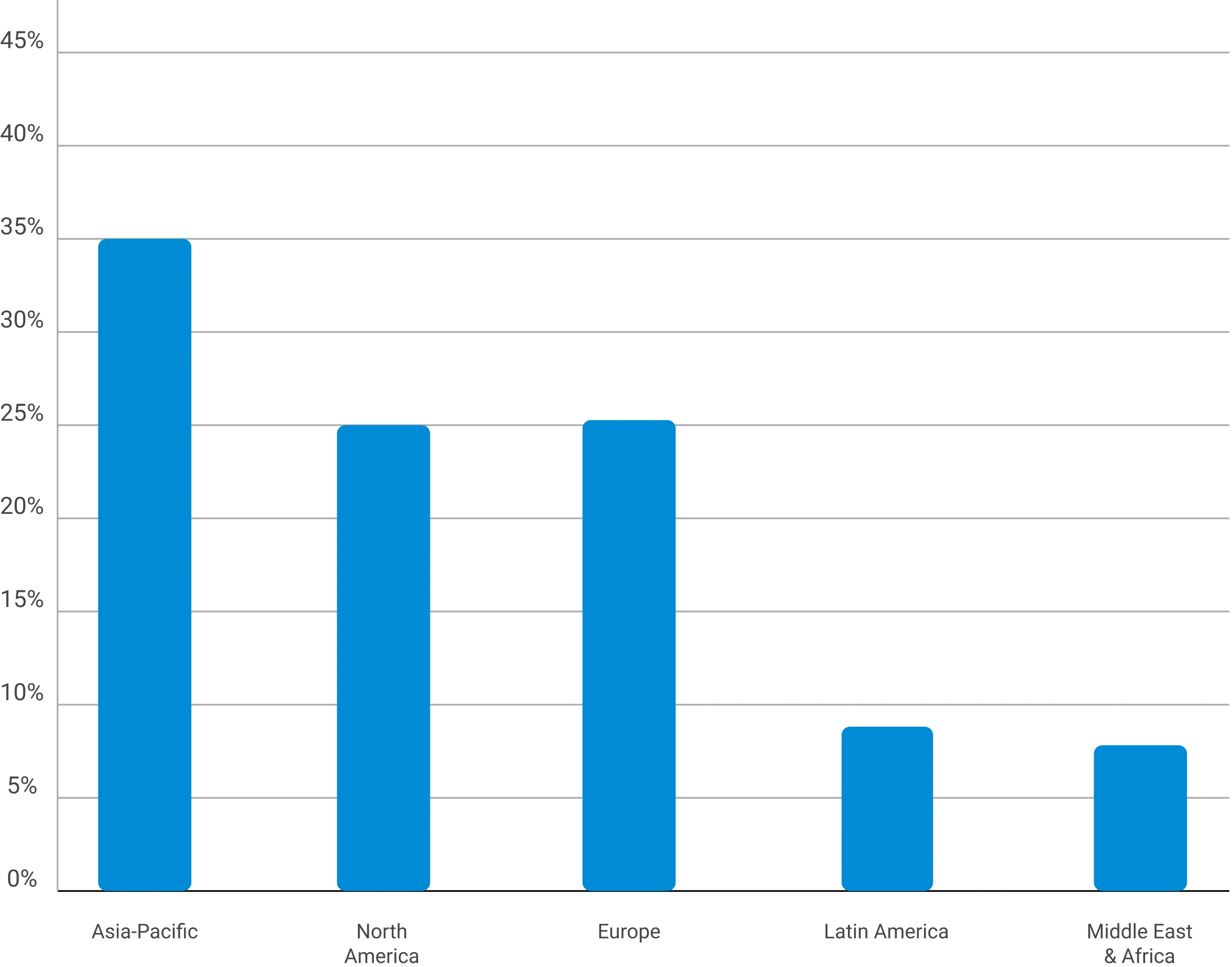
Primary Research — Geographic Coverage of Interviews
Regional distribution of primary research engagement (% share from PPT data)
Phase 6 — Data Triangulation and Market Validation
No single methodology is relied upon in isolation. Multiple independent estimation approaches are combined and reconciled to ensure consistency, accuracy, and analytical defensibility. Any material deviations between approaches are investigated and adjusted through additional validation cycles.
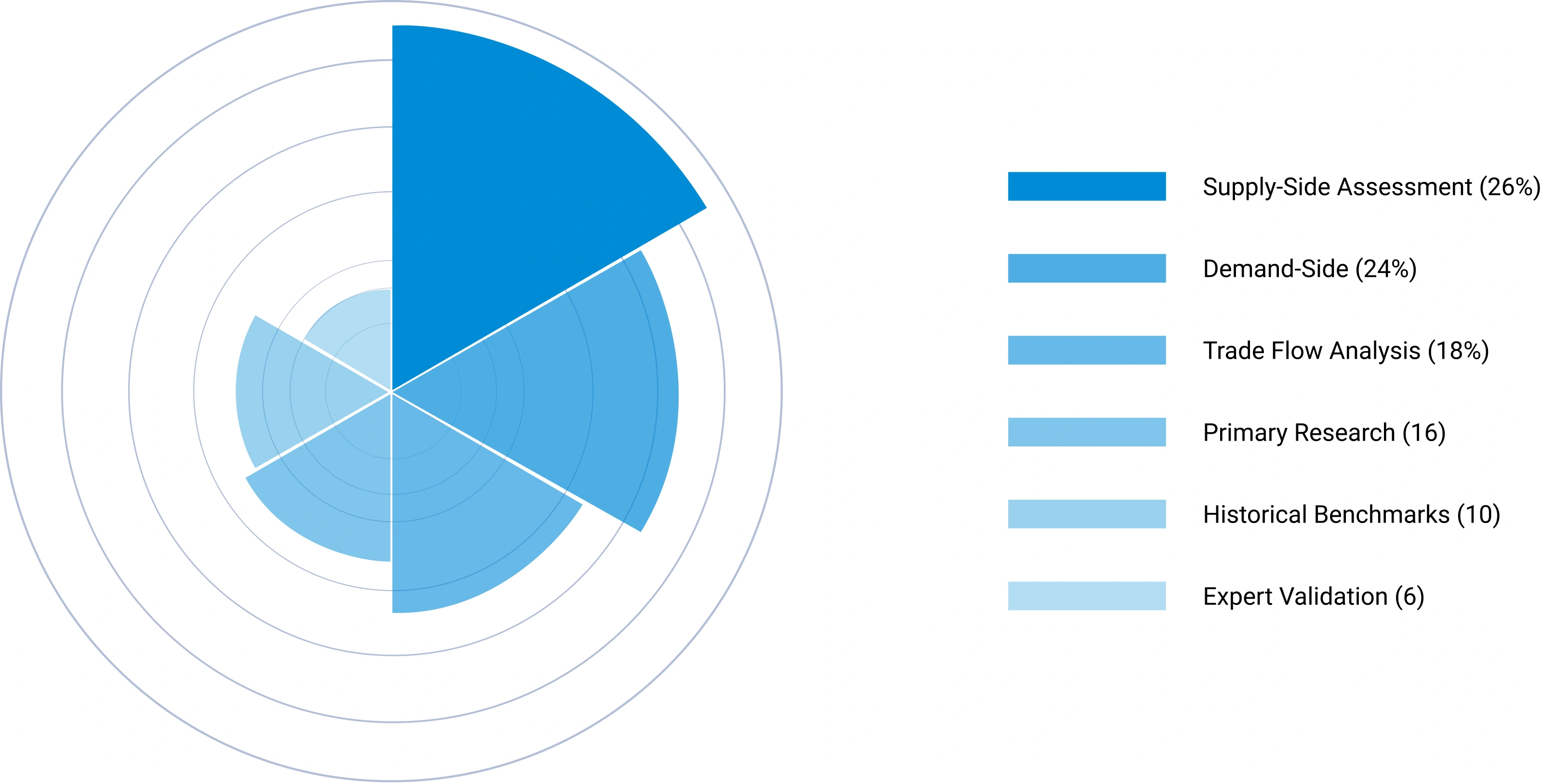
The final market size is derived through weighted triangulation of all validated methodologies. Any material deviations between approaches are investigated and adjusted through additional validation cycles. The outcome represents the most realistic assessment of the market based on available evidence and expert confirmation ensuring that volume and value estimates are fully consistent with one another.
Triangulation Framework — Input Contribution Weight
Relative weight each sizing input contributes to the final reconciled market estimate
Phase 7 — Forecast Modeling: Projecting Future Market Evolution
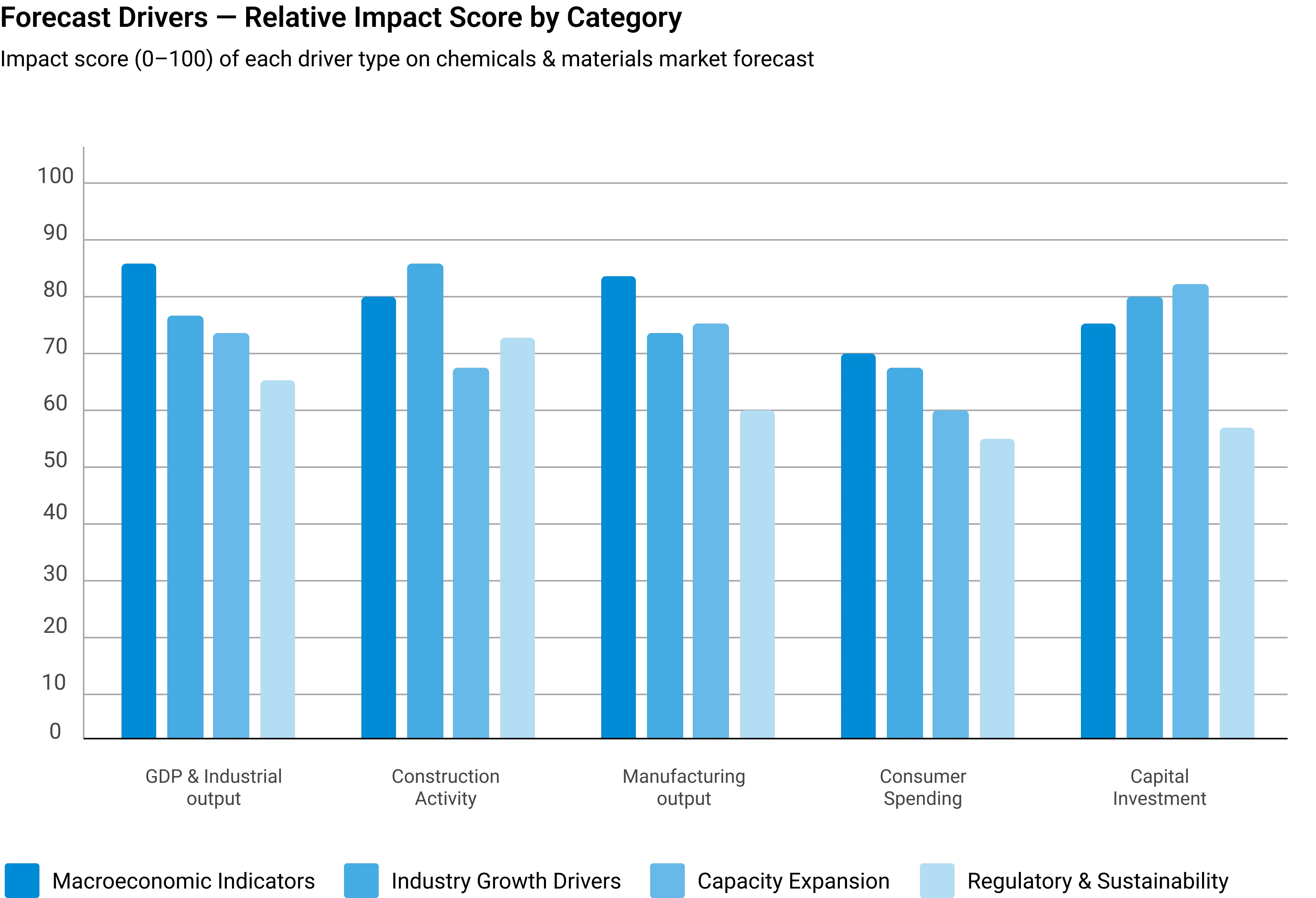
Forecasting evaluates the future trajectory of the market using a combination of quantitative indicators and qualitative assessments across economic, industry, and regulatory dimensions. Rather than simple extrapolation, each driver is independently modeled and integrated into a composite forecast.
Macroeconomic Indicators
GDP growth, industrial production, manufacturing output, construction activity, consumer spending, and capital investment form the quantitative foundation of long-term demand projections. These are applied at country, regional, and global levels.
Industry Growth Drivers
Urbanization, infrastructure development, industrialization, technological innovation, sustainability initiatives, and evolving product performance requirements are assessed at regional and industry levels — capturing both structural and cyclical demand drivers.
Capacity Expansion Analysis
Announced plant expansions, new manufacturing facilities, technology upgrades, and strategic investments are evaluated to determine future supply-demand dynamics and potential market tightness or oversupply situations.
Regulatory & Sustainability
Environmental regulations, chemical safety standards, emission reduction targets, circular economy initiatives, and sustainability requirements are incorporated as they often influence product adoption rates and market growth trajectories.
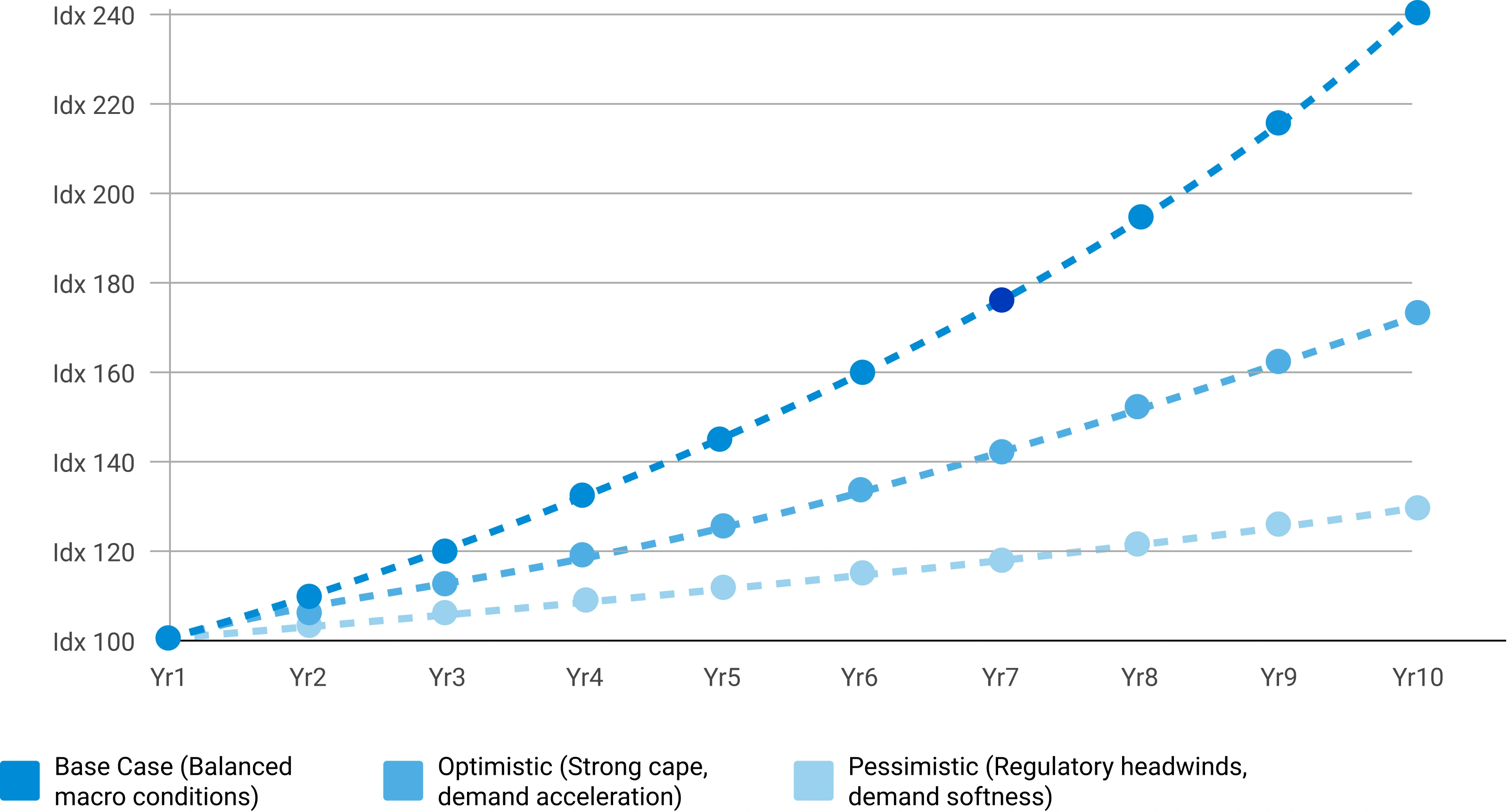
Scenario Forecast Range — Indexed Market Growth (Year 1–10)
Illustrative indexed growth trajectories across Base, Optimistic, and Pessimistic scenarios over a 10-year forecast horizon
Forecast Drivers — Relative Impact Score by Category
Impact score (0–100) of each driver type on chemicals & materials market forecast



Comments
Share your thoughts, ask a question, or provide feedback about this report.