
Adiponitrile Market Size, Competitive Landscape Analysis Report 2035
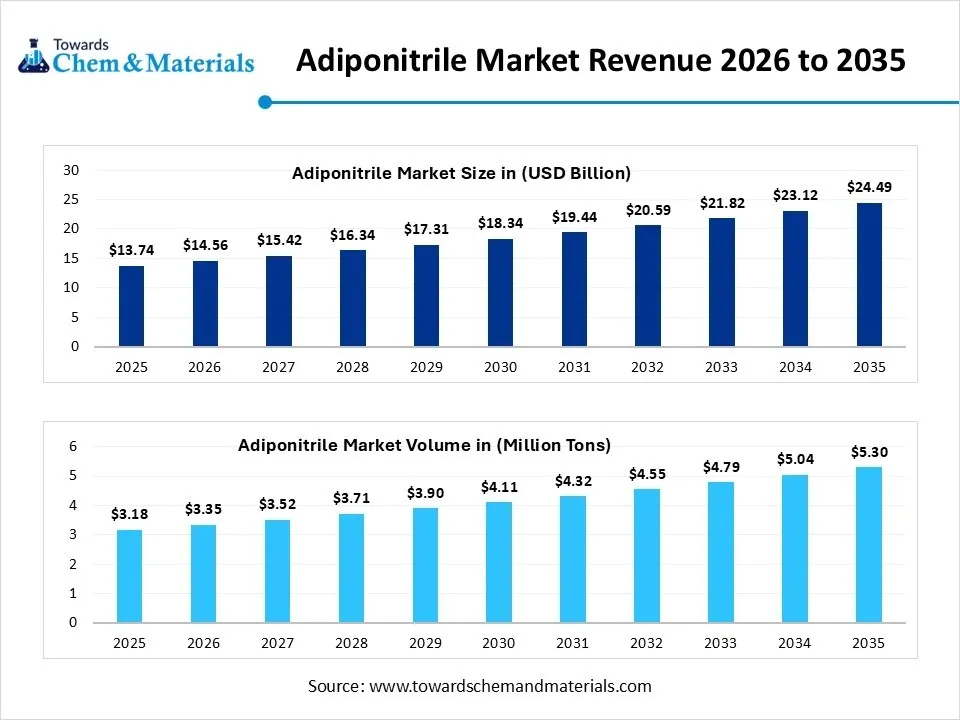
The global adiponitrile market size was valued at USD 13.74 billion in 2025, is estimated to reach USD 14.56 billion in 2026, and is projected to reach USD 24.49 billion by 2035, exhibiting a compound annual growth rate (CAGR) of 5.95% over the forecast period from 2026 to 2035.Asia Pacific dominated the adiponitrile market with the largest revenue share of 46% in 2025 and is expected to grow at the fastest CAGR of 5.95% during the forecast period. Growing focus on sustainable and low-carbon production pathways is the key factor driving market growth. Also, ongoing innovations in manufacturing technologies coupled with the growing demand for adiponitrile from various industries can fuel market growth further.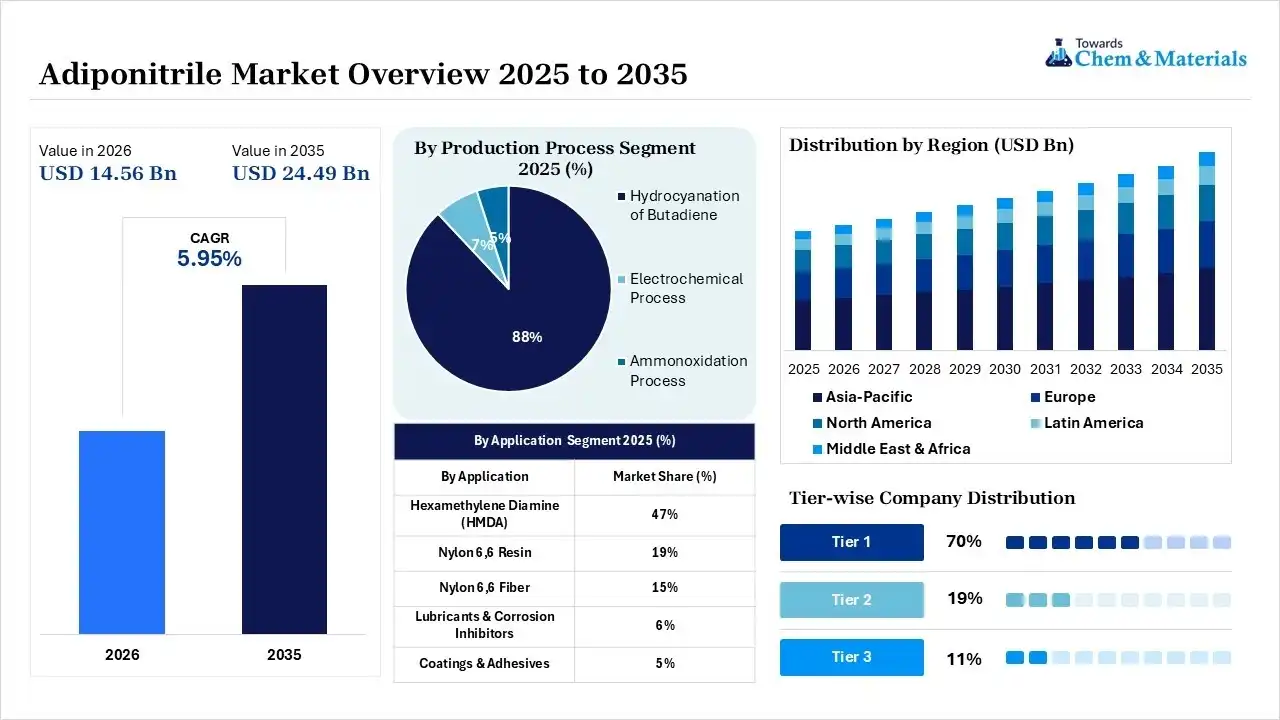
Key Takeaways
- By region, Asia Pacific dominated the market with the largest share of 46.00% in 2025 and is expected to grow at the fastest CAGR of 6.8% over the forecast period. The growth of the region can be attributed to the increasing demand for nylon-6,6 engineering plastics and localized supply chain investments.
- By production process, the hydrocyanation of butadiene segment dominated the market with an 88% share in the market in 2025. due to the integration with various chemical manufacturing processes.
- By production process, the electrochemical process segment held the market share of 7% and is expected to grow at the fastest CAGR of 7.4% in the market during the forecast period due to the increasing focus on sustainability.
- By application, the hexamethylene diamine (HDMA) segment dominated the market with the largest share of 47% in 2025. The growth is due to the growing production of textiles.
- By application, the nylon 6,6 fiber segment held the market share of 15% in 2025 and is expected to grow at the fastest CAGR of 6.8% during the forecast period. The growth of the segment is due to the increasing production of various automotive parts.
- By end-use industry, the automotive segment dominated the market with the largest share of 34% in 2025. The dominance is due to the rise in electric vehicles globally.
- By end-use industry, the electrical & electronics segment held the market share of 17% in 2025 and is expected to grow at the fastest CAGR of 6.8% over the forecast period. The growth is due to the growing production of electronic devices.
- By distribution channel, the direct sales segment dominated the market with the largest share of 71% in 2025. The dominance is due to the increasing consumer focus on transparency.
- By distribution channel, the online sales segment held a market share of 5% in 2025 and is expected to grow at the fastest CAGR of 8.2% during the forecast period. The growth is due to the increasing consumer demand to shop from anywhere.
- By purity level, the 98%-99.5% (industrial grade) segment dominated the market with the largest share of 67% in 2025. The dominance is due to the increasing demand across the electronics industry.
- By purity level, the 99.5% (high purity grade/specialty grade) segment held the market share of 19.00% in 2025 and is expected to grow at the fastest CAGR of 7% over the forecast period. The growth is owing to the increasing application in energy storage.
According to Towards Chemicals and Materials Analytics and Consulting, the global adiponitrile market volume was valued at 3.18 million tons in 2025 and is expected to surpass around 5.30 million tons by 2035, accelerating a compound annual growth rate (CAGR) of 5.25% over the forecast period from 2026 to 2035.
Increasing Adoption in the Textile and Healthcare Sectors Supports Market Growth
The growing production adoption in the textile and healthcare sectors has facilitated the demand for adiponitrile, presenting lucrative opportunities in the market soon. The industry is also benefiting from increasing disposable income across the globe.
- In January 2026, the Ministry of Commerce and Industrys investigative arm, the Directorate General of Trade Remedies (DGTR), has officially initiated an anti-dumping investigation into the import of nylon-6 chips and granules from China and Russia. This regulatory action follows formal complaints lodged by domestic manufacturers, who contend that an influx of underpriced raw plastic material is causing material injury to the local industry.(Source: www.livemint.com)
The use of smart textile technologies in the manufacturing of protective clothing has opened new avenues in the market further.
The Role of Adiponitrile in Synthetic Materials and Industries
Adiponitrile refers to an organic compound that is a viscous, dinitrile, and colorless liquid. The chemical formula of adiponitrile is (CH2)4(CN)2 and is manufactured through different methods like electrochemical process, nickel-catalyzed hydrocyanations, and many more. Adiponitrile, also called hexanedinitrile, and used in the production of various chemicals. The molecular weight is 108.14g/mol and is slightly soluble in water.
Adiponitrile is widely used to make pesticides, dyes, nylon, and drugs. The growing technological advancements in the production methods of adiponitrile help the market growth. The rise in electric vehicles increases demand for adiponitrile for the production of automotive components. The increasing focus on the development of bio-based adiponitrile helps the market growth. The growing demand across key industries like textiles, automotive, electronics, construction, and many more contributes to the growth of the market.
- Germany exported $1.94B of nylons in 2023.(Source: oec.world)
- South Korea exported $300M of acrylonitrile in 2023.(Source: oec.world)
- Chinese Taipei exported $294M of acrylonitrile in 2023.(Source:oec.world)
- South Korea exported 39,105 shipments of butadiene.(Source: www.volza.com)
- Vietnam exported 399,149 shipments of nylon.(Source:www.volza.com)
The Growing Textile Industry Drives Demand for Adiponitrile
The growing expansion of the textile industry in various regions increases demand for adiponitrile for the production of various textiles. The increasing production of specialized textiles, apparel, and industrial fabrics fuels demand for durable & strong nylon 6,6. The rising demand for high-quality textiles in various industries increases the adoption of adiponitrile. The increasing focus on fashion and the growing demand for performance-oriented textile products leads to higher demand for nylon 6, 6 derivatives of adiponitrile. The growing adoption of sustainable practices in the textile industry increases demand for adiponitrile. The increasing production of clothing, carpets, and sportswear is fueling demand for adiponitrile. The growing textile industry is a key driver for the growth of the adiponitrile market.
Market Trends
- Rise in Electric Vehicles: The rapid growth in the production and adoption of electric vehicles, fuel demand for adiponitrile for the production of lightweight materials like interiors, battery systems, and chassis to enhance the performance.
- Growing Adoption of Electronic Devices: The growing demand for electronic devices like laptops, wearable devices, smartphones, and computers increases the adoption of adiponitrile for insulating electrical components, battery housing, avoiding short circuits, and improving thermal stability.
- Increasing Focus on Sustainability: The growing focus on sustainability increases the development of the bio-based adiponitrile. They are produced from microbial fermentation and plant-based feedstock. The bio-based adiponitrile is environmentally friendly, sustainable, and lowers the carbon footprint.
Report Scope
| Report Attributes | Details |
| Market Size in 2026 | USD 14.56 Billion/ 3.35 Million Tons |
| Market Size by 2035 | USD 24.49 Billion/ 5.30 Million Tons |
| Growth rate | CAGR 5.95% |
| Base Year of Estimation | 2025 |
| Forecast Period | 2025 - 2035 |
| Dominant Region | Asia Pacific |
| Segment Covered | By Production Process, By Application, By End-Use Industry, By Distribution Channel, By Purity Level, By Region |
| Key Companies Profiled | Invista (Koch Industries), Ascend Performance Materials, BASF SE, Lanxess AG, Shandong Runxing Chemical Co., Ltd., Asahi Kasei Corporation, LG Chem, UBE Corporation, Solvay S.A., Radici Group, Zhejiang Shenma Chemical Co., Ltd., Formosa Plastics Corporation, Jiangsu Eastern Shenghong Co., Ltd., Hengyi Petrochemical, Kuraray Co., Ltd., Toray Industries, Inc., Sumitomo Chemical Co., Ltd., INEOS Group, China Petroleum & Chemical Corporation (Sinopec), DuPont de Nemours, Inc. |
Supply Chain Analysis of the Adiponitrile Market
Production & Processing
- This refers to the specific chemical manufacturing routes utilized to synthesize adiponitrile (ADN). ADN serves as a critical organic intermediate predominantly employed in the production of hexamethylenediamine (HMD), which is the essential precursor for Nylon-6,6.
- INVISTA (Koch Industries): The global leader in ADN production. Utilizes proprietary, highly efficient butadiene hydrocyanation technology. Continues expanding global downstream capability to support nylon-6,6 supply chains.
- Other Key Players: Asahi Kasei Corp., BASF SE
Quality Testing and Certification
- It includes rigorous analytical methodologies, safety regulations, and environmental standards mandated to verify the purity, stability, and regulatory compliance of adiponitrile (ADN). Given that ADN is a highly toxic, critical chemical intermediate used predominantly in Nylon-6,6 synthesis and advanced electric vehicle (EV) battery electrolytes.
- BASF SE (Germany): It actively expands capacity in North America while deploying advanced catalyst testing solutions. They lead industry standards in optimizing internal processing metrics to drive down trace impurities.
- Other Key Players: Asahi Kasei Corp., Butachimie
Distribution to Industrial Users
- It encompasses the highly specialized supply chain framework, transportation networks, and safety protocols required to convey bulk adiponitrile (ADN) from manufacturing facilities to downstream commercial plants. Due to its classification as a Class 6.1 toxic and combustible hazardous substance (UN2205), the distribution of ADN strictly needs specialized handling equipment and closed-loop logistics systems to mitigate risk.
- Ascend Performance Materials (US): It operates a highly integrated internal distribution loop. They pipeline a significant portion of their ADN directly to internal HMD and nylon downstream processing assets, while distributing surplus material via certified hazardous rail networks.
- Other Key Players: Asahi Kasei Corp., Butachimie
Market Opportunity
The Booming Automotive Industry Unlocks Opportunity for Market
The growing production of vehicles in various regions increases the demand for adiponitrile for the production of various components. The increasing focus on the development of lightweight automotive parts, like under-the-hood applications, engine components, and air intake manifolds, is fueling demand for nylon 6,6. The growing focus on lowering emissions and improving the fuel efficiency of vehicles increases the adoption of adiponitrile. The nylon-6,6 derived from adiponitrile is widely used in fuel systems, interior components, engine compartments, and airbag fabrics. The rising focus on enhancing safety and strict environmental regulations for vehicles increases the demand for adiponitrile. The rise in electric vehicles increases demand for adiponitrile. The growing adoption of electric and hybrid vehicles is fueling demand for adiponitrile. The growing automotive industry creates an opportunity for the market.
Market Challenge
What is the Challenge for the Adiponitrile Market?
High Production Cost Shuts Down Adiponitrile Market Growth
Despite several benefits of adiponitrile in various sectors but the high production cost restricts the market growth. Factors like energy-intensive processes, complex manufacturing methods, and expensive raw materials increase the production cost. The high cost of raw materials like acrylonitrile and butadiene due to various factors like fluctuating crude oil prices, supply chain disruptions, and geopolitical factors affects the market growth. The energy-intensive chemical processes increase the production cost. The stringent environmental regulations to reduce environmental concerns and carbon emissions increase the cost. The complex production methods, like butadiene-based synthesis, and the requirement of specialized technology, fuel the production cost. High production cost hampers the growth of the market.
Segmental Insights
Production Process Insights
Why did the Hydrocyanation of Butadiene Segment Dominate the Adiponitrile Market?
The hydrocyanation of butadiene segment dominated the market in 2025. The growing production of high-yield adiponitrile increases the demand use of hydrocyanation in the butadiene production process. Hydrocyanation of butadiene offers high conversion rates and is easily scalable. It is an affordable way to produce adiponitrile, and it integrates with downstream & upstream chemical manufacturing systems. This process uses hydrogen cyanide and offers consistent production output. The strong investment of companies like Ascend Performance Materials and Invista in the hydrocyanation of the butadiene process drives the market growth.
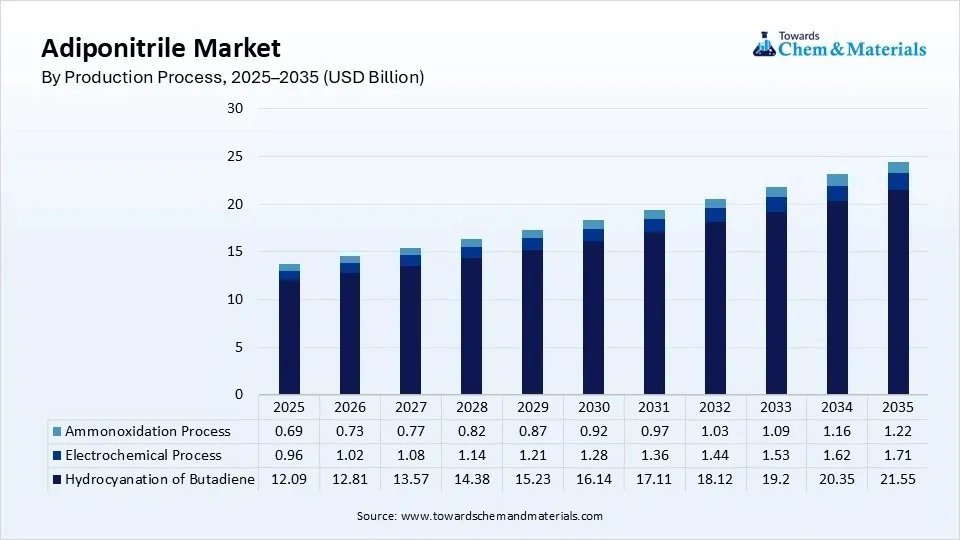
The electrochemical process segment is the fastest growing in the market during the forecast period. The government regulations for the adoption of sustainable practices increase demand for electrochemical processes. This process reduces emissions and lowers the consumption of energy. Electrochemical processes minimize waste and produce higher yields of adiponitrile. The growing demand for nylon 6,6 in various industries increases the adoption of the electrochemical process. The electrochemical process uses bio-based feedstock and is scaled up to meet increasing demand. The increasing production of lithium-ion batteries supports the overall growth of the market.
Adiponitrile Market Share, By Production Process, 2025(%)
| By Production Process | Market Share (%) |
| Hydrocyanation of Butadiene | 88% |
| Electrochemical Process | 7% |
| Ammonoxidation Process | 5% |
Application Insights
How Hexamethylene Diamine Segment Held the Largest Share in the Adiponitrile Market?
The hexamethylene diamine (HMDA) segment held the largest revenue share in the market in 2025. The increasing production of high-performance and lightweight automotive components increases demand for HMDA for lowering emissions and enhancing fuel efficiency. The growing demand for nylon fibers in textiles increases the adoption of HMDA, helping the market growth. HDMA has excellent heat resistance, strength, and durability. HDMA is widely used as a crosslinking agent in coatings & adhesives, water treatment chemicals, and as a curing agent in epoxy resins. The growing expansion of industries like textiles and automotive drives the overall growth of the market.
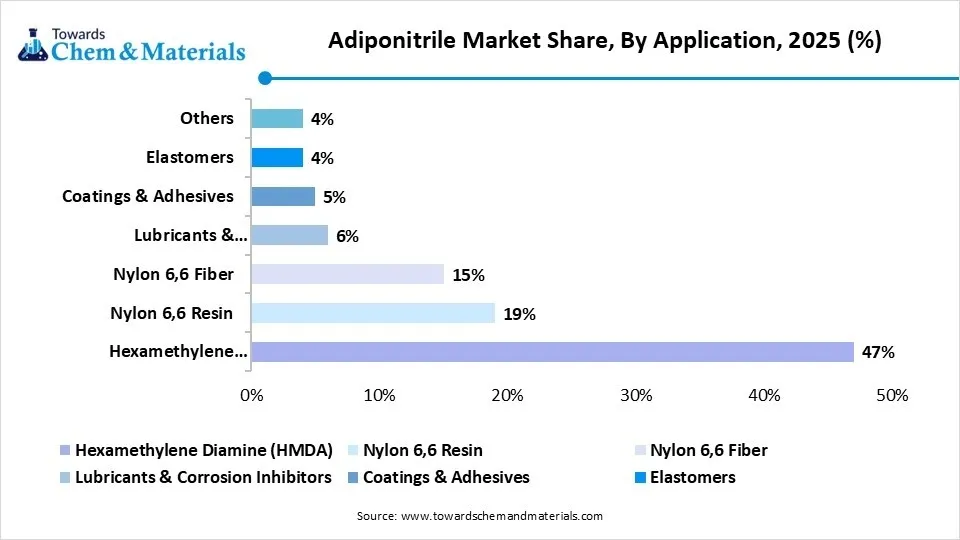 The nylon 6,6 fiber segment is experiencing the fastest growth in the market during the forecast period. The growing production of various automotive parts like electrical systems, engine components, and fuel lines increases demand for nylon 6,6 fiber. The increasing consumer demand for comfortable and durable fabrics like swimwear & sportswear increases demand for nylon 6,6 fiber, helping the market growth. Nylon 6,6 has high abrasion strength, tensile strength, and heat resistance. It has dimensional stability and a high melting point. It consists of a compact molecular structure and is widely used in various applications. The growing electrical and electronic industry drives the overall growth of the market.
Adiponitrile Market Share, By Application, 2025 (%)
| By Application | Market Share (%) |
| Hexamethylene Diamine (HMDA) | 47% |
| Nylon 6,6 Resin | 19% |
| Nylon 6,6 Fiber | 15% |
| Lubricants & Corrosion Inhibitors | 6% |
| Coatings & Adhesives | 5% |
| Elastomers | 4% |
| Others | 4% |
End-Use Industry Insights
Which End-Use Industry Segment Dominated the Adiponitrile Market?
The automotive segment dominated the adiponitrile market in 2025. The growing focus on enhancing fuel efficiency and reducing the weight of vehicles increases demand for adiponitrile. The increasing production of various automotive components like fuel system components, interior trims, engine parts, and airbags increases demand for nylon 6,6 derivative of adiponitrile, helping the market growth. The stringent safety regulations for automotive manufacturing increase the adoption of adiponitrile. The rise in electric vehicles and growing automotive production support the overall growth of the market.
The electrical & electronics segment is the fastest growing in the market during the forecast period. The growing demand for various consumer electronics like smartphones, laptops, wearable devices, and many more increases the demand for adiponitrile. The increasing demand for electrical components and insulation materials for various applications fuels demand for adiponitrile, helping the market growth. The rising consumer investment in semiconductor advancements and smart technology increases the adoption of adiponitrile. The increasing trend for miniaturization of electronic devices drives the market growth.
Adiponitrile Market Share, By End-Use Industry, 2025 (%)
| By End-Use Industry | Market Share (%) |
| Automotive | 34% |
| Electrical & Electronics | 17% |
| Textiles & Fibers | 15% |
| Industrial Machinery | 12% |
| Consumer Goods | 8% |
| Packaging | 5% |
| Aerospace & Defense | 4% |
| Construction | 3% |
| Others | 2% |
Distribution Channel Insights
Why Direct Sales Segment Held the Largest Share of the Adiponitrile Market?
The direct sales segment held the largest revenue share in the adiponitrile market in 2025. The increasing focus on quality and transparency of the product increases demand for direct sales. The growing consumer demand for personalised interaction with distributors increases the adoption of direct sales. The focus on customized product recommendations and demand for authentic experiences drives the market growth.
The online sales segment is experiencing the fastest growth in the market during the forecast period. The growing consumer preference for convenient shopping, such as shopping from anywhere, price comparison, and home delivery, helps the market growth. The increasing focus on digitalization fuels demand for online sales. The shifting younger consumer preference for online shopping supports the overall growth of the market.
Adiponitrile Market Share, By Distribution Channel, 2025 (%)
| By Distribution Channel | Market Share (%) |
| Direct Sales | 71% |
| Distributors / Traders | 24% |
| Online Sales | 5% |
Purity Level Insights
How 98%-99.5% Segment Dominated the Adiponitrile Market?
The 98%-99.5% (industrial grade) segment dominated the adiponitrile market in 2025. The growing nylon 6,6 production increases demand for 98%-99.5% purity adiponitrile. The increasing demand across industrial applications and the electronics industry helps the market growth. The growing textile industry, like the production of carpets and apparel, increases demand for 98%-99.5% purity adiponitrile, driving the overall growth of the market.
The 99.5% (high purity grade) segment is the fastest-growing in the market during the forecast period. The growing production of lithium-ion batteries increases demand for 99.5% purity. The increasing demand from the electronics industry is fueling demand for 99.5 % purity adiponitrile to ensure regulations compliance, product quality, and safety. The growing electric vehicle expansion and increasing energy storage demand support the overall growth of the market.
Adiponitrile Market Share, By Purity Level, 2025 (%)
| By Purity Level | Market Share (%) |
| <98% (Technical Grade) | 14% |
| 98%–99.5% (Industrial Grade) | 67% |
| >99.5% (High Purity Grade / Specialty Grade) | 19% |
Regional Insights
How Did Asia Pacific Dominate the Adiponitrile Market in 2025?
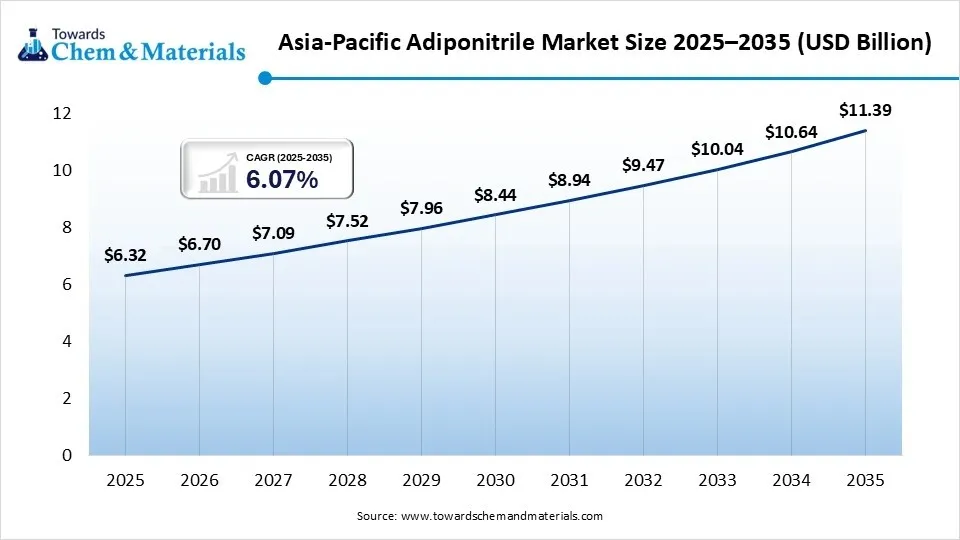
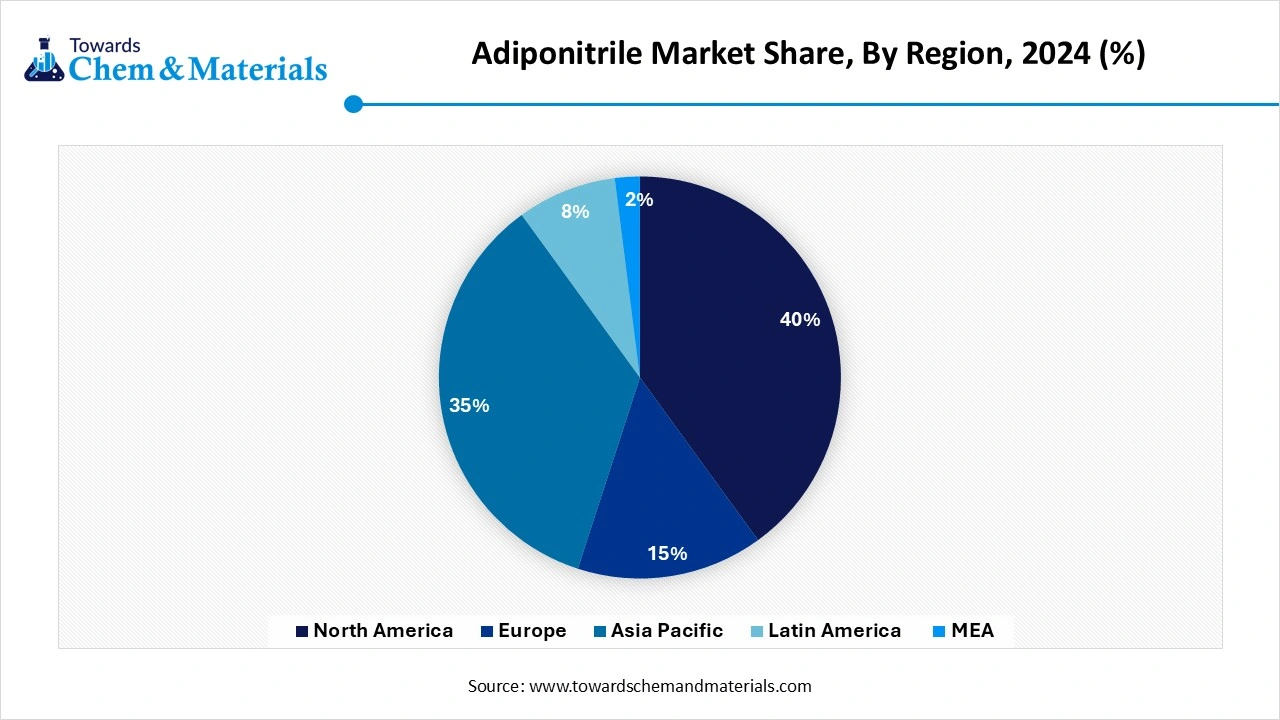
The Asia Pacific adiponitrile market size was estimated at USD 6.32 billion in 2025 and is projected to reach USD 11.39 billion by 2035, growing at a CAGR of 6.07% from 2026 to 2035.Asia Pacific dominated the market with the largest share of 46.00% in 2025 and is expected to grow at the fastest CAGR of 6.8% over the forecast period. The growth of the region can be attributed to the increasing demand for Nylon-6,6 engineering plastics, localized supply chain investments, and technological advancements. In addition, stringent fuel economy regulations necessitate that regional original equipment manufacturers (OEMs) replace heavy vehicular components with lightweight, high-performance nylon-6,6 engineering plastics.
China
- China operates the worlds largest electric vehicle (EV) and hybrid automotive market. High-purity ADN is critical for high-tensile tire cords and protective electronic sensor casings.
- Battery-grade ADN is highly prized as a specialized co-solvent additive in high-voltage lithium-ion batteries.
India
- Indias rapid automotive expansion directly boosts the market. To comply with stringent fuel economy regulations and improve efficiency, local manufacturers are aggressively adopting metal-to-plastic substitution.
- The local consumer electronics and power infrastructure industries need specialized engineering polymers that can endure elevated temperatures during manufacturing.
Europe held the market share of 24.00% in 2025. The growth of the region can be credited to the stringent regulatory frameworks, sustainability transitions, and high-value niche applications in various sectors. European automotive manufacturers face substantial regulatory penalties should fleet emission targets are not achieved. This mandate requires an ongoing transition toward metal-to-plastic substitution utilizing Nylon-6,6 engineering plastics derived from adiponitrile (ADN).
Germany
- The rapid industrial migration toward electric mobility across Germany’s major automotive OEM lines creates an urgent requirement for highly heat-resistant polymers.
- German chemical enterprises are leading the transition from conventional petrochemical synthesis toward sustainable feedstock alternatives.
France
- The French government has established strict long-term frameworks to transition away from traditional internal combustion engine (ICE) vehicles.
- Highly refined ADN is largely consumed as a functional film-forming additive in advanced lithium-ion battery electrolytes, providing critical thermal stability to support high-voltage EV battery operations.
North America held the market share of 21.00% in 2025. The growth of the region can be linked to the rising consumption of Nylon-6,6 across the textile, automotive, and electronics industries. Also, the established presence of prominent market leaders, such as Ascend Performance Materials and Invista, significantly drives the sustained growth of the market further.
United States
- The US serves as a major global exporter of ADN due to a high concentration of production facilities along the Gulf Coast.
- To fulfil stringent federal Corporate Average Fuel Economy (CAFE) standards, US automakers are executing aggressive metal-to-plastic substitutions.
Canada
- Canada’s automotive manufacturing sector, particularly in Ontario, is deeply intertwined with US supply chains.
- Local parts manufacturers consume significant quantities of ADN-derived nylon-6,6 engineering plastics.
- Canada is aggressively positioning itself as a core hub for the North American Electric Vehicle (EV) battery supply chain, backed by federal and provincial critical mineral strategies.
Latin America held the market share of 5.00% in 2025. The growth of the region can be driven by global logistics realignments, strategically relocating component molding by international market players, and downstream chemical compounding operations adjacent to the United States border. Moreover, Latin American industrial entities lack domestic adiponitrile (ADN) synthesis facilities, hence exposing procurement strategies to international maritime freight volatility and raw material pricing fluctuations originating from US Gulf Coast nodes.
Brazil
- Brazil possesses the largest automotive manufacturing sector in South America. Local parts suppliers are increasingly demanding Nylon-6,6 engineering components (synthesized from ADN).
- Increasing investments in local industrial machinery and infrastructure require specialized polymers capable of enduring heavy mechanical stress and high operational temperatures.
Argentina
- Argentinas localized automotive manufacturing hubs are shifting toward metal-to-plastic substitution to align with global fuel-efficiency standards.
- Argentina maintains an active commercial textile footprint. The rising demand for durable nylon fibers, indispensable for activewear, heavy-duty industrial conveyor belts, and industrial packaging.
The Middle East & Africa held the market share of 4.00% in 2025. The growth of the region can be attributed to the heavy industrial diversification programs in the Gulf Cooperation Council (GCC) and expanding manufacturing hubs in South Africa. Furthermore, proximity to low-cost feedstocks essential for synthesis, such as butadiene and alternative chemical inputs, provides the region with a distinct structural manufacturing advantage.
Saudi Arabia
- Saudi Arabia is establishing a comprehensive domestic automotive manufacturing ecosystem, heavily backing premium electric vehicle (EV) and conventional assembly hubs.
- The ongoing manufacturing trend toward product miniaturization needs efficient engineering plastics with high tensile strength and superior wear resistance.
UAE
- The country’s advanced industrial zones leverage heavily automated molding, AI-driven supply chain management, and finishing technologies.
- The local industry depends on ADN-based materials to engineer advanced electrical connectors, high-dielectric switches, and flame-retardant circuit breakers that can withstand harsh, high-temperature environmental conditions.
Recent Developments
- In March 2025, Lululemon and ZymoChem collaborated to expand bio-based nylon. The company used nylon in the Wunder & Align train leggings and focuses on a sustainable materials transition. (Source:www.fashiondive.com)
- In April 2026, Invista Nylon Chemicals (China) Co., Ltd. announced that it has initiated force majeure and performance-exemption procedures, effective immediately, for its adiponitrile (ADN), hexamethylenediamine (HMD), and polyamide 66 (PA66/Nylon-6,6) product lines. Industry reports indicate that this declaration stems primarily from the escalating geopolitical conflict in the Middle East.(Source: news.chemnet)
Top Companies List
- Invista (Koch Industries)
- Ascend Performance Materials
- BASF SE
- Lanxess AG
- Shandong Runxing Chemical Co., Ltd.
- Asahi Kasei Corporation
- LG Chem
- UBE Corporation
- Solvay S.A.
- Radici Group
- Zhejiang Shenma Chemical Co., Ltd.
- Formosa Plastics Corporation
- Jiangsu Eastern Shenghong Co., Ltd.
- Hengyi Petrochemical
- Kuraray Co., Ltd.
- Toray Industries, Inc.
- Sumitomo Chemical Co., Ltd.
- INEOS Group
- China Petroleum & Chemical Corporation (Sinopec)
- DuPont de Nemours, Inc.
Segments Covered
By Production Process
- Hydrocyanation of Butadiene (Mainstream Process)
- Direct Hydrocyanation
- Two-Step Hydrocyanation
- Electrochemical Process
- Ammonoxidation Process
By Application
- Hexamethylene Diamine (HMDA)
- Nylon 6,6 Resin
- Nylon 6,6 Fiber
- Lubricants & Corrosion Inhibitors
- Coatings & Adhesives
- Elastomers
- Others
- Chemical Additives
- Specialty Intermediates
By End-Use Industry
- Automotive
- Electrical & Electronics
- Textiles & Fibers
- Industrial Machinery
- Consumer Goods
- Packaging
- Aerospace & Defense
- Construction
- Others
- Medical
- Oil & Gas
By Distribution Channel
- Direct Sales
- Distributors / Traders
- Online Sales
By Purity Level
- <98% (Technical Grade)
- 98%–99.5% (Industrial Grade)
- 99.5% (High Purity Grade / Specialty Grade)
By Region
- North America
- U.S.
- Canada
- Europe
- Germany
- UK
- France
- Italy
- Spain
- Sweden
- Denmark
- Norway
- Asia Pacific
- China
- Japan
- India
- South Korea
- Thailand
- Latin America
- Brazil
- Mexico
- Argentina
- Middle East & Africa
- South Africa
- UAE
- Saudi Arabia
- Kuwait
A Seven-Phase Framework
Our methodology is designed to be universally applicable across commodity chemicals, specialty chemicals, petrochemicals, construction chemicals, coatings, electronic chemicals, industrial gases, agrochemicals, water treatment chemicals, and performance materials. Each phase builds upon the last, creating a layered validation structure that minimizes estimation error and maximizes analytical confidence.
The framework ensures comprehensive market coverage, robust cross-validation, and reliable long-term forecasting — producing market estimates that withstand scrutiny from investors, regulators, and corporate strategy teams.

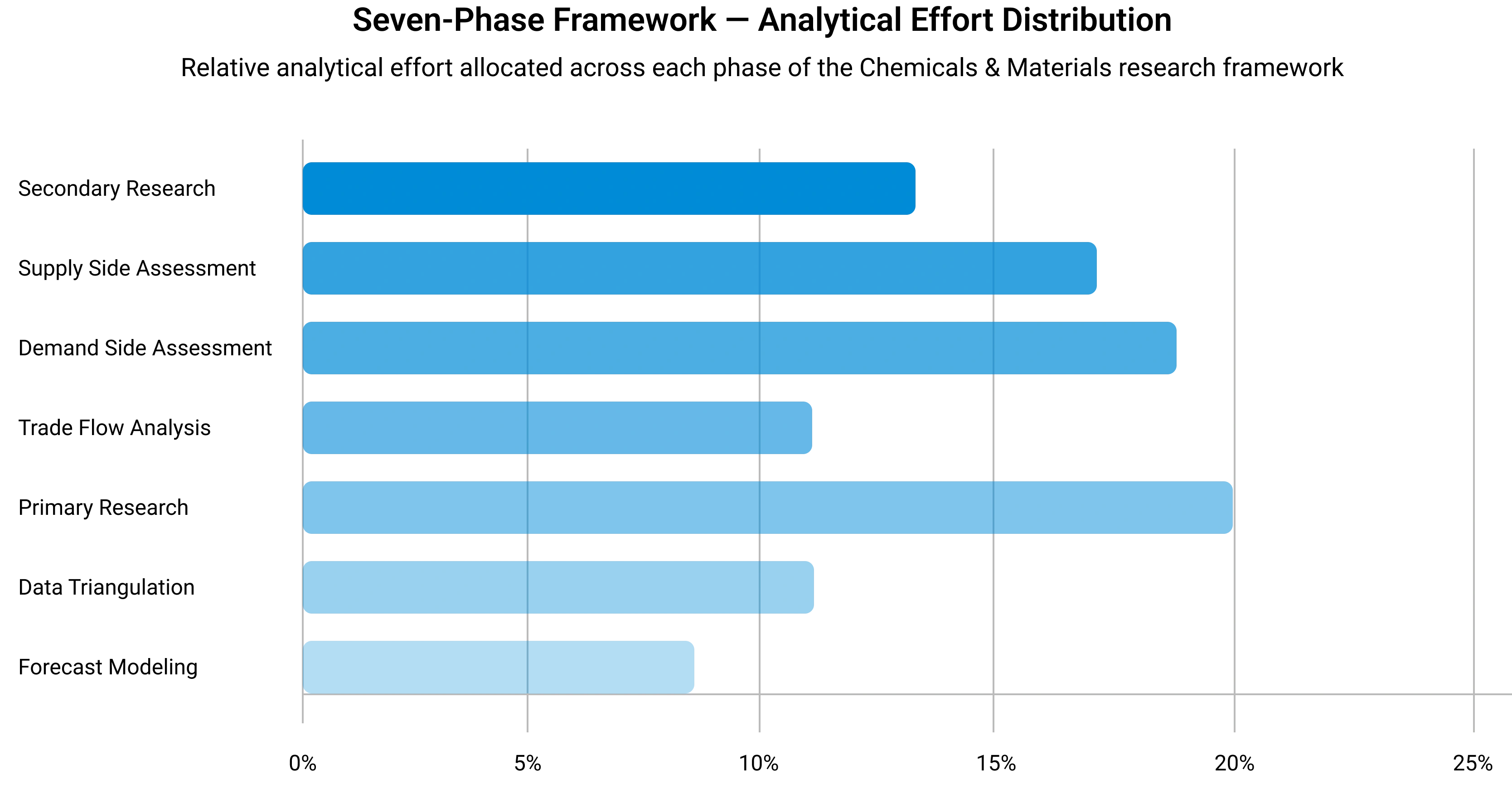
Seven-Phase Framework — Analytical Effort Distribution
Relative analytical effort allocated across each phase of the Chemicals & Materials research framework
Phase 1 - Secondary Research: Establishing the Foundation
Secondary research collects and evaluates publicly available information from authoritative sources, establishing the foundational understanding of market structure, value chain dynamics, competitive landscape, and end-use demand patterns. Every source is evaluated for credibility, recency, geographic relevance, and methodological soundness before inclusion.
Industry Associations
Sources include ACC, CEFIC, ICCA, JCIA, CPCIF, and SOCMA providing production volumes, consumption trends, capacity developments, and sustainability initiatives.
Company Disclosures
Annual reports, investor presentations, earnings transcripts, and regulatory filings reveal product portfolios, manufacturing footprints, capacity expansions, and revenue segmentation.
Government Databases
National statistical offices, customs authorities, environmental agencies, and industrial production databases provide verified statistics on output, trade flows, and regulatory compliance.
Trade Databases
UN Comtrade, ITC, Eurostat, and national customs authorities enable assessment of global product movement, import dependency, and export competitiveness across regions.
Our Secondary Research Sources
- Ministry of Chemicals and Fertilizers
- European Chemicals Agency
- United States Department of Energy
- Ministry of Industry and Information Technology
- Ministry of Economy Trade and Industry
- Ministry of Trade Industry and Energy
- National Institute of Standards and Technology
- Council of Scientific and Industrial Research
- Fraunhofer Society
- National Institute for Materials Science
Phase 2 — Supply-Side Assessment: Mapping Production Capabilities
Production Capacity Analysis
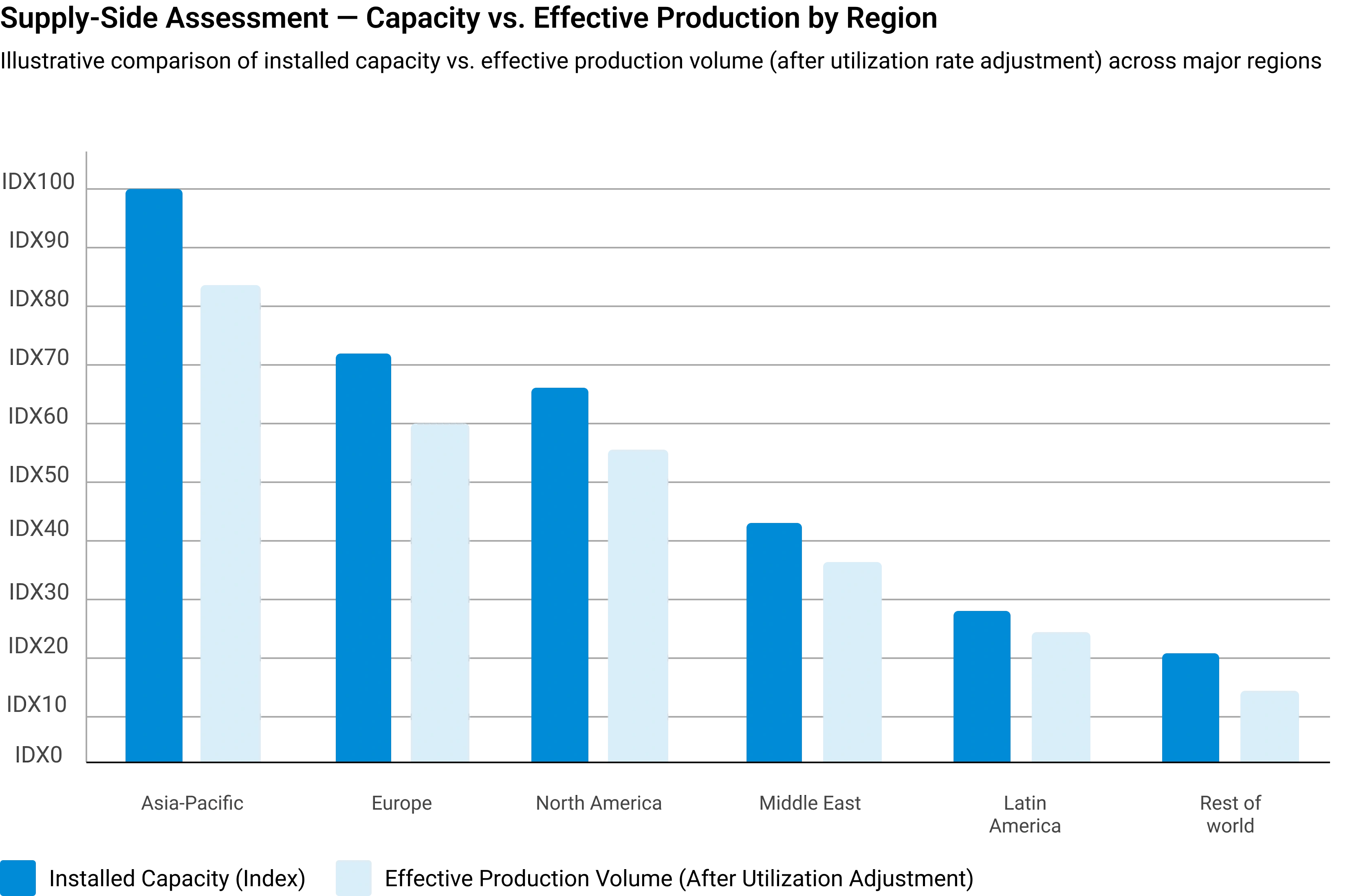
All major manufacturers are assessed for existing installed capacity, planned additions, expansions, new plant announcements, and technology adoption — mapped at global, regional, and country levels.
Capacity Utilization Adjustment
Installed capacity is adjusted using utilization rates based on demand conditions, feedstock availability, plant operating rates, maintenance schedules, and regulatory restrictions.
Manufacturer Revenue Analysis
Product-specific revenues, segment-level performance, regional distribution, average selling prices, and margin trends are evaluated to establish market value estimates.
Supply-Side Assessment — Capacity vs. Effective Production by Region
Illustrative comparison of installed capacity vs. effective production volume (after utilization rate adjustment) across major regions
Phase 3 — Demand-Side Assessment: Quantifying Chemical Consumption
Demand-side analysis quantifies chemical consumption across industries, applications, and geographies — identifying where and how chemicals are consumed throughout the value chain with precision.
End-Use Industry Analysis
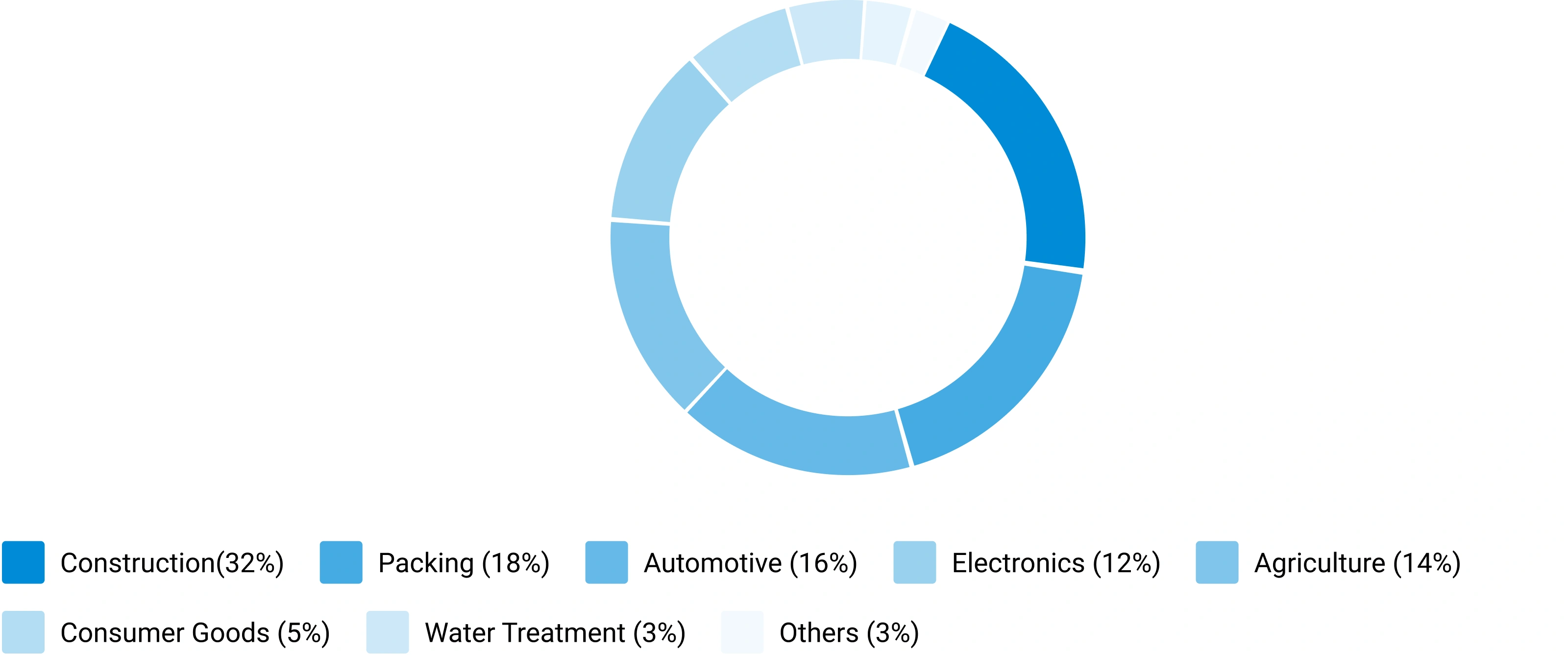
Chemical demand is evaluated across automotive, construction, packaging, electronics, agriculture, healthcare, consumer goods, industrial manufacturing, energy and utilities, and water treatment. Industry output, production trends, and consumption intensity are analyzed to determine demand patterns.
Consumption Modeling
Demand is estimated using measurable indicators: kilograms per vehicle, kilograms per square meter of construction, dosage per cubic meter of water treated, kilograms per hectare of agricultural land, and kilograms per ton of manufactured products. Consumption factors are validated through industry publications and primary interviews.
Application Analysis
The market is segmented by application area to understand product performance requirements, formulation trends, technology adoption, customer preferences, and regulatory requirements improving demand accuracy and segmentation granularity.
Demand-Side Assessment — End-Use Industry Demand Distribution
Illustrative distribution of chemical & materials demand across key end-use industries
Phase 4 - Trade Flow Analysis: Balancing Regional Supply and Demand
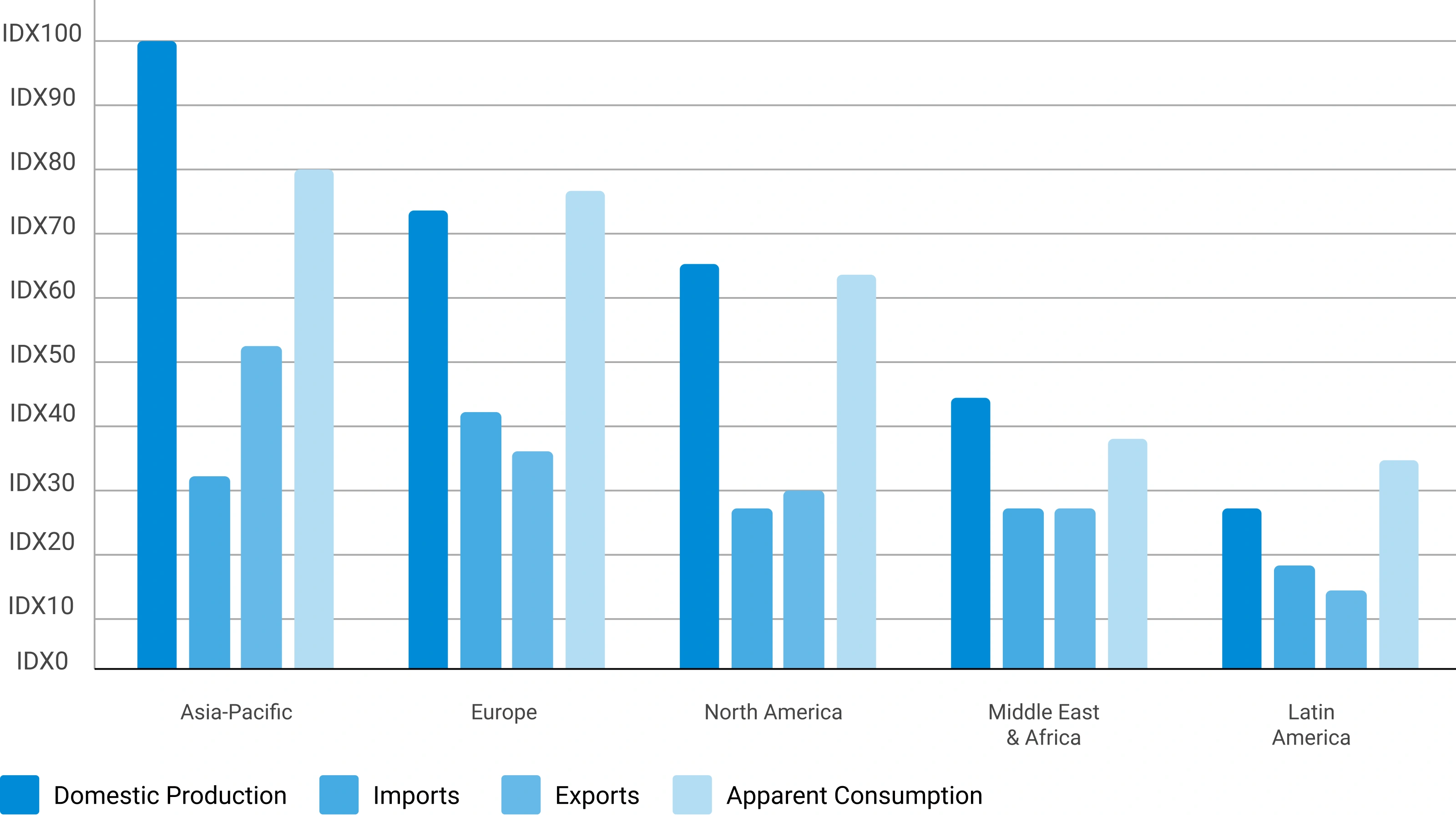
Trade flow analysis reconciles regional supply and demand estimates through import and export data, identifying net supply positions, regional dependencies, and market imbalances. It serves as an independent validation layer that tests the consistency of supply-side and demand-side estimates.
Import Analysis
Import data is evaluated to determine volumes, source countries, product dependency, regional supply gaps, and pricing trends — identifying markets that rely heavily on external supply and where domestic production is insufficient to meet demand.
Export Analysis
Export assessments reveal production surplus, export competitiveness, regional manufacturing strength, and global market participation. Export patterns also help validate domestic production estimates and identify net exporting regions.
Apparent Consumption Model
Regional consumption is assessed using the standard apparent consumption formula:
Results identify net importing regions, net exporting regions, regional deficits, and surpluses — serving as an independent validation of supply and demand estimates.
Trade Flow Analysis — Net Supply Position by Region
Illustrative apparent consumption vs. domestic production across major regions — positive gap indicates net import dependency
Phase 5 — Primary Research: The Critical Validation Layer
Primary research tests and refines findings from secondary research through direct engagement with industry participants across the supply chain, demand side, and expert community. It captures intelligence that no database or published report can provide — the real-world experience of manufacturers, buyers, and specialists operating in the market.

Supply-Side Interviews
Conversations with chemical manufacturers, raw material suppliers, contract manufacturers, technology providers, and plant operators cover production trends, capacity utilization, pricing developments, technology shifts, and competitive dynamics.

Demand-Side Interviews
Engagement with OEMs, industrial consumers, procurement managers, distributors, formulators, and end-use manufacturers focuses on consumption trends, purchasing behavior, product substitution, demand outlook, and emerging applications.

Industry Expert Consultations
Additional interviews with industry consultants, independent experts, regulatory specialists, technical professionals, and research institutions provide deeper market context and validate key analytical assumptions.
Focus Areas of Primary Research:
Market Size & Forecast Validation
Revenue estimates, volume consumption, growth rates, forecast assumptions, regional demand.Supply Chain & Value Chain Assessment
Raw material sourcing, supply chain challenges, distribution networks, procurement practices.Production & Capacity Analysis
Manufacturing capacity, utilization rates, expansion projects, plant investments.Pricing & Cost Structure Analysis
Product pricing trends, feedstock costs, energy costs, margin pressures, pricing outlook.Competitive Landscape Assessment
Volume and value estimates confirmed to be fully consistent with one another before publicationInterview Volume by Market Scope
| Study Scope | Number of Interviews |
|---|---|
| Niche Market | 20 – 30 |
| Mid-Sized Market | 30 – 50 |
| Global Market | 50 – 80 |
| Highly Fragmented Market | 80 – 120 |
Interview Details:
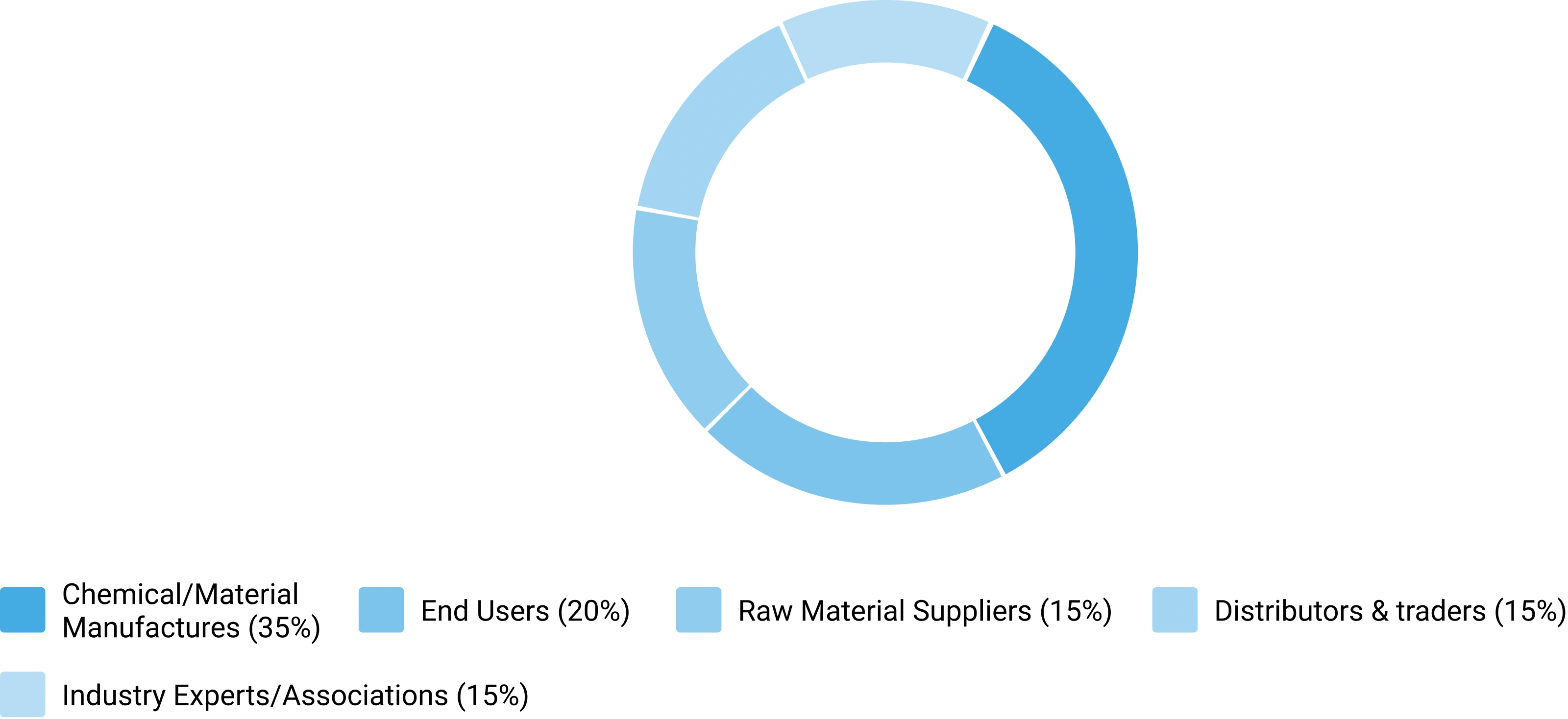
Category : Manufacturers, Suppliers, Distributors, End Users, Experts/Associations
Average Duration : 30–60 Minutes
Interview Mode : Video calls, telephonic interviews, expert consultations
Interview Format : Structured / Semi-Structured questionnaire
Focus Areas of Primary Research:
Market Size & Forecast Validation :
Revenue estimates, volume consumption, growth rates, forecast assumptions, regional demand.
Supply Chain & Value Chain Assessment :
Raw material sourcing, supply chain challenges, distribution networks, procurement practices.
Production & Capacity Analysis :
Manufacturing capacity, utilization rates, expansion projects, plant investments.
Pricing & Cost Structure Analysis :
Product pricing trends, feedstock costs, energy costs, margin pressures, pricing outlook.
Competitive Landscape Assessment :
Market share, competitor positioning, strategic initiatives, partnerships, acquisitions.
Primary Research — Stakeholder Coverage by Category
Distribution of interview respondents across stakeholder categories (% share from PPT data)
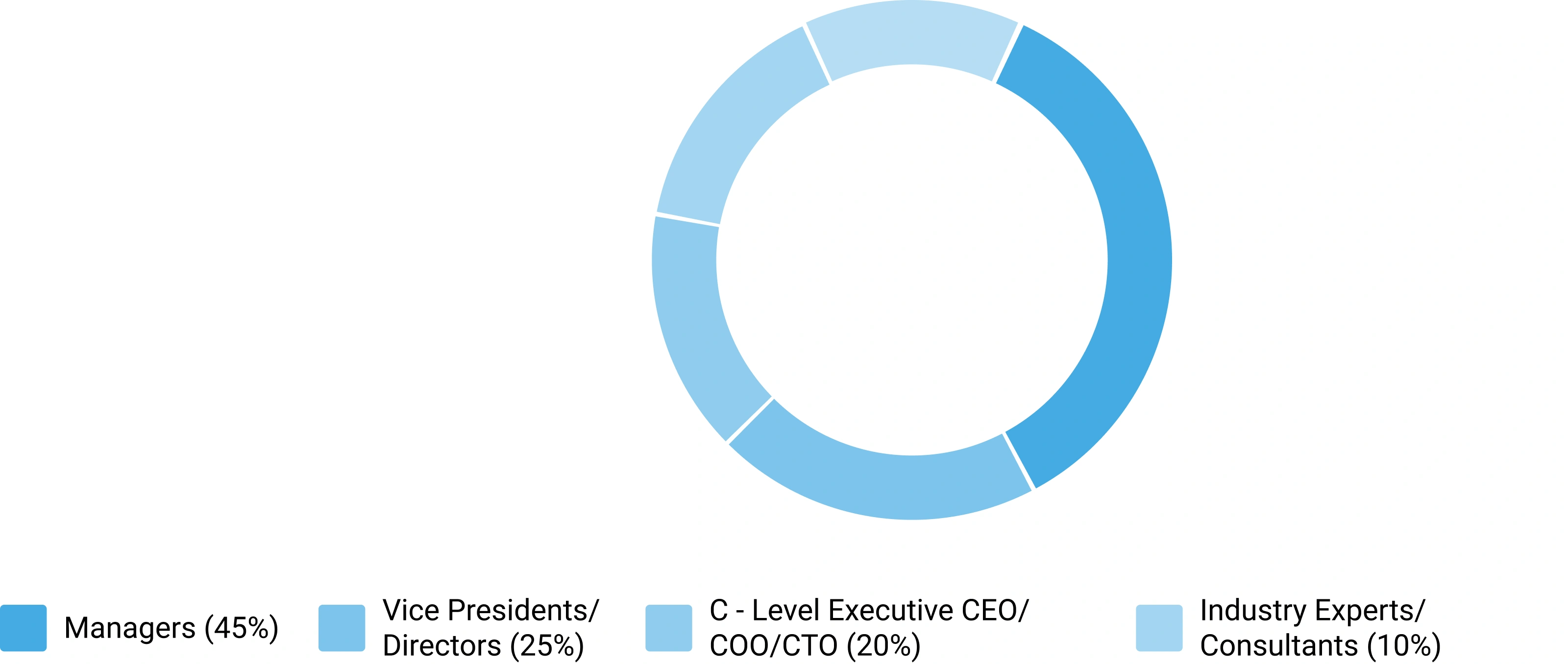
Primary Research — Respondent Designation Profile
Seniority breakdown of interview respondents (% share from PPT data)
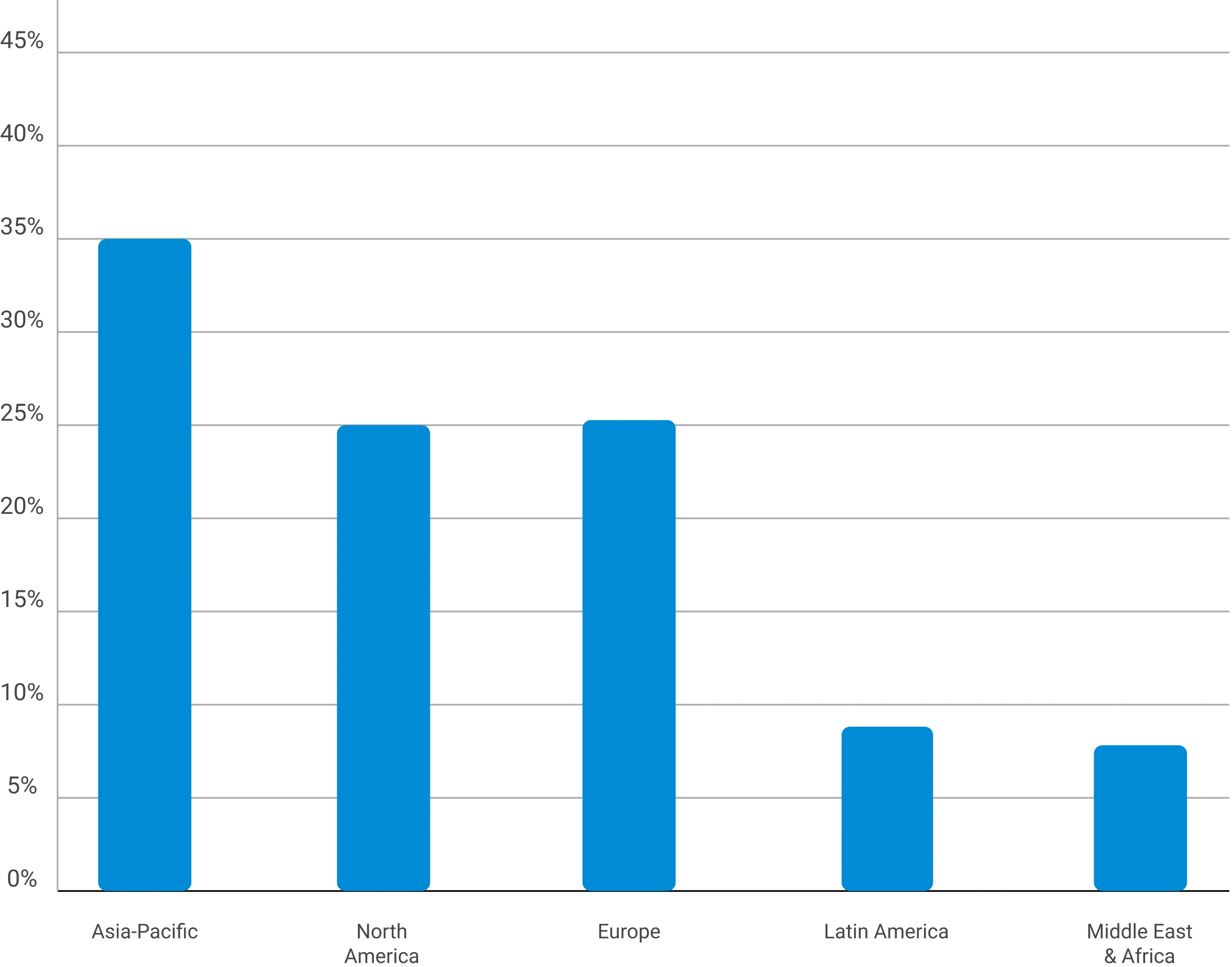
Primary Research — Geographic Coverage of Interviews
Regional distribution of primary research engagement (% share from PPT data)
Phase 6 — Data Triangulation and Market Validation
No single methodology is relied upon in isolation. Multiple independent estimation approaches are combined and reconciled to ensure consistency, accuracy, and analytical defensibility. Any material deviations between approaches are investigated and adjusted through additional validation cycles.
The final market size is derived through weighted triangulation of all validated methodologies. Any material deviations between approaches are investigated and adjusted through additional validation cycles. The outcome represents the most realistic assessment of the market based on available evidence and expert confirmation ensuring that volume and value estimates are fully consistent with one another.
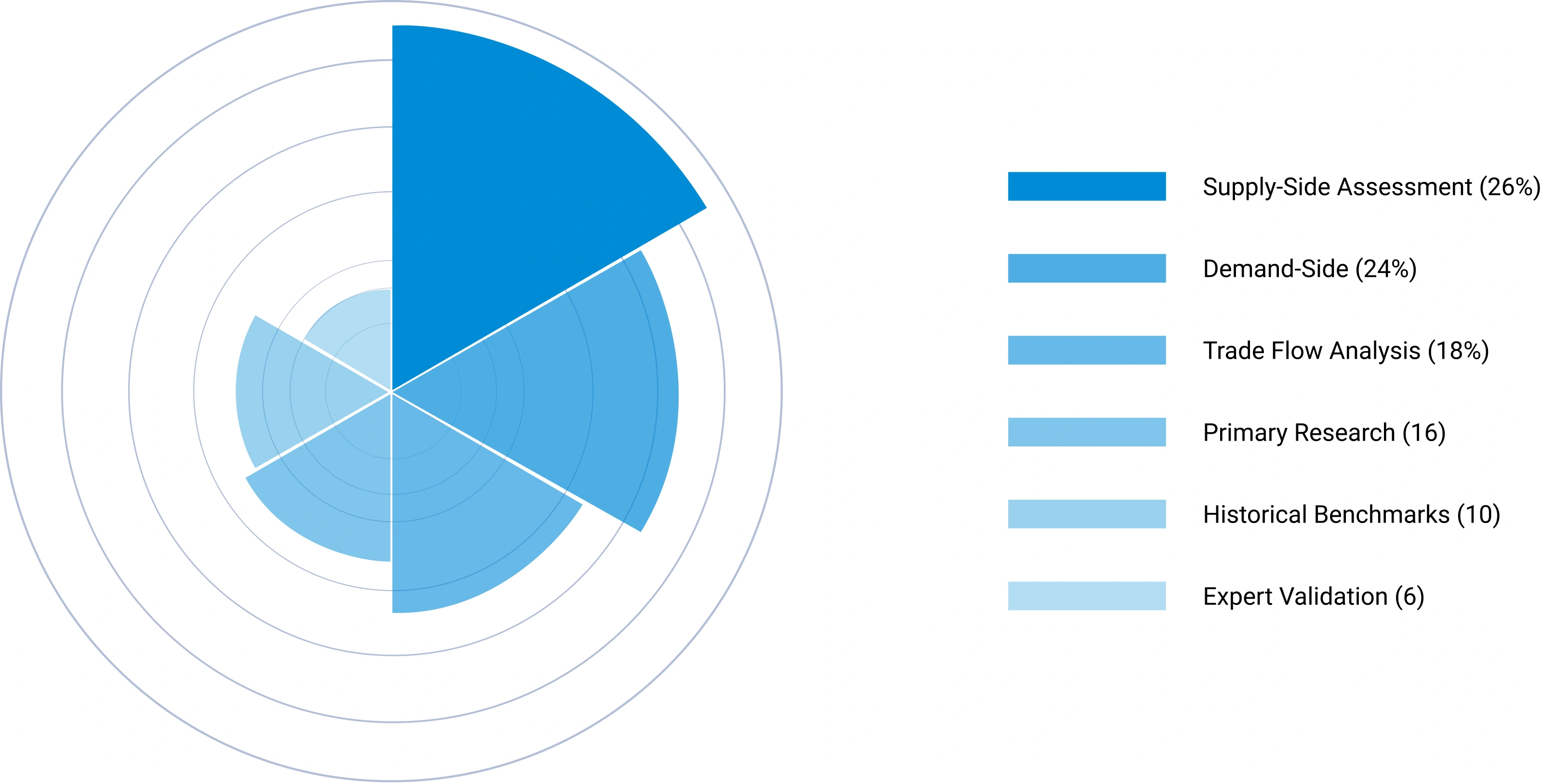
Triangulation Framework — Input Contribution Weight
Relative weight each sizing input contributes to the final reconciled market estimate
Phase 7 — Forecast Modeling: Projecting Future Market Evolution
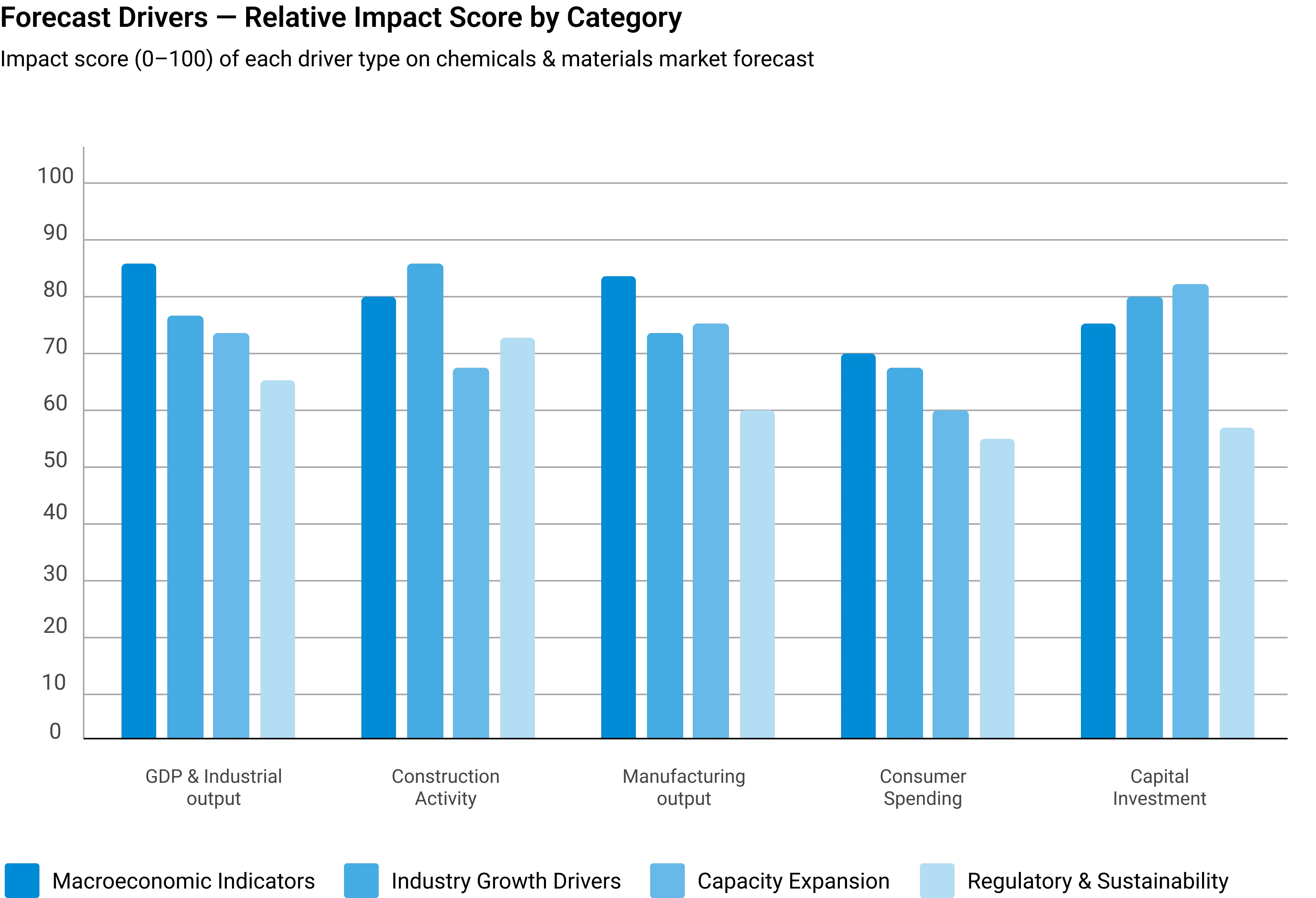
Forecasting evaluates the future trajectory of the market using a combination of quantitative indicators and qualitative assessments across economic, industry, and regulatory dimensions. Rather than simple extrapolation, each driver is independently modeled and integrated into a composite forecast.
Macroeconomic Indicators
GDP growth, industrial production, manufacturing output, construction activity, consumer spending, and capital investment form the quantitative foundation of long-term demand projections. These are applied at country, regional, and global levels.
Industry Growth Drivers
Urbanization, infrastructure development, industrialization, technological innovation, sustainability initiatives, and evolving product performance requirements are assessed at regional and industry levels — capturing both structural and cyclical demand drivers.
Capacity Expansion Analysis
Announced plant expansions, new manufacturing facilities, technology upgrades, and strategic investments are evaluated to determine future supply-demand dynamics and potential market tightness or oversupply situations.
Regulatory & Sustainability
Environmental regulations, chemical safety standards, emission reduction targets, circular economy initiatives, and sustainability requirements are incorporated as they often influence product adoption rates and market growth trajectories.
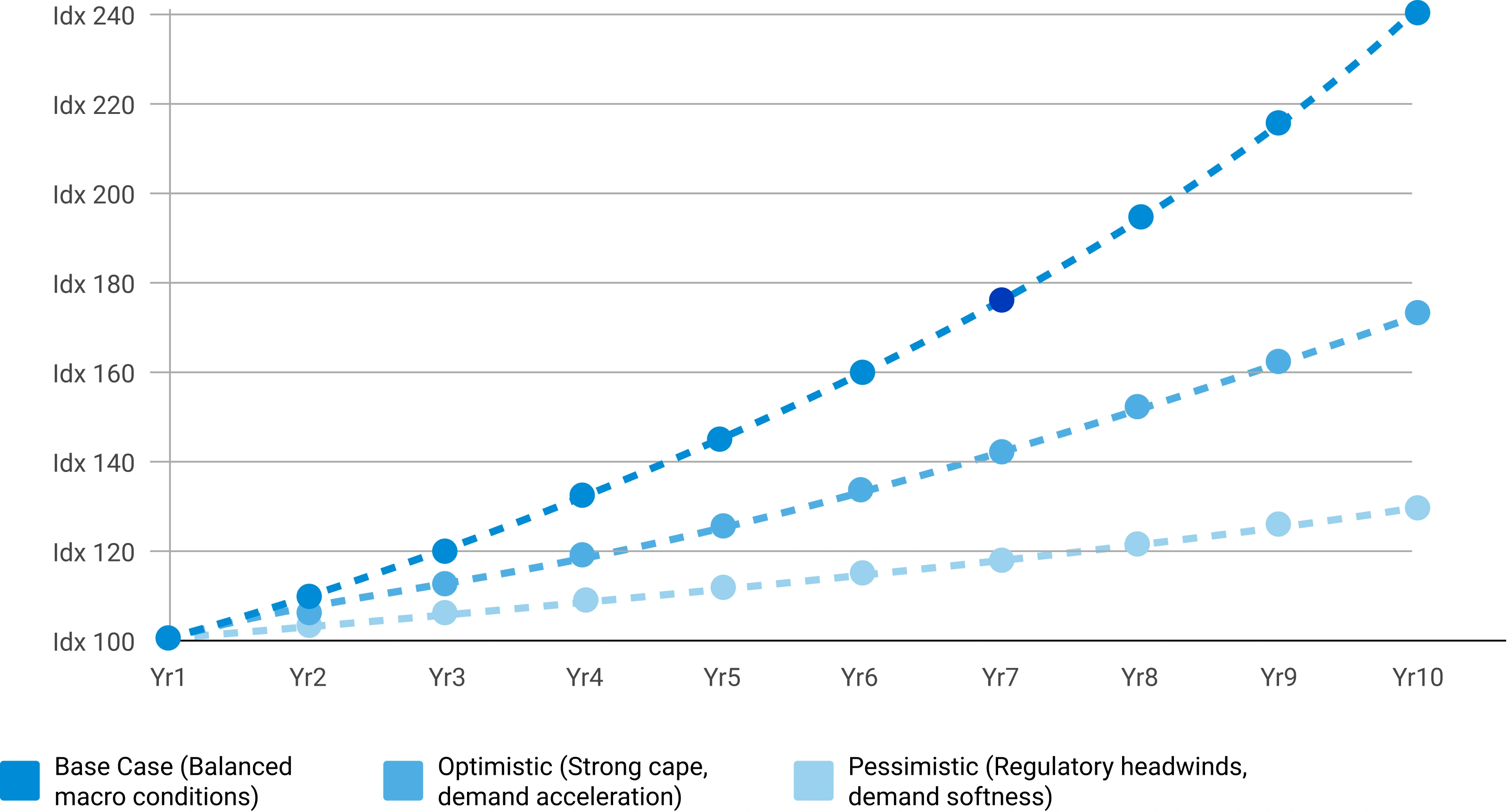
Scenario Forecast Range — Indexed Market Growth (Year 1–10)
Illustrative indexed growth trajectories across Base, Optimistic, and Pessimistic scenarios over a 10-year forecast horizon
Forecast Drivers — Relative Impact Score by Category
Impact score (0–100) of each driver type on chemicals & materials market forecast



Comments
Share your thoughts, ask a question, or provide feedback about this report.