
Hazardous Wastewater Treatment Market Size and Forecast 2026 to 2035
The global hazardous wastewater treatment market size was valued at USD 22.10 billion in 2025, is estimated to reach USD 23.46 billion in 2026, and is projected to reach USD 40.14 billion by 2035, exhibiting a compound annual growth rate (CAGR) of 6.15% over the forecast period from 2026 to 2035. In terms of volume, the hazardous wastewater treatment market is projected to grow from 41.25 billion cubic meters in 2025 to 68.42 billion cubic meters by 2035. growing at a CAGR of 5.19% from 2026 to 2035. The shift towards cleaner and zero-carbon manufacturing has accelerated the market potential in recent years.
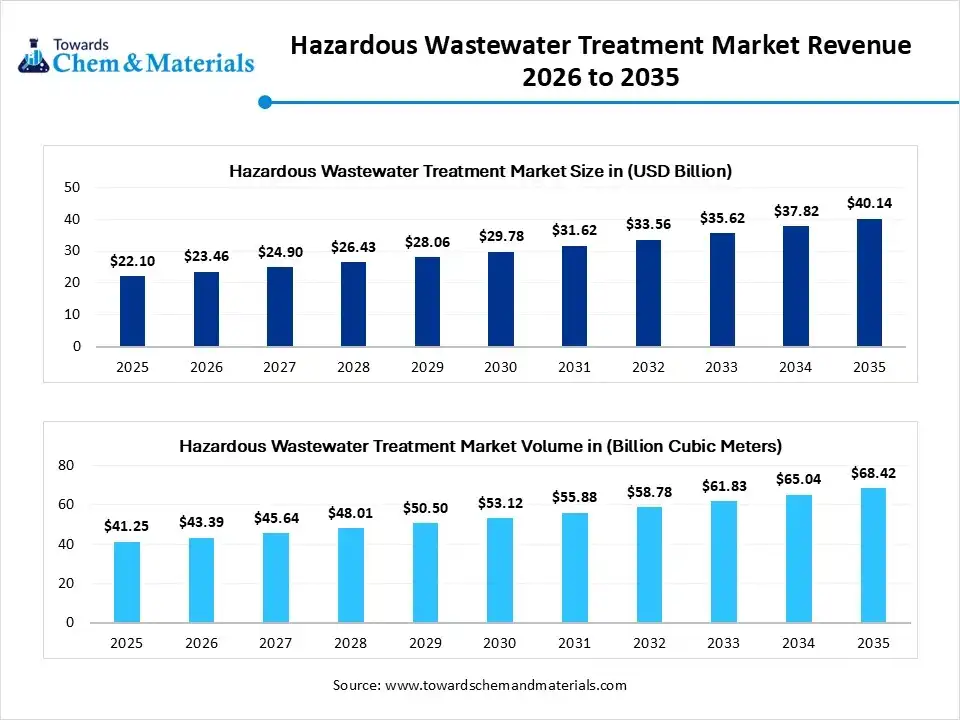
Market Highlights
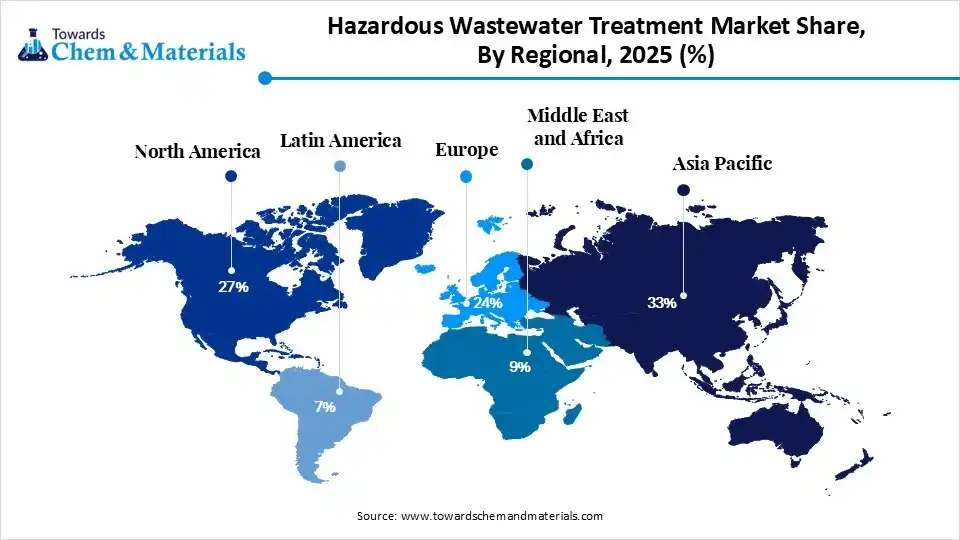
- By region, Asia Pacific dominated the market with a share of 33% in 2025 and is expected to be the fastest-growing region in the market, with a CAGR of 7.34% in the forecast period, due to the region experiencing rapid industrial growth, urbanization, and manufacturing expansion.
- By region, North America is notably growing with 27% market share in 2025, owing to industries in the region investing heavily in advanced and sustainable treatment technologies.
- By source, the oil and gas segment dominated the market with 24% share in 2025, as the industry generates extremely high volumes of contaminated water during drilling, refining, and production activities.
- By source, the pharmaceutical segment held the 22% market share in 2025 and is expected to be the fastest-growing in the market, with a CAGR of 7.21% in the forecast period, owing to medicine manufacturing produces highly complex wastewater containing antibiotics, chemical residues, hormones, and active pharmaceutical ingredients that are difficult to remove using traditional systems.
- By treatment, the physical segment dominated the market with 28% share in 2025, as it is one of the first and most essential steps in hazardous wastewater treatment.
- By treatment, the biological segment held the 25% market share in 2025 and is expected to be the fastest-growing segment in the market, with a CAGR of 6.88% in the forecast period, due to industries are increasingly searching for environmentally friendly and low-energy wastewater treatment methods.
Cleaner Industrial Operations Increase Wastewater Treatment Investments
The process of cleaning affected or polluted waste, which primarily contains toxic materials, chemicals, heavy metals, and other hazardous substances, is known as hazardous wastewater treatment. Also, with the greater shift towards sustainability and eco-friendly manufacturing, wastewater treatment has gained attention from the major industries such as mining, pharmaceuticals, oil and gas, and food processing nowadays. Furthermore, regions such as Europe and North America have observed providing greater support to the industry by implementing heavy restrictions and rules towards the toxic excretion of wastewater from major industries without any treatment in recent years.
Also, the industries are facing stricter environmental rules and rising pressure to reduce pollution. Moreover, governments across several countries are encouraging industries to adopt cleaner production methods and sustainable water management systems. Furthermore, increasing industrialization and urban growth are generating larger volumes of hazardous wastewater, creating a strong demand for advanced treatment solutions.
Furthermore, the industry is also experiencing strong technological improvements, including automation, smart monitoring systems, membrane filtration, and energy-efficient treatment processes, as per the review of the industry experts by Towards Chemical and Materials.
Recent Market Trends:
- The greater establishment and demand for water recycling systems near the manufacturing hubs have allowed stakeholders to capitalize on growth opportunities in recent years. Several companies are facing water shortages, where the recycling systems become the ideal option in the market.
- The shift toward advanced technology has emerged as a catalyst for unlocking the sectors full potential in the current period. The industry participants are heavily demanding systems like smart monitoring technology and others nowadays.
- The heavy focus on lower energy treatments and sustainable practices may drive substantial financial gains in the manufacturing sector during the projected period. Also, the treatments such as biotechnology and eco-friendly chemicals have attracted a major consumer base in recent years as per the industry survey.
Membrane Technologies Transform Industrial Wastewater
The industry is observing the growing use of advanced membrane filtration technologies. Also, systems such as reverse osmosis, ultrafiltration, and nanofiltration are becoming highly popular because they can remove very small toxic particles, harmful chemicals, and heavy metals from industrial wastewater more effectively than traditional systems. Moreover, industries are combining these technologies with automation and smart monitoring systems for better treatment efficiency and lower operational costs.
Supply Chain Analysis of the Hazardous Wastewater Treatment Market:
- Distribution to Industrial Users :Hazardous wastewater treatment providers distribute recycled water to industrial users like chemical and manufacturing plants via specialized pipelines.
- Key global players driving this distribution infrastructure include Veolia, Suez, Clean Harbors, and Covanta.
They ensure safe, compliant delivery of treated water, helping heavy industries minimize freshwater consumption and meet strict environmental regulations.
- Key global players driving this distribution infrastructure include Veolia, Suez, Clean Harbors, and Covanta.
- Chemical Synthesis and Processing :Chemical synthesis and processing methods neutralize hazardous wastewater through advanced oxidation, precipitation, and neutralization techniques. These chemical treatments destroy complex toxins before safe disposal or reuse.
- Leading global market players pioneering these processing technologies include Veolia, Suez, Clean Harbors, and US Ecology, ensuring strict compliance with environmental safety standards.
- Regulatory Compliance and Safety Monitoring :Regulatory compliance and safety monitoring in hazardous wastewater treatment rely on strict oversight from environmental agencies.
- Organizations like the United States Environmental Protection Agency (EPA), the European Chemicals Agency (ECHA), and India’s Central Pollution Control Board (CPCB) enforce rigorous discharge limits, mandate continuous tracking, and conduct inspections to prevent environmental contamination.
Hazardous Wastewater Treatment Market Regulatory Landscape: Regulations
| Country Region | Regulatory Body | Key Regulations | Focus Areas |
| United States | Environmental Protection Agency (EPA) | The Clean Water Act establishes NPDES requirements for point-source discharges to waters of the United States, while industrial users discharging to publicly owned treatment works are subject to applicable pretreatment standards | Pretreatment requirements control pollutants that may interfere with publicly owned treatment works, pass through treatment systems, or create prohibited hazards. |
| Europe | European Commission |
Industrial Emissions Directive (IED): Sets Best Available Techniques (BAT) reference documents for treating complex chemical effluent streams. | Mandatory elimination of microplastics and pharmaceutical micropollutants, and decarbonisation and energy neutrality goals for treatment facilities. |
| China | Ministry of Ecology and Environment (MEE). | Water Pollution Prevention and Control Law: Dictates standard discharge volumes and specific monitoring matrices for heavy industries. | Strict categorization using the List of Hazardous Waste Management Exclusions and zero Liquid Discharge (ZLD) practices across heavily polluting coal, chemical, and metal sectors. |
Market Dynamics
Driver
Stronger Momentum in Industrial Water Recycling
The increasing pressure on industries to control pollution and conserve water is elevating producers earning potential nowadays. Also, the governments are introducing stricter wastewater discharge regulations because industrial pollution is affecting rivers, groundwater, and agricultural land. Moreover, industries are facing rising freshwater costs, which is encouraging companies to recycle wastewater instead of depending fully on natural water sources.
Restraint
High Maintenance Expenses Affect Industry Growth
The high operational and maintenance costs of advanced treatment systems is expected to hamper industry growth in the coming years. Also, many small and medium-sized industries still struggle to invest in modern technologies because installation, energy usage, chemical handling, and skilled labor require large financial support.
Opportunity
Resource Recovery: Transforming Industrial Wastewater Management
The growing development of wastewater resource recovery technologies is anticipated to create lucrative opportunities for manufacturers during the forecast period. Moreover, industries are not only cleaning wastewater but also recovering valuable materials such as industrial salts, reusable chemicals, lithium, and clean water from waste streams. Also, many countries are supporting circular economy projects that reduce industrial waste and improve sustainability.
Segmental Insights
Source Insights
The oil and gas segment led the hazardous wastewater treatment market in 2025 with a dominant share.
The oil and gas segment dominated the market with 24% share in 2025, as the industry generates extremely high volumes of contaminated water during drilling, refining, and production activities. Also, the wastewater from oil and gas operations often contains harmful chemicals, hydrocarbons, salts, toxic metals, and oily sludge that require complex treatment before disposal.
The pharmaceutical segment held the 22% market share in 2025 and is expected to be the fastest-growing in the market, with a CAGR of 7.21% in the forecast period, owing to medicine manufacturing which produces highly complex wastewater containing antibiotics, chemical residues, hormones, and active pharmaceutical ingredients that are difficult to remove using traditional systems. In the current period, rising global medicine production and increasing healthcare demand are creating larger volumes of pharmaceutical wastewater.
The hospital segment held the 14% market share in 2025, as healthcare facilities are generating increasing amounts of hazardous wastewater containing medicines, disinfectants, laboratory chemicals, viruses, and antibiotic residues. Also, in recent years, hospitals have become more aware of the environmental risks connected with untreated medical wastewater.
Hazardous Wastewater Treatment Market Share, By Source, 2025 (%)
| By Source | Revenue Share, 2025 (%) |
| Hospital | 14% |
| Pharmaceutical | 22% |
| Oil & Gas | 24% |
| Power Generation | 13% |
| Automotive | 11% |
| Food & Beverage | 9% |
| Others | 7% |
Treatment Insights
The Physical Treatment segment spearheaded the market in 2025, capturing a commanding share of the total revenue.
The physical segment dominated the market with 28% share in 2025, as it is one of the first and most essential steps in hazardous wastewater treatment. Processes such as filtration, sedimentation, flotation, and oil-water separation are widely used to remove suspended solids, oils, and large contaminants before advanced treatment begins. Also, industries prefer physical systems because of their reliability and lower operational complexity.
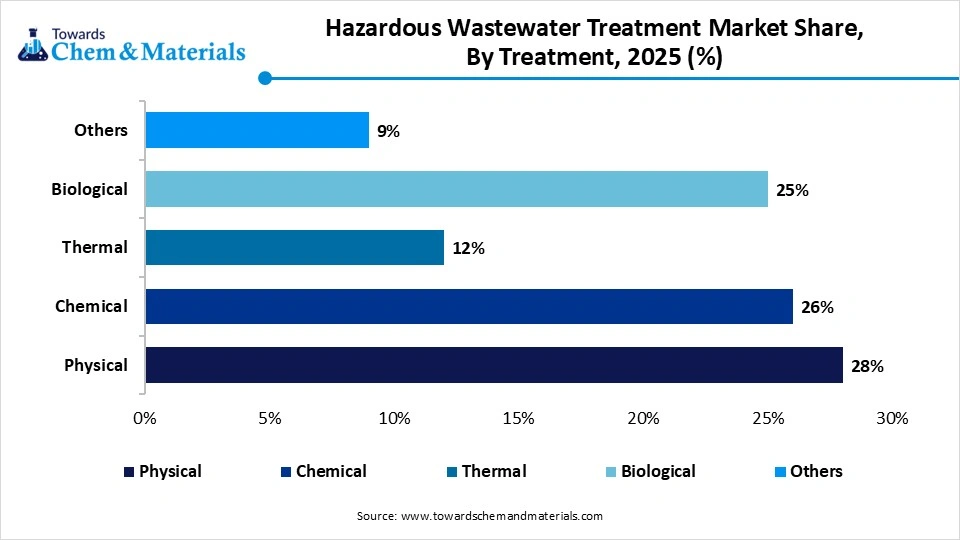
The biological segment held a 25% market share in 2025 and is expected to be the fastest-growing segment in the market, with a CAGR of 6.88% in the forecast period, due to industries increasingly searching for environmentally friendly and low-energy wastewater treatment methods. Biological systems use microorganisms to break down harmful pollutants naturally, making the process more sustainable compared to chemical-heavy treatments.
The chemical segment held the 26% market share in 2025 owing to industries facing increasing challenges related to toxic contaminants, heavy metals, and complex industrial chemicals that cannot be removed completely through physical treatment alone. Chemical treatment methods such as coagulation, oxidation, neutralization, and disinfection are becoming more important for handling difficult wastewater streams.
Hazardous Wastewater Treatment Market Share, By Treatment, 2025 (%)
| By Treatment | Revenue Share, 2025 (%) |
| Physical | 28% |
| Chemical | 26% |
| Thermal | 12% |
| Biological | 25% |
| Others | 9% |
Regional Insights
What Is the Asia Pacific Hazardous Wastewater Treatment Market Size?
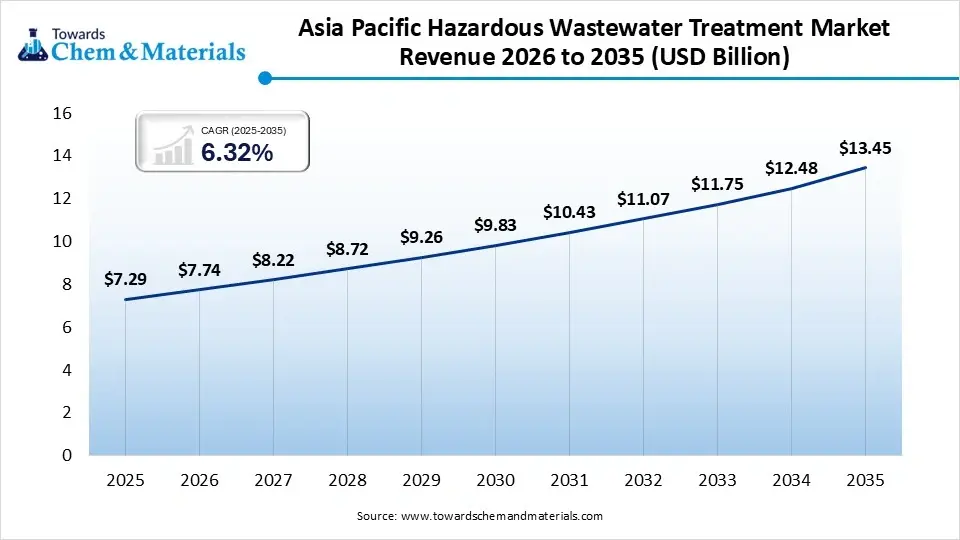
The Asia Pacific hazardous wastewater treatment market size was estimated at USD 7.29 billion in 2025 and is projected to reach USD 13.45 billion by 2035, growing at a CAGR of 6.32% from 2026 to 2035. Asia Pacific dominated the market with a share of 33% in 2025 and is expected to be the fastest-growing region in the market, with a CAGR of 7.34% in the forecast period, due to the region experiencing rapid industrial growth, urbanization, and manufacturing expansion. Countries such as China, India, and Japan are generating large volumes of industrial wastewater from sectors including chemicals, electronics, pharmaceuticals, and textiles. Moreover, rising water shortages and pollution concerns are forcing industries to invest in advanced wastewater treatment systems.
Countries
- China
- The country is focusing strongly on industrial water recycling and pollution control because many manufacturing regions are facing serious water stress.
- The government in China is encouraging industries to install advanced wastewater treatment systems in the chemical, electronics, and battery manufacturing sectors.
- Japan
- Japan is focusing heavily on highly efficient and low-energy wastewater treatment technologies because the country prioritizes environmental sustainability and resource conservation.
- Also, the country is observing the integration of wastewater treatment with hydrogen and renewable energy projects to improve industrial sustainability as per the survey.
- India
- Industrial expansion and urban growth are increasing water pollution concerns in India.
- Industrial corridors and manufacturing zones are increasingly adopting compact treatment systems because land availability is becoming limited as per the observation.
Hazardous Wastewater Treatment Market Evaluation in North America
The North America hazardous wastewater treatment market size was estimated at USD 5.97 billion in 2025 and is projected to reach USD 11.04 billion by 2035, growing at a CAGR of 6.34% from 2026 to 2035.North America is notably growing with 27% market share in 2025, owing to industries in the region investing heavily in advanced and sustainable treatment technologies. The region has strong environmental regulations, especially regarding industrial chemicals, pharmaceutical waste, and PFAS contamination. Moreover, industries are increasingly adopting AI-powered monitoring systems and water recycling technologies to improve compliance and reduce operational risks.
Countries
- United States
- The United States has been focusing strongly on PFAS removal and industrial water recycling because forever chemicals have become a major environmental concern.
- Also, the use of AI and predictive analytics for detecting contamination patterns before system failure occurs in the country.
- Canada
- Growing demand for hazardous wastewater treatment, due to mining, oil sands, and manufacturing industries, generates large volumes of contaminated wastewater in the country.
- Also, Canada is using remote digital monitoring systems for wastewater facilities located in isolated industrial areas as per the recent survey.
Europe Hazardous Wastewater Treatment Industry Conditions
The Europe hazardous wastewater treatment market size was estimated at USD 5.30 billion in 2025 and is projected to reach USD 9.83 billion by 2035, growing at a CAGR of 6.37% from 2026 to 2035. Europe held the 24% market share in 2025 owing to the region has some of the world’s strictest environmental regulations. Industries are under strong pressure to reduce water pollution, lower carbon emissions, and improve sustainability performance. Moreover, European countries are investing heavily in circular economy projects that encourage wastewater recycling and resource recovery.
Countries
- Germany
- Germany is focusing on highly advanced and energy-efficient wastewater treatment technologies because the country has strong environmental sustainability goals.
- The integration of wastewater treatment systems with renewable energy and green hydrogen projects has been recently observed in the country.
- Italy
- In recent years, water shortages in several industrial areas have increased interest in wastewater recycling technologies in Italy.
- Also, the country has observed the usage of compact modular wastewater treatment systems for medium-sized factories. Furthermore, industries are investing in biological treatment technologies.
- France
- The environmental authorities are becoming stricter regarding industrial contamination.
France is actively promoting circular economy policies that encourage industries to recover water and useful materials from wastewater streams.
- The environmental authorities are becoming stricter regarding industrial contamination.
Hazardous Wastewater Treatment Industry Survey in Latin America
The Latin America hazardous wastewater treatment market size was estimated at USD 1.55 billion in 2025 and is projected to reach USD 3.01 billion by 2035, growing at a CAGR of 6.86% from 2026 to 2035.Latin America held a 7% market share in 2025 due to industrialization, mining expansion, and urban growth are increasing water pollution challenges across the region. Countries are facing stronger pressure to improve industrial wastewater management because agriculture and drinking water supplies are being affected by industrial contamination.
Countries
- Brazil
- The food processing, agriculture, chemicals, and mining sectors have generated increasing demand for wastewater treatment technologies in Brazil, as per the recent survey.
- Also, the country is witnessing growing use of wastewater treatment technologies connected with renewable energy generation from industrial sludge and organic waste.
- Argentina
- Argentina’s mining activities, especially lithium-related projects, are generating demand for advanced wastewater treatment technologies.
- The rising interest in recovering industrial minerals and reusable chemicals from wastewater streams in the country.
Middle East & Africa’s Hazardous Wastewater Treatment Industry Observation
The Middle East and Africa hazardous wastewater treatment market size was estimated at USD 1.99 billion in 2025 and is projected to reach USD 3.81 billion by 2035, growing at a CAGR of 6.71% from 2026 to 2035.The Middle East and Africa held the 9% market share in 2025, akin to water scarcity has become a major concern across several countries. Industries are increasingly focusing on wastewater recycling to reduce dependence on freshwater resources. Moreover, oil and gas activities, mining operations, and industrial development are generating large amounts of hazardous wastewater in the region.
Countries
- Saudi Arabia
- In Saudi Arabia, the oil refining, petrochemical, and mining industries have increased the adoption of advanced wastewater treatment technologies.The integration of wastewater treatment systems with large-scale desalination projects to improve overall water efficiency has been observed in the country.
- UAE
- Industries such as chemicals, construction, healthcare, and energy are investing heavily in smart wastewater treatment technologies.Also, country has adopted AI-based monitoring and automated treatment systems inside industrial parks and commercial zones as per the recent survey.
Hazardous Wastewater Treatment Market Share, By Regional, 2025 (%)
| Regional | Revenue Share, 2025 (%) |
| North America | 27% |
| Europe | 24% |
| Asia-Pacific | 33% |
| Latin America | 7% |
| Middle East & Africa | 9% |
Recent Development
- In May 2026, Clean Harbors purchased and completed the acquisition of Terra Nova Solutions. Also, the aim behind the acquisition is to build stronger technical and field services as per the companys claim. Furthermore, the deal has been locked at $225 Million as per the published report.(Source: www.businesswire.com)
Top Vendors in the Hazardous Wastewater Treatment Market & Their Offerings:
- Veolia: Veolia is a global leader in environmental solutions, specializing in treating highly toxic industrial wastewater and hazardous materials. Utilizing cutting-edge chemical synthesis, advanced oxidation, and biological purification, the company neutralizes intricate chemical compounds.
- Suez: Suez excels in providing tailored ecological solutions for complex, heavily polluted industrial wastewater streams. The company designs custom multi-stage decontamination facilities that integrate mechanical filtration, heavy metal precipitation, and thermal destruction.
- Clean Harbors: Clean Harbors is North Americas premier provider of environmental, energy, and industrial services, dominating the hazardous waste management sector. The company operates an extensive network of specialized treatment facilities, including advanced wastewater processing units and incineration systems.
- Covanta
- US Ecology (Republic Services)
- Waste Management (WM)
- REMONDIS
- Daiseki Co., Ltd.
- Enva
- Tradebe
Hazardous Wastewater Treatment Market Segments
By Source
- Hospital
- Pharmaceutical Residue Wastewater
- Infectious Wastewater
- Laboratory Wastewater
- Radiological Wastewater
- Pharmaceutical
- API Manufacturing Effluent
- Solvent-Based Wastewater
- High-Salinity Wastewater
- Antibiotic Residue Wastewater
- Oil & Gas
- Produced Water
- Refinery Wastewater
- Drilling Wastewater
- Petrochemical Effluent
- Power Generation
- Cooling Tower Blowdown
- Boiler Wastewater
- Flue Gas Desulfurization Wastewater
- Ash Pond Wastewater
- Automotive
- Paint Shop Wastewater
- Metal Finishing Wastewater
- Oily Wastewater
- Battery Manufacturing Wastewater
- Food & Beverage
- Dairy Wastewater
- Brewery Wastewater
- Meat Processing Wastewater
- Sugar & Starch Wastewater
- Others
- Mining Wastewater
- Textile Wastewater
- Semiconductor Wastewater
- Pulp & Paper Wastewater
By Treatment
- Physical
- Filtration
- Sand Filtration
- Membrane Filtration
- Activated Carbon Filtration
- Sedimentation
- Flotation
- Filtration
- Chemical
- Neutralization
- Oxidation
- Advanced Oxidation Process
- Chlorination
- Coagulation & Flocculation
- Ion Exchange
- Thermal
- Incineration
- Evaporation
- Thermal Desorption
- Biological
- Aerobic Treatment
- Anaerobic Treatment
- Membrane Bioreactors
- Biofilm Reactors
- Others
- Electrochemical Treatment
- Plasma Treatment
- Hybrid Treatment Systems
By Region
- North America
- U.S.
- Canada
- Mexico
- Europe
- Germany
- UK
- France
- Italy
- Spain
- Asia Pacific
- China
- India
- Japan
- South Korea
- Latin America
- Brazil
- Argentina
- Middle East & Africa
- Saudi Arabia
- South Africa
A Seven-Phase Framework
Our methodology is designed to be universally applicable across commodity chemicals, specialty chemicals, petrochemicals, construction chemicals, coatings, electronic chemicals, industrial gases, agrochemicals, water treatment chemicals, and performance materials. Each phase builds upon the last, creating a layered validation structure that minimizes estimation error and maximizes analytical confidence.
The framework ensures comprehensive market coverage, robust cross-validation, and reliable long-term forecasting — producing market estimates that withstand scrutiny from investors, regulators, and corporate strategy teams.

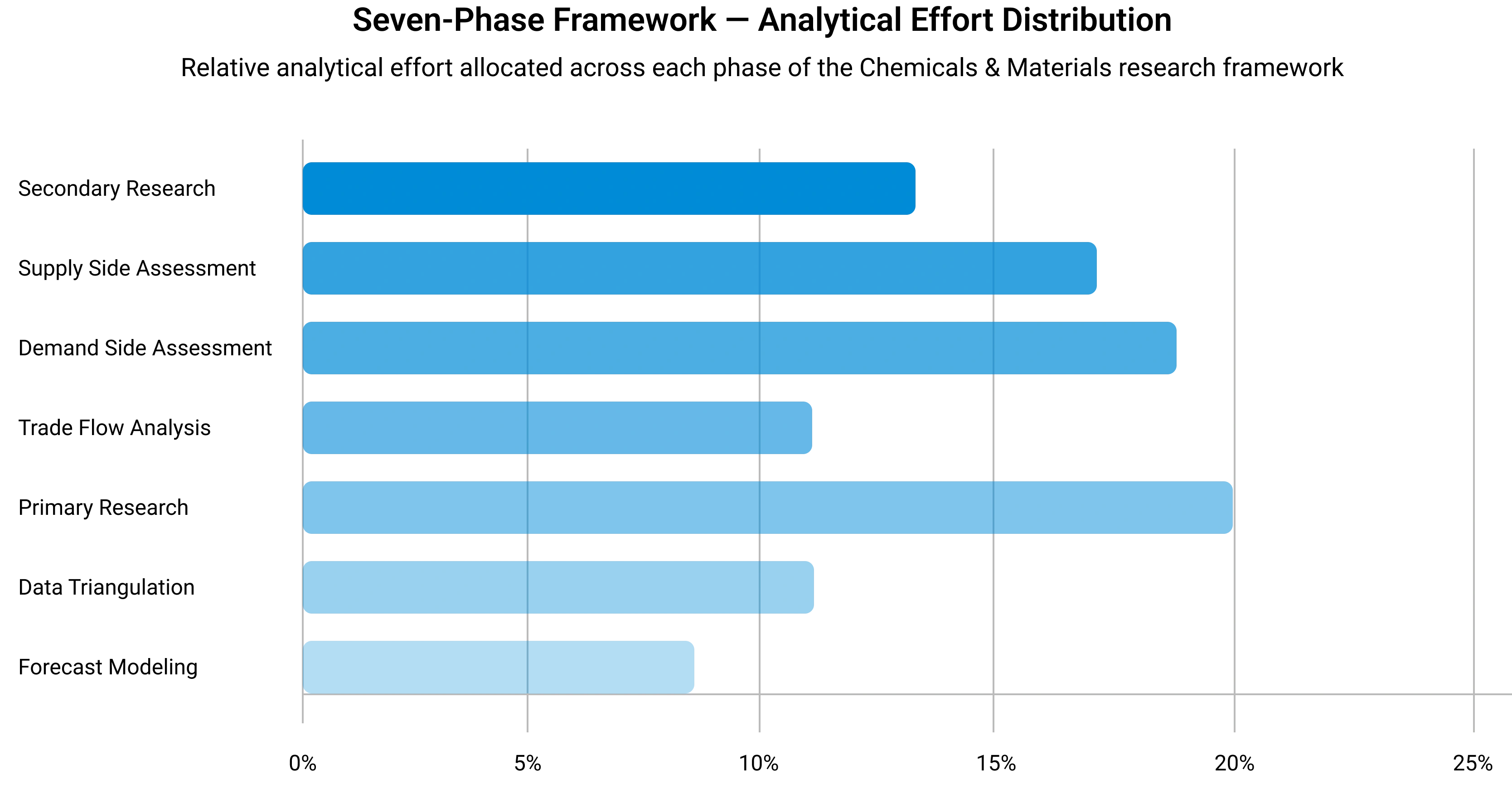
Seven-Phase Framework — Analytical Effort Distribution
Relative analytical effort allocated across each phase of the Chemicals & Materials research framework
Phase 1 - Secondary Research: Establishing the Foundation
Secondary research collects and evaluates publicly available information from authoritative sources, establishing the foundational understanding of market structure, value chain dynamics, competitive landscape, and end-use demand patterns. Every source is evaluated for credibility, recency, geographic relevance, and methodological soundness before inclusion.
Industry Associations
Sources include ACC, CEFIC, ICCA, JCIA, CPCIF, and SOCMA providing production volumes, consumption trends, capacity developments, and sustainability initiatives.
Company Disclosures
Annual reports, investor presentations, earnings transcripts, and regulatory filings reveal product portfolios, manufacturing footprints, capacity expansions, and revenue segmentation.
Government Databases
National statistical offices, customs authorities, environmental agencies, and industrial production databases provide verified statistics on output, trade flows, and regulatory compliance.
Trade Databases
UN Comtrade, ITC, Eurostat, and national customs authorities enable assessment of global product movement, import dependency, and export competitiveness across regions.
Our Secondary Research Sources
- Ministry of Chemicals and Fertilizers
- European Chemicals Agency
- United States Department of Energy
- Ministry of Industry and Information Technology
- Ministry of Economy Trade and Industry
- Ministry of Trade Industry and Energy
- National Institute of Standards and Technology
- Council of Scientific and Industrial Research
- Fraunhofer Society
- National Institute for Materials Science
Phase 2 — Supply-Side Assessment: Mapping Production Capabilities
Production Capacity Analysis
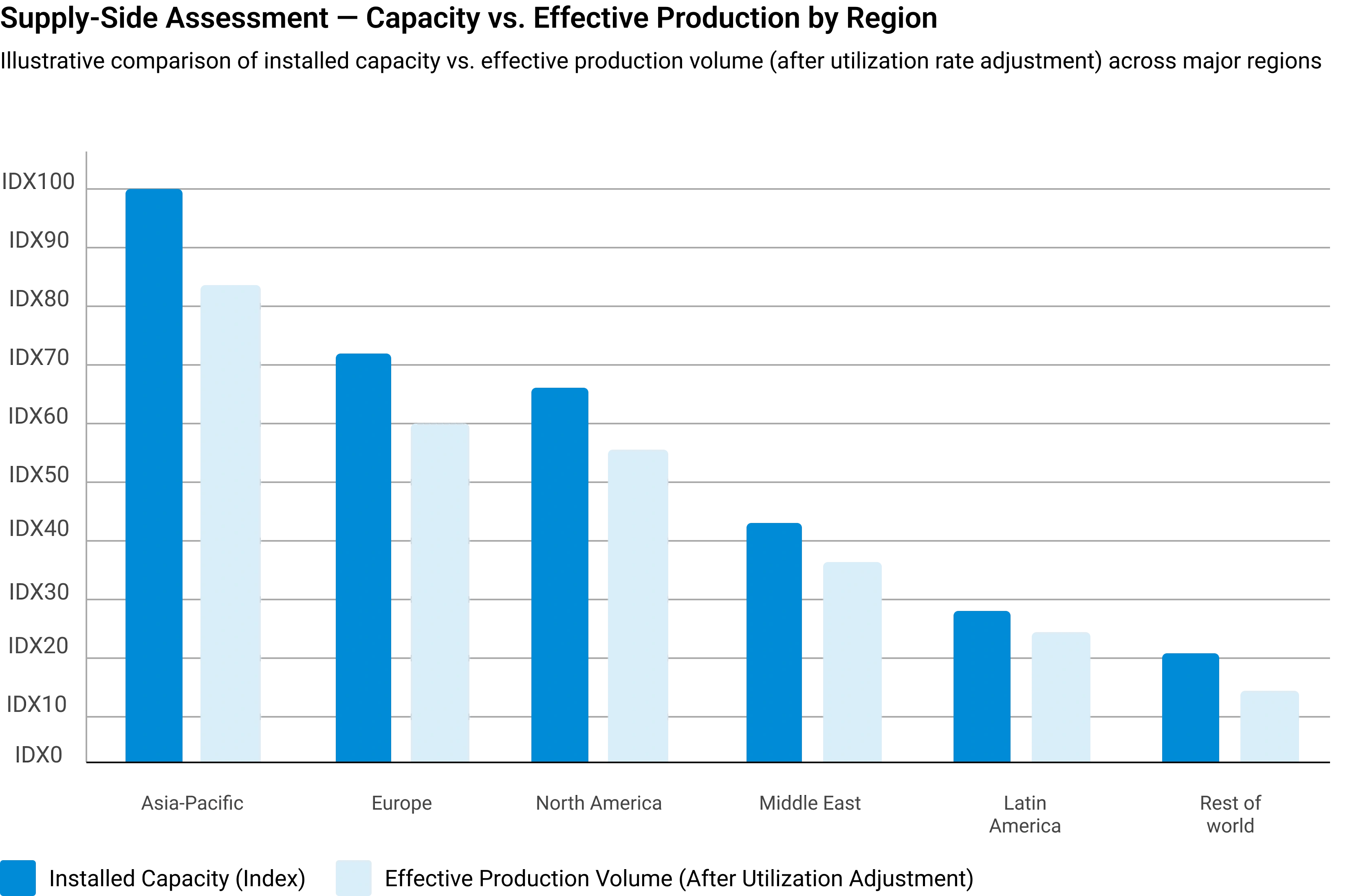
All major manufacturers are assessed for existing installed capacity, planned additions, expansions, new plant announcements, and technology adoption — mapped at global, regional, and country levels.
Capacity Utilization Adjustment
Installed capacity is adjusted using utilization rates based on demand conditions, feedstock availability, plant operating rates, maintenance schedules, and regulatory restrictions.
Manufacturer Revenue Analysis
Product-specific revenues, segment-level performance, regional distribution, average selling prices, and margin trends are evaluated to establish market value estimates.
Supply-Side Assessment — Capacity vs. Effective Production by Region
Illustrative comparison of installed capacity vs. effective production volume (after utilization rate adjustment) across major regions
Phase 3 — Demand-Side Assessment: Quantifying Chemical Consumption
Demand-side analysis quantifies chemical consumption across industries, applications, and geographies — identifying where and how chemicals are consumed throughout the value chain with precision.
End-Use Industry Analysis
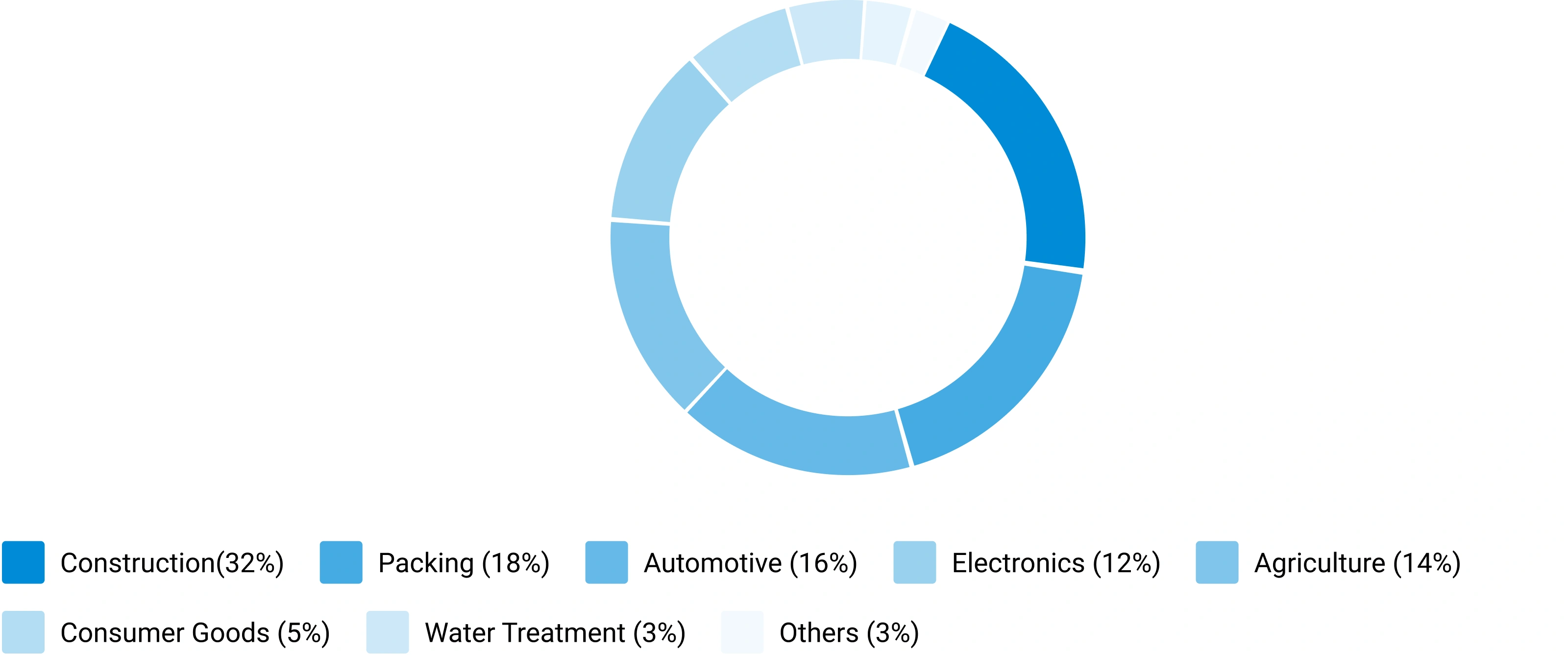
Chemical demand is evaluated across automotive, construction, packaging, electronics, agriculture, healthcare, consumer goods, industrial manufacturing, energy and utilities, and water treatment. Industry output, production trends, and consumption intensity are analyzed to determine demand patterns.
Consumption Modeling
Demand is estimated using measurable indicators: kilograms per vehicle, kilograms per square meter of construction, dosage per cubic meter of water treated, kilograms per hectare of agricultural land, and kilograms per ton of manufactured products. Consumption factors are validated through industry publications and primary interviews.
Application Analysis
The market is segmented by application area to understand product performance requirements, formulation trends, technology adoption, customer preferences, and regulatory requirements improving demand accuracy and segmentation granularity.
Demand-Side Assessment — End-Use Industry Demand Distribution
Illustrative distribution of chemical & materials demand across key end-use industries
Phase 4 - Trade Flow Analysis: Balancing Regional Supply and Demand
Trade flow analysis reconciles regional supply and demand estimates through import and export data, identifying net supply positions, regional dependencies, and market imbalances. It serves as an independent validation layer that tests the consistency of supply-side and demand-side estimates.
Import Analysis
Import data is evaluated to determine volumes, source countries, product dependency, regional supply gaps, and pricing trends — identifying markets that rely heavily on external supply and where domestic production is insufficient to meet demand.
Export Analysis
Export assessments reveal production surplus, export competitiveness, regional manufacturing strength, and global market participation. Export patterns also help validate domestic production estimates and identify net exporting regions.
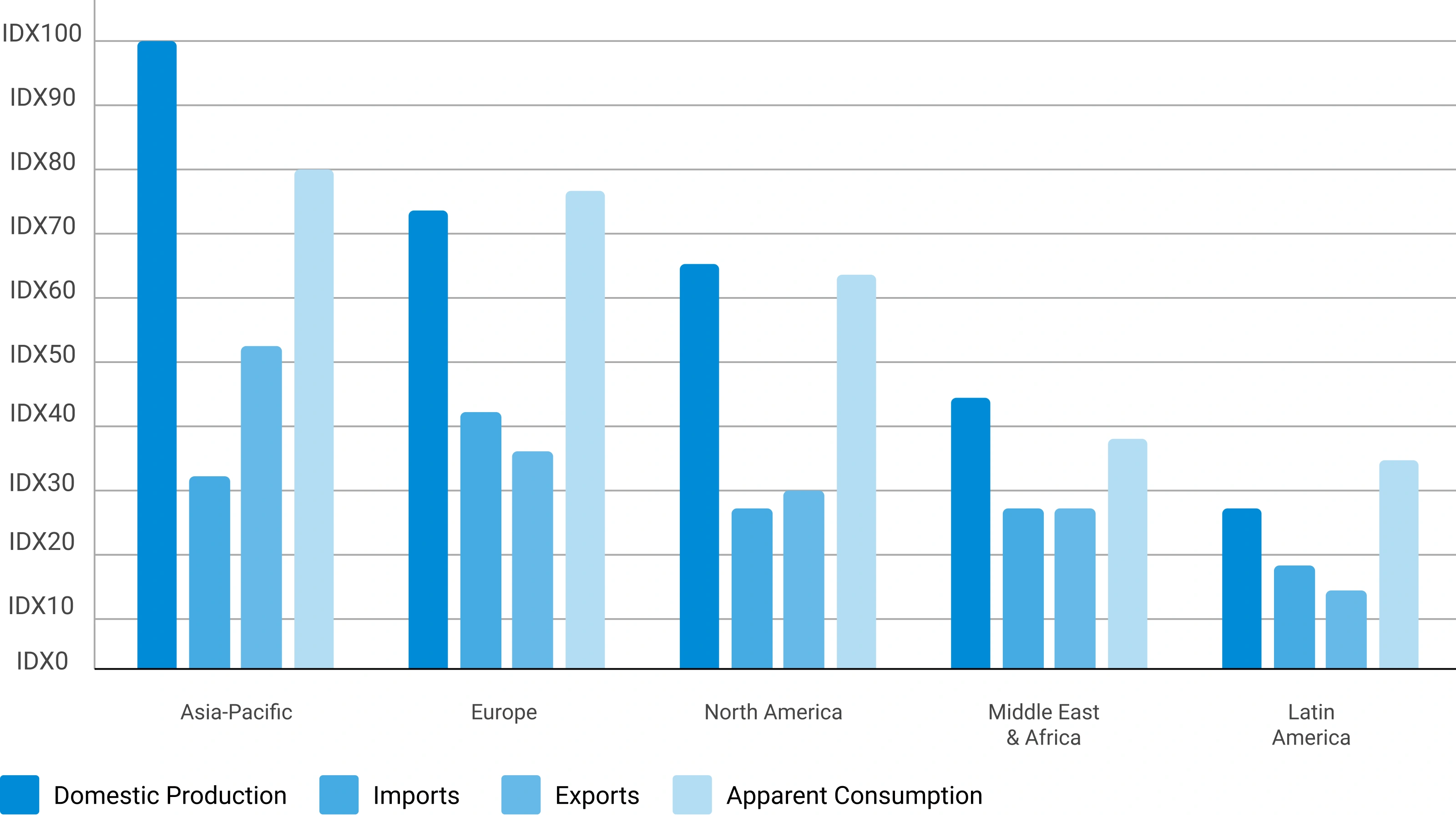
Apparent Consumption Model
Regional consumption is assessed using the standard apparent consumption formula:
Results identify net importing regions, net exporting regions, regional deficits, and surpluses — serving as an independent validation of supply and demand estimates.
Trade Flow Analysis — Net Supply Position by Region
Illustrative apparent consumption vs. domestic production across major regions — positive gap indicates net import dependency
Phase 5 — Primary Research: The Critical Validation Layer
Primary research tests and refines findings from secondary research through direct engagement with industry participants across the supply chain, demand side, and expert community. It captures intelligence that no database or published report can provide — the real-world experience of manufacturers, buyers, and specialists operating in the market.

Supply-Side Interviews
Conversations with chemical manufacturers, raw material suppliers, contract manufacturers, technology providers, and plant operators cover production trends, capacity utilization, pricing developments, technology shifts, and competitive dynamics.

Demand-Side Interviews
Engagement with OEMs, industrial consumers, procurement managers, distributors, formulators, and end-use manufacturers focuses on consumption trends, purchasing behavior, product substitution, demand outlook, and emerging applications.

Industry Expert Consultations
Additional interviews with industry consultants, independent experts, regulatory specialists, technical professionals, and research institutions provide deeper market context and validate key analytical assumptions.
Focus Areas of Primary Research:
Market Size & Forecast Validation
Revenue estimates, volume consumption, growth rates, forecast assumptions, regional demand.Supply Chain & Value Chain Assessment
Raw material sourcing, supply chain challenges, distribution networks, procurement practices.Production & Capacity Analysis
Manufacturing capacity, utilization rates, expansion projects, plant investments.Pricing & Cost Structure Analysis
Product pricing trends, feedstock costs, energy costs, margin pressures, pricing outlook.Competitive Landscape Assessment
Volume and value estimates confirmed to be fully consistent with one another before publicationInterview Volume by Market Scope
| Study Scope | Number of Interviews |
|---|---|
| Niche Market | 20 – 30 |
| Mid-Sized Market | 30 – 50 |
| Global Market | 50 – 80 |
| Highly Fragmented Market | 80 – 120 |
Interview Details:
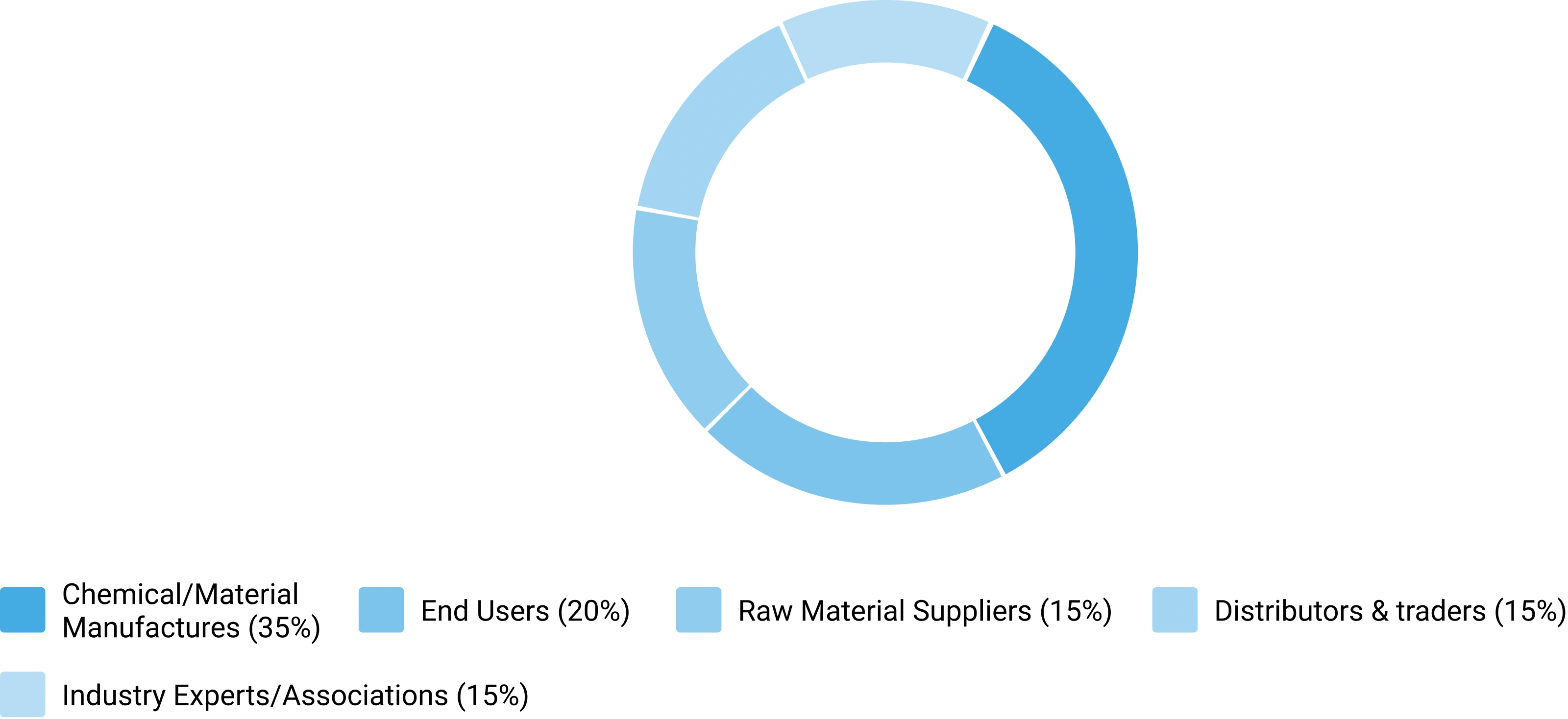
Category : Manufacturers, Suppliers, Distributors, End Users, Experts/Associations
Average Duration : 30–60 Minutes
Interview Mode : Video calls, telephonic interviews, expert consultations
Interview Format : Structured / Semi-Structured questionnaire
Focus Areas of Primary Research:
Market Size & Forecast Validation :
Revenue estimates, volume consumption, growth rates, forecast assumptions, regional demand.
Supply Chain & Value Chain Assessment :
Raw material sourcing, supply chain challenges, distribution networks, procurement practices.
Production & Capacity Analysis :
Manufacturing capacity, utilization rates, expansion projects, plant investments.
Pricing & Cost Structure Analysis :
Product pricing trends, feedstock costs, energy costs, margin pressures, pricing outlook.
Competitive Landscape Assessment :
Market share, competitor positioning, strategic initiatives, partnerships, acquisitions.
Primary Research — Stakeholder Coverage by Category
Distribution of interview respondents across stakeholder categories (% share from PPT data)
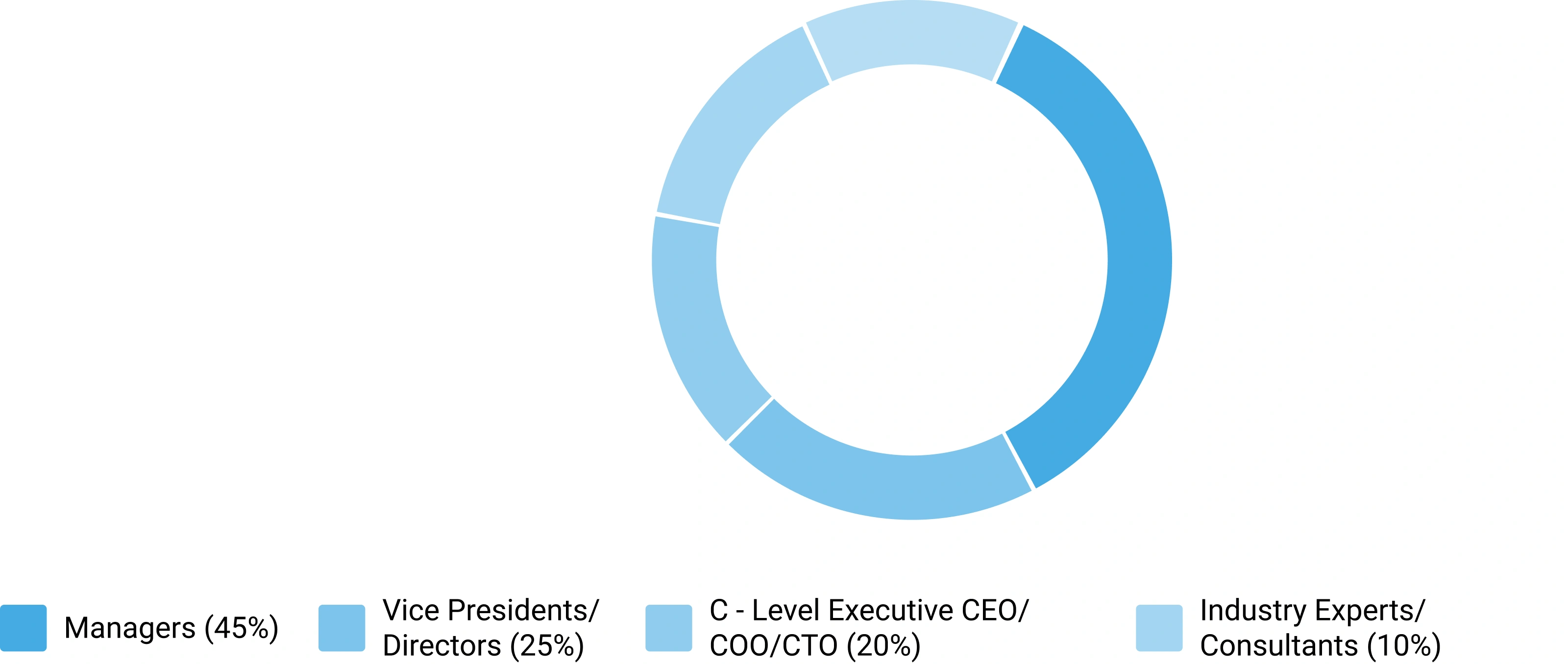
Primary Research — Respondent Designation Profile
Seniority breakdown of interview respondents (% share from PPT data)
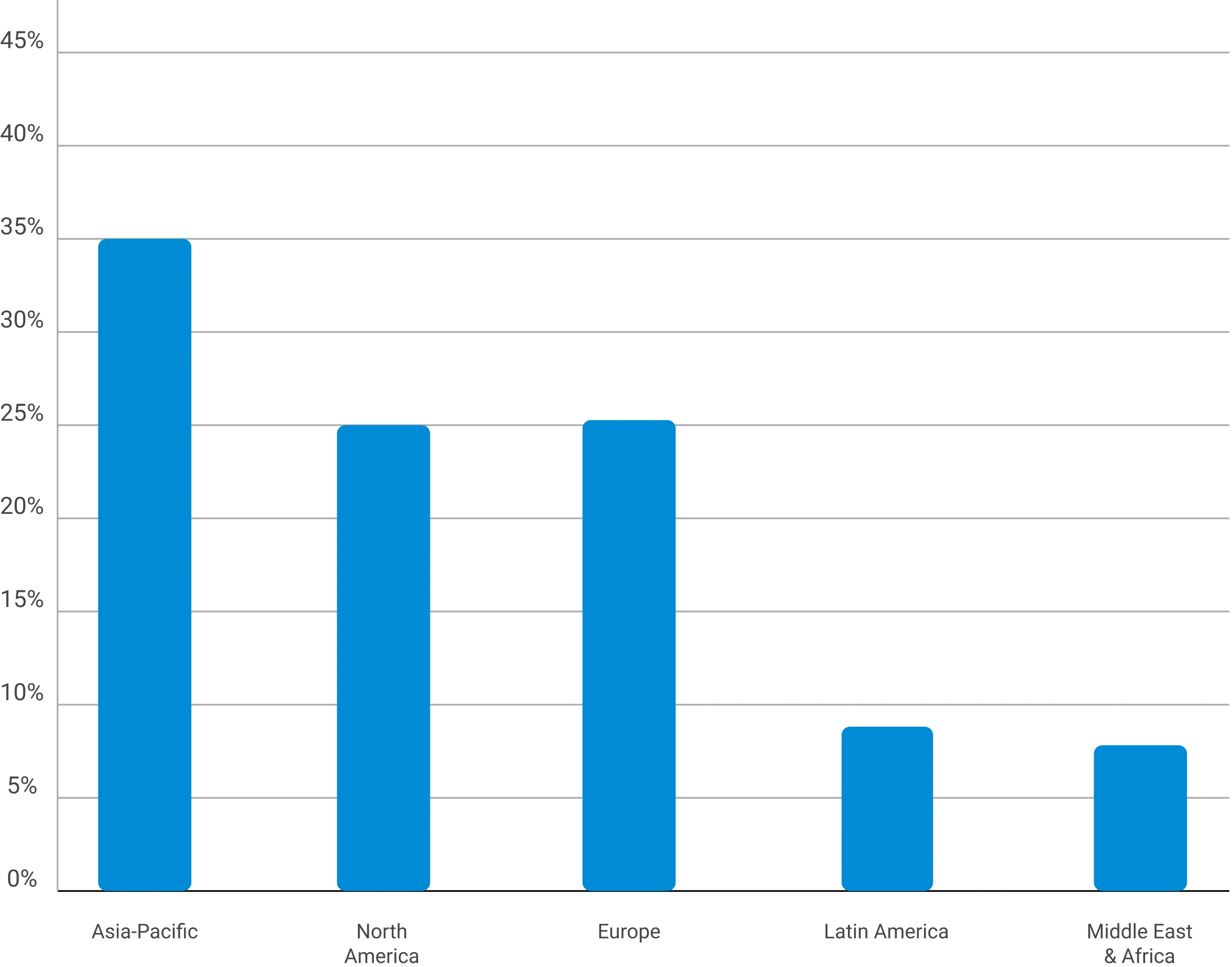
Primary Research — Geographic Coverage of Interviews
Regional distribution of primary research engagement (% share from PPT data)
Phase 6 — Data Triangulation and Market Validation
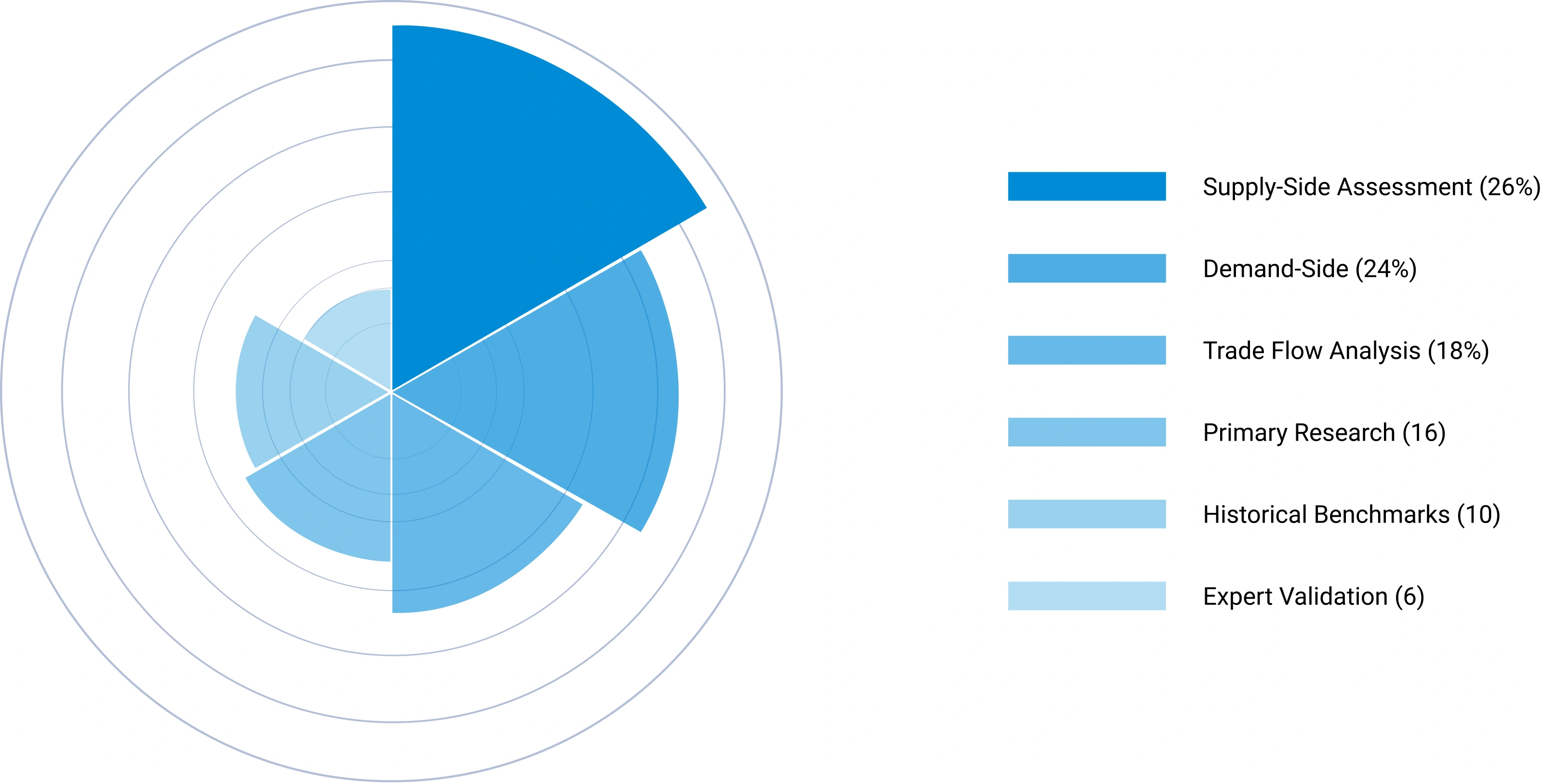
No single methodology is relied upon in isolation. Multiple independent estimation approaches are combined and reconciled to ensure consistency, accuracy, and analytical defensibility. Any material deviations between approaches are investigated and adjusted through additional validation cycles.
The final market size is derived through weighted triangulation of all validated methodologies. Any material deviations between approaches are investigated and adjusted through additional validation cycles. The outcome represents the most realistic assessment of the market based on available evidence and expert confirmation ensuring that volume and value estimates are fully consistent with one another.
Triangulation Framework — Input Contribution Weight
Relative weight each sizing input contributes to the final reconciled market estimate
Phase 7 — Forecast Modeling: Projecting Future Market Evolution
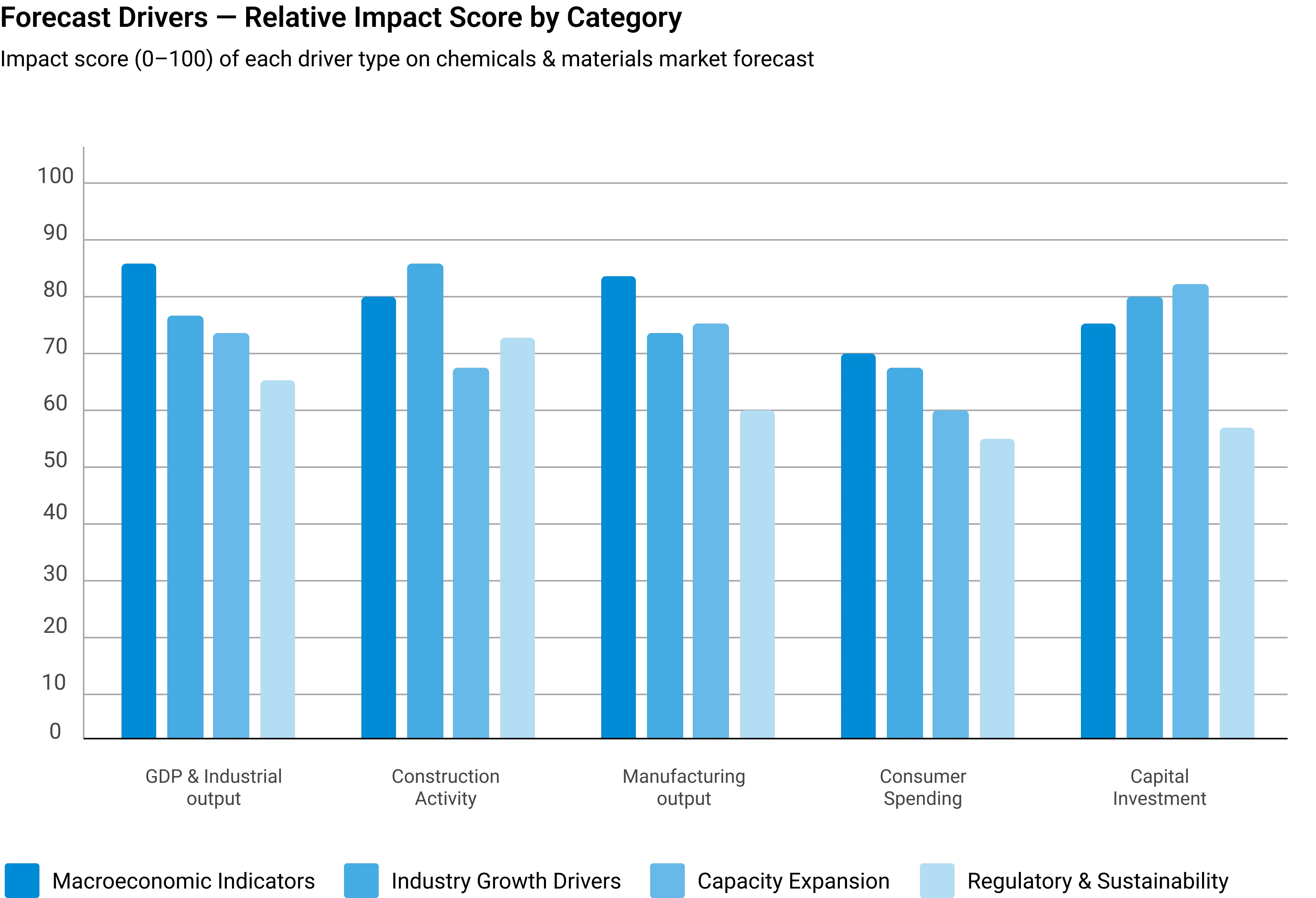
Forecasting evaluates the future trajectory of the market using a combination of quantitative indicators and qualitative assessments across economic, industry, and regulatory dimensions. Rather than simple extrapolation, each driver is independently modeled and integrated into a composite forecast.
Macroeconomic Indicators
GDP growth, industrial production, manufacturing output, construction activity, consumer spending, and capital investment form the quantitative foundation of long-term demand projections. These are applied at country, regional, and global levels.
Industry Growth Drivers
Urbanization, infrastructure development, industrialization, technological innovation, sustainability initiatives, and evolving product performance requirements are assessed at regional and industry levels — capturing both structural and cyclical demand drivers.
Capacity Expansion Analysis
Announced plant expansions, new manufacturing facilities, technology upgrades, and strategic investments are evaluated to determine future supply-demand dynamics and potential market tightness or oversupply situations.
Regulatory & Sustainability
Environmental regulations, chemical safety standards, emission reduction targets, circular economy initiatives, and sustainability requirements are incorporated as they often influence product adoption rates and market growth trajectories.
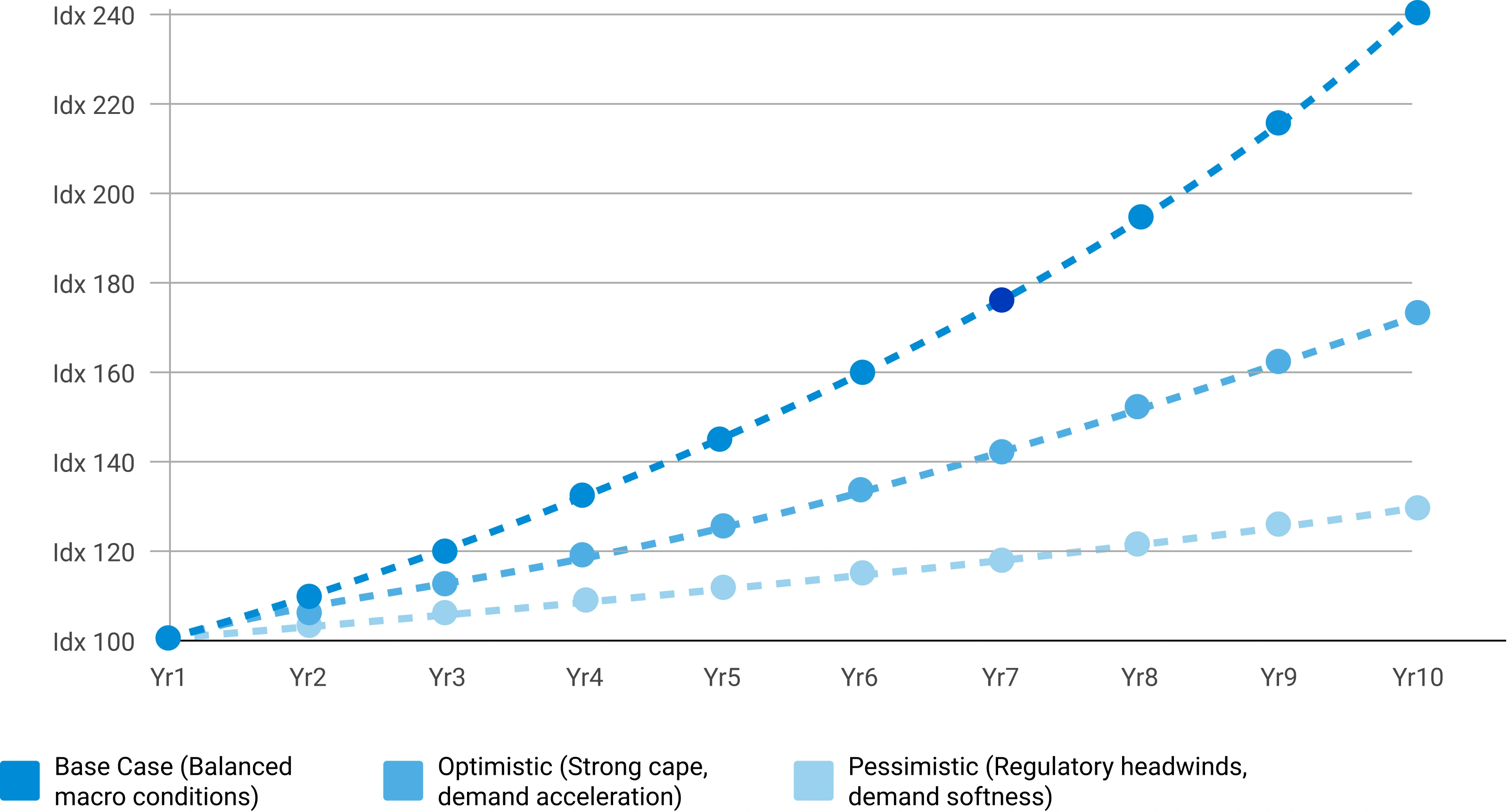
Scenario Forecast Range — Indexed Market Growth (Year 1–10)
Illustrative indexed growth trajectories across Base, Optimistic, and Pessimistic scenarios over a 10-year forecast horizon
Forecast Drivers — Relative Impact Score by Category
Impact score (0–100) of each driver type on chemicals & materials market forecast



Comments
Share your thoughts, ask a question, or provide feedback about this report.