
Surface Treatment Chemical Market Size Analysis Report 2035
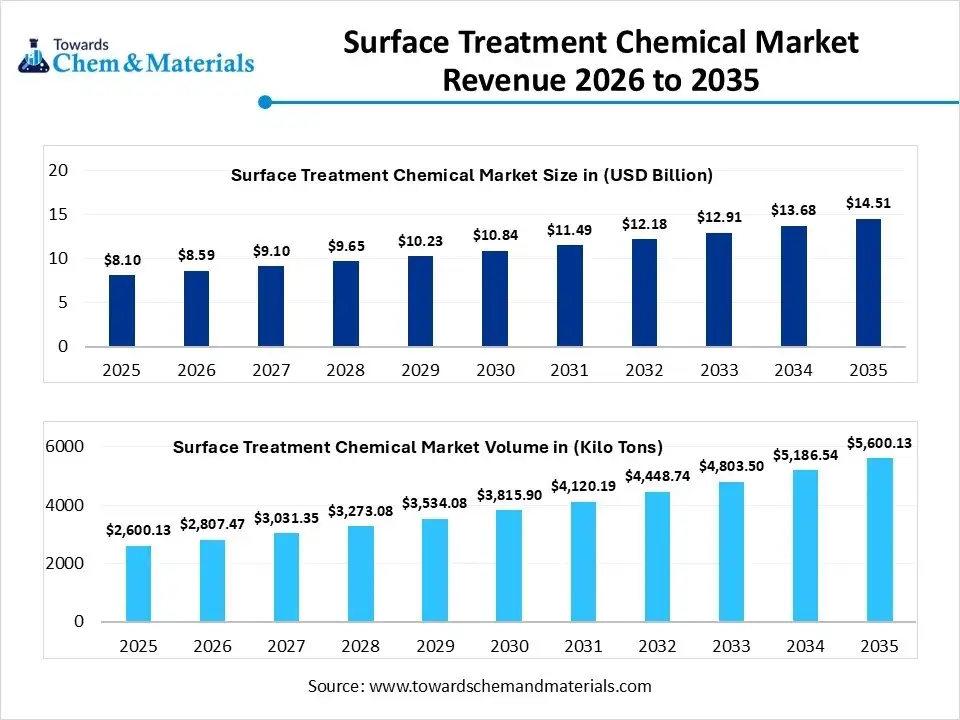
The global surface treatment chemical market size was estimated at USD 8.10 billion in 2025 and is expected to increase from USD 8.59 billion in 2026 to USD 14.51 billion by 2035, growing at a CAGR of 6% from 2026 to 2035. In terms of volume, the market is projected to grow from 2600.13 kilo tons in 2025 to 5600.13 kilo tons by 2035. growing at a CAGR of 7.97% from 2026 to 2035. Asia Pacific dominated the surface treatment chemical market with the largest volume share of 45%in 2025.The crucial need for corrosion protection, durability, and aesthetics in key sectors drives the growth and expansion of the market.
Market Highlights
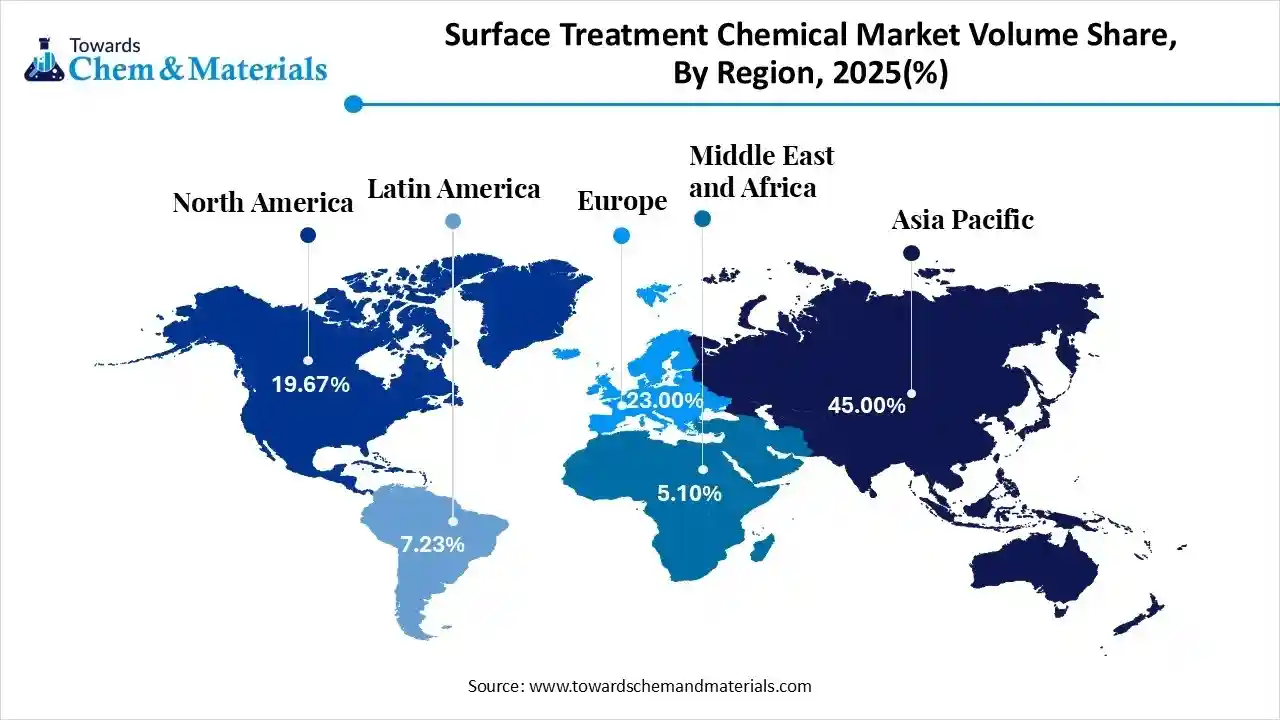
- The Asia Pacific dominated the surface treatment chemical market with the largest volume share of 45% in 2025.
- The surface treatment chemical market in Europe is expected to grow at a substantial CAGR of 7.29% from 2026 to 2035.
- The North America surface treatment chemical market segment accounted for the major volume share of 19.67% in 2025.
- By substrate, the metals segment dominated the market and accounted for the largest volume share of 62% in 2025.
- By substrate, the plastics segment is expected to grow at the fastest CAGR of 10.84% from 2026 to 2035 in terms of volume.
- By chemical type, the cleaners & degreasers segment led the market with the largest revenue volume share of 28% in 2025.
- By process type, the pretreatment segment dominated the market and accounted for the largest volume share of 45% in 2025.
- By end user, the automotive and transportation segment led the market with the largest revenue volume share of 32% in 2025.
Market Overview
What Is The Significance Of The Surface Treatment Chemical Market?
The surface treatment chemical market is significant because these chemicals enhance material performance, durability, and lifespan across industries like automotive, electronics, and construction, providing crucial corrosion/wear resistance, better adhesion, and specific electrical/thermal properties, while also driving innovation towards sustainable, eco-friendly solutions to meet strict environmental regulations. Its growth is fueled by the rise of advanced products like EVs and a global push for high-performance, long-lasting components, making it vital for modern manufacturing and infrastructure.
Surface Treatment Chemical Market Growth Trends:
- Sustainability Focus: Strong push for eco-friendly (low VOC, chromium-free) solutions to meet government mandates and reduce carbon footprints, notes Technavio.
- Technological Advancements: Development of efficient, high-performance chemicals for specific material needs (e.g., new alloys, electronics).
- Regional Dominance: Asia-Pacific is the largest and fastest-growing market due to robust manufacturing.
Report Scope
| Report Attribute | Details |
| Market Size and Volume in 2026 | USD 8.59 Billion / 2807.47 Kilo Tons |
| Revenue Forecast in 2035 | USD 14.51 Billion / 5600.13 Kilo Tons |
| Growth Rate | CAGR 6% |
| Forecast Period | 2026 - 2035 |
| Base Year | 2025 |
| Units Considered | Value (Billion / Million), Volume (Kilo Tons) |
| Dominant Region | Asia Pacific |
| Segment Covered | By Chemical Type, By Substrate Type, By Process Type, By End-User Industry, By Regions |
| Key companies profiled | Nihon Parkerizing Co., Ltd., Atotech / MKS, Akzo Nobel N.V.,BASF SE, The Sherwin-Williams Company, Quaker Chemical Corporation, Henkel AG & Co. KGaA, PPG Industries, Inc., Axalta Coating Systems, Solvay S.A., Nippon Paint Holdings, Chemetall, Coventya, MacDermid Enthone, Okuno Chemical Industries, JCU Corporation, Aalberts Surface Technologies, NOF Corporation |
Key Technological Shifts In The Surface Treatment Chemical Market:
Key technological shifts in the surface treatment chemical market focus on sustainability, nanotechnology, smart/functional coatings, and digitalization/automation, all driven by stricter environmental rules and demand for superior performance in sectors like automotive (EVs), aerospace, and electronics, moving from basic protection to advanced material enhancement.
Trade Analysis Of Surface Treatment Chemical Market: Import & Export Statistics
- Based on Global Export data, the world shipped 43 units of Metal Surface Treatment Chemical, exported by 9 exporters to 7 buyers. Most exports are heading to the United States, Vietnam, and Brazil.
- The top three exporters are the United Kingdom, Japan, and France, with the UK leading at 30 shipments, Japan with 7, and France with 4.
- Additionally, from June 2024 to May 2025 (TTM), 2,638 shipments of Chemical Surface Agent were exported worldwide by 466 exporters to 603 buyers, showing a 330% growth compared to the previous twelve months.
- The main destinations are Vietnam, Chile, and Russia. The leading exporters are Vietnam, China, and South Korea, with Vietnam exporting 861 shipments, China 576 shipments, and South Korea 386 shipments.
Surface Treatment Chemical Market Value Chain Analysis
- Chemical Formulation and Processing: Surface treatment chemicals are developed through processes such as chemical synthesis, formulation, blending, and conditioning to enable cleaning, etching, phosphating, anodizing, passivation, electroplating preparation, and corrosion protection for metal, plastic, and composite surfaces.
- Key players: Henkel AG & Co. KGaA, BASF SE, Solvay S.A., Atotech (MKS Instruments).
- Quality Testing and Certification:Surface treatment chemicals require certifications ensuring chemical performance, bath stability, worker safety, and environmental compliance. Key certifications include ISO 9001 and ISO 14001, REACH compliance, RoHS conformity, and ASTM surface treatment standards.
- Key players: ISO (International Organization for Standardization), ECHA (REACH), ASTM International, UL Solutions.
- Distribution to Industrial Users:Surface treatment chemicals are supplied to automotive OEMs, metal fabrication companies, aerospace manufacturers, electronics producers, construction material processors, and industrial coating applicators.
- Key players: Henkel AG & Co. KGaA, Atotech, Chemetall (BASF).
Surface Treatment Chemical Regulatory Landscape: Global Regulations
| Country / Region | Regulatory Body | Key Regulations | Focus Areas | Notable Notes |
| European Union | European Chemicals Agency (ECHA) & European Commission | REACH Regulation (EC 1907/2006) CLP Regulation (EC 1272/2008) Industrial Emissions Directive (IED) |
Chemical registration & hazard classification Emission/effluent limits Worker protection & labeling |
REACH governs registration of all substances in surface treatment products (e.g., phosphates, chromium VI precursors), and CLP mandates hazard labeling. IED/BREFs set emission limits for facilities using chemical surface treatments. |
| China | Ministry of Ecology and Environment (MEE); SAMR | MEE Order No.12 (New Chemical Substance Registration) Air & Water Pollution Prevention Laws Solid Waste Pollution Prevention Law |
New chemical registration Emissions & effluent control Hazardous waste management |
Surface treatment chemistries (cleaners, etchants) must be registered for manufacture/import; strict VOC, sulfur, and metallic emissions limits apply to plating and surface treatment shops under local inspections. |
| India | MoEFCC (Ministry of Environment, Forest & Climate Change) & CPCB (Central Pollution Control Board) | Chemical (Management & Safety) Rules (proposed) Hazardous & Other Wastes (Management & Transboundary Movement) Rules Air/Water Acts |
Chemical hazard control Emission & effluent limits Hazardous waste handling & disposal |
India is moving toward REACH-like chemical registration; plating and surface treatment facilities must control emissions and handle chemical wastes per CPCB notifications. |
Segmental Insights
Chemical Type Insights
Which Chemical Type Segment Dominated The Surface Treatment Chemical Market In 2025?
The cleaners & degreasers segment dominated the market accounting for approximately 28% share in 2025. Cleaners and degreasers form a foundational segment in the market as they are essential for removing oils, grease, dirt, oxides, and contaminants before further processing. Growth is supported by increasing adoption of water-based and low-VOC formulations due to environmental regulations.
The conversion coatings segment is projected to grow at the fastest CAGR between 2026 and 2035 in the market. Conversion coatings are widely used to enhance corrosion resistance, improve paint adhesion, and extend substrate life, particularly for metals such as aluminum, steel, and zinc. The market is shifting toward chromate-free and environmentally friendly alternatives, driven by tightening regulations and sustainability initiatives across industrial manufacturing sectors.
Substrate Insights
How Did the Metals Segment Dominated The Surface Treatment Chemical Market In 2025?
The metals segment volume was valued at 1612.08 kilo tons in 2025 and is projected to reach 3436.80 kilo tons by 2035, expanding at a CAGR of 8.78% during the forecast period from 2025 to 2035. The metals segment dominated the market accounting for approximately 62% share in 2025. Metal substrates dominate the market due to their extensive use across automotive, industrial machinery, electronics, and infrastructure applications. Rising vehicle production, infrastructure investments, and demand for high-performance metal components continue to drive sustained consumption of metal-specific surface treatment chemicals globally.
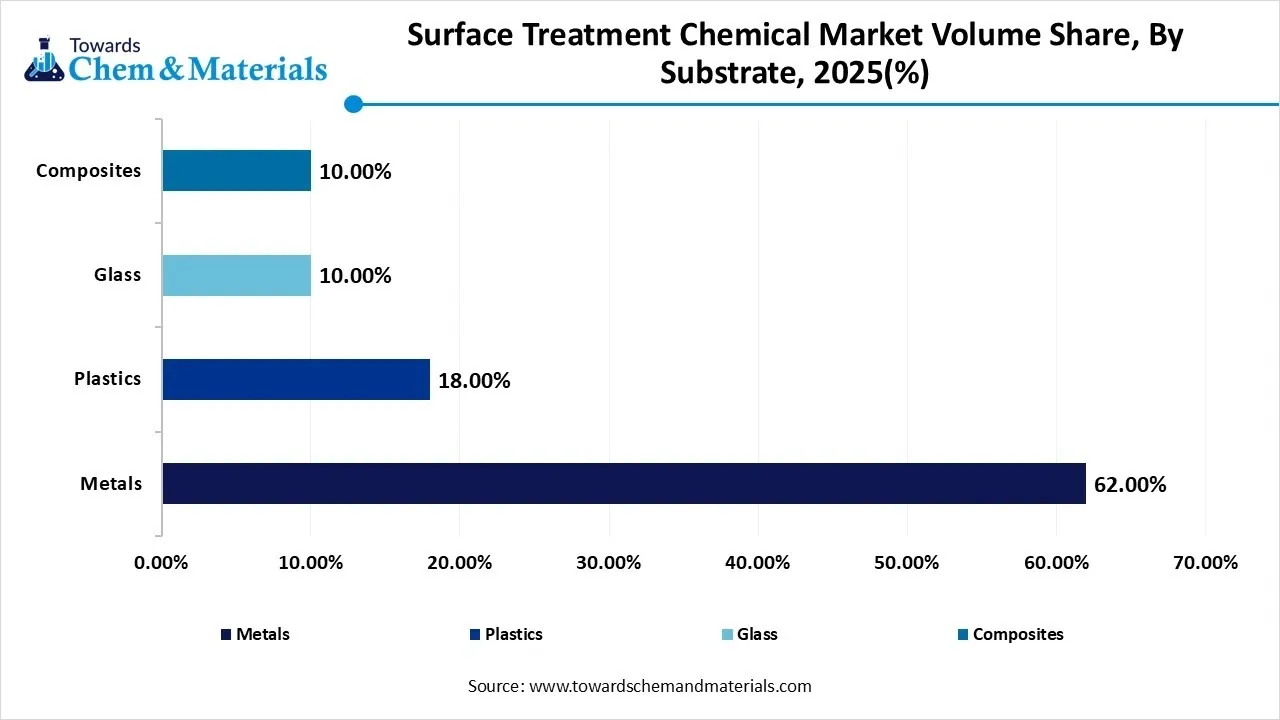 The plastics segment volume was valued at 468.02 kilo tons in 2025 and is projected to reach 1181.63 kilo tons by 2035, expanding at a CAGR of 10.84% during the forecast period from 2025 to 2035. Surface treatment chemicals for plastics are increasingly important as plastics replace metals in lightweight automotive components, electronics housings, and consumer products. Growth is supported by rising use of engineered plastics and composites, particularly in automotive and electronics applications requiring functional and decorative coatings.
Surface Treatment Chemicals Market Volume and Share, By Substrate, 2025-2035
| By Substrate | Market Volume Share (%), 2025 | Market Volume (Kilo Tons)2025 | Market Volume (Kilo Tons)2035 | CAGR(%) 2026-2035 | Market Volume Share (%), 2035 |
| Metals | 62.00% | 1612.08 | 3436.80 | 8.78% | 61.37% |
| Plastics | 18.00% | 468.02 | 1181.63 | 10.84% | 21.10% |
| Glass | 10.00% | 260.01 | 515.77 | 7.91% | 9.21% |
| Composites | 10.00% | 260.01 | 465.93 | 6.70% | 8.32% |
Process Type Insights
Which Process Type Segment Dominated The Surface Treatment Chemical Market In 2025?
The pretreatment segment dominated the market accounting for approximately 45% share in 2025. Pre-treatment processes represent a critical stage in surface treatment, preparing substrates for painting, plating, or coating operations. Increasing automation in manufacturing lines and rising quality standards across the automotive and electronics industries are driving consistent demand for advanced pre-treatment chemical solutions.
The electroplating & electroless plating segment is projected to grow at the fastest CAGR between 2026 and 2035 in the market. Electroplating and electroless processes are used to deposit protective or functional metal layers onto substrates, enhancing corrosion resistance, conductivity, and aesthetics. Growth is supported by expanding electronics manufacturing and increasing demand for high-performance surface finishes in industrial and consumer products.
End-User Insights
How Did the Automotive And Transportation Segment Dominated The Surface Treatment Chemical Market In 2025?
The automotive & transportation segment dominated the market accounting for approximately 32% share in 2025. The automotive and transportation sector is a major end user of surface treatment chemicals, driven by stringent corrosion protection standards and high aesthetic requirements. Rising electric vehicle production, increased use of aluminum and composites, and global vehicle manufacturing growth continue to support market expansion.
The electronics & electrical segment is projected to grow at the fastest CAGR between 2026 and 2035 in the market. Electronics and electrical applications rely heavily on surface treatment chemicals to ensure conductivity, corrosion resistance, and long-term reliability of components. Miniaturization trends and increased complexity of electronic components further drive the need for advanced, precision surface treatment chemical solutions.
Regional Insights
The Asia Pacific surface treatment chemical market size was valued at USD 3.64 billion in 2025 and is expected to be worth around USD 6.51 billion by 2035, exhibiting at a compound annual growth rate (CAGR) of 5.99% over the forecast period from 2026 to 2035.
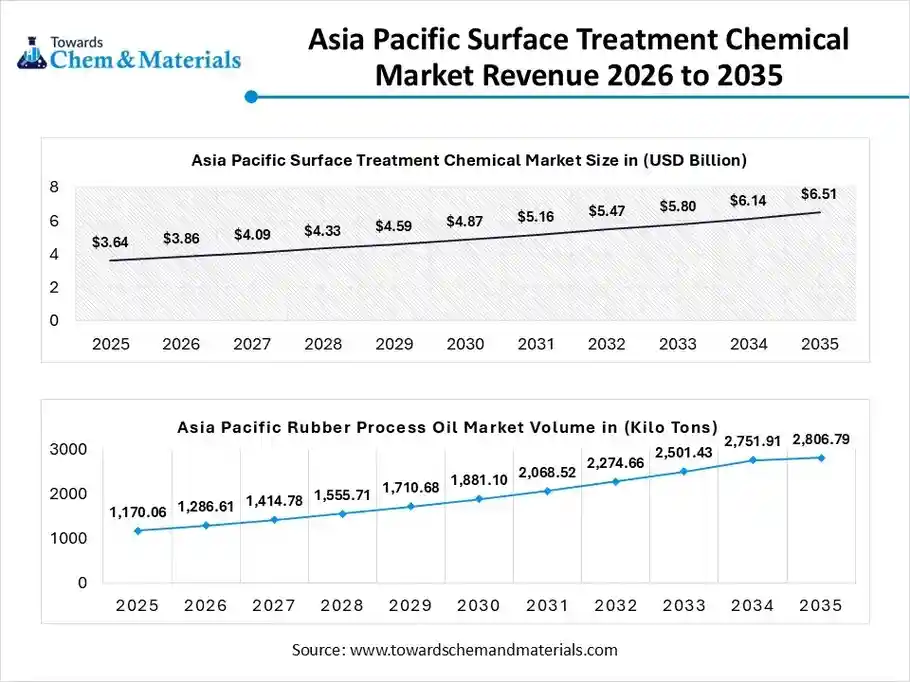
The Asia Pacific surface treatment chemical volume was estimated at 1,170.06 kilo tons in 2025 and is projected to reach 2,806.79 kilo tons by 2035, growing at a CAGR of 9.14% from 2026 to 2035. Asia Pacific dominated the market with a share of approximately 45% in 2025. Asia Pacific represents the largest market for surface treatment chemicals, driven by rapid industrialization, strong manufacturing bases, and expanding sectors. The region benefits from large-scale metal processing, electronics fabrication, and infrastructure development, which significantly increases demand. Cost-competitive production and favorable government manufacturing initiatives further support market growth.
China: Surface Treatment Chemical Market Growth Trends
China dominates the Asia Pacific market due to its extensive metal finishing, automotive manufacturing, electronics assembly, and heavy industrial activities. The country has a strong presence of electroplating, anodizing, and coating facilities supporting export-oriented manufacturing. Strict environmental regulations are also driving the adoption of low-VOC, water-based, and environmentally compliant surface treatment formulations.
Europe Surface Treatment Chemical Market Growth Is Driven By Growing Manufacturing Units
The Europe surface treatment chemical volume was estimated at 598.03 kilo tons in 2025 and is projected to reach 1126.75 kilo tons by 2035, growing at a CAGR of 7.29% from 2026 to 2035. Europe is expected to have fastest growth in the market in the forecast period between 2026 and 2035. Europe represents a technologically advanced and regulation-intensive market for surface treatment chemicals. Strong automotive manufacturing, industrial equipment production, and renewable energy infrastructure drive consistent demand. European markets are emphasizing sustainability, worker safety, and environmental compliance, leading to an increased use of chromium-free, low-emission, and water-based surface treatment chemicals.
Germany: Surface Treatment Chemical Market Growth Trends
Germany is the largest contributor to the European surface treatment chemical market, supported by its globally competitive automotive, engineering, and metal processing industries. The country focuses heavily on precision surface finishing, corrosion protection, and high-performance coatings. Strong industrial standards and environmental regulations encourage innovation in sustainable and high-efficiency chemical formulations.
Surface Treatment Chemicals Market Volume and Share, By Region, 2025-2035
| By Region | Market Volume Share (%), 2025 | Market Volume (Kilo Tons)2025 | Market Volume (Kilo Tons)2035 | CAGR(%) 2026-2035 | Market Volume Share (%), 2035 |
| North America | 19.67% | 511.45 | 1070.18 | 8.55% | 19.11% |
| Europe | 23.00% | 598.03 | 1126.75 | 7.29% | 20.12% |
| Asia Pacific | 45.00% | 1170.06 | 2806.79 | 10.21% | 50.12% |
| South America | 7.23% | 187.99 | 366.81 | 7.71% | 6.55% |
| Middle East & Africa | 5.10% | 132.61 | 229.61 | 6.29% | 4.10% |
Recent Developments
- In October 2025, Chemetall, BASF Coatings' surface treatment unit, introduced Gardolene D, a chromium-free and fluoride-free passivation solution for copper foils globally. A partnership with Londian Wason was announced to implement this technology in China.(Source: www.indianchemicalnews.com)
- In September 2025, Azelis and Chemetall, a BASF business unit, expanded their distribution agreement to cover surface treatment products in Southeast Asia. This partnership includes Malaysia, Thailand, Vietnam, the Philippines, and Indonesia, aiming to enhance Azelis's market presence and provide Chemetall with wider access to its surface treatment technologies.(Source: www.indianchemicalnews.com)
Top players in the Surface Treatment Chemical Market & Their Offerings:
- Nihon Parkerizing Co., Ltd.: Specialized in phosphate and passivation chemistries, Nihon Parkerizing supplies surface treatment solutions for corrosion resistance and paint adhesion, particularly for automotive and industrial applications.
- Atotech / MKS: Atotech (an MKS company) is a key provider of electroplating and surface treatment chemicals, offering plating baths, cleaners, passivating agents, and corrosion protection systems used in electronics, automotive, and decorative metal finishes.
- Akzo Nobel N.V.: Akzo Nobel offers surface treatment and finishing chemistries alongside its coatings portfolio, including cleaners, conversion coatings, and pre-treatment systems designed to improve corrosion resistance and coating adhesion.
- BASF SE
- The Sherwin-Williams Company
- Quaker Chemical Corporation
- Henkel AG & Co. KGaA
- PPG Industries, Inc.
- Axalta Coating Systems
- sElement Solutions Inc.
- Solvay S.A.
- Nippon Paint Holdings
- Chemetall
- Coventya
- MacDermid Enthone
- Okuno Chemical Industries
- JCU Corporation
- Aalberts Surface Technologies
- NOF Corporation
Segments Covered
By Chemical Type
- Cleaners & Degreasers
- Conversion Coatings
- Plating Chemicals
- Anodizing Chemicals
- Others (Pickling, Passivation, Sealers)
By Substrate Type
- Metals
- Plastics
- Glass
- Composites
By Process Type
- Pretreatment Processes
- Electroplating & Electroless Plating
- Anodizing
- Post-treatment & Finishing
By End-User Industry
- Automotive & Transportation
- Industrial Machinery & Equipment
- Aerospace & Defense
- Construction
- Electronics & Electrical
- Others
By Regions
- North America
- U.S.
- Canada
- Mexico
- Europe
- Germany
- UK
- France
- Italy
- Spain
- Asia Pacific
- China
- India
- Japan
- South Korea
- Latin America
- Brazil
- Argentina
- Middle East & Africa
- Saudi Arabia
- South Africa
A Seven-Phase Framework
Our methodology is designed to be universally applicable across commodity chemicals, specialty chemicals, petrochemicals, construction chemicals, coatings, electronic chemicals, industrial gases, agrochemicals, water treatment chemicals, and performance materials. Each phase builds upon the last, creating a layered validation structure that minimizes estimation error and maximizes analytical confidence.
The framework ensures comprehensive market coverage, robust cross-validation, and reliable long-term forecasting — producing market estimates that withstand scrutiny from investors, regulators, and corporate strategy teams.

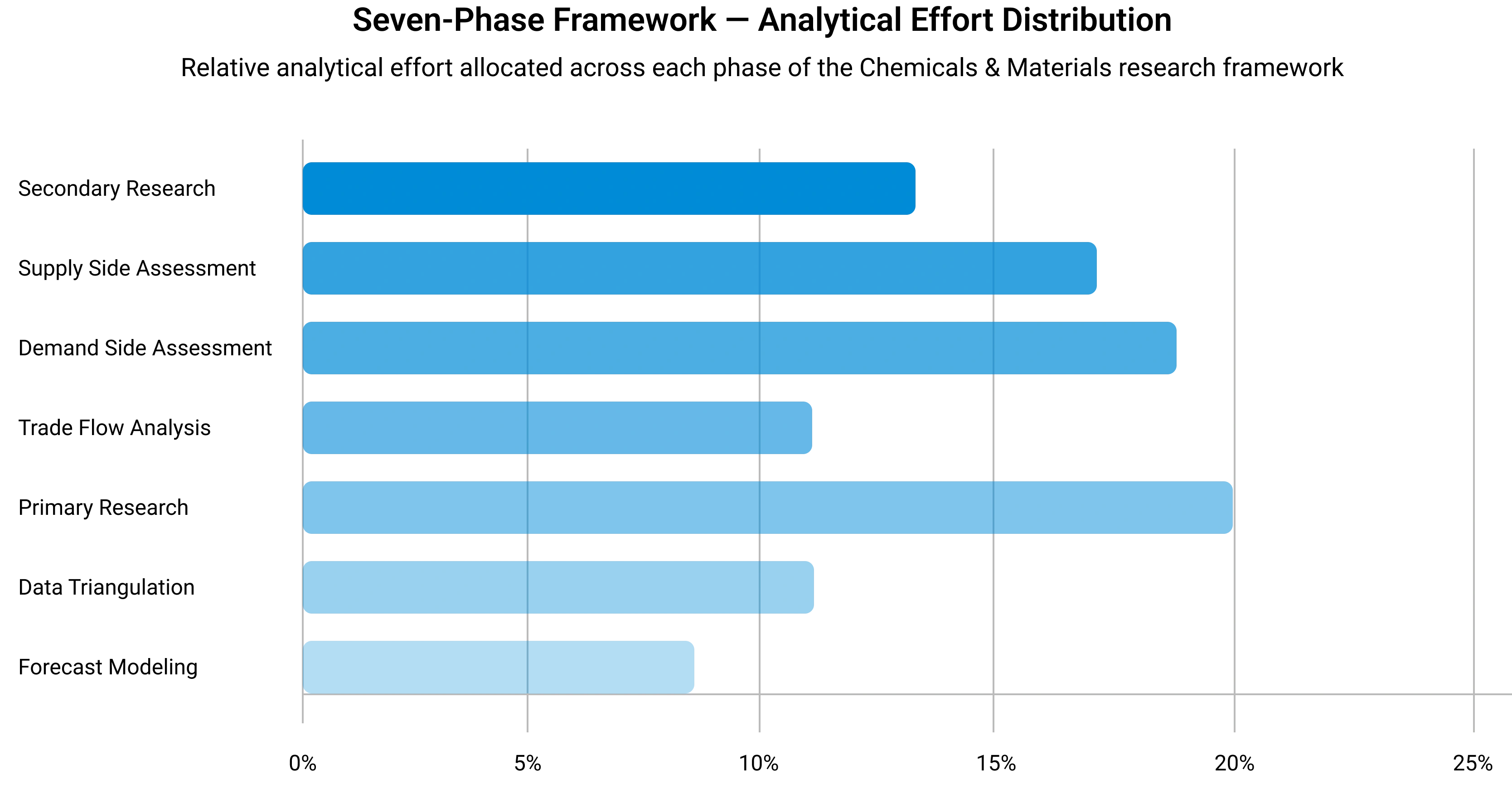
Seven-Phase Framework — Analytical Effort Distribution
Relative analytical effort allocated across each phase of the Chemicals & Materials research framework
Phase 1 - Secondary Research: Establishing the Foundation
Secondary research collects and evaluates publicly available information from authoritative sources, establishing the foundational understanding of market structure, value chain dynamics, competitive landscape, and end-use demand patterns. Every source is evaluated for credibility, recency, geographic relevance, and methodological soundness before inclusion.
Industry Associations
Sources include ACC, CEFIC, ICCA, JCIA, CPCIF, and SOCMA providing production volumes, consumption trends, capacity developments, and sustainability initiatives.
Company Disclosures
Annual reports, investor presentations, earnings transcripts, and regulatory filings reveal product portfolios, manufacturing footprints, capacity expansions, and revenue segmentation.
Government Databases
National statistical offices, customs authorities, environmental agencies, and industrial production databases provide verified statistics on output, trade flows, and regulatory compliance.
Trade Databases
UN Comtrade, ITC, Eurostat, and national customs authorities enable assessment of global product movement, import dependency, and export competitiveness across regions.
Our Secondary Research Sources
- Ministry of Chemicals and Fertilizers
- European Chemicals Agency
- United States Department of Energy
- Ministry of Industry and Information Technology
- Ministry of Economy Trade and Industry
- Ministry of Trade Industry and Energy
- National Institute of Standards and Technology
- Council of Scientific and Industrial Research
- Fraunhofer Society
- National Institute for Materials Science
Phase 2 — Supply-Side Assessment: Mapping Production Capabilities
Production Capacity Analysis
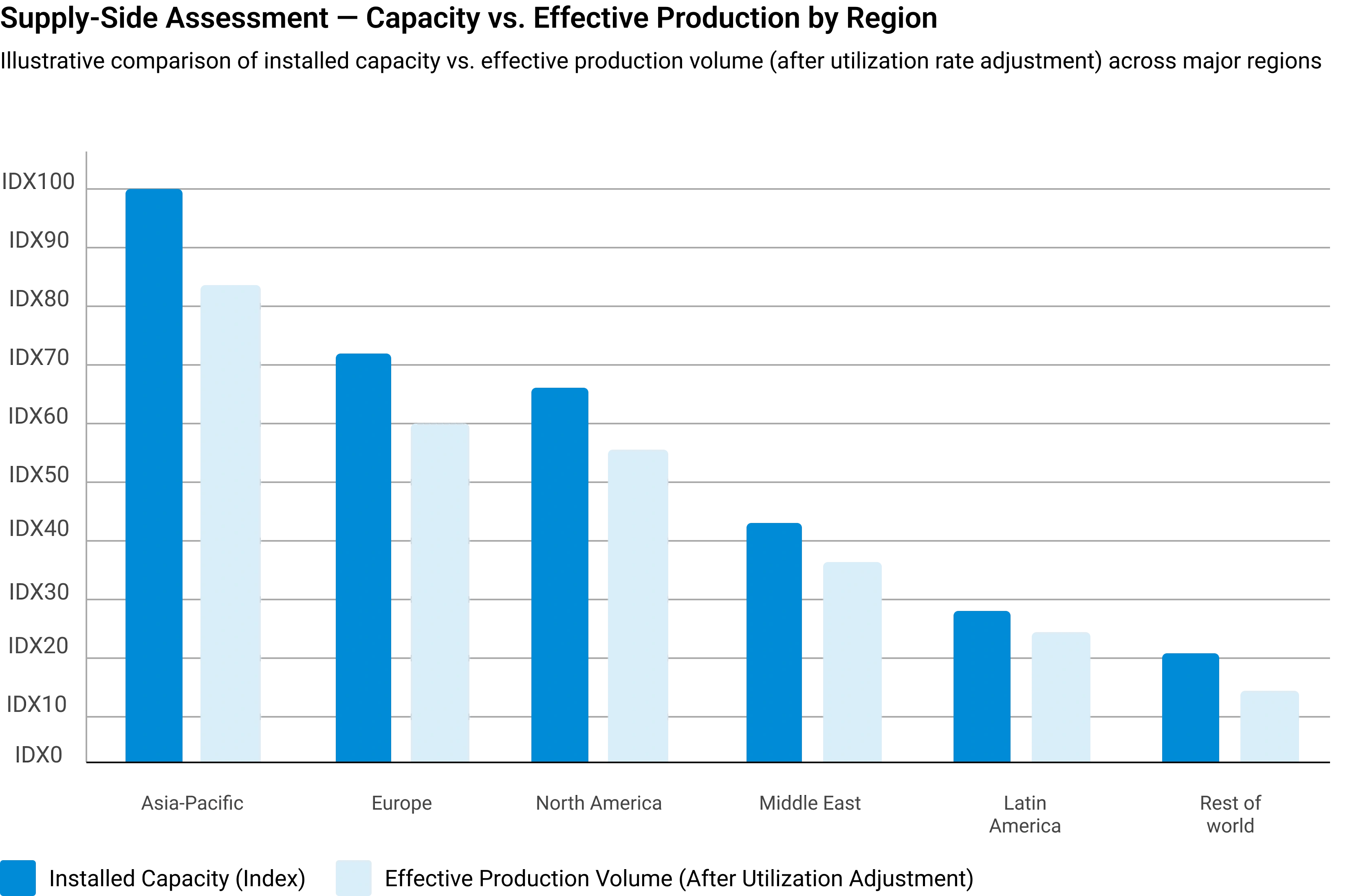
All major manufacturers are assessed for existing installed capacity, planned additions, expansions, new plant announcements, and technology adoption — mapped at global, regional, and country levels.
Capacity Utilization Adjustment
Installed capacity is adjusted using utilization rates based on demand conditions, feedstock availability, plant operating rates, maintenance schedules, and regulatory restrictions.
Manufacturer Revenue Analysis
Product-specific revenues, segment-level performance, regional distribution, average selling prices, and margin trends are evaluated to establish market value estimates.
Supply-Side Assessment — Capacity vs. Effective Production by Region
Illustrative comparison of installed capacity vs. effective production volume (after utilization rate adjustment) across major regions
Phase 3 — Demand-Side Assessment: Quantifying Chemical Consumption
Demand-side analysis quantifies chemical consumption across industries, applications, and geographies — identifying where and how chemicals are consumed throughout the value chain with precision.
End-Use Industry Analysis
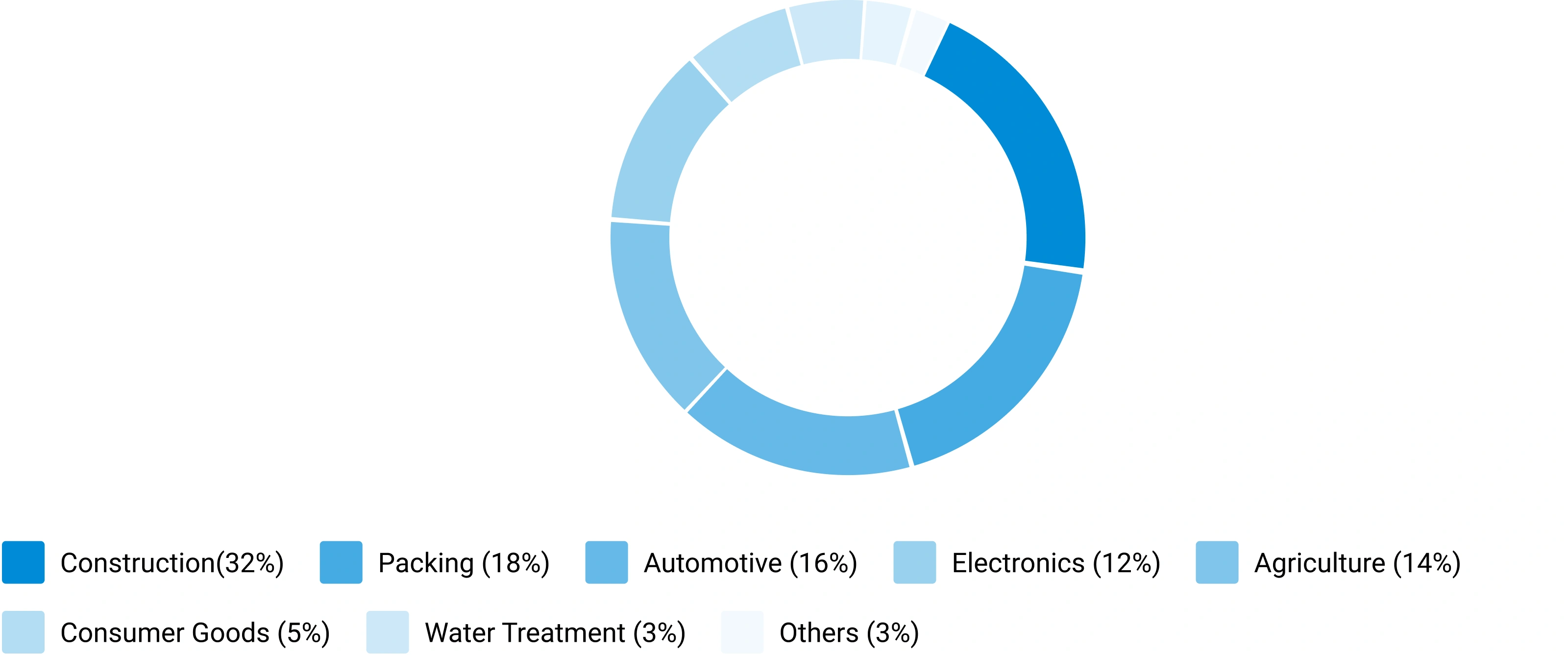
Chemical demand is evaluated across automotive, construction, packaging, electronics, agriculture, healthcare, consumer goods, industrial manufacturing, energy and utilities, and water treatment. Industry output, production trends, and consumption intensity are analyzed to determine demand patterns.
Consumption Modeling
Demand is estimated using measurable indicators: kilograms per vehicle, kilograms per square meter of construction, dosage per cubic meter of water treated, kilograms per hectare of agricultural land, and kilograms per ton of manufactured products. Consumption factors are validated through industry publications and primary interviews.
Application Analysis
The market is segmented by application area to understand product performance requirements, formulation trends, technology adoption, customer preferences, and regulatory requirements improving demand accuracy and segmentation granularity.
Demand-Side Assessment — End-Use Industry Demand Distribution
Illustrative distribution of chemical & materials demand across key end-use industries
Phase 4 - Trade Flow Analysis: Balancing Regional Supply and Demand
Trade flow analysis reconciles regional supply and demand estimates through import and export data, identifying net supply positions, regional dependencies, and market imbalances. It serves as an independent validation layer that tests the consistency of supply-side and demand-side estimates.
Import Analysis
Import data is evaluated to determine volumes, source countries, product dependency, regional supply gaps, and pricing trends — identifying markets that rely heavily on external supply and where domestic production is insufficient to meet demand.
Export Analysis
Export assessments reveal production surplus, export competitiveness, regional manufacturing strength, and global market participation. Export patterns also help validate domestic production estimates and identify net exporting regions.
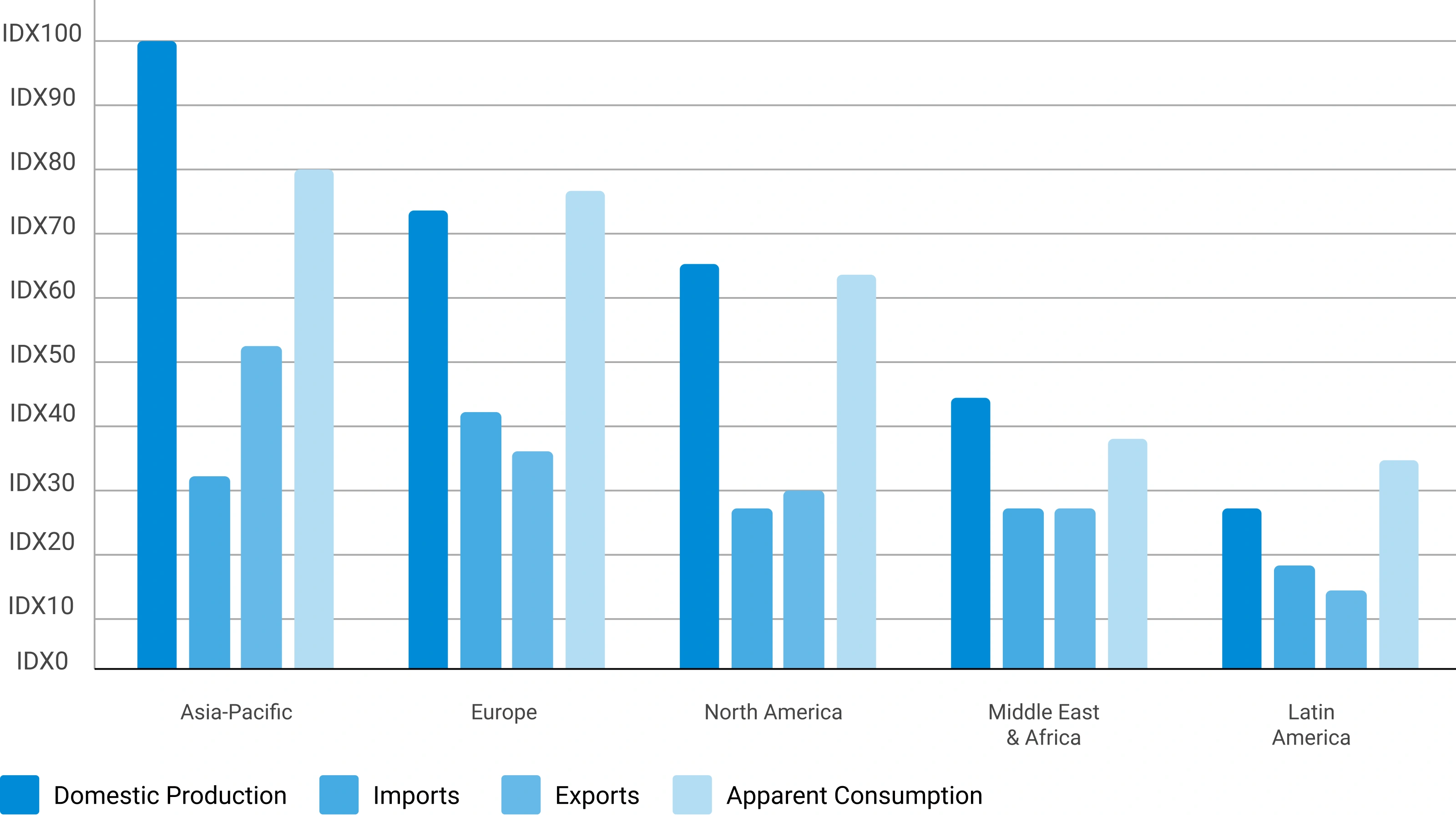
Apparent Consumption Model
Regional consumption is assessed using the standard apparent consumption formula:
Results identify net importing regions, net exporting regions, regional deficits, and surpluses — serving as an independent validation of supply and demand estimates.
Trade Flow Analysis — Net Supply Position by Region
Illustrative apparent consumption vs. domestic production across major regions — positive gap indicates net import dependency
Phase 5 — Primary Research: The Critical Validation Layer
Primary research tests and refines findings from secondary research through direct engagement with industry participants across the supply chain, demand side, and expert community. It captures intelligence that no database or published report can provide — the real-world experience of manufacturers, buyers, and specialists operating in the market.

Supply-Side Interviews
Conversations with chemical manufacturers, raw material suppliers, contract manufacturers, technology providers, and plant operators cover production trends, capacity utilization, pricing developments, technology shifts, and competitive dynamics.

Demand-Side Interviews
Engagement with OEMs, industrial consumers, procurement managers, distributors, formulators, and end-use manufacturers focuses on consumption trends, purchasing behavior, product substitution, demand outlook, and emerging applications.

Industry Expert Consultations
Additional interviews with industry consultants, independent experts, regulatory specialists, technical professionals, and research institutions provide deeper market context and validate key analytical assumptions.
Focus Areas of Primary Research:
Market Size & Forecast Validation
Revenue estimates, volume consumption, growth rates, forecast assumptions, regional demand.Supply Chain & Value Chain Assessment
Raw material sourcing, supply chain challenges, distribution networks, procurement practices.Production & Capacity Analysis
Manufacturing capacity, utilization rates, expansion projects, plant investments.Pricing & Cost Structure Analysis
Product pricing trends, feedstock costs, energy costs, margin pressures, pricing outlook.Competitive Landscape Assessment
Volume and value estimates confirmed to be fully consistent with one another before publicationInterview Volume by Market Scope
| Study Scope | Number of Interviews |
|---|---|
| Niche Market | 20 – 30 |
| Mid-Sized Market | 30 – 50 |
| Global Market | 50 – 80 |
| Highly Fragmented Market | 80 – 120 |
Interview Details:
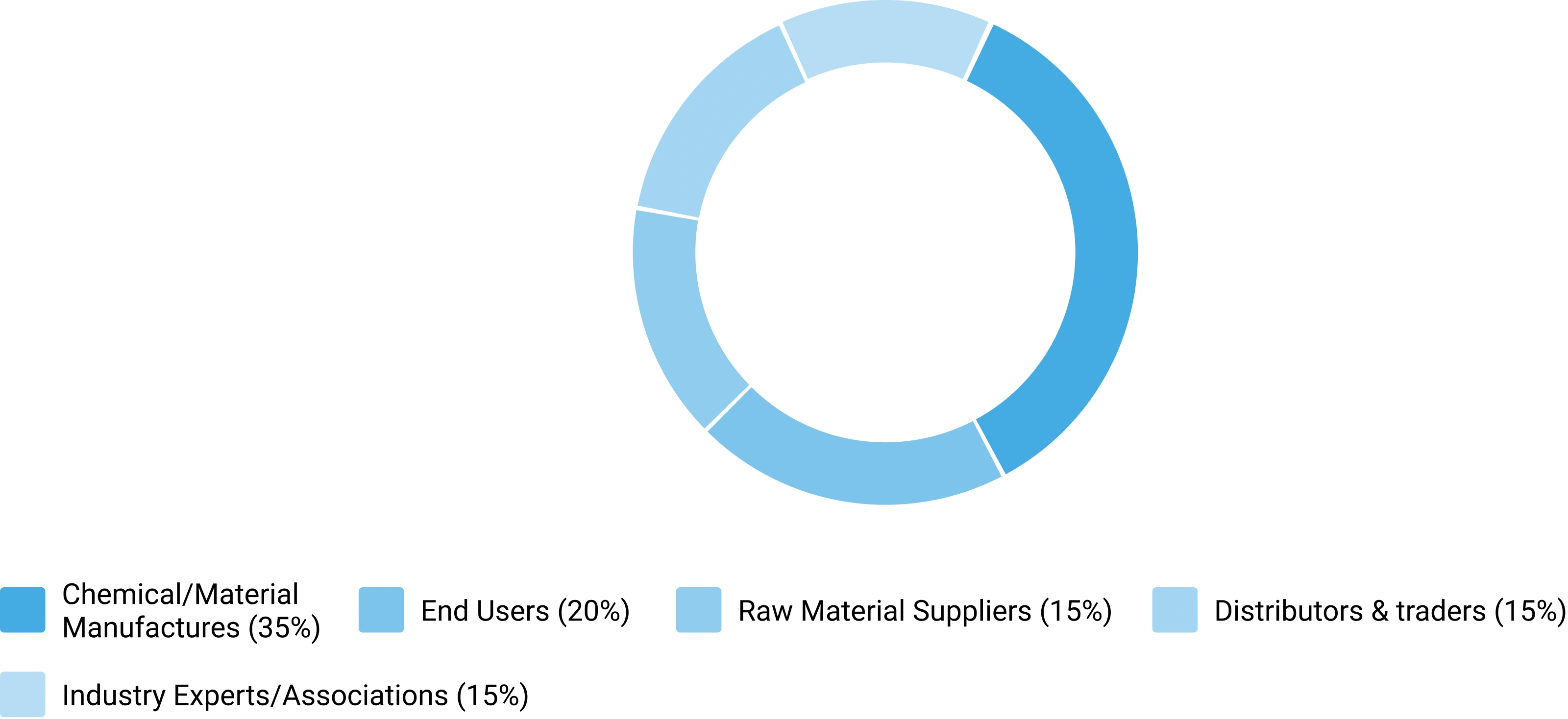
Category : Manufacturers, Suppliers, Distributors, End Users, Experts/Associations
Average Duration : 30–60 Minutes
Interview Mode : Video calls, telephonic interviews, expert consultations
Interview Format : Structured / Semi-Structured questionnaire
Focus Areas of Primary Research:
Market Size & Forecast Validation :
Revenue estimates, volume consumption, growth rates, forecast assumptions, regional demand.
Supply Chain & Value Chain Assessment :
Raw material sourcing, supply chain challenges, distribution networks, procurement practices.
Production & Capacity Analysis :
Manufacturing capacity, utilization rates, expansion projects, plant investments.
Pricing & Cost Structure Analysis :
Product pricing trends, feedstock costs, energy costs, margin pressures, pricing outlook.
Competitive Landscape Assessment :
Market share, competitor positioning, strategic initiatives, partnerships, acquisitions.
Primary Research — Stakeholder Coverage by Category
Distribution of interview respondents across stakeholder categories (% share from PPT data)
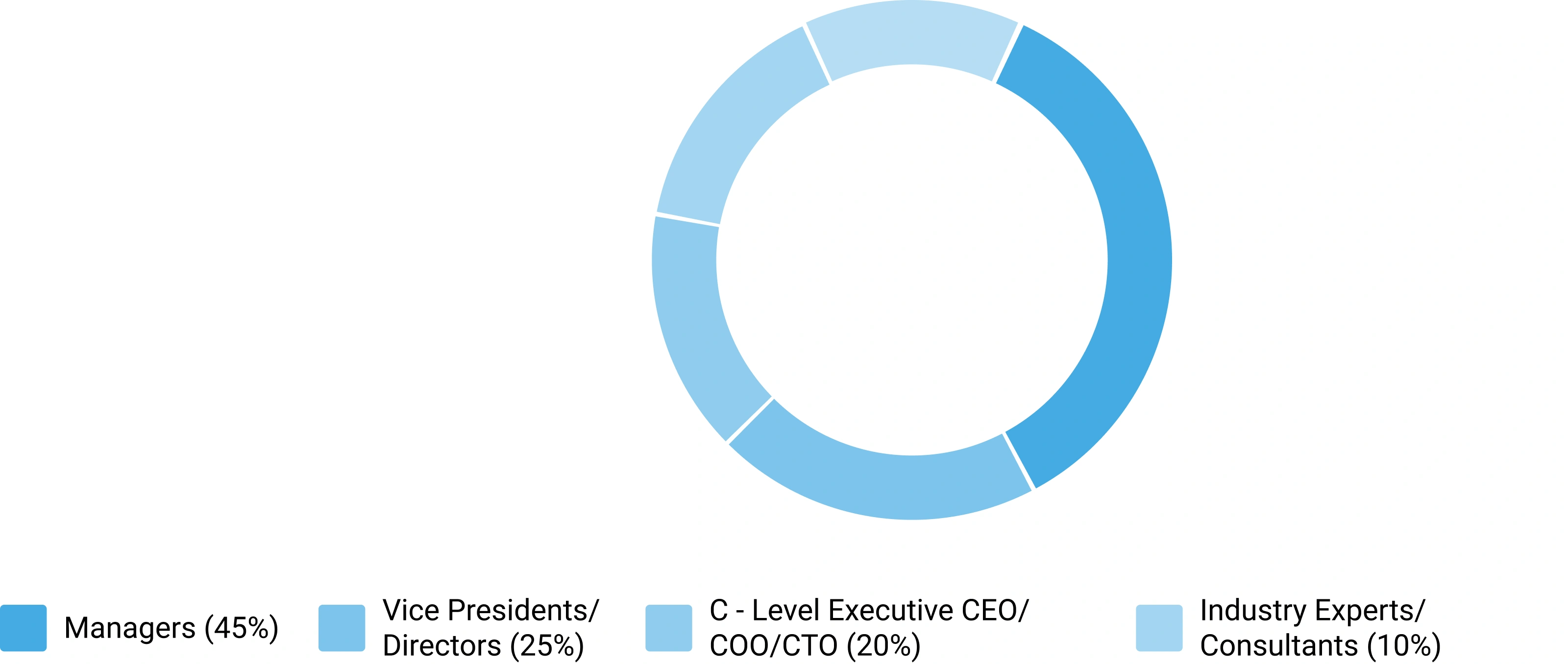
Primary Research — Respondent Designation Profile
Seniority breakdown of interview respondents (% share from PPT data)
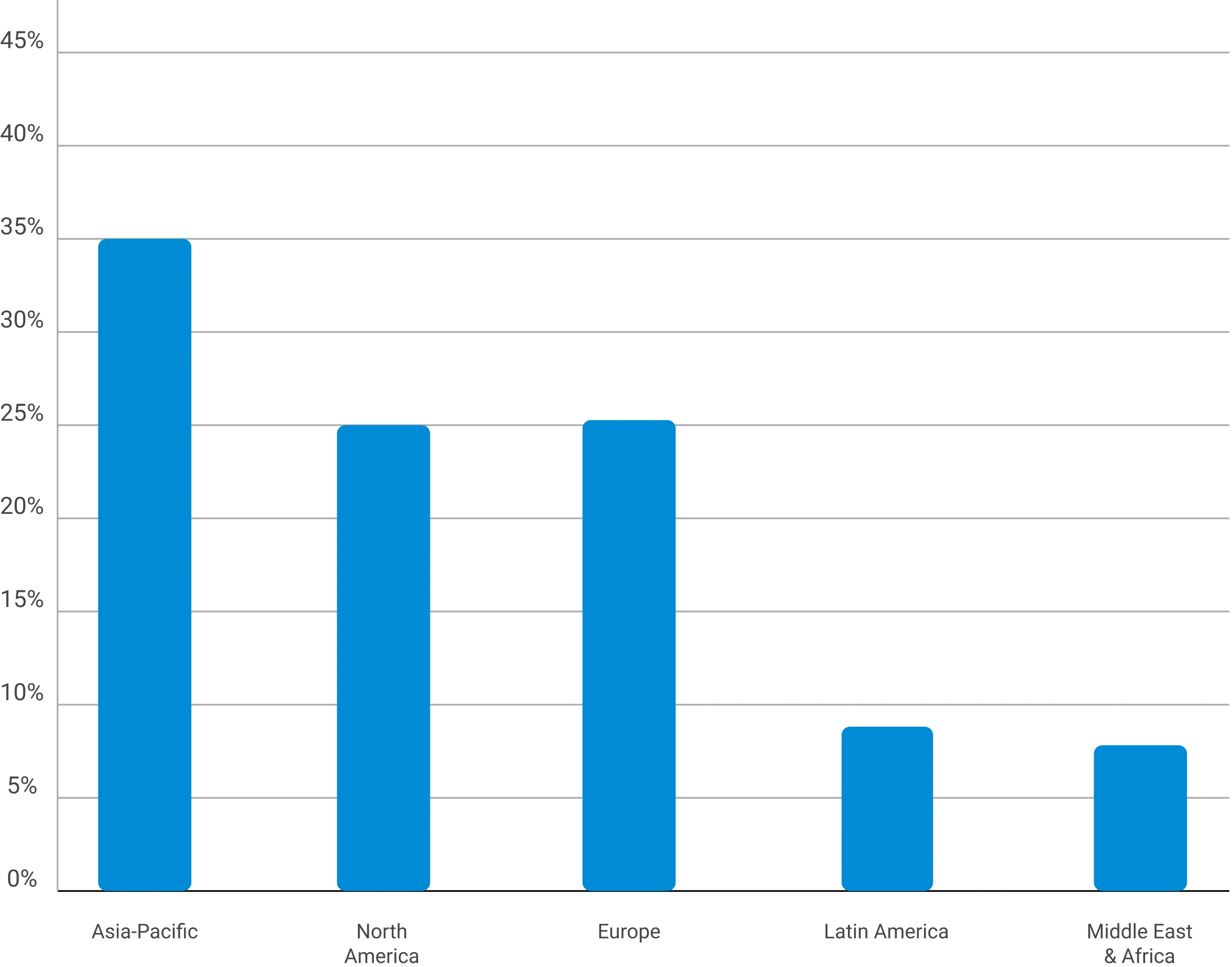
Primary Research — Geographic Coverage of Interviews
Regional distribution of primary research engagement (% share from PPT data)
Phase 6 — Data Triangulation and Market Validation
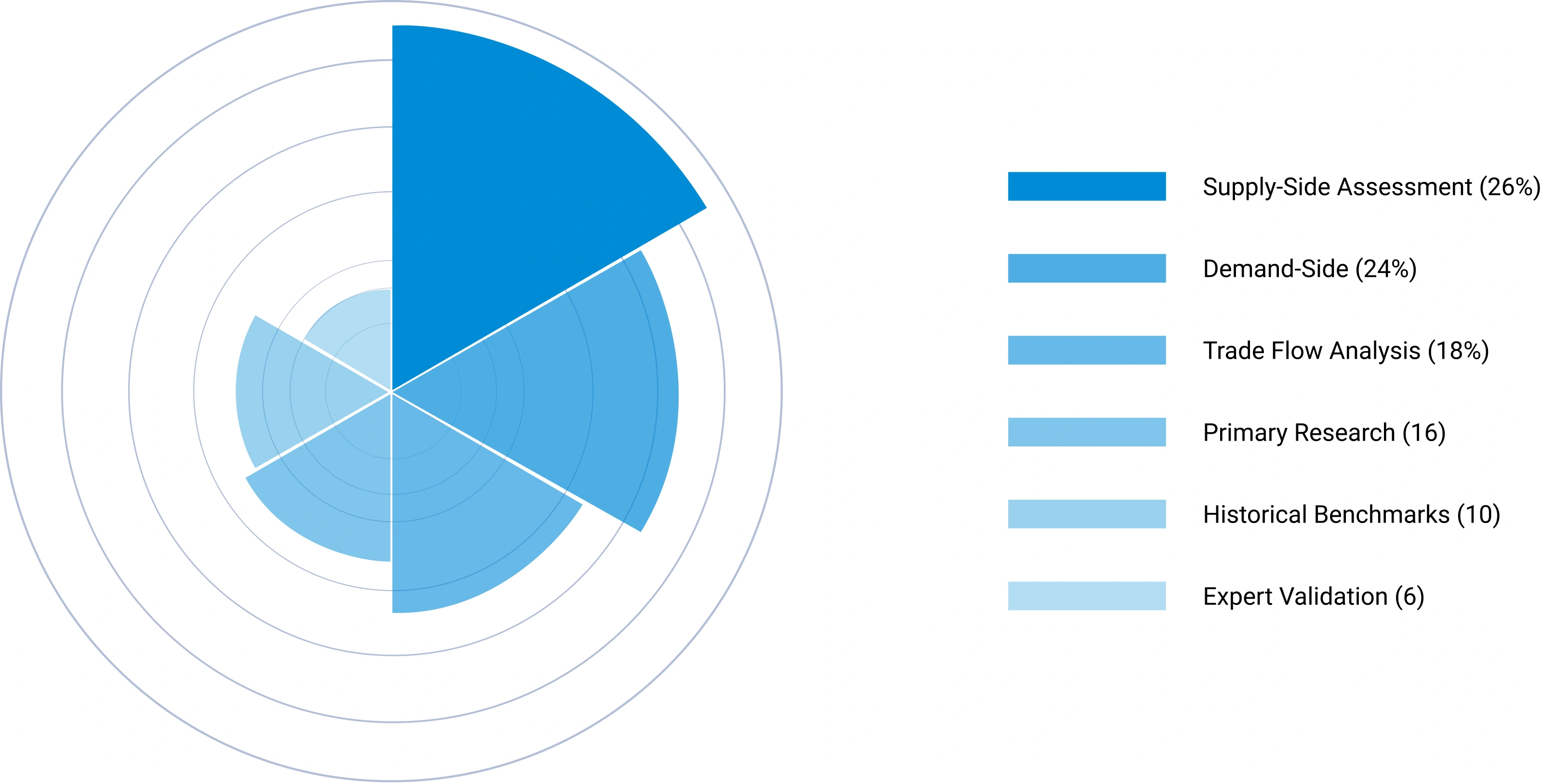
No single methodology is relied upon in isolation. Multiple independent estimation approaches are combined and reconciled to ensure consistency, accuracy, and analytical defensibility. Any material deviations between approaches are investigated and adjusted through additional validation cycles.
The final market size is derived through weighted triangulation of all validated methodologies. Any material deviations between approaches are investigated and adjusted through additional validation cycles. The outcome represents the most realistic assessment of the market based on available evidence and expert confirmation ensuring that volume and value estimates are fully consistent with one another.
Triangulation Framework — Input Contribution Weight
Relative weight each sizing input contributes to the final reconciled market estimate
Phase 7 — Forecast Modeling: Projecting Future Market Evolution
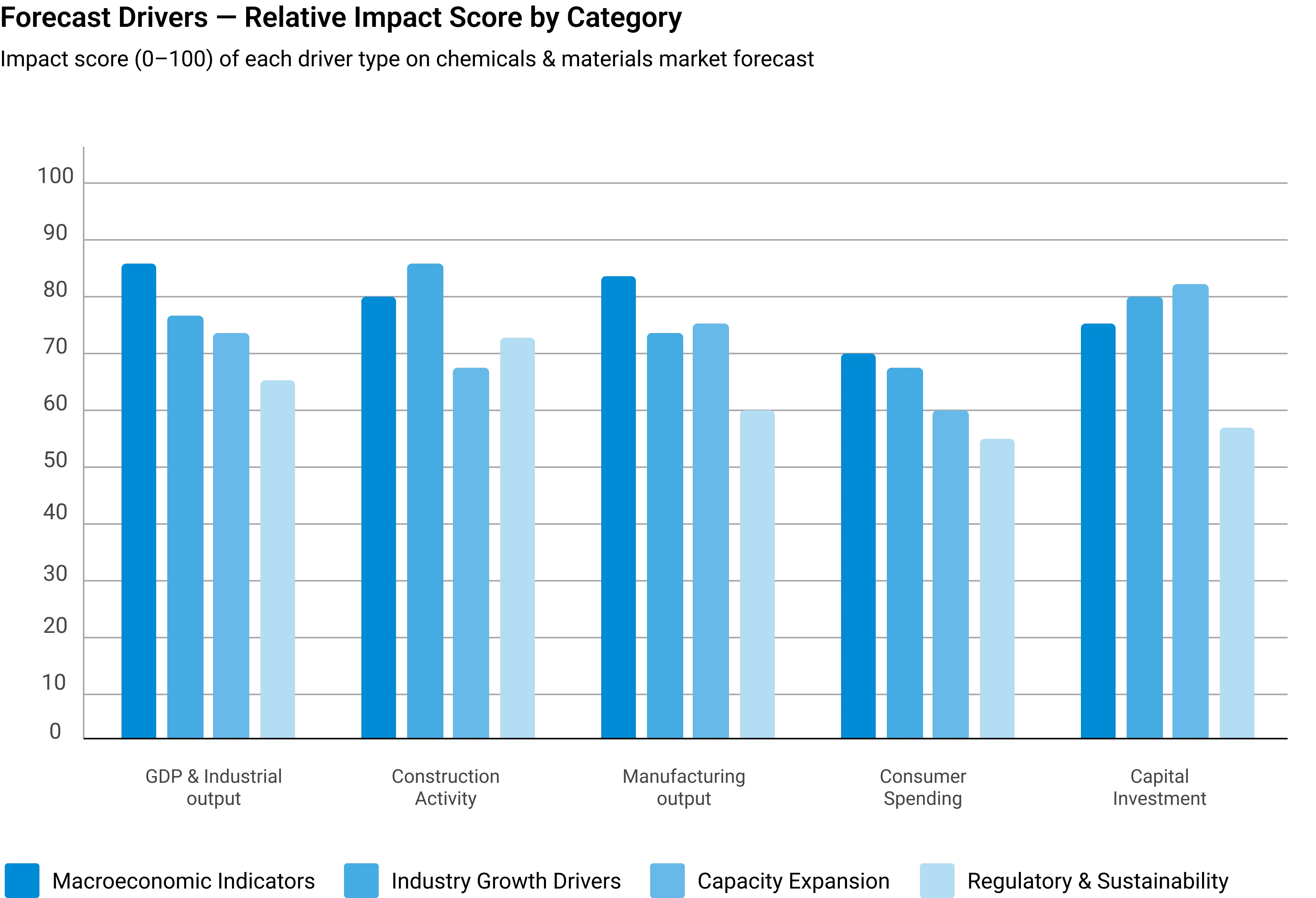
Forecasting evaluates the future trajectory of the market using a combination of quantitative indicators and qualitative assessments across economic, industry, and regulatory dimensions. Rather than simple extrapolation, each driver is independently modeled and integrated into a composite forecast.
Macroeconomic Indicators
GDP growth, industrial production, manufacturing output, construction activity, consumer spending, and capital investment form the quantitative foundation of long-term demand projections. These are applied at country, regional, and global levels.
Industry Growth Drivers
Urbanization, infrastructure development, industrialization, technological innovation, sustainability initiatives, and evolving product performance requirements are assessed at regional and industry levels — capturing both structural and cyclical demand drivers.
Capacity Expansion Analysis
Announced plant expansions, new manufacturing facilities, technology upgrades, and strategic investments are evaluated to determine future supply-demand dynamics and potential market tightness or oversupply situations.
Regulatory & Sustainability
Environmental regulations, chemical safety standards, emission reduction targets, circular economy initiatives, and sustainability requirements are incorporated as they often influence product adoption rates and market growth trajectories.
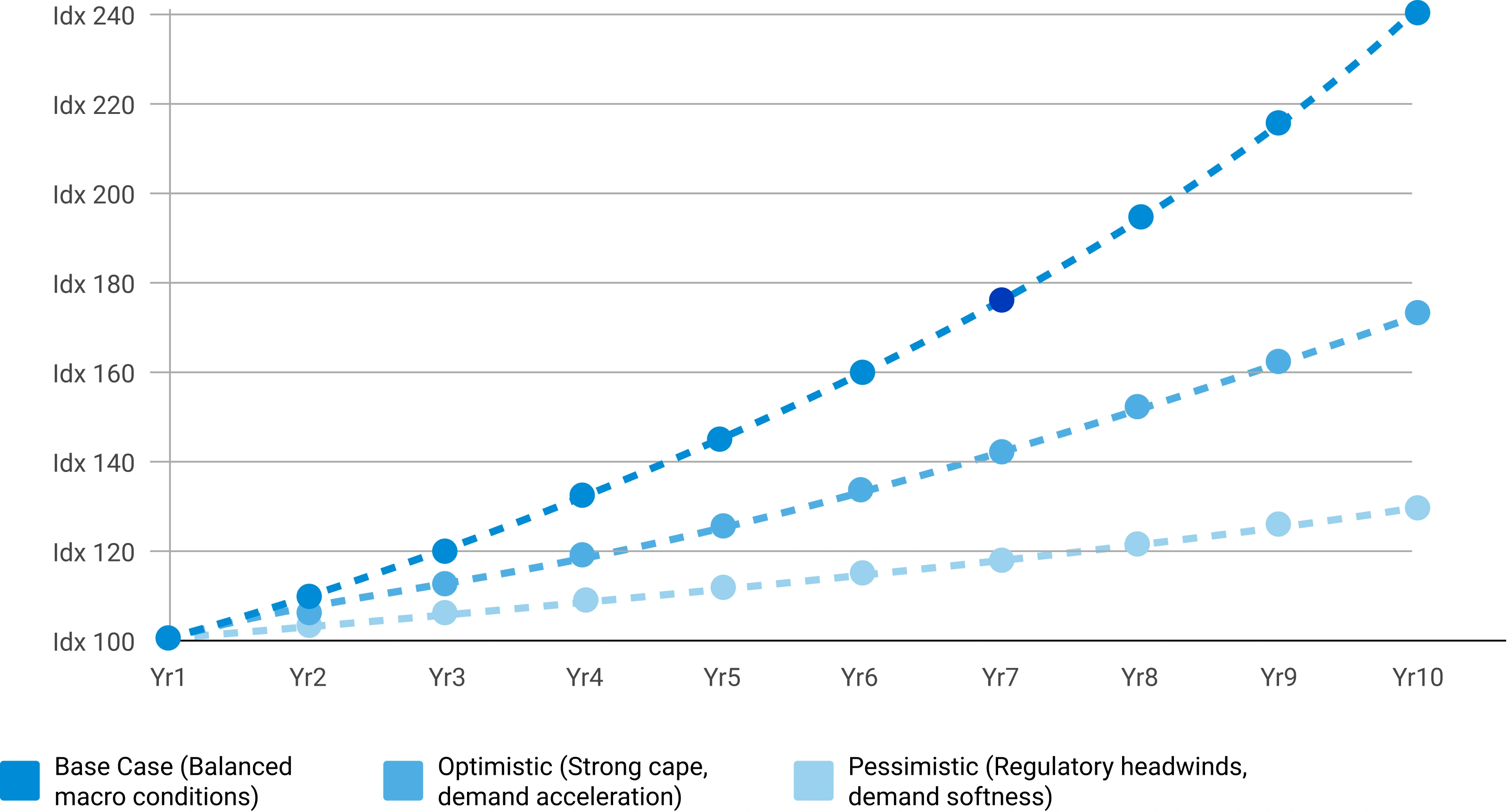
Scenario Forecast Range — Indexed Market Growth (Year 1–10)
Illustrative indexed growth trajectories across Base, Optimistic, and Pessimistic scenarios over a 10-year forecast horizon
Forecast Drivers — Relative Impact Score by Category
Impact score (0–100) of each driver type on chemicals & materials market forecast



Comments
Share your thoughts, ask a question, or provide feedback about this report.