
Asia-Pacific Bioplastic Construction Materials Market Size Analysis Report 2035
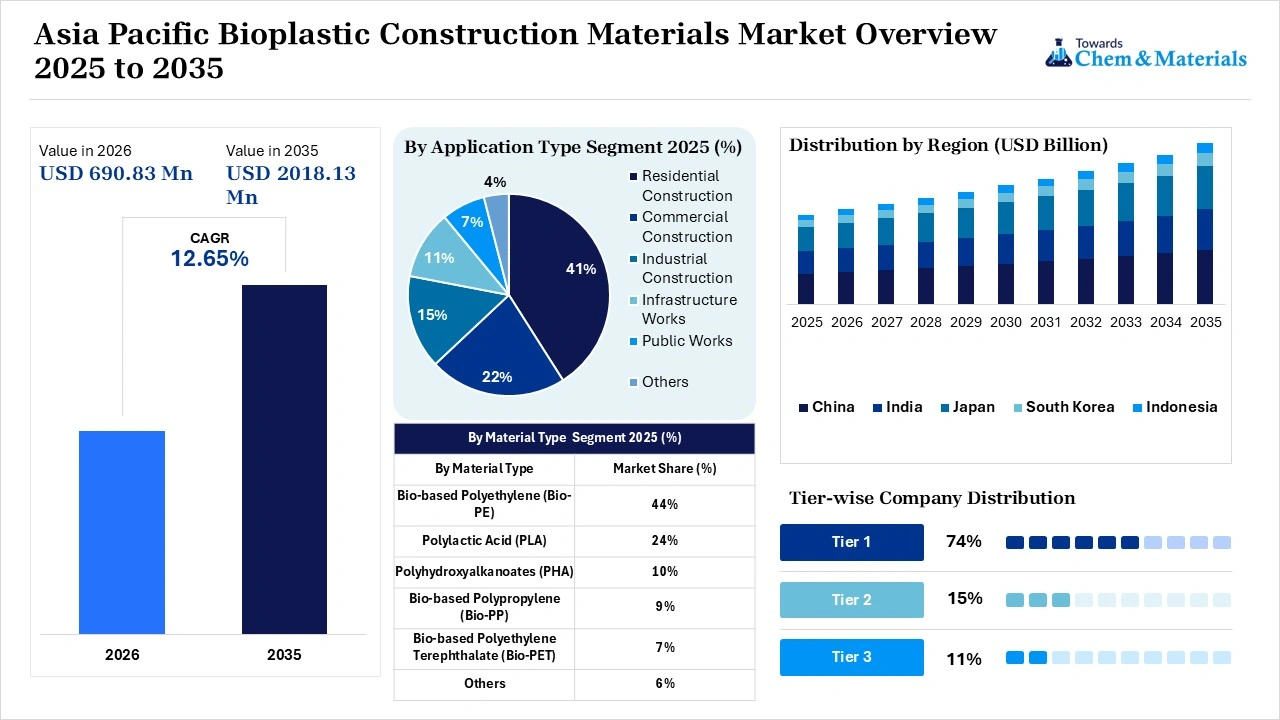
The Asia-Pacific bioplastic construction materials market is estimated to be valued at USD 613.25 million in 2025 and is expected to reach USD 2,018.13 million by 2035. Growth is backed by tougher environmental laws, plenty of agricultural feedstocks, and rising corporate sustainability commitments. An increasing number of construction companies are investigating bio-based insulation, structural elements, and modular and temporary structures. Blends of advanced PLA have stronger material properties and higher heat resistance for use in construction. Lignocellulosic sugar platforms are able to turn by-products from pulp mills and wood waste into biopolymers without competing with food crops.
Market Highlights
- China dominated the Asia-Pacific bioplastic construction materials market by holding a 48.28% share in 2025.
Japan held a 15.17% market share in 2025. - By material, the bio-based polyethylene (Bio-PE) segment dominated the market with the largest share of 43.56% in 2025 and is expected to grow at a CAGR of 12.2% during the forecast period.
- By material, the polylactic acid (PLA) segment held 24.18% market share in 2025 and is expected to grow at the fastest CAGR of 14.4% over the forecast period.
- By application, the residential construction segment dominated the market with the largest share of 40.8% in 2025 and is expected to grow at a CAGR of 12.4% during the forecast period.
- By application, the infrastructure works segment held 10.7% market share in 2025 and is expected to grow at the fastest CAGR of 14.1% over the forecast period.
According to Towards Chemicals and Materials Analytics and Consulting, the Asia Pacific Bioplastic Construction Materials Market volume was valued at 0.39 million tons in 2025 and is expected to surpass around 1.13 million tons by 2035, accelerating a compound annual growth rate (CAGR) of 12.45% over the forecast period from 2026 to 2035.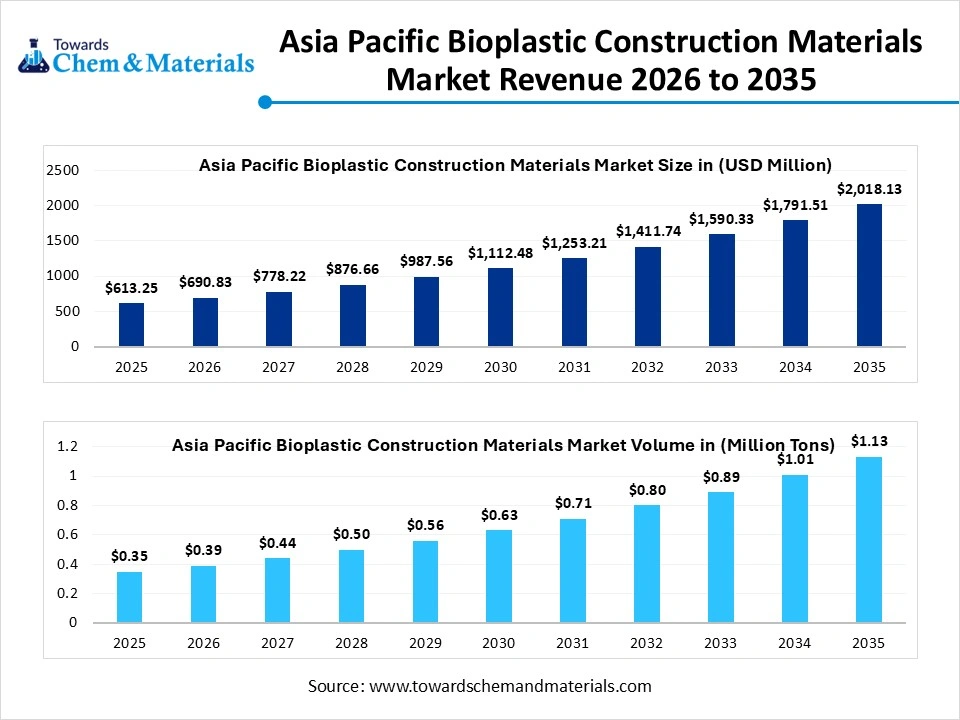
The Asia-Pacific bioplastic construction materials market is growing rapidly due to the use of environmentally friendly and low-carbon building materials in the construction industry. Market opportunities are enhanced by government regulations, renewable feedstocks, corporate sustainability targets, and green-certified buildings. As material demand grows, the use of bio-based polyethylene is now the market leader, with PLA showing greater appeal with emerging construction applications. The largest application is residential buildings, with green building and lightweight modular architecture following. China continues to be the regions growth market, and India is expected to show robust country-level growth. Localized production hubs are further improving regional supply and manufacturing capabilities.
Global Investment Movement for the Asia-Pacific Bioplastic Construction Materials Market
The agricultural products and other biomass sources, such as sugarcane by-products and cassava by-products, are becoming the focus of investment for the production of bio-PE and PLA. These investments help to increase the supply of renewable feedstock and will help to expand bioplastic production in the region. National investment institutions are approving and fast-tracking green polymer plants that are on board with the overall sustainability and net-zero agenda. The government provides incentives to spur investments in manufacturing and enhances the environment for local production of bioplastics as construction materials.
Project funds are being channeled into bio-based insulation, structural elements, and low-carbon modular construction elements by private developers and municipal planners. The rise in demand for sustainable material alternatives in the construction sector is a result of this investment move.
More resin compounders and chemical companies are working together to ensure that bio-derived formulations are compatible with existing manufacturing and recycling equipment. These collaborations help with formulation development and with connection to existing industrial production systems.
Market Trends
- Bio-based polyethylene will continue to dominate the market due to its strength and ability to be processed in the same manner as traditional PE. Its proven processing properties will continue to drive its uptake for different construction-material applications.
- The applications that are driving the growth of the fastest-growing material segment, polylactic acid, include insulation, sealants, modular components, and other lightweight construction material requirements. It has a growing base of applications and can be used for more in the future.
- The major application segment is residential construction, with green building and the growing popularity of lightweight modular housing contributing positively. The selection of materials in residential development projects is more and more guided by sustainability goals.
Report Scope
| Report Attributes | Details |
| Market Size in 2026 | USD 690.83 Million / 0.39 Million Tons |
| Expected Size in 2035 | USD 2,018.13 million / 1.13 Million Tons |
| Growth Rate | CAGR of 12.65% |
| Base Year of Estimation | 2025 |
| Forecast Period | 2025-2035 |
| Dominant Region | Asia Pacific |
| Segment Covered | By Product, By End Use, By Region |
| Key Companies Profiled | Krosaki Harima Corporation, Harsco Corporation, Horn & Company Group (HORN & CO. GROUP), Refratechnik Group, LKAB Minerals, Global Recycling, Imerys (Calderys), Deref S.p.A., REF Minerals, Mineralen Kollée, Jai Balajee Trading Co., Shinagawa Refractories Co., Ltd., Morgan Advanced Materials, Magnezit Group, Veolia, |
Key Technological Shifts and AI in the Asia-Pacific Bioplastic Construction Materials Market
Artificial intelligence is speeding up the creation of bioplastics by optimizing formulations, predicting material durability, and optimizing sustainable supply chain management. The use of engineered microorganisms and enzymes for the biosynthesis of biopolymers from agricultural and industrial waste is gaining more significance. Nanotechnology integration increases thermal stability, mechanical strength, and resistance to moisture in challenging construction applications. Circular bio-economies are encouraging circular regional supply chains and using organic waste for feedstock in sustainable construction inputs.
Supply Chain Analysis of the Asia-Pacific Bioplastic Construction Materials Market
Feedstock Procurement
- The stage describes the sourcing of agricultural residues, plant sugars, and lignocellulosic wastes that are renewable inputs for bioplastic production.
- A steady supply of feedstock materials enables consistent biopolymer production while decreasing reliance on fossil-based raw materials in regional manufacturing networks.
- Cargill Inc. is a supplier of ag feedstock and industrial corn sugars throughout the region to support large-scale biopolymer manufacturing operations.
- Other Key Players: Zhejiang Hisun Biomaterials Co. Ltd., PTT MCC Biochem Co. Ltd., and Phat Bioplastics.
Chemical Synthesis and Processing
- The biological raw materials are converted into base resins such as PLA, PHA, and Bio-PE through fermentation and polymerization in this stage.
- Efficiency in synthesis and processing impacts the quality of the resin, production scalability, and downstream applications in building materials in regional markets.
- NatureWorks LLC produces Ingeo PLA biopolymer at significant facilities in Thailand to meet the local demand for construction materials.
- Other Key Players: TotalEnergies Corp., Corbion, Kaneka Corp., Zhejiangjiaao Enprotech Stock Co., Ltd.
Compound Formulation and Blending
- The process involves making additives, plasticizers, and reinforcing fibers and adding them to base biopolymer resins for specific architectural applications.
- Enhances thermal insulation, structural strength, durability, and performance features demanded in challenging construction conditions.
- BASF SE engineers customized formulations and specialty masterbatch solutions for biopolymers in insulation boards and architectural cladding.
- Other Key Players: Mitsubishi Chemical Group Corporation, D&L Polymers & Colors, Inc., and Avient Corporation.
Sustainability Analysis of the Asia-Pacific Bioplastic Construction Materials
Bioplastic construction materials involve using renewable agricultural and organic feedstocks to reduce fossil-resource dependency. Waste management, land-use, and material-processing demands still impact sustainability performance in regional supply chains. Reducing greenhouse-gas emissions with the replacement of inputs from petroleum with plant resources. Renewable feedstock options include agricultural residues, industrial starches, coconut husks, and bagasse. Some formulations also have a controlled release of biodegradability or industrial composting, which can help to minimize long-term accumulation in municipal waste streams.
What are bioplastic construction materials?
Bioplastic construction materials are building inputs derived from renewable biological feedstocks and not traditional fossil-based raw materials. These materials comprise bio-PE, PLA, PHA, bio-PP, bio-PET, bio-based polyamides, and bio-based polyurethane. They assist applications that are seeking sustainability in construction products & components. They can be used in all kinds of residential, commercial, industrial, infrastructure, public, temporary, modular, and landscaping applications.
Uses of Asia-Pacific Bioplastic Construction Materials
- Bioplastics are employed to manufacture residential flooring, panels, insulation parts, pipes, profiles, doors, windows, and interior parts. These apps boost lightweight design and help meet general sustainability goals.
Bioplastic materials are found across office, retail, hotel, hospitality, and institutional buildings in commercial settings. These applications can be used by developers who want to find alternatives to building materials that are environmentally friendly. - Bioplastic materials are used in industrial construction, such as in factories, warehouses, manufacturing facilities, industrial flooring, and other components. The materials enable tackling sustainable alternatives for various industrial building requirements.
- Infrastructure applications include roads, transportation applications, water infrastructure, wastewater infrastructure, bridge infrastructure, utility infrastructure, and related structures. Selected infrastructure components and applications offer bioplastics as a renewable alternative.
- Bioplastic materials are applied in prefabricated structures, temporary components, landscaping, and outdoor applications in the field of temporary and modular construction. The lightweight materials and growing trend toward sustainable building are all the advantages such applications have.
Pricing Analysis for the Asia-Pacific Bioplastic Construction Materials Market
Renewable feedstock costs, processing complexity, production scale, and transportation requirements are all factors that affect pricing. Overall, bioplastics are premium products, as their production is still relatively difficult. Logistics costs can be saved through localized manufacturing in China, India, and Thailand. There is cost-competitive pressure from conventional polymers, and the initial costs may be offset by government support and sustainability demands.
Asia-Pacific Bioplastic Construction Materials Market: Global Trade Analysis
Asia-Pacific trade is increasingly being used to facilitate bioplastics building materials, which use renewable plant-based resources instead of petroleum. Important production countries are China, India, and Thailand. Bio-PE is used for pipes and fittings, and PLA is used to make lightweight panels and insulation. Regional trade continues to be affected by factors such as production costs, recycling facilities, feedstock availability, and seasonal fluctuations in agricultural production.
Segmental Insights
Material Insights
The bio-based polyethylene (Bio-PE) segment dominated the market with the largest share of 43.56% in 2025 and is expected to grow at a CAGR of 12.2% over the forecast period, as it remains durable and also has compatibility with existing manufacturing processes. It has a wide range of applications, from pipes and profiles, films and sheets, to panels, and maintains its material leadership. Bio-PE production can take advantage of the availability of agricultural raw materials in the region and the growing manufacturing capacity within the region. It has proven processing properties that also aid in its use in the construction industry.
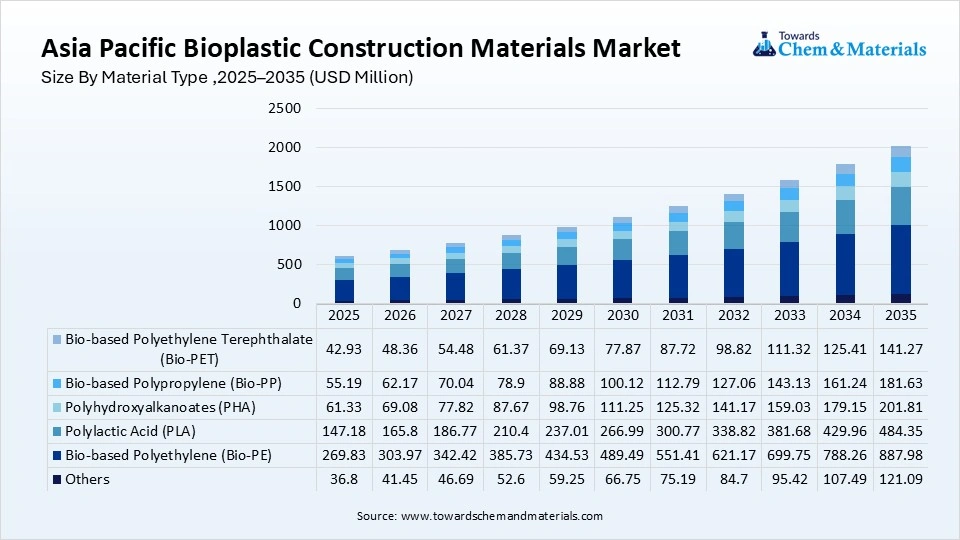
The polylactic acid (PLA) segment held a 24.18% market share in 2025 and is expected to grow at the fastest CAGR of 14.4% over the forecast period, with growing applications in insulation, sealants, modular components, sheets, profiles, and composites. Technology advances with advanced blends and natural fibers positively affect PLA. The innovations enhance strength and heat resistance, opening up the possibilities in construction applications and grabbing the manufacturing interest in the region.
Asia Pacific Bioplastic Construction Materials Market Share, By Material Type, 2025 (%)
| By Material Type | Market Share (%) |
| Bio-based Polyethylene (Bio-PE) | 44% |
| Polylactic Acid (PLA) | 24% |
| Polyhydroxyalkanoates (PHA) | 10% |
| Bio-based Polypropylene (Bio-PP) | 9% |
| Bio-based Polyethylene Terephthalate (Bio-PET) | 7% |
| Others | 6% |
Application Insights
The residential construction segment dominated the market with the largest share of 40.8% in 2025 and is expected to grow at a CAGR of 12.4% over the forecast period. Residential-related applications were the largest drivers of demand, with green building efforts and the growing use of lightweight modular homes contributing. For flooring, panels, insulation components, pipes, profiles, doors, windows, and interior applications, the use of bioplastics is possible. As developers begin to take on more sustainability expectations, there are more opportunities for renewable construction inputs in residential projects.
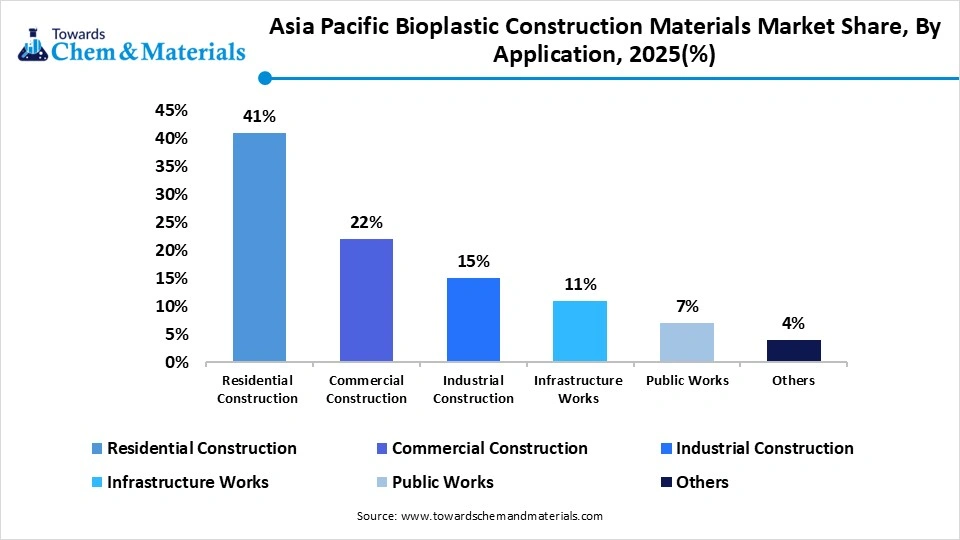
The infrastructure works segment held a 10.7% market share in 2025 and is expected to grow at the fastest CAGR of 14.1% over the forecast period. Increasing demand for infrastructure investment and sustainability requirements drive infrastructure works to be the fastest-growing application segment. The types of applications include roads, transportation, water infrastructure, wastewater infrastructure, bridges, utility infrastructure, and related structures. Bioplastics offer potential in the construction sector for some infrastructure applications because of increasing demand for less impactful construction inputs.
Asia Pacific Bioplastic Construction Materials Market Share, By Application, 2025 (%)
| By Application | Market Share (%) |
| Residential Construction | 41% |
| Commercial Construction | 22% |
| Industrial Construction | 15% |
| Infrastructure Works | 11% |
| Public Works | 7% |
| Others | 4% |
Regional Insights
How Did China Dominate the Asia-Pacific Bioplastic Construction Materials Market in 2025?
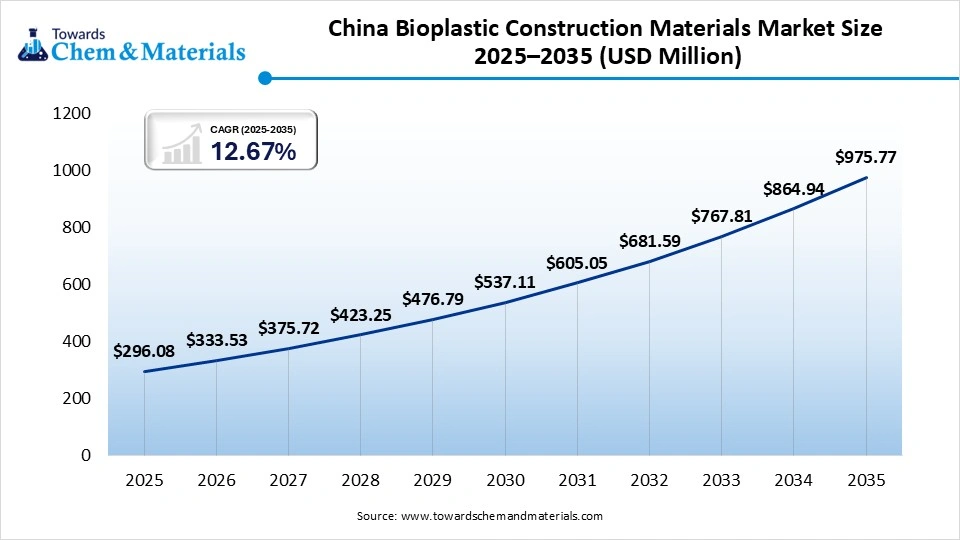
The China bioplastic construction materials market size was estimated at USD 296.08 million in 2025 and is projected to reach USD 975.77 million by 2035, growing at a CAGR of 12.67% from 2026 to 2035. China dominated the market with the largest share of 48.28% in 2025. Chinas position is strong in Asia-Pacific bioplastic construction materials due to a large manufacturing base, an expanding green-building agenda, and growing research into bio-based composites. The use of agricultural residues, bamboo, biodegradable polymers, and low-carbon materials is being researched to minimize environmental impacts in construction. Growth of material innovation is witnessed through the policy support for carbon reduction and circular resource use that is being expanded throughout urban development.
Japan
Japans bioplastic construction materials market size was estimated at USD 93.09 billion in 2025 and is projected to reach USD 307.76 billion by 2035, growing at a CAGR of 12.70% from 2026 to 2035. Japan held a 15.17% market share in 2025. The market in Japan is bolstered by cutting-edge materials research, longstanding green-building heritage, and resource-efficiency trends. Bio-based polymers, wood-based materials, and circular construction solutions are being developed by manufacturers and public institutions. Today, opportunities abound for applications of bioplastics and renewable materials in modern buildings and infrastructure projects throughout the country, as sustainability goals have become more focused on decreasing reliance on fossil resources, increasing material recovery, and decreasing emissions along the entire lifecycle.
India
Indias bioplastic construction materials market size was estimated at USD 58.57 billion in 2025 and is projected to reach USD 193.54 billion by 2035, growing at a CAGR of 12.70% from 2026 to 2035. India held an 11.13% market share in 2025. As India becomes more environmentally conscious, there has been a growing demand for bioplastic construction materials, which are derived from renewable sources, natural fibers, and agricultural waste and are manufactured in a circular economy. As the countrys construction industry grows, lighter, low-impact materials will present opportunities. Research and regional projects are also promoting the use of local biomass resources.
- For instance, in June 2025, Uttar Pradesh launched an initiative to transform hemp waste into natural fiber in Sambhal to generate rural jobs and income and contribute to natural material production that is environmentally friendly for climate-focused sustainable rural development initiatives. (Source: www.thestatesman.com)
South Korea
South Koreas bioplastic construction materials market size was estimated at USD 68.38 billion in 2025 and is projected to reach USD 225.83 billion by 2035, growing at a CAGR of 12.69% from 2026 to 2035. South Korea held a 9.85% market share in 2025. South Korea is making efforts to develop sustainable polymer and construction material research and to advance the research through collaborative efforts between industry, universities, and research institutions. Renewable polymers, recycled inputs, bio-based composites, and lower-carbon building solutions are becoming attractive options. Carbon neutrality and cutting-edge manufacturing capabilities in the country help develop innovative materials.
Australia
Australia held a 5.4% market share in 2025. The continued expansion of circular economy activity, research in renewable resources, and a desire for solutions in the construction industry that have less impact on the environment are driving market demand in Australia. Bio-based inputs such as biopolymers, natural fibers, agricultural residues, and others provide sustainable material development opportunities.
- For instance, in March 2026, Ecopha Biotech applied for an integrated world-first international PCT patent for the production of sustainable aviation fuel and PHA bioplastics from a single renewable feedstock, which will benefit the integrated use of the feedstock and the development of circular materials. (Source: www.ccarbon.info)
Taiwan
Taiwan held a 3.8% market share in 2025. Taiwan is building its green construction ecosystem by developing policy for the circular economy, research on low-carbon materials, and building certification for green buildings. The focus on resource recovery, lifecycle assessment, and reduced embedded emissions is gaining traction in industry and government initiatives. The developments provide good opportunities for bioplastics and bio-based construction materials, even though it may only be possible to use renewables or recycling in the context of greener building applications in todays modern construction.
Thailand
Thailand held a 1.55% market share in 2025. Thailand has a strong petrochemical and polymer industry, gradually increasing capacities for the production of bio-based materials, and government policy in favor of sustainable manufacturing. Renewable polymers and bioplastics can be obtained through agricultural resources. As this industry becomes more sustainability-focused, the adoption of materials with less impact can benefit the construction industry, and today, investments in bio-ethylene and other technologies improve the countrys value chain of bioplastics for future construction applications.
- For instance, in December 2025, Braskem Siam is making progress towards its bio-ethylene project, as Thailands Board of Investment (BoI) granted it the status of a pilot for the investment in the project, accelerating the projects investment execution and sustainable polymer market supply in the region and worldwide. (Source: www.scgchemicals.com )
Malaysia
Malaysia held a 0.92% market share in 2025. The potential for sustainable construction materials in Malaysia is great, with agriculture, forestry, and plantation industries providing a wealth of biomass resources. Bio-based material development can be facilitated by the use of oil palm residues, wood residues, bamboo, coconut materials, and rice husks. The trend towards green construction projects is stimulating increased use of renewable and recycled materials and inputs. Manufacturers and designers are now beginning to incorporate resource efficiency and environmental performance into their projects.
Singapore
Singapore held a 0.70% market share in 2025. Sustainability is a key priority for Singapores market, along with green-building standards and resource efficiency as a built-environment focus. The government and industry are supporting the use of low-carbon materials, circular construction, recycling, and sustainable procurement. In the new construction projects of today, these conditions can enable the use of bioplastics as construction materials as they satisfy the performance, durability, environmental, and compatibility requirements within the green-building assessment tools.
Recent Developments
- In June 2026, Balrampur Chini Mills Limited and Lucknow Cantonment Board launched Bioyug Green Command 2026 to encourage the use of bioplastics and sustainable materials to mitigate plastic waste in India. (Source: scanx.trade)
- In December 2025, Renaissance BioScience and Biome Bioplastics commenced a two-year CAD$1.5 million project to advance the development of renewable bioplastic building blocks to help meet the demand for sustainable alternatives to petroleum-based materials. (Source: www.indianchemicalnews.com )
Competitive Analysis
The bioplastic construction materials industry in Asia Pacific is competitive due to the increasing production capacities of manufacturers, development of material portfolios, formulation capabilities, and supply chains in the region. Availability of renewable feedstocks, polymerization facilities, sustainable formulations, manufacturing localization, and application-specific material performance are emerging as increasingly hot topics in competition. Establishing production bases in the Asia-Pacific region is increasing to ensure better supply availability and reduce transportation needs. In addition, research institutes and biotechnology firms are working on new fermentation technologies, biodegradable materials, and polymer technology from waste.
- For instance, in July 2026, another integrated Ingeo PLA plant was opened by NatureWorks LLC in Thailand. The plant has a capacity of 75,000 metric tons per year, increasing the supply of PLA in the region. (Source: natureworksllc.com)
- For instance, in January 2025, IIT Madras introduced a zero-waste bioplastics program aimed at discovering sustainable alternatives to plastics. The project enhances research and development efforts for the development of sustainable bioplastic materials across India. (Source: www.packaging-gateway.com )
- For instance, Ecovance Vietnam organized an innovative groundbreaking ceremony for a facility to produce biodegradable PBAT materials at Dinh Vu Industrial Park, contributing to the growth of Vietnams production capacity for biodegradable materials and promoting sustainable production development in Vietnam. (Source: anphatholdings.vn)
Top Players in the Market & Their Offerings
| Company | Company Type/Position | Major Headquarters | Geographic Presence | Asia-Pacific Bioplastic Construction Materials Offerings | Key Strength |
| Kingfa Sci. & Tech. Co., Ltd. | Regional | Guangzhou, China | Asia-Pacific, North America | Biodegradable polymer materials | Localized production scale, cost-competitive manufacturing |
| Mitsubishi Chemical Group Corporation | Multinational | Tokyo, Japan | Global | Bio-based engineering plastics | Strong R&D footprint and alignment with strict Asian green-building standards |
Other Key Players
- Thantawan Industry PLC
- BASF SE
- Mitsubishi Chemical Group Corporation
- Futamura Chemical Co., Ltd.
- TotalEnergies Corbion
- Biome Bioplastics
- SABIC (Saudi Basic Industries Corporation)
- Teijin Limited
- An Phat Bioplastics
- Kingfa Science and Technology Co., Ltd.
- Zhejiang Hisun Biomaterials Co., Ltd.
- PTT MCC Biochem Co., Ltd.
- Indorama Ventures Public Company Limited
Segment Covered in the Report
By Material Type
- Bio-based Polyethylene (Bio-PE)
- Sugarcane-based Bio-PE
- Bio-PE films
- Bio-PE pipes and profiles
- Bio-PE sheets and panels
- Polylactic Acid (PLA)
- Injection-molding grade
- Extrusion grade
- PLA composites
- PLA sheets and profiles
- Polyhydroxyalkanoates (PHA)
- PHB
- PHBV
- PHA composites
- Bio-based Polypropylene (Bio-PP)
- Bio-PP compounds
- Bio-PP sheets and profiles
- Bio-PP molded components
- Bio-based Polyethylene Terephthalate (Bio-PET)
- Partially bio-based PET
- Bio-PET films
- Bio-PET sheets
- Others
- Bio-based Polyamides
- Bio-based Polyurethane
- Starch-based polymers
- Cellulose-based plastics
- Bio-based composites
By Application
- Residential Construction
- Flooring and panels
- Insulation components
- Pipes and profiles
- Doors, windows and interior components
- Commercial Construction
- Office buildings
- Retail buildings
- Hotels and hospitality
- Institutional buildings
- Industrial Construction
- Factories
- Warehouses
- Manufacturing facilities
- Industrial flooring and components
- Infrastructure Works
- Roads and transportation
- Water and wastewater infrastructure
- Bridges and related structures
- Utility infrastructure
- Public Works
- Schools
- Hospitals
- Government buildings
- Public housing
- Others
- Temporary structures
- Modular construction
- Prefabricated construction
- Landscaping and outdoor applications
A Seven-Phase Framework
Our methodology is designed to be universally applicable across commodity chemicals, specialty chemicals, petrochemicals, construction chemicals, coatings, electronic chemicals, industrial gases, agrochemicals, water treatment chemicals, and performance materials. Each phase builds upon the last, creating a layered validation structure that minimizes estimation error and maximizes analytical confidence.
The framework ensures comprehensive market coverage, robust cross-validation, and reliable long-term forecasting — producing market estimates that withstand scrutiny from investors, regulators, and corporate strategy teams.

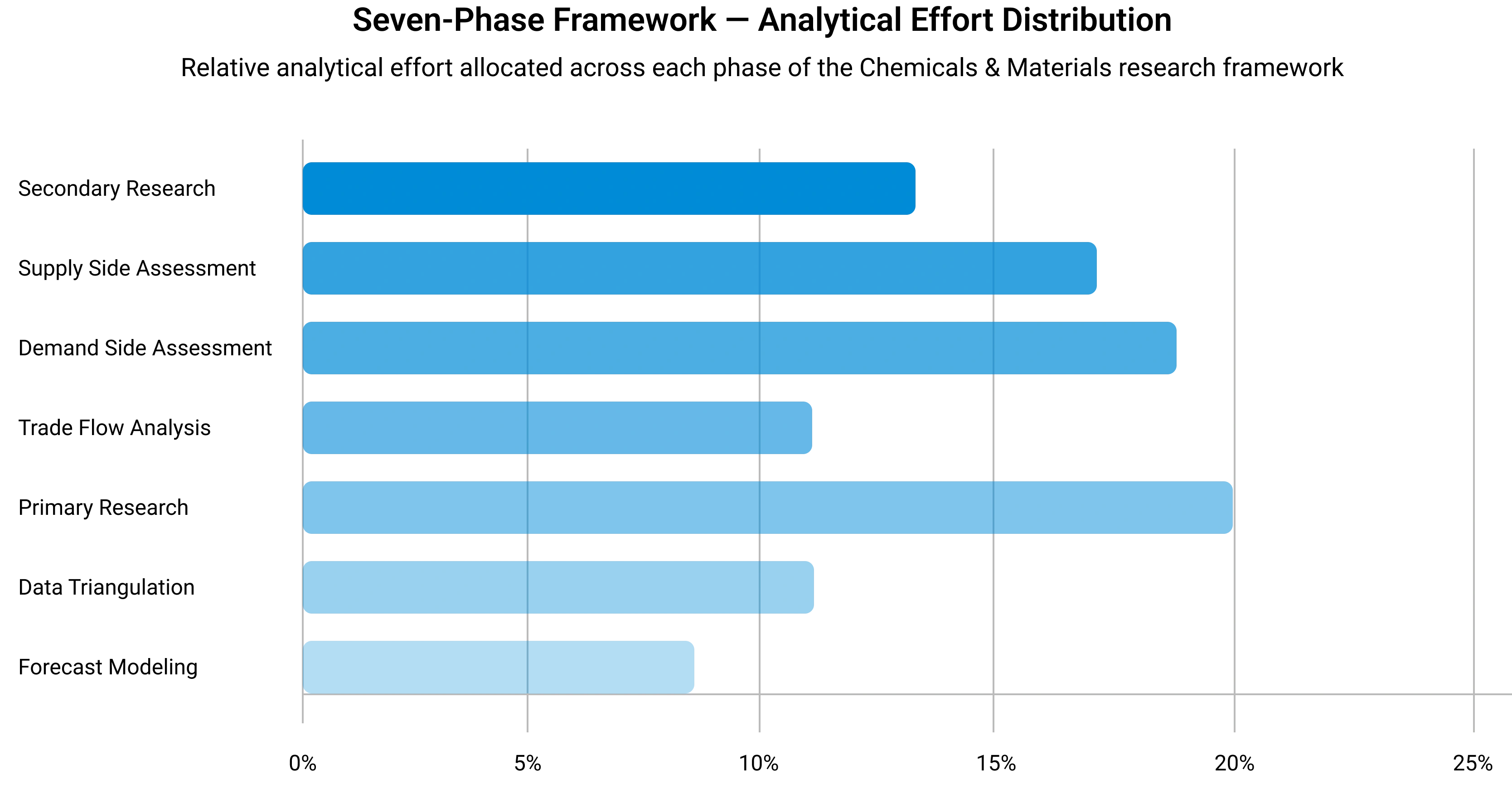
Seven-Phase Framework — Analytical Effort Distribution
Relative analytical effort allocated across each phase of the Chemicals & Materials research framework
Phase 1 - Secondary Research: Establishing the Foundation
Secondary research collects and evaluates publicly available information from authoritative sources, establishing the foundational understanding of market structure, value chain dynamics, competitive landscape, and end-use demand patterns. Every source is evaluated for credibility, recency, geographic relevance, and methodological soundness before inclusion.
Industry Associations
Sources include ACC, CEFIC, ICCA, JCIA, CPCIF, and SOCMA providing production volumes, consumption trends, capacity developments, and sustainability initiatives.
Company Disclosures
Annual reports, investor presentations, earnings transcripts, and regulatory filings reveal product portfolios, manufacturing footprints, capacity expansions, and revenue segmentation.
Government Databases
National statistical offices, customs authorities, environmental agencies, and industrial production databases provide verified statistics on output, trade flows, and regulatory compliance.
Trade Databases
UN Comtrade, ITC, Eurostat, and national customs authorities enable assessment of global product movement, import dependency, and export competitiveness across regions.
Our Secondary Research Sources
- Ministry of Chemicals and Fertilizers
- European Chemicals Agency
- United States Department of Energy
- Ministry of Industry and Information Technology
- Ministry of Economy Trade and Industry
- Ministry of Trade Industry and Energy
- National Institute of Standards and Technology
- Council of Scientific and Industrial Research
- Fraunhofer Society
- National Institute for Materials Science
Phase 2 — Supply-Side Assessment: Mapping Production Capabilities
Production Capacity Analysis
All major manufacturers are assessed for existing installed capacity, planned additions, expansions, new plant announcements, and technology adoption — mapped at global, regional, and country levels.
Capacity Utilization Adjustment
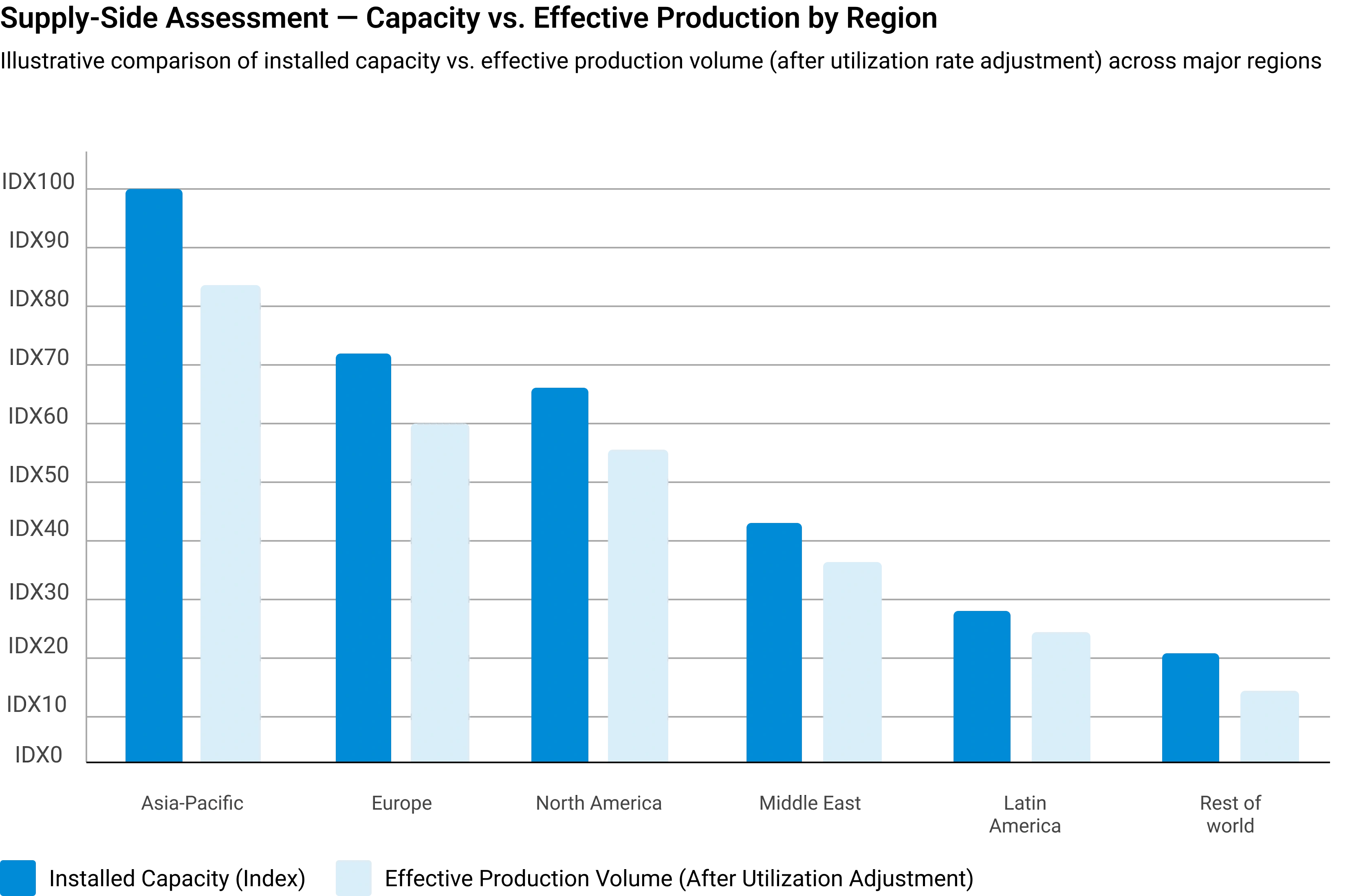
Installed capacity is adjusted using utilization rates based on demand conditions, feedstock availability, plant operating rates, maintenance schedules, and regulatory restrictions.
Manufacturer Revenue Analysis
Product-specific revenues, segment-level performance, regional distribution, average selling prices, and margin trends are evaluated to establish market value estimates.
Supply-Side Assessment — Capacity vs. Effective Production by Region
Illustrative comparison of installed capacity vs. effective production volume (after utilization rate adjustment) across major regions
Phase 3 — Demand-Side Assessment: Quantifying Chemical Consumption
Demand-side analysis quantifies chemical consumption across industries, applications, and geographies — identifying where and how chemicals are consumed throughout the value chain with precision.
End-Use Industry Analysis
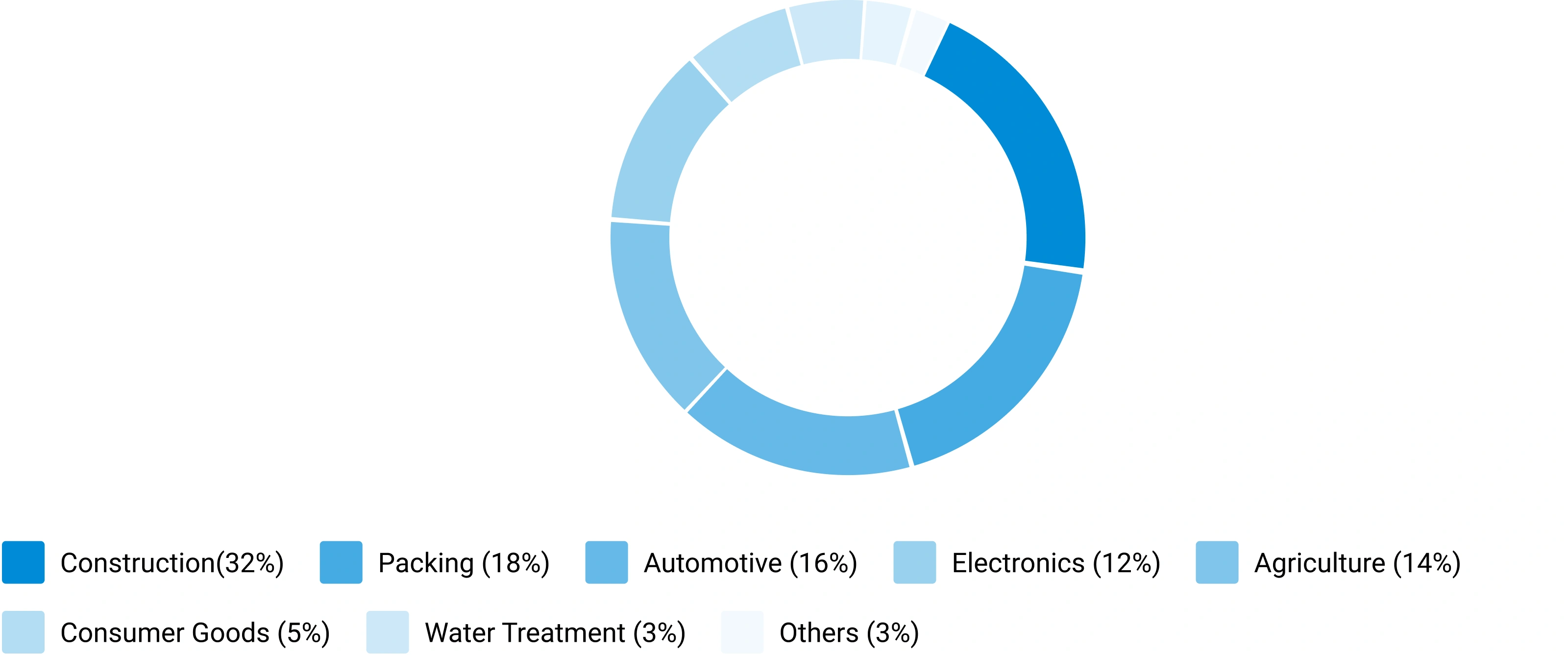
Chemical demand is evaluated across automotive, construction, packaging, electronics, agriculture, healthcare, consumer goods, industrial manufacturing, energy and utilities, and water treatment. Industry output, production trends, and consumption intensity are analyzed to determine demand patterns.
Consumption Modeling
Demand is estimated using measurable indicators: kilograms per vehicle, kilograms per square meter of construction, dosage per cubic meter of water treated, kilograms per hectare of agricultural land, and kilograms per ton of manufactured products. Consumption factors are validated through industry publications and primary interviews.
Application Analysis
The market is segmented by application area to understand product performance requirements, formulation trends, technology adoption, customer preferences, and regulatory requirements improving demand accuracy and segmentation granularity.
Demand-Side Assessment — End-Use Industry Demand Distribution
Illustrative distribution of chemical & materials demand across key end-use industries
Phase 4 - Trade Flow Analysis: Balancing Regional Supply and Demand
Trade flow analysis reconciles regional supply and demand estimates through import and export data, identifying net supply positions, regional dependencies, and market imbalances. It serves as an independent validation layer that tests the consistency of supply-side and demand-side estimates.
Import Analysis
Import data is evaluated to determine volumes, source countries, product dependency, regional supply gaps, and pricing trends — identifying markets that rely heavily on external supply and where domestic production is insufficient to meet demand.
Export Analysis
Export assessments reveal production surplus, export competitiveness, regional manufacturing strength, and global market participation. Export patterns also help validate domestic production estimates and identify net exporting regions.
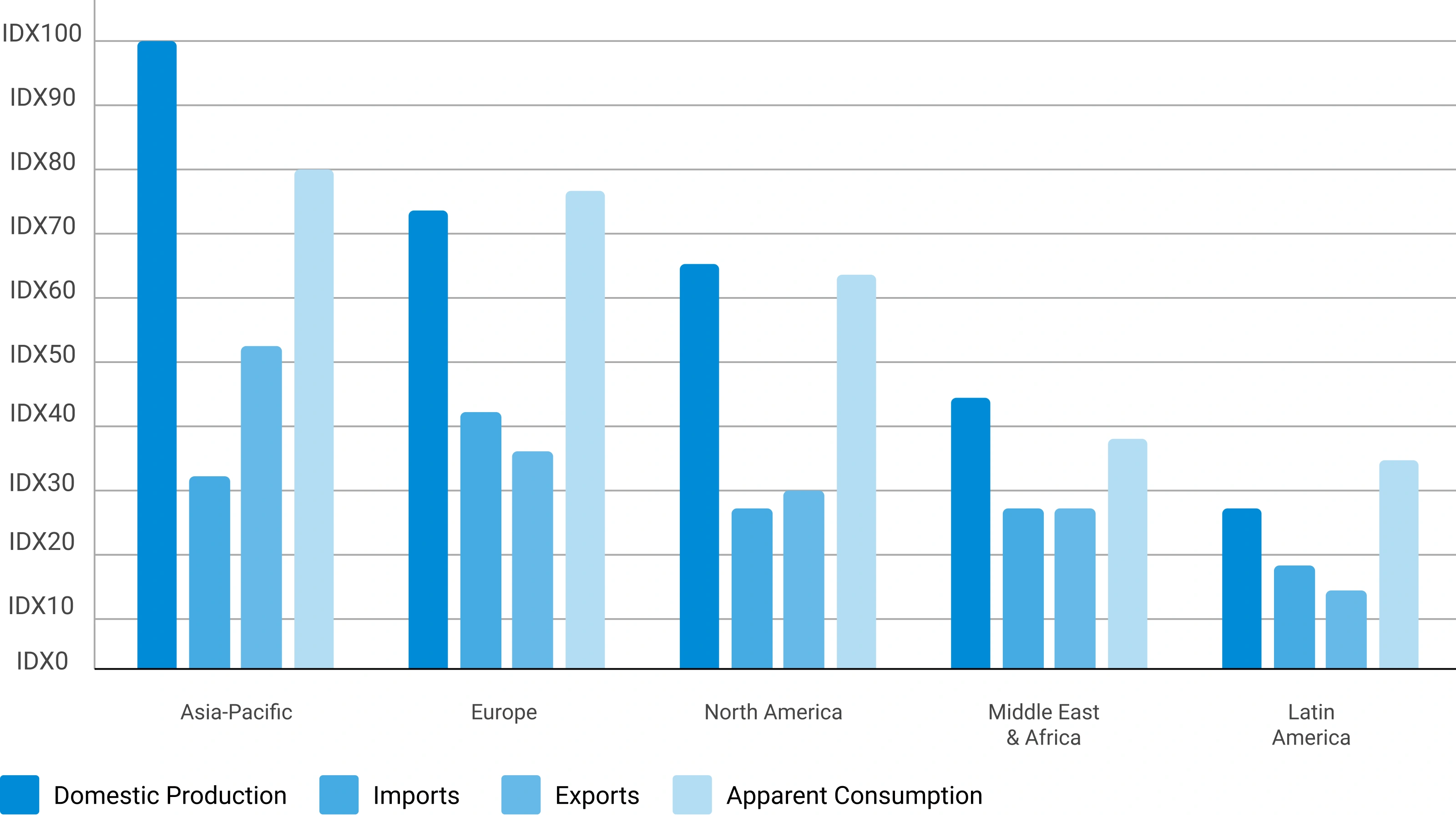
Apparent Consumption Model
Regional consumption is assessed using the standard apparent consumption formula:
Results identify net importing regions, net exporting regions, regional deficits, and surpluses — serving as an independent validation of supply and demand estimates.
Trade Flow Analysis — Net Supply Position by Region
Illustrative apparent consumption vs. domestic production across major regions — positive gap indicates net import dependency
Phase 5 — Primary Research: The Critical Validation Layer
Primary research tests and refines findings from secondary research through direct engagement with industry participants across the supply chain, demand side, and expert community. It captures intelligence that no database or published report can provide — the real-world experience of manufacturers, buyers, and specialists operating in the market.

Supply-Side Interviews
Conversations with chemical manufacturers, raw material suppliers, contract manufacturers, technology providers, and plant operators cover production trends, capacity utilization, pricing developments, technology shifts, and competitive dynamics.

Demand-Side Interviews
Engagement with OEMs, industrial consumers, procurement managers, distributors, formulators, and end-use manufacturers focuses on consumption trends, purchasing behavior, product substitution, demand outlook, and emerging applications.

Industry Expert Consultations
Additional interviews with industry consultants, independent experts, regulatory specialists, technical professionals, and research institutions provide deeper market context and validate key analytical assumptions.
Focus Areas of Primary Research:
Market Size & Forecast Validation
Revenue estimates, volume consumption, growth rates, forecast assumptions, regional demand.Supply Chain & Value Chain Assessment
Raw material sourcing, supply chain challenges, distribution networks, procurement practices.Production & Capacity Analysis
Manufacturing capacity, utilization rates, expansion projects, plant investments.Pricing & Cost Structure Analysis
Product pricing trends, feedstock costs, energy costs, margin pressures, pricing outlook.Competitive Landscape Assessment
Volume and value estimates confirmed to be fully consistent with one another before publicationInterview Volume by Market Scope
| Study Scope | Number of Interviews |
|---|---|
| Niche Market | 20 – 30 |
| Mid-Sized Market | 30 – 50 |
| Global Market | 50 – 80 |
| Highly Fragmented Market | 80 – 120 |
Interview Details:
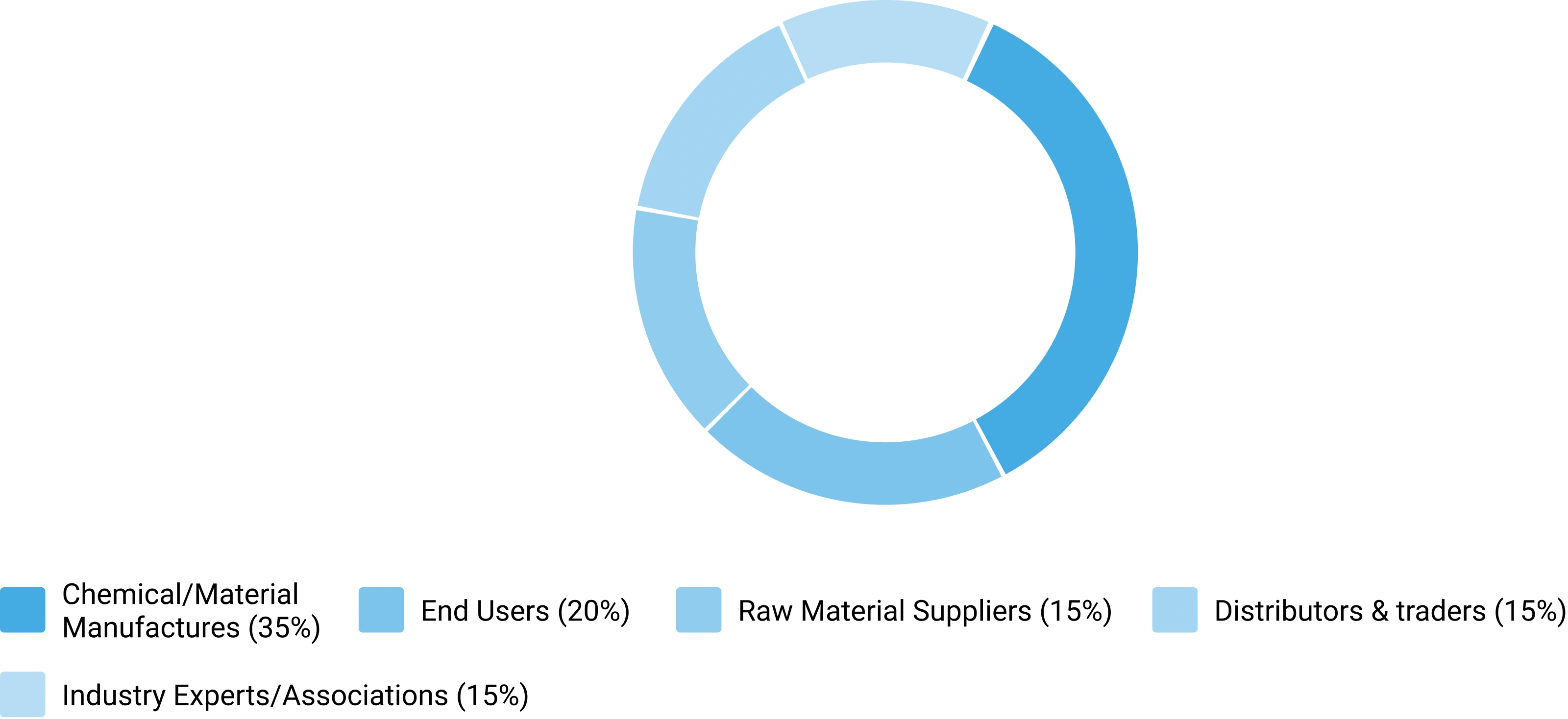
Category : Manufacturers, Suppliers, Distributors, End Users, Experts/Associations
Average Duration : 30–60 Minutes
Interview Mode : Video calls, telephonic interviews, expert consultations
Interview Format : Structured / Semi-Structured questionnaire
Focus Areas of Primary Research:
Market Size & Forecast Validation :
Revenue estimates, volume consumption, growth rates, forecast assumptions, regional demand.
Supply Chain & Value Chain Assessment :
Raw material sourcing, supply chain challenges, distribution networks, procurement practices.
Production & Capacity Analysis :
Manufacturing capacity, utilization rates, expansion projects, plant investments.
Pricing & Cost Structure Analysis :
Product pricing trends, feedstock costs, energy costs, margin pressures, pricing outlook.
Competitive Landscape Assessment :
Market share, competitor positioning, strategic initiatives, partnerships, acquisitions.
Primary Research — Stakeholder Coverage by Category
Distribution of interview respondents across stakeholder categories (% share from PPT data)
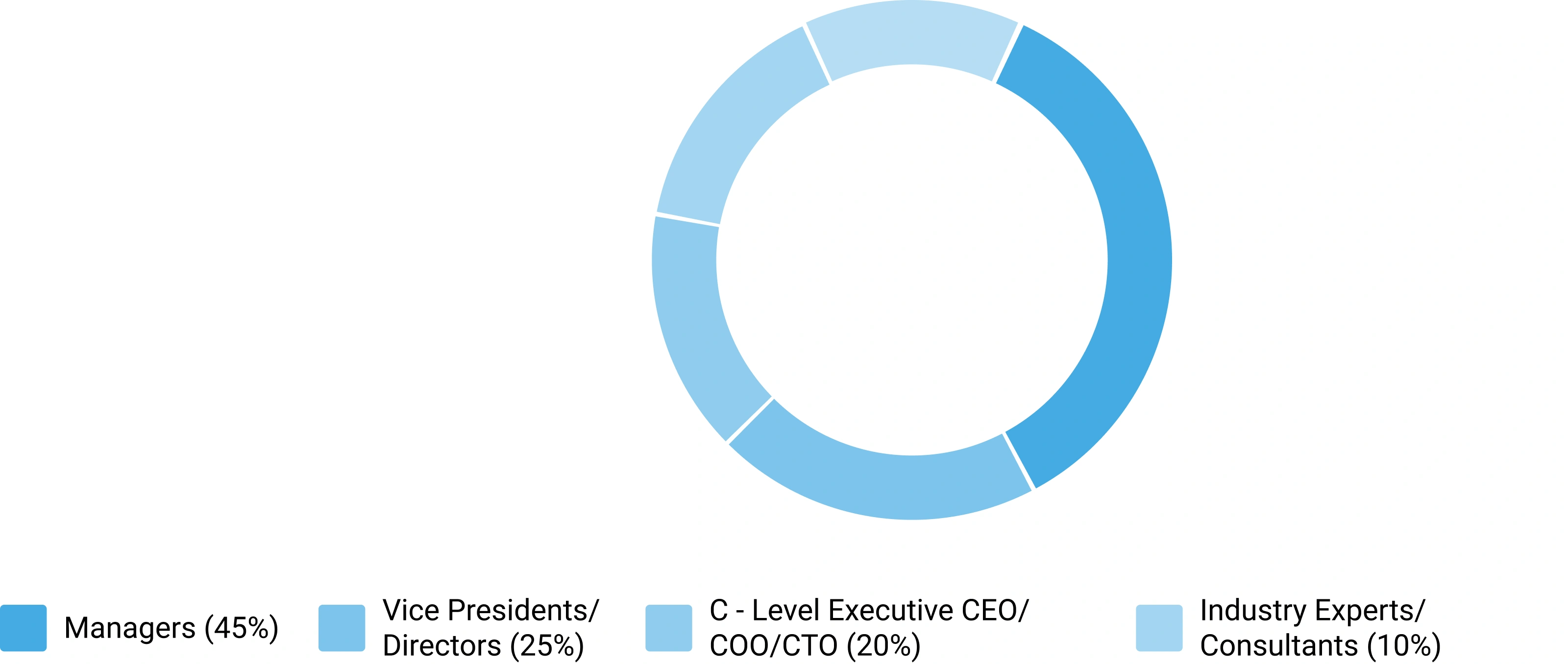
Primary Research — Respondent Designation Profile
Seniority breakdown of interview respondents (% share from PPT data)
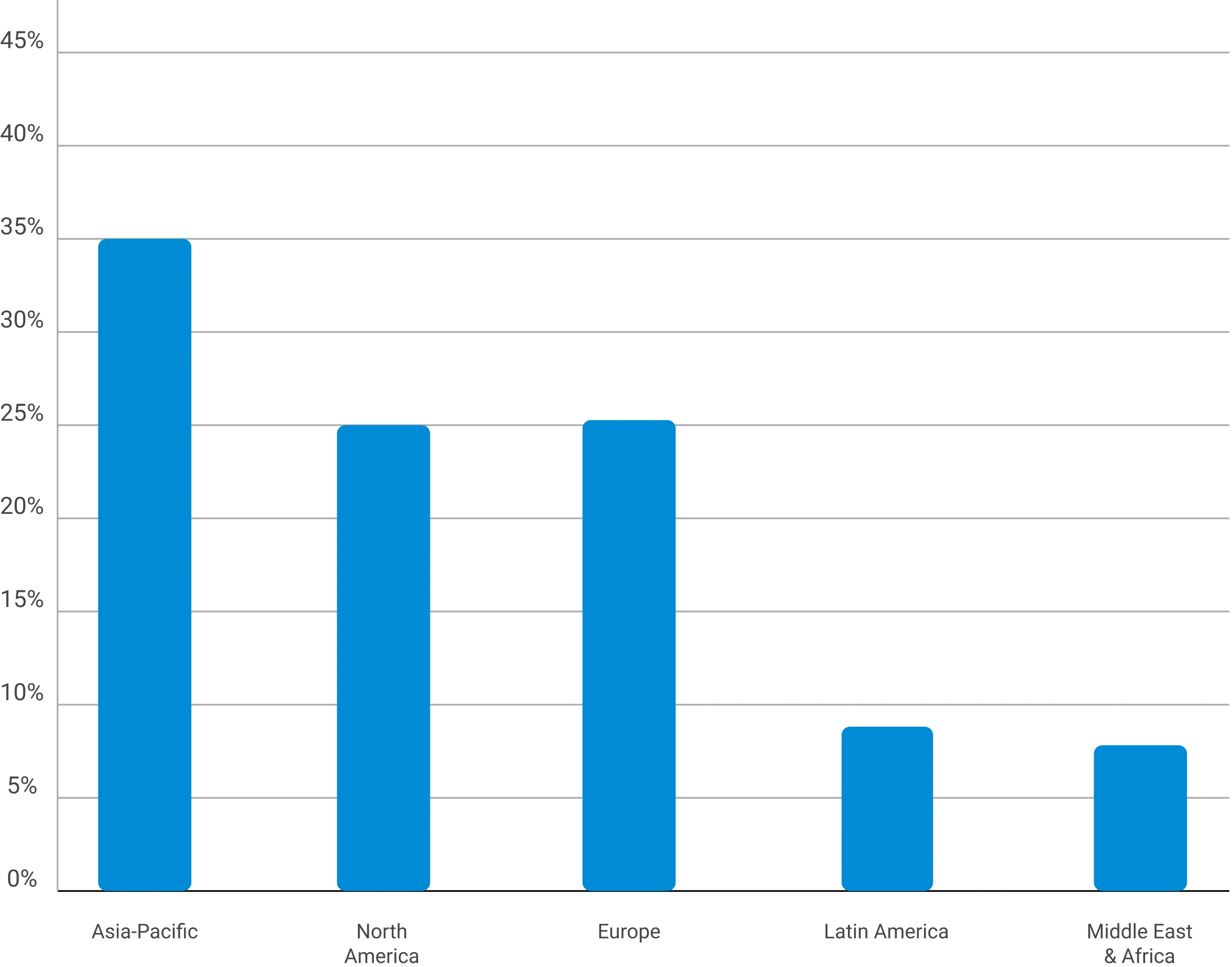
Primary Research — Geographic Coverage of Interviews
Regional distribution of primary research engagement (% share from PPT data)
Phase 6 — Data Triangulation and Market Validation
No single methodology is relied upon in isolation. Multiple independent estimation approaches are combined and reconciled to ensure consistency, accuracy, and analytical defensibility. Any material deviations between approaches are investigated and adjusted through additional validation cycles.
The final market size is derived through weighted triangulation of all validated methodologies. Any material deviations between approaches are investigated and adjusted through additional validation cycles. The outcome represents the most realistic assessment of the market based on available evidence and expert confirmation ensuring that volume and value estimates are fully consistent with one another.
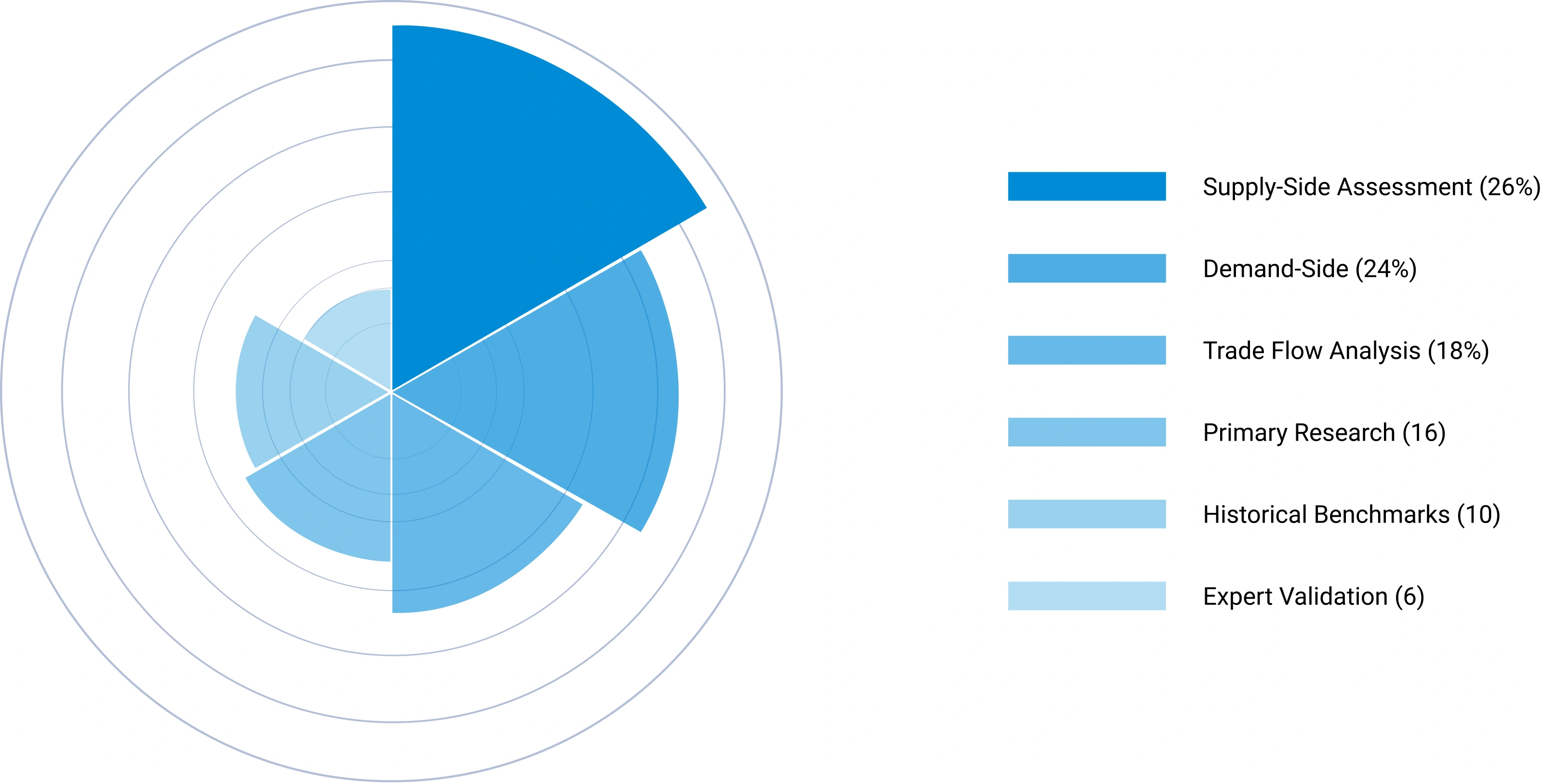
Triangulation Framework — Input Contribution Weight
Relative weight each sizing input contributes to the final reconciled market estimate
Phase 7 — Forecast Modeling: Projecting Future Market Evolution
Forecasting evaluates the future trajectory of the market using a combination of quantitative indicators and qualitative assessments across economic, industry, and regulatory dimensions. Rather than simple extrapolation, each driver is independently modeled and integrated into a composite forecast.
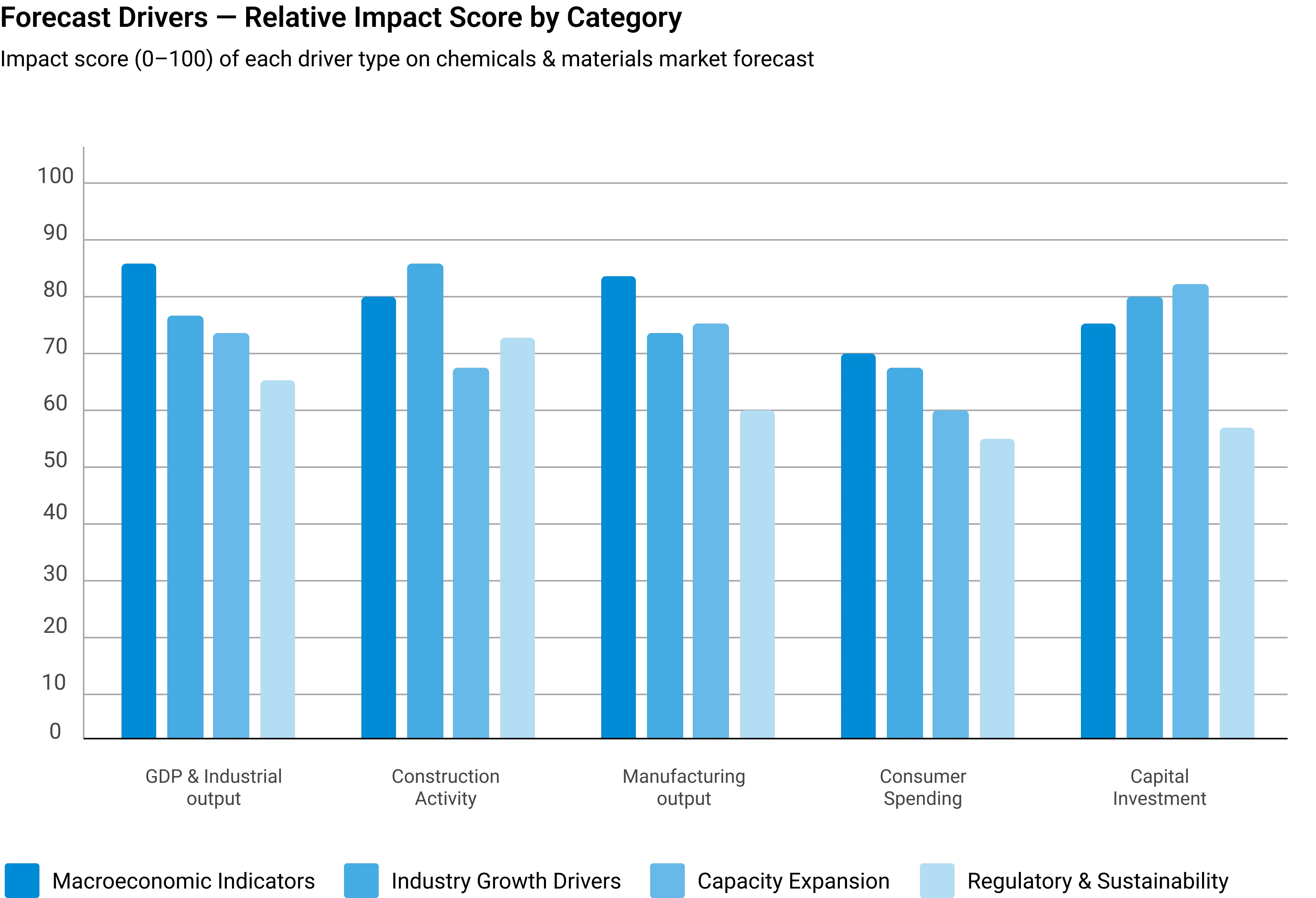
Macroeconomic Indicators
GDP growth, industrial production, manufacturing output, construction activity, consumer spending, and capital investment form the quantitative foundation of long-term demand projections. These are applied at country, regional, and global levels.
Industry Growth Drivers
Urbanization, infrastructure development, industrialization, technological innovation, sustainability initiatives, and evolving product performance requirements are assessed at regional and industry levels — capturing both structural and cyclical demand drivers.
Capacity Expansion Analysis
Announced plant expansions, new manufacturing facilities, technology upgrades, and strategic investments are evaluated to determine future supply-demand dynamics and potential market tightness or oversupply situations.
Regulatory & Sustainability
Environmental regulations, chemical safety standards, emission reduction targets, circular economy initiatives, and sustainability requirements are incorporated as they often influence product adoption rates and market growth trajectories.
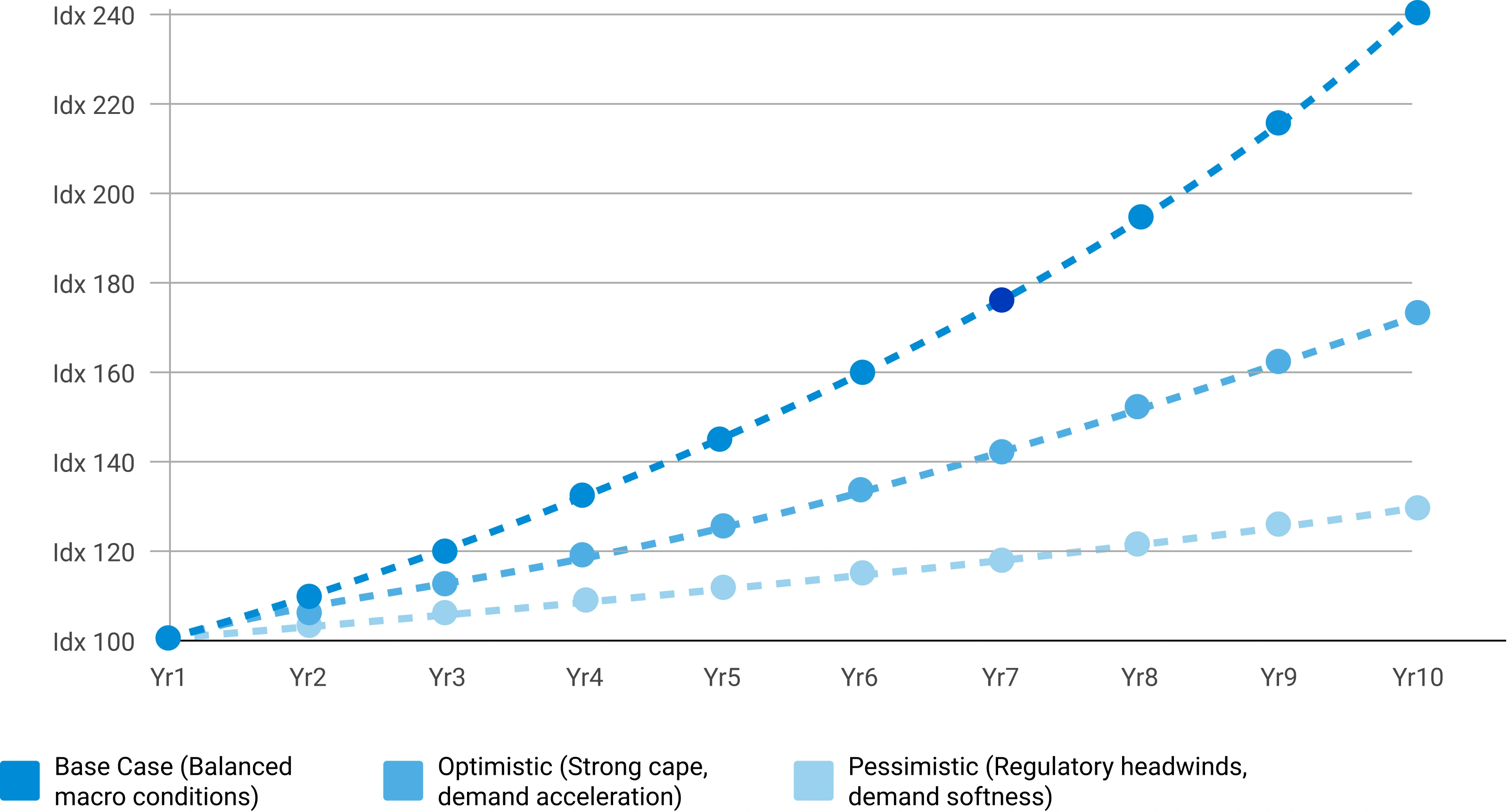
Scenario Forecast Range — Indexed Market Growth (Year 1–10)
Illustrative indexed growth trajectories across Base, Optimistic, and Pessimistic scenarios over a 10-year forecast horizon
Forecast Drivers — Relative Impact Score by Category
Impact score (0–100) of each driver type on chemicals & materials market forecast



Comments
Share your thoughts, ask a question, or provide feedback about this report.