Content
2-Ethylhexanol Market Size Analysis Report 2035
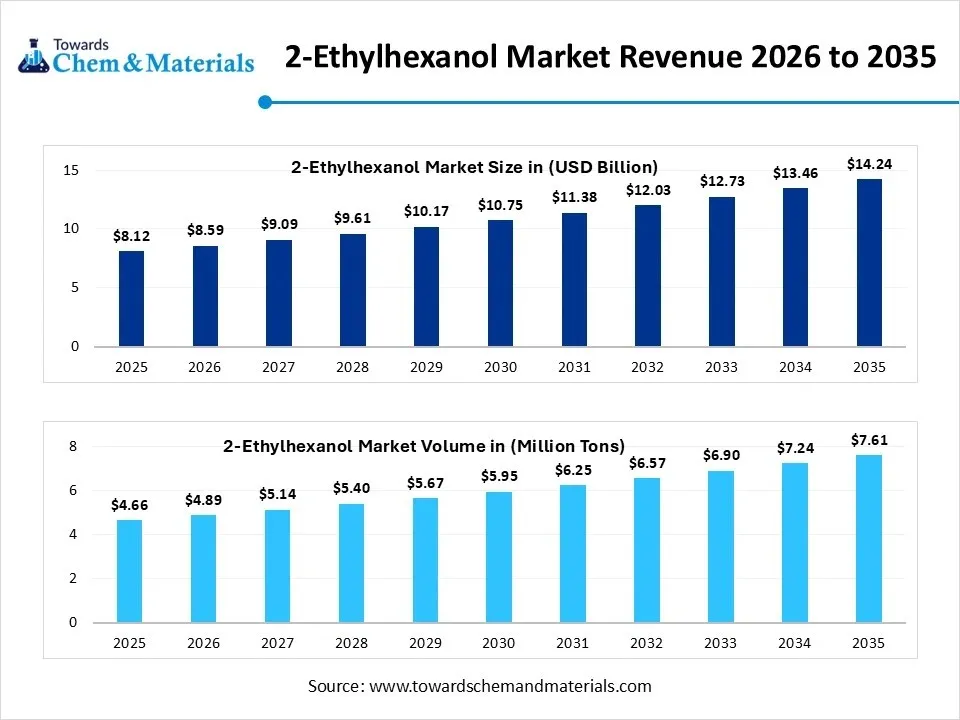
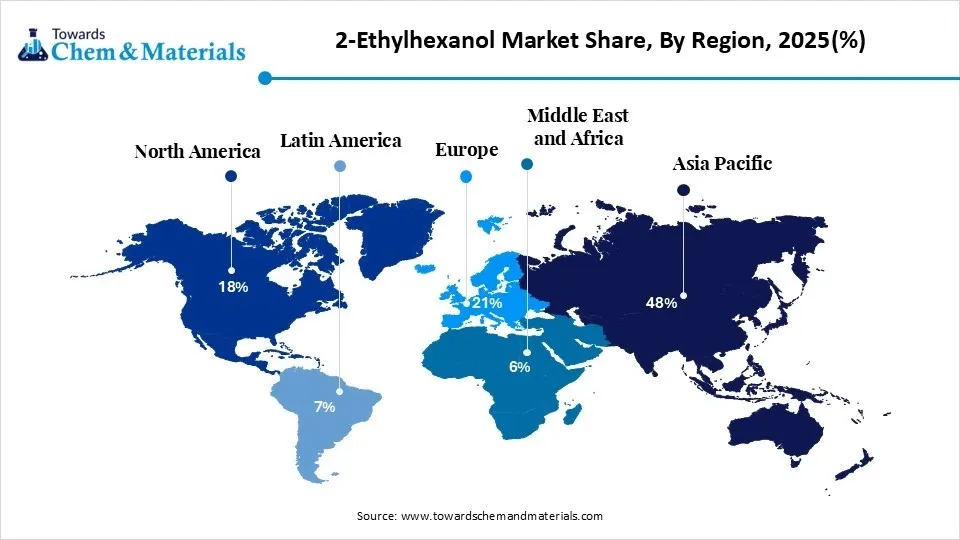
The 2-ethylhexanol market size was valued at USD 8.1 billion in 2025, is estimated to reach USD 8.59 billion in 2026, and is projected to reach USD 14.24 billion by 2035, exhibiting a compound annual growth rate (CAGR) of 5.78% over the forecast period from 2026 to 2035.Asia Pacific dominated the 2-ethylhexanol market with the largest revenue share of 48% in 2025 and is expected to grow at the fastest CAGR of 5.87% during the forecast period. In terms of volume, the 2-ethylhexanol market is projected to grow from 4.66 million tons in 2025 to 7.61 million tons by 2035. growing at a CAGR of 5.02% from 2026 to 2035.The rapid requirements of plasticizers, rapid expansion in various sectors, and surging use in paints and coatings are driving growth. The investments by various industries for the development of bio-plasticizers and heavily growing economies support expansion and drive the growth of the market.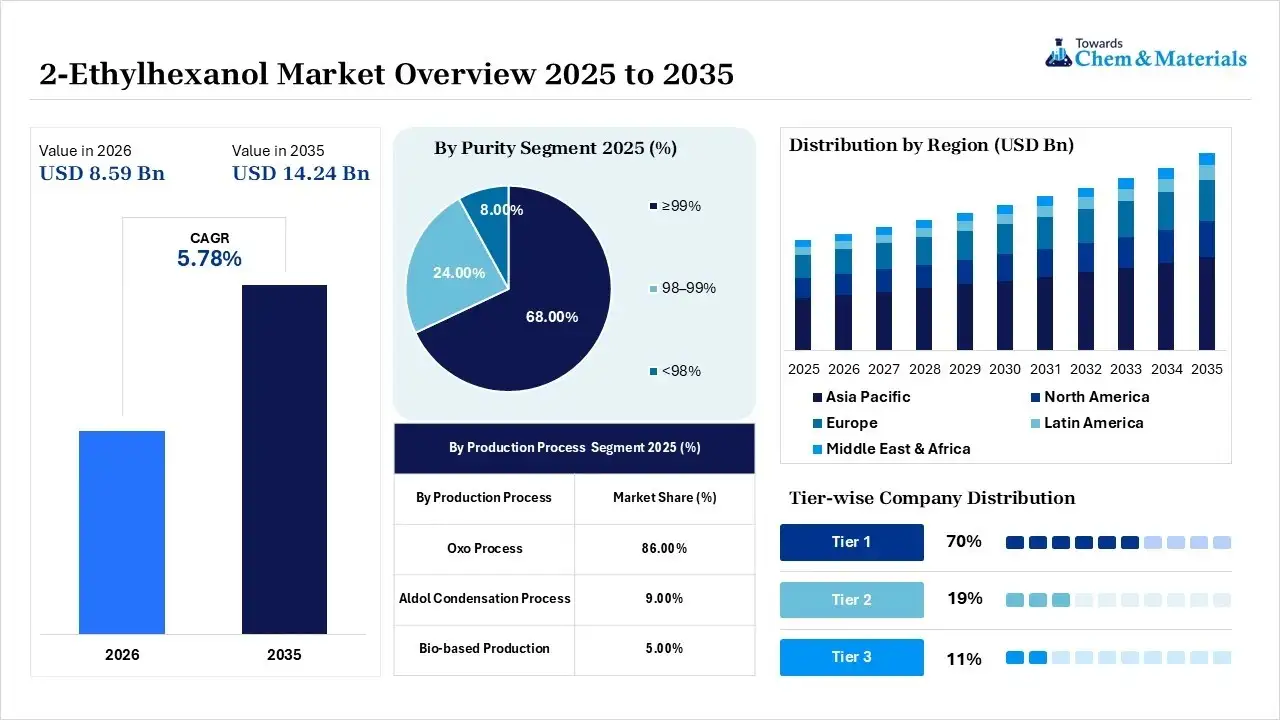
Market Highlights
- By region, Asia Pacific dominated the market with a share of 48% in 2025. Rapid industrialization increases chemical demand.
- By region, North America held 18% market share in 2025 and is expected to experience the fastest growth with a CAGR of 6.44% in the forecast period. Integrated petrochemical production ensures a stable supply.
- By production process, the oxo process segment dominated the market with an 86% share in 2025. Mature production technology supports high yields.
- By production process, the bio-based production segment held 5% market share in 2025 and is expected to have the fastest growth with a CAGR of 9.34% in the forecast period. Sustainability initiatives accelerate renewable feedstock adoption.
- By purity, the≥99% segment dominated the market with a 68% share in 2025. High-purity material is preferred for premium plasticizers and acrylates.
- By purity, the <98% segment held 8% market share in 2025 and is expected to have the fastest growth with a CAGR of 6.36% in the forecast period. Industrial solvent applications continue expanding.
- By application, the plasticizers segment dominated the market with a 59% share in 2025. PVC production continues to increase worldwide.
- By application, the acrylates esters segment held 17% market share in 2025 and is expected to have the fastest growth with a CAGR of 6.71% in the forecast period. Waterborne coatings expand rapidly.
- By end-use industry, the construction segment dominated the market with a 33% share in 2025. PVC flooring, pipes, and cables consume large plasticizer volumes.
- By end-use industry, the chemical manufacturing segment held 13% market share in 2025 and is expected to have the fastest growth with a CAGR of 6.43% in the forecast period. Rising acrylate production boosts consumption.
- By distribution channel, the direct sales segment dominated the market with a 67% share in 2025. Long-term contracts dominate bulk chemical procurement.
- By distribution channel, the online industrial platforms segment held 6% market share in 2025 and is expected to have the fastest growth with a CAGR of 9.12% in the forecast period. Digital procurement platforms improve purchasing efficiency.
2-Ethylhexanol Market: Core Ingredient in the Chemical Industry
2-Ethylhexanol is a major and vital part of the chemical industry, as it is used in everyday products like medical tubing, car interiors, and wire coatings, which are rigid and brittle, increasing the demand and growth of the market. The growing demand from the automotive sector, paints and coatings, construction, infrastructure, and growing plasticizers demand rise the growth. The infrastructure development due to rapid urbanization in emerging economies drives increased consumption of PVC pipes, paints, and adhesives, which further expand the growth of the market.
- For instance, the Adani Group is progressing rapidly with its $4 billion Green Polyvinyl Chloride (PVC) project through its subsidiary, Mundra Petrochemicals Limited (MPL). Located at the flagship industrial cluster in Mundra, Gujarat, the project serves as a cornerstone for the conglomerates independent entry into the petrochemicals sector.(Source: stainless-steel-world.net )
2-Ethylhexanol is a versatile alcohol with 8 carbons, used in producing flexible plastics (PVC), paints, and adhesives. It serves as both a chemical building block and a solvent. Its unique branched structure prevents products from becoming brittle or stiff at low temperatures. 2-EH is primarily used in plasticizers like DOP or DEHP, which act as softeners in hard plastics. Without 2-Ethylhexanol, products like PVC pipes, car dashboards, and medical bags would be prone to cracking and breaking. It is also converted into 2-ethylhexyl acrylate, an ingredient that ensures paints coat evenly and enhances the stickiness of superglue. As a solvent, it helps various chemicals blend smoothly without rapid evaporation, which is crucial for high-quality coatings and motor oils.
Global Investment Flow for 2-Ethylhexanol Market 2026
The growing global investments are driven by the high demand for plasticizers, adhesives, and coatings used in the automotive and construction industries. Both companies and governments are investing to expand production and create eco-friendly versions of this chemical.
Governments push companies to use greener, bio-based alternatives and renewable raw materials, which forces companies to invest in expensive, cleaner technology.
- The U.S. Department of Energy has restored funding for nearly 2,000 clean energy projects, including major Direct Air Capture (DAC) hubs like Project Cypress and the South Texas DAC Hub, following a review.(Source: www.reuters.com)
- BASF and the Adani Group planned a massive ₹16,000 crore petrochemical hub in Mundra, Gujarat. While focused on the acrylics value chain, the hub planned to produce oxo C4 chemicals like 2-ethylhexanol (2-EH) and butanols for the local Indian market.(Source: www.vizagchemical.com)
Market Growth Trends:
- Shift To Non-Phthalate Plasticizers:Strict environmental regulations and shift of manufacturers shift towards safe and bio-friendly non-phthalate plasticizers like DOPT and DEHT, as it is a core building material, and growing demand drives the growth of the market.
- Automotive Fuel Additives:As 2-EH is a major and core ingredient in petroleum, it reduces ignition and engine noise, which increases the demand for global vehicle production, driving the growth of the market.
- Supply Chain Localization: Major chemical producers are heavily integrating 2-EH production with downstream operations to improve yield efficiency and minimize global supply chain risks.
Report Scope
| Report Attributes | Details |
| Market Size in 2026 | USD 8.59 Billion/ 4.89 Million Tons |
| Expected Size in 2035 | USD 14.24 Billion/ 7.61 Million Tons |
| Growth Rate | CAGR of 5.78% |
| Base Year of Estimation | 2025 |
| Forecast Period | 2025-2035 |
| Dominant Region | Asia Pacific |
| Segment Covered | By Production Process, By Purity, By Application, By End-use Industry, By Distribution Channel, By Region |
| Key Companies Profiled | BASF SE (Germany), The Dow Chemical Company (USA), Eastman Chemical Company (USA), SABIC (Saudi Arabia), LG Chem, Ltd. (South Korea), Mitsubishi Chemical Group (Japan), SINOPEC (China), INEOS (UK), Formosa Plastics Group (Taiwan), China National Petroleum Corporation (CNPC) (China), ExxonMobil Chemical (USA), Evonik Industries AG (Germany), OQ Chemicals (Germany/USA), Nan Ya Plastics Corporation (Taiwan), Elekeiroz S.A. (Brazil), Grupa Azoty (Poland), Perstorp (Sweden), The Andhra Petrochemicals Ltd. (India), Sasol Limited (South Africa), Wanhua Chemical Group (China) |
2-Ethylhexanol Market Technological Innovation Through AI Model
The transformation of 2 Ethylhexanol through AI-driven process optimization and sustainable catalyst innovation drives the growth of the market. The key technological shifts include AI-driven process optimization like digital twins, predictive maintenance, and yield maximization. Catalyst and feedstock innovation like one step synthesis, advanced catalysts, and bio-based 2-EH which drives the growth of the market. The real-world impact of this product, like a lower carbon footprint, specialty chemicals, and greener plasticisers to meet the strict purity requirements, expands the growth of the market.
Supply Chain Analysis of 2-Ethylhexanol Market:
Chemical Synthesis and Processing
- 2-ethylhexanol is produced through a process called the oxo process or hydroformylation.
It is basically a three-step process that involves hydroformylation, aldol condensation, and hydrogenation. After the process that is the synthesis of crude 2EH purification if drone through a series of distillations, and a final product is formed. - OXEA: OXEA manufactures high-purity 2-ethylhexanol for use in plasticizers, acrylates, lubricants, coatings, and chemical intermediates. The company supplies global markets with oxo chemicals designed for high-performance industrial applications.
- Key players: BASF, OXEA, Eastman, Perstorp
Quality Testing and Certification
- The Quality testing and certification of 2-Ethylhexanol (2-EH) ensure the chemical meets the strict purity (≥ 99.5%) and safety standards required for industrial applications, such as manufacturing PVC plasticizers and acrylics.
- These standardized tests verify the products identity, physical properties, and composition before commercial sale.
- BASF: BASF produces 2-ethylhexanol that meets international quality and regulatory requirements for coatings, plasticizers, and specialty chemical applications, ensuring consistent product performance and reliability.
- Key Authorities & Standards: International Organization for Standardization, ASTM International, European Chemicals Agency, U.S. Environmental Protection Agency
Distribution to Industrial Users
- 2-Ethylhexanol is a versatile chemical used as a building block for plastics and solvents.
- It is distributed to industries that make paints, coatings, adhesives, construction materials, and automotive parts. It is also widely used in agricultural chemicals, textiles, and oilfield drilling.
- Eastman: Eastman supplies 2-ethylhexanol and related oxo intermediates for the production of plasticizers, specialty esters, coatings, and industrial chemicals, supporting customers with high-quality raw materials for diverse manufacturing applications.
- Key players: OXEA, Eastman, Perstorp.
2-Ethylhexanol Regulatory Landscape
| Country / Region | Regulatory Body | Key Regulations | Focus Areas | Notable Notes |
| United States | Environmental Protection Agency; Occupational Safety and Health Administration | Toxic Substances Control Act; OSHA Hazard Communication Standard | Chemical safety, plasticizer production | The U.S. regulates 2-ethylhexanol for use in plasticizers, coatings, solvents, and specialty chemicals with emphasis on workplace and environmental safety. |
| European Union | European Chemicals Agency; European Commission | REACH Regulation; CLP Regulation | Chemical registration, environmental compliance | Europe emphasizes safe handling and sustainable use of 2-ethylhexanol in plasticizers, coatings, and adhesives. |
| China | Ministry of Ecology and Environment; Ministry of Industry and Information Technology | Environmental Protection Law; Chemical Industry Standards | Plasticizers, industrial chemicals | China is a leading producer and consumer of 2-ethylhexanol, driven by strong PVC, coatings, and chemical manufacturing industries. |
| India | Ministry of Chemicals and Fertilizers; Central Pollution Control Board | Chemical Safety Rules; Environmental Protection Act | Plasticizers, specialty chemicals | India is expanding domestic production and consumption of 2-ethylhexanol to support the plastics, paints, and construction sectors. |
| Japan | Ministry of Economy, Trade and Industry | Chemical Substances Control Law | High-purity industrial chemicals, specialty applications | Japan focuses on high-quality 2-ethylhexanol production for coatings, lubricants, and chemical intermediates. |
| South Korea | Ministry of Environment; Ministry of Trade, Industry and Energy | K-REACH; Chemical Control Act | Petrochemicals, industrial solvents | South Korea supports the use of 2-ethylhexanol in plasticizers, acrylates, and specialty chemical manufacturing through its advanced petrochemical industry. |
Market Dynamics
What Are the Key Growth Drivers in the 2-Ethylhexanol Market?
The 2-ethylhexanol market is growing rapidly, driven by surging demand for plasticizers in flexible PVC, high-performance acrylates for paints and coatings, and strict government regulations that drive the growth of the market.
The high demand from the automotive sector and emerging markets is a chemical intermediate, which increases the growth of the market. The key growth drivers are expanding use in plasticizers, a shift towards eco-friendly alternatives, and rising demand from industries such as automotive, fuel additives, paints, and coatings, driving the growth and expansion of the market.
What Are the Key Growth Restraints in the 2-Ethylhexanol Market?
The 2-ethylehexanol market is facing many limitations, such as stricter environmental rules and health hazards, which limit growth. The main market restraints are environmental regulations, volatile raw material costs, health and safety concerns, high transportation costs, and the rise of bio-based alternatives, which limit the growth and expansion of the market. The profit margin and disruption in supply chains hinder the growth and expansion of the market.
What Are the Key Growth Opportunities in the 2-Ethylhexanol Market?
The 2 ethylhexanol growth is exclusively fueled by rising demand in flexible plastics and paints, which drives the growth. The key growth opportunities that support the growth are the shift to non-phthalate plasticizers, rising demand for acrylates for paints and coatings, the automotive industry and fuel additives, and expansion in emerging markets, which fuel the growth of the market. The growing demand for high-performance and specialty coating materials and demand from industries like automotive, electronics, and the packaging industry propels the growth of the market.
Segmental Insights
Production Process Insights
The oxo process segment dominated the market with an 86% share in 2025, due to high-efficiency production, which yields high chemicals, manages operational cost efficiency, and provides reliable, scalable volume, which fuels the growth of the market. The other major factors are massive demand for flexible PVC plasticizers, which use 2-EH due to demand from automotive and rapid urbanization, which further propels the growth and expansion of the market.
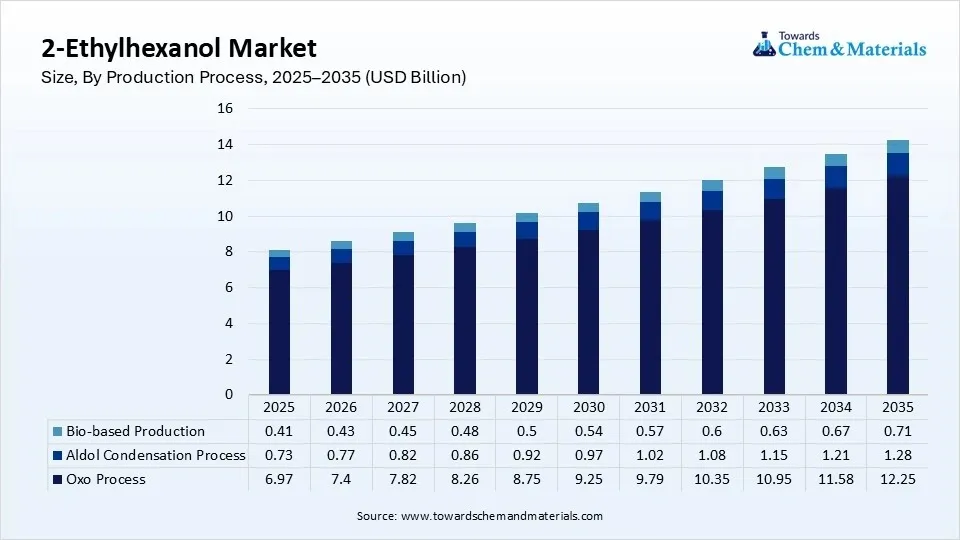
The bio-based production segment held 5% market share in 2025 and is expected to have the fastest growth with a CAGR of 9.34% in the forecast period, as it grows to replace traditional, petroleum-based chemicals. It relies on sustainability rules, green chemistry, and eco-friendly products. Traditional 2-EH uses fossil fuels like petroleum and natural gas. Bio-based production uses renewable feedstocks like plant sugars and enzymatic fermentation to make the same chemical but with a much lower carbon output.
2-Ethylhexanol Market Share, By Production Process, 2025(%)
| By Production Process | Market Share (%) |
| Oxo Process | 86.00% |
| Aldol Condensation Process | 9.00% |
| Bio-based Production | 5.00% |
Purity Insights
The ≥99% segment dominated the market with a 68% share in 2025 because it offers the best balance of cost and quality. It is widely used to make plasticizers and acrylates, which are in high demand across the automotive, construction, and electronics industries, driving the growth of the market. The ≥99% tier provides high performance at a practical price. This purity level easily meets the strict standards required to produce 2-ethylhexyl acrylate (2-EHA). 2-EHA is a vital building block for high-demand adhesives, sealants, and paints used in building and car manufacturing.
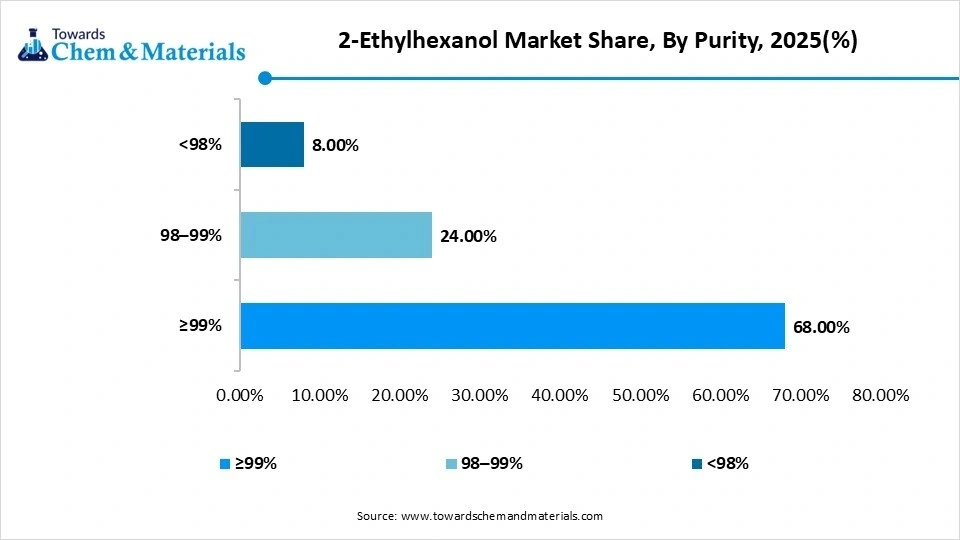
The <98% segment held 8% market share in 2025 and is expected to have the fastest growth with a CAGR of 6.36% in the forecast period because it is a cost-effective choice. This standard-grade chemical perfectly meets the needs of cost-sensitive industries. Buyers choose it over high-purity options. Programs like the Make in India initiative require large amounts of standard 2-ethylhexanol for urban and rural building projects. This grade is cheaper to produce. It serves mass-market needs perfectly. It is heavily used in PVC pipes, vinyl flooring, and cable coatings. Developing regions have high demands for these materials.
2-Ethylhexanol Market Share, By Purity, 2025(%)
| By Purity | Market Share (%) |
| ≥99% | 68.00% |
| 98–99% | 24.00% |
| <98% | 8.00% |
Application Insights
The plasticizers segment dominated the market with a 59% share in 2025. Growth is surging due to expanding construction and auto industries. Key chemical manufacturers like BASF SE and LG Chem, Ltd. are seeing massive demand for these derivatives. Plasticizers act like tiny lubricants between hard plastic molecules. They turn rigid Polyvinyl Chloride (PVC) into flexible materials. Rising urbanization in developing regions means more building activity. This demands higher amounts of PVC pipes and vinyl flooring.
The acrylates esters segment held 17% market share in 2025 and is expected to have the fastest growth with a CAGR of 6.71% in the forecast period. The segment is experiencing growth driven by growing demand for high-performance adhesives, construction sealants, and eco-friendly paints, which further fuels the growth of the market. The acrylate segment relies heavily on 2-EH for three main reasons, which are superior chemical properties, booming sticky industries, and eco-friendly construction, which propels the growth and expansion of the market.
2-Ethylhexanol Market Share, By Application, 2025(%)
| By Application | Market Share (%) |
| Plasticizers | 59.00% |
| Acrylate Esters | 17.00% |
| 2-Ethylhexyl Nitrate | 8.00% |
| Lubricants & Synthetic Oils | 5.00% |
| Solvents | 4.00% |
| Adhesives & Sealants | 3.00% |
| Coatings & Paints | 2.00% |
| Other Applications | 2.00% |
End-Use Industry Insights
The construction segment dominated the market with a 33% share in 2025, due to rising global infrastructure development programs and rapid urbanization, which fuel the growth. The extensive use of plasticizers for PVC, which are used in buildings to make vinyl flooring, water sewage pipes, window frames, and wire coatings, drives growth. They are also highly used in acylates for paints and coatings, adhesives, and sealants, booming construction demand, supporting expansion. Demand is exceptionally high in developing countries, with massive growth.
The chemical manufacturing segment held 13% market share in 2025 and is expected to have the fastest growth with a CAGR of 6.43% in the forecast period. The growing consumption to create products like plasticizers, acrylates, and solvents fuels the growth of the market. The advancing green and sustainable chemistry, as the leading chemical producers, are heavily investing in the production of 2-EG with a lower carbon footprint, which fuels the growth of the market. Companies like OQ Chemicals and LG Chem develop bio-based 2-EH; the sustainable solutions help manufacturers comply with environmental mandates, which fuel the growth.
2-Ethylhexanol Market Share, By End-use Industry, 2025(%)
| By End-use Industry | Market Share (%) |
| Construction | 33.00% |
| Automotive | 22.00% |
| Packaging | 14.00% |
| Chemical Manufacturing | 13.00% |
| Electrical & Electronics | 8.00% |
| Consumer Goods | 5.00% |
| Agriculture | 3.00% |
| Other Industries | 2.00% |
Distribution Channel Insights
The direct sales segment dominated the market with a 67% share in 2025, growing through direct-to-industry partnerships, localized supply chains, and technical consulting. Manufacturers bypass distributors to build long-term contracts with end-users in the rapidly expanding automotive, construction, and industrial coatings sectors, which fuels the growth of the market. By dealing directly with chemical manufacturers like BASF SE or Eastman Chemical Company, end-users secure stable pricing and reliable delivery, minimizing disruptions common in traditional supply chains.
The online industrial platforms segment held 6% market share in 2025 and is expected to have the fastest growth with a CAGR of 9.12% in the forecast period, as they simplify how buyers and sellers connect. These platforms make it easy to source bulk industrial chemicals. Manufacturers use them to quickly compare 2-EH prices and ensure steady product delivery. Digital platforms provide real-time pricing data. Buyers can see how costs change based on raw materials like propylene. Online tools allow companies to easily order bulk industrial-grade chemicals for making plastics, paints, and adhesives.
2-Ethylhexanol Market Share,By Distribution Channel , 2025(%)
| By Distribution Channel | Market Share (%) |
| Direct Sales | 67.00% |
| Chemical Distributors | 27.00% |
| Online Industrial Platforms | 6.00% |
Regional Analysis
How did Asia Pacific Dominate the 2-Ethylhexanol Market in 2025?
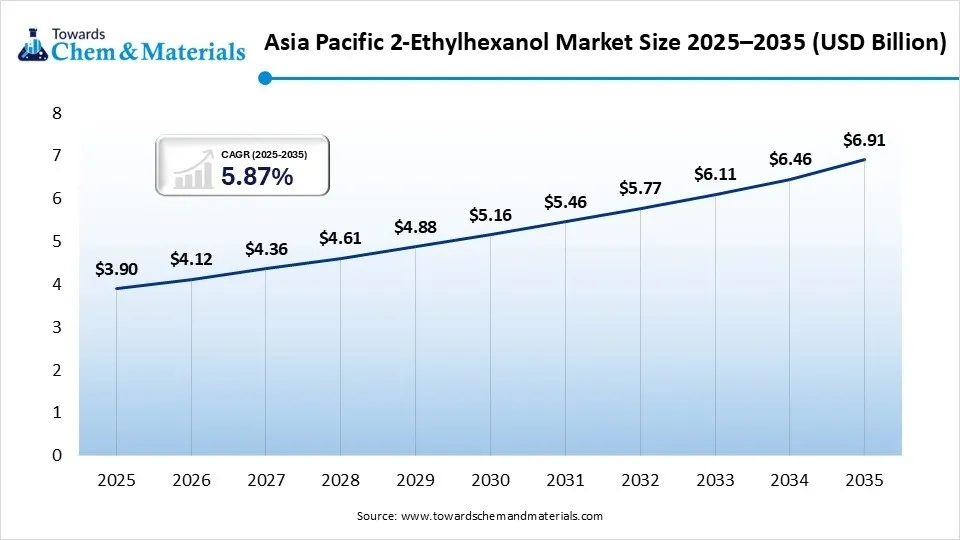
The Asia Pacific 2-ethylhexanol market size was estimated at USD 3.90 billion in 2025 and is projected to reach USD 6.91 billion by 2035, growing at a CAGR of 5.87% from 2026 to 2035. Asia Pacific dominated the market with a share of 48% in 2025. The region succeeded through massive chemical manufacturing, low-cost production, and high demand for plasticizers (used to make plastics soft) and adhesives/coatings. Rapid infrastructure building and growing auto industries in China and India drove this success. 2-EH is a main building block for industrial coatings and adhesives. Developing nations like China, India, Vietnam, and Indonesia experienced heavy building and construction growth. This required more paints, sealants, and flooring.
India
Indias market is growing fast, driven by local construction and automotive needs. Top manufacturers and suppliers include Andhra Petrochemicals Limited, ChemicalBull, and Vizag Chemicals. Indias broader petrochemical and chemical industry is expanding rapidly. This domestic growth enables localized production of specialty chemicals. It lowers import reliance and ensures a steady supply for manufacturers.
China
The expanding infrastructure projects and growing demand from the automotive sector due to high vehicle production directly boost consumption in China, fueling growth. Giant state and private companies like Sinopec and Shandong Aojin Chemical lead the countrys manufacturing output.
North America 2-Ethylhexanol Market Growth Factor
The North America 2-ethylhexanol market size was estimated at USD 1.46 billion in 2025 and is projected to reach USD 2.63 billion by 2035, growing at a CAGR of 5.65% from 2026 to 2035. North America held the market share of 18% in 2025 and is expected to have the fastest growth with a CAGR of 6.44% in the forecast period, driven by rising demand for plasticizers, acrylates, and solvents in the construction and automotive sectors. Stringent environmental regulations in the EU and North America are accelerating the shift toward safer, non-phthalate plasticizers like DOTP, which use 2-EH as a core ingredient. North America has a mature petrochemical supply chain, providing reliable and cost-effective access to raw materials for 2-EH production.
United States
Rules like the REACH regulations and California AB 2300 require companies to phase out older, restricted phthalates. This drives research into advanced, non-phthalate plasticizers that continue to use 2-EH as their foundational building block. The United States produces a significant portion of global 2-EH, with key manufacturers like Eastman Chemical Company operating major facilities in Texas.
Canada
Canada has a strong automotive sector, and 2-EH is used to create durable, high-quality flexible PVC and adhesives for vehicle interiors. Increased auto production in Canadas integrated North American market under USMCA rules boosts local chemical consumption. Canadian procurement primarily relies on major North American producers and distributors like Hanson Chemicals or chemical traders such as CANADA CHEMICAL.
Europe 2-Ethylhexanol Market Growth Factor
The Europe 2-ethylhexanol market size was estimated at USD 1.71 billion in 2025 and is projected to reach USD 3.06 billion by 2035, growing at a CAGR of 6.19% from 2026 to 2035. Europe held a market share of 21% in 2025, driven by strict environmental regulations, sustainable production shifts, and demand for flexible plastics in cars and buildings, which fuels the growth of the market. The European Union enforces tight laws on older plasticizers. This pushes companies to use safer alternatives derived from 2-EH, such as DINCH. The demand is supported by the rapid adoption of electric vehicles (EVs). EVs require specialized adhesives, wire coatings, and engineered plastics that rely on 2-EH derivatives.
United Kingdom
United Kingdom policies are phasing out traditional phthalates due to health concerns. This forces companies to use safer, non-phthalate plasticizers that still require 2-EH as their core building block.Global giants like Dow, SABIC, BASF, and INEOS supply most of the 2-EH for the UK region. The industry relies on 2-EH for automotive paints, coatings, and sealants. It is also used to make 2-EH nitrate, a chemical added to diesel fuel to improve cetane numbers, which helps engines start faster and run quieter.
Italy
2-EH is a core raw material for phthalate and non-phthalate plasticizers like DOP. These make plastics like polyvinyl chloride soft and bendable. They are vital for Italys active automotive interiors and building construction sectors. Firms such as Biesterfeld and various regional chemical traders act as the bridge between large foreign plants and Italian factories.
Latin America 2-Ethylhexanol Market Growth Factor
The Latin America 2-ethylhexanol market size was estimated at USD 0.57 billion in 2025 and is projected to reach USD 1.07 billion by 2035, growing at a CAGR of 6.25% from 2026 to 2035. Latin America held a market share of 7% in 2025, driven by rising construction projects and expanding automotive manufacturing across Brazil and Colombia. These sectors rely heavily on 2-EH as a key raw material for making flexible plastics, paints, and coatings. Urbanization and infrastructure development in the region increase the need for PVC in pipes, flooring, and wire insulation. As local industries, such as appliances and packaging, grow, so does the need for high-quality chemical ingredients. 2-EH acts as an excellent low-volatility solvent in these industrial chemical processes.
Brazil
Local demand is driven by the growing automotive, construction, and consumer goods sectors. Major chemical distributors like Foscote serve the Brazilian market through local supply chains and storage facilities. The primary growth factors for the 2-ethylhexanol (2-EH) market in Brazil are the rising demand for flexible plastics and paints across the booming construction and automotive sectors.
Argentina
As cities in Latin America continue to grow, there is a higher demand for durable goods, automobiles, and modern housing, all of which use materials processed with 2-EH. Ongoing construction projects and automotive manufacturing in Argentina require a large volume of paints, coatings, and adhesives. 2-EH is used to manufacture acrylate esters, which make these coatings durable and weather-resistant.
Middle East and Africa 2-Ethylhexanol Market Growth Factor
The Middle East and Africa 2-ethylhexanol market size was estimated at USD 0.49 billion in 2025 and is projected to reach USD 0.93 billion by 2035, growing at a CAGR of 6.05% from 2026 to 2035. The Middle East and Africa held a market share of 6% in 2025, driven by expanding construction projects, government infrastructure investments, and a growing petrochemical sector. Rapid urbanization and large-scale government housing projects boost the need for flexible PVC, which relies on 2-EH plasticizers for electrical cables, pipes, and flooring. Countries like Saudi Arabia and the United Arab Emirates have highly advanced olefin plants, offering abundant, low-cost raw materials like propylene to produce chemicals, which supports the growth of the market.
Saudi Arabia
In Saudi Arabia, 2-Ethylhexanol is a major industrial chemical used to make plasticizers and coatings. It is primarily produced in the Al-Jubail Industrial City by SABIC and its affiliates. Saudi Arabia has strong natural gas and oil resources. The region makes a lot of propylene, which is a natural chemical base used to make 2-EH.
UAE
PVC is vital for the UAEs booming construction and real estate sectors to build pipes, wires, and flooring. The expanding automotive and manufacturing industries in the UAE drive the demand for the market. The market is growing as industries switch to safer, non-phthalate plasticizers. This shift requires advanced chemical formulations, pushing up the value of 2-EH.
Competitive Analysis
The major companies like BASF SE, Dow, and SABIC dominate the global market, which boosts efficiency, lowers costs, and makes new products. Companies race to lower costs and dominate, while governments restrict toxic chemicals and enforce strict emission laws through taxes and trade tariffs.
- BASF signed a Memorandum of Understanding to secure a strategic partnership. Under this agreement, BASF will directly supply 2-Ethylhexanol and N-Butanol to UPC from its highly advanced Zhanjiang Verbund site.
Bharat Petroleum Corporation Limited is a principal producer in India. BPCLs Kochi Refinery announced localized market adjustments, including updated domestic price reliefs for 2-EH.(Source: petroinfo.in)
Top players in the 2-Ethylhexanol Market & Their Offerings:
| Company | Company Type/Position | Major Headquarters | Geographic Presence | 2-Ethylhexanol Offerings | Key Offering/Strength |
| OXEA GmbH | Leading oxo alcohols producer | Monheim am Rhein | Europe, North America, Asia Pacific | High-purity 2-Ethylhexanol for plasticizers, coatings, adhesives, and chemical intermediates | Strong expertise in oxo chemicals with a broad global supply network |
| BASF | Global petrochemicals and specialty chemicals manufacturer | Ludwigshafen | Europe, North America, Asia Pacific, South America | 2-Ethylhexanol for plasticizers, acrylates, lubricants, and solvents | Integrated production facilities and reliable global supply capabilities |
| Eastman Chemical Company | Specialty chemicals and intermediates producer | Kingsport | North America, Europe, Asia Pacific | 2-Ethylhexanol for plasticizers, coatings, and industrial chemical applications | High-quality chemical intermediates supported by advanced manufacturing technologies |
| LG Chem Ltd. | Integrated petrochemical manufacturer | Seoul | Asia Pacific, Europe, North America | 2-Ethylhexanol for PVC plasticizers, paints, coatings, and specialty chemicals | Large-scale petrochemical production with a strong presence in Asia |
| Sasol Limited | Global producer of specialty alcohols and chemicals | Johannesburg | Africa, Europe, North America, Asia Pacific | 2-Ethylhexanol for plasticizers, detergents, lubricants, and chemical intermediates | Strong oxo alcohol production expertise and diversified downstream chemical portfolio |
Other Top Players Are
- BASF SE (Germany)
- The Dow Chemical Company (USA)
- Eastman Chemical Company (USA)
- SABIC (Saudi Arabia)
- LG Chem, Ltd. (South Korea)
- Mitsubishi Chemical Group (Japan)
- SINOPEC (China)
- INEOS (UK)
- Formosa Plastics Group (Taiwan)
- China National Petroleum Corporation (CNPC) (China)
- ExxonMobil Chemical (USA)
- Evonik Industries AG (Germany)
- OQ Chemicals (Germany/USA)
- Nan Ya Plastics Corporation (Taiwan)
- Elekeiroz S.A. (Brazil)
- Grupa Azoty (Poland)
- Perstorp (Sweden)
- The Andhra Petrochemicals Ltd. (India)
- Sasol Limited (South Africa)
- Wanhua Chemical Group (China)
Segments Covered
By Production Process
- Oxo Process
- Cobalt Catalyst Process
- Rhodium Catalyst Process
- Aldol Condensation Process
- Bio-based Production
By Purity
- ≥99%
- 98–99%
- <98%
By Application
- Plasticizers
- DOP
- DOTP
- DINP
- DIDP
- Other Plasticizers
- Acrylate Esters
- 2-Ethylhexyl Acrylate
- 2-Ethylhexyl Methacrylate
- 2-Ethylhexyl Nitrate
- Lubricants & Synthetic Oils
- Solvents
- Adhesives & Sealants
- Coatings & Paints
- Other Applications
By End-use Industry
- Construction
- Automotive
- Packaging
- Chemical Manufacturing
- Electrical & Electronics
- Consumer Goods
- Agriculture
- Other Industries
By Distribution Channel
- Direct Sales
- Chemical Distributors
- Online Industrial Platforms
By Regions
- North America
- Europe
- Asia Pacific
- Middle East & Africa
- Latin America
Tags
FAQ's




Select User License to Buy
Figures (6)










 sales@towardschemandmaterials.com
 Download Sample
 Schedule a Meeting