
Specialty Silica Market Size and Forecast 2026 to 2035
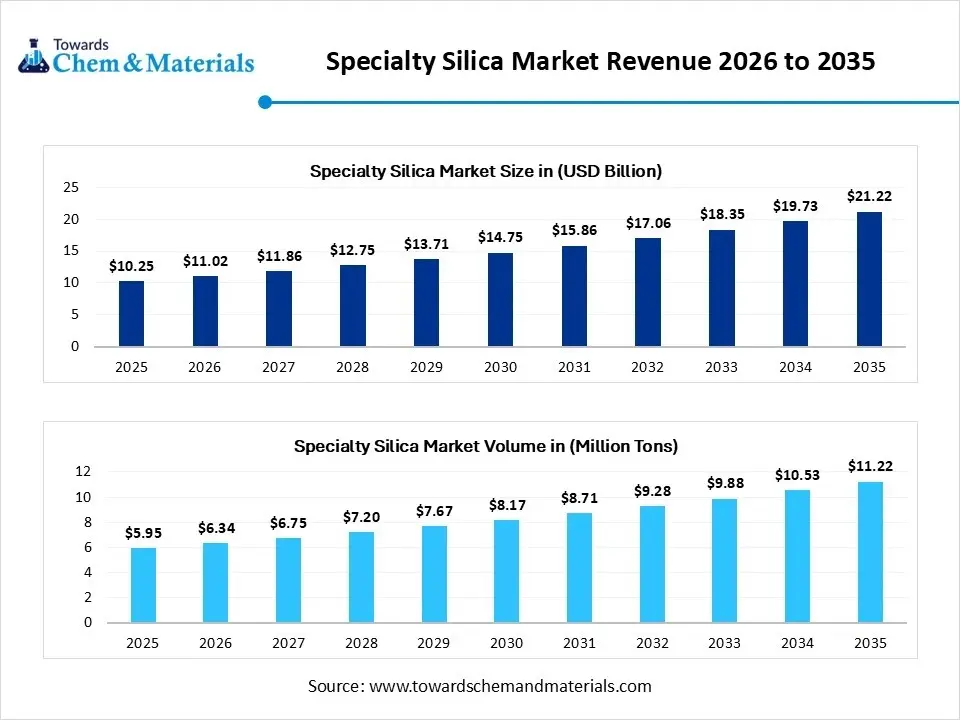
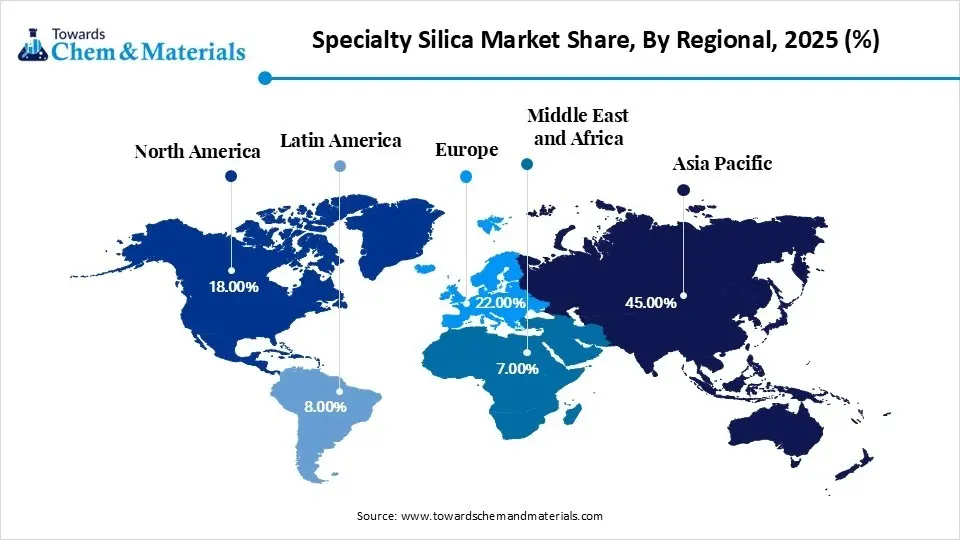
The global specialty silica market size was estimated at USD 10.25 billion in 2025 and is expected to increase from USD 11.02 billion in 2026 to USD 21.22 billion by 2035, growing at a CAGR of 7.55% from 2026 to 2035. In terms of volume, the market is projected to grow from 5.95 million tons in 2025 to 11.22 million tons by 2035. growing at a CAGR of 6.55% from 2026 to 2035. Asia Pacific dominated the specialty silica market with the largest share of 45% in 2025.The growth of the market is driven by the growing demand from the industries and the focus of major players, which drives growth.
Market Highlights
- By region, Asia Pacific dominated the market with a share of 45% in 2025 and is expected to sustain its position while growing with a CAGR of 7.4% in the forecast period. A strong manufacturing base drives market demand.
- By region, Europe held the second largest share of 22% in 2025 and expects the notable growth in the market with the 6.50% CAGR during the forecast period. The advanced automotive sector drives silica demand, fueling growth.
- By product type, the precipitated silica segment dominated the market with 38% share in 2025. Demand for green tire technology continues to rise, driving growth.
- By product type, the fumed silica segment held the second largest share of 22% in 2025 and is expected to have the fastest growth with a CAGR of 7.5% in the forecast period. Superior thickening and reinforcing properties drive adoption, supporting growth.
- By end use industry, the Automotive segment dominated the market with 32% share in 2025. Efficiency regulations support the adoption and drive the growth of the market.
- By end use industry, the Electronics & Semiconductors segment held the third largest share of 14% in 2025 and is expected to have the fastest growth with a CAGR of 7.6% in the forecast period. Advanced electronics require precision materials, driving the growth of the market.
- By form, the powder segment dominated the market with 48% share in 2025. Rubber and coatings industries prefer powder form, driving demand.
- By form, the liquid (colloidal) segment held the second largest share of 30% in 2025 and is expected to have the fastest growth with a CAGR of 7.3% in the forecast period. High dispersion quality enhances performance, driving growth.
- By distribution channel, the direct sales segment dominated the market with 52% share in 2025. Long-term contracts ensure stability
- By distribution channel, the online sales segment held the third largest share of 14% in 2025 and is expected to have the fastest growth with a CAGR of 7.8% in the forecast period. E-commerce simplifies procurement.
Market Overview
What Is The Significance Of The Specialty Silica Market?
The specialty silica market is highly significant for enabling high-performance materials in automotive, electronics, and consumer goods sectors. It is driven by demand for "green" tires with lower rolling resistance, advanced electronics manufacturing, and high-performance coatings, with major growth in the Asia-Pacific. Specialized silica is crucial for chemical mechanical planarization (CMP) in manufacturing semiconductors, electronic components, and high-precision optical lenses.
Market Growth Trends:
- Electric Vehicle (EV) and Tire Industry Boom: Specialty silica, especially precipitated silica, is vital for green tires as it improves fuel efficiency and reduces rolling resistance. Its demand is growing rapidly, driven by increased electric vehicles demand.
- Focus on Sustainability and Green Production: Manufacturers are focusing on eco-friendly, energy-efficient production methods, including the utilization of rice husk ash to produce bio-silica.
- Rapid Growth in High-Performance Coatings: The demand for specialty silica is rising in paints and coatings to improve scratch resistance, durability, and matting in the automotive and construction sectors.
Key Technological Shifts In The Specialty Silica Market:
Key technological shifts in the specialty silica market are driven by advances in sustainability, nanotechnology, and high-performance applications. The rise of eco-friendly, bio-based silica alternatives, increased usage in electric vehicle tires for reduced rolling resistance, and the development of high-purity, nano-structured silica for electronics and pharmaceutical applications, drive growth. There is a significant pivot toward green chemistry, with manufacturers focusing on developing bio-based and renewable silica alternatives to replace traditional, environmentally taxing methods.
Trade Analysis Of Specialty Silica Market: Import & Export Statistics
According to Global Export Data, the world exported 496 Colloidal Silica shipments between June 2024 and May 2025 (TTM) via 124 exporters and 132 buyers
The United States, Vietnam, and India lead as the top Colloidal Silica importers, while Japan with 504 shipments, China with 411 shipments, and India with 360 shipments, rank as the largest global Colloidal Silica exporters.
Top-performing Silica Exporters by volume:
- Madhu Silica Pvt. Ltd.: 3,608 shipments (87%)
- LUCKY GLOBAL PROJECTS PRIVATE LIMITED: 101 shipments (2%)
- MADHAV INDUSTRIES: 77 shipments (2%)
Specialty Silica Market -- Supply Chain Analysis
Silica Production & Processing
- Specialty silica is produced through precipitation, fumed silica synthesis, or silica gel processing, followed by surface modification and drying for use in rubber, coatings, personal care, and food applications.
- Key players: Evonik Industries, Cabot Corporation, W. R. Grace & Co., Solvay
Quality Testing and Certification
- Specialty silica must meet standards for particle size distribution, purity, surface area, and safety compliance across industrial and consumer applications.
- Key players: International Organization for Standardization, ASTM International, U.S. Food and Drug Administration, European Chemicals Agency
Distribution to Industrial Users
- Specialty silica is supplied to tire and rubber manufacturers, coatings and adhesives producers, personal care companies, food and beverage industries, and electronics manufacturers.
- Key players: Evonik Industries, Cabot Corporation, W. R. Grace & Co.
Specialty Silica Regulatory Landscape: Global Regulations
| Country / Region | Regulatory Body | Key Regulations | Focus Areas | Notable Notes |
| U.S. | Environmental Protection Agency (EPA); Occupational Safety and Health Administration (OSHA) | Toxic Substances Control Act (TSCA); OSHA Respirable Crystalline Silica Standard | Chemical safety, worker exposure limits, and industrial hygiene | Specialty silica products must comply with strict exposure limits due to health risks associated with inhalation of fine silica particles. |
| Europe | European Chemicals Agency (ECHA); European Commission | REACH Regulation; CLP Regulation; Worker Safety Directives | Chemical registration, hazard classification, and occupational safety | The EU enforces strict workplace exposure limits and labeling requirements for silica due to respiratory health concerns. |
| China | Ministry of Emergency Management (MEM); National Health Commission (NHC) | Work Safety Law; Occupational Disease Prevention Law | Industrial safety, occupational health | China regulates silica exposure to prevent occupational diseases such as silicosis in manufacturing industries. |
| India | Ministry of Labour and Employment; Directorate General Factory Advice Service & Labour Institutes (DGFASLI) | Factories Act; Occupational Safety, Health and Working Conditions Code | Workplace safety, exposure limits, and industrial hygiene | India focuses on worker safety and exposure control in industries handling silica materials. |
| Japan | Ministry of Health, Labour and Welfare (MHLW); Ministry of Economy, Trade and Industry (METI) | Industrial Safety and Health Act; Chemical Substances Control Law (CSCL) | Occupational exposure control, chemical safety | Japan enforces strict guidelines to control silica dust exposure in industrial environments. |
| Brazil | Ministry of Labor; Brazilian Institute of Environment and Renewable Natural Resources (IBAMA) | Occupational Safety Standards; Environmental Protection Laws | Worker protection, environmental compliance | Brazil regulates silica handling with a focus on occupational safety and environmental protection. |
Segmental Insights
Product Type
The Precipitated Silica segment dominated the Specialty Silica Market with 38% market share in 2025
The precipitated silica segment dominated the market with 38% share in 2025. Tire manufacturers increase usage to improve fuel efficiency and performance. The increasing Demand for green tire technology continues to rise, with expanding automotive production supporting volume growth, further supporting expansion of the market. Precipitated silica is crucial for manufacturing fuel-efficient tires with low rolling resistance, aligning with sustainability goals in the automotive sector.
The fumed silica segment held the second-largest share of 22% in 2025, and is expected to have the fastest growth with a CAGR of 7.5% in the forecast period. High demand for electronics and coatings boosts consumption, along with superior thickening and reinforcing properties, which drive adoption, fueling growth. Growth in the EV and semiconductor sectors accelerates use among consumers, which drives growth. Rapid expansion in electric vehicle sales is driving demand for fumed silica for thermal management and battery insulation.
The silica gel segment held the third-largest share of 16% in 2025. The growth is driven by the demand for Packaging and moisture control applications, increasing the growth of the market. The pharmaceutical and food industries expand usage, while the rising need for desiccants supports growth. This segment is poised to experience growth due to its critical role in logistics and product protection, with indicative silica gel showing particular strength.
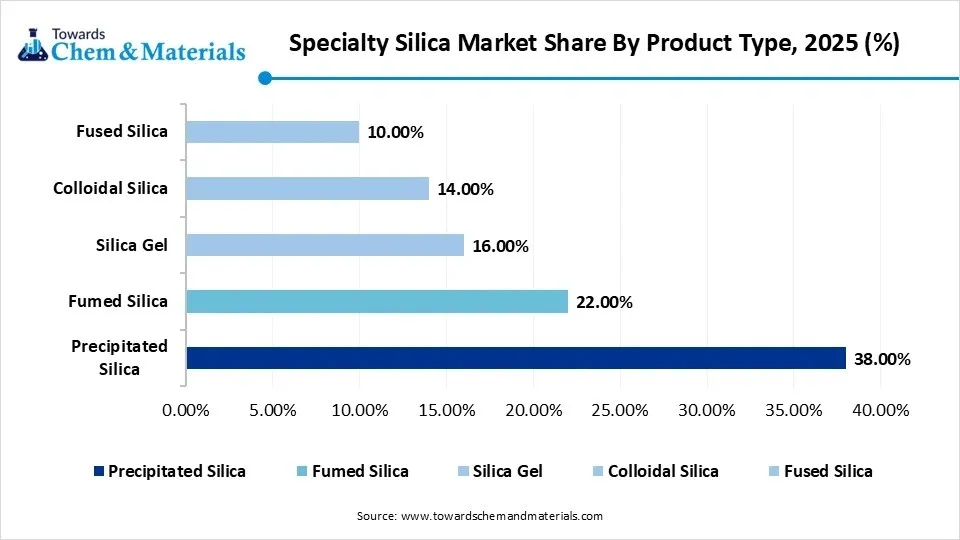
The colloidal silica segment held the fourth largest share of 14% in 2025. Semiconductor polishing applications drive demand for the market. Growth in precision casting and coatings enhances use, which drives demand from the industries. Technological advancements in the product improve dispersion performance, which fuels the growth. It is favored for its stability and purity, particularly in chemical mechanical planarization (CMP) and as a binder in high-performance materials.
Specialty Silica Market Share By Product Type, 2025 (%)
| By Product Type | Revenue Share, 2025 (%) |
| Precipitated Silica | 38.00% |
| Fumed Silica | 22.00% |
| Silica Gel | 16.00% |
| Colloidal Silica | 14.00% |
| Fused Silica | 10.00% |
- Precipitated Silica: The largest segment, accounting for 38.00% of the market share in 2025. Precipitated silica is widely used in various industries, including rubber manufacturing, electronics, and automotive sectors due to its excellent reinforcing properties.
- Fumed Silica: This product type holds a significant share of 22.00%. Known for its high surface area and exceptional absorption properties, fumed silica is primarily used in applications such as paints and coatings, adhesives, sealants, and pharmaceuticals.
- Silica Gel: Comprising 16.00% of the market, silica gel is commonly used as a desiccant to control humidity and moisture in packaging and storage. It also has widespread applications in chromatography and as a catalyst support.
- Colloidal Silica: Accounting for 14.00% of the market share, colloidal silica is valued for its stability and use in a variety of industrial applications, such as in coatings, cosmetics, and as a polishing agent in semiconductor manufacturing.
- Fused Silica: Representing 10.00% of the market, fused silica is used in high-performance applications, including the production of crucibles and refractory materials, owing to its high thermal shock resistance and low thermal expansion.
End-Use Industry Insights
The Automotive segment dominated the Specialty Silica Market with 32% market share in 2025
The automotive segment dominated the market with 32% share in 2025. The increased Tire production due to the strong automotive sectors drives silica consumption, fueling growth. EV production growth increases demand for high-performance materials, which further fuels the growth of the market. Specialty silica provides superior reinforcement, allowing tires to offer improved wet grip, durability, and reduced heat build-up. Efficient regulatory support increases the adoption, which further supports the growth and expansion of the market.
The construction segment held the second-largest share of 20% in 2025. The infrastructure expansion increases coatings and sealant usage and also enhances the durability of construction materials, which fuels the growth of the market. Rapid urbanization further drives demand, supporting the growth of the market. Specialty silica enhances the structural integrity, durability, and texture of these materials.
The electronics and semiconductors segment held the third-largest share of 14%, in 2025, and is expected to have the fastest growth with a CAGR of 7.6% in the forecast period. Semiconductor growth drives demand for high-purity silica. This requires Advanced electronics that require precision materials, driving the growth of the market further. Increasing chip production boosts usage and also helps in the expansion of the market.
The healthcare and personal care segment held the fourth largest share of 13% in 2025. Rising demand for personal care products increases silica consumption, by both the industries and the consumers, which helps in the growth. Pharmaceutical applications expand usage in the production industry. Innovation in formulations of pharmaceuticals and cosmetics further supports the growth and expansion of the market.
Specialty Silica Market Share By End-Use Industry, 2025 (%)
| By End-Use Industry | Revenue Share, 2025 (%) |
| Automotive | 32.00% |
| Construction | 20.00% |
| Electronics & Semiconductors | 14.00% |
| Healthcare & Personal Care | 13.00% |
| Food & Beverage | 11.00% |
| Chemicals | 10.00% |
- Automotive: The largest end-use industry, accounting for 32.00% of the market share in 2025. Specialty silica is essential in the automotive sector for applications such as tires (as a reinforcing agent), coatings, and sealants, due to its durability and performance-enhancing properties.
- Construction: Representing 20.00% of the market, specialty silica plays a crucial role in the construction industry, particularly in the production of concrete, paints, coatings, and as a filler material in construction products due to its strengthening and anti-caking properties.
- Electronics & Semiconductors: This industry holds a 14.00% share of the market. Specialty silica is used in electronics and semiconductor manufacturing, particularly for its insulating properties, as well as in the production of semiconductor materials and coatings for electronic devices.
- Healthcare & Personal Care: With a share of 13.00%, specialty silica is widely used in personal care products such as cosmetics, skincare, and oral care items for its ability to improve texture and provide controlled release of active ingredients, as well as in healthcare applications like drug delivery systems.
- Food & Beverage: Comprising 11.00% of the market, specialty silica is utilized in the food and beverage industry primarily as a flow agent in powdered products, preventing clumping, and as a stabilizing agent in various food formulations.
- Chemicals: Accounting for 10.00% of the market, specialty silica is used in a variety of chemical processes, including as a catalyst support, in paints and coatings, and in the production of fine chemicals, helping to enhance product performance and efficiency.
Form Insights
The powder segment dominated the Specialty Silica Market with 48% market share in 2025
The powder segment dominated the market with 48% share in 2025. Easy handling and wide industrial applicability due to growing demand because of the properties of the product drive demand. Rubber and coatings industries prefer the powder form due to its application and usage. Cost-effectiveness further supports adoption. Powder is the primary reinforcing filler in "green tires," improving traction, durability, and rolling resistance, increasing adoption.
The liquid segment held the second-largest share of 30% in 2025. and is expected to have the fastest growth with a CAGR of 7.3% in the forecast period. Growing demand is fueled by its critical role in semiconductor polishing and the electronics industry's need for high-performance dispersion quality. Simultaneously, the transition toward water-based, low-VOC formulations is accelerating its adoption within the paints and coatings sector.
The granules segment held the third-largest share of 22%, in 2025. Controlled particle size improves performance in applications, which increases the demand for the market, further fueling the growth. Used in food and desiccants, Handling efficiency supports growth. The segment is experiencing significant growth within the specialty silica market, primarily driven by its superior handling characteristics in industrial applications.
Specialty Silica Market Share By Form, 2025 (%)
| By Form | Revenue Share, 2025 (%) |
| Powder | 48.00% |
| Granules | 22.00% |
| Liquid (Colloidal) | 30.00% |
- Powder: The dominant form, accounting for 48.00% of the market share in 2025. Powdered specialty silica is extensively used in industries such as automotive, construction, and healthcare, offering versatility in applications like reinforcing agents in tires, fillers in paints, and as a drying agent in personal care products.
- Granules: Representing 22.00% of the market, granulated specialty silica is commonly used in applications that require controlled particle size and ease of handling. It is often utilized in the production of desiccants, food additives, and industrial catalysts, as well as in certain pharmaceutical applications.
- Liquid (Colloidal): Comprising 30.00% of the market, liquid (colloidal) silica is widely used in industries such as electronics, semiconductors, and personal care. Its high surface area and stability make it ideal for use in formulations for coatings, adhesives, and cosmetics, as well as in high-performance materials for electronic components.
Distribution Channel Insights
The Direct Sales segment dominated the Specialty Silica Market with 52% market share in 2025
The direct sales segment dominated the market with 52% share in 2025. Manufacturers prefer direct supply to large industrial buyers, which helps in long-term contracts to ensure stability, supporting the growth of the market. Bulk purchasing further drives channel dominance. largely driven by the increasing need for tailored, high-performance materials in the automotive and electronics sectors, where close collaboration between manufacturers and end-users is essential.
The distributors and traders segment held the second-largest share of 34% in 2025. SMEs rely on distributors for supply, which increases the demand for the market. A wide network improves accessibility, increasing regional demand, which supports growth. The distributors and traders segment is experiencing growth in the specialty silica market, driven by the increasing need for localized distribution networks, specialized supply chain management, and growing demand for high-performance materials in diverse end-use industries.
The online sales segment held the third-largest share of 14% in 2025 and is expected to have the fastest growth with a CAGR of 7.8% in the forecast period. Digital platforms expand reach to smaller buyers due to e-commerce simplifying procurement, which in turn increases digital adoption and drives growth. This shift is fueled by the growing need for specialized, high-purity silica products in sectors like personal care, coatings, and electronics.
Specialty Silica Market Share By Distribution Channel, 2025 (%)
| By Distribution Channel | Revenue Share, 2025 (%) |
| Direct Sales | 52.00% |
| Distributors & Traders | 34.00% |
| Online Sales | 14.00% |
- Direct Sales: The leading distribution channel, accounting for 52.00% of the market share in 2025. Direct sales are commonly used for high-value or customized specialty silica products, allowing manufacturers to engage directly with customers, offer tailored solutions, and build long-term relationships.
- Distributors & Traders: Representing 34.00% of the market, distributors and traders act as intermediaries, helping specialty silica manufacturers reach a broader audience. This channel is essential for reaching various industries in multiple regions, offering convenience, a wider product range, and localized service.
- Online Sales: Comprising 14.00% of the market, online sales are becoming an increasingly popular channel for purchasing specialty silica. This method provides flexibility for smaller businesses and end-users to access products directly from manufacturers or suppliers, offering ease of access, competitive pricing, and efficient delivery.
Application Insights
In the Specialty Silica Market, the rubber application holds a dominant share of 34%, driving the demand due to its crucial role in enhancing the performance of tires, industrial rubber products, and other rubber-based applications. Specialty silica's properties, such as reinforcing ability and low rolling resistance, make it highly sought after in the automotive and industrial sectors. The plastics industry benefits from specialty silica for its ability to improve the mechanical properties of plastics, including strength and durability, while also reducing the environmental impact of plastic products.
The coatings & inks application, accounting for 18%, utilizes specialty silica for its ability to provide better rheological properties, anti-settling characteristics, and improved performance in terms of scratch resistance and durability. In adhesives & sealants, specialty silica is used to enhance viscosity and improve bonding strength. Its usage in personal care & cosmetics is rising due to its oil-absorbing properties, while in the food & feed sector, it functions as a carrier and anti-caking agent. Additionally, in electronics, specialty silica improves insulation properties and enhances the performance of electronic components.
Specialty Silica Market Share By Application, 2025 (%)
| By Application | Revenue Share, 2025 (%) |
| Rubber | 34.00% |
| Plastics | 16.00% |
| Coatings & Inks | 18.00% |
| Adhesives & Sealants | 10.00% |
| Personal Care & Cosmetics | 9.00% |
| Food & Feed | 7.00% |
| Electronics | 6.00% |
- Rubber: The largest application segment, accounting for 34.00% of the market share in 2025. Specialty silica is extensively used in the rubber industry, particularly in tire manufacturing, where it serves as a reinforcing agent to enhance durability, performance, and fuel efficiency.
- Plastics: Representing 16.00% of the market, specialty silica is utilized in the plastics industry to improve the mechanical properties, reduce viscosity, and enhance processing performance. It is commonly used in the production of various plastic products and packaging materials.
- Coatings & Inks: Holding 18.00% of the market share, specialty silica is employed in coatings and inks to improve scratch resistance, enhance the texture of finishes, and control the viscosity of formulations. It is widely used in automotive coatings, industrial coatings, and decorative finishes.
- Adhesives & Sealants: Comprising 10.00% of the market, specialty silica is used in adhesives and sealants to enhance bonding strength, improve performance, and provide thixotropic properties, making it suitable for construction, automotive, and industrial applications.
- Personal Care & Cosmetics: With a 9.00% share, specialty silica is used in personal care and cosmetic products, including skincare, haircare, and oral care items. It enhances texture, provides oil absorption, and acts as a carrier for active ingredients in formulations.
- Food & Feed: Accounting for 7.00% of the market, specialty silica is used in the food and feed industry as an anti-caking agent in powdered products and as a stabilizer in various food formulations to ensure consistent quality and ease of processing.
- Electronics: Representing 6.00% of the market, specialty silica is applied in the electronics industry, particularly in the manufacturing of semiconductors, coatings, and insulating materials due to its high surface area, thermal stability, and electrical insulating properties.
Regional Insights
How will your Supply Chain Meet the Soaring Demand as the Asia Pacific Specialty Silica Market Surges?
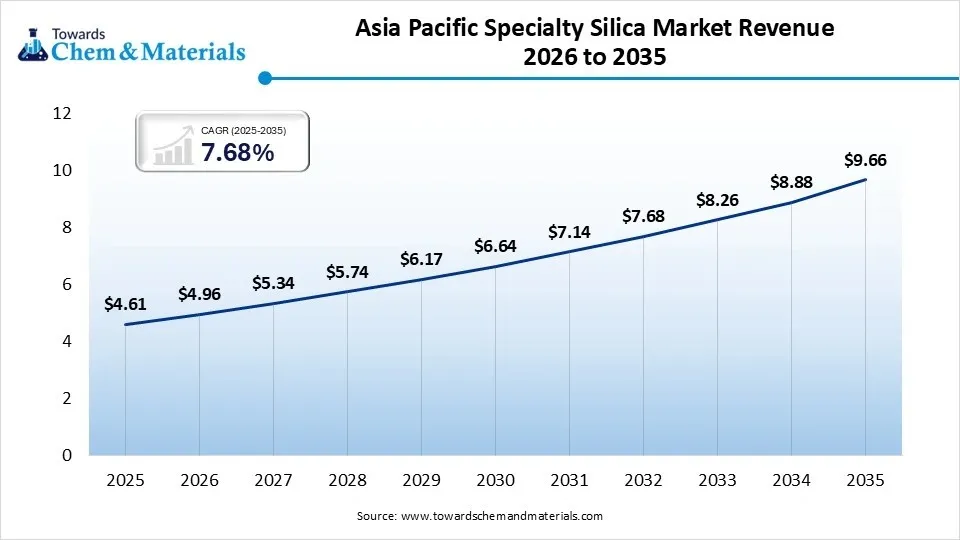
The Asia Pacific specialty silica market size was valued at USD 4.61 billion in 2025 and is expected to be worth around USD 9.66 billion by 2035, exhibiting at a compound annual growth rate (CAGR) of 7.68% over the forecast period from 2026 to 2035.Asia Pacific dominated the market with a share of 45% in 2025 and is expected to sustain its position while growing with a CAGR of 7.4% in the forecast period, driven by intense demand from the automotive, green tires, rubber, and construction industries. Rapid industrialization in China and India, along with major manufacturing investments in high-performance silica for electronics, fueled this position. Rising demand for green tires and high-performance rubber in China and India has significantly increased silica consumption for durability and fuel efficiency.
India Specialty Silica Market Growth Factor
The Indian specialty silica market growth is primarily driven by rising demand from the automotive (green tire) industry, urbanization, and construction growth. Increased application in personal care, pharmaceuticals, and manufacturing, along with a shift toward eco-friendly, high-performance materials, further accelerates this growth. Demand for high-performance silica in tire manufacturing is rising as it enhances durability, reduces vehicle weight, and improves fuel efficiency, contributing to the growth of green tires.
Europe Specialty Silica Market Growth Factor
Europe held the second-largest share of 22% in 2025 and expects the notable growth in the market with 6.50% CAGR during the forecast period, driven by rising demand for high-performance tires (green tires), increasing use in eco-friendly paints/coatings, and growing applications in pharmaceuticals and oral care. Strict European environmental regulations on VOC emissions, like the Paints Directive 2004/42/EC, are boosting the adoption of silica-based additives in paints, coatings, and adhesives. The shift toward EVs is accelerating demand for specialized components, including silica for enhancing tire performance.
Germany Specialty Silica Market Growth Factor
Germany's specialty silica market is driven by high demand from the automotive sector for eco-friendly, green tires and electric vehicle components, alongside advancements in sustainable manufacturing, low-VOC coatings, and a strong regional chemical industry. Growth is further fueled by increased use in high-performance rubbers, pharmaceuticals, and food-grade applications. Strict German environmental regulations promote the use of low-VOC coatings, sealants, and sustainable, bio-based silica production methods.
Recent Developments
- In November 2025, Tata Chemicals approved a ₹910 crore investment to expand soda ash capacity by 350 KTPA in Gujarat and precipitate silica capacity by 50 KTPA in Tamil Nadu, targeting high-growth sectors. The projects, aimed at meeting demand from sustainability applications and the automotive industry.(Source: www.indianchemicalnews.com)
- In March 2025, LANXESS showcased sustainable rubber additives, including the Vulcanox HS Scopeblue antioxidant and the Aflux SD processing agent for improved silica dispersion and reduced rolling resistance. The company also highlighted new Rhenodiv silicone-free release agents and announced expansion plans for its curing bladder production in Little Rock, Arkansas.(Source: lanxess.com)
Specialty Silica Market Competitive Landscape Analysis
Tier 1 Companies
|
Rank
|
Company Name | Headquarters | Country | Why Relevant to This Market | Key Products / Material Portfolio |
| 1 | Evonik Industries AG | Essen, North Rhine-Westphalia | Germany | Global leader in specialty silica with one of the industry's broadest product portfolios | Precipitated silica, fumed silica (AEROSIL®), silica dispersions, specialty silica |
| 2 | Solvay S.A. | Brussels | Belgium | Leading supplier of high-performance precipitated silica for tire, rubber, and industrial applications | Highly dispersible silica (HDS), precipitated silica, specialty silica |
| 3 | PPG Industries, Inc. | Pittsburgh, Pennsylvania | United States | Major producer of precipitated silica for industrial, food, and personal care applications | HI-SIL® precipitated silica, specialty silica additives |
| 4 | Cabot Corporation | Boston, Massachusetts | United States | Global supplier of fumed silica and specialty performance materials | CAB-O-SIL® fumed silica, specialty silica additives |
| 5 | W. R. Grace & Co. | Columbia, Maryland | United States | Leading manufacturer of silica gel and specialty silica for industrial and consumer applications | Silica gel, chromatography silica, specialty silica products |
Tier 2 Companies
|
Rank
|
Company Name | Headquarters | Country | Why Relevant to This Market | Key Products / Material Portfolio |
| 1 | Tosoh Corporation | Tokyo | Japan | Major supplier of silica products for electronics, rubber, and industrial applications | Precipitated silica, silica gel, specialty silica |
| 2 | OCI Company Ltd. | Seoul | South Korea | Leading producer of fumed silica and advanced silica materials | Fumed silica, specialty silica, silica dispersions |
| 3 | Madhu Silica Pvt. Ltd. | Ahmedabad, Gujarat | India | One of the largest producers of precipitated silica in Asia | Precipitated silica, rubber-grade silica, food-grade silica |
| 4 | Nouryon | Amsterdam | Netherlands | Supplies colloidal silica and specialty silica for industrial applications | Colloidal silica, silica dispersions, performance additives |
| 5 | Fuji Silysia Chemical Ltd. | Kasugai, Aichi | Japan | Global producer of silica gel and specialty silica for pharmaceutical and industrial markets | Silica gel, chromatography silica, fine silica powders |
Tier 3 Companies
|
Rank
|
Company Name | Headquarters | Country | Why Relevant to This Market | Key Products / Material Portfolio |
| 1 | QEMETICA | Warsaw | Poland | European producer of precipitated silica and sodium silicates | Precipitated silica, sodium silicate |
| 2 | PQ Corporation | Malvern, Pennsylvania | United States | Leading supplier of silicates, silica catalysts, and specialty silica products | Precipitated silica, silica catalysts, specialty silicates |
| 3 | Anten Chemical Co., Ltd. | Shanghai | China | Manufacturer of specialty silica products for coatings, plastics, and rubber | Precipitated silica, silica gel, specialty silica powders |
| 4 | Fuso Chemical Co., Ltd. | Osaka | Japan | Producer of ultra-high-purity silica for electronics and specialty applications | High-purity silica, colloidal silica, specialty powders |
| 5 | Oriental Silicas Corporation | Taipei | Taiwan | Supplier of precipitated silica for rubber, footwear, and industrial markets | Precipitated silica, rubber-grade silica, industrial silica |
Top players in the Specialty Silica Market & Their Offerings:
- PQ Corporation: PQ Corporation produces specialty silicates and silica-based materials used in detergents, catalysts, and chemical processing. The company supports industrial and environmental applications with customized silica solutions.
- Oriental Silicas Corporation: Oriental Silicas manufactures precipitated silica for tires, footwear, and industrial applications. The company has strong production capabilities in Asia and supplies both regional and global markets.
- Madhu Silica Pvt. Ltd.: Madhu Silica is a key Indian producer of precipitated silica used in rubber, footwear, agrochemicals, and food industries. The company focuses on cost-effective production and strong domestic distribution.
- Nouryon: Nouryon offers specialty silica for personal care, agriculture, and industrial applications. Its silica products are used for thickening, anti-caking, and performance enhancement in various formulations.
Tokuyama Corporation: Tokuyama manufactures fumed silica and other specialty silica products for electronics, semiconductors, and industrial applications. The company emphasizes high-purity materials for advanced technology sectors. - Evonik Industries AG
- W. R. Grace & Co.
- Cabot Corporation
- Solvay SA
- PPG Industries, Inc.
- Wacker Chemie AG
- Tosoh Silica Corporation
- Huber Engineered Materials
- Imerys
- Fuso Chemical Co., Ltd.
Specialty Silica Market Segments List
By Product Type
- Precipitated Silica
- Rubber Grade
- Food Grade
- Industrial Grade
- Fumed Silica
- Hydrophilic Fumed Silica
- Hydrophobic Fumed Silica
- Silica Gel
- Indicating Silica Gel
- Non-indicating Silica Gel
- Colloidal Silica
- Alkaline Colloidal Silica
- Acidic Colloidal Silica
- Fused Silica
- High Purity Fused Silica
- Ultra-high Purity Fused Silica
By Application
- Rubber
- Tire Manufacturing
- Non-tire Rubber Goods
- Plastics
- Engineering Plastics
- Packaging Plastics
- Coatings & Inks
- Industrial Coatings
- Decorative Coatings
- Adhesives & Sealants
- Personal Care & Cosmetics
- Oral Care
- Skin Care
- Food & Feed
- Anti-caking Agents
- Nutritional Additives
- Electronics
- Semiconductor Processing
- CMP Slurries
By End Use Industry
- Automotive
- Construction
- Electronics & Semiconductors
- Healthcare & Personal Care
- Food & Beverage
- Chemicals
By Form
- Powder
- Granules
- Liquid (Colloidal)
By Distribution Channel
- Direct Sales
- Distributors & Traders
- Online Sales
By Regions
- North America
- U.S.
- Canada
- Mexico
- Europe
- Germany
- UK
- France
- Italy
- Spain
- Asia Pacific
- China
- India
- Japan
- South Korea
- Latin America
- Brazil
- Argentina
- Middle East & Africa
- Saudi Arabia
- South Africa
A Seven-Phase Framework
Our methodology is designed to be universally applicable across commodity chemicals, specialty chemicals, petrochemicals, construction chemicals, coatings, electronic chemicals, industrial gases, agrochemicals, water treatment chemicals, and performance materials. Each phase builds upon the last, creating a layered validation structure that minimizes estimation error and maximizes analytical confidence.
The framework ensures comprehensive market coverage, robust cross-validation, and reliable long-term forecasting — producing market estimates that withstand scrutiny from investors, regulators, and corporate strategy teams.

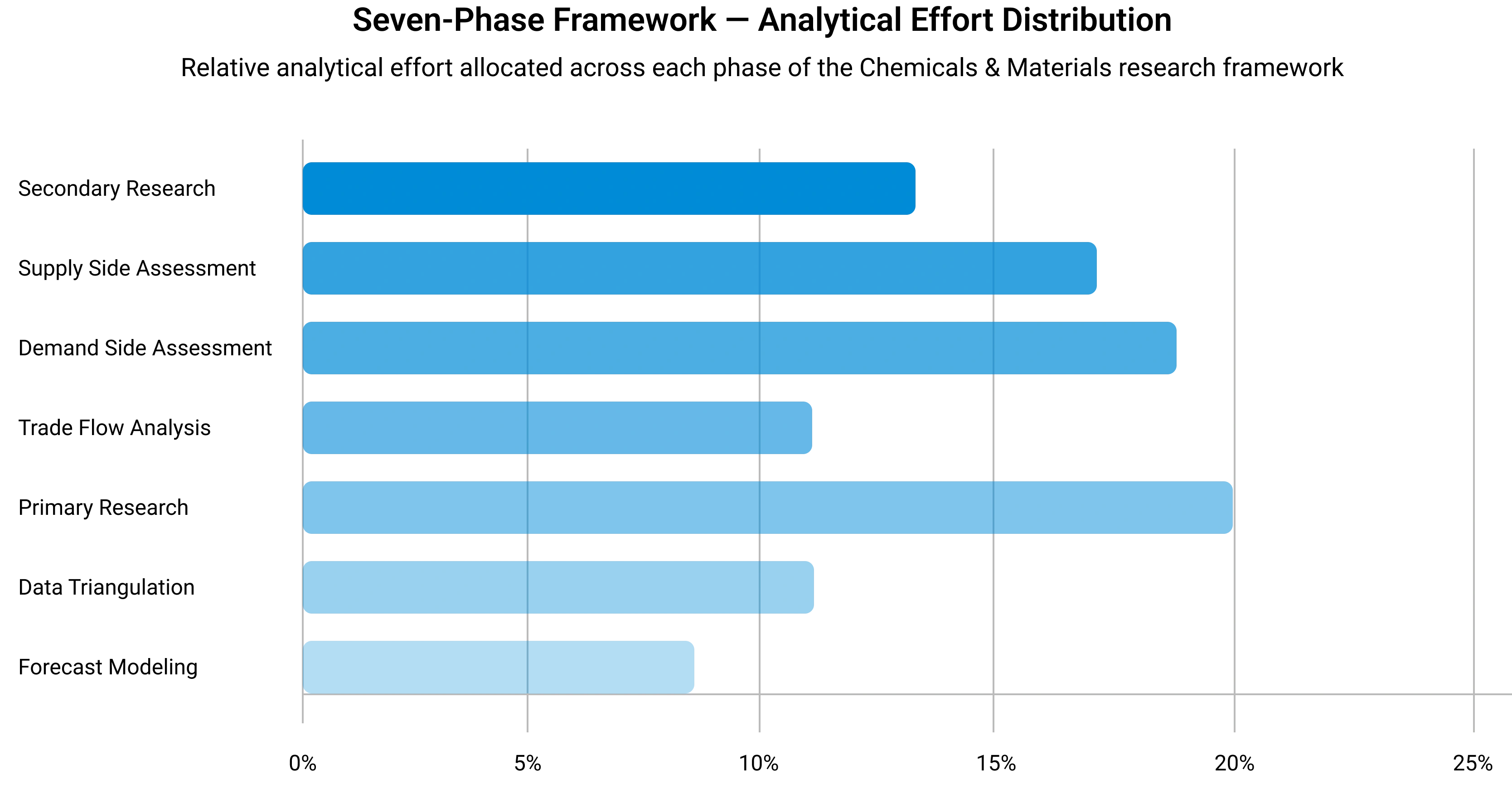
Seven-Phase Framework — Analytical Effort Distribution
Relative analytical effort allocated across each phase of the Chemicals & Materials research framework
Phase 1 - Secondary Research: Establishing the Foundation
Secondary research collects and evaluates publicly available information from authoritative sources, establishing the foundational understanding of market structure, value chain dynamics, competitive landscape, and end-use demand patterns. Every source is evaluated for credibility, recency, geographic relevance, and methodological soundness before inclusion.
Industry Associations
Sources include ACC, CEFIC, ICCA, JCIA, CPCIF, and SOCMA providing production volumes, consumption trends, capacity developments, and sustainability initiatives.
Company Disclosures
Annual reports, investor presentations, earnings transcripts, and regulatory filings reveal product portfolios, manufacturing footprints, capacity expansions, and revenue segmentation.
Government Databases
National statistical offices, customs authorities, environmental agencies, and industrial production databases provide verified statistics on output, trade flows, and regulatory compliance.
Trade Databases
UN Comtrade, ITC, Eurostat, and national customs authorities enable assessment of global product movement, import dependency, and export competitiveness across regions.
Our Secondary Research Sources
- Ministry of Chemicals and Fertilizers
- European Chemicals Agency
- United States Department of Energy
- Ministry of Industry and Information Technology
- Ministry of Economy Trade and Industry
- Ministry of Trade Industry and Energy
- National Institute of Standards and Technology
- Council of Scientific and Industrial Research
- Fraunhofer Society
- National Institute for Materials Science
Phase 2 — Supply-Side Assessment: Mapping Production Capabilities
Production Capacity Analysis
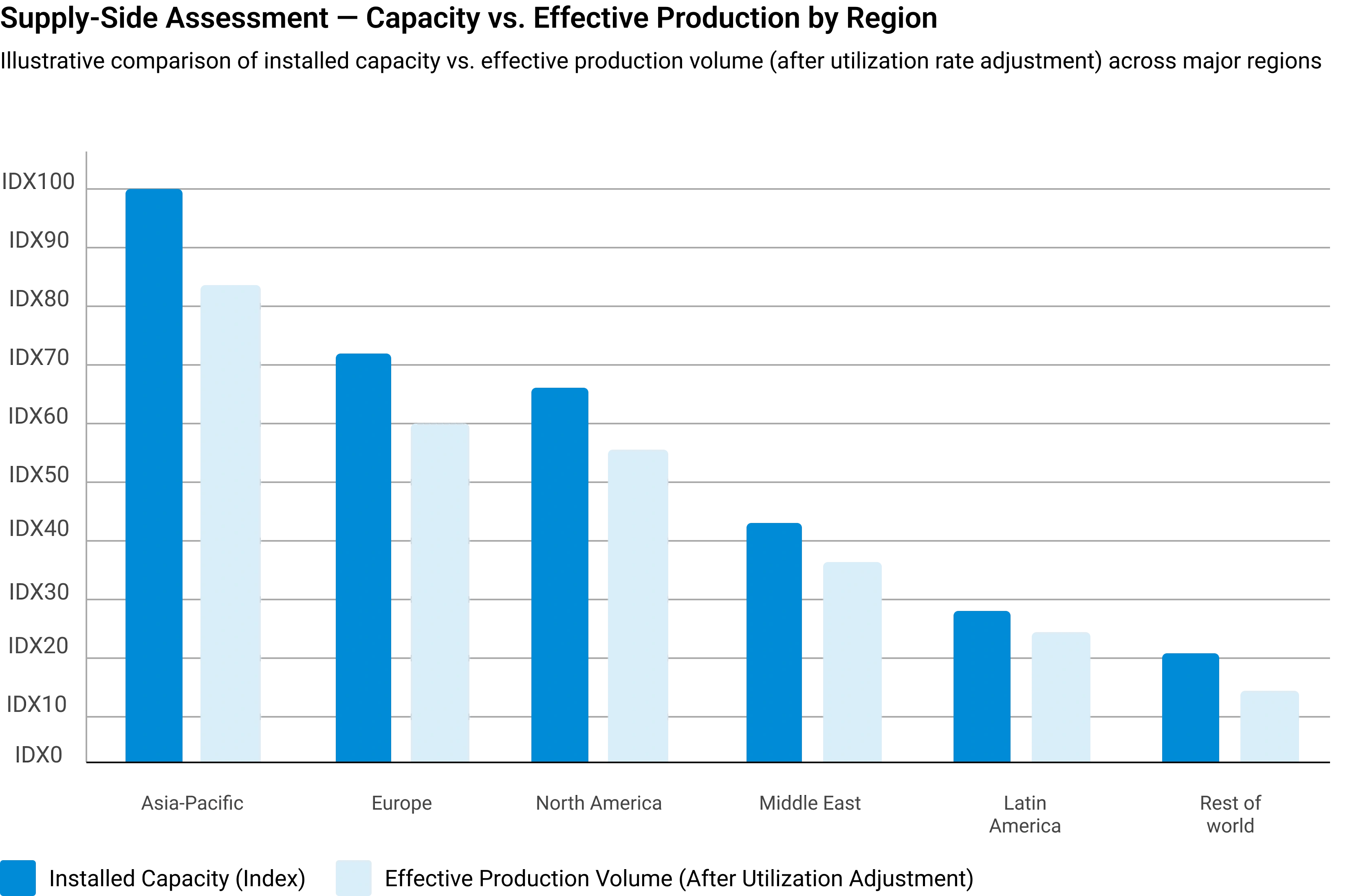
All major manufacturers are assessed for existing installed capacity, planned additions, expansions, new plant announcements, and technology adoption — mapped at global, regional, and country levels.
Capacity Utilization Adjustment
Installed capacity is adjusted using utilization rates based on demand conditions, feedstock availability, plant operating rates, maintenance schedules, and regulatory restrictions.
Manufacturer Revenue Analysis
Product-specific revenues, segment-level performance, regional distribution, average selling prices, and margin trends are evaluated to establish market value estimates.
Supply-Side Assessment — Capacity vs. Effective Production by Region
Illustrative comparison of installed capacity vs. effective production volume (after utilization rate adjustment) across major regions
Phase 3 — Demand-Side Assessment: Quantifying Chemical Consumption
Demand-side analysis quantifies chemical consumption across industries, applications, and geographies — identifying where and how chemicals are consumed throughout the value chain with precision.
End-Use Industry Analysis
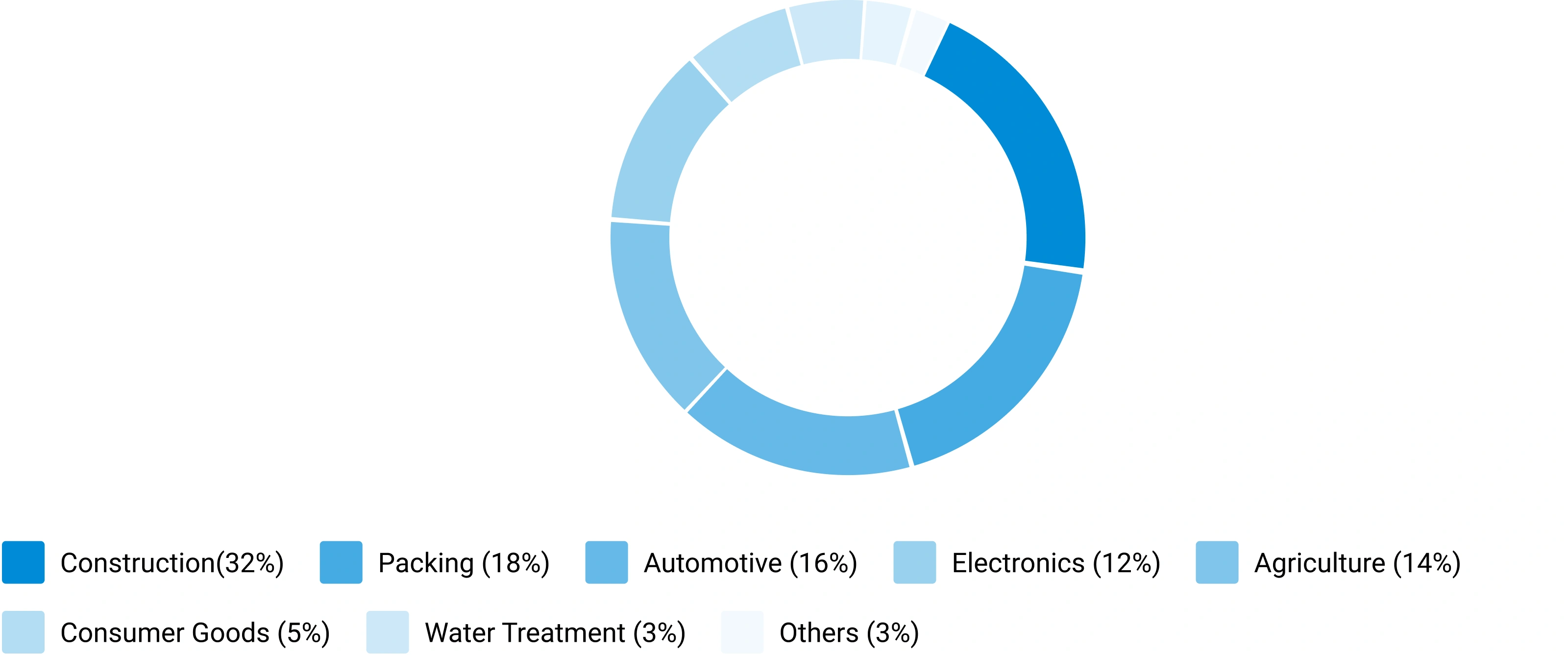
Chemical demand is evaluated across automotive, construction, packaging, electronics, agriculture, healthcare, consumer goods, industrial manufacturing, energy and utilities, and water treatment. Industry output, production trends, and consumption intensity are analyzed to determine demand patterns.
Consumption Modeling
Demand is estimated using measurable indicators: kilograms per vehicle, kilograms per square meter of construction, dosage per cubic meter of water treated, kilograms per hectare of agricultural land, and kilograms per ton of manufactured products. Consumption factors are validated through industry publications and primary interviews.
Application Analysis
The market is segmented by application area to understand product performance requirements, formulation trends, technology adoption, customer preferences, and regulatory requirements improving demand accuracy and segmentation granularity.
Demand-Side Assessment — End-Use Industry Demand Distribution
Illustrative distribution of chemical & materials demand across key end-use industries
Phase 4 - Trade Flow Analysis: Balancing Regional Supply and Demand
Trade flow analysis reconciles regional supply and demand estimates through import and export data, identifying net supply positions, regional dependencies, and market imbalances. It serves as an independent validation layer that tests the consistency of supply-side and demand-side estimates.
Import Analysis
Import data is evaluated to determine volumes, source countries, product dependency, regional supply gaps, and pricing trends — identifying markets that rely heavily on external supply and where domestic production is insufficient to meet demand.
Export Analysis
Export assessments reveal production surplus, export competitiveness, regional manufacturing strength, and global market participation. Export patterns also help validate domestic production estimates and identify net exporting regions.
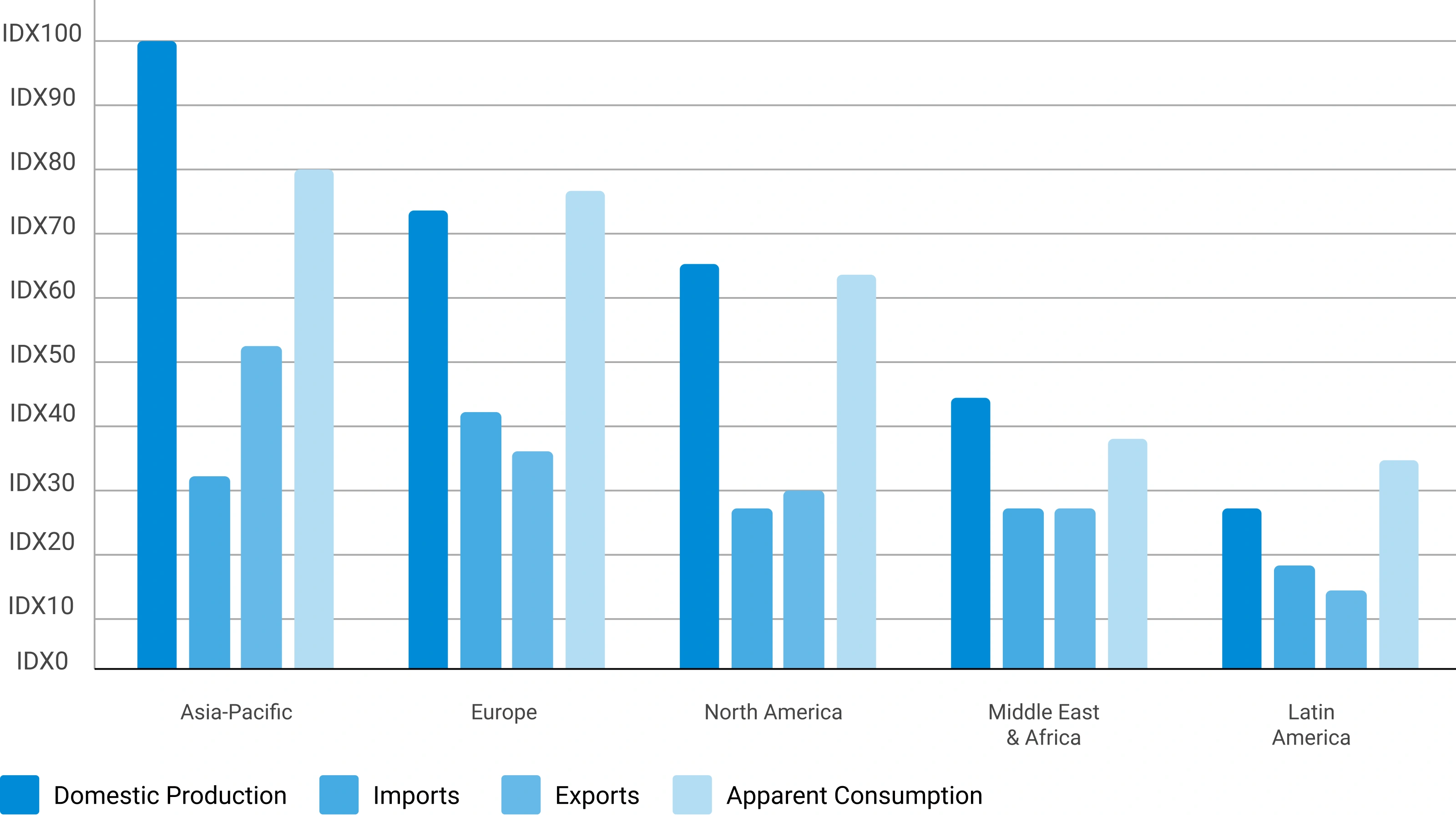
Apparent Consumption Model
Regional consumption is assessed using the standard apparent consumption formula:
Results identify net importing regions, net exporting regions, regional deficits, and surpluses — serving as an independent validation of supply and demand estimates.
Trade Flow Analysis — Net Supply Position by Region
Illustrative apparent consumption vs. domestic production across major regions — positive gap indicates net import dependency
Phase 5 — Primary Research: The Critical Validation Layer
Primary research tests and refines findings from secondary research through direct engagement with industry participants across the supply chain, demand side, and expert community. It captures intelligence that no database or published report can provide — the real-world experience of manufacturers, buyers, and specialists operating in the market.

Supply-Side Interviews
Conversations with chemical manufacturers, raw material suppliers, contract manufacturers, technology providers, and plant operators cover production trends, capacity utilization, pricing developments, technology shifts, and competitive dynamics.

Demand-Side Interviews
Engagement with OEMs, industrial consumers, procurement managers, distributors, formulators, and end-use manufacturers focuses on consumption trends, purchasing behavior, product substitution, demand outlook, and emerging applications.

Industry Expert Consultations
Additional interviews with industry consultants, independent experts, regulatory specialists, technical professionals, and research institutions provide deeper market context and validate key analytical assumptions.
Focus Areas of Primary Research:
Market Size & Forecast Validation
Revenue estimates, volume consumption, growth rates, forecast assumptions, regional demand.Supply Chain & Value Chain Assessment
Raw material sourcing, supply chain challenges, distribution networks, procurement practices.Production & Capacity Analysis
Manufacturing capacity, utilization rates, expansion projects, plant investments.Pricing & Cost Structure Analysis
Product pricing trends, feedstock costs, energy costs, margin pressures, pricing outlook.Competitive Landscape Assessment
Volume and value estimates confirmed to be fully consistent with one another before publicationInterview Volume by Market Scope
| Study Scope | Number of Interviews |
|---|---|
| Niche Market | 20 – 30 |
| Mid-Sized Market | 30 – 50 |
| Global Market | 50 – 80 |
| Highly Fragmented Market | 80 – 120 |
Interview Details:
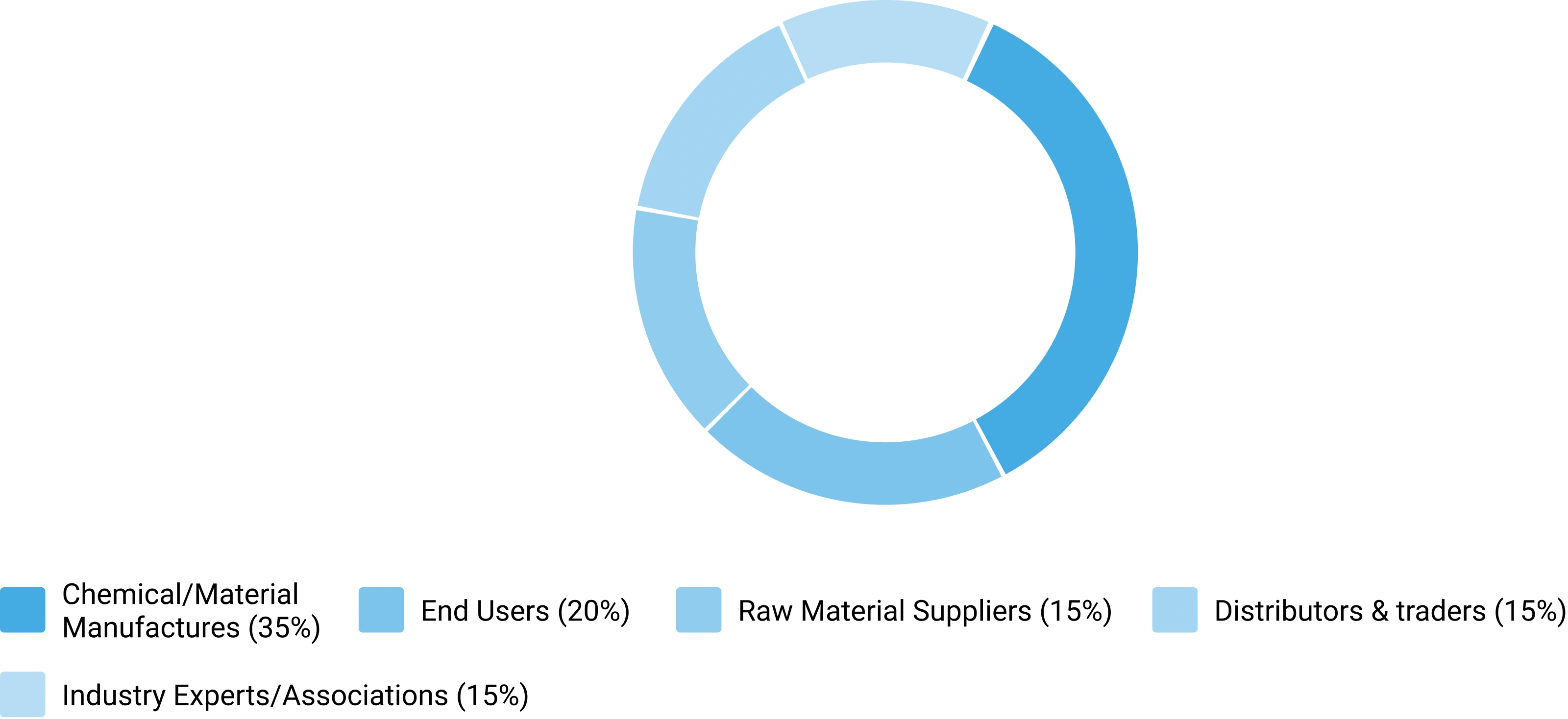
Category : Manufacturers, Suppliers, Distributors, End Users, Experts/Associations
Average Duration : 30–60 Minutes
Interview Mode : Video calls, telephonic interviews, expert consultations
Interview Format : Structured / Semi-Structured questionnaire
Focus Areas of Primary Research:
Market Size & Forecast Validation :
Revenue estimates, volume consumption, growth rates, forecast assumptions, regional demand.
Supply Chain & Value Chain Assessment :
Raw material sourcing, supply chain challenges, distribution networks, procurement practices.
Production & Capacity Analysis :
Manufacturing capacity, utilization rates, expansion projects, plant investments.
Pricing & Cost Structure Analysis :
Product pricing trends, feedstock costs, energy costs, margin pressures, pricing outlook.
Competitive Landscape Assessment :
Market share, competitor positioning, strategic initiatives, partnerships, acquisitions.
Primary Research — Stakeholder Coverage by Category
Distribution of interview respondents across stakeholder categories (% share from PPT data)
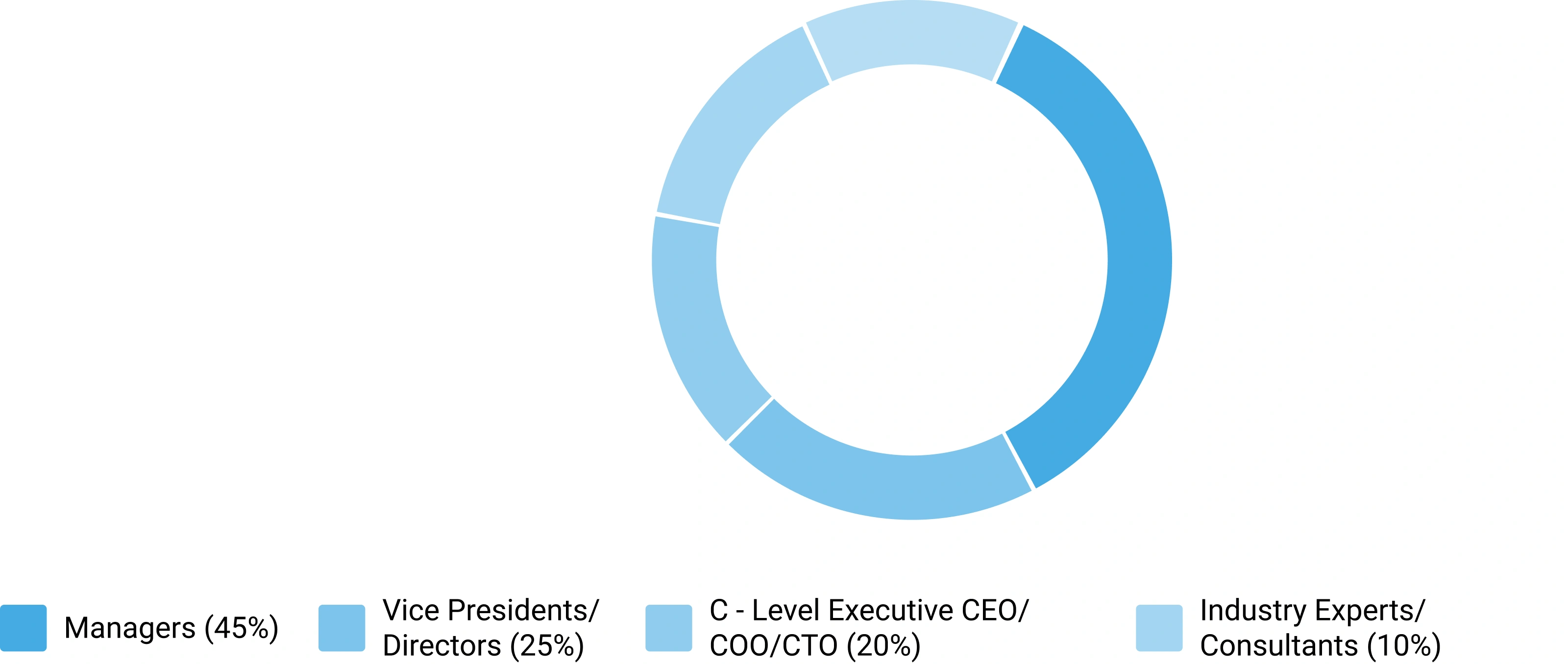
Primary Research — Respondent Designation Profile
Seniority breakdown of interview respondents (% share from PPT data)
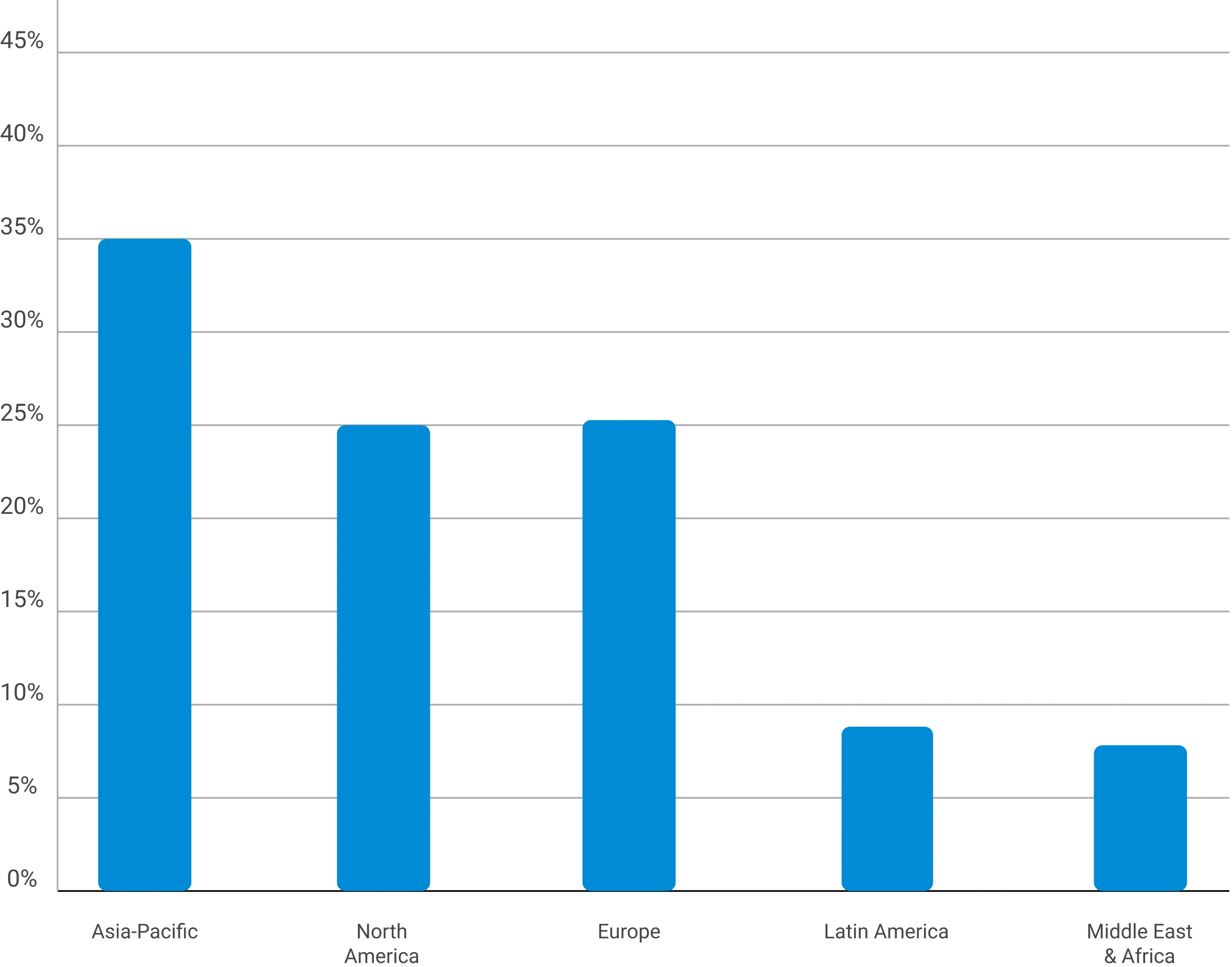
Primary Research — Geographic Coverage of Interviews
Regional distribution of primary research engagement (% share from PPT data)
Phase 6 — Data Triangulation and Market Validation
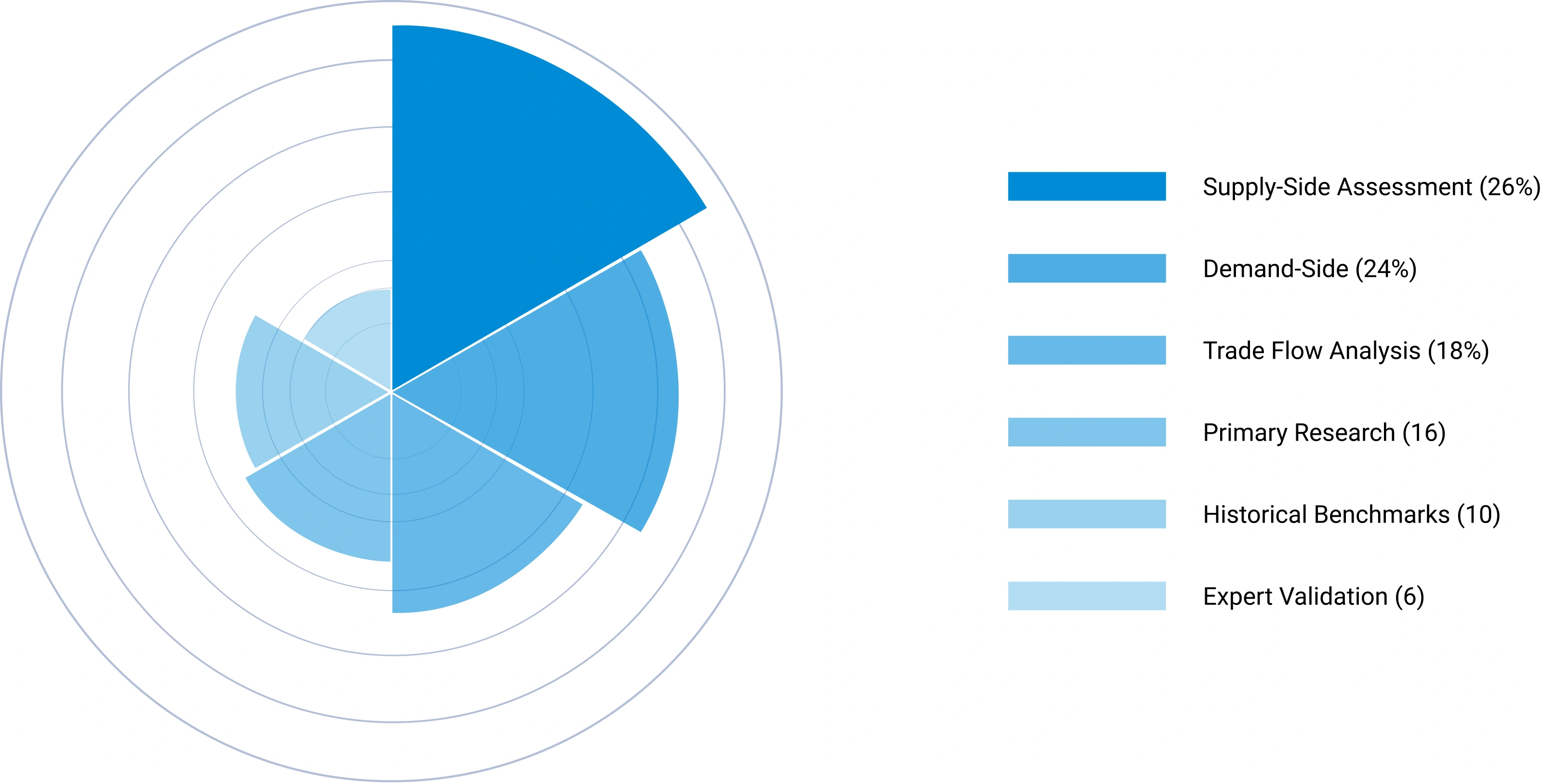
No single methodology is relied upon in isolation. Multiple independent estimation approaches are combined and reconciled to ensure consistency, accuracy, and analytical defensibility. Any material deviations between approaches are investigated and adjusted through additional validation cycles.
The final market size is derived through weighted triangulation of all validated methodologies. Any material deviations between approaches are investigated and adjusted through additional validation cycles. The outcome represents the most realistic assessment of the market based on available evidence and expert confirmation ensuring that volume and value estimates are fully consistent with one another.
Triangulation Framework — Input Contribution Weight
Relative weight each sizing input contributes to the final reconciled market estimate
Phase 7 — Forecast Modeling: Projecting Future Market Evolution
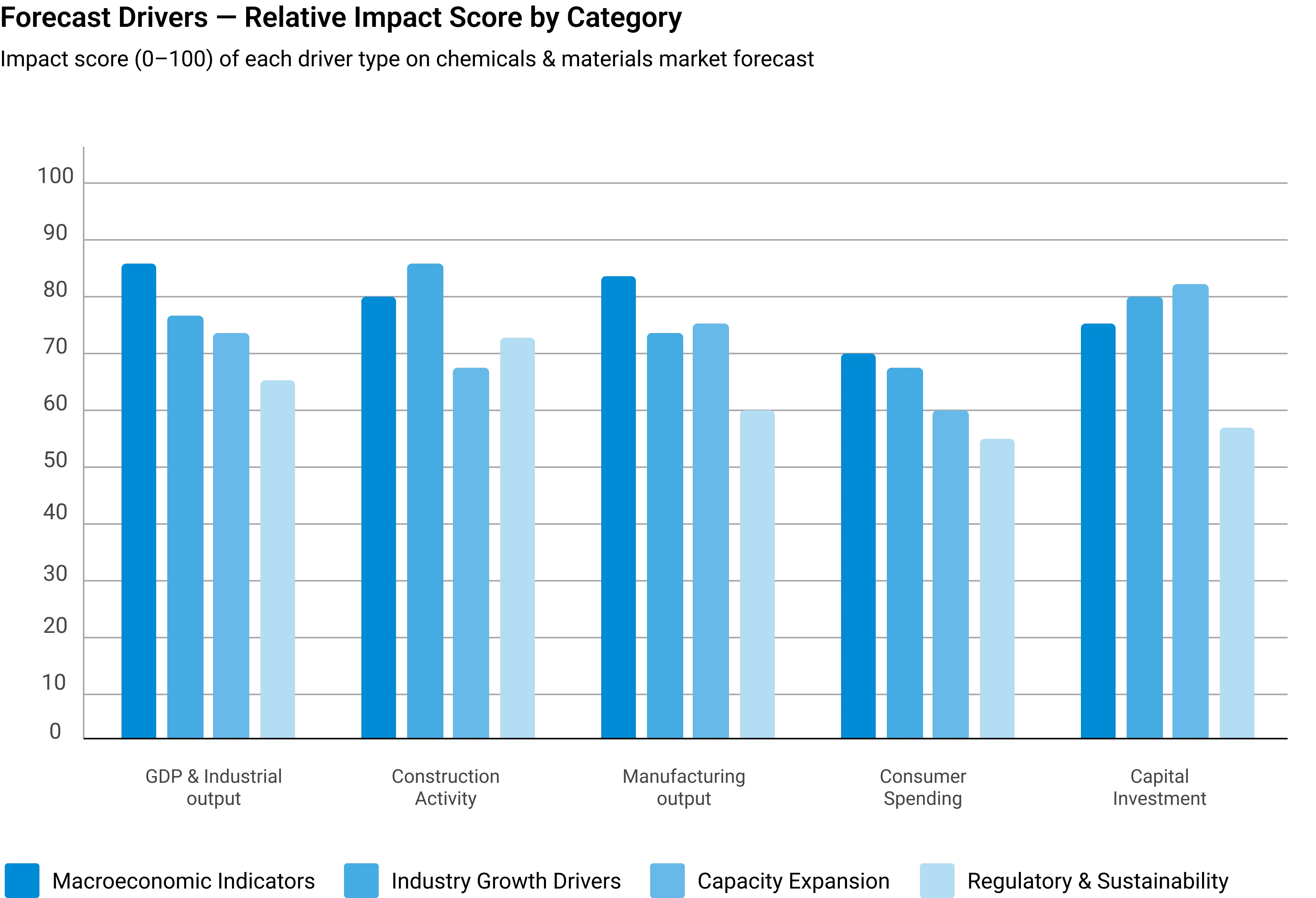
Forecasting evaluates the future trajectory of the market using a combination of quantitative indicators and qualitative assessments across economic, industry, and regulatory dimensions. Rather than simple extrapolation, each driver is independently modeled and integrated into a composite forecast.
Macroeconomic Indicators
GDP growth, industrial production, manufacturing output, construction activity, consumer spending, and capital investment form the quantitative foundation of long-term demand projections. These are applied at country, regional, and global levels.
Industry Growth Drivers
Urbanization, infrastructure development, industrialization, technological innovation, sustainability initiatives, and evolving product performance requirements are assessed at regional and industry levels — capturing both structural and cyclical demand drivers.
Capacity Expansion Analysis
Announced plant expansions, new manufacturing facilities, technology upgrades, and strategic investments are evaluated to determine future supply-demand dynamics and potential market tightness or oversupply situations.
Regulatory & Sustainability
Environmental regulations, chemical safety standards, emission reduction targets, circular economy initiatives, and sustainability requirements are incorporated as they often influence product adoption rates and market growth trajectories.
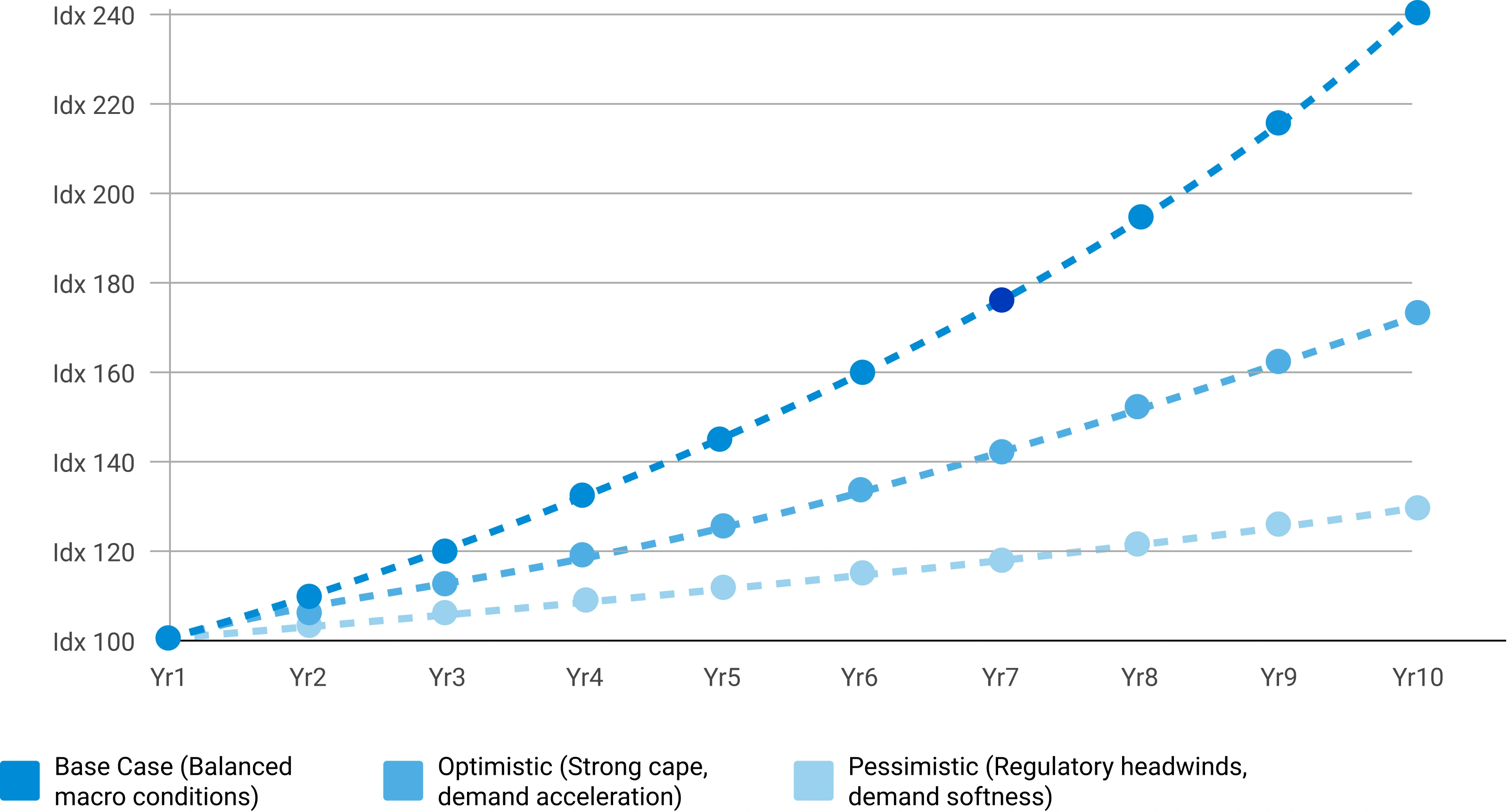
Scenario Forecast Range — Indexed Market Growth (Year 1–10)
Illustrative indexed growth trajectories across Base, Optimistic, and Pessimistic scenarios over a 10-year forecast horizon
Forecast Drivers — Relative Impact Score by Category
Impact score (0–100) of each driver type on chemicals & materials market forecast



Comments
Share your thoughts, ask a question, or provide feedback about this report.