Content
Polyhydroxyalkanoates (PHA) Market Size, Competitive Landscape Analysis Report 2035
The global polyhydroxyalkanoates (PHA) market size was estimated at USD 874.71 million in 2025 and is expected to increase from USD 1,019.47 million in 2026 to USD 4,045.64 million by 2035, growing at a CAGR of 16.55% from 2026 to 2035. Europe dominated the polyhydroxyalkanoates (PHA) with the largest revenue share of 58.00% in 2025.The growth of the market is driven by the Stricter regulations against single-use plastics and increased corporate ESG commitments.
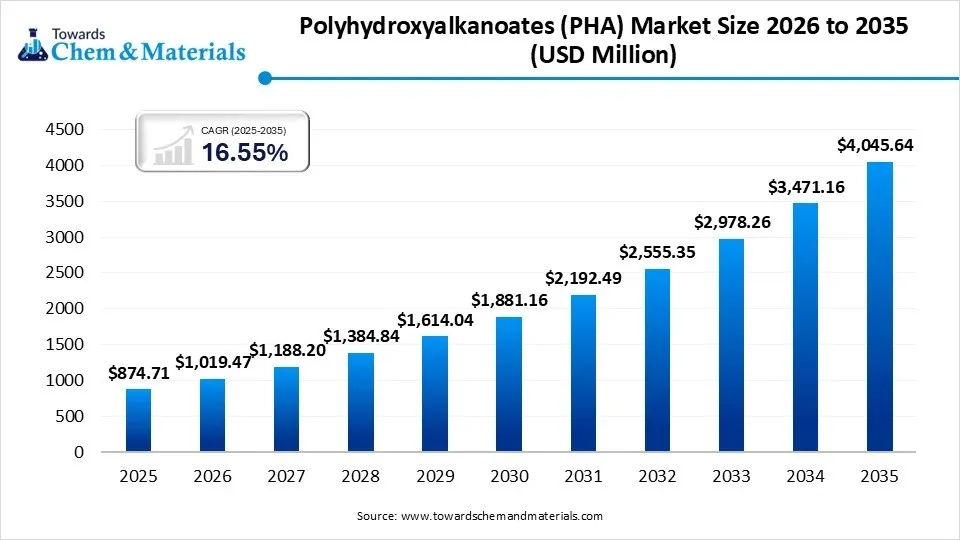
Market Highlights
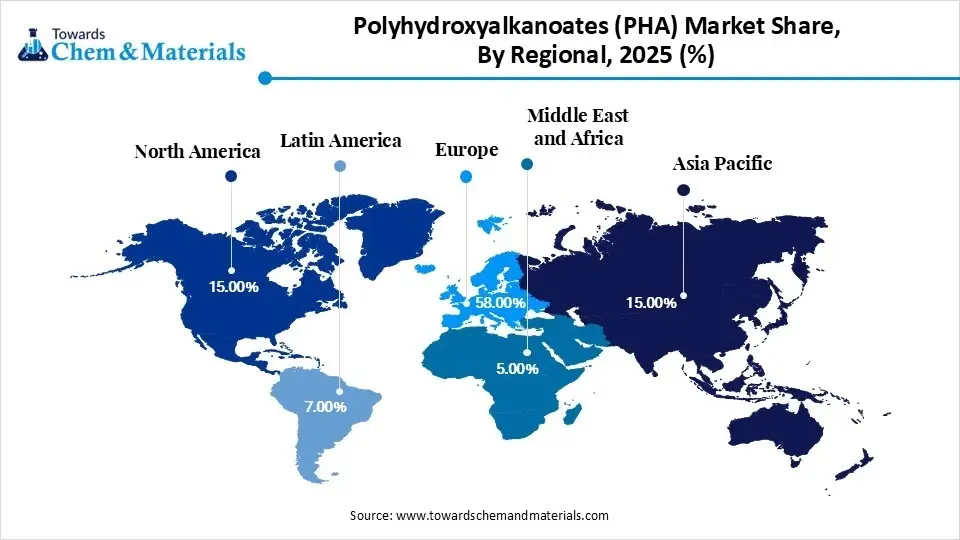
- By region, Europe dominated the polyhydroxyalkanoates (PHA) market share 58.00% in 2025. The stringent regulation pushes the demand for sustainable solutions.
- By region, North America is expected to have the fastest growth in the market in the forecast period between 2026 and 2035. The growth is driven by demand from consumers for eco-friendly products.
- By type, the short-chain-length polyhydroxyalkanoates segment dominated the market share 57.00% in 2025. With growing environmental awareness, manufacturers in the packaging sector have adopted SCL-PHA.
- By type, the long-chain-length polyhydroxyalkanoates segment is projected to grow at the fastest CAGR between 2026 and 2035. Growing awareness of non-biodegradable plastic pollution, regulatory bans on single-use plastics, and high demand.
- By end use, the packaging segment dominated the market share 60.23% in 2025. Short-chain-length PHA was particularly popular due to its established manufacturing base
- By end use, the flame retardants segment is projected to grow at the fastest CAGR between 2026 and 2035. The market is experiencing high demand for non-halogenated solutions.
What Is the Significance of the Polyhydroxyalkanoates (PHA) Market?
The market is mainly propelled by increasing demand for sustainable, biodegradable packaging options, strict regulations against single-use plastics, and a rising consumer preference for environmentally friendly products. Major growth factors include technological innovations that enhance production efficiency, broader use in biomedical and agricultural applications, and stringent worldwide environmental laws. Packaging remains the leading sector, making up almost 60% of PHA use, due to the need for compostable packaging for food and beverages, and consumer goods.
Trade Analysis Of Polyhydroxyalkanoates (PHA) Market: Import & Export Statistics
- According to Global Export Data, the world exported 339 Biodegradable Resin shipments between July 2024 and June 2025 (TTM) through 87 verified exporters and 99 buyers.
- India, Chile, and Vietnam lead as the top Biodegradable Resin importers, while China with 614 shipments, India with 157 shipments, and Vietnam with 61 shipments, rank as the largest global Biodegradable Resin exporters.
Top-performing Global Biodegradable Resin Exporters by volume:
- Natur Tec India Pvt. Ltd.: 69 shipments (38%)
- Huafon Group Co Ltd: 48 shipments (26%)
- CHANGYA NEWMATERIAL TECHNOLOGY CO: 11 shipments (6%)
Market Growth Trends:
- Biomedical Applications: PHA’s biocompatibility makes it increasingly popular for medical applications, including drug delivery systems, tissue engineering, and bioresorbable implants.
- Technological Advancements and Improved Efficiency: Innovations in microbial fermentation and genetic engineering have improved production yields and lowered costs, increasing scalability.
- Regulatory Support: Stricter global regulations against single-use plastics are pushing for eco-friendly alternatives, which significantly boost PHA demand, particularly in Europe.
Report Scope
| Report Attribute | Details |
| Market Size in 2026 | USD 1,019.47 Million |
| Revenue Forecast in 2035 | USD 4,045.64 Million |
| Growth Rate | CAGR 16.55% |
| Forecast Period | 2026 - 2035 |
| Base Year | 2025 |
| Dominant Region | Europe |
| Segment Covered | By Type, By End-use, By Region |
| Key companies profiled | RWDC Industries, Biomer, Paques Biomaterials, Full Cycle Bioplastics, Danimer Scientific, TianAn Biologic Materials Co., Ltd., Kaneka Corporation, CJ CheilJedang Corporation, Bluepha Co., Ltd., P&G Chemicals, Tepha, Inc., Newlight Technologies LLC, Bio-on S.p.A., Yield10 Bioscience, Inc., PHB Industrial S.A, TianAn Biologic Materials Co., Ltd. |
Key Technological Shifts in the Polyhydroxyalkanoates (PHA) Market:
The polyhydroxyalkanoates (PHA) market is undergoing a major technological change aimed at lowering high production costs and enhancing scalability to rival traditional plastics. Important developments include using waste-derived feedstocks, employing metabolic engineering to boost yields, and implementing advanced downstream processing methods. Innovative approaches, like those by Newlight Technologies, leverage greenhouse gases captured from industrial emissions as raw materials, resulting in a carbon-negative footprint.
Polyhydroxyalkanoates (PHA) Market Supply Chain Analysis
Biopolymer Production and Processing
- Polyhydroxyalkanoates are produced through microbial fermentation of renewable feedstocks such as sugars, plant oils, and waste biomass, followed by polymer recovery and processing into biodegradable plastic materials.
- Key players: Danimer Scientific, CJ CheilJedang, Kaneka Corporation, RWDC Industries.
Quality Testing and Certification
- PHA must meet biodegradability, compostability, and material performance standards along with environmental and safety regulations.
- Key players: International Organization for Standardization, ASTM International, European Chemicals Agency, TÜV Austria.
Distribution to Industrial Users
- PHA is supplied to packaging manufacturers, agricultural film producers, medical device companies, consumer goods manufacturers, and textile industries for sustainable material applications.
- Key players: Danimer Scientific, Kaneka Corporation, CJ CheilJedang
Polyhydroxyalkanoates Regulatory Landscape: Global Regulations
| Country / Region | Regulatory Body | Key Regulations | Focus Areas | Notable Notes |
| US | Environmental Protection Agency (EPA); Food and Drug Administration (FDA) | Toxic Substances Control Act (TSCA); FDA Food Contact Regulations (21 CFR) | Biopolymer safety, food contact approval, and environmental impact | PHA materials used in packaging and medical applications must comply with FDA food contact requirements and environmental safety standards. |
| Europe | European Chemicals Agency (ECHA); European Commission | REACH Regulation; Packaging and Packaging Waste Directive; Single-Use Plastics Directive | Biodegradability, chemical registration, and circular economy compliance | The EU strongly promotes PHA adoption due to biodegradability, with strict compliance for compostability and sustainability claims. |
| China | Ministry of Ecology and Environment (MEE); National Development and Reform Commission (NDRC) | Plastic Pollution Control Policies; Environmental Protection Law | Biodegradable plastics promotion, industrial compliance | China is encouraging biodegradable polymers like PHA through plastic restriction policies and sustainability initiatives. |
| India | Ministry of Environment, Forest and Climate Change (MoEFCC); Central Pollution Control Board (CPCB) | Plastic Waste Management Rules; Environment Protection Act | Biodegradable plastics, waste management, EPR compliance | India promotes biodegradable plastics, including PHA, under plastic waste rules and extended producer responsibility frameworks. |
| Japan | Ministry of Economy, Trade and Industry (METI); Ministry of the Environment | Plastic Resource Circulation Act; Green Procurement Policies | Sustainable materials adoption, recycling, and environmental impact | Japan supports biodegradable and bio-based plastics through sustainability-focused regulations and procurement policies. |
| Brazil | Brazilian Institute of Environment and Renewable Natural Resources (IBAMA); National Health Surveillance Agency (ANVISA) | National Solid Waste Policy; Environmental Safety Regulations | Waste management, biodegradable materials regulation | Brazil regulates biodegradable polymers like PHA under waste management and environmental protection frameworks. |
Segmental Insights
Type Insights
How did the Short-Chain-Length Polyhydroxyalkanoates Segment Dominate the Polyhydroxyalkanoates (PHA) Market in 2025?
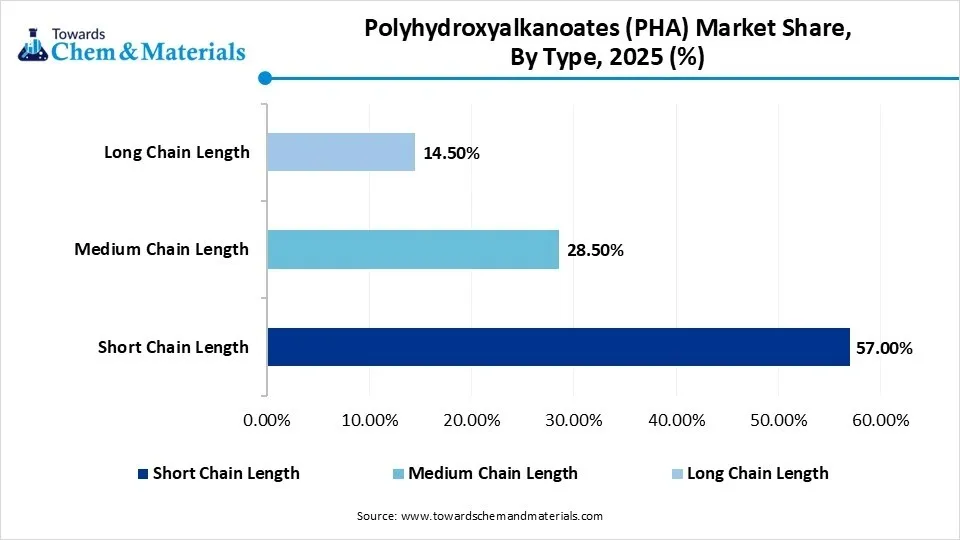
The short-chain-length polyhydroxyalkanoates segment dominated the market share 57.00% in 2025, driven by superior mechanical strength, cost-effectiveness, and widespread adoption in packaging. Its high crystallinity makes it an ideal substitute for conventional plastics, benefiting from surging demand for biodegradable packaging and stringent regulatory pressures against plastic waste. SCL-PHAs, such as PHB, offer faster biodegradation rates in soil and water, aligning with the market demand for truly sustainable, non-residue-forming packaging materials.
The long-chain-length polyhydroxyalkanoates segment is projected to grow at the fastest CAGR between 2026 and 2035 in the market, driven by rising demand for sustainable, biodegradable alternatives in packaging, agriculture, and biomedical applications, stricter global regulations on single-use plastics, and shifting consumer preferences, which fuel the growth. Major manufacturers are shifting toward cost-effective methods, such as vegetable oil fermentation, which is projected to show high growth.
Polyhydroxyalkanoates (PHA) Market Share, By Type, 2025 (%)
| By Type | Revenue Share, 2025 (%) |
| Short Chain Length | 57.00% |
| Medium Chain Length | 28.50% |
| Long Chain Length | 14.50% |
- Short Chain Length (57.00%) Why it dominates: "Accounts for 57.00% of the market, driven by widespread use in packaging and biomedical applications due to its strong material properties and biodegradability."
- Medium Chain Length (28.50%) Why it is gaining momentum: "Holds 28.50% share, supported by increasing demand for flexible and durable bioplastics in industrial and consumer applications."
- Long Chain Length (14.50%) Why it is gaining momentum: "Represents 14.50% of the market, driven by growing interest in specialized applications requiring enhanced elasticity and performance characteristics."
End Use Insights
Which End Use Dominated the Polyhydroxyalkanoates (PHA) Market in 2025?
The packaging segment dominated the market share 60.23% in 2025, driven by high demand for compostable materials, strict government bans on single-use plastics, and corporate shifts toward sustainable food, beverage, and consumer packaging. PHA’s superior moisture barrier, durability, and biodegradation in natural environments accelerated its adoption over conventional plastics. Increased efficiency in microbial fermentation has improved PHA yields, making it more cost-effective and competitive against traditional alternatives, driving growth.
The flame retardants segment is projected to grow at the fastest CAGR between 2026 and 2035 in the market, driven by environmental regulations and sustainable packaging demand. Demand is rising for specialty applications like flame retardants to enhance PHA's functionality in electronics and automotive parts. The increasing focus on sustainable materials is fueling research into bio-based fire-resistant formulations for PHA, supporting the growth of that segment.
Polyhydroxyalkanoates (PHA) Market Share, By End Use, 2025 (%)
| By End Use | Revenue Share, 2025 (%) |
| Packaging | 60.23% |
| Agriculture | 12.45% |
| Textiles | 10.12% |
| Consumer Goods | 8.50% |
| Others | 8.70% |
- Packaging (60.23%) Why it dominates: "Accounts for 60.23% of the market, driven by strong demand for biodegradable and sustainable packaging solutions as regulations and consumer preferences shift toward eco-friendly materials."
- Agriculture (12.45%) Why it is gaining momentum: "Holds 12.45% share, supported by increasing use in mulch films, controlled-release fertilizers, and sustainable farming practices."
- Textiles (10.12%) Why it is gaining momentum: "Represents 10.12% of the market, driven by growing adoption of biodegradable fibers and sustainable textile production."
- Consumer Goods (8.50%) Why it is gaining momentum: "Accounts for 8.50% share, supported by rising demand for eco-friendly products across everyday applications."
- Others (8.70%) Why it is gaining momentum: "Captures 8.70% of the market, driven by emerging applications across diverse industries exploring biodegradable material alternatives."
Regional Insights
The Europe polyhydroxyalkanoates (PHA) market size was valued at USD 507.33 million in 2025 and is expected to be worth around USD 2,366.70 million by 2035, exhibiting at a compound annual growth rate (CAGR) of 16.65% over the forecast period from 2026 to 2035.Europe dominates the market share 58.00% in 2025, due to strict regulations, a strong focus on a circular economy, and high consumer interest in sustainable packaging. The region established its leadership early by implementing policies to cut down on traditional plastic waste and investing in biopolymer infrastructure. The EU’s efforts to outlaw single-use plastics and support biodegradable options greatly increased demand for PHA. Moving towards a circular economy requires the use of materials like PHA that are entirely compostable.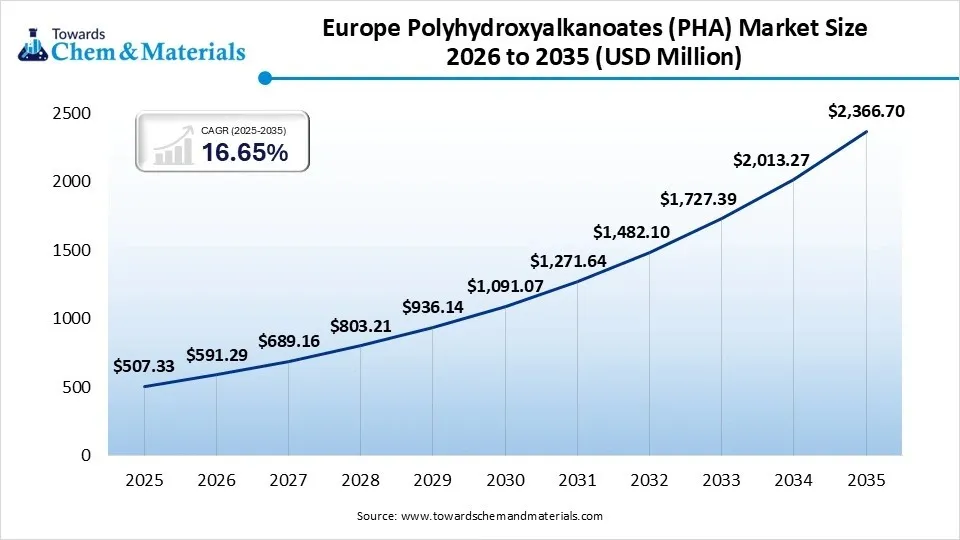
Germany Polyhydroxyalkanoates (PHA) Market Growth Factor
Key drivers are large investments in industrial fermentation R&D and increasing consumer demand for eco-friendly products. Germany is at the forefront of PHA adoption due to its strong industrial sector, which concentrates on advancing fermentation technology, boosting production efficiency, and lowering costs.
North America Polyhydroxyalkanoates (PHA) Market Growth Factor
North America polyhydroxyalkanoates (pha) market segment accounted for the major revenue share of 15.00% in 2025.North America is expected to have the fastest growth in the market in the forecast period, fueled by stringent government regulations on single-use plastics, growing consumer interest in sustainable packaging, and the demand for fully biodegradable options. Major growth drivers include the expansion of bioresorbable medical applications and increased funding for microbial fermentation technology to enhance production capacity. Additionally, rising investments in these technologies are boosting supply capabilities and reducing raw material costs.
U.S. Polyhydroxyalkanoates (PHA) Market Growth Factor
The U.S. polyhydroxyalkanoates (PHA) market is rapidly expanding, propelled by growing demand for eco-friendly, biodegradable plastics that can replace traditional petro-plastics. Major drivers include strict regulations on single-use plastics, increased consumer preference for sustainable packaging, and greater use in medical fields thanks to their biocompatibility. A noticeable shift among North American consumers toward sustainable products is boosting PHA's presence in consumer goods and packaging. Furthermore, increased investment in research and development and expanding production capacity are further strengthening the market outlook.
Asia Pacific Polyhydroxyalkanoates (PHA) Market Growth Factor
Asia Pacific polyhydroxyalkanoates (PHA) market segment accounted for the major revenue share of 15.00% in 2025. Asia Pacific Polyhydroxyalkanoates (PHA) market is expected to experience substantial growth, fueled by tough regulations against single-use plastics, increasing demand for sustainable packaging, and quick adoption in biomedical fields. Major growth factors include affordable local manufacturing, broader agricultural uses, and better biodegradability. Advances in large-scale, efficient production techniques and the utilization of various inexpensive feedstocks, like agricultural waste and starch, are enhancing cost-effectiveness.
India Polyhydroxyalkanoates (PHA) Market Growth Factor
The Indian Polyhydroxyalkanoates (PHA) market is projected to grow, driven by strict government bans on single-use plastics and high demand for biodegradable, eco-friendly packaging in the booming FMCG sector. The key growth drivers are rising sustainability awareness, biomedical applications, and corporate ESG commitments. Government of India regulations restricting single-use plastics (SUP) are driving a rapid shift towards biodegradable alternatives like PHA. The Indian PHA market is poised to benefit from its biodegradability in both marine and soil environments, making it a preferred sustainable solution in the market.
Recent Development
- In October 2025, CJ Biomaterials launched a 100% biobased Polyhydroxyalkanoate (PHA) polymer platform designed for extrusion coating on paper and board, targeting food service ware and packaging. This BPI-certified material offers barrier protection against liquids and grease, is suitable for home and commercial composting, and can be processed on conventional equipment.(Source: www.packagingdive.com)
Top players in the Polyhydroxyalkanoates (PHA) Market & Their Offerings:
- RWDC Industries: RWDC Industries develops PHA materials for single-use plastics replacement, including food packaging and personal care products. The company focuses on sustainable alternatives with biodegradability in marine and soil environments.
- Biomer: Biomer specializes in PHA production for medical, pharmaceutical, and packaging applications. The company focuses on high-purity and specialty-grade biopolymers for niche and high-value markets.
- Paques Biomaterials: Paques Biomaterials produces PHA from organic waste streams using proprietary fermentation processes. The company targets circular economy solutions by converting wastewater into biodegradable plastics.
- Full Cycle Bioplastics: Full Cycle Bioplastics develops PHA from organic waste using microbial fermentation. Its technology focuses on waste valorization and cost-effective production of biodegradable plastics for packaging and agriculture.
- Danimer Scientific
- TianAn Biologic Materials Co., Ltd.
- Kaneka Corporation
- CJ CheilJedang Corporation
- Bluepha Co., Ltd.
- P&G Chemicals
- Tepha, Inc.
- Newlight Technologies LLC
- Bio-on S.p.A.
- Yield10 Bioscience, Inc.
- PHB Industrial S.A
- TianAn Biologic Materials Co., Ltd.
Segments Covered:
By Type
Short Chain Length
Medium Chain Length
Long Chain Length
By End-use
- Packaging
- Agriculture
- Textiles
- Consumer Goods
- Others
By Regions
- North America
- U.S.
- Canada
- Mexico
- Europe
- Germany
- UK
- France
- Italy
- Spain
- Asia Pacific
- China
- India
- Japan
- South Korea
- Latin America
- Brazil
- Argentina
- Middle East & Africa
- Saudi Arabia
- South Africa
Tags
FAQ's




Select User License to Buy
Figures (4)








 sales@towardschemandmaterials.com
 Download Sample
 Schedule a Meeting