
Biocides Market Size and Forecast 2026 to 2035
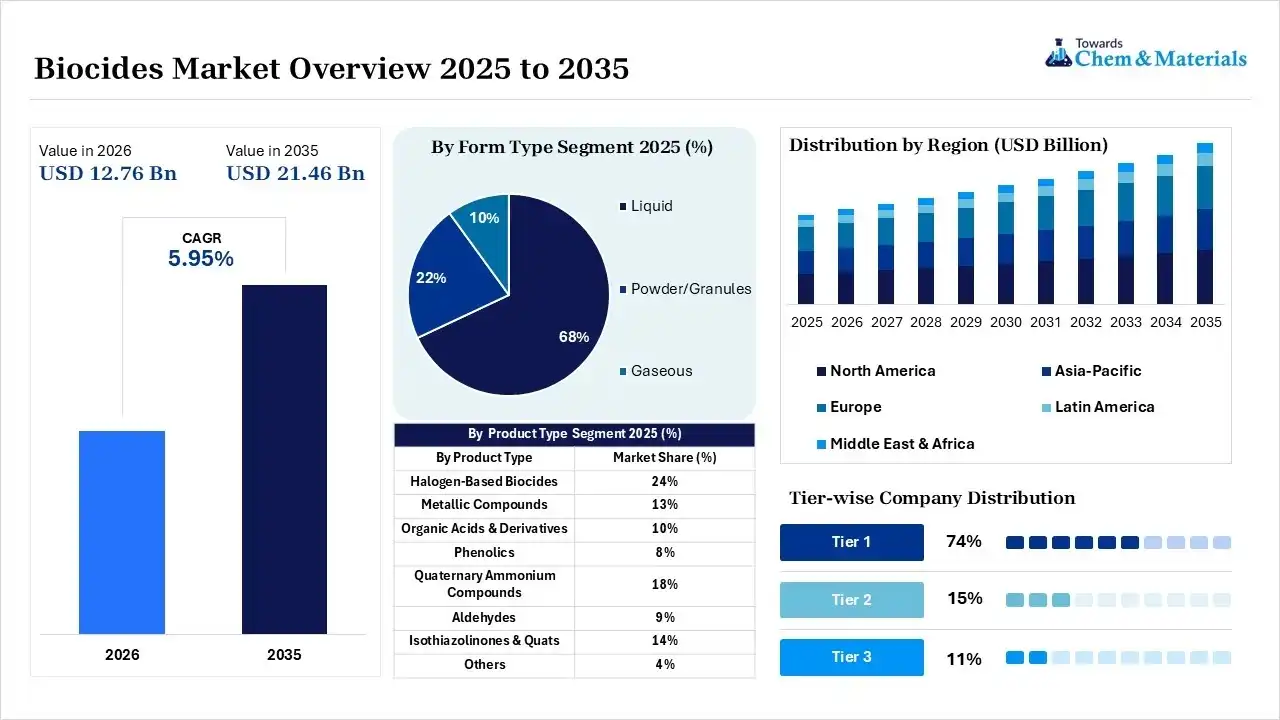
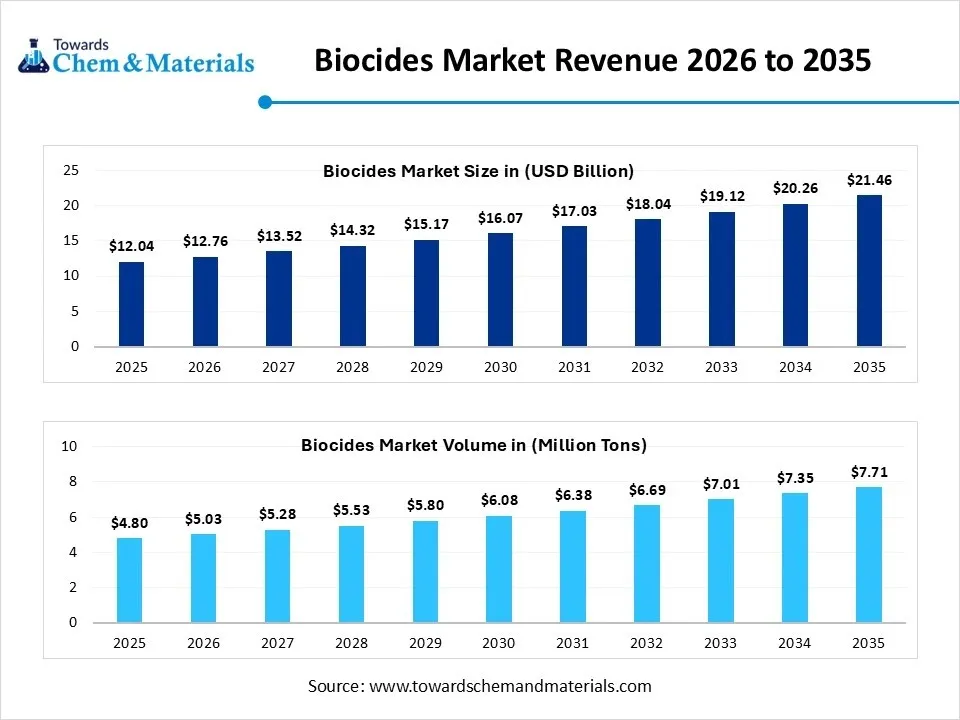
The biocides market size was valued at USD 12.04 billion in 2025, is estimated to reach USD 12.76 billion in 2026, and is projected to reach USD 21.46 billion by 2035, exhibiting a compound annual growth rate (CAGR) of 5.95% over the forecast period from 2026 to 2035.Asia Pacific dominated the biocides market with the largest revenue share of 37.0% in 2025 and is expected to grow at the fastest CAGR of 6.11% during the forecast period. The market is growing steadily as industries, water systems, coatings, home care, and hygiene applications increasingly rely on advanced antimicrobial solutions to control bacteria, fungi, algae and biofilm while also meeting tighter safety, performance and sustainability expectations.
Market Highlights
- By region, Asia Pacific dominated the market with the largest share of 37.0% in 2025. The dominance of the region can be attributed to rapid industrialization, which boosts consumption, water treatment infrastructure expands significantly, and manufacturing growth accelerates demand.
- By region, North America held a market share of 24.00% in 2025 and was expected to grow at the fastest CAGR of 7.00% over the forecast period. The growth of the region can be credited to the mature industrial infrastructure, which sustains demand, strong regulatory compliance drives adoption and water treatment investments remain significant.
- By product type, the halogen-based biocides segment dominated the market with the largest share of 24.0% in 2025. It is widely used in water treatment, strong cost efficiency supports large-scale industrial adoption, and regulatory familiarity sustains demand.
- By product type, the isothiazolinones & quats segment held a market share of 14.00% in 2025 and is expected to grow at the fastest CAGR of 7.30% during the projected period. Paints, coatings and personal care industries expand usage and have high efficacy at low dosage.
- By form, the liquid segment dominated the market with the largest share of 68.0% in 2025. It enables easy dosing and handling. It is preferred in water treatment systems.
- By form, the gaseous segment held a market share of 10.00% in 2025 and is expected to grow at the fastest CAGR of 6.20% over the forecast period. Increased adoption in large-scale disinfection, high effectiveness in water treatment and industrial modernization drive demand.
- By function, the antimicrobial segment dominated the market with the largest share of 34.00% in 2025. Rising microbial control requirements and industrial hygiene standards strengthen demand.
- By function, the disinfectant segment held a market share of 19.00% in 2025 and is expected to grow at the fastest CAGR of 6.70% during the projected period. Higher sanitation standards accelerate adoption, and healthcare and public facilities increase usage.
- By application, the water treatment segment dominated the market with the largest share of 27.0% in 2025. Increasing water scarcity drives treatment investments, and municipal infrastructure expands globally.
- By application, the personal care & cosmetics segment held a market share of 6.00% in 2025 and is expected to grow at the fastest CAGR of 6.9% during the projected period. Product preservation requirements increase, and cosmetic production expands globally.
- By distribution channel, the direct sales (industrial contracts) segment dominated the market with the largest share of 72.0% in 2025. Large-volume buyers prefer direct sourcing, and long-term agreements improve supply security.
- By distribution channel, the in-direct sale segment held a market share of 28.0% in 2025 and is expected to grow at the fastest CAGR of 6.40% during the projected period. Expanding SME customer base increases distributor relevance, and regional market access improves penetration.
The biocides market remains a key part of modern industrial and consumer hygiene systems, as manufacturers across water treatment, paints and coatings, home care, fuels, agriculture and industrial processing continue to rely on antimicrobial chemistries to control bacteria, fungi, algae and other unwanted microorganisms. The market is driven by the growing need for protecting products, systems and surfaces from microbial contamination that can reduce performance, shorten shelf life, damage infrastructure or create safety risks. End-users are seeking formulations that are more targeted, regulation-compliant, application-specific and better aligned with sustainability goals.
One of the growth areas is material preservation and industrial hygiene, particularly in paints, coatings, adhesives, emulsions and water-based formulations, where microbial contamination can compromise both product stability and final performance. The market is witnessing stronger momentum in fuel preservation and industrial water treatment, where microbial growth can clog systems, corrode equipment and disrupt operations.
- For instance, in April 2026, LANXESS partnered with Fuelcare to market fuel biocides such as Kathon FP 1.5 and Preventol D2 across Europe, highlighting growing attention to microbial control in fuel storage, maritime operations, logistics and power generation.(Source:lanxess.com)
Another major shift is the market’s gradual move toward lower-residue, lower-emission and more sustainable preservation strategies. Suppliers are investing in solutions that help customers reduce the biocide load in finished products or replace conventional preservation approaches in selected applications. The market is benefiting from stronger innovation in crop protection and biological control systems, where the line between conventional biocidal chemistry and more sustainable microbial-management technologies is gradually widening.
Key Trends
- Enhanced environmental and safety regulations are a key trend in the market. Where companies are obligated to bring out newer products to comply with more stringent regulations. Also, the new regulations enable the industry to innovate and find new formulations to ensure the effectiveness of biocides.
- The growing demand for sustainable biocides is the major trend shaping a positive market trajectory. The increasing environmental concerns and consciousness regarding the impact of chemicals on ecosystems have led to a considerable push for eco-friendly alternatives in many sectors.
- Biocides are important in municipal and industrial water treatment to prevent biofilm formation, microbial contamination, and corrosion in cooling systems and pipelines. The rising scarcity of clean water and the growth of water reuse systems are driving dependence on efficient biocidal solutions for convenient water management, driving market growth shortly.
Report Scope
| Report Attribute | Details |
| Market Size in 2025 | USD xx Billion |
| Expected Size by 2035 | USD xx Billion |
| Growth Rate from 2025 to 2035 | CAGR xx% |
| Base Year of Estimation | 2024 |
| Forecast Period | 2025 - 2035 |
| Dominant Region | Asia Pacific |
| Segment Covered | By Product Type, By Form, By Function, By Application, By Distribution Channel, By Region |
| Key Companies Profiled | Lonza Group AG, Ecolab Inc., LANXESS AG, Solvay SA, Veolia Group, Dow Inc., BASF SE, Stepan Company, Clariant AG, Kemira Oyj, Troy Corporation (Arxada), Thor Group Limited, Italmatch Chemicals S.p.A., Albemarle Corporation, Enviro Tech Chemical Services, Hubbard-Hall Inc., Vink Chemicals GmbH, Akzo Nobel N.V., ICL Group Ltd., Akema Fine Chemicals |
Market Opportunity
Growing Demand from the Paints & Coatings Industry
Increasing product demand from the demand from paints & coatings industry is the major factor presenting lucrative market opportunities. In this sector, the biocides are used to protect the surface painted on from microbial contamination, including bacterial and fungal growth, due to air pollution. Furthermore, growing applications in the automotive sector to safeguard the interior and exterior parts of automobiles, like handles, body, and brakes, are leading to market growth soon.
- In July 2025, Lonza launched the latest addition to the Proxel range of preservatives in Europe. This advanced in-can preservative is created to address the growing market need for Methylisothiazolinone (MIT)- free biocide formulations.(Source: www.coatingsworld.com)
Market Challenges
Shift towards Bio-based Alternatives
There is an increasing shift towards natural and bio-based biocides due to stricter regulations and environmental concerns. Developing highly efficient bio-based alternatives to conventional petroleum-based biocides is a challenging and complex process. Moreover, some biocides can cause health risks to humans, such as respiratory problems and skin irritation, hindering market growth further.
Supply Chain Analysis
Raw Material Sourcing and Procurement
- Raw material sourcing includes procurement of isothiazolinones, bronopol, quaternary ammonium compounds, DBNPA, oxidizing biocides, peracetic acid systems or other antimicrobial actives.
- LANXESS: major producer of biocidal active ingredients and formulations for water treatment, fuels, material preservation and home care.
- Other Key Players: Solenis, Kemira, Veolia Water Technologies & Solutions, Nouryon
Chemical Synthesis and Processing
- Active ingredients are converted into market-ready biocide formulations tailored for specific applications such as cooling water, paints, detergents, fuel storage, metalworking fluids, paper processing or household cleaners. Manufacturers blend active ingredients with stabilizers, solvents, dispersants, buffers, surfactants or synergistic co-actives to create formulations with the right dose rate, pH stability, solubility and microbial spectrum.
- LANXESS BIOBAN portfolio: example of application-specific antimicrobial formulations for household, industrial and institutional products.
- Other Key Players: LANXESS KORALONE portfolio, Solenis, Kemira, Veolia
Quality Testing and Validation
- Biocides go through microbiological efficacy testing, compatibility checks, stability studies, concentration verification and field-performance validation.
- Solenis: combines biocide chemistries with monitoring and control systems for the industrial area.
- Other Key Players: LANXESS, Kemira, Veolia, Fuelcare
Segmental Insight
Product Type Insight
The halogen-based biocides segment held a 24.0% market share in 2025. The dominance of the segment can be attributed to the growing utilisation of halogens like chlorine, iodine, and fluorine in biocide compositions. Among these, chlorine is the most used halogen, which is highly efficient as an oxidizing and antibacterial agent, making it crucial for wastewater treatment facilities and municipal drinking water plants, among several other applications.
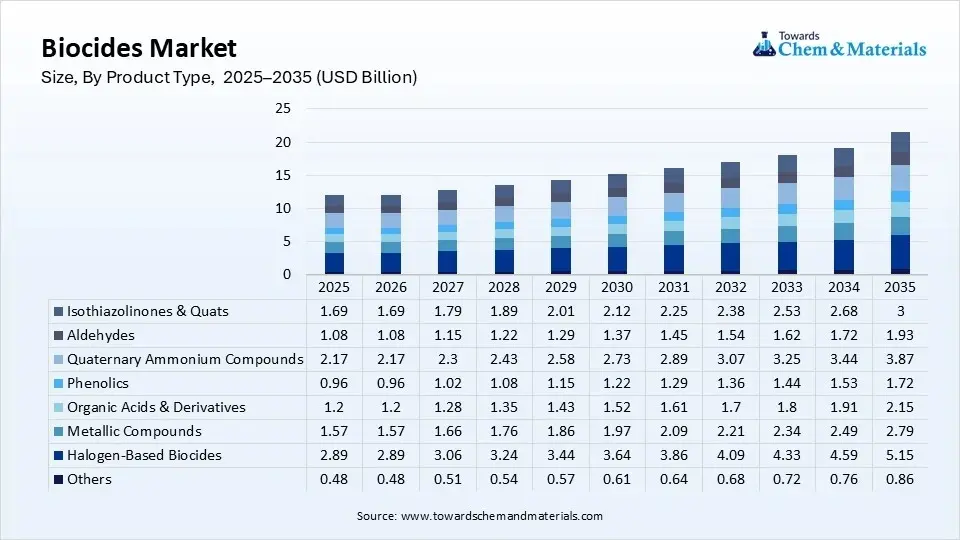
The isothiazolinones & quats segment is expected to grow at the fastest CAGR over the forecast period. The growth of the segment can be credited to the raised demand for hygiene and water treatment products and increasing consciousness regarding health hazards from microbial contaminants, with ongoing industrial applications.
Biocides Market Share, By Product Type, 2025(%)
| By Product Type | Market Share (%) |
| Halogen-Based Biocides | 24.0% |
| Metallic Compounds | 13% |
| Organic Acids & Derivatives | 10% |
| Phenolics | 8% |
| Quaternary Ammonium Compounds | 18% |
| Aldehydes | 9% |
| Isothiazolinones & Quats | 14% |
| Others | 4% |
Form Insight
The liquid segment led the market by holding 68.0% market share in 2025. The dominance of the segment can be linked to the growing product demand from paints and coatings, water treatment, and personal care industries. Additionally, halogen-based biocides, like iodine and chlorine compounds, are extensively used due to their vast antimicrobial activity and cost-effectiveness, which makes them a substantial part of the liquid biocides segment.
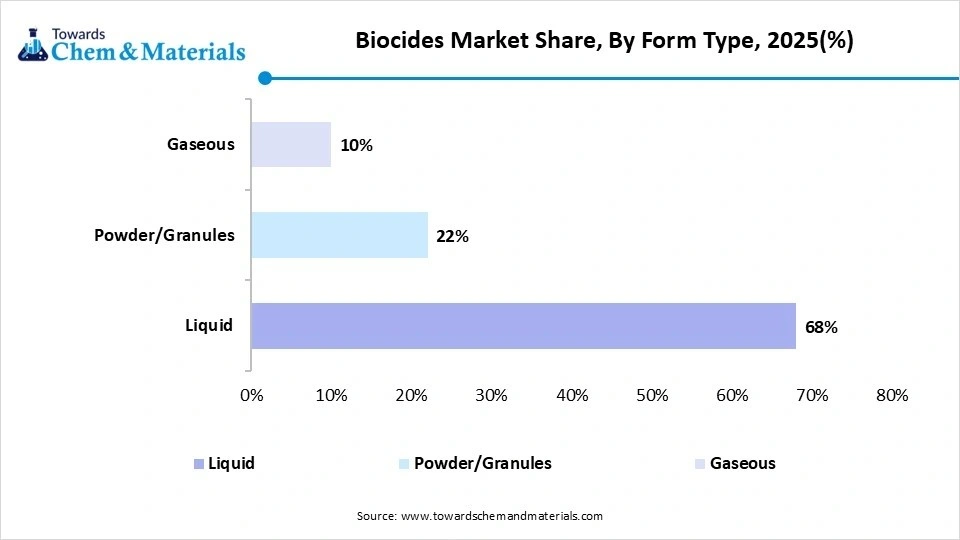 The gaseous segment is expected to grow at the fastest CAGR over the forecast period. The growth of the segment can be driven by ongoing investment in research and development by market players, which leads to the development of sustainable, effective and specialized biocides. Biocides are necessary for preventing microbial growth in oil and gas pipelines and other facilities.
Biocides Market Share, By Form Type, 2025(%)
| By Form | Market Share (%) |
| Liquid | 68.0% |
| Powder/Granules | 22% |
| Gaseous | 10% |
Function Insight
The antimicrobial segment held a 34.0% market share in 2025. The dominance of the segment can be attributed to the surging awareness regarding the importance of hygiene and potential health risks associated with microbial contamination. Regulations regarding sanitation and hygiene are becoming increasingly stricter, which leads to escalating adoption of biocides in different sectors.
The disinfectant segment is expected to grow at the fastest CAGR during the projected period. The growth of the segment can be linked to the ongoing R&D activities in biocides, which lead to the development of more sustainable and effective products, contributing to segment expansion in the market further.
Application Insight
The water treatment segment dominated the market with 27.00% market share in 2025. The dominance of the segment is owed to the stringent water regulations, surging water scarcity, and the increasing demand for efficient water purification across different industries. Moreover, the rising preference for water-based paints and coatings, especially in the automotive and construction industries, is propelling the demand for biocides as preservatives in these products.
The paints & coatings segment is expected to grow at the fastest CAGR over the forecast period. The growth of the segment is due to the growing demand for hygienic products along with the protection against microbial contamination. The growing inclination towards water-based paints over oil-based paints is fuelling market growth soon.
Distribution Channel Insight
The direct sales segment led the market with 72.0% market share in 2025. The dominance of the segment is due to the ongoing development of sustainable biocides, rapid industrialization, and urbanization, coupled with the expanding healthcare sector with its emphasis on sterile environments and infection control. Also, advancements in biocide formulations and innovations such as multi-functional biocides are contributing to segment growth soon.
The direct sales segment is expected to grow at the fastest CAGR during the study period. The growth of the segment can be driven by expanding municipal and industrial water treatment, especially in emerging regions, creating opportunities for indirect sales via suppliers and distributors specific to biocide objects.
Regional Insights
The Asia Pacific biocides market size was estimated at USD 4.45 billion in 2025 and is projected to reach USD 8.05 billion by 2035, growing at a CAGR of 6.11% from 2025 to 2035.
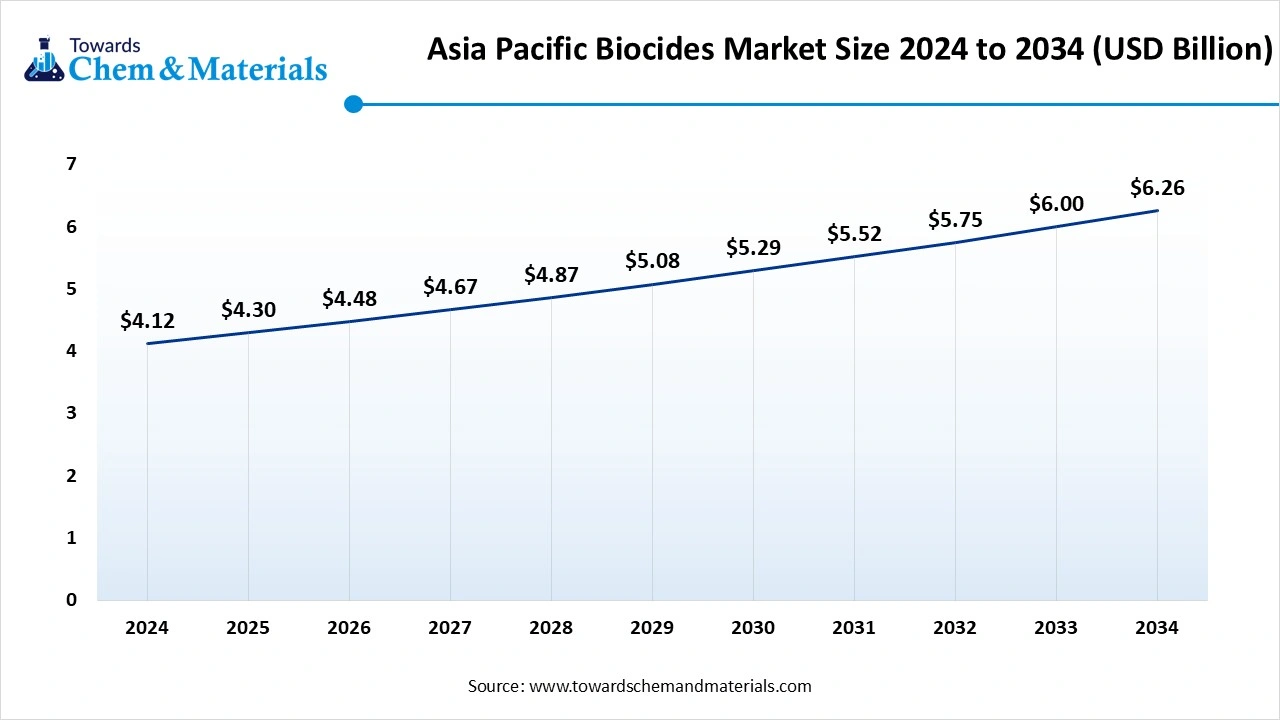
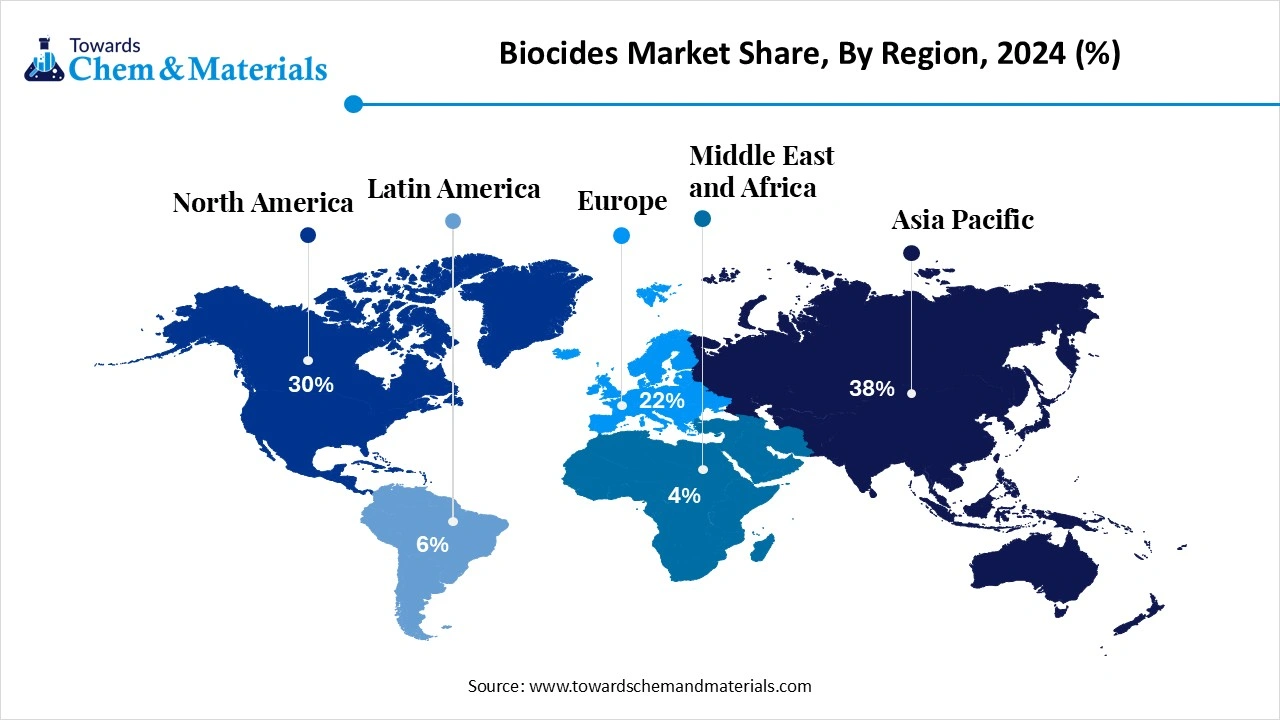
Asia Pacific dominated the market with the largest share of 37.0% in 2025. The dominance of the region can be attributed to rapid industrialization, which boosts consumption. Water treatment infrastructure expands significantly, driving market demand. Manufacturing growth accelerates demand for the market. The region is experiencing localization of specialty chemical production in the region, which strengthens supply chains for preservatives, process chemicals and related antimicrobial ingredients.
China
- The country is witnessing the continued expansion of local specialty chemical and industrial treatment capacity.
- The country is witnessing localization of materials and coatings supply chains, which strengthens demand for preservatives and in-can protection chemistries.
- The country is seeing the rising importance of industrial water purification and reuse, especially as manufacturing clusters face tighter environmental standards.
India
- The country is witnessing the growing importance of water treatment and wastewater management, which is creating a stronger need for biocides.
- The expansion of water-based paints, coatings and household care products supports demand for preservatives and in-can biocides.
- India is gradually becoming more attractive for specialty chemical localization and regional technical support, which could benefit the biocides market.
What are the Advancements in the Biocides Market in North America?
North America held a market share of 24.00% in 2025 and was expected to grow at the fastest CAGR of 7.00% over the forecast period. The growth of the region can be credited to the mature industrial infrastructure, which sustains demand in the region. Strong regulatory compliance drives adoption of the market. Water treatment investments remain significant, boosting market growth. The region is seeing a gradual shift toward more structured regulatory frameworks and post-market oversight.
United States
- The country is experiencing an expanding role of water treatment and contaminant management, particularly in public utilities and industrial systems.
- The country is focusing on hazardous and contaminated waste management, which indirectly supports demand for antimicrobial and treatment chemistries.
- The U.S. remains a major market for preservatives in paints, coatings and formulated products, especially as water-based systems continue to dominate architectural, maintenance and industrial applications.
Canada
- The growing importance of professional and institutional disinfection applications, especially in healthcare facilities, food premises, animal housing areas, schools, offices and household settings, is driving the market in the country.
- Canada benefits from North America’s broader push toward water safety, environmental compliance and cleaner industrial operations, which supports demand for related treatment solutions.
How is the Europe Biocides Market Expanding?
Europe held a market share of 22.00% in 2025. The growth of the region can be credited to stringent environmental standards, which support advanced products in the market. Industrial preservation remains strong, driving market demand. Sustainable biocide adoption increases market demand. Europe’s biocides market is supported by a broad set of end uses, particularly water treatment, industrial preservation, fuel storage, coatings, household and institutional hygiene and treated materials.
Germany
- One of the trends in the country is the continued importance of industrial and material preservation biocides.
- Germany is home to one of Europe’s major biocide suppliers, LANXESS, which continues to shape market direction through both product supply and regulatory expertise.
- The growing influence of EU-level biocides policy on German market behavior is reshaping the market growth.
France
- France benefits from several stable downstream sectors for biocides.
- France represents a high-standard, regulation-sensitive destination for biocides in hygiene, public-use and material-protection applications.
What are the Key Trends in the Biocides Market in Latin America?
Latin America held a market share of 9.00% in 2025. The growth of the region can be credited to the expanding agriculture and industrial sectors, which increase usage. Water quality initiatives support demand for the market. Infrastructure investment rises, boosting market adoption. The region is seeing stronger foundations for industrial and material preservation biocides.
Brazil
- The growing role of water treatment, wastewater reuse and sanitation modernization supports market demand.
- The continued development of local microbial-control and preservation portfolios is accelerating market growth.
- Brazil is moving through a broader environmental modernization cycle in chemicals and industrial processing.
Chile
- Water scarcity-driven infrastructure investment is one of the most important indirect demand drivers for biocides in the country.
- The country is witnessing a trend of digitization and modernization of urban water utilities.
How is the Middle East and Africa Region Growing in the Biocides Market?
The Middle East and Africa held a market share of 8.00% in 2025. The growth of the region can be credited to the expansion of desalination and water treatment projects. Industrial diversification increases consumption of the market. Urbanization supports market growth. One of the major growth pillars is the region’s industrial and energy base, especially in oil and gas, refining, petrochemicals, mining and heavy industry.
Saudi Arabia
- The continued build-out of desalination and advanced water-treatment capacity is accelerating market growth.
- The importance of industrial water and process treatment is linked to the country’s broader economic diversification strategy.
- The country is becoming a more attractive market for integrated water and environmental service providers, which indirectly supports biocide demand.
South Africa
- The country reflects the need for more resilient water and wastewater treatment systems, driving market adoption.
- The country is witnessing the growing importance of industrial and material preservation.
- The country benefits from the presence of multinational suppliers and water-treatment specialists.
Recent Developments
- In May 2026, the Council of the European Union formally adopted a new law to streamline rules on biocides by extending certain data-protection periods for existing active substances. This is a notable policy development because it signals that Europe is trying to reduce administrative burden for industry.(Source: www.consilium.europa.eu)
- In May 2025, Canada’s new Biocides Regulations came into force under the Food and Drugs Act. The rules created a single national framework for surface disinfectants and surface sanitizers, replacing the older split system.(Source:www.canada.ca)
Top Companies List
- Lonza Group AG
- Ecolab Inc.
- LANXESS AG
- Solvay SA
- Veolia Group
- Dow Inc.
- BASF SE
- Stepan Company
- Clariant AG
- Kemira Oyj
- Troy Corporation (Arxada)
- Thor Group Limited
- Italmatch Chemicals S.p.A.
- Albemarle Corporation
- Enviro Tech Chemical Services
- Hubbard-Hall Inc.
- Vink Chemicals GmbH
- Akzo Nobel N.V.
- ICL Group Ltd.
- Akema Fine Chemicals
Segments Covered
By Product Type
- Halogen-Based Biocides
- Metallic Compounds
- Organic Acids & Derivatives
- Phenolics
- Quaternary Ammonium Compounds
- Aldehydes
- Isothiazolinones & quats
- Others
By Form
- Liquid
- Powder/Granules
- Gaseous
By Function
- Antimicrobial
- Antifouling
- Preservative
- Disinfectant
- Pest Control
By Application
- Water Treatment
- Industrial Water
- Municipal Water
- Cooling Towers
- Paints & Coatings
- Wood Preservation
- Food & Beverage
- Oil & Gas
- Pharmaceuticals
- Personal Care & Cosmetics
- Pulp & Paper
- Agriculture
By Distribution Channel
- Direct Sales (Industrial Contracts)
- In-Direct Sale
By Region
- North America
- U.S.
- Canada
- Europe
- Germany
- UK
- France
- Italy
- Spain
- Sweden
- Denmark
- Norway
- Asia Pacific
- China
- Japan
- India
- South Korea
- Thailand
- Latin America
- Brazil
- Mexico
- Argentina
- Middle East and Africa (MEA)
- South Africa
- UAE
- Saudi Arabia
- Kuwait
A Seven-Phase Framework
Our methodology is designed to be universally applicable across commodity chemicals, specialty chemicals, petrochemicals, construction chemicals, coatings, electronic chemicals, industrial gases, agrochemicals, water treatment chemicals, and performance materials. Each phase builds upon the last, creating a layered validation structure that minimizes estimation error and maximizes analytical confidence.
The framework ensures comprehensive market coverage, robust cross-validation, and reliable long-term forecasting — producing market estimates that withstand scrutiny from investors, regulators, and corporate strategy teams.

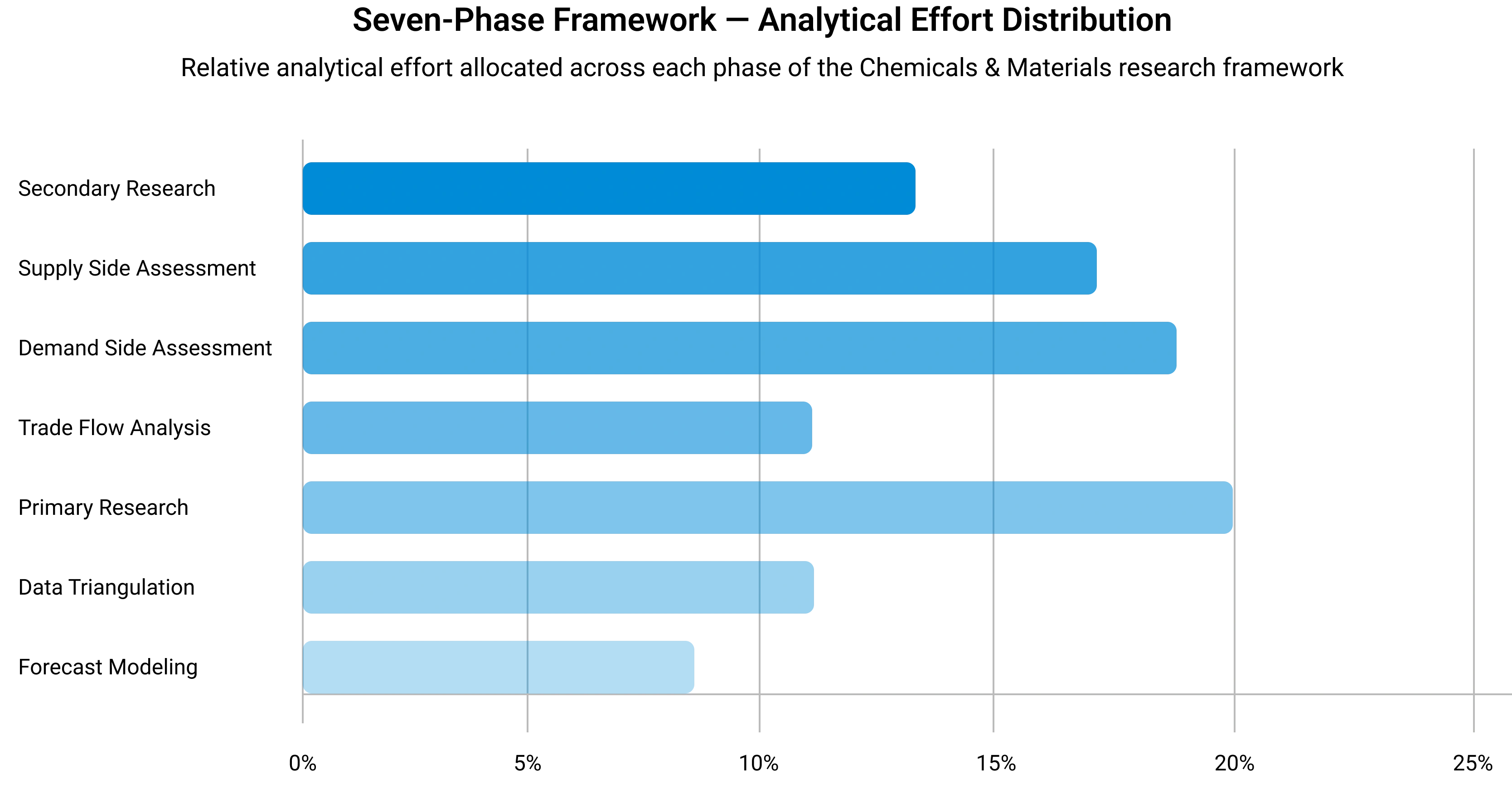
Seven-Phase Framework — Analytical Effort Distribution
Relative analytical effort allocated across each phase of the Chemicals & Materials research framework
Phase 1 - Secondary Research: Establishing the Foundation
Secondary research collects and evaluates publicly available information from authoritative sources, establishing the foundational understanding of market structure, value chain dynamics, competitive landscape, and end-use demand patterns. Every source is evaluated for credibility, recency, geographic relevance, and methodological soundness before inclusion.
Industry Associations
Sources include ACC, CEFIC, ICCA, JCIA, CPCIF, and SOCMA providing production volumes, consumption trends, capacity developments, and sustainability initiatives.
Company Disclosures
Annual reports, investor presentations, earnings transcripts, and regulatory filings reveal product portfolios, manufacturing footprints, capacity expansions, and revenue segmentation.
Government Databases
National statistical offices, customs authorities, environmental agencies, and industrial production databases provide verified statistics on output, trade flows, and regulatory compliance.
Trade Databases
UN Comtrade, ITC, Eurostat, and national customs authorities enable assessment of global product movement, import dependency, and export competitiveness across regions.
Our Secondary Research Sources
- Ministry of Chemicals and Fertilizers
- European Chemicals Agency
- United States Department of Energy
- Ministry of Industry and Information Technology
- Ministry of Economy Trade and Industry
- Ministry of Trade Industry and Energy
- National Institute of Standards and Technology
- Council of Scientific and Industrial Research
- Fraunhofer Society
- National Institute for Materials Science
Phase 2 — Supply-Side Assessment: Mapping Production Capabilities
Production Capacity Analysis
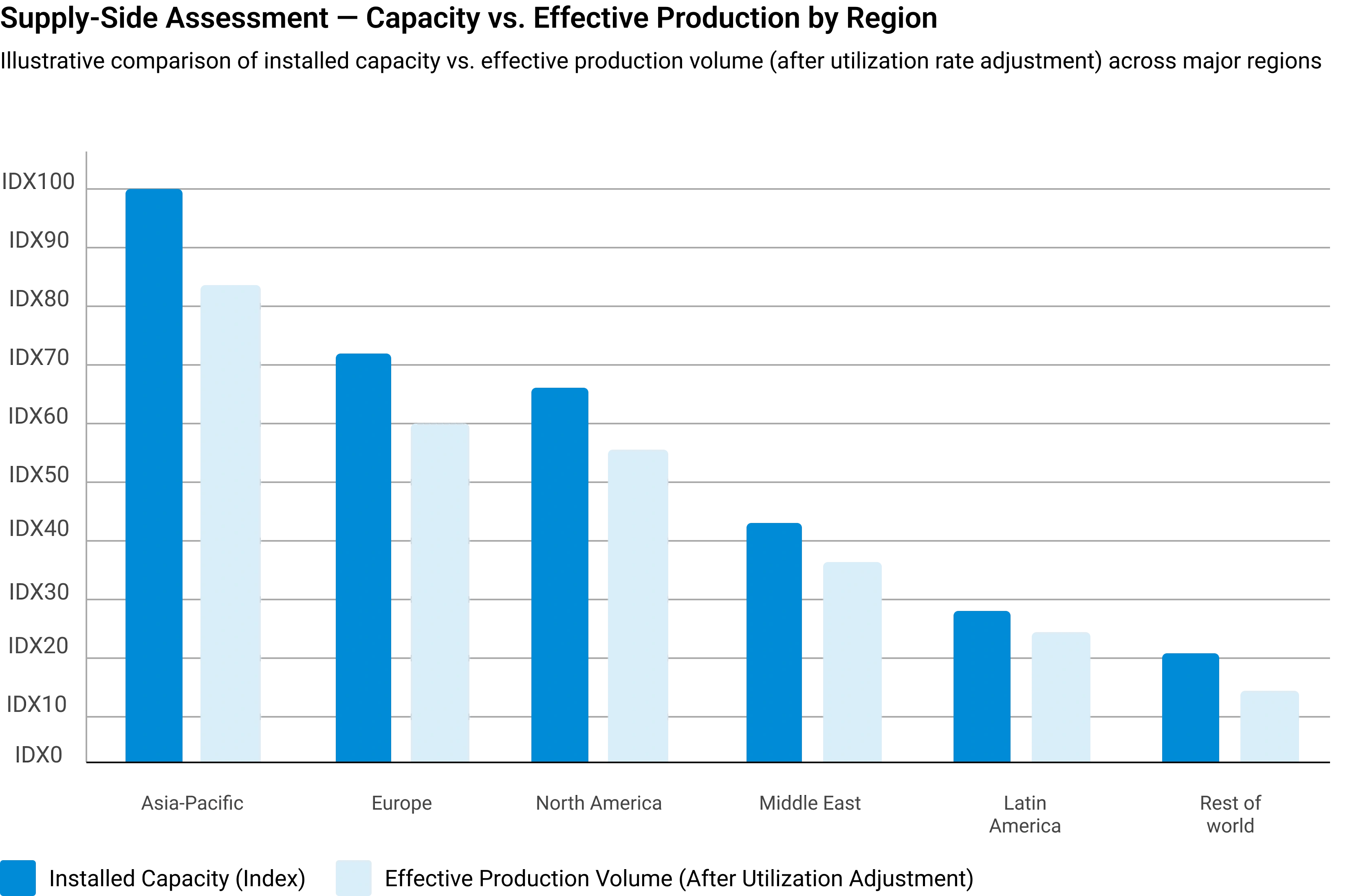
All major manufacturers are assessed for existing installed capacity, planned additions, expansions, new plant announcements, and technology adoption — mapped at global, regional, and country levels.
Capacity Utilization Adjustment
Installed capacity is adjusted using utilization rates based on demand conditions, feedstock availability, plant operating rates, maintenance schedules, and regulatory restrictions.
Manufacturer Revenue Analysis
Product-specific revenues, segment-level performance, regional distribution, average selling prices, and margin trends are evaluated to establish market value estimates.
Supply-Side Assessment — Capacity vs. Effective Production by Region
Illustrative comparison of installed capacity vs. effective production volume (after utilization rate adjustment) across major regions
Phase 3 — Demand-Side Assessment: Quantifying Chemical Consumption
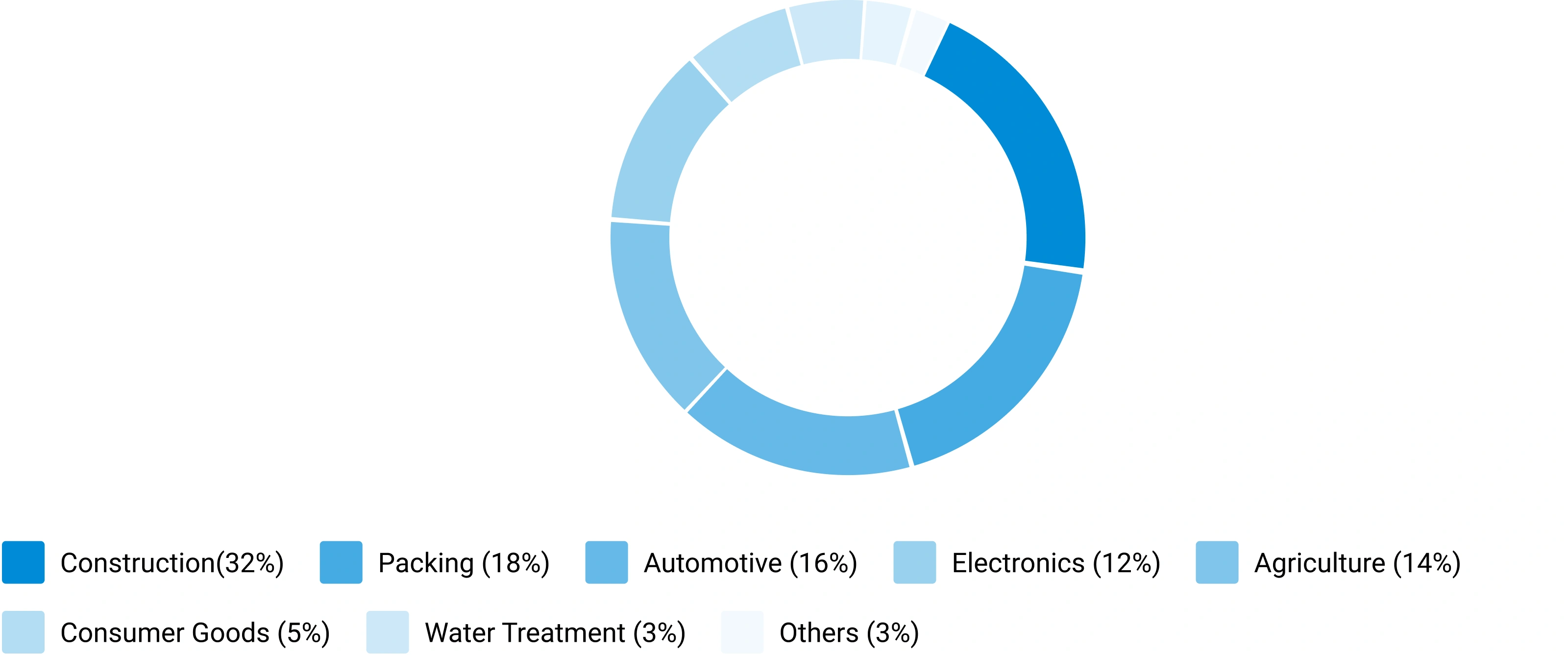
Demand-side analysis quantifies chemical consumption across industries, applications, and geographies — identifying where and how chemicals are consumed throughout the value chain with precision.
End-Use Industry Analysis
Chemical demand is evaluated across automotive, construction, packaging, electronics, agriculture, healthcare, consumer goods, industrial manufacturing, energy and utilities, and water treatment. Industry output, production trends, and consumption intensity are analyzed to determine demand patterns.
Consumption Modeling
Demand is estimated using measurable indicators: kilograms per vehicle, kilograms per square meter of construction, dosage per cubic meter of water treated, kilograms per hectare of agricultural land, and kilograms per ton of manufactured products. Consumption factors are validated through industry publications and primary interviews.
Application Analysis
The market is segmented by application area to understand product performance requirements, formulation trends, technology adoption, customer preferences, and regulatory requirements improving demand accuracy and segmentation granularity.
Demand-Side Assessment — End-Use Industry Demand Distribution
Illustrative distribution of chemical & materials demand across key end-use industries
Phase 4 - Trade Flow Analysis: Balancing Regional Supply and Demand
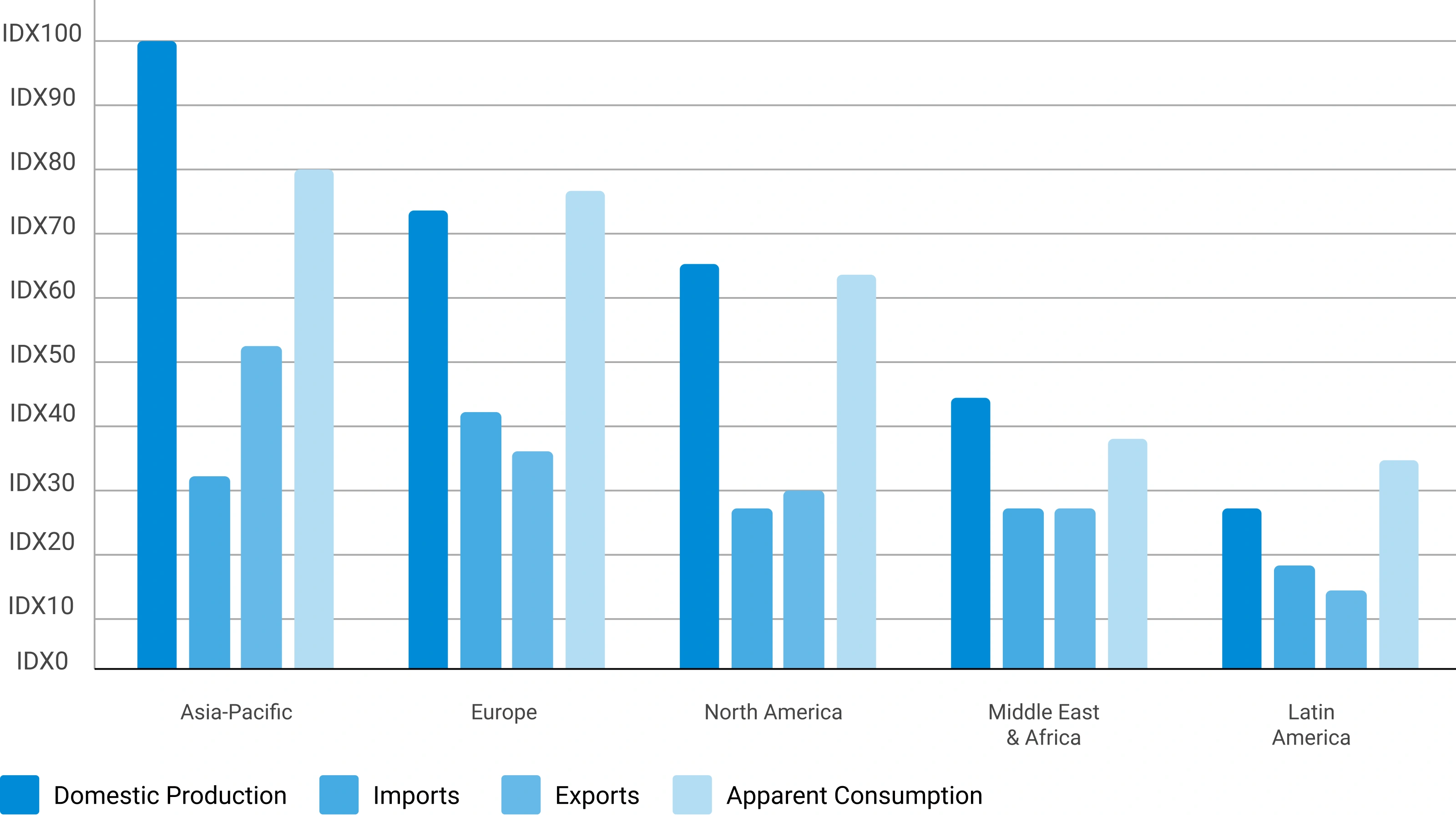
Trade flow analysis reconciles regional supply and demand estimates through import and export data, identifying net supply positions, regional dependencies, and market imbalances. It serves as an independent validation layer that tests the consistency of supply-side and demand-side estimates.
Import Analysis
Import data is evaluated to determine volumes, source countries, product dependency, regional supply gaps, and pricing trends — identifying markets that rely heavily on external supply and where domestic production is insufficient to meet demand.
Export Analysis
Export assessments reveal production surplus, export competitiveness, regional manufacturing strength, and global market participation. Export patterns also help validate domestic production estimates and identify net exporting regions.
Apparent Consumption Model
Regional consumption is assessed using the standard apparent consumption formula:
Results identify net importing regions, net exporting regions, regional deficits, and surpluses — serving as an independent validation of supply and demand estimates.
Trade Flow Analysis — Net Supply Position by Region
Illustrative apparent consumption vs. domestic production across major regions — positive gap indicates net import dependency
Phase 5 — Primary Research: The Critical Validation Layer
Primary research tests and refines findings from secondary research through direct engagement with industry participants across the supply chain, demand side, and expert community. It captures intelligence that no database or published report can provide — the real-world experience of manufacturers, buyers, and specialists operating in the market.

Supply-Side Interviews
Conversations with chemical manufacturers, raw material suppliers, contract manufacturers, technology providers, and plant operators cover production trends, capacity utilization, pricing developments, technology shifts, and competitive dynamics.

Demand-Side Interviews
Engagement with OEMs, industrial consumers, procurement managers, distributors, formulators, and end-use manufacturers focuses on consumption trends, purchasing behavior, product substitution, demand outlook, and emerging applications.

Industry Expert Consultations
Additional interviews with industry consultants, independent experts, regulatory specialists, technical professionals, and research institutions provide deeper market context and validate key analytical assumptions.
Focus Areas of Primary Research:
Market Size & Forecast Validation
Revenue estimates, volume consumption, growth rates, forecast assumptions, regional demand.Supply Chain & Value Chain Assessment
Raw material sourcing, supply chain challenges, distribution networks, procurement practices.Production & Capacity Analysis
Manufacturing capacity, utilization rates, expansion projects, plant investments.Pricing & Cost Structure Analysis
Product pricing trends, feedstock costs, energy costs, margin pressures, pricing outlook.Competitive Landscape Assessment
Volume and value estimates confirmed to be fully consistent with one another before publicationInterview Volume by Market Scope
| Study Scope | Number of Interviews |
|---|---|
| Niche Market | 20 – 30 |
| Mid-Sized Market | 30 – 50 |
| Global Market | 50 – 80 |
| Highly Fragmented Market | 80 – 120 |
Interview Details:
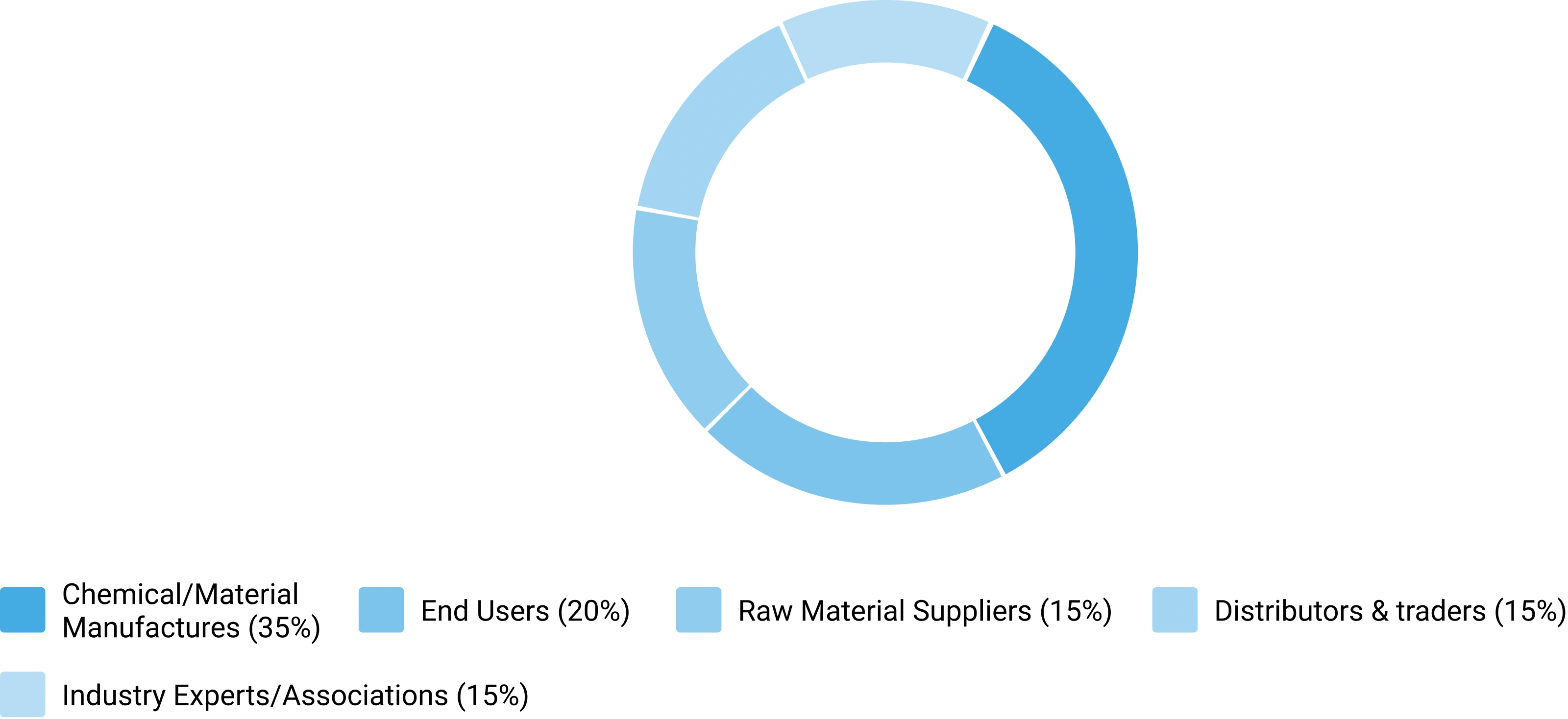
Category : Manufacturers, Suppliers, Distributors, End Users, Experts/Associations
Average Duration : 30–60 Minutes
Interview Mode : Video calls, telephonic interviews, expert consultations
Interview Format : Structured / Semi-Structured questionnaire
Focus Areas of Primary Research:
Market Size & Forecast Validation :
Revenue estimates, volume consumption, growth rates, forecast assumptions, regional demand.
Supply Chain & Value Chain Assessment :
Raw material sourcing, supply chain challenges, distribution networks, procurement practices.
Production & Capacity Analysis :
Manufacturing capacity, utilization rates, expansion projects, plant investments.
Pricing & Cost Structure Analysis :
Product pricing trends, feedstock costs, energy costs, margin pressures, pricing outlook.
Competitive Landscape Assessment :
Market share, competitor positioning, strategic initiatives, partnerships, acquisitions.
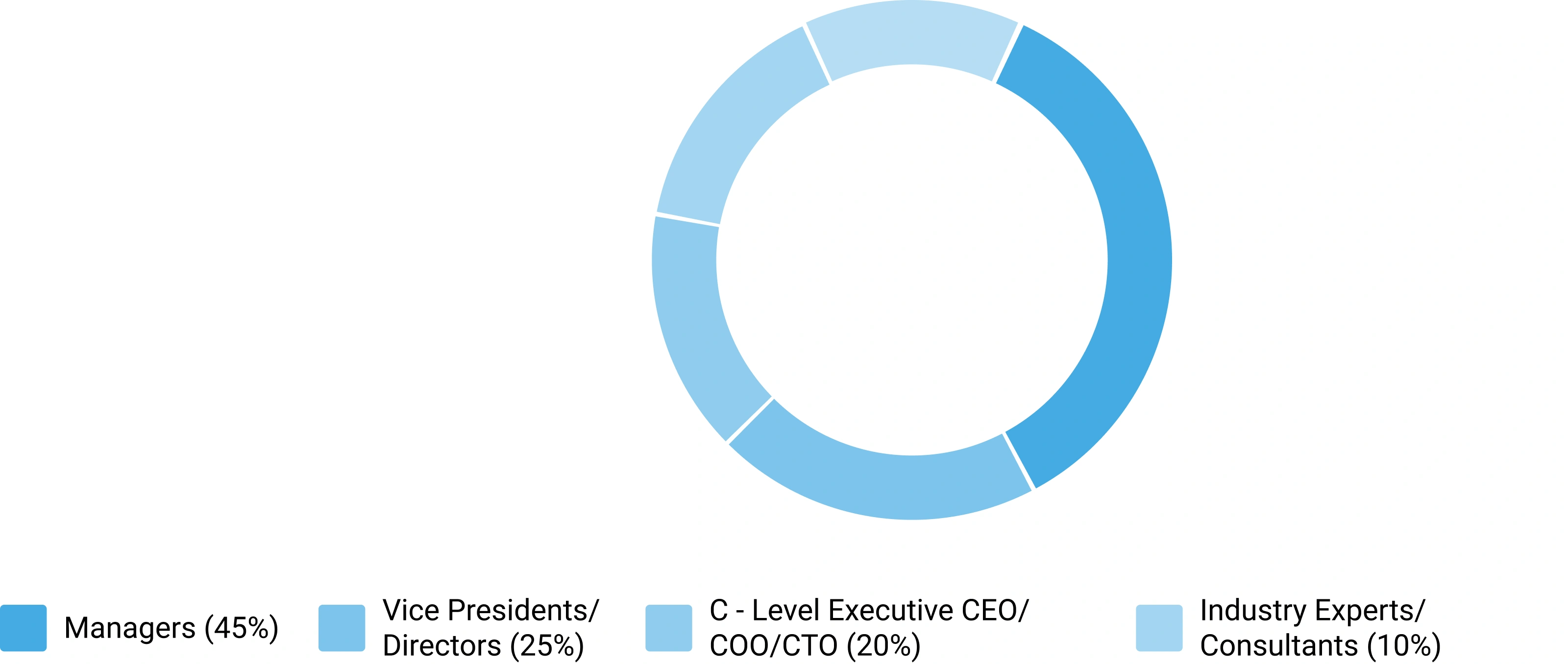
Primary Research — Stakeholder Coverage by Category
Distribution of interview respondents across stakeholder categories (% share from PPT data)
Primary Research — Respondent Designation Profile
Seniority breakdown of interview respondents (% share from PPT data)
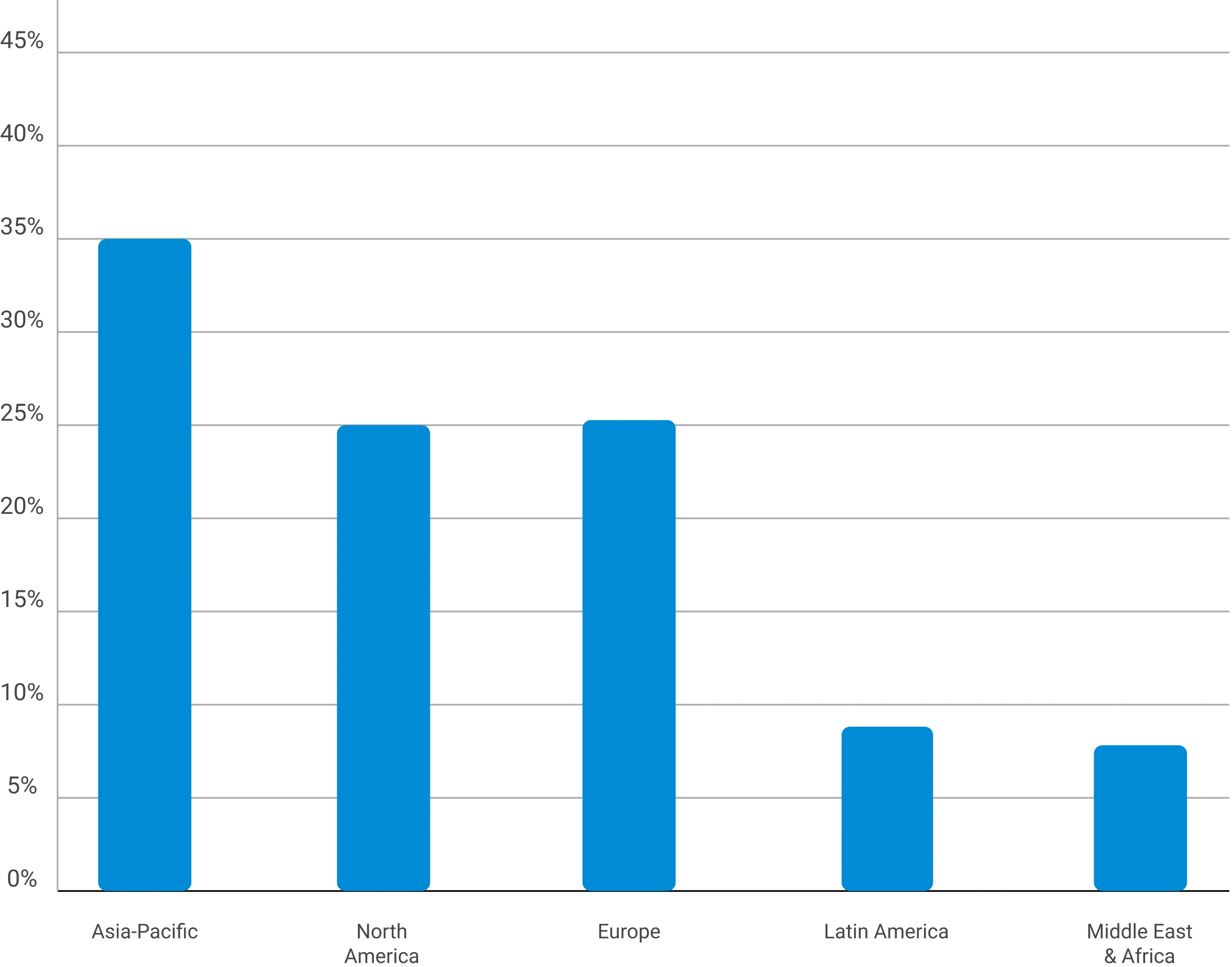
Primary Research — Geographic Coverage of Interviews
Regional distribution of primary research engagement (% share from PPT data)
Phase 6 — Data Triangulation and Market Validation
No single methodology is relied upon in isolation. Multiple independent estimation approaches are combined and reconciled to ensure consistency, accuracy, and analytical defensibility. Any material deviations between approaches are investigated and adjusted through additional validation cycles.
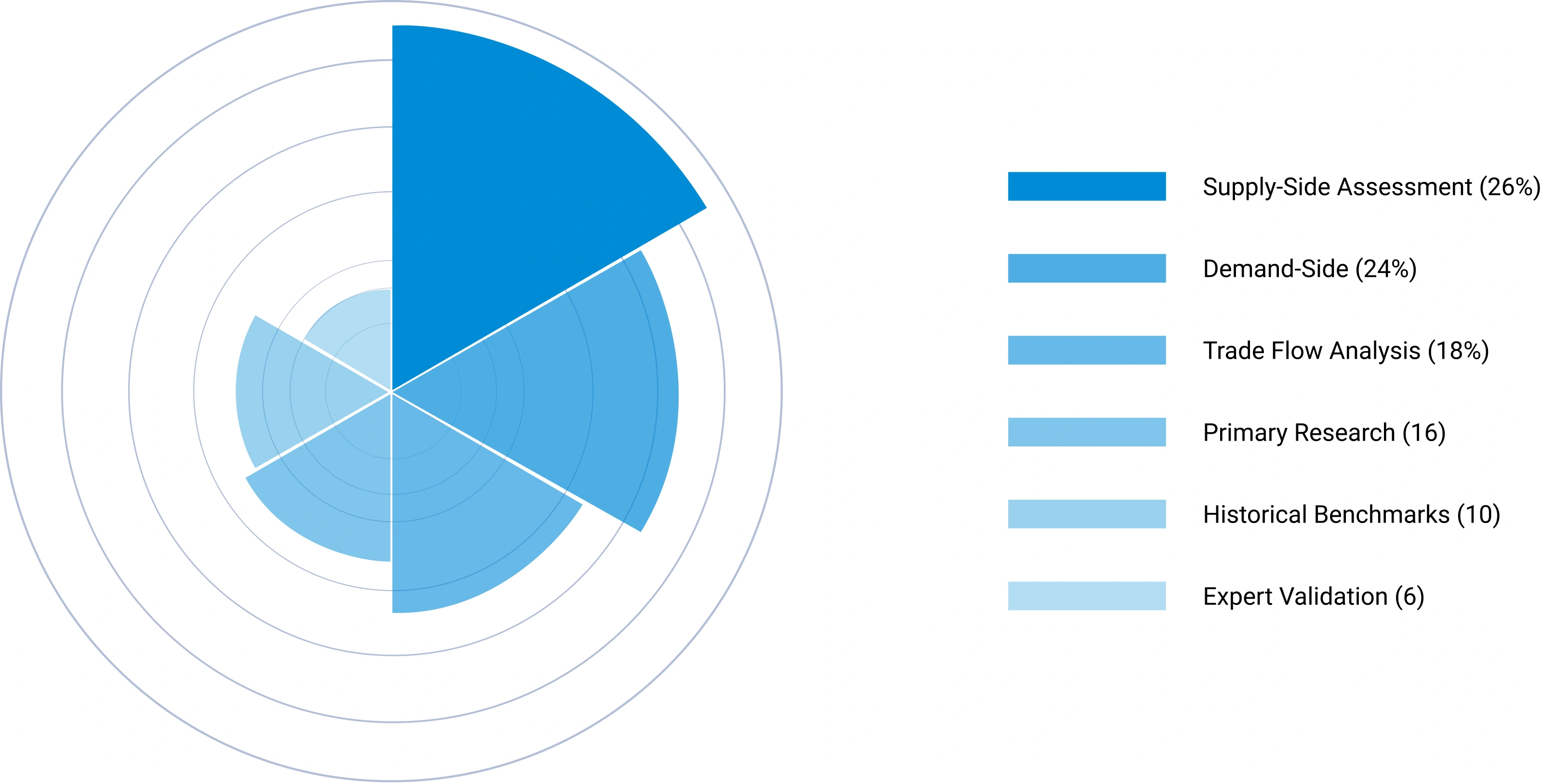
The final market size is derived through weighted triangulation of all validated methodologies. Any material deviations between approaches are investigated and adjusted through additional validation cycles. The outcome represents the most realistic assessment of the market based on available evidence and expert confirmation ensuring that volume and value estimates are fully consistent with one another.
Triangulation Framework — Input Contribution Weight
Relative weight each sizing input contributes to the final reconciled market estimate
Phase 7 — Forecast Modeling: Projecting Future Market Evolution
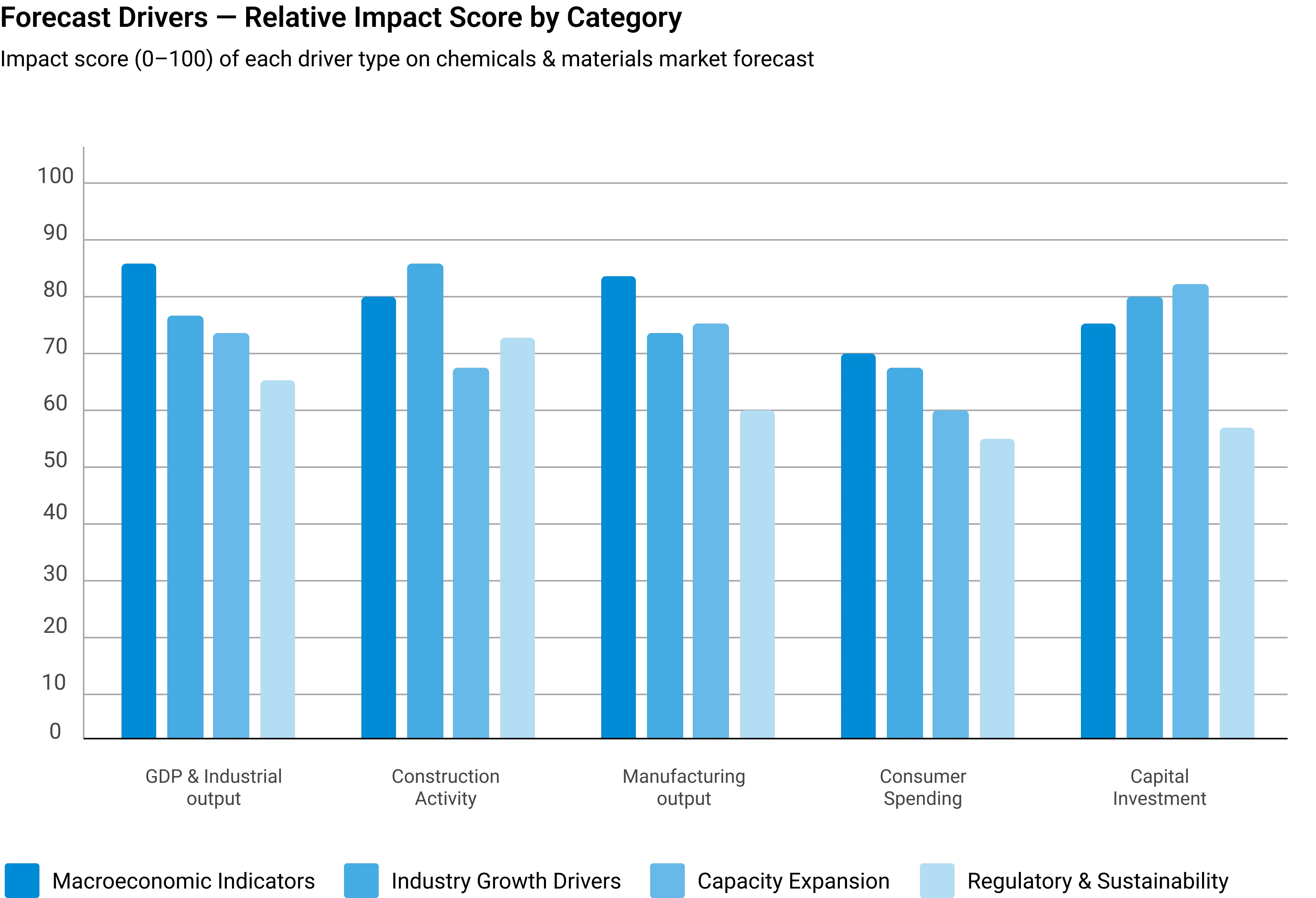
Forecasting evaluates the future trajectory of the market using a combination of quantitative indicators and qualitative assessments across economic, industry, and regulatory dimensions. Rather than simple extrapolation, each driver is independently modeled and integrated into a composite forecast.
Macroeconomic Indicators
GDP growth, industrial production, manufacturing output, construction activity, consumer spending, and capital investment form the quantitative foundation of long-term demand projections. These are applied at country, regional, and global levels.
Industry Growth Drivers
Urbanization, infrastructure development, industrialization, technological innovation, sustainability initiatives, and evolving product performance requirements are assessed at regional and industry levels — capturing both structural and cyclical demand drivers.
Capacity Expansion Analysis
Announced plant expansions, new manufacturing facilities, technology upgrades, and strategic investments are evaluated to determine future supply-demand dynamics and potential market tightness or oversupply situations.
Regulatory & Sustainability
Environmental regulations, chemical safety standards, emission reduction targets, circular economy initiatives, and sustainability requirements are incorporated as they often influence product adoption rates and market growth trajectories.
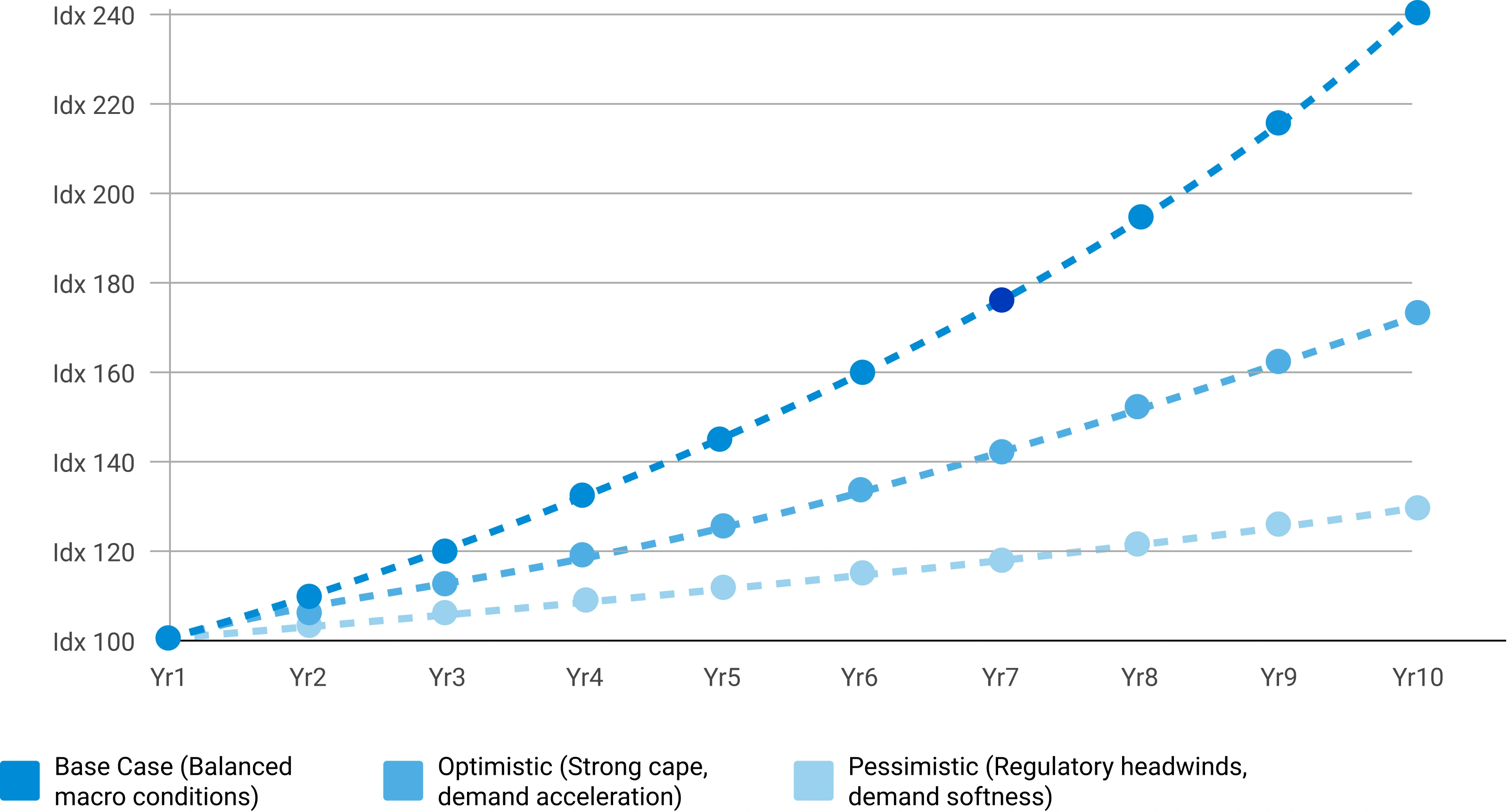
Scenario Forecast Range — Indexed Market Growth (Year 1–10)
Illustrative indexed growth trajectories across Base, Optimistic, and Pessimistic scenarios over a 10-year forecast horizon
Forecast Drivers — Relative Impact Score by Category
Impact score (0–100) of each driver type on chemicals & materials market forecast



Comments
Share your thoughts, ask a question, or provide feedback about this report.