
Plastic Pallets Market Size, Share, Trends and Forecast 2026 to 2035
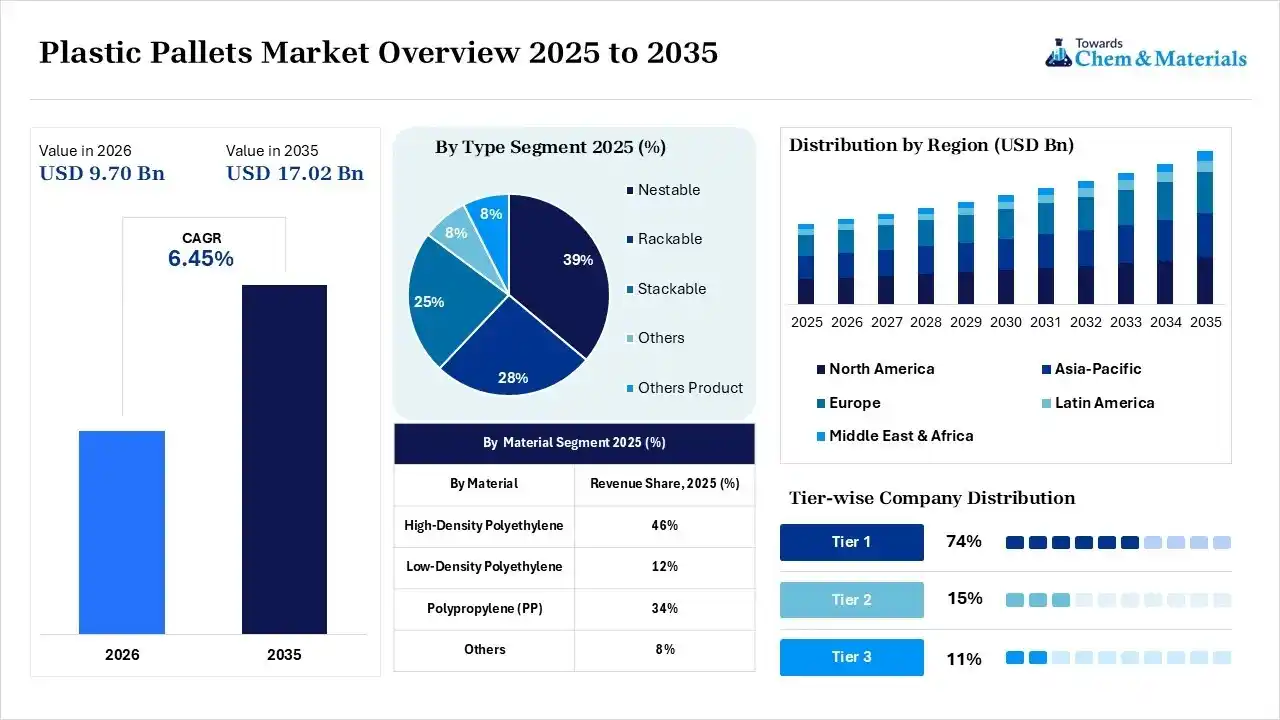
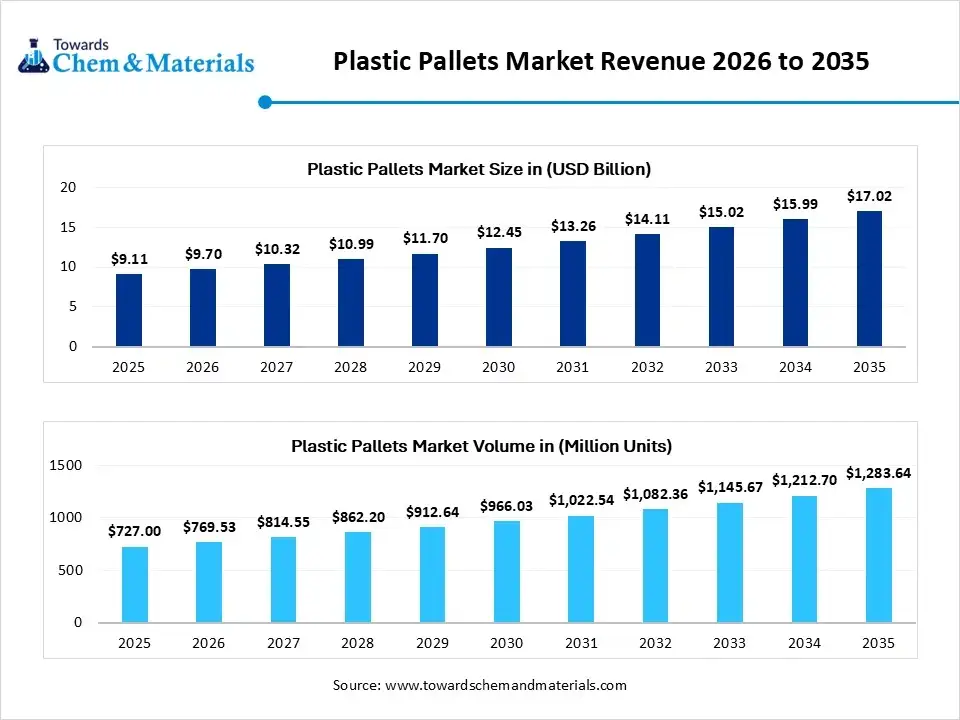
The global plastic pallets market size was valued at USD 9.11 billion in 2025, is estimated to reach USD 9.70 billion in 2026, and is projected to reach USD 17.02 billion by 2035, exhibiting a compound annual growth rate (CAGR) of 6.45% over the forecast period from 2026 to 2035.North America dominated the Plastic Pallets Market with the largest revenue share of 31.0% in 2025In terms of volume, the plastic pallets market is projected to grow from 727.00 million units in 2025 to 1,283.64 million units by 2035. growing at a CAGR of 5.85% from 2026 to 2035.Growing demand for automated warehouse efficiency and strict global hygiene standards are the key factors driving market growth. Also, increasing inclination towards sustainability and circular economy principles, coupled with rapid technological integration, can fuel market growth further.
Market Highlights
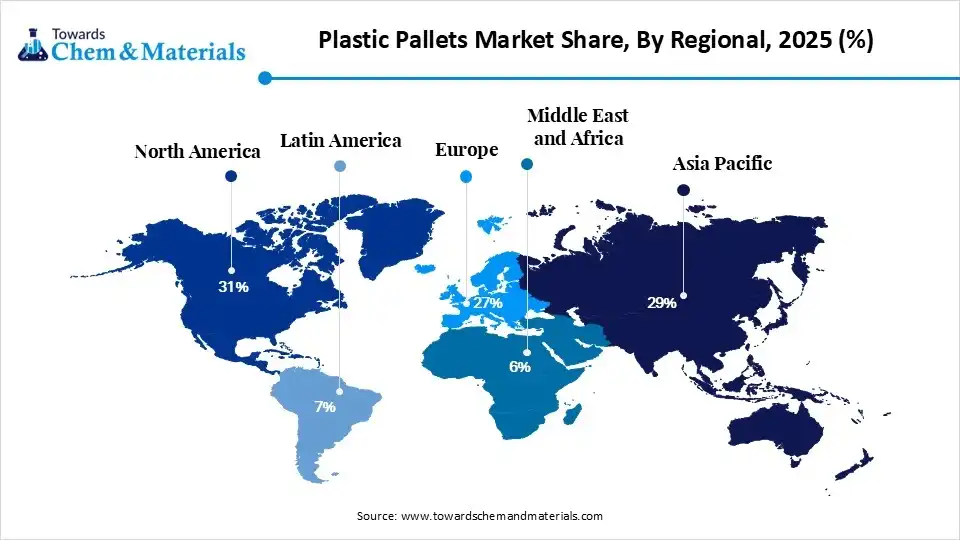
- By region, North America dominated the market with the largest share of 31.0% in 2025. The dominance of the region can be attributed to the rapid expansion of the e-commerce sector, along with the rigorous hygiene mandates in the food and pharmaceutical industries.
- By region, Asia Pacific held a market share of 29.0% in 2025 and was expected to grow at the fastest CAGR of 8.00% during the projected period. The growth of the region can be credited to the rapid expansion of the e-commerce sector and the implementation of stringent hygiene protocols.
- By material, the high-density polyethylene segment dominated the market with the largest share of 46.0% in 2025. It is the material of choice for demanding logistics because of its better strength-to-weight ratio, durability, and resistance to chemicals, impacts, and moisture.
- By material, the polypropylene (PP) segment held a market share of 34.0% in 2025 and is expected to grow at the fastest CAGR of 7.10% during the projected period. PP offers exceptional weight-saving benefits over conventional wood and HDPE.
- By type, the nestable segment dominated the market with the largest share of 39.0% in 2025. It is highly valued for its space-saving design, enabling empty pallets to fit inside one another, which substantially lowers storage and return-trip shipping costs.
- By type, the rackable segment held a market share of 28.0% in 2025 and is expected to grow at the fastest CAGR of 7.30% over the forecast period. These are heavy-duty pallets, created to be safely stored in unsupported racking systems to maximize vertical floor space.
- By application, the food & beverages segment dominated the market with the largest share of 38.0% in 2025. Governments across the globe are enforcing contamination-free logistics. Conventional wood pallets easily harbor bacteria, pests, fungi, and moisture.
- By application, the pharmaceuticals segment held a market share of 16.0% in 2025 and is expected to grow at the fastest CAGR of 7.80% during the projected period. The pharmaceutical industry operates under stringent Good Manufacturing Practices (GMP) and FDA guidelines.
Quick Stats at a Glance
- Market in Size 2025: USD 9.11 Billion | CAGR (2026–2035): 6.45%
- Market Estimated Size in 2026: USD 9.70 Billion
- Market Projected Size by 2035: USD 17.02 Billion
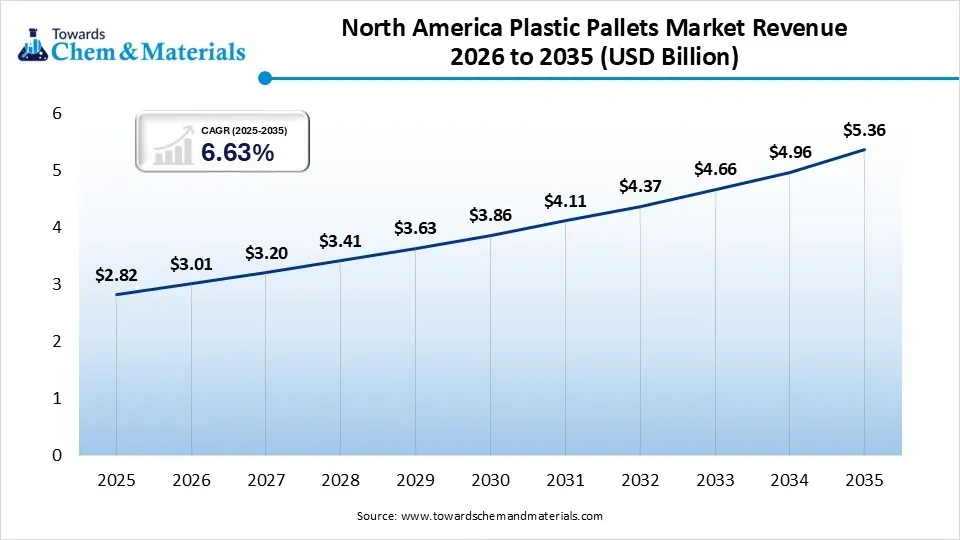
- North America: largest Regional Market Revenue Share of 31% in 2025 | USD 2.82 Billion
- Asia Pacific: Fastest-growing Regional Market Revenue Share of 29% in 2025 | USD 2.64 Billion
- Market Volume in 2025: 727.00 Million Units| Volume CAGR (2026–2035): 5.85%
- Market Estimated Volume in 2026: 769.53 Million Units
- Market Projected Volume by 2035: 1,283.64 Million Units
- Market Pricing (2025):
- Average Manufacturing Price: USD 9.90/Unit
- Average Selling Price: USD 13.97/Unit
Increasing Demand for Durable and Recyclable Pallets Supports Market Growth
The rising emphasis on cost-efficient and sustainable logistics solutions is substantially presenting crucial opportunities in the market. Plastic pallets are used across logistics networks where durability, reuse, cleanability, and dimensional consistency are valued. Moreover, plastic pallets are gaining popularity because of their capability to resist moisture, bear heavy loads, and minimize overall transportation costs.
- For instance, in 2025, the U.S. recorded a 4.6-million-kilogram trade deficit with China concerning recyclable plastic materials. Although the U.S. historically maintained a consistent trade surplus with China until 2021, regulatory revisions to China's import policies effectively reversed this balance of trade.(Source: www.petnology.com)
The food & beverage and pharmaceutical sectors are the major trade drivers, as plastic pallets are cleanable, lightweight, and compliant with cold-chain validation needs.
Global Investment Flow for Plastic Pallets 2026
Major sectors are rapidly transitioning towards hygienic shipping standards, automated handling, and sustainable "circular economy" supply chains with a surge in e-commerce adoption.
- During the first eleven months of 2025, China's cumulative imports of primary-form plastics reached a historic volume of 24.281 million tons; the aggregate value of these imports was recorded at US$36.1623 billion.(Source: www.echemi.com)
This trade and manufacturing landscape is well defined by severe geopolitical supply shocks and a deepening divide in circular economy adoption along with the surge in concentration in the Asia-Pacific region.
Market Trends
- The ongoing growth of e-commerce is the latest trend in the market, shaping positive market growth. As online shopping is increasingly gaining traction, the demand for effective logistics and supply chain solutions becomes crucial. Plastic pallets, popular for their lightweight properties and durability, are preferred for transporting goods in e-commerce operations.
- In recent years, major market players are rapidly adopting sustainable practices, which leads to a greater demand for recyclable and reusable plastic pallets. The shift is associated with corporate sustainability objectives, regulatory requirements, asset-reuse economics, and demand for durable logistics equipment
- Technological innovations in operation processes are the future trend in the market driving expansion. Advancements like automated pallet handling systems are becoming more prevalent.
Report Scope
| Report Attributes | Details |
| Market Size and Volume in 2026 | USD 9.70 Billion / 769.53 Million Units |
| Revenue Forecast in 2035 | USD 17.02 Billion / 1,283.64 Million Units |
| Growth Rate | CAGR 6.45% |
| Base Year of Estimation | 2025 |
| Forecast Period | 2025 - 2035 |
| High Impact Region | North America |
| Segment Covered | By Material, By Type, By Application, By Region |
| Key Companies Profiled | ORBIS Corporation, Rehrig Pacific Company, Monoflo International, Cabka Group GmbH, Allied Plastics LLC, Polymer Solutions International (PSI), Perfect Pallets Inc., TranPak Inc., TMF Corporation |
AI Applications in Plastic Pallet Design and Manufacturing
AI and machine-learning methods can support material formulation, process optimization, quality prediction, and analysis of recycled-material performance when sufficient manufacturing and materials data are available
Supply Chain Analysis of Plastic Pallets Market
- Production & Processing:It refers to the techniques, mainly injection molding, blow molding, and thermoforming, used to melt, shape, and recycle thermoplastics like HDPE and PP into durable logistics platforms. It also includes integration of reclaimed plastics to reduce costs and environmental impact. Manufacturing costs vary by molding process, tooling configuration, resin type, production scale, and pallet design.
- Brambles Limited (CHEP): The world’s largest provider of pallet pooling services. Rather than just selling equipment, they manage massive, closed-loop reusable plastic pallet networks across global retail and fast-moving consumer goods (FMCG) supply chains.
- Other Key Players: CABKA Group, Schoeller Allibert
- Quality Testing and Certification:It ensures hygienic safety, structural strength, and regulatory compliance under stringent uniaxial, dynamic, and environmental stresses. These measures further verify that pallets meet specified structural and environmental performance requirements.
- CABKA Group: Specializes in custom-engineered and recycled plastic pallets that pass strict European transit tests.
- Other Key Players: Schoeller Allibert, ORBIS Corporation
- Distribution to Industrial Users:It includes the pathway where plastic pallets are sold, rented, or distributed evenly to industrial production and heavy logistics sectors rather than commercial retail networks. It also emphasizes high-performance, heavy-duty pallets created to bear harsh factory floors, automated storage systems, and chemical environments. Distribution to industrial users includes direct sales, rental, and pallet-pooling models serving manufacturing and logistics operations. Product requirements vary by load capacity, warehouse automation, chemical exposure, and tracking need.
- ORBIS Corporation: A subsidiary of Menasha Corporation. They specialize in heavy-duty, clean-room, and flame-retardant plastic pallets built specifically for automotive manufacturing and industrial automation.
- Other Key Players: Craemer Holding GmbH, Schoeller Allibert Group
Plastic Pallets Market’s Regulatory Landscape: Global Regulations
| Country/Region | Key Regulations |
| United States & Canada | The U.S. Food and Drug Administration (FDA) regulates food contact surfaces under the Food Safety Modernization Act (FSMA). Plastic pallets used in food processing must use compliant high-density polyethylene (HDPE) or polypropylene (PP) to eliminate cross-contamination risks. |
| European Union (EU) | The EU leads globally to plastic restrictions. Under Extended Producer Responsibility (EPR) and packaging waste directives, companies must account for the full lifecycle of plastic logistics tools, accelerating a shift toward 100% recyclable, circular economy configurations. |
| Asia Pacific | This region commands the largest global production share. Countries like India and China are clamping down on industrial plastic waste with regional packaging laws. Manufacturers are adapting aggressively scaling the use of recycled resins (up to 90% content) in new pallet launches. |
| Middle East | Dominated by logistics investments like Saudi Vision 2030, local regulators enforce cold-chain GDP guidelines that dictate non-porous, highly cleanable plastic formats over traditional wood. |
Market Dynamics
Driver
Cost Efficient Operations
Market players are increasingly seeking new ways to minimize overall operational costs while keeping efficiency and quality of the pallets, which are the major factors driving market growth. Plastic pallets, with lower maintenance costs and longer lifespan requirements, give a cost-efficient solution for different countries. In addition, the ease of cleaning and sanitizing plastic pallets makes them the preferred choice in the hygiene-critical sectors, such as the food and pharmaceutical industries.
Restraint
Raw Material Volatility
Plastic pallets are mainly produced using petroleum-based resins like high-density polyethylene (HDPE) and polypropylene (PP). The manufacturing cost associated with this is tightly linked with changes in crude oil prices, which is the major factor hindering market growth. Moreover, the vulnerability of plastic pallets to theft and tracking failures in open supply networks poses a significant financial risk. Given the high unit cost of these assets, misplacement or unauthorized removal directly results in severe operational losses soon.
Opportunity
Ongoing Integration of RFID
Technological integration in material handling is fueling the need for radio frequency identification (RFID) in the market, creating additional applications for smart pallet tracking.These RFID- and sensor-enabled pallets can support asset identification, location tracking, inventory visibility, and selected condition-monitoring applications, pharmaceuticals, electronics, and e-commerce are demonstrating an elevated demand for tech-integrated solutions to facilitate regulatory compliance and optimize operational efficacy. This continuous advancement in cost-effective sensor technologies is rendering smart pallets increasingly accessible to mid-sized and large-scale enterprises.
Segmental Insights
Material Insights
The high-density polyethylene segment dominated the market with the largest share of 46.0% in 2025. It is the material of choice for demanding logistics because of its better strength-to-weight ratio, durability, and resistance to chemicals, impacts, and moisture. High-Density Polyethylene (HDPE) is widely used where impact resistance, chemical resistance, moisture resistance, and structural durability are required and Low-Density Polyethylene (LDPE) due to its optimal combination of structural integrity and economic production costs. In addition, Dimensional consistency can support reliable pallet handling in automated guided vehicle and robotic warehouse systems
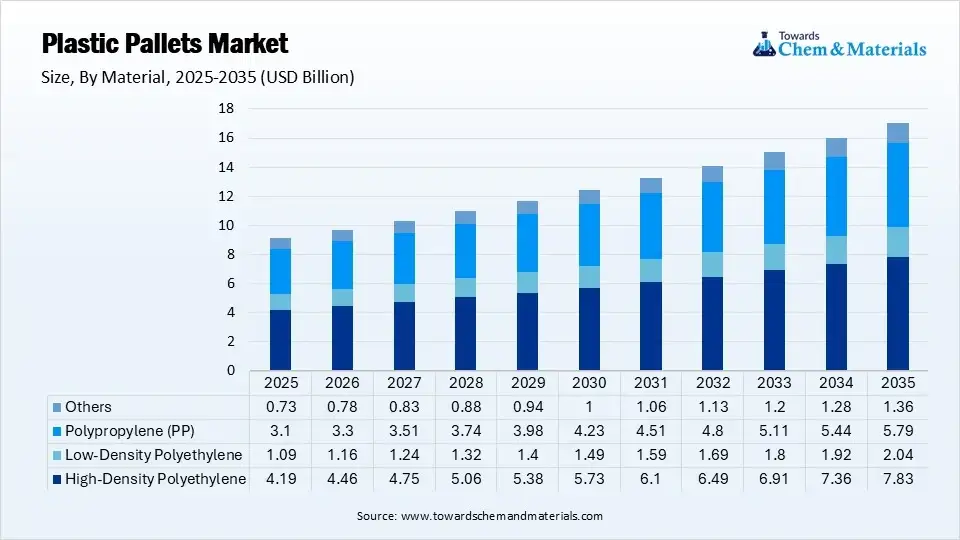
The polypropylene (PP) segment held a 34.0% revenue share in 2025 and is projected to grow at a CAGR of 7.10% during the forecast period. PP pallets can provide lower weight in selected designs while maintaining the stiffness required for specific material-handling applications.Furthermore, to mitigate escalating raw material expenses, manufacturers are progressively integrating recycled polypropylene with virgin resins. This approach optimizes the production of cost-effective and environmentally sustainable pallet alternatives. Increasing corporate demand for multi-trip shipping and returnable assets leads to segment growth soon.
Plastic Pallets Market Share, By Material, 2025 (%)
| By Material | Revenue Share, 2025 (%) |
| High-Density Polyethylene | 46% |
| Low-Density Polyethylene | 12% |
| Polypropylene (PP) | 34% |
| Others | 8% |
Type Insights
The nestable segment dominated the market with the largest share of 39.0% in 2025. It is highly valued for its space-saving design, enabling empty pallets to fit inside one another, which substantially lowers storage and return-trip shipping costs. Due to their hollow or specialized leg structure, these units are unsuitable for heavy-duty racking systems, block stacking of heavy loads, or high-capacity automated warehousing. Nestable units offer significantly lower manufacturing costs compared to intricate rackable designs. Also, they optimize empty storage space by reducing volume requirements, hence substantially decreasing expenses associated with empty reverse logistics.
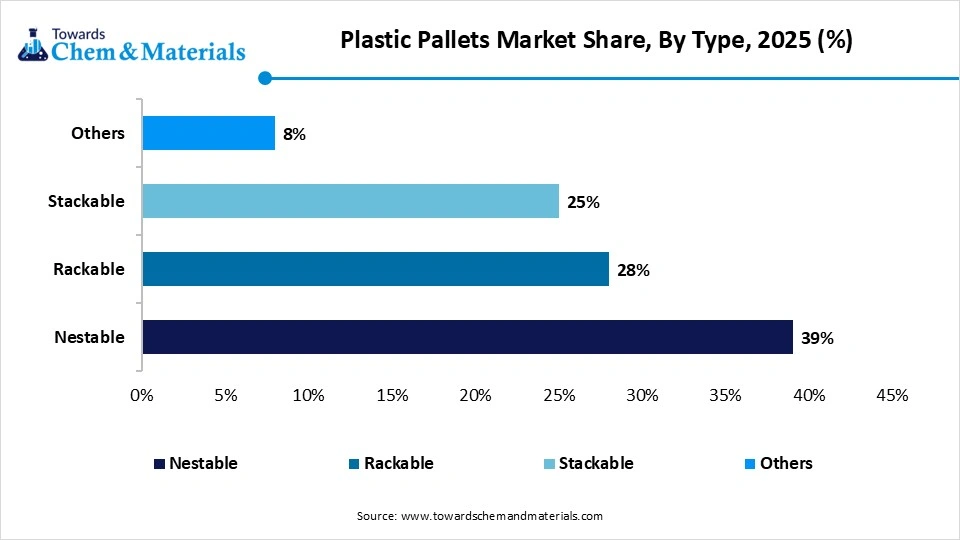
The rackable segment held a market share of 28.0% in 2025 and is expected to grow at the fastest CAGR of 7.30% over the forecast period. These are heavy-duty pallets, created to be safely stored in unsupported racking systems to maximize vertical floor space. Typically fabricated from heavy-duty High-Density Polyethylene (HDPE) or reinforced structural foam, these units are engineered to deliver exceptional durability and accommodate extended reuse cycles. Created for automated high-bay racking operations, these units frequently incorporate built-in steel reinforcements, molded-in retaining lips, and non-slip grommets to ensure load stability and prevent slippage.
Plastic Pallets Market Share, By Type, 2025 (%)
| By Type | Revenue Share, 2025 (%) |
| Nestable | 39% |
| Rackable | 28% |
| Stackable | 25% |
| Others | 8% |
Application Insights
The food & beverages segment dominated the market with the largest share of 38.0% in 2025. Governments across the globe are enforcing contamination-free logistics. Conventional wood pallets easily harbor bacteria, pests, fungi, and moisture, while nonporous plastic pallets reduce these biological risks and endure harsh chemical washing. Unlike wood alternatives, plastic fixtures are free of nails, splinters, and rough edges. This design reduces the risk of torn food packaging and prevents physical contamination across fresh produce, meat, dairy, and bakery products. The technology is further gaining significant traction in closed-loop environments that require superior rigidity and structural integrity to support heavy automated racking systems.
The pharmaceuticals segment held a market share of 16.0% in 2025 and is expected to grow at the fastest CAGR of 7.80% during the projected period. The pharmaceutical industry runs under stringent Good Manufacturing Practices (GMP) and FDA guidelines. These pallets are non-porous and easy to sanitize, conveniently safeguarding the absorption of moisture, odors, or microbes. Furthermore, biological pharmaceuticals, insulin, and vaccines require strictly temperature-controlled environments. Plastic pallets are highly suitable for these applications, as they maintain their structural integrity without cracking, warping, or absorbing moisture when subjected to extreme temperature fluctuations and sub-zero storage conditions.
Plastic Pallets Market Share, By Application, 2025 (%)
| By Application | Revenue Share, 2025 (%) |
| Food & Beverages | 38% |
| Chemicals | 19% |
| Pharmaceuticals | 16% |
| Petroleum & Lubricants | 11% |
| Others | 16% |
Regional Analysis
Why Did North America Lead the Plastic Pallets Market in 2025?
The North America plastic pallets market size was estimated at USD 2.82 billion in 2025 and is projected to reach USD 5.36 billion by 2035, growing at a CAGR of 6.63% from 2026 to 2035.North America dominated the market with the largest share of 31.0% in 2025. The dominance of the region can be attributed to the rapid expansion of the e-commerce sector, along with the rigorous hygiene mandates in the food and pharmaceutical industries. In addition, organizations are increasingly prioritizing reusable, circular-economy logistics solutions over traditional wooden pallets. The rise of Automated Storage and Retrieval Systems (AS/RS) needs pallets with exact, uniform dimensions, high durability, and structural consistency.
 United States
- Stringent FDA standards and food safety regulations heavily favor plastic pallets. Unlike wood, plastic is non-porous, easy to sanitize, and resistant to moisture, chemicals, and pests.
- The integration of RFID and IoT technology into plastic pallets for real-time inventory tracking is further fueling adoption in the country.
Canada
- Canada’s expanding food, beverage, and pharmaceutical industries require non-porous, easily sanitized shipping platforms to prevent bacterial contamination.
- Plastic pallets offer uniform dimensions, structural integrity, and weight balance, which are crucial for robotic operations.
The Asia Pacific plastic pallets market was valued at USD 2.64 billion in 2025 and is projected to reach USD 5.04 billion by 2035, growing at a CAGR of 6.68% from 2026 to 2035.Asia Pacific held a market share of 29.0% in 2025 and was expected to grow at the fastest CAGR of 8.00% during the projected period. The growth of the region can be credited to the rapid expansion of the e-commerce sector and the implementation of stringent hygiene protocols across pharmaceutical and food supply chains. Furthermore, as plastic pallets are non-porous and highly resistant to moisture, chemicals, and pests, they are exceptionally well-suited for the stringent hygiene and regulatory standards of the food, beverage, and pharmaceutical industries.
China
- China needs efficient and damage-free transportation of goods. Lightweight plastic pallets improve freight efficiency and are increasingly adopted in automated fulfillment centers.
- The ongoing production and distribution of automotive parts, electronics, and industrial goods heavily drive the demand for durable, standardized pallets.
India
- The growth of online retail and automated warehousing is increasing demand for lightweight, standardized pallets suitable for frequent handling.
- The adoption of IoT-enabled smart pallets equipped with RFID technology for better inventory tracking is enhancing supply chain efficiency across the country.
The Europe plastic pallets market size was estimated at USD 2.46 billion in 2025 and is projected to reach USD 4.68 billion by 2035, growing at a CAGR of 6.64% from 2026 to 2035.Europe held a market share of 27.00% in 2025. The growth of the region can be attributed to the increasing demand for hygienic and durable logistics solutions & EU packaging rules, including Regulation (EU) 2025/40, introduce reuse requirements for specified transport packaging, including pallets.Also, organizations are increasingly adopting closed-loop recycling and pallet pooling systems, such as those facilitated by CHEP, LEAP India, and ORBIS. This strategic shift enables enterprises to minimize packaging waste and advance their corporate carbon reduction objectives.
Germany
- Strict EU sustainability goals and German packaging laws push companies to adopt highly recyclable, closed-loop pooling systems.
- Plastic pallets are resistant to moisture, chemicals, and pests, eliminating the need for strict fumigation treatments required for wood.
France
- France’s expanding industrial, pharmaceutical, and retail sectors are increasingly adopting automated storage and retrieval systems (AS/RS).
- Pallet pooling and reusable transport-packaging systems can support closed-loop logistics and reduce the need for repeated replacement of transport assets
The Latin America plastic pallets market size was estimated at USD 0.64 billion in 2025 and is projected to reach USD 1.28 billion by 2035, growing at a CAGR of 7.18% from 2026 to 2035.Latin America held a market share of 7.00% in 2025. The growth of the region can be driven by the presence of a large food and beverage export activities in several Latin American economies. coupled with an extensive transition towards cost-effective, sustainable, and hygienic supply chain solutions. Moreover, shifting consumer purchasing behavior and the rapid expansion of e-commerce in market such as Colombia need enhanced organization within sorting and distribution centers.
Brazil
- The growth of cold-chain logistics and the need for hygienic, moisture-resistant packaging are supporting demand for durable plastic pallets for durable plastic pallets.
- Increased investment by global automakers have expanded the auto ancillary industry in Brazil, leading to market expansion soon.
Argentina
- Plastic pallets give superior longevity, are splinter-free, and ensure dimensional consistency, which optimizes warehouse automation and robotic handling.
- Companies are heavily investing in recyclable plastics to reduce their carbon footprint and adhere to long-term sustainable supply chain initiatives.
The Middle East & Africa plastic pallets market size was estimated at USD 0.55 billion in 2025 and is projected to reach USD 1.11 billion by 2035, growing at a CAGR of 7.27% from 2026 to 2035.The Middle East & Africa held a market share of 6.00% in 2025. The growth of the region can be attributed to the substantial infrastructure development, the proliferation of automated warehousing, and the food and pharmaceutical logistics requirements support demand for cleanable and reusable pallet solutions in selected Middle Eastern and African markets. Furthermore, the expansion of managed pallet pooling and rental networks in the Middle East by companies like CHEP is establishing plastic pallets as an economical logistical solution for supply chain operations.
Saudi Arabia
- Cities such as Riyadh and the Eastern Province act as the primary regional anchors, facilitated by heavy industrial activity, petrochemical production, and robust food distribution sectors.
UAE
- The proliferation of e-commerce and major infrastructural investments in UAE logistics hubs (like Dubai South and JAFZA) logistics hubs such as Dubai South and JAFZA provide applications for durable pallet systems used in warehousing and distribution.
- Major players are incorporating IoT sensors and wireless tracking technologies into pallets to ensure real-time visibility and supply chain efficiency across the Middle East.
Competitive Analysis
The market is moderately consolidated, with top major manufacturers commanding nearly half of the market share. These companies are transitioning from treating pallets as disposable overhead to high-utility, data-rich infrastructure.
The Rehrig Pacific Company's comprehensive product portfolio features automation-compatible plastic pallets, totes, and storage bins specifically designed to optimize high-velocity warehouse operations.
Monoflo International focuses on manufacturing highly durable, injection-molded, and custom-engineered pallets designed to optimize supply chain efficiency and reduce costs across logistics, food and beverage, and retail sectors.(Source: plasticpalletmanufacturers.org) ,(Source: www.mhi.org)
Competitive Landscape Analysis
Tier 1 Companies
| Rank | Company Name | Headquarters | Country | Why Relevant to This Market | Key Products / Material Portfolio |
| 1 | ORBIS Corporation | Oconomowoc, Wisconsin | USA | One of the world's leading reusable packaging and plastic pallet manufacturers serving automotive, food, beverage, and retail sectors | Reusable plastic pallets, nestable pallets, rackable pallets, bulk containers |
| 2 | Schoeller Allibert Group B.V. | Hoofddorp, North Holland | Netherlands | Global leader in returnable transport packaging with extensive plastic pallet portfolio and strong European presence | Heavy-duty pallets, hygienic pallets, recycled plastic pallets, logistics containers |
| 3 | CABKA Group GmbH | Berlin | Germany | Major producer of recycled-plastic pallets and circular economy logistics products | Recycled plastic pallets, export pallets, container pallets, large load carriers |
| 4 | Craemer Holding GmbH | Herzebrock-Clarholz, North Rhine-Westphalia | Germany | Pioneer in injection-molded plastic pallet manufacturing with strong global industrial customer base | Industrial pallets, hygienic pallets, pallet boxes, heavy-duty logistics systems |
| 5 | Brambles Limited (CHEP) | Sydney, New South Wales | Australia | Global pallet pooling leader increasingly deploying reusable plastic pallet solutions in supply chains | Plastic pallets, pooled pallets, reusable transport platforms, supply chain solutions |
Tier 2 Companies
| Rank | Company Name | Headquarters | Country | Why Relevant to This Market | Key Products / Material Portfolio |
| 1 | Rehrig Pacific Company | Los Angeles, California | USA | Major North American supplier of reusable plastic pallets and logistics containers | Plastic pallets, crates, waste collection carts, reusable packaging systems |
| 2 | Buckhorn Inc. | Milford, Ohio | USA | Well-established provider of reusable plastic packaging and pallet systems | Rackable pallets, nestable pallets, bulk containers, sleeve packs |
| 3 | IPL Global Solutions Corporation | Dublin | Ireland | Significant manufacturer of rigid plastic products and reusable transport packaging | Plastic pallets, totes, bulk bins, reusable logistics products |
| 4 | Loscam International Holdings Co., Ltd. | Hong Kong | China (Hong Kong SAR) | Leading pallet pooling company across Asia-Pacific with expanding plastic pallet deployment | Plastic pallets, pooling solutions, logistics platforms, returnable packaging |
| 5 | Greystone Logistics, Inc. | Tulsa, Oklahoma | USA | Specialized producer of recycled plastic pallets serving retail and industrial sectors | Recycled plastic pallets, custom pallets, logistics platforms |
Tier 3 Companies
| Rank | Company Name | Headquarters | Country | Why Relevant to This Market | Key Products / Material Portfolio |
| 1 | Smart-Flow Europe NV | Bilzen, Limburg | Belgium | Growing European specialist focused exclusively on plastic pallet innovation | Lightweight pallets, export pallets, nestable pallets, retail pallets |
| 2 | Q-Pall B.V. | Eindhoven, North Brabant | Netherlands | Emerging manufacturer known for hygienic and high-performance plastic pallets | Hygienic pallets, industrial pallets, pharmaceutical-grade pallets |
| 3 | Bekuplast GmbH | Ringe, Lower Saxony | Germany | Specialized provider of reusable transport packaging and plastic pallet systems | Plastic pallets, logistics containers, foldable boxes |
| 4 | Nelson Company of South Carolina, Inc. | Hartsville, South Carolina | USA | Niche producer focused on custom-engineered plastic pallet solutions | Custom plastic pallets, reusable pallets, industrial handling platforms |
| 5 | Perfect Pallets Inc. | Noblesville, Indiana | USA | Specialized manufacturer supplying reusable and hygienic plastic pallets for multiple industries | Injection-molded pallets, export pallets, food-grade pallets |
Recent Developments
In April 2026, in collaboration with Cabka, Tosca introduced an innovative logistical solution. Unveiled this week, the Euro-standard Tosca Circular Pallet (CP 1208) represents a new generation of pallets specifically engineered to integrate seamlessly into contemporary, automated, and regulation-compliant supply chains.(Source: spnews.com)
Top Vendors in the Plastic Pallets Market & Their Offerings
- ORBIS Corporation: ORBIS Corporation is a global leader in reusable packaging, producing over 50 million plastic pallets annually. As a subsidiary of Menasha Corporation, it leverages over 65 years of plastics expertise. ORBIS dominates the North American and European markets, driving sustainability through closed-loop supply chains.
- Rehrig Pacific Company: Rehrig Pacific Company is a leading global manufacturer of reusable plastic packaging, pallets, and supply chain solutions. Operating as a major player in the multi-billion-dollar plastic pallets market, the company designs durable, automation-ready pallets that serve the agriculture, retail, food and beverage, and pharmaceutical industries.
- Monoflo International: Monoflo International is a key player in the reusable transport packaging industry, celebrated for its heavy-duty injection-molded plastic pallets. Operating in the global plastic pallets market, it specializes in closed-loop systems, automation, and hygienic applications.
Other Key Players
- Cabka Group GmbH
- Allied Plastics LLC
- Polymer Solutions International (PSI)
- Perfect Pallets Inc.
- TranPak Inc.
- TMF Corporation
Segments Covered in the Report
By Material
- High-Density Polyethylene
- Virgin HDPE
- Food-Grade HDPE
- Industrial-Grade HDPE
- Recycled HDPE
- Post-Consumer Recycled HDPE
- Post-Industrial Recycled HDPE
- Virgin HDPE
- Low-Density Polyethylene
- Virgin LDPE
- Recycled LDPE
- Polypropylene (PP)
- Virgin PP
- Homopolymer PP
- Copolymer PP
- Recycled PP
- Virgin PP
- Others
- PET-Based Pallets
- Composite Plastic Pallets
- Engineering Plastic Pallets
By Type
- Nestable
- One-Way Shipping Pallets
- Export Pallets
- Rackable
- Heavy-Duty Rackable
- Reinforced Rackable
- Stackable
- Closed Deck Stackable
- Open Deck Stackable
- Others
- Hygienic Pallets
- Drum Pallets
- Specialty Pallets
By Application
- Food & Beverages
- Processed Foods
- Beverage Logistics
- Dairy Products
- Chemicals
- Industrial Chemicals
- Specialty Chemicals
- Agrochemicals
- Pharmaceuticals
- Drug Distribution
- Medical Device Logistics
- Biopharmaceutical Logistics
- Petroleum & Lubricants
- Lubricants
- Petrochemicals
- Fuel Distribution
- Others
- Retail & E-Commerce
- Agriculture
- Electronics
By Region
- North America
- U.S.
- Canada
- Europe
- Germany
- UK
- France
- Italy
- Spain
- Sweden
- Denmark
- Norway
- Asia Pacific
- China
- Japan
- India
- South Korea
- Thailand
- Latin America
- Brazil
- Mexico
- Argentina
- Middle East and Africa (MEA)
- South Africa
- UAE
- Saudi Arabia
- Kuwait
A Seven-Phase Framework
Our methodology is designed to be universally applicable across commodity chemicals, specialty chemicals, petrochemicals, construction chemicals, coatings, electronic chemicals, industrial gases, agrochemicals, water treatment chemicals, and performance materials. Each phase builds upon the last, creating a layered validation structure that minimizes estimation error and maximizes analytical confidence.
The framework ensures comprehensive market coverage, robust cross-validation, and reliable long-term forecasting — producing market estimates that withstand scrutiny from investors, regulators, and corporate strategy teams.

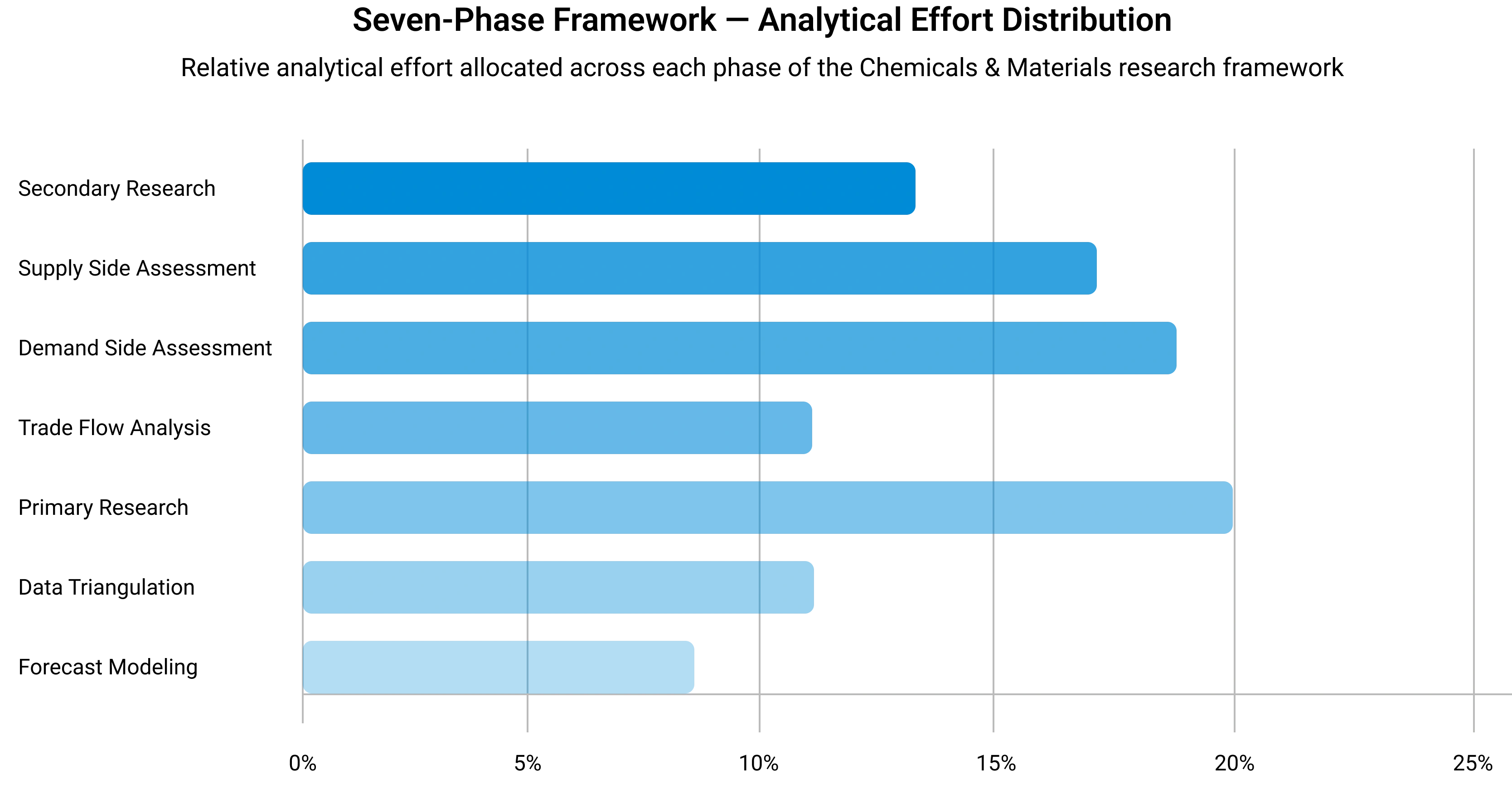
Seven-Phase Framework — Analytical Effort Distribution
Relative analytical effort allocated across each phase of the Chemicals & Materials research framework
Phase 1 - Secondary Research: Establishing the Foundation
Secondary research collects and evaluates publicly available information from authoritative sources, establishing the foundational understanding of market structure, value chain dynamics, competitive landscape, and end-use demand patterns. Every source is evaluated for credibility, recency, geographic relevance, and methodological soundness before inclusion.
Industry Associations
Sources include ACC, CEFIC, ICCA, JCIA, CPCIF, and SOCMA providing production volumes, consumption trends, capacity developments, and sustainability initiatives.
Company Disclosures
Annual reports, investor presentations, earnings transcripts, and regulatory filings reveal product portfolios, manufacturing footprints, capacity expansions, and revenue segmentation.
Government Databases
National statistical offices, customs authorities, environmental agencies, and industrial production databases provide verified statistics on output, trade flows, and regulatory compliance.
Trade Databases
UN Comtrade, ITC, Eurostat, and national customs authorities enable assessment of global product movement, import dependency, and export competitiveness across regions.
Our Secondary Research Sources
- Ministry of Chemicals and Fertilizers
- European Chemicals Agency
- United States Department of Energy
- Ministry of Industry and Information Technology
- Ministry of Economy Trade and Industry
- Ministry of Trade Industry and Energy
- National Institute of Standards and Technology
- Council of Scientific and Industrial Research
- Fraunhofer Society
- National Institute for Materials Science
Phase 2 — Supply-Side Assessment: Mapping Production Capabilities
Production Capacity Analysis
All major manufacturers are assessed for existing installed capacity, planned additions, expansions, new plant announcements, and technology adoption — mapped at global, regional, and country levels.
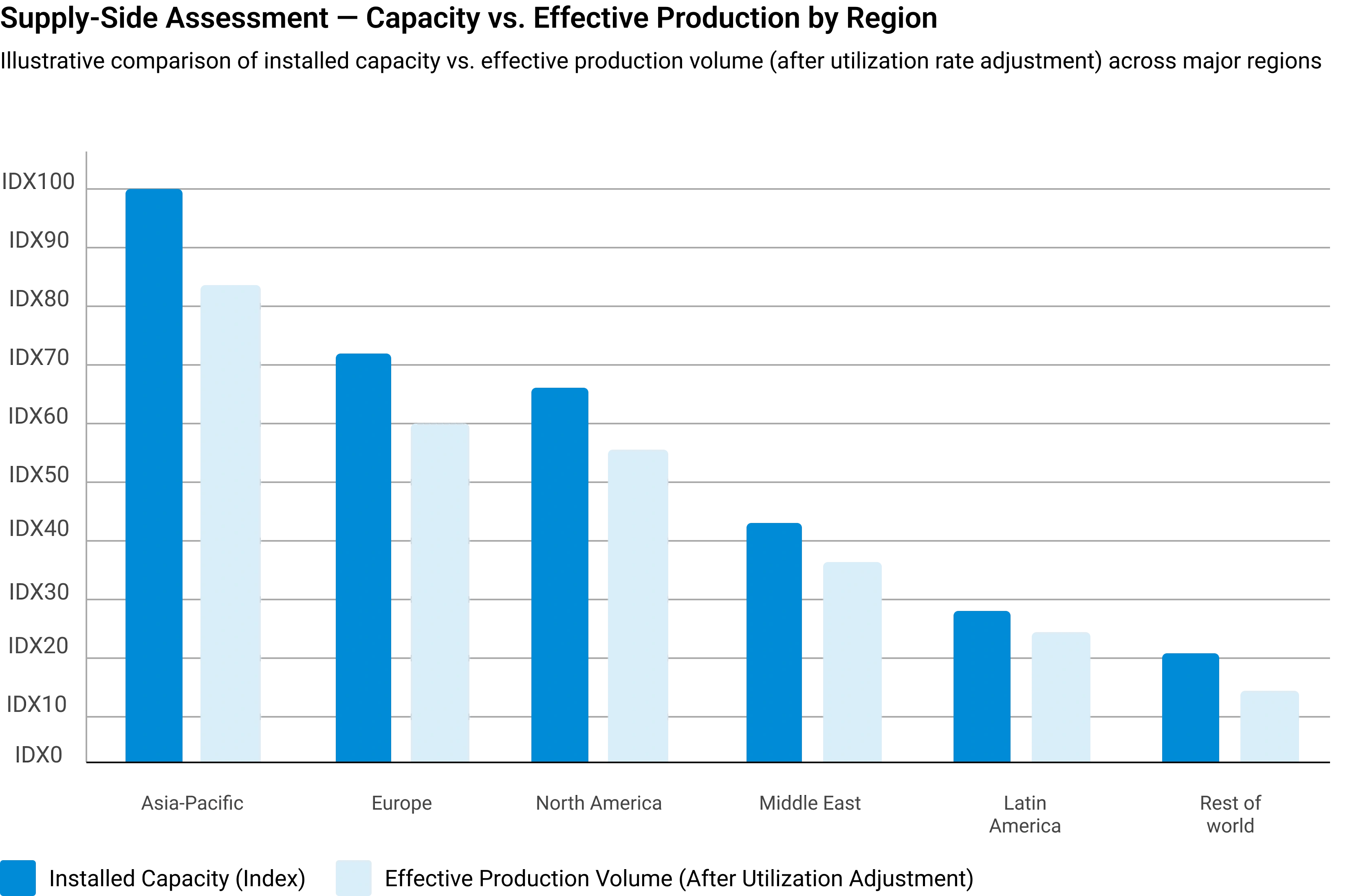
Capacity Utilization Adjustment
Installed capacity is adjusted using utilization rates based on demand conditions, feedstock availability, plant operating rates, maintenance schedules, and regulatory restrictions.
Manufacturer Revenue Analysis
Product-specific revenues, segment-level performance, regional distribution, average selling prices, and margin trends are evaluated to establish market value estimates.
Supply-Side Assessment — Capacity vs. Effective Production by Region
Illustrative comparison of installed capacity vs. effective production volume (after utilization rate adjustment) across major regions
Phase 3 — Demand-Side Assessment: Quantifying Chemical Consumption
Demand-side analysis quantifies chemical consumption across industries, applications, and geographies — identifying where and how chemicals are consumed throughout the value chain with precision.
End-Use Industry Analysis
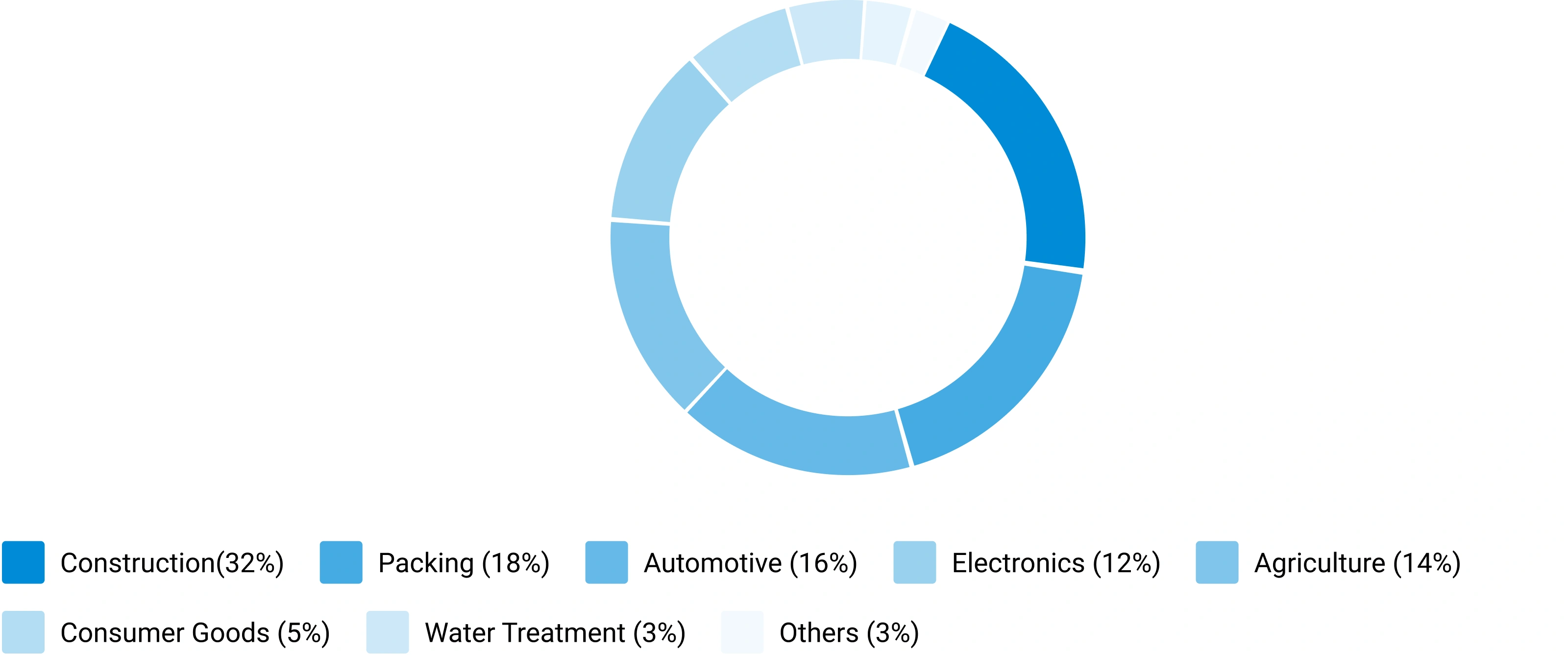
Chemical demand is evaluated across automotive, construction, packaging, electronics, agriculture, healthcare, consumer goods, industrial manufacturing, energy and utilities, and water treatment. Industry output, production trends, and consumption intensity are analyzed to determine demand patterns.
Consumption Modeling
Demand is estimated using measurable indicators: kilograms per vehicle, kilograms per square meter of construction, dosage per cubic meter of water treated, kilograms per hectare of agricultural land, and kilograms per ton of manufactured products. Consumption factors are validated through industry publications and primary interviews.
Application Analysis
The market is segmented by application area to understand product performance requirements, formulation trends, technology adoption, customer preferences, and regulatory requirements improving demand accuracy and segmentation granularity.
Demand-Side Assessment — End-Use Industry Demand Distribution
Illustrative distribution of chemical & materials demand across key end-use industries
Phase 4 - Trade Flow Analysis: Balancing Regional Supply and Demand
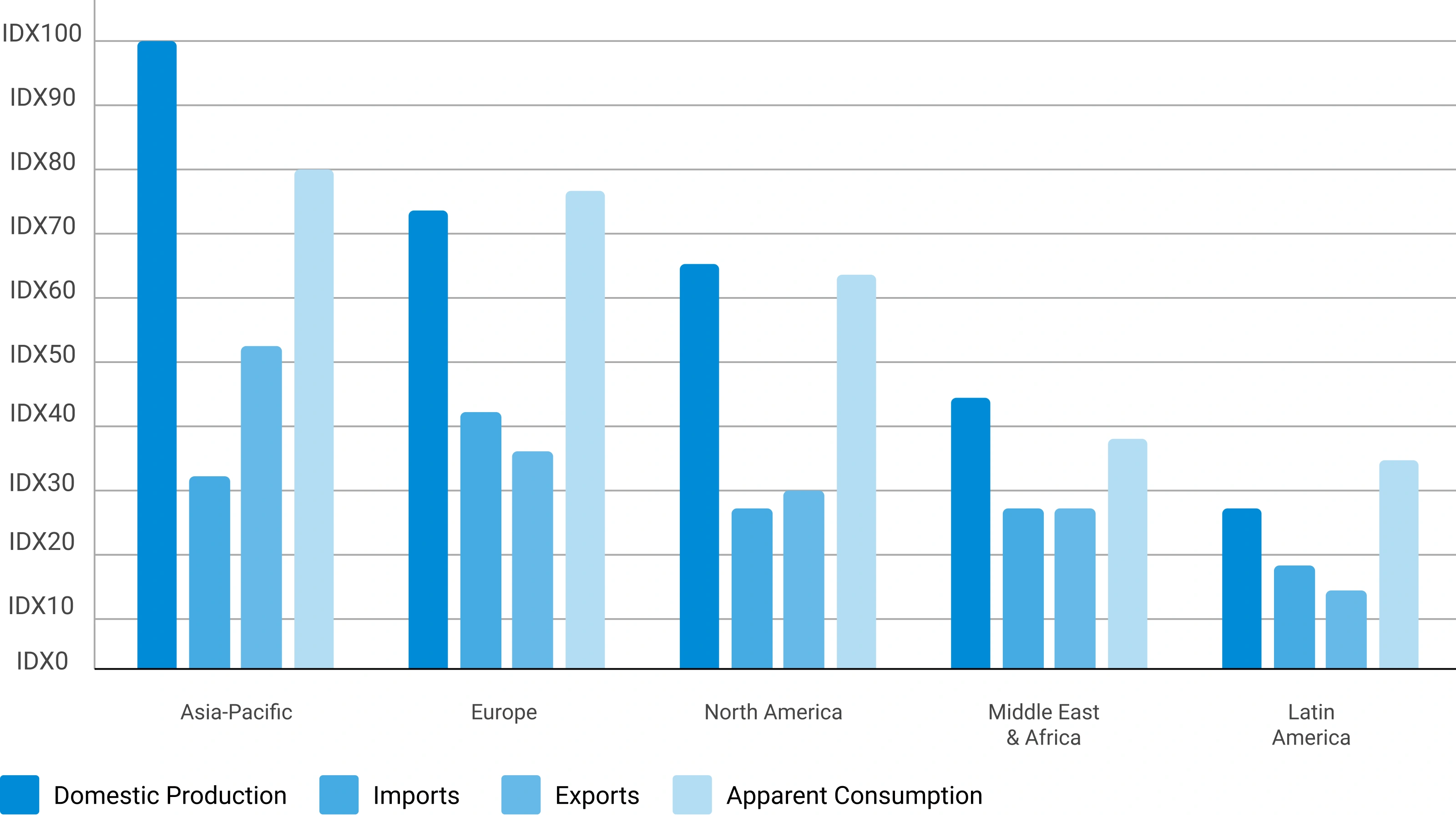
Trade flow analysis reconciles regional supply and demand estimates through import and export data, identifying net supply positions, regional dependencies, and market imbalances. It serves as an independent validation layer that tests the consistency of supply-side and demand-side estimates.
Import Analysis
Import data is evaluated to determine volumes, source countries, product dependency, regional supply gaps, and pricing trends — identifying markets that rely heavily on external supply and where domestic production is insufficient to meet demand.
Export Analysis
Export assessments reveal production surplus, export competitiveness, regional manufacturing strength, and global market participation. Export patterns also help validate domestic production estimates and identify net exporting regions.
Apparent Consumption Model
Regional consumption is assessed using the standard apparent consumption formula:
Results identify net importing regions, net exporting regions, regional deficits, and surpluses — serving as an independent validation of supply and demand estimates.
Trade Flow Analysis — Net Supply Position by Region
Illustrative apparent consumption vs. domestic production across major regions — positive gap indicates net import dependency
Phase 5 — Primary Research: The Critical Validation Layer
Primary research tests and refines findings from secondary research through direct engagement with industry participants across the supply chain, demand side, and expert community. It captures intelligence that no database or published report can provide — the real-world experience of manufacturers, buyers, and specialists operating in the market.

Supply-Side Interviews
Conversations with chemical manufacturers, raw material suppliers, contract manufacturers, technology providers, and plant operators cover production trends, capacity utilization, pricing developments, technology shifts, and competitive dynamics.

Demand-Side Interviews
Engagement with OEMs, industrial consumers, procurement managers, distributors, formulators, and end-use manufacturers focuses on consumption trends, purchasing behavior, product substitution, demand outlook, and emerging applications.

Industry Expert Consultations
Additional interviews with industry consultants, independent experts, regulatory specialists, technical professionals, and research institutions provide deeper market context and validate key analytical assumptions.
Focus Areas of Primary Research:
Market Size & Forecast Validation
Revenue estimates, volume consumption, growth rates, forecast assumptions, regional demand.Supply Chain & Value Chain Assessment
Raw material sourcing, supply chain challenges, distribution networks, procurement practices.Production & Capacity Analysis
Manufacturing capacity, utilization rates, expansion projects, plant investments.Pricing & Cost Structure Analysis
Product pricing trends, feedstock costs, energy costs, margin pressures, pricing outlook.Competitive Landscape Assessment
Volume and value estimates confirmed to be fully consistent with one another before publicationInterview Volume by Market Scope
| Study Scope | Number of Interviews |
|---|---|
| Niche Market | 20 – 30 |
| Mid-Sized Market | 30 – 50 |
| Global Market | 50 – 80 |
| Highly Fragmented Market | 80 – 120 |
Interview Details:
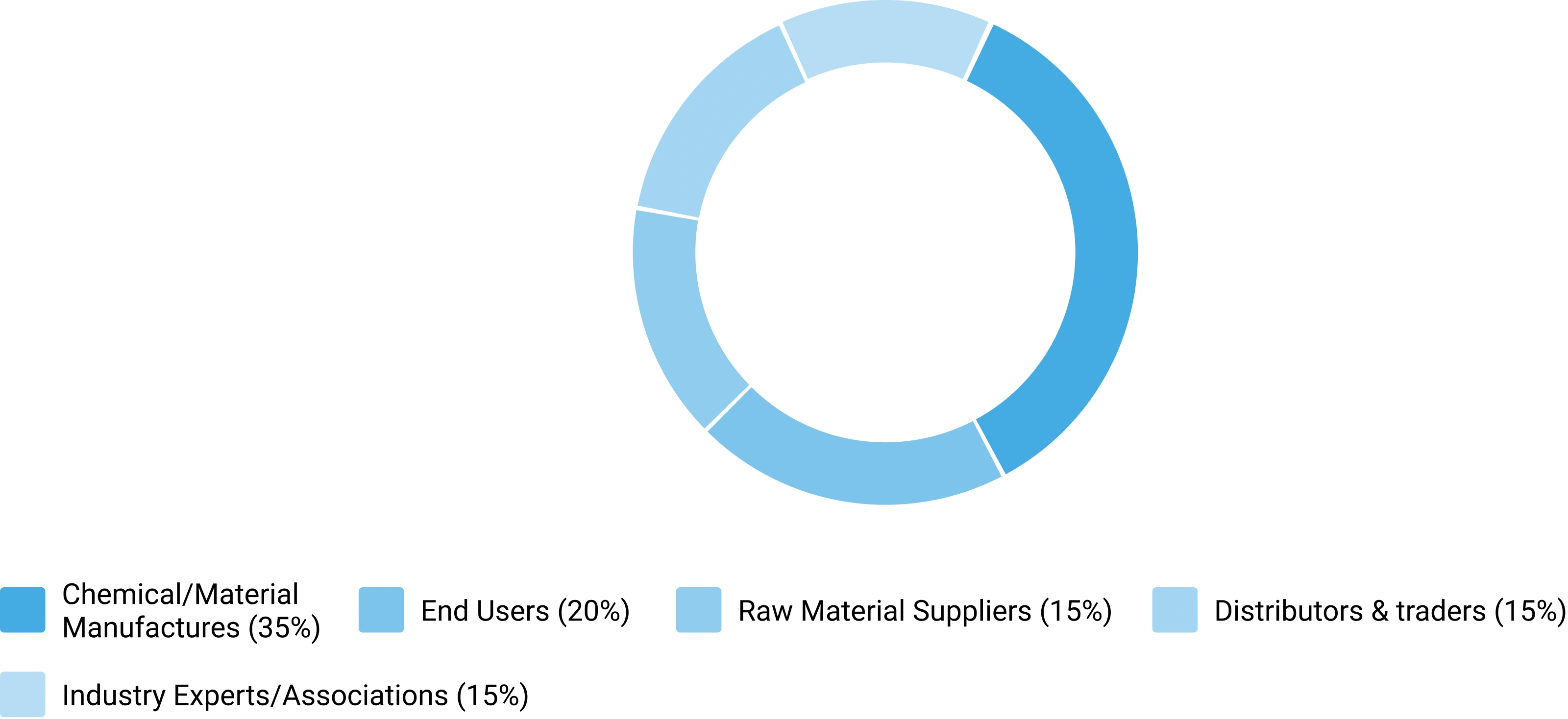
Category : Manufacturers, Suppliers, Distributors, End Users, Experts/Associations
Average Duration : 30–60 Minutes
Interview Mode : Video calls, telephonic interviews, expert consultations
Interview Format : Structured / Semi-Structured questionnaire
Focus Areas of Primary Research:
Market Size & Forecast Validation :
Revenue estimates, volume consumption, growth rates, forecast assumptions, regional demand.
Supply Chain & Value Chain Assessment :
Raw material sourcing, supply chain challenges, distribution networks, procurement practices.
Production & Capacity Analysis :
Manufacturing capacity, utilization rates, expansion projects, plant investments.
Pricing & Cost Structure Analysis :
Product pricing trends, feedstock costs, energy costs, margin pressures, pricing outlook.
Competitive Landscape Assessment :
Market share, competitor positioning, strategic initiatives, partnerships, acquisitions.
Primary Research — Stakeholder Coverage by Category
Distribution of interview respondents across stakeholder categories (% share from PPT data)
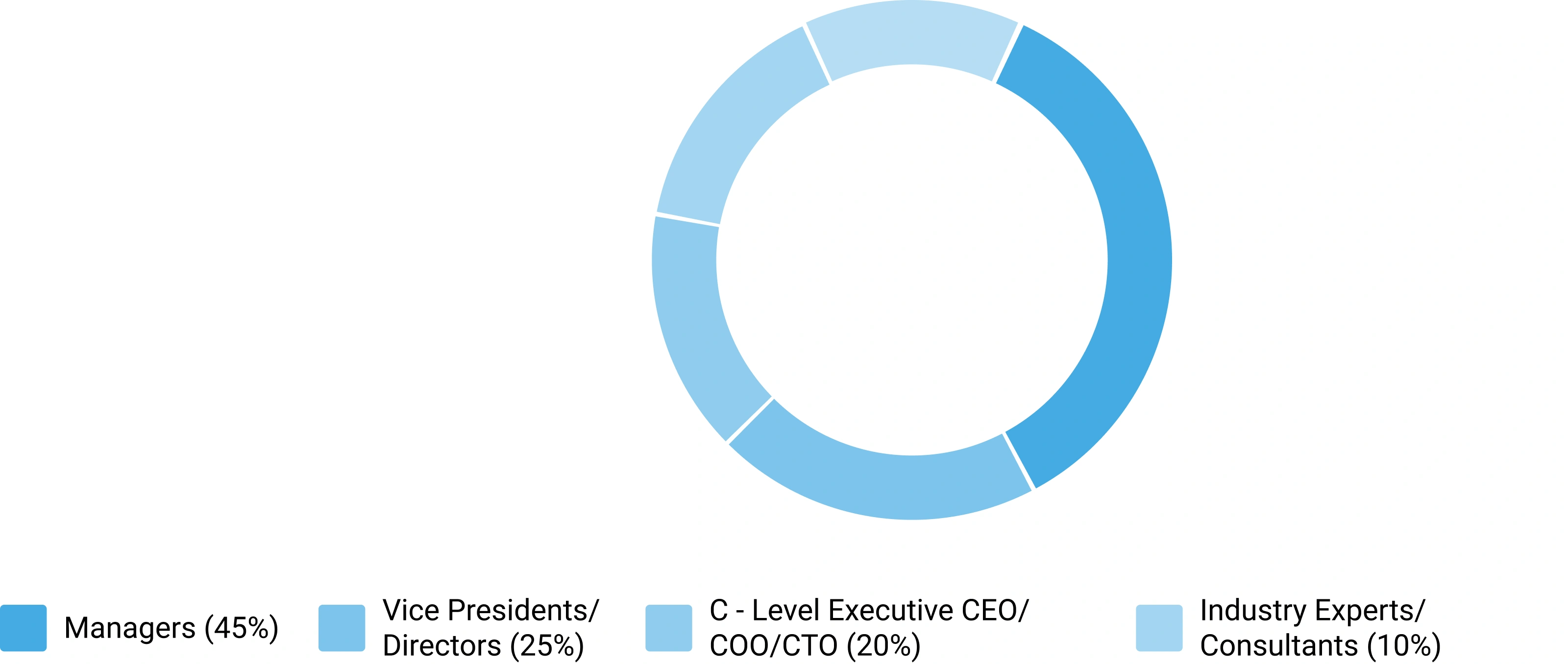
Primary Research — Respondent Designation Profile
Seniority breakdown of interview respondents (% share from PPT data)
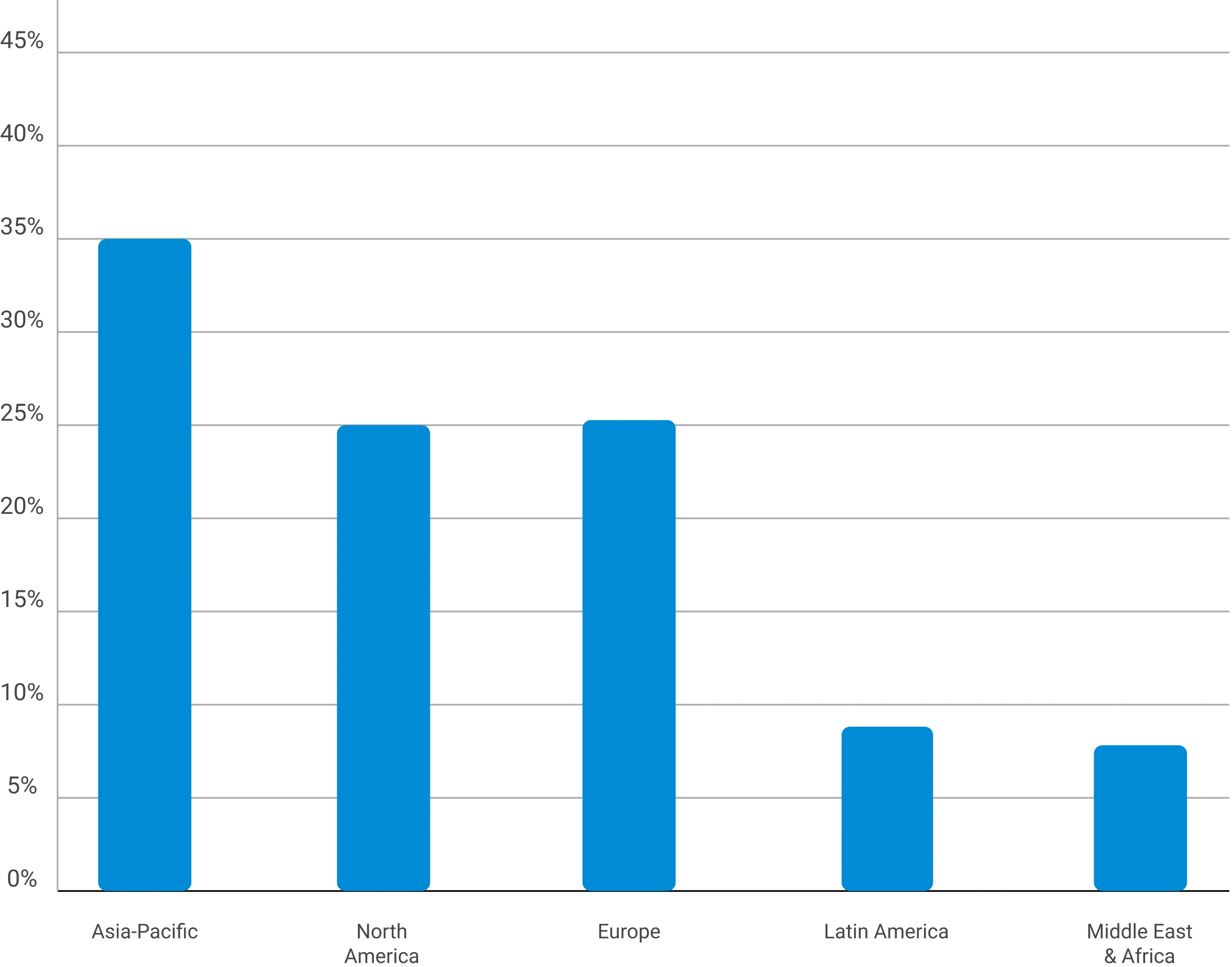
Primary Research — Geographic Coverage of Interviews
Regional distribution of primary research engagement (% share from PPT data)
Phase 6 — Data Triangulation and Market Validation
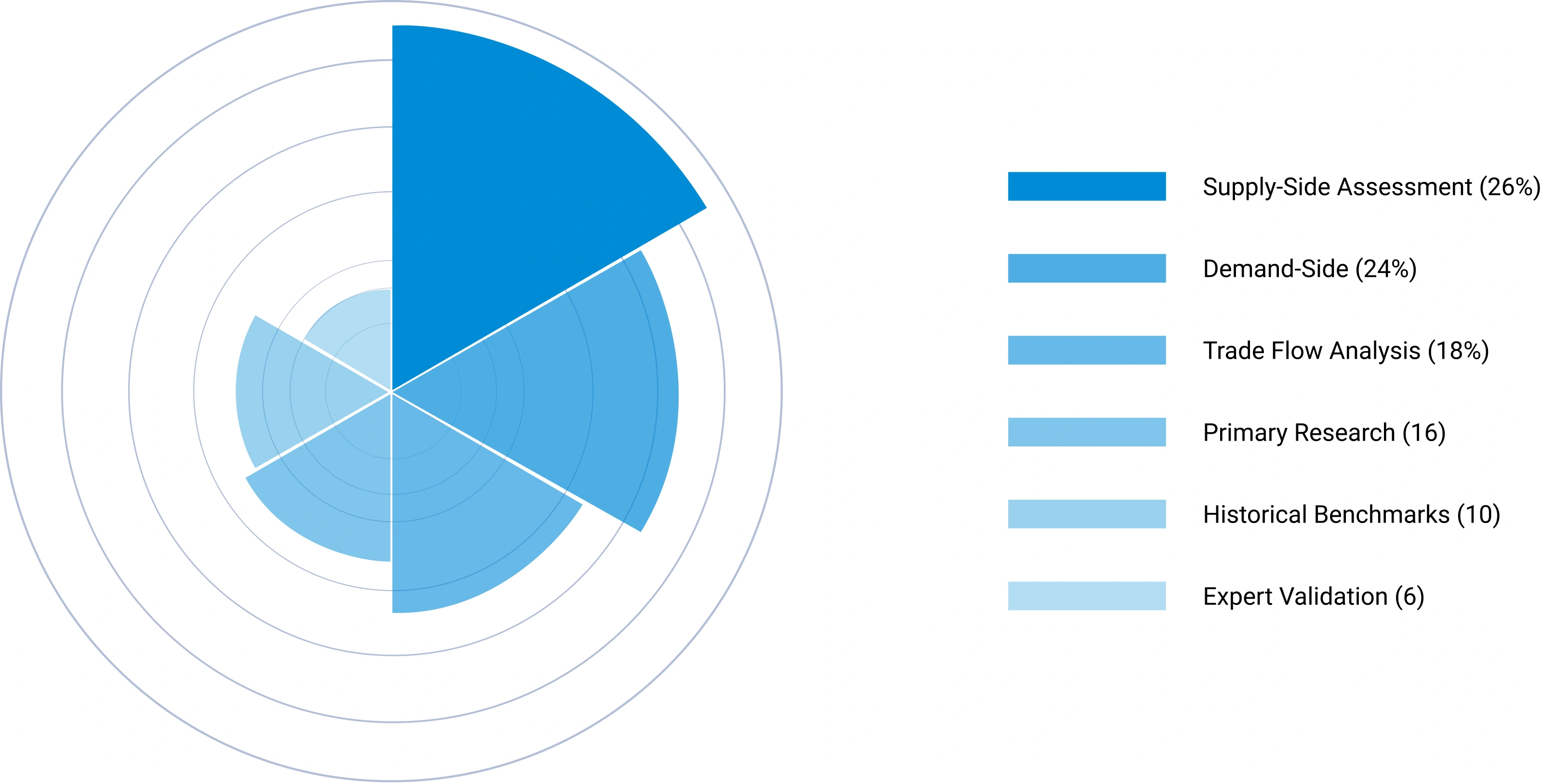
No single methodology is relied upon in isolation. Multiple independent estimation approaches are combined and reconciled to ensure consistency, accuracy, and analytical defensibility. Any material deviations between approaches are investigated and adjusted through additional validation cycles.
The final market size is derived through weighted triangulation of all validated methodologies. Any material deviations between approaches are investigated and adjusted through additional validation cycles. The outcome represents the most realistic assessment of the market based on available evidence and expert confirmation ensuring that volume and value estimates are fully consistent with one another.
Triangulation Framework — Input Contribution Weight
Relative weight each sizing input contributes to the final reconciled market estimate
Phase 7 — Forecast Modeling: Projecting Future Market Evolution
Forecasting evaluates the future trajectory of the market using a combination of quantitative indicators and qualitative assessments across economic, industry, and regulatory dimensions. Rather than simple extrapolation, each driver is independently modeled and integrated into a composite forecast.
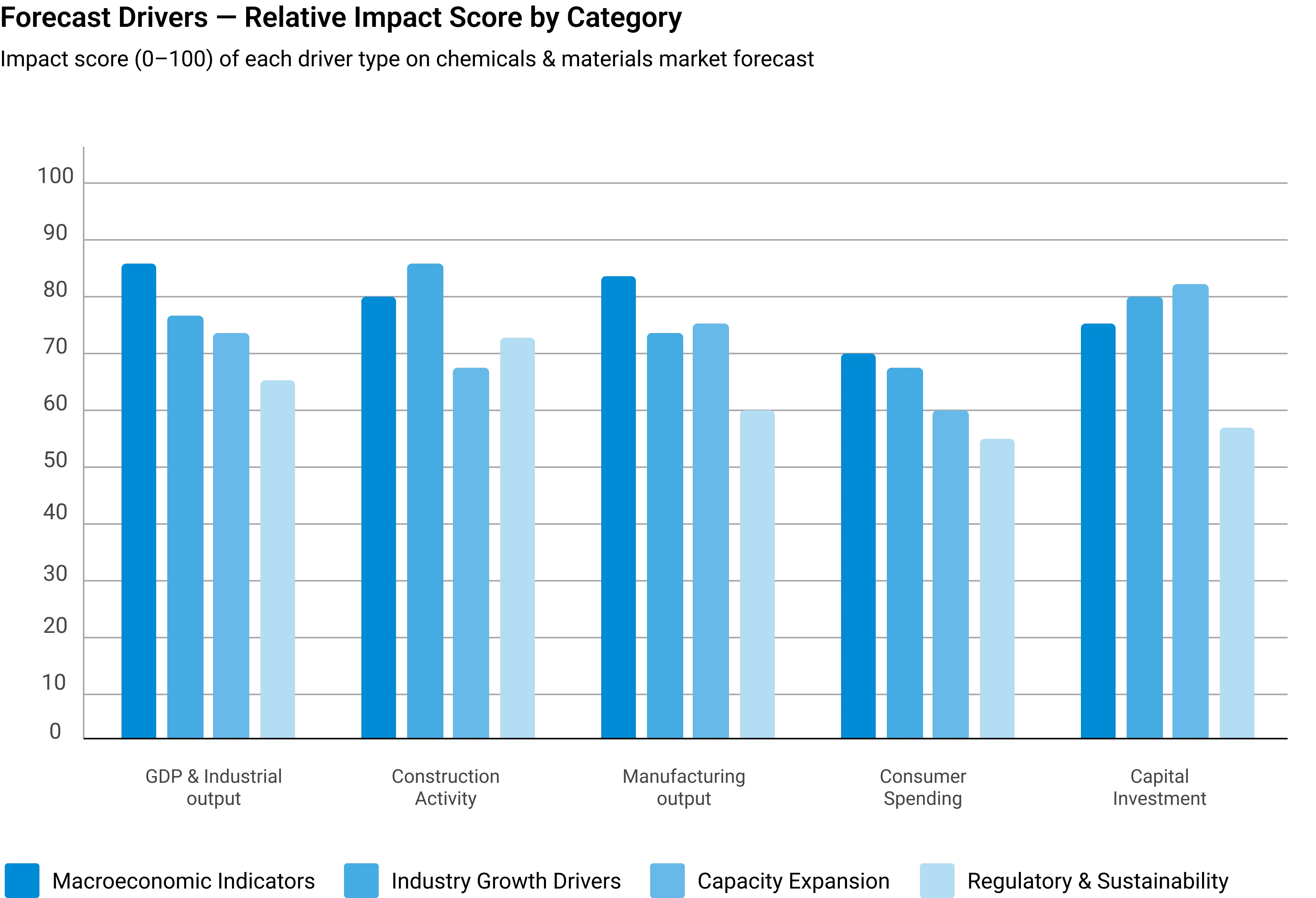
Macroeconomic Indicators
GDP growth, industrial production, manufacturing output, construction activity, consumer spending, and capital investment form the quantitative foundation of long-term demand projections. These are applied at country, regional, and global levels.
Industry Growth Drivers
Urbanization, infrastructure development, industrialization, technological innovation, sustainability initiatives, and evolving product performance requirements are assessed at regional and industry levels — capturing both structural and cyclical demand drivers.
Capacity Expansion Analysis
Announced plant expansions, new manufacturing facilities, technology upgrades, and strategic investments are evaluated to determine future supply-demand dynamics and potential market tightness or oversupply situations.
Regulatory & Sustainability
Environmental regulations, chemical safety standards, emission reduction targets, circular economy initiatives, and sustainability requirements are incorporated as they often influence product adoption rates and market growth trajectories.
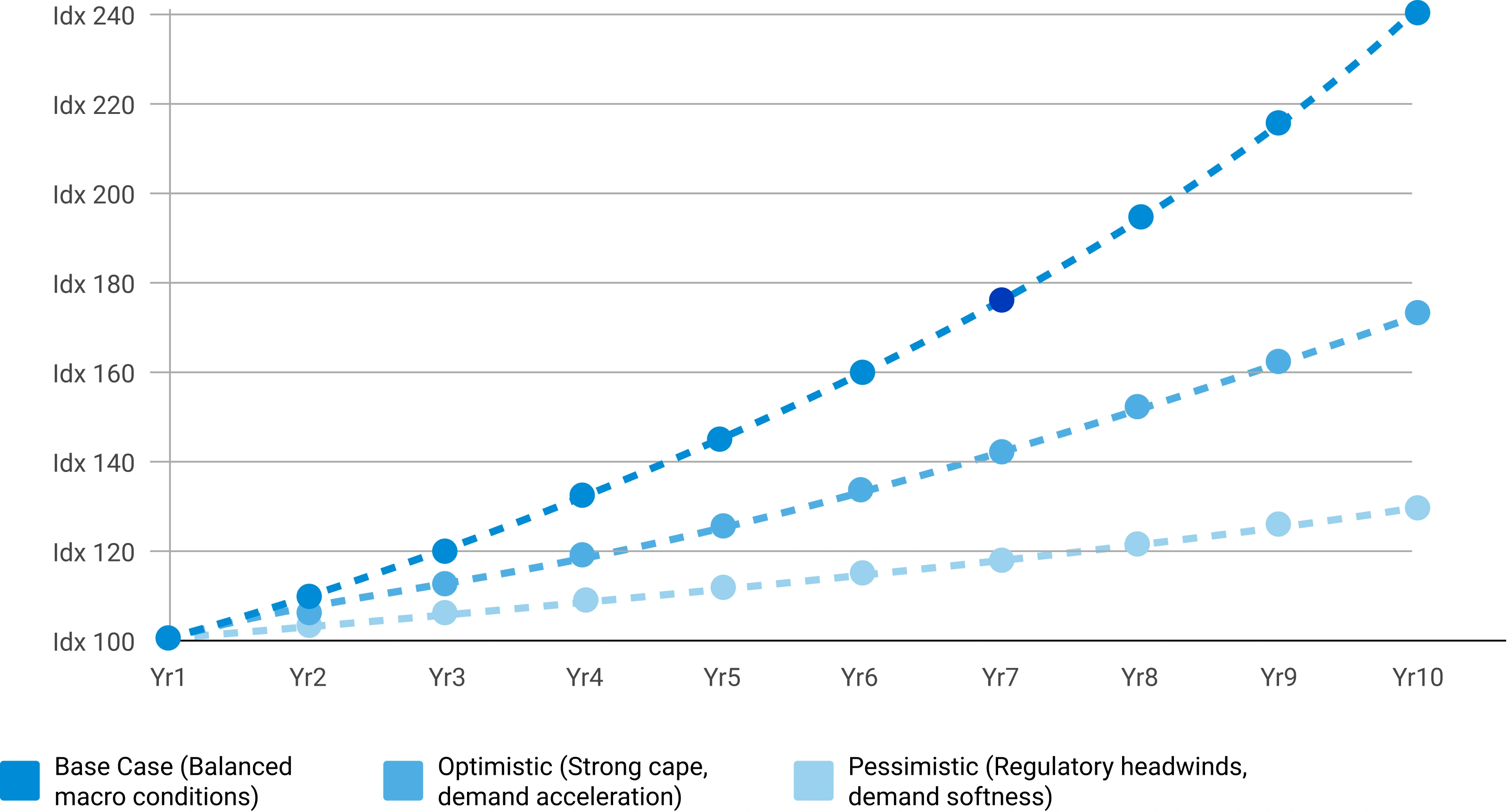
Scenario Forecast Range — Indexed Market Growth (Year 1–10)
Illustrative indexed growth trajectories across Base, Optimistic, and Pessimistic scenarios over a 10-year forecast horizon
Forecast Drivers — Relative Impact Score by Category
Impact score (0–100) of each driver type on chemicals & materials market forecast



Comments
Share your thoughts, ask a question, or provide feedback about this report.