
PFAS Treatment Market Size, Share, Trends and Forecast 2026 to 2035
The PFAS Treatment Market covers revenue from treatment systems, treatment media and chemicals, separation technologies, destruction technologies, hybrid systems, and related treatment applications used to remove, concentrate, destroy, or manage PFAS contamination in water, soil, and industrial process streams.
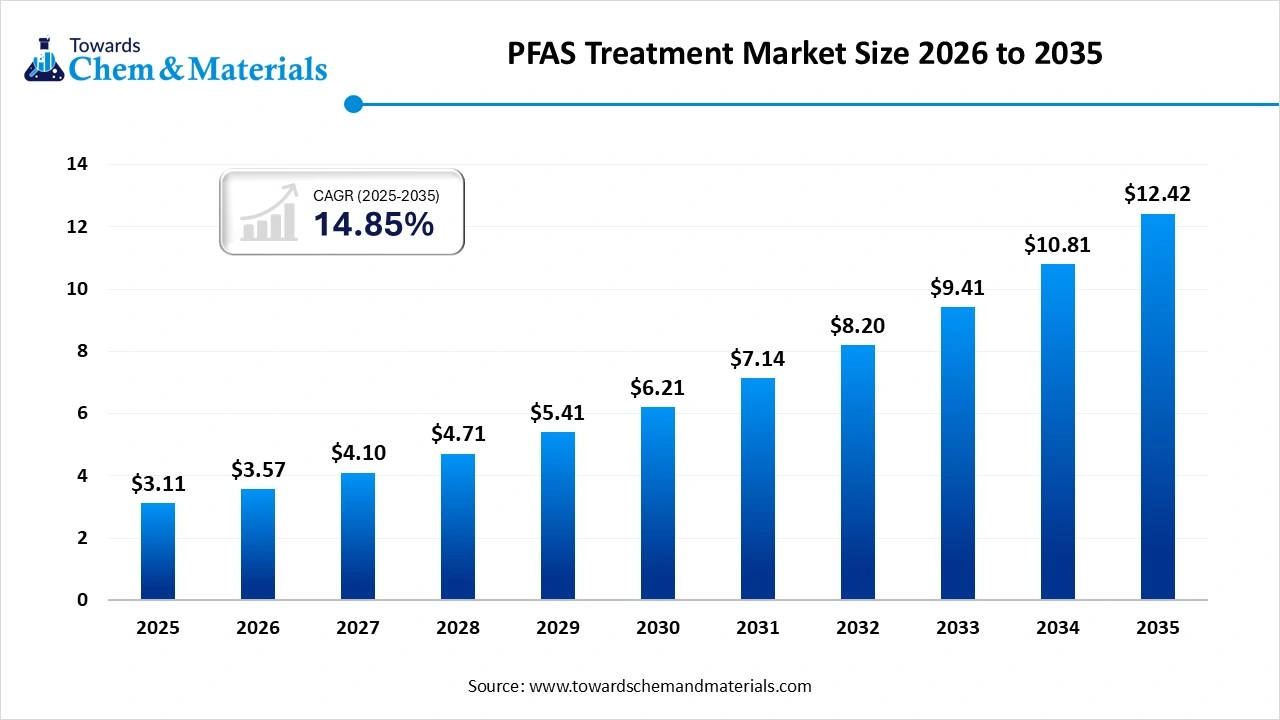
The global PFAS treatment market size was valued at USD 3.11 billion in 2025, is estimated to reach USD 3.57 billion in 2026, and is projected to reach USD 12.42 billion by 2035, exhibiting a compound annual growth rate (CAGR) of 14.85% over the forecast period from 2026 to 2035.North America dominated the PFAS treatment market with the largest revenue share of 43% in 2025 and is expected to grow at the fastest CAGR of 14.96% during the forecast period.Demand for PFAS treatment is supported by drinking-water requirements, industrial wastewater management, contaminated-site remediation, and tighter environmental controls, Advanced separation and destruction technologies are expanding the range of PFAS treatment options available to municipalities and industrial users, where all the participants are likely to depend on them during the projected time period.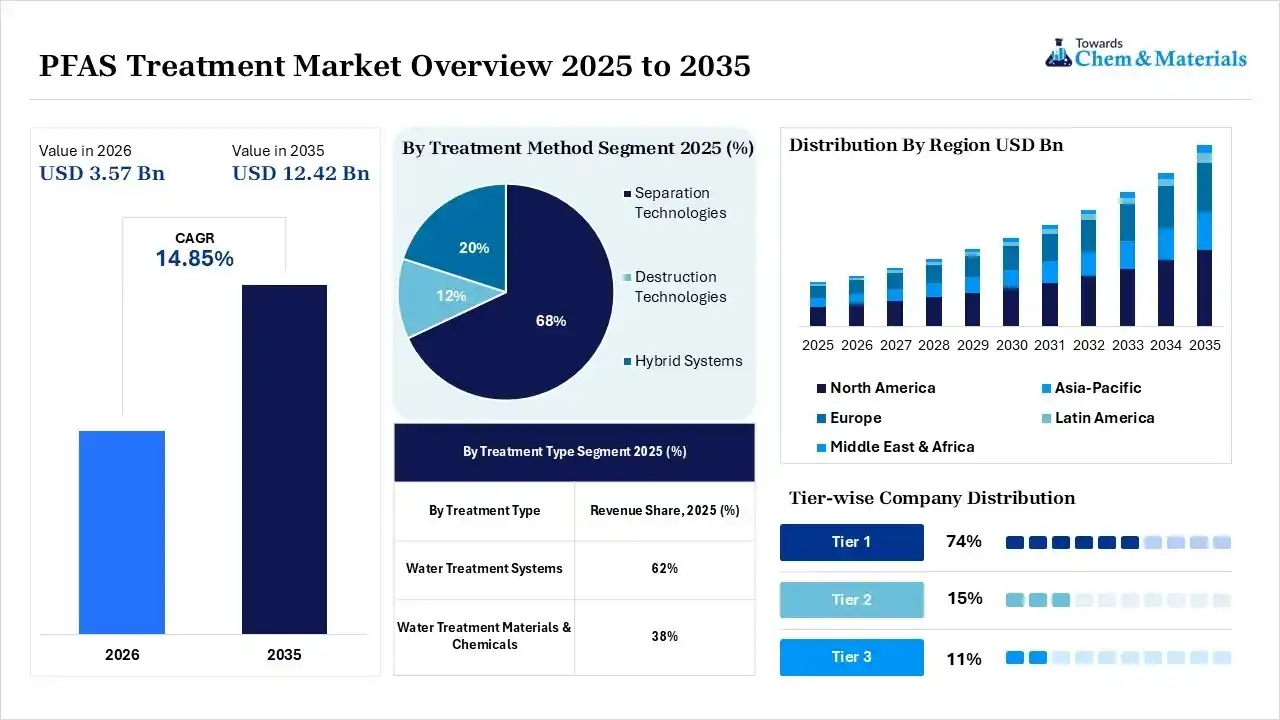
Market Highlights
- By region, North America dominated the market with a share of 43% in 2025, due to the region having introduced some of the world's strictest regulations for PFAS monitoring and water treatment.
- By region, Asia Pacific is notably growing with a 21% market share in 2025 and is expected to be the fastest-growing region in the market, with a CAGR of 16.50% in the forecast period, owing to many countries increasing investments in clean water infrastructure and industrial wastewater treatment.
- By treatment type, the water treatment systems segment dominated the market with a 62% share in 2025, as they provide complete treatment solutions for municipal water plants, industrial facilities, and contaminated groundwater sites.
- By treatment type, the water treatment materials & chemicals segment held the 38% market share in 2025 and is expected to be the fastest-growing in the market, with a CAGR of 15.80% in the forecast period, owing to treatment media requiring regular replacement during operation.
- By treatment method, the separation technologies segment dominated the market with 68% share in 2025, owing to its widespread provenness, commercial availability, and being trusted by water treatment operators.
- By treatment method, the hybrid systems segment held a 20% market share in 2025 and is expected to be the fastest-growing in the market, with a CAGR of 19.20% in the forecast period, because they combine multiple treatment technologies within a single process.
- By contamination source, the industrial discharge segment dominated the market with 31% share in 2025, owing to manufacturing industries having been major sources of PFAS contamination for many years.
- By contamination source, the firefighting foam (AFFF) sites segment held the 26% market share in 2025 and is expected to be the fastest-growing in the market, with a CAGR of 17.10% in the forecast period, owing to many airports, military facilities, oil and gas sites, and industrial plants replacing older PFAS-based firefighting foam systems.
- By application, the groundwater remediation segment held a 18% market share in 2025 and is expected to be the fastest-growing in the market, with a CAGR of 16.10% in the forecast period.
The heavy awareness and push for global water treatment has created greater advantages for the treatment provider nowadays., the major industries and regional governments are playing a major role in the industry expansion by taking important designs and throwing regulations for water safety. Health consciousness is another factor leading the market potential. Moreover, the emergence of advanced and better filtration systems has been observed with more sophisticated destruction technologies, as per the reports.
- For instance, in June 2026, the PRM has unveiled the latest PFAS removal system. Also, the system is named PFAS-Snare™, and it is a containerized system as per the published report.(Source: www.prmfiltration.com)
The water utilities, manufacturing facilities, airports, and defense sites are among the major users of PFAS treatment systems. Furthermore, companies are introducing better filtration and destruction technologies to improve treatment performance. As environmental standards continue to become stricter across many regions, the need for efficient PFAS treatment solutions is likely to drive industry sales in the coming years.
Global Investment Flow for the PFAS Treatment Market 2026
Governments are allocating larger budgets for upgrading drinking water facilities with advanced PFAS treatment technologies to meet new environmental standards.
Industrial companies are investing in modern treatment systems to reduce PFAS discharge, improve environmental compliance, and strengthen sustainable manufacturing operations.
Technology developers are increasing research programs & commercial projects to introduce more efficient PFAS removal and destruction solutions while lowering treatment costs for customers.
- For instance, in 2025, Gradient introduced the latest PFAS destruction platform. Also, the platform is called ForeverGone and aims behind the innovation to establish cost-effective and sustainable solutions for water cleaning by removing PFAS.(Source: www.gradiant.com)
Market Trends
- Growing demand for safe drinking water is accelerating sector expansion. As consumer awareness rises, investments in advanced filtration standards continue to scale.
- Focus on permanent PFAS removal solutions enables stakeholders to capture market growth. Leading water treatment providers are expanding research and development initiatives to advance treatment capabilities.
- Industrial participation in PFAS management establishes a foundation for long-term growth. Upcoming industrial water treatment projects will expand operational opportunities for PFAS treatment providers.
Report Scope
| Report Attributes | Details |
| Market Size in 2025 | USD 3.11 Billion |
| Expected Size in 2035 | USD 12.42 Billion |
| Growth Rate | CAGR of 14.85% |
| Base Year of Estimation | 2025 |
| Forecast Period | 2025-2035 |
| Dominant Region | North America |
| Segment Covered | By Treatment Type, By Treatment Method, By Contamination Source, By Application, By Region |
| Key Companies Profiled | Xylem, Veolia, Evoqua Water Technologies, Calgon Carbon, Clean Harbors, Regenesis, AECOM, Battelle, De Nora, Jacobs Solutions, Aquatech International |
Quick Technology Updations
The industry is expanding from conventional separation methods toward destruction technologies designed to degrade PFAS. In addition, companies have increased research into advanced destruction methods that reduce secondary waste and improve environmental performance. Furthermore, treatment systems are becoming more automated through digital monitoring and smart process controls, allowing operators to improve efficiency and reduce maintenance needs.
Supply Chain Analysis of the PFAS Treatment Market:
- Production & Processing:Treating PFAS involves two main stages: separation and destruction. First, filters like activated carbon or ion exchange resins trap and concentrate the toxic chemicals from water.
Next, advanced technologies like electro-oxidation or extreme heat break the ultra-strong carbon-fluorine bonds, safely converting PFAS into harmless, natural byproducts. - Veolia: Veolia is a global environmental leader providing large-scale PFAS remediation. They deploy advanced activated carbon, ion exchange, and membrane filtration systems to clean municipal and industrial water supplies.
- Key players: 3M, DuPont, Chemours, and AECOM
- Quality Testing and Certification:Testing means checking the water both before and after it hits the filters to ensure every single drop is genuinely clean.
- Labs look for even microscopic traces of these stubborn chemicals, hunting for total fluorine to catch hidden variations.Independent watchdogs then run intense trials on the equipment to stamp it with an official seal of safety, proving to the public that the technology actually delivers on its promises.
Eurofins Scientific is a massive global laboratory network that specializes in hunting down PFAS down to single-digit parts per trillion.- Key agencies: EPA (U.S. Environmental Protection Agency), NSF International, ANSI (American National Standards Institute), and ECHA (European Chemicals Agency)
- Distribution to Industrial Users:Getting treatment systems to factories requires a mix of specialized engineering firms and heavy machinery distributors.
- They supply tailored, large-scale filtration rigs directly to chemical plants, airports, and manufacturing sites.
Brenntag: Brenntag is a massive global chemical and ingredients distributor that connects industrial facilities with crucial water treatment products. T
- Key players: Xylem, Kurita Water Industries, De Nora, and Aquatech International
PFAS Treatment Market Regulatory Landscape: Regulations?
| Country Region? | Regulatory Body? | Key Regulations? | Focus Areas? |
| United States | EPA (Environmental Protection Agency) | Safe Drinking Water Act (SDWA) — National Primary Drinking Water Regulations: Imposes legally binding limits (Maximum Contaminant Levels) restricting PFOA and PFOS to just 4 parts per trillion each, alongside limits on PFHxS, PFNA, and GenX. | Public Drinking Water Supplies: Upgrading local water plants with heavy-duty filtration setups like granulated carbon beds and ion-exchange filters to scrub tap water clean. |
| Europe | ECHA (European Chemicals Agency) | REACH Regulation (EC No 1907/2006) Annex XVII: Drives active restrictions on chemical use, including a firm phase-out of toxic firefighting foams and an active proposal to completely ban non-essential PFAS products across the continent. | Upstream Pollution Bans: Stopping the problem at the source by forcing manufacturers to swap out raw chemicals for eco-friendly alternatives before items ever hit the shelves. |
| China | Ministry of Ecology and Environment (MEE) | The Environmental and Ecological Code Article 645: Establishes a fresh national framework to actively track, register, and regulate "new pollutants"—putting a sharp legislative spotlight directly on tracking hidden PFAS lifecycles. | Industrial District Filtration: Concentrating heavy cleanup tech inside dedicated chemical manufacturing hubs, textile mills, and metal plating plants to trap toxic runoff at the source. |
Market Dynamics
Driver
PFAS Drinking-Water Standards and Remediation Requirements
PFAS drinking-water standards, industrial discharge controls, and contaminated-site remediation requirements are increasing demand for treatment systems and services. Also, governments are introducing stricter rules to reduce PFAS contamination in drinking water, groundwater, and industrial wastewater. This is encouraging municipalities and industries to install advanced treatment systems that can remove these harmful chemicals effectively. In addition, companies are investing in modern treatment technologies to comply with environmental standards and avoid penalties.
Restraint
Treatment Cost and Residual Management
The high cost of treatment technologies is expected to hinder growth in the coming years. Also, the advanced filtration systems, destruction technologies, and regular maintenance require significant investment, making adoption difficult for small industries and municipalities with limited budgets. Furthermore,PFAS treatment can transfer contaminants into concentrated residual streams, making residual handling, disposal, regeneration, or destruction an important part of total treatment cost.
PFAS Destruction and Integrated Treatment Systems
The demand for technologies that destroy PFAS under validated treatment conditions is expected to create additional demand for PFAS destruction and integrated treatment systems in the upcoming period. In recent years, industries and water utilities have started looking beyond traditional filtration systems because these methods only separate PFAS instead of eliminating them. In addition, companies developing advanced destruction technologies are attracting new investments and commercial partnerships. Government agencies and utilities are evaluating emerging PFAS treatment and destruction technologies through pilot and demonstration project
Segmental Insights
Treatment Type Insights
The water treatment systems segment dominated the market with 62% share in 2025, as they provide complete treatment solutions for municipal water plants, industrial facilities, and contaminated groundwater sites. These systems combine several treatment technologies to remove PFAS efficiently while meeting environmental regulations. Furthermore, many governments are upgrading existing water treatment infrastructure instead of building entirely new facilities, increasing demand for integrated treatment systems.
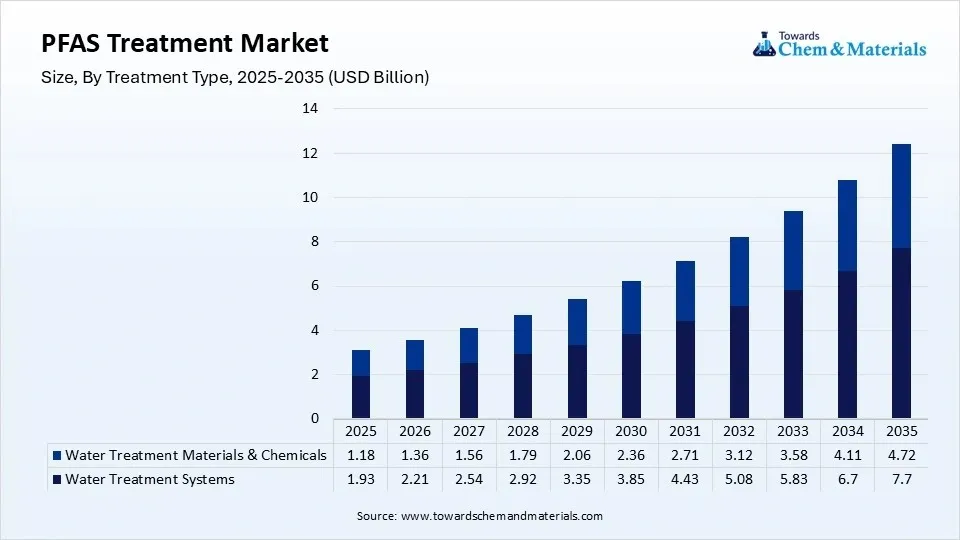 The water treatment materials & chemicals segment held the 38% market share in 2025 and is expected to be the fastest-growing in the market, with a CAGR of 15.80% in the forecast period, owing to treatment media requiring regular replacement during operation. Activated carbon, ion exchange resins, specialty adsorbents, and treatment chemicals are consumed over time, creating continuous product demand. Furthermore, companies are developing improved materials with higher PFAS removal efficiency and longer service life. As more treatment plants become operational worldwide, the need for replacement materials will continue increasing.
PFAS Treatment Market Share, By Treatment Type, 2025 (%)
| By Treatment Type | Revenue Share, 2025 (%) |
| Water Treatment Systems | 62% |
| Water Treatment Materials & Chemicals | 38% |
Treatment Method Insights
The separation technologies segment dominated the market with 68% share in 2025, because these technologies have established commercial deployment and documented treatment performance, commercial availability, and trusted by water treatment operators. Technologies such as activated carbon filtration, membrane filtration, and ion exchange can effectively remove many PFAS compounds from contaminated water. Furthermore, these solutions are already installed in thousands of municipal and industrial treatment facilities, making adoption easier than newer technologies.
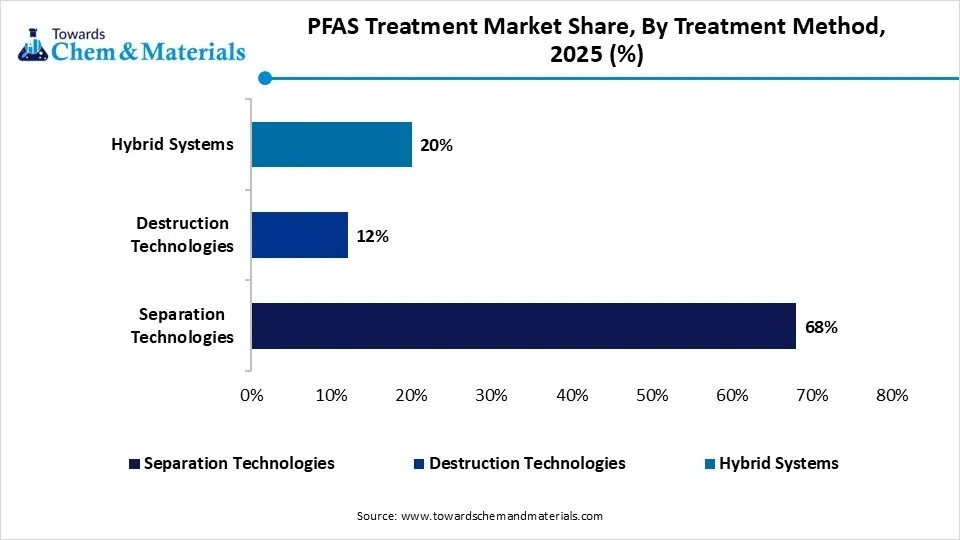 The hybrid systems segment held a 20% market share in 2025 and is expected to be the fastest-growing in the market, with a CAGR of 19.20% in the forecast period. Instead of depending on one method, hybrid systems improve PFAS removal efficiency while reducing operating limitations. Furthermore, these systems allow operators to treat different PFAS compounds more effectively under changing water conditions.
PFAS Treatment Market Share, By Treatment Method, 2025 (%)
| By Treatment Method | Revenue Share, 2025 (%) |
| Separation Technologies | 68% |
| Destruction Technologies | 12% |
| Hybrid Systems | 20% |
Contamination Source Insights
The Industrial discharge segment dominated the market with 31% share in 2025, owing to manufacturing industries having been major sources of PFAS contamination for many years. Chemical manufacturing, metal finishing, electronics production, textile processing, and several other industries use PFAS-containing materials during production. Furthermore, governments are increasing monitoring of industrial wastewater, encouraging companies to install treatment systems before wastewater is released into the environment.
The firefighting foam (AFFF) sites segment held the 26% market share in 2025 and is expected to be the fastest-growing in the market, with a CAGR of 17.10% in the forecast period, owing to many airports, military facilities, oil and gas sites, and industrial plants replacing older PFAS-based firefighting foam systems. Furthermore, governments are identifying contaminated land and groundwater around these locations, creating significant demand for remediation projects. Environmental agencies are also introducing stricter regulations regarding firefighting foam use and disposal.
PFAS Treatment Market Share, By Contamination Source, 2025 (%)
| By Contamination Source | Revenue Share, 2025 (%) |
| Industrial Discharge | 31% |
| Firefighting Foam (AFFF) Sites | 26% |
| Landfills & Leachate | 14% |
| Wastewater Treatment Plants | 17% |
| Surface & Groundwater | 12% |
Application Insights
The drinking water treatment segment dominated the market with 39% share in 2025, The drinking water treatment segment held the largest share in 2025, reflecting the need for utilities to meet drinking-water quality requirements when PFAS contamination is detected of every water utility and government authority. Whenever PFAS contamination is detected, drinking water systems receive immediate attention to protect public health. This has encouraged faster installation of advanced treatment technologies in municipal water plants compared with many other applications.
The groundwater remediation segment held a 18% market share in 2025 and is expected to be the fastest-growing in the market, with a CAGR of 16.10% in the forecast period, Groundwater remediation demand is supported by the persistence of PFAS contamination and the identification of affected sites near airports, industrial facilities, military locations, and landfills. As environmental investigations continue, more contaminated sites are being identified near airports, industrial facilities, military locations, and landfill areas. Cleaning these water sources requires long-term remediation projects, creating sustained demand for advanced treatment technologies.
PFAS Treatment Market Share, By Application, 2025 (%)
| By Application | Revenue Share, 2025 (%) |
| Drinking Water Treatment | 39% |
| Wastewater Treatment | 24% |
| Groundwater Remediation | 18% |
| Soil Remediation | 8% |
| Industrial Process Water Treatment | 11% |
Regional Analysis
How will North America Dominate the PFAS Treatment Market in 2025?
North America dominated the market with a share of 43% in 2025, due to North America held the largest share in 2025, supported by PFAS drinking-water requirements, contaminated-site remediation activity, and treatment investment for PFAS monitoring and water treatment. In the current period, governments are investing heavily in upgrading drinking water systems, cleaning contaminated sites, and supporting PFAS research. Furthermore, the region has many leading water treatment companies that continuously develop advanced treatment technologies.
United States
- The government has introduced stricter drinking water standards and increased funding for PFAS cleanup projects, while water utilities are upgrading treatment plants, and industries are investing in advanced treatment systems to meet environmental requirements.
- The technology companies are introducing new PFAS removal and destruction solutions to support growing demand in the country.
Canada
- Provincial governments and local authorities are working to identify PFAS-contaminated sites and strengthen drinking water protection, and municipalities are investing in modern treatment technologies to improve long-term water safety.
- Industrial companies are also upgrading wastewater treatment systems to reduce environmental impact and comply with changing environmental expectations.
PFAS Treatment Market Evaluation in Asia Pacific
Asia Pacific is notably growing with a 21% market share in 2025 and is expected to be the fastest-growing region in the market, with a CAGR of 16.50% in the forecast period, owing to many countries increasing investments in clean water infrastructure and industrial wastewater treatment. Rapid industrialization, urban population growth, and rising environmental awareness are creating strong demand for PFAS treatment solutions. Furthermore, governments are strengthening environmental regulations and encouraging industries to adopt advanced treatment technologies.
China
- The country continues to strengthen environmental protection and industrial wastewater management, and local governments are also investing in water treatment infrastructure while increasing inspections of industrial facilities.
- Also, companies in China are expanding production of advanced filtration materials and water treatment equipment to meet rising domestic demand.
Japan
- The country is increasing water quality monitoring while supporting research on efficient PFAS removal methods. In addition, companies in Japan are developing innovative filtration materials, membranes, and treatment systems to improve water purification performance.
- The municipal utilities are also upgrading treatment facilities to maintain safe drinking water supplies.
Europe Engineering Plastics Industry Conditions
Europe held the 27% market share in 2025, owing to environmental protection remaining a major priority across the region. Governments are introducing stricter PFAS regulations while increasing investments in water treatment infrastructure and contaminated site remediation. Furthermore, industries are improving wastewater management to comply with changing environmental standards. European companies are also investing in sustainable treatment technologies that reduce environmental impact while improving treatment efficiency.
Germany
- Manufacturing industries are investing in advanced wastewater treatment systems to reduce PFAS discharge and improve regulatory compliance, while German technology companies continue to develop innovative filtration and water purification solutions for both domestic and international markets.
- Continuous investment in environmental technologies and industrial modernization has been observed.
Italy
- Local authorities in Italy have strengthened water monitoring programs while encouraging investments in modern treatment infrastructure, and industries are adopting better wastewater treatment practices to reduce environmental pollution and meet European environmental requirements.
- Also, research institutions and water technology companies are supporting the development of more effective PFAS treatment solutions.
PFAS Treatment Market Survey in Latin America
Latin America held a 5% market share in 2025 as several countries are paying greater attention to protecting rivers, lakes, and underground water resources. Industries are realizing that untreated PFAS contamination can create future environmental & legal challenges. This is encouraging companies to upgrade their water treatment processes before stricter regulations become widespread. At the same time, cities are investing in cleaner water infrastructure to improve public health and support long-term development.
Brazil
- Industries such as mining, chemicals, pulp and paper, and manufacturing are placing greater importance on improving wastewater quality before discharge, while several water utilities are modernizing treatment facilities to meet the growing demand for clean drinking water in expanding urban areas.
- The companies are also increasing investments in sustainable production practices to improve environmental performance.
Argentina
- Many manufacturing facilities are reviewing their wastewater treatment processes to improve operational sustainability and prepare for future environmental requirements, while the local authorities are giving more attention to protecting freshwater resources that support agriculture and nearby communities.
- Also, universities and environmental organizations are increasing research related to water pollution and treatment.
Middle East and Africa Engineering Plastics Sector Observation
The Middle East and Africa held a 4% market share in 2025, The Middle East and Africa accounted for 4% of the market in 2025, while water scarcity, reuse, industrial development, and wastewater management support demand for advanced treatment technologies. Instead of relying only on freshwater supplies, many countries are expanding water recycling and reuse projects for industries and cities. This shift is encouraging the use of advanced treatment technologies that can remove difficult contaminants such as PFAS. At the same time, industrial expansion and new infrastructure projects are increasing the need for better wastewater management.
Saudi Arabia
- The country is making water security a long-term national priority, while large investments in industrial cities, energy projects, and manufacturing facilities are increasing the demand for reliable water treatment systems.
- The new industrial developments require better wastewater treatment solutions to improve environmental performance and operational efficiency.
UAE
- The country is investing heavily in smart and sustainable water management, while rapid urban development, tourism projects, and industrial expansion are increasing the need for high-quality treated water throughout the country.
- The UAE is also supporting water-treatment innovation through partnerships and technology-development initiatives.
Competitive Analysis
The market is becoming more competitive as companies focus on developing technologies that remove or permanently destroy PFAS compounds more efficiently. Also, instead of competing only on equipment sales, “Major vendors are expanding beyond equipment sales into engineering services, pilot testing, monitoring, and integrated treatment systems
- Xylem is increasing its PFAS treatment capabilities by combining advanced filtration technologies with digital water management solutions and establishing strategic collaborations with other key players. It is also investing in research to improve treatment efficiency while reducing operating costs for customers. (Source: www.businesswire.com)
- Ovivo continues improving membrane filtration and advanced water purification technologies for industrial and municipal applications with the nomination of 2025 Water Technology Company of the Year. Also, the company is focusing on increasing treatment performance while reducing maintenance requirements.
(Source:ovivowater.com)
Top Vendors in the PFAS Treatment Market & Their Offerings
| Company | Company Type/Position | Major Headquarters | Geographic Presence | Offerings | Key Strength |
| Veolia | Global Environmental Leader | Paris, France | Active across all 5 continents with a heavy footprint in Europe and North America | Large-scale water filtration setups, mobile treatment trailers, and hazardous filter destruction services. | Massive infrastructure capacity to manage entire city water supplies and complex industrial waste networks. |
| Evoqua Water Technologies | Specialized Water Solutions Provider | Washington, D.C., USA | Deeply rooted across North America with expanding operations in Europe and Asia-Pacific. | Advanced carbon tanks, ion-exchange resin filters, and dedicated services to reactivate spent carbon media | Rapid deployment of emergency mobile treatment trailers to communities facing sudden water contamination crises. |
| Calgon Carbon | Carbon Material Specialist | Pennsylvania, USA | Strong operational hubs in the United States, Europe, and major industrial centers in Asia. | High-grade granular activated carbon (GAC) media and thermal destruction furnaces for safe chemical recycling. | Industry pioneer in designing high-surface-area carbon particles that maximize the trapping of stubborn chemicals. |
Other Key Players
Recent Development
- In June 2025, Veolia introduced its latest PFAS treatment, which is designed for hazardous waste with the removal of persistent pollutants. Also, the newly launched technology is called Drop® technology and is promoted across the entire European region, as per the published report.(Source: www.veolia.com)
Segments Covered in the Report
By Treatment Type
- Water Treatment Systems
- Granular Activated Carbon (GAC) Systems
- Ion Exchange (IX) Systems
- Reverse Osmosis (RO) Systems
- Membrane Filtration Systems
- Advanced Oxidation Systems
- Electrochemical Treatment Systems
- Water Treatment Materials & Chemicals
- Activated Carbon Media
- Ion Exchange Resins
- Coagulants & Flocculants
- Oxidizing Agents
- Adsorbents
- Specialty PFAS Removal Chemicals
By Treatment Method
- Separation Technologies
- Granular Activated Carbon
- Ion Exchange
- Reverse Osmosis
- Nanofiltration
- Membrane Adsorption
- Destruction Technologies
- Electrochemical Oxidation
- Plasma Treatment
- Supercritical Water Oxidation
- Photocatalytic Oxidation
- Thermal Destruction
- Hybrid Systems
- GAC + RO
- IX + RO
- Adsorption + Oxidation
- Multi-Barrier Treatment Systems
By Contamination Source
- Industrial Discharge
- Chemical Manufacturing
- Semiconductor Manufacturing
- Textile Processing
- Metal Finishing
- Firefighting Foam (AFFF) Sites
- Airports
- Military Bases
- Fire Training Facilities
- Landfills & Leachate
- Municipal Landfills
- Industrial Landfills
- Wastewater Treatment Plants
- Municipal WWTPs
- Industrial WWTPs
- Surface & Groundwater
- Rivers & Lakes
- Aquifers
- Reservoirs
By Application
- Drinking Water Treatment
- Municipal Drinking Water
- Rural Water Systems
- Wastewater Treatment
- Municipal Wastewater
- Industrial Wastewater
- Groundwater Remediation
- In-Situ Treatment
- Ex-Situ Treatment
- Soil Remediation
- Excavation & Treatment
- Stabilization Methods
- Industrial Process Water Treatment
- Electronics Industry
- Chemical Industry
- Manufacturing Industry
By Regional
- North America
- Europe
- Asia Pacific
- Middle East & Africa
- Latin America
A Seven-Phase Framework
Our methodology is designed to be universally applicable across commodity chemicals, specialty chemicals, petrochemicals, construction chemicals, coatings, electronic chemicals, industrial gases, agrochemicals, water treatment chemicals, and performance materials. Each phase builds upon the last, creating a layered validation structure that minimizes estimation error and maximizes analytical confidence.
The framework ensures comprehensive market coverage, robust cross-validation, and reliable long-term forecasting — producing market estimates that withstand scrutiny from investors, regulators, and corporate strategy teams.

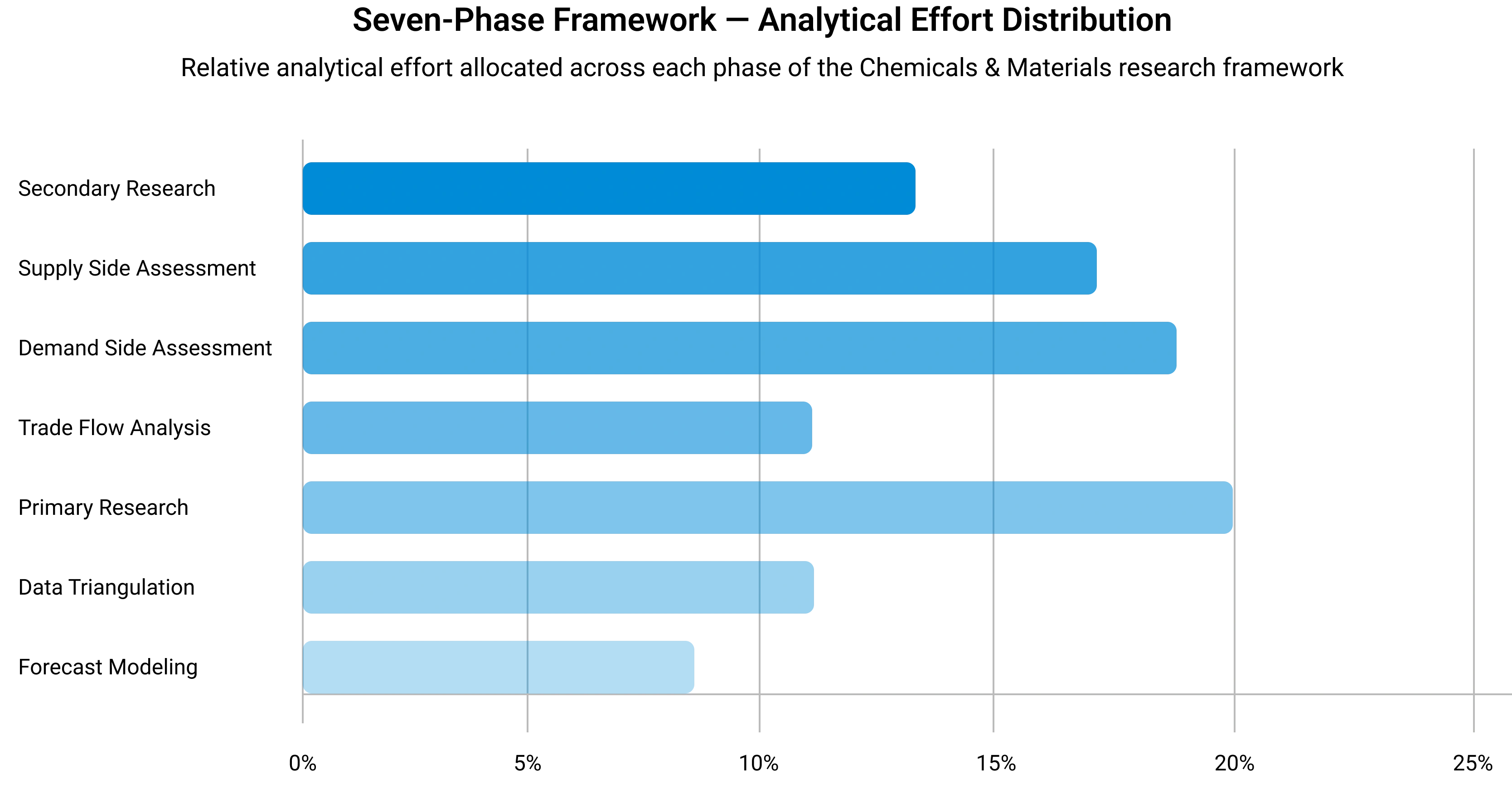
Seven-Phase Framework — Analytical Effort Distribution
Relative analytical effort allocated across each phase of the Chemicals & Materials research framework
Phase 1 - Secondary Research: Establishing the Foundation
Secondary research collects and evaluates publicly available information from authoritative sources, establishing the foundational understanding of market structure, value chain dynamics, competitive landscape, and end-use demand patterns. Every source is evaluated for credibility, recency, geographic relevance, and methodological soundness before inclusion.
Industry Associations
Sources include ACC, CEFIC, ICCA, JCIA, CPCIF, and SOCMA providing production volumes, consumption trends, capacity developments, and sustainability initiatives.
Company Disclosures
Annual reports, investor presentations, earnings transcripts, and regulatory filings reveal product portfolios, manufacturing footprints, capacity expansions, and revenue segmentation.
Government Databases
National statistical offices, customs authorities, environmental agencies, and industrial production databases provide verified statistics on output, trade flows, and regulatory compliance.
Trade Databases
UN Comtrade, ITC, Eurostat, and national customs authorities enable assessment of global product movement, import dependency, and export competitiveness across regions.
Our Secondary Research Sources
- Ministry of Chemicals and Fertilizers
- European Chemicals Agency
- United States Department of Energy
- Ministry of Industry and Information Technology
- Ministry of Economy Trade and Industry
- Ministry of Trade Industry and Energy
- National Institute of Standards and Technology
- Council of Scientific and Industrial Research
- Fraunhofer Society
- National Institute for Materials Science
Phase 2 — Supply-Side Assessment: Mapping Production Capabilities
Production Capacity Analysis
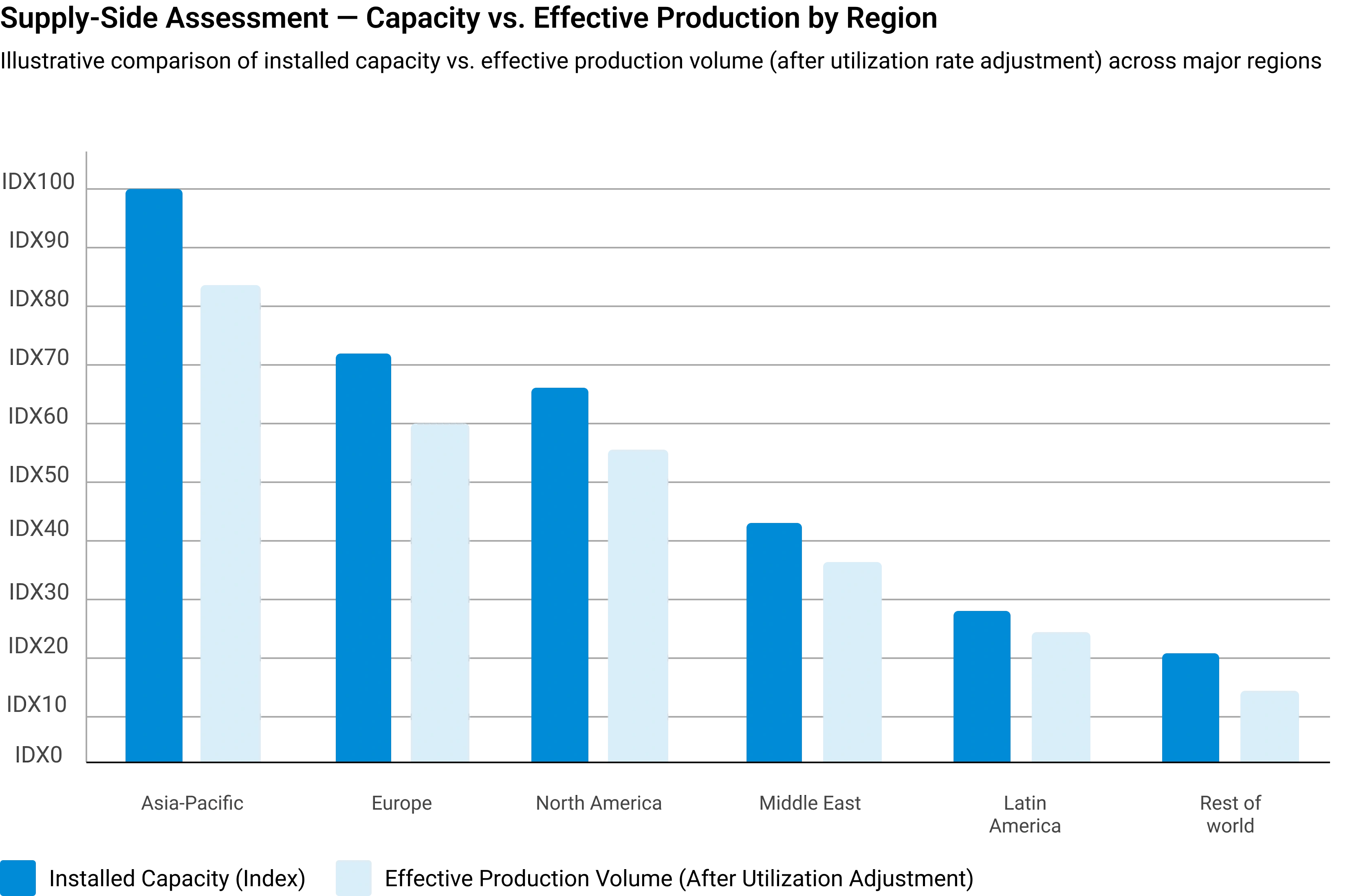
All major manufacturers are assessed for existing installed capacity, planned additions, expansions, new plant announcements, and technology adoption — mapped at global, regional, and country levels.
Capacity Utilization Adjustment
Installed capacity is adjusted using utilization rates based on demand conditions, feedstock availability, plant operating rates, maintenance schedules, and regulatory restrictions.
Manufacturer Revenue Analysis
Product-specific revenues, segment-level performance, regional distribution, average selling prices, and margin trends are evaluated to establish market value estimates.
Supply-Side Assessment — Capacity vs. Effective Production by Region
Illustrative comparison of installed capacity vs. effective production volume (after utilization rate adjustment) across major regions
Phase 3 — Demand-Side Assessment: Quantifying Chemical Consumption
Demand-side analysis quantifies chemical consumption across industries, applications, and geographies — identifying where and how chemicals are consumed throughout the value chain with precision.
End-Use Industry Analysis
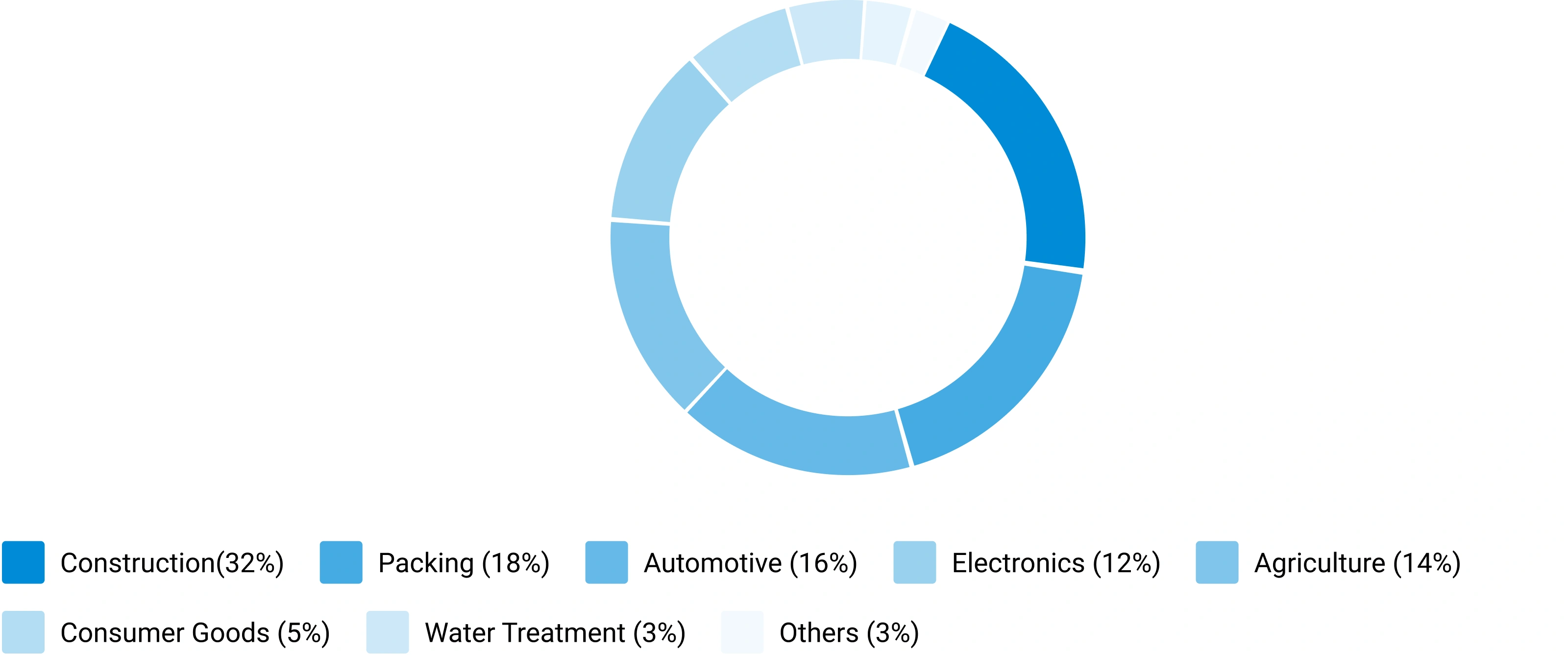
Chemical demand is evaluated across automotive, construction, packaging, electronics, agriculture, healthcare, consumer goods, industrial manufacturing, energy and utilities, and water treatment. Industry output, production trends, and consumption intensity are analyzed to determine demand patterns.
Consumption Modeling
Demand is estimated using measurable indicators: kilograms per vehicle, kilograms per square meter of construction, dosage per cubic meter of water treated, kilograms per hectare of agricultural land, and kilograms per ton of manufactured products. Consumption factors are validated through industry publications and primary interviews.
Application Analysis
The market is segmented by application area to understand product performance requirements, formulation trends, technology adoption, customer preferences, and regulatory requirements improving demand accuracy and segmentation granularity.
Demand-Side Assessment — End-Use Industry Demand Distribution
Illustrative distribution of chemical & materials demand across key end-use industries
Phase 4 - Trade Flow Analysis: Balancing Regional Supply and Demand
Trade flow analysis reconciles regional supply and demand estimates through import and export data, identifying net supply positions, regional dependencies, and market imbalances. It serves as an independent validation layer that tests the consistency of supply-side and demand-side estimates.
Import Analysis
Import data is evaluated to determine volumes, source countries, product dependency, regional supply gaps, and pricing trends — identifying markets that rely heavily on external supply and where domestic production is insufficient to meet demand.
Export Analysis
Export assessments reveal production surplus, export competitiveness, regional manufacturing strength, and global market participation. Export patterns also help validate domestic production estimates and identify net exporting regions.
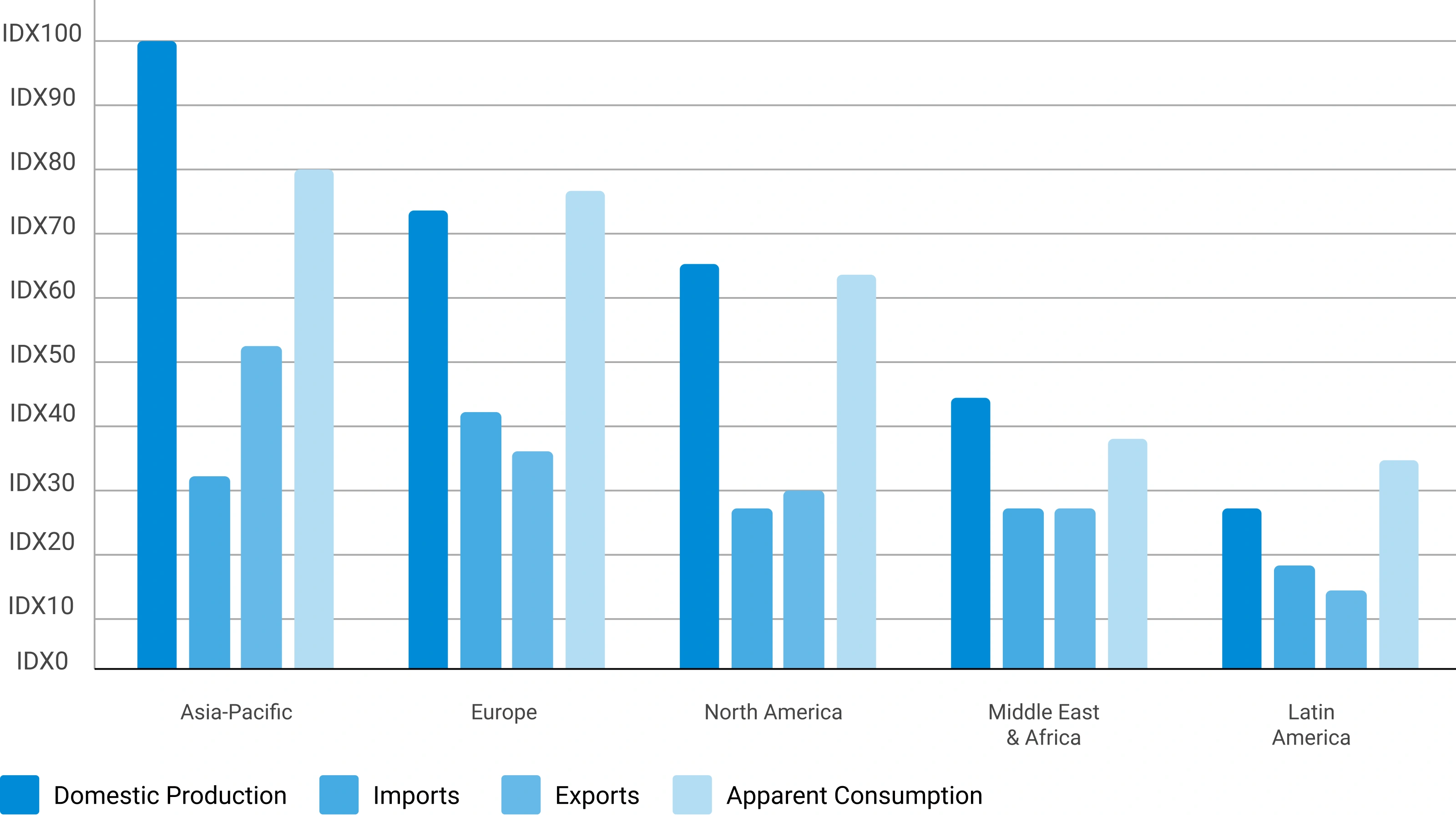
Apparent Consumption Model
Regional consumption is assessed using the standard apparent consumption formula:
Results identify net importing regions, net exporting regions, regional deficits, and surpluses — serving as an independent validation of supply and demand estimates.
Trade Flow Analysis — Net Supply Position by Region
Illustrative apparent consumption vs. domestic production across major regions — positive gap indicates net import dependency
Phase 5 — Primary Research: The Critical Validation Layer
Primary research tests and refines findings from secondary research through direct engagement with industry participants across the supply chain, demand side, and expert community. It captures intelligence that no database or published report can provide — the real-world experience of manufacturers, buyers, and specialists operating in the market.

Supply-Side Interviews
Conversations with chemical manufacturers, raw material suppliers, contract manufacturers, technology providers, and plant operators cover production trends, capacity utilization, pricing developments, technology shifts, and competitive dynamics.

Demand-Side Interviews
Engagement with OEMs, industrial consumers, procurement managers, distributors, formulators, and end-use manufacturers focuses on consumption trends, purchasing behavior, product substitution, demand outlook, and emerging applications.

Industry Expert Consultations
Additional interviews with industry consultants, independent experts, regulatory specialists, technical professionals, and research institutions provide deeper market context and validate key analytical assumptions.
Focus Areas of Primary Research:
Market Size & Forecast Validation
Revenue estimates, volume consumption, growth rates, forecast assumptions, regional demand.Supply Chain & Value Chain Assessment
Raw material sourcing, supply chain challenges, distribution networks, procurement practices.Production & Capacity Analysis
Manufacturing capacity, utilization rates, expansion projects, plant investments.Pricing & Cost Structure Analysis
Product pricing trends, feedstock costs, energy costs, margin pressures, pricing outlook.Competitive Landscape Assessment
Volume and value estimates confirmed to be fully consistent with one another before publicationInterview Volume by Market Scope
| Study Scope | Number of Interviews |
|---|---|
| Niche Market | 20 – 30 |
| Mid-Sized Market | 30 – 50 |
| Global Market | 50 – 80 |
| Highly Fragmented Market | 80 – 120 |
Interview Details:
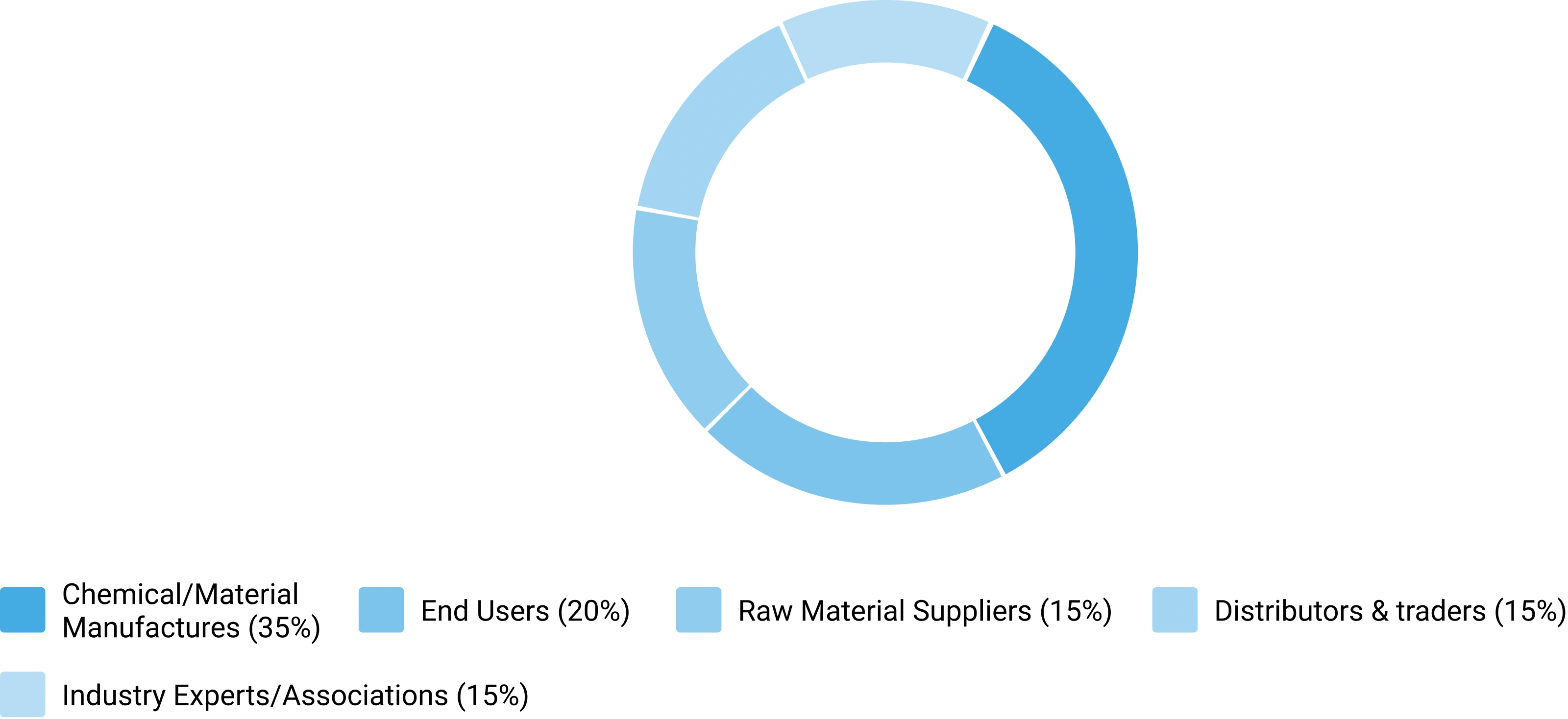
Category : Manufacturers, Suppliers, Distributors, End Users, Experts/Associations
Average Duration : 30–60 Minutes
Interview Mode : Video calls, telephonic interviews, expert consultations
Interview Format : Structured / Semi-Structured questionnaire
Focus Areas of Primary Research:
Market Size & Forecast Validation :
Revenue estimates, volume consumption, growth rates, forecast assumptions, regional demand.
Supply Chain & Value Chain Assessment :
Raw material sourcing, supply chain challenges, distribution networks, procurement practices.
Production & Capacity Analysis :
Manufacturing capacity, utilization rates, expansion projects, plant investments.
Pricing & Cost Structure Analysis :
Product pricing trends, feedstock costs, energy costs, margin pressures, pricing outlook.
Competitive Landscape Assessment :
Market share, competitor positioning, strategic initiatives, partnerships, acquisitions.
Primary Research — Stakeholder Coverage by Category
Distribution of interview respondents across stakeholder categories (% share from PPT data)
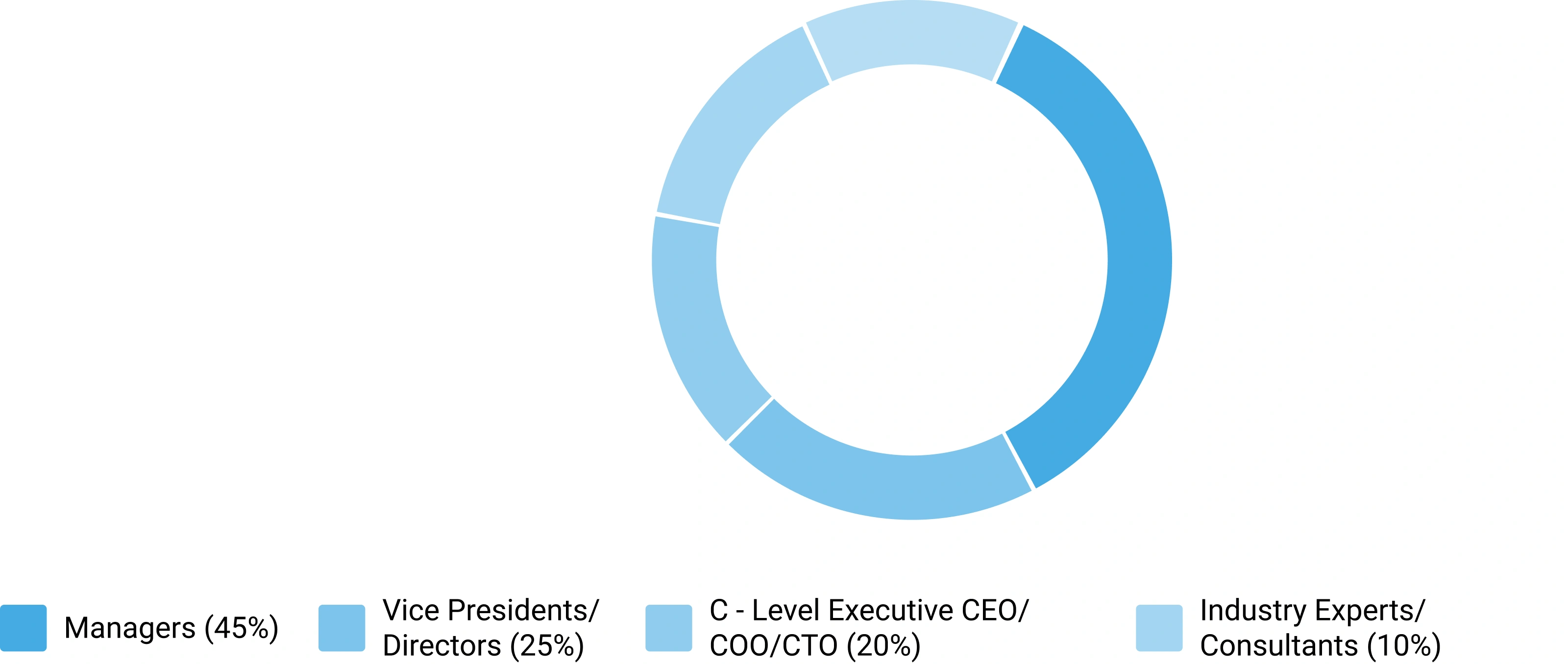
Primary Research — Respondent Designation Profile
Seniority breakdown of interview respondents (% share from PPT data)
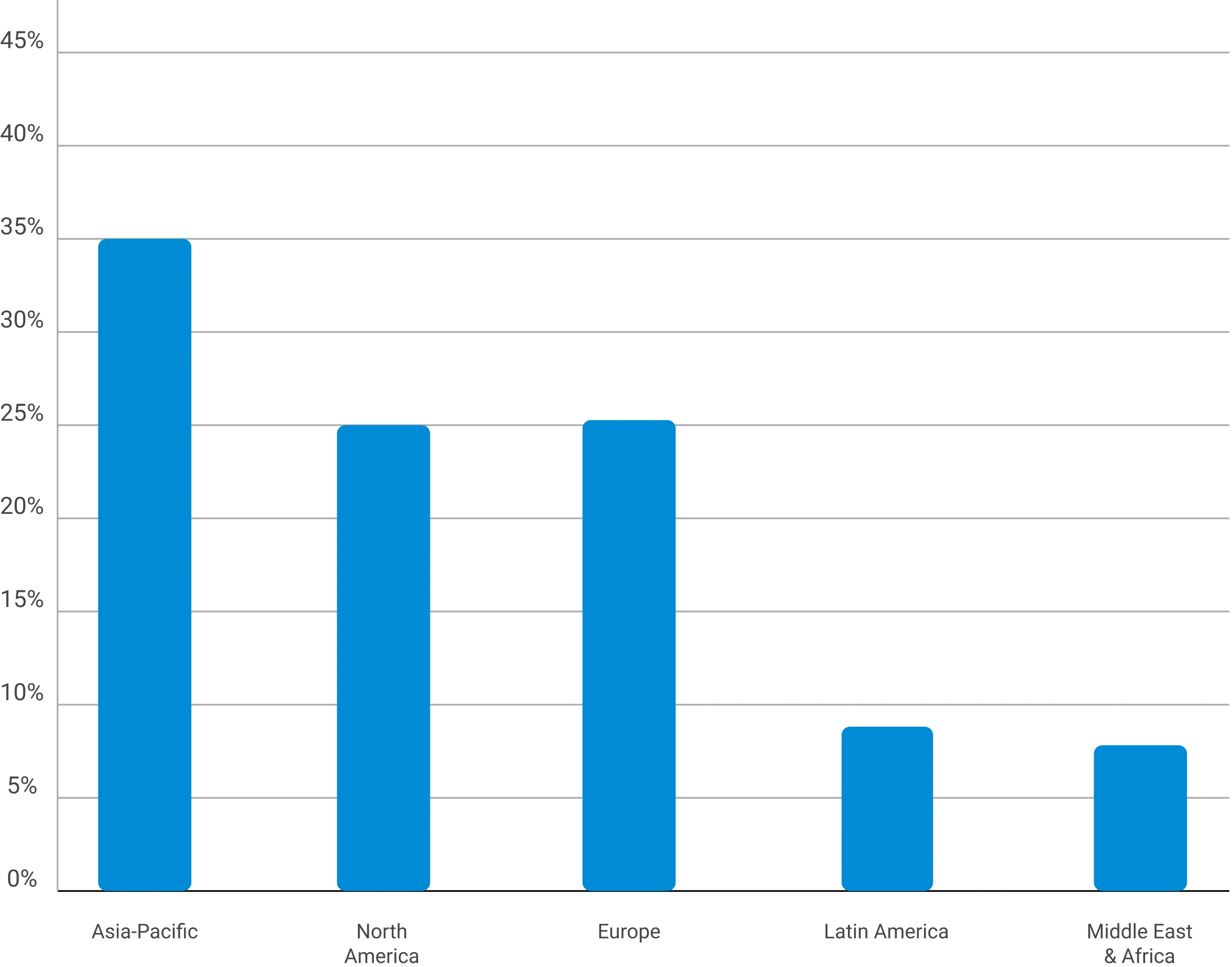
Primary Research — Geographic Coverage of Interviews
Regional distribution of primary research engagement (% share from PPT data)
Phase 6 — Data Triangulation and Market Validation
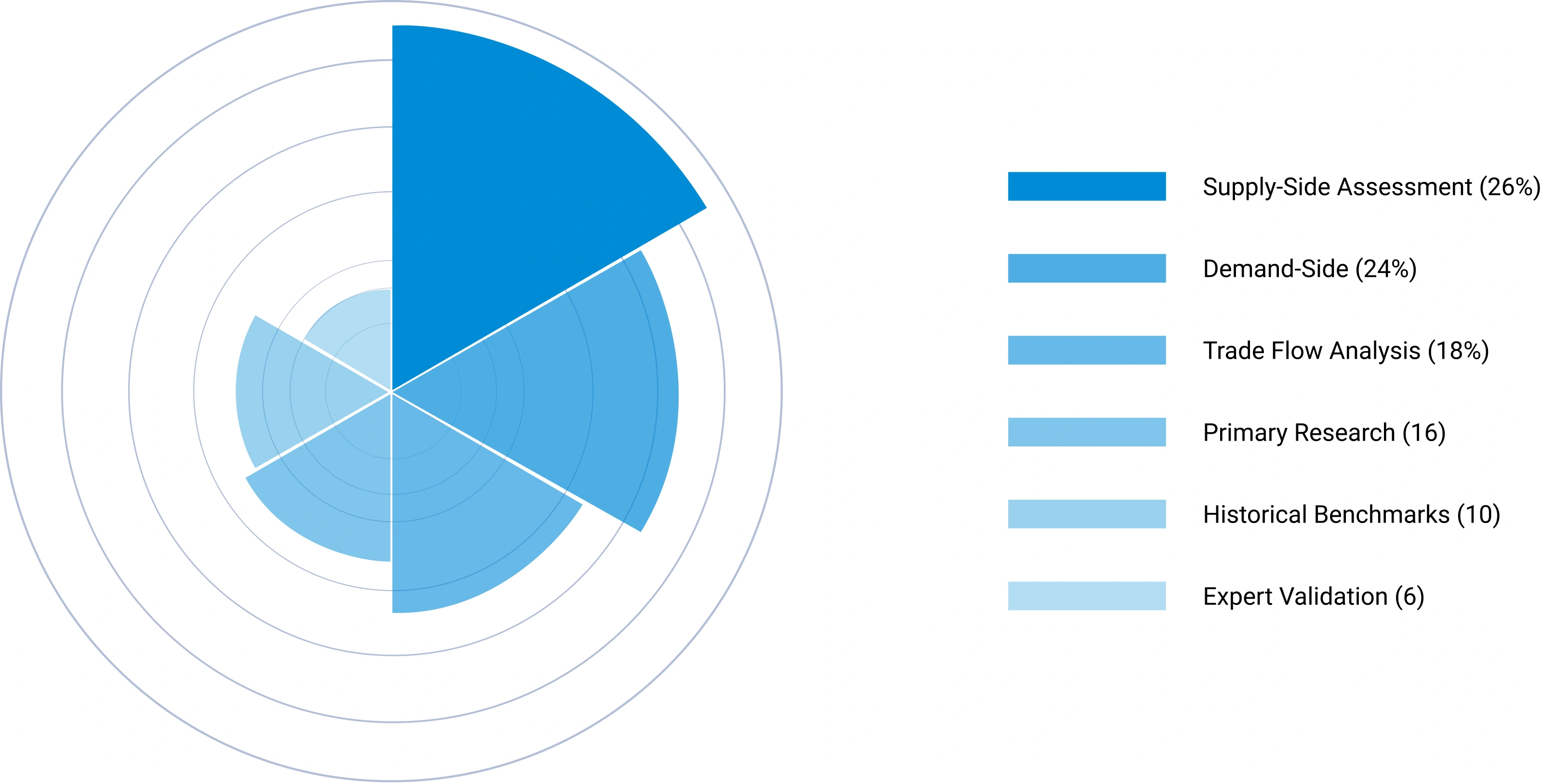
No single methodology is relied upon in isolation. Multiple independent estimation approaches are combined and reconciled to ensure consistency, accuracy, and analytical defensibility. Any material deviations between approaches are investigated and adjusted through additional validation cycles.
The final market size is derived through weighted triangulation of all validated methodologies. Any material deviations between approaches are investigated and adjusted through additional validation cycles. The outcome represents the most realistic assessment of the market based on available evidence and expert confirmation ensuring that volume and value estimates are fully consistent with one another.
Triangulation Framework — Input Contribution Weight
Relative weight each sizing input contributes to the final reconciled market estimate
Phase 7 — Forecast Modeling: Projecting Future Market Evolution
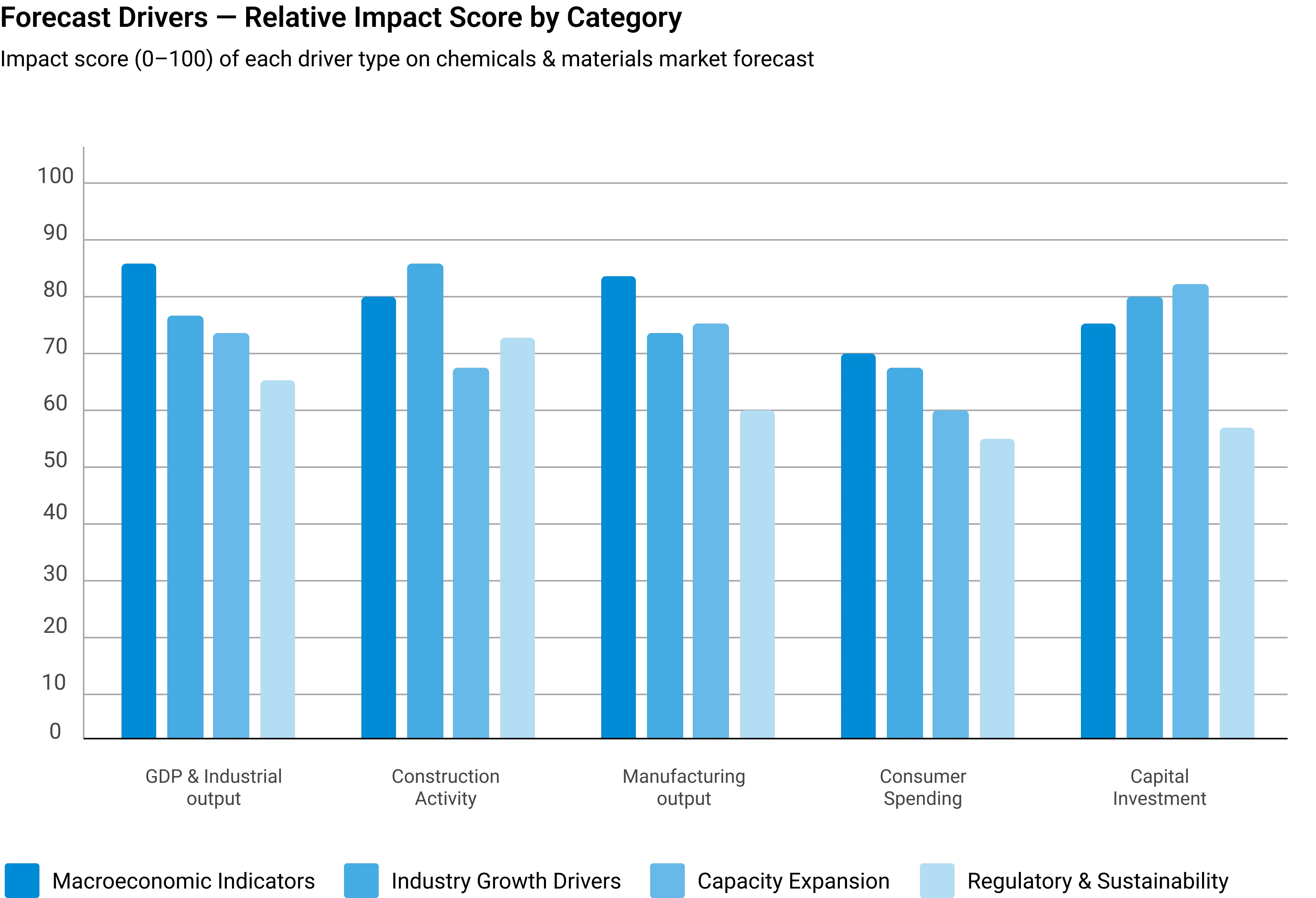
Forecasting evaluates the future trajectory of the market using a combination of quantitative indicators and qualitative assessments across economic, industry, and regulatory dimensions. Rather than simple extrapolation, each driver is independently modeled and integrated into a composite forecast.
Macroeconomic Indicators
GDP growth, industrial production, manufacturing output, construction activity, consumer spending, and capital investment form the quantitative foundation of long-term demand projections. These are applied at country, regional, and global levels.
Industry Growth Drivers
Urbanization, infrastructure development, industrialization, technological innovation, sustainability initiatives, and evolving product performance requirements are assessed at regional and industry levels — capturing both structural and cyclical demand drivers.
Capacity Expansion Analysis
Announced plant expansions, new manufacturing facilities, technology upgrades, and strategic investments are evaluated to determine future supply-demand dynamics and potential market tightness or oversupply situations.
Regulatory & Sustainability
Environmental regulations, chemical safety standards, emission reduction targets, circular economy initiatives, and sustainability requirements are incorporated as they often influence product adoption rates and market growth trajectories.
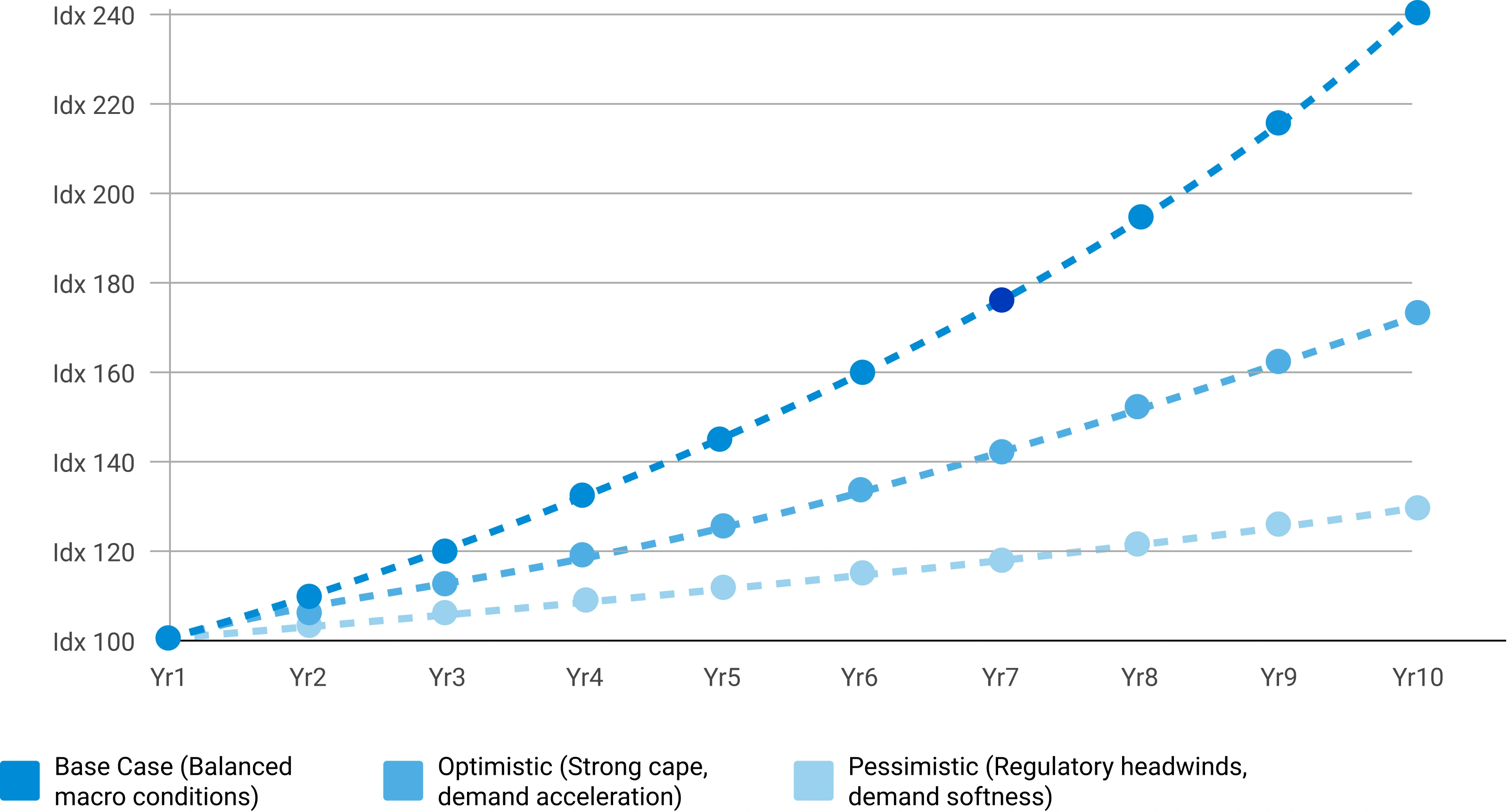
Scenario Forecast Range — Indexed Market Growth (Year 1–10)
Illustrative indexed growth trajectories across Base, Optimistic, and Pessimistic scenarios over a 10-year forecast horizon
Forecast Drivers — Relative Impact Score by Category
Impact score (0–100) of each driver type on chemicals & materials market forecast



Comments
Share your thoughts, ask a question, or provide feedback about this report.