
What is the Lithium Carbonate Market Size?
According to Videsh Swar Research, which specializes in research on raw materials and bulk chemicals, noted the innovation in extraction processing and advanced technology that is adopted for EV and other sectors. The research helps in analysing recent developments, technological advancements, key growth opportunities, and industrial needs, which will help in market expansion in the coming decades and help in the growth of the lithium carbonate market across the globe.
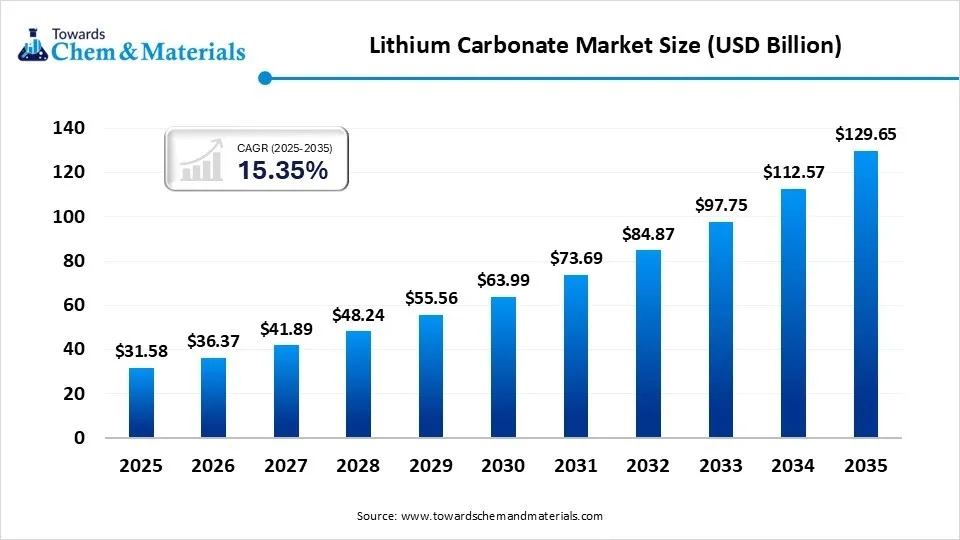
The global lithium carbonate market size was estimated at USD 31.58 billion in 2025 and is predicted to increase from USD 36.37 billion in 2026 to approximately USD 129.65 billion by 2035, and is expected to grow at a CAGR of 15.35% during 2025-2035, driven rapid mining activities and renewable energy integration and electric vehicle adoption aligning with stringent government carbon emission targets and zero emission vehicle mandates further supports the growth. Local and domestic production facilities to lower dependency and increase production are a major factor in the market. The presence of key players like Albemarle Corporation, Sociedad Química y Minera de Chile, Ganfeng Lithium Group Co., Ltd., and Tianqi Lithium Corporation is also a major driving factor that supports market expansion in the forecast period in and across regions.
Key Takeaway
- By region, Asia Pacific dominated the lithium carbonate market with a share of 79.13% in 2025 and is expected to grow at a CAGR of 15.57% over the forecast period.
- By region, North America held a 7.70% market share in the lithium carbonate market in 2025 and is expected to experience the fastest growth with a CAGR of 14.28% in the forecast period.
- By grade, the battery grade segment dominated the market with an 82.62% share in 2025 and is expected to grow at a CAGR of 7.10% over the forecast period.
- By grade, the technical grade segment held 12.38% market share in 2025 and is expected to have the fastest growth with a CAGR of 23.95% in the forecast period.
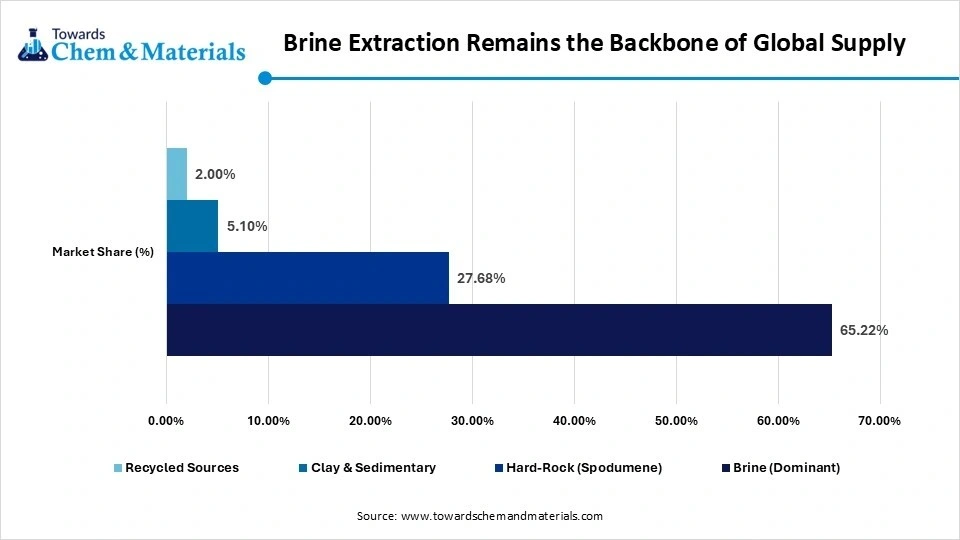
- By source, the brine segment dominated the market with a 65.22% share in 2025 and is expected to grow at a CAGR of 16.80% over the forecast period.
- By source, the hard and rock segment held 27.68% market share in 2025 and is expected to have the fastest growth with a CAGR of 23.16% in the forecast period.
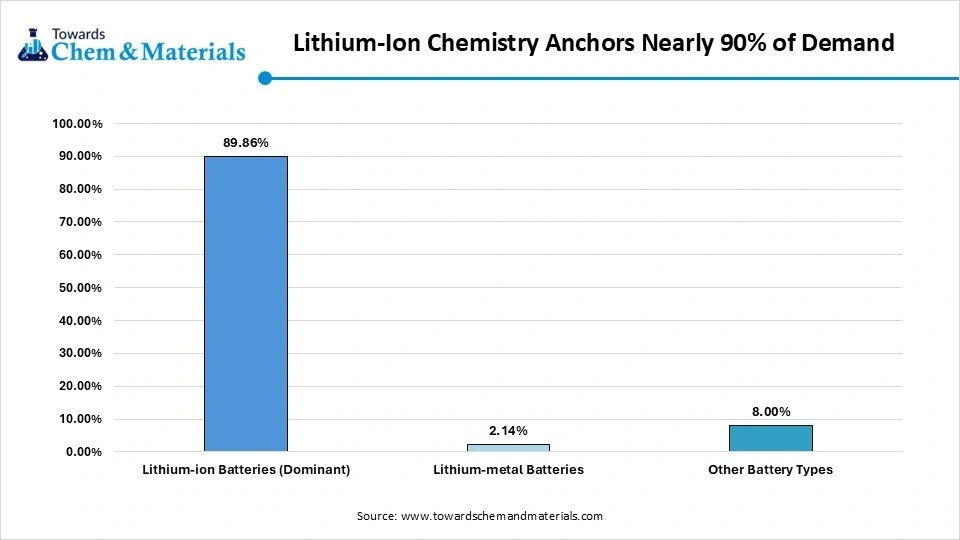
- By battery type, the lithium-ion batteries segment dominated the market with an 89.86% share in 2025 and is expected to grow at a CAGR of 23.81% over the forecast period.
- By battery type, the lithium metal batteries segment held 2.14% market share in 2025 and is expected to have the fastest growth with a CAGR of 28.40% in the forecast period.
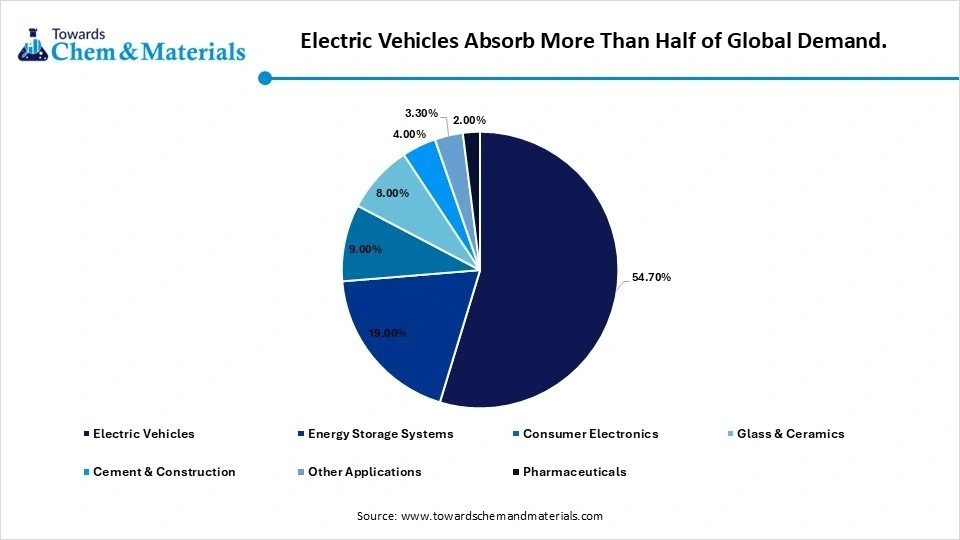
- By application, the electric vehicle segment dominated the market with a 54.70% share in 2025 and is expected to grow at a CAGR of 22.80% over the forecast period.
- By application, the glass and ceramics segment held an 8% market share in 2025 and is expected to have the fastest growth with a CAGR of 15.60% in the forecast period.
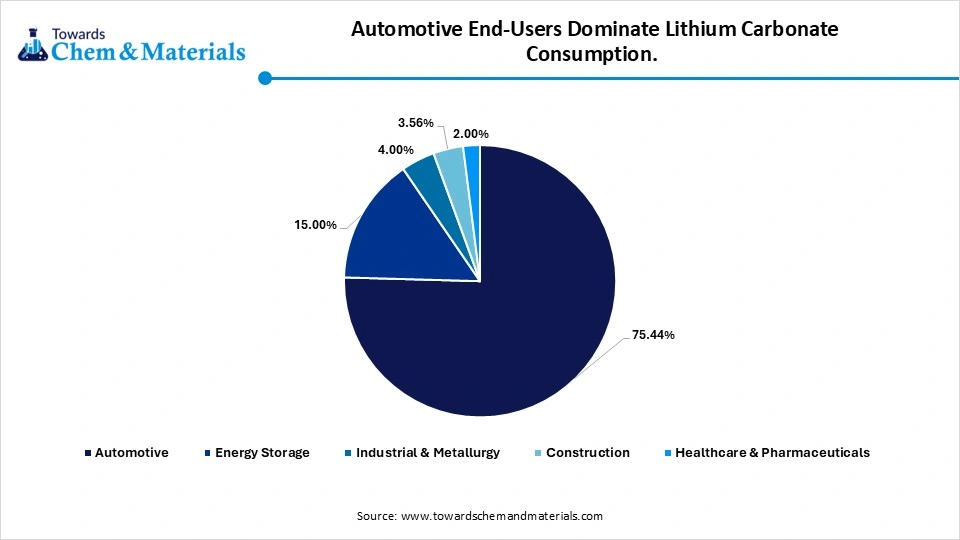
- By end-user industry, the automotive segment dominated the market with a 75.44% share in 2025 and is expected to grow at a CAGR of 22.70% over the forecast period.
- By end-user industry, the energy storage segment held a 15% market share in 2025 and is expected to have the fastest growth with a CAGR of 24.41% in the forecast period.
Market Overview
Global Lithium Carbonate Market to Quadruple by 2035
According The lithium carbonate market value is projected to expand from USD 31.58 Bn in 2025 to approximately USD 129.65 Bn by 2035. This growth is driven by the growing and rapid adoption and expansion of electrification, that is, the use of EVs aligning with sustainability due to growing environmental concerns. The rapid adoption results in sustained demand for lithium-ion and other battery materials, where lithium carbonate plays a major role. Its high performance and durability make it ideal for use in industries as well as commercial use for the development of EVs and consumer electronics batteries, with high purity supporting expansion in the forecast period.
- Key Insight: The market is set to grow ~4.1x in nominal value over the decade.
Double-Digit Growth Sustained Through 2035
According to the research, it is noted that there is a 15.35% increase over ten years; this is merely due to EV growth, but for growth to sustain, it will need continuous upstream capacity additions. The growth is driven by demand for industrial-grade and structural expansion across sectors, which fuels the growth. The growth is also driven by the rapid expansion and continuous infrastructure development projects and demand for coating materials for development projects. The demand for lithium carbonate, due to its superior properties like high purity and high performance in end-use applications, is expected to support the market growth through 2035.
- Key Insight: The market is growing at a compound rate of 15.35% CAGR
Lithium Chemical Prices Nearly Halved Through 2024 on Oversupply
Source: Towards Chemical and Materials
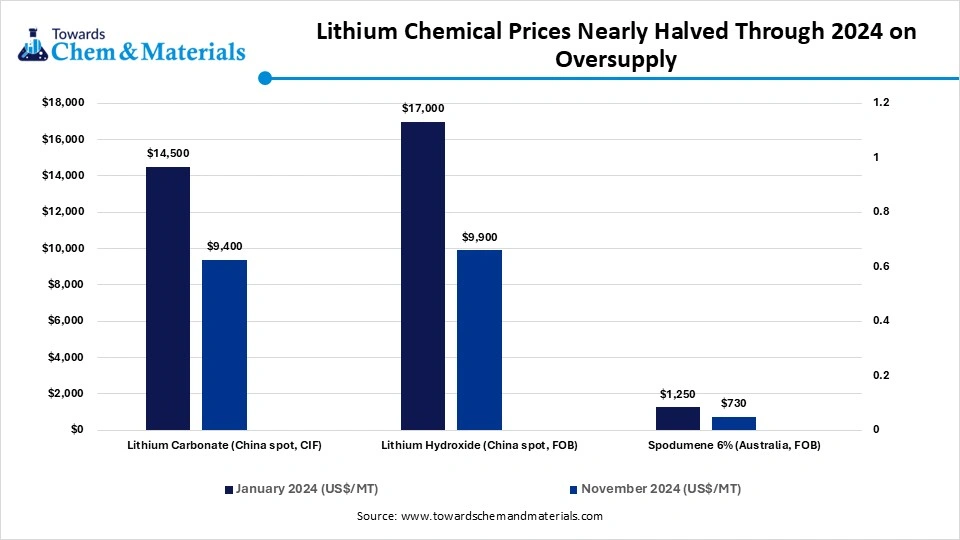
According to the research and chart representation, it is highlighted that there is a sharp decline in lithium raw material and chemical prices during 2024, driven primarily by oversupply and weaker market conditions. Lithium carbonate prices in China fell from approximately $14,500/ton in January to $9,400/ton in November, while lithium hydroxide declined from $17,000/ton to $9,900/ton over the same period. Similarly, Australian 6% spodumene prices decreased from around $1,250/ton to $730/ton. The synchronized decline across lithium carbonate, lithium hydroxide, and spodumene indicates that the price correction was broad-based across the lithium supply chain rather than limited to a single product, reflecting excess supply relative to demand and pressure on lithium producers and suppliers.
- Key Insight: The decline across the lithium supply chain was not limited to a single product.
2022s Price Spike Has Fully Unwound by 2024
Source: Towards Chemical and Materials
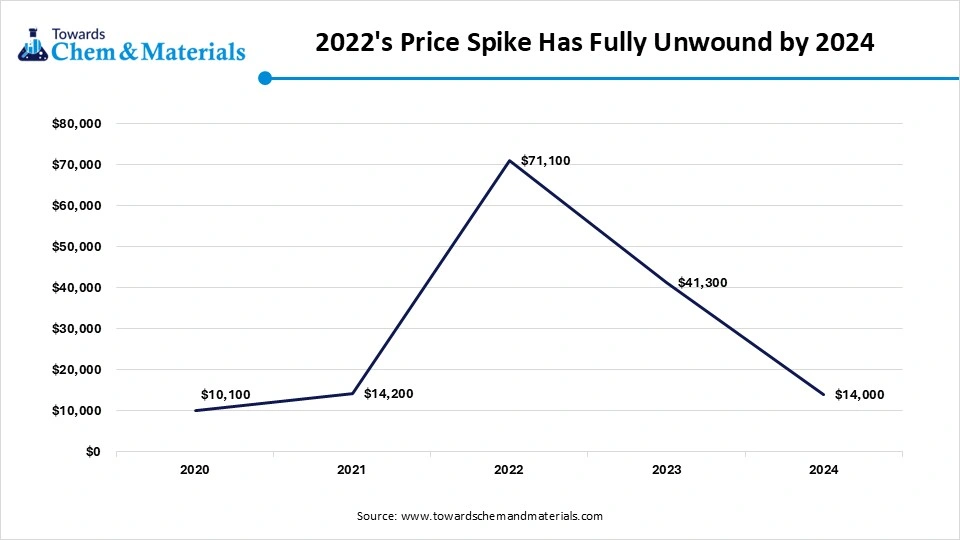
According to the research and chart representation shows that U.S. battery-grade lithium carbonate prices experienced a dramatic boom-and-bust cycle between 2020 and 2024. Prices increased gradually from $10,100/metric ton in 2020 to $14,200 in 2021, before surging to a peak of $71,100 in 2022, driven by strong battery and electric vehicle demand and tight lithium supply. Prices then declined sharply to $41,300 in 2023 and $14,000 in 2024, representing a 66% year-over-year decline in 2024. By 2024, prices had essentially returned to 2021 levels, indicating that the exceptional price premium created during the 2022 supply shortage had largely disappeared. This sharp correction also put pressure on producers that had expanded capacity when lithium prices were at their peak.
- Key Insight: It highlights a 7x spike in 2022 and a 66% collapse in 2024.
Supply Growth Outpaced Demand in 2024, Reinforcing Oversupply
Source: Towards Chemical and Materials
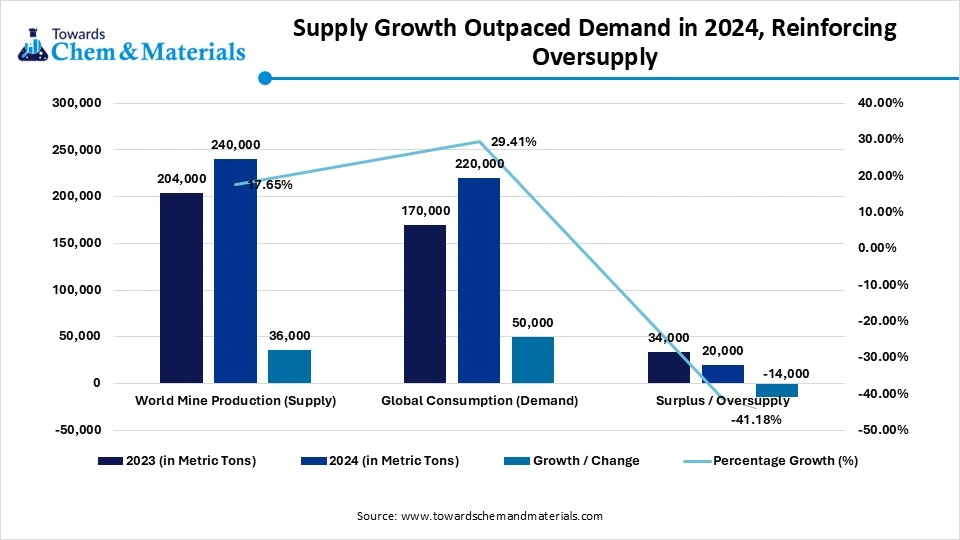
According to the research and chart representation, lithium supply continued to exceed global consumption in 2024, reinforcing the market’s oversupply situation. World mine production increased from 204,000 tons in 2023 to 240,000 tons in 2024, while global consumption rose from 170,000 tons to 220,000 tons. Although consumption grew at a faster percentage rate, production still remained higher in absolute terms, leaving a 20,000-ton surplus in 2024 compared with a 34,000-ton gap in 2023. This indicates that supply-demand conditions were beginning to tighten, but the remaining surplus continued to put downward pressure on lithium prices but price collapse may ease if 2025-2026 demand growth continues to outpace supply additions.
- Key Insight: The production-consumption gap narrowed from 34,000 tons in 2023 to 20,000 tons in 2024
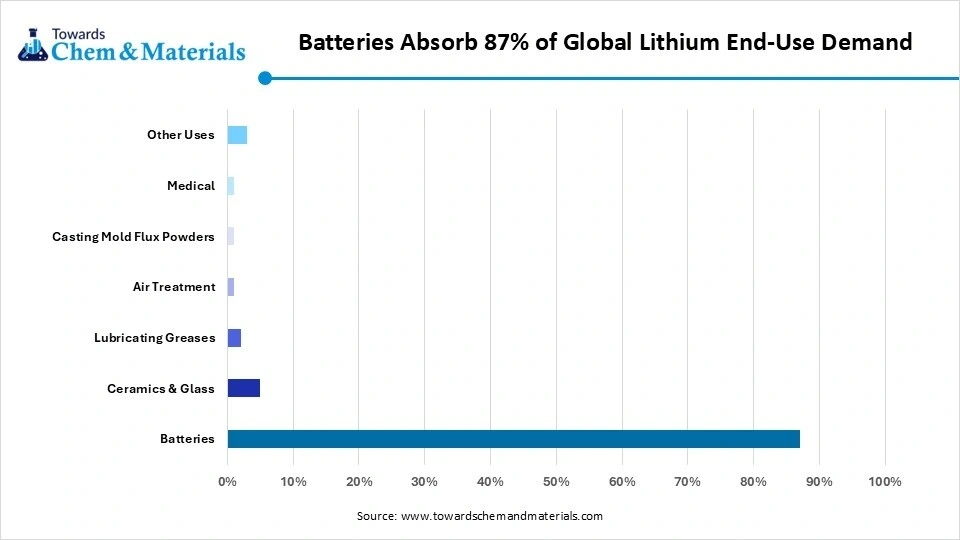
Batteries Absorb 87% of Global Lithium End-Use Demand
Source: Towards Chemical and Materials
According to the research and chart representation, batteries overwhelmingly dominate global lithium end-use demand, accounting for 87% of total consumption in 2024. This is followed by ceramics and glass at 5%, while lubricating greases account for 2% and air treatment, casting mold flux powders, and medical applications each represent 1%. Other uses contribute the remaining 3%. The strong concentration of lithium demand in batteries highlights the industrys close dependence on electric vehicles and energy storage systems, meaning continued growth in battery production is expected to remain the primary driver of lithium demand.
- Key Insight: With batteries at 87% of global end-use and industry forecasts (per secondary market research) pointing toward 94% by 2030
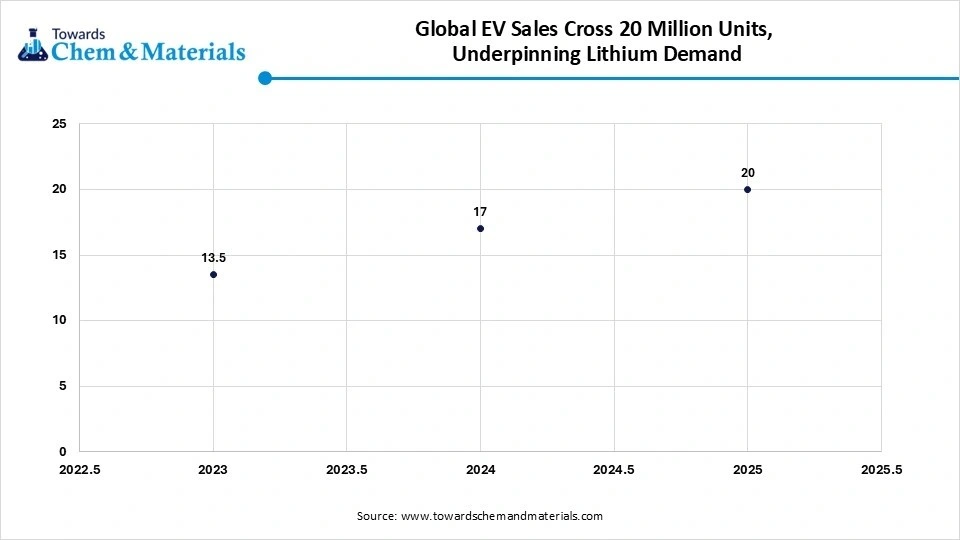
Global EV Sales Cross 20 Million Units, Underpinning Lithium Demand
Source: Towards Chemical and Materials
According to the research and chart representation, global electric vehicle (EV) sales have continued to grow strongly, reinforcing batteries as the primary structural driver of lithium demand. Global EV sales increased from approximately 13.5 million units in 2023 to 17 million units in 2024, before surpassing 20 million units in 2025. This sustained growth reflects expanding EV adoption across major markets and directly supports higher demand for lithium-ion batteries and, consequently, lithium carbonate. The rapid expansion of EV sales therefore strengthens the long-term outlook for lithium demand, particularly as battery manufacturing capacity continues to expand to support electrification.
- Key Insight: China alone accounted for more than half of the global increase in electric car sales in 2025
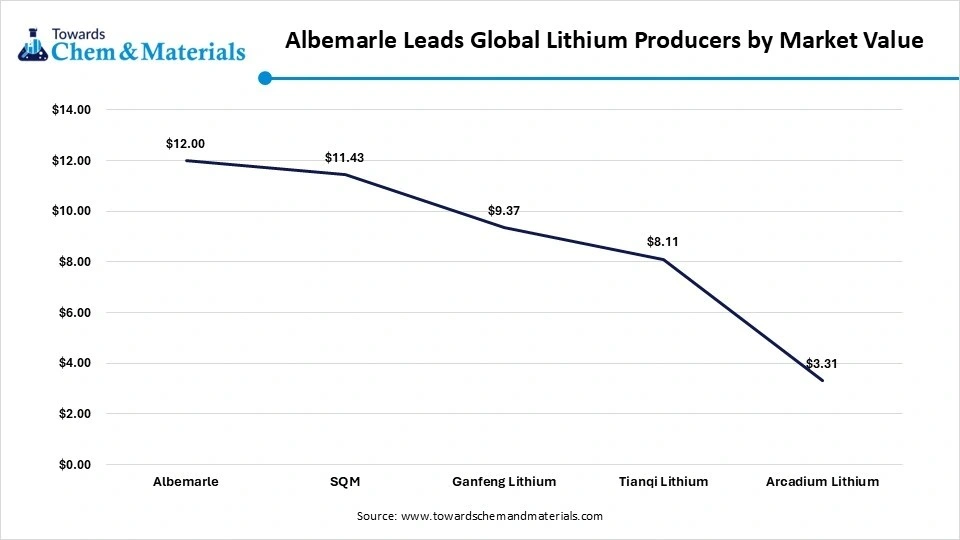
Albemarle Leads Global Lithium Producers by Market Value
Source: Towards Chemical and Materials
According to the research and chart representation, Albemarle held the highest market value among major listed lithium producers in October 2024, with a market capitalization of approximately $12.0 billion. SQM followed closely at $11.43 billion, while Ganfeng Lithium and Tianqi Lithium recorded around $9.37 billion and $8.11 billion, respectively. Arcadium Lithium had a considerably lower market capitalization of about $3.31 billion. Overall, the data highlights a relatively concentrated competitive landscape, with Albemarle, SQM, Ganfeng, and Tianqi forming the leading group, while significant differences in market value reflect variations in production scale, resource positions, geographic exposure, and investor sentiment toward lithium prices.
- Key Insight: Albemarle held the highest market value among major listed lithium producers
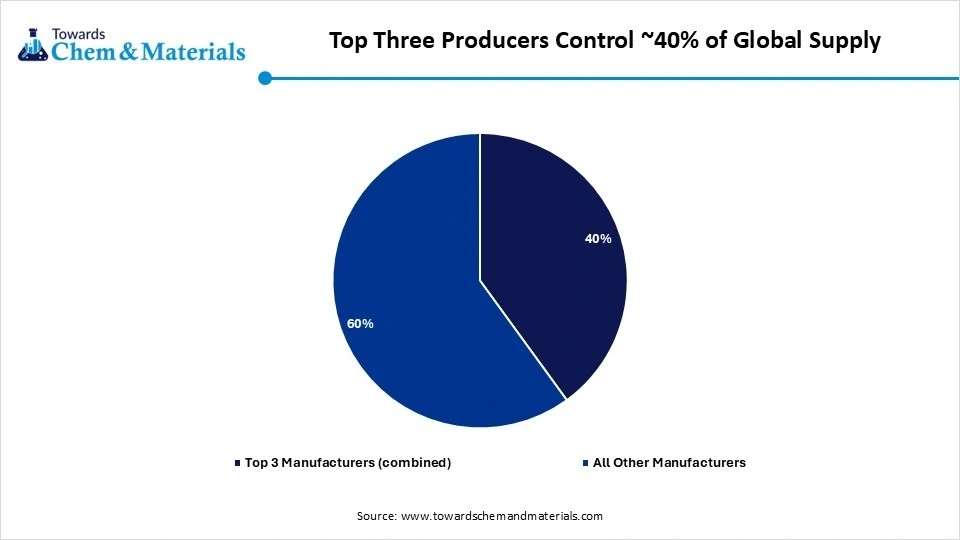
Top Three Producers Control ~40% of Global Supply
 Source: Towards Chemical and Materials
According to the research and chart representation indicates that the lithium carbonate market is moderately concentrated, with the top three manufacturers collectively accounting for around 40% of global supply, while the remaining manufacturers represent approximately 60%. This level of concentration gives leading producers meaningful influence over market pricing, production decisions, and supply conditions, but the market remains sufficiently fragmented to provide opportunities for mid-sized producers and new entrants. Overall, the industry has a balanced competitive structure, where major producers hold significant market power without completely dominating global supply.
- Key Insight: ~40% top-3 concentration signals a moderately consolidated market
Two Flagship Operations Anchor Global Lithium Supply
Source: Towards Chemical and Materials
According to the research and chart representation highlights how concentrated global lithium supply is, showing the world’s two flagship operations in 2024: Greenbushes Mine in Australia with 1.38 million tons of spodumene concentrate from hard-rock mining, and Salar de Atacama in Chile with 201,000 tons of lithium carbonate equivalent from brine.
- Key Insight: The worlds largest hard-rock mine, Greenbushes, Australia, and the largest brine operation, Salar de Atacama, Chile
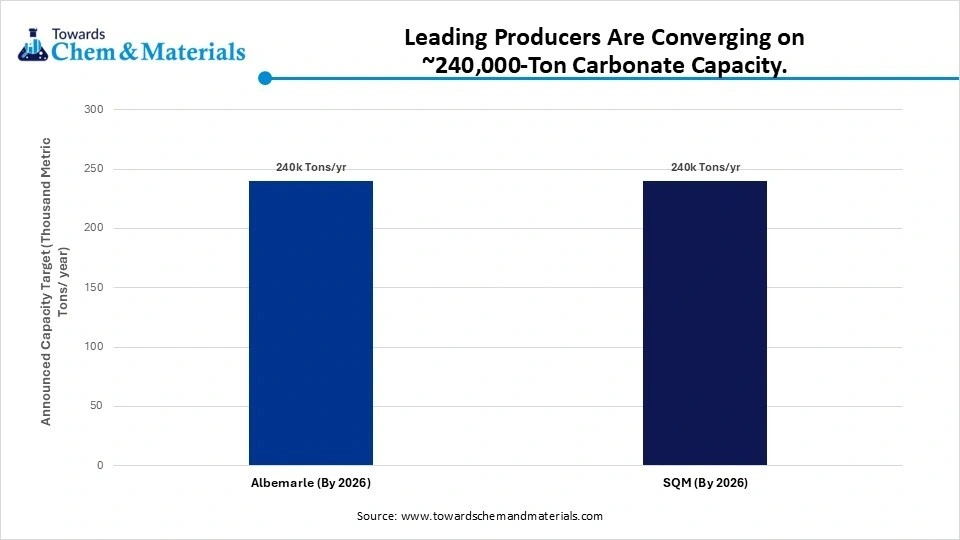
Leading Producers Are Converging on ~240,000-Ton Carbonate Capacity.
Source: Towards Chemical and Materials
According to the research and chart representation shows that Albemarle and SQM are targeting similar lithium carbonate production capacities of around 240,000 tons per year by 2026. This convergence indicates intensifying competition between the two leading non-Chinese lithium producers. With capacity becoming increasingly comparable, competitive differentiation is likely to depend less on production scale and more on cost efficiency, resource quality, vertical integration, operational capabilities, and customer relationships. The similar capacity targets also highlight the strategic efforts of major producers to strengthen their positions in the global lithium carbonate supply chain.
- Key Insight: Albemarle and SQM have both publicly targeted approximately 240,000 tons/year of lithium carbonate capacity by 2026.
Regional Analysis
Asia-Pacific Anchors Global Lithium Carbonate Demand
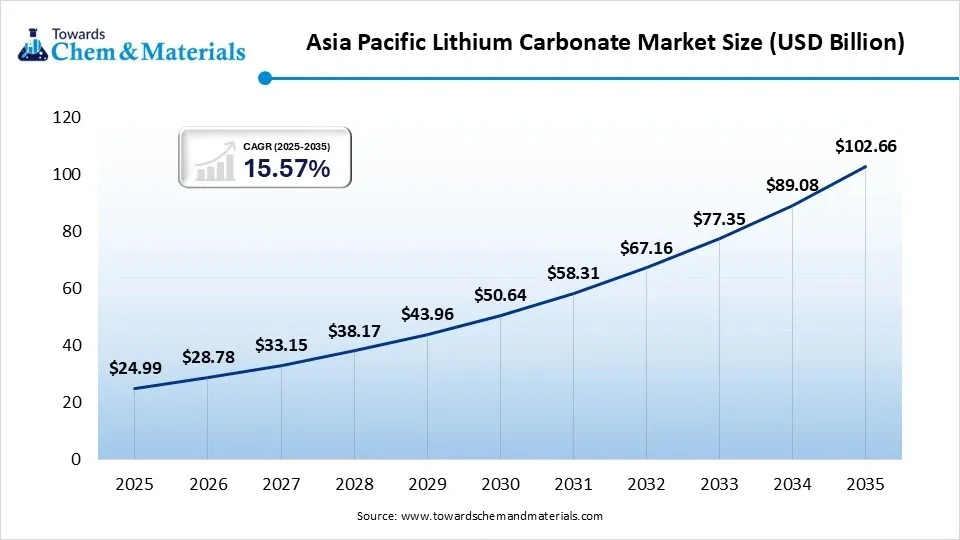
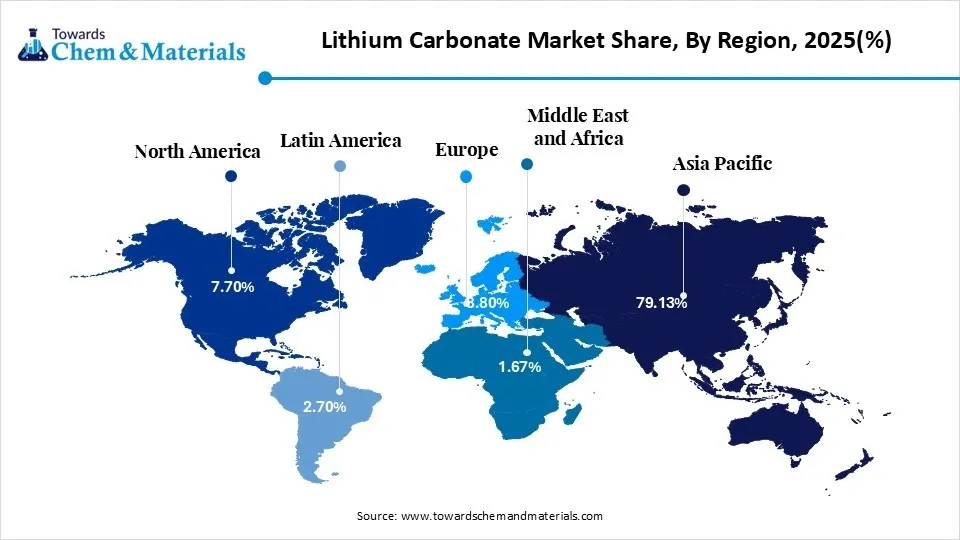
Asia Pacific dominated the lithium carbonate market with a share of 79.13% in 2025 and is expected to grow at a CAGR of 15.57% over the forecast period, driven by the growing and rapid automotive electrification, as there is growing demand and adoption of EVs, which use lithium-ion batteries, increasing production of lithium carbonate and fueling growth of the market. Asia Pacific represents nearly half of the market because of global consumption and production, which supports growth. The demand for consumer electronics and energy storage systems maintains steady demand for the product, which fuels the growth of the market in the region.
Source: Towards Chemical and Materials
In China, there is strong demand for both domestic refining capacity and end-use demand due to the presence of gigafactories and EV adoption in the country. For instance, Zijin Mining Group has planned to start production at the Monono lithium project in the Democratic Republic of Congo. In India, the surge in EV sales and domestic manufacturing has led companies to heavily invest in local refining and recycling facilities, which drives the growth and demand for the materials. For instance, Metso is to launch a new lithium carbonate production method, which aims to support mineral production. In Japan, the demand is predominantly anchored by domestic automotive manufacturing and growing deployment of stationary energy storage systems, which fuels the growth of the market. For instance, Japans Trade Ministry and Chiles Mining Ministry strengthened bilateral cooperation to grant Japanese firms preferential, long-term access to lithium extraction and supply in exchange for skills transfer and value-added processing. (Source:investingnews.com), (Source:www.mining-technology.com), (Source:www.mining.com)
- Key Insight: Asia Pacific dominance is seen through demand.
North America held a 7.70% market share in the lithium carbonate market in 2025 and is expected to experience the fastest growth, with a CAGR of 14.28% in the forecast period, driven by domestic mining, refining, and recycling investments, which help reduce import dependency due to domestic production resultant of heavy production demand, which fuels growth in the region. The requirement for purity and strong, premium products, which are high in purity and battery-grade lithium carbonate, by gigafactories results in growth and expansion of the market in the region. In the United States, national clean energy goals and policy stimulus, like federal legislation such as the inflation reduction act increases the domestic mining and heavy investment, which promotes the growth of the market.
- For instance, Empower EIT commissioned its Dallas Operations & Innovation Center to drive a fully domestic, end-to-end lithium supply using direct lithium extraction and conversion tech. In Canada, it has accelerated its domestic lithium refining and production capabilities through key facility launches and strategic international collaborations, which boost the expansion of the market in the country. For instance, Mangrove Lithium officially launched North America’s first commercial electrochemical lithium refinery. The facility has a 1,000-tonne annual capacity to supply battery-grade lithium for roughly 25,000 electric vehicles.(Source:www.indianchemicalnews.com), (Source:www.chemanalyst.com)
- Key Insight: North America is experiencing growth and is the fastest, with 28.13% CAGR
Europe Commands 8.80% of the Global Lithium Carbonate Market
Europe held an 8.80% market share in the lithium carbonate market in 2025, driven by surging EV manufacturing and aggressive decarbonization goals across regions, which drive massive demand for the market. To reduce geopolitical risks and dependency, Europe is increasing and starting domestic capacity through large and significant discoveries like deposits in the Altmark region and regional projects like Cinevitz, which aim to establish the local supply chain supporting refining and propelling growth of the market.
In Germany, there is accelerated production of local lithium carbonate through innovative extraction projects and strategic alliances, which fuels growth. For instance, EnBW & LevertonHELM successfully produced high-purity >99.5% battery-grade lithium carbonate derived from thermal water at EnBW’s geothermal plant in Bruchsal, Baden-Württemberg. The UK governments Critical Minerals Strategy and the launch of new collaborations to establish a domestic production facility to reduce reliance on imports are propelling the growth of the market. For instance, French industrial mineral giant Imerys acquired an 80% stake in British Lithium, forming a major joint venture to extract lithium carbonate from micaceous granite in a former china clay pit near St Austell.(Source:www.enbw.com), (Source:www.imerys.com)
- Key Insight: the demand for high-purity materials and initiatives supports growth
Latin America Commands 2.70% of the Global Lithium Carbonate Market.
Latin America held a 2.70% market share in the lithium carbonate market in 2025, driven by the growing adoption of electric vehicles and continuous regional output, which drives growth. The regions EIGI incentives and Chiles national lithium strategy further promote the growth of the market. Major investment and expansion due to producers scaling operations are expanding processing capacity in the region, supporting growth of the market. Latin America is experiencing growth due to its recent extractor and exporter capabilities, further boosting growth of the market. In Argentina, the market is experiencing growth due to rapid expansion driven by low-cost brine deposits, rising global electric vehicle demand, and investor-friendly government policies, which boosts the growth of the market. For instance, Argentina Lithium & Energy Corp. signed a $100 million framework agreement and partnership with Xian Lanshen New Material Technology to deploy Direct Lithium Extraction technology at the Rincon West project, backed strategically by automaker Stellantis. In Brazil, the market is experiencing growth, driven by cost advantage as compared to global peers, alongside favorable labor and energy environments, and emerging project developers like Lithium Ionic and Atlas Lithium are expanding regional footprints in Minas Gerais, supporting the growth in the country.
- For instance, Companies like Lithium Ionic, developing the Bandeira Project, and Solis Minerals, which acquired Rio Tinto’s Brazil lithium assets, are actively scaling up regional exploration.(Source:argentinalithium.com)
(Source:www.lithiumionic.com) - Key Insight: the presence of key players and scaling up of projects is a growth factor
Middle East and Africa Commands 1.67% of the Global Lithium Carbonate Market
 Source: Towards Chemical and Materials
Middle East and Africa held a 1.67% market share in the lithium carbonate market in 2025, driven by the global transition to clean energy, rising electric vehicle adoption, and heavy investments in renewable energy storage supporting the growth of the market. The regional market is experiencing growth due to its industrial demand and processing initiatives and the presence and supply of raw materials, which boosts the growth of the market. presence of major companies in the MEA ecosystem, like Saudi Aramco, Titan Lithium, Albemarle Corporation, and Lepidico, plays a major role in the growth of the market. Saudi Arabia and the UAE are strategically positioning themselves as major players in the global energy transition by leveraging their oilfield infrastructure to extract and process critical battery minerals.
- For instance, Saudi Aramco and the Saudi Arabian Mining Company Maaden established a joint venture focusing on Direct Lithium Extraction from oilfield brines containing high lithium concentrations of up to 400 parts per million. In the UAE, there is growing refining infrastructure due to growing investments in capabilities to process minerals and feed domestic production of automotive batteries, which boosts the expansion of the market in the region. For instance, the UAE is establishing a major hub for battery-grade lithium carbonate and lithium hydroxide production through a 5-billion AED lithium processing plant in Abu Dhabis Khalifa Economic Zones (KEZAD) developed by Titan Lithium.(Source:www.mining-technology.com), (Source:auto.economictimes.indiatimes.com)
- Key Insight: the region is experiencing growth due to raw material supply
Segmental Analysis
By Grade
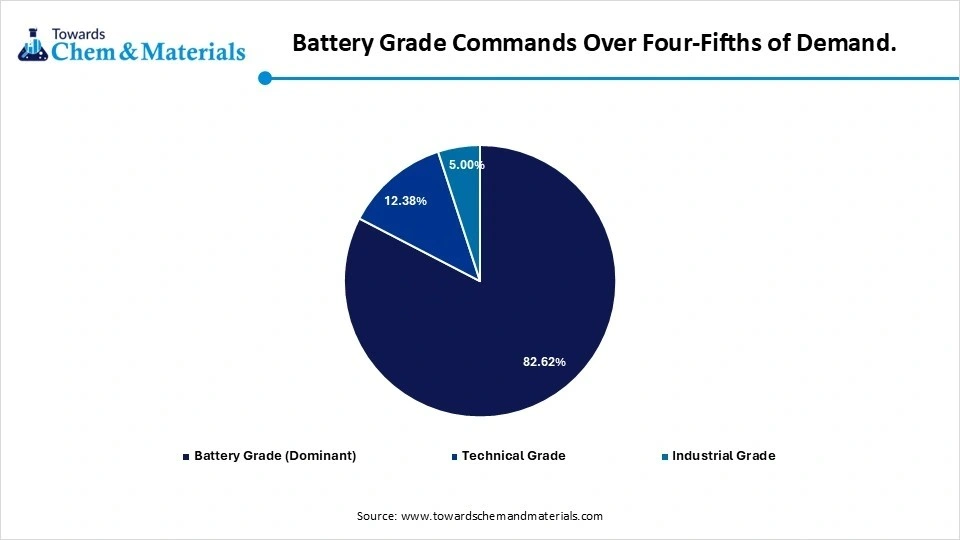
Battery Grade Commands Over Four-Fifths of Demand.
Source: Towards Chemical and Materials
The battery-grade segment dominated the market with an 82.62% share in 2025 and is expected to grow at a CAGR of 7.10% over the forecast period, driven by growing electric vehicle adoption and grid-scale energy storage systems, which boost raw material demand, and a surging rise in battery capacity supporting growth of the market. Rapid deployment of renewable energy storage accelerates the demand for high-purity battery-grade lithium compounds, supporting growth. The supply chain and refining capacity are vital to meet stricter battery chemistry requirements, supporting expansion of the market.
- Key Insight: With over four-fifths of the market in a single grade, qualification and supply-agreement dynamics for Battery Grade material effectively set the tone for the entire market.
Technical Grade Is the Fastest-Growing Purity Tier
Source: Towards Chemical and Materials
The technical grade segment held 12.38% market share in 2025 and is expected to have the fastest growth, with a CAGR of 23.95% in the forecast period, driven by optimizing processing and the expansion of downstream needs, which fuels growth. Technological advancements and new extraction technologies for efficient refining methods enable the manufacturing of high-purity technical-grade production having more cost efficiency and accessibility, boosting the growth and expansion of the market. The demand for technical-grade lithium carbonate is supported by increased manufacturing and industrial activity, supporting growth.
- Key Insight: The growing demand from industries due to its application results in growth in the forecast period.
By Source
Brine Extraction Remains the Backbone of Global Supply
Source: Towards Chemical and Materials
The brine segment dominated the market with a 65.22% share in 2025 and is expected to grow at a CAGR of 16.80% over the forecast period, driven by technological advancements and widespread adoption of Direct Lithium Extraction technologies, which are increasingly adopted by major producers like Albemarle and SQM to boost recovery rates, despite higher localized water and energy trade-offs, boosting the growth of the market. The segment expansion is closely related to rising adoption of electric vehicle and, and grid-scale energy storage requirements further support the growth and expansion of the market.
- Key Insight: new and innovative technologies are a key factor for segment dominance
Recycled Feedstock Is Scaling Fastest, Albeit From a Low Base.
The recycled sources segment held a 2.00% market share in 2025 and is expected to have the fastest growth, with a CAGR of 24.60% in the forecast period, driven by environmental regulations and an impending wave of retired electric vehicle batteries fueling the growth of the market. Supply chain resilience, raw material price volatility, and mining bottlenecks drive demand for recycled raw material and feedstock, which drives the growth of the market. Environmental regulations and regulatory mandates in regions increase the demand for sustainable routes, supporting market expansion.
- Key Insight: recycled sources and feedstock are growing fastest
By Battery Type
Lithium-Ion Chemistry Anchors Nearly 90% of Demand
Source: Towards Chemical and Materials
The lithium-ion batteries segment dominated the market with an 89.86% share in 2025 and is expected to grow at a CAGR of 23.81% over the forecast period, driven by the growing adoption of EVs and grid storage, which increases the demand for lithium-ion batteries. Beyond EVs, it is used for renewable energy integration, which supports the growth of lithium-ion battery deployments. The rapid rise of Lithium Iron Phosphate (LFP) battery cathodes specifically favors lithium carbonate over lithium hydroxide, accelerating direct carbonate consumption and supporting expansion.
- Key Insight: The growing end-use applications fuel its demand, resulting in dominance
Lithium-Metal Chemistries Set to Outpace Incumbent Li-ion
The lithium metal batteries segment held a 2.14% market share in 2025 and is expected to have the fastest growth, with a CAGR of 28.40% in the forecast period, driven by ongoing research in lithium metal batteries and ultra-lightweight requirements by major sectors like aerospace, electronics, and specialized portable defense electronics, supporting the growth of the market. Lithium-metal batteries represent a specialized, high-growth frontier segment due to their demand and applications, which propel the growth of the market and expansion of the market.
- Key Insight: The demand from industries is propelling the growth in the forecast period.
By Application
Electric Vehicles Absorb More Than Half of Global Demand.
 Source: Towards Chemical and Materials
The electric vehicle segment dominated the market with a 54.70% share in 2025 and is expected to grow at a CAGR of 22.80% over the forecast period, driven by the broader energy transition and electrification adoption, and rising production of electric vehicles boosts the growth of the market. Massive battery production and accelerated emission reduction targets due to growing regulatory mandates support the growth of the market. Clean mobility mandates and consumer incentives continue to propel automakers to increase EV output, boosting the growth and expansion of the market.
- Key Insight: The growing shift towards electrification results in growing demand and dominance.
Glass & Ceramics Emerges as the Fastest-Growing Application
The glass and ceramics segment held an 8% market share in 2025 and is expected to have the fastest growth, with a CAGR of 15.60% in the forecast period, driven by steady incremental growth in industrial applications and reduced energy consumption and manufacturing costs boosts the growth of the segment. It is widely used in construction and automotive demand for urban infrastructure, automotive production, and architectural growth; its performance and properties, like shock resistance, toughness, and overall durability, further boost the growth of the market.
- Key Insight: the wide and increasing infrastructure development projects drive demand.
By End User Industry
Automotive End-Users Dominate Lithium Carbonate Consumption.
Source: Towards Chemical and Materials
The automotive segment dominated the market with a 75.44% share in 2025 and is expected to grow at a CAGR of 22.70% over the forecast period, driven by the shift towards electrification and the adoption and integration of lithium iron phosphate cathodes, further driving growth of the market. The battery-grade lithium carbonate leads volume expansion due to tightening purity specifications required by global EV gigafactories, which leads to expansion of the market.
- Key Insight: The automotive segment dominated the market with a 75.44% share.
Energy Storage Is Closing the Growth Gap With Automotive.
The energy storage segment held a 15% market share in 2025 and is expected to have the fastest growth, with a CAGR of 24.41% in the forecast period, driven by the rapid transformation into a major global engine for the lithium carbonate market. The integration of renewable energy and decentralized storage systems to manage intermittency and stabilize grids fuels the growth of the market. Other growth factors are data centers and AI infrastructure development, and Chemistry preference boosts the growth and expansion of the market.
- Key Insight: The energy storage segment is the fastest-growing, with a 24.41% CAGR
Recent Developments
- In July 2026, Chinas Guangzhou Futures Exchange (GFEX) officially opened its lithium carbonate futures and options trading to eligible overseas international traders, boosting global price discovery and liquidity.(Source: www.orientfutures.com)
- In May 2026, Metso Corporation introduced an advanced single-pass alkaline leach technology designed to convert spodumene concentrate directly into battery-grade lithium carbonate with higher yields and lower operating expenses.(Source: www.metso.com)
- In July 2026, Empower EIT activated its fully integrated lithium platform, signaling a significant move towards commercial production after successfully generating battery-grade lithium carbonate at its new Dallas Operations & Innovation Center. The 17,000-square-foot facility exemplifies the company’s goal to establish a complete domestic lithium supply chain, integrating proprietary direct lithium extraction (DLE), conversion processes, and operational capabilities within a single platform. Empower EIT aims to achieve its first commercial sales by 2027.(Source: www.indianchemicalnews.com)
Top players in the Pigment Grade Lithium Carbonate Market & Their Offerings
Albemarle Corporation
Its headquarters are located in Charlotte, North Carolina, United States; its core business revolves around Specialty chemicals company; lithium, bromine specialties, and catalysts segments. It operates the only lithium-producing mine in North America and has joint-venture operations in Chile and Western Australia.
Sociedad Química y Minera de Chile (SQM)
Its headquarters are located in Santiago, Chile; its core business integrates Diversified chemicals production: lithium and lithium derivatives, iodine, specialty plant nutrition, potassium, and industrial chemicals. Sources brine from the Salar de Atacama; processes lithium chloride into carbonate and hydroxide at Salar del Carmen plants near Antofagasta.
Ganfeng Lithium Group Co., Ltd.
Its headquarters are located in Xinyu, Jiangxi Province, China; its core business Integrated lithium producer spanning resource extraction, lithium compound processing, and battery materials/manufacturing. Holds a 6.16% stake in Australias Pilbara Minerals; operations in Western Australia, Argentina, Mexico, and China.
Tianqi Lithium Corporation
Its headquarters are located in Chengdu, Sichuan Province, China; its core business integrates Lithium chemicals production with upstream mining and downstream hydroxide/carbonate processing. joint-venture partner with Albemarle at the Greenbushes mine (Western Australia), one of the worlds largest and highest-grade lithium deposits, operated for more than 30 years.
Rio Tinto Lithium (formerly Arcadium Lithium plc)
Its headquarters are located in Rio Tinto: London, United Kingdom / Melbourne, Australia (dual-listed parent); Arcadium Lithium was headquartered in Philadelphia, Pennsylvania, United States before acquisition, its core business integrates, Diversified mining major (Rio Tinto); lithium business combines Arcadiums mining assets (Argentina, Australia) with downstream conversion assets (United States, China, Japan, United Kingdom).
Other Top Players Are
- Albemarle Corporation
- Sociedad Química y Minera de Chile S.A. (SQM)
- Ganfeng Lithium Group Co., Ltd.
- Tianqi Lithium Corporation
- Arcadium Lithium (formed via Livent and Allkem merger)
- Mineral Resources Limited
- Pilbara Minerals Limited
- Rio Tinto
- Lithium Americas Corp.
- Contemporary Amperex Technology Co. Limited (CATL)
- IGO Limited
- Piedmont Lithium Inc.
- Shenzhen Chengxin Lithium Group Co., Ltd.
- Qinghai Salt Lake Industry Co., Ltd.
- Zhejiang Huayou Cobalt
- Eramet Group
- Liontown Resources
- Nemaska Lithium
- Sayona Mining Limited
- Sigma Lithium Corp
Expert insight
According to my research and assessment, the market is shifting towards energy storage and high-performance material development due to high demand from the EV and other core markets for advanced batteries and high-performance materials. Domestic production in regions to lower dependency and improve competitiveness among consumers and suppliers is a major factor in the forecast growth.
Our Experts
Videsh Swar led the research based on primary market research, analysis, and optimization of market trends, segmental and regional trends, methodology, growth opportunities, competitive analysis, volume and market growth, pricing and manufacturing analysis, and optimizing product performance for the forecast period.
Aman is responsible for providing and analysing company insights, regulations, statistical analysis and optimization, partnerships and collaborations between companies, and quantitative data that help strengthen market expansion.
Aditi reviewed the entire research document, conducted quality checks, validated the findings, refined the content, corrected inconsistencies, and finalized the report to ensure accuracy, clarity, credibility, and readiness for publication.
Complete Market Segmentation Listing
By Grade
- Battery Grade
- Standard battery grade
- High-purity battery grade
- Technical Grade
- Glass and ceramics grade
- Industrial processing grade
- Industrial Grade
- Metallurgical grade
- Chemical-processing grade
By Source
- Brine
- Salar brines
- Geothermal brines
- Oilfield/produced-water brines
- Hard-Rock
- Spodumene
- Petalite
- Clay and Sedimentary Sources
- Lepidolite
- Hectorite/clay deposits
- Recycled Sources
- Spent lithium-ion batteries
- Battery manufacturing scrap
By Battery Type
- Lithium-ion Batteries
- Lithium iron phosphate (LFP)
- Nickel manganese cobalt (NMC)
- Nickel cobalt aluminum (NCA)
- Lithium manganese oxide (LMO)
- Lithium cobalt oxide (LCO)
- Lithium-metal Batteries
- Solid-state lithium-metal
- Lithium-metal research and pilot cells
- Other Battery Types
- Specialty rechargeable batteries
- Advanced lithium-based batteries
By Application
- Electric Vehicles
- Passenger EVs
- Commercial EVs
- Electric buses
- Electric two- and three-wheelers
- Energy Storage Systems
- Utility-scale storage
- Commercial and industrial storage
- Residential storage
- Consumer Electronics
- Smartphones
- Laptops and tablets
- Wearables
- Portable electronics
- Glass & Ceramics
- Specialty glass
- Ceramic bodies
- Glass-ceramic products
- Pharmaceuticals
- Lithium-based therapeutic products
- Pharmaceutical intermediates
- Cement & Construction
- Specialty cement
- Concrete additives
- Other Applications
- Lubricating greases
- Air-treatment systems
- Metallurgy
- Specialty chemicals
By End-User Industry
- Automotive
- Passenger vehicles
- Commercial vehicles
- Two- and three-wheelers
- Energy Storage
- Grid storage
- Renewable-energy storage
- Behind-the-meter storage
- Consumer Electronics
- Mobile devices
- Computing devices
- Portable electronics
- Industrial & Metallurgy
- Steel and aluminum processing
- Specialty alloys
- Industrial chemicals
- Glass & Ceramics
- Flat glass
- Container glass
- Technical ceramics
- Healthcare & Pharmaceuticals
- Therapeutic formulations
- Pharmaceutical manufacturing
- Construction
- Cement
- Concrete
- Specialty construction materials
By Regions
- North America
- Europe
- Asia Pacific
- Middle East & Africa
- Latin America
A Seven-Phase Framework
Our methodology is designed to be universally applicable across commodity chemicals, specialty chemicals, petrochemicals, construction chemicals, coatings, electronic chemicals, industrial gases, agrochemicals, water treatment chemicals, and performance materials. Each phase builds upon the last, creating a layered validation structure that minimizes estimation error and maximizes analytical confidence.
The framework ensures comprehensive market coverage, robust cross-validation, and reliable long-term forecasting — producing market estimates that withstand scrutiny from investors, regulators, and corporate strategy teams.

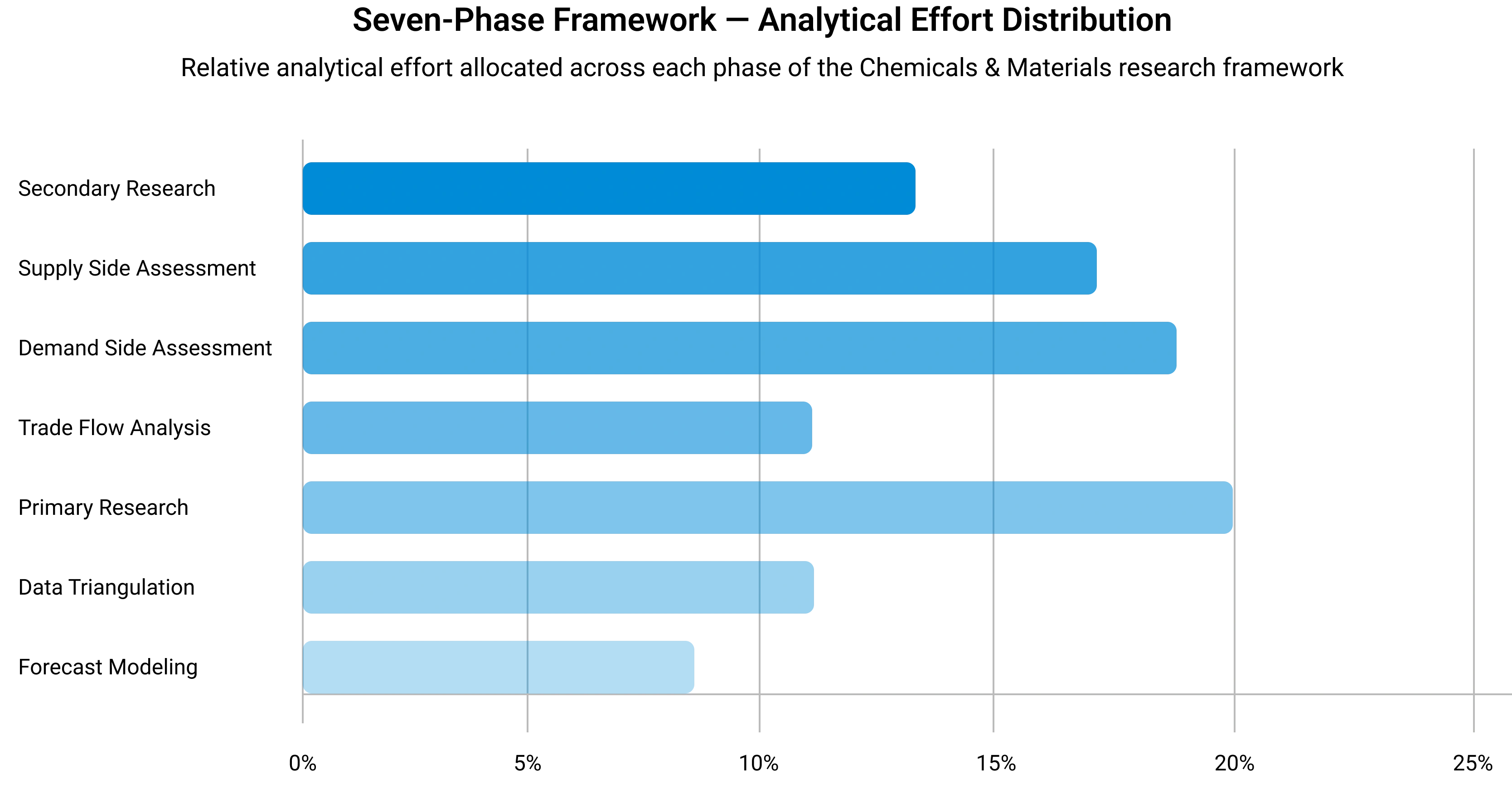
Seven-Phase Framework — Analytical Effort Distribution
Relative analytical effort allocated across each phase of the Chemicals & Materials research framework
Phase 1 - Secondary Research: Establishing the Foundation
Secondary research collects and evaluates publicly available information from authoritative sources, establishing the foundational understanding of market structure, value chain dynamics, competitive landscape, and end-use demand patterns. Every source is evaluated for credibility, recency, geographic relevance, and methodological soundness before inclusion.
Industry Associations
Sources include ACC, CEFIC, ICCA, JCIA, CPCIF, and SOCMA providing production volumes, consumption trends, capacity developments, and sustainability initiatives.
Company Disclosures
Annual reports, investor presentations, earnings transcripts, and regulatory filings reveal product portfolios, manufacturing footprints, capacity expansions, and revenue segmentation.
Government Databases
National statistical offices, customs authorities, environmental agencies, and industrial production databases provide verified statistics on output, trade flows, and regulatory compliance.
Trade Databases
UN Comtrade, ITC, Eurostat, and national customs authorities enable assessment of global product movement, import dependency, and export competitiveness across regions.
Our Secondary Research Sources
- Ministry of Chemicals and Fertilizers
- European Chemicals Agency
- United States Department of Energy
- Ministry of Industry and Information Technology
- Ministry of Economy Trade and Industry
- Ministry of Trade Industry and Energy
- National Institute of Standards and Technology
- Council of Scientific and Industrial Research
- Fraunhofer Society
- National Institute for Materials Science
Phase 2 — Supply-Side Assessment: Mapping Production Capabilities
Production Capacity Analysis
All major manufacturers are assessed for existing installed capacity, planned additions, expansions, new plant announcements, and technology adoption — mapped at global, regional, and country levels.
Capacity Utilization Adjustment
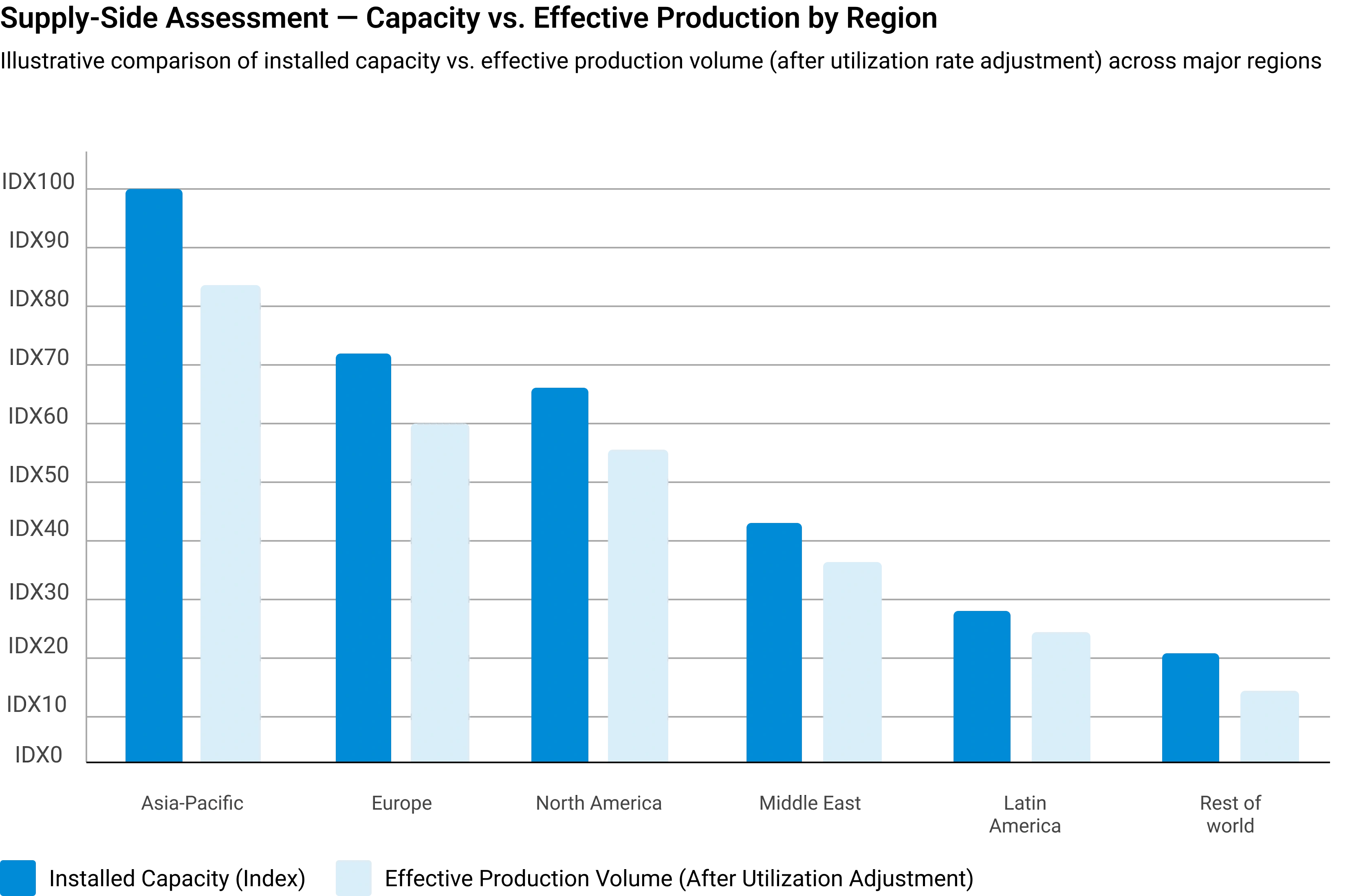
Installed capacity is adjusted using utilization rates based on demand conditions, feedstock availability, plant operating rates, maintenance schedules, and regulatory restrictions.
Manufacturer Revenue Analysis
Product-specific revenues, segment-level performance, regional distribution, average selling prices, and margin trends are evaluated to establish market value estimates.
Supply-Side Assessment — Capacity vs. Effective Production by Region
Illustrative comparison of installed capacity vs. effective production volume (after utilization rate adjustment) across major regions
Phase 3 — Demand-Side Assessment: Quantifying Chemical Consumption
Demand-side analysis quantifies chemical consumption across industries, applications, and geographies — identifying where and how chemicals are consumed throughout the value chain with precision.
End-Use Industry Analysis
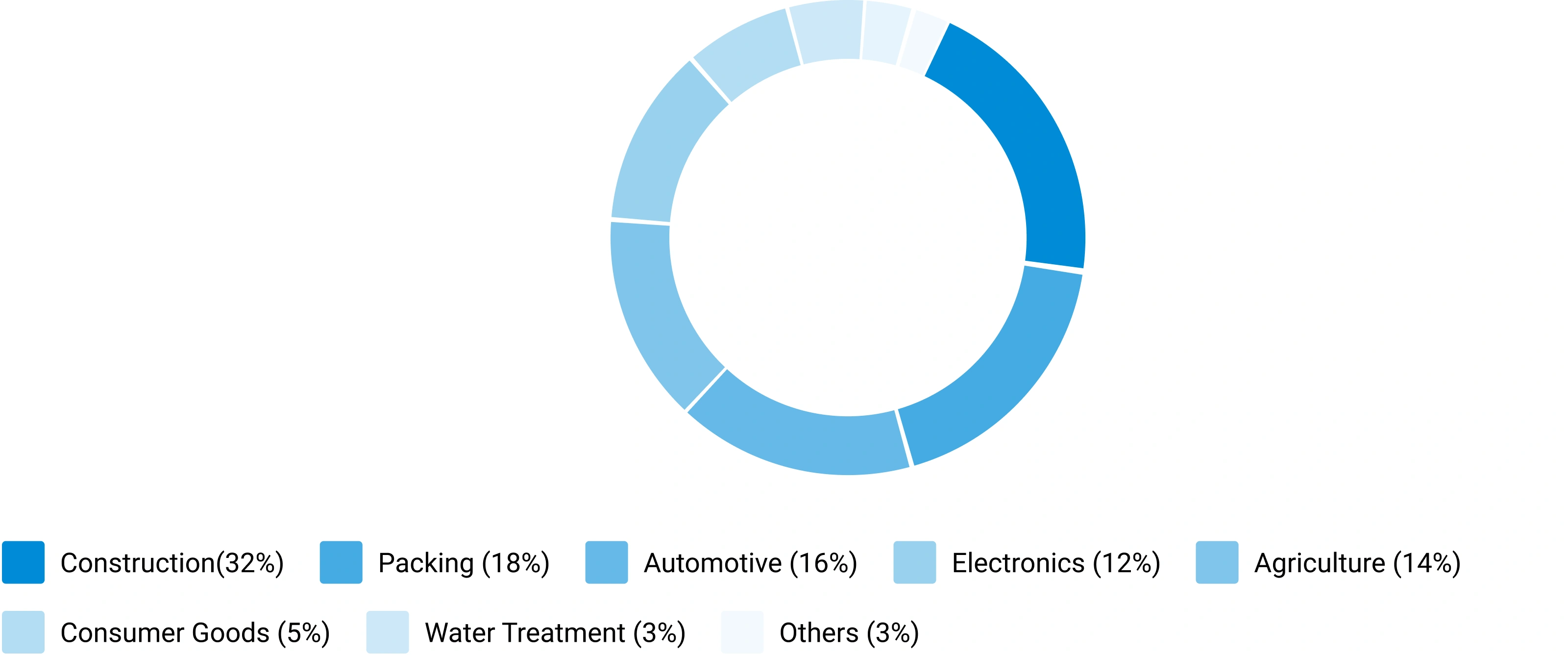
Chemical demand is evaluated across automotive, construction, packaging, electronics, agriculture, healthcare, consumer goods, industrial manufacturing, energy and utilities, and water treatment. Industry output, production trends, and consumption intensity are analyzed to determine demand patterns.
Consumption Modeling
Demand is estimated using measurable indicators: kilograms per vehicle, kilograms per square meter of construction, dosage per cubic meter of water treated, kilograms per hectare of agricultural land, and kilograms per ton of manufactured products. Consumption factors are validated through industry publications and primary interviews.
Application Analysis
The market is segmented by application area to understand product performance requirements, formulation trends, technology adoption, customer preferences, and regulatory requirements improving demand accuracy and segmentation granularity.
Demand-Side Assessment — End-Use Industry Demand Distribution
Illustrative distribution of chemical & materials demand across key end-use industries
Phase 4 - Trade Flow Analysis: Balancing Regional Supply and Demand
Trade flow analysis reconciles regional supply and demand estimates through import and export data, identifying net supply positions, regional dependencies, and market imbalances. It serves as an independent validation layer that tests the consistency of supply-side and demand-side estimates.
Import Analysis
Import data is evaluated to determine volumes, source countries, product dependency, regional supply gaps, and pricing trends — identifying markets that rely heavily on external supply and where domestic production is insufficient to meet demand.
Export Analysis
Export assessments reveal production surplus, export competitiveness, regional manufacturing strength, and global market participation. Export patterns also help validate domestic production estimates and identify net exporting regions.
Apparent Consumption Model
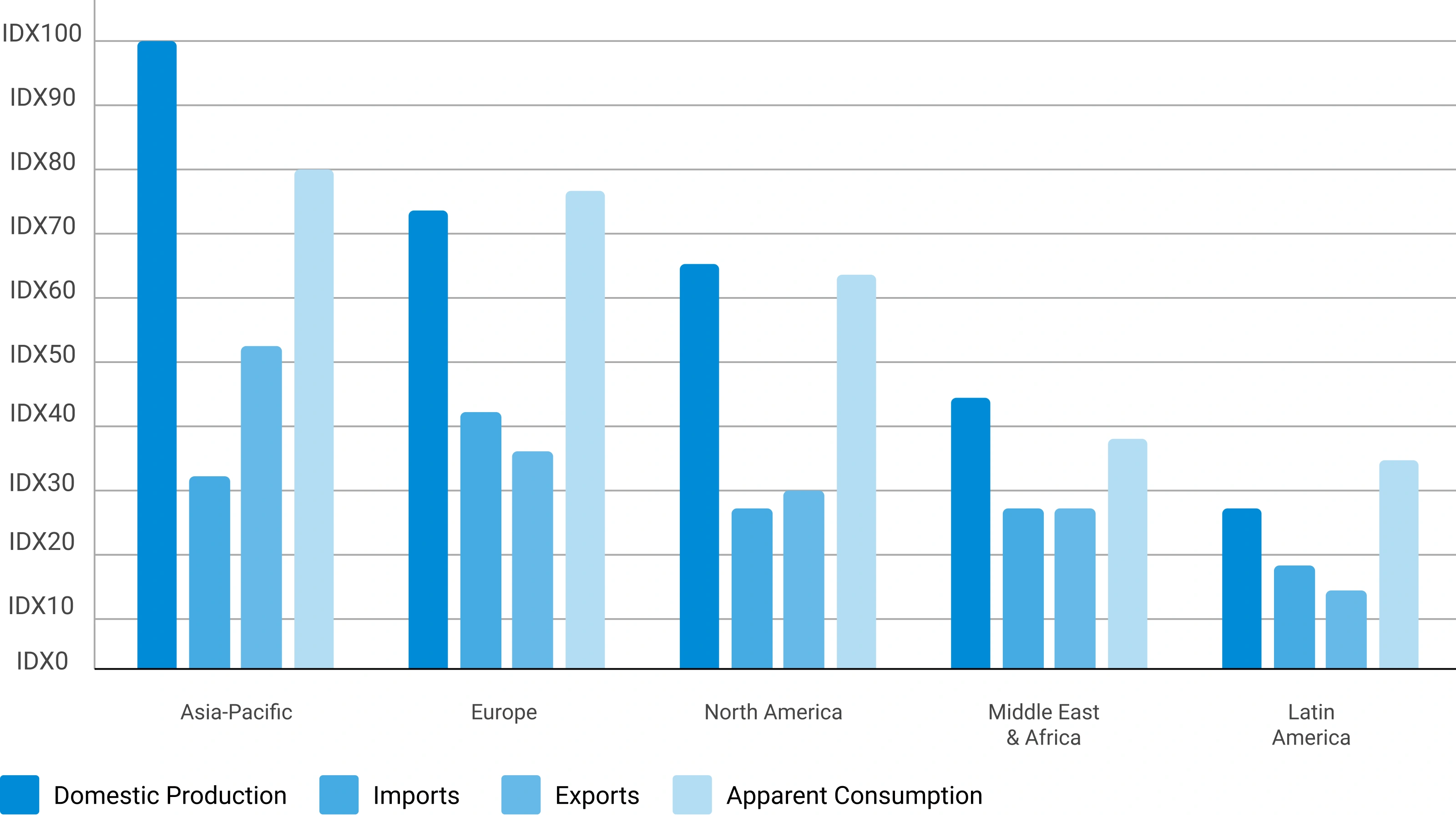
Regional consumption is assessed using the standard apparent consumption formula:
Results identify net importing regions, net exporting regions, regional deficits, and surpluses — serving as an independent validation of supply and demand estimates.
Trade Flow Analysis — Net Supply Position by Region
Illustrative apparent consumption vs. domestic production across major regions — positive gap indicates net import dependency
Phase 5 — Primary Research: The Critical Validation Layer
Primary research tests and refines findings from secondary research through direct engagement with industry participants across the supply chain, demand side, and expert community. It captures intelligence that no database or published report can provide — the real-world experience of manufacturers, buyers, and specialists operating in the market.

Supply-Side Interviews
Conversations with chemical manufacturers, raw material suppliers, contract manufacturers, technology providers, and plant operators cover production trends, capacity utilization, pricing developments, technology shifts, and competitive dynamics.

Demand-Side Interviews
Engagement with OEMs, industrial consumers, procurement managers, distributors, formulators, and end-use manufacturers focuses on consumption trends, purchasing behavior, product substitution, demand outlook, and emerging applications.

Industry Expert Consultations
Additional interviews with industry consultants, independent experts, regulatory specialists, technical professionals, and research institutions provide deeper market context and validate key analytical assumptions.
Focus Areas of Primary Research:
Market Size & Forecast Validation
Revenue estimates, volume consumption, growth rates, forecast assumptions, regional demand.Supply Chain & Value Chain Assessment
Raw material sourcing, supply chain challenges, distribution networks, procurement practices.Production & Capacity Analysis
Manufacturing capacity, utilization rates, expansion projects, plant investments.Pricing & Cost Structure Analysis
Product pricing trends, feedstock costs, energy costs, margin pressures, pricing outlook.Competitive Landscape Assessment
Volume and value estimates confirmed to be fully consistent with one another before publicationInterview Volume by Market Scope
| Study Scope | Number of Interviews |
|---|---|
| Niche Market | 20 – 30 |
| Mid-Sized Market | 30 – 50 |
| Global Market | 50 – 80 |
| Highly Fragmented Market | 80 – 120 |
Interview Details:
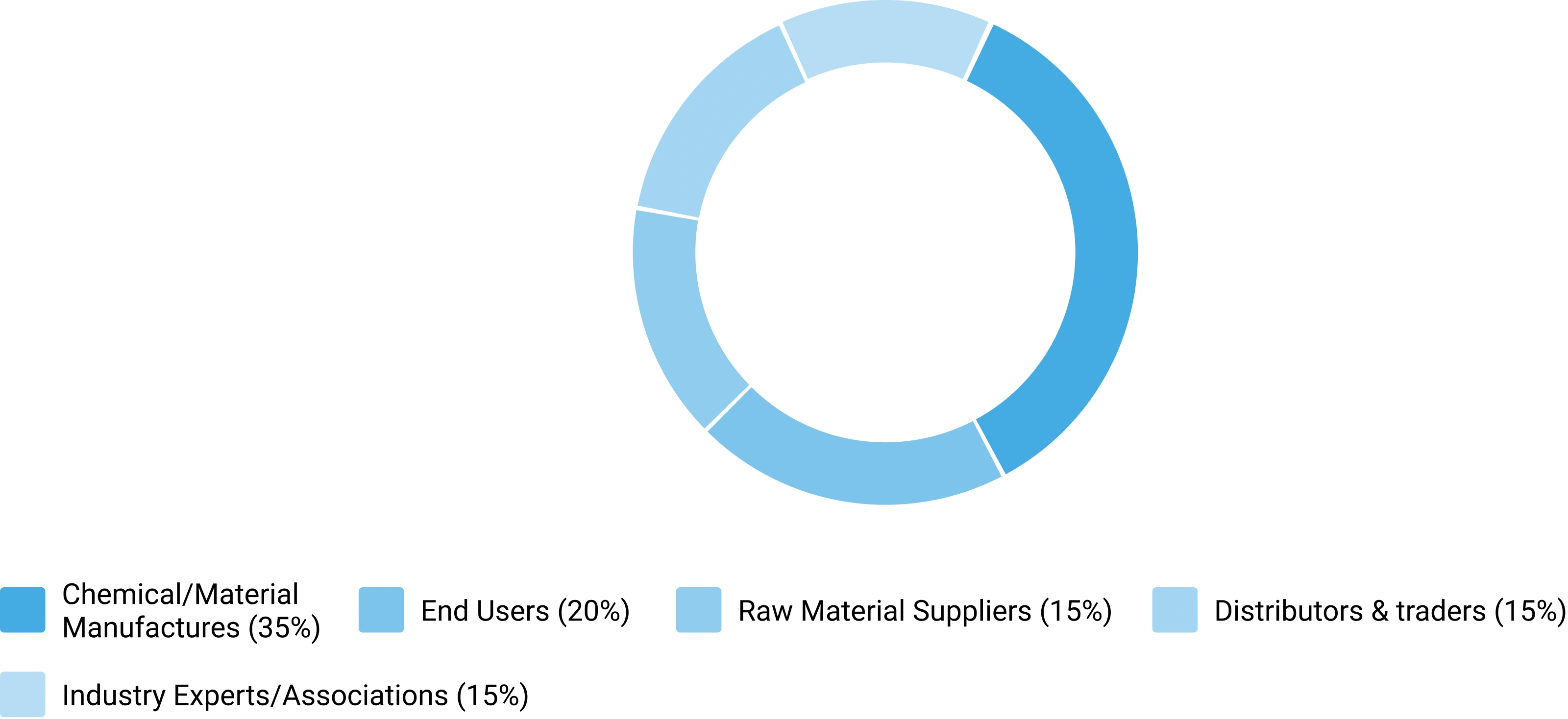
Category : Manufacturers, Suppliers, Distributors, End Users, Experts/Associations
Average Duration : 30–60 Minutes
Interview Mode : Video calls, telephonic interviews, expert consultations
Interview Format : Structured / Semi-Structured questionnaire
Focus Areas of Primary Research:
Market Size & Forecast Validation :
Revenue estimates, volume consumption, growth rates, forecast assumptions, regional demand.
Supply Chain & Value Chain Assessment :
Raw material sourcing, supply chain challenges, distribution networks, procurement practices.
Production & Capacity Analysis :
Manufacturing capacity, utilization rates, expansion projects, plant investments.
Pricing & Cost Structure Analysis :
Product pricing trends, feedstock costs, energy costs, margin pressures, pricing outlook.
Competitive Landscape Assessment :
Market share, competitor positioning, strategic initiatives, partnerships, acquisitions.
Primary Research — Stakeholder Coverage by Category
Distribution of interview respondents across stakeholder categories (% share from PPT data)
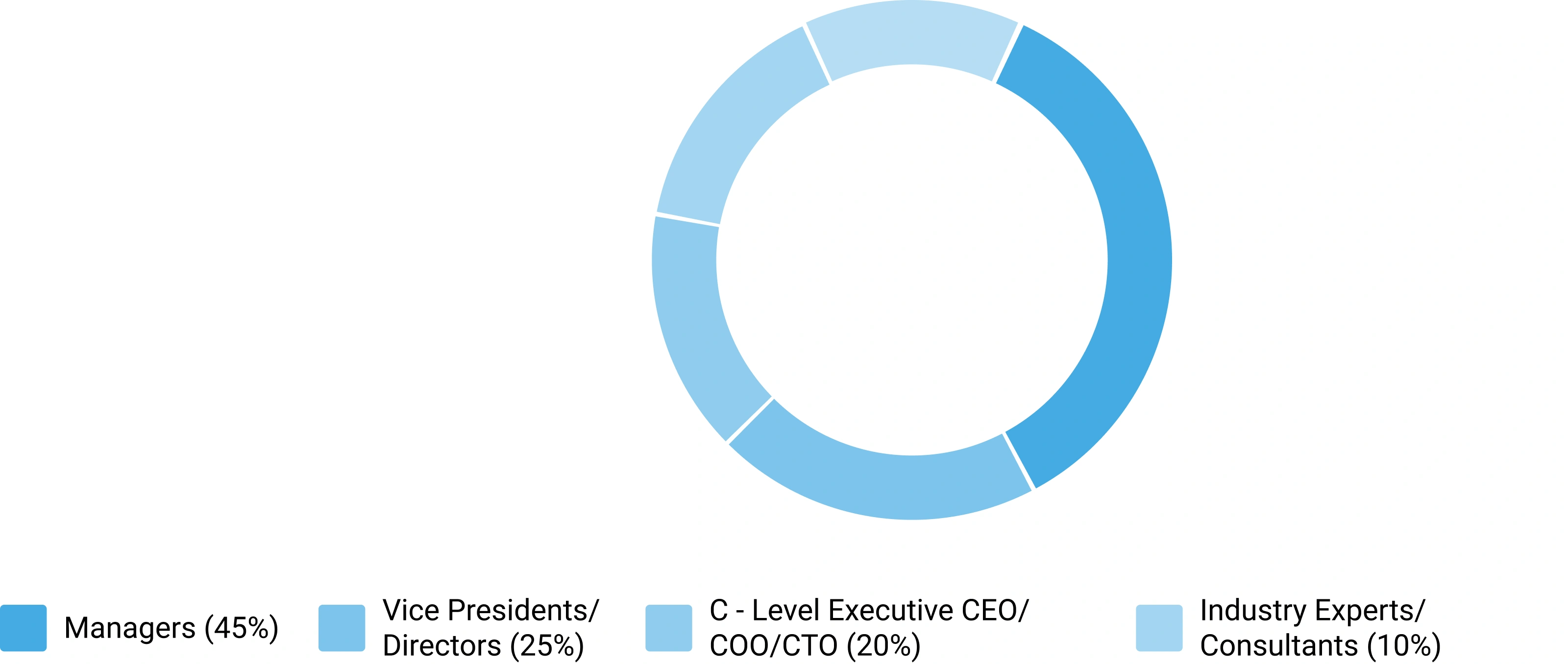
Primary Research — Respondent Designation Profile
Seniority breakdown of interview respondents (% share from PPT data)
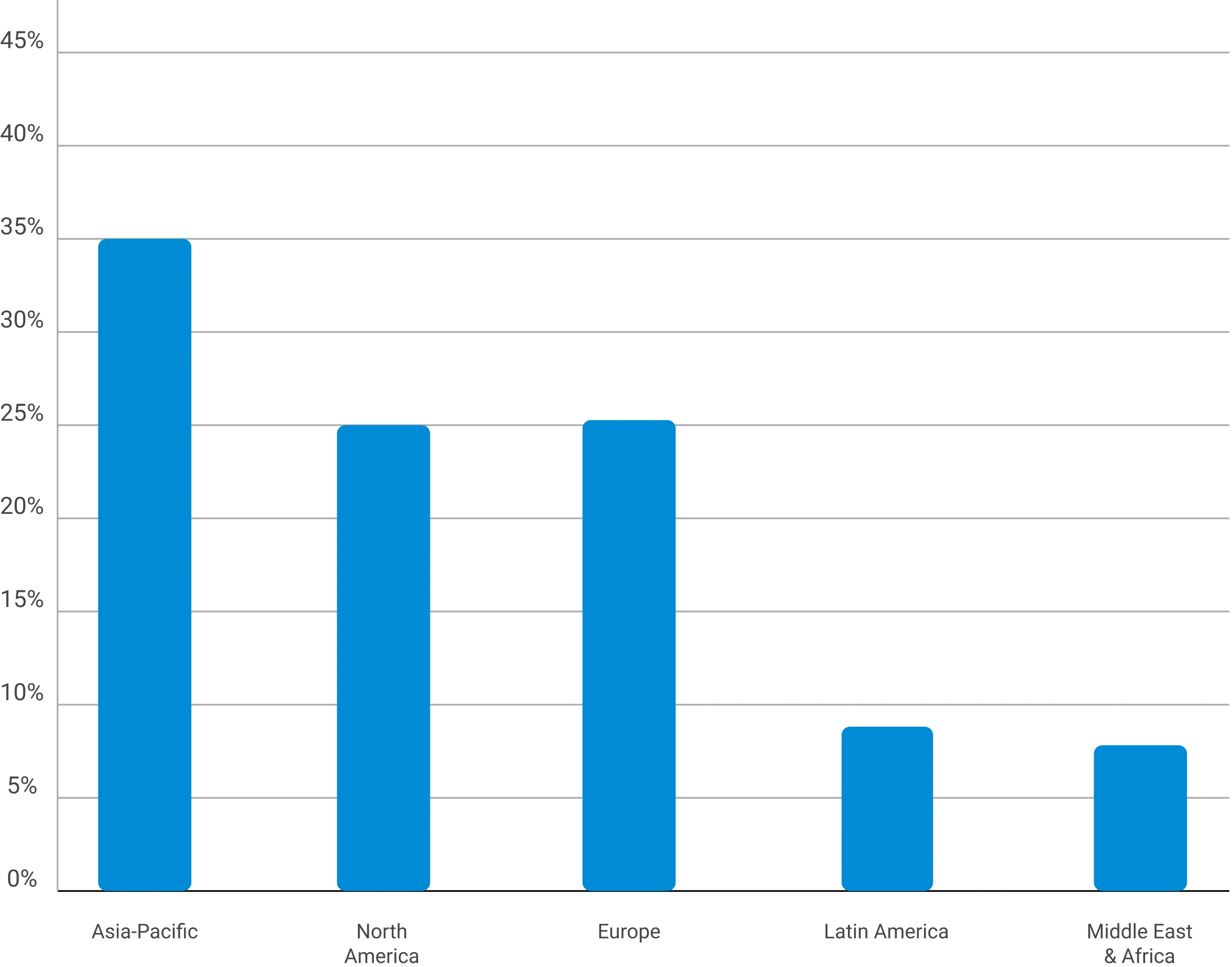
Primary Research — Geographic Coverage of Interviews
Regional distribution of primary research engagement (% share from PPT data)
Phase 6 — Data Triangulation and Market Validation
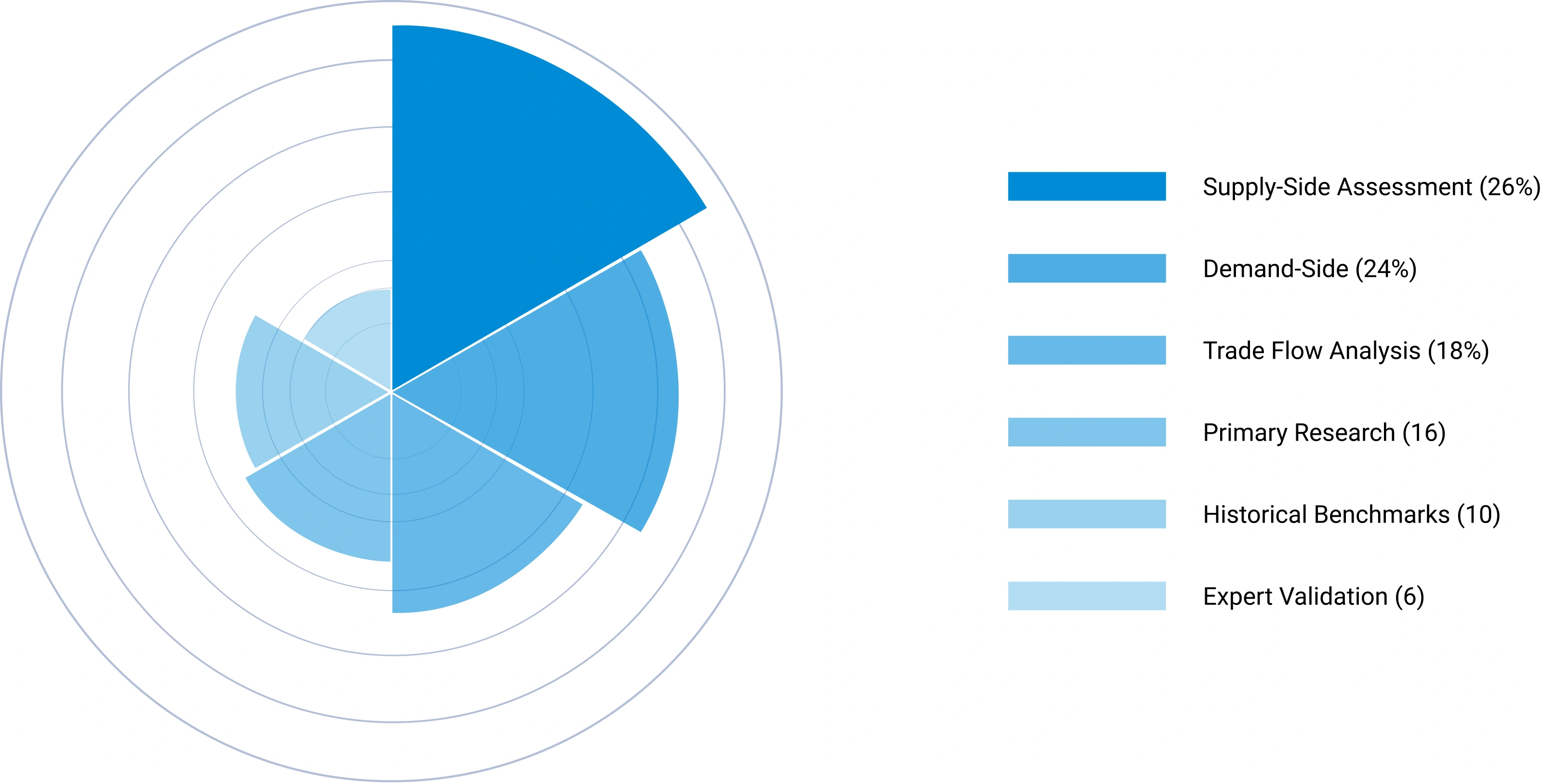
No single methodology is relied upon in isolation. Multiple independent estimation approaches are combined and reconciled to ensure consistency, accuracy, and analytical defensibility. Any material deviations between approaches are investigated and adjusted through additional validation cycles.
The final market size is derived through weighted triangulation of all validated methodologies. Any material deviations between approaches are investigated and adjusted through additional validation cycles. The outcome represents the most realistic assessment of the market based on available evidence and expert confirmation ensuring that volume and value estimates are fully consistent with one another.
Triangulation Framework — Input Contribution Weight
Relative weight each sizing input contributes to the final reconciled market estimate
Phase 7 — Forecast Modeling: Projecting Future Market Evolution
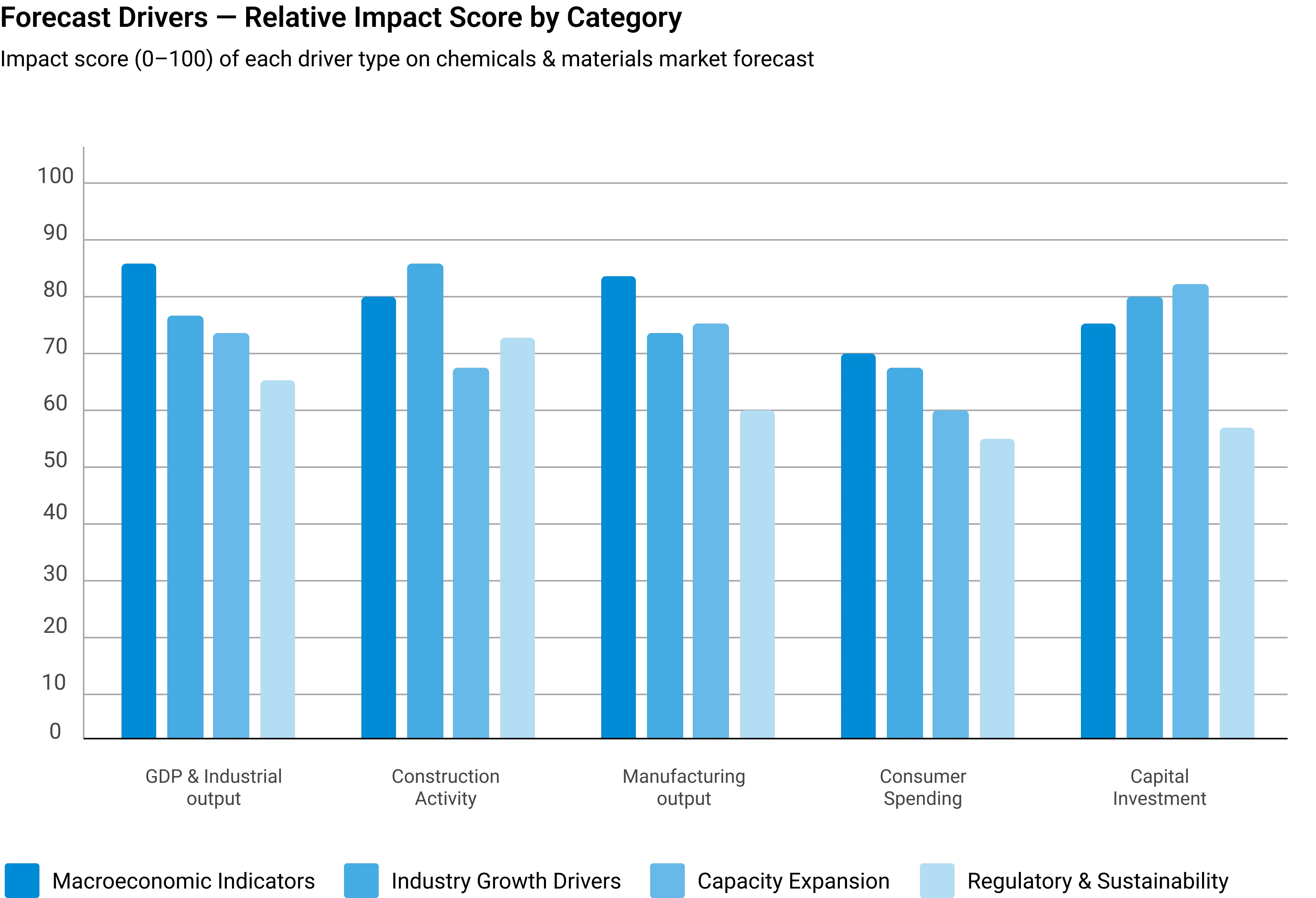
Forecasting evaluates the future trajectory of the market using a combination of quantitative indicators and qualitative assessments across economic, industry, and regulatory dimensions. Rather than simple extrapolation, each driver is independently modeled and integrated into a composite forecast.
Macroeconomic Indicators
GDP growth, industrial production, manufacturing output, construction activity, consumer spending, and capital investment form the quantitative foundation of long-term demand projections. These are applied at country, regional, and global levels.
Industry Growth Drivers
Urbanization, infrastructure development, industrialization, technological innovation, sustainability initiatives, and evolving product performance requirements are assessed at regional and industry levels — capturing both structural and cyclical demand drivers.
Capacity Expansion Analysis
Announced plant expansions, new manufacturing facilities, technology upgrades, and strategic investments are evaluated to determine future supply-demand dynamics and potential market tightness or oversupply situations.
Regulatory & Sustainability
Environmental regulations, chemical safety standards, emission reduction targets, circular economy initiatives, and sustainability requirements are incorporated as they often influence product adoption rates and market growth trajectories.
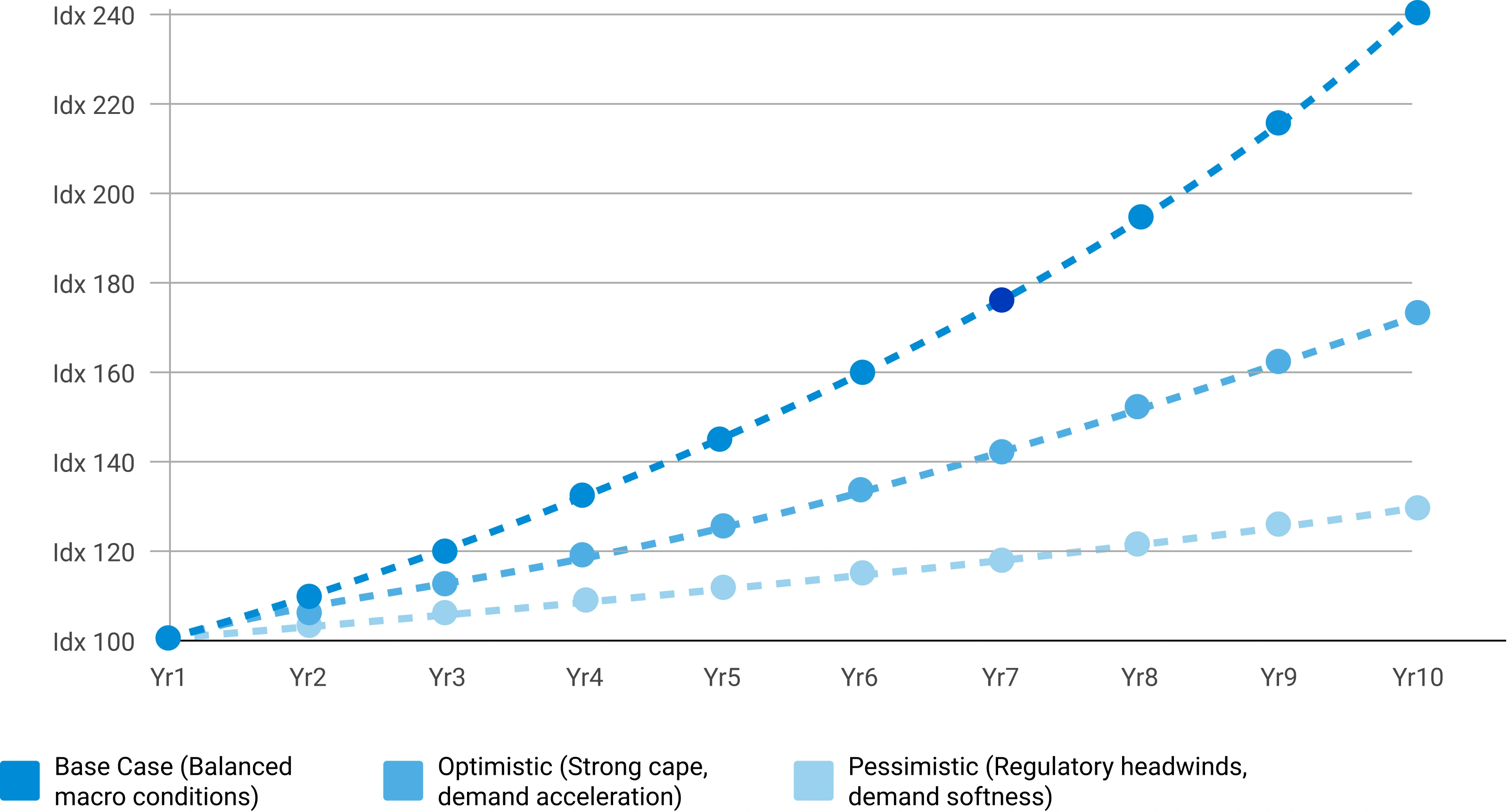
Scenario Forecast Range — Indexed Market Growth (Year 1–10)
Illustrative indexed growth trajectories across Base, Optimistic, and Pessimistic scenarios over a 10-year forecast horizon
Forecast Drivers — Relative Impact Score by Category
Impact score (0–100) of each driver type on chemicals & materials market forecast



Comments
Share your thoughts, ask a question, or provide feedback about this report.