
What is the Bemotrizinol Market Size and Share?
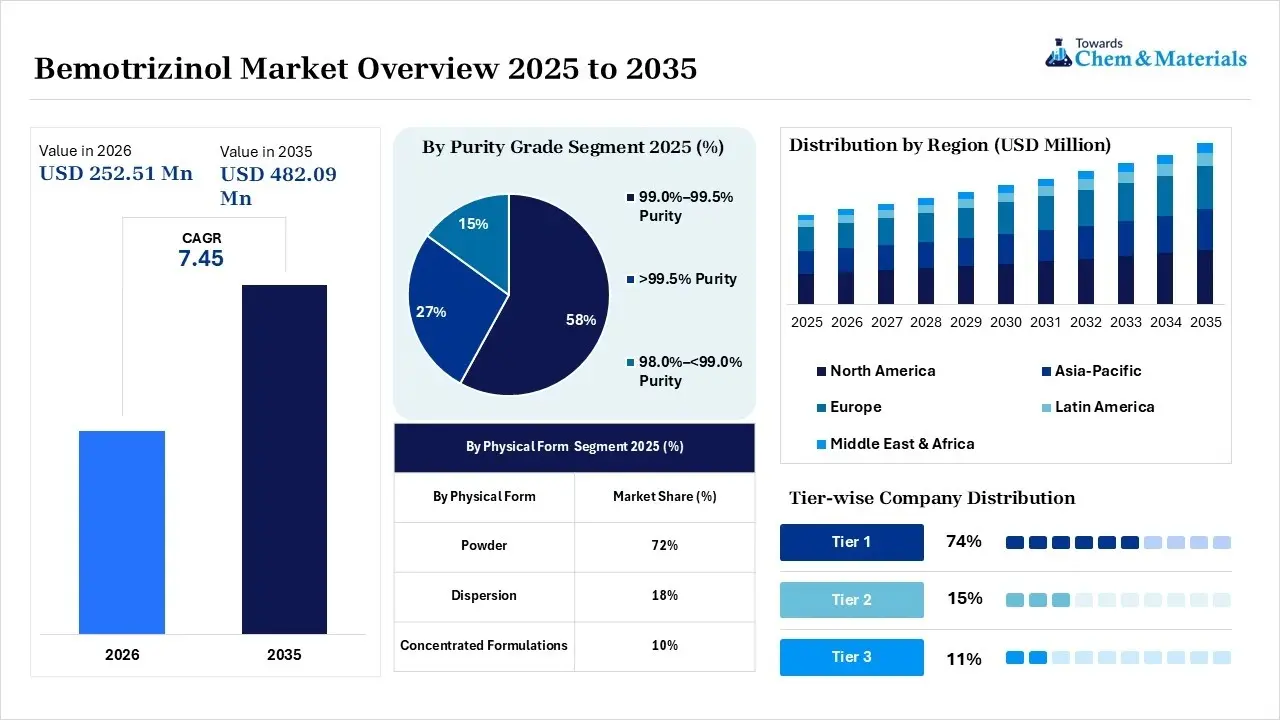
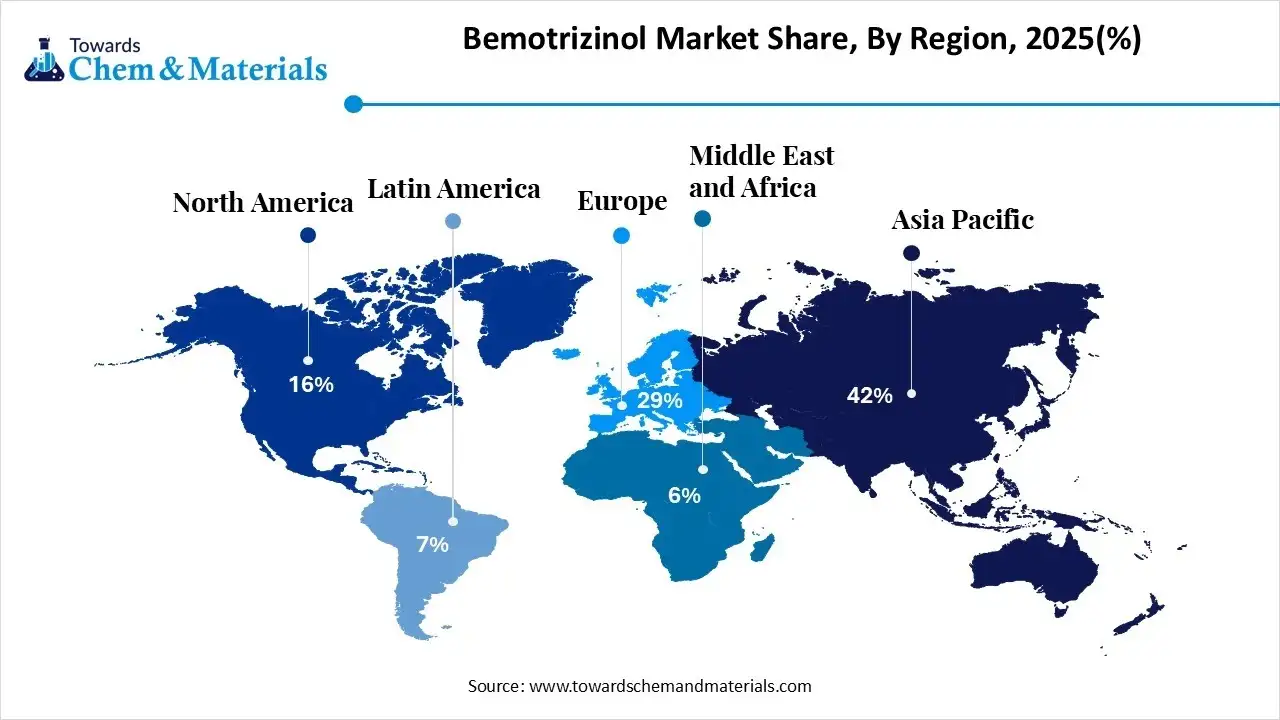
The global bemotrizinol market size was valued at USD 235.00 million in 2025, is estimated to reach USD 252.51 million in 2026, and is projected to reach USD 482.09 million by 2035, exhibiting a compound annual growth rate (CAGR) of 7.45% over the forecast period from 2026 to 2035.Asia Pacific dominated the bemotrizinol market with the largest revenue share of 42% in 2025 and is expected to grow at the fastest CAGR of 7.58% during the forecast period. Growth is being driven by rising skin cancer awareness, growing concerns about photoaging, improved photostability, the multi-functional skincare niche, and key regulatory breakthroughs.
Market Highlights
- By region, Asia Pacific dominated the bemotrizinol market by holding 42% share in 2025 and is expected to grow at a CAGR of 8% during the forecast period.
- By region, North America held 16% market share in 2025 and is expected to grow at the fastest with a CAGR of 11.8% during the forecast period.
- By purity grade, the 99.0%-99.5% Purity segment dominated the market with the largest share of 58% in 2025 and is expected to grow at a CAGR of 7.2% during the forecast period.
- By purity grade, the >99.5% Purity segment held 27% market share in 2025 and is expected to grow at the fastest CAGR of 9.1% over the forecast period.
- By physical form, the powder segment dominated the market with the largest share of 72% in 2025 and is expected to grow at a CAGR of 6.9% during the forecast period.
- By physical form, the dispersion segment held 18% market share in 2025 and is expected to grow at the fastest CAGR of 9.4% over the forecast period.
- By application, the sunscreens segment dominated the market with the largest share of 64% in 2025 and is expected to grow at a CAGR of 7.3% during the forecast period.
- By application, the day care & daily skin care segment held 22% market share in 2025 and is expected to grow at the fastest CAGR of 9% over the forecast period.
- By end user, the cosmetic & personal care manufacturers segment dominated the market with the largest share of 47% in 2025 and is expected to grow at a CAGR of 7.5% during the forecast period.
- By end user, the contract manufacturers & OEM/ODM segment held 28% market share in 2025 and is expected to grow at the fastest CAGR of 9.2% over the forecast period.
- By distribution channel, the direct sales segment dominated the market with the largest share of 56% in 2025 and is expected to grow at a CAGR of 7% during the forecast period.
- By distribution channel, the specialty chemical distributors segment held 29% market share in 2025 and is expected to grow at the fastest CAGR of 8.7% over the forecast period.
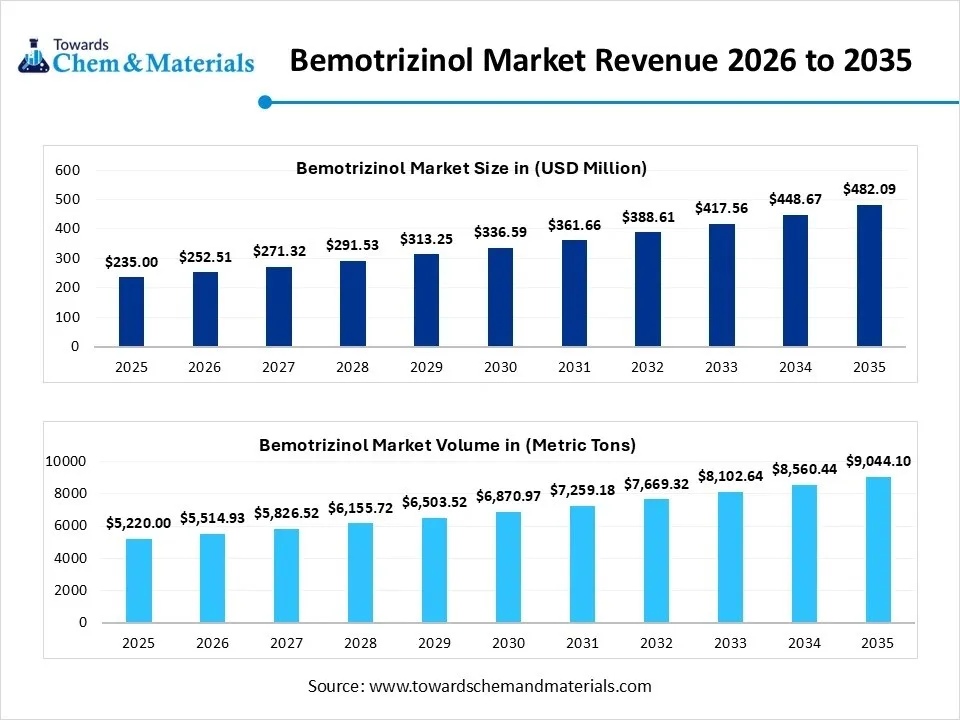
According to Towards Chemicals and Materials Analytics and Consulting, the global bemotrizinol market volume was valued at 5,220.0 metric tons in 2025 and is expected to surpass around 9,044.1 metric tons by 2035, accelerating a compound annual growth rate (CAGR) of 5.65% over the forecast period from 2026 to 2035.
Advancing High-Performance UV Protection Through Regulatory and Cosmetic Innovation
Bemotrizinol (also called Tinosorb S or PARSOL Shield) is a wide-spectrum UV filter that is becoming more popular in high-quality sun care products. There is increasing awareness in the market of the issues with photoaging from UVA and non-melanoma skin cancers and melanoma. It has higher resistance to photo-aging than other chemical filters. Multi-functional daily skin care products, such as those that offer sun protection, moisturization, and anti-aging properties, also boost demand. Regulatory changes are changing regional opportunities, too, especially after the U.S. approval. The rebuke of older organic filters from consumers helps to spur reformulation for better performance and cosmetic fit.
- For instance, in June 2026, the U.S. Food and Drug Administration (FDA) approved bemotrizinol as one of a group of newly approved active ingredients for OTC sun cream products, as part of a list of 14 new active ingredients that were included in the OTC sun cream product monograph.(Source: www.fda.gov)
Global Investment Movement for the Bemotrizinol Market
Recent regulatory advances are ushering in possibilities for businesses to participate in commercial ventures in previously limited markets based on bemotrizinol. The U.S. approval is especially solidifying prospects for potential market access in North America.
The improvement of the solubilization, stability, sensory properties, and compatibility of bemotrizinol in multiple functional cosmetic formulations is becoming a focus of investment. These technologies enable lightweight products that are better accepted by consumers.
The trend of manufacturing investment is increasingly toward synthesis efficiency improvement, purification, process consistency, and production automation. Process optimization with the help of AI can assist in managing the process more efficiently, including controlling reactions and impurity management.
What is Bemotrizinol?
Bemotrizinol is a high-performance, broad-spectrum UV filter (also called Tinosorb S or PARSOL Shield). Offering broad-spectrum and high photostability for sunscreen and personal care products, it is also UVA/UVB-protective and cosmetically compatible.
Uses of Bemotrizinol
- Advanced Sunscreen Formulations: Bemotrizinol is extensively used in sunscreen products, as it offers broad-spectrum protection and is very photostable under exposure to solar radiation.
- Daily Skincare Products: The ingredient is suitable for moisturizers and skincare products that need to contain integrated sun protection. It is beautifully styled, allowing for light doses that can be applied regularly.
- Anti-Aging Formulations: Bemotrizinol can be used in anti-aging skincare products to help solve the problem of photoaging caused by UVA. Its versatility with everyday cosmetics adds to its value in multifunctional skincare.
- Makeup-Compatible Sun Care: Owing to its ability to offer distinct coverage with little white residue, bemotrizinol is appropriate for such products that can be used under makeup and during the day.
Report Scope
|
Report Attributes |
Details |
| Market Size in 2026 | USD 252.51 Million /5,514.9 Metric Tons |
| Expected Size in 2035 | USD 482.09 Million / 9,044.1 Metric Tons |
| Growth Rate | 7.45% |
| Base Year of Estimation | 2025 |
| Forecast Period | 2025–2035 |
| Dominant Region | Asia Pacific |
| Segment Covered | By Purity, By Physical Form, By Application, By End User, By Distribution Channel, By Region |
| Key Companies Profiled | BASF, DSM-Firmenich, Ashland Inc, Clariant, Uniproma, Sarex, MFCI, Chongqing Werlchem New Materials, Fujian Disheng Technology, Nanjing COSMOS Chemical, 3V Sigma, Chemspec Chemicals, Kenvue |
Recent Market Trends
- The increasing focus on formulations with extended protection has been a boon for bemotrizinol, as the product is very photostable. Compared with older chemical filters, it performs better and does not break down easily when exposed to sunlight.
- UV protection is now added to everyday skin care and makeup-compatible products by cosmetic manufacturers. Bemotrizinol is used for lightweight formulations, without heavy white cast concerns, in various skin tones.
- As more and more people demand better-tolerated filters, and as governments and regulators pay closer attention to older organic filters, brands are testing out newer filters to ensure they are safe and well-tolerated. This helps to reformulate opportunities for bemotrizinol.
Key Technological Shifts and AI in the Bemotrizinol Market
AI is used in chemical engineering and formulation science to optimize the synthesis, stabilization, and cosmetic performance of bemotrizinol. Retrosynthetic analysis can be facilitated with the help of AI algorithms, which can provide insights into the most efficient reaction pathways and possible process impurities. These machine learning tools can be used in conjunction with continuous flow reactors to optimize the temperature, catalysts, and stoichiometry in real time. AI can predict polymer and emollient networks, which can enhance the solubilization and emulsion stability in formulation development. Synergistic UV absorption and Photostability can be screened in bemotrizinol combinations with avobenzone or ethylhexyl triazone with the help of machine learning.
- For Instance, in August 2026, Haut.AI presented Clinical Studies Software, which can measure 48 face, body, and hair biomarkers while allowing skin care, ingredient, and dermatology companies to carry out their studies remotely and on a hybrid basis.(Source: cosmeticsbusiness.com)
Supply Chain Analysis of the Bemotrizinol Market
Feedstock Procurement
- High-quality chemical precursors for the production of bemotrizinol are 2,4-dihydroxybenzophenone and specialty cyanuric chloride derivatives.
- Consistent sourcing of precursors enables consistent synthesis, purity, and production continuity in commercial bemotrizinol production.
- BASF: BASF owns its supply of precursor chemical streams and vertically integrates it in its flagship product Tinosorb S.
- Other Key Players: DSM-Firmenich, Changzhou AniKare Pharmatech
Chemical Synthesis and Processing
- Production is a multi-step condensation, alkylation, and purification reaction performed at a controlled temperature and pressure.
- Controlled processing is used to achieve the important requirements of a complex triazine core structure and purity.
- BASF: BASF is a major player to manufacture high purity active pharmaceutical/ cosmetic ingredient grades by proprietary processing routes.
- Other Key Players: Qingdao Truelight, DSM-Firmenich, and Wuhan BJM Pharm Inc.
Compound Formulation and Blending
- The raw bemotrizinol powder is added to oil-soluble masterbatches, emollients, commercial sun products, and personal care products.
- Compatibility and stability are important properties determined by formulation and blending, as are sensory properties and final product performance.
- DSM-Firmenich: DSM-Firmenich is a developer and distributor of bemotrizinol with special commercial dispersion names such as PARSOL Shield.
- Other Key Players: BASF, Evonik Industries, and major global consumer goods formulators.
Sustainability Analysis of Bemotrizinol
Bemotrizinol has a sustainability profile that has both benefits and environmental issues that need to be monitored. It is also very photostable and has low human systemic absorption, which can lower the amount needed and the frequency of reapplication. Bemotrizinol, however, is not easily degraded and may accumulate in wastewater treatment facilities. It has become a contaminant in aquatic systems in very low concentrations and has been detected more and more often as an emerging contaminant. Bemotrizinol may be converted to degradation products from chemical oxidation processes, such as exposure to sodium hypochlorite. The ecotoxicological profiles of these by-products are still being assessed, and longer-term ecological load studies are being developed.
Pricing Analysis for the Bemotrizinol Market
The price of Bemotrizinol is affected by the purity grade, proprietary manufacturing specifications, research and development costs, market access, and batch consistency in different areas. The ultra-pure specifications have a higher value for premium cosmetic applications, and other lower specifications are valued differently. The complexity of the synthesis routes and impurity profiling requirements raises the manufacturing costs. Further, consistent requirements from personal care companies add a production burden, as volumes of consistent, photo-stable production are required.
Bemotrizinol Market: Global Trade Analysis
Regional regulatory approvals, increased awareness of skin cancers, and growing interest in high-quality cosmetic products help drive Bemotrizinol trade. The filter has long been accepted in Europe, and North America has, in the past, had approval gaps. The U.S. Food and Drug Administration clearance has paved the way for commercial integration in North America. Increasing personal care needs in global markets are leading to an increase in production and raw material capacities, mainly through chemical innovators and Asian production centers.
Regulatory Framework: Bemotrizinol Market
| Country Region | Regulatory Body | Key Regulations | Focus Areas |
| Asia Pacific | NMPA (China) | Safety and Technical Standards for Cosmetics | Fast-tracking innovative UV filters, high SPF/PA efficacy validation |
| North America | U.S. FDA | Over-the-Counter (OTC) Monograph M020 | Safety and effectiveness (GRASE) determinations |
| European Union | European Commission | EU Cosmetics Regulation No 1223/2009 | Positive list approval, safety measure concern |
Market Dynamics
Driver: Broad-Spectrum UV Coverage to Bolster Demand
The protective effect of Bemotrizinol is due to two properties: protection against UVB rays, causing sunburn, and protection against UVA rays, causing premature ageing. It is a broad-spectrum product and caters to the demand for advanced sunscreen and daily skin care formulations. Consumer awareness of the risks of melanoma, non-melanoma skin cancers, photoaging, DNA damage, and UV radiation all contribute to heightened consumer interest. The photostability also ensures the long-lasting protective effect and stabilises other sensitive filters in multi-component sunscreen products, thus enhancing its importance in contemporary sun care formulations.
Restraint : Concentrations and Formulation Requirements Management
There are formulation challenges based on the permitted level of use in sunscreens that are set for Bemotrizinol. The ingredient can be used at a maximum of 6% (as used in the final drug product, not in the formula), where the final product meets a minimum SPF of at least two. These requirements impact formulation strategies and product development approaches. Manufacturers need to, therefore, optimize their ingredients to achieve the desired protection levels while meeting the requirements of the finished product. The formulation considerations can impact the ability of brands to incorporate bemotrizinol into various sunscreen and personal care products.
Opportunity: Expanding Cosmetic Applications Through Superior Cosmetic Elegance
Bemotrizinols coverage is clear, and it doesnt leave behind a white film like zinc oxide or titanium dioxide. This attribute is beneficial for everyday-use products, makeup use, and multi-functional skin care products. Skincare products are now more popular than ever before among consumers due to the consumer demand for light cosmetics that provide cosmetic as well as sun protection benefits. Bemotrizinol is in keeping with the general trend of the day toward moisturizers, anti-aging creams, and cosmetically elegant sunscreens. The versatility of its application on different skin tones also increases potential cosmetic applications and product development.
Segmental Insights
Purity Grade Insights
The 99.0%–99.5% purity segment dominated the market with the largest share of 58% in 2025 and is expected to grow at a CAGR of 7.2% over the forecast period. The role demonstrates the critical need for purity specifications in cosmetic and personal care applications. Rigorous impurity profiling ensures consistent photostable product delivery; ingredient quality continues to be crucial for personal care manufacturers. The segment thus continues to be well-positioned in its commercial bemotrizinol applications.
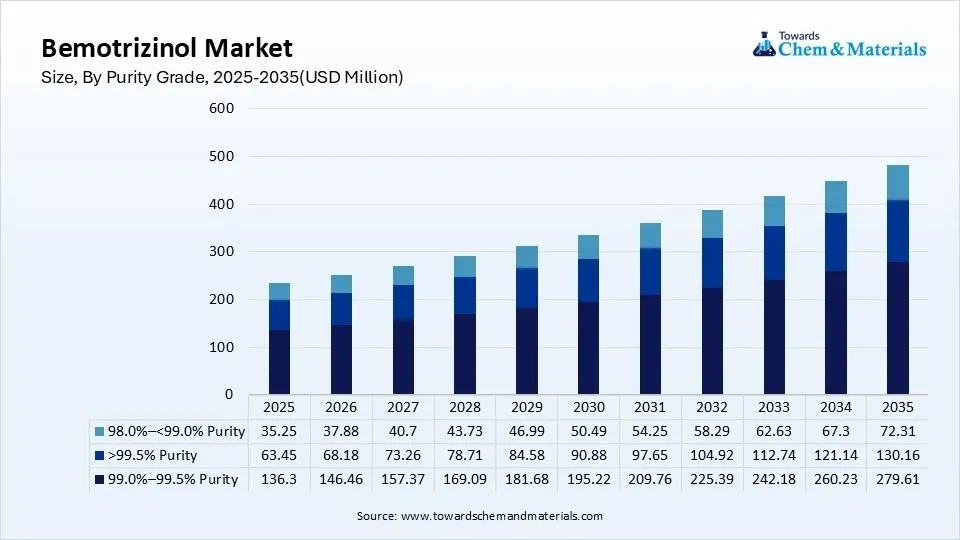
The >99.5% purity segment held a 27% market share in 2025 and is expected to grow at the fastest CAGR of 9.1% over the forecast period, as it supplies higher purity levels for premium cosmetic applications that demand a high level of purity and impurity control. The need for more high-performance sunscreen and personal care products can boost the demand for consistency in ingredient performance. The acceleration of the segment is a sign of an increasing demand for high purity in special cosmetic products and sophisticated products for photoprotection.
Bemotrizinol Market Share,By Purity Grade, 2025(%)
| By Purity Grade | Market Share (%) |
| 99.0%–99.5% Purity | 58% |
| >99.5% Purity | 27% |
| 98.0%–<99.0% Purity | 15% |
Physical Form Insights
The powder segment dominated the market with the largest share of 72% in 2025 and is expected to grow at a CAGR of 6.9% over the forecast period. Powdered bemotrizinol is used as a raw material for formulation and blending in various personal care and sun care products. It is a well-established player in the formulation of pharmaceuticals that has gained its place at the forefront. The raw powder can be used as a functional oil-soluble masterbatch, cosmetic emollient, and in commercial formulations.
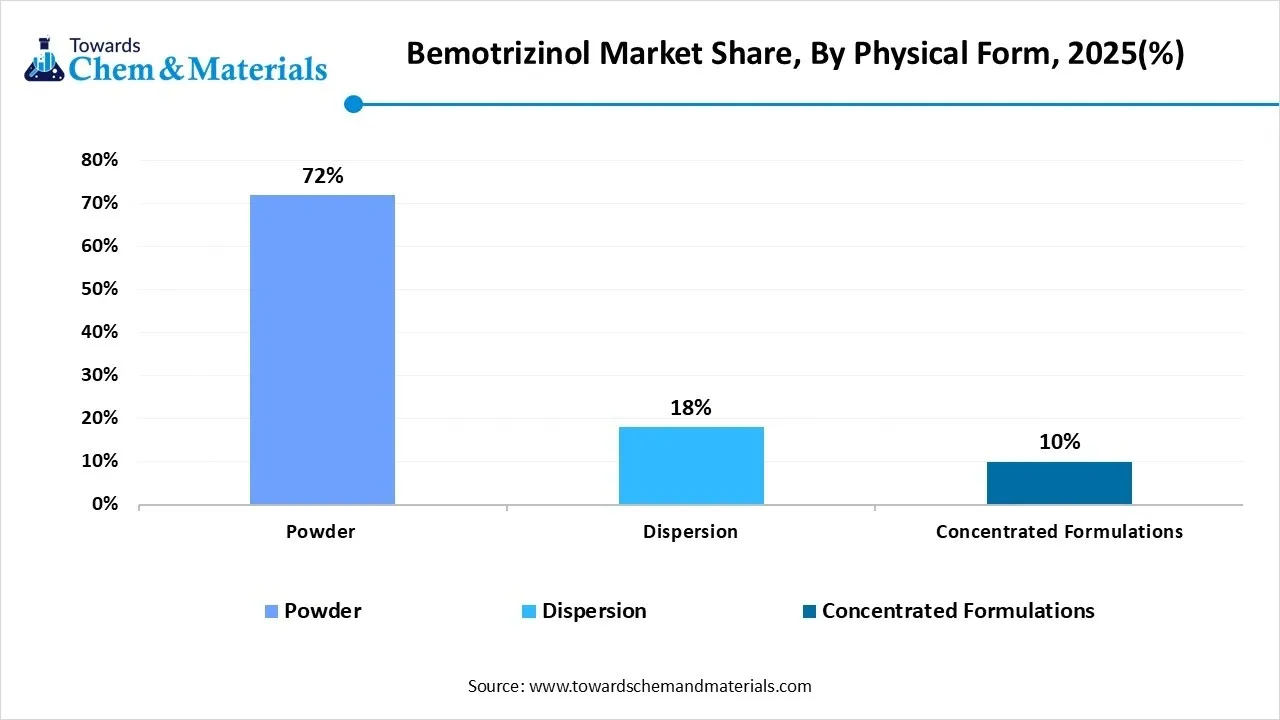
The dispersion segment held an 18% market share in 2025 and is expected to grow at the fastest CAGR of 9.4% over the forecast period. DSM-Firmenich develops and markets bemotrizinol in dispersion formats as a convenience for formulation or as a specific commercial dispersion such as PARSOL Shield. The adoption of the dispersion may be facilitated by increased demand for its incorporation in cosmetic products, particularly for its efficiency. The segment also fits within the rising formulation needs related to stability, sensory, and compatibility issues of advanced sun protection formulations.
Bemotrizinol Market Share,By Physical Form, 2025(%)
| By Physical Form | Market Share (%) |
| Powder | 72% |
| Dispersion | 18% |
| Concentrated Formulations | 10% |
Application Insights
The sunscreens segment dominated the market with the largest share of 64% in 2025 and is expected to grow at a CAGR of 7.3% over the forecast period. Sunscreens directly gain wide-spectrum UVA and UVB coverage and high photostability provided by bemotrizinol. Sunscreen demand remains healthy as awareness of skin cancer, photoaging, and UV exposure continues to grow. The ingredient also assists in the stability of other sensitive filters, enhancing its function in other complex filters.
- For instance, in June 2026, DSM-Firmenich announced FDA approval for PARSOL Shield in June 2026, which you will find on the label. This development paved the way for the incorporation of bemotrizinol in the American formula of sunscreens.(Source: www.dsm-firmenich.com)
The day care & daily skin care segment held a 22% market share in 2025 and is expected to grow at the fastest CAGR of 9% over the forecast period. Consumers want multifunctional products with sun protection, moisturising, and anti-aging properties, which are driving demand. The cosmetic elegance of Bemotrizinol allows it to be used in cosmetic formulations without significant problems with the presence of a white film on the skin, which is an attribute of many cosmetics. Its wide-spectrum coverage and compatibility with light products continue to fuel the surging adoption for everyday use.
Bemotrizinol Market Share,By Application, 2025(%)
| By Application | Market Share (%) |
| Sunscreens | 64% |
| Day Care & Daily Skin Care | 22% |
| Color Cosmetics | 9% |
| After-Sun & Specialized Photoprotection | 5% |
End User Insights
The cosmetic & personal care manufacturers segment dominated the market with the largest share of 47% in 2025 and is expected to grow at a CAGR of 7.5% over the forecast period. Manufacturers directly profit from the need for multifunctional skincare products, anti-aging products, cosmetics, and skincare formulations with sunscreen. The versatility of Bemotrizinols action and cosmetically friendly nature make it an ideal ingredient in a variety of personal care formulations. Its relevance to cosmetic manufacturers is further boosted by the increased consumer interest in daily photoprotection.
The contract manufacturers & OEM/ODM segment held a 28% market share in 2025 and is expected to grow at the fastest CAGR of 9.2% over the forecast period. This segment is expected to gain from the increasing formulation needs in cosmetic and personal care products. Manufacturers who provide support for customized formulations are presented with an opportunity as the demand for multifunctional skin care products grows. Bemotrizinols compatibility with sunscreens, moisturizers, anti-aging creams, and products that are compatible with makeup can boost demand for specialized manufacturing and formulation skills.
Bemotrizinol Market Share,By End User, 2025(%)
| By End User | Market Share (%) |
| Cosmetic & Personal Care Manufacturers | 47% |
| Contract Manufacturers & OEM/ODM | 28% |
| Pharmaceutical & Dermatology Companies | 15% |
| Specialty Ingredient Formulators | 10% |
Distribution Channel Insights
The direct sales segment dominated the market with the largest share of 56% in 2025 and is expected to grow at a CAGR of 7% over the forecast period. Direct sales support the relationship between bemotrizinol producers and cosmetic or personal care manufacturers. This can be beneficial for specifying ingredients, technical specifications, batch consistency, and formulation discussions. The strength of direct commercial ties in the specialty chemical supply chain is evident in the segments leading position.
The specialty chemical distributors segment held a 29% market share in 2025 and is expected to grow at the fastest CAGR of 8.7% over the forecast period. Distributors can help with the availability of specialty ingredients in regional formulation markets. As the demand for bemotrizinol grows within sunscreen, skin care, and cosmetic products, its importance will continue to rise. A rise in formulation activity and development of the regional market can boost participation of the distributors in the overall bemotrizinol supply chain.
Bemotrizinol Market Share,By Distribution Channel, 2025(%)
| By Distribution Channel | Market Share (%) |
| Direct Sales | 56% |
| Specialty Chemical Distributors | 29% |
| Online/B2B Distribution | 15% |
Regional Insights
How Did the Asia Pacific Dominate the Bemotrizinol Market In 2025?
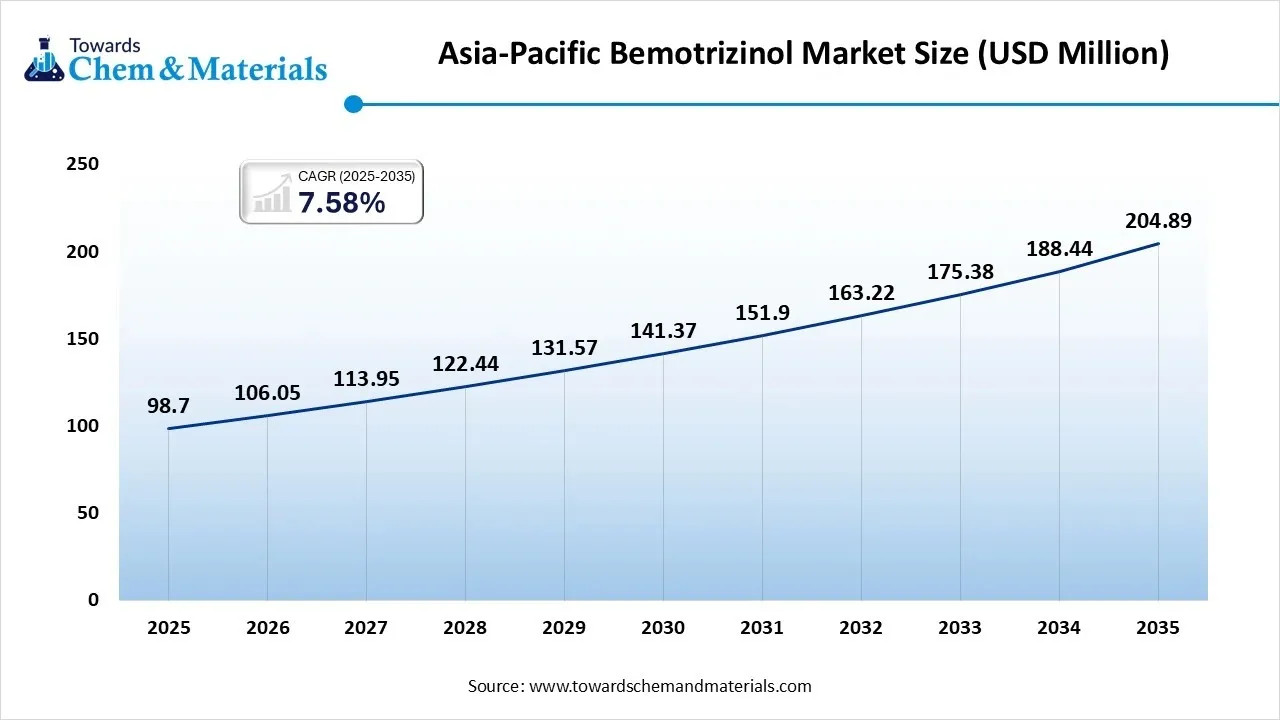 The Asia Pacific Bemotrizinol market size was estimated at USD 98.70 million in 2025 and is projected to reach USD 204.89 million by 2035, growing at a CAGR of 7.58% from 2026 to 2035. Asia Pacific dominated the market with the largest share of 42% in 2025 and is expected to grow at a CAGR of 8% during the forecast period. This region has rising disposable income, overzealous skin care regimens, and a keen attention to daily protection from UV rays. China is a key commercial skin care and beauty manufacturing growth market. In Japan, customers have high expectations for cosmetically elegant, light, and effective daily sunscreens with advanced filters. The areas demand is strong due to these factors.
Boosting Chinas Position in Commercial Skincare and Beauty Manufacturing
China is an important growth driver in the Asia Pacific commercial skincare market and local beauty manufacturing. The country is playing a supportive role in advanced cosmetic ingredients and UV protection products in the region. The need for skin care and precautionary protection from the sun throughout the day opens the door to the use of bemotrizinol in personal care products, as well as in sunscreens. China is also a key part of the Asian manufacturing ecosystem that enables the development of production and supply chains for specialty chemical ingredients.
Advancing Japans Demand for Cosmetically Elegant Sun Care
In Japan, consumers have high expectations for cosmetically refined, lightweight everyday sun creams packed with advanced sun filters. These preferences correspond to the multi-effect action, the photostability, and the cosmetic qualities of bemotrizinol. The ingredients suitability for daily cosmetic use makes it suitable for applications where consumers are interested in lightweight and frequent UV protection. The trend towards high-tech skin care regimens in Japan thus provides a positive backdrop for the use of bemotrizinol in high-end and multifunctional sun care and personal care products.
- For instance, in August 2026, Japans younger population indicated even greater involvement in cosmetic surgery, with Japanese cosmetic surgery clinics noting an increase in the number of patients aged 19 or younger, which increased by 2.6 times over the last decade. (Source: www.japantimes.co.jp)
North America
The North America bemotrizinol market size was estimated at USD 37.60 million in 2025 and is projected to reach USD 79.54 million by 2035, growing at a CAGR of 7.78% from 2026 to 2035. North America held a 16% market share in 2025 and is expected to grow at the fastest CAGR of 11.8% during the forecast period. Historically, regulatory delays over bemotrizinol plagued the region, but recent FDA approvals have greatly altered the commercial landscape. The United States is responsible for the quick take-up after OTC clearance. Consumer awareness of skin health and photoprotection is strong and similar to that of the United States. The progress in regulations thus facilitates further commercial integration.
Expanding United States Adoption Through FDA Clearance
The United States has significant good news of the rapid commercialization of bemotrizinol, which has been approved by the FDA as an over-the-counter drug. Its a significant regulatory advancement for sunscreen innovation and invites further integration of ingredients. Allowing consumers to understand the risks of skin cancer, photoaging, and skin protection in everyday life will support skin cancer awareness and demand.
Supporting Canadian Demand Through Strong Photoprotection Awareness
The climate is conducive to the use of advanced sun protection ingredients, with good photostability and wide-spectrum protection. Bemotrizinol can be incorporated into the formulations of daily skin care and cosmetic products, complying with the trend of multifunctional products. The North American regions regulatory changes also bolster business prospects. So Canadian demand can help drive expansion of the overall regional market after adjustment for shifting availability of bemotrizinol.
Europe
The Europe bemotrizinol market size was estimated at USD 68.15 million in 2025 and is projected to reach USD 142.22 million by 2035, growing at a CAGR of 7.63% from 2026 to 2035. Europe held 29% market share in 2025 and is expected to grow at a CAGR of 6.2% over the forecast period. Bemotrizinol has long been accepted in Europe and has been authorized under EU cosmetic rules since 2000. Advanced photostable sun care continues to be used, as sun care is a regular purchase in the region. Germany is a chemical manufacturer and powerhouse in R&D, while France provides high-end cosmetic brand adoption and large-scale formulation development for distribution.
Advancing Germanys Specialty Chemical and Cosmetic Capabilities
Germany is a key player in cosmetics and UV absorbers, chemical manufacturing, and an R&D hub. The industrial capacity allows the development of advanced ingredient formulations and the development associated with bemotrizinol. Excellent specialty chemical knowledge is also helpful in supply chain involvement and product development. The countrys position in the European cosmetic production sector enhances its significance as a supplier in the production of high-performance UV filters and high-tech personal care products that demand quality and technical sophistication.
Boosting Frances position in High-end Cosmetic Formulation
France leads high-end brand adoption and large-scale formulation developments to be sold cross-border. This situation enables product positioning for advanced UV filters used in high-quality personal care products. Broad-spectrum activity, photostability, and cosmetic elegance are in line with high-end formulation requirements, and this is the case for Bemotrizinol. The existing cosmetic development facility in the country thus enables further use of new and improved ingredients for photoprotection in high-quality cosmetics, sun care products, and multi-functional cosmetics.
Latin America
The Latin America bemotrizinol market size was estimated at USD 16.45 million in 2025 and is projected to reach USD 36.16 million by 2035, growing at a CAGR of 8.19% from 2026 to 2035. Latin America held 7% market share in 2025 and is expected to grow at a CAGR of 7.4% over the forecast period. With high tropical exposure to UV radiation and growing retail distribution networks for personal care products, the area is well-suited for them. Brazil serves as the main hub within the region for sunscreen consumption and cosmetic compliance. The regional market coverage includes Chile, and expanding access to personal care products is supported by broader distribution development.
Strengthening Brazils Role in Regional Sunscreen Consumption
Brazil serves as the major regional hub in terms of sunscreen consumption and cosmetic compliance. Demand for effective personal care products to protect from UV exposure is bolstered by high exposure. The versatility of Bemotrizinols efficacy and aesthetics is appropriate for use as a sunscreen and in daily skin care. The development of retail distribution networks can continue to help improve access to personal care products. Brazil is, in turn, a significant market in the overall bemotrizinol market in Latin America.
Promoting Chiles Integration into Latin American Market Development
The Latin American market will cover Chile in case of bemotrizinol demand, and the growth of distribution in personal care products will also benefit the country. High exposure to UV radiation in the tropics and growing retail networks are driving the market. These factors have made the use of advanced sun care products desirable. The wide-spectrum activity and ease of formulation of Bemotrizinol meet product needs for sunscreen and daily skin care products.
Middle East & Africa
The Middle East & Africa bemotrizinol market size was estimated at USD 14.10 million in 2025 and is projected to reach USD 31.34 million by 2035, growing at a CAGR of 8.31% from 2026 to 2035. The Middle East & Africa held 6% market share in 2025 and is expected to grow at a CAGR of 7.1% over the forecast period. The area is considered to be a developing market with high ambient UV indexes and increasing luxury investments. Covered country markets are available in Saudi Arabia and South Africa. The organized retail channels, availability of high-quality sun care products, and increasing popularity of imported sun care products with modern UV filters are all beneficial to the regional demand.
Encouraging the Adoption of Premium Sun Care in Saudi Arabia
Bemotrizinol demand in Saudi Arabia is conditioned by a high level of ambient UV exposure, a condition typical of the Middle East and Africa market. Advanced UV filters can be used to meet the growing demand for luxury investments in the area and premium personal care products. Bemotrizinols versatility and high-quality appearance make it suitable for top-quality sun protection and daily care products. Its features contribute to its suitability for emerging regional sun care markets.
Strengthening South Africas Organized Sun Care Distribution
South Africa is the leader in the region for organised retail and premium sun care products. The market conditions in the country are conducive to having access to high-level personal care products and modern UV filters. High ambient UV indexes reinforce the importance of being well protected from the sun. The versatility of Bemotrizinols spectrum and compatibility with light cosmetic formulations meet the regions needs for high-quality, comprehensive sunscreen products and daily skincare.
Recent Developments
- In June 2026, Inolex introduced its technology, LexFeel Enhance MB, which is intended to assist formulators in adding newly approved bemotrizinol to their formulations. Provides a polymer network that results in more thermodynamically stable UV filter systems, which aids formulation development.
(Source: www.cosmeticsandtoiletries.com) - In June 2026, the COSMOS Institute research team studied BEMTs solvatochromism and its extremely fast decay into the ground state, which uncovers mechanisms that prevent photodegradation and increase the probability of its absorption in the ultraviolet spectrum in sunscreen formulations. (Source: pubmed.ncbi.nlm.nih.gov)
Competitive Analysis
The bemotrizinol market is highly competitive. Major specialty chemical and ingredient manufacturers are active participants in the bemotrizinol market, producing products for cosmetic applications and performing the task of creating brands for their products. BASFs Tinosorb S is distinguished by its excellent photostability, while DSM-Firmenichs PARSOL Shield is noted for its exceptional broadband efficiency at low usage levels as well as ecological and skin-feel characteristics. Formulation innovation and photostability, along with U.S. regulatory approval, have become more critical to competitive activity. The companies are also working on new technologies to allow for the stable formulation of bemotrizinol, which has recently been approved.
- For instance, in August 2026, BASF received FDA approval of its Bemotrizinol ingredient, Tinosorb S, which allows the authorized company to market and sell the product in the U.S. under a Supplemental License Agreement. The development adds to BASFs commercial access in the U.S. sunscreen market.
(Source: nutraceuticalbusinessreview.com) - In February 2026, Ashland developed X-Tend 226 Ester, a polar ester to help solubilize bemotrizinol and avoid crystallization of solid organic UV filters, which will give stable and effective sunscreen products.(Source: www.cosmeticsandtoiletries.com)
Top Players in the Market & Their Offerings
| Company | Company Type/Position | Major Headquarters | Geographic Presence | Bemotrizinol Offerings | Key Strength |
| BASF | Chemical Producer | Ludwigshafen, Germany | Global | Tinosorb® S | Superior photostability and newly secured U.S. distribution rights |
| DSM-Firmenich | Science-Based Nutrition & Beauty Company | Kaiseraugst, Switzerland / Heerlen, Netherlands | Global | PARSOL® Shield | High broadband efficiency at low concentrations with strong ecological and skin-feel profiles |
| Hubei Artec Biotechnology Co., Ltd. | Specialty Chemical Manufacturer | Hubei, China | Global | Bemotrizinol (Cosmetic Grade Powder) | Cost-effective bulk manufacturing capacity |
Other Key Players
- BASF
- DSM-Firmenich
- Ashland Inc
- Clariant
- Uniproma
- Sarex
- MFCI
- Chongqing Werlchem New Materials
- Fujian Disheng Technology
- Nanjing COSMOS Chemical
- 3V Sigma
- Chemspec Chemicals
- Kenvue
Segment Covered in the Report
By Purity Grade
- 98.0%–<99.0% Purity
- Standard industrial/cosmetic grade
- 99.0%–99.5% Purity
- Standard high-purity cosmetic grade
- Formulation-grade BEMT
- 99.5% Purity
- Ultra-high-purity grade
- Premium regulatory-grade BEMT
By Physical Form
- Powder
- Standard powder
- Micronized/fine powder
- Dispersion
- Oil-based dispersion
- Pre-dispersed formulation grade
- Concentrated Formulations
- UV-filter concentrate
- Custom premix
By Application
- Sunscreens
- Facial sunscreens
- Body sunscreens
- Childrens/pediatric sunscreens
- Sport/water-resistant sunscreens
- Day Care & Daily Skin Care
- Day creams
- Moisturizers with SPF
- Anti-aging creams
- UV-protection serums
- Color Cosmetics
- Foundations
- BB/CC creams
- Tinted moisturizers
- After-Sun & Specialized Photoprotection
- After-sun lotions
- Dermatological photoprotection
- Sensitive-skin formulations
By End User
- Cosmetic & Personal Care Manufacturers
- Mass-market brands
- Premium brands
- Prestige/dermocosmetic brands
- Contract Manufacturers & OEM/ODM
- Private-label sunscreen manufacturers
- Contract formulation manufacturers
- Regional OEM/ODM producers
- Pharmaceutical & Dermatology Companies
- Dermatological product manufacturers
- OTC photoprotection manufacturers
- Specialty Ingredient Formulators
- UV-filter blend producers
- Cosmetic ingredient formulators
By Distribution Channel
- Direct Sales
- Direct manufacturer-to-brand
- Direct manufacturer-to-OEM/ODM
- Long-term supply contracts
- Specialty Chemical Distributors
- Regional distributors
- Global ingredient distributors
- Technical-service distributors
- Online/B2B Distribution
- B2B chemical marketplaces
- E-commerce chemical suppliers
- Small-volume laboratory suppliers
By Regions
- North America
- Europe
- Asia Pacific
- Middle East & Africa
- Latin America
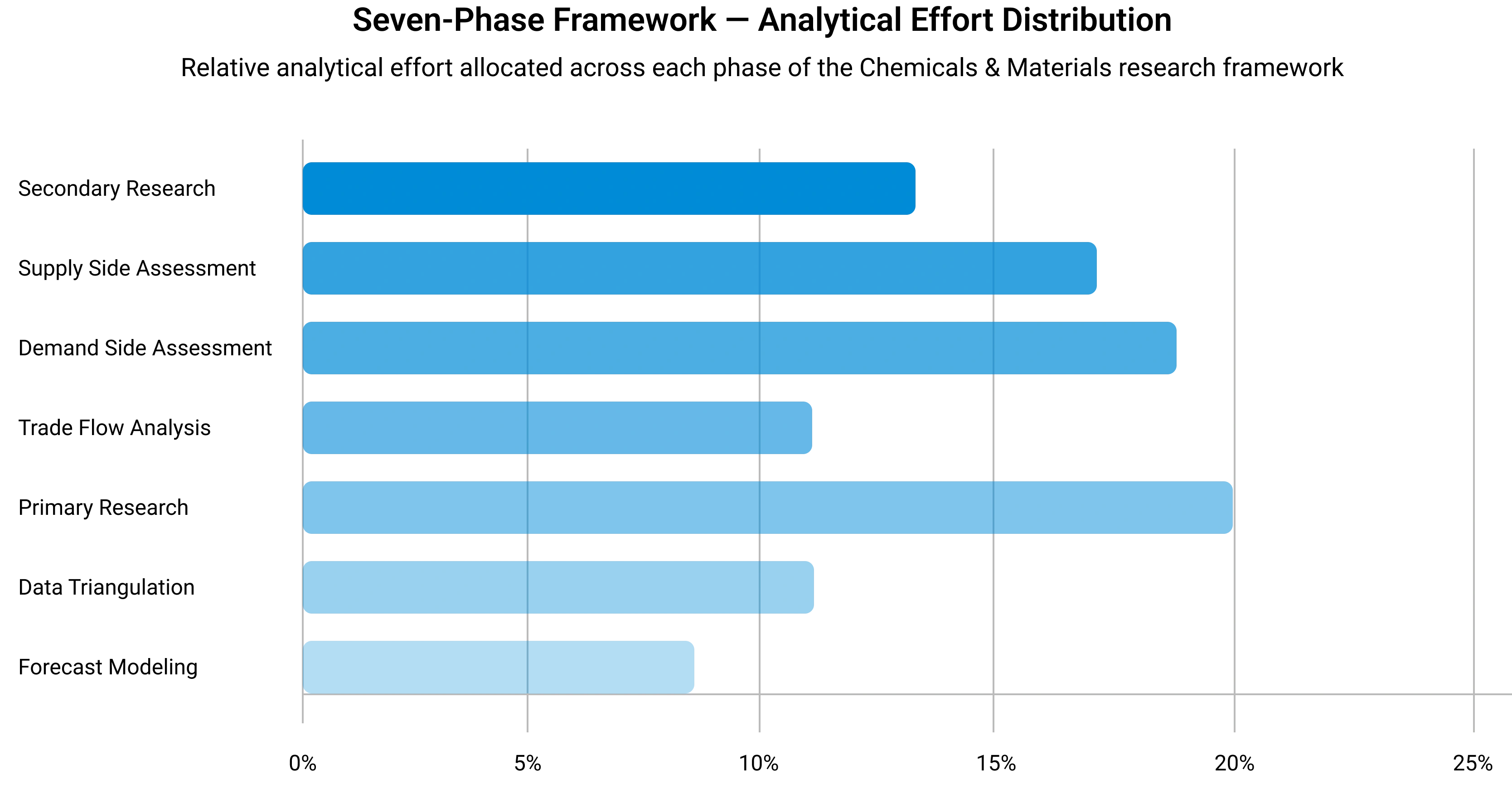
A Seven-Phase Framework
Our methodology is designed to be universally applicable across commodity chemicals, specialty chemicals, petrochemicals, construction chemicals, coatings, electronic chemicals, industrial gases, agrochemicals, water treatment chemicals, and performance materials. Each phase builds upon the last, creating a layered validation structure that minimizes estimation error and maximizes analytical confidence.
The framework ensures comprehensive market coverage, robust cross-validation, and reliable long-term forecasting — producing market estimates that withstand scrutiny from investors, regulators, and corporate strategy teams.

Seven-Phase Framework — Analytical Effort Distribution
Relative analytical effort allocated across each phase of the Chemicals & Materials research framework
Phase 1 - Secondary Research: Establishing the Foundation
Secondary research collects and evaluates publicly available information from authoritative sources, establishing the foundational understanding of market structure, value chain dynamics, competitive landscape, and end-use demand patterns. Every source is evaluated for credibility, recency, geographic relevance, and methodological soundness before inclusion.
Industry Associations
Sources include ACC, CEFIC, ICCA, JCIA, CPCIF, and SOCMA providing production volumes, consumption trends, capacity developments, and sustainability initiatives.
Company Disclosures
Annual reports, investor presentations, earnings transcripts, and regulatory filings reveal product portfolios, manufacturing footprints, capacity expansions, and revenue segmentation.
Government Databases
National statistical offices, customs authorities, environmental agencies, and industrial production databases provide verified statistics on output, trade flows, and regulatory compliance.
Trade Databases
UN Comtrade, ITC, Eurostat, and national customs authorities enable assessment of global product movement, import dependency, and export competitiveness across regions.
Our Secondary Research Sources
- Ministry of Chemicals and Fertilizers
- European Chemicals Agency
- United States Department of Energy
- Ministry of Industry and Information Technology
- Ministry of Economy Trade and Industry
- Ministry of Trade Industry and Energy
- National Institute of Standards and Technology
- Council of Scientific and Industrial Research
- Fraunhofer Society
- National Institute for Materials Science
Phase 2 — Supply-Side Assessment: Mapping Production Capabilities
Production Capacity Analysis
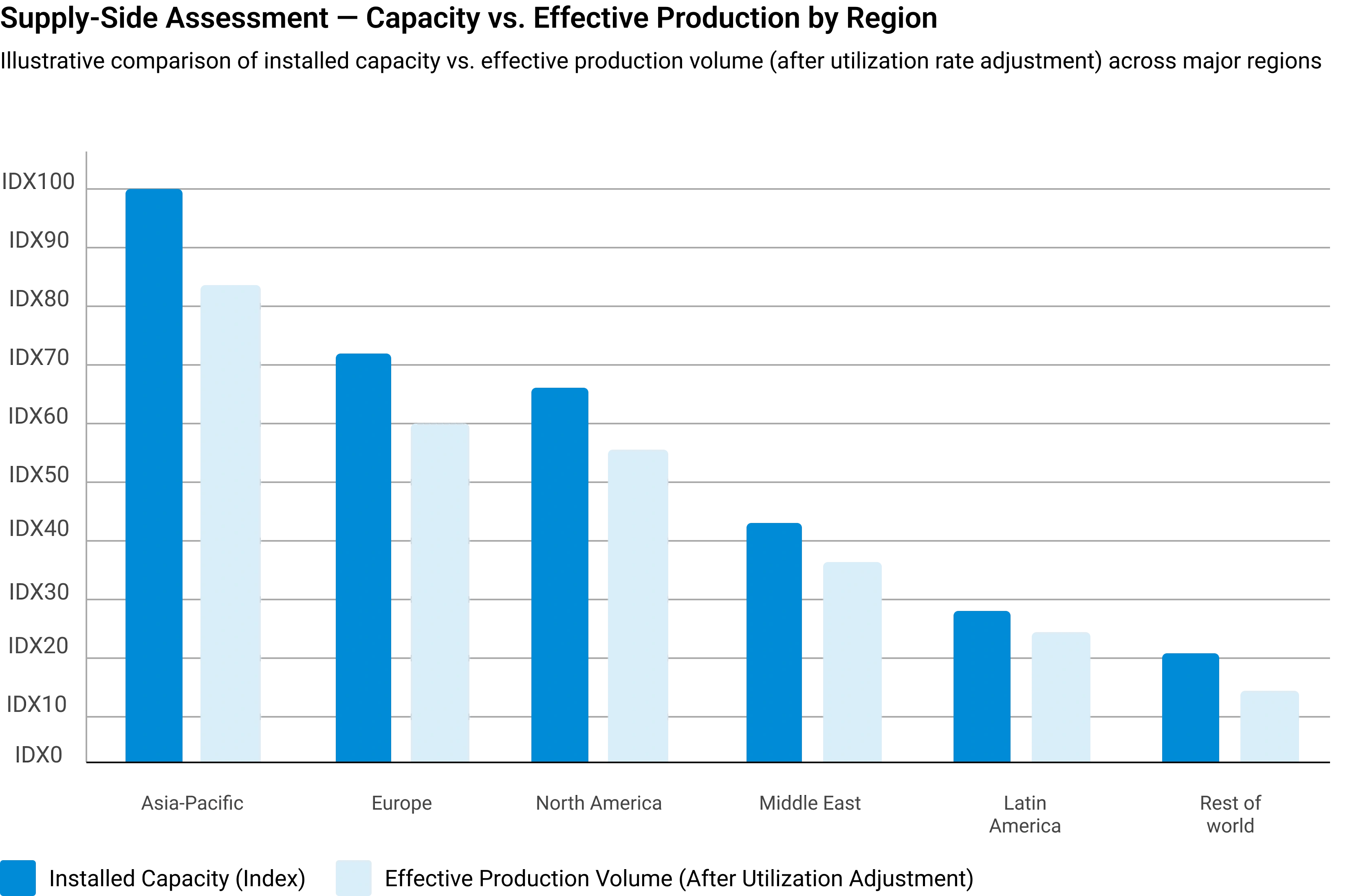
All major manufacturers are assessed for existing installed capacity, planned additions, expansions, new plant announcements, and technology adoption — mapped at global, regional, and country levels.
Capacity Utilization Adjustment
Installed capacity is adjusted using utilization rates based on demand conditions, feedstock availability, plant operating rates, maintenance schedules, and regulatory restrictions.
Manufacturer Revenue Analysis
Product-specific revenues, segment-level performance, regional distribution, average selling prices, and margin trends are evaluated to establish market value estimates.
Supply-Side Assessment — Capacity vs. Effective Production by Region
Illustrative comparison of installed capacity vs. effective production volume (after utilization rate adjustment) across major regions
Phase 3 — Demand-Side Assessment: Quantifying Chemical Consumption
Demand-side analysis quantifies chemical consumption across industries, applications, and geographies — identifying where and how chemicals are consumed throughout the value chain with precision.
End-Use Industry Analysis
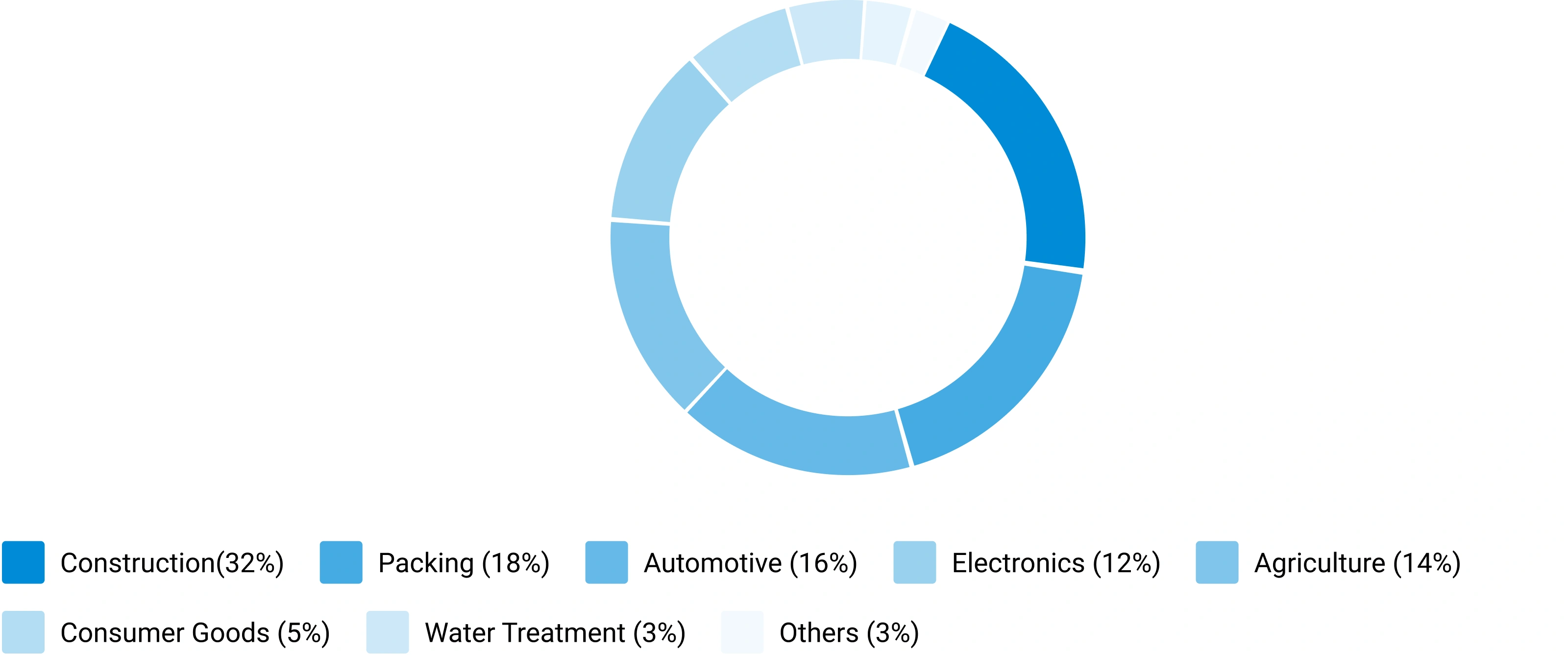
Chemical demand is evaluated across automotive, construction, packaging, electronics, agriculture, healthcare, consumer goods, industrial manufacturing, energy and utilities, and water treatment. Industry output, production trends, and consumption intensity are analyzed to determine demand patterns.
Consumption Modeling
Demand is estimated using measurable indicators: kilograms per vehicle, kilograms per square meter of construction, dosage per cubic meter of water treated, kilograms per hectare of agricultural land, and kilograms per ton of manufactured products. Consumption factors are validated through industry publications and primary interviews.
Application Analysis
The market is segmented by application area to understand product performance requirements, formulation trends, technology adoption, customer preferences, and regulatory requirements improving demand accuracy and segmentation granularity.
Demand-Side Assessment — End-Use Industry Demand Distribution
Illustrative distribution of chemical & materials demand across key end-use industries
Phase 4 - Trade Flow Analysis: Balancing Regional Supply and Demand
Trade flow analysis reconciles regional supply and demand estimates through import and export data, identifying net supply positions, regional dependencies, and market imbalances. It serves as an independent validation layer that tests the consistency of supply-side and demand-side estimates.
Import Analysis
Import data is evaluated to determine volumes, source countries, product dependency, regional supply gaps, and pricing trends — identifying markets that rely heavily on external supply and where domestic production is insufficient to meet demand.
Export Analysis
Export assessments reveal production surplus, export competitiveness, regional manufacturing strength, and global market participation. Export patterns also help validate domestic production estimates and identify net exporting regions.
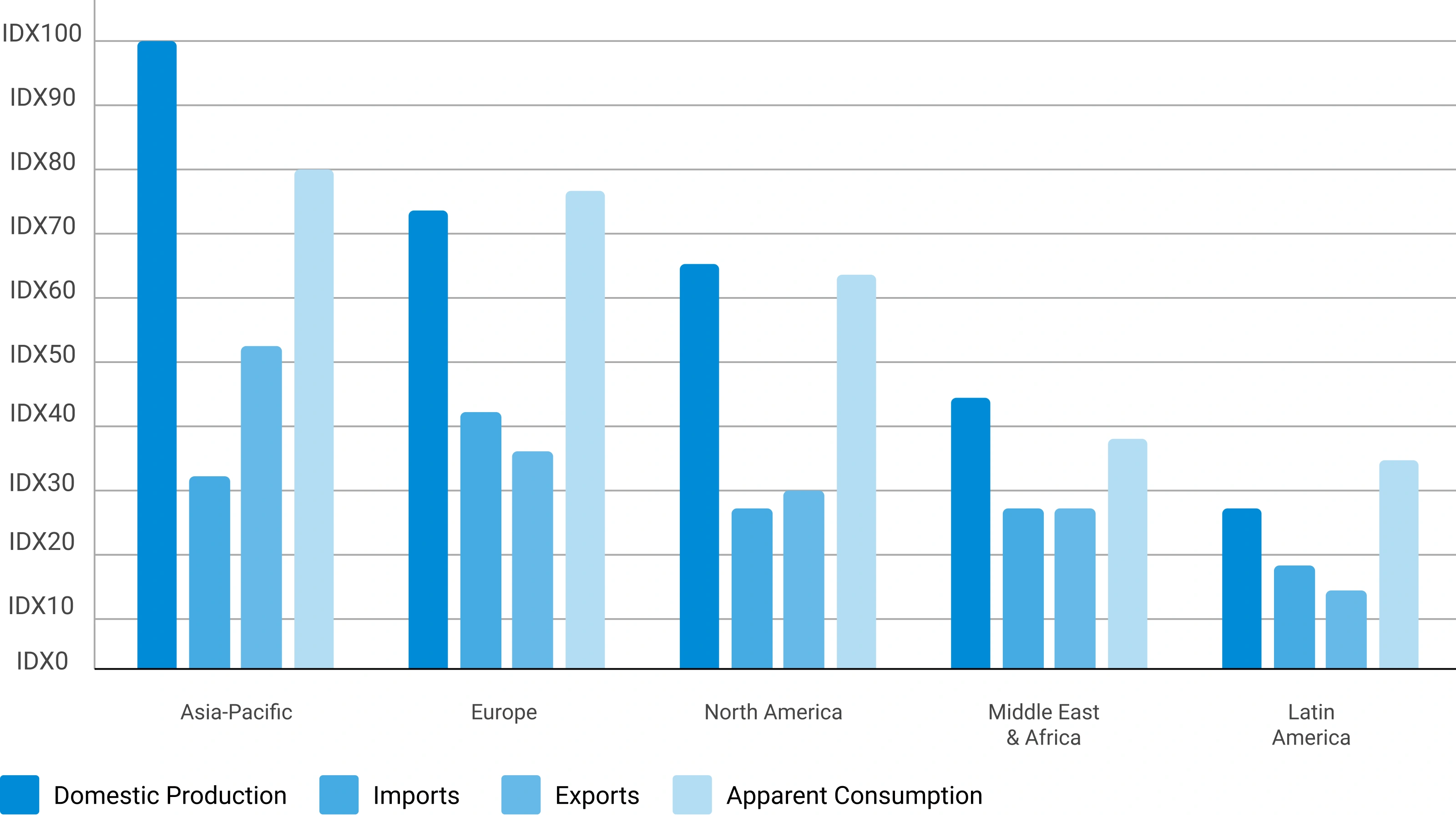
Apparent Consumption Model
Regional consumption is assessed using the standard apparent consumption formula:
Results identify net importing regions, net exporting regions, regional deficits, and surpluses — serving as an independent validation of supply and demand estimates.
Trade Flow Analysis — Net Supply Position by Region
Illustrative apparent consumption vs. domestic production across major regions — positive gap indicates net import dependency
Phase 5 — Primary Research: The Critical Validation Layer
Primary research tests and refines findings from secondary research through direct engagement with industry participants across the supply chain, demand side, and expert community. It captures intelligence that no database or published report can provide — the real-world experience of manufacturers, buyers, and specialists operating in the market.

Supply-Side Interviews
Conversations with chemical manufacturers, raw material suppliers, contract manufacturers, technology providers, and plant operators cover production trends, capacity utilization, pricing developments, technology shifts, and competitive dynamics.

Demand-Side Interviews
Engagement with OEMs, industrial consumers, procurement managers, distributors, formulators, and end-use manufacturers focuses on consumption trends, purchasing behavior, product substitution, demand outlook, and emerging applications.

Industry Expert Consultations
Additional interviews with industry consultants, independent experts, regulatory specialists, technical professionals, and research institutions provide deeper market context and validate key analytical assumptions.
Focus Areas of Primary Research:
Market Size & Forecast Validation
Revenue estimates, volume consumption, growth rates, forecast assumptions, regional demand.Supply Chain & Value Chain Assessment
Raw material sourcing, supply chain challenges, distribution networks, procurement practices.Production & Capacity Analysis
Manufacturing capacity, utilization rates, expansion projects, plant investments.Pricing & Cost Structure Analysis
Product pricing trends, feedstock costs, energy costs, margin pressures, pricing outlook.Competitive Landscape Assessment
Volume and value estimates confirmed to be fully consistent with one another before publicationInterview Volume by Market Scope
| Study Scope | Number of Interviews |
|---|---|
| Niche Market | 20 – 30 |
| Mid-Sized Market | 30 – 50 |
| Global Market | 50 – 80 |
| Highly Fragmented Market | 80 – 120 |
Interview Details:
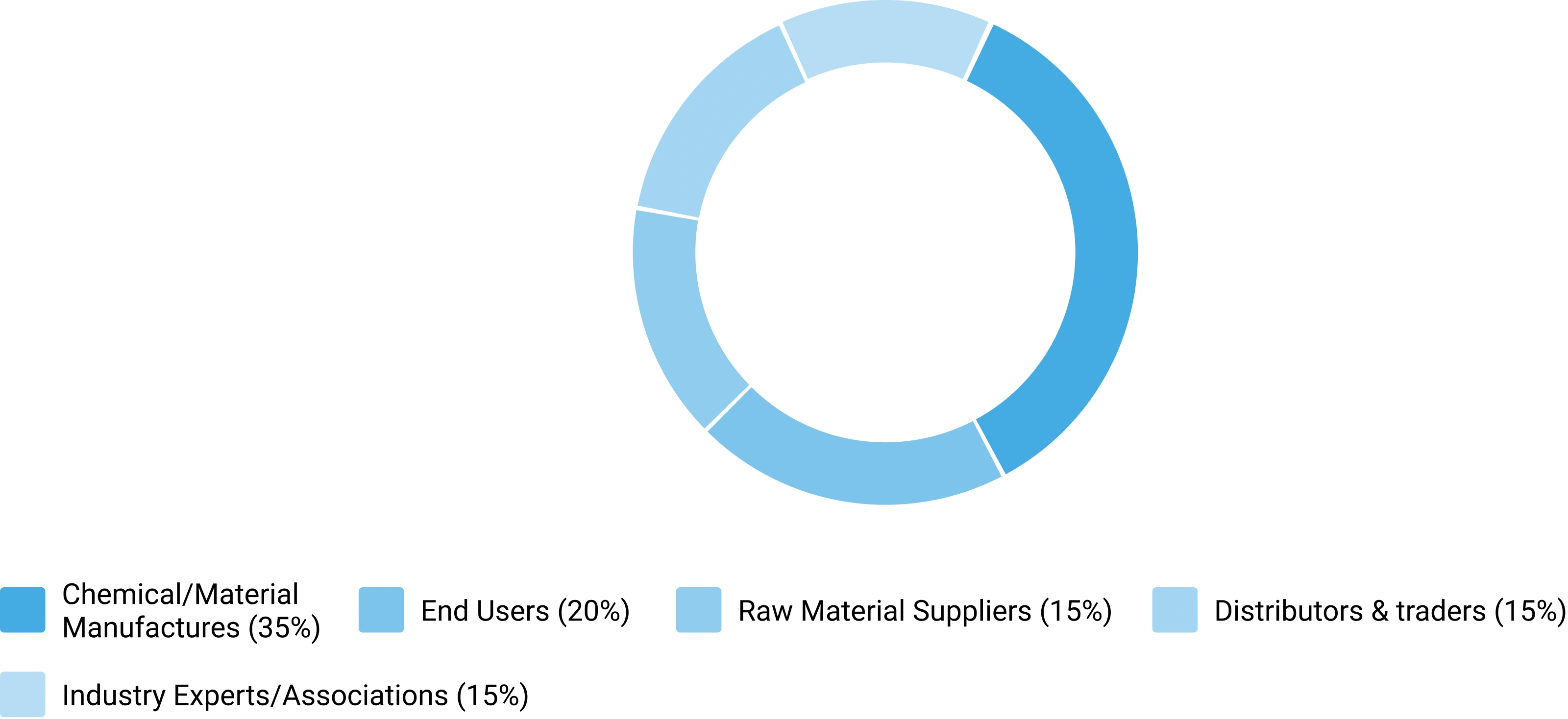
Category : Manufacturers, Suppliers, Distributors, End Users, Experts/Associations
Average Duration : 30–60 Minutes
Interview Mode : Video calls, telephonic interviews, expert consultations
Interview Format : Structured / Semi-Structured questionnaire
Focus Areas of Primary Research:
Market Size & Forecast Validation :
Revenue estimates, volume consumption, growth rates, forecast assumptions, regional demand.
Supply Chain & Value Chain Assessment :
Raw material sourcing, supply chain challenges, distribution networks, procurement practices.
Production & Capacity Analysis :
Manufacturing capacity, utilization rates, expansion projects, plant investments.
Pricing & Cost Structure Analysis :
Product pricing trends, feedstock costs, energy costs, margin pressures, pricing outlook.
Competitive Landscape Assessment :
Market share, competitor positioning, strategic initiatives, partnerships, acquisitions.
Primary Research — Stakeholder Coverage by Category
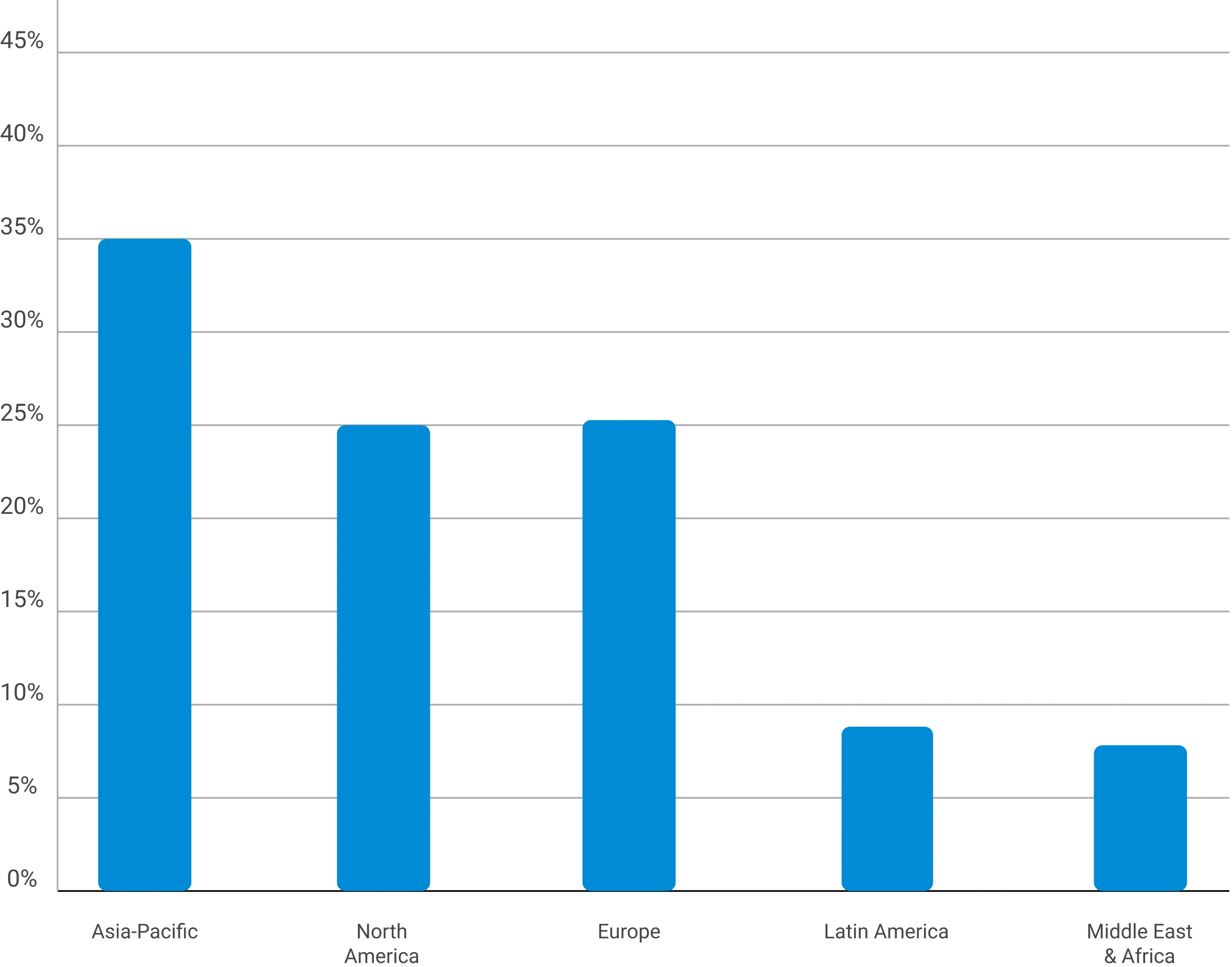
Distribution of interview respondents across stakeholder categories (% share from PPT data)
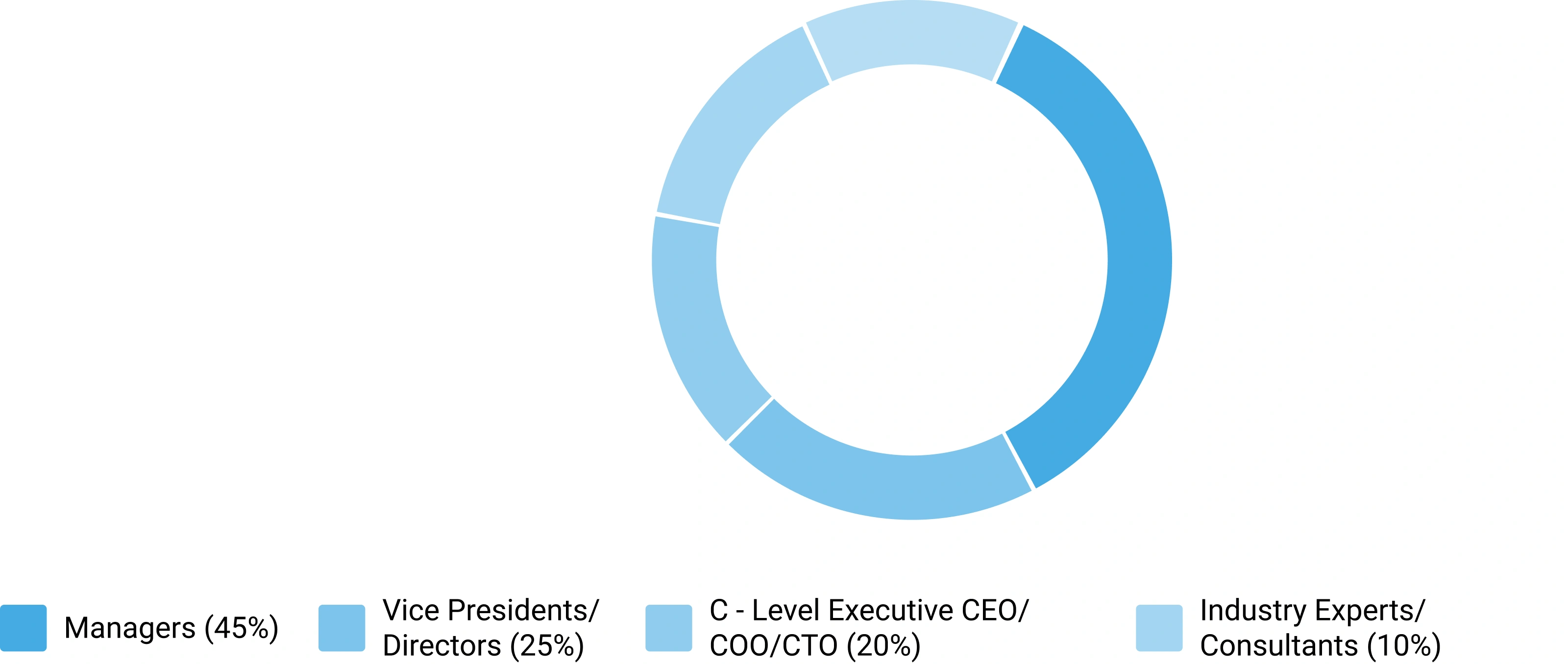
Primary Research — Respondent Designation Profile
Seniority breakdown of interview respondents (% share from PPT data)
Primary Research — Geographic Coverage of Interviews
Regional distribution of primary research engagement (% share from PPT data)
Phase 6 — Data Triangulation and Market Validation
No single methodology is relied upon in isolation. Multiple independent estimation approaches are combined and reconciled to ensure consistency, accuracy, and analytical defensibility. Any material deviations between approaches are investigated and adjusted through additional validation cycles.
The final market size is derived through weighted triangulation of all validated methodologies. Any material deviations between approaches are investigated and adjusted through additional validation cycles. The outcome represents the most realistic assessment of the market based on available evidence and expert confirmation ensuring that volume and value estimates are fully consistent with one another.
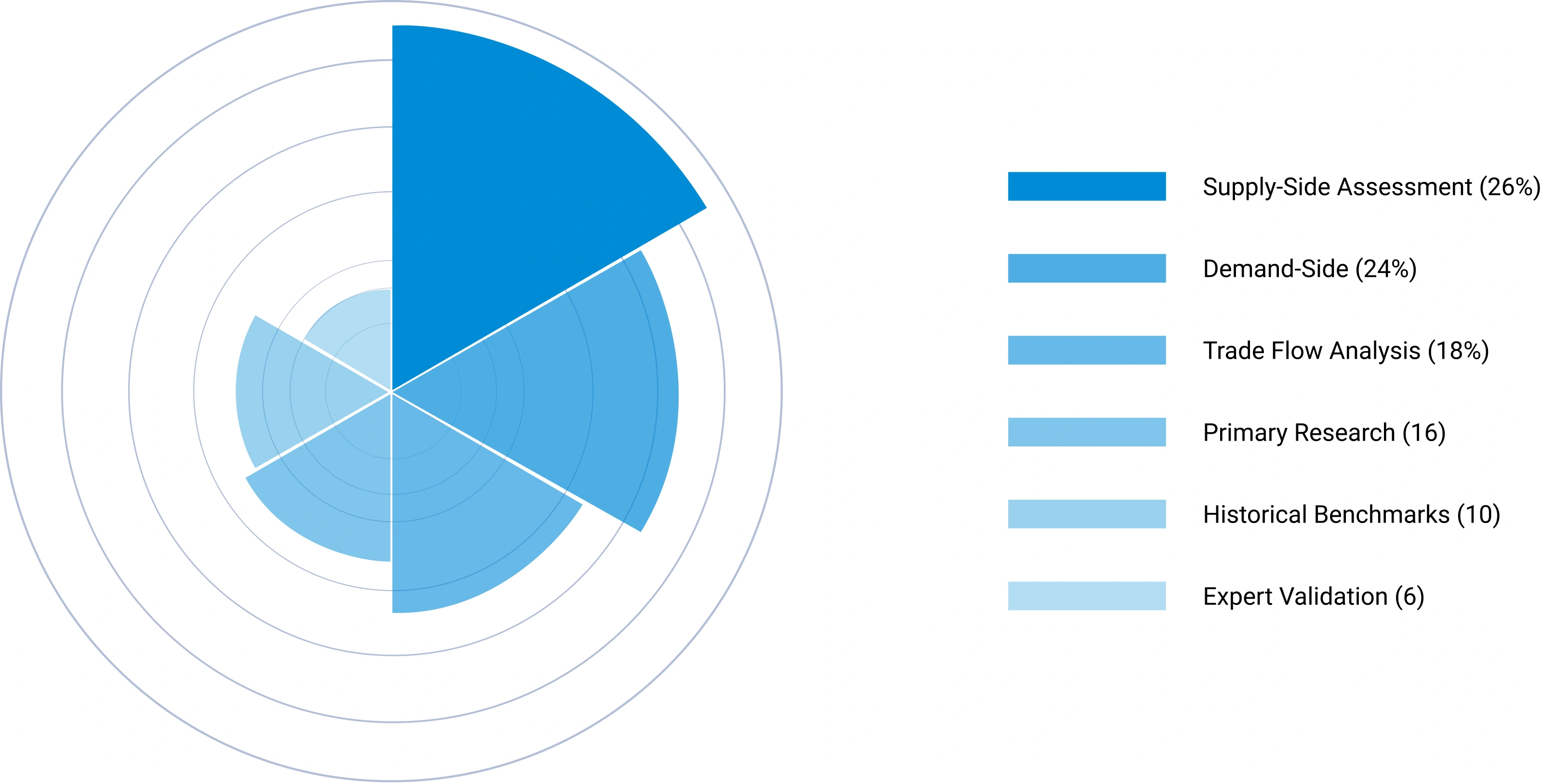
Triangulation Framework — Input Contribution Weight
Relative weight each sizing input contributes to the final reconciled market estimate
Phase 7 — Forecast Modeling: Projecting Future Market Evolution
Forecasting evaluates the future trajectory of the market using a combination of quantitative indicators and qualitative assessments across economic, industry, and regulatory dimensions. Rather than simple extrapolation, each driver is independently modeled and integrated into a composite forecast.
Macroeconomic Indicators
GDP growth, industrial production, manufacturing output, construction activity, consumer spending, and capital investment form the quantitative foundation of long-term demand projections. These are applied at country, regional, and global levels.
Industry Growth Drivers
Urbanization, infrastructure development, industrialization, technological innovation, sustainability initiatives, and evolving product performance requirements are assessed at regional and industry levels — capturing both structural and cyclical demand drivers.
Capacity Expansion Analysis
Announced plant expansions, new manufacturing facilities, technology upgrades, and strategic investments are evaluated to determine future supply-demand dynamics and potential market tightness or oversupply situations.
Regulatory & Sustainability
Environmental regulations, chemical safety standards, emission reduction targets, circular economy initiatives, and sustainability requirements are incorporated as they often influence product adoption rates and market growth trajectories.
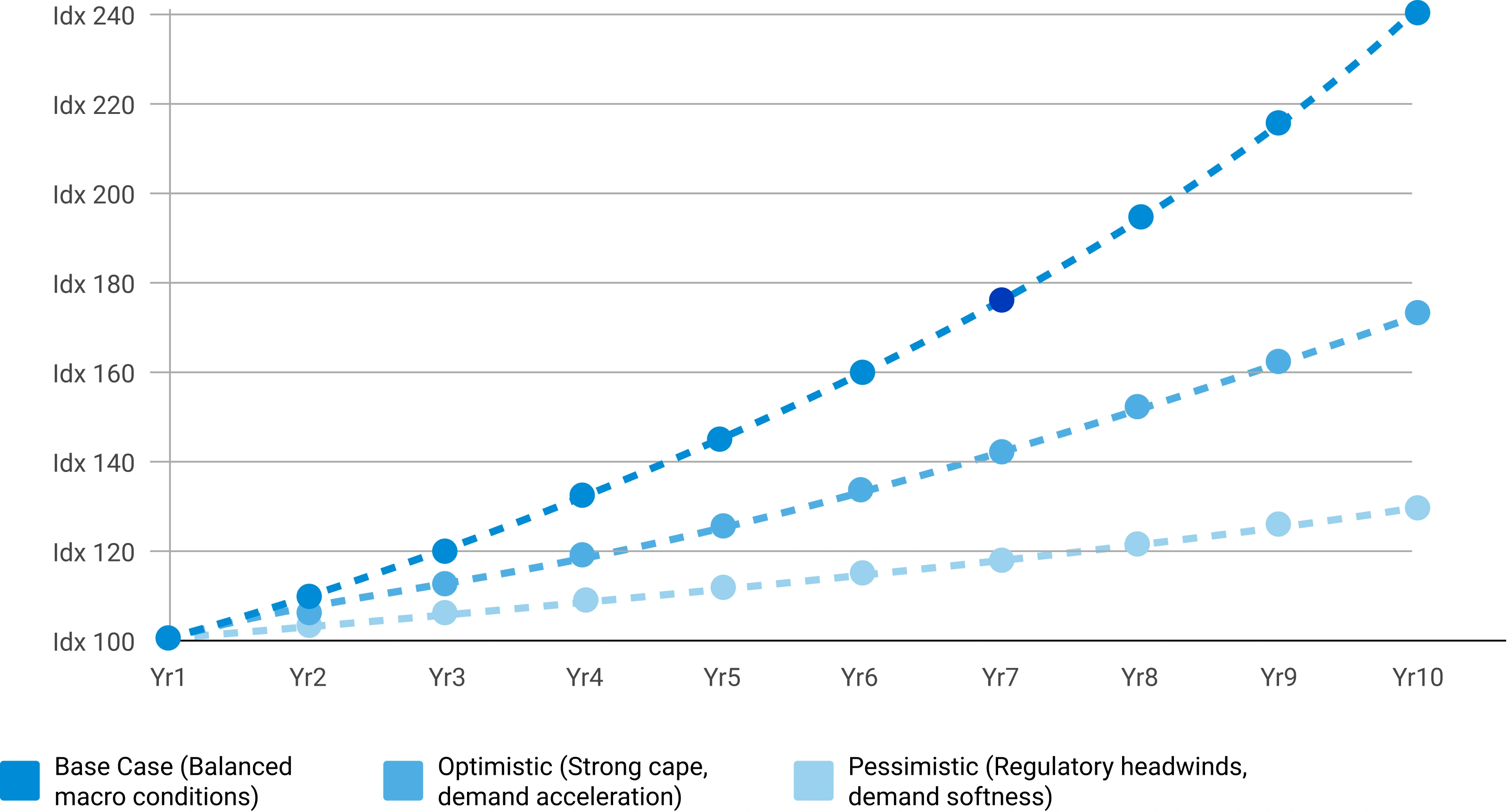
Scenario Forecast Range — Indexed Market Growth (Year 1–10)
Illustrative indexed growth trajectories across Base, Optimistic, and Pessimistic scenarios over a 10-year forecast horizon
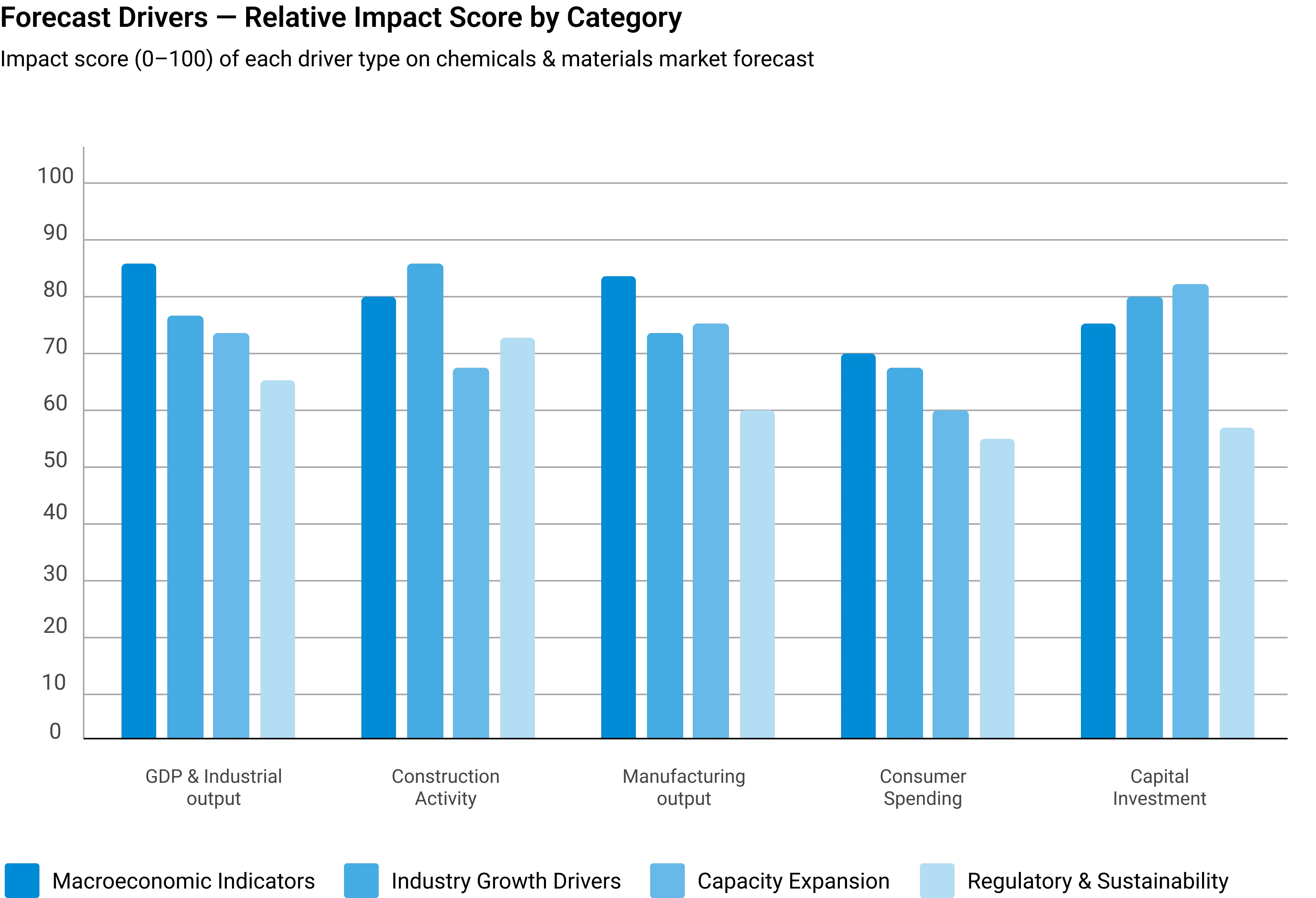
Forecast Drivers — Relative Impact Score by Category
Impact score (0–100) of each driver type on chemicals & materials market forecast



Comments
Share your thoughts, ask a question, or provide feedback about this report.