
Peracetic Acid Market Size, Competitive Landscape Analysis Report 2035
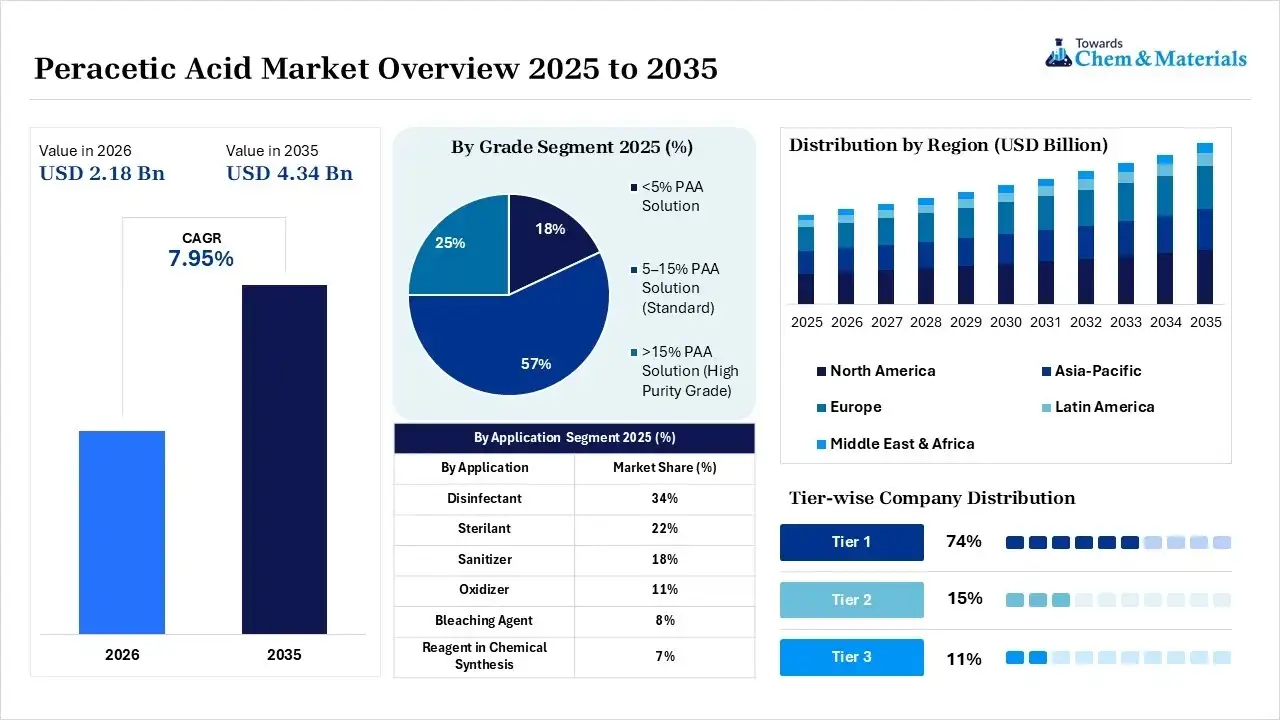
The peracetic acid market size was valued at USD 2.02 billion in 2025, is estimated to reach USD 4.34 billion in 2026, and is projected to reach USD 4.34 billion by 2035, exhibiting a compound annual growth rate (CAGR) of 7.95% over the forecast period from 2026 to 2035.Asia Pacific dominated the peracetic acid market with the largest revenue share of 33% in 2025 and is expected to grow at the fastest CAGR of 8.03% during the forecast period. The market is gaining strong momentum as industries increasingly seek fast-acting, residue-light antimicrobial and oxidation solutions for food safety, wastewater treatment, healthcare hygiene and industrial sanitation, while also aligning with cleaner disinfection practices and more sustainability-focused processing systems.
Market Highlights
- By region, Asia Pacific dominated the market with the largest share of 33% in 2025 and was expected to grow at the fastest CAGR of 9.10% during the projected period. The dominance of the region can be attributed to the rapid expansion of the e-commerce sector, along with the rigorous hygiene mandates in the food and pharmaceutical industries.
- By region, North America held a 29% market share in 2025. Strong food safety regulations support demand in the region. Mature healthcare infrastructure drives the consumption of the market.
- By grade, the 5–15% PAA Solution (Standard) segment dominated the market with the largest share of 57% in 2025. It is widely adopted in food processing facilities and meets regulatory disinfection requirements.
- By grade, the >15% PAA Solution (High Purity Grade) segment held a market share of 25% in 2025 and is expected to grow at the fastest CAGR of 9.40% during the projected period. It gains adoption in healthcare sterilization and supports high-performance oxidation processes.
- By application, the disinfectant segment dominated the market with the largest share of 34% in 2025. Food safety regulations drive utilization, and it provides broad-spectrum microbial control.
- By application, the reagent in chemical synthesis segment held a market share of 7% in 2025 and is expected to grow at the fastest CAGR of 9.60% over the forecast period. Specialty chemical manufacturing expands, and it supports selective oxidation reactions.
- By end-use industry, the food & beverages segment dominated the market with the largest share of 39% in 2025. Processing plants require continuous sanitation.
- By end-use industry, the water treatment segment held a market share of 18% in 2025 and is expected to grow at the fastest CAGR of 9.20% during the projected period. Municipal treatment investments increase globally.
- By form, the liquid segment dominated the market with the largest share of 88% in 2025. Preferred for industrial dosing systems.
- By form, the tablets segment held a market share of 5% in 2025 and is expected to grow at the fastest CAGR of 9.30% during the projected period. It enables precise dosage control and simplifies storage and handling.
- By concentration, the 5-15% segment dominated the market with the largest share of 46% in 2025. It offers optimum performance-cost balance and is widely used across food processing facilities.
- By concentration, the >25% segment held a market share of 13% in 2025 and is expected to grow at the fastest CAGR of 9.50% during the projected period. It is used in specialized industrial applications and delivers strong oxidizing capability.
- By distribution channel, the direct sales (OEMs, Industries) segment dominated the market with the largest share of 61% in 2025. Large-volume industrial purchases dominate supply and enable customized contracts.
- By distribution channel, the online / e-commerce channels segment held a market share of 10% in 2025 and is expected to grow at the fastest CAGR of 10.20% during the projected period. Digital procurement adoption increases and improves purchasing convenience.
- By packaging type, the HDPE drums segment dominated the market with the largest share of 41% in 2025. It is widely accepted across industries. It provides storage flexibility.
- By packaging type, the bulk tankers segment held a market share of 15% in 2025 and is expected to grow at the fastest CAGR of 9.00% during the projected period. The demand rises among large processing facilities and reduces packaging costs.
According to Towards Chemicals and Materials Analytics and Consulting, the global peracetic acid market volume was valued at 873.0 thousand tons in 2025 and is expected to surpass around 1,757.9 thousand tons by 2035, accelerating a compound annual growth rate (CAGR) of 7.20% over the forecast period from 2026 to 2035.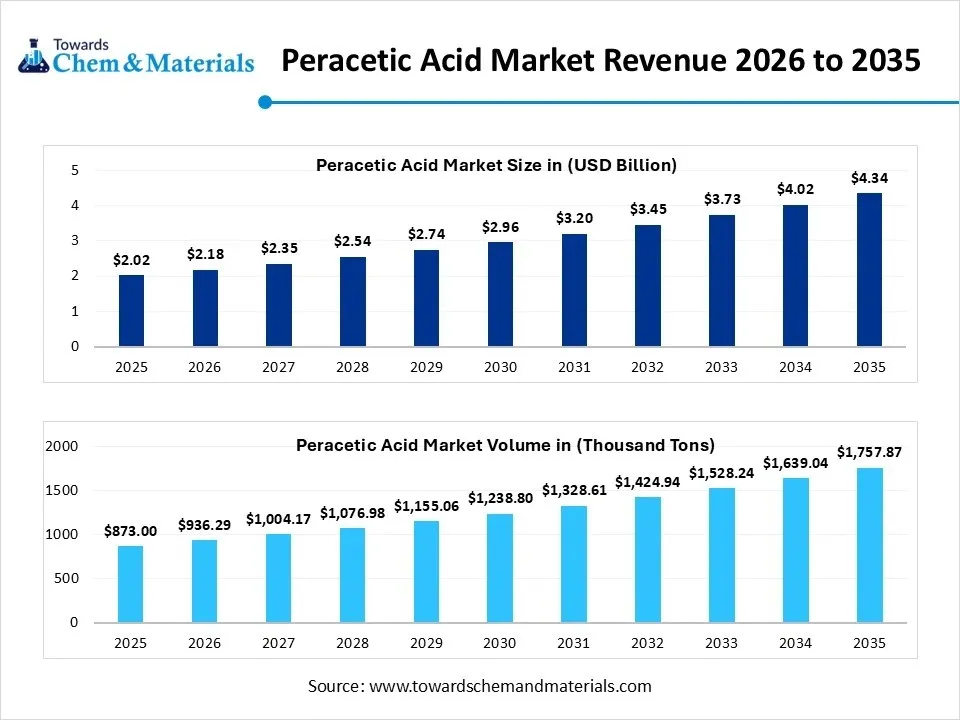
The peracetic acid market is evolving into a highly versatile specialty chemicals segment, driven by the growing need for effective disinfection, oxidation and microbial control across industries that cannot afford contamination, hygiene failure or inefficient water treatment. Peracetic acid combines broad-spectrum antimicrobial performance with a relatively clean end-of-use profile. It is typically produced from hydrogen peroxide and acetic acid, and after use, it breaks down into water, oxygen and acetic acid, which is one reason it is increasingly favored in applications where residue control and environmental compatibility matter.
Peracetic acid (PAA) is deeply integrated in food and beverage processing, aseptic packaging, poultry and red meat sanitation, wastewater disinfection, industrial and institutional cleaning, healthcare sterilization, agriculture, aquaculture and certain chemical synthesis applications. Additionally, the shift toward chlorine-alternative disinfection and more flexible sanitation systems, particularly in wastewater treatment and food processing, is a major growth factor. The market is also being shaped by product innovation and sustainability positioning.
- For instance, in June 2026, Evonik introduced low-carbon-footprint peracetic acid for the European market using a mass-balance approach and bio-based inputs, showing that PAA suppliers are now competing on reduction, cleaner sourcing and sustainability credentials.(Source: www.evonik.com)
Who is the Leading Supplier of Peracetic Acid in the World?
| Company Name | Constituent Percentage | Shipments |
| Exide Industries Ltd. | 23% | 19,127 |
| Merck Life Science KGaA | 12% | 10,195 |
| TOKYO CHEMICAL INDUSTRIES CO, LTD | 9% | 7,770 |
Growing Demand for Wastewater Treatment Drives Market Growth
The rapid urbanization and growing industrialization increase demand for peracetic acid for wastewater treatment. The increasing demand for safe and clean water increases the adoption of peracetic acid for wastewater treatment. The growing wastewater discharge due to industrialization increases the demand for robust wastewater treatment. The stricter regulations about water quality increase the adoption of sustainable wastewater treatment, like peracetic acid.
The increasing demand for municipal drinking water treatment fuels demand for peracetic acid. The rising demand for removing harmful pollutants and microorganisms increases the adoption of peracetic acid for efficient water treatment. The growing population and rising demand for clean water increase the adoption of peracetic acid. The growing demand for wastewater treatment is a key driver for the growth of the market.
Market Trends
- Growing Demand for Various Foods: The increasing demand for various foods like seafood, meat, and poultry increases demand for peracetic acid for disinfecting. The increasing demand for processing food fuels the demand for peracetic acid for effective sanitization.
- Rising Expansion of the Agriculture Sector: The growing expansion of the agriculture sector increases demand for peracetic acid for applications like water management, crop protection, and post-harvest treatment. It is widely used as a disinfectant in storage facilities, irrigation systems, and equipment. The growing shift towards sustainable agriculture increases demand for peracetic acid.
- The Growing Demand for Disinfectants: The increasing demand for infection control and growing awareness about hygiene increases demand for peracetic acid. The rising prevalence of infectious diseases fuels demand for peracetic acid disinfectant.
Report Scope
| Report Attribute | Details |
| Market Size in 2026 | USD 2.18 Billion |
| Expected Size by 2035 | USD 4.34 Billion |
| Growth Rate from 2025 to 2035 | CAGR 7.95% |
| Base Year of Estimation | 2025 |
| Forecast Period | 2025 - 2035 |
| Dominant Region | Asia Pacific |
| Segment Covered | By Grade, By Application, By End-Use Industry, By Form, By Concentration, By Distribution Channel, By Packaging Type, By Region |
| Key Companies Profiled | Solvay S.A., Evonik Industries AG, Ecolab Inc., Kemira Oyj, PeroxyChem LLC (acquired by Evonik), Airedale Chemical, Enviro Tech Chemical Services, Inc., Seeler Industries, Christeyns, Acuro Organics Limited, FMC Corporation, National Peroxide Limited, Balaji Chem Solutions, Biosan LLC, Lenntech B.V.,Kersia Group, Quaron S.A., Mitsubishi Gas Chemical Company, Shandong Huatai Interox Chemical Co., Ltd., Zhejiang Jihua Group Co., Ltd. |
Supply Chain Analysis
Raw Material Sourcing
- Hydrogen peroxide and acetic acid are the two core inputs used to manufacture PAA. It is sold as an equilibrium solution containing peracetic acid, hydrogen peroxide, acetic acid and water.
- Evonik Industries: the company operates across the active oxygen value chain, supplying both hydrogen peroxide and finished peracetic acid formulation.
- Other Key Players: Solvay, Arkema, Kemira, Mitsubishi Gas Chemical Company
Manufacturing and Formulation
- Raw materials are converted into commercial peracetic acid products and then formulated into different concentration grades and performance profiles.
- Enviro Tech Chemical Services: the company plays a particularly strong role in turning peracetic acid into application-specific disinfection products.
- Other Key Players: Evonik, Ecolab, STERIS, Solenis
Distribution and Logistics
- This stage includes packaging, safe handling, storage guidance, dosing systems, feed and control equipment, trial support and on-site integration into customer operations.
- Ecolab: the company’s strength is in connecting chemistry with plant-level cleaning systems, monitoring, staff support and hygiene optimization.
- Other Key Players: Evonik, Enviro Tech Chemical Services, Solenis, Kemira
Market Opportunity
Growing Expansion of the Healthcare Sector Surge Demand for Peracetic Acid
The growing expansion of the healthcare sector in various regions increases demand for peracetic acid for various applications. The increasing expansion of clinics & new hospitals and stricter hygiene regulations in healthcare infrastructures fuel demand for peracetic acid. The increasing healthcare-related infections and focus on patient safety increase demand for peracetic acid for sanitization purposes. The need for sterilizing medical devices & instruments like dental equipment, endoscopes, and surgical tools fuels the adoption of peracetic acid to remove pathogens.
The increasing demand for surface disinfection in intensive care units, operating rooms, and patient rooms increases demand for peracetic acid to avoid infections. The focus on avoiding drug production contamination fuels demand for peracetic acid. The prevention of microorganisms like viruses, spores, bacteria, and fungi in healthcare facilities increases the adoption of peracetic acid. The growing expansion of the healthcare sector creates an opportunity for the peracetic acid market.
Market Challenge
High Production Cost Limits Expansion of Peracetic Acid Market
Despite several benefits of the peracetic acid in various industrial sectors, higher cost of production hampers the growth of the market. Factors like the requirement for specialized storage, the high cost of raw materials, and the complex manufacturing process are responsible for high production costs. The fluctuations in the cost of raw materials like acetic anhydride directly affect the market. The complex manufacturing process, like multi-step reactions, increases the production cost. The development bio-based synthesis process leads to higher cost. The need for specialized storage and handling to avoid degradation increases the cost. The safety concerns and stricter regulations increase the overall cost. The high production cost hampers the growth of the peracetic acid market.
Regional Insights
How is the Asia-Pacific Peracetic Acid Market Growing?
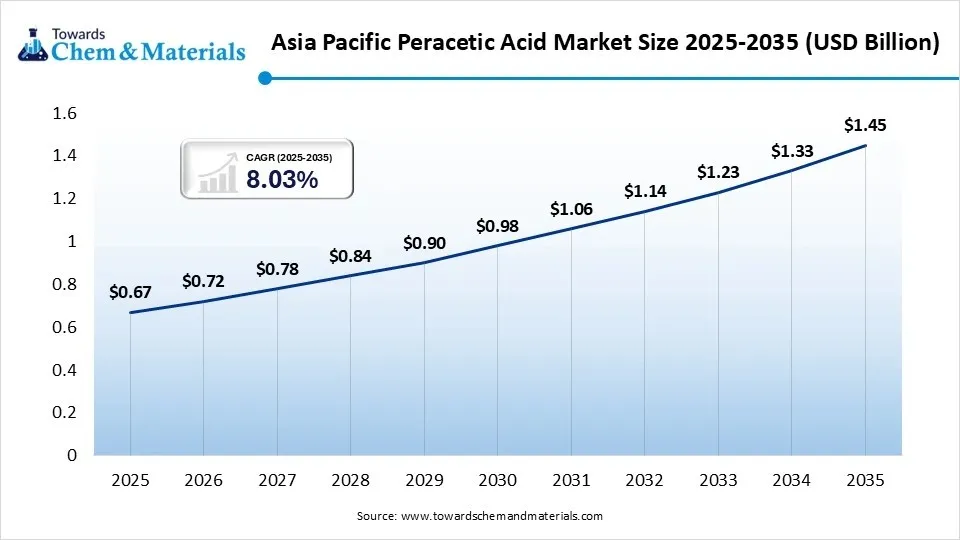
The Asia Pacific peracetic acid market size was estimated at USD 0.67 billion in 2025 and is projected to reach USD 1.45 billion by 2035, growing at a CAGR of 8.03% from 2026 to 2035.Asia Pacific dominated the market with the largest share of 33.0% in 2025 and was expected to grow at the fastest CAGR of 9.10% over the forecast period. The dominance of the region can be attributed to rapid industrialization, which increases consumption. Food processing capacity expands strongly, accelerating market growth. Water treatment investments accelerate across emerging economies, driving the market. The region offers a strong growth case in aquaculture, agriculture and industrial hygiene.
 China
China
- The major demand driver is industrial and municipal wastewater treatment.
- The growing use of PAA in food safety and packaging sanitation is driving the market.
- The country benefits from being a major regional base for chemical manufacturing and industrial supply chains.
India
- The country is witnessing the expansion of the food and beverage processing industry, especially in dairy, poultry, packaged foods, beverages and export-oriented food manufacturing.
- A major opportunity lies in wastewater and industrial water treatment.
What are the Advancements in the Peracetic Acid Market in North America?
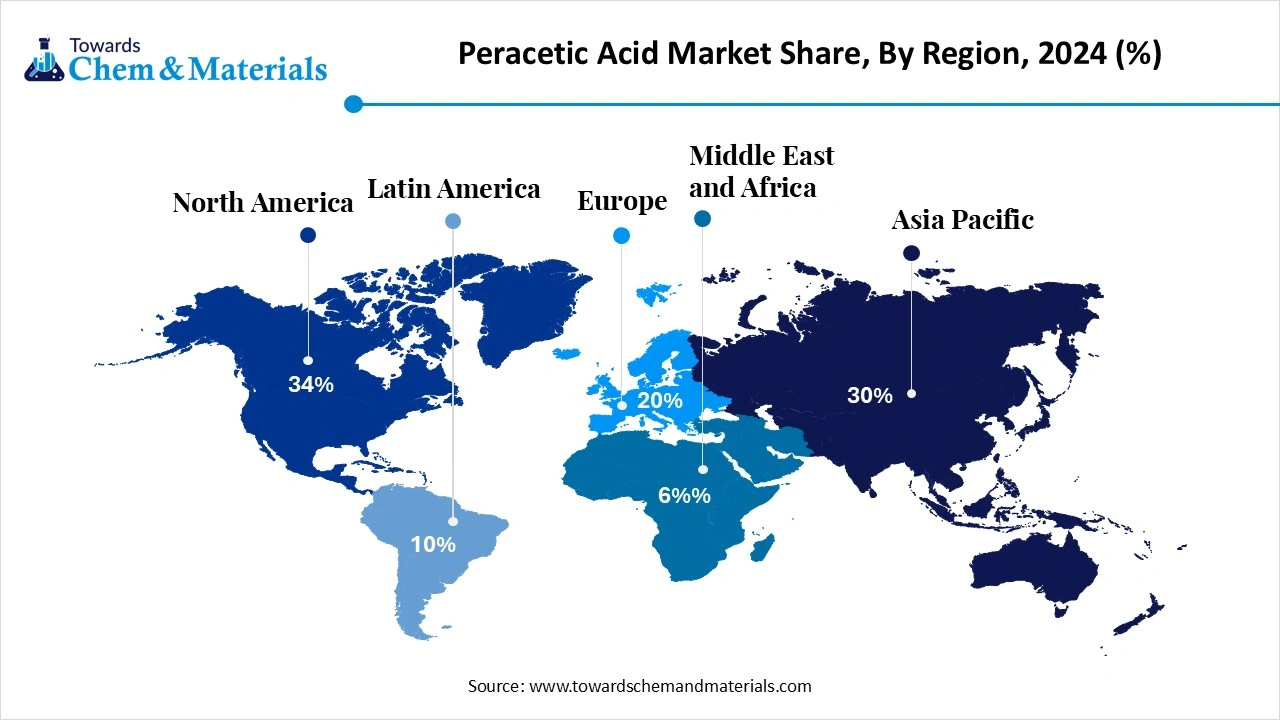
North America held a market share of 29% in 2025. The growth of the region can be credited to strong food safety regulations supporting demand. Mature healthcare infrastructure drives the consumption of the market. Water treatment investments remain significant, driving market growth. The region benefits from strong adoption in specialized hygiene and water-quality applications.
United States
- U.S. processors in poultry, red meat, dairy, beverages, produce and packaged foods need antimicrobial systems.
- The country is witnessing the growing use of PAA in municipal and industrial wastewater disinfection.
- The U.S. is a noteworthy market for aquaculture and specialized water-quality applications.
Canada
- The most relevant growth area is food and beverage processing, especially in dairy, meat, beverage and produce-related sanitation systems.
- Water and wastewater treatment creates a new opportunity area for market growth.
- Canada may also benefit from PAA’s fit with agriculture and produce-related water and sanitation, especially in processing environments.
How is the Europe Peracetic Acid Market Expanding?
Europe held a market share of 26% in 2025. The growth of the region can be credited to the sustainability regulations that encourage adoption. Pulp and paper industries utilize eco-friendly bleaching. Industrial hygiene standards remain stringent. One of the strongest demand anchors in Europe is food and beverage processing, particularly in applications where hygiene has to be maintained. Additionally, water and wastewater treatment is gaining traction.
Germany
- The country uses peracetic acid in food and beverage hygiene systems, especially in beverage packaging, dairy processing, meat processing and food-contact sanitation.
- The country reflects the growing relevance of peracetic acid in industrial and municipal wastewater treatment.
- Germany benefits from mare specialized PAA applications in industrial hygiene, healthcare sterilization and even selected agricultural processing segments.
France
- The strongest opportunities lie in food-processing and beverage-related sanitation.
- The role of PAA is increasingly seen in wastewater and process-water disinfection, where food processing plants, beverage facilities and municipal systems need effective microbial control.
- The country also offers additional growth potential where PAA overlaps with agriculture-linked sanitation, produce washing and selected healthcare hygiene uses.
 What are the Key Trends in the Peracetic Acid Market in Latin America?
Latin America held a market share of 7% in 2025. The growth of the region can be credited to expanding food exports, which support sanitation demand. Industrial modernization increases the adoption of the market. Water infrastructure upgrades create opportunities for the market. The region has a natural fit for PAA in agriculture and produce-linked sanitation, especially in export-oriented fruit and vegetable chains where wash-water quality matters.
Brazil
- The country is witnessing a growing role of PAA in meat, poultry, seafood and food-processing sanitation.
- Wastewater and process-water treatment, especially as food processors, beverage plants and municipalities face tighter expectations around microbial control and discharge quality.
- The country may see rising PAA use in fruit and vegetable processing and agriculture-linked water and sanitation.
Chile
- The country has a good fit between peracetic acid and the country’s aquaculture and seafood ecosystem.
- A major trend is the use of PAA in fruit, wine and food-processing sanitation.
How is the Middle East and Africa Region Growing in the Peracetic Acid Market?
The Middle East and Africa held a market share of 5% in 2025. The growth of the region can be credited to the growing desalination and water treatment projects. Healthcare investments improve demand outlook. Industrial diversification supports market growth. A major driver is the food and beverage industry, particularly in markets where local food processing is expanding and where hygiene standards are rising.
Saudi Arabia
- The country is witnessing a growing importance of water and wastewater treatment.
- The expansion of food and beverage processing hygiene is driving market growth.
- The country may also witness incremental PAA demand in healthcare and institutional hygiene.
South Africa
- The country has a significant growth opportunity in food-processing and export-related hygiene.
- The country may offer a long-term opportunity in agriculture-linked sanitation, winery hygiene and selected healthcare or institutional uses.
Segmental Insights
Grade Insights
The 5-15% PAA solution segment dominated the peracetic acid market in 2025. The growing demand for killing viruses, spores, bacteria, and fungi increases the demand for 5-15% PAA solution. The stringent safety regulations increase adoption of 5-15% PAA solution to use in consumer products, helping the market growth. The 5-15% PAA solution is safe for use on surfaces and equipment. It helps to kill various microorganisms like fungi, bacteria, and viruses. The growing demand for disinfection of equipment in various sectors like agriculture, food processing, and healthcare drives the market growth.
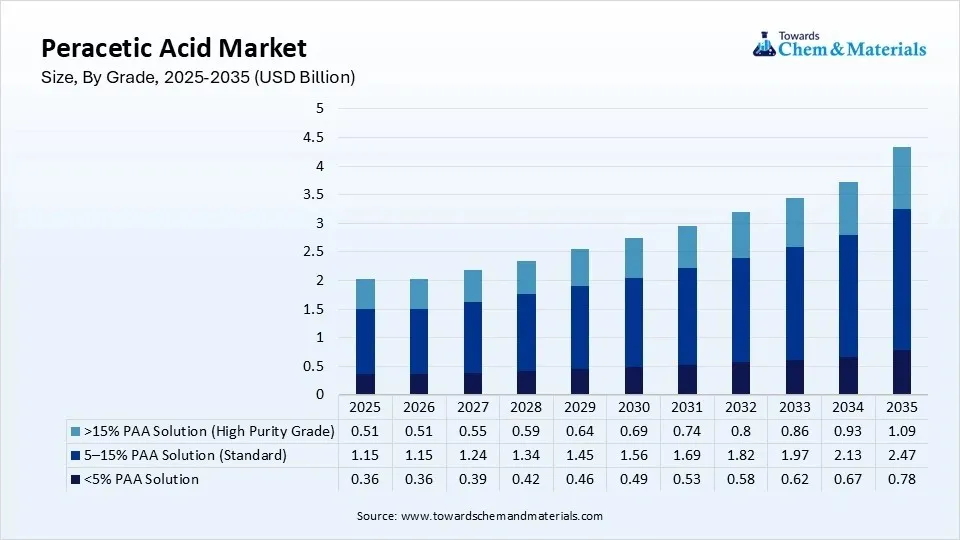 The >15% PAA solution segment is the fastest growing in the market during the forecast period. The growing demand for general sanitation and disinfection increases the adoption of >15% PAA solution. The increasing need for tackling a wide range of microorganisms and pathogens fuels demand for >15% PAA solution. The increasing demand for sanitation in the food processing industry increases demand for >15% PAA solution. The increasing demand for the sterilization of medical instruments supports the overall growth of the market.
Peracetic Acid Market Share, By Grade, 2025(%)
| By Grade | Market Share (%) |
| <5% PAA Solution | 18% |
| 5–15% PAA Solution (Standard) | 57% |
| >15% PAA Solution (High Purity Grade) | 25% |
Application Insights
The disinfectant segment held the largest share in the peracetic acid market in 2025. The increasing demand for sanitation and hygiene in various industries increases the demand for disinfectants. The focus on broad-spectrum antimicrobial activity helps the market growth. The need for sanitizing food packaging, processing equipment, and surfaces fuels demand for disinfectants. The growing agriculture sector increases demand for disinfectants for controlling bacterial contamination, driving the overall growth of the market.
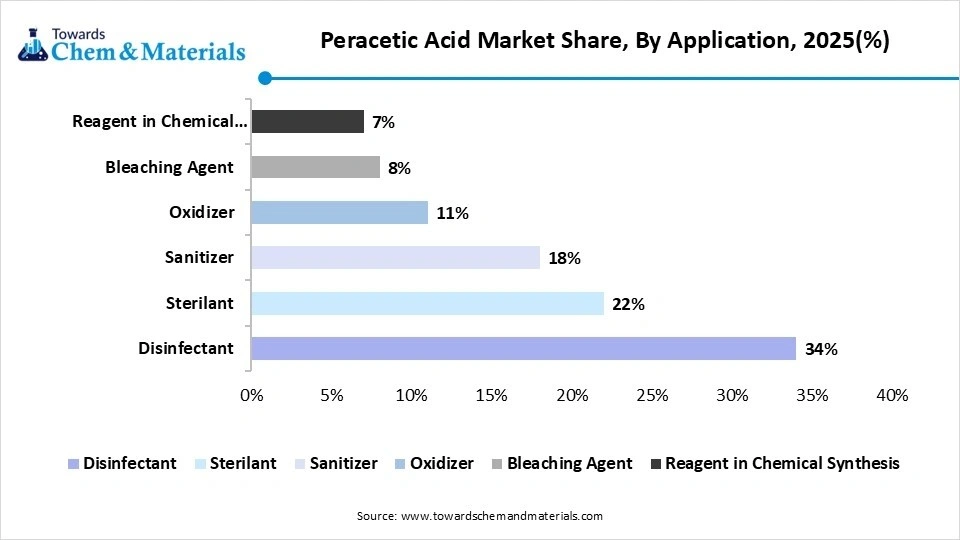 The sterilant segment experiences the fastest growth in the market during the forecast period. The increasing demand for sterilizing water treatment systems, medical instruments, and food processing equipment helps the market growth. The growing demand for the sterilization of processed foods fuels demand for peracetic acid sterilant. The rising use of sterile medical equipment increases demand for the peracetic acid sterilization method. The growing sterilization of medical equipment, like surgical instruments and endoscopes, supports the overall growth of the market.
Peracetic Acid Market Share, By Application, 2025(%)
| By Application | Market Share (%) |
| Disinfectant | 34% |
| Sterilant | 22% |
| Sanitizer | 18% |
| Oxidizer | 11% |
| Bleaching Agent | 8% |
| Reagent in Chemical Synthesis | 7% |
End-Use Industry Insights
The food & beverage segment dominated the peracetic acid market in 2025. The stricter food safety regulations and increasing focus on preventing foodborne diseases fuel demand for peracetic acid to kill pathogens. The increasing demand for sanitizing food packaging materials, cleaning equipment, and treating food products increases the adoption of peracetic acid, helping the market growth. The focus on reducing food waste and extending the shelf life of food products fuels demand for peracetic acid. The increasing expansion of the food & beverage industry fuels demand for peracetic acid. The rising demand for packaged & processed foods and consumer awareness about food safety drive the overall growth of the market.
The healthcare & pharmaceuticals segment is the fastest growing in the market during the forecast period. The increasing demand for sterilizing medical devices and instruments fuels demand for peracetic acid. The focus on maintaining hygiene in patient care and operating rooms increases the adoption of peracetic acid, helping the market growth. The stricter regulations in the healthcare & pharmaceutical industry fuel the adoption of peracetic acid for disinfection applications. The growing demand for peracetic acid in drug manufacturing facilities supports the overall growth of the market.
Peracetic Acid Market Share, By End-Use Industry, 2025(%)
| By End-Use Industry | Market Share (%) |
| Food & Beverage | 39.00% |
| Healthcare | 23.00% |
| Pulp & Paper | 12.00% |
| Water Treatment | 18.00% |
| Other End Uses | 8.00% |
Form Insights
The liquid segment held the largest share in the peracetic acid market in 2025. The growing integration of liquid form in sprayers and water systems for disinfection & sanitization helps in the market growth. Liquid form is a cost-effective and preferred option in various applications. They are easy to apply, handle, and transport. They are highly effective against fungi, bacteria, and viruses. The growing demand across sectors like water treatment, healthcare, and food processing drives the overall growth of the market.
The powder segment experiences the fastest growth in the market during the forecast period. The increasing on-demand solution preparation fuels the adoption of powder form. The focus on convenience and ease of use in various industries increases demand for powder form, helping the overall market growth. The powder form is more concentrated and has a longer shelf life. It reduces waste and has more stability in certain conditions. The increasing demand in agriculture operations and healthcare facilities supports the overall market growth.
Peracetic Acid Market Share, By Form, 2025(%)
| By Form | Market Share (%) |
| Liquid | 88.00% |
| Powder/Granular (Stabilized) | 7.00% |
| Tablets | 5.00% |
Concentration Insights
The 5-15% segment dominated the peracetic acid market in 2025. The growing demand for killing viruses, spores, bacteria, and fungi in diverse settings increases the demand for a 5-15% concentration. It is cost-effective and offers good performance. The growing demand across industries like healthcare and food processing helps the market growth. It is safer for handling and does not require any safety equipment. The growing demand across applications like preventing microbial growth, disinfecting surfaces, and sanitizing equipment drives the overall market growth.
The 15-25% segment is the fastest growing in the market during the forecast period. The increasing demand for a higher level of sterilization and disinfection in various industries increases demand for 15-25% concentration. It is effective against a broad spectrum of microorganisms and is used in industrial settings. It has a high concentration of active ingredients and is cost-effective. The growing demand from wastewater treatment plants supports the overall growth of the market.
Peracetic Acid Market Share, By Concentration, 2025(%)
| By Concentration | Market Share (%) |
| <5% | 17.00% |
| 5–15% | 46.00% |
| 15–25% | 24.00% |
| >25% | 13.00% |
Distribution Channel Insights
The direct sales segment held the largest share in the peracetic acid market in 2025. The growing demand for customized and tailored PAA formulations increases demand for direct sales. The increasing focus on technical expertise and personalised service helps the market growth. The need for specialized knowledge and support increases demand for direct sales. The focus on promotional activities, control over pricing, and distribution channels fuels the adoption of direct sales. The growing demand for building trust and long-term relationships drives the market growth.
The online/e-commerce segment experiences the fastest growth in the market during the forecast period. The high availability of various peracetic acid products on online platforms helps the market growth. The focus on lower prices and competitive pricing increases the adoption of online/e-commerce platforms. The increasing online ordering and delivery, and the focus on lowering time, increase the adoption of online/e-commerce platforms. The availability of safety data sheets, detailed product information, and technical specifications supports the overall growth of the market.
Peracetic Acid Market Share, By Distribution Channel, 2025(%)
| By Distribution Channel | Market Share (%) |
| Direct Sales (OEMs, Industries) | 61% (Dominating) |
| Distributors / Dealers | 29.00% |
| Online / E-commerce Channels | 10% (Fastest Growing) |
Packaging Type Insights
The HDPE drums segment dominated the peracetic acid market in 2025. The focus on sustainability and growing environmental concerns increases demand for HDPE drums. The strong focus on effective transportation and production of peracetic acid increases demand for HDPE drums, helping the market growth. HDPE drums avoid contamination and maintain the integrity of the packaging. They are lightweight, shatterproof, leak-proof, and protect against UV radiation. They are an affordable and sustainable approach for packaging. The growing demand for HDPE drums across industries like healthcare, food processing, and water treatment drives the market growth.
The IBC totes segment is the fastest growing in the market during the forecast period. The strong focus on reliable storage and transportation of peracetic acid increases demand for IBC totes. They hold a higher volume of peracetic acid and help in saving time. They consist of safety features like overpressure prevention and venting devices to reduce the risk of spills. The increasing demand across large-scale industrial applications helps the market growth.
Peracetic Acid Market Share,By Packaging Type, 2025(%)
| By Packaging Type | Market Share (%) |
| IBC Totes | 33.00% |
| HDPE Drums | 41% |
| Cans & Bottles | 11.00% |
| Bulk Tankers | 15% |
Recent Developments
- In January 2026, Enviro Tech launched PD2 Litter Treatment, an EPA-registered, peracetic acid-based granular product designed for poultry litter management.(Source: envirotech.com)
- In September 2025, Enviro Tech introduced Peragreen® 26WW, a high-strength peracetic acid-based antimicrobial control solution designed for medium-to-large-scale municipal wastewater treatment systems.(Source: envirotech.com)
Top Companies List
- Solvay S.A.
- Evonik Industries AG
- Ecolab Inc.
- Kemira Oyj
- PeroxyChem LLC (acquired by Evonik)
- Airedale Chemical
- Enviro Tech Chemical Services, Inc.
- Seeler Industries
- Christeyns
- Acuro Organics Limited
- FMC Corporation
- National Peroxide Limited
- Balaji Chem Solutions
- Biosan LLC
- Lenntech B.V.
- Kersia Group
- Quaron S.A.
- Mitsubishi Gas Chemical Company
- Shandong Huatai Interox Chemical Co., Ltd.
- Zhejiang Jihua Group Co., Ltd.
Segments Covered
By Grade
- <5% PAA Solution
- 5–15% PAA Solution (Standard)
By Application
- Disinfectant
- Sterilant
- Sanitizer
- Oxidizer
- Bleaching Agent
- Reagent in Chemical Synthesis
By End-Use Industry
- Food & Beverage
- Healthcare
- Pulp & Paper
- Water Treatment
- Other End Uses
By Form
- Liquid
- Powder/Granular (Stabilized)
- Tablets
By Concentration
- <5%
- 5–15%
- 15–25%
- 25%
By Distribution Channel
- Direct Sales (OEMs, Industries)
- Distributors / Dealers
- Online / E-commerce Channels
By Packaging Type
- IBC Totes
- HDPE Drums
- Cans & Bottles
- Bulk Tankers
By Region
- North America
- U.S.
- Canada
- Europe
- Germany
- UK
- France
- Italy
- Spain
- Sweden
- Denmark
- Norway
- Asia Pacific
- China
- Japan
- India
- South Korea
- Thailand
- Latin America
- Brazil
- Mexico
- Argentina
- Middle East & Africa
- South Africa
- UAE
- Saudi Arabia
- Kuwait



Comments
Share your thoughts, ask a question, or provide feedback about this report.