Table of Content
Content
What is the Liquid Silicone Rubber Market Size and Share?
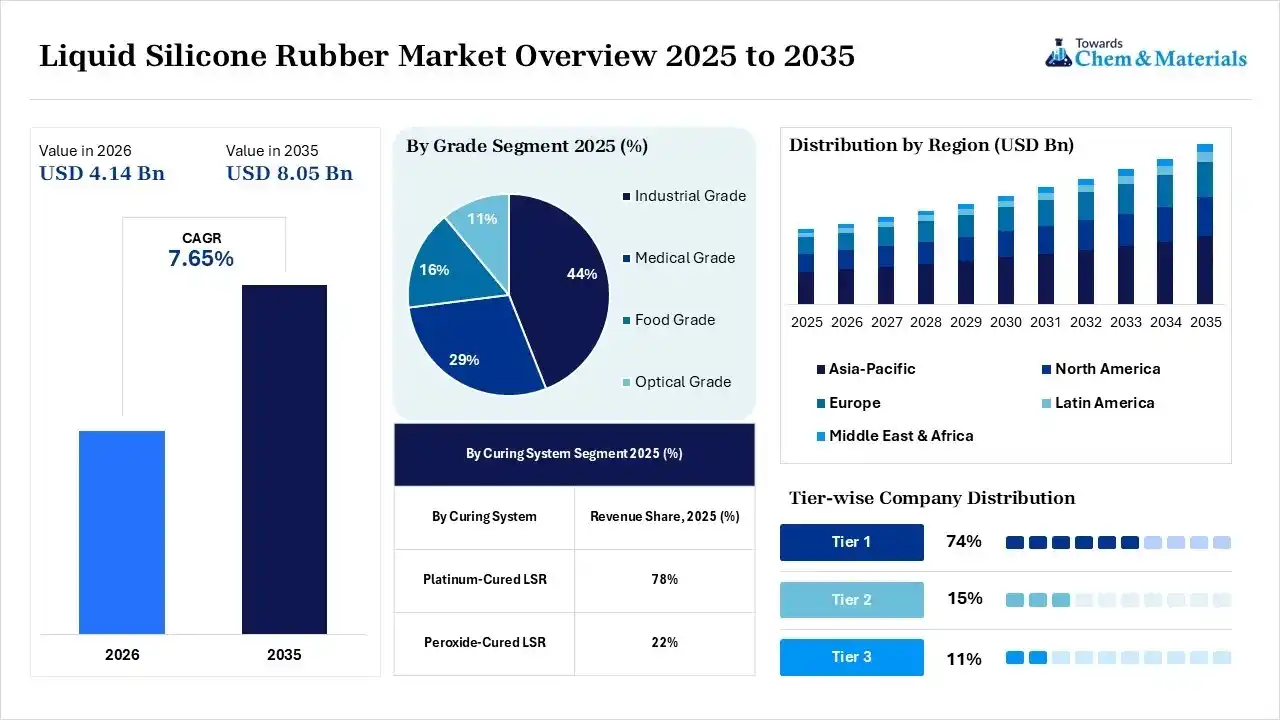
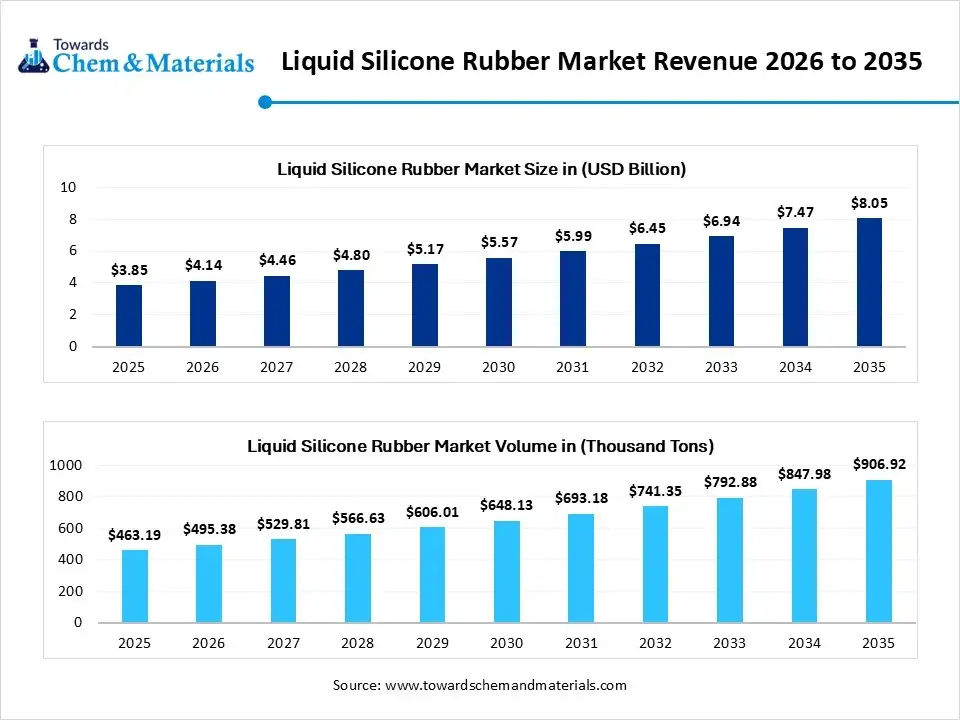
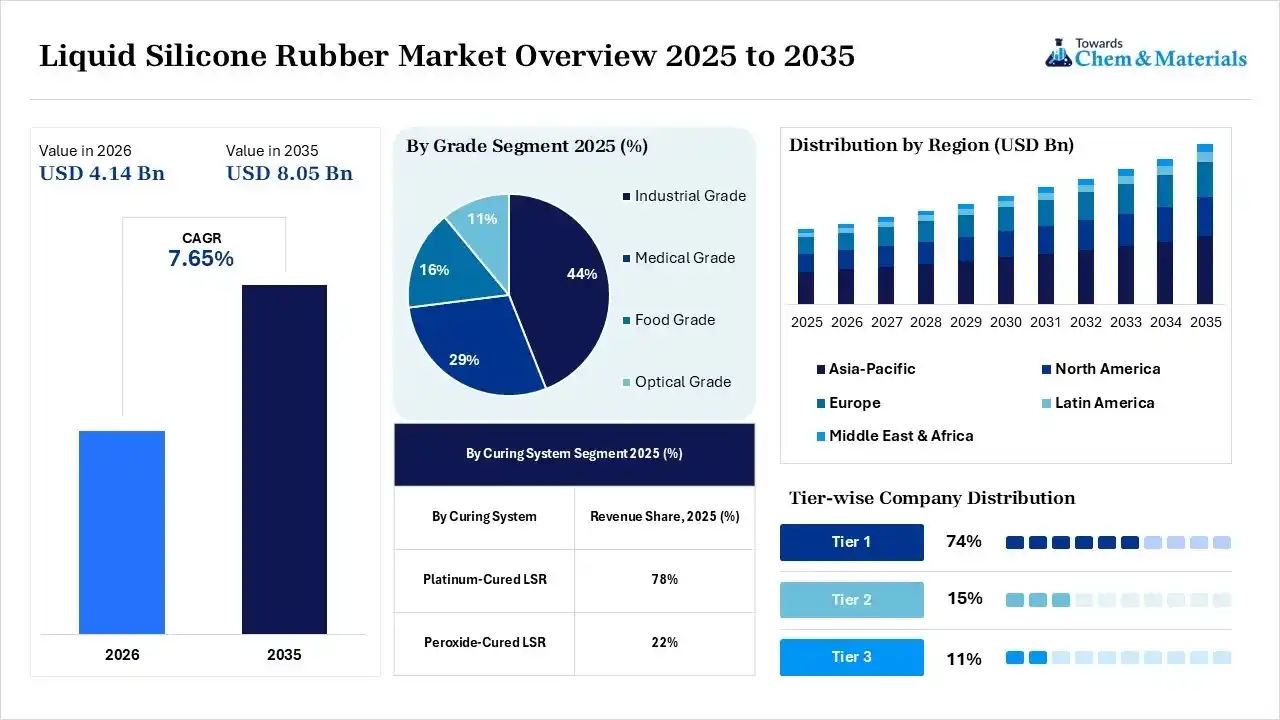
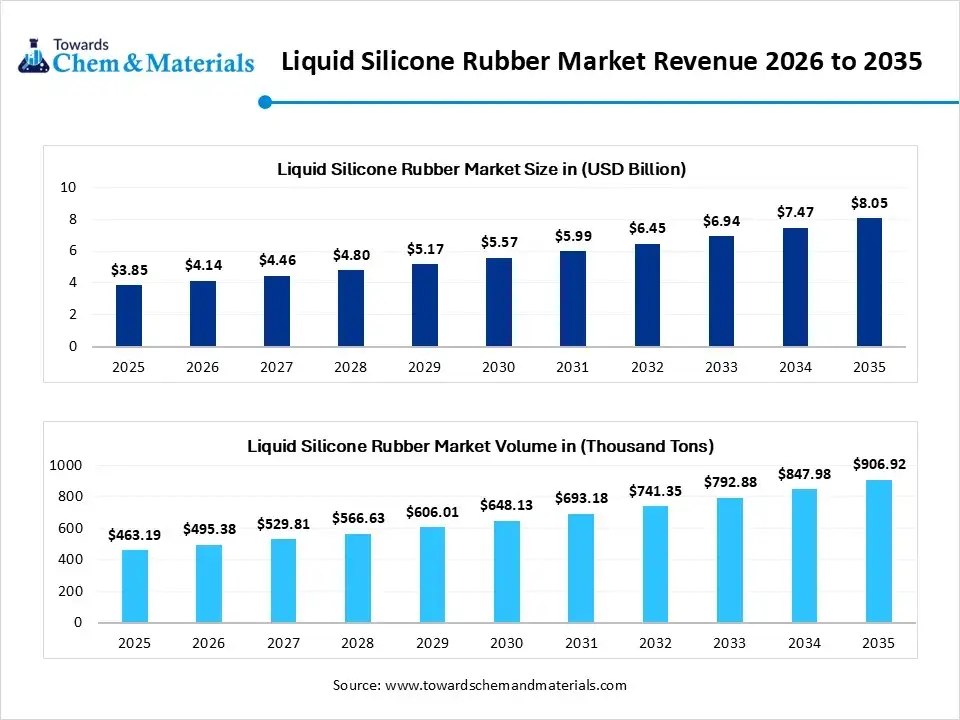
The liquid silicone rubber market size was valued at USD 3.85 billion in 2025, is estimated to reach USD 4.14 billion in 2026, and is projected to reach USD 8.05 billion by 2035, exhibiting a compound annual growth rate (CAGR) of 7.65% over the forecast period from 2026 to 2035.Asia Pacific dominated the liquid silicone rubber market with the largest revenue share of 43% in 2025 and is expected to grow at the fastest CAGR of 7.74% during the forecast period. In terms of volume, the liquid silicone rubber market is projected to grow from 463.19 thousand tons in 2025 to 906.92 thousand tons by 2035. growing at a CAGR of 6.95% from 2026 to 2035.The greater focus on durable and flexible materials has created a profitable space for the liquid silicon rubber manufacturers in recent years. Furthermore, the recent construction activities and manufacturing have been acting as the supporting pillar to scale profit margins of the industry nowadays.
Market Highlights
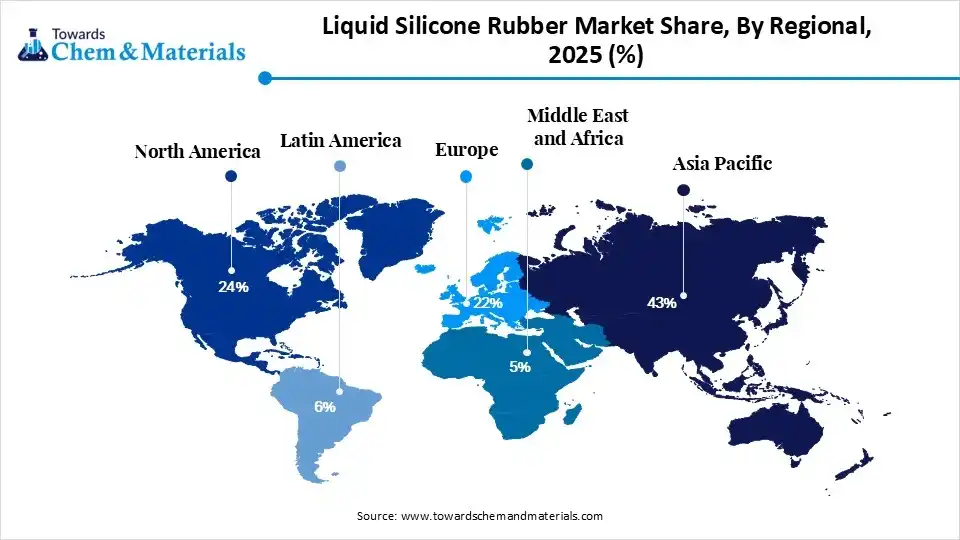
- By region, Asia Pacific dominated the market with a share of 43% in 2025, due to it having become the world's largest manufacturing hub for automotive products, electronics, healthcare equipment, and consumer goods.
- By region, North America is notably growing with 24% market share in 2025 and is expected to be the fastest-growing region in the market, with a CAGR of 8.40% in the forecast period, owing to the region's expanding investments in healthcare innovation, electric vehicles, aerospace technologies, and advanced manufacturing.
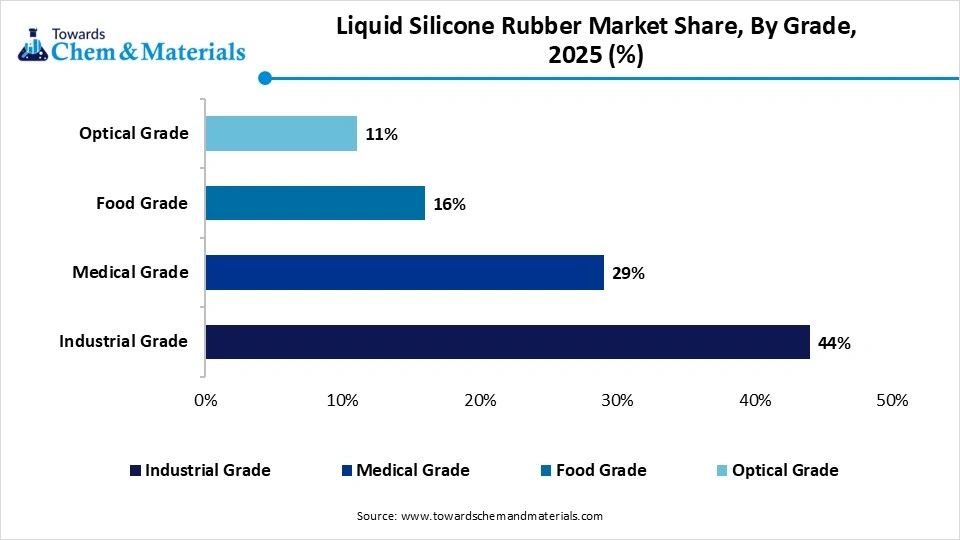
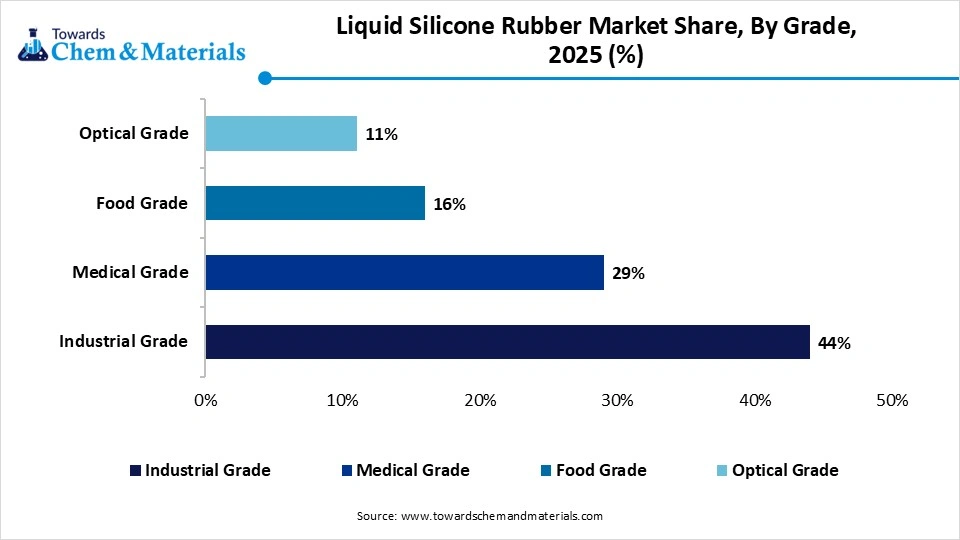
- By grade, the industrial grade segment dominated the market with 44% share in 2025, as it serves a wide range of high-volume manufacturing applications.
- By grade, the medical grade segment held the 29% market share in 2025 and is expected to be the fastest-growing in the market, with a CAGR of 8.8% in the forecast period, owing to the healthcare industries are demanding safer and more advanced materials.
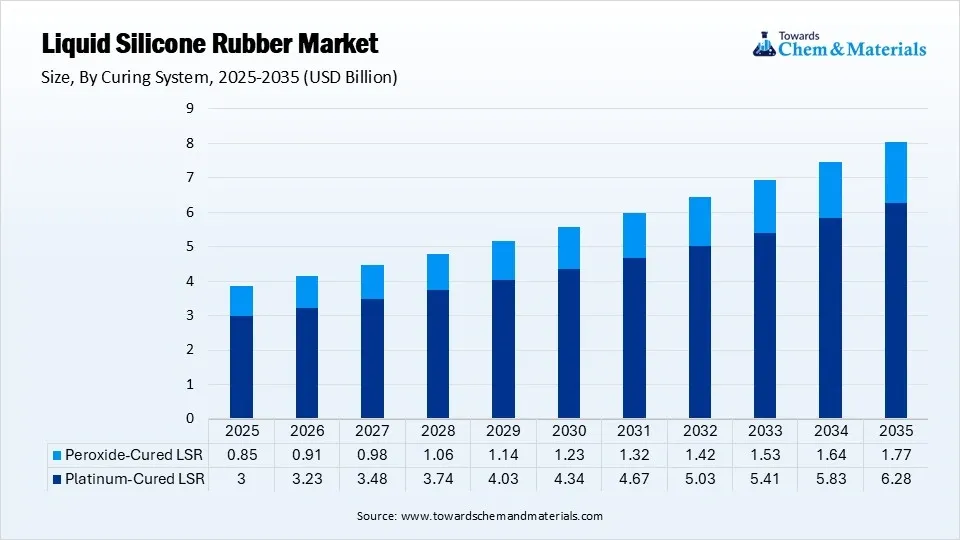
- By curing system, the platinum-cured LSR segment dominated the market with 78% share in 2025, as it offers superior product quality and processing efficiency.
- By curing system, the peroxide-cured LSR segment held the 22% market share in 2025 and is expected to be the fastest-growing in the market, with a CAGR of 8.10% in the forecast period, owing to it offers advantages in specific industrial applications requiring durability and cost efficiency.
- By application, the automotive components segment dominated the market with 31% share in 2025, as vehicle manufacturers require materials capable of performing under demanding operating conditions.
- By application, the medical devices segment held the 22% market share in 2025 and is expected to be the fastest-growing in the market, with a CAGR of 8.9% in the forecast period, owing to healthcare systems increasingly adopting advanced medical technologies.
- By process method, the injection molding segment dominated the market with 63% share in 2025 and is expected to be the fastest-growing segment in the market, with a CAGR of 8.0% in the forecast period, as it offers speed, precision, and efficiency for large-scale manufacturing.
- By end-use industry, the automotive segment dominated the market with 29% share in 2025, as modern vehicles rely heavily on high-performance materials.
- By end use industry, the healthcare & medical segment held the 24% market share in 2025 and is expected to be the fastest-growing in the market, with a CAGR of 8.8% in the forecast period, due to increasing healthcare investments and technological advancements.
Quick Stats at a Glance
- Market in Size (2025): USD 3.85 Billion | CAGR (2026–2035): 7.65%
- Market Estimated size in 2026: USD 4.14 Billion
- Market Projected Size (2035): USD 8.05 Billion
- Asia Pacific: largest Regional Market Revenue Share of 43% in 2025| USD 1.66 Billion
- North America: Fastest-growing Regional Market Revenue Share of 24% in 2025| USD 0.92 Billion
- By country: The China held the largest market share of 40.00% in 2025
- Market in Volume (2025): 463.19 Thousand Tons| Volume CAGR (2026–2035): 6.95%
- Market Estimated Volume (2026): 495.38 Thousand Tons
- Market Projected Volume (2035): 906.92 Thousand Tons
- Market Pricing (2025):
- Average Manufacturing Price: USD 5,960/Ton
- Average Selling Price: USD 7,541/Ton
- Pricing CAGR (2026–2035): 2.40%
Every industry around the globe has been using high-performance elastomers for several years, with baby care products, consumer goods, and industrial equipment gaining major industry attention in recent years. Also, global manufacturers are seeking durable, flexible, and heat-resistant materials, with liquid silicone rubber emerging as an ideal option in the current period, according to the latest survey conducted by our industry experts.
- For instance, in November 2025, Elkem introduced innovative and advanced liquid silicon rubber, which is specially designed for medical applications. Also, the launched product is named SILBIONE™ LSR Select EC 70.
(Source: rubberworld)
In recent years, the healthcare sector has emerged as one of the strongest consumers of liquid silicone rubber. Medical device manufacturers are increasingly using LSR for catheters, respiratory products, wearable healthcare devices, and surgical components because of its biocompatibility and safety characteristics.
Furthermore, the growing adoption of electric vehicles and advanced electronics is creating additional demand for high-performance silicone components that is likely to withstand heat, moisture, and electrical stress.
Global Investment Flow for Liquid Silicon Rubber 2026
- Material producers are expanding specialty silicone production capacities to serve rapidly growing sectors such as medical devices, electric vehicles, wearable electronics, and advanced consumer products in the current period, as per the recent survey.
- Companies are investing in automated liquid silicone rubber injection molding facilities to improve production speed, reduce waste, and increase manufacturing efficiency, as per recent industry observation.
- Investment is increasingly flowing toward research and development programs focused on sustainable silicone formulations, recyclable materials, and high-performance specialty grades designed for next-generation industrial applications.
Market Trends
- The greater adoption in the healthcare field has driven the strategic transformation and sectoral scalability in recent years. Furthermore, the medical field manufacturers selected these materials due to their biocompatibility and flexibility in the past few years.
- The heavy emergence of the electric vehicle manufacturing is enhancing the market readiness and future industry capabilities in the current period. Also, by offering excellent heat resistance in harsh conditions, the liquid silicon rubber has gained major industry attention from the various EV manufacturers.
- The shift towards the usage of smart consumer electronics is expected to position the industry for long-term expansion in the coming years. Also, the manufacturers of wearable devices and other smarter products have been using liquid silicon rubber due to its comfort and durability.
Market Report Scope
| Report Attributes | Details |
| Market Size and Volume in 2026 | USD 4.14 Billion / 495.38 Million Tons |
| Revenue Forecast in 2035 | USD 8.05 Billion / 906.92 Million Tons |
| Growth Rate | CAGR 7.65% |
| Base Year of Estimation | 2025 |
| Forecast Period | 2025 - 2035 |
| High Impact Region | Asia Pacific |
| Segment Covered | By Grade, By Curing System, By Application, By Processing Method, By End-Use Industry, By Region |
| Key Companies Profiled | Dow Inc., Wacker Chemie AG, Momentive Performance Materials Inc, Shin-Etsu Chemical Co., Ltd., Elkem ASA, KCC Corporation, NuSil Technology LLC, Avantor, Inc. |
Automation Drives Production Excellence
Industry has been witnessing a move toward fully automated precision molding and smart manufacturing systems. Also, in recent years, manufacturers have adopted advanced injection molding technologies, robotic handling systems, digital quality monitoring, and real-time production controls. These technologies help improve product consistency, reduce material waste, and increase manufacturing efficiency as per the expectations.
Supply Chain Analysis of the Liquid Silicone Rubber Market
- Production & Processing:Modern Liquid Silicone Rubber (LSR) production synthesizes ultra-pure polydimethylsiloxane polymers with functional silica. Processing leverages advanced two-component (1:1 ratio) liquid injection molding (LIM) systems as per the review.
- Recent automated, AI-driven closed-loop platforms precisely dose and feed the cold mixture into heated mold cavities.
- Key players: Dow Inc., Wacker Chemie AG, and Shin-Etsu Chemical Co., Ltd.
- Quality Testing and Certification:Ensuring Liquid Silicone Rubber (LSR) is safe requires rigorous checks. Labs stretch and squeeze samples to verify tensile strength and compression thresholds.
- For medical uses, raw materials undergo strict biological risk assessments under the latest ISO 10993-1 frameworks and USP Class VI protocols to guarantee complete safety inside the human body.
- Key players: SGS, TÜV SÜD, and Eurofins Scientific
- Distribution to Industrial Users:Getting Liquid Silicone Rubber (LSR) to factory floors relies on highly specialized supply chains. Industrial distributors ship the thick, heavy components in sealed 55-gallon drums or bulk totes to prevent air contamination.
- Distributors use temperature-controlled transport to stop premature thickening, ensuring manufacturers receive a fresh, stable, ready-to-inject 1:1 mixture.
- Key players: Barentz, Univar Solutions, and Amco Polymers
Liquid Silicone Rubber Market Regulatory Landscape: Regulations
| Country Region | Regulatory Body | Key Regulations | Focus Areas |
| United States | Food and Drug Administration (FDA) | 21 CFR Section 177.2600: Governs rubber articles intended for repeated food contact. It lists permitted elastomers, fillers, and accelerators used in compounding LSR | Total Extractives: Restricts total extraction limits in distilled water (max 20 mg/sq in) and n-hexane (max 175 mg/sq in). |
| Europe | ECHA |
REACH Regulation (EC) No 1907/2006: Controls restricted substances and SVHCs (Substances of Very High Concern). | Cyclosilicate Restrictions: Strict monitoring of cyclic siloxane impurities (D4, D5, and D6) below a 0.1% weight threshold. |
| China | National Health Commission (NHC) | GB 4806.16-2025: National Food Safety Standard dedicated specifically to Silicone Rubber materials and articles. | Chemical Migration Adjustments: Enforces rigorous testing for Potassium Permanganate Consumption (Kamon₄) and Heavy Metals (as Pb) under extended thermal thresholds (60°C for 2 hours). |
Liquid Silicone Rubber Market Dynamics
Driver
Durability Demand Strengthens Industry Potential
The growing demand for durable and high-performance materials has allowed stakeholders to capitalize on growth opportunities. In the current period, manufacturers are looking for materials that can withstand heat, moisture, chemicals, and long-term usage without losing performance. Liquid silicone rubber offers these advantages while also providing flexibility and reliability. Furthermore, industries such as automotive, healthcare, electronics, and consumer products are increasingly adopting advanced materials to improve product quality and lifespan.
Restraint
Advanced Processing Increases Production Cost
The high production and processing costs are likely to hinder the industry's growth during the forecast period. Also, in recent years, manufacturers have experienced rising expenses related to raw materials, specialized equipment, and quality control requirements. Furthermore, liquid silicone rubber processing often requires advanced molding systems and skilled technical expertise, increasing overall production costs.
Opportunity
Connected Devices Will Fuel Industry Growth
The rapid growth of wearable technology and smart healthcare devices is expected to create significant business opportunities in the industry during the projected time. In the current period, consumers are increasingly using fitness trackers, smart watches, medical monitoring devices, and connected healthcare products. These applications require materials that are comfortable, skin-friendly, durable, and resistant to environmental conditions. Furthermore, advances in digital healthcare and remote patient monitoring are creating additional demand for specialized silicone components.
Segmental Insights
Grade Insights
The industrial grade segment dominated the market with 44% share in 2025, as it serves a wide range of high-volume manufacturing applications. In the current period, industries such as automotive, electronics, construction, consumer goods, and industrial equipment require large quantities of silicone materials for everyday production needs. Industrial-grade liquid silicone rubber provides strong performance while remaining cost-effective for large-scale use.
Liquid Silicone Rubber Market Share, By Grade, 2025 (%)
| By Grade | Revenue Share, 2025 (%) |
| Industrial Grade | 44% |
| Medical Grade | 29% |
| Food Grade | 16% |
| Optical Grade | 11% |
The medical grade segment held the 29% market share in 2025 and is expected to be the fastest-growing in the market, with a CAGR of 8.8% in the forecast period, owing to the healthcare industries are demanding safer and more advanced materials. In recent years, medical device manufacturers have increased the use of liquid silicone rubber in catheters, implants, respiratory products, wearable health devices, and surgical equipment. Furthermore, medical-grade materials offer excellent biocompatibility, flexibility, and long-term stability, making them suitable for direct patient contact.
Curing System Insights
The platinum-cured LSR segment dominated the market with 78% share in 2025, as it offers superior product quality and processing efficiency. In the current period, manufacturers prefer platinum-cured systems because they provide excellent transparency, low odor, high purity, and consistent physical properties. Furthermore, platinum curing enables faster production cycles and reduces the risk of unwanted by-products during manufacturing.
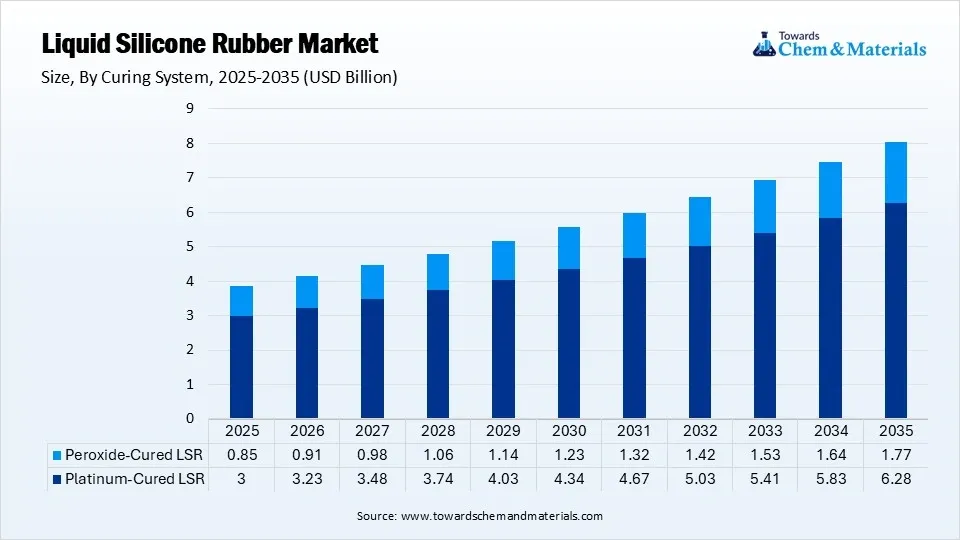 The peroxide-cured LSR segment held the 22% market share in 2025 and is expected to be the fastest-growing in the market, with a CAGR of 8.10% in the forecast period, owing to it offers advantages in specific industrial applications requiring durability and cost efficiency. In recent years, manufacturers have explored peroxide-cured materials for applications where high mechanical strength and long-term performance are important. Furthermore, ongoing improvements in curing technologies are helping address traditional limitations associated with peroxide-based systems.
Liquid Silicone Rubber Market Share,By Curing System, 2025 (%)
| By Curing System | Revenue Share, 2025 (%) |
| Platinum-Cured LSR | 78% |
| Peroxide-Cured LSR | 22% |
Application Insights
The automotive components segment dominated the market with 31% share in 2025, as vehicle manufacturers require materials capable of performing under demanding operating conditions. In the current period, liquid silicone rubber is widely used in seals, gaskets, connectors, insulation systems, and various engine-related components. Furthermore, its resistance to heat, moisture, vibration, and harsh environmental conditions makes it highly valuable in automotive applications.
The medical devices segment held the 22% market share in 2025 and is expected to be the fastest-growing in the market, with a CAGR of 8.9% in the forecast period, owing to healthcare systems increasingly adopting advanced medical technologies. In recent years, demand has increased for wearable healthcare products, diagnostic equipment, respiratory devices, surgical tools, and patient monitoring systems. Furthermore, liquid silicone rubber offers excellent flexibility, biocompatibility, and comfort, making it highly suitable for medical applications.
Liquid Silicone Rubber Market Share,By Application, 2025 (%)
| By Application | Revenue Share, 2025 (%) |
| Automotive Components | 31% |
| Medical Devices | 22% |
| Consumer Goods | 13% |
| Electrical & Electronics | 18% |
| Industrial Components | 9% |
| Healthcare Products | 4% |
| Others | 3% |
Processing Method Insights
The injection molding segment dominated the market with 63% share in 2025 and is expected to be the fastest-growing segment in the market, with a CAGR of 8.0% in the forecast period, as it offers speed, precision, and efficiency for large-scale manufacturing. In the current period, manufacturers prefer injection moulding because it can produce complex liquid silicone rubber components with consistent quality and minimal material waste. Furthermore, automated injection molding systems support high production volumes while reducing labor requirements and operational costs.
The extrusion segment held the 16% market share in 2025, owing to manufacturers increasingly requiring continuous silicone profiles, tubes, seals, and specialized industrial components. In recent years, demand has increased across industries such as healthcare, construction, electronics, and industrial equipment. Furthermore, extrusion technology allows manufacturers to produce long and customized silicone products efficiently while maintaining consistent quality.
Liquid Silicone Rubber Market Share,By Processing Method, 2025 (%)
| By Processing Method | Revenue Share, 2025 (%) |
| Injection Molding | 63% |
| Extrusion | 16% |
| Compression Molding | 13% |
| Transfer Molding | 8% |
End-Use Industry Insights
The automotive segment dominated the market with 29% share in 2025, as modern vehicles rely heavily on high-performance materials. In the current period, manufacturers use liquid silicone rubber in electrical systems, sealing applications, lighting components, sensors, connectors, and thermal management systems. Furthermore, the material's ability to withstand extreme temperatures and harsh operating conditions makes it highly valuable for automotive production.
The healthcare & medical segment held the 24% market share in 2025 and is expected to be the fastest-growing in the market, with a CAGR of 8.8% in the forecast period, due to increasing healthcare investments and technological advancements. In recent years, demand for medical devices, wearable healthcare products, diagnostic equipment, and patient care solutions has increased significantly. Furthermore, liquid silicone rubber provides excellent safety, comfort, flexibility, and biocompatibility, making it suitable for a wide range of healthcare applications.
Liquid Silicone Rubber Market Share,By End-Use Industry, 2025 (%)
| By End-Use Industry | Revenue Share, 2025 (%) |
| Automotive | 29% |
| Healthcare & Medical | 24% |
| Electrical & Electronics | 21% |
| Consumer Goods | 11% |
| Industrial Manufacturing | 10% |
| Aerospace | 3% |
| Others | 2% |
Regional Analysis
How will Asia Pacific Dominate the Liquid Silicone Rubber Market in 2025?
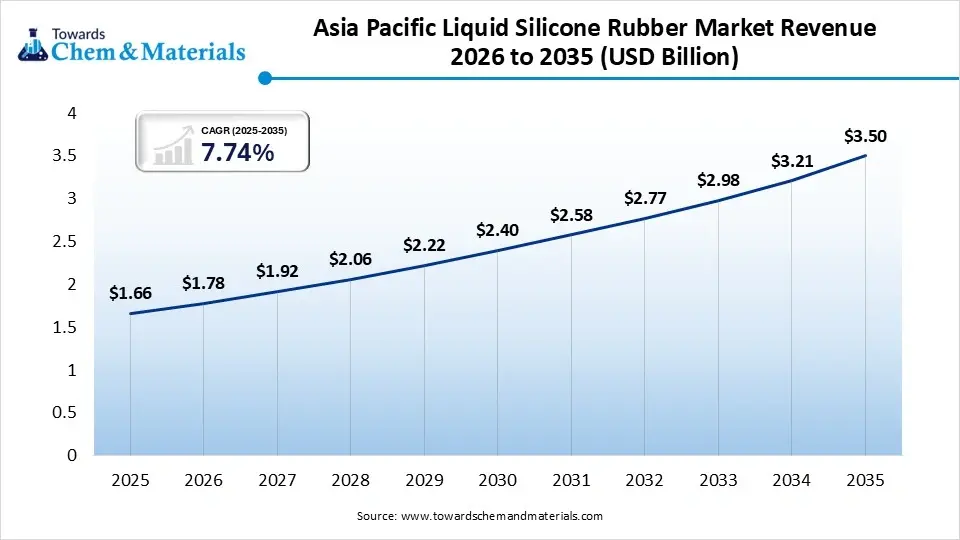
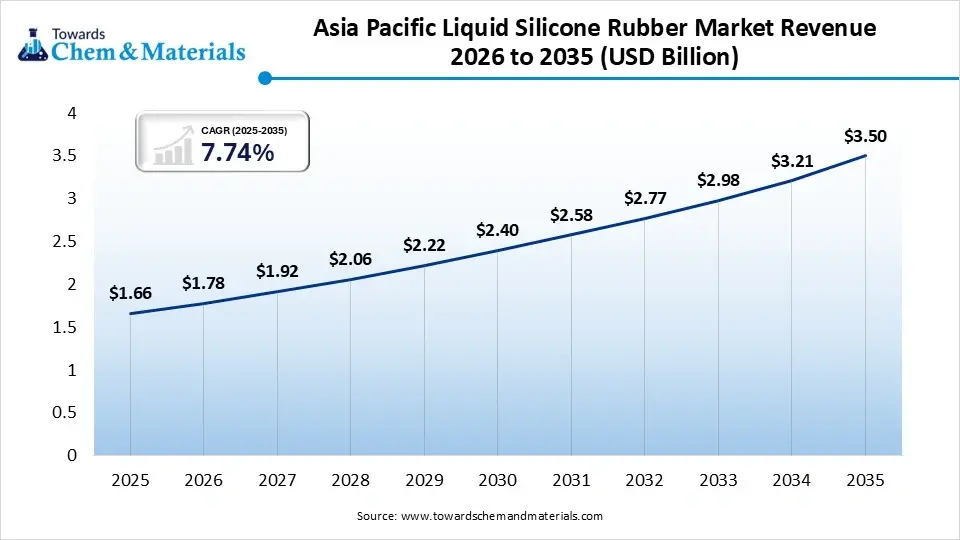
The Asia Pacific liquid silicone rubber market size was estimated at USD 1.66 billion in 2025 and is projected to reach USD 3.50 billion by 2035, growing at a CAGR of 7.74% from 2026 to 2035.Asia Pacific dominated the market with a share of 43% in 2025, due to it having become the world's largest manufacturing hub for automotive products, electronics, healthcare equipment, and consumer goods. In the current period, countries across the region are investing heavily in advanced manufacturing and industrial expansion. Furthermore, strong production networks, growing domestic demand, and increasing exports continue to support liquid silicone rubber consumption.
 China
China
- The manufacturers in China have increased investments in smart factories, battery technologies, and high-performance material applications, while the country's strong position in consumer electronics and renewable energy equipment is creating additional demand for liquid silicone rubber components.
- The country is pushing initiatives of large-scale manufacturing capacity and industrial self-sufficiency.
Japan
- Japan has the leadership in precision engineering, advanced electronics, and medical technology development, while the companies are focusing on high-performance materials that improve product quality, durability, and efficiency.
- The increasing demand for advanced healthcare devices, robotics, and next-generation electronic products is supporting liquid silicone rubber consumption.
Liquid Silicone Rubber Market Evaluation in North America
The North America liquid silicone rubber market size was estimated at USD 0.92 billion in 2025 and is projected to reach USD 1.98 billion by 2035, growing at a CAGR of 7.97% from 2026 to 2035.North America is notably growing with 24% market share in 2025 and is expected to be the fastest-growing region in the market, with a CAGR of 8.40% in the forecast period, owing to the region's expanding investments in healthcare innovation, electric vehicles, aerospace technologies, and advanced manufacturing. In recent years, companies have focused on strengthening domestic production capabilities and developing high-value industrial products. Furthermore, increasing adoption of wearable healthcare devices, advanced electronics, and specialty automotive components is creating new opportunities for liquid silicone rubber applications.
United States
- The major manufacturers are investing in advanced production technologies and high-performance material solutions, while increasing demand for wearable healthcare devices, battery technologies, and precision-engineered products is supporting market expansion.
- Also, the United States benefits from strong innovation ecosystems and technology-driven industries.
Canada
- The manufacturers in Canada have focused on improving production efficiency and adopting advanced materials that support long-term performance. Furthermore, growth in medical technologies, clean energy systems, and industrial equipment manufacturing is actively driving the industry growth.
- Also, the industry in Canada benefits from industrial modernization and infrastructure development.
Europe Liquid Silicon Industry Conditions
The Europe liquid silicone rubber market size was estimated at USD 0.85 billion in 2025 and is projected to reach USD 1.81 billion by 2035, growing at a CAGR of 14.46% from 2026 to 2035.Europe held the 22% market share in 2025, owing to industries that are increasingly focusing on advanced materials, sustainable manufacturing, and product innovation. In the current period, automotive, healthcare, electronics, and industrial equipment manufacturers are investing in high-performance materials that improve product reliability and efficiency.
Germany
- Manufacturers in Germany have increased investments in electric mobility, automation systems, and high-performance industrial materials, while the country's focus on precision manufacturing and product quality is driving demand for advanced silicone solutions.
- Germany relies on large-scale industrial production and technological expertise.
Italy
- The industry in Italy is growing through expansion in healthcare products, specialty manufacturing, and consumer goods industries, while the manufacturers are increasingly adopting advanced materials to improve product quality, durability, and competitiveness.
- Italy is gaining advantages from the flexible manufacturing networks that serve a wide range of niche applications.
Liquid Silicone Rubber Market Survey in Latin America
The Latin America liquid silicone rubber market size was estimated at USD 0.23 billion in 2025 and is projected to reach USD 0.52 billion by 2035, growing at a CAGR of 8.50% from 2026 to 2035.Latin America held the 6% market share in 2025 due to industries investing in local manufacturing capabilities and modern production technologies. In recent years, countries across the region have focused on strengthening industrial output and reducing dependence on imported products. Furthermore, increasing demand for healthcare equipment, automotive components, and consumer products is creating opportunities for liquid silicone rubber applications.
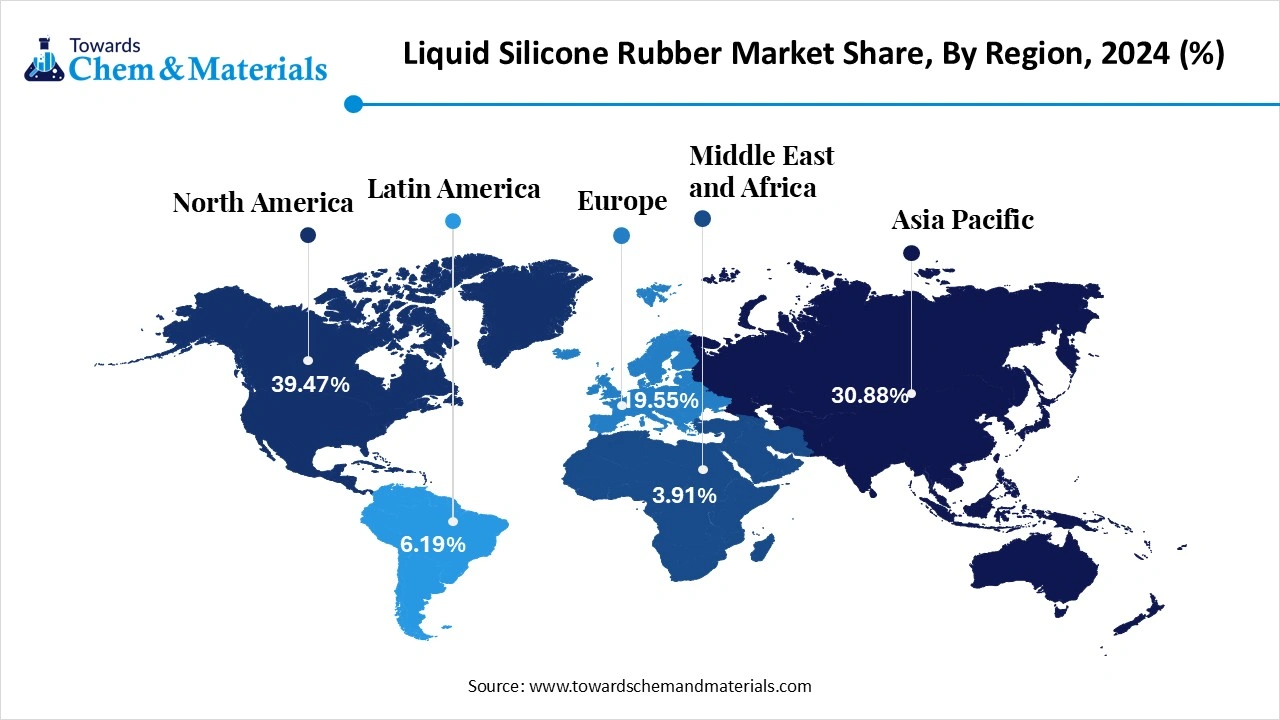
Liquid Silicone Rubber Market Share, By Regional, 2025 (%)
| Regional | Revenue Share, 2025 (%) |
| Asia-Pacific | 43% |
| North America | 24% |
| Europe | 22% |
| Latin America | 6% |
| Middle East & Africa | 5% |
Brazil
- Industry in Brazil is supported by growth in automotive manufacturing, healthcare products, and industrial equipment production. Also, companies are investing in local production capabilities to meet rising domestic demand.
- The country's large industrial sector is creating opportunities for advanced materials used in automotive parts, seals, and medical devices.
Argentina
- In Argentina, businesses have focused on upgrading production capabilities and improving product quality, while healthcare, packaging, and industrial manufacturing sectors are creating advantages for advanced material adoption.
- Also, the country’s growth is driven by targeted investments in selected manufacturing sectors as per the recent survey.
Middle East and Africa Liquid Silicon Rubber Sector Observation
The Middle East and Africa liquid silicone rubber market size was estimated at USD 0.19 billion in 2025 and is projected to reach USD 0.44 billion by 2035, growing at a CAGR of 8.76% from 2026 to 2035.The Middle East and Africa held the 5% market share in 2025, as governments are investing in industrial diversification, healthcare infrastructure, and advanced manufacturing projects. In the current period, countries are working to reduce dependence on traditional industries while creating new opportunities in chemicals, healthcare, and technology sectors. Furthermore, increasing investments in modern industrial facilities are supporting demand for high-performance materials.
Saudi Arabia
- The investments have increased in healthcare equipment, industrial production, and advanced materials industries, while the development of local manufacturing capabilities is creating demand for specialized materials used in industrial and consumer applications in the country.
- The country is also prioritizing domestic industrial production.
UAE
- The country's growing role as a regional hub for healthcare, technology, logistics, and advanced manufacturing. While the investments in medical technologies, smart devices, and industrial innovation have increased.
- The strong international trade connections allow businesses to access global supply chains and advanced manufacturing technologies in the UAE nowadays.
Competitive Landscape Analysis
Tier 1 Companies
| Rank | Company Name | Headquarters | Country | Why Relevant to This Market | Key Products / Material Portfolio |
| 1 | Dow Inc. | Midland, Michigan | USA | One of the world's largest silicone manufacturers with extensive global LSR production and broad end-use coverage | SILASTIC™ LSR, medical-grade LSR, automotive LSR, optical-grade silicones |
| 2 | Wacker Chemie AG | Munich, Bavaria | Germany | Global leader in silicone elastomers with a comprehensive ELASTOSIL® LSR portfolio | ELASTOSIL® LR series, medical silicones, automotive and electronics-grade LSR |
| 3 | Shin-Etsu Chemical Co., Ltd. | Tokyo | Japan | Major supplier of high-performance silicone materials with strong presence in electronics and healthcare | KEG series LSR, medical-grade silicones, optical and industrial LSR |
| 4 | Elkem ASA | Oslo | Norway | Significant global silicone producer with dedicated LSR manufacturing and innovation capabilities | SILBIONE® medical LSR, BLUESIL™ LSR, industrial silicone elastomers |
| 5 | Momentive Performance Materials Inc. | Waterford, New York | USA | Major global supplier of specialty silicones and advanced LSR materials | Silopren™ LSR, medical silicones, optical-grade and automotive-grade LSR |
Tier 2 Companies
| Rank | Company Name | Headquarters | Country | Why Relevant to This Market | Key Products / Material Portfolio |
| 1 | KCC Corporation | Seoul | South Korea | Leading Asian silicone producer with growing LSR manufacturing capabilities | Medical-grade LSR, industrial LSR, silicone elastomers |
| 2 | Jiangsu Hongda New Material Co., Ltd. | Yangzhou, Jiangsu | China | Major Chinese silicone producer with dedicated liquid silicone rubber product lines | Injection molding LSR, industrial LSR, specialty silicone compounds |
| 3 | Dongguan New Orient Technology Co., Ltd. | Dongguan, Guangdong | China | Specialized manufacturer of LSR materials for electronics and consumer applications | LSR compounds, molding-grade silicone rubber, customized formulations |
| 4 | Reiss Manufacturing, Inc. | Blacklick, Ohio | USA | Established specialty producer focused on silicone compounds and LSR technologies | Liquid silicone compounds, custom silicone elastomers |
| 5 | Stockwell Elastomerics, Inc. | Philadelphia, Pennsylvania | USA | Strong niche position in engineered silicone solutions and high-performance elastomers | Silicone elastomers, LSR components, specialty silicone materials |
Tier 3 Companies
| Rank | Company Name | Headquarters | Country | Why Relevant to This Market | Key Products / Material Portfolio |
| 1 | Simtec Silicone Parts, LLC | Miramar, Florida | USA | Specialized LSR molding and material development company serving medical and industrial sectors | Custom LSR formulations, injection-molded LSR products |
| 2 | Siliconature S.p.A. | Gorizia, Friuli-Venezia Giulia | Italy | Focused supplier of medical and healthcare silicone solutions utilizing LSR technologies | Medical-grade LSR components, healthcare silicone products |
| 3 | Nolato AB | Torekov, Skåne County | Sweden | Growing presence in medical and precision-molded LSR applications | Medical LSR components, electronics-grade silicone solutions |
| 4 | Avantor Performance Materials, LLC | Radnor, Pennsylvania | USA | Supplies specialty high-purity materials used in healthcare and life science silicone applications | High-purity silicone materials, medical-grade elastomer solutions |
| 5 | Silcotech North America Inc. | Bolton, Ontario | Canada | Niche manufacturer specializing in custom LSR molding and advanced silicone engineering | Custom LSR products, precision silicone components |
Companies are competing through product innovation, customized formulations, sustainability initiatives, and advanced processing technologies. Also, the industry is gradually shifting from standard silicone products toward application-specific solutions that offer higher performance and greater customer value.
- Wacker Chemie AG has been expanding its silicone business through investments in specialty silicone materials and advanced manufacturing capabilities. It has also focused on supporting healthcare, automotive, and electronics industries with high-performance silicone solutions.
- Dow Inc has been actively developing liquid silicone rubber products designed for electric vehicles, medical devices, and consumer electronics. Dow is also focusing on sustainability, process efficiency, and advanced material innovation to strengthen its industry share.(Source: wacker.com, corporate.dow.com)
Recent Development
- In February 2026, DuPont unveiled its latest production of liquid silicon rubber. Also, the latest product called Liveo™ C6-8XX and it is specifically designed for the healthcare application, as per the company's claim. Moreover, the new product is likely to deliver reliability and precision as per the published report.(Source: www.dupont.com)
Top Vendors in the Liquid Silicone Rubber Market & Their Offerings
- Dow Inc.: Dow Inc. is an American material science leader producing high-quality liquid silicone rubber. The company manufactures versatile elastomers that provide exceptional heat resistance, flexibility, and durability. These premium silicones primarily serve global clients across the automotive, medical device, consumer electronics, and sustainable packaging industries.
- Wacker Chemie AG: Wacker Chemie AG is a prominent German chemical corporation specializing in highly developed silicone technologies. They manufacture precisely engineered liquid rubbers designed for extreme industrial environments. Their extensive product portfolio heavily supports advanced innovations in electric vehicle batteries, aerospace shielding, medical technology, and eco-friendly cosmetics.
- Momentive Performance Materials Inc.: Momentive Performance Materials Inc. is a global specialty materials powerhouse focused on advanced silicone derivatives. Operating as a subsidiary of KCC Corporation, they engineer custom liquid rubber formulas.
Other Key Players
- Shin-Etsu Chemical Co., Ltd.
- Elkem ASA
- KCC Corporation
- NuSil Technology LLC
- Avantor, Inc.
Segments Covered in the Report
By Grade
- Industrial Grade
- General Purpose LSR
- High-Strength LSR
- Medical Grade
- Implantable Grade
- Non-Implantable Grade
- Food Grade
- Beverage Contact Applications
- Food Processing Components
- Optical Grade
- LED Optics
- Automotive Lighting Components
By Curing System
- Platinum-Cured LSR
- Standard Platinum Cure
- High-Purity Platinum Cure
- Peroxide-Cured LSR
- General Industrial Applications
- Specialty Molded Components
By Application
- Automotive Components
- Connectors & Seals
- Gaskets
- Lighting Components
- Sensor Components
- Medical Devices
- Catheters
- Respiratory Components
- Surgical Instruments
- Wearable Devices
- Consumer Goods
- Baby Care Products
- Kitchenware
- Personal Care Products
- Electrical & Electronics
- Connectors
- Insulators
- Keypads
- Cable Accessories
- Industrial Components
- Membranes
- Seals
- Vibration Dampening Components
- Healthcare Products
- Drug Delivery Systems
- Diagnostic Components
- Others
- Aerospace Components
- Specialty Engineering Parts
By Processing Method
- Injection Molding
- High-Volume Injection Molding
- Precision Injection Molding
- Extrusion
- Tubing
- Profiles
- Compression Molding
- Industrial Parts
- Specialty Components
- Transfer Molding
- Precision Components
- Multi-Material Components
By End-Use Industry
- Automotive
- Healthcare & Medical
- Electrical & Electronics
- Consumer Goods
- Industrial Manufacturing
- Aerospace
- Others
By Region
- North America
- U.S.
- Canada
- Europe
- Germany
- UK
- France
- Italy
- Spain
- Sweden
- Denmark
- Norway
- Asia Pacific
- China
- Japan
- India
- South Korea
- Thailand
- Latin America
- Brazil
- Mexico
- Argentina
- Middle East & Africa
- South Africa
- UAE
- Saudi Arabia
- Kuwait
Tags
FAQ's




Select User License to Buy
Figures (7)




 sales@towardschemandmaterials.com
 Download Sample
 Schedule a Meeting