
Ferritic Stainless Steel Market Size Analysis Report 2035
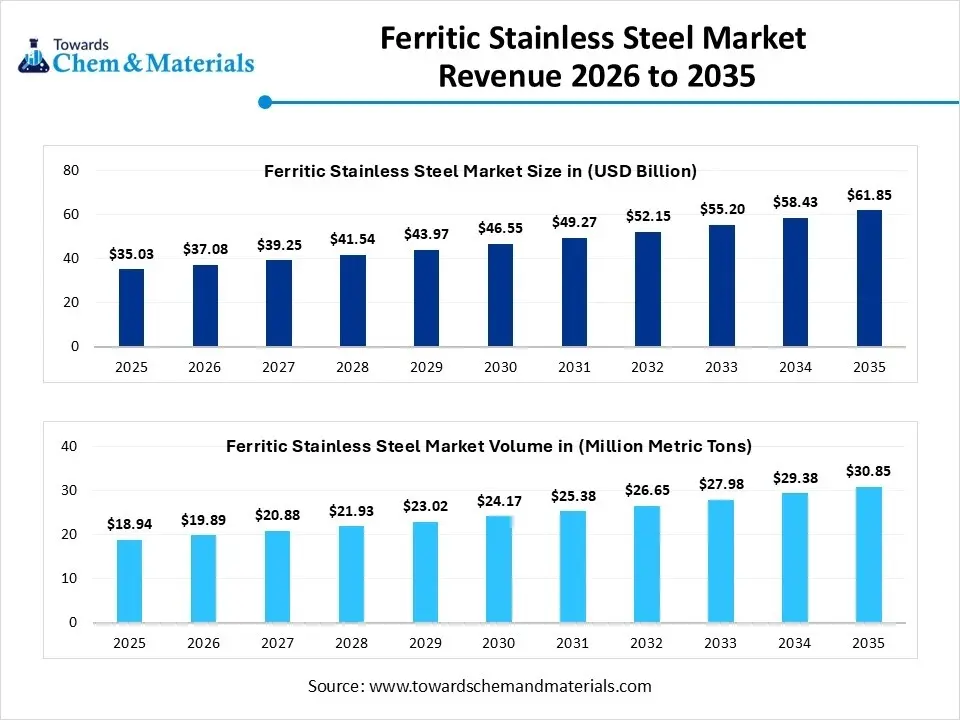
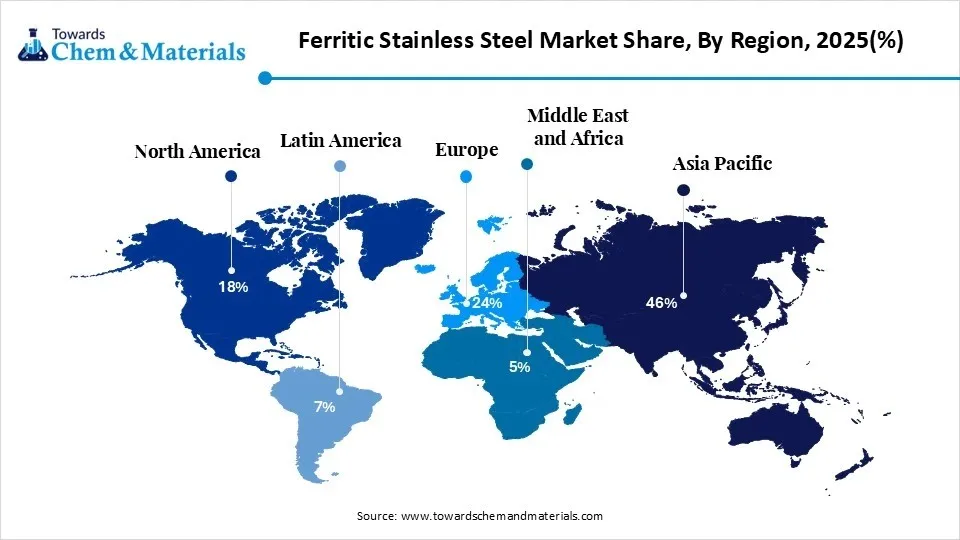
The global ferritic stainless steel market size was valued at USD 35.03 billion in 2025, is estimated to reach USD 37.08 billion in 2026, and is projected to reach USD 61.85 billion by 2035, exhibiting a compound annual growth rate (CAGR) of 5.85% over the forecast period from 2026 to 2035. Asia Pacific dominated the ferritic stainless steel market with the largest revenue share of 46.00% in 2025 and is expected to grow at the fastest CAGR of 5.97% during the forecast period.
The delivery of exceptional defense against corrosion and oxidation, which makes it a top choice for advanced-thinking automotive engineers. As a result, there is a significant surge in product demand as manufacturers actively integrate it into high-performance exhaust systems and key structural components.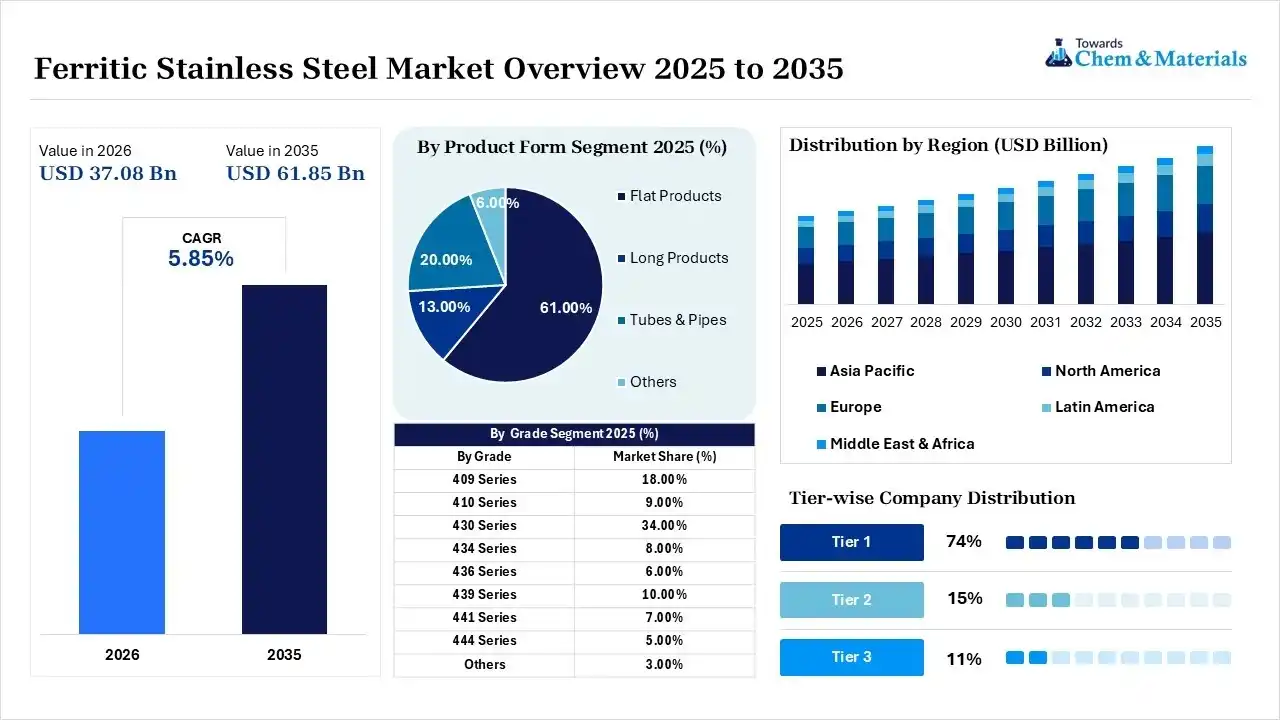
Market Highlights
- By region, Asia Pacific dominated the market with the largest share of 46.00% in 2025 and is expected to grow at a CAGR of 5.97% over the forecast period.
- By region, North America held a market share of 18.00% in 2025 and was expected to grow at the fastest CAGR of 6.13% over the forecast period.
- By grade, the 430 series segment dominated the market with the largest share of 34.00% in 2025 and is expected to grow at a CAGR of 5.01% over the forecast period.
- By grade, the 441 series segment held a market share of 7.00% in 2025 and is expected to grow at the fastest CAGR of 6.68% over the forecast period.
- By product form, the flat products segment dominated the market with the largest share of 61.00% in 2025 and is expected to grow at a CAGR of 5.43% over the forecast period.
- By product form, the other segment held a market share of 6.00% in 2025 and is expected to grow at the fastest CAGR of 6.18% during the forecast period.
- By finish, the 2B finish segment dominated the market with the largest share of 38.00% in 2025 and is expected to grow at a CAGR of 5.42% over the forecast period.
- By finish, the HL finish segment held a market share of 8.00% in 2025 and is expected to grow at the fastest CAGR of 6.37% over the forecast period.
- By thickness, the 1–3 mm segment dominated the market with the largest share of 46.00% in 2025 and is expected to grow at a CAGR of 5.31% over the forecast period.
- By thickness, the above 6 mm segment held a market share of 12.00% in 2025 and is expected to grow at the fastest CAGR of 5.93% over the forecast period.
- By manufacturing process, the hot-rolled segment dominated the market with the largest share of 36.00% in 2025 and is expected to grow at a CAGR of 4.95% over the forecast period.
- By manufacturing process, the temper-rolled segment held a market share of 11.00% in 2025 and is expected to grow at the fastest CAGR of 6.14% over the forecast period.
- By end-use industry, the automotive segment dominated the market with the largest share of 37.00% in 2025 and is expected to grow at a CAGR of 5.56% over the forecast period.
- By end-use industry, the energy & power segment held a market share of 4.00% in 2025 and is expected to grow at the fastest CAGR of 6.45% during the study period.
- By distribution channel, the direct sales segment dominated the market with the largest share of 47.00% in 2025 and is expected to grow at a CAGR of 5.22% over the study period.
- By distribution channel, the online sales segment held a market share of 6.00% in 2025 and is expected to grow at the fastest CAGR of 7.21% over the forecast period.
According to Towards Chemicals and Materials Analytics and Consulting, the global ferritic stainless steel market volume was valued at 18.94 million metric tons in 2025 and is expected to surpass around 30.85 million metric tons by 2035, accelerating a compound annual growth rate (CAGR) of 5.85% over the forecast period from 2026 to 2035.
Major market players are heavily using ferritic stainless steel because of its lower carbon footprint and recyclability as compared to other stainless steel types, presenting lucrative opportunities in the market. Technological innovations in surface finishing and coating techniques enhanced the overall aesthetic appeal and durability of the material.
- In August 2025, the Swiss Steel Group, headquartered in Lucerne, Switzerland, and its French subsidiary, Ugitech, based in Ugine, have introduced the UGIWAM product line. This specialized wire range is designed for Directed Energy Deposition (DED) metal additive manufacturing and encompasses austenitic, ferritic, martensitic, duplex, and nickel-based alloys.(Source: www.metal-am.com)
The market is also experiencing a surge in the integration of Industry 4.0 manufacturing practices to ensure superior quality control and cost efficiency. Innovations in alloy formulations are a dynamic factor for market growth.
Global Investment Flow for Ferritic Stainless Steel 2026
The global investment flow for the market is undergoing a significant structural realignment, fueled mainly by aggressive infrastructure budgets and volatile nickel prices in emerging economies along with the macro shifts towards nickel-free and cost-effective alternative alloys.
- In March 2026, based on final U.S. Census Bureau data, the American Iron and Steel Institute (AISI) reported that total U.S. steel imports reached 1,650,000 net tons (NT) in January 2026, including 1,249,000 net tons (NT) of finished steel. These represent respective month-over-month increases of 4.6% and 7.7% compared to December 2025.(Source: www.steel.org)
- For instance, according to data released by the General Administration of Customs on June 9, China’s steel exports reached 10.341 million tonnes in May, representing a month-on-month increase of 843,000 tonnes, or 8.9%. Cumulative steel exports for the January–May period totaled 44.554 million tonnes.(Source: www.sunsirs.com )
Market Trends
- The ongoing growth of electric vehicle manufacturing and automotive production is the latest trend in the market shaping positive market growth. The components such as wires, steel bars, and profiles are crucial for producing exhaust systems and steering shafts, where heat resistance is necessary.
- In recent years, market players are rapidly transitioning to EAF and scrap-based stainless steel manufacturing to reduce carbon intensity and align with green procurement requirements. Also, digital traceability, near-net-shape manufacturing, and sustainability certifications are improving transparency and lessening lead times.
- The rise in product integration into green industries is the future trend in the market driving market growth. The trend is fueled by the push for renewable energy adoption, sustainability, and circular economy practices.Stainless steel is becoming necessary for green building certifications and hence used in sustainable construction projects.
Report Scope
| Report Attributes | Details |
| Market Size in 2026 | USD 37.08 Billion/ 19.89 Million Metric Tons |
| Expected Size in 2035 | USD 61.85 Billion/ 30.85 Million Metric Tons |
| Growth Rate | CAGR of 5.85% |
| Base Year of Estimation | 2025 |
| Forecast Period | 2025-2035 |
| Dominant Region | Asia Pacific |
| Segment Covered | By Grade, By Product Form, By Finish, By Thickness, By Manufacturing Process, By End-use Industry, By Distribution Channel |
| Key Companies Profiled | Thyssen Krupp, Pohang Iron & Steel (Posco), Ta Chen International, Jindal Stainless, Allegheny Flat Rolled Products, North American Stainless, AK Steel |
AI-Powered Predictive Formulations in the Ferritic Stainless Steel Market
AI-powered predictive formulations utilize deep neural networks and machine learning to model alloy composition and processing conditions, substantially boosting R&D in the market. Furthermore, AI and machine learning reduce overall operational costs and slash material waste by detecting optimal compositions that depend less on costly, volatile raw elements like nickel.
Supply Chain Analysis of the Ferritic Stainless Steel Market
Production & Processing
- It includes the precise methods used to shape the metal, melt raw materials, and finish its surface.
Ferritic steels are cost-effective and popular metals that contain a high amount of chromium but very little nickel, which makes them very magnetic and resistant to rust. - POSCO: South Korea's leader, commanding a massive footprint in Asia-Pacific. They excel in producing premium, high-surface-finish ferritic alloys for appliances and electronics.
- Other Key Players: Nippon Steel, Acerinox
Quality Testing and Certification
- It refers to the procedures and standards utilized to prove that a product is strong, safe, and rust resistant.
Ferritic stainless steel must pass these checks before it can be sold to a particular industry. Testing ensures the steel can handle heat, pressure, and stress without breaking or rusting. - Jindal Stainless (India): A massive manufacturer, especially in the growing Asian steel market.
- Other Key Players: Outokumpu, Nippon Steel
Distribution to Industrial Users
- It includes the sales channels utilized to deliver ferritic stainless steel directly to large businesses. This process skips retail stores.
- Steel makers send products directly to factories or building sites. These huge buyers then use the steel to make home appliances and make cars and heavy machines.
- Acerinox: A Spanish global leader with an extensive distribution network across the world.
- Other Key Players: China Baowu, Aperam
Ferritic Stainless Steel Market’s Regulatory Landscape: Global Regulations
| Country / Region | Regulatory Body | Key Regulations & Standards | Focus Areas |
| United States | ASTM International & SAE International | ASTM A240, ASTM A480, SAE J405 | Standardizes chemical composition (e.g., Grade 430, 409); mandates thickness tolerances and mechanical testing for pressure vessels and automotive exhaust systems. |
| European Union | European Committee for Standardization (CEN) | EN 10088-2, EN 10088-4, REACH, RoHS | Defines technical delivery conditions for sheet/plate; strictly regulates hazardous substance restrictions and tracks carbon footprints under the CBAM (Carbon Border Adjustment Mechanism). |
| China | Standardization Administration of China (SAC) | GB/T 3280, GB/T 4237 | Regulates cold-rolled and hot-rolled stainless steel plates; dictates quality standards for high-volume manufacturing in consumer appliances and automotive sectors. |
What are the types of Ferritic Stainless Steel?
Group 1: Low Chromium / Utility Grades (10.5% – 14% Cr)
- These are the least expensive ferritic steels. Due to their low chromium content, they are meant to develop a light layer of surface rust over time and are best suited for non-decorative corrosive environments.
- Key Grades: Type 409, Type 410L.
- Common Uses: Automotive exhaust system silencers.
Group 2: Standard/Universal Grades (14% – 18% Cr)
- This is the most extensively used class of ferritic stainless steel. With a much higher chromium content, they give a far better corrosion resistance against organic acids, nitric acids, and sulfur gases. They are generally used as a cost-efficient alternative to austenitic 304 stainless steel in indoor environments.
- Key Grades: Type 430.
- Common Uses: Washing machine drums, kitchen sinks.
Group 3: Stabilized Grades (14% – 18% Cr + Stabilizers)
- These grades share the same chromium range as Group 2 but involve using elements such as niobium (Nb) or zirconium (Zr). These stabilizers prevent sensitization during welding, which gives them enhanced weldability and better formability than Group 2 alloys.
- Key grades: Type 430Ti, Type 439, Type 441.
- Common Uses: Heat exchanger tubes, tougher exhaust components
Market Dynamics
Driver
Rapid Infrastructure Expansion
The growing pace of industrial activities and infrastructure expansion, especially in emerging economies, is the major factor driving the growth of the market. Stainless steel is a crucial material in process equipment, industrial machinery, and construction applications because of its corrosion resistance, strength, and long lifecycle. In addition, the rise in waves of industrial modernization, such as renewable energy projects and urban development initiatives, is fueling consistent demand for stainless steel.
Restraint
Market and Economic Pressures
Domestic market players face severe profit margin erosion because of an unchecked influx of low-priced imported steel products, pushing local operators to aggressively compete on thin price margins, which is the major factor hindering the market growth. Moreover, ferritic manufacturers remain fully exposed to pricing violations and sudden regional export disruptions of chromium.
Opportunity
Growing Demand for High-Temperature Industrial Systems
There is a rise in demand for specialized high-temperature ferritic steel in chemical processing, power generation, and pollution control systems, creating massive opportunities in the near future. Furthermore, highly alloyed grades, including Type 446, offer extensive oxidation resistance at extreme temperatures, which serves as a cost-efficient substitute for nickel-based superalloys.
Segmental Insights
Grade Insight
The 430 series segment dominated the market with the largest share of 34.00% in 2025 and is expected to grow at a CAGR of 5.01% over the forecast period. The dominance of the segment can be attributed to the growing demand for home appliances and automotive trims along with steady prices. In addition, a surge in demand from an increasing middle class, especially across Asia-Pacific and Latin America, fuels wide volume consumption for 430-grade pots, pans, and indoor domestic utensils.
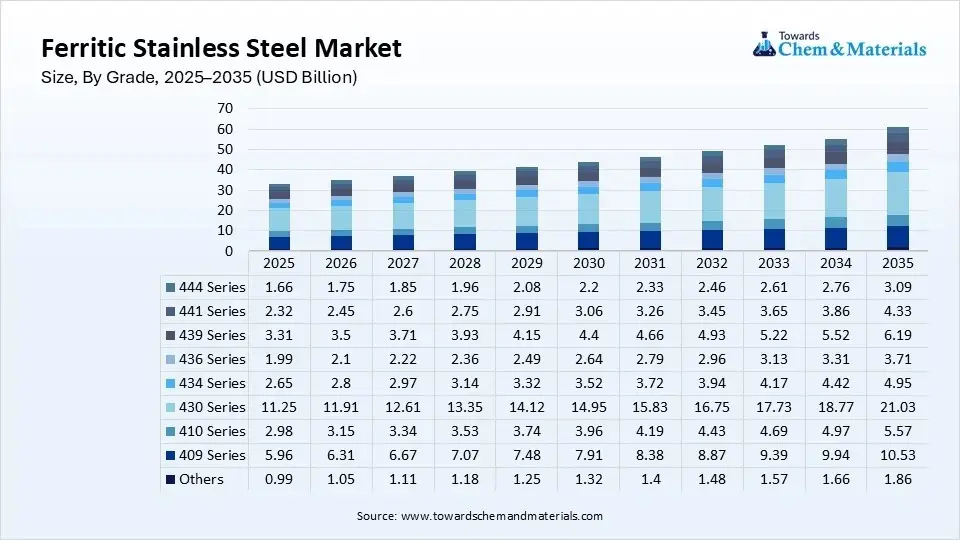
The 441 series segment held a market share of 7.00% in 2025 and is expected to grow at the fastest CAGR of 6.68% over the forecast period. The growth of the segment can be credited to the growing need for cost-effective, high-temperature-resistant materials in the automotive sector and surge in applications in green energy infrastructure. Type 441 is heavily adopted for solid-oxide fuel cell (SOFC) interconnect plates, hydrogen fuel cell stacks, and heat exchangers.
Ferritic Stainless Steel Market Share, By Grade, 2025(%)
| By Grade | Market Share (%) |
| 409 Series | 18.00% |
| 410 Series | 9.00% |
| 430 Series | 34.00% |
| 434 Series | 8.00% |
| 436 Series | 6.00% |
| 439 Series | 10.00% |
| 441 Series | 7.00% |
| 444 Series | 5.00% |
| Others | 3.00% |
Product Form Insight
The flat products segment dominated the market with the largest share of 61.00% in 2025 and is expected to grow at a CAGR of 5.43% over the forecast period. The dominance of the segment can be linked to the growing demand across construction, automotive, and appliance industries, along with the exceptional heat and corrosion resistance. Builders use flat sheets for wall panels and roofing. Also, ferritic steel resists rusting from rain and air, driving segment growth further.
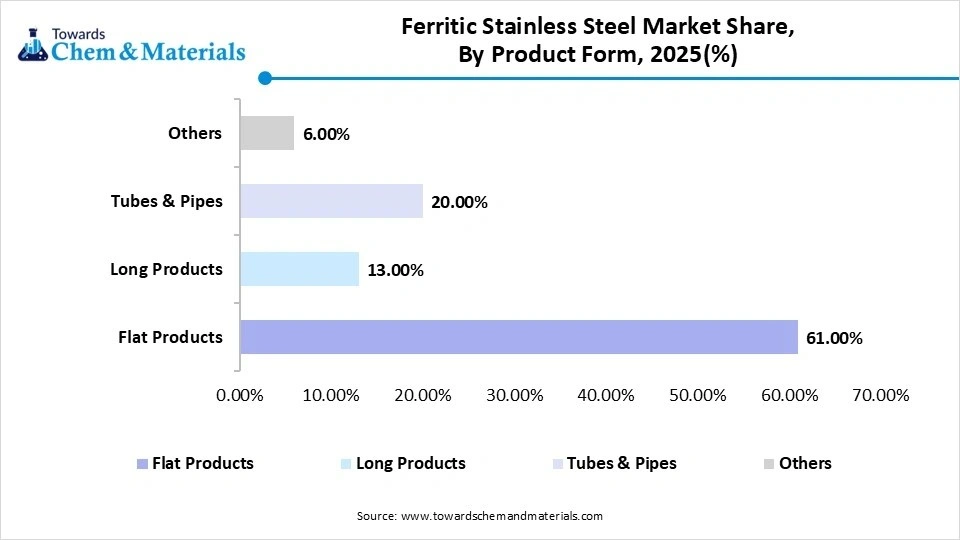
The other segment held a market share of 6.00% in 2025 and is expected to grow at the fastest CAGR of 6.18% during the forecast period. The growth of the segment can be driven by the growing need for nickel-free alloys because of volatile raw material prices. A surge in green and renewable energy infrastructure needs materials that can bear high temperatures and harsh conditions without failing.
Ferritic Stainless Steel Market Share,By Product Form, 2025(%)
| By Product Form | Market Share (%) |
| Flat Products | 61.00% |
| Long Products | 13.00% |
| Tubes & Pipes | 20.00% |
| Others | 6.00% |
Finish Insight
The 2B finish segment dominated the market with the largest share of 38.00% in 2025 and is expected to grow at a CAGR of 5.42% over the forecast period. The growth of the segment is owing to the growing demand in manufacturing and excellent corrosion resistance. Moreover, stringent health and safety rules in hospitals, restaurants, and food plants need rust-free, clean materials. Ferritic stainless steel with a 2B finish conventionally fulfils these food contact standards.
The HL finish segment held a market share of 8.00% in 2025 and is expected to grow at the fastest CAGR of 6.37% over the forecast period. The growth of the segment is due to the growing need for modern fingerprint-resistant appliances and the transition towards cost-effective materials. Homeowners favoured sleek kitchen appliances. Market players are choosing ferritic HL grades to fulfil this demand while reducing overall manufacturing costs.
Ferritic Stainless Steel Market Share,By Finish, 2025(%)
| By Finish | Market Share (%) |
| No.1 Finish | 15.00% |
| 2B Finish | 38.00% (Dominating) |
| BA Finish | 16.00% |
| No.4 Finish | 18.00% |
| HL Finish | 8.00% |
| Mirror Finish | 3.00% |
| Others | 2.00% |
Thickness Insight
The 1–3 mm segment dominated the market with the largest share of 46.00% in 2025 and is expected to grow at a CAGR of 5.31% over the forecast period. The dominance of the segment can be attributed to its stable pricing, low cost, and better corrosion resistance as compared to other sizes. Builders use 1–3 mm sheets for panels, roofing, and elevators; hence, demand is increasing because they do not rust directly and last for a long duration of time.
The above 6 mm segment held a market share of 12.00% in 2025 and is expected to grow at the fastest CAGR of 5.93% over the forecast period. The growth of the segment can be credited to its magnetic properties and strong performance in high-stress, elevated-temperature environments. Furthermore, this segment is finding a crucial niche in solar thermal power plants and solid oxide fuel cells (SOFCs).
Ferritic Stainless Steel Market Share,By Thickness, 2025(%)
| By Thickness | Market Share (%) |
| Below 1 mm | 18.00% |
| 1–3 mm | 46.00% |
| 3–6 mm | 24.00% |
| Above 6 mm | 12.00% |
Manufacturing Process Insight
The hot-rolled segment dominated the market with the largest share of 36.00% in 2025 and is expected to grow at a CAGR of 4.95% over the forecast period. The dominance of the segment can be linked to the surge in advanced infrastructure projects and rapid expansion of manufacturing industries. Hot-rolled ferritic steel contains high chromium but little to no nickel. As nickel prices are highly volatile, buttling stainless steel helps companies to avoid unexpected spikes.
The tempered roll segment held a market share of 11.00% in 2025 and is expected to grow at the fastest CAGR of 6.14% over the forecast period. The growth of the segment can be driven by growing demand for durable and cost-effective materials coupled with its high tensile strength. The temper rolling process allows manufacturers to increase the overall yield strength of the steel without heavy alloy additions.
Ferritic Stainless Steel Market Share,By Manufacturing Process, 2025(%)
| By Manufacturing Process | Market Share (%) |
| Hot Rolled | 36.00% (Dominating) |
| Cold Rolled | 31.00% |
| Annealed | 12.00% |
| Pickled | 10.00% |
| Temper Rolled | 11.00% |
End-use Industry Insight
The automotive segment dominated the market with the largest share of 37.00% in 2025 and is expected to grow at a CAGR of 5.56% over the forecast period. The dominance of the segment is owing to the surge in vehicle manufacturing and materials with high heat resistance. Ferritic stainless steel has a much lower thermal expansion coefficient and higher thermal conductivity as compared to austenitic steel, minimizing structural distortion.
- In October 2025, Ola Electric, India’s leading electric two-wheeler manufacturer, secured official government certification for an indigenously developed ferrite motor that completely eliminates the use of rare-earth magnets.(Source: www.business-standard.com)
The energy & power segment held a market share of 4.00% in 2025 and is expected to grow at the fastest CAGR of 6.45% during the study period. The growth of the segment is due to ongoing transition towards renewable energy and stringent heat-resistance regulations, along with the demand for durable and cost-effective materials. Additionally, power plants and turbines operate at high temperatures; hence, this material has a high boiling point.
Ferritic Stainless Steel Market Share,By End-use Industry, 2025(%)
| By End-use Industry | Market Share (%) |
| Automotive | 37.00% (Dominating) |
| Construction | 21.00% |
| Home Appliances | 19.00% |
| Industrial Equipment | 9.00% |
| Food Processing Equipment | 5.00% |
| Energy & Power | 4.00% |
| Transportation | 3.00% |
| Others | 2.00% |
Distribution Channel Insight
The direct sales segment dominated the market with the largest share of 47.00% in 2025 and is expected to grow at a CAGR of 5.22% over the study period. The dominance of the segment can be attributed to the surge in demand for high-purity, customized alloys and the rise in demand for electric vehicles (EVs). Moreover, direct sales connect engineers and steel makers to design unique metal blends.
The online sales segment held a market share of 6.00% in 2025 and is expected to grow at the fastest CAGR of 7.21% over the forecast period. The growth of the segment can be credited to the surge in B2B e-commerce platforms and growing demand for flexible, smaller bulk purchases by small and medium enterprises (SMEs). Furthermore, major market players are introducing dedicated e-commerce ecosystems to offer real-time pricing.
Ferritic Stainless Steel Market Share,By Distribution Channel, 2025(%)
| By Distribution Channel | Market Share (%) |
| Direct Sales | 47.00% |
| Distributors & Stockists | 31.00% |
| Online Sales | 6.00% |
| OEM Contracts | 16.00% |
What are the Benefits of Ferritic Stainless Steel?
Ferritic stainless steel is a cost-effective metal and contains lots of chromium and almost no nickel. It also resists heat, rust, and stress-corrosion cracking. Belonging to the 400-series family of stainless-steel alloys, its microstructure contains a high chromium content (ranging from 10.5% to 30%) with less carbon.
The ferritic steels possess a body-centered cubic (BCC) crystal structure. This differs from austenitic grades, which have a face-centered cubic structure. Hence, ferritic steels exhibit superior immunity to chloride-induced stress corrosion cracking. This makes them highly suitable for high-stress and marine environments.
They also exhibit mechanical properties closely linked with conventional carbon steels. When bent or cold-worked, they suffer from less "springback" than austenitic steels, which allows for convenient fabrication of thin-walled and lightweight shapes. These alloys exhibit a superior initial yield strength compared to standard austenitic grades such as 304, hence enabling engineering teams to minimize material thickness and realize critical weight-reduction objectives.
Regional Analysis
How did the Asia Pacific dominate the Ferritic Stainless Steel Market in 2025?
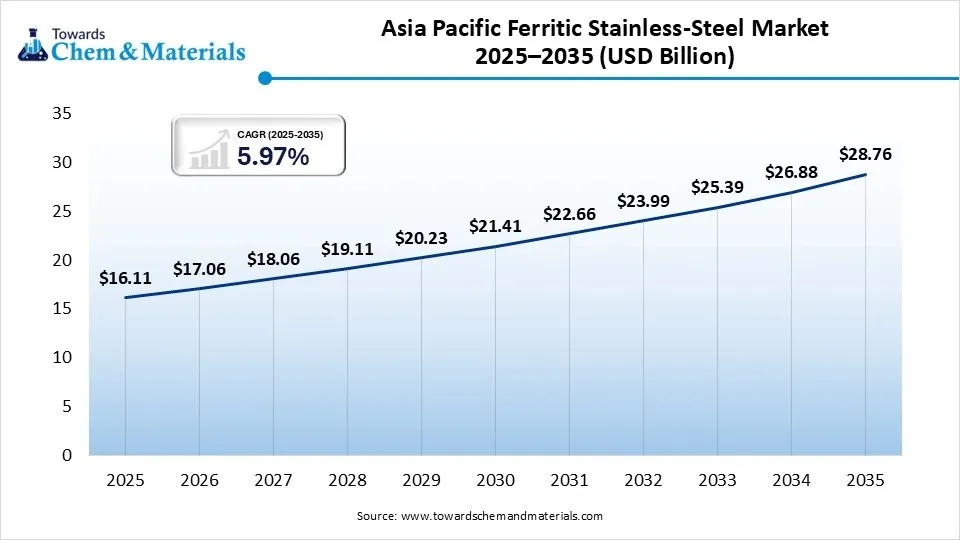
The Asia Pacific ferritic stainless steel market size was estimated at USD 16.11 billion in 2025 and is projected to reach USD 28.76 billion by 2035, growing at a CAGR of 5.97% from 2026 to 2035. Asia Pacific dominated the ferritic stainless steel market with the largest share of 46.00% in 2025 and is expected to grow at a CAGR of 4.76% over the forecast period. The dominance of the region can be attributed to the increasing automotive sector demand, ongoing urbanization, and infrastructure projects in the emerging economies. In addition, the push for sustainable development has expanded the use of low-emission, "green" steel across multiple industries. In the automotive sector, this shift is crucial for lowering both production-phase and usage-phase carbon emissions.
China
China's large auto industry uses ferritic stainless steel to build vehicle exhaust systems. These parts must handle harsh heat and road salt without rusting. Also, China continues to invest heavily in public building projects like bridges and transit lines. Ferritic steel is highly popular in these projects because it is strong and needs very little maintenance over time.
India
Government initiatives such as the 'Make in India' campaign, smart city projects, and urban railway developments need vast amounts of structural and decorative stainless steel. India's expanding middle class is increasing its consumption of household goods. The food processing and kitchenware industries heavily rely on ferritic grades for safe, rust-proof items.
North America
The North America ferritic stainless steel market size was estimated at USD 6.31 billion in 2025 and is projected to reach USD 11.44 billion by 2035, growing at a CAGR of 6.13% from 2026 to 2035. North America held a market share of 18.00% in 2025 and was expected to grow at the fastest CAGR of 5.96% over the forecast period. The growth of the region can be credited to the growing demand for recycled, sustainable materials and stringent vehicle emissions standards. North America places a significant focus on recycling initiatives. Due to the high recyclability of this steel, its use substantially assists corporations in achieving stringent environmental construction and manufacturing standards.
United States
As the United States builds more electric vehicles (EVs) and modern cars, automakers need lightweight, rust-proof, and affordable metals; therefore, ferritic steel fits this need perfectly. Market players in the U.S. heavily substitute austenitic steels with ferritic alternatives to safeguard their supply chain from unpredictable spikes in global nickel markets.
Canada
Canada has stringent green building codes, so developers use ferritic stainless steel for architectural cladding and roofing because it is highly recyclable and lasts for decades without rusting. In addition, automakers in the country use ferritic grades to make lightweight parts, battery heat shields, and motor brackets that handle new types of heat.
Europe
The Europe ferritic stainless steel market size was estimated at USD 8.41 billion in 2025 and is projected to reach USD 15.15 billion by 2035, growing at a CAGR of 6.06% from 2026 to 2035. Europe held a market share of 24.00% in 2025 and was expected to grow at a CAGR of 4.94% over the forecast period. The growth of the region can be linked to the growing push towards renewable energy and strengthened sustainability initiatives. Major countries in the region, such as Germany, are increasingly investing in EVs. Hence, automakers are using ferritic stainless steel to build vehicle exhaust systems and battery packs.
Germany
Germany is home to a world-class automotive manufacturing base. Also, demand for specific ferritic grades like 409 remains high for exhaust systems, silencers, and structural parts, and is rapidly increasing. Stringent decarbonization laws like the EU Carbon Border Adjustment Mechanism (CBAM) inflate the cost of importing high-emission materials.
France
France is pushing hard to build EVs. Automakers are using ferritic stainless steel for exhaust systems, battery packs, and structural parts because it resists heat and corrosion well. In addition, French companies use this steel to build refrigerators, washing machines, and building roofs, leading to country growth soon.
Latin America
The Latin America ferritic stainless steel market size was estimated at USD 2.45 billion in 2025 and is projected to reach USD 4.64 billion by 2035, growing at a CAGR of 6.59% from 2026 to 2035. Latin America held a market share of 7.00% in 2025 and was expected to grow at a CAGR of 4.71% over the forecast period. The growth of the region can be driven by ongoing urbanization, extensively increasing production of home appliances along with the affordability of Grade 400 series steels. Moreover, Latin America is witnessing major infrastructure and housing development. Builders are using these materials for commercial facades and structural parts.
Brazil
The Brazilian market is expanding as the country invests in more urban and housing projects, fueling the need for basic, long-lasting stainless steel structural parts. The local manufacturing of cars and heavy vehicles uses substantial amounts of ferritic steel, especially in vehicle exhaust systems, for its excellent heat and corrosion resistance.
Argentina
Argentina’s active automotive hubs, supported by major players like Toyota Argentina, generate steady baseline demand for these specialty steel parts. Ferritic grades contain little to no expensive nickel, which makes them highly resistant to nickel price swings, giving Argentine manufacturers a predictable budget.
Middle East & Africa
The Middle East & Africa ferritic stainless steel market size was estimated at USD 1.75 billion in 2025 and is projected to reach USD 3.40 billion by 2035, growing at a CAGR of 6.87% from 2026 to 2035. The Middle East & Africa held a market share of 5.00% in 2025 and was expected to grow at a CAGR of 5.48% over the forecast period. The growth of the region can be attributed to the rapid urbanization and large-scale projects such as Saudi Arabia's NEOM city, which needs huge amounts of structural and architectural materials. Furthermore, MEA economies are increasingly transitioning towards local manufacturing, which makes it perfect for oil refineries and water desalination plants.
Saudi Arabia
Saudi Arabia depends heavily on desalination to survive. Ferritic steel resists rust from saltwater and harsh chemicals, which makes it the top choice for water treatment plants and piping. Also, national energy companies are expanding processing capacities where ferritic grades are used in oil refining equipment where heat and chemical resistance are required.
UAE
The UAE has a high number of cars; for those, ferritic steels (like Grade 409) are the top choice for vehicle exhaust systems because they handle extreme heat well. As the UAE shifts more toward electric vehicles (EVs), ferritic steel's lightweight yet sturdy nature is helping automakers reduce vehicle weight and extend battery life, driving market growth soon.
Competitive Analysis
The ferritic stainless steel market is moderately concentrated and structured. Top-tier global steel manufacturers dominate raw refining capacity, while a surge in the number of regional specialists focuses on high-specification, niche variants such as high-temperature ferritic steel. Major competitors like Jindal Stainless and POSCO lead the market, using vertical integration and local demand to secure their market.
- Luxembourg-based manufacturer Aperam adjusted its European alloy surcharges for austenitic stainless steel flat products. The Grade 304 surcharge decreased to EUR 2,339/ton from EUR 2,365/ton in June. Meanwhile, the Grade 316L surcharge increased to EUR 4,089/ton from EUR 4,056/ton in the prior month.(Source: yieh.com)
Recent Developments
- In November 2025, Baosteel Desheng Stainless Steel Co., Ltd. (Baosteel Desheng) achieved a significant milestone in its high-end stainless steel segment by completing the trial production of B444LM ultra-pure ferritic stainless steel in a 6.0 mm white-skinned specification.(Source: yieh.com)
Strategic Profiles of Key Players Shaping the Ferritic Stainless Steel Market
| Company | Company Type / Position | Headquarters | Geographic Presence | Offerings | Key Offering / Strength |
| Outokumpu | Global Leader / High-Performance Pioneer | Helsinki, Finland | Strong footprint in Europe and the Americas, with a global sales network. | Broad range of premium ferritic sheets, coils, and strips (e.g., Core and Moda ranges). | : Advanced stabilization techniques (titanium/niobium alloying) that provide exceptional high-temperature oxidation resistance for automotive exhaust systems |
| Nippon Steel Corporation | Tier-1 Major / Technical Innovator | Tokyo, Japan | Dominant in the Asia-Pacific region, with extensive global export channels. | Ultra-pure ferritic stainless steels and high-grade functional sheets | Superior deep-drawing capabilities and high corrosion resistance, highly favored by global consumer appliance and electronic manufacturers. |
| Aperam | Regional Giant / Sustainability Focused | Luxembourg City, Luxembourg | Deeply integrated across Europe and South America. | Nickel-free ferritic grades, customized finishes, and precision strips | Market leader in cost-effective, nickel-free solutions optimized for domestic appliances and architectural cladding, backed by strong low-carbon production processes. |
Other Key Players
- Thyssen Krupp
- Pohang Iron & Steel(Posco)
- Ta Chen International
- Jindal Stainless
- Allegheny Flat Rolled Products
- North American Stainless
- AK Steel
Segments Covered in the Report
By Grade
- 409 Series
- 410 Series
- 430 Series
- 434 Series
- 436 Series
- 439 Series
- 441 Series
- 444 Series
- Others
- 445M2
- 446
- Specialty Ferritic Grades
By Product Form
- Flat Products
- Hot Rolled Coil
- Cold Rolled Coil
- Sheets
- Plates
- Strips
- Long Products
- Bars
- Rods
- Wire
- Tubes & Pipes
- Welded Pipes
- Seamless Pipes
- Others
By Finish
- No.1 Finish
- 2B Finish
- BA (Bright Annealed) Finish
- No.4 Finish
- HL (Hairline) Finish
- Mirror Finish
- Others
By Thickness
- Below 1 mm
- 1–3 mm
- 3–6 mm
- Above 6 mm
By Manufacturing Process
- Hot Rolled
- Cold Rolled
- Annealed
- Pickled
- Temper Rolled
By End-use Industry
- Automotive
- Exhaust Systems
- Catalytic Converter Components
- Structural Parts
- Construction
- Roofing
- Cladding
- Structural Components
- Home Appliances
- Washing Machines
- Refrigerators
- Ovens
- Dishwashers
- Industrial Equipment
- Food Processing Equipment
- Energy & Power
- Transportation
- Others
By Distribution Channel
- Direct Sales
- Distributors & Stockists
- Online Sales
- OEM Contracts
By Regions
- North America
- Europe
- Asia Pacific
- Middle East & Africa
- Latin America
A Seven-Phase Framework
Our methodology is designed to be universally applicable across commodity chemicals, specialty chemicals, petrochemicals, construction chemicals, coatings, electronic chemicals, industrial gases, agrochemicals, water treatment chemicals, and performance materials. Each phase builds upon the last, creating a layered validation structure that minimizes estimation error and maximizes analytical confidence.
The framework ensures comprehensive market coverage, robust cross-validation, and reliable long-term forecasting — producing market estimates that withstand scrutiny from investors, regulators, and corporate strategy teams.

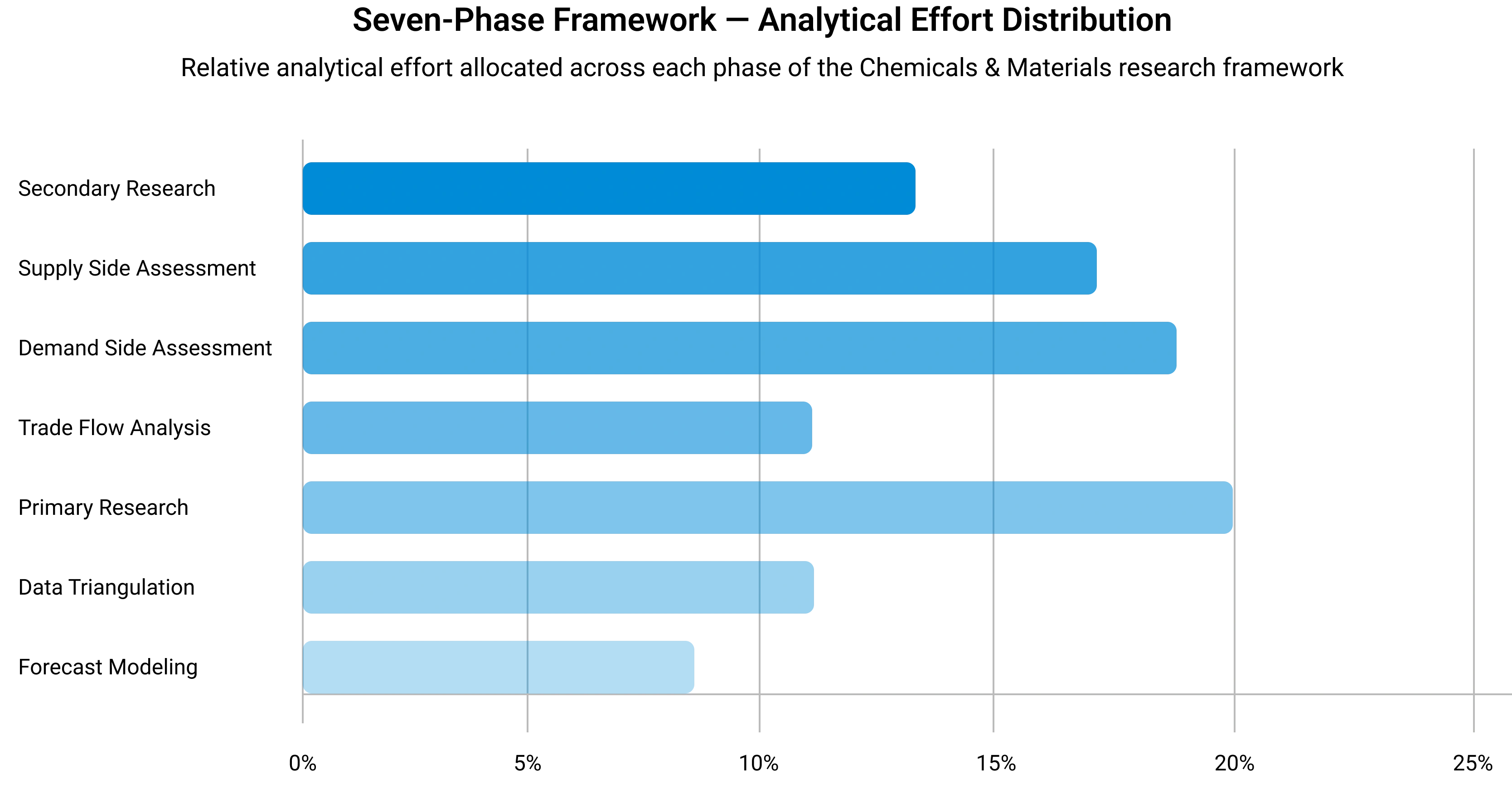
Seven-Phase Framework — Analytical Effort Distribution
Relative analytical effort allocated across each phase of the Chemicals & Materials research framework
Phase 1 - Secondary Research: Establishing the Foundation
Secondary research collects and evaluates publicly available information from authoritative sources, establishing the foundational understanding of market structure, value chain dynamics, competitive landscape, and end-use demand patterns. Every source is evaluated for credibility, recency, geographic relevance, and methodological soundness before inclusion.
Industry Associations
Sources include ACC, CEFIC, ICCA, JCIA, CPCIF, and SOCMA providing production volumes, consumption trends, capacity developments, and sustainability initiatives.
Company Disclosures
Annual reports, investor presentations, earnings transcripts, and regulatory filings reveal product portfolios, manufacturing footprints, capacity expansions, and revenue segmentation.
Government Databases
National statistical offices, customs authorities, environmental agencies, and industrial production databases provide verified statistics on output, trade flows, and regulatory compliance.
Trade Databases
UN Comtrade, ITC, Eurostat, and national customs authorities enable assessment of global product movement, import dependency, and export competitiveness across regions.
Our Secondary Research Sources
- Ministry of Chemicals and Fertilizers
- European Chemicals Agency
- United States Department of Energy
- Ministry of Industry and Information Technology
- Ministry of Economy Trade and Industry
- Ministry of Trade Industry and Energy
- National Institute of Standards and Technology
- Council of Scientific and Industrial Research
- Fraunhofer Society
- National Institute for Materials Science
Phase 2 — Supply-Side Assessment: Mapping Production Capabilities
Production Capacity Analysis
All major manufacturers are assessed for existing installed capacity, planned additions, expansions, new plant announcements, and technology adoption — mapped at global, regional, and country levels.
Capacity Utilization Adjustment
Installed capacity is adjusted using utilization rates based on demand conditions, feedstock availability, plant operating rates, maintenance schedules, and regulatory restrictions.
Manufacturer Revenue Analysis
Product-specific revenues, segment-level performance, regional distribution, average selling prices, and margin trends are evaluated to establish market value estimates.
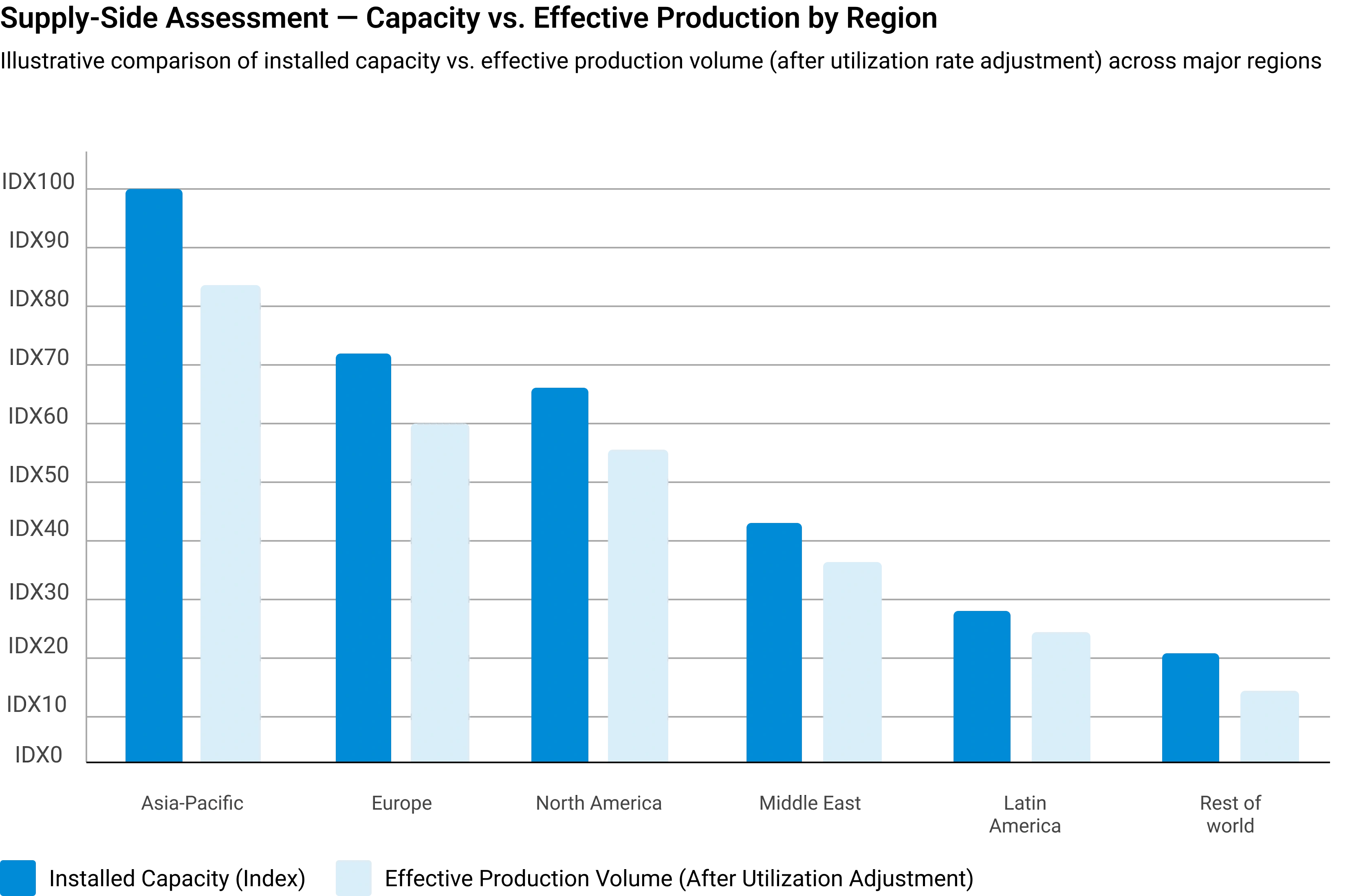
Supply-Side Assessment — Capacity vs. Effective Production by Region
Illustrative comparison of installed capacity vs. effective production volume (after utilization rate adjustment) across major regions
Phase 3 — Demand-Side Assessment: Quantifying Chemical Consumption
Demand-side analysis quantifies chemical consumption across industries, applications, and geographies — identifying where and how chemicals are consumed throughout the value chain with precision.
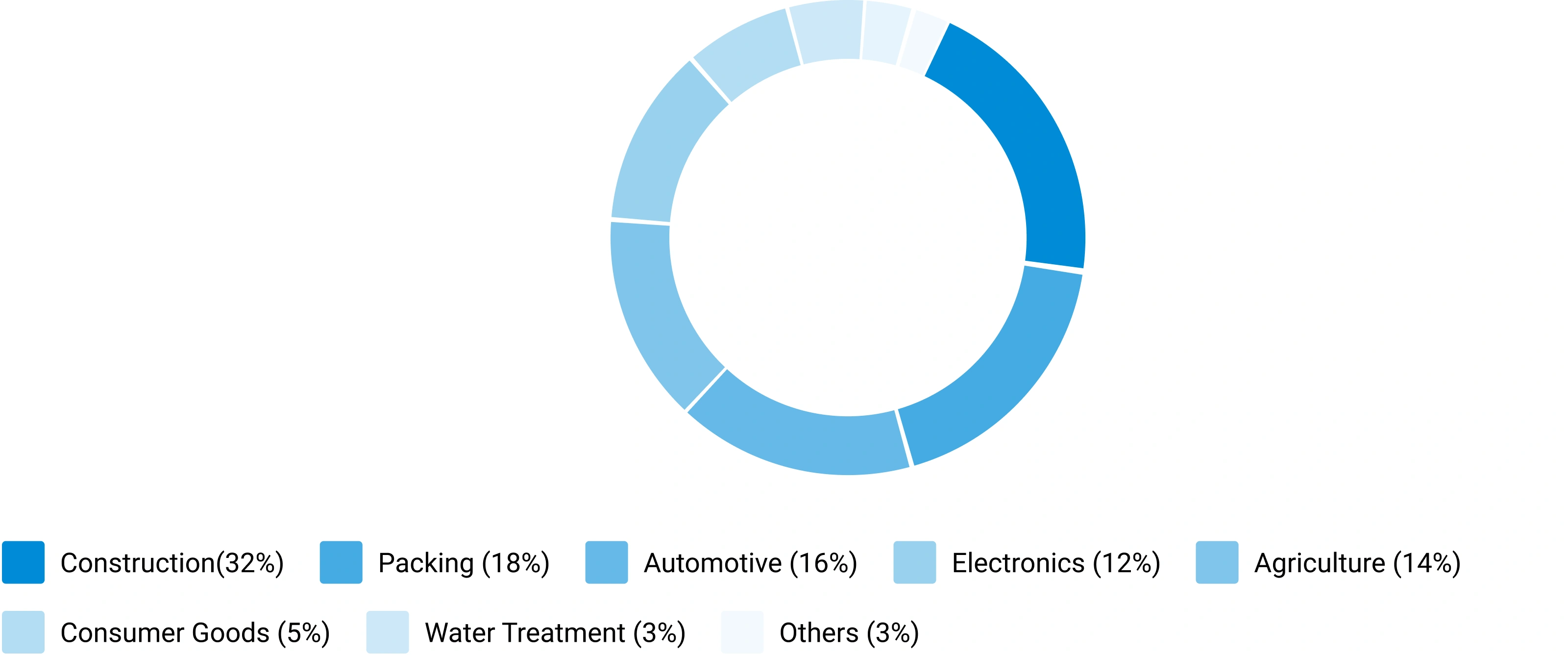
End-Use Industry Analysis
Chemical demand is evaluated across automotive, construction, packaging, electronics, agriculture, healthcare, consumer goods, industrial manufacturing, energy and utilities, and water treatment. Industry output, production trends, and consumption intensity are analyzed to determine demand patterns.
Consumption Modeling
Demand is estimated using measurable indicators: kilograms per vehicle, kilograms per square meter of construction, dosage per cubic meter of water treated, kilograms per hectare of agricultural land, and kilograms per ton of manufactured products. Consumption factors are validated through industry publications and primary interviews.
Application Analysis
The market is segmented by application area to understand product performance requirements, formulation trends, technology adoption, customer preferences, and regulatory requirements improving demand accuracy and segmentation granularity.
Demand-Side Assessment — End-Use Industry Demand Distribution
Illustrative distribution of chemical & materials demand across key end-use industries
Phase 4 - Trade Flow Analysis: Balancing Regional Supply and Demand
Trade flow analysis reconciles regional supply and demand estimates through import and export data, identifying net supply positions, regional dependencies, and market imbalances. It serves as an independent validation layer that tests the consistency of supply-side and demand-side estimates.
Import Analysis
Import data is evaluated to determine volumes, source countries, product dependency, regional supply gaps, and pricing trends — identifying markets that rely heavily on external supply and where domestic production is insufficient to meet demand.
Export Analysis
Export assessments reveal production surplus, export competitiveness, regional manufacturing strength, and global market participation. Export patterns also help validate domestic production estimates and identify net exporting regions.
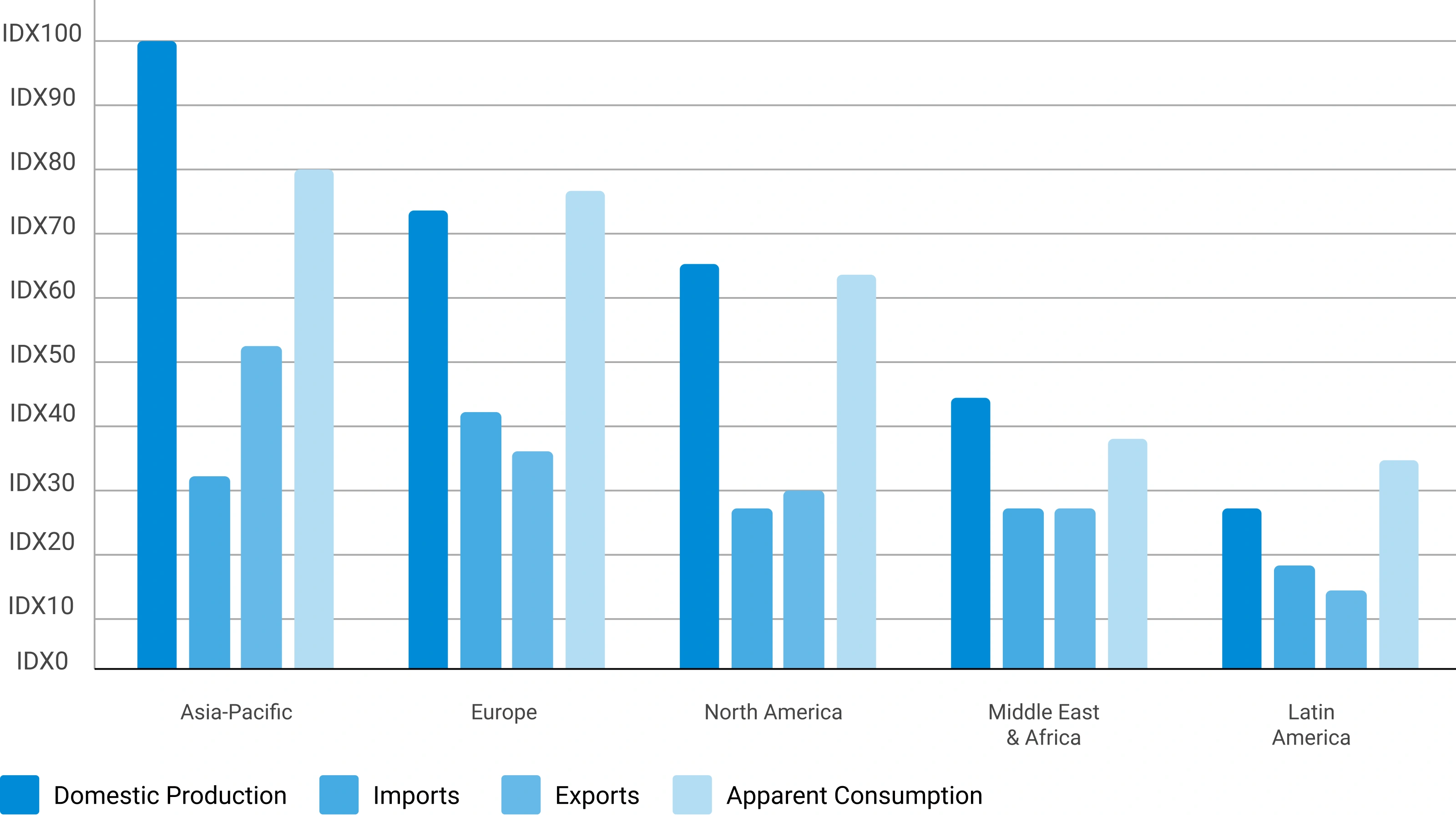
Apparent Consumption Model
Regional consumption is assessed using the standard apparent consumption formula:
Results identify net importing regions, net exporting regions, regional deficits, and surpluses — serving as an independent validation of supply and demand estimates.
Trade Flow Analysis — Net Supply Position by Region
Illustrative apparent consumption vs. domestic production across major regions — positive gap indicates net import dependency
Phase 5 — Primary Research: The Critical Validation Layer
Primary research tests and refines findings from secondary research through direct engagement with industry participants across the supply chain, demand side, and expert community. It captures intelligence that no database or published report can provide — the real-world experience of manufacturers, buyers, and specialists operating in the market.

Supply-Side Interviews
Conversations with chemical manufacturers, raw material suppliers, contract manufacturers, technology providers, and plant operators cover production trends, capacity utilization, pricing developments, technology shifts, and competitive dynamics.

Demand-Side Interviews
Engagement with OEMs, industrial consumers, procurement managers, distributors, formulators, and end-use manufacturers focuses on consumption trends, purchasing behavior, product substitution, demand outlook, and emerging applications.

Industry Expert Consultations
Additional interviews with industry consultants, independent experts, regulatory specialists, technical professionals, and research institutions provide deeper market context and validate key analytical assumptions.
Focus Areas of Primary Research:
Market Size & Forecast Validation
Revenue estimates, volume consumption, growth rates, forecast assumptions, regional demand.Supply Chain & Value Chain Assessment
Raw material sourcing, supply chain challenges, distribution networks, procurement practices.Production & Capacity Analysis
Manufacturing capacity, utilization rates, expansion projects, plant investments.Pricing & Cost Structure Analysis
Product pricing trends, feedstock costs, energy costs, margin pressures, pricing outlook.Competitive Landscape Assessment
Volume and value estimates confirmed to be fully consistent with one another before publicationInterview Volume by Market Scope
| Study Scope | Number of Interviews |
|---|---|
| Niche Market | 20 – 30 |
| Mid-Sized Market | 30 – 50 |
| Global Market | 50 – 80 |
| Highly Fragmented Market | 80 – 120 |
Interview Details:
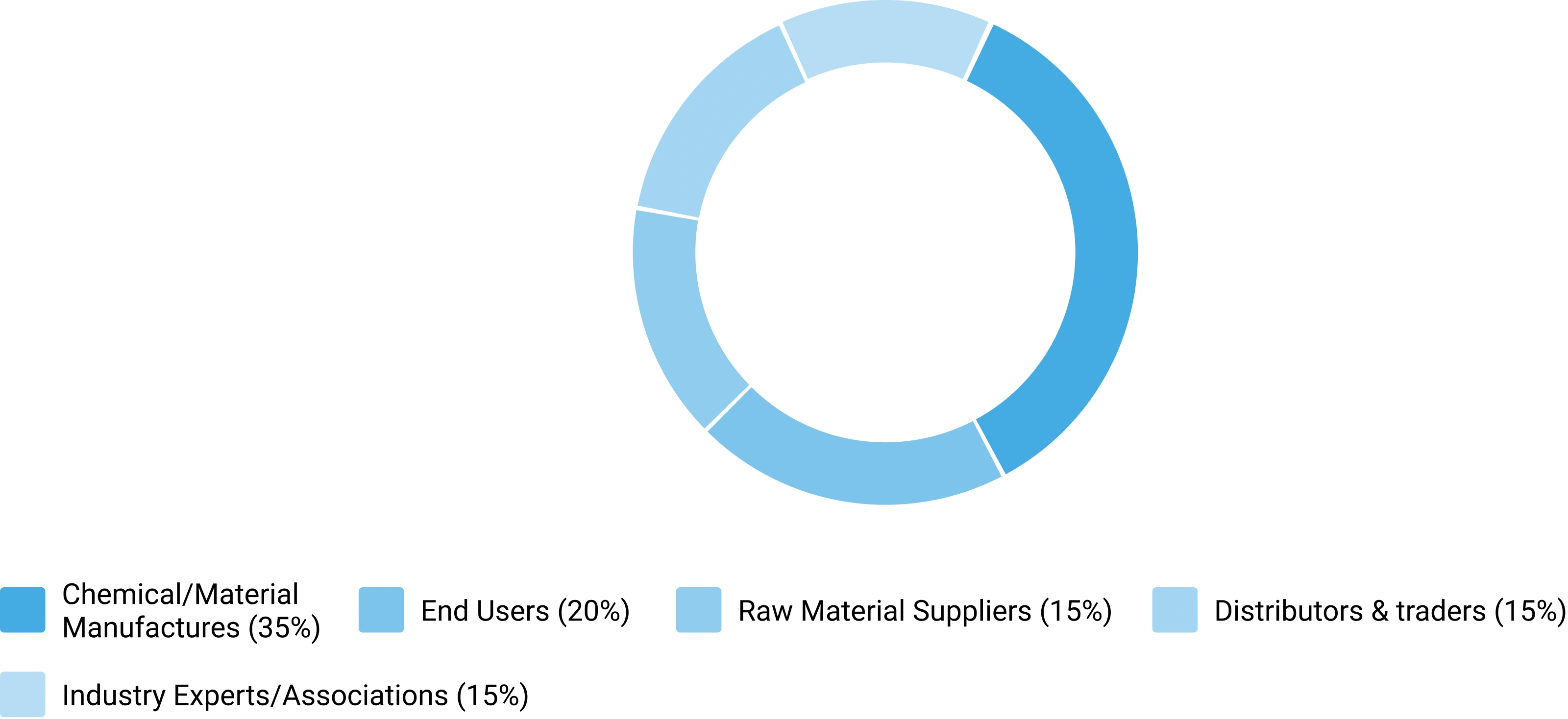
Category : Manufacturers, Suppliers, Distributors, End Users, Experts/Associations
Average Duration : 30–60 Minutes
Interview Mode : Video calls, telephonic interviews, expert consultations
Interview Format : Structured / Semi-Structured questionnaire
Focus Areas of Primary Research:
Market Size & Forecast Validation :
Revenue estimates, volume consumption, growth rates, forecast assumptions, regional demand.
Supply Chain & Value Chain Assessment :
Raw material sourcing, supply chain challenges, distribution networks, procurement practices.
Production & Capacity Analysis :
Manufacturing capacity, utilization rates, expansion projects, plant investments.
Pricing & Cost Structure Analysis :
Product pricing trends, feedstock costs, energy costs, margin pressures, pricing outlook.
Competitive Landscape Assessment :
Market share, competitor positioning, strategic initiatives, partnerships, acquisitions.
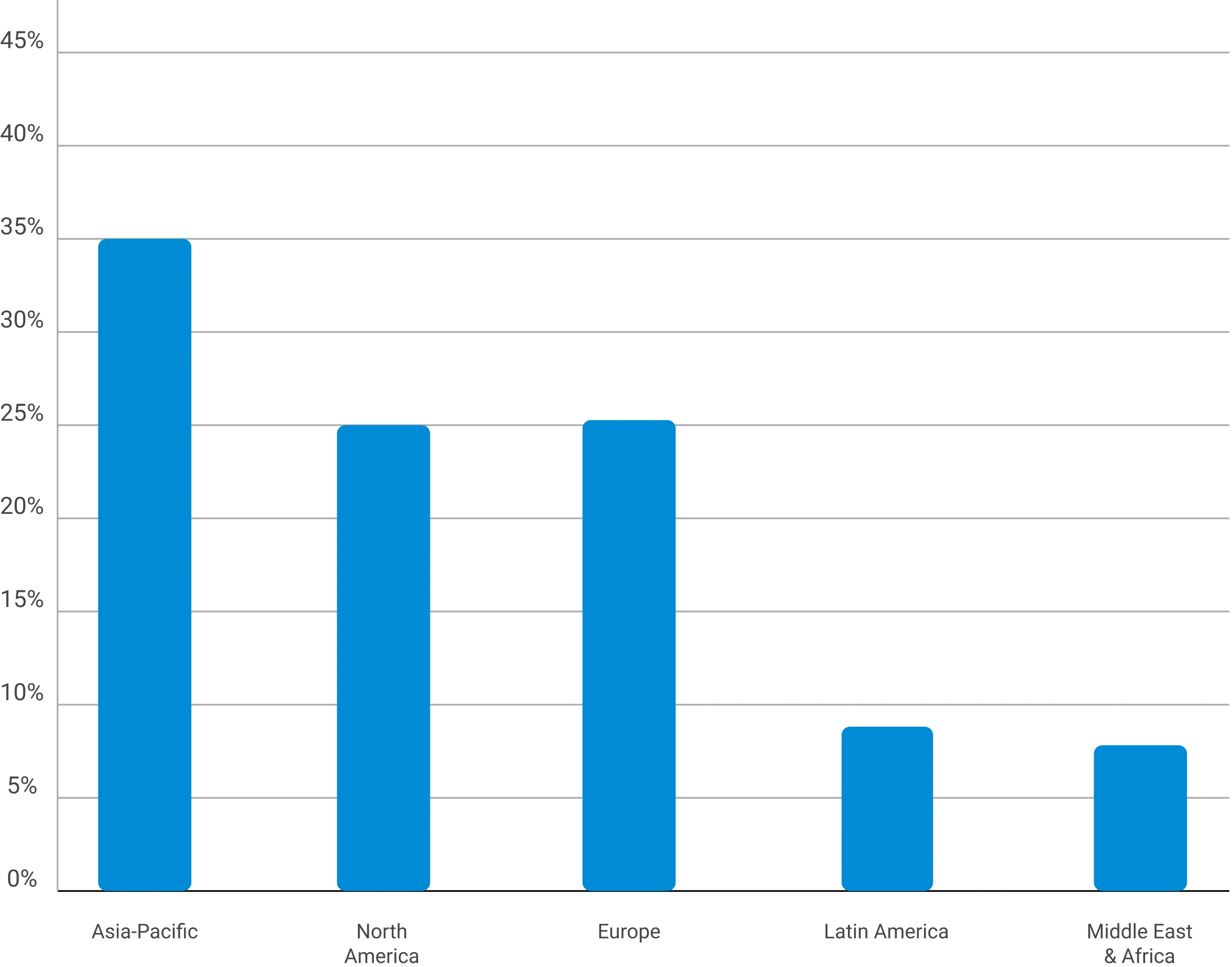
Primary Research — Stakeholder Coverage by Category
Distribution of interview respondents across stakeholder categories (% share from PPT data)
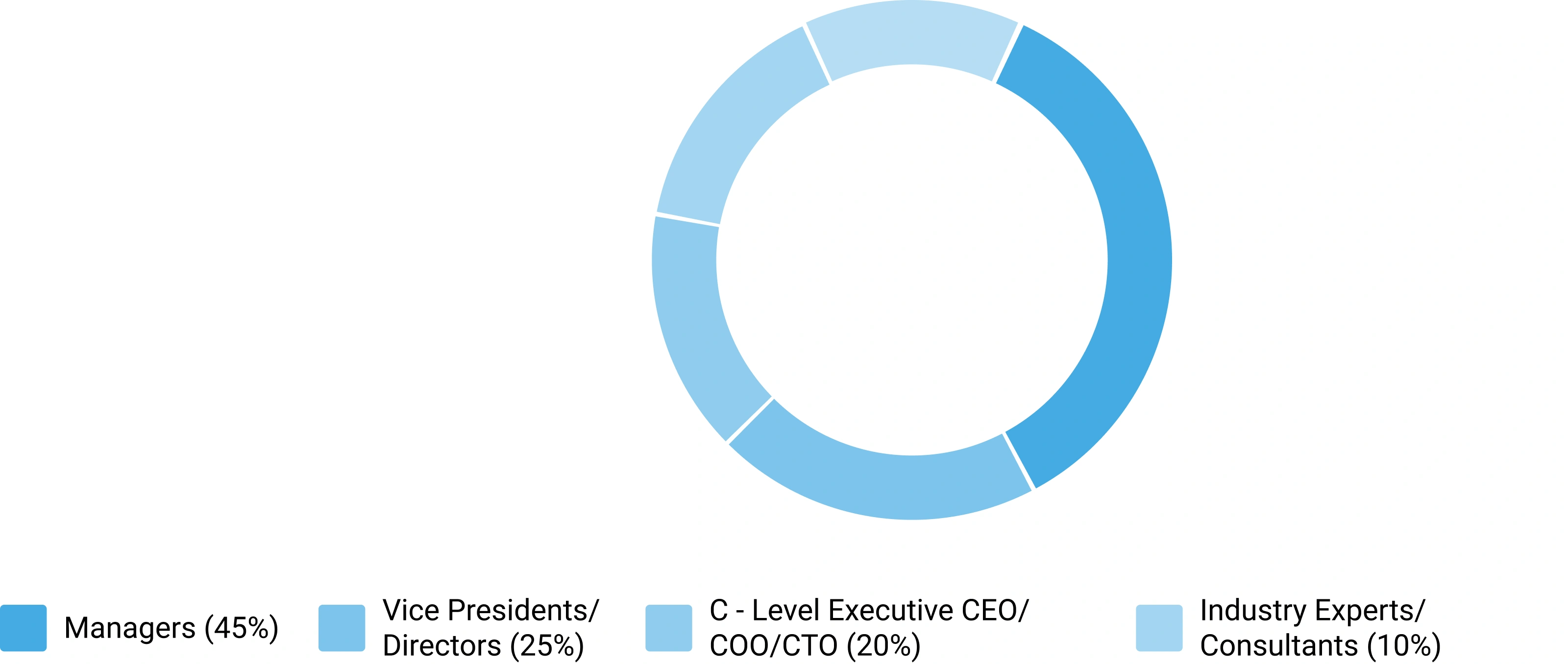
Primary Research — Respondent Designation Profile
Seniority breakdown of interview respondents (% share from PPT data)
Primary Research — Geographic Coverage of Interviews
Regional distribution of primary research engagement (% share from PPT data)
Phase 6 — Data Triangulation and Market Validation
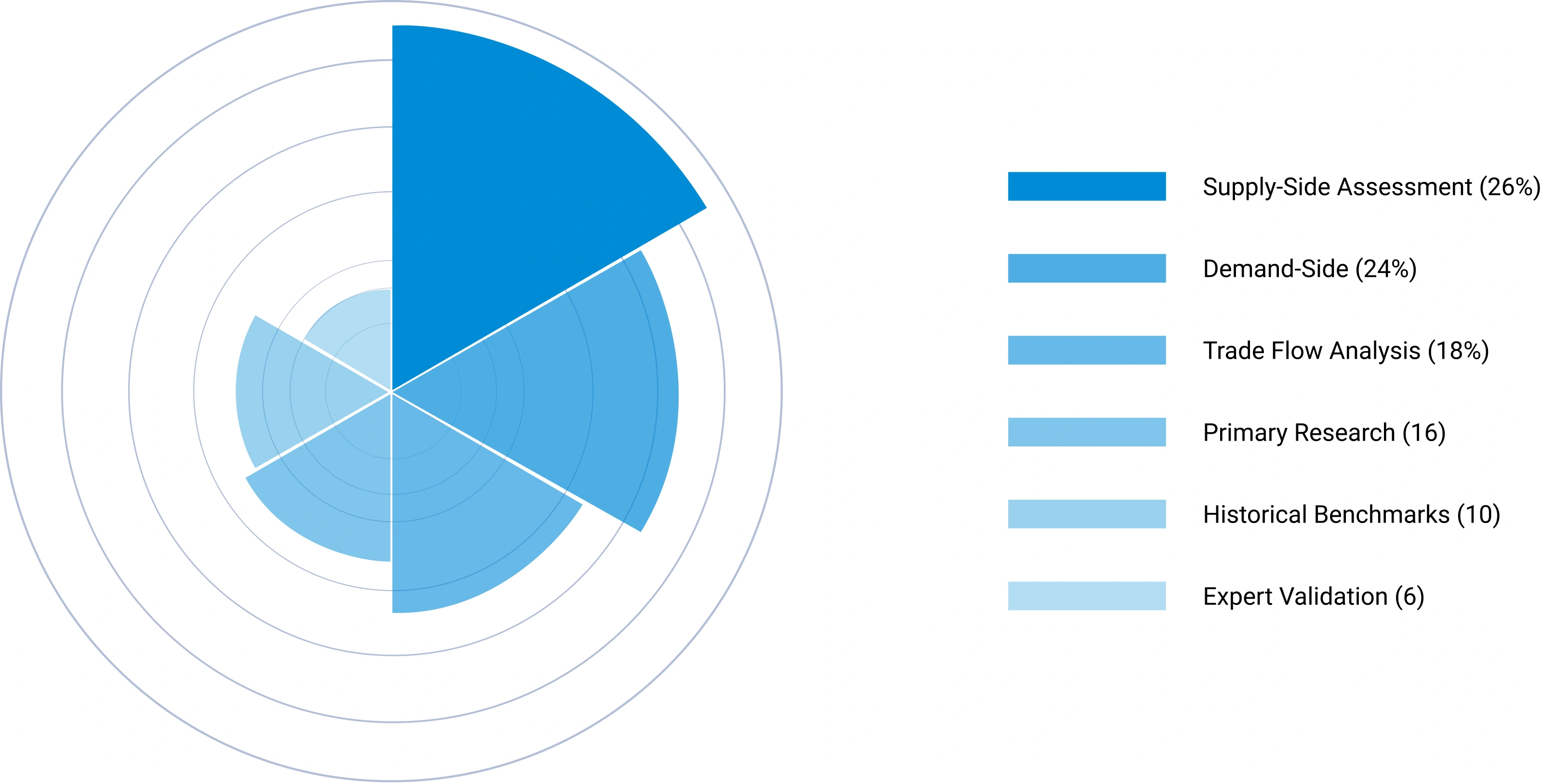
No single methodology is relied upon in isolation. Multiple independent estimation approaches are combined and reconciled to ensure consistency, accuracy, and analytical defensibility. Any material deviations between approaches are investigated and adjusted through additional validation cycles.
The final market size is derived through weighted triangulation of all validated methodologies. Any material deviations between approaches are investigated and adjusted through additional validation cycles. The outcome represents the most realistic assessment of the market based on available evidence and expert confirmation ensuring that volume and value estimates are fully consistent with one another.
Triangulation Framework — Input Contribution Weight
Relative weight each sizing input contributes to the final reconciled market estimate
Phase 7 — Forecast Modeling: Projecting Future Market Evolution
Forecasting evaluates the future trajectory of the market using a combination of quantitative indicators and qualitative assessments across economic, industry, and regulatory dimensions. Rather than simple extrapolation, each driver is independently modeled and integrated into a composite forecast.
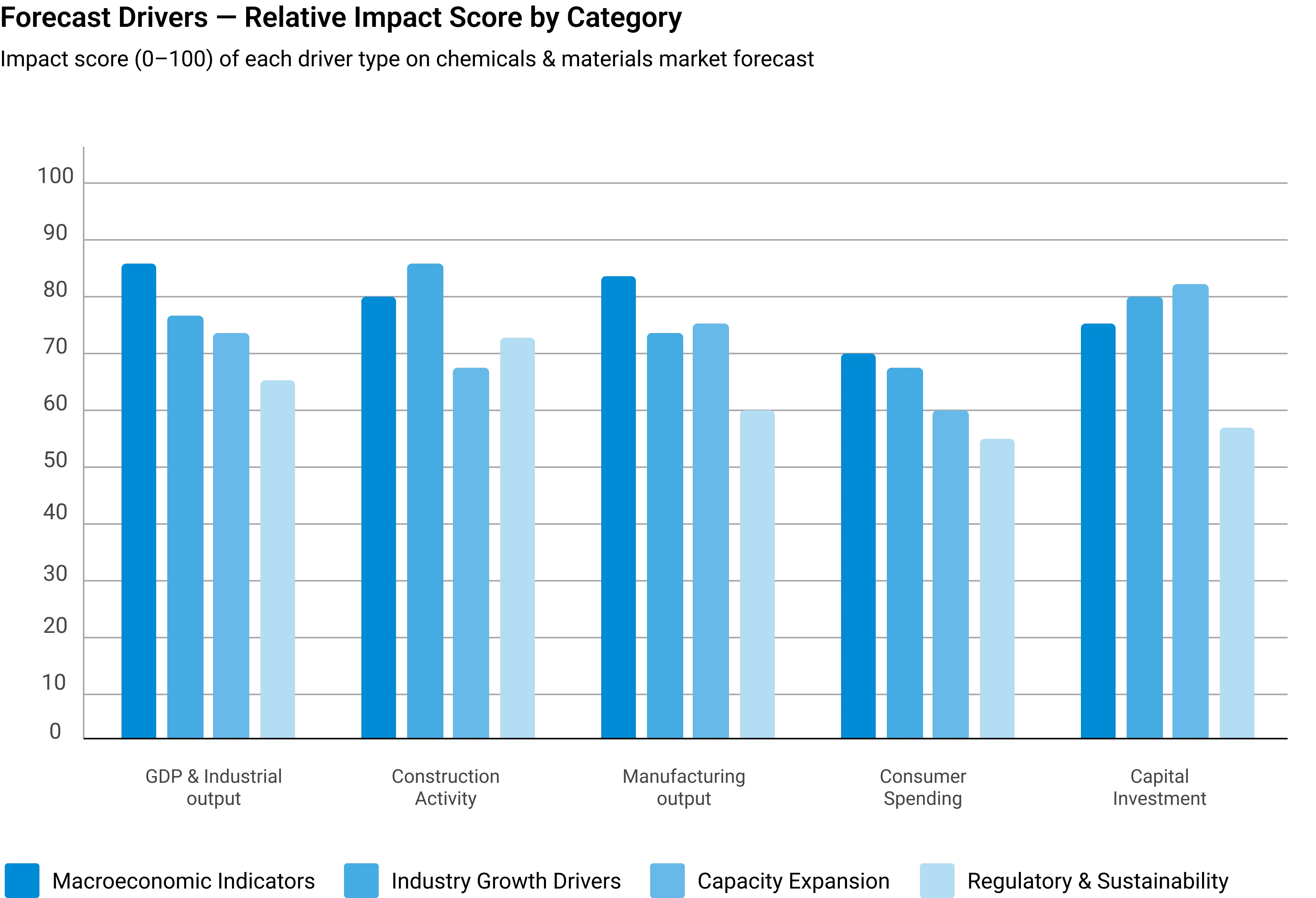
Macroeconomic Indicators
GDP growth, industrial production, manufacturing output, construction activity, consumer spending, and capital investment form the quantitative foundation of long-term demand projections. These are applied at country, regional, and global levels.
Industry Growth Drivers
Urbanization, infrastructure development, industrialization, technological innovation, sustainability initiatives, and evolving product performance requirements are assessed at regional and industry levels — capturing both structural and cyclical demand drivers.
Capacity Expansion Analysis
Announced plant expansions, new manufacturing facilities, technology upgrades, and strategic investments are evaluated to determine future supply-demand dynamics and potential market tightness or oversupply situations.
Regulatory & Sustainability
Environmental regulations, chemical safety standards, emission reduction targets, circular economy initiatives, and sustainability requirements are incorporated as they often influence product adoption rates and market growth trajectories.
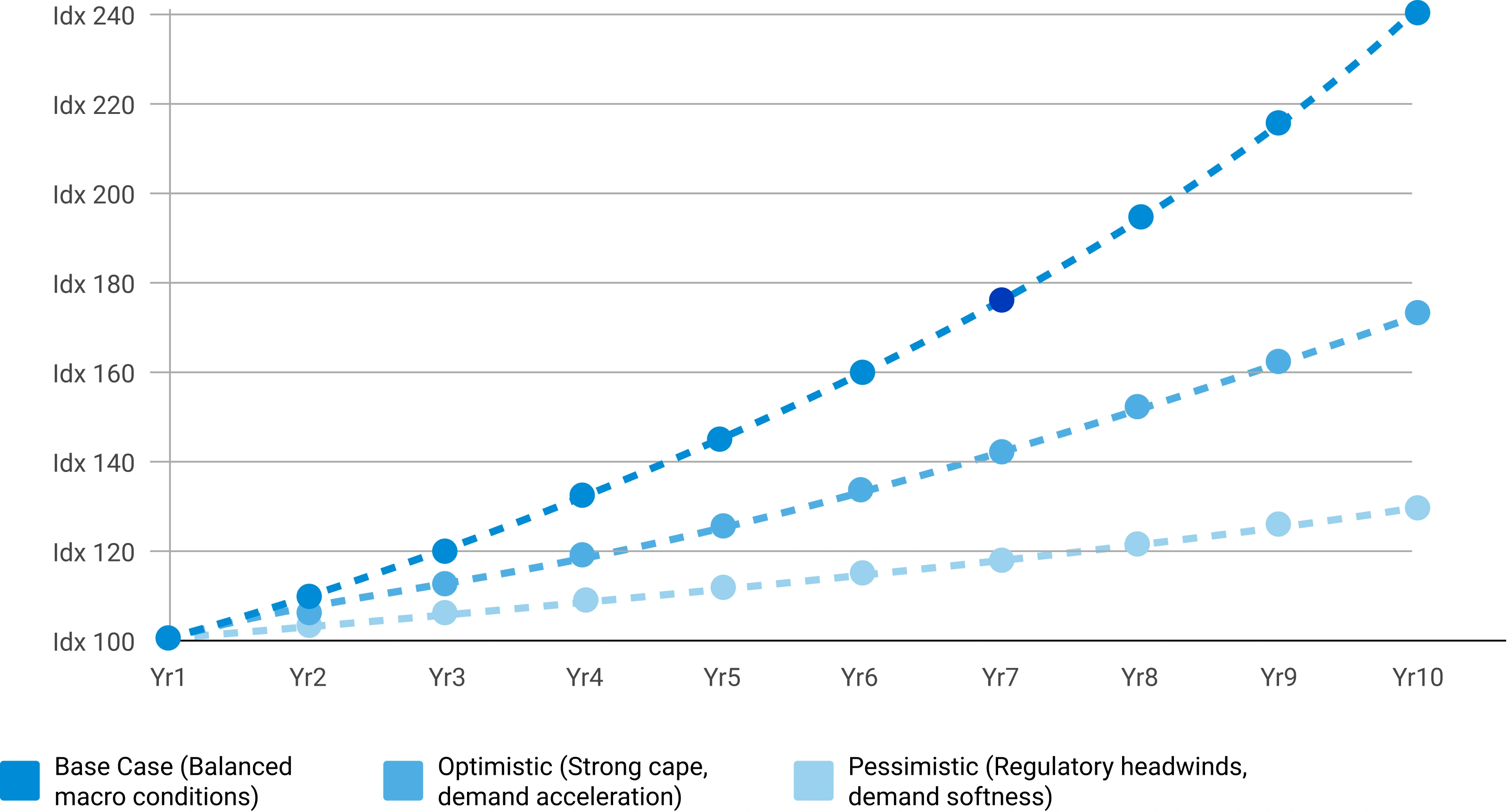
Scenario Forecast Range — Indexed Market Growth (Year 1–10)
Illustrative indexed growth trajectories across Base, Optimistic, and Pessimistic scenarios over a 10-year forecast horizon
Forecast Drivers — Relative Impact Score by Category
Impact score (0–100) of each driver type on chemicals & materials market forecast



Comments
Share your thoughts, ask a question, or provide feedback about this report.