
Nickel Market Size and Forecast 2026 to 2035
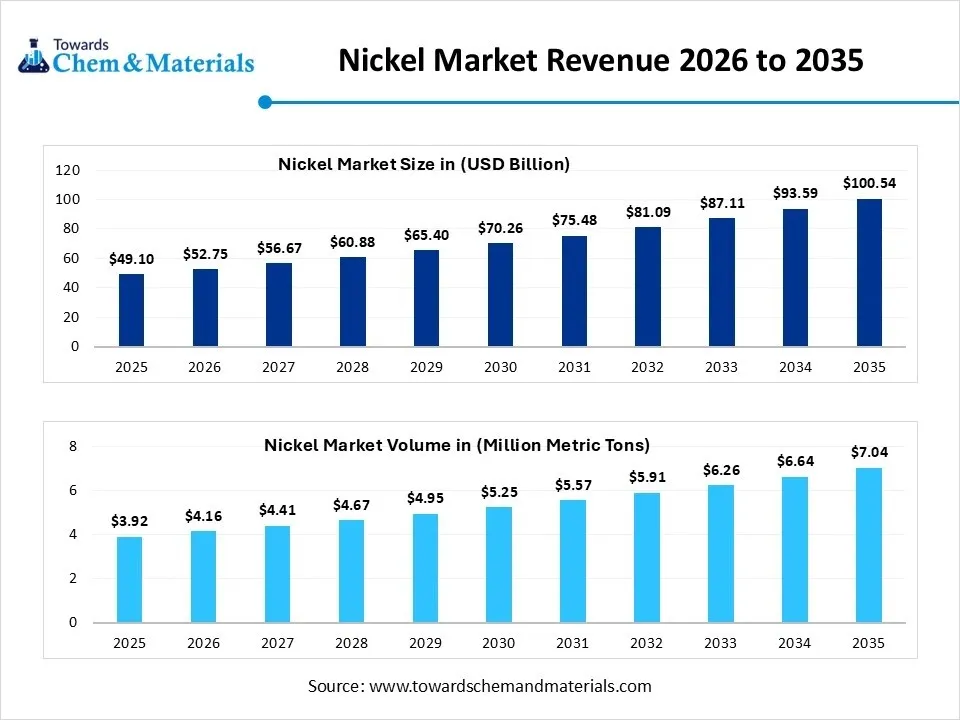
The nickel market size was valued at USD 49.10 billion in 2025, is estimated to reach USD 52.75 billion in 2026, and is projected to reach USD 100.54 billion by 2035, exhibiting a compound annual growth rate (CAGR) of 7.43% over the forecast period from 2026 to 2035.Asia Pacific dominated the nickel market with the largest revenue share of 55% in 2025 and is expected to grow at the fastest CAGR of 7.53% during the forecast period. Crushing the long-term growth potential for global industrial and energy use of nickel, there are also continued investments in battery-grade nickel production, sustainable processing technologies, and traceable supply chains. The market is continuing to grow thanks to increased production of electric vehicles, the expansion of stainless steel production, and the deployment of renewable energy storage systems. 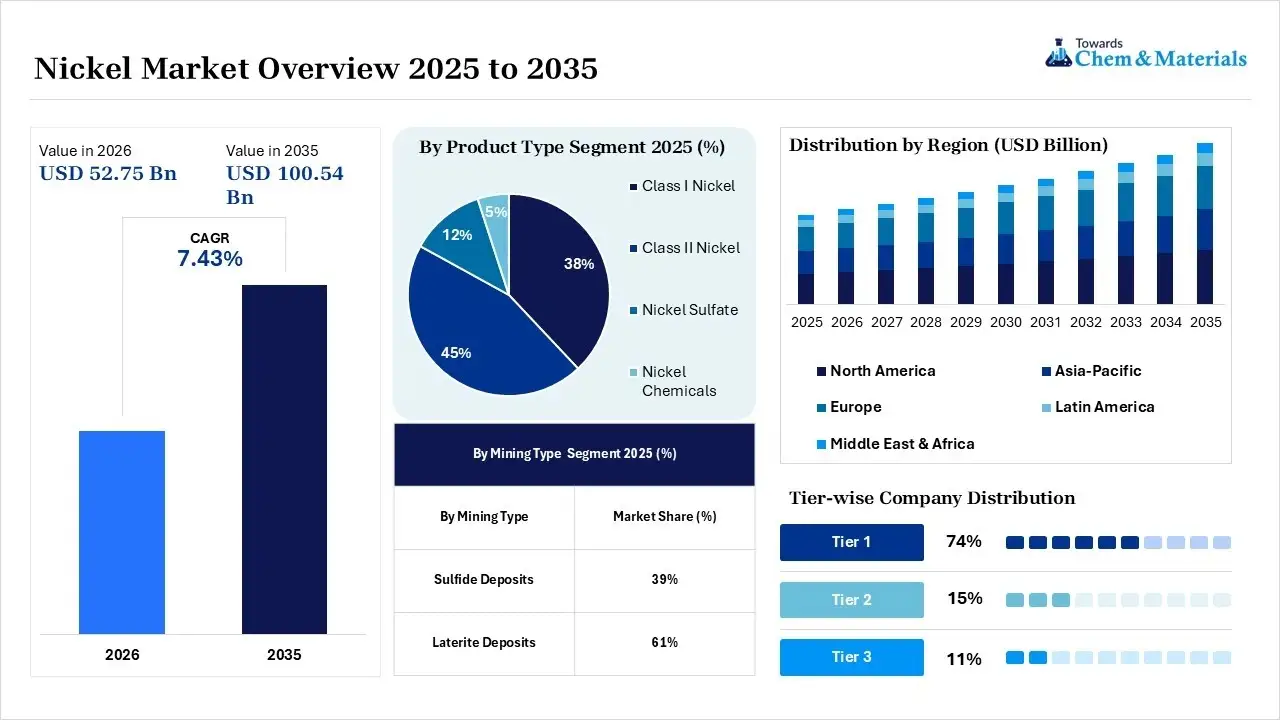
Key Takeaways
- By region, Asia Pacific dominated the nickel market by holding 55% share in 2025 and is expected to grow at a CAGR of 8.21% during the forecast period.
- By region, North America held 16% market share in 2025 and is expected to grow at the fastest with a CAGR of 6.58% during the forecast period.
- By product type, the class II nickel segment dominated the market with the largest share of 45% in 2025 and is expected to grow at a CAGR of 6.41% during the forecast period.
- By product type, the nickel sulfate segment held 12% market share in 2025 and is expected to grow at the fastest CAGR of 11.86% over the forecast period.
- By mining type, the laterite deposits segment dominated the market with the largest share of 61% in 2025 and is expected to grow at a CAGR of 5.62% during the forecast period.
- By mining type, the sulfide deposits segment held 39% market share in 2025 and is expected to grow at the fastest CAGR of 6.21% over the forecast period.
- By end-use industry, the stainless steel segment dominated the market with the largest share of 63% in 2025 and is expected to grow at a CAGR of 5.82% during the forecast period.
- By end-use industry, the batteries segment held 18% market share in 2025 and is expected to grow at the fastest CAGR of 13.84% over the forecast period.
- By distribution channel, the direct sales segment dominated the market with the largest share of 67% in 2025 and is expected to grow at a CAGR of 6.84% during the forecast period.
- By distribution channel, the online industrial procurement segment held 7% market share in 2025 and is expected to grow at the fastest CAGR of 10.26% over the forecast period
According to Towards Chemicals and Materials Analytics and Consulting, the global nickel market volume was valued at 3.92 million metric tons in 2025 and is expected to surpass around 7.04 million metric tons by 2035, accelerating a compound annual growth rate (CAGR) of 6.03% over the forecast period from 2026 to 2035.
Market Overview
Expanding Electric Mobility and Industrial Applications Accelerate the Nickel Market
The nickel market continues to grow as electric vehicle production increasingly adopts high nickel cathode chemistries, which increase the energy density and range of a battery. The stainless steel industry is the largest application with the increasing construction projects, industrial development, and automotive industry worldwide. Expanding aerospace and power generation industries continue to drive the use of nickel-based superalloys, due to their outstanding corrosion resistance and high-temperature capability. Moreover, producers are also making an investment in battery-grade nickel production by using the new High-Pressure Acid Leaching technologies to transform laterite ores into valuable intermediate materials. With the increasing traction of battery recycling and circular supply chains, more sustainable resource utilisation and localized raw material availability are possible.
- For instance, in August 2025, Indonesias sovereign wealth fund, Danantara, agreed with Chinese battery materials recycler GEM for the development of a nickel processing hub as part of efforts to strengthen domestic value addition, improve supply chains for electric vehicle batteries, and develop strategic investments in the Indonesian nickel industry. (Source: www.reuters.com)
Report Scope
| Report Attributes | Details |
| Market Size in 2026 | USD 52.75 Billion/ 4.16 Million Metric Tons |
| Expected Size in 2035 | USD 100.54 Billion/ 7.04 Million Metric Tons |
| Growth Rate | CAGR of 7.43% |
| Base Year of Estimation | 2025 |
| Forecast Period | 2025-2035 |
| Dominant Region | Asia Pacific |
| Segment Covered | By Product Type, By End-Use Industry, By Region |
| Key Companies Profiled | Sumitomo Metal Mining Co., Ltd. , Anglo American Plc , Xstrata PLC , Sherritt International Corporation , Eramet Group , Zhejiang Huayou Cobalt Co., Ltd. , MMC Norilsk Nickel , Pan American Silver Corp. , China Nickel Resources Limited , First Quantum Minerals Ltd. , Jiangsu Yunnan Tin Company Limited , Inco Limited , Korea Zinc Co. Ltd. , Itronics Inc. , SMM (Sumitomo Metal Mining ) |
Global Investment Movement for the Nickel Market
High-purity Class I nickel production and High-Pressure Acid Leach processing facilities to serve the needs of electric vehicle battery production have become a focus of investment. These are projects that bolster the supply of battery-grade materials and diminish the use of lower-grade nickel products in high-end applications such as cathodes.
- Investments continue to be made in capital-intensive projects, with expansions in the refining sector as well as the development of integrated production networks, occurring across Indonesia and regional processing hubs.
These developments reconfigure the global supply chain, enhance the performance of processes, and create processing competitiveness in the international markets. - Localization strategies, strategic stockpiling schemes, and direct partnerships between mining companies and auto manufacturers are increasingly being encouraged by governments and industrial actors.
These investments help to ensure supply security and mitigate the risks of procuring battery raw materials.
Recent Market Trends
- Nickel remains the biggest consumption of the metal in construction, manufacturing and industrial infrastructures. The overall demand for nickel is stable, but suffers from short-term variations in demand in certain manufacturing sectors in the region.
- Battery-grade nickel demand remains dynamic with some producers more seeking to use lithium-iron-phosphate battery technology as the production of plug-in hybrid vehicles continues to expand. These developments slow the growth in nickel demand in selected electric mobility applications for a while.
- As more and more car makers look to the use of traceable, low-carbon nickel, which is delivered in more environmentally friendly production processes and renewable electrical power, this value has grown in significance. This trend helps to motivate producers to work towards better environmental performance and to enhance the transparency and responsibility of their supply chains.
Key Technological Shifts and AI in the Nickel Market
Advancing Artificial Intelligence and Smart Metallurgical Technologies Across the Nickel Market
AI is revolutionizing the nickel exploration, mining, processing, and alloy production by increasing the accuracy of operations and eliminating production uncertainties. The machine learning models use satellite imagery, seismic data and geochemical data to determine the potential locations of nickel deposits and to reduce the time required for the exploration process. Financial risk is further reduced by the use of advanced geological simulations to accurately estimate the resources prior to the start of mining investments. In mineral processing, computer vision technology is used to continuously monitor froth flotation performance and automatically optimise valuable nickel recovery through the process.
Supply Chain Analysis of the Nickel Market
Feedstock Procurement:
- Feedstock procurement is the process of nickel-bearing sulfide and laterite mining and sourcing, which provides a backbone of raw materials for downstream smelting and processing.
With reliable ore procurement, there are no disruptions of production, stable raw materials, and consistent supply for the stainless steel, battery, and alloy production industry of the world. - Vale S.A.: Vale S.A. is a miner producing significant amounts of low-carbon nickel ores with hydroelectric-powered mining operations, which allows a responsible and sustainable supply of nickel for the world.
- Other Key Players: BHP Group, Glencore, and Norilsk Nickel.
Chemical Synthesis and Processing
- Pyrometallurgical or hydrometallurgical refining processes are used to produce intermediate products and high purity nickel for industrial and battery applications from raw nickel ores.
Efficient refining processes are used to achieve high purities of nickel, which are needed to produce battery-grade material and to produce superior products for a wide range of industrial and energy storage markets. - Norilsk Nickel: Norilsk Nickel processes sulfide concentrates into high-quality Class I nickel, providing high-quality materials for advanced manufacturing and industrial use around the world.
- Other Key Players: Jinchuan Group, Sumitomo Metal Mining, and Eramet.
Compound Formulation and Blending:
- Pure nickel is alloyed with certain elements to create special commercial compositions used in the production of batteries, stainless steel, and high-precision engineering products.
- Accurate formulation improves product properties, corrosion resistance, mechanical durability, and specific product properties needed in the diverse areas of high-value industrial products.
- Sumitomo Metal Mining: Refined nickel for electric vehicle lithium-ion batteries application is blended to produce specialized nickel precursor material by Sumitomo Metal Mining.
- Other Key Players: Zhejiang Huayou Cobalt, Umicore, and CNGR Advanced Material.
Sustainability Analysis of the Nickel
Sustainability has continued to be a key focus throughout the nickel market, with producers striving to reduce environmental footprints while ensuring the availability of future resources. Laterite ore smelting operation is energy-intensive and results in a significant amount of carbon emission, while smelting of sulfide ore produces sulfur dioxide, which needs adequate emission control. If not managed, surface mining in tropical areas can lead to loss of biodiversity, degradation of land, and removal of vegetation. Recycling nickel can reduce the global warming potential by a large margin in comparison with its primary extraction and facilitate the utilization of materials in a circular fashion.
What is Nickel?
Nickel is a hard, silvery-white transition metal with the chemical symbol Ni and atomic number 28. It is a material of key importance in many industrial manufacturing and energy applications, due to its excellent corrosion resistance, mechanical strength, and durability.
Uses of the Nickel
- Nickel is added to stainless steel to provide superior corrosion resistance, strength, and durability, and is used in cookware, construction materials, industrial equipment, architecture, and many other “long-life” engineering applications.
- Nickel in Rechargeable Batteries: Helps enable lithium-ion and nickel-metal hydride batteries for electric and hybrid vehicles, portable electronics, renewable energy storage systems, and advanced energy management technologies.
- Special Alloy Manufacturing: Alloys containing nickel are used to achieve high-performance characteristics such as heat resistance, corrosion protection, and improved mechanical strength, used in aerospace, gas turbines, and industrial equipment.
- Electroplating Applications: Nickel electroplating can be used to create a corrosion-resistant, durable protective coating on metal surfaces, enhancing the wear resistance, corrosion protection, surface finish, and service life of bicycle components, hardware, and industrial products.
Pricing Analysis for the Nickel Market
The pricing of the nickel market is driven by the increased supply of nickel from Indonesia, evolving mining laws, and varying market demand and growth rates between stainless steel and electric vehicle battery markets. Nickel pig iron and High- Pressure Acid Leach production continues to grow globally, thus influencing the overall price trends. There is some market volatility because of periodic permits and production changes. In the meantime, lower-grade nickel supplies are plentiful while supplies of high-purity battery-grade material are tight, leading to varied prices for nickel in end-use industries and product types.
Nickel Market: Global Trade Analysis
Nickel trade is still growing globally, driven by its use in stainless steel, batteries, and advanced industrial products. Indonesia is also a substantial player in the international supply with large-scale processing and High-Pressure Acid Leach. Regulatory measures, export policies, and production management remain influential in driving the nature of global trade. On the other hand, more and more demand for traceable and low-carbon nickel helps to promote clean production and improve the international supply chains resilience and competitiveness in the future.
Regulatory Framework: Nickel Market
| Country Region | Regulatory Body | Key Regulations | Focus Areas |
| Asia Pacific | Ministry of Mines | Refined Nickel (Quality Control) Order | Domestic product quality, mandatory standard marking |
| North America | US Environmental Protection Agency | US Clean Water Act & Clean Air Act | Air/water emissions limits, ecological risk assessments |
| European Union | European Chemicals Agency (ECHA) | EU REACH Regulation | Chemical safety, environmental risk evaluation |
Market Dynamics
Drivers: Rising Electric Vehicle Battery Adoption Strengthens Nickel Market Growth
Demand for nickel is continuing to ramp up as EV sales continue to increase, with high nickel cathode chemistries leading to higher energy density and increased driving range for EVs. Nickel-rich battery materials are becoming more common in the automotive industry to increase car performance and improve battery cycles. As energy storage installations increase in volume, particularly those based on renewables, so does the demand for battery-grade nickel in the global market. Ongoing investments in advanced battery production, regionalized supply chains, and high-purity nickel production continue to drive market growth down the road and bolster nickels strategic role in the global energy transition.
Restraints : Environmental Challenges and Processing Emissions Restrict Market Expansion
Laterite nickel production is becoming more environmentally problematic as it consumes a lot of energy and produces a lot of carbon emissions. The production of sulfur dioxide during sulfide ore refining also demands efficient emission control systems and adherence to regulations. If not properly protected, surface mining operations could cause biodiversity loss, disturbance of the land surface, the discharge of heavy metals, and acid mine drainage. Increased levels of sustainability expectations, regulations, and costs for compliance push producers to invest in cleaner technologies and pose challenges in running mining and refining operations.
Opportunities : Expanding Secondary Nickel Recycling Creates Future Growth Opportunities
The importance of the circular economy concept has increased significantly, leading to the great potential of secondary nickel recovery by recycling of used lithium-ion batteries and industrial scrap. Greater recycling options help to increase material supply and decrease need for primary mining operations and contribute to resource conservation. The local recycling infrastructure also boosts the resilience of the supply chain and supports the production of sustainable battery materials with increased investments. Improving recovery technologies and environmentally friendly processing methods continues to contribute to long-term market opportunities and contributes to global decarbonisation targets and sustainable industrial development.
Segmental Insights
Product Type Insights
The class II nickel segment dominated the market with the largest share of 45% in 2025 and is expected to grow at a CAGR of 6.41% over the forecast period, due to its use in the stainless-steel product manufacturing and in some industrial processing applications. Its economical production, availability on a large scale, and ease of use in large-scale metallurgical operations supported a continuous demand in the industries throughout the world. This was further sustained by its high adoption rate across construction, transportation, engineering, and manufacturing applications. Sustained consumption from a wide range of industrial value chains was also brought about by ongoing investments in production facilities and processing capabilities.
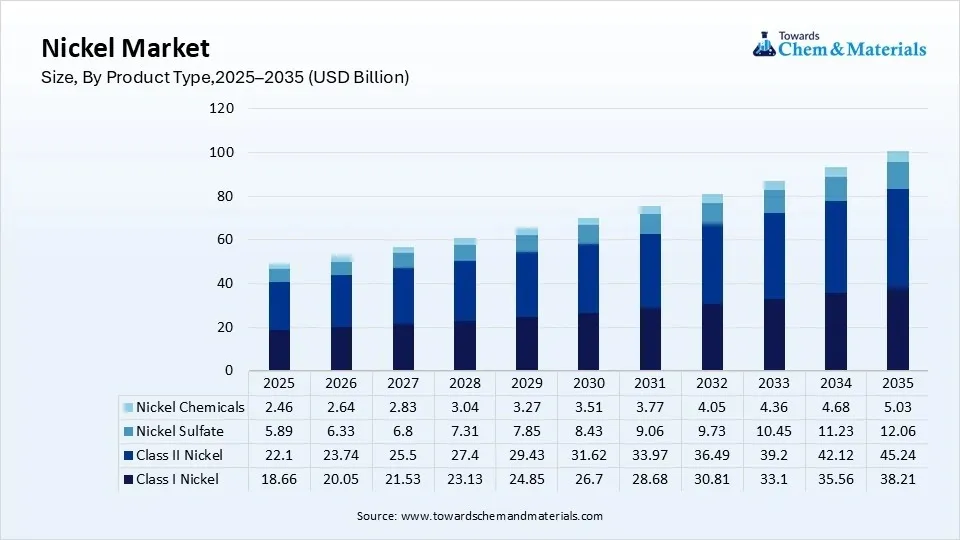
The nickel sulfate segment held the 12% market share in 2025 and is expected to grow at the fastest CAGR of 11.86% over the forecast period, as lithium-ion battery production for EV and energy storage solutions increases. The segment is continuing to grow as battery-grade materials are increasingly used, the infrastructure of renewable energy continues to expand, and investments in advanced battery production continue to grow. High purity NiSO4 is considered a priority for manufacturers because it helps to enhance the performance, energy density, and efficiency of batteries. Continued technological progress and regional battery value chains complement long-term growth prospects.
Nickel Market Share, By Product Type, 2025(%)
| By Product Type | Market Share (%) |
| Class I Nickel | 38% |
| Class II Nickel | 45% |
| Nickel Sulfate | 12% |
| Nickel Chemicals | 5% |
Mining Type Insights
The laterite deposits segment dominated the market with the largest share of 61% in 2025 and is expected to grow at a CAGR of 5.62% over the forecast period, driven by its vast reserves and major share in the global nickel production. The commercial prospects of the laterites have improved with heavy mining operations and ongoing developments in processing technologies. The conversion of laterite ores into battery-grade intermediate products is further improved by growing investments in High-Pressure Acid Leaching facilities. The increasing industrial demand and growing refining capacities are further consolidating the role of this segment in the global nickel supply chain.
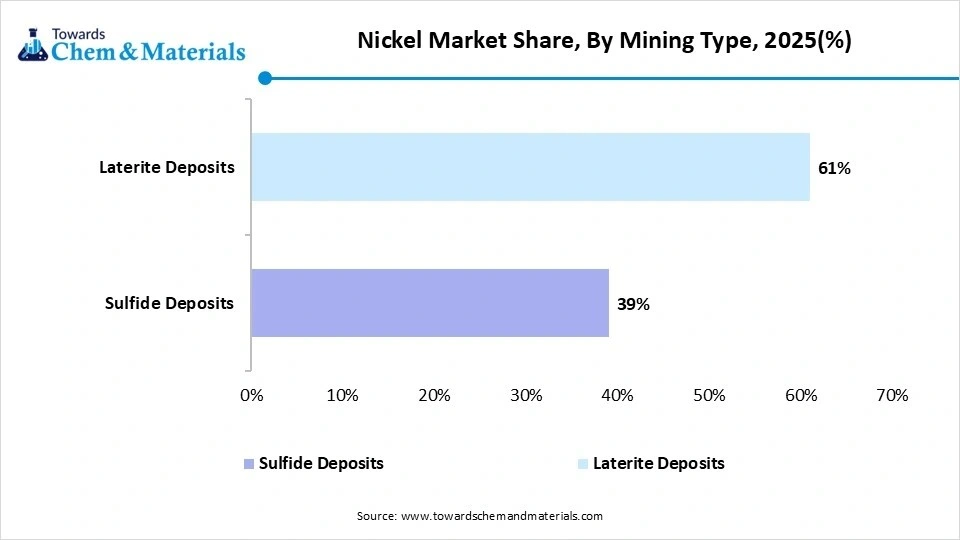
The sulfide deposits segment held the x39x% market share in 2025 and is expected to grow at the fastest CAGR of 6.21% over the forecast period, due to its higher ore grades and efficient refining qualities. These deposits are used to manufacture high-purity nickel used in battery materials, specialty alloys, and advanced industrial applications. The growth of the segment is ongoing as demand for high-quality nickel continues to rise and investments in the production of battery-grade material are growing as well. The utilization of Strong is also robust in other sectors, such as electric mobility, aerospace, and high-performance manufacturing, which further bolsters future growth.
Nickel Market Share, By End-use Industry, 2025(%)
| By Mining Type | Market Share (%) |
| Sulfide Deposits | 39% |
| Laterite Deposits | 61% |
End-Use Insights
The stainless steel segment dominated the market with the largest share of 63% in 2025 and is expected to grow at a CAGR of 5.82% over the forecast period, as it improves the corrosion resistance, mechanical strength, durability, and overall performance of the product significantly. Demand remains robust in construction, infrastructure development, industrial manufacturing, transportation, and consumer goods, driving up the production of stainless steel. The continuous urbanization and industrial growth further boost the demand for long-lasting stainless-steel products in the developed and developing economies. Investments in specialty steels also bolster the demand for nickel in the long run.
- For instance, in February 2026, Jindal Stainless inked a Memorandum of Understanding with the Ministry of Steel, Government of India, in the context of PLI 1.2, to further boost the production of specialty stainless steel grades and minimize import dependency of critical steel grades.(Source: www.jindalstainless.com)
The batteries segment held an 18% market share in 2025 and is expected to grow at the fastest CAGR of 13.84% over the forecast period, due to the ongoing rise in electric vehicle manufacturing and the deployment of renewable energy storage around the world. High nickel cathode chemistries are becoming more popular, which leads to better battery energy density, driving range, and operational efficiency. Continued growth in battery manufacturing plants and regional battery supply chains also contributes to the rising demand for battery-grade nickel. Long-term segment growth is predicted as technologies improve and more and more clean energy systems are being adopted.
Nickel Market Share, By End-use Industry, 2025(%)
| By End-use Industry | Market Share (%) |
| Stainless Steel | 63% |
| Batteries | 18% |
| Aerospace & Defense | 5% |
| Electroplating | 7% |
| Foundry & Alloy Production | 4% |
| Chemicals | 2% |
| Others | 1% |
Distribution Insights
The direct sales segment dominated the market with the largest share of 67% in 2025 and is expected to grow at a CAGR of 6.84% over the forecast period, as it allows manufacturers and big industrial users to create stable channels of supply with assured quality and pricing with their customers. Long-term supply contracts, customized purchase contracts, and efficient logistics contribute to the strengthening of business relationships throughout mining, refining, and manufacturing processes. Direct deals also provide transparency in the supply chain and guarantee the continuous supply of nickel products for large-scale industrial use.
The online industrial procurement segment held a 7% market share in 2025 and is expected to grow at the fastest CAGR of 10.26% over the forecast period, since digital purchasing platforms are enhancing data transparency and making sourcing more efficient and convenient. Digital channels are gaining momentum on the industrial buyer side, where they are being used to shortlist suppliers and track inventories, and to help industrial buyers streamline procurement. The e-commerce distribution channel is continuing to grow at a fast pace, driven by digital transformation across a wide range of manufacturing industries and the increasing adoption of online business transactions.
Nickel Market Share, By Distribution Channel, 2025(%)
| By Distribution Channel | Market Share (%) |
| Direct Sales | 67% |
| Distributors & Traders | 26% |
| Online Industrial Procurement | 7% |
Regional Insights
How Did the Asia Pacific Dominate the Nickel Market In 2025?
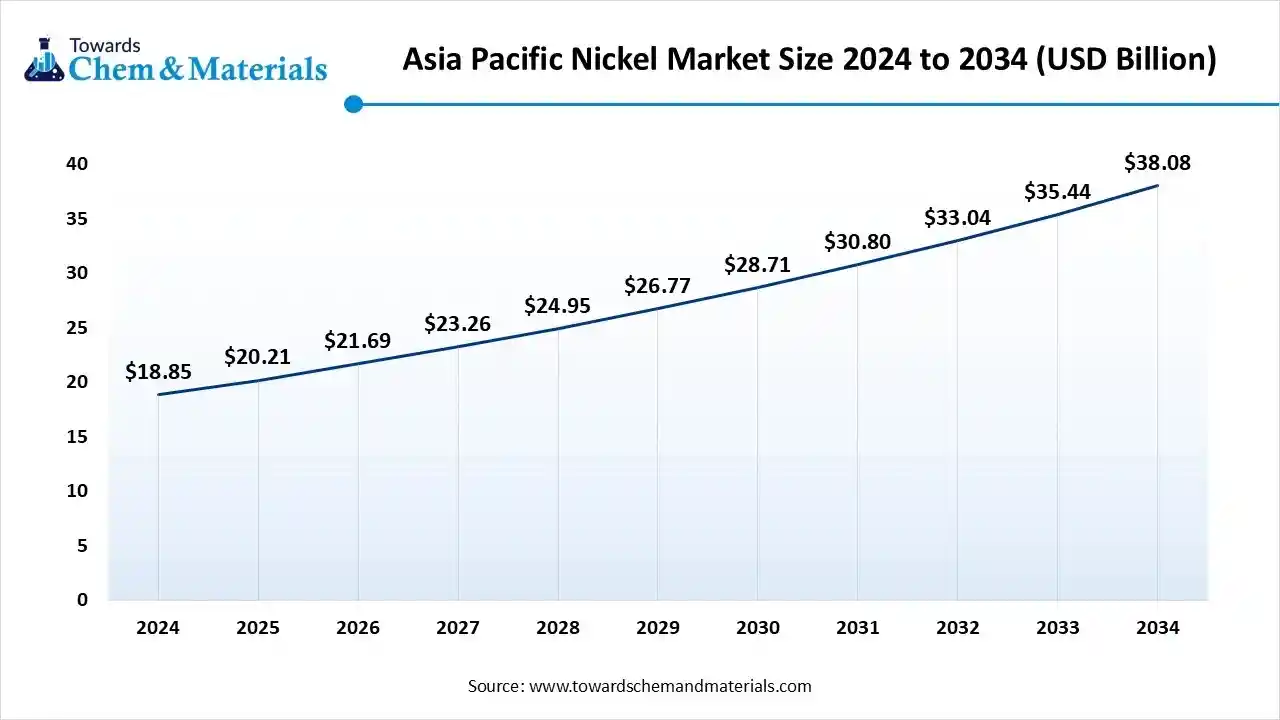
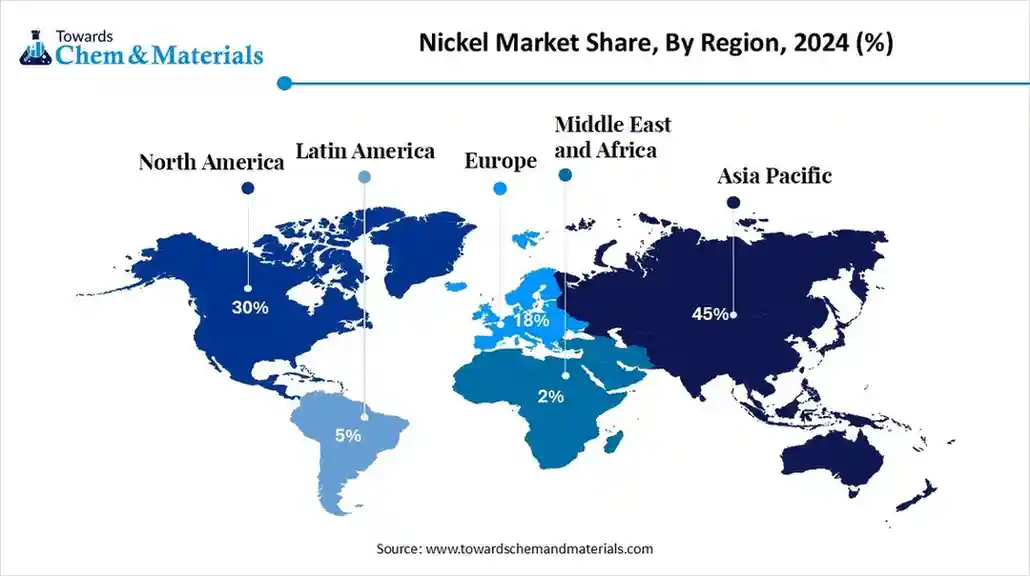
The Asia Pacific nickel market size was estimated at USD 27.01 billion in 2025 and is projected to reach USD 55.80 billion by 2035, growing at a CAGR of 7.53% from 2026 to 2035. Asia Pacific dominated the market with the largest share of 47% in 2025 and is expected to grow at a CAGR of 5.03% during the forecast period because of the large nickel mining operations, processing plants, and the production of stainless steel. The area is blessed with a large quantity of laterite resources and growing investment in the production of battery-grade nickel. Regional demand remains robust as the region continues to experience rapid industrialization, expanding deployment of electric vehicles, and expanding renewable energy storage.
Advancing Chinas Nickel Processing Capabilities
China continues to be a major consumer and processor of nickel due to its massive stainless-steel industry and growing EV battery industry. Major investments in refining facilities, battery materials, and integrated industrial supply chains are needed to meet domestic demand. Rising renewable energy demand and ongoing technological progress further bolster nickel demand in various industries. Chinas manufacturing capabilities are strong, the processing facilities are efficient, and the demand for materials is increasing, which further solidifies Chinas strategic position in the global nickel market.
Aiming To Boost the Stainless Steel and Battery Industry in India
Nickel demand in India keeps on rising as it sees stainless steel growth, infrastructure expansion, and the growing adoption of electric mobility. Investment in manufacturing and increased industrial activity help to sustain consumption in construction, engineering, and transportation. Market growth is also driven by the growth of battery-making capacity along with government initiatives to encourage the domestic production of batteries. The countrys ongoing efforts towards bringing more efficiency in manufacturing, industrialisation and use of clean energy bolster Indias role as a major player in the regional nickel demand.
North America
The North America nickel market size was estimated at USD 7.86 billion in 2025 and is projected to reach USD 16.59 billion by 2035, growing at a CAGR of 7.76% from 2026 to 2035. North America held 20% market share in 2025 and is expected to grow at the fastest CAGR of 6.84% during the forecast period as investments in battery manufacturing, critical mineral supply chains, and EV production continue to rise. The region is focused on enhancing local sourcing of nickel, refining skills and infrastructure, and recycling to ensure supply security. The increasing use of renewable energy and decarbonization efforts in industry are driving additional demand for battery-grade nickel. Long-term regional competitiveness and supply chain resilience are further bolstered by strategic collaborations among mining companies, battery manufacturers, and automotive producers.
To fortify the United States Battery Material Ecosystem
The domestic demand for nickel is also continuing to grow in the United States, with a higher number of electric vehicles being produced, as well as investments being made in the production of battery plants. Emphasis on local critical mineral sourcing, recycling programs, and advanced manufacturing technologies is important for industrial competitiveness. High-purity nickel demand keeps growing due to continuous research on battery materials and progressive development of the integrated supply chain. The ongoing growth in renewable energy projects and partnerships between the mining and manufacturing sectors can also be expected to drive market growth in the long term.
Developing Sustainable Nickel Production in Canada (80 words)
Canada remains an important nickel-producing country supported by established mining operations and increasing investments in environmentally responsible resource development. Increased attention to sustainable mining, battery material manufacturing, and critical mineral processing boosts industrial competitiveness. Growing partnerships between technology providers, battery producers, and miners contribute to a steady supply of nickel. Ongoing innovation in environmentally friendly extraction processes and processing techniques continues to further solidify Canadas long-term role in the global nickel market.
Europe
The Europe nickel market size was estimated at USD 10.31 billion in 2025 and is projected to reach USD 21.62 billion by 2035, growing at a CAGR of 7.69% from 2026 to 2035. Europe held 21% market share in 2025 and is expected to grow at a CAGR of 4.91% over the forecast period, with its progressive manufacturing, aerospace production, and growing EV sectors. Investments in sustainable battery supply chains and responsible raw material sourcing further boost demand in the region. Environmental regulations help promote cleaner production technologies and increase recycling efforts in different industries. Europe plays an increasing role in the global nickel value chain with continuous innovation of manufacturing processes, battery development, and industrial modernisation.
Promote Germanys Industrial Innovation
German demand for nickel remains robust due to the activities of the automotive, engineering, and advanced manufacturing sectors. The rise of EVs and battery technology investments boosts the demand for high-quality nickel materials. It is widely used in engineering applications with continuous industrial innovation and advanced manufacturing capabilities. Germanys strategic position in the European nickel market is further enhanced by increasing focus on sustainable production, battery research, and clean energy technologies.
Supporting Frances Clean Energy Transition
France fueled nickel demand by growing renewable power and electric mobility programs, and other advanced industrial manufacturing. The growth of investments in the battery value chains and sustainable technologies can lead to even more use of battery-grade nickel in other industries. Infrastructure development and commitment to environmental sustainability and industrial modernisation are contributing to market growth. Further to this, the expansion in clean energy adoption, technological innovation, and the evolution of manufacturing processes drive Frances role in the regional nickel industry.
Latin America
The Latin America nickel market size was estimated at USD 2.46 billion in 2025 and is projected to reach USD 5.53 billion by 2035, growing at a CAGR of 8.44% from 2026 to 2035. Latin America held 7% market share in 2025 and is expected to grow at a CAGR of 5.37% over the forecast period, with its increased mining operations, development of resources, and investments in mineral processing. Expansion of exploration activity and development of more efficient extraction methods boost the production potential of the region. Responsible mining and sustainable resource management have gained increasing importance as contributing factors to sustainable industrial development. Global demand for nickel materials and growing industrial collaborations open up new opportunities for regional producers and reinforce their involvement in global nickel supply chains.
Ensure Brazils Mining industry
Brazil, however, remains committed to supplying nickel to the world market, both in its current mining activities and through its growing abilities in mineral processing. A rise in investments in sustainable extraction and industrial modernization increases the countrys mining sector. Nickel consumption is steady, driven by the battery industry, the stainless steel industry, and higher-value end-use applications. Further strengthening of Brazils international nickel value chain, with continuous technological advances in processing, resource development, and industrial infrastructure.
Enhancing Chiles Critical Mineral Development
Chile is persistently advancing the development of minerals by building a greater capacity for investment in key resource explorations and sustainable mining projects. Long-term production potential is boosted by increasing industrial collaboration and technological advances in extraction. As global demand for battery materials continues to rise, its creating the potential for more investment opportunities in the industry. Responsible resource management, industrial development, and sustainable production practices are emphasized continuously, contributing to Chiles contribution to regional mineral supply chains.
Middle East & Africa
The Middle East & Africa nickel market size was estimated at USD 1.47 billion in 2025 and is projected to reach USD 3.52 billion by 2035, growing at a CAGR of 9.12% from 2026 to 2035. The Middle East & Africa held 5% market share in 2025 and is expected to grow at a CAGR of 5.19% over the forecast period. With its growing mining operations, resource development, and industrial diversification programs. Rising investment in exploration, mineral processing, and infrastructure enhances the production potential throughout the region. The rising demand for battery materials and the adoption of sustainable mining methods foster further growth in the battery industry. Strategic investments in downstream processing, resource efficiency, and industrial modernization further support the regions integration into global supply chains for nickel.
Strengthening Saudi Arabias Industrial Diversification
Saudi Arabia is still diversifying its industrial economy, with continued growth in investments in the development and processing of key minerals. The trend to increasingly sophisticated manufacturing, advanced use of resources, and industrial infrastructure helps to support future demand for nickel-based materials. The strategic investments support not only further industrial competitiveness, but also broader economic diversification goals. Saudi Arabias significance in regional mining operations continues to increase due to the constant improvement of processing technology and industrial development.
Expanding South Africas Mining Capabilities
Although South Africa has not been a significant player in the mining sector for some time, it has a recorded history of producing minerals and has developed a robust industrial infrastructure. The industrys competitiveness is enhanced by investments in sustainable mining techniques, resource development, and processing technologies. The increasing demand for critical minerals globally offers more expansion opportunities for mining and industrial cooperation.
Recent Developments
- In April 2025, Panasonic Energy and Sumitomo Metal Mining jointly announced a nickel recycling project for the recovery of nickel from the production waste of lithium-ion batteries. The recovered nickel sulfate will be recycled into new battery cathode materials, promoting a closed-loop battery economy and optimizing resource use and sustainable battery production.(Source: battery-news.de )
Competitive Analysis
The nickel market is competitive, and the major players are working on expansion to make their mining projects more competitive, refining efficiencies, production of battery-grade nickel, and sustainable resource development efforts to help secure market shares. Leading players are still investing in state-of-the-art processing technologies, integrated supply chains, and eco-friendly operations to meet the rising demand for stainless steel in the electric vehicle battery industry as well as the manufacturing industry. Strategic focus on high-purity Class I nickel, geographically clustered processing plants, and long-term supply contracts further improve the competitiveness of the product on the international market.
- For instance, in July 2026, SAIL and Krakatau Steel announced their plans to invest in a stainless-steel slab plant in Indonesia for USD 350 million. The project is designed to increase the availability of nickel feedstock to stainless steel production, enhance the supply chain, and increase competitiveness in the region.(Source: www.reuters.com)
- In February 2026, Eramet said it had been granted a much smaller allocation for mining in 2026 in its PT Weda Bay Nickel joint venture, and will be requesting a higher production amount. The announcement emphasized Indonesias more stringent production control and its impact on global nickel production and price.
(Source: www.reuters.com)
Top Players in the Market & Their Offerings
| Company | Company Type/Position | Major Headquarters | Geographic Presence | Nickel Offerings | Key Strength |
| Vale S.A. | Multinational Mining | Rio de Janeiro, Brazil | Brazil, Canada, Indonesia | Electrolytic Nickel, Nickel Matte | Vast high-grade reserves |
| Norilsk Nickel | Mining & Metallurgy | Moscow, Russia | Russia, South Africa | Refined Nickel, High-Purity Class 1 Nickel | Worlds largest nickel sulfide deposit |
| BHP Group | Global Resources | Melbourne, Australia | Australia, Canada, Chile | Nickel Sulfate | High proportion of output dedicated directly to EV batteries |
Other Key Players
- Vedanta Limited
- Norilsk Nickel (Nornickel)
- Glencore
- Vale
- Tsingshan Holding Group
- BHP
- PT Vale Indonesia
- Jinchuan Group
- Eramet
- Anglo American
- Antam
- IGO
- Terrafame
Segment Covered in the Report
By Product Type
- Class I Nickel
- Electrolytic Nickel
- Carbonyl Nickel
- Class II Nickel
- Ferronickel
- Nickel Pig Iron (NPI)
- Nickel Oxide
- Nickel Sulfate
- Battery Grade
- Industrial Grade
- Nickel Chemicals
- Nickel Chloride
- Nickel Nitrate
- Nickel Carbonate
- Others
By Mining Type
- Sulfide Deposits
- Laterite Deposits
- Limonite
- Saprolite
By End-use Industry
- Stainless Steel
- Batteries
- Electric Vehicle Batteries
- Energy Storage Systems
- Consumer Electronics
- Aerospace & Defense
- Electroplating
- Foundry & Alloy Production
- Chemicals
- Others
By Distribution Channel
- Direct Sales
- Distributors & Traders
- Online Industrial Procurement
By Region
- North America
- U.S.
- Canada
- Europe
- Germany
- UK
- France
- Italy
- Spain
- Sweden
- Denmark
- Norway
- Asia Pacific
- China
- Japan
- India
- South Korea
- Thailand
- Latin America
- Brazil
- Mexico
- Argentina
- Middle East and Africa (MEA)
- South Africa
- UAE
- Saudi Arabia
- Kuwait
A Seven-Phase Framework
Our methodology is designed to be universally applicable across commodity chemicals, specialty chemicals, petrochemicals, construction chemicals, coatings, electronic chemicals, industrial gases, agrochemicals, water treatment chemicals, and performance materials. Each phase builds upon the last, creating a layered validation structure that minimizes estimation error and maximizes analytical confidence.
The framework ensures comprehensive market coverage, robust cross-validation, and reliable long-term forecasting — producing market estimates that withstand scrutiny from investors, regulators, and corporate strategy teams.

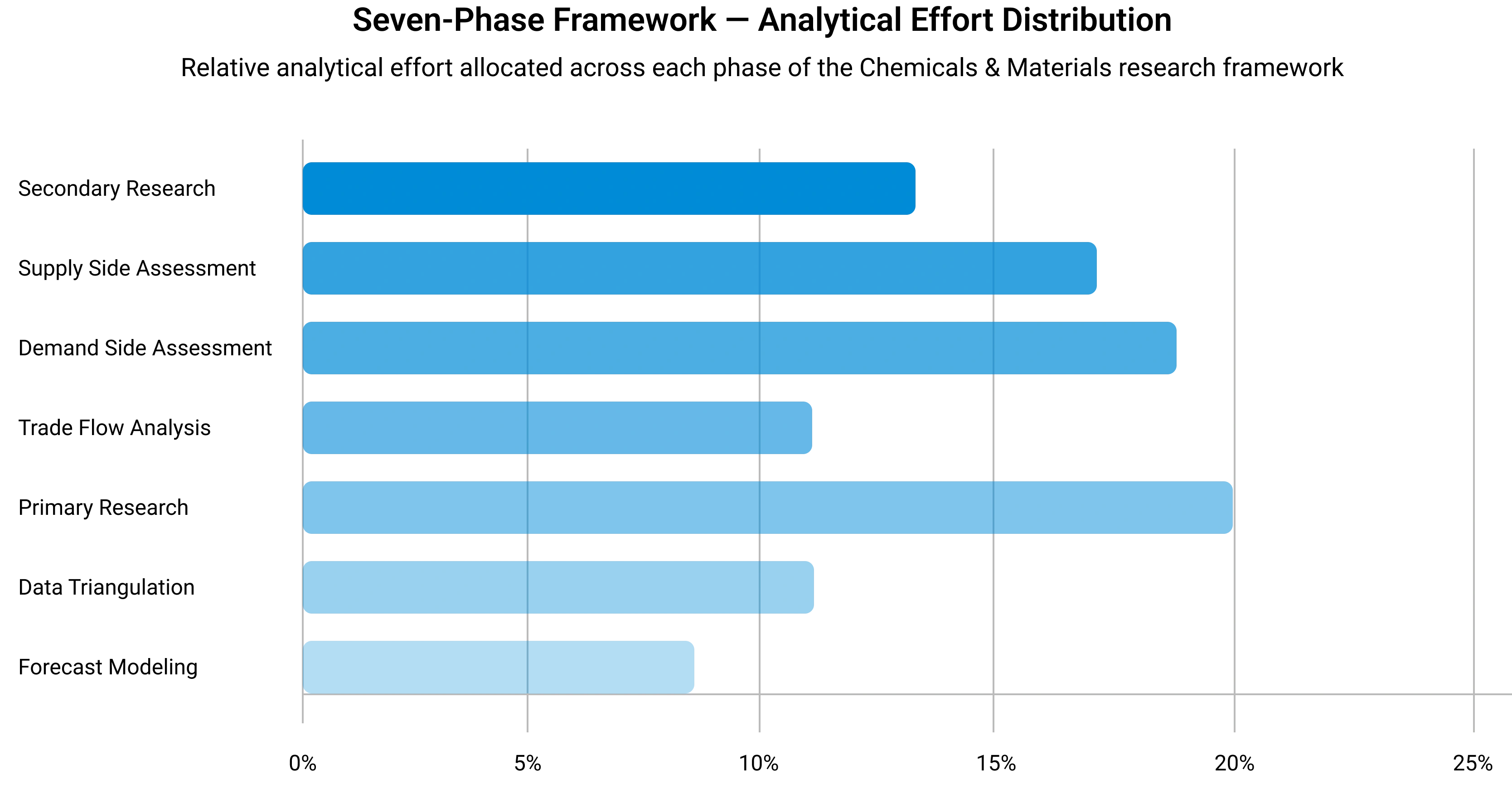
Seven-Phase Framework — Analytical Effort Distribution
Relative analytical effort allocated across each phase of the Chemicals & Materials research framework
Phase 1 - Secondary Research: Establishing the Foundation
Secondary research collects and evaluates publicly available information from authoritative sources, establishing the foundational understanding of market structure, value chain dynamics, competitive landscape, and end-use demand patterns. Every source is evaluated for credibility, recency, geographic relevance, and methodological soundness before inclusion.
Industry Associations
Sources include ACC, CEFIC, ICCA, JCIA, CPCIF, and SOCMA providing production volumes, consumption trends, capacity developments, and sustainability initiatives.
Company Disclosures
Annual reports, investor presentations, earnings transcripts, and regulatory filings reveal product portfolios, manufacturing footprints, capacity expansions, and revenue segmentation.
Government Databases
National statistical offices, customs authorities, environmental agencies, and industrial production databases provide verified statistics on output, trade flows, and regulatory compliance.
Trade Databases
UN Comtrade, ITC, Eurostat, and national customs authorities enable assessment of global product movement, import dependency, and export competitiveness across regions.
Our Secondary Research Sources
- Ministry of Chemicals and Fertilizers
- European Chemicals Agency
- United States Department of Energy
- Ministry of Industry and Information Technology
- Ministry of Economy Trade and Industry
- Ministry of Trade Industry and Energy
- National Institute of Standards and Technology
- Council of Scientific and Industrial Research
- Fraunhofer Society
- National Institute for Materials Science
Phase 2 — Supply-Side Assessment: Mapping Production Capabilities
Production Capacity Analysis
All major manufacturers are assessed for existing installed capacity, planned additions, expansions, new plant announcements, and technology adoption — mapped at global, regional, and country levels.
Capacity Utilization Adjustment
Installed capacity is adjusted using utilization rates based on demand conditions, feedstock availability, plant operating rates, maintenance schedules, and regulatory restrictions.
Manufacturer Revenue Analysis
Product-specific revenues, segment-level performance, regional distribution, average selling prices, and margin trends are evaluated to establish market value estimates.
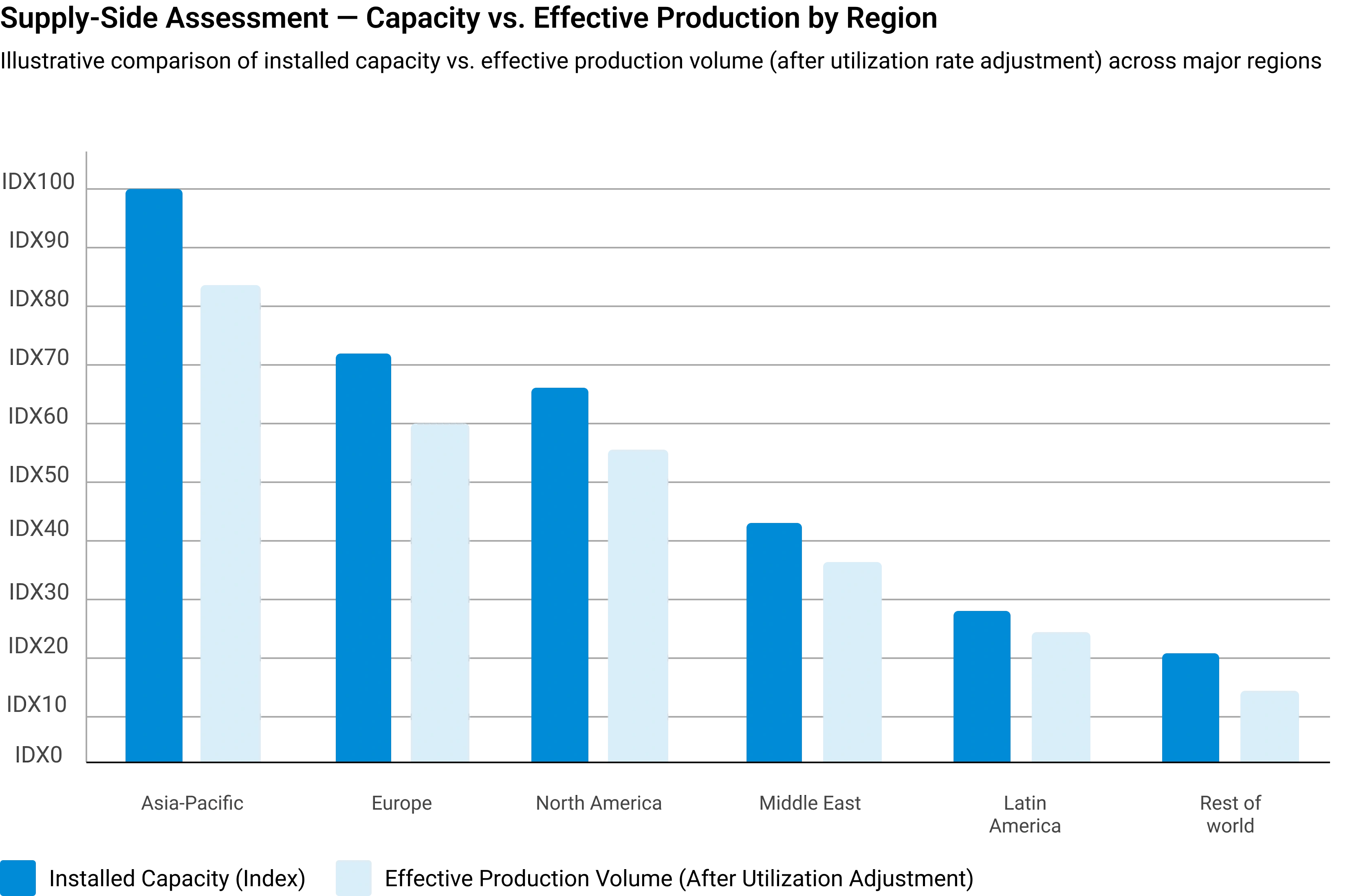
Supply-Side Assessment — Capacity vs. Effective Production by Region
Illustrative comparison of installed capacity vs. effective production volume (after utilization rate adjustment) across major regions
Phase 3 — Demand-Side Assessment: Quantifying Chemical Consumption
Demand-side analysis quantifies chemical consumption across industries, applications, and geographies — identifying where and how chemicals are consumed throughout the value chain with precision.
End-Use Industry Analysis
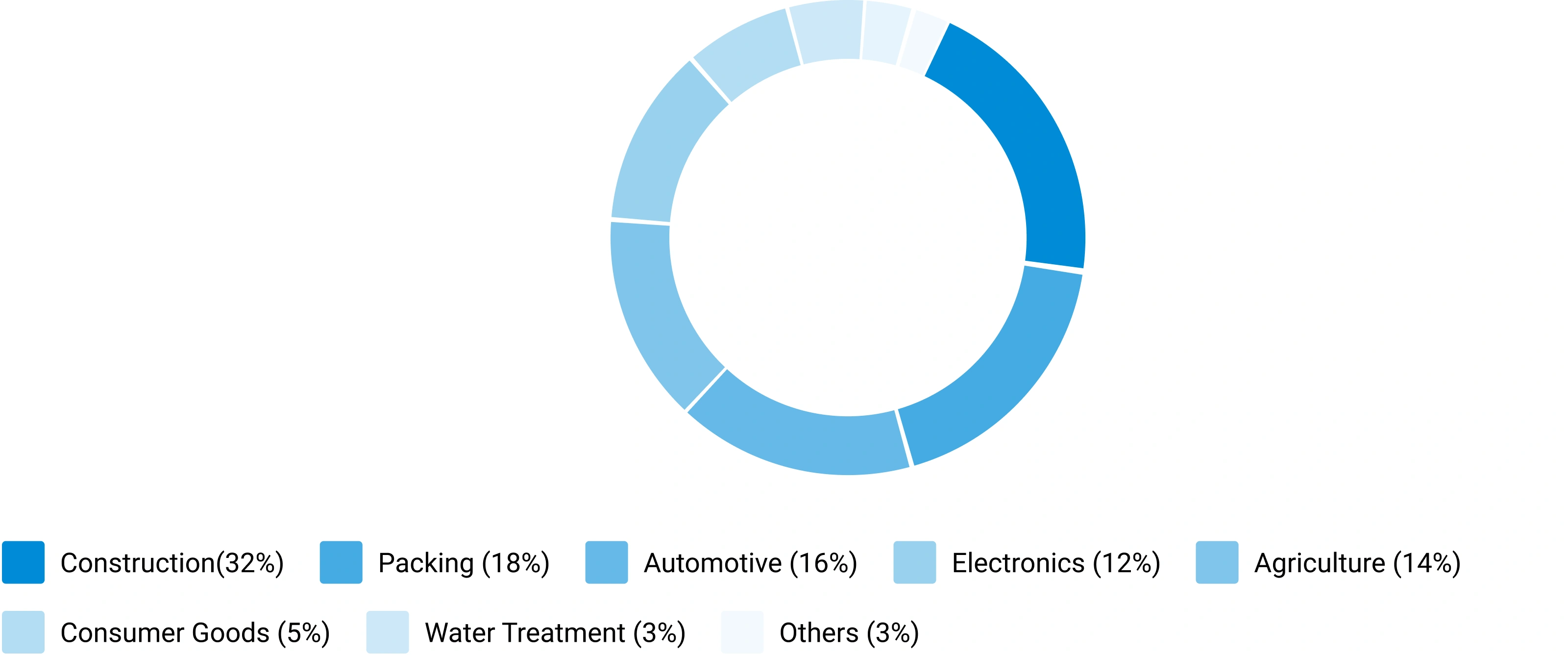
Chemical demand is evaluated across automotive, construction, packaging, electronics, agriculture, healthcare, consumer goods, industrial manufacturing, energy and utilities, and water treatment. Industry output, production trends, and consumption intensity are analyzed to determine demand patterns.
Consumption Modeling
Demand is estimated using measurable indicators: kilograms per vehicle, kilograms per square meter of construction, dosage per cubic meter of water treated, kilograms per hectare of agricultural land, and kilograms per ton of manufactured products. Consumption factors are validated through industry publications and primary interviews.
Application Analysis
The market is segmented by application area to understand product performance requirements, formulation trends, technology adoption, customer preferences, and regulatory requirements improving demand accuracy and segmentation granularity.
Demand-Side Assessment — End-Use Industry Demand Distribution
Illustrative distribution of chemical & materials demand across key end-use industries
Phase 4 - Trade Flow Analysis: Balancing Regional Supply and Demand
Trade flow analysis reconciles regional supply and demand estimates through import and export data, identifying net supply positions, regional dependencies, and market imbalances. It serves as an independent validation layer that tests the consistency of supply-side and demand-side estimates.
Import Analysis
Import data is evaluated to determine volumes, source countries, product dependency, regional supply gaps, and pricing trends — identifying markets that rely heavily on external supply and where domestic production is insufficient to meet demand.
Export Analysis
Export assessments reveal production surplus, export competitiveness, regional manufacturing strength, and global market participation. Export patterns also help validate domestic production estimates and identify net exporting regions.
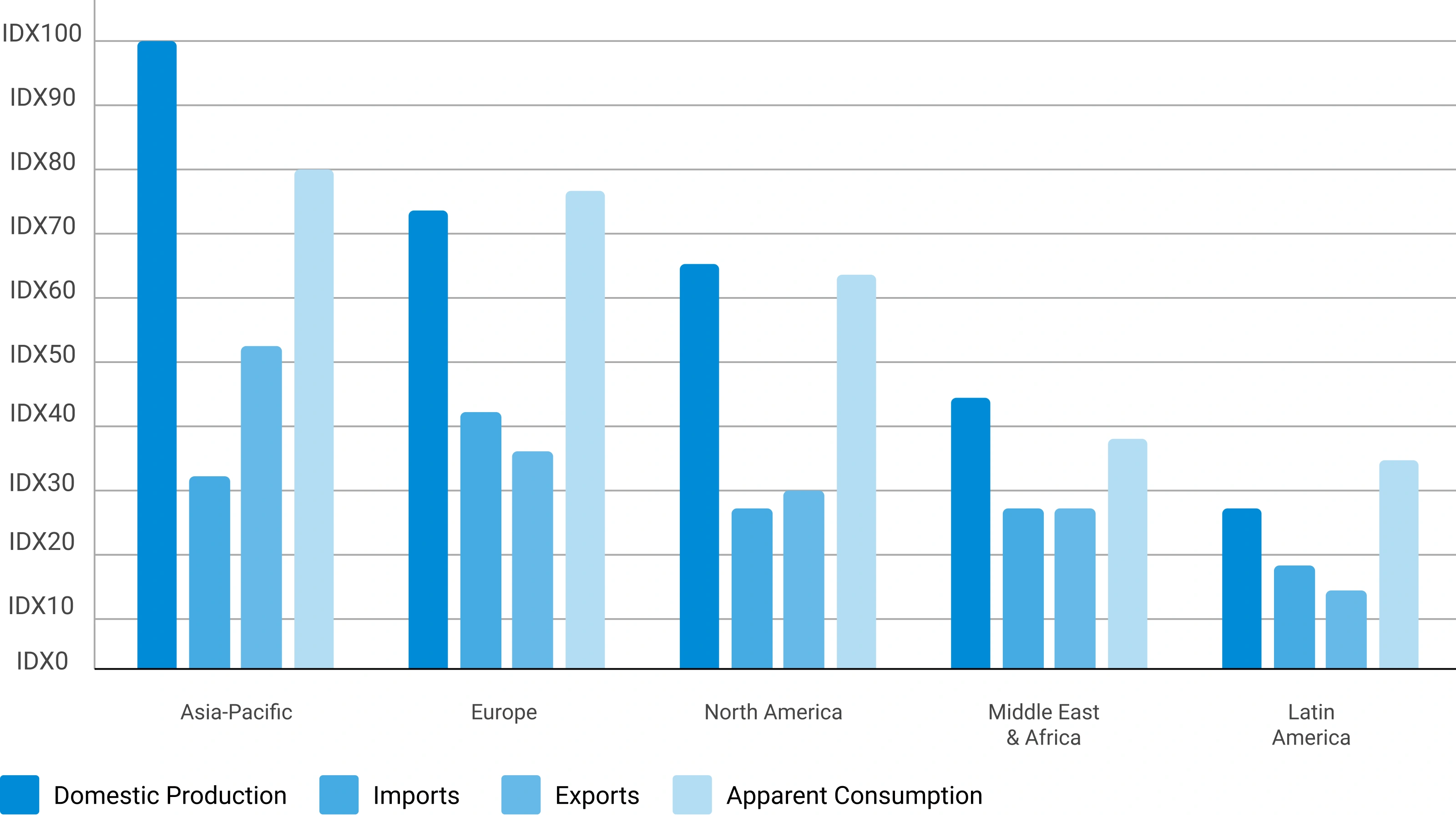
Apparent Consumption Model
Regional consumption is assessed using the standard apparent consumption formula:
Results identify net importing regions, net exporting regions, regional deficits, and surpluses — serving as an independent validation of supply and demand estimates.
Trade Flow Analysis — Net Supply Position by Region
Illustrative apparent consumption vs. domestic production across major regions — positive gap indicates net import dependency
Phase 5 — Primary Research: The Critical Validation Layer
Primary research tests and refines findings from secondary research through direct engagement with industry participants across the supply chain, demand side, and expert community. It captures intelligence that no database or published report can provide — the real-world experience of manufacturers, buyers, and specialists operating in the market.

Supply-Side Interviews
Conversations with chemical manufacturers, raw material suppliers, contract manufacturers, technology providers, and plant operators cover production trends, capacity utilization, pricing developments, technology shifts, and competitive dynamics.

Demand-Side Interviews
Engagement with OEMs, industrial consumers, procurement managers, distributors, formulators, and end-use manufacturers focuses on consumption trends, purchasing behavior, product substitution, demand outlook, and emerging applications.

Industry Expert Consultations
Additional interviews with industry consultants, independent experts, regulatory specialists, technical professionals, and research institutions provide deeper market context and validate key analytical assumptions.
Focus Areas of Primary Research:
Market Size & Forecast Validation
Revenue estimates, volume consumption, growth rates, forecast assumptions, regional demand.Supply Chain & Value Chain Assessment
Raw material sourcing, supply chain challenges, distribution networks, procurement practices.Production & Capacity Analysis
Manufacturing capacity, utilization rates, expansion projects, plant investments.Pricing & Cost Structure Analysis
Product pricing trends, feedstock costs, energy costs, margin pressures, pricing outlook.Competitive Landscape Assessment
Volume and value estimates confirmed to be fully consistent with one another before publicationInterview Volume by Market Scope
| Study Scope | Number of Interviews |
|---|---|
| Niche Market | 20 – 30 |
| Mid-Sized Market | 30 – 50 |
| Global Market | 50 – 80 |
| Highly Fragmented Market | 80 – 120 |
Interview Details:
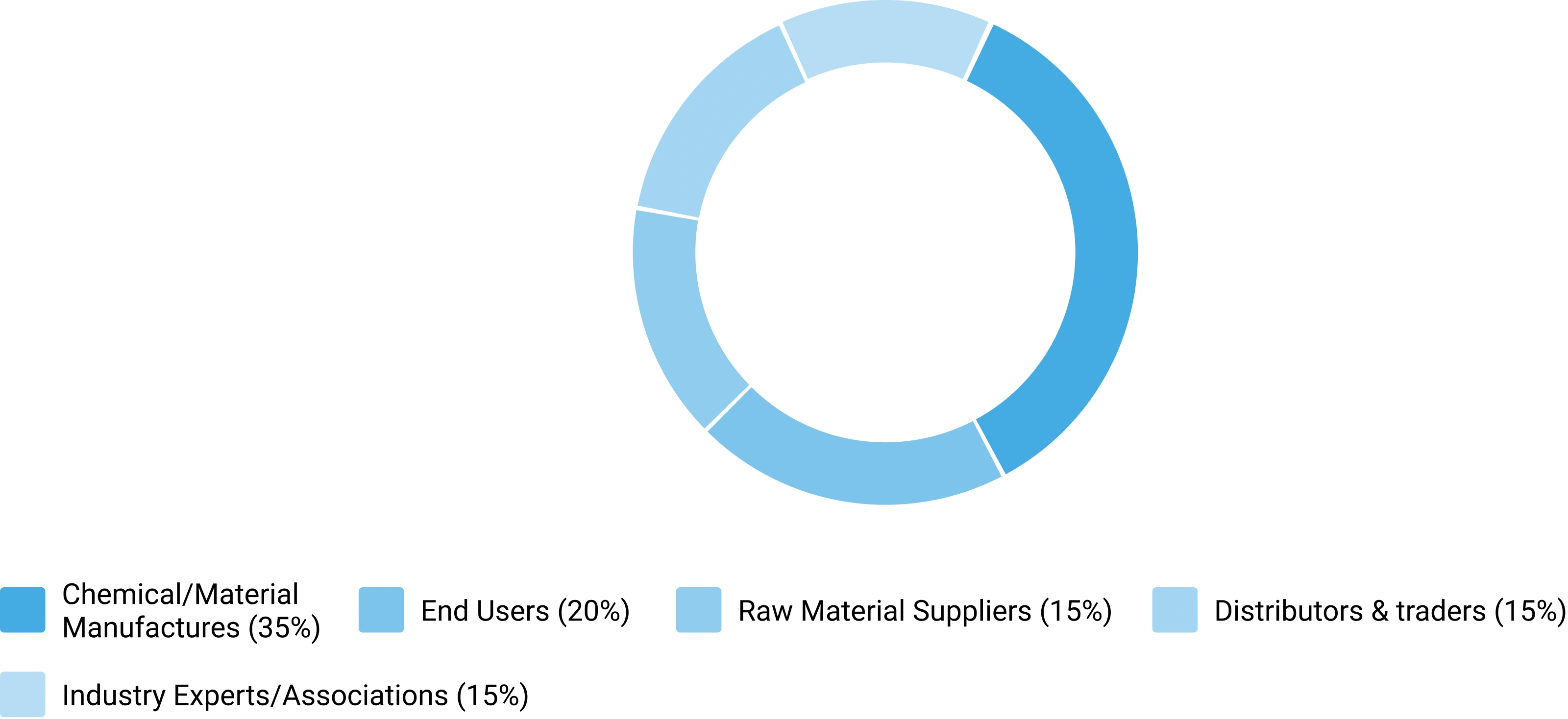
Category : Manufacturers, Suppliers, Distributors, End Users, Experts/Associations
Average Duration : 30–60 Minutes
Interview Mode : Video calls, telephonic interviews, expert consultations
Interview Format : Structured / Semi-Structured questionnaire
Focus Areas of Primary Research:
Market Size & Forecast Validation :
Revenue estimates, volume consumption, growth rates, forecast assumptions, regional demand.
Supply Chain & Value Chain Assessment :
Raw material sourcing, supply chain challenges, distribution networks, procurement practices.
Production & Capacity Analysis :
Manufacturing capacity, utilization rates, expansion projects, plant investments.
Pricing & Cost Structure Analysis :
Product pricing trends, feedstock costs, energy costs, margin pressures, pricing outlook.
Competitive Landscape Assessment :
Market share, competitor positioning, strategic initiatives, partnerships, acquisitions.
Primary Research — Stakeholder Coverage by Category
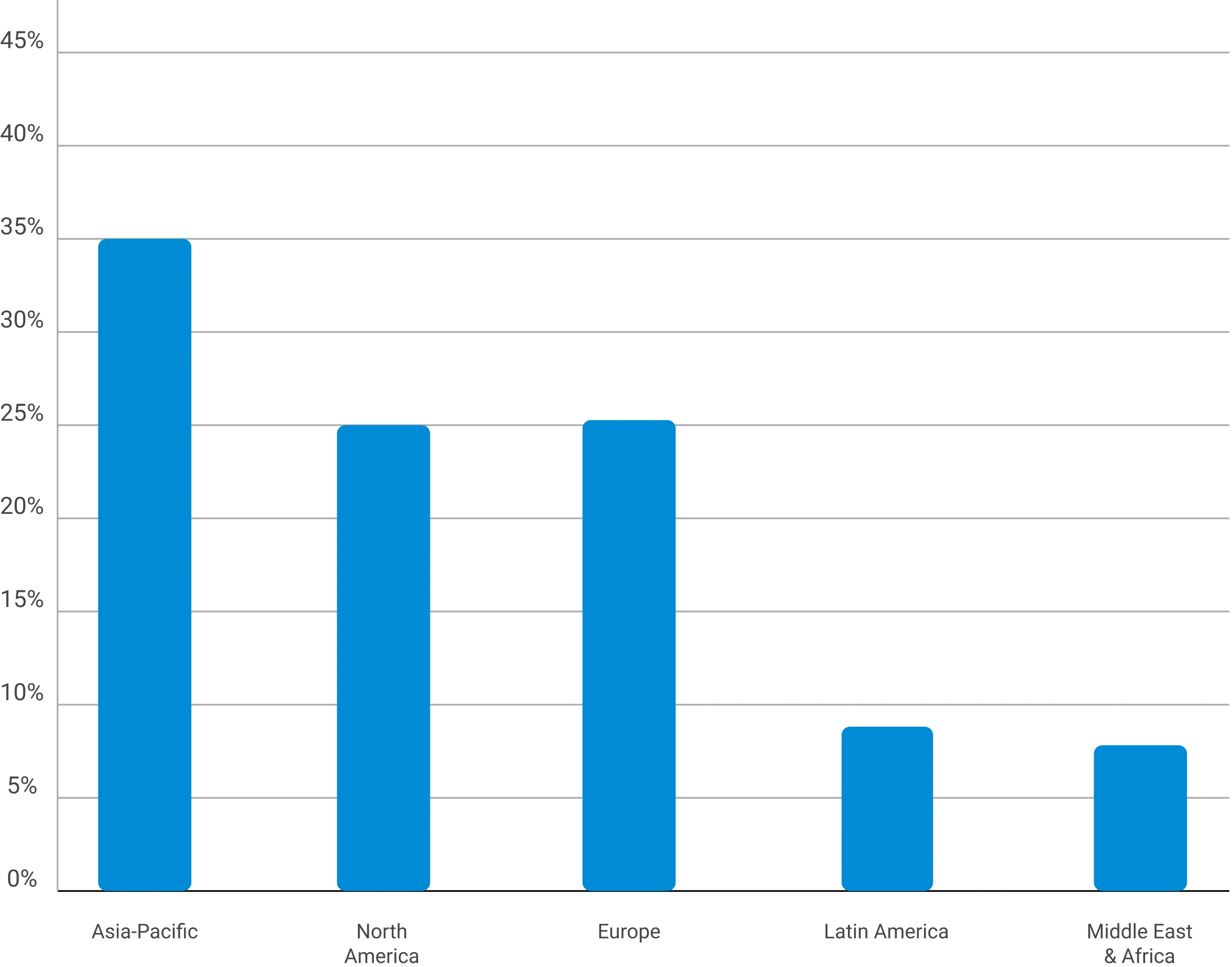
Distribution of interview respondents across stakeholder categories (% share from PPT data)
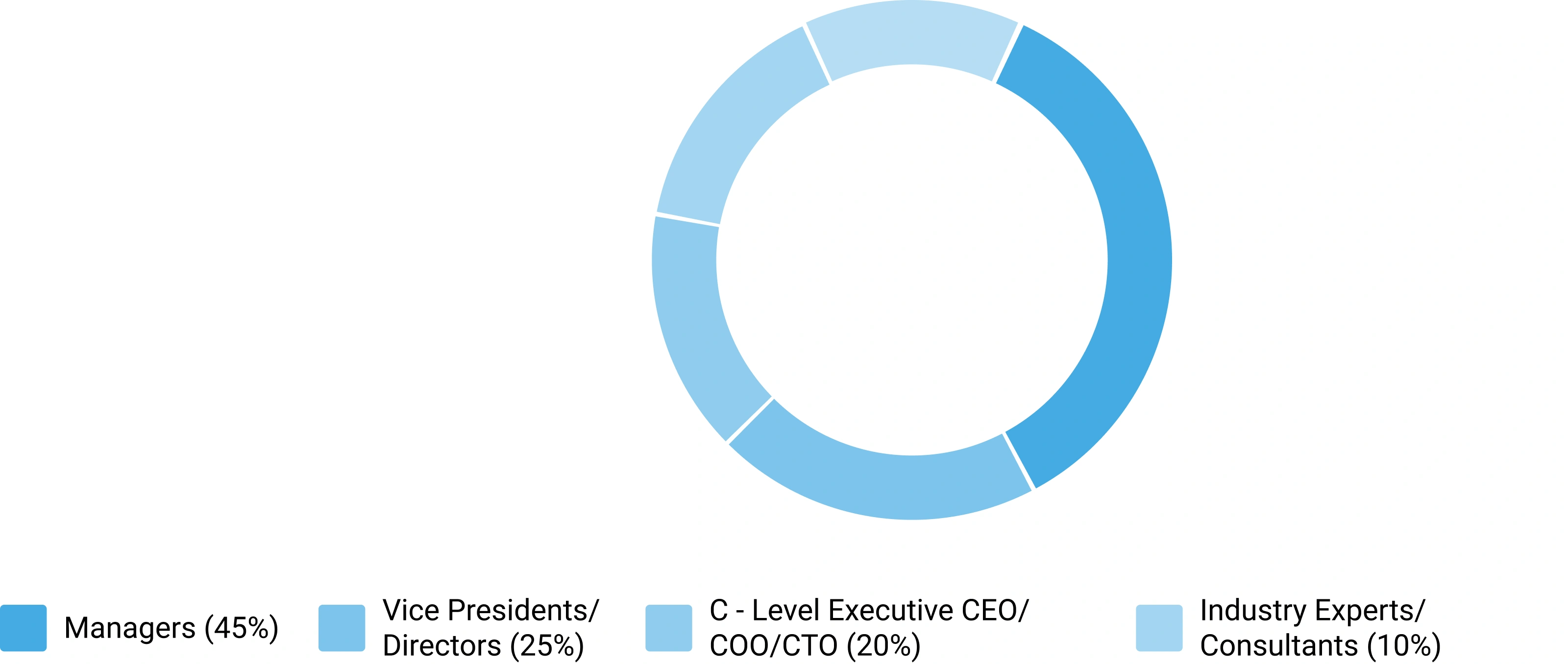
Primary Research — Respondent Designation Profile
Seniority breakdown of interview respondents (% share from PPT data)
Primary Research — Geographic Coverage of Interviews
Regional distribution of primary research engagement (% share from PPT data)
Phase 6 — Data Triangulation and Market Validation
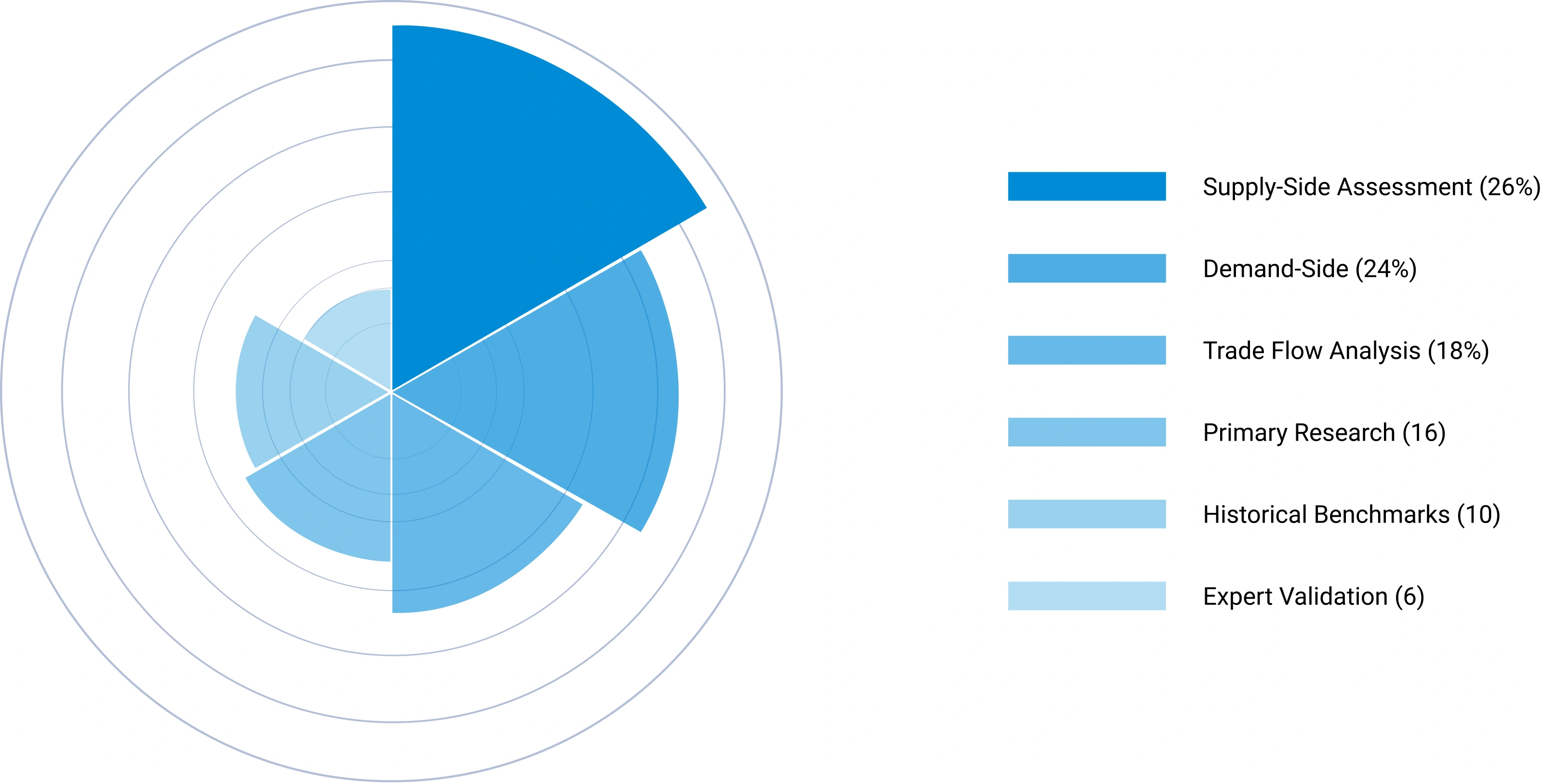
No single methodology is relied upon in isolation. Multiple independent estimation approaches are combined and reconciled to ensure consistency, accuracy, and analytical defensibility. Any material deviations between approaches are investigated and adjusted through additional validation cycles.
The final market size is derived through weighted triangulation of all validated methodologies. Any material deviations between approaches are investigated and adjusted through additional validation cycles. The outcome represents the most realistic assessment of the market based on available evidence and expert confirmation ensuring that volume and value estimates are fully consistent with one another.
Triangulation Framework — Input Contribution Weight
Relative weight each sizing input contributes to the final reconciled market estimate
Phase 7 — Forecast Modeling: Projecting Future Market Evolution
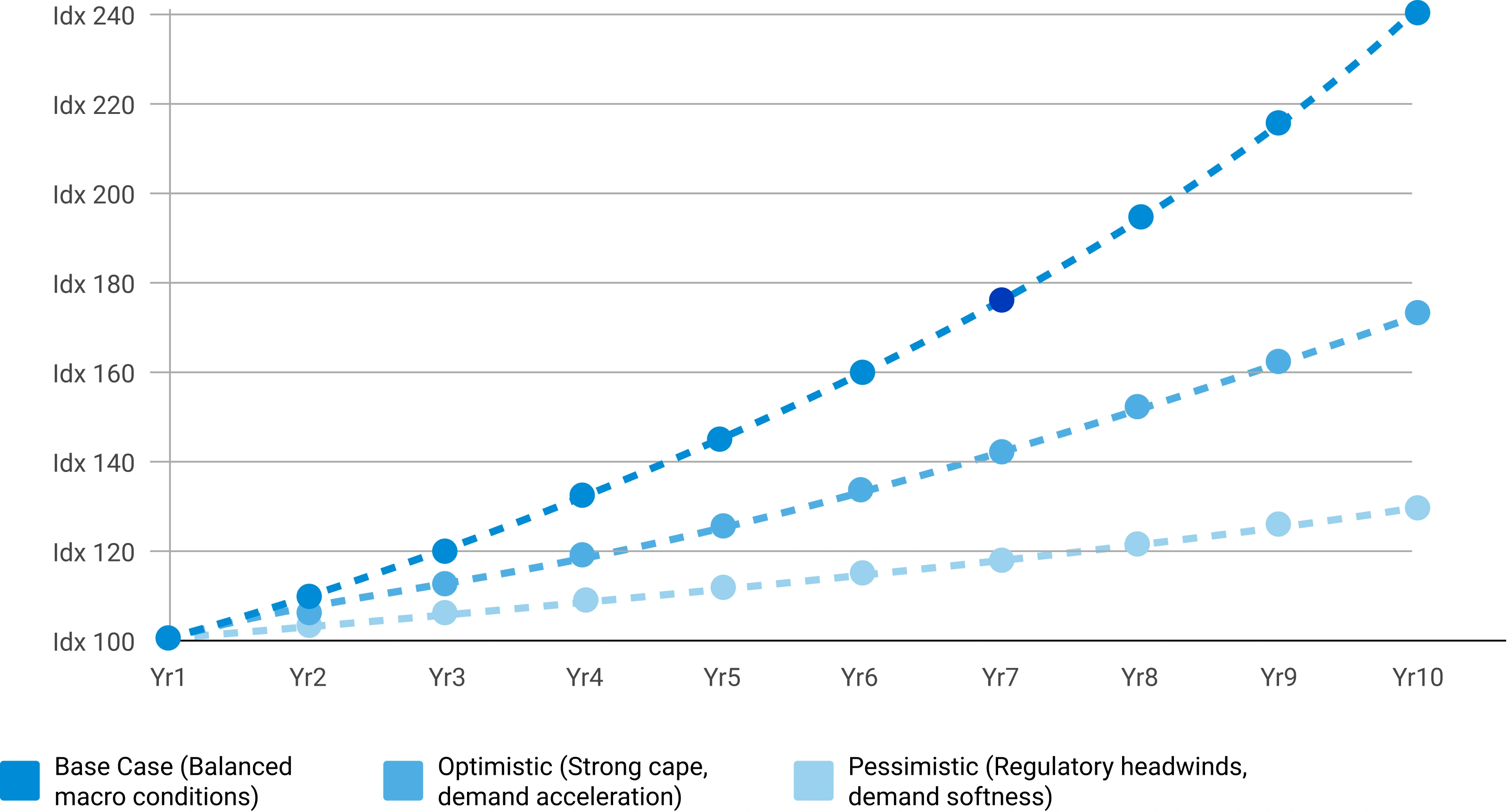
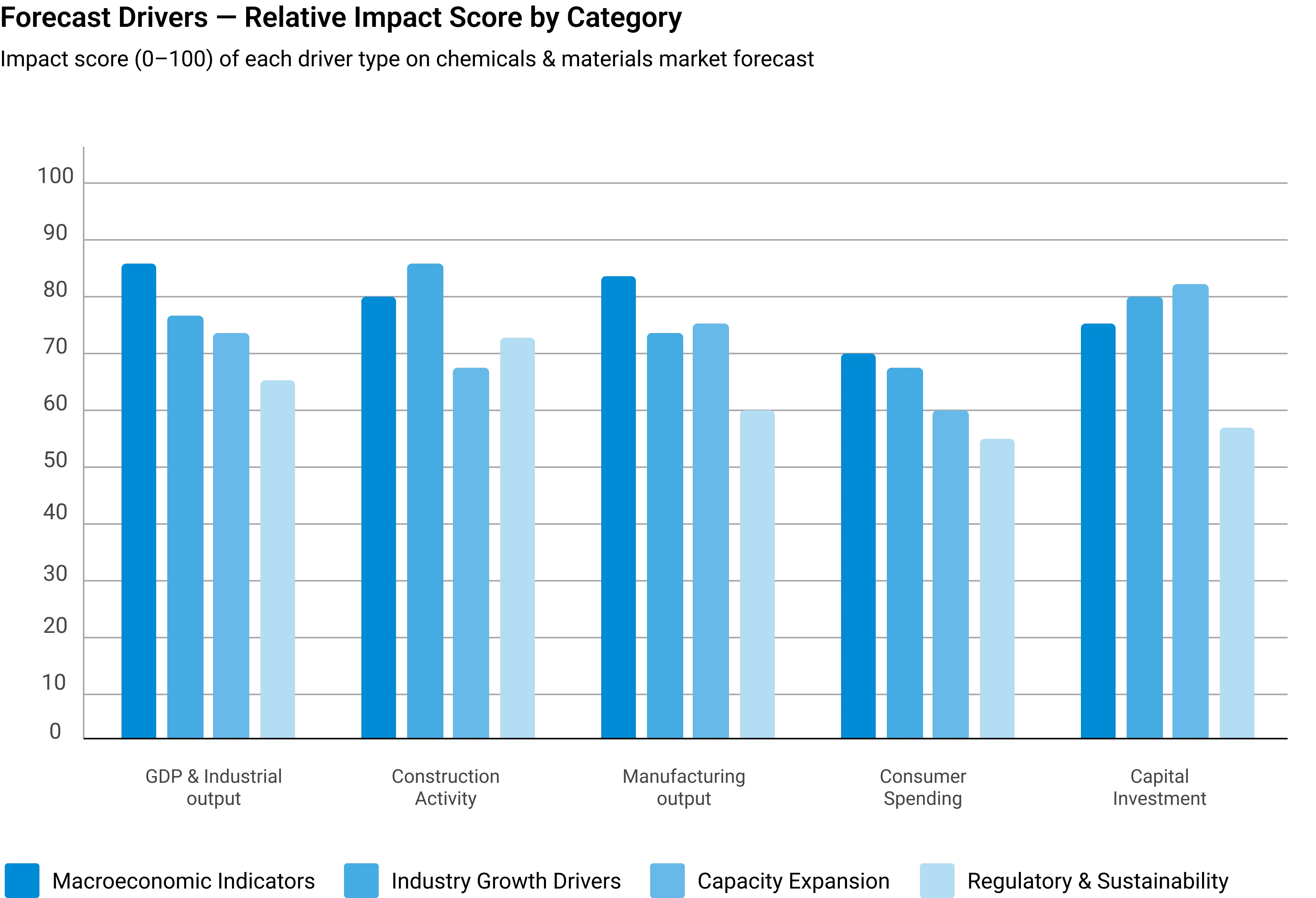
Forecasting evaluates the future trajectory of the market using a combination of quantitative indicators and qualitative assessments across economic, industry, and regulatory dimensions. Rather than simple extrapolation, each driver is independently modeled and integrated into a composite forecast.
Macroeconomic Indicators
GDP growth, industrial production, manufacturing output, construction activity, consumer spending, and capital investment form the quantitative foundation of long-term demand projections. These are applied at country, regional, and global levels.
Industry Growth Drivers
Urbanization, infrastructure development, industrialization, technological innovation, sustainability initiatives, and evolving product performance requirements are assessed at regional and industry levels — capturing both structural and cyclical demand drivers.
Capacity Expansion Analysis
Announced plant expansions, new manufacturing facilities, technology upgrades, and strategic investments are evaluated to determine future supply-demand dynamics and potential market tightness or oversupply situations.
Regulatory & Sustainability
Environmental regulations, chemical safety standards, emission reduction targets, circular economy initiatives, and sustainability requirements are incorporated as they often influence product adoption rates and market growth trajectories.
Scenario Forecast Range — Indexed Market Growth (Year 1–10)
Illustrative indexed growth trajectories across Base, Optimistic, and Pessimistic scenarios over a 10-year forecast horizon
Forecast Drivers — Relative Impact Score by Category
Impact score (0–100) of each driver type on chemicals & materials market forecast



Comments
Share your thoughts, ask a question, or provide feedback about this report.