
Duplex Stainless Steel Pipe Market Size Analysis Report 2035
The duplex stainless steel pipe market size was valued at USD 6.14 billion in 2025, is estimated to reach USD 6.57 billion in 2026, and is projected to reach USD 12.02 billion by 2035, exhibiting a compound annual growth rate (CAGR) of 6.95% over the forecast period from 2026 to 2035. Asia Pacific dominated the duplex stainless steel pipe market with the largest revenue share of 39% in 2025 and is expected to grow at the fastest CAGR of 7.11% during the forecast period. In terms of volume, the duplex stainless steel pipe market is projected to grow from 1.70 million tons in 2025 to 3.01 million tons by 2035. It is projected to grow at a CAGR of 5.87% from 2026 to 2035. Superior to conventional stainless steel pipes in terms of mechanical strength, excellent resistance to chloride-induced corrosion, and prolonged service life, duplex stainless steel continues to be in the spotlight for challenging applications across the globe. The growing investments in offshore oil and gas exploration, developments in desalination and water treatment infrastructure, and growing demand for corrosion-resistant piping systems in chemical processing and power generation industries are further accelerating the growth.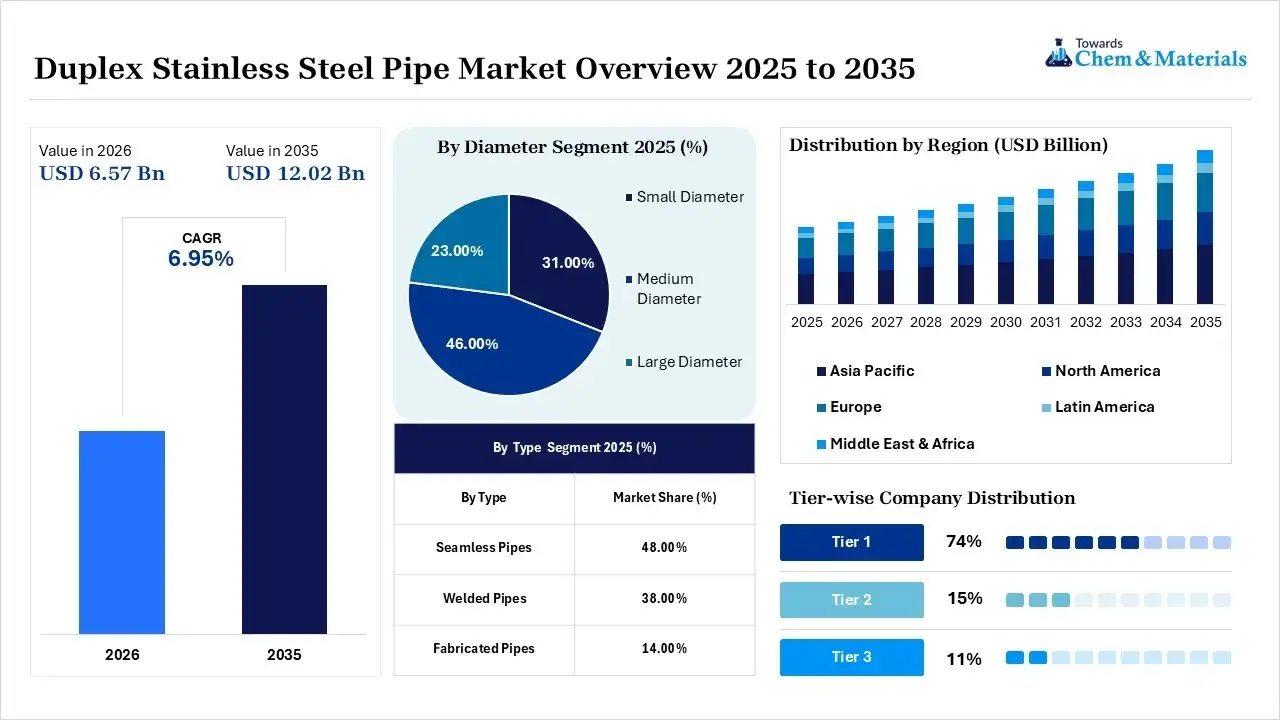
Market Highlights
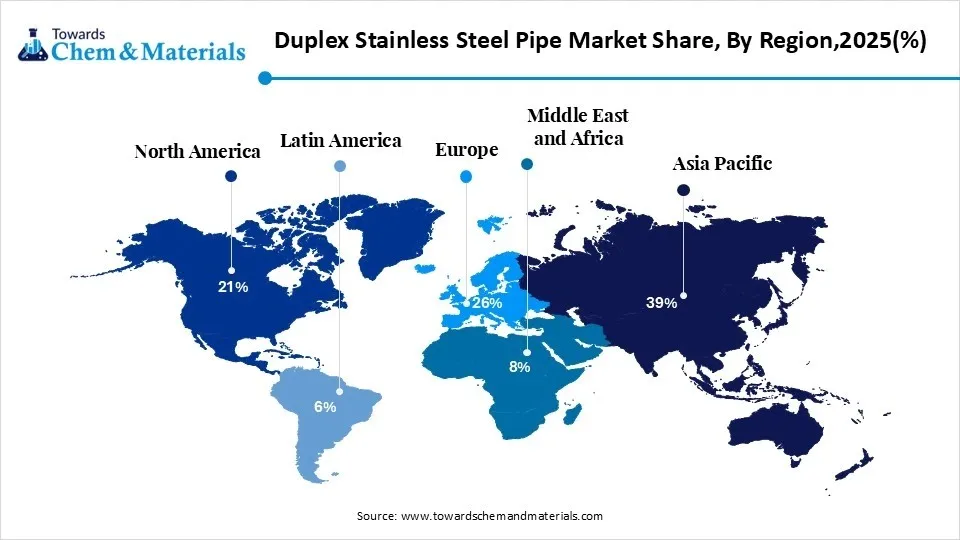
- By region, Asia Pacific dominated the duplex stainless steel pipe market by holding a 39% share in 2025, owing to increasing industrialization, infrastructure investments, and growing steel manufacturing capacity.
- By region, North America held a 21% market share in 2025 and is expected to grow the fastest, with a CAGR of 7.8% during the forecast period, due to the growing investments in energy infrastructure and offshore developments.
- By diameter, the medium diameter segment dominated the market with the largest share of 46% in 2025, as it is widely used in various industrial and construction applications and in oil & gas transportation systems.
- By diameter, the large diameter segment helda 23% market share in 2025 and is expected to grow at the fastest CAGR of 7.5% over the forecast period due to the growth of pipeline projects and desalination plants.
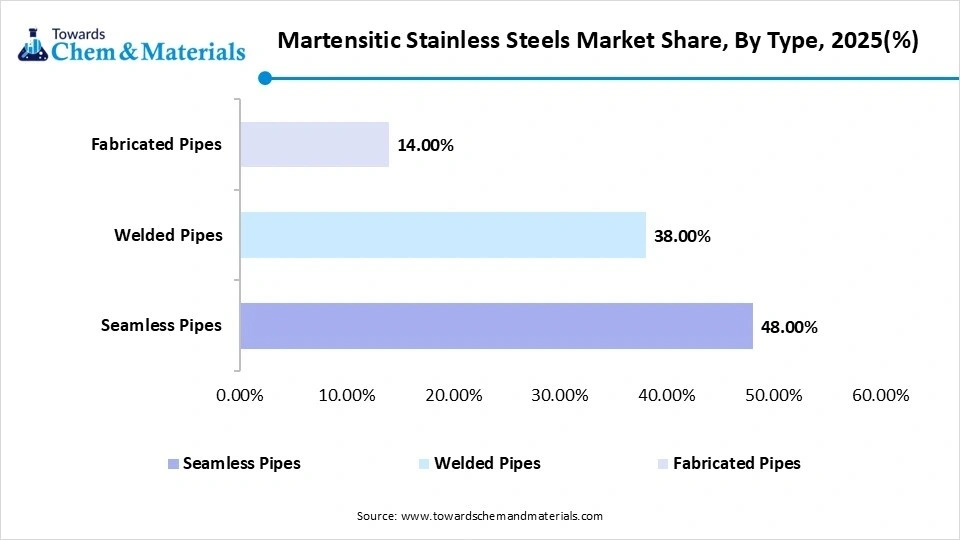
- By type, the seamless pipes segment dominated the market with the largest share of 48% in 2025, due to their high strength, reliability, and pressure resistance in critical areas of industrial use.
- By type, the welded pipes segment held a 38% market share in 2025 and is expected to grow at the fastest CAGR of 7.3% over the forecast period, as technological innovations in welding and cost competitiveness are driving growth in the market.
- By application, the oil and gas segment dominated the market with the largest share of 41% in 2025, driven by increased offshore exploration and pipeline expansion activities.
- By application, the water treatment segment held a 14% market share in 2025 and is expected to grow at the fastest CAGR of 7.8% over the forecast period, due to rising global investments in water treatment and desalination infrastructure.
- By end use, the construction segment dominated the market with the largest share of 49% in 2025, driven by increased demand for durable structural piping for infrastructure projects.
- By end use, the energy segment held a 19% market share in 2025 and is expected to grow at the fastest CAGR of 7.4% over the forecast period, driven by investments in renewable energy, carbon capture, and power generation facilities.
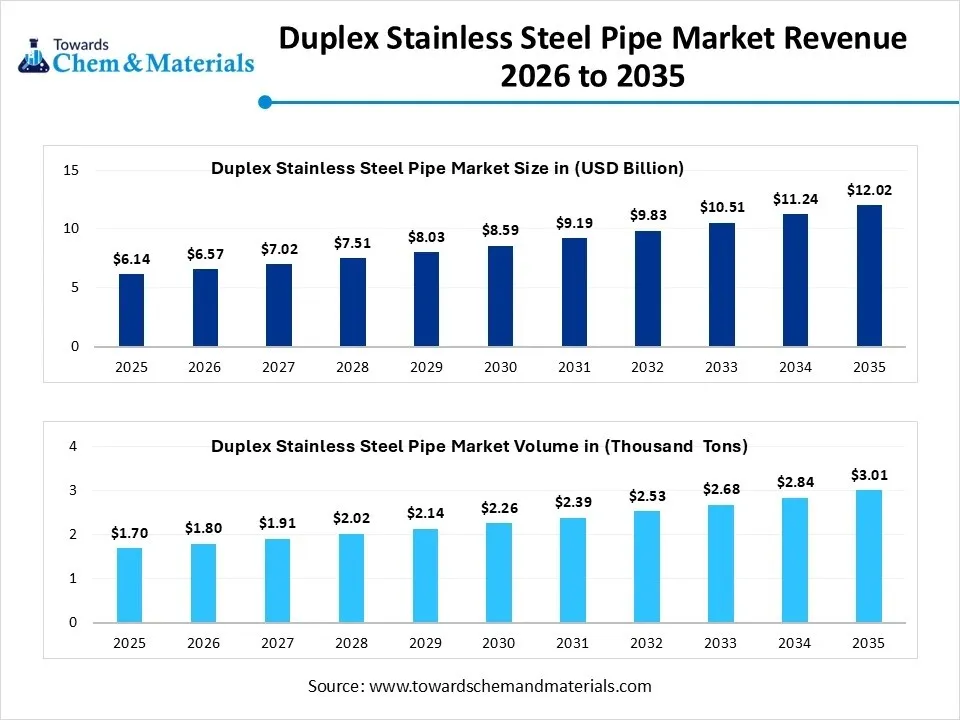
The numerous offshore oil and gas projects, desalination plants, chemical processing plants, and energy infrastructure projects are adding to the demand for duplex and super duplex stainless steel pipes because of their remarkable mechanical strength, corrosion resistance, and extremely long service life. The duplex stainless steel pipe market is growing at a steady pace, and the industries are increasingly opting for high-performance piping materials, which can be used under high pressure and in highly corrosive environments. The continued growth of steel production and infrastructure work will further drive the demand for duplex stainless steel products in various end-use industries in the long term.
- For instance, in 2026, India's crude steel output hit 14.09 million tonnes in April, with finished steel demand rising 8.1% year-over-year, bolstered by robust demand from construction, infrastructure, and manufacturing industries, driving future duplex stainless steel pipe consumption. (Source: www.pib.gov.in)
Ongoing product improvements and enhancements in alloy development, automated welding technology, precise heat treatment, and sustainable steel production continue to optimize product performance and lifecycle costs. Furthermore, the increasing hydrogen production, carbon capture facilities, and renewable energy projects are opening up new opportunities for duplex stainless steel piping solutions in various industrial segments around the world.
Global Investment Movement for Duplex Stainless Steel Pipe Market
Across Asia Pacific and the Middle East, investments are being made in new petrochemical complexes, refineries, and specialty chemical manufacturing plants, all in the wake of fast-paced industrialization. These facilities demand very reliable piping systems that are able to run at high temperatures, in harsh chemical environments, and in continuous industrial processing.
- Industrial piping systems are another example of the enhanced faith in advanced engineering infrastructure being enjoyed by the markets. For instance, in June 2026, DEE Development Engineers won process piping contracts valued at more than ₹170 crore in India and Thailand, boosting its manufacturing prowess in the energy and industrial infrastructure sectors and meeting the growing demand for advanced piping solutions. (Source: themachinemaker.com)
There is a significant ris, from the government in investments in water treatment facilities, including desalination plants, wastewater recycling facilities, and water infrastructure in the industrial sector, in water-stressed regions. Ideal for reverse osmosis systems, seawater intake pipelines, and high-pressure desalination, duplex stainless-steel pipes provide excellent resistance to chloride-induced corrosion and biofouling.
Market Trends
- Investments in desalination plants and the use of advanced water treatment facilities are increasing at an accelerating rate in response to global water scarcity. As a result of these properties, duplex stainless-steel pipes have been adopted as the preferred material choice due to their outstanding resistance to chloride corrosion, high strength, and durability in continuous exposure to highly saline operating environments.
- While oil and gas continue to be the dominant application areas, duplex stainless steel pipes are being used more and more in offshore wind, geothermal, hydrogen production, and carbon capture systems. Their durability under extreme operating conditions helps to facilitate the shift towards clean and sustainable energy systems.
- Manufacturers are increasing the range of product offerings to accommodate lower-cost grades for infrastructure applications and higher corrosion-resistance grades for highly corrosive industrial applications, lean duplex grades, and super duplex alloys, respectively. This variety allows end users to maximize lifecycle performance and project economics based on several applications.
- As technologies like laser welding continue to develop and improve, production efficiency is constantly improved, and defects and manufacturing costs are reduced. The technological developments are making it possible to use duplex stainless steel pipes in an increasing number of industrial processes, construction, marine engineering, and transportation infrastructure.
Report Scope
| Report Attributes | Details |
| Market Size in 2026 | USD 6.57 Biilion/ 1.80 Million Metric Tons |
| Market Size by 2035 | USD 12.02 Billion/ 3.01 Million Metric Tons |
| Growth Rate from 2026 to 2035 | CAGR 6.95% |
| Base Year of Estimation | 2025 |
| Forecast Period | 2026 - 2035 |
| Dominant Region | Asia Pacific |
| Segment Covered | By Diameter, By Type, By Application, By End Use Industry, By Region |
| Key Profiled Companies | Jindal Stainless, Sumitomo Corporation, Special Piping Materials, Pankh Stainless India, Alleima, Mukesh Steel India, Supreme Steel & Engineering Co., Relinox Stainless, SMM Industries LLP, Youfa Group, Kalp Alloys, Kanak Metal |
Key Technological Shifts in the Duplex Stainless Steel Pipe Market
Stainless steel manufacturers keep experimenting with new grades that offer increased corrosion resistance, tensile strength, and extended service life over standard grades of stainless steel, such as lean duplex stainless steel, super duplex stainless steel, and hyper duplex stainless steel. The advanced alloys are finding new uses in the offshore energy, desalination, chemical processing, and hydrogen infrastructure sectors.
Laser welding, orbital welding, and robotic fabrication technologies are rapidly being taken up in the industry in order to enhance the quality of the welds, reduce heat-affected zones, and maintain an adequate ferrite-austenite structure, which is essential for high performance in mechanical properties and corrosion resistance. Customized duplex stainless steel parts are being manufactured using Wire Arc Additive Manufacturing (WAAM) and Laser Powder Bed Fusion (L-PBF) technologies with minimal material loss. These technologies are applicable to very specific uses in the aerospace, nuclear power, chemical processing, and high-tech manufacturing industries.
Supply Chain Analysis of the Duplex Stainless Steel Pipe Market
Feedstock Procurement
- The supply chain starts with the sourcing of key raw materials like iron ore, chromium, nickel, molybdenum, manganese, and nitrogen from the world's leading mining companies.
- These alloying elements affect the corrosion resistance, mechanical properties, weldability, and durability of duplex stainless steel pipes.
- Glencore: A supplier of high-quality nickel, chromium, and other alloying metals that aid in duplex stainless steel production across the globe.
- Other Key Players: Vale, Anglo American, BHP.
Chemical Synthesis and Processing
- The raw materials are melted, refined, and alloyed with the help of an electric arc furnace and argon-oxygen decarburization technology.
- Controlled heat treatment is used to create the balanced ferritic-austenitic microstructure, which contributes to the superior mechanical properties of duplex stainless steel.
- Outokumpu: Advanced refining technologies and high recycled stainless steel (RSS) content in major player grades are used in the production of premium duplex stainless steel grades.
- Other Key Players: Acerinox, Sandvik, Nippon Steel.
Compound Formulation and Blending
- Hot rolling, cold drawing, extrusion, and precision welding processes are used to transform the refined duplex stainless steel into seamless and welded pipes.
- Manufacturers perform solution annealing, pickling, straightening, dimensional calibration, and non-destructive testing before commercial distribution.
- Tubacex: Produces seamless duplex and super duplex stainless steel tubular products for use in extremely challenging industrial and energy applications.
- Other Key Players: Tenaris, Vallourec, Valinox
Regulatory Framework: Duplex Stainless Steel Pipe Market
| Region | Regulatory Body | Key Regulation | Regulatory Focus |
| Asia Pacific | Bureau of Indian Standards (BIS), Standardization Administration of China (SAC) | IS 6911, GB/T Stainless Steel Standards | Regulates manufacturing quality, corrosion resistance, and safety requirements for industrial stainless steel pipe applications. |
| North America | ASTM International, American Society of Mechanical Engineers (ASME) | ASTM A790/A790M, ASME Boiler and Pressure Vessel Code (BPVC) | Establishes pressure vessel standards, corrosion performance, product quality, mechanical strength, and safe industrial piping system operations. |
| Europe | European Committee for Standardization (CEN), European Commission | EN 10216-5, Pressure Equipment Directive (PED 2014/68/EU) | Ensures CE compliance, manufacturing consistency, pressure equipment safety, quality assurance, and reliable performance across industrial piping applications. |
Types of Duplex Stainless Steel Pipes:
Lean Duplex
Lean duplex stainless steel is characterized by lower Ni and Mo content, which is an economical choice with high mechanical strength and corrosion resistance. It is used widely in structural engineering and industrial construction applications, as well as in storage tanks and bridges.
Standard Duplex
The duplex microstructure of standard duplex stainless steel gives rise to a range of excellent properties, such as strength, corrosion resistance, and durability. It is extensively used in oil and gas pipelines, pressure vessels, marine equipment, and chemical processing plants.
Super Duplex
Super duplex stainless steel is used in areas where there is a high chromium and molybdenum content, providing high resistance to chloride corrosion and high pressure. It is extensively used in offshore oil rigs, subsea pipelines, desalination plants, and marine structures.
Hyper Duplex
The hyper duplex stainless steels are high-alloy advanced materials designed to function in very corrosive environments. It offers excellent corrosion resistance, strength, and durability, and are appropriate for deep-water offshore, chemical processing, and highly acidic applications.
Market Dynamics
Drivers
Investments In Energy and Industrial Infrastructure
The increased exploration of the offshore oil and gas fields is still driving demand for duplex stainless steel pipes in global energy infrastructure projects. The desalination industry and chemical industries demand more and more corrosion-resistant piping systems that can perform under harsh environmental conditions. The modernization of infrastructure further promotes adoption throughout industrial processing, marine engineering, and commercial construction. They have a long lifespan and have comparatively low maintenance needs, which makes their lifecycle performance better for end users.
Restraints
Complicated Manufacturing Processes
To keep the duplex steel balanced ferritic-austenitic structure, the alloy composition and careful heat treatment are required. To maintain the mechanical strength and resistance to corrosion, special welding techniques and highly qualified technical personnel are necessary for the fabrication process. The additional alloy control, heat-treatment, and fabrication requirements can increase manufacturing costs relative to less complex stainless steel products. These factors can limit the adoption of these projects in industrial and infrastructure sectors, where costs are important considerations.
Opportunities
New Opportunities in The Field Of Hydrogen Infrastructure And Desalination Projects
Worldwide, duplex stainless steel pipes have been gaining more and more interest in hydrogen production and carbon capture, as well as in desalination applications. The industries demand piping systems that can withstand corrosion, pressure, and a hostile chemical environment for longer periods of time. Lean duplex grades are also an economic option for commercial infrastructure and industrial processing plants. Long-term market opportunities are likely to be available in various end-use sectors due to the rising investments in sustainability.
Market Segmental Insights
Diameter Insights
The medium diameter segment dominated the market with the largest share of 46% in 2025, as these pipes are widely employed in oil and gas transmission systems, chemical processing and refining plants, water treatment plants, and industrial manufacturing plants. They provide a perfect combination of pressure handling, structural strength, installation flexibility, and overall project cost-effectiveness. They are known to be compatible with various industrial uses worldwide, making them the choice of engineering contractors. The industrial infrastructure, pipeline modernization, and process industries investment are expected to keep control of the segment over the forecast period.
The large diameter segment held the 23% market share in 2025 and is expected to grow at the fastest CAGR of 7.5% over the forecast period, due to cross-country pipeline investments, offshore oil and gas developments, and desalination plants. The pipes are very efficient for high-pressure and highly corrosive operating conditions in order to convey a large volume of fluid. Demand continues to rise rapidly as developed and emerging economies embark on more energy security and water infrastructure projects. The growing use of pipelines in industries will present long-term growth opportunities for manufacturers.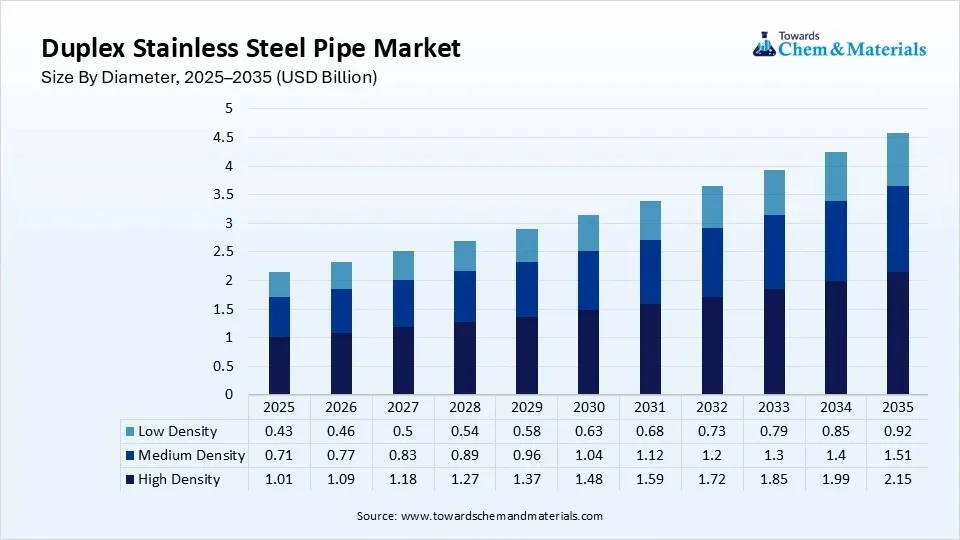
Type Insights
The seamless pipes segment dominated the market with the largest share of 48% in 2025, owing to the high-pressure resistance, superior mechanical strength, and performance in harsh industrial environments. They are extensively used in offshore drilling rigs, petroleum refineries and processing plants, power generation, and chemical plants where a high degree of operational reliability is desired. Reduced maintenance needs and longer service life further enhance lifecycle economics for industrial operators. Seamless duplex stainless steel pipes are still in demand as investment in energy infrastructure continues.
- For instance, in July 2026, SMS Group won the contract for installing two seamless tube rolling lines in China from Baosteel Steel Pipe. The project will increase the capacity of premium seamless pipe production and meet the growing market demand for high-end tubular solutions in the industrial field. (Source: www.sms-group.com)
The welded pipes segment hheld a38% market share in 2025 and is expected to grow at the fastest CAGR of 7.3% over the forecast period. The continuous development of laser welding, orbital welding, and automatic inspection technology has brought great convenience to product quality and manufacturing efficiency. These innovations not only lower production costs but also extend the use of innovations in construction, industrial processing, and infrastructure development projects. Better weld integrity and dimensional accuracy also boost customer confidence in welded duplex pipe solutions. Long-term segment growth continues due to the continued expansion of manufacturing investments.
- For instance, in May 2026, with the first production of API 5L X100 welded pipes, ArcelorMittal Nippon Steel India (AMNSI) became the first Indian steel company to produce the pipes. The innovation helps to reinforce offshore, marine, and high-pressure engineering applications with superior manufacturing capabilities. (Source: www.manufacturingtodayindia.com)
Application Insights
The oil and gas segment dominated the market with the largest share of 41% in 2025, as the piping systems must withstand high levels of corrosion under severe conditions for offshore drilling platforms, subsea pipelines, LNG terminals, and refinery operations. Duplex stainless steel pipes are characterized by excellent durability, chloride resistance, superior mechanical strength, and pressure resistance in chloride-rich environments. They have a long life span that helps to lower the maintenance cost and unplanned downtime of critical energy infrastructure.
- In July 2025, Centravis announced two modernization projects in July of 2025, both with a total cost of US$14.5 million, to increase the production of seamless pipes with corrosion resistance. The investment is for developing and expanding carbon capture technologies and other advanced oil and gas applications in the United States and Europe. (Source: odessa-journal.com)
The water treatment segment hehas a4% market share in 2025 and is expected to grow at the fastest CAGR of 7.8% over the forecast period. Worldwide, investments in desalination plants, municipal water systems, and industrial wastewater treatment are gaining momentum, promoting the adoption of the product. Duplex stainless steel pipes exhibit outstanding corrosion resistance to chloride, biofouling, and aggressive chemicals. They have a long operating life, which means that they have low maintenance requirements in high-salinity operating conditions. The global growth of water infrastructure projects is anticipated to drive continued strong market growth.
End Use Insights
The construction segment dominated the market with the largest share of 49% in 2025, due to its outstanding resistance to corrosion and durability. Duplex stainless steel pipes are being used more and more in commercial buildings, bridges, industrial facilities, and public infrastructure. They are highly mechanically strong, resulting in a longer service life and lower maintenance/replacement costs. Increased urbanization and government investments in infrastructure are still fueling demand for residential and non-residential construction. The use of sustainable construction methods further promotes the use of long-lasting stainless steel piping systems.
The energy segment held a 19% market share in 2025 and is expected to grow at the fastest CAGR of 7.4% over the forecast period. Advanced corrosion-resistant piping solutions are needed for renewable energy, hydrogen production, carbon capture, and offshore power projects. Duplex stainless steel pipes may work reliably for long periods of time under high pressure and a harsh environment. Further growth in investment in decarbonisation and clean energy infrastructure remains necessary to support the long-term growth of the market.
- In June 2026, SeAH Steel was reported as supplying high-value steel pipes for a UK government-backed carbon-capture, utilization and storage project.
Regional Insights
How Did the Asia Pacific Dominate the Duplex Stainless Steel Pipe Market In 2025?
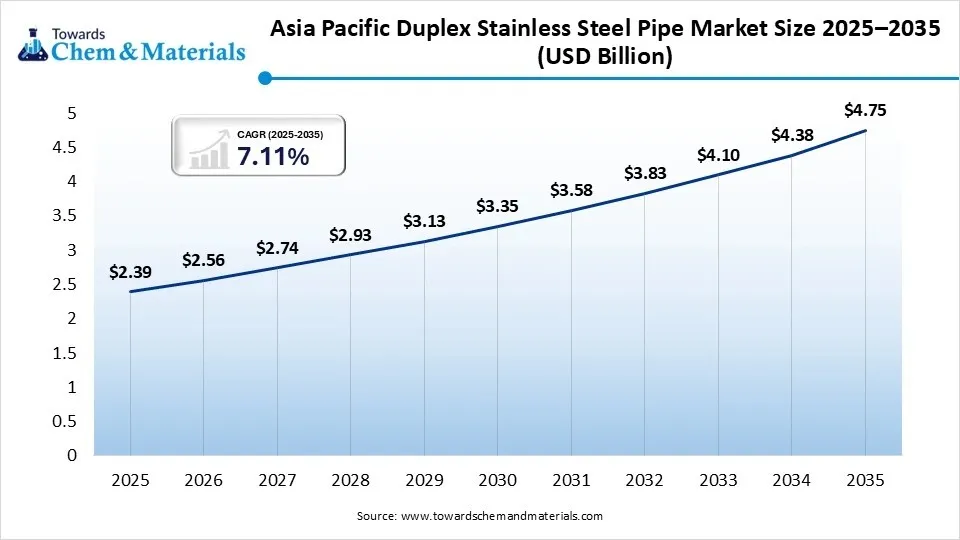
The Asia Pacific duplex stainless steel pipe market size was estimated at USD 2.39 billion in 2025 and is projected to reach USD 4.75 billion by 2035, growing at a CAGR of 7.11% from 2026 to 2035. Asia Pacific dominated the market with the largest share of 39% in 2025. Industrialization, oil and gas development, and desalination and chemical processing investment provided a boost to the region's development. China, India, Japan, and South Korea are pushing ahead with their own stainless steel production capacities. In addition, government investment in energy security, industrial modernization, and transportation infrastructure is promoting demand for corrosion-resistant piping solutions across the region.
 China
- China continued to be the major market participant in the Asia Pacific region due to its large stainless steel production capacity and development of industrial infrastructure. Investments in the development of petrochemical plants, LNG terminals, desalination plants, and chemical processing plants are continuing to drive product demand.
- The country is also scaling up the production of high-value duplex stainless steel to cater to some of its local demand and for exports. Industrial modernization is also supported by government-backed programs, which help boost the long-term growth of the market.
India
The demand for duplex stainless steel pipes is also growing in India as a result of the growing investment in refinery expansion in India, water infrastructure projects, and industrial manufacturing projects. Domestic government initiatives to promote domestic steel production and infrastructure modernization are ongoing and are also creating new market opportunities. Urbanization and increased energy projects are also seeing these being used more widely throughout the industry.
- For instance, in August 2025, Rhinox began operations at a new 11-acre stainless steel pipe manufacturing plant in Haryana. The cutting-edge plant boosts the country's production capacity and caters to the growing demand for precision-made stainless steel piping systems in various industrial applications.( Source: infra.economictimes.indiatimes.com)
North America Duplex Stainless Steel Pipe Market Analysis
The North America duplex stainless steel pipe market size was estimated at USD 1.29 billion in 2025 and is projected to reach USD 2.58 billion by 2035, growing at a CAGR of 7.18% from 2026 to 2035. North America helda 21% market share in 2025 and is expected to grow at the fastest CAGR of 7.8% during the forecast period. The projects started with increased investments in LNG infrastructure, hydrogen production, desalination, and carbon capture, and continue to support regional demand. Adoption is also spurred by strict industrial safety standards and the increasing number of replacements for aging pipeline infrastructure. Long-term market growth is expected to be sustained by increasing use in the energy, water treatment, and chemical industries.
United States
The United States is the biggest regional market due to the presence of a large number of oil and gas exploration activities, a high level of petrochemical processing, and advanced manufacturing. Carbon capture technology, hydrogen infrastructure, and offshore energy projects have seen continued investment to support the demand for corrosion-resistant piping systems. Market growth is further bolstered by infrastructure modernization programs and stringent industrial standards across multiple industries.
Canada
Canada's use of duplex stainless steel pipe increases as investments are made in the oil sands, LNG export facilities, mining, and water treatment plant projects. The development of energy transition and industrial modernisation processes is leading to a broader use of corrosion-resistant piping systems. The projected growth in capital expenditure in various resource-based industries will help drive stable market growth.
Europe Duplex Stainless Steel Pipe Market Growth
The Europe duplex stainless steel pipe market size was estimated at USD 1.60 billion in 2025 and is projected to reach USD 3.19 billion by 2035, growing at a CAGR of 7.14% from 2026 to 2035. Europe helda 26% market share in 2025, owing to its rich industrial heritage and dedicated commitment to sustainable infrastructure. Increasing investments in renewable power, offshore wind, hydrogen, and chemical processing are continuing to drive market demand. Environmental laws are strict and require industries to use pipe materials that will last long and resist rust. Regional manufacturers are also carrying on investing in advanced stainless steel production technologies.
Germany
Germany continues to be one of the biggest markets in Europe, thanks to its robust engineering sector, industrial manufacturing prowess, and plans for infrastructure modernization. The demand for high-performance stainless steel piping solutions is ongoing in chemical processing, energy infrastructure, and bridge construction applications. The ongoing investment in sustainable industrial development further supports market growth over the long run.
- For instance, in December 2025, Interpipe provided 300 tons of stainless steel pipes for a bridge construction over the Saale River in Germany. The project points to the increasing need for quality pipe solutions for the major infrastructure projects in Europe. (Source: interpipe.biz )
France
France is still rolling out duplex stainless steel pipe applications in nuclear power, the chemical industry, desalination, and industrial plants. Long-term product adoption is fostered by the government's efforts on sustainable industrial development and energy transition. A growing number of water treatment and high-tech manufacturing plants also support the growth of the regional market.
Latin America Duplex Stainless Steel Pipe Market Trends
The Latin America duplex stainless steel pipe market size was estimated at USD 0.37 billion in 2025 and is projected to reach USD 0.78 billion by 2035, growing at a CAGR of 7.74% from 2026 to 2035 .Latin America held a 7% market share in 2025, with growing investments in offshore energy production, industrial infrastructure, and mining. The continued growth of desalination initiatives and the modernization of water treatment plants are driving an ongoing demand for corrosion-resistant pipes. Governments are also pushing infrastructure initiatives to make industries more productive and efficient in resource utilization. Market growth is likely to be boosted by an increase in foreign investments.
 Brazil
 is a leader in the region's oil production, especially in the offshore sector, as well as in the processing of petrochemicals, mining, and industrial manufacturing. Demand for durable stainless steel piping systems remains strong as infrastructure development and expansion of energy sector activities continue to grow. Premium duplex stainless steel products are also being developed through the modernization of industrial facilities.
Chile
The use of duplex stainless steel pipes is steadily rising in Chile in the fields of industrial water management, desalination plants, and mining operations. Copper production is increasing, and infrastructure needs for sustainable development are driving demand for piping solutions that have exceptional corrosion resistance. The market is projected to experience steady growth throughout the forecast period as a result of the expansion of industrial development.
Middle East & Africa Duplex Stainless Steel Pipe Market Size
The Middle East & Africa duplex stainless steel pipe market size was estimated at USD 0.49 billion in 2025 and is projected to reach USD 1.02 billion by 2035, growing at a CAGR of 7.74% from 2026 to 2035. The Middle East & Africa helda 7% market share in 2025, driven by the growing desalination capacity and investments in oil & gas in the region. The demand for duplex stainless steel pipes is still being supported by the rapid diversification of industries and the modernization of infrastructure in the region. As water security efforts continue to proliferate more and more, so do the numbers of desalination and wastewater treatment installations. The market is anticipated to grow as a result of increased investments in energy and industrial projects.
Saudi Arabia
Saudi Arabia remains heavily pursuing the development of desalination facilities, petrochemical production, hydrogen initiatives, and industrial diversification efforts. This is definitely a tremendous boost in the demand for corrosion-resistant duplex stainless steel piping systems in critical infrastructure applications. The investments for Vision 2030 will further boost long-term market expansion.
South Africa
The durability of pipes is becoming more important in South Africa with the growth of demand for them in projects such as mining, water treatment, chemical processing, and industrial infrastructure. Investment in the modernization of industries and the development of resources continues to drive market growth in various industries. During the forecast period, opportunities are likely to increase with the rising adoption of advanced stainless steel products.
Competitive Analysis
The overall market is moderately fragmented, and major industries are competing with each other through product innovation, capacity expansion, strategic partnerships, and investments in advanced manufacturing technologies. Businesses are developing high-performance seamless and welded duplex pipes for critical applications in oil & gas, desalination, chemical processing, hydrogen, and renewable energy businesses. Other sustainability programs, automation, and production efficiency enhancements are emerging as important competitive differentiators as well. As these market participants expand their distribution networks across the globe, they are also adding manufacturing capabilities to address the rising demand for corrosion-resistant piping.
- In June 2026, Alleima opened the production facility Tube Mill 2026 in Sandviken, with SEK 330 million invested. The expansion will enable Alleima to meet growing worldwide demand for traditional nuclear reactors, as well as for small modular reactors (SMR), and boost the company's market share in high-performance stainless steel tubing. (Source: www.alleima.com)
Top Players in the Market & Their Offerings
| Company | Company Type/Position | Major Headquarters | Geographic Presence | Duplex Stainless Steel Pipe Offerings | Key Offering/Strength |
| Outokumpu | Market Leader | Finland | Global | Duplex and super duplex stainless steel pipes | Sustainable stainless steel production and advanced corrosion-resistant grades |
| Sandvik | Premium Manufacturer | Sweden | Global | High-performance seamless duplex tubes | Advanced materials for extreme industrial environments |
| Acerinox | Leading Stainless Steel Producer | Spain | Global | Duplex stainless steel products | Wide product portfolio and global manufacturing network |
- Jindal Stainless
- Sumitomo Corporation
- Special Piping Materials
- Pankh Stainless India
- Alleima
- Mukesh Steel India
- Supreme Steel & Engineering Co.
- Relinox Stainless
- SMM Industries LLP
- Youfa Group
- Kalp Alloys
- Kanak Metal
Segment Covered in the Report
By Diameter
- Small Diameter
- Below 2 inches
- 2–6 inches
- Medium Diameter
- 6–12 inches
- 12–24 inches
- Large Diameter
- Above 24 inches
- Heavy-wall Large Diameter
By Type
- Seamless Pipes
- Hot Finished
- Cold Finished
- Welded Pipes
- ERW Pipes
- TIG Welded
- Laser Welded
- Fabricated Pipes
- Custom Fabricated
- Heavy Industrial Fabricated
By Application
- Oil and Gas
- Upstream
- Midstream
- Downstream
- Chemical Processing
- Petrochemical Plants
- Fertilizer Plants
- Industrial Chemicals
- Water Treatment
- Desalination
- Municipal Water
- Industrial Water
- Power Generation
- Thermal Power
- Nuclear Power
- Renewable Energy Plants
- Marine
- Shipbuilding
- Offshore Platforms
- Port Infrastructure
By End Use Industry
- Construction
- Commercial Buildings
- Infrastructure
- Automotive
- Exhaust Systems
- Structural Components
- Aerospace
- Hydraulic Systems
- Aircraft Structures
- Energy
- Oil & Gas Infrastructure
- Renewable Energy
- Power Plants
- Food and Beverage
- Dairy Processing
- Beverage Plants
- Food Processing Equipment
By Regions
- North America
- U.S.
- Canada
- Europe
- Germany
- UK
- France
- Italy
- Spain
- Sweden
- Denmark
- Norway
- Asia Pacific
- China
- Japan
- India
- South Korea
- Thailand
- Latin America
- Brazil
- Mexico
- Argentina
- Middle East & Africa
- South Africa
- UAE
- Saudi Arabia
- Kuwait
Table of Contents
Chapter 1. Methodology and Scope
1.1. Market Segmentation & Scope
1.2. Market Definition
1.3. Information Procurement
1.3.1. Information Analysis
1.3.2. Market Formulation & Data Visualization
1.3.3. Data Validation & Publishing
1.4. Research Scope and Assumptions
1.4.1. List of Data Sources
Chapter 2. Executive Summary
2.1. Market Snapshot
2.2. Segmental Outlook
2.3. Competitive Outlook
Chapter 3. Market Variables, Trends, and Scope
3.1. Global Duplex Stainless Steel Pipe Market Outlook
3.2. Value Chain Analysis
3.2.1. Raw Material Trends
3.3. Manufacturing & Technology Overview
3.4. Regulatory Framework
3.5. Market Dynamics
3.5.1. Market Driver Analysis
3.5.2. Market Restraint Analysis
3.5.3. Market Opportunities
3.5.4. Industry Trends
3.5.4.1. ESG Analysis
3.6. Porter’s Five Forces Analysis
3.6.1. Bargaining Power of Suppliers
3.6.2. Bargaining Power of Buyers
3.6.3. Threat of Substitution
3.6.4. Threat of New Entrants
3.6.5. Competitive Rivalry
3.7. PESTLE Analysis
3.7.1. Political
3.7.2. Economic
3.7.3. Social Landscape
3.7.4. Technology
3.7.5. Environmental
3.7.6. Legal
Chapter 4. Duplex Stainless Steel Pipe Market: End Use Estimates & Trend Analysis
4.1. Duplex Stainless Steel Pipe Market: End Use Movement Analysis, 2025 & 2035
4.2. Oil & Gas
4.2.1. Market estimates and forecasts, 2021 - 2035
4.3. Chemical & Petrochemical
4.3.1. Market estimates and forecasts, 2021 - 2035
4.4. Desalination & Water Treatment
4.4.1. Market estimates and forecasts, 2021 - 2035
4.5. Paper & Pulp
4.5.1. Market estimates and forecasts, 2021 - 2035
4.6. Others
4.6.1. Market estimates and forecasts, 2021 - 2035
Chapter 5. Duplex Stainless Steel Pipe Market: Regional Estimates & Trend Analysis
5.1. Regional Analysis, 2025 & 2035
5.2. North America
5.2.1. Market estimates and forecasts, 2021 - 2035
5.2.2. Market estimates and forecasts, by end use, 2021 - 2035
5.2.3. U.S.
5.2.3.1. Market estimates and forecasts, 2021 - 2035
5.2.3.2. Market estimates and forecasts, by end use, 2021 - 2035
5.2.4. Canada
5.2.4.1. Market estimates and forecasts, 2021 - 2035
5.2.4.2. Market estimates and forecasts, by end use, 2021 - 2035
5.2.5. Mexico
5.2.5.1. Market estimates and forecasts, 2021 - 2035
5.2.5.2. Market estimates and forecasts, by end use, 2021 - 2035
5.3. Europe
5.3.1. Market estimates and forecasts, 2021 - 2035
5.3.2. Market estimates and forecasts, by end use, 2021 - 2035
5.3.3. Germany
5.3.3.1. Market estimates and forecasts, 2021 - 2035
5.3.3.2. Market estimates and forecasts, by end use, 2021 - 2035
5.3.4. UK
5.3.4.1. Market estimates and forecasts, 2021 - 2035
5.3.4.2. Market estimates and forecasts, by end use, 2021 - 2035
5.3.5. Russia
5.3.5.1. Market estimates and forecasts, 2021 - 2035
5.3.5.2. Market estimates and forecasts, by end use, 2021 - 2035
5.4. Asia Pacific
5.4.1. Market estimates and forecasts, 2021 - 2035
5.4.2. Market estimates and forecasts, by end use, 2021 - 2035
5.4.3. China
5.4.3.1. Market estimates and forecasts, 2021 - 2035
5.4.3.2. Market estimates and forecasts, by end use, 2021 - 2035
5.4.4. India
5.4.4.1. Market estimates and forecasts, 2021 - 2035
5.4.4.2. Market estimates and forecasts, by end use, 2021 - 2035
5.4.5. Japan
5.4.5.1. Market estimates and forecasts, 2021 - 2035
5.4.5.2. Market estimates and forecasts, by end use, 2021 - 2035
5.4.6. South Korea
5.4.6.1. Market estimates and forecasts, 2021 - 2035
5.4.6.2. Market estimates and forecasts, by end use, 2021 - 2035
5.5. Central & South America
5.5.1. Market estimates and forecasts, 2021 - 2035
5.5.2. Market estimates and forecasts, by end use, 2021 - 2035
5.5.3. Brazil
5.5.3.1. Market estimates and forecasts, 2021 - 2035
5.5.3.2. Market estimates and forecasts, by end use, 2021 - 2035
5.6. Middle East & Africa
5.6.1. Market estimates and forecasts, 2021 - 2035
5.6.2. Market estimates and forecasts, by end use, 2021 - 2035
5.6.3. GCC
5.6.3.1. Market estimates and forecasts, 2021 - 2035
5.6.3.2. Market estimates and forecasts, by end use, 2021 - 2035
5.6.4. South Africa
5.6.4.1. Market estimates and forecasts, 2021 - 2035
5.6.4.2. Market estimates and forecasts, by end use, 2021 - 2035
Chapter 6. Competitive Landscape
6.1. Recent Developments & Impact Analysis, By Key Market Participants
6.2. Company Categorization
6.3. Heat Map Analysis
6.4. Vendor Landscape
6.4.1. List of Raw Material Suppliers
6.4.2. List of Distributors
6.4.3. List of Other Prominent Manufacturers
6.4.4. List of Prospective End-Users
6.5. Strategy Mapping
6.6. Company Profiles/Listing
6.6.1. Acerinox SA
6.6.1.1. Company Overview
6.6.1.2. Financial Performance
6.6.1.3. Product Benchmarking
6.6.2. Aperam SA
6.6.2.1. Company Overview
6.6.2.2. Financial Performance
6.6.2.3. Product Benchmarking
6.6.3. JFE Steel Corporation
6.6.3.1. Company Overview
6.6.3.2. Financial Performance
6.6.3.3. Product Benchmarking
6.6.4. JSW Group
6.6.4.1. Company Overview
6.6.4.2. Financial Performance
6.6.4.3. Product Benchmarking
6.6.5. Metline Industries
6.6.5.1. Company Overview
6.6.5.2. Financial Performance
6.6.5.3. Product Benchmarking
6.6.6. Nippon Steel Corporation
6.6.6.1. Company Overview
6.6.6.2. Financial Performance
6.6.6.3. Product Benchmarking
6.6.7. Outokumpu
6.6.7.1. Company Overview
6.6.7.2. Financial Performance
6.6.7.3. Product Benchmarking
6.6.8. POSCO
6.6.8.1. Company Overview
6.6.8.2. Financial Performance
6.6.8.3. Product Benchmarking
6.6.9. Tata Steel
6.6.9.1. Company Overview
6.6.9.2. Financial Performance
6.6.9.3. Product Benchmarking
6.6.10. Thyssenkrupp AG
6.6.10.1. Company Overview
6.6.10.2. Financial Performance
6.6.10.3. Product Benchmarking
A Seven-Phase Framework
Our methodology is designed to be universally applicable across commodity chemicals, specialty chemicals, petrochemicals, construction chemicals, coatings, electronic chemicals, industrial gases, agrochemicals, water treatment chemicals, and performance materials. Each phase builds upon the last, creating a layered validation structure that minimizes estimation error and maximizes analytical confidence.
The framework ensures comprehensive market coverage, robust cross-validation, and reliable long-term forecasting — producing market estimates that withstand scrutiny from investors, regulators, and corporate strategy teams.

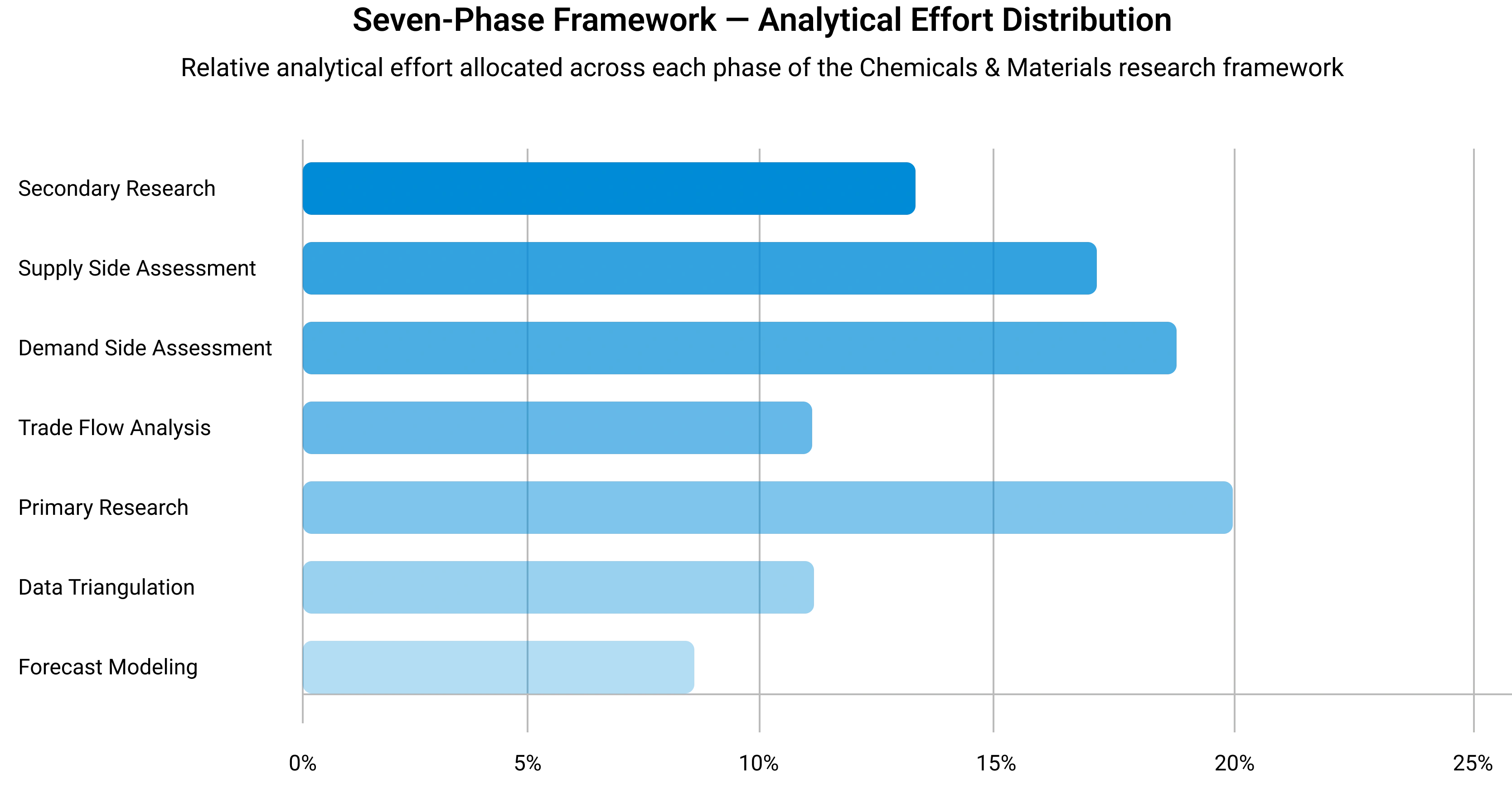
Seven-Phase Framework — Analytical Effort Distribution
Relative analytical effort allocated across each phase of the Chemicals & Materials research framework
Phase 1 - Secondary Research: Establishing the Foundation
Secondary research collects and evaluates publicly available information from authoritative sources, establishing the foundational understanding of market structure, value chain dynamics, competitive landscape, and end-use demand patterns. Every source is evaluated for credibility, recency, geographic relevance, and methodological soundness before inclusion.
Industry Associations
Sources include ACC, CEFIC, ICCA, JCIA, CPCIF, and SOCMA providing production volumes, consumption trends, capacity developments, and sustainability initiatives.
Company Disclosures
Annual reports, investor presentations, earnings transcripts, and regulatory filings reveal product portfolios, manufacturing footprints, capacity expansions, and revenue segmentation.
Government Databases
National statistical offices, customs authorities, environmental agencies, and industrial production databases provide verified statistics on output, trade flows, and regulatory compliance.
Trade Databases
UN Comtrade, ITC, Eurostat, and national customs authorities enable assessment of global product movement, import dependency, and export competitiveness across regions.
Our Secondary Research Sources
- Ministry of Chemicals and Fertilizers
- European Chemicals Agency
- United States Department of Energy
- Ministry of Industry and Information Technology
- Ministry of Economy Trade and Industry
- Ministry of Trade Industry and Energy
- National Institute of Standards and Technology
- Council of Scientific and Industrial Research
- Fraunhofer Society
- National Institute for Materials Science
Phase 2 — Supply-Side Assessment: Mapping Production Capabilities
Production Capacity Analysis
All major manufacturers are assessed for existing installed capacity, planned additions, expansions, new plant announcements, and technology adoption — mapped at global, regional, and country levels.
Capacity Utilization Adjustment
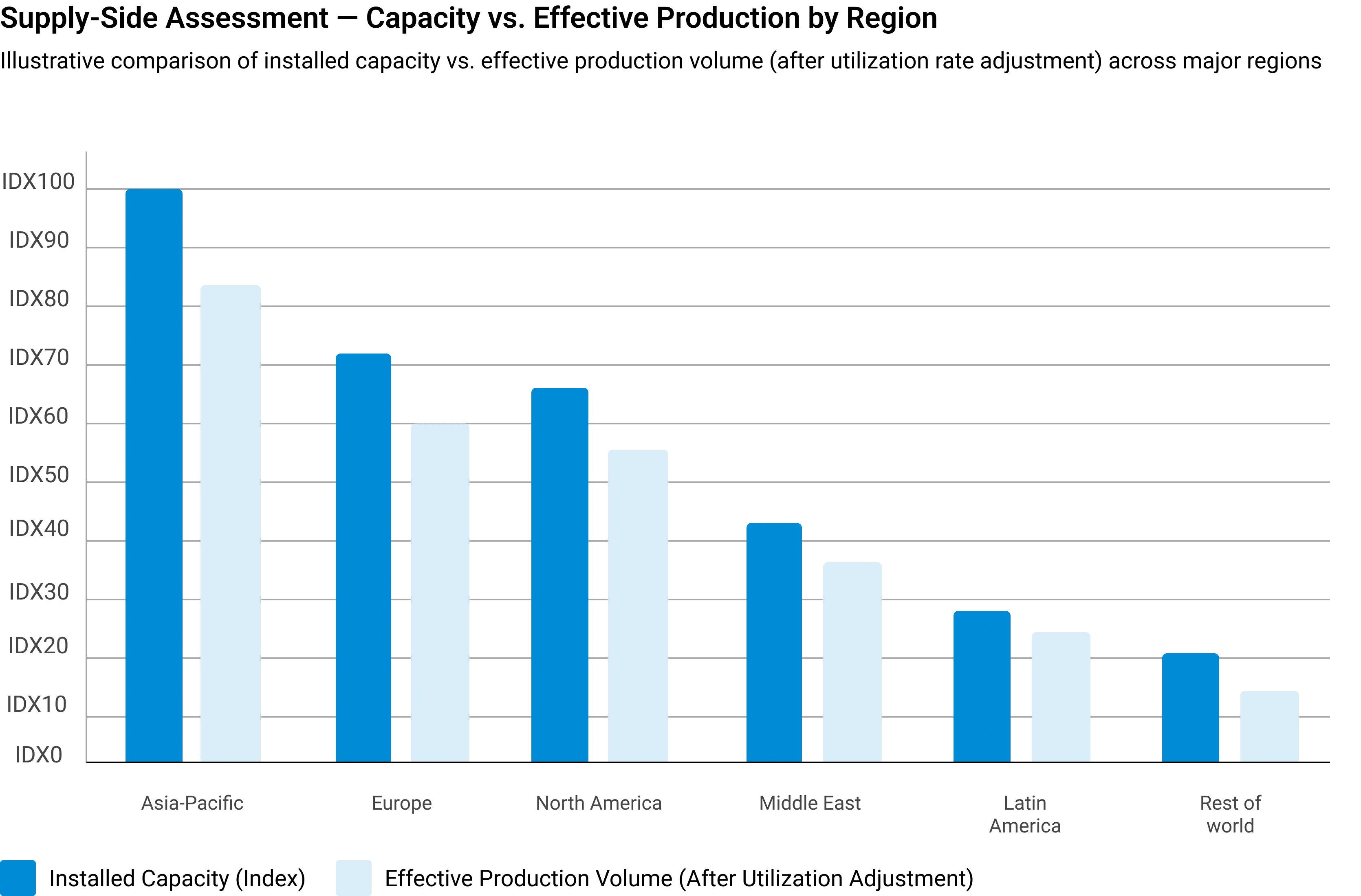
Installed capacity is adjusted using utilization rates based on demand conditions, feedstock availability, plant operating rates, maintenance schedules, and regulatory restrictions.
Manufacturer Revenue Analysis
Product-specific revenues, segment-level performance, regional distribution, average selling prices, and margin trends are evaluated to establish market value estimates.
Supply-Side Assessment — Capacity vs. Effective Production by Region
Illustrative comparison of installed capacity vs. effective production volume (after utilization rate adjustment) across major regions
Phase 3 — Demand-Side Assessment: Quantifying Chemical Consumption
Demand-side analysis quantifies chemical consumption across industries, applications, and geographies — identifying where and how chemicals are consumed throughout the value chain with precision.
End-Use Industry Analysis
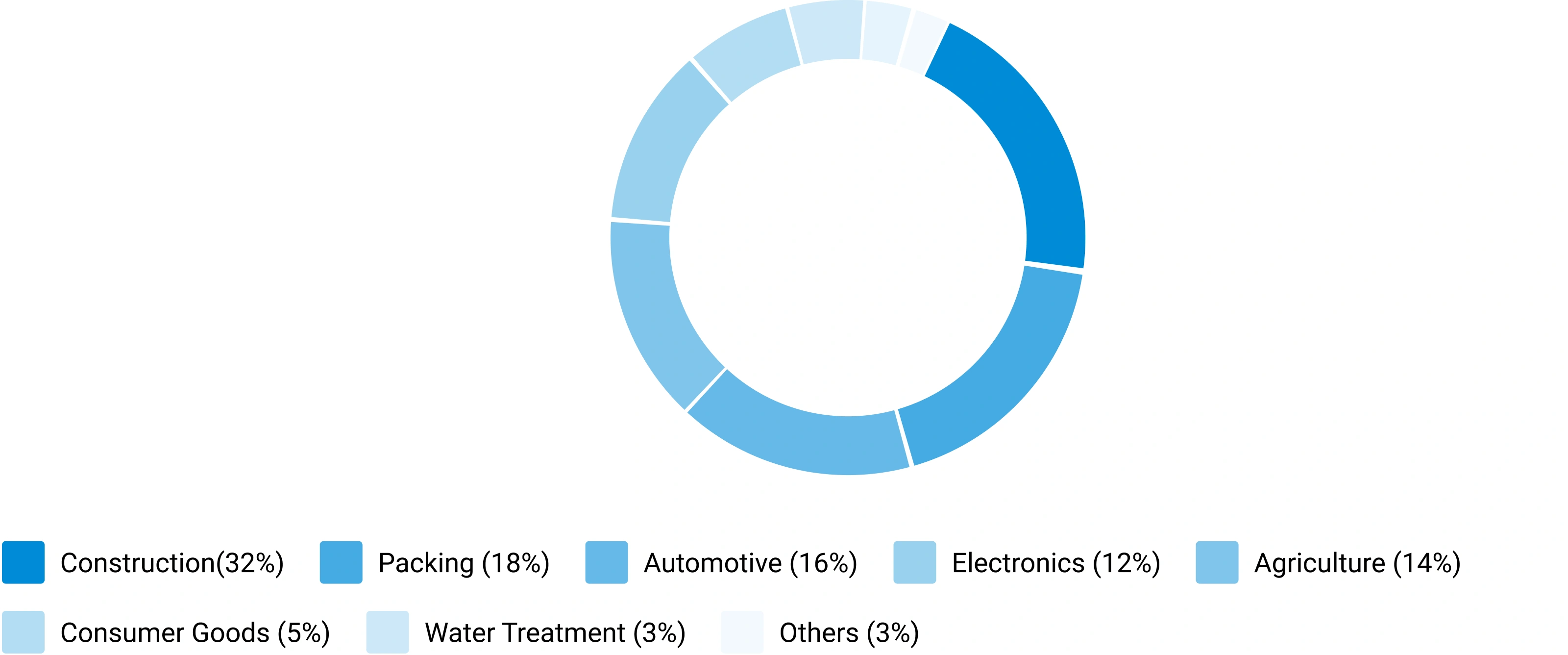
Chemical demand is evaluated across automotive, construction, packaging, electronics, agriculture, healthcare, consumer goods, industrial manufacturing, energy and utilities, and water treatment. Industry output, production trends, and consumption intensity are analyzed to determine demand patterns.
Consumption Modeling
Demand is estimated using measurable indicators: kilograms per vehicle, kilograms per square meter of construction, dosage per cubic meter of water treated, kilograms per hectare of agricultural land, and kilograms per ton of manufactured products. Consumption factors are validated through industry publications and primary interviews.
Application Analysis
The market is segmented by application area to understand product performance requirements, formulation trends, technology adoption, customer preferences, and regulatory requirements improving demand accuracy and segmentation granularity.
Demand-Side Assessment — End-Use Industry Demand Distribution
Illustrative distribution of chemical & materials demand across key end-use industries
Phase 4 - Trade Flow Analysis: Balancing Regional Supply and Demand
Trade flow analysis reconciles regional supply and demand estimates through import and export data, identifying net supply positions, regional dependencies, and market imbalances. It serves as an independent validation layer that tests the consistency of supply-side and demand-side estimates.
Import Analysis
Import data is evaluated to determine volumes, source countries, product dependency, regional supply gaps, and pricing trends — identifying markets that rely heavily on external supply and where domestic production is insufficient to meet demand.
Export Analysis
Export assessments reveal production surplus, export competitiveness, regional manufacturing strength, and global market participation. Export patterns also help validate domestic production estimates and identify net exporting regions.
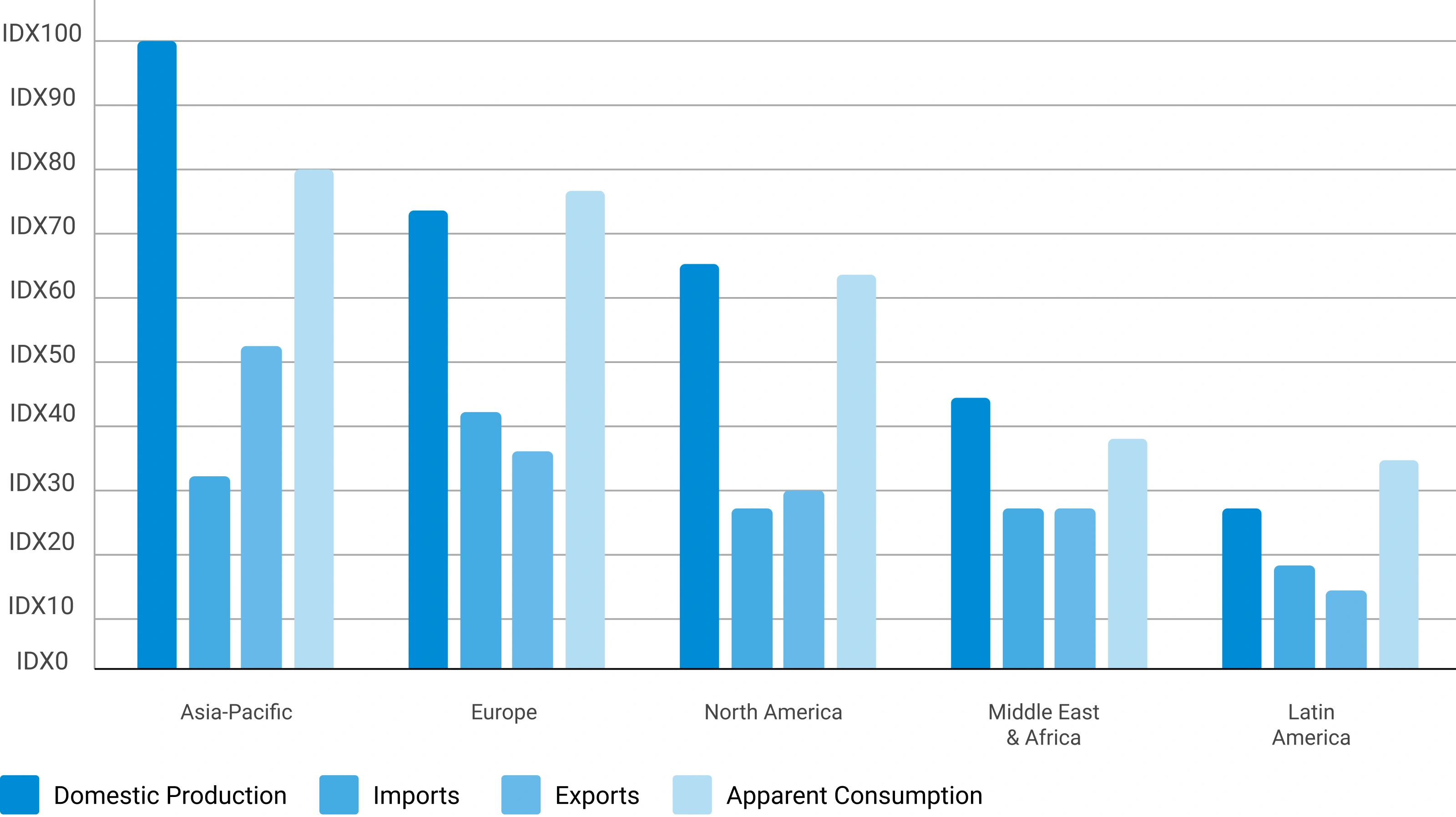
Apparent Consumption Model
Regional consumption is assessed using the standard apparent consumption formula:
Results identify net importing regions, net exporting regions, regional deficits, and surpluses — serving as an independent validation of supply and demand estimates.
Trade Flow Analysis — Net Supply Position by Region
Illustrative apparent consumption vs. domestic production across major regions — positive gap indicates net import dependency
Phase 5 — Primary Research: The Critical Validation Layer
Primary research tests and refines findings from secondary research through direct engagement with industry participants across the supply chain, demand side, and expert community. It captures intelligence that no database or published report can provide — the real-world experience of manufacturers, buyers, and specialists operating in the market.

Supply-Side Interviews
Conversations with chemical manufacturers, raw material suppliers, contract manufacturers, technology providers, and plant operators cover production trends, capacity utilization, pricing developments, technology shifts, and competitive dynamics.

Demand-Side Interviews
Engagement with OEMs, industrial consumers, procurement managers, distributors, formulators, and end-use manufacturers focuses on consumption trends, purchasing behavior, product substitution, demand outlook, and emerging applications.

Industry Expert Consultations
Additional interviews with industry consultants, independent experts, regulatory specialists, technical professionals, and research institutions provide deeper market context and validate key analytical assumptions.
Focus Areas of Primary Research:
Market Size & Forecast Validation
Revenue estimates, volume consumption, growth rates, forecast assumptions, regional demand.Supply Chain & Value Chain Assessment
Raw material sourcing, supply chain challenges, distribution networks, procurement practices.Production & Capacity Analysis
Manufacturing capacity, utilization rates, expansion projects, plant investments.Pricing & Cost Structure Analysis
Product pricing trends, feedstock costs, energy costs, margin pressures, pricing outlook.Competitive Landscape Assessment
Volume and value estimates confirmed to be fully consistent with one another before publicationInterview Volume by Market Scope
| Study Scope | Number of Interviews |
|---|---|
| Niche Market | 20 – 30 |
| Mid-Sized Market | 30 – 50 |
| Global Market | 50 – 80 |
| Highly Fragmented Market | 80 – 120 |
Interview Details:
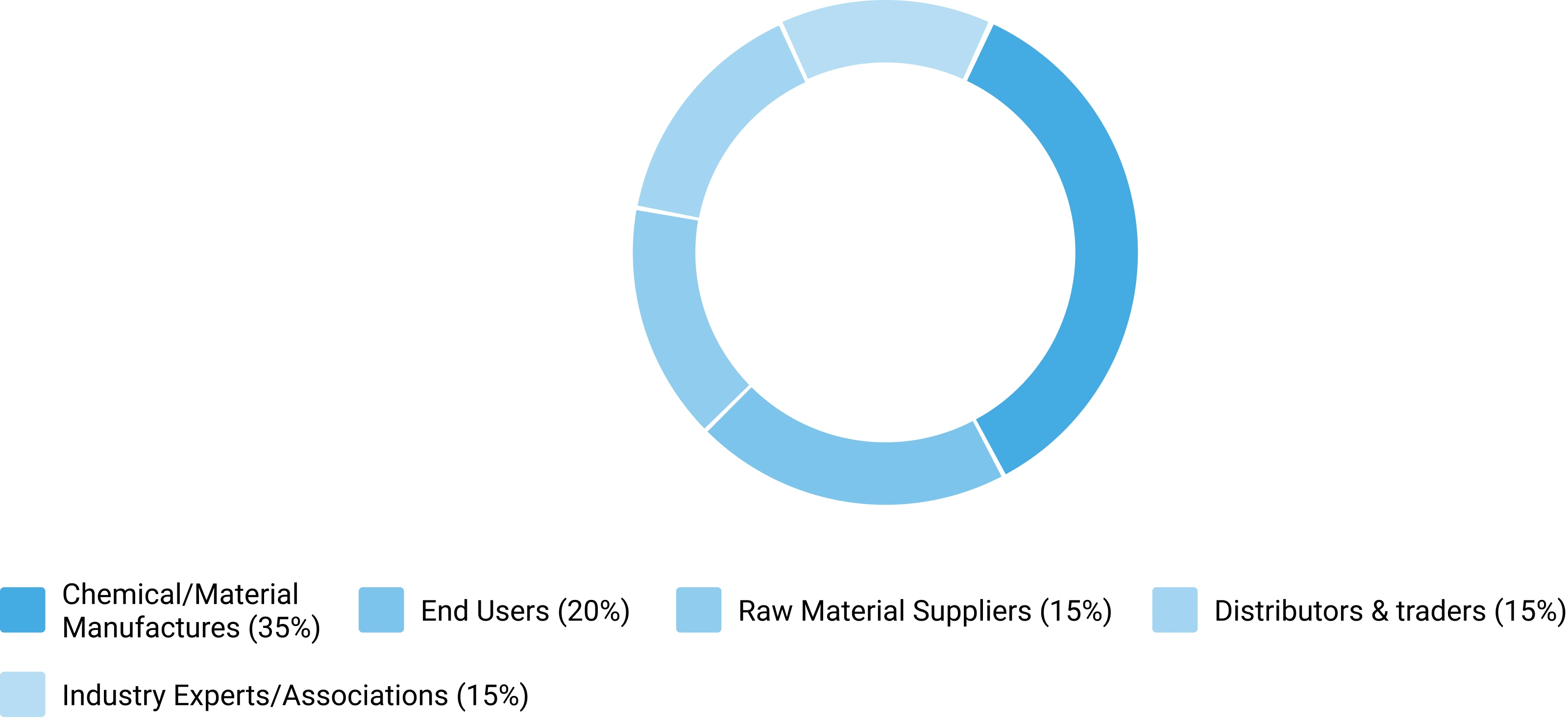
Category : Manufacturers, Suppliers, Distributors, End Users, Experts/Associations
Average Duration : 30–60 Minutes
Interview Mode : Video calls, telephonic interviews, expert consultations
Interview Format : Structured / Semi-Structured questionnaire
Focus Areas of Primary Research:
Market Size & Forecast Validation :
Revenue estimates, volume consumption, growth rates, forecast assumptions, regional demand.
Supply Chain & Value Chain Assessment :
Raw material sourcing, supply chain challenges, distribution networks, procurement practices.
Production & Capacity Analysis :
Manufacturing capacity, utilization rates, expansion projects, plant investments.
Pricing & Cost Structure Analysis :
Product pricing trends, feedstock costs, energy costs, margin pressures, pricing outlook.
Competitive Landscape Assessment :
Market share, competitor positioning, strategic initiatives, partnerships, acquisitions.
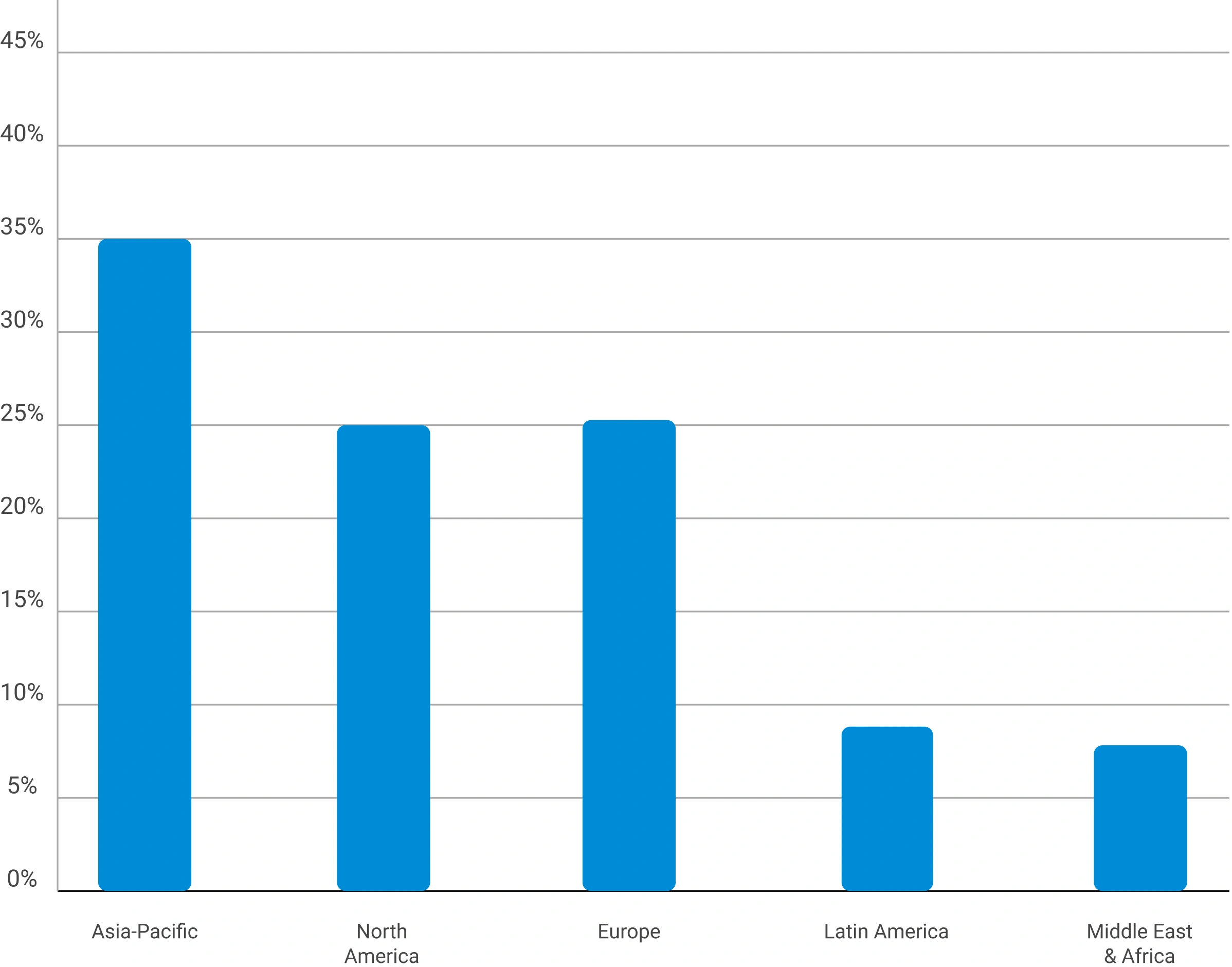
Primary Research — Stakeholder Coverage by Category
Distribution of interview respondents across stakeholder categories (% share from PPT data)
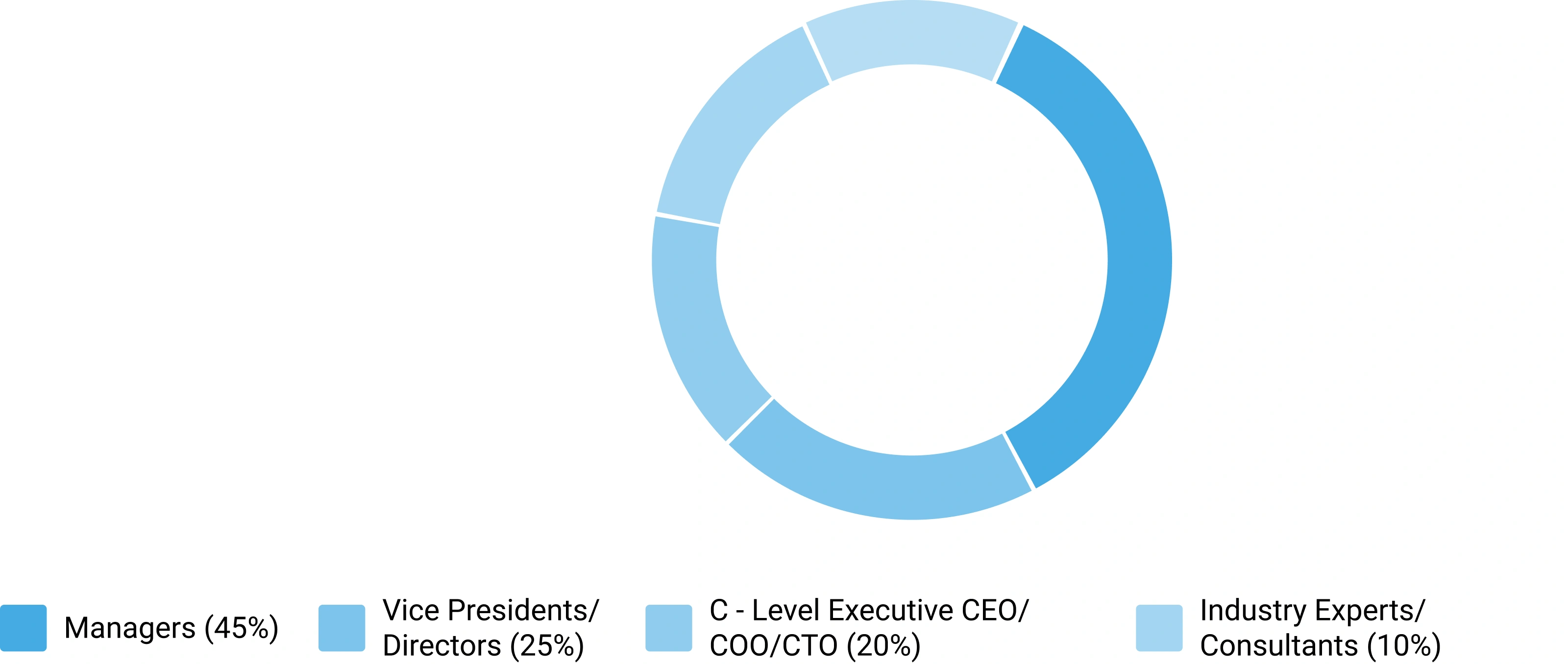
Primary Research — Respondent Designation Profile
Seniority breakdown of interview respondents (% share from PPT data)
Primary Research — Geographic Coverage of Interviews
Regional distribution of primary research engagement (% share from PPT data)
Phase 6 — Data Triangulation and Market Validation
No single methodology is relied upon in isolation. Multiple independent estimation approaches are combined and reconciled to ensure consistency, accuracy, and analytical defensibility. Any material deviations between approaches are investigated and adjusted through additional validation cycles.
The final market size is derived through weighted triangulation of all validated methodologies. Any material deviations between approaches are investigated and adjusted through additional validation cycles. The outcome represents the most realistic assessment of the market based on available evidence and expert confirmation ensuring that volume and value estimates are fully consistent with one another.
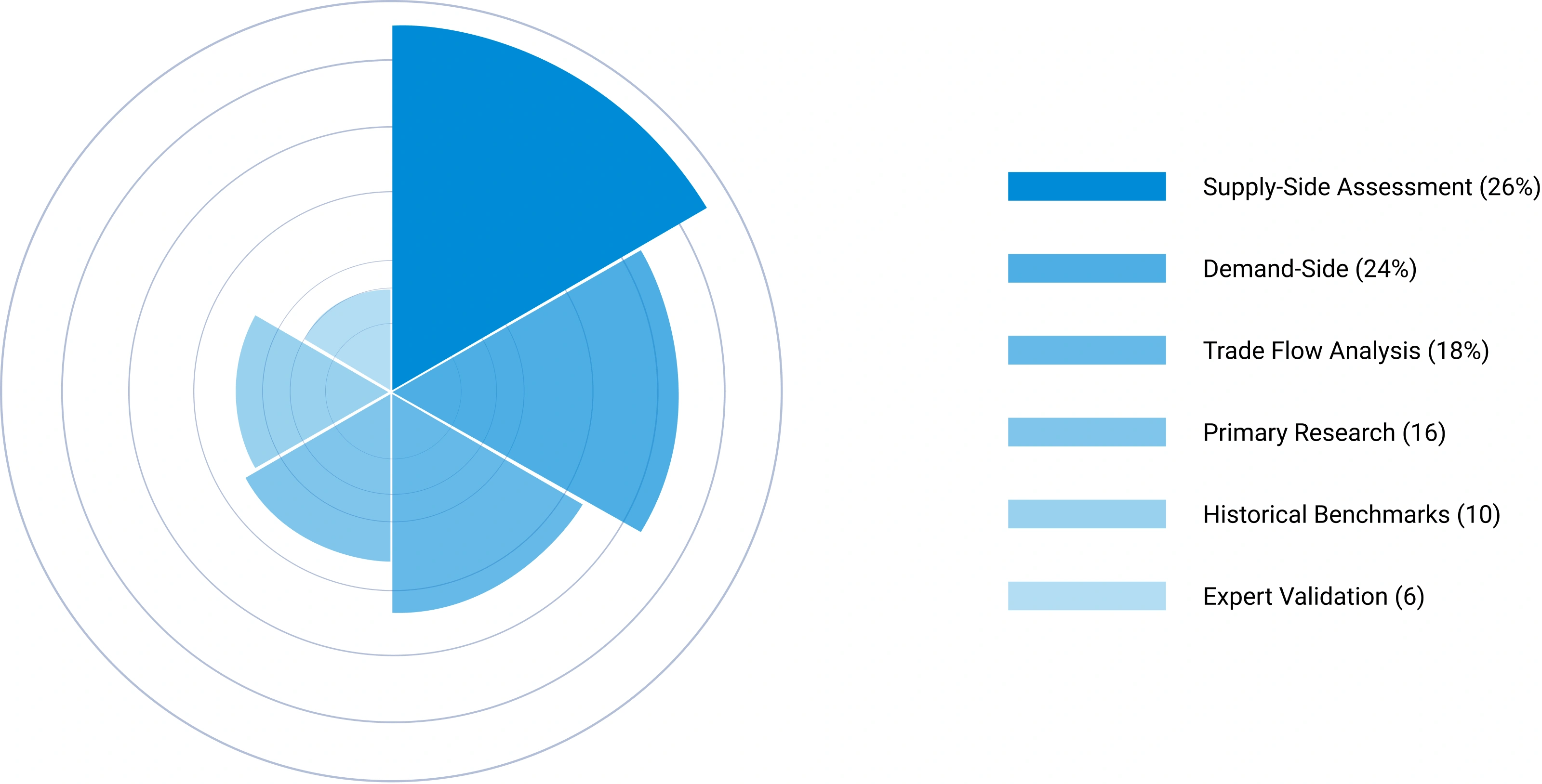
Triangulation Framework — Input Contribution Weight
Relative weight each sizing input contributes to the final reconciled market estimate
Phase 7 — Forecast Modeling: Projecting Future Market Evolution
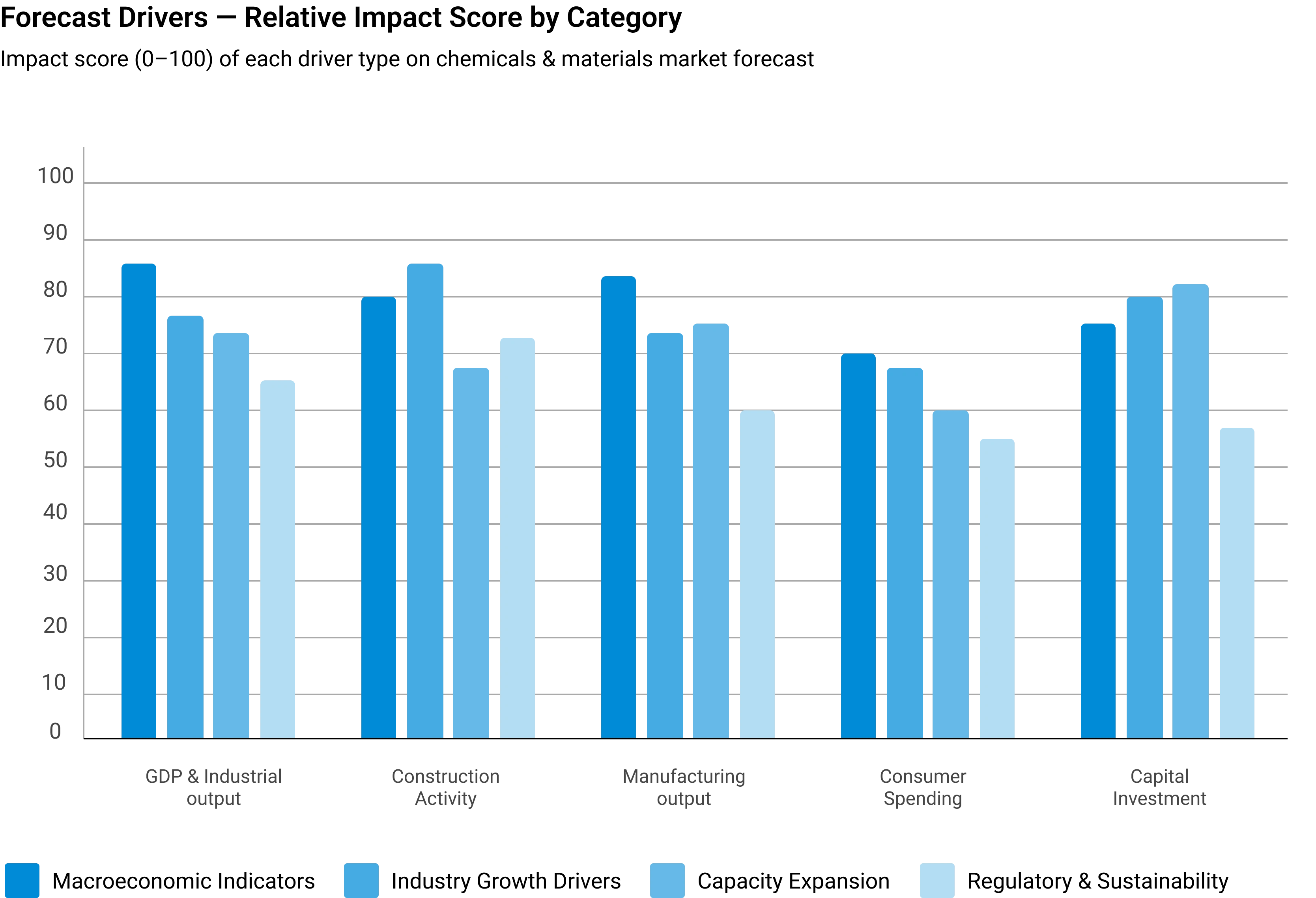
Forecasting evaluates the future trajectory of the market using a combination of quantitative indicators and qualitative assessments across economic, industry, and regulatory dimensions. Rather than simple extrapolation, each driver is independently modeled and integrated into a composite forecast.
Macroeconomic Indicators
GDP growth, industrial production, manufacturing output, construction activity, consumer spending, and capital investment form the quantitative foundation of long-term demand projections. These are applied at country, regional, and global levels.
Industry Growth Drivers
Urbanization, infrastructure development, industrialization, technological innovation, sustainability initiatives, and evolving product performance requirements are assessed at regional and industry levels — capturing both structural and cyclical demand drivers.
Capacity Expansion Analysis
Announced plant expansions, new manufacturing facilities, technology upgrades, and strategic investments are evaluated to determine future supply-demand dynamics and potential market tightness or oversupply situations.
Regulatory & Sustainability
Environmental regulations, chemical safety standards, emission reduction targets, circular economy initiatives, and sustainability requirements are incorporated as they often influence product adoption rates and market growth trajectories.
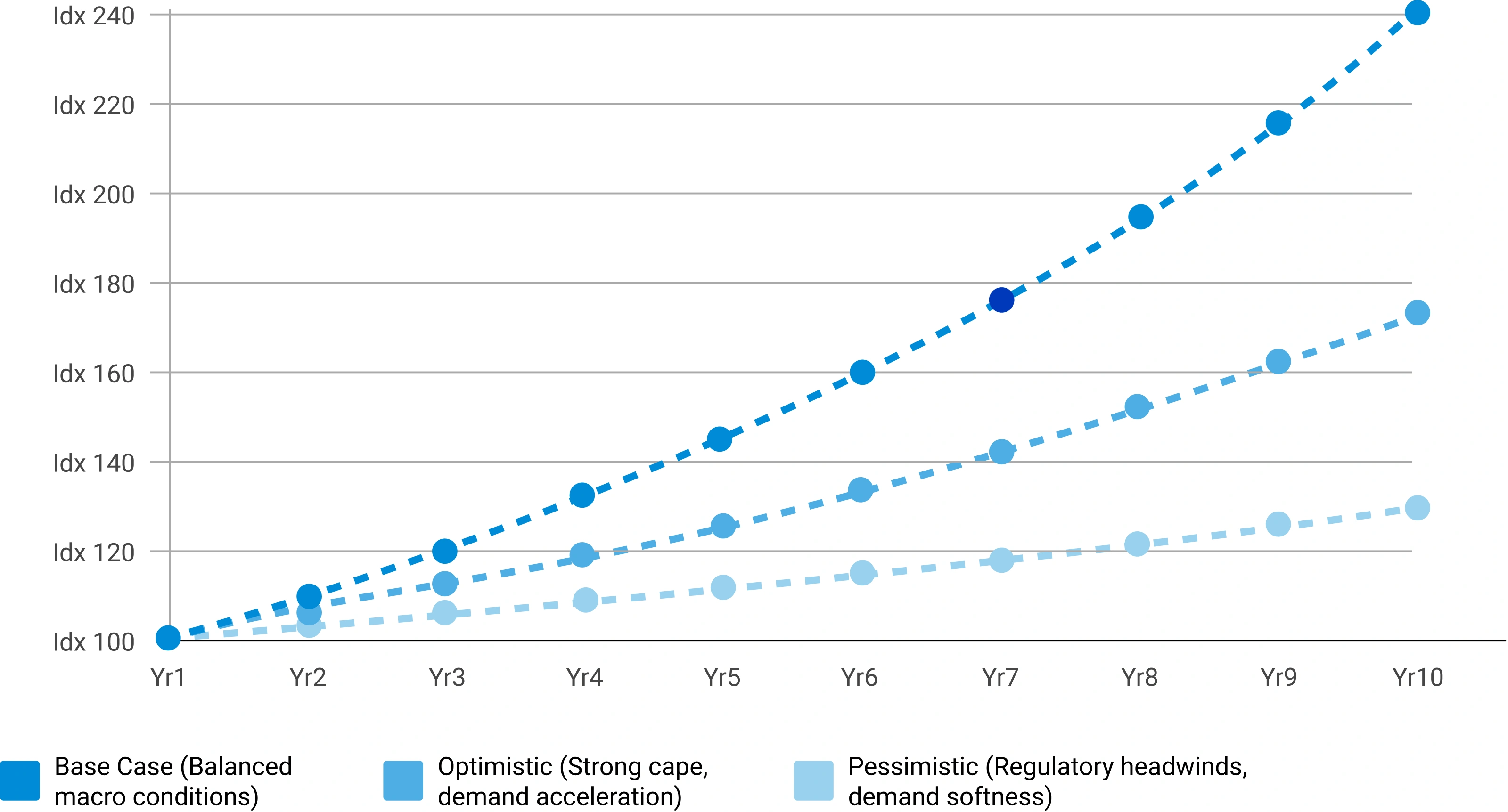
Scenario Forecast Range — Indexed Market Growth (Year 1–10)
Illustrative indexed growth trajectories across Base, Optimistic, and Pessimistic scenarios over a 10-year forecast horizon
Forecast Drivers — Relative Impact Score by Category
Impact score (0–100) of each driver type on chemicals & materials market forecast



Comments
Share your thoughts, ask a question, or provide feedback about this report.