
What is the Europe Bioplastic Construction Materials market Size and Share?
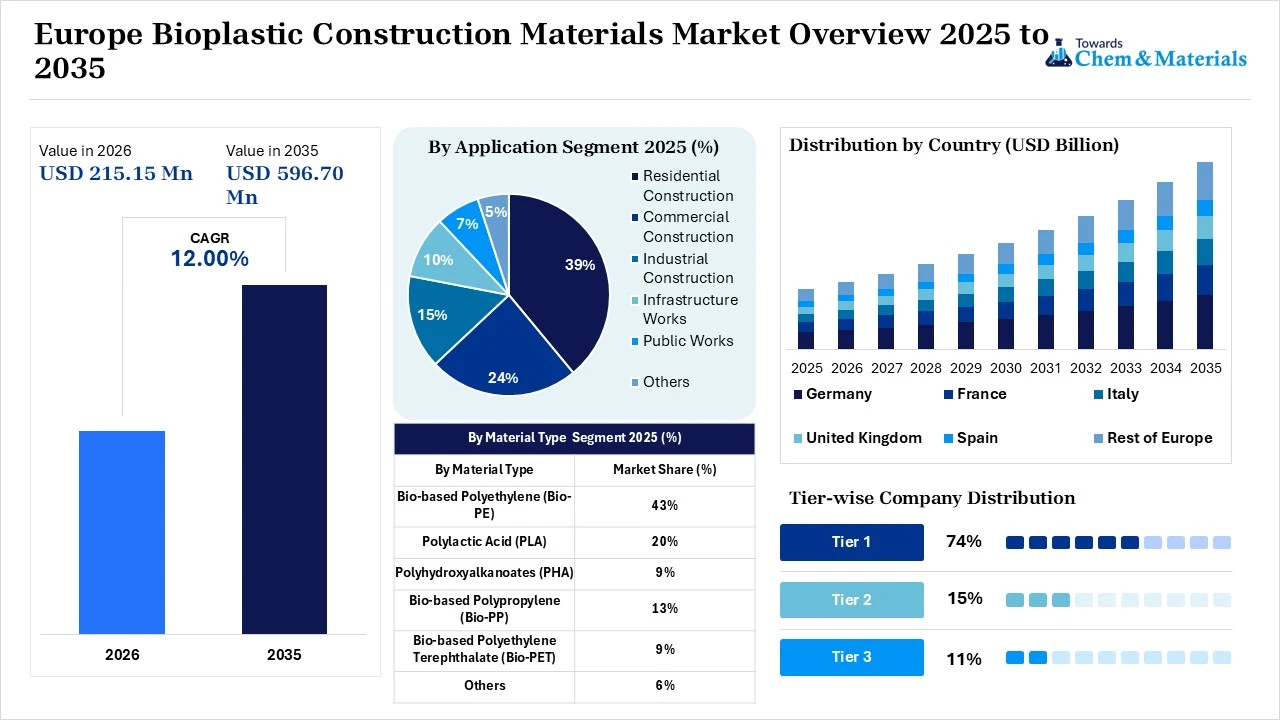
The Europe Bioplastic Construction Materials market size was valued at USD 192.10 million in 2025, is estimated to reach USD 215.15 million in 2026, and is projected to reach USD 596.70 million by 2035, exhibiting a compound annual growth rate (CAGR) of 12.00% over the forecast period from 2026 to 2035.Germany dominated the Europe Bioplastic Construction Materials market with the largest revenue share of 28.84% in 2025 and is expected to grow at the fastest CAGR of 12.02% during the forecast period.The growing shift towards strong regulatory frameworks and sustainability goals is expanding significantly from its baseline, as green infrastructure investment is increasing due to growing demand for sustainable regulation. Joint ventures and collaboration between companies, such as the Horizon Europe BIOS MATER initiative, to commercialize safe, circular, and bio-based building products are major growth factors in the market.
Market Highlights
- By country, Germany dominated the Europe bioplastic construction materials market with a share of 28.84% in 2025 and is expected to grow at a CAGR of 12.27% over the forecast period.
- By material type, the bio-based polyethylene segment dominated the market with a 43.31% share in 2025 and is expected to grow at a CAGR of 11.80% over the forecast period.
- By material type, the polylactic acid segment held a 20.42% market share in 2025 and is expected to have the fastest growth with a CAGR of 13.5% in the forecast period.
- By application, the residential construction segment dominated the market with 39.30% share in 2025 and is expected to grow at a CAGR of 12.70% over the forecast period.
- By application, the commercial construction segment held 24.10% market share in 2025 and is expected to have the fastest growth with a CAGR of 13.3% in the forecast period.
According to Towards Chemicals and Materials Analytics and Consulting, the Europe Bioplastic Construction Materials market volume was valued at 52.60 thousand tons in 2025 and is expected to surpass around 127.99 thousand tons by 2035, accelerating a compound annual growth rate (CAGR) of 9.30% over the forecast period from 2026 to 2035.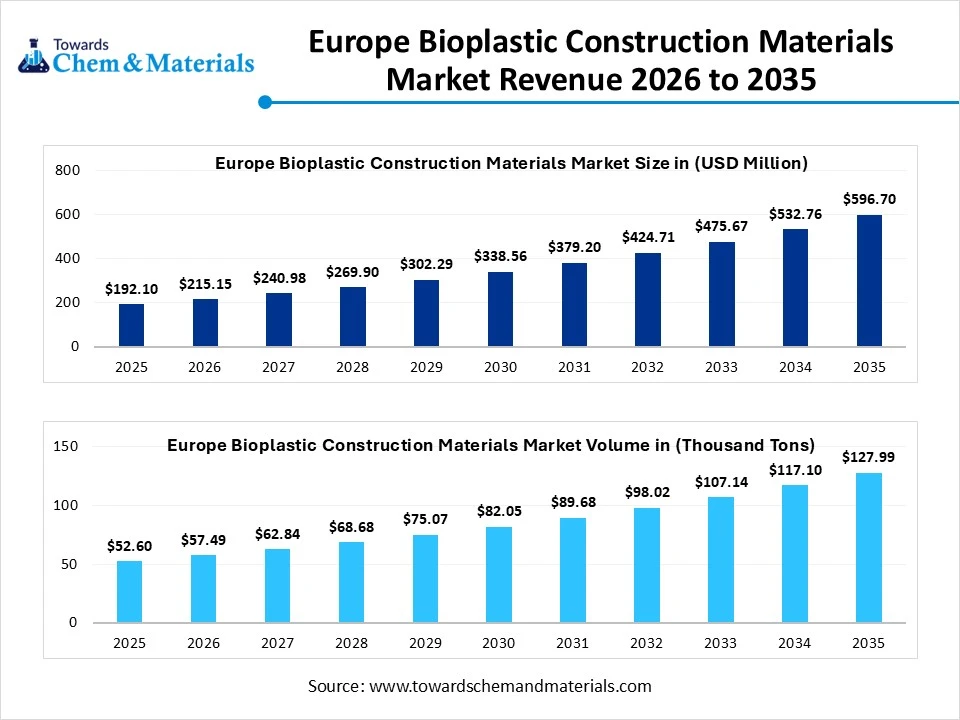
Market Overview
European Union Policies
The Europe bioplastic construction materials market is experiencing growth due to strict environmental regulations which is implemented under European Union policies, like the European Green Deal and Carbon emission targets, which demand bioplastics and biobased green building initiatives, supporting increased production of bioplastic construction materials which supports the growth of the market. The growing applications of bioplastics in construction activities include insulation foams, pipes, floor and wall products, coatings, adhesives, and sealants, which increases production aligning with the demand.
The sustainability mandates, which increase consumer preference towards eco-friendly and low-carbon building materials, and commitments to corporate net-zero further boost the growth. Research and development and innovation in bio-based chemicals and high-performing bio-composites, which are achieved through collaborations and public and private partnerships, boost the scaling of the products supporting the business.
- For instance, the European Unions Bioeconomy Strategy targets €10 million in joint procurement commitments by 2030 through the Bio-based Europe Alliance to scale up sustainable building materials.
Global Investment Flow for Europe Bioplastic Construction Materials Market 2026
Government organizations in Europe drive investment in the bioplastic construction materials market through public-private partnerships, green public procurement, and funding frameworks like Horizon Europe.Major firms like BASF SE, NatureWorks LLC, and Evonik Industries invest heavily in bio-based resins, insulation foams, and specialty binders.
The Circular Bio-based Europe Joint Undertaking is a €2 million public-private partnership between the European Union and the Bio-based Industries Consortium. Operating under the EU’s framework programme for research and innovation, Horizon Europe, this initiative is designed to bridge the gap between scientific innovation and commercial reality. It funds multi-million-euro projects that scale up bio-based materials, build a sustainable circular economy, and reduce Europes dependence on fossil carbon.
- The Circular Bio-based Europe Joint Undertaking has awarded €172 million to 24 new projects following its 2025 call for proposals. The selected consortia comprise 332 beneficiaries spanning 32 countries.(Source: www.cbe.europa.eu)
Report Scope
| Report Attributes | Details |
| Market Size in 2026 | USD 215.15 Million/ 57.49 Thousand Tons |
| Expected Size in 2035 | USD 596.70 Million/ 127.99 Thousand Tons |
| Growth Rate | CAGR of 12.00% |
| Base Year of Estimation | 2025 |
| Forecast Period | 2025-2035 |
| Segment Covered | By Material Type, By Application |
| Key Companies Profiled | Avantium N.V. (Netherlands), FKuR Kunststoff GmbH (Germany), Arkema SA (France), Roquette Frères SAS (France), Corbion NV (Netherlands), NatureWorks LLC (USA / European Operations), Braskem (Brazil / European Operations), SABIC (Saudi Arabia / European Operations), Mitsubishi Chemical Group (Japan / European Operations), Futerro SA (Belgium), Polymateria Ltd (United Kingdom), Trifilon (Sweden), Biome Bioplastics Ltd (United Kingdom), BIOTEC Biologische Naturverpackungen GmbH & Co. KG (Germany), Neste Oyj (Finland), TIPA Corp (Israel / European Operations) |
Market Growth Trends:
- The growing demand for sustainable and green materials due to increased demand from consumers for environmentally friendly, recycled, and lower-emission cements to meet environmental goals and reduce carbon footprints, which is a growing trend in the market.
- The adoption of prefabricated and modular construction methods to lower the time and demand for precast components and off-site manufactured parts, which helps improve efficiency and helps reduce waste, supporting growth.
- The advancement and innovation in the material and processing methods for the production of nano formulations, smart and lightweight materials with high performance support the growth of the market.
Through AI Integration and Precision Optimization
The Europe bioplastic construction materials market is growing significantly through technological shifts, which accelerate the application and transition to higher-performance, structural, green building solutions. The integration of AI helps remove barriers like weak mechanical properties through automation, advanced waste valorisation, and optimized additive manufacturing, which increases the advancement in manufacturing practices. The predictive, modular, and formulaic engineering through the integration of ML, such as Feedforward Neural Networks, Random Forest, and Support Vector Machines. Programs like AIMPLASs POLY-ML project and European initiatives like ANIPH use AI to predict how bioplastics behave under heat and moisture, allowing manufacturers to engineer superior insulation panels and weather-resistant external coatings.
Supply Chain Analysis of Europe Bioplastic Construction Materials Market:
Bioplastic Construction Material Production and Processing
- Bioplastic construction materials are produced from bio-based polymers such as bio-based polyethylene, polylactic acid, polyhydroxyalkanoates, and bio-based polypropylene. These materials are processed into insulation components, panels, films, flooring elements, composites, and other construction products.
- Key Players: BASF, Solvay, NatureWorks, BEWi.
- BASF develops bio-based and sustainable polymer solutions that can be incorporated into construction materials, supporting applications requiring lightweight, durable, and lower-fossil-feedstock materials.
Quality Testing and Certification
- Bioplastic construction materials must meet requirements related to mechanical strength, thermal performance, fire resistance, durability, chemical safety, and environmental performance. European construction products are also subject to harmonized product requirements and sustainability-related assessment frameworks.
- Key Authorities and Standards: European Committee for Standardization, International Organization for Standardization, European Union Construction Products Regulation, EN standards, Environmental Product Declarations.
- Solvay develops advanced polymer and composite materials for demanding applications and focuses on material performance, sustainability, and compliance with European and international requirements.
Distribution to End-Use Industries
- Bioplastic construction materials are supplied to residential, commercial, industrial, infrastructure, and public construction projects. Applications include insulation, building panels, flooring, composites, piping, and other building components. The European market is supported by increasing interest in renewable feedstocks, circular construction, and low-carbon building solutions.
- Key Suppliers: BASF, BEWi, NatureWorks, Solvay.
- BEWi develops and supplies polymer-based insulation and building solutions, with its European operations supporting applications where lightweight materials and improved energy efficiency are important.
Sustainability Analysis of Bioplastic Construction Materials
Bioplastic construction materials are renewable construction materials that are an alternative to petroleum-based polymers. The sustainability benefits offered by bioplastic materials include reduced carbon footprints, resource efficiency by reducing reliance on oil reserves, and carbon sequestration supporting lower net greenhouse gas emissions. The use of present feedstock and agricultural waste for the production of bioplastic materials aligns with the growing awareness and regulations shifting towards sustainable and efficient materials use and demand.
What are Bioplastic Construction Materials?
Bioplastic construction materials are eco-friendly products that are used as a sustainable and eco-friendly alternative to petroleum products. They are eco-friendly products that are made from renewable biomass sources such as sugarcane, corn starch, algae, and lignin, which are used for the production of construction materials. The key applications include insulation, wood-plastic composites, concrete additives, cladding, panels, pipes, and conduits, which are used for outdoor and indoor covering and flooring and for other applications. The benefits offered include lower carbon footprints, reduced waste, and low toxicity, supporting growth.
Europe Bioplastic Construction Materials Premium Pricing Analysis
The bioplastic construction materials in Europe currently command a premium price over conventional fossil-based alternatives, this is driven by the bio-content ratios, strict regulatory frameworks, and processing. Regulatory compliance with sustainable products regulation and carbon accounting mandates demand heavy testing and certification, which adds to the costs of the product. The feedstock competition and corporate offtakes are some major factors responsible for high pricing. The increasing use and demand for bioplastic materials for construction will help lower the final cost of the product in coming decades.
Europe Bioplastic Construction Materials Market Carbon Tax Analysis
The European bioplastic construction materials market is expanding rapidly, driven by carbon pricing mechanisms like the EU Carbon Border Adjustment Mechanism and strict sustainability targets. CBAM creates widening price discipline, penalizing high-emission traditional materials and favoring low-embodied carbon bio-based alternatives. Conventional petrochemical materials struggle to meet European Green Deal targets, whereas bioplastics offer carbon sequestration benefits.
Europe Bioplastic Construction Materials Regulatory Landscape
| Country / Region | Regulatory Body | Key Regulations | Notable Notes |
| European Union | European Commission, European Chemicals Agency | Construction Products Regulation 2024/3110, REACH Regulation, EU Policy Framework for Bio-based, Biodegradable and Compostable Plastics | The EU is strengthening sustainability and environmental-performance requirements for construction products, supporting the adoption of bio-based materials and plastics. |
| Germany | Federal Environment Agency, Federal Ministry for the Environment | Building regulations, REACH Regulation, Circular Economy Act | Germany is a key market for bio-based construction materials, supported by strong circular-economy policies and demand for sustainable building solutions. |
| France | Ministry for Ecological Transition, French Agency for Ecological Transition | RE2020, French environmental building regulations | France promotes bio-based and low-carbon materials through building-performance requirements and policies targeting lifecycle environmental impacts. |
| Italy | Ministry of Environment and Energy Security, Italian National Institute for Environmental Protection | Minimum Environmental Criteria, EU Construction Products Regulation | Italy supports bio-based construction materials through green public procurement and environmental-performance criteria. |
| Netherlands | Ministry of Infrastructure and Water Management, Netherlands Enterprise Agency | Circular Economy Programme, EU Construction Products Regulation | The Netherlands emphasizes circular construction practices and increased use of renewable and bio-based materials. |
| Spain | Ministry for the Ecological Transition and the Demographic Challenge, Ministry of Housing and Urban Agenda | Building Technical Code, EU Construction Products Regulation | Spain is encouraging low-carbon construction and improved environmental performance of building materials. |
Market Dynamics
Drivers
Europe Bioplastic Construction Material: Green Building Standards
The growing demand for green building standards, which are eco-certified, and carbon label initiatives, which help guide manufacturers to shift towards low-impact and bio-based alternatives replacing conventional plastics, support growth. Strong research and development through public and private collaborations, like Strong funding and cooperation between governments, research institutes, and manufacturing hubs, accelerate material innovation and performance. The other major drivers are energy efficiency pressures, embodied carbon reduction, and stringent EU regulations further propel growth.
Challenges
High Production Costs
The major challenges that hinder the growth of the market are the high production costs, as manufacturing bioplastics costs more than the price which is required for the production of conventional petrochemical-based plastics, as the raw material is expensive and processing is also complex, which adds up to the cost of production, making the product costly. The other challenges are inadequate infrastructure for recycling, regulatory and standard uncertainty, material performance limitations, and feedstock scarcity, restricting the growth of the market.
Opportunities
Bio-based Insulation and Foams
The market is experiencing growth through large market opportunities, which supports growth in bio-based insulation and foams, which aligns with the low-carbon building demand, with demand for such materials supporting growth. The other major growth opportunities are polylactic acid adoption, costings, adhesive and sealants demand, infrastructure development, and growing leadership, which is backed by government eco-innovation funding supporting growth.
Segmental Insights
Material Type
The bio-based polyethylene segment dominated the market with a 43.31% share in 2025 and is expected to grow at a CAGR of 11.80% over the forecast period, driven by increasingly strict carbon neutrality requirements and reduced carbon footprints through lowering greenhouse gas emissions during production. The growth is propelled by stringent EU environmental policies, circular economy mandates, and rising demand for low-carbon, drop-in renewable materials that integrate smoothly into existing manufacturing systems.
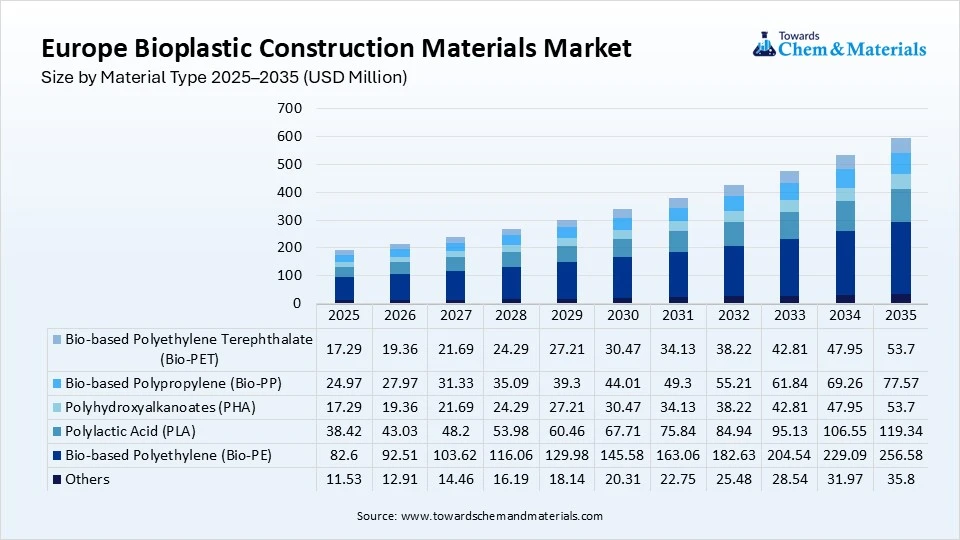
The polylactic acid segment held a 20.42% market share in 2025 and is expected to have the fastest growth, with a CAGR of 13.5% in the forecast period, driven by the growing adoption of green regulations and carbon reduction initiatives, which propels the growth. The properties and applications in construction, like its processing versatility and bio-based origin, which help in lowering the carbon footprint as PLA is derived from renewable resources, support growth. It is processed using standard manufacturing methods like extrusion and injection molding to create eco-friendly panels, insulation films, and interior fixtures, further increasing its use.
Europe Bioplastic Construction Materials Market Share, By Material Type, 2025(%)
| By Material Type | Market Share (%) |
| Bio-based Polyethylene (Bio-PE) | 43% |
| Polylactic Acid (PLA) | 20% |
| Polyhydroxyalkanoates (PHA) | 9% |
| Bio-based Polypropylene (Bio-PP) | 13% |
| Bio-based Polyethylene Terephthalate (Bio-PET) | 9% |
| Others | 6% |
By Application
The residential construction segment dominated the market with a 39.30% share in 2025 and is expected to grow at a CAGR of 12.70% over the forecast period, driven by key applications in residential construction for insulation, panels, flooring, siding, interiors, and shade and fixtures due to the benefits offered, which increase the demand for the market. The efficiency and high demand for lightweight, durable, and green building initiatives increase adoption in the market.
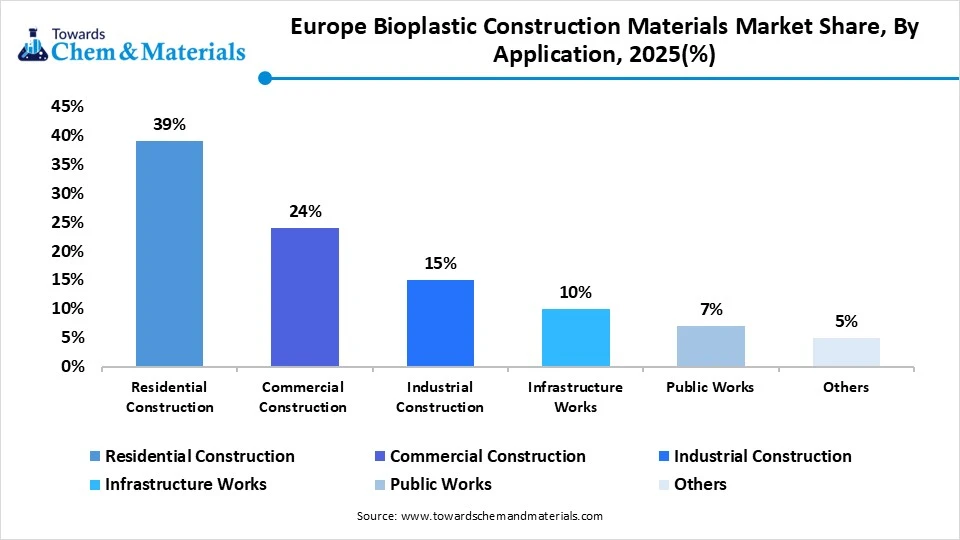
The commercial construction segment held a 24.10% market share in 2025 and is expected to have the fastest growth with a CAGR of 13.3% in the forecast period, driven by the growing construction activities and increased infrastructure development plans, which aligns with the environmental and sustainability regulations supporting growth. The materials offer strength, thermal stability, and moisture resistance and also provide design flexibility for custom architectural components, which increases growth. Innovative projects and large-scale structural buildings aligning with the growing awareness of consumers further support the growth of the market.
Europe Bioplastic Construction Materials Market Share, By Application, 2025(%)
| By Application | Market Share (%) |
| Residential Construction | 39% |
| Commercial Construction | 24% |
| Industrial Construction | 15% |
| Infrastructure Works | 10% |
| Public Works | 7% |
| Others | 5% |
Regional Analysis
How did Germany dominate the Europe Bioplastic Construction Materials Market in 2025?
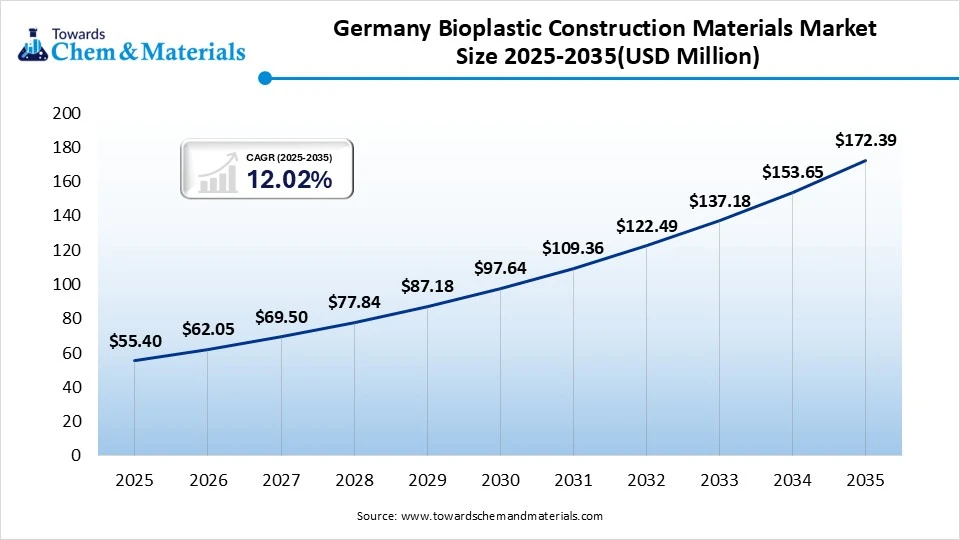
The Germany bioplastic construction materials market size was estimated at USD 55.40 million in 2025 and is projected to reach USD 172.39 million by 2035, growing at a CAGR of 12.02% from 2026 to 2035. Germany dominated the Europe bioplastic construction materials market with a share of 28.84% in 2025 and is expected to grow at a CAGR of 12.27% over the forecast period, driven by the growing infrastructure projects in the country and heavy industrial investment for advancing the manufacturing capability to scale eco-friendly building and plastic solutions, fueling growth. The strict regulatory push, which accelerates the shift towards circular economy policies and environmental standards, pushes market growth in the country. The infrastructure facilities, as there are 128 certified composting plants which help fulfil the growing need of the consumer, support expansion of the market. Financial and government support by aligning with regional supply and demand fulfilment through expenditure for lignocellulosic biorefineries presence.
Countrys Leadership Standards
The UK bioplastic construction materials market size was estimated at USD 23.71billion in 2025 and is projected to reach USD 74.29billion by 2035, growing at a CAGR of 12.10%from 2026 to 2035.The UK held a 12.34% share in the market, driven by stringent environmental policies and demand for bio-based alternatives like bio-PET and rigid insulation foams in the UK building application, which help in lowering the carbon footprint, aligning with environmental mandates, and supporting growth. Germanys bioplastics manufacturing and processing capacity, reinforced by extensive composting infrastructure and chemical clusters, is the major growth factor in the country. The countrys leadership and adoption, due to demand for green building and public infrastructure, support the growth.
France is Growing in Innovation in Material Development.
The France bioplastic construction materials market size was estimated at USD 30.79 billion in 2025 and is projected to reach USD 95.95 billion by 2035, growing at a CAGR of 12.04% from 2026 to 2035.France held a 16.03% share in the market, driven by growing innovation in the region, as startups and consortia are scaling up circular solutions by utilizing thermal compression and renewable biomass to manufacture eco-friendly building panels, which supports the growth of the market. The growing focus on regulation and increased income demand for construction and infrastructure development is supporting growth.
Recent Developments
- The European BIO-UPTAKE project, which started in December 2022 to promote a green and digital transformation in Europes manufacturing sector via bioplastics, concluded in May 2026. CIDETEC Surface Engineering actively participated in this international group, bringing its patented technology to create sustainable, smart, and high-performance solutions for construction. They successfully developed an innovative prepreg material with 80% bio-based content that can be stored at room temperature, addressing the challenges of traditional materials.(Source: cidetec.es)
- In February 2026, the UNICO2RN project, which is funded by the European Union, produced bioplastics by using biogenic CO2 as a feedstock. This project aims to replace fossil-based materials with bio-based materials, which helps in reducing carbon emission for industrial sector.(Source: packagingeurope.com)
Competitive Analysis
- The growing competition between the major players for the development of advanced and innovative materials supports the growth of the industry through collaborations and joint ventures.
Europes bioplastic and bio-based materials sector relies on major chemical leaders and joint public-private research partnerships funded through programs like the Circular Bio-based Europe Joint Undertaking.
Major collaboration between key players like the BIO4COAT Project, which is A collaborative initiative developing safe, bio-based building blocks from biorefineries for advanced polyurethane and protective coating applications.(Source: www.bio4coat) - In June 2025, the BIOARC Project was launched with a meeting in Munich. This Horizon Europe initiative unites 12 partners across 8 countries to create fire-resistant insulation boards, wall boards, acoustic panels, and modular partition walls.(Source: inosens.rs)
Top players in the European Bioplastic Construction Materials Market and Their Offerings
| Company | Company Type/Position | Major Headquarters | Geographic Presence | Bioplastic Construction Materials Offerings | Key Offering/Strength |
| BASF SE | Global chemical and bioplastics manufacturer | Ludwigshafen, Germany | Europe, North America, Asia Pacific | Bio-based and biodegradable polymers, bioplastic compounds, and materials for construction-related applications | Strong polymer R&D and established sustainable materials portfolio |
| BEWI ASA | Sustainable packaging and insulation materials manufacturer | Stjørdal, Norway | Europe, Asia Pacific | Bio-based EPS alternatives, insulation materials, lightweight construction components, and recycled polymer solutions | Strong expertise in lightweight insulation and circular polymer solutions |
| Solvay S.A. | Specialty chemicals and advanced materials producer | Brussels, Belgium | Europe, North America, Asia Pacific | Bio-based polymers, specialty composites, and high-performance sustainable materials for construction and building applications | Advanced polymer technologies combining performance with lower environmental impact |
| Novamont S.p.A. | Bioplastics and bio-based materials manufacturer | Novara, Italy | Europe, North America, Asia Pacific | Biodegradable and compostable bioplastics, bio-based polymers, and specialty materials for construction-related applications | Strong European expertise in bio-based and biodegradable polymer technologies |
| TotalEnergies Corbion | PLA bioplastics producer | Gorinchem, Netherlands | Europe, Asia Pacific, North America | Luminy PLA resins and bio-based polymers for durable and semi-durable applications, including construction-related materials | Strong PLA production capabilities and focus on renewable, recyclable bioplastic materials |
Other Top Players Are
- Avantium N.V. (Netherlands)
- FKuR Kunststoff GmbH (Germany)
- Arkema SA (France)
- Roquette Frères SAS (France)
- Corbion NV (Netherlands)
- NatureWorks LLC (USA / European Operations)
- Braskem (Brazil / European Operations)
- SABIC (Saudi Arabia / European Operations)
- Mitsubishi Chemical Group (Japan / European Operations)
- Futerro SA (Belgium)
- Polymateria Ltd (United Kingdom)
- Trifilon (Sweden)
- Biome Bioplastics Ltd (United Kingdom)
- BIOTEC Biologische Naturverpackungen GmbH & Co. KG (Germany)
- Neste Oyj (Finland)
- TIPA Corp (Israel / European Operations)
Segments Covered:
By Material Type
- Bio-based Polyethylene (Bio-PE)
- Flexible films and membranes
- Pipes and tubing
- Insulation components
- Protective sheets and barriers
- Polylactic Acid (PLA)
- Insulation components
- Interior panels
- Flooring components
- Prefabricated elements
- 3D-printed construction components
- Polyhydroxyalkanoates (PHA)
- Films and membranes
- Interior components
- Coatings
- Specialty building components
- Bio-based Polypropylene (Bio-PP)
- Panels and sheets
- Piping components
- Insulation systems
- Interior components
- Bio-based Polyethylene Terephthalate (Bio-PET)
- Reinforced components
- Films and membranes
- Insulation-related applications
- Interior systems
- Others
- Bio-based polyamides
- Bio-based polyurethanes
- Starch-based polymers
- Cellulose-based polymers
- Bio-composites
- Specialty biopolymer formulations
By Application
- Residential Construction
- Insulation
- Flooring
- Roofing components
- Wall and interior panels
- Piping
- Protective films
- Commercial Construction
- Office buildings
- Hospitals and healthcare facilities
- Retail buildings
- Hospitality buildings
- Institutional buildings
- Industrial Construction
- Manufacturing facilities
- Warehouses
- Industrial flooring
- Protective coatings
- Piping and insulation
- Infrastructure Works
- Drainage systems
- Utility components
- Membranes
- Protective systems
- Lightweight construction components
- Public Works
- Government buildings
- Schools and universities
- Public housing
- Transport-related facilities
- Municipal infrastructure
- Others
- Temporary structures
- Modular construction
- Landscaping systems
- Specialty architectural components
A Seven-Phase Framework
Our methodology is designed to be universally applicable across commodity chemicals, specialty chemicals, petrochemicals, construction chemicals, coatings, electronic chemicals, industrial gases, agrochemicals, water treatment chemicals, and performance materials. Each phase builds upon the last, creating a layered validation structure that minimizes estimation error and maximizes analytical confidence.
The framework ensures comprehensive market coverage, robust cross-validation, and reliable long-term forecasting — producing market estimates that withstand scrutiny from investors, regulators, and corporate strategy teams.

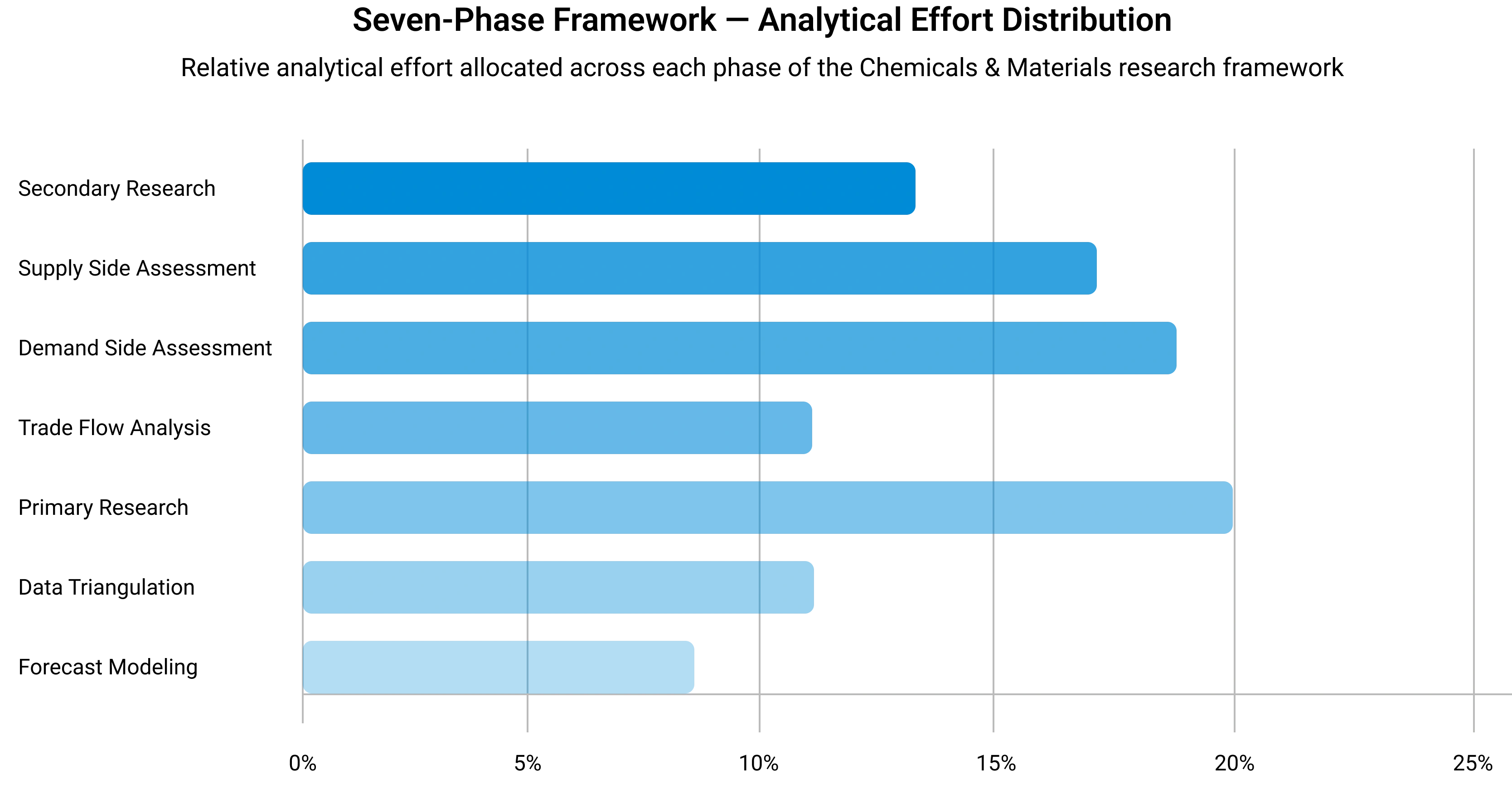
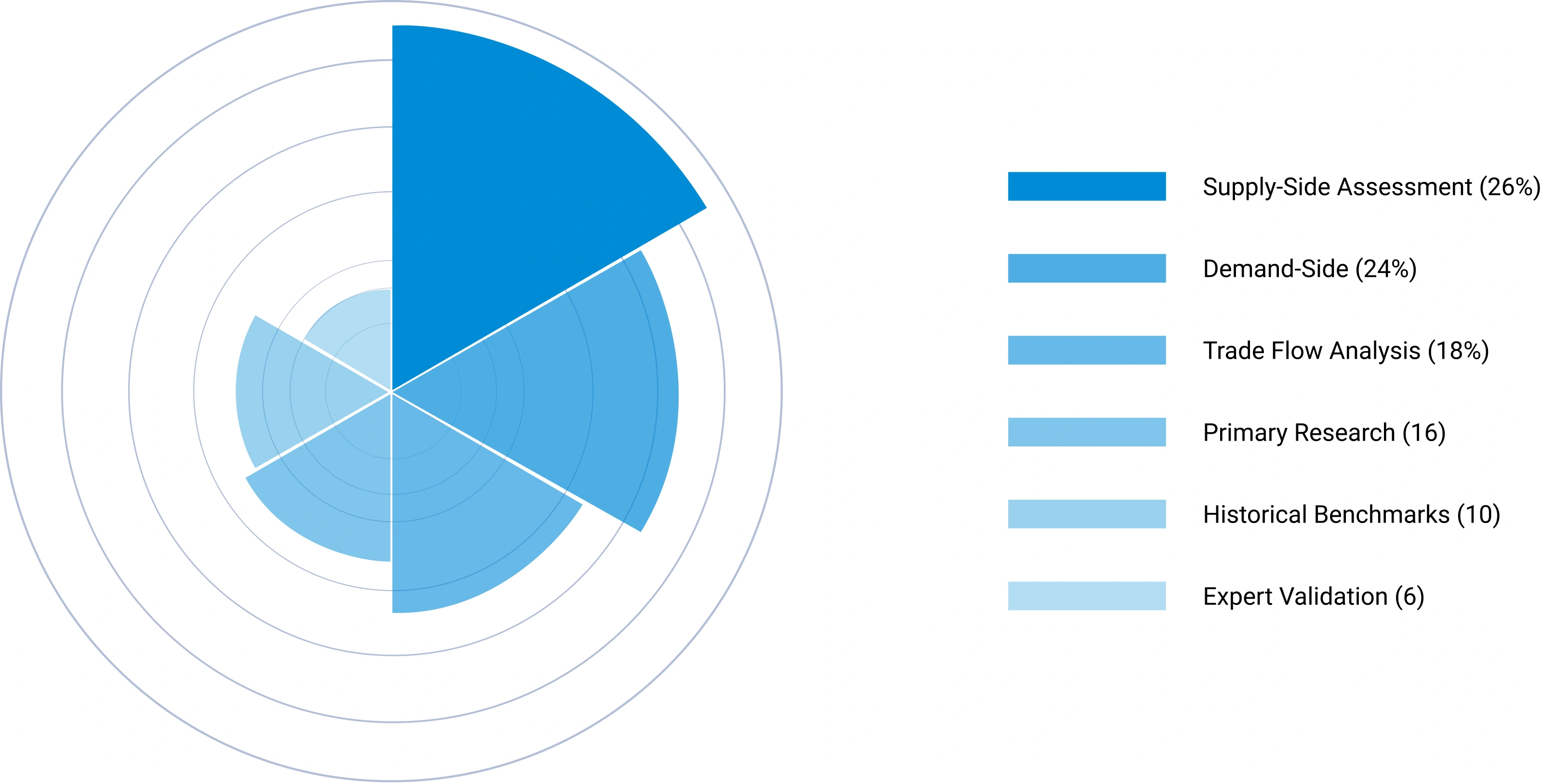
Seven-Phase Framework — Analytical Effort Distribution
Relative analytical effort allocated across each phase of the Chemicals & Materials research framework
Phase 1 - Secondary Research: Establishing the Foundation
Secondary research collects and evaluates publicly available information from authoritative sources, establishing the foundational understanding of market structure, value chain dynamics, competitive landscape, and end-use demand patterns. Every source is evaluated for credibility, recency, geographic relevance, and methodological soundness before inclusion.
Industry Associations
Sources include ACC, CEFIC, ICCA, JCIA, CPCIF, and SOCMA providing production volumes, consumption trends, capacity developments, and sustainability initiatives.
Company Disclosures
Annual reports, investor presentations, earnings transcripts, and regulatory filings reveal product portfolios, manufacturing footprints, capacity expansions, and revenue segmentation.
Government Databases
National statistical offices, customs authorities, environmental agencies, and industrial production databases provide verified statistics on output, trade flows, and regulatory compliance.
Trade Databases
UN Comtrade, ITC, Eurostat, and national customs authorities enable assessment of global product movement, import dependency, and export competitiveness across regions.
Our Secondary Research Sources
- Ministry of Chemicals and Fertilizers
- European Chemicals Agency
- United States Department of Energy
- Ministry of Industry and Information Technology
- Ministry of Economy Trade and Industry
- Ministry of Trade Industry and Energy
- National Institute of Standards and Technology
- Council of Scientific and Industrial Research
- Fraunhofer Society
- National Institute for Materials Science
Phase 2 — Supply-Side Assessment: Mapping Production Capabilities
Production Capacity Analysis
All major manufacturers are assessed for existing installed capacity, planned additions, expansions, new plant announcements, and technology adoption — mapped at global, regional, and country levels.
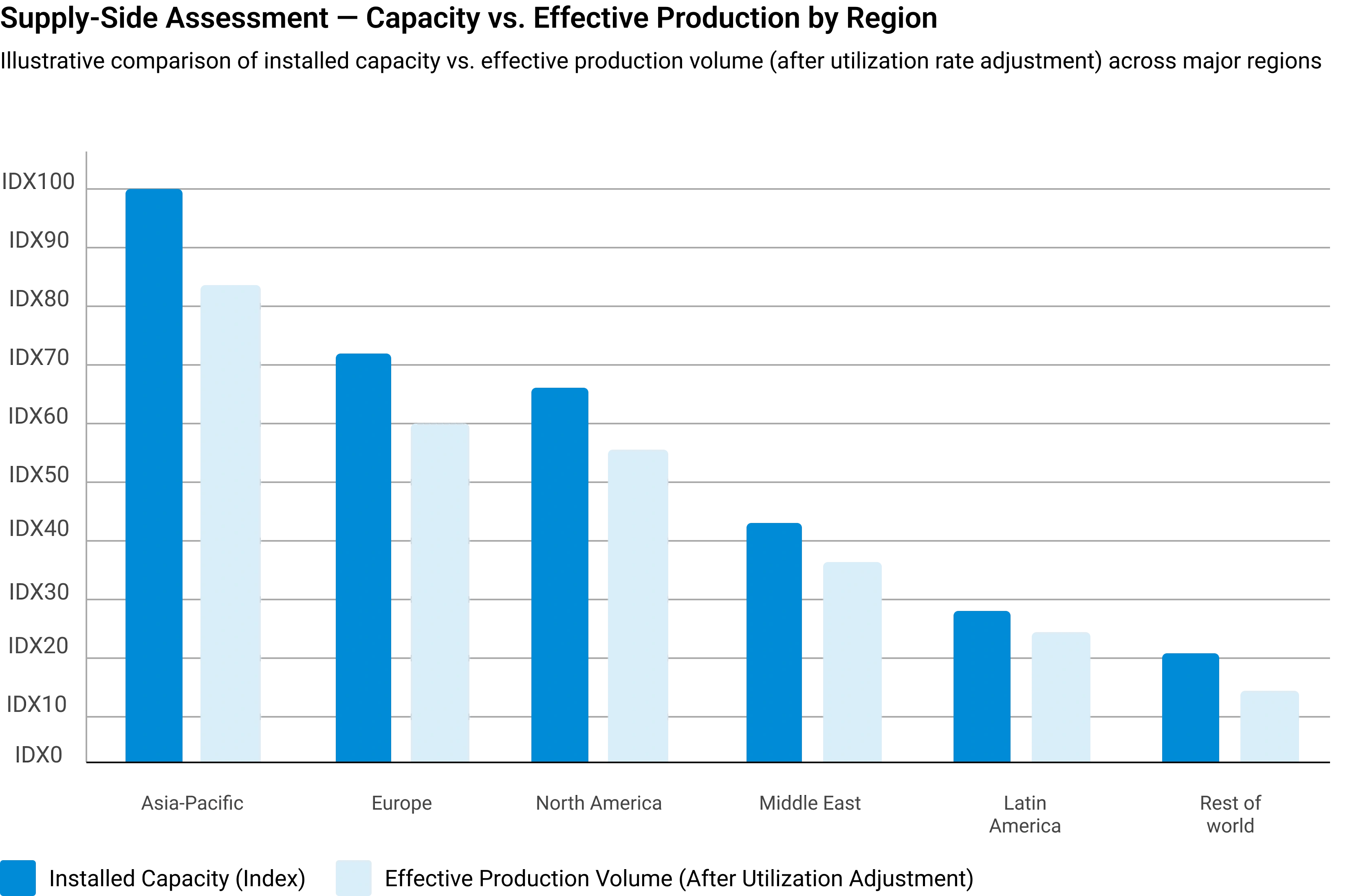
Capacity Utilization Adjustment
Installed capacity is adjusted using utilization rates based on demand conditions, feedstock availability, plant operating rates, maintenance schedules, and regulatory restrictions.
Manufacturer Revenue Analysis
Product-specific revenues, segment-level performance, regional distribution, average selling prices, and margin trends are evaluated to establish market value estimates.
Supply-Side Assessment — Capacity vs. Effective Production by Region
Illustrative comparison of installed capacity vs. effective production volume (after utilization rate adjustment) across major regions
Phase 3 — Demand-Side Assessment: Quantifying Chemical Consumption
Demand-side analysis quantifies chemical consumption across industries, applications, and geographies — identifying where and how chemicals are consumed throughout the value chain with precision.
End-Use Industry Analysis
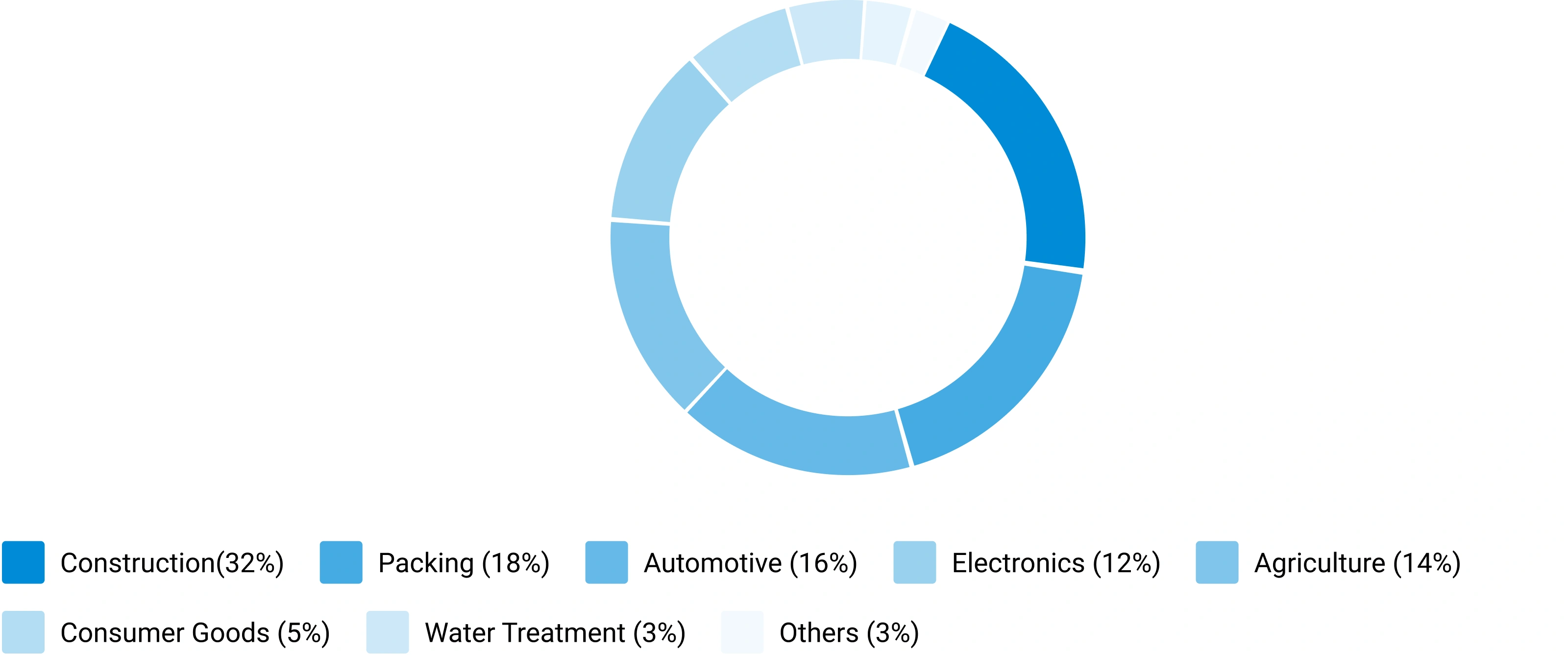
Chemical demand is evaluated across automotive, construction, packaging, electronics, agriculture, healthcare, consumer goods, industrial manufacturing, energy and utilities, and water treatment. Industry output, production trends, and consumption intensity are analyzed to determine demand patterns.
Consumption Modeling
Demand is estimated using measurable indicators: kilograms per vehicle, kilograms per square meter of construction, dosage per cubic meter of water treated, kilograms per hectare of agricultural land, and kilograms per ton of manufactured products. Consumption factors are validated through industry publications and primary interviews.
Application Analysis
The market is segmented by application area to understand product performance requirements, formulation trends, technology adoption, customer preferences, and regulatory requirements improving demand accuracy and segmentation granularity.
Demand-Side Assessment — End-Use Industry Demand Distribution
Illustrative distribution of chemical & materials demand across key end-use industries
Phase 4 - Trade Flow Analysis: Balancing Regional Supply and Demand
Trade flow analysis reconciles regional supply and demand estimates through import and export data, identifying net supply positions, regional dependencies, and market imbalances. It serves as an independent validation layer that tests the consistency of supply-side and demand-side estimates.
Import Analysis
Import data is evaluated to determine volumes, source countries, product dependency, regional supply gaps, and pricing trends — identifying markets that rely heavily on external supply and where domestic production is insufficient to meet demand.
Export Analysis
Export assessments reveal production surplus, export competitiveness, regional manufacturing strength, and global market participation. Export patterns also help validate domestic production estimates and identify net exporting regions.
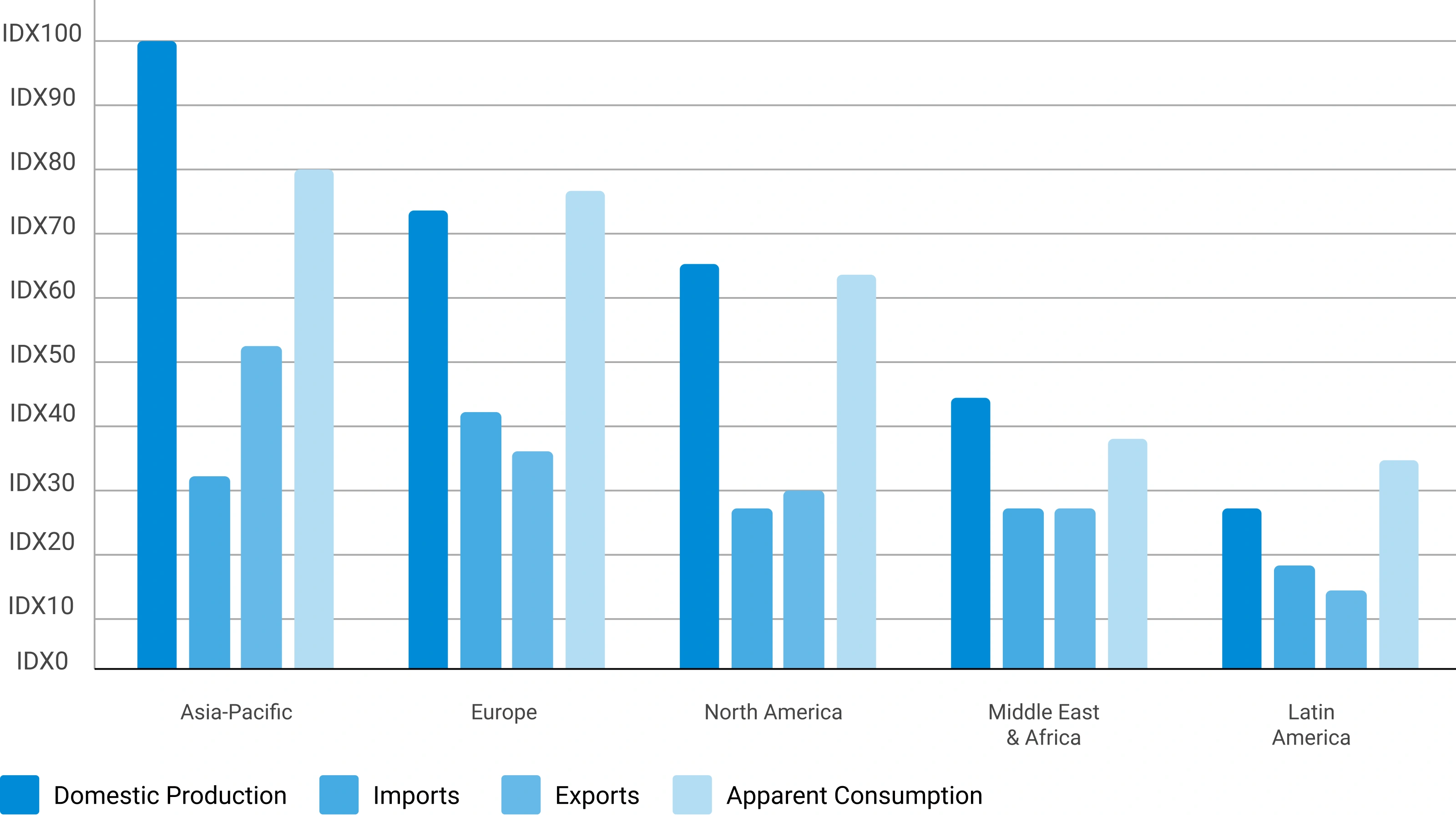
Apparent Consumption Model
Regional consumption is assessed using the standard apparent consumption formula:
Results identify net importing regions, net exporting regions, regional deficits, and surpluses — serving as an independent validation of supply and demand estimates.
Trade Flow Analysis — Net Supply Position by Region
Illustrative apparent consumption vs. domestic production across major regions — positive gap indicates net import dependency
Phase 5 — Primary Research: The Critical Validation Layer
Primary research tests and refines findings from secondary research through direct engagement with industry participants across the supply chain, demand side, and expert community. It captures intelligence that no database or published report can provide — the real-world experience of manufacturers, buyers, and specialists operating in the market.

Supply-Side Interviews
Conversations with chemical manufacturers, raw material suppliers, contract manufacturers, technology providers, and plant operators cover production trends, capacity utilization, pricing developments, technology shifts, and competitive dynamics.

Demand-Side Interviews
Engagement with OEMs, industrial consumers, procurement managers, distributors, formulators, and end-use manufacturers focuses on consumption trends, purchasing behavior, product substitution, demand outlook, and emerging applications.

Industry Expert Consultations
Additional interviews with industry consultants, independent experts, regulatory specialists, technical professionals, and research institutions provide deeper market context and validate key analytical assumptions.
Focus Areas of Primary Research:
Market Size & Forecast Validation
Revenue estimates, volume consumption, growth rates, forecast assumptions, regional demand.Supply Chain & Value Chain Assessment
Raw material sourcing, supply chain challenges, distribution networks, procurement practices.Production & Capacity Analysis
Manufacturing capacity, utilization rates, expansion projects, plant investments.Pricing & Cost Structure Analysis
Product pricing trends, feedstock costs, energy costs, margin pressures, pricing outlook.Competitive Landscape Assessment
Volume and value estimates confirmed to be fully consistent with one another before publicationInterview Volume by Market Scope
| Study Scope | Number of Interviews |
|---|---|
| Niche Market | 20 – 30 |
| Mid-Sized Market | 30 – 50 |
| Global Market | 50 – 80 |
| Highly Fragmented Market | 80 – 120 |
Interview Details:
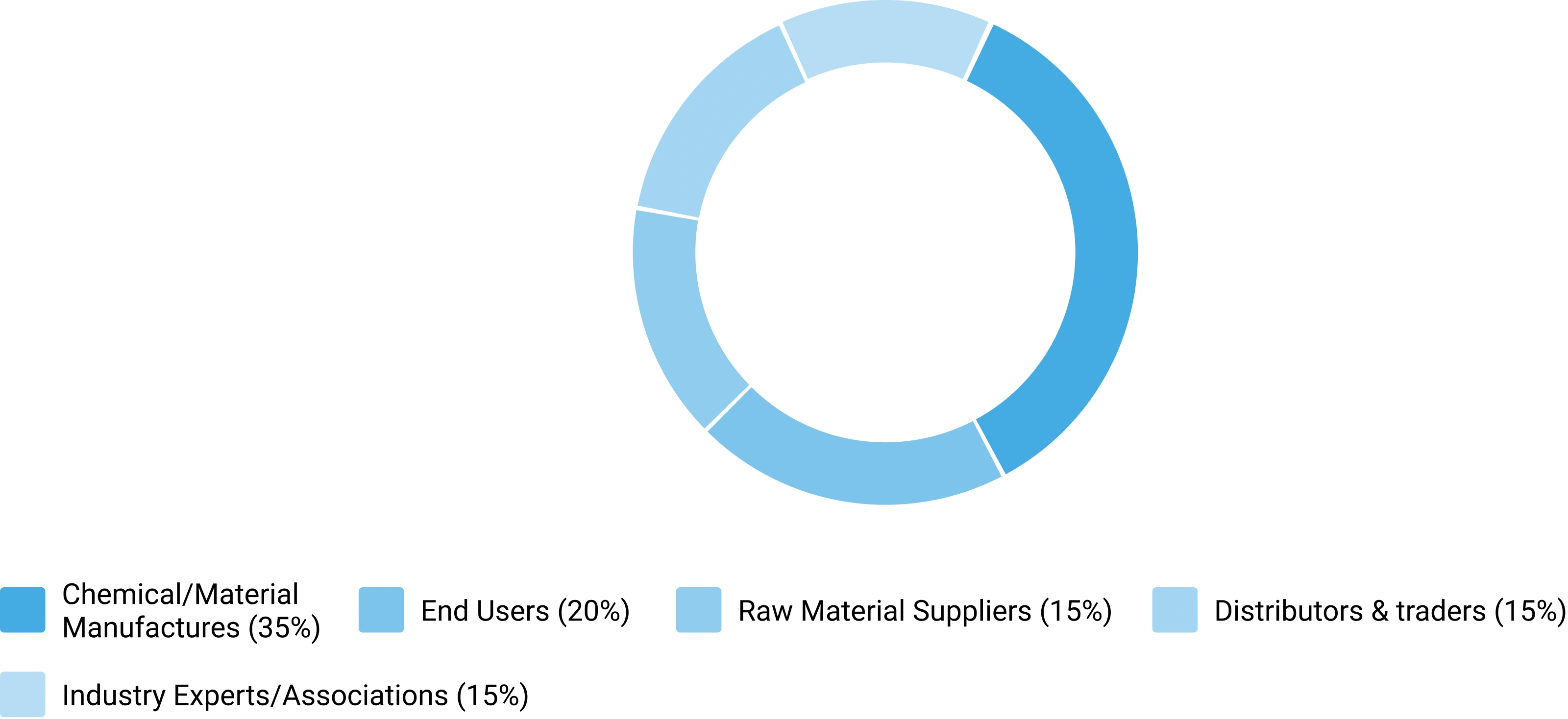
Category : Manufacturers, Suppliers, Distributors, End Users, Experts/Associations
Average Duration : 30–60 Minutes
Interview Mode : Video calls, telephonic interviews, expert consultations
Interview Format : Structured / Semi-Structured questionnaire
Focus Areas of Primary Research:
Market Size & Forecast Validation :
Revenue estimates, volume consumption, growth rates, forecast assumptions, regional demand.
Supply Chain & Value Chain Assessment :
Raw material sourcing, supply chain challenges, distribution networks, procurement practices.
Production & Capacity Analysis :
Manufacturing capacity, utilization rates, expansion projects, plant investments.
Pricing & Cost Structure Analysis :
Product pricing trends, feedstock costs, energy costs, margin pressures, pricing outlook.
Competitive Landscape Assessment :
Market share, competitor positioning, strategic initiatives, partnerships, acquisitions.
Primary Research — Stakeholder Coverage by Category
Distribution of interview respondents across stakeholder categories (% share from PPT data)
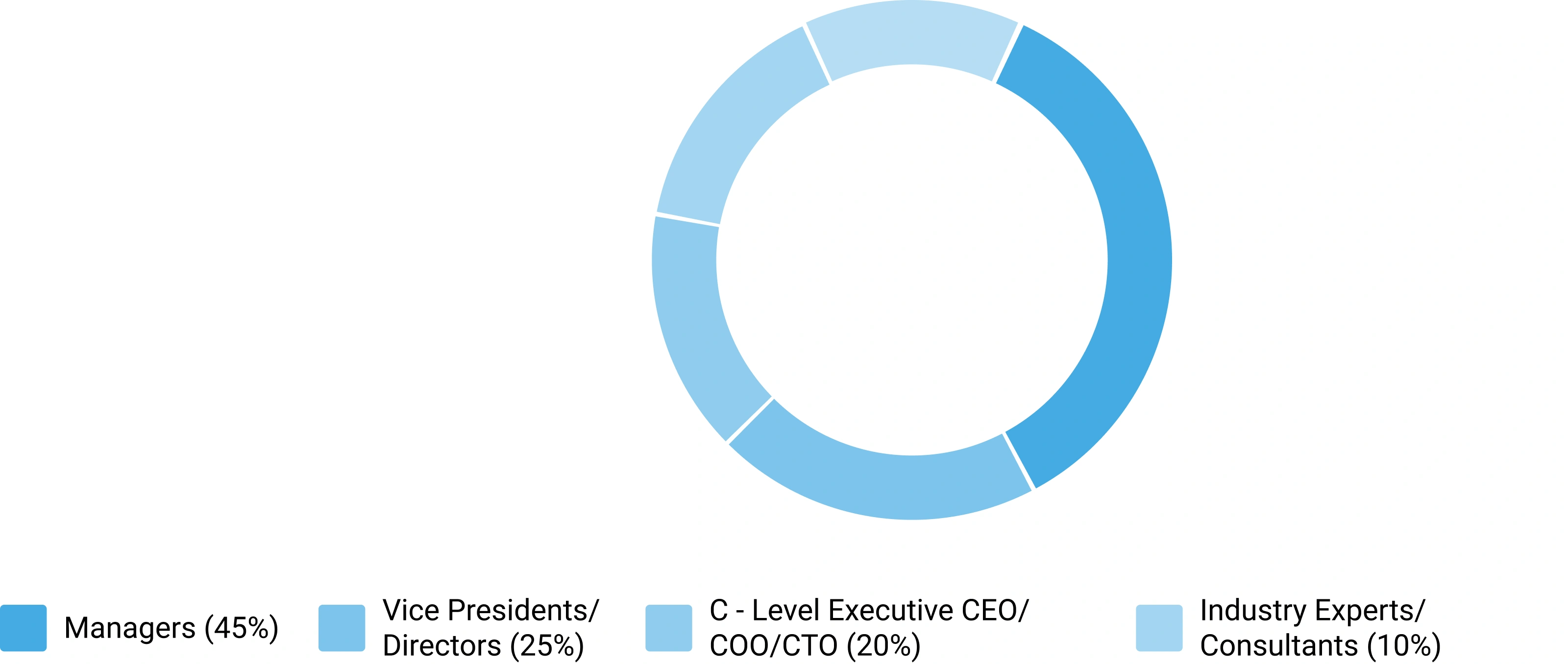
Primary Research — Respondent Designation Profile
Seniority breakdown of interview respondents (% share from PPT data)
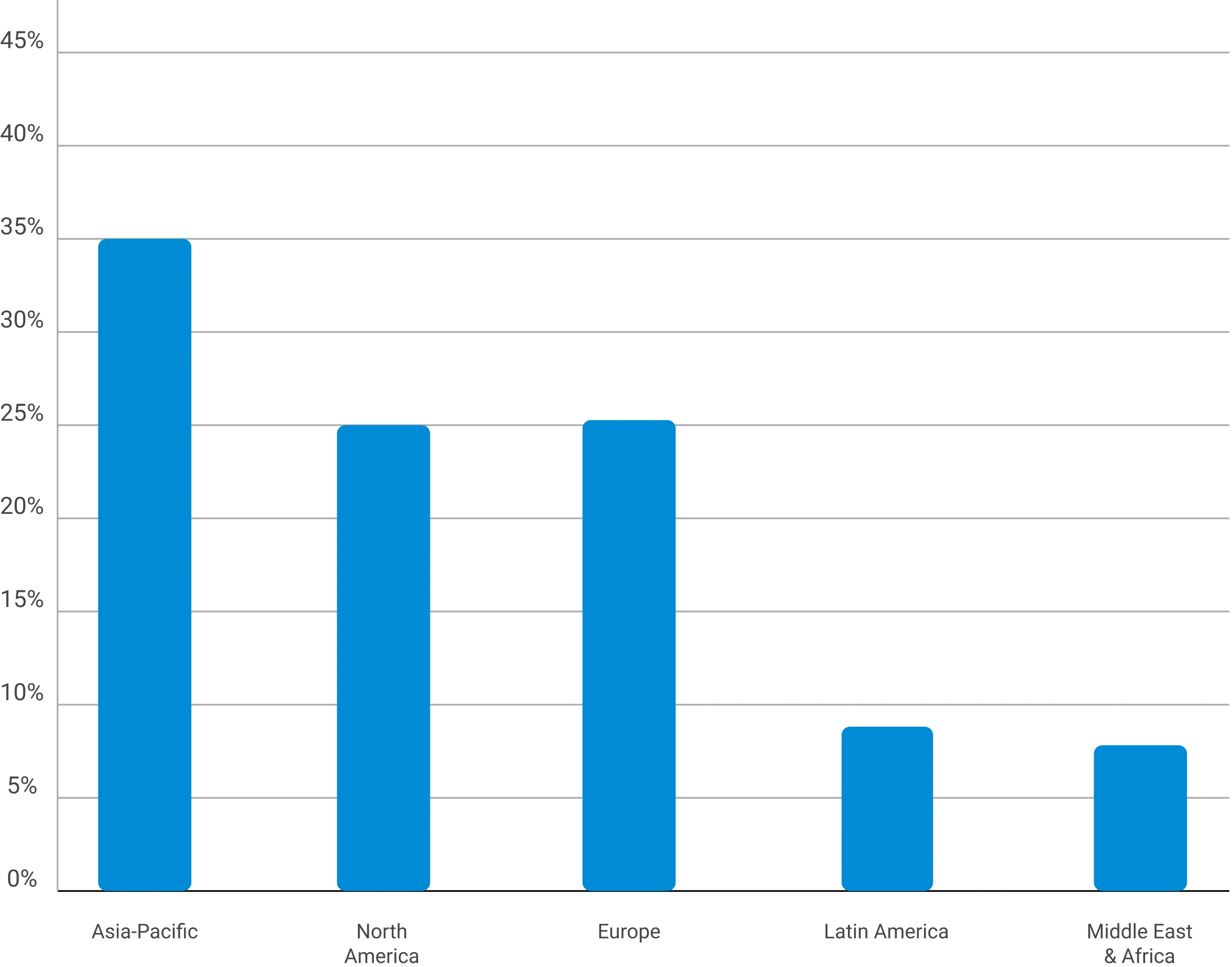
Primary Research — Geographic Coverage of Interviews
Regional distribution of primary research engagement (% share from PPT data)
Phase 6 — Data Triangulation and Market Validation
No single methodology is relied upon in isolation. Multiple independent estimation approaches are combined and reconciled to ensure consistency, accuracy, and analytical defensibility. Any material deviations between approaches are investigated and adjusted through additional validation cycles.
The final market size is derived through weighted triangulation of all validated methodologies. Any material deviations between approaches are investigated and adjusted through additional validation cycles. The outcome represents the most realistic assessment of the market based on available evidence and expert confirmation ensuring that volume and value estimates are fully consistent with one another.
Triangulation Framework — Input Contribution Weight
Relative weight each sizing input contributes to the final reconciled market estimate
Phase 7 — Forecast Modeling: Projecting Future Market Evolution
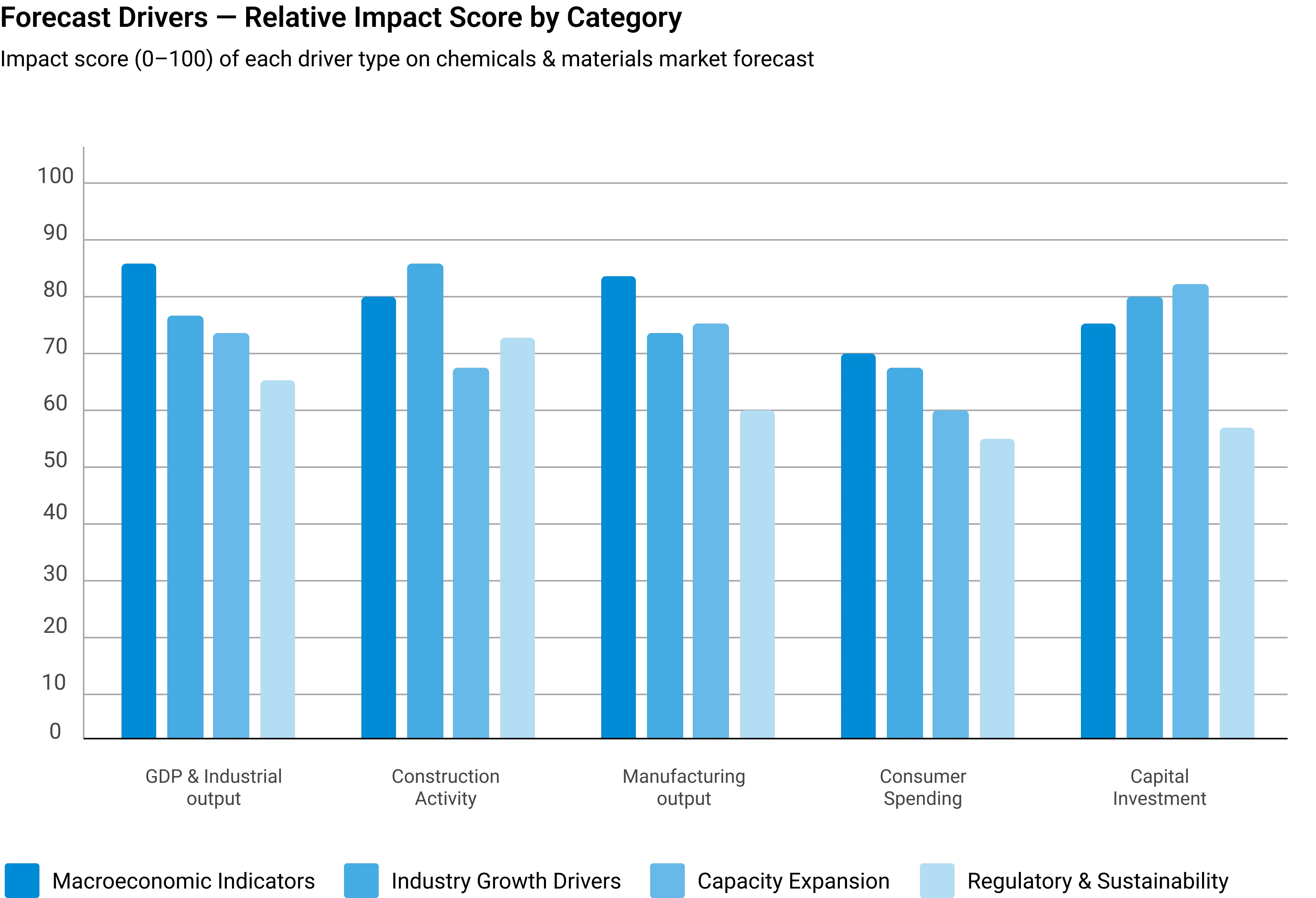
Forecasting evaluates the future trajectory of the market using a combination of quantitative indicators and qualitative assessments across economic, industry, and regulatory dimensions. Rather than simple extrapolation, each driver is independently modeled and integrated into a composite forecast.
Macroeconomic Indicators
GDP growth, industrial production, manufacturing output, construction activity, consumer spending, and capital investment form the quantitative foundation of long-term demand projections. These are applied at country, regional, and global levels.
Industry Growth Drivers
Urbanization, infrastructure development, industrialization, technological innovation, sustainability initiatives, and evolving product performance requirements are assessed at regional and industry levels — capturing both structural and cyclical demand drivers.
Capacity Expansion Analysis
Announced plant expansions, new manufacturing facilities, technology upgrades, and strategic investments are evaluated to determine future supply-demand dynamics and potential market tightness or oversupply situations.
Regulatory & Sustainability
Environmental regulations, chemical safety standards, emission reduction targets, circular economy initiatives, and sustainability requirements are incorporated as they often influence product adoption rates and market growth trajectories.
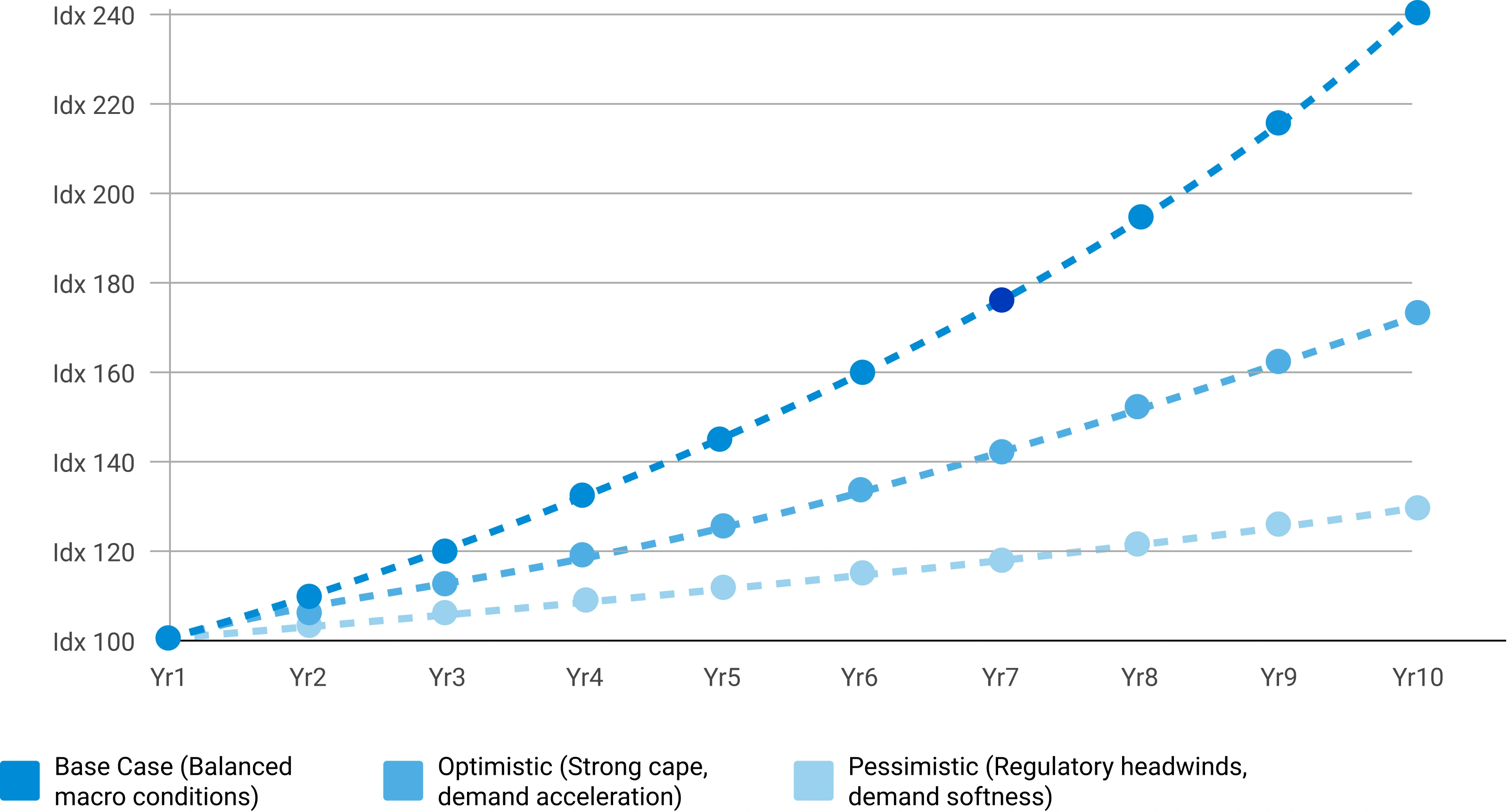
Scenario Forecast Range — Indexed Market Growth (Year 1–10)
Illustrative indexed growth trajectories across Base, Optimistic, and Pessimistic scenarios over a 10-year forecast horizon
Forecast Drivers — Relative Impact Score by Category
Impact score (0–100) of each driver type on chemicals & materials market forecast



Comments
Share your thoughts, ask a question, or provide feedback about this report.