
Automotive Chemicals Market Size, Competitive Landscape Analysis Report 2035
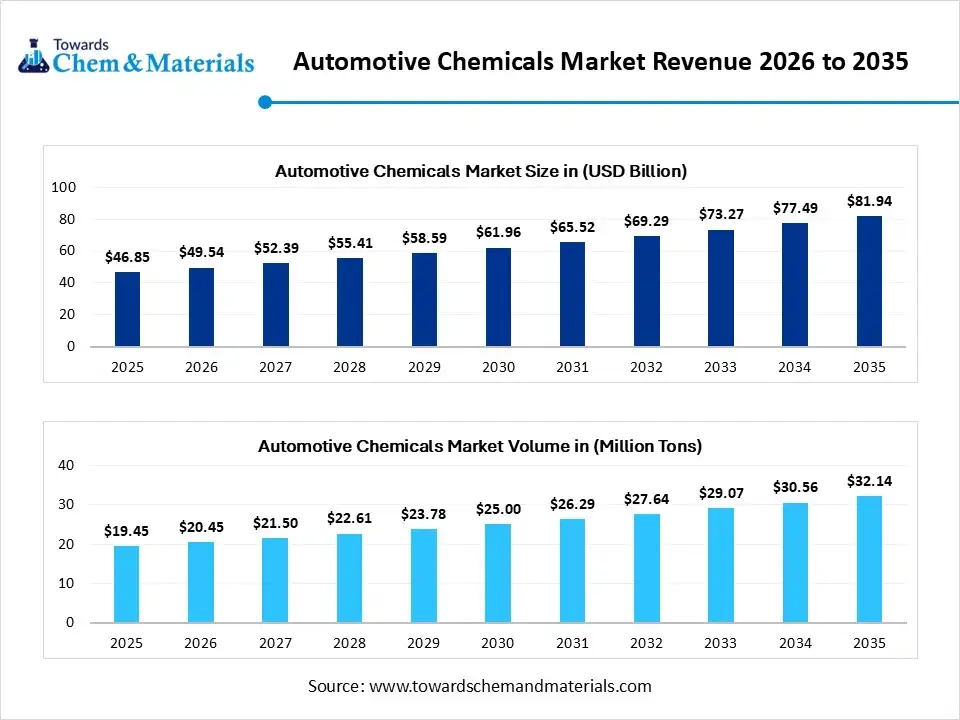
The global automotive chemicals market expansion is driven by increasing vehicle production volumes, stringent emissions regulations, and rising consumer demand for high-performance synthetic lubricants and lightweight polymer composites.The global automotive chemicals market size was estimated at USD 46.85 billion in 2025 and is expected to be worth around USD 81.94 billion by 2035, growing at a CAGR of 5.75% from 2026 to 2035. In terms of volume, the automotive chemicals industry is projected to grow from 19.45 million tons in 2025 to 32.14 million tons by 2035, exhibiting a compound annual growth rate (CAGR) of 5.15% over the forecast period from 2026 to 2035. The expansion is supported by demand for sustainable chemicals, the regulatory framework, and the shift towards automotive lightweighting and e-mobility. The automotive chemicals function as a key to operational efficiency and superior lifecycle management. The rising demand for specialty chemicals, including synthetic lubricants, transmission fluids, and coolants in combustion engines, is boosting growth. The rising urbanization is driving the transition towards electric mobility aligned with substantial R&D investments in battery formulation using polyurethane adhesives.
The OEM and aftermarket retailers focus on sustainable chemicals and recycling practices that enable a shift towards the adoption of bio-based chemicals and low-VOC coatings to meet stringent environmental regulations. Additionally, modern automotive infrastructure focuses on lightweighting and performance engineering, which accelerate the demand for specialized chemicals.
Market Highlights
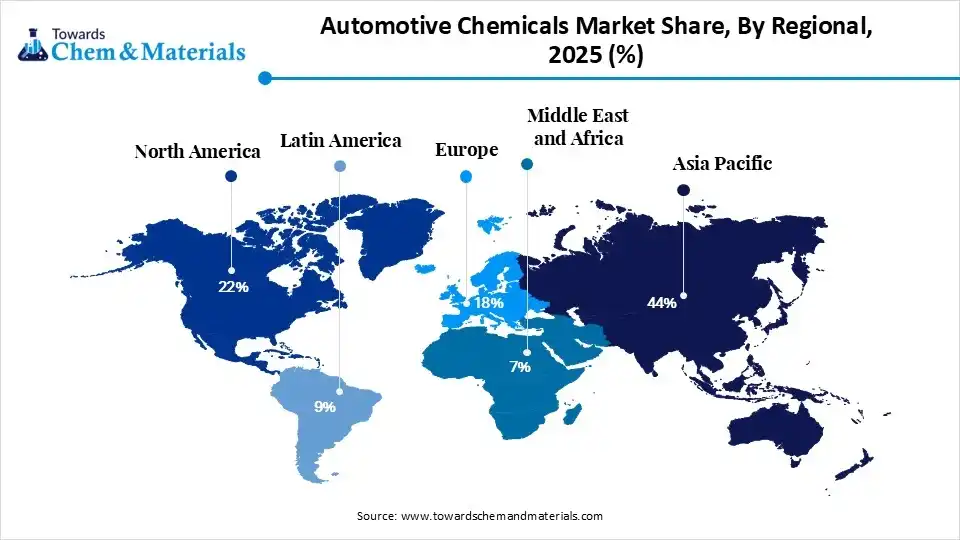
- By region, Asia Pacific dominated the automotive chemicals market by holding 44% share in 2025 and is expected to grow at the fastest with a CAGR of 6.5% during the forecast period.
- By region, North America held the 22% market share in 2025 and expects notable growth in the market with 5.20% CAGR during the forecast period.
- By product type, the lubricants segment dominated the market with the largest share of 38% in 2025
- By product type, the adhesives & sealants segment held 10% market share in 2025 and is expected to grow at the fastest CAGR of 6.2% over the forecast period.
- By vehicle type, the passenger vehicles segment dominated the market with the largest share of 52% in 2025
- By vehicle type, the electric vehicles segment held 20% market share in 2025 and is expected to grow at the fastest CAGR of 7.8% over the forecast period.
- By application, the engine segment dominated the market with the largest share of 34% in 2025
- By application, the exterior segment held 18% market share in 2025 and is expected to grow at the fastest CAGR of 5.9% over the forecast period.
- By distribution channel, the aftermarket segment dominated the market with the largest share of 58% in 2025 and is expected to grow at the fastest CAGR of 6.1% over the forecast period.
- By end-use, the automotive maintenance & repair segment dominated the market with the largest share of 55% in 2025 and is expected to grow at the fastest CAGR of 5.9% over the forecast period.
- By chemical composition, the organic chemicals segment dominated the market with the largest share of 62% in 2025
- By chemical composition, the inorganic chemicals segment held 38% market share in 2025 and is expected to grow at the fastest CAGR of 5.8% over the forecast period.
Market Size and Volume Forecast
- Market Estimated Size (2025): USD 46.85 Billion | CAGR (2026–2035): 5.75%
- Market Projected Size (2035): USD 81.94 Billion
- Market Volume (2025): 19.45 Million Tons | Volume CAGR (2026–2035): 5.15%
- Market Projected Volume (2035): 32.14 Million Tons
- Market Pricing (2025):
- Average Manufacturing Price: USD 1,930 per ton
- Average Selling Price: USD 2,550 per ton
- Pricing CAGR (2025–2035): 3.11%
Recent Market Trends
- Transition Towards Sustainability: The automotive industry focuses on green chemistry that enables low-VOC formulation in automotive components and bio-based lubricants to meet sustainability goals.
- EV-Driven Formulation: The consumers' demand for electric mobility accelerates the adoption of chemicals for the development of single-circuit fluids and specialized battery cooling fluids to improve energy efficiency.
Key Technological Shifts and AI in the Automotive Chemicals Market
The computational fluid dynamics and AI-driven engineering in automotive infrastructure are key catalysts for advancement. The digital integration enables the R&D to implement high-throughput screening of chemical iterations for thermal stability and oxidation resistance. The green synthetic AI optimizes catalytic reactions during vehicle production by lowering energy use and toxic chemical byproducts.
The advancement of low-viscosity lubricants and smart polymers allows monitoring of chemical degradation rate through real-time monitoring. The automated laboratory robotics enables electrolytic purity and non-coating precision in electric vehicles in demand. The modern propulsion system is allowing regulatory transparency and consumer safety by detecting chemical toxicity.
Supply Chain Analysis of the Automotive Chemicals Market
- Raw Chemical Sourcing and Mineral Extraction: The key stage of extraction of base oil, petrochemicals, battery minerals, rare earth metals, and bulk polymers utilized in automotive manufacturing
- Key Players: Exxonmobil, Albemarle Corporation, LyondellBasell, Saudi Aramco, CATL, and Sinopec
- Formulation and Specialty Manufacturing: The key stage where chemicals are blended into specialized automotive-grade products. The stage involves chemical formulation for OEMs like coolants, paints, and system integration in braking systems.
- Key Players: BASF SE, Bosch, AkzoNobel, Denso, PPG Industries, ZF Friedrichshafen, 3M Company, and The Sherwin-Williams Company
- OEM Assembly and Aftermarket: The final stage of distribution of the product to automakers for the utilization of large-scale production-grade chemicals. The retailers sell consumer-facing chemicals through aftermarket retail channels.
- Key Players: Volkswagen, IMCD Group, O'Reilly Auto Parts, Toyota, Univar Solution, Turtle Wax, and Hyundai
Regulatory Framework: Automotive Chemicals Market
| Region | Key Regulation | Regulatory Focus |
| Global | GHS, ISO standards, and OECD | Standardization of safety data sheets for toxic additives and polymers |
| North America | EPA Regulation, CARB, and TSCA | Stringent VOC limits for brake system and non-chlorinates solvent, CAFÉ fuel efficiency |
| Asia Pacific | GB Standard, METI, Bharat Stage | Dielectric safety for EV fluids and water-borne OEM paints, NEV battery recycling, and adoption of green solvents. |
| Europe | REACH, CLP, and Euro 7 | Focus on the elimination of PFAS in lubricants and low-toxicity coolants and chemical purity. |
Automotive Chemicals Market Dynamics
Driver
Urbanization aligns with Regulatory Compliances
The rising urban population demand for passenger and commercial vehicles in emerging economies is boosting automotive chemicals consumption and the aftermarket appearance of chemicals. The dense population is facing urban heat issues and air pollution that drives automotive service hubs to focus on biodegradable formulations. Consumer awareness is prompting manufacturers to utilize advanced exhaust aftertreatment chemicals and eco-friendly formulations to meet strict emission goals. The tightened governmental regulation is pushing the automakers to use fuel additives and diesel exhaust fluids by maintaining waste management and emission control.
Restraints
Higher Manufacturing Costs
The rising shift towards specialized EV formulation and sustainable chemical sourcing enables the higher operational cost, which limits the production and sourcing of feedstock for startups and medium-scale automotive companies.
Opportunity
Investments For Battery Technology Innovation
The emerging economies focus on specialized chemicals for modern battery composition and thermal management systems through substantial investment. The high-stakes capital investors focus on dielectric cooling fluid, eco-friendly aqueous binders, fire-retardant intumescent materials for fast charging, longevity, and temperature control. The massive opportunity drives the chemical recycling and recovery of battery elements and electrolytes in automotive infrastructure. Additionally, funding goals for silicon-anode stabilizers and hydrometallurgical recycling agents to meet circular economy targets and ESG standards.
Segmental Insights
Product Type Insights
The Lubricants Segment Dominated the Automotive Chemicals Market with 38% of Market Share in 2025
The lubricants segment dominated the market with the largest share of 38% in 2025, driven by a rising focus on mechanical integrity and enhancing fuel efficiency in vehicles. Lubricants act as friction-reducing agents that involve engine oils, brake fluids, transmission fluids, and gear oils. The automotive sector is shifting towards ultra-thin e-fluids formulation with higher copper compatibility and lower internal drag to meet carbon neutrality goals. Additionally, consumer demand for lubricants for vehicle lifecycle extension and viscosity stability.
The adhesives & sealants segment held the 10% market share in 2025 and is expected to grow at the fastest CAGR of 6.2% over the forecast period. The modern vehicles focus on automotive lightweighting, which is driving the adoption of high-performance bonding agents like structural adhesives, threadlockers, and gasket sealants. The adhesives & sealants provide stress distribution and act as barriers to dampen NVH. The shift towards electrification is driving the segment adoption for battery pack assembly by maintaining thermal and dielectric insulation.
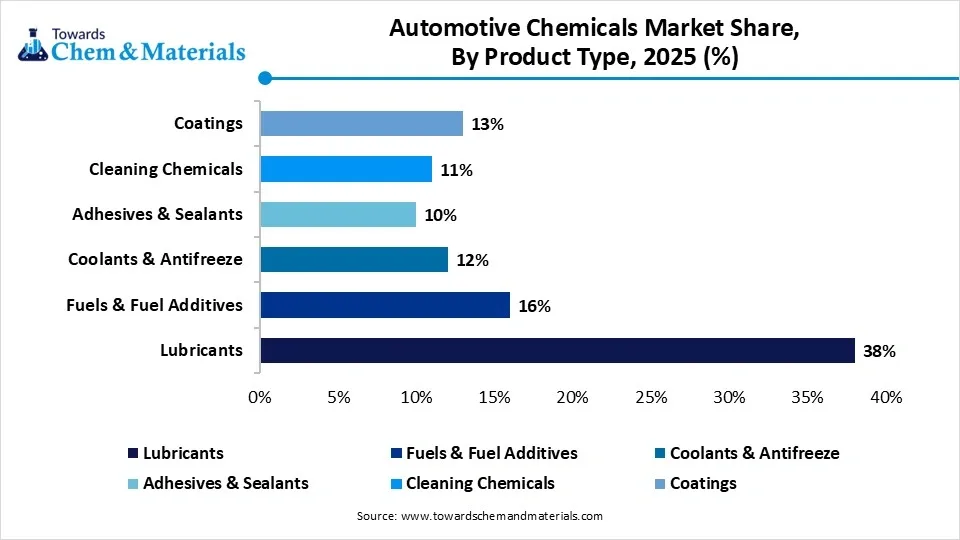
The fuels & fuel additives segment held the 16% market share in 2025. It serves as a key interface for energy efficiency and engine sustainability. This segment involves gasoline additives, diesel additives, octane improvers, and cetane improvers that improve fuel system hygiene and lower the accumulation of carbonaceous deposits on fuel injectors. The automaker invests in multifunctional additives for renewable diesel, low-carbon e-fuels, and bio-ethanol blends that boost the demand for fuel additives.
Vehicle Type Insights
The Passenger Vehicles Segment Dominated the Automotive Chemicals Market with 52% of Market Share in 2025
The passenger vehicles segment dominated the market with the largest share of 52% in 2025. The rising consumer ownership and frequent [preventative maintenance enable growth. The passenger preferred high-performance lubricant, fuel additives, and aesthetic detailing in vehicle components for higher fuel economy and longevity of engine life. The consumer demand for low-VOC interior cleaners and eco-friendly coatings to meet health compliance.
The passenger shift towards electric vehicles enables a chemical mix to specialized battery cool and noise-damping adhesives to improve cabin comfort.
The commercial vehicles segment held the 28% market share in 2025, due to large-scale industrial consumption and the requirement for higher operation uptime. The automotive sector focuses on heavy-duty lubricants, lightweight components, and high-capacity coolants. The commercial vehicles demand diesel exhaust fluids and emission-neutral additives to meet durability and environmental standards. The logistics shift towards hydrogen fuel cells to maintain vibration profiles and heat loads in transportation.
The electric vehicles segment held the 20% market share in 2025 and is expected to grow at the fastest CAGR of 7.8% over the forecast period. The key shift towards electric mobility is a catalyst for demand for dielectric coolant and thermal interface materials in battery, hybrid, and plug-in hybrid vehicles. The rising innovation in e-fluid to enhance electrical insulation and copper compatibility is accelerating the market growth. The EV boosts the implementation of structural adhesive for EMI protection and lightweighting.
Application Insights
The Engine Segment Dominated the Automotive Chemicals Market with 34% of Market Share in 2025
The engine segment dominated the market with the largest share of 34% in 2025, acting as a key for chemical thermal stability and molecular resilience, where consumer demand for high-performance lubricants and corrosion-resistant coolants. The automotive chemicals offer optimal combustion efficiency and superior heat dissipation to meet decarbonization commitments. As engine designs downsize and use turbocharging that enables a shift towards low-viscosity synthetics and advanced oxidation inhibitors.
The transmission system segment held the 20% market share in 2025, serving as a high-precision torque-transfer fluid for hydraulic medium and gear protection. The automotive chemicals are formulated with friction modifiers that enhance material compatibility and prevent mechanical shudder. The transition towards continuously variable transmission and shear-stable synthetic fluids to ensure stable viscosity index, making them key for high-efficiency drivetrains.
The exterior segment held the 18% market share in 2025 and is expected to grow at the fastest CAGR of 5.9% over the forecast period. The rising focus on advanced substrate chemistry for surface preservation and visual restoration in coating and cleaning is boosting the demand for automotive chemicals. The automakers are adopting ceramic coating, and graphene sealants provide semi-permanent hydrophobic protection to prevent UV oxidation and mechanical abrasion. Additionally, the shift towards water-borne systems is to maintain high-gloss aesthetic finishes.
The braking system segment held the 14% market share in 2025, due to its glycol-ether and borate ester formulation that offers chemical stability and hygroscopic resistance. It is a key application for hydraulic energy transfer fluids to balance incompressible volume. The rising electrification and autonomous braking make it key for electronic actuators and high-pressure hydraulic pumps.
Distribution Channel Insights
Aftermarket Segment Dominated the Automotive Chemicals Market with 58% of Market Share in 2025
The aftermarket segment dominated the market with the largest share of 58% in 2025 and is expected to grow at the fastest CAGR of 6.1% over the forecast period. The growth is accelerated by a continuous cycle of vehicle servicing and aesthetic maintenance through its network of independent repair shops, specialty retail stores, and e-commerce hubs. The aftermarket is key for high-margin additives, fuel-system cleaners, and surface protectants for long-term operational reliability. Aftermarket is dependent on just-in-time logistics and retail branding that strengthens dominance for regulatory emission compliance and preventative care.
The OEM segment held the 42% market share in 2025, represent as high-precision manufacturing pathway where automotive chemicals are used in initial assembly and structural reliability. The large-scale industrial agreement and strict technical validation enable OEMs to set standards for warranty and safety. The OEM channel is a key pillar for technological innovation, especially for lightweighting adhesive, battery-cell sealants, lubricant, and electro-deposition coating by ensuring component integration and long-term system reliability.
End-Use Insights
The Automotive Maintenance & Repair Segment Dominated the Automotive Chemicals Market with 55% of Market Share in 2025
The automotive maintenance & repair segment dominated the market with the largest share of 55% in 2025 and is expected to grow at the fastest CAGR of 5.9% over the forecast period, driven by its role in the vehicle lifecycle support system. The rising focus on component preservation and mechanical restoration drives the demand for solvent-based degreasers, high-performance additives, and preventative fluids. Automotive maintenance & repair offers service-driven engine flushes, leak-detection dyes, and injector cleaners that are compliant with emission targets.
The automotive manufacturing segment held the 45% market share in 2025, driven by an increasing focus on initial assembly and structural integrity. The shift towards factory-fill e-fluids and thermal interface materials is driving the segment growth. The integration of dielectric potting compounds and fire-retardant sealants in automotive manufacturing makes automotive chemicals key to the assembly process.
Chemical Composition Insights
Organic Chemicals Segment Dominated the Automotive Chemicals Market with 62% of Market Share in 2025.
The organic chemicals segment dominated the market with the largest share of 62% in 2025. It is a key molecular framework that contains carbon-based structures to engineer synthetic esters, advanced polymers, and polyalphaolefins that offer higher viscosity and thermal stability. The automotive sector is transitioning towards green chemistry and petroleum-based hydrocarbons to create biodegradable solvents and carbon-neutral lubricants. The organic chemicals ensure elastomer compatibility and oxidative resistance in a complex vehicle operational system.
The inorganic chemicals segment held the 38% market share in 2025 and is expected to grow at the fastest CAGR of 5.8% over the forecast period, functioning as a key mineral-based catalyst and passivation agents comprising metallic salts, oxides, and silicates to manufacture protective mineral films by avoiding galvanic corrosion. Inorganic precious metals are key for neutralization of hazardous emissions in exhaust aftertreatment. The rising investment in ceramic-based inorganic and lithium-salt electrolytes is driving the demand for a modern battery framework.
Regional Insights
How Did the Asia Pacific Dominated the Automotive Chemicals Market in 2025?
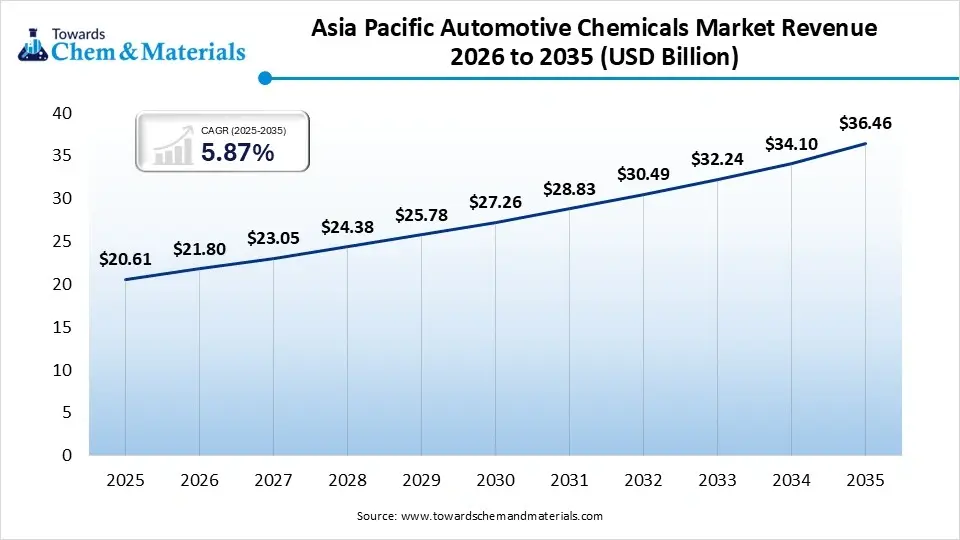
The Asia Pacific Automotive Chemicals Market size was estimated at USD 20.61 billion in 2025 and is projected to reach USD 36.46 billion by 2035, growing at a CAGR of 5.87% from 2026 to 2035. Asia Pacific dominated the market by holding 44% share in 2025 and is expected to grow at the fastest with a CAGR of 6.5% during the forecast period. It is a key manufacturing hub for large-scale industrial assembly and consumption of OEM structural adhesive and lubricants. The region is shifting towards electric vehicles, advanced fuel detergents, and selective catalytic reduction. The strong government support for thermal manufacturing chemistry and stringent air quality standards make the Asia Pacific a leader in next-generation transport and battery technology innovation.
China Automotive Chemicals Market Growth Trends
China market is key for R&D laboratory and e-mobility. The region focuses on sustainable chemistry and high-performance emission-control fluid to meet regional strict regulatory standards. China maintains its leadership in the supply chain of anode binders, electrolyte solvent and thermal interface materials. Additionally, the region is a key implementer of water-borne coating technology that is driving the domestic expansion.
North America Automotive Chemicals Market Growth Trends
North America held the 22% market share in 2025 and is expected to experience notable growth in the market with 5.20% CAGR during the forecast period, due to its advanced aftermarket infrastructure and domestic shift towards EV supply chain. The regional high average vehicle age and consumer awareness make them key drivers for specialty additives and high-mileage lubricants. North America's surge for sourced battery chemicals and thermal management fluids supports the regional growth.
U.S. Automotive Chemicals Market Growth Trends
The United States market is represented as an innovation-driven hub and aftermarket infrastructure. The regional growth is reshaped by its regulatory compliance for the onshoring of critical EV battery chemistries. The regional consumer prefers premium synthetic lubricants that boost the adoption of low-VOC and bio-derived chemical compounds for vehicle manufacturing.
Recent Developments
- In January 2026, ProLogium and Darfon Energy Tech announced a strategic partnership at CES 2026, which aims to launch solid-state battery solutions precisely for e-bikes and light electric vehicles. The partnership addressing demand for performance efficiency and charging capability.(Source: prologium.com)
- In December 2025, NEXTCHEM, a subsidiary of MAIRE, signed an agreement to acquire Ballestra Group, known for advanced fluorine-based materials in lithium-ion batteries with various applications. This acquisition is to strengthen NEXTCHEM to support a global footprint in specialty chemicals by combining with Ballestra Group to support energy transition mandates.(Source: chemindigest.com)
Top Companies in the Automotive Chemicals Market
- DuPont
- Cabot
- The Dow Chemical
- ExxonMobil
- CNPC
- TEE Automotive Chemicals
- Sinopec
- TotalEnergies
- Chevron Corporation
- BP
- ExxonMobil
- Dow Inc.
- BASF SE
- Shell plc
- Valvoline Inc.
- Fuchs Petrolub SE
- Lubrizol Corporation
- 3M
- Liqui Moly GmbH
Segment Covered in the Report
By Product Type
- Lubricants
- Engine Oils
- Mineral Oil
- Synthetic Oil
- Semi-Synthetic Oil
- Transmission Fluids
- Brake Fluids
- Gear Oils
- Engine Oils
- Fuels & Fuel Additives
- Gasoline Additives
- Diesel Additives
- Octane Improvers
- Cetane improvers
- Coolants & Antifreeze
- Ethylene Glycol Based
- Propylene Glycol Based
- Adhesives & Sealants
- Structural Adhesives
- Threadlockers
- Gasket Sealants
- Cleaning Chemicals
- Car Wash Detergents
- Degreasers
- Interior Cleaners
- Coatings
- Paints
- Protective Coatings
- Anti-corrosion Coatings
By Vehicle Type
- Passenger Vehicles
- Hatchbacks
- Sedans
- SUVs
- Commercial Vehicles
- Light Commercial Vehicles
- Heavy Commercial Vehicles
- Electric Vehicles
- Battery Electric Vehicles (BEV)
- Hybrid Electric Vehicles (HEV)
- Plug-in Hybrid Vehicles (PHEV)
By Application
- Engine
- Lubrication
- Cooling
- Transmission System
- Fluid Systems
- Gear Protection
- Braking System
- Hydraulic Fluids
- Exterior
- Coatings
- Cleaning
- Interior
- Upholstery Cleaning
- Surface Protection
By Distribution Channel
- OEM
- Aftermarket
- Retail Stores
- Service Centers
- Online Channels
By End-Use
- Automotive Manufacturing
- Automotive Maintenance & Repair
By Chemical Composition
- Organic Chemicals
- Hydrocarbons
- Additives
- Inorganic Chemicals
- Metal-based Additives
- Salts & Compounds
By Regions
- North America
- U.S.
- Canada
- Mexico
- Europe
- Germany
- UK
- France
- Italy
- Spain
- Asia Pacific
- China
- India
- Japan
- South Korea
- Latin America
- Brazil
- Argentina
- Middle East & Africa
- Saudi Arabia
- South Africa
A Seven-Phase Framework
Our methodology is designed to be universally applicable across commodity chemicals, specialty chemicals, petrochemicals, construction chemicals, coatings, electronic chemicals, industrial gases, agrochemicals, water treatment chemicals, and performance materials. Each phase builds upon the last, creating a layered validation structure that minimizes estimation error and maximizes analytical confidence.
The framework ensures comprehensive market coverage, robust cross-validation, and reliable long-term forecasting — producing market estimates that withstand scrutiny from investors, regulators, and corporate strategy teams.

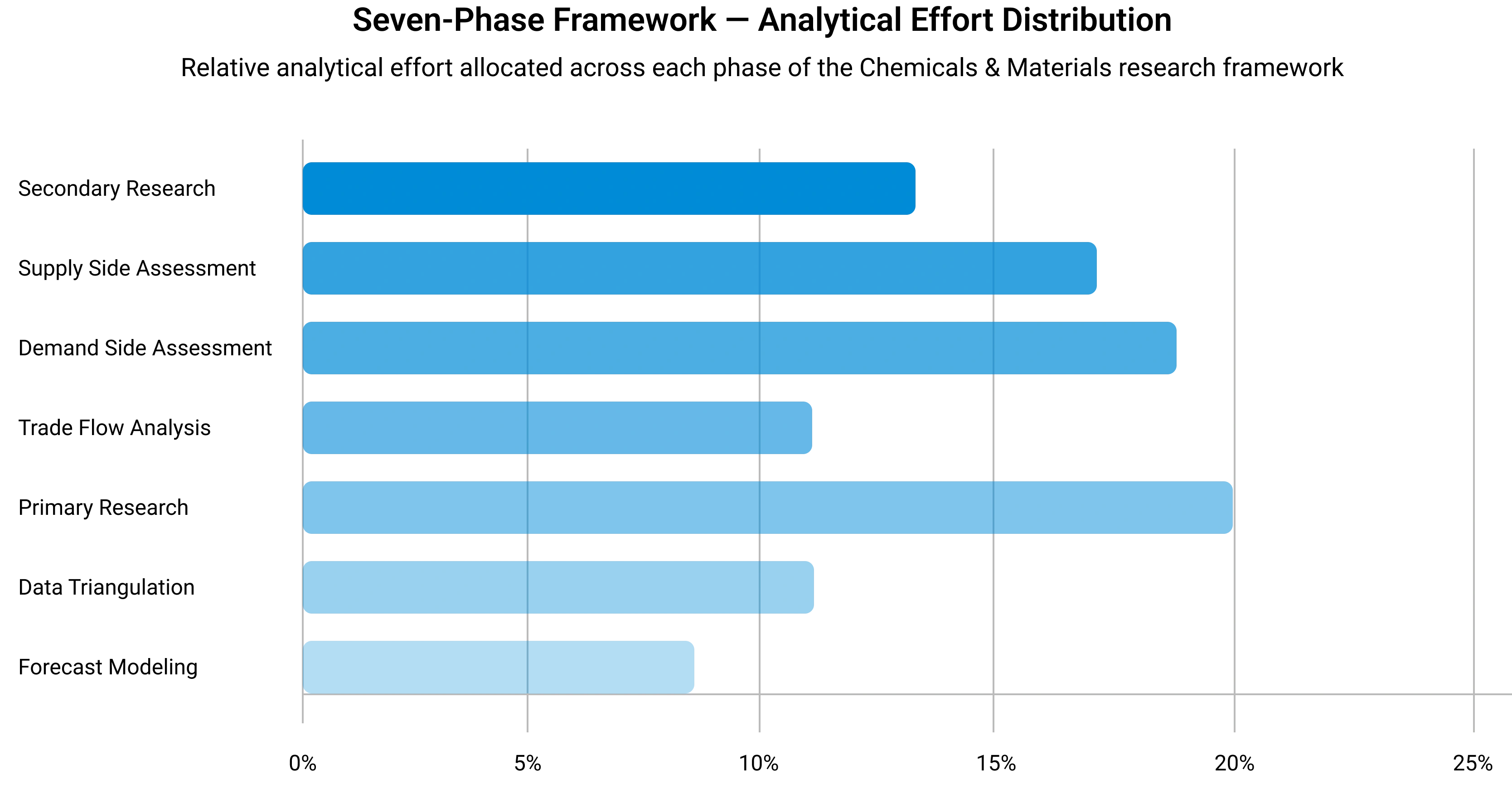
Seven-Phase Framework — Analytical Effort Distribution
Relative analytical effort allocated across each phase of the Chemicals & Materials research framework
Phase 1 - Secondary Research: Establishing the Foundation
Secondary research collects and evaluates publicly available information from authoritative sources, establishing the foundational understanding of market structure, value chain dynamics, competitive landscape, and end-use demand patterns. Every source is evaluated for credibility, recency, geographic relevance, and methodological soundness before inclusion.
Industry Associations
Sources include ACC, CEFIC, ICCA, JCIA, CPCIF, and SOCMA providing production volumes, consumption trends, capacity developments, and sustainability initiatives.
Company Disclosures
Annual reports, investor presentations, earnings transcripts, and regulatory filings reveal product portfolios, manufacturing footprints, capacity expansions, and revenue segmentation.
Government Databases
National statistical offices, customs authorities, environmental agencies, and industrial production databases provide verified statistics on output, trade flows, and regulatory compliance.
Trade Databases
UN Comtrade, ITC, Eurostat, and national customs authorities enable assessment of global product movement, import dependency, and export competitiveness across regions.
Our Secondary Research Sources
- Ministry of Chemicals and Fertilizers
- European Chemicals Agency
- United States Department of Energy
- Ministry of Industry and Information Technology
- Ministry of Economy Trade and Industry
- Ministry of Trade Industry and Energy
- National Institute of Standards and Technology
- Council of Scientific and Industrial Research
- Fraunhofer Society
- National Institute for Materials Science
Phase 2 — Supply-Side Assessment: Mapping Production Capabilities
Production Capacity Analysis
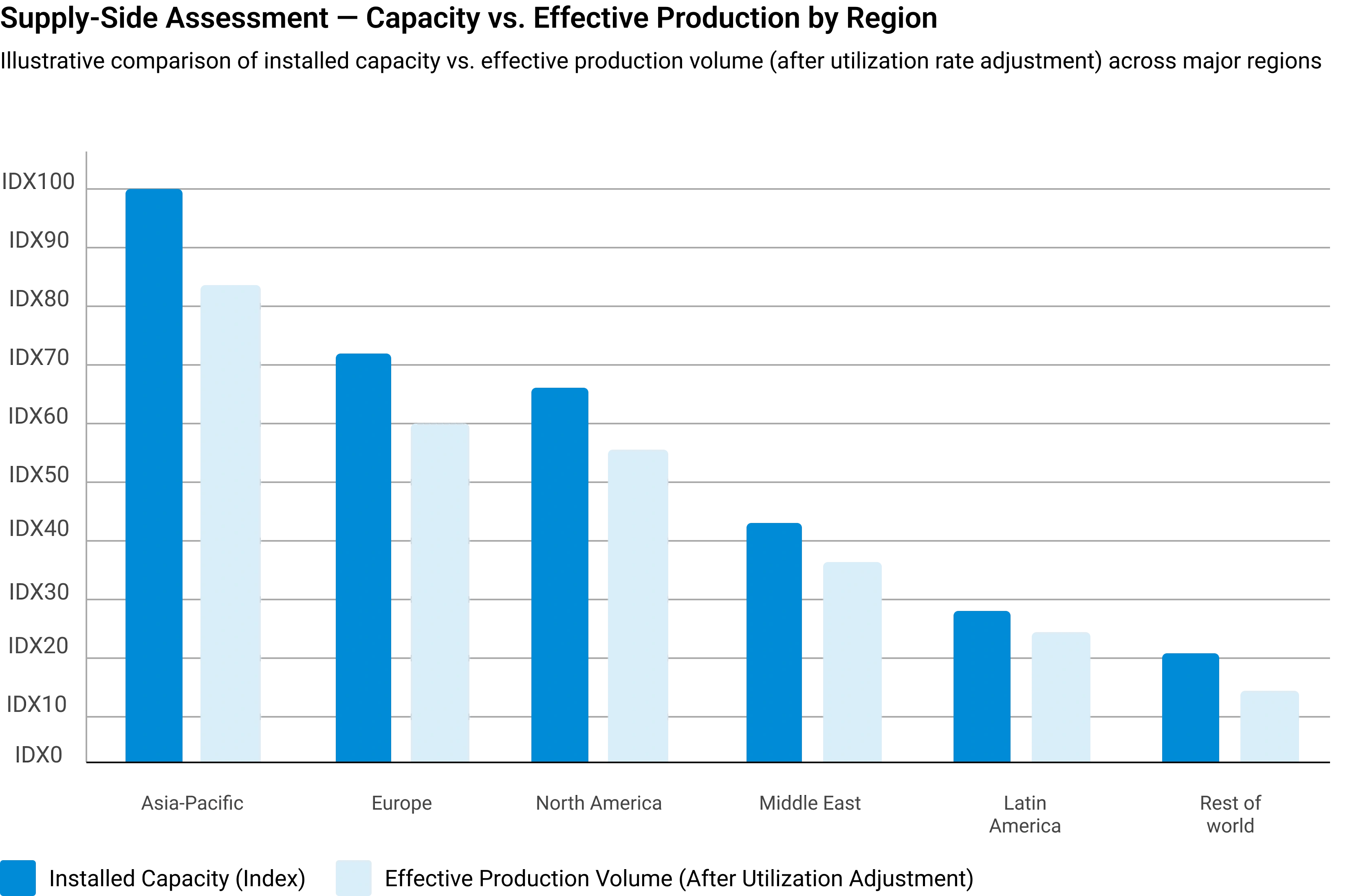
All major manufacturers are assessed for existing installed capacity, planned additions, expansions, new plant announcements, and technology adoption — mapped at global, regional, and country levels.
Capacity Utilization Adjustment
Installed capacity is adjusted using utilization rates based on demand conditions, feedstock availability, plant operating rates, maintenance schedules, and regulatory restrictions.
Manufacturer Revenue Analysis
Product-specific revenues, segment-level performance, regional distribution, average selling prices, and margin trends are evaluated to establish market value estimates.
Supply-Side Assessment — Capacity vs. Effective Production by Region
Illustrative comparison of installed capacity vs. effective production volume (after utilization rate adjustment) across major regions
Phase 3 — Demand-Side Assessment: Quantifying Chemical Consumption
Demand-side analysis quantifies chemical consumption across industries, applications, and geographies — identifying where and how chemicals are consumed throughout the value chain with precision.
End-Use Industry Analysis
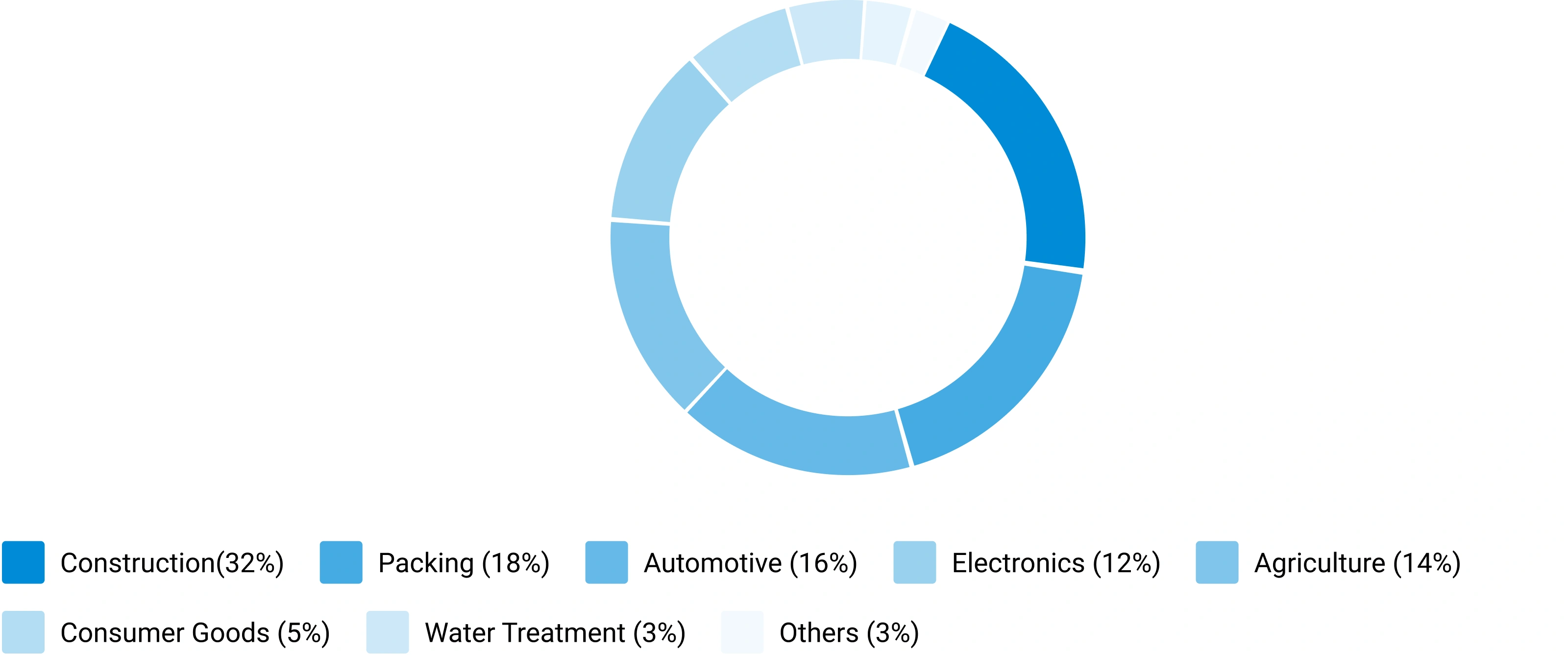
Chemical demand is evaluated across automotive, construction, packaging, electronics, agriculture, healthcare, consumer goods, industrial manufacturing, energy and utilities, and water treatment. Industry output, production trends, and consumption intensity are analyzed to determine demand patterns.
Consumption Modeling
Demand is estimated using measurable indicators: kilograms per vehicle, kilograms per square meter of construction, dosage per cubic meter of water treated, kilograms per hectare of agricultural land, and kilograms per ton of manufactured products. Consumption factors are validated through industry publications and primary interviews.
Application Analysis
The market is segmented by application area to understand product performance requirements, formulation trends, technology adoption, customer preferences, and regulatory requirements improving demand accuracy and segmentation granularity.
Demand-Side Assessment — End-Use Industry Demand Distribution
Illustrative distribution of chemical & materials demand across key end-use industries
Phase 4 - Trade Flow Analysis: Balancing Regional Supply and Demand
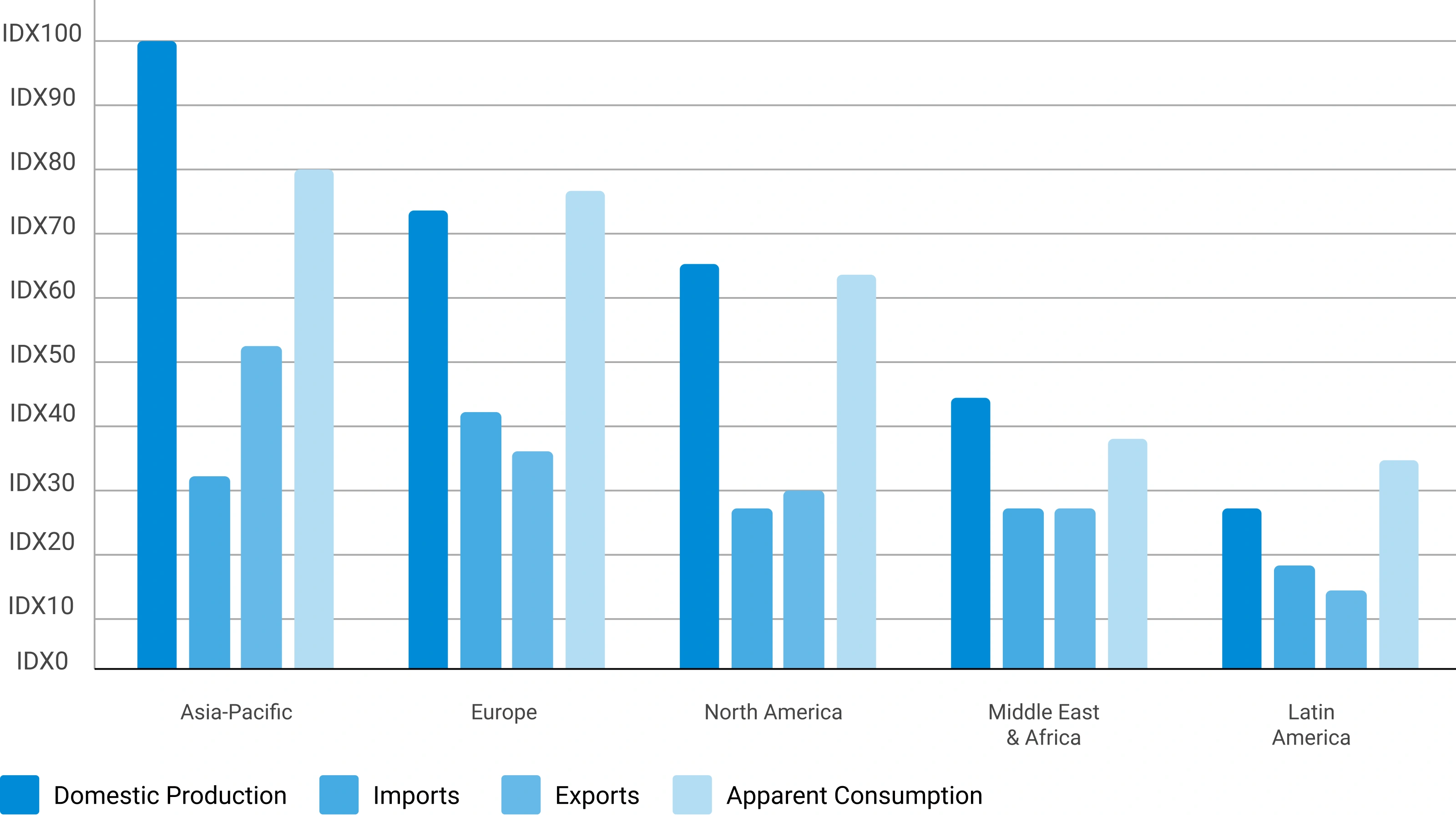
Trade flow analysis reconciles regional supply and demand estimates through import and export data, identifying net supply positions, regional dependencies, and market imbalances. It serves as an independent validation layer that tests the consistency of supply-side and demand-side estimates.
Import Analysis
Import data is evaluated to determine volumes, source countries, product dependency, regional supply gaps, and pricing trends — identifying markets that rely heavily on external supply and where domestic production is insufficient to meet demand.
Export Analysis
Export assessments reveal production surplus, export competitiveness, regional manufacturing strength, and global market participation. Export patterns also help validate domestic production estimates and identify net exporting regions.
Apparent Consumption Model
Regional consumption is assessed using the standard apparent consumption formula:
Results identify net importing regions, net exporting regions, regional deficits, and surpluses — serving as an independent validation of supply and demand estimates.
Trade Flow Analysis — Net Supply Position by Region
Illustrative apparent consumption vs. domestic production across major regions — positive gap indicates net import dependency
Phase 5 — Primary Research: The Critical Validation Layer
Primary research tests and refines findings from secondary research through direct engagement with industry participants across the supply chain, demand side, and expert community. It captures intelligence that no database or published report can provide — the real-world experience of manufacturers, buyers, and specialists operating in the market.

Supply-Side Interviews
Conversations with chemical manufacturers, raw material suppliers, contract manufacturers, technology providers, and plant operators cover production trends, capacity utilization, pricing developments, technology shifts, and competitive dynamics.

Demand-Side Interviews
Engagement with OEMs, industrial consumers, procurement managers, distributors, formulators, and end-use manufacturers focuses on consumption trends, purchasing behavior, product substitution, demand outlook, and emerging applications.

Industry Expert Consultations
Additional interviews with industry consultants, independent experts, regulatory specialists, technical professionals, and research institutions provide deeper market context and validate key analytical assumptions.
Focus Areas of Primary Research:
Market Size & Forecast Validation
Revenue estimates, volume consumption, growth rates, forecast assumptions, regional demand.Supply Chain & Value Chain Assessment
Raw material sourcing, supply chain challenges, distribution networks, procurement practices.Production & Capacity Analysis
Manufacturing capacity, utilization rates, expansion projects, plant investments.Pricing & Cost Structure Analysis
Product pricing trends, feedstock costs, energy costs, margin pressures, pricing outlook.Competitive Landscape Assessment
Volume and value estimates confirmed to be fully consistent with one another before publicationInterview Volume by Market Scope
| Study Scope | Number of Interviews |
|---|---|
| Niche Market | 20 – 30 |
| Mid-Sized Market | 30 – 50 |
| Global Market | 50 – 80 |
| Highly Fragmented Market | 80 – 120 |
Interview Details:
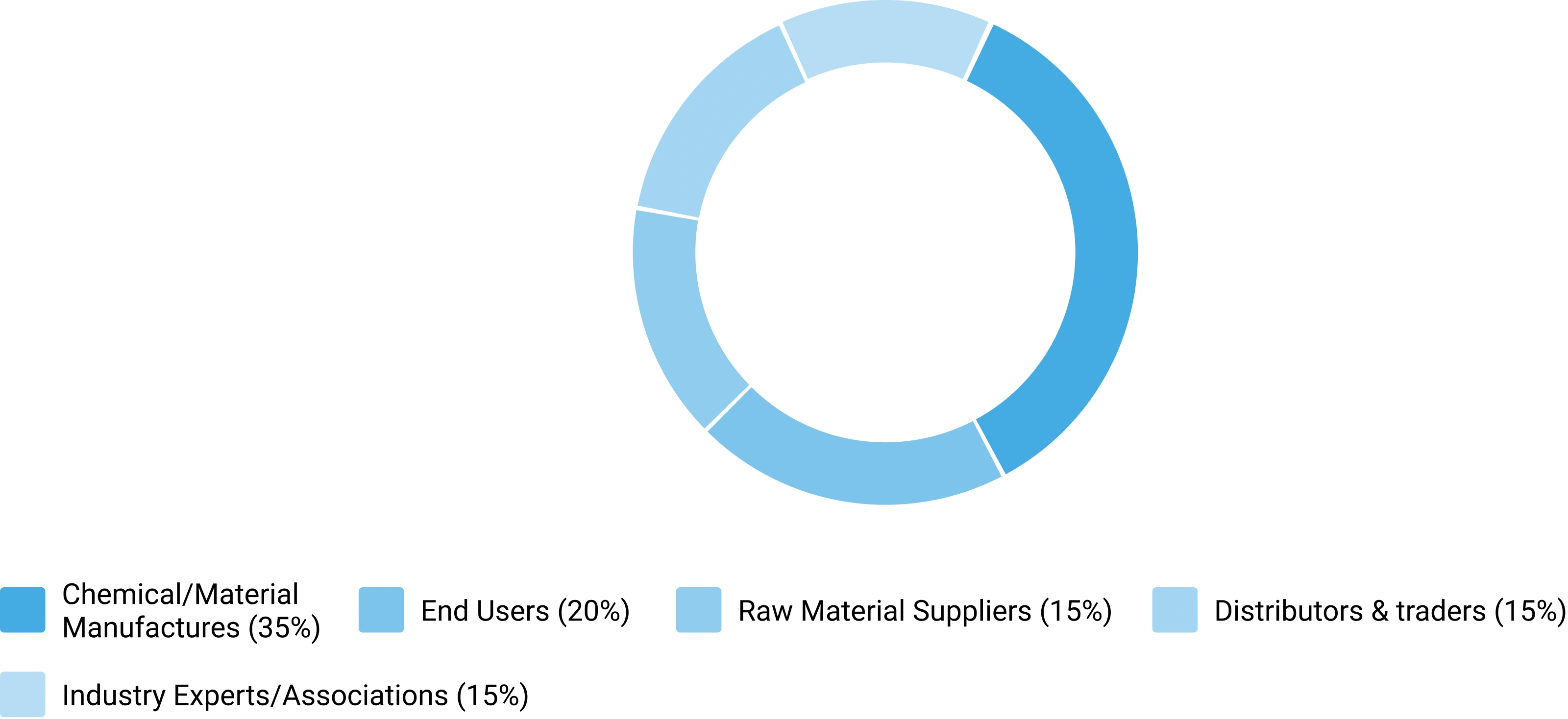
Category : Manufacturers, Suppliers, Distributors, End Users, Experts/Associations
Average Duration : 30–60 Minutes
Interview Mode : Video calls, telephonic interviews, expert consultations
Interview Format : Structured / Semi-Structured questionnaire
Focus Areas of Primary Research:
Market Size & Forecast Validation :
Revenue estimates, volume consumption, growth rates, forecast assumptions, regional demand.
Supply Chain & Value Chain Assessment :
Raw material sourcing, supply chain challenges, distribution networks, procurement practices.
Production & Capacity Analysis :
Manufacturing capacity, utilization rates, expansion projects, plant investments.
Pricing & Cost Structure Analysis :
Product pricing trends, feedstock costs, energy costs, margin pressures, pricing outlook.
Competitive Landscape Assessment :
Market share, competitor positioning, strategic initiatives, partnerships, acquisitions.
Primary Research — Stakeholder Coverage by Category
Distribution of interview respondents across stakeholder categories (% share from PPT data)
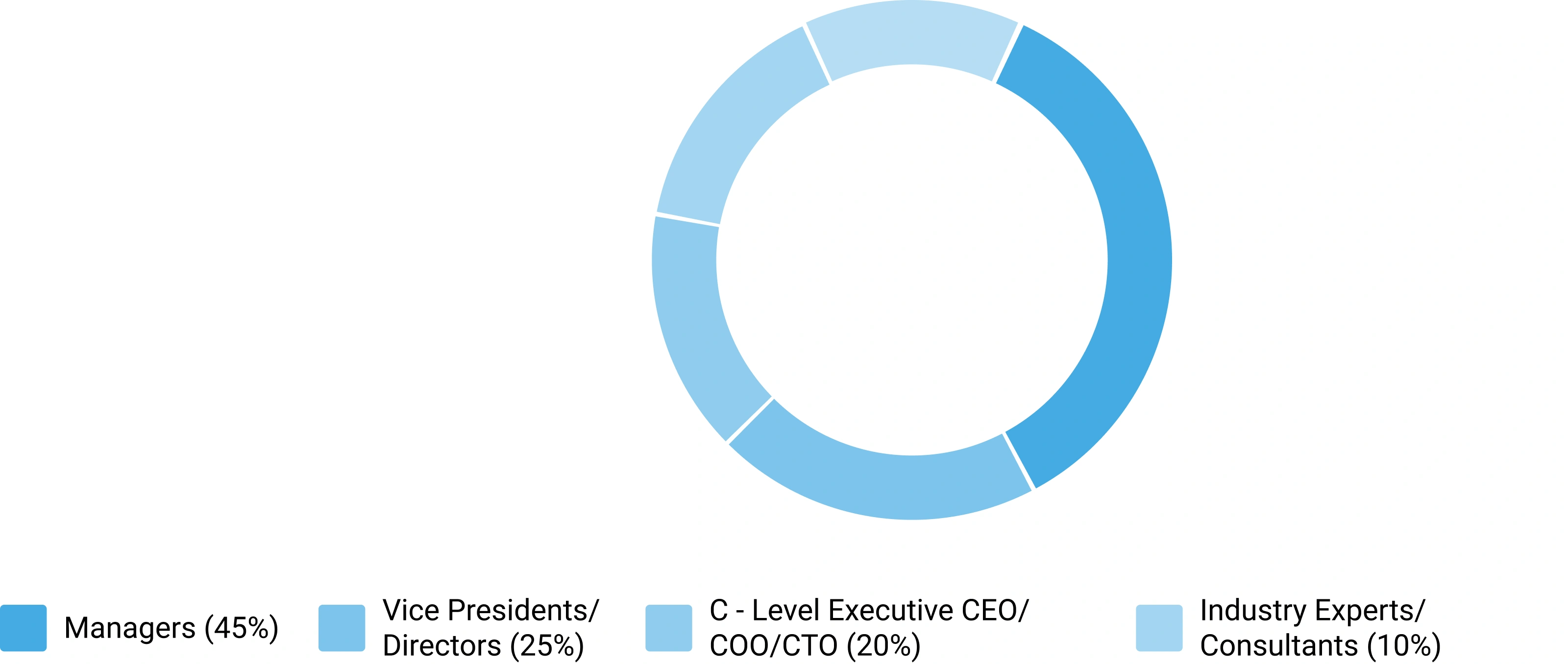
Primary Research — Respondent Designation Profile
Seniority breakdown of interview respondents (% share from PPT data)
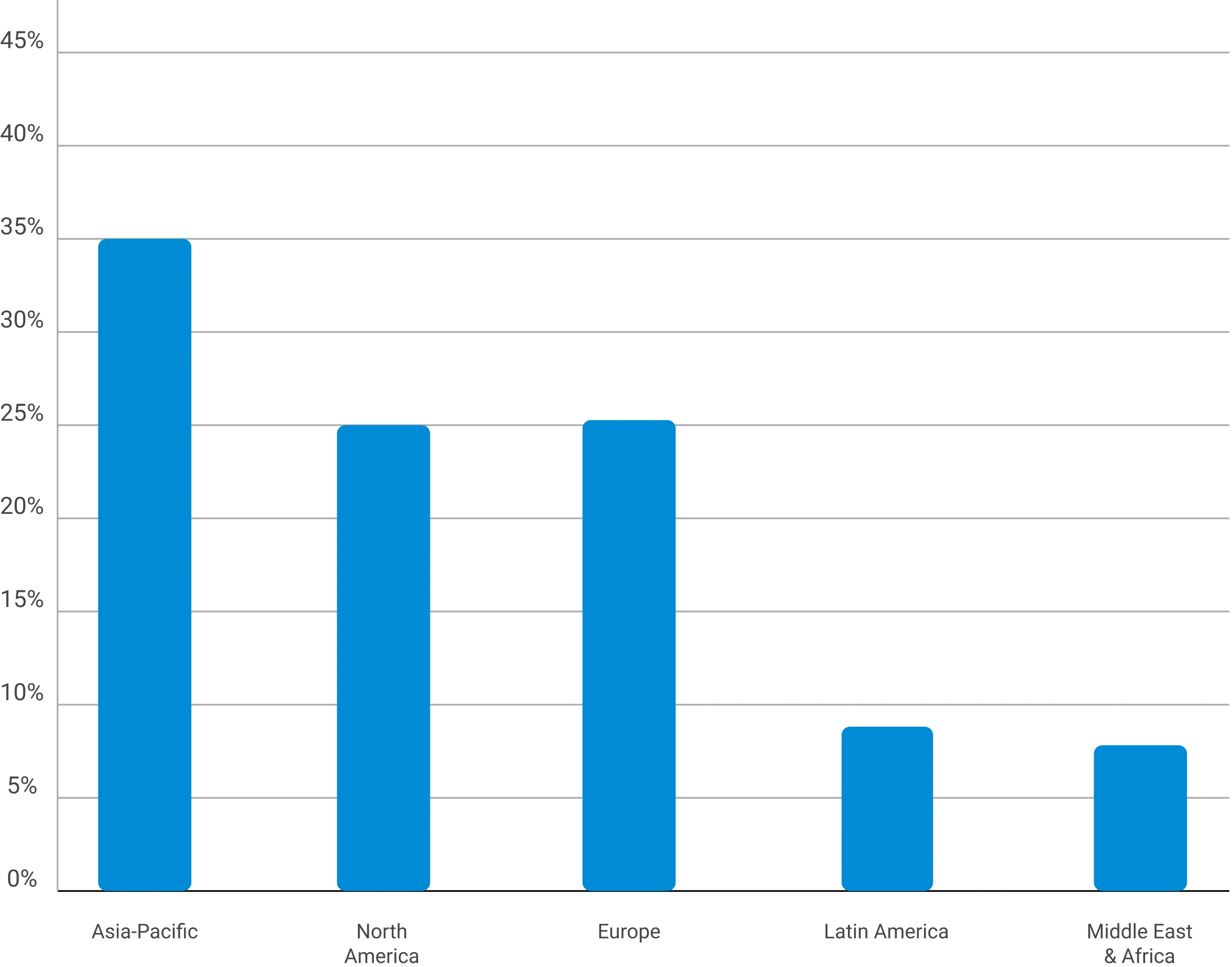
Primary Research — Geographic Coverage of Interviews
Regional distribution of primary research engagement (% share from PPT data)
Phase 6 — Data Triangulation and Market Validation
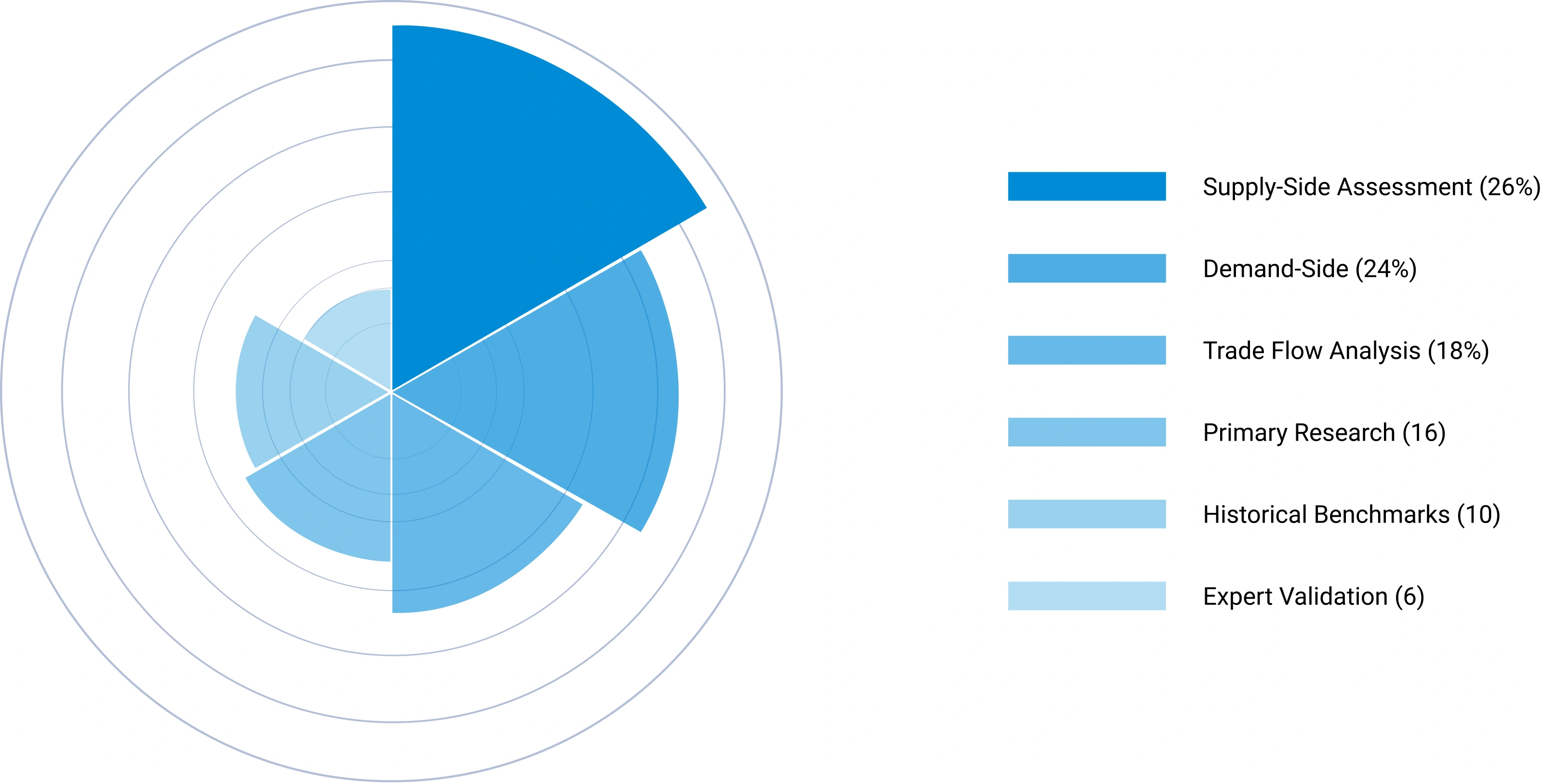
No single methodology is relied upon in isolation. Multiple independent estimation approaches are combined and reconciled to ensure consistency, accuracy, and analytical defensibility. Any material deviations between approaches are investigated and adjusted through additional validation cycles.
The final market size is derived through weighted triangulation of all validated methodologies. Any material deviations between approaches are investigated and adjusted through additional validation cycles. The outcome represents the most realistic assessment of the market based on available evidence and expert confirmation ensuring that volume and value estimates are fully consistent with one another.
Triangulation Framework — Input Contribution Weight
Relative weight each sizing input contributes to the final reconciled market estimate
Phase 7 — Forecast Modeling: Projecting Future Market Evolution
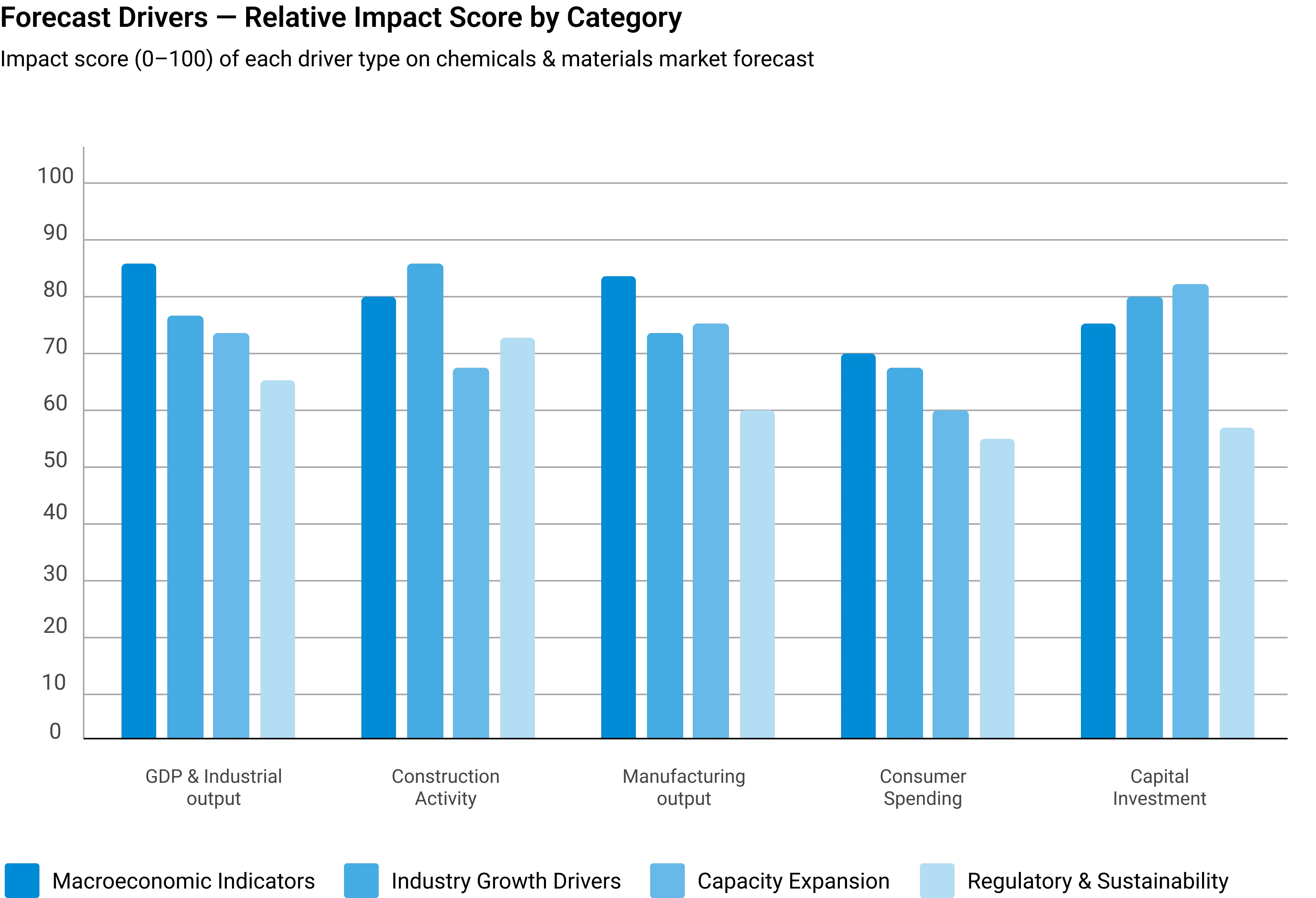
Forecasting evaluates the future trajectory of the market using a combination of quantitative indicators and qualitative assessments across economic, industry, and regulatory dimensions. Rather than simple extrapolation, each driver is independently modeled and integrated into a composite forecast.
Macroeconomic Indicators
GDP growth, industrial production, manufacturing output, construction activity, consumer spending, and capital investment form the quantitative foundation of long-term demand projections. These are applied at country, regional, and global levels.
Industry Growth Drivers
Urbanization, infrastructure development, industrialization, technological innovation, sustainability initiatives, and evolving product performance requirements are assessed at regional and industry levels — capturing both structural and cyclical demand drivers.
Capacity Expansion Analysis
Announced plant expansions, new manufacturing facilities, technology upgrades, and strategic investments are evaluated to determine future supply-demand dynamics and potential market tightness or oversupply situations.
Regulatory & Sustainability
Environmental regulations, chemical safety standards, emission reduction targets, circular economy initiatives, and sustainability requirements are incorporated as they often influence product adoption rates and market growth trajectories.
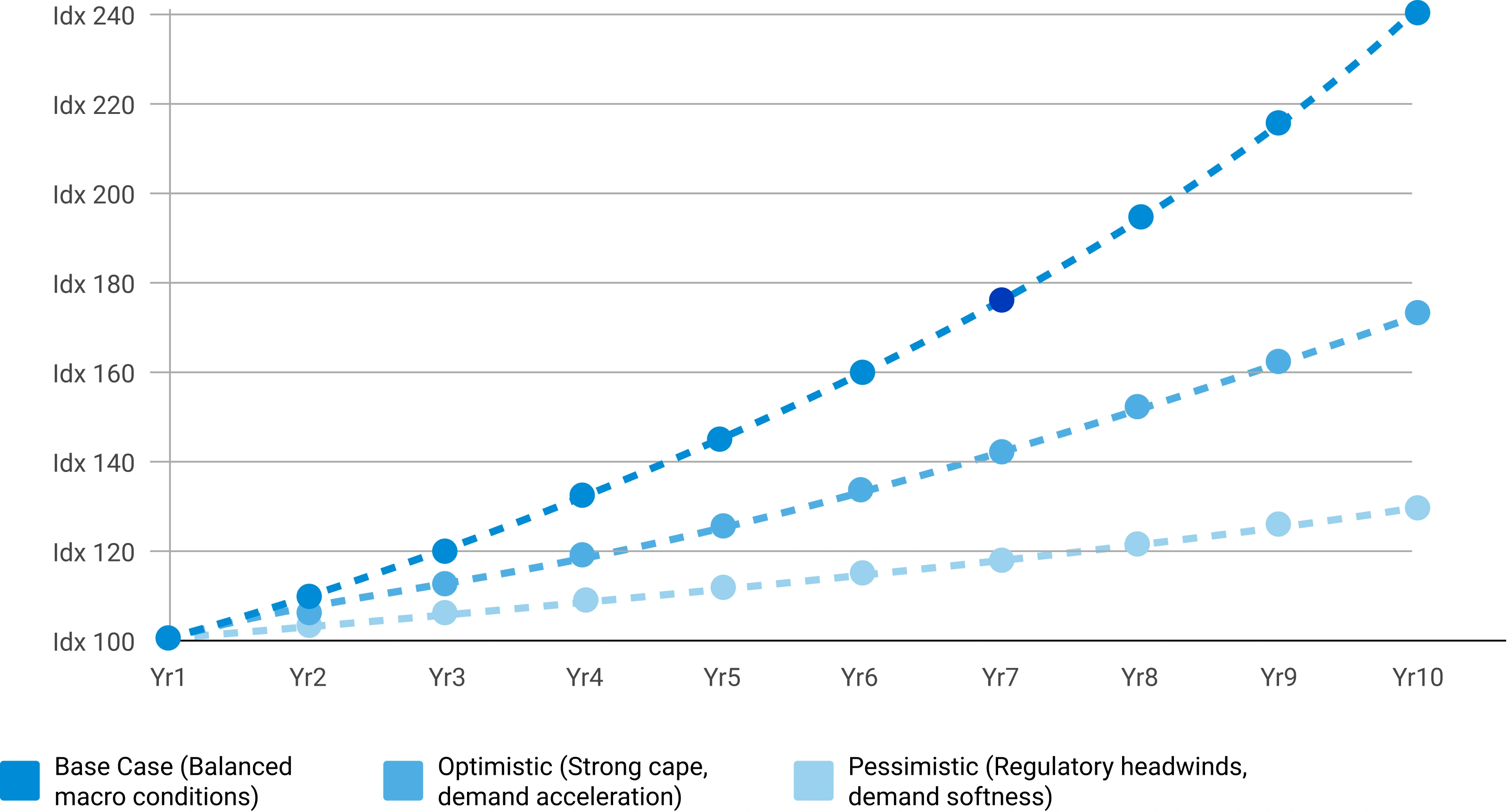
Scenario Forecast Range — Indexed Market Growth (Year 1–10)
Illustrative indexed growth trajectories across Base, Optimistic, and Pessimistic scenarios over a 10-year forecast horizon
Forecast Drivers — Relative Impact Score by Category
Impact score (0–100) of each driver type on chemicals & materials market forecast



Comments
Share your thoughts, ask a question, or provide feedback about this report.