
Asia Pacific Sustainable Aviation Fuel Market Size and Forecast 2026 to 2035
The Asia Pacific sustainable aviation fuel market size was estimated at USD 798.1 million in 2025 and is projected to grow from USD 997.6 million in 2026 to approximately USD 7,432.9 by 2035, at a CAGR of 25.0% from 2026 to 2035. The demand for sustainable fuel is driven by feedstock availability and the implementation of stringent government policies and mandates, as regional authorities are establishing clear climate targets and regulatory frameworks. The regional is benefitted by the presence of abundant biomass and feedstock availability from local access to agricultural residues across Southeast Asia, and China lowers supply chain hurdles for biofuel refineries. Singapore introduced a SAF levy for departing flights to support national adoption targets, while countries like Japan aim for 10% SAF use by 2030.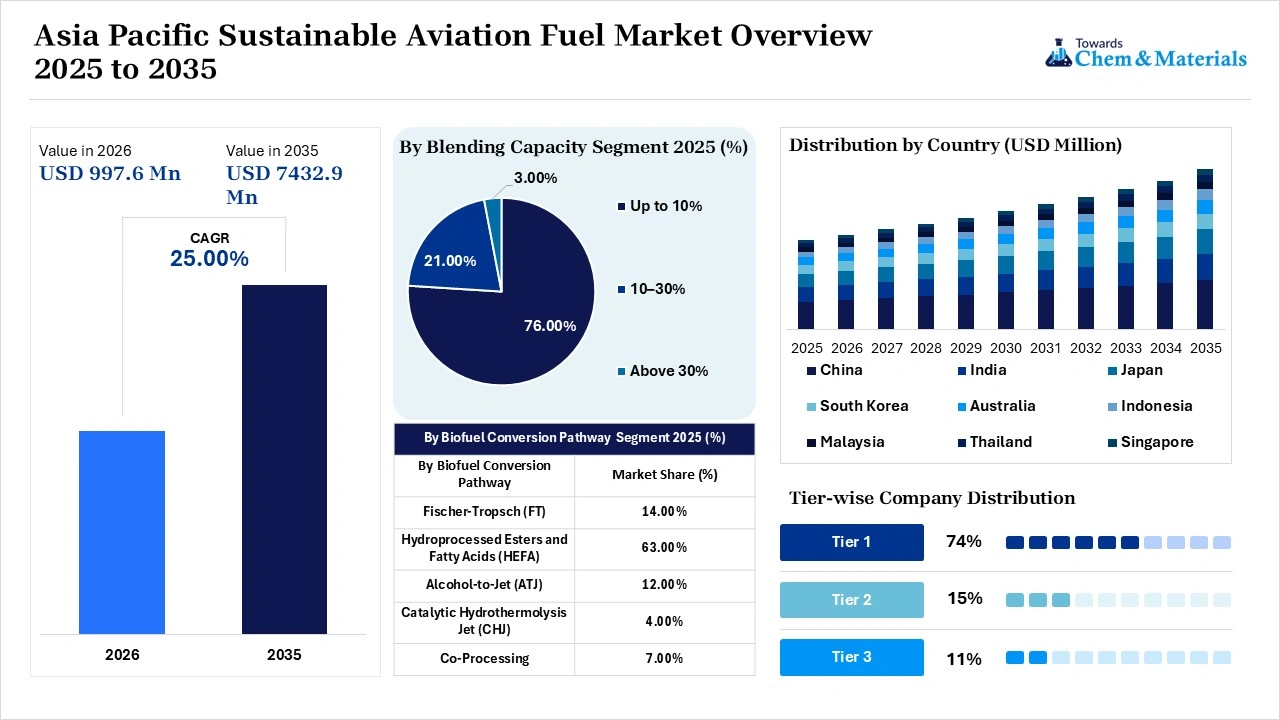
Market Highlights
- By country, Japan dominated the Asia Pacific sustainable aviation fuel market with a share of 30% in 2025 and is expected to grow at a CAGR of 25.21% over the forecast period.
- By country, India held an 8% market share in the Asia Pacific sustainable aviation fuel market in 2025 and is expected to experience the fastest growth with a CAGR of 25.77% in the forecast period.
- By biofuel conversion pathway, the hydroprocessed esters and fatty acids (HEFA) segment dominated the market with a 63% share in 2025 and is expected to grow at a CAGR of 22.80% over the forecast period.
- By biofuel conversion pathway, the alcohol to jet segment held a 12% market share in 2025 and is expected to have the fastest growth with a CAGR of 31.5% in the forecast period.
- By blending capacity, the up to 10% segment dominated the market with a 76% share in 2025 and is expected to grow at a CAGR of 22.10% over the forecast period.
- By blending capacity, the above 30% segment held 3.00% market share in 2025 and is expected to have the fastest growth with a CAGR of 43.8% in the forecast period.
- By fuel type, the bio-based SAF segment dominated the market with 91% share in 2025 and is expected to grow at a CAGR of 24.70% over the forecast period.
- By fuel type, the synthetic SAF (E-FUEL/PTL) segment held a 10.00% market share in 2025 and is expected to have the fastest growth with a CAGR of 42.5% in the forecast period.
- By platform, the commercial aircraft segment dominated the market with 91% share in 2025 and is expected to grow at a CAGR of 24.70% over the forecast period.
- By platform, the unmanned aerial vehicle segment held 1.00% market share in 2025 and is expected to have the fastest growth with a CAGR of 38.4% in the forecast period.
- By feedstock, the used cooking oil segment dominated the market with a 31% share in 2025 and is expected to grow at a CAGR of 22.90% over the forecast period.
- By feedstock, the algae and advanced feedstock segment held 3.00% market share in 2025 and is expected to have the fastest growth with a CAGR of 41.0% in the forecast period.
According to Towards Chemicals and Materials Analytics and Consulting, the Asia Pacific Sustainable Aviation Fuel Market volume was valued at 0.42 million metric tons in 2025 and is expected to surpass around 3.07 million metric tons by 2035, accelerating a compound annual growth rate (CAGR) of 22.00% over the forecast period from 2026 to 2035.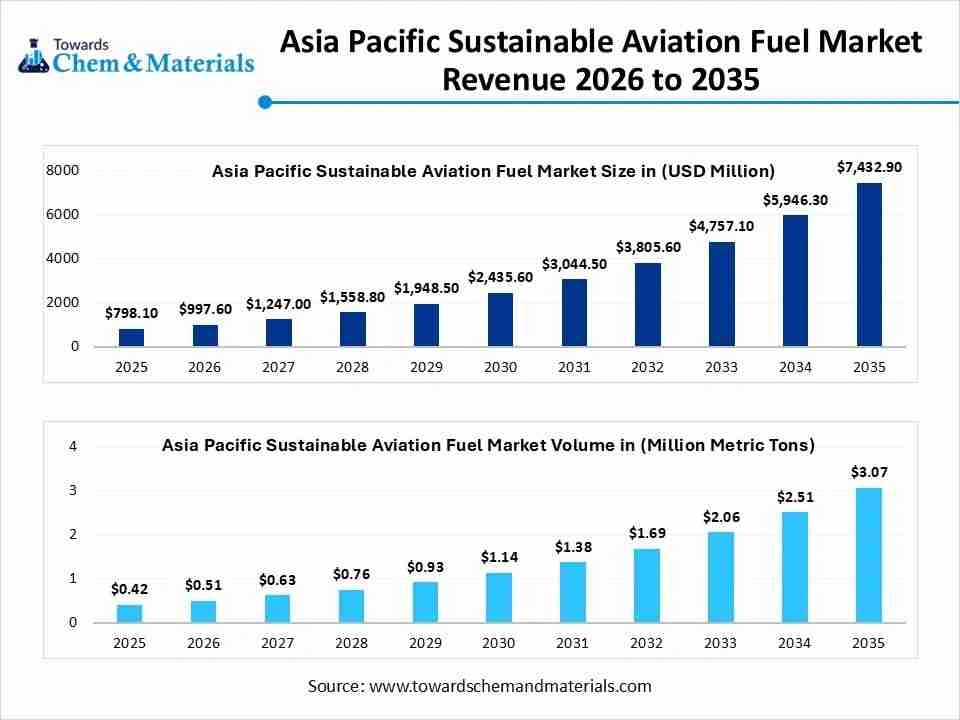
Market Overview
Sustainable Aviation Fuel: Airline Sustainability Commitments
The blending mandates, carbon reduction targets, and stringent government policy implementation aim at achieving net-zero aviation, which increases the adoption of sustainable fuel and aligns with the regulatory and climate framework that drives growth. The region is benefitted sue to the presence of abundant biomass and feedstock availability, as local access to agricultural residues, used cooking oil, and animal fats boosts the growth of the market.
Rapid growth in the aviation sector, as there is a surge in travel demand in the region due to economic development and rising spending of the middle class and expanding population, especially in countries like China and India, is scaling decarbonization solutions, which further boosts growth.
- For instance, Countries across the region are implementing aggressive blending mandates and policies, such as Singapores departing flight SAF levy starting in late 2026, South Koreas 1% blending mandate for 2027, and Japans 10% SAF usage ambition by 2030.(Source: www.airbus.com)
Global Investment Flow for Asia Pacific Sustainable Aviation Fuel Market 2026
The government and major companies in the region are actively investing in sustainable aviation fuel across the region due to growing production demand and government-backed infrastructure programs and policies which support the growth of the market.
- The Australian Sustainable Aviation Fuel Partnership is a landmark $200 million joint venture launched by Qantas Airways and Airbus to establish a domestic, commercial-scale Sustainable Aviation Fuel and biofuels industry in Australia. The initiative seeks to prevent the mass export of local raw feedstocks like canola and animal tallow by financing domestic production facilities. This directly supports Qantas interim mandate to reach 10% SAF in its overall fuel mix by 2030.(Source: www.airbus.com)
- The Australian Government has launched a $1.1 billion Cleaner Fuels Program to support domestic production of Low Carbon Liquid Fuels, including sustainable aviation fuels, renewable diesel, and e-fuels over 10 years. The program is designed to attract private capital to commercialise hard-to-abate sectors like aviation, heavy freight, and mining, targeting a projected $36 billion domestic market opportunity.(Source: simpliflying.com)
- The Sustainable Aviation Fuel Financing Alliance is a $200 million investment fund designed to accelerate the commercial production of Sustainable Aviation Fuel globally. Managed by Burnham Sterling Asset Management, the alliance relies on a consortium of major global aviation, financial, and industrial leaders to scale up technologically mature fuel pathways, primarily using waste-based feedstocks.(Source: www.airbus.com)
Report Scope
| Report Attributes | Details |
| Market Size in 2026 | USD 997.6 Million/ 0.51 Million Metric Tons |
| Expected Size in 2035 | USD 7,432.9 Million/ 3.07 Million Metric Tons |
| Growth Rate | CAGR of 25.00% |
| Base Year of Estimation | 2025 |
| Forecast Period | 2025-2035 |
| Segment Covered | By Biofuel Conversion Pathway, By Blending Capacity, By Fuel Type, By Platform, By Feedstock Type |
| Key Companies Profiled | Neste, Shell Aviation, TotalEnergies SE, BP p.l.c., Chevron Corporation, ExxonMobil Corporation, Honeywell International Inc., LanzaJet, Gevo, Inc., China Aviation Oil Corporation Ltd., Bharat Petroleum Corporation Limited (BPCL), Indian Oil Corporation Limited (IOCL), Pertamina (Persero) PT, Petronas, Mitsubishi Corporation |
Market Growth Trends:
- The regulatory mandates and net-zero targets, which are government-backed programmes that align with the blending mandates and carbon reduction policies, and International Civil Aviation Organization goals, are a major trend in the growth of the market.
- The presence of abundant feedstock in the region, with high availability of agricultural residues, local biomass, and waste oils in large amounts, is a major trend for scaling the production of sustainable fuel.
- Major airline commitments, increased adoption, trials, and commercial flight frequency, which drive demand for sustainable aviation fuel, are major carriers in the region fueling growth.
Asia Pacific Sustainable Aviation Fuel Market: Supply Chain and Blending Logic
The sustainable aviation fuel market is experiencing growth driven by the key technological shift through AI integration, which also helps in optimizing every step from feedstock supply chain to refinery conversion efficiency, which helps in rapid scaling of production and adoption, which also heavily relies on smart digital integration, which helps in overcoming the high costs and logistical hurdles. The use of AI tools in managing complex cross-border logistics also coordinates with the fuel blending ratios, meeting demand and growth of the market.
Supply Chain Analysis of Asia Pacific Sustainable Aviation Fuel Market
SAF Production & Processing
- Sustainable aviation fuel is produced from renewable feedstocks such as waste oils, agricultural residues, and biomass using processes like HEFA, Fischer-Tropsch, and alcohol-to-jet conversion, followed by refining to meet aviation fuel standards.
- Key players: Neste, World Energy, Gevo, LanzaJet
Quality Testing and Certification
- Sustainable fuels require certifications validating fuel quality, carbon intensity reduction, sustainability of feedstocks, and regulatory compliance. Key certifications include ASTM fuel standards, ISCC certification, Roundtable on Sustainable Biomaterials, EU RED II compliance, and lifecycle emissions verification.
- Key players: ASTM International and UL Solutions
Distribution to Industrial Users
- SAF is supplied to commercial airlines, cargo carriers, airport fuel suppliers, and defense aviation sectors to reduce carbon emissions in air transport through fuel suppliers, pipeline networks, blending terminals, and long-term offtake agreements.
- Key players: Neste, World Energy, Gevo.
Sustainability Analysis of Asia Pacific Sustainable Aviation Fuel
The Asia Pacific region represents one of the fastest-growing aviation markets globally, driving a strong need for net-zero carbon solutions. Utilizing non-food biomass, agricultural residues, and used cooking oil, SAF can lower lifecycle carbon emissions by 80% compared to conventional jet fuel. Countries are introducing specific targets, such as Japans finalization of a 10% SAF mandate by 2030 and Indias proposed targets starting in 2027.
What is Asia Pacific Sustainable Aviation Fuel?
Asia Pacific Sustainable Aviation Fuel is a cleaner, non-fossil alternative to traditional jet fuel used by airlines in the Asia-Pacific region to lower carbon emissions. The key features make it a key essential fuel for maintaining regulatory alignment, as it mixes safely with normal fuel, reduces emissions, and uses sustainable raw materials. The growing regional adoption in Singapore, Japan, India, and Southeast Asia is a major growth factor for higher production.
Asia Pacific Sustainable Aviation Fuel Premium Pricing Analysis
The Asia Pacific sustainable aviation fuel price premium sits roughly at $1,000 to $1,100 per metric ton above conventional fossil jet fuel costs. Most regional SAF is sold via bilateral offtake agreements using a jet plus premium formula, tying final green costs directly to volatile fossil fuel baselines. The price premium for SAF remains high and structural due to limited regional feedstock availability, high capital expenditures, and refining constraints rather than temporary market fluctuations.
Asia Pacific Sustainable Aviation Fuel Market Carbon Tax Analysis
Carbon taxes and pricing mechanisms in the Asia-Pacific region are actively reshaping the Sustainable Aviation Fuel market by narrowing the cost gap with conventional jet fuel. South Korea and Japan have imposed carbon taxes of up to $50 per ton of CO₂ emissions from aviation, creating strong financial incentives for carriers to adopt lower-carbon fuels. The International Civil Aviation Organization’s CORSIA program enforces mandatory carbon offsetting for international flights, pushing regional carriers toward verified low-carbon alternatives. Traditional jet fuel remains cheaper, but carbon taxes add financial penalties to high-emission operations, making SAF a more viable risk-mitigation strategy.
Asia Pacific Sustainable Aviation Fuel Regulatory Landscape
| Country / Region | Regulatory Body | Key Regulations | Focus Areas | Notable Notes |
| Asia Pacific | China NDRC / MEE, India MoPNG / MoEFCC, Japan METI / MOE, Australia DCCEEW | China Biofuel & Renewable Energy Plans India Ethanol Blending Programme Japan Biomass Nippon Strategy Australian Renewable Energy Target / Clean Energy Regulations |
Ethanol blending, renewable diesel, SAF pilots Feedstock diversification Lifecycle emissions |
India is targeting higher ethanol blends. China is expanding regional blending mandates. Japan and Australia support renewable fuels through strategies and incentives. |
Market Dynamics
Drivers
Asia Pacific Sustainable Aviation Fuel: Government Mandates
The Asia Pacific sustainable aviation fuel market is experiencing rapid growth, driven by strong government rules and mandates in countries like India, Japan, and China. Incredible government initiatives and financial support for setting up local fuel plants and blending targets in the region to use cleaner fuel in the airline industry drive incredible growth and adoption. The other major growth drivers are the presence of abundant local resources, consumer and public demand, rising air travel, and airline sustainability commitments, which push the market for expansion.
Challenges
Asia Pacific Sustainable Aviation Fuel: High Costs and Price Disparity
The Asia Pacific sustainable aviation fuel market is experiencing hindrance due to high costs and price disparity, which is a challenge to the growth of the market, the huge price gap strains airlines operating in highly price-sensitive regional travel markets, hindering growth. The other major challenges are high competition, infrastructure bottlenecks, and policy and regulatory gaps, which are major hindrance in the growth.
Opportunities
Sustainable Aviation Fuel: Fleet Expansion
The Asia Pacific sustainable aviation fuel market is growing rapidly, driven by regional travel demand and net-zero goals, which creates key growth opportunities for the market. Countries like India and Japan are increasingly using sustainable aviation fuels as they scale infrastructure in the region and emerge as major hubs for sustainable aviation fuels. The other major opportunity is fleet expansion, as there is a surge in commercial passenger traffic, which increases demand for airlines, increasing the long-term baseline demand for cleaner fuel.
Segmental Insights
Biofuel Conversion Pathway Insights
The hydroprocessed esters and fatty acids (HEFA) segment dominated the market with a 63% share in 2025 and is expected to grow at a CAGR of 22.80% over the forecast period, as it is the largest processing technology as it, rapidly converting lipids like waste oils, animal fat ad used cooking oil into jet drop in jet fuel, which increases growth. The rising air traffic and government emission reduction plans and net-zero emission initiatives push airlines to adopt HEFA-based fuels, supporting growth.
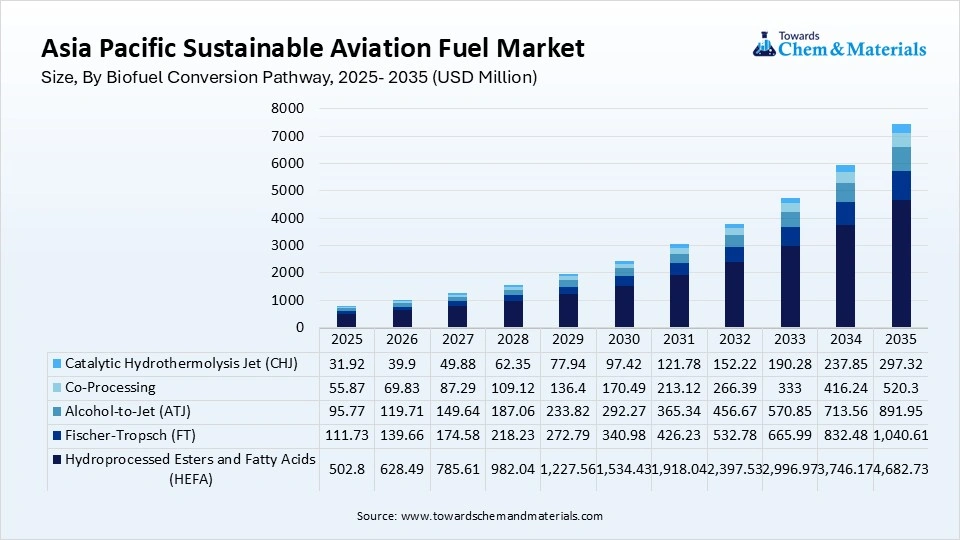
The alcohol to jet segment held a 12% market share in 2025 and is expected to have the fastest growth, with a CAGR of 31.5% in the forecast period. It is a conversion pathway where renewable alcohol, such as ethanol and isobutanol, is converted into drop-in jet fuel, which is derived especially from sugarcane, biomass, or agricultural waste. Rising demand and abundant presence of local agricultural feedstock in and across the region drive further growth. This technology is used extensively to meet the strict commercial and military aviation standards.
Asia Pacific Sustainable Aviation Fuel Market Share, By Biofuel Conversion Pathway, 2025(%)
| By Biofuel Conversion Pathway | Market Share (%) |
| Fischer-Tropsch (FT) | 14.00% |
| Hydroprocessed Esters and Fatty Acids (HEFA) | 63.00% |
| Alcohol-to-Jet (ATJ) | 12.00% |
| Catalytic Hydrothermolysis Jet (CHJ) | 4.00% |
| Co-Processing | 7.00% |
Blending Capacity Insights
The up to 10% segment dominated the market with a 76% share in 2025 and is expected to grow at a CAGR of 22.10% over the forecast period. This means that the fuel blends contain a low concentration of up to 10% renewable or synthetic aviation fuel, which is mixed with 90% conventional fossil-based jet fuel. Its key characteristics, like engine compatibility, as it works seamlessly with aircraft engines, pipelined and airport fueling infrastructure without hampering their original working and without any modification, boost growth.
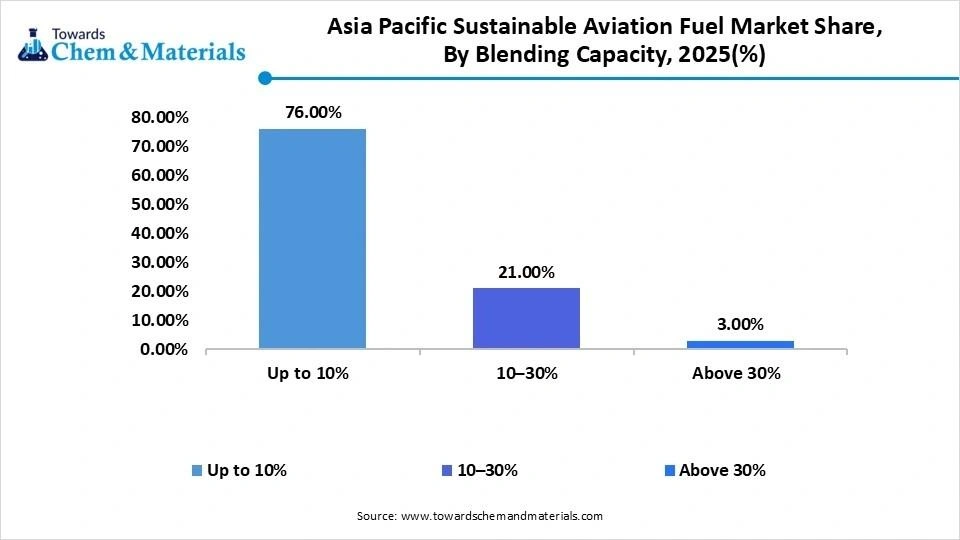
The above 30% segment held a 3.00% market share in 2025 and is expected to have the fastest growth, with a CAGR of 43.8% in the forecast period. It refers to the high blending categories where sustainable aviation fuel makes up a substantial portion of the fuel mixture used in aircraft, which increases its use. The higher blending tier represents further growth and technological readiness, which helps in deeper carbon reduction and is used in most of the commercial engines as they are certified.
Asia Pacific Sustainable Aviation Fuel Market Share, By Blending Capacity, 2025(%)
| By Blending Capacity | Market Share (%) |
| Up to 10% | 76.00% |
| 10–30% | 21.00% |
| Above 30% | 3.00% |
Fuel Type Insights
The bio-based SAF segment dominated the market with a 91% share in 2025 and is expected to grow at a CAGR of 24.70% over the forecast period. It is a low-carbon jet fuels which are made from biological sources like agricultural residues, animal fats, and waste oil in place of petroleum, aligning with environmental and sustainability regulations. The key technologies used for processing are HEFA SPK, ATJ SPK, and FT SPK, which help in processing biomass and turning it into jet fuel. The major feedstocks used, as there is abundant presence in the region, include waste oils and fats and biomass and residues, which are increasingly used for advanced processing due to their high local availability, supporting growth.
The synthetic SAF (E-FUEL/PTL) segment held a 10.00% market share in 2025 and is expected to grow at the fastest rate, with a CAGR of 42.5% over the forecast period. It is an advanced and near carbon-neutral liquid hydrocarbon fuel produced without the use of biological feedstocks. They are processed through carbon capture, green hydrogen creation, and hydrogen synthetics. Synthetic SAF is a fully compatible drop-in fuel which is used and is safely blended with conventional jet fuel and utilized in aircraft engines and airport refuelling networks, further supporting growth.
Asia Pacific Sustainable Aviation Fuel Market Share, By Fuel Type, 2025(%)
| By Fuel Type | Market Share (%) |
| Bio-based SAF | 88.00% |
| Hydrogen Aviation Fuel | 2.00% |
| Synthetic SAF (E-FUELS/PTL) | 10.00% |
Platform Insights
The commercial aircraft segment dominated the market with a 91% share in 2025 and is expected to grow at a CAGR of 24.70% over the forecast period, they are used in commercial aircraft and it is segments into turboprop aircraft, narrow body aircraft, wide body aircraft and regional aircraft due to its low cost and carbon reduction goals and blending ability of the fuel without requiring nay modification. The growing passenger traffic and airline net-zero commitments and scaling adoption through government incentives and blending mandates boost the growth of the market.
The unmanned aerial vehicle segment held 1.00% market share in 2025 and is expected to grow at the fastest rate, with a CAGR of 38.4% over the forecast period, due to long-haul passenger and freight travel, eco-friendly or synthetic alternative fuels are increasingly tested and utilized in specialized tactical or commercial drone operations. Alternative and sustainable fuel compatibility helps improve operational efficiency and extend mission capabilities for specialized unmanned aircraft platforms, which boosts the growth of the market.
Asia Pacific Sustainable Aviation Fuel Market Share, By Platform, 2025(%)
| By Platform | Market Share (%) |
| Commercial Aircraft | 91.00% |
| Military Aircraft | 5.00% |
| Business & General Aviation | 3.00% |
| Unmanned Aerial Vehicles (UAV) | 1.00% |
Feedstock Type Insights
The used cooking oil segment dominated the market with a 31% share in 2025 and is expected to grow at a CAGR of 22.90% over the forecast period. It is a primary feedstock that is used to produce SAF, it consists of vegetable and animal oils, which are used for commercial and household cooking and are no longer consumed. In Asia Pacific, it is derived from a mixed composition, such as palm, soybean, sunflower, and rapeseed, which are collected from various sources. This is then converted into drop-in aviation fuel through HEFA.
The algae and advanced feedstock segment held a 3.00% market share in 2025 and is expected to have the fastest growth, with a CAGR of 41.0% in the forecast period. It is a next-generation, non-food biological raw materials which is used to produce low-carbon fuel. Algae are high in lipid content and are growing rapidly, they are growing on non-arable land, deserts, and wastewater. Algae absorb carbon dioxide during growth, which helps lower greenhouse gas emissions, which is why used extensively for producing SAF. The advanced feedstock and algae represent the scalable future needed to meet long-term regional blending mandates and net-zero targets, boosting growth.
Asia Pacific Sustainable Aviation Fuel Market Share, By Feedstock Type, 2025(%)
| By Feedstock Type | Market Share (%) |
| Used Cooking Oil (UCO) | 31.00% |
| Agricultural Residues | 24.00% |
| Municipal Solid Waste (MSW) | 11.00% |
| Forestry Residues | 9.00% |
| Sugarcane & Ethanol-Based Feedstocks | 13.00% |
| Algae & Advanced Feedstocks | 3.00% |
| Renewable Electricity & CO₂ (For e-SAF/PTL) | 9.00% |
Regional Analysis
How did Japan dominate the Asia Pacific Sustainable Aviation Fuel Market in 2025?
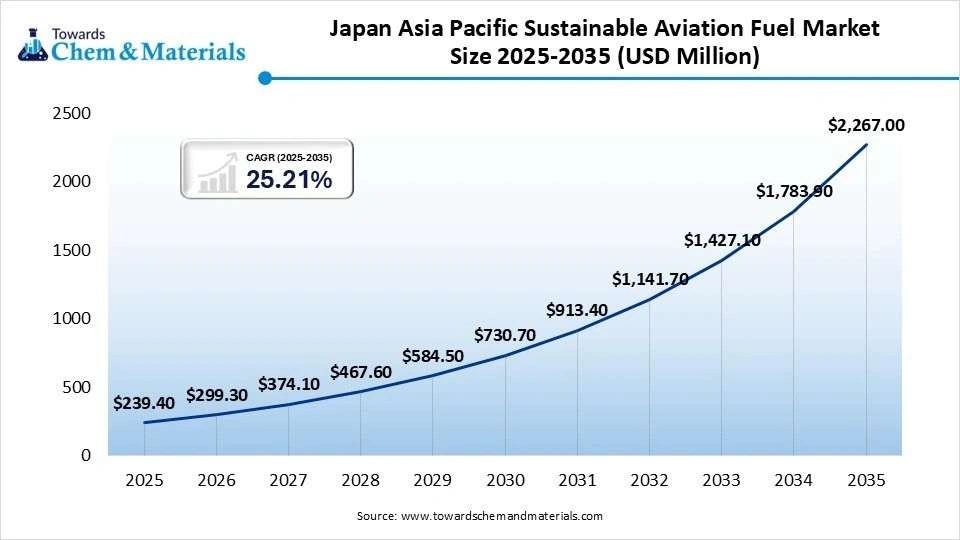
The Japan sustainable aviation fuel market size was estimated at USD 239.4 million in 2025 and is projected to reach USD 2,267.0 million by 2035, growing at a CAGR of 25.21% from 2026 to 2035. Japan dominated the Asia Pacific sustainable aviation fuel market with a share of 30% in 2025 and is expected to grow at a CAGR of 27.50% over the forecast period, driven by the growing public and private coordination as Japan’s Ministry of economy, Trade and Industry and the Ministry of Land, Infrastructure, Transport and Tourism is working through the SAF to unite the refineries and aviation stakeholders increasing domestic carriers which fuel the growth. The countrys leading companies and commercial carriers like All Nippon Airways and Japan Airlines are aligning with the replacement of fuel with SAF. Supply chain partnerships and policy for fulfilling domestic demand are supporting growth.
India Sustainable Aviation Fuel Market Growth Factor
The India sustainable aviation fuel market size was estimated at USD 63.8 million in 2025 and is projected to reach USD 631.8 million by 2035, growing at a CAGR of 25.77% from 2026 to 2035.India held an 8% market share in the Asia Pacific sustainable aviation fuel market in 2025 and is expected to experience the fastest growth with a CAGR of 30.50% in the forecast period. The presence of agricultural abundance, as it has a vast amount of crop residues, used cooking oil, and farm waste, this domestic presence supports local production and growth. Government mandates in the country, such as strict regulations and % blending targets, and aims to turn the country into a major hub for green jet fuel, propelling growth. Airline and industry partnerships and agreements are being formed for green fuel supply and to lower greenhouse gases, further propelling growth of the market.
Sustainable Aviation Fuel: Major Production Facilities Presence
Singapore sustainable aviation fuel market size was estimated at USD 175.6 million in 2025 and is projected to reach USD 1,672.4 million by 2035, growing at a CAGR of 25.28% from 2026 to 2035.Singapore held a 22% market share in the Asia Pacific sustainable aviation fuel market in 2025, driven by the presence of major production facilities like Neste, which supply industrial-scale renewable fuel and help build local capacity, lowering dependency on supply, which boosts growth. Other players like Shell also support the development of low-carbon fuel infrastructure in the country, supporting growth. Long-term agreements and centralized procurement, like Singapore Sustainable Aviation Fuel Company Ltd. Clean fuel delivery and production are major growth factors in the market expansion.
Sustainable Aviation Fuel: Rising Air Traffic Demand
China sustainable aviation fuel market size was estimated at USD 143.7 million in 2025 and is projected to reach USD 1,337.9 million by 2035, growing at a CAGR of 25.00% from 2026 to 2035.China held an 18% market share in the Asia Pacific sustainable aviation fuel market in 2025, driven by the growing national carbon neutrality commitments and regulatory policies, which increase the adoption of sustainable aviation fuel in the country. The expanding aviation sector and growing commercial and international flights further increase the adoption of long-term demand. The other major key factors are feedstock availability, strategic infrastructure investment, and carbon market integration, which further boosts the growth of the market.
Sustainable Aviation Fuel: Government Policies and Funding
Australia sustainable aviation fuel market size was estimated at USD 79.8 million in 2025 and is projected to reach USD 780.5 million by 2035, growing at a CAGR of 25.61% from 2026 to 2035.Australia held a 10% market share in the Asia Pacific sustainable aviation fuel market in 2025, driven by growing government policies and mandates like cleaner fuel initiatives and national decarbonization goals through massive funding, which helps increase local production of sustainable aviation fuel, boosting growth of the market. Australia has a massive presence of feedstock and bio-waste resources, which is ideal for biofuel refining, driving growth of the market further in the country.
Competitive Analysis
The manufacturers and suppliers are backed by government initiatives for low-carbon emissions and net-zero policies aligning with greenhouse gas emission management, creating opportunities for players to grow.
The key players presence in the region, such as Neste, ENEOS Corporation, Shell & TotalEnergies, who are major energy producers, technology developers, and leading commercial airlines driving regional adoption and supply.
- In February 2026, the Asia Sustainable Aviation Fuel Association has formally admitted Neste, the world’s leading producer of sustainable aviation fuel and renewable diesel, as its newest industrial member. The partnership merges ASAFAs policy advocacy infrastructure with Nestes unparalleled production capabilities to accelerate SAF deployment and legislative backing across the Asia-Pacific aviation sector.(Source: www.asiasaf.org)
- In May 2025, the Green Fuel Forward initiative is an ecosystem-wide partnership formed to accelerate the commercial demand and production scalability of Sustainable Aviation Fuel across the Asia-Pacific region. Co-founded by the Singapore governments green investment arm, GenZero, alongside the World Economic Forum, the alliance aims to bridge regional supply gaps and mitigate the high "green premium" costs associated with low-carbon aviation fuels.(Source: www.greenairnews.com)
- In November, the Asia Sustainable Aviation Fuel Association launched in Singapore to accelerate the adoption of Sustainable Aviation Fuel across Asia. The association’s core purpose is to drive aviation decarbonisation by harmonising regional policies, correcting market inefficiencies, attracting capital investments, and expanding public awareness.(Source: www.internationalairportreview.com)
Recent Developments
- In October 2025, Wagner Sustainable Fuels has launched operations at Australias first dedicated Sustainable Aviation Fuel blending terminal in Toowoomba, Queensland. Developed in partnership with Boeing and tech provider FlyORO, the facility is the first SAF blending terminal co-located at an airport globally.(Source: biofuels-news.com)
- In May 2025, Mizuho Financial Group joined the Green Fuel Forward initiative as a founding member. The banks entry serves to catalyze financial support and structured transition lending for regional sustainable aviation fuel infrastructure, aligning directly with the International Civil Aviation Organizations global decarbonisation benchmarks.(Source: asianbankingandfinance.net)
Top players in the Asia Pacific Sustainable Aviation Fuel Market & Their Offerings
| Company | Company Type/Position | Major Headquarters | Geographic Presence | Sustainable Aviation Fuel Offerings |
| Neste Oyj | Global renewable fuels producer and leading SAF supplier | Espoo, Finland | Asia Pacific, Europe, North America | Neste MY Sustainable Aviation Fuel is produced primarily from renewable waste and residue feedstocks. |
| SINOPEC | Integrated oil and petrochemical company | Beijing, China | China, Asia Pacific, International markets | Sustainable aviation fuel produced using waste oils and other renewable feedstocks, SAF technology through its SRJET pathway |
| LanzaJet Inc. | Sustainable aviation fuel technology and producer | Chicago, Illinois, USA | North America, Asia Pacific, Europe | Alcohol-to-Jet (ATJ) sustainable aviation fuel technology and commercial SAF projects |
Other Top Players Are
- Neste
- Shell Aviation
- TotalEnergies SE
- BP p.l.c.
- Chevron Corporation
- ExxonMobil Corporation
- Honeywell International Inc.
- LanzaJet
- Gevo, Inc.
- China Aviation Oil Corporation Ltd.
- Bharat Petroleum Corporation Limited (BPCL)
- Indian Oil Corporation Limited (IOCL)
- Pertamina (Persero) PT
- Petronas
- Mitsubishi Corporation
Segments Covered:
By Biofuel Conversion Pathway
- Fischer-Tropsch (FT)
- Biomass-to-liquid (BTL)
- Gasification + FT synthesis
- MSW-to-SAF
- Forestry-residue-to-SAF
- Hydroprocessed Esters and Fatty Acids (HEFA)
- UCO-based HEFA
- Tallow/animal-fat HEFA
- Vegetable-oil-based HEFA
- Other waste-oil-based HEFA
- Alcohol-to-Jet (ATJ)
- Ethanol-to-jet
- Isobutanol-to-jet
- Other alcohol-derived SAF
- Catalytic Hydrothermolysis Jet (CHJ)
- Waste-oil CHJ
- Biomass-derived CHJ
- Co-Processing
- Refinery co-processing
- Hydroprocessing integration
- Existing refinery infrastructure
By Blending Capacity
- Up to 10%
- 1–5%
- 5–10%
- 10–30%
- 10–20%
- 20–30%
- Above 30%
- 30–50%
- Above 50%
- 100% SAF / neat SAF pathways
By Fuel Type
- Bio-based SAF
- HEFA-based SAF
- FT-based SAF
- ATJ-based SAF
- CHJ-based SAF
- Hydrogen Aviation Fuel
- Liquid hydrogen
- Hydrogen-derived aviation fuels
- Hydrogen combustion applications
- Synthetic SAF (E-Fuels/PTL)
- Power-to-liquid (PtL)
- CO₂ + green hydrogen e-SAF
- Renewable electricity-derived synthetic hydrocarbons
By Platform
- Commercial Aircraft
- Narrow-body aircraft
- Wide-body aircraft
- Regional aircraft
- Military Aircraft
- Fighter aircraft
- Transport aircraft
- Tankers
- Helicopters
- Business & General Aviation
- Business jets
- Private aviation
- General aviation
- Unmanned Aerial Vehicles (UAV)
- Commercial UAVs
- Defense UAVs
- Long-endurance UAVs
By Feedstock Type
- Used Cooking Oil (UCO)
- Waste cooking oil
- Recovered vegetable oils
- Agricultural Residues
- Rice husks
- Rice straw
- Corn residues
- Sugarcane residues
- Municipal Solid Waste (MSW)
- Organic municipal waste
- Mixed solid waste
- Refuse-derived feedstock
- Forestry Residues
- Wood residues
- Forest thinning
- Sawdust
- Forestry waste
- Sugarcane & Ethanol-Based Feedstocks
- Sugarcane ethanol
- Corn ethanol
- Cellulosic ethanol
- Algae & Advanced Feedstocks
- Microalgae
- Macroalgae
- Advanced non-food biomass
- Renewable Electricity & CO₂ (For e-SAF/PTL)
- Green hydrogen
- Captured CO₂
- Direct-air-captured CO₂
- Renewable electricity
A Seven-Phase Framework
Our methodology is designed to be universally applicable across commodity chemicals, specialty chemicals, petrochemicals, construction chemicals, coatings, electronic chemicals, industrial gases, agrochemicals, water treatment chemicals, and performance materials. Each phase builds upon the last, creating a layered validation structure that minimizes estimation error and maximizes analytical confidence.
The framework ensures comprehensive market coverage, robust cross-validation, and reliable long-term forecasting — producing market estimates that withstand scrutiny from investors, regulators, and corporate strategy teams.

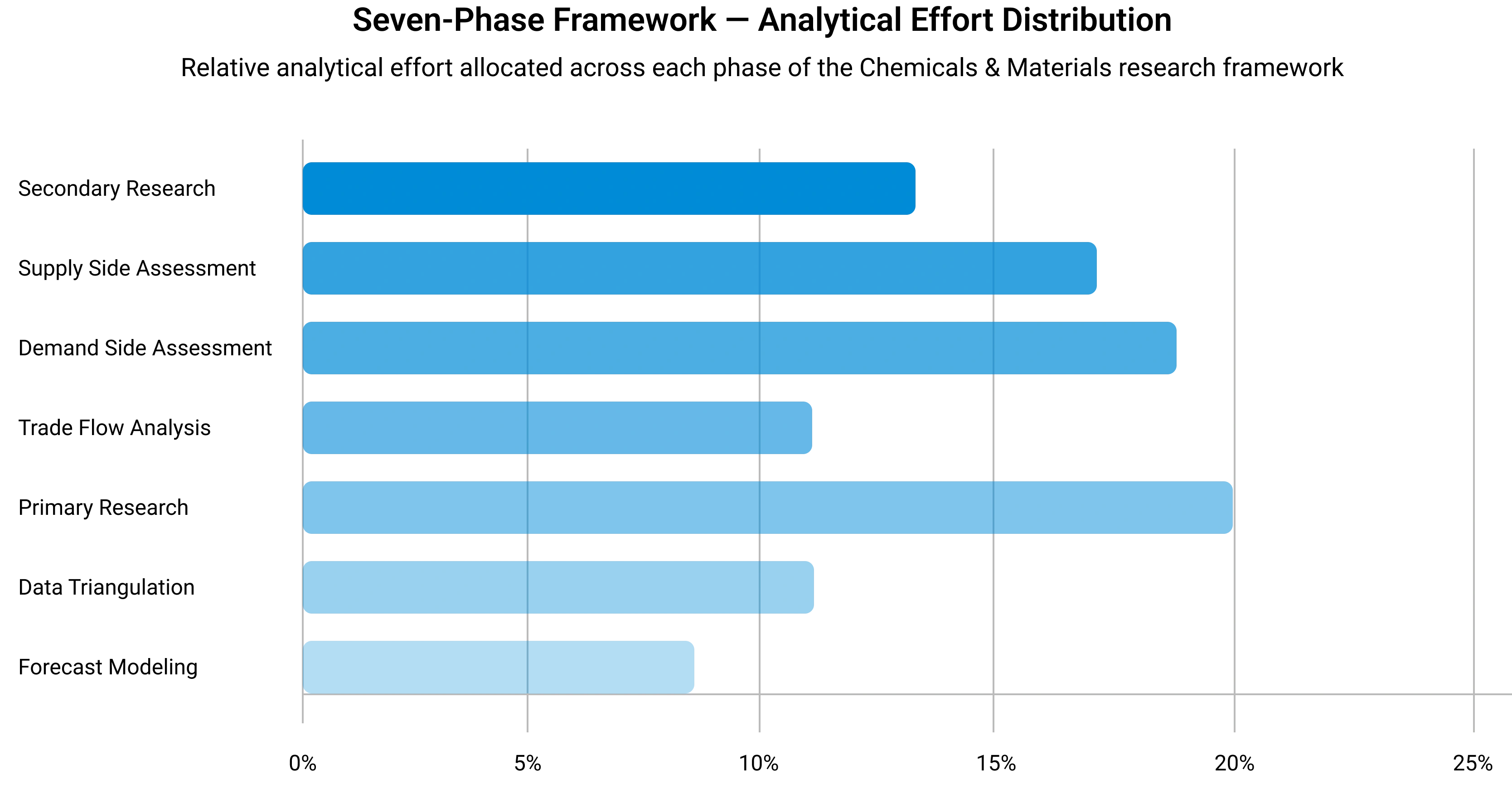
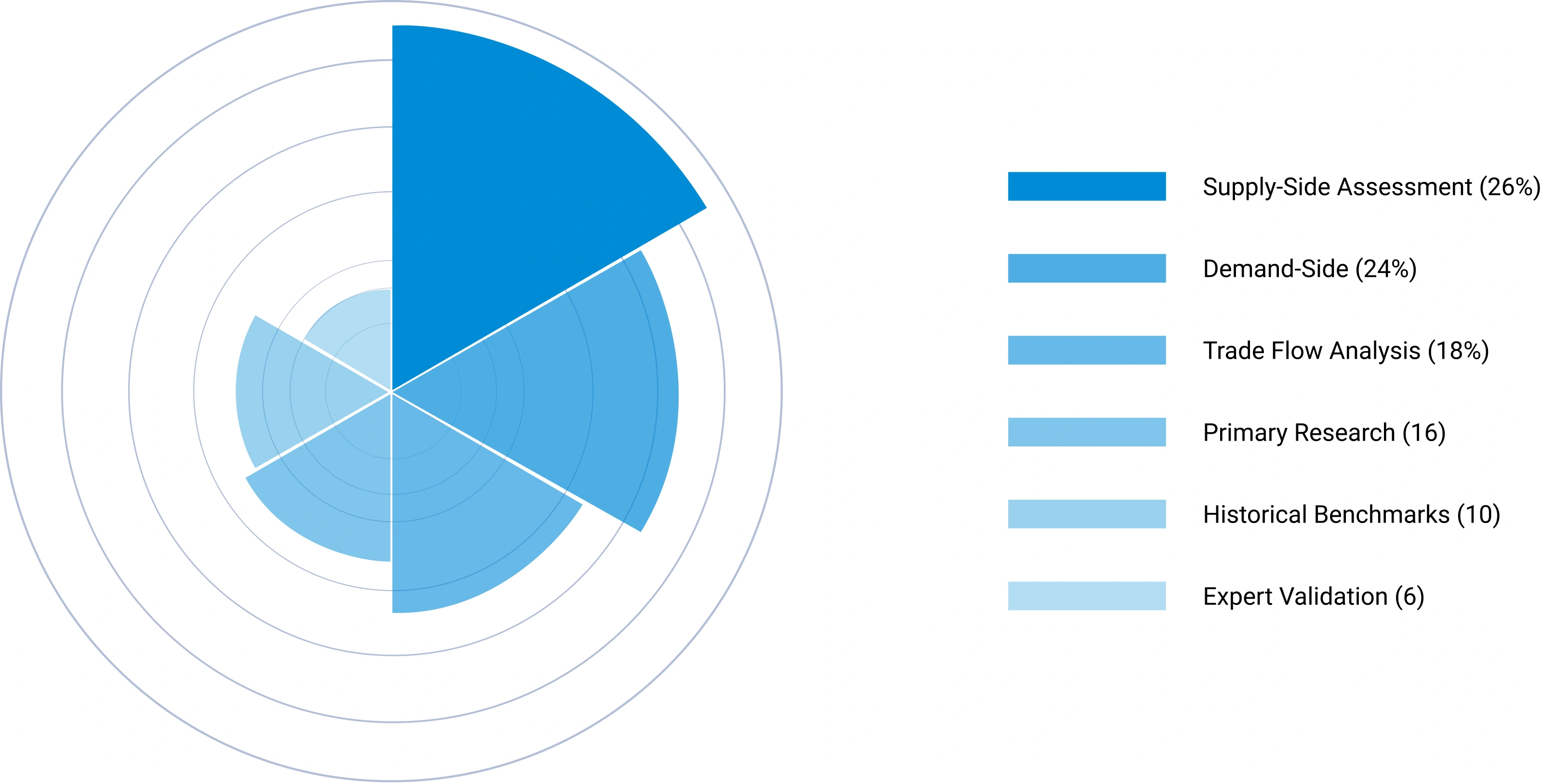
Seven-Phase Framework — Analytical Effort Distribution
Relative analytical effort allocated across each phase of the Chemicals & Materials research framework
Phase 1 - Secondary Research: Establishing the Foundation
Secondary research collects and evaluates publicly available information from authoritative sources, establishing the foundational understanding of market structure, value chain dynamics, competitive landscape, and end-use demand patterns. Every source is evaluated for credibility, recency, geographic relevance, and methodological soundness before inclusion.
Industry Associations
Sources include ACC, CEFIC, ICCA, JCIA, CPCIF, and SOCMA providing production volumes, consumption trends, capacity developments, and sustainability initiatives.
Company Disclosures
Annual reports, investor presentations, earnings transcripts, and regulatory filings reveal product portfolios, manufacturing footprints, capacity expansions, and revenue segmentation.
Government Databases
National statistical offices, customs authorities, environmental agencies, and industrial production databases provide verified statistics on output, trade flows, and regulatory compliance.
Trade Databases
UN Comtrade, ITC, Eurostat, and national customs authorities enable assessment of global product movement, import dependency, and export competitiveness across regions.
Our Secondary Research Sources
- Ministry of Chemicals and Fertilizers
- European Chemicals Agency
- United States Department of Energy
- Ministry of Industry and Information Technology
- Ministry of Economy Trade and Industry
- Ministry of Trade Industry and Energy
- National Institute of Standards and Technology
- Council of Scientific and Industrial Research
- Fraunhofer Society
- National Institute for Materials Science
Phase 2 — Supply-Side Assessment: Mapping Production Capabilities
Production Capacity Analysis
All major manufacturers are assessed for existing installed capacity, planned additions, expansions, new plant announcements, and technology adoption — mapped at global, regional, and country levels.
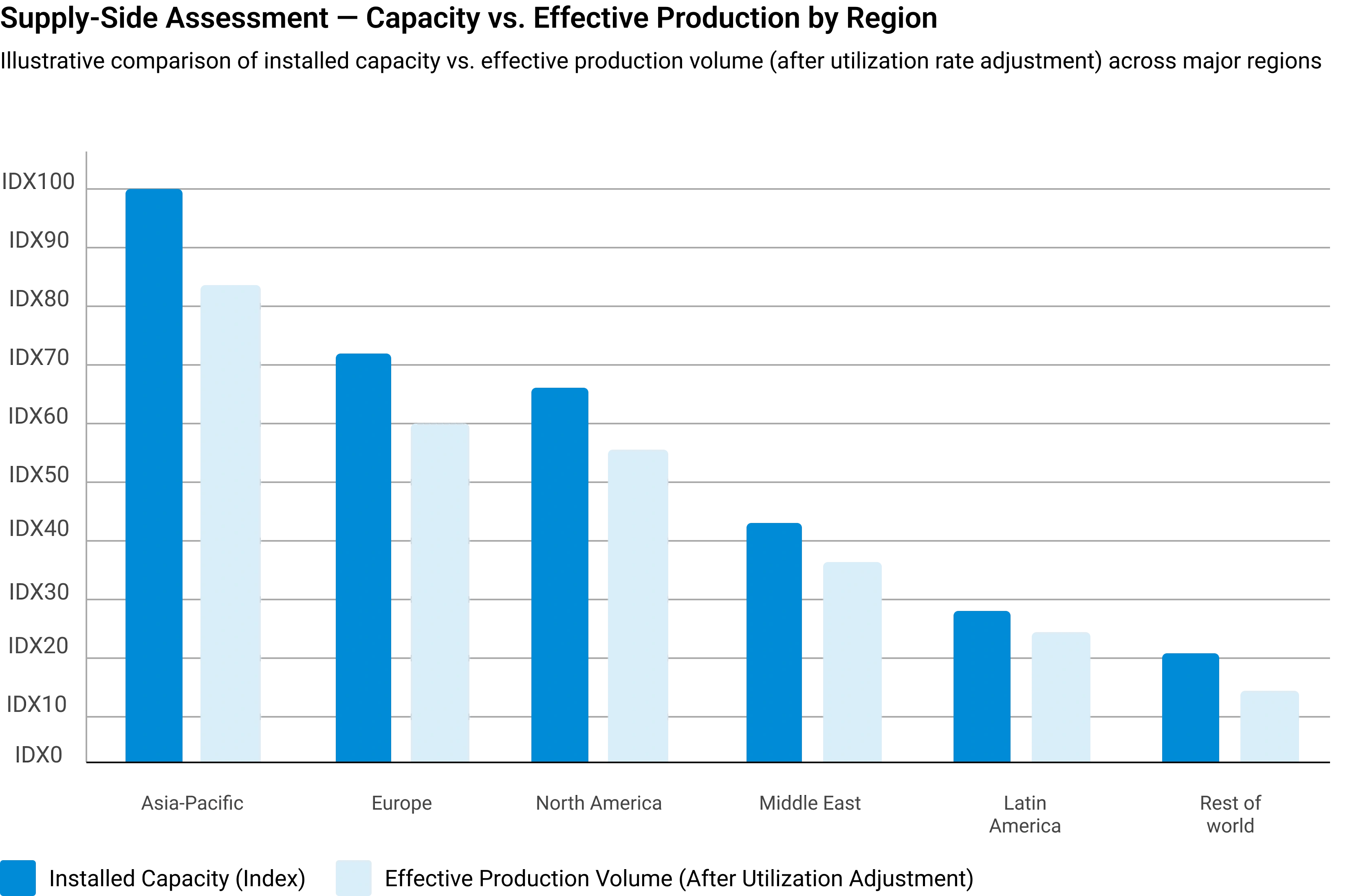
Capacity Utilization Adjustment
Installed capacity is adjusted using utilization rates based on demand conditions, feedstock availability, plant operating rates, maintenance schedules, and regulatory restrictions.
Manufacturer Revenue Analysis
Product-specific revenues, segment-level performance, regional distribution, average selling prices, and margin trends are evaluated to establish market value estimates.
Supply-Side Assessment — Capacity vs. Effective Production by Region
Illustrative comparison of installed capacity vs. effective production volume (after utilization rate adjustment) across major regions
Phase 3 — Demand-Side Assessment: Quantifying Chemical Consumption
Demand-side analysis quantifies chemical consumption across industries, applications, and geographies — identifying where and how chemicals are consumed throughout the value chain with precision.
End-Use Industry Analysis
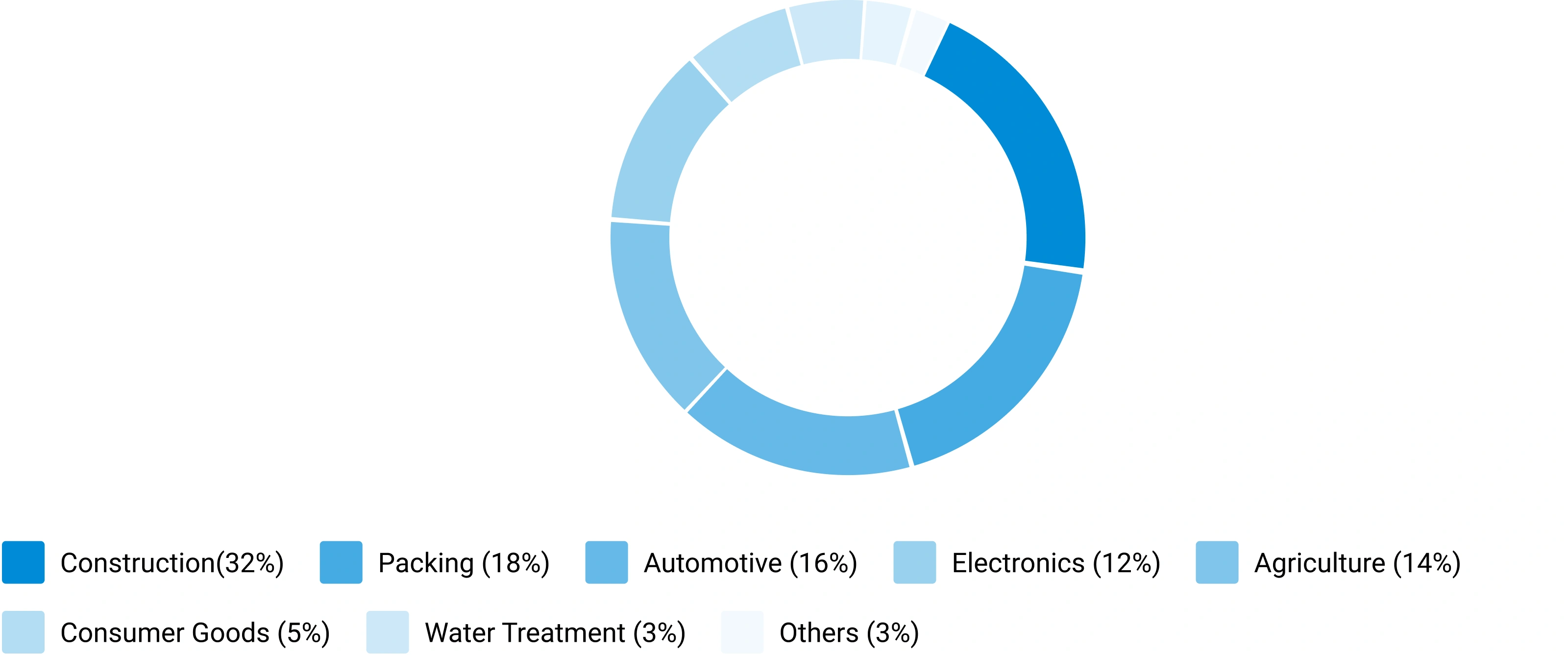
Chemical demand is evaluated across automotive, construction, packaging, electronics, agriculture, healthcare, consumer goods, industrial manufacturing, energy and utilities, and water treatment. Industry output, production trends, and consumption intensity are analyzed to determine demand patterns.
Consumption Modeling
Demand is estimated using measurable indicators: kilograms per vehicle, kilograms per square meter of construction, dosage per cubic meter of water treated, kilograms per hectare of agricultural land, and kilograms per ton of manufactured products. Consumption factors are validated through industry publications and primary interviews.
Application Analysis
The market is segmented by application area to understand product performance requirements, formulation trends, technology adoption, customer preferences, and regulatory requirements improving demand accuracy and segmentation granularity.
Demand-Side Assessment — End-Use Industry Demand Distribution
Illustrative distribution of chemical & materials demand across key end-use industries
Phase 4 - Trade Flow Analysis: Balancing Regional Supply and Demand
Trade flow analysis reconciles regional supply and demand estimates through import and export data, identifying net supply positions, regional dependencies, and market imbalances. It serves as an independent validation layer that tests the consistency of supply-side and demand-side estimates.
Import Analysis
Import data is evaluated to determine volumes, source countries, product dependency, regional supply gaps, and pricing trends — identifying markets that rely heavily on external supply and where domestic production is insufficient to meet demand.
Export Analysis
Export assessments reveal production surplus, export competitiveness, regional manufacturing strength, and global market participation. Export patterns also help validate domestic production estimates and identify net exporting regions.
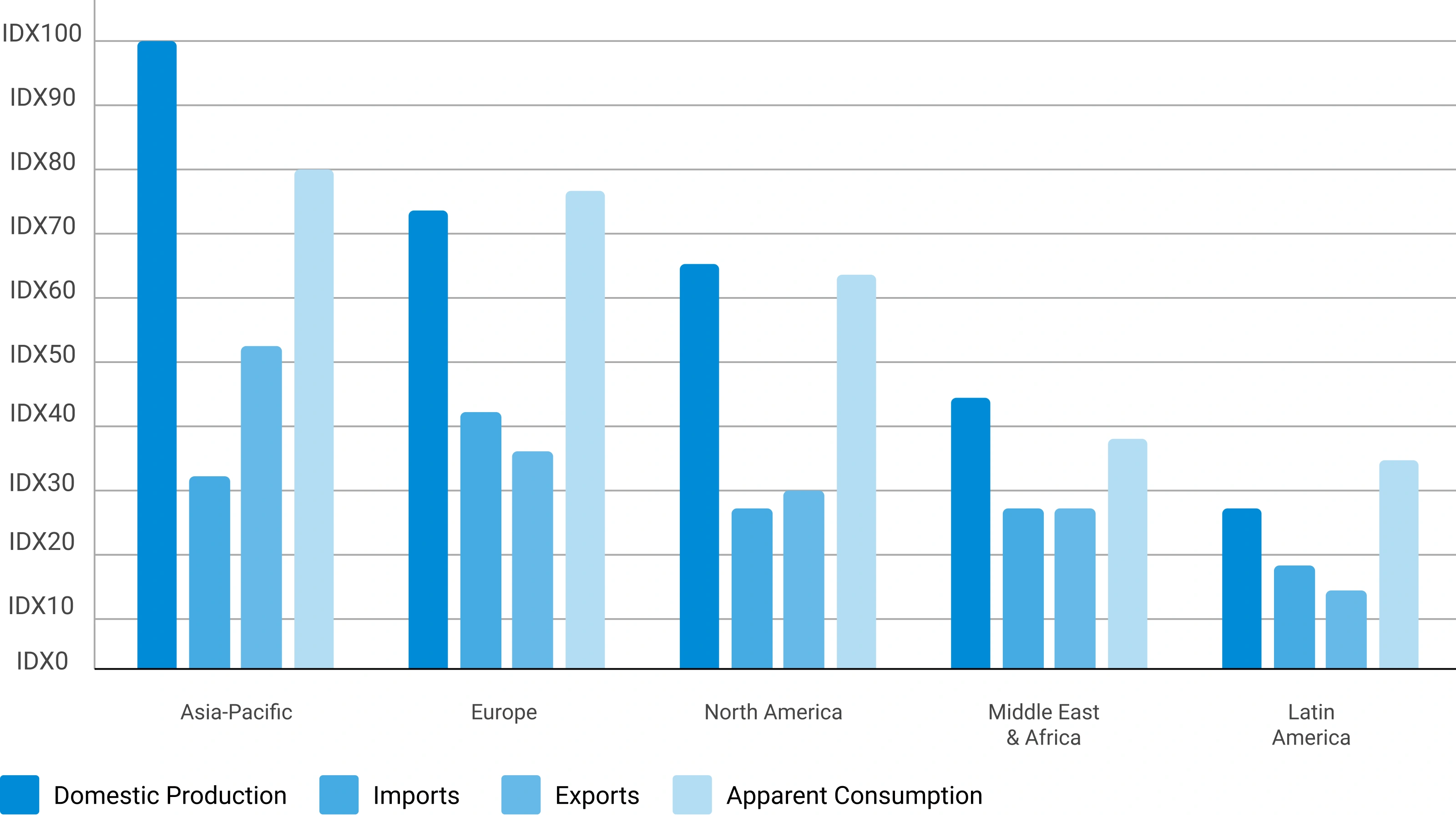
Apparent Consumption Model
Regional consumption is assessed using the standard apparent consumption formula:
Results identify net importing regions, net exporting regions, regional deficits, and surpluses — serving as an independent validation of supply and demand estimates.
Trade Flow Analysis — Net Supply Position by Region
Illustrative apparent consumption vs. domestic production across major regions — positive gap indicates net import dependency
Phase 5 — Primary Research: The Critical Validation Layer
Primary research tests and refines findings from secondary research through direct engagement with industry participants across the supply chain, demand side, and expert community. It captures intelligence that no database or published report can provide — the real-world experience of manufacturers, buyers, and specialists operating in the market.

Supply-Side Interviews
Conversations with chemical manufacturers, raw material suppliers, contract manufacturers, technology providers, and plant operators cover production trends, capacity utilization, pricing developments, technology shifts, and competitive dynamics.

Demand-Side Interviews
Engagement with OEMs, industrial consumers, procurement managers, distributors, formulators, and end-use manufacturers focuses on consumption trends, purchasing behavior, product substitution, demand outlook, and emerging applications.

Industry Expert Consultations
Additional interviews with industry consultants, independent experts, regulatory specialists, technical professionals, and research institutions provide deeper market context and validate key analytical assumptions.
Focus Areas of Primary Research:
Market Size & Forecast Validation
Revenue estimates, volume consumption, growth rates, forecast assumptions, regional demand.Supply Chain & Value Chain Assessment
Raw material sourcing, supply chain challenges, distribution networks, procurement practices.Production & Capacity Analysis
Manufacturing capacity, utilization rates, expansion projects, plant investments.Pricing & Cost Structure Analysis
Product pricing trends, feedstock costs, energy costs, margin pressures, pricing outlook.Competitive Landscape Assessment
Volume and value estimates confirmed to be fully consistent with one another before publicationInterview Volume by Market Scope
| Study Scope | Number of Interviews |
|---|---|
| Niche Market | 20 – 30 |
| Mid-Sized Market | 30 – 50 |
| Global Market | 50 – 80 |
| Highly Fragmented Market | 80 – 120 |
Interview Details:
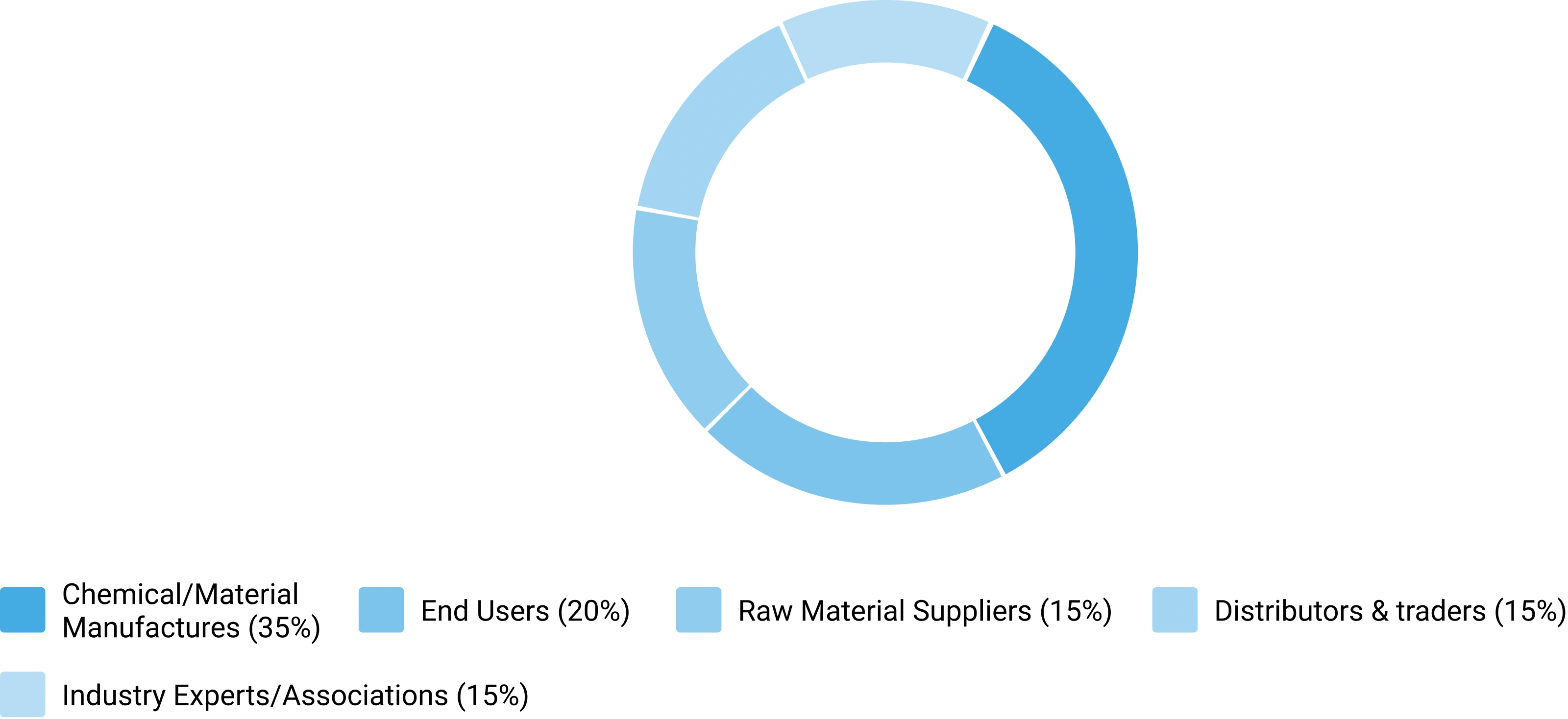
Category : Manufacturers, Suppliers, Distributors, End Users, Experts/Associations
Average Duration : 30–60 Minutes
Interview Mode : Video calls, telephonic interviews, expert consultations
Interview Format : Structured / Semi-Structured questionnaire
Focus Areas of Primary Research:
Market Size & Forecast Validation :
Revenue estimates, volume consumption, growth rates, forecast assumptions, regional demand.
Supply Chain & Value Chain Assessment :
Raw material sourcing, supply chain challenges, distribution networks, procurement practices.
Production & Capacity Analysis :
Manufacturing capacity, utilization rates, expansion projects, plant investments.
Pricing & Cost Structure Analysis :
Product pricing trends, feedstock costs, energy costs, margin pressures, pricing outlook.
Competitive Landscape Assessment :
Market share, competitor positioning, strategic initiatives, partnerships, acquisitions.
Primary Research — Stakeholder Coverage by Category
Distribution of interview respondents across stakeholder categories (% share from PPT data)
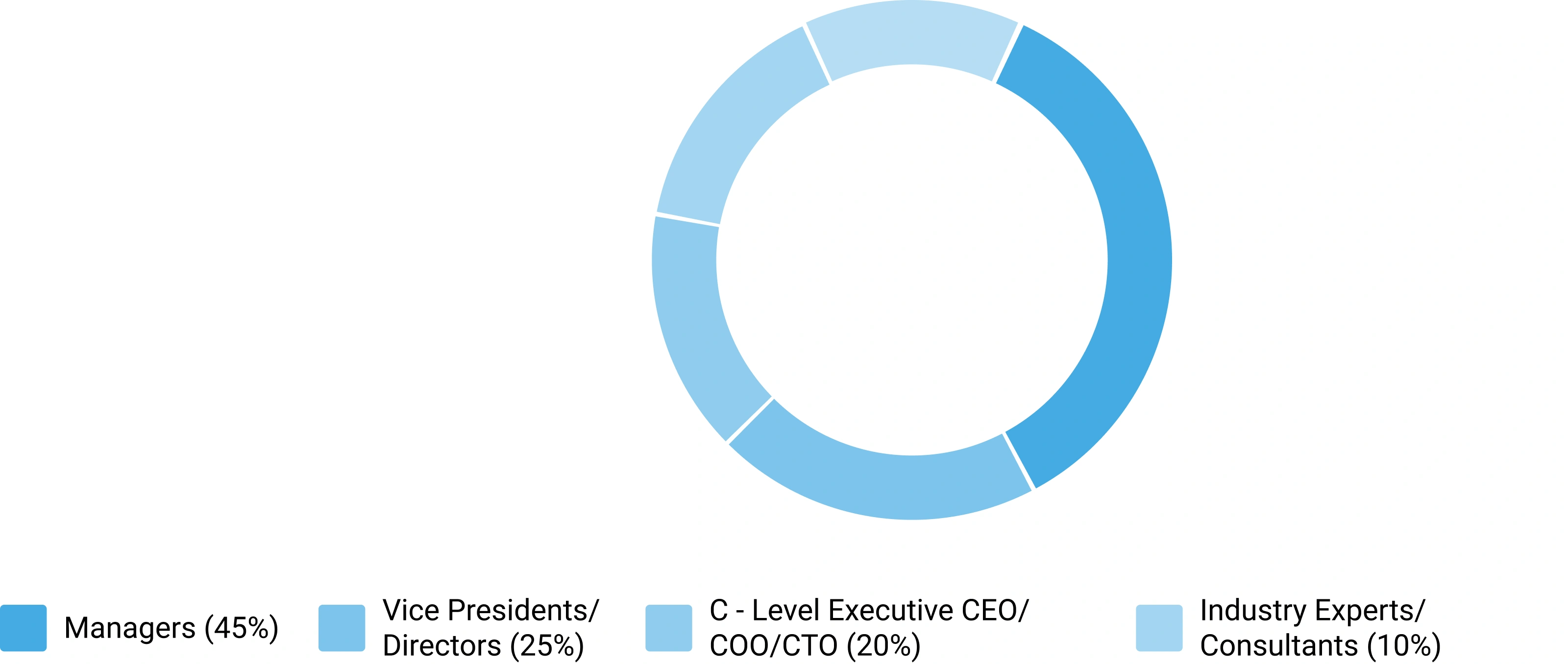
Primary Research — Respondent Designation Profile
Seniority breakdown of interview respondents (% share from PPT data)
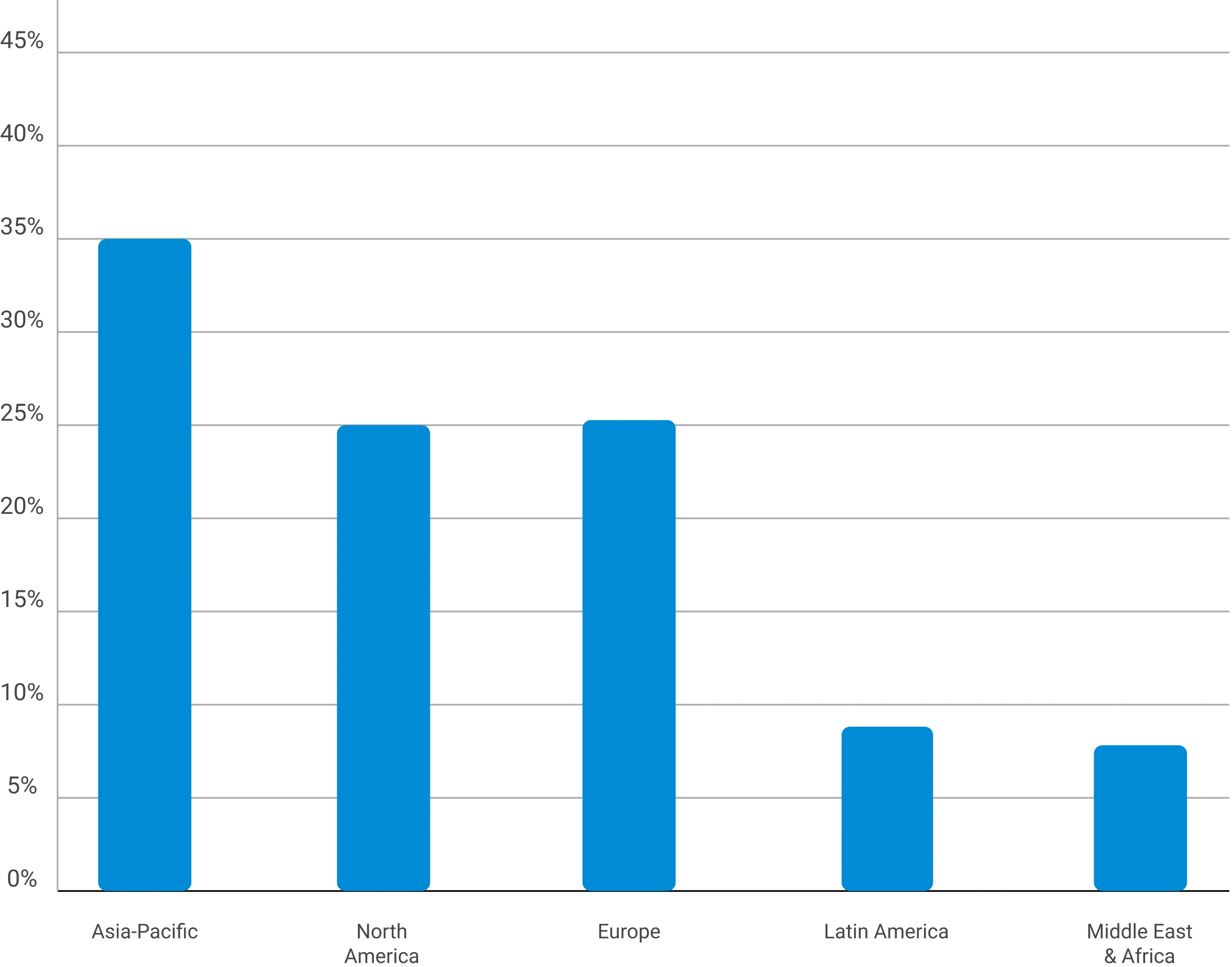
Primary Research — Geographic Coverage of Interviews
Regional distribution of primary research engagement (% share from PPT data)
Phase 6 — Data Triangulation and Market Validation
No single methodology is relied upon in isolation. Multiple independent estimation approaches are combined and reconciled to ensure consistency, accuracy, and analytical defensibility. Any material deviations between approaches are investigated and adjusted through additional validation cycles.
The final market size is derived through weighted triangulation of all validated methodologies. Any material deviations between approaches are investigated and adjusted through additional validation cycles. The outcome represents the most realistic assessment of the market based on available evidence and expert confirmation ensuring that volume and value estimates are fully consistent with one another.
Triangulation Framework — Input Contribution Weight
Relative weight each sizing input contributes to the final reconciled market estimate
Phase 7 — Forecast Modeling: Projecting Future Market Evolution
Forecasting evaluates the future trajectory of the market using a combination of quantitative indicators and qualitative assessments across economic, industry, and regulatory dimensions. Rather than simple extrapolation, each driver is independently modeled and integrated into a composite forecast.
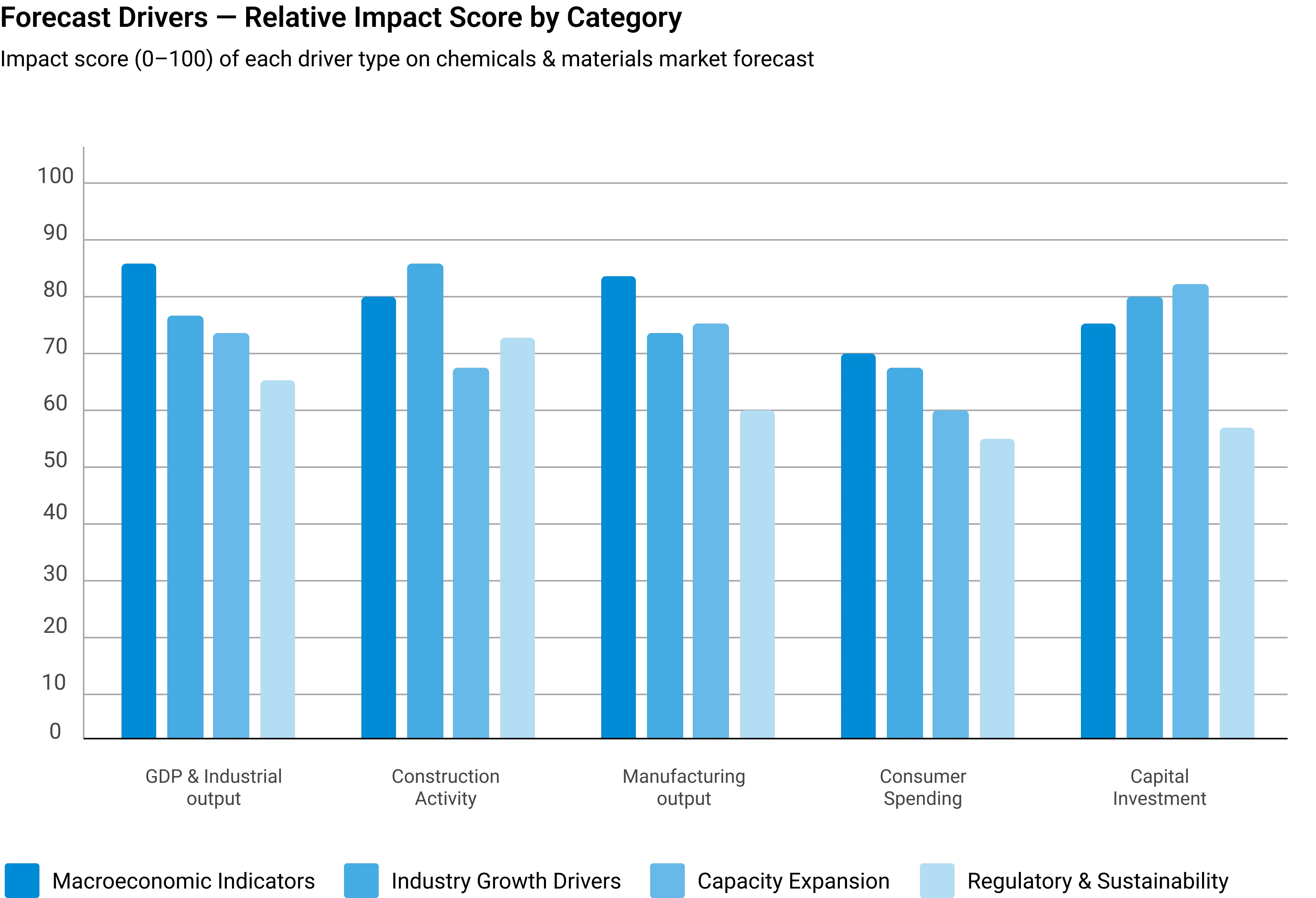
Macroeconomic Indicators
GDP growth, industrial production, manufacturing output, construction activity, consumer spending, and capital investment form the quantitative foundation of long-term demand projections. These are applied at country, regional, and global levels.
Industry Growth Drivers
Urbanization, infrastructure development, industrialization, technological innovation, sustainability initiatives, and evolving product performance requirements are assessed at regional and industry levels — capturing both structural and cyclical demand drivers.
Capacity Expansion Analysis
Announced plant expansions, new manufacturing facilities, technology upgrades, and strategic investments are evaluated to determine future supply-demand dynamics and potential market tightness or oversupply situations.
Regulatory & Sustainability
Environmental regulations, chemical safety standards, emission reduction targets, circular economy initiatives, and sustainability requirements are incorporated as they often influence product adoption rates and market growth trajectories.
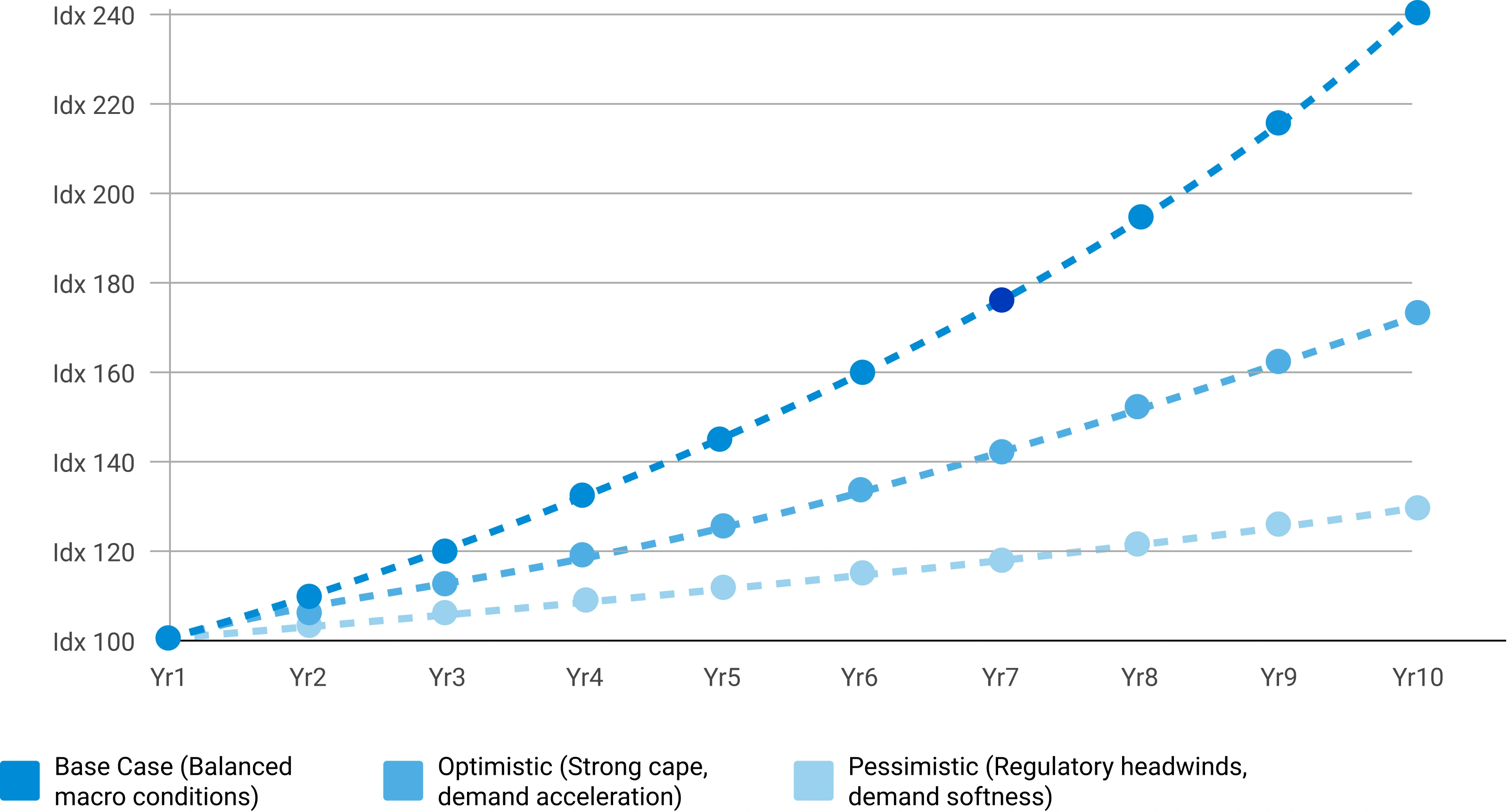
Scenario Forecast Range — Indexed Market Growth (Year 1–10)
Illustrative indexed growth trajectories across Base, Optimistic, and Pessimistic scenarios over a 10-year forecast horizon
Forecast Drivers — Relative Impact Score by Category
Impact score (0–100) of each driver type on chemicals & materials market forecast



Comments
Share your thoughts, ask a question, or provide feedback about this report.