
Asia Pacific Organic Acids Market Size, Competitive Landscape Analysis Report 2035
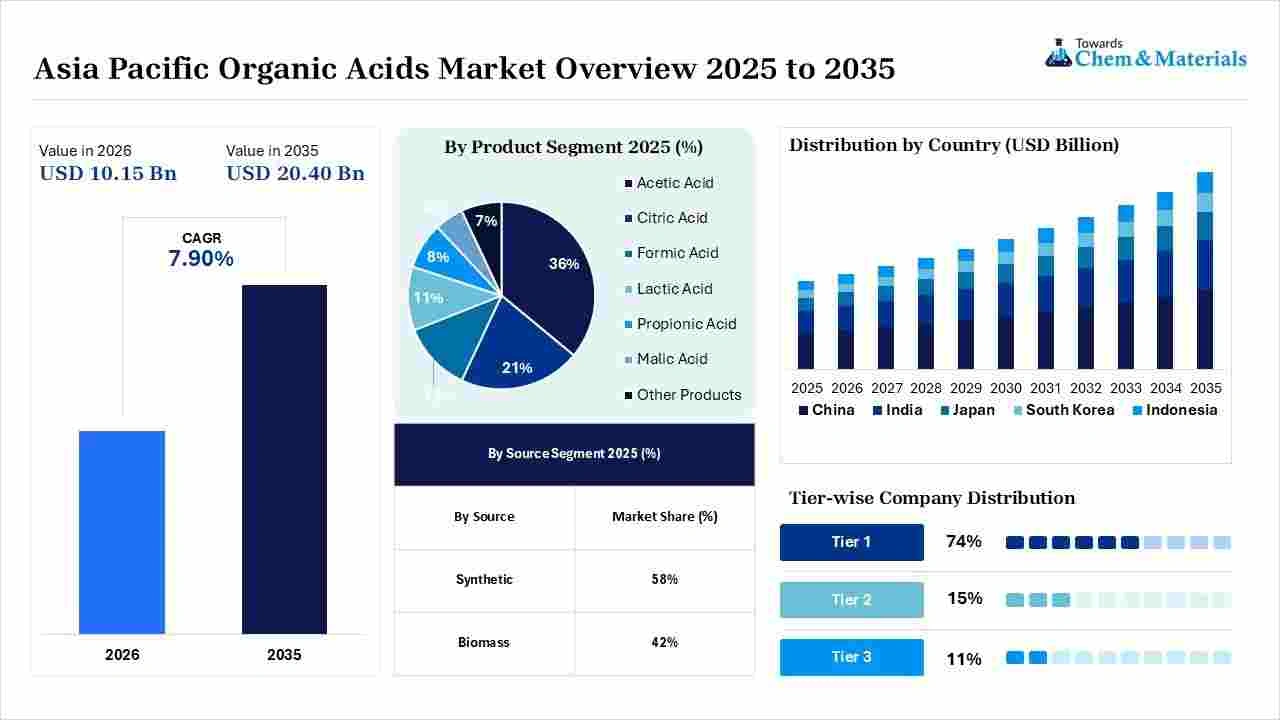
The Asia Pacific Organic Acids Market size was valued at USD 9.39 billion in 2025, is estimated to reach USD 10.15 billion in 2026, and is projected to reach USD 20.40 billion by 2035, exhibiting a compound annual growth rate (CAGR) of 7.90% over the forecast period from 2026 to 2035. Organic acids are organic compounds containing acidic properties that are easily soluble in water. These acids are being used in medications, skincare products, and also some drugs that are used to treat different kinds of diseases. If we observe the graph, the growth of these is very steady, and demand is increasing day by day.
The bifurcation of these acids leads us to the types that we usually hear about, and those are salicylic acid, kojic acid, folic acid, etc. Medications by the name of folic acid are being recommended directly to patients experiencing seizures or brain strokes in any way; if we see the definition medically, then folic acid is the one that stimulates the nerves of the brain and also decreases the heat of the body that is being generated by the ongoing medication, which helps the patient to stay calm and avoid conditions like seizures.
Key Takeaways
- By country, China dominated the Asia-Pacific organic acids market with a share of 40.00% in 2025 and is expected to grow at a CAGR of 5.90% in the forecast period.
- By region, India held a 25.00% market share in 2025 and is expected to be the fastest-growing region in the market, with a CAGR of 6.20% in the forecast period.
- By product, the acetic acid segment dominated the Asia Pacific organic acid market with 35.80% market share and a 5.20% CAGR in the year 2025.
- By product, the lactic acid segment held a 10.80% market share in 2025 and is expected to grow at the fastest CAGR of 9.40% over the forecast period.
- By source, the synthetic segment dominated the Asia Pacific organic acid market with 58.00% market share and a 6.10% CAGR in the year 2025
- By source, the biomass segment held a 42% market share in 2025 and is expected to grow at the fastest CAGR of 10.10% over the forecast period.
- By application, the food and beverage segment dominated the Asia Pacific organic acid market with 39.20% market share and a 6.80% CAGR in the year 2025.
- By application, the pharmaceutical segment held a 7.60% market share in 2025 and is expected to grow at the fastest CAGR of 8.70% over the forecast period.
According to Towards Chemicals and Materials Analytics and Consulting, the Asia-Pacific Organic acids market volume was valued at 18.90 million metric tons in 2025 and is expected to surpass around 36.15 million metric tons by 2035, accelerating a compound annual growth rate (CAGR) of 6.70% over the forecast period from 2026 to 2035.
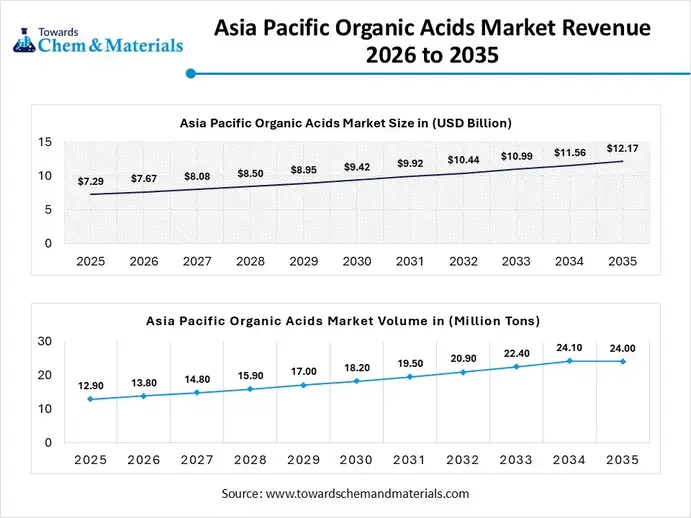
The Asia-Pacific organic acids market is showcasing very stable growth over the coming years due to rising demand and changing preferences of people. Organic acids are widely used in areas like food and beverages, animal feed, pharmaceuticals, and chemical manufacturing. These acids are usually used as flavor regulators, for acidity control, and in industrial processing; the very common acids used for these purposes are acetic acid, nitric acid, citric acid, kojic acid, and salicylic acid. They are also used in packaged foods as acidity regulators (if we see the ingredients on the packet), driven by increasing urbanization and changes in lifestyle, increasing the demand for packaged and ready-to-eat food around the globe. The dominant market for organic acids is China; on the other hand, Southeast Asia and India are still in the phase of growth. The shift towards bio-based products and environmentally friendly manufacturing is also encouraging the development and use of organic acids across the region.
- For instance, in May 2025, a study was conducted with around 120 asthma patients and 89 healthy people by having them exhale VOCs (volatile organic compounds). It was remarked that asthma patients showed lower levels of propionic acid and higher levels of nicotinic acid compared with the other healthy individuals. Also, in the same cases, when studies were carried out carefully, it was found that consumption can tabcoo and well change the pattern of breathing, and this can be detected early on. The testing of healthy patients with VOCs and reading their breath detected that they can also encounter asthma in the near future. After a deep study, it was concluded that studying the patterns of exhaling, inhaling, and tobacco consumption can detect asthma early on. Volatile Organic Compounds for Asthma Monitoring - EMJ (Source: www.emjreviews.com)
Global Investment Movement for the Asia Pacific Organic Acids Market
- The increasing investment in manufacturing semiconductor ceramics and initiatives to set up plants across Asia Pacific are creating new opportunities for suppliers across the region. The investment to set up plants across the region is giving rise to new smartphones and high-tech products in the market, which is driving demand for this material to rise.
- The need for organic acids is increasing as many companies are investing in manufacturing advanced product facilities, packaging units, and semiconductor equipment.
- Many countries across Asia Pacific, like China, Japan, South Korea, Taiwan, and India, are attracting significant investment into their organic acid ecosystem.
- Manufacturers are investing heavily in renewable feedstocks, improved fermentation processes, and renewable energy to improve sustainability and give us a better environmental tomorrow. Also, these investments will encourage the world towards gaining sustainable chemical solutions.
Report Scope
| Report Attributes | Details |
| Market Size in 2026 | USD 10.15 Billion/20.17 Million Metric Tons |
| Expected Size in 2035 | USD 20.40 Billion/36.15 Million Metric Tons |
| Growth Rate | CAGR of 7.90% |
| Base Year of Estimation | 2025 |
| Forecast Period | 2025-2035 |
| Segment Covered | By Product, By Source, By Application |
| Key Companies Profiled | BASF SE, Cargill, Incorporated, Archer Daniels Midland Company, Nippon Shokubai Co., Ltd., DSM-Firmenich AG |
Recent Market Trends
- Move towards bio-based production: The market is shifting towards organic acids from renewables and biological processes. As the demand for sustainable chemicals rises, manufacturers are looking at environmentally friendly approaches to production.
- Food and beverage demand increase: Organic acids are still being utilized by the food and beverage industry for preservation and acidity adjustment and in food flavoring. Their demand is being boosted by the increased consumption of packaged, processed, and convenience foods.
- Growing Use in Animal Nutrition: Organic acids are becoming more important in animal feed because they might assist in maintaining feed quality and animal health. Their production use is growing because producers are seeking alternatives to traditional additives.
- The demand for high-purity products: High-purity organic acids are becoming more and more necessary for pharmaceutical, healthcare, and specialized industrial applications. Therefore, manufacturers are creating products that have particular quality and performance attributes for particular applications.
Key Technological Shifts and AI in the Asia Pacific Organic Acids Market
Technological advancements in Asia The Pacific organic acid market suggests the use of metabolic engineering to produce the acids, paving the way for gene editing in the market. As we can see, artificial intelligence is implemented at a large scale around the globe, so we can see the residues used here in the organic acids market. The use of artificial intelligence is able to read and analyze large and complex data, making it into a simple format and making the manufacturing process very smooth and hassle-free for the finished product. Data readability and analysis can help manufacturers improve the yield, reducing wastage and making the use of appropriate raw materials possible across the country.
For instance, the recent Nobel Prize in Chemistry was awarded to Hassabis and Jumper for developing an AI module that would predict the structure of protein in the amino acids; this has been considered an intriguing and most scientific development over the last 50 years. This innovation brings together the power of AI and genome sequencing, enabling the recognition of the 3D structure that is being formed within the amino acids.
Supply Chain Analysis of the Asia Pacific Organic Acids Market
Production & Processing
In this process, materials are mixed, shaped, and treated according to their needs to ensure very good quality of the product. The processing starts with the selection and preparation of appropriate raw materials, including amino acids, citric acid, etc., depending on the use; these materials are mixed, shaped, and processed. The dimensions and quality are obtained by precision machining and surface finishing processes. Manufacturers are also turning to automated production processes to ensure accuracy, minimize defects, and ensure quality in the manufacturing of products.
- In the production process, the data is being traced and read by artificial intelligence technology so that appropriate acids can be used for pharmaceutical products, food products, and animal feed. This ensures smooth processing and hassle-free production.
- Vipul Organics shares jumped after the company commenced operations at its new greenfield facility in Sayakha, enhancing production capabilities and contributing to growth in the organic chemicals market.
- Vipul Organics surges after commencing operations at Greenfield Sayakha facility | Capital Market News - Business Standard
- Key players: Polynt-Reichhold, DSM, Corbion, Tate & Lyle
Quality Testing and Certification
- Organic acids are manufactured in a very safe and hygienic environment. Before starting production, the factory and the machines are cleaned, as some of the acids are meant for consumption and skincare too, so it is ensured that it is produced in a very hygienic environment. Followed by testing to detect any bacteria or algae that are present in the acid before production.
- Manufacturers adhere to the proper quality standards and certification processes to produce products that meet the expectations of the semiconductor and electronics industry. Regular testing ensures reliability and minimizes failure risk in the industrial environment.
- The article discusses the use of titrators to determine acidity profiles in processed foods, highlighting their precision, efficiency, and the importance of accurate measurements for food quality and safety.(Source:www.labmanager.com)
- Key players: Loba Chemie, Sun Pharma, AbbVie
Distribution to Industrial Users
- The organic acid products are distributed in general stores like Walmart, Dmart, and many pharma medical stores so that the user can use them to their advantage. These are being sold as medicines and skin care products, and as well this can also be found in packaged food as well.
Products can be supplied directly from manufacturers, or via specialised distributors and regional suppliers. - Most organic acid components need to be handled carefully and efficiently; this suggests packaging plays an important role
- In July 2026, Siegfried Co. Ltd. ensured smooth delivery processing it appointed good COO role, ensuring a single centralized executive position to boost organizational coordination so that the coo can pay proper attention to procurement operations to ensure smooth distribution across the country. (Source:chemicals.economictimes.indiatimes.com)
- Key players: Polynt Richhold, DSM, Corbion, Tate & Lyle
Sustainability Analysis of Organic Acids
Organic acids can be generated from renewable raw materials like sugar, starch, and agricultural biomass; this makes organic acids more sustainable than many conventional chemically produced products. Numerous organic acids are biodegradable and can be used without impacting the environment if managed properly. Energy use, water usage, and water generation are being seen as increasingly important areas for manufacturers to look at reducing energy use during production. Fermentation-based methods also help to make the production more environmentally friendly. Organic acids are playing a key role in sustainable industrial development with the shift towards greener products and circular economy processes in the industry.
What are Organic Acids?
The term organic refers to substances that are naturally soluble in water. It is often associated with natural and herbal components that are safe for consumption and suitable for sensitive skin. Organic acids are a category of organic compounds characterized by their acidic properties and high solubility in water. These acids are commonly used in medications, skincare products, and certain drugs that treat various diseases. Observing market trends, we see a steady growth in the demand for these organic acids. Some well-known examples include salicylic acid, kojic acid, and folic acid. Folic acid, in particular, is often prescribed to patients experiencing seizures or strokes. Medically, folic acid is known to stimulate brain nerves and reduce body heat generated by medications, helping patients stay calm and preventing seizure conditions. Key distributors of folic acid tablets include Sun Pharma, AbbVie, and Wellness Forever.
Uses of Organic Acids
- Organic acids are used in several places, like pharmaceuticals, medicines, skincare products, foods, and animal stock too. The word organic here refers to soluble substances that are soluble in water on their own. Also, the definition of organic is seen as something that is natural and herbal in use, which is not harmful even if consumed and used on sensitive skin types.
- These acids are also included in the food and drink sector as preservatives, flavor enhancers, and acidity regulators. In medicine and health care products, they are used in specialized medicines like folic acid. These acids contribute to the stability of products, to product preservation, and are used as raw materials in various industrial processes.
- Another very essential application of some organic acids is in personal care products, cleansing solutions, and biodegradable products.
Pricing Analysis of Organic Acids
The price of organic acids depends on factors such as raw material costs, production methods, product purity, and market demand. The production costs of fermentation-derived organic acids might be higher since processing demands and quality control measures are involved. Factors other than the market price of agricultural feedstocks can also affect the market price, such as the cost of energy and transportation. Higher purity grades for pharmaceutical and special industrial applications are typically more expensive than standard purity grades. Other market forces include food processing, healthcare, agriculture, and chemical industries. Over time, price stability can be achieved through improving efficiencies in production and through increasing manufacturing capacities.
Asia Pacific Organic Acids Market: Trade Analysis
Asia Pacific organic acids market is currently witnessing a well-established regional trade network with high production volume and increasing demand in food, pharmaceutical, agriculture, and chemical industries. China’s manufacturing capacity makes it a large exporter of several organic acids to neighboring countries and international markets. Other countries like India, Japan, South Korea, and economies of the South-east Asian region are also actively involved in regional trade, either as exporters or importers. The development of cross-border trade in organic acids between manufacturing countries and the major industrial users is also helping trade within Asia. The emergence of cross-border movement of organic acids between manufacturing countries with good production capacities is providing markets with growing demand for animal nutrition, pharmaceutical manufacturing, and food processing.
The demand for raw materials, raw material prices, transport costs, and fluctuating industrial demand also affect international trade. Inclusion: The region is likely to stay a key industry for organic acid production and trade. The growth of industries, the expansion of the food and pharmaceutical industry, and the establishment of local manufacturing capabilities. These factors will boost the regional and global trade in organic acids.
Regulatory Framework: Asia Pacific Organic Acids Market
| Country Region | Regulatory Body | Key Regulations | Focus Areas |
| Asia Pacific | Food Safety and Standards Authority of India | Food Safety and Standards Act along with National Programme for Organic Production (NPOP) | Establishing residue limits and purity grades for food and feed preservatives |
| North America | Food and Drug Administration (FDA) and Environmental Protection Agency | Toxic Substances Control Act | Verification of GRAS status for food acidulants and preservatives. Industrial chemical reporting and environmental discharge limits for chemical synthesis |
| European Union | European Chemicals Agency | Authorisation and Restriction of Chemicals | Strict toxicological evaluations, purity criteria (E-numbers like E330 for citric acid), and maximum usage levels |
Segmental Insights
Product Insights
The acetic acid segment dominated the Asia Pacific organic acid market with 35.80% market share and a 5.20% CAGR in the year 2025, driven by commercial applications, making acetic acid the leading position in the organic acids market. It is widely used in food preservation, the chemical industry, textiles, plastics, and many industrial applications. It has a well-established production base and has regular market demand from various end-use industries, which ensures its strength. The increasing food processing and chemical industries in the Asia Pacific region will also drive its demand. The versatility and wide industrial applications are expected to help acetic acid retain its position as a leading chemical.
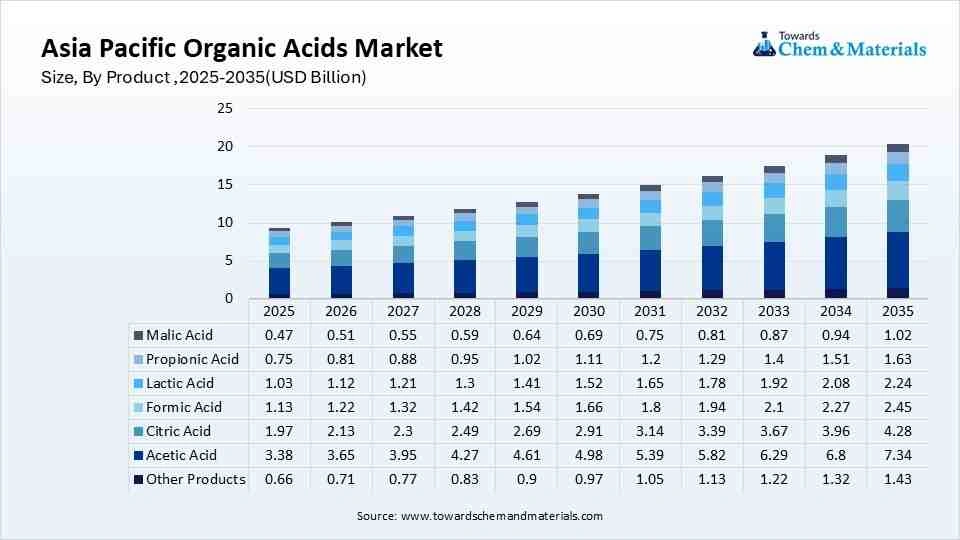
The lactic acid segment held a 10.80% market share in 2025 and is expected to grow at the fastest CAGR of 9.40% over the forecast period, thanks to growing applications in food, pharmaceuticals, and biodegradable materials. It is commonly used as a preservative and acidity regulator in food products. Lactic acid is gaining in popularity due to the growing demand for biodegradable plastics. As demand for sustainable materials continues to increase, manufacturers are looking into increased production and finding better production processes. It has broad use and potential for sustainability, which will drive robust growth.
Asia Pacific Organic Acids Market Share, By Product, 2025(%)
| By Product | Market Share (%) |
| Acetic Acid | 36% |
| Citric Acid | 21% |
| Formic Acid | 12% |
| Lactic Acid | 11% |
| Propionic Acid | 8% |
| Malic Acid | 5% |
| Other Products | 7% |
Source Insights
The synthetic segment dominated the Asia Pacific organic acid market with 58.00% of market share and a 6.10% CAGR in the year 2025, followed by producers and quality of the product. Producers can provide the required quantities for industrial use, as their manufacturing processes have been established. The chemical industry, food processing, and other industries use synthetic organic acids extensively. They are readily available and have been produced in this region. But the increasing trend toward sustainable production is starting to draw more focus to the need for alternatives.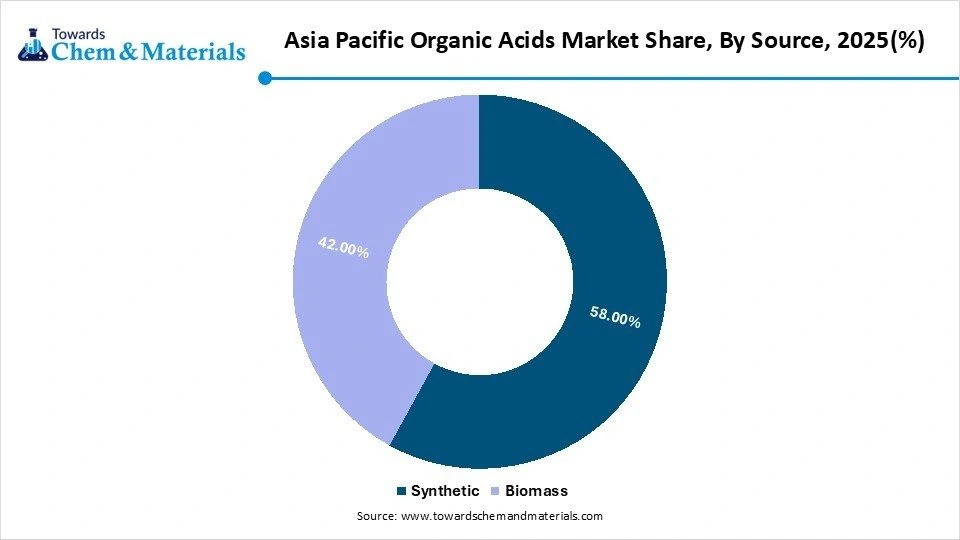
The biomass segment held a 42% market share in 2025 and is expected to grow at the fastest CAGR of 10.10% over the forecast period, driven by agricultural residues, plant materials, and other biological resources that can serve as a feedstock. An increasing trend towards minimizing reliance on fossil-based raw materials is driving this segment. This is being bolstered by growing interest in minimizing reliance on fossil-based raw materials.
Asia Pacific Organic Acids Market Share, By Source, 2025(%)
| By Source | Market Share (%) |
| Synthetic | 58% |
| Biomass | 42% |
Application Insight
The food and beverage segment dominated the Asia Pacific organic acid market with 39.20% market share and a 6.80% CAGR in the year 2025, as it is used for preservation, acidity control, and flavors. This segment contributes to the stability of products and to the shelf life of food and beverage products. Demand’s gain is being backed by increasing consumption of processed, packaged, and convenience foods. Food and beverages are still projected to remain its primary application, thanks to its wide and proven usage.
The pharmaceutical segment held a 7.60% market share in 2025 and is expected to grow at the fastest CAGR of 8.70% over the forecast period, because organic acids are widely used in pharmaceutical products. They possess properties that can be beneficial for the control of acidity, stability, and other pharmaceutical processes. Further opportunities are emerging due to the increasing demand for healthcare services and the manufacturing of pharmaceutical products in Asia Pacific. Consumption is also being bolstered by more investments in medicines manufacturing and health and care infrastructure.
Asia Pacific Organic Acids Market Share, By Application, 2025(%)
| By Application | Market Share (%) |
| Food and Beverage | 39% |
| Animal Feed | 22% |
| Chemical and Industrial | 26% |
| Pharmaceuticals | 8% |
| Other End Uses | 5% |
Country Analysis
Chinas organic acid market size was estimated at USD 3.76 billion in 2025 and is projected to reach USD 8.26 billion by 2035, growing at a CAGR of 8.19% from 2026 to 2035. China dominated the Asia Pacific organic acid market with a share of 40.00% in 2025, because China is considered the largest chemical manufacturing base, with an extensive food processing industry and a much stronger production capacity. The country is considered the major production and consumption unit for acids like acetic acid, lactic acid, and kojic acid. The country’s first-place position remains strong with the increasing demand from food, pharmaceuticals, agriculture, animal feed, and industrial applications.
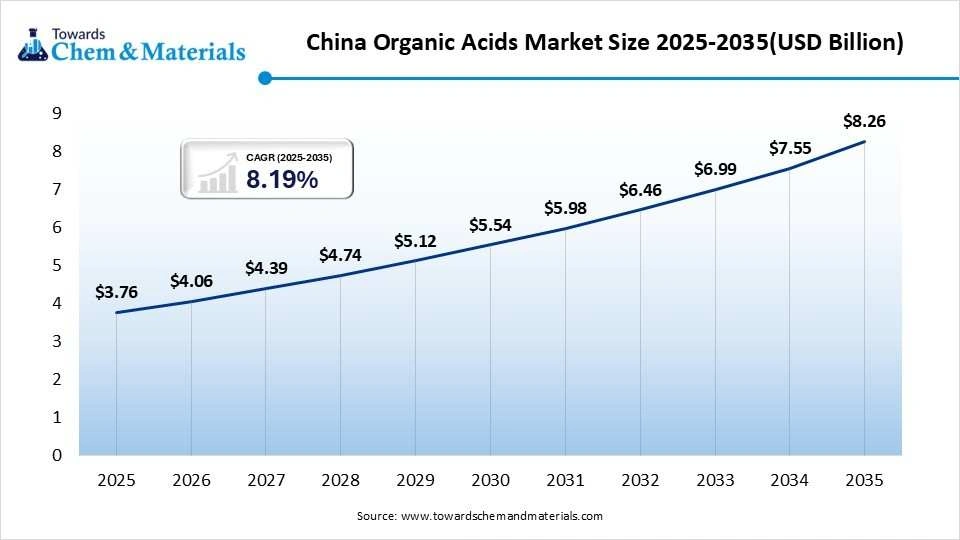
India held a 25% market share in 2025 and market size was estimated at USD 2.35 billion in 2025 and is projected to reach USD 5.20 billion by 2035, growing at a CAGR of 8.27% from 2026 to 2035, driven by the growth of the food processing, pharmaceutical, agriculture, and chemical industries. The Indian market is emerging as the fastest-growing one. The population and increasing urbanization are increasing the consumption and demand for packaged food amongst people. India is expanding its market, driven by the development of manufacturing activities, investment in domestic production, and the setting up of new plants, which is helping India to bloom and pave its way further.
Competitive Analysis
The competitive Asia Pacific organic acids market is driven by the focus of the companies on production capacity, product quality, pricing, and sustainable manufacturing. China is well established, and India and Southeast Asia are growing fast because they have large-scale production capabilities. To bolster market position, manufacturers are investing in technology and a bio-based manufacturing process, as well as an efficient supply chain. The companies that are leading in the race of organic acid manufacturing are BASF, Corbion Ltd, dsm-firmenich, and Siegfried Co. Ltd. Let us jump into the initiatives of the companies.
- In 30th July 2025, BASF reached the first mechanical stage by completing and showcasing to the world the use of glacial acrylic acid (GAA) and butyl acrylate (BA) facilities. This firm conducted a test run of producing and manufacturing its products with the use of these acids, which in turn resulted in a smooth new production cycle in phase 1. The experiment concluded that new world-scale production facilities will enable them to meet the fast-growing demand for acrylics in China and across Asia with a reliable supply of high-quality products.
(Source: www.pcimag.com ) - In August 2026, Corbion announced plans to expand its productivity for next-generation lactic acid fermentation to serve cleaner and more edible packaged food with packaging materials that are environmentally friendly around the globe. The investment by Corbion in next-generation lactic acid production is strengthening its position in natural acidulants and fermentation-driven ingredients.
- Does Corbion’s Next-Gen Lactic Acid Expansion Reshape The Bull Case For Corbion (ENXTAM: CRBN)?(Source: simplywall.st )
- In February 2026, the DSM firmtech invested its stake in animal nutrition. Also, the company is well known for producing the products of animal feed products using special acids that are meant for animals to eat. Recently, it was observed that the company observed the company invested more heavily and enthusiastically to produce more animal stock in the country to strength it’s position across the globe.
dsm-firmenich announces agreement to divest Animal Nutrition & Health to CVC Capital Partners.(Source: www.dsm-firmenich.com)
In July 2026, Siegfried Co. Ltd. ensured smooth delivery processing it appointed good COO, ensuring a single centralized executive position to boost organizational coordination so that the coo can pay proper attention to procurement operations to ensure smooth distribution across the country.
Siegfried appoints Eduardo Montanha as COO to unify global operations and enhance delivery, ETChemicals.(Source: chemicals.economictimes.indiatimes.com)
Recent Developments
- In July 2026, Siegfried Co. Ltd. ensured smooth delivery processing it appointed good COO, ensuring a single centralized executive position to boost organizational coordination so that the coo can pay proper attention to procurement operations to ensure smooth distribution across the country.
(Source: chemicals.economictimes.indiatimes.com) - In January 2026, DuPont announced the launch of Amber Light to purify acids, making them soluble in water and letting it dissolve smoothly, giving a quality finish to the product and making the manufacturing process faster making the industry to produce more purified acid products.
(Source: www.dupont.com )
Top Players in the Market & Their Offerings
| Company | Company Type/Position | Major Headquarters | Geographic Presence | Offerings | Key Strength |
| Absolics | Materials | Covington | Global | modernization | Manufacturing |
| AGC Electronics America | Materials | Hillsboro | U.S | modernization | Manufacturing |
| Air Liquide | Materials | Phoenix | U.S. | modernization | Manufacturing |
Other Key Players
- BASF SE
- Cargill, Incorporated
- Archer Daniels Midland Company
- Nippon Shokubai Co., Ltd
- DSM-Firmenich AG
Segment Covered in the Report
By Product
- Acetic Acid
- Glacial acetic acid
- Dilute acetic acid
- Industrial grade
- Food grade
- Pharmaceutical grade
- Citric Acid
- Anhydrous citric acid
- Monohydrate citric acid
- Food grade
- Pharmaceutical grade
- Industrial grade
- Formic Acid
- Industrial grade
- Feed grade
- Leather/textile grade
- Lactic Acid
- Food grade
- Pharmaceutical grade
- Industrial grade
- Polymer grade
- Propionic Acid
- Feed grade
- Food grade
- Industrial grade
- Malic Acid
- Food grade
- Pharmaceutical grade
- Industrial grade
- Other Products
- Fumaric acid
- Succinic acid
- Gluconic acid
- Sorbic acid
- Tartaric acid
- Itaconic acid
By Source
- Biomass
- Sugar/starch-based feedstocks
- Molasses
- Corn and grain derivatives
- Agricultural residues
- Forestry biomass
- Fermentation-derived organic acids
- Synthetic
- Petrochemical feedstocks
- Methanol-based routes
- Oxidation processes
- Carbonylation processes
- Other chemical synthesis routes
By Application
- Food and Beverage
- Beverages
- Bakery and confectionery
- Dairy and processed foods
- Sauces and dressings
- Preservatives and acidity regulators
- Animal Feed
- Poultry feed
- Swine feed
- Ruminant feed
- Aquaculture feed
- Pet food
- Chemical and Industrial
- Polymers and resins
- Solvents and intermediates
- Textile processing
- Leather processing
- Coatings and adhesives
- Cleaning chemicals
- Pharmaceuticals
- Active pharmaceutical ingredients
- Excipients
- Drug formulations
- pH regulators
- Nutraceuticals
- Other End Uses
- Personal care
- Cosmetics
- Agriculture
- Water treatment
- Mining
A Seven-Phase Framework
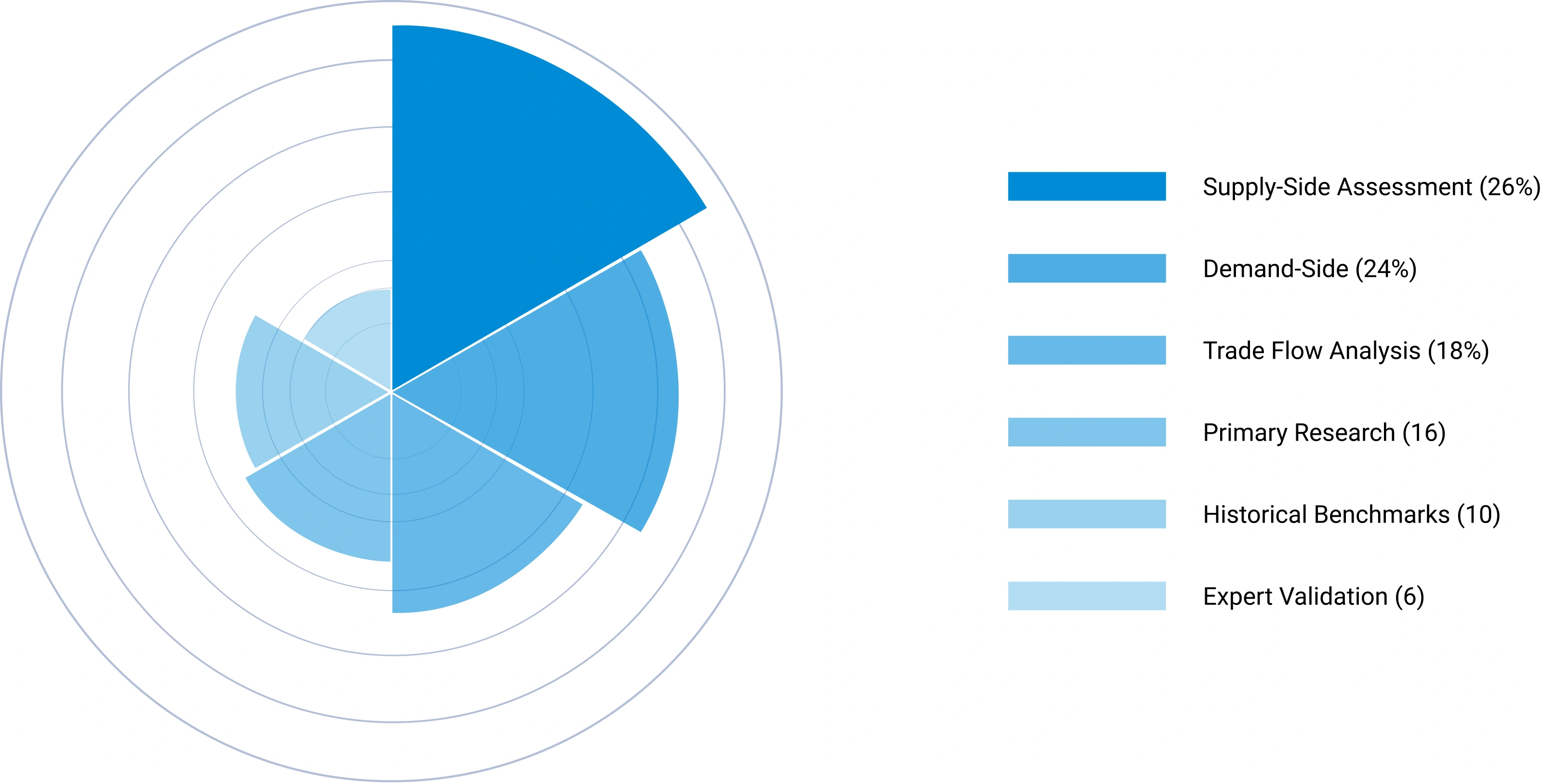
Our methodology is designed to be universally applicable across commodity chemicals, specialty chemicals, petrochemicals, construction chemicals, coatings, electronic chemicals, industrial gases, agrochemicals, water treatment chemicals, and performance materials. Each phase builds upon the last, creating a layered validation structure that minimizes estimation error and maximizes analytical confidence.
The framework ensures comprehensive market coverage, robust cross-validation, and reliable long-term forecasting — producing market estimates that withstand scrutiny from investors, regulators, and corporate strategy teams.

Seven-Phase Framework — Analytical Effort Distribution
Relative analytical effort allocated across each phase of the Chemicals & Materials research framework
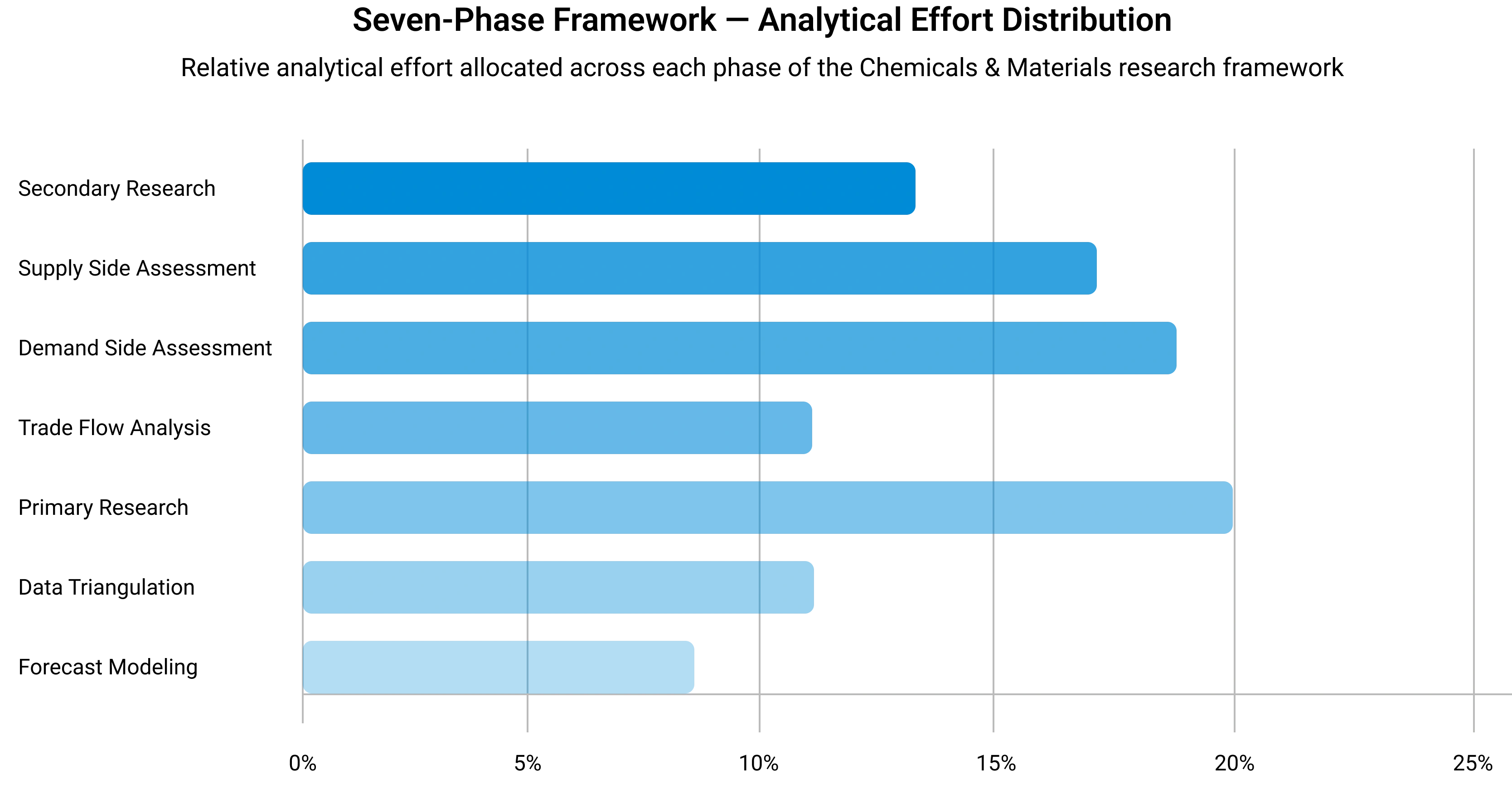
Phase 1 - Secondary Research: Establishing the Foundation
Secondary research collects and evaluates publicly available information from authoritative sources, establishing the foundational understanding of market structure, value chain dynamics, competitive landscape, and end-use demand patterns. Every source is evaluated for credibility, recency, geographic relevance, and methodological soundness before inclusion.
Industry Associations
Sources include ACC, CEFIC, ICCA, JCIA, CPCIF, and SOCMA providing production volumes, consumption trends, capacity developments, and sustainability initiatives.
Company Disclosures
Annual reports, investor presentations, earnings transcripts, and regulatory filings reveal product portfolios, manufacturing footprints, capacity expansions, and revenue segmentation.
Government Databases
National statistical offices, customs authorities, environmental agencies, and industrial production databases provide verified statistics on output, trade flows, and regulatory compliance.
Trade Databases
UN Comtrade, ITC, Eurostat, and national customs authorities enable assessment of global product movement, import dependency, and export competitiveness across regions.
Our Secondary Research Sources
- Ministry of Chemicals and Fertilizers
- European Chemicals Agency
- United States Department of Energy
- Ministry of Industry and Information Technology
- Ministry of Economy Trade and Industry
- Ministry of Trade Industry and Energy
- National Institute of Standards and Technology
- Council of Scientific and Industrial Research
- Fraunhofer Society
- National Institute for Materials Science
Phase 2 — Supply-Side Assessment: Mapping Production Capabilities
Production Capacity Analysis
All major manufacturers are assessed for existing installed capacity, planned additions, expansions, new plant announcements, and technology adoption — mapped at global, regional, and country levels.
Capacity Utilization Adjustment
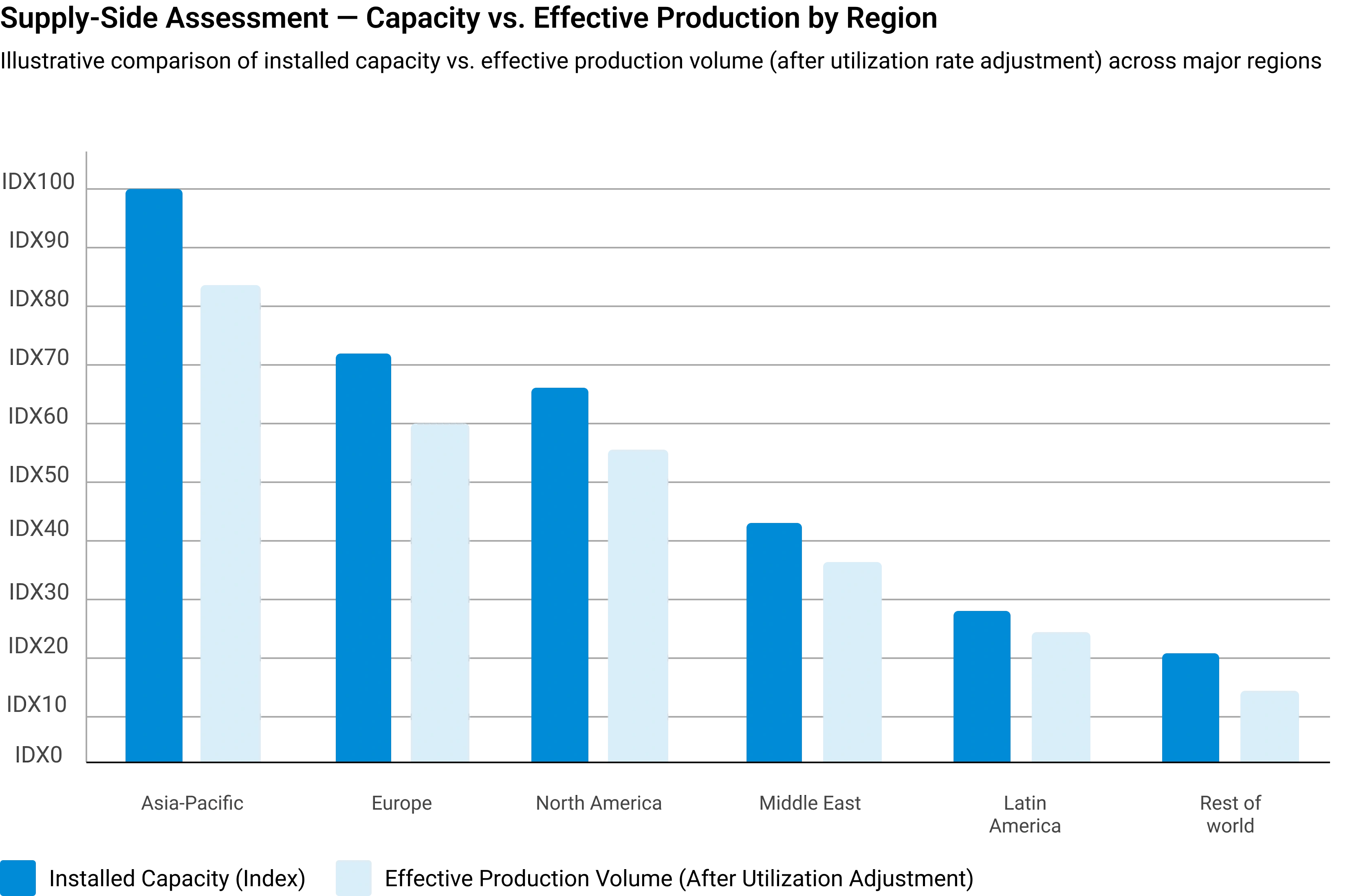
Installed capacity is adjusted using utilization rates based on demand conditions, feedstock availability, plant operating rates, maintenance schedules, and regulatory restrictions.
Manufacturer Revenue Analysis
Product-specific revenues, segment-level performance, regional distribution, average selling prices, and margin trends are evaluated to establish market value estimates.
Supply-Side Assessment — Capacity vs. Effective Production by Region
Illustrative comparison of installed capacity vs. effective production volume (after utilization rate adjustment) across major regions
Phase 3 — Demand-Side Assessment: Quantifying Chemical Consumption
Demand-side analysis quantifies chemical consumption across industries, applications, and geographies — identifying where and how chemicals are consumed throughout the value chain with precision.
End-Use Industry Analysis
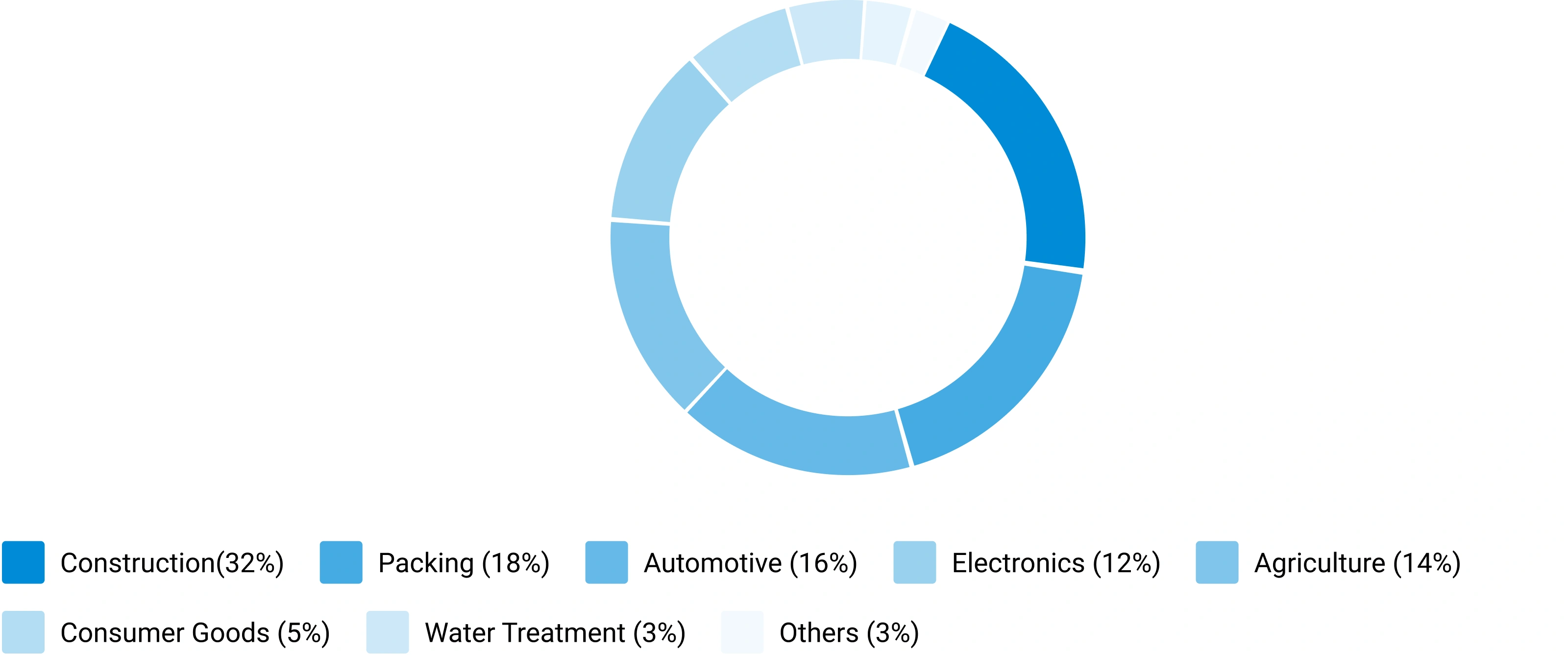
Chemical demand is evaluated across automotive, construction, packaging, electronics, agriculture, healthcare, consumer goods, industrial manufacturing, energy and utilities, and water treatment. Industry output, production trends, and consumption intensity are analyzed to determine demand patterns.
Consumption Modeling
Demand is estimated using measurable indicators: kilograms per vehicle, kilograms per square meter of construction, dosage per cubic meter of water treated, kilograms per hectare of agricultural land, and kilograms per ton of manufactured products. Consumption factors are validated through industry publications and primary interviews.
Application Analysis
The market is segmented by application area to understand product performance requirements, formulation trends, technology adoption, customer preferences, and regulatory requirements improving demand accuracy and segmentation granularity.
Demand-Side Assessment — End-Use Industry Demand Distribution
Illustrative distribution of chemical & materials demand across key end-use industries
Phase 4 - Trade Flow Analysis: Balancing Regional Supply and Demand
Trade flow analysis reconciles regional supply and demand estimates through import and export data, identifying net supply positions, regional dependencies, and market imbalances. It serves as an independent validation layer that tests the consistency of supply-side and demand-side estimates.
Import Analysis
Import data is evaluated to determine volumes, source countries, product dependency, regional supply gaps, and pricing trends — identifying markets that rely heavily on external supply and where domestic production is insufficient to meet demand.
Export Analysis
Export assessments reveal production surplus, export competitiveness, regional manufacturing strength, and global market participation. Export patterns also help validate domestic production estimates and identify net exporting regions.
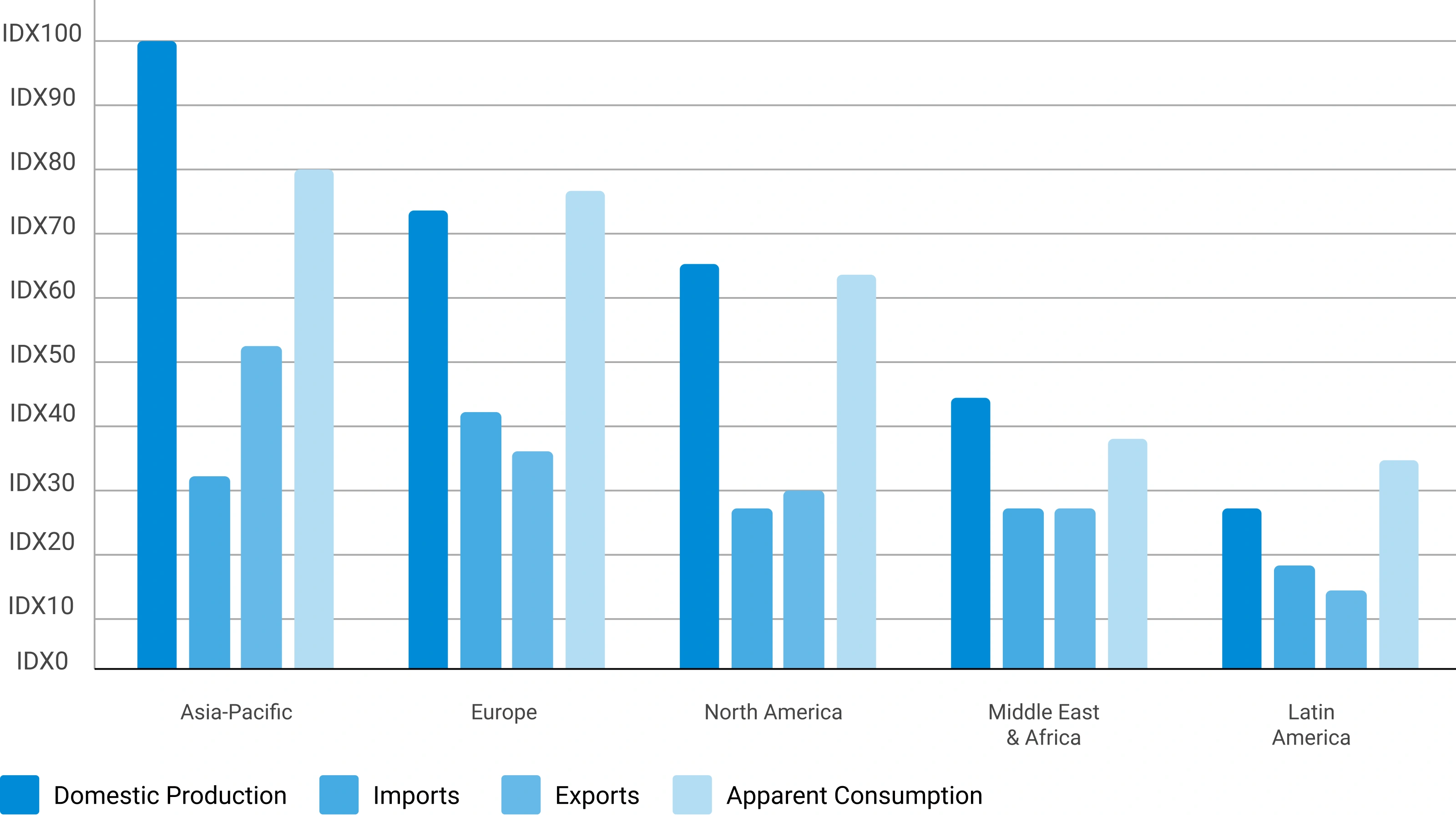
Apparent Consumption Model
Regional consumption is assessed using the standard apparent consumption formula:
Results identify net importing regions, net exporting regions, regional deficits, and surpluses — serving as an independent validation of supply and demand estimates.
Trade Flow Analysis — Net Supply Position by Region
Illustrative apparent consumption vs. domestic production across major regions — positive gap indicates net import dependency
Phase 5 — Primary Research: The Critical Validation Layer
Primary research tests and refines findings from secondary research through direct engagement with industry participants across the supply chain, demand side, and expert community. It captures intelligence that no database or published report can provide — the real-world experience of manufacturers, buyers, and specialists operating in the market.

Supply-Side Interviews
Conversations with chemical manufacturers, raw material suppliers, contract manufacturers, technology providers, and plant operators cover production trends, capacity utilization, pricing developments, technology shifts, and competitive dynamics.

Demand-Side Interviews
Engagement with OEMs, industrial consumers, procurement managers, distributors, formulators, and end-use manufacturers focuses on consumption trends, purchasing behavior, product substitution, demand outlook, and emerging applications.

Industry Expert Consultations
Additional interviews with industry consultants, independent experts, regulatory specialists, technical professionals, and research institutions provide deeper market context and validate key analytical assumptions.
Focus Areas of Primary Research:
Market Size & Forecast Validation
Revenue estimates, volume consumption, growth rates, forecast assumptions, regional demand.Supply Chain & Value Chain Assessment
Raw material sourcing, supply chain challenges, distribution networks, procurement practices.Production & Capacity Analysis
Manufacturing capacity, utilization rates, expansion projects, plant investments.Pricing & Cost Structure Analysis
Product pricing trends, feedstock costs, energy costs, margin pressures, pricing outlook.Competitive Landscape Assessment
Volume and value estimates confirmed to be fully consistent with one another before publicationInterview Volume by Market Scope
| Study Scope | Number of Interviews |
|---|---|
| Niche Market | 20 – 30 |
| Mid-Sized Market | 30 – 50 |
| Global Market | 50 – 80 |
| Highly Fragmented Market | 80 – 120 |
Interview Details:
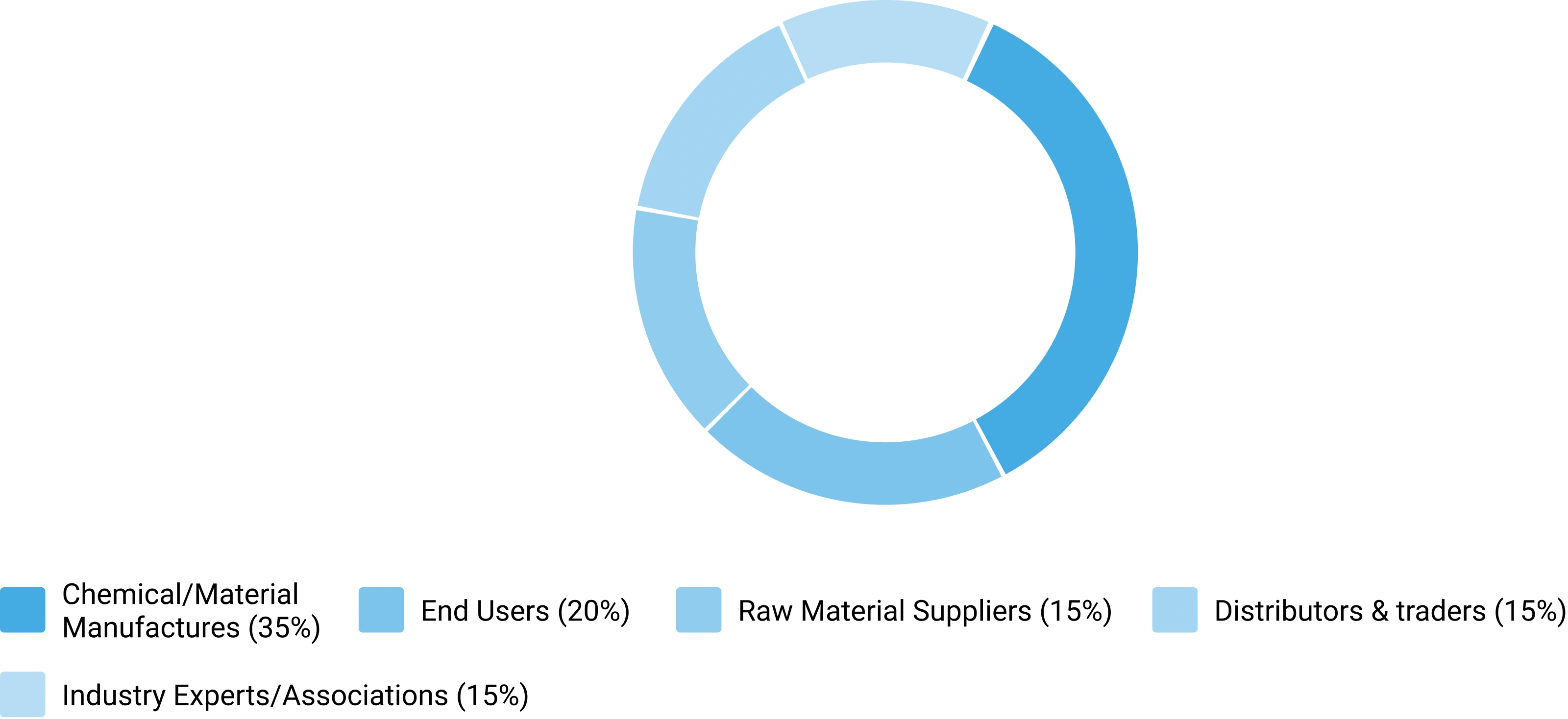
Category : Manufacturers, Suppliers, Distributors, End Users, Experts/Associations
Average Duration : 30–60 Minutes
Interview Mode : Video calls, telephonic interviews, expert consultations
Interview Format : Structured / Semi-Structured questionnaire
Focus Areas of Primary Research:
Market Size & Forecast Validation :
Revenue estimates, volume consumption, growth rates, forecast assumptions, regional demand.
Supply Chain & Value Chain Assessment :
Raw material sourcing, supply chain challenges, distribution networks, procurement practices.
Production & Capacity Analysis :
Manufacturing capacity, utilization rates, expansion projects, plant investments.
Pricing & Cost Structure Analysis :
Product pricing trends, feedstock costs, energy costs, margin pressures, pricing outlook.
Competitive Landscape Assessment :
Market share, competitor positioning, strategic initiatives, partnerships, acquisitions.
Primary Research — Stakeholder Coverage by Category
Distribution of interview respondents across stakeholder categories (% share from PPT data)
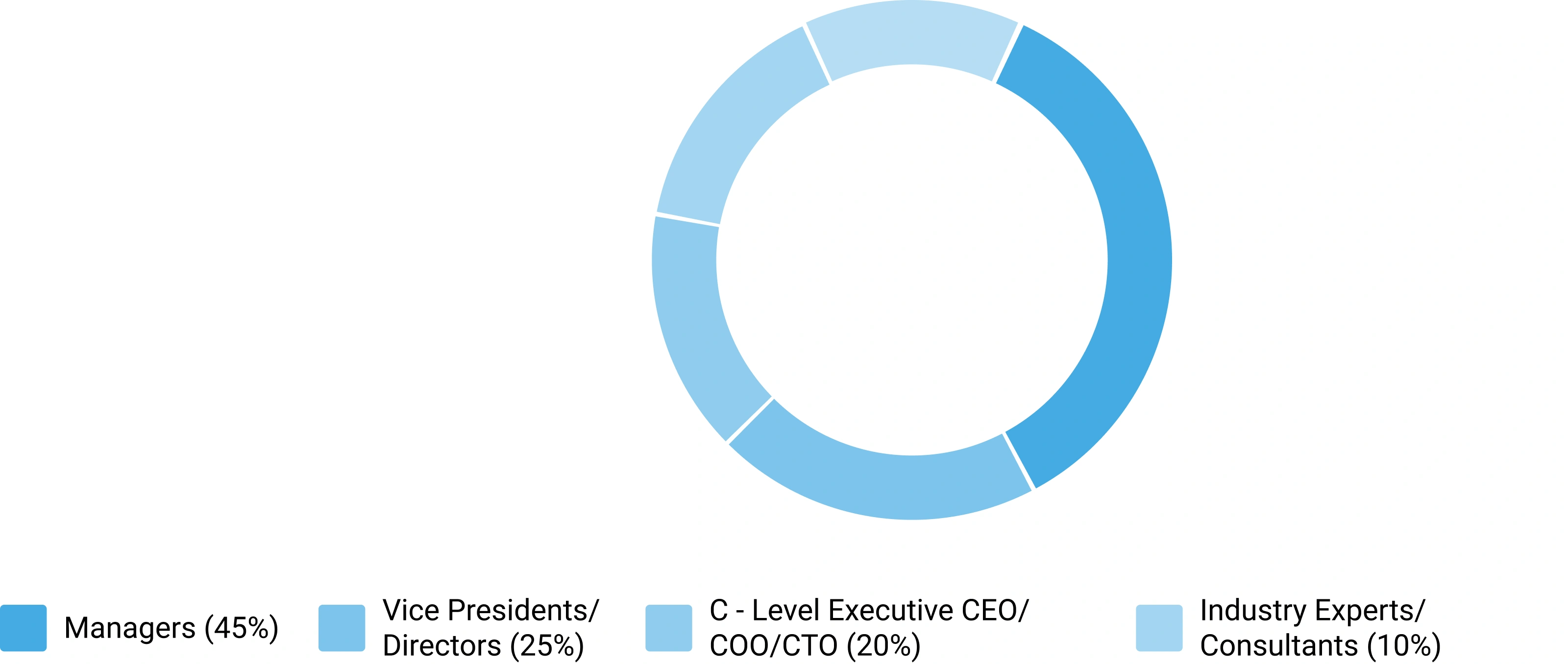
Primary Research — Respondent Designation Profile
Seniority breakdown of interview respondents (% share from PPT data)
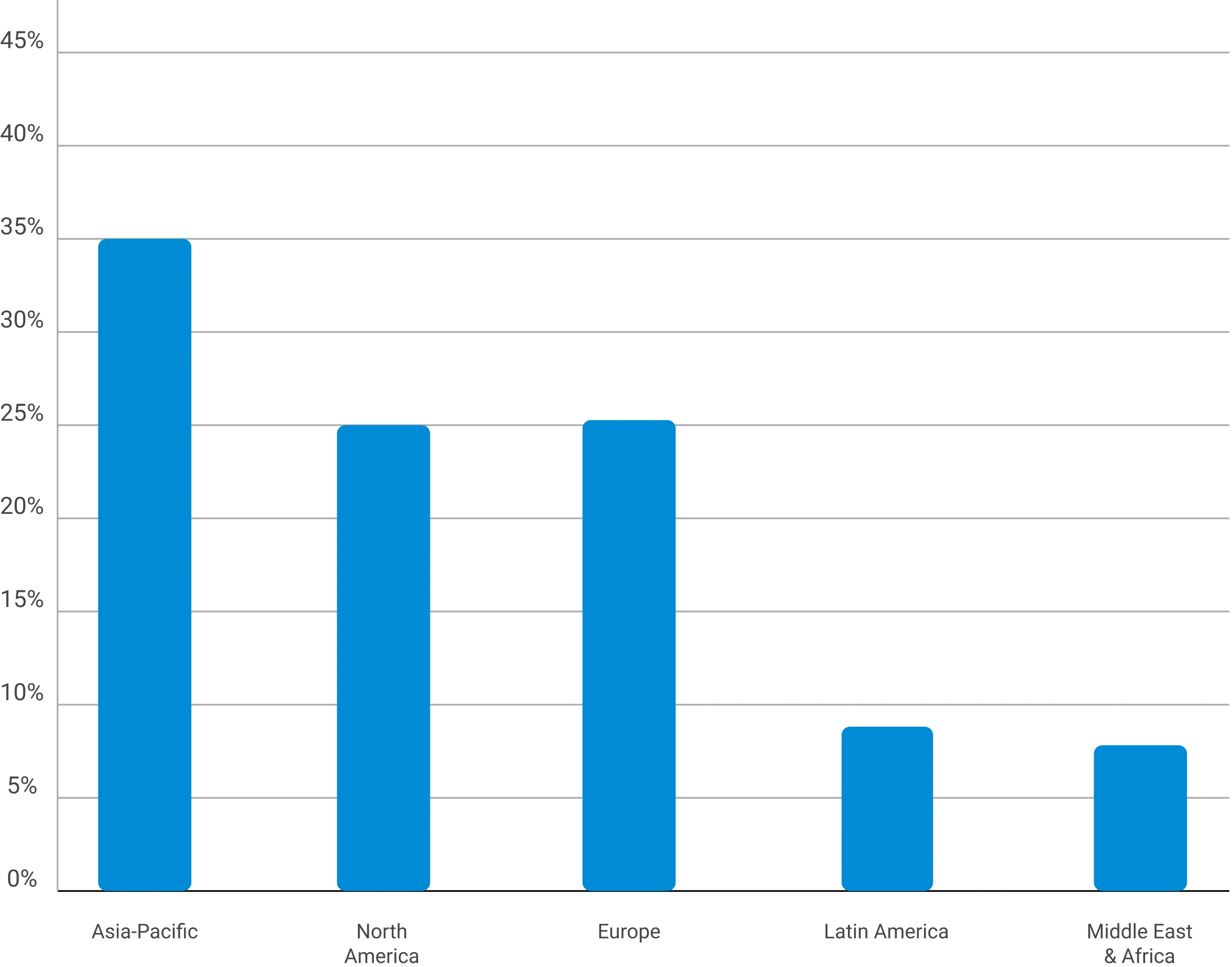
Primary Research — Geographic Coverage of Interviews
Regional distribution of primary research engagement (% share from PPT data)
Phase 6 — Data Triangulation and Market Validation
No single methodology is relied upon in isolation. Multiple independent estimation approaches are combined and reconciled to ensure consistency, accuracy, and analytical defensibility. Any material deviations between approaches are investigated and adjusted through additional validation cycles.
The final market size is derived through weighted triangulation of all validated methodologies. Any material deviations between approaches are investigated and adjusted through additional validation cycles. The outcome represents the most realistic assessment of the market based on available evidence and expert confirmation ensuring that volume and value estimates are fully consistent with one another.
Triangulation Framework — Input Contribution Weight
Relative weight each sizing input contributes to the final reconciled market estimate
Phase 7 — Forecast Modeling: Projecting Future Market Evolution
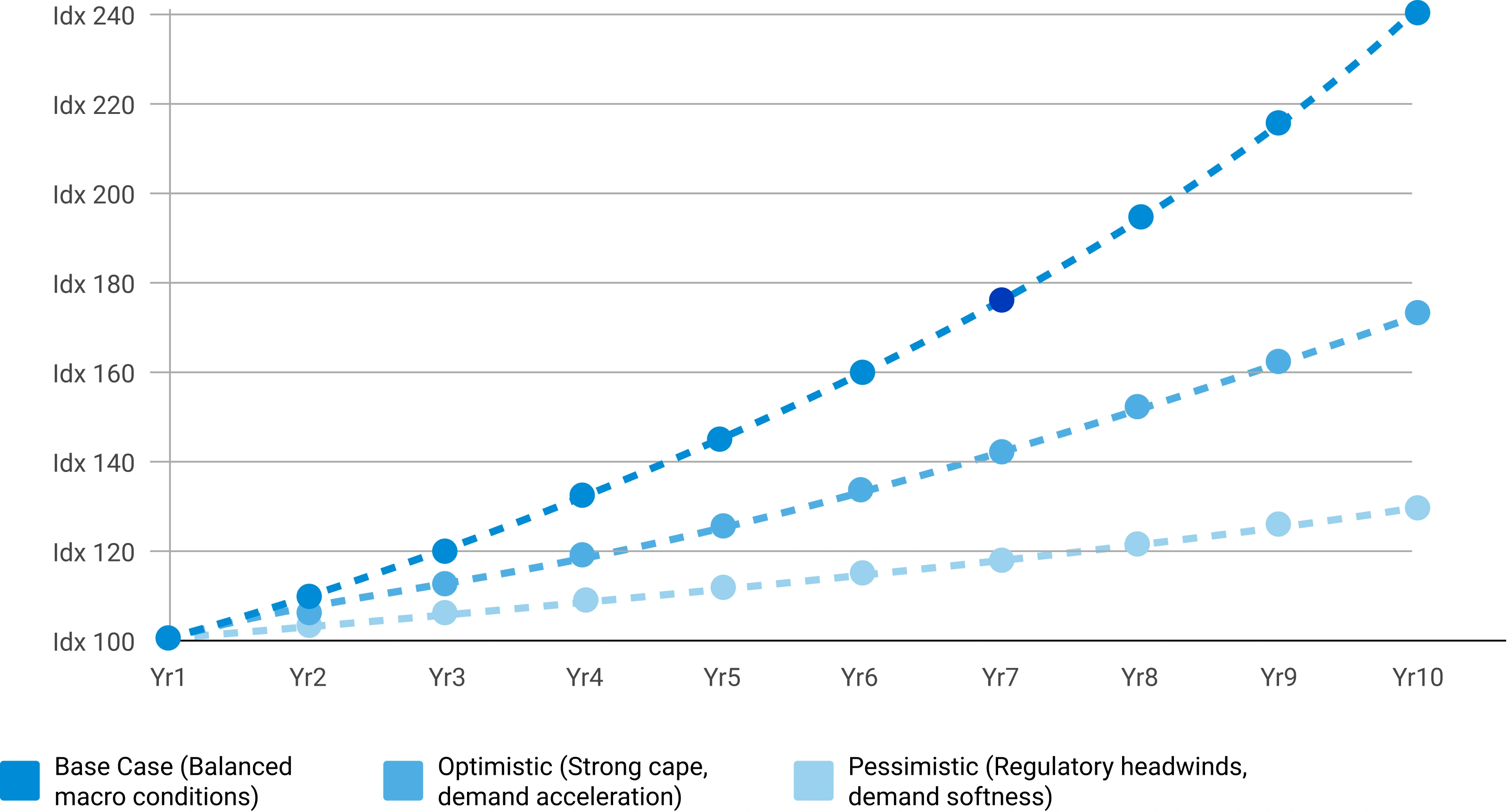
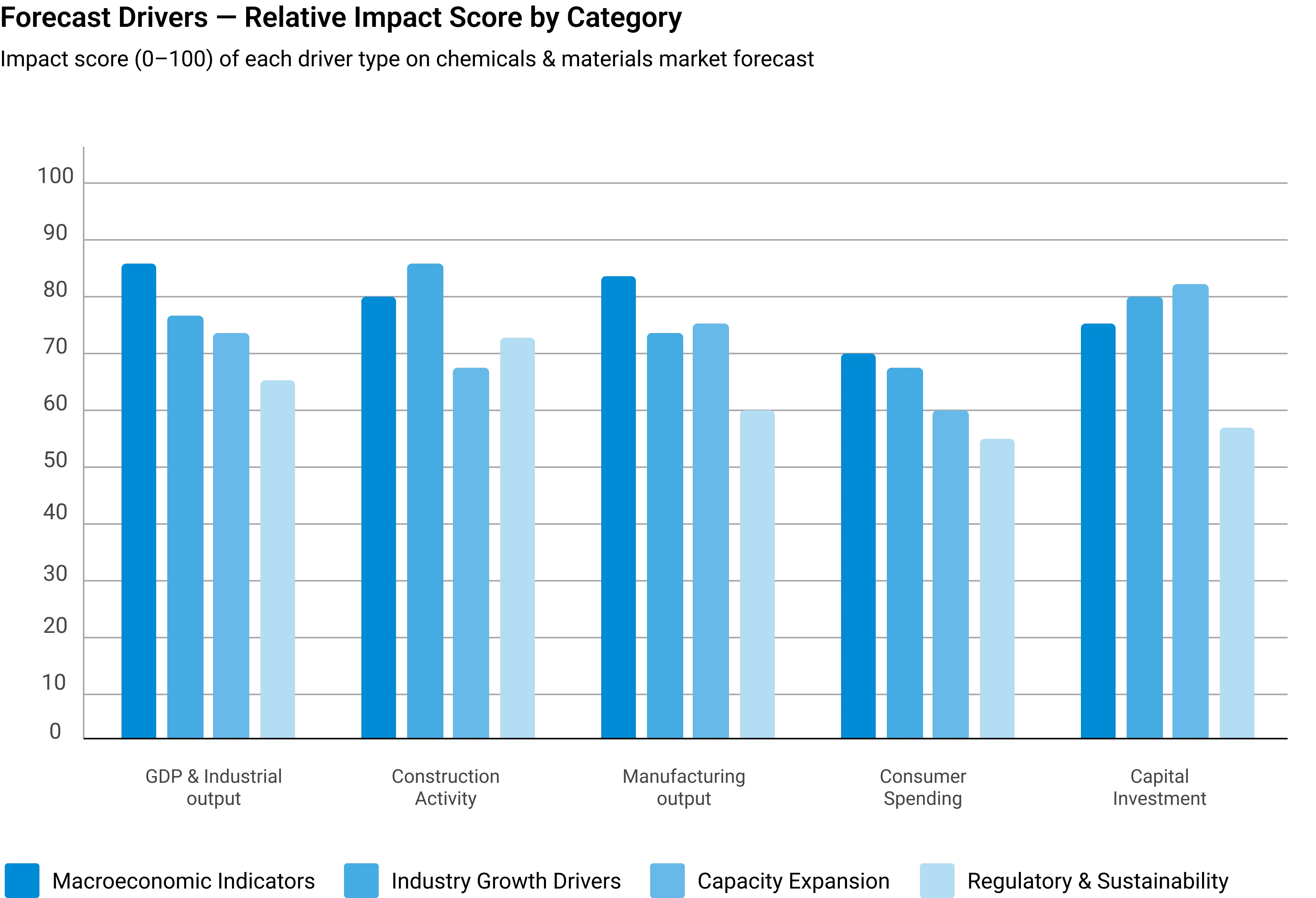
Forecasting evaluates the future trajectory of the market using a combination of quantitative indicators and qualitative assessments across economic, industry, and regulatory dimensions. Rather than simple extrapolation, each driver is independently modeled and integrated into a composite forecast.
Macroeconomic Indicators
GDP growth, industrial production, manufacturing output, construction activity, consumer spending, and capital investment form the quantitative foundation of long-term demand projections. These are applied at country, regional, and global levels.
Industry Growth Drivers
Urbanization, infrastructure development, industrialization, technological innovation, sustainability initiatives, and evolving product performance requirements are assessed at regional and industry levels — capturing both structural and cyclical demand drivers.
Capacity Expansion Analysis
Announced plant expansions, new manufacturing facilities, technology upgrades, and strategic investments are evaluated to determine future supply-demand dynamics and potential market tightness or oversupply situations.
Regulatory & Sustainability
Environmental regulations, chemical safety standards, emission reduction targets, circular economy initiatives, and sustainability requirements are incorporated as they often influence product adoption rates and market growth trajectories.
Scenario Forecast Range — Indexed Market Growth (Year 1–10)
Illustrative indexed growth trajectories across Base, Optimistic, and Pessimistic scenarios over a 10-year forecast horizon
Forecast Drivers — Relative Impact Score by Category
Impact score (0–100) of each driver type on chemicals & materials market forecast



Comments
Share your thoughts, ask a question, or provide feedback about this report.