
Asia Pacific Electronic Materials and Chemicals Market Size, Competitive Landscape Analysis Report 2035
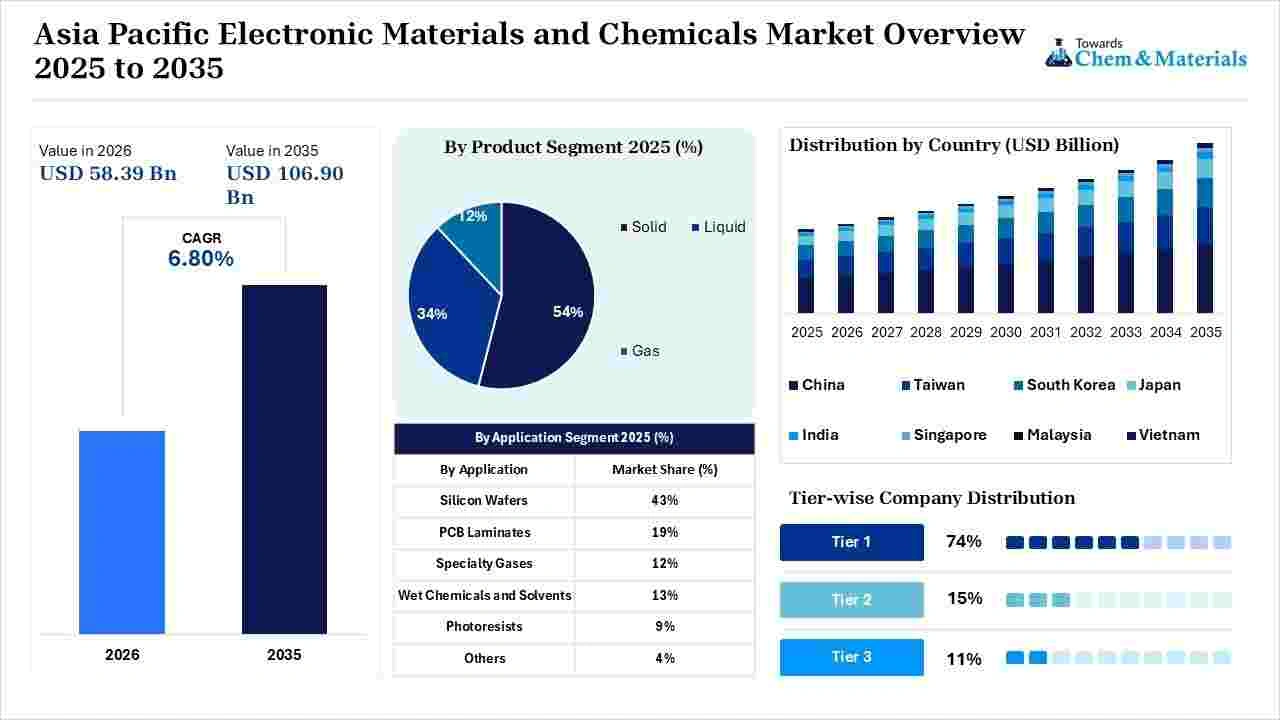
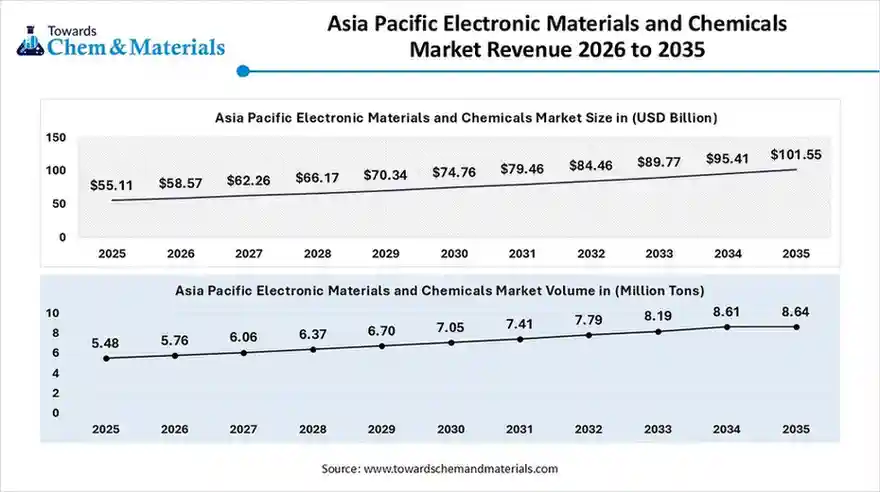
The Asia Pacific Electronic Materials and Chemicals Market size was valued at USD 54.60 billion in 2025, is estimated to reach USD 58.39 billion in 2026, and is projected to reach USD 106.90 billion by 2035, exhibiting a compound annual growth rate (CAGR) of 6.80% over the forecast period from 2026 to 2035. The growth drivers are consumer electronics demand, automotive electrification, government subsidies, advanced packaging, connectivity infrastructure, and expansion of renewable energy. The development of EUV lithography materials, green chemistry, wide bandgap materials, advanced-node processing, smart factories, and artificial intelligence are all key areas of technological interest. These advancements are enhancing regions' capacity to build their own electronic manufacturing ecosystems.
Key Takeaways
- China dominated the Asia Pacific electronic materials and chemicals market by holding a 42% share in 2025 and is expected to grow at a CAGR of 7.1% during the forecast period.
- India held 3.5% market share in 2025 and is expected to grow at the fastest CAGR of 7.5% during the forecast period.
- By product, the solid segment dominated the market with the largest share of 54% in 2025 and is expected to grow at a CAGR of 6.1% during the forecast period.
- By product, the gas segment held 12% market share in 2025 and is expected to grow at the fastest CAGR of 8.4% over the forecast period.
- By application, the silicon wafers segment dominated the market with the largest share of 43.4% in 2025 and is expected to grow at a CAGR of 6% during the forecast period.
- By application, the speciality gases segment held 11.8% market share in 2025 and is expected to grow at the fastest CAGR of 8.5% over the forecast period.
- By end-use, the semiconductors & integrated circuits segment dominated the market with the largest share of 68.8% in 2025 and is expected to grow at a CAGR of 7.2% during the forecast period.
- By end-use, the printed circuit boards segment held 31.2% market share in 2025 and is expected to grow at the fastest CAGR of 7.5% over the forecast period.
According to Towards Chemicals and Materials Analytics and Consulting, the Asia Pacific electronic materials and chemicals market volume was valued at 18.40 million metric tons in 2025 and is expected to surpass around 32.64 million metric tons by 2035, accelerating a compound annual growth rate (CAGR) of 5.90% over the forecast period from 2026 to 2035.
Market Overview
Advancing Semiconductor Materials Across Asia Pacific
Asia Pacific Electronic Materials and Chemicals is an essential key market in the global electronics manufacturing and semiconductor manufacturing industry. Important manufacturing hubs continue to be found in China, South Korea, Taiwan, and Japan. Advanced semiconductor processes require high-purity wet chemicals, specialty gases, photoresists, and CMP slurries. Consumer electronics demand, automotive electrification, government subsidies, advanced packaging, and renewable energy expansion are still driving market development. Technological capabilities are expanding in the various regional electronic manufacturing ecosystems, with the emergence of EUV materials, green chemistry, and wide-bandgap materials.
- For instance, in 2025, ROHM Co., Ltd. and Tata Electronics signed an MoU for cooperation in semiconductor manufacturing in India and worldwide in 2025. The partnership brings together both companies' expertise and ecosystems and will help to foster joint opportunities in semiconductors. (Source: www.rohm.com)
Global Investment Movement for the Asia Pacific Electronic Materials and Chemicals Market
Regional foundries and chemical manufacturers are creating material inputs that can be made locally to cut reliance on material pipelines. This investment move also reduces the risk of cross-border shipping and enhances regional manufacturing’s resilience.
There is a growing focus on investments in non-fluorinated alternatives, toxic waste reduction, and water reclamation systems. Such programs not only meet environmental needs but also promote resource efficiency in increasingly complex semiconductor manufacturing processes.
Capital is going to materials for chiplets, 3D stacking, and sub-nanometer node developments. High-purity wet chemicals, specially formulated gases, advanced photoresists, and increasingly more complex semiconductor processing materials are needed to handle these applications.
Report Scope
| Report Attributes | Details |
| Market Size in 2026 | USD 58.39 Billion/19.49 Million Metric Tons |
| Expected Size in 2035 | USD 106.90 Billion/32.64 Million Metric Tons |
| Growth Rate | CAGR of 6.80% |
| Base Year of Estimation | 2025 |
| Forecast Period | 2025-2035 |
| Segment Covered | By Product, By Application, By End Use |
| Key Companies Profiled | DuPont de Nemours, Inc., Shin-Etsu Chemical Co., Ltd., Sumitomo Chemical Co., Ltd., FUJIFILM Holdings Corp., Air Liquide S.A., BASF SE, JSR Corporation, Merck KGaA, Linde plc, Resonac Holdings Corporation, Tokyo Ohka Kogyo Co., Ltd. (TOK), Mitsubishi Chemical Group Corp. |
Asia Pacific Electronic Materials and Chemicals Market Trends
- The rising number of EVs and Li-ion batteries being produced in China, South Korea, and India is driving up the demand for certain special electronic and chemical materials in the region. This pace further boosts demand within value chains for the manufacturing industry.
- Specialty conductive polymers/electronic gases are in high demand because of their use in expanding data centers, AI hardware, etc., with smart devices. In the meantime, advanced connectivity supports the use of materials on a regional scale.
- There is a growing interest in eco-friendly and bio-based materials, non-toxic etchants, and biodegradable photoresists. These improvements help to meet lower-carbon manufacturing goals and satisfy the increasing environmental demands throughout electronic manufacturing.
Key Technological Shifts and AI in the Asia Pacific Electronic Materials and Chemicals Market
The AI revolution in electronic materials and chemicals in the Asia Pacific is paving the way for faster material discovery and semiconductor process optimization. Machine learning models are able to predict molecular properties, thermal stability, and electrical properties, which significantly reduce the research cycles. AI also plays a role in advanced-node manufacturing by assisting in optimizing manufacturing conditions and improving yields. Digital twins are becoming a key element of smart factories, which involve real-time adaptive control and autonomous working in regional manufacturing plants. Demand for new polymers and substrates that meet thermal requirements is spurred by the development of advanced packaging for high-bandwidth memory (HBM) and multi-chip server modules.
Supply Chain Analysis of the Asia Pacific Electronic Materials and Chemicals Market
Feedstock Procurement
- Feedstock procurement includes sourcing of ultra-pure raw materials and basic petrochemicals used in the electronic materials manufacturing process.
- Quality feedstocks are used to reduce microscopic defect occurrences, which could adversely impact semiconductor manufacturing and electronic component performance.
- BASF SE increases the number of precursor and raw material supplier networks in key chemical parks in China and East Asia.
- Other Key Players: Solvay SA and Linde Plc.
Chemical Synthesis and Processing
- Advanced reactions and purification techniques are used to convert raw inputs into high-purity specialty gases, solvents, and acids.
Precise processing is used to meet the purity needs required for semiconductor manufacturing and high-tech electronics manufacturing. - Shin-Etsu Chemical provides extreme-purity silicon compounds and chemicals for wafer manufacturing.
- Other Key Players: Sumitomo Chemical and Merck KGaA.
Compounds and Blending
- Compound formulation: Customized chemical solutions such as photoresists and CMP slurries are used for particular semiconductor nodes.
- Tailored formulations have the ability to satisfy increasingly demanding process requirements in advanced semiconductor processing.
- FUJIFILM Holdings develops and manufactures sophisticated electronic functional materials and photolithography chemicals.
- Other Key Players: JSR Corporation, Tokyo Ohka Kogyo.
Sustainability Analysis of Asia Pacific Electronic Materials and Chemicals
The Asia Pacific electronic materials and chemicals market is moving towards green manufacturing practices as the pressure from regulations and the increasing ESG requirements is pushing the market. Chemical demand is high, and resource consumption is great, thereby promoting circular economy practices, waste treatment, and water reclamation. More and more manufacturers are exploring green materials, alternative materials that aren't fluorinated, and other methods that involve less chemical impact. Advanced semiconductor processes can benefit from reduced chemical waste due to resource tracking with AI.
What are electronic materials and chemicals?
Electronic materials and chemicals are specialized solid, liquid, and gaseous materials used in semiconductor, wafer, PCB, display, and advanced electronics manufacturing. These materials are made of silicon wafers, wet chemicals, solvents, photoresists, CMP materials, specialty gases, deposition gases, etching gases, and packaging materials.
Uses of Electronic Materials and Chemicals
- Electronic materials and chemicals facilitate wafer processing, cleaning, etching, photolithography, and planarization. These processes are used to enable the production of advanced semiconductors and increasingly complicated integrated circuit manufacturing demands.
- Specialized chemicals are used to enhance PCB etching, plating, cleaning, and laminate processing. These materials support consumer electronics, automotive, industrial, communication, and high-density interconnect (HDI) applications in PCB manufacturing.
- Semiconductor manufacturing requires high-purity gases, wet chemicals, photoresists, CMP materials, and special compounds. They can be applied precisely for advanced node processing and producing integrated circuits.
- Electronic materials are used to manufacture displays, and they provide process chemicals and functional materials. The inputs are used to create high-resolution screens and other advanced display technologies in modern electronic devices.
Pricing Analysis for the Asia Pacific Electronic Materials and Chemicals Market
The raw material cost, high-purity processing needs, capacity, semiconductor cycles, and environmental compliance will be factors in pricing. The higher degree of purity or special nature of the chemicals or materials typically requires extra processing and testing, which can have an impact on the costs of the material. Logistics costs could be lower if goods are sourced locally, and there may be additional costs if there are trade regulations in place. During semiconductor manufacturing growth cycles, demand can grow, making it more competitive and pressuring buyers.
Asia Pacific Electronic Materials and Chemicals Market: Trade Analysis
The Asia Pacific electronic materials and chemicals market is favored by the robust technology manufacturing and interdependent supply chains of the region. Major production activities are found in China, Japan, South Korea, and Taiwan. The specialized inputs are used in semiconductor manufacturing, PCB manufacturing, and display technologies. Intra-regional trade relates to the transportation of materials between specialized manufacturing centers, and regional manufacturers provide electronic chemicals to international markets for technologies.
Segmental Insights
Product Insights
The solid segment dominated the market with the largest share of 54% in 2025 and is expected to grow at a CAGR of 6.1% over the forecast period, as silicon wafers, PCB laminates, photoresists, CMP materials, encapsulation materials, packaging inputs, and silicon wafers are supporting the growth. The products are used for semiconductor fabrication, printed circuit manufacturing, advanced packaging, and other sophisticated electronics applications.
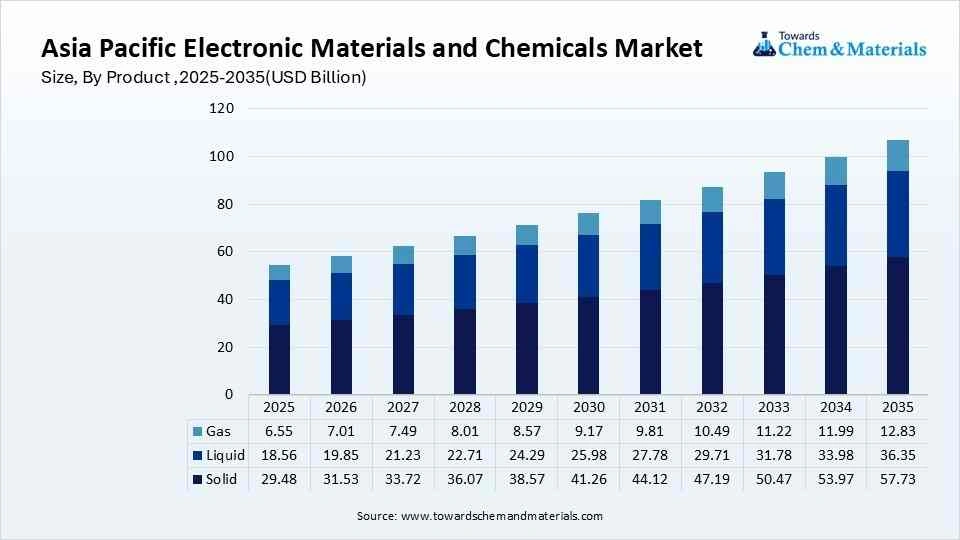
The gas segment held a 12% market share in 2025 and is expected to grow at the fastest CAGR of 8.4% over the forecast period, as specialty, deposition, etching, doping, carrier, and cleaning gases are becoming more critical for semiconductor manufacturers. A controlled chemical environment during fabrication and increasingly complex semiconductor processes are supported by these materials. Demand for specialty electronic gases for advanced chips, increasing manufacturing precision, and complex processing conditions are driving the market in the Asia Pacific manufacturing ecosystems.
- For instance, in April 2026, Air Products was chosen by Samsung to provide industrial gases for its high-tech semiconductor plant in Korea, which will involve the building of production facilities and development of specialty gas systems for nitrogen, oxygen, argon, and hydrogen.(Source: www.airproducts.com)
Asia Pacific Electronic Materials and Chemicals Market Share, By Product, 2025(%)
| By Product | Market Share (%) |
| Solid | 54% |
| Liquid | 34% |
| Gas | 12% |
Application Insights
The silicon wafers segment dominated the market with the largest share of 43.4% in 2025 and is expected to grow at a CAGR of 6% over the forecast period due to wafers being critical substrates used in semiconductor applications. Demand includes standard, specialty, and advanced-node wafers for integrated circuits, processors, memory products, power semiconductors, and other advanced electronics devices. As semiconductor manufacturing is spread throughout the region, the demand for high-quality wafer materials and chemicals used in processing further drives the growth of the regional electronics manufacturing industry.
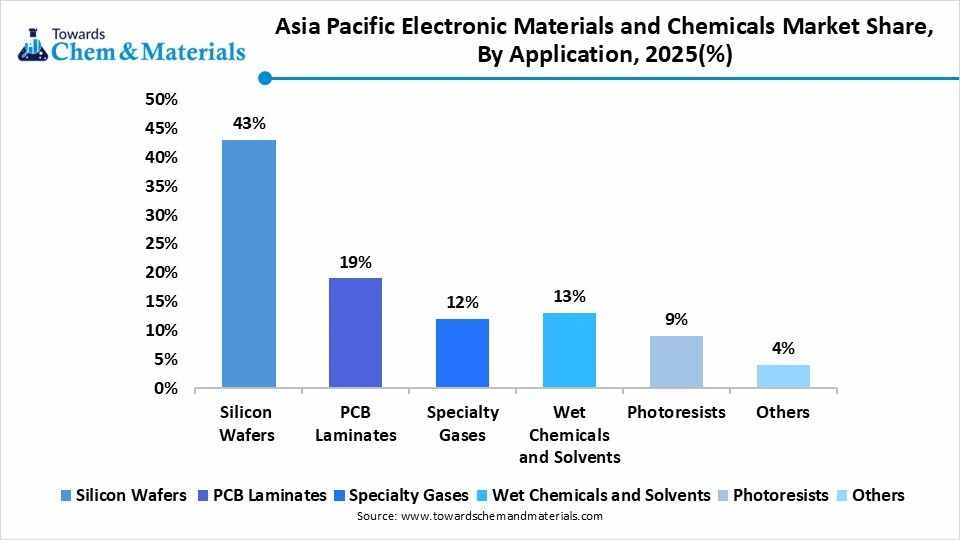
The speciality gases segment held the 11.8% market share in 2025 and is expected to grow at the fastest CAGR of 8.5% over the forecast period, due to the need for specialized gases for semiconductor fabrication processes such as etching, deposition, doping, and cleaning. The need for highly controlled gaseous materials is growing as processes become more complex and advanced node manufacturing is introduced. They are vital to the high-tech manufacturing processes, which continue to drive demand from regional semiconductor manufacturers increasingly pursuing new and complex manufacturing technologies in the Asia Pacific region.
Asia Pacific Electronic Materials and Chemicals Market Share, By Application, 2025(%)
| By Application | Market Share (%) |
| Silicon Wafers | 43% |
| PCB Laminates | 19% |
| Specialty Gases | 12% |
| Wet Chemicals and Solvents | 13% |
| Photoresists | 9% |
| Others | 4% |
End-Use Insights
The semiconductors & integrated circuits segment dominated the market with the largest share of 68.8% in 2025 and is expected to grow at a CAGR of 7.2% over the forecast period. Advanced chips have a strong requirement for electronic materials during production, leading the semiconductors and integrated circuits end-use market. Applications include logic, memory, analog, power semiconductors, processors, microcontrollers, and advanced packaging technologies. Demand for specialized materials in the regional semiconductor ecosystem remains robust, bolstered by increasing semiconductor manufacturing, artificial intelligence hardware, advanced computing, and complex electronics.
- For instance, in September 2025, Tata Consultancy Services introduced Chiplet-based System Engineering Services to support semiconductor companies in the development of their advanced processors using Chiplet-based system engineering services.(Source: www.tcs.com)
The printed circuit boards segment held the 31.2% market share in 2025 and is expected to grow at the fastest CAGR of 7.5% over the forecast period. Consumer electronics, automotive systems, Industrial equipment, Communication technology, and Advanced computing are driving the printed circuit boards market to grow rapidly. More material requirements are added by high-density interconnect and flexible PCB applications. Advanced multilayer boards are finding a wider application in the manufacturing of more sophisticated electronics and AI server equipment, bolstered by increased demand in the region.
- For instance, in March 2026, OKI started to provide all-in-one electronics manufacturing services for AI server hardware, including PCB design, manufacturing, components procurement, assembly, testing and rework.(Source: www.businesswire.com )
Asia Pacific Electronic Materials and Chemicals Market Share, By End-use, 2025(%)
| By End-use | Market Share (%) |
| Semiconductors & Integrated Circuits | 69% |
| Printed Circuit Boards | 31% |
Country Insights
How Did China Dominate the Asia Pacific Electronic Materials and Chemicals Market in 2025?
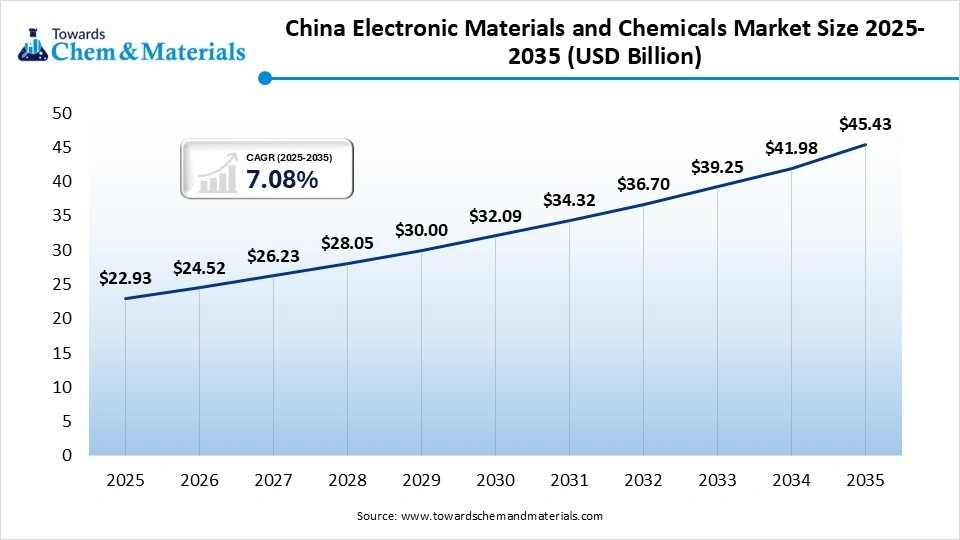
China Electronic Materials and Chemicals market size was estimated at USD 22.93 billion in 2025 and is projected to reach USD 45.43 billion by 2035, growing at a CAGR of 7.08% from 2026 to 2035.,China dominated the market with the largest share of 42% in 2025, attributable to its significant capabilities in semiconductor manufacturing and electronics production, chemical processing capacities, and its own localized efforts in developing the supply chain.
The Governments support and home-grown manufacturing efforts keep building the nations role in the regions electronic materials industry. For instance, in June 2026, China National Building Material Group Co introduced high-performance production lines of carbon fiber material and helped in the production of new materials, thereby boosting the countrys capacity to develop advanced materials and supply for the high-end manufacturing industry.(Source: www.globaltimes.cn)
India held 3.5% market share in 2025 and market size was estimated at USD 1.91 billion in 2025 and is projected to reach USD 4.28 billion by 2035, growing at a CAGR of 8.40% from 2026 to 2035. Electronics manufacturing, semiconductor development, increasing domestic electronics component manufacturing, and the governments backing for industrial development initiatives are making India an important electronic materials and chemicals market. Driving towards localization is helping to build up an integrated domestic electronics supply chain. The semiconductor partnerships, investments in manufacturing and production of critical components are further strengthening Indias position in the evolving electronic materials and chemicals value chain in the Asia Pacific region and in the process of building technological independence.
- For instance, in August 2026, the Electronics Capital of the Country Scheme (ECMS) was launched by the Government of India. It is to promote electronics manufacturing by giving approval for manufacturing projects, operating facilities, creating jobs, investment, manufacturing of critical components and raw materials, etc. (Source: www.pib.gov.in)
Taiwan held 22% market share in 2025 and market size was estimated at USD 12.01 billion in 2025 and is projected to reach USD 24.05 billion by 2035, growing at a CAGR of 7.19% from 2026 to 2035. Taiwan holds an important regional competitive advantage in the advanced semiconductor manufacturing industry and the demand for special electronic materials. As fabrication becomes more sophisticated, so do the needs for high-purity chemicals, specialty gases, photoresists, and advanced processing materials. With the solid manufacturing base of semiconductors, Taiwans demand for semiconductors and all related manufacturing chains continues to be strong.
South Korea held 17% market share in 2025 and market size was estimated at USD 9.28 billion in 2025 and is projected to reach USD 18.71 billion by 2035, growing at a CAGR of 7.26% from 2026 to 2035. Semiconductor manufacturing, advanced electronics production, and strategic investments throughout the technology ecosystem continue to make South Korea an important regional market. Rapid investments in chip materials, equipment, parts, and fabless companies are further bolstering semiconductor development capabilities. The growth of manufacturing facilities and initiatives backed by the government are also helping to boost domestic supply chains.
- For instance, in August 2026, the Republic of Korea (ROK) announced a semiconductor fund for semiconductor materials, parts, equipment, and fabless companies. The plan aims to speed up the semiconductor manufacturing centers nationwide, and the initiative will assist in that effort.(Source: www.gulf-times.com)
Japan held 11% market share in 2025 and market size was estimated at USD 6.01 billion in 2025 and is projected to reach USD 12.29 billion by 2035, growing at a CAGR of 7.42% from 2026 to 2035. Japan is still a significant regional contributor with its long-standing experience in chemical manufacturing, technological innovation in semiconductor materials, high level of electronics manufacturing, and other advanced electronics. Japanese companies are continuing their efforts to enhance digital manufacturing, supply-chain management, advanced materials, and semiconductor-related skills.
- For instance, in July 2026, the Japanese manufacturer Kanematsu Corporation launched KG ZAICO, a cloud-based inventory management solution suitable for manufacturing companies in Japan that are doing business in Mexico, facilitating the digitalisation of factory inventory management.(Source: www.kanematsu.co.jp)
Recent Developments
- In July 2026, LG Electronics introduced a new production line for advanced materials based on glass powder in Vietnam, manufacturing LG PuroTec™ and Easy-Clean Enamel, and enhancing its supply chain of advanced materials throughout the world.(Source: www.prnewswire.com )
- In March 2026, Samsung Electronics announced its plans to become an AI-Driven Factory by 2030, incorporating AI throughout its logistics, production, quality inspection, and final shipment processes. (Source: news.samsung.com)
Competitive Analysis
In the Asia Pacific Electronic Materials and Chemicals market, you can see established chemical producers, specialists for semiconductor materials, technology companies, and advanced equipment participants; all kinds of companies moving together. BASF SE, Shin-Etsu Chemical, Sumitomo Chemical, Merck KGaA, DuPont, and Air Liquide show up as major players in the market data that was provided. What stands out is how competition is leaning more toward advanced materials, localized production, supply reliability, sustainability, and semiconductor process innovation, not just the basic supply side.
- In July 2026, Mitsubishi Electric launched an effort aimed at recovering rare earths from discarded residential air conditioners, so it can support recycled material usage. (Source: finance.biggo.com)
- In May 2026, JSR Corporation together with Entegris announced a non-exclusive cross-licensing arrangement, backing EUV lithography development.(Source: www.jsr.co.jp)
- In March 2026, Air Liquide opened its first large-scale advanced materials production facility in Taichung City, Taiwan. (Source: www.airliquide.com)
- In May 2026, Tata Electronics and ASML signed an MoU that supports India’s semiconductor manufacturing ecosystem, and it’s kind of a big signal.(Source: www.tata.com)
Altogether, these initiatives make it clear that rivalry is shifting more and more toward advanced materials, recycling loops, regional manufacturing capabilities, and next-generation semiconductor technologies, rather than only traditional metrics.
Top Players in the Market & Their Offerings
| Company | Company Type/Position | Major Headquarters | Geographic Presence | Asia Pacific Electronic Materials and Chemicals Offerings | Key Strength |
| Tokyo Ohka Kogyo Co., Ltd. (TOK) | Niche Tech Leader | Kawasaki, Japan | Asia-focused & Global | Photoresists, Developing Solutions | Advanced photolithography chemicals for microprocessors. |
| Shin-Etsu Chemical Co., Ltd. | Global Market Leader | Tokyo, Japan | Global | Semiconductor Silicon | Unmatched ultra-pure silicon wafer quality |
Other Key Players
- DuPont de Nemours, Inc.
- Shin-Etsu Chemical Co., Ltd.
- Sumitomo Chemical Co., Ltd.
- FUJIFILM Holdings Corp.
- Air Liquide S.A.
- BASF SE
- JSR Corporation
- Merck KGaA
- Linde plc
- Resonac Holdings Corporation
- Tokyo Ohka Kogyo Co., Ltd. (TOK)
- Mitsubishi Chemical Group Corp.
Segment Covered in the Report
By Product
- Solid
- Silicon wafers
- PCB laminates
- Photoresists and photoresist ancillaries
- CMP materials
- Encapsulation and packaging materials
- Other solid electronic materials
- Liquid
- Wet chemicals
- Solvents
- Etchants
- Cleaners
- CMP slurries
- Liquid photoresists
- Gas
- Specialty gases
- Deposition gases
- Etching gases
- Doping gases
- Carrier gases
- Cleaning gases
By Application
- Silicon Wafers
- 200 mm wafers
- 300 mm wafers
- Specialty wafers
- Advanced-node wafers
- PCB Laminates
- FR-4 laminates
- High-frequency laminates
- High-speed laminates
- Flexible laminates
- Specialty Gases
- Etching gases
- Deposition gases
- Doping gases
- Cleaning gases
- Wet Chemicals and Solvents
- Acids
- Bases
- Etchants
- Cleaning chemicals
- Solvents
- Photoresists
- ArF photoresists
- KrF photoresists
- EUV photoresists
- i-line photoresists
- g-line photoresists
- Others
- CMP slurries
- Dielectric materials
- Packaging materials
- Conductive materials
- Adhesives and encapsulants
By End-use
- Semiconductors & Integrated Circuits
- Logic ICs
- Memory ICs
- DRAM
- NAND
- HBM
- Analog ICs
- Power semiconductors
- Microprocessors and microcontrollers
- Advanced packaging
- Printed Circuit Boards
- Consumer electronics PCBs
- Automotive PCBs
- Industrial PCBs
- Communication PCBs
- High-density interconnect PCBs
- Flexible PCBs
A Seven-Phase Framework
Our methodology is designed to be universally applicable across commodity chemicals, specialty chemicals, petrochemicals, construction chemicals, coatings, electronic chemicals, industrial gases, agrochemicals, water treatment chemicals, and performance materials. Each phase builds upon the last, creating a layered validation structure that minimizes estimation error and maximizes analytical confidence.
The framework ensures comprehensive market coverage, robust cross-validation, and reliable long-term forecasting — producing market estimates that withstand scrutiny from investors, regulators, and corporate strategy teams.

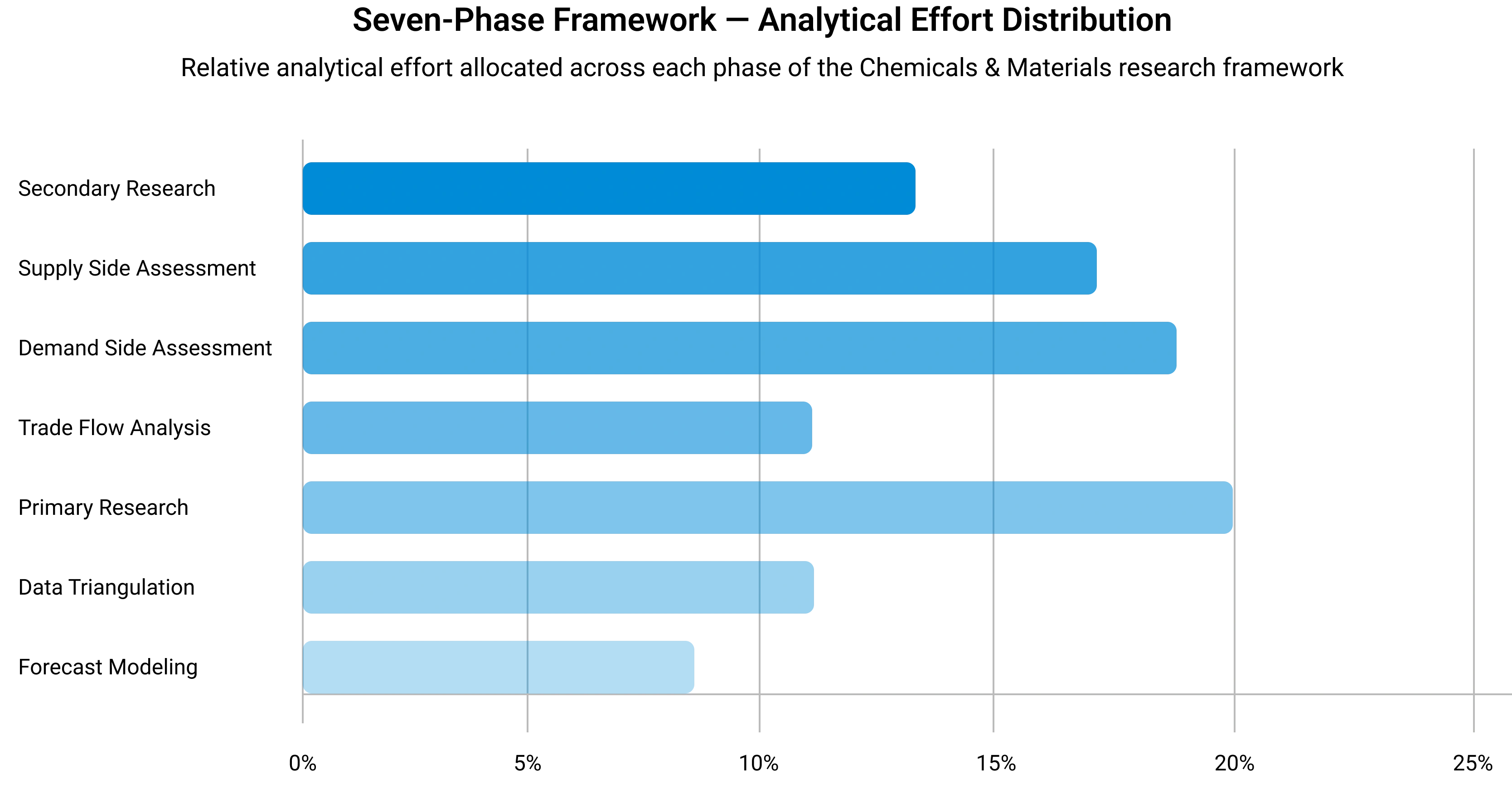
Seven-Phase Framework — Analytical Effort Distribution
Relative analytical effort allocated across each phase of the Chemicals & Materials research framework
Phase 1 - Secondary Research: Establishing the Foundation
Secondary research collects and evaluates publicly available information from authoritative sources, establishing the foundational understanding of market structure, value chain dynamics, competitive landscape, and end-use demand patterns. Every source is evaluated for credibility, recency, geographic relevance, and methodological soundness before inclusion.
Industry Associations
Sources include ACC, CEFIC, ICCA, JCIA, CPCIF, and SOCMA providing production volumes, consumption trends, capacity developments, and sustainability initiatives.
Company Disclosures
Annual reports, investor presentations, earnings transcripts, and regulatory filings reveal product portfolios, manufacturing footprints, capacity expansions, and revenue segmentation.
Government Databases
National statistical offices, customs authorities, environmental agencies, and industrial production databases provide verified statistics on output, trade flows, and regulatory compliance.
Trade Databases
UN Comtrade, ITC, Eurostat, and national customs authorities enable assessment of global product movement, import dependency, and export competitiveness across regions.
Our Secondary Research Sources
- Ministry of Chemicals and Fertilizers
- European Chemicals Agency
- United States Department of Energy
- Ministry of Industry and Information Technology
- Ministry of Economy Trade and Industry
- Ministry of Trade Industry and Energy
- National Institute of Standards and Technology
- Council of Scientific and Industrial Research
- Fraunhofer Society
- National Institute for Materials Science
Phase 2 — Supply-Side Assessment: Mapping Production Capabilities
Production Capacity Analysis
All major manufacturers are assessed for existing installed capacity, planned additions, expansions, new plant announcements, and technology adoption — mapped at global, regional, and country levels.
Capacity Utilization Adjustment
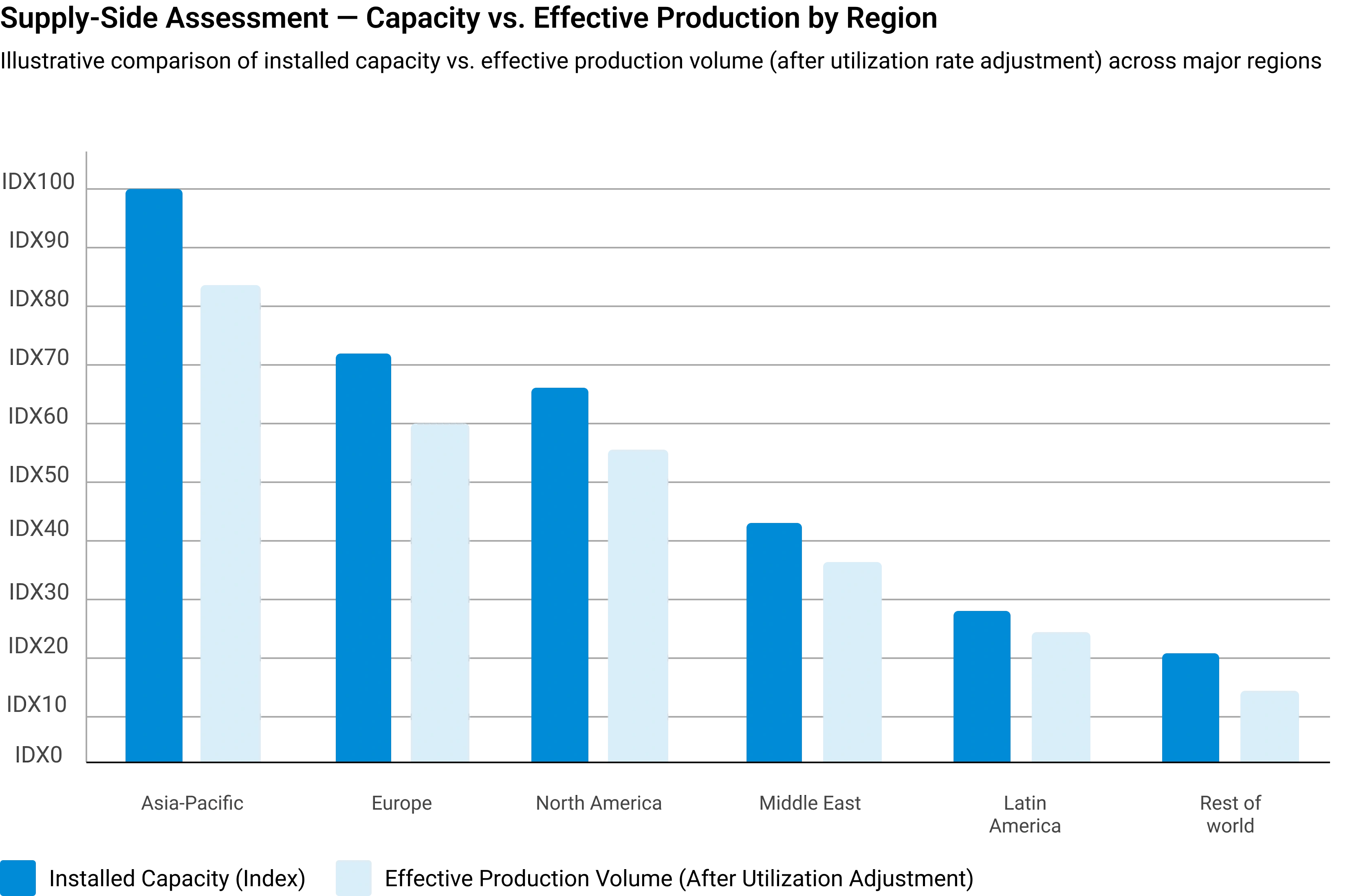
Installed capacity is adjusted using utilization rates based on demand conditions, feedstock availability, plant operating rates, maintenance schedules, and regulatory restrictions.
Manufacturer Revenue Analysis
Product-specific revenues, segment-level performance, regional distribution, average selling prices, and margin trends are evaluated to establish market value estimates.
Supply-Side Assessment — Capacity vs. Effective Production by Region
Illustrative comparison of installed capacity vs. effective production volume (after utilization rate adjustment) across major regions
Phase 3 — Demand-Side Assessment: Quantifying Chemical Consumption
Demand-side analysis quantifies chemical consumption across industries, applications, and geographies — identifying where and how chemicals are consumed throughout the value chain with precision.
End-Use Industry Analysis
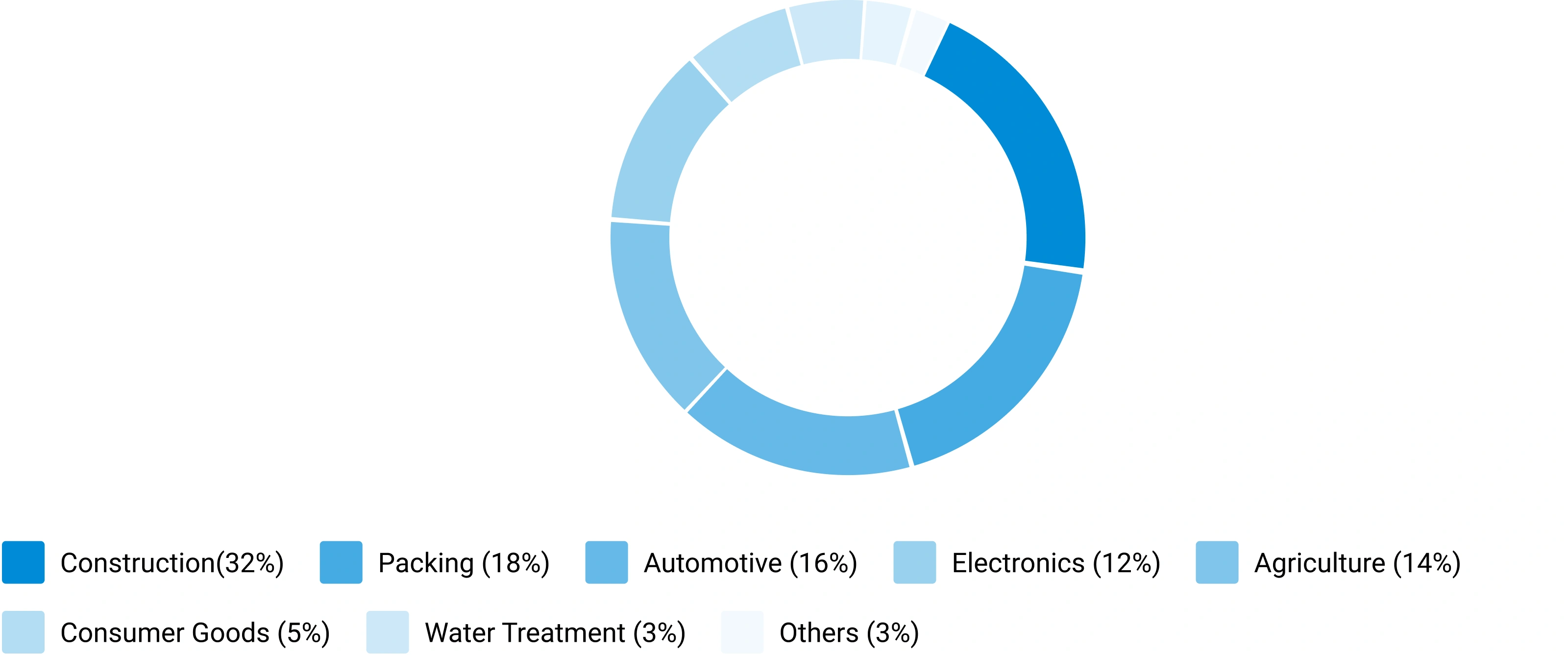
Chemical demand is evaluated across automotive, construction, packaging, electronics, agriculture, healthcare, consumer goods, industrial manufacturing, energy and utilities, and water treatment. Industry output, production trends, and consumption intensity are analyzed to determine demand patterns.
Consumption Modeling
Demand is estimated using measurable indicators: kilograms per vehicle, kilograms per square meter of construction, dosage per cubic meter of water treated, kilograms per hectare of agricultural land, and kilograms per ton of manufactured products. Consumption factors are validated through industry publications and primary interviews.
Application Analysis
The market is segmented by application area to understand product performance requirements, formulation trends, technology adoption, customer preferences, and regulatory requirements improving demand accuracy and segmentation granularity.
Demand-Side Assessment — End-Use Industry Demand Distribution
Illustrative distribution of chemical & materials demand across key end-use industries
Phase 4 - Trade Flow Analysis: Balancing Regional Supply and Demand
Trade flow analysis reconciles regional supply and demand estimates through import and export data, identifying net supply positions, regional dependencies, and market imbalances. It serves as an independent validation layer that tests the consistency of supply-side and demand-side estimates.
Import Analysis
Import data is evaluated to determine volumes, source countries, product dependency, regional supply gaps, and pricing trends — identifying markets that rely heavily on external supply and where domestic production is insufficient to meet demand.
Export Analysis
Export assessments reveal production surplus, export competitiveness, regional manufacturing strength, and global market participation. Export patterns also help validate domestic production estimates and identify net exporting regions.
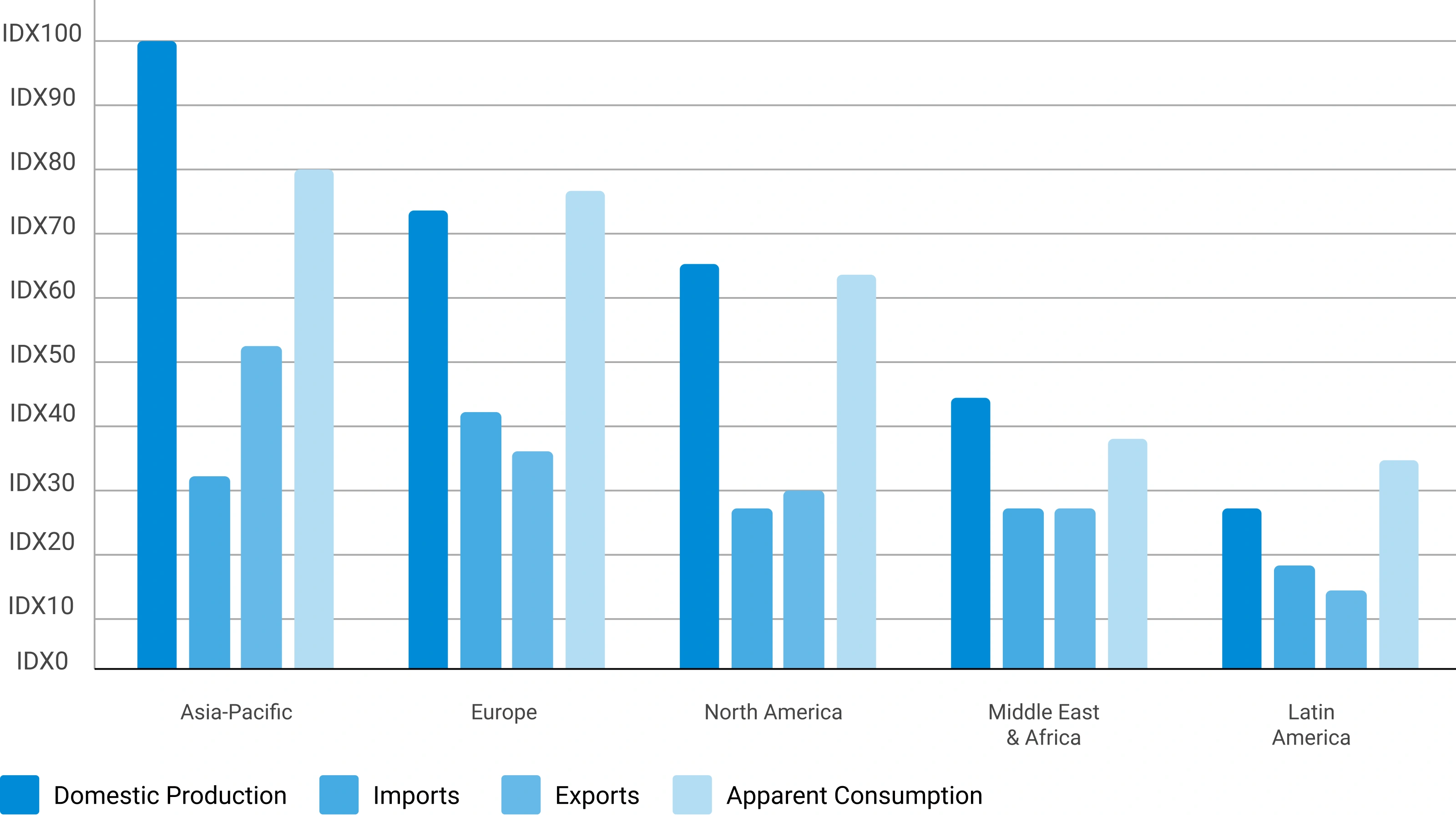
Apparent Consumption Model
Regional consumption is assessed using the standard apparent consumption formula:
Results identify net importing regions, net exporting regions, regional deficits, and surpluses — serving as an independent validation of supply and demand estimates.
Trade Flow Analysis — Net Supply Position by Region
Illustrative apparent consumption vs. domestic production across major regions — positive gap indicates net import dependency
Phase 5 — Primary Research: The Critical Validation Layer
Primary research tests and refines findings from secondary research through direct engagement with industry participants across the supply chain, demand side, and expert community. It captures intelligence that no database or published report can provide — the real-world experience of manufacturers, buyers, and specialists operating in the market.

Supply-Side Interviews
Conversations with chemical manufacturers, raw material suppliers, contract manufacturers, technology providers, and plant operators cover production trends, capacity utilization, pricing developments, technology shifts, and competitive dynamics.

Demand-Side Interviews
Engagement with OEMs, industrial consumers, procurement managers, distributors, formulators, and end-use manufacturers focuses on consumption trends, purchasing behavior, product substitution, demand outlook, and emerging applications.

Industry Expert Consultations
Additional interviews with industry consultants, independent experts, regulatory specialists, technical professionals, and research institutions provide deeper market context and validate key analytical assumptions.
Focus Areas of Primary Research:
Market Size & Forecast Validation
Revenue estimates, volume consumption, growth rates, forecast assumptions, regional demand.Supply Chain & Value Chain Assessment
Raw material sourcing, supply chain challenges, distribution networks, procurement practices.Production & Capacity Analysis
Manufacturing capacity, utilization rates, expansion projects, plant investments.Pricing & Cost Structure Analysis
Product pricing trends, feedstock costs, energy costs, margin pressures, pricing outlook.Competitive Landscape Assessment
Volume and value estimates confirmed to be fully consistent with one another before publicationInterview Volume by Market Scope
| Study Scope | Number of Interviews |
|---|---|
| Niche Market | 20 – 30 |
| Mid-Sized Market | 30 – 50 |
| Global Market | 50 – 80 |
| Highly Fragmented Market | 80 – 120 |
Interview Details:
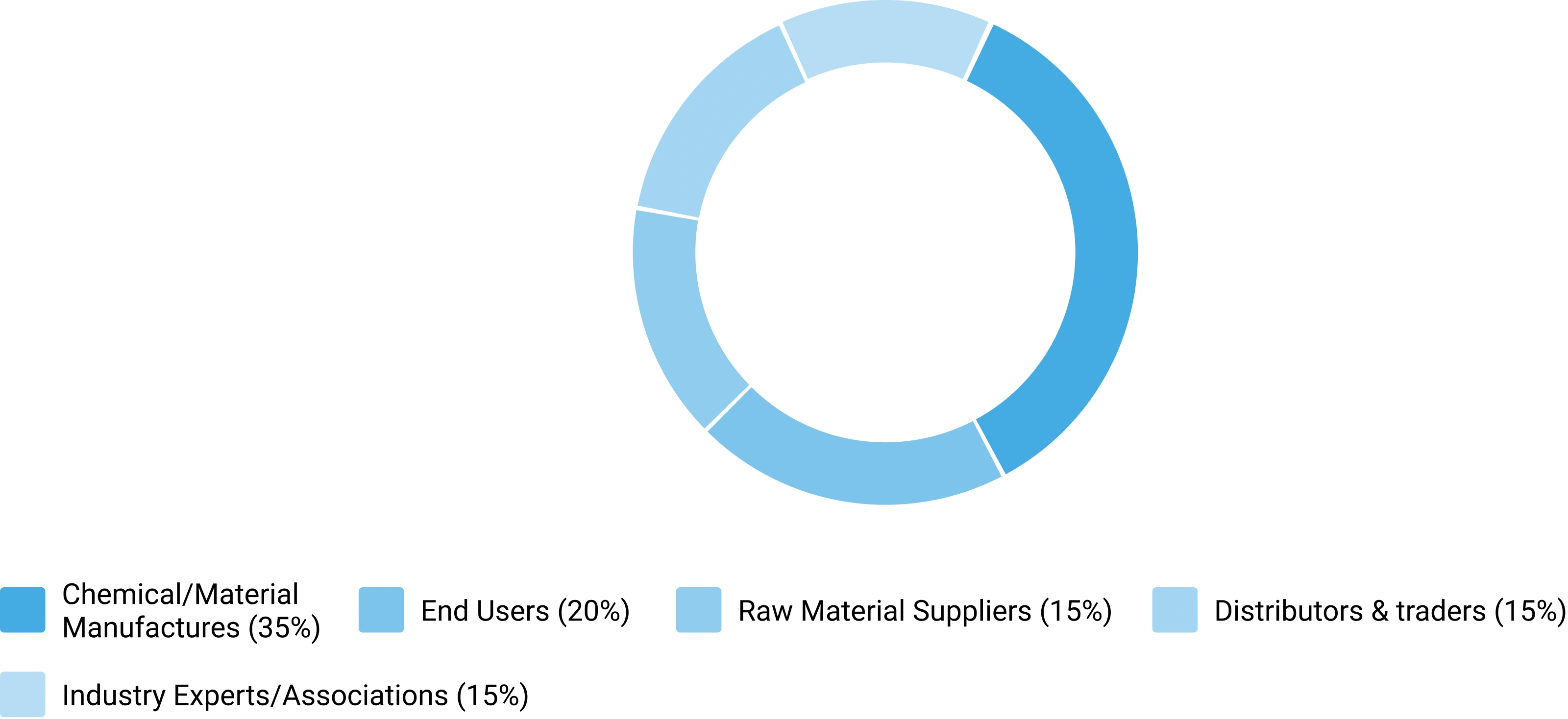
Category : Manufacturers, Suppliers, Distributors, End Users, Experts/Associations
Average Duration : 30–60 Minutes
Interview Mode : Video calls, telephonic interviews, expert consultations
Interview Format : Structured / Semi-Structured questionnaire
Focus Areas of Primary Research:
Market Size & Forecast Validation :
Revenue estimates, volume consumption, growth rates, forecast assumptions, regional demand.
Supply Chain & Value Chain Assessment :
Raw material sourcing, supply chain challenges, distribution networks, procurement practices.
Production & Capacity Analysis :
Manufacturing capacity, utilization rates, expansion projects, plant investments.
Pricing & Cost Structure Analysis :
Product pricing trends, feedstock costs, energy costs, margin pressures, pricing outlook.
Competitive Landscape Assessment :
Market share, competitor positioning, strategic initiatives, partnerships, acquisitions.
Primary Research — Stakeholder Coverage by Category
Distribution of interview respondents across stakeholder categories (% share from PPT data)
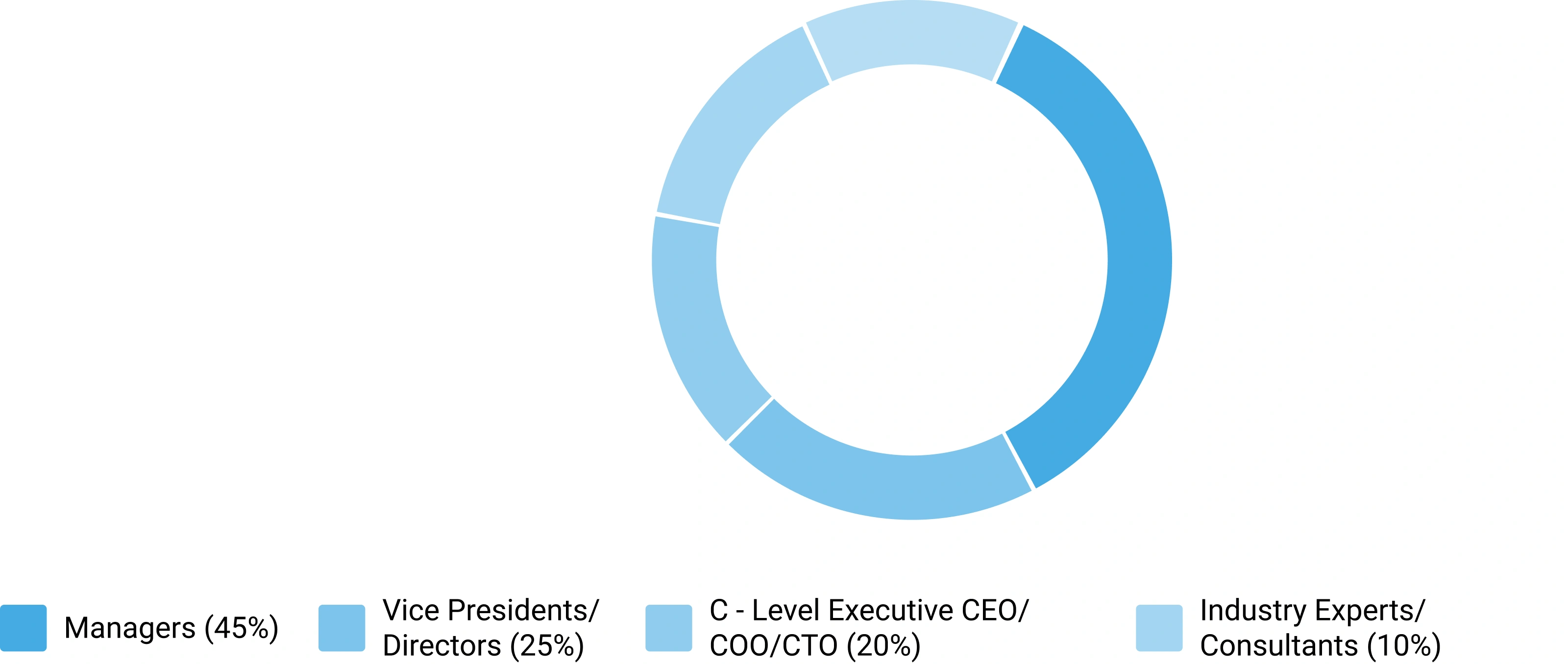
Primary Research — Respondent Designation Profile
Seniority breakdown of interview respondents (% share from PPT data)
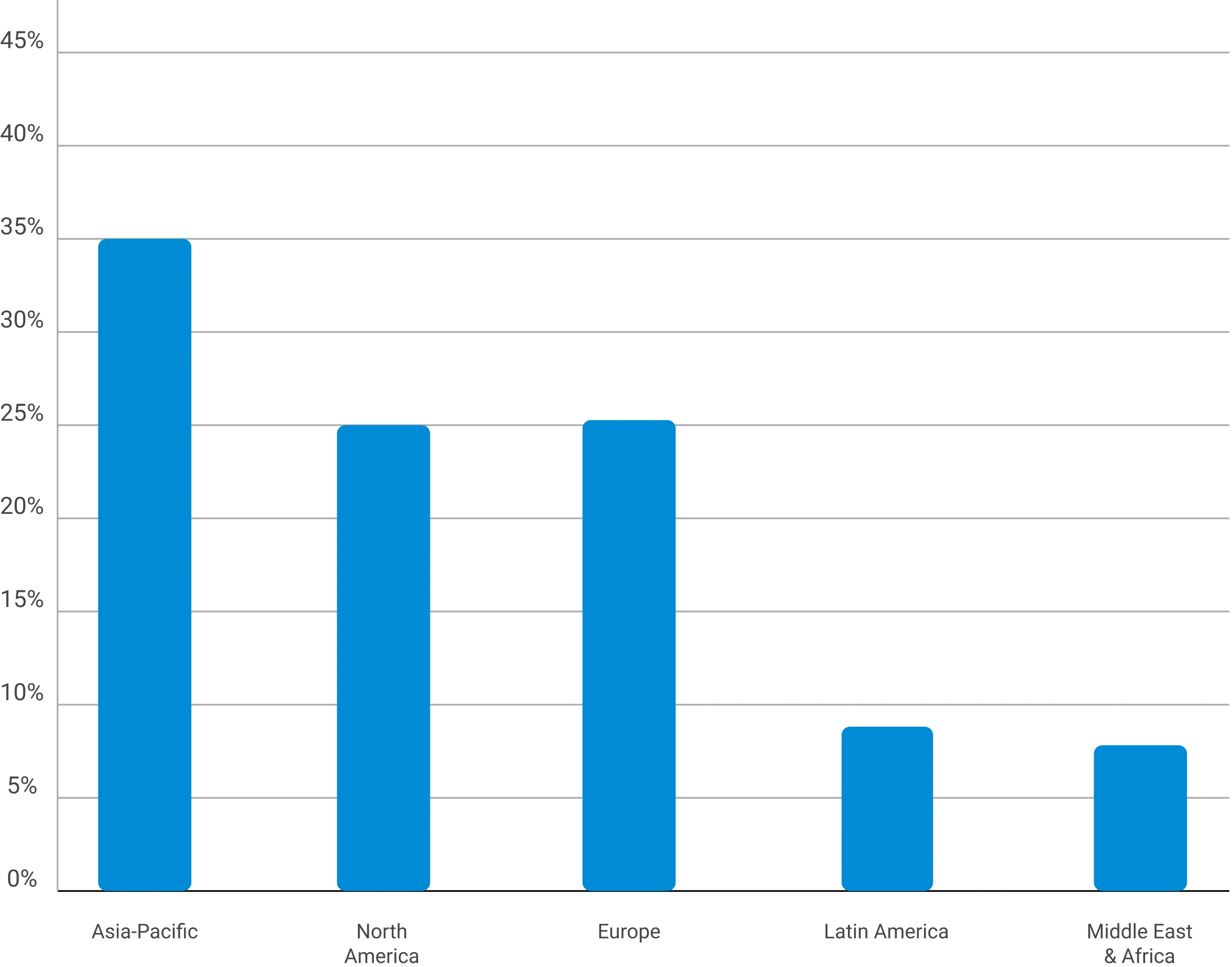
Primary Research — Geographic Coverage of Interviews
Regional distribution of primary research engagement (% share from PPT data)
Phase 6 — Data Triangulation and Market Validation
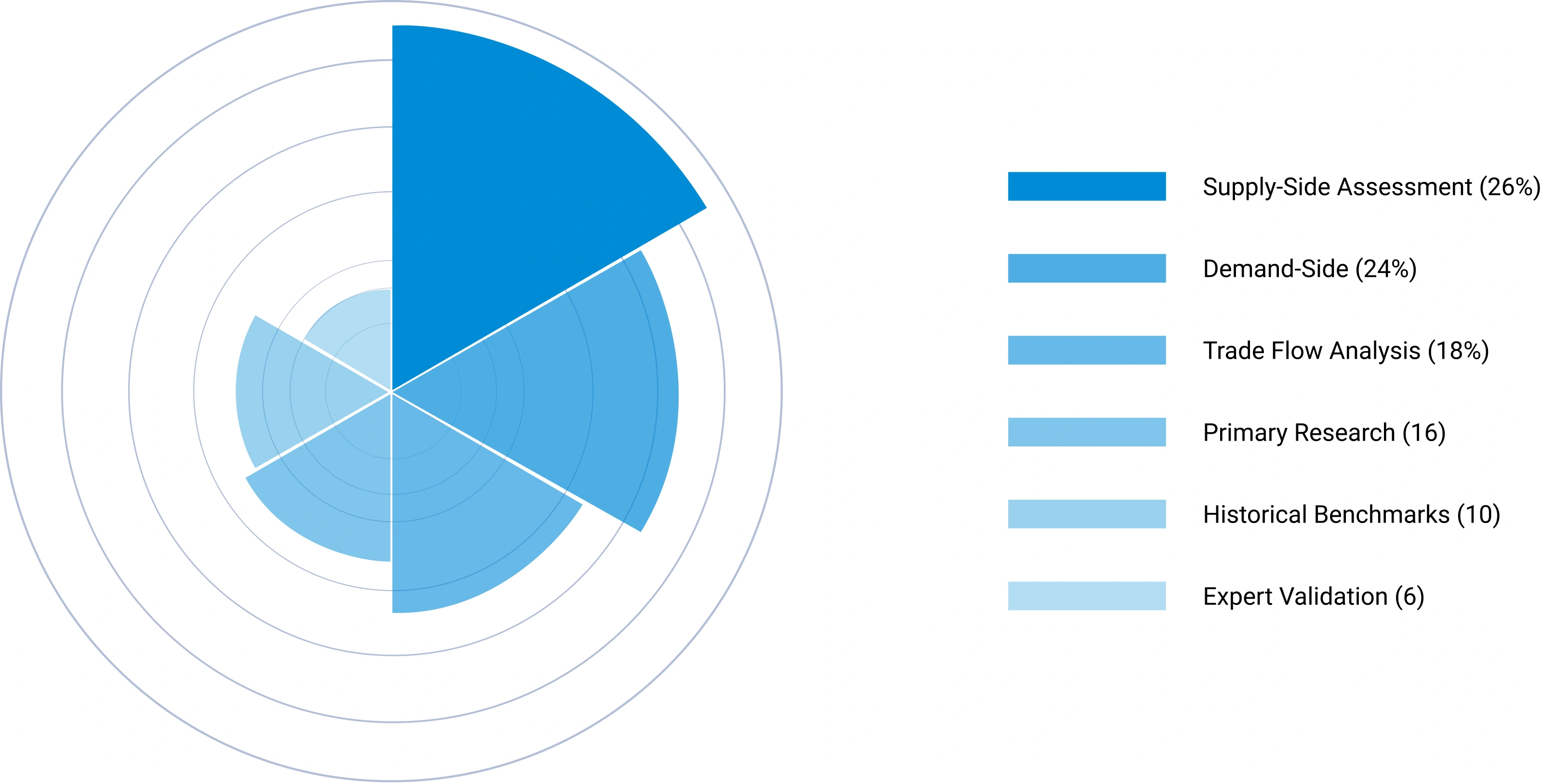
No single methodology is relied upon in isolation. Multiple independent estimation approaches are combined and reconciled to ensure consistency, accuracy, and analytical defensibility. Any material deviations between approaches are investigated and adjusted through additional validation cycles.
The final market size is derived through weighted triangulation of all validated methodologies. Any material deviations between approaches are investigated and adjusted through additional validation cycles. The outcome represents the most realistic assessment of the market based on available evidence and expert confirmation ensuring that volume and value estimates are fully consistent with one another.
Triangulation Framework — Input Contribution Weight
Relative weight each sizing input contributes to the final reconciled market estimate
Phase 7 — Forecast Modeling: Projecting Future Market Evolution
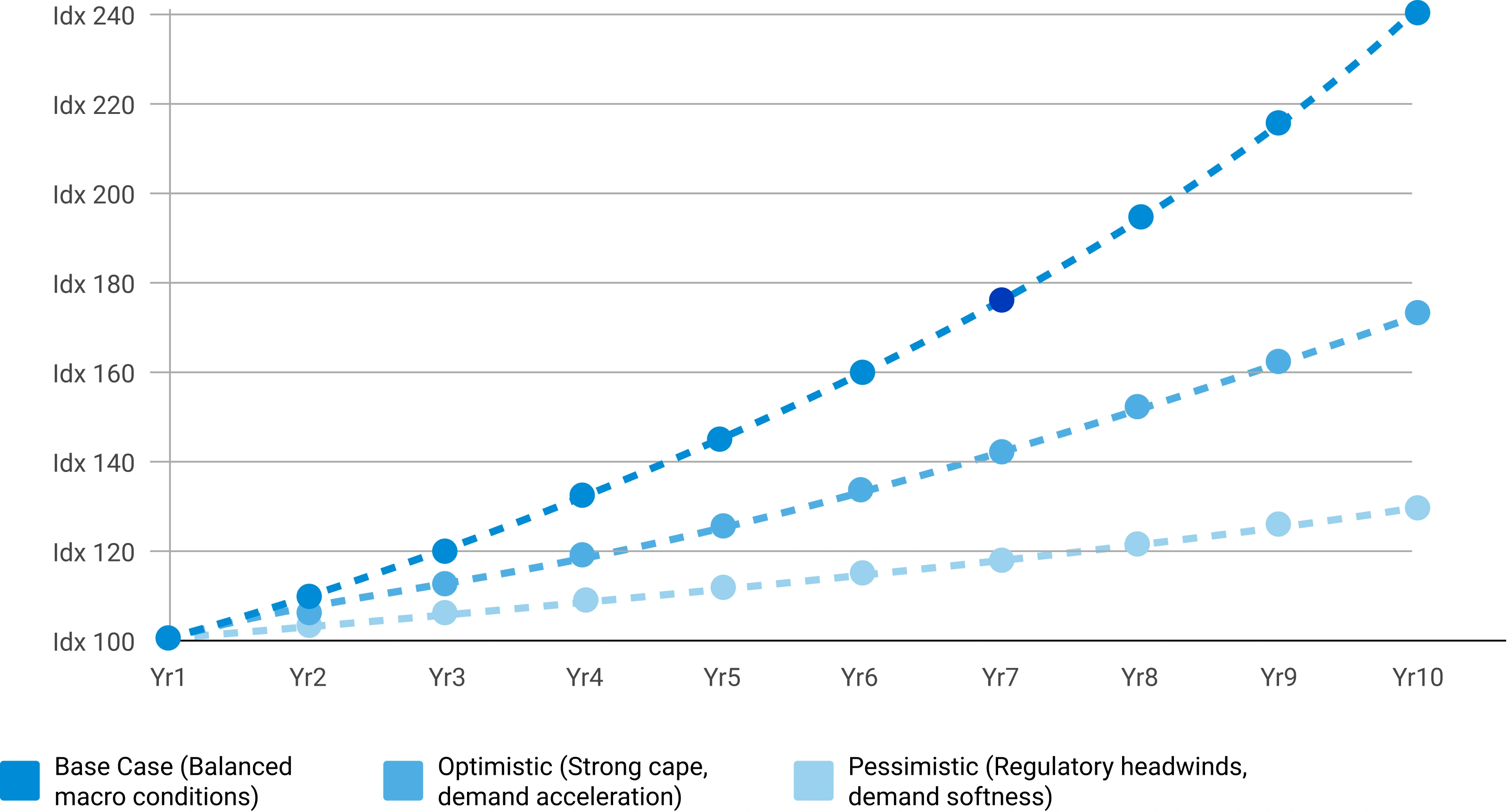
Forecasting evaluates the future trajectory of the market using a combination of quantitative indicators and qualitative assessments across economic, industry, and regulatory dimensions. Rather than simple extrapolation, each driver is independently modeled and integrated into a composite forecast.
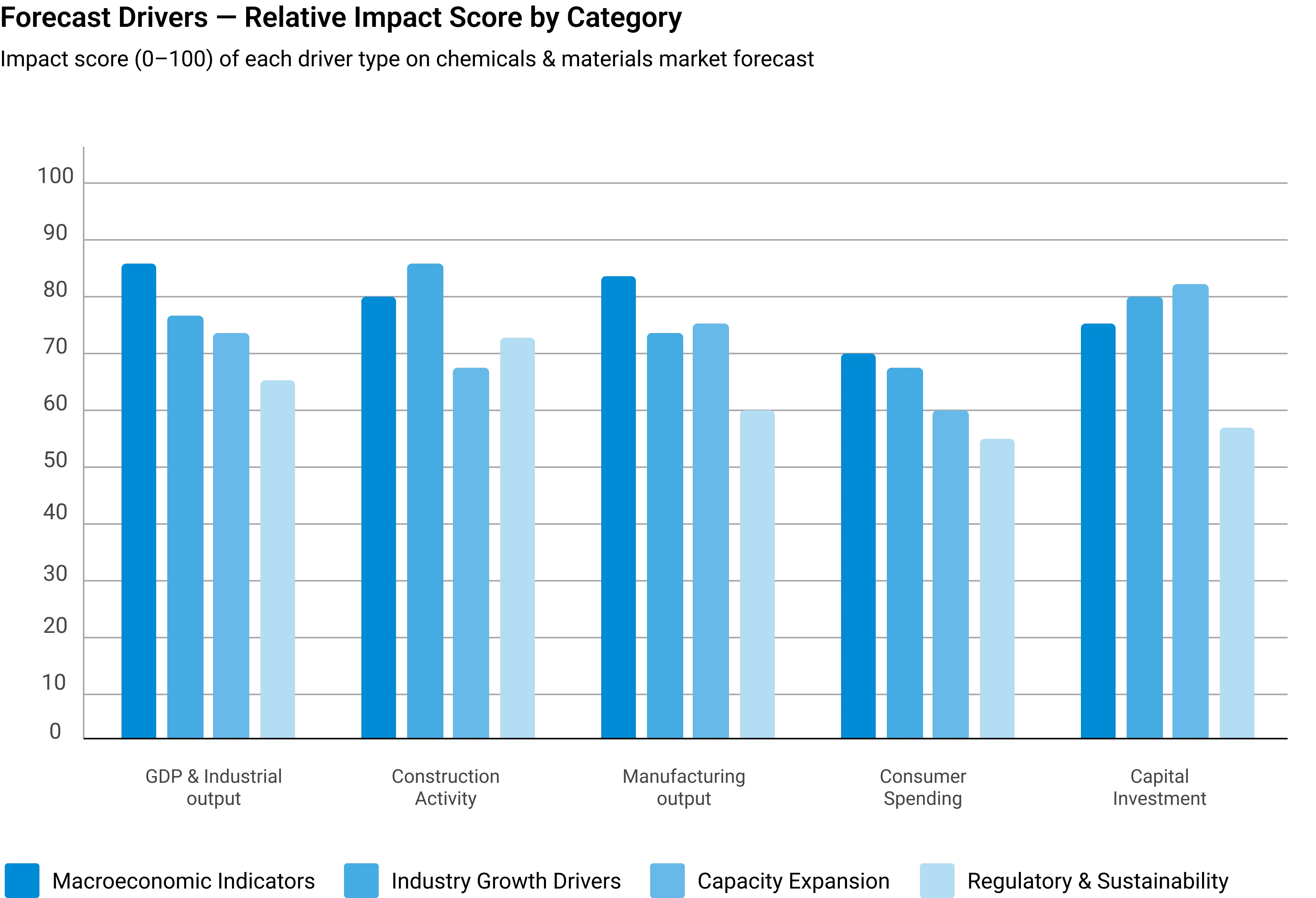
Macroeconomic Indicators
GDP growth, industrial production, manufacturing output, construction activity, consumer spending, and capital investment form the quantitative foundation of long-term demand projections. These are applied at country, regional, and global levels.
Industry Growth Drivers
Urbanization, infrastructure development, industrialization, technological innovation, sustainability initiatives, and evolving product performance requirements are assessed at regional and industry levels — capturing both structural and cyclical demand drivers.
Capacity Expansion Analysis
Announced plant expansions, new manufacturing facilities, technology upgrades, and strategic investments are evaluated to determine future supply-demand dynamics and potential market tightness or oversupply situations.
Regulatory & Sustainability
Environmental regulations, chemical safety standards, emission reduction targets, circular economy initiatives, and sustainability requirements are incorporated as they often influence product adoption rates and market growth trajectories.
Scenario Forecast Range — Indexed Market Growth (Year 1–10)
Illustrative indexed growth trajectories across Base, Optimistic, and Pessimistic scenarios over a 10-year forecast horizon
Forecast Drivers — Relative Impact Score by Category
Impact score (0–100) of each driver type on chemicals & materials market forecast



Comments
Share your thoughts, ask a question, or provide feedback about this report.