Content


What is the Antimicrobial Coatings Market Size and Share?
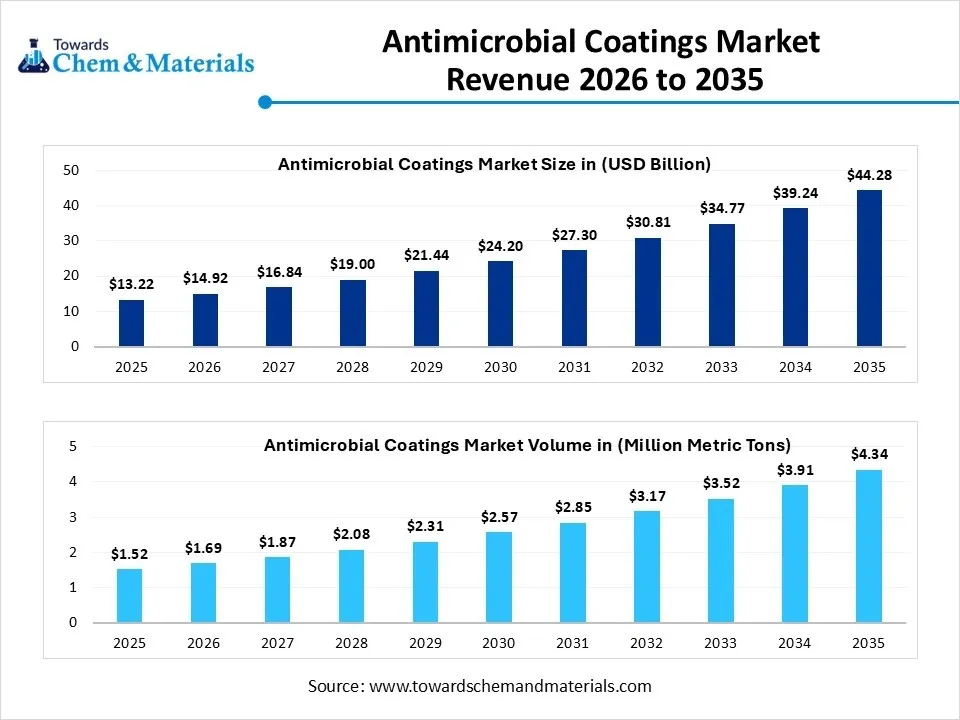
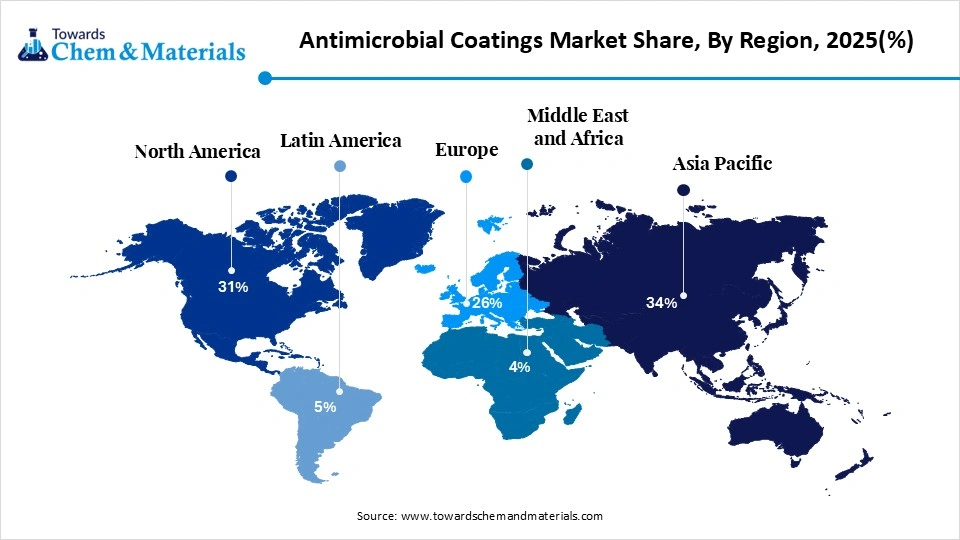
The global antimicrobial coatings market size was valued at USD 13.22 billion in 2025, is estimated to reach USD 14.92 billion in 2026, and is projected to reach USD 44.28 billion by 2035, exhibiting a compound annual growth rate (CAGR) of 12.85% over the forecast period from 2026 to 2035.Asia Pacific dominated the antimicrobial coatings market with the largest revenue share of 34% in 2025 and is expected to grow at the fastest CAGR of 13.03% during the forecast period.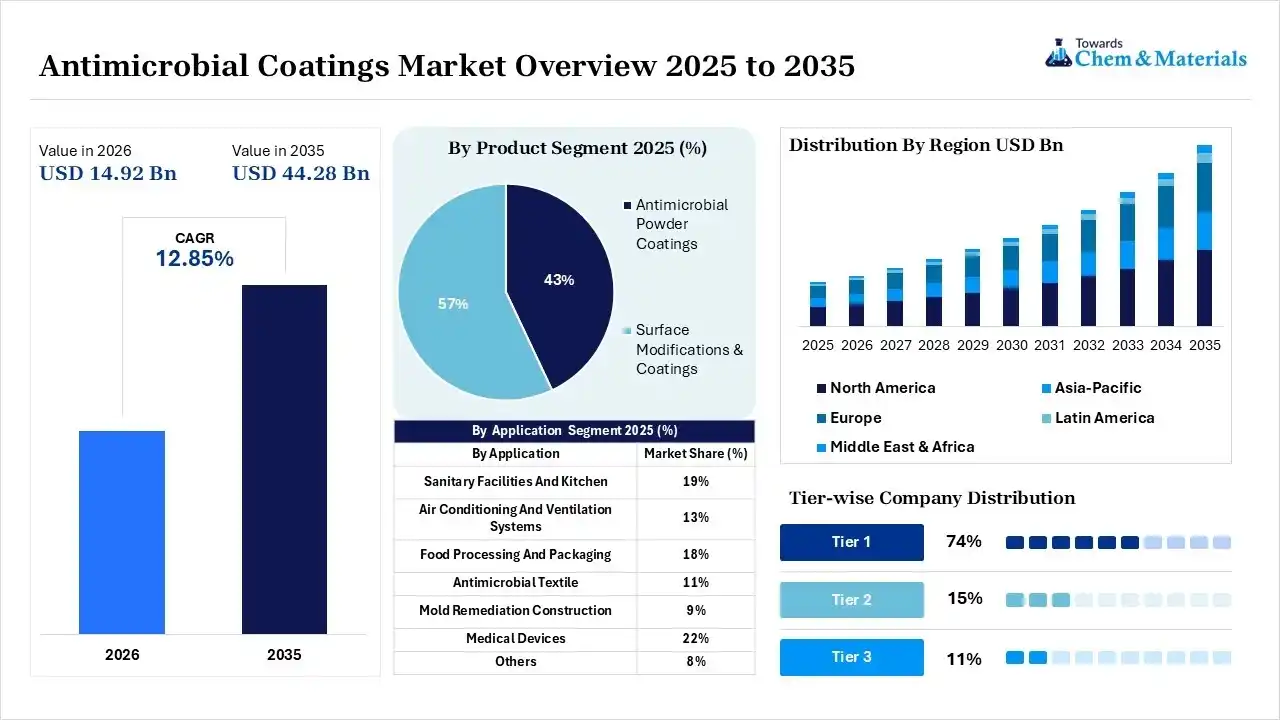
The expanding applications, especially in healthcare and medical devices, as well as growing demand in construction and building, food processing, and electronics, are driving growth. The rising awareness of healthcare-associated infections and surface-borne pathogens increases the heavy adoption in medical and clinical applications. The key players collaborations, like Sherwin-Williams & Microban and Kwikset & Microban, which specialize in architectural and industrial finishes and inhibit bacteria and mold growth, drive growth in the coming years.
Market Highlights
- By region, Asia Pacific dominated the antimicrobial coatings market with a share of 34% in 2025 and is expected to grow at a CAGR of 11.74% over the forecast period.
- By region, North America held 31% market share in the antimicrobial coatings market in 2025 and is expected to experience the fastest growth with a CAGR of 13.76% in the forecast period.
- By product, the surface modifications and coatings segment dominated the market with a 57% share in 2025 and is expected to have the fastest growth with a CAGR of 12.92% in the forecast period.
- By product, the antimicrobial powder coatings segment held 43% market share in 2025 and is expected to grow at a CAGR of 11.62% over the forecast period.
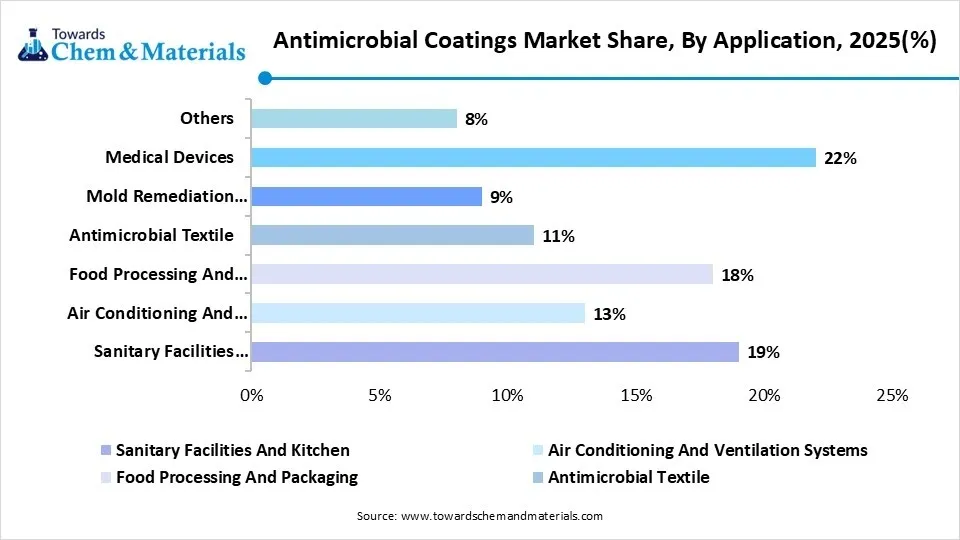
- By application, the medical devices segment dominated the market with a 22% share in 2025 and is expected to grow at a CAGR of 13.54% over the forecast period.
- By application, the antimicrobial textile segment held 11% market share in 2025 and is expected to have the fastest growth with a CAGR of 13.95% in the forecast period.
According to Towards Chemicals and Materials Analytics and Consulting, the global antimicrobial coatings market volume was valued at 1.52 million metric tons in 2025 and is expected to surpass around 4.34 million metric tons by 2035, accelerating a compound annual growth rate (CAGR) of 11.06% over the forecast period from 2026 to 2035.
Market Overview
The Growing Awareness and Demand for Government Mandates
The growing environmental coatings market is driven by rising demand for infection control, stringent hygiene regulations in healthcare and public infrastructure, and growing applications in sectors like construction, electronics, food processing, and air quality systems, which increases growth. Innovation through technological advancement like innovation in silver nanoparticles, copper compounds, and the formulation of eco-friendly, bio-based formulations which helps improve the durability and effectiveness of surfaces that are coated with antimicrobials. The government mandates and safety protocols across sectors, which require enhanced surface protection, drive the growth of the market.
The growing awareness of the reduction of pathogens and airborne pathogens in buildings has increased the use of antimicrobial surface treatment in ventilation and air conditioning systems, especially due to indoor air quality demand, which boosts growth. The strict sanitation regulations and healthcare-associated infections due to the wide adoption of medical devices, surgical tools, and high-touch hospital surfaces increase the growth of the market. The launch and collaborations between companies in the antimicrobial coatings sector for standardized testing and surface protection through advancement boost growth.
- For instance, in November 2025, BioBond Adhesives, Inc. launched a sustainable, three-layer antimicrobial coating system tailored for commercial and industrial infrastructure in partnership with Insumos Maez S.A DE C.V. The product features USDA BioPreferred certification, meaning it is PFAS-free, odor-free, and microplastic-free.(Source: www.prnewswire.com)
Global Investment Flow for Antimicrobial Coatings Market 2026
The companies and government heavily invest in the development of eco-friendly formulations such as waterborne and zero-VOC antimicrobial latex options through companies like PPG Industries, Inc., AkzoNobel N.V., Nippon Paint Holdings Co., Ltd., BASF SE, and The Sherwin-Williams Company, due to high demand from sectors.
Government initiatives and regulations shaped by high investment through public health funding, sanitation mandates, and strict chemical emissions rules drive local adoption.
- In May 2026, Zonova secured £2.1 million in Seed funding for its embedded Z-ROS® technology, which acts as an integrated antimicrobial material rather than a traditional surface coating. The platform aims to prevent 99.99% of bacterial colonisation on medical devices without using antibiotics, targeting initial commercialisation in vascular access devices. (Source: www.uktechnews.info)
- In December 2025, Swedish medtech company Amferia secured an oversubscribed €3.5 million investment round to accelerate its proprietary antimicrobial peptide hydrogel platform.(Source: news.cision.com)
Report Scope
| Report Attributes | Details |
| Market Size in 2026 | USD 14.92 Billion/ 1.69 Million Metric Tons |
| Expected Size in 2035 | USD 44.28 Billion/ 4.34 Million Metric Tons |
| Growth Rate | CAGR of 12.85% |
| Base Year of Estimation | 2025 |
| Forecast Period | 2025-2035 |
| Dominant Region | Asia Pacific |
| Segment Covered | By Product, By Application, By Region |
| Key Companies Profiled | BASF SE (Germany), RPM International Inc. (USA), Lonza Group Ltd. (Switzerland), Sika AG (Switzerland), Jotun Group (Norway), DuPont (USA), Burke Industrial Coatings (USA), AK Steel Corp. (USA), BioCote Ltd. (UK), Sciessent LLC (USA), Specialty Coating Systems, Inc. (USA), Sono-Tek Corporation (USA), Advanced Nanotech Lab (India), Covalon Technologies Ltd. (Canada), Diamond Vogel (USA) |
Market Growth Trends
- Technological advancements are driving manufacturers to increasingly use engineered silver, zinc, and copper particles, as they help prevent and protect the surfaces without disrupting the surface and also touch sensitivity, which is a growing trend in the market.
- The surging demand for antimicrobial filters and coatings for HVAC and air quality inside ventilation, air conditioning, and heating system this help in limiting airborne pathogen spread all over, which increases the growth.
- The rising dominance of medical devices like implants, surgical instruments, and catheters, which help in preventing the health or healthcare associated infections, is increasing the growth of the market.
Antimicrobial Coatings Market: Predictive Formulation Modeling
The rising shift towards the growth of the antimicrobial coatings market through integration of AI in transitioning from traditional to predictive and real-time smart monitoring fuels growth. Machine learning algorithms in enhancing the performance of coatings under environmental stressors like UV exposure, humidity, chemical stress, and temperature cycles help in enhancing performance by predicting defects early. The other factors are automated quality control and testing, smart self-monitoring surfaces, and rapid nanomaterial screening, which support the technological shift in the market.
Supply Chain Analysis of Antimicrobial Coatings Market:
Antimicrobial Coating Production & Processing
- Antimicrobial coatings are produced by incorporating antimicrobial agents such as silver, copper, zinc, or organic biocides into coating formulations through advanced chemical processing to provide long-lasting protection against bacteria, fungi, and other microorganisms on various surfaces.
- PPG Industries develops antimicrobial coating technologies for healthcare, architectural, transportation, and industrial applications. Its coating solutions help inhibit microbial growth while maintaining surface durability and long-term performance.
- Key Players: PPG Industries, AkzoNobel, Sherwin-Williams, Nippon Paint Holdings.
Quality Testing & Certification
- Antimicrobial coatings must comply with standards for antimicrobial efficacy, chemical safety, durability, adhesion, and environmental performance before commercial use.
- AkzoNobel manufactures antimicrobial coating systems that meet international quality and regulatory standards for healthcare, commercial buildings, food processing, and public infrastructure applications.
- Key Authorities & Standards: International Organization for Standardization, ASTM International, U.S. Environmental Protection Agency, European Chemicals Agency.
Distribution to End-Use Industries
- Antimicrobial coatings are supplied to healthcare facilities, food and beverage processing companies, construction firms, consumer goods manufacturers, transportation companies, and electronics manufacturers to improve hygiene and surface protection.
- Sherwin-Williams supplies antimicrobial coating solutions for healthcare, educational, commercial, and industrial environments, helping customers enhance surface hygiene, durability, and long-term protection against microbial contamination.
- Key Suppliers: PPG Industries, Sherwin-Williams, Nippon Paint Holdings.
Sustainability Analysis of Antimicrobial Coatings
The sustainability analysis of antimicrobial coatings helps reduce microbial transmission and chemical detergents, which are used against environmental risks like ecotoxicity and toxic leaching. The reduced chemical usage, such as intensive cleaning manpower and the use of durable AMC, reduces the need for repetitive harsh chemical cleaning, which aligns with environmental regulations. The advanced nanocoating helps improve and control microbial spread in water purification, wound management, and high-contamination clinical spaces, which aligns with regulatory and sustainability mandates.
What are Antimicrobial Coatings?
Antimicrobial coatings are specialized and advanced surface coatings that are used to treat surfaces which his designed specially to inhibit or limit the growth of harmful microbes, including fungi, mold, bacteria, and viruses. They work by cellular disruption through agents like silver ions, copper, or ammonium salts, which react with microbial metabolism, damage cell walls, and stop reproduction. Also, through direct killing of microbes through direct contact without shedding substances. Common applications include manufacturing and buildings, healthcare, public spaces, and equipment.
What are the Key uses of Antimicrobial Coatings?
Key uses and applications include:
- Healthcare Facilities: The use of antimicrobial coatings, especially on instrument surfaces that need sterile surfaces and are used or touched frequently, helps in reducing the risk of contamination and infections like door handles, bed rails, surgical instruments, and medical devices, which is a key use in the industry.
- Public Transportation: the most touched surfaces in public domains like rails, seat handles, and tray tables in buses, trains, and planes; these antimicrobial coatings help lower or reduce the risk of passenger illness, which drives demand for the market.
- HVAC and Air Systems: The need and demand for improving indoor air quality and preventing mold growth in HVAC and Air systems drive demand for antimicrobial coatings in heating, ventilation, and air-conditioning ducts and filters.
- Food Processing and Packaging: To increase shelf life and inhibit microbial growth on food contact surfaces and packaging materials, which prevents the risk of contamination, increasing the demand for the market.
- Consumer Goods and Appliances: The demand for continuous surface hygiene to reduce the risk of microbial growth on everyday items like light switches, refrigerator handles, and sports equipment drives demand for antimicrobial coatings on appliances.
Antimicrobial Coatings Premium Pricing Analysis
Antimicrobial coatings command premium pricing over conventional paints and surface coating treatment. The pricing is accelerated due to demand for high-performance formulas, which require advanced and hybrid ingredients to ensure uniform microbial resistance, which adds to the cost. Price sensitivity heavily restrains uptake in low-income regions where buyers adopt cheaper alternatives. Meeting stringent validation standards such as ISO 22196 and ISO 21702 adds to development and verification overheads. The increased use in public and healthcare sectors will increase production, which will help lower the cost in the coming decades.
Antimicrobial Coatings Market Carbon Tax Analysis
Antimicrobial coatings are facing growing economic pressure from international carbon taxes such as the EU’s carbon border adjustment mechanism. The regional supply chain shifts as importers in Europe must pass on carbon border tariffs, which boosts localized zero VOC waterborne manufacturing. Manufacturers face heavy taxation and accelerate investment in eco-friendly, bio-based antimicrobial nanocoatings.
Antimicrobial Coatings Regulatory Landscape
| Country / Region | Regulatory Body | Key Regulations | Focus Areas | Notable Notes |
| United States | Environmental Protection Agency, Food and Drug Administration | Federal Insecticide, Fungicide, and Rodenticide Act, FDA Medical Device Regulations | Antimicrobial efficacy, medical device safety | The U.S. regulates antimicrobial coatings for healthcare, construction, food processing, and consumer products with emphasis on efficacy and human safety. |
| European Union | European Chemicals Agency, European Commission | Biocidal Products Regulation, REACH Regulation | Biocidal product approval, chemical safety | Europe requires rigorous assessment of antimicrobial coating products to ensure environmental and public health protection. |
| China | National Medical Products Administration, Ministry of Ecology and Environment | Environmental Protection Law; Medical Device Regulations | Healthcare coatings, industrial hygiene | China is expanding the use of antimicrobial coatings in healthcare, transportation, consumer goods, and public infrastructure. |
| India | Central Drugs Standard Control Organization, Central Pollution Control Board | Medical Device Rules; Environmental Protection Act | Infection control, industrial coatings | India is witnessing increasing adoption of antimicrobial coatings across healthcare facilities, food processing, and construction sectors. |
| Japan | Ministry of Economy, Trade and Industry, Ministry of Health, Labour and Welfare | Chemical Substances Control Law, Pharmaceutical and Medical Device Act | High-performance antimicrobial materials, healthcare safety | Japan focuses on advanced antimicrobial coating technologies for medical devices, electronics, and public infrastructure. |
| Germany | Federal Environment Agency, Federal Institute for Occupational Safety and Health | Biocidal Products Regulation, REACH Compliance | Sustainable antimicrobial technologies, product safety | Germany is a leading market for antimicrobial coatings driven by strong demand from healthcare, automotive, and industrial manufacturing sectors. |
Market Dynamics
Drivers: Strict Government Rules
The growth of the antimicrobial coatings market is driven by the growing demand from healthcare for antimicrobial coatings, especially for highly touched surfaces like hospitals and clinics, which use antimicrobial coatings for surgical tools and plastics, which helps spreading of bacteria to patients. The strict government rules from regulatory groups like the FDA and EPA, which enforce strict safety and cleanliness standards in industries, drive growth. The other key growth drivers are growth in food processing and packaging, indoor air quality and HVAC systems, an aging population, and advances in nanotechnology.
Challenges: High Product and Manufacturing Costs
The key challenges are the high production costs, such as advanced raw materials and complex manufacturing procedures requires expensive processing and which limits adoption in price-sensitive markets. Government agencies enforce safety certification, which delays product commercialization and increases compliance costs. The other key challenges are the emergence of microbial resistance, manufacturing and integration complexity, and market education and awareness, which hinder the growth of the market.
Opportunities : Advanced Medical Devices
The key growth of the market is driven by key growth opportunities like expanding applications across emerging sectors like healthcare, food packaging, consumer electronics, and medical device applications, which fuels the growth. The advanced medical devices application and use of antimicrobial coating deploying specialised coatings for invasive and implantable instruments which as catheters and endoscopes, which hep lower healthcare-associated infections, which is a key growth opportunity for the market.
- For instance, in January 2025, Onkos Surgical completed its first-in-human clinical surgeries using its proprietary NanoCept Antibacterial Technology applied to orthopaedic implants. The milestone procedures address intraoperative bacterial contamination, a primary vector behind periprosthetic joint infections following high-risk musculoskeletal reconstructions.(Source: www.prnewswire.com)
Segmental Insights
Product Insights
The surface modifications and coatings segment dominated the market with a 57% share in 2025 and is expected to have the fastest growth with a CAGR of 12.9% in the forecast period, driven by the increasing demand for surface coatings from medical and healthcare facilities to decrease the risk of contamination and risk of illness, which drives growth. Advancements in technology, like advanced nanoparticle use, which helps in enhancing the long-term protection of medical devices, boost growth. The strong demand for surface coating from public and high-touch commercial environments further supports the growth and expansion of the market.
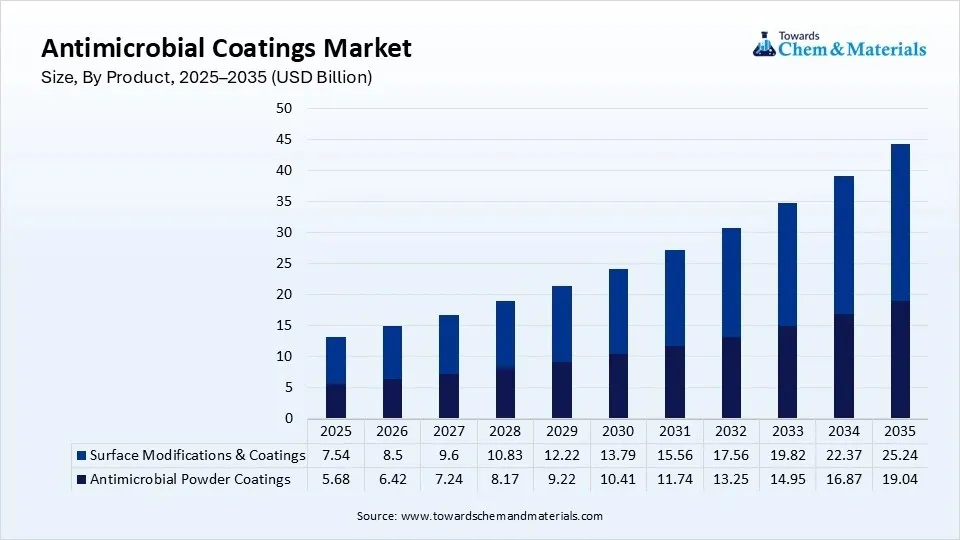
The antimicrobial powder coatings segment held 43% market share in 2025 and is expected to grow at a CAGR of 11.62% over the forecast period. The growing industrial demand for durable and risk-free coatings due to growing sectors fuels the growth of the market. The increased infrastructure development projects that use antimicrobial coatings and increased adoption of appliances with antimicrobial coatings further boost the growth. The use in corrosion-resistant applications and expanding use further push the growth of the market and support rising adoption.
Antimicrobial Coatings Market Share, By Product, 2025(%)
| By Product | Market Share (%) |
| Antimicrobial Powder Coatings | 43% |
| Surface Modifications & Coatings | 57% |
Application Insights
The medical devices segment dominated the market with a 22% share in 2025 and is expected to grow at a CAGR of 13.54% over the forecast period, driven by expanding use of antimicrobial coatings where there is touch sensitivity to prevent infection and risk of illness remains the most important factor in the healthcare sector. Medical device manufacturers explicitly demand and integrate antimicrobial coatings on the surfaces of medical devices and other medical equipment to lower the risk of contamination. The advanced surface technologies and regulatory support due to the growing focus on sustainable demand drive the further expansion of the market.
- For instance, Earlier, a research paper published in Scientific Reports outlines the successful fabrication of Nitrofurantoin-loaded chitosan-silver nanoparticles to treat catheter-associated urinary tract infections. By combining an established legacy antibiotic with an organic-metallic nanocarrier, the material delivers targeted antimicrobial and antibiofilm action directly on medical device surfaces.(Source: www.nature.com)
The antimicrobial textile segment held 11% market share in 2025 and is expected to have the fastest growth with a CAGR of 13.95% in the forecast period, as the demand for performance textiles and increased efficiency demand antimicrobial textiles due to their applications. The healthcare sector also demands antimicrobial protection to reduce microbial growth and reduce risk. Consumer demand and awareness, which demand premium textile demand which have antimicrobial coated surfaces further support the growth of the market.
- For Instance, in January 2026, Specialty chemicals leader Archroma and deep-tech materials innovator HeiQ entered into a strategic co-marketing agreement to deliver high-performance, planet-conscious anti-odour and antimicrobial technologies to brands, retailers, and textile mills globally.(Source: www.indiantextilemagazine.in)
Antimicrobial Coatings Market Share, By Application, 2025(%)
| By Application | Market Share (%) |
| Sanitary Facilities And Kitchen | 19% |
| Air Conditioning And Ventilation Systems | 13% |
| Food Processing And Packaging | 18% |
| Antimicrobial Textile | 11% |
| Mold Remediation Construction | 9% |
| Medical Devices | 22% |
| Others | 8% |
Regional Analysis
How did Asia Pacific dominate the Antimicrobial Coatings Market in 2025?
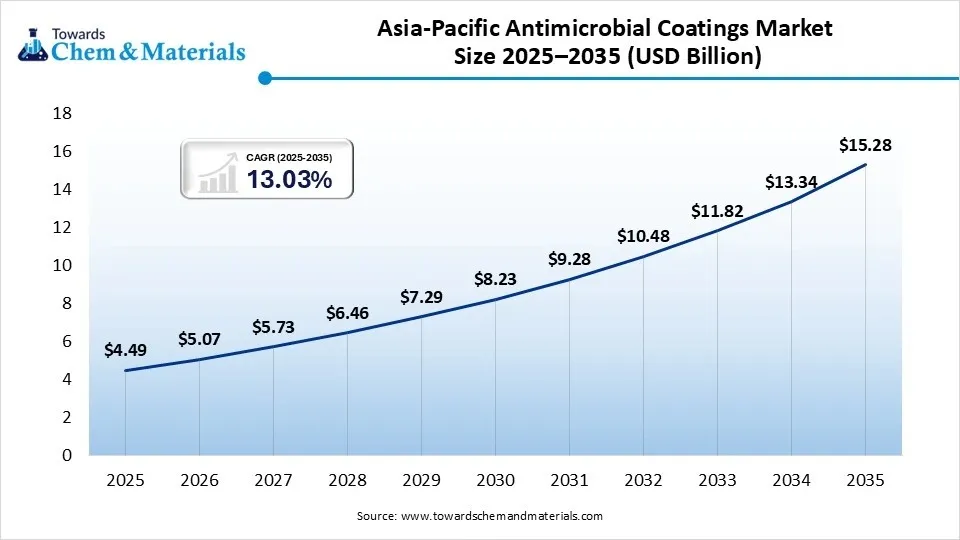
The Asia Pacific antimicrobial coatings market size was estimated at USD 4.49 billion in 2025 and is projected to reach USD 15.28 billion by 2035, growing at a CAGR of 13.03% from 2026 to 2035. Asia Pacific dominated the antimicrobial coatings market with a share of 34% in 2025 and is expected to grow at a CAGR of 11.74% over the forecast period, driven by strict governmental regulations and public campaigns that increase awareness of hygiene and food safety standards, which accelerates the commercial adoption of public transport, HVAC systems, and manufacturing plants. The growing manufacturing hubs in the region, especially China and South Korea which created a steady baseline demand for specialized and antimicrobial coatings, driving growth and demand for the market in the region.
India: Increased and Expanding Healthcare Sector
The India antimicrobial coatings market growth is driven by the expansion of the healthcare sector in the country and the rising number of hospital-acquired infections, focusing on sterile medical equipment, which is driven by the high demand from hospitals. Increased adoption of industrial setting antimicrobial coatings and rising adoption in indoor air quality control systems and food processing standards further boost the growth in the market.
China: Technological Innovation
The China antimicrobial coatings market growth is driven by the growth of technologically advanced and specialized materials and adoption of nanotechnology and non-engineered formulations, which demand durable coatings without hurting the original integrity of the surface, which boosts the growth. The rapid urbanization and construction activity in the country demand a rising need to overcome hospital-acquired infections, which demand medical devices and surface treatment supporting growth expansion.
North America Antimicrobial Coatings: Large Revenue Generation
The North America antimicrobial coatings market size was estimated at USD 4.10 billion in 2025 and is projected to reach USD 13.95 billion by 2035, growing at a CAGR of 13.03% from 2026 to 2035. North America held 31% market share in the antimicrobial coatings market in 2025 and is expected to experience the fastest growth with a CAGR of 13.76% in the forecast period, driven by the presence of high health standards and advanced medical infrastructure development in the region, which demand specialised coatings and adoption of antimicrobial coatings, especially in healthcare, which supports the growth of the market. The United States generates the largest share of regional revenue, supported by strict infection-control guidelines that support expansion.
United States Antimicrobial Coatings Market Presence of Key Players
The United States antimicrobial coatings market is driven by the presence of key players in the country like Sherwin-Williams, PPG Industries, and AkzoNobel, which play a major role in the growth of the market in the country. The strict guidelines and limits on low VOC compounds that are regulatory standards promote the use of sustainable products in the region. The post-pandemic habits and hygiene practices and rising concerns over infectious diseases boost the rising adoption, driving growth.
Canada: Stringent Regulation
The Canadian antimicrobial coatings market growth is driven by the key technological shift and regulatory focus on stricter standards and guidelines, which enforce the use of waterborne and zero VOC formulations for standard coatings, which fuels the growth. High demand from key sectors like medical devices, HVAC systems, and food and beverages, which demand antimicrobial coatings to prevent illness and any kind of microbial risks, drives the growth of the market in the country.
Europe Antimicrobial Coatings Market: Strict EU Framework
The Europe antimicrobial coatings market size was estimated at USD 3.44 billion in 2025 and is projected to reach USD 11.73 billion by 2035, growing at a CAGR of 13.05% from 2026 to 2035. Europe held a market share of 26% in 2025, driven by the strict EU framework like the Biocidal Products Regulation and the Solvent Emissions Directive, which restrict volatile organic compounds, steering the market toward bio-based, water-borne, and eco-friendly solutions, driving the growth of the market. The presence of key hubs in the region loke UK, France, Italy, and Spain, shows steady adoption across food processing, healthcare, and public infrastructure renovation, driving further growth of the market.
United Kingdom: Healthcare and Infection Control
The UK antimicrobial coatings market growth is driven by rising concerns over hospital-acquired infections and post-pandemic hygiene standards, driving demand for antimicrobial coatings and boosting growth. The wide utilization of medical devices and building and construction activity in the country due to infrastructure development projects drives the demand for the market. Providers like BioCote specialize in integrated additives that play a crucial role in the growth of the market.
Germany: Advanced Solutions by Major Giants
The German antimicrobial coatings market growth is driven by key companies specialized solutions, such as Nano-Care Deutschland AG and Dyphox, which are known for their disinfection technologies and antimicrobial surface coatings in hospitals and public transit, boosting the growth. Global chemical giants headquartered in Germany, like BASF, develop heavy metal-free interior coating technologies using innovative nanoparticle blends to neutralize germs and viruses on walls, which boosts the growth.
Latin America Antimicrobial Coatings Market: Rising Adoption
The Latin America antimicrobial coatings market size was estimated at USD 0.66 billion in 2025 and is projected to reach USD 2.44 billion by 2035, growing at a CAGR of 13.97% from 2026 to 2035. Latin America held a market share of 5% in 2025, driven by the presence of key sectors across the region like healthcare, building and construction, food processing, and indoor air quality/HVAC systems, which demand antimicrobial coatings. The high-end adoption of surface modifications in hospitals and clinics increases demand, which helps to reduce pathogen transmission as there is rising demand for coatings in the region, supporting growth. Rising investments in hospitals and medical safety devices drive major adoption.
Brazil Urban Infrastructure
The Brazil antimicrobial coatings market growth is driven by the expanding application in urban infrastructure across public transportation, food processing, and architectural surfaces, which supports sustained demand, boosting growth. The rising investment in healthcare and hygiene infrastructure due to rising awareness in the public sector supports the growth of the market.
Argentina: Development of Advanced Materials
The Argentina antimicrobial coatings market growth is driven by bio-based innovation through local research in Argentina, which emphasises the development of water-based nanocomposite coatings that are synthesized from Schinopsis balansae tannins for construction materials, driving growth and expansion. The steady growth in the country across sectors like construction, healthcare, and industrial sectors boosts the growth.
Middle East and Africa Antimicrobial Coatings: Urbanization and Healthcare Expansion
The Middle East and Africa antimicrobial coatings market size was estimated at USD 0.53 billion in 2025 and is projected to reach USD 1.99 billion by 2035, growing at a CAGR of 14.15% from 2026 to 2035. The Middle East and Africa held a market share of 4% in 2025, driven by post-pandemic hygiene awareness, healthcare infrastructure expansion, and growing use in food safety and HVAC systems. Rapid development of hospitals and medical centers across the region drives the use of silver and copper-based coatings on walls, surfaces, and medical devices. Rising construction activities, infrastructure development, and growing populations increase the need for protective, antibacterial building materials, boosting growth.
Saudi Arabia Government Vision 2030 Initiatives
The Saudi Arabia antimicrobial coatings market growth is primarily driven by massive investments in healthcare infrastructure, government Vision 2030 initiatives, and rising hygiene demands across industries. Urban development and massive construction projects such as NEOM and the Red Sea Development boost demand for protective, smart, and antimicrobial surface technologies to handle harsh environmental conditions.
UAE Growing Investment for Modernization
The UAE antimicrobial coatings market growth is driven by rising investments in modernizing and expanding healthcare infrastructure, which increase the demand for infection-control surfaces. Heightened emphasis across Gulf Cooperation Council nations on maintaining strict sanitation in public spaces and high-traffic areas further boosts the growth of the market. Heightened post-pandemic awareness regarding the rapid response needed against harmful bacteria, mold, and viruses in the country further boosts the growth and expansion of the market in the region.
Recent Developments
- In April 2025, over fifty industry leaders, scientists, regulators, and innovators convened for a significant event: the official launch of SS 705:2024. This marks Singapore’s first comprehensive standard for evaluating the durability and effectiveness of antibacterial, antiviral, and antifungal surface disinfectants and coatings on non-porous materials. Organized by the Centre of Regulatory Excellence Standards Development Organisation, the invitation-only gathering offered a dynamic environment for discussion, collaboration, and celebrating this milestone in public health innovation.(Source: coresdo.org)
- In November 2025, Singapore-based agritech startup Peptobiotics commercialised a novel micro-encapsulated antimicrobial peptide platform to serve as a sustainable alternative to traditional antibiotics in global livestock farming and aquaculture. By using clean bio-fermentation instead of heavy metal coatings or chemical biocides, the firm targets the growing threat of antibiotic-resistant pathogens in animal food supply chains.(Source: cen.acs.org)
- In February 2026, Swiss biotech startup Polaroid Therapeutics received a Class IIb CE Mark for its inaugural product, POLTX Fiber. This advanced wound-care dressing introduces the companys proprietary Antimicrobial Polymer Technology to the European healthcare market, establishing a non-leaching mechanism to manage exuding wounds without accelerating antimicrobial resistance.(Source: www.prnewswire.com)
Competitive Analysis
The growing collaboration between companies and development of new and advanced products supports the market growth. The expansion and development of facilities is a big competition for the traditional coating industry. Research in research institutes for enhancing performance increases adoption.
- In July 2026, LG Electronics launched a new production line at its manufacturing facility in Haiphong, Vietnam, to scale up its advanced antimicrobial materials business. The new line will produce key materials including LG PuroTec™ and Easy-Clean Enamel. This operational expansion establishes a dual-plant global supply network alongside its existing facility to capture a booming market for functional glass powder.(Source: themalaysianreserve.com)
- In July 2025, Researchers at the University of Manchester’s National Graphene Institute, in partnership with medical technology company Smith & Nephew, developed a long-lasting antimicrobial coating that precisely regulates the release of silver ions using graphene oxide membranes.(Source: www.manchester.ac.uk)
Top players in the Antimicrobial Coatings Market & Their Offerings:
| Company | Company Type/Position | Major Headquarters | Geographic Presence | Antimicrobial Coatings Offerings | Key Offering/Strength |
| Akzo Nobel N.V. | Global paints and coatings manufacturer | Amsterdam, Netherlands | Europe, North America, Asia Pacific, Middle East | Antimicrobial powder coatings, protective coatings, and hygienic surface solutions for healthcare, construction, and public infrastructure | Strong expertise in high-performance coatings with advanced antimicrobial technologies |
| PPG Industries, Inc. | Global coatings and specialty materials company | Pittsburgh, Pennsylvania, USA | North America, Europe, Asia Pacific, Latin America | Antimicrobial coatings for medical devices, architectural surfaces, industrial equipment, and transportation | Broad coatings portfolio supported by continuous product innovation and global reach |
| Sherwin-Williams Company | Global paints and coatings manufacturer | Cleveland, Ohio, USA | North America, Europe, Asia Pacific | Antimicrobial paints, protective coatings, and hygiene coatings for commercial, healthcare, and residential applications | Comprehensive coating solutions with strong distribution and technical support |
| Axalta Coating Systems Ltd. | Performance coatings manufacturer | Glen Mills, Pennsylvania, USA | North America, Europe, Asia Pacific, Latin America | Antimicrobial powder coatings, industrial coatings, and protective surface technologies | Advanced coating technologies offering durability and long-lasting antimicrobial performance |
| Nippon Paint Holdings Co., Ltd. | Global paints and coatings company | Tokyo, Japan | Asia Pacific, Europe, North America | Antimicrobial decorative paints, industrial coatings, and protective coatings for healthcare and commercial buildings | Strong presence in Asia with innovative antimicrobial coating solutions for diverse applications |
Other Top Players Are
- BASF SE (Germany)
- RPM International Inc. (USA)
- Lonza Group Ltd. (Switzerland)
- Sika AG (Switzerland)
- Jotun Group (Norway)
- DuPont (USA)
- Burke Industrial Coatings (USA)
- AK Steel Corp. (USA)
- BioCote Ltd. (UK)
- Sciessent LLC (USA)
- Specialty Coating Systems, Inc. (USA)
- Sono-Tek Corporation (USA)
- Advanced Nanotech Lab (India)
- Covalon Technologies Ltd. (Canada)
- Diamond Vogel (USA)
Segments Covered:
By Product
- Antimicrobial Powder Coatings
- Silver
- Copper
- Others
- Surface Modifications & Coatings
- Silver
- Copper
- Others
By Application
- Sanitary Facilities and Kitchen
- Air Conditioning and Ventilation Systems
- Food Processing and Packaging
- Antimicrobial Textile
- Mold Remediation Construction
- Medical Devices
- Others
By Regions
- North America
- Europe
- Asia Pacific
- Middle East & Africa
- Latin America
FAQ's




Select User License to Buy
Figures (6)










 sales@towardschemandmaterials.com
 Download Sample
 Schedule a Meeting