
Asia Pacific Polyurethane Coatings Market Size, Competitive Landscape Analysis Report 2035
The Asia Pacific polyurethane coatings market size was valued at USD 11.97 billion in 2025, is estimated to reach USD 12.62 billion in 2026, and is projected to reach USD 20.25 billion by 2035, exhibiting a compound annual growth rate (CAGR) of 5.40% over the forecast period from 2026 to 2035. Asia-Pacific is witnessing healthy growth in the polyurethane coatings market, fuelled by industrialisation, infrastructure development, the growing number of automobiles produced, and demand for long-lasting protective coatings. As well as several environmentally friendly coating materials, namely water-based and other methods, China, India, and Japan are significant factors in regional growth.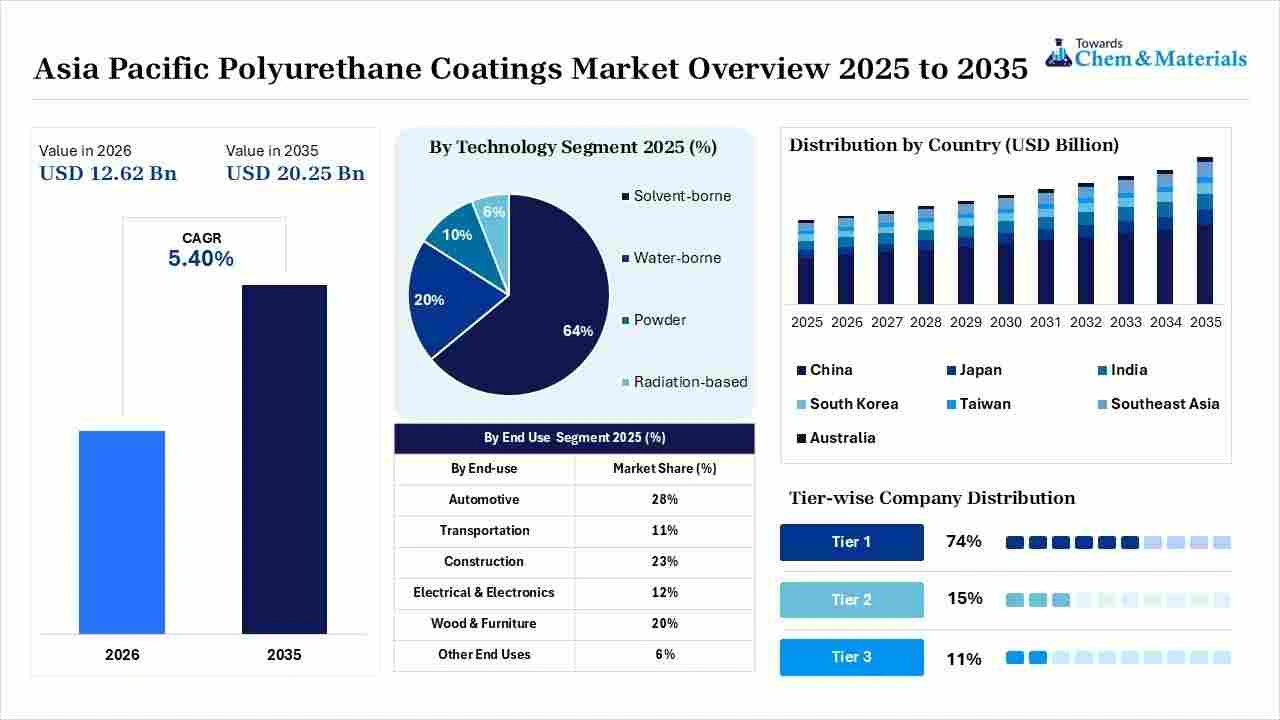
Market Highlights
- By region, China dominated the Asia Pacific polyurethane coatings market with a share of 55% in 2025 and is expected to grow at a CAGR of 6.40% in the forecast period.
- By region, North America held a 15% market share in 2025 and is expected to be the fastest-growing region in the market, with a CAGR of 6.60% in the forecast period.
- By technology, the solvent-borne segment dominated the Asia Pacific polyurethane coatings market with a share of 63.84% and a CAGR of 4.55% in the forecast period,
- By technology, the powder segment held a 10.15% market share in 2025 and is expected to be the fastest-growing in the market, with a CAGR of 7.20% in the forecast period.
- By end-user, the automotive segment dominated the Asia Pacific polyurethane coatings market with a share of 28.40% and a CAGR of 5.50% in the forecast period
- By end-user, the wood and furniture segment held a 20.10% market share in 2025 and is expected to be the fastest-growing in the market, with a CAGR of 4.30% in the forecast period,
According to Towards Chemicals and Materials Analytics and Consulting, the Asia pacific polyurethane coatings market volume was valued at 1.91 million metric tons in 2025 and is expected to surpass around 2.84 million metric tons by 2035, accelerating a compound annual growth rate (CAGR) of 4.05% over the forecast period from 2026 to 2035.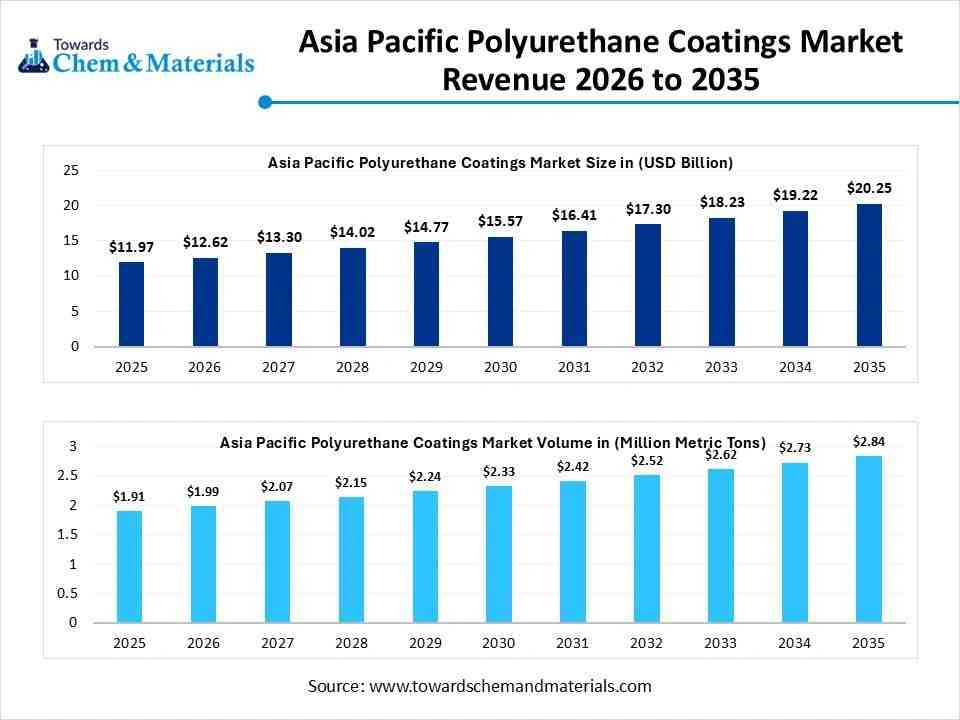
Asia-Pacific is one of the most dynamic markets in the global coatings market. Polyurethane coatings are highly durable, resistant to abrasion and chemicals, and aesthetically pleasing, and can be used in many industrial and commercial applications. The applications of these types of coatings are immense, such as in construction, automobile manufacturing, furniture manufacturing, electronics, marine equipment, heavy machinery, etc. The increased demand for high-performance coating solutions is a result of rapid urbanisation and industrial growth in countries like China, India, Japan, South Korea, and Southeast Asian countries. Coatings that can help to protect products from environmental damage and improve product life and appearance are increasingly being sought by manufacturers. Market growth continues in the regions growing infrastructure, which comprises transportation systems, commercial buildings, and industrial facilities.
Technological progress has also played its part in bolstering the market, with the development of water-based and low-VOC polyurethane coatings that meet environmental standards. In the Asia-Pacific, industries are increasingly focused on sustainability, efficiency, and long-term asset protection, making polyurethane coatings an integral part of the manufacturing and infrastructure landscape.
Growth and Development of the Asia-Pacific Polyurethane Coatings Industry
Polyurethane coatings are essential to the growth and development of todays industrial world, offering protection, durability, and enhanced performance in a wide range of applications. With industries investing in advanced infrastructure, machinery, and manufacturing units, the requirement for reliable protective coatings has grown to a great extent. Polyurethane coatings protect against corrosion, moisture, chemicals, UV, and mechanical wear on equipment and structures. These coatings are used in the automotive industry to enhance the durability and aesthetics of vehicles, as well as to minimize maintenance needs. In construction, they can defend the buildings, bridges, pipelines, and industrial facilities from environmental impacts, which will prolong their service life and reduce repair expenses. Polyurethane coatings are also being used on machines and production equipment in manufacturing facilities to protect them from harsh operating environments.
The demand for durable coating systems has further grown across Asia-Pacific with the advent of smart cities, industrial corridors and logistics networks. The coatings help promote operational efficiency by lowering downtime due to corrosion and surface damage. Further, sustainable aspects are achieved by modern formulations via better resource utilization and extended asset life cycles.
- For instance, in November 2025, Borchers, a brand of Milliken, is launching Borchi Kat 2115, a catalyst without tin for use in one-component and two-component polyurethane coating systems. It is a metal neodeonate-based catalyst designed to provide a non-tin alternative with important properties of the coating, including controlled drying, long pot life, hardness, corrosion protection, gloss, and colour stability. The technology will be used in a range of applications, including general industrial, protective, marine and automotive-refinish coatings, reflecting the trend in the industry to high-performance and more environmentally friendly polyurethane coatings.(Source:www.specialchem.com)
Investments in Asia Pacific
The automotive, construction, furniture, electronics, marine and manufacturing industries are growing in Asia-Pacific, fueling the investment momentum of the Asia-Pacific polyurethane coatings industry. The growing demand for durable, high-performance surface protection in the region is driving coating manufacturers to invest in expanding production capacity and bolstering their operations in the region.
An important step has been BASFs growth in Caojing, Shanghai, by boosting its polyester and polyurethane resin manufacturing capacity from 8,000 tonnes per annum to 18,800 tonnes per annum. The expansion will address growing demand from the Chinese automotive coatings market and other Asian markets. The company is also involved in process improvements for electrocoat binders as well as further investments in special coating technologies
The growing automotive, infrastructure and manufacturing industries in India are also making it an attractive market for investments. Companies are planning to expand their polyurethane production with more capacity, technical development facilities and application-support centres. These investments are made for industries like transportation, construction, footwear, appliances and furniture.
Production expansion is not the only type of investment. Companies are increasingly allocating resources towards research and development, sustainable formulations and advanced coating technologies. As manufacturers are focusing on more environmentally friendly products in response to the regulations and customer preference, water-based, powder, and low-emission polyurethane coatings are being increasingly highlighted.
The rising focus on sustainability is also leading to investments in technologies that can lead to emission reductions, increased material use efficiency, and longer service lives for coated products. Meanwhile, manufacturing efficiency and automation are contributing to increased uniformity and effectiveness.
The Asia-Pacific polyurethane coatings market is moving beyond capacity growth towards comprehensive investments in local production, technology innovation, sustainability, research and development, and special technical service. The trend is reinforcing the role of the region as an important market and production centre of polyurethane coating technologies.
- For instance, in August 2026, Monarch Networth has begun coverage on Asian Paints, Colgate, and Kansai Nerolac, anticipating potential upside of up to 17% for these stocks. The firm’s analysis highlights positive market trends and growth prospects, making these companies attractive investment opportunities in the current economic landscape.
- Monarch Networth initiates coverage on Asian Paints, Colgate and Kansai Nerolac; sees up to 17% upside - The Economic Times.
Report Scope
| Report Attributes | Details |
| Market Size in 2026 | USD 12.62 Billion/ 1.99 Million Metric Tons |
| Expected Size in 2035 | USD 20.25 Billion/ 2.84 Million Metric Tons |
| Growth Rate | CAGR of 5.40% |
| Base Year of Estimation | 2025 |
| Forecast Period | 2025-2035 |
| Dominant Country | China |
| Segment Covered | By Technology, By End User |
| Key Companies Profiled | PPG Industries, The Sherwin-Williams Company, BASF SE, Covestro AG, Axalta Coating Systems, Jotun, Berger Paints India |
Market Trends
- Asia-Pacific polyurethane coatings market is expanding at a fast pace owing to industrialisation, urbanisation, infrastructural development, and the increase in manufacturing activities. The automotive, construction, electronics, furniture, and marine and general industry markets are driving a steady demand for coatings that will provide protection and enhance both durability and appearance.
- Another trend that is beginning to emerge is the demand for coatings that are more durable and can stand up to abrasion, chemicals, moisture, sunlight, and changing temperatures. Environmental concerns are also impacting sales.
- As the demand for low-VOC, high-solids, and powder-based polyurethane coatings continues to grow, manufacturers are investing in these new coatings. The objective of these technologies is to minimize environmental effects of traditional solvent-based products while achieving acceptable performance.
- There is also a growing need for coatings with a longer service life, since longer durability will save maintenance costs, replacement costs, and materials. As new factories, commercial buildings, transportation and industrial centres continue to be built in the region, the areas emerging economies will continue to play a significant role as an area of growth.
Supply Chain Analysis
Production and Processing
Key components for the production stage include polyols, isocyanates, pigments, catalysts, solvents or water, and performance additives. These materials are mixed in a specified formulation for a specific application.
Factors like mixing, temperature, viscosity, dispersion, and curing behaviour are carefully controlled by the manufacturers. The formulation can be adjusted according to the type of the final application, whether it is for an automotive component, building, machinery, furniture, electronics, etc.
The cost and availability of raw materials will have a significant impact on the cost of polyurethane coatings. Changes in petrochemical feedstock volumes, transportation issues, and supply problems can impact production schedules and operating expenses.
Quality Testing and Certification
Coatings need to be subjected to quality control before delivery to customers. Manufacturers conduct testing on the products to establish their adhesion, hardness, flexibility, abrasion resistance, chemical resistance, drying time, gloss, colour stability and weather resistance.
Depending on the special coating, extra testing for corrosion resistance, moisture exposure, temperature performance and UV resistance may be required. Industries like automotive, building, marine and infrastructure require coatings to have high standards of certification and compliance.
Robust testing practices enable manufacturers to safeguard product quality and ensure products are suitable for intended uses.
Distribution
The finished coatings are tested and approved before being supplied via direct industrial sales, distributors, chemical suppliers, and regional dealers. Manufacturing companies of any size can buy from the coating manufacturers, while small manufacturing companies may rely on distributors for products and technical support.
The coatings are finally applied in many diverse industries, including automotive manufacturing, construction, furniture, electronics, marine, machinery, and general industrial manufacturing. They are also useful for their ability to resist wear, chemical attack, water, and weathering, and are useful in products and structures with a long service life.
The Supply Chain is slowly but steadily getting more complicated, taking on new characteristics such as a stronger focus on sourcing reliable raw materials, advanced manufacturing processes, strict quality control measures, efficient distribution, and sustainable product development.
Market Dynamics
Market Driver : The Rising Rates of Industrialization
Rising industrialisation, urbanisation and infrastructure development in the Asia Pacific region is fuelling the growth of the polyurethanes coatings market. With the expansion of automotive production, there is a growing demand for durable materials that offer protection, appearance, wear, and environmental resistance. Polyurethane coatings for buildings, flooring, machinery, and protective applications are also seeing opportunities in construction and commercial development. With increasing interest in product durability among consumers, industries are beginning to use coatings that can help to prolong the lifespan of equipment and structures. Further, new technologies and product enhancements of environmentally friendly formulations are opening up growth opportunities.
Market Opportunity : The Rise in Technology
Asia-Pacific polyurethane coatings market can be segmented based on technology and end-user industry. Solvent-borne, water-borne, powder, and other specialist coating systems can be used for technology-based segmentation, and automotive, construction, wood and furniture, industrial, electronics, marine, and other applications for end-user segmentation.
Market Restraints :There are Some Restraints in the Market
Several challenges in the market can limit the market growth and profitability. The cost of raw materials, especially ingredient costs based on petrochemicals, can vary and affect the cost of manufactured products. Conventional formulations are also under pressure from environmental regulations regarding VOCs and chemical emissions. However, it could take a significant amount of research, production technology, and testing to develop high-performance alternatives. Other coating technologies can also hinder the use of polyurethane systems in price-sensitive applications.
Segmental Insights
By Technology
The solvent-borne segment dominated the Asia Pacific polyurethane coatings market with a share of 63.84% and a CAGR of 4.55% in the forecast period, due to its proven manufacturing processes and known performance. They tend to be very adherent, have a reasonable surface appearance, and are durable and resistant to harsh operating conditions. They have a wide range of applications in the automotive, industrial, and protective industries, leading to a large customer base and a well-established supply chain. The manufacturers and users also have good experience with their application and performance demands. But as environmental pressure rises, the industry is slowly evolving and starting to use alternatives that are less polluting.
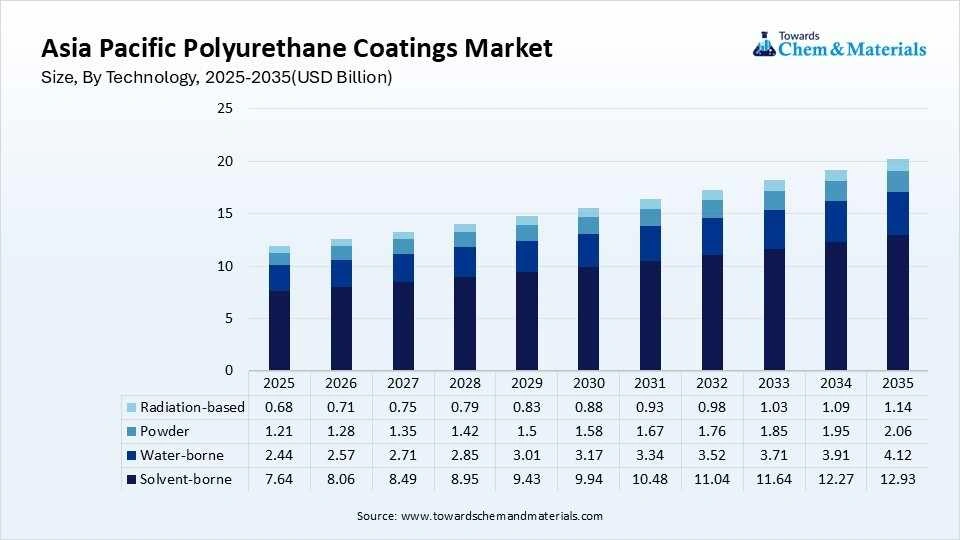
The powder segment held a 10.15% market share in 2025 and is expected to be the fastest-growing in the market, with a CAGR of 7.20% in the forecast period, driven by solutions that are efficient and environmentally friendly; powder polyurethane coatings are one of the fastest-growing technology segments. These systems can significantly reduce solvent-related emissions and offer good coating material utilization. They are especially appealing for a long-lasting finish and a uniform surface. Formulation and curing advances are helping to overcome past constraints and extend their applications. Continued growth in the use of powder-based polyurethane coatings is expected to be fostered by the growing recognition of the value of the product to the environment as well as improvements in application technology.
Asia Pacific Polyurethane Coatings Market Share, By Technology, 2025(%)
| By Technology | Market Share (%) |
| Solvent-borne | 64% |
| Water-borne | 20% |
| Powder | 10% |
| Radiation-based | 6% |
By End User
The automotive segment dominated the Asia Pacific Polyurethane Coatings Market with a share of 28.40% and a CAGR of 5.55% in the forecast period, The automotive segment dominated the Asia Pacific Polyurethane Coatings Market with a share of 28.40% and a CAGR of 5.55% in the forecast period. These coatings offer a pleasing appearance and can help to safeguard surfaces from abrasion, chemicals, moisture, sunlight, and varying environmental conditions required by vehicle manufacturers. The durability and aesthetic characteristics of polyurethane systems make them suitable for a wide range of applications in vehicle components and finishing.
Demand is expected to remain robust, as the regions robust automotive manufacturing industry continues to support the market, especially in China, India, Japan, and Southeast Asia. This segment will probably remain significant as vehicle manufacturing expands and a greater demand for quality finishes is expected.
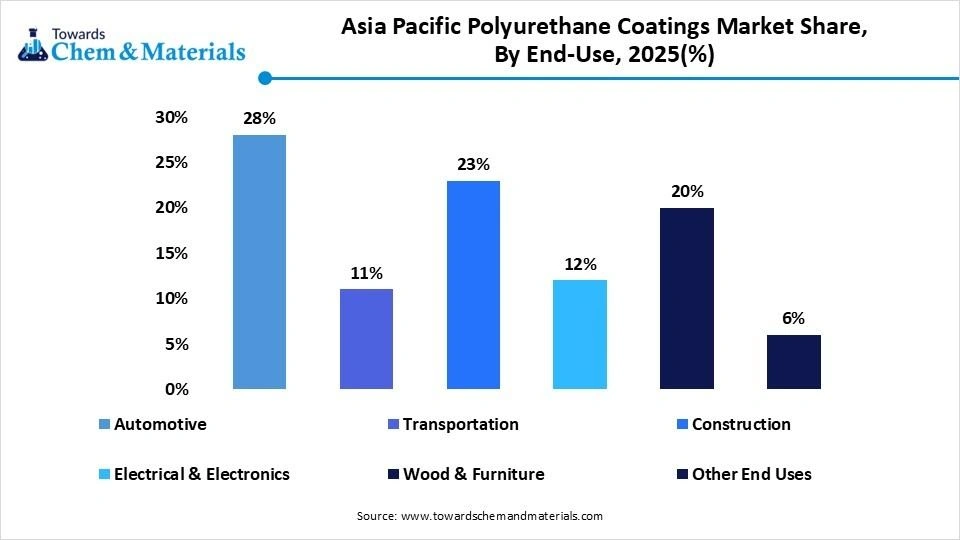
The wood and furniture segment held a 20.10% market share in 2025 and is expected to be the fastest-growing in the market, with a CAGR of 6.55% in the forecast period, driven by demand for attractive and durable surface finishes by manufacturers and consumers. The polyurethane coatings can offer wood products scratch-resistant, waterproof, chemical-resistant, and daily wear protection without sacrificing the appearance of the products. They are able to produce smooth, quality finishes and are used in furniture, flooring, cabinetry, and decorative wood products. Demand for furniture and interior products is growing across Asia-Pacific, supported by growth in residential and commercial buildings. Polyurethane coatings will continue to offer good opportunities in this area, as consumers increasingly demand long-lasting and attractive furniture.
Asia Pacific Polyurethane Coatings Market Share, By End-use, 2025(%)
| By End-use | Market Share (%) |
| Automotive | 28% |
| Transportation | 11% |
| Construction | 23% |
| Electrical & Electronics | 12% |
| Wood & Furniture | 20% |
| Other End Uses | 6% |
Regional Analysis
Asia Pacific
How is Asia Pacific the whole and soul of the Market?
With the ongoing industrialisation, urbanisation, infrastructure development, and growth in manufacturing activities, Asia-Pacific is undoubtedly one of the largest and fastest-growing regions for polyurethane coatings. Automotive, electronics, construction, furniture, and industrial manufacturing industries are well-represented, and all have applications for polyurethane coatings that are used for protection and finishing. Factories, commercial buildings, transportation, and consumer goods are seeing a rise in investment and increased demand. In addition, manufacturers are creating new formulations to offer greater durability, on the back of environmental considerations. In Asia-Pacific overall, having a large industrial base, the economies and technological development make it an important centre for polyurethane coatings.
China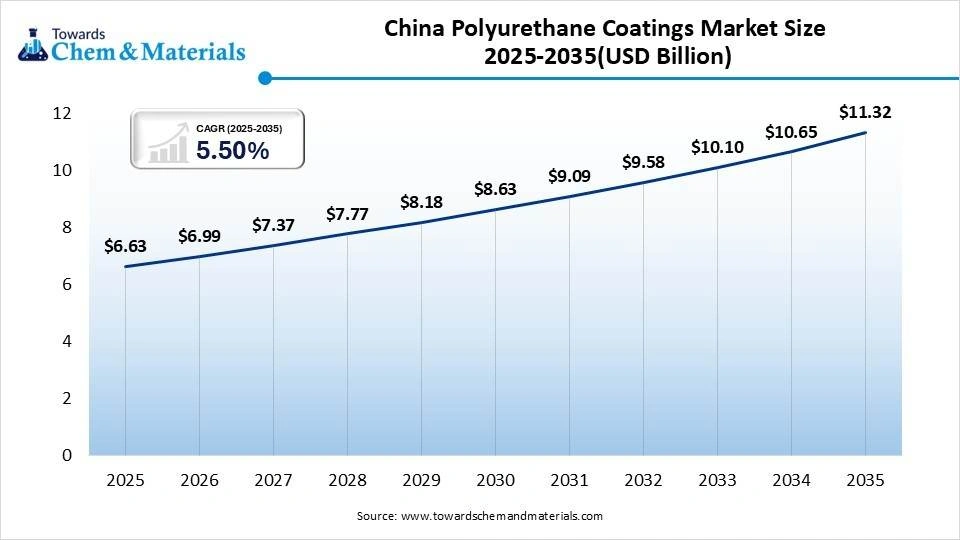
China polyurethane coatings market size was estimated at USD 6.63 billion in 2025 and is projected to reach USD 11.32 billion by 2035, growing at a CAGR of 5.50% from 2026 to 2035.China dominated the Asia Pacific polyurethane coatings market with a share of 55.40% in 2025 and is expected to grow at a CAGR of 5.20%, due to its massive manufacturing sector and significant automotive, construction, electronics, machinery and furniture industry demands. The country has huge domestic demand and a robust chemical and coatings manufacturing infrastructure, which facilitates access to raw material sources, manufacturing facilities, and downstream customers for manufacturers. The substantial infrastructure development and urban construction activities in China further promote the consumption of protective and decorative coatings. It is also a significant world manufacturing and exporting center, which provides demand for coatings in many industrial supply chains. Ongoing investment in new manufacturing and eco-friendly coating processes will probably sustain its predominant position.
The new facility will provide greater operational flexibility and boost the companys overall production capacity. The chemistry of specialty amine catalysts has significant importance in controlling the cure reaction of polyurethane systems, and directly affects the performance, durability, and processing properties of the cured products. Huntsmans expansion of manufacturing capacity in Hungary will enable it to enhance supply chain efficiencies, shorten lead times, and provide better service to industries that rely on the high quality of Huntsmans polyurethane technologies.(Source:www.european-coatings.com)
India
India polyurethane coatings market size was estimated at USD 1.30 billion in 2025 and is projected to reach USD 2.31 billion by 2035, growing at a CAGR of 5.92% from 2026 to 2035.India is the fastest-growing Asia Pacific Polyurethane Coatings Market, with a share of 10.90% in 2025, and is expected to grow at a CAGR of 5.20%, driven by high-performance protective coatings growing with the rapid urbanisation and the expansion of infrastructure and domestic manufacturing. The country is experiencing a burgeoning automotive industry, as well as an increasing amount of appliances, furniture and industrial equipment being produced, leading to other applications. Supporting market opportunities are also the investments in factories, transport facilities and commercial buildings. The growing demand for sustainable and technologically advanced coatings will also drive Indias growth.
HomeSure TileEx EX-566 PU marks Walplasts ongoing commitment to product innovation and cutting-edge building materials. The companys goal is to expand its product line and provide the installation industry with a high-performance polyurethane-epoxy hybrid adhesive solution that will simplify and optimize installation, increase structural confidence, and satisfy the growing demand for long-lasting and technologically advanced answers in the construction industry.(Source:www.rprealtyplus.com)
Japan
The Japan polyurethane coatings market size was estimated at USD 1.15 billion in 2025 and is projected to reach USD 2.05 billion by 2035, growing at a CAGR of 5.95% from 2026 to 2035.The market in Japan for polyurethane coatings is a mature and technologically developed market with good demand from the automotive, electronics, machinery, construction, and industrial manufacturing sectors. Japanese manufacturers are very much focused on precision, product quality, durability, and consistency of performance. This means that new possibilities arise for special coatings using polyurethane, which are able to fulfil demanding technical requirements. High-performance coating technologies continue to be supported in the country by both its highly developed automotive and electronics sectors. The environment is also driving the development and use of lower-emission and more sustainable coating systems.
South Korea
The South Korea polyurethane coatings market size was estimated at USD 0.86 billion in 2025 and is projected to reach USD 1.56 billion by 2035, growing at a CAGR of 6.14% from 2026 to 2035.South Korea is a vital market for polyurethane coatings as it has a robust automotive, electronics, shipbuilding, construction, and industrial sector. The high-tech manufacturing sector in the country demands coatings with outstanding durability, chemical resistance, and surface quality. Protection from environmental and mechanical conditions is especially relevant to industries that are relevant to polyurethane technologies. Good research and development capabilities are helping the development of specialised and higher-performance formulations. The shift to cleaner production is helping to promote interest in water-based, powder and other low-emission production methods.
Taiwan
The Taiwan polyurethane coatings market size was estimated at USD 0.49 billion in 2025 and is projected to reach USD 0.93 billion by 2035, growing at a CAGR of 6.62% from 2026 to 2035.The Taiwan polyurethane coatings industry is tightly coupled to the electronics, semiconductors, machinery, automotive parts and manufacturing industries. Pittsburghs complex electronics industry ensures a robust market for advanced coatings that offer protection and meet specific performance specifications. Consumption is also a result of industrial production and export. The technological evolution is pushing manufacturers to concentrate on coatings with more reliability, durability, and special functional properties. The development of new coating solutions is increasingly related to sustainability and environmental compliance.
Australia
The Australia polyurethane coatings market size was estimated at USD 0.36 billion in 2025 and is projected to reach USD 0.71 billion by 2035, growing at a CAGR of 7.03% from 2026 to 2035.Polyurethane coatings are used in a smaller but significant sector in Australia, mainly in the construction sector, mining, infrastructure, transportation, and marine and industrial applications. The harsh environmental conditions in the country make it imperative to use coatings that can resist UV exposure, moisture, abrasion, and temperature fluctuations. Polyurethane coatings are thus useful for industrial equipment protection, buildings, infrastructure, and other assets against degradation. Infrastructure development and maintenance activities are still offering opportunities to protective coating suppliers. The emergence of a growing emphasis on durability, asset life, and environmentally-friendly products is likely to impact future market development.
Recent Developments
- In May 2025, Huntsman introduced an intumescent polyurethane coating specifically designed for automotive applications. This innovative coating enhances fire safety by expanding when exposed to heat, providing effective insulation and protection for vehicles. This development reflects Huntsmans commitment to advancing safety and performance in the automotive coatings sector.(Source:www.indianchemicalnews.com)
- In July 2026, the Indian government has approved a ₹3,400 crore expansion of Indian Oils Ennore LNG terminal. This initiative aims to enhance the terminals capacity and facilitate increased liquefied natural gas (LNG) imports, thereby supporting Indias growing energy demands and contributing to cleaner energy sources for the country’s future.Centre approves ₹3,400 crore expansion of IndianOils Ennore LNG terminal to 10 MTPA - The Hindu BusinessLine.(Source:www.thehindubusinessline.com)
Competitive Analysis
The worldwide government initiatives taken in this industry are expected to provide the ecosystem with increased urbanization, providing pictographic infrastructure systems. Also, ongoing government initiatives show that even the aviation and aerospace industry has noticed a certain level of rise, letting the world see the beautiful and thoughtful innovations that are happening around.
Right from the manufacturing process of Polyurethane to getting its finished product in the help this innovation has always helped mankind gain the upper hand in sustainability and easy accessibility, making their work easy.
Even when technological advancements weren’t existing still polyurethane adhesive was under use; if we take a peek in Harrapan civilization, these materials were used, as we can see that even the urbanization was at its peak, and only manufacturing processes were carried out by humans, other than machines. If we want, then even this material has an interesting history and facts to it about how it was introduced to the globe. As we are reading the government initiatives right now, we will also encounter some followed history further in the article as we move ahead.
Top Vendors in the Asia Pacific Polyurethane Coatings Market and their Offerings
| Company | Company Type/Position | Major Headquarters | Geographic Presence | Offerings | Key Strength |
| Wanhua Chemical Group | Raw materials for the market and urbanization | China | Global | carbon steel | Global supply chain network and pioneering green steel initiatives |
| Asia Paints | The paints that are resistant and worthy | India | Global | Manufacturing | Competitive pricing |
| Jindal steels | Manufacturing | India | India | Steel and construction | Supply chain network |
Other Major Players
- PPG Industries
- The Sherwin-Williams Company
- BASF SE
- Covestro AG
- Axalta Coating Systems
- Jotun
- Berger Paints India
Segments Covered in the Report
By Technology
- Solvent-borne
- One-component
- Two-component
- Aliphatic polyurethane
- Aromatic polyurethane
- Water-borne
- Waterborne polyurethane dispersion
- Water-reducible polyurethane
- Waterborne one-component
- Waterborne two-component
- Powder
- Thermosetting polyurethane powder
- Thermoplastic polyurethane powder
- Hybrid polyurethane powder
- Radiation-based
- UV-curable polyurethane
- Electron-beam-curable polyurethane
- UV/LED-curable polyurethane
By End User
- Automotive
- Passenger vehicles
- Commercial vehicles
- Two-wheelers
- Automotive components
- Transportation
- Aerospace
- Marine
- Railways
- Heavy transportation equipment
- Construction
- Flooring
- Roofing
- Concrete protection
- Infrastructure coatings
- Metal structures
- Electrical & Electronics
- Electrical equipment
- Electronic components
- Appliances
- Printed circuit and related applications
- Wood & Furniture
- Furniture
- Flooring
- Cabinets
- Decorative wood
- Architectural woodwork
- Other End Uses
- Industrial machinery
- Packaging
- Energy
- Agriculture
- General industrial applications
A Seven-Phase Framework
Our methodology is designed to be universally applicable across commodity chemicals, specialty chemicals, petrochemicals, construction chemicals, coatings, electronic chemicals, industrial gases, agrochemicals, water treatment chemicals, and performance materials. Each phase builds upon the last, creating a layered validation structure that minimizes estimation error and maximizes analytical confidence.
The framework ensures comprehensive market coverage, robust cross-validation, and reliable long-term forecasting — producing market estimates that withstand scrutiny from investors, regulators, and corporate strategy teams.

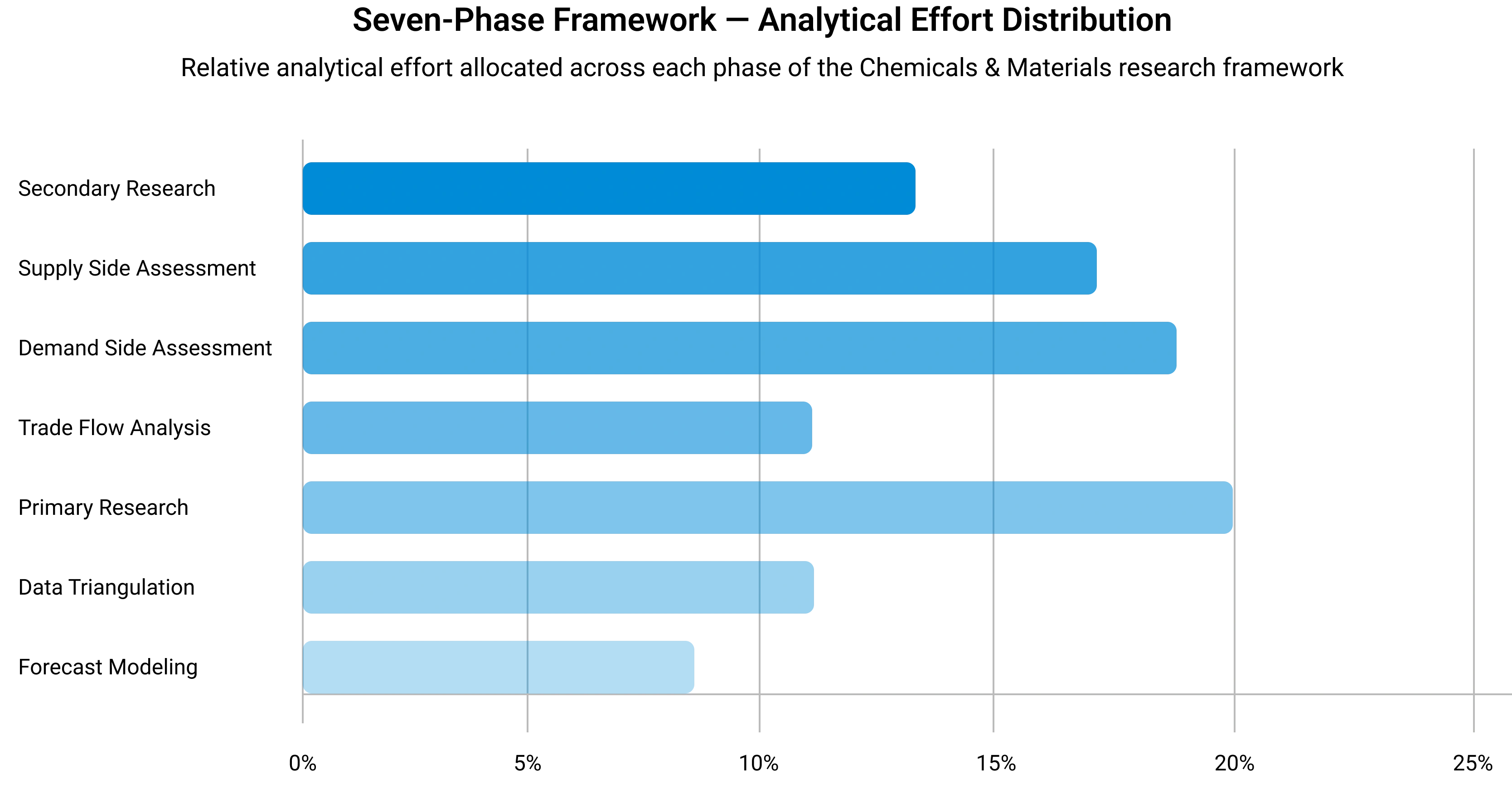
Seven-Phase Framework — Analytical Effort Distribution
Relative analytical effort allocated across each phase of the Chemicals & Materials research framework
Phase 1 - Secondary Research: Establishing the Foundation
Secondary research collects and evaluates publicly available information from authoritative sources, establishing the foundational understanding of market structure, value chain dynamics, competitive landscape, and end-use demand patterns. Every source is evaluated for credibility, recency, geographic relevance, and methodological soundness before inclusion.
Industry Associations
Sources include ACC, CEFIC, ICCA, JCIA, CPCIF, and SOCMA providing production volumes, consumption trends, capacity developments, and sustainability initiatives.
Company Disclosures
Annual reports, investor presentations, earnings transcripts, and regulatory filings reveal product portfolios, manufacturing footprints, capacity expansions, and revenue segmentation.
Government Databases
National statistical offices, customs authorities, environmental agencies, and industrial production databases provide verified statistics on output, trade flows, and regulatory compliance.
Trade Databases
UN Comtrade, ITC, Eurostat, and national customs authorities enable assessment of global product movement, import dependency, and export competitiveness across regions.
Our Secondary Research Sources
- Ministry of Chemicals and Fertilizers
- European Chemicals Agency
- United States Department of Energy
- Ministry of Industry and Information Technology
- Ministry of Economy Trade and Industry
- Ministry of Trade Industry and Energy
- National Institute of Standards and Technology
- Council of Scientific and Industrial Research
- Fraunhofer Society
- National Institute for Materials Science
Phase 2 — Supply-Side Assessment: Mapping Production Capabilities
Production Capacity Analysis
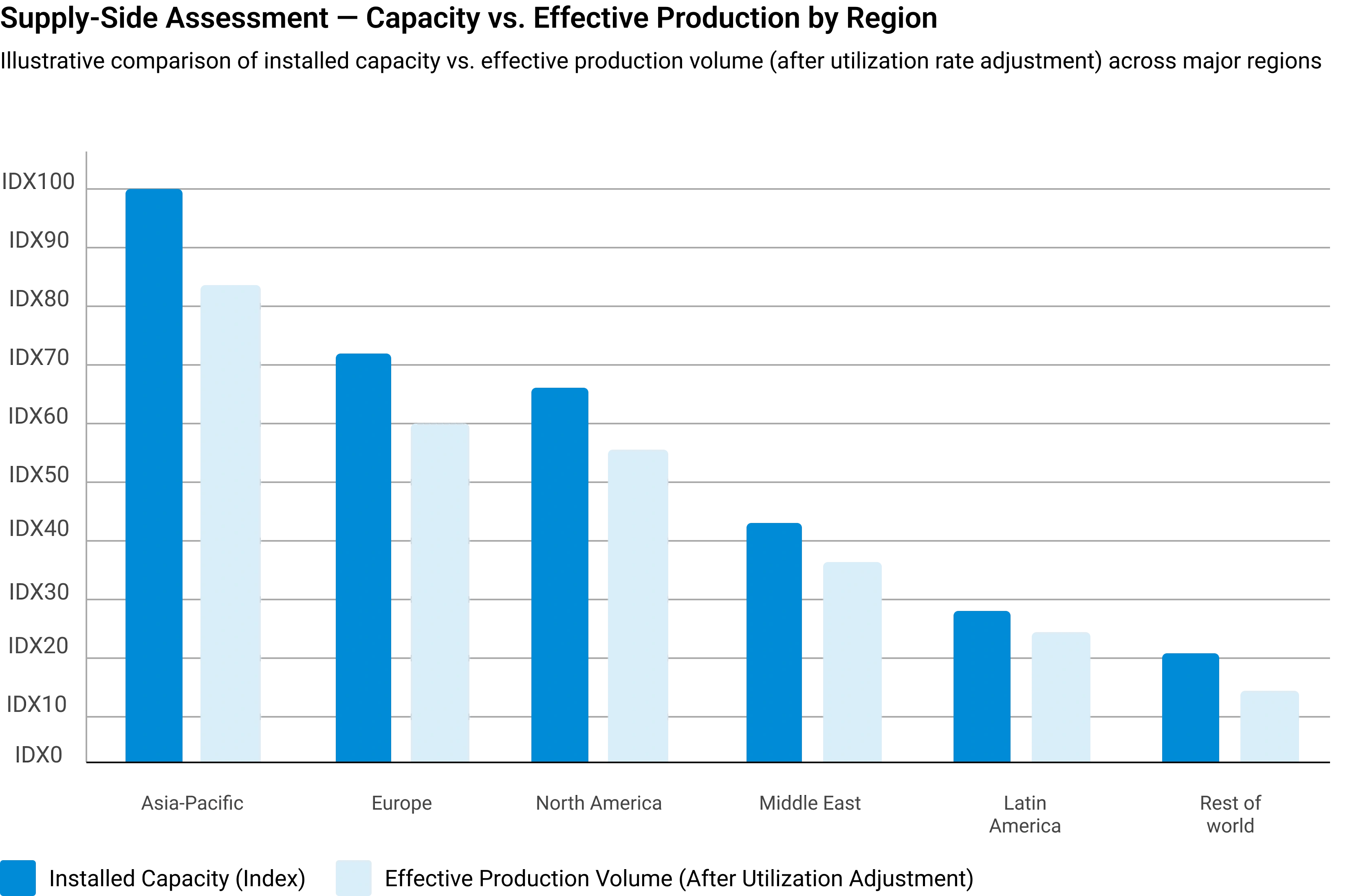
All major manufacturers are assessed for existing installed capacity, planned additions, expansions, new plant announcements, and technology adoption — mapped at global, regional, and country levels.
Capacity Utilization Adjustment
Installed capacity is adjusted using utilization rates based on demand conditions, feedstock availability, plant operating rates, maintenance schedules, and regulatory restrictions.
Manufacturer Revenue Analysis
Product-specific revenues, segment-level performance, regional distribution, average selling prices, and margin trends are evaluated to establish market value estimates.
Supply-Side Assessment — Capacity vs. Effective Production by Region
Illustrative comparison of installed capacity vs. effective production volume (after utilization rate adjustment) across major regions
Phase 3 — Demand-Side Assessment: Quantifying Chemical Consumption
Demand-side analysis quantifies chemical consumption across industries, applications, and geographies — identifying where and how chemicals are consumed throughout the value chain with precision.
End-Use Industry Analysis
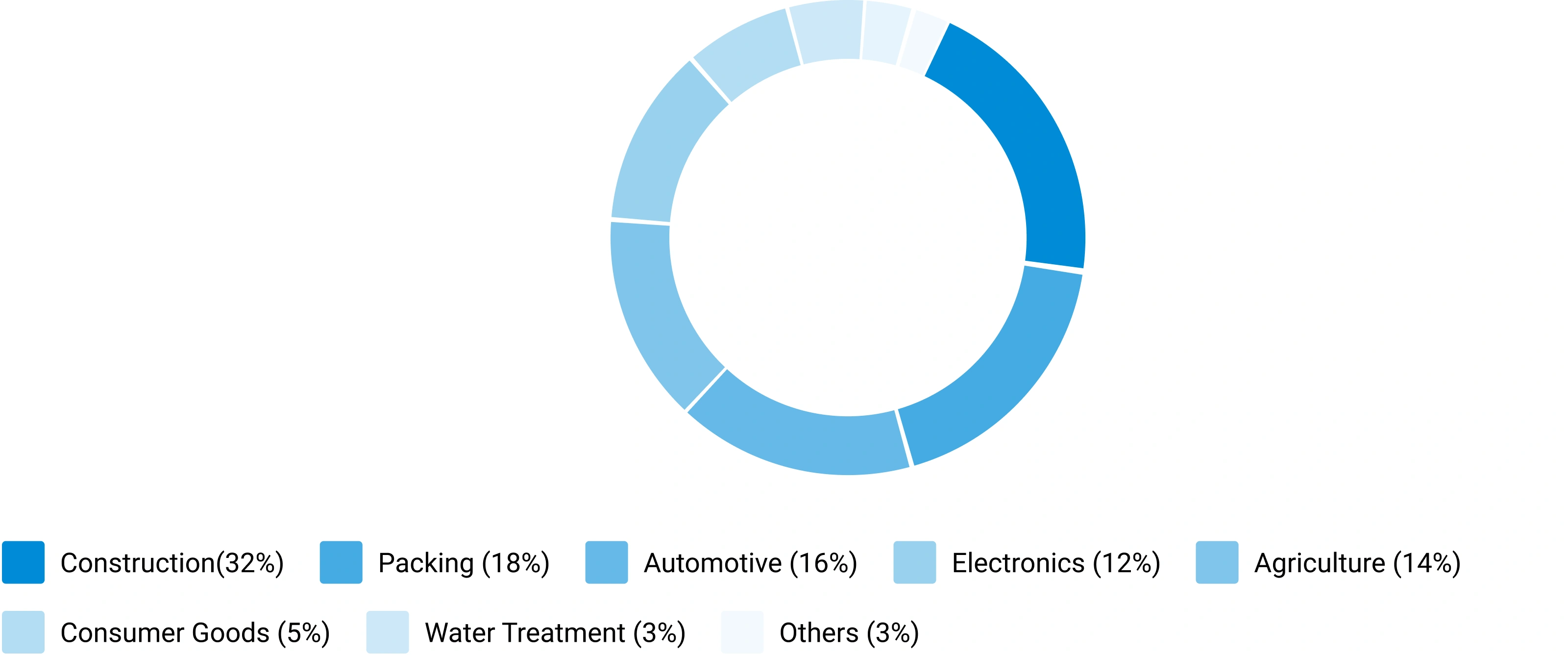
Chemical demand is evaluated across automotive, construction, packaging, electronics, agriculture, healthcare, consumer goods, industrial manufacturing, energy and utilities, and water treatment. Industry output, production trends, and consumption intensity are analyzed to determine demand patterns.
Consumption Modeling
Demand is estimated using measurable indicators: kilograms per vehicle, kilograms per square meter of construction, dosage per cubic meter of water treated, kilograms per hectare of agricultural land, and kilograms per ton of manufactured products. Consumption factors are validated through industry publications and primary interviews.
Application Analysis
The market is segmented by application area to understand product performance requirements, formulation trends, technology adoption, customer preferences, and regulatory requirements improving demand accuracy and segmentation granularity.
Demand-Side Assessment — End-Use Industry Demand Distribution
Illustrative distribution of chemical & materials demand across key end-use industries
Phase 4 - Trade Flow Analysis: Balancing Regional Supply and Demand
Trade flow analysis reconciles regional supply and demand estimates through import and export data, identifying net supply positions, regional dependencies, and market imbalances. It serves as an independent validation layer that tests the consistency of supply-side and demand-side estimates.
Import Analysis
Import data is evaluated to determine volumes, source countries, product dependency, regional supply gaps, and pricing trends — identifying markets that rely heavily on external supply and where domestic production is insufficient to meet demand.
Export Analysis
Export assessments reveal production surplus, export competitiveness, regional manufacturing strength, and global market participation. Export patterns also help validate domestic production estimates and identify net exporting regions.
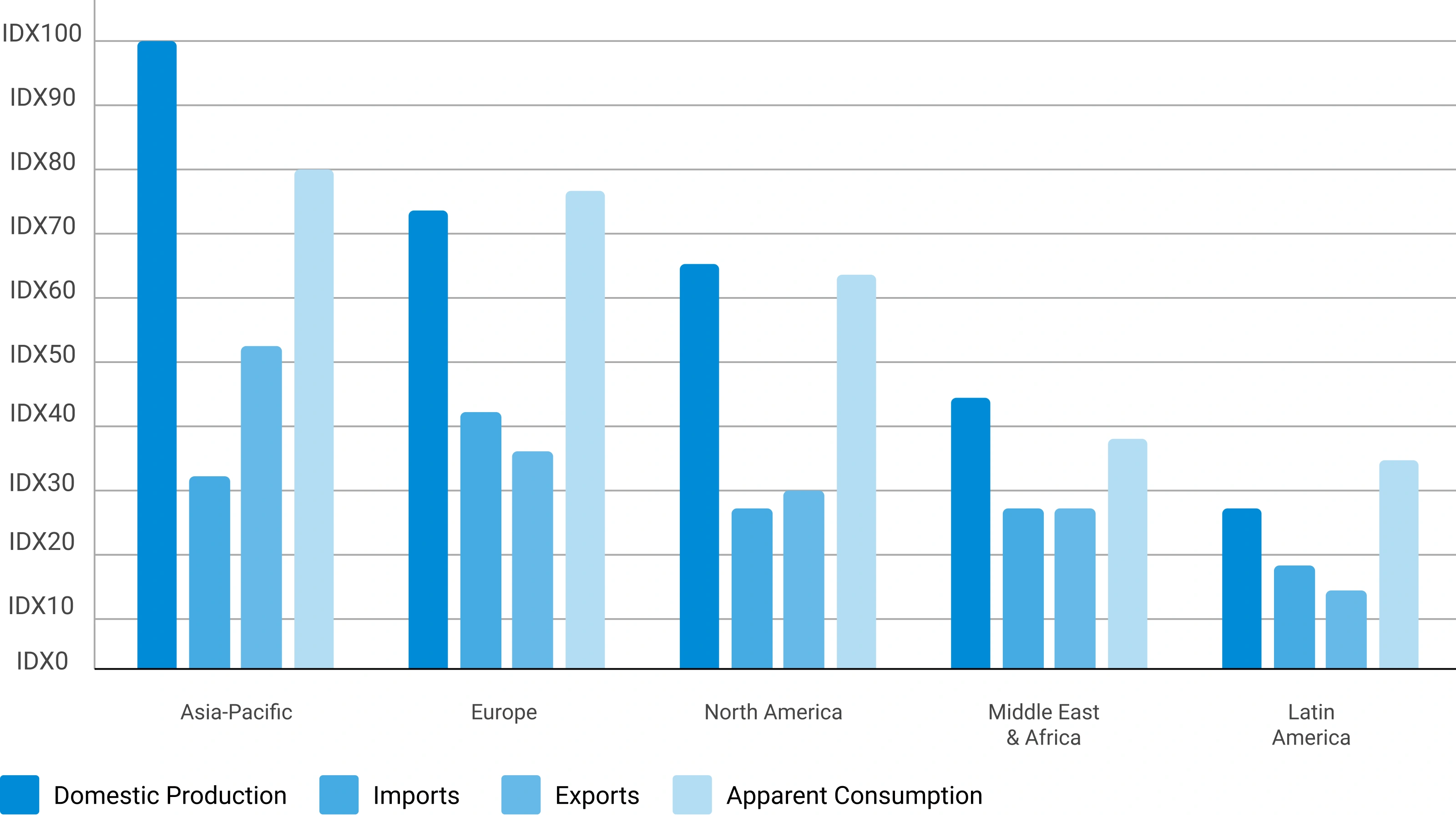
Apparent Consumption Model
Regional consumption is assessed using the standard apparent consumption formula:
Results identify net importing regions, net exporting regions, regional deficits, and surpluses — serving as an independent validation of supply and demand estimates.
Trade Flow Analysis — Net Supply Position by Region
Illustrative apparent consumption vs. domestic production across major regions — positive gap indicates net import dependency
Phase 5 — Primary Research: The Critical Validation Layer
Primary research tests and refines findings from secondary research through direct engagement with industry participants across the supply chain, demand side, and expert community. It captures intelligence that no database or published report can provide — the real-world experience of manufacturers, buyers, and specialists operating in the market.

Supply-Side Interviews
Conversations with chemical manufacturers, raw material suppliers, contract manufacturers, technology providers, and plant operators cover production trends, capacity utilization, pricing developments, technology shifts, and competitive dynamics.

Demand-Side Interviews
Engagement with OEMs, industrial consumers, procurement managers, distributors, formulators, and end-use manufacturers focuses on consumption trends, purchasing behavior, product substitution, demand outlook, and emerging applications.

Industry Expert Consultations
Additional interviews with industry consultants, independent experts, regulatory specialists, technical professionals, and research institutions provide deeper market context and validate key analytical assumptions.
Focus Areas of Primary Research:
Market Size & Forecast Validation
Revenue estimates, volume consumption, growth rates, forecast assumptions, regional demand.Supply Chain & Value Chain Assessment
Raw material sourcing, supply chain challenges, distribution networks, procurement practices.Production & Capacity Analysis
Manufacturing capacity, utilization rates, expansion projects, plant investments.Pricing & Cost Structure Analysis
Product pricing trends, feedstock costs, energy costs, margin pressures, pricing outlook.Competitive Landscape Assessment
Volume and value estimates confirmed to be fully consistent with one another before publicationInterview Volume by Market Scope
| Study Scope | Number of Interviews |
|---|---|
| Niche Market | 20 – 30 |
| Mid-Sized Market | 30 – 50 |
| Global Market | 50 – 80 |
| Highly Fragmented Market | 80 – 120 |
Interview Details:
Category : Manufacturers, Suppliers, Distributors, End Users, Experts/Associations
Average Duration : 30–60 Minutes
Interview Mode : Video calls, telephonic interviews, expert consultations
Interview Format : Structured / Semi-Structured questionnaire
Focus Areas of Primary Research:
Market Size & Forecast Validation :
Revenue estimates, volume consumption, growth rates, forecast assumptions, regional demand.
Supply Chain & Value Chain Assessment :
Raw material sourcing, supply chain challenges, distribution networks, procurement practices.
Production & Capacity Analysis :
Manufacturing capacity, utilization rates, expansion projects, plant investments.
Pricing & Cost Structure Analysis :
Product pricing trends, feedstock costs, energy costs, margin pressures, pricing outlook.
Competitive Landscape Assessment :
Market share, competitor positioning, strategic initiatives, partnerships, acquisitions.
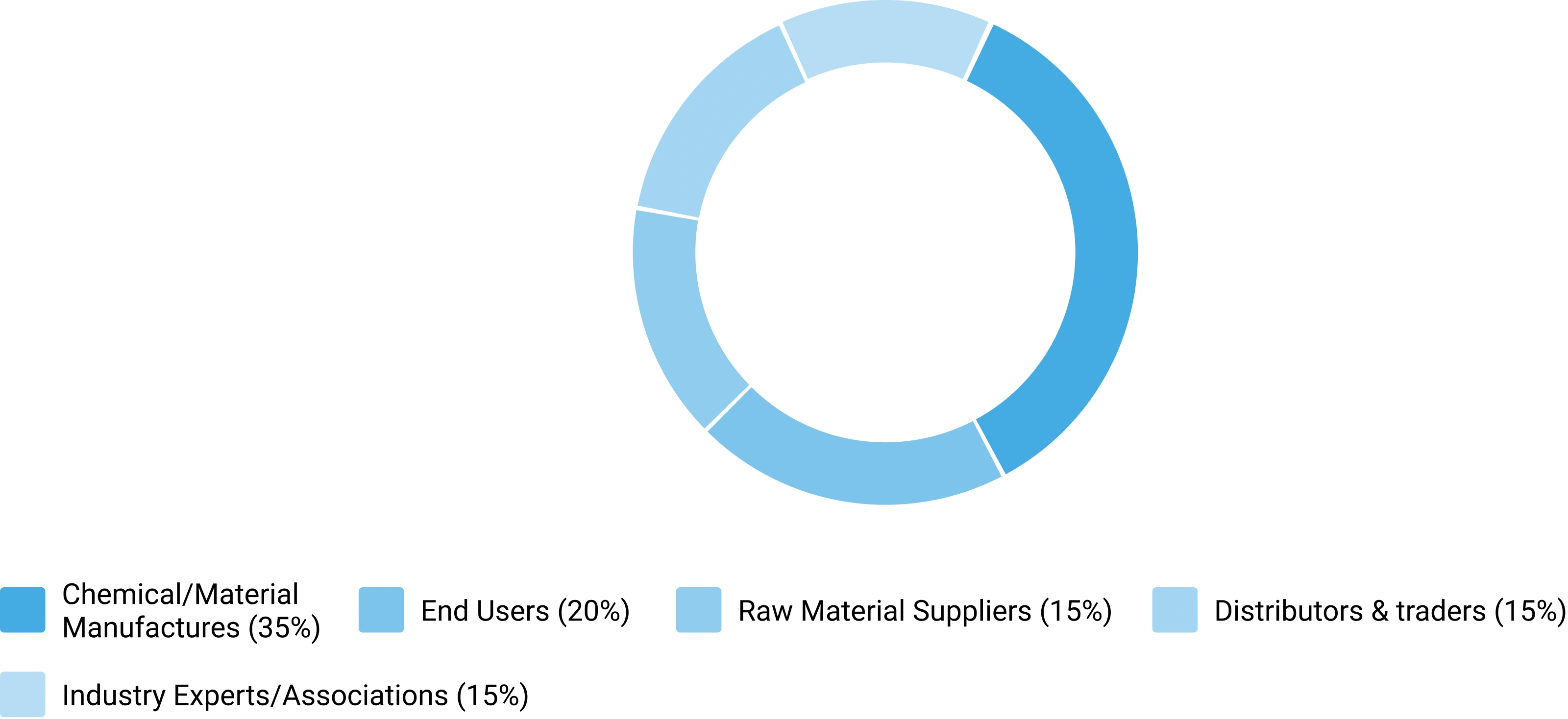
Primary Research — Stakeholder Coverage by Category
Distribution of interview respondents across stakeholder categories (% share from PPT data)
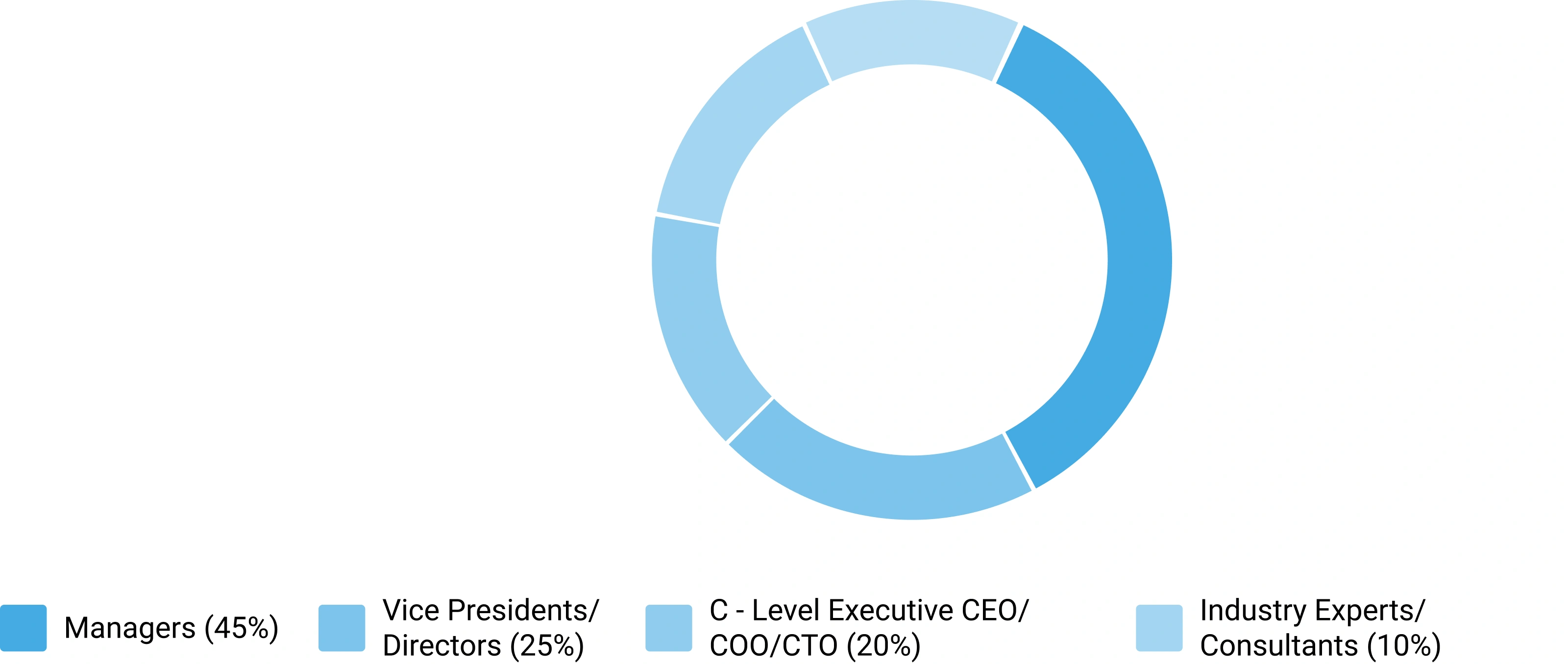
Primary Research — Respondent Designation Profile
Seniority breakdown of interview respondents (% share from PPT data)
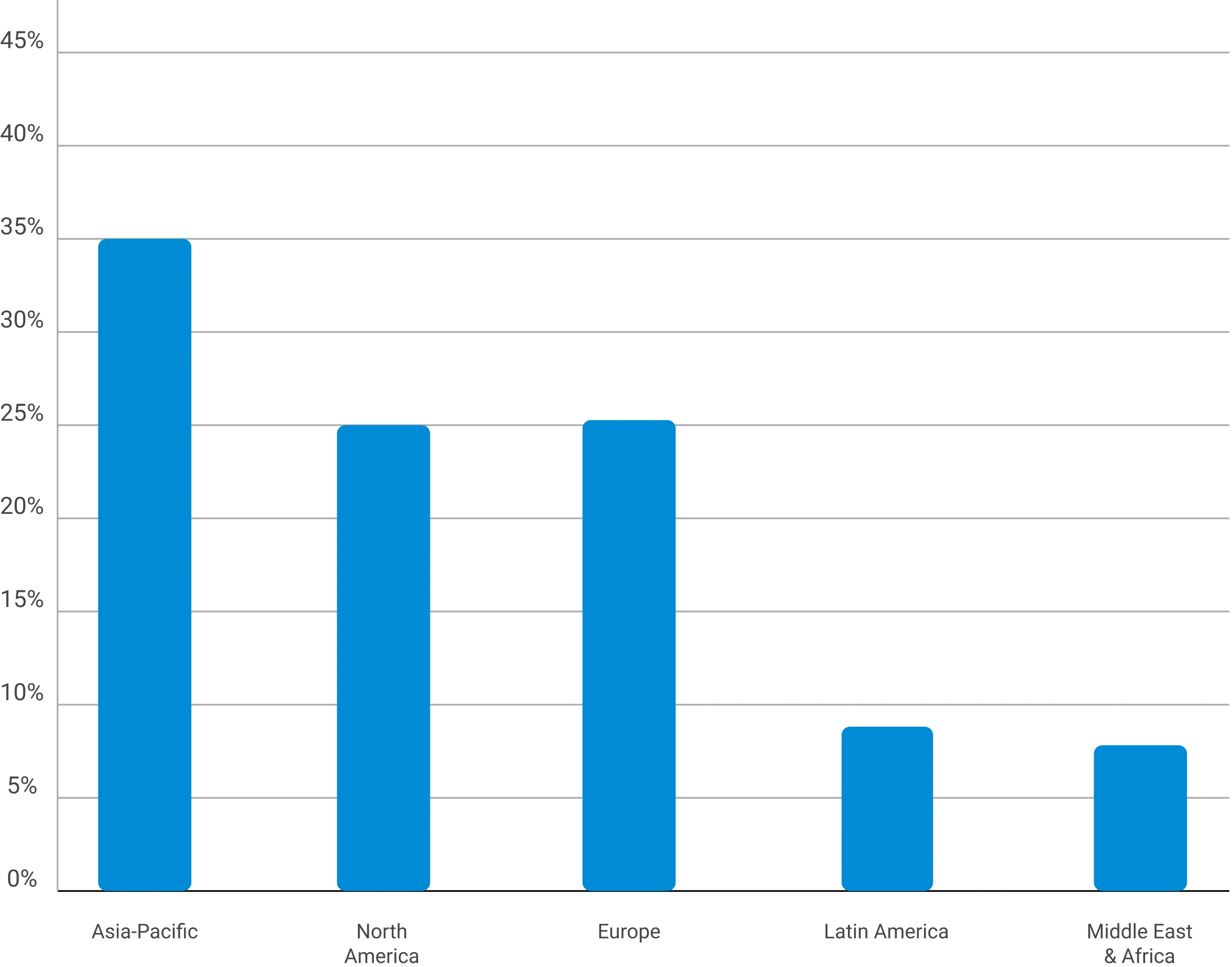
Primary Research — Geographic Coverage of Interviews
Regional distribution of primary research engagement (% share from PPT data)
Phase 6 — Data Triangulation and Market Validation
No single methodology is relied upon in isolation. Multiple independent estimation approaches are combined and reconciled to ensure consistency, accuracy, and analytical defensibility. Any material deviations between approaches are investigated and adjusted through additional validation cycles.
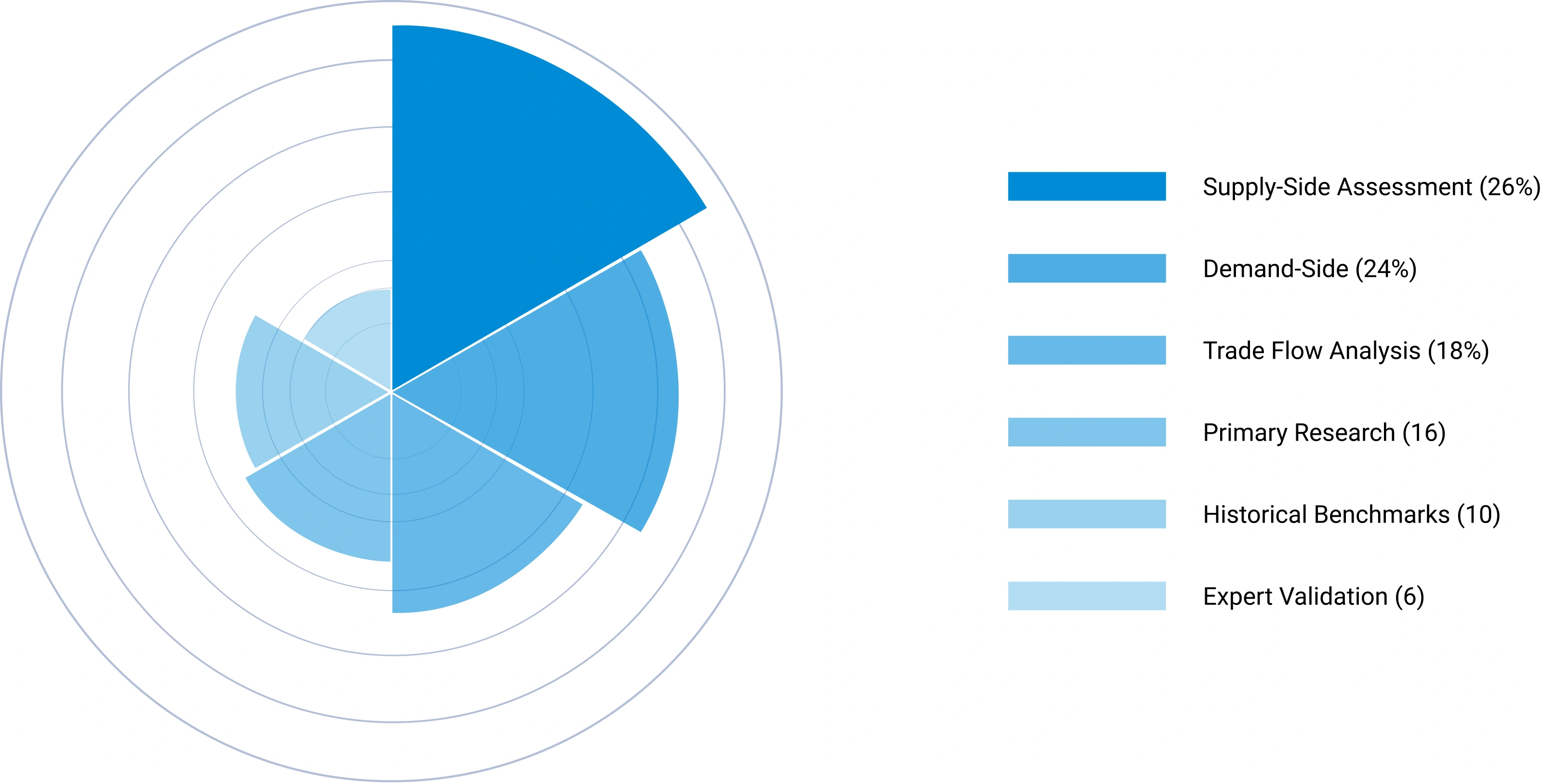
The final market size is derived through weighted triangulation of all validated methodologies. Any material deviations between approaches are investigated and adjusted through additional validation cycles. The outcome represents the most realistic assessment of the market based on available evidence and expert confirmation ensuring that volume and value estimates are fully consistent with one another.
Triangulation Framework — Input Contribution Weight
Relative weight each sizing input contributes to the final reconciled market estimate
Phase 7 — Forecast Modeling: Projecting Future Market Evolution
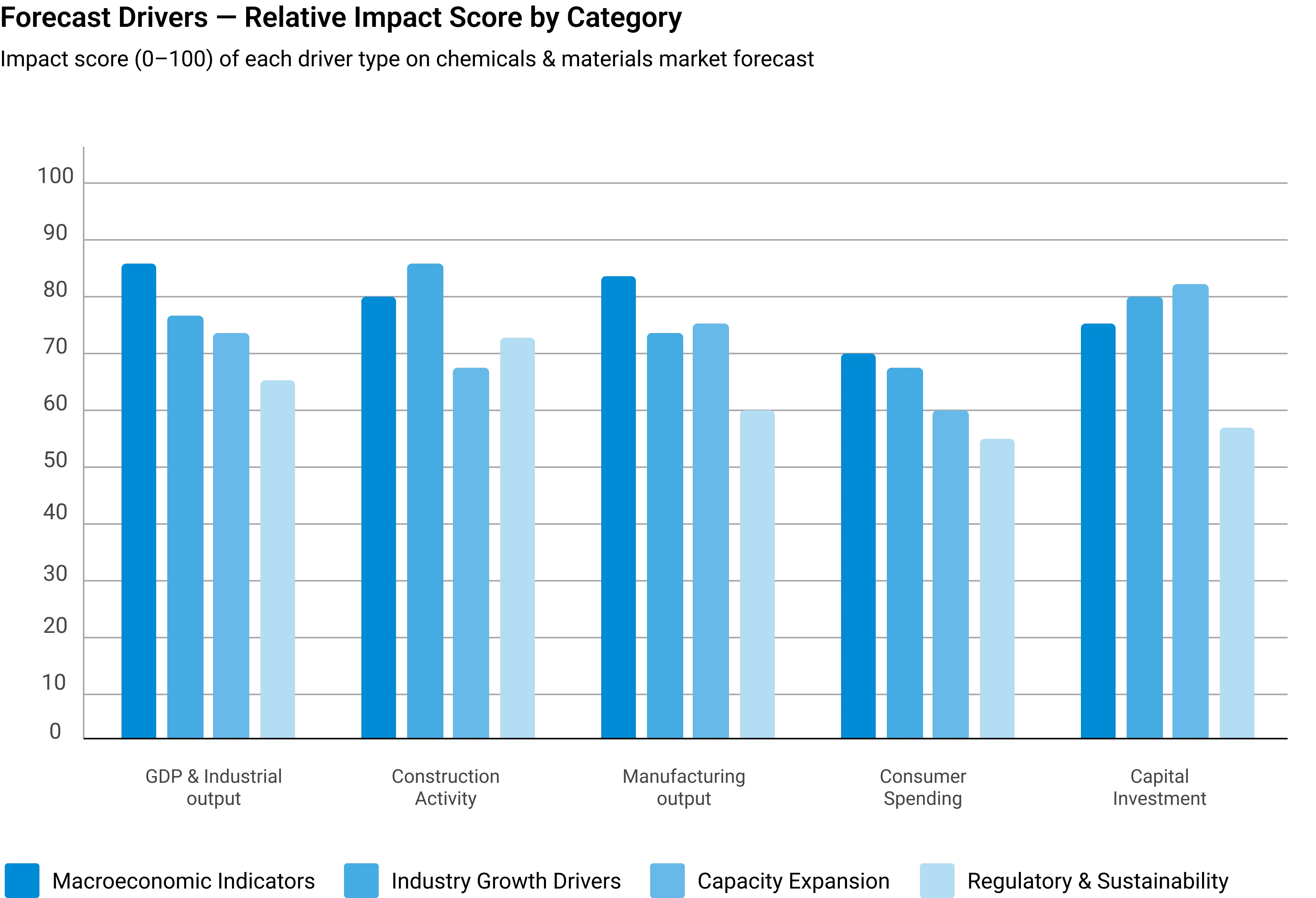
Forecasting evaluates the future trajectory of the market using a combination of quantitative indicators and qualitative assessments across economic, industry, and regulatory dimensions. Rather than simple extrapolation, each driver is independently modeled and integrated into a composite forecast.
Macroeconomic Indicators
GDP growth, industrial production, manufacturing output, construction activity, consumer spending, and capital investment form the quantitative foundation of long-term demand projections. These are applied at country, regional, and global levels.
Industry Growth Drivers
Urbanization, infrastructure development, industrialization, technological innovation, sustainability initiatives, and evolving product performance requirements are assessed at regional and industry levels — capturing both structural and cyclical demand drivers.
Capacity Expansion Analysis
Announced plant expansions, new manufacturing facilities, technology upgrades, and strategic investments are evaluated to determine future supply-demand dynamics and potential market tightness or oversupply situations.
Regulatory & Sustainability
Environmental regulations, chemical safety standards, emission reduction targets, circular economy initiatives, and sustainability requirements are incorporated as they often influence product adoption rates and market growth trajectories.
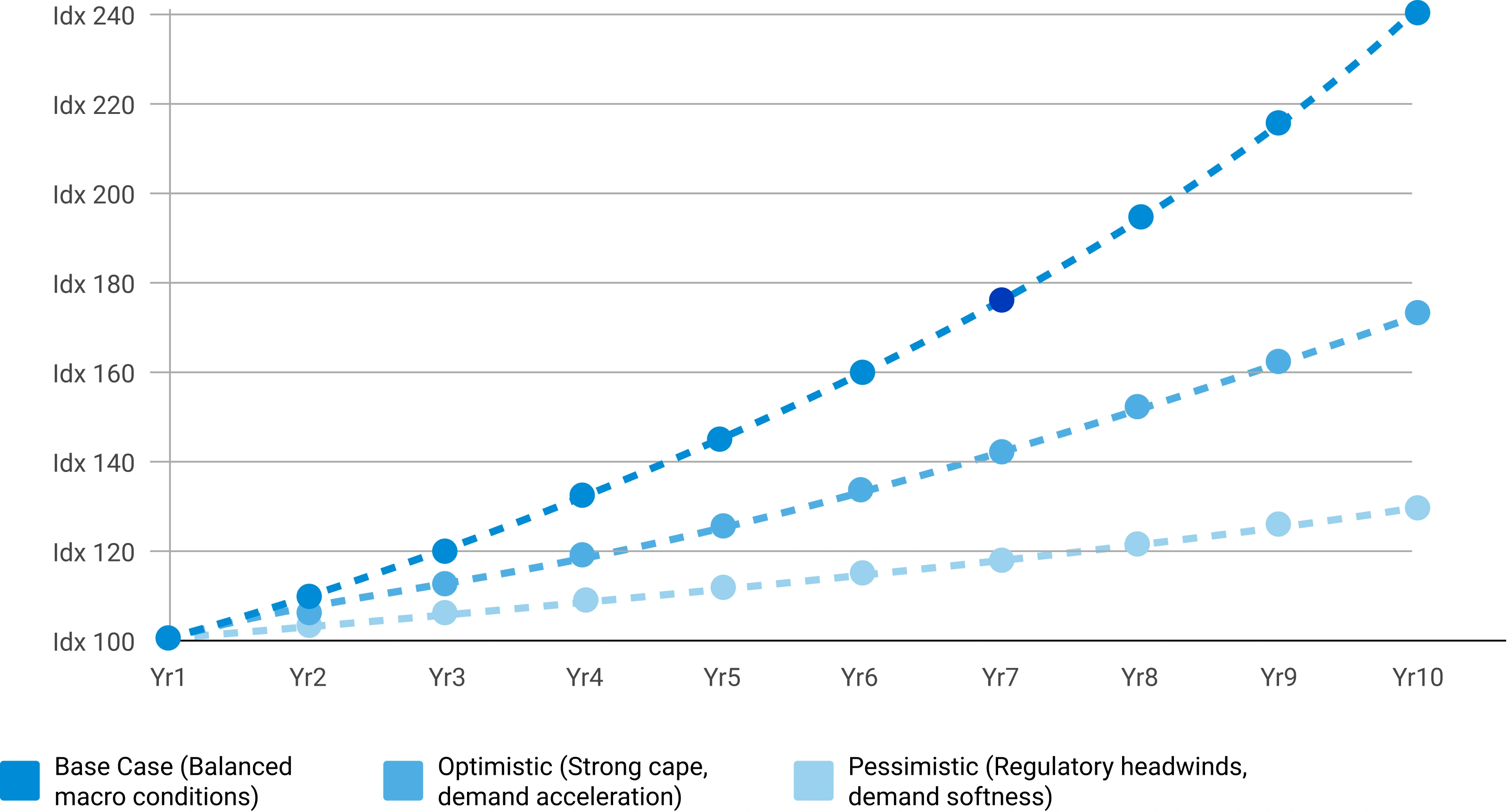
Scenario Forecast Range — Indexed Market Growth (Year 1–10)
Illustrative indexed growth trajectories across Base, Optimistic, and Pessimistic scenarios over a 10-year forecast horizon
Forecast Drivers — Relative Impact Score by Category
Impact score (0–100) of each driver type on chemicals & materials market forecast



Comments
Share your thoughts, ask a question, or provide feedback about this report.