
U.S. Personal Care Specialty Ingredients Market Size Analysis Report 2035
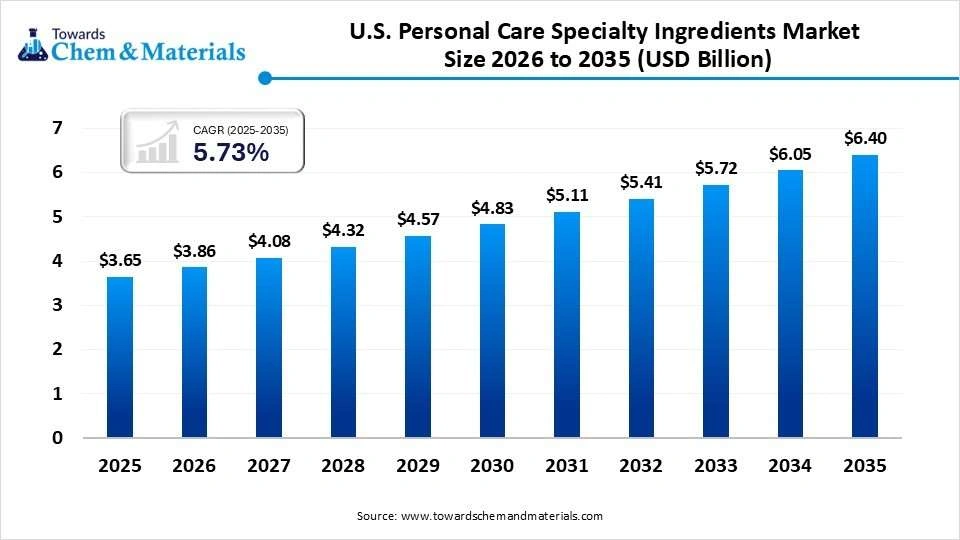
The U.S. personal care specialty ingredients market size was valued at USD 3.65 billion in 2025 and is projected to grow from USD 3.86 billion in 2026 to USD 6.40 billion by 2035, growing at a CAGR of 5.73% from 2026 to 2035. The market is propelled by clean-label preferences, multifunctional formulations, biotechnology, and rising demand for specialized active ingredients, as well as sustainability. The ability to develop ingredients is enhanced by technological advancements such as precision fermentation, green extraction, artificial intelligence, and predictive formulation. The opportunities are also growing in a variety of personal care applications driven by increased personalization, waterless products, science-backed beauty products, and more.
Consumer awareness of clean beauty, sustainability, and science-driven products drives the U.S. Personal Care Specialty Ingredients market. There is a growing market need for safe, multifunctional, natural, and high-performance ingredients in personal care applications. There is increasing attention on ingredient suppliers to biotechnology, green chemistry, personalisation, and environmental solutions. Specialized active ingredient adoption is further bolstered by age-related skin care needs and proactive health and wellness.
Key Takeaways
- By ingredient type, the isopropyls segment dominated the market with the largest share of 24% in 2025 and is expected to grow at a CAGR of 5.4% during the forecast period.
- By ingredient type, the titanium dioxide segment held 13% market share in 2025 and is expected to grow at the fastest CAGR of 6.7% over the forecast period.
- By product, the inactive segment dominated the market with the largest share of 61% in 2025 and is expected to grow at a CAGR of 5.1% during the forecast period.
- By product, the active segment held 39% market share in 2025 and is expected to grow at the fastest CAGR of 6.8% over the forecast period.
- By function, the cleaning segment dominated the market with the largest share of 29% in 2025 and is expected to grow at a CAGR of 4.9% during the forecast period.
- By function, the anti-aging segment held 20% market share in 2025 and is expected to grow at the fastest CAGR of 7.3% over the forecast period.
- By end-use, the skin care segment dominated the market with the largest share of 42% in 2025 and is expected to grow at a CAGR of 6.2% during the forecast period.
- By end-use, the other segment held 8% market share in 2025 and is expected to grow at the fastest CAGR of 6.5% over the forecast period.
- By distribution channel, the direct segment dominated the market with the largest share of 68% in 2025 and is expected to grow at a CAGR of 5.3% during the forecast period.
- By distribution channel, the third-party segment held 32% market share in 2025 and is expected to grow at the fastest CAGR of 6.7% over the forecast period.
- By consumer preference, the natural segment dominated the market with the largest share of 28% in 2025 and is expected to grow at a CAGR of 6.6% during the forecast period.
- By consumer preference, the vegan segment held 16% market share in 2025 and is expected to grow at the fastest CAGR of 7.2% over the forecast period.
- By regulatory/certification status, the FDA-approved segment dominated the market with the largest share of 36% in 2025 and is expected to grow at a CAGR of 5.4% during the forecast period.
- By regulatory/certification status, the dermatologist-recommended segment held 16% market share in 2025 and is expected to grow at the fastest CAGR of 7.3% over the forecast period.
Global Investment Movement for the U.S. Personal Care Specialty Ingredients Market
Fermentation products and lab-made botanical substitutes are increasingly being targeted for investment, as are biodegradable functional ingredients that avoid the use of conventional petrochemicals.
Acquisitions among niche specialty ingredient companies and high-value cosmetic ingredient lines are part of specialty ingredient companies agenda for pursuing acquisitions and portfolio expansion. Investment is growing to back compliance, testing, ingredient transparency, and safety substantiation. The activities allow companies to react to the changing regulatory expectations in specialty personal care ingredients.Research is dedicated to ingredients that offer more than one benefit, such as moisturizing, anti-aging, UV protection, and environmental protection.
Market Trends
- Laboratory-made alternatives such as fermentation-derived HA, biosurfactants, and recombinant collagen are emerging as a focus.
- Trends in demand for prebiotics, probiotics, and postbiotics specialty ingredients are growing, with formulators looking to ensure skin-barrier protection and microbiome-based personal-care solutions.
- Ingredient development is increasingly focused on circular and ‘lab-made’ molecules that have the potential to decrease reliance on resource-heavy, agricultural supply chains and traditional inputs.
- As clean label formulations become more popular in consumers consciousness, botanical extracts and bio-based polymers are increasingly replacing synthetic additives and parabens.
Report Scope
| Report Attributes | Details |
| Market Size in 2026 | USD 3.86 Billion |
| Expected Size in 2035 | USD 6.40 Billion |
| Growth Rate | CAGR of 5.73% |
| Base Year of Estimation | 2025 |
| Forecast Period | 2025-2035 |
| Segment Covered | By Ingredient Type, By Product, By Function, By End-use, By Distribution Channel, By Consumer Preference, By Regulatory / Certification Status |
| Key Companies Profiled | Ashland, BASF, The Dow Chemical Company, Croda International, Evonik Industries, The Lubrizol Corporation, Clariant, Inolex, Vantage Specialty Chemicals, Symrise, Solvay (Syensqo), Innospec, Momentive Performance Materials, Nouryon |
Key Technological Shifts and AI in the U.S. Personal Care Specialty Ingredients Market
AI revolutionizes the U.S. Personal Care Specialty Ingredients industry by speeding up green research, predicting molecular interactions, and automating compliance. Machine learning can be used to discover new ingredients by trawling through chemical databases and modelling molecular behaviour under various conditions. AI aids precision fermentation and bio-manufacturing by optimizing production parameters and scalable development of bio-identical actives. Generative AI can be used to track regulatory requirements and also recognize materials that are restricted and, possibly, non-compliant labelling parameters.
Supply Chain Analysis of the U.S. Personal Care Specialty Ingredients Market
Feedstock Procurement
- Feedstock procurement refers to the purchase of petrochemicals, oleochemicals, and bio-based fermentation inputs as baseline materials.
- Consistent availability of specialty ingredients and consistent production of their ingredients.
- Major Player Contribution: BASF SE obtains volumes of certified sustainable palm oil and basic petrochemical streams worldwide for further processing in the downstream.
- Other Key Players: The Dow Chemical Company, Ashland.
Chemical Synthesis and Processing:
- Converts raw feedstocks into functional specialty building blocks by chemical reactions or biotechnology processes.
- The importance of processing is that it allows for the creation of specialized ingredients such as surfactants, emollients, and other formulation-supporting materials.
- Clariant creates high-performance, eco-friendly surfactants and liquid-dispersion ingredients for personal care.
- Other Key Players: Evonik Industries AG and Solvay.
Compound Formulation and Blending:
- Compound formulation involves creating custom ingredient complexes that are stable when synthesized molecules, rheology modifiers, and active ingredients are combined.
- Blending helps ensure formulation uniformity and allows specialty ingredients to provide specific functionality in personal care formulations.
- Major Player Contribution: The Lubrizol Corporation is a specialty polymer blending and polymer rheology modification provider for personal care.
- Other Key Player: Croda International Plc.
Sustainability Analysis of U.S. Personal Care Specialty Ingredients
The U.S. personal care specialty ingredients market is shifting to sustainability. There is a growing consumer and regulatory demand for transparency, eco-friendly options, and decreasing reliance on petrochemicals. Businesses are looking into bio-based ingredients and precision fermentation as well as naturally derived replacements and upcycled feedstocks. Other sustainability initiatives include the phase-out of conventional silicone, paraben, synthetic polymers, and plastic microbeads.
What is a Personal Care Specialty Ingredient?
Personal care specialty ingredients are functional or active ingredients employed within personal care compositions to provide a specific function. They consist of components that help to hydrate, cleanse, protect from the sun, prevent ageing, preserve, condition, texture, and provide other formulation properties in beauty and personal care products.
Uses of Personal Care Specialty Ingredients
- Specialty ingredients can be added into a wide variety of product categories for facial care, body care, anti-aging products, sunscreens, moisturizers and serums, for functional and active formulation properties.
- Specialty ingredients add functional properties to shampoos, conditioners, styling products, treatments, and hair-color products across a variety of applications in haircare.
- Specialty ingredients enhance foundation, lip products, eye cosmetics, and face powders and also provide texture, conditioning, and other formulation needs.
- Toothpaste, mouthwash, oral gels, and tooth-whitening products contain specialty ingredients to enhance formulation performance and specific functions.
Isopropyls is contributing to the success of the CEO by offering a range of broad formulation applications.
Pricing Analysis for the U.S. Personal Care Specialty Ingredients Market
The prices of specialty ingredients in the U.S. personal care market are influenced by ingredients sources, purity, sustainability, compliance, and functional uniqueness. The certified organic, plant-based, and vegan inputs can sell for more since they are extracted and made available, which adds to the costs. Continuous overhead for facilities and safety substantiation can be required by regulatory requirements under MoCRA. There is also a great amount of research needed in developing biotechnology and green chemistry. Ingredients with multiple functions can be marketed as premium products because they deliver more than one function within the same product.
U.S. Personal Care Specialty Ingredients Market: Global Trade Analysis
The U.S. personal care specialty ingredients market features robust domestic formulation demand and global supply and export ties. Specialized imports by European chemical and cosmetic companies and base inputs by U.S. suppliers. The uncertainty of global supply chains and geopolitical changes helps drive domestic brands to seek out multiple sourcing routes. International trade is increasingly being shaped by clean beauty, functional efficacy, biotechnology, and sustainable formulations.
Segmental Insights
Ingredient Type Insights
The isopropyls segment dominated the market with the largest share of 24% in 2025 and is expected to grow at a CAGR of 5.4% over the forecast period, due to the wide use in personal care formulations. Isopropyl myristate, isopropyl palmitate, and isopropyl alcohol are useful in specific product development. They have proven to be effective in a wide variety of applications and are therefore expected to have ongoing demand for personal care formulators who are looking for consistent ingredient performance.
- For instance, in May 2026, the construction of a second high-purity isopropyl alcohol plant was approved by Tokuyama Corporation via Formosa Tokuyama Advanced Chemicals. The expansion is in response to growing market demand for high-purity applications.(Source: www.indianchemicalnews)
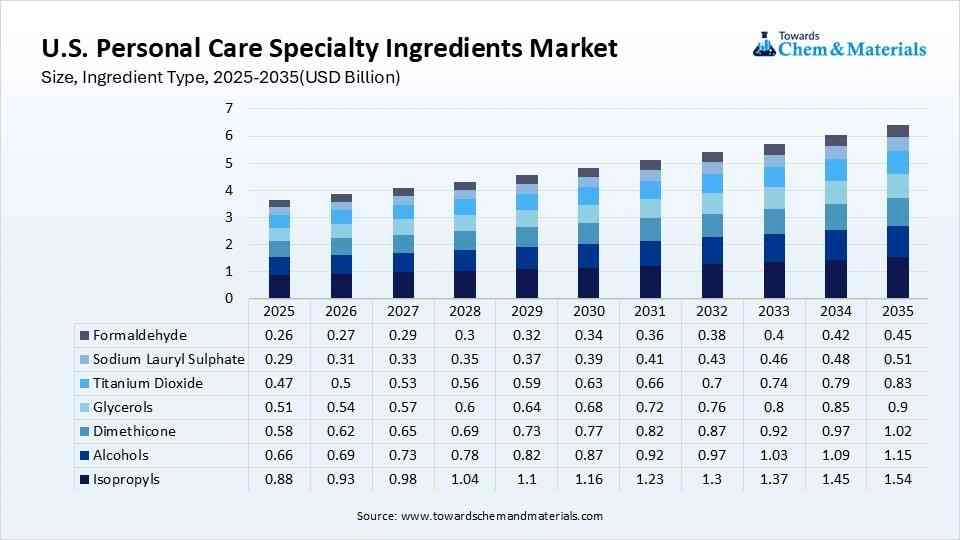
The titanium dioxide segment held a 13% market share in 2025 and is expected to grow at the fastest CAGR of 6.7% over the forecast period. It can be produced by rutile grade, anatase grade, and surface-treated grade materials. The variants offer formulators with unique ingredients for specialty personal care products. The rising interest in formulations with functional and performance properties provides opportunities for titanium dioxide suppliers.
U.S. Personal Care Specialty Ingredients Market Share, By Ingredient Type, 2025(%)
| By Ingredient Type | Market Share (%) |
| Isopropyls | 24% |
| Alcohols | 18% |
| Dimethicone | 16% |
| Glycerols | 14% |
| Titanium Dioxide | 13% |
| Formaldehyde | 7% |
| Sodium Lauryl Sulphate | 8% |
Product Insights
The inactive segment dominated the market with the largest share of 61% in 2025 and is expected to grow at a CAGR of 5.1% over the forecast period, due to its wide application in personal care formulations. Surfactants, emollients, preservatives, conditioning polymers, rheology modifiers, humectants, solubilizers, chelating agents, and film formers are used to fulfill several formulation needs. Their wide range of functionality boosts the demand in skincare, haircare, cleansing, cosmetics, and other personal care products.
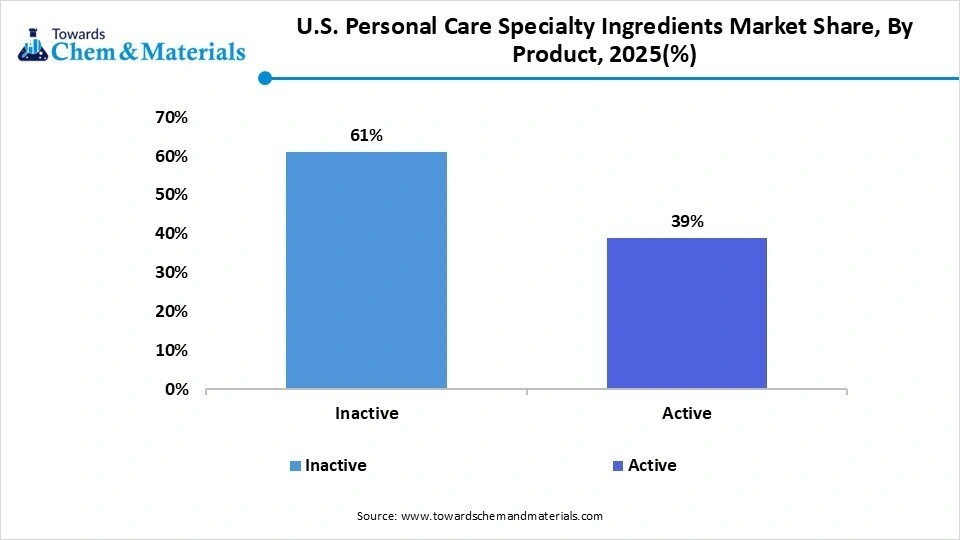
The active segment held the 39% market share in 2025 and is expected to grow at the fastest CAGR of 6.8% over the forecast period, as consumers are looking for specific personal care benefits. Specialized formulations such as skin conditioning agents, anti-aging ingredients, exfoliants, UV absorbers, antioxidants, antibacterial agents, botanical actives, and peptides are supported. They are designed to perform, opening up opportunities for advanced ingredient development.
- For instance, in August 2026, Gattefossé introduced a preservative-free version of its flagship lifting bioactive, Gatuline Link n Lift for the eye contour area. The ingredient helps visibly lift and smooth.(Source: www.personalcareinsights.com)
U.S. Personal Care Specialty Ingredients Market Share, By Product, 2025(%)
| By Product | Market Share (%) |
| Inactive | 61% |
| Active | 39% |
Function Insights
The cleansing segment dominated the market with the largest share of 29% in 2025 and is expected to grow at a CAGR of 4.9% over the forecast period, due to the fact that cleansing is an indispensable task in various personal care products. There are four types of surfactants: anionic, nonionic, amphoteric and cationic, each of which offers a different formulation solution to meet the various cleansing needs. Their application in skin care, hair care and other personal care products continues to drive ingredients demand.
The anti-aging segment held a 20% market share in 2025 and is expected to grow at the fastest CAGR of 7.3% over the forecast period, due to the growing focus on both prevention and visible anti-aging within the category. Other active ingredients, such as retinoid alternatives, peptides, antioxidants, and collagen support actives, allow targeted formulation strategies. As people continue to be interested in science-backed skincare, there is a demand for specialized anti-aging ingredients.
- For instance, in June 2026, OLAY announced the launch of OLAY Science Cell Repair in the United States with peptide-powered products for consumers with signs of early aging.(Source: www.prnewswire.com)
U.S. Personal Care Specialty Ingredients Market Share, By Function, 2025(%)
| By Function | Market Share (%) |
| Cleansing | 29% |
| Hydration | 24% |
| Anti-Aging | 20% |
| Sun Protection | 17% |
| Anti-Bacterial | 10% |
End-Use Insights
The skin care segment dominated the market with the largest share of 42% in 2025 and is expected to grow at a CAGR of 6.2% over the forecast period because of the wide array of product formulations and high demand for specialized formulations. Various functional and active ingredients are required for facial care, body care, anti-aging products, sunscreens, moisturizers, and serums. This wide application base also bolsters opportunities for specialty ingredient suppliers.
- For instance, in June 2026, Beauty entrepreneur Mikey Moran unveiled GLZD, a mens grooming brand that brings water-free body glaze to the styling world. The product is a skincare, fragrance, and skin finish all in one. (Source:www.usatoday.com)
The other segment held the 8% market share in 2025 and is expected to grow at the fastest CAGR of 6.5% over the forecast period. The deodorant, bath and shower products, fragrances, baby care, and mens grooming applications are a range of applications that all require different solutions of ingredients. The more differentiated the products are, the more the specialty ingredient suppliers and formulators have room to grow.
U.S. Personal Care Specialty Ingredients Market Share, By End-use,2025(%)
| By End-use | Market Share (%) |
| Skin Care | 42% |
| Hair Care | 25% |
| Make-Up | 15% |
| Oral Care | 10% |
| Others | 8% |
Distribution Channel Insights
The direct segment dominated the market with the largest share of 68% in 2025 and is expected to grow at a CAGR of 5.1% over the forecast period. Close coordination across procurement and formulation activities is possible through direct manufacturer supply, contract manufacturing supply, and strategic supply agreements. They enable regular supply of ingredients and longer-term trading contacts.
The third-party segment held the 32% market share in 2025 and is expected to grow at the fastest CAGR of 6.6% over the forecast period. Specialty distributors, chemical distributors, cosmetic ingredient distributors, and even online B2B platforms expand the reach of ingredients. These channels can be used by smaller formulators and niche buyers who want multiple sets of ingredients but dont want to have to build relationships with all manufacturers.
U.S. Personal Care Specialty Ingredients Market Share, By Distribution Channel, 2025(%)
| By Distribution Channel | Market Share (%) |
| Direct | 68% |
| Third Party | 32% |
Consumer Preference Insights
The natural segment dominated the market with the largest share of 28% in 2025 and is expected to grow at a CAGR of 6.6% over the forecast period, due to growing consumer preference for plant-based, botanical, marine-derived, and naturally derived ingredients. Demand for clean label, hypoallergenic, fragrance-free, and alternative preservative systems also drives the use of natural ingredients. Suppliers are increasingly paying attention to sourcing ingredients and making their formulation transparent.
The vegan segment held a 16% market share in 2025 and is expected to grow at the fastest CAGR of 7.2% over the forecast period. Plant-based ingredients & animal-free processing enable formulations that meet consumer expectations. Biotechnology also allows suppliers to produce alternatives to traditionally animal-derived ingredients, which maintain a specific functionality/purpose (biosecure).
- For instance, in August 2026, The Ordinary launched its first vegan product based on biotechnology rather than on conventional salmon-derived PDRN in August 2026 with Lacto-PDRN 4% + B9 Eye Cream. The formula is designed to focus on firmness, lift, and moisture.(Source: www.beautypackaging.com)
U.S. Personal Care Specialty Ingredients Market Share, By Consumer Preference, 2025(%)
| By Consumer Preference | Market Share (%) |
| Natural | 28% |
| Organic | 18% |
| Hypoallergenic | 17% |
| Paraben-Free | 21% |
| Vegan | 16% |
By Regulatory/Certification Status Insights
The FDA-approved segment dominated the market with the largest share of 36% in 2025 and is expected to grow at a CAGR of 5.4% over the forecast period, highlighting the significance of regulatory approval for relevant personal care formulations. There are defined categories to develop product formulations with permitted cosmetic ingredients and OTC active ingredients. Approval can help build confidence for manufacturers looking for ingredients that can be used in compliant U.S. end products.
- For instance, in August 2026, BASF declared the availability in the USA of Bemotrizinol, sold as Tinosorb® S, after FDA approval as an active ingredient in sunscreen products.
(Source: www.basf.com)
The dermatologist recommended segment held the 16% market share in 2025 and is expected to grow at the fastest CAGR of 7.3% over the forecast period. Performance formulas with sensitive-skin ingredients and clinically tested actives. As consumers interest in scientifically proven skin care increases, so do the chances of product formulations containing ingredients that are placed around the recommendations and clinical evaluations of dermatologists.
U.S. Personal Care Specialty Ingredients Market Share, By Regulatory / Certification Status, 2025(%)
| By Regulatory / Certification Status | Market Share (%) |
| FDA Approved | 36% |
| ECOCERT Certified | 18% |
| ISO Certified | 16% |
| EU Compliant | 14% |
| Dermatologist Recommended | 16% |
Recent Developments
- In August 2026, Dr. Reju-All debuted in certain Ulta Beauty locations in the United States. The development reinforces the Korean pharmacists role in skin care and increases the availability of new pharmacist- and dermatology-developed formulations.(Source:www.prnewswire.com)
- In March 2026, The Amorepacific clinical-grade skincare brand, IOPE, launched in the U.S. via Sephora partnerships. The development brings Korean anti-aging innovation to another big global market. (Source:stories.amorepacific.com)
Competitive Analysis
The U.S. Personal Care Specialty Ingredients Market is characterized by the presence of well-established specialty chemical firms competing against each other based on the qualities of their ingredients, formulation capabilities, sustainability, and biotechnology. Some key competitors are BASF SE, The Dow Chemical Company, Clariant, Evonik Industries AG, Ashland Inc., Croda International Plc, and The Lubrizol Corporation.
Sustainable ingredients, multifunctional solutions, advanced polymers, active ingredients, and special personal care technologies are now increasingly being added to companies portfolios. Competitive positioning also highlights clean beauty, regulatory compliance, innovative formulations, and growing worldwide distribution in new personal care uses.
- For instance, in April 2026, Dr.G extended its footprint in the United States by developing innovative skincare products that are both scientifically dermatological and K-beauty oriented.(Source: www.prnewswire.com)
- In May 2026, Norse Organics announced the international launch of its skin care line with wild-harvested ingredients from Norway with US operations. Its expanding its footprint in the international market and also providing consumers with chemical-free, water-free skin care options. (Source: www.khaleejtimes.com)
- In May 2026, Clariant Beauty, which is a joint venture between Clariant Personal Care and Lucas Meyer Cosmetics, was introduced in North America by Clariant. The launch adds to its sustainable personal care portfolio, and the move responds to the growing consumer needs for formulation changes in skin and hair care and cleansing.(Source: www.clariant.com)
Top Players in the Market & Their Offerings
| Company | Company Type/Position | Major Headquarters | Geographic Presence | U.S. Personal Care Specialty Ingredients Offerings | Key Strength |
| Ashland Inc. | Specialty Ingredients & Additives | Wilmington, Delaware, U.S. | Global | Rheology Modifiers | Advanced cellulose derivatives |
| The Lubrizol Corporation | Specialty Chemical Producer | Wickliffe, Ohio, USA | Global | Carbopol, Pemulen | Industry standard in polymer technology |
Other Key Players
- Ashland
- BASF
- The Dow Chemical Company
- Croda International
- Evonik Industries
- The Lubrizol Corporation
- Clariant
- Inolex
- Vantage Specialty Chemicals
- Symrise
- Solvay (Syensqo)
- Innospec
- Momentive Performance Materials
- Nouryon
Segment Covered in the Report
By Ingredient Type
- Isopropyls
- Isopropyl Myristate
- Isopropyl Palmitate
- Isopropyl Alcohol
- Alcohols
- Fatty Alcohols
- Benzyl Alcohol
- Ethoxylated Alcohols
- Dimethicone
- Low-Viscosity Dimethicone
- High-Viscosity Dimethicone
- Volatile Silicone Blends
- Glycerols
- Glycerin
- Vegetable Glycerin
- Synthetic Glycerol
- Titanium Dioxide
- Rutile Grade
- Anatase Grade
- Surface-Treated Grade
- Formaldehyde
- Formaldehyde-Based Preservatives
- Formaldehyde-Releasing Agents
- Sodium Lauryl Sulphate
- Standard SLS
- High-Purity SLS
- Specialty SLS Grades
By Product
- Active
- Skin Conditioning Agents
- Anti-Aging Agents
- Exfoliants
- UV Absorbers
- Antioxidants
- Antibacterial Agents
- Botanical Actives
- Peptides
- Inactive
- Surfactants
- Emollients
- Preservatives
- Conditioning Polymers
- Rheology Modifiers
- Humectants
- Solubilizers
- Chelating Agents
- Film Formers
By Function
- Hydration
- Humectants
- Occlusives
- Moisture-Binding Agents
- Sun Protection
- UV Absorbers
- UV Filters
- SPF Enhancers
- Anti-Aging
- Retinoid Alternatives
- Peptides
- Antioxidants
- Collagen-Support Actives
- Anti-Bacterial
- Antimicrobial Agents
- Preservatives
- Antiseptic Ingredients
- Cleansing
- Anionic Surfactants
- Nonionic Surfactants
- Amphoteric Surfactants
- Cationic Surfactants
By End-use
- Skin Care
- Facial Care
- Body Care
- Anti-Aging
- Sunscreens
- Moisturizers
- Serums
- Make-Up
- Foundation
- Lip Products
- Eye Cosmetics
- Face Powders
- Hair Care
- Shampoos
- Conditioners
- Hair Styling
- Hair Treatments
- Hair Color
- Oral Care
- Toothpaste
- Mouthwash
- Oral Gels
- Tooth-Whitening Products
- Others
- Deodorants
- Bath & Shower
- Fragrances
- Baby Care
- Mens Grooming
By Distribution Channel
- Direct
- Direct Manufacturer Supply
- Contract Manufacturing Supply
- Strategic Supply Agreements
- Third Party
- Specialty Distributors
- Chemical Distributors
- Cosmetic Ingredient Distributors
- Online B2B Platforms
By Consumer Preference
- Natural
- Plant-Based
- Botanical
- Marine-Derived
- Organic
- Certified Organic
- Naturally Derived
- Hypoallergenic
- Fragrance-Free
- Sensitive-Skin Formulations
- Paraben-Free
- Alternative Preservative Systems
- Clean-Label Formulations
- Vegan
- Plant-Derived Ingredients
- Animal-Free Processing
By Regulatory / Certification Status
- FDA Approved
- Permitted Cosmetic Ingredients
- OTC Active Ingredients
- ECOCERT Certified
- Natural-Certified Ingredients
- Organic-Certified Ingredients
- ISO Certified
- ISO 9001
- ISO 22716
- EU Compliant
- REACH-Compliant Ingredients
- Cosmetic Regulation-Compliant Ingredients
- Dermatologist Recommended
- Sensitive-Skin Ingredients
- Clinically Evaluated Actives
A Seven-Phase Framework
Our methodology is designed to be universally applicable across commodity chemicals, specialty chemicals, petrochemicals, construction chemicals, coatings, electronic chemicals, industrial gases, agrochemicals, water treatment chemicals, and performance materials. Each phase builds upon the last, creating a layered validation structure that minimizes estimation error and maximizes analytical confidence.
The framework ensures comprehensive market coverage, robust cross-validation, and reliable long-term forecasting — producing market estimates that withstand scrutiny from investors, regulators, and corporate strategy teams.

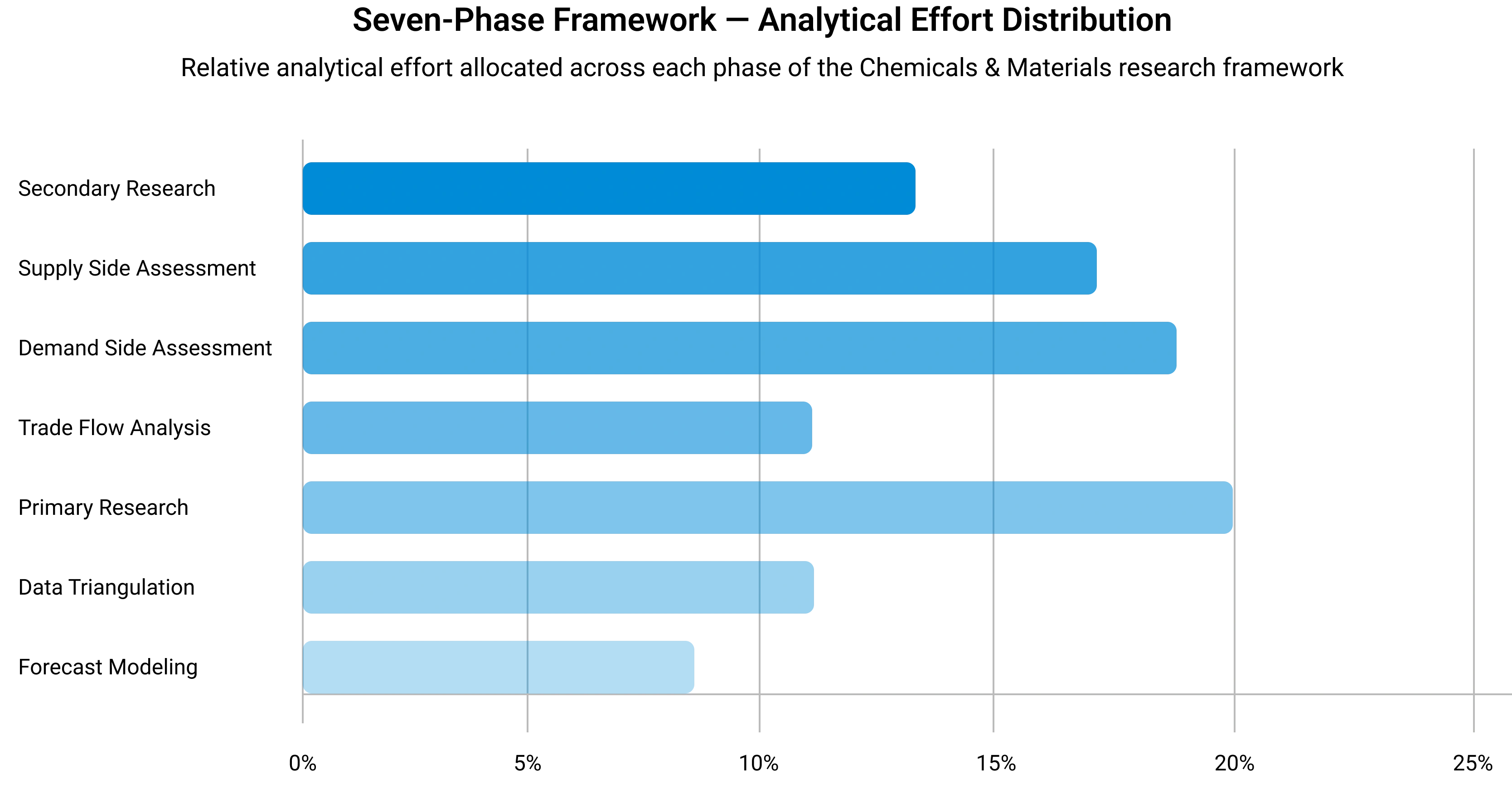
Seven-Phase Framework — Analytical Effort Distribution
Relative analytical effort allocated across each phase of the Chemicals & Materials research framework
Phase 1 - Secondary Research: Establishing the Foundation
Secondary research collects and evaluates publicly available information from authoritative sources, establishing the foundational understanding of market structure, value chain dynamics, competitive landscape, and end-use demand patterns. Every source is evaluated for credibility, recency, geographic relevance, and methodological soundness before inclusion.
Industry Associations
Sources include ACC, CEFIC, ICCA, JCIA, CPCIF, and SOCMA providing production volumes, consumption trends, capacity developments, and sustainability initiatives.
Company Disclosures
Annual reports, investor presentations, earnings transcripts, and regulatory filings reveal product portfolios, manufacturing footprints, capacity expansions, and revenue segmentation.
Government Databases
National statistical offices, customs authorities, environmental agencies, and industrial production databases provide verified statistics on output, trade flows, and regulatory compliance.
Trade Databases
UN Comtrade, ITC, Eurostat, and national customs authorities enable assessment of global product movement, import dependency, and export competitiveness across regions.
Our Secondary Research Sources
- Ministry of Chemicals and Fertilizers
- European Chemicals Agency
- United States Department of Energy
- Ministry of Industry and Information Technology
- Ministry of Economy Trade and Industry
- Ministry of Trade Industry and Energy
- National Institute of Standards and Technology
- Council of Scientific and Industrial Research
- Fraunhofer Society
- National Institute for Materials Science
Phase 2 — Supply-Side Assessment: Mapping Production Capabilities
Production Capacity Analysis
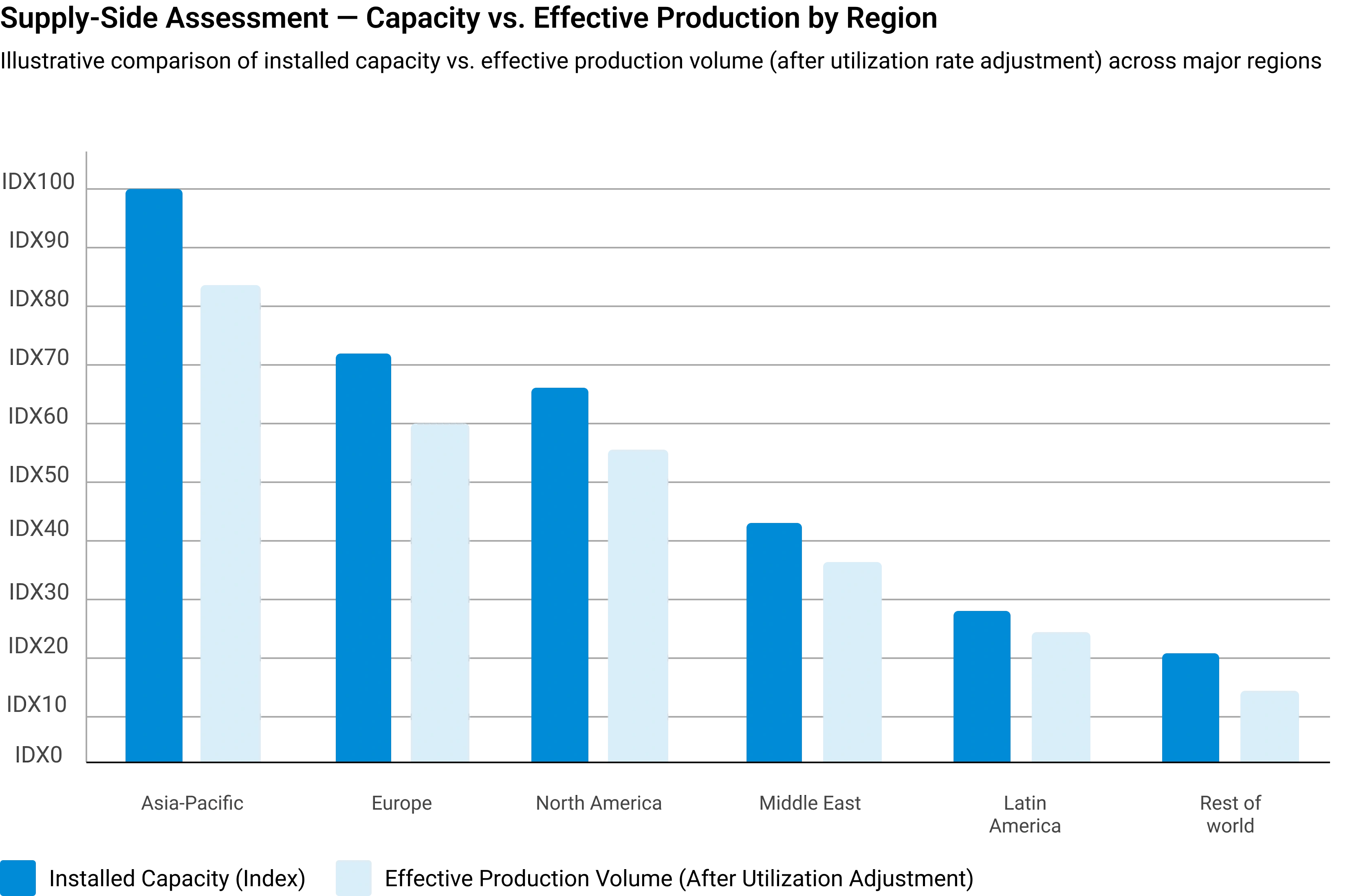
All major manufacturers are assessed for existing installed capacity, planned additions, expansions, new plant announcements, and technology adoption — mapped at global, regional, and country levels.
Capacity Utilization Adjustment
Installed capacity is adjusted using utilization rates based on demand conditions, feedstock availability, plant operating rates, maintenance schedules, and regulatory restrictions.
Manufacturer Revenue Analysis
Product-specific revenues, segment-level performance, regional distribution, average selling prices, and margin trends are evaluated to establish market value estimates.
Supply-Side Assessment — Capacity vs. Effective Production by Region
Illustrative comparison of installed capacity vs. effective production volume (after utilization rate adjustment) across major regions
Phase 3 — Demand-Side Assessment: Quantifying Chemical Consumption
Demand-side analysis quantifies chemical consumption across industries, applications, and geographies — identifying where and how chemicals are consumed throughout the value chain with precision.
End-Use Industry Analysis
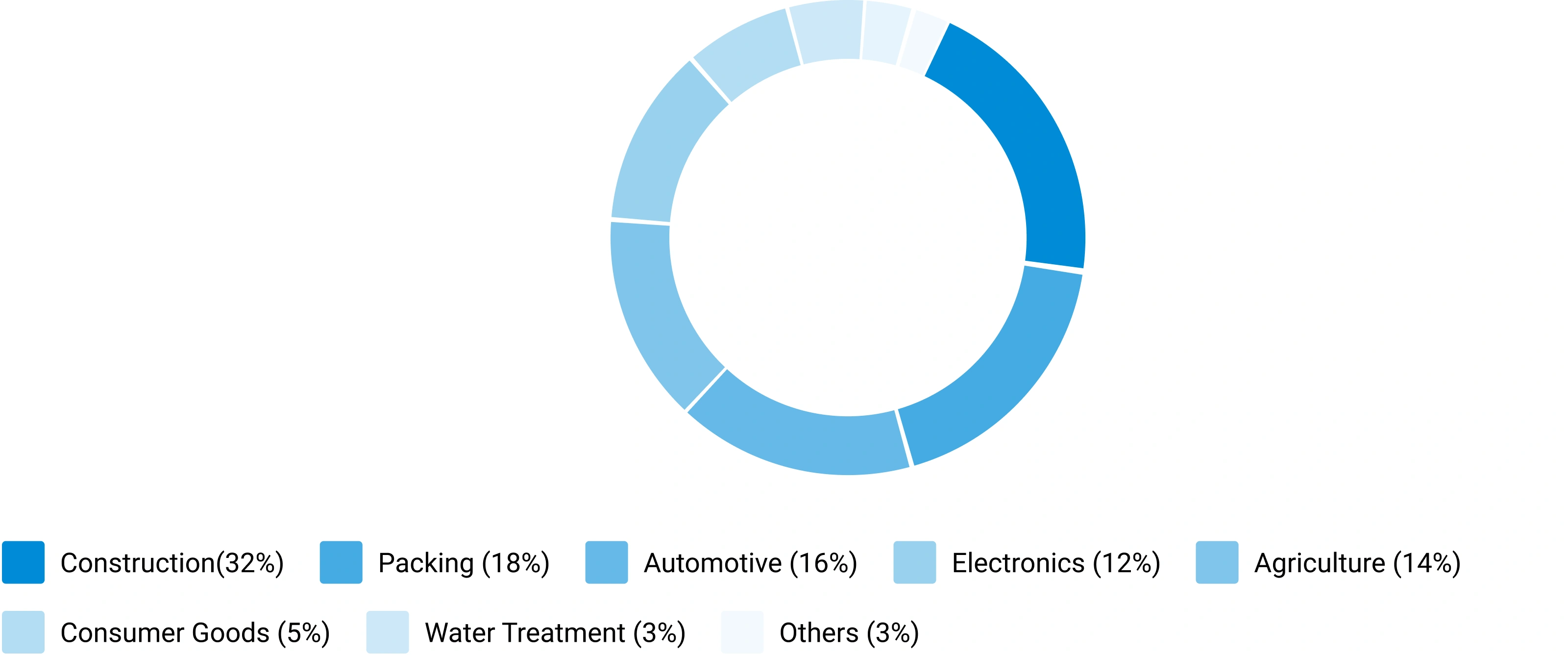
Chemical demand is evaluated across automotive, construction, packaging, electronics, agriculture, healthcare, consumer goods, industrial manufacturing, energy and utilities, and water treatment. Industry output, production trends, and consumption intensity are analyzed to determine demand patterns.
Consumption Modeling
Demand is estimated using measurable indicators: kilograms per vehicle, kilograms per square meter of construction, dosage per cubic meter of water treated, kilograms per hectare of agricultural land, and kilograms per ton of manufactured products. Consumption factors are validated through industry publications and primary interviews.
Application Analysis
The market is segmented by application area to understand product performance requirements, formulation trends, technology adoption, customer preferences, and regulatory requirements improving demand accuracy and segmentation granularity.
Demand-Side Assessment — End-Use Industry Demand Distribution
Illustrative distribution of chemical & materials demand across key end-use industries
Phase 4 - Trade Flow Analysis: Balancing Regional Supply and Demand
Trade flow analysis reconciles regional supply and demand estimates through import and export data, identifying net supply positions, regional dependencies, and market imbalances. It serves as an independent validation layer that tests the consistency of supply-side and demand-side estimates.
Import Analysis
Import data is evaluated to determine volumes, source countries, product dependency, regional supply gaps, and pricing trends — identifying markets that rely heavily on external supply and where domestic production is insufficient to meet demand.
Export Analysis
Export assessments reveal production surplus, export competitiveness, regional manufacturing strength, and global market participation. Export patterns also help validate domestic production estimates and identify net exporting regions.
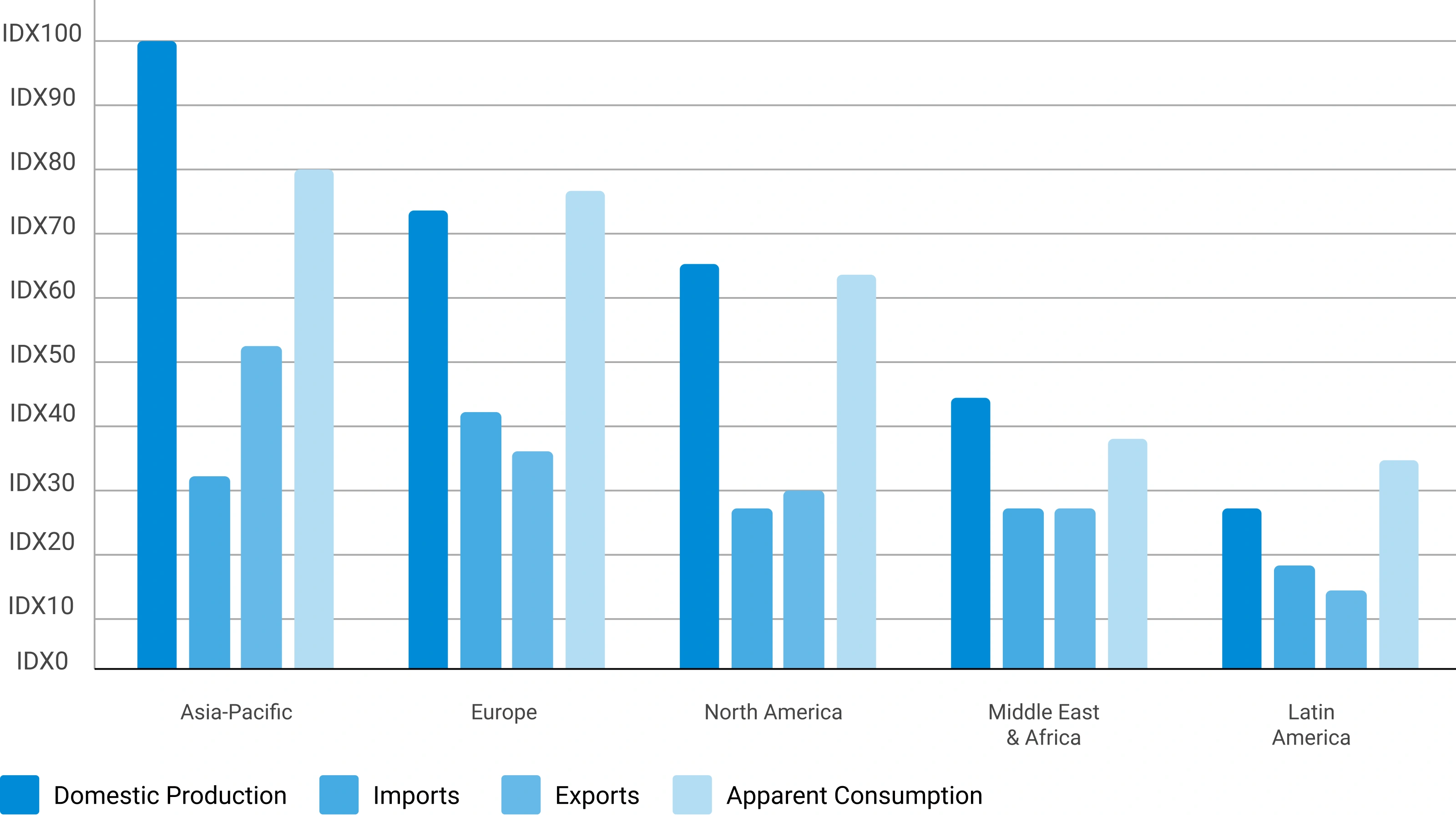
Apparent Consumption Model
Regional consumption is assessed using the standard apparent consumption formula:
Results identify net importing regions, net exporting regions, regional deficits, and surpluses — serving as an independent validation of supply and demand estimates.
Trade Flow Analysis — Net Supply Position by Region
Illustrative apparent consumption vs. domestic production across major regions — positive gap indicates net import dependency
Phase 5 — Primary Research: The Critical Validation Layer
Primary research tests and refines findings from secondary research through direct engagement with industry participants across the supply chain, demand side, and expert community. It captures intelligence that no database or published report can provide — the real-world experience of manufacturers, buyers, and specialists operating in the market.

Supply-Side Interviews
Conversations with chemical manufacturers, raw material suppliers, contract manufacturers, technology providers, and plant operators cover production trends, capacity utilization, pricing developments, technology shifts, and competitive dynamics.

Demand-Side Interviews
Engagement with OEMs, industrial consumers, procurement managers, distributors, formulators, and end-use manufacturers focuses on consumption trends, purchasing behavior, product substitution, demand outlook, and emerging applications.

Industry Expert Consultations
Additional interviews with industry consultants, independent experts, regulatory specialists, technical professionals, and research institutions provide deeper market context and validate key analytical assumptions.
Focus Areas of Primary Research:
Market Size & Forecast Validation
Revenue estimates, volume consumption, growth rates, forecast assumptions, regional demand.Supply Chain & Value Chain Assessment
Raw material sourcing, supply chain challenges, distribution networks, procurement practices.Production & Capacity Analysis
Manufacturing capacity, utilization rates, expansion projects, plant investments.Pricing & Cost Structure Analysis
Product pricing trends, feedstock costs, energy costs, margin pressures, pricing outlook.Competitive Landscape Assessment
Volume and value estimates confirmed to be fully consistent with one another before publicationInterview Volume by Market Scope
| Study Scope | Number of Interviews |
|---|---|
| Niche Market | 20 – 30 |
| Mid-Sized Market | 30 – 50 |
| Global Market | 50 – 80 |
| Highly Fragmented Market | 80 – 120 |
Interview Details:
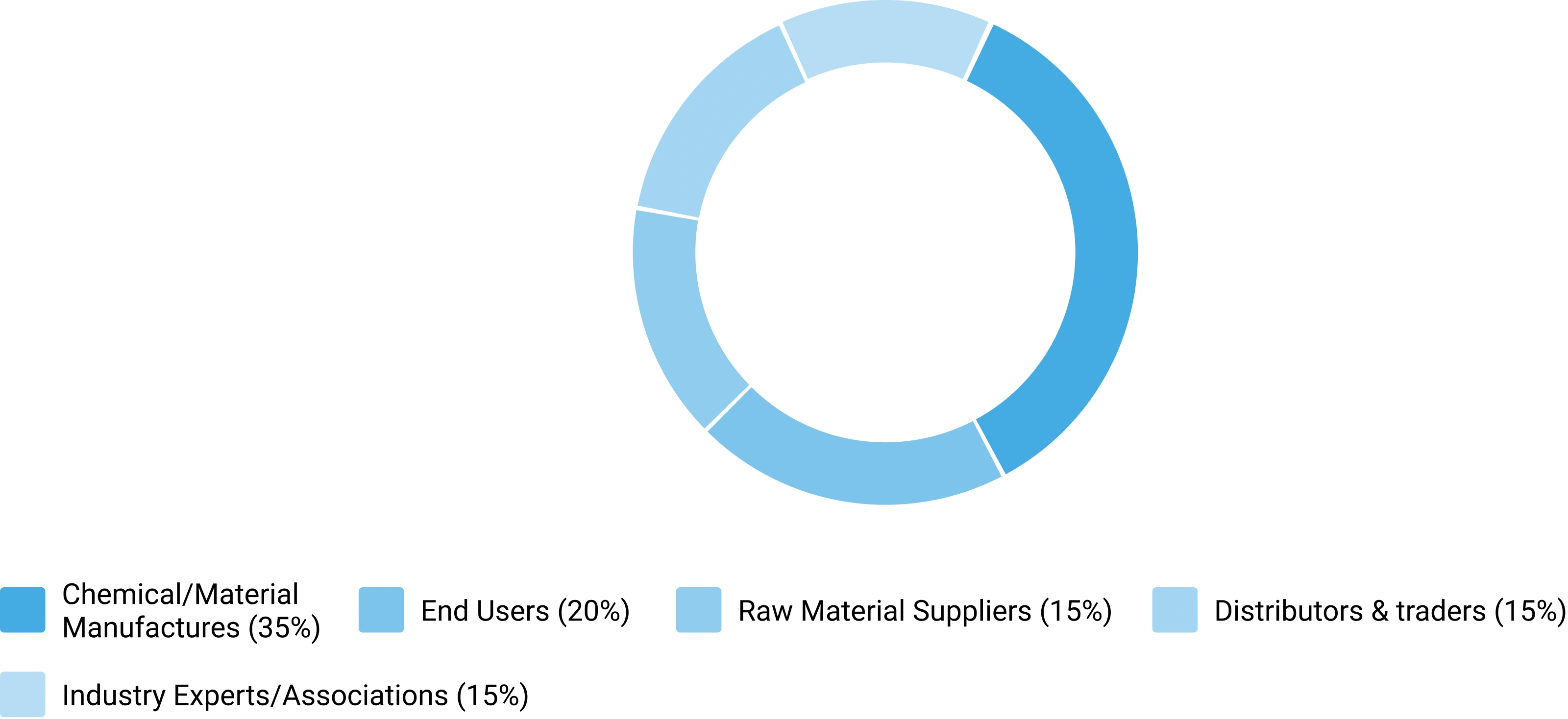
Category : Manufacturers, Suppliers, Distributors, End Users, Experts/Associations
Average Duration : 30–60 Minutes
Interview Mode : Video calls, telephonic interviews, expert consultations
Interview Format : Structured / Semi-Structured questionnaire
Focus Areas of Primary Research:
Market Size & Forecast Validation :
Revenue estimates, volume consumption, growth rates, forecast assumptions, regional demand.
Supply Chain & Value Chain Assessment :
Raw material sourcing, supply chain challenges, distribution networks, procurement practices.
Production & Capacity Analysis :
Manufacturing capacity, utilization rates, expansion projects, plant investments.
Pricing & Cost Structure Analysis :
Product pricing trends, feedstock costs, energy costs, margin pressures, pricing outlook.
Competitive Landscape Assessment :
Market share, competitor positioning, strategic initiatives, partnerships, acquisitions.
Primary Research — Stakeholder Coverage by Category
Distribution of interview respondents across stakeholder categories (% share from PPT data)
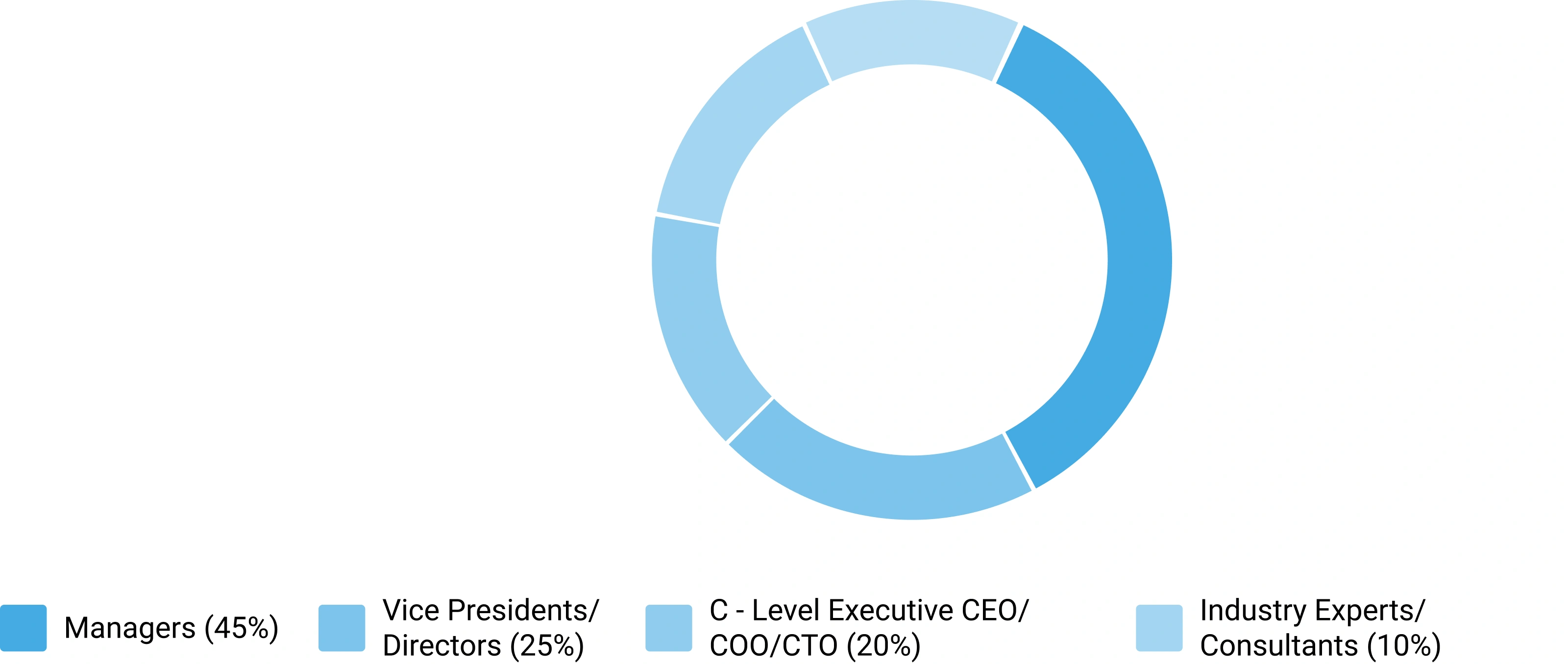
Primary Research — Respondent Designation Profile
Seniority breakdown of interview respondents (% share from PPT data)
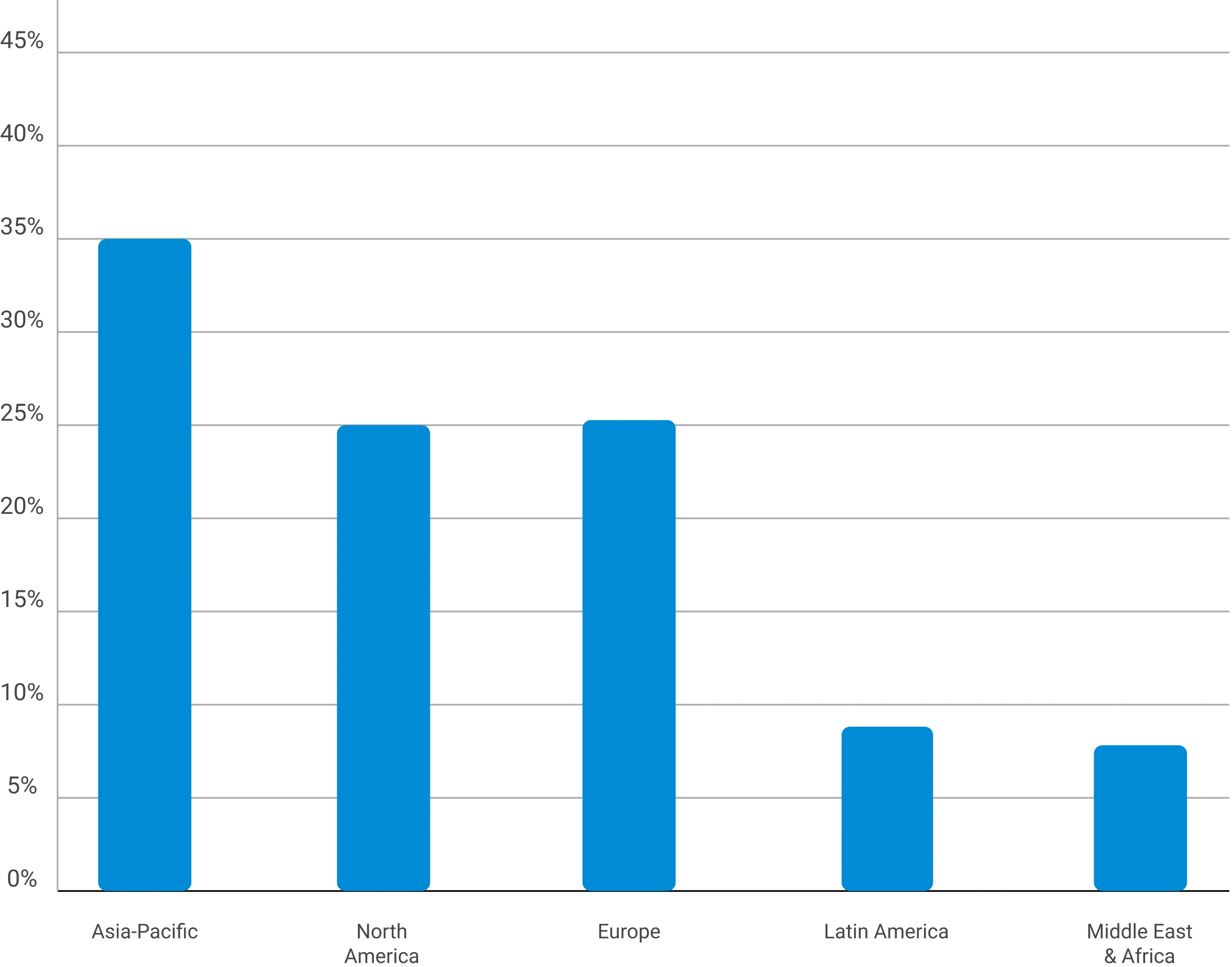
Primary Research — Geographic Coverage of Interviews
Regional distribution of primary research engagement (% share from PPT data)
Phase 6 — Data Triangulation and Market Validation
No single methodology is relied upon in isolation. Multiple independent estimation approaches are combined and reconciled to ensure consistency, accuracy, and analytical defensibility. Any material deviations between approaches are investigated and adjusted through additional validation cycles.
The final market size is derived through weighted triangulation of all validated methodologies. Any material deviations between approaches are investigated and adjusted through additional validation cycles. The outcome represents the most realistic assessment of the market based on available evidence and expert confirmation ensuring that volume and value estimates are fully consistent with one another.
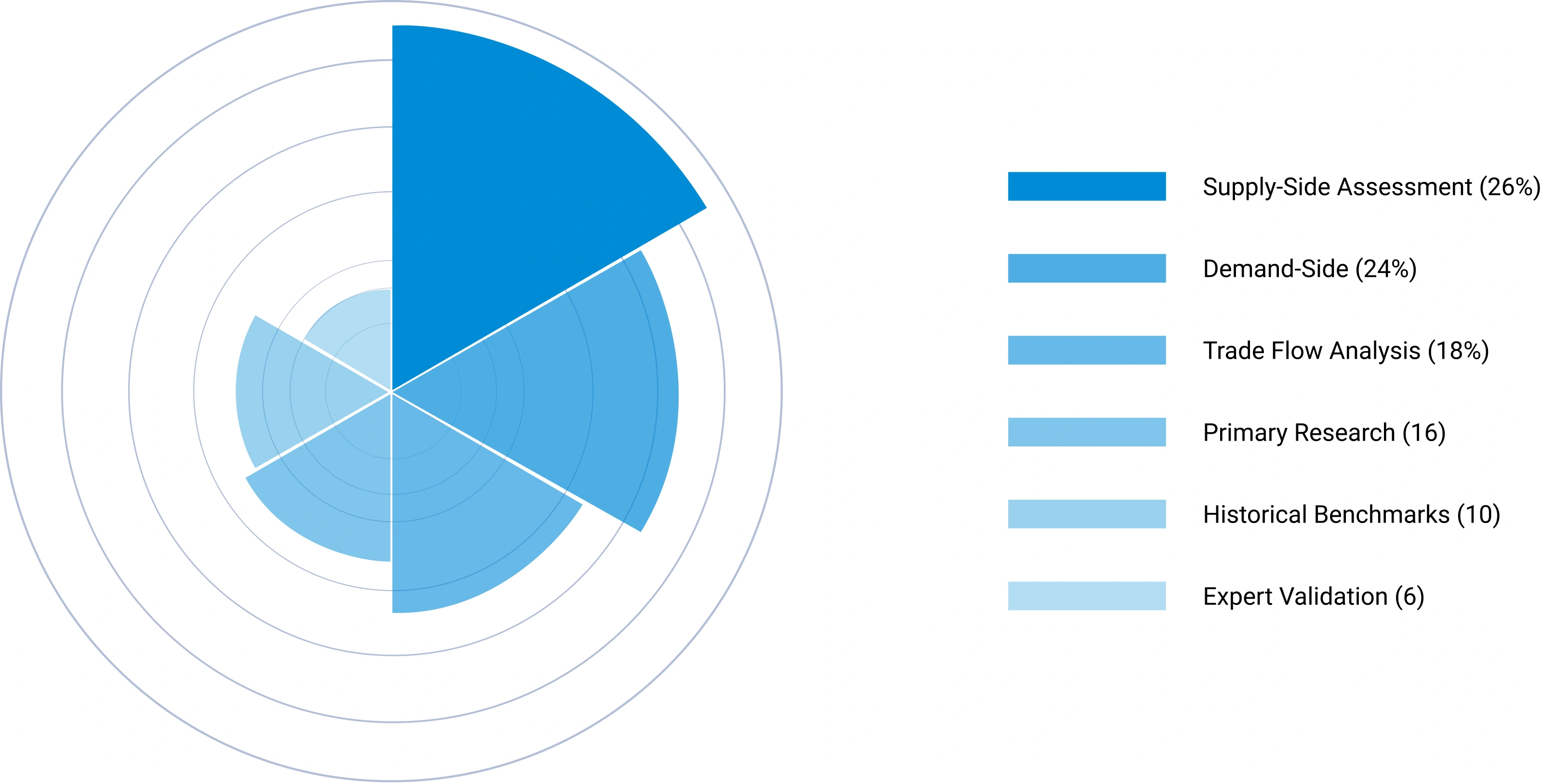
Triangulation Framework — Input Contribution Weight
Relative weight each sizing input contributes to the final reconciled market estimate
Phase 7 — Forecast Modeling: Projecting Future Market Evolution
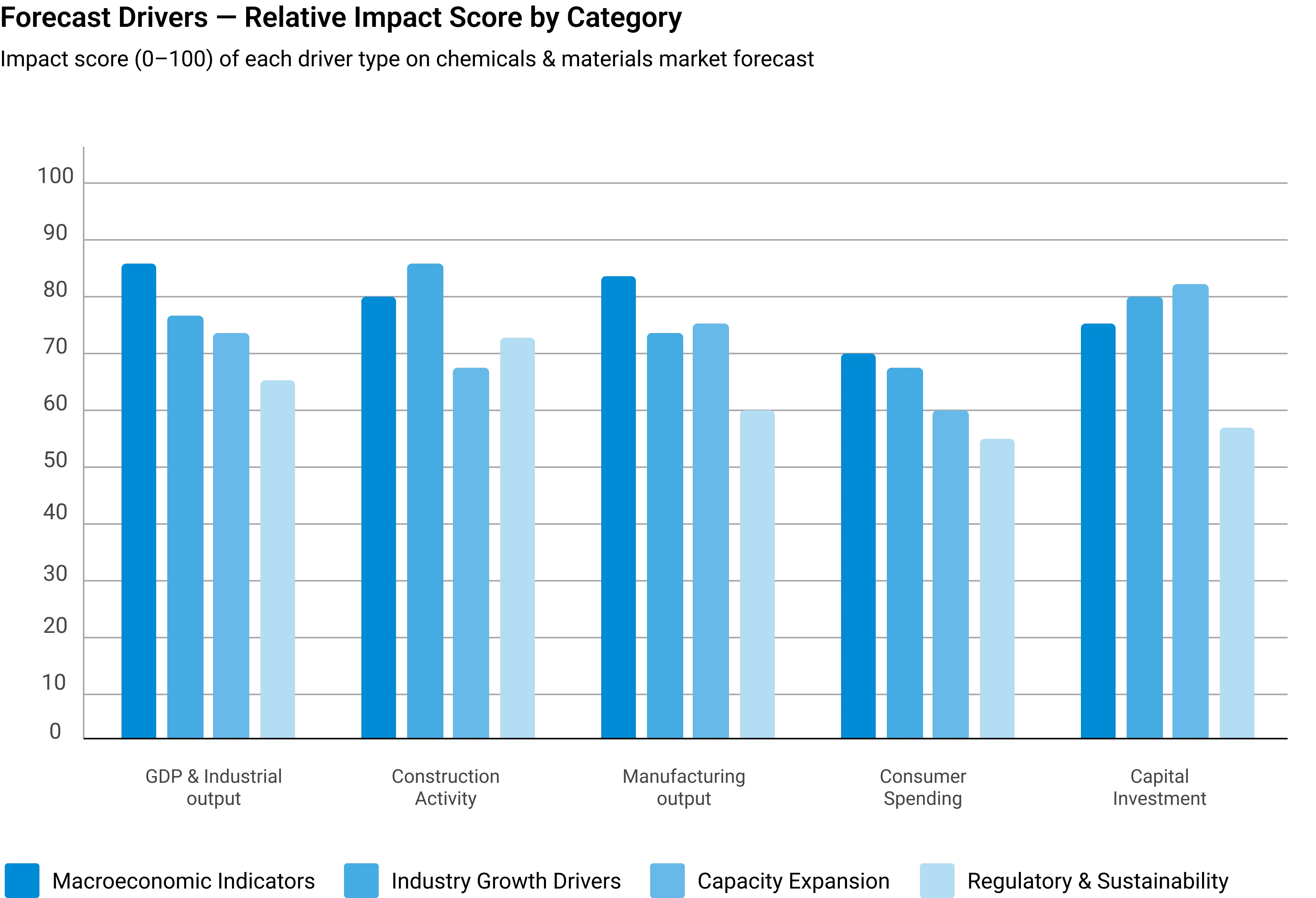
Forecasting evaluates the future trajectory of the market using a combination of quantitative indicators and qualitative assessments across economic, industry, and regulatory dimensions. Rather than simple extrapolation, each driver is independently modeled and integrated into a composite forecast.
Macroeconomic Indicators
GDP growth, industrial production, manufacturing output, construction activity, consumer spending, and capital investment form the quantitative foundation of long-term demand projections. These are applied at country, regional, and global levels.
Industry Growth Drivers
Urbanization, infrastructure development, industrialization, technological innovation, sustainability initiatives, and evolving product performance requirements are assessed at regional and industry levels — capturing both structural and cyclical demand drivers.
Capacity Expansion Analysis
Announced plant expansions, new manufacturing facilities, technology upgrades, and strategic investments are evaluated to determine future supply-demand dynamics and potential market tightness or oversupply situations.
Regulatory & Sustainability
Environmental regulations, chemical safety standards, emission reduction targets, circular economy initiatives, and sustainability requirements are incorporated as they often influence product adoption rates and market growth trajectories.
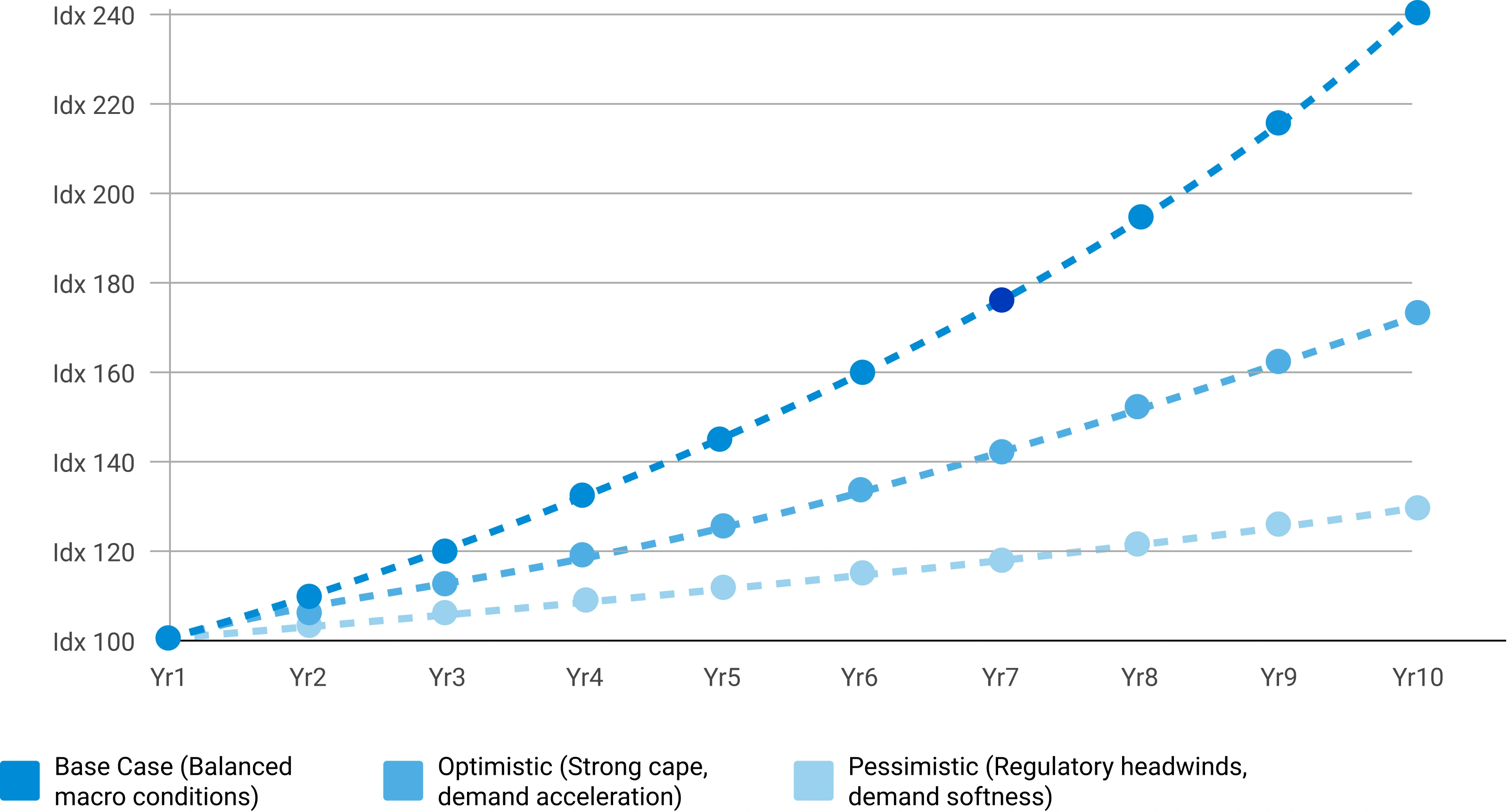
Scenario Forecast Range — Indexed Market Growth (Year 1–10)
Illustrative indexed growth trajectories across Base, Optimistic, and Pessimistic scenarios over a 10-year forecast horizon
Forecast Drivers — Relative Impact Score by Category
Impact score (0–100) of each driver type on chemicals & materials market forecast



Comments
Share your thoughts, ask a question, or provide feedback about this report.