
Specialty Emollients Market Size, Share & Forecast 2035
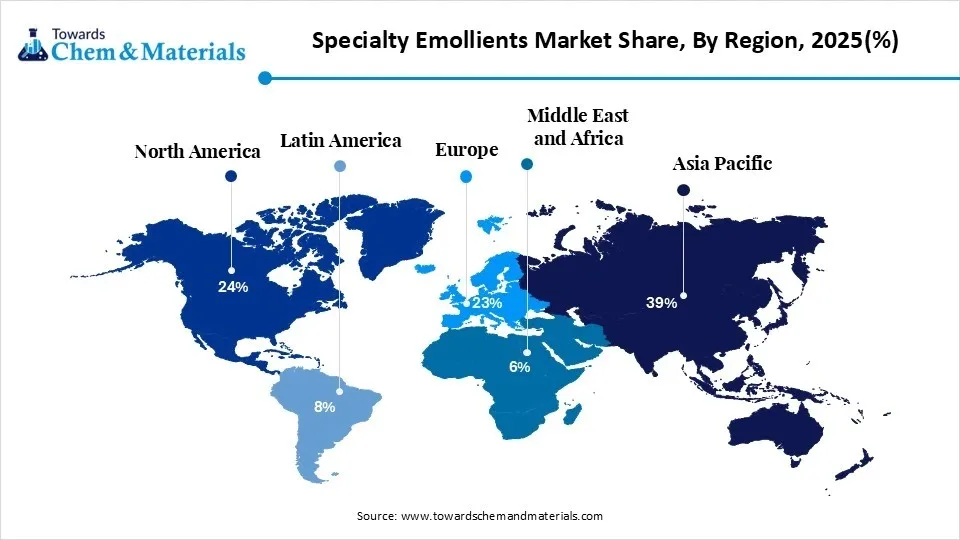
The global specialty emollients market size was valued at USD 4.87 billion in 2025, is estimated to reach USD 5.21 billion in 2026, and is projected to reach USD 9.64 billion by 2035, exhibiting a compound annual growth rate (CAGR) of 7.07% over the forecast period from 2026 to 2035. Asia Pacific dominated the specialty emollients market with the largest revenue share of 39% in 2025 and is expected to grow at the fastest CAGR of 7.06% during the forecast period.
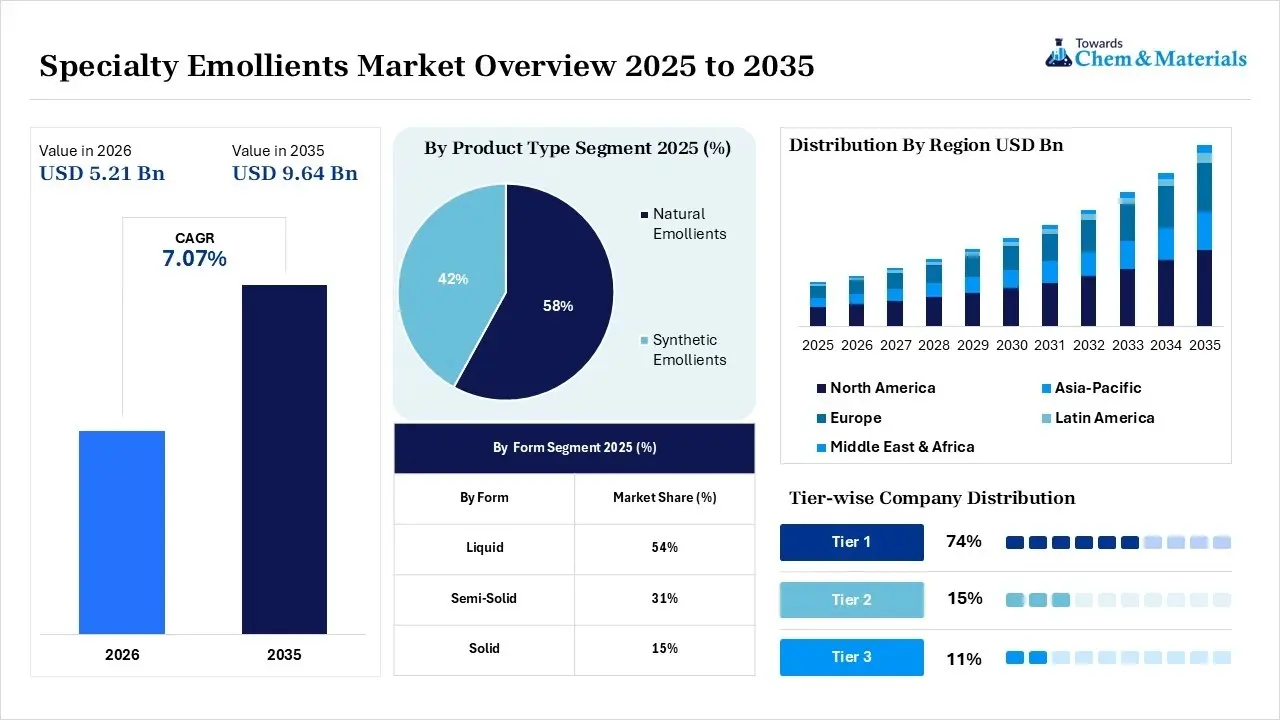
Skin barrier protection, skin hydration, and clean cosmetics are the topics that keep gaining attention from consumers and are continuing to drive specialty emollient marketplace uptake in the personal care and cosmetic product categories. Factors driving market growth are the growing demand for natural ingredients, sophisticated skin care offerings, multi-functional formulations, and sustainable alternatives.
Market Highlights
- By region, Asia Pacific dominated the specialty emollients market by holding 39% share in 2025 and is expected to grow at a CAGR of 6.15% during the forecast period.
- By region, North America held 24% market share in 2025 and is expected to grow at the fastest rate with a CAGR of 7.56% during the forecast period.
- By product type, the natural emollients segment dominated the market with the largest share of 58% in 2025 and is expected to grow at a CAGR of 6.15% during the forecast period.
- By product type, the synthetic emollients segment held 42% market share in 2025 and is expected to grow at the fastest CAGR of 7.32% over the forecast period.
- By form, the liquid segment dominated the market with the largest share of 54% in 2025 and is expected to grow at a CAGR of 5.42% during the forecast period.
- By form, the solid segment held 15% market share in 2025 and is expected to grow at the fastest CAGR of 7.05% over the forecast period.
- By source, the plant-based segment dominated the market with the largest share of 46% in 2025 and is expected to grow at a CAGR of 5.94% during the forecast period.
- By source, the synthetic segment held 34% market share in 2025 and is expected to grow at the fastest CAGR of 7.61% over the forecast period.
- By application, the skin care segment dominated the market with the largest share of 44% in 2025 and is expected to grow at a CAGR of 6.27% during the forecast period.
- By application, the color cosmetics segment held 14% market share in 2025 and is expected to grow at the fastest CAGR of 7.48% over the forecast period.
- By end user, the personal care & cosmetics segment dominated the market with the largest share of 69% in 2025 and is expected to grow at a CAGR of 6.40% during the forecast period.
- By end user, the pharmaceutical segment held 17% market share in 2025 and is expected to grow at the fastest CAGR of 7.18% over the forecast period.
- By distribution channel, the direct sales segment dominated the market with the largest share of 42% in 2025 and is expected to grow at a CAGR of 6.54% during the forecast period.
- By distribution channel, the online sales segment held 9% market share in 2025 and is expected to grow at the fastest CAGR of 8.04% over the forecast period.
According to Towards Chemicals and Materials Analytics and Consulting, the global specialty emollients market volume was valued at 1.65 million metric tons in 2025 and is expected to surpass around 3.01 million metric tons by 2035, accelerating a compound annual growth rate (CAGR) of 6.21% over the forecast period from 2026 to 2035.
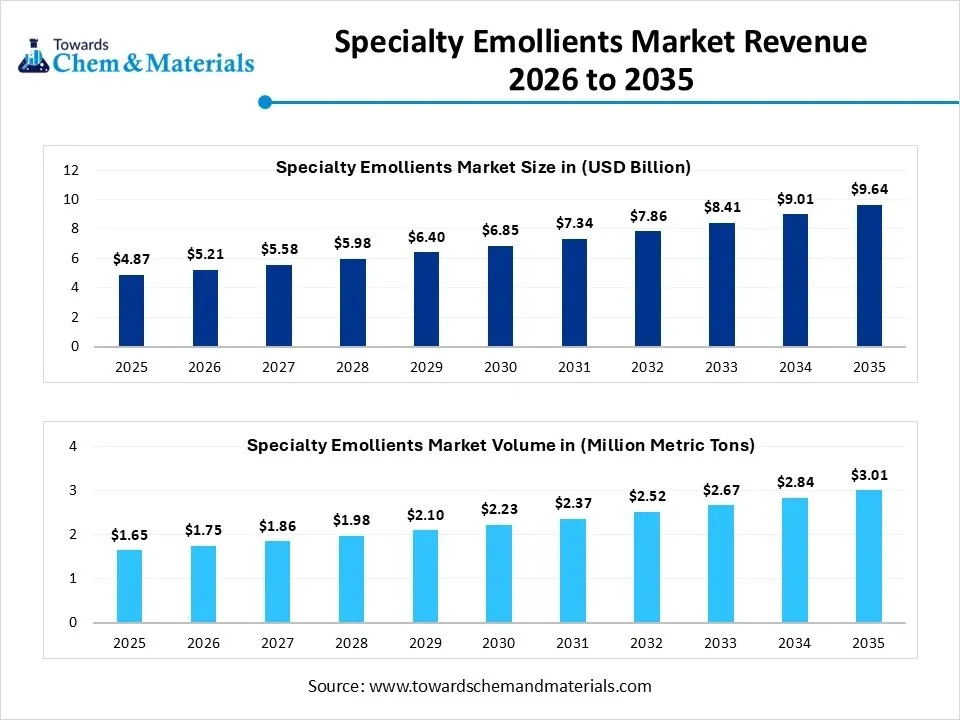
Clean is the new cool, and so are multifunctional formulations, which are making manufacturers want to create products with conditioning, protection, and texture benefits. The specialty emollients market is growing, and there is a rising demand for high-quality ingredients with advanced skin care properties, such as hydration, barrier integrity, and sensory characteristics. The market is trending towards natural and plant-based, vegan, and cruelty-free ingredients over the traditional petroleum-based options. Bio-fermented solutions are becoming increasingly popular because of the benefits they offer in terms of sustainability and supply security.
Global Investment Movement for the Specialty Emollients Market
Renewable lipids, bio-fermented ingredients, and plant-derived oils are seeing more companies invest in these to meet clean label demands. In this area, investments are made in developing specialty emollients that are sustainable, have better environmental profiles, and have reliable raw material availability.
Manufacturers are researching and developing hybrid formulas with high-performance sensory attributes that eliminate the use of conventional volatile silicones. The products are designed to provide sustainable features, absorption, and lightweight textures in skin care and cosmetic products.
Businesses are setting up niche production units, such as efficient enzymatic esterification plants, to bolster their specialty emollient supply capabilities. The expansion of manufacturing in the region helps to fuel regional growth in demand for the Asia Pacific and Europe markets.
Investment focuses are multifunctional formulations that offer hydration, barrier repair, and protection. These ingredient systems enable brands to develop streamlined cosmetics while delivering improved consumer appeal and performance.
Market Trends
- Clean, vegan, and cruelty-free cosmetics are becoming more and more popular with consumers. Environmentally responsible specialty emollients are being developed through the use of plant-based ingredients, bio-derived alternatives, and enzymatic synthesis technologies.
- Specialty emollient manufacturers are developing and concentrating on nanoemulsions, microencapsulation, and delivery systems. These technologies help to improve the absorption of the active ingredients, physical stability, and formulation efficiency of all skin care products.
- Consumers are looking for a luxurious, fast-absorbing, and non-greasy experience in skin care. The manufacturers are creating multifunctional emollients combining hydration, anti-aging, support of the skin barrier, and enhanced sensory properties.
Report Scope
| Report Attributes | Details |
| Market Size in 2026 | USD 5.21 Billion/ 1.75 Million Metric Tons |
| Expected Size in 2035 | USD 9.64 Billion/ 3.01 Million Metric Tons |
| Growth Rate | CAGR of 7.07% |
| Base Year of Estimation | 2025 |
| Forecast Period | 2025-2035 |
| Dominant Region | Asia Pacific |
| Segment Covered | By Product Type, By Form, By Source, By Application, By End User, By Distribution Channel |
| Key Companies Profiled | The Lubrizol Corporation, Eastman Chemical Company, Ashland Inc., Sasol Limited, Clariant AG, Vantage Specialty Chemicals, Kao Corporation, Stepan Company, Symrise AG, AAK AB, Cargill, Incorporated |
Key Technological Shifts and AI in the Specialty Emollients Market
Paving the Way for AI Transformation & Sustainable Innovation in Specialty Emollients
Technological shifts in the specialty emollients market are occurring when it comes to sustainable substitution, digital prototyping, and optimization with artificial intelligence. Using computational screening, manufacturers can now find eco-friendly bio alternatives to cyclic silicones and mineral oils. Spreadability, polarity, and skin-feel properties can be estimated by digital modelling prior to formulation trials. Artificial Intelligence can be used to make predictions on skin feel, occlusion, and sebum compatibility without having to test several physical batches. AI-driven formulation tools help to understand competitor formulations and recommend percentages for the functional emollients.
Supply Chain Analysis of the Specialty Emollients Market
Feedstock Procurement
- The procurement of feedstocks involves the process of buying natural oils, fatty acids, and petrochemical intermediates needed to make specialty emollients. Availability of sustainable raw materials is important in ingredient development.Reliable sourcing of feedstock allows consistent production, enhances sustainable performance, and allows manufacturers to create specialty emollients based on plants and bio-derived raw materials.
- AAK ABs: AAK ABs business focus is on the supply of sustainably-sourced, plant-based, and certified-sustainable vegetable oil feedstocks to enable the evolution of sustainable and renewable specialty emollient ingredients.
- Other Key Players: BASF SE, Cargill, Emery Oleochemicals.
Chemical Synthesis and Processing
- Chemical synthesis and processing transform raw materials into special emollient structures via esterification, hydrogenation, or green catalytic reactions for special cosmetic performance.
Processing technologies that are efficient deliver better functional, sensory, and stability properties to ingredients and enable sustainable manufacturing. - Evonik Industries AG: Using innovative organo-modified technologies and efficient catalytic processes, Evonik Industries AG produces high-performance cosmetic esters.
- Other Key Players: Croda International, Clariant, and Dow.
Compound Formulation and Blending
- The compound formulation and blending process combine the synthesized emollients, texturizers, stabilisers, and carriers to develop the custom-made multifunctional cosmetic ingredients.Blending features enable manufacturers to develop desired sensory attributes, enhanced spreadability, and formulated performance.
- Croda International: Croda International engineers its proprietary multifunctional emollient blends, optimized for a specific skin-feel, spreadability, and sensory attribute.
- Other Key Players: Lubrizol, Ashland, Gattefossé.
Sustainability Analysis of the Specialty Emollients
The difficulties of sustainability with traditional specialty emollients are resource input (fossil-based), aquatic persistence, and biodiversity. Non-renewable petroleum-based ingredients such as mineral oils, paraffin, and petrolatum have higher lifetime carbon footprints. Traditional silicones can have a potential marine biodegradability issue. Replacement options are becoming available with bio-based esters, plant oils, and reused agricultural waste materials. Multifunctional ingredients, combining active ingredients with hydration and better spreadability, and minimizing raw material needs, are being developed by manufacturers, too.
What is a Specialty Emollient?
Advanced and high-performance cosmetic ingredients for the purposes of softening, improving the texture of the skin, and replacing heavy silicones or greasy oils are specialty emollients. These ingredients contain specialty esters, light plant-based alternatives, and oxidative-stable lipids, which improve formulation performance. They offer enhanced sensory, stability, and versatility in skincare, haircare, sunscreen, and color cosmetic formulations.
Uses of the Specialty Emollients
- Hair Conditioning Enhancement:Specialty emollients are used in leave-on or rinse-off products to enhance softness, smoothness, and gloss of hair. They offer conditioning properties and help with light textures and the consumer experienc.
- Sustainable Silicone Replacement:Specialty emollients offer an alternative to synthetic silicones that are natural and biodegradable. These ingredients offer comparable sensory properties and help in creating clean beauty products and sustainable packaging.
- Customization and Improvement of Texture:Cosmetic formulation viscosity, thickness, and spreadability can be modified using specialty emollients. They enable manufacturers to create products with customized textures and enhanced application characteristics.
- Pigment Dispersion and Sensory Enhancement:Specialty emollients enhance the dispersion of pigments in mineral sun products and colors. They also help to regulate the rate of absorption and skin after-feel, contributing to high-quality cosmetic formulation experiences.
Regulatory Framework: Specialty Emollients Market
| Country Region | Regulatory Body | Key Regulations | Focus Areas |
| Asia Pacific | CDSCO | Drugs and Cosmetics Act | Harmonization with global safety data |
| North America | U.S. FDA | Modernization of Cosmetics Regulation Act (MoCRA) | Mandatory facility registration, serious adverse event reporting, and safety substantiation |
| European Union | European Commission / ECHA | EU Cosmetics Regulation (EC) No 1223/2009 | Strict bans/restrictions on cyclic siloxanes (D4, D5, D6) |
Market Dynamics
Drivers : Increasing Awareness of Skincare and Enhancing Skin Barrier Wellness.
The expanding demand for specialty emollients is fueled by consumers interest in hydration, anti-aging, and skin barrier protection. Educating consumers about transepidermal water loss and the need to establish a daily skincare routine, particularly in sensitive skin diseases, is increasingly important. Natural ingredients and plant-based ingredients are also being embraced because of clean beauty preferences. The greater need for multi-functional cosmetic products with conditioning, protecting, and sensory improvements will sustain market growth. Consumers awareness of grooming is increasing across segments, which is continuing to drive specialty emollient adoption.
Restraints : A change in preference to lightweight water-based formulations.
The shift to light, water-based formulations is reducing demand for heavier oil-based ingredients. Today, consumers are demanding a faster-absorbing and non-greasy texture that delivers a comfortable skin feel. It will be good for manufacturers to stimulate the use of more advanced ingredients that provide the same conditioning results but do not leave an oily residue. New, less costly cosmetic formulations may have a smaller list of ingredients they can use in certain formulations due to their transition to minimalistic and light products. As a manufacturer, its important to continually innovate to meet sensory expectations while adding value to the ingredients.
Opportunities : Advancing Technologies for Enhanced Ingredient Performance
Specialty emollient manufacturers are being presented with opportunities by technological advances such as nanoemulsions and microencapsulation. These technologies enable better delivery of ingredients, their stability, and penetration into the dermis, thus increasing the effectiveness of the formulation. Also underway are bio-fermented solutions, which provide sustainability benefits and supply security, and are expanding. New, innovative emollient systems are emerging in the wake of an increasing interest in solid and semi-solid personal care formulations, as well as waterless formulations.
Segmental Insights
Product Type Insights
The natural emollients segment dominated the market with the largest share of 58% in 2025 and is expected to grow at a CAGR of 6.15% over the forecast period, as consumers inclination for plant-based, vegan, and cruelty-free cosmetic ingredients is growing. These ingredients are in line with the clean beauty trend and help manufacturers create sustainable formulas. Natural emollients provide effective moisturizing, conditioning, and sensory benefits for skin care and personal care products. Brands are increasingly recognising the importance of ingredients that are good for the environment, and this drive for healthier ingredients is pushing them to use renewable options over conventional petroleum-based ingredients.
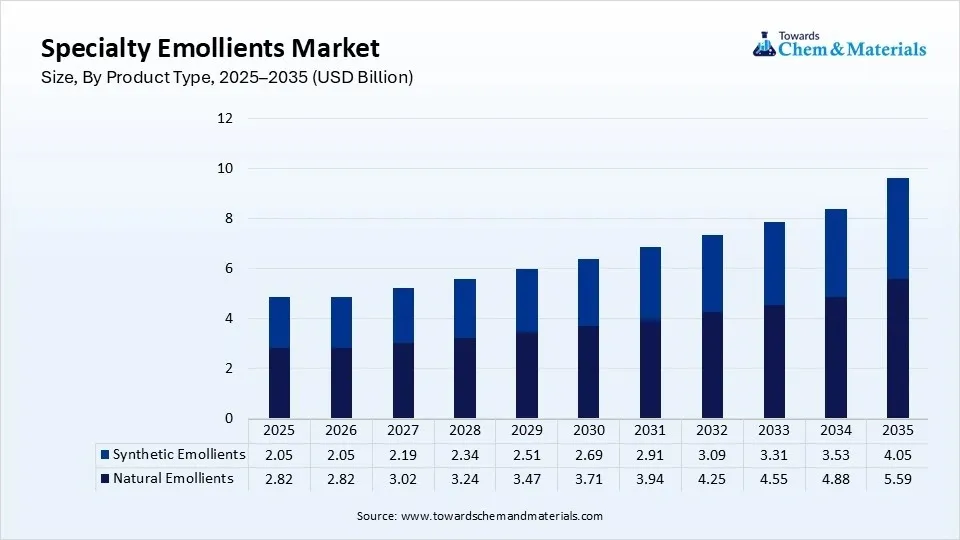
The synthetic emollients segment held the 42% market share in 2025 and is expected to grow at the fastest CAGR of 7.32% over the forecast period, owing to the rising demand for steady performance, stability, and enhanced sensory properties. Through the use of synthetic ingredients, manufacturers are able to create lightweight, multifunctional formulations that have controlled texture and better compatibility. These emollients are used in formulations that demand certain functional attributes such as formulation flexibility and spreadability. Specialty ester technologies and silicone alternatives are continuously being developed, paving the way for increased adoption across high-end skin care, cosmetic, and personal care products.
Specialty Emollients Market Share, By Product Type, 2025(%)
| By Product Type | Market Share (%) |
| Natural Emollients | 58% |
| Synthetic Emollients | 42% |
Form Insights
The liquid segment dominated the market with the largest share of 54% in 2025 and is expected to grow at a CAGR of 5.42% over the forecast period because of its ability to be used in different cosmetic products. Liquid ingredients offer a smooth application, ease of blending, and improved sensory experience in skincare, haircare, and cosmetics. They are favored by formulators for their ability to increase the spreadability and to develop light textures. Liquid specialty emollients are widely used, with growing consumer demand for fast-absorbing, non-greasy personal care products continuing to drive their use.
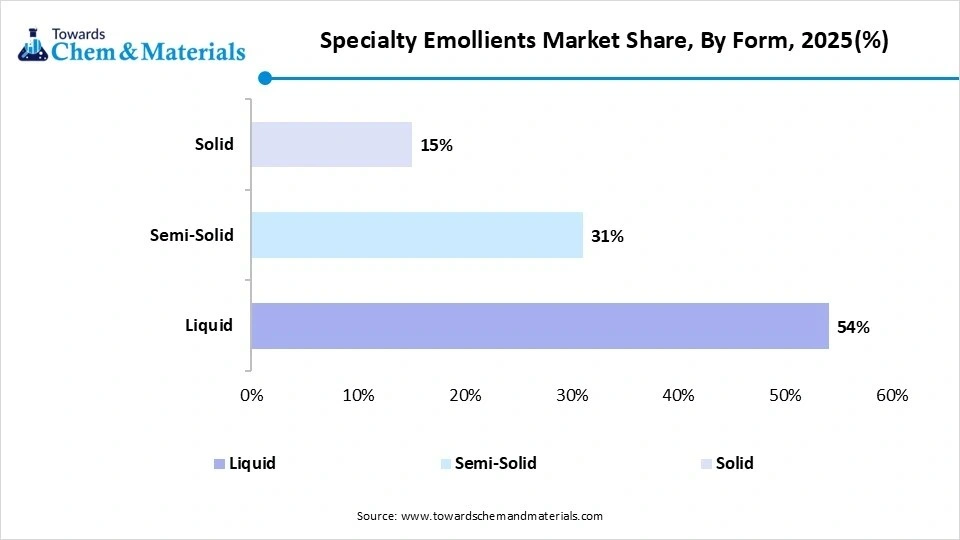
The solid segment held a 15% market share in 2025 and is expected to grow at the fastest CAGR of 7.05% over the forecast period, because consumers are interested in solid, semi-solid, and waterless personal care products. These formulations are helpful for sustainable packaging solutions and provide easy-to-use product formats. Innovative cosmetic applications include texture enhancement, stability, and moisturizing from solid specialty emollients. As consumer demands evolve toward eco-friendly and multi-functional beauty products, manufacturers are keenly seeking out solid ingredient systems.
Specialty Emollients Market Share, By Form, 2025(%)
| By Form | Market Share (%) |
| Liquid | 54% |
| Semi-Solid | 31% |
| Solid | 15% |
Source Insights
The plant-based segment dominated the market with the largest share of 46% in 2025 and is expected to grow at a CAGR of 5.94% over the forecast period, as the demand for renewable and eco-friendly cosmetic ingredients is increasing. Plant-based ingredients help to create clean-label formulations, and consumers increasingly expect sustainable and eco-friendly beauty products. These ingredients offer efficient conditioning, hydration, and sensory properties for the skin and minimize reliance on typical resources. The rise in adoption of botanical oils and natural alternatives is driving more and more development of plant-based specialty emollient programs.
The synthetic segment held the 34% market share in 2025 and is expected to grow at the fastest CAGR of 7.61% over the forecast period because of the growing demand for high-quality performance, formulation flexibility, and advanced cosmetic functions. Synthetic sources allow manufacturers to produce specialty emollients with controlled properties, enhanced stability, and sensory properties. These ingredients are used for a variety of applications where quality and formulation efficiency are important. With ongoing technological innovations, synthetic emollients are meeting new demands in skin care, cosmetics, and personal care.
Specialty Emollients Market Share, By Source, 2025(%)
| By Source | Market Share (%) |
| Plant-Based | 46% |
| Animal-Based | 8% |
| Synthetic | 34% |
| Bio-Based | 12% |
Application Insights
The skin care segment dominated the market with the largest share of 44% in 2025 and is expected to grow at a CAGR of 6.27% over the forecast period, as consumers attention is shifting toward hydration, skin barrier protection, and premium skin care regimens. Most specialty emollients are incorporated into moisturizers, anti-aging products, body care, and sun care formulations for their conditioning and texture-enhancing properties. The growing recognition of the importance of skin wellness and skin care routines is pushing brands to provide innovative skin care products that incorporate cutting-edge emollient systems.
- For instance, in April 2026, Savor debuted a "clean beauty" product line using captured carbon dioxide to produce fats used in skin care products. The company came up with a solution to replace traditional ingredients in moisturizing creams and beauty formulations that use emollients.(Source: www.fastcompany.com)
The color cosmetics segment held a 14% market share in 2025 and is expected to grow at the fastest CAGR of 7.48% over the forecast period, due to increasing demand for products offering improved application, smooth texture, and enhanced sensory experiences. Specialty emollients also enable manufacturers to obtain improved pigment dispersion, spreadability, and skin feel in products like foundations and lipsticks. The increasing demand for premium beauty products and the consumers preference for multi-functional cosmetics are driving companies to integrate innovative emollient solutions into beauty products for decoration.
Specialty Emollients Market Share, By Application, 2025(%)
| By Application | Market Share (%) |
| Skin Care | 44% |
| Hair Care | 21% |
| Color Cosmetics | 14% |
| Personal Hygiene | 9% |
| Pharmaceutical & Medical | 8% |
| Others | 4% |
End User Insights
The personal care & cosmetics segment dominated the market with the largest share of 69% in 2025 and is expected to grow at a CAGR of 6.40% over the forecast period, as emollients are used in a wide range of personal care, haircare, and cosmetic products. Specialty ingredients are becoming more common on the market as a way to enhance texture, hydration, and product performance. Grooming awareness and the need for high-end beauty products are driving the growth of the segment. Clean beauty trends and multifunctional formulations are also driving personal care companies to turn to advanced specialty emollient solutions.
The pharmaceutical segment held a 17% market share in 2025 and is expected to grow at the fastest CAGR of 7.18% over the forecast period, as specialty emollients are increasingly being used in dermatological preparations, topical creams, and ointments. These ingredients enhance formulation consistency, skin conditioning, and product performance. Therapeutic formulations and skin health are becoming more of a concern, leading pharmaceutical companies to seek specialized emollient systems. The segment has witnessed greater innovations in effective delivery, comfort, and improved user experience in medical skin care applications.
Specialty Emollients Market Share, By End User, 2025(%)
| By End User | Market Share (%) |
| Personal Care & Cosmetics | 69% |
| Pharmaceutical | 17% |
| Industrial | 8% |
| Household Products | 6% |
Distribution Channel Insights
The direct sales segment dominated the market with the largest share of 42% in 2025 and is expected to grow at a CAGR of 6.54% over the forecast period because it offers a more personalised approach that allows ingredient suppliers and manufacturers of cosmetic products to have a close relationship. Direct distribution allows companies to provide technical support, formulation advice, and customized ingredient solutions. There will continue to be circumstances where specialty chemical business is conducted through this channel, in which product customization and application knowledge will be a factor in the buying process.
The online sales segment held a 9% market share in 2025 and is expected to grow at the fastest CAGR of 8.04% over the forecast period. With the rise in digitization and the ease of shopping online, sales through digital channels are expanding quickly. Customers can order specialty ingredients online, do a side-by-side comparison, and more easily interact with suppliers. Digital channels are contributing to greater market accessibility and product discovery. The increased adoption of online procurement platforms is driving manufacturers and distributors to beef up their online presence.
Specialty Emollients Market Share, By Distribution Channel 2025(%)
| By Distribution Channel | Market Share (%) |
| Direct Sales | 42.00% |
| Specialty Chemical Distributors | 31% |
| Online Sales | 9% |
| Retail Distribution | 18% |
Regional Insights
How Did the Asia Pacific Dominate the Specialty Emollients Market In 2025?
The Asia Pacific specialty emollients market size was estimated at USD 1.90 billion in 2025 and is projected to reach USD 3.76 billion by 2035, growing at a CAGR of 7.06% from 2026 to 2035. Asia Pacific dominated the market with the largest share of 39% in 2025 and is expected to grow at a CAGR of 6.15% during the forecast period.
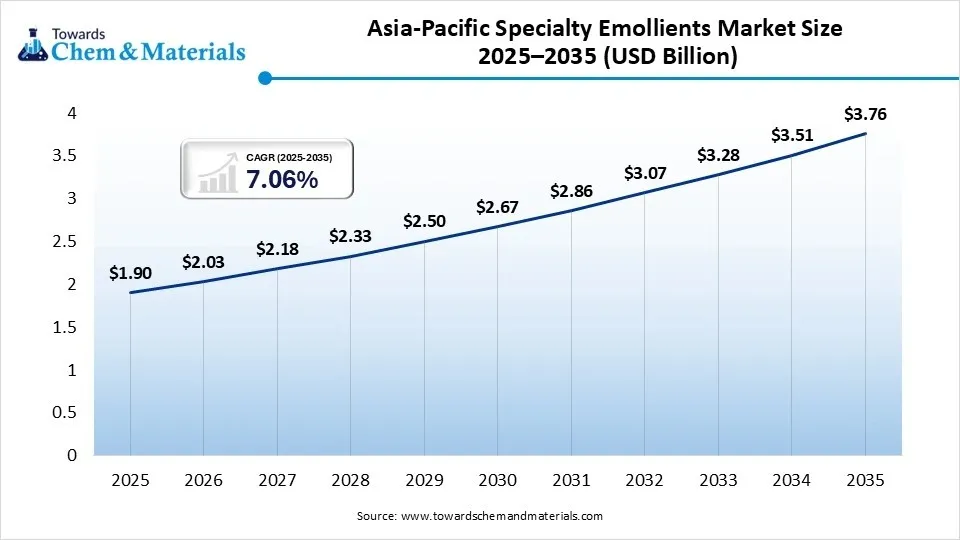
because of the rising demand for clean beauty solutions, increasing awareness of grooming, and the adoption of skincare products. The area enjoys the growth of the personal care sector and consumer demand for natural and sustainable ingredients. Manufacturers are now working on the next generation of formulations that have enhanced hydration, sensory properties, and multiple benefits. Specialty emollients are still being used across the region in skin care, cosmetics, and personal care products as the region continues to increase in urbanization and change in lifestyle habits.
Looking Ahead in Chinas Specialty Emollient Market by Innovation in Cosmetics
Growing demand for premium skin care products and advanced cosmetic formulations is driving Chinas specialty emollient market. Consumers are becoming more interested in ingredients that can impart hydration, skin protection, and enhanced sensory experiences. Domestic brands are growing in popularity, and theres a growing emphasis on sustainable formulations, which is driving innovation in specialty emollient solutions.
Empowering India with Specialty Emollient Adoption by Boosting Personal Care Awareness
The specialty emollient market in India is growing as awareness about skin care increases and personal care regimes grow, along with a demand for new and innovative cosmetic products. Consumers are increasingly interested in developing natural ingredients and multifunctional preparations that can moisturize and benefit the skin. Beauty and wellness trends are on the rise, prompting manufacturers to offer cutting-edge emollient products.
North America Specialty Emollients Market Trends Analysis
The North America specialty emollients market size was estimated at USD 1.17 billion in 2025 and is projected to reach USD 2.31 billion by 2035, growing at a CAGR of 7.04% from 2026 to 2035. North America held 24% market share in 2025 and is expected to grow at the fastest CAGR of 7.56% during the forecast period, as consumers are well aware of the importance of skin care, sustainability, and ingredient transparency. There is growing interest in the area for natural, multifunctional, and high-performance cosmetic ingredients. Brands are prioritizing eco-friendly formulas, light textures, and clean beauty options. There is innovation in specialty emollient systems being supported by advanced research activities and technology developments. Increased demand for high-quality personal care products is continuing to fuel strong market prospects throughout the region.
Advancing United States Specialty Emollient Development
The specialty emollient market in the United States is driven by high demand for high-quality skin care products and eco-friendly cosmetic products. Hydration benefits, texture properties, and environmental benefits are becoming increasingly popular ingredients. Advanced formulation technologies, such as bio-based alternatives and multifunctional ingredients, are in use to ensure manufacturers meet their needs. The rise of innovative personal care brands and the increased trend towards clean beauty is driving the growth of specialty emollients in skin care and cosmetics.
Building the Canadian Specialty Emollient Market via the Natural Beauty Preferences
Natural, sustainable, and transparent cosmetic ingredients are being preferred by consumers, which is affecting the specialty emollient market in Canada. Brands are looking for skin health benefits with environmental considerations. Specialty emollients are being noticed for their ability to improve texture, hydration, and sensory performance. The specialty emollient producers continue to benefit from growth in both personal care applications and interest in clean beauty products and responsible sourcing of ingredients.
Europe Specialty Emollients Market Trends Analysis
The Europe specialty emollients market size was estimated at USD 1.12 billion in 2025 and is projected to reach USD 2.22 billion by 2035, growing at a CAGR of 7.08% from 2026 to 2035.Europe held 23% market share in 2025 and is expected to grow at a CAGR of 6.02% over the forecast period. Clean label products, which are made with natural and biodegradable ingredients, are a growing favorite among consumers. Manufacturers are emphasizing new technologies that are effective in the use of ingredients and minimize the environmental footprint. The regulatory focus on sustainable cosmetic ingredients is driving a search for safer and more effective ingredients. The market is expanding in the region in line with the increase in demand for high-quality skin and personal care products.
Enhancing the Specialty Emollient Industry in Germany
Strong chemical manufacturing expertise and growing investments in sustainable cosmetic ingredients are driving some growth in the specialty emollient market for Germany. Businesses are creating innovative formulations with enhanced performance, safety, and environmental consciousness. Innovation in specialty emollient production is being spurred by increasing consumer interest in skin care and sun protection products.
Shaping the French Specialty Emollient Market with High-Quality Beauty Innovation
The specialty emollient market in France is boosted by the robust beauty and cosmetics market, with French consumers being conscious about quality as well as innovation in the formulations. Specialty emollients are becoming more popular to enhance the texture, hydration, and sensory properties of products. Manufacturers are increasingly seeking to create cosmetics that are more environmentally friendly and use natural ingredients. The well-developed beauty industry in the country is still developing the market for advanced specialty emollient uses.
Latin America Specialty Emollients Market Trends Analysis
The Latin America specialty emollients market size was estimated at USD 0.39 billion in 2025 and is projected to reach USD 0.77 billion by 2035, growing at a CAGR of 7.04% from 2026 to 2035.Latin America held 7% market share in 2025 and is expected to grow at a CAGR of 5.19% over the forecast period, due to the rising beauty product consumption, heightened personal care awareness, and the growing popularity of skin care products. Products that target hydration, protection, and appearance are all being embraced by consumers. Natural ingredients are being integrated into formulations with additional sensory qualities. As cosmetic companies grow in size and consumers demand high-quality personal care products, specialty emollient suppliers have a chance to grow. Trends in ingredients that drive sustainability are also impacting product development throughout the region.
 Specialty Emollient in Brazil
The specialty emollient market in Brazil is driven by the growing demand for cosmetic, hair care, and skin care products. Formulations required to deliver hydration, conditioning, and enhanced sensory effects are being sought. Manufacturers are encouraged to create innovative ingredients to aid premium product development due to the strength of the countrys beauty industry. Specialty emollients continue to gain acceptance within personal care products, aided by a growing interest in natural and sustainable formulations.
Developing Chile’s Specialty Emollient Market Through Sustainable Beauty Trends
The rising consumer interest in quality skin care products and environmentally friendly ingredients supports Chiles specialty emollient market. Brands are focusing on formulations that provide effective skin conditioning and improved product experiences. Specialty emollients are becoming a topic of interest because of their role in helping to deliver lightweight, multifunctional cosmetics. There has been an increasing emphasis on “clean beauty” within the countrys personal care industry.
Middle East & Africa Specialty Emollients Market Trends Analysis
The Middle East & Africa specialty emollients market size was estimated at USD 0.29 billion in 2025 and is projected to reach USD 0.58 billion by 2035, growing at a CAGR of 7.18% from 2026 to 2035.The Middle East & Africa held 7% market share in 2025 and is expected to grow at a CAGR of 5.78% over the forecast period, due to rising personal care awareness, adoption of beauty products, and the demand for better skin-care formulations. Consumers are becoming more interested in hydration-related products, skin protection products, and high-quality experiences. Manufacturers are looking for new ingredient solutions responding to evolving preferences for sustainable and multifunctional products. Specialty emollients are being used in regional applications as the markets for cosmetics continue to grow and lifestyles are changing.
Supporting Saudi Arabias Specialty Emollient Market with Premium Skin Care Demand
The rising demand for skincare products and high-quality personal care formulations is driving Saudi Arabias specialty emollient market. Consumers are taking up the high-tech beauty solutions that prioritize hydration and skin health. The specialty emollients give manufacturers better sensory properties and better performance of the product. There is continued growth in the demand for high-quality cosmetic products, providing opportunities for innovative ingredient suppliers.
Improving the Specialty Emollient Market in the Cosmetic Industry in South Africa
The specialty emollient market in South Africa is driven by the rising personal care demand and rising awareness of skin care solutions. Consumers are interested in moisture and protection and in products that enhance their appearance. In the cosmetics sector, manufacturers are using a variety of advanced ingredients to improve performance and sensory effects. Specialty emollients are expected to be widely used in beauty and personal care products due to the increasing demand for sustainable and effective formulations.
Recent Developments
- In July 2026, BASF opened a new specialty emollient plant in Düsseldorf, Germany. The development brings BASFs manufacturing capacity for skin care ingredients and sun protection ingredients to 115,000 tons. The investment enhances the companys capacity to serve the growing demand for specialty emollient solutions.
(Source: www.basf.com) - In October 2025, P2 Science launched CitroComplex® Nourish, a skin and hair care ingredient powered by renewable forestry byproducts. The development involved the inclusion of a polymeric emollient solution for advanced cosmetic formulations and sustainable beauty use, which was developed on a green chemistry basis. (Source: cosmeticsbusiness.com)
Competitive Analysis
There is growing competition in the specialty emollients market, as ingredient manufacturers increasingly look to sustainability, new formulation technologies, and superior cosmetic performance. Bio-based ingredients, multifunctional emollients, and new formulations with a sensory-enhancing effect are emerging as means for companies to expand their portfolios. However, market participants are investing in sustainable production processes, regional expansion, and strategic partnerships to make themselves more competitive. Clean beauty trends, silicone-free options, and enhanced ingredient functionality have also become popular points of focus for manufacturers, as consumers expectations have changed.
- For instance, in February 2025, LBB Specialties partnered with Kerry Group to launch emollients, emulsifiers, and fermentation-derived actives for skincare, personal care, and cosmetics. The purpose of the collaboration was to improve the sensory and functional properties of personal care products.(Source: www.perfumerflavorist.com)
- In 2025, one of Croda International Plcs strategic disclosures for 2025 was its emphasis on the growth of its portfolio of sustainable plant-based and PEG-free cosmetic ingredients, with a particular spotlight on high-performance sensory ingredients.(Source: www.croda.com)
Top Players in the Market & Their Offerings
| Company | Company Type/Position | Major Headquarters | Geographic Presence | Specialty Emollients Offerings | Key Strength |
| BASF SE | Market Leader | Ludwigshafen, Germany | Global | Cutina®, Lamesoft® | Comprehensive portfolio and massive production scale |
| Croda International plc | Global Specialty Key Player | Snaith, United Kingdom | Global | Syncrowax®, Crodamol | Advanced, sustainable, bio-based beauty products |
| Evonik Industries AG | Global Top-Tier Manufacturer | Essen, Germany | Global | TEGO®, Tegosoft® | Sensory-optimized and clean-beauty |
Other Key Players
- The Lubrizol Corporation
- Eastman Chemical Company
- Ashland Inc.
- Sasol Limited
- Clariant AG
- Vantage Specialty Chemicals
- Kao Corporation
- Stepan Company
- Symrise AG
- AAK AB
- Cargill, Incorporated
Segment Covered in the Report
By Product Type
- Natural Emollients
- Plant Oils
- Coconut Oil
- Jojoba Oil
- Argan Oil
- Olive Oil
- Sunflower Oil
- Natural Butters
- Shea Butter
- Cocoa Butter
- Mango Butter
- Esters of Natural Origin
- Lanolin & Derivatives
- Plant Oils
- Synthetic Emollients
- Ester-Based Emollients
- Silicone-Based Emollients
- Dimethicone
- Cyclopentasiloxane
- Phenyl Trimethicone
- Hydrocarbon-Based Emollients
- Ether-Based Emollients
- Specialty Polymer Emollients
- Ester-Based Emollients
By Form
- Liquid
- Low Viscosity
- Medium Viscosity
- High Viscosity
- Semi-Solid
- Cream Base
- Balm Base
- Butter Base
- Solid
- Wax-Based
- Stick Grade
By Source
- Plant-Based
- Animal-Based
- Synthetic
- Bio-Based
By Application
- Skin Care
- Moisturizers
- Anti-Aging Creams
- Sunscreens
- Body Lotions
- Hair Care
- Shampoos
- Conditioners
- Hair Oils
- Styling Products
- Color Cosmetics
- Lipsticks
- Foundations
- BB/CC Creams
- Personal Hygiene
- Soaps
- Body Wash
- Hand Care
- Pharmaceutical & Medical
- Topical Creams
- Ointments
- Dermatological Preparations
- Others
- Baby Care
- Oral Care
- Fragrance Products
By End User
- Personal Care & Cosmetics
- Pharmaceutical
- Industrial
- Household Products
By Distribution Channel
- Direct Sales
- Specialty Chemical Distributors
- Online Sales
- Retail Distribution
By Regions
- North America
- Europe
- Asia Pacific
- Middle East & Africa
- Latin America



Comments
Share your thoughts, ask a question, or provide feedback about this report.