Table of Content
Content
What is the Shale Gas Market Size and Share?
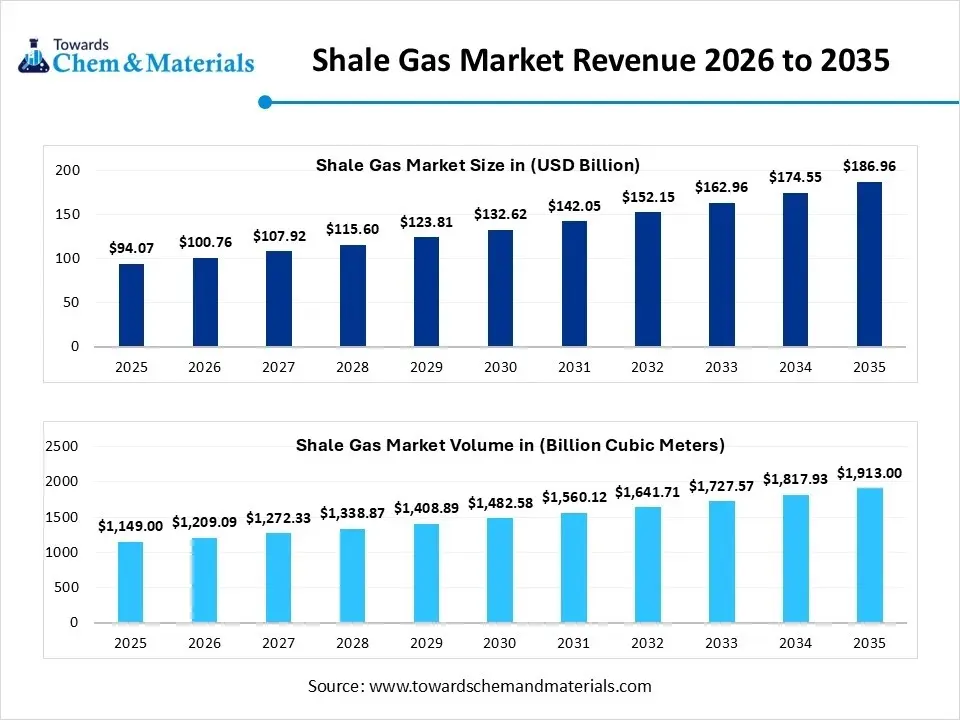
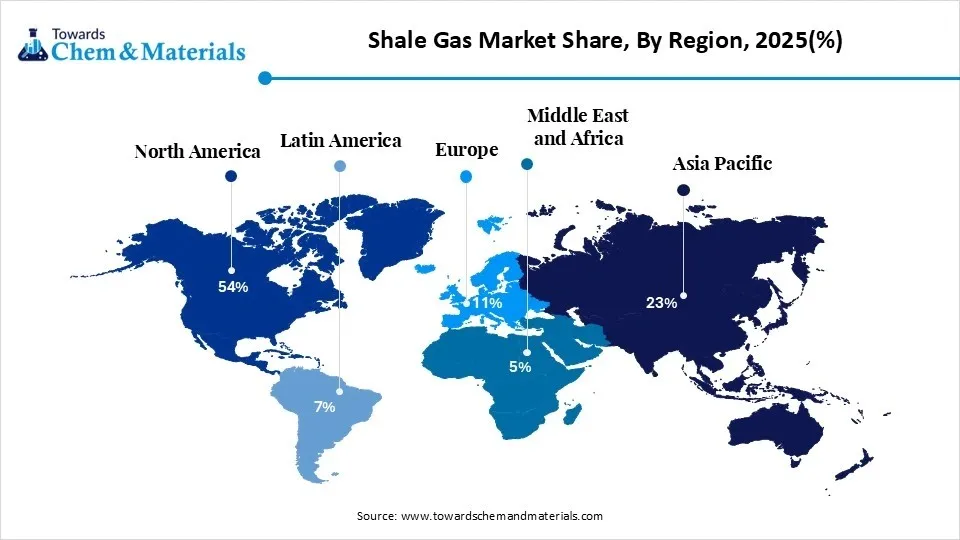
The shale gas market size was valued at USD 94.07 billion in 2025, is estimated to reach USD 100.76 billion in 2026, and is projected to reach USD 186.96 billion by 2035, exhibiting a compound annual growth rate (CAGR) of 7.11% over the forecast period from 2026 to 2035. North America dominated the shale gas market with the largest revenue share of 54% in 2025 and is expected to grow at the fastest CAGR of 7.21% during the forecast period.
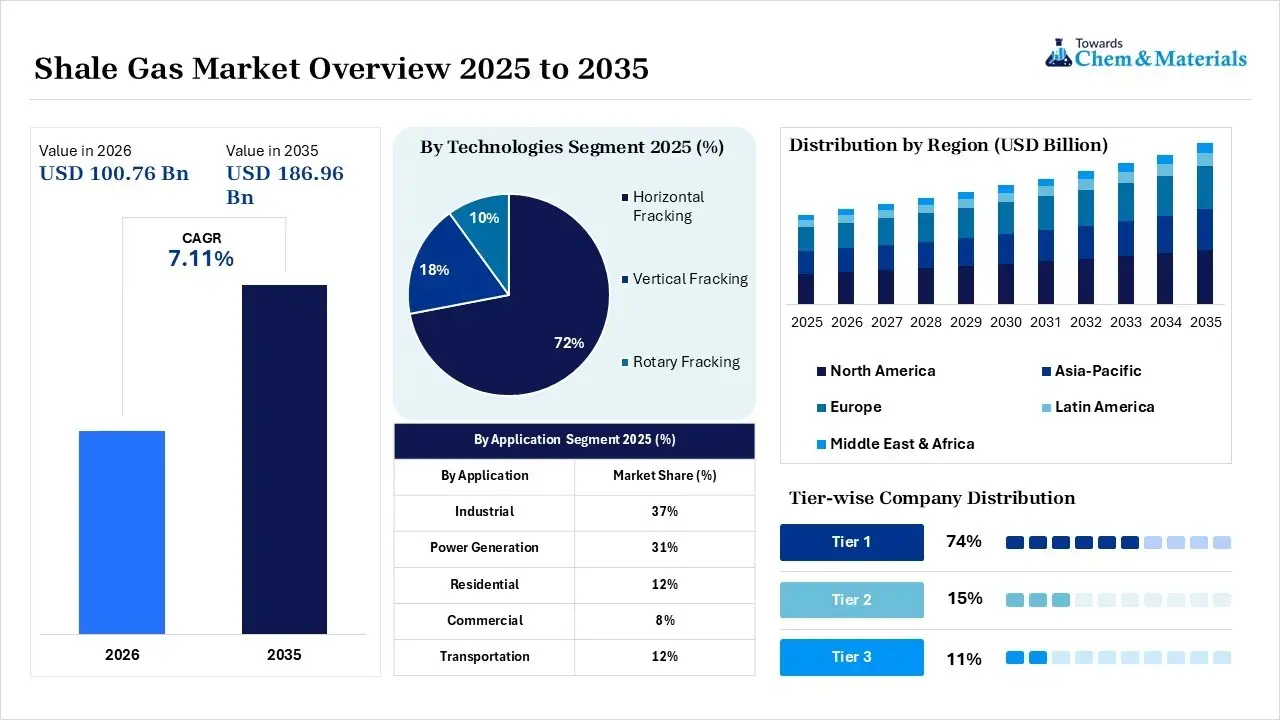
The rising energy demand and transition to using clean and cleaner-burning fuel due to rising environmental concerns and technological advancements in extraction technologies are also helping to lower costs in methods like hydraulic fracturing and horizontal drilling. The strategic partnerships between operators and national oil companies heavily drive the demand for AI-based centers and the expansion of LNG exports, such as operators like ExxonMobil, Chevron, ConocoPhillips, Chesapeake Energy, and Devon Energy, which play a major role in the market expansion for the coming years.
Market Highlights
- By region, North America dominated the shale gas market with a share of 54% in 2025 and is expected to grow at a CAGR of 5.70% over the forecast period.
- By region, Asia Pacific held 23% in shale gas market share in 2025 and is expected to experience the fastest growth with a CAGR of 8.20% in the forecast period.
- By technologies, the horizontal fracking segment dominated the market with a 72% share in 2025 and is expected to grow at a CAGR of 6.80% over the forecast period.
- By technologies, the royalty fracking segment held 10% market share in 2025 and is expected to have the fastest growth with a CAGR of 7.40% in the forecast period.
- By application, the industrial segment dominated the market with a 37% share in 2025 and is expected to grow at a CAGR of 6.10% over the forecast period.
- By application, the transportation segment held 12% market share in 2025 and is expected to have the fastest growth with a CAGR of 7.20% in the forecast period.
According to Towards Chemicals and Materials Analytics and Consulting, the global shale gas market volume was valued at 3.16 million metric tons in 2025 and is expected to surpass around 8.42 million metric tons by 2035, accelerating a compound annual growth rate (CAGR) of 10.30% over the forecast period from 2026 to 2035.
Market Overview
Shale Gas: Economic and Environmental Impacts
Shale gas is an unconventional natural gas that is composed of methane as a primary material; it is the most important source of natural gas. Shale gas is natural gas that is trapped inside fine-grained sedimentary rock, which is used for generating electricity, heating homes and businesses, cooking, and powering industrial manufacturing, increasing the demand for the market. It is a main ingredient or main chemical used in manufacturing or producing materials like fertilizers, antifreeze, and plastics. As the shale gas is poorly porous, that is have very low permeability, it cannot flow freely, which is why it requires advanced extraction techniques like hydraulic fracturing and horizontal drilling.
Shale gas has a big impact on the environment and the economic level; the economic transformation, particularly in the United States, according to the Energy Information Administration, has helped lower energy costs and boost domestic energy independence, and shift towards export of materials. The energy transition, as shale is a cleaner fuel than coal, lowers carbon emissions and air pollutants for an equal amount of energy. The presence of global shale gas basins includes commercially developed reserves, which are located in the US, such as Marcellus Shale, Vaca Muerta in Argentina, Montney formation in Canada, and Sichuan in China, which are major growth factors in the growth of the market.
- For instance, in February 2026, Saudi Aramco launched a $110 billion development for the Jafurah field, making it the largest unconventional gas project outside the US. Aramco finalized agreements in February 2026 to launch its first-ever export shipments of high-value ultra-light crude condensate from the field.(Source:egyptoil-gas.com)
Global Investment Flow for Shale Gas Market 2026
- The growing investments in the market through major players like Permian and Appalachian basins, and emerging opportunities and demand for massive investments for infrastructure developments of reservoir and high production, and expanding export operations meeting the global energy and AI center demand drive the demand for heavy investments.
- In March 2026, Cairn Oil & Gas, the energy vertical of Vedanta Limited, announced an aggressive $5 billion investment and partnership framework to kickstart Indias commercial shale development. The strategic initiative aims to bring American tight oil and shale technology to India to help escalate the companys total production to 1 million barrels of oil equivalent per day over the next decade.(Source: www.indianewsnetwork.com)
- In January 2026, Essar Oil and Gas Exploration & Production Ltd (EOGEPL) announced a $100 million investment drilling program at its flagship Raniganj East block in West Bengal. While the primary focus is scaling up its leading Coal Bed Methane (CBM) production, the company is concurrently launching technical frameworks to unlock the blocks underlying shale gas potential.(Source: www.essar.com)
Report Scope
| Report Attributes | Details |
| Market Size in 2026 | USD 100.76 Billion/ 1,209 Billion Cubic Meters |
| Expected Size in 2035 | USD 186.96 Billion/ 1,913 Billion Cubic Meters |
| Growth Rate | CAGR of 7.11% |
| Base Year of Estimation | 2025 |
| Forecast Period | 2025-2035 |
| Dominant Region | North America |
| Segment Covered | By Technologies, By Application, By Region |
| Key Companies Profiled | Shell (UK), BP (UK), TotalEnergies (France), Occidental Petroleum (USA), PetroChina / CNPC (China), Sinopec / China Petroleum & Chemical Corporation (China), Equinor (Norway), Antero Resources (USA), Devon Energy (USA), EOG Resources (USA), Range Resources (USA), Coterra Energy (USA), Southwestern Energy (USA), Repsol (Spain), Marathon Oil (USA) |
Market Trends
- Technological and environmental advancements, like the adoption of green fracking through the integration of AI for real-time monitoring of the reservoir to minimize the environmental impact and the implementation of methane monitoring technologies, are a growing trend in the market.
- The industrial and petrochemical sectors, and feedstock demand in the chemical industry, due to being a cost-effective fuel, increase the demand for the market.
- The global shift and expansion towards the use of LNG is boosting shale gas monetization, and demand for reliable and flexible energy in the international market is a major trend in the market.
- The Major upstream operators are pursuing large-scale mergers such as Devon Energy and Coterra Energy’s merger and Shell’s acquisition of ARC Resources to consolidate assets, improve operational efficiencies, and optimize resource extraction.
Shale Gas Core Technological Shifts and AI Applications
The growing shift towards AI optimization and integration is evolving the shale gas market. The shift is also helping the industry from experience-based operations to data-intelligent operations is a major factor. The technological shift towards combining cloud computing and ML helps in processing real-time geological data, which helps in maintaining the data and also helps in the prediction of the database of companies and the presence of material worldwide. The set of options, including production, intelligent practices like Halliburtons Prodigi or Schlumbergers Kinetix, physics informed neutral networks, digital twins, and automation, is the core of applications and technological shifts in the growth.
- For instance, A comprehensive analysis published by the Deloitte Research Center for Energy & Industrials in April 2026 details a shifting economic paradigm within the U.S. shale patch, highlighting how consecutive waves of technological and financial evolution have drastically reduced baseline production expenses.(Source: www.deloitte.com)
Supply Chain Analysis of Shale Gas Market
Shale Gas Exploration, Production & Processing
- Shale gas is extracted from shale formations through horizontal drilling and hydraulic fracturing, followed by gas gathering, processing, and purification to remove impurities before distribution for industrial, commercial, and residential applications.
- EOG Resources is a leading shale gas producer with extensive operations in major unconventional resource basins. The company applies advanced drilling and hydraulic fracturing technologies to improve production efficiency, resource recovery, and operational performance.
- Key Players: ExxonMobil, Chevron, ConocoPhillips, EOG Resources.
Quality Testing & Certification
- Shale gas production must comply with standards for well integrity, natural gas quality, environmental protection, emissions control, and operational safety before commercial distribution.
- Key Authorities & Standards: American Petroleum Institute, International Organization for Standardization, U.S. Environmental Protection Agency, Occupational Safety and Health Administration.
- ExxonMobil operates shale gas assets while implementing quality management systems, environmental monitoring, and operational safety practices that support compliance with industry regulations and production standards.
Distribution to End-Use Industries
- Shale gas is supplied to power generation companies, petrochemical manufacturers, industrial facilities, residential and commercial gas utilities, and LNG processing plants for energy generation and chemical production.
- ConocoPhillips supplies shale gas from major unconventional plays to domestic and international markets, supporting electricity generation, industrial fuel requirements, petrochemical feedstocks, and LNG value chains through its integrated energy operations.
- Key Suppliers: ExxonMobil, Chevron, ConocoPhillips.
What are the Key Benefits and Uses of Shale Gas Products?
Shale gas is natural gas trapped in impermeable sedimentary shale rock formations, which is extracted through hydraulic fracturing and horizontal drilling, used extensively for electrical generation, residential heating, and industrial manufacturing. It is extensively used to lower energy costs and to replace fossil fuels, which increases the demand for shale gas. The most important benefit that supports the growth is the environmental impact due to its low carbon emissions.
The Key Benefits of Shale Gas Include:
- Cleaner Than Coal: When the gas is combusted for electricity, it produces or emits a lower amount of greenhouse gases, especially lower carbon emissions, which increasingly contribute to environmental regulation, and it also produces virtually no ash or particulate wastes when compared to coal, aligning with environmental concerns.
- Energy Security and Independence: The growing domestic production and shale reserves decrease dependency on foreign energy imports and help in stabilizing the national energy supplies, helping to lower the cost of gas, which is a major benefit offered.
- Economic Growth: Infrastructure development and investment through the operators stimulate local economies, which also helps in creating opportunities for jobs in processing and drilling and generating tax revenues, which benefits the growth of the adoption.
- Lower Consumer Costs: The massive influx of recovered shale gas drastically increases natural gas supplies, which leads to reduced energy prices for consumers and businesses, supporting the growth of the market.
The Key Uses of Shale Gas Are
- Power Generation: the efficiency and adjustability of the fuel make it a preferred choice for power generation, and it is also an efficient fuel in combined cycle power plants, increasing its use.
- Residential and Commercial: being the most efficient and clean fuel, it is used directly to heat homes, like furnaces and water heaters, and also as a commercial fuel for cooking, which is a major use.
- Industrial Sector: Shale gas is extensively used in industries, for industrial boilers, manufacturing processes, and furnaces, as they require high heat, driving the use in large quantities.
- Petrochemical Feedstocks: Shale gas is processed to produce chemical compounds that are used for producing and manufacturing everyday materials like plastics, antifreeze, and fertilizers, which is a major use of shale gas.
- Transportation: The extensive use and adoption of shale gas is increasingly as a cleaner fuel alternative to gasoline and diesel for all kinds of transport, especially public transit buses and heavy-duty commercial vehicles.
Shale Gas Regulatory Landscape
| Country / Region | Regulatory Body | Key Regulations | Focus Areas | Notable Notes |
| United States | Environmental Protection Agency; Bureau of Land Management | Clean Air Act; Safe Drinking Water Act; Federal Onshore Oil and Gas Leasing Reform Act | Hydraulic fracturing, emissions control, groundwater protection | The U.S. is the largest shale gas producer, with regulations focused on safe extraction, environmental protection, and resource development. |
| Canada | Canada Energy Regulator; Environment and Climate Change Canada | Canadian Environmental Protection Act; Impact Assessment Act | Shale gas development, environmental monitoring | Canada supports responsible shale gas production through strict environmental assessment and operational safety standards. |
| China | National Energy Administration; Ministry of Ecology and Environment | Mineral Resources Law; Environmental Protection Law | Domestic gas production, energy security | China is expanding shale gas exploration and production to strengthen domestic energy supply and reduce import dependence. |
| Argentina | Secretariat of Energy; Ministry of Environment and Sustainable Development | Hydrocarbon Law; Environmental Protection Regulations | Unconventional gas development, resource management | Argentina is promoting shale gas production, particularly in the Vaca Muerta formation, through investment and supportive regulatory policies. |
| United Kingdom | North Sea Transition Authority; Environment Agency | Petroleum Act; Environmental Permitting Regulations | Exploration, environmental safety | The UK regulates shale gas exploration under strict environmental and operational requirements, with hydraulic fracturing subject to government policy. |
| India | Directorate General of Hydrocarbons; Ministry of Petroleum and Natural Gas | Hydrocarbon Exploration and Licensing Policy; Environmental Protection Act | Unconventional hydrocarbon exploration, resource development | India is encouraging shale gas exploration to diversify domestic energy resources while ensuring environmental compliance. |
What are the Key Product Types of Shale Gas Products?
Shale gas is extracted as natural gas and oil from shale formations through processes like hydraulic fracturing and fracking. Shale gas primarily yields methane and different quantities of natural gas liquids. These products, after extraction and processing, are then categorized into specific types and marketable commodity types. These gases are then categorized into their hydrocarbon compositions, like dry shale gas, wet shale gas, natural gas liquids, shale condensate, and liquefied natural gas.
The Key Products Include:
- Dry Shale Gas: It is generally composed of 90-95% pure methane, with a small amount or no heavier hydrocarbons. It is used primarily for the generation of electricity, district heating, and also for cooking. It is a natural gas that is distributed through pipelines in the city, especially for cooking.
- Wet Shale Gas: it is composed primarily of methane and 20% of heavier hydrocarbons, which are butane, propane, and ethane, which at surface temperatures condense into liquids. They are heavily used and valuable for petrochemical plants. It is widely used in chemical intermediates as it is the main raw source for producing ethylene and other chemical intermediates.
- Natural Gas Liquids: They are extracted from wet gas streams and are composed of ethane, propane, butane, and pentane. They are primarily used for domestic heating and for household or commercial cooling, and as a vehicle fuel. It is also a primary building block for the production of plastics and synthetic polymers.
- Shale Condensate: It is composed of a mixture of ultra-light hydrocarbons, which drop out of the gas in the production pipelines, which is known as lease condensate. This is primarily used or sent to the refineries to process the gas into transportation fuels like diesel, kerosene, and gasoline.
- Liquefied Natural Gas: It is produced by cooling methane from dry shale gas, which is cooled to -162oC which shrinks its volume by 600 times. They are primarily transported through specialized cryogenic tankers across oceans for global energy export.
Market Dynamics
Drivers:Energy Security and Cost Competitiveness
The shale gas market is driven by the rising global demand for cleaner-burning fuels, which is transitioning fuel demand, along with advanced extraction technologies like horizontal drilling and hydraulic fracturing, which make extraction efficient, driving the growth of the market. The lower cost of production and improved energy security are also major growth drivers. The domestic production of shale gas reduces reliance on the import of fuels from foreign countries, reduces the cost, and technological improvements and economies of scale drive the sector growth and power generation sector, supporting the growth and demand.
Challenges:Environmental and Regulatory Concerns
The shale gas market faces many challenges, especially severe water scarcity and high environmental impact concerns hindering the growth of the market. The structural regulatory barriers and high decline rates of wells are challenges to market growth. The environmental and regulatory concerns are the major challenge that is impacting the expansion and development of shale gas, including economic and financial viability, restraining the growth of the market.
Opportunities :Expansion in Emerging Markets
The key growth opportunities of the shale gas market are the advanced extraction technologies, which involve innovation in horizontal drilling and hydraulic fracturing, which are integrated with AI and data-driven digital solutions, which reduce exploration costs and increase the recovery rates. The expansion in emerging markets like China, Argentina, and Algeria is a major driver through government initiatives and reduces the reliance on imported fuels with major investments. The other major growth opportunities are a strategic role in energy transitions, green fracking, and environmental solutions. These factors, paired with abundant global reserves, drive demand for power generation and chemical manufacturing.
Segmental Insights
Technologies Insights
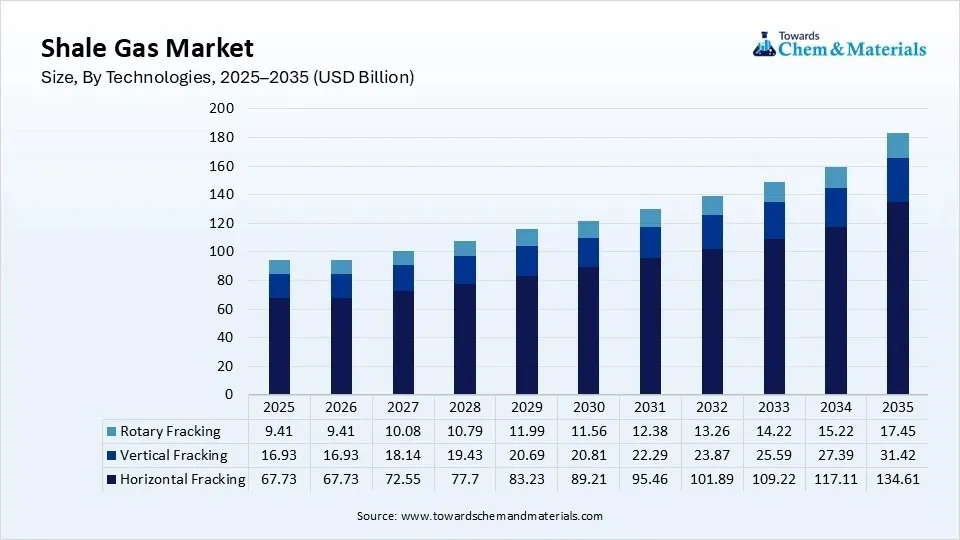
The horizontal fracking segment dominated the market with a 72% share in 2025 and is expected to grow at a CAGR of 6.80% over the forecast period. Horizontal fracking is a process that combines directional drilling and hydraulic stimulation to extract the gas trapped in impermeable shale rock. It involves casing and cementing, perforation, high-pressure injection, fracturing and propping, and flowback and production, which are the major steps in the extraction of shale gas by horizontal fracking.
- For instance, in April 2026, Egypt officially launched a strategic initiative to deploy horizontal drilling and hydraulic fracturing (fracking) technologies to reverse domestic production declines. Petroleum and Mineral Resources Minister Karim Badawi, the state-backed push introduces aggressive fiscal reforms designed to attract global oilfield service companies to Egypts unconventional reservoirs.(Source:egyptoil-gas.com)
The rotary fracking segment held 10% market share in 2025 and is expected to have the fastest growth with a CAGR of 7.40% in the forecast period. This combines rotary drilling with hydraulic fracturing to unlock gas trapped in impermeable rock. The core mechanics of the process include directional rotary drilling, perforation, high-pressure injection, and propping fractures. Modern rotary fracking methods allow for continuous drilling and steering, which shortens overall well completion times and decreases operational risks in complex geological plays.
Shale Gas Market Share,By Technologies , 2025(%)
| By Technologies | Market Share (%) |
| Horizontal Fracking | 72% |
| Vertical Fracking | 18% |
| Rotary Fracking | 10% |
Application Insights
The industrial segment dominated the market with a 37% share in 2025 and is expected to grow at a CAGR of 6.10% over the forecast period. Shale gas is used in industries due to its low-emission energy source and as a chemical feedstock. In industries, shale gas is used for direct heat processes, electrical generation, and as a raw material in petrochemical manufacturing. It is also used in the food and beverage processing industry, which utilizes the clean-burning fuel for drying, baking, sterilization, and pasteurization. The industrial clusters are increasing their use of shale gas to generate blue hydrogen to reduce their carbon footprints, driving the demand.
- For Instance, in May 2026, Sinopec secured official government approval for 235.687 billion cubic meters (Bcm) of proven geological reserves at the Ziyang Dongfeng field in Chinas Sichuan basin. This milestone marks Chinas very first ultra-deep shale gas discovery to cross the 100 Bcm threshold.(Source:worldoil.com)
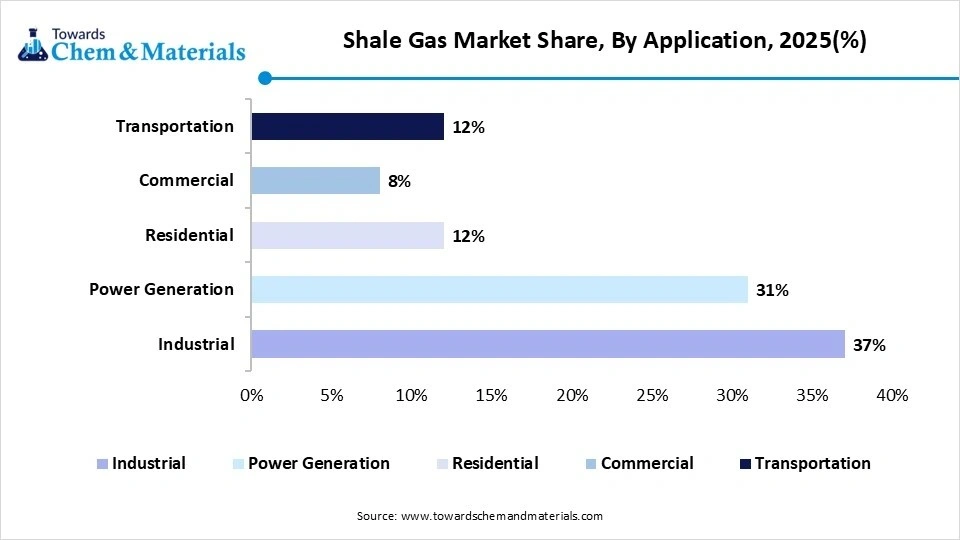 The transportation segment held 12% market share in 2025 and is expected to have the fastest growth with a CAGR of 7.20% in the forecast period. It is used as CNG and LNG in the transportation sector, which increases the growth. The key applications of shale gas in transportation include heavy-duty commercial vehicles, marine shipping, public transit, and as synthetic fuels, due to its cost-effectiveness and environmental regulations. The reduced emissions and cost differentials with heavy investments are the major growth factors in the expansion of the shale gas market.
Shale Gas Market Share,By Application , 2025(%)
| By Application | Market Share (%) |
| Industrial | 37% |
| Power Generation | 31% |
| Residential | 12% |
| Commercial | 8% |
| Transportation | 12% |
Regional Analysis
How did North America dominate the Shale Gas Market in 2025?
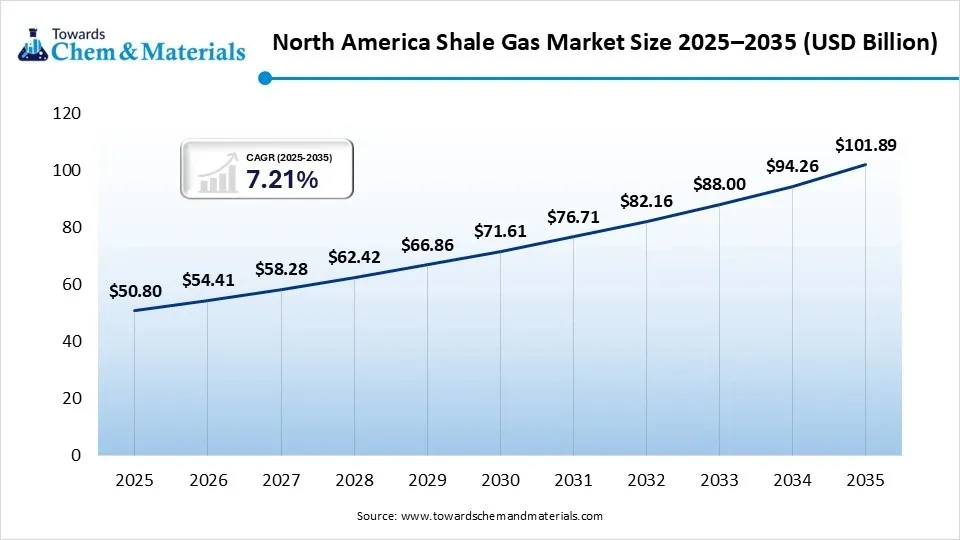
The North America shale gas market size was estimated at USD 50.80 billion in 2025 and is projected to reach USD 101.89 billion by 2035, growing at a CAGR of 7.21% from 2026 to 2035.North America dominated the market with a share of 54% in 2025 and is expected to grow at a CAGR of 5.70% over the forecast period, driven by the presence of massive reserves in the region, such as the Permian, Marcellus, and Haynesville basins, along with technological advancement and dominance. The strong presence of end users and the use of shale gas in industrial and petrochemical feedstock applications, as they are a cheap and reliable energy source, increases the demand. The widespread infrastructure development and export growth in the region support the expansion of the market.
- In January 2026, Petróleos Mexicanos (PEMEX) is increasing its 2026 hydraulic fracturing budget for the Aceite Terciario del Golfo (ATG) project in the Chicontepec Basin by 66%, totaling MX$4.016 billion (~US$215 million). This investment aims to reverse severe production declines in the region by targeting low-permeability, complex geological formations.(Source: mexicobusiness.news)
United States Shale Gas Key Production Hubs
The United States shale gas market is experiencing growth, driven by the US being a global LNG exporter. The market is dominated by the presence of key production hubs in the US, like Marcellus, Haynesville, and Eagle Ford, supporting growth. Industrial and feedstock demand, such as anchoring steady demand for wet gas. The regulatory pressure in the US with evolving Environmental Protection Agency rules is increasing the well retrofitting costs, which helps develop margins for shale operators, supporting the growth and expansion of the market.
- For instance, in January 2026, US fracking pioneers are expanding internationally as domestic shale production plateaus due to the depletion of high-quality tier-one reserves. Major American operators are targeting regions including Venezuela, the Middle East, Argentina, and Australia for new shale development over the next three to five years.(Source: www.ft.com)
Canada Core Shale Basins
The shale gas market in Canada is driven by the massive high-yield formations in the basins like the Western Canada Sedimentary Basin, especially Montney and Duvernay. Canadas steady and exponential exports are major growth factors in the market. The presence of key players or producers like Tourmaline Oil, ARC Resources, and Ovintiv, who are extensively investing in drilling inventories, also supports the growth of the market.
- For instance, in April 2026, Shell plc entered into a definitive agreement to acquire the Canadian energy producer ARC Resources Ltd for a total enterprise value of approximately $16.4 billion. The milestone transaction marks Chief Executive Officer Wael Sawan’s largest acquisition since taking the helm, positioning Western Canada as a major strategic core for the energy supermajor.(Source: www.shell.com)
Asia Pacific Shale Gas Market Growth Factor
The Asia Pacific shale gas market size was estimated at USD 21.64 billion in 2025 and is projected to reach USD 43.94 billion by 2035, growing at a CAGR of 7.34% from 2026 to 2035.Asia Pacific held the market share of 23% in 2025 and is expected to have the fastest growth with a CAGR of 8.20% in the forecast period. The growth is driven by reducing the dependence of the industries on coal, along with the expansion of gas infrastructure in the region, with supportive government policies. The regions reliance on the import of shale gas has aggressively increased investment in domestic shale gas extraction to disrupt the volatile pricing of the imported gas. The rapid industrialization and urbanization in the region are increasing the regional natural gas consumption, which in turn increases the demand for the market.
- For instance, in January 2026, Mitsubishi Corporations strategic partnerships in the upstream shale gas sector are extensively anchored across several major global hubs. Before taking over Aethon Energys assets, the Japanese trading house established key operational joint ventures and logistical positions to feed its international energy network.(Source: www.cnbc.com)
India Government Initiates Clean Fuel
Indias shale gas market is experiencing growth driven by the transition towards the use of clean and green energy to meet the stringent carbon emission targets, as the government in the country is actively promoting the use of natural gas for industries such as power generation and residential heating. The regulatory and financial support in the country, backed by strategic collaborations and policies, is expanding the growth of the market in the country.
China Growing Domestic Production
China is experiencing steady growth in the shale market through strategic partnerships with the leading operators across the globe to increase domestic production, and lowering the dependency on imports, cut down the cost, and increase economic growth through job opportunities in domestic production. The technological advancements in the country for extraction to improve production efficiency are a major growth factor, which supports expansion.
- For Instance, in February 2026, Kazakhstan officially launched its entry into the unconventional hydrocarbons market by partnering with a China consortium to develop the Sozak field in the Kyzylorda region. Announced in February 2026, this marks the nations first-ever development framework targeting hard-to-recover gas. It relies heavily on technical transfer from the worlds leading shale nations.(Source: qazinform.com)
Europe Shale Gas Market Growth Factor
The Europe shale gas market size was estimated at USD 10.35 billion in 2025 and is projected to reach USD 20.57 billion by 2035, growing at a CAGR of 7.11% from 2026 to 2035.Europe held a market share of 11% in 2025, driven by energy security and efforts to reduce reliance on imports of natural gas, which drives the growth. European nations are considering the domestic production of LNG, particularly. The significant and stringent environmental regulations and widespread public opposition drive the growth. The strict environmental policies, moratoriums, and outright bans on hydraulic fracturing in countries in the region are limiting commercial exploration, driving the growth of the market.
Germany Increases LNG Infrastructure
Germanys "shale gas market" is largely theoretical and stagnant. The primary growth factors are tied to domestic policy debates: energy supply uncertainties and the need for grid stability to offset intermittent renewable energy. Instead of domestic extraction, the market growth in Germany primarily revolves around Liquefied Natural Gas (LNG) infrastructure to secure imported gas.
Italy Pipeline Imports
Italys shale gas market growth is fundamentally driven by the urgent need to ensure domestic energy security and reduce reliance on pipeline imports from places like Algeria and Russia. Sustained demand from Italys manufacturing and chemical sectors, which require reliable heating and chemical feedstock, increases the demand for the market.
Latin America Shale Gas Market Growth Factor
The Latin America shale gas market size was estimated at USD 6.58 billion in 2025 and is projected to reach USD 14.02 billion by 2035, growing at a CAGR of 7.86% from 2026 to 2035.Latin America held a market share of 7% in 2025, driven by Argentina’s Vaca Muerta formation, the worlds second-largest unconventional gas reserve. Key growth factors include substantial government incentives, surging industrial demand, and the drive to replace expensive regional imports to achieve energy sovereignty. Argentinas push for massive, long-term capital investments such as the large-scale energy projects incentivized by the country’s RIGI regime is drastically accelerating upstream and midstream infrastructure development.
Brazil Government Support Expanding Market
Brazils potential shale gas market is primarily driven by the need to increase domestic energy security, surging industrial demand for natural gas as a transition fuel, and supportive government exploration policies. The significant growth is driven by technological advancements, which lower the extraction costs. The Brazilian Ministry of Mines and Energy views unconventional shale exploration as a strategic priority to augment the gas supply. Regulatory frameworks are evolving to incentivize exploration, particularly in high-potential areas in the Southeast and South regions.
Argentina: Massive Favourable Policy & Deregulation
Argentina’s shale gas market growth is primarily driven by the massive unconventional reserves of the Vaca Muerta formation, recent market-friendly policy reforms, expanded pipeline infrastructure, and strong international demand for energy diversification. Recent economic and regulatory reforms have reignited domestic and international investor confidence, drawing billions in commitments from major global players like Chevron, ExxonMobil, and Shell.
- For Instance, in March 2026, Argentinas Vaca Muerta formation is experiencing a significant investment surge, with projections to reach 1 million barrels of oil per day (bpd) in 2026. Driven by the RIGI incentive framework, YPF has committed $25 billion, while Chevron plans $13.8 billion for infrastructure projects by late 2026.(Source: discoveryalert.com.au)
Middle East and Africa Shale Gas Market Growth Factor
The Middle East and Africa shale gas market size was estimated at USD 4.70 billion in 2025 and is projected to reach USD 10.28 billion by 2035, growing at a CAGR of 8.14% from 2026 to 2035.The Middle East and Africa held a market share of 5% in 2025, driven by efforts to diversify energy portfolios, reduce heavy reliance on crude oil exports, and meet rapidly rising domestic electricity and industrial demands. MEA countries are rapidly expanding downstream industries like petrochemicals and power generation. Exploring unconventional gas resources, such as shale and tight gas, allows these nations to save valuable crude oil for export while utilizing domestic gas for electricity and manufacturing.
Saudi Arabia Monetizing Crude Oil Exports
Saudi Arabia’s shale gas market is primarily driven by the need to free up crude oil for export, diversify energy sources, and support domestic industrial growth. Saudi Arabia burned massive volumes of crude oil domestically for power generation and utilities. Extracting domestic shale gas such as the massive Jafurah Basin replaces these liquid fuels, allowing the Kingdom to export an additional ~500,000 barrels of crude per day and significantly boost export revenues without exceeding OPEC+ quotas. The market is also bolstered by specialized innovations in engineered proppants that keep fractures open in deep, challenging desert reservoirs.
UAE Massive Government Capital Injections
The primary growth factor for the UAE shale and unconventional gas market is the strategic drive to achieve total gas self-sufficiency by the late 2020s, eliminating the need for pipeline imports. This push is led by ADNOCs multi-billion-dollar unconventional drilling programs, supported by advanced hydraulic fracturing technologies. The adoption of horizontal drilling and advanced hydraulic fracturing has made previously inaccessible shale and tight gas formations economically viable.
Recent Developments
- In July 2026, Mitsubishi Corporation finalized its acquisition of Dallas-based Aethon Energy’s natural gas assets in a massive $7.5 billion transaction. First announced in January, the deal legally closed in July 2026 and stands as the largest acquisition ever made by a Japanese company in the American shale sector.(Source: fortune.com)
Competitive Analysis
- The shale gas market is experiencing rapid growth due to the presence of companies like ExxonMobil, Chevron, ConocoPhillips, Shell, and TotalEnergies, which drives massive domestic extraction and distribution.
For instance, in May 2025, TotalEnergies’ local subsidiary, Total Austral, put a $33 million high-voltage power line into operation in Neuquén, Argentina. The critical infrastructure milestone marked the completion of the first stage of electrifying the company’s key shale assets in the Vaca Muerta formation.(Source: www.bnamericas.com) - For instance, in January 2025, Argentina’s state-owned energy company, YPF, signed a strategic Memorandum of Understanding (MoU) with three major Indian firms—GAIL, OIL, and OVL to secure up to 10 million tons per year (MTPA) of liquefied natural gas (LNG). This mega-deal is centered directly on utilizing the massive reserves of Argentinas Vaca Muerta shale gas formation.(Source: www.financialexpress.com)
Top Players in the Shale Gas Market & Their Offerings
| Company | Company Type/Position | Major Headquarters | Geographic Presence | Shale Gas Offerings | Key Offering/Strength |
| ExxonMobil Corporation | Global integrated oil and gas company | Spring, Texas, USA | North America, Europe, Asia Pacific, Middle East | Shale gas exploration, production, natural gas processing, and upstream operations | Large-scale shale gas assets supported by advanced drilling and reservoir management technologies |
| Chevron Corporation | Integrated energy producer | San Ramon, California, USA | North America, Asia Pacific, Europe, Africa | Shale gas exploration, hydraulic fracturing, natural gas production, and processing | Strong unconventional resource development and operational efficiency |
| ConocoPhillips | Independent exploration and production company | Houston, Texas, USA | North America, Europe, Asia Pacific | Shale gas exploration, production, and unconventional resource development | Extensive shale acreage with expertise in horizontal drilling and well optimization |
| EQT Corporation | Leading natural gas producer | Pittsburgh, Pennsylvania, USA | North America | Shale gas exploration, production, gathering, and transmission | Largest U.S. natural gas producer with a strong focus on Appalachian shale resources |
| Chesapeake Energy Corporation | Independent oil and natural gas company | Oklahoma City, Oklahoma, USA | North America | Shale gas exploration, production, and resource development | Strong expertise in unconventional shale formations and cost-effective production operations |
Other Top Players Are
- Shell (UK)
- BP (UK)
- TotalEnergies (France)
- Occidental Petroleum (USA)
- PetroChina / CNPC (China)
- Sinopec / China Petroleum & Chemical Corporation (China)
- Equinor (Norway)
- Antero Resources (USA)
- Devon Energy (USA)
- EOG Resources (USA)
- Range Resources (USA)
- Coterra Energy (USA)
- Southwestern Energy (USA)
- Repsol (Spain)
- Marathon Oil (USA)
Segments Covered:
By Technologies
- Horizontal Fracking
- Multi-stage Hydraulic Fracturing
- Extended Reach Horizontal Wells
- Vertical Fracking
- Conventional Vertical Wells
- Deep Vertical Wells
- Rotary Fracking
- Rotary Steerable Systems
- Advanced Rotary Drilling Systems
By Application
- Industrial
- Chemicals & Petrochemicals
- Steel Manufacturing
- Cement Production
- Food Processing
- Other Industrial Uses
- Power Generation
- Combined Cycle Gas Turbines
- Gas-fired Thermal Plants
- Cogeneration Plants
- Residential
- Space Heating
- Cooking
- Water Heating
- Commercial
- Hospitality
- Healthcare Facilities
- Educational Institutions
- Office Buildings
- Transportation
- CNG Vehicles
- LNG Heavy-duty Transport
- Marine Fuel
- Rail Transport
By Regions
- North America
- Europe
- Asia Pacific
- Middle East & Africa
- Latin America
FAQ's




Select User License to Buy
Figures (6)










 sales@towardschemandmaterials.com
 Download Sample
 Schedule a Meeting