Content
What is the Natural Ferulic Acid Market Size and Share?
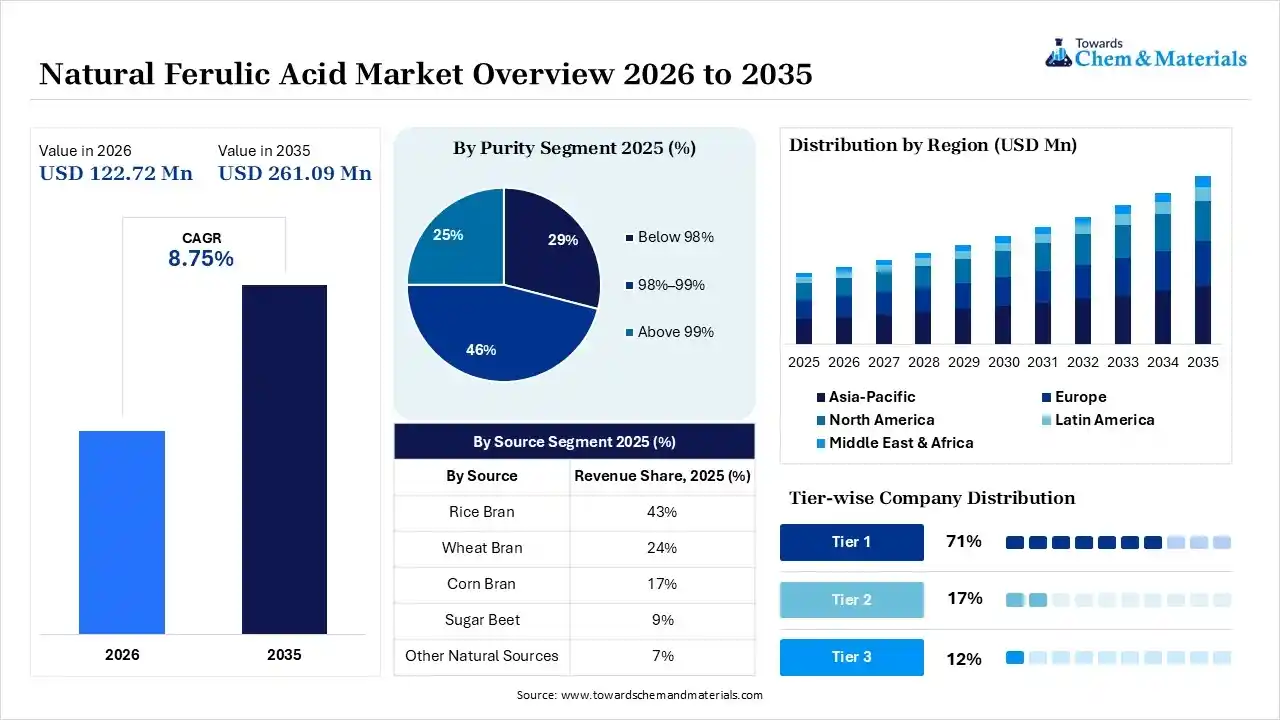
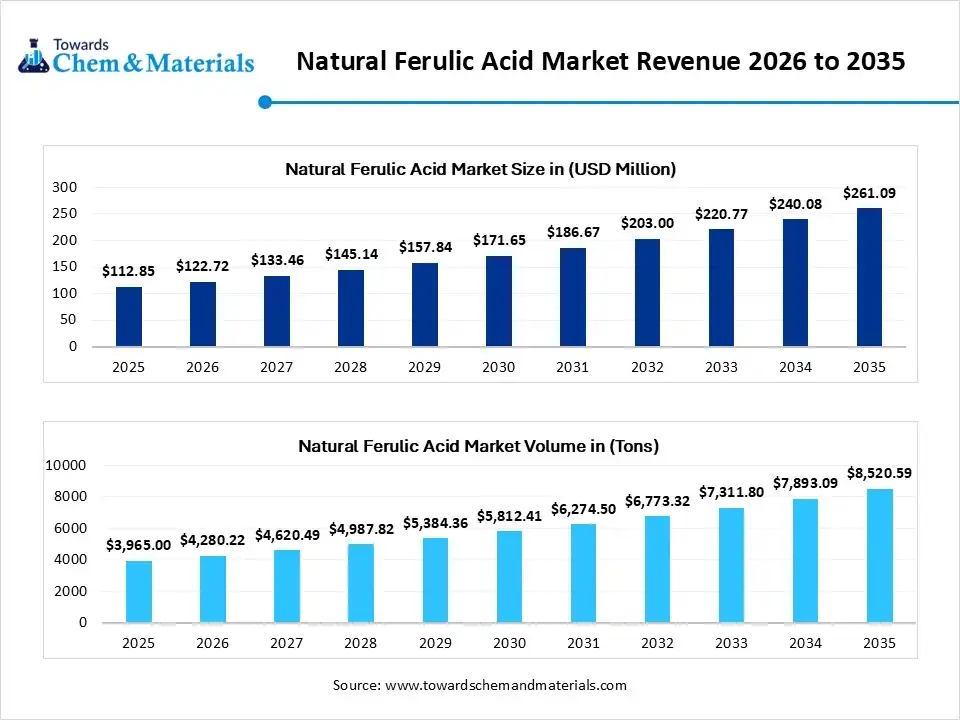
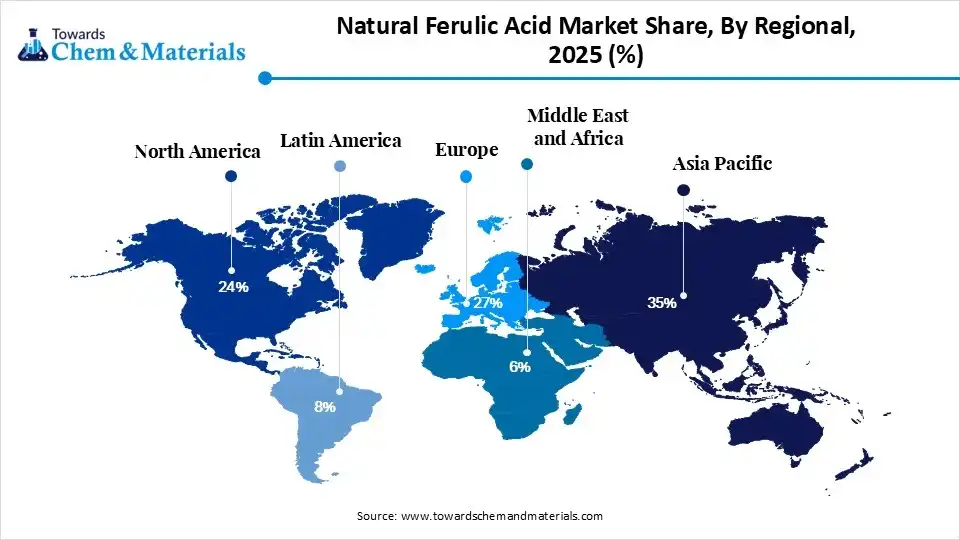
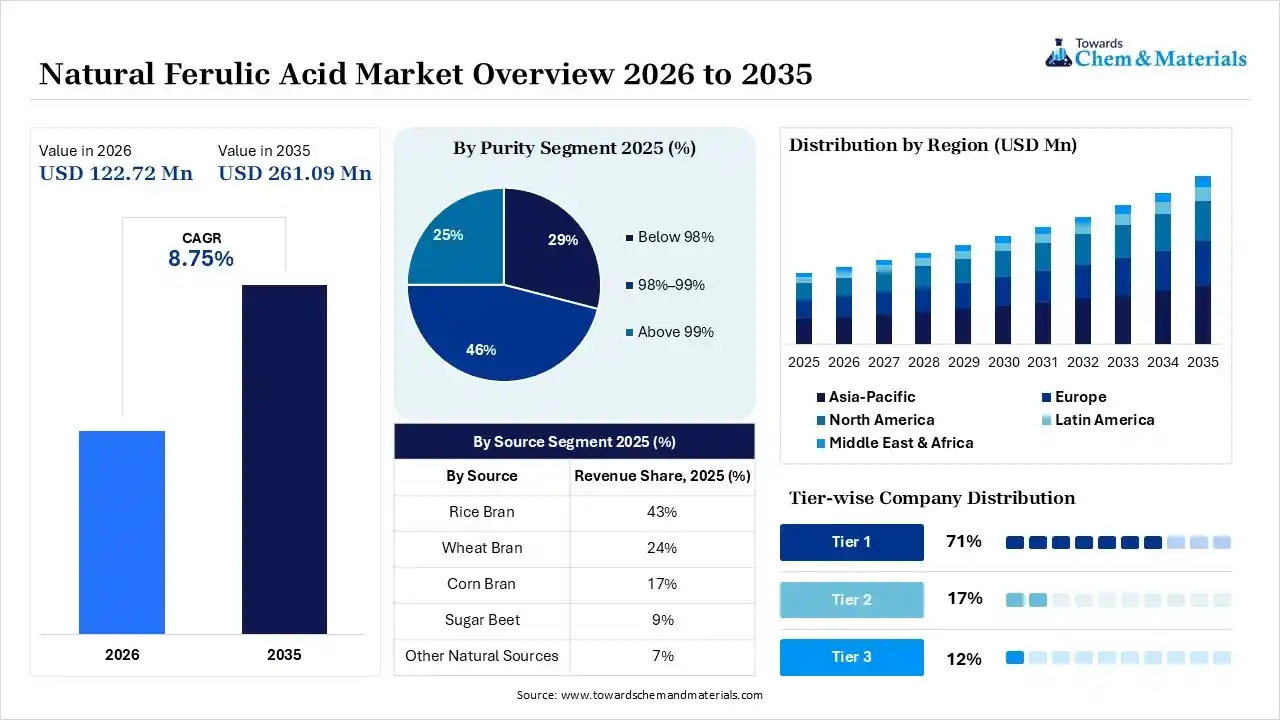
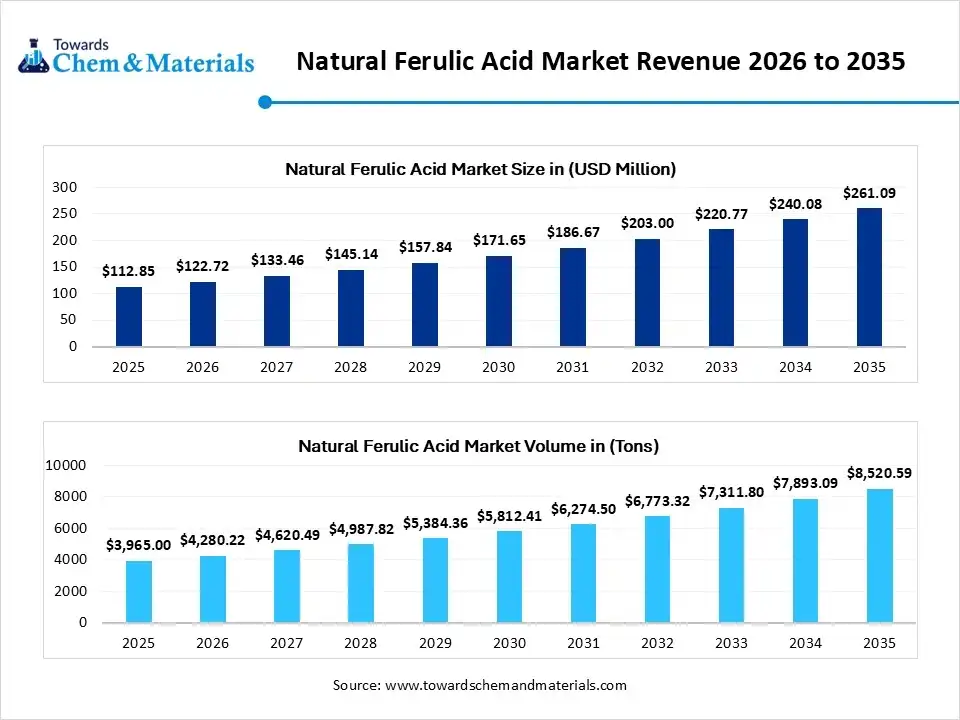
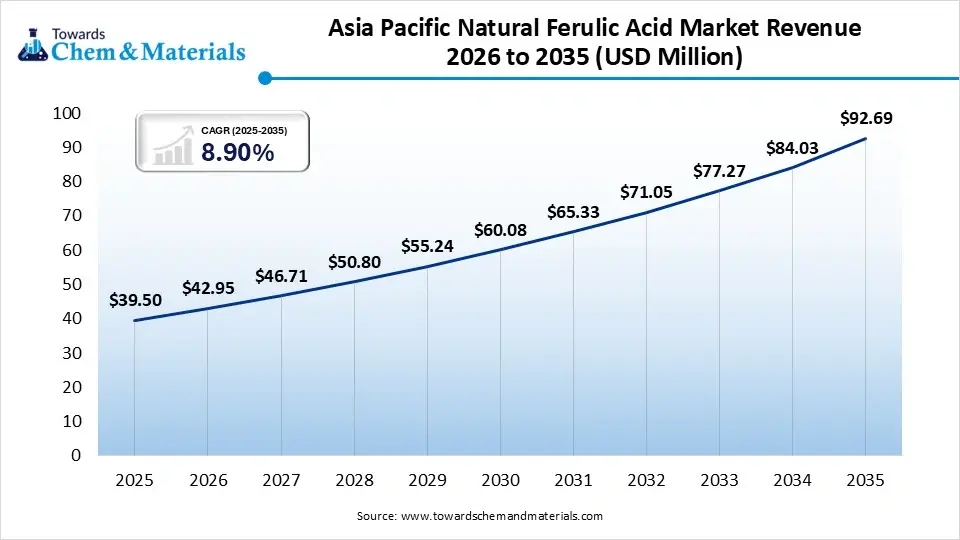
The global natural ferulic acid market size was valued at USD 112.85 million in 2025, is estimated to reach USD 122.72 million in 2026, and is projected to reach USD 261.09 million by 2035, exhibiting a compound annual growth rate (CAGR) of 8.75% over the forecast period from 2026 to 2035.Asia Pacific dominated the natural ferulic acid market with the largest revenue share of 35% in 2025 and is expected to grow at the fastest CAGR of 8.90% during the forecast period. In terms of volume, the natural ferulic acid market is projected to grow from 3965.00 tons in 2025 to 8520.59 tons by 2035. growing at a CAGR of 7.95% from 2026 to 2035. The market growth is driven by the increasing demand for ferulic acid in cosmetics, preservation of food products, pharmaceuticals, and animal nutrition, which is fueling the ferulic acid market. It has antioxidant, anti-inflammatory, and preservative properties, which contribute to the increasing application in skin care, health, and in feed additives and food.
Market Highlights
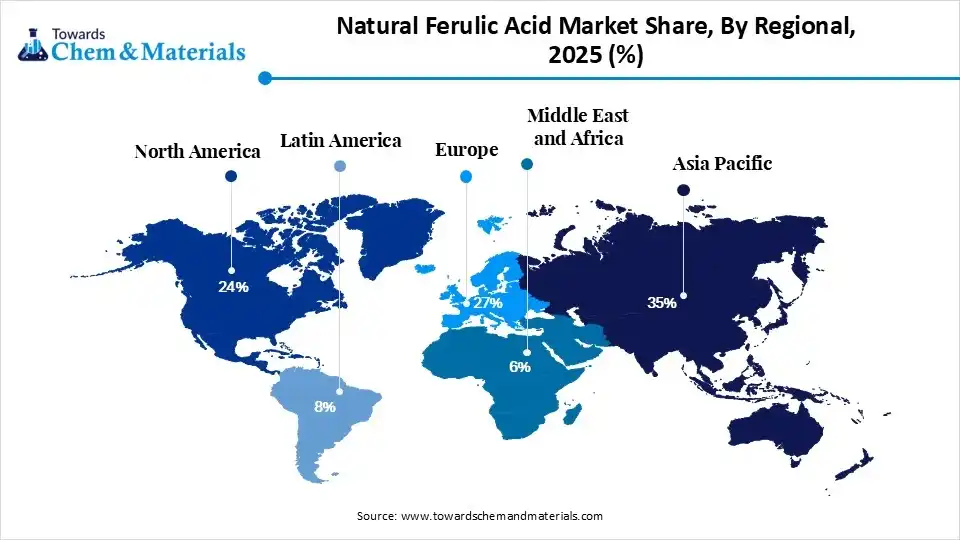
- By region, Asia Pacific dominated the natural ferulic acid market by holding 35% share in 2025, and is expected to grow at the fastest with a CAGR of 10.2% during the forecast period, driven by Rising health awareness, which boosts consumption.
- By region, Europe held the 27% market share in 2025, as regulatory compliance favors natural antioxidants.
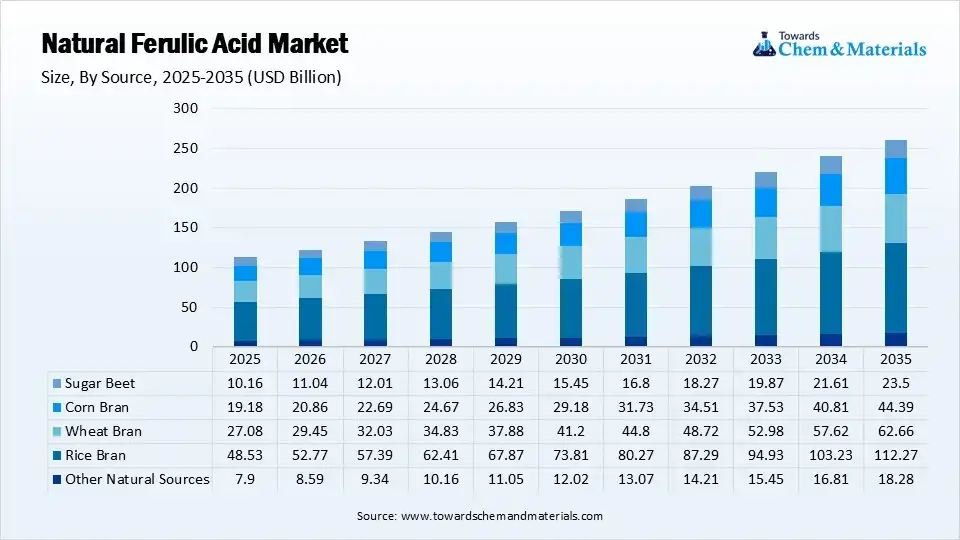
- By source, the rice bran segment dominated the market with the largest share of 43% in 2025, as rice processing generates large feedstock volumes.
- By source, the other natural sources segment held 7% market share in 2025 and is expected to grow at the fastest CAGR of 9.4% over the forecast period as interest in diversified botanical sources is increasing.
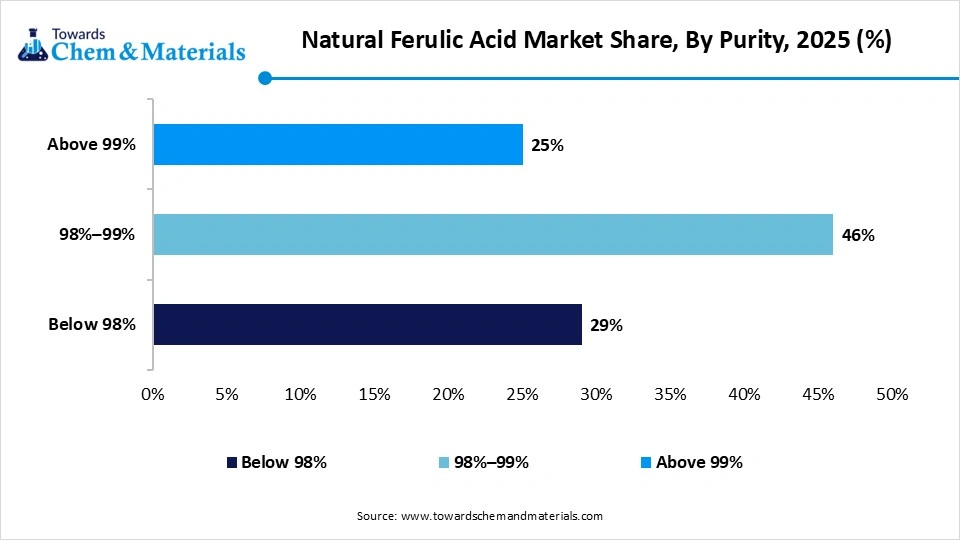
- By purity, the 98%-99% segment dominated the market with the largest share of 46% in 2025, as the cosmetics and food industries require consistent purity.
- By purity, the above 99% segment held 25% market share in 2025 and is expected to grow at the fastest CAGR of 9.6% over the forecast period, as pharmaceutical applications require ultra-high purity.
- By form, the powder segment dominated the market with the largest share of 63% in 2025, as easy handling and formulation support adoption.
- By form, the liquid segment held 23% market share in 2025 and is expected to grow at the fastest CAGR of 9.4% over the forecast period, driven by Formulation flexibility, which supports growth.
- By application, the cosmetics & personal care segment dominated the market with the largest share of 31% in 2025, as anti-aging and skin protection products drive consumption.
- By application, the nutraceuticals & dietary supplements segment held 23% market share in 2025 and is expected to grow at the fastest CAGR of 10.1% over the forecast period, driven by a boost in supplement usage.
Quick Stats at a Glance
- Market in Size 2025: USD 112.85 Million | CAGR (2026–2035): 8.75%
- Market Estimated Size in 2026: USD 122.72 Million
- Market Projected Size by 2035: USD 261.09 Million
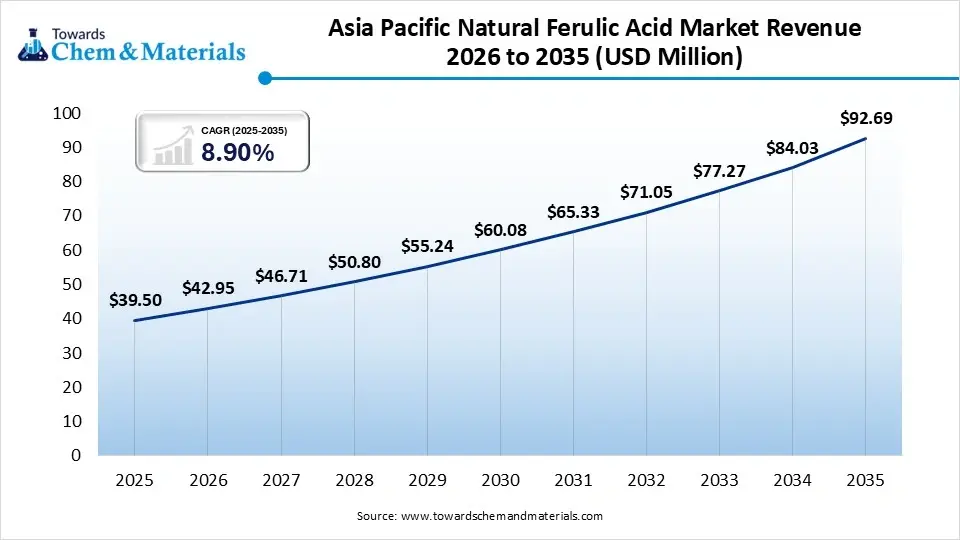
- Asia Pacific: largest Regional Market Revenue Share of 35% in 2025|USD 39.50 Million
- Europe: Fastest-growing Regional Market Revenue Share of 27% in 2025|USD 30.47 Million
- By country: The China held the largest Market share of 49% in 2025
- Market Volume in 2025: 3,965 Million Tons| Volume CAGR (2026–2035): 7.95%
- Market Estimated Volume in 2026: 4,280.22 Tons
- Market Projected Volume by 2035: 8,520.59 Tons
- Market Pricing (2025):
- Average Manufacturing Price: USD 19.86/kg
- Average Selling Price: USD 28.49/kg
- Pricing CAGR (2026–2035): 2.85%
The natural ferulic acid market is growing at a moderate rate, owing to the rising demand for naturally derived ingredients, plant-based ingredients, and ingredients with a clean label. Ferulic acid is a naturally occurring compound found in various plant materials like rice bran, wheat bran, oats, fruits, and vegetables, and is known for its potent antioxidant, anti-inflammatory, and antimicrobial effects.
Natural ferulic acid is a key component in anti-aging and photoprotective skin care products for the cosmetics and personal care market sector. The increasing use of these applications in functional foods, nutraceuticals, pharmaceuticals, and animal feed additives is also boosting the market. Growing health consciousness, the growing demand for natural preservatives, and new studies on the health benefits of ferulic acid are making product innovation and commercialization more and more attractive. Furthermore, the transition to sustainable and bio-based ingredients is opening up market opportunities for market participants.
For instance, BOC Sciences rolled out a Nano™ drug delivery platform that encapsulates natural ferulic acid and tucks it inside different nanocarriers, which helps keep it stable, improves its bioavailability, and boosts its therapeutic promise in heart and cardiovascular uses, and also in other areas of healthcare.(Source: www.bocsci.com)
The rise of e-beauty, particularly in the beauty sector, is driving demand for natural ingredients in beauty products, such as natural ferulic acid.
Global Investment Movement for Natural Ferulic Acid Market
- With growing demand for natural ingredients in clean beauty and anti-aging products, investments are growing in natural ferulic acid production. Ferulic acid is being used by cosmetic companies in their high-quality skin care products due to its strong antioxidant and photo-protective activity.
- It's anti-inflammatory, antioxidant, and has potential anti-cancer benefits, which are increasingly studied, and the product development of natural ferulic acid is being invested in pharmaceutical and nutraceutical product development. Businesses are enhancing research initiatives to seek out new ways to use the treatments and prevention of healthcare.
- There are growing investments in technologies that can be used to extract natural ferulic acid from agricultural by-products like rice bran, wheat bran, and beet pulp. Such programs facilitate the circular economy, lessen environmental toxicity, and increase the economic sustainability of bio-based ingredients.
Market Trends
- Transition to using natural and organic materials :The market is gradually moving towards natural origin, where rice bran, wheat bran, and corn bran ferulic acids are extracted. As consumers increasingly demand clean-label, plant-based, and sustainable ingredients, companies are being driven to switch to organic sourcing and strive for sustainability in their product portfolio with the implementation of various certifications.
- The demand for high purity Ferulic Acid is increasing rapidly :Because of its importance in high-quality cosmetic and pharmaceutical formulations, high-purity ferulic acid is becoming more popular. The ultra-pure grades are becoming more popular among manufacturers as they are more stable, give better performance, and are more effective in anti-aging, anti-oxidant, and therapeutic applications.
- Vanillin usage is increasing in biotechnological processes:Ferulic acid is now becoming an important bio precursor for the production of natural vanillin in a sustainable way by biotechnological processes. Agricultural residues and food-processing by-products are increasingly being used by companies to create high-value flavoring agents, helping companies to pursue initiatives towards the circular economy and to move away from vanillin production processes that rely on synthetic approaches.
Report Scope
| Report Attributes | Details |
| Market Size and Volume in 2026 | USD 112.85 Million / 4280.22 Tons |
| Revenue Forecast in 2035 | USD 261.09 Million / 8520.59 Tons |
| Growth Rate | CAGR 8.75% |
| Base Year of Estimation | 2025 |
| Forecast Period | 2025 - 2035 |
| High Impact Region | Asia Pacific |
| Segment Covered | By Source, By Purity, By Form, By Application, By Distribution Channel, By Regions |
| Key Companies Profiled | Cayman Chemical, Hunan Huacheng Biotech, Inc., Xi'an Healthful Biotechnology Co., Ltd., Haihang Industry Co., Ltd., Oryza Oil & Fat Chemical Co., Ltd., Swadesh India Chemical Pvt Ltd., Shaanxi Guanjie Technology Co., Ltd., Sisco Research Laboratories Pvt. Ltd. (SRL), App Chem-Bio, Zhonglan Industry Co., Ltd., Kowa India Pvt. Ltd., Delekang (Zhejiang Delekang Food Co. Ltd.) |
Key Technological Shifts and AI in the Natural Ferulic Acid Market
The natural market for ferulic acid is undergoing rapid transformation with the development of new biotechnological production processes, environmentally friendly extraction techniques, and nano-encapsulation technology. The use of microbial fermentation and enzymatic bioconversion processes, which use agricultural by-products such as rice, corn, and wheat bran for high-value ferulic acid production in a more sustainable way, is gaining increasing interest among manufacturers.
The improvement of product stability, bioavailability, and application efficiency for cosmetics and pharmaceuticals using eco-friendly extraction methods and nano-encapsulation is also advancing. AI is driving innovation by forecasting the best combinations of ingredients, optimizing the formulation, and recommending better extraction and fermentation conditions to assure purity and lower processing costs. Further, predictive analytics powered by artificial intelligence (AI) are enhancing the resilience of the supply chain by tracking the availability of agricultural feedstocks, risk assessments, and enabling sound procurement plans for natural ferulic acid.
Supply Chain Analysis of the Natural Ferulic Acid Market
- Feedstock Procurement: The first step in natural ferulic acid production is to purchase agricultural by-products like rice bran, wheat bran, corn bran, and beet pulp. They choose these plant-based materials because of their ferulic acid content, availability, and sustainability to guarantee the availability of raw materials in a reliable and cost-effective manner.
- Key Players: Archer Daniels Midland Company (ADM), Hunan Huacheng Biotech
- Chemical synthesis and processing: The gathered feedstocks are extracted and hydrolyzed by enzymatic/alkaline and/or advanced methods like microwave-assisted extraction. These processes simultaneously release and isolate ferulic acid from plant cell walls with a maximum yield and in the natural antioxidant state.
- Key Players: Hunan Huacheng Biotech, Xi'an Healthful Biotechnology
- Compound Formulation and Blending: Ferulic acid is compounded with other ingredients such as vitamins C and E, stabilizers, and excipients. This blending process ensures the stability of the product, increases the bioavailability, and allows it to be used in cosmetics, pharmaceuticals, and nutraceutical products.
- Key Players: Swadesh India Chemical, Shaanxi Guanjie Technology
Regulatory Framework: Natural Ferulic Acid Market
| Region | Key Regulation | Regulatory Focus |
| Asia Pacific | FSSAI Regulations / China GB Standards | Governs the safety, quality, and labeling of natural ferulic acid in food, nutraceutical, and cosmetic applications. |
| North America | U.S. FDA Regulations | Regulates the safety, labeling, and use of natural ferulic acid in supplements, foods, and cosmetics. |
| European Union | EU Cosmetic Products Regulation (EC) No. 1223/2009 | Establishes safety and marketing requirements for natural ferulic acid in cosmetic and personal care products. |
Natural Ferulic Acid Market Dynamics
Driver
Botanical Beauty Revolution
Increasing demand for clean-label cosmetics and plant-based cosmetics is taking a bigger stance in the growth of natural ferulic acid. The antioxidant, anti-aging, and skin-brightening capabilities are highly desirable and are thus found in many high-quality serums, sunscreens, and cosmetic products, and they are gaining popularity in the global beauty industry. The growing knowledge of the condition of photoaging and oxidative skin damage has been driving up demand for ferulic acid-containing antioxidant skin care products across the globe. As more consumers seek 'clean labels' in cosmetics, which are recognized for their active properties, there is a growing interest in the use of natural ferulic acid products by cosmetic companies.
Restraint
Cost Challenge: Synthetic Alternatives
One of the significant challenges to the market is the availability of synthetic ferulic acid. Synthetic variants are chemically identical, but are far more inexpensive, thus exerting price pressure on naturally sourced ferulic acid products and constraining the widespread use of naturally sourced ferulic acid. Naturally extracted ferulic acid is less competitive in price than the synthetic version because they cost less. Natural ferulic acid products have less demand in the food and industrial bulk manufacturing market because of the use of synthetic variants.
Opportunity
R&D Support for Innovations in the field of Bio-Innovation - Unlocking the Market Potential
The natural ferulic acid market is experiencing significant opportunities owing to the developments made in microbial fermentation, enzymatic bioconversion, and green extraction technologies. The innovations include better production efficiency, purity, and yield, reduced production costs, and the development of sustainable, high-value bio-based ingredients. The new developments in microbial fermentation and enzyme-assisted extraction are leading to increased production of natural ferulic acid and enhanced purity. An increase in the use of agricultural by-products (like rice bran and wheat bran) is making agriculture sustainable and cost-effective.
Segmental Insights
Source Insights
The rice bran segment dominated the market with the largest share of 43% in 2025, because it is widely available and has a high concentration of ferulic acid, as well as a low-cost extraction process. It is widely used as a primary feedstock for producing natural antioxidants for cosmetics, pharmaceuticals, and functional foods. The commercial viability and large-scale production of rice bran-based ferulic acid have been further improved due to the availability of rice processing by-products and an established supply chain.
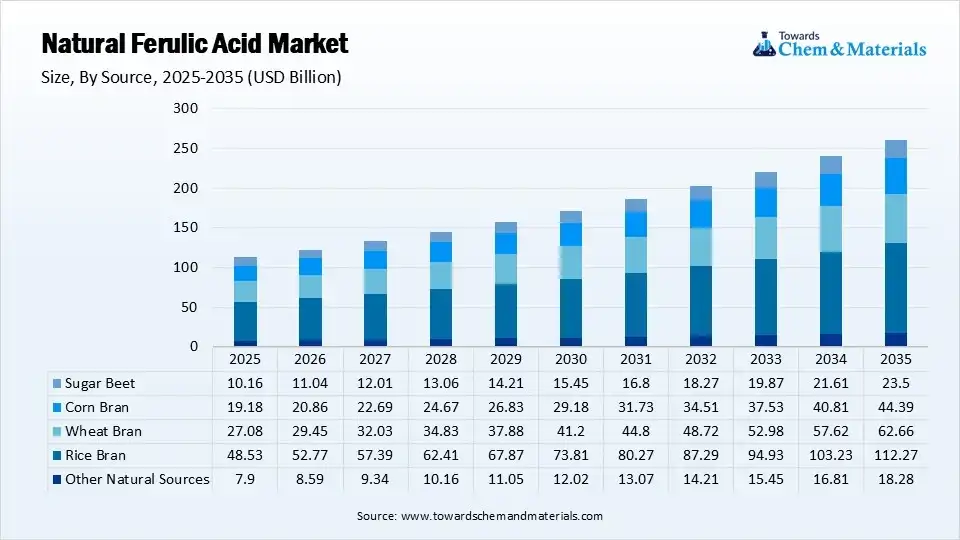
The other natural sources segment held the 7% market share in 2025 and is expected to grow at the fastest CAGR of 9.4% over the forecast period, because of the focus on sustainable sourcing and circular economy practices. As producers seek to change their reliance on traditional feedstocks, they are turning more and more to alternative ones. The growing research in extracting high-value compounds from agricultural waste is also helping in the adoption of natural alternatives.
Natural Ferulic Acid Market Share, By Source, 2025 (%)
| By Source | Revenue Share, 2025 (%) |
| Rice Bran | 43% |
| Wheat Bran | 24% |
| Corn Bran | 17% |
| Sugar Beet | 9% |
| Other Natural Sources | 7% |
Purity Insights
The 98%–99% segment dominated the market with the largest share of 46% in 2025, as this segment provided a balance between the product performance and commercial affordability. It is widely used in cosmetic, nutraceuticals and pharmaceutical formulations that demand high antioxidant activity and product stability. It has been adopted by various end-use industries due to its versatility for its wide range of applications and because of its relatively low production costs.
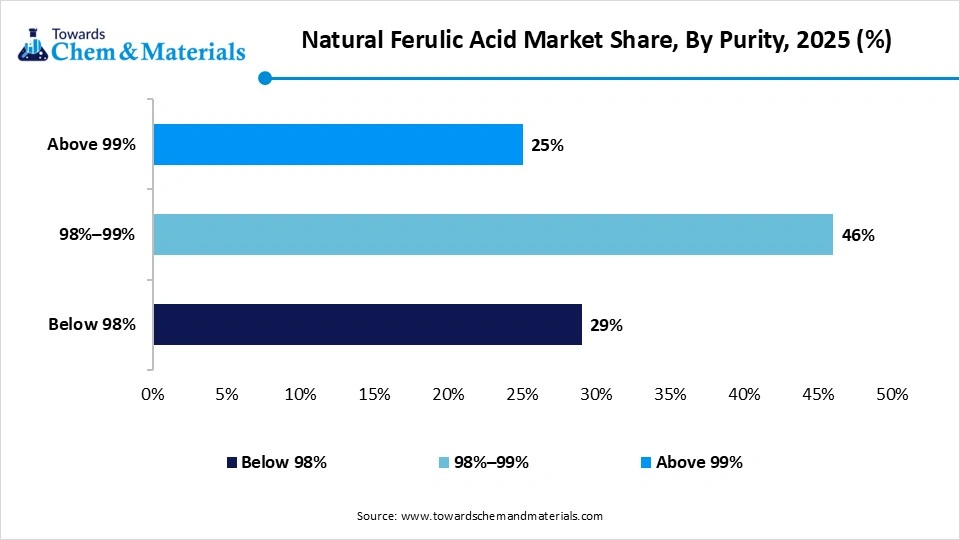
The above 99% segment held the 25% market share in 2025 and is expected to grow at the fastest CAGR of 9.6% over the forecast period, as a result of the increase in demand for high-quality and specialised applications. In advanced pharmaceuticals and in high-end cosmetic formulations, where it is needed in exceptional stability, bioactivity, and quality consistency, ultra-high-purity natural Ferulic Acid is becoming more and more popular. The rising investment in high-quality skin care goods and in precision health solutions is also contributing to the growing demand for highly purified natural ferulic acid products.
Natural Ferulic Acid Market Share, By Purity, 2025 (%)
| By Purity | Revenue Share, 2025 (%) |
| Below 98% | 29% |
| 98%–99% | 46% |
| Above 99% | 25% |
Form Insights
The powder segment dominated the market with the largest share of 63% in 2025, as it offered better stability, longer shelf life, and easier storage and transport. Natural ferulic acid is widely used in cosmetics, medicinal products, food, and dietary supplements due to its formulation flexibility and its ability to maintain the antioxidant potential for a longer time. It is also compatible with a wide range of manufacturing methods, leading to its market dominance.
The liquid segment held the 23% market share in 2025 and is expected to grow at the fastest CAGR of 9.4% over the forecast period, as the demand for ready-to-use ingredients in personal care, functional food, and nutraceutical applications is rising. Liquid formulations offer enhanced ability to incorporate into serums, beverages, and liquid supplements, as well as decrease processing needs. The liquid natural ferulic acid products are rapidly gaining acceptance owing to the convenient formulations and the rise in the demand for premium skin care products.
Natural Ferulic Acid Market Share, By Form, 2025 (%)
| By Form | Revenue Share, 2025 (%) |
| Powder | 63% |
| Granules | 14% |
| Liquid | 23% |
Application Insights
The cosmetics & personal care segment dominated the market with the largest share of 31% in 2025, as natural ferulic acid is effective in providing anti-aging, antioxidants, & photoprotective properties. It has been widely used in high-quality skin care products such as serums, creams, and sunscreens to combat free radicals and promote skin health. Consumers' preference for ingredients derived from plants, those that are clean label, and those that are scientifically proven, is also putting more pressure on the global skin care industry.
The nutraceuticals & dietary supplements segment held the 23% market share in 2025 and is expected to grow at the fastest CAGR of 10.1% over the forecast period, as the awareness of prevention and natural solutions to health rises. Due to its antioxidant and anti-inflammatory properties, natural ferulic acid is gaining popularity in dietary supplements for promoting healthy aging and well-being. Increased consumer demand for functional ingredients and plant-based health products is driving up nutritional demand across the nutraceutical industry.
Natural Ferulic Acid Market Share, By Application, 2025 (%)
| By Application | Revenue Share, 2025 (%) |
| Food & Beverages | 21% |
| Pharmaceuticals | 17% |
| Cosmetics & Personal Care | 31% |
| Nutraceuticals & Dietary Supplements | 23% |
| Animal Feed | 5% |
| Other Applications | 3% |
Regional Insights
How did the Asia Pacific dominate the Natural Ferulic Acid Market in 2025?
The Asia Pacific natural ferulic acid market size was estimated at USD 39.50 million in 2025 and is projected to reach USD 92.69 million by 2035, growing at a CAGR of 8.90% from 2026 to 2035.Asia-Pacific held the 35% market share in 2025 and is expected to grow at the fastest CAGR of 10.2% during the forecast period. It has a high level of agricultural raw material resources, including rice bran and wheat bran, growing cosmetics and nutraceutical sectors, and rising consumer demand for natural and plant-based ingredients. Local markets are also being driven by high investments in biotechnology and sustainable extraction methods.
 China
China
- Huge rice and wheat bran production as feedstock for ferulic acid extraction from agriculture.
- The growing cosmetics and nutraceutical market is driving demand for natural antioxidant ingredients throughout the country.
- Expansion of biotechnology investments is enabling sustainable extraction and high-purity production of ferulic acid.
India
- The rising demand for herbal skincare products is driving consumption of naturally sourced ferulic acid ingredients.
- The presence of plenty of agricultural byproducts, which provide the basis for cost-effective extraction and large-scale natural ferulic acid manufacturing activities, is a benefit.
- The growing nutraceutical and functional food sectors are presenting excellent opportunities for domestic growth.
The Europe natural ferulic acid market size was estimated at USD 30.47 million in 2025 and is projected to reach USD 71.80 million by 2035, growing at a CAGR of 8.95% from 2026 to 2035.Europe held the 27% market share in 2025, with high demand for clean-label ingredients and strict sustainability requirements. The cosmetics, pharmaceutical, and functional food industries in the region, which have already been established, are beginning to use the natural antioxidants in high-quality products. Ongoing investments in green chemistry and bio-based ingredients are continuing to drive market expansion.
Germany
- There is a high demand for high-quality natural antioxidant ingredients from the strong pharmaceutical and cosmetics industries.
- The surge of investments in green chemistry enables the development of sustainable extraction technologies for ferulic acid in the country. Increased investments in green chemistry lead to the development of sustainable extraction technologies for ferulic acid in the country.
- The trend for clean label products is driving growth in personal care applications across the country.
France
- Natural ferulic acid is abundantly used in premium skin care and beauty products for anti-aging applications.
- The market is expected to grow across various applications with the rising demand from consumers for organic and naturally derived ingredients.
- Investments in bio-based ingredients and sustainable extraction methods are driven by the government's focus on sustainability.
The North America natural ferulic acid market size was estimated at USD 27.08 million in 2025 and is projected to reach USD 63.97 million by 2035, growing at a CAGR of 8.98% from 2026 to 2035.North America held 24% market share in 2025, attributed to the increasing demand for the use of natural ingredients in cosmetics, diet, and pharmaceutical products. Consumer awareness of preventive healthcare and clean-label products is helping drive adoption. The rise in the value of functional ingredients is also driving the development of the regional market, supported by developments in biotechnology and increased investments in functional ingredients.
United States
- Natural ferulic acid use in cosmetics is growing due to the increase in demand for premium skin care products.
- The growing nutraceutical industry is promoting the use of antioxidant ingredients in preventive healthcare and wellness products.
- The growing investments in biotechnology are encouraging innovations in sustainable extraction and formulation development technologies.
Canada
- The expansion of the market is being driven by the growing demand for natural and organic products in various end-use industries.
- The expansion of the functional food and dietary supplement markets has led to increased consumption of plant-based antioxidant ingredients.
- Increasing focus on sustainable sourcing drives investments in bio-based ingredient production and product development.
The Latin America natural ferulic acid market size was estimated at USD 9.03 million in 2025 and is projected to reach USD 22.19 million by 2035, growing at a CAGR of 9.41% from 2026 to 2035.Latin America held 8% market share in 2025 because of the growing awareness of natural ingredients and the rising preference for clean-label cosmetics and dietary supplements. The area has a large agricultural potential as well as a growing investment in food processing and nutraceutical industries. The growth of wellness trends is also driving market opportunity.
Brazil
- There is a vast amount of biomass available in the large agri-sector for natural route extraction and processing of ferulic acid.
- The high-quality cosmetic products are being increasingly used by the growing cosmetics industry for natural antioxidants in cosmetic formulations.
- The country's growing consumer health consciousness drives the growth of demand for nutraceuticals and functional food ingredients.
Chile
- With growing demand for natural and sustainable ingredients, adoption is taking place in both cosmetic and food applications.
- The growing nutritional products sector in the country has sparked interest in antioxidant compounds as potential preventive health care products.
- Research activities are increasing, and it’s driving the use of agricultural residues in biobased ingredients production programs.
The Middle East & Africa natural ferulic acid market size was estimated at USD 6.77 million in 2025 and is projected to reach USD 16.97 million by 2035, growing at a CAGR of 9.62% from 2026 to 2035.The Middle East & Africa held 6% market share in 2025. Consumers in the region are becoming more aware of the potential benefits of natural and plant-derived ingredients, and the market is slowly growing in this region. The growth of the market is being driven by rising demand for premium personal care products, functional foods, and dietary supplements. The rise in sustainable ingredients and an investment in healthcare infrastructure are creating new opportunities across the region.
Saudi Arabia
- Today, there is a growing demand for premium skin care products, which are driving the use of natural antioxidant ingredients to a greater extent across the country.
- The increasing awareness of health and wellness is propelling the situation for nutraceuticals and functional food applications.
- Incentives for economic diversification are driving investments in biotechnology and the development of sustainable ingredient production capabilities in-country.
South Africa
- Consumer demand for natural products to support their health and wellness is driving growth in dietary supplement formulations.
- The growing investments in food processing and biotechnology are providing opportunities for market development within the region.
Competitive Analysis
The natural ferulic acid market is highly competitive, where companies are consolidating their market share through sustainable sourcing, innovations in extraction processes, purification of products, and expanding their distribution on the global level. There is a great demand for cosmetics, pharmaceuticals, and nutraceutical products from ferulic acid, particularly from the high-purity products, which have seen leading manufacturers invest in biotechnology-based extraction processes.
One of the most striking cases is Haihang Industry's transformation into GetChem Co., Ltd., and its new headquarters in Shanghai in 2024. The strategic decision not only strengthened the company's market footprint but also boosted supply chain effectiveness and global distribution capabilities for specialty chemicals, such as ferulic acid. These are examples of how market players are prioritizing operational flexibility, service orientation, and supply chain optimisation to enhance their competitiveness and seize new growth prospects.
Top Players in the Natural Ferulic Acid Market & Their Offerings
| Company | Company Type/Position | Major Headquarters | Geographic Presence | Natural Ferulic Acid Offerings | Key Offering/Strength |
| Cayman Chemical | Specialty Chemical & Biochemical Supplier | Ann Arbor, Michigan, USA | North America, Europe, Asia | High-purity natural ferulic acid and research reagents | Premium-quality products and strong research expertise |
| Hunan Huacheng Biotech, Inc. | Natural Plant Extract Manufacturer | Hunan, China | Asia, Europe, North America | Natural ferulic acid and plant-based extracts | Large-scale botanical extraction and sustainable sourcing |
| Xi'an Healthful Biotechnology Co., Ltd. | Biotechnology and Nutraceutical Ingredient Manufacturer | Xi'an, China | Asia, Europe, North America, the Middle East | Natural ferulic acid and nutraceutical ingredients | Diverse ingredient portfolio and customized formulation capabilities |
Other Key Players
- Haihang Industry Co., Ltd.
- Oryza Oil & Fat Chemical Co., Ltd.
- Swadesh India Chemical Pvt Ltd.
- Shaanxi Guanjie Technology Co., Ltd.
- Sisco Research Laboratories Pvt. Ltd. (SRL)
- App Chem-Bio
- Zhonglan Industry Co., Ltd.
- Kowa India Pvt. Ltd.
- Delekang (Zhejiang Delekang Food Co. Ltd.)
Natural Ferulic Acid Market Segments Covered
By Source
- Rice Bran
- Defatted Rice Bran
- Rice Bran Oil By-products
- Wheat Bran
- Food Grade Wheat Bran
- Industrial Grade Wheat Bran
- Corn Bran
- Wet Milling Corn Bran
- Dry Milling Corn Bran
- Sugar Beet
- Sugar Beet Pulp
- Sugar Beet Residue
- Other Natural Sources
- Oat Bran
- Bamboo Shoots
- Coffee By-products
- Fruit Residues
By Purity
- Below 98%
- 90–95%
- 95–98%
- 98%–99%
- Cosmetic Grade
- Food Grade
- Above 99%
- Pharmaceutical Grade
- High-Purity Specialty Grade
By Form
- Powder
- Fine Powder
- Microfine Powder
- Granules
- Standard Granules
- Instantized Granules
- Liquid
- Water-Soluble Liquid
- Oil-Soluble Liquid
By Application
- Food & Beverages
- Functional Foods
- Beverages
- Food Preservation
- Pharmaceuticals
- Antioxidant Formulations
- Cardiovascular Health Products
- Drug Intermediates
- Cosmetics & Personal Care
- Anti-Aging Products
- Skin Brightening Products
- Sun Care Products
- Nutraceuticals & Dietary Supplements
- Capsules
- Tablets
- Powder Supplements
- Animal Feed
- Poultry Feed
- Livestock Feed
- Aquaculture Feed
- Other Applications
- Research Applications
- Specialty Chemicals
By Distribution Channel
- Direct Sales
- Bulk Industrial Contracts
- Strategic Supply Agreements
- Distributors & Traders
- Regional Distributors
- Specialty Ingredient Suppliers
- Online Sales
- Manufacturer Websites
- B2B E-commerce Platforms
By Region
- North America
- Europe
- Asia Pacific
- Middle East & Africa
- Latin America
FAQ's




Select User License to Buy
Figures (6)




 sales@towardschemandmaterials.com
 Download Sample
 Schedule a Meeting