
Ethylene Carbonate Market Size, Competitive Landscape Analysis Report 2035
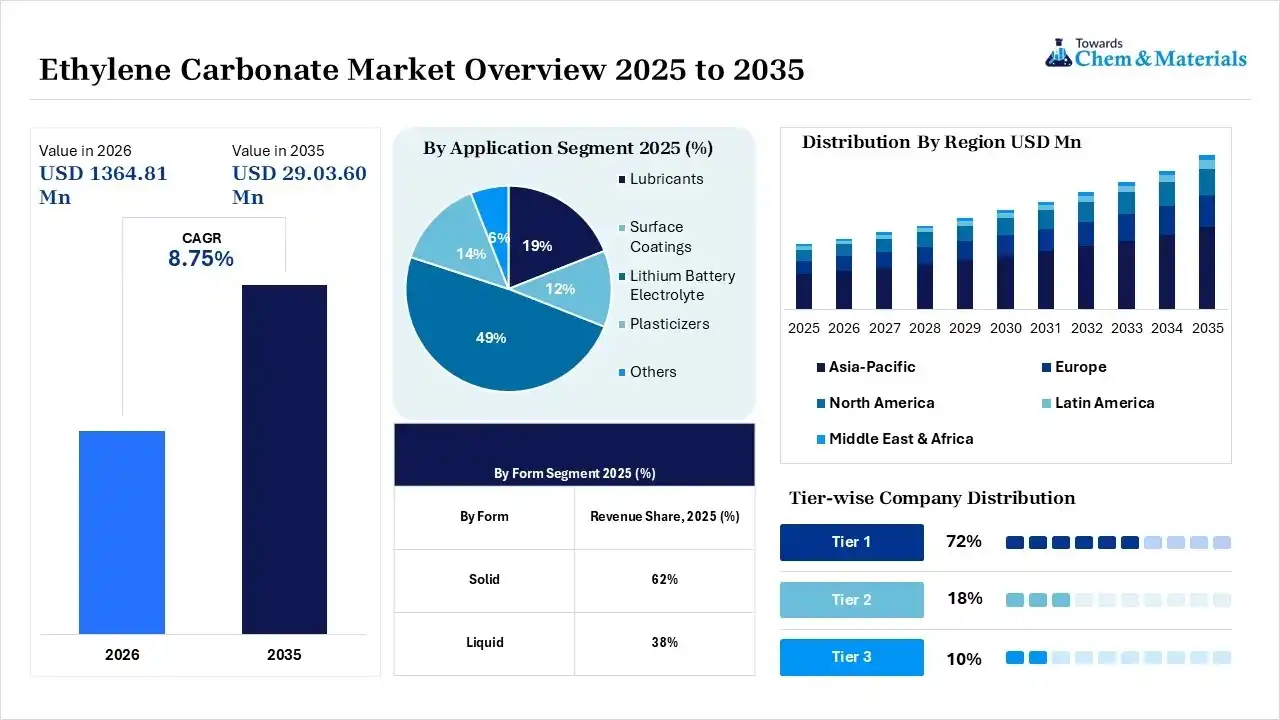
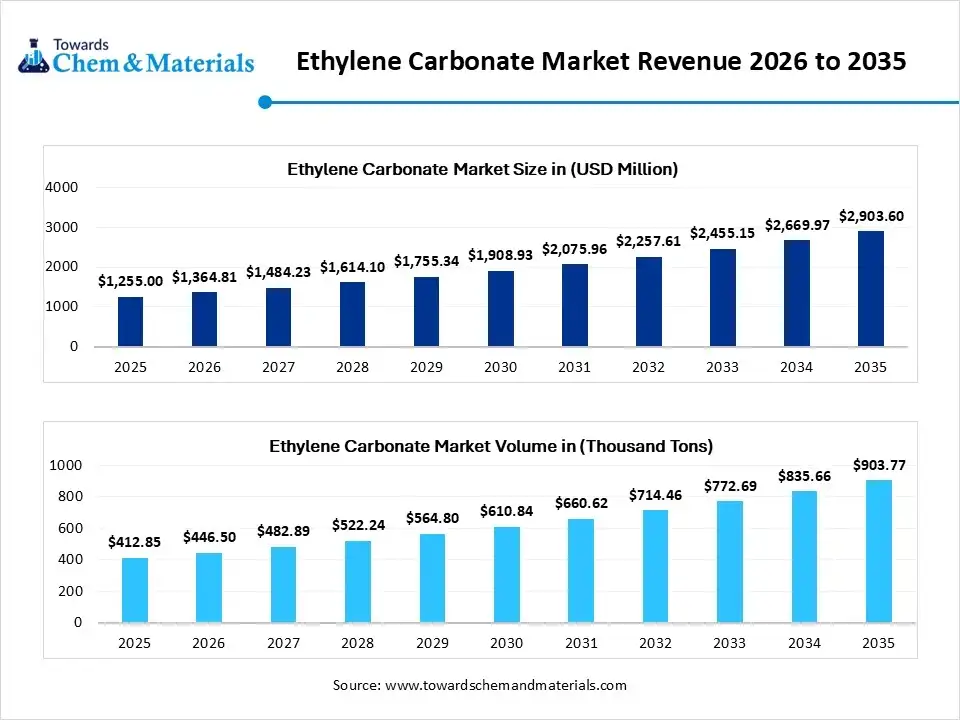
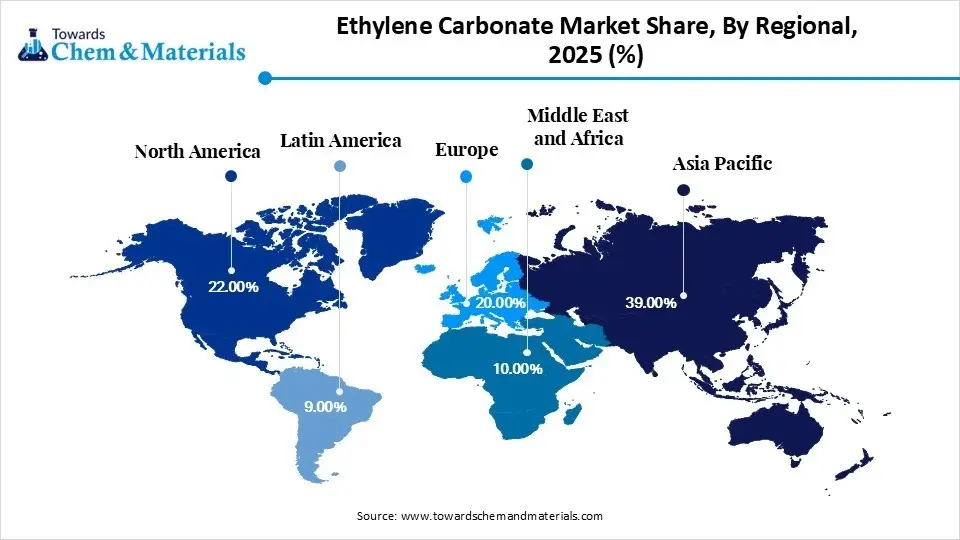
The ethylene carbonate market size was valued at USD 1,255.00 million in 2025, is estimated to reach USD 1,364.81 million in 2026, and is projected to reach USD 2,903.60 million by 2035, exhibiting a compound annual growth rate (CAGR) of 8.75% over the forecast period from 2026 to 2035.Asia Pacific dominated the ethylene carbonate market with the largest revenue share of 54% in 2025 and is expected to grow at the fastest CAGR of 8.85% during the forecast period. In terms of volume, the ethylene carbonate market is projected to grow from 412.85 thousand tons in 2025 to 903.77 thousand tons by 2035. growing at a CAGR of 8.15% from 2026 to 2035. The growth is primarily propelled by the booming electric vehicle (EV) and renewable energy storage sectors. The compound serves as a vital, irreplaceable solvent in lithium-ion battery electrolytes, enhancing battery efficiency, cycle life, and thermal stability. The current investment in the industry by major players like DOW and Lotte Chemicals is to scale up the supply chain, according to the reports.
Market Highlights
- By region, Asia Pacific dominated the market with a share of 54% in 2025. Strong electronics industry supports consumption growth.
- By region, Europe held 21% market share in 2025 and is expected to experience the fastest growth with a CAGR of 10.30% in the forecast period. Regional battery manufacturing projects increase demand.
- By form, the solid segment dominated the market with 62% share in 2025. Established manufacturing infrastructure sustains consumption.
- By form, the liquid segment held 38% market share in 2025 and is expected to have the fastest growth with a CAGR of 10.10% in the forecast period. High-purity liquid grades gain traction in advanced battery manufacturing.
- By application, the lithium battery electrolyte segment dominated the market with 49% share in 2025. Battery manufacturers expand production capacities worldwide.
- By application, the lubricants segment held 19% market share in 2025 and is expected to have the fastest growth with a CAGR of 12.40% in the forecast period. Synthetic lubricant formulations require performance-enhancing additives.
- By end use, the automotive segment dominated the market with 46% share in 2025. Electric vehicle battery manufacturing drives substantial consumption.
- By end use, the oil & gas segment held 11% market share in 2025 and is expected to have the fastest growth with a CAGR of 11.80% in the forecast period. Operational efficiency initiatives support product adoption.
Quick Stats at a Glance
- Market in Size 2025: USD 1,255.00 Million | CAGR (2026–2035): 8.75%
- Market Estimated Size in 2026: USD 1,364.81 Million
- Market Projected Size by 2035: USD 2,903.60 Million
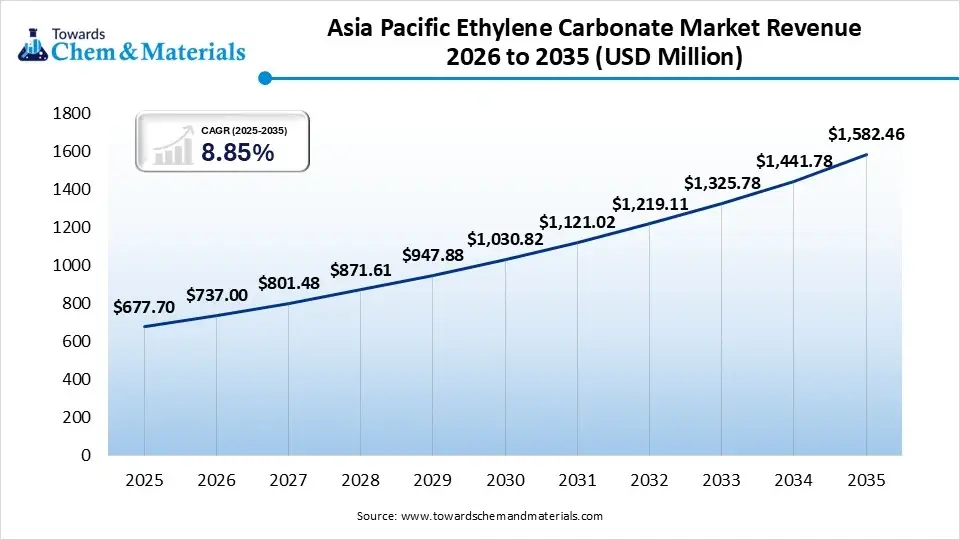
- Asia Pacific: largest Regional Market Revenue Share of 54% in 2025 | USD 677.70 Million
- Europe: Fastest-growing Regional Market Revenue Share of 22% in 2025 | USD 263.55 Million
- By country: The China held the largest Market share of 57% in 2025
- Market Volume in 2025: 412.85 Thousand Tons| Volume CAGR (2026–2035): 8.15%
- Market Estimated Volume in 2026: 446.50 Thousand Tons
- Market Projected Volume by 2035: 903.77 Thousand Tons
- Market Pricing (2025):
- Average Manufacturing Price: USD 2,350/Ton
- Average Selling Price: USD 2,960/Ton
- Pricing CAGR (2026–2035): 2.75%
The ethylene carbonate market is crucial because it supplies an essential organic compound that forms the foundation for electric vehicles, renewable energy storage, and advanced industrial lubricants. It functions as an additive and cosolvent, helping to dissolve anti-wear agents under high thermal stress, making it vital for automotive, aerospace, and industrial machinery. Used as a primary component and solvent, it helps dissolve anti-wear additives while offering thermal stability and low-temperature fluidity for various machinery. Ethylene carbonate also acts as a versatile polar solvent for producing polymers, resins, surface coatings, and pharmaceuticals.
- For instance, Asahi Kasei, Mitsui Chemicals, and Mitsubishi Chemical have formed a Limited Liability Partnership (LLP) to accelerate decarbonisation and optimize production capacity by 2030 across their two western Japan ethylene facilities.(Source: www.asahi-kasei.com)
It is highly polar with a high dielectric constant and is the main solvent in EV battery electrolytes because it creates a stable Solid Electrolyte Interphase (SEI) layer on graphite anodes, preventing capacity loss and enhancing battery longevity. Additionally, it serves as a reactive intermediate and solvent in manufacturing durable plastics, surface coatings, and semiconductor capacitor electrolytes.
Global Investment Flow for Ethylene Carbonate Market 2026
The ethylene carbonate market is witnessing strong global investment growth driven by rising demand from lithium-ion batteries, electric vehicles, and energy storage systems, aligning with the support of the government and major manufacturers.
Investments by regions like Asia Pacific, North America, and Europe in local ethylene carbonate production facilities, which help in strengthening battery supply and reducing dependency, are supported by rapid EV adoption and government incentives.
- For instance, the government of Andhra Pradesh has approved an investment of 2550 crore by NPSPL Speciality Chemicals. This investment is helping to set up a cathode material manufacturing facility in the Chittoor district.(Source:theweek.in)
- CNOOC and Shell Petrochemicals Company Limited, a joint venture between Shell plc and China National Offshore Oil Corporation, has announced a final investment decision to expand its petrochemical complex located in Huizhou. (Source: hydrocarbon processing.com)
Ethylene Carbonate Market Growth Trends
- Electric Vehicle (EV) Battery Demand: Surging demand for high-energy-density lithium-ion batteries in EVs remains the single largest growth engine, where ethylene carbonate acts as an irreplaceable electrolyte solvent to protect graphite anodes, which fuels the growth.
- Premium and Eco-Friendly Lubricants: The lubricants sector constitutes a massive revenue share for industrial-grade applications. Ethylene carbonate is increasingly utilized as a lubricant additive and intermediate due to its thermal stability, low-temperature fluidity, and biodegradability under strict ecological regulations.
- Next-Gen Battery Precursors: Emerging requirements for solid-state batteries and lithium-sulfur batteries are opening lucrative early-adoption opportunities, which is a growing trend in the market that supports growth.
Report Scope
| Report Attribute | Details |
| Market Size in 2026 | USD 1364.81 Million/ 446.50 thousand Tons |
| Revenue Forecast in 2035 | USD 2903.60 Million/ 903.77 Thousand Tons |
| Growth Rate | CAGR 8.75% |
| Forecast Period | 2026 - 2035 |
| Base Year | 2025 |
| Dominant Region | Asia Pacific |
| Segment Covered | By Form, By Application, By End-Use, By Region |
| Key companies profiled | BASF SE, Huntsman International LLC (US), Mitsubishi Chemical Group Corporation (Japan), Oriental Union Chemical Corp (OUCC) (Taiwan), TAOGOSEI CO., LTD. (Japan), Shandong Shida Shenghua Chemical Group (China), Asahi Kasei Corporation (Japan), Merck KGaA (Germany), Nippon Shokubai Co., Ltd. (Japan), Lotte Chemical Corporation (South Korea), China Petroleum & Chemical (Sinopec) (China), UBE Corporation (Japan), New Japan Chemical Co., Ltd. (Japan), LyondellBasell Industries (Netherlands), Empower Materials, Inc. (US), FUJIFILM Wako Pure Chemical (Japan), Thermo Fisher Scientific Inc. (US), Prasol Chemicals Ltd. (India), Zibo Donghai Industries Co. (China), Shandong Senjie Cleantech Co. (China), Zhangjiagang Guotai-Huarong Chemical (China), Zhejiang Capchem Technology Co. (China), Alchem Chemical Company (US), Alfa Aesar (US), Dubi Chem (UAE), Tokyo Chemical Industry Co. (TCI) (Japan), Shandong Haike Chemical Group (China), Formosa Plastics Corporation (Taiwan), SABIC (Saudi Arabia), LG Chem Ltd. (South Korea) |
Key Technological Shifts in the Ethylene Carbonate Market
AI integration is actively reshaping the ethylene carbonate market and is scaling up significantly. Key shifts include AI-driven synthesis stabilization, advanced predictive modeling for battery-grade purities, machine learning to accelerate co-solvent and additive formulations, and intelligent supply chain optimizations to meet soaring EV demands. Predictive modeling and machine learning speed up the discovery and testing of novel co-solvent blends to improve solid electrolyte interphase stability.
Ethylene Carbonate Regulatory Landscape
| Country / Region | Regulatory Body | Key Regulations | Focus Areas | Notable Notes |
| United States | Environmental Protection Agency; Occupational Safety and Health Administration | Toxic Substances Control Act; Hazard Communication Standards | Chemical safety, battery materials | The U.S. regulates ethylene carbonate usage in lithium-ion batteries, lubricants, and industrial solvents with emphasis on workplace safety and environmental compliance. |
| European Union | European Chemicals Agency; European Commission | REACH Regulation; CLP Regulation | Chemical registration, sustainable battery materials | Europe emphasizes safe handling and sustainable use of ethylene carbonate in battery and industrial applications. |
| China | Ministry of Ecology and Environment; Ministry of Industry and Information Technology | Environmental Protection Law; Battery Industry Standards | EV battery electrolytes, industrial chemicals | China dominates global ethylene carbonate production due to strong lithium-ion battery manufacturing growth. |
| India | Ministry of Chemicals and Fertilizers; Central Pollution Control Board | Chemical Safety Rules; Environmental Protection Act | Battery chemicals, industrial solvents | India is increasing domestic battery chemical production to support EV and energy storage industries. |
| Japan | Ministry of Economy, Trade and Industry | Chemical Substances Control Law | High-purity battery materials | Japan focuses on advanced battery-grade ethylene carbonate production for electronics and EV applications. |
| South Korea | Ministry of Environment; Ministry of Trade, Industry and Energy | K-REACH; Battery Safety Regulations | Lithium-ion batteries, electronic chemicals | South Korea is a key market driven by major battery manufacturers and the electronics industry. |
Supply Chain Analysis of Ethylene Carbonate Market
- Chemical Production & Processing:Ethylene carbonate is a highly polar, cyclic carbonate ester utilized heavily in Lithium-ion battery electrolytes and organic synthesis. It is industrially synthesized via the catalytic cycloaddition of ethylene oxide and carbon dioxide under controlled high-pressure thermal conditions.
Ethylene carbonate is produced through the reaction of ethylene oxide with carbon dioxide, followed by purification processes to obtain high-purity solvent grades for batteries, lubricants, and chemical applications.
- Key players: BASF, Mitsubishi Chemical Group, Huntsman Corporation, Oriental Union Chemical Corporation
- Quality Testing and Certification:Ethylene carbonate must comply with standards for purity, moisture content, thermal stability, and chemical safety for use in lithium-ion batteries and industrial formulations.
Ethylene Carbonate (C₃H₄O₃) requires disciplined testing via Gas Chromatography (purity ≥ 99.5%), Karl Fischer titration (moisture ≤ 0.03%), and Pt-Co colorimetry (color ≤ 10 Hazen). It must be certified under ISO 9001:2015 and REACH compliance for bulk chemical transport.
- Key players: International Organization for Standardization, ASTM International, European Chemicals Agency, U.S. Environmental Protection Agency
- Distribution to Industrial Users:Ethylene carbonate is supplied to lithium-ion battery manufacturers, lubricants producers, chemical processing industries, electronics manufacturers, and specialty solvent applications.
Ethylene carbonate is a highly polar, low-toxicity organic solvent distributed primarily to the automotive, electronics/battery, oil & gas, medical, and plastics manufacturing industries as a raw material for electrolytes, high-performance lubricants, and green chemical synthesis.
- Key players: BASF, Mitsubishi Chemical Group, Huntsman Corporation.
Ethylene Carbonate Market Dynamics
| Drivers | Restrains | Opportunities |
| Favorable Government Policies:Stricter carbon emission regulations, combined with clean-energy subsidies and EV incentives, especially across the US, Europe, and Asia-Pacific, continuously accelerate downstream manufacturing. | Substitution Threats:Cost-sensitive applications frequently look to substitute ethylene carbonate with cheaper, alternative blends such as dimethyl carbonate and propylene carbonate. | Bio-Based Alternatives:The shift toward sustainability is opening doors for bio-based cyclic carbonates that align with green chemistry initiatives. |
| High-Performance Industrial Lubricants: Beyond batteries, the automotive, aerospace, and machinery sectors drive massive demand for eco-friendly synthetic greases and lubricants, where ethylene carbonate acts as a premium chemical intermediate. | High Purification and Compliance Costs:Achieving battery/electronic-grade purity requires intensive capital investment in advanced separation technologies. Nearly 34% of producers face substantial hurdles in keeping operational costs down while meeting these rigorous purity standards | High-Performance Industrial Lubricants:Ethylene carbonate is increasingly utilized as an intermediate for advanced greases and lubricants. It provides excellent thermal stability and low-temperature fluidity, while its biodegradability meets stricter environmental regulations. |
| Renewable Energy Storage Systems (ESS):The global transition toward solar and wind power requires massive grid stabilization battery banks. This grid infrastructure heavily boosts battery-grade solvent consumption. | Feedstock Price Volatility:Production relies heavily on petrochemical derivatives like ethylene oxide and carbon dioxide processing inputs, leaving profit margins highly vulnerable to crude oil and ethylene pricing instability. | Next-Gen Battery Chemistries (Li-S):The emergence of Lithium-Sulfur batteries offers higher energy density and lighter designs, providing lucrative long-term opportunities for cyclic carbonates. |
Segmental Insights
Form Insights
The solid segment dominated the market with 62% share in 2025. It grows steadily due to its long shelf life, high-temperature resistance, and established global logistics networks that transport purity flakes for bulk industrial uses and on-site dissolution. It serves as a vital cross-linking agent and precursor in the production of high-grade polycarbonate diols and superabsorbent polymers. The solid crystalline form allows for cheaper bulk shipping and storage without the specialized containment or hazard equipment required for liquid chemicals.
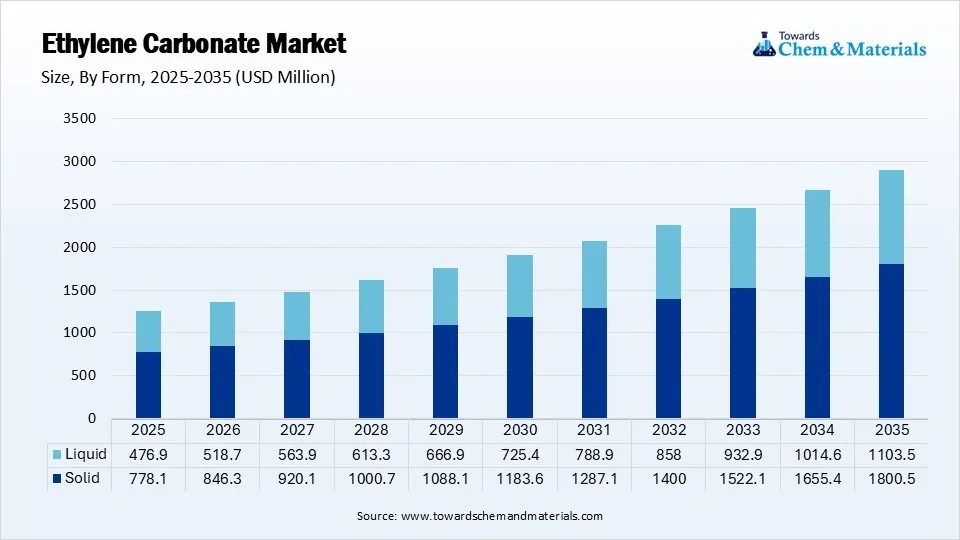 The liquid segment held 38% market share in 2025 and is expected to have the fastest growth with a CAGR of 10.10% in the forecast period, experiencing rapid growth, driven primarily by its indispensable role as a high-purity electrolyte solvent in lithium-ion batteries for electric vehicles. Liquid formulations provide superior ion conductivity, high dielectric constants, and excellent electrochemical stability. Liquid ethylene carbonate acts as a highly polar solvent that seamlessly dissolves large amounts of electrolytes and polymers without adding high viscosity.
Ethylene Carbonate Market Share, By Form, 2025 (%)
| By Form | Revenue Share, 2025 (%) |
| Solid | 62% |
| Liquid | 38% |
Application Insights
The lithium battery electrolyte segment dominated the market with 49% share in 2025. It is experiencing rapid expansion due to its indispensable role as a high-permittivity solvent that boosts ion transport, forms a protective solid electrolyte interphase layer, and improves overall battery safety, charge efficiency, and life cycles. Ongoing demand for smartphones, tablets, and wearables sustains high production levels of traditional lithium-ion batteries, supporting the growth of the market.
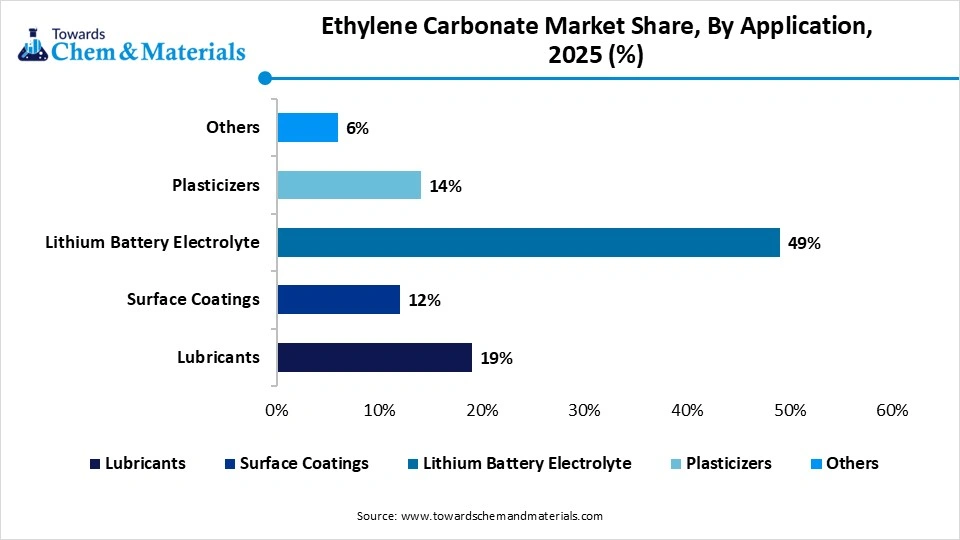
The lubricants segment held 19% market share in 2025 and is expected to have the fastest growth with a CAGR of 12.40% in the forecast period, due to its critical function as a high-performance additive and co-solvent in automotive and industrial machinery. It offers exceptional thermal stability and low-temperature fluidity, making it ideal for creating high-performance greases and synthetic lubricants. Because it is biodegradable and offers low toxicity, it aligns with strict global environmental regulations for eco-friendly industrial and automotive lubricants.
Ethylene Carbonate Market Share, By Application, 2025 (%)
| By Application | Revenue Share, 2025 (%) |
| Lubricants | 19% |
| Surface Coatings | 12% |
| Lithium Battery Electrolyte | 49% |
| Plasticizers | 14% |
| Others | 6% |
End Use Insights
The automotive segment dominated the market with 46% share in 2025. This massive growth is accelerated by the rapid shift toward electric vehicles (EVs), stringent emission regulations, and the demand for advanced vehicle lubricants. Its excellent dielectric properties and low volatility make it highly effective as a coolant in fuel cells and onboard electronics, requiring precise temperature control. Ethylene carbonate acts as an essential, high-dielectric solvent in EV battery electrolytes, accelerating market growth.
The oil & gas segment held 11% market share in 2025 and is expected to have the fastest growth with a CAGR of 11.80% in the forecast period, due to its specialized chemical properties as an extraction solvent, drilling fluid additive, and high-performance lubricant intermediate. Ethylene carbonate acts as a highly polar solvent with outstanding capability to dissolve aromatic hydrocarbons. The oil and gas sector relies on this property for extraction and separation processes, specifically in gas washing and oil field clean-up mechanisms.
Ethylene Carbonate Market Share, By End Use, 2025 (%)
| By End Use | Revenue Share, 2025 (%) |
| Automotive | 46% |
| Industrial | 28% |
| Oil & Gas | 11% |
| Medical | 7% |
| Others | 8% |
Regional Analysis
How did Asia Pacific dominate the Ethylene Carbonate Market in 2025?
The Asia Pacific ethylene carbonate market size was estimated at USD 677.70 million in 2025 and is projected to reach USD 1582.46 million by 2035, growing at a CAGR of 8.85% from 2026 to 2035.Asia Pacific dominated the market with a share of 54% in 2025. This regional dominance was primarily driven by its integrated lithium-ion battery supply chains, with China leading the charge alongside Japan and South Korea. Rapid regional expansion of EV manufacturing and green mobility subsidies ethylene carbonate serves as a critical, high-performance electrolyte solvent in lithium-ion batteries. The localized presence of major producers like Mitsubishi Chemical Holdings Corporation and BASF SE, coupled with accessible raw materials and low production costs.
India
- India’s ethylene carbonate market is rapidly expanding, primarily driven by soaring domestic demand for electric vehicles (EVs), lithium-ion batteries, and renewable energy storage systems.
- Government clean-energy policies, combined with expanding automotive and electronics manufacturing, are accelerating local investments.
China
- Rapidly increasing domestic manufacturing and adoption of EVs in China require massive quantities of lithium-ion batteries, which directly boost the consumption of high-purity ethylene carbonate solvents.
- China remains the world's largest consumer electronics manufacturing and selling nation. Ethylene carbonate is heavily utilized in capacitors, coatings, and adhesives for electronics.
Europe Ethylene Carbonate Market Growth Factor
The Europe ethylene carbonate market size was estimated at USD 263.55 million in 2025 and is projected to reach USD 624.27 million by 2035, growing at a CAGR of 9.01% from 2026 to 2035.Europe held the market share of 21% in 2025 and is expected to have the fastest growth in the market with the CAGR of 10.30% in the forecast period. This growth is primarily driven by surging demand for lithium-ion battery electrolytes for electric vehicles (EVs) and the EU's strict carbon-neutral mandates. EU policies aiming to cut industrial emissions by 55% and achieve carbon-neutral mobility by 2035 are accelerating investments in zero-emission transport and renewable energy storage grids. Initiatives like the EU "Fit for 55" program and strict supply chain sustainability mandates under the EU Battery Regulation require regional producers to supply high-purity specialty carbonates directly to local automotive OEMs.
Germany
- Germany's industrial ethylene carbonate market is primarily driven by the automotive electrification push, stringent EU battery regulations, and clean energy storage investments.
- Rising demand for bio-based plasticizers and eco-friendly chemical production methods align with strict EU supply chain sustainability requirements.
Italy
- Growth in Italy market is heavily anchored in the regional shift toward sustainable energy, localized chemical manufacturing, and high-performance battery components.
- Italy's automotive sector investments aligned with broader European electrification efforts are driving consumption of both solid and liquid forms of the chemical.
North America Ethylene Carbonate Market Growth Factor
The North America ethylene carbonate market size was estimated at USD 213.35 billion in 2025 and is projected to reach USD 508.13 billion by 2035, growing at a CAGR of 9.07% from 2026 to 2035.North America held the market share of 17% in 2025, driven by clean energy policies, localized electric vehicle battery factory expansions, and rising demand for high-performance electrolytes. The Inflation Reduction Act’s (IRA) USD 369 billion clean energy investment mobilizes domestic EV and battery production, forcing localized and secure EC supply chains. EC is increasingly deployed as a high-performance lubricant additive, solvent, and intermediate in pharmaceutical, coatings, and plastic industries.
U.S.
- The U.S. gigafactory network and broader regional battery manufacturing drive considerable domestic demand for ethylene carbonate (EC) as a key battery electrolyte solvent.
- Federal subsidies and state-level policy support are heavily mobilizing domestic battery cell manufacturing, compelling localized production and securing the supply chain.
Canada
- Canada’s ethylene carbonate market is primarily propelled by expanding electric vehicle manufacturing, domestic lithium-ion battery supply chains, and stringent environmental regulations promoting low-emission industrial lubricants.
- Canada holds abundant raw lithium reserves and is forging strategic agreements with battery manufacturers.
Latin America Ethylene Carbonate Market Growth Factor
The Latin America ethylene carbonate market size was estimated at USD 62.75 billion in 2025 and is projected to reach USD 159.70 billion by 2035, growing at a CAGR of 9.79% from 2026 to 2035.Latin America held the market share of 5% in 2025. Growth is primarily driven by expanding electric mobility, lithium-ion battery supply chains, and demand for polymers, resins, and industrial lubricants. Lubricants represent a massive application segment, where EC is utilized to improve lubrication efficiency and reduce friction. Expanding automotive manufacturing in countries like Brazil accelerates this demand.
Brazil
- The country's expanding industrialization and urbanization spur a high consumption of lubricants. Liquid ethylene carbonate is increasingly utilized as an additive to improve lubricity and film formation, minimizing component wear.
- Brazil’s strong focus on biofuels and alternative energy creates parallel localized demands for chemical intermediates and specialized solvents.
Argentina
- Argentina holds a prominent position within the "Lithium Triangle." The local expansion of battery-grade chemical processing and regional lithium battery electrolyte manufacturing heavily drives the need for high-purity ethylene carbonate utilized as an electrolyte solvent.
- Broader national infrastructure shifts toward sustainable, green grids require advanced energy storage, where ethylene carbonate ensures proper ion conductivity and lifespan in battery banks.
Middle East and Africa Ethylene Carbonate Market Growth Factor
The Middle East and Africa ethylene carbonate market size was estimated at USD 37.65 billion in 2025 and is projected to reach USD 101.63 billion by 2035, growing at a CAGR of 10.44% from 2026 to 2035.The Middle East and Africa held the market share of 3% in 2025, growth is primarily driven by industrial solvent applications, regional economic diversification programs away from crude oil, and rising investments in renewable energy storage technologies. Investments in renewable energy storage and emerging interests in EV battery infrastructure, particularly in nations like South Africa, are slowly expanding the need for cyclic carbonate electrolytes. This factor promotes the growth and expansion of the market in the region.
Saudi Arabia
- The rapid trajectory is powered by surging electric vehicle (EV) battery manufacturing, aggressive national renewable energy targets, and robust local petrochemical infrastructure.
- The presence of massive chemical processing plants in Al Jubail Industrial City secures an advantageous, low-cost domestic supply of key feedstocks, allowing local producers to expand production.
UAE
- The UAE ethylene carbonate market is primarily propelled by national investments in clean energy, electric mobility infrastructure, and the rising adoption of electric vehicles. It acts as an indispensable high-performance electrolyte solvent in lithium-ion batteries.
- Market development is heavily accelerated by major regional and global suppliers like the Abu Dhabi National Oil Company (ADNOC), BASF SE, and Dubi Chem (UAE) investing heavily in production and research networks.
Competitive Analysis
Competitive advantage is increasingly driven by production scale, raw material integration, battery-grade quality standards, and the ability to support rapidly growing electric mobility and renewable energy industries.
Major players in the ethylene carbonate market include BASF SE, Mitsubishi Chemical Group, Huntsman Corporation, Toagosei, and Shandong Shida Shenghua Chemical Group, which compete through high-purity solvent and electrolyte production capabilities. These companies focus on high-end performance materials and product innovation.
- At the 2026 Equipment Powerhouse Forum on May 30, CATL Chief Scientist Wu Kai announced that the company will launch its mass-produced sodium-ion battery lineup this year. By shifting to sodium-ion chemistry, the battery giant aims to utilize highly abundant raw materials to significantly cut production costs compared to conventional lithium-ion alternatives.(Source: carnewschina.com)
Recent Development
- In March 2026, Kuusakoski and Olfactomics launched the Smart Battery Sensor, an early warning system that detects hazardous gases from damaged lithium-ion batteries up to 90 minutes before heat or smoke occurs. It buys critical time for facility managers to isolate failing batteries.(Source:euwid-recycling.com)
Ethylene Carbonate Market Competitive Landscape Analysis
Tier 1 Companies
|
Rank
|
Company Name | Headquarters | Country | Why Relevant to This Market | Key Products / Material Portfolio |
| 1 | BASF SE | Ludwigshafen | Germany | Global leader in battery materials and specialty chemicals with high-purity carbonate solvent production | Ethylene carbonate, battery electrolyte materials, specialty solvents |
| 2 | Mitsubishi Chemical Group Corporation | Tokyo | Japan | Major supplier of battery-grade electrolyte materials for lithium-ion batteries | Battery-grade ethylene carbonate, electrolyte solvents, specialty chemicals |
| 3 | Huntsman Corporation | The Woodlands, Texas | United States | Manufactures specialty carbonate chemicals for industrial and chemical processing applications | Ethylene carbonate, specialty intermediates, performance chemicals |
| 4 | Oriental Union Chemical Corporation | Taipei | Taiwan | Leading Asian producer of carbonate solvents for battery and industrial applications | Ethylene carbonate, propylene carbonate, battery solvents |
Tier 2 Companies
|
Rank
|
Company Name | Headquarters | Country | Why Relevant to This Market | Key Products / Material Portfolio |
| 1 | Shandong Shida Shenghua Chemical Group Co., Ltd. | Dongying, Shandong | China | One of China's leading producers of lithium battery electrolyte solvents | Battery-grade ethylene carbonate, dimethyl carbonate, electrolyte solvents |
| 2 | UBE Corporation | Tokyo | Japan | Major supplier of advanced battery chemicals and specialty organic carbonates | Ethylene carbonate, electrolyte materials, specialty chemicals |
| 3 | Kishida Chemical Co., Ltd. | Osaka | Japan | Produces high-purity laboratory and electronic-grade carbonate chemicals | High-purity ethylene carbonate, research chemicals |
| 4 | Liaoyang Best Group Co., Ltd. | Liaoyang, Liaoning | China | Manufactures organic carbonate solvents for battery and industrial markets | Ethylene carbonate, propylene carbonate, carbonate esters |
Tier 3 Companies
|
Rank
|
Company Name | Headquarters | Country | Why Relevant to This Market | Key Products / Material Portfolio |
| 1 | Lotte Chemical Corporation | Seoul | South Korea | Expanding battery materials portfolio including electrolyte chemicals | Battery chemicals, carbonate intermediates, specialty chemicals |
| 2 | Panax Etec Co., Ltd. | Seoul | South Korea | Develops electrolyte materials for lithium-ion batteries | Electrolyte additives, ethylene carbonate formulations |
| 3 | Soulbrain Co., Ltd. | Seongnam, Gyeonggi | South Korea | Produces battery electrolyte materials and semiconductor chemicals | Battery electrolyte solvents, ethylene carbonate blends |
| 4 | Dongwha Electrolyte Co., Ltd. | Iksan, Jeollabuk-do | South Korea | Specialized producer of lithium-ion battery electrolytes using carbonate solvents | Battery electrolytes, ethylene carbonate-based formulations |
Top Players' Strengths & Their Offerings in the Market
| Company | Company Type/Position | Major Headquarters | Geographic Presence | Ethylene Carbonate Offerings | Key Offering/Strength |
| BASF SE (German) | Global specialty chemicals manufacturer | Ludwigshafen | Europe, Asia Pacific, North America | High-purity ethylene carbonate for lithium-ion battery electrolytes, industrial solvents, and chemical intermediates | Strong R&D capabilities and an integrated battery materials portfolio |
| Huntsman International LLC (US) | Specialty and performance chemicals producer | The Woodlands | North America, Europe, Asia Pacific | Ethylene carbonate is used in lubricants, electrolytes, and industrial cleaning formulations | Diversified specialty chemical solutions with strong industrial application expertise |
| Mitsubishi Chemical Group Corporation (Japan) | Advanced materials and chemicals supplier | Tokyo | Asia Pacific, Europe, North America | Battery-grade ethylene carbonate and high-performance electrolyte materials | Advanced lithium-ion battery material technologies and a strong electronics sector presence |
| Oriental Union Chemical Corp (OUCC) (Taiwan) | Electrolyte solvent and carbonate chemicals producer | Dongying | China, Asia Pacific, export markets | Ethylene carbonate for lithium battery electrolytes and industrial solvents | Competitive large-scale production capacity and strong battery supply chain integration |
| TAOGOSEI CO., LTD. (Japan) | Specialty chemical and functional materials company | Tokyo | Japan, Asia Pacific, North America | High-purity ethylene carbonate for rechargeable battery and electronics applications | High-purity chemical manufacturing and advanced electronic material expertise |
Other Top Players Are
- Shandong Shida Shenghua Chemical Group (China)
- Asahi Kasei Corporation (Japan)
- Merck KGaA (Germany)
- Nippon Shokubai Co., Ltd. (Japan)
- Lotte Chemical Corporation (South Korea)
- China Petroleum & Chemical (Sinopec) (China)
- UBE Corporation (Japan)
- New Japan Chemical Co., Ltd. (Japan)
- LyondellBasell Industries (Netherlands)
- Empower Materials, Inc. (US)
- FUJIFILM Wako Pure Chemical (Japan)
- Thermo Fisher Scientific Inc. (US)
- Prasol Chemicals Ltd. (India)
- Zibo Donghai Industries Co. (China)
- Shandong Senjie Cleantech Co. (China)
- Zhangjiagang Guotai-Huarong Chemical (China)
- Zhejiang Capchem Technology Co. (China)
- Alchem Chemical Company (US)
- Alfa Aesar (US)
- Dubi Chem (UAE)
- Tokyo Chemical Industry Co. (TCI) (Japan)
- Shandong Haike Chemical Group (China)
- Formosa Plastics Corporation (Taiwan)
- SABIC (Saudi Arabia)
- LG Chem Ltd. (South Korea)
Segment Covered in the Report
By Form
- Solid
- Powder Grade
- Battery Grade
- Industrial Grade
- Flake Grade
- High Purity Flakes
- Standard Flakes
- Powder Grade
- Liquid
- High Purity Liquid
- Electrolyte Grade
- Electronic Grade
- Industrial Liquid
- Solvent Grade
- Additive Grade
- High Purity Liquid
By Application
- Lubricants
- Synthetic Lubricants
- Automotive Lubricants
- Industrial Lubricants
- Lubricant Additives
- Performance Additives
- Specialty Additives
- Synthetic Lubricants
- Surface Coatings
- Protective Coatings
- Industrial Coatings
- Automotive Coatings
- Specialty Coatings
- Electronic Coatings
- Functional Coatings
- Protective Coatings
- Lithium Battery Electrolyte
- EV Battery Electrolytes
- Passenger EV Batteries
- Commercial EV Batteries
- Consumer Electronics Batteries
- Mobile Devices
- Portable Electronics
- EV Battery Electrolytes
- Plasticizers
- Flexible Plastics
- Packaging Materials
- Consumer Products
- Specialty Plasticizers
- Engineering Plastics
- Industrial Plastics
- Flexible Plastics
- Others
- Chemical Intermediates
- Solvents
- Specialty Chemicals
By End Use
- Automotive
- Electric Vehicles
- Passenger Vehicles
- Commercial Vehicles
- Conventional Vehicles
- Passenger Cars
- Heavy Vehicles
- Electric Vehicles
- Industrial
- Manufacturing
- Process Industries
- Equipment Manufacturing
- Electronics
- Semiconductor Production
- Electronic Components
- Manufacturing
- Oil & Gas
- Upstream Operations
- Midstream & Downstream Operations
- Medical
- Medical Devices
- Pharmaceutical Processing
- Others
- Aerospace
- Consumer Goods
- Energy Storage Systems
By Region
- North America
- U.S.
- Canada
- Mexico
- Europe
- Germany
- UK
- France
- Italy
- Spain
- Asia Pacific
- China
- India
- Japan
- South Korea
- Latin America
- Brazil
- Argentina
- Middle East & Africa
- Saudi Arabia
- South Africa
A Seven-Phase Framework
Our methodology is designed to be universally applicable across commodity chemicals, specialty chemicals, petrochemicals, construction chemicals, coatings, electronic chemicals, industrial gases, agrochemicals, water treatment chemicals, and performance materials. Each phase builds upon the last, creating a layered validation structure that minimizes estimation error and maximizes analytical confidence.
The framework ensures comprehensive market coverage, robust cross-validation, and reliable long-term forecasting — producing market estimates that withstand scrutiny from investors, regulators, and corporate strategy teams.

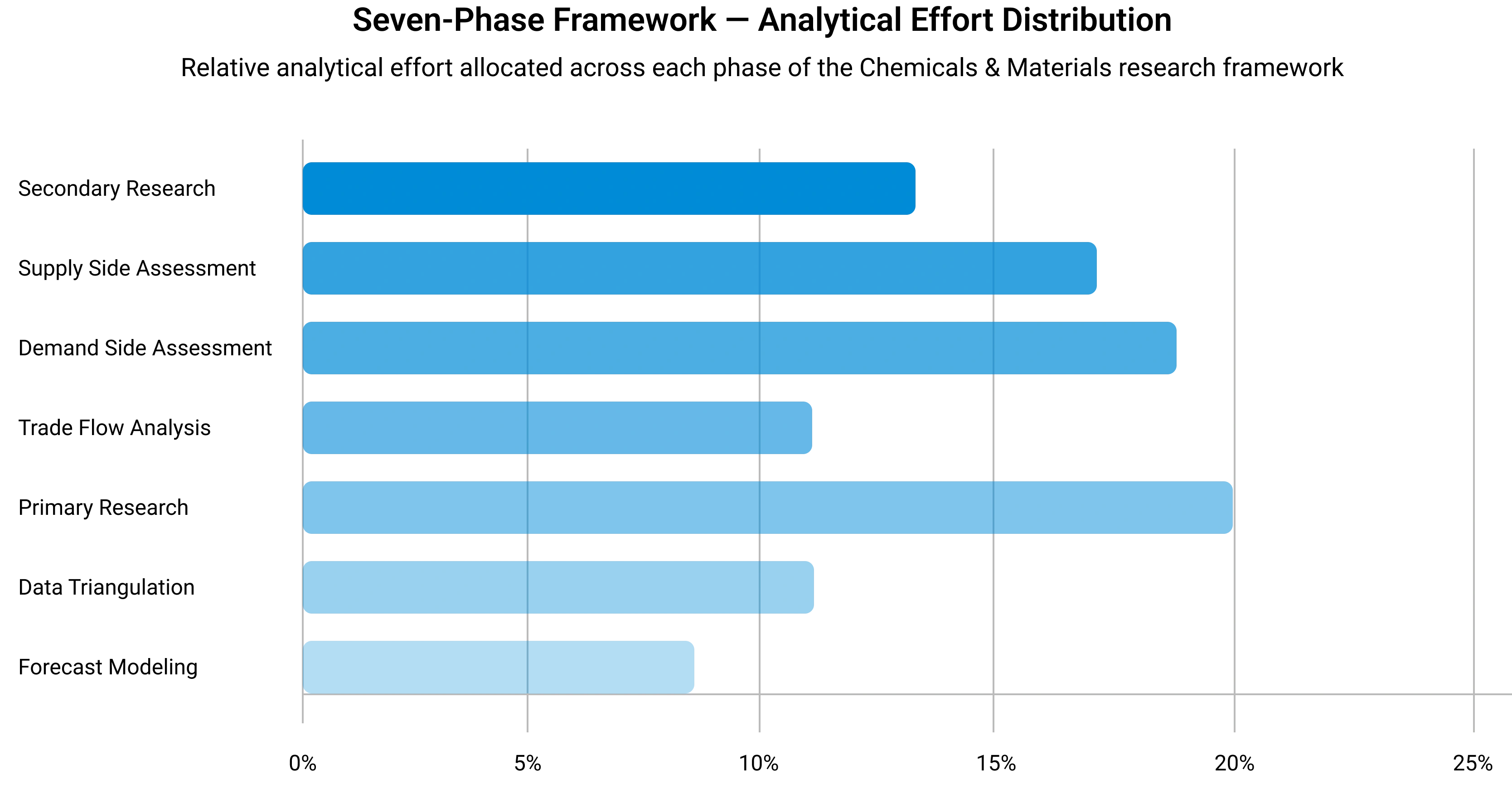
Seven-Phase Framework — Analytical Effort Distribution
Relative analytical effort allocated across each phase of the Chemicals & Materials research framework
Phase 1 - Secondary Research: Establishing the Foundation
Secondary research collects and evaluates publicly available information from authoritative sources, establishing the foundational understanding of market structure, value chain dynamics, competitive landscape, and end-use demand patterns. Every source is evaluated for credibility, recency, geographic relevance, and methodological soundness before inclusion.
Industry Associations
Sources include ACC, CEFIC, ICCA, JCIA, CPCIF, and SOCMA providing production volumes, consumption trends, capacity developments, and sustainability initiatives.
Company Disclosures
Annual reports, investor presentations, earnings transcripts, and regulatory filings reveal product portfolios, manufacturing footprints, capacity expansions, and revenue segmentation.
Government Databases
National statistical offices, customs authorities, environmental agencies, and industrial production databases provide verified statistics on output, trade flows, and regulatory compliance.
Trade Databases
UN Comtrade, ITC, Eurostat, and national customs authorities enable assessment of global product movement, import dependency, and export competitiveness across regions.
Our Secondary Research Sources
- Ministry of Chemicals and Fertilizers
- European Chemicals Agency
- United States Department of Energy
- Ministry of Industry and Information Technology
- Ministry of Economy Trade and Industry
- Ministry of Trade Industry and Energy
- National Institute of Standards and Technology
- Council of Scientific and Industrial Research
- Fraunhofer Society
- National Institute for Materials Science
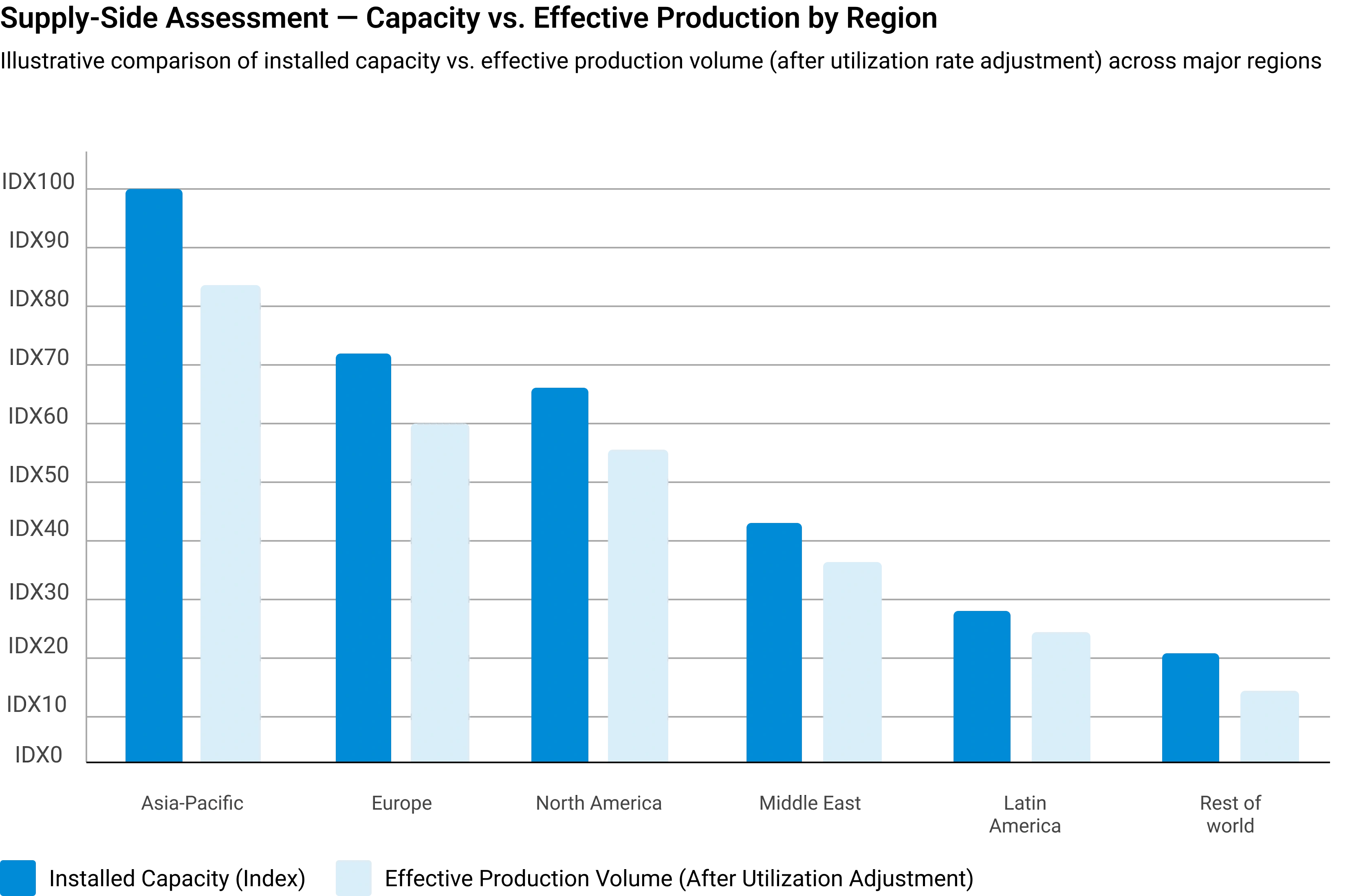
Phase 2 — Supply-Side Assessment: Mapping Production Capabilities
Production Capacity Analysis
All major manufacturers are assessed for existing installed capacity, planned additions, expansions, new plant announcements, and technology adoption — mapped at global, regional, and country levels.
Capacity Utilization Adjustment
Installed capacity is adjusted using utilization rates based on demand conditions, feedstock availability, plant operating rates, maintenance schedules, and regulatory restrictions.
Manufacturer Revenue Analysis
Product-specific revenues, segment-level performance, regional distribution, average selling prices, and margin trends are evaluated to establish market value estimates.
Supply-Side Assessment — Capacity vs. Effective Production by Region
Illustrative comparison of installed capacity vs. effective production volume (after utilization rate adjustment) across major regions
Phase 3 — Demand-Side Assessment: Quantifying Chemical Consumption
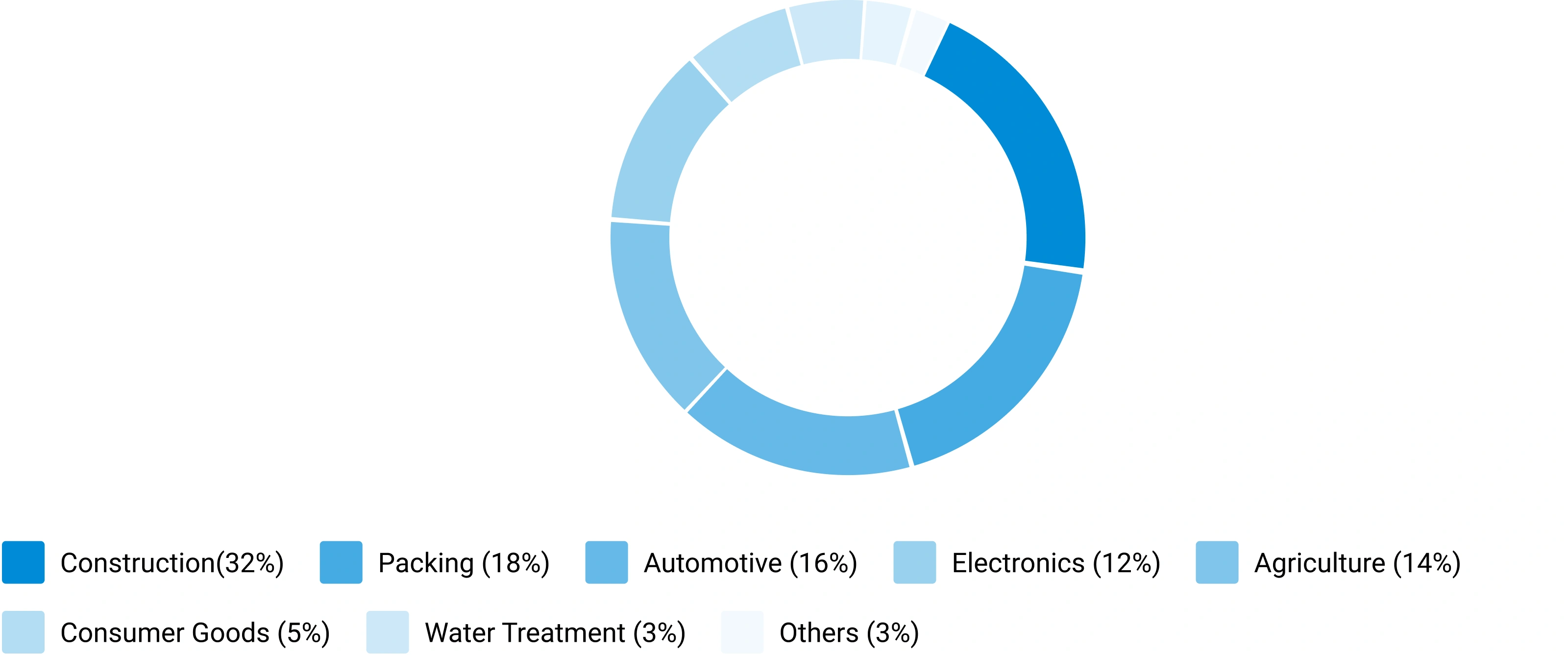
Demand-side analysis quantifies chemical consumption across industries, applications, and geographies — identifying where and how chemicals are consumed throughout the value chain with precision.
End-Use Industry Analysis
Chemical demand is evaluated across automotive, construction, packaging, electronics, agriculture, healthcare, consumer goods, industrial manufacturing, energy and utilities, and water treatment. Industry output, production trends, and consumption intensity are analyzed to determine demand patterns.
Consumption Modeling
Demand is estimated using measurable indicators: kilograms per vehicle, kilograms per square meter of construction, dosage per cubic meter of water treated, kilograms per hectare of agricultural land, and kilograms per ton of manufactured products. Consumption factors are validated through industry publications and primary interviews.
Application Analysis
The market is segmented by application area to understand product performance requirements, formulation trends, technology adoption, customer preferences, and regulatory requirements improving demand accuracy and segmentation granularity.
Demand-Side Assessment — End-Use Industry Demand Distribution
Illustrative distribution of chemical & materials demand across key end-use industries
Phase 4 - Trade Flow Analysis: Balancing Regional Supply and Demand
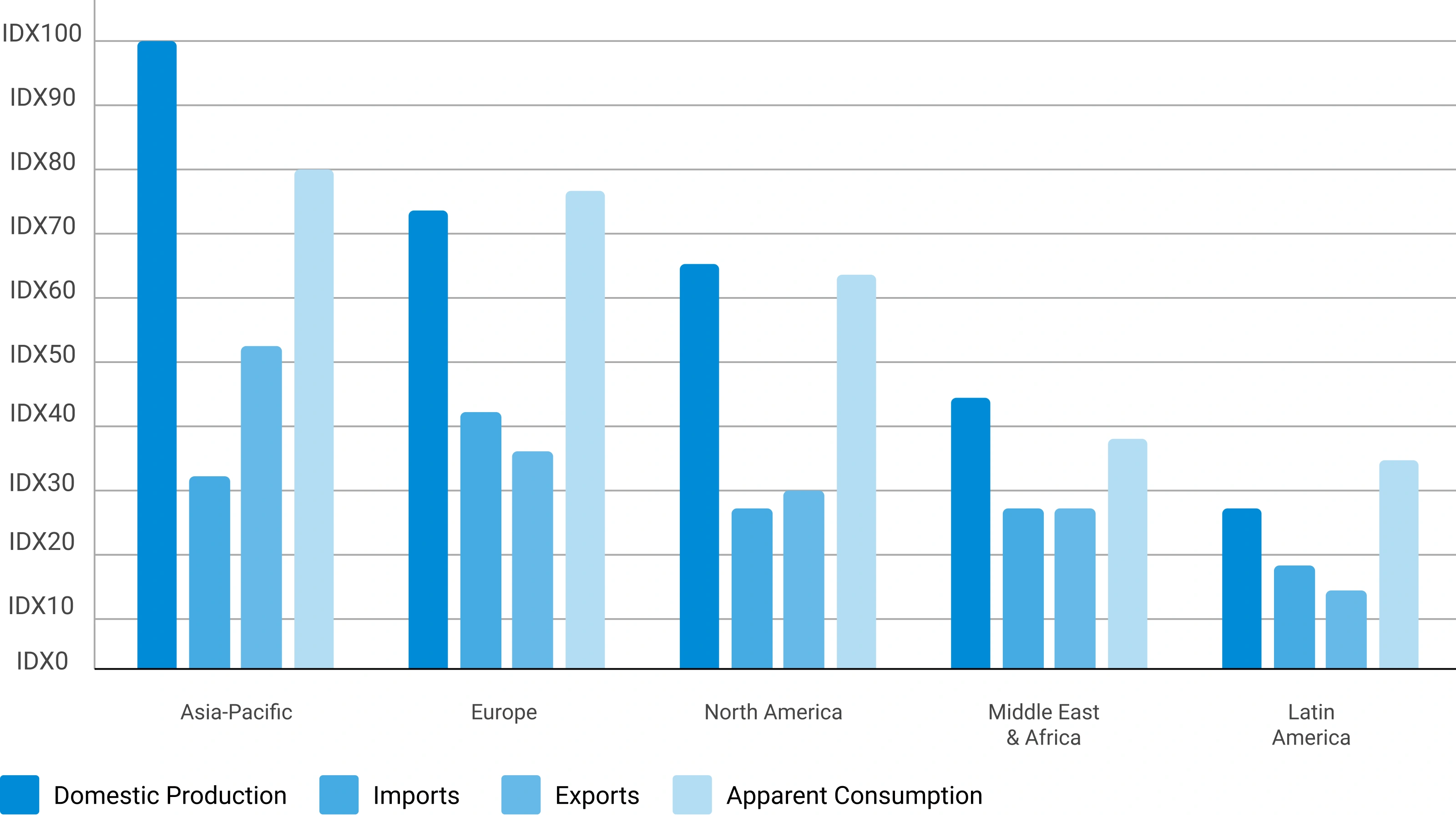
Trade flow analysis reconciles regional supply and demand estimates through import and export data, identifying net supply positions, regional dependencies, and market imbalances. It serves as an independent validation layer that tests the consistency of supply-side and demand-side estimates.
Import Analysis
Import data is evaluated to determine volumes, source countries, product dependency, regional supply gaps, and pricing trends — identifying markets that rely heavily on external supply and where domestic production is insufficient to meet demand.
Export Analysis
Export assessments reveal production surplus, export competitiveness, regional manufacturing strength, and global market participation. Export patterns also help validate domestic production estimates and identify net exporting regions.
Apparent Consumption Model
Regional consumption is assessed using the standard apparent consumption formula:
Results identify net importing regions, net exporting regions, regional deficits, and surpluses — serving as an independent validation of supply and demand estimates.
Trade Flow Analysis — Net Supply Position by Region
Illustrative apparent consumption vs. domestic production across major regions — positive gap indicates net import dependency
Phase 5 — Primary Research: The Critical Validation Layer
Primary research tests and refines findings from secondary research through direct engagement with industry participants across the supply chain, demand side, and expert community. It captures intelligence that no database or published report can provide — the real-world experience of manufacturers, buyers, and specialists operating in the market.

Supply-Side Interviews
Conversations with chemical manufacturers, raw material suppliers, contract manufacturers, technology providers, and plant operators cover production trends, capacity utilization, pricing developments, technology shifts, and competitive dynamics.

Demand-Side Interviews
Engagement with OEMs, industrial consumers, procurement managers, distributors, formulators, and end-use manufacturers focuses on consumption trends, purchasing behavior, product substitution, demand outlook, and emerging applications.

Industry Expert Consultations
Additional interviews with industry consultants, independent experts, regulatory specialists, technical professionals, and research institutions provide deeper market context and validate key analytical assumptions.
Focus Areas of Primary Research:
Market Size & Forecast Validation
Revenue estimates, volume consumption, growth rates, forecast assumptions, regional demand.Supply Chain & Value Chain Assessment
Raw material sourcing, supply chain challenges, distribution networks, procurement practices.Production & Capacity Analysis
Manufacturing capacity, utilization rates, expansion projects, plant investments.Pricing & Cost Structure Analysis
Product pricing trends, feedstock costs, energy costs, margin pressures, pricing outlook.Competitive Landscape Assessment
Volume and value estimates confirmed to be fully consistent with one another before publicationInterview Volume by Market Scope
| Study Scope | Number of Interviews |
|---|---|
| Niche Market | 20 – 30 |
| Mid-Sized Market | 30 – 50 |
| Global Market | 50 – 80 |
| Highly Fragmented Market | 80 – 120 |
Interview Details:
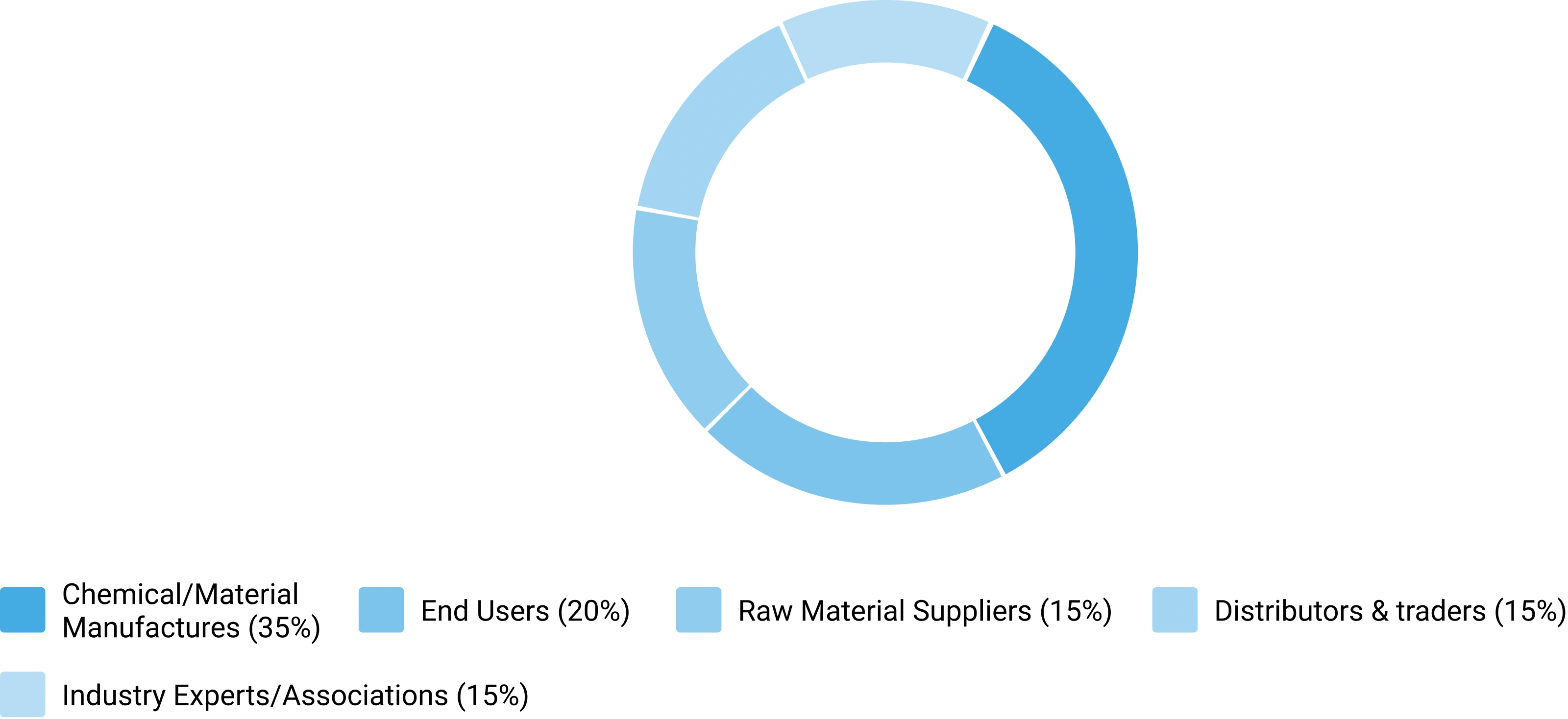
Category : Manufacturers, Suppliers, Distributors, End Users, Experts/Associations
Average Duration : 30–60 Minutes
Interview Mode : Video calls, telephonic interviews, expert consultations
Interview Format : Structured / Semi-Structured questionnaire
Focus Areas of Primary Research:
Market Size & Forecast Validation :
Revenue estimates, volume consumption, growth rates, forecast assumptions, regional demand.
Supply Chain & Value Chain Assessment :
Raw material sourcing, supply chain challenges, distribution networks, procurement practices.
Production & Capacity Analysis :
Manufacturing capacity, utilization rates, expansion projects, plant investments.
Pricing & Cost Structure Analysis :
Product pricing trends, feedstock costs, energy costs, margin pressures, pricing outlook.
Competitive Landscape Assessment :
Market share, competitor positioning, strategic initiatives, partnerships, acquisitions.
Primary Research — Stakeholder Coverage by Category
Distribution of interview respondents across stakeholder categories (% share from PPT data)
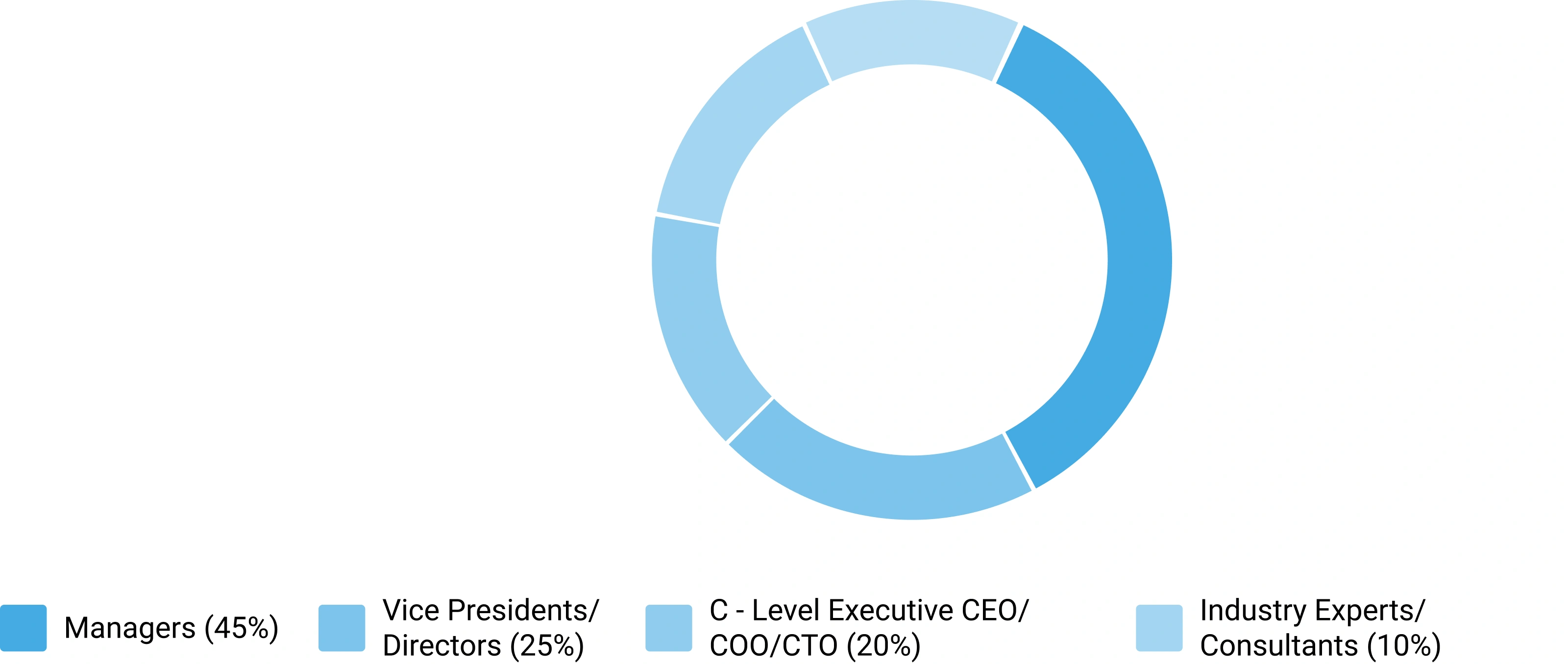
Primary Research — Respondent Designation Profile
Seniority breakdown of interview respondents (% share from PPT data)
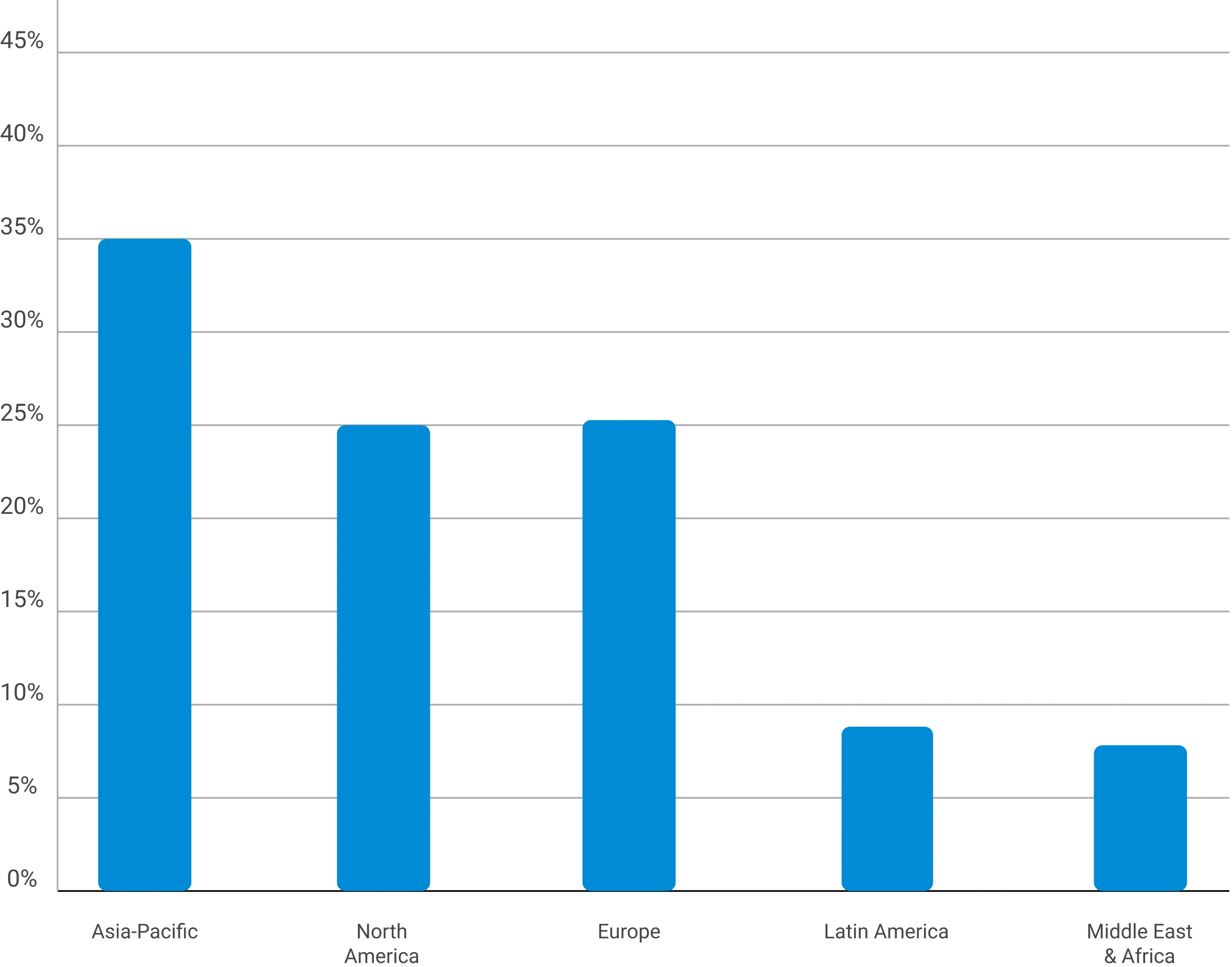
Primary Research — Geographic Coverage of Interviews
Regional distribution of primary research engagement (% share from PPT data)
Phase 6 — Data Triangulation and Market Validation
No single methodology is relied upon in isolation. Multiple independent estimation approaches are combined and reconciled to ensure consistency, accuracy, and analytical defensibility. Any material deviations between approaches are investigated and adjusted through additional validation cycles.
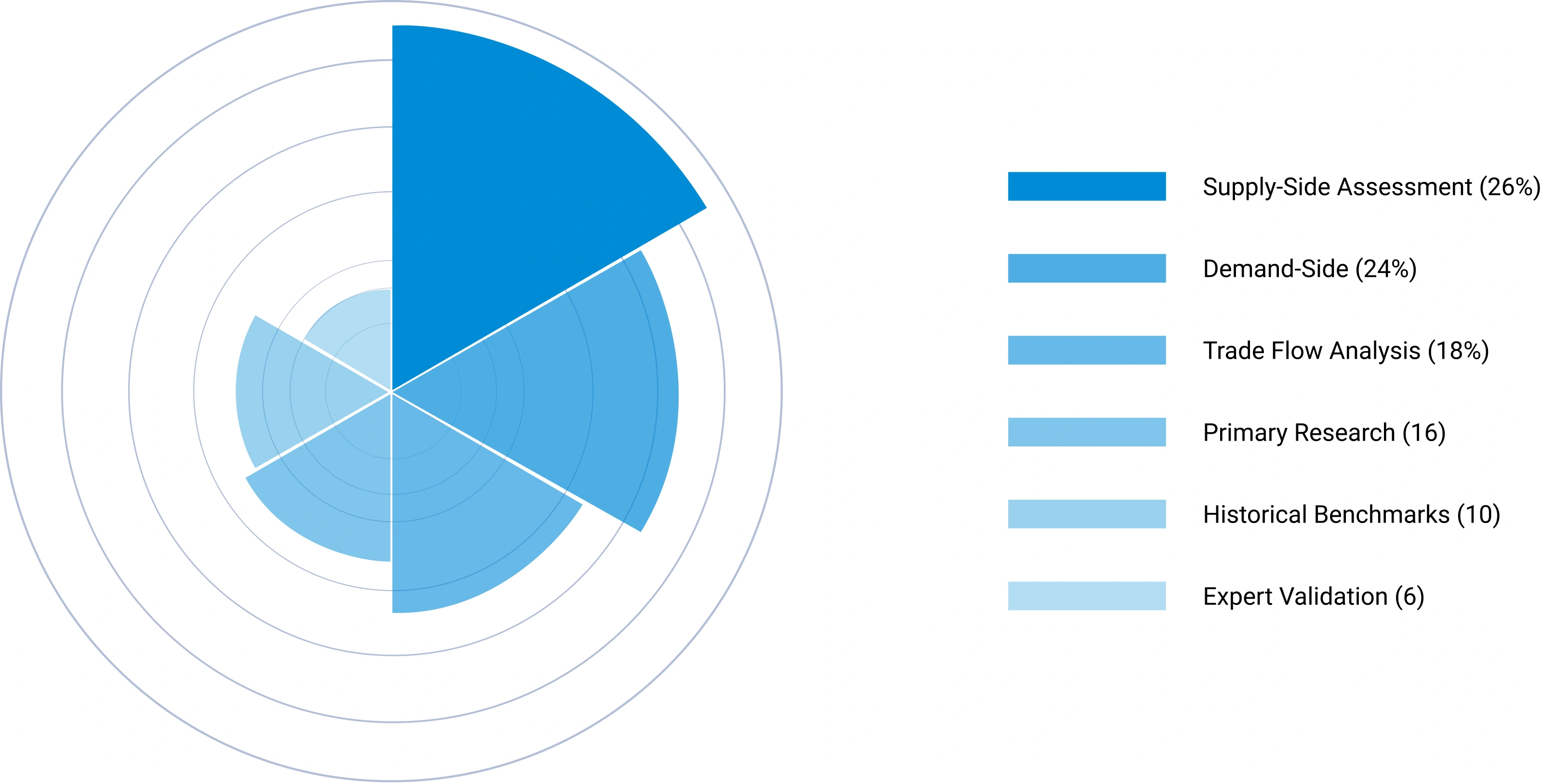
The final market size is derived through weighted triangulation of all validated methodologies. Any material deviations between approaches are investigated and adjusted through additional validation cycles. The outcome represents the most realistic assessment of the market based on available evidence and expert confirmation ensuring that volume and value estimates are fully consistent with one another.
Triangulation Framework — Input Contribution Weight
Relative weight each sizing input contributes to the final reconciled market estimate
Phase 7 — Forecast Modeling: Projecting Future Market Evolution
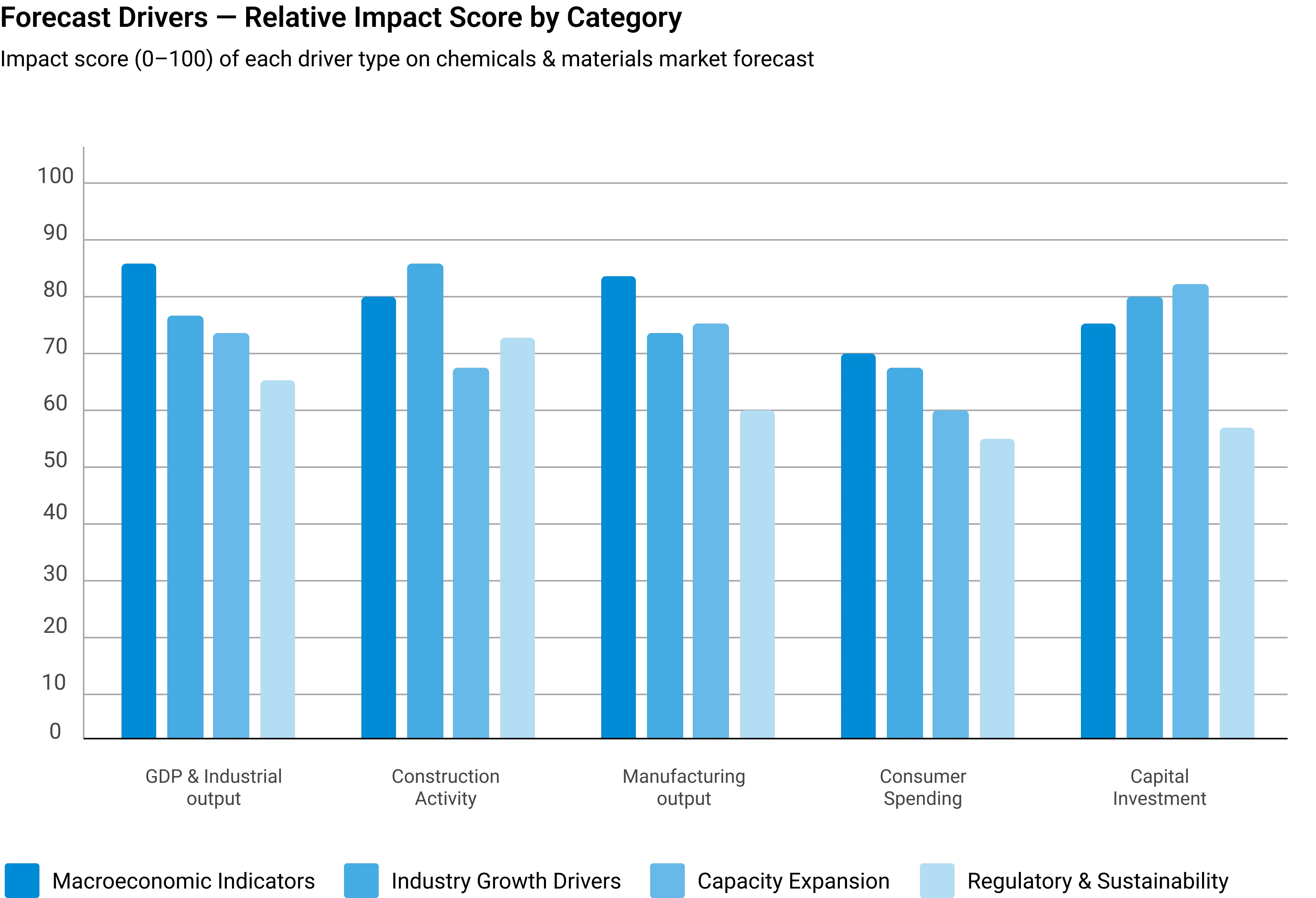
Forecasting evaluates the future trajectory of the market using a combination of quantitative indicators and qualitative assessments across economic, industry, and regulatory dimensions. Rather than simple extrapolation, each driver is independently modeled and integrated into a composite forecast.
Macroeconomic Indicators
GDP growth, industrial production, manufacturing output, construction activity, consumer spending, and capital investment form the quantitative foundation of long-term demand projections. These are applied at country, regional, and global levels.
Industry Growth Drivers
Urbanization, infrastructure development, industrialization, technological innovation, sustainability initiatives, and evolving product performance requirements are assessed at regional and industry levels — capturing both structural and cyclical demand drivers.
Capacity Expansion Analysis
Announced plant expansions, new manufacturing facilities, technology upgrades, and strategic investments are evaluated to determine future supply-demand dynamics and potential market tightness or oversupply situations.
Regulatory & Sustainability
Environmental regulations, chemical safety standards, emission reduction targets, circular economy initiatives, and sustainability requirements are incorporated as they often influence product adoption rates and market growth trajectories.
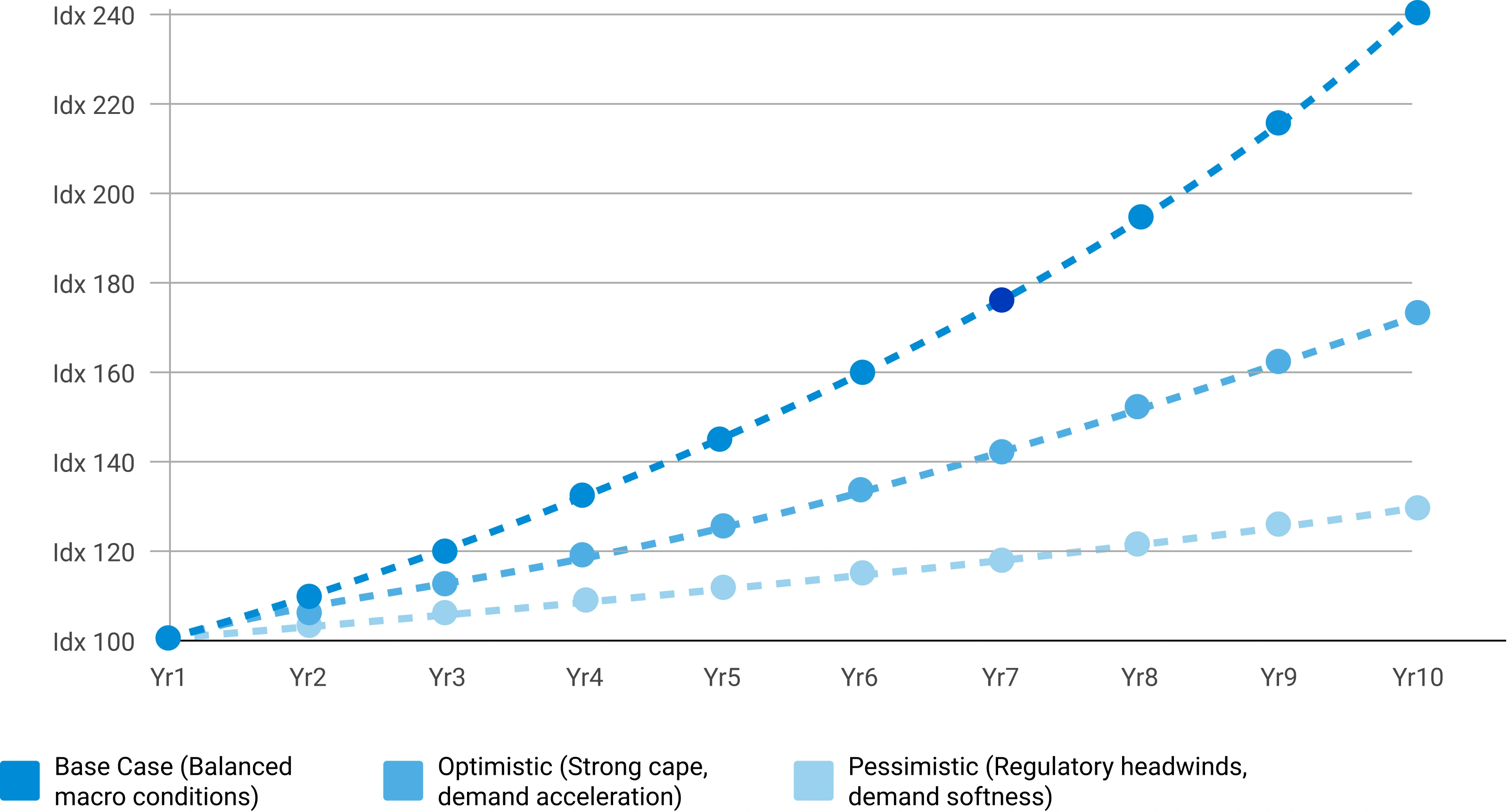
Scenario Forecast Range — Indexed Market Growth (Year 1–10)
Illustrative indexed growth trajectories across Base, Optimistic, and Pessimistic scenarios over a 10-year forecast horizon
Forecast Drivers — Relative Impact Score by Category
Impact score (0–100) of each driver type on chemicals & materials market forecast



Comments
Share your thoughts, ask a question, or provide feedback about this report.