
Asia Pacific Ethylene Vinyl Acetate Copolymer Market Size Analysis Report 2035
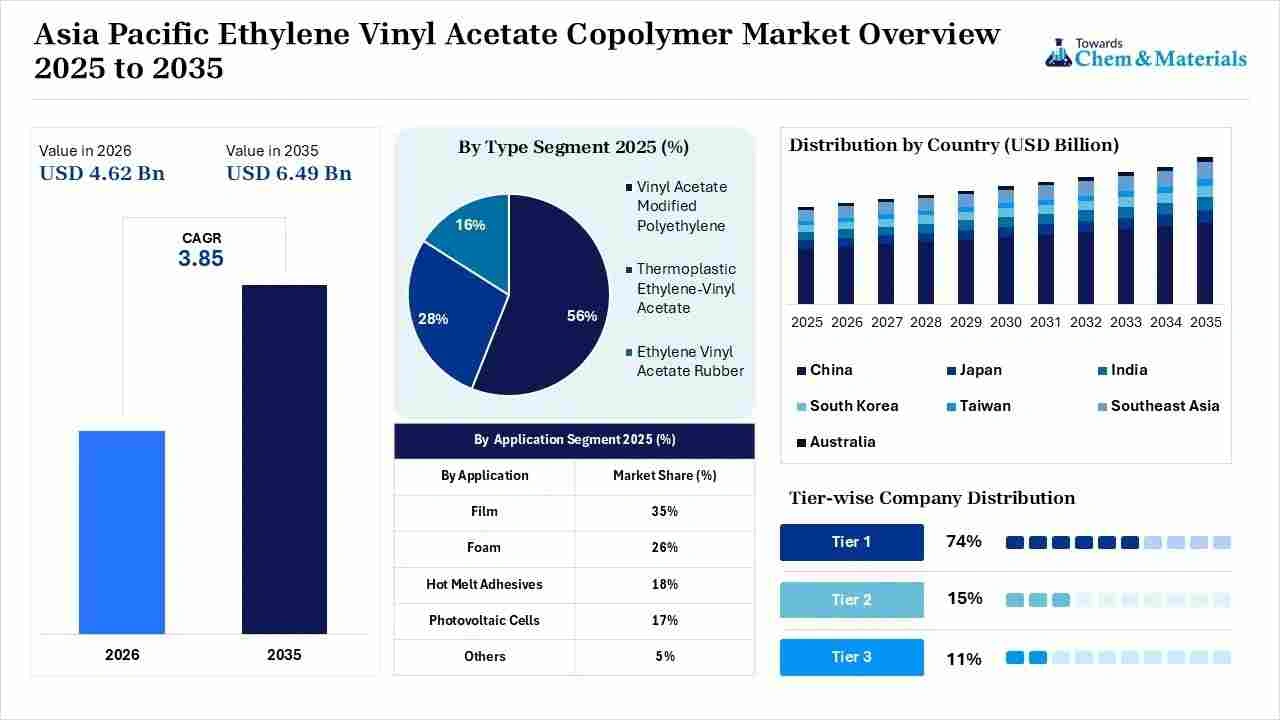
The Asia Pacific ethylene vinyl acetate copolymer market size was valued at USD 4.45 billion in 2025, is estimated to reach USD 4.62 billion in 2026, and is projected to reach USD 6.49 billion by 2035, exhibiting a compound annual growth rate (CAGR) of 3.85% over the forecast period from 2026 to 2035. Demand for films, PV cells, packaging, consumer goods, footwear, adhesives, and industrial parts is all helping market development.
Key Takeaways
- By type, the vinyl acetate modified polyethylene segment dominated the market with the largest share of 56.1% in 2025 and is expected to grow at a CAGR of 3.45% during the forecast period.
- By type, the ethylene vinyl acetate rubber segment held 15.5% market share in 2025 and is expected to grow at the fastest CAGR of 5.15% over the forecast period.
- By application, the film segment dominated the market with the largest share of 35.1% in 2025 and is expected to grow at a CAGR of 3.4% during the forecast period.
- By application, the photovoltaic cells segment held 16.7% market share in 2025 and is expected to grow at the fastest CAGR of 6.25% over the forecast period.
- By end use, the packaging segment dominated the market with the largest share of 39.6% in 2025 and is expected to grow at a CAGR of 3.7% during the forecast period.
- By end use, the consumer goods segment held 27.4% market share in 2025 and is expected to grow at the fastest CAGR of 4.85% over the forecast period.
According to Towards Chemicals and Materials Analytics and Consulting, the global ethylene vinyl acetate copolymer market volume was valued at 3.38 million metric tons in 2025 and is expected to surpass around 4.98 million metric tons by 2035, accelerating a compound annual growth rate (CAGR) of 3.95% over the forecast period from 2026 to 2035.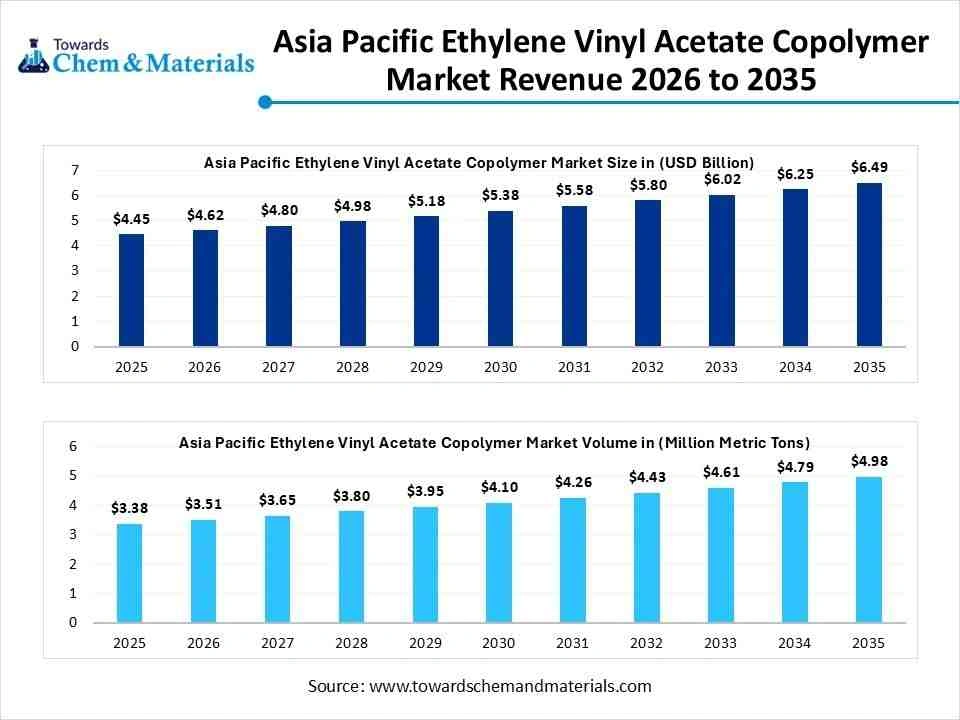
The Asia Pacific ethylene vinyl acetate copolymer market is one of the key markets in the region because of industrial production, the infrastructure being developed in the region, and the manufacturing of consumer goods. The growth of solar energy also leads to the growth of demand for PV encapsulant films, and the production of extensive footwear and foam contributes to materials consumption. Commercial utilization continues to expand in a variety of downstream industries throughout the region, bolstered by other developments, including the growth of flexible packaging, e-commerce applications, and hot-melt adhesive uses.
Global Investment Movement for the Asia Pacific Ethylene Vinyl Acetate Copolymer Market
- Investment movement is developing gradually and ranging into capacity development related to photovoltaic film materials and specific applications of EVA.
- Photovoltaic manufacturing investment can support increasing the demand for the production of these special grades of EVA and for encapsulation materials downstream.
- Investment activity also contributes to the development of renewable-material solutions for specific applications that require performance with enhanced sustainability attributes.
- Producers are increasingly manufacturing certified EVA products with the use of sustainable raw materials and mass balance production methods.
Asia Pacific Ethylene Vinyl Acetate Copolymer Market Report Scope
| Report Attributes | Details |
| Market Size in 2026 | USD 4.62 Billion/3.51 Million Metric Tons |
| Expected Size in 2035 | USD 6.49 Billion/4.98 Million Metric Tons |
| Growth Rate | CAGR of 3.85% |
| Base Year of Estimation | 2025 |
| Forecast Period | 2025-2035 |
| Dominant Country | China |
| Segment Covered | By Type, By Application, By End Use, By Country |
| Key Companies Profiled | Jiangsu Hongjing New Material Co. Ltd., Formosa Plastics Corporation, Lotte Chemical Corporation, DuPont-Mitsui Polychemicals Co. Ltd., Hanwha Solutions, LG Chem, Tosoh Corporation, Sinopec, Asia Polymer Corporation, Hanwha Total Petrochemical, Sumitomo Chemical Co. Ltd., TPI Polene Public Company Limited |
Asia Pacific Ethylene Vinyl Acetate Copolymer Market Trends
- PV applications are an important trend in the market, since EVA can be used to meet the encapsulation needs of various solar-module configurations
- The advancements help to meet sustainability needs in polymer manufacturing and downstream applications and enable product differentiation.
- The specialized forms of EVA have a wide range of uses for flexible, thermal, adhesive, cushioning, and encapsulating properties.
- Tailor product formulations to address the differentiated requirements within PV cells, footwear, packaging, adhesives, and industrial applications.
- PV manufacturers increase ties with downstream manufacturers of solar modules. EVA encapsulant films are used in PV applications such as crystalline-silicon, thin-film, and bifacial-module applications.
Key Technological Shifts and AI in the Asia Pacific Ethylene Vinyl Acetate Copolymer Market
AI is revolutionizing the manufacture of EVA copolymer in reactors, predictive modelling, and PV encapsulation manufacturing. Machine learning can be used to track the polymerization process and automated inspection for the production of micro-defects in extruded films. Predictive analytics also enables them to predict the availability of feedstocks and manufacturing demand for producers in China and India, allowing them to increase operational efficiency, quality control, and supply chain planning.
Supply Chain Analysis of the Asia Pacific Ethylene Vinyl Acetate Copolymer Market
Feedstock Procurement
- The process of acquiring ethylene and vinyl acetate monomer (VAM) for preparing and producing EVA copolymer.
- Stable feedstock availability helps ensure uninterrupted manufacturing but also has impacts on the broader economics of regional supply chains.
- Reliance Industries: Large-scale domestic refining and cracker facilities provide extensive regional petrochemical feedstocks by Reliance Industries Limited.
- Other Key Players: Sinopec and Lotte Chemical.
Chemical Synthesis and Processing
- A high-pressure free-radical copolymerization of ethylene and vinyl acetate monomers to produce solid EVA resins.
- The characteristics of the copolymer that are required for various downstream applications and product grades are determined by processing.
- Hanwha Solutions has a large-capacity high-pressure reactor that can manufacture a variety of polymer grades.
- Other Key Players: LG Chem, Formosa Plastics.
Compound Formulation and Blending
- The process of blending base EVA resins, additives, cross-linking agents, or fillers to achieve desired properties.
- Blending improves the capability of manufacturers to create special materials for downstream applications that satisfy flexibility and thermal needs.
- Mitsui Chemicals is a major player in the formulation of special functional high-performance polymer compounds.
- Other Key Players: Arkema and Sumitomo Chemical.
Sustainability Analysis of the Asia Pacific Ethylene Vinyl Acetate Copolymer
The use of sustainable raw materials, certified production, mass balance methods, and alternative feedstock integration are becoming more and more central in sustainability development. The development of renewable and circular feedstocks also opens the door for differentiated EVA products for footwear, PV, packaging, and more.
What is the ethylene vinyl acetate copolymer?
Copolymerization of ethylene and vinyl acetate monomers to form solid polymer materials is used to produce ethylene vinyl acetate copolymer. From downstream industries, EVA is suitable for various applications that require flexibility, cushioning, adhesion, encapsulation, and special thermal properties.
Uses of the Asia Pacific Ethylene Vinyl Acetate Copolymer
The packaging film, agricultural film, stretch and shrink film, lamination film, and photovoltaic encapsulant film can be made from EVA. The applications cover various packaging, agricultural, lamination, and solar-module applications for regional industry.
EVA is used for encapsulants in crystalline-silicon modules, thin-film modules, and bifacial modules. The segment of PV encapsulation is one of the major applications since it has the greatest growth out of all the applications provided.
EVA is used as a footwear foam, sports and leisure foam, and also as a cushioning material with flexibility, comfort, firmness, and lightweight performance. The applications make significant contributions to the demand for consumer goods in regional markets.
Pricing Analysis for the Asia Pacific Ethylene Vinyl Acetate Copolymer Market
The ethylene and vinyl acetate monomer prices, regional supply balance, inventories, demand seasonality, and production economics all affect pricing for EVA. Naphtha crack spreads have a negative impact on manufacturing margins and pricing flexibility. Solar encapsulation grades have premiums based on their vinyl acetate content and vinyl application needs, and regional oversupply can put pressure on spot quotes.
Asia Pacific Ethylene Vinyl Acetate Copolymer Market: Global Trade Analysis
The Asia Pacific EVA copolymer market operates as a key trade hub with domestic consumption, PV manufacturing, footwear, and the packaging industry. China is the leading processor of raw materials and a solar panel manufacturer, with India being a significant import market. Specialized grades of co-polymer are offered to the neighboring developing economies by South Korea, Japan, and Taiwan.
Regulatory Framework: Asia Pacific Ethylene Vinyl Acetate Copolymer Market
| Country Region | Regulatory Body | Key Regulations | Focus Areas |
| India | Bureau of Indian Standards (BIS) | Ethylene Vinyl Acetate Copolymers (Quality Control) Order | Mandatory standard certification |
| China | Ministry of Ecology and Environment | Local VOC caps (e.g., Beijing DB11/1983-2022) | Controlling hazardous emissions in adhesive/coating applications |
| Japan | Ministry of Economy, Trade and Industry (METI) | Chemical Substances Control Law (CSCL) | Safe industrial handling, monomer residual limits |
Asia Pacific Ethylene Vinyl Acetate Copolymer Market Dynamics
Driver: Solar Energy Expansion
The demand for EVA encapsulant sheets is rising due to the high production rate of PV modules and the promotion of renewable energy in China and India. For the growth and expansion of solar-module production, it is crucial to have reliable encapsulation materials that meet the protection, insulation, and sealing needs of the solar module.
Restraint : Substitute Material Pressure
Traditional EVA grades can be suppressed by other polymers like low-density polyethylene (LDPE) and polyolefin elastomer (POE). Application-specific performance requirements may be an incentive for substitution pressure to arise from manufacturers and downstream users. This competitive environment may impact product usage in PV, film, packaging, and other applications, which can be a challenge for traditional EVA formulations in regional markets.
Opportunity: Advanced Encapsulants
The production of high-density cross-linking grades for the next generation, more efficient solar modules opens up possibilities for special EVA products. The use of advanced encapsulants can meet the changing demands of PV devices by enhancing their material properties and developing the formulation for the specific applications. If the EVA is developed for specific encapsulation solutions, it can enhance competitiveness in the solar-module applications.
Asia Pacific Ethylene Vinyl Acetate Copolymer Market Segment Insights
Type Insights
Production Technology Insights
The vinyl acetate modified polyethylene segment dominated the market with the largest share of 56.1% in 2025 and is expected to grow at a CAGR of 3.45% over the forecast period, due to the use of this polymer in films, photovoltaic encapsulation, and other polymer applications. It produces low, medium, and high VA content, as well as PV-grade EVA. These properties enable manufacturers to respond to a range of process needs and downstream application specifications with different types of material.
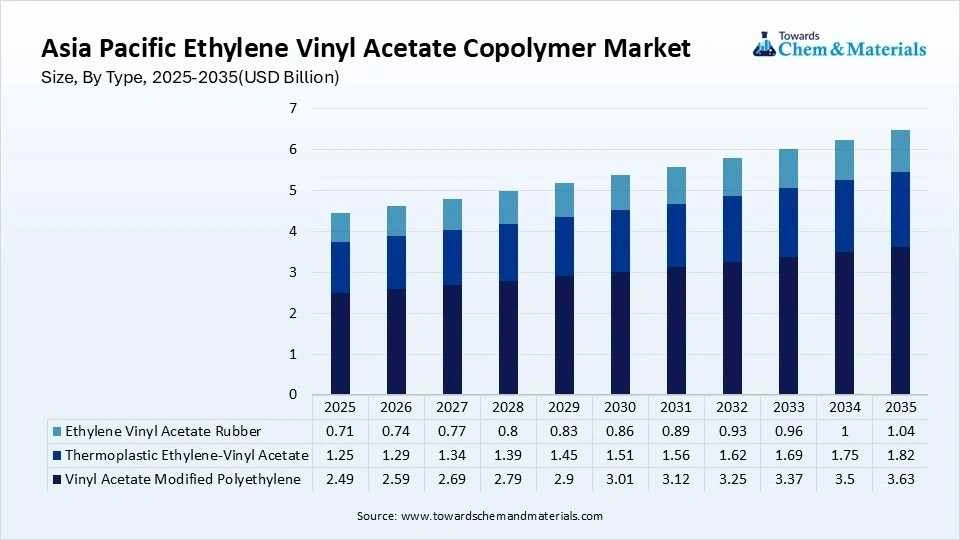
The ethylene vinyl acetate rubber segment held a 15.5% market share in 2025 and is expected to grow at the fastest CAGR of 5.15% over the forecast period, due to its versatility and application in speciality rubber products. The segment features low, medium and high VA EVA rubber, as well as crosslinkable EVA rubber. The different variations enable manufacturers to meet different performance demands in applications that require elasticity, flexibility and specific material properties.
- For instance, in January 2026, RenewSys introduced Conserv Augmensheet, a sheet encapsulant made of EVA that is used for insulation and sealing in the busbar and junction-box regions of solar modules. Delivered on reels and powered by advanced Conserv encapsulant technology, the product enables automated module manufacturing. (Source: www.pv-magazine.com)
Asia Pacific Ethylene Vinyl Acetate Copolymer Market Share, By Type, 2025(%)
| By Type | Market Share (%) |
| Vinyl Acetate Modified Polyethylene | 56% |
| Thermoplastic Ethylene-Vinyl Acetate | 28% |
| Ethylene Vinyl Acetate Rubber | 16% |
Application Insights
The film segment dominated the market with the largest share of 35.1% in 2025 and is expected to grow at a CAGR of 3.4% over the forecast period. The film segment is still one of the largest applications as EVA is used for packaging, agricultural films, stretch and shrink films, lamination, and PV encapsulant films. The wide application coverage allows manufacturers to meet packaging and industrial needs while meeting the growing demand for solar module applications.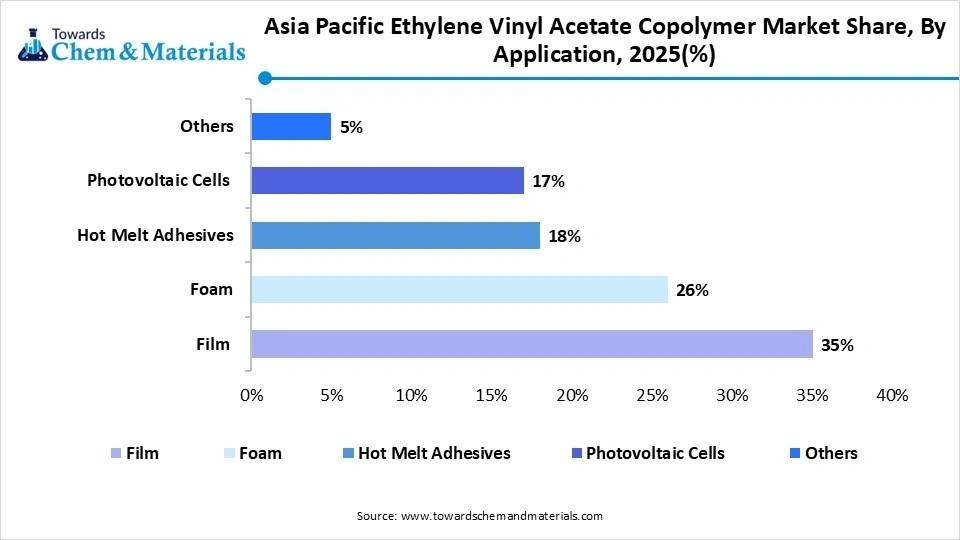
The photovoltaic cells segment held the 16.7% market share in 2025 and is expected to grow at the fastest CAGR of 6.25% over the forecast period. The photovoltaic cells segment is a huge opportunity as EVA can be used to provide encapsulation solutions for various configurations of solar modules. As PV use grows, so does the demand for dedicated EVA materials for the protection, insulation, sealing, and encapsulation applications in PV modules.
- For instance, in August 2026, CS PowerTech Inc., a subsidiary of Canadian Solar, commissioned the first phase of its largest photovoltaic cell plant in Jeffersonville, Indiana. The plant will be able to manufacture over 6 GWp of heterojunction bifacial N-type solar cells per year.(Source: finance.yahoo.com)
Asia Pacific Ethylene Vinyl Acetate Copolymer Market Share, By Application, 2025(%)
| By Application | Market Share (%) |
| Film | 35% |
| Foam | 26% |
| Hot Melt Adhesives | 18% |
| Photovoltaic Cells | 17% |
| Others | 5% |
End Use Insights
The packaging segment dominated the market with the largest share of 39.6% in 2025 and is expected to grow at a CAGR of 3.7% over the forecast period, due to its ability to be flexible and used in food, medicines, e-commerce, and industry packaging. The versatility allows the use of the material in various packaging formats that demand flexibility, adhesion, sealing, and protective features. The large application base lends EVA greater relevance across various packaging needs in regional markets.
- For instance, in May 2026, ExxonMobil partnered with Kuraray, GAP, and G.Mondini to create a vacuum skin packaging solution without the need for any ionomer. This solution involves the use of Exceed performance polyethylene resins and EVAL EVOH barrier material.(Source: www.plasticstoday.com)
The consumer goods segment held the 27.4% market share in 2025 and is expected to grow at the fastest CAGR of 4.85% over the forecast period. The consumer goods industry includes electronics accessories, toys, sporting goods, household products, and footwear. Cushioning, flexibility, lightness, and adaptability to various product designs are all features that EVA provides support for these applications. Specially designed EVA materials for consumer-oriented products will find application opportunities in the regional market, due to the growing diversity of applications.
Asia Pacific Ethylene Vinyl Acetate Copolymer Market Share, By End Use, 2025(%)
| By End Use | Market Share (%) |
| Automotive | 16% |
| Packaging | 40% |
| Medical & Healthcare | 9% |
| Consumer Goods | 27% |
| Others | 9% |
Asia Pacific Ethylene Vinyl Acetate Copolymer Market Country Insights
How Did China Dominate the Asia Pacific Ethylene Vinyl Acetate Copolymer Market In 2025?
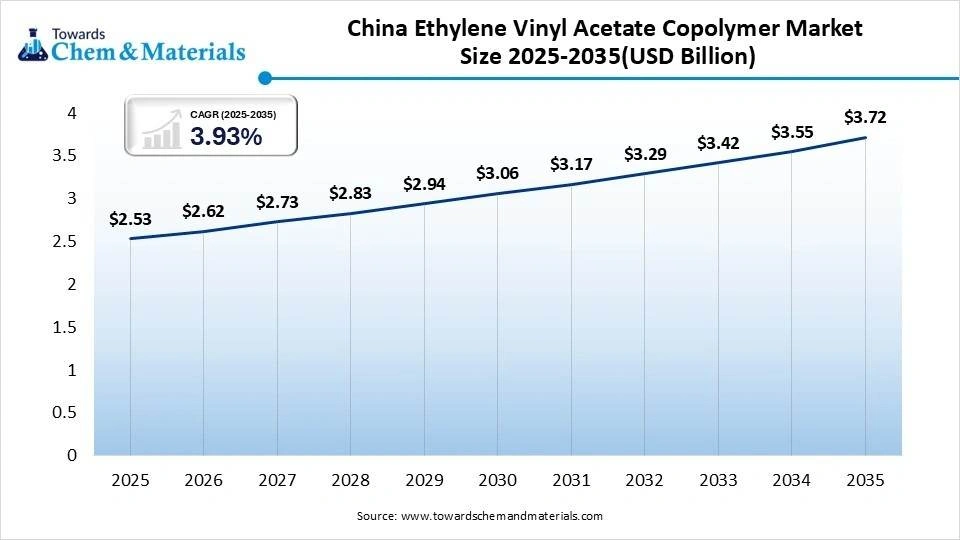
The China ethylene vinyl acetate copolymer market size was estimated at USD 2.53 billion in 2025 and is projected to reach USD 3.72 billion by 2035, growing at a CAGR of 3.93% from 2026 to 2035. China dominated the market with the largest share of 56.8% in 2025 and is expected to grow at a CAGR of 4.4% during the forecast period. China is the biggest market in the region, with significant raw material processing and solar panel manufacturing. The wide production volume makes it possible for great demand for PV encapsulant film products. China is also a major player in trade flows in the region, with its involvement in all three areas of polymer production, solar manufacturing, and downstream industrial uses.
The India ethylene vinyl acetate copolymer market size was estimated at USD 0.36 billion in 2025 and is projected to reach USD 0.56 billion by 2035, growing at a CAGR of 4.52% from 2026 to 2035. India held 8.2% market share in 2025 and is expected to grow at the fastest CAGR of 6.2% during the forecast period. India is an important market in the region, with the footwear production industry and the growing need for agricultural films. It is an important destination for imports, reinforcing involvement in regional sourcing networks. A wide range of applications in packaging, films, consumer goods, and industrial products downstream provide further opportunities for EVA copolymer use.
The Japan ethylene vinyl acetate copolymer market size was estimated at USD 0.39 billion in 2025 and is projected to reach USD 0.60 billion by 2035, growing at a CAGR of 4.40% from 2026 to 2035. Japan held 8.8% market share in 2025 and is expected to grow at a CAGR of 2.7% over the forecast period. Japan is a well-known regional market with high usage of special copolymer grades and applications. Japanese supply states are supplying high-end materials to their neighbouring developing economies through regional trade networks. The numerous applications in PV, packaging, footwear, adhesives and special polymer products help to ensure the markets longevity.
- For instance, in December 2025, Japans UBE-MARUZEN POLYETHYLENE introduced ISCC PLUS certified ethylene-vinyl acetate copolymer products at the plant in Chiba in December 2025. UMP is a 50/50 joint venture of the UBE Group and Maruzen Petrochemical, selling EVA using mass balance practices and materials derived from sustainable sources. (Source: www.indianchemicalnews.com)
The South Asia ethylene vinyl acetate copolymer market size was estimated at USD 0.52 billion in 2025 and is projected to reach USD 0.79 billion by 2035, growing at a CAGR of 4.27% from 2026 to 2035. South Asia held 11.7% market share in 2025 and is expected to grow at a CAGR of 5.15% over the forecast period. South Asia is an important consumption market with applications in packaging, footwear, agricultural films, consumer goods, and other downstream industries. EVA materials offer flexibility in applications, including flexible films, adhesives, cushioning, and specialty materials, due to the variety of industrial needs. Upstream development in the region can also play a complementary role in facilitating market participation in downstream activities.
The South Korean ethylene vinyl acetate copolymer market size was estimated at USD 0.33 billion in 2025 and is projected to reach USD 0.51 billion by 2035, growing at a CAGR of 4.45% from 2026 to 2035. South Korea held 7.4% market share in 2025 and is expected to grow at a CAGR of 3.3% over the forecast period. South Koreas role in the region is playing out in the area of special grades supplied to neighboring developing economies under the name of EVA copolymer. Its involvement enables differentiated polymer materials to be available regionally for use in those applications that demand specific performance.
Recent Developments
- In Jul 2026, Infinium today announced its supply relationship with Borouge International and premium performance sportswear brand On, supporting the commercial launch of Ons breakthrough CleanCloud™ technology. Infiniums eNaphtha, produced from waste CO₂ and renewable hydrogen, provides the renewable feedstock used to manufacture the EVA (ethylene-vinyl acetate) material in Ons Cloud X 5 - the worlds first commercially scaled sportswear midsole made using captured carbon emissions.(Source: www.prnewswire.com)
Competitive Analysis
The major players in the Asia Pacific ethylene vinyl acetate copolymer market are petrochemical producers, polymer manufacturers, compound formulators, and specialized material suppliers. Competition is concentrated on production potential, specialized grades, photovoltaic applications, sustainable feedstocks, and formulations in the downstream. The key players are Reliance Industries Limited, Hanwha Solutions, Mitsui Chemicals, LG Chem, Formosa Plastics, Arkema, Sumitomo Chemical, Sinopec, and Lotte Chemical.
- For instance, in May 2025, Borealis launched a footwear midsole EVA grade made from renewables in May 2025. The product is part of the Bornewables family and offers a 45% lower carbon footprint over the conventional fossil-based materials in the midsole.(Source: www.borealisgroup.com)
- In November 2025, Lianhong New Energy further promoted its integrated new energy materials project in Tengzhou, Shandong, with a 200,000 tons/year EVA project. The plant focuses on high-value film materials for photovoltaics. (Source: www.sunsirs.com)
Top Players in the Market & Their Offerings
| Company | Company Type/Position | Major Headquarters | Geographic Presence | Asia Pacific Ethylene Vinyl Acetate Copolymer Offerings | Key Strength |
| Hanwha Solutions | Regional | Seoul, South Korea | Global | Hanwha EVA Resins | Massive localized production capacity |
| Sumitomo Chemical | Major Producer | Tokyo, Japan | Global | Sumitomo EVA / Evatate | Strong technical innovation |
| Asia Polymer Corporation | Regional | Taipei, Taiwan | Asia-Pacific | APC EVA Copolymers | Deep integration with regional supply networks |
- Jiangsu Hongjing New Material Co. Ltd.
- Formosa Plastics Corporation
- Lotte Chemical Corporation
- DuPont-Mitsui Polychemicals Co. Ltd.
- Hanwha Solutions
- LG Chem
- Tosoh Corporation
- Sinopec
- Asia Polymer Corporation
- Hanwha Total Petrochemical
- Sumitomo Chemical Co. Ltd.
- TPI Polene Public Company Limited
Asia Pacific Ethylene Vinyl Acetate Copolymer Market Segments Covere
By Type
- Vinyl Acetate Modified Polyethylene
- Low VA content
- Medium VA content
- High VA content
- Photovoltaic-grade EVA
- Thermoplastic Ethylene-Vinyl Acetate
- Low-density EVA
- Medium-density EVA
- High-density EVA
- High-VA thermoplastic EVA
- Ethylene Vinyl Acetate Rubber
- Low VA EVA rubber
- Medium VA EVA rubber
- High VA EVA rubber
- Crosslinkable EVA rubber
By Application
- Film
- Packaging films
- Agricultural films
- Stretch and shrink films
- Lamination films
- Photovoltaic encapsulant films
- Foam
- Footwear foam
- Sports and leisure foam
- Packaging foam
- Industrial cushioning foam
- Hot Melt Adhesives
- Packaging adhesives
- Bookbinding adhesives
- Woodworking adhesives
- Hygiene adhesives
- Automotive adhesives
- Photovoltaic Cells
- Solar-module encapsulants
- Crystalline-silicon module encapsulants
- Thin-film module encapsulants
- Bifacial-module encapsulants
- Others
- Wire and cable
- Medical products
- Consumer products
- Sealants
- Compounding and specialty applications
By End Use
- Automotive
- Interior components
- Exterior components
- Sealing and gasketing
- NVH and vibration-control components
- Packaging
- Flexible packaging
- Food packaging
- Pharmaceutical packaging
- E-commerce packaging
- Industrial packaging
- Medical & Healthcare
- Medical tubing
- Pharmaceutical packaging
- Medical bags and films
- Medical-device components
- Consumer Goods
- Footwear
- Sporting goods
- Toys
- Household products
- Electronics accessories
- Others
- Construction
- Agriculture
- Electrical & electronics
- Industrial goods
- Wire & cable
A Seven-Phase Framework
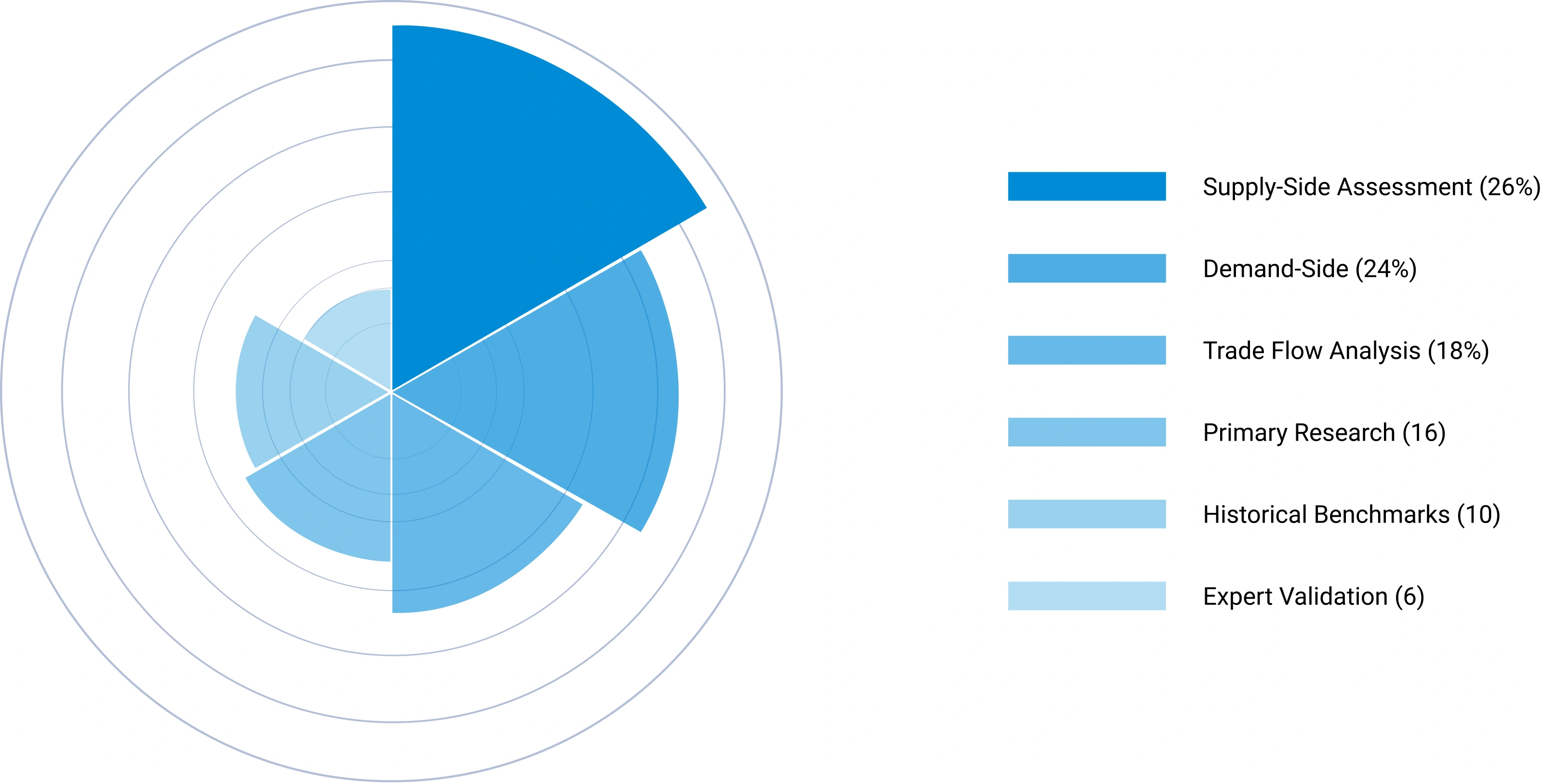
Our methodology is designed to be universally applicable across commodity chemicals, specialty chemicals, petrochemicals, construction chemicals, coatings, electronic chemicals, industrial gases, agrochemicals, water treatment chemicals, and performance materials. Each phase builds upon the last, creating a layered validation structure that minimizes estimation error and maximizes analytical confidence.
The framework ensures comprehensive market coverage, robust cross-validation, and reliable long-term forecasting — producing market estimates that withstand scrutiny from investors, regulators, and corporate strategy teams.

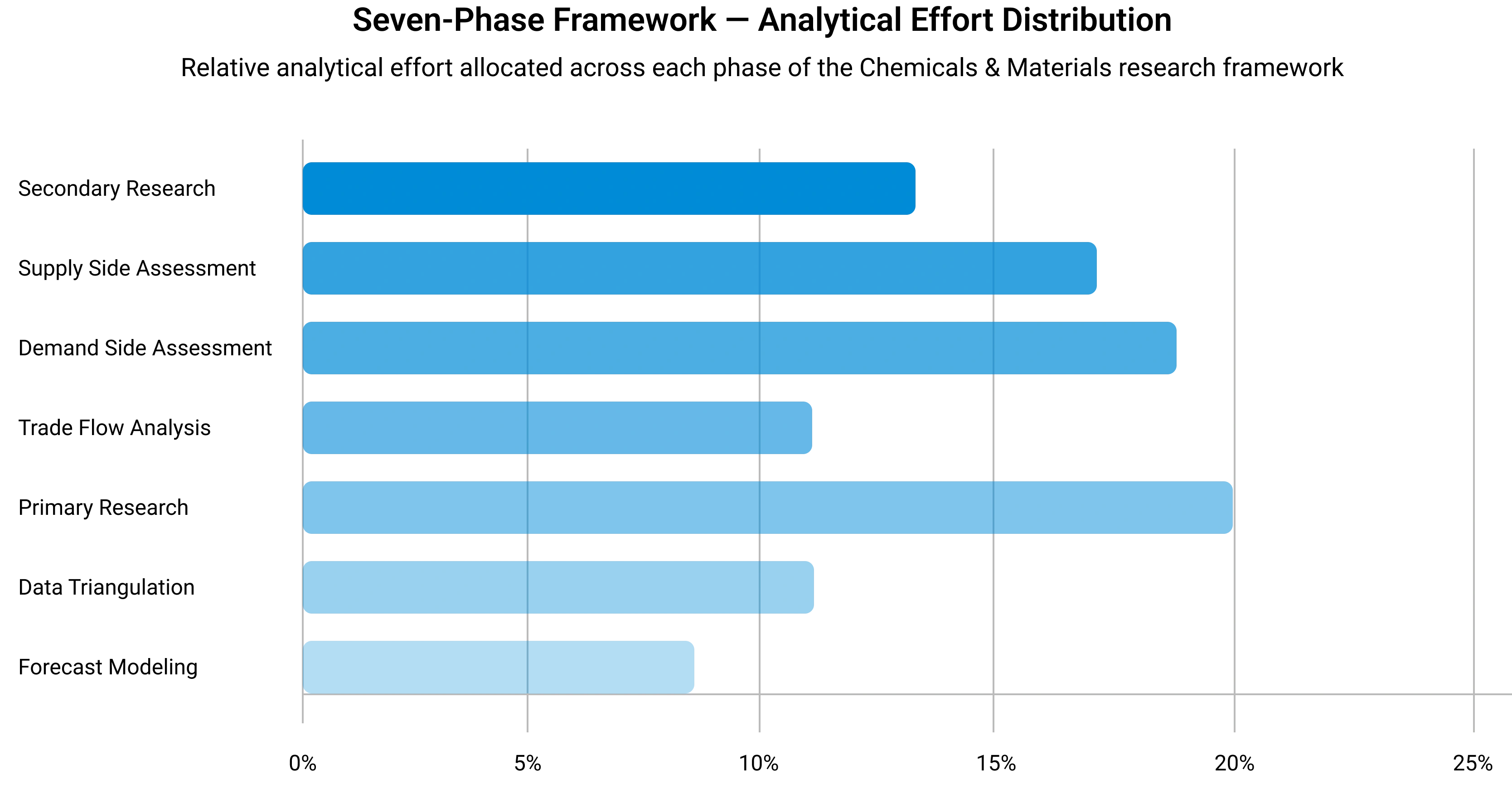
Seven-Phase Framework — Analytical Effort Distribution
Relative analytical effort allocated across each phase of the Chemicals & Materials research framework
Phase 1 - Secondary Research: Establishing the Foundation
Secondary research collects and evaluates publicly available information from authoritative sources, establishing the foundational understanding of market structure, value chain dynamics, competitive landscape, and end-use demand patterns. Every source is evaluated for credibility, recency, geographic relevance, and methodological soundness before inclusion.
Industry Associations
Sources include ACC, CEFIC, ICCA, JCIA, CPCIF, and SOCMA providing production volumes, consumption trends, capacity developments, and sustainability initiatives.
Company Disclosures
Annual reports, investor presentations, earnings transcripts, and regulatory filings reveal product portfolios, manufacturing footprints, capacity expansions, and revenue segmentation.
Government Databases
National statistical offices, customs authorities, environmental agencies, and industrial production databases provide verified statistics on output, trade flows, and regulatory compliance.
Trade Databases
UN Comtrade, ITC, Eurostat, and national customs authorities enable assessment of global product movement, import dependency, and export competitiveness across regions.
Our Secondary Research Sources
- Ministry of Chemicals and Fertilizers
- European Chemicals Agency
- United States Department of Energy
- Ministry of Industry and Information Technology
- Ministry of Economy Trade and Industry
- Ministry of Trade Industry and Energy
- National Institute of Standards and Technology
- Council of Scientific and Industrial Research
- Fraunhofer Society
- National Institute for Materials Science
Phase 2 — Supply-Side Assessment: Mapping Production Capabilities
Production Capacity Analysis
All major manufacturers are assessed for existing installed capacity, planned additions, expansions, new plant announcements, and technology adoption — mapped at global, regional, and country levels.
Capacity Utilization Adjustment
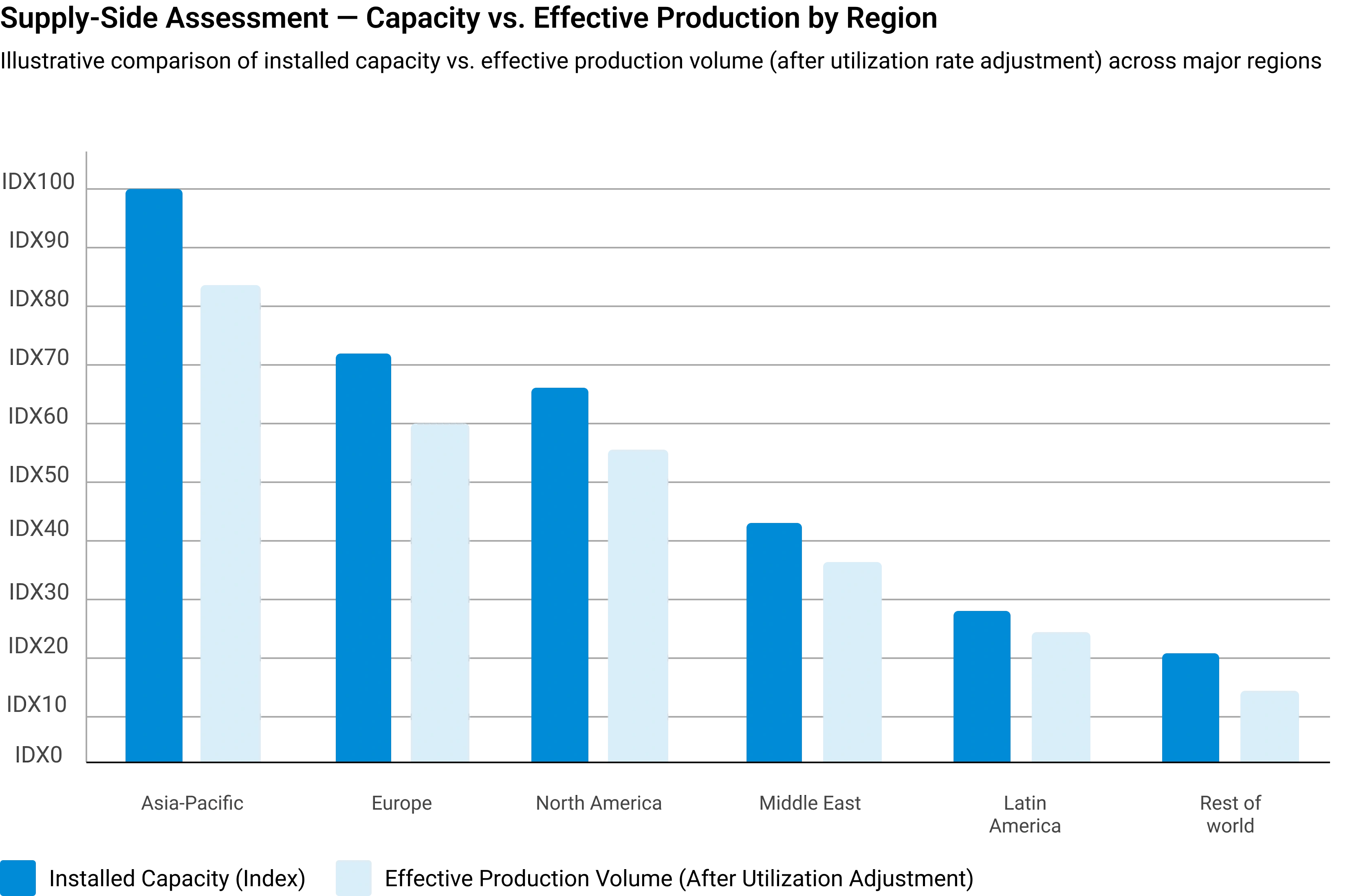
Installed capacity is adjusted using utilization rates based on demand conditions, feedstock availability, plant operating rates, maintenance schedules, and regulatory restrictions.
Manufacturer Revenue Analysis
Product-specific revenues, segment-level performance, regional distribution, average selling prices, and margin trends are evaluated to establish market value estimates.
Supply-Side Assessment — Capacity vs. Effective Production by Region
Illustrative comparison of installed capacity vs. effective production volume (after utilization rate adjustment) across major regions
Phase 3 — Demand-Side Assessment: Quantifying Chemical Consumption
Demand-side analysis quantifies chemical consumption across industries, applications, and geographies — identifying where and how chemicals are consumed throughout the value chain with precision.
End-Use Industry Analysis
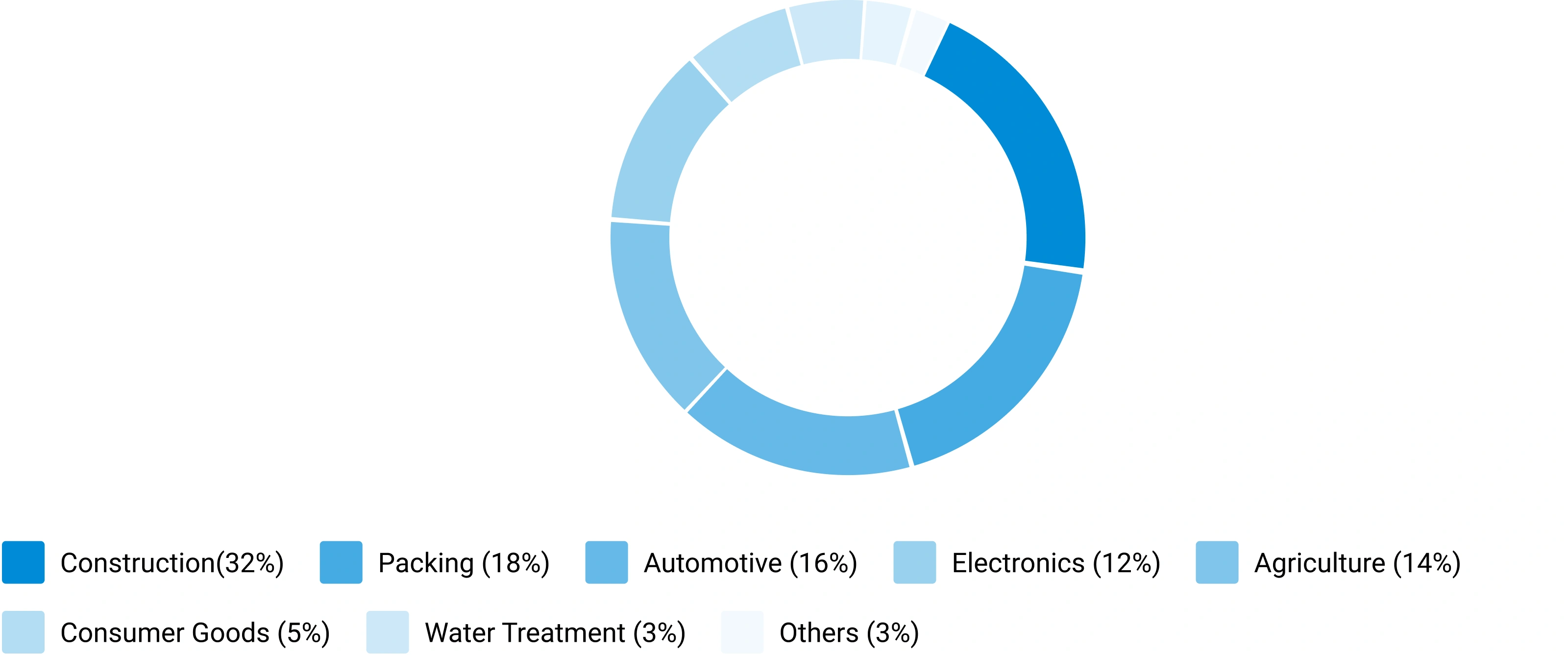
Chemical demand is evaluated across automotive, construction, packaging, electronics, agriculture, healthcare, consumer goods, industrial manufacturing, energy and utilities, and water treatment. Industry output, production trends, and consumption intensity are analyzed to determine demand patterns.
Consumption Modeling
Demand is estimated using measurable indicators: kilograms per vehicle, kilograms per square meter of construction, dosage per cubic meter of water treated, kilograms per hectare of agricultural land, and kilograms per ton of manufactured products. Consumption factors are validated through industry publications and primary interviews.
Application Analysis
The market is segmented by application area to understand product performance requirements, formulation trends, technology adoption, customer preferences, and regulatory requirements improving demand accuracy and segmentation granularity.
Demand-Side Assessment — End-Use Industry Demand Distribution
Illustrative distribution of chemical & materials demand across key end-use industries
Phase 4 - Trade Flow Analysis: Balancing Regional Supply and Demand
Trade flow analysis reconciles regional supply and demand estimates through import and export data, identifying net supply positions, regional dependencies, and market imbalances. It serves as an independent validation layer that tests the consistency of supply-side and demand-side estimates.
Import Analysis
Import data is evaluated to determine volumes, source countries, product dependency, regional supply gaps, and pricing trends — identifying markets that rely heavily on external supply and where domestic production is insufficient to meet demand.
Export Analysis
Export assessments reveal production surplus, export competitiveness, regional manufacturing strength, and global market participation. Export patterns also help validate domestic production estimates and identify net exporting regions.
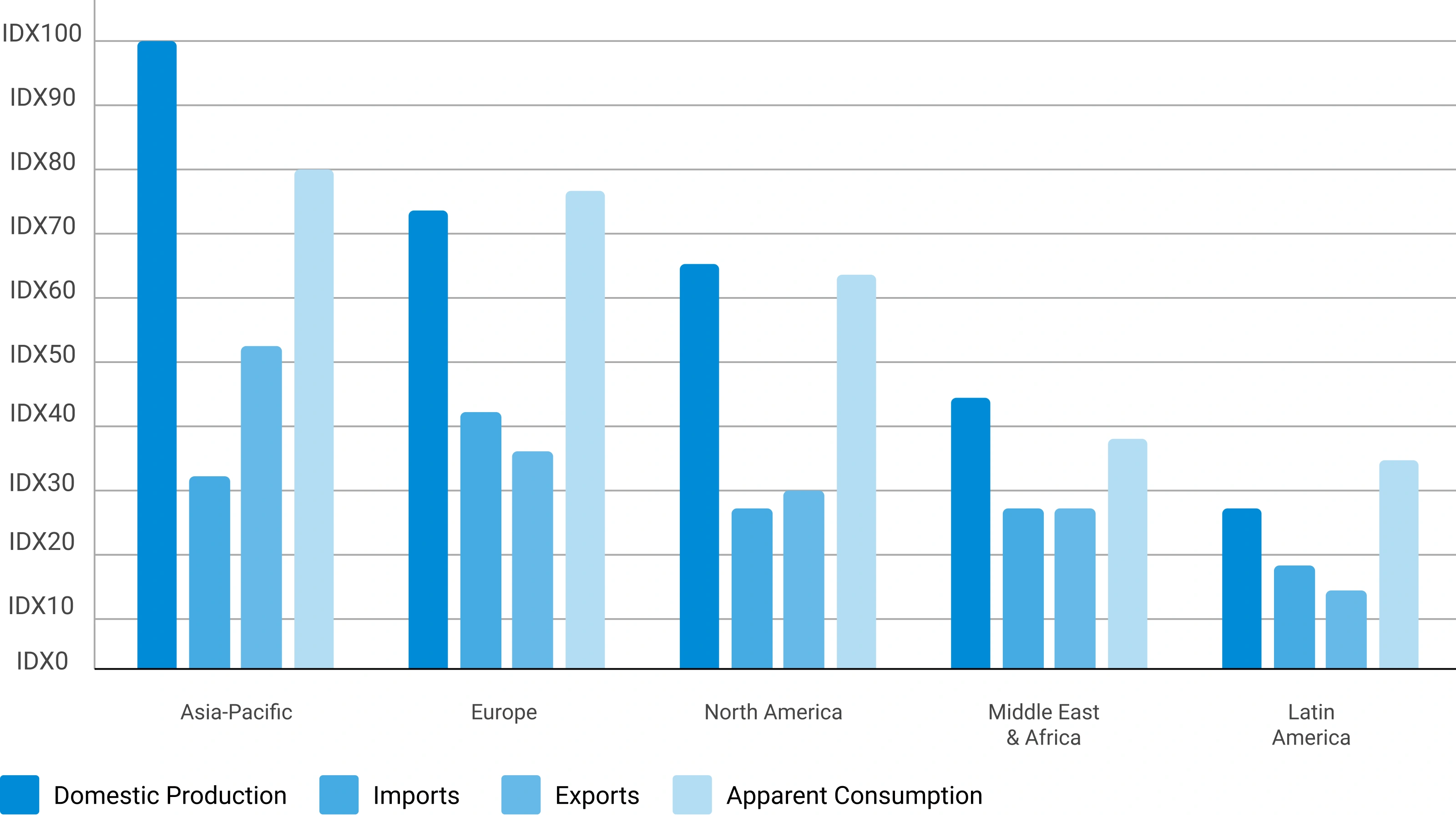
Apparent Consumption Model
Regional consumption is assessed using the standard apparent consumption formula:
Results identify net importing regions, net exporting regions, regional deficits, and surpluses — serving as an independent validation of supply and demand estimates.
Trade Flow Analysis — Net Supply Position by Region
Illustrative apparent consumption vs. domestic production across major regions — positive gap indicates net import dependency
Phase 5 — Primary Research: The Critical Validation Layer
Primary research tests and refines findings from secondary research through direct engagement with industry participants across the supply chain, demand side, and expert community. It captures intelligence that no database or published report can provide — the real-world experience of manufacturers, buyers, and specialists operating in the market.

Supply-Side Interviews
Conversations with chemical manufacturers, raw material suppliers, contract manufacturers, technology providers, and plant operators cover production trends, capacity utilization, pricing developments, technology shifts, and competitive dynamics.

Demand-Side Interviews
Engagement with OEMs, industrial consumers, procurement managers, distributors, formulators, and end-use manufacturers focuses on consumption trends, purchasing behavior, product substitution, demand outlook, and emerging applications.

Industry Expert Consultations
Additional interviews with industry consultants, independent experts, regulatory specialists, technical professionals, and research institutions provide deeper market context and validate key analytical assumptions.
Focus Areas of Primary Research:
Market Size & Forecast Validation
Revenue estimates, volume consumption, growth rates, forecast assumptions, regional demand.Supply Chain & Value Chain Assessment
Raw material sourcing, supply chain challenges, distribution networks, procurement practices.Production & Capacity Analysis
Manufacturing capacity, utilization rates, expansion projects, plant investments.Pricing & Cost Structure Analysis
Product pricing trends, feedstock costs, energy costs, margin pressures, pricing outlook.Competitive Landscape Assessment
Volume and value estimates confirmed to be fully consistent with one another before publicationInterview Volume by Market Scope
| Study Scope | Number of Interviews |
|---|---|
| Niche Market | 20 – 30 |
| Mid-Sized Market | 30 – 50 |
| Global Market | 50 – 80 |
| Highly Fragmented Market | 80 – 120 |
Interview Details:
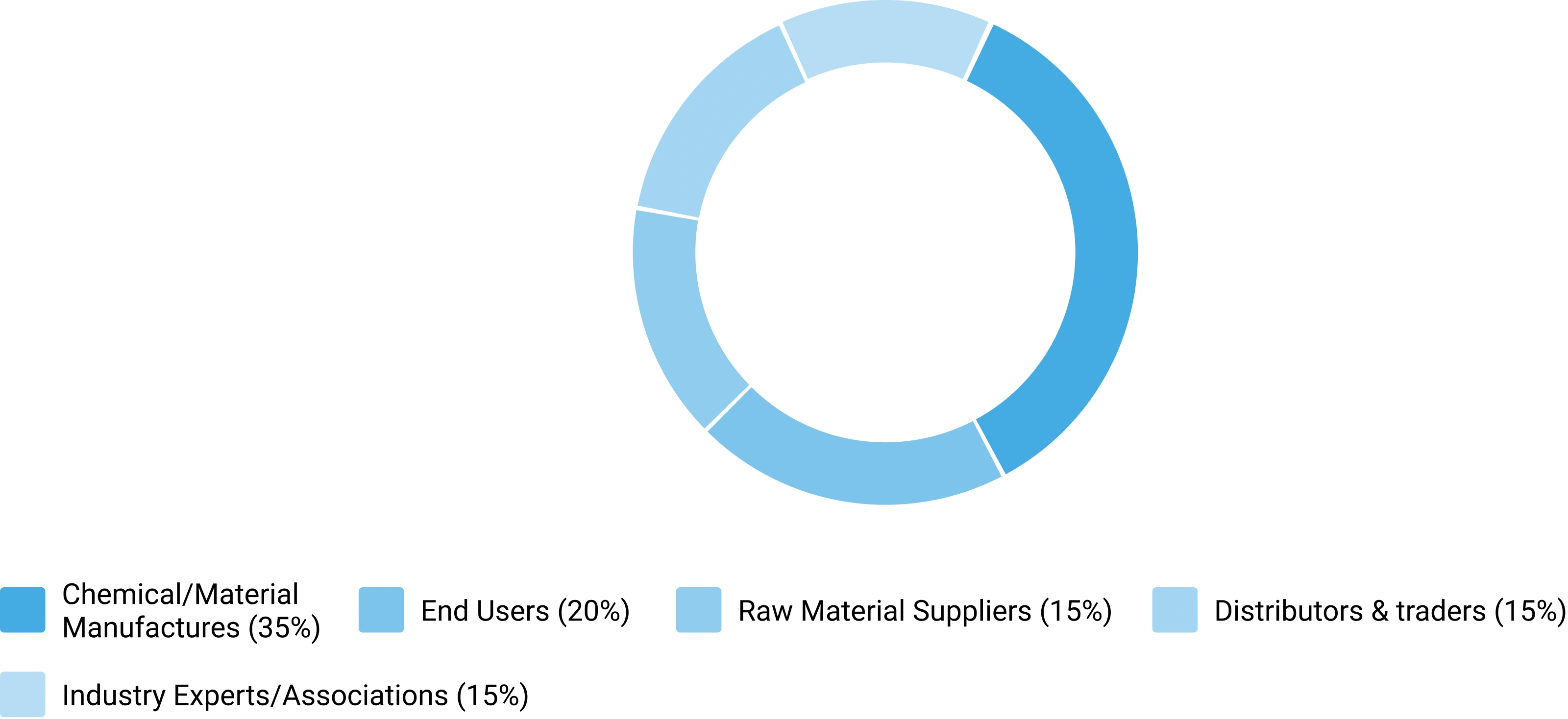
Category : Manufacturers, Suppliers, Distributors, End Users, Experts/Associations
Average Duration : 30–60 Minutes
Interview Mode : Video calls, telephonic interviews, expert consultations
Interview Format : Structured / Semi-Structured questionnaire
Focus Areas of Primary Research:
Market Size & Forecast Validation :
Revenue estimates, volume consumption, growth rates, forecast assumptions, regional demand.
Supply Chain & Value Chain Assessment :
Raw material sourcing, supply chain challenges, distribution networks, procurement practices.
Production & Capacity Analysis :
Manufacturing capacity, utilization rates, expansion projects, plant investments.
Pricing & Cost Structure Analysis :
Product pricing trends, feedstock costs, energy costs, margin pressures, pricing outlook.
Competitive Landscape Assessment :
Market share, competitor positioning, strategic initiatives, partnerships, acquisitions.
Primary Research — Stakeholder Coverage by Category
Distribution of interview respondents across stakeholder categories (% share from PPT data)
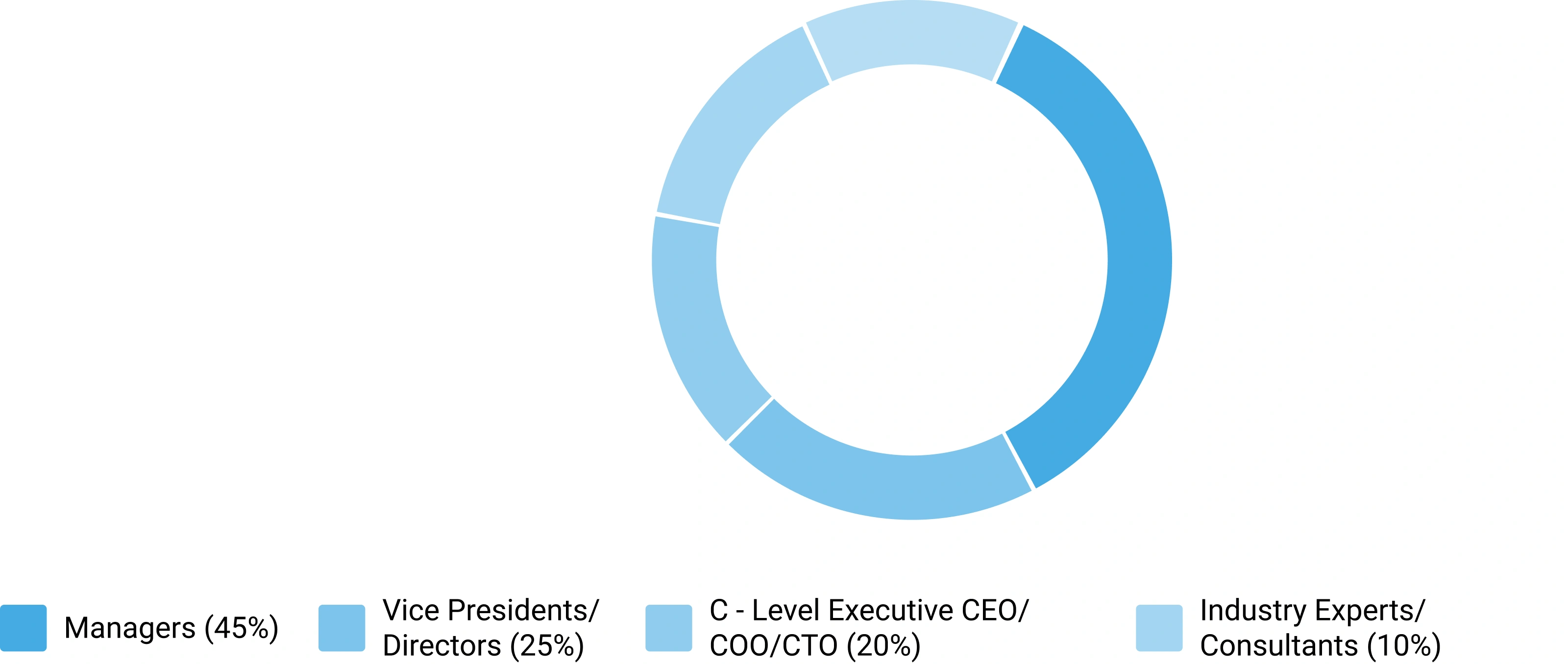
Primary Research — Respondent Designation Profile
Seniority breakdown of interview respondents (% share from PPT data)
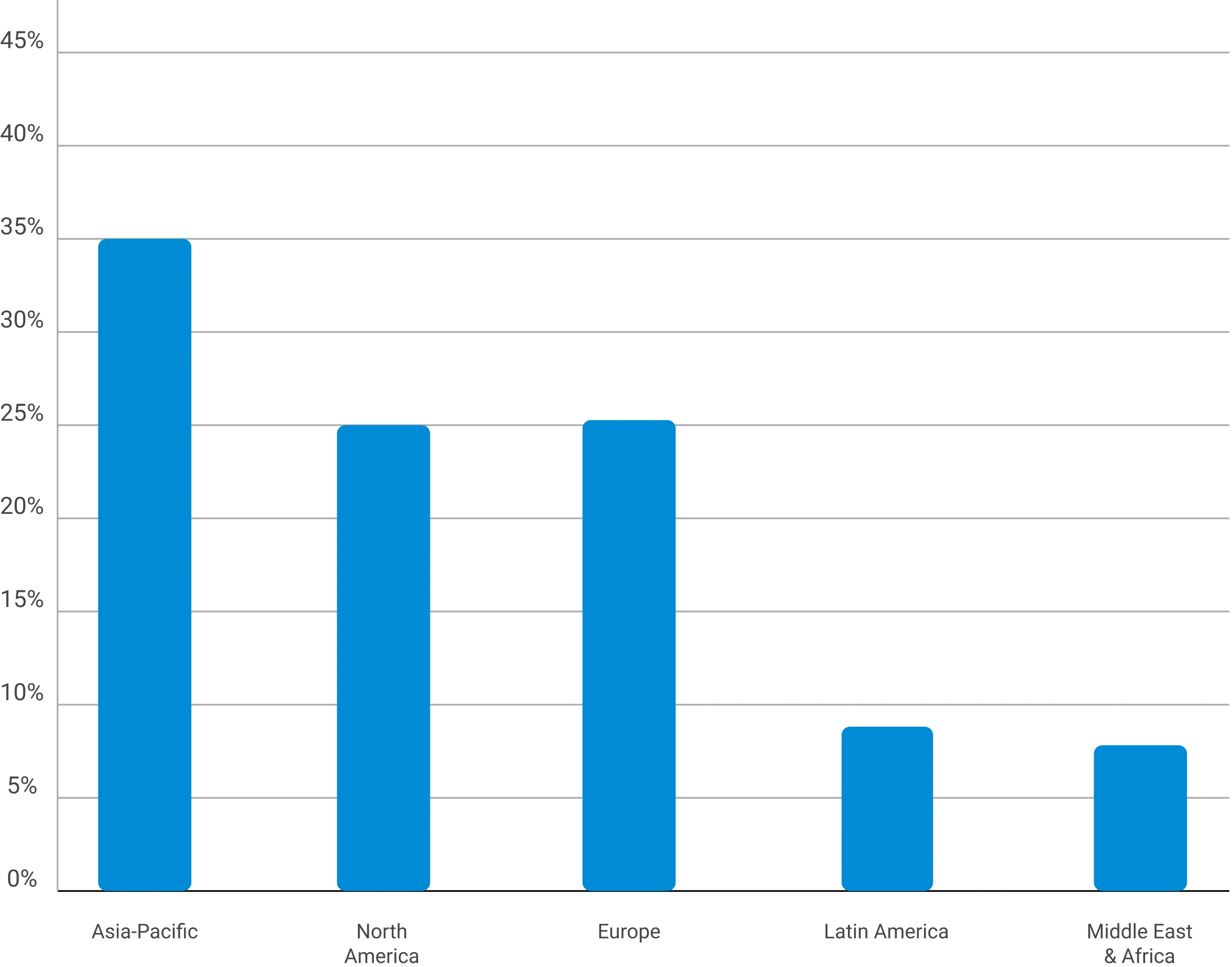
Primary Research — Geographic Coverage of Interviews
Regional distribution of primary research engagement (% share from PPT data)
Phase 6 — Data Triangulation and Market Validation
No single methodology is relied upon in isolation. Multiple independent estimation approaches are combined and reconciled to ensure consistency, accuracy, and analytical defensibility. Any material deviations between approaches are investigated and adjusted through additional validation cycles.
The final market size is derived through weighted triangulation of all validated methodologies. Any material deviations between approaches are investigated and adjusted through additional validation cycles. The outcome represents the most realistic assessment of the market based on available evidence and expert confirmation ensuring that volume and value estimates are fully consistent with one another.
Triangulation Framework — Input Contribution Weight
Relative weight each sizing input contributes to the final reconciled market estimate
Phase 7 — Forecast Modeling: Projecting Future Market Evolution
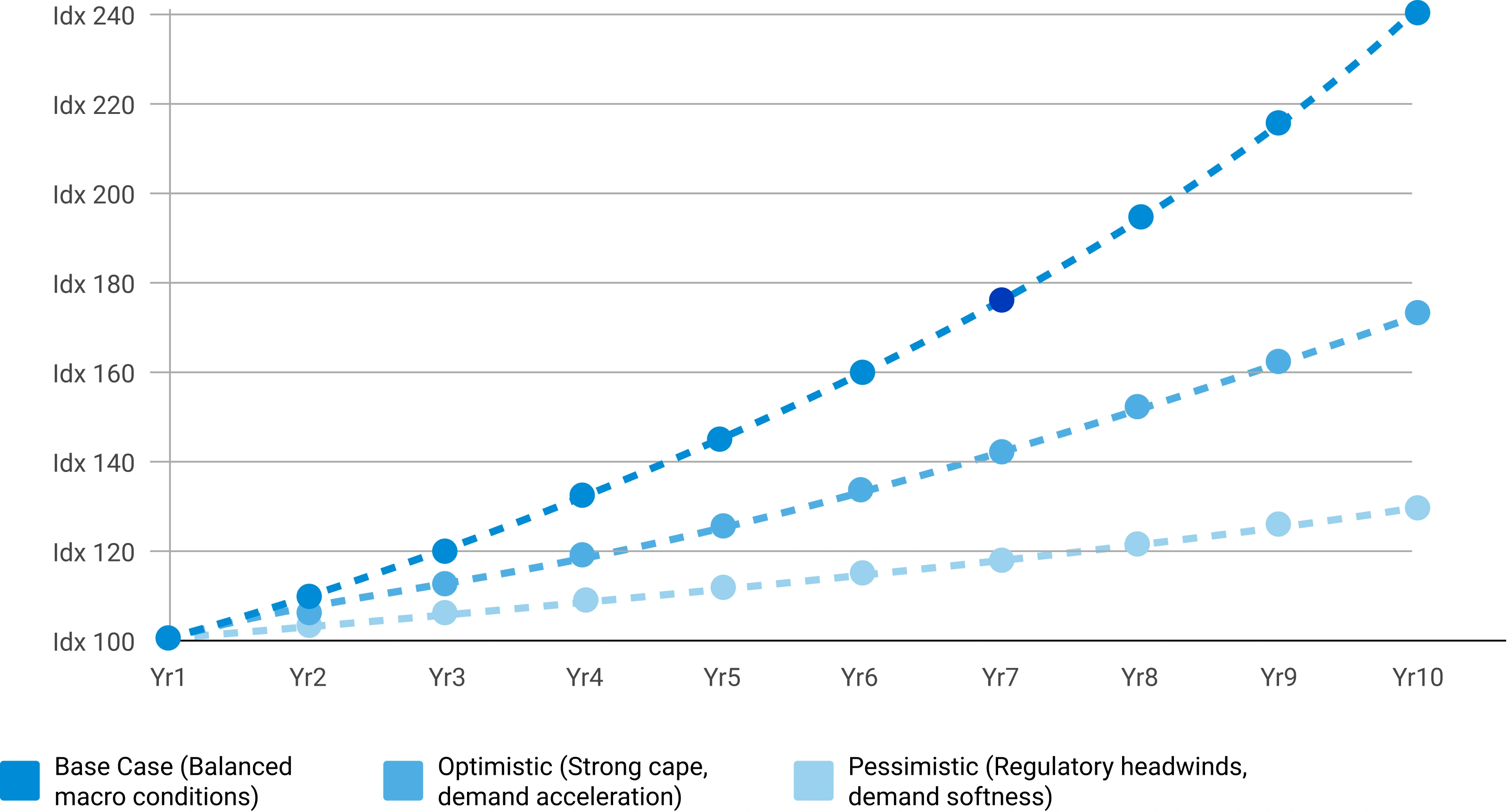
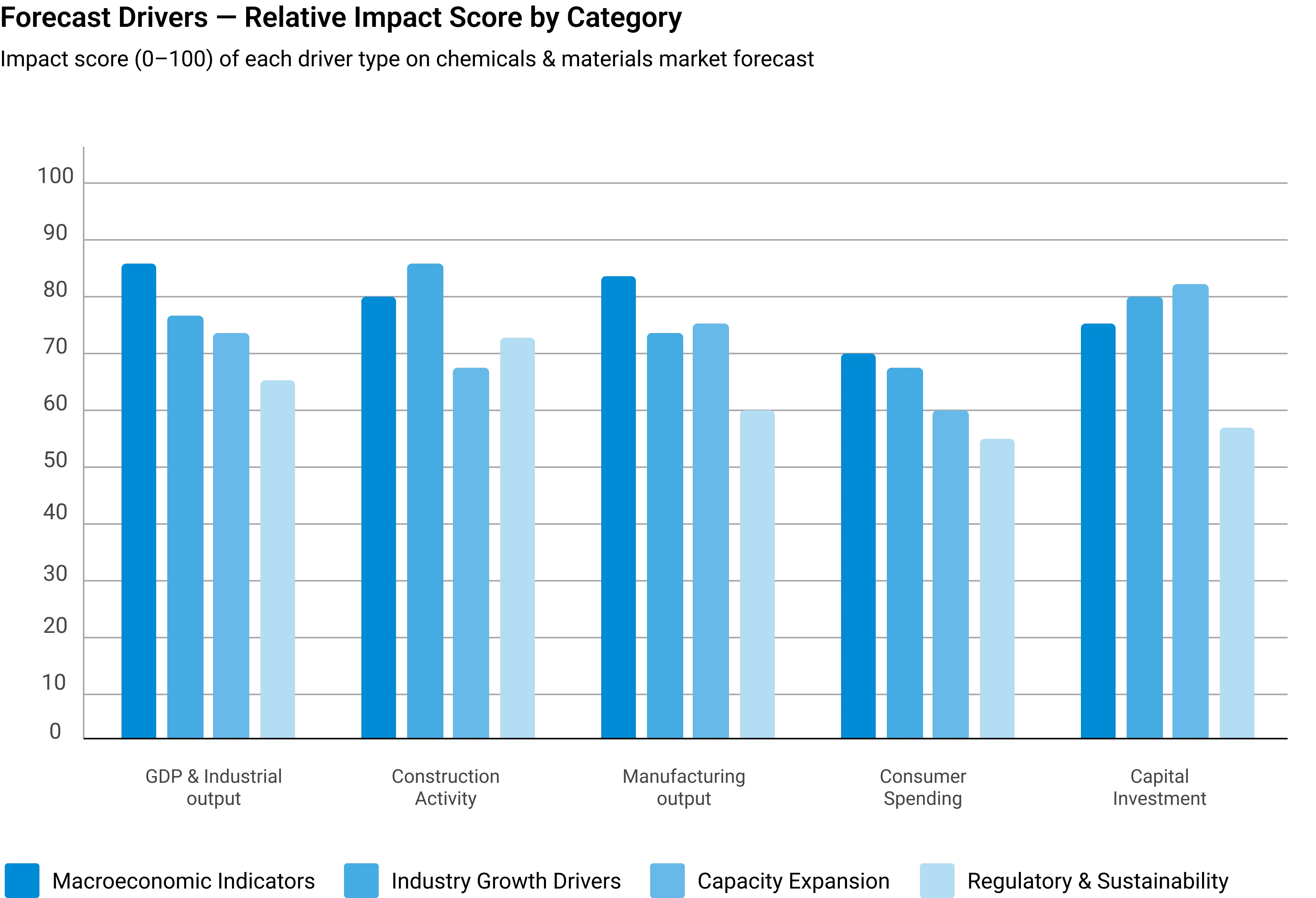
Forecasting evaluates the future trajectory of the market using a combination of quantitative indicators and qualitative assessments across economic, industry, and regulatory dimensions. Rather than simple extrapolation, each driver is independently modeled and integrated into a composite forecast.
Macroeconomic Indicators
GDP growth, industrial production, manufacturing output, construction activity, consumer spending, and capital investment form the quantitative foundation of long-term demand projections. These are applied at country, regional, and global levels.
Industry Growth Drivers
Urbanization, infrastructure development, industrialization, technological innovation, sustainability initiatives, and evolving product performance requirements are assessed at regional and industry levels — capturing both structural and cyclical demand drivers.
Capacity Expansion Analysis
Announced plant expansions, new manufacturing facilities, technology upgrades, and strategic investments are evaluated to determine future supply-demand dynamics and potential market tightness or oversupply situations.
Regulatory & Sustainability
Environmental regulations, chemical safety standards, emission reduction targets, circular economy initiatives, and sustainability requirements are incorporated as they often influence product adoption rates and market growth trajectories.
Scenario Forecast Range — Indexed Market Growth (Year 1–10)
Illustrative indexed growth trajectories across Base, Optimistic, and Pessimistic scenarios over a 10-year forecast horizon
Forecast Drivers — Relative Impact Score by Category
Impact score (0–100) of each driver type on chemicals & materials market forecast



Comments
Share your thoughts, ask a question, or provide feedback about this report.