
Content
The World of Magnesium and Hydroxide: a mixture of the Components together
Introduction
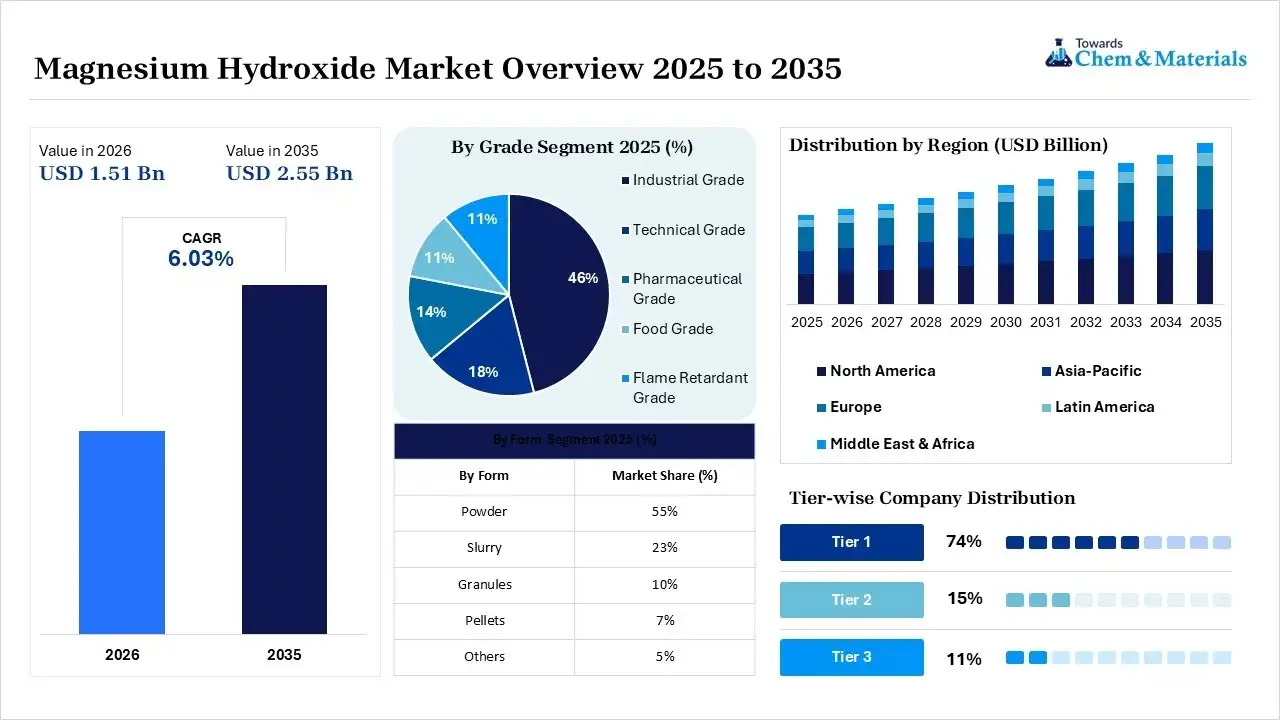
According to Towards Chemicals And Materials Analytics and Consulting, The magnesium hydroxide market size was estimated at USD 1.42 billion in 2025 and is predicted to increase from USD 1.51 billion in 2026 to approximately USD 2.55 billion by 2035, expanding at a CAGR of 6.03% from 2026 to 2035. Magnesium hydroxide is a versatile compound commonly used as an antacid, laxative, and flame retardant. Its applications extend to wastewater treatment and as a filler in various industrial products, highlighting its significance across multiple sectors.
The chemical formula of magnesium hydroxide is Mg(OH)₂. A white, odorless, and non-toxic, naturally occurring substance, such as the mineral brucite, or made commercially for industry and medicine. It is slightly soluble in water, and a suspension is formed that is often referred to as "milk of magnesia. Due to its alkaline properties, magnesium hydroxide is known to neutralize acids in various ways and has many applications in industry.
It can be produced by the reaction of magnesium salts with alkaline materials or by hydrating magnesium oxide under controlled conditions. Commercial production is directed towards isolation of a product with high purity for use in various fields such as healthcare, water treatment, environmental management, flame retardants, and chemical manufacturing. Magnesium hydroxide comes in powder, slurry, suspension, granule, and paste formulations depending on the desired application.
Magnesium hydroxide has many beneficial characteristics, including high thermal resistance, good chemical stability, low toxicity, and effective neutralizing qualities. Given its ability to decompose at a high temperature, it is a highly environmentally friendly flame-retardant material. It is a safer flame-retardant material for use in a variety of applications because it does not emit any toxic gases when decomposing, unlike the majority of the halogen repeat flame retardant materials.
Industrially, magnesium hydroxide is used as the through-line for more than just its many benefits for the environment; it also is used to control acidity and to remove contaminants from the environment, improves the product safety, and for its use in enhancing environmental performance. Due to its ability to adjust pH levels, precipitate heavy metal ions, and eliminate environmental pollution, it is often applied in wastewater treatment. In the plastics and rubber industry, it works as an additive for flame resistance that does not affect the performance of the material to a large extent.
Pharmaceutical uses of magnesium hydroxide include as an antacid to treat excessive stomach acid, and as a mild laxative for occasional constipation. Because of the mild stimulation and favorable safety, it is one of the most frequently employed magnesium-containing medicinal substances.
The importance of magnesium hydroxide is growing as industries become more eco-friendly in their production processes. Its eco-friendly properties, such as being non-toxic, recyclable, and a substitute for more harmful chemicals, also help ensure more favorable industrial practices and better environmental protection. Magnesium hydroxide is therefore a vital chemical with several applications in the health sector, manufacturing, environmental protection, and many other industrial sectors.
Where and When Is This Used?
As a safe, alkaline, and environmentally friendly agent, magnesium hydroxide is applied in a wide variety of industrial applications wherever a safe, alkaline, and environmentally friendly material is needed for neutralization, fire protection, environmental treatment, and/or pharmaceutical applications. It has a wide range of applications and can be used effectively in industrial manufacturing as well as items used by consumers.It is widely used in the pharmaceutical field. Medicines containing magnesium hydroxide use the compound to neutralize excess hydrochloric acid in the stomach, which helps relieve acidity, heartburn/indigestion, and acid reflux. It is also used as a mild laxative medication to help you have a bowel movement to relieve constipation for a short time. Usually, these products are recommended for people who experience uncomfortable feelings in the digestive system for a short period of time.
Magnesium hydroxide is used in the water and wastewater treatment sectors any time acidic water needs to be neutralized before discharge or reuse. Maintenance correct pH levels, precipitates dissolved heavy metals, and reduces environmental pollution. Magnesium hydroxide is commonly used in municipal wastewater treatment plants, industrial, mining, and chemical manufacturing processes to enhance water quality and to meet environmental requirements.
Magnesium Hydroxide is used as a flame retardant in the plastics, rubber, and polymer industries. It is used in the process of making electrical cables, car parts, building materials, insulators, electronic devices, and household appliances. Magnesium hydroxide, when subjected to high temperatures, liberates water vapor, which helps to suppress the flames, minimize the smoke, and does not generate harmful gases to extinguish the fire.
Magnesium hydroxide is also used in the paper or pulp industry in sludge dewatering systems to control acidity during processing and to enhance the efficiency of chemical processes. It also helps to treat process water and minimize environmental emissions produced during production.
Magnesium hydroxide is used as a neutralizing agent in the chemical manufacturing industry, as a raw material in the synthesis of magnesium compounds, and as a pH control chemical in several industrial reactions. Helps maintain production stability and enhances process safety. In agriculture, magnesium hydroxide is sometimes used as a soil amendment to counteract the effect of acidic soils, thereby maintaining soil pH levels and providing magnesium, a plant and chlorophyll essential nutrient. Magnesium hydroxide is also applied in food, textile, mineral processing, and the ceramic industry, where acid and safe chemical processing control is crucial, and in the remediation of contaminated soils, among other applications.
Overall, the choice of magnesium hydroxide is chosen when industries are looking for an effective acid-neutralizing agent, a flame retardant that is relatively non-toxic, as well as an environmentally friendly chemical. Because of its versatility in use, safety, chemical stability, and sustainability, it has become an essential compound in contemporary modern industrial processes and health care.(Source:www.apollohospitals.com), (Source:www.chemicalbook.com), (Source:www.vtalc.com), (Source:www.coherentmarketinsights.com)
Government Initiatives in Magnesium Hydroxide
Greenland resources for 30 years of exploitation
Greenland Resources Inc. has won a 30-year exploitation license from the Government of Greenland to develop and mine on its Malmbjerg mining project in eastern Greenland, known as Piaffe Hosta ken. The license can be renewed up to 50 years, depending on the government's approval. This authorization will be a breakthrough in the commercialization of the project.
The mining project should bring significant economic advantages to Greenland, in terms of jobs, local businesses, and infrastructure development. The government has emphasized how important it is for all mining activities to adhere to strict environmental standards, to be transparent, and to continuously engage with the local community to ensure that the resources are developed responsibly.
The project is significantly important from a strategic point of view for Europe, where molybdenum is heavily imported by the EU. The Malmberg project will, when in production, produce almost 25% of the EU's annual needs of molybdenum and improve the supply security in the region. In the construction industry, energy, automotive, industrial manufacturing, and defense, molybdenum is an essential metal to strengthen, make durable, improve corrosion resistance, and increase heat tolerance for steel, which makes it essential.
The project also aims to extract magnesium, a lightweight metal used in a variety of applications including in electric vehicles, aerospace and in aluminum alloys. Greenland Resources is pursuing further technology development to recover magnesium from saline water and other related project resources to enhance the project's overall resource efficiency.
The conditions of the license stipulate that mining operations must be carried out by 31 Dec 2028 or until extension is granted by the authorities. The company is continuing to move forward with project financing, regulatory and environmental compliance work. In summary, the exploitation license further enhances Greenland's status as an emerging provider of critical minerals and aids Europe in its quest for reliable and sustainable access to key raw materials.(Source: www.businesswire.com)
Berkeley Heights Council Reviews Audit
Recently, the Berkeley Heights Township Council held a meeting to discuss ways to reinforce municipal governance, the evaluation of financial performance, and the improvement of public services. One of the major agenda items was the presentation of the township's annual independent financial audit, which affirmed Berkeley Heights' continued good financial management and responsible fiscal practices. The audit showed the municipality has been good stewards of their budget, accounting practices are transparent, and the council follows good financial practices.
One of the main things agreed at the meeting was the new residential recycling services contract. After a competitive bidding process, the council hired a new contractor to manage the curbside recycling service in the township. The new contract should enhance service efficiency and help to avoid disruption to residents' recycling services. Municipal leaders have said they will work closely with the new service provider to ensure reliable waste management services are provided and that the township's long-term environmental goals are met.
The council also approved a new collective bargaining agreement with the United Public Service Employees Union for 2024-2026. The agreement demonstrates the township's commitment to positive labor relations and acknowledges the value of municipal staff. Council members commented that providing the staff with fair working conditions is important to provide efficient and quality public services to the community.
In addition to any administrative decisions, the meeting included a number of announcements on upcoming community programs and local events. There were opportunities for residents to get involved with seasonal celebrations, recreation activities, and other community events to encourage involvement and enhance neighborhood relationships. The council also recognized the work of volunteers, civic organizations, and municipal departments that continue to improve the overall quality of life in Berkeley Heights.
Get Full Access of Report | Immediate Delivery@ https://www.towardschemandmaterials.com/checkout/6489
Progress reports were also given on current infrastructure upgrades, environmental and public works projects. Council members reiterated their commitment to transparency in decision-making, effective delivery of municipal services, and making strategic investments that will benefit the community. Overall, the meeting was a testament to Berkeley Heights' ongoing focus on financial accountability, environmental sustainability, employee well-being, and active community engagement. In these efforts, the township looks to promote sustainable growth and to provide high-quality public administration and quality of life for its citizens.(Source:www.tapinto.net)
Historical Evidence of Magnesium Hydroxide
Magnesium is a scientifically interesting element and has become one of the most important industrial metals in vast industry sectors. Magnesium is never found in its pure metallic form in nature, although it is the eighth most abundant element in the Earth's crust and occurs in large amounts in seawater. It is found, however, in a variety of minerals like dolomite, magnesite, and brucite, as well as in dissolved salts from seawater. Its extraction and purification have made it the basis for a great number of industrial and technological applications.
The history of magnesium goes back to the eighteenth century when it was discovered as a new chemical element. Eventually, through further research, pure magnesium was isolated, and the properties of its physical and chemical nature were studied. In the nineteenth century, as industrial chemistry advanced, better extraction techniques enabled magnesium to be produced on a commercial scale, and the importance of magnesium began to be felt.
For years, magnesium was mainly used in scientific experiments and in the fields of photography. It was found to be very useful because of its ability to burn with a strong, bright white light, in photographic flash powders, signalling equipment, and illumination equipment. Such properties were of interest to the researchers and industrial manufacturers, and investments were made in production technologies.
Magnesium was in great demand in the early 1900s, especially in wartime. It was light and strong enough to use in military applications, such as aircraft parts, tracer ammunition and flares. The demand more than compensated for this, and led to the development of larger production plants and more effective extraction methods, thus increasing the availability of magnesium for industry.
As technology in manufacturing progressed, the engineers started to create magnesium alloys by adding metals like aluminium, zinc and manganese to magnesium. These alloys were stronger, tougher, and more corrosion-resistant than the original magnesium alloys, and they still had the extremely light weight of magnesium. As a result, magnesium alloys became widely adopted in various sectors such as automotive, aerospace, transportation, and engineering, where weight reduction is a critical factor for enhanced fuel efficiency and performance.
One of the major developments in magnesium production was the ability to successfully extract the metal from seawater. The sea became a rich and renewable source of raw material, as it has a high concentration of dissolved magnesium salts. The development of new magnesium extraction processes allowed industries to profit from the efficient recovery of magnesium, thereby limiting the use of restricted mineral deposits and providing a growth trajectory for global production.
After World War II, magnesium uses for military applications shifted to an extensive range of commercial uses. The use of magnesium in consumer goods, industrial equipment, electronics, communication equipment, sporting goods, medical devices, and household appliances became more common among manufacturers. It is also highly machinable, has good conductivity, and is recyclable, giving it an even greater industrial value.
In modern industry and sophisticated engineering, magnesium remains an important material. It is an excellent choice for industries that need lightweight, durable, and environmentally friendly materials, as well as for those that are looking to enhance energy efficiency and product performance. Current research is concentrating on the creation of more environmentally friendly methods of extraction, improvement of alloy properties, and the wider application of magnesium in renewable energy, electric vehicles, aerospace engineering, and new generations of industrial applications. With ongoing efforts in sustainable practices and resource utilization, magnesium will undoubtedly continue to play a crucial role in technology and industry going forward.
AI Usage in the Industry
Incorporating Artificial Intelligence (AI) into the magnesium hydroxide industry holds the promise of enhanced production efficiency, product quality, environmental compliance, and operational safety. By leveraging AI, manufacturers can process vast amounts of production data, uncover patterns, and make informed decisions for optimizing production processes, cutting down on expenses, and minimizing waste.
One of the major applications of AI is process optimisation. AI continuously monitors parameters including reaction time, chemical concentration, pH, pressure, and temperature during the production of magnesium hydroxide. AI can provide real-time analysis of these variables, suggesting changes to increase product purity, optimize yield and minimize the amount of raw material used.
AI is also extensively employed in predictive maintenance. AI systems can monitor the operation of reactors, pumps, filters, conveyors and processing equipment by using sensors to gather data from the machinery, and analysing it to identify the early signs of wear or malfunction. This enables maintenance personnel to fix equipment before it breaks down unexpectedly, thereby minimizing downtime and maximizing the life of equipment.
In quality assurance, AI-driven inspection systems keep a close eye on particle size, moisture level, chemical makeup, and product uniformity. Automated Quality checks reduce defects, enhance manufacturing accuracy, and ensure magnesium hydroxide reaches industrial and pharmaceutical quality requirements.
AI can improve supply chain management by predicting market trends, managing inventory, planning production, and optimizing supply routes. These features help to optimize stock management, minimize storage expenses, and maintain timely product deliveries to customers.
AI also helps in environmental management. Wastewater quality, emissions, energy use, and resource utilization are monitored with intelligent systems. AI can help identify opportunities for reducing waste generation, enhancing recycling, and decreasing environmental impacts associated with manufacturing operations.
AI-powered data analysis and process modelling allow manufacturers to test production scenarios prior to making alterations. This minimizes risks to the operation and facilitates ongoing improvement efforts. AI has proven to be a valuable decision support tool for the magnesium hydroxide industry overall. AI plays a crucial role in the industry's sustainable development and competitiveness by optimizing manufacturing processes, lowering operational expenses, elevating product quality, boosting environmental protection measures, and improving safety measures in the workplace.
Technological Advancements
The production of magnesium hydroxide has been greatly enhanced by technological developments, in terms of quality, quantity, and environmental protection. Modern manufacturing processes emphasize high efficiency in manufacturing, conservation of raw materials, minimization of emissions, and manufacturing high-purity products which are suitable for industrial, pharmaceutical and environmental applications.
The first development is the use of automated production systems. Reaction conditions like temperature, pressure, pH, and chemical dosage are subjected to continuous computer control of reaction conditions using computer-controlled reactors and mixing equipment. Automation ensures consistency in production, reduces human error, and boosts product quality.Manufacturing efficiency, on the other hand, has been enhanced with the help of advanced filtration and separation technologies. High-performance filtration systems are more efficient in removing impurities, resulting in the production of more pure magnesium hydroxide. These technologies help to minimize the loss of materials and maximize production yield.
With today's particle size control technologies, manufacturers can make magnesium hydroxide with specific particle properties for specialty applications. It enhances the performance of the fine particle control used in pharmaceuticals, flame retardants, wastewater treatment, and polymer manufacture.The production methods have gained more and more significance in terms of energy efficiency. Manufacturers are embracing new technology such as advanced heat recovery systems, high-efficiency pumps, better reaction systems, and optimised process designs that decrease energy use while preserving production capacity. These enhancements reduce costs and impact on the environment. Information on production performance is continuously gathered by digital monitoring systems with sensors. During the process, it is possible to monitor it in real-time and thus identify deviations in the process and give it a stable status as well as lower waste generation. Technologies to help the environment have also made significant strides. Process water is recovered for reuse in modern wastewater treatment systems, and emission control systems are used to reduce air pollution. Better recycling practices allow for better use of by-products and a decrease in the use of natural resources.
Laboratory technologies have developed with high analytical instruments that are able to measure the purity, chemical composition, moisture content, and the distribution of the particles in a very precise way. These technologies ensure a high level of quality control and meet industrial and pharmaceutical standards. There are also research efforts underway to develop environmentally friendly production methods, enhance the use of raw materials, and extend the use of magnesium hydroxide in sustainable industries like water treatment, renewable energy, and flame-retardant materials. But, in general, technology is improving the manufacturing of magnesium hydroxide to be more efficient, safer, and more environmentally friendly. They not only contribute to the quality of the products, but also to the quality of the resources, the efficiency of production, and the competitiveness of the industry in order to satisfy the ever-increasing demand for sustainable chemical products.
Why should AI Usage be avoided?
While AI offers many advantages to the magnesium hydroxide industry, it should not be a substitute for human expertise in all aspects of production and business operations. Some tasks involve professional judgment, ethical responsibility, scientific reasoning, and practical experience, which AI cannot easily replicate.
AI's role in critical safety management is an area where it cannot function autonomously. In the chemical industry, there are the handling of reactive substances, high-pressure equipment, and industrial processing systems. In chemical leaks, equipment failures, fires, and other hazardous materials incidents, trained engineers and safety professionals need to make quick decisions. While AI can offer warnings and recommendations, it is crucial to have human oversight at all times.
AI should also not be the only one responsible for research and product development. Scientific creativity, lab experiments, and technical skills are necessary for the development of new magnesium hydroxide formulations, improvement of manufacturing processes, or design of new industrial applications. The research scientists need to confirm the results of the experiments before the new products go into production.
Quality certification and compliance with regulations are another area that needs human supervision. AI can help track production data and detect quality issues; however, the role of a qualified laboratory professional is to ensure that the results of the tests are accurate and confirm that the products are compliant with industrial, pharmaceutical, and environmental standards.
Workforce Requirement in the Magnesium Hydroxide
The magnesium hydroxide industry is a highly skilled and multidisciplinary industry, with a workforce that is needed to support the mining, production, quality assurance, research, logistics, and environmental management aspects. With each of these uses, water quality, chemical engineering, and materials science expertise are essential for the manufacturers of magnesium hydroxide. Chemical engineers manage the production processes, optimize reaction conditions, and enhance production efficiency and product consistency.
Production technicians and plant operators are key players in equipment monitoring, process parameter control, and ensuring the safety of operations. As the production of magnesium hydroxide also requires handling of chemical compounds and high-capacity processing equipment, workers need to be trained in industrial safety, identification of hazards, and emergency response management. Maintenance engineers are also vital because they help to keep the reactors, filtration systems, pumps, and other equipment performing as needed, decreasing downtime.
Ongoing quality control testing is performed to assure the purity, particle size, chemical composition, and performance of Magnesium Hydroxide products. Their work is especially critical in sectors like pharmaceuticals and food processing, where products have to meet tight regulatory requirements. Environmental engineers and sustainability professionals track emissions, wastewater treatment and waste disposal processes to ensure adherence to environmental laws and regulations, and to aid sustainable manufacturing.
Research and development groups are still working on new grades of magnesium hydroxide with more specialized uses such as high-end flame retardants, battery technologies, environmental remediation and more. As manufacturers are coming to rely upon digital monitoring systems, predictive maintenance and automated process controls to boost productivity and cut operational costs, data analysts and automation engineers are becoming increasingly valuable.
The managers of the supply chain, procurement specialists, and logistics professionals keep raw materials on hand and deliver finished products in time to markets in the home country and abroad. Sales and technical support personnel also play a part, helping customers to choose the right magnesium hydroxide product for their needs in industry.
Ongoing training is a must as manufacturing technologies are changing and environmental requirements are increasing. Companies are increasingly investing in their employee development activities in relation to automation, digital technologies, quality management, and sustainability practices. Industrial, academic, and research institutions' cooperation also contributes to building a pool of skilled personnel to help propel innovation and ensure competitiveness. In summary, the overall quality of the workforce that is knowledgeable, flexible, and safety-oriented continues to be crucial to the ongoing development and technological progress of the magnesium hydroxide industry.
The Future of the Industry
Overall, the future of the magnesium hydroxide industry looks promising, with the growing demand for eco-friendly materials, the enforcement of environmental regulations, and the focus on sustainable industrial practices all contributing to its positive trajectory. The non-toxic nature of magnesium hydroxide, along with its high neutralisation capacity and environmentally friendly properties, makes it a promising material that is likely to be used more widely in the future as governments and industries look for alternative materials that are safer for the environment.
The greatest opportunity for growth is in wastewater treatment. The fast urbanisation and industrial growth, combined with the stricter regulations on water quality, are driving industries and municipalities to use efficient water treatment solutions. As a technology, the use of magnesium hydroxide for the neutralization of wastewater with a high pH, removal of heavy metals, and odor control is gaining considerable popularity, as it does not produce harmful by-products.
The future demand for flame retardant is also anticipated to be driven by the flame retardant industry. Fire safety issues and the phase-out of halogenated flame retardants are driving increased interest and growing use of magnesium hydroxide as a substitute in plastics, electrical components, construction, and transportation applications that are both safer and more environmentally friendly. This quality of releasing water during its decomposition and producing minimal smoke makes it attractive in a variety of industries.
As technology progresses, it will become more and more efficient in the manufacturing process and more efficient in the performance of the products. The companies are expected to invest in advanced processing technology, energy-saving production processes, and digital manufacturing systems, which would lower the production cost while enhancing product quality. Automation, artificial intelligence, and real-time process control will further optimize production and reduce waste generation.
As EV adoption and renewable energy infrastructure and advanced batteries gain traction, opportunities may arise for magnesium-based materials. Future studies on high-purity magnesium compounds could open the door to new energy storage and electronics and advanced materials manufacturing possibilities.
Going Green will be key for the industry. Circular economy practices are likely to be adopted by manufacturers to improve resource efficiency, by recycling process water and reducing carbon emissions throughout the manufacturing process. The adoption of sustainable mining practices and green mining programs will further enhance the industry's sustainability image.
Investments in infrastructure, water treatment, and industrial manufacturing are expected to keep rising in emerging economies, which are expected to play a big role in market growth. Meanwhile, intergovernmental cooperation, research institutions, and private companies will drive innovation and contribute to the advancement of magnesium hydroxide products. In general, technological advancements, sustainability, and the growing use of these technologies in various industrial fields will drive the industry's future.
Conclusion
Magnesium hydroxide has proven itself to be one of the most useful and eco-friendly inorganic compounds in many industrial applications. These special chemical properties, such as thermal stability, high acid neutralisation capacity, non-toxicity, and environmentally friendly nature, have made it an irreplaceable material used in various applications like wastewater treatment, environmental protection, pharmaceuticals, flame retardants, food processing, chemical industry, etc. The demand for magnesium hydroxide is likely to rise considerably in the near future, given the growing emphasis on sustainability and regulatory standards in industries.
The development of the industry provides a clear example of the transformation and advancement of magnesium hydroxide from a more niche industrial chemical to an essential element in contemporary environmental and manufacturing solutions. Improvements in extraction processes, purification technology, and production methods have made it possible for manufacturers to produce high-purity grades that are suitable for highly demanding applications. Through ongoing research, its applications have grown to have a greater impact on new areas like innovative materials, battery innovations and niche industrial formulations. The developments show the industry's ability to adjust to market demand and advances in technology.
Various government initiatives have also contributed to the development of the industry, with many countries encouraging sustainable mining practices, cleaner manufacturing technologies, and tougher environmental regulations. Legislative actions and measures to cut down on industrial emissions, enhance wastewater treatment processes, and promote the principles of the circular economy have contributed to the favourable expectation for more widespread use of magnesium hydroxide. Legislative actions and measures to reduce industrial emissions, improve the management of wastewater treatment processes, and promote the principles of the circular economy have contributed to the favourable expectation for more widespread use of magnesium hydroxide. Concurrently, infrastructure and environmental protection as well as industrial modernisation have raised the demand for good-quality magnesium hydroxide products in both developed and developing economies.
Innovation will continue to be a major driving force in the future of the industry. Today, production lines are more and more automated and equipped with monitoring and digital manufacturing systems to optimise the processes, reduce waste and standardise the product. Research institutions and manufacturers are also working on improving the magnesium hydroxide formulations by providing higher purity, smaller particle size and better performance of the material for special industrial uses. These innovations not only improve manufacturing efficiency but also open new markets for the compound.
AI and digital technologies are proving to be useful assets in production planning, predictive maintenance, quality and supply chain management. These technologies help manufacturers maximize resource use, minimize production costs, and make better decisions by analyzing real-time data. Yet, in scientific research, strategic planning, regulatory compliance, product innovation, and complex operational decisions, human expertise cannot be replaced. In the future, this is crucial for the success of the industry to be technologically automated with skilled human involvement.
Another key factor of the magnesium hydroxide industry is a qualified and progressive workforce. All chemical engineers, production specialists, environmental scientists, quality assurance and research personnel, and maintenance engineers ensure safe, efficient, and sustainable manufacturing operations. With the development of increasingly sophisticated technologies in industries, it will be more important than ever to continuously train employees to meet future workforce needs and preserve global competitiveness through collaboration between academia and industry.
The long-range growth trend for the magnesium hydroxide market will persist along the lines of environmental sustainability of the environment. The various applications of it in pollution control, Wastewater Treatment, eco-friendly flame retardants, and others are closely related to the worldwide initiatives for minimizing environmental impacts and implementing cleaner industrial processes. Increasingly, the energy that is used, resource efficiency, process water recycling, and responsible mining methods are being targeted by manufacturers. Not only do these efforts help meet regulatory requirements, but they also bolster corporate sustainability targets, improve industry reputation, and contribute to the overall image of the industry.
The rapid urbanisation, growing investments in water treatment facilities, renewables and advanced manufacturing, coupled with the growing industrialisation of the world, are also anticipated to support the global market for magnesium hydroxide. Developed countries are focusing on sustainable industrial technologies and environmental protection, and emerging economies are developing significant market expansion opportunities. The strategic partnership between governments, research institutes and private companies will continue to boost technological advances and international value chains.
While it's a positive outlook, industry needs to keep working on issues like raw material availability, production costs, compliance with environmental laws, and the growing competition from alternative materials. Businesses that prioritize research, eco-friendly practices, employee training, and technological advancements will be better equipped to navigate these challenges and ensure sustained growth. Building up supply chain resilience and diversifying raw materials supply will also be key in stabilizing the market.
To summarize, magnesium hydroxide is so much more than just an ordinary industrial chemical. Strategic material that contributes to environmental protection, efficiency of industrial processes, and sustainable economic development. With its wide range of applications, consistent technological innovations, and rising environmental consciousness, the industry looks to continued growth over the coming years. In an era of growing awareness and increasing demand for more sustainable production systems and responsible use of natural resources, magnesium hydroxide will remain a key enabler for innovation and a strong pillar of environmental and resilient industrial development across the globe.
Contact:
- Towards Chemicals and Materials Analytics and Consulting
- USA: +1 804 441 9344
- APAC: +61 485 981 310 or +91 87933 22019
- Europe: +44 7383 092 044
- Email: sales@towardschemandmaterials.com
About the Experts
Aditi Shivarkar
Aditi serves as Vice President at Towards Chemical and Material and brings over 15 years of experience in research, strategy, and industry analysis. She focuses on sectors such as specialty chemicals, advanced materials, and sustainable solutions. She studies how regulations, raw materials, and industrial demand shape the market, and she uses that understanding to guide businesses in the right direction. Aditi helps companies stay prepared for change, improve their market position, and make well-informed decisions.
Aman Singh
Aman Singh has more than 13 years of experience in research and consulting, with a strong focus on the global chemicals and materials space. He tracks developments in areas like green chemistry, high-performance materials, and industrial innovation. At Towards Chemical and Material, he leads the research team and ensures every report is clear, accurate, and useful. Aman breaks down complex industry changes and helps businesses understand what they mean in practical terms.
Request Consultation