
What is the Magnesium Hydroxide Market Size and Share?
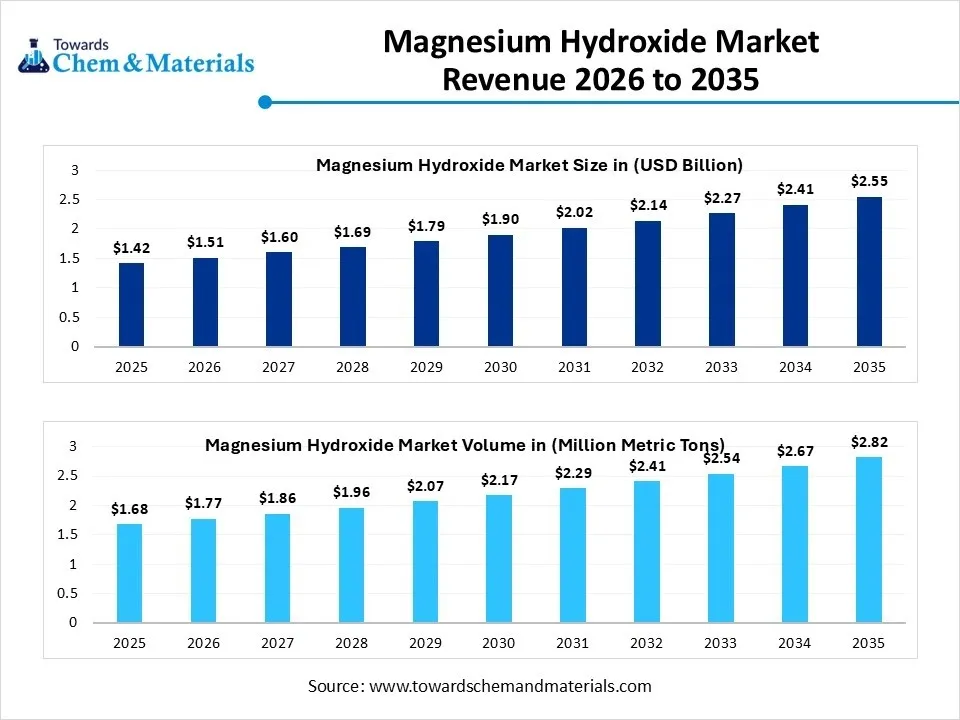
The global magnesium hydroxide market size was valued at USD 1.42 billion in 2025, is estimated to reach USD 1.51 billion in 2026, and is projected to reach USD 2.55 billion by 2035, exhibiting a compound annual growth rate (CAGR) of 6.03% over the forecast period from 2026 to 2035.Asia Pacific dominated the magnesium hydroxide market with the largest revenue share of 47% in 2025 and is expected to grow at the fastest CAGR of 6.09% during the forecast period. 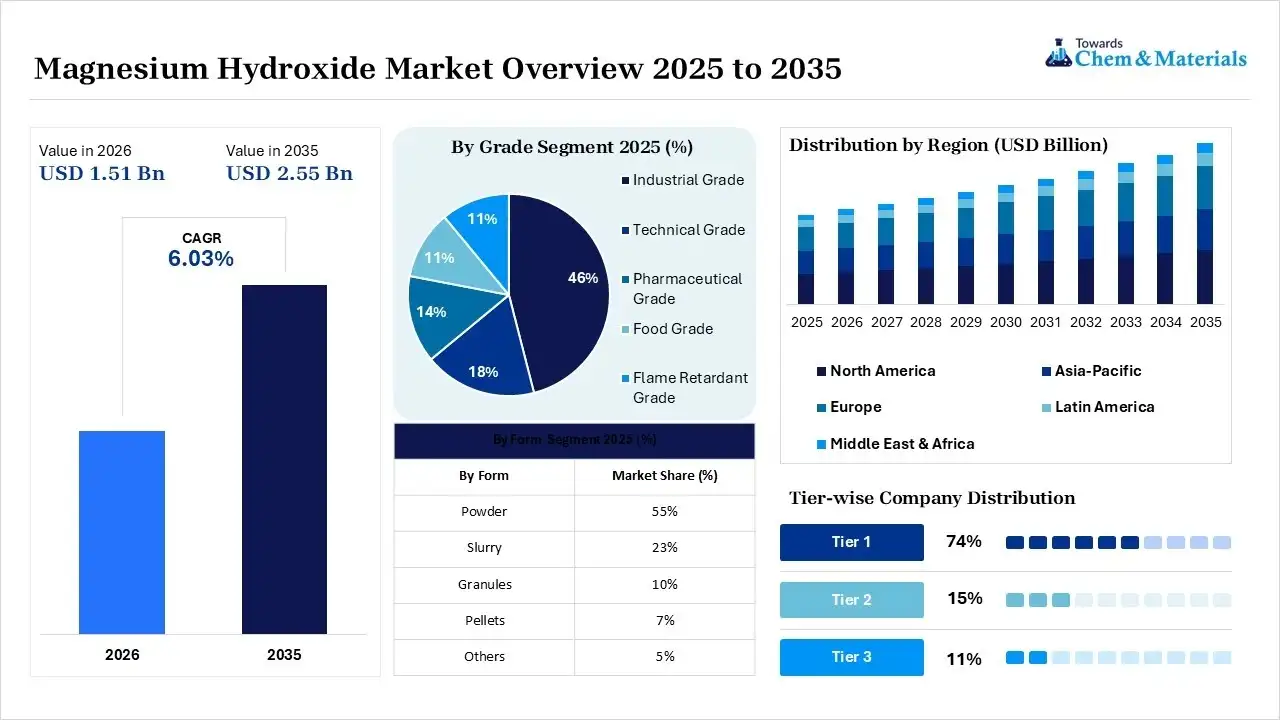
The wide industrial use of flue gas for neutralization as an industrial-grade and eco-friendly alternative for water and wastewater treatment, which is a low-cost, non-halogenated flame retardant in construction and automotive plastics, increases the demand for the material. The competition between key players like Huber Engineered Materials, a long-term supply agreement with major players that directly partner with municipal corporations for the treatment of wastewater with innovative technology, can be a breakthrough for the growth in the market in the coming decades.
Market Highlights
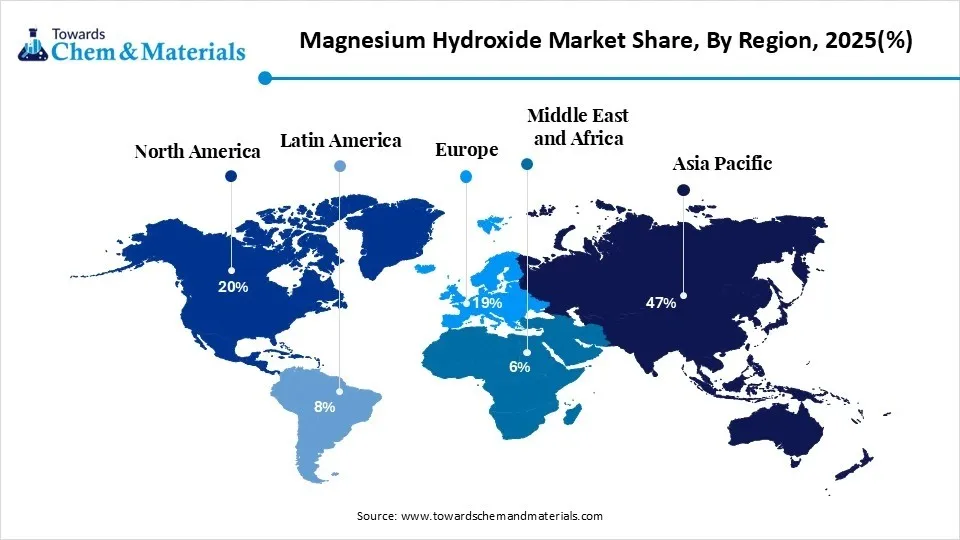
- By region, Asia Pacific dominated the magnesium hydroxide market with a share of 47% in 2025 and is expected to grow at a CAGR of 6.09% over the forecast period.
- By region, North America held 20% market share in the magnesium hydroxide market in 2025 and is expected to experience the fastest growth with a CAGR of 6.50% in the forecast period.
- By grade, the industrial grade segment dominated the market with a 46% share in 2025 and is expected to grow at a CAGR of 5.6% over the forecast period.
- By grade, the pharmaceutical grade segment held 14% market share in 2025 and is expected to have the fastest growth with a CAGR of 6.90% in the forecast period.
- By form, the powder segment dominated the market with a 55% share in 2025 and is expected to grow at a CAGR of 5.70% over the forecast period.
- By form, the slurry segment held 23% market share in 2025 and is expected to have the fastest growth with a CAGR of 6.30% in the forecast period.
- By production process, the brine process segment dominated the market with a 36% share in 2025 and is expected to grow at a CAGR of 5.60% over the forecast period.
- By production process, the synthetic process segment held 13% market share in 2025 and is expected to have the fastest growth with a CAGR of 6.40% in the forecast period.
- By application, the flame retardants segment dominated the market with a 31% share in 2025 and is expected to grow at a CAGR of 6.10% over the forecast period.
- By application, the wastewater treatment segment held 22% market share in 2025 and is expected to have the fastest growth with a CAGR of 6.60% in the forecast period.
- By end use industry, the chemicals segment dominated the market with a 27% share in 2025 and is expected to grow at a CAGR of 5.50% over the forecast period.
- By end use industry, the water and wastewater treatment segment held 21% market share in 2025 and is expected to have the fastest growth with a CAGR of 6.70% in the forecast period.
- By distribution channel, the direct sales segment dominated the market with a 52% share in 2025 and is expected to grow at a CAGR of 5.70% over the forecast period.
- By distribution channel, the online sales segment held 6% market share in 2025 and is expected to have the fastest growth with a CAGR of 7.10% in the forecast period.
According to Towards Chemicals and Materials Analytics and Consulting, the global magnesium hydroxide volume was valued at 1.68 million metric tons in 2025 and is expected to surpass around 2.82 million metric tons by 2035, accelerating a compound annual growth rate (CAGR) of 5.30% over the forecast period from 2026 to 2035.
Market Overview
Magnesium Hydroxide: Flame Retardant Nontoxic Material
Magnesium hydroxide is used in industries as a neutralizing agent for flue gas; it is an eco-friendly alternative for water and wastewater treatment for pH control and heavy metal removal, which increases the demand for materials. Rising global environmental regulations due to growing environmental concerns and the need for effective pH control analysis and material which helps in making and industrial wastewater treatment. The stricter regulations and demand for non-toxic and non-halogenated alternatives due to their applications and properties in sectors like construction and automotive manufacturing increase the growth of the market. The increased use of magnesium hydroxide in industries to extract sulfur and prevent machinery corrosion as a flue gas desulfurization drives the growth and demand.
Strategic collaboration, joint ventures, and partnerships between the key players due to expanding demand for eco-friendly flame-retardant production and advancing high-purity extraction drive growth. Research and development to scale operations across sectors like pharmaceutical, electronics, and environmental protection boosts growth. Sustainable extraction, as companies partner with technology providers and advanced mineralization, drives growth due to demand for high-purity magnesium hydroxide to lower carbon footprints, drives growth.
- For instance, in July 2026, Element One Hydrogen and Revora Materials announced a strategic partnership in July 2026 to launch an integrated North American production platform for critical minerals, specifically targeting magnesium hydroxide production. This partnership aims to develop a step toward commercializing advanced mineral extraction technologies.(Source: www.newsfilecorp.com)
Global Investment Flow for Magnesium Hydroxide Market 2026
Corporate and government investment for the development of new facilities or for advancing the extraction technology for scaling up production for high-purity and industry-grade magnesium hydroxide. The key players like Martin Marietta Magnesia Specialties and Huber Engineered Materials invest heavily in expanding processing plants to meet heavy industrial demands for cable flame retardants and water treatment.
- In June 2026, the Department of Wars Office of Strategic Capital conditionally committed a $725 million loan to Energy Fuels Inc. to build a rare earth metallization facility and expand oxide separation capacity at its White Mesa Mill in Utah. This massive metallization push aligns heavily with wider efforts to onshore raw material processing.(Source: www.techtimes.com)
- In October 2025, West High Yield Resources is pursuing the Record Ridge Mining project near Rossland, British Columbia, with the long-term goal of launching Canadas first magnesium and critical minerals refinery.(Source: abbynews.com)
- In January 2025, Ocean Resources unveils its innovative seawater mineral extraction technology, achieving a 98% purity in magnesium hydroxide and preparing to start plant construction later this year. The company has also partnered with a global investment bank to raise US$200 million.(Source: www.prweb.com)
Report Scope
| Report Attributes | Details |
| Market Size in 2026 | USD 1.51 Billion/ 1.77 Million Metric Tons |
| Expected Size in 2035 | USD 2.55 Billion/ 2.82 Million Metric Tons |
| Growth Rate | CAGR of 6.03% |
| Base Year of Estimation | 2025 |
| Forecast Period | 2025-2035 |
| Dominant Region | Asia Pacific |
| Segment Covered | By Grade, By Form, By Production Process, By Application, By End-Use Industry, By Distribution, By Region |
| Key Companies Profiled | Huber Engineered Materials (USA), Ube Material Industries, Ltd. (Japan), Kyowa Chemical Industry Co., Ltd. (Japan), NikoMag / Russian Mining Chemical Company (RMCC) (Russia / China), Tateho Chemical Industries Co., Ltd. (Japan), Elementis PLC (UK), Baymag Inc. (Canada), Xinyang Minerals Group (China), Nabaltec AG (Germany), Lehmann&Voss&Co. KG (Germany), Grecian Magnesite S.A. (Greece), RHI Magnesita (Austria), Naikai Salt Co., Ltd. (Japan), Premier Periclase Ltd. (Ireland), Yantai FR Flame Technology Co., Ltd. |
Market Growth Trends:
- The growing demand for industry-grade magnesium hydroxide due to its applications and rapid industrialization and chemical manufacturing units and facility development, which demand materials that are non-toxic and sustainable, is a growing market trend.
- The growing demand for non-toxic and sustainable materials aligns with environmental standards for water and wastewater treatment as municipalities and factories use magnesium hydroxide to boost adoption for safety, alkalinity control, and pH adjustment.
- The power plant demand for flue gas desulfurization to remove sulfur dioxide emissions from exhaust gases, due to increasing regulatory pressure on industrial plants, drives the growth of the market.
Magnesium Hydroxide Market: Technological Advancements Through AI
The growth is driven by the shift towards the use of advanced magnesium hydroxide extraction technologies, by optimizing the chemical synthesis and reducing energy-intensive processing costs with real-time manufacturing control, boosting growth. Digital twins and machine learning are used by facilities for treatment and precipitation chains through regression models. Process optimization and cost reduction through AI algorithms using real-time variables in purification, filtration, and drying help lower energy consumption and help in scaling. The advanced synthesis control improves yield and purity, which is required for specified pharmaceutical and halogen-free flame-retardant grades.
Supply Chain Analysis of Magnesium Hydroxide Market:
Magnesium Hydroxide Production & Processing
- Magnesium hydroxide is produced from seawater, brine, or magnesite through precipitation, purification, and drying processes to manufacture high-purity materials for flame retardants, wastewater treatment, pharmaceuticals, and environmental applications.
- Huber Engineered Materials manufactures high-purity magnesium hydroxide products for flame, environmental, and industrial applications. Its products are widely used to improve fire safety, neutralize acidic waste streams, and support sustainable manufacturing processes.
- Key Players: Nedmag, Martin Marietta, Huber Engineered Materials, Kyowa Chemical Industry.
Quality Testing & Certification
- Magnesium hydroxide must comply with standards for purity, particle size distribution, chemical composition, heavy metal limits, and environmental safety before commercial use.
- Kyowa Chemical Industry develops magnesium hydroxide products that meet stringent international quality standards for plastics, pharmaceuticals, environmental protection, and industrial processing applications.
- Key Authorities & Standards: International Organization for Standardization, ASTM International, U.S. Food and Drug Administration, European Chemicals Agency.
Distribution to End-Use Industries
- Magnesium hydroxide is supplied to plastics manufacturers, wastewater treatment facilities, pharmaceutical companies, pulp and paper producers, chemical manufacturers, and construction material companies for flame retardancy, neutralization, and environmental protection applications.
- Nedmag supplies high-quality magnesium hydroxide for environmental treatment, flame-retardant formulations, and industrial applications, helping customers achieve regulatory compliance, improve product performance, and support sustainable production practices.
- Key Suppliers: Nedmag, Martin Marietta, Huber Engineered Materials.
Sustainability Analysis in Magnesium Hydroxide
Magnesium hydroxide is a sustainable and nontoxic compounds which play crucial role in green chemistry and eco-friendly flame retardants, and in water and wastewater treatment. In wastewater treatment, the hazardous caustic soda is replaced with magnesium hydroxide, which provides a safe and pH-controlled environment that prevents ecological shock. The demand for eco-friendly fillers in polyolefins and construction materials due to demand for sustainable and non-toxic materials drives growth. The industrial manufacturing shift towards the use of mild thermal conditions and processing methods helps reduce carbon footprints and energy use, which is a sustainable initiative aligning with environmental regulations.
What is Magnesium Hydroxide?
Magnesium hydroxide is an inorganic compound that is a white solid compound having low solubility in water, it occurs as a mineral brucite in nature. Magnesium hydroxide is also used as an antacid, laxative, and fire retardant, which is mixed with water to form a liquid suspension which is known as milk of magnesia. It acts as an antacid by neutralising the extra acid in the stomach and also acts as a laxative by drawing water into the intestine. It is extensively used in industries as a fire retardant and in waste treatment.
What Are the Key Uses of Magnesium Hydroxide?
Magnesium hydroxide is extensively used in two sectors: medical and healthcare and industrial and commercial use.
Medical and Health Uses:
The extensive use of magnesium hydroxide as an antacid, as a neutralizing agent which relieve from acid reflux, as an osmotic laxative that draws water into the intestine through osmosis and stimulates bowel movements, also in as bowel cleanser used in specific high doses to clear the bowels. It is extensively used as a magnesium supplement as a source of dietary magnesium, which helps prevent or also to treat low magnesium levels.
Industrial and Commercial Uses:
The extensive use in industry as a flame retardant, which is added to plastics, coatings, and in plastics, as it can decompose endothermally at extreme temperatures and release water vapor into the environment, which helps suppress flames and smoke. Used to neutralize acidic industrial and regular water and wastewater, and also used to treat sewage; this is due to its strong alkaline properties. Also used as a food additive to regulate pH and color retention, and also as a supplement in specific and specialized food processing applications.
Magnesium Hydroxide Premium Pricing Analysis
The magnesium hydroxide pricing is calculated based on its complex processing, processing like complex chemical precipitation and strict environmental standards, which add to its costs. The heavy demand from industrial and wastewater activities increases production, making the product cost-effective. The premium pricing depends upon the specialized and high-purity variants, which are set for industrial standards like raw whisker materials, surface modified grads and standard industrial powder. Key cost drivers are energy-intensive production, complex refining, and regulatory compliance, which increase production costs and will help keep pricing cost-effective in the coming decades.
Magnesium Hydroxide Market Carbon Tax Analysis
Carbon taxes and environmental regulations impact the production and supply chain landscape of magnesium hydroxide. The carbon footprint may vary by manufacturing route, the carbon intensity of magnesium hydroxide production varies substantially, which depends extensively on the raw material and processes used, like Bischofite Brine processing, this offered the lowest operational burden; serpentinite ore extraction and magnesite calcination route generate heavy emissions, which lead to direct pricing penalties. The implementation of green manufacturing initiatives, which cut carbon emissions, gains pricing power and regulatory favor, which will help the market to lower carbon emissions in recent decades.
Magnesium Hydroxide Regulatory Landscape
| Country / Region | Regulatory Body | Key Regulations | Focus Areas | Notable Notes |
| United States | Environmental Protection Agency, Occupational Safety and Health Administration | Toxic Substances Control Act, OSHA Hazard Communication Standard | Chemical safety, flame retardants, wastewater treatment | The U.S. regulates magnesium hydroxide for use in environmental protection, pharmaceuticals, flame retardants, and industrial applications with emphasis on workplace and environmental safety. |
| European Union | European Chemicals Agency, European Commission | REACH Regulation, CLP Regulation | Chemical registration, environmental compliance | Europe promotes the safe and sustainable use of magnesium hydroxide in wastewater treatment, plastics, and industrial processes. |
| China | Ministry of Ecology and Environment, Ministry of Industry and Information Technology | Environmental Protection Law, Industrial Chemical Standards | Industrial chemicals, wastewater treatment | China is a leading producer and consumer of magnesium hydroxide, driven by demand from environmental, chemical, and flame-retardant applications. |
| India | Ministry of Chemicals and Fertilizers, Central Pollution Control Board | Chemical Safety Rules, Environmental Protection Act | Water treatment, industrial chemicals | India is expanding the use of magnesium hydroxide in wastewater treatment, pharmaceuticals, and environmental protection applications. |
| Japan | Ministry of Economy, Trade and Industry | Chemical Substances Control Law | High-purity chemicals, specialty materials | Japan focuses on high-purity magnesium hydroxide for electronics, pharmaceuticals, and advanced flame-retardant applications. |
| Germany | Federal Environment Agency, German Chemical Industry Association | REACH Compliance, Industrial Emissions Directive | Sustainable chemicals, flame retardants | Germany is a major market for magnesium hydroxide, supported by strong demand from environmental technologies, plastics, and industrial manufacturing. |
Market Dynamics
Drivers: Growing Demand from Industries
The growth of the magnesium hydroxide market is driven by the growing demand from municipal corporations for advanced and non-toxic compounds for water and wastewater treatment, aligning with the sustainability and environmental standards that drive the growth. The other major growth drivers are the extensive use in industries and demand for industrial-grade components for medical use as a magnesium supplement, which boosts the growth of the market.
Challenges: Magnesium Hydroxide Production Constraints
The key growth challenges of the magnesium hydroxide market are its high energy cost, which is required for processing raw materials sourced from seawater, brine, or magnesite, and higher capital investment is required, which also elevates operational expense, hindering the growth of the market. The major factor is the challenge and competition from cheaper alternatives to magnesium hydroxide, like Aluminum hydroxide, which restrain active and fast adoption in the price-sensitive sector, restricting the growth of the market.
Opportunities :Corporate Investments and Strategies
The key growth opportunity in the magnesium hydroxide market is the growing capital investment by the key players for scaling up the production line and extraction of high-quality magnesium hydroxide and industrial-grade materials due to growing demand. The green extraction technology adoption for channelising the funds into sustainable manufacturing and the growing focus of companies to lower their carbon footprint and reduce energy consumption further create larger growth opportunities for the growth of the market.
Segmental Insights
Grade Insights
The industrial grade segment dominated the market with a 46% share in 2025 and is expected to grow at a CAGR of 5.6% over the forecast period, driven by widespread use across chemical processing and water and wastewater treatment due to sustainable initiatives and wide demand from municipal corporations supporting growth. Strong industrial investment due to growing demand from consumers for sustainable and eco-friendly products drives growth. The large volume of consumption, cost-effectiveness, and competitiveness boost the growth and expansion of the market.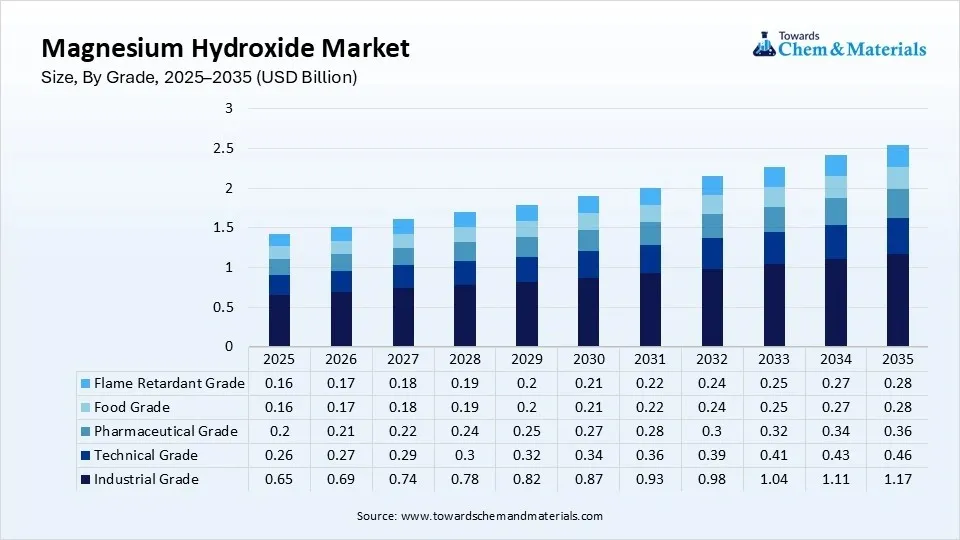
- For instance, in October 2025, Kisuma Chemicals launched two advanced halogen-free flame-retardant lines, KISUMA™ X and Zenthos™ FR, at the K 2025 exhibition in Düsseldorf to help manufacturers meet stricter fire safety and environmental standards. It offers next-generation synthetic magnesium hydroxide lines for halogen-free polyolefin, EVA, nylon, and PVC polymer formulations.(Source: www.kisuma.com)
The pharmaceutical grade segment held 14% market share in 2025 and is expected to have the fastest growth with a CAGR of 6.90% in the forecast period, driven by rising demand from the pharmaceutical industry due to rising consumption of antacids and laxatives, as magnesium hydroxide is a key element due to its property, which boosts demand for the market. The growing healthcare spending and expansion of pharmaceutical production across regions and rising demand propel growth. The demand and regulatory compliances which supports the demand for premium-grade materials, supporting expansion.
- For instance, in July 2026, GNC India launched Magnesium PureGlycinate™, a 100% non-buffered magnesium bisglycinate formula designed to support sleep quality, muscle recovery, and stress relief. The product features high-potency, bioavailable magnesium aimed at the expanding Indian wellness market.(Source: www.business-standard.com)
Magnesium Hydroxide Market Share, By Grade, 2025 (%)
| By Grade | Market Share (%) |
| Industrial Grade | 46% |
| Technical Grade | 18% |
| Pharmaceutical Grade | 14% |
| Food Grade | 11% |
| Flame Retardant Grade | 11% |
Form Insights
The powder segment dominated the market with a 55% share in 2025 and is expected to grow at a CAGR of 5.70% over the forecast period, due to the ease of handling powder and vast industrial compatibility to make products, especially pharmaceutical ones, as it makes it lightweight and feasible. The easier and more efficient dosing of powder dosage helps in improving operational efficiency, which propels the growth of the market. It also helps improve performance, and fine particles improve the processing of the product, which boosts growth.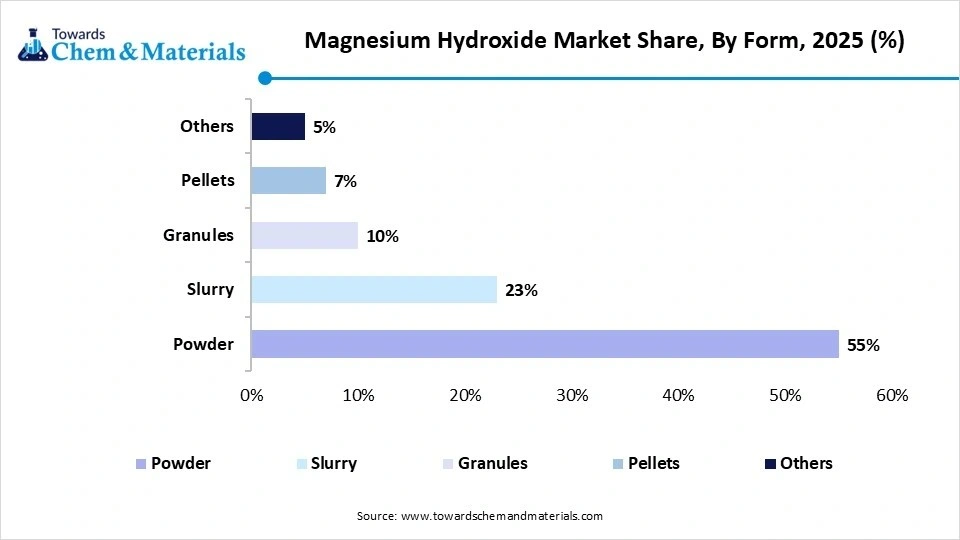
- For instance, earlier, Endurance sports nutrition brand Protein Rebel has launched "Power Up," a specialized seawater-sourced magnesium citrate powder designed to accelerate muscle recovery and improve sleep quality for runners.(Source: www.nutraingredients.com)
The slurry segment held 23% market share in 2025 and is expected to have the fastest growth with a CAGR of 6.30% in the forecast period, driven by growing use in water and water treatment models due to large and innovative projects in many regions, which boosts the growth. The growing investment in infrastructure development projects and spending by the government for clean water initiatives, along with industrial waste management, drive the growth of the market.
Magnesium Hydroxide Market Share, By Form, 2025 (%)
| By Form | Market Share (%) |
| Powder | 55% |
| Slurry | 23% |
| Granules | 10% |
| Pellets | 7% |
| Others | 5% |
Production Process Insights
The brine process segment dominated the market with a 36% share in 2025 and is expected to grow at a CAGR of 5.60% over the forecast period. It involves precipitation of high-purity magnesium hydroxide from seawater, reverse osmosis (RO) reject brine, or chlor-alkali waste streams. In this process, the source is extracted, precipitated, and advanced for recovery, where there is minimal environmental liquid discharge. The growth, sustainability focus, and cost-effectiveness make it a widely used industrial production process, which contributes to the growth.
The synthetic process segment held 13% market share in 2025 and is expected to have the fastest growth with a CAGR of 6.40% in the forecast period, driven by the demand for high product purity and scalability. The core production involves the reaction of raw material with a strong chemical base, and is allowed to precipitate high-purity magnesium hydroxide. Wide application in pharmaceuticals, food additives, electronic components, and advanced halogen-free flame retardants propels the growth of the market. Stringent global environmental standards and rising demand for non-toxic materials in plastics and polymers rise growth.
Magnesium Hydroxide Market Share, By Production Process, 2025 (%)
| By Production Process | Market Share (%) |
| Brine Process | 36% |
| Seawater Process | 27% |
| Mineral Extraction Process | 24% |
| Synthetic Process | 13% |
Application Insights
The flame retardants segment dominated the market with a 31% share in 2025 and is expected to grow at a CAGR of 6.10% over the forecast period, driven by rapid industrial shift towards the use of halogen-free and nontoxic alternatives, which increases demand. The rapid industrialization and electronic manufacturing, which drive demand for flame retardants, and strict environmental and fire safety regulations increase adoption, boosting growth. The increased adoption in cables, wires, and construction plastics further drives growth.
The wastewater treatment segment held 22% market share in 2025 and is expected to have the fastest growth with a CAGR of 6.60% in the forecast period, driven by strict regulations and demand for sanitation needs. The growing use for pH neutralization and heavy metal precipitation and supplying essential magnesium nutrients for biological treatment systems propels growth. The demand for controlled dosing and uniform distribution for wastewater operations aligns with the environmental regulations, which fuels the growth.
Magnesium Hydroxide Market Share, By Application, 2025 (%)
| By Application | Market Share (%) |
| Flame Retardants | 31% |
| Wastewater Treatment | 22% |
| Environmental Applications | 14% |
| Pharmaceuticals | 10% |
| Chemical Manufacturing | 9% |
| Pulp & Paper | 7% |
| Food & Feed Additives | 4% |
| Others | 3% |
End Use Industry Insights
The chemicals segment dominated the market with a 27% share in 2025 and is expected to grow at a CAGR of 5.50% over the forecast period, driven by the growing demand from the chemical industry as a neutralizing agent, as antacids, and due to its eco-friendly properties. It is extensively used in paper and pulp processing, as a chemical precursor to manufacture high-purity products, and in construction materials, which drives and supports the expansion of the market.
The water and wastewater treatment segment held 21% market share in 2025 and is expected to have the fastest growth with a CAGR of 6.70% in the forecast period, as it is a safe, slow-reacting alkaline slurry that is used in water and wastewater treatment, as it helps control pH without the risk of overcorrection. It is extensively used for odor and corrosion control to protect the infrastructure, heavy metal precipitation by forming a stable hydroxide precipitate, and in biological process support, which helps remove heavy metals from industrial waste, supporting growth.
Magnesium Hydroxide Market Share, By End-use Industry, 2025 (%)
| By End-use Industry | Market Share (%) |
| Chemicals | 27% |
| Water & Wastewater Treatment | 21% |
| Plastics & Polymers | 18% |
| Pharmaceuticals | 10% |
| Pulp & Paper | 8% |
| Food & Beverage | 6% |
| Mining & Metallurgy | 5% |
| Construction | 3% |
| Others | 2% |
Distribution Channel Insights
The direct sales segment dominated the market with a 52% share in 2025 and is expected to grow at a CAGR of 5.70% over the forecast period. The large volume of industrial contracts and demand from consumers helps increase sales from the suppliers. It helps in strengthening the relationship between the manufacturer and customer through direct contact. Long-term supply agreements and consumer demand improve stability and sales of the product.
The online sales segment held 6% market share in 2025 and is expected to have the fastest growth with a CAGR of 7.10% in the forecast period. Sales over digital platforms increase easy accessibility and also attract customers due to price comparison, which expands the platform rapidly, fueling growth. E-commerce adoption helps improve efficiency, as it helps consumers with easy delivery and supports expansion of the product.
Magnesium Hydroxide Market Share, By Distribution Channel, 2025 (%)
| By Distribution Channel | Market Share (%) |
| Direct Sales | 52% |
| Distributors & Traders | 28% |
| Specialty Chemical Suppliers | 14% |
| Online Sales | 6% |
Regional Analysis
How did Asia Pacific dominate the Magnesium Hydroxide Market in 2025?
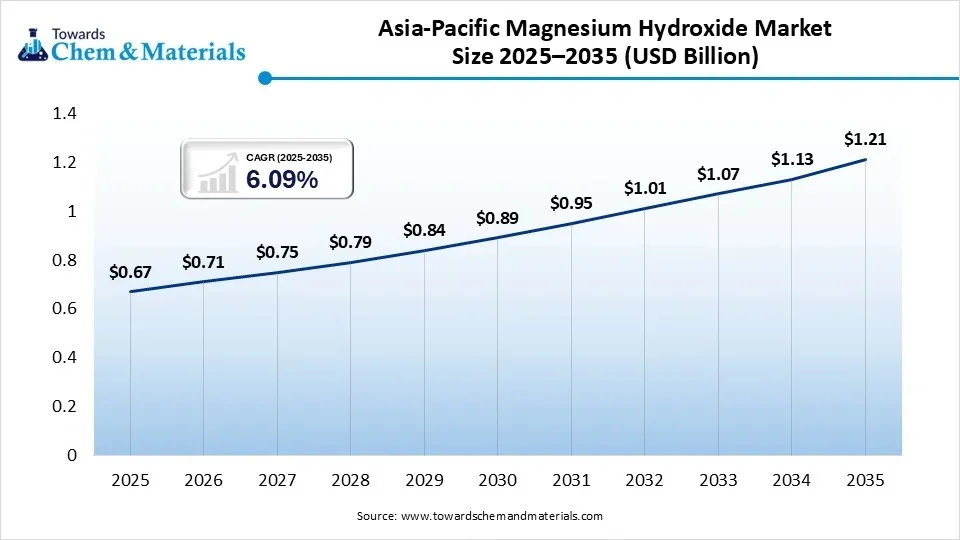
The Asia Pacific magnesium hydroxide market size was estimated at USD 0.67billion in 2025 and is projected to reach USD 1.21 billion by 2035, growing at a CAGR of 6.09% from 2026 to 2035. Asia Pacific dominated the market with a share of 47% in 2025 and is expected to grow at a CAGR of 6.40% over the forecast period driven by expansion industrial production in the region especially in countries like India and China which are the major hub for manufacturing and extraction, the strong plastics manufacturing due to rising demand and increased consumption drives the growth and supports the building of facilities in the region. The regions focus and high-end investments in the treatment of waste water buy municipal corporations, aligning with environmental regulations, further boost the growth and expansion of the market.
India Manufacturing Hubs and Suppliers
The magnesium hydroxide market is growing rapidly in India, driven by the major manufacturing hubs in India and supply hubs in Gujarat and Maharashtra, with the presence of prominent suppliers like Annexe Chem and AMS Fine Chem, which increases the growing demand. The rapid industrial applications like pharmaceutical, cosmetics, and industrial demand in India drive growth. The presence of domestic manufacturers of pharmaceuticals increases steady consumption across the region, propelling growth.
China Domestic Producers
The growth of the magnesium hydroxide market is driven by domestic production in the country, which extensively supports the export of material globally, boosting growth. Local chemical operators and specialized enterprises such as KMT Industrial and regional mineral groups focus on scaling precipitated, ultrafine nano, and hexagonal formulations to replace toxic alternatives like antimony trioxide. Strict environmental mandates like Chinas "Blue Sky Protection Plan" compel coal plants and heavy industries to utilize magnesium hydroxide for sulfur dioxide emission control, which drives growth.
North America Magnesium Hydroxide Market Presence of Pharmaceutical Manufacturing Hubs
The North America magnesium hydroxide market size was estimated at USD 0.28 billion in 2025 and is projected to reach USD 0.52 billion by 2035, growing at a CAGR of 6.39% from 2026 to 2035.North America held a market share of 20% in 2025 and is expected to have the fastest growth with a CAGR of 6.50% in the forecast period, driven by advanced infrastructure development projects and supporting demand for wastewater treatment, which boosts growth. The strong presence of pharmaceutical manufacturing in the region due to rising demand for magnesium for production like antacids, laxatives, and supplements remains a strong factor for the growth of the market. The strong environmental regulations and sustainability initiatives in the region encourage the adoption of flame-retardant materials, driving growth of the market.
United States: Stricter Environmental Regulations
The growth of the market in the United States is driven by the growing demand for municipal wastewater treatment drives growth. The key producers participation in supply and global industrial footprint, including Martin Marietta Magnesia Specialties and Premier Magnesia, LLC, are major growth propellers of the market in the United States. The domestic chemical manufacturing base in the region further supports the growth and expansion of the market.
Canada Industrial Dominance
The growth of the market in Canada is driven by the growing demand for food-grade and pharmaceutical-grade materials, driving expansion. The industrial dominance in the country, which accounts for vast consumption of magnesium hydroxide, especially for acid neutralizers, boosts growth. The strict federal guidelines and investments in municipal and industrial treatment infrastructure further support the growth of the market.
Europe Magnesium Hydroxide Market: Circular Economy Initiatives
The Europe magnesium hydroxide market size was estimated at USD 0.27 billion in 2025 and is projected to reach USD 0.50 billion by 2035, growing at a CAGR of 6.36% from 2026 to 2035.Europe held a market share of 19% in 2025, driven by strong and strict environmental legislation in the region and strict sustainable initiatives in the EU, which accelerate adoption of sustainable and non-toxic materials in the industries, boosting growth. The strong industrial modernization in the region has advanced extraction technologies, which are utilized for increasing the production capacity which helps in expansion of the market. The circular economy initiatives aligning with EU sustainability regulations support the production of sustainable chemicals, supporting the growth of the market.
United Kingdom Municipal Facility Demand
The UK magnesium hydroxide market is expanding steadily, driven by the demand from municipal facilities for infrastructure development and wastewater treatment. The major players and operators like Elementis PLC, Nedmag, and local distributors like Plater Group make a growing ecosystem for expansion. Stringent fire safety and environmental regulations in construction and electronics are driving a shift away from halogenated flame retardants toward eco-friendly magnesium hydroxide powders in the country.
Germany: Growing Demand from Consumers
Germanys magnesium hydroxide market is driven by the growing demand for eco-friendly acid neutralization, wastewater treatment, and flue gas desulfurization. Specialized regional suppliers like MAGNESIA GmbH provide diverse mineral compound grades, including hydroxides for domestic industrial and pharmaceutical needs. Major European producers such as Nedmag B.V. supply high-purity natural brine-derived magnesium hydroxide directly into German industrial manufacturing hubs.
Latin America: Magnesium Hydroxide Strong Mining Activities
The Latin America magnesium hydroxide market size was estimated at USD 0.11 billion in 2025 and is projected to reach USD 0.22 billion by 2035, growing at a CAGR of 7.18% from 2026 to 2035.Latin America held a market share of 8% in 2025, driven by continuous and increased investment in water treatment in the region and also for industrial wastewater treatment, which supports growth. The strong and advanced mining activities in the region strengthen the growing industrial demand for magnesium hydroxide due to its application in various sectors, driven by its non-toxicity of the compound. The growing consumption led to increased manufacturing expansion of the compound, which boosts the growth and expansion of the market in the region.
Brazil Expanding Sectors
The magnesium hydroxide market in Brazil is an expanding sector driven by environmental, industrial, and wastewater applications, though high-purity segments remain structurally import-dependent. Domestic production of high-purity (USP grade) magnesium hydroxide covers a minor share of total local demand, leaving the country reliant on specialized suppliers from China, Europe, and the United States, which drives the growth and expansion of the market in the country.
Argentina Import-Dependent
Argentinas magnesium hydroxide market is heavily import-dependent, relying on imports for 75% to 85% of its total consumption. Most volume is sourced from regional and international partners like Brazil, China, and the United States. Domestic production falls short of local industrial, pharmaceutical, and food-grade specifications.
Middle East and Africa Magnesium Hydroxide Infrastructure Investment
The Middle East and Africa magnesium hydroxide market size was estimated at USD 0.09 billion in 2025 and is projected to reach USD 0.17 billion by 2035, growing at a CAGR of 6.57% from 2026 to 2035.The Middle East and Africa held a market share of 6% in 2025, driven by industrial diversification due to increasing chemical and specialty chemical demand for various industries, boosting market expansion. Government and private projects in the region, like water desalination and treatment projects, further support the growth. The petrochemical and refining sectors in the region also demand magnesium hydroxide. Infrastructure investments for long-term expansion and demand for sustainable materials and premium products support the growth.
Saudi Arabia: Growing Regional Interest in Non-Halogenated Flame Retardants
The magnesium hydroxide and peroxide market in Saudi Arabia. Domestic export activity is minimal, with minor recorded shipments to regional neighbors like Kuwait. Growing regional interest in non-halogenated flame retardants for construction/electronics and expanding pharmaceutical applications. Rising adoption of magnesium hydroxide as an eco-friendly neutralizing agent for industrial wastewater management drives the growth and expansion of the market.
UAE Sustainability Regulation
The magnesium hydroxide market in the UAE is driven primarily by growing demand for industrial water and wastewater treatment, sustainable infrastructure development, and environmental regulations. Regional chemical suppliers and distributors operate out of key industrial hubs in Dubai, Abu Dhabi, Sharjah, Ajman, and Fujairah to serve localized industrial needs. Increasing adoption in construction materials and electronics as an eco-friendly, halogen-free smoke suppressant and flame retardant drives the growth and expansion.
Recent Developments
- In May 2026, LithiumBank Resources Corp. announced the launch of its advanced Boardwalk lithium brine project, which is a continuous engineering loop designed to isolate high-purity lithium while successfully managing mineral impurities like magnesium. he extraction process relies on SLBs integrated production solution.(Source: www.tradingview.com)
- In February 2026, Latrobe Magnesium restarted its patented critical minerals demonstration plant following strategic design optimizations. The project serves as a critical move by Western governments to diversify the global magnesium supply. The company secured non-binding letters of support from the US Export-Import Bank and Export Finance Australia.(Source: www.theaustralian.com.au)
Competitive Analysis
The key collaboration and partnership between the companies to increase the pipeline of minerals or for building up a new facility is a major competition in the market. The collaboration focuses on expanding regional supply chains and launching exclusive distribution partnerships for industrial applications.
- In July 2026, the alliance between Element One Hydrogen & Critical Minerals Corp. and Revora Materials outlines a specific multi-metal production pipeline intended to fulfill core industrial needs within North American trade channels. (Source: investornews.com)
- In January 2025, during the Future Mineral Forum in Riyadh, Ocean Resources Holdings Limited announced that, after three years of rigorous research, it secured a 98% purity level for magnesium hydroxide. The firm has created a proprietary system to extract vital mineral compounds from reverse osmosis brine, an often-discarded byproduct of desalination.(Source: www.prweb.com)
Top players in the Magnesium Hydroxide Market & Their Offerings:
| Company | Company Type/Position | Major Headquarters | Geographic Presence | Magnesium Hydroxide Offerings | Key Offering/Strength |
| ICL Group Ltd. | Global specialty minerals and chemicals producer | Tel Aviv, Israel | Europe, North America, Asia Pacific, Latin America | Magnesium hydroxide for flame retardants, wastewater treatment, pharmaceuticals, and environmental applications | Broad specialty minerals portfolio with strong expertise in high-purity magnesium compounds |
| Nedmag B.V. | Magnesium compounds manufacturer | Veendam, Netherlands | Europe, North America, Asia Pacific | High-purity magnesium hydroxide for flame retardants, water treatment, and industrial applications | Vertically integrated production with a focus on high-purity magnesium products |
| Martin Marietta Materials, Inc. | Industrial minerals and specialty materials producer | Raleigh, North Carolina, USA | North America, Europe, Asia Pacific | Magnesium hydroxide for environmental treatment, industrial processing, and chemical applications | Strong raw material resources and diversified industrial minerals portfolio |
| Premier Magnesia, LLC | Magnesium compounds manufacturer | Waynesville, North Carolina, USA | North America, Europe, Asia Pacific | Magnesium hydroxide slurries, powders, and specialty magnesium products for wastewater treatment and flue gas desulfurization | Expertise in high-performance magnesium hydroxide products for environmental applications |
| Konoshima Chemical Co., Ltd. | Specialty inorganic chemicals manufacturer | Osaka, Japan | Asia Pacific, Europe, North America | High-purity magnesium hydroxide for flame retardants, electronic materials, pharmaceuticals, and industrial uses | Advanced manufacturing capabilities with a focus on high-purity specialty magnesium compounds |
Other Top Players Are
- Huber Engineered Materials (USA)
- Ube Material Industries, Ltd. (Japan)
- Kyowa Chemical Industry Co., Ltd. (Japan)
- NikoMag / Russian Mining Chemical Company (RMCC) (Russia / China)
- Tateho Chemical Industries Co., Ltd. (Japan)
- Elementis PLC (UK)
- Baymag Inc. (Canada)
- Xinyang Minerals Group (China)
- Nabaltec AG (Germany)
- Lehmann&Voss&Co. KG (Germany)
- Grecian Magnesite S.A. (Greece)
- RHI Magnesita (Austria)
- Naikai Salt Co., Ltd. (Japan)
- Premier Periclase Ltd. (Ireland)
- Yantai FR Flame Technology Co., Ltd.
Segments Covered:
By Grade
- Industrial Grade
- Standard Purity
- High Purity
- Pharmaceutical Grade
- Food Grade
- Technical Grade
- Flame Retardant Grade
By Form
- Powder
- Fine Powder
- Ultra-Fine Powder
- Slurry
- Granules
- Pellets
- Others
By Production Process
- Brine Process
- Seawater Process
- Mineral Extraction Process
- Magnesite-Based
- Dolomite-Based
- Synthetic Process
By Application
- Flame Retardants
- Polyolefins
- Engineering Plastics
- Rubber
- Wastewater Treatment
- Municipal Water Treatment
- Industrial Wastewater
- Pharmaceuticals
- Antacids
- Laxatives
- Environmental Applications
- Flue Gas Desulfurization
- Acid Neutralization
- Chemical Manufacturing
- Pulp & Paper
- Food & Feed Additives
- Others
By End-use Industry
- Chemicals
- Water & Wastewater Treatment
- Plastics & Polymers
- Pharmaceuticals
- Pulp & Paper
- Food & Beverage
- Mining & Metallurgy
- Construction
- Others
By Distribution Channel
- Direct Sales
- Distributors & Traders
- Online Sales
- Specialty Chemical Suppliers
By Regions
- North America
- Europe
- Asia Pacific
- Middle East & Africa
- Latin America



Comments
Share your thoughts, ask a question, or provide feedback about this report.