
Wire and Cable Polymer Market Size, Competitive Landscape Analysis Report 2035
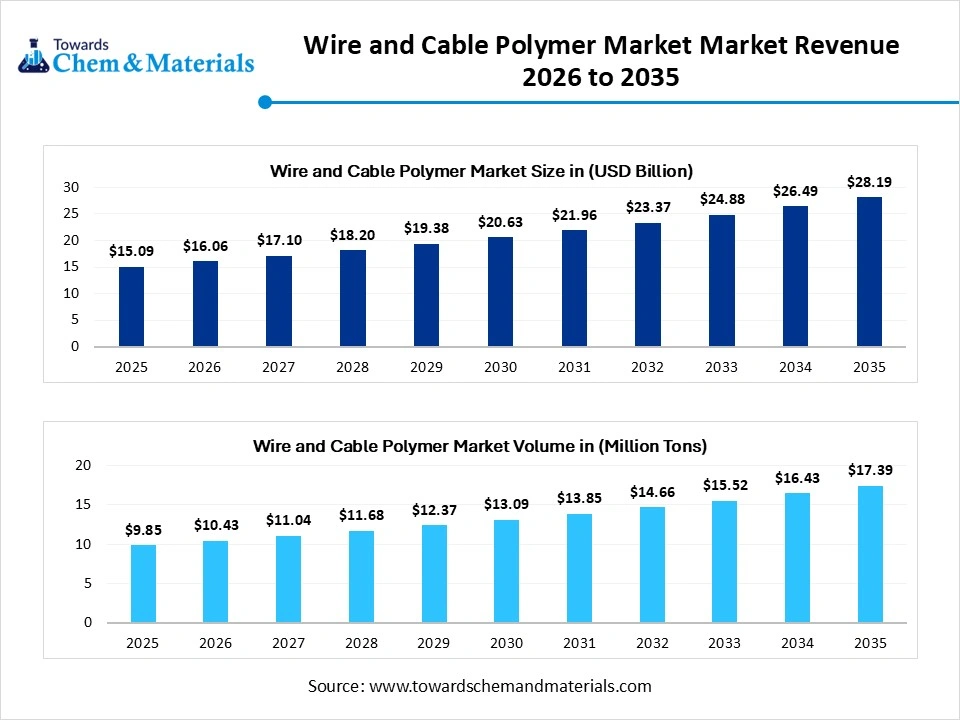
The global wire and cable polymer market size was estimated at USD 15.09 billion in 2025 and is expected to be worth around USD 28.19 billion by 2035, exhibiting a compound annual growth rate (CAGR) of 6.45% over the forecast period from 2026 to 2035.In terms of volume the wire and cable polymer market is projected to grow from 9.85 million tons in 2025 to 17.39 million tons by 2035. growing at a CAGR of 5.85% from 2026 to 2035. The report provides complete insights into market size, detailed segment-wise data by material type, application, and end-use industry, along with comprehensive regional analysis across major markets. It also covers key company profiles, competitive landscape, value chain analysis, trade data, and detailed information on manufacturers and suppliers, highlighting the growing demand for durable and fire-resistant materials.
Key Takeaways
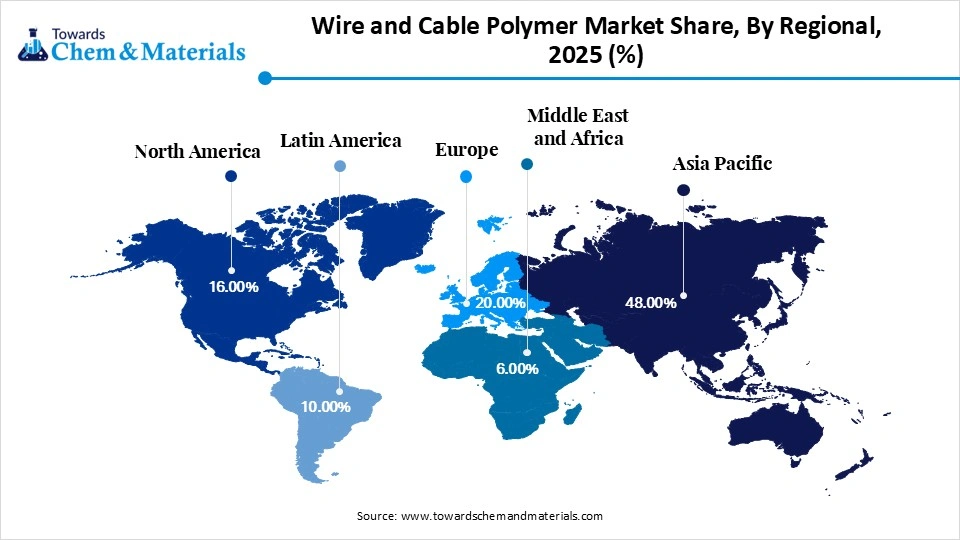
- By region, Asia Pacific dominated the wire and cable polymer market in 2025, with 48% share expected to sustain its position while growing with a CAGR of 7.2% in the forecast period, due to rapid development in infrastructure and industry.
- By region, Europe held the second largest share of 20% in 2025 and expects notable growth with a CAGR of 5.80% during the forecast period, due to its focus on improving quality and upgrading systems.
- By polymer type, the PVC segment dominated the market with 38% share in 2025, owing to it gives a very practical balance between cost, performance, and ease of use.
- By polymer type, the XLPE segment expects the fastest growth in the market with 7.2% CAGR during the forecast period, owing to it can handle higher stress compared to traditional materials.
- By voltage type, the low voltage segment dominated the market with 44% share in 2025, owing to they are used in everyday life on a very large scale.
- By voltage type, the extra high voltage segment expects the fastest growth in the market with 7.5% CAGR during the forecast period, due to countries' focus on efficient long-distance power transmission.
- By application, the power transmission & distribution segment dominated the market with 40% share in 2025, owing to it forms the backbone of the entire electricity system. From generation to final use, every step requires cables.
- By application, the automotive segment expects the fastest growth in the market with 7.5% CAGR during the forecast period, due to vehicles becoming more advanced and electric.
- By insulation type, the thermoplastic insulation segment dominated the market with 58% share in 2025, owing to its easy processing and cost-effectiveness.
- By insulation type, the thermoset insulation segment expects the fastest growth in the market with 7.1% CAGR during the forecast period due its performance in tough conditions.
Essential Polymers Powering Safe Cable Systems
The type of plastic which is primarily used for covering electrical wires for their safety and proper working is known as the wire and cable polymer. Moreover, by stopping electricity leakage while protecting wires from water, heat, and dust, the wire and cable polymer gained major industry attention in recent years. Also, these wires are very flexible and affordable, as per the recent observation.
Wire and Cable Polymer Market Trends
- The greater shift towards the smarter material, not only durable, has driven strategic transformation and sectoral scalability in recent years. Also, several major firms have been actively seen in choosing reliable and smart materials instead of cheap materials in the past few years.
- The heavy transition to sustainable and eco-friendly materials has allowed the stakeholders to capitalize on growth opportunities in the current period. Also, several companies are observed shifting towards materials that create less pollution and are easier to recycle nowadays.
- The increasing demand from unexpected industries, such as earlier, the wires and cable polymers were mainly used by the electricity and construction industry, but in recent years, automobiles, like electric vehicles, are heavily demanding these polymers for their internal wiring works as per the recent industry survey.
From Protection to Active Cable Safety
Materials are being developed to behave more actively in the current period. Also, the thinking is to make cables safer in real-life situations, not just in testing. Moreover, this is a big shift because now materials are designed based on real-world problems. Also, the polymers are slowly moving from just protection to active safety support, which makes cables more reliable in critical situations.
Supply Chain Analysis of the Wire and Cable Polymer Market
Distribution to Industrial Users
- Industrial users receive wire and cable polymers primarily through bulk resin distributors and specialized chemical suppliers. These materials, such as PVC, PE, and XLPE, are delivered in gaylords, silos, or bags for use in high-speed extrusion lines.
- Distribution focuses on providing technical grades that meet specific electrical insulation, flame retardancy, and durability standards.
Chemical Synthesis and Processing
- Wire and cable polymers are synthesized via polymerization of monomers like ethylene or vinyl chloride. Processing involves compounding base resins with additives, antioxidants, flame retardants, and UV stabilisers to enhance performance.
- This material is then fed into extruders, where it is melted and pressure-coated onto metal conductors to create durable insulation.
Regulatory Compliance and Safety Monitoring
- Wire and cable polymers must meet strict UL, CSA, and IEC standards for electrical insulation and flame retardancy. Compliance monitoring involves rigorous testing for smoke emission, toxicity, and heat resistance. Manufacturers also adhere to RoHS and REACH regulations to ensure materials are free from hazardous substances like lead or cadmium.
Wire and Cable Polymer Market Regulatory Landscape: Regulations
| Country Region | Regulatory Body | Key Regulations | Focus Areas |
| United States | National Fire Protection Association (NFPA) | NFPA 70 (National Electrical Code - NEC): The primary standard for electrical installations. | Flame spread, smoke density (Plenum vs. Riser ratings), and chemical restrictions under TSCA Section 6(h). |
| Europe | European Chemicals Agency (ECHA) | Construction Products Regulation (CPR - EU No 305/2011): Mandatory for cables permanently installed in buildings | Standardised Euroclasses (A to F) for fire reaction, acidity of gases, and environmental sustainability |
| China | State Administration for Market Regulation (SAMR) | GB/T 19666: The core standard for "General rules for flame retardant and fire resistant wires and cables. | Mandatory China Compulsory Certificate (CCC) for safety, flame retardancy, and public safety in high-density urban infrastructure. |
Segmental Insights
Polymer Type Insights
The PVC Segment Dominated the Wire and Cable Polymer Market with 38%Market Share in 2025
The PVC segment dominated the market with 38% share in 2025, owing to it gives a very practical balance between cost, performance, and ease of use. Also, most manufacturers prefer materials that are easy to process and don’t increase production complexity, and PVC fits perfectly. It provides good insulation, decent flexibility, and basic safety features that are enough for daily applications like home wiring and small industries.
The XLPE segment is expected to be the fastest-growing in the market, with 7.2% CAGR during the forecast period. It can handle higher stress compared to traditional materials. It performs well under high temperature and voltage, which makes it suitable for modern power systems. As infrastructure becomes more advanced, the need for durable and stable materials is increasing.
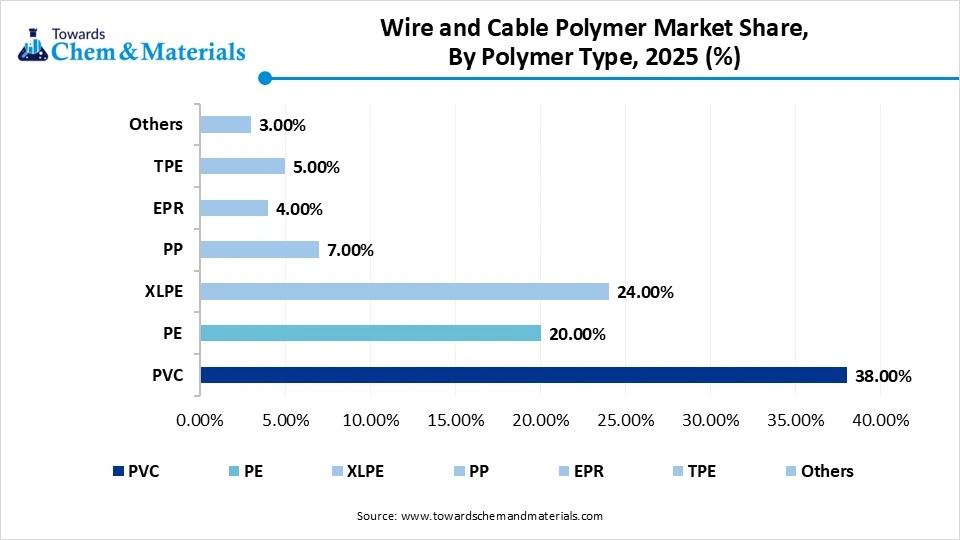
The PE segment held the third largest share of 20% in 2025 due to its performance in applications where signal quality matters. It allows smooth transmission of data with very low loss, which makes it ideal for communication cables. It is also lightweight and resistant to moisture, helping cables last longer in outdoor conditions.
PP segment held the fourth largest share of 6% in 2025, owing to its usefulness in specific applications, but not as widely used as other polymers. It offers good chemical resistance and is lightweight, which makes it suitable for certain industrial uses. However, it does not provide the same level of flexibility or broad usability as PVC or PE. Still, it plays an important supporting role in the market where its properties match the requirements.
Wire and Cable Polymer Market Share, By Polymer Type, 2025 (%)
| By Polymer Type | Revenue Share, 2025 (%) |
| PVC | 38.00% |
| PE | 20.00% |
| XLPE | 24.00% |
| PP | 7.00% |
| EPR | 4.00% |
| TPE | 5.00% |
| Others | 3.00% |
Voltage Type Insights
The Low Voltage Segment Dominated the Market with 44% Market Share in 2025
The low voltage segment dominated the market with 44% share in 2025, owing to they are used in everyday life on a very large scale. Every home, office, and small business needs wiring for lighting and appliances. This creates continuous and high demand. Even though each cable is small, the total volume is huge. It is also easy to install and widely required across all regions.
The medium voltage segment held the second largest share of 28% in 2025 due to they are essential for distributing electricity within cities and industrial areas. They connect substations to different parts of the network, ensuring a stable power supply. As urban areas grow and industries expand, the need for such cables increases steadily.
High voltage segment held the third largest share of 18% in 2025 due to they are used for long-distance transmission of electricity, especially between power plants and major grid systems. These projects are large but fewer in number, which keeps the overall volume lower compared to other segments.
The extra high voltage segment is expected to be the fastest-growing in the market, with 7.5% CAGR during the forecast period, as countries are focusing on efficient long-distance power transmission. As energy demand increases and renewable energy projects expand, there is a need to move electricity with minimal loss. These cables help improve efficiency and support large-scale networks.
Wire and Cable Polymer Market Share, By Voltage Type, 2025 (%)
| By Voltage Type | Revenue Share, 2025 (%) |
| Low Voltage | 44.00% |
| Medium Voltage | 28.00% |
| High Voltage | 18.00% |
| Extra High Voltage | 10.00% |
Application Insights
The Power Transmission & Distribution Segment Dominated the Wire and Cable Polymer Market with 40% Market Share in 2025
The power transmission & distribution segment dominated the market with 40% share in 2025, owing to it forms the backbone of the entire electricity system. From generation to final use, every step requires cables. Continuous demand for electricity in homes, industries, and cities keeps this segment strong. It also includes maintenance and expansion of existing networks, which adds to demand.
Telecommunication held the second largest share of 20% in 2025, owing to modern life depends heavily on connectivity. Internet, mobile networks, and digital services all require reliable cable systems. As data usage increases, the need for high-quality cables also grows. These cables must maintain signal strength and speed, which increases demand for good polymers.
The automotive segment is expected to be the fastest-growing in the market with 7.5% CAGR during the forecast period due to vehicles becoming more advanced and electric. Modern cars use complex wiring systems for batteries, sensors, and electronic features. As electric vehicles increase, the demand for high-performance cables also rises.
The building and construction segment held the fourth largest share of 12% in 2025, owing to its steady but stable demand. Every building requires wiring, which keeps the need consistent. However, its growth is not as fast as sectors like telecom or automotive. It mainly depends on construction activity, which grows at a regular pace.
Wire and Cable Polymer Market Share, By Application 2025 (%)
| By Application | Revenue Share, 2025 (%) |
| Power Transmission & Distribution | 40.00% |
| Telecommunications | 20.00% |
| Automotive | 14.00% |
| Building & Construction | 12.00% |
| Industrial | 9.00% |
| Others | 5.00% |
Insulation Type Insights
The Thermoplastic Insulation Segment Dominated the Market with 58% Market Share in 2025
The thermoplastic insulation segment dominated the market with 58% share in 2025, owing to its easy processing and cost-effectiveness. Manufacturers can produce cables quickly using these materials, which helps in large-scale production. It also provides good flexibility and performance for normal applications.
The thermoset insulation segment is expected to be the fastest-growing in the market with 7.1% CAGR during the forecast period, due to its performance in tough conditions. It can handle higher temperatures and does not easily lose shape under stress. This makes it suitable for advanced and high-performance applications. As industries move towards stronger systems, demand for such materials increases.
Wire and Cable Polymer Market Share, By Insulation Type 2025 (%)
| By Insulation Type | Revenue Share, 2025 (%) |
| Thermoplastic Insulation | 58.00% |
| Thermoset Insulation | 42.00% |
Regional Insights
How will Asia Pacific Dominate the Wire and Cable Polymer Market in 2025?
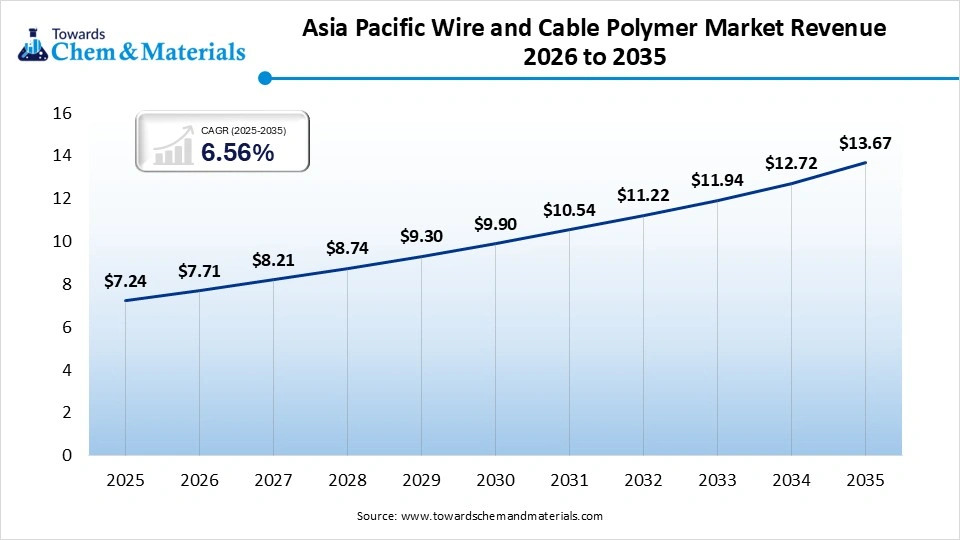
The Asia Pacific wire and cable polymer market size was estimated at USD 7.24 billion in 2025 and is projected to reach USD 13.67 billion by 2035, growing at a CAGR of 6.56% from 2026 to 2035. Asia Pacific dominated the market with a share of 48% in 2025 owing to rapid development in infrastructure and industry. Many countries in this region are building power systems, communication networks, and urban areas at a fast pace. This creates huge demand for cables and related materials. Large population and increasing electricity needs also support growth.
China Dominating Cable Production and Demand
China maintained its dominance in the market, owing to its production and use of a large amount of cables. It has strong manufacturing capabilities and invests heavily in infrastructure projects. The country is continuously expanding its power and communication networks, which increases demand. It also supplies materials to other regions. In simple words, China plays both roles, producer and consumer.
Wire and Cable Polymer Market Evaluation in Europe
Europe held the second largest share of 20% in 2025 and expects notable growth with a CAGR of 5.80% during the forecast period, owing to its focus on improving quality and upgrading systems. Many countries are modernizing their infrastructure and adopting better technologies. There is also strong awareness about safety and performance, which increases demand for advanced materials.
Germany Driving Future Cable Innovation
Germany is expected to emerge as a prominent country for the wire and cable polymer market in the coming years, due to its strong industrial and technological base. It is known for high-quality manufacturing and innovation. The country is active in sectors like automotive and energy, which require advanced cable systems. It also focuses on efficient and reliable solutions.
Wire and Cable Polymer Market Share, By Regional, 2025 (%)
| Regional | Revenue Share, 2025 (%) |
| Asia-Pacific | 48.00% |
| Europe | 20.00% |
| North America | 16.00% |
| Latin America | 10.00% |
| Middle East & Africa | 6.00% |
Recent Developments
- In April 2026, SIKORA introduced its latest solution for the wire and cable industries, which includes the LASER PRO diameter measurement series, the LM PRO length measuring system, and the X-RAY 6000 measurement system. This solution is specifically designed to increase product efficiency while improving quality control, as per the company's claim.
- In June 2025, the Premix, Maillefer, and LyondellBasell have created a strategic collaboration in recent years. Also, the aim behind this partnership establishment is to create polypropylene-based power cable solutions as per the published report. Also, the Premix has PRE-ELEC® PP18220 while LYB stands with their Catalloy Hifax CA 7910A, and Maillefer ensures reliability as per the observations.
Wire and Cable Polymer Market Competitive Landscape Analysis
Tier 1 Companies
|
Rank
|
Company Name | Headquarters | Country | Why Relevant to This Market | Key Products / Material Portfolio |
| 1 | Borealis AG | Vienna | Austria | Global leader in wire and cable polyolefins with extensive XLPE and HFFR technologies for power and communication cables | XLPE compounds, Borlink™ cable compounds, HFFR compounds, PE insulation materials |
| 2 | Dow Inc. | Midland, Michigan | United States | Leading supplier of cable insulation polymers for power transmission, automotive, and telecommunications | ENDURANCE™ XLPE, ENGAGE™ polyolefins, cable insulation compounds |
| 3 | BASF SE | Ludwigshafen, Rhineland-Palatinate | Germany | Major supplier of engineering plastics and flame-retardant polymer compounds for cable applications | Flame-retardant compounds, engineering plastics, cable additives |
| 4 | Westlake Corporation | Houston, Texas | United States | Leading global producer of PVC and polyethylene resins used in cable insulation and jacketing | PVC resins, polyethylene resins, wire and cable compounds |
| 5 | Solvay S.A. | Brussels | Belgium | Global leader in high-performance fluoropolymers and specialty polymers for demanding cable applications | Solef® PVDF, fluoropolymers, specialty cable insulation materials |
Tier 2 Companies
|
Rank
|
Company Name | Headquarters | Country | Why Relevant to This Market | Key Products / Material Portfolio |
| 1 | Avient Corporation | Avon Lake, Ohio | United States | Leading supplier of flame-retardant and custom cable compounds | HFFR compounds, PVC compounds, TPE cable compounds |
| 2 | Teknor Apex Company | Pawtucket, Rhode Island | United States | Global compounder specializing in wire and cable insulation and jacketing materials | PVC cable compounds, TPE compounds, HFFR materials |
| 3 | Celanese Corporation | Irving, Texas | United States | Supplier of engineered thermoplastics and specialty compounds for cable systems | Engineering thermoplastics, TPEs, specialty cable compounds |
| 4 | Hexpol AB | Malmö | Sweden | Major producer of rubber and thermoplastic compounds for wire and cable applications | EPDM compounds, silicone rubber, cable compounds |
| 5 | Arkema S.A. | Colombes, Île-de-France | France | Supplier of specialty polymers for high-performance cable insulation | Kynar® PVDF, Pebax® elastomers, specialty cable polymers |
Tier 3 Companies
|
Rank
|
Company Name | Headquarters | Country | Why Relevant to This Market | Key Products / Material Portfolio |
| 1 | Ravago Manufacturing | Arendonk | Belgium | Global producer of custom polymer compounds for wire and cable applications | HFFR compounds, XLPE compounds, thermoplastic compounds |
| 2 | KRAIBURG TPE GmbH & Co. KG | Waldkraiburg, Bavaria | Germany | Specialist in TPE compounds for flexible cable insulation and jacketing | TPE cable compounds, flame-retardant elastomers |
| 3 | Aurora Material Solutions | Streetsboro, Ohio | United States | Supplier of custom PVC and engineering polymer compounds for wire and cable markets | PVC compounds, engineering thermoplastic compounds |
| 4 | SCG Chemicals Public Company Limited | Bangkok | Thailand | Regional supplier of polyolefins and specialty compounds for cable insulation | PE resins, cable-grade polyolefins, specialty compounds |
Top Vendors in the Wire and Cable Polymer Market & Their Offerings:
- Dow Inc.: A global leader in materials science, Dow provides high-performance polyethylene resins and wire and cable compounds. Their flagship ENDURITY™ and SI-LINK™ brands focus on medium-to-high voltage insulation. Dow’s expertise lies in cross-linking technologies and sustainable polymer solutions that enhance grid reliability and long-term cable durability.
- Borealis AG: Based in Austria, Borealis specializes in polyolefins for the energy and communications sectors. They are renowned for their Borstar® and Borlink™ technologies, which set industry standards for HVDC (High Voltage Direct Current) cable insulation. Their focus is on advancing the "EverMinds" circular economy through recyclable polymer grades.
- BASF SE: The world’s largest chemical producer, BASF supplies high-performance engineering plastics and additives for the cable industry. Key offerings include polyurethanes (TPU) for flexible, abrasion-resistant jacketing and flame-retardant additives. Their products are essential for automotive wiring, industrial automation, and harsh-environment cabling applications.
- SABIC: Headquartered in Saudi Arabia, SABIC provides a vast portfolio of polyethylenes, polypropylenes, and specialty resins like LEXAN™ and ULTEM™. Their wire and cable solutions prioritize flame retardancy and heat resistance. SABIC is a major supplier for telecommunications, consumer electronics, and renewable energy infrastructure projects globally.
Wire and Cable Polymer Market Key Players
- Solvay S.A. (Syensqo)
- Arkema SA
- ExxonMobil Corporation
- LG Chem Ltd.
- LyondellBasell Industries N.V.
- Avient Corporation
Wire and Cable Polymer Market Segments List
By Polymer Type
- Polyvinyl Chloride (PVC)
- Plasticized PVC
- Unplasticized PVC
- Polyethylene (PE)
- Low-Density Polyethylene (LDPE)
- High-Density Polyethylene (HDPE)
- Linear Low-Density Polyethylene (LLDPE)
- Cross-linked Polyethylene (XLPE)
- Polypropylene (PP)
- Ethylene Propylene Rubber (EPR)
- Thermoplastic Elastomers (TPE)
- Others
- Fluoropolymers
- Silicone Rubber
By Voltage Type
- Medium Voltage
- High Voltage
- Extra High Voltage
By Application
- Power Transmission & Distribution
- Overhead Cables
- Underground Cables
- Submarine Cables
- Telecommunications
- Fiber Optic Cables
- Copper Communication Cables
- Automotive
- EV Wiring
- Conventional Vehicles
- Building & Construction
- Residential Wiring
- Commercial Wiring
- Industrial
- Machinery
- Oil & Gas
- Others
- Aerospace
- Marine
By End-Use
- Energy & Power
- Telecommunications
- Automotive
- Construction
- Industrial Manufacturing
- Oil & Gas
- Others
By Insulation Type
- Thermoplastic Insulation
- Thermoset Insulation
By Region
- North America:
- U.S.
- Canada
- Mexico
- Rest of North America
- Latin America:
- Brazil
- Argentina
- Rest of Latin America
- Europe:
- Western Europe
- Germany
- Italy
- France
- Netherlands
- Spain
- Portugal
- Belgium
- Ireland
- UK
- Iceland
- Switzerland
- Poland
- Rest of Western Europe
- Eastern Europe
- Austria
- Russia & Belarus
- Türkiye
- Albania
- Rest of Eastern Europe
- Asia Pacific:
- China
- Taiwan
- India
- Japan
- Australia and New Zealand,
- ASEAN Countries (Singapore, Malaysia)
- South Korea
- Rest of APAC
- MEA:
- GCC Countries
- Saudi Arabia
- United Arab Emirates (UAE)
- Qatar
- Kuwait
- Oman
- Bahrain
- South Africa
- Egypt
- Rest of MEA
- GCC Countries
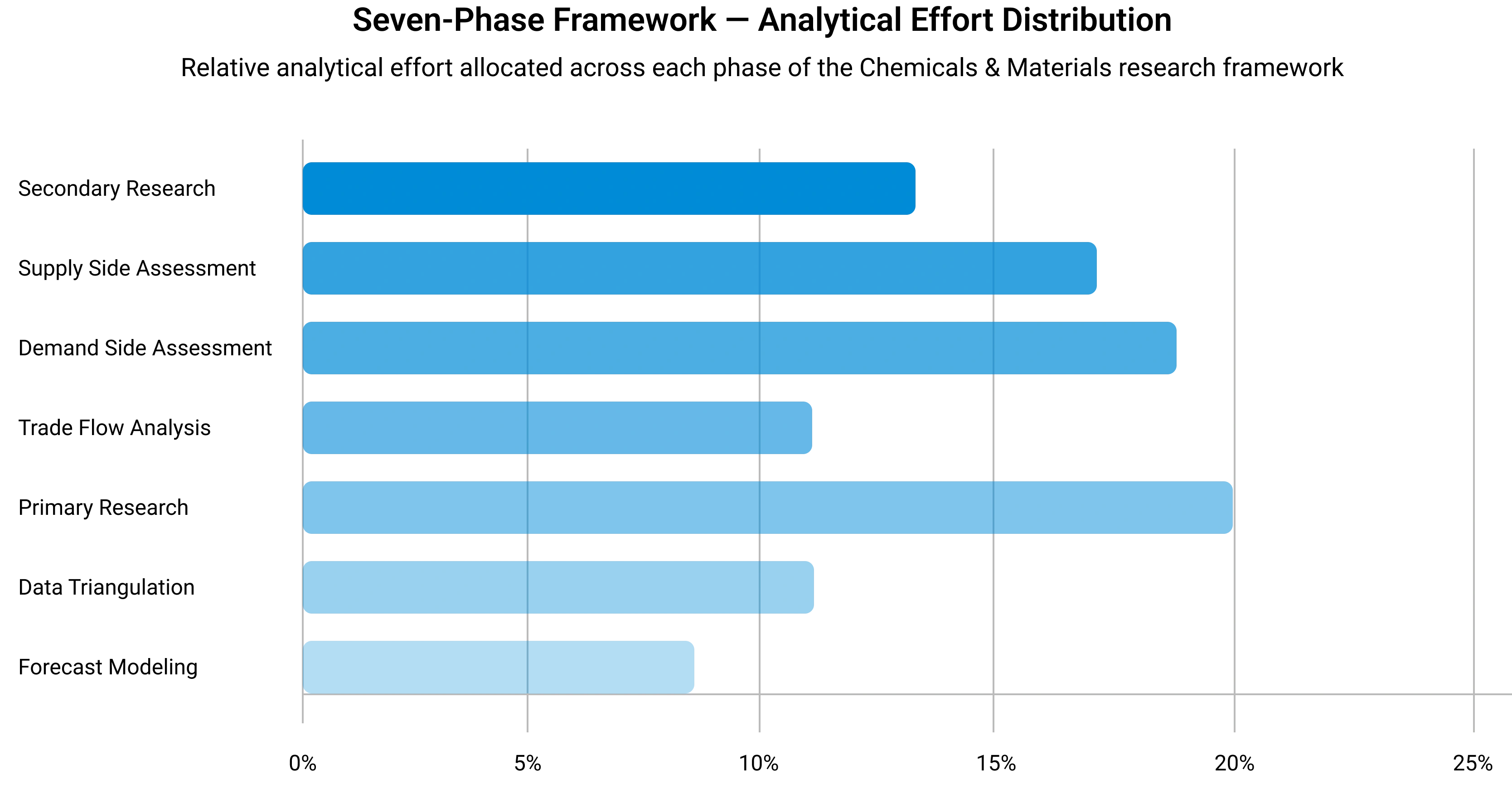
A Seven-Phase Framework
Our methodology is designed to be universally applicable across commodity chemicals, specialty chemicals, petrochemicals, construction chemicals, coatings, electronic chemicals, industrial gases, agrochemicals, water treatment chemicals, and performance materials. Each phase builds upon the last, creating a layered validation structure that minimizes estimation error and maximizes analytical confidence.
The framework ensures comprehensive market coverage, robust cross-validation, and reliable long-term forecasting — producing market estimates that withstand scrutiny from investors, regulators, and corporate strategy teams.

Seven-Phase Framework — Analytical Effort Distribution
Relative analytical effort allocated across each phase of the Chemicals & Materials research framework
Phase 1 - Secondary Research: Establishing the Foundation
Secondary research collects and evaluates publicly available information from authoritative sources, establishing the foundational understanding of market structure, value chain dynamics, competitive landscape, and end-use demand patterns. Every source is evaluated for credibility, recency, geographic relevance, and methodological soundness before inclusion.
Industry Associations
Sources include ACC, CEFIC, ICCA, JCIA, CPCIF, and SOCMA providing production volumes, consumption trends, capacity developments, and sustainability initiatives.
Company Disclosures
Annual reports, investor presentations, earnings transcripts, and regulatory filings reveal product portfolios, manufacturing footprints, capacity expansions, and revenue segmentation.
Government Databases
National statistical offices, customs authorities, environmental agencies, and industrial production databases provide verified statistics on output, trade flows, and regulatory compliance.
Trade Databases
UN Comtrade, ITC, Eurostat, and national customs authorities enable assessment of global product movement, import dependency, and export competitiveness across regions.
Our Secondary Research Sources
- Ministry of Chemicals and Fertilizers
- European Chemicals Agency
- United States Department of Energy
- Ministry of Industry and Information Technology
- Ministry of Economy Trade and Industry
- Ministry of Trade Industry and Energy
- National Institute of Standards and Technology
- Council of Scientific and Industrial Research
- Fraunhofer Society
- National Institute for Materials Science
Phase 2 — Supply-Side Assessment: Mapping Production Capabilities
Production Capacity Analysis
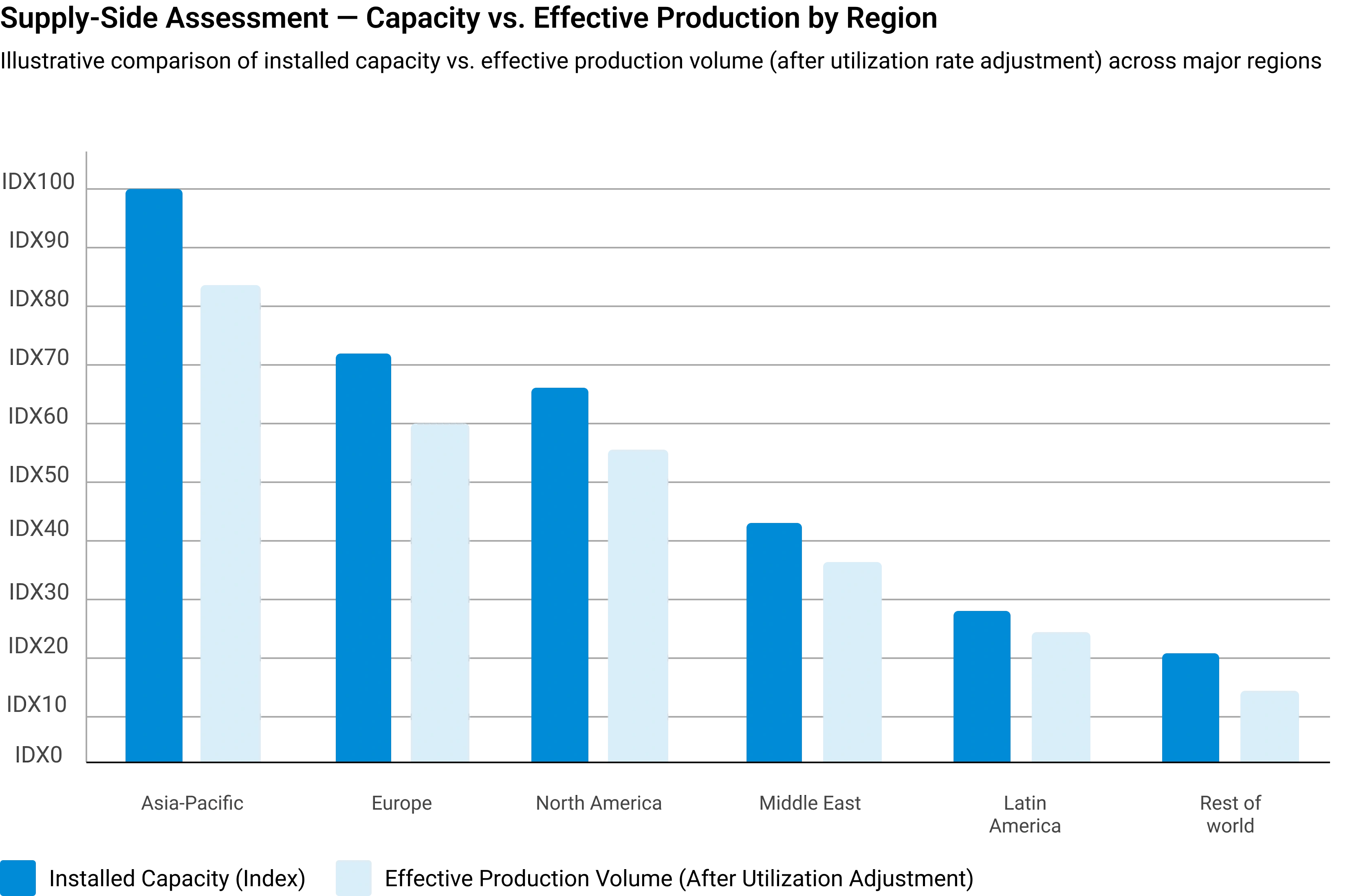
All major manufacturers are assessed for existing installed capacity, planned additions, expansions, new plant announcements, and technology adoption — mapped at global, regional, and country levels.
Capacity Utilization Adjustment
Installed capacity is adjusted using utilization rates based on demand conditions, feedstock availability, plant operating rates, maintenance schedules, and regulatory restrictions.
Manufacturer Revenue Analysis
Product-specific revenues, segment-level performance, regional distribution, average selling prices, and margin trends are evaluated to establish market value estimates.
Supply-Side Assessment — Capacity vs. Effective Production by Region
Illustrative comparison of installed capacity vs. effective production volume (after utilization rate adjustment) across major regions
Phase 3 — Demand-Side Assessment: Quantifying Chemical Consumption
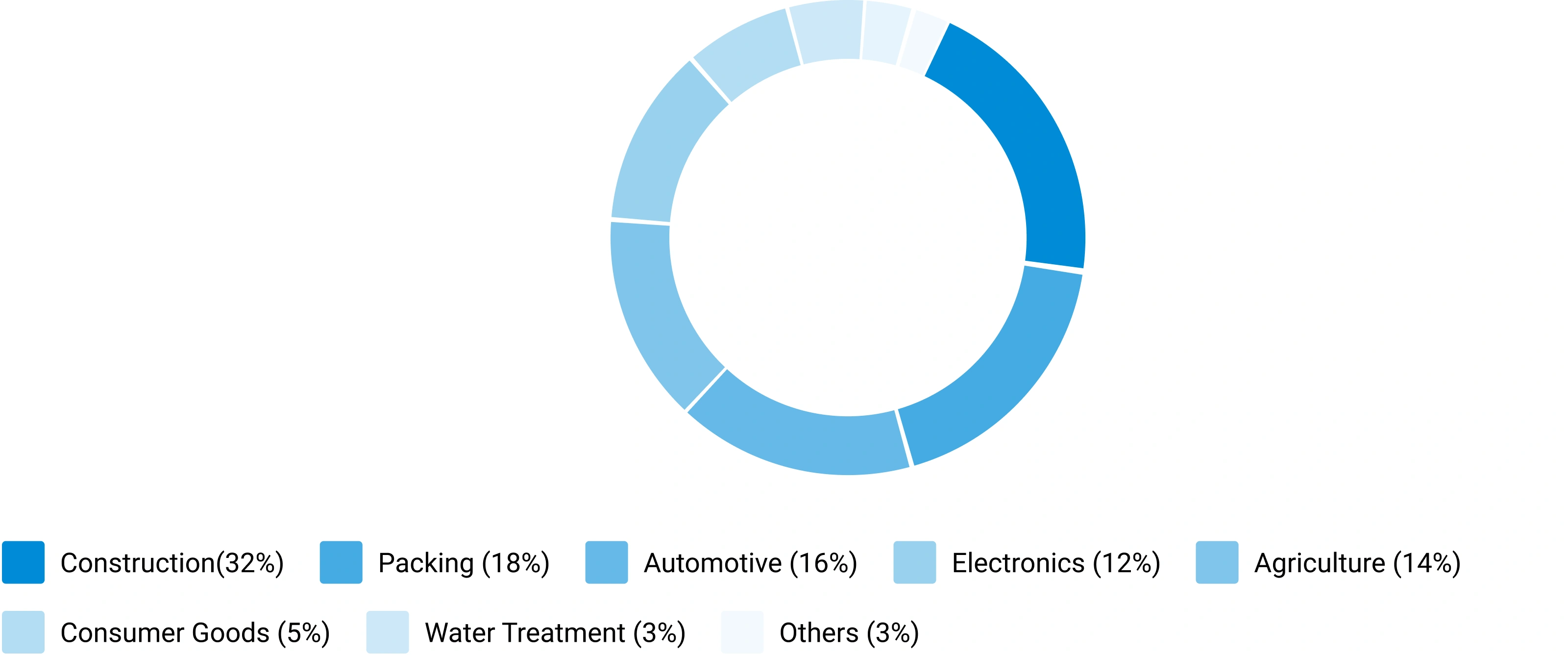
Demand-side analysis quantifies chemical consumption across industries, applications, and geographies — identifying where and how chemicals are consumed throughout the value chain with precision.
End-Use Industry Analysis
Chemical demand is evaluated across automotive, construction, packaging, electronics, agriculture, healthcare, consumer goods, industrial manufacturing, energy and utilities, and water treatment. Industry output, production trends, and consumption intensity are analyzed to determine demand patterns.
Consumption Modeling
Demand is estimated using measurable indicators: kilograms per vehicle, kilograms per square meter of construction, dosage per cubic meter of water treated, kilograms per hectare of agricultural land, and kilograms per ton of manufactured products. Consumption factors are validated through industry publications and primary interviews.
Application Analysis
The market is segmented by application area to understand product performance requirements, formulation trends, technology adoption, customer preferences, and regulatory requirements improving demand accuracy and segmentation granularity.
Demand-Side Assessment — End-Use Industry Demand Distribution
Illustrative distribution of chemical & materials demand across key end-use industries
Phase 4 - Trade Flow Analysis: Balancing Regional Supply and Demand
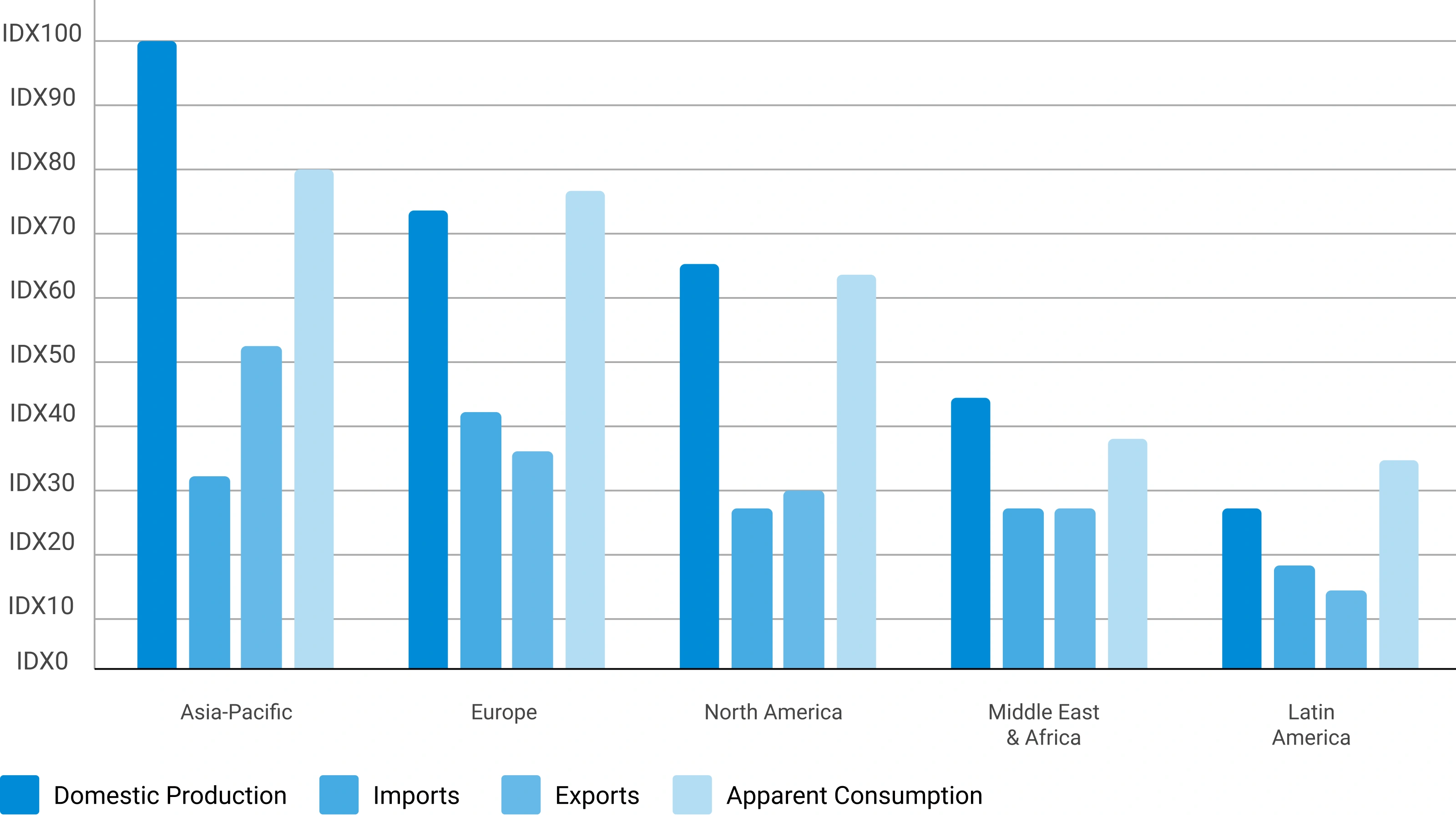
Trade flow analysis reconciles regional supply and demand estimates through import and export data, identifying net supply positions, regional dependencies, and market imbalances. It serves as an independent validation layer that tests the consistency of supply-side and demand-side estimates.
Import Analysis
Import data is evaluated to determine volumes, source countries, product dependency, regional supply gaps, and pricing trends — identifying markets that rely heavily on external supply and where domestic production is insufficient to meet demand.
Export Analysis
Export assessments reveal production surplus, export competitiveness, regional manufacturing strength, and global market participation. Export patterns also help validate domestic production estimates and identify net exporting regions.
Apparent Consumption Model
Regional consumption is assessed using the standard apparent consumption formula:
Results identify net importing regions, net exporting regions, regional deficits, and surpluses — serving as an independent validation of supply and demand estimates.
Trade Flow Analysis — Net Supply Position by Region
Illustrative apparent consumption vs. domestic production across major regions — positive gap indicates net import dependency
Phase 5 — Primary Research: The Critical Validation Layer
Primary research tests and refines findings from secondary research through direct engagement with industry participants across the supply chain, demand side, and expert community. It captures intelligence that no database or published report can provide — the real-world experience of manufacturers, buyers, and specialists operating in the market.

Supply-Side Interviews
Conversations with chemical manufacturers, raw material suppliers, contract manufacturers, technology providers, and plant operators cover production trends, capacity utilization, pricing developments, technology shifts, and competitive dynamics.

Demand-Side Interviews
Engagement with OEMs, industrial consumers, procurement managers, distributors, formulators, and end-use manufacturers focuses on consumption trends, purchasing behavior, product substitution, demand outlook, and emerging applications.

Industry Expert Consultations
Additional interviews with industry consultants, independent experts, regulatory specialists, technical professionals, and research institutions provide deeper market context and validate key analytical assumptions.
Focus Areas of Primary Research:
Market Size & Forecast Validation
Revenue estimates, volume consumption, growth rates, forecast assumptions, regional demand.Supply Chain & Value Chain Assessment
Raw material sourcing, supply chain challenges, distribution networks, procurement practices.Production & Capacity Analysis
Manufacturing capacity, utilization rates, expansion projects, plant investments.Pricing & Cost Structure Analysis
Product pricing trends, feedstock costs, energy costs, margin pressures, pricing outlook.Competitive Landscape Assessment
Volume and value estimates confirmed to be fully consistent with one another before publicationInterview Volume by Market Scope
| Study Scope | Number of Interviews |
|---|---|
| Niche Market | 20 – 30 |
| Mid-Sized Market | 30 – 50 |
| Global Market | 50 – 80 |
| Highly Fragmented Market | 80 – 120 |
Interview Details:
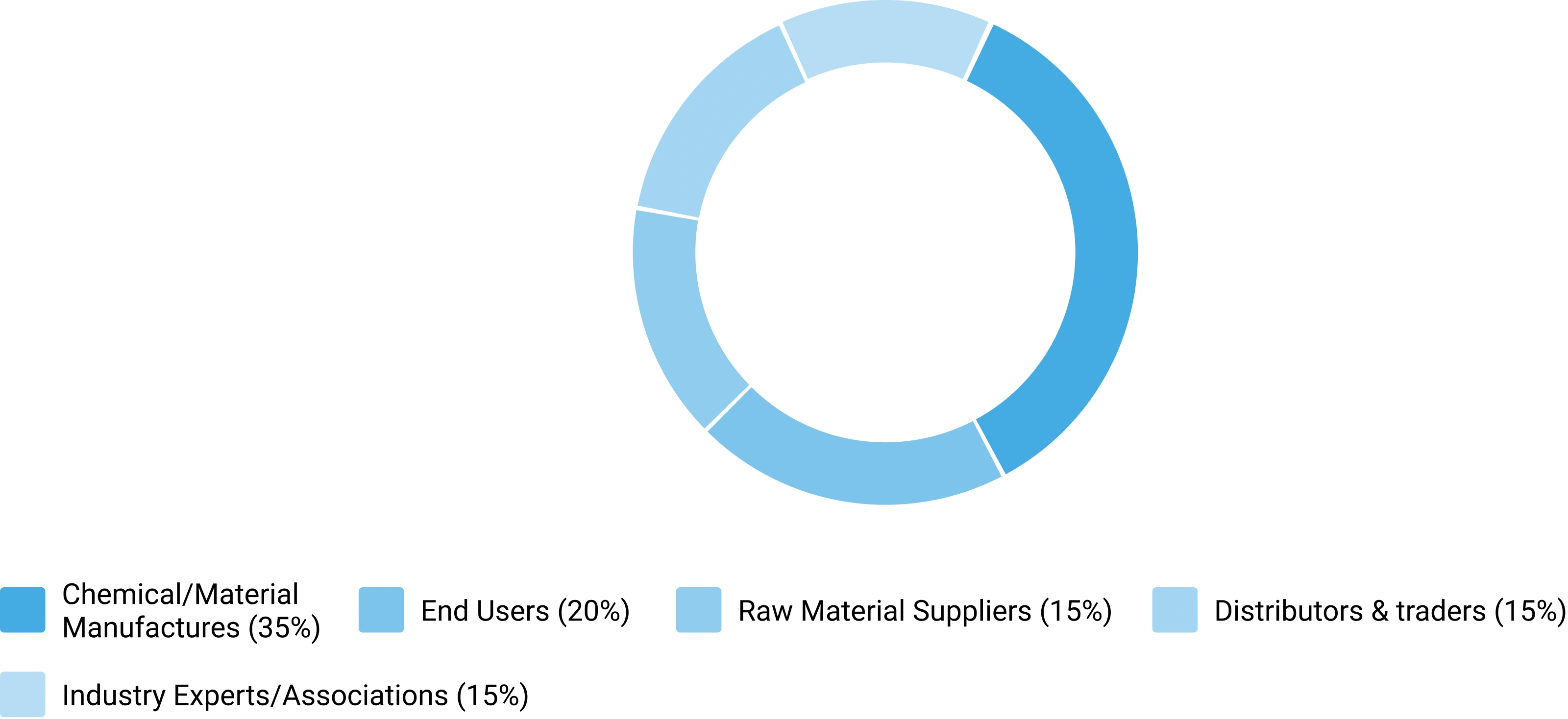
Category : Manufacturers, Suppliers, Distributors, End Users, Experts/Associations
Average Duration : 30–60 Minutes
Interview Mode : Video calls, telephonic interviews, expert consultations
Interview Format : Structured / Semi-Structured questionnaire
Focus Areas of Primary Research:
Market Size & Forecast Validation :
Revenue estimates, volume consumption, growth rates, forecast assumptions, regional demand.
Supply Chain & Value Chain Assessment :
Raw material sourcing, supply chain challenges, distribution networks, procurement practices.
Production & Capacity Analysis :
Manufacturing capacity, utilization rates, expansion projects, plant investments.
Pricing & Cost Structure Analysis :
Product pricing trends, feedstock costs, energy costs, margin pressures, pricing outlook.
Competitive Landscape Assessment :
Market share, competitor positioning, strategic initiatives, partnerships, acquisitions.
Primary Research — Stakeholder Coverage by Category
Distribution of interview respondents across stakeholder categories (% share from PPT data)
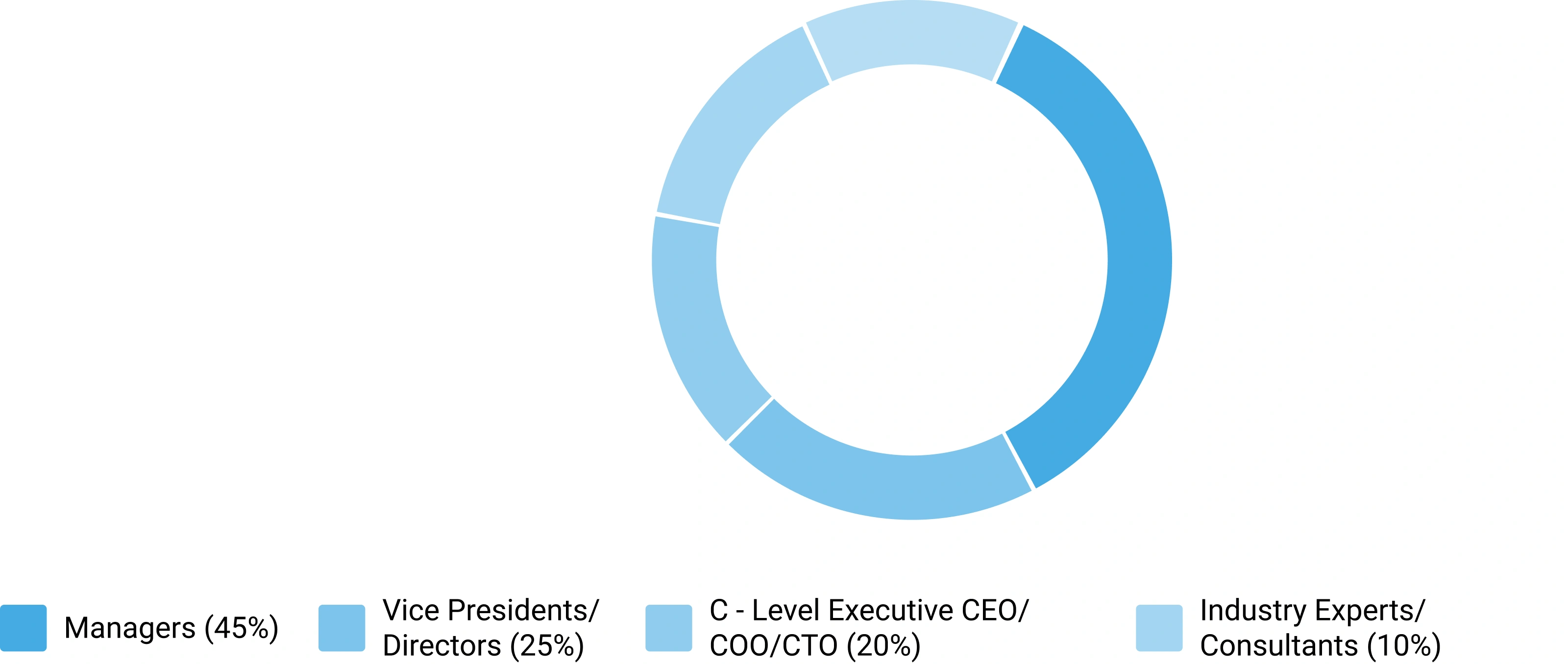
Primary Research — Respondent Designation Profile
Seniority breakdown of interview respondents (% share from PPT data)
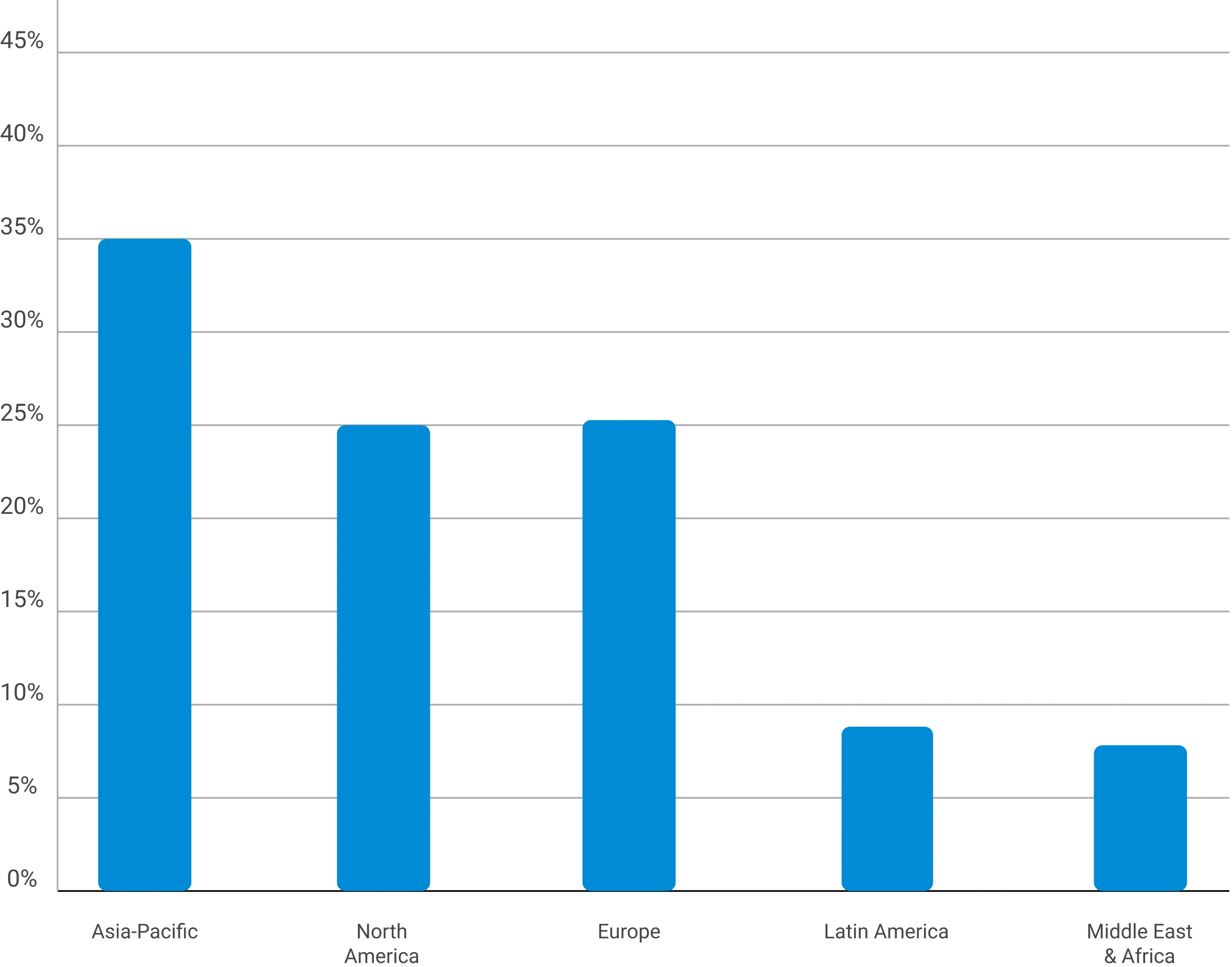
Primary Research — Geographic Coverage of Interviews
Regional distribution of primary research engagement (% share from PPT data)
Phase 6 — Data Triangulation and Market Validation
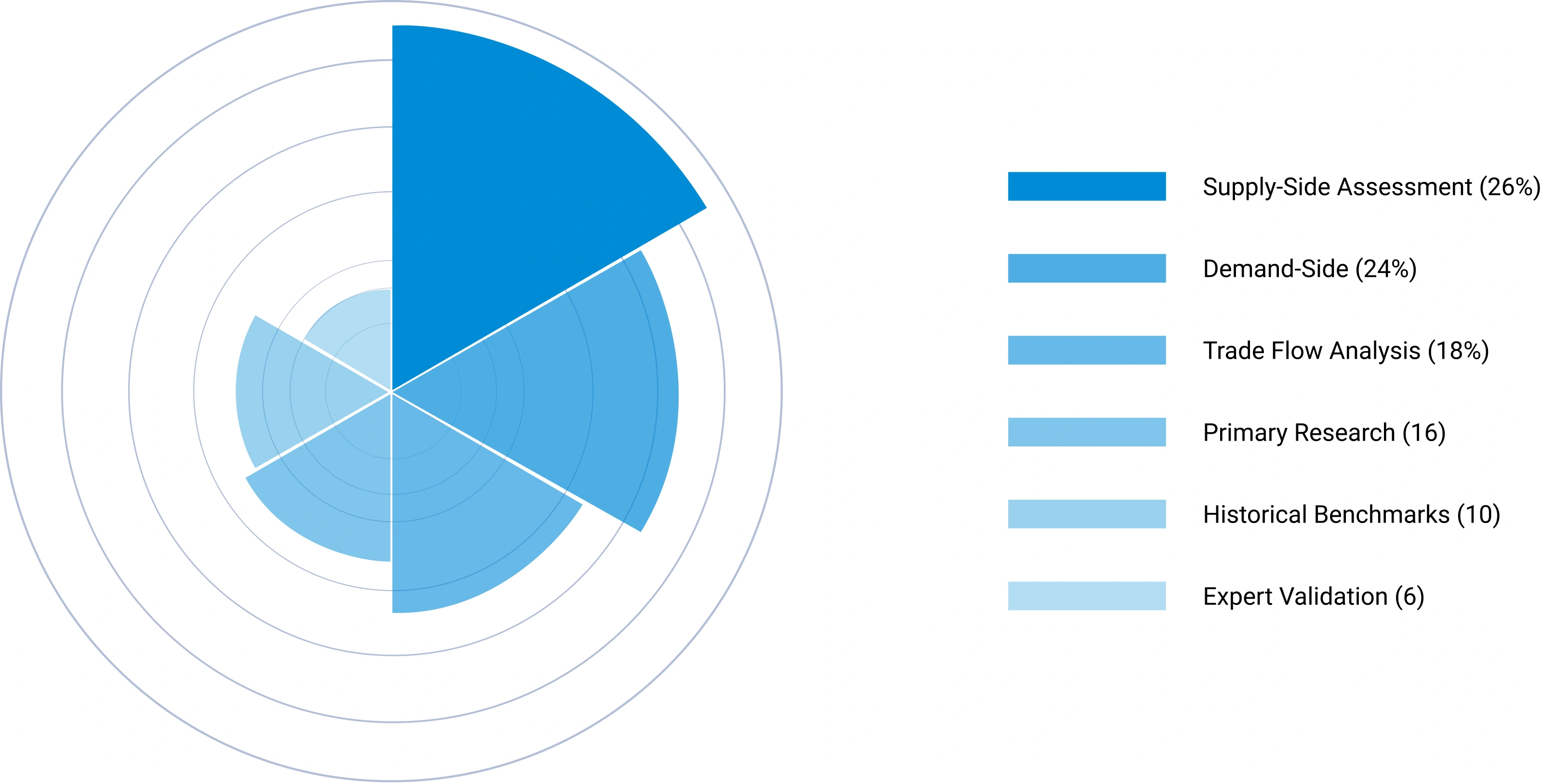
No single methodology is relied upon in isolation. Multiple independent estimation approaches are combined and reconciled to ensure consistency, accuracy, and analytical defensibility. Any material deviations between approaches are investigated and adjusted through additional validation cycles.
The final market size is derived through weighted triangulation of all validated methodologies. Any material deviations between approaches are investigated and adjusted through additional validation cycles. The outcome represents the most realistic assessment of the market based on available evidence and expert confirmation ensuring that volume and value estimates are fully consistent with one another.
Triangulation Framework — Input Contribution Weight
Relative weight each sizing input contributes to the final reconciled market estimate
Phase 7 — Forecast Modeling: Projecting Future Market Evolution
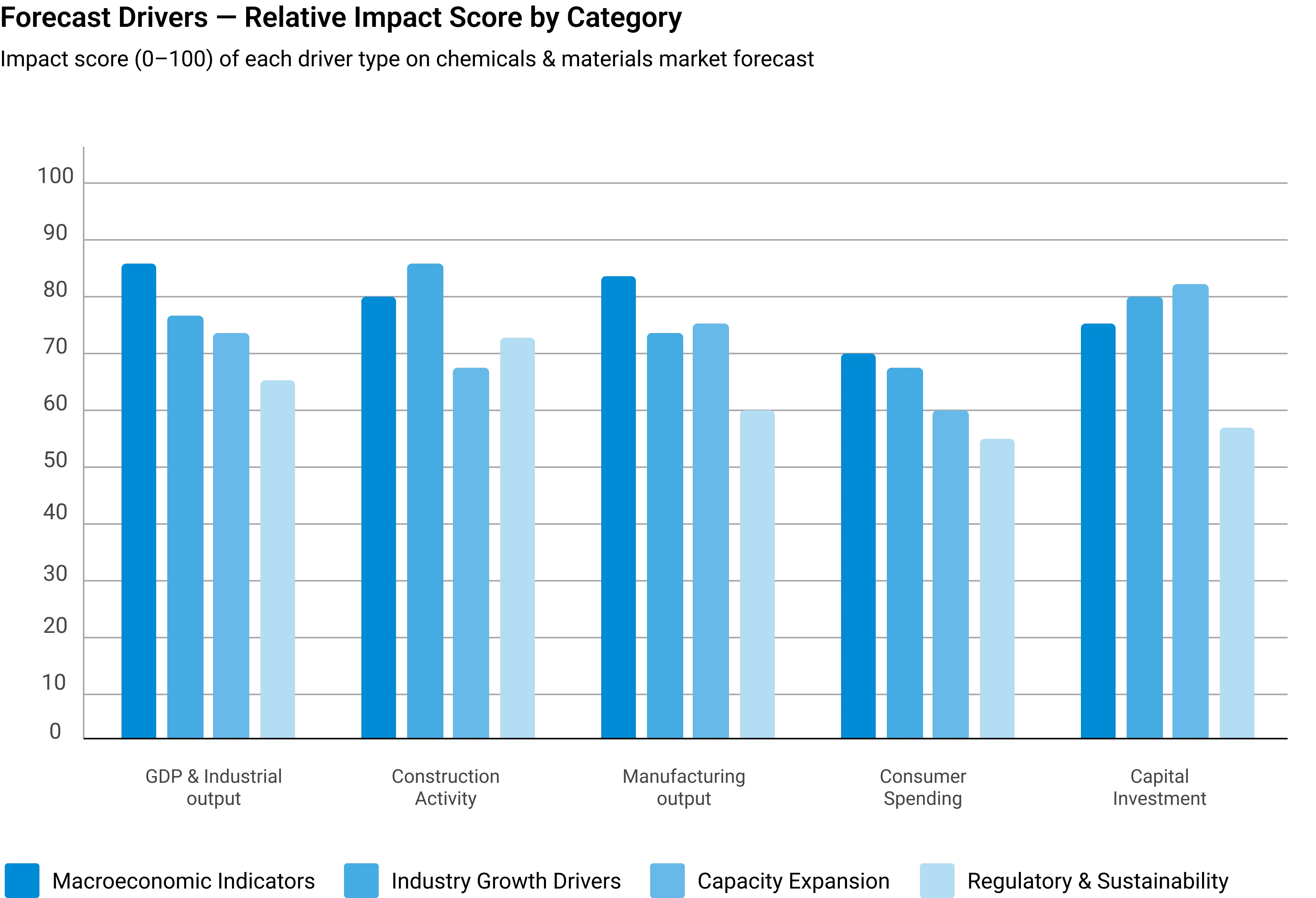
Forecasting evaluates the future trajectory of the market using a combination of quantitative indicators and qualitative assessments across economic, industry, and regulatory dimensions. Rather than simple extrapolation, each driver is independently modeled and integrated into a composite forecast.
Macroeconomic Indicators
GDP growth, industrial production, manufacturing output, construction activity, consumer spending, and capital investment form the quantitative foundation of long-term demand projections. These are applied at country, regional, and global levels.
Industry Growth Drivers
Urbanization, infrastructure development, industrialization, technological innovation, sustainability initiatives, and evolving product performance requirements are assessed at regional and industry levels — capturing both structural and cyclical demand drivers.
Capacity Expansion Analysis
Announced plant expansions, new manufacturing facilities, technology upgrades, and strategic investments are evaluated to determine future supply-demand dynamics and potential market tightness or oversupply situations.
Regulatory & Sustainability
Environmental regulations, chemical safety standards, emission reduction targets, circular economy initiatives, and sustainability requirements are incorporated as they often influence product adoption rates and market growth trajectories.
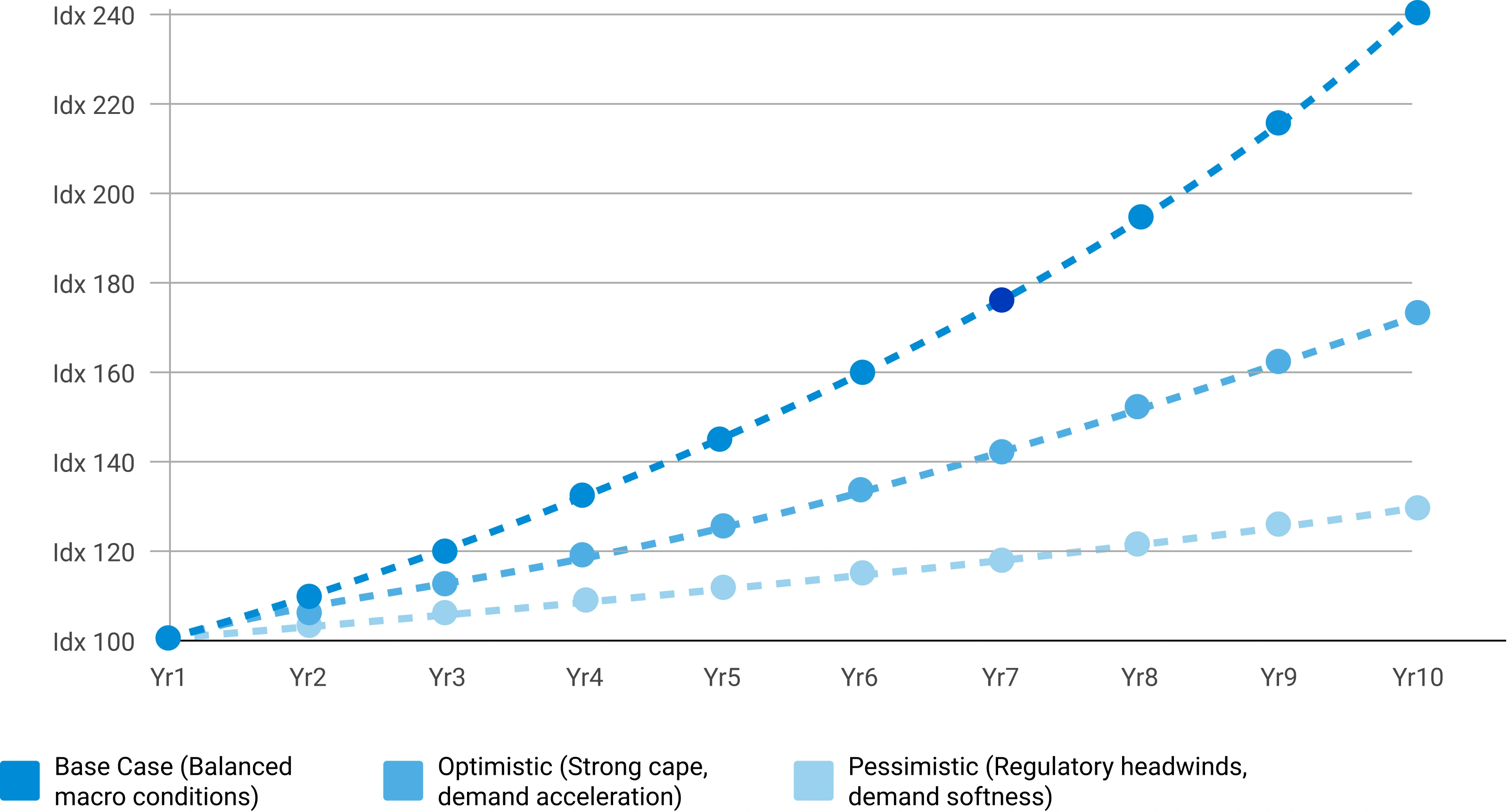
Scenario Forecast Range — Indexed Market Growth (Year 1–10)
Illustrative indexed growth trajectories across Base, Optimistic, and Pessimistic scenarios over a 10-year forecast horizon
Forecast Drivers — Relative Impact Score by Category
Impact score (0–100) of each driver type on chemicals & materials market forecast



Comments
Share your thoughts, ask a question, or provide feedback about this report.