
Specialty Oil Market Size Analysis Report 2035
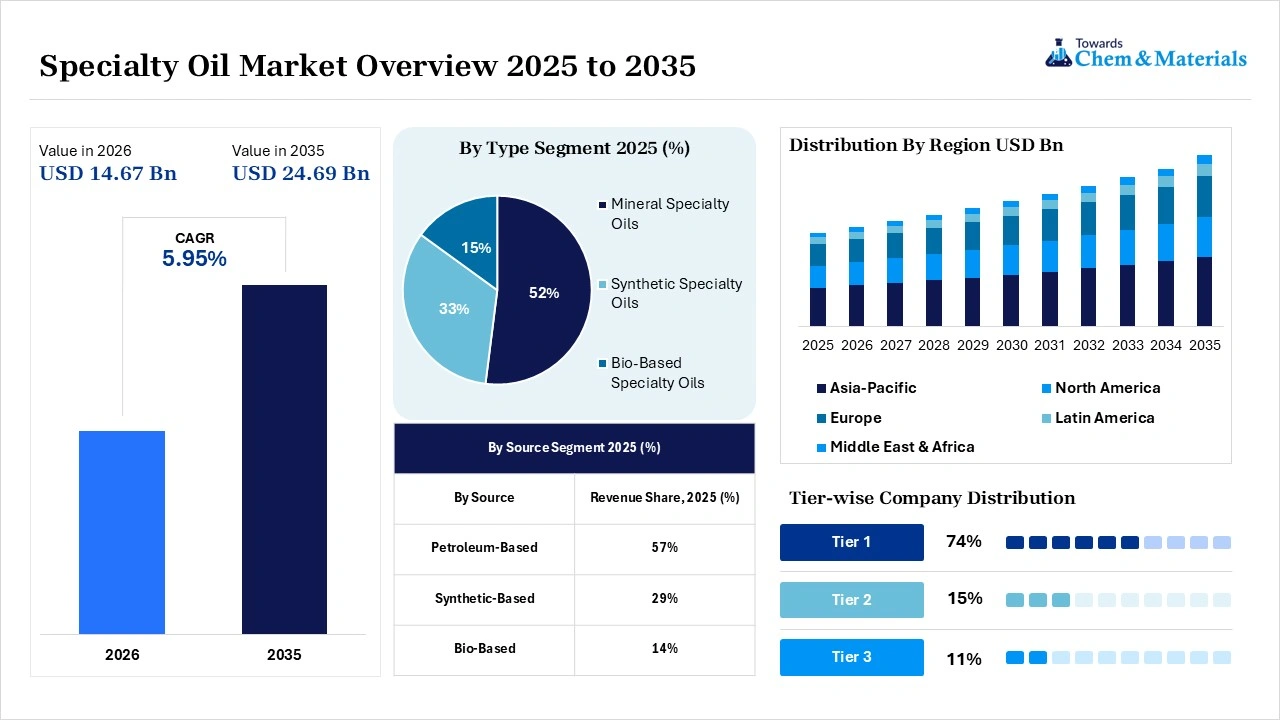
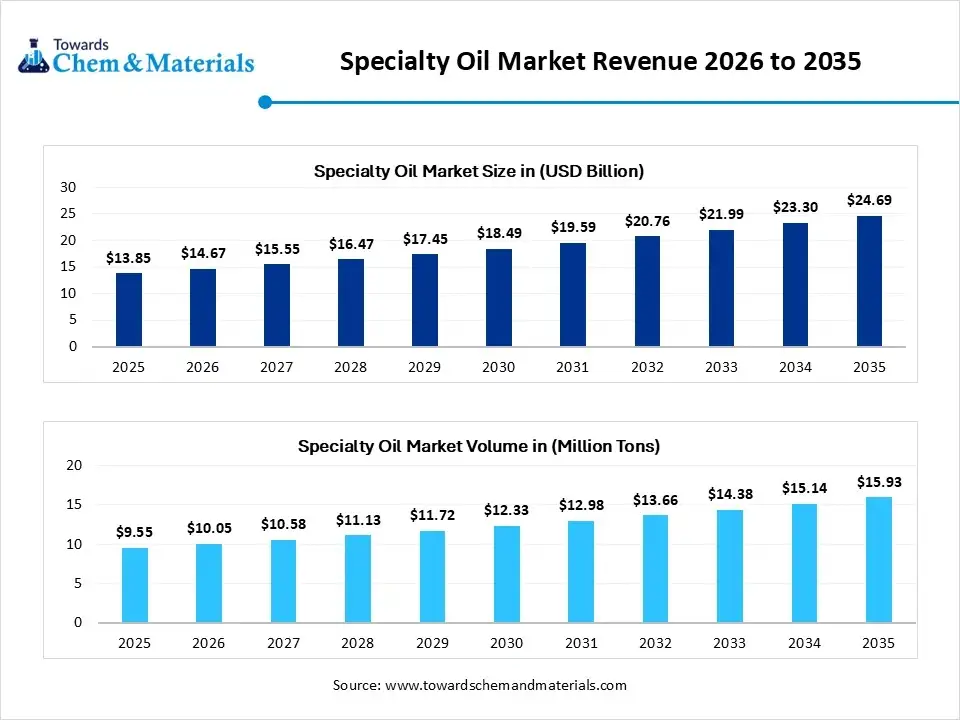
The specialty oil market size was valued at USD 13.85 billion in 2025, is estimated to reach USD 14.67 billion in 2026, and is projected to reach USD 24.69 billion by 2035, exhibiting a compound annual growth rate (CAGR) of 5.95% over the forecast period from 2026 to 2035. Asia Pacific dominated the specialty oil market with the largest revenue share of 42% in 2025 and is expected to grow at the fastest CAGR of 6.07% during the forecast period. In terms of volume, the specialty oil market is projected to grow from 9.55 million tons in 2025 to 15.93 million tons by 2035. growing at a CAGR of 5.25% from 2026 to 2035. The growth is driven by rising demand for functional food processing, health-conscious consumers shifting toward natural, plant-based ingredients, clean-label mandates, and a surge in demand for high-performance industrial lubricants. The presence of key players drives innovation in clean-label products and sustainable sourcing, according to the latest report.
Market Highlights
- By region, Asia Pacific dominated the market with a share of 42% in 2025 and is expected to sustain its position while growing with a CAGR of 6.8% in the forecast period. Rapid industrialization drives consumption.
- By region, North America held 24% market share in 2025. Manufacturing expansion increases specialty oil demand.
- By type, the mineral specialty oils segment dominated the market with 52% share in 2025. Strong transformer and process oil demand.
- By type, the bio-based specialty oils segment held 15% market share in 2025 and is expected to have the fastest growth with a CAGR of 8.1% in the forecast period. Stainability regulations encourage renewable oils.
- By source, the petroleum-based segment dominated the market with 57% share in 2025. Mature refining infrastructure supports supply.
- By source, the bio-based segment held 14% market share in 2025 and is expected to have the fastest growth with a CAGR of 8.3% in the forecast period. Environmental policies favor renewable alternatives.
- By function, the lubrication segment dominated the market with 41% share in 2025. Expanding machinery installations increase consumption.
- By function, the heat transfer segment held 16% market share in 2025 and is expected to have the fastest growth with a CAGR of 6.4% in the forecast period. Process industries require thermal management.
- By end-use industry, the industrial manufacturing segment dominated the market with 29% share in 2025. Factory automation increases lubricant usage.
- By end-use industry, the pharmaceutical & personal care segment held 6% market share in 2025 and is expected to have the fastest growth with a CAGR of 7.4% in the forecast period. High-purity specialty oils gain importance.
- By distribution channel, the direct sales segment dominated the market with 48% share in 2025. Large industrial buyers prefer direct sourcing.
- By distribution channel, the online sales segment held 13% market share in 2025 and is expected to have the fastest growth with a CAGR of 8.5% in the forecast period. Digital procurement platforms are gaining popularity.
Quick Stats at a Glance
- Market Estimated Size (2025): USD 13.85 Billion | CAGR (2026–2035): 5.95%
- Market Projected Size (2035): USD 24.69 Billion
- Asia Pacific: Revenue Share of 42% in 2025|USD 5.82 Billion
- Market Estimated Volume (2025): 9.55 Million Tons | Volume CAGR (2026–2035): 5.25%
- Market Projected Volume (2035): 15.93 Million Tons
- Market Pricing (2025):
- Average Manufacturing Price (2025): USD 1,190/Ton
- Average Selling Price (2025): USD 1,530/Ton
- Pricing CAGR (2026–2035): 2.85%
The specialty oil market is highly significant because it provides high-performance, tailored formulations spanning both bio-based food/cosmetics and industrial lubricants engineered for superior stability, thermal tolerance, and health benefits. It commands premium pricing and drives cross-sector innovation amidst tightening environmental and nutritional regulations. The shift toward plant-based diets, along with the increasing popularity of clean-label and organic products, supports broader usage in food, cosmetics, and wellness applications.
Additionally, the expansion of the personal care and pharmaceutical industries, particularly in emerging economies, is boosting demand. Technological advancements in extraction and processing techniques, and supportive government policies promoting local oilseed production are also accelerating specialty oil market growth. Specialty petroleum-based lubricants and white oils are engineered to withstand extreme thermal stress, volatility, and friction, where standard grades fail.
- For instance, Aerospace turbines, electric vehicle (EV) drivetrains, and offshore drilling equipment utilize synthetic specialty lubricants to prevent corrosion and improve energy efficiency. Companies like Gandhar Oil supply tailored white oils for such critical industrial applications.
- For instance, Nynas AB supplies specialty transformer oils for power transmission and distribution networks. These oils provide high dielectric strength, thermal stability, and insulation performance in electrical equipment.
Global Investment Flow for Specialty Oil 2026
The global investment flow in the specialty oil market in 2026 is being shaped by sustainability mandates, bio-based industrial applications, food innovation, and geopolitical disruptions in conventional petroleum markets. Investments are increasingly moving toward high-value specialty oils used in food processing, cosmetics, nutraceuticals, lubricants, and renewable industrial applications.
A major share of 2026 investments is flowing into bio-based specialty oils and bio-lubricants as industries seek alternatives to petroleum-derived products. Rising crude oil prices and supply-chain instability have accelerated investor interest in vegetable-oil-derived industrial fluids and specialty formulations.
Asia Pacific continues to attract the largest share of specialty oil investments due to expanding food manufacturing, oleochemical production, and renewable fuel capacity additions. Countries such as China, India, Indonesia, Malaysia, and Singapore are receiving investments.
Rising demand for organic and natural materials: Specialty oil market to expand
The market is driven by growing consumer awareness of the health benefits of natural and functional oils. Rising incidences of lifestyle diseases have increased demand for oils rich in omega-3s, antioxidants, and unsaturated fats. The shift toward plant-based diets, along with the increasing popularity of clean-label and organic products, supports broader usage in food, cosmetics, and wellness applications.
Additionally, the expansion of the personal care and pharmaceutical industries, particularly in emerging economies, is boosting demand. Technological advancements in extraction and processing techniques, and supportive government policies promoting local oilseed production are also accelerating specialty oil market growth.
Market Trends
- Clean-Label & Healthier Profiles: due to rising awareness, consumers are focused on health, that has increased the demand for trans-fat-free, non-GMO, & natural organic ingredients. Manufacturers are diverting towards specialized, functional plant-based oil blends to enhance nutritional profiles without sacrificing texture.
- Surging Plant-Based Dairy Alternatives: rapid expansion of vegan and dairy-free alternatives, such as plant-based cheeses, butter, and infant nutrition, relies heavily on customized specialty fats to replicate the exact mouthfeel and melting characteristics of dairy.
- Ethical & Traceable Sourcing: regulatory scrutiny & eco-conscious consumers, companies are prioritizing traceable and sustainably sourced raw materials, specially certified sustainable palm oil and natural olive options in cosmetics.
Report Scope
| Report Attributes | Details |
| Market Size and Volume in 2026 | USD 14.67 Billion / 10.05 Million Tons |
| Revenue Forecast in 2035 | USD 24.69 Billion / 15.93 Million Tons |
| Growth Rate | CAGR 5.95% |
| Base Year of Estimation | 2025 |
| Forecast Period | 2025 - 2035 |
| High Impact Region | Asia Pacific |
| Segment Covered | By Type, By Source, By Function, By End-Use Industry, By Distribution Channel, By Regions |
| Key Companies Profiled | Cargill, Incorporated, Fuji Oil Co., Ltd., Bunge Limited, AAK AB, Munjal Showa, Castrol, Fuchs Petrolub, ExxonMobil, Sonneborn, Kraton Corporation, Dow Chemical, SABIC, HollyFrontier, TotalEnergies, Emerson, BASF, Wilmar International Ltd, IOI Corporation Berhad, Musim Mas Group, ADM (Archer-Daniels-Midland), IFFCO Group, Liberty Oil Mills Ltd., 3F Industries Ltd, Adani Wilmar Ltd, Ferro Corporation, Royal Dutch Shell |
Technological Shifts in the Specialty Oil Market Due To Expanding Technology
The global specialty fats and oils market is expanding, driven by processed foods, cosmetics, and clean-label demands. AI and advanced tech accelerate this by optimizing custom fat molecular design, forecasting equipment failures, and ensuring ethical, transparent supply chains via IoT and blockchain. AI machine learning captures improvement in production uptime by forecasting precisely when processing equipment will fail or when lubricant/oil samples degrade, drastically reducing operational bottlenecks.
Specialty Oil Regulatory Landscape
| Country / Region | Regulatory Body | Key Regulations | Focus Areas | Notable Notes |
| United States | Food and Drug Administration (FDA); Environmental Protection Agency (EPA); United States Department of Agriculture (USDA) | FDA Food Safety Modernization Act (FSMA); BioPreferred Program | Food-grade oils, bio-based lubricants, and sustainability | The U.S. regulates specialty oils for food safety, industrial performance, and environmental sustainability applications. |
| European Union | European Food Safety Authority (EFSA); European Chemicals Agency (ECHA) | REACH Regulation; EU Food Safety Standards; Renewable Energy Directive | Sustainable oils, chemical safety, renewable feedstocks | Europe emphasizes environmentally friendly and bio-based specialty oils across food, cosmetics, and industrial sectors. |
| China | National Health Commission (NHC); Ministry of Ecology and Environment (MEE) | Food Safety Law; Environmental Protection Regulations | Specialty edible oils, industrial lubricants | China is increasing production and consumption of specialty oils driven by food processing and industrial expansion. |
| India | Food Safety and Standards Authority of India (FSSAI); Ministry of Environment, Forest and Climate Change (MoEFCC) | FSSAI Food Regulations; Environmental Protection Act | Edible oils, personal care oils, and sustainable processing | India is witnessing growing demand for specialty oils in food, cosmetics, pharmaceuticals, and industrial applications. |
| Japan | Ministry of Health, Labour and Welfare (MHLW); Ministry of Economy, Trade and Industry (METI) | Food Sanitation Act; Chemical Safety Regulations | Functional oils, cosmetics, high-purity lubricants | Japan focuses on premium specialty oils for healthcare, food, and advanced industrial applications. |
| Brazil | Ministry of Agriculture and Livestock; Brazilian Health Regulatory Agency (ANVISA) | National Biofuel Policy; Food and Cosmetic Regulations | Vegetable oils, bio-based specialty oils | Brazil benefits from abundant agricultural feedstocks for specialty oil production. |
Supply Chain Analysis of Specialty Oil Market
- Oil Production & Refining:The production and refining of specialty oils spanning specialty food ingredients like high-stability seed or nut oils and non-edible variants such as lubricants or coal-tar fractions require targeted mechanical extraction or solvent processing followed by a sequence of highly controlled purification stages to isolate specific functional properties.
- Specialty oils are produced through refining, distillation, hydrogenation, and blending processes using mineral oils, synthetic oils, and bio-based feedstocks to achieve specific performance properties for industrial and commercial applications.
- Key Players: Shell, ExxonMobil, Chevron, Fuchs Petrolub.
- Quality Testing & Certification:Specialty oils, whether edible, essential, or industrial, require strict testing. Certification involves verifying purity, composition, and stability against global standards like ISO, ASTM, or FSSAI through accredited laboratories to guarantee safety and regulatory compliance.
Specialty oils must comply with standards for viscosity, oxidation stability, thermal performance, purity, and environmental safety before industrial and commercial use. - FARE Labs serves as a National Reference Laboratory for edible fat and oil validation. Intertek handles global cargo inspections and issues recognized Certificates of Analysis (COA).
- Key Authorities & Standards: American Petroleum Institute, International Organization for Standardization, ASTM International, Society of Tribologists and Lubrication Engineers.
- Distribution to End-Use Industries:Specialty oils are highly tailored formulations like white oils, transformer oils, and rubber process oils distributed across industrial and consumer sectors.
Specialty oils are supplied to automotive manufacturers, industrial machinery producers, metalworking industries, food processing companies, cosmetics manufacturers, and power generation sectors. - Leading players operating in regions like India (Gandhar Oil and APAR Global) maintain total supply chain security through dedicated manufacturing plants, localized storage hubs, and blending facilities.
- Key Suppliers: Shell, ExxonMobil, Fuchs Petrolub.
Specialty Oil Market Dynamics
| Drivers | Restrains | Opportunities |
| High-Performance Lubricants:Escalating industrial automation and aerospace manufacturing require high-performance lubricants and greases. | Raw Material Price Volatility:Unpredictable variations in weather, like droughts or excessive rainfall, directly disrupt crop yields for oilseeds like soybean, rapeseed, and palm. | Bio-Based Industrial Lubricants:The shift toward eco-friendly and biodegradable lubricants creates strong avenues for vegetable and specialty oils |
| Cosmetics & Personal Care:Millennial and Gen Z demographics prefer organic, bio-based, and eco-friendly personal care items over artificial synthetic chemicals. | High Production & Compliance Costs:Creating customized, high-performance bio-based oils or specialty fats involves large-scale strategic planning and resource allocation. | Sustainable Sourcing:Opportunities in RSPO-certified palm oil and clean-label ingredients appeal to ethically conscious consumers, driving growth. |
| Food & Beverage Industry:Accelerated urbanization and busy lifestyles boost ready-to-eat and bakery product consumption, where specialty fats provide texture, mouthfeel, and extended shelf life. | Supply Chain Disruptions:Transport bottlenecks, trade tariffs, and agricultural subsidies heavily influence sourcing routes, making the global supply chain highly fragile. | Plant-Based & Trans-Fat-Free Foods:Surging consumption of processed and convenience foods requires customized fats like Cocoa Butter Equivalents to improve texture and shelf life. |
Segmental Insights
Type Insights
The mineral specialty oils segment dominated the market with 52% share in 2025. driven by strict regulatory demands for low-toxicity, high-purity formulations in personal care, pharmaceuticals, and food-grade applications. This growth reflects an industry-wide pivot toward stable, hypoallergenic base fluids. The demand is increased due to their versatility, minimal odor, taste, and cost-effectiveness across adhesives, vaccines, and cosmetics.
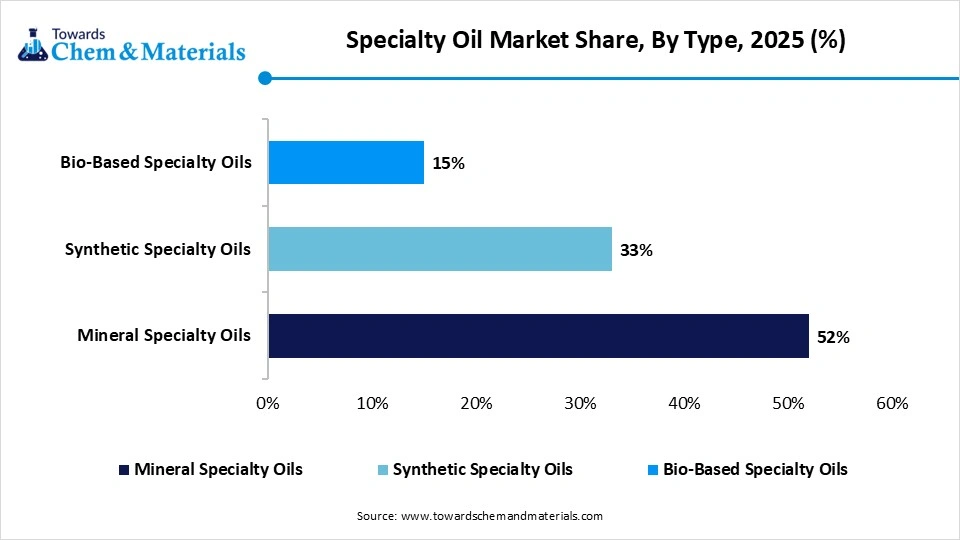
The bio-based specialty oils segment held 15% market share in 2025 and is expected to have the fastest growth with a CAGR of 8.1% in the forecast period. This segment is expanding rapidly as industries replace petroleum-derived lubricants and white oils with eco-friendly alternatives. Manufacturers exporting consumer goods are increasingly adopting non-carcinogenic, bio-based process oils to meet regulatory compliance and ESG targets.
Specialty Oil Market Share,By Type, 2025 (%)
| By Type | Revenue Share, 2025 (%) |
| Mineral Specialty Oils | 52% |
| Synthetic Specialty Oils | 33% |
| Bio-Based Specialty Oils | 15% |
Source Insights
The Petroleum-Based Segment Dominated The Market With 57% Market Share In 2025
The petroleum-based segment dominated the market with 57% share in 2025, driven by rising industrial and manufacturing activities, automotive fleet expansion, and a growing need for highly engineered, high-purity formulations that can withstand extreme environments. Automotive & industrial lubricants are the leading consumers of petroleum specialty oils to meet strict fuel-efficiency standards. Top global players include Shell plc, ADNOC, and Petronas.
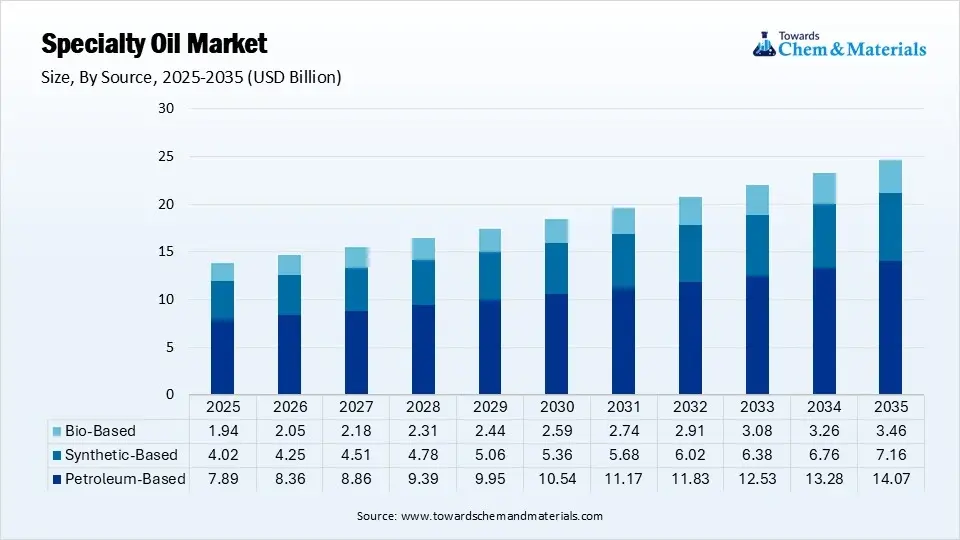 The bio-based specialty oils segment held 14% market share in 2025 and is expected to have the fastest growth with a CAGR of 8.3% in the forecast period. Driven by sustainability demands and stringent environmental policies, bio-based specialty oils are fundamentally transforming industrial, personal care, and lubricant applications. Rising consumer preference for natural, eco-friendly ingredients is accelerating the shift toward bio-based specialty oils over petroleum-derived white oils.
Specialty Oil Market Share, By Source, 2025 (%)
| By Source | Revenue Share, 2025 (%) |
| Petroleum-Based | 57% |
| Synthetic-Based | 29% |
| Bio-Based | 14% |
Function Insights
The lubrication segment dominated the market with 41% share in 2025. This is driven by rapid industrial automation, rigorous environmental regulations, and the need for extreme-performance machinery uptime in sectors like metalworking, mining, and automotive. Rising demand for high-performance specialty lubricants that prevent friction, wear, and corrosion in advanced manufacturing environments fuels the growth.
The heat transfer segment held 16% market share in 2025 and is expected to have the fastest growth with a CAGR of 6.4% in the forecast period, driven by complex industrial thermal management and rising chemical processing demands in hubs, which fuel growth. Mineral and synthetic specialized oils are heavily relied upon to maintain precise temperature control across heavy industries. Concentrated Solar Power (CSP) facilities are accelerating the need for high-performance synthetic oils capable of extreme temperature thresholds.
Specialty Oil Market Share, By Function, 2025 (%)
| By Function | Revenue Share, 2025 (%) |
| Lubrication | 41% |
| Insulation | 21% |
| Heat Transfer | 16% |
| Processing Aid | 13% |
| Protection & Preservation | 9% |
End-Use Industry Insights
The industrial manufacturing segment dominated the market with 29% share in 2025. Industrial manufacturing expansion, especially in automotive, rubber processing, polymer applications, and precision metalworking, is heavily driving demand in the Market. The growth is also driven by OEM specification tightening and a shift toward high-performance bio-based/synthetic formulations; the manufacturing sector's demand for specialty process oils and lubricants is soaring.
The pharmaceutical & personal care segment held 6% market share in 2025 and is expected to have the fastest growth with a CAGR of 7.4% during the predicted period, driven by rising consumer preference for natural ingredients and appearance-conscious self-care. Specialty oils ranging from white mineral oils to botanical extracts serve critical functions like moisture retention and barrier repair in modern formulations.
Specialty Oil Market Share,By End-Use Industry, 2025 (%)
| By End-Use Industry | Revenue Share, 2025 (%) |
| Automotive | 24% |
| Industrial Manufacturing | 29% |
| Power Generation | 14% |
| Chemicals & Petrochemicals | 10% |
| Food & Beverage | 7% |
| Pharmaceuticals & Personal Care | 6% |
| Textile | 5% |
| Others | 5% |
Distribution Channel Insights
The direct sales segment dominated the market with 48% share in 2025, due to rising consumer demand for premium, health-focused, and ethically sourced products like cold-pressed plant and essential oils. Brands bypass traditional retail middlemen to build personal connections, offer education, and guarantee product purity directly to buyers. Specialty oils often require explanation regarding their balanced nutrition, higher stability, and health benefits. Direct sales channels enable specialized brand advocates to educate consumers effectively.
The online sales segment held 13% market share in 2025 and is expected to have the fastest growth with a CAGR of 8.5% in the forecast period. Online platforms enable brands to display product origin, purity, and eco-friendly extraction methods, appealing to environmentally conscious consumers. The inclination toward e-commerce grocery & wellness shopping lets consumers order varied, specific items from anywhere, bypassing limited physical retail shelf space.
Specialty Oil Market Share,By Distribution Channel, 2025 (%)
| By Distribution Channel | Revenue Share, 2025 (%) |
| Direct Sales | 48% |
| Distributors & Wholesalers | 39% |
| Online Sales | 13% |
Regional Analysis
How did Asia Pacific dominate the Specialty Oil Market in 2025?
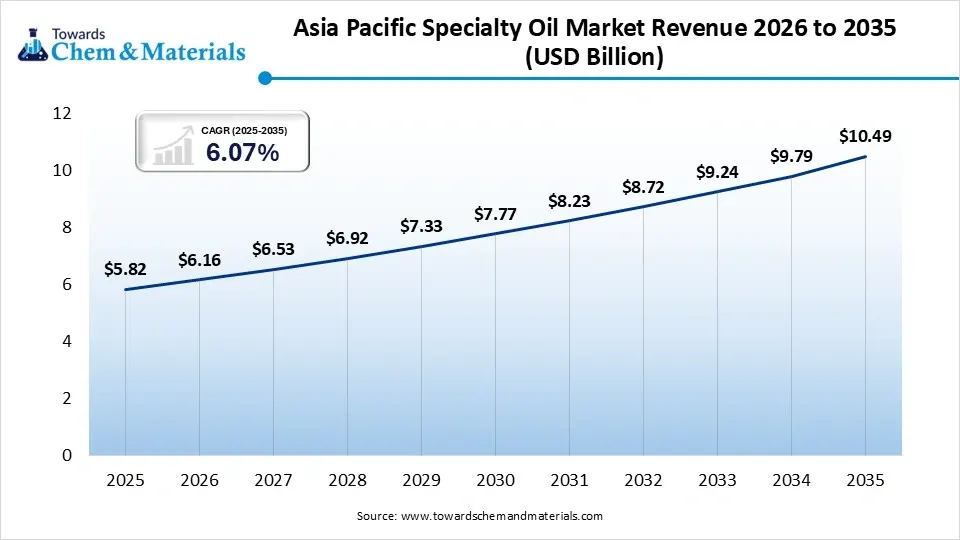
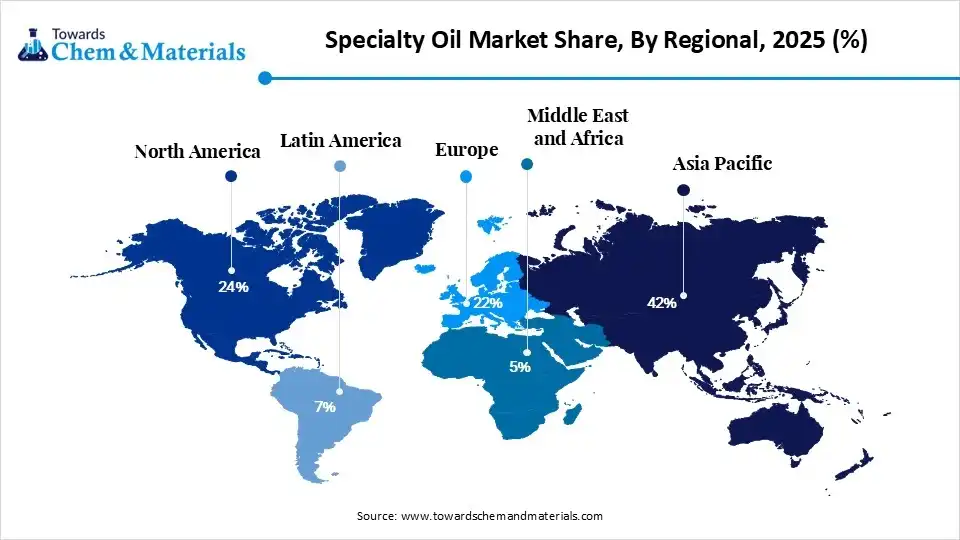
The Asia Pacific specialty oil market size was estimated at USD 5.82 billion in 2025 and is projected to reach USD 10.49 billion by 2035, growing at a CAGR of 6.07% from 2026 to 2035.Asia Pacific dominated the market with a share of 42% in 2025 and is expected to sustain its position while growing with a CAGR of 6.8% in the forecast period. This dominance was driven by booming food processing industries, strong agricultural raw material outputs, and rapid urbanization across economic powerhouses like China, India, Indonesia, and Malaysia. Rapidly expanding urban centers like Shanghai, Mumbai, and Jakarta served as major consumption and food-service powerhouses.
 India
India
- The Indian specialty oil is rapidly expanding due to health-conscious dietary shifts, rising personal care and cosmetics adoption, and automotive and industrial sector growth.
- Modern tech, such as enzymatic interesterification, allows manufacturers to tailor oils for specific functional needs in the bakery, confectionery, and dairy industries, reducing waste and aligning with ESG standards.
China
- The massive domestic manufacturing and automotive sectors drive steady growth for high-performance specialty lubricants and base oils.
- Consumers increasingly demand clean-label, trans-fat-free, and natural plant-based functional ingredients.
Japan
- Aggressive corporate net-zero objectives mandate the integration of bio-based lubricants and eco-friendly oil alternatives.
- The rising consumer preference for convenience and ready-to-eat items requires specialized fats and oils for texture enhancement in bakery and confectionery manufacturing.
North America Specialty Oil Market Growth Factor
The North America specialty oil market size was estimated at USD 3.32 billion in 2025 and is projected to reach USD 6.05 billion by 2035, growing at a CAGR of 6.18% from 2026 to 2035.North America held the 24% market share in 2025, accelerated by increasing consumer demand for trans-fat-free, clean-label, & healthy plant-based food options with rapid technological advancements in food processing and renewable fuel blending mandates. The highly developed food processing sector in the United States and Canada relies on specialty oils to improve the texture, shelf life, and frying stability of packaged foods.
U.S.
- Increased consumer expectation for transparent, ethical sourcing and clean-label requirements pushes manufacturers to adopt functional, natural ingredients.
- Rising adoption of sustainable specialty esters derived from vegetable fats and oils instead of petroleum-based chemicals.
Canada
- Canada holds a strategic advantage through domestic canola-crushing and integration into renewable diesel refineries, heavily boosting the market growth.
- Canada’s diverse population is fueling demand for authentic ethnic cuisines and fusion foods that require varied specialty oil formulations.
Europe Specialty Oil Market Growth Factor
The Europe specialty oil market size was estimated at USD 3.32 billion in 2025 and is projected to reach USD 6.05 billion by 2035, growing at a CAGR of 6.18% from 2026 to 2035.Europe held the market share of 22% in 2025, due to strict sustainability regulations, a consumer shift toward organic and plant-based diets, and high demand from the premium bakery, confectionery, and cosmetic industries. Robust environmental policies like the European Green Deal and strict trans-fat regulations force manufacturers to innovate toward eco-friendly, energy-efficient, and sustainable oil formulations. Growing pressure on brands to guarantee fully traceable supply chains and sustainable palm oil alternatives fuels the growth.
 Germany
- Germany sits at the forefront of Europe's plant-based movement. A rapidly growing vegan and vegetarian demographic demands high-quality, non-GMO, and plant-based specialty oils.
- Stringent European environmental regulations are forcing industrial facilities to transition toward eco-friendly, low-emission, and biodegradable specialty fluids.
Italy
- The country's robust processed food, premium chocolate, and high-quality bakery industries require tailored vegetable-based specialty oils and fats to improve texture, shelf life, and nutritional profiles.
- Strict regulatory frameworks and consumer preferences for vegan, organic, and trans-fat-free formulations encourage manufacturers to invest in sustainable specialty farming and traceable products.
France
- Increased consumption of processed foods, premium chocolate, and bakery goods continues to boost bulk demand.
- Specialty oils such as argan and specialized botanical oils remain highly sought after by France's robust luxury cosmetics and personal care manufacturing industries.
Latin America Specialty Oil Market Growth Factor
The Latin America specialty oil market size was estimated at USD 0.97 billion in 2025 and is projected to reach USD 1.85 billion by 2035, growing at a CAGR of 6.67% from 2026 to 2035.Latin America held the market share of 7% in 2025, primarily driven by rising health consciousness, expanding processed food and bakery industries, and mandatory biofuel blending mandates in agricultural powerhouses like Brazil. Consumer shifts toward plant-based diets and clean-label nutritional products also accelerate this growth. The growth of green building applications and mandatory biodiesel policies, such as Brazil's biodiesel blending infrastructure, drives massive industrial consumption.
Brazil
- The industrial sector is expanding capacity and demanding high-performance, lower-viscosity, and biodegradable formulations for machinery and equipment.
- There is a strong growing adoption of specialty oils in personal care and cosmetic formulations due to consumer preferences for natural, bio-based ingredients.
Argentina
- New biofuel mandates and shale extraction operations in regions like Vaca Muerta are boosting the need for synthetic lubricants and technical specialty formulations
- Growing consumer preference for trans-fat-free options and health regulations drive manufacturers toward innovative product launches.
Middle East and Africa Specialty Oil Market Growth Factor
The Middle East and Africa specialty oil market size was estimated at USD 0.69 billion in 2025 and is projected to reach USD 1.36 billion by 2035, growing at a CAGR of 7.02% from 2026 to 2035.The Middle East and Africa held the market share of 5% in 2025, primarily driven by rising health and wellness awareness, expanding food processing industries, and rapid urbanization. Government food security agendas and the region's expanding middle-income base further accelerate this growth. Initiatives, particularly in Saudi Arabia, the UAE, and Egypt, are encouraging domestic crushing and refining projects to shorten supply chains
Specialty Oil Market Share, By Regional, 2025 (%)
| Regional | Revenue Share, 2025 (%) |
| Asia-Pacific | 42% |
| North America | 24% |
| Europe | 22% |
| Latin America | 7% |
| Middle East & Africa | 5% |
Saudi Arabia
- Saudi Arabia's specialty oil markets are primarily driven by Vision 2030 industrial projects, rising food processing demands for trans-fat-free ingredients, and a growing national shift toward high-performance, synthetic lubricants.
- Projects like Luberef's LubeHUB are cutting down import dependencies, boosting domestic value-chain integration, and making specialty base oils more accessible.
UAE
- Consumers are shifting toward premium wellness, spa, and skincare formulations, alongside nutritional food products that demand cold-pressed and specialty plant-based ingredients.
- The strong food service sector, along with the popularity of Western-style processed foods, requires specialized ingredients like cocoa butter equivalents and dairy fat replacers.
Market Competitive Analysis
The global specialty oil market is moderately consolidated, with competition driven by product innovation, sustainability, refining integration, customized formulations, and regional supply chain strength. Large integrated oil & gas companies, specialty chemical manufacturers, and niche lubricant producers dominate the competitive landscape.
The key players like ExxonMobil, Shell, and Chevron are major companies which focusos on High-performance specialty oils, low-volatility and high-purity formulations, and eco-friendly oilfield chemicals, resulting in actively expanding sustainable specialty oil portfolios.
- Companies such as Lubrizol, BASF SE, and Clariant AG are investing heavily in R&D to differentiate through performance and efficiency.
- Refining integration & supply chain control: Integrated oil majors maintain an advantage through feedstock security, refining scale, logistics networks, and stable pricing capability, benefiting players like ExxonMobil, Chevron, and Sinopec.
- Companies capable of balancing cost efficiency, sustainability, and technical performance are expected to strengthen market leadership over the next decade.
Recent Developments
- In March 2026, Infineum, a global leader in specialty additives, officially opened a state-of-the-art blending facility in India to serve the country's fast-growing mobility and energy markets. The facility is operated by LSR Specialty Oils. It is strategically located near major oil marketing companies to optimize supply reliability and reduce transit lead times for India's growing mobility and energy markets.(Source: www.indianchemicalnews.com )
- In April 2026, Cargill significantly expanded its global food ingredients portfolio by installing a new specialty fats production line at its edible oil plant in Port Klang, Malaysia. This upgraded facility utilizes advanced palm oil processing technology to manufacture high-performance ingredients with less than 1% trans-fats, targeting the chocolate confectionery, bakery, and dairy sectors across the Asia-Pacific and EMEA regions.(Source: millingmea.com)
- In January 2026, the GEM VersaFry is a high-performance industrial fryer specifically launched for snack, potato, and specialty food processing plants. Developed through a collaborative partnership between FPS Food Process Solutions and its subsidiary, GEM Equipment of Oregon, this machinery optimizes oil quality, safety, and operational longevity. The launch targets the booming global appetizers market by offering features that prolong industrial oil life and accommodate a diverse range of complex product textures.(Source: www.potatopro.com)
Top players in the Specialty Oil Market & Their Offerings
- Cargill, Incorporated: A major agricultural powerhouse offering customized specialty fats for food and industrial applications.
- Fuji Oil Co., Ltd.: Focuses on highly functional specialty oils, cocoa butter equivalents, and plant-based food ingredients.
- Bunge Limited: Provides a wide portfolio of specialty oils and fats for commercial food processing.
- AAK AB: Specializes heavily in value-adding vegetable oil solutions, particularly for chocolate, confectionery, and dairy.
Other Top Players Are
- Munjal Showa
- Castrol
- Fuchs Petrolub
- ExxonMobil
- Sonneborn
- Kraton Corporation
- Dow Chemical
- SABIC
- HollyFrontier
- TotalEnergies
- Emerson
- BASF
- Wilmar International Ltd
- IOI Corporation Berhad
- Musim Mas Group
- ADM (Archer-Daniels-Midland)
- IFFCO Group
- Liberty Oil Mills Ltd.
- 3F Industries Ltd
- Adani Wilmar Ltd
- Ferro Corporation
- Royal Dutch Shell
Segments Covered in the Report
By Type
- Mineral Specialty Oils
- White Oils
- Process Oils
- Transformer Oils
- Heat Transfer Oils
- Synthetic Specialty Oils
- Polyalphaolefin (PAO) Oils
- Ester-Based Oils
- Polyalkylene Glycol (PAG) Oils
- Silicone Oils
- Bio-Based Specialty Oils
- Vegetable Oil Derivatives
- Natural Ester Oils
- Renewable Synthetic Oils
By Source
- Petroleum-Based
- Synthetic-Based
- Bio-Based
By Function
- Lubrication
- Insulation
- Heat Transfer
- Processing Aid
- Protection & Preservation
By End-Use Industry
- Automotive
- Engine Components
- Transmission Systems
- EV Components
- Industrial Manufacturing
- Metalworking
- Machinery
- Industrial Equipment
- Power Generation
- Transformers
- Turbines
- Chemicals & Petrochemicals
- Food & Beverage
- Pharmaceuticals & Personal Care
- Textile
- Others
By Distribution Channel
- Direct Sales
- Distributors & Wholesalers
- Online Sales
By Region
- North America
- U.S.
- Canada
- Europe
- Germany
- UK
- France
- Italy
- Spain
- Sweden
- Denmark
- Norway
- Asia Pacific
- China
- Japan
- India
- South Korea
- Thailand
- Latin America
- Brazil
- Mexico
- Argentina
- Middle East and Africa (MEA)
- South Africa
- UAE
- Saudi Arabia
- Kuwait
A Seven-Phase Framework
Our methodology is designed to be universally applicable across commodity chemicals, specialty chemicals, petrochemicals, construction chemicals, coatings, electronic chemicals, industrial gases, agrochemicals, water treatment chemicals, and performance materials. Each phase builds upon the last, creating a layered validation structure that minimizes estimation error and maximizes analytical confidence.
The framework ensures comprehensive market coverage, robust cross-validation, and reliable long-term forecasting — producing market estimates that withstand scrutiny from investors, regulators, and corporate strategy teams.

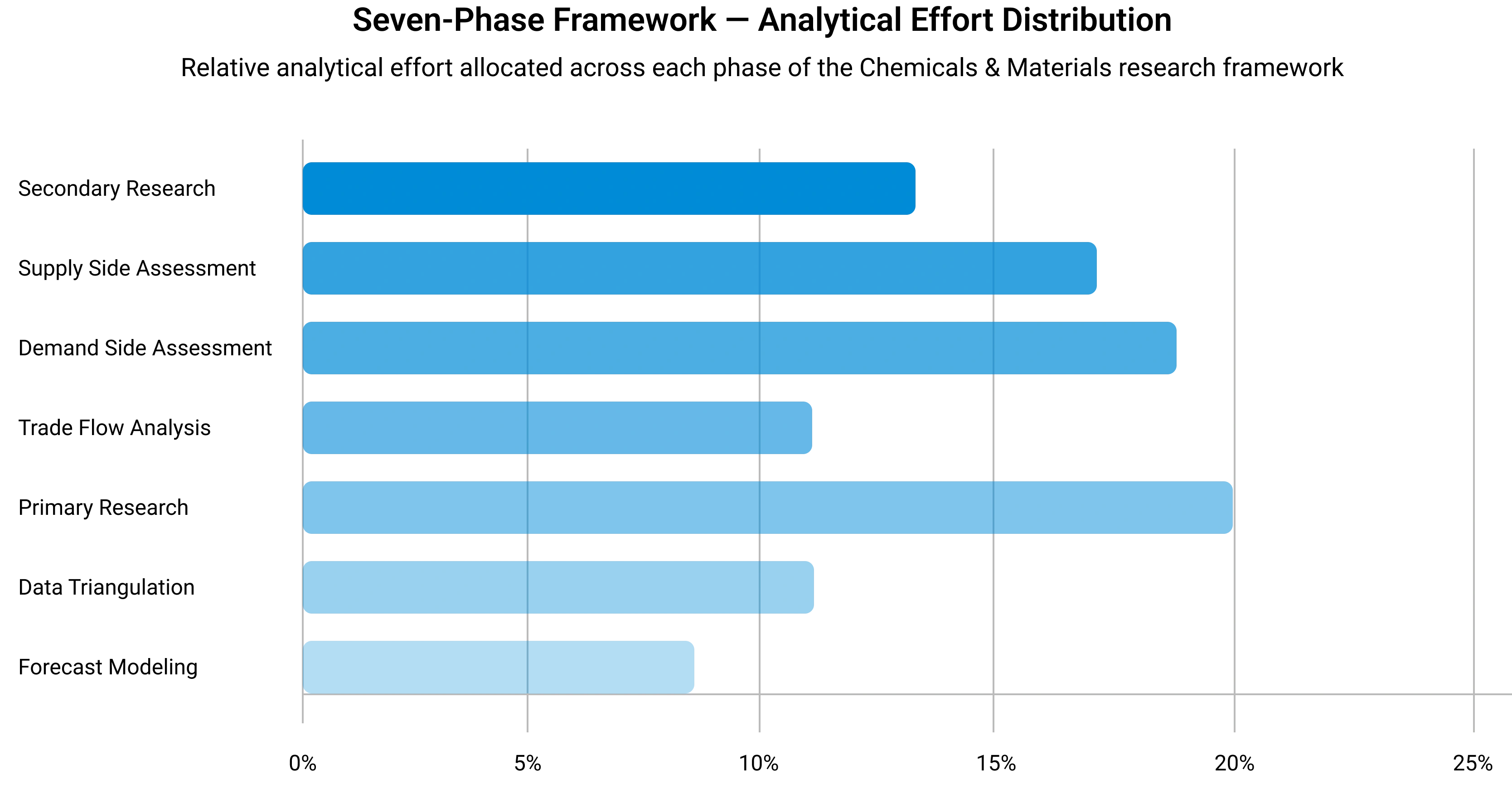
Seven-Phase Framework — Analytical Effort Distribution
Relative analytical effort allocated across each phase of the Chemicals & Materials research framework
Phase 1 - Secondary Research: Establishing the Foundation
Secondary research collects and evaluates publicly available information from authoritative sources, establishing the foundational understanding of market structure, value chain dynamics, competitive landscape, and end-use demand patterns. Every source is evaluated for credibility, recency, geographic relevance, and methodological soundness before inclusion.
Industry Associations
Sources include ACC, CEFIC, ICCA, JCIA, CPCIF, and SOCMA providing production volumes, consumption trends, capacity developments, and sustainability initiatives.
Company Disclosures
Annual reports, investor presentations, earnings transcripts, and regulatory filings reveal product portfolios, manufacturing footprints, capacity expansions, and revenue segmentation.
Government Databases
National statistical offices, customs authorities, environmental agencies, and industrial production databases provide verified statistics on output, trade flows, and regulatory compliance.
Trade Databases
UN Comtrade, ITC, Eurostat, and national customs authorities enable assessment of global product movement, import dependency, and export competitiveness across regions.
Our Secondary Research Sources
- Ministry of Chemicals and Fertilizers
- European Chemicals Agency
- United States Department of Energy
- Ministry of Industry and Information Technology
- Ministry of Economy Trade and Industry
- Ministry of Trade Industry and Energy
- National Institute of Standards and Technology
- Council of Scientific and Industrial Research
- Fraunhofer Society
- National Institute for Materials Science
Phase 2 — Supply-Side Assessment: Mapping Production Capabilities
Production Capacity Analysis
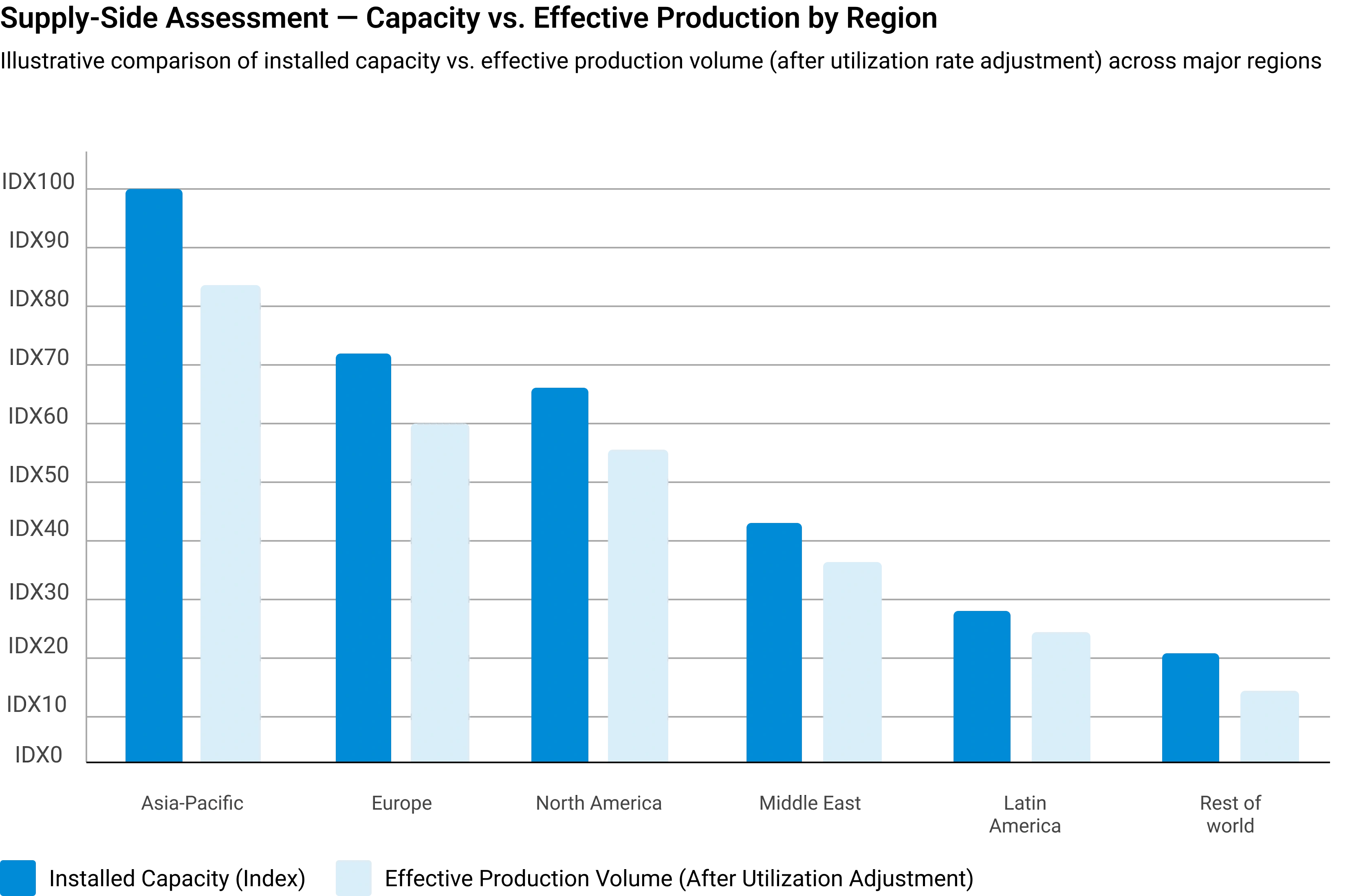
All major manufacturers are assessed for existing installed capacity, planned additions, expansions, new plant announcements, and technology adoption — mapped at global, regional, and country levels.
Capacity Utilization Adjustment
Installed capacity is adjusted using utilization rates based on demand conditions, feedstock availability, plant operating rates, maintenance schedules, and regulatory restrictions.
Manufacturer Revenue Analysis
Product-specific revenues, segment-level performance, regional distribution, average selling prices, and margin trends are evaluated to establish market value estimates.
Supply-Side Assessment — Capacity vs. Effective Production by Region
Illustrative comparison of installed capacity vs. effective production volume (after utilization rate adjustment) across major regions
Phase 3 — Demand-Side Assessment: Quantifying Chemical Consumption
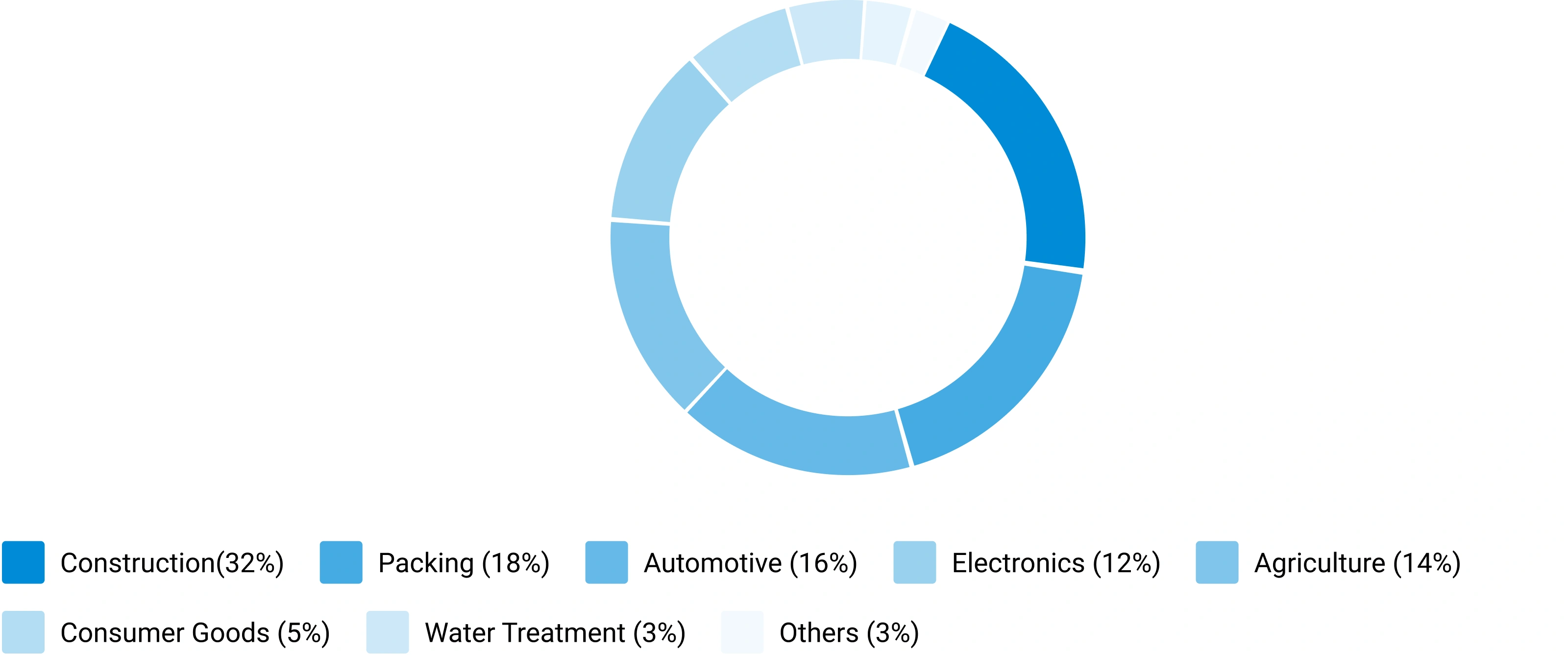
Demand-side analysis quantifies chemical consumption across industries, applications, and geographies — identifying where and how chemicals are consumed throughout the value chain with precision.
End-Use Industry Analysis
Chemical demand is evaluated across automotive, construction, packaging, electronics, agriculture, healthcare, consumer goods, industrial manufacturing, energy and utilities, and water treatment. Industry output, production trends, and consumption intensity are analyzed to determine demand patterns.
Consumption Modeling
Demand is estimated using measurable indicators: kilograms per vehicle, kilograms per square meter of construction, dosage per cubic meter of water treated, kilograms per hectare of agricultural land, and kilograms per ton of manufactured products. Consumption factors are validated through industry publications and primary interviews.
Application Analysis
The market is segmented by application area to understand product performance requirements, formulation trends, technology adoption, customer preferences, and regulatory requirements improving demand accuracy and segmentation granularity.
Demand-Side Assessment — End-Use Industry Demand Distribution
Illustrative distribution of chemical & materials demand across key end-use industries
Phase 4 - Trade Flow Analysis: Balancing Regional Supply and Demand
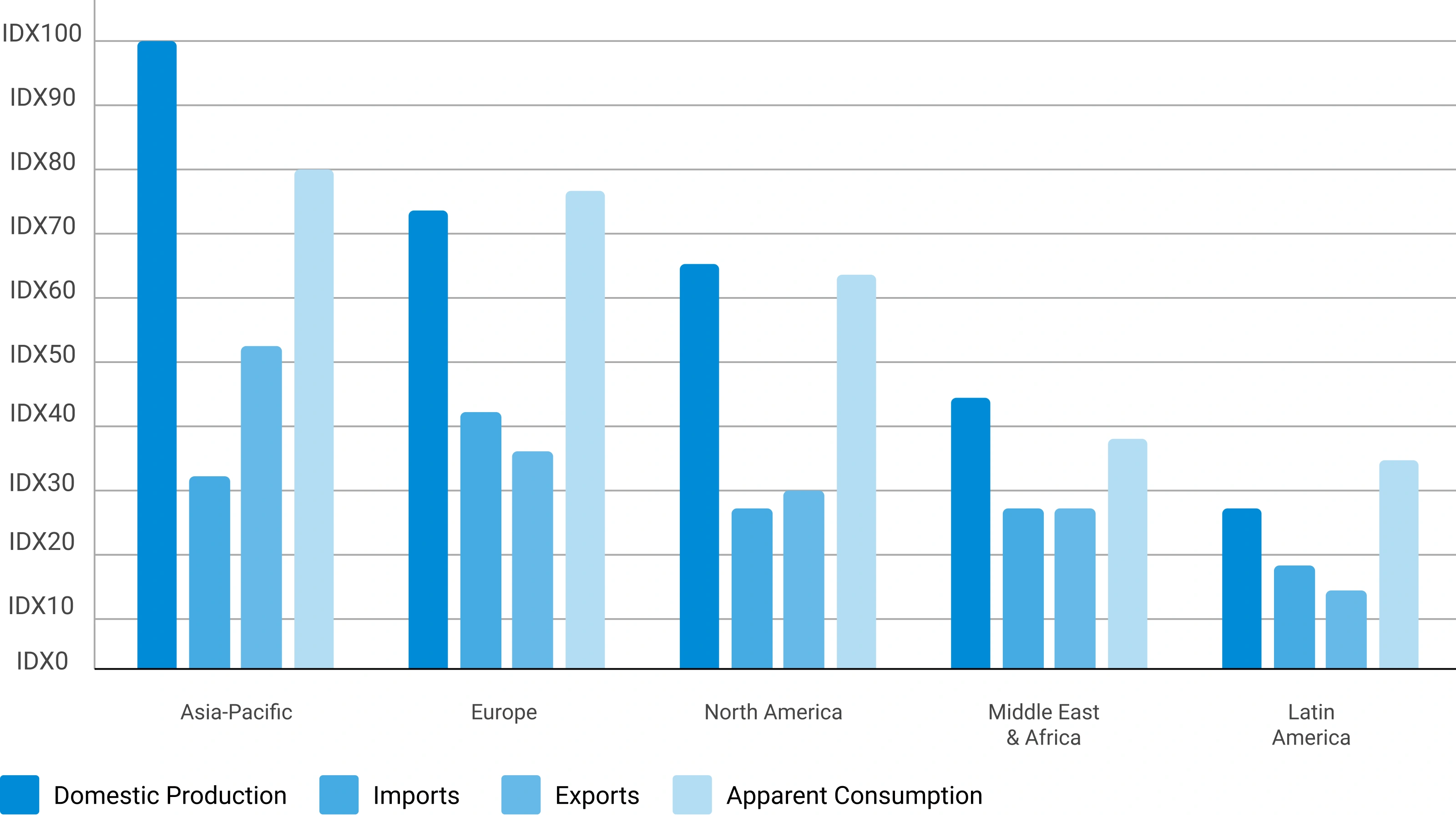
Trade flow analysis reconciles regional supply and demand estimates through import and export data, identifying net supply positions, regional dependencies, and market imbalances. It serves as an independent validation layer that tests the consistency of supply-side and demand-side estimates.
Import Analysis
Import data is evaluated to determine volumes, source countries, product dependency, regional supply gaps, and pricing trends — identifying markets that rely heavily on external supply and where domestic production is insufficient to meet demand.
Export Analysis
Export assessments reveal production surplus, export competitiveness, regional manufacturing strength, and global market participation. Export patterns also help validate domestic production estimates and identify net exporting regions.
Apparent Consumption Model
Regional consumption is assessed using the standard apparent consumption formula:
Results identify net importing regions, net exporting regions, regional deficits, and surpluses — serving as an independent validation of supply and demand estimates.
Trade Flow Analysis — Net Supply Position by Region
Illustrative apparent consumption vs. domestic production across major regions — positive gap indicates net import dependency
Phase 5 — Primary Research: The Critical Validation Layer
Primary research tests and refines findings from secondary research through direct engagement with industry participants across the supply chain, demand side, and expert community. It captures intelligence that no database or published report can provide — the real-world experience of manufacturers, buyers, and specialists operating in the market.

Supply-Side Interviews
Conversations with chemical manufacturers, raw material suppliers, contract manufacturers, technology providers, and plant operators cover production trends, capacity utilization, pricing developments, technology shifts, and competitive dynamics.

Demand-Side Interviews
Engagement with OEMs, industrial consumers, procurement managers, distributors, formulators, and end-use manufacturers focuses on consumption trends, purchasing behavior, product substitution, demand outlook, and emerging applications.

Industry Expert Consultations
Additional interviews with industry consultants, independent experts, regulatory specialists, technical professionals, and research institutions provide deeper market context and validate key analytical assumptions.
Focus Areas of Primary Research:
Market Size & Forecast Validation
Revenue estimates, volume consumption, growth rates, forecast assumptions, regional demand.Supply Chain & Value Chain Assessment
Raw material sourcing, supply chain challenges, distribution networks, procurement practices.Production & Capacity Analysis
Manufacturing capacity, utilization rates, expansion projects, plant investments.Pricing & Cost Structure Analysis
Product pricing trends, feedstock costs, energy costs, margin pressures, pricing outlook.Competitive Landscape Assessment
Volume and value estimates confirmed to be fully consistent with one another before publicationInterview Volume by Market Scope
| Study Scope | Number of Interviews |
|---|---|
| Niche Market | 20 – 30 |
| Mid-Sized Market | 30 – 50 |
| Global Market | 50 – 80 |
| Highly Fragmented Market | 80 – 120 |
Interview Details:
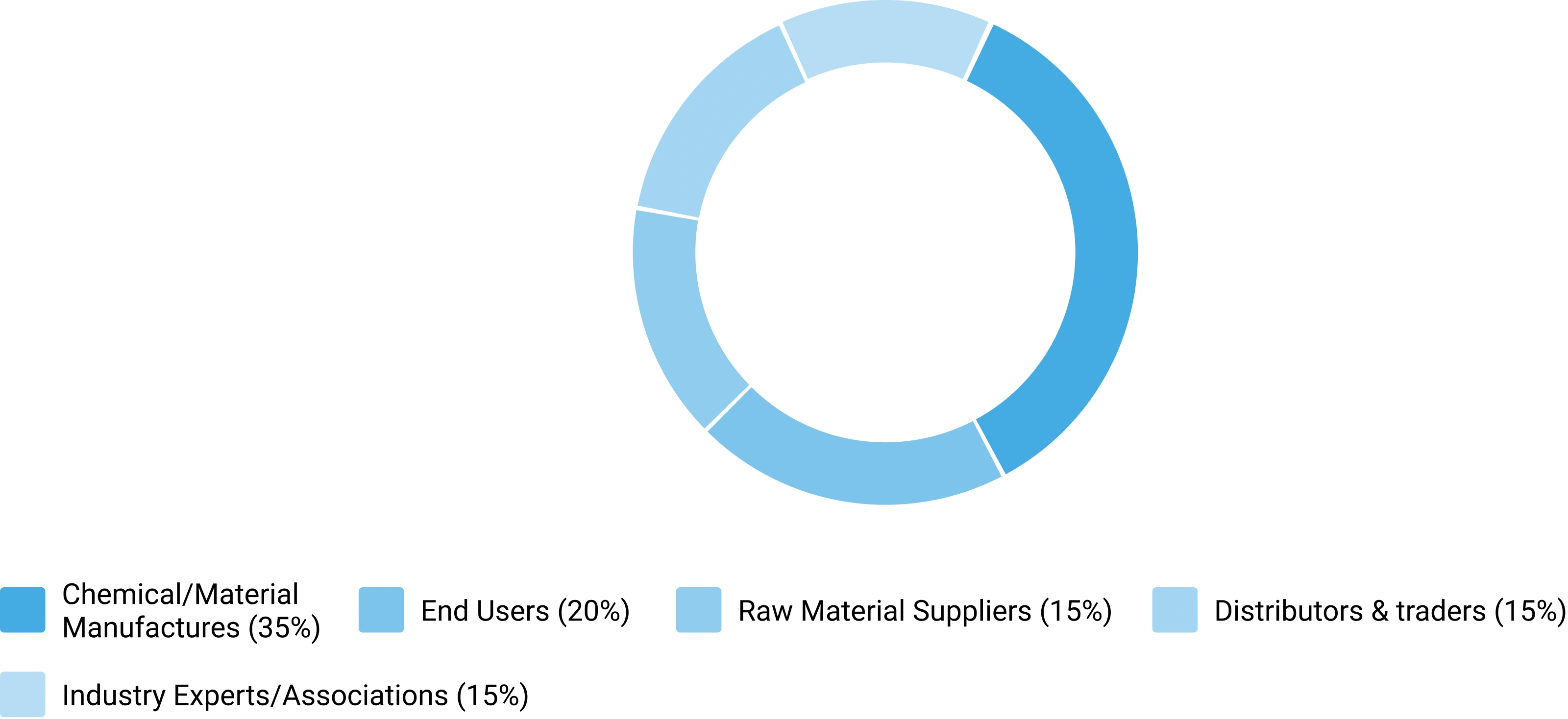
Category : Manufacturers, Suppliers, Distributors, End Users, Experts/Associations
Average Duration : 30–60 Minutes
Interview Mode : Video calls, telephonic interviews, expert consultations
Interview Format : Structured / Semi-Structured questionnaire
Focus Areas of Primary Research:
Market Size & Forecast Validation :
Revenue estimates, volume consumption, growth rates, forecast assumptions, regional demand.
Supply Chain & Value Chain Assessment :
Raw material sourcing, supply chain challenges, distribution networks, procurement practices.
Production & Capacity Analysis :
Manufacturing capacity, utilization rates, expansion projects, plant investments.
Pricing & Cost Structure Analysis :
Product pricing trends, feedstock costs, energy costs, margin pressures, pricing outlook.
Competitive Landscape Assessment :
Market share, competitor positioning, strategic initiatives, partnerships, acquisitions.
Primary Research — Stakeholder Coverage by Category
Distribution of interview respondents across stakeholder categories (% share from PPT data)
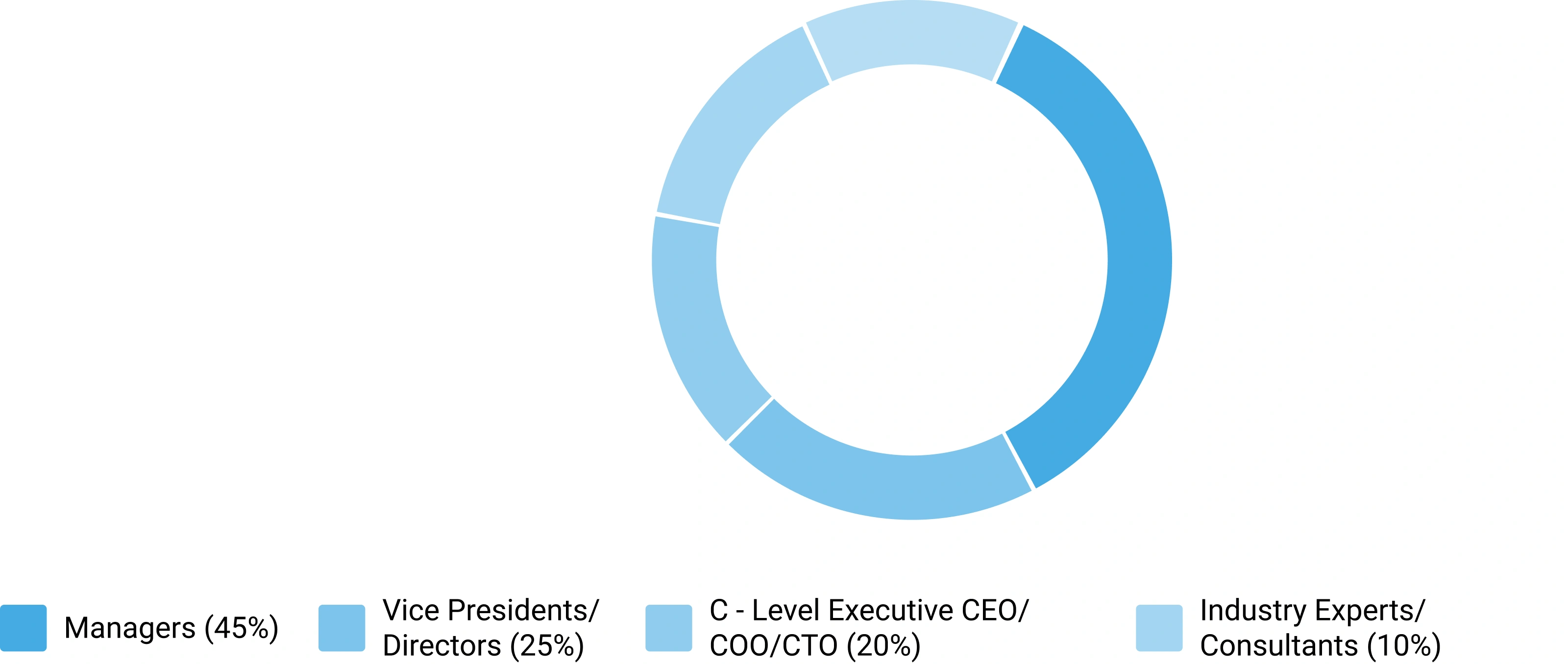
Primary Research — Respondent Designation Profile
Seniority breakdown of interview respondents (% share from PPT data)
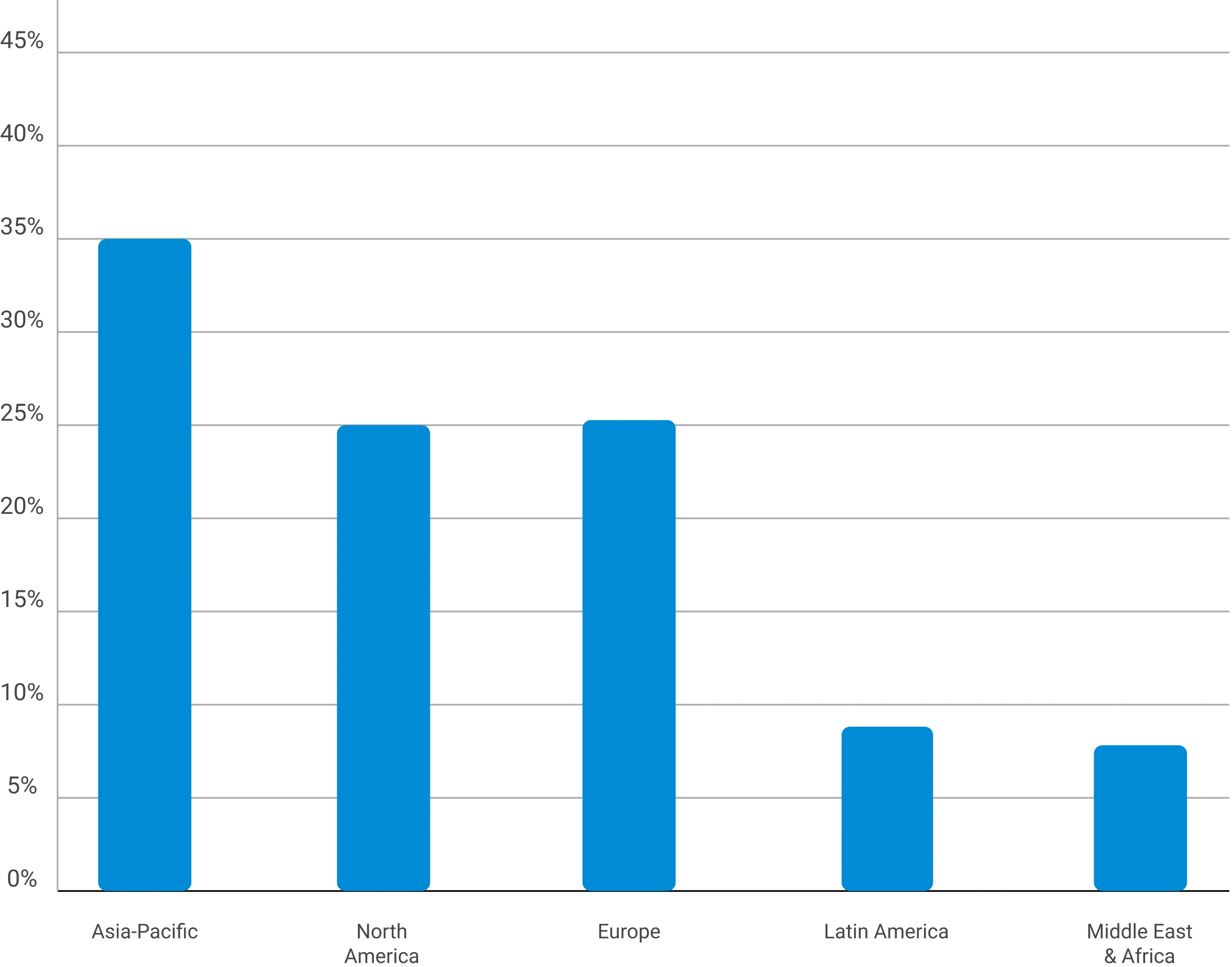
Primary Research — Geographic Coverage of Interviews
Regional distribution of primary research engagement (% share from PPT data)
Phase 6 — Data Triangulation and Market Validation
No single methodology is relied upon in isolation. Multiple independent estimation approaches are combined and reconciled to ensure consistency, accuracy, and analytical defensibility. Any material deviations between approaches are investigated and adjusted through additional validation cycles.
The final market size is derived through weighted triangulation of all validated methodologies. Any material deviations between approaches are investigated and adjusted through additional validation cycles. The outcome represents the most realistic assessment of the market based on available evidence and expert confirmation ensuring that volume and value estimates are fully consistent with one another.
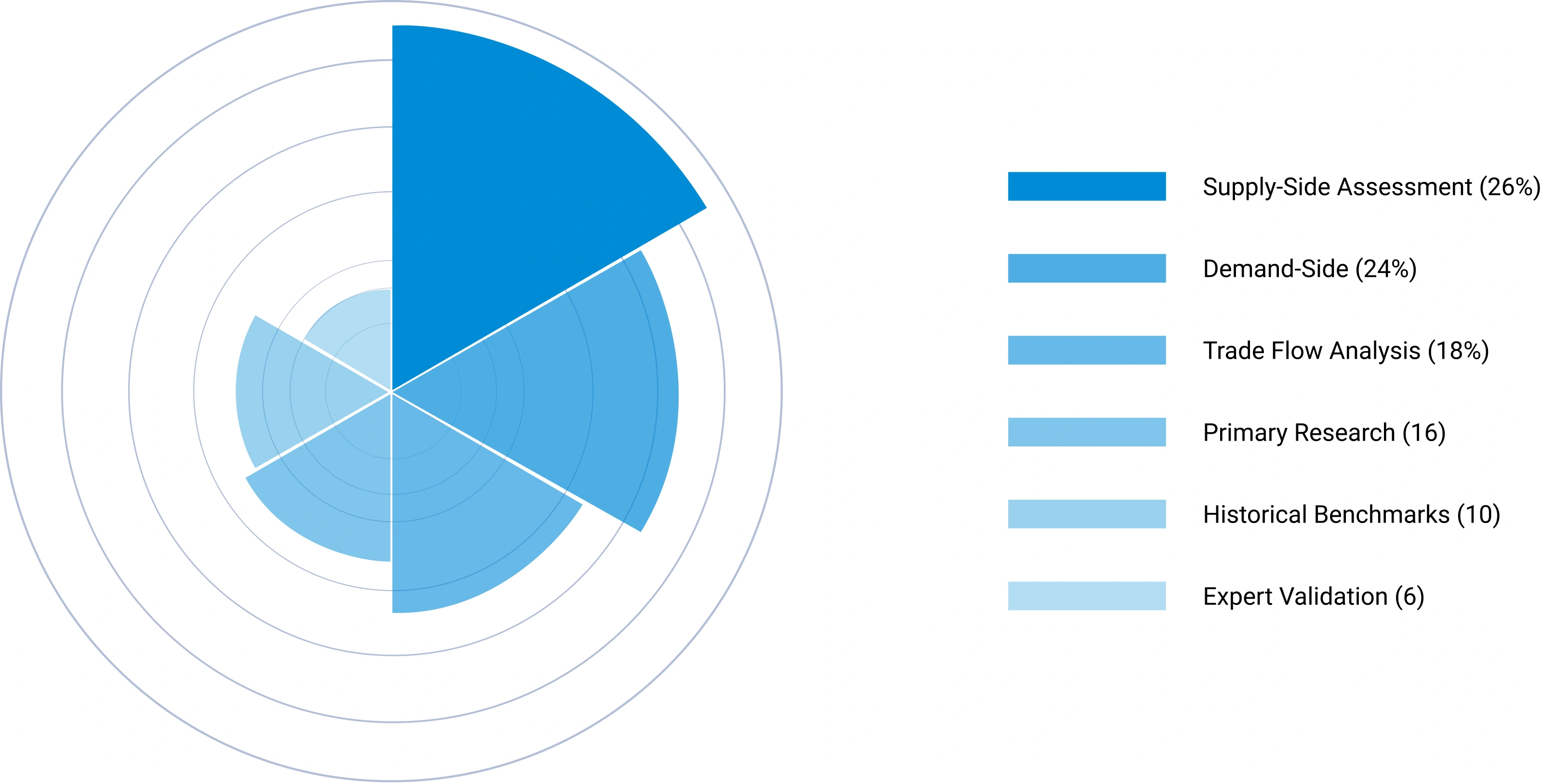
Triangulation Framework — Input Contribution Weight
Relative weight each sizing input contributes to the final reconciled market estimate
Phase 7 — Forecast Modeling: Projecting Future Market Evolution
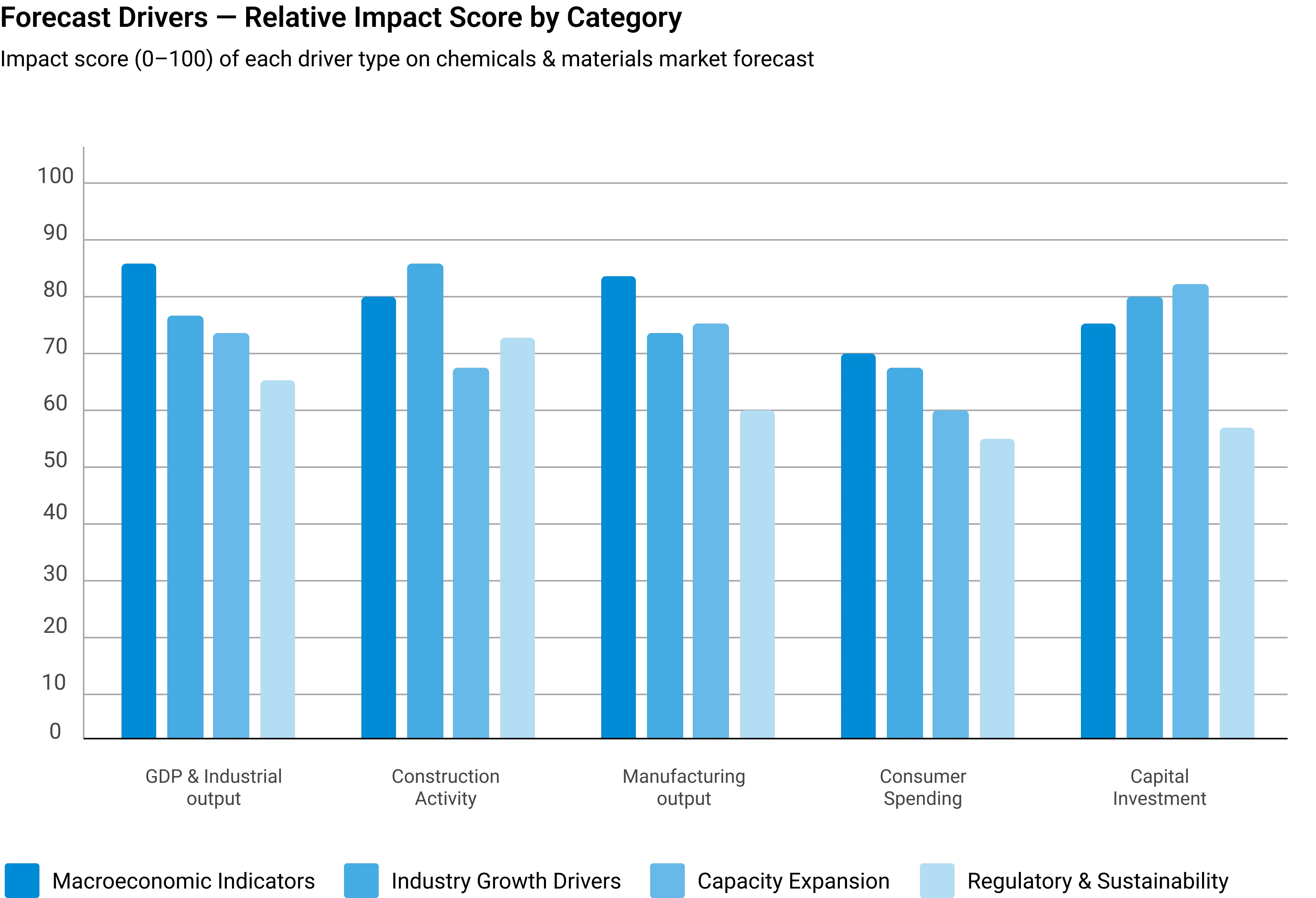
Forecasting evaluates the future trajectory of the market using a combination of quantitative indicators and qualitative assessments across economic, industry, and regulatory dimensions. Rather than simple extrapolation, each driver is independently modeled and integrated into a composite forecast.
Macroeconomic Indicators
GDP growth, industrial production, manufacturing output, construction activity, consumer spending, and capital investment form the quantitative foundation of long-term demand projections. These are applied at country, regional, and global levels.
Industry Growth Drivers
Urbanization, infrastructure development, industrialization, technological innovation, sustainability initiatives, and evolving product performance requirements are assessed at regional and industry levels — capturing both structural and cyclical demand drivers.
Capacity Expansion Analysis
Announced plant expansions, new manufacturing facilities, technology upgrades, and strategic investments are evaluated to determine future supply-demand dynamics and potential market tightness or oversupply situations.
Regulatory & Sustainability
Environmental regulations, chemical safety standards, emission reduction targets, circular economy initiatives, and sustainability requirements are incorporated as they often influence product adoption rates and market growth trajectories.
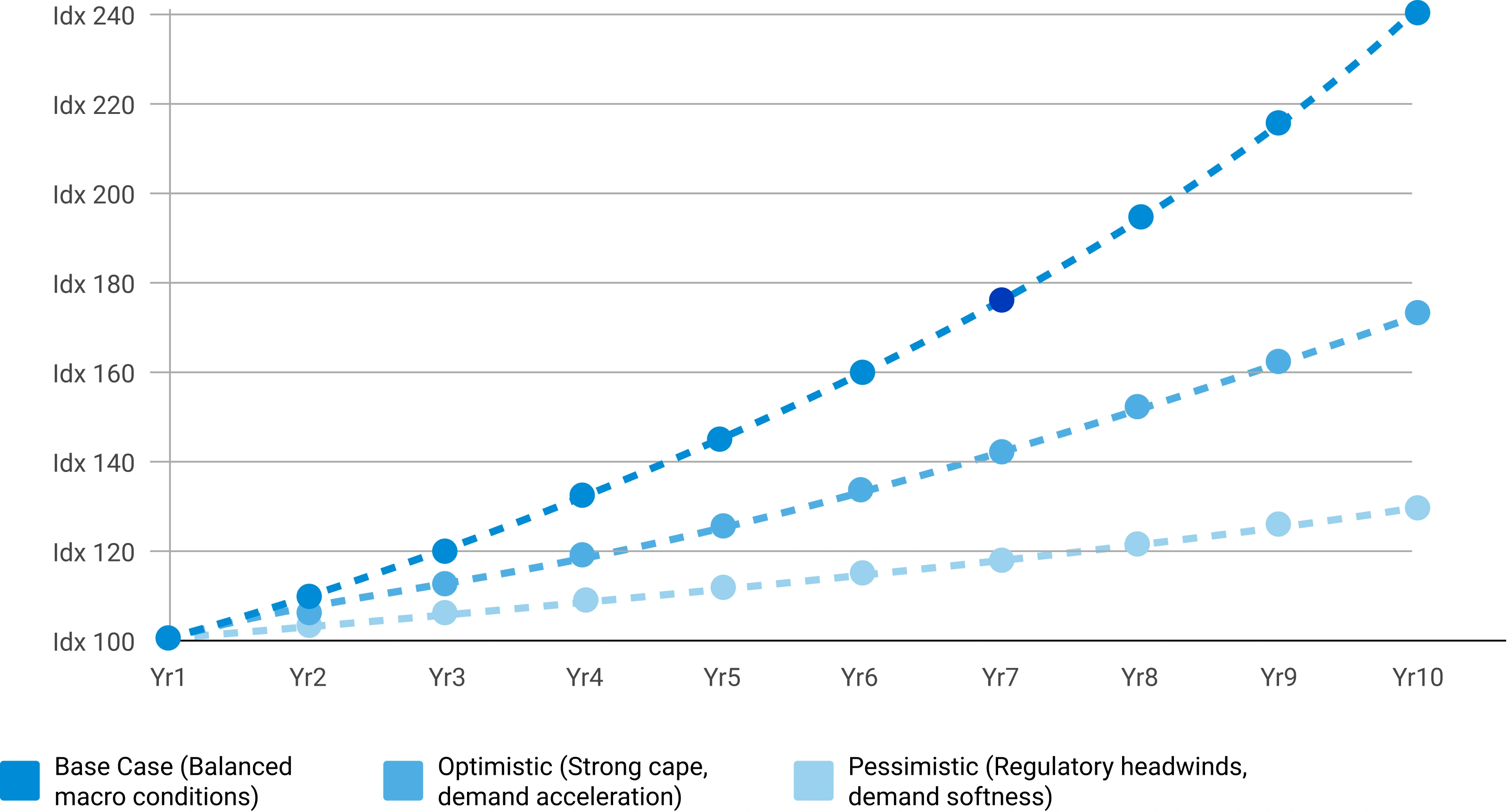
Scenario Forecast Range — Indexed Market Growth (Year 1–10)
Illustrative indexed growth trajectories across Base, Optimistic, and Pessimistic scenarios over a 10-year forecast horizon
Forecast Drivers — Relative Impact Score by Category
Impact score (0–100) of each driver type on chemicals & materials market forecast



Comments
Share your thoughts, ask a question, or provide feedback about this report.