
Separator Materials Market Size Analysis Report 2035
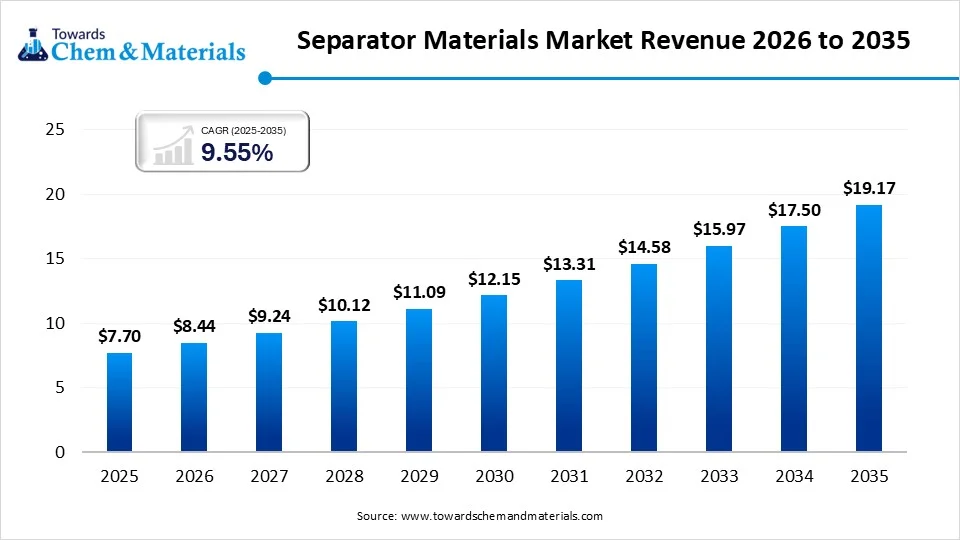
According to Vidyesh Swar, which specializes in research of specialty chemical advancements and new and innovative chemical technology launches that align with industrial needs and optimization and market research. Research helps in analyzing the key growth opportunities and market expansion in the coming decades and helps understand the growth of the separator materials market across the globe. The global separator materials market was valued at USD 7.7 billion in 2025, is estimated to reach USD 8.44 billion in 2026, and is projected to reach USD 19.17 billion by 2035, growing at a CAGR of 9.55% from 2026 to 2035. The rapid surge in electric vehicle adoption due to its efficiency and the expansion of lithium-ion battery manufacturing capacity due to high-performance polyolefin and ceramic-coated separators drive the growth of the market. Consumer demand and government policies such as domestic and local supply chain regulations promote investment in localized gigafactories and separator plants, supporting expansion. The growing competitiveness and key player collaborations like Semcorp and Arkema, QuantumScape, and Volkswagen, which partnered for the manufacturing of separators for energy storage and EV production, fuel the growth.
Key Takeaway
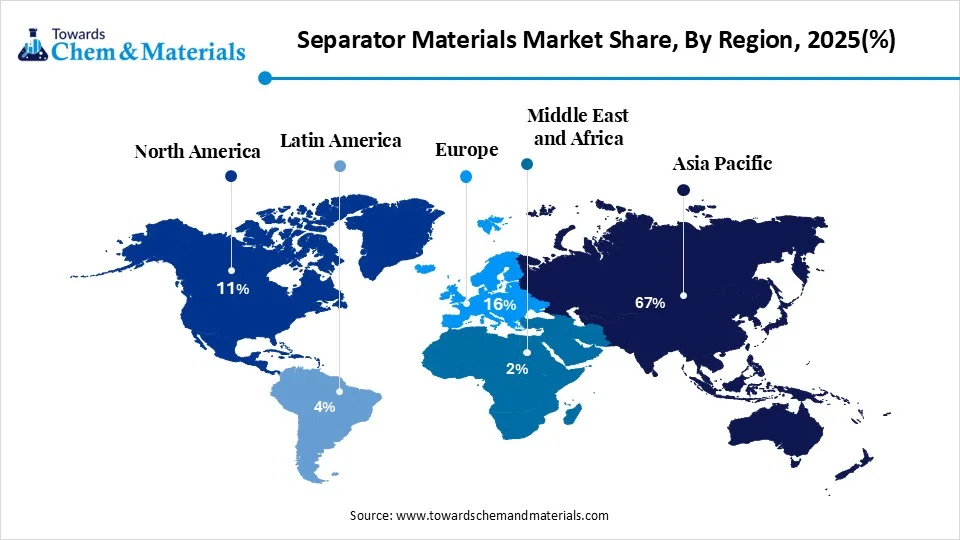
- By region, Asia Pacific dominated the separator materials market with a share of 65% in 2025 and is expected to grow at a CAGR of 9.90% over the forecast period.
- By region, North America held 14% market share in the separator materials market in 2025 and is expected to experience the fastest growth with a CAGR of 14.8% in the forecast period.
- By material, the polyolefin segment dominated the market with a 48% share in 2025 and is expected to grow at a CAGR of 8.70% over the forecast period.
- By material, the coated polyolefin segment held 28% market share in 2025 and is expected to have the fastest growth with a CAGR of 13.8% in the forecast period.
- By separator type, the coated separators segment dominated the market with a 55% share in 2025 and is expected to have the fastest growth with a CAGR of 14.2% in the forecast period.
- By technology, the wet process segment dominated the market with a 52% share in 2025 and is expected to grow at a CAGR of 9.80% over the forecast period.
- By technology, the advanced manufacturing segment held 2% market share in 2025 and is expected to have the fastest growth with a CAGR of 18.7% in the forecast period.
- By structure, the multi-layer segment dominated the market with a 58% share in 2025 and is expected to grow at a CAGR of 10.80% over the forecast period.
- By structure, the reinforced/composite segment held 7% market share in 2025 and is expected to have the fastest growth with a CAGR of 15.9% in the forecast period.
- By thickness, the 5–10 µm segment dominated the market with a 61% share in 2025 and is expected to grow at a CAGR of 12.10% over the forecast period.
- By thickness, the below 5 µm segment held 4% market share in 2025 and is expected to have the fastest growth with a CAGR of 17.8% in the forecast period.
- By battery chemistry, the lithium-ion segment dominated the market with an 84% share in 2025 and is expected to grow at a CAGR of 10.80% over the forecast period.
- By battery chemistry, the sodium ion segment held 2% market share in 2025 and is expected to have the fastest growth with a CAGR of 24.5% in the forecast period.
- By end use, the electric vehicle segment dominated the market with a 61% share in 2025 and is expected to grow at a CAGR of 13.90% over the forecast period.
- By end use, the energy storage systems segment held 16% market share in 2025 and is expected to have the fastest growth with a CAGR of 17.6% in the forecast period.
Market Overview
Separator Materials: Safety and Thermal Stability
The separator materials are extensively used for battery applications, especially lithium-ion batteries rising with EV adoption. The expansion of renewable energy storage systems, as there is rising installation of residential, commercial, and utility grid storage projects, which require dependable and long-lasting rechargeable batteries, which drives demand. The surging production and sales of EVs increase the demand for high-performance batteries and compatible separators, driving growth.
Supply chain localization through government policies and domestic content mandates, like the US Inflation Reduction Act, incentivize regional gigafactory build-outs and local manufacturing plants in various regions to lower dependency on imports by increasing production, boosting the growth of the market. The growing competition and strategic collaborations and partnerships in the battery separator materials market help in innovation and high-performance materials through collaborations like Arkema & SEMCORP, Asahi Kasei, Toray Industries, and SK IE Technology, which play a major role in the growth.
- For instance, in December 2025, Arkema and SEMCORP formed a strategic partnership combining Arkema's advanced functional coating materials with SEMCORP's global separator manufacturing expertise to develop next-generation high-performance separators.
Global Investment Flow for Separator Materials Market 2026
- The growing investment by government and private investors in the separator materials market is due to growing demand and adoption of EVs and localized supply chain policies. Key company investments through companies like Toray Industries, Entek International, SEMCOP Group, and Sinoma are a major advantage.
- Global subsidies from governments across regions like North America, Asia, and Europe provide direct grants, low-interest loans, and tax incentives that help secure domestic battery material ecosystems and also help reduce reliance on imports.
- India plans a ₹12,000 crore incentive scheme targeting critical battery components, including copper foil separators, to build 50 GWh of domestic capacity and reduce reliance on imports.
Separator Materials Market Growth Trends:
- The rising demand for lithium-ion battery separators for EV expansion is supported by automotive electrification and multi-regional supply chain localization, which is a growing trend in the market.
- The growing research in next-gen materials and research into advanced polymers and composites, which help aim to overcome the limits of traditional polyolefin materials, drives the growth of the market.
- Manufacturers are increasingly shifting towards ultra-thin films, which boost battery energy and density, and along with demand for ceramic and advanced coatings to improve thermal stability and reduce thermal runaway risks, boost the growth of the market.
Key Technological Shifts in the Separator Materials Market: Predictive Maintenance
AI integration in the technological shift in the separator materials market, transforming passive materials into a smart and self-optimized ecosystem. The integration of multimodal AI and ML models helps efficiently enhance material performance and stimulate electrochemical behavior, which shifts the demand and growth of the market. Real-time quality control and defect detection through computer vision and AI algorithms through AI integration help predict defects. The other key technological advancements are digital twin and predictive maintenance and lifecycle and safety optimization, which propel growth.
Supply Chain Analysis of Separator Materials Market:
1. Separator Material Production & Processing
Battery separator materials are manufactured from polymers such as polyethylene and polypropylene, as well as ceramic and advanced composite materials, through processes such as extrusion, stretching, coating, and surface modification. These materials provide electrical insulation between the cathode and anode while allowing ionic movement within rechargeable batteries.
- Key Players: Asahi Kasei, SK IE Technology, Toray Industries, and Entek International.
Asahi Kasei manufactures microporous polyolefin separators for lithium-ion batteries. Its hipore separators are designed to provide high safety, mechanical strength, and reliable ionic transport for electric vehicle and energy-storage batteries.
2. Quality Testing & Certification
Separator materials must comply with requirements for thickness uniformity, porosity, mechanical strength, thermal stability, puncture resistance, shutdown performance, and chemical compatibility to ensure battery safety and reliability.
- Key Authorities & Standards: International Electrotechnical Commission, International Organization for Standardization, UL Solutions, ASTM International.
SK IE Technology develops and manufactures lithium-ion battery separators with advanced coating technologies designed to improve thermal stability, dimensional stability, and battery safety for electric vehicle and energy-storage applications.
3. Distribution to End-Use Industries
Separator materials are supplied to lithium-ion battery manufacturers, electric vehicle companies, consumer electronics manufacturers, energy storage system producers, and industrial battery manufacturers for rechargeable battery production.
- Key Suppliers: Asahi Kasei, SK IE Technology, Toray Industries.
Toray Industries supplies polyolefin-based battery separators and advanced separator materials for lithium-ion batteries, supporting applications across electric vehicles, portable electronics, and stationary energy-storage systems.
Sustainability Analysis of Separator Materials
Sustainable battery separators, shifting from fossil-based polyolefins to bio-derived alternatives like cellulose and soy protein, offer a significantly reduced carbon footprint and enhanced electrolyte wettability. Cellulose & bio-derived membranes sourced from renewable biomass or food industry waste, such as coffee parchment or soy protein isolate, offering natural biodegradability and lower production costs. While traditional ceramic-coated polymer films maintain structural integrity at extreme heat, advanced chemically modified or silica-doped bio-composites significantly boost the thermal and mechanical resilience of paper separators.
What is the Separator Materials Market?
The separator materials are porous nonconductive membranes that are extensively used in electrochemical cells, especially in batteries, which help in physically isolating the anode and cathode, also allowing the ions to flow properly. The common polymer materials used are polyethylene, polypropylene, and polyolefin composites, which help in building up safe thermal properties, offer chemical stability, and have a lightweight nature. Their key properties make them ideal for use, such as porosity, wettability, and thermal stability, which help in lowering resistance, high temperatures, and absorbing and retaining electrolytes effectively.
What are the Key Uses of Separator Materials?
The core uses and applications are
- Electric isolation: it helps in keeping the positive and negative electrodes apart, which stops direct contact and internal short circuits, which increases the demand for high-performance materials.
- Ion Conduction: it has microscopic pores that permit the free flow of charge-carrying ions like lithium or sulfate ions, which play a major role in completing the electrical circuit.
- Electrolyte Retention: the high absorption and the ability to hold liquid and gel electrolytes within the porous matrix, which helps to maintain continuous chemical reactions.
- Thermal Shutdown: it acts as a safety mechanism as it shuts down at high temperatures to seal its pores, halting ion flow and preventing thermal runaway.
Separator Materials Premium Pricing Analysis
The enhanced and specialized battery separator materials command a premium price over standard polyethylene offerings. The premium adoption of EVs and automotive demand for prioritizing safety for high end material demand due to their mechanical resilience and fast charging capabilities, which are major factor for cost of the product. Downstream performance returns outweigh initial cost penalties, creating strong market pull for multi-layer and functional-coated membranes. Cell manufacturers willingly absorb higher upfront component costs to achieve warranty claim reduction, improved thermal runaway protection, and brand risk mitigation.
Separator Materials Market Carbon Tax Analysis
A carbon tax directly increases the production and compliance costs of lithium-ion battery separator materials such as polyethylene (PE) and polypropylene (PP) membranes due to their energy-intensive manufacturing processes. The major cost impacts on production are raw material inflation and supply chain shifts, directly scaling costs with carbon tax rates. Tier-1 battery cell manufacturers increasingly demand transparent lifecycle carbon footprints, squeezing margins for traditional separator suppliers who fail to decarbonize. The green premium and low-carbon certified separators are gaining a competitive advantage.
Separator Materials Market Regulatory Landscape
| Country / Region | Regulatory Body | Key Regulations | Focus Areas | Notable Notes |
| United States | Environmental Protection Agency, Department of Energy | Toxic Substances Control Act, Battery Manufacturing and Recycling Initiatives | Battery safety, advanced materials, recycling | The U.S. is expanding domestic battery separator production to support electric vehicles, energy storage, and consumer electronics. |
| European Union | European Commission, European Chemicals Agency | EU Battery Regulation 2023/1542, REACH Regulation | Battery sustainability, chemical safety, recycling | Europe emphasizes sustainable separator materials, recycled content, and safety throughout the battery value chain. |
| China | Ministry of Industry and Information Technology, Ministry of Ecology and Environment | Lithium-ion Battery Industry Standards, Environmental Protection Law | Battery manufacturing, separator production | China is a leading producer of lithium-ion battery separators, supported by its extensive EV and energy storage manufacturing ecosystem. |
| Japan | Ministry of Economy, Trade and Industry, Ministry of the Environment | Chemical Substances Control Law, Industrial Standards | High-performance separators, battery safety | Japan focuses on advanced separator materials, including high-performance polymer and ceramic-coated separators for next-generation batteries. |
| South Korea | Ministry of Trade, Industry and Energy, Ministry of Environment | K-REACH, Battery Industry Development Policies | Advanced batteries, separator technology | South Korea is investing in high-performance separator technologies to strengthen its position in the global battery supply chain. |
| India | Ministry of Heavy Industries, Ministry of Environment, Forest and Climate Change | Battery Waste Management Rules, Production Linked Incentive Scheme for Advanced Chemistry Cell Batteries | Domestic battery manufacturing, recycling | India is developing domestic battery material capabilities, including separator materials, to support electric mobility and energy storage. |
Separator Materials Market Dynamics
Drivers
Separator Materials: Renewable Energy Storage Systems
The key growth drivers of the separator materials market are the growing demand for lithium-ion battery separators and advanced coatings, which is rapidly expanding due to surging EV adoption and renewable energy storage, which supports the growth. The growing and expanding gigafactory investments are creating massive demand for high-performance battery separators. The shift towards renewable energy storage systems, which integrates solar and wind energy into power grids, is driving the need for advanced materials for ion conductivity and longevity, fueling the growth further in the market.
Challenges
Separator Materials: High Production and Capital Costs
The key growth challenges in the separator materials market are the high production and capital costs due to manufacturing advanced separator membranes requiring high capital expenditure and elevated production costs, which is a major challenge in price-sensitive markets. The raw material volatility and supply chain risks, as there is fluctuation in the frequency of specialty chemicals. The other key challenges are thermal safety, sustainability limitations, compatibility with next-gen chemistries, and environmental and regulatory pressure, which hinder the growth of the market.
Opportunities
Separator Materials: Technological Advancements in Materials
The key growth opportunities of the separator materials market are the growing technological advancements and innovations in separators and nanostructured materials, and improved polyolefin membranes, which provide heat resistance, higher energy density, and faster charging, creating a key growth opportunity for the market. The other key growth opportunities are stricter safety and environmental regulations, which shift towards advanced thermal resistance and eco-friendly separator coatings, pushing manufacturers and consumers toward electronic growth, which boosts the growth of the market.
Separator Materials Market Segmental Insights
Material Insights
The Polyolefin Segment Dominated the Separator Materials Market With 48% Market Share in 2025
The polyolefin segment dominated the market with a 48% share in 2025 and is expected to grow at a CAGR of 8.70% over the forecast period, driven by growing demand from industries due to their properties and applications supporting growth. The mature and advanced production infrastructure demands and supports the separator supply in high volume. They are extensively used due to their strong chemical resistance, which helps in preventing harsh environments, mechanical strength, and cost efficiency, which further fuels the growth of the market. The growing demand from lithium-ion cell manufacturers due to their application, as they are heavily dependent on polyolefin separators, supports the growth.
The coated polyolefin segment held 28% market share in 2025 and is expected to have the fastest growth with a CAGR of 13.8% in the forecast period, driven by its property like it helps in thermal stability, and used extensively in batteries with higher load and puncture resistance, which drives demand for ceramic and polymer coating separator materials, driving growth. The growing demand for separators that are capable of supporting higher energy cells from EV manufacturers drives the growth further. Coated polyolefins help improve performance due to their properties during thermal abuse and fast charging, which boosts the growth of the market.
Separator Type
The Coated Separators Segment Dominated the Separator Materials Market With 55% Market Share in 2025
The coated separators segment dominated the market with a 55% share in 2025 and is expected to have the fastest growth with a CAGR of 14.2% in the forecast period, driven by the growing demand for coatings, which offer properties like improving thermal resistance and dimensional stability, which fuels the growth of the market. The growing demand from EVs and energy storage cells, as they are increasingly used for their safety under high-energy operating conditions, fuels the growth of the market. The use of coated separators helps in thinner separators being used without compromising their original mechanical properties, which boosts the growth of the market.
Technology Insights
The Wet Process Segment Dominated the Separator Materials Market With 52% Market Share in 2025
The wet process segment dominated the market with a 52% share in 2025 and is expected to grow at a CAGR of 9.80% over the forecast period, driven by its high uniform pore structures and thin separator films, which fuel the growth of the market. The growing demand from lithium-ion applications, as it demands controlled porosity and permeability, is a need for manufacturers and consumers, supporting further growth. The growing demand from EV cells, sustaining high investments for increasing wet process capacity, drives the growth of the market.
The advanced manufacturing segment held 2% market share in 2025 and is expected to have the fastest growth with a CAGR of 18.7% in the forecast period, driven by growing investment by manufacturers in advanced processing, which helps in manufacturing thinner and safer separators, which fuels the growth. The advancement in nanocoating and functionalization for high-energy performance cell requirements boosts the growth of the market. The advanced multilayer co-extrusion is extensively used for precise properties, supporting the growth of the market.
Structure Insights
The Multi-Layer Segment Dominated the Separator Materials Market With 58% Market Share in 2025
The multi-layer segment dominated the market with a 58% share in 2025 and is expected to grow at a CAGR of 10.80% over the forecast period, experiencing steady growth, driven by rising demand for high-purity applications in water treatment, gas separation, and pharmaceuticals, driving growth of the market. Municipal and industrial wastewater demands continue to anchor the broader separation materials market, fostering continuous innovation in multi-layer composite structures, boosting growth of the market.
The reinforced/composite segment held 7% market share in 2025 and is expected to have the fastest growth with a CAGR of 15.9% in the forecast period, driven by strict environmental compliance and infrastructure durability needs supporting the growth of the market. The growing demand for durable, high-flux, and fouling-resistant materials in water treatment and industrial processing further supports the growth and expansion of the market.
Thickness Insights
The 5-10 µm Segment Dominated the Separator Materials Market With 61% Market Share in 2025
The 5–10 µm segment dominated the market with a 61% share in 2025 and is expected to grow at a CAGR of 12.10% over the forecast period, driven by industrial wastewater treatment and clarification processes fueling the growth of the market. The 5–10 µm particle and pore spectrum is heavily utilized in upstream pre-treatment for seawater desalination, food and beverage processing, and pharmaceutical clarification cresting new growth opportunities and demand supporting expansion.
The below 5 µm segment held 4% market share in 2025 and is expected to have the fastest growth with a CAGR of 17.8% in the forecast period, driven by strict filtration, precise bioprocessing, and advanced gas separation needs, which support the growth. Pores and selective layers below 5 µm spanning microfiltration, ultrafiltration, and nanofiltration are essential for removing bacteria, colloids, and macromolecules, which increases the demand from industries supporting growth and expansion of the market.
Battery Chemistry
The Lithium-Ion Segment Dominated the Separator Materials Market With 84% Market Share in 2025
The lithium-ion segment dominated the market with an 84% share in 2025 and is expected to grow at a CAGR of 10.80% over the forecast period. They are extensively used in EV production due to growing demand. The growing demand from consumer electronics and energy storage systems, which use lithium-ion cells for battery material, supports the growth of the market due to growing consumption. Properties like high energy density and fast charging further increase the demand for lithium-ion, further boosting growth and expansion.
The sodium-ion segment held 2% market share in 2025 and is expected to have the fastest growth with a CAGR of 24.5% in the forecast period. The growing commercialization of sodium-ion cells is driving demand from manufacturers, supporting the growth of the market. It creates more growth opportunities for cost-sensitive mobility and stationary storage applications, boosting the growth of the market. The properties and their use due to their safety for transport and safety increase adoption by the manufacturers, further supporting the growth of the market.
End Use Insights
The Electric Vehicle Segment Dominated the Separator Materials Market With 61% Market Share in 2025
The electric vehicle segment dominated the market with a 61% share in 2025 and is expected to grow at a CAGR of 13.90% over the forecast period, driven by growing demand led by high production and rapid consumption supporting growth. The demand for quantity and performance requirements from EV manufacturers and demand for high cell energy density promotes the use of separator films in the market. The demand for thermally stable and defect-controlled separator products due to growing demand from automotive supports the growth of the market.
The energy storage systems segment held 16% market share in 2025 and is expected to have the fastest growth with a CAGR of 17.6% in the forecast period. driving robust demand for advanced battery separation materials, fueled by the rapid global deployment of utility-scale and commercial Battery Energy Storage Systems, which increases the growth of the market. The shift towards advanced materials offers superior thermal stability, higher safety thresholds, and extended cycle life, critical for large-scale stationary ESS, driving the growth and expansion of the market further.
Separator Materials Market Regional Analysis
How did Asia Pacific dominate the Separator Materials Market in 2025?
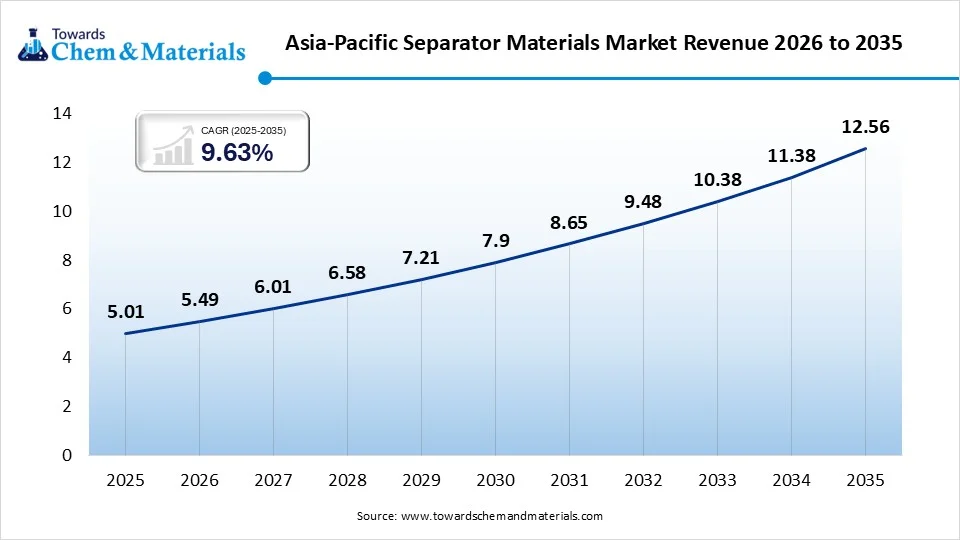
The Asia Pacific separator materials market size was estimated at USD 5.01 billion in 2025 and is projected to reach USD 12.56 billion by 2035, growing at a CAGR of 9.63% from 2026 to 2035, driven by the growing adoption of electric vehicles and energy storage systems due to continuous demand for microporous polymer membranes across countries like South Korea, India, China, and Japan, which increases the growth of the market. The technological advancement focuses on advanced ceramic-coated separators, which are designed for high energy density and fast charging requirements across the region. The presence of players across the region, like SEMCORP Group and Senior Technology, which dominate in production, Asahi Kasei Corporation, Toray Industries Inc., and SK IE Technology, which are leading producers of high-performance separators, plays a major role in the growth and expansion of the market. The growing lithium-ion battery separator manufacturers in China are producing high-safety and high-energy-density batteries due to growing demand.
- For instance, Enjie Group has launched new and innovative separators and electrolyte products for next-generation batteries. In India, there is high demand for advanced energy storage and electric vehicle systems, with the presence of major companies in the country like Hindalco Industries, Daramic LLC, and ENTEK, which play a major role. For instance, Hindalco industries gas set up Indias first boehmite plant for batteries separator.
North America Separator Materials Market Growth Factor
North America held a 14% market share in the separator materials market in 2025 and is expected to experience the fastest growth with a CAGR of 14.8% in the forecast period, driven by the heavy adoption of electric vehicles and localized supply chain investments expanding at a robust pace, as there is high energy density and safer multi-layer architectures in the growth of the market. Massive scaling of EV cell manufacturing, along with local gigafactory expansion and policy incentives that promote regional supply chain security, fuels the growth and expansion of the market in the region. The key industry players like Celgard (Polypore International), Asahi Kasei Corporation, Toray Industries, and ENTEK International are major contributors to the growth of the market. The rapid domestic lithium-ion battery manufacturing and utility-scale energy storage systems in the United States fuel the growth.
- For instance, Natrion opened pre-orders for its first-generation active battery separator material, manufactured entirely in the United States using its patented lithium solid ionic composite technology. In Canada, production and research and development are scaling tightly as a supply chain hub and clean energy policies fuel the growth. For instance, Asahi Kasei and Honda broke ground on a $1.7 billion lithium-ion battery separator manufacturing facility in Port Colborne, Ontario, Canada.
Middle East and Africa Separator Materials Market Growth Factor
The Middle East and Africa held a 4% market share in the separator materials market in 2025, driven by growing industrial oil and gas applications and localized manufacturing initiatives through gigafactory development through partnerships like Afrivolt and ReElement Technologies, and rising adoption in Gulf Cooperation Council countries drives the growth. Heavy utilization in upstream development across the region, requiring high specialization in carbon steel and corrosion-resistant alloy, further drives the growth of the market. The manufacturers in the region are heavily investing in high-performance materials to withstand harsh regional climatic and operational conditions, which will help in larger expansion in the market for the forecast period. The stringent environmental wastewater regulations and industrial purification needs increase demand for magnetic and water separators, fueling growth.
- For instance, Saudi Arabia developed an advanced gas separation membrane that offers a cost-effective pathway for industrial purification. In the UAE, there is rising manufacturers focusing on emphasizing the upgradation of thermal and mechanical strength for high-performance energy storage.
Europe Separator Materials Market Growth Factor
Europe held a 12% market share in the separator materials market in 2025, driven by the growing expansion of EVs supported by initiatives like the European Battery Alliance, which help in the localization of supply chains and drive the growth of the market. The presence of local manufacturers and major suppliers, such as SK IE Technologys separator plant, which helps in the supply of local automotive cell makers, helps in scaling up regional footprints, fueling growth of the market. Strict European Union emission regulations and demand for advanced coated separators to improve stability and safety boost demand from the regional market, supporting expansion. A recent separator and material separation system was launched in the UK for advanced solutions for water management, recycling, and battery manufacturing, which is a major factor for the growth of the market.
- For instance, Gravity Mining Multi Gravity Separator was launched in Blackwater, Cornwall, with support from Innovate UK. In Germany, there is growing development and manufacturing of high-performance separator materials through a joint partnership structure, which boosts growth. For instance, a joint venture combining Horizons technology expertise, holding a majority stake, with Leonhard Kurzs thin-film manufacturing footprint.
Latin America Separator Materials Market Growth Factor
Latin America held a 5% market share in the separator materials market in 2025, driven by the demand for consumer electronics, localized electric vehicle supply chains, and industrial growth in major hubs like Argentina and Brazil, which propels the growth of the market. Manufacturers in the region are focusing on material innovations, which increases adoption of next-generation materials, which helps improve resistance and conductivity and boosts the growth of the market. The regional hubs in Brazil and Argentina are supported by industrial evolution, and automotive electrification boosts the growth and expansion of the market. In Brazil, there is the presence of multiple industrial sectors with significant activity in components and separation and other techniques, which boosts the growth. For instance, GEA launched the GSE 150 CPR clarifying separator to help citrus juice processors in Brazil manage pulp-rich juices amidst fluctuating solids caused by citrus greening disease. In Argentina, there is a booming lithium extraction sector, and growing renewable energy storage requirements boost growth.
- For instance, Argentinas state-backed energy technology consortium Y-TEC identified local propylene as a key domestic input for manufacturing battery separator membranes during the launch rollout of the country’s first lithium battery plant.
Separator Materials Market Competitive Analysis
- The competition between the key players who are major manufacturers and suppliers in the separator materials market is driving production and increasing product efficiency, helping the development of advanced facilities supporting growth.
- In June 2026, UBE Maxell, the joint venture between UBE Corporation and Maxell, is initiating the first phase of its separator base-film production expansion at the Sakai Plant in Japan during fiscal 2026 to boost raw material capacity by roughly 50%.
- In March 2026, European Low-Carbon Production, a major French production site built via partnership between Alteo and W-Scope, is scheduled to begin manufacturing operations in 2026 as Europes first 100% electric, low-carbon separator facility utilizing SEPal aluminas.
Recent Developments
- In May 2025, Natrion, which is a US-based company that works in battery technology and battery materials, announced the launch of Natrion Gen-1 Active Separator, the first US-made active battery separator, utilizing patented Lithium Solid Ionic Composite (LISIC) technology to operate without a liquid electrolyte medium for selective charge transport.
- In March 2026, Ahlstrom AGM Platform launched an advanced Absorbent Glass Mat (AGM) separator platform manufactured in Turin, Italy, designed for low electrical resistance and high energy efficiency in lead-acid/advanced batteries.
- In March 2026, Arkema, a worldwide leader in specialty materials, will display its innovative solutions for electric vehicle (EV) and energy storage system (ESS) batteries at Interbattery 2026 in Seoul, Korea. Companies involved in advanced materials, like Arkema, are expanding the use of specialized PVDF-based separator coatings, such as Kynar Flex® LBG 2600, which are designed for lower-temperature assembly and improved thermal stability in next-generation batteries.
Top players in the Separator Materials Market & Their Offerings:
| Company | Company Type/Position | Major Headquarters | Geographic Presence | Separator Materials Offerings | Key Offering/Strength |
| Asahi Kasei Corporation | Advanced materials and battery separator manufacturer | Tokyo, Japan | Asia Pacific, North America, Europe | Microporous polyolefin separators for lithium-ion batteries, including wet-process separators under the Hipore™ portfolio | Strong expertise in high-performance battery separators with advanced coating and multilayer technologies |
| Toray Industries, Inc. | Advanced materials and specialty chemicals manufacturer | Tokyo, Japan | Asia Pacific, North America, Europe | Polyolefin-based battery separators, coated separators, and high-performance membrane materials | Advanced separator technology focused on thermal stability, safety, and battery performance. |
| SK Innovation Co., Ltd. | Energy and advanced materials company | Seoul, South Korea | Asia Pacific, North America, Europe | Lithium-ion battery separators, ceramic-coated separators, and multilayer separator films | Strong focus on high-safety separators for electric vehicles and energy storage batteries |
| Entek International | Battery separator materials and technology provider | Lebanon, Oregon, USA | North America, Europe, Asia Pacific | Polyolefin battery separators, wet-process separators, and separator manufacturing equipment | Integrated separator technology and equipment capabilities with strong focus on battery manufacturing |
| Celgard LLC | Battery separator manufacturer | Charlotte, North Carolina, USA | North America, Europe, Asia Pacific | Microporous polypropylene and polyethylene separators for lithium-ion and other rechargeable batteries | Specialized expertise in microporous separator technology and high-performance battery safety solutions |
- Semcorp / Yunnan Energy New Material Co. (China)
- Shanghai Energy New Materials Technology Co. (China)
- Shenzhen Senior Technology Material Co. (China)
- Ube Corporation (Japan)
- Sumitomo Chemical Co., Ltd. (Japan)
- W-Scope Corporation (Japan)
- Sinoma Science & Technology Co., Ltd. (China)
- Cangzhou Mingzhu Plastic Co., Ltd. (China)
- Teijin Limited (Japan)
- Mitsubishi Chemical Group / Mitsubishi Paper Mills (Japan)
- Freudenberg Performance Materials (Germany)
- Ahlstrom (Finland)
- Foshan Jinhui Hi-Tech (China)
- Zhongke Science & Technology (China)
- Dreamweaver International (US)
Separator Materials Market Segments Covered
By Material
- Polyolefin
- Polyethylene (PE)
- Polypropylene (PP)
- PE/PP Composite
- Coated Polyolefin
- Ceramic-Coated Polyolefin
- Alumina-Coated
- Boehmite-Coated
- Silica-Coated
- Polymer-Coated Polyolefin
- PVDF-Based
- PVDF-HFP-Based
- Aramid-Based
- Ceramic-Polymer Hybrid Coatings
- Ceramic-Coated Polyolefin
- Specialty Polymers
- Polyamide (Nylon)
- Polyimide
- Polyvinylidene Fluoride (PVDF)
- Polyethylene Terephthalate (PET)
- Polyether Ether Ketone (PEEK)
- Glass Fiber
- Borosilicate Glass Fiber
- Microglass Fiber
- Cellulosic Materials
- Cellulose Paper
- Modified Cellulose
- Cellulose-Polymer Composite
- Inorganic/Ceramic Materials
- Alumina
- Silica
- Zirconia
- Solid-Electrolyte-Based Ceramics
- Others
- Nonwoven Polymer Composites
- Natural-Fiber-Based Materials
- Advanced Nanocomposite Materials
By Separator Type
- Coated Separators
- Ceramic-Coated
- Polymer-Coated
- Ceramic-Polymer Hybrid
- Non-Coated Separators
- Single-Layer
- Multi-Layer
- Composite Separators
- Polymer-Ceramic Composite
- Polymer-Inorganic Composite
- Fiber-Reinforced Composite
- Advanced Separators
-
- Functionalized Separators
- Nanostructured Separators
- Solid-State Compatible Separators
By Technology
- Dry Process
- Dry Uniaxial Stretching
- Dry Biaxial Stretching
- Dry Blown-Film/Stretch Process
- Wet Process
- Solvent-Based Wet Process
- Phase-Inversion Process
- Extraction-Based Micropore Formation
- Nonwoven Process
- Melt-Blown
- Spunbond
- Electrospinning
- Coating Technology
- Dip Coating
- Slot-Die Coating
- Gravure Coating
- Spray Coating
- In-Line Coating
- Advanced Manufacturing
- Multilayer Co-Extrusion
- Nanocoating
- Surface Functionalization
By Structure
- Single-Layer
- PE
- PP
- Specialty Polymer
- Multi-Layer
- PP/PE
- PE/PP/PE
- PP/PE/PP
- Other Multilayer Structures
- Reinforced/Composite
-
- Ceramic-Reinforced
- Fiber-Reinforced
- Polymer-Ceramic Composite
By Thickness
- Below 5 µm
- 3–5 µm
- 5–10 µm
- 5–7 µm
- 7–10 µm
- 10–20 µm
- 10–15 µm
- 15–20 µm
- Above 20 µm
- 20–30 µm
- Above 30 µm
By Battery Chemistry
- Lithium-Ion
- LFP
- NMC
- NCA
- LCO
- LMO
- LTO
- Lead-Acid
- Flooded Lead-Acid
- AGM
- Gel
- Nickel-Based
- Nickel-Metal Hydride
- Nickel-Cadmium
- Sodium-Ion
- Prussian Blue/White
- Layered Oxide
- Polyanionic
- Zinc-Based
- Zinc-Ion
- Zinc-Air
- Other Chemistries
- Redox-Flow
- Metal-Air
- Other Emerging Chemistries
By End Use
- Electric Vehicles
- Battery Electric Vehicles (BEV)
- Plug-in Hybrid Electric Vehicles (PHEV)
- Hybrid Electric Vehicles (HEV)
- Energy Storage Systems
- Grid-Scale Storage
- Commercial & Industrial Storage
- Residential Storage
- Consumer Electronics
- Smartphones
- Laptops & Tablets
- Wearables
- Cameras
- Other Portable Electronics
- Industrial
- Power Tools
- Material Handling Equipment
- Telecom Backup
- Industrial Machinery
- Automotive Batteries
- Passenger Vehicles
- Commercial Vehicles
- Two-Wheelers
- Other Applications
- Aerospace & Defense
- Medical Devices
- Marine
- Stationary Backup
By Regions
- North America
- Europe
- Asia Pacific
- Middle East & Africa
- Latin America
A Seven-Phase Framework
Our methodology is designed to be universally applicable across commodity chemicals, specialty chemicals, petrochemicals, construction chemicals, coatings, electronic chemicals, industrial gases, agrochemicals, water treatment chemicals, and performance materials. Each phase builds upon the last, creating a layered validation structure that minimizes estimation error and maximizes analytical confidence.
The framework ensures comprehensive market coverage, robust cross-validation, and reliable long-term forecasting — producing market estimates that withstand scrutiny from investors, regulators, and corporate strategy teams.

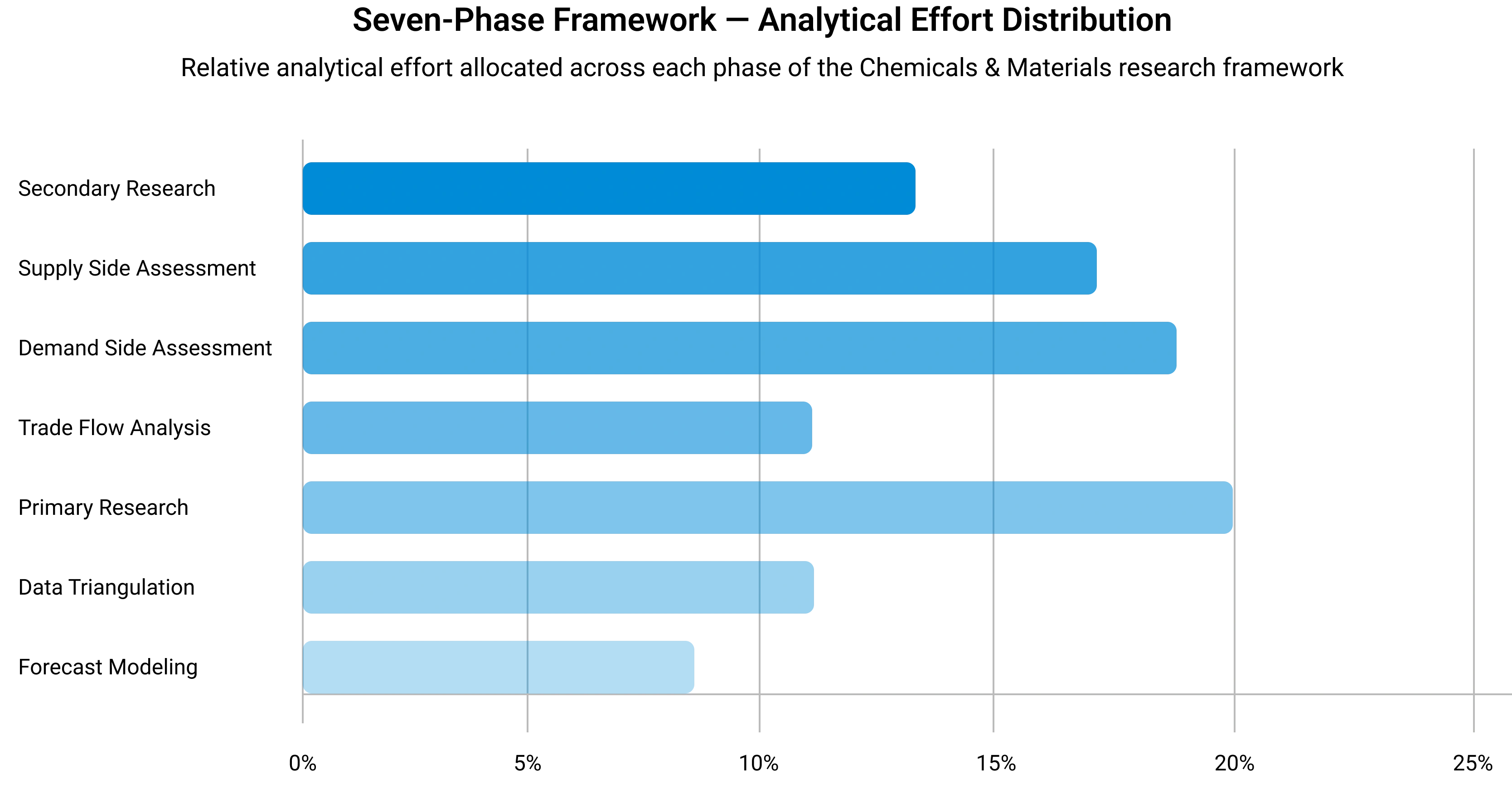
Seven-Phase Framework — Analytical Effort Distribution
Relative analytical effort allocated across each phase of the Chemicals & Materials research framework
Phase 1 - Secondary Research: Establishing the Foundation
Secondary research collects and evaluates publicly available information from authoritative sources, establishing the foundational understanding of market structure, value chain dynamics, competitive landscape, and end-use demand patterns. Every source is evaluated for credibility, recency, geographic relevance, and methodological soundness before inclusion.
Industry Associations
Sources include ACC, CEFIC, ICCA, JCIA, CPCIF, and SOCMA providing production volumes, consumption trends, capacity developments, and sustainability initiatives.
Company Disclosures
Annual reports, investor presentations, earnings transcripts, and regulatory filings reveal product portfolios, manufacturing footprints, capacity expansions, and revenue segmentation.
Government Databases
National statistical offices, customs authorities, environmental agencies, and industrial production databases provide verified statistics on output, trade flows, and regulatory compliance.
Trade Databases
UN Comtrade, ITC, Eurostat, and national customs authorities enable assessment of global product movement, import dependency, and export competitiveness across regions.
Our Secondary Research Sources
- Ministry of Chemicals and Fertilizers
- European Chemicals Agency
- United States Department of Energy
- Ministry of Industry and Information Technology
- Ministry of Economy Trade and Industry
- Ministry of Trade Industry and Energy
- National Institute of Standards and Technology
- Council of Scientific and Industrial Research
- Fraunhofer Society
- National Institute for Materials Science
Phase 2 — Supply-Side Assessment: Mapping Production Capabilities
Production Capacity Analysis
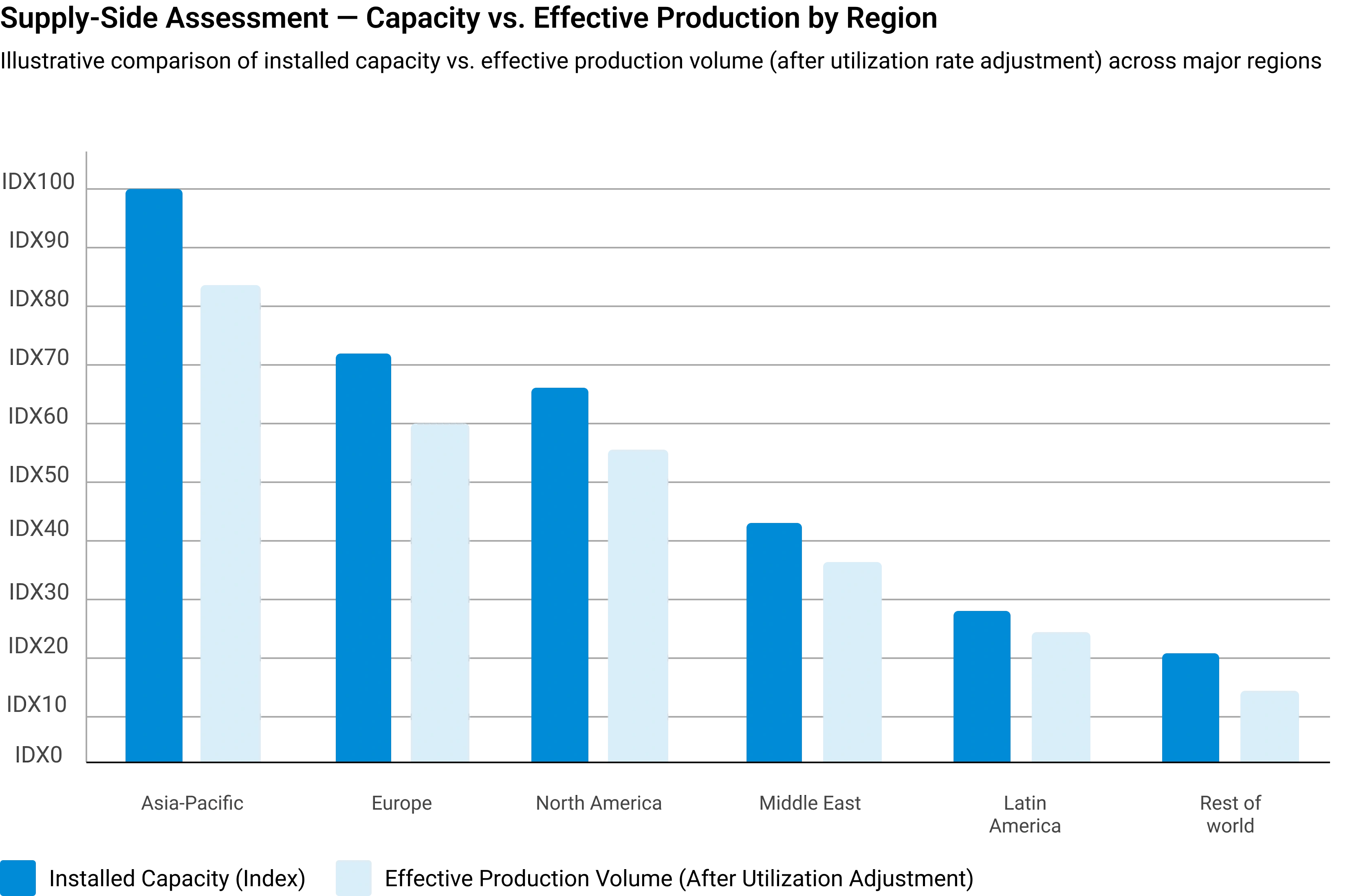
All major manufacturers are assessed for existing installed capacity, planned additions, expansions, new plant announcements, and technology adoption — mapped at global, regional, and country levels.
Capacity Utilization Adjustment
Installed capacity is adjusted using utilization rates based on demand conditions, feedstock availability, plant operating rates, maintenance schedules, and regulatory restrictions.
Manufacturer Revenue Analysis
Product-specific revenues, segment-level performance, regional distribution, average selling prices, and margin trends are evaluated to establish market value estimates.
Supply-Side Assessment — Capacity vs. Effective Production by Region
Illustrative comparison of installed capacity vs. effective production volume (after utilization rate adjustment) across major regions
Phase 3 — Demand-Side Assessment: Quantifying Chemical Consumption
Demand-side analysis quantifies chemical consumption across industries, applications, and geographies — identifying where and how chemicals are consumed throughout the value chain with precision.
End-Use Industry Analysis
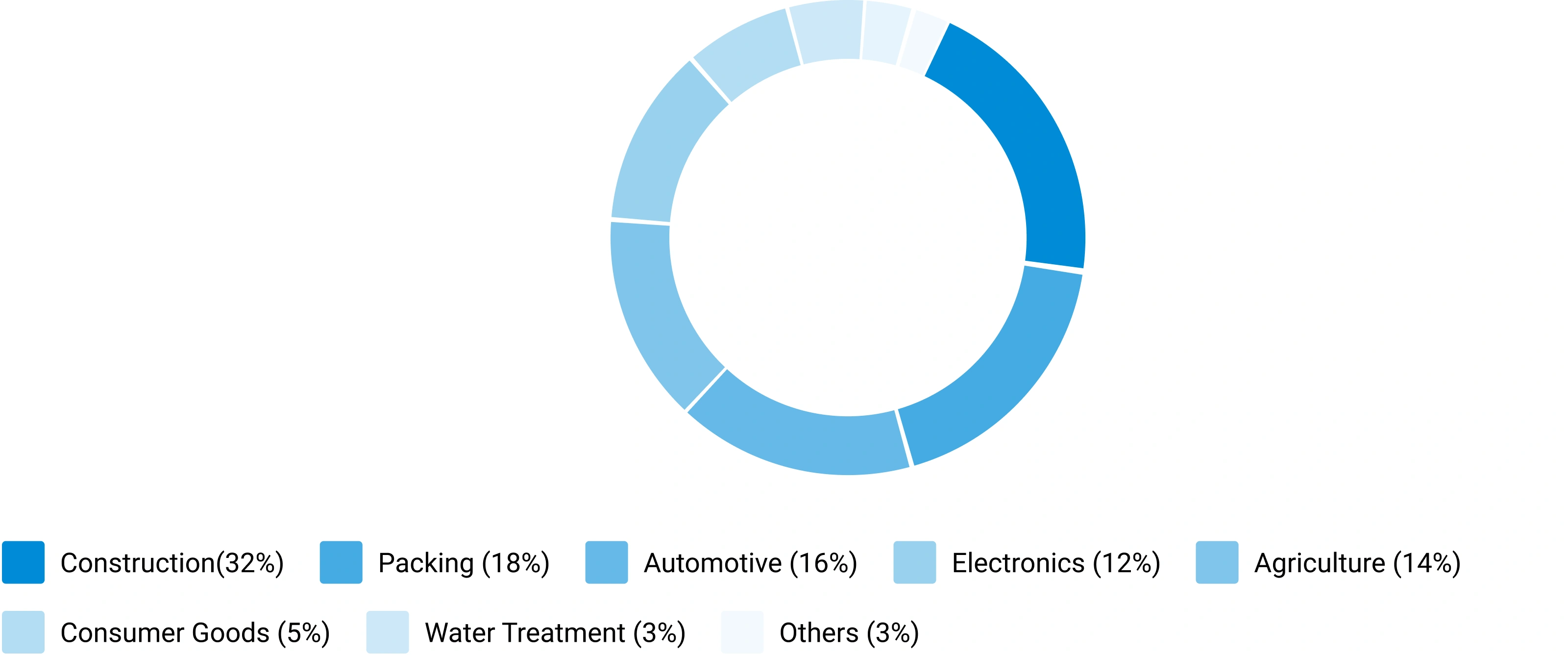
Chemical demand is evaluated across automotive, construction, packaging, electronics, agriculture, healthcare, consumer goods, industrial manufacturing, energy and utilities, and water treatment. Industry output, production trends, and consumption intensity are analyzed to determine demand patterns.
Consumption Modeling
Demand is estimated using measurable indicators: kilograms per vehicle, kilograms per square meter of construction, dosage per cubic meter of water treated, kilograms per hectare of agricultural land, and kilograms per ton of manufactured products. Consumption factors are validated through industry publications and primary interviews.
Application Analysis
The market is segmented by application area to understand product performance requirements, formulation trends, technology adoption, customer preferences, and regulatory requirements improving demand accuracy and segmentation granularity.
Demand-Side Assessment — End-Use Industry Demand Distribution
Illustrative distribution of chemical & materials demand across key end-use industries
Phase 4 - Trade Flow Analysis: Balancing Regional Supply and Demand
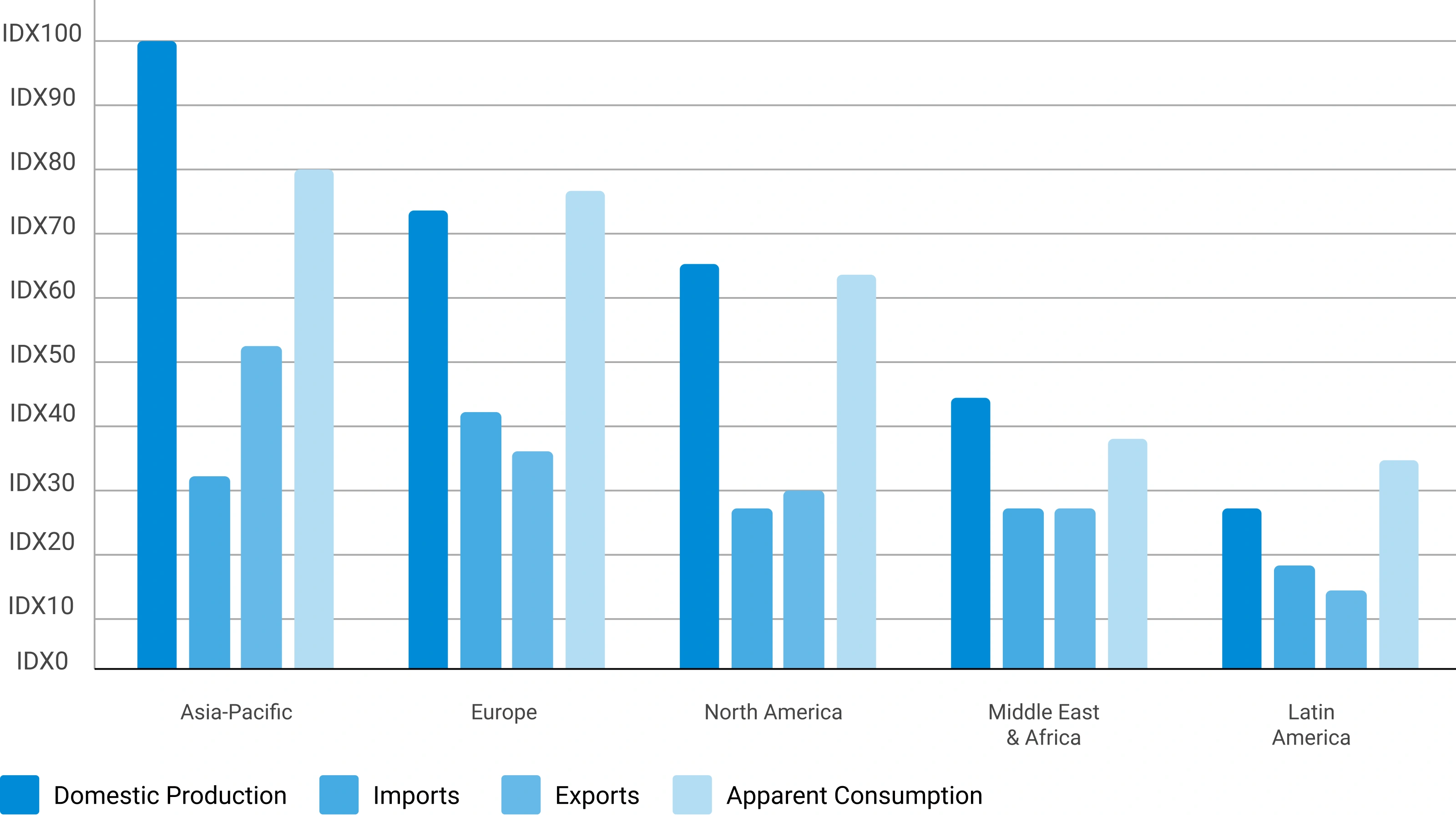
Trade flow analysis reconciles regional supply and demand estimates through import and export data, identifying net supply positions, regional dependencies, and market imbalances. It serves as an independent validation layer that tests the consistency of supply-side and demand-side estimates.
Import Analysis
Import data is evaluated to determine volumes, source countries, product dependency, regional supply gaps, and pricing trends — identifying markets that rely heavily on external supply and where domestic production is insufficient to meet demand.
Export Analysis
Export assessments reveal production surplus, export competitiveness, regional manufacturing strength, and global market participation. Export patterns also help validate domestic production estimates and identify net exporting regions.
Apparent Consumption Model
Regional consumption is assessed using the standard apparent consumption formula:
Results identify net importing regions, net exporting regions, regional deficits, and surpluses — serving as an independent validation of supply and demand estimates.
Trade Flow Analysis — Net Supply Position by Region
Illustrative apparent consumption vs. domestic production across major regions — positive gap indicates net import dependency
Phase 5 — Primary Research: The Critical Validation Layer
Primary research tests and refines findings from secondary research through direct engagement with industry participants across the supply chain, demand side, and expert community. It captures intelligence that no database or published report can provide — the real-world experience of manufacturers, buyers, and specialists operating in the market.

Supply-Side Interviews
Conversations with chemical manufacturers, raw material suppliers, contract manufacturers, technology providers, and plant operators cover production trends, capacity utilization, pricing developments, technology shifts, and competitive dynamics.

Demand-Side Interviews
Engagement with OEMs, industrial consumers, procurement managers, distributors, formulators, and end-use manufacturers focuses on consumption trends, purchasing behavior, product substitution, demand outlook, and emerging applications.

Industry Expert Consultations
Additional interviews with industry consultants, independent experts, regulatory specialists, technical professionals, and research institutions provide deeper market context and validate key analytical assumptions.
Focus Areas of Primary Research:
Market Size & Forecast Validation
Revenue estimates, volume consumption, growth rates, forecast assumptions, regional demand.Supply Chain & Value Chain Assessment
Raw material sourcing, supply chain challenges, distribution networks, procurement practices.Production & Capacity Analysis
Manufacturing capacity, utilization rates, expansion projects, plant investments.Pricing & Cost Structure Analysis
Product pricing trends, feedstock costs, energy costs, margin pressures, pricing outlook.Competitive Landscape Assessment
Volume and value estimates confirmed to be fully consistent with one another before publicationInterview Volume by Market Scope
| Study Scope | Number of Interviews |
|---|---|
| Niche Market | 20 – 30 |
| Mid-Sized Market | 30 – 50 |
| Global Market | 50 – 80 |
| Highly Fragmented Market | 80 – 120 |
Interview Details:
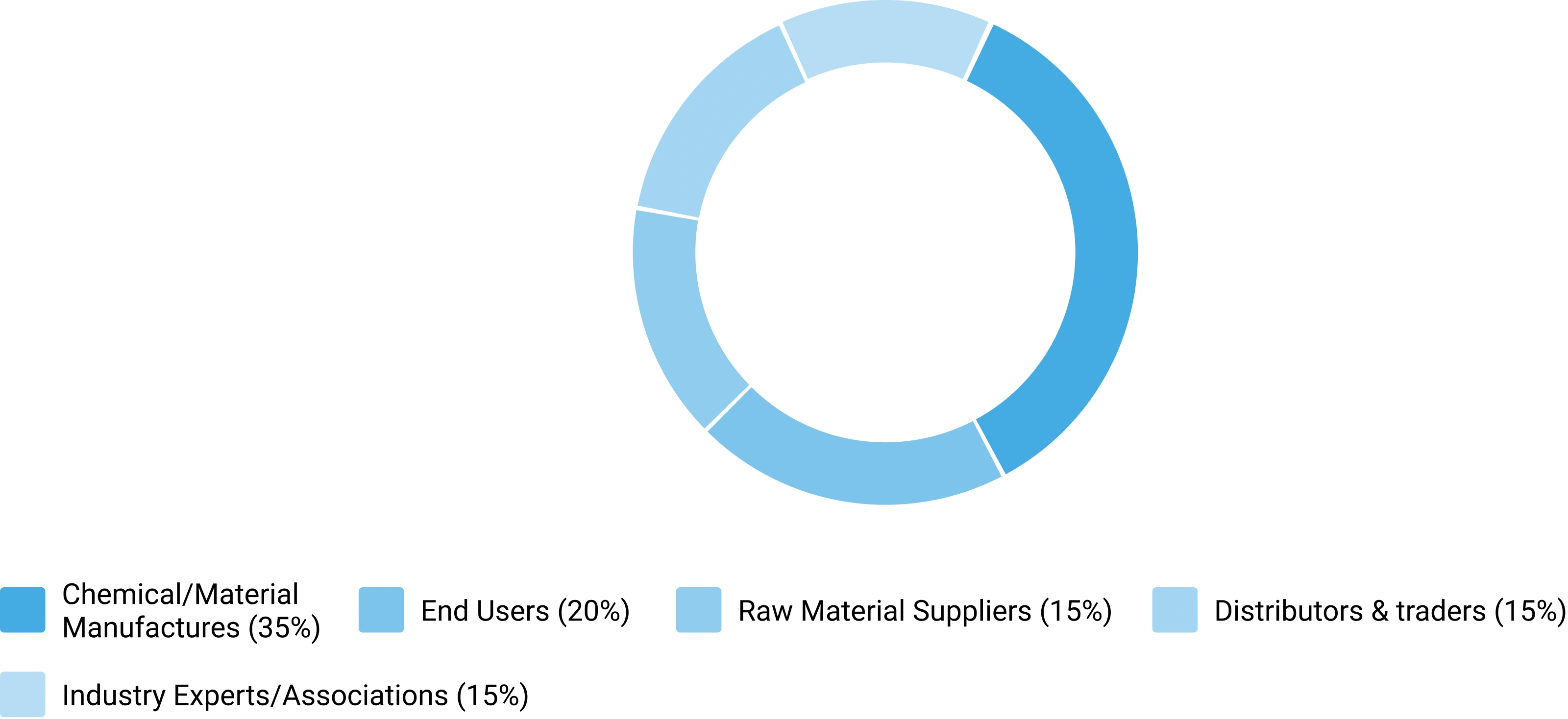
Category : Manufacturers, Suppliers, Distributors, End Users, Experts/Associations
Average Duration : 30–60 Minutes
Interview Mode : Video calls, telephonic interviews, expert consultations
Interview Format : Structured / Semi-Structured questionnaire
Focus Areas of Primary Research:
Market Size & Forecast Validation :
Revenue estimates, volume consumption, growth rates, forecast assumptions, regional demand.
Supply Chain & Value Chain Assessment :
Raw material sourcing, supply chain challenges, distribution networks, procurement practices.
Production & Capacity Analysis :
Manufacturing capacity, utilization rates, expansion projects, plant investments.
Pricing & Cost Structure Analysis :
Product pricing trends, feedstock costs, energy costs, margin pressures, pricing outlook.
Competitive Landscape Assessment :
Market share, competitor positioning, strategic initiatives, partnerships, acquisitions.
Primary Research — Stakeholder Coverage by Category
Distribution of interview respondents across stakeholder categories (% share from PPT data)
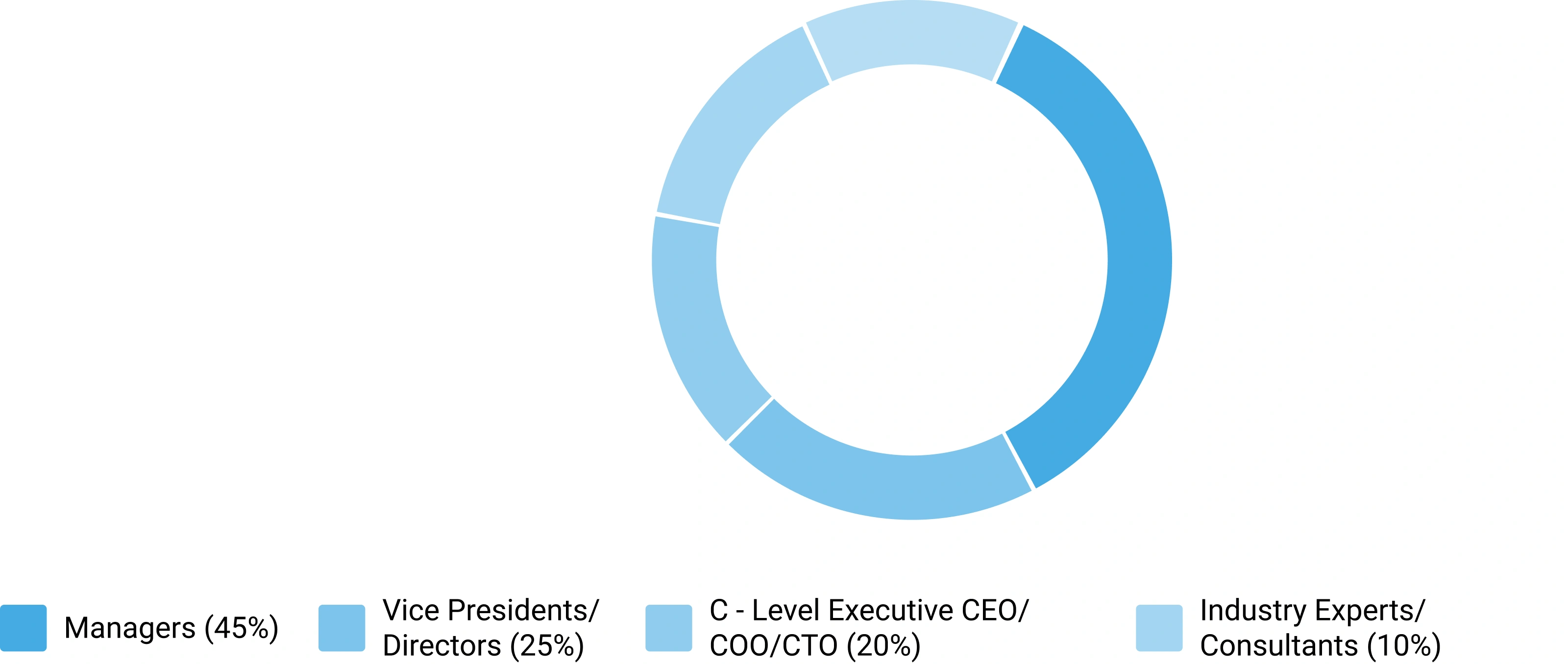
Primary Research — Respondent Designation Profile
Seniority breakdown of interview respondents (% share from PPT data)
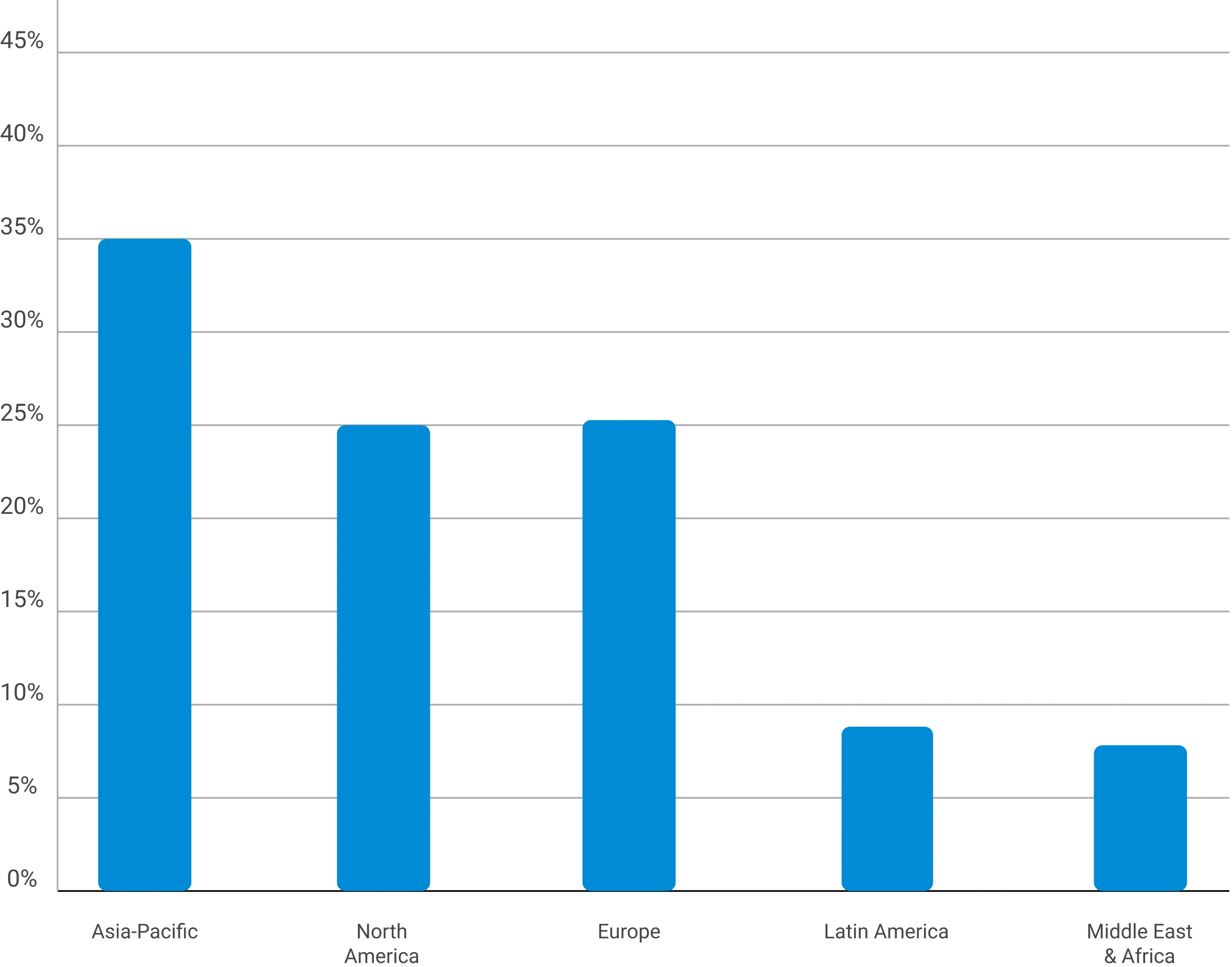
Primary Research — Geographic Coverage of Interviews
Regional distribution of primary research engagement (% share from PPT data)
Phase 6 — Data Triangulation and Market Validation
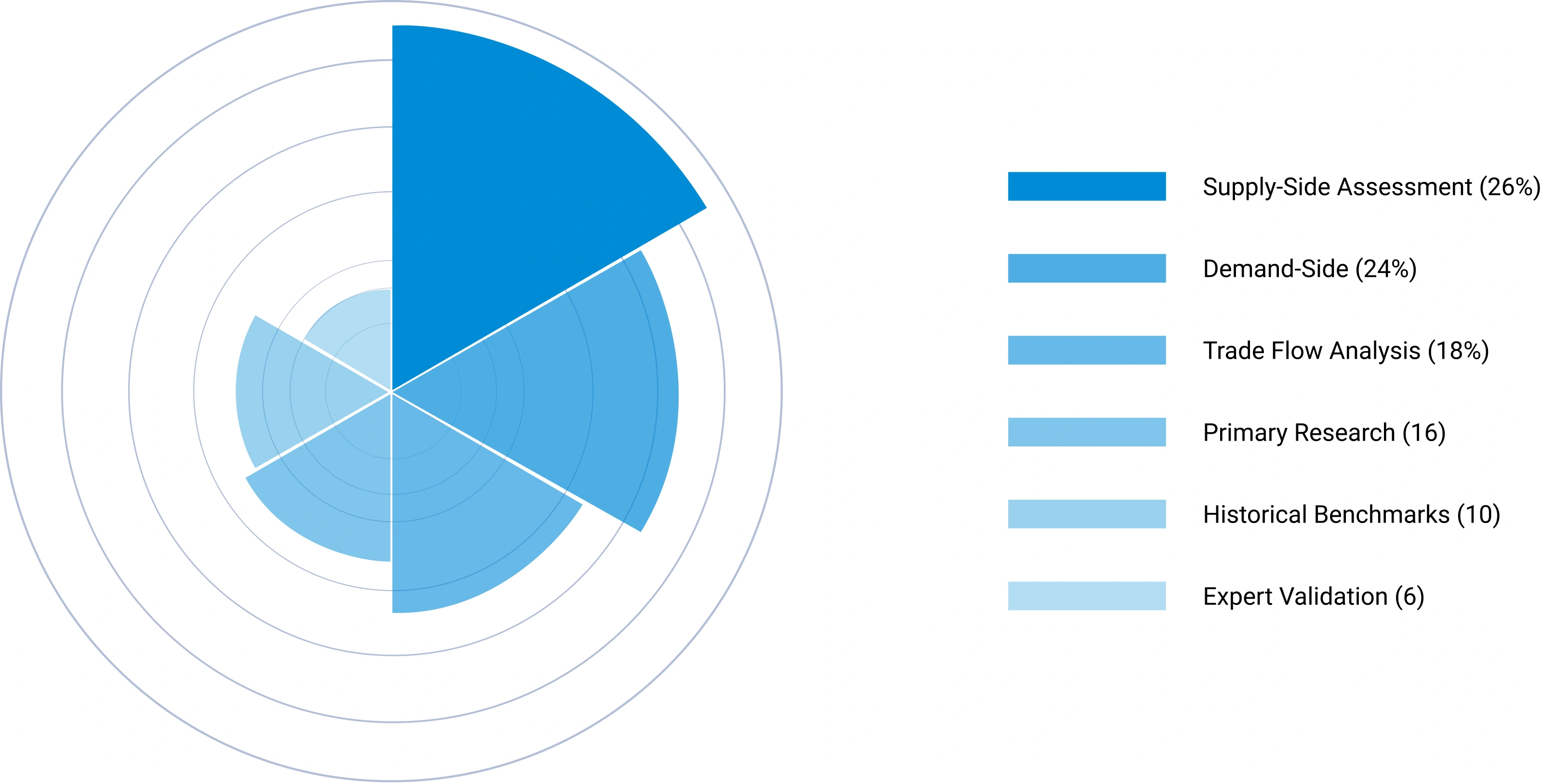
No single methodology is relied upon in isolation. Multiple independent estimation approaches are combined and reconciled to ensure consistency, accuracy, and analytical defensibility. Any material deviations between approaches are investigated and adjusted through additional validation cycles.
The final market size is derived through weighted triangulation of all validated methodologies. Any material deviations between approaches are investigated and adjusted through additional validation cycles. The outcome represents the most realistic assessment of the market based on available evidence and expert confirmation ensuring that volume and value estimates are fully consistent with one another.
Triangulation Framework — Input Contribution Weight
Relative weight each sizing input contributes to the final reconciled market estimate
Phase 7 — Forecast Modeling: Projecting Future Market Evolution
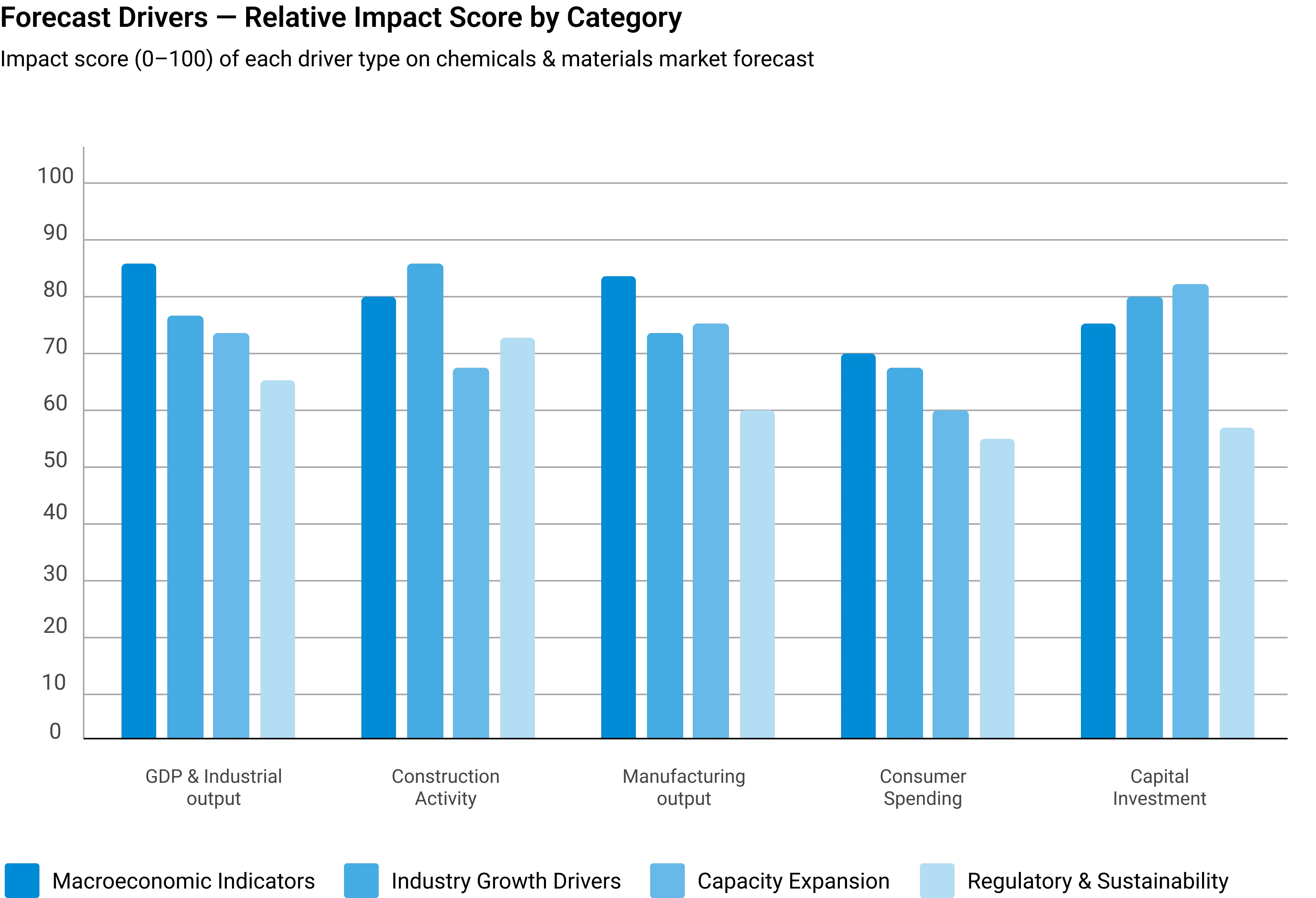
Forecasting evaluates the future trajectory of the market using a combination of quantitative indicators and qualitative assessments across economic, industry, and regulatory dimensions. Rather than simple extrapolation, each driver is independently modeled and integrated into a composite forecast.
Macroeconomic Indicators
GDP growth, industrial production, manufacturing output, construction activity, consumer spending, and capital investment form the quantitative foundation of long-term demand projections. These are applied at country, regional, and global levels.
Industry Growth Drivers
Urbanization, infrastructure development, industrialization, technological innovation, sustainability initiatives, and evolving product performance requirements are assessed at regional and industry levels — capturing both structural and cyclical demand drivers.
Capacity Expansion Analysis
Announced plant expansions, new manufacturing facilities, technology upgrades, and strategic investments are evaluated to determine future supply-demand dynamics and potential market tightness or oversupply situations.
Regulatory & Sustainability
Environmental regulations, chemical safety standards, emission reduction targets, circular economy initiatives, and sustainability requirements are incorporated as they often influence product adoption rates and market growth trajectories.
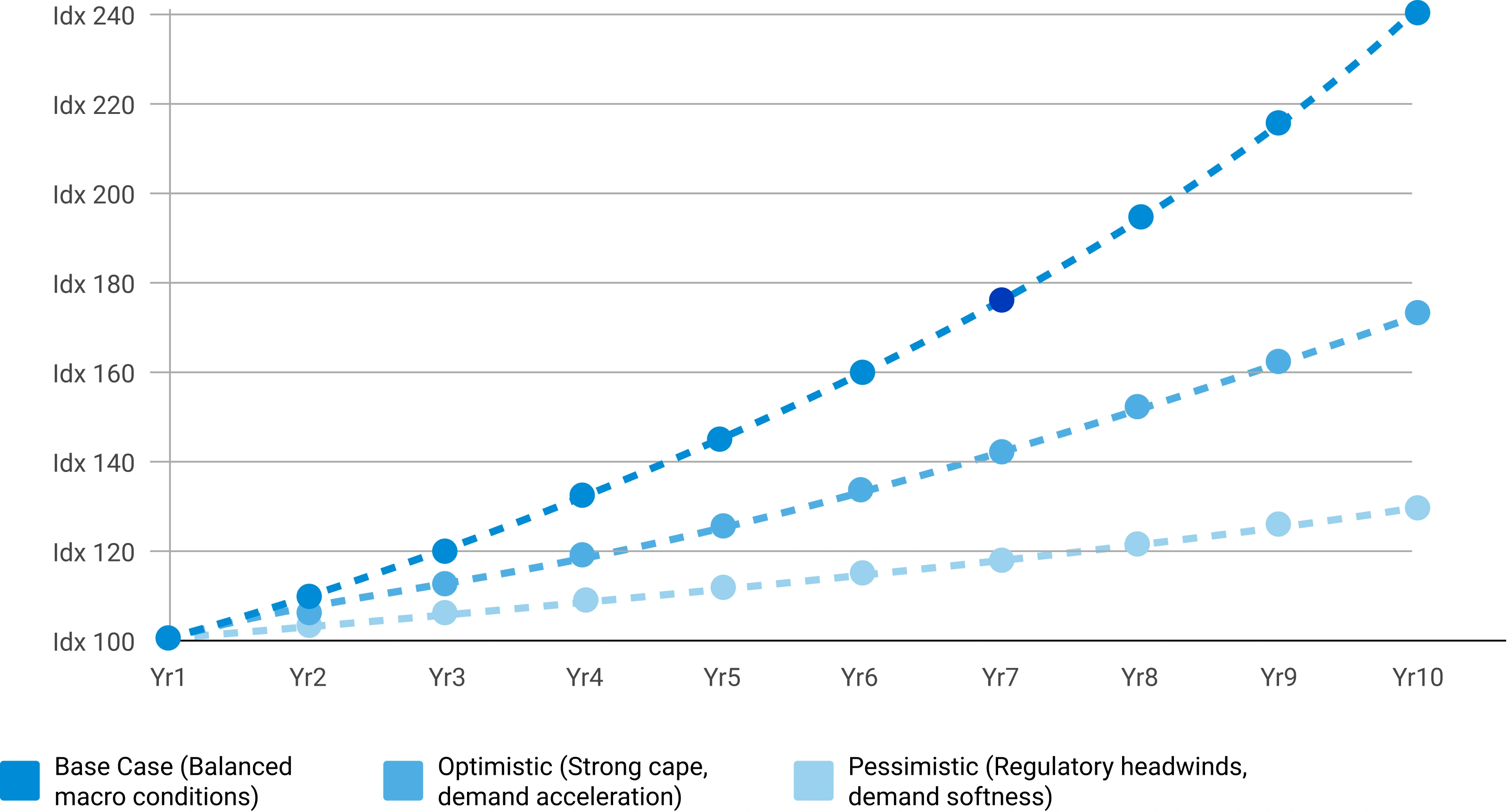
Scenario Forecast Range — Indexed Market Growth (Year 1–10)
Illustrative indexed growth trajectories across Base, Optimistic, and Pessimistic scenarios over a 10-year forecast horizon
Forecast Drivers — Relative Impact Score by Category
Impact score (0–100) of each driver type on chemicals & materials market forecast



Comments
Share your thoughts, ask a question, or provide feedback about this report.