
Self-Healing Material Market Size and Forecast 2026 to 2035
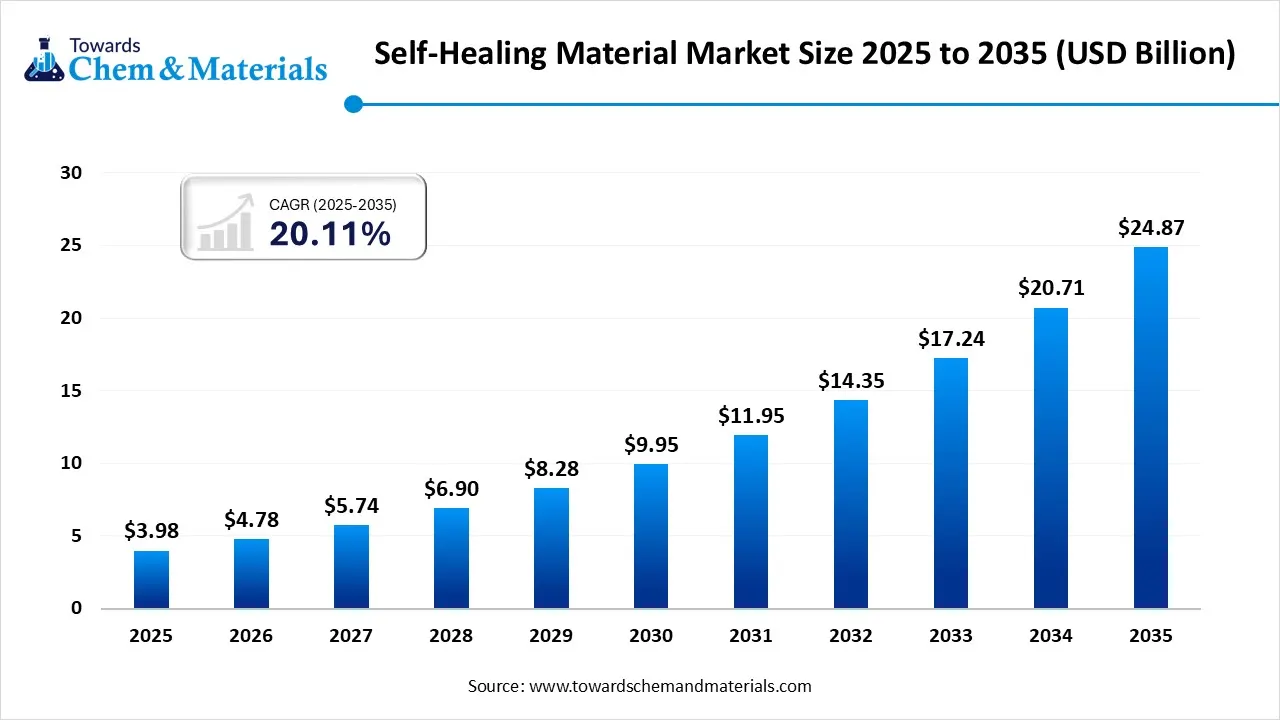
The global self-healing material market size was valued at USD 3.98 billion in 2025 and is expected to hit around USD 24.87 billion by 2035, exhibiting at a compound annual growth rate (CAGR) of 20.11% over the forecast period from 2026 to 2035. The increasing demand across various industries such as construction, automotive, electronics, and healthcare helps in the growth of the market.
Market Highlights
- The North America dominated the self-healing materials market with the largest revenue share of 32.06% in 2025.
- The Europe self-healing materials market segment accounted for the major revenue share of 25.20% in 2025.
- By product, the concrete segment dominated the market and accounted for the largest revenue share of 17.36% in 2025.
- By technology, the reversible polymers segment led the market with the largest revenue volume share of 36.78% in 2025.
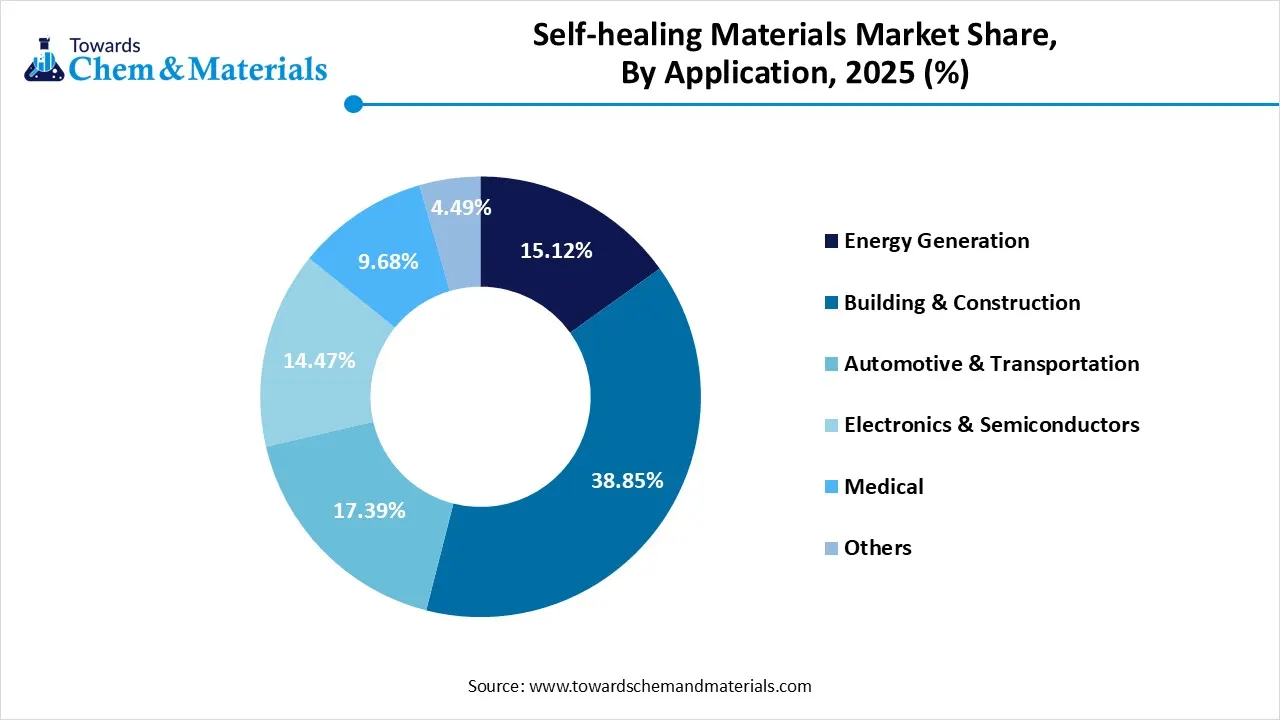
- By application, the building & construction segment dominated the market and accounted for the largest volume share of 37.89% in 2025.
Market Overview
The rising demand for durable materials: self-healing material market to expand
Self-healing materials are synthetically engineered substances capable of automatically repairing damage without the need for human intervention or external diagnosis. Over time, most materials experience degradation due to factors like fatigue, environmental exposure, or operational stress.
Even microscopic cracks can significantly alter a material’s thermal, electrical, or acoustic properties, eventually leading to failure if left unchecked. While polymers and elastomers are the most common types of self-healing materials, this technology spans across various material classes, including metals, ceramics, and cement-based substances.
The healing process may involve intrinsic mechanisms within the material itself or the release of a repair agent from embedded microcapsules or vessels, allowing the material to restore its structural integrity.
Rising demand for durable materials as industries seek long-lasting components to reduce maintenance costs and replacement costs, and go for materials that are strong in construction, automotive, and aerospace.
Technological advancement like breakthroughs in polymer chemistry, nanotechnology, and smart materials expands the product capabilities. Self-healing materials reduce waste and align with the eco-friendly regulations and sustainable manufacturing trends.
Market Trends
- Bioinspired and biomimetic materials, such as bioinspired self-healing material and hydrogel that mimics tissue regeneration, are gaining attention from consumers.
- The demand is driven by the integration of nanotechnology in the application of the material, such as enhancing healing precision, responsiveness, and efficiency.
- Rising demand for sustainable material that reduces waste and carbon footprint, as self-healing materials align with green building standards and sustainability goals.
- Integration of AI with self-healing material can give consumers or the manufacturer real-time damage detection and help in autonomous repair.
- Advances and innovations in smart coating paints, like coating that self-heals when scratched or exposed to environmental stress.
Report Scope
| Report Attributes | Details |
| Market Size in 2026 | USD 4.78 Billion |
| Expected Size in 2035 | USD 24.87 Billion |
| Growth Rate | CAGR of 20.11% |
| Base Year of Estimation | 2025 |
| Forecast Period | 2025-2034 |
| High Impact Region | Asia Pacific |
| Segment Covered | By Product, By Technology, By Application, By Region |
| Key Companies Profile | Acciona S.A. (Spain),AkzoNobel N.V. (Netherlands),Applied Thin Films, Inc. (U.S.),Arkema SA (France),Autonomic Materials Inc. (U.S.),Avecom N.V. (Belgium),BASF SE (Germany),Covestro AG (Germany),E.I. Du Pont De Nemours and Company (U.S.),Evonik Industries (Germany),Sensor Coating Systems Ltd. (U.K.),Slips Technologies, Inc. (U.S.) |
Self-Healing Material Market Opportunity
The green building and smart city initiatives by the government create great opportunities for market expansion.
The green building and smart city initiatives are key drivers in the adoption of self-healing materials by the manufacturers as well as by the consumers. The initiative focuses on prioritizing sustainability, energy efficiency, and resilience in the urban infrastructure. Self-healing materials contribute to the sustainability cause by autonomously repairing micro-cracks in the concrete or coatings, which extends the lifespan of the building components and reduces the maintenance costs.
This also ensures that the structure remains robust and safe over time. In smart and metro cities, the integration of self-healing material is important and integral as it aims to use technology to optimize the performance, reduce operational costs and improve the overall sustainability.
The use of such durable materials leads to long-lasting buildings, roads, and bridges, which aligns with green building standards and helps in reducing environmental footprints. These initiatives meet the sustainable cause and help in the expansion of the market, resulting in its growth of the self-healing material market.
Self-Healing Material Market Challenge
High Material and Development Costs of the Self-Healing Material Hinder the Growth of the Market.
High material and development costs are one of the key restraints in the self-healing material market. These materials perform some reliable and advanced chemistries like microencapsulation, supramolecular polymers, and nanomaterials, which are expensive to synthesize and process, which increases the cost of production and results in a high cost of the material.
The self-healing materials require additional manufacturing steps and specialized infrastructure, which increases the production cost of the material. Extensive testing and certification are required to ensure long-term performance and safety, especially in sectors like aerospace and healthcare. Despite the long-term cost savings offered by the self-healing materials, the initial cost remains a major hurdle in market adoption, which hinders the growth of the self-healing material market.
Segmental Insights
By Product
The concrete segment dominated the self-healing material market in 2025. The growth is driven by the focus and need to improve the durability and longevity of infrastructure and the material. Self-healing concrete is made to automatically repair cracks that are formed due to stress, temperature changes, or environmental exposure. This is done through techniques such as encapsulating healing agents that get activated when cracks are formed.
The main advantage of self-healing concrete is its ability to reduce maintenance costs, enhance safety, and extend the service life of structures such as roads, bridges, tunnels, and buildings. The increasing adoption is seen particularly in regions investing in smart infrastructure and sustainable development. These factors help in the expansion and growth of the self-healing material market.
The asphalt segment expects significant growth in the self-healing material market during the forecast period. The asphalt segment in the market is gaining attention as it serves as a sustainable solution to address the frequent deterioration of road surfaces due to heavy traffic, harsh weather conditions, and temperature fluctuations.
Self-healing asphalt is designed to repair micro-cracks and surface damage autonomously, thereby extending the lifespan of pavements and reducing the need for costly and disruptive maintenance. When exposed to certain chemicals or UV, the material restores the asphalt’s elasticity and closes the cracks.
The growing demand for durable and low-maintenance road infrastructure, especially in urban areas, is driving the adoption of self-healing asphalt. These factors drive the self-healing material market growth.
By Technology
The reversible polymers segment led the market in 2025. Reversible polymers are a key category in the self-healing material market, known for their ability to autonomously restore their structure through chemical bonds. These polymers rely on reversible covalent or supramolecular interactions, which repeatedly break and reform in response to external stimuli such as heat, light, or pH changes.
They are especially used in industries like electronics, automotive, and aerospace, where materials are exposed to constant mechanical stress. These polymers recover mechanical properties such as strength and elasticity after damage, thereby enhancing product lifespan and reducing maintenance. These factors help in the growth and expansion of the market significantly.
The microencapsulation segment expects significant growth in the self-healing material market during the forecast period. Microencapsulation is one of the most widely used technologies in self-healing materials, particularly in coatings, paints, and composites. The technique involves embedding tiny capsules filled with healing agents such as adhesives, resins, or hardeners within the material matrix.
When the material experiences damage or cracking, the capsules rupture and release the healing agent into the affected area, where it reacts to seal the crack and restore structural integrity. It is especially useful in single-use healing systems where immediate response to damage is critical.
By Application
The building & construction segment led the market in 2025. The growth in the self-healing material market, owing to the sector’s high demand for low-maintenance, durability, and sustainable solutions. Self-healing materials, particularly concrete, asphalt, and sealants, are being increasingly used in residential, commercial, and infrastructure projects to automatically repair cracks and minor damage caused by stress, weather, or aging.
Additionally, as urbanization and smart city initiatives continue to grow, governments and developers are prioritizing materials that align with green building standards and environmental regulations. The automotive & transportation segment expects significant growth in the self-healing material market during the forecast period. The growth is driven by the need for enhanced durability, safety, and aesthetics. In the automotive industry, self-healing coatings and paints are used to repair minor scratches and surface damage, maintaining vehicle appearance and reducing the need for refinishing.
In transportation infrastructure, such as roads, railways, and tunnels, self-healing asphalt and concrete help extend service life and reduce maintenance disruptions. These materials can autonomously repair cracks caused by heavy traffic and environmental stress, enhancing safety and reducing lifecycle costs.
Regional Insights
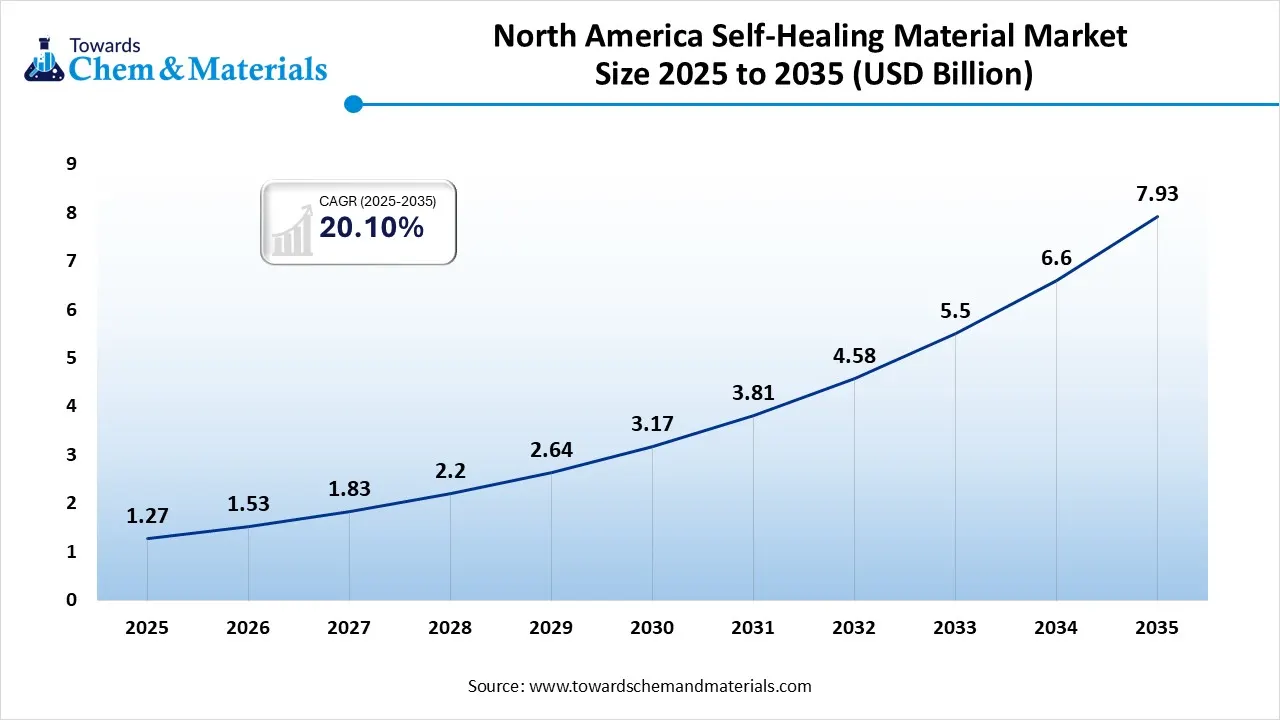
The North America self-healing material market size was valued at USD 1.27 billion in 2025 and is expected to be worth around USD 7.93 billion by 2035, exhibiting at a compound annual growth rate (CAGR) of 20.10% over the forecast period from 2026 to 2035. North America dominated the self-healing material market in 2025. The North America region exhibits strong growth in the market, the growth is fuelled by robust infrastructure development, rapid urbanization, and increasing emphasis on sustainability.
Industrialization and technological advancement, and innovations drive the research and development, which leads to the adoption of advanced materials designed for enhanced durability and reduced maintenance costs. Government initiatives for promoting green initiatives and smart city projects, which include the integration of self-healing technologies into construction and transportation networks, help in the growth of the self-healing market.
China holds the largest share in the region for the growth of the market.
China serves as a key leader in the market, where large-scale investments in urban development and smart infrastructure projects have accelerated the use of self-healing materials. The increasing amount of funding in R&D from the government sector and various industries and partnerships between academic institutions and the industry sector have accelerated innovations in self-healing concrete, coatings, and polymers.
These innovations have helped China’s ambitions of building sustainable, resilient cities with reduced lifecycle costs and environmental impact. These factors and rising initiatives from various sectors and research in the field have helped healing material the market growth in the country.
Self-healing Materials Market Share, By Region, 2025(%)
| Regional | Revenue Share |
| North America | 32.06% |
| Europe | 25.20% |
| Asia Pacific | 21.67% |
| Latin America | 13.12% |
| Middle East and Africa | 7.95% |
How will Europe surge in the Self-Healing Material Market?
North America is notably growing region in the global market, mainly due to the region has a robust manufacturing base, particularly in the U.S., with high demand for self-healing polymers in automotive and electronics. Significant R&D investment by the National Science Foundation and private companies, particularly in nanotechnology and polymer chemistry, has accelerated commercialization. The growing demand to build infrastructure capable of withstanding extreme weather events in the U.S. has accelerated the adoption of self-healing, durable materials.
The U.S. Self-Healing Material Market Trends
The U.S. plays a distinctive position in the global market, mainly due to high R&D investments, early adoption in high-tech sectors, and a strong manufacturing base. Major producers like Tesla, Ford, and GM implement self-healing coatings to reduce maintenance, driving the adoption of self-healing concrete for, bridges, and roads. NASA and Boeing use self-healing composites for aircraft structures to enhance durability. The U.S. Department of Defense is heavily funding self-healing coatings for military aircraft.
Emergence of Latin America in the Self-Healing Material Market
Latin America is emerging as a significantly growing region in the global market, mainly due to rapid urbanization, infrastructure modernization, and a growing automotive manufacturing sector that demands advanced, durable materials. The ability to independently repair cracks and micro-damage reduces high maintenance costs, which is crucial for infrastructure projects. Increased foreign investments in automotive and industrial sectors in Brazil and Mexico are driving the adoption of advanced material technologies to mitigate structural deterioration.
Brazil Self-Healing Material Market Trends
Brazil is significantly growing market within the region, mainly due to Brazilian aerospace sectors use self-healing thermoplastics to repair damaged components. The country is also seeing growth in infrastructure modernization, creating opportunities for self-repairing coatings. There is rapid adoption of UV-curable self-healing adhesives in Brazil's electronics assembly and medical device manufacturing. International players are expanding in Brazil, and local research focuses on bio-based raw materials for adhesives.
How will the Middle East and Africa contribute in the Self-Healing Material Market?
The Middle East and Africa is a key contributing region in the global market, mainly due to the intense demand for durable, low-maintenance materials in infrastructure, harsh environmental conditions, and massive government investment in smart city projects. High temperatures, high humidity, salinity, and sand abrasion rapidly degrade conventional materials. Self-healing concrete and coatings are essential for mitigating damage caused by thermal stress and moisture. Growing urbanization and industrialization in the GCC countries are driving the need for durable, long-lasting construction.
The UAE Self-Healing Material Market Trends
The UAE is a key player within the region, mainly due to higher demand for self-healing concrete to extend the lifecycle of buildings and reduce environmental impact. This is further fostered by its focus on luxury real estate, tourism, and aviation, the UAE acts as an early adopter of premium self-healing composites and polymers. The UAE is also fostering collaborations between universities, research centers, and international firms to develop locally adaptable, high-performance materials.
Self-Healing Material Market Recent Developments
Mallinda Inc.
- Announcement: In January 2025, Mallinda Inc., based in Denver, Colorado, announced the commercial launch of Vitrimax Versatile Hot Melt (VHM) resin, a vitrimer-based composite resin system. This innovative technology blends the strong mechanical properties of thermosets with the processing ease of thermoplastics, while also offering cost-effective recyclability and reusability for high-performance composite applications.
Restoration Partners LLC
- Announcement: In September 2024, Restoration Partners LLC, a leader in sustainable construction materials, announced the U.S. launch of Basilisk Self-Healing Concrete. Developed at Delft University in the Netherlands, this patented self-repairing biotechnology debuted in October. The introduction of Basilisk products is set to offer major benefits to the U.S. construction and restoration sectors, including lower maintenance costs, improved structural durability, and a reduced environmental impact.
Charter Next Generation
- Announcement: In December 2024, Charter Next Generation (CNG), introduces the Nail Sealing film technology. This technology setting the new standard in construction waterproofing, with exceptional moisture durability and resistance. Aligned with CNG’s mission of "Enhancing Lives for a Better World," the innovation tackles critical industry challenges while reinforcing the company’s dedication to sustainability and long-term value through advanced materials.
Self-Healing Material Market Top Companies List
- Acciona S.A. (Spain)
- AkzoNobel N.V. (Netherlands)
- Applied Thin Films, Inc. (U.S.)
- Arkema SA (France)
- Autonomic Materials Inc. (U.S.)
- Avecom N.V. (Belgium)
- BASF SE (Germany)
- Covestro AG (Germany)
- E.I. Du Pont De Nemours and Company (U.S.)
- Evonik Industries (Germany)
- Sensor Coating Systems Ltd. (U.K.)
- Slips Technologies, Inc. (U.S.)
Segments Covered in the Report
By Product
- Concrete
- Coatings
- Polymers
- Asphalt
- Fiber-reinforced Composites
- Ceramic
- Metals
By Technology
- Reversible Polymers
- Microencapsulation
- Shape Memory Materials
- Biological Material Systems
- Others
By Application
- Energy generation
- Building & Construction
- Automotive & Transportation
- Electronics & Semiconductors
- Medical
- Others
By Regional
- North America
- Europe
- Asia Pacific
- Middle East & Africa
- Latin America
A Seven-Phase Framework
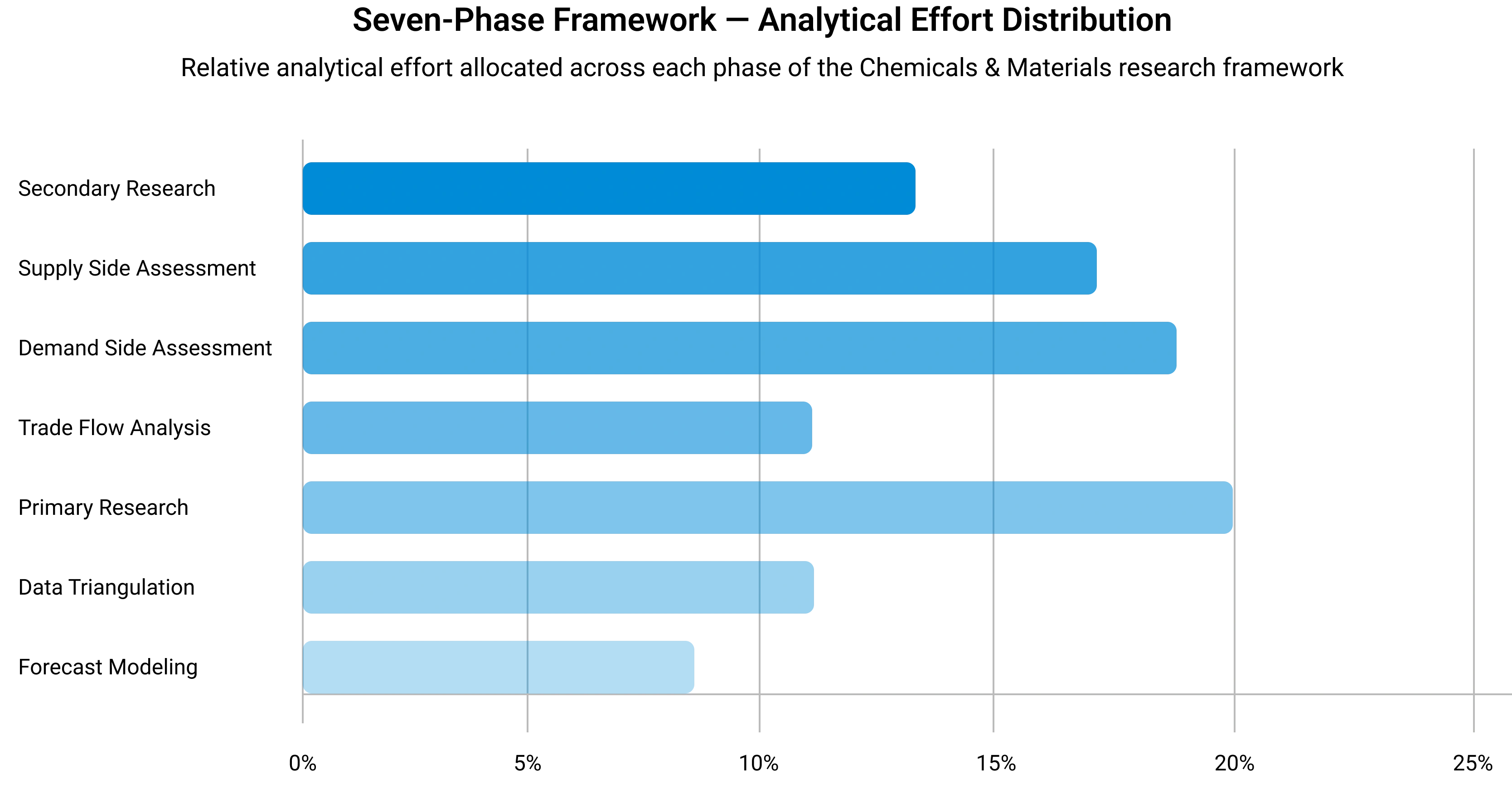
Our methodology is designed to be universally applicable across commodity chemicals, specialty chemicals, petrochemicals, construction chemicals, coatings, electronic chemicals, industrial gases, agrochemicals, water treatment chemicals, and performance materials. Each phase builds upon the last, creating a layered validation structure that minimizes estimation error and maximizes analytical confidence.
The framework ensures comprehensive market coverage, robust cross-validation, and reliable long-term forecasting — producing market estimates that withstand scrutiny from investors, regulators, and corporate strategy teams.

Seven-Phase Framework — Analytical Effort Distribution
Relative analytical effort allocated across each phase of the Chemicals & Materials research framework
Phase 1 - Secondary Research: Establishing the Foundation
Secondary research collects and evaluates publicly available information from authoritative sources, establishing the foundational understanding of market structure, value chain dynamics, competitive landscape, and end-use demand patterns. Every source is evaluated for credibility, recency, geographic relevance, and methodological soundness before inclusion.
Industry Associations
Sources include ACC, CEFIC, ICCA, JCIA, CPCIF, and SOCMA providing production volumes, consumption trends, capacity developments, and sustainability initiatives.
Company Disclosures
Annual reports, investor presentations, earnings transcripts, and regulatory filings reveal product portfolios, manufacturing footprints, capacity expansions, and revenue segmentation.
Government Databases
National statistical offices, customs authorities, environmental agencies, and industrial production databases provide verified statistics on output, trade flows, and regulatory compliance.
Trade Databases
UN Comtrade, ITC, Eurostat, and national customs authorities enable assessment of global product movement, import dependency, and export competitiveness across regions.
Our Secondary Research Sources
- Ministry of Chemicals and Fertilizers
- European Chemicals Agency
- United States Department of Energy
- Ministry of Industry and Information Technology
- Ministry of Economy Trade and Industry
- Ministry of Trade Industry and Energy
- National Institute of Standards and Technology
- Council of Scientific and Industrial Research
- Fraunhofer Society
- National Institute for Materials Science
Phase 2 — Supply-Side Assessment: Mapping Production Capabilities
Production Capacity Analysis
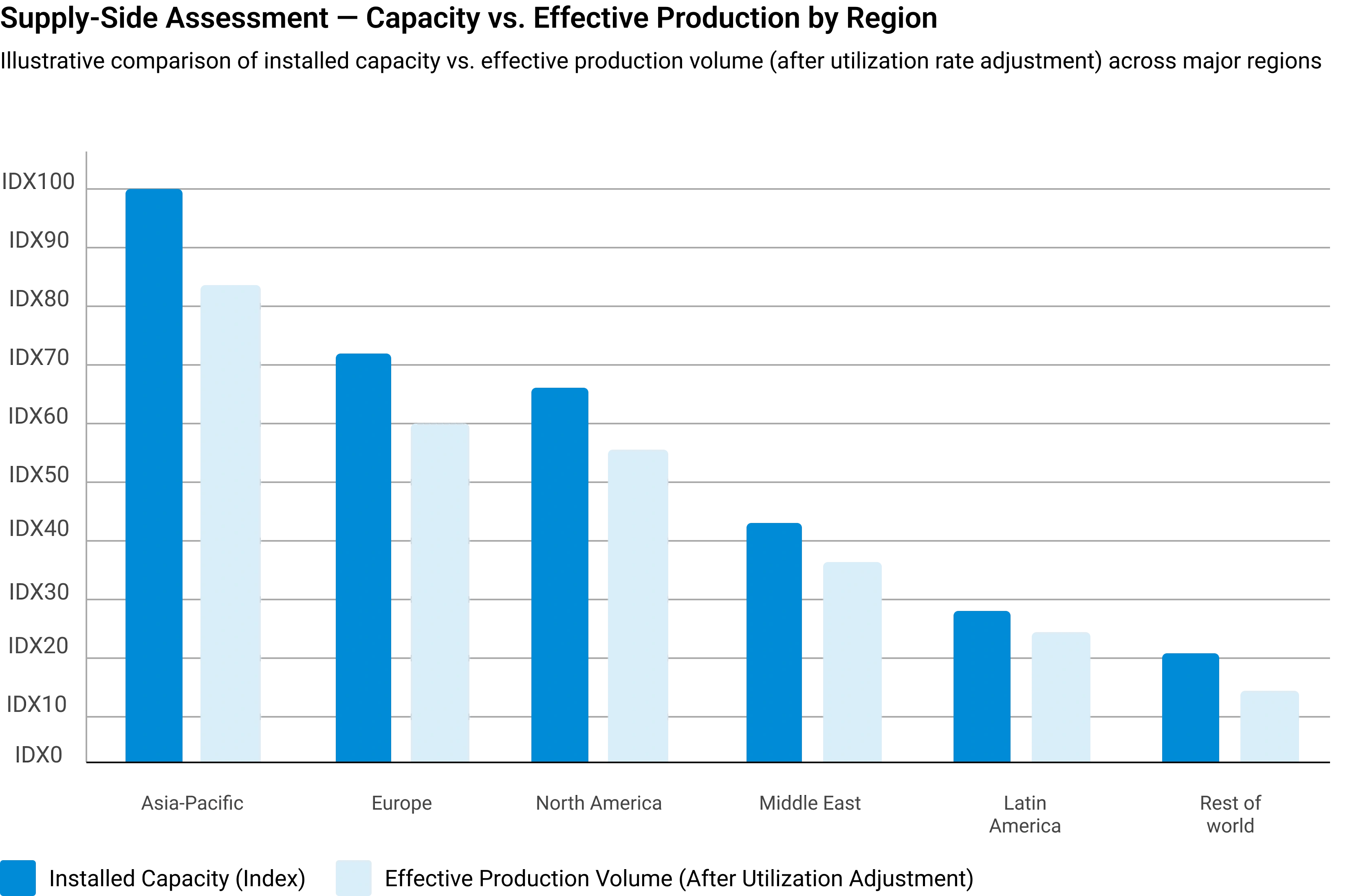
All major manufacturers are assessed for existing installed capacity, planned additions, expansions, new plant announcements, and technology adoption — mapped at global, regional, and country levels.
Capacity Utilization Adjustment
Installed capacity is adjusted using utilization rates based on demand conditions, feedstock availability, plant operating rates, maintenance schedules, and regulatory restrictions.
Manufacturer Revenue Analysis
Product-specific revenues, segment-level performance, regional distribution, average selling prices, and margin trends are evaluated to establish market value estimates.
Supply-Side Assessment — Capacity vs. Effective Production by Region
Illustrative comparison of installed capacity vs. effective production volume (after utilization rate adjustment) across major regions
Phase 3 — Demand-Side Assessment: Quantifying Chemical Consumption
Demand-side analysis quantifies chemical consumption across industries, applications, and geographies — identifying where and how chemicals are consumed throughout the value chain with precision.
End-Use Industry Analysis
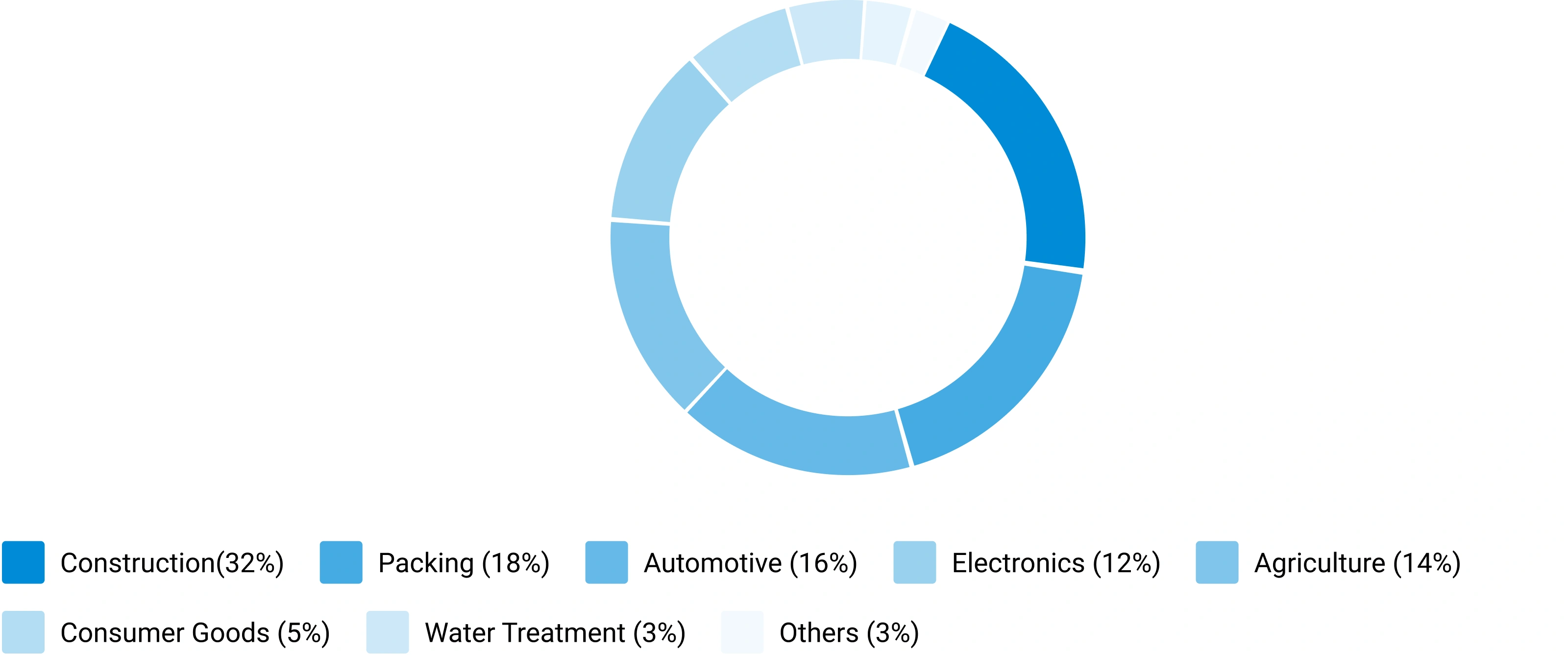
Chemical demand is evaluated across automotive, construction, packaging, electronics, agriculture, healthcare, consumer goods, industrial manufacturing, energy and utilities, and water treatment. Industry output, production trends, and consumption intensity are analyzed to determine demand patterns.
Consumption Modeling
Demand is estimated using measurable indicators: kilograms per vehicle, kilograms per square meter of construction, dosage per cubic meter of water treated, kilograms per hectare of agricultural land, and kilograms per ton of manufactured products. Consumption factors are validated through industry publications and primary interviews.
Application Analysis
The market is segmented by application area to understand product performance requirements, formulation trends, technology adoption, customer preferences, and regulatory requirements improving demand accuracy and segmentation granularity.
Demand-Side Assessment — End-Use Industry Demand Distribution
Illustrative distribution of chemical & materials demand across key end-use industries
Phase 4 - Trade Flow Analysis: Balancing Regional Supply and Demand
Trade flow analysis reconciles regional supply and demand estimates through import and export data, identifying net supply positions, regional dependencies, and market imbalances. It serves as an independent validation layer that tests the consistency of supply-side and demand-side estimates.
Import Analysis
Import data is evaluated to determine volumes, source countries, product dependency, regional supply gaps, and pricing trends — identifying markets that rely heavily on external supply and where domestic production is insufficient to meet demand.
Export Analysis
Export assessments reveal production surplus, export competitiveness, regional manufacturing strength, and global market participation. Export patterns also help validate domestic production estimates and identify net exporting regions.
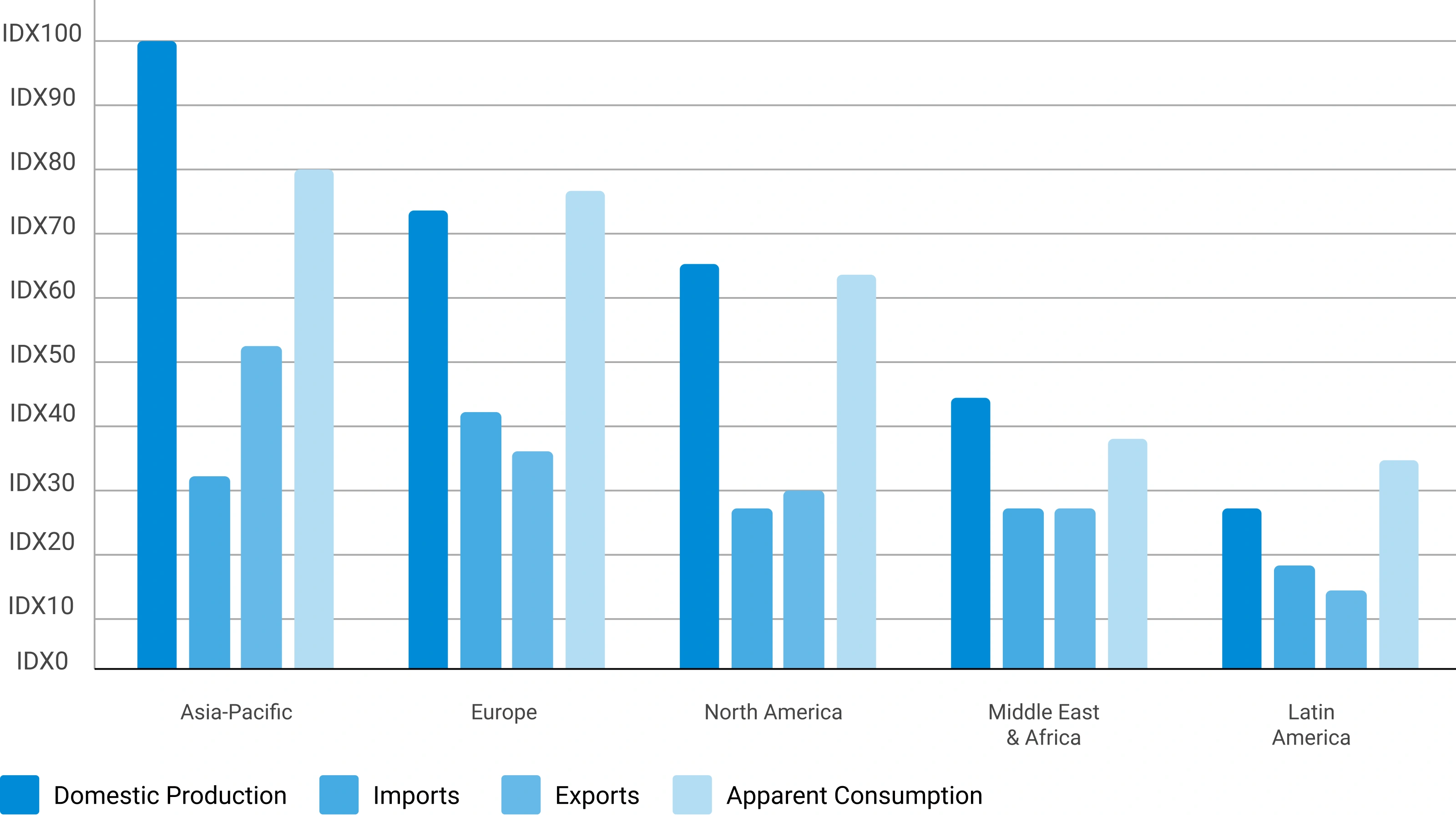
Apparent Consumption Model
Regional consumption is assessed using the standard apparent consumption formula:
Results identify net importing regions, net exporting regions, regional deficits, and surpluses — serving as an independent validation of supply and demand estimates.
Trade Flow Analysis — Net Supply Position by Region
Illustrative apparent consumption vs. domestic production across major regions — positive gap indicates net import dependency
Phase 5 — Primary Research: The Critical Validation Layer
Primary research tests and refines findings from secondary research through direct engagement with industry participants across the supply chain, demand side, and expert community. It captures intelligence that no database or published report can provide — the real-world experience of manufacturers, buyers, and specialists operating in the market.

Supply-Side Interviews
Conversations with chemical manufacturers, raw material suppliers, contract manufacturers, technology providers, and plant operators cover production trends, capacity utilization, pricing developments, technology shifts, and competitive dynamics.

Demand-Side Interviews
Engagement with OEMs, industrial consumers, procurement managers, distributors, formulators, and end-use manufacturers focuses on consumption trends, purchasing behavior, product substitution, demand outlook, and emerging applications.

Industry Expert Consultations
Additional interviews with industry consultants, independent experts, regulatory specialists, technical professionals, and research institutions provide deeper market context and validate key analytical assumptions.
Focus Areas of Primary Research:
Market Size & Forecast Validation
Revenue estimates, volume consumption, growth rates, forecast assumptions, regional demand.Supply Chain & Value Chain Assessment
Raw material sourcing, supply chain challenges, distribution networks, procurement practices.Production & Capacity Analysis
Manufacturing capacity, utilization rates, expansion projects, plant investments.Pricing & Cost Structure Analysis
Product pricing trends, feedstock costs, energy costs, margin pressures, pricing outlook.Competitive Landscape Assessment
Volume and value estimates confirmed to be fully consistent with one another before publicationInterview Volume by Market Scope
| Study Scope | Number of Interviews |
|---|---|
| Niche Market | 20 – 30 |
| Mid-Sized Market | 30 – 50 |
| Global Market | 50 – 80 |
| Highly Fragmented Market | 80 – 120 |
Interview Details:
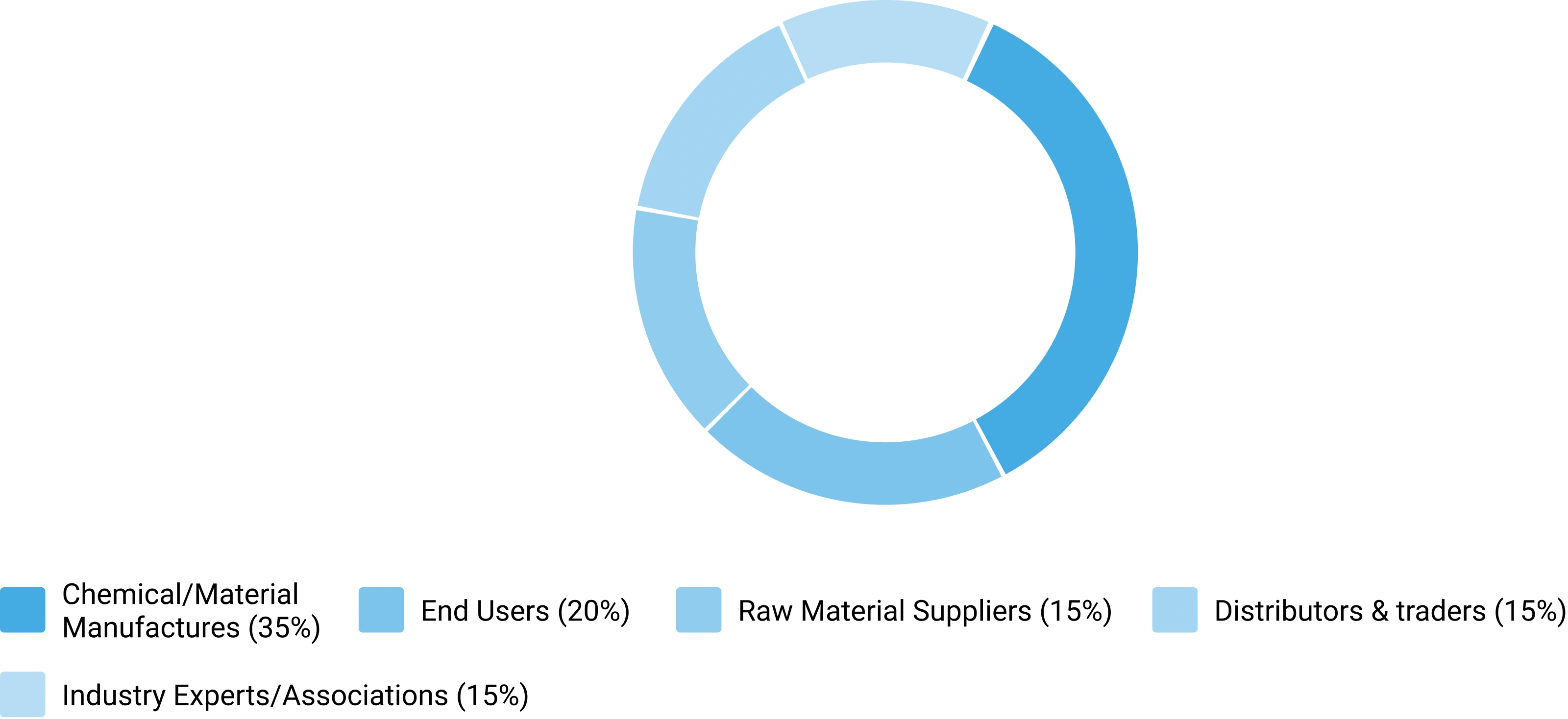
Category : Manufacturers, Suppliers, Distributors, End Users, Experts/Associations
Average Duration : 30–60 Minutes
Interview Mode : Video calls, telephonic interviews, expert consultations
Interview Format : Structured / Semi-Structured questionnaire
Focus Areas of Primary Research:
Market Size & Forecast Validation :
Revenue estimates, volume consumption, growth rates, forecast assumptions, regional demand.
Supply Chain & Value Chain Assessment :
Raw material sourcing, supply chain challenges, distribution networks, procurement practices.
Production & Capacity Analysis :
Manufacturing capacity, utilization rates, expansion projects, plant investments.
Pricing & Cost Structure Analysis :
Product pricing trends, feedstock costs, energy costs, margin pressures, pricing outlook.
Competitive Landscape Assessment :
Market share, competitor positioning, strategic initiatives, partnerships, acquisitions.
Primary Research — Stakeholder Coverage by Category
Distribution of interview respondents across stakeholder categories (% share from PPT data)
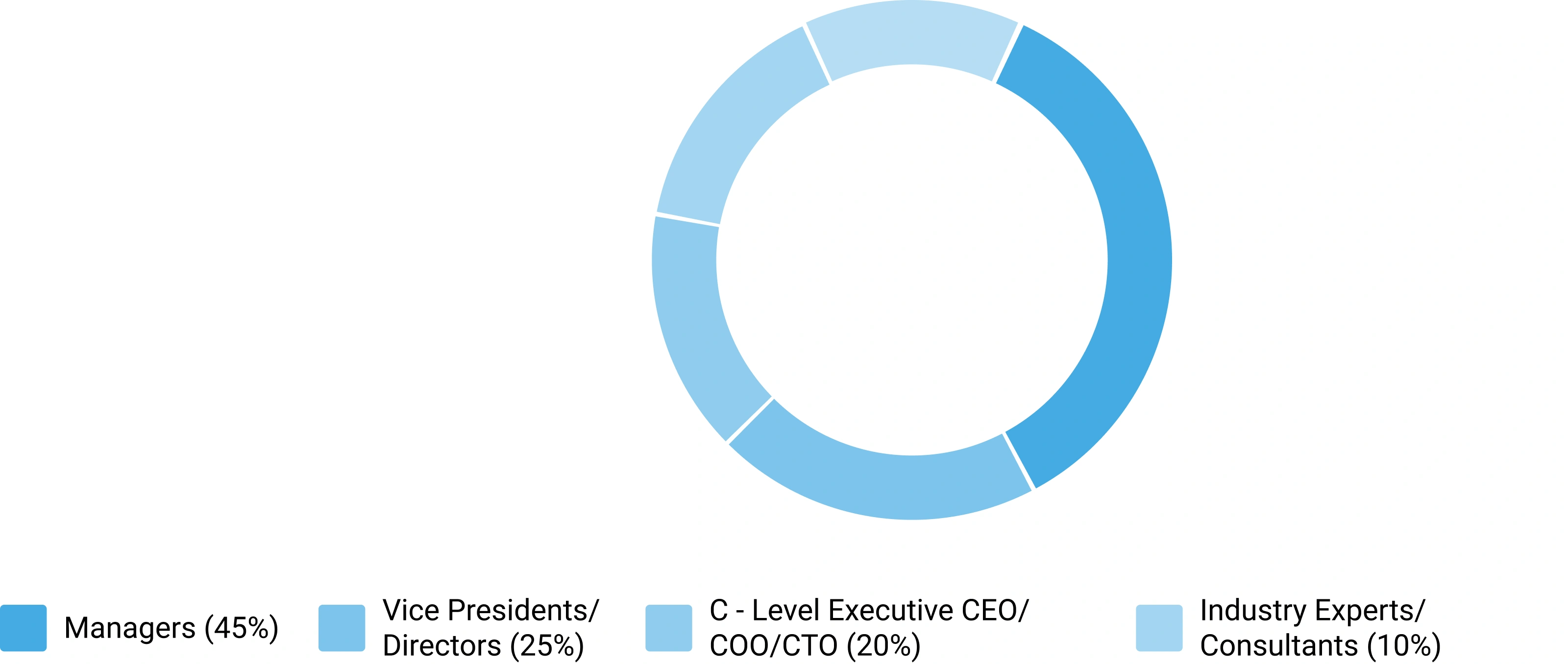
Primary Research — Respondent Designation Profile
Seniority breakdown of interview respondents (% share from PPT data)
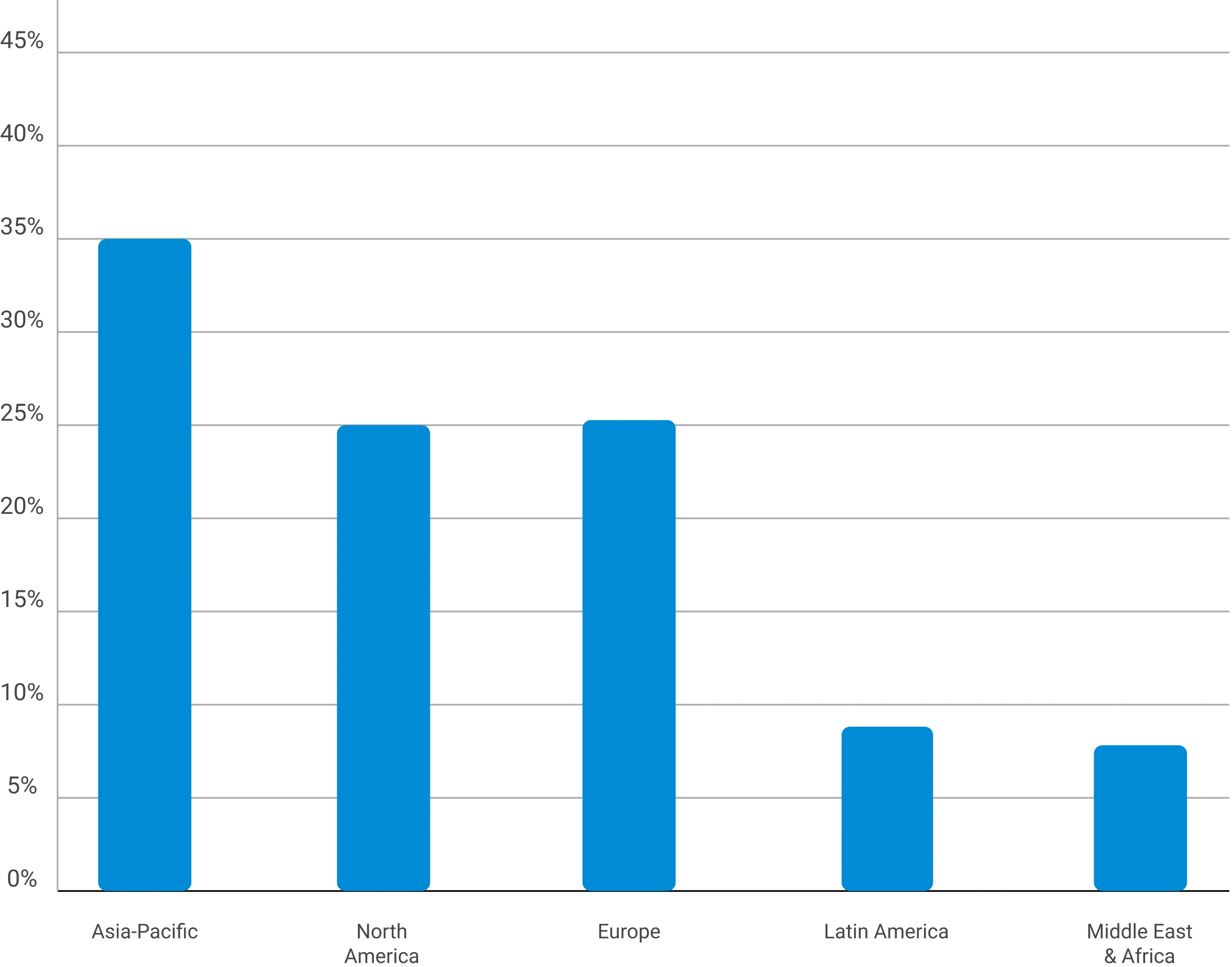
Primary Research — Geographic Coverage of Interviews
Regional distribution of primary research engagement (% share from PPT data)
Phase 6 — Data Triangulation and Market Validation
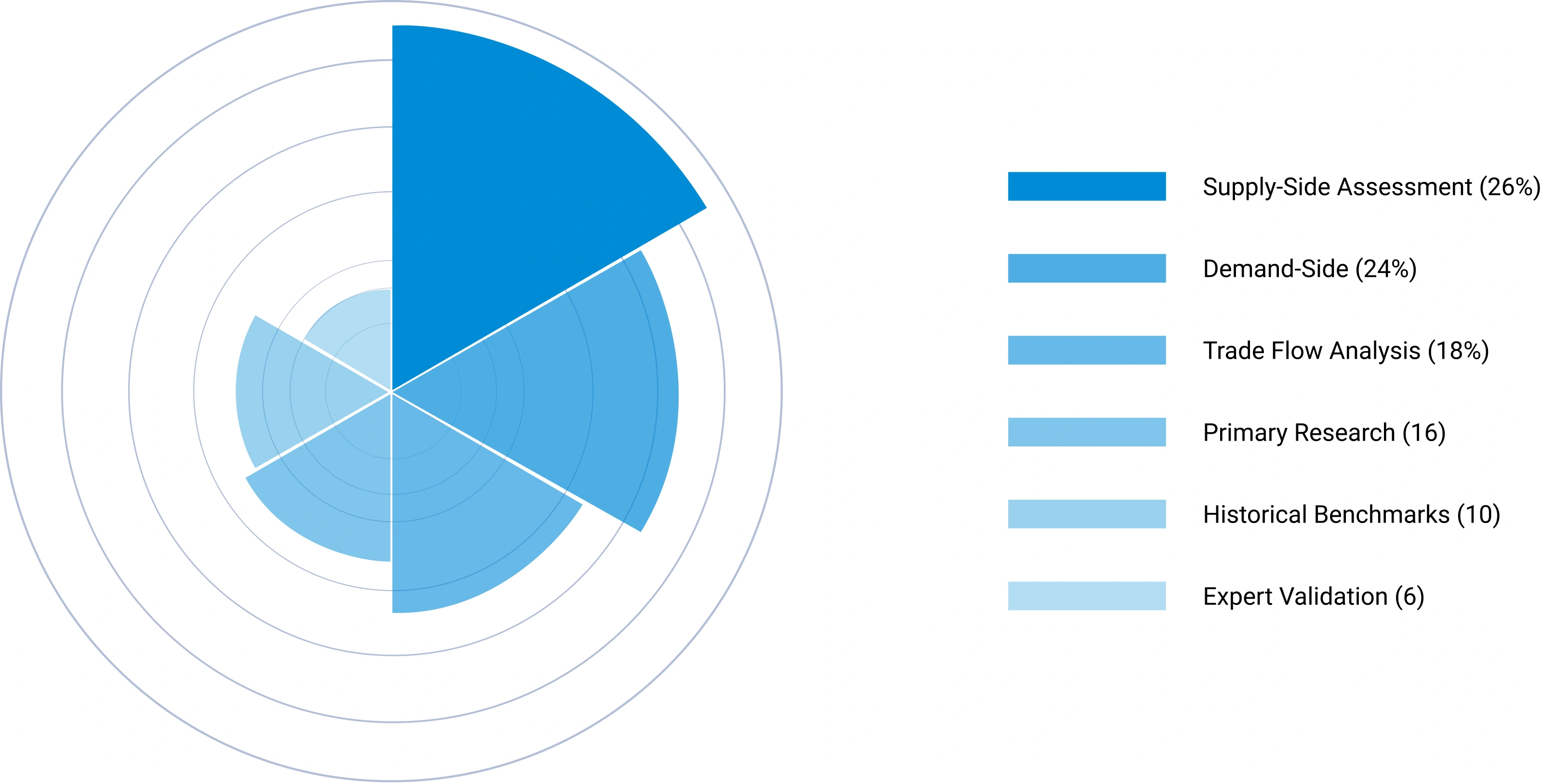
No single methodology is relied upon in isolation. Multiple independent estimation approaches are combined and reconciled to ensure consistency, accuracy, and analytical defensibility. Any material deviations between approaches are investigated and adjusted through additional validation cycles.
The final market size is derived through weighted triangulation of all validated methodologies. Any material deviations between approaches are investigated and adjusted through additional validation cycles. The outcome represents the most realistic assessment of the market based on available evidence and expert confirmation ensuring that volume and value estimates are fully consistent with one another.
Triangulation Framework — Input Contribution Weight
Relative weight each sizing input contributes to the final reconciled market estimate
Phase 7 — Forecast Modeling: Projecting Future Market Evolution
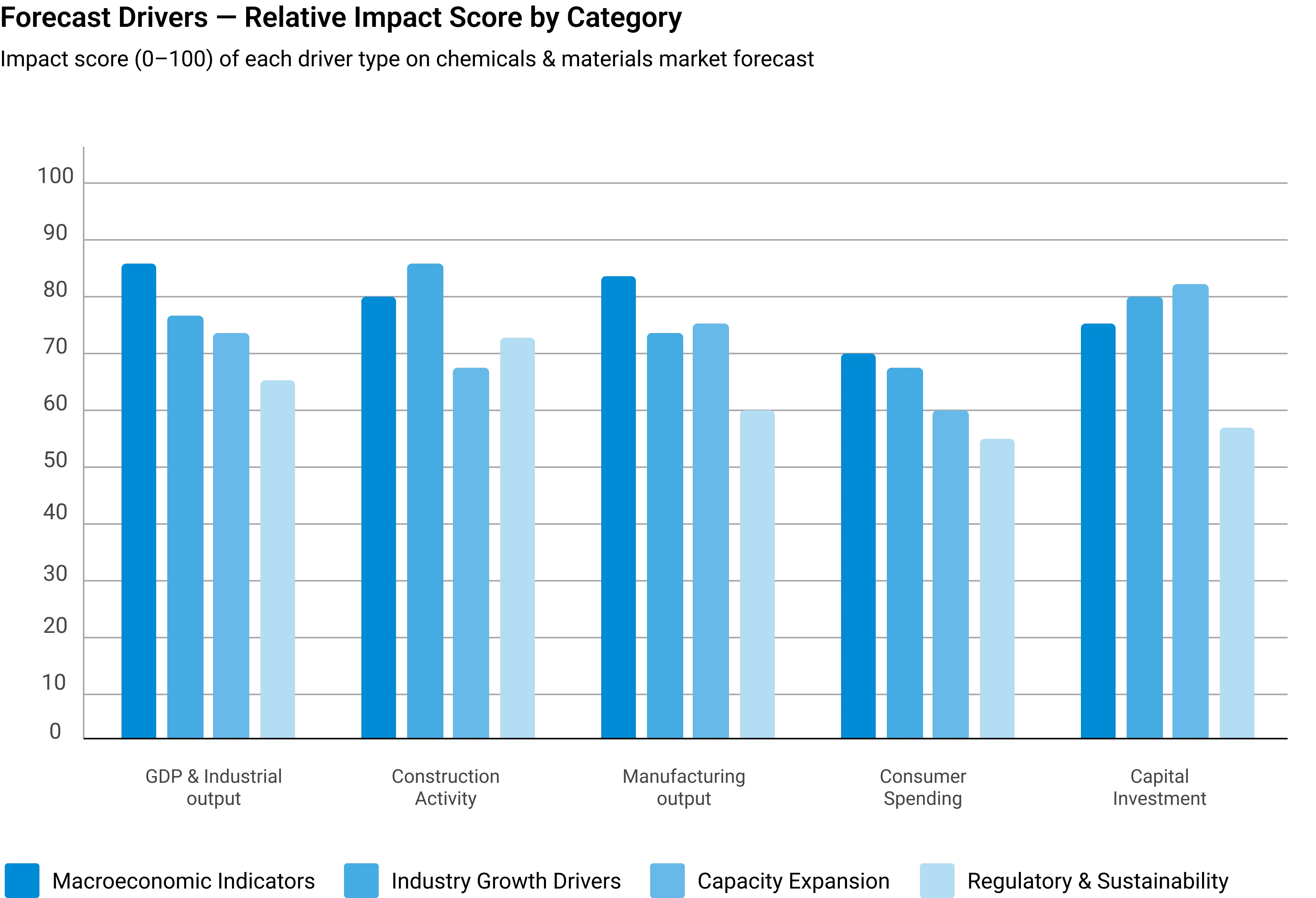
Forecasting evaluates the future trajectory of the market using a combination of quantitative indicators and qualitative assessments across economic, industry, and regulatory dimensions. Rather than simple extrapolation, each driver is independently modeled and integrated into a composite forecast.
Macroeconomic Indicators
GDP growth, industrial production, manufacturing output, construction activity, consumer spending, and capital investment form the quantitative foundation of long-term demand projections. These are applied at country, regional, and global levels.
Industry Growth Drivers
Urbanization, infrastructure development, industrialization, technological innovation, sustainability initiatives, and evolving product performance requirements are assessed at regional and industry levels — capturing both structural and cyclical demand drivers.
Capacity Expansion Analysis
Announced plant expansions, new manufacturing facilities, technology upgrades, and strategic investments are evaluated to determine future supply-demand dynamics and potential market tightness or oversupply situations.
Regulatory & Sustainability
Environmental regulations, chemical safety standards, emission reduction targets, circular economy initiatives, and sustainability requirements are incorporated as they often influence product adoption rates and market growth trajectories.
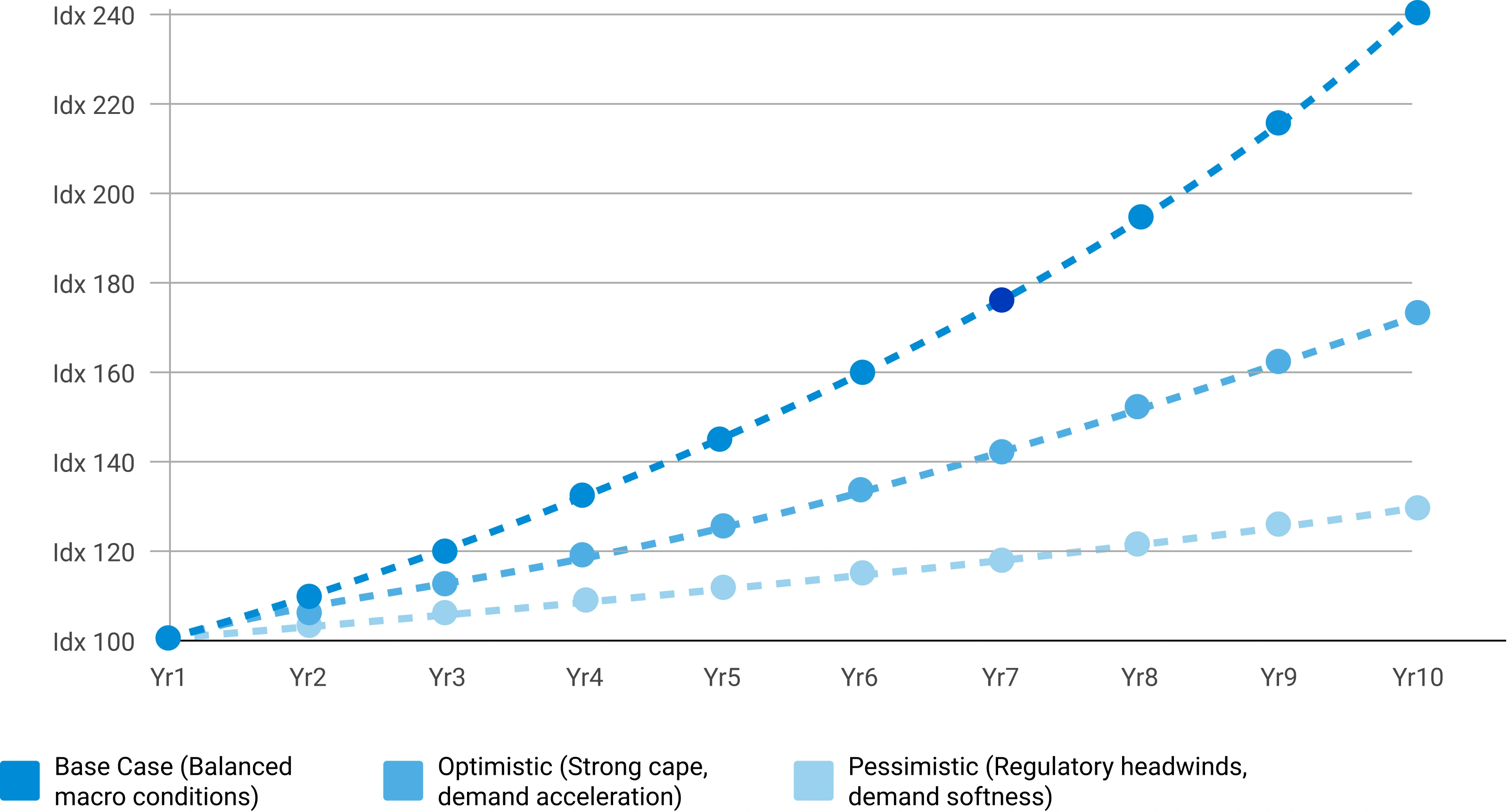
Scenario Forecast Range — Indexed Market Growth (Year 1–10)
Illustrative indexed growth trajectories across Base, Optimistic, and Pessimistic scenarios over a 10-year forecast horizon
Forecast Drivers — Relative Impact Score by Category
Impact score (0–100) of each driver type on chemicals & materials market forecast



Comments
Share your thoughts, ask a question, or provide feedback about this report.